WO2013147192A1 - 偏光フィルム、光学フィルムおよび画像表示装置 - Google Patents
偏光フィルム、光学フィルムおよび画像表示装置 Download PDFInfo
- Publication number
- WO2013147192A1 WO2013147192A1 PCT/JP2013/059602 JP2013059602W WO2013147192A1 WO 2013147192 A1 WO2013147192 A1 WO 2013147192A1 JP 2013059602 W JP2013059602 W JP 2013059602W WO 2013147192 A1 WO2013147192 A1 WO 2013147192A1
- Authority
- WO
- WIPO (PCT)
- Prior art keywords
- polarizing film
- energy ray
- active energy
- transparent protective
- protective film
- Prior art date
- Legal status (The legal status is an assumption and is not a legal conclusion. Google has not performed a legal analysis and makes no representation as to the accuracy of the status listed.)
- Ceased
Links
Classifications
-
- B—PERFORMING OPERATIONS; TRANSPORTING
- B32—LAYERED PRODUCTS
- B32B—LAYERED PRODUCTS, i.e. PRODUCTS BUILT-UP OF STRATA OF FLAT OR NON-FLAT, e.g. CELLULAR OR HONEYCOMB, FORM
- B32B37/00—Methods or apparatus for laminating, e.g. by curing or by ultrasonic bonding
- B32B37/12—Methods or apparatus for laminating, e.g. by curing or by ultrasonic bonding characterised by using adhesives
-
- B—PERFORMING OPERATIONS; TRANSPORTING
- B32—LAYERED PRODUCTS
- B32B—LAYERED PRODUCTS, i.e. PRODUCTS BUILT-UP OF STRATA OF FLAT OR NON-FLAT, e.g. CELLULAR OR HONEYCOMB, FORM
- B32B37/00—Methods or apparatus for laminating, e.g. by curing or by ultrasonic bonding
- B32B37/14—Methods or apparatus for laminating, e.g. by curing or by ultrasonic bonding characterised by the properties of the layers
- B32B37/16—Methods or apparatus for laminating, e.g. by curing or by ultrasonic bonding characterised by the properties of the layers with all layers existing as coherent layers before laminating
- B32B37/18—Methods or apparatus for laminating, e.g. by curing or by ultrasonic bonding characterised by the properties of the layers with all layers existing as coherent layers before laminating involving the assembly of discrete sheets or panels only
-
- B—PERFORMING OPERATIONS; TRANSPORTING
- B32—LAYERED PRODUCTS
- B32B—LAYERED PRODUCTS, i.e. PRODUCTS BUILT-UP OF STRATA OF FLAT OR NON-FLAT, e.g. CELLULAR OR HONEYCOMB, FORM
- B32B38/00—Ancillary operations in connection with laminating processes
- B32B38/0008—Electrical discharge treatment, e.g. corona, plasma treatment; wave energy or particle radiation
-
- B—PERFORMING OPERATIONS; TRANSPORTING
- B32—LAYERED PRODUCTS
- B32B—LAYERED PRODUCTS, i.e. PRODUCTS BUILT-UP OF STRATA OF FLAT OR NON-FLAT, e.g. CELLULAR OR HONEYCOMB, FORM
- B32B38/00—Ancillary operations in connection with laminating processes
- B32B38/0036—Heat treatment
-
- C—CHEMISTRY; METALLURGY
- C09—DYES; PAINTS; POLISHES; NATURAL RESINS; ADHESIVES; COMPOSITIONS NOT OTHERWISE PROVIDED FOR; APPLICATIONS OF MATERIALS NOT OTHERWISE PROVIDED FOR
- C09J—ADHESIVES; NON-MECHANICAL ASPECTS OF ADHESIVE PROCESSES IN GENERAL; ADHESIVE PROCESSES NOT PROVIDED FOR ELSEWHERE; USE OF MATERIALS AS ADHESIVES
- C09J4/00—Adhesives based on organic non-macromolecular compounds having at least one polymerisable carbon-to-carbon unsaturated bond ; adhesives, based on monomers of macromolecular compounds of groups C09J183/00 - C09J183/16
-
- G02B1/105—
-
- G—PHYSICS
- G02—OPTICS
- G02B—OPTICAL ELEMENTS, SYSTEMS OR APPARATUS
- G02B1/00—Optical elements characterised by the material of which they are made; Optical coatings for optical elements
- G02B1/10—Optical coatings produced by application to, or surface treatment of, optical elements
- G02B1/14—Protective coatings, e.g. hard coatings
-
- G—PHYSICS
- G02—OPTICS
- G02B—OPTICAL ELEMENTS, SYSTEMS OR APPARATUS
- G02B1/00—Optical elements characterised by the material of which they are made; Optical coatings for optical elements
- G02B1/10—Optical coatings produced by application to, or surface treatment of, optical elements
- G02B1/18—Coatings for keeping optical surfaces clean, e.g. hydrophobic or photo-catalytic films
-
- G—PHYSICS
- G02—OPTICS
- G02B—OPTICAL ELEMENTS, SYSTEMS OR APPARATUS
- G02B5/00—Optical elements other than lenses
- G02B5/20—Filters
- G02B5/208—Filters for use with infrared or ultraviolet radiation, e.g. for separating visible light from infrared and/or ultraviolet radiation
-
- G—PHYSICS
- G02—OPTICS
- G02B—OPTICAL ELEMENTS, SYSTEMS OR APPARATUS
- G02B5/00—Optical elements other than lenses
- G02B5/30—Polarising elements
-
- G—PHYSICS
- G02—OPTICS
- G02B—OPTICAL ELEMENTS, SYSTEMS OR APPARATUS
- G02B5/00—Optical elements other than lenses
- G02B5/30—Polarising elements
- G02B5/3025—Polarisers, i.e. arrangements capable of producing a definite output polarisation state from an unpolarised input state
- G02B5/3033—Polarisers, i.e. arrangements capable of producing a definite output polarisation state from an unpolarised input state in the form of a thin sheet or foil, e.g. Polaroid
-
- G—PHYSICS
- G02—OPTICS
- G02F—OPTICAL DEVICES OR ARRANGEMENTS FOR THE CONTROL OF LIGHT BY MODIFICATION OF THE OPTICAL PROPERTIES OF THE MEDIA OF THE ELEMENTS INVOLVED THEREIN; NON-LINEAR OPTICS; FREQUENCY-CHANGING OF LIGHT; OPTICAL LOGIC ELEMENTS; OPTICAL ANALOGUE/DIGITAL CONVERTERS
- G02F1/00—Devices or arrangements for the control of the intensity, colour, phase, polarisation or direction of light arriving from an independent light source, e.g. switching, gating or modulating; Non-linear optics
- G02F1/01—Devices or arrangements for the control of the intensity, colour, phase, polarisation or direction of light arriving from an independent light source, e.g. switching, gating or modulating; Non-linear optics for the control of the intensity, phase, polarisation or colour
- G02F1/13—Devices or arrangements for the control of the intensity, colour, phase, polarisation or direction of light arriving from an independent light source, e.g. switching, gating or modulating; Non-linear optics for the control of the intensity, phase, polarisation or colour based on liquid crystals, e.g. single liquid crystal display cells
- G02F1/133—Constructional arrangements; Operation of liquid crystal cells; Circuit arrangements
- G02F1/1333—Constructional arrangements; Manufacturing methods
- G02F1/1335—Structural association of cells with optical devices, e.g. polarisers or reflectors
-
- B—PERFORMING OPERATIONS; TRANSPORTING
- B32—LAYERED PRODUCTS
- B32B—LAYERED PRODUCTS, i.e. PRODUCTS BUILT-UP OF STRATA OF FLAT OR NON-FLAT, e.g. CELLULAR OR HONEYCOMB, FORM
- B32B37/00—Methods or apparatus for laminating, e.g. by curing or by ultrasonic bonding
- B32B37/12—Methods or apparatus for laminating, e.g. by curing or by ultrasonic bonding characterised by using adhesives
- B32B2037/1253—Methods or apparatus for laminating, e.g. by curing or by ultrasonic bonding characterised by using adhesives curable adhesive
-
- B—PERFORMING OPERATIONS; TRANSPORTING
- B32—LAYERED PRODUCTS
- B32B—LAYERED PRODUCTS, i.e. PRODUCTS BUILT-UP OF STRATA OF FLAT OR NON-FLAT, e.g. CELLULAR OR HONEYCOMB, FORM
- B32B2307/00—Properties of the layers or laminate
- B32B2307/40—Properties of the layers or laminate having particular optical properties
- B32B2307/42—Polarizing, birefringent, filtering
-
- B—PERFORMING OPERATIONS; TRANSPORTING
- B32—LAYERED PRODUCTS
- B32B—LAYERED PRODUCTS, i.e. PRODUCTS BUILT-UP OF STRATA OF FLAT OR NON-FLAT, e.g. CELLULAR OR HONEYCOMB, FORM
- B32B2551/00—Optical elements
-
- C—CHEMISTRY; METALLURGY
- C08—ORGANIC MACROMOLECULAR COMPOUNDS; THEIR PREPARATION OR CHEMICAL WORKING-UP; COMPOSITIONS BASED THEREON
- C08F—MACROMOLECULAR COMPOUNDS OBTAINED BY REACTIONS ONLY INVOLVING CARBON-TO-CARBON UNSATURATED BONDS
- C08F220/00—Copolymers of compounds having one or more unsaturated aliphatic radicals, each having only one carbon-to-carbon double bond, and only one being terminated by only one carboxyl radical or a salt, anhydride ester, amide, imide or nitrile thereof
- C08F220/02—Monocarboxylic acids having less than ten carbon atoms; Derivatives thereof
- C08F220/10—Esters
- C08F220/26—Esters containing oxygen in addition to the carboxy oxygen
- C08F220/28—Esters containing oxygen in addition to the carboxy oxygen containing no aromatic rings in the alcohol moiety
- C08F220/283—Esters containing oxygen in addition to the carboxy oxygen containing no aromatic rings in the alcohol moiety and containing one or more carboxylic moiety in the chain, e.g. acetoacetoxyethyl(meth)acrylate
-
- Y—GENERAL TAGGING OF NEW TECHNOLOGICAL DEVELOPMENTS; GENERAL TAGGING OF CROSS-SECTIONAL TECHNOLOGIES SPANNING OVER SEVERAL SECTIONS OF THE IPC; TECHNICAL SUBJECTS COVERED BY FORMER USPC CROSS-REFERENCE ART COLLECTIONS [XRACs] AND DIGESTS
- Y10—TECHNICAL SUBJECTS COVERED BY FORMER USPC
- Y10T—TECHNICAL SUBJECTS COVERED BY FORMER US CLASSIFICATION
- Y10T428/00—Stock material or miscellaneous articles
- Y10T428/24—Structurally defined web or sheet [e.g., overall dimension, etc.]
- Y10T428/24942—Structurally defined web or sheet [e.g., overall dimension, etc.] including components having same physical characteristic in differing degree
-
- Y—GENERAL TAGGING OF NEW TECHNOLOGICAL DEVELOPMENTS; GENERAL TAGGING OF CROSS-SECTIONAL TECHNOLOGIES SPANNING OVER SEVERAL SECTIONS OF THE IPC; TECHNICAL SUBJECTS COVERED BY FORMER USPC CROSS-REFERENCE ART COLLECTIONS [XRACs] AND DIGESTS
- Y10—TECHNICAL SUBJECTS COVERED BY FORMER USPC
- Y10T—TECHNICAL SUBJECTS COVERED BY FORMER US CLASSIFICATION
- Y10T428/00—Stock material or miscellaneous articles
- Y10T428/24—Structurally defined web or sheet [e.g., overall dimension, etc.]
- Y10T428/24942—Structurally defined web or sheet [e.g., overall dimension, etc.] including components having same physical characteristic in differing degree
- Y10T428/2495—Thickness [relative or absolute]
- Y10T428/24959—Thickness [relative or absolute] of adhesive layers
Definitions
- the present invention relates to a polarizing film (polarizing plate) in which a transparent protective film is provided on both sides of a polarizer via an adhesive formed of an active energy ray-curable adhesive.
- the polarizing film can form an image display device such as a liquid crystal display device (LCD), an organic EL display device, a CRT, or a PDP alone or as an optical film obtained by laminating the polarizing film.
- Liquid crystal display devices are rapidly expanding in the market for watches, mobile phones, PDAs, notebook computers, personal computer monitors, DVD players, TVs, etc.
- the liquid crystal display device visualizes the polarization state by switching of the liquid crystal, and a polarizer is used from the display principle.
- polarizing films are also required to have higher transmittance, higher degree of polarization, and higher color reproducibility.
- an iodine-based polarizer having a stretched structure by adsorbing iodine to polyvinyl alcohol (hereinafter also simply referred to as “PVA”) is most widely used. in use.
- PVA polyvinyl alcohol
- a polarizing film in which a transparent protective film is bonded to both surfaces of a polarizer by a so-called aqueous adhesive in which a polyvinyl alcohol-based material is dissolved in water is used (Patent Document 1 and Patent Document 2 below). ).
- a drying step is required after the polarizer and the transparent protective film are bonded together.
- a water-based adhesive such as a polyvinyl alcohol-based adhesive
- a drying step is required after the polarizer and the transparent protective film are bonded together.
- triacetyl cellulose having a high moisture permeability is used as the transparent protective film.
- a polarizing film with good adhesion can be obtained unless the water content of the polarizer is relatively high in order to increase the adhesion with the polarizer. Can not.
- the polarizing film obtained in this manner has a problem that optical characteristics (polarization characteristics, etc.) cannot be obtained, and heating / humidification durability deteriorates.
- the polarizing film is easily affected by humidity, and the transparent protective film absorbs moisture in the air, which causes problems such as undulating curl and dimensional change.
- the transparent moisture protective film with low moisture permeability cannot sufficiently dry the water that is the solvent of the aqueous adhesive. This reduces the drying efficiency. As a result, the polarizing property of the obtained polarizing film was lowered or the durability was insufficient, resulting in defects in appearance, and a practically useful polarizing film could not be obtained.
- the present invention is a polarizing film in which a transparent protective film is provided on both surfaces of a polarizer via an adhesive layer, and satisfies optical characteristics and durability even when the transparent protective film has low moisture permeability.
- An object of the present invention is to provide a polarizing film that can be used and has a low moisture content change.
- Another object of the present invention is to provide an optical film using the polarizing film, and to provide an image display device such as a liquid crystal display device using the polarizing film and the optical film.
- the present inventors have found that the object can be achieved by the polarizing film shown below, and have completed the present invention.
- the moisture permeability is 150 g / g through the adhesive layer formed by irradiating the active energy ray-curable adhesive containing the radical polymerizable compound on both sides of the polarizer with active energy rays.
- the present invention relates to a polarizing film, wherein a transparent protective film of m 2 / 24h or less is bonded.
- the adhesive layer preferably has a Tg of 60 ° C. or higher.
- the active energy ray-curable adhesive is an active energy ray-curable adhesive containing the radical polymerizable compounds (A), (B) and (C), and the total amount of the composition is 100% by weight.
- a radically polymerizable compound (A) having an SP value of 29.0 (kJ / m 3 ) 1/2 or more and 32.0 or less (kJ / m 3 ) 1/2 10 to 30% by weight of the radical polymerizable compound (B) having an SP value of 18.0 (kJ / m 3 ) 1/2 or more and less than 21.0 (kJ / m 3 ) 1/2 , and an SP value of 21 0.0 (kJ / m 3 ) 1/2 to 23.0 (kJ / m 3 ) 20 to 60% by weight of the radical polymerizable compound (C) that is 1/2 or less
- each of the homopolymers of the radical polymerizable compounds (A), (B) and (C) has
- the active energy ray-curable adhesive further contains a radical polymerizable compound (D) having an active methylene group and a radical polymerization initiator (E) having a hydrogen abstraction function. preferable.
- the active methylene group is preferably an acetoacetyl group.
- the radical polymerizable compound (D) is preferably acetoacetoxyalkyl (meth) acrylate.
- the radical polymerization initiator (E) is preferably a thioxanthone radical polymerization initiator.
- the polarizing film contains 1 to 50% by weight of the radical polymerizable compound (D) and 0.1 to 10% by weight of the radical polymerization initiator (E) when the total amount of the composition is 100% by weight. It is preferable.
- the active energy ray-curable adhesive further contains a photoacid generator (F).
- the photoacid generator (F) contains a photoacid generator having at least one selected from the group consisting of PF 6 ⁇ , SbF 6 — and AsF 6 — as a counter anion. preferable.
- the active energy ray-curable adhesive preferably contains the photoacid generator (F) and a compound (G) containing either an alkoxy group or an epoxy group.
- the active energy ray-curable adhesive preferably contains a silane coupling agent (H) having an amino group.
- the active energy ray-curable adhesive preferably contains 0.01 to 20% by weight of a silane coupling agent (H) having an amino group when the total amount of the composition is 100% by weight. .
- the radical polymerizable compound (A) is preferably hydroxyethyl acrylamide and / or N-methylol acrylamide.
- the radical polymerizable compound (B) is preferably tripropylene glycol diacrylate.
- the radical polymerizable compound (C) is preferably acryloylmorpholine and / or N-methoxymethylacrylamide.
- the active energy ray-curable adhesive is a compound represented by the following general formula (1) as a photopolymerization initiator; (Wherein R 1 and R 2 represent —H, —CH 2 CH 3 , —iPr or Cl, and R 1 and R 2 may be the same or different).
- the active energy ray-curable adhesive is a compound represented by the following general formula (2) as a photopolymerization initiator; Wherein R 3 , R 4 and R 5 represent —H, —CH 3 , —CH 2 CH 3 , —iPr or Cl, and R 3 , R 4 and R 5 may be the same or different. It is preferable to contain.
- a light transmittance at a wavelength of 365 nm of the transparent protective film is less than 5%.
- the transparent protective film preferably has an SP value of 29.0 (kJ / m 3 ) 1/2 or more and less than 33.0 (kJ / m 3 ) 1/2 .
- the transparent protective film preferably has an SP value of 18.0 (kJ / m 3 ) 1/2 or more and less than 24.0 (kJ / m 3 ) 1/2 .
- the material for forming the transparent protective film is preferably any one selected from polycarbonate resin, cyclic polyolefin resin, and (meth) acrylic resin.
- the adhesive layer preferably has a thickness of 0.01 to 7 ⁇ m.
- the present invention also relates to a method for producing a polarizing film, wherein a transparent protective film is provided on at least one surface of a polarizer via an adhesive layer, and the transparent protective film has a moisture permeability of 150 g / m.
- the active energy ray curing is performed by irradiating active energy rays from the polarizer step or the transparent protective film surface side, the bonding step of laminating the polarizer and the transparent protective film, A bonding step of bonding the polarizer and the transparent protective film via an adhesive layer obtained by curing a mold adhesive.
- a corona is applied to at least one surface of the polarizer or the transparent protective film on the surface on which the active energy ray-curable adhesive is applied. It is preferable to perform treatment, plasma treatment, flame treatment or excimer treatment.
- a moisture content of the polarizer in the bonding step is less than 15%.
- the present invention relates to an image display device according to the present invention, wherein the polarizing film and / or the optical film are used.
- the polarizer of the polarizing film and the transparent protective film are firmly bonded via the adhesive layer, and the adhesive layer is excellent in durability and water resistance.
- the polarizing film of the present invention In the polarizing film of the present invention, a transparent protective film having low moisture permeability is provided on both sides of the polarizer. Therefore, it is difficult for moisture in the air to enter the polarizing film, and the change in the moisture content of the polarizing film itself can be suppressed.
- the polarizing film of the present invention has a low moisture content change, and can suppress curling and dimensional changes caused by the storage environment.
- a transparent protective film having a low water vapor transmission rate is bonded to both sides of the polarizer, but an active energy ray containing not a water-based adhesive but a radical polymerizable compound is used for forming the adhesive layer.
- a curable adhesive is used.
- the active energy ray-curable adhesive is optical without causing destruction of the PVA-iodine complex in the polarizer even when the adhesive itself has no moisture and a transparent protective film having low moisture permeability on both sides is used.
- a polarizing film excellent in properties (polarization properties) and durability can be provided.
- the active energy ray-curable adhesive containing a radical polymerizable compound is more active than the active energy ray curable adhesive containing a cationic polymerizable compound. Is also excellent.
- the active energy ray-curable adhesive a composition in which a radical polymerizable compound having a predetermined SP value (solubility parameter) is combined is suitable.
- SP value the SP value of the PVA polarizer is 32.8, for example
- the transparent protective film generally has a low SP value (the SP value is about 18 to 24). Therefore, for example, when the SP values of the radical polymerizable compounds are close to each other, the compatibility thereof increases, and when the SP values of the radical polymerizable compound and the polarizer in the active energy ray-curable adhesive are close, the adhesive is used.
- each SP value of at least three kinds of radical polymerizable compounds is designed within a specific range, and an optimal composition ratio is preferably used. it can.
- the adhesive layer is formed of a cured product of an active energy ray-curable adhesive whose SP value is designed within a specific range and adjusted to an optimal composition ratio, the polarizer and the low transmittance It is possible to form an adhesive layer having improved adhesion to a transparent protective film of humidity and improved durability and water resistance.
- the polarizing film of the present invention has a low moisture permeability through an adhesive layer formed by irradiating an active energy ray-curable adhesive containing a radical polymerizable compound on both sides of a polarizer with active energy rays.
- a transparent protective film is attached.
- the polarizer is not particularly limited, and various types can be used.
- the polarizer include hydrophilic polymer films such as polyvinyl alcohol film, partially formalized polyvinyl alcohol film, and ethylene / vinyl acetate copolymer partially saponified film, and two colors such as iodine and dichroic dye.
- polyene-based oriented films such as those obtained by adsorbing a functional material and uniaxially stretched, polyvinyl alcohol dehydrated products and polyvinyl chloride dehydrochlorinated products.
- a polarizer composed of a polyvinyl alcohol film and a dichroic material such as iodine is preferable.
- the thickness of these polarizers is not particularly limited, but is generally about 80 ⁇ m or less.
- the thickness of the polarizer is usually preferably 15 to 35 ⁇ m.
- a polarizer in which a polyvinyl alcohol film is dyed with iodine and uniaxially stretched can be produced by, for example, dyeing polyvinyl alcohol by immersing it in an iodine aqueous solution and stretching it 3 to 7 times the original length. If necessary, it can be immersed in an aqueous solution of boric acid or potassium iodide. Further, if necessary, the polyvinyl alcohol film may be immersed in water and washed before dyeing. In addition to washing the polyvinyl alcohol film surface with dirt and anti-blocking agents by washing the polyvinyl alcohol film with water, it also has the effect of preventing unevenness such as uneven coloring by swelling the polyvinyl alcohol film. is there.
- Stretching may be performed after dyeing with iodine, may be performed while dyeing, or may be dyed with iodine after stretching.
- the film can be stretched in an aqueous solution of boric acid or potassium iodide or in a water bath.
- the polarizer preferably has a moisture content of 10 to 25% by weight, more preferably 10 to 20% by weight. Control of the moisture content within the above range is preferable from the viewpoint of few optical characteristics and appearance defects.
- the moisture content of the polarizer is too low, it is liable to be damaged during lamination with the transparent protective film, which may cause appearance defects such as bubbles.
- the moisture content of a polarizer is too high, there exists a tendency for an optical characteristic to worsen.
- the moisture content of the polarizer may be adjusted by any appropriate method. For example, there is a method of controlling by adjusting the conditions of the drying process in the manufacturing process of the polarizer.
- a thin polarizer having a thickness of 10 ⁇ m or less can be used. From the viewpoint of thinning, the thickness is preferably 1 to 7 ⁇ m. Such a thin polarizer is preferable in that the thickness unevenness is small, the visibility is excellent, the dimensional change is small, the durability is excellent, and the thickness of the polarizing film can be reduced.
- the thin polarizer typically, JP-A-51-069644, JP-A-2000-338329, WO2010 / 100917, PCT / JP2010 / 001460, or Japanese Patent Application No. 2010- And a thin polarizing film described in Japanese Patent Application No. 269002 and Japanese Patent Application No. 2010-263692.
- These thin polarizing films can be obtained by a production method including a step of stretching a polyvinyl alcohol-based resin (hereinafter also referred to as PVA-based resin) layer and a stretching resin base material in a laminated state and a step of dyeing. With this manufacturing method, even if the PVA-based resin layer is thin, it can be stretched without problems such as breakage due to stretching by being supported by the stretching resin substrate.
- PVA-based resin polyvinyl alcohol-based resin
- the moisture permeability is used as the following low moisture permeability 150g / m 2 / 24h.
- the moisture permeability is preferably not more than 140g / m 2 / 24h, more preferably not more than 120g / m 2 / 24h.
- the moisture permeability is determined by the method described in the examples.
- the thickness of the transparent protective film can be appropriately determined, but is generally about 1 to 500 ⁇ m, preferably 1 to 300 ⁇ m, more preferably 5 to 200 ⁇ m from the viewpoints of workability such as strength and handleability and thin layer properties. preferable. Furthermore, 20 to 200 ⁇ m is preferable, and 30 to 80 ⁇ m is preferable.
- polyester resins such as polyethylene terephthalate and polyethylene naphthalate
- polycarbonate resins arylate resins
- amide resins such as nylon and aromatic polyamide
- Polyolefin polymers such as ethylene / propylene copolymers, cyclic olefin resins having a cyclo or norbornene structure, (meth) acrylic resins, or a mixture thereof can be used.
- the resins polycarbonate resins, cyclic polyolefin resins, and (meth) acrylic resins are preferable, and cyclic polyolefin resins and (meth) acrylic resins are particularly preferable.
- cyclic polyolefin resin is preferably a norbornene resin.
- the cyclic olefin-based resin is a general term for resins that are polymerized using a cyclic olefin as a polymerization unit, and is described in, for example, JP-A-1-240517, JP-A-3-14882, JP-A-3-122137, and the like. Resin.
- cyclic olefin ring-opening (co) polymers examples include cyclic olefin addition polymers, cyclic olefins and ⁇ -olefins such as ethylene and propylene (typically random copolymers), And graft polymers obtained by modifying them with an unsaturated carboxylic acid or a derivative thereof, and hydrides thereof.
- cyclic olefin include norbornene monomers.
- Various products are commercially available as cyclic polyolefin resins.
- trade names “ZEONEX” and “ZEONOR” manufactured by ZEON CORPORATION product names “ARTON” manufactured by JSR Corporation, “TOPAS” manufactured by TICONA, and product names manufactured by Mitsui Chemicals, Inc. “APEL”.
- Tg glass transition temperature
- the polarizing film can be excellent in durability.
- the upper limit of Tg of the (meth) acrylic resin is not particularly limited, it is preferably 170 ° C. or lower from the viewpoint of moldability and the like. From the (meth) acrylic resin, a film having in-plane retardation (Re) and thickness direction retardation (Rth) of almost zero can be obtained.
- any appropriate (meth) acrylic resin can be adopted as long as the effects of the present invention are not impaired.
- poly (meth) acrylic acid ester such as polymethyl methacrylate, methyl methacrylate- (meth) acrylic acid copolymer, methyl methacrylate- (meth) acrylic acid ester copolymer, methyl methacrylate-acrylic acid ester- (Meth) acrylic acid copolymer, (meth) methyl acrylate-styrene copolymer (MS resin, etc.), a polymer having an alicyclic hydrocarbon group (for example, methyl methacrylate-cyclohexyl methacrylate copolymer, Methyl methacrylate- (meth) acrylate norbornyl copolymer, etc.).
- Preferable examples include C1-6 alkyl poly (meth) acrylates such as polymethyl (meth) acrylate. More preferred is a methyl methacrylate resin containing methyl methacrylate as a main component (50 to 100% by weight, preferably 70 to 100% by weight).
- the (meth) acrylic resin examples include, for example, (Meth) acrylic resin having a ring structure in the molecule described in Acrypet VH and Acrypet VRL20A manufactured by Mitsubishi Rayon Co., Ltd., and JP-A-2004-70296. And high Tg (meth) acrylic resins obtained by intramolecular crosslinking or intramolecular cyclization reaction.
- (Meth) acrylic resin having a lactone ring structure can also be used as the (meth) acrylic resin. It is because it has high mechanical strength by high heat resistance, high transparency, and biaxial stretching.
- Examples of the (meth) acrylic resin having a lactone ring structure include JP 2000-230016, JP 2001-151814, JP 2002-120326, JP 2002-254544, and JP 2005. Examples thereof include (meth) acrylic resins having a lactone ring structure described in Japanese Patent No. 146084.
- the transparent protective film of the low moisture permeability provided on both surfaces of the polarizer may use a transparent protective film made of the same polymer material on the front and back, or may use a transparent protective film made of a different polymer material or the like. Good.
- a retardation plate having a retardation with a front retardation of 40 nm or more and / or a thickness direction retardation of 80 nm or more can be used as the transparent protective film.
- the front phase difference is usually controlled in the range of 40 to 200 nm
- the thickness direction phase difference is usually controlled in the range of 80 to 300 nm.
- the retardation plate functions also as a transparent protective film, so that the thickness can be reduced.
- the retardation plate examples include a birefringent film obtained by uniaxially or biaxially stretching a polymer material, a liquid crystal polymer alignment film, and a liquid crystal polymer alignment layer supported by a film.
- the thickness of the retardation plate is not particularly limited, but is generally about 20 to 150 ⁇ m.
- the film having the retardation can be separately attached to a transparent protective film having no retardation to give the above function.
- Functional surfaces such as a hard coat layer, an antireflection layer, an antisticking layer, a diffusion layer or an antiglare layer can be provided on the surface of the transparent protective film to which the polarizer is not adhered.
- the functional layers such as the hard coat layer, antireflection layer, antisticking layer, diffusion layer and antiglare layer can be provided on the transparent protective film itself, and separately provided separately from the transparent protective film. You can also
- the transparent protective film preferably has an SP value of 29.0 (kJ / m 3 ) 1/2 or more and less than 33.0 (kJ / m 3 ) 1/2 .
- the SP value of the transparent protective film is within the above range, it is very close to the SP value of the radical polymerizable compound (A) in the active energy ray-curable adhesive composition. Adhesion is greatly improved.
- the transparent protective film having an SP value of 29.0 (kJ / m 3 ) 1/2 or more and less than 33.0 (kJ / m 3 ) 1/2 for example, saponified triacetyl cellulose (for example, SP value 32.7). ).
- the transparent protective film preferably has an SP value of 18.0 (kJ / m 3 ) 1/2 or more and less than 24.0 (kJ / m 3 ) 1/2 . If the SP value of the transparent protective film is within the above range, it is very close to the SP value of the radical polymerizable compound (B) and the radical polymerizable compound (C) in the active energy ray-curable adhesive composition. The adhesion between the protective film and the adhesive layer is greatly improved.
- a transparent protective film whose SP value is 18.0 (kJ / m 3 ) 1/2 or more and less than 24.0 (kJ / m 3 ) 1/2 , for example, unsaponified triacetyl cellulose (for example, SP value 23.30). 3).
- an active energy ray-curable adhesive containing a radical polymerizable compound is used for bonding the polarizer and the transparent protective film having a low moisture permeability.
- the adhesive layer (cured product layer) formed by irradiating the active energy ray-curable adhesive with active energy rays has higher durability than the aqueous adhesive layer.
- the adhesive layer in the polarizing film of the present invention preferably has a Tg of 60 ° C. or higher.
- the adhesive layer is under high humidity and high temperature. The durability under the harsh environment can be satisfied.
- the radical polymerizable compound used for the active energy ray-curable adhesive is preferably selected so that the Tg of the adhesive layer formed thereby is 60 ° C. or higher, and more preferably 70 ° C. or higher. Preferably, it is 75 ° C. or higher, more preferably 100 ° C. or higher, and further preferably 120 ° C. or higher. On the other hand, if the Tg of the adhesive layer becomes too high, the flexibility of the polarizing film is lowered. Therefore, the Tg of the adhesive layer is preferably 300 ° C. or lower, more preferably 240 ° C. or lower, and further preferably 180 ° C. or lower.
- radical polymerizable compound examples include a compound having a (meth) acryloyl group and a compound having a vinyl group. These radically polymerizable compounds can be monofunctional or bifunctional or higher. As these radically polymerizable compounds, compounds having a (meth) acryloyl group are suitable. As the compound having a (meth) acryloyl group, an N-substituted amide monomer is preferably used. These monomers are preferable in terms of adhesiveness.
- the (meth) acryloyl group means an acryloyl group and / or a methacryloyl group. In the present invention, (meta) has the same meaning as described above.
- the N-substituted amide monomer is represented by the general formula (1): CH 2 ⁇ C (R 1 ) —CONR 2 (R 3 ) (R 1 represents a hydrogen atom or a methyl group, R 2 represents a hydrogen atom or a hydroxyl group, mercapto Represents a linear or branched alkyl group having 1 to 4 carbon atoms which may have a group, an amino group or a quaternary ammonium group, and R 3 represents a hydrogen atom or a linear or branched chain having 1 to 4 carbon atoms Wherein R 2 and R 3 are simultaneously a hydrogen atom, or R 2 and R 3 are bonded to form a 5-membered ring or a 6-membered ring that may contain an oxygen atom.
- Examples of the linear or branched alkyl group having 1 to 4 carbon atoms for R 2 or R 3 in the general formula (1) include a methyl group, an ethyl group, an isopropyl group, and a t-butyl group.
- Examples of the alkyl group having a hydroxyl group include a hydroxymethyl group and a hydroxyethyl group, and examples of the alkyl group having an amino group include an aminomethyl group and an aminoethyl group.
- R ⁇ 2 >, R ⁇ 3 > couple
- Examples of the heterocyclic ring include morpholine ring, piperidine ring, pyrrolidine ring, piperazine ring and the like.
- N-substituted amide monomer examples include, for example, N-methyl (meth) acrylamide, N, N-dimethyl (meth) acrylamide, N, N-diethyl (meth) acrylamide, N-isopropylacrylamide, N- Butyl (meth) acrylamide, N-hexyl (meth) acrylamide, N-methylol (meth) acrylamide, N-hydroxyethyl (meth) acrylamide, N-methylol-N-propane (meth) acrylamide, aminomethyl (meth) acrylamide, Examples include aminoethyl (meth) acrylamide, mercaptomethyl (meth) acrylamide, and mercaptoethyl (meth) acrylamide.
- heterocyclic-containing monomer having a heterocyclic ring examples include N-acryloylmorpholine, N-acryloylpiperidine, N-methacryloylpiperidine, N-acryloylpyrrolidine and the like. These N-substituted amide monomers can be used alone or in combination of two or more.
- N-substituted amide monomer N-hydroxyethylacrylamide, N-methylolacrylamide, N-isopropylacrylamide, and N-acryloylmorpholine are preferable.
- the N-substituted amide monomer exhibits good adhesion even to a polarizer having a low moisture content or a transparent protective film using a material having low moisture permeability.
- the above exemplified monomers are particularly good. Shows adhesion. Of these, N-hydroxyethylacrylamide is preferred.
- the N-substituted amide monomers can be used singly or in combination of two or more. When two or more of them are combined, N-hydroxyethylacrylamide and N are used from the viewpoint of durability and adhesiveness. A combination of acryloylmorpholine is preferred. In the case of the combination, the ratio of N-hydroxyethylacrylamide to the total amount of N-hydroxyethylacrylamide and N-acryloylmorpholine is preferably 40% by weight or more in order to obtain good adhesiveness. The proportion is more preferably 40 to 90% by weight, and further preferably 60 to 90% by weight.
- radically polymerizable compound in addition to the above, as a compound having a (meth) acryloyl group, for example, various epoxy (meth) acrylates, urethane (meth) acrylates, polyester (meth) acrylates, And (meth) acrylate monomers.
- epoxy (meth) acrylates particularly monofunctional (meth) acrylates having an aromatic ring and a hydroxy group are preferably used.
- These radically polymerizable compounds are used alone and in combination with the N-substituted amide monomer when an adhesive layer having a Tg of 60 ° C. or higher cannot be formed.
- the monofunctional (meth) acrylate having an aromatic ring and a hydroxy group various monofunctional (meth) acrylates having an aromatic ring and a hydroxy group can be used.
- the hydroxy group may exist as a substituent of the aromatic ring, but in the present invention, it exists as an organic group (bonded to a hydrocarbon group, particularly an alkylene group) that bonds the aromatic ring and the (meth) acrylate. Those that do are preferred.
- Examples of the monofunctional (meth) acrylate having an aromatic ring and a hydroxy group include a reaction product of a monofunctional epoxy compound having an aromatic ring and (meth) acrylic acid.
- Examples of the monofunctional epoxy compound having an aromatic ring include phenyl glycidyl ether, t-butylphenyl glycidyl ether, and phenyl polyethylene glycol glycidyl ether.
- the monofunctional (meth) acrylate having an aromatic ring and a hydroxy group include, for example, 2-hydroxy-3-phenoxypropyl (meth) acrylate, 2-hydroxy-3-t-butylphenoxypropyl (meth) Acrylate, 2-hydroxy-3-phenyl polyethylene glycol propyl (meth) acrylate and the like.
- examples of the compound having a (meth) acryloyl group include a carboxyl group monomer.
- a carboxyl group monomer is also preferable in terms of adhesiveness.
- examples of the carboxyl group monomer include (meth) acrylic acid, carboxyethyl (meth) acrylate, carboxypentyl (meth) acrylate, and the like. Of these, acrylic acid is preferred.
- compounds having a (meth) acryloyl group include methyl (meth) acrylate, ethyl (meth) acrylate, n-butyl (meth) acrylate, 2-ethylhexyl (meth) acrylate, isooctyl (meth) acrylate, isononyl Alkyl (meth) acrylates having 1 to 12 carbon atoms such as (meth) acrylate and lauryl (meth) acrylate; alkoxymethacrylates such as (meth) acrylic acid methoxyethyl and (meth) acrylic acid ethoxyethyl Monomer: 2-hydroxyethyl (meth) acrylate, 2-hydroxypropyl (meth) acrylate, 4-hydroxybutyl (meth) acrylate, 6-hydroxyhexyl (meth) acrylate, 8-hydroxy (meth) acrylate Octyl, (meta) Hydroxyl group-containing monomers such
- (Meth) acrylamide maleimide, N-cyclohexylmaleimide, N-phenylmaleimide, etc .; aminoethyl (meth) acrylate, aminopropyl (meth) acrylate, N, N-dimethylaminoethyl (meth) acrylate , (Meth) acrylic acid alkylaminoalkyl monomers such as (meth) acrylic acid t-butylaminoethyl, 3- (3-pyridinyl) propyl (meth) acrylate; N- (meth) acryloyloxymethylenesuccinimide and N- ( And nitrogen-containing monomers such as succinimide monomers such as (meth) acryloyl-6-oxyhexamethylene succinimide and N- (meth) acryloyl-8-oxyoctamethylene succinimide.
- succinimide monomers such as (meth) acryloyl-6-oxyhexamethylene succinimi
- an N-substituted amide monomer is used alone, or a monofunctional compound having an N-substituted amide monomer, an aromatic ring and a hydroxy group. It is preferable to use (meth) acrylate in combination. When these are used in combination, the proportion of the N-substituted amide monomer is 40% by weight or more, further 50% by weight or more, further 60% by weight or more, further 70% by weight or more, and further 80% by weight or more. Is preferable.
- a bifunctional or higher radical polymerizable compound can be used as the radical polymerizable compound.
- the bifunctional or higher radical polymerizable compound is preferably a bifunctional or higher (meth) acrylate, particularly a bifunctional or higher epoxy (meth) acrylate.
- the bifunctional or higher functional epoxy (meth) acrylate is obtained by reacting a polyfunctional epoxy compound with (meth) acrylic acid.
- the polyfunctional epoxy compound can be exemplified.
- the polyfunctional epoxy compound include aromatic epoxy resins, alicyclic epoxy resins, and aliphatic epoxy resins.
- aromatic epoxy resin examples include bisphenol type epoxy resins such as diglycidyl ether of bisphenol A, diglycidyl ether of bisphenol F, and diglycidyl ether of bisphenol S; phenol novolac epoxy resin, cresol novolac epoxy resin, hydroxybenzaldehyde phenol
- novolak-type epoxy resins such as novolak epoxy resins; glycidyl ethers of tetrahydroxyphenylmethane, glycidyl ethers of tetrahydroxybenzophenone, and polyfunctional epoxy resins such as epoxidized polyvinylphenol.
- alicyclic epoxy resin examples include hydrogenated aromatic epoxy resins, cyclohexane-based, cyclohexylmethyl ester-based, cyclohexylmethyl ether-based, spiro-based, and tricyclodecane-based epoxy resins.
- Examples of the aliphatic epoxy resin include polyglycidyl ethers of aliphatic polyhydric alcohols or alkylene oxide adducts thereof.
- Examples include 1,4-butanediol diglycidyl ether, 1,6-hexanediol diglycidyl ether, glycerin triglycidyl ether, trimethylolpropane triglycidyl ether, polyethylene glycol diglycidyl ether, propylene Polyethers of polyether polyols obtained by adding one or more alkylene oxides (ethylene oxide or propylene oxide) to aliphatic polyhydric alcohols such as glycol diglycidyl ether, ethylene glycol, propylene glycol, and glycerin Examples thereof include glycidyl ether.
- the epoxy equivalent of the epoxy resin is usually in the range of 30 to 3000 g / equivalent, preferably 50 to 1500 g / equivalent.
- the bifunctional or higher functional epoxy (meth) acrylate is preferably an epoxy (meth) acrylate of an aliphatic epoxy resin, and particularly preferably an epoxy (meth) acrylate of a bifunctional aliphatic epoxy resin.
- the active energy ray-curable adhesive used for the polarizing film of the present invention has a SP value of 29.0 (kJ / m 3 ) 1/2 or more and 32 as a radical polymerizable compound when the total amount of the composition is 100% by weight.
- the “composition total amount” means the total amount including various initiators and additives in addition to the radical polymerizable compound.
- the SP value of the radical polymerizable compound (A) is 29.0 (kJ / m 3 ) 1/2 or more and 32.0 or less (kJ / m 3 ) 1/2 ,
- the composition ratio is preferably 20 to 60% by weight.
- a radically polymerizable compound (A) has a high SP value and greatly contributes to, for example, an improvement in adhesion between a PVA polarizer (eg, SP value 32.8) and an adhesive layer.
- the composition ratio of the radical polymerizable compound (A) is preferably 20 to 60% by weight. In consideration of adhesiveness, the composition ratio of the radical polymerizable compound (A) is preferably 25% by weight or more, and more preferably 30% by weight or more. In consideration of water resistance, the composition ratio of the radical polymerizable compound (A) is preferably 55% by weight or less, and more preferably 50% by weight or less.
- the SP value of the radical polymerizable compound (B) is 18.0 (kJ / m 3 ) 1/2 or more and less than 21.0 (kJ / m 3 ) 1/2 , and the composition ratio is 10 to 30% by weight. Preferably there is.
- Such radically polymerizable compound (B) has a low SP value, and is far away from water (SP value 47.9), which greatly contributes to improving the water resistance of the adhesive layer.
- the SP value of the radically polymerizable compound (B) is, for example, the SP value (for example, SP value 18) of a low-moisture permeable cyclic polyolefin resin (for example, trade name “ZEONOR” manufactured by Nippon Zeon Co., Ltd.) as a transparent protective film.
- the SP value of the radical polymerizable compound (B) is preferably less than 20.0 (kJ / m 3 ) 1/2 .
- the radically polymerizable compound (B) has a large SP value from the radically polymerizable compound (A)
- the compatibility balance between the radically polymerizable compounds is lost. As the phase separation proceeds, there is a concern that the transparency of the adhesive layer may deteriorate.
- the composition ratio of the radical polymerizable compound (B) is 10 to 30% by weight.
- the composition ratio of the radical polymerizable compound (B) is preferably 10% by weight or more, and more preferably 15% by weight or more.
- the composition ratio of the radical polymerizable compound (B) is preferably 25% by weight or less, more preferably 20% by weight or less, and its SP value is 19 0.0 (kJ / m 3 ) 1/2 or more is preferable.
- the SP value of the radical polymerizable compound (C) is 21.0 (kJ / m 3 ) 1/2 or more and less than 23.0 (kJ / m 3 ) 1/2 , and the composition ratio is 20 to 60% by weight. Preferably there is.
- the radically polymerizable compound (A) and the radically polymerizable compound (B) have a large SP value and are not compatible with each other.
- the SP value of the radical polymerizable compound (C) is located between the SP value of the radical polymerizable compound (A) and the SP value of the radical polymerizable compound (B), the radical polymerizable compound (A) In addition to the radically polymerizable compound (B) and the radically polymerizable compound (C), the compatibility of the composition as a whole is improved in a well-balanced manner. Furthermore, since the SP value of the radically polymerizable compound (C) is close to the SP value (for example, 22.2) of the low moisture permeability acrylic film as the transparent protective film, for example, Contributes to improved adhesion.
- the composition ratio of the radical polymerizable compound (C) is preferably 20 to 60% by weight.
- the composition ratio of the radical polymerizable compound (C) is preferably 25% by weight or more, and 29% by weight or more. Is more preferable.
- the composition ratio of the radical polymerizable compound (C) is preferably 55% by weight or less, and more preferably 50% by weight or less.
- the glass transition temperature (Tg) of each of the radical polymerizable compounds (A), (B) and (C) is preferably 60 ° C. or higher, and the durability is particularly excellent. Generation of shock cracks can be prevented.
- heat shock crack means, for example, a phenomenon in which when a polarizer contracts, it tears in the stretching direction, and in order to prevent this, polarized light is generated in a heat shock temperature range ( ⁇ 40 ° C. to 60 ° C.). It is important to suppress the expansion / contraction of the child.
- Tg when the glass transition temperature (Tg) of each of the radical polymerizable compounds (A), (B) and (C) is 60 ° C. or higher, when the adhesive layer is formed, Tg also increases. As a result, a rapid change in elastic modulus of the adhesive layer in the heat shock temperature range can be suppressed, and the expansion / contraction force acting on the polarizer can be reduced, so that the occurrence of heat shock cracks can be prevented. .
- solubility parameter (SP value) the solubility parameter (SP value) of a radically polymerizable compound, a polarizer, various transparent protective films and the like is calculated by the Fedors calculation method ["Polymer Engineering &Sci.” Vol. 14, No. 2 (1974), pages 148-154]
- the radical polymerizable compound (A) has a radical polymerizable group such as a (meth) acrylate group and has an SP value of 29.0 (kJ / m 3 ) 1/2 or more and 32.0 or less (kJ / m 3 ) Any compound that is 1 ⁇ 2 can be used without limitation.
- Specific examples of the radical polymerizable compound (A) include N-hydroxyethylacrylamide (SP value 29.6), N-methylolacrylamide (SP value 31.5) and the like.
- the radically polymerizable compound (B) has a radically polymerizable group such as a (meth) acrylate group and has an SP value of 18.0 (kJ / m 3 ) 1/2 or more and 21.0 (kJ / m 3 ). Any compound that is less than 1 ⁇ 2 can be used without limitation.
- Specific examples of the radically polymerizable compound (B) include, for example, tripropylene glycol diacrylate (SP value 19.0), 1,9-nonanediol diacrylate (SP value 19.2), tricyclodecane dimethanol dimer.
- Aronix M-220 (manufactured by Toagosei Co., Ltd., SP value 19.0), light acrylate 1,9ND-A (Kyoeisha Chemical Co., Ltd.) Manufactured, SP value 19.2), light acrylate DGE-4A (manufactured by Kyoeisha Chemical Co., SP value 20.9), light acrylate DCP-A (manufactured by Kyoeisha Chemical Co., SP value 20.3), SR-531 (Sartomer) And SP-value 19.1), CD-536 (Sartomer, SP value 19.4), and the like.
- the radical polymerizable compound (C) has a radical polymerizable group such as a (meth) acrylate group and has an SP value of 21.0 (kJ / m 3 ) 1/2 or more and 23.0 (kJ / m 3 ). Any compound that is 1 ⁇ 2 or less can be used without limitation.
- Specific examples of the radical polymerizable compound (C) include, for example, acryloylmorpholine (SP value 22.9), N-methoxymethylacrylamide (SP value 22.9), N-ethoxymethylacrylamide (SP value 22.3). Etc.
- a commercial item can also be used suitably, for example, ACMO (the Kojin company make, SP value 22.9), Wasmer 2MA (the Kasano Kosan company make, SP value 22.9). , Wasmer EMA (manufactured by Kasano Kosan Co., Ltd., SP value 22.3), Wasmer 3MA (manufactured by Kasano Kosan Co., Ltd., SP value 22.4), and the like.
- the glass transition temperature (Tg) of each of the radical polymerizable compounds (A), (B), and (C) is 60 ° C. or higher, the Tg of the adhesive layer is increased and the durability is particularly excellent. It will be.
- the Tg of the homopolymer of the radical polymerizable compound means Tg when the radical polymerizable compound is cured (polymerized) alone. A method for measuring Tg will be described later.
- the active energy ray-curable adhesive according to the present invention contains radically polymerizable compounds (A), (B) and (C) in a total of 85 to 100 parts by weight, and further has an SP value of 23.0 (kJ / m 3) 1/2 beyond 29.0 (kJ / m 3) radically polymerizable compound is less than 1/2 the (D) may contain 0-15 parts by weight.
- radical polymerizable compound (D) examples include, for example, 4-hydroxybutyl acrylate (SP value 23.8), 2-hydroxyethyl acrylate (SP value 25.5), N-vinylcaprolactam (trade name V- CAP, manufactured by ISP, SP value 23.4), 2-hydroxypropyl acrylate (SP value 24.5), and the like.
- the radically polymerizable compounds (A), (B) and (C) are preferably contained in a total amount of 90 to 100 parts by weight, It is more preferable to contain parts by weight.
- the active energy ray-curable adhesive further contains a radical polymerizable compound (D) having an active methylene group and a radical polymerization initiator (E) having a hydrogen abstraction function.
- a radical polymerizable compound (D) having an active methylene group and a radical polymerization initiator (E) having a hydrogen abstraction function.
- E radical polymerization initiator
- the adhesiveness of the adhesive layer of the polarizing film is remarkably improved even in a high humidity environment or immediately after being taken out from water (non-dried state). The reason for this is not clear, but the following causes are considered. That is, the radically polymerizable compound (D) having an active methylene group is taken into the main chain and / or side chain of the base polymer in the adhesive layer while being polymerized together with other radically polymerizable compounds constituting the adhesive layer.
- the radical polymerizable compound (D) having an active methylene group is a compound having an active double bond group such as a (meth) acryl group at the terminal or in the molecule and having an active methylene group.
- the active methylene group include an acetoacetyl group, an alkoxymalonyl group, and a cyanoacetyl group.
- the radically polymerizable compound (D) having an active methylene group include, for example, 2-acetoacetoxyethyl (meth) acrylate, 2-acetoacetoxypropyl (meth) acrylate, 2-acetoacetoxy-1-methylethyl (meta) ) Acetoacetoxyalkyl (meth) acrylate such as acrylate; 2-ethoxymalonyloxyethyl (meth) acrylate, 2-cyanoacetoxyethyl (meth) acrylate, N- (2-cyanoacetoxyethyl) acrylamide, N- (2-propionyl) Acetoxybutyl) acrylamide, N- (4-acetoacetoxymethylbenzyl) acrylamide, N- (2-acetoacetylaminoethyl) acrylamide and the like.
- the SP value of the radically polymerizable compound (D) having an active methylene group is not particularly limited, and a compound having
- examples of the radical polymerization initiator (E) having a hydrogen abstracting action include thioxanthone radical polymerization initiators and benzophenone radical polymerization initiators.
- examples of the thioxanthone radical polymerization initiator include compounds represented by the following general formula (1). (Wherein R 1 and R 2 represent —H, —CH 2 CH 3 , —iPr or Cl, and R 1 and R 2 may be the same or different).
- Specific examples of the compound represented by the general formula (1) include thioxanthone, dimethylthioxanthone, diethylthioxanthone, isopropylthioxanthone, and chlorothioxanthone.
- diethylthioxanthone in which R 1 and R 2 are —CH 2 CH 3 is particularly preferable.
- a radical is generated in the methylene group of the radical polymerizable compound (D) having an active methylene group in the presence of the radical polymerization initiator (E) having a hydrogen abstracting action, and the methylene group And a hydroxyl group of a polarizer such as PVA react to form a covalent bond. Therefore, in order to generate radicals in the methylene group of the radically polymerizable compound (D) having an active methylene group and to sufficiently form such a covalent bond, when the total amount of the composition is 100% by weight, it has an active methylene group.
- radical polymerizable compound (D) It is preferable to contain 1 to 50% by weight of the radical polymerizable compound (D) and 0.1 to 10% by weight of the radical polymerization initiator (F), and 3% of the radical polymerizable compound (D) having an active methylene group is contained. More preferably, it contains -30% by weight and 0.3-9% by weight of the radical polymerization initiator (F).
- the radical polymerization initiator (E) having a hydrogen abstraction action is less than 0.1% by weight, the hydrogen abstraction reaction may not sufficiently proceed. If it exceeds 10% by weight, it is completely in the composition. It may not dissolve.
- the active energy ray-curable resin composition contains a photoacid generator
- the water resistance and durability of the adhesive layer are dramatically improved as compared with the case where no photoacid generator is contained. be able to.
- the photoacid generator (F) can be represented by the following general formula (3).
- L + represents an arbitrary onium cation.
- X ⁇ represents PF 6 ⁇ , SbF 6 ⁇ , AsF 6 ⁇ , SbCl 6 ⁇ , BiCl 5 ⁇ , SnCl 6 ⁇ , ClO 4 ⁇ , dithiocarbamate.
- anion, SCN - represents a counter anion selected from the group more consisting).
- Preferred examples of the onium cation structure as the onium cation L + constituting the general formula (3) include onium cations selected from the following general formulas (4) to (12).
- R 1 , R 2 and R 3 are each independently a hydrogen atom, a substituted or unsubstituted alkyl group, a substituted or unsubstituted alkenyl group, substituted or An unsubstituted aryl group, a substituted or unsubstituted heterocyclic group, a substituted or unsubstituted alkoxyl group, a substituted or unsubstituted aryloxy group, a substituted or unsubstituted heterocyclic oxy group, a substituted or unsubstituted acyl group, R 4 represents a group selected from a substituted or unsubstituted carbonyloxy group, a substituted or unsubstituted oxycarbonyl group, or a halogen atom, and R 4 represents a group similar to the groups described in R 1 , R 2 and R 3.
- .R 5 is a substituted or unsubstituted alkyl group
- R 6 and R 7 represents a substituted or unsubstituted alkylthio group, independently, be substituted
- Alkyl group substituted or unsubstituted alkenyl group, substituted or unsubstituted aryl group, substituted or unsubstituted heterocyclic group, substituted or unsubstituted alkoxyl group, substituted or unsubstituted aryloxy group, substituted or unsubstituted Heterocyclic oxy group, substituted or unsubstituted alkylthio group, substituted or unsubstituted arylthio group, substituted or unsubstituted heterocyclic thio group, substituted or unsubstituted acyl group, substituted or unsubstituted carbonyloxy group, substituted or .Ar 4 represent either a non-substituted oxycarbonyl group, Ar Is a substituted or unsubstituted aryl group, .X represent either a substituted or unsubstituted heterocyclic group, .j is .i representing an oxygen or sulfur atom represents
- Adjacent Rs, Ar 4 and Ar 5 , R 2 and R 3 , R 2 and R 4 , R 3 and R 4 , R 1 and R 2 , R 1 and R 3 , R 1 and R 4 , R 1 and R, or R 1 and R 5 may be a cyclic structure bonded to each other.
- Onium cation (sulfonium cation) corresponding to general formula (4): Dimethylphenylsulfonium, dimethyl (o-fluorophenyl) sulfonium, dimethyl (m-chlorophenyl) sulfonium, dimethyl (p-bromophenyl) sulfonium, dimethyl (p-cyanophenyl) sulfonium, dimethyl (m-nitrophenyl) sulfonium, dimethyl ( 2,4,6-tribromophenyl) sulfonium, dimethyl (pentafluorophenyl) sulfonium, dimethyl (p- (trifluoromethyl) phenyl) sulfonium, dimethyl (p-hydroxyphenyl) sulfonium, dimethyl (p-mercaptophenyl) sulfonium , Dimethyl (p-methylsulfinylphenyl) sulfonium, dimethyl
- Onium cation corresponding to general formula (5) (sulfoxonium cation): Dimethylphenylsulfoxonium, dimethyl (o-fluorophenyl) sulfoxonium, dimethyl (m-chlorophenyl) sulfoxonium, dimethyl (p-bromophenyl) sulfoxonium, dimethyl (p-cyanophenyl) sulfoxonium, dimethyl (M-nitrophenyl) sulfoxonium, dimethyl (2,4,6-tribromophenyl) sulfoxonium, dimethyl (pentafluorophenyl) sulfoxonium, dimethyl (p- (trifluoromethyl) phenyl) sulfoxonium Dimethyl (p-hydroxyphenyl) sulfoxonium, dimethyl (p-mercaptophenyl) sulfoxonium, dimethyl (p-methylsulfinylphenyl) sulfoxonium, dimethyl (p
- Onium cation (phosphonium cation) corresponding to the general formula (6): Examples of phosphonium cations: Trimethylphenylphosphonium, triethylphenylphosphonium, tetraphenylphosphonium, triphenyl (p-fluorophenyl) phosphonium, triphenyl (o-chlorophenyl) phosphonium, triphenyl (m-bromophenyl) phosphonium, triphenyl (p-cyanophenyl) phosphonium , Triphenyl (m-nitrophenyl) phosphonium, triphenyl (p-phenylsulfanylphenyl) phosphonium, (7-methoxy-2-oxo-2H-chromen-4-yl) triphenylphosphonium, triphenyl (o-hydroxyphenyl) ) Phosphonium, triphenyl (o-acetylphenyl) phosphonium, triphenyl (m
- Onium cation corresponding to general formula (7) (pyridinium cation): Examples of pyridinium cations: N-phenylpyridinium, N- (o-chlorophenyl) pyridinium, N- (m-chlorophenyl) pyridinium, N- (p-cyanophenyl) pyridinium, N- (o-nitrophenyl) pyridinium, N- (p-acetylphenyl) ) Pyridinium, N- (p-isopropylphenyl) pyridinium, N- (p-octadecyloxyphenyl) pyridinium, N- (p-methoxycarbonylphenyl) pyridinium, N- (9-anthryl) pyridinium, 2-chloro-1- Phenylpyridinium, 2-cyano-1-phenylpyridinium, 2-methyl-1-phenylpyridinium, 2-viny
- Onium cation (quinolinium cation) corresponding to general formula (8): Examples of quinolinium cations: N-methylquinolinium, N-ethylquinolinium, N-phenylquinolinium, N-naphthylquinolinium, N- (o-chlorophenyl) quinolinium, N- (m-chlorophenyl) quinolinium, N- (p -Cyanophenyl) quinolinium, N- (o-nitrophenyl) quinolinium, N- (p-acetylphenyl) quinolinium, N- (p-isopropylphenyl) quinolinium, N- (p-octadecyloxyphenyl) quinolinium, N- ( p-methoxycarbonylphenyl) quinolinium, N- (9-anthryl) quinolinium, 2-chloro-1-phenylquinolinium, 2-cyano-1-phenylquino
- Onium cation (isoquinolinium cation) corresponding to the general formula (9):
- isoquinolinium cations N-phenylisoquinolinium, N-methylisoquinolinium, N-ethylisoquinolinium, N- (o-chlorophenyl) isoquinolinium, N- (m-chlorophenyl) isoquinolinium, N- (p-cyanophenyl) Isoquinolinium, N- (o-nitrophenyl) isoquinolinium, N- (p-acetylphenyl) isoquinolinium, N- (p-isopropylphenyl) isoquinolinium, N- (p-octadecyloxyphenyl) isoquinolinium, N- (p-methoxycarbonyl) Phenyl) isoquinolinium, N- (9-anthryl) isoquinolinium, 1,2-diphenylisoquinolinium, N- (2-fury
- Onium cation corresponding to general formula (10) (benzoxazolium cation, benzothiazolium cation): Examples of benzoxazolium cations: N-methylbenzoxazolium, N-ethylbenzoxazolium, N-naphthylbenzoxazolium, N-phenylbenzoxazolium, N- (p-fluorophenyl) benzoxazolium, N- (p- Chlorophenyl) benzoxazolium, N- (p-cyanophenyl) benzoxazolium, N- (o-methoxycarbonylphenyl) benzoxazolium, N- (2-furyl) benzoxazolium, N- (o -Fluorophenyl) benzoxazolium, N- (p-cyanophenyl) benzoxazolium, N- (m-nitrophenyl) benzoxazolium, N- (p-iso
- benzothiazolium cations N-methylbenzothiazolium, N-ethylbenzothiazolium, N-phenylbenzothiazolium, N- (1-naphthyl) benzothiazolium, N- (p-fluorophenyl) benzothiazolium, N -(P-chlorophenyl) benzothiazolium, N- (p-cyanophenyl) benzothiazolium, N- (o-methoxycarbonylphenyl) benzothiazolium, N- (p-tolyl) benzothiazolium, N- (o-fluorophenyl) benzothiazolium, N- (m-nitrophenyl) benzothiazolium, N- (p-isopropoxycarbonylphenyl) benzothiazolium, N- (2-furyl) benzothia Zorium, N- (4-methylthiophenyl) benzothiazolium, N-
- Onium cation corresponding to general formula (11) (furyl or thienyl iodonium cation): Difuryliodonium, dithienyliodonium, bis (4,5-dimethyl-2-furyl) iodonium, bis (5-chloro-2-thienyl) iodonium, bis (5-cyano-2-furyl) iodonium, bis (5- Nitro-2-thienyl) iodonium, bis (5-acetyl-2-furyl) iodonium, bis (5-carboxy-2-thienyl) iodonium, bis (5-methoxycarbonyl-2-furyl) iodonium, bis (5-phenyl) -2-furyl) iodonium, bis (5- (p-methoxyphenyl) -2-thienyl) iodonium, bis (5-vinyl-2-furyl) iodonium, bis (5-ethyn
- Onium cation corresponding to general formula (12) (diaryliodonium cation): Diphenyliodonium, bis (p-tolyl) iodonium, bis (p-octylphenyl) iodonium, bis (p-octadecylphenyl) iodonium, bis (p-octyloxyphenyl) iodonium, bis (p-octadecyloxyphenyl) iodonium, phenyl (P-octadecyloxyphenyl) iodonium, 4-isopropyl-4′-methyldiphenyliodonium, (4-isobutylphenyl) -p-tolyliodonium, bis (1-naphthyl) iodonium, bis (4-phenylsulfanylphenyl) iodonium, Phenyl (6-benzoyl-9-ethy
- Formula (3) counter anion X in - are but are not theoretically limited to, non-nucleophilic anion is preferred.
- the counter anion X ⁇ is a non-nucleophilic anion, a nucleophilic reaction is unlikely to occur in the cation coexisting in the molecule and various materials used in combination, and as a result, the photoacid generator itself represented by the general formula (2) It is possible to improve the aging stability of a composition using the same.
- the non-nucleophilic anion here refers to an anion having a low ability to cause a nucleophilic reaction.
- Examples of such anions include PF 6 ⁇ , SbF 6 ⁇ , AsF 6 ⁇ , SbCl 6 ⁇ , BiCl 5 ⁇ , SnCl 6 ⁇ , ClO 4 ⁇ , dithiocarbamate anion, SCN ⁇ and the like.
- the counter anion X ⁇ in the general formula (3) particularly preferred as the counter anion X ⁇ in the general formula (3) include PF 6 ⁇ , SbF 6 ⁇ , and AsF 6 ⁇ , and particularly preferably PF 6 ⁇ , SbF 6 - and the like.
- specific examples of preferred onium salts constituting the photoacid generator (F) of the present invention include specific examples of the structure of the onium cation represented by the above general formulas (3) to (12).
- the content of the photoacid generator (F) is preferably 0.01 to 10 parts by mass, and 0.05 to 5 parts by mass with respect to the total amount of the active energy ray-curable resin composition. Is more preferable, and 0.1 to 3 parts by mass is particularly preferable.
- Examples of the polymer having one or more epoxy groups in the molecule include epoxy resins, bisphenol A type epoxy resins derived from bisphenol A and epichlorohydrin, bisphenol F type epoxy derived from bisphenol F and epichlorohydrin.
- Resin bisphenol S type epoxy resin, phenol novolak type epoxy resin, cresol novolak type epoxy resin, bisphenol A novolak type epoxy resin, bisphenol F novolak type epoxy resin, alicyclic epoxy resin, diphenyl ether type epoxy resin, hydroquinone type epoxy resin, Multifunctional epoxy resin such as naphthalene type epoxy resin, biphenyl type epoxy resin, fluorene type epoxy resin, trifunctional type epoxy resin and tetrafunctional type epoxy resin There are glycidyl ester type epoxy resins, glycidyl amine type epoxy resins, hydantoin type epoxy resins, isocyanurate type epoxy resins, aliphatic chain epoxy resins, etc.
- epoxy resins may be halogenated and hydrogenated. May be.
- examples of commercially available epoxy resin products include Epicoat 828, 1001, 801N, 806, 807, 152, 604, 630, 871, YX8000, YX8034, YX4000 manufactured by Japan Epoxy Resin Co., Ltd., and Epicron 830 manufactured by DIC Corporation.
- the compound having an alkoxyl group in the molecule is not particularly limited as long as it has one or more alkoxyl groups in the molecule, and known compounds can be used.
- a typical example is a silane coupling agent.
- the compound having an alkoxyl group and the polymer (H) are not included in the calculation.
- silane coupling agent (H) having an amino group examples include ⁇ -aminopropyltrimethoxysilane, ⁇ -aminopropyltriethoxysilane, ⁇ -aminopropyltriisopropoxysilane, ⁇ -aminopropylmethyldimethoxysilane, ⁇ -aminopropylmethyldiethoxysilane, ⁇ - (2-aminoethyl) aminopropyltrimethoxysilane, ⁇ - (2-aminoethyl) aminopropylmethyldimethoxysilane, ⁇ - (2-aminoethyl) aminopropyltriethoxysilane ⁇ - (2-aminoethyl) aminopropylmethyldiethoxysilane, ⁇ - (2-aminoethyl) aminopropyltriisopropoxysilane, ⁇ - (2- (2-aminoethyl) aminoethyl) aminopropyltrime
- the silane coupling agent (H) having an amino group may be used alone or in combination of two or more.
- the blending amount of the silane coupling agent (H) having an amino group is preferably in the range of 0.01 to 20% by weight, and 0.05 to 15 parts by weight, when the total amount of the composition is 100% by weight.
- the amount is preferably 0.1 to 10 parts by weight. This is because when the blending amount exceeds 20 parts by weight, the storage stability of the adhesive deteriorates, and when the blending amount is less than 0.1 part by weight, the water-resistant adhesive effect is not sufficiently exhibited.
- the silane coupling agent (H) having an amino group is not included in the calculation.
- the active energy ray curable adhesive according to the present invention is used in an electron beam curable type, it is not particularly necessary to include a photopolymerization initiator in the composition. It is preferable to use an initiator, and it is particularly preferable to use a photopolymerization initiator that is highly sensitive to light of 380 nm or more. A photopolymerization initiator that is highly sensitive to light of 380 nm or more will be described later.
- a photopolymerization initiator a compound represented by the following general formula (1); (Wherein R 1 and R 2 represent —H, —CH 2 CH 3 , —iPr or Cl, and R 1 and R 2 may be the same or different), respectively, or a general formula ( It is preferable to use together the compound represented by 1) and a photopolymerization initiator that is highly sensitive to light of 380 nm or more, which will be described later.
- the adhesiveness is excellent as compared with a case where a photopolymerization initiator having high sensitivity to light of 380 nm or more is used alone.
- the composition ratio of the compound represented by the general formula (1) in the composition is preferably 0.1 to 5.0% by weight when the total amount of the composition is 100% by weight, and preferably 0.5 to 4%. It is more preferably 0.0% by weight, and even more preferably 0.9 to 3.0% by weight.
- the adhesive can be cured even through a UV absorbing film. Specifically, for example, even when laminating a transparent protective film with low moisture permeability having UV absorption ability on both sides of the polarizer, when the photopolymerization initiator of the general formula (1) is contained, the adhesive composition is cured. Is possible.
- polymerization initiators include triethylamine, diethylamine, N-methyldiethanolamine, ethanolamine, 4-dimethylaminobenzoic acid, methyl 4-dimethylaminobenzoate, ethyl 4-dimethylaminobenzoate, isoamyl 4-dimethylaminobenzoate, etc. Among them, ethyl 4-dimethylaminobenzoate is particularly preferable.
- a polymerization initiation assistant its addition amount is usually 0 to 5% by weight, preferably 0 to 4% by weight, most preferably 0 to 3% by weight, when the total amount of the composition is 100% by weight. .
- a known photopolymerization initiator can be used in combination as necessary. Since the transparent protective film having UV absorbing ability does not transmit light of 380 nm or less, it is preferable to use a photopolymerization initiator that is highly sensitive to light of 380 nm or more as the photopolymerization initiator.
- 2-methyl-1- (4-methylthiophenyl) -2-morpholinopropan-1-one 2-benzyl-2-dimethylamino-1- (4-morpholinophenyl) -butanone-1 2- (dimethylamino) -2-[(4-methylphenyl) methyl] -1- [4- (4-morpholinyl) phenyl] -1-butanone, 2,4,6-trimethylbenzoyl-diphenyl-phosphine Oxide, bis (2,4,6-trimethylbenzoyl) -phenylphosphine oxide, bis ( ⁇ 5-2,4-cyclopentadien-1-yl) -bis (2,6-difluoro-3- (1H-pyrrole) 1-yl) -phenyl) titanium and the like.
- a photopolymerization initiator in addition to the photopolymerization initiator of the general formula (1), a compound represented by the following general formula (2); Wherein R 3 , R 4 and R 5 represent —H, —CH 3 , —CH 2 CH 3 , —iPr or Cl, and R 3 , R 4 and R 5 may be the same or different. It is preferable to use it.
- the compound represented by the general formula (2) 2-methyl-1- (4-methylthiophenyl) -2-morpholinopropan-1-one (trade name: IRGACURE907 manufacturer: BASF) which is also a commercial product is suitable. Can be used.
- 2-benzyl-2-dimethylamino-1- (4-morpholinophenyl) -butanone-1 (trade name: IRGACURE369 manufacturer: BASF)
- 2- (dimethylamino) -2-[(4-methylphenyl) Methyl] -1- [4- (4-morpholinyl) phenyl] -1-butanone (trade name: IRGACURE379 manufacturer: BASF) is preferred because of its high sensitivity.
- the active energy ray-curable adhesive according to the present invention can be blended with various additives as other optional components as long as the objects and effects of the present invention are not impaired.
- additives include epoxy resin, polyamide, polyamideimide, polyurethane, polybutadiene, polychloroprene, polyether, polyester, styrene-butadiene block copolymer, petroleum resin, xylene resin, ketone resin, cellulose resin, fluorine-based oligomer, Polymers or oligomers such as silicone oligomers and polysulfide oligomers; polymerization inhibitors such as phenothiazine and 2,6-di-t-butyl-4-methylphenol; polymerization initiators; leveling agents; wettability improvers; Plasticizer; UV absorber; Silane coupling agent; Inorganic filler; Pigment;
- the silane coupling agent acts on the surface of the polarizer and can impart further water resistance.
- a silane coupling agent when used, its addition amount is usually 0 to 10% by weight, preferably 0 to 5% by weight, most preferably 0 to 3% by weight, when the total amount of the composition is 100% by weight. .
- an active energy ray-curable compound is preferably used, but the same water resistance can be imparted even if it is not active energy ray-curable.
- silane coupling agents include vinyltrichlorosilane, vinyltrimethoxysilane, vinyltriethoxysilane, 2- (3,4 epoxycyclohexyl) ethyltrimethoxysilane, and 3-glycid as active energy ray-curable compounds.
- Xylpropyltrimethoxysilane 3-glycidoxypropylmethyldiethoxysilane, 3-glycidoxypropyltriethoxysilane, p-styryltrimethoxysilane, 3-methacryloxypropylmethyldimethoxysilane, 3-methacryloxypropyltrimethoxy Examples thereof include silane, 3-methacryloxypropylmethyldiethoxysilane, 3-methacryloxypropyltriethoxysilane, and 3-acryloxypropyltrimethoxysilane.
- the active energy ray curable adhesive according to the present invention can be used in an electron beam curable type or an ultraviolet curable type.
- the acceleration voltage is preferably 5 kV to 300 kV, and more preferably 10 kV to 250 kV. If the acceleration voltage is less than 5 kV, the electron beam may not reach the adhesive and may be insufficiently cured. If the acceleration voltage exceeds 300 kV, the penetration force through the sample is too strong and damages the transparent protective film and the polarizer. There is a risk of giving.
- the irradiation dose is 5 to 100 kGy, more preferably 10 to 75 kGy.
- the adhesive becomes insufficiently cured, and when it exceeds 100 kGy, the transparent protective film and the polarizer are damaged, resulting in a decrease in mechanical strength and yellowing, thereby obtaining predetermined optical characteristics. I can't.
- the electron beam irradiation is usually performed in an inert gas, but if necessary, it may be performed in the atmosphere or under a condition where a little oxygen is introduced. Depending on the material of the transparent protective film, by appropriately introducing oxygen, the transparent protective film surface where the electron beam first hits can be obstructed to prevent oxygen damage and prevent damage to the transparent protective film. An electron beam can be irradiated efficiently.
- the ultraviolet curable type when adopted in the present invention, it is preferable to use a device that does not emit light having a wavelength shorter than 380 nm as the ultraviolet ray generating device, and more specifically, the integrated illuminance and wavelength in the wavelength range of 380 to 440 nm.
- the ratio with the integrated illuminance in the range of 250 to 370 nm is preferably 100: 0 to 100: 50, and more preferably 100: 0 to 100: 40.
- a gallium-filled metal halide lamp and an LED light source that emits light in the wavelength range of 380 to 440 nm are preferable.
- low pressure mercury lamp, medium pressure mercury lamp, high pressure mercury lamp, ultra high pressure mercury lamp, incandescent lamp, xenon lamp, halogen lamp, carbon arc lamp, metal halide lamp, fluorescent lamp, tungsten lamp, gallium lamp, excimer laser or sunlight as the light source It is also possible to use a light having a wavelength shorter than 380 nm by using a band pass filter.
- the active energy ray curable adhesive before irradiation with ultraviolet rays (heating before irradiation). In this case, it is preferable to warm to 40 ° C. or higher, and to 50 ° C. or higher. It is more preferable to warm. It is also preferable to heat the active energy ray-curable adhesive after irradiation with ultraviolet rays (heating after irradiation), in which case it is preferable to heat to 40 ° C. or higher, and more preferably to 50 ° C. or higher. preferable.
- the active energy ray-curable adhesive according to the present invention can be suitably used particularly when forming an adhesive layer that adheres a polarizer and a transparent protective film having a light transmittance of less than 5% at a wavelength of 365 nm.
- the active energy ray-curable adhesive according to the present invention irradiates ultraviolet rays through the transparent protective film having UV absorption ability by containing the photopolymerization initiator of the general formula (1) described above,
- the adhesive layer can be hardened. Therefore, an adhesive bond layer can be hardened also in a polarizing film which laminated a transparent protective film which has UV absorption ability on both sides of a polarizer.
- the adhesive layer can be cured also in a polarizing film in which a transparent protective film having a low moisture permeability that does not have UV absorbing ability is laminated.
- the transparent protective film which has UV absorption ability means the transparent protective film whose transmittance
- Examples of the method for imparting UV absorbing ability to the transparent protective film include a method of containing an ultraviolet absorber in the transparent protective film and a method of laminating a surface treatment layer containing an ultraviolet absorber on the surface of the transparent protective film.
- ultraviolet absorber examples include conventionally known oxybenzophenone compounds, benzotriazole compounds, salicylic acid ester compounds, benzophenone compounds, cyanoacrylate compounds, nickel complex compounds, triazine compounds, and the like.
- the polarizing film according to the present invention is, for example, a method for producing a polarizing film in which a transparent protective film is provided on at least one surface of a polarizer via an adhesive layer, specifically, the transparent protective film comprises: moisture permeability 150g / m 2 / 24h or less, and a light transmittance at a wavelength of 365nm is less than 5%, the at least one surface of the polarizer or the transparent protective film, the active energy ray containing a radical polymerizable compound
- the polarizer and the transparent protective film are bonded via an adhesive layer obtained by curing the active energy ray-curable adhesive.
- Method for producing a polarizing film which comprises an adhesion step can be produced by,.
- the polarizer and the transparent protective film may be subjected to surface modification treatment before applying the active energy ray-curable adhesive.
- Specific examples of the treatment include corona treatment, plasma treatment, flame treatment, and excimer treatment.
- the coating method of the active energy ray-curable adhesive is appropriately selected depending on the viscosity of the composition and the target thickness.
- coating methods include reverse coaters, gravure coaters (direct, reverse and offset), bar reverse coaters, roll coaters, die coaters, bar coaters, rod coaters and the like.
- a method such as a dapping method can be appropriately used.
- the application of the active energy ray-curable adhesive is preferably performed so that the thickness of the adhesive layer is 0.01 to 7 ⁇ m.
- the thickness of the adhesive layer is more preferably 0.01 to 5 ⁇ m, further preferably 0.01 to 2 ⁇ m, and most preferably 0.01 to 1 ⁇ m.
- the thickness of the adhesive layer is preferably 0.01 ⁇ m or more from the viewpoint of obtaining cohesive force by the adhesive force itself and obtaining adhesive strength.
- the thickness of the adhesive layer is preferably 7 ⁇ m or less from the viewpoint of durability of the polarizing film.
- the polarizer and the transparent protective film are bonded together through the adhesive applied as described above. Bonding of the polarizer and the transparent protective film can be performed with a roll laminator or the like.
- the active energy ray (electron beam, ultraviolet ray, etc.) is irradiated to cure the active energy ray-curable adhesive to form an adhesive layer.
- the irradiation direction of active energy rays can be irradiated from any appropriate direction. Preferably, it irradiates from the transparent protective film side.
- the polarizer may be deteriorated by active energy rays (electron beams, ultraviolet rays, etc.).
- the line speed depends on the curing time of the adhesive, but is preferably 1 to 500 m / min, more preferably 5 to 300 m / min, and still more preferably 10 to 100 m / min. min.
- the line speed is too low, the productivity is poor, or the damage to the transparent protective film is too great, and a polarizing film that can withstand the durability test cannot be produced.
- the line speed is too high, the adhesive is not sufficiently cured, and the target adhesiveness may not be obtained.
- the polarizer and the transparent protective film are bonded together via an adhesive layer formed by the cured layer of the active energy ray-curable adhesive.
- An easy-adhesion layer can be provided between the agent layers.
- the easy adhesion layer can be formed of, for example, various resins having a polyester skeleton, a polyether skeleton, a polycarbonate skeleton, a polyurethane skeleton, a silicone-based, a polyamide skeleton, a polyimide skeleton, a polyvinyl alcohol skeleton, and the like. These polymer resins can be used alone or in combination of two or more. Moreover, you may add another additive for formation of an easily bonding layer. Specifically, a stabilizer such as a tackifier, an ultraviolet absorber, an antioxidant, and a heat resistance stabilizer may be used.
- the easy-adhesion layer is usually provided in advance on a transparent protective film, and the easy-adhesion layer side of the transparent protective film and the polarizer are bonded together with an adhesive layer.
- the easy-adhesion layer is formed by coating and drying the material for forming the easy-adhesion layer on the transparent protective film by a known technique.
- the material for forming the easy-adhesion layer is usually adjusted as a solution diluted to an appropriate concentration in consideration of the thickness after drying and the smoothness of coating.
- the thickness of the easy-adhesion layer after drying is preferably 0.01 to 5 ⁇ m, more preferably 0.02 to 2 ⁇ m, and still more preferably 0.05 to 1 ⁇ m. Note that a plurality of easy-adhesion layers can be provided, but also in this case, the total thickness of the easy-adhesion layers is preferably in the above range.
- the polarizing film of the present invention can be used as an optical film laminated with another optical layer in practical use.
- the optical layer is not particularly limited.
- a liquid crystal display device such as a reflection plate, a semi-transmission plate, a retardation plate (including wavelength plates such as 1/2 and 1/4), and a viewing angle compensation film.
- One or more optical layers that may be used can be used.
- a reflective polarizing film or semi-transmissive polarizing film in which a polarizing plate or a semi-transmissive reflecting plate is further laminated on the polarizing film of the present invention an elliptical polarizing film or circularly polarizing film in which a retardation film is further laminated on a polarizing film.
- a wide viewing angle polarizing film obtained by further laminating a viewing angle compensation film on a film or a polarizing film, or a polarizing film obtained by further laminating a brightness enhancement film on the polarizing film is preferred.
- An optical film obtained by laminating the above optical layer on a polarizing film can be formed by a method of sequentially laminating separately in the manufacturing process of a liquid crystal display device or the like. It is excellent in stability and assembly work, and has the advantage of improving the manufacturing process of a liquid crystal display device and the like.
- Appropriate bonding means such as an adhesive layer can be used for lamination.
- the pressure-sensitive adhesive layer for adhering to other members such as a liquid crystal cell can be provided on the polarizing film described above or an optical film in which at least one polarizing film is laminated.
- the pressure-sensitive adhesive forming the pressure-sensitive adhesive layer is not particularly limited.
- an acrylic polymer, silicone-based polymer, polyester, polyurethane, polyamide, polyether, fluorine-based or rubber-based polymer is appropriately selected.
- those having excellent optical transparency such as an acrylic pressure-sensitive adhesive, exhibiting appropriate wettability, cohesiveness, and adhesive pressure-sensitive adhesive properties, and being excellent in weather resistance, heat resistance and the like can be preferably used.
- the adhesive layer can be provided on one side or both sides of a polarizing film or an optical film as a superimposed layer of different compositions or types. Moreover, when providing in both surfaces, it can also be set as adhesive layers, such as a different composition, a kind, and thickness, in the front and back of a polarizing film or an optical film.
- the thickness of the pressure-sensitive adhesive layer can be appropriately determined according to the purpose of use and adhesive force, and is generally 1 to 500 ⁇ m, preferably 1 to 200 ⁇ m, and particularly preferably 1 to 100 ⁇ m.
- the exposed surface of the adhesive layer is temporarily covered with a separator for the purpose of preventing contamination until it is put to practical use. Thereby, it can prevent contacting an adhesion layer in the usual handling state.
- a separator for example, an appropriate thin leaf body such as a plastic film, rubber sheet, paper, cloth, non-woven fabric, net, foamed sheet, metal foil, or a laminate thereof, and a silicone-based or long sheet as necessary.
- an appropriate release agent such as a chain alkyl type, fluorine type or molybdenum sulfide, can be used.
- the polarizing film or optical film of the present invention can be preferably used for forming various devices such as a liquid crystal display device.
- the liquid crystal display device can be formed according to the conventional method. That is, a liquid crystal display device is generally formed by appropriately assembling components such as a liquid crystal cell, a polarizing film or an optical film, and an illumination system as necessary, and incorporating a drive circuit. There is no limitation in particular except the point which uses the polarizing film or optical film by invention, and it can apply according to the former.
- the liquid crystal cell any type such as a TN type, an STN type, or a ⁇ type can be used.
- liquid crystal display devices such as a liquid crystal display device in which a polarizing film or an optical film is disposed on one side or both sides of a liquid crystal cell, or a backlight or a reflector used in an illumination system can be formed.
- the polarizing film or optical film by this invention can be installed in the one side or both sides of a liquid crystal cell.
- polarizing film or an optical film on both sides they may be the same or different.
- liquid crystal display device for example, a single layer or a suitable layer such as a diffusing plate, an antiglare layer, an antireflection film, a protective plate, a prism array, a lens array sheet, a light diffusing plate, a backlight, etc. Two or more layers can be arranged.
- Thickness 40 [mu] m moisture permeability 60g / m 2 / 24h acrylic resin film (SP value 22.2).
- Thickness 50 [mu] m moisture permeability 5g / m 2 / 24h of cyclic polyolefin resin film (Zeonor film, Nippon Zeon: ZB12-52125) (SP value 18.6).
- Thickness 60 [mu] m the moisture permeability 500g / m 2 / 24h triacetyl cellulose (TAC) film (SP value 23.3).
- an ultraviolet ray (gallium encapsulated metal halide lamp) Irradiation device Fusion UV Systems, Inc.
- Light HAMMER10 bulb V bulb Peak illuminance: 1600 mW / cm 2 , integrated irradiation amount 1000 / mJ / cm 2 (wavelength 380 to 440 nm) )It was used.
- the illuminance of ultraviolet rays was measured using a Sola-Check system manufactured by Solatell.
- radical polymerizable compound (A) 38.3 parts of N-hydroxyethylacrylamide (SP value 29.6, homopolymer Tg 123 ° C., manufactured by Kojin Co., Ltd.), As radical polymerizable compound (B), 19.1 parts of tripropylene glycol diacrylate (trade name: Aronix M-220, SP value 19.0, homopolymer Tg 69 ° C., manufactured by Toagosei Co., Ltd.)
- the radically polymerizable compound (C) 38.3 parts of acryloylmorpholine (SP value 22.9, homopolymer Tg 150 ° C., manufactured by Kojin Co., Ltd.) and a photopolymerization initiator (trade name: KAYACURE DETX-S, diethyl) 1.4 parts of Thioxanthone (manufactured by Nippon Kayaku Co., Ltd.) were mixed and stirred at 50
- AAEM acetoacetoxyethyl methacrylate
- Active energy ray-curable adhesive (1) with 10 parts of Denacol EX-611 (sorbitol polyglycidyl ether) (manufactured by Nagase ChemteX) and CPI-100P (triarylsulfonium hexafluorophosphate) as photoacid generator
- An active energy ray-curable adhesive (3) was obtained by adding 3 parts of a propylene carbonate solution of 50% active ingredient) (manufactured by Sun Apro).
- ⁇ Preparation of active energy ray-curable adhesive (4) 10 parts of KBM-403 (3-glycidoxypropylmethyldiethoxysilane) (manufactured by Shin-Etsu Silicone) and CPI-100P (triarylsulfonium hexafluorophosphate) as a photoacid generator for the active energy ray curable adhesive (1)
- An active energy ray-curable adhesive (4) was obtained by adding 3 parts of a propylene carbonate solution containing 50% of an active ingredient) (manufactured by San Apro).
- ⁇ Tg Glass transition temperature ⁇ Tg was measured under the following measurement conditions using a TA Instruments dynamic viscoelasticity measuring device RSAIII. Sample size: width 10mm, length 30mm, Clamp distance 20mm, Measurement mode: Tensile, Frequency: 1 Hz, Temperature rising rate: 5 ° C./min Dynamic viscoelasticity was measured and adopted as the temperature Tg of tan ⁇ peak top.
- Example 1 Preparation of polarizing film> After forming a 0.5 ⁇ m-thick urethane-based easy-adhesive layer on the acrylic resin film, the active energy ray-curable adhesive is applied to the easy-adhesive layer with an MCD coater (manufactured by Fuji Machine Co., Ltd.). (Cell shape: honeycomb, number of gravure roll lines: 1000 / inch, rotational speed 140% / vs. Line speed) was applied so that the thickness of the adhesive layer was 0.5 ⁇ m. Next, the acrylic resin film was bonded as a transparent protective film 1 and 2 to both sides of the polarizer with a roll machine via the adhesive.
- MCD coater manufactured by Fuji Machine Co., Ltd.
- Example 2 the polarizing film was obtained like Example 1 except having changed the kind of transparent protective film as shown in Table 2.
- the transparent protective film was a cyclic polyolefin resin film
- a corona treatment was performed instead of forming an easy-adhesive layer in the acrylic resin film.
- Example 4 Before the coating process, a polarizing film was obtained in the same manner as in Example 1 except that dry treatment (corona treatment) was performed on both surfaces of the polarizer with a corona discharge amount of 80 [W ⁇ min / m 2 ]. It was.
- Examples 5-9 A polarizing film was prepared in the same manner as in Example 1 except that the type of active energy ray-curable adhesive was changed to that shown in Table 2 (active energy ray-curable adhesives (2) to (5)). Obtained.
- Comparative Example 1 Preparation of aqueous adhesive> Polyvinyl alcohol-based resin containing acetoacetyl group (average polymerization degree: 1200, saponification degree: 98.5 mol%, acetoacetylation degree: 5 mol%) to 100 parts, Under temperature conditions, an aqueous solution dissolved in pure water and adjusted to a solid content concentration of 3.7% was prepared. An aqueous adhesive solution was prepared by adding 18 parts of an aqueous colloidal alumina solution (average particle size 15 nm, solid content concentration 10%, positive charge) to 100 parts of the aqueous solution.
- ⁇ Preparation of polarizing film> A urethane-based easy-adhesive layer having a thickness of 0.3 ⁇ m was formed on the acrylic resin film.
- the acrylic resin film (adhesive layer side) is bonded to both sides of the polarizer with a roll machine via the aqueous adhesive, and then dried at 70 ° C. for 3 minutes to obtain a polarizing film. It was.
- the aqueous adhesive was dropped between the polarizer and the acrylic resin film so that the adhesive layer had a thickness of 150 nm.
- Comparative Examples 2 and 3 In Comparative Example 1, a polarizing film was obtained in the same manner as in Comparative Example 1 except that the type of the transparent protective film was changed as shown in Table 2. In addition, when the transparent protective film was a cyclic polyolefin resin film, a corona treatment was performed instead of forming an easy-adhesive layer in the acrylic resin film.
- the single transmittance T, parallel transmittance Tp, and orthogonal transmittance Tc of the polarizing film were measured using an ultraviolet-visible spectrophotometer (V7100 manufactured by JASCO Corporation). These transmittances are Y values measured by a JISZ8701 two-degree field of view (C light source) and corrected for visibility.
- the polarizing film is cut into a size of 200MM in parallel with the stretching direction of the polarizer and 15MM in the perpendicular direction.
- a slit is cut between the transparent protective film (acrylic resin film) and the polarizer with a cutter knife. Pasted together.
- the protective film and the polarizer are peeled off in a 90-degree direction at a peeling rate of 300 MM / MIN with Tensilon within 30 minutes (in a non-dried state).
- the peel strength (N / 15MM) was measured. When the peel strength is 0.5N / 15MM or more ⁇ is less than 0.3N / 15MM to less than 0.5N / 15MM The case where it was less than 0.3N / 15MM was set as x.
Landscapes
- Physics & Mathematics (AREA)
- General Physics & Mathematics (AREA)
- Optics & Photonics (AREA)
- Chemical & Material Sciences (AREA)
- Organic Chemistry (AREA)
- Thermal Sciences (AREA)
- Toxicology (AREA)
- Health & Medical Sciences (AREA)
- Chemical Kinetics & Catalysis (AREA)
- Nonlinear Science (AREA)
- Plasma & Fusion (AREA)
- Engineering & Computer Science (AREA)
- Mathematical Physics (AREA)
- Crystallography & Structural Chemistry (AREA)
- Polarising Elements (AREA)
- Liquid Crystal (AREA)
- Laminated Bodies (AREA)
- Adhesives Or Adhesive Processes (AREA)
Abstract
Description
SP値が29.0(kJ/m3)1/2以上32.0以下(kJ/m3)1/2であるラジカル重合性化合物(A)を20~60重量%、
SP値が18.0(kJ/m3)1/2以上21.0(kJ/m3)1/2未満であるラジカル重合性化合物(B)を10~30重量%、および
SP値が21.0(kJ/m3)1/2以上23.0(kJ/m3)1/2以下であるラジカル重合性化合物(C)を20~60重量%含有し、
前記ラジカル重合性化合物(A)、(B)および(C)それぞれのホモポリマーのガラス転移温度(Tg)がいずれも60℃以上であることが好ましい。
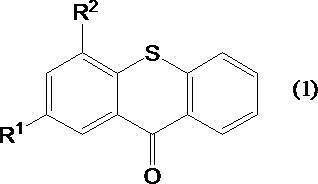
(式中、R1およびR2は-H、-CH2CH3、-iPrまたはClを示し、R1およびR2は同一または異なっても良い)を含有することが好ましい。
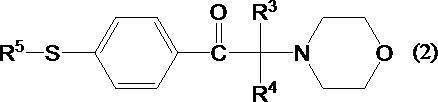
(式中、R3、R4およびR5は-H、-CH3、-CH2CH3、-iPrまたはClを示し、R3、R4およびR5は同一または異なっても良い)を含有することが好ましい。
偏光子は、特に制限されず、各種のものを使用できる。偏光子としては、例えば、ポリビニルアルコール系フィルム、部分ホルマール化ポリビニルアルコール系フィルム、エチレン・酢酸ビニル共重合体系部分ケン化フィルムなどの親水性高分子フィルムに、ヨウ素や二色性染料などの二色性材料を吸着させて一軸延伸したもの、ポリビニルアルコールの脱水処理物やポリ塩化ビニルの脱塩酸処理物などポリエン系配向フィルムなどが挙げられる。これらのなかでもポリビニルアルコール系フィルムとヨウ素などの二色性物質からなる偏光子が好適である。これら偏光子の厚みは特に制限されないが、一般的に80μm程度以下である。偏光子の厚みは、通常、15~35μmであるのが好ましい。
透明保護フィルムは、透湿度が150g/m2/24h以下の低透湿度のものを用いる。前記透湿度は、140g/m2/24h以下が好ましく、さらには120g/m2/24h以下が好ましい。透湿度は、実施例に記載の方法により求められる。
本発明の偏光フィルムにおいて、偏光子と低透湿度の透明保護フィルムの接着には、ラジカル重合性化合物を含有する活性エネルギー線硬化型接着剤が用いられる。活性エネルギー線硬化型接着剤に活性エネルギー線を照射することにより形成された接着剤層(硬化物層)は水系接着剤層に比べて、耐久性が高い。本発明の偏光フィルムにおける、接着剤層は、Tgが60℃以上であることが好ましい。本発明の偏光フィルムにおいて、接着剤層が60℃以上の高Tgになる、活性エネルギー線硬化型接着剤を用いるとともに、接着剤層の厚みを上記範囲に制御した場合、高湿下および高温下の過酷な環境下における耐久性を満足させることができる。
本発明において、ラジカル重合性化合物や偏光子、各種透明保護フィルムなどの溶解度パラメーター(SP値)は、Fedorsの算出法[「ポリマー・エンジニアリング・アンド・サイエンス(Polymer Eng.& Sci.)」,第14巻,第2号(1974),第148~154ページ参照]すなわち、
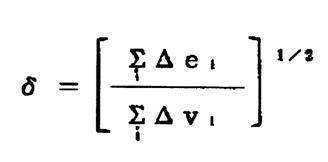
(ただしΔeiは原子または基に帰属する25℃における蒸発エネルギー、Δviは25℃におけるモル体積である)にて計算して求めることができる。
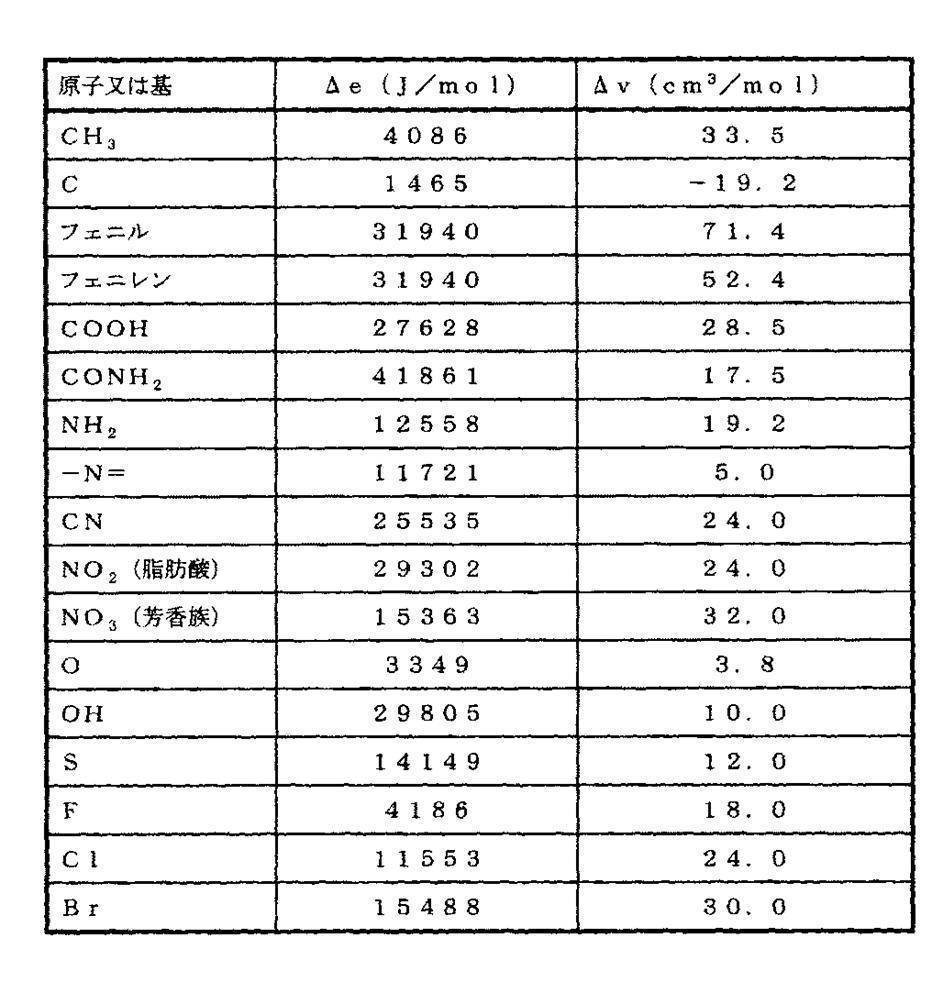
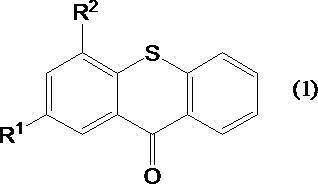
(式中、R1およびR2は-H、-CH2CH3、-iPrまたはClを示し、R1およびR2は同一または異なっても良い)を含有することが好ましい。一般式(1)で表される化合物の具体例としては、例えば、チオキサントン、ジメチルチオキサントン、ジエチルチオキサントン、イソプロピルチオキサントン、クロロチオキサントンなどが挙げられる。一般式(1)で表される化合物の中でも、R1およびR2が-CH2CH3であるジエチルチオキサントンが特に好ましい。
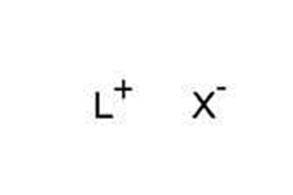
(ただし、L+は、任意のオニウムカチオンを表す。また、X-は、PF6 -、SbF6 -、AsF6 -、SbCl6 -、BiCl5 -、SnCl6 -、ClO4 -、ジチオカルバメートアニオン、SCN-よりからなる群より選択されるカウンターアニオンを表す。)
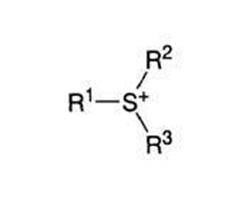
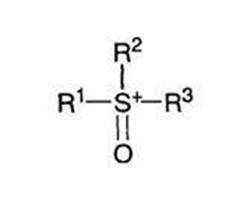
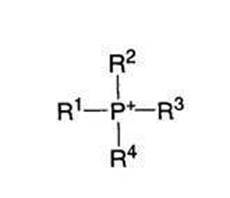
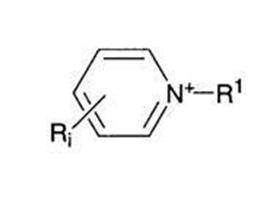
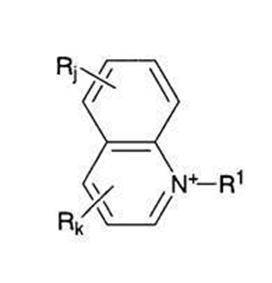

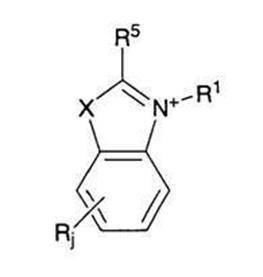
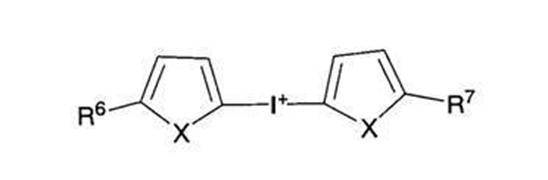
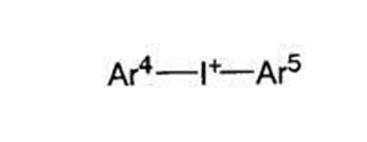
(上記一般式(4)-(12)中、ただし、R1、R2およびR3は、それぞれ独立に、水素原子、置換もしくは未置換のアルキル基、置換もしくは未置換のアルケニル基、置換もしくは未置換のアリール基、置換もしくは未置換の複素環基、置換もしくは未置換のアルコキシル基、置換もしくは未置換のアリールオキシ基、置換もしくは未置換の複素環オキシ基、置換もしくは未置換のアシル基、置換もしくは未置換のカルボニルオキシ基、置換もしくは未置換のオキシカルボニル基、またはハロゲン原子より選ばれる基を表す。R4は、R1、R2およびR3に記載した基と同様の基を表す。R5は、置換もしくは未置換のアルキル基、置換もしくは未置換のアルキルチオ基を表す。R6およびR7は、それぞれ独立に、置換もしくは未置換のアルキル基、置換もしくは未置換のアルコキシル基を表す。Rは、ハロゲン原子、水酸基、カルボキシル基、メルカプト基、シアノ基、ニトロ基、置換もしくは未置換のカルバモイル基、置換もしくは未置換のアルキル基、置換もしくは未置換のアルケニル基、置換もしくは未置換のアリール基、置換もしくは未置換の複素環基、置換もしくは未置換のアルコキシル基、置換もしくは未置換のアリールオキシ基、置換もしくは未置換の複素環オキシ基、置換もしくは未置換のアルキルチオ基、置換もしくは未置換のアリールチオ基、置換もしくは未置換の複素環チオ基、置換もしくは未置換のアシル基、置換もしくは未置換のカルボニルオキシ基、置換もしくは未置換のオキシカルボニル基のいずれかを表す。Ar4、Ar5は、置換もしくは未置換のアリール基、置換もしくは未置換の複素環基のいずれかを表す。Xは、酸素もしくは硫黄原子を表す。iは0~5の整数を表す。jは0~4の整数を表す。kは0~3の整数を表す。また、隣接したR同士、Ar4とAr5、R2とR3、R2とR4、R3とR4、R1とR2、R1とR3、R1とR4、R1とR、もしくはR1とR5は、相互に結合した環状構造であってもよい。)
ジメチルフェニルスルホニウム、ジメチル(o-フルオロフェニル)スルホニウム、ジメチル(m-クロロフェニル)スルホニウム、ジメチル(p-ブロモフェニル)スルホニウム、ジメチル(p-シアノフェニル)スルホニウム、ジメチル(m-ニトロフェニル)スルホニウム、ジメチル(2,4,6-トリブロモフェニル)スルホニウム、ジメチル(ペンタフルオロフェニル)スルホニウム、ジメチル(p-(トリフルオロメチル)フェニル)スルホニウム、ジメチル(p-ヒドロキシフェニル)スルホニウム、ジメチル(p-メルカプトフェニル)スルホニウム、ジメチル(p-メチルスルフィニルフェニル)スルホニウム、ジメチル(p-メチルスルホニルフェニル)スルホニウム、ジメチル(o-アセチルフェニル)スルホニウム、ジメチル(o-ベンゾイルフェニル)スルホニウム、ジメチル(p-メチルフェニル)スルホニウム、ジメチル(p-イソプロピルフェニル)スルホニウム、ジメチル(p-オクタデシルフェニル)スルホニウム、ジメチル(p-シクロヘキシルフェニル)スルホニウム、ジメチル(p-メトキシフェニル)スルホニウム、ジメチル(o-メトキシカルボニルフェニル)スルホニウム、ジメチル(p-フェニルスルファニルフェニル)スルホニウム、(7-メトキシ-2-オキソ-2H-クロメン-4-イル)ジメチルスルホニウム、(4-メトキシナフタレン-1-イル)ジメチルスルホニウム、ジメチル(p-イソプロポキシカルボニルフェニル)スルホニウム、ジメチル(2-ナフチル)スルホニウム、ジメチル(9-アンスリル)スルホニウム、ジエチルフェニルスルホニウム、メチルエチルフェニルスルホニウム、メチルジフェニルスルホニウム、トリフェニルスルホニウム、ジイソプロピルフェニルスルホニウム、ジフェニル(4-フェニルスルファニル-フェニル)-スルホニウム、4,4’-ビス(ジフェニルスルホニウム)ジフェニルスルフィド、4,4’-ビス[ジ[(4-(2-ヒドロキシ-エトキシ)-フェニル)]スルホニウム]]ジフェニルスルフィド、4,4’-ビス(ジフェニルスルホニウム)ビフェニレン、ジフェニル(o-フルオロフェニル)スルホニウム、ジフェニル(m-クロロフェニル)スルホニウム、ジフェニル(p-ブロモフェニル)スルホニウム、ジフェニル(p-シアノフェニル)スルホニウム、ジフェニル(m-ニトロフェニル)スルホニウム、ジフェニル(2,4,6-トリブロモフェニル)スルホニウム、ジフェニル(ペンタフルオロフェニル)スルホニウム、ジフェニル(p-(トリフルオロメチル)フェニル)スルホニウム、ジフェニル(p-ヒドロキシフェニル)スルホニウム、ジフェニル(p-メルカプトフェニル)スルホニウム、ジフェニル(p-メチルスルフィニルフェニル)スルホニウム、ジフェニル(p-メチルスルホニルフェニル)スルホニウム、ジフェニル(o-アセチルフェニル)スルホニウム、ジフェニル(o-ベンゾイルフェニル)スルホニウム、ジフェニル(p-メチルフェニル)スルホニウム、ジフェニル(p-イソプロピルフェニル)スルホニウム、ジフェニル(p-オクタデシルフェニル)スルホニウム、ジフェニル(p-シクロヘキシルフェニル)スルホニウム、ジフェニル(p-メトキシフェニル)スルホニウム、ジフェニル(o-メトキシカルボニルフェニル)スルホニウム、ジフェニル(p-フェニルスルファニルフェニル)スルホニウム、(7-メトキシ-2-オキソ-2H-クロメン-4-イル)ジフェニルスルホニウム、(4-メトキシナフタレン-1-イル)ジフェニルスルホニウム、ジフェニル(p-イソプロポキシカルボニルフェニル)スルホニウム、ジフェニル(2-ナフチル)スルホニウム、ジフェニル(9-アンスリル)スルホニウム、エチルジフェニルスルホニウム、メチルエチル(o-トリル)スルホニウム、メチルジ(p-トリル)スルホニウム、トリ(p-トリル)スルホニウム、ジイソプロピル(4-フェニルスルファニルフェニル)スルホニウム、ジフェニル(2-チエニル)スルホニウム、ジフェニル(2-フリル)スルホニウム、ジフェニル(9-エチル-9Hカルバゾール-3-イル)スルホニウム等を挙げることができるが、これらに限定されるものではない。
ジメチルフェニルスルホキソニウム、ジメチル(o-フルオロフェニル)スルホキソニウム、ジメチル(m-クロロフェニル)スルホキソニウム、ジメチル(p-ブロモフェニル)スルホキソニウム、ジメチル(p-シアノフェニル)スルホキソニウム、ジメチル(m-ニトロフェニル)スルホキソニウム、ジメチル(2,4,6-トリブロモフェニル)スルホキソニウム、ジメチル(ペンタフルオロフェニル)スルホキソニウム、ジメチル(p-(トリフルオロメチル)フェニル)スルホキソニウム、ジメチル(p-ヒドロキシフェニル)スルホキソニウム、ジメチル(p-メルカプトフェニル)スルホキソニウム、ジメチル(p-メチルスルフィニルフェニル)スルホキソニウム、ジメチル(p-メチルスルホニルフェニル)スルホキソニウム、ジメチル(o-アセチルフェニル)スルホキソニウム、ジメチル(o-ベンゾイルフェニル)スルホキソニウム、ジメチル(p-メチルフェニル)スルホキソニウム、ジメチル(p-イソプロピルフェニル)スルホキソニウム、ジメチル(p-オクタデシルフェニル)スルホキソニウム、ジメチル(p-シクロヘキシルフェニル)スルホキソニウム、ジメチル(p-メトキシフェニル)スルホキソニウム、ジメチル(o-メトキシカルボニルフェニル)スルホキソニウム、ジメチル(p-フェニルスルファニルフェニル)スルホキソニウム、(7-メトキシ-2-オキソ-2H-クロメン-4-イル)ジメチルスルホキソニウム、(4-メトキシナフタレン-1-イル)ジメチルスルホキソニウム、ジメチル(p-イソプロポキシカルボニルフェニル)スルホキソニウム、ジメチル(2-ナフチル)スルホキソニウム、ジメチル(9-アンスリル)スルホキソニウム、ジエチルフェニルスルホキソニウム、メチルエチルフェニルスルホキソニウム、メチルジフェニルスルホキソニウム、トリフェニルスルホキソニウム、ジイソプロピルフェニルスルホキソニウム、ジフェニル(4-フェニルスルファニル-フェニル)-スルホキソニウム、4,4’-ビス(ジフェニルスルホキソニウム)ジフェニルスルフィド、4,4’-ビス[ジ[(4-(2-ヒドロキシ-エトキシ)-フェニル)]スルホキソニウム]ジフェニルスルフィド、4,4’-ビス(ジフェニルスルホキソニウム)ビフェニレン、ジフェニル(o-フルオロフェニル)スルホキソニウム、ジフェニル(m-クロロフェニル)スルホキソニウム、ジフェニル(p-ブロモフェニル)スルホキソニウム、ジフェニル(p-シアノフェニル)スルホキソニウム、ジフェニル(m-ニトロフェニル)スルホキソニウム、ジフェニル(2,4,6-トリブロモフェニル)スルホキソニウム、ジフェニル(ペンタフルオロフェニル)スルホキソニウム、ジフェニル(p-(トリフルオロメチル)フェニル)スルホキソニウム、ジフェニル(p-ヒドロキシフェニル)スルホキソニウム、ジフェニル(p-メルカプトフェニル)スルホキソニウム、ジフェニル(p-メチルスルフィニルフェニル)スルホキソニウム、ジフェニル(p-メチルスルホニルフェニル)スルホキソニウム、ジフェニル(o-アセチルフェニル)スルホキソニウム、ジフェニル(o-ベンゾイルフェニル)スルホキソニウム、ジフェニル(p-メチルフェニル)スルホキソニウム、ジフェニル(p-イソプロピルフェニル)スルホキソニウム、ジフェニル(p-オクタデシルフェニル)スルホキソニウム、ジフェニル(p-シクロヘキシルフェニル)スルホキソニウム、ジフェニル(p-メトキシフェニル)スルホキソニウム、ジフェニル(o-メトキシカルボニルフェニル)スルホキソニウム、ジフェニル(p-フェニルスルファニルフェニル)スルホキソニウム、(7-メトキシ-2-オキソ-2H-クロメン-4-イル)ジフェニルスルホキソニウム、(4-メトキシナフタレン-1-イル)ジフェニルスルホキソニウム、ジフェニル(p-イソプロポキシカルボニルフェニル)スルホキソニウム、ジフェニル(2-ナフチル)スルホキソニウム、ジフェニル(9-アンスリル)スルホキソニウム、エチルジフェニルスルホキソニウム、メチルエチル(o-トリル)スルホキソニウム、メチルジ(p-トリル)スルホキソニウム、トリ(p-トリル)スルホキソニウム、ジイソプロピル(4-フェニルスルファニルフェニル)スルホキソニウム、ジフェニル(2-チエニル)スルホキソニウム、ジフェニル(2-フリル)スルホキソニウム、ジフェニル(9-エチル-9Hカルバゾール-3-イル)スルホキソニウム等を挙げることができるが、これらに限定されるものではない。
ホスホニウムカチオンの例:
トリメチルフェニルホスホニウム、トリエチルフェニルホスホニウム、テトラフェニルホスホニウム、トリフェニル(p-フルオロフェニル)ホスホニウム、トリフェニル(o-クロロフェニル)ホスホニウム、トリフェニル(m-ブロモフェニル)ホスホニウム、トリフェニル(p-シアノフェニル)ホスホニウム、トリフェニル(m-ニトロフェニル)ホスホニウム、トリフェニル(p-フェニルスルファニルフェニル)ホスホニウム、(7-メトキシ-2-オキソ-2H-クロメン-4-イル)トリフェニルホスホニウム、トリフェニル(o-ヒドロキシフェニル)ホスホニウム、トリフェニル(o-アセチルフェニル)ホスホニウム、トリフェニル(m-ベンゾイルフェニル)ホスホニウム、トリフェニル(p-メチルフェニル)ホスホニウム、トリフェニル(p-イソプロポキシフェニル)ホスホニウム、トリフェニル(o-メトキシカルボニルフェニル)ホスホニウム、トリフェニル(1-ナフチル)ホスホニウム、トリフェニル(9-アンスリル)ホスホニウム、トリフェニル(2-チエニル)ホスホニウム、トリフェニル(2-フリル)ホスホニウム、トリフェニル(9-エチル-9Hカルバゾール-3-イル)ホスホニウム等を挙げることができるが、これらに限定されるものではない。
ピリジニウムカチオンの例:
N-フェニルピリジニウム、N-(o-クロロフェニル)ピリジニウム、N-(m-クロロフェニル)ピリジニウム、N-(p-シアノフェニル)ピリジニウム、N-(o-ニトロフェニル)ピリジニウム、N-(p-アセチルフェニル)ピリジニウム、N-(p-イソプロピルフェニル)ピリジニウム、N-(p-オクタデシルオキシフェニル)ピリジニウム、N-(p-メトキシカルボニルフェニル)ピリジニウム、N-(9-アンスリル)ピリジニウム、2-クロロ-1-フェニルピリジニウム、2-シアノ-1-フェニルピリジニウム、2-メチル-1-フェニルピリジニウム、2-ビニル-1-フェニルピリジニウム、2-フェニル-1-フェニルピリジニウム、1,2-ジフェニルピリジニウム、2-メトキシ-1-フェニルピリジニウム、2-フェノキシ-1-フェニルピリジニウム、2-アセチル-1-(p-トリル)ピリジニウム、2-メトキシカルボニル-1-(p-トリル)ピリジニウム、3-フルオロ-1-ナフチルピリジニウム、4-メチル-1-(2-フリル)ピリジニウム、N-メチルピリジニウム、N-エチルピリジニウム等を挙げることができるが、これらに限定されるものではない。
キノリニウムカチオンの例:
N-メチルキノリニウム、N-エチルキノリニウム、N-フェニルキノリニウム、N-ナフチルキノリニウム、N-(o-クロロフェニル)キノリニウム、N-(m-クロロフェニル)キノリニウム、N-(p-シアノフェニル)キノリニウム、N-(o-ニトロフェニル)キノリニウム、N-(p-アセチルフェニル)キノリニウム、N-(p-イソプロピルフェニル)キノリニウム、N-(p-オクタデシルオキシフェニル)キノリニウム、N-(p-メトキシカルボニルフェニル)キノリニウム、N-(9-アンスリル)キノリニウム、2-クロロ-1-フェニルキノリニウム、2-シアノ-1-フェニルキノリニウム、2-メチル-1-フェニルキノリニウム、2-ビニル-1-フェニルキノリニウム、2-フェニル-1-フェニルキノリニウム、1,2-ジフェニルキノリニウム、2-メトキシ-1-フェニルキノリニウム、2-フェノキシ-1-フェニルキノリニウム、2-アセチル-1-フェニルキノリニウム、2-メトキシカルボニル-1-フェニルキノリニウム、3-フルオロ-1-フェニルキノリニウム、4-メチル-1-フェニルキノリニウム、2-メトキシ-1-(p-トリル)キノリニウム、2-フェノキシ-1-(2-フリル)キノリニウム、2-アセチル-1-(2-チエニル)キノリニウム、2-メトキシカルボニル-1-メチルキノリニウム、3-フルオロ-1-エチルキノリニウム、4-メチル-1-イソプロピルキノリニウム等を挙げることができるが、これらに限定されるものではない。
イソキノリニウムカチオンの例:
N-フェニルイソキノリニウム、N-メチルイソキノリニウム、N-エチルイソキノリニウム、N-(o-クロロフェニル)イソキノリニウム、N-(m-クロロフェニル)イソキノリニウム、N-(p-シアノフェニル)イソキノリニウム、N-(o-ニトロフェニル)イソキノリニウム、N-(p-アセチルフェニル)イソキノリニウム、N-(p-イソプロピルフェニル)イソキノリニウム、N-(p-オクタデシルオキシフェニル)イソキノリニウム、N-(p-メトキシカルボニルフェニル)イソキノリニウム、N-(9-アンスリル)イソキノリニウム、1,2-ジフェニルイソキノリニウム、N-(2-フリル)イソキノリニウム、N-(2-チエニル)イソキノリニウム、N-ナフチルイソキノリニウム等を挙げることができるが、これらに限定されるものではない。
ベンゾオキサゾリウムカチオンの例:
N-メチルベンゾオキサゾリウム、N-エチルベンゾオキサゾリウム、N-ナフチルベンゾオキサゾリウム、N-フェニルベンゾオキサゾリウム、N-(p-フルオロフェニル)ベンゾオキサゾリウム、N-(p-クロロフェニル)ベンゾオキサゾリウム、N-(p-シアノフェニル)ベンゾオキサゾリウム、N-(o-メトキシカルボニルフェニル)ベンゾオキサゾリウム、N-(2-フリル)ベンゾオキサゾリウム、N-(o-フルオロフェニル)ベンゾオキサゾリウム、N-(p-シアノフェニル)ベンゾオキサゾリウム、N-(m-ニトロフェニル)ベンゾオキサゾリウム、N-(p-イソプロポキシカルボニルフェニル)ベンゾオキサゾリウム、N-(2-チエニル)ベンゾオキサゾリウム、N-(m-カルボキシフェニル)ベンゾオキサゾリウム、2-メルカプト-3-フェニルベンゾオキサゾリウム、2-メチル-3-フェニルベンゾオキサゾリウム、2-メチルチオ-3-(4-フェニルスルファニルフェニル)ベンゾオキサゾリウム、6-ヒドロキシ-3-(p-トリル)ベンゾオキサゾリウム、7-メルカプト-3-フェニルベンゾオキサゾリウム、4,5-ジフルオロ-3-エチルベンゾオキサゾリウム等を挙げることができるが、これらに限定されるものではない。
N-メチルベンゾチアゾリウム、N-エチルベンゾチアゾリウム、N-フェニルベンゾチアゾリウム、N-(1-ナフチル)ベンゾチアゾリウム、N-(p-フルオロフェニル)ベンゾチアゾリウム、N-(p-クロロフェニル)ベンゾチアゾリウム、N-(p-シアノフェニル)ベンゾチアゾリウム、N-(o-メトキシカルボニルフェニル)ベンゾチアゾリウム、N-(p-トリル)ベンゾチアゾリウム、N-(o-フルオロフェニル)ベンゾチアゾリウム、N-(m-ニトロフェニル)ベンゾチアゾリウム、N-(p-イソプロポキシカルボニルフェニル)ベンゾチアゾリウム、N-(2-フリル)ベンゾチアゾリウム、N-(4-メチルチオフェニル)ベンゾチアゾリウム、N-(4-フェニルスルファニルフェニル)ベンゾチアゾリウム、N-(2-ナフチル)ベンゾチアゾリウム、N-(m-カルボキシフェニル)ベンゾチアゾリウム、2-メルカプト-3-フェニルベンゾチアゾリウム、2-メチル-3-フェニルベンゾチアゾリウム、2-メチルチオ-3-フェニルベンゾチアゾリウム、6-ヒドロキシ-3-フェニルベンゾチアゾリウム、7-メルカプト-3-フェニルベンゾチアゾリウム、4,5-ジフルオロ-3-フェニルベンゾチアゾリウム等を挙げることができるが、これらに限定されるものではない。
ジフリルヨードニウム、ジチエニルヨードニウム、ビス(4,5-ジメチル-2-フリル)ヨードニウム、ビス(5-クロロ-2-チエニル)ヨードニウム、ビス(5-シアノ-2-フリル)ヨードニウム、ビス(5-ニトロ-2-チエニル)ヨードニウム、ビス(5-アセチル-2-フリル)ヨードニウム、ビス(5-カルボキシ-2-チエニル)ヨードニウム、ビス(5-メトキシカルボニル-2-フリル)ヨードニウム、ビス(5-フェニル-2-フリル)ヨードニウム、ビス(5-(p-メトキシフェニル)-2-チエニル)ヨードニウム、ビス(5-ビニル-2-フリル)ヨードニウム、ビス(5-エチニル-2-チエニル)ヨードニウム、ビス(5-シクロヘキシル-2-フリル)ヨードニウム、ビス(5-ヒドロキシ-2-チエニル)ヨードニウム、ビス(5-フェノキシ-2-フリル)ヨードニウム、ビス(5-メルカプト-2-チエニル)ヨードニウム、ビス(5-ブチルチオ-2-チエニル)ヨードニウム、ビス(5-フェニルチオ-2-チエニル)ヨードニウム等を挙げることができるが、これらに限定されるものではない。
ジフェニルヨードニウム、ビス(p-トリル)ヨードニウム、ビス(p-オクチルフェニル)ヨードニウム、ビス(p-オクタデシルフェニル)ヨードニウム、ビス(p-オクチルオキシフェニル)ヨードニウム、ビス(p-オクタデシルオキシフェニル)ヨードニウム、フェニル(p-オクタデシルオキシフェニル)ヨードニウム、4-イソプロピル-4’-メチルジフェニルヨードニウム、(4-イソブチルフェニル)-p-トリルヨードニウム、ビス(1-ナフチル)ヨードニウム、ビス(4-フェニルスルファニルフェニル)ヨードニウム、フェニル(6-ベンゾイル-9-エチル-9H-カルバゾール-3-イル)ヨードニウム、(7-メトキシ-2-オキソ-2H-クロメン-3-イル)-4’-イソプロピルフェニルヨードニウム等を挙げることができるが、これらに限定されるものではない。
分子内に1個以上のエポキシ基を有する化合物又は分子内に2個以上のエポキシ基を有する高分子(エポキシ樹脂)を用いる場合は、エポキシ基との反応性を有する官能基を分子内に二つ以上有する化合物を併用してもよい。ここでエポキシ基との反応性を有する官能基とは、例えば、カルボキシル基、フェノール性水酸基、メルカプト基、1級又は2級の芳香族アミノ基等が挙げられる。これらの官能基は、3次元硬化性を考慮して、一分子中に2つ以上有することが特に好ましい。
分子内にアルコキシル基を有する化合物としては、分子内に1個以上のアルコキシル基を有するものであれば特に制限なく、公知のものを使用できる。シランカップリング剤などが代表として挙げられる。なお、接着剤層のガラス転移温度Tgを計算する際には、アルコキシル基を有する化合物及び高分子(H)を計算には入れないこととする。
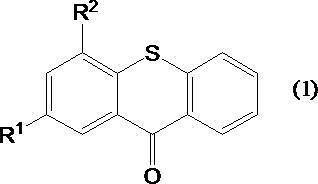
(式中、R1およびR2は-H、-CH2CH3、-iPrまたはClを示し、R1およびR2は同一または異なっても良い)を単独で使用するか、あるいは一般式(1)で表される化合物と後述する380nm以上の光に対して高感度な光重合開始剤とを併用することが好ましい。一般式(1)で表される化合物を使用した場合、380nm以上の光に対して高感度な光重合開始剤を単独で使用した場合に比べて接着性に優れる。一般式(1)で表される化合物の中でも、R1およびR2が-CH2CH3であるジエチルチオキサントンが特に好ましい。組成物中の一般式(1)で表される化合物の組成比率は、組成物全量を100重量%としたとき、0.1~5.0重量%であることが好ましく、0.5~4.0重量%であることがより好ましく、0.9~3.0重量%であることがさらに好ましい。
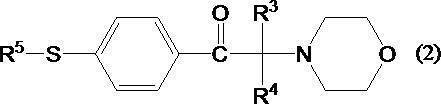
(式中、R3、R4およびR5は-H、-CH3、-CH2CH3、-iPrまたはClを示し、R3、R4およびR5は同一または異なっても良い)を使用することが好ましい。一般式(2)で表される化合物としては、市販品でもある2-メチル-1-(4-メチルチオフェニル)-2-モルフォリノプロパン-1-オン(商品名:IRGACURE907 メーカー:BASF)が好適に使用可能である。その他、2-ベンジル-2-ジメチルアミノ-1-(4-モルフォリノフェニル)-ブタノン-1(商品名:IRGACURE369 メーカー:BASF)、2-(ジメチルアミノ)-2-[(4-メチルフェニル)メチル]-1-[4-(4-モルホリニル)フェニル]-1-ブタノン(商品名:IRGACURE379 メーカー:BASF)が感度が高いため好ましい。
本発明に係る偏光フィルムは、例えば、偏光子の少なくとも一方の面に、接着剤層を介して透明保護フィルムが設けられている偏光フィルムの製造方法、具体的には、前記透明保護フィルムが、透湿度が150g/m2/24h以下、かつ波長365nmの光線透過率が5%未満であり、前記偏光子または前記透明保護フィルムの少なくとも一方の面に、ラジカル重合性化合物を含有する活性エネルギー線硬化型接着剤を塗工する塗工工程と、前記偏光子および前記透明保護フィルムとを貼り合わせる貼合工程と、前記偏光子面側または前記透明保護フィルム面側から活性エネルギー線を照射して、前記活性エネルギー線硬化型接着剤を硬化させることにより得られた接着剤層を介して、前記偏光子および前記透明保護フィルムを接着させる接着工程とを含むことを特徴とする偏光フィルムの製造方法、により製造することができる。
平均重合度2400、ケン化度99.9モル%の厚み75μmのポリビニルアルコールフィルムを、30℃の温水中に60秒間浸漬し膨潤させた。次いで、ヨウ素/ヨウ化カリウム(重量比=0.5/8)の濃度0.3%の水溶液に浸漬し、3.5倍まで延伸させながらフィルムを染色した。その後、65℃のホウ酸エステル水溶液中で、トータルの延伸倍率が6倍となるように延伸を行った。延伸後に、40℃のオーブンにて3分間乾燥を行い、PVA系偏光子(SP値32.8、厚み23μm)を得た。水分率は14重量%であった。
・厚み40μm、透湿度60g/m2/24hのアクリル系樹脂フィルム(SP値22.2)。
・厚み50μm、透湿度5g/m2/24hの環状ポリオレフィン系樹脂フィルム(ゼオノアフィルム,日本ゼオン社製:ZB12-52125)(SP値18.6)。
・厚み60μm、透湿度500g/m2/24hのトリアセチルセルロース(TAC)フィルム(SP値23.3)。
透湿度の測定は、JIS Z0208の透湿度試験(カップ法)に準じて測定した。直径60mmに切断したサンプルを約15gの塩化カルシウムを入れた透湿カップにセットし、温度40℃、湿度90%R.H.の恒温機に入れ、24時間放置した前後の塩化カルシウムの重量増加を測定することで透湿度(g/m2/24h)を求めた。
活性エネルギー線として、紫外線(ガリウム封入メタルハライドランプ) 照射装置:Fusion UV Systems,Inc社製Light HAMMER10 バルブ:Vバルブ ピーク照度:1600mW/cm2、積算照射量1000/mJ/cm2(波長380~440nm)を使用した。なお、紫外線の照度は、Solatell社製Sola-Checkシステムを使用して測定した。
ラジカル重合性化合物(A)として、N-ヒドロキシエチルアクリルアミド(SP値29.6,ホモポリマーのTg123℃,興人社製)を38.3部、
ラジカル重合性化合物(B)として、トリプロピレングリコールジアクリレート(商品名:アロニックスM-220,SP値19.0,ホモポリマーのTg69℃,東亞合成社製)を19.1部、
ラジカル重合性化合物(C)として、アクリロイルモルホリン(SP値22.9,ホモポリマーのTg150℃,興人社製)を38.3部、および
光重合開始剤(商品名:KAYACURE DETX-S,ジエチルチオキサントン,日本化薬社製)1.4部を混合して50℃で1時間撹拌して活性エネルギー線硬化型接着剤(1)を得た。
前記活性エネルギー線硬化型接着剤(1)にAAEM(アセトアセトキシエチルメタクリレート)(日本合成化学(株)社製)10部を追加して活性エネルギー線硬化型接着剤(2)を得た。
活性エネルギー線硬化型接着剤(1)にデナコールEX-611(ソルビトールポリグリシジルエーテル)、(ナガセケムテックス社製)10部と光酸発生剤としてCPI-100P(トリアリールスルホニウムヘキサフルオロホスフェートを主成分とする有効成分50%のプロピレンカーボネート溶液)、(サンアプロ社製)3部を追加して活性エネルギー線硬化型接着剤(3)を得た。
活性エネルギー線硬化型接着剤(1)にKBM-403(3-グリシドキシプロピルメチルジエトキシシラン)(信越シリコーン社製)10部と光酸発生剤としてCPI-100P(トリアリールスルホニウムヘキサフルオロホスフェートを主成分とする有効成分50%のプロピレンカーボネート溶液)、(サンアプロ社製)3部を追加して活性エネルギー線硬化型接着剤(4)を得た。
活性エネルギー線硬化型接着剤(1)にKBM-603 (N-2-(アミノエチル)-3-アミノプロピルトリエトキシシラン)(信越シリコーン社製)1部を追加して活性エネルギー線硬化型接着剤(5)を得た。
Tgは、TAインスツルメンツ製動的粘弾性測定装置RSAIIIを用い以下の測定条件で測定した。
サンプルサイズ:幅10mm、長さ30mm、
クランプ距離20mm、
測定モード:引っ張り、周波数:1Hz、昇温速度:5℃/分
動的粘弾性の測定を行い、tanδのピークトップの温度Tgとして採用した。
<偏光フィルムの作製>
上記アクリル系樹脂フィルム上に、厚さ0.5μmのウレタン系易接着剤層を形成した後に、当該易接着剤層に、上記活性エネルギー線硬化型接着剤を、MCDコーター(富士機械社製)(セル形状:ハニカム、グラビアロール線数:1000本/inch、回転速度140%/対ライン速)を用いて、接着剤層の厚みが0.5μmになるように塗工した。次いで、前記接着剤を介して、前記アクリル系樹脂フィルムを、透明保護フィルム1および2として、上記偏光子の両面にロール機で貼り合わせた。その後、貼り合わせたアクリル系樹脂フィルムの両側から、IRヒーターを用いて50℃に加温し、上記紫外線を両面に照射して、活性エネルギー線硬化型接着剤を硬化させた。さらに、70℃で3分間熱風乾燥して、偏光子の両面に透明保護フィルムを有する偏光フィルムを得た。貼り合わせのライン速度は25m/minで行った。接着剤層のTgは121℃であった。
実施例1において、透明保護フィルムの種類を表2に示すように変えたこと以外は、実施例1と同様にして、偏光フィルムを得た。なお、透明保護フィルムが環状ポリオレフィン系樹脂フィルムの場合には、アクリル系樹脂フィルムにおいて易接着剤層を形成する代わりに、コロナ処理を施した。
塗工工程前に、上記偏光子の両面にドライ処理(コロナ処理)をコロナ放電量80[W・min/m2]で行ったこと以外は、実施例1と同様にして、偏光フィルムを得た。
活性エネルギー線硬化型接着剤の種類を表2に記載のもの(活性エネルギー線硬化型接着剤(2)~(5))に代えたこと以外は、実施例1と同様にして、偏光フィルムを得た。
<水系接着剤の調製>
アセトアセチル基を含有するポリビニルアルコール系樹脂(平均重合度:1200,ケン化度:98.5モル%,アセトアセチル化度:5モル%)100部に対し、メチロールメラミン50部を、30℃の温度条件下に、純水に溶解し、固形分濃度3.7%に調整した水溶液を調製した。前記水溶液100部に対し、アルミナコロイド水溶液(平均粒子径15nm,固形分濃度10%,正電荷)18部を加えて接着剤水溶液を調製した。
上記アクリル系樹脂フィルム上に、厚さ0.3μmのウレタン系易接着剤層を形成した。次いで、偏光子の両面に、上記アクリル系樹脂フィルム(易接着剤層側)を、上記水系接着剤を介してロール機で貼り合せた後、70℃で3分間乾燥させて、偏光フィルムを得た。前記水系接着剤は、偏光子と上記アクリル系樹脂フィルムの間に、接着剤層の厚さが150nmになるように滴下させた。
比較例1において、透明保護フィルムの種類を表2に示すように変えたこと以外は、比較例1と同様にして、偏光フィルムを得た。なお、透明保護フィルムが環状ポリオレフィン系樹脂フィルムの場合には、アクリル系樹脂フィルムにおいて易接着剤層を形成する代わりに、コロナ処理を施した。
実施例および比較例で得られた偏光フィルムについて下記評価を行った。結果を表2に示す。
偏光フィルムの単体透過率T、平行透過率Tp、直交透過率Tcは、紫外可視分光光度計(日本分光社製のV7100)を用いて測定した。これらの透過率は、JISZ8701の2度視野(C光源)により測定して視感度補正を行なったY値である。偏光度Pを上記の透過率を用い、次式により求めた。
偏光度P(%)={(Tp-Tc)/(Tp+Tc)}1/2×100
表2には単体透過率が42.8%の時の偏光度を示す。
偏光フィルムを、偏光子の延伸方向に50mm、垂直方向に25mmの長方形にカットしたものをサンプルとした。前記サンプルを加湿装置内に投入し、20℃、98%R.H.の環境下で48時間放置した。その後、前記分光光度計を用いて、再び色相a1値及び色相b1値を測定した。加湿装置への投入前後の測定値から、直交色相の変化Δabの値を下記式に基づき算出した。尚、色相a値、色相b値はハンター表色系におけるa値、b値である。
Δab=√{(a1-a0)2+(b1-b0)2}
上記同様の形状のサンプルについて、偏光フィルムの作製直後の偏光フィルムの水分率をM1(%)とした。一方、偏光フィルムを作製した後、20℃、65%R.H.の環境下に120時間放置した後の偏光フィルムの水分率のM2(%)とした。偏光フィルムの水分率変化量(%)は、下記式からを求めた。
偏光フィルムの水分率変化量(%)=M2-M1
なお、偏光フィルムの各水分率M1、M2は下記式から算出した。
M1(%)={(W1-W0)/W1}×100
M2(%)={(W2-W0)/W2}×100
W0:120℃で2時間乾燥した後の偏光フィルム重量
W1:偏光フィルムを作製した直後の偏光フィルム重量
W2:20℃、65%R.H.の環境下に120時間放置した後の偏光フィルム重量
偏光フィルムを偏光子の延伸方向と平行に200MM、直行方向に15MMの大きさに切り出し、透明保護フィルム(アクリル樹脂フィルム)と偏光子との間にカッターナイフで切り込みを入れ、偏光フィルムをガラス板に貼り合わせた。かかる偏光フィルムを40℃の温水に2時間浸漬させた後、取り出して30分以内に(非乾燥状態で)テンシロンにより、90度方向に保護フィルムと偏光子とを剥離速度300MM/MINで剥離し、その剥離強度(N/15MM)を測定した。
剥離強度が
0.5N/15MM以上である場合を○
0.3N/15MM~0.5N/15MM未満である場合を△
0.3N/15MM未満である場合を×とした。

Claims (28)
- 偏光子の両面に、ラジカル重合性化合物を含有する活性エネルギー線硬化型接着剤に活性エネルギー線を照射することにより形成された接着剤層を介して、透湿度が150g/m2/24h以下の透明保護フィルムが貼り合わされていることを特徴とする偏光フィルム。
- 前記接着剤層のTgが、60℃以上である請求項1に記載の偏光フィルム。
- 前記活性エネルギー線硬化型接着剤が、ラジカル重合性化合物(A)、(B)および(C)を含有する活性エネルギー線硬化型接着剤であって、組成物全量を100重量%としたとき、
SP値が29.0(kJ/m3)1/2以上32.0以下(kJ/m3)1/2であるラジカル重合性化合物(A)を20~60重量%、
SP値が18.0(kJ/m3)1/2以上21.0(kJ/m3)1/2未満であるラジカル重合性化合物(B)を10~30重量%、および
SP値が21.0(kJ/m3)1/2以上23.0(kJ/m3)1/2以下であるラジカル重合性化合物(C)を20~60重量%含有し、
前記ラジカル重合性化合物(A)、(B)および(C)それぞれのホモポリマーのガラス転移温度(Tg)がいずれも60℃以上である請求項1または2に記載の偏光フィルム。 - 前記活性エネルギー線硬化型接着剤が、さらに活性メチレン基を有するラジカル重合性化合物(D)、および水素引き抜き作用のあるラジカル重合開始剤(E)を含有するものである請求項1~3のいずれかに記載の偏光フィルム。
- 前記活性メチレン基が、アセトアセチル基である請求項4に記載の偏光フィルム。
- 前記ラジカル重合性化合物(D)が、アセトアセトキシアルキル(メタ)アクリレートである請求項4または5に記載の偏光フィルム。
- 前記ラジカル重合開始剤(E)が、チオキサントン系ラジカル重合開始剤である請求項4~6のいずれかに記載の偏光フィルム。
- 組成物全量を100重量%としたとき、前記ラジカル重合性化合物(D)を1~50重量%、および前記ラジカル重合開始剤(E)を0.1~10重量%含有する請求項4~7のいずれかに記載の偏光フィルム。
- 前記活性エネルギー線硬化型接着剤が、さらに光酸発生剤(F)を含有する請求項1~8のいずれかに記載の偏光フィルム。
- 前記光酸発生剤(F)が、PF6 -、SbF6 -およびAsF6 -からなる群より選択される少なくとも1種をカウンターアニオンとして有する光酸発生剤を含有する請求項9に記載の偏光フィルム。
- 前記活性エネルギー線硬化型接着剤が、前記光酸発生剤(F)とアルコキシ基、エポキシ基いずれかを含む化合物(G)とを含有する請求項9または10に記載の偏光フィルム。
- 前記活性エネルギー線硬化型接着剤が、アミノ基を有するシランカップリング剤(H)を含有する請求項1~11のいずれかに記載の偏光フィルム。
- 前記活性エネルギー線硬化型接着剤が、組成物全量を100重量%としたとき、アミノ基を有するシランカップリング剤(H)を0.01~20重量%含有する請求項12の偏光フィルム。
- 前記ラジカル重合性化合物(A)が、ヒドロキシエチルアクリルアミドおよび/またはN-メチロールアクリルアミドである請求項1~13のいずれか記載の偏光フィルム。
- 前記ラジカル重合性化合物(B)が、トリプロピレングリコールジアクリレートである請求項1~14のいずれか記載の偏光フィルム。
- 前記ラジカル重合性化合物(C)が、アクリロイルモルホリンおよび/またはN-メトキシメチルアクリルアミドである請求項1~15のいずれか記載の偏光フィルム。
- 前記活性エネルギー線硬化型接着剤が、光重合開始剤として、下記一般式(1)で表される化合物;

(式中、R1およびR2は-H、-CH2CH3、-iPrまたはClを示し、R1およびR2は同一または異なっても良い)を含有する請求項1~16のいずれか記載の偏光フィルム。 - 前記活性エネルギー線硬化型接着剤が、光重合開始剤として、さらに下記一般式(2)で表される化合物;
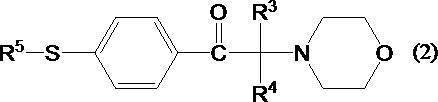
(式中、R3、R4およびR5は-H、-CH3、-CH2CH3、-iPrまたはClを示し、R3、R4およびR5は同一または異なっても良い)を含有する請求項17に記載の偏光フィルム。 - 前記透明保護フィルムの波長365nmの光線透過率が5%未満である請求項1~18のいずれか記載の偏光フィルム。
- 前記透明保護フィルムのSP値が29.0(kJ/m3)1/2以上33.0(kJ/m3)1/2未満である請求項1~19のいずれかに記載の偏光フィルム。
- 前記透明保護フィルムのSP値が18.0(kJ/m3)1/2以上24.0(kJ/m3)1/2未満である請求項1~20のいずれかに記載の偏光フィルム。
- 前記透明保護フィルムの形成材料が、ポリカーボネート系樹脂、環状ポリオレフィン系樹脂および(メタ)アクリル系樹脂から選ばれるいずれか1つである請求項1~21のいずれかに記載の偏光フィルム。
- 前記接着剤層の厚みが、0.01~7μmであることを特徴とする請求項1~22のいずれかに記載の偏光フィルム。
- 偏光子の少なくとも一方の面に、接着剤層を介して透明保護フィルムが設けられている偏光フィルムの製造方法であって、
前記透明保護フィルムが、透湿度が150g/m2/24h以下、かつ波長365nmの光線透過率が5%未満であり、
前記偏光子または前記透明保護フィルムの少なくとも一方の面に、ラジカル重合性化合物を含有する活性エネルギー線硬化型接着剤を塗工する塗工工程と、
前記偏光子および前記透明保護フィルムとを貼り合わせる貼合工程と、
前記偏光子面側または前記透明保護フィルム面側から活性エネルギー線を照射して、前記活性エネルギー線硬化型接着剤を硬化させることにより得られた接着剤層を介して、前記偏光子および前記透明保護フィルムを接着させる接着工程とを含むことを特徴とする偏光フィルムの製造方法。 - 前記塗工工程前に、前記偏光子または前記透明保護フィルムの少なくとも一方の面であって、前記活性エネルギー線硬化型接着剤を塗工する側の面に、コロナ処理、プラズマ処理、フレーム処理またはエキシマー処理を実施する請求項24に記載の偏光フィルムの製造方法。
- 前記貼合工程時の前記偏光子の水分率が15%未満である請求項24または25に記載の偏光フィルムの製造方法。
- 請求項1~23のいずれかに記載の偏光フィルムが、少なくとも1枚積層されていることを特徴とする光学フィルム。
- 請求項1~23のいずれかに記載の偏光フィルム、および/または請求項27に記載の光学フィルムが用いられていることを特徴とする画像表示装置。
Priority Applications (3)
| Application Number | Priority Date | Filing Date | Title |
|---|---|---|---|
| CN201380015662.XA CN104185803B (zh) | 2012-03-30 | 2013-03-29 | 偏振膜、光学膜和图像显示装置 |
| KR1020147019347A KR102038721B1 (ko) | 2012-03-30 | 2013-03-29 | 편광 필름, 광학 필름 및 화상 표시 장치 |
| US14/388,926 US9829605B2 (en) | 2012-03-30 | 2013-03-29 | Polarized film, optical film, and image display device |
Applications Claiming Priority (4)
| Application Number | Priority Date | Filing Date | Title |
|---|---|---|---|
| JP2012-081211 | 2012-03-30 | ||
| JP2012081211 | 2012-03-30 | ||
| JP2013-069179 | 2013-03-28 | ||
| JP2013069179A JP6308721B2 (ja) | 2012-03-30 | 2013-03-28 | 偏光フィルム、光学フィルムおよび画像表示装置 |
Publications (1)
| Publication Number | Publication Date |
|---|---|
| WO2013147192A1 true WO2013147192A1 (ja) | 2013-10-03 |
Family
ID=49260433
Family Applications (1)
| Application Number | Title | Priority Date | Filing Date |
|---|---|---|---|
| PCT/JP2013/059602 Ceased WO2013147192A1 (ja) | 2012-03-30 | 2013-03-29 | 偏光フィルム、光学フィルムおよび画像表示装置 |
Country Status (6)
| Country | Link |
|---|---|
| US (1) | US9829605B2 (ja) |
| JP (1) | JP6308721B2 (ja) |
| KR (1) | KR102038721B1 (ja) |
| CN (1) | CN104185803B (ja) |
| TW (1) | TWI569049B (ja) |
| WO (1) | WO2013147192A1 (ja) |
Cited By (9)
| Publication number | Priority date | Publication date | Assignee | Title |
|---|---|---|---|---|
| WO2014084076A1 (ja) * | 2012-11-30 | 2014-06-05 | 日東電工株式会社 | 活性エネルギー線硬化型接着剤組成物、偏光フィルムおよびその製造方法、光学フィルムおよび画像表示装置 |
| JP2014132092A (ja) * | 2014-04-03 | 2014-07-17 | Nitto Denko Corp | 活性エネルギー線硬化型接着剤組成物、偏光フィルムおよびその製造方法、光学フィルムおよび画像表示装置 |
| KR101518504B1 (ko) | 2013-10-17 | 2015-05-11 | 제일모직주식회사 | 편광판용 접착제 조성물, 이를 포함하는 편광판용 접착 필름, 이를 포함하는 편광판 및 이를 포함하는 광학 표시 장치 |
| WO2015099022A1 (ja) * | 2013-12-26 | 2015-07-02 | 日東電工株式会社 | 積層偏光フィルム、その製造方法、積層光学フィルムおよび画像表示装置 |
| US20160313475A1 (en) * | 2013-12-12 | 2016-10-27 | Sumitomo Chemical Company, Limited | Polarizing plate |
| JP2018084827A (ja) * | 2017-12-18 | 2018-05-31 | 住友化学株式会社 | 偏光板 |
| CN110462469A (zh) * | 2017-03-28 | 2019-11-15 | 日东电工株式会社 | 带粘合剂层的偏振膜、内嵌型液晶面板用带粘合剂层的偏振膜、内嵌型液晶面板、以及液晶显示装置 |
| JP2020073977A (ja) * | 2019-10-08 | 2020-05-14 | 住友化学株式会社 | 偏光板 |
| WO2021100423A1 (ja) * | 2019-11-19 | 2021-05-27 | 日東電工株式会社 | 光学積層体の製造方法、接着剤塗工装置及び光学積層体の製造装置 |
Families Citing this family (23)
| Publication number | Priority date | Publication date | Assignee | Title |
|---|---|---|---|---|
| JP5815645B2 (ja) * | 2013-11-14 | 2015-11-17 | 日東電工株式会社 | 光学フィルムの製造方法、光学フィルムおよび画像表示装置 |
| JP6349082B2 (ja) | 2013-12-12 | 2018-06-27 | 住友化学株式会社 | 偏光板及び表示装置 |
| CN105849601B (zh) | 2013-12-26 | 2019-04-12 | 住友化学株式会社 | 偏振器以及具有该偏振器的偏振板和偏振性层叠膜 |
| JP2015163952A (ja) * | 2014-01-28 | 2015-09-10 | 住友化学株式会社 | 偏光板の保管方法、偏光板が有する波打ち欠陥の解消又は低減方法、及び偏光板の製造方法 |
| KR101732223B1 (ko) * | 2014-05-30 | 2017-05-02 | 주식회사 엘지화학 | 광학 필름의 제조 방법, 이를 이용하여 제조되는 광학 부재 및 광학 필름, 이를 포함하는 편광판 및 액정표시장치 |
| JP6571318B2 (ja) * | 2014-07-10 | 2019-09-04 | サムスン エスディアイ カンパニー,リミテッドSamsung Sdi Co.,Ltd. | 偏光板用接着剤およびこれを用いた表示装置 |
| JP6367628B2 (ja) * | 2014-07-16 | 2018-08-01 | 日東電工株式会社 | 光学フィルムの製造方法、光学フィルムおよび画像表示装置 |
| JP6376872B2 (ja) * | 2014-07-16 | 2018-08-22 | 日東電工株式会社 | 積層光学フィルムの製造方法 |
| JP6931629B2 (ja) * | 2014-07-16 | 2021-09-08 | 日東電工株式会社 | 積層光学フィルムの製造方法 |
| US9952362B2 (en) * | 2014-09-30 | 2018-04-24 | Lg Chem, Ltd. | Polarizing plate and display apparatus comprising same |
| JP2016126070A (ja) * | 2014-12-26 | 2016-07-11 | 住友化学株式会社 | 偏光板 |
| KR101780540B1 (ko) * | 2015-02-16 | 2017-09-22 | 삼성에스디아이 주식회사 | 편광판 및 이를 포함하는 광학표시장치 |
| KR20170124544A (ko) * | 2015-03-03 | 2017-11-10 | 스미또모 가가꾸 가부시키가이샤 | 보호 필름을 갖는 편광 필름의 제조 방법 |
| JP2016212146A (ja) * | 2015-04-30 | 2016-12-15 | コニカミノルタ株式会社 | 光学フィルム及びその製造方法 |
| JP6868343B2 (ja) * | 2016-04-20 | 2021-05-12 | 日東電工株式会社 | 偏光フィルムおよびその製造方法、光学フィルムおよび画像表示装置 |
| JP6868345B2 (ja) * | 2016-04-22 | 2021-05-12 | 日東電工株式会社 | 硬化性樹脂組成物、偏光フィルムおよびその製造方法、光学フィルムならびに画像表示装置 |
| JP6741477B2 (ja) * | 2016-05-23 | 2020-08-19 | 日東電工株式会社 | 偏光フィルム、粘着剤層付き偏光フィルム、及び画像表示装置 |
| JP6898481B2 (ja) * | 2018-05-31 | 2021-07-07 | 住友化学株式会社 | 偏光板及び表示装置 |
| JP6653729B2 (ja) * | 2018-05-31 | 2020-02-26 | 住友化学株式会社 | 偏光板及び表示装置 |
| JP7276783B2 (ja) * | 2019-02-08 | 2023-05-18 | エルジー・ケム・リミテッド | ラジカル系接着剤組成物、接着剤層、偏光板および画像表示装置 |
| JP7297608B2 (ja) * | 2019-09-04 | 2023-06-26 | 日東電工株式会社 | 偏光フィルムの製造方法 |
| JP2021105731A (ja) * | 2020-01-27 | 2021-07-26 | 住友化学株式会社 | 偏光板及び表示装置 |
| JP6990760B1 (ja) * | 2020-12-08 | 2022-01-12 | 住友化学株式会社 | マーク付き光学積層体、及び、マーク付き光学積層体の製造方法 |
Citations (10)
| Publication number | Priority date | Publication date | Assignee | Title |
|---|---|---|---|---|
| WO2006041032A1 (ja) * | 2004-10-08 | 2006-04-20 | Shin-Etsu Polymer Co., Ltd. | 導電性組成物及びその製造方法、帯電防止塗料、帯電防止膜及び帯電防止フィルム、光学フィルタ、光情報記録媒体、並びにコンデンサ及びその製造方法 |
| JP2008009329A (ja) * | 2006-06-30 | 2008-01-17 | Jsr Corp | 偏光板およびその製造方法 |
| JP2008241946A (ja) * | 2007-03-27 | 2008-10-09 | Jsr Corp | 偏光板及びその製造方法 |
| JP2009276451A (ja) * | 2008-05-13 | 2009-11-26 | Nitto Denko Corp | 粘着型光学フィルムおよび画像表示装置 |
| JP2009294649A (ja) * | 2008-05-07 | 2009-12-17 | Nitto Denko Corp | 偏光板、およびその製造方法 |
| JP2010117721A (ja) * | 2009-12-25 | 2010-05-27 | Nitto Denko Corp | 偏光板の製造方法、それにより得られる偏光板、およびそれを用いた画像表示装置 |
| JP2011132403A (ja) * | 2009-12-25 | 2011-07-07 | Nippon Synthetic Chem Ind Co Ltd:The | 偏光板用接着剤、それを用いた偏光板 |
| JP2011236298A (ja) * | 2010-05-07 | 2011-11-24 | Bridgestone Corp | 接着性組成物、フレキシブル情報表示パネル及びフレキシブル情報表示パネルの製造方法 |
| JP2012052000A (ja) * | 2010-08-31 | 2012-03-15 | Nitto Denko Corp | 活性エネルギー線硬化型樹脂組成物、接着剤層、偏光板、光学フィルムおよび画像表示装置 |
| WO2012086465A1 (ja) * | 2010-12-24 | 2012-06-28 | 日東電工株式会社 | 活性エネルギー線硬化型接着剤組成物、偏光板、光学フィルムおよび画像表示装置 |
Family Cites Families (14)
| Publication number | Priority date | Publication date | Assignee | Title |
|---|---|---|---|---|
| JP2001296427A (ja) | 2000-04-17 | 2001-10-26 | Nitto Denko Corp | 偏光板の製造方法及び液晶表示装置 |
| JP2006220732A (ja) | 2005-02-08 | 2006-08-24 | Nitto Denko Corp | 偏光子保護フィルムとその製造方法、偏光板とその製造方法、および画像表示装置 |
| JP4946288B2 (ja) * | 2006-09-11 | 2012-06-06 | 大日本印刷株式会社 | 偏光板 |
| JP2008076764A (ja) * | 2006-09-21 | 2008-04-03 | Nitto Denko Corp | 光学フィルム、偏光板、および画像表示装置 |
| JP5228356B2 (ja) * | 2007-03-30 | 2013-07-03 | 大日本印刷株式会社 | 偏光板用接着剤および偏光板 |
| US8722182B2 (en) * | 2007-04-16 | 2014-05-13 | Nitto Denko Corporation | Polarizing plate, optical film and image display |
| JP5221893B2 (ja) * | 2007-05-07 | 2013-06-26 | 協立化学産業株式会社 | 積層フィルムの製造方法 |
| JP4686512B2 (ja) | 2007-08-08 | 2011-05-25 | 日東電工株式会社 | 偏光板、その製造方法、光学フィルムおよび画像表示装置 |
| JP5167083B2 (ja) * | 2007-12-06 | 2013-03-21 | 日東電工株式会社 | 偏光板、その製造方法、光学フィルムおよび画像表示装置 |
| JP5124391B2 (ja) * | 2008-08-27 | 2013-01-23 | 日東電工株式会社 | 偏光板用接着剤、偏光板、その製造方法、光学フィルムおよび画像表示装置 |
| JP5124406B2 (ja) * | 2008-09-24 | 2013-01-23 | 日東電工株式会社 | 偏光板用接着剤、偏光板、その製造方法、光学フィルムおよび画像表示装置 |
| JP2010238322A (ja) * | 2009-03-31 | 2010-10-21 | Nippon Shokubai Co Ltd | 光ディスク用硬化性樹脂組成物、その硬化物及び光ディスク |
| JP5402419B2 (ja) * | 2009-09-04 | 2014-01-29 | 東洋インキScホールディングス株式会社 | 紫外線硬化性組成物、それを用いた偏光板及びその製造方法 |
| US8945710B2 (en) | 2010-03-10 | 2015-02-03 | Nitto Denko Corporation | Optical pressure-sensitive adhesive sheet |
-
2013
- 2013-03-28 JP JP2013069179A patent/JP6308721B2/ja active Active
- 2013-03-29 CN CN201380015662.XA patent/CN104185803B/zh active Active
- 2013-03-29 WO PCT/JP2013/059602 patent/WO2013147192A1/ja not_active Ceased
- 2013-03-29 TW TW102111626A patent/TWI569049B/zh active
- 2013-03-29 US US14/388,926 patent/US9829605B2/en not_active Expired - Fee Related
- 2013-03-29 KR KR1020147019347A patent/KR102038721B1/ko active Active
Patent Citations (10)
| Publication number | Priority date | Publication date | Assignee | Title |
|---|---|---|---|---|
| WO2006041032A1 (ja) * | 2004-10-08 | 2006-04-20 | Shin-Etsu Polymer Co., Ltd. | 導電性組成物及びその製造方法、帯電防止塗料、帯電防止膜及び帯電防止フィルム、光学フィルタ、光情報記録媒体、並びにコンデンサ及びその製造方法 |
| JP2008009329A (ja) * | 2006-06-30 | 2008-01-17 | Jsr Corp | 偏光板およびその製造方法 |
| JP2008241946A (ja) * | 2007-03-27 | 2008-10-09 | Jsr Corp | 偏光板及びその製造方法 |
| JP2009294649A (ja) * | 2008-05-07 | 2009-12-17 | Nitto Denko Corp | 偏光板、およびその製造方法 |
| JP2009276451A (ja) * | 2008-05-13 | 2009-11-26 | Nitto Denko Corp | 粘着型光学フィルムおよび画像表示装置 |
| JP2010117721A (ja) * | 2009-12-25 | 2010-05-27 | Nitto Denko Corp | 偏光板の製造方法、それにより得られる偏光板、およびそれを用いた画像表示装置 |
| JP2011132403A (ja) * | 2009-12-25 | 2011-07-07 | Nippon Synthetic Chem Ind Co Ltd:The | 偏光板用接着剤、それを用いた偏光板 |
| JP2011236298A (ja) * | 2010-05-07 | 2011-11-24 | Bridgestone Corp | 接着性組成物、フレキシブル情報表示パネル及びフレキシブル情報表示パネルの製造方法 |
| JP2012052000A (ja) * | 2010-08-31 | 2012-03-15 | Nitto Denko Corp | 活性エネルギー線硬化型樹脂組成物、接着剤層、偏光板、光学フィルムおよび画像表示装置 |
| WO2012086465A1 (ja) * | 2010-12-24 | 2012-06-28 | 日東電工株式会社 | 活性エネルギー線硬化型接着剤組成物、偏光板、光学フィルムおよび画像表示装置 |
Cited By (19)
| Publication number | Priority date | Publication date | Assignee | Title |
|---|---|---|---|---|
| JP2014108982A (ja) * | 2012-11-30 | 2014-06-12 | Nitto Denko Corp | 活性エネルギー線硬化型接着剤組成物、偏光フィルムおよびその製造方法、光学フィルムおよび画像表示装置 |
| WO2014084076A1 (ja) * | 2012-11-30 | 2014-06-05 | 日東電工株式会社 | 活性エネルギー線硬化型接着剤組成物、偏光フィルムおよびその製造方法、光学フィルムおよび画像表示装置 |
| KR101518504B1 (ko) | 2013-10-17 | 2015-05-11 | 제일모직주식회사 | 편광판용 접착제 조성물, 이를 포함하는 편광판용 접착 필름, 이를 포함하는 편광판 및 이를 포함하는 광학 표시 장치 |
| CN109188589A (zh) * | 2013-12-12 | 2019-01-11 | 住友化学株式会社 | 偏振板 |
| US20160313475A1 (en) * | 2013-12-12 | 2016-10-27 | Sumitomo Chemical Company, Limited | Polarizing plate |
| US10429548B2 (en) * | 2013-12-12 | 2019-10-01 | Sumitomo Chemical Company, Limited | Polarizing plate |
| CN109188589B (zh) * | 2013-12-12 | 2024-01-09 | 住友化学株式会社 | 偏振板 |
| WO2015099022A1 (ja) * | 2013-12-26 | 2015-07-02 | 日東電工株式会社 | 積層偏光フィルム、その製造方法、積層光学フィルムおよび画像表示装置 |
| JP2015143848A (ja) * | 2013-12-26 | 2015-08-06 | 日東電工株式会社 | 積層偏光フィルム、その製造方法、積層光学フィルムおよび画像表示装置 |
| KR20160102408A (ko) * | 2013-12-26 | 2016-08-30 | 닛토덴코 가부시키가이샤 | 적층 편광 필름, 그 제조 방법, 적층 광학 필름 및 화상 표시 장치 |
| KR102179611B1 (ko) * | 2013-12-26 | 2020-11-17 | 닛토덴코 가부시키가이샤 | 적층 편광 필름, 그 제조 방법, 적층 광학 필름 및 화상 표시 장치 |
| JP2014132092A (ja) * | 2014-04-03 | 2014-07-17 | Nitto Denko Corp | 活性エネルギー線硬化型接着剤組成物、偏光フィルムおよびその製造方法、光学フィルムおよび画像表示装置 |
| CN110462469B (zh) * | 2017-03-28 | 2022-11-15 | 日东电工株式会社 | 带粘合剂层的偏振膜、内嵌型液晶面板用带粘合剂层的偏振膜、内嵌型液晶面板、以及液晶显示装置 |
| CN110462469A (zh) * | 2017-03-28 | 2019-11-15 | 日东电工株式会社 | 带粘合剂层的偏振膜、内嵌型液晶面板用带粘合剂层的偏振膜、内嵌型液晶面板、以及液晶显示装置 |
| JP2018084827A (ja) * | 2017-12-18 | 2018-05-31 | 住友化学株式会社 | 偏光板 |
| JP2020073977A (ja) * | 2019-10-08 | 2020-05-14 | 住友化学株式会社 | 偏光板 |
| JPWO2021100423A1 (ja) * | 2019-11-19 | 2021-05-27 | ||
| WO2021100423A1 (ja) * | 2019-11-19 | 2021-05-27 | 日東電工株式会社 | 光学積層体の製造方法、接着剤塗工装置及び光学積層体の製造装置 |
| JP7586831B2 (ja) | 2019-11-19 | 2024-11-19 | 日東電工株式会社 | 光学積層体の製造方法、接着剤塗工装置及び光学積層体の製造装置 |
Also Published As
| Publication number | Publication date |
|---|---|
| US20150049380A1 (en) | 2015-02-19 |
| US9829605B2 (en) | 2017-11-28 |
| TW201344262A (zh) | 2013-11-01 |
| CN104185803B (zh) | 2017-05-24 |
| JP2013228726A (ja) | 2013-11-07 |
| JP6308721B2 (ja) | 2018-04-11 |
| KR20140144676A (ko) | 2014-12-19 |
| TWI569049B (zh) | 2017-02-01 |
| CN104185803A (zh) | 2014-12-03 |
| KR102038721B1 (ko) | 2019-10-30 |
Similar Documents
| Publication | Publication Date | Title |
|---|---|---|
| JP6308721B2 (ja) | 偏光フィルム、光学フィルムおよび画像表示装置 | |
| JP6205179B2 (ja) | 活性エネルギー線硬化型接着剤組成物、偏光フィルムおよびその製造方法、光学フィルムおよび画像表示装置 | |
| JP6205180B2 (ja) | 活性エネルギー線硬化型接着剤組成物、偏光フィルムおよびその製造方法、光学フィルムおよび画像表示装置 | |
| JP6488125B2 (ja) | 積層偏光フィルム、その製造方法、積層光学フィルムおよび画像表示装置 | |
| JP6376872B2 (ja) | 積層光学フィルムの製造方法 | |
| JP6327659B2 (ja) | 偏光板のセットおよび液晶表示装置 | |
| JP6275401B2 (ja) | 偏光フィルム、その製造方法、光学フィルムおよび画像表示装置 | |
| JP2013254072A (ja) | 偏光板、光学フィルムおよび画像表示装置 | |
| WO2015030203A1 (ja) | 偏光フィルム用硬化型接着剤、偏光フィルム、光学フィルムおよび画像表示装置 | |
| JP6140501B2 (ja) | 活性エネルギー線硬化型接着剤組成物、偏光フィルムおよびその製造方法、光学フィルムならびに画像表示装置 | |
| CN105492564A (zh) | 偏振膜用固化型胶粘剂、偏振膜、光学膜和图像显示装置 | |
| JP6500130B2 (ja) | 偏光フィルム、その製造方法、光学フィルムおよび画像表示装置 | |
| JP6931629B2 (ja) | 積層光学フィルムの製造方法 |
Legal Events
| Date | Code | Title | Description |
|---|---|---|---|
| 121 | Ep: the epo has been informed by wipo that ep was designated in this application |
Ref document number: 13769094 Country of ref document: EP Kind code of ref document: A1 |
|
| ENP | Entry into the national phase |
Ref document number: 20147019347 Country of ref document: KR Kind code of ref document: A |
|
| WWE | Wipo information: entry into national phase |
Ref document number: 14388926 Country of ref document: US |
|
| NENP | Non-entry into the national phase |
Ref country code: DE |
|
| 122 | Ep: pct application non-entry in european phase |
Ref document number: 13769094 Country of ref document: EP Kind code of ref document: A1 |