WO2012063933A1 - 6,7-不飽和-7-カルバモイルモルヒナン誘導体の結晶およびその製造方法 - Google Patents
6,7-不飽和-7-カルバモイルモルヒナン誘導体の結晶およびその製造方法 Download PDFInfo
- Publication number
- WO2012063933A1 WO2012063933A1 PCT/JP2011/076034 JP2011076034W WO2012063933A1 WO 2012063933 A1 WO2012063933 A1 WO 2012063933A1 JP 2011076034 W JP2011076034 W JP 2011076034W WO 2012063933 A1 WO2012063933 A1 WO 2012063933A1
- Authority
- WO
- WIPO (PCT)
- Prior art keywords
- formula
- compound
- compound represented
- powder
- ray diffraction
- Prior art date
- Legal status (The legal status is an assumption and is not a legal conclusion. Google has not performed a legal analysis and makes no representation as to the accuracy of the status listed.)
- Ceased
Links
- VHSODRGOTDUPDI-UHFFFAOYSA-N CC(C)(c1nc(-c2ccccc2)n[o]1)N=C=O Chemical compound CC(C)(c1nc(-c2ccccc2)n[o]1)N=C=O VHSODRGOTDUPDI-UHFFFAOYSA-N 0.000 description 1
- JLTNSYNVGULOOS-GVVUEQADSA-N CC(Oc1ccc(C[C@H]2N(CC3CC3)CC[C@]34[C@]2(CC2)O)c3c1OC4C2=O)=O Chemical compound CC(Oc1ccc(C[C@H]2N(CC3CC3)CC[C@]34[C@]2(CC2)O)c3c1OC4C2=O)=O JLTNSYNVGULOOS-GVVUEQADSA-N 0.000 description 1
- 0 CC1(c2nc(-c3ccccc3)n[o]2)NC(O[C@@](CC2)[C@]([C@@](Cc3ccc4OC(C)=O)N(CC5CC5)CC5)[C@]55c3c4OC5C2=O)=*1 Chemical compound CC1(c2nc(-c3ccccc3)n[o]2)NC(O[C@@](CC2)[C@]([C@@](Cc3ccc4OC(C)=O)N(CC5CC5)CC5)[C@]55c3c4OC5C2=O)=*1 0.000 description 1
- MXOQNVMDKHLYCZ-UHFFFAOYSA-N N/C(/c1ccccc1)=N\O Chemical compound N/C(/c1ccccc1)=N\O MXOQNVMDKHLYCZ-UHFFFAOYSA-N 0.000 description 1
- DQCKKXVULJGBQN-UWFFTQNDSA-N O[C@](CC1)([C@@H](Cc2ccc3O)N(CC4CC4)CC4)[C@]44c2c3OC4C1=O Chemical compound O[C@](CC1)([C@@H](Cc2ccc3O)N(CC4CC4)CC4)[C@]44c2c3OC4C1=O DQCKKXVULJGBQN-UWFFTQNDSA-N 0.000 description 1
Images











Classifications
-
- C—CHEMISTRY; METALLURGY
- C07—ORGANIC CHEMISTRY
- C07D—HETEROCYCLIC COMPOUNDS
- C07D489/00—Heterocyclic compounds containing 4aH-8, 9 c- Iminoethano-phenanthro [4, 5-b, c, d] furan ring systems, e.g. derivatives of [4, 5-epoxy]-morphinan of the formula:
- C07D489/06—Heterocyclic compounds containing 4aH-8, 9 c- Iminoethano-phenanthro [4, 5-b, c, d] furan ring systems, e.g. derivatives of [4, 5-epoxy]-morphinan of the formula: with a hetero atom directly attached in position 14
- C07D489/08—Oxygen atom
-
- A—HUMAN NECESSITIES
- A61—MEDICAL OR VETERINARY SCIENCE; HYGIENE
- A61K—PREPARATIONS FOR MEDICAL, DENTAL OR TOILETRY PURPOSES
- A61K31/00—Medicinal preparations containing organic active ingredients
- A61K31/33—Heterocyclic compounds
- A61K31/395—Heterocyclic compounds having nitrogen as a ring hetero atom, e.g. guanethidine or rifamycins
- A61K31/435—Heterocyclic compounds having nitrogen as a ring hetero atom, e.g. guanethidine or rifamycins having six-membered rings with one nitrogen as the only ring hetero atom
- A61K31/47—Quinolines; Isoquinolines
- A61K31/485—Morphinan derivatives, e.g. morphine, codeine
-
- A—HUMAN NECESSITIES
- A61—MEDICAL OR VETERINARY SCIENCE; HYGIENE
- A61K—PREPARATIONS FOR MEDICAL, DENTAL OR TOILETRY PURPOSES
- A61K9/00—Medicinal preparations characterised by special physical form
- A61K9/14—Particulate form, e.g. powders, Processes for size reducing of pure drugs or the resulting products, Pure drug nanoparticles
- A61K9/16—Agglomerates; Granulates; Microbeadlets ; Microspheres; Pellets; Solid products obtained by spray drying, spray freeze drying, spray congealing,(multiple) emulsion solvent evaporation or extraction
- A61K9/1605—Excipients; Inactive ingredients
- A61K9/1629—Organic macromolecular compounds
-
- A—HUMAN NECESSITIES
- A61—MEDICAL OR VETERINARY SCIENCE; HYGIENE
- A61P—SPECIFIC THERAPEUTIC ACTIVITY OF CHEMICAL COMPOUNDS OR MEDICINAL PREPARATIONS
- A61P1/00—Drugs for disorders of the alimentary tract or the digestive system
-
- A—HUMAN NECESSITIES
- A61—MEDICAL OR VETERINARY SCIENCE; HYGIENE
- A61P—SPECIFIC THERAPEUTIC ACTIVITY OF CHEMICAL COMPOUNDS OR MEDICINAL PREPARATIONS
- A61P1/00—Drugs for disorders of the alimentary tract or the digestive system
- A61P1/04—Drugs for disorders of the alimentary tract or the digestive system for ulcers, gastritis or reflux esophagitis, e.g. antacids, inhibitors of acid secretion, mucosal protectants
-
- A—HUMAN NECESSITIES
- A61—MEDICAL OR VETERINARY SCIENCE; HYGIENE
- A61P—SPECIFIC THERAPEUTIC ACTIVITY OF CHEMICAL COMPOUNDS OR MEDICINAL PREPARATIONS
- A61P1/00—Drugs for disorders of the alimentary tract or the digestive system
- A61P1/08—Drugs for disorders of the alimentary tract or the digestive system for nausea, cinetosis or vertigo; Antiemetics
-
- A—HUMAN NECESSITIES
- A61—MEDICAL OR VETERINARY SCIENCE; HYGIENE
- A61P—SPECIFIC THERAPEUTIC ACTIVITY OF CHEMICAL COMPOUNDS OR MEDICINAL PREPARATIONS
- A61P1/00—Drugs for disorders of the alimentary tract or the digestive system
- A61P1/10—Laxatives
-
- A—HUMAN NECESSITIES
- A61—MEDICAL OR VETERINARY SCIENCE; HYGIENE
- A61P—SPECIFIC THERAPEUTIC ACTIVITY OF CHEMICAL COMPOUNDS OR MEDICINAL PREPARATIONS
- A61P1/00—Drugs for disorders of the alimentary tract or the digestive system
- A61P1/14—Prodigestives, e.g. acids, enzymes, appetite stimulants, antidyspeptics, tonics, antiflatulents
-
- A—HUMAN NECESSITIES
- A61—MEDICAL OR VETERINARY SCIENCE; HYGIENE
- A61P—SPECIFIC THERAPEUTIC ACTIVITY OF CHEMICAL COMPOUNDS OR MEDICINAL PREPARATIONS
- A61P1/00—Drugs for disorders of the alimentary tract or the digestive system
- A61P1/16—Drugs for disorders of the alimentary tract or the digestive system for liver or gallbladder disorders, e.g. hepatoprotective agents, cholagogues, litholytics
-
- A—HUMAN NECESSITIES
- A61—MEDICAL OR VETERINARY SCIENCE; HYGIENE
- A61P—SPECIFIC THERAPEUTIC ACTIVITY OF CHEMICAL COMPOUNDS OR MEDICINAL PREPARATIONS
- A61P25/00—Drugs for disorders of the nervous system
-
- A—HUMAN NECESSITIES
- A61—MEDICAL OR VETERINARY SCIENCE; HYGIENE
- A61P—SPECIFIC THERAPEUTIC ACTIVITY OF CHEMICAL COMPOUNDS OR MEDICINAL PREPARATIONS
- A61P25/00—Drugs for disorders of the nervous system
- A61P25/04—Centrally acting analgesics, e.g. opioids
-
- A—HUMAN NECESSITIES
- A61—MEDICAL OR VETERINARY SCIENCE; HYGIENE
- A61P—SPECIFIC THERAPEUTIC ACTIVITY OF CHEMICAL COMPOUNDS OR MEDICINAL PREPARATIONS
- A61P25/00—Drugs for disorders of the nervous system
- A61P25/30—Drugs for disorders of the nervous system for treating abuse or dependence
- A61P25/32—Alcohol-abuse
-
- A—HUMAN NECESSITIES
- A61—MEDICAL OR VETERINARY SCIENCE; HYGIENE
- A61P—SPECIFIC THERAPEUTIC ACTIVITY OF CHEMICAL COMPOUNDS OR MEDICINAL PREPARATIONS
- A61P29/00—Non-central analgesic, antipyretic or antiinflammatory agents, e.g. antirheumatic agents; Non-steroidal antiinflammatory drugs [NSAID]
-
- A—HUMAN NECESSITIES
- A61—MEDICAL OR VETERINARY SCIENCE; HYGIENE
- A61P—SPECIFIC THERAPEUTIC ACTIVITY OF CHEMICAL COMPOUNDS OR MEDICINAL PREPARATIONS
- A61P29/00—Non-central analgesic, antipyretic or antiinflammatory agents, e.g. antirheumatic agents; Non-steroidal antiinflammatory drugs [NSAID]
- A61P29/02—Non-central analgesic, antipyretic or antiinflammatory agents, e.g. antirheumatic agents; Non-steroidal antiinflammatory drugs [NSAID] without antiinflammatory effect
-
- A—HUMAN NECESSITIES
- A61—MEDICAL OR VETERINARY SCIENCE; HYGIENE
- A61P—SPECIFIC THERAPEUTIC ACTIVITY OF CHEMICAL COMPOUNDS OR MEDICINAL PREPARATIONS
- A61P3/00—Drugs for disorders of the metabolism
- A61P3/02—Nutrients, e.g. vitamins, minerals
-
- A—HUMAN NECESSITIES
- A61—MEDICAL OR VETERINARY SCIENCE; HYGIENE
- A61P—SPECIFIC THERAPEUTIC ACTIVITY OF CHEMICAL COMPOUNDS OR MEDICINAL PREPARATIONS
- A61P35/00—Antineoplastic agents
-
- A—HUMAN NECESSITIES
- A61—MEDICAL OR VETERINARY SCIENCE; HYGIENE
- A61P—SPECIFIC THERAPEUTIC ACTIVITY OF CHEMICAL COMPOUNDS OR MEDICINAL PREPARATIONS
- A61P39/00—General protective or antinoxious agents
- A61P39/02—Antidotes
-
- A—HUMAN NECESSITIES
- A61—MEDICAL OR VETERINARY SCIENCE; HYGIENE
- A61P—SPECIFIC THERAPEUTIC ACTIVITY OF CHEMICAL COMPOUNDS OR MEDICINAL PREPARATIONS
- A61P43/00—Drugs for specific purposes, not provided for in groups A61P1/00-A61P41/00
-
- A—HUMAN NECESSITIES
- A61—MEDICAL OR VETERINARY SCIENCE; HYGIENE
- A61P—SPECIFIC THERAPEUTIC ACTIVITY OF CHEMICAL COMPOUNDS OR MEDICINAL PREPARATIONS
- A61P7/00—Drugs for disorders of the blood or the extracellular fluid
- A61P7/06—Antianaemics
-
- B—PERFORMING OPERATIONS; TRANSPORTING
- B01—PHYSICAL OR CHEMICAL PROCESSES OR APPARATUS IN GENERAL
- B01J—CHEMICAL OR PHYSICAL PROCESSES, e.g. CATALYSIS OR COLLOID CHEMISTRY; THEIR RELEVANT APPARATUS
- B01J27/00—Catalysts comprising the elements or compounds of halogens, sulfur, selenium, tellurium, phosphorus or nitrogen; Catalysts comprising carbon compounds
- B01J27/06—Halogens; Compounds thereof
- B01J27/08—Halides
- B01J27/10—Chlorides
-
- C—CHEMISTRY; METALLURGY
- C07—ORGANIC CHEMISTRY
- C07C—ACYCLIC OR CARBOCYCLIC COMPOUNDS
- C07C303/00—Preparation of esters or amides of sulfuric acids; Preparation of sulfonic acids or of their esters, halides, anhydrides or amides
- C07C303/32—Preparation of esters or amides of sulfuric acids; Preparation of sulfonic acids or of their esters, halides, anhydrides or amides of salts of sulfonic acids
-
- C—CHEMISTRY; METALLURGY
- C07—ORGANIC CHEMISTRY
- C07C—ACYCLIC OR CARBOCYCLIC COMPOUNDS
- C07C309/00—Sulfonic acids; Halides, esters, or anhydrides thereof
- C07C309/01—Sulfonic acids
- C07C309/28—Sulfonic acids having sulfo groups bound to carbon atoms of six-membered aromatic rings of a carbon skeleton
- C07C309/29—Sulfonic acids having sulfo groups bound to carbon atoms of six-membered aromatic rings of a carbon skeleton of non-condensed six-membered aromatic rings
- C07C309/30—Sulfonic acids having sulfo groups bound to carbon atoms of six-membered aromatic rings of a carbon skeleton of non-condensed six-membered aromatic rings of six-membered aromatic rings substituted by alkyl groups
-
- C—CHEMISTRY; METALLURGY
- C07—ORGANIC CHEMISTRY
- C07C—ACYCLIC OR CARBOCYCLIC COMPOUNDS
- C07C51/00—Preparation of carboxylic acids or their salts, halides or anhydrides
- C07C51/41—Preparation of salts of carboxylic acids
- C07C51/412—Preparation of salts of carboxylic acids by conversion of the acids, their salts, esters or anhydrides with the same carboxylic acid part
-
- C—CHEMISTRY; METALLURGY
- C07—ORGANIC CHEMISTRY
- C07C—ACYCLIC OR CARBOCYCLIC COMPOUNDS
- C07C53/00—Saturated compounds having only one carboxyl group bound to an acyclic carbon atom or hydrogen
- C07C53/08—Acetic acid
- C07C53/10—Salts thereof
-
- C—CHEMISTRY; METALLURGY
- C07—ORGANIC CHEMISTRY
- C07D—HETEROCYCLIC COMPOUNDS
- C07D271/00—Heterocyclic compounds containing five-membered rings having two nitrogen atoms and one oxygen atom as the only ring hetero atoms
- C07D271/02—Heterocyclic compounds containing five-membered rings having two nitrogen atoms and one oxygen atom as the only ring hetero atoms not condensed with other rings
- C07D271/06—1,2,4-Oxadiazoles; Hydrogenated 1,2,4-oxadiazoles
-
- C—CHEMISTRY; METALLURGY
- C07—ORGANIC CHEMISTRY
- C07B—GENERAL METHODS OF ORGANIC CHEMISTRY; APPARATUS THEREFOR
- C07B2200/00—Indexing scheme relating to specific properties of organic compounds
- C07B2200/13—Crystalline forms, e.g. polymorphs
-
- Y—GENERAL TAGGING OF NEW TECHNOLOGICAL DEVELOPMENTS; GENERAL TAGGING OF CROSS-SECTIONAL TECHNOLOGIES SPANNING OVER SEVERAL SECTIONS OF THE IPC; TECHNICAL SUBJECTS COVERED BY FORMER USPC CROSS-REFERENCE ART COLLECTIONS [XRACs] AND DIGESTS
- Y02—TECHNOLOGIES OR APPLICATIONS FOR MITIGATION OR ADAPTATION AGAINST CLIMATE CHANGE
- Y02P—CLIMATE CHANGE MITIGATION TECHNOLOGIES IN THE PRODUCTION OR PROCESSING OF GOODS
- Y02P20/00—Technologies relating to chemical industry
- Y02P20/50—Improvements relating to the production of bulk chemicals
- Y02P20/55—Design of synthesis routes, e.g. reducing the use of auxiliary or protecting groups
Definitions
- the present invention relates to a crystal of a morphinan derivative and a production method thereof. More specifically, the present invention relates to crystals of 6,7-unsaturated-7-carbamoylmorphinan derivatives, acid addition salts thereof and / or solvates thereof, and methods for producing them.
- the pharmaceutically active ingredient may have substantially different physical properties depending on the respective solid form. Such differences in physical properties can affect, for example, a method for producing or administering a pharmaceutically active ingredient, or a pharmaceutical composition containing the pharmaceutically active ingredient.
- a method for producing or administering a pharmaceutically active ingredient or a pharmaceutical composition containing the pharmaceutically active ingredient.
- suitable salts and / or stable crystal forms and more preferred production methods for use as pharmaceuticals or industrial production as pharmaceuticals Establishment of is desired.
- Optionally substituted cycloalkyl, optionally substituted aryl, or optionally substituted heteroaryl Is reacted in the presence of a base and, if necessary, the protecting group R 1 is deprotected to give the following formula (I): (Wherein R 2 and R 3 are as defined above)
- the present invention relating to a new method for producing a 6,7-unsaturated-7-carbamoylmorphinan derivative was completed.
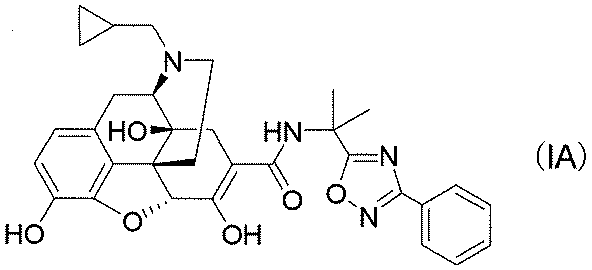
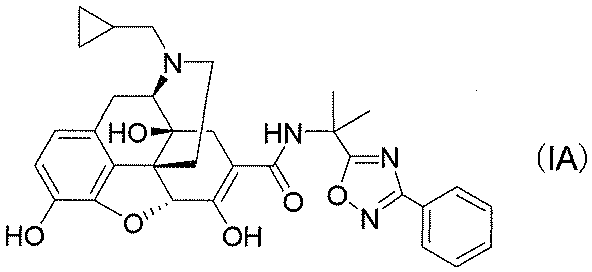
- the present invention is as follows. (1) The following formula (IA): Or a solvate of the compound or the acid addition salt thereof.
- Formula (IA) A crystal of an acetic acid salt of a compound represented by the formula: or a crystal of a solvate of the acid addition salt.
- (13) In powder X-ray diffraction spectrum, diffraction angle (2 ⁇ ): 5.6 ° ⁇ 0.2 °, 10.3 ° ⁇ 0.2 °, 12.0 ° ⁇ 0.2 °, 14.6 °
- the acetate crystal according to (12) having peaks at ⁇ 0.2 ° and 26.0 ° ⁇ 0.2 °.
- a pharmaceutical composition comprising the crystal according to any one of (2) to (26) above.
- (27H) A method for treating and / or preventing nausea, vomiting and / or constipation, comprising administering a pharmaceutical composition comprising the crystal according to any one of (2) to (26) above.
- (27I) Reducing side effects induced by a compound having an opioid receptor agonist activity and / or administering a pharmaceutical composition comprising the crystal according to any one of (2) to (26) above Prevention method.
- (27J) A pharmaceutical composition comprising the crystal according to any one of (2) to (26) above, for treating and / or preventing nausea, vomiting and / or constipation.
- (27K) A pharmaceutical composition comprising the crystal according to any one of (2) to (26) above, for reducing and / or preventing a side effect induced by a compound having an opioid receptor agonistic action.
- (27L) A compound having an opioid receptor agonistic action and an amount of the crystal according to any one of (2) to (26) effective for reducing and / or preventing side effects induced by administration of the compound
- An analgesic consisting of (27M) A compound having an opioid receptor agonistic action and an amount effective for the treatment and / or prevention of nausea, vomiting and / or constipation induced by administration of the compound (2) to (26)
- An analgesic comprising a combination with any one of the crystals.
- (27N) The analgesia according to (27L) or (27M) above, wherein the compound having an opioid receptor agonistic action is morphine, oxycodone, hydrocodone, tramadol, or a pharmaceutically acceptable salt or solvate thereof. Agent.
- Formula (IA) The acid of the compound represented by the formula (IA) according to any one of (2) to (19), wherein an acid is added to the compound represented by A method for producing a crystal of an addition salt or a crystal of a solvate of the acid addition salt.
- R 1a is a protective group for a hydroxyl group that can be deprotected with a hydrogen atom or a base
- “performing the process continuously” includes performing the next process without isolating the compound produced by the reaction of the previous process. For example, performing two processes by one pot is mentioned.
- (34) The production method according to any one of (31) to (33), which is carried out in the presence of an acid.
- a Lewis acid catalyst, CuCl is CuCl 2, CuBr, CuI, CuBr , CuSO 4, Cu, Zn (OAc) 2, ZnBr 2 , or ZnCl 2,
- the compound represented by formula (III) is reacted in the presence of about 0.00005 to about 1.0 equivalent of an acid, according to any one of (31) to (36) The manufacturing method as described.
- the compound represented by formula (IB) is characterized by treating with a base: (Wherein R 1d is a hydroxyl-protecting group or hydrogen atom that is not deprotected with a base; R 2 and R 3 are as defined above) The manufacturing method of the compound shown by these. (42) The production method according to any one of (39) to (41), wherein the base is an inorganic base. (43) The production method according to any one of (39) to (41), wherein the base is potassium hydroxide, sodium hydroxide, lithium hydroxide or cesium hydroxide. (44) The production method according to any one of (39) to (43), wherein the reaction temperature is from 30 ° C to 100 ° C.
- the reaction solution may be cooled as necessary.
- the compound represented by the formula (IIC) in the presence of a Lewis acid catalyst, the compound represented by the formula (IIIA) and the formula: R 3 —N ⁇ C ⁇ O (wherein R 3 is the same meaning as described above).
- a compound represented by the formula (IIIA) is reacted with a compound represented by the formula: R 3 —N ⁇ C ⁇ O (wherein R 3 is as defined above) in the absence of a Lewis acid catalyst. A process is mentioned.
- the compound represented by the formula (IIIA) and the formula: R 3 —NH—C ( ⁇ O) —X (wherein R 3 and X are as defined above)
- the step of reacting the compound represented by (49) The production method of (48), wherein the acid addition salt of the compound represented by formula (I) is p-toluenesulfonate, acetate or hydrochloride, or a solvate thereof.
- halogen includes fluorine, chlorine, bromine and iodine. The same applies to the halogen part of “halogeno lower alkyl”, “halogeno lower alkoxy”, and “halogeno lower alkylthio”.
- Lower alkyl includes linear or branched alkyl having 1 to 10 carbon atoms, preferably 1 to 6 carbon atoms, more preferably 1 to 3 carbon atoms, such as methyl, ethyl, n-propyl.
- Halogeno lower alkyl “hydroxy lower alkyl”, “amino lower alkyl”, “acylamino lower alkyl”, “acyloxy lower alkyl”, “cycloalkyl lower alkyl”, “lower alkoxy”, “halogeno lower alkoxy”, “hydroxy “Lower alkoxy”, “lower alkoxy lower alkyl”, “lower alkoxycarbonyl”, “carboxy lower alkyl”, “lower alkoxycarbonyl lower alkyl”, “lower alkylthio”, “halogeno lower alkylthio”, “lower alkylamino”, “lower “Alkylamino lower alkyl”, “lower alkylcarbamoyl”, “lower alkylsulfamoyl”, “lower alkylsulfonyl”, “aryl lower alkyl”, “tri-lower alkylsilyl”, “lower alkyldiarylsilyl” , “Triaryl lower alkylsilyl
- “Lower alkenyl” is a straight or branched alkenyl having 2 to 10, preferably 2 to 8, more preferably 3 to 6 carbon atoms having one or more double bonds at any position. Is included. Specific examples include vinyl, allyl, propenyl, isopropenyl, butenyl, isobutenyl, prenyl, butadienyl, pentenyl, isopentenyl, pentadienyl, hexenyl, isohexenyl, hexadienyl, heptenyl, octenyl, nonenyl and decenyl.
- “optionally substituted lower alkenyl” is the same as the above-mentioned “lower alkyl optionally substituted”.
- “Lower alkynyl” refers to straight or branched alkynyl having 2 to 10, preferably 2 to 8, and more preferably 3 to 6 carbon atoms having one or more triple bonds at any position. Include. Specifically, ethynyl, propynyl, butynyl, pentynyl, hexynyl, heptynyl, octynyl, nonynyl, decynyl and the like are included. These may further have a double bond at an arbitrary position.
- substituent of “optionally substituted lower alkynyl” is the same as the above-described substituent of “optionally substituted lower alkyl”.
- substituent of “optionally substituted amino” include lower alkyl optionally substituted with one or more groups selected from substituent group ⁇ , and one or more selected from substituent group ⁇ .
- a lower alkyl sulfa which may be substituted with one or more groups selected from aryl, sulfamoyl which may be substituted with one or more groups selected from substituent group ⁇ Moyl, arylsulfamoyl optionally substituted with one or more groups selected from substituent group ⁇ , lower alkylsulfonyl optionally substituted with one or more groups selected from substituent group ⁇ , substituted Selected from the base group ⁇ Arylsulfonyl optionally substituted with one or more groups, arylamino optionally substituted with one or more groups selected from substituent group ⁇ , substituted with one or more groups selected from substituent group ⁇ A heterocyclic group which may be present.
- “Cycloalkyl” is a carbocyclic group having 3 to 10 carbon atoms, preferably 3 to 8 carbon atoms, more preferably 4 to 8 carbon atoms.
- Cycloalkyl is a carbocyclic group having 3 to 10 carbon atoms, preferably 3 to 8 carbon atoms, more preferably 4 to 8 carbon atoms.
- the cycloalkyl part of “cycloalkyl lower alkyl” and “cycloalkylcarbonyl” is the same as the above “cycloalkyl”.
- Examples of the substituent of “cycloalkyl which may have a substituent” include one or more groups selected from the substituent group ⁇ described above. The substituent can be substituted at any position, and may be substituted with a carbon atom having a cycloalkyl bond.
- “Cycloalkenyl” includes those having one or more double bonds at any position in the ring of the cycloalkyl, specifically, cyclopropenyl, cyclobutenyl, cyclopentenyl, cyclohexenyl, cyclo Examples include heptenyl, cyclooctenyl and cyclohexadienyl.
- the cycloalkenyl part of “cycloalkenylcarbonyl” is the same as the above “cycloalkenyl”.
- cycloalkenyl is the same as the above “optionally substituted cycloalkyl”.
- Aryl includes phenyl, naphthyl, anthryl, phenanthryl and the like, with phenyl being particularly preferred.
- Aryloxy, “arylthio”, “aryl lower alkyl”, “lower alkyldiarylsilyl”, “triaryl lower alkylsilyl”, “aryl lower alkyloxy lower alkyl”, “arylsulfonyl”, “arylsulfamoyl” , “Arylamino”, “arylcarbamoyl” and “arylsulfonylcarbamoyl” are the same as the above “aryl”.
- substituents of “optionally substituted aryl”, “optionally substituted phenyl”, and “optionally substituted arylsulfonyl” include the substituent groups described above. ⁇ , phenyl substituted with one or more groups selected from substituent group ⁇ , phenoxy substituted with one or more groups selected from substituent group ⁇ , lower alkylenedioxy, and the like.
- Heterocyclic group includes a heterocyclic group having one or more heteroatoms arbitrarily selected from O, S and N, specifically pyrrolyl, imidazolyl, pyrazolyl, pyridyl, pyridazinyl.
- aromatic heterocyclic groups Preferably it is a 5-6 membered heteroaryl or non-aromatic heterocyclic group.
- heterocyclic moiety of “heterocyclic oxy” and “heterocyclic lower alkyl” is the same as the above “heterocyclic group”.
- the substituents of “optionally substituted heterocyclic group” and “optionally substituted heterocyclic oxy” are selected from the group consisting of the above-mentioned substituent group ⁇ and oxo. The above groups are mentioned.
- the substituent can be substituted at any position, and may be substituted with a carbon atom or nitrogen atom having a bond of the heterocyclic group.
- “Acyl” means a straight or branched chain aliphatic acyl having 1 to 10 carbon atoms, preferably 1 to 6 carbon atoms, more preferably 1 to 4 carbon atoms, 4 to 9 carbon atoms, preferably carbon atoms. Includes 4-7 cycloaliphatic acyl, aroyl and heterocyclic carbonyl.
- the “chain aliphatic” includes the “lower alkyl”, the “lower alkenyl”, and the “lower alkynyl”.
- “Cycloaliphatic” includes the above “cycloalkyl” and the above “cycloalkenyl”.
- the heterocyclic moiety of the heterocyclic carbonyl is the same as the above “heterocyclic group”.
- acyl examples include formyl, acetyl, propionyl, butyryl, isobutyryl, valeryl, pivaloyl, hexanoyl, acryloyl, propioyl, methacryloyl, crotonoyl, cyclopropylcarbonyl, cyclohexylcarbonyl, cyclooctylcarbonyl, benzoyl, pyridinecarbonyl, piperidinecarbonyl, Including piperazine carbonyl, morpholino carbonyl and the like.
- acyl part of “acyloxy”, “acylamino”, “acylamino lower alkyl” and “acyloxy lower alkyl” is the same as the above “acyl”.
- the substituent of “acyl optionally having substituent (s)” or “acyloxy optionally having substituent (s)” has the above “substituent” when “acyl” is a chain aliphatic acyl.
- Solvate means, for example, a solvate with an organic solvent (ethanol, 2-propanol, methyl acetate, ethyl acetate, n-propyl acetate, 1,2-dimethoxyethane, methyl isobutyl ketone, acetonitrile, etc.), water Includes Japanese products. When forming a hydrate, it may be coordinated with any number of water molecules.
- “Hydroxyl protecting group” means benzyl group, p-methoxyphenylbenzyl group, acetyl group, formyl group, benzoyl group, chloroacetyl group, pivaloyl group, methyl carbonate group, isobutyl carbonate group, benzyl carbonate group, vinyl carbonate group , Phenyl carbamate group, mesyl group, tosyl group, trimethylsilyl group, triethylsilyl group, t-butyldimethylsilyl group, methoxymethyl group, benzyloxymethyl group, methoxyethoxymethyl group, 2- (trimethylsilyl) ethoxymethyl group, propenyl group , A phenacyl group, a tetrahydropyranyl group, and the like.
- a base protecting group that can be deprotected by a base is an acetyl group, a formyl group, a benzoyl group, a chloroacetyl group, a pivaloyl group, a methyl carbonate group, an isobutyl carbonate group, a benzyl carbonate group, a vinyl carbonate group, a phenyl carbamate group. , Mesyl group, tosyl group and the like.
- One embodiment includes an acetyl group, a formyl group, a benzoyl group, a chloroacetyl group, and a pivaloyl group.
- Another embodiment includes an acetyl group.
- “Hydroxyl protecting group not deprotected by base” means benzyl group, p-methoxyphenylbenzyl group, trimethylsilyl group, triethylsilyl group, t-butyldimethylsilyl group, methoxymethyl group, benzyloxymethyl group, methoxyethoxymethyl Group, 2- (trimethylsilyl) ethoxymethyl group, propenyl group, phenacyl group, tetrahydropyranyl group and the like.
- the “leaving group” means an optionally substituted phenoxy (for example, phenoxy, p-nitrophenoxy, o-nitrophenoxy), a heterocyclic group (for example, 1-imidazolyl, 1-imidazole, etc. Pyrazolyl), and optionally substituted heterocyclic oxy (for example, pyridyloxy).
- “Acid addition salt” of “acid addition salt of compound represented by formula (I)” and “acid addition salt represented by formula (IA)” means an inorganic acid (for example, hydrochloric acid, sulfuric acid, nitric acid, carbonic acid, Hydrobromic acid, phosphoric acid, hydroiodic acid, etc.) and organic acids (eg formic acid, acetic acid, propionic acid, trifluoroacetic acid, citric acid, lactic acid, tartaric acid, oxalic acid, maleic acid, fumaric acid, mandelic acid And salts with glutaric acid, malic acid, benzoic acid, phthalic acid, ascorbic acid, benzenesulfonic acid, p-toluenesulfonic acid, methanesulfonic acid, ethanesulfonic acid, etc.).
- inorganic acid for example, hydrochloric acid, sulfuric acid, nitric acid, carbonic acid, Hydrobromic acid,
- acid addition salts of “acid addition salt of compound represented by formula (I)” and “acid addition salt represented by formula (IA)” include p-toluenesulfonate, acetate and hydrochloride.
- “Amino protecting group” means t-butyldimethylsilyl group, t-butoxycarbonyl group, allyl group, 9-fluorenylmethyloxycarbonyl group, benzyl group, p-methoxybenzyl group, methoxymethyl group, benzyl group Examples include an oxymethyl group, a benzhydryl group, and a trityl group.
- the present invention provides crystals of 6,7-unsaturated-7-carbamoylmorphinan derivatives, acid addition salts thereof and / or solvates thereof.
- the crystal body has good stability and can be used as a drug substance for drug production.
- the novel manufacturing method can contribute to shortening the manufacturing process, improving the yield, and the like.
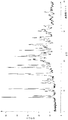
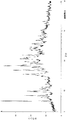
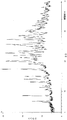
- 1 shows a powder X-ray diffraction pattern of a crystalline form (non-solvate) of p-toluenesulfonate salt of compound (IA) according to the present invention.
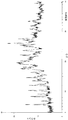
- 1 shows a powder X-ray diffraction pattern of a crystalline form (form I) of p-toluenesulfonate hydrate of compound (IA) according to the present invention.
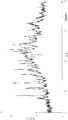
- 1 shows a powder X-ray diffraction pattern of a crystalline form (form II) of p-toluenesulfonate hydrate of compound (IA) according to the present invention.
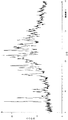
- 1 shows a powder X-ray diffraction pattern of a crystal of an acetate salt of Compound (IA) according to the present invention.
- 1 shows a powder X-ray diffraction pattern of a crystalline hydrochloride of compound (IA) according to the present invention.
- 1 shows a powder X-ray diffraction pattern of a crystal of an ethanol solvate of compound (IA) according to the present invention.
- 1 shows a powder X-ray diffraction pattern of a free crystalline form of compound (IA) according to the present invention.
- 1 shows a powder X-ray diffraction pattern of a crystalline form of p-toluenesulfonate / methyl acetate solvate of compound (IA) according to the present invention.
- 1 shows a powder X-ray diffraction pattern of a crystal of a p-toluenesulfonic acid salt (ethyl acetate and 2-propanol) solvate of compound (IA) according to the present invention.
- 1 shows a powder X-ray diffraction pattern of a p-toluenesulfonate salt (n-propyl acetate and 2-propanol acetate) solvate of compound (IA) according to the present invention.
- 1 shows a powder X-ray diffraction pattern of a crystalline form of p-toluenesulfonate / acetonitrile solvate of compound (IA) according to the present invention.
- 1 shows a powder X-ray diffraction pattern of a crystal of a p-toluenesulfonic acid salt / 1,2-dimethoxyethane solvate of compound (IA) according to the present invention.
- 1 shows a powder X-ray diffraction pattern of a crystal of a p-toluenesulfonate / methyl isobutyl ketone solvate of compound (IA) according to the present invention.
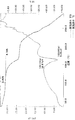
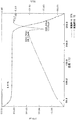
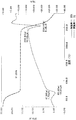
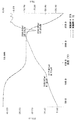
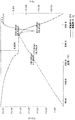
- FIG. 3 shows the results of TG / DTA analysis of a p-toluenesulfonate crystal (non-solvate) of the compound (IA) according to the present invention.
- the TG / DTA analysis result of the crystal form (form I) of the p-toluenesulfonate hydrate of the compound (IA) according to the present invention is shown.
- the TG / DTA analysis result of the crystalline form (form II) of the p-toluenesulfonate hydrate of the compound (IA) according to the present invention is shown.
- the TG / DTA analysis result of the acetate of the compound (IA) which concerns on this invention is shown.
- the TG / DTA analysis result of the hydrochloride of the compound (IA) which concerns on this invention is shown.
- the TG / DTA analysis result of the ethanol solvate of the compound (IA) which concerns on this invention is shown.
- the TG / DTA analysis result of the free body of the compound (IA) which concerns on this invention is shown.
- the TG / DTA analysis result of p-toluenesulfonic acid salt / methyl acetate solvate of the compound (IA) according to the present invention is shown.
- FIG. 3 shows the results of TG / DTA analysis of a p-toluenesulfonic acid salt (ethyl acetate and 2-propanol) solvate of compound (IA) according to the present invention.
- the TG / DTA analysis result of p-toluenesulfonic acid salt (n-propyl acetate and 2-propanol) solvate of the compound (IA) according to the present invention is shown.
- 2 shows the results of TG / DTA analysis of p-toluenesulfonate / acetonitrile solvate of compound (IA) according to the present invention.
- the TG / DTA analysis result of p-toluenesulfonic acid salt and 1,2-dimethoxyethane solvate of the compound (IA) according to the present invention is shown.
- the TG / DTA analysis result of p-toluenesulfonic acid salt and methyl isobutyl ketone solvate of the compound (IA) according to the present invention is shown.
- the crystal of the present invention is obtained as an acid addition salt of the compound represented by the formula (I) or a solvate of the acid addition salt.
- the acid used here include p-toluenesulfonic acid, acetic acid or hydrochloric acid. Among them, the crystal of p-toluenesulfonic acid is considered to have no hygroscopic property and excellent stability.
- the solvent for forming the solvate include water, ethanol, 2-propanol, methyl acetate, ethyl acetate, n-propyl acetate, 1,2-dimethoxyethane, methyl isobutyl ketone, acetonitrile and the like.
- Crystals of the acid addition salt are usually added to a solution of the compound represented by the formula (I) by adding 1.0 to 10.0 equivalents of acid at 0 ° C. to room temperature or below the boiling point of the solvent. Thereafter, the solution is cooled and / or concentrated as necessary for crystallization.
- Preparation of the solvate crystals involves dissolving the acid addition salt of the compound of formula (I) in a soluble solvent containing at least the solvating solvent at room temperature or below the boiling point of the solvent, Add the solvent to be solvated and stir or let stand at 0 ° C. to room temperature for several hours to 1 day.
- the crystallized solvate can be separated from the solvent by ordinary separation means such as filtration or centrifugation, and can be isolated by ordinary purification means such as washing and drying.
- Solvates of the compound represented by formula (I) are also encompassed in the crystalline form of the present invention.
- the solvent include water and ethanol.
- the solvate of the compound represented by the formula (I) can also be prepared in the same manner as the solvate of the acid addition salt.
- Specific examples of the crystalline substance of the present invention include p-toluenesulfonate (non-solvate), p-toluenesulfonate / hydrate, p-toluenesulfonate / acetic acid in the case of compound (IA).
- Methyl hydrate, p-toluenesulfonate (ethyl acetate, 2-propanol) solvate, p-toluenesulfonate, (n-propyl acetate, 2-propanol) solvate, p-toluenesulfonate, acetonitrile
- Examples thereof include Japanese hydrates, p-toluene sulfonate / 1,2-dimethoxyethane solvate, p-toluene sulfonate / methyl isobutyl ketone solvate, hydrochloride, acetate, free ethanol solvate, and the like.
- p-toluenesulfonate (non-solvate) of the compound represented by the formula (IA) is obtained as follows. That is, 2-propanol and n-propyl acetate were added to the organic layer containing the compound (IA) and concentrated. Drop and crystallize. The obtained undried solid is dissolved again in methanol and n-propyl acetate by warming, and the insoluble matter is filtered and concentrated under reduced pressure to crystallize. The obtained crystals are reduced in vacuo at 50 to 70 ° C. for 2 to 5 hours. The desired p-toluenesulfonate (non-solvate) can be obtained by drying under reduced pressure.
- crystal means a substance having an ordered long range of molecular structure.
- the crystallinity of the crystalline form can be measured by a number of techniques including, for example, powder X-ray diffraction, moisture adsorption, differential, calorimetric analysis, solution colorimetry, and dissolution characteristics.
- a crystalline organic compound is composed of a large number of atoms periodically arranged in a three-dimensional space.
- Structural periodicity typically develops physical properties that are clearly distinguishable by most spectroscopic probes (eg, X-ray diffraction, infrared spectra, Raman spectra, and solid state NMR).
- spectroscopic probes eg, X-ray diffraction, infrared spectra, Raman spectra, and solid state NMR.
- powder X-ray diffraction XRPD is one of the most sensitive analytical methods for measuring the crystallinity of solids.
- Amorphous solids typically exhibit a broad XRPD pattern, called a halo pattern, due to the absence of a wide range of repeating crystal lattices.
- the crystalline forms of the 6,7-unsaturated-7-carbamoylmorphinan derivatives, acid addition salts and / or solvates thereof disclosed in this application preferably have a distinguishable powder X-ray diffraction profile.
- each crystal body can be identified and distinguished from other crystal bodies by the presence of a characteristic diffraction peak.
- a characteristic diffraction peak as used herein is a peak selected from the observed diffraction pattern.
- the characteristic peaks are selected from about 20 in the diffraction pattern, more preferably about 10 and most preferably about 5.
- the value of the diffraction angle includes a numerical value within a range of about ⁇ 0.2 °. Need to be understood. Therefore, the present invention includes not only a crystal in which the diffraction angle of the peak in powder X-ray diffraction completely matches but also a crystal in which the diffraction angle of the peak matches with an error of about ⁇ 0.2 °.
- the relative intensities of the peaks shown in the tables and figures below can vary depending on many factors, such as the crystal orientation effect on the x-ray beam, the purity of the material being analyzed or the crystallinity of the sample. It has been.
- the peak position can also be shifted based on the variation in sample height.
- Crystalline (non-solvate), p-toluenesulfonate hydrate (form I) and p-toluenesulfonate hydrate (form II) of compound (IA) according to the present invention Shows powder X-ray diffraction patterns as shown in FIGS. Each crystal body exhibits at least a characteristic peak as shown in Table 1.
- the crystal of the present invention can also be specified by a thermal analysis technique.
- TG / DTA differential thermothermogravimetric simultaneous measurement
- TG / DTA is one of the main measurement methods of thermal analysis, and is a method of measuring the weight and thermal properties of a substance as an aggregate of atoms and molecules.
- TG / DTA is a method for measuring changes in weight and calorie with temperature or time of a pharmaceutically active ingredient. By plotting the obtained data against temperature or time, TG (thermogravimetric) and DTA (differential) A heat) curve is obtained.
- TG / DTA From the TG / DTA curve, it is possible to obtain information on changes in weight and calorie regarding decomposition, dehydration, oxidation, reduction, sublimation, and evaporation of pharmaceutically active ingredients.
- “melting point” refers to the onset temperature.
- the observed temperature and weight changes may depend on the rate of temperature change as well as the sample preparation technique and specific equipment used. In the identification of crystal identity, the overall pattern is important and may vary somewhat depending on the measurement conditions.
- the crystal of the compound represented by the formula (IA) of the present invention, its acid addition salt, and / or solvate thereof has an opioid receptor (particularly opioid ⁇ , ⁇ receptor) antagonistic action. Therefore, in addition to nausea / vomiting / constipation induced by compounds having opioid receptor agonist activity, acute indigestion, acute alcoholism, food poisoning, cold, gastric ulcer, duodenal ulcer, gastric cancer, intestinal obstruction, appendicitis, peritonitis, cholelithiasis, Hepatitis, hepatitis, encephalitis, meningitis, increased brain pressure, head injury, motion sickness, morning sickness, side effects due to chemotherapy, side effects due to radiation therapy, side effects due to anticancer agents, digestive tract compression / stenosis and postoperative intestinal tract Treatment and / or prevention of nausea and vomiting caused by causes such as gastrointestinal obstruction caused by adhesions, brain tumor, cerebral hemorrhage, meningitis, increased brain pressure due to irradiation of the brain, etc
- the compound represented by the formula (IA) of the present invention, the acid addition salt thereof, and / or the solvate thereof has a low ability to migrate into the brain, a painful disease (for example, cancer pain (bone metastasis, nerve For patients with pressure, increased intracranial pressure, soft tissue infiltration, pain due to constipation or muscle spasm, visceral, muscle / fascia, pain around the hip or shoulder joint, chronic pain after surgery), AIDS, etc.
- the compound exhibits a high alleviation effect on side effects such as nausea, vomiting, and constipation induced by an opioid receptor agonist without almost inhibiting the analgesic action of the administered compound having an opioid receptor agonist action.
- the crystal of the present invention has a pure antagonist activity against an opioid receptor, has a hERG channel inhibitory action, and has safety advantages such as no concern about cardiotoxicity. Furthermore, the crystal of the present invention has advantageous characteristics in pharmacokinetics such as high oral absorption, high stability in human plasma, and high bioavailability, and is very effective as a pharmaceutical product.
- the administration is performed before or after the administration of the compound having an opioid receptor agonistic action. Or any of simultaneous administration may be sufficient.
- the administration interval between these two types of drugs is not particularly limited. For example, when the crystal of the present invention or a pharmaceutical composition containing the crystal is administered after administration of a compound having an opioid receptor agonistic activity, immediately after administration of the opioid receptor agonist, within about 3 days, immediately after administration, within about 1 day If so, it works more effectively.
- the crystal according to the present invention or the pharmaceutical composition containing the crystal before administration of the opioid receptor agonist when administering the crystal according to the present invention or the pharmaceutical composition containing the crystal before administration of the opioid receptor agonist, if it is just before administration of the opioid receptor agonist to about 1 day before, or just before about 12 hours before, more It works effectively.
- the crystal of the present invention or a pharmaceutical composition containing the crystal is administered as an anti-nausea, vomiting and / or constipation therapeutic agent and / or prophylactic agent, other anti-nausea, vomiting and / or constipation therapeutic agent and / or prophylactic agent You may use together.
- ondansetron hydrochloride corticosteroids (methylprednisolone, prednisolone, dexamethasone, etc.), prochlorperazine, haloperidol, timiperone, perphenazine, metoclopramide, domperidone, scopolamine, chlorpromazine hydrochloride, droperidol, stimulant laxatives ( Sennoside, picosulfate sodium, etc.), osmotic laxatives (lactulose), salt laxatives (magnesium oxide, etc.) can be used in combination.
- stimulant laxatives Sennoside, picosulfate sodium, etc.
- osmotic laxatives lactulose
- salt laxatives magnesium oxide, etc.
- the crystal of the present invention or a pharmaceutical composition containing the crystal includes a compound having an opioid receptor agonistic action and / or other nausea, vomiting and / or constipation treatment and / or prevention agent, and various drugs as necessary. It is also possible to make a mixture containing additives for use.
- the crystals of the present invention can be administered to human patients per se, or can be administered in a pharmaceutical composition in which the crystals described above are mixed with a suitable carrier or excipient.
- Techniques for drug formulation and administration can be found in the latest edition of “Remington's Pharmacological Sciences” Mack Publishing Co., Easton, PA.
- Suitable routes of administration include, but are not limited to, oral, rectal, transmucosal or enteral administration, or intramuscular, subcutaneous, intrathecal, intrathecal, direct intraventricular, intravenous, intravitreal, intraperitoneal, nasal cavity Internal, intraocular, injection may be included.
- Preferred routes of administration are oral and parenteral.
- the pharmaceutical composition of the present invention is manufactured by a method well known in the art, for example, conventional mixing, dissolving, granulating, sugar-coating, powdering, emulsifying, encapsulating, inclusion, lyophilization process. Can do.
- the pharmaceutical composition used in the present invention is one or more pharmaceutically acceptable products including excipients and adjuvants that facilitate the manufacture of the crystals of the present invention into a pharmaceutically usable formulation. It can be formulated by a known method using a carrier. Proper formulation is dependent upon the route of administration chosen.
- aqueous solution in which the crystal of the present invention is dissolved preferably in a physiologically compatible buffer solution such as Ringer's solution or physiological saline.
- transmucosal administration it can be administered using a penetrant suitable for the barrier to be permeated.
- penetrant those generally known in the art can be used.
- the crystal of the present invention can be administered by combining the crystal of the present invention with a pharmaceutically acceptable carrier well known in the art.
- the carrier allows the crystals of the present invention to be administered as tablets, pills, lozenges, dragees, capsules, solutions, gels, syrups, slurries, suspensions for oral ingestion by patients.
- Pharmaceutical compositions for oral use use solid excipients and, if desired, add other suitable adjuvants, then grind the resulting mixture and process the granule mixture to form tablets or dragee cores. Can be created by getting.
- Useful excipients include fillers such as sugars including lactose, sucrose, mannitol or sorbitol, for example cellulose preparations such as corn starch, wheat starch, rice starch and potato starch and gelatin, tragacanth gum, methylcellulose , Hydroxypropyl methylcellulose and / or sodium carboxymethylcellulose. If necessary, disintegrants such as agar and alginic acid can be added. A salt such as sodium alginate can also be used.
- Oral pharmaceutical compositions include push-fit capsules made of gelatin and sealed capsules made of gelatin and a plasticizer such as glycerol or sorbitol.
- Push fit capsules can contain fillers such as lactose, binders such as starch and / or lubricants such as talc or magnesium stearate and optionally crystals of the invention mixed with stabilizers.
- the crystal of the present invention can be dissolved or suspended in a suitable liquid such as fatty oil, liquid paraffin or liquid polyethylene glycol.
- Stabilizers can also be added to these formulations.
- the pharmaceutical composition may also contain suitable solid or gel phase carriers or excipients.
- suitable solid or gel phase carriers or excipients include polymers such as calcium carbonate, calcium phosphate, various sugars, starch, cellulose derivatives, gelatin, and polyethylene glycol.
- the therapeutically effective amount of the active ingredient of the crystal of the present invention or the pharmaceutical composition containing the crystal can be estimated initially from a cell culture assay.
- the animal model is then used to achieve a circulating concentration range that includes the IC 50 determined in cell culture (ie, the concentration of the crystal of the invention or pharmaceutical composition thereof that achieves half-maximal inhibition of PK activity).
- Many doses can be formulated for use. Such information can then be used to more accurately determine useful amounts in humans.
- Toxicity and therapeutic effects of crystals of the invention or pharmaceutical compositions comprising the crystals are standard in cell cultures or experimental animals, for example, by determining the IC 50 for the subject crystals of the invention or pharmaceutical compositions thereof. It can be measured by typical pharmaceutical techniques. The data obtained from these cell culture assays and animal studies can be used to formulate a range of dosage for use in humans. The dosage can vary depending on the dosage form used and the route of administration utilized. The exact route of administration and dosage can be chosen by the individual physician in view of the patient's condition (see, eg, Fingl et al., 1975, in “The Pharmacological Basis of Therapeutics”, Ch. 1p.l) .
- the dosage varies depending on the disease state, administration route, patient age, or body weight, but is usually 0.1 ⁇ g to 1 g / day, preferably 0.01 to 200 mg when administered orally to an adult. In the case of parenteral administration, it is usually 1 ⁇ g to 10 g / day, preferably 0.1 mg to 10 mg / day.
- the base is preferably an inorganic base such as lithium hydroxide, sodium hydroxide, potassium hydroxide or cesium hydroxide, and it is preferable to add 1 to 10 equivalents of alkali as an aqueous solution with respect to the carbamate derivative (II).
- the carbamate derivative can be suitably reacted by dissolving in a hydrophilic solvent such as methanol, ethanol, 2-propanol, DMSO and the like, and adding the above alkaline aqueous solution.
- the hydroxyl protecting group R 1b of the carbamate derivative (II) is not particularly limited, but the compound (I) can be directly obtained by using a protecting group that is deprotected with a base such as an acetyl group.
- Carbamate derivative (II) can be obtained by reacting compound (III) with isocyanate (V). In the reaction, 0.5 to 5 equivalents, preferably 1.0 to 1.2 equivalents, of the isocyanate (V) solution is added to the compound (III) solution with respect to the compound (III). The reaction is carried out at a temperature below the boiling point for 1 to 10 hours.
- a Lewis acid catalyst such as CuCl 2 in an amount of 0.00005 to 1 equivalent, preferably 0.0001 to 0.1 equivalent, more preferably 0.0001 to 0.01 equivalent.
- the reaction solvent is not particularly limited, and ethyl acetate, acetonitrile, acetone, toluene and the like can be used.
- the isocyanate body (V) used here follows the following scheme. For example, it can be obtained by reacting its precursor carbamate ester (VIII) (wherein R 5 is lower alkyl) in the presence of a Lewis acid and a base.
- Carbamate body (II) can also be prepared using carbamic acid active ester (VI) (wherein R 7 is an optionally substituted phenyl group) instead of the isocyanate body.
- This active ester can be obtained, for example, by reacting a chloroformate of phenol corresponding to the amino form R 3 —NH 2 .
- R 7 those in which OR 7 functions as a leaving group X are preferable, and specific examples thereof include a phenyl group, a p-nitrophenyl group, and a p-chlorophenyl group.
- the invention is further illustrated by the following examples. These do not limit the invention. Efforts are being made to ensure accuracy with respect to numbers (eg, amounts, temperature, etc.) but some errors and deviations should be accounted for. Unless otherwise indicated,% is weight percent of ingredients and weight percent of total weight of composition.
- the pressure is at or near atmospheric pressure.
- Other abbreviations used herein are defined as follows: g for grams, L for liters, mg for milligrams, mL for milliliters, Boc for t-butoxycarbonyl groups, Ac for acetyl groups, Me for methyl Group, Et represents an ethyl group, and Pr represents a propyl group.
- Step 1 Synthesis of Compound (3) To a solution of t-butoxycarbonylaminoisobutyric acid (1) (25.0 g, 123 mmol) in n-propyl acetate (150 ml) at 0 ° C., diisopropylethylamine (17.5 g, 135.4 mmol) was added. Under the same temperature, isobutyl chloroformate (17.6 g, 128.9 mmol) was added dropwise to the mixture, followed by stirring for 1 hour. A solution of benzamide oxime (2) (17.6 g, 129.3 mmol) in n-propyl acetate (100 ml) was added to the reaction solution, followed by stirring at 0 ° C.
- Step 2 Synthesis of Compound (4)
- a suspension of Compound (3) (19.0 g, 79.2 mmol) in 152 ml of toluene was added alkaline water at 25 ° C. and stirred.
- methyl chloroformate (8.3 g, 88.0 mmol) was added at 50 ° C. and stirring for 1 hour, the organic layer was separated, washed successively with aqueous hydrochloric acid, aqueous sodium hydrogen carbonate and water, and concentrated under reduced pressure.
- To this reaction solution was added 1.0 mol / l boron trichloride in toluene (7.3 ml), triethylamine was added dropwise at 50 ° C., and the mixture was stirred for 2 hours.
- the reaction solution was concentrated to obtain a solution of compound (4). It was.
- Step 3 Synthesis of Compound (6)
- naltrexone hydrochloride (5) (20.0 g, 52.9 mmol) in 160 ml of ethyl acetate was added triethylamine (11.3 g, 111.7 mmol) and acetic anhydride (5.7 g, 55). .8 mmol) and then stirred at 40 ° C. for 2 hours. The reaction solution was cooled, washed with water, and concentrated under reduced pressure to obtain a compound (6) solution.
- Step 4 Synthesis of Compound (7) After adding the reaction solution of Compound (4) and ethyl acetate to the Compound (6) solution, an aqueous solution of copper (II) chloride was added to this mixture and stirred at 25 ° C. for 4 hours. . Heptane was added to the reaction solution for crystallization, followed by filtration, washing, and drying to obtain compound (7) (89.2%).
- Step 5 Synthesis of Compound (8)
- aqueous potassium hydroxide solution was added dropwise and stirred at 80 ° C. for 5 hours.
- the reaction solution was washed with toluene, adjusted to pH 7.0 to 8.0, and extracted with n-propyl acetate.
- the organic layer was washed with water, 2-propanol and n-propyl acetate were added and concentrated, and then p-toluenesulfonic acid 2-propanol solution (1.5 g, 8.1 mmol) was added dropwise at 60 ° C. for crystallization.
- Step 6 Synthesis of Compound (9) Methanol and n-propyl acetate were added to the undried solid (8), dissolved by heating, filtered, washed and concentrated under reduced pressure. The precipitate was collected by filtration and washed, and the resulting crude product was dried under reduced pressure at 60 ° C. for 3 hours to obtain crystals of the compound (9) (non-solvate: 66.3%).
- Step 1 Synthesis of Compound (11) To a suspension of methoxycarbonyl-2-methylalanine (10) (5.00 g, 31.0 mmol) and acetonitrile 25 ml at 0 ° C. was added CDI (carbonyldiimidazole, 5.28 g, 31 0.1 mmol) and 5 ml of acetonitrile were added and stirred for 1.5 hours. Benzamide oxime (2) (4.65 g, 34.2 mmol) and 20 ml of acetonitrile were added at the same temperature and stirred for 2 hours.
- CDI carbonyldiimidazole, 5.28 g, 31 0.1 mmol
- Benzamide oxime (2) (4.65 g, 34.2 mmol) and 20 ml of acetonitrile were added at the same temperature and stirred for 2 hours.
- Step 3-6 Synthesis of Compound (9)
- Compound (9) (non-solvate) was synthesized from compound (5) by the same step as described in Example 1-1.
- Process 3 Compound (7) (500 mg) was dissolved in 2 ml of dimethyl sulfoxide, 2 ml of a 2 mol / L aqueous potassium hydroxide solution was added, and the mixture was heated with stirring at 80 ° C. for 6 hours. The reaction solution was returned to room temperature, neutralized with 2 mol / L hydrochloric acid, and extracted twice with ethyl acetate. The extract was washed successively with 0.1 mol / L aqueous sodium hydroxide solution and brine, dried over anhydrous sodium sulfate, filtered and concentrated.
- Step 1 Synthesis of Compound (4) Toluene was added to Compound (11) (0.5 g, 1.91 mmol) synthesized in the same manner as in Step 1 described in Example 1-2, and then TiCl 4 (2.30 mmol) was added. ) And heated to 50 ° C. Triethylamine (2.30 mmol) was added to this reaction liquid, and it stirred at the same temperature for 2 hours, and obtained the compound (4) as a reaction liquid.
- Step 2-7 Synthesis of Compound (9) Compound (9) (non-solvate) was synthesized from compound (5) by the same step as described in Example 1-1.
- Process 1 Compound (17) (4.51 g, 36 mmol) was dissolved in 45 ml of acetonitrile, and pyridine (3.20 ml, 39.6 mmol) and chloroformic acid phenyl ester (5.00 ml, 39.6 mmol) were added under ice cooling. 9 ml of dimethylformamide and 30 ml of acetonitrile were added and stirred at room temperature for 45 minutes. The precipitate was collected by filtration from the reaction solution, washed with cold methanol and water, and then dried under reduced pressure to obtain the target compound (18) (7.02 g) as a white solid.
- the precipitated crystals were collected by filtration, washed with cold acetonitrile, and dried under reduced pressure to obtain the first crystal (1.66 g) of the target compound (19). Further, the mother liquor was concentrated, diethyl ether was added to the residue, and the mixture was stirred at room temperature to obtain second crystals (306 mg) and third crystals (71 mg).
- Process 3 Compound (19) (2.02 mg, 3.78 mmol) was dissolved in 9.5 ml of methanol, 9.5 ml of 2 mol / L potassium hydroxide aqueous solution was added, and the mixture was heated and stirred at 60 ° C. for 2.5 hours. The reaction solution was returned to room temperature, neutralized with 2 mol / L hydrochloric acid under ice cooling, and then methanol was distilled off. The precipitated crude crystals were collected by filtration and recrystallized from a mixed solution (1: 1) of ethyl acetate and methanol to obtain the target compound (20) (1.44 g) as crystals (yield 77%).
- Example 3-2 Synthesis of Compound (7) (Part 2) Compound (4) (1.5 equivalents) and toluene were added to an ethyl acetate solution of compound (6) synthesized by the same method as in Step 3 described in Example 1-1, and the mixture was stirred at 70 ° C. for 8 hours. (7) was obtained.
- Example 4 Preparation of p-toluenesulfonate hydrate crystals (form I) of compound (IA) p-toluenesulfonate (non-solvate) synthesized according to Example 1-1 above was added to propanol 25 mL A mixture of 2.5 mL of water was added and dissolved by heating. 50 mL of acetonitrile was added and the mixture was stirred at room temperature for 4 hours. The precipitated crystals were separated by filtration and dried under reduced pressure at 85 ° C. for 4 hours to obtain 4.68 g of crystals.
- Example 5 Preparation of p-toluenesulfonate hydrate crystal (form II) of compound (IA) 12.5 mL of tetrahydrofuran was added to 5.00 g of p-toluenesulfonate (non-solvate) synthesized according to Example 1-1 above. Added and dissolved. 50 mL of n-propyl acetate was added, and the mixture was stirred at room temperature for 4 hours. Precipitated crystals were separated by filtration and dried under reduced pressure at 85 ° C. for 4 hours to obtain 4.77 g of crystals.
- Example 6 Preparation of acetate of compound (IA) 20.00 g of p-toluenesulfonate (non-solvate) synthesized according to Example 1-1 above, 100 mL of ethyl acetate, 3.18 g of sodium carbonate (p-toluenesulfonate) 50 mL of water in which 1.1 equivalent) was dissolved was added to carry out a liquid separation operation. The ethyl acetate layer was washed with 50 mL of 1% aqueous sodium carbonate solution and 50 mL of saturated brine, and each aqueous layer was back extracted with 50 mL of ethyl acetate.
- the ethyl acetate layer was dehydrated with sodium sulfate and concentrated to about 30 g. 200 mL of acetonitrile and 4.6 mL of acetic acid (3 equivalents with respect to p-toluenesulfonate) were added to the concentrated solution, and the mixture was stirred at room temperature. The precipitated crystals were separated by filtration to obtain 16.17 g of crystals. The results of powder X-ray diffraction are shown in FIG.
- Example 7 Production of Hydrochloride of Compound (IA) 20.00 g of p-toluenesulfonate (non-solvate) synthesized according to Example 1-1 above, 100 mL of ethyl acetate, 3.18 g of sodium carbonate (p-toluenesulfonate) 50 mL of water in which 1.1 equivalent) was dissolved was added to carry out a liquid separation operation. The ethyl acetate layer was washed twice with 50 mL of water, and each aqueous layer was back extracted with 50 mL of ethyl acetate.
- the ethyl acetate layer was dehydrated with sodium sulfate, acetonitrile 200 mL, 4 mol / L hydrochloric acid-ethyl acetate 10 mL (1.5 equivalent to p-toluenesulfonate) was added, and the mixture was concentrated to about 50 g.
- Acetonitrile 200mL was added to the concentrate, and room temperature stirring was performed for 1 hour.
- the precipitated crystals were separated by filtration to obtain 10.1 g of crystals.
- the results of powder X-ray diffraction are shown in FIG.
- Example 8 Production of Ethanolate of Compound (IA) 20.00 g of p-toluenesulfonate (non-solvate) synthesized according to Example 1-1 above, 100 mL of ethyl acetate, 3.18 g of sodium carbonate (p-toluenesulfonic acid) 50 mL of water in which 1.1 equivalent) was dissolved in the salt was added, and a liquid separation operation was performed. The ethyl acetate layer was washed with 1% aqueous sodium carbonate solution (50 mL) and saturated brine (50 mL), and each aqueous layer was back-extracted with ethyl acetate (50 mL).
- Example 9 Production of Compound (IA) Free Form
- the ethanolate described in Example 8 was dried under reduced pressure at 120 ° C. for 10 hours, and it was confirmed by the nuclear magnetic resonance spectrum that no ethanol remained.
- the results of powder X-ray diffraction are shown in FIG.
- diffraction angle (2 ⁇ ) 6.8 ° ⁇ 0.2 °, 11.7 ° ⁇ 0.2 °, 13.5 ° ⁇ 0.2 °, 15.6 ° ⁇ 0. 2 °, 16.7 ° ⁇ 0.2 °, 21.6 ° ⁇ 0.2 °, 22.1 ° ⁇ 0.2 °, 23.4 ° ⁇ 0.2 °, 26.7 ° ⁇ 0. Peaks were observed at 2 ° and 30.1 ° ⁇ 0.2 °.
- the TG / DTA analysis results are shown in FIG.
- Example 10 Preparation of p-toluenesulfonate / methyl acetate solvate of compound (IA) 1.00 g of p-toluenesulfonate (non-solvate) synthesized according to Example 1-1 above and 2-propanol 5 mL-water 0 .5mL mixed solution was added and dissolved by heating. 20 mL of methyl acetate was added, and the mixture was stirred at room temperature for 4 hours. The precipitated crystals were separated by filtration to obtain 0.98 g of crystals. The results of powder X-ray diffraction are shown in FIG.
- Example 11 Preparation of p-toluenesulfonate (ethyl acetate and 2-propanol) solvate of compound (IA) p-toluenesulfonate (non-solvate) synthesized according to Example 1-1 above A mixture of 5 mL of propanol and 0.5 mL of water was added and dissolved by heating. 20 mL of ethyl acetate was added, and the mixture was stirred at room temperature for 4 hours. The precipitated crystals were separated by filtration to obtain 0.96 g of crystals. The results of powder X-ray diffraction are shown in FIG.
- Example 12 Preparation of p-toluenesulfonic acid salt (n-propyl acetate and 2-propanol) solvate of compound (IA) Powder X-ray diffraction of the undried solid (8) obtained in Step 5 of Example 1-1 above The results are shown in FIG. In powder X-ray diffraction spectrum, diffraction angle (2 ⁇ ): 6.5 ° ⁇ 0.2 °, 8.3 ° ⁇ 0.2 °, 15.5 ° ⁇ 0.2 °, 16.8 ° ⁇ 0. Peaks were observed at 2 ° and 18.3 ° ⁇ 0.2 °. The TG / DTA analysis results are shown in FIG.
- Example 13 Preparation of p-toluenesulfonate / acetonitrile solvate of compound (IA) p-toluenesulfonate (non-solvate) synthesized according to Example 1-1 above was added to 2-propanol 5 mL-water 0. 5 mL of the mixed solution was added and dissolved by heating. Acetonitrile (15 mL) was added, and the mixture was stirred at room temperature for 4 hours. The precipitated crystals were separated by filtration to obtain 1.02 g of crystals. The results of powder X-ray diffraction are shown in FIG.
- Example 14 Preparation of p-toluenesulfonic acid salt 1,2-dimethoxyethane solvate of compound (IA) 5 mL of tetrahydrofuran was added to 1.00 g of p-toluenesulfonic acid salt (non-solvate) synthesized according to Example 1-1 above. Added and dissolved by heating. 1,2-Dimethoxyethane (20 mL) was added, and the mixture was stirred at room temperature for 4 hours. The precipitated crystals were separated by filtration to obtain 1.05 g of crystals. The results of powder X-ray diffraction are shown in FIG.
- Example 15 Preparation of p-toluenesulfonate / methyl isobutyl ketone solvate of compound (IA) To 1.00 g of p-toluenesulfonate (non-solvate) synthesized according to Example 1-1 above, 5 mL of tetrahydrofuran was added and heated. Dissolved. 20 mL of methyl isobutyl ketone was added, and the mixture was stirred at room temperature for 4 hours. The precipitated crystals were separated by filtration to obtain 1.02 g of crystals. The results of powder X-ray diffraction are shown in FIG. 13 and Table 14.
- Test example 1 Solid stability test of crystals About 10 mg of crystals were accurately weighed in a 2 mL glass container with a polyethylene stopper. After closing the glass container, a parafilm was wound and stored at 40 ° C. or 60 ° C. for 2 weeks or 4 weeks. A sample stored at 40 ° C is referred to as a 40 ° C sealed product, and a sample stored at 60 ° C is referred to as a 60 ° C sealed product. The glass container was opened and stored at 40 ° C. relative humidity 89% or 60 ° C. for 2 weeks or 4 weeks. A sample stored at 40 ° C. relative humidity 89% is referred to as a 40 ° C. relative humidity 89% stored product, and a sample stored at 60 ° C.
- Table 16 shows the observation results of the appearance change of the crystals of p-toluenesulfonate (non-solvate) of the formula (IA) and the residual ratio of the crystals.
- Table 17 shows the observation results of the appearance change of the p-toluenesulfonate hydrate crystals (form I) of the formula (IA) and the residual ratio of the crystals.
- Table 18 shows the observation results of the appearance change of the p-toluenesulfonate hydrate crystals (form II) of the formula (IA) and the residual ratio of the crystals.
- the case where there was no change in appearance was designated as ( ⁇ )
- the case where a slight change in appearance was observed was designated as ( ⁇ ).
- HPLC condition column CAPCELL PAK C18 AQ (3 ⁇ m 3.0 ⁇ 150 mm) Column temperature: 50 ° C UV detection wavelength: 231 nm
- Mobile phase [A] 10 mmol / L A mixture of ammonium formate and 10 mmol / L magnesium chloride, [B] acetonitrile was gradient as shown in Table 15. Flow rate: 0.6 mL / min
- Test example 2 Hygroscopicity confirmation test of crystals About 10 mg of p-toluenesulfonate salt (non-solvate) of formula (IA) is weighed into a sample container for a water vapor adsorption / desorption measuring device and dried at 25 ° C. in a dry nitrogen atmosphere. I let you. After drying, the relative humidity was continuously changed in the range of 0% to 95% at 5% intervals, and the water vapor adsorption / desorption amount of the sample was measured with a water vapor adsorption / desorption measuring device DVS Advantage (manufactured by surface measurement systems). The results are shown in Table 19.
- the maximum moisture absorption of crystals of p-toluenesulfonate (non-solvate) of formula (IA) in the range of 0% to 95% relative humidity at 25 ° C. is less than 1.2%, Almost no hygroscopicity.
- Formulation Example 1 A granule containing the following ingredients is produced.
- the above-mentioned “compound represented by the formula (IA)” includes a free form of the compound represented by the formula (IA), an acid addition salt thereof and / or a crystal of a solvate thereof.
- the compound of formula (IA) and lactose are passed through a 60 mesh sieve. Pass cornstarch through a 120 mesh sieve. These are mixed in a V-type mixer. Add HPC-L (low-viscosity hydroxypropylcellulose) aqueous solution to the powder mixture, knead, granulate (extruded granulation pore size 0.5-1mm), and dry. The obtained dried granules are combed with a vibrating sieve (12/60 mesh) to obtain granules.
- HPC-L low-viscosity hydroxypropylcellulose
- Formulation Example 2 A capsule filling granule containing the following ingredients is produced.
- the above-mentioned “compound represented by the formula (IA)” includes a free form of the compound represented by the formula (IA), an acid addition salt thereof and / or a crystal of a solvate thereof.
- the compound of formula (IA), lactose is passed through a 60 mesh sieve. Pass cornstarch through a 120 mesh sieve. These are mixed, and the HPC-L solution is added to the mixed powder, kneaded, granulated and dried. After sizing the obtained dry granules, 150 mg thereof is filled into No. 4 hard gelatin capsules.
- Formulation Example 3 A tablet containing the following ingredients is produced.
- the above-mentioned “compound represented by the formula (IA)” includes a free form of the compound represented by the formula (IA), an acid addition salt thereof and / or a crystal of a solvate thereof.
- the compound of formula (IA), lactose, microcrystalline cellulose, CMC-Na (carboxymethylcellulose sodium salt) are passed through a 60 mesh sieve and mixed.
- the mixed powder is mixed with magnesium stearate to obtain a mixed powder for tableting. This mixed powder is directly hit to obtain a 150 mg tablet.
- Formulation Example 4 The following ingredients are heated and mixed and then sterilized to give an injection.
- the above-mentioned “compound represented by the formula (IA)” includes a free form of the compound represented by the formula (IA), an acid addition salt thereof and / or a crystal of a solvate thereof.
- the present invention provides a 6,7-unsaturated-7-carbamoylmorphinan derivative, an acid addition salt thereof, a solvate thereof, or a stable crystal form thereof useful as a drug substance for producing a pharmaceutical product.
- the present invention also relates to a 6,7-unsaturated-7-carbamoylmorphinan derivative useful as a therapeutic and / or preventive agent for nausea, vomiting and / or constipation induced by a compound having an opioid receptor agonistic action,
- the present invention provides a new method for producing acid addition salts, solvates thereof, or crystals thereof.
Landscapes
- Chemical & Material Sciences (AREA)
- Organic Chemistry (AREA)
- Health & Medical Sciences (AREA)
- Life Sciences & Earth Sciences (AREA)
- Medicinal Chemistry (AREA)
- Pharmacology & Pharmacy (AREA)
- Animal Behavior & Ethology (AREA)
- General Health & Medical Sciences (AREA)
- Public Health (AREA)
- Veterinary Medicine (AREA)
- Engineering & Computer Science (AREA)
- Chemical Kinetics & Catalysis (AREA)
- Bioinformatics & Cheminformatics (AREA)
- Nuclear Medicine, Radiotherapy & Molecular Imaging (AREA)
- General Chemical & Material Sciences (AREA)
- Epidemiology (AREA)
- Pain & Pain Management (AREA)
- Biomedical Technology (AREA)
- Neurosurgery (AREA)
- Neurology (AREA)
- Oil, Petroleum & Natural Gas (AREA)
- Emergency Medicine (AREA)
- Addiction (AREA)
- Rheumatology (AREA)
- Diabetes (AREA)
- Nutrition Science (AREA)
- Hematology (AREA)
- Otolaryngology (AREA)
- Hospice & Palliative Care (AREA)
- Psychiatry (AREA)
- Gastroenterology & Hepatology (AREA)
- Toxicology (AREA)
- Obesity (AREA)
- Materials Engineering (AREA)
- Pharmaceuticals Containing Other Organic And Inorganic Compounds (AREA)
- Organic Low-Molecular-Weight Compounds And Preparation Thereof (AREA)
- Heterocyclic Carbon Compounds Containing A Hetero Ring Having Nitrogen And Oxygen As The Only Ring Hetero Atoms (AREA)
Abstract
Description
特許文献1には、下式:


また、6,7-不飽和-7-カルバモイルモルヒナン誘導体の製造方法としては、以下の式:
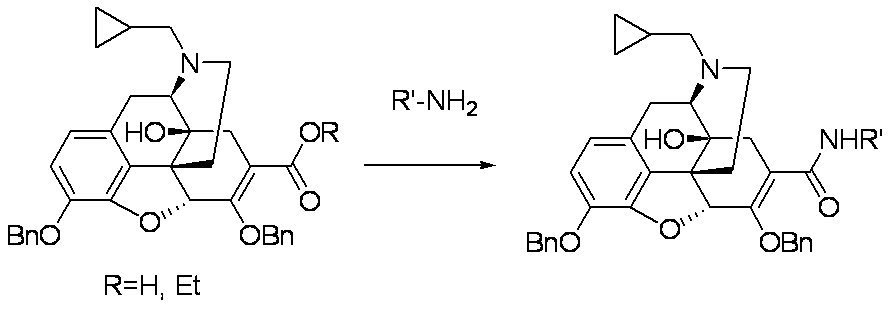
6,7-不飽和-7-カルバモイルモルヒナン誘導体は既に開示されているものの、医薬品として使用または医薬品として工業的に製造するために、好適な塩および/または安定な結晶形ならびにより好ましい製造方法の確立が望まれている。

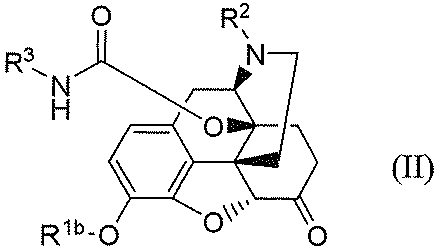
本発明者等は、さらに、下式(II):
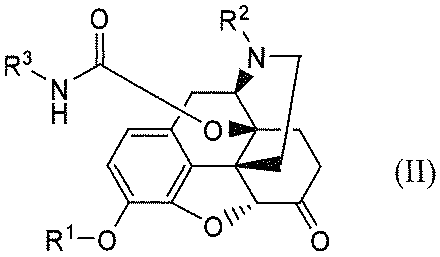
で表されるカルバメート誘導体を塩基存在下で反応させ、必要により保護基R1を脱保護することで、下式(I):
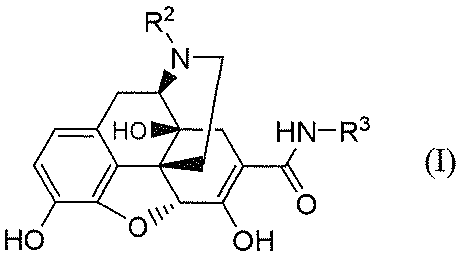
の化合物が得られることを見出し、6,7-不飽和-7-カルバモイルモルヒナン誘導体の新たな製造方法に係る発明を完成させた。
(1)下式(IA):
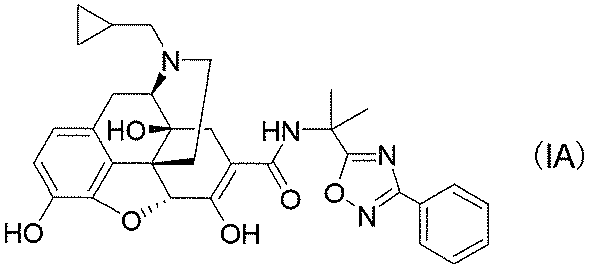
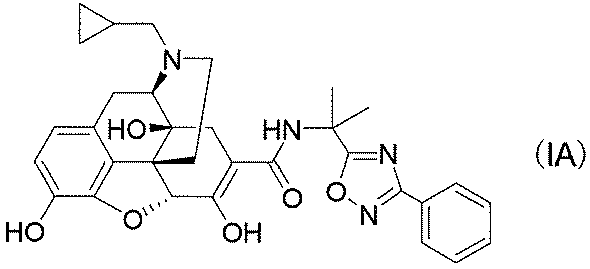
(4)粉末X線回折スペクトルにおいて、回折角度(2θ):7.8°±0.2°、10.6°±0.2°、15.6°±0.2°、17.8°±0.2°、18.6°±0.2°、20.4°±0.2°、21.5°±0.2°、21.9°±0.2°、23.6°±0.2°および25.5°±0.2°にピークを有する、(2)に記載のp-トルエンスルホン酸塩の結晶。
(5)図1に実質的に一致する粉末X線回折スペクトルにより特徴付けられる、(2)に記載のp-トルエンスルホン酸塩の結晶。
(7)粉末X線回折スペクトルにおいて、回折角度(2θ):6.6°±0.2°、8.9°±0.2°、11.4°±0.2°、12.9°±0.2°、14.0°±0.2°、15.0°±0.2°、17.6°±0.2°、18.2°±0.2°、22.4°±0.2°、25.4°±0.2°および28.7°±0.2°にピークを有する、(2)に記載のp-トルエンスルホン酸塩水和物のI形結晶。
(8)図2に実質的に一致する粉末X線回折スペクトルにより特徴付けられる、(2)に記載のp-トルエンスルホン酸塩水和物のI形結晶。
(10)粉末X線回折スペクトルにおいて、回折角度(2θ):7.1°±0.2°、8.8°±0.2°、17.5°±0.2°、19.2°±0.2°、19.7°±0.2°、21.2°±0.2°、21.9°±0.2°、23.7°±0.2°、24.5°±0.2°および26.1°±0.2°にピークを有する、(2)に記載のp-トルエンスルホン酸塩水和物のII形結晶。
(11)図3に実質的に一致する粉末X線回折スペクトルにより特徴付けられる、(2)に記載のp-トルエンスルホン酸塩水和物のII形結晶。
(13)粉末X線回折スペクトルにおいて、回折角度(2θ):5.6°±0.2°、10.3°±0.2°、12.0°±0.2°、14.6°±0.2°および26.0°±0.2°にピークを有する、(12)に記載の酢酸塩の結晶。
(14)粉末X線回折スペクトルにおいて、回折角度(2θ):5.6°±0.2°、8.3±0.2°、9.1±0.2°、10.3°±0.2°、12.0°±0.2°、13.5±0.2°、14.6°±0.2°、16.3±0.2°および26.0°±0.2°にピークを有する、(12)に記載の酢酸塩の結晶。
(15)図4に実質的に一致する粉末X線回折スペクトルにより特徴付けられる、(12)に記載の酢酸塩の結晶。
(17)粉末X線回折スペクトルにおいて、回折角度(2θ):8.5°±0.2°、12.7°±0.2°、15.6°±0.2°、17.3°±0.2°および23.9°±0.2°にピークを有する、(16)に記載の塩酸塩の結晶。
(18)粉末X線回折スペクトルにおいて、回折角度(2θ):8.5°±0.2°、10.8°±0.2°、11.3°±0.2°、12.7°±0.2°、13.9°±0.2°、15.6°±0.2°、17.3°±0.2°、19.2°±0.2°、20.1°±0.2°および23.9°±0.2°にピークを有する、(16)に記載の塩酸塩の結晶。
(19)図5に実質的に一致する粉末X線回折スペクトルにより特徴付けられる、(16)に記載の塩酸塩の結晶。

(21)粉末X線回折スペクトルにおいて、回折角度(2θ):13.5°±0.2°、21.6°±0.2°、22.1°±0.2°、23.4°±0.2°および26.7°±0.2°にピークを有する、(20)に記載の式(IA)で示される化合物の結晶。
(22)粉末X線回折スペクトルにおいて、回折角度(2θ):6.8°±0.2°、11.7°±0.2°、13.5°±0.2°、15.6°±0.2°、16.7°±0.2°、21.6°±0.2°、22.1°±0.2°、23.4°±0.2°、26.7°±0.2°および30.1°±0.2°にピークを有する、(20)に記載の式(IA)で示される化合物の結晶。
(23)図7に実質的に一致する粉末X線回折スペクトルにより特徴付けられる、(20)に記載の式(IA)で示される化合物の結晶。
(25)粉末X線回折スペクトルにおいて、回折角度(2θ):6.9°±0.2°、11.0°±0.2°、12.9°±0.2°、13.4°±0.2°、16.5°±0.2°、20.5°±0.2°、21.3°±0.2°、21.8°±0.2°、22.6°±0.2°および25.1°±0.2°にピークを有する、(20)に記載のエタノール和物の結晶。
(26)図6に実質的に一致する粉末X線回折スペクトルにより特徴付けられる、(20)に記載のエタノール和物の結晶。
(27)上記(2)~(26)のいずれかに記載の結晶を含む医薬組成物。
(27A)上記(2)~(26)のいずれかに記載の結晶を含有することを特徴とするオピオイド受容体拮抗剤。
(27B)上記(2)~(26)のいずれかに記載の結晶を含有することを特徴とする、嘔気、嘔吐および/または便秘の治療および/または予防剤。
(27C)上記(2)~(26)のいずれかに記載の結晶を含有することを特徴とする、オピオイド受容体アゴニスト作用を有する化合物により誘発される副作用の軽減および/または予防剤。
(27D)副作用が嘔気、嘔吐および/または便秘である、上記(27C)記載の治療および/または予防剤。
(27E)オピオイド受容体アゴニスト作用を有する化合物がモルヒネ、オキシコドン、ハイドロコドン、トラマドール、またはそれらの製薬上許容される塩またはそれらの溶媒和物である、上記(27C)または(27D)記載の治療および/または予防剤。
(27F)嘔気、嘔吐および/または便秘の治療および/または予防のための医薬を製造するための、上記(2)~(26)のいずれかに記載の結晶の使用。
(27G)オピオイド受容体アゴニスト作用を有する化合物により誘発される副作用の軽減および/または予防のための医薬を製造するための、上記(2)~(26)のいずれかに記載の結晶の使用。
(27H)上記(2)~(26)のいずれかに記載の結晶を含む医薬組成物を投与することを特徴とする、嘔気、嘔吐および/または便秘の治療および/または予防方法。
(27I)上記(2)~(26)のいずれかに記載の結晶を含む医薬組成物を投与することを特徴とする、オピオイド受容体アゴニスト作用を有する化合物により誘発される副作用の軽減および/または予防方法。
(27J)嘔気、嘔吐および/または便秘の治療および/または予防をするための、上記(2)~(26)のいずれかに記載の結晶を含む医薬組成物。
(27K)オピオイド受容体アゴニスト作用を有する化合物により誘発される副作用の軽減および/または予防をするための、上記(2)~(26)のいずれかに記載の結晶を含む医薬組成物。
(27L)オピオイド受容体アゴニスト作用を有する化合物と、当該化合物投与により誘発される副作用の軽減および/または予防のために効果的な量の上記(2)~(26)のいずれかに記載の結晶とを組み合わせてなる鎮痛剤。
(27M)オピオイド受容体アゴニスト作用を有する化合物と、当該化合物投与により誘発される嘔気、嘔吐および/または便秘の治療および/または予防のために効果的な量の上記(2)~(26)のいずれかに記載の結晶とを組み合わせてなる鎮痛剤。
(27N)オピオイド受容体アゴニスト作用を有する化合物がモルヒネ、オキシコドン、ハイドロコドン、トラマドール、またはそれらの製薬上許容される塩またはそれらの溶媒和物である、上記(27L)または(27M)記載の鎮痛剤。

(29)式(IID):

で示される化合物を塩基で処理し、必要であればR1を脱保護した後、p-トルエンスルホン酸を添加し、必要に応じて溶媒中から結晶化することを特徴とする、(2)に記載の結晶の製造方法。
(30)式(IIE):
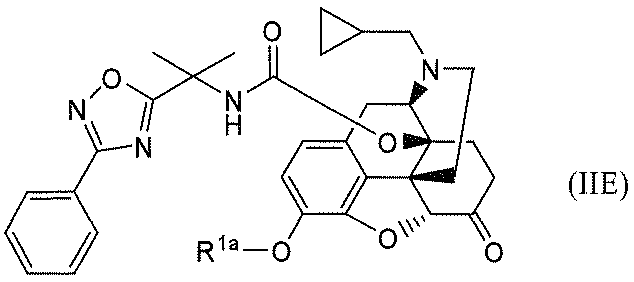
で示される化合物を塩基で処理し、次いでp-トルエンスルホン酸を添加し、必要に応じて溶媒中から結晶化することを特徴とする、(29)の製造方法。
(31)式(III):
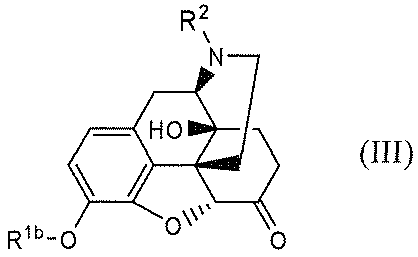
(32)式(IV):


で示される化合物を得ることを特徴とする、(31)に記載の製造方法。
(33)式(IV):
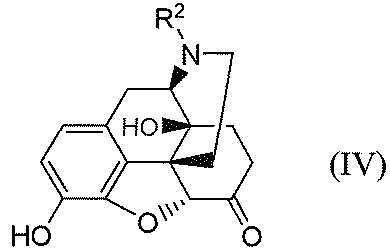
で示される化合物の水酸基を保護し、式(III):
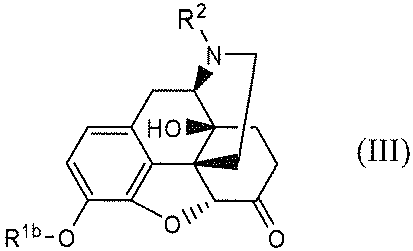
で示される化合物を得る工程、および式(III)で示される化合物を、酸の存在下または非存在下、式:R3-N=C=O(式中、R3は(31)と同意義)で示される化合物または式:R3-NH-C(=O)-X(式中、R3は前記と同意義、Xは脱離基)で示される化合物と反応させる工程を連続して行う、(32)記載の製造方法。
ここで、「工程を連続して行う」とは、前工程の反応により生成した化合物を単離することなく、次工程を行うことを包含する。例えば、ワンポットで2つの工程を行うことが挙げられる。
(34)酸の存在下で行う、(31)~(33)のいずれかに記載の製造方法。
(35)酸がルイス酸である、(34)記載の製造方法。
(36)ルイス酸触媒が、CuCl、CuCl2、CuBr、CuI、CuBr、CuSO4、Cu、Zn(OAc)2、ZnBr2またはZnCl2である、(35)に記載の製造方法。
(37)式(III)で示される化合物に対して、約0.00005~約1.0当量の酸の存在下で反応させることを特徴とする、(31)~(36)のいずれかに記載の製造方法。
(38)R1bが塩基で脱保護可能な水酸基の保護基である、(31)~(37)のいずれかに記載の製造方法。
(39)式(IIA):


(40)式(IIC):

で示される化合物を、塩基で処理することを特徴とする、式(I):

(41)式(IIB):
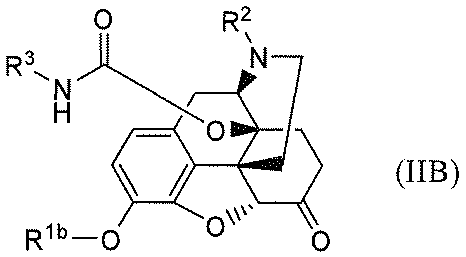
で示される化合物を、塩基で処理することを特徴とする、式(IB):

で示される化合物の製造方法。
(42)塩基が無機塩基である(39)~(41)のいずれかに記載の製造方法。
(43)塩基が水酸化カリウム、水酸化ナトリウム、水酸化リチウムまたは水酸化セシウムである(39)~(41)のいずれかに記載の製造方法。
(44)反応温度が30℃~100℃である(39)~(43)のいずれかに記載の製造方法。
(45)式(VIIIa):


(46)式(X):
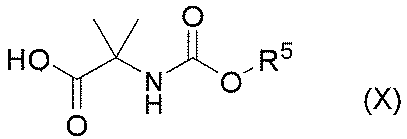
で示される化合物と、式(XI):
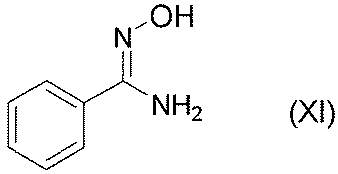
(47)ルイス酸がAlCl3またはTiCl4である(45)または(46)に記載の製造方法。
(48)式(IIIA):
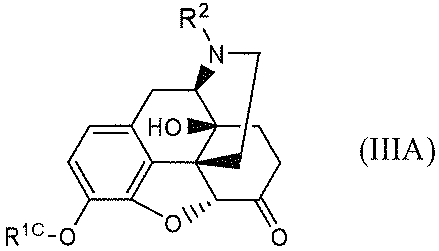
で示される化合物を、ルイス酸触媒の存在下または非存在下、式:R3-N=C=O(式中、R3は(31)と同意義)で示される化合物または式:R3-NH-C(=O)-X(式中、R3は前記と同意義、Xは脱離基)で示される化合物と反応させ、式(IIC):

で示される化合物を得る工程、
上記式(IIC)で示される化合物を、塩基で処理し、式(I):
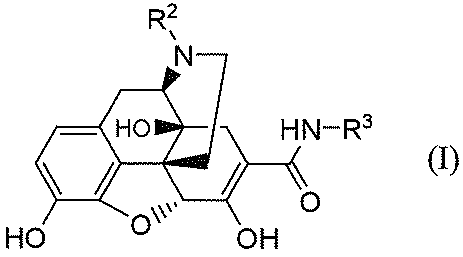
で示される化合物を得る工程、および
上記式(I)で示される化合物に酸を添加して酸付加塩とする工程を包含する、式(I)で示される化合物の酸付加塩の製造方法。
酸を添加して酸付加塩とした後、必要に応じて該反応液を冷却してもよい。
ここで、式(IIC)で示される化合物を得る工程において、一つの態様として、ルイス酸触媒存在下、式(IIIA)で示される化合物と式:R3-N=C=O(式中、R3は上記と同意義)で示される化合物を反応させる工程が挙げられる。一つの態様として、ルイス酸触媒非存在下、式(IIIA)で示される化合物と式:R3-N=C=O(式中、R3は上記と同意義)で示される化合物を反応させる工程が挙げられる。別の一つの態様として、ルイス酸触媒非存在下、式(IIIA)で示される化合物と式:R3-NH-C(=O)-X(式中、R3およびXは上記と同意義)で示される化合物を反応させる工程が挙げられる。
(49)式(I)で示される化合物の酸付加塩が、p-トルエンスルホン酸塩、酢酸塩または塩酸塩、またはそれらの溶媒和物である、(48)の製造方法。
(50)p-トルエンスルホン酸塩、酢酸塩または塩酸塩、またはそれらの溶媒和物が結晶である、(49)の製造方法。
(51)式(IID):
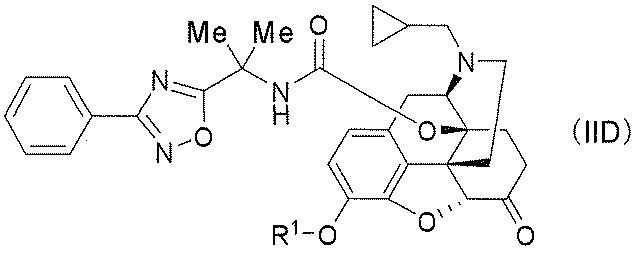
で示される化合物。
(52)式(VII):
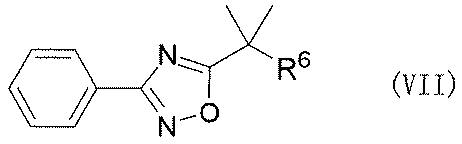
上記式(II)で示される化合物、式(IIA)で示される化合物、式(IIB)で示される化合物、式(IIC)で示される化合物、式(IID)で示される化合物および式(IIE)で示される化合物において、モルヒナン骨格の7位側鎖である「-O-C(=O)-NH-」基の「-NH-」の水素原子は、アミノ基の保護基に置き換わってもよい。
「低級アルキル」とは、炭素数1~10、好ましくは炭素数1~6、さらに好ましくは炭素数1~3の直鎖または分枝状のアルキルを包含し、例えばメチル、エチル、n-プロピル、イソプロピル、n-ブチル、イソブチル、sec-ブチル、tert-ブチル、n-ペンチル、イソペンチル、ネオペンチル、ヘキシル、イソヘキシル、n-へプチル、イソヘプチル、n-オクチル、イソオクチル、n-ノニルおよびn-デシル等が挙げられる。好ましくはメチル、エチル、イソプロピル、n-ブチル、sec-ブチル、tert-ブチル、1-エチルプロピル等である。
「置換基を有していてもよい低級アルコキシ」、「置換基を有していてもよい低級アルキルチオ」、「置換基を有していてもよい低級アルキルスルホニル」の置換基は上記「置換基を有していてもよい低級アルキル」の置換基と同様である。
「置換基を有していてもよい低級アルケニル」の置換基は上記「置換基を有していてもよい低級アルキル」と同様である。
「低級アルキニル」とは、任意の位置に1以上の三重結合を有する炭素数2~10、好ましくは炭素数2~8、さらに好ましくは炭素数3~6の直鎖または分枝状のアルキニルを包含する。具体的には、エチニル、プロピニル、ブチニル、ペンチニル、ヘキシニル、ヘプチニル、オクチニル、ノニニル、デシニル等を包含する。これらはさらに任意の位置に二重結合を有していてもよい。
「置換基を有していてもよいアミノ」の置換基としては、置換基群αから選択される1以上の基で置換されていてもよい低級アルキル、置換基群αから選択される1以上の基で置換されていてもよいシクロアルキル、置換基群αから選択される1以上の基で置換されていてもよいアシル、置換基群αから選択される1以上の基で置換されていてもよいアミノ、置換基群αから選択される1以上の基で置換されていてもよいアリール、スルファモイル、置換基群αから選択される1以上の基で置換されていてもよい低級アルキルスルファモイル、置換基群αから選択される1以上の基で置換されていてもよいアリールスルファモイル、置換基群αから選択される1以上の基で置換されていてもよい低級アルキルスルホニル、置換基群αから選択される1以上の基で置換されていてもよいアリールスルホニル、置換基群αから選択される1以上の基で置換されていてもよいアリールアミノ、置換基群αから選択される1以上の基で置換されていてもよいヘテロ環式基等が挙げられる。
「シクロアルキル」とは炭素数3~10、好ましくは炭素数3~8、より好ましくは炭素数4~8の炭素環式基であり、例えばシクロプロピル、シクロブチル、シクロペンチル、シクロヘキシル、シクロヘプチル、シクロオクチル、シクロノニルおよびシクロデシル等を包含する。これらはさらに任意の位置で後述の「アリール」または後述の「ヘテロ環式基」と縮合していてもよい。
「シクロアルキル低級アルキル」、「シクロアルキルカルボニル」のシクロアルキル部分は上記「シクロアルキル」と同様である。
「シクロアルケニル」とは、上記シクロアルキルの環中の任意の位置に1以上の二重結合を有しているものを包含し、具体的にはシクロプロペニル、シクロブテニル、シクロペンテニル、シクロヘキセニル、シクロへプテニル、シクロオクテニルおよびシクロヘキサジエニル等が挙げられる。
「シクロアルケニルカルボニル」のシクロアルケニル部分は上記「シクロアルケニル」と同様である。
「アリール」とは、フェニル、ナフチル、アントリルおよびフェナントリル等を包含し、特にフェニルが好ましい。
「アリールオキシ」、「アリールチオ」、「アリール低級アルキル」、「低級アルキルジアリールシリル」、「トリアリール低級アルキルシリル」、「アリール低級アルキルオキシ低級アルキル」、「アリールスルホニル」、「アリールスルファモイル」、「アリールアミノ」、「アリールカルバモイル」、「アリールスルホニルカルバモイル」のアリール部分も上記「アリール」と同様である。
「ヘテロ環式基」とは、O、SおよびNから任意に選択されるヘテロ原子を環内に1以上有するヘテロ環式基を包含し、具体的にはピロリル、イミダゾリル、ピラゾリル、ピリジル、ピリダジニル、ピリミジニル、ピラジニル、トリアゾリル、トリアジニル、テトラゾリル、イソオキサゾリル、オキサゾリル、オキサジアゾリル、イソチアゾリル、チアゾリル、チアジアゾリル、フリルおよびチエニル等の5~6員のヘテロアリール;インドリル、イソインドリル、インダゾリル、インドリジニル、インドリニル、イソインドリニル、キノリル、イソキノリル、シンノリニル、フタラジニル、キナゾリニル、ナフチリジニル、キノキサリニル、プリニル、プテリジニル、ベンゾピラニル、ベンズイミダゾリル、ベンズイソオキサゾリル、ベンズオキサゾリル、ベンズオキサジアゾリル、ベンゾイソチアゾリル、ベンゾチアゾリル、ベンゾチアジアゾリル、ベンゾフリル、イソベンゾフリル、ベンゾチエニル、ベンゾトリアゾリル、イミダゾピリジル、トリアゾロピリジル、イミダゾチアゾリル、ピラジノピリダジニル、キナゾリニル、キノリル、イソキノリル、ナフチリジニル、ジヒドロピリジル、テトラヒドロキノリル、テトラヒドロベンゾチエニル等の2環の縮合ヘテロ環式基;カルバゾリル、アクリジニル、キサンテニル、フェノチアジニル、フェノキサチイニル、フェノキサジニル、ジベンゾフリル等の3環の縮合ヘテロ環式基;ジオキサニル、チイラニル、チオラニル、チエタニル、オキシラニル、オキセタニル、オキサチオラニル、アゼチジニル、チアニル、ピロリジニル、ピロリニル、イミダゾリジニル、イミダゾリニル、ピラゾリジニル、ピラゾリニル、ピペリジル、ピペラジニル、モルホリニル、モルホリノ、チオモルホリニル、チオモルホリノ、ジヒドロピリジル、ジヒドロフリル、テトラヒドロフリル、テトラヒドロピラニル、テトラヒドロチアゾリル、テトラヒドロイソチアゾリル等の非芳香族ヘテロ環式基を包含する。好ましくは5~6員のヘテロアリールまたは非芳香族ヘテロ環式基である。
「置換基を有していてもよいヘテロ環式基」および「置換基を有してもよいヘテロ環オキシ」の置換基としては上述の置換基群αおよびオキソからなる群から選択される1以上の基が挙げられる。置換基は任意の位置に置換することができ、ヘテロ環式基の結合手を有する炭素原子または窒素原子に置換してもよい。
「アシルオキシ」、「アシルアミノ」、「アシルアミノ低級アルキル」および「アシルオキシ低級アルキル」のアシル部分は上記「アシル」と同様である。
「置換基を有していてもよいアシル」または「置換基を有していてもよいアシルオキシ」の置換基は、「アシル」が鎖状脂肪族アシルの場合、上記「置換基を有していてもよい低級アルキル」の置換基と同様であり、「アシル」が環状脂肪族アシル、アロイルおよびヘテロ環カルボニルの場合、上述の置換基群αから選択される1以上の基が挙げられる。
「水酸基の保護基」とは、ベンジル基、p-メトキシフェニルベンジル基、アセチル基、ホルミル基、ベンゾイル基、クロロアセチル基、ピバロイル基、メチルカーボネート基、イソブチルカーボネート基、ベンジルカーボネート基、ビニルカーボネート基、フェニルカーバメート基、メシル基、トシル基、トリメチルシリル基、トリエチルシリル基、t-ブチルジメチルシリル基、メトキシメチル基、ベンジルオキシメチル基、メトキシエトキシメチル基、2-(トリメチルシリル)エトキシメチル基、プロペニル基、フェナシル基、テトラヒドロピラニル基等が挙げられる。
「塩基で脱保護可能な水酸基の保護基」とは、アセチル基、ホルミル基、ベンゾイル基、クロロアセチル基、ピバロイル基、メチルカーボネート基、イソブチルカーボネート基、ベンジルカーボネート基、ビニルカーボネート基、フェニルカーバメート基、メシル基、トシル基等が挙げられる。一つの態様として、アセチル基、ホルミル基、ベンゾイル基、クロロアセチル基、ピバロイル基が挙げられる。別の態様として、アセチル基が挙げられる。
「塩基では脱保護されない水酸基の保護基」とは、ベンジル基、p-メトキシフェニルベンジル基、トリメチルシリル基、トリエチルシリル基、t-ブチルジメチルシリル基、メトキシメチル基、ベンジルオキシメチル基、メトキシエトキシメチル基、2-(トリメチルシリル)エトキシメチル基、プロペニル基、フェナシル基、テトラヒドロピラニル基等が挙げられる。
「脱離基」とは、置換基を有していてもよいフェノキシ(例えば、フェノキシ、p-ニトロフェノキシ、o-ニトロフェノキシが挙げられる)、ヘテロ環式基(例えば、1-イミダゾリル、1-ピラゾリルが挙げられる)、置換基を有してもよいヘテロ環オキシ(例えば,ピリジルオキシが挙げられる)等が挙げられる。
「式(I)で示される化合物の酸付加塩」および「式(IA)で表される酸付加塩」の「酸付加塩」とは、無機酸(例えば、塩酸、硫酸、硝酸、炭酸、臭化水素酸、リン酸、ヨウ化水素酸等)、および有機酸(例えば、ギ酸、酢酸、プロピオン酸、トリフルオロ酢酸、クエン酸、乳酸、酒石酸、シュウ酸、マレイン酸、フマル酸、マンデル酸、グルタル酸、リンゴ酸、安息香酸、フタル酸、アスコルビン酸、ベンゼンスルホン酸、p-トルエンスルホン酸、メタンスルホン酸、エタンスルホン酸等)との塩が挙げられる。例えば、「式(I)で示される化合物の酸付加塩」および「式(IA)で表される酸付加塩」の酸付加塩としては、p-トルエンスルホン酸塩、酢酸塩および塩酸塩が挙げられる。
「アミノ基の保護基」とは、t-ブチルジメチルシリル基、t-ブトキシカルボニル基、アリル基、9-フルオレニルメチルオキシカルボニル基、ベンジル基、p-メトキシベンジル基、メトキシメチル基、ベンジルオキシメチル基、ベンズヒドリル基およびトリチル基が挙げられる。
また新規な製造方法は、製造工程の短縮化、収率の向上等に貢献することができる。
酸付加塩の結晶は、式(I)で示される化合物の溶液に、通常1.0~10.0当量の酸を、0℃~室温で、若しくは溶媒の沸点以下に加温して添加した後、必要に応じて溶液を冷却および/または濃縮して晶析させる。
溶媒和物の結晶の調製は、式(I)で示される化合物の酸付加塩を、少なくとも溶媒和させる溶媒を含む可溶性溶媒に、室温で、または溶媒の沸点以下に加温して溶解し、溶媒和させたい溶媒を加え、0℃~室温で数時間~1日、撹拌または静置することにより行う。晶析した溶媒和物は、濾過または遠心分離等の通常の分離手段で溶媒から分離し、洗浄、乾燥等の通常の精製手段により単離することができる。
式(I)で示される化合物の溶媒和物もまた、本発明の結晶体に包含される。溶媒としては水、エタノール等が例示される。式(I)で示される化合物の溶媒和物の場合も、上記酸付加塩の溶媒和物と同様にして調製することができる。
本発明の結晶体の具体例としては、化合物(IA)の場合、p-トルエンスルホン酸塩(非溶媒和物)、p-トルエンスルホン酸塩・水和物、p-トルエンスルホン酸塩・酢酸メチル和物、p-トルエンスルホン酸塩・(酢酸エチル・2-プロパノール)和物、p-トルエンスルホン酸塩・(酢酸n‐プロピル・2-プロパノール)和物、p-トルエンスルホン酸塩・アセトニトリル和物、p-トルエンスルホン酸塩・1、2-ジメトキシエタン和物、p-トルエンスルホン酸塩・メチルイソブチルケトン和物、塩酸塩、酢酸塩、遊離体のエタノール和物等が例示できる。
例えば、式(IA)で示される化合物のp-トルエンスルホン酸塩(非溶媒和物)は、以下のようにして得られる。即ち、化合物(IA)を含む有機層に2-プロパノールと酢酸n-プロピルを加えて濃縮し、50~70℃で1~10.0当量のp-トルエンスルホン酸を2-プロパノールに溶解して滴下し晶析する。得られる未乾固体を、メタノールと酢酸n-プロピルに再び加温溶解し、不溶物をろ過した後、減圧濃縮して晶析させ、得られた結晶を50~70℃で2~5時間減圧下で乾燥すると目的のp-トルエンスルホン酸塩(非溶媒和物)を得ることができる。
特に言及がなければ、本明細書中および特許請求の範囲記載の数値は、おおよその値である。数値の変動は、装置キャリブレーション、装置エラー、物質の純度、結晶サイズ、サンプルサイズ、その他の因子に起因する。
中でも粉末X線回折(XRPD)は、固体の結晶性を測定するための最も感度の良い分析法のうちの1つである。X線が結晶に照射されると、結晶格子面で反射し、互いに干渉しあい、ブラッグ則よって予測される条件を満たす方向の回折線のみ強度が増大し、それ以外は打ち消しあって観測されない。一方、非晶質固体については広範囲の秩序だった回折線は認められない。非晶質固体は、通常、反復する結晶格子の広い範囲の秩序が不存在であるため、ハローパターンと呼ばれるブロードなXRPDパターンを示す。
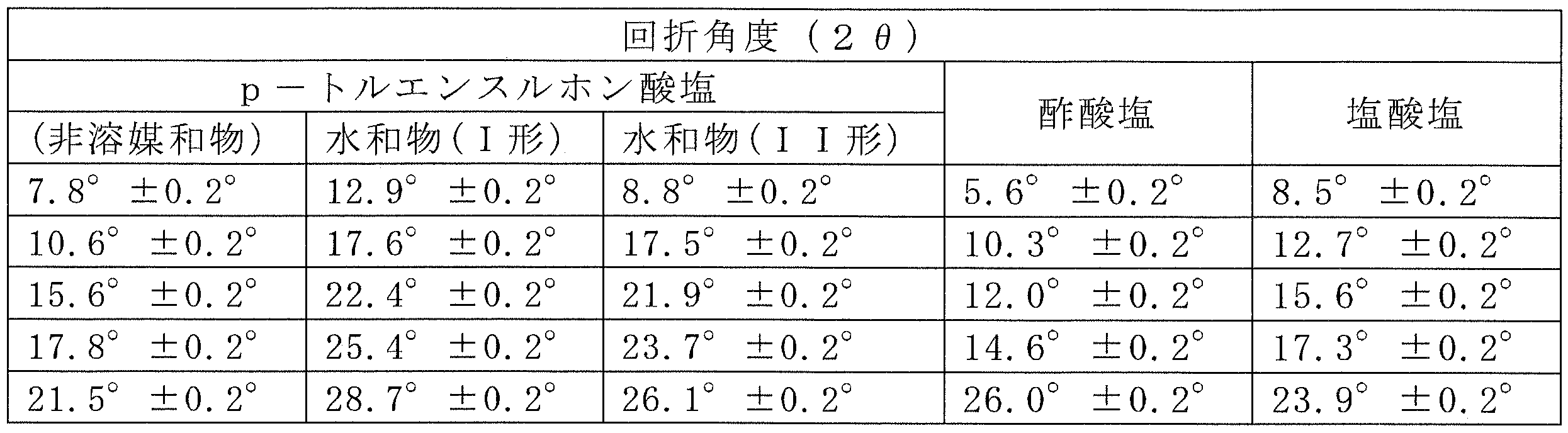
ここでTG/DTA(示差熱熱重量同時測定)は、熱分析の主要な測定方法のひとつであって、原子・分子の集合体としての物質の重量および熱的性質を測定する方法である。
TG/DTAは医薬活性成分の温度または時間に係る重量および熱量の変化を測定する方法であり、得られたデータを温度または時間に対してプロットすることにより、TG(熱重量)およびDTA(示差熱)曲線が得られる。TG/DTA曲線より、医薬活性成分の分解、脱水、酸化、還元、昇華、蒸発に関する重量および熱量変化の情報を得ることができる。
TG/DTAにおいて、「融点」とは、オンセット温度をいう。
TG/DTAについて、観察される温度、重量変化は、温度変化速度ならびに用いる試料調製技法および特定の装置に依存し得ることが知られている。結晶の同一性の認定においては、全体的なパターンが重要であり、測定条件によって多少変化し得る。
本発明結晶またはその結晶を含む医薬組成物を嘔気、嘔吐および/または便秘治療剤および/または予防剤として投与する際には、他の嘔気、嘔吐および/または便秘治療剤および/または予防剤と併用してもよい。例えば、塩酸オンダンセトロン、副腎皮質ステロイド(メチルプレドニゾロン、プレドニゾロン、デキサメタゾン等)、プロクロルペラジン、ハロペリドール、チミペロン、ペルフェナジン、メトクロプラミド、ドンペリドン、スコポラミン、塩酸クロルプロマジン、ドロペリドール、刺激性緩下薬(センノシド、ピコスルファートナトリウムなど)、浸透圧性緩下薬(ラクツロース)や塩類緩下薬(酸化マグネシウムなど)等との併用が可能である。
また、本発明結晶またはその結晶を含む医薬組成物は、オピオイド受容体アゴニスト作用を有する化合物および/または他の嘔気、嘔吐および/または便秘治療剤および/または予防剤、ならびに必要に応じて各種医薬用添加剤を配合した合剤とすることも可能である。
本発明の医薬組成物は、当該分野でよく知られた製法、例えば、慣用的な混合、溶解、顆粒化、糖衣-作成、粉末化、乳化、カプセル化、包括、凍結乾燥プロセスによって製造することができる。
また、投与量は、疾患の状態、投与ルート、患者の年齢、または体重によっても異なるが、成人に経口で投与する場合、通常0.1μg~1g/日であり、好ましくは0.01~200mg/日であり、非経口投与の場合には通常1μg~10g/日であり、好ましくは0.1mg~10mg/日である。
本発明による化合物(I)の製造方法をスキーム1に示した。

本発明によれば、カルバメート誘導体(II)に塩基を添加し、室温~溶媒の沸点以下の温度で1~10時間反応させることにより化合物(I)を得ることができる。塩基としては水酸化リチウム、水酸化ナトリウム、水酸化カリウム、水酸化セシウム等の無機塩基が好ましく、カルバメート誘導体(II)に対して1~10当量のアルカリを水溶液として添加することが好ましい。カルバメート誘導体は親水性溶媒、例えばメタノール、エタノール、2-プロパノール、DMSO等の溶媒に溶解し、上記アルカリ水溶液を添加することで好適に反応させることができる。
カルバメート誘導体(II)の水酸基保護基R1bは特に限定されないが、例えばアセチル基等の塩基で脱保護される保護基を用いると化合物(I)を直接得ることができる。R1bが塩基では脱保護されない保護基の場合、上記の塩基処理の前または処理後に適宜保護基を脱保護すればよい。
カルバメート誘導体(II)は化合物(III)にイソシアネート体(V)を反応させることにより得られる。反応は、化合物(III)の溶液に、化合物(III)に対して0.5~5当量、好ましくは、1.0~1.2当量のイソシアネート体(V)溶液を加え、室温~溶媒の沸点以下の温度で1~10時間反応させる。ここで、例えば、CuCl2のようなルイス酸触媒を0.00005~1当量、好ましくは0.0001~0.1当量、さらに好ましくは0.0001~0.01当量添加することが好ましい。反応溶媒は特に制限はないが酢酸エチル、アセトニトリル、アセトン、トルエン等が使用できる。
ここで用いるイソシアネート体(V)は、下記スキームに従い、
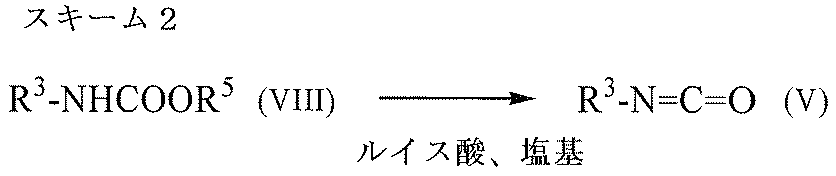
イソシアネート体に代えて、カルバミン酸活性エステル(VI)(式中、R7は置換基を有していてもよいフェニル基)を用いてカルバメート体(II)を調製することもできる。この活性エステルは例えばアミノ体R3-NH2に相当するフェノールのクロロ蟻酸エステルを反応させて得ることができる。
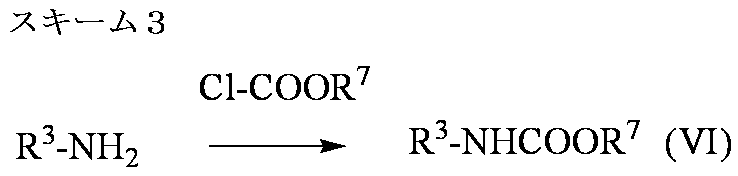
(粉末X線回折パターンの測定)
各実施例で得られた結晶の粉末X線回折測定は、日本薬局方の一般試験法に記載された粉末X線回折測定法に従い、以下の測定条件で行った。
(装置)
Bruker社製D-8Discover
(操作方法)
試料について、以下の条件で測定を行った。
測定法:反射法
光源の種類:Cu管球
使用波長:CuKα線
管電流:40mA
管電圧:40Kv
試料プレート:ガラス
測定範囲:3°―40°
また、各実施例で得られた各結晶約5mgを量り、アルミニウムパンにつめ、開放系にて測定した。測定条件は以下のとおりである。
(測定条件)
装置:SEIKO社製TG/DTA6300
測定温度範囲:25℃-300℃
昇温速度:10℃/分
化合物(IA)のp-トルエンスルホン酸塩[化合物(9)]の製造
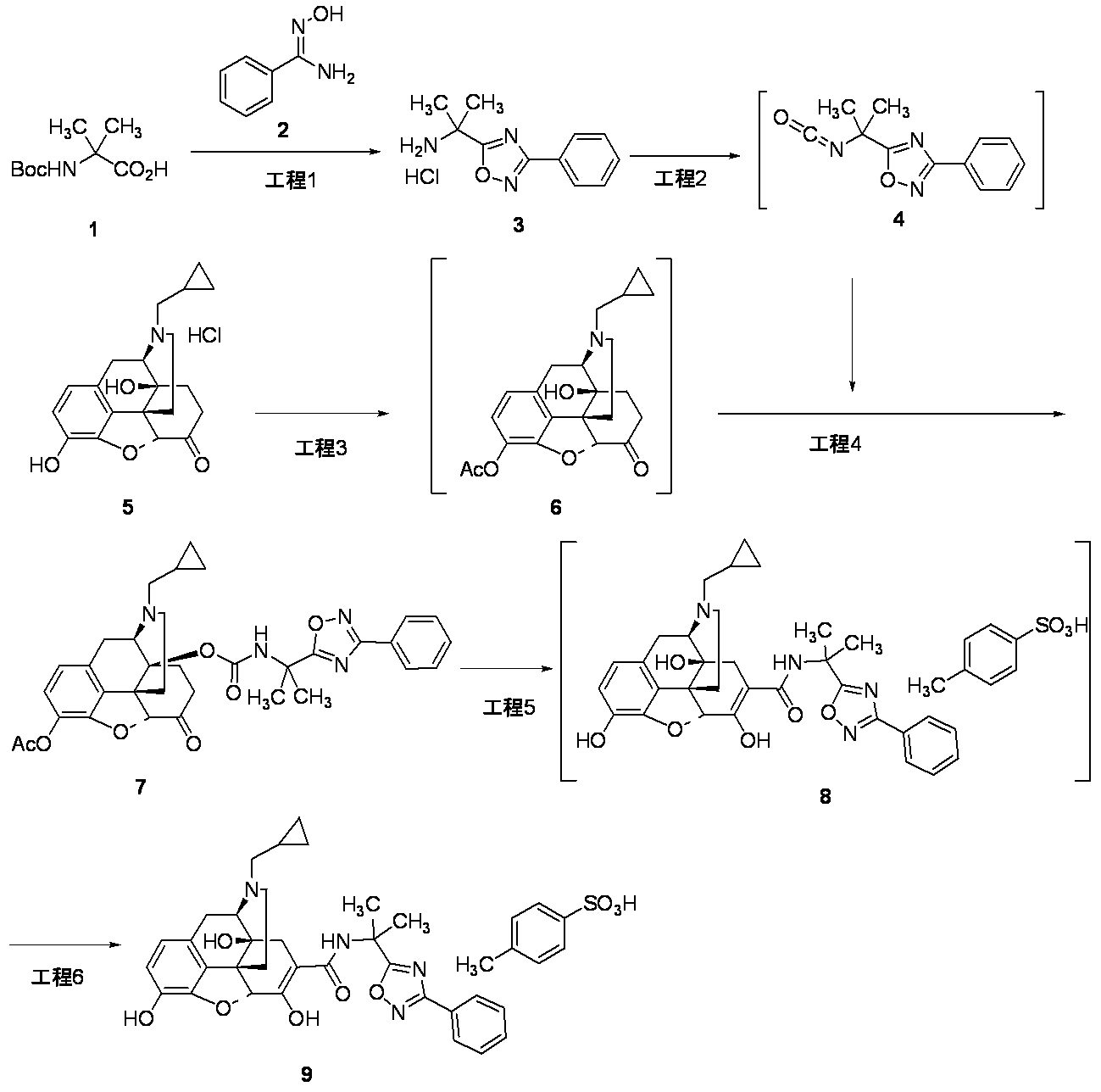
t-ブトキシカルボニルアミノイソ酪酸(1)(25.0g、123mmol)の酢酸n-プロピル(150ml)溶液に、0℃でジイソプロピルエチルアミン(17.5g、135.4mmol)を加えた。同温下、混合液にクロロギ酸イソブチル(17.6g、128.9mmol)を滴下し、1時間攪拌した。同反応液にベンズアミドオキシム(2)(17.6g、129.3mmol)の酢酸n-プロピル(100ml)溶液を加え、0℃で1時間攪拌後、95℃で5時間攪拌した。酸水溶液を加え分離後、有機層を水と炭酸水素ナトリウムで洗浄し、減圧濃縮した。同反応液に塩酸を加え2.5時間攪拌し、析出した結晶を濾取し、洗浄、乾燥後、化合物(3)(27.34g、92.7%)を得た。
1H NMR(300MHz, DMSO‐d6) δ 1.80 (6H, s), 7.59-7.64 (3H, m), 8.01-8.05 (2H, m), 9.26(3H, br).
化合物(3)(19.0g、79.2mmol)のトルエン152ml懸濁液に、25℃でアルカリ水を加え攪拌した。50℃で、クロロギ酸メチル(8.3g、88.0mmol)を加え1時間攪拌後、有機層を分離し、塩酸水、炭酸水素ナトリウム水および水で順次洗浄を行い、減圧濃縮した。この反応液に1.0mol/l三塩化ホウ素のトルエン溶液(7.3ml)を加え、50℃でトリエチルアミンを滴下し、2時間攪拌後、反応液を濃縮して化合物(4)の溶液を得た。
市販のナルトレキソン塩酸塩(5)(20.0g、52.9mmol)の酢酸エチル160ml溶液にトリエチルアミン(11.3g、111.7mmol)と無水酢酸(5.7g、55.8mmol)を加えた後、40℃で2時間攪拌した。反応液を冷却し、水洗後、減圧濃縮し、化合物(6)溶液を得た。
1H-NMR (300 MHz, DMSO‐d6) δ 0.14 (2H, d, J=4.8 Hz), 0.49 (2H, d, J=7.8 Hz), 0.88 (1H, m), 1.29 (1H, d, J=9.9 Hz),1.46 (1H, td, J=14.1, 3.3 Hz), 1.79(1H, dt, J=12.0, 3.3 Hz), 1.90-2.00(1H, m), 2.11(1H, dt, J=14.4, 3.3 Hz), 2.26 (3H, s), 2.30-2.46 (3H, m), 2.52-2.72(2H, m), 2.92(1H, td, J=14.1, 4.8 Hz), 3.07(1H, d, J=18.9 Hz), 3.17(1H, d, J=5.7 Hz), 4.91(1H, s), 5.18(1H, s), 6.71(1H, d, J=8.1 Hz), 6.83(1H, d, J=8.1 Hz)
化合物(6)溶液に、化合物(4)の反応液と酢酸エチルを加えた後、この混合液に塩化銅(II)水溶液を加え、25℃で4時間攪拌した。反応液にヘプタンを加えて晶析し、ろ過、洗浄後、乾燥して化合物(7)(89.2%)を得た。
1H-NMR (300 MHz, DMSO‐d6) δ 0.20-0.40 (2H, m), 0.60-0.90 (1H, m), 1.20-1.50 (2H, m), 1.67 (3H, s), 1.74 (3H, s), 1.90-2.10 (2H, m), 2.10-2.20 (2H, m), 2.26 (3H, s), 2.30-2.55 (2H, m), 2.58-2.80 (4H, m), 3.03(2H, m), 4.31(1H, s), 4.81(1H, s), 6.71(1H, d, J=8.1 Hz), 6.85(1H, d, J=7.8 Hz), 7.50-7.70(3H, m), 7.92-8.01(2H, m), 8.11(1H, s).
化合物(7)(5.5g、9.0mmol)の2-プロパノール22mlの懸濁液に、水酸化カリウム水溶液を滴下し、80℃で5時間攪拌した。反応液をトルエン洗浄した後、pH7.0~8.0に調整し、酢酸n-プロピルで抽出した。有機層を水洗後、2-プロパノールと酢酸n-プロピルを加え濃縮後、60℃でp-トルエンスルホン酸2-プロパノール溶液(1.5g,8.1mmol)を滴下し、晶析した。冷却後、析出した固体をろ過し、未乾固体(8)[p-トルエンスルホン酸塩・(酢酸n-プロピルおよび2-プロパノール)和物]を得た。
未乾固体(8)[p-トルエンスルホン酸塩・(酢酸n-プロピルおよび2-プロパノール)和物]の粉末X線回折およびTG/DTA分析の結果を下記参考例3に示す。
未乾固体(8)に、メタノールと酢酸n-プロピルを加え、加温溶解し、ろ過、洗浄後、減圧濃縮した。析出物を濾取後、洗浄し、得られた粗生成物を60℃で3時間減圧乾燥し、化合物(9)の結晶(非溶媒和物:66.3%)を得た。
1H-NMR (300MHz,DMSO-d6) δ 13.37 (1H, s), 9.44 (1H, s), 8.95 (1H, br s), 8.12 (1H, s), 7.99-7.96 (2H, m), 7.60-7.53 (3H, m), 7.49-7.45 (2H, m), 7.11 (2H, d, J=8.4Hz), 6.69 (2H, ABq.), 6.56 (1H, s), 4.94 (1H, s), 3.95 (1H, d, J=5.1Hz), 3.50-3.25 (2H, m), 3.07 (2H, br d, J=12Hz), 3.00-2.90 (1H, m), 2.75-2.60 (1H, m), 2.60-2.40 (2H, m), 2.29 (3H, s), 2.10 (1H, d, J=14.7Hz), 1.70 (6H, s), 1.75-1.60 (1H, m), 1.15-0.95 (1H, m), 0.80-0.55 (2H, m), 0.55-0.35 (2H, m).
粉末X線回折の結果を図1および表2に示す。
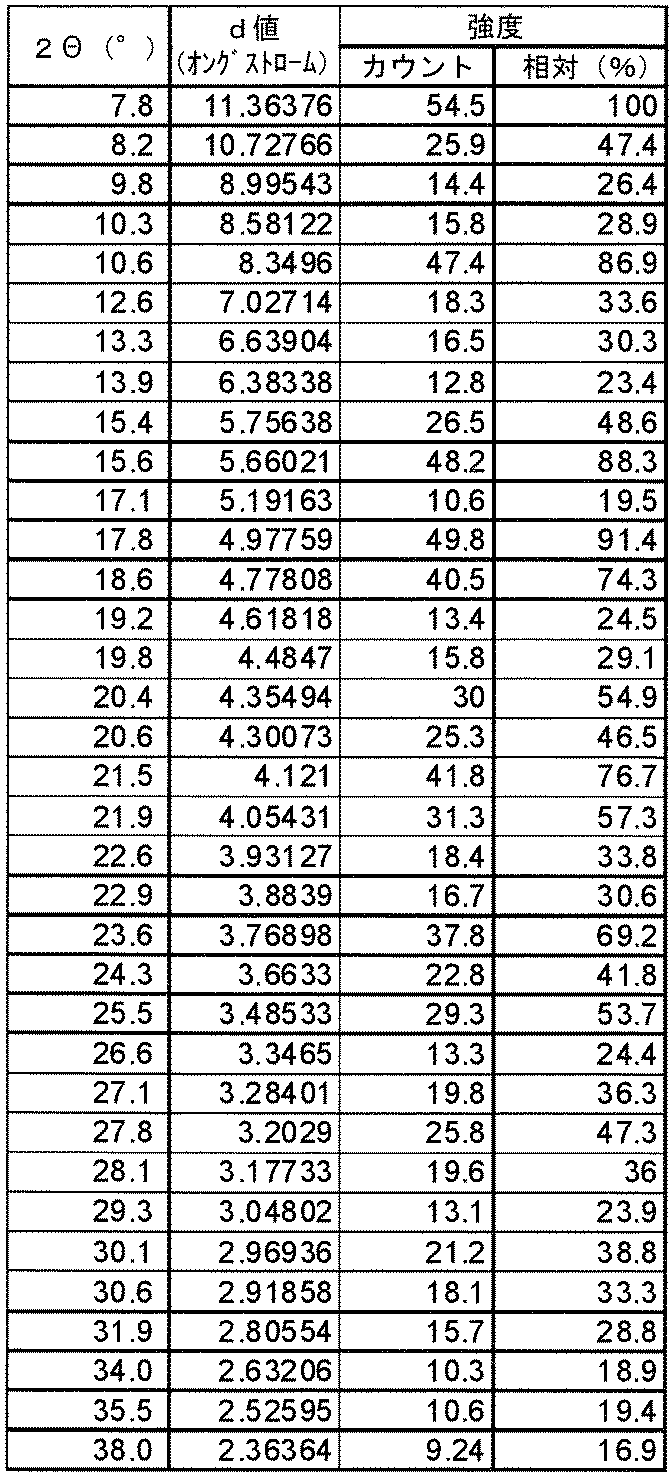
TG/DTA分析結果を図14に示す。
式(IA)で示される化合物のp-トルエンスルホン酸塩[化合物(9)]の製造(別法A)
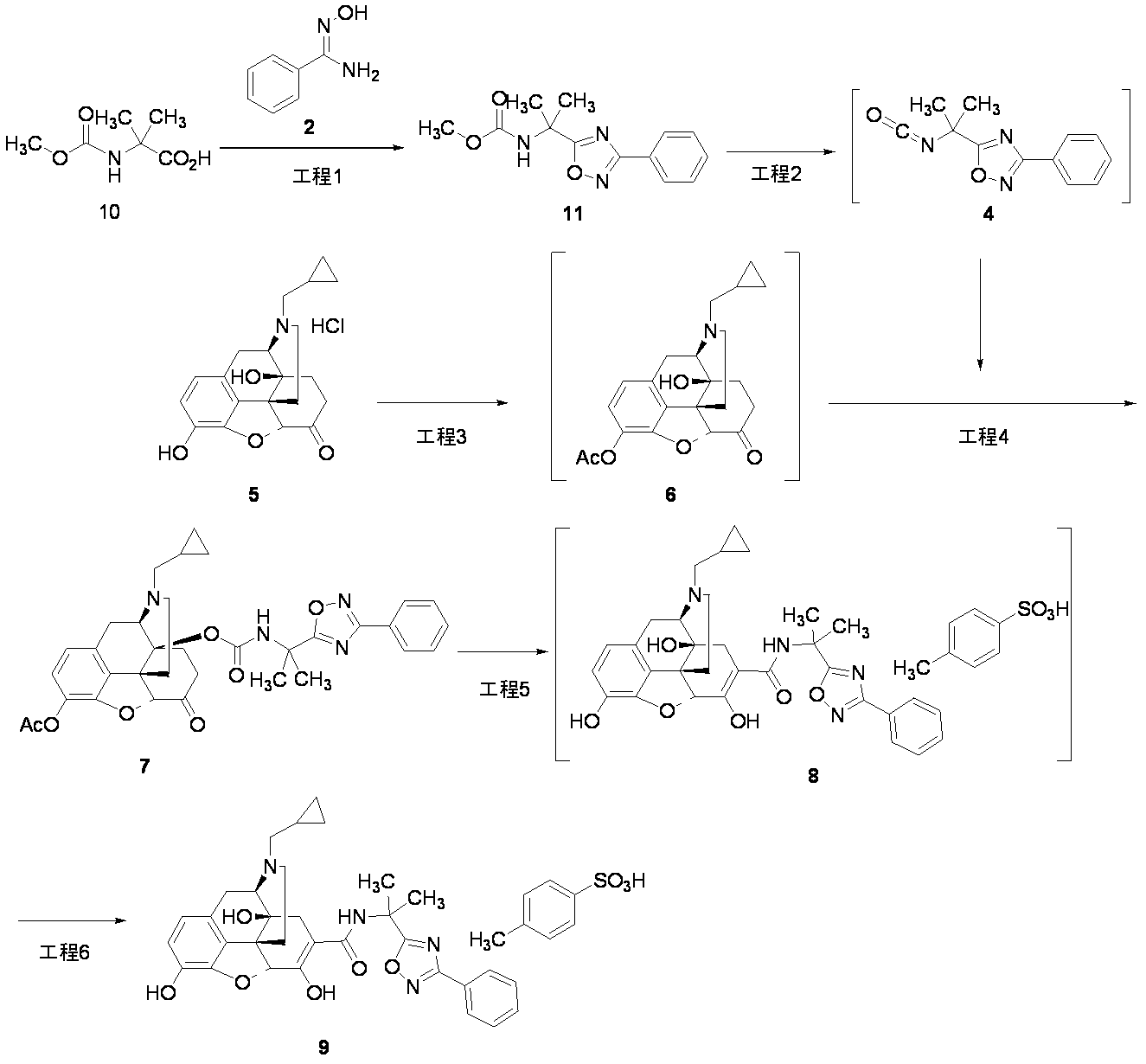
メトキシカルボニル‐2‐メチルアラニン(10)(5.00g、31.0mmol)とアセトニトリル25mlの懸濁液に、0℃でCDI(カルボニルジイミダゾール、5.28g、31.1mmol)とアセトニトリル5mlを加えて1.5時間攪拌した。同温でベンズアミドオキシム(2)(4.65g、34.2mmol)とアセトニトリル20mlを加え2時間攪拌した。同反応液に、化合物(10)に対して0.10当量の炭酸カリウム(0.43g)を水15mlに溶解した炭酸カリウム水溶液全量を加え、溶媒の沸点以下の温度で1~5時間反応させた。減圧濃縮後、水を加えて析出した粗生成物を濾取、洗浄した。未乾結晶を乾燥し化合物(11)[7.43g、収率91.7%]を得た。
化合物(11):
1H-NMR(300MHz, CDCl3) δ1.81(6H, s), 3.65 (3H, s), 5.46(1H, s), 7.49-7.50 (3H, m), 8.05-8.08 (2H, m).
化合物(11)(15.12g、57.41mmol)と三塩化アルミニウム(9.19g、68.89mmol)のトルエン溶液に、50℃でトリエチルアミン(7.55g、74.63mmol)を滴下し、同温度で2.5時間攪拌した。有機層を分離し、濃縮後、化合物(4)を反応液として得た。
1H-NMR(300MHz, CDCl3) δ1.84(6H, s), 7.31-7.55 (3H, m), 8.05-8.13 (2H, m).
13C-NMR(75MHz, CDCl3) δ29.85, 55.71, 126.16, 127,44, 128.78, 131.35, 168.23, 180.88.
IR (cm-1)1446, 1478, 1570, 1638, 2256, 2986, 3337.
実施例1-1記載の同じ工程で化合物(5)から化合物(9)(非溶媒和物)を合成した。
式(IA)で示される化合物のp-トルエンスルホン酸塩[化合物(9)]の製造(別法B)
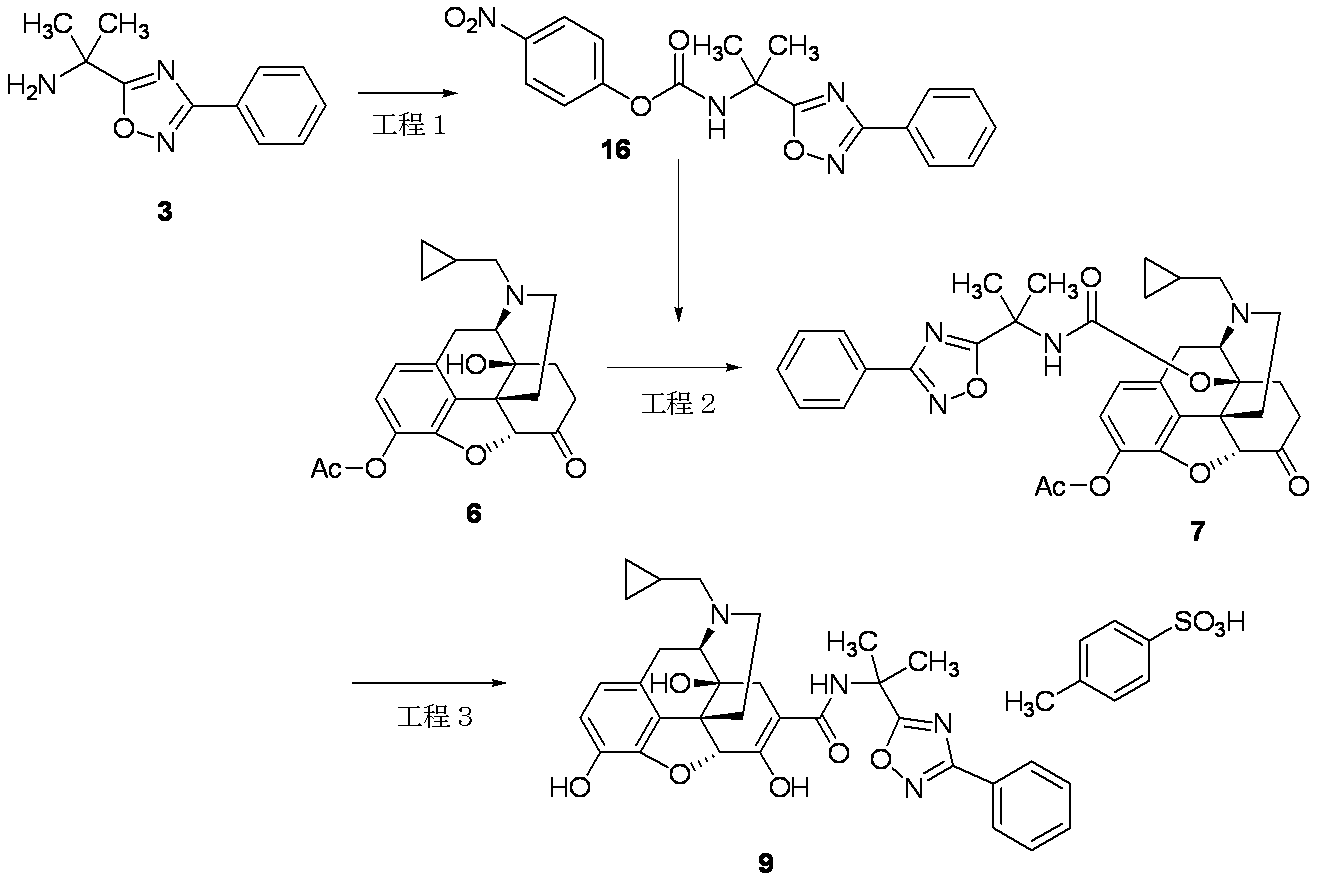
実施例1-1記載の工程1と同様の方法で合成した化合物(3)(2.03g、10.0mmol)をアセトニトリル20mlに溶解し、氷冷下、ピリジン(0.89ml、11.0mmol)及びクロロ蟻酸4-ニトロフェニルエステル(2.22g、11.0mmol)を加え、室温で1.5時間攪拌した。反応液を、2mol/L塩酸と氷水の中に注ぎ、酢酸エチルで2回抽出した。抽出液を食塩水で洗浄後、無水硫酸ナトリウム上で乾燥し、ろ過、濃縮した。得られた単黄色油状物4.88gに、ヘキサン約20mlを加え、氷冷下、固化させた。得られた固体を濾取し、ヘキサンで洗浄することにより、目的とする化合物(16)(3.74g)を白色固体として得た。
1H-NMR (CDCl3) δ 8.24 (2H, d, J=9.3Hz), 8.09 (2H, m), 7.53-7.45 (3H, m), 7.33 (2H, br d, J=8.7Hz), 5.99 (1H, br s), 1.92 (6H, s).
実施例1-1記載の工程3と同様の方法で合成した化合物(6)(3.28g、8.56mmol)及び化合物(16)(3.79g、10.3mmol)をアセトニトリル10mlに溶解し、22時間還流した。反応液を室温に戻し、氷水の中に注ぎ、酢酸エチルで2回抽出した。抽出液を0.1mol/L水酸化ナトリウム水溶液で2回、食塩水で1回洗浄後、無水硫酸マグネシウム上で乾燥し、ろ過、濃縮した。得られた化合物(7)の非晶形固体(5.46g)は、精製せず、次の反応に使用した。
1H-NMR (DMSO-d6) δ 8.0-7.9 (2H, m), 7.6-7.5 (3H, m), 6.9-6.7 (2H, Abq.), 4.32 (1H, s), 3.2-1.2 (12H, m), 2.26 (3H, s), 1.71 (1H, d, J=21.6Hz), 1.61 (6H, s), 0.95-0.65 (1H, m), 0.55-0.2 (2H, m), 0.2-0.5 (2H, m).
化合物(7)(500mg)をジメチルスルホキシド2mlに溶解し、2mol/L水酸化カリウム水溶液2mlを加え、80℃で6時間加熱攪拌した。反応液を室温に戻し、2mol/L塩酸で中和し、酢酸エチルで2回抽出した。抽出液を0.1mol/L水酸化ナトリウム水溶液、食塩水で順次洗浄後、無水硫酸ナトリウム上で乾燥し、ろ過、濃縮した。得られた淡黄色の非晶形固体412mgをメタノール2mlに溶解し、p-トルエンスルホン酸水和物165mgを加え、30分間静置した。その後、アセトニトリル20mlを加えて、5℃で一晩静置した。析出物を濾取し、減圧下乾燥することにより、目的とするp-トルエンスルホン酸塩(9)(非溶媒和物:282mg)を結晶として得た[化合物(6)から48%の収率]。
1H-NMR (DMSO-d6) δ 13.37 (1H, s), 9.44 (1H, s), 8.95 (1H, br s), 8.12 (1H, s), 7.99-7.96 (2H, m), 7.60-7.53 (3H, m), 7.49-7.45 (2H, m), 7.11 (2H, d, J=8.4Hz), 6.69 (2H, ABq.), 6.56 (1H, s), 4.94 (1H, s), 3.95 (1H, d, J=5.1Hz), 3.50-3.25 (2H, m), 3.07 (2H, br d, J=12Hz), 3.00-2.90 (1H, m), 2.75-2.60 (1H, m), 2.60-2.40 (2H, m), 2.29 (3H, s), 2.10 (1H, d, J=14.7Hz), 1.70 (6H, s), 1.75-1.60 (1H, m), 1.15-0.95 (1H, m), 0.80-0.55 (2H, m), 0.55-0.35 (2H, m).
式(IA)で示される化合物のp-トルエンスルホン酸塩[化合物(9)]の製造(別法C)
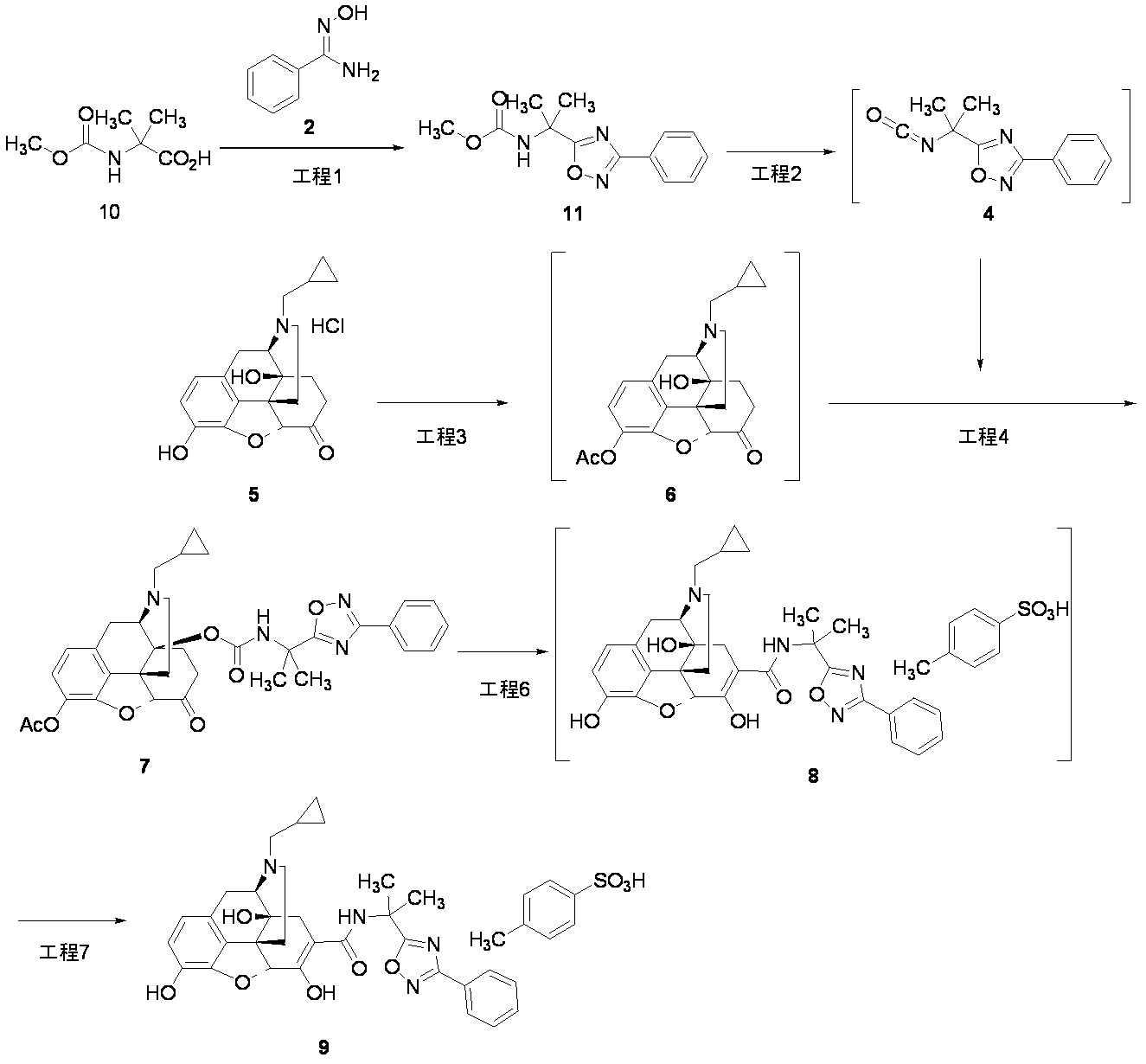
実施例1-2記載の工程1と同様の方法で合成した化合物(11)(0.5g、1.91mmol)にトルエンを加えた後、TiCl4(2.30mmol)を加え50℃に加熱した。この反応液にトリエチルアミン(2.30mmol)を加え、同温で2時間攪拌し、化合物(4)を反応液として得た。
工程2-7 化合物(9)の合成
実施例1-1記載の同じ工程で化合物(5)から化合物(9)(非溶媒和物)を合成した。
化合物(20)の合成

化合物(17)(4.51g、36mmol)をアセトニトリル45mlに溶解し、氷冷下、ピリジン(3.20ml、39.6mmol)及びクロロ蟻酸フェニルエステル(5.00ml、39.6mmol)を加えた。ジメチルホルムアミド9ml及びアセトニトリル30mlを加えて、室温で45分間攪拌した。反応液から析出物を濾取し、冷メタノール、水で洗浄後、減圧乾燥することにより、目的とする化合物(18)(7.02g)を白色固体として得た。
1H-NMR (CDCl3) δ 8.61 (1H, s), 7.43 (2H, t, J=7.8Hz), 7.41 (1H, s), 7.29 (1H, t, J=7.8Hz), 7.21 (2H, d, J=7.8Hz), 3.97 (3H, s).
実施例1-1記載の工程3と同様の方法で合成した化合物(6)(1.92g、5.00mmol)及び化合物18(1.84g、7.50mmol)をジメチルホルムアミド10mlに溶解し、120℃で4時間加熱攪拌した。反応液を室温に戻し、アセトニトリル50mlを加え、析出物を濾去した。濾液を60℃で減圧濃縮し、ジメチルホルムアミドを留去した。残渣にアセトニトリル100mlを加え、氷冷下、30分間攪拌した。析出した結晶を濾取し、冷アセトニトリルで洗浄、減圧乾燥し、目的とする化合物(19)の第一晶(1.66g)を得た。さらに、母液を濃縮した後、残渣にジエチルエーテルを加え、室温で攪拌することにより、第二晶(306mg)、第三晶(71mg)を得た。
1H-NMR (DMSO-d6) δ 10.58 (1H, br s), 8.52 (1H, s), 7.19 (1H, s), 6.83 (2H, Abq.), 4.78 (1H, s), 4.44 (1H, d, J=5.4Hz), 3.90 (3H, s), 3.12 (1H, d, J=18.6Hz), 2.9-2.55 (4H, m), 2.35 (1H, dd, J=6.3Hz, 12.6Hz), 2.27 (3H, s), 2.25-2.12 (3H, m), 2.1-1.9 (1H, m), 1.62-1.48 (1H, m), 1.28-1.20 (1H, m), 0.75-0.62 (1H, m), 0.35 (2H, d, J=7.5Hz), 0.1-0.5 (2H, m).
化合物(19)(2.02mg、3.78mmol)をメタノール9.5mlに溶解し、2mol/L水酸化カリウム水溶液9.5mlを加え、60℃で2.5時間加熱攪拌した。反応液を室温に戻し、氷冷下、2mol/L塩酸で中和した後、メタノールを留去した。析出した粗結晶を濾取した後、酢酸エチルとメタノールの混液(1:1)から再結晶し、目的とする化合物(20)(1.44g)を結晶として得た(収率77%)。
1H-NMR (DMSO-d6) δ 14.2 (1H, br s), 9.19 (1H, s), 8.8 (1H, br s), 8.32 (1H, s), 7.49 (1H, s), 6.56 (2H, ABq.), 6.1 (1H, br s), 4.53 (1H, br s), 3.82 (3H, s), 3.5-2.3 (9H, m), 1.82 (1H, d, J=15.6Hz), 1.53 (1H, br d, J=13.5Hz), 1.15-0.95 (1H, m), 0.75-0.5 (2H, m), 0.5-0.3 (2H, m).
化合物(7)の合成(その1)
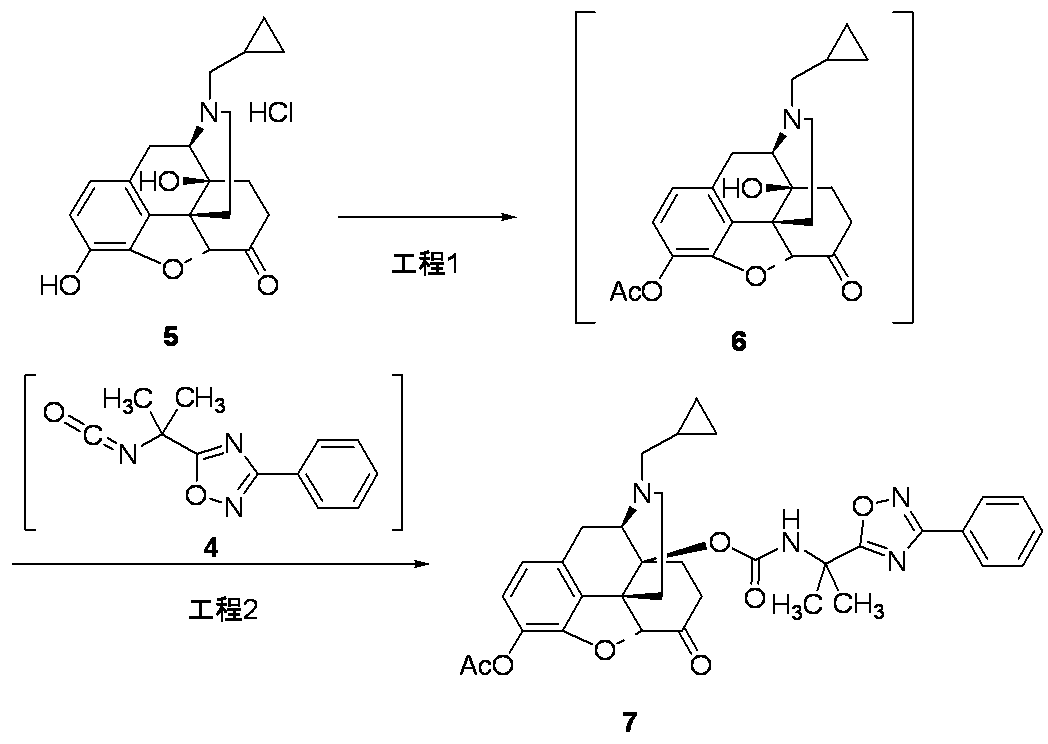
化合物(7)の合成(その2)
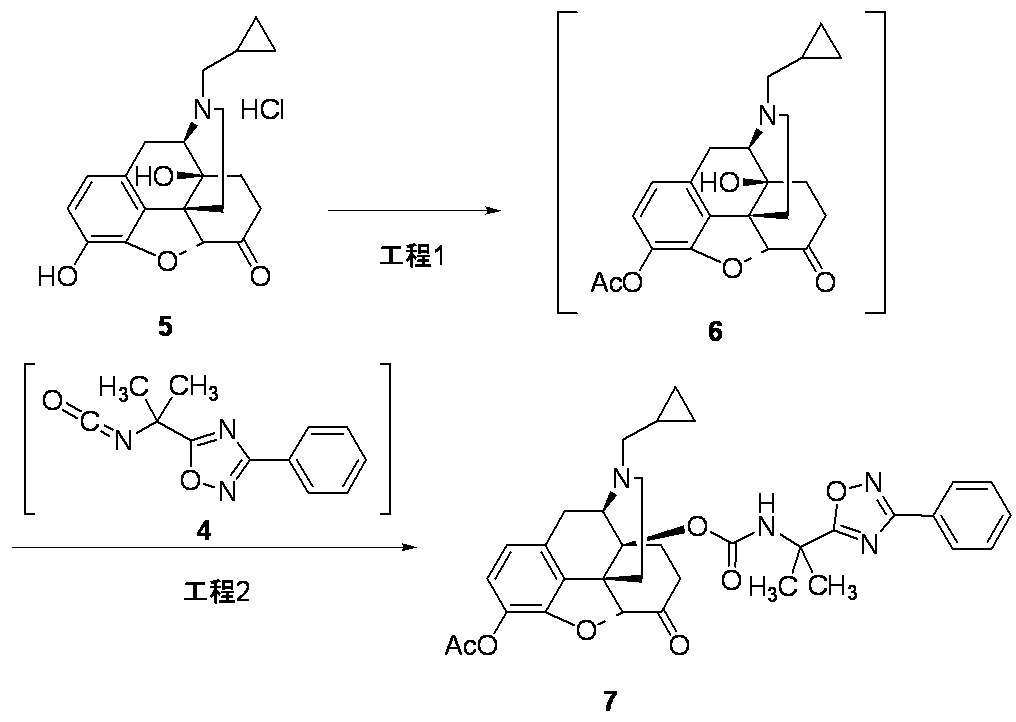
化合物(IA)のp-トルエンスルホン酸塩水和物結晶(I形)の製造
上記実施例1-1に従って合成したp-トルエンスルホン酸塩(非溶媒和物)5.00gに2-プロパノール25mL-水2.5mL混液を加え加温溶解した。アセトニトリル50mLを加え室温攪拌を4時間行った。析出晶を濾別し、85℃で減圧乾燥を4時間行い、4.68gの結晶を得た。
元素分析:
計算値:C, 60.28; H, 5.94; N, 7.21; S, 4.13(1.9H2Oとしての計算値)
実測値:C, 60.5; H, 6.17; N, 7.21; S, 3.83
粉末X線回折の結果を図2および表3に示す。
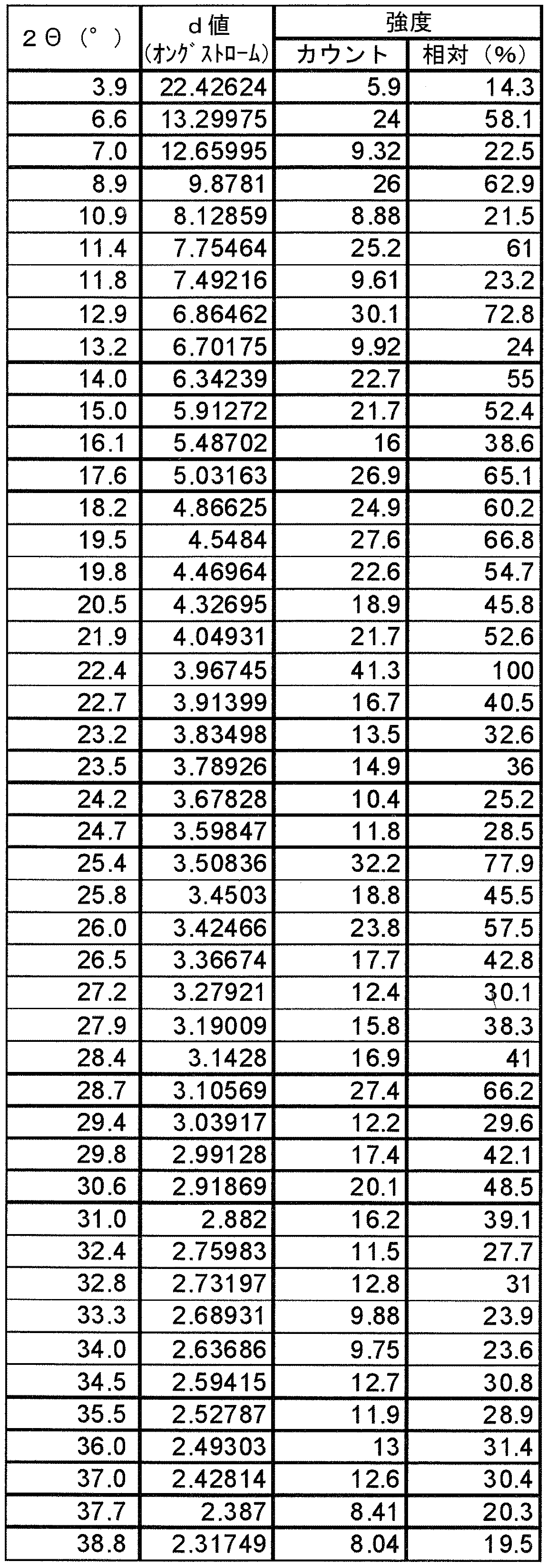
TG/DTA分析結果を図15に示す。この結果から、重量減少率を算出すると、2.42%であった。従って、1水相当の水を含むことがわかる。
以上の測定結果から、本I形結晶は、1~2水相当の水を含む結晶であると考えられる。
化合物(IA)のp-トルエンスルホン酸塩水和物結晶(II形)の製造
上記実施例1-1に従って合成したp-トルエンスルホン酸塩(非溶媒和物)5.00gにテトラヒドロフラン12.5mLを加え溶解させた。酢酸n-プロピル50mLを加え、室温攪拌を4時間行った。析出晶を濾別し、85℃で減圧乾燥を4時間行い、4.77gの結晶を得た。
元素分析:
計算値:C, 61.56; H, 5.83; N, 7.36; S, 4.21(1.0H2Oとしての計算値)
実測値:C, 61.68; H, 5.78; N, 7.39; S, 4.07
粉末X線回折の結果を図3および表4に示す。

TG/DTA分析結果を図16に示す。この結果から、重量減少率を算出すると、1.42%であった。従って、0.5水相当の水を含むことがわかる。
以上の測定結果から、本II形結晶は、0.5~1水相当の水を含む結晶であると考えられる。
化合物(IA)の酢酸塩の製造
上記実施例1-1に従って合成したp-トルエンスルホン酸塩(非溶媒和物)20.00gに酢酸エチル100mL、炭酸ナトリウム3.18g(p-トルエンスルホン酸塩に対し1.1等量)を溶かした水50mLを加え、分液操作を行った。酢酸エチル層を1%炭酸ナトリウム水溶液50mL、飽和食塩水50mLで洗浄し、各水層を酢酸エチル50mLで逆抽出した。酢酸エチル層を硫酸ナトリウムで脱水し、約30gまで濃縮した。濃縮液にアセトニトリル200mL、酢酸4.6mL(p-トルエンスルホン酸塩に対し3等量)を加え、室温攪拌し、結晶の析出が認められてから、室温下1日静置した。析出晶を濾別し、16.17gの結晶を得た。
粉末X線回折の結果を図4および表5に示す。
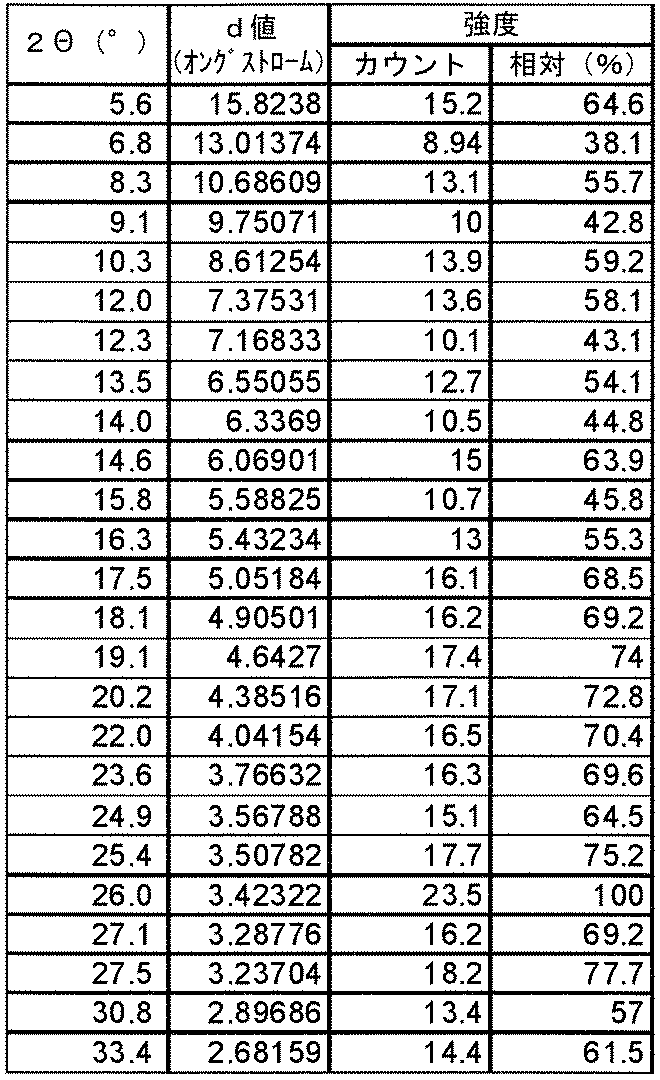
TG/DTA分析結果を図17に示す。
化合物(IA)の塩酸塩の製造
上記実施例1-1に従って合成したp-トルエンスルホン酸塩(非溶媒和物)20.00gに酢酸エチル100mL、炭酸ナトリウム3.18g(p-トルエンスルホン酸塩に対し1.1等量)を溶かした水50mLを加え、分液操作を行った。酢酸エチル層を水50mLで2回洗浄し、各水層を酢酸エチル50mLで逆抽出した。酢酸エチル層を硫酸ナトリウムで脱水し、アセトニトリル200mL、4mol/L塩酸-酢酸エチル10mL(p-トルエンスルホン酸塩に対し1.5等量)を加え、約50gまで濃縮した。濃縮液にアセトニトリル200mLを加え、室温攪拌を1時間行った。析出晶を濾別し、10.01gの結晶を得た。
粉末X線回折の結果を図5および表6に示す。

TG/DTA分析結果を図18に示す。
化合物(IA)のエタノール和物の製造
上記実施例1-1に従って合成したp-トルエンスルホン酸塩(非溶媒和物)20.00gに酢酸エチル100mL、炭酸ナトリウム3.18g(p-トルエンスルホン酸塩に対し1.1等量)を溶かした水50mLを加え、分液操作を行った。酢酸エチル層を1%炭酸ナトリウム水溶液50mL、飽和食塩水50mLで洗浄し、各水層を酢酸エチル50mLで逆抽出を行った。酢酸エチル層を硫酸ナトリウムで脱水し、約30gまで濃縮した。濃縮液にエタノール100mLを加え、溶液が濁る寸前までイソプロピルエーテルを加えた。室温攪拌し、結晶の析出が認められてから、室温下で1日静置した。析出晶を濾別し、9.57gの結晶を得た。
粉末X線回折の結果を図6および表7に示す。

TG/DTA分析結果を図19に示す。
化合物(IA)の遊離体の製造
実施例8記載のエタノール和物を120℃で10時間減圧乾燥し、核磁気共鳴スペクトルでエタノールが残留していないことを確認した。
粉末X線回折の結果を図7および表8に示す。

TG/DTA分析結果を図20に示す。
化合物(IA)のp-トルエンスルホン酸塩・酢酸メチル和物の製造
上記実施例1-1に従って合成したp-トルエンスルホン酸塩(非溶媒和物)1.00gに2-プロパノール5mL-水0.5mL混液を加え、加温溶解させた。酢酸メチル20mLを加え、室温攪拌を4時間行った。析出晶を濾別し、0.98gの結晶を得た。
粉末X線回折の結果を図8および表9に示す。

TG/DTA分析結果を図21に示す。
化合物(IA)のp-トルエンスルホン酸塩・(酢酸エチルおよび2-プロパノール)和物の製造
上記実施例1-1に従って合成したp-トルエンスルホン酸塩(非溶媒和物)1.00gに2-プロパノール5mL-水0.5mL混液を加え、加温溶解させた。酢酸エチル20mLを加え、室温攪拌を4時間行った。析出晶を濾別し、0.96gの結晶を得た。
粉末X線回折の結果を図9および表10に示す。
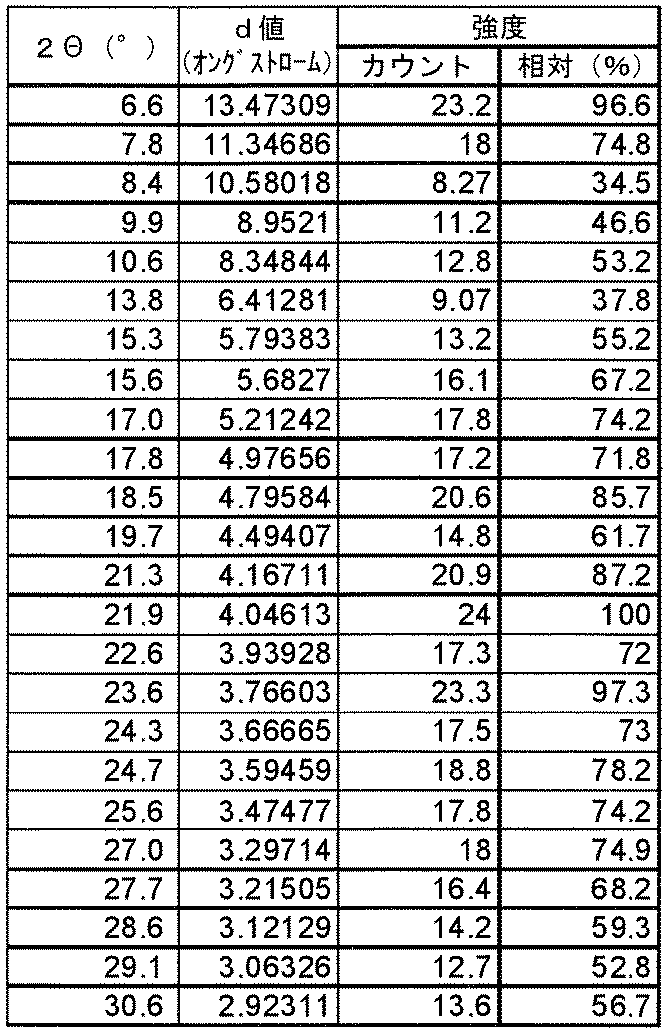
TG/DTA分析結果を図22に示す。
化合物(IA)のp-トルエンスルホン酸塩・(酢酸n-プロピルおよび2-プロパノール)和物の製造
上記実施例1-1の工程5で得た未乾固体(8)の粉末X線回折の結果を図10および表11に示す。
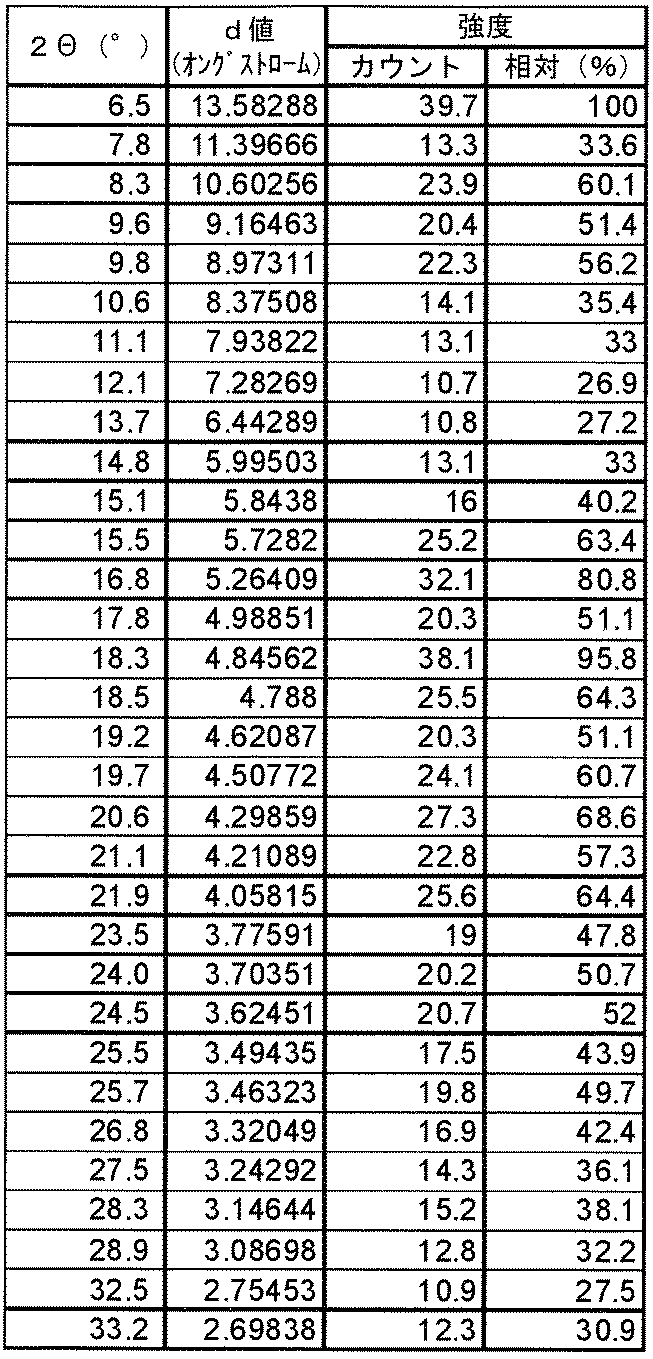
TG/DTA分析結果を図23に示す。
化合物(IA)のp-トルエンスルホン酸塩・アセトニトリル和物の製造
上記実施例1-1に従って合成したp-トルエンスルホン酸塩(非溶媒和物)1.00gに2-プロパノール5mL-水0.5mL混液を加え、加温溶解させた。アセトニトリル15mLを加え、室温攪拌を4時間行った。析出晶を濾別し、1.02gの結晶を得た。
粉末X線回折の結果を図11および表12に示す。
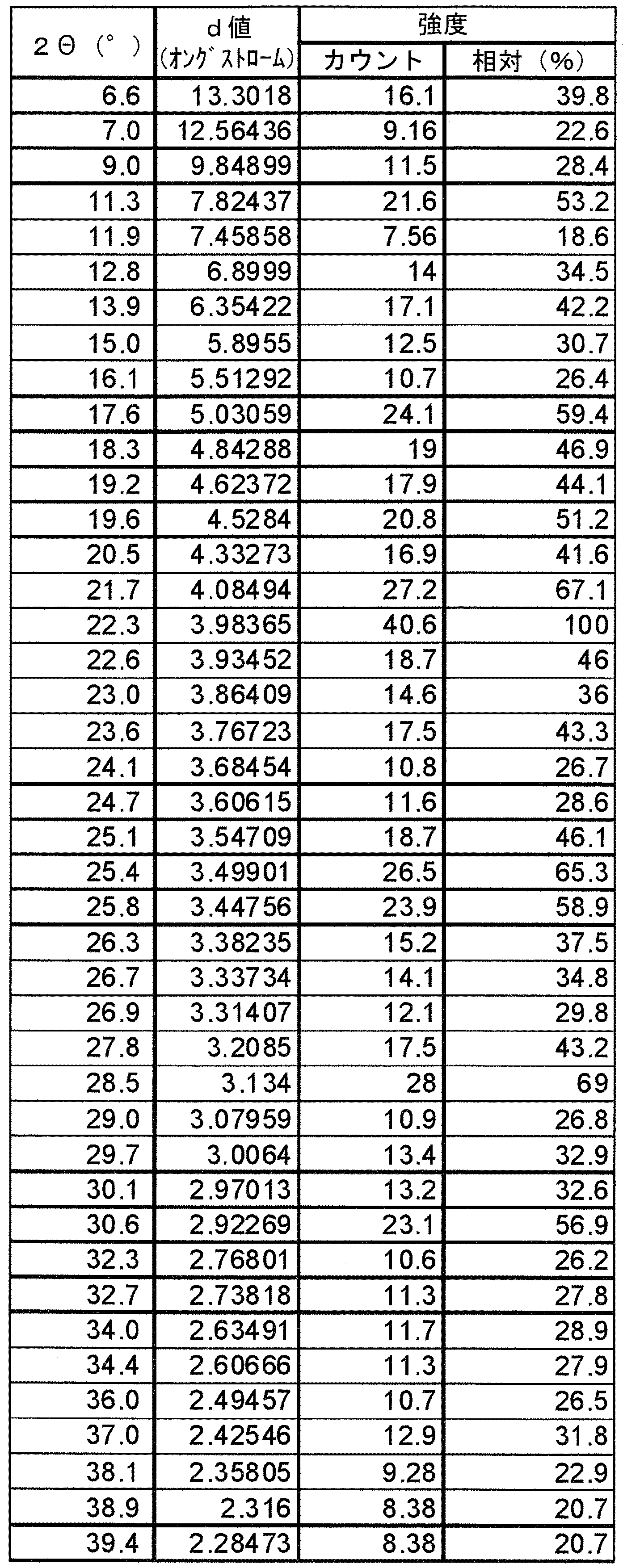
TG/DTA分析結果を図24に示す。
化合物(IA)のp-トルエンスルホン酸塩・1、2-ジメトキシエタン和物の製造
上記実施例1-1に従って合成したp-トルエンスルホン酸塩(非溶媒和物)1.00gにテトラヒドロフラン5mLを加え加温溶解させた。1、2-ジメトキシエタン20mLを加え、室温攪拌を4時間行った。析出晶を濾別し、1.05gの結晶を得た。
粉末X線回折の結果を図12および表13に示す。

TG/DTA分析結果を図25に示す。
化合物(IA)のp-トルエンスルホン酸塩・メチルイソブチルケトン和物の製造
上記実施例1-1に従って合成したp-トルエンスルホン酸塩(非溶媒和物)1.00gにテトラヒドロフラン5mLを加え加温溶解させた。メチルイソブチルケトン20mLを加え、室温攪拌を4時間行った。析出晶を濾別し、1.02gの結晶を得た。
粉末X線回折の結果を図13および表14に示す。
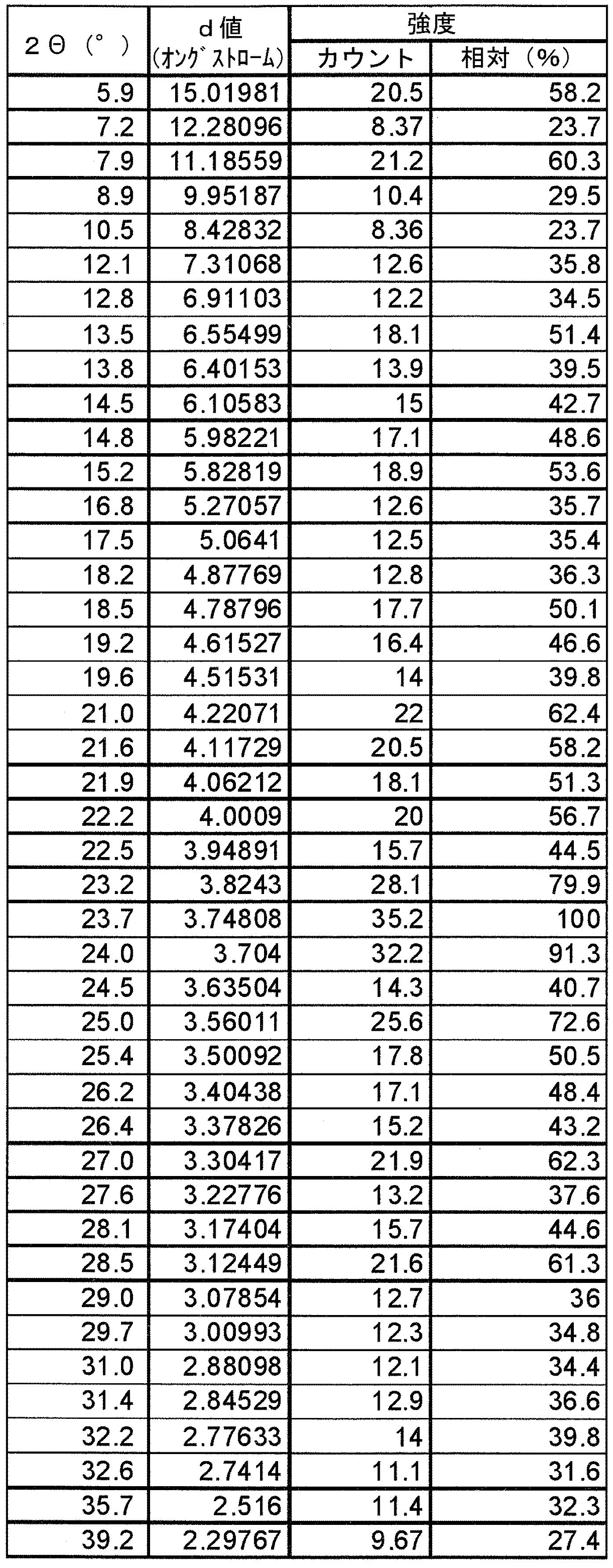
TG/DTA分析結果を図26に示す。
結晶の固体安定性試験
結晶約10mgをポリエチレン製栓付2mL硝子容器に正確に秤取した。該硝子容器を閉栓後、パラフイルムを巻き、40℃または60℃で、2週間または4週間保存した。40℃で保存したサンプルを40℃密栓保存品といい、60℃で保存したサンプルを60℃密栓保存品という。該硝子容器を開栓した状態で、40℃相対湿度89%または60℃で、2週間または4週間保存した。40℃相対湿度89%で保存したサンプルを40℃相対湿度89%保存品といい、60℃で保存したサンプルを60℃開栓保存品という。-40℃密栓保存品を標準品として、下記条件下のHPLC法で絶対検量線法により含量を測定した。
式(IA)のp-トルエンスルホン酸塩(非溶媒和物)の結晶の外観変化の観察結果および結晶の残存率を表16に示した。
式(IA)のp-トルエンスルホン酸塩水和物結晶(I形)の外観変化の観察結果および結晶の残存率を表17に示した。
式(IA)のp-トルエンスルホン酸塩水和物結晶(II形)の外観変化の観察結果および結晶の残存率を表18に示した。
ここで、外観変化がなかったものを(-)、わずかに外観変化が認められたものを(±)とした。
式(IA)のp-トルエンスルホン酸塩(非溶媒和物)の結晶、式(IA)のp-トルエンスルホン酸塩水和物結晶(I形)および式(IA)のp-トルエンスルホン酸塩水和物結晶(II形)の外観変化はなく、いずれの結晶の残存率も低下することなく、安定であることを確認した。
HPLC条件
カラム:CAPCELL PAK C18 AQ (3μm 3.0x150mm)
カラム温度:50℃
UV検出波長:231nm
移動相:[A]10mmol/L ギ酸アンモニウムおよび10mmol/L 塩化マグネシウムの混合液、[B]アセトニトリルを表15のようにグラジエントした。
流速:0.6mL/分
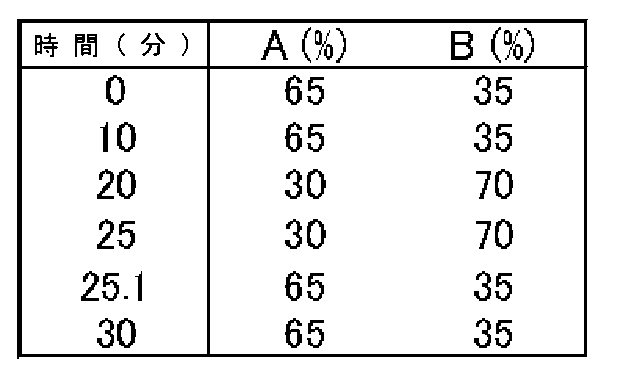
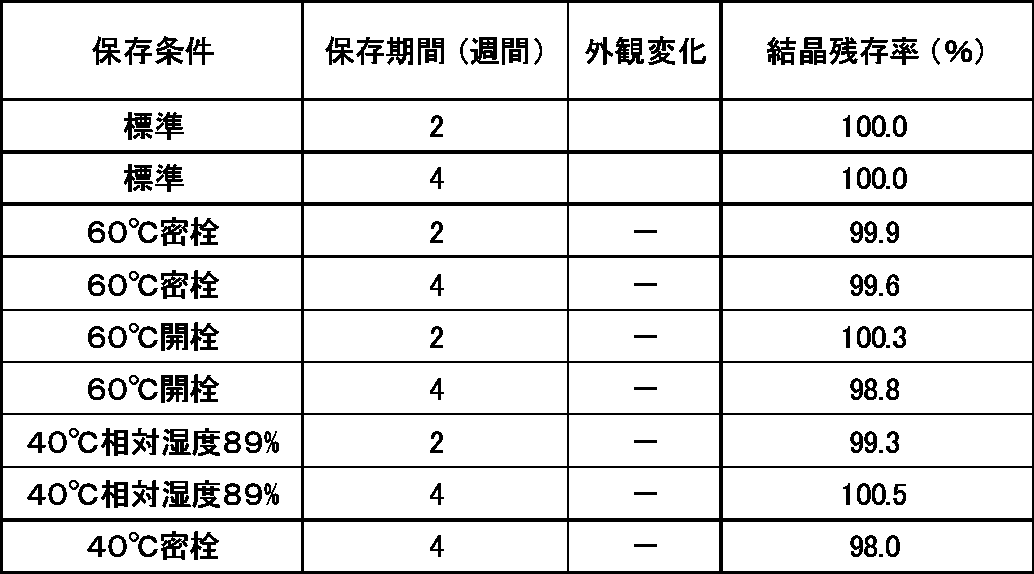

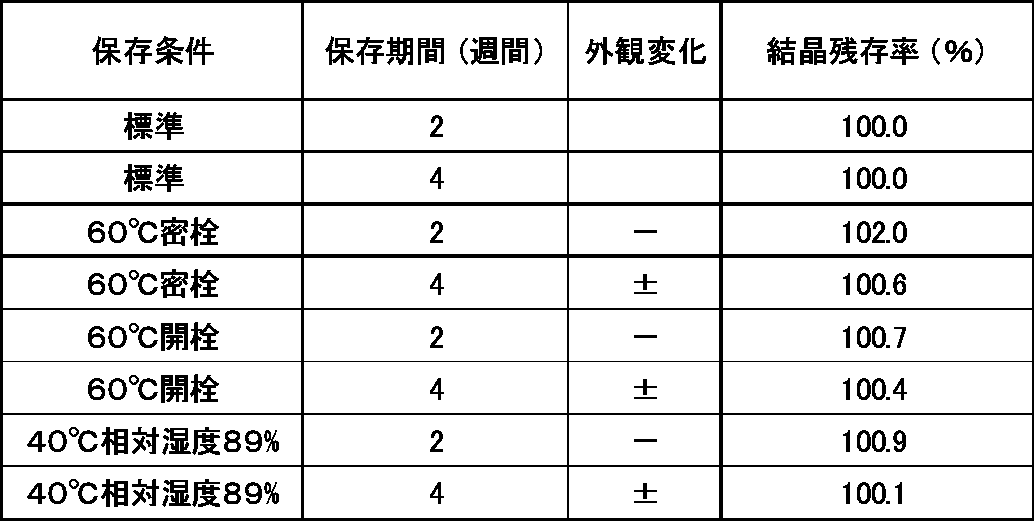
結晶の吸湿性確認試験
式(IA)のp-トルエンスルホン酸塩(非溶媒和物)の結晶約10mgを、水蒸気吸脱着測定装置用試料容器に量り取り、25℃において乾燥窒素雰囲気下で乾燥させた。乾燥後、相対湿度を0%から95%の範囲において5%間隔で連続的に変化させ、試料の水蒸気吸脱着量を水蒸気吸脱着測定装置DVS Advantage(surface measurement systems社製)で測定した。
結果を表19に示す。25℃における相対湿度0%から95%の範囲での式(IA)のp-トルエンスルホン酸塩(非溶媒和物)の結晶の最大吸湿量は1.2%未満であり、該結晶は、ほとんど吸湿性を示さなかった。

以下の成分を含有する顆粒剤を製造する。

式(IA)で表わされる化合物と乳糖を60メッシュのふるいに通す。コーンスターチを120メッシュのふるいに通す。これらをV型混合機にて混合する。混合末にHPC-L(低粘度ヒドロキシプロピルセルロース)水溶液を添加し、練合、造粒(押し出し造粒 孔径0.5~1mm)、乾燥工程する。得られた乾燥顆粒を振動ふるい(12/60メッシュ)で櫛過し顆粒剤を得る。
以下の成分を含有するカプセル充填用顆粒剤を製造する。
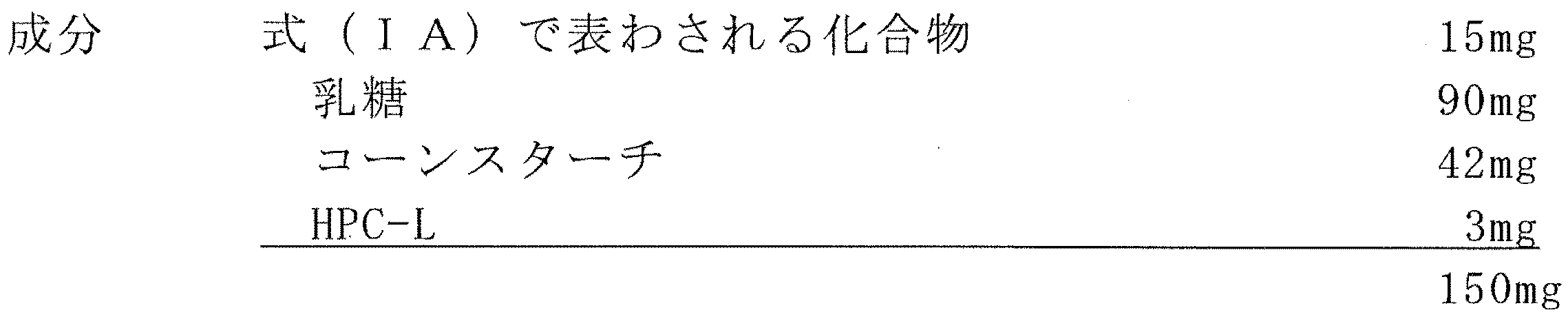
式(IA)で表わされる化合物、乳糖を60メッシュのふるいに通す。コーンスターチを120メッシュのふるいに通す。これらを混合し、混合末にHPC-L溶液を添加して練合、造粒、乾燥する。得られた乾燥顆粒を整粒後、その150mgを4号硬ゼラチンカプセルに充填する。
以下の成分を含有する錠剤を製造する。
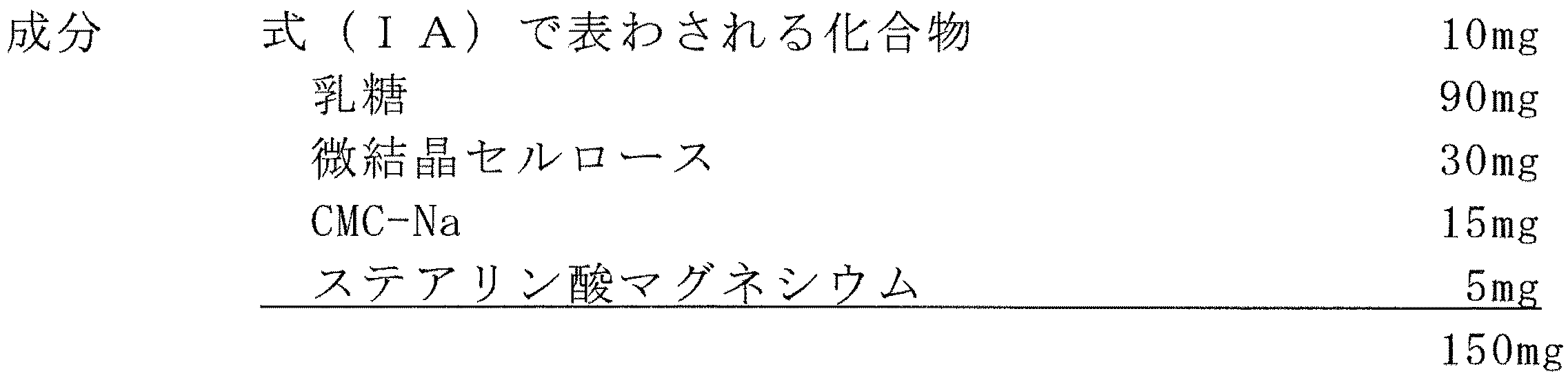
式(IA)で表わされる化合物、乳糖、微結晶セルロース、CMC-Na(カルボキシメチルセルロース ナトリウム塩)を60メッシュのふるいに通し、混合する。混合末にステアリン酸マグネシウム混合し、製錠用混合末を得る。本混合末を直打し、150mgの錠剤を得る。
以下の成分を加温混合後、滅菌して注射剤とする。

また本発明は、オピオイド受容体アゴニスト作用を有する化合物に誘発される嘔気、嘔吐および/または便秘の治療および/または予防剤として有用な、6,7-不飽和-7-カルバモイルモルヒナン誘導体、その酸付加塩、それらの溶媒和物、またはそれらの結晶の新たな製造方法を提供するものである。
Claims (52)
- 式(IA):

- 式(IA):
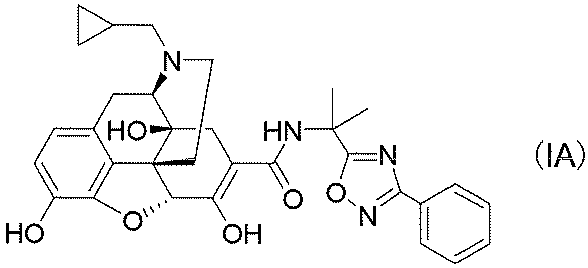
- 粉末X線回折スペクトルにおいて、回折角度(2θ):7.8°±0.2°、10.6°±0.2°、15.6°±0.2°、17.8°±0.2°および21.5°±0.2にピークを有する、請求項2記載のp-トルエンスルホン酸塩の結晶。
- 粉末X線回折スペクトルにおいて、回折角度(2θ):7.8°±0.2°、10.6°±0.2°、15.6°±0.2°、17.8°±0.2°、18.6°±0.2°、20.4°±0.2°、21.5°±0.2°、21.9°±0.2°、23.6°±0.2°および25.5°±0.2°にピークを有する、請求項2記載のp-トルエンスルホン酸塩の結晶。
- 図1に実質的に一致する粉末X線回折スペクトルにより特徴付けられる、請求項2記載のp-トルエンスルホン酸塩の結晶。
- 粉末X線回折スペクトルにおいて、回折角度(2θ):12.9°±0.2°、17.6°±0.2°、22.4°±0.2°、25.4°±0.2°および28.7°±0.2°にピークを有する、請求項2記載のp-トルエンスルホン酸塩水和物のI形結晶。
- 粉末X線回折スペクトルにおいて、回折角度(2θ):6.6°±0.2°、8.9°±0.2°、11.4°±0.2°、12.9°±0.2°、14.0°±0.2°、15.0°±0.2°、17.6°±0.2°、18.2°±0.2°、22.4°±0.2°、25.4°±0.2°および28.7°±0.2°にピークを有する、請求項2記載のp-トルエンスルホン酸塩水和物のI形結晶。
- 図2に実質的に一致する粉末X線回折スペクトルにより特徴付けられる、請求項2記載のp-トルエンスルホン酸塩水和物のI形結晶。
- 粉末X線回折スペクトルにおいて、回折角度(2θ):8.8°±0.2°、17.5°±0.2°、21.9°±0.2°、23.7°±0.2°および26.1°±0.2°にピークを有する、請求項2記載のp-トルエンスルホン酸塩水和物のII形結晶。
- 粉末X線回折スペクトルにおいて、回折角度(2θ):7.1°±0.2°、8.8°±0.2°、17.5°±0.2°、19.2°±0.2°、19.7°±0.2°、21.2°±0.2°、21.9°±0.2°、23.7°±0.2°、24.5°±0.2°および26.1°±0.2°にピークを有する、請求項2記載のp-トルエンスルホン酸塩水和物のII形結晶。
- 図3に実質的に一致する粉末X線回折スペクトルにより特徴付けられる、請求項2記載のp-トルエンスルホン酸塩水和物のII形結晶。
- 式(IA):

- 粉末X線回折スペクトルにおいて、回折角度(2θ):5.6°±0.2°、10.3°±0.2°、12.0°±0.2°、14.6°±0.2°および26.0°±0.2°にピークを有する、請求項12記載の酢酸塩の結晶。
- 粉末X線回折スペクトルにおいて、回折角度(2θ):5.6°±0.2°、8.3±0.2°、9.1±0.2°、10.3°±0.2°、12.0°±0.2°、13.5±0.2°、14.6°±0.2°、16.3±0.2°および26.0°±0.2°にピークを有する、請求項12記載の酢酸塩の結晶。
- 図4に実質的に一致する粉末X線回折スペクトルにより特徴付けられる、請求項12記載の酢酸塩の結晶。
- 式(IA):
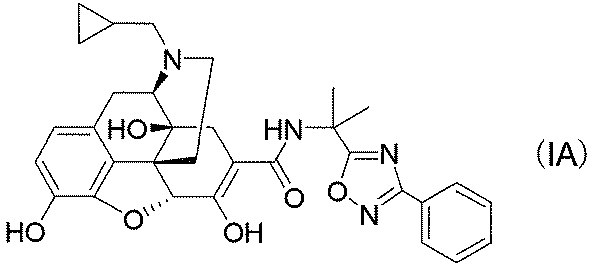
- 粉末X線回折スペクトルにおいて、回折角度(2θ):8.5°±0.2°、12.7°±0.2°、15.6°±0.2°、17.3°±0.2°および23.9°±0.2°にピークを有する、請求項16記載の塩酸塩の結晶。
- 粉末X線回折スペクトルにおいて、回折角度(2θ):8.5°±0.2°、10.8°±0.2°、11.3°±0.2°、12.7°±0.2°、13.9°±0.2°、15.6°±0.2°、17.3°±0.2°、19.2°±0.2°、20.1°±0.2°および23.9°±0.2°にピークを有する、請求項16記載の塩酸塩の結晶。
- 図5に実質的に一致する粉末X線回折スペクトルにより特徴付けられる、請求項16記載の塩酸塩の結晶。
- 式(IA):

- 粉末X線回折スペクトルにおいて、回折角度(2θ):13.5°±0.2°、21.6°±0.2°、22.1°±0.2°、23.4°±0.2°および26.7°±0.2°にピークを有する、請求項20記載の式(IA)で示される化合物の結晶。
- 粉末X線回折スペクトルにおいて、回折角度(2θ):6.8°±0.2°、11.7°±0.2°、13.5°±0.2°、15.6°±0.2°、16.7°±0.2°、21.6°±0.2°、22.1°±0.2°、23.4°±0.2°、26.7°±0.2°および30.1°±0.2°にピークを有する、請求項20記載の式(IA)で示される化合物の結晶。
- 図7に実質的に一致する粉末X線回折スペクトルにより特徴付けられる、請求項20記載の式(IA)で示される化合物の結晶。
- 粉末X線回折スペクトルにおいて、回折角度(2θ):11.0°±0.2°、16.5°±0.2°、20.5°±0.2°、21.8°±0.2°および22.6°±0.2°にピークを有する、請求項20記載のエタノール和物の結晶。
- 粉末X線回折スペクトルにおいて、回折角度(2θ):6.9°±0.2°、11.0°±0.2°、12.9°±0.2°、13.4°±0.2°、16.5°±0.2°、20.5°±0.2°、21.3°±0.2°、21.8°±0.2°、22.6°±0.2°および25.1°±0.2°にピークを有する、請求項20記載のエタノール和物の結晶。
- 図6に実質的に一致する粉末X線回折スペクトルにより特徴付けられる、請求項20記載のエタノール和物の結晶。
- 請求項2~26のいずれかに記載の結晶を含む医薬組成物。
- 式(IA):
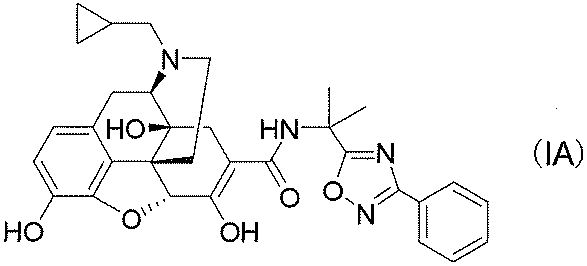
- 式(IID):
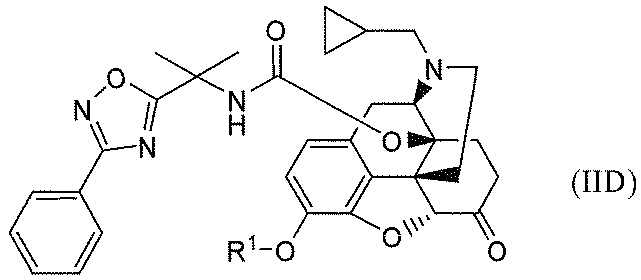
で示される化合物を塩基で処理し、必要であればR1を脱保護した後、p-トルエンスルホン酸を添加し、必要に応じて溶媒中から結晶化することを特徴とする、請求項2に記載の結晶の製造方法。 - 式(IIE):
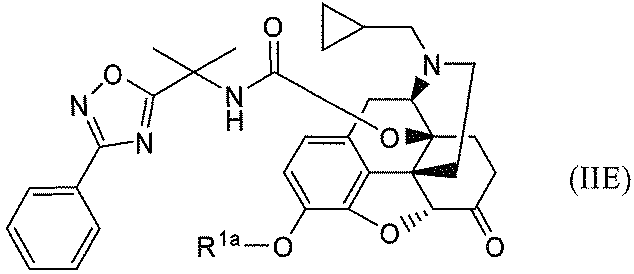
で示される化合物を塩基で処理し、次いでp-トルエンスルホン酸を添加し、必要に応じて溶媒中から結晶化することを特徴とする、請求項29の製造方法。 - 式(III):


- 式(IV):
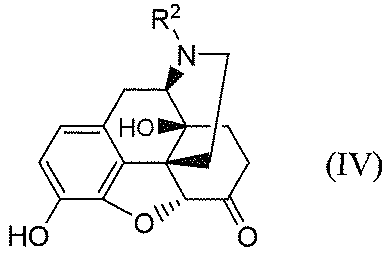

で示される化合物を得ることを特徴とする、請求項31記載の製造方法。 - 式(IV):

で示される化合物の水酸基を保護し、式(III):
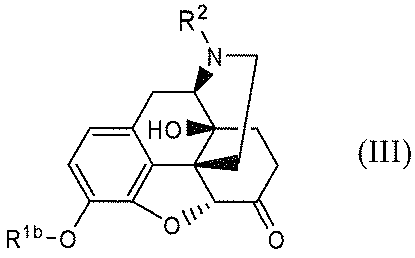
で示される化合物を得る工程、および式(III)で示される化合物を、酸の存在下または非存在下、式:R3-N=C=O(式中、R3は請求項33と同意義)で示される化合物または式:R3-NH-C(=O)-X(式中、R3は前記と同意義、Xは脱離基)で示される化合物と反応させる工程を連続して行う、請求項32記載の製造方法。 - 酸の存在下で行う、請求項31~33のいずれかに記載の製造方法。
- 酸がルイス酸である、請求項34記載の製造方法。
- ルイス酸触媒が、CuCl、CuCl2、CuBr、CuI、CuBr、CuSO4、Cu、Zn(OAc)2、ZnBr2またはZnCl2である、請求項35に記載の製造方法。
- 式(III)で示される化合物に対して、約0.00005~約1.0当量の酸の存在下で反応させることを特徴とする、請求項31~36のいずれかに記載の製造方法。
- R1bが塩基で脱保護可能な水酸基の保護基である、請求項31~37のいずれかに記載の製造方法。
- 式(IIA):
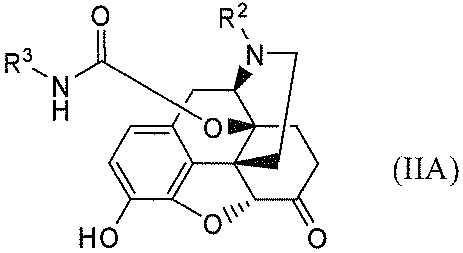

- 式(IIC):
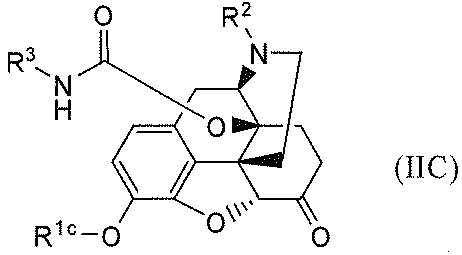
で示される化合物を、塩基で処理することを特徴とする、式(I):

- 式(IIB):

で示される化合物を、塩基で処理することを特徴とする、式(IB):

で示される化合物の製造方法。 - 塩基が無機塩基である請求項39~41のいずれかに記載の製造方法。
- 塩基が水酸化カリウム、水酸化ナトリウム、水酸化リチウムまたは水酸化セシウムである請求項39~41のいずれかに記載の製造方法。
- 反応温度が約30℃~約100℃である請求項39~43のいずれかに記載の製造方法。
- 式(VIIIa):

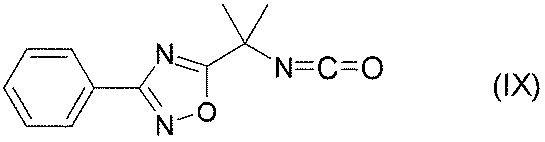
- 式(X):

で示される化合物と、式(XI):
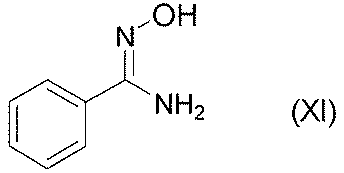
- ルイス酸がAlCl3またはTiCl4である請求項45または46に記載の製造方法。
- 式(IIIA):
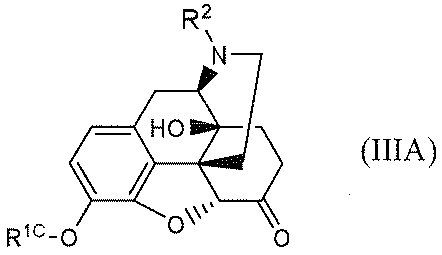
で示される化合物を、ルイス酸触媒の存在下または非存在下、式:R3-N=C=O(式中、R3は請求項31と同意義)で示される化合物または式:R3-NH-C(=O)-X(式中、R3は前記と同意義、Xは脱離基)で示される化合物と反応させ、式(IIC):

で示される化合物を得る工程、
上記式(IIC)で示される化合物を、塩基で処理し、式(I):

で示される化合物を得る工程、および
上記式(I)で示される化合物に酸を添加して酸付加塩とする工程を包含する、式(I)で示される化合物の酸付加塩の製造方法。 - 式(I)で示される化合物の酸付加塩が、p-トルエンスルホン酸塩、酢酸塩または塩酸塩、またはそれらの溶媒和物である、請求項48の製造方法。
- p-トルエンスルホン酸塩、酢酸塩または塩酸塩、またはそれらの溶媒和物が結晶である、請求項49の製造方法。
- 式(IID):

で示される化合物。 - 式(VII):
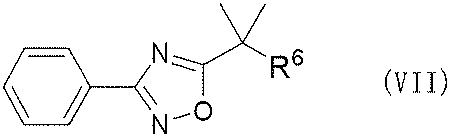
Priority Applications (32)
| Application Number | Priority Date | Filing Date | Title |
|---|---|---|---|
| PL11839554T PL2639234T3 (pl) | 2010-11-12 | 2011-11-11 | Krystaliczna pochodna morfinanu 6,7-nienasyconego-7-karbamoilu i sposób jej wytwarzania |
| MX2015008305A MX348228B (es) | 2010-11-12 | 2011-11-11 | Cristal de derivados de 6,7-insaturado-7-carbamoil morfinano y metodo para producir el mismo. |
| UAA201307448A UA115028C2 (uk) | 2010-11-12 | 2011-11-11 | Кристали похідних 6,7-ненасиченого 7-карбамоїлморфінану і спосіб їх отримання |
| PH1/2013/500740A PH12013500740A1 (en) | 2010-11-12 | 2011-11-11 | Crystalline 6,7-unsaturated-7-carbamoyl morphinane derivative, and method for producing same |
| RU2013126801A RU2607084C2 (ru) | 2010-11-12 | 2011-11-11 | Кристаллы производных 6,7-ненасыщенного-7-карбамоилморфинана и способ их получения |
| SI201131781T SI2639234T1 (sl) | 2010-11-12 | 2011-11-11 | Derivat kristaliničnega 6,7-nenasičenega-7-karbamoil morfinana in postopek njegove izdelave |
| KR1020147011039A KR101500915B1 (ko) | 2010-11-12 | 2011-11-11 | 6,7-불포화-7-카르바모일 모르피난 유도체의 결정 및 그의 제조 방법 |
| JP2012512162A JP5070364B2 (ja) | 2010-11-12 | 2011-11-11 | 6,7−不飽和−7−カルバモイルモルヒナン誘導体の結晶およびその製造方法 |
| EP19162034.3A EP3560929B1 (en) | 2010-11-12 | 2011-11-11 | Process for preparing 6,7-unsaturated-7-carbamoyl morphinane derivative, and intermediate |
| MX2013005241A MX338392B (es) | 2010-11-12 | 2011-11-11 | Cristal de derivado de 6,7-insaturado-7-carbamoil morfinano y metodo para producir el mismo. |
| US13/884,770 US9108975B2 (en) | 2010-11-12 | 2011-11-11 | Crystal of 6,7-unsaturated-7-carbamoyl morphinan derivative and method for producing the same |
| EP11839554.0A EP2639234B1 (en) | 2010-11-12 | 2011-11-11 | Crystalline 6,7-unsaturated-7-carbamoyl morphinane derivative, and method for producing same |
| ES11839554T ES2746207T3 (es) | 2010-11-12 | 2011-11-11 | Derivado cristalino de 6,7-insaturado-7-carbamoilmorfinano y método de producción del mismo |
| CA2814195A CA2814195C (en) | 2010-11-12 | 2011-11-11 | Crystal of 6,7-unsaturated-7-carbamoyl morphinan derivative and method for producing the same |
| BR112013011593-9A BR112013011593B1 (pt) | 2010-11-12 | 2011-11-11 | Sal de ácido p-toluenossulfônico |
| DK11839554.0T DK2639234T3 (da) | 2010-11-12 | 2011-11-11 | Krystallinsk 6,7-umættet 7-carbamoylmorphinanderivat og fremgangsmåde til fremstilling heraf |
| RSP20191184 RS59256B1 (sr) | 2010-11-12 | 2011-11-11 | Kristalni derivat 6,7-nezasićenog-7-karbamoil morfinana, i postupak njegove proizvodnje |
| LTEP11839554.0T LT2639234T (lt) | 2010-11-12 | 2011-11-11 | Kristalinis 6,7-neprisotintas-7-karbamoilo morfinano darinys ir jo gamybos būdas |
| CN201180064907.9A CN103298819B (zh) | 2010-11-12 | 2011-11-11 | 6,7-不饱和-7-氨基甲酰基吗啡喃衍生物的晶体及其制备方法 |
| AU2011327113A AU2011327113B9 (en) | 2010-11-12 | 2011-11-11 | Crystalline 6,7-unsaturated-7-carbamoyl morphinane derivative, and method for producing same |
| HRP20191597 HRP20191597T1 (hr) | 2010-11-12 | 2011-11-11 | Kristalni derivat 6,7-nezasićenog-7-karbamoil morfinana i postupak za njegovu proizvodnju |
| KR1020137014943A KR101486686B1 (ko) | 2010-11-12 | 2011-11-11 | 6,7-불포화-7-카르바모일 모르피난 유도체의 결정 및 그의 제조 방법 |
| ZA2013/01726A ZA201301726B (en) | 2010-11-12 | 2013-03-06 | Crystal 6,7-unsaturated-7-carbamoyl morphinan derivative,and method for producing the same. |
| IL225725A IL225725A (en) | 2010-11-12 | 2013-04-11 | Crystal of 6,7- unsaturated-7-carbamoyl morphinan derivative and method for producing the same |
| PH12015501226A PH12015501226A1 (en) | 2010-11-12 | 2015-06-01 | Crystalline 6,7-unsaturated-7-carbamoyl morphinane derivative, and method for producing the same |
| US14/818,152 US9296756B2 (en) | 2010-11-12 | 2015-08-04 | Crystal of 6,7-unsaturated-7-carbamoyl morphinan derivative and method for producing the same |
| US14/818,130 US9315512B2 (en) | 2010-11-12 | 2015-08-04 | Crystal of 6,7-unsaturated-7-carbamoyl morphinan derivative and method for producing the same |
| IL243188A IL243188A (en) | 2010-11-12 | 2015-12-17 | Method for Producing Crystalline Derivatives 7, 6 Saturation - 7 - Morphine Carbamoyl and its salts |
| US15/071,147 US9464094B2 (en) | 2010-11-12 | 2016-03-15 | Crystal of 6,7-unsaturated-7-carbamoyl morphinan derivative and method for producing the same |
| US15/261,836 US9902732B2 (en) | 2010-11-12 | 2016-09-09 | Crystal of 6,7-unsaturated-7-carbamoyl morphinan derivative and method for producing the same |
| US15/814,358 US9951082B2 (en) | 2010-11-12 | 2017-11-15 | Crystal of 6,7-unsaturated-7-carbamoyl morphinan derivative and method for producing the same |
| CY20191101018T CY1123670T1 (el) | 2010-11-12 | 2019-09-26 | Κρυσταλλικο παραγωγο 6,7-ακορεστης-7-καρβαμοϋλ μορφινανης, και μεθοδος για την παραγωγη αυτου |
Applications Claiming Priority (2)
| Application Number | Priority Date | Filing Date | Title |
|---|---|---|---|
| JP2010-253688 | 2010-11-12 | ||
| JP2010253688 | 2010-11-12 |
Related Child Applications (3)
| Application Number | Title | Priority Date | Filing Date |
|---|---|---|---|
| US13/884,770 A-371-Of-International US9108975B2 (en) | 2010-11-12 | 2011-11-11 | Crystal of 6,7-unsaturated-7-carbamoyl morphinan derivative and method for producing the same |
| US14/818,152 Division US9296756B2 (en) | 2010-11-12 | 2015-08-04 | Crystal of 6,7-unsaturated-7-carbamoyl morphinan derivative and method for producing the same |
| US14/818,130 Division US9315512B2 (en) | 2010-11-12 | 2015-08-04 | Crystal of 6,7-unsaturated-7-carbamoyl morphinan derivative and method for producing the same |
Publications (1)
| Publication Number | Publication Date |
|---|---|
| WO2012063933A1 true WO2012063933A1 (ja) | 2012-05-18 |
Family
ID=46051070
Family Applications (1)
| Application Number | Title | Priority Date | Filing Date |
|---|---|---|---|
| PCT/JP2011/076034 Ceased WO2012063933A1 (ja) | 2010-11-12 | 2011-11-11 | 6,7-不飽和-7-カルバモイルモルヒナン誘導体の結晶およびその製造方法 |
Country Status (26)
| Country | Link |
|---|---|
| US (6) | US9108975B2 (ja) |
| EP (2) | EP2639234B1 (ja) |
| JP (2) | JP5070364B2 (ja) |
| KR (2) | KR101500915B1 (ja) |
| CN (2) | CN103298819B (ja) |
| AU (2) | AU2011327113B9 (ja) |
| BR (1) | BR112013011593B1 (ja) |
| CA (1) | CA2814195C (ja) |
| CY (1) | CY1123670T1 (ja) |
| DK (1) | DK2639234T3 (ja) |
| ES (1) | ES2746207T3 (ja) |
| HR (1) | HRP20191597T1 (ja) |
| HU (1) | HUE044933T2 (ja) |
| IL (2) | IL225725A (ja) |
| LT (1) | LT2639234T (ja) |
| MX (2) | MX338392B (ja) |
| PH (2) | PH12013500740A1 (ja) |
| PL (1) | PL2639234T3 (ja) |
| PT (1) | PT2639234T (ja) |
| RS (1) | RS59256B1 (ja) |
| RU (2) | RU2607084C2 (ja) |
| SI (1) | SI2639234T1 (ja) |
| TW (2) | TWI545124B (ja) |
| UA (1) | UA115028C2 (ja) |
| WO (1) | WO2012063933A1 (ja) |
| ZA (1) | ZA201301726B (ja) |
Cited By (13)
| Publication number | Priority date | Publication date | Assignee | Title |
|---|---|---|---|---|
| WO2013172297A1 (ja) | 2012-05-14 | 2013-11-21 | 塩野義製薬株式会社 | 6,7-不飽和-7-カルバモイルモルヒナン誘導体含有製剤 |
| WO2014151291A1 (en) * | 2013-03-15 | 2014-09-25 | Genzyme Corporation | Method of preparing glucosylceramide synthase inhibitors |
| US8937084B2 (en) | 2012-12-14 | 2015-01-20 | Purdue Pharma L.P. | Nitrogen containing morphinan derivatives and the use thereof |
| US8946255B2 (en) | 2012-12-28 | 2015-02-03 | Purdue Pharma L.P. | Substituted morphinans and the use thereof |
| US8957084B2 (en) | 2012-12-28 | 2015-02-17 | Purdue Pharma L.P. | 7,8-cyclicmorphinan analogs |
| US8980906B2 (en) | 2012-12-14 | 2015-03-17 | Purdue Pharma L.P. | Pyridonemorphinan analogs and biological activity on opioid receptors |
| US9340542B2 (en) | 2013-12-26 | 2016-05-17 | Purdue Pharma L.P. | Propellane-based compounds and the use thereof |
| WO2018124062A1 (ja) | 2016-12-26 | 2018-07-05 | 塩野義製薬株式会社 | 含量均一性を改善した製剤の製造方法 |
| WO2021100728A1 (ja) | 2019-11-20 | 2021-05-27 | 塩野義製薬株式会社 | 6,7-不飽和-7-カルバモイルモルヒナン誘導体含有固形製剤 |
| JP2022529453A (ja) * | 2019-04-19 | 2022-06-22 | ヨンスン ファイン ケミカル カンパニー,リミテッド | ナルデメジンの製造方法 |
| US12060349B2 (en) | 2012-09-11 | 2024-08-13 | Genzyme Corporation | Glucosylceramide synthase inhibitors |
| IT202300009864A1 (it) | 2023-05-16 | 2024-11-16 | Procos Spa | Processo per la preparazione di naldemedina |
| US12527776B2 (en) | 2019-02-04 | 2026-01-20 | Genzyme Corporation | Treatment of ciliopathies using inhibitors of glucosylceramide synthase (GCS) |
Families Citing this family (5)
| Publication number | Priority date | Publication date | Assignee | Title |
|---|---|---|---|---|
| WO2006126529A1 (ja) | 2005-05-25 | 2006-11-30 | Shionogi & Co., Ltd. | 6,7-不飽和-7-カルバモイル置換モルヒナン誘導体 |
| KR101500915B1 (ko) * | 2010-11-12 | 2015-03-10 | 시오노기세야쿠 가부시키가이샤 | 6,7-불포화-7-카르바모일 모르피난 유도체의 결정 및 그의 제조 방법 |
| ES2784690T3 (es) | 2013-12-05 | 2020-09-29 | Univ Bath | Nuevos compuestos opioides y sus usos |
| JP2023512366A (ja) | 2020-02-03 | 2023-03-27 | ジェンザイム・コーポレーション | リソソーム蓄積性疾患と関連する神経学的症状を処置するための方法 |
| AU2021311131B2 (en) | 2020-07-24 | 2026-02-19 | Genzyme Corporation | Pharmaceutical compositions comprising venglustat |
Citations (2)
| Publication number | Priority date | Publication date | Assignee | Title |
|---|---|---|---|---|
| WO2001002375A1 (en) | 1999-07-01 | 2001-01-11 | Chemrx Advanced Technologies, Inc. | Process for synthesizing oxadiazoles |
| WO2006126637A1 (ja) | 2005-05-25 | 2006-11-30 | Shionogi & Co., Ltd. | 6,7-不飽和-7-カルバモイル置換モルヒナン誘導体 |
Family Cites Families (4)
| Publication number | Priority date | Publication date | Assignee | Title |
|---|---|---|---|---|
| DE2801509A1 (de) | 1978-01-12 | 1979-07-19 | Schering Ag | 1,2,4-oxadiazolderivate, verfahren zur herstellung dieser verbindungen sowie diese enthaltende selektive herbizide mittel |
| US4668685A (en) * | 1984-07-05 | 1987-05-26 | E.I. Du Pont De Nemours And Company | Substituted benzoate ester prodrug derivatives of 3-hydroxymorphinans, which are analgesics or narcotic antagonists |
| DE10161963A1 (de) * | 2001-12-17 | 2003-07-03 | Johannes Schuetz | 6-Aminomorphinanderivate, Herstellungsverfahren dafür und deren Verwendung |
| KR101500915B1 (ko) * | 2010-11-12 | 2015-03-10 | 시오노기세야쿠 가부시키가이샤 | 6,7-불포화-7-카르바모일 모르피난 유도체의 결정 및 그의 제조 방법 |
-
2011
- 2011-11-11 KR KR1020147011039A patent/KR101500915B1/ko active Active
- 2011-11-11 ES ES11839554T patent/ES2746207T3/es active Active
- 2011-11-11 KR KR1020137014943A patent/KR101486686B1/ko active Active
- 2011-11-11 CN CN201180064907.9A patent/CN103298819B/zh active Active
- 2011-11-11 US US13/884,770 patent/US9108975B2/en active Active
- 2011-11-11 PL PL11839554T patent/PL2639234T3/pl unknown
- 2011-11-11 MX MX2013005241A patent/MX338392B/es active IP Right Grant
- 2011-11-11 UA UAA201307448A patent/UA115028C2/uk unknown
- 2011-11-11 TW TW100141268A patent/TWI545124B/zh active
- 2011-11-11 RU RU2013126801A patent/RU2607084C2/ru active
- 2011-11-11 HU HUE11839554 patent/HUE044933T2/hu unknown
- 2011-11-11 WO PCT/JP2011/076034 patent/WO2012063933A1/ja not_active Ceased
- 2011-11-11 JP JP2012512162A patent/JP5070364B2/ja active Active
- 2011-11-11 EP EP11839554.0A patent/EP2639234B1/en active Active
- 2011-11-11 DK DK11839554.0T patent/DK2639234T3/da active
- 2011-11-11 LT LTEP11839554.0T patent/LT2639234T/lt unknown
- 2011-11-11 RU RU2016113269A patent/RU2643807C1/ru not_active IP Right Cessation
- 2011-11-11 PT PT11839554T patent/PT2639234T/pt unknown
- 2011-11-11 MX MX2015008305A patent/MX348228B/es unknown
- 2011-11-11 SI SI201131781T patent/SI2639234T1/sl unknown
- 2011-11-11 PH PH1/2013/500740A patent/PH12013500740A1/en unknown
- 2011-11-11 CN CN201510332439.9A patent/CN105131003B/zh active Active
- 2011-11-11 RS RSP20191184 patent/RS59256B1/sr unknown
- 2011-11-11 AU AU2011327113A patent/AU2011327113B9/en not_active Ceased
- 2011-11-11 CA CA2814195A patent/CA2814195C/en active Active
- 2011-11-11 BR BR112013011593-9A patent/BR112013011593B1/pt not_active IP Right Cessation
- 2011-11-11 HR HRP20191597 patent/HRP20191597T1/hr unknown
- 2011-11-11 EP EP19162034.3A patent/EP3560929B1/en active Active
- 2011-11-11 TW TW105118949A patent/TWI597282B/zh active
-
2012
- 2012-03-06 JP JP2012049520A patent/JP5191574B2/ja active Active
-
2013
- 2013-03-06 ZA ZA2013/01726A patent/ZA201301726B/en unknown
- 2013-04-11 IL IL225725A patent/IL225725A/en active IP Right Grant
-
2015
- 2015-06-01 PH PH12015501226A patent/PH12015501226A1/en unknown
- 2015-08-04 US US14/818,152 patent/US9296756B2/en active Active
- 2015-08-04 US US14/818,130 patent/US9315512B2/en active Active
- 2015-08-31 AU AU2015221439A patent/AU2015221439B2/en not_active Ceased
- 2015-12-17 IL IL243188A patent/IL243188A/en active IP Right Grant
-
2016
- 2016-03-15 US US15/071,147 patent/US9464094B2/en active Active
- 2016-09-09 US US15/261,836 patent/US9902732B2/en active Active
-
2017
- 2017-11-15 US US15/814,358 patent/US9951082B2/en active Active
-
2019
- 2019-09-26 CY CY20191101018T patent/CY1123670T1/el unknown
Patent Citations (2)
| Publication number | Priority date | Publication date | Assignee | Title |
|---|---|---|---|---|
| WO2001002375A1 (en) | 1999-07-01 | 2001-01-11 | Chemrx Advanced Technologies, Inc. | Process for synthesizing oxadiazoles |
| WO2006126637A1 (ja) | 2005-05-25 | 2006-11-30 | Shionogi & Co., Ltd. | 6,7-不飽和-7-カルバモイル置換モルヒナン誘導体 |
Non-Patent Citations (4)
| Title |
|---|
| CHEMICAL COMMUNICATIONS, vol. 23, 1998, pages 2575 - 2576 |
| POULAIN R.F. ET AL.: "Parallel synthesis of 1,2,4-oxadiazoles from carboxylic acids using an improved, uronium-based, activation", TETRAHEDRON LETTERS, vol. 42, 2001, pages 1495 - 1498, XP002427070 * |
| SYNTHESIS, vol. 2, 1989, pages 131 - 132 |
| TEISUKE OKANO, SHIN·YAKUZAIGAKU SORON 0372-7629 ?, 1987, pages 109 - 111, 254 TO 259, 327, XP008168993 * |
Cited By (31)
| Publication number | Priority date | Publication date | Assignee | Title |
|---|---|---|---|---|
| US10952968B2 (en) | 2012-05-14 | 2021-03-23 | Shionogi & Co., Ltd. | Preparation containing 6,7-unsaturated-7-carbamoyl morphinan derivatives |
| WO2013172297A1 (ja) | 2012-05-14 | 2013-11-21 | 塩野義製薬株式会社 | 6,7-不飽和-7-カルバモイルモルヒナン誘導体含有製剤 |
| US12350377B2 (en) | 2012-05-14 | 2025-07-08 | Shionogi & Co., Ltd. | Preparation containing 6,7-unsaturated-7-carbamoyl morphinan derivatives |
| US12060349B2 (en) | 2012-09-11 | 2024-08-13 | Genzyme Corporation | Glucosylceramide synthase inhibitors |
| US8937084B2 (en) | 2012-12-14 | 2015-01-20 | Purdue Pharma L.P. | Nitrogen containing morphinan derivatives and the use thereof |
| US8980906B2 (en) | 2012-12-14 | 2015-03-17 | Purdue Pharma L.P. | Pyridonemorphinan analogs and biological activity on opioid receptors |
| US9403824B2 (en) | 2012-12-14 | 2016-08-02 | Purdue Pharma L.P. | Pyridonemorphinan analogs and biological activity on opioid receptors |
| US9388162B2 (en) | 2012-12-28 | 2016-07-12 | Purdue Pharma L.P. | Substituted morphinans and the use thereof |
| US8957084B2 (en) | 2012-12-28 | 2015-02-17 | Purdue Pharma L.P. | 7,8-cyclicmorphinan analogs |
| US8946255B2 (en) | 2012-12-28 | 2015-02-03 | Purdue Pharma L.P. | Substituted morphinans and the use thereof |
| JP2016512838A (ja) * | 2013-03-15 | 2016-05-09 | ジェンザイム・コーポレーション | グルコシルセラミド合成酵素阻害剤の製造方法 |
| US9682975B2 (en) | 2013-03-15 | 2017-06-20 | Genzyme Corporation | Method of preparing glucosylceramide synthase inhibitors |
| US10065949B2 (en) | 2013-03-15 | 2018-09-04 | Genzyme Corporation | Method of preparing glucosylceramide synthase inhibitors |
| EP3514157A1 (en) * | 2013-03-15 | 2019-07-24 | Genzyme Corporation | Method of preparing glucosylceramide synthase inhibitors |
| WO2014151291A1 (en) * | 2013-03-15 | 2014-09-25 | Genzyme Corporation | Method of preparing glucosylceramide synthase inhibitors |
| US10604518B2 (en) | 2013-03-15 | 2020-03-31 | Genzyme Corporation | Method of preparing glucosylceramide synthase inhibitors |
| US9340542B2 (en) | 2013-12-26 | 2016-05-17 | Purdue Pharma L.P. | Propellane-based compounds and the use thereof |
| CN110325178A (zh) * | 2016-12-26 | 2019-10-11 | 盐野义制药株式会社 | 改善含量均一性的制剂的制造方法 |
| JPWO2018124062A1 (ja) * | 2016-12-26 | 2019-10-31 | 塩野義製薬株式会社 | 含量均一性を改善した製剤の製造方法 |
| JP7076171B2 (ja) | 2016-12-26 | 2022-05-27 | 塩野義製薬株式会社 | 含量均一性を改善した製剤の製造方法 |
| JP2022082720A (ja) * | 2016-12-26 | 2022-06-02 | 塩野義製薬株式会社 | 含量均一性を改善した製剤の製造方法 |
| WO2018124062A1 (ja) | 2016-12-26 | 2018-07-05 | 塩野義製薬株式会社 | 含量均一性を改善した製剤の製造方法 |
| JP7272738B2 (ja) | 2016-12-26 | 2023-05-12 | 塩野義製薬株式会社 | 含量均一性を改善した製剤の製造方法 |
| EP3560487A4 (en) * | 2016-12-26 | 2020-07-29 | Shionogi & Co., Ltd. | PRODUCTION METHOD FOR FORMULATION WITH IMPROVED UNIFORMITY OF CONTENT |
| US12527776B2 (en) | 2019-02-04 | 2026-01-20 | Genzyme Corporation | Treatment of ciliopathies using inhibitors of glucosylceramide synthase (GCS) |
| JP7302904B2 (ja) | 2019-04-19 | 2023-07-04 | ヨンスン ファイン ケミカル カンパニー,リミテッド | ナルデメジンの製造方法 |
| US12325712B2 (en) | 2019-04-19 | 2025-06-10 | Yonsung Fine Chemical Co., Ltd. | Method for preparing naldemedine |
| JP2022529453A (ja) * | 2019-04-19 | 2022-06-22 | ヨンスン ファイン ケミカル カンパニー,リミテッド | ナルデメジンの製造方法 |
| EP4062973A4 (en) * | 2019-11-20 | 2023-11-29 | Shionogi & Co., Ltd | SOLID FORMULATION CONTAINING 6,7-UNSATURATED-7-CARBAMOYL MORPHINAND DERIVATIVE |
| WO2021100728A1 (ja) | 2019-11-20 | 2021-05-27 | 塩野義製薬株式会社 | 6,7-不飽和-7-カルバモイルモルヒナン誘導体含有固形製剤 |
| IT202300009864A1 (it) | 2023-05-16 | 2024-11-16 | Procos Spa | Processo per la preparazione di naldemedina |
Also Published As
Similar Documents
| Publication | Publication Date | Title |
|---|---|---|
| JP5191574B2 (ja) | 6,7−不飽和−7−カルバモイルモルヒナン誘導体の結晶およびその製造方法 | |
| RU2139288C1 (ru) | Алкоксиалкилкарбаматы имидазо[1,2-a]пиридинов и лекарственное средство на их основе | |
| CN117545740A (zh) | 1-乙基-n-((1,2,3,5,6,7-六氢-对称引达省-4-基)氨基甲酰基)哌啶-4-磺酰胺的结晶钾盐 |
Legal Events
| Date | Code | Title | Description |
|---|---|---|---|
| WWE | Wipo information: entry into national phase |
Ref document number: 2012512162 Country of ref document: JP |
|
| 121 | Ep: the epo has been informed by wipo that ep was designated in this application |
Ref document number: 11839554 Country of ref document: EP Kind code of ref document: A1 |
|
| ENP | Entry into the national phase |
Ref document number: 2814195 Country of ref document: CA |
|
| WWE | Wipo information: entry into national phase |
Ref document number: 225725 Country of ref document: IL |
|
| WWE | Wipo information: entry into national phase |
Ref document number: 12013500740 Country of ref document: PH |
|
| ENP | Entry into the national phase |
Ref document number: 2011327113 Country of ref document: AU Date of ref document: 20111111 Kind code of ref document: A |
|
| WWE | Wipo information: entry into national phase |
Ref document number: MX/A/2013/005241 Country of ref document: MX |
|
| WWE | Wipo information: entry into national phase |
Ref document number: 13884770 Country of ref document: US |
|
| NENP | Non-entry into the national phase |
Ref country code: DE |
|
| WWE | Wipo information: entry into national phase |
Ref document number: 2011839554 Country of ref document: EP |
|
| ENP | Entry into the national phase |
Ref document number: 20137014943 Country of ref document: KR Kind code of ref document: A |
|
| WWE | Wipo information: entry into national phase |
Ref document number: A201307448 Country of ref document: UA |
|
| ENP | Entry into the national phase |
Ref document number: 2013126801 Country of ref document: RU Kind code of ref document: A |
|
| REG | Reference to national code |
Ref country code: BR Ref legal event code: B01A Ref document number: 112013011593 Country of ref document: BR |
|
| WWE | Wipo information: entry into national phase |
Ref document number: 12015501226 Country of ref document: PH |
|
| WWE | Wipo information: entry into national phase |
Ref document number: 243188 Country of ref document: IL |
|
| ENP | Entry into the national phase |
Ref document number: 112013011593 Country of ref document: BR Kind code of ref document: A2 Effective date: 20130509 |
|
| WWE | Wipo information: entry into national phase |
Ref document number: P-2019/1184 Country of ref document: RS |