WO2012023468A1 - エポキシ化合物の製造方法 - Google Patents
エポキシ化合物の製造方法 Download PDFInfo
- Publication number
- WO2012023468A1 WO2012023468A1 PCT/JP2011/068236 JP2011068236W WO2012023468A1 WO 2012023468 A1 WO2012023468 A1 WO 2012023468A1 JP 2011068236 W JP2011068236 W JP 2011068236W WO 2012023468 A1 WO2012023468 A1 WO 2012023468A1
- Authority
- WO
- WIPO (PCT)
- Prior art keywords
- compartment
- epoxy compound
- inorganic salt
- section
- exchange membrane
- Prior art date
- Legal status (The legal status is an assumption and is not a legal conclusion. Google has not performed a legal analysis and makes no representation as to the accuracy of the status listed.)
- Ceased
Links
Images

Classifications
-
- C—CHEMISTRY; METALLURGY
- C07—ORGANIC CHEMISTRY
- C07D—HETEROCYCLIC COMPOUNDS
- C07D301/00—Preparation of oxiranes
- C07D301/02—Synthesis of the oxirane ring
- C07D301/24—Synthesis of the oxirane ring by splitting off HAL—Y from compounds containing the radical HAL—C—C—OY
- C07D301/26—Y being hydrogen
-
- C—CHEMISTRY; METALLURGY
- C07—ORGANIC CHEMISTRY
- C07D—HETEROCYCLIC COMPOUNDS
- C07D303/00—Compounds containing three-membered rings having one oxygen atom as the only ring hetero atom
- C07D303/02—Compounds containing oxirane rings
- C07D303/12—Compounds containing oxirane rings with hydrocarbon radicals, substituted by singly or doubly bound oxygen atoms
- C07D303/18—Compounds containing oxirane rings with hydrocarbon radicals, substituted by singly or doubly bound oxygen atoms by etherified hydroxyl radicals
- C07D303/20—Ethers with hydroxy compounds containing no oxirane rings
- C07D303/22—Ethers with hydroxy compounds containing no oxirane rings with monohydroxy compounds
-
- B—PERFORMING OPERATIONS; TRANSPORTING
- B01—PHYSICAL OR CHEMICAL PROCESSES OR APPARATUS IN GENERAL
- B01D—SEPARATION
- B01D61/00—Processes of separation using semi-permeable membranes, e.g. dialysis, osmosis or ultrafiltration; Apparatus, accessories or auxiliary operations specially adapted therefor
- B01D61/42—Electrodialysis; Electro-osmosis ; Electro-ultrafiltration; Membrane capacitive deionization
- B01D61/44—Ion-selective electrodialysis
- B01D61/445—Ion-selective electrodialysis with bipolar membranes; Water splitting
Definitions
- epoxy compounds such as alkyl glycidyl ether, which is a raw material of alkyl glyceryl ether, which has been used in the fields of detergents, solubilizers, emulsifiers, dispersants and foaming agents in cosmetics and pharmaceuticals, are chlorohydrin.
- an alkali agent sodium hydroxide or the like in an equivalent amount or more, as shown in the following reaction formula.
- R represents R 1 or R 1 —O—CH 2 —, wherein R 1 represents a hydrogen atom, an alkyl group, or an alkenyl group.
- M represents an alkali metal atom.
- JP-A 7-214069 discloses a technique for treating acid-containing waste liquids such as factory effluent, neutralizing the acid by adding alkali to the waste liquid, and then using an electrodialyzer to neutralize the salt in the waste liquid. Describes a method for regenerating and recovering acid from slag.
- JP-A 2005-262051 discloses a method for recovering carbon dioxide, and separates and reuses sodium hydroxide used in this method. Summary of invention
- the present invention provides a method for producing an epoxy compound comprising the following steps 1 to 4.
- Step 1) Performing a ring closure reaction of chlorohydrin using an alkaline agent to obtain a composition containing an epoxy compound, an inorganic salt, and water
- Step 2) Step 1 in Section 1 of the electrodialysis apparatus including the following sections 1 to 3
- the inorganic salt and water generated in step 1 were introduced and energized by applying a DC voltage.
- the inorganic salt was ionized into a cation and an anion, and the cation was recovered in section 2 as an alkaline agent.
- Step 1 Recovery as an acid in the section 3
- Section 1 a section defined between the anion exchange membrane and the cation exchange membrane
- Section 2 a section adjacent to the section 1 across the cation exchange membrane defining the section 1
- Partition defined between the cation exchange membrane and the anion exchange membrane side of the first bipolar membrane partition 3 partition 1 across the anion exchange membrane defining partition 1
- partition 1 partition 1 across the anion exchange membrane defining partition 1
- Step 3 Composition having a reduced concentration of inorganic salt discharged from the compartment 1 of Step 2
- Step 4 Composition having a reduced concentration of inorganic salt discharged from the compartment 1 of Step 2
- Step 4 The step of supplying the product to the compartment 2 and / or the compartment 3 of the step 2 and recycling it as an electrolyte aqueous solution
- Step 4 The details of the process of recycling the alkaline agent recovered in the compartment 2 of the step 2 as the alkaline agent of the step 1 Explanation
- JP-A 7-214069 relates to the treatment of waste liquid such as industrial wastewater containing acid, and there is no suggestion about the problem of wastewater containing a large amount of inorganic salt generated during the production of epoxy compounds. Further, in the method described in JP-A 7-214069, alkali is also recovered at the same time as acid regeneration / recovery, but the recovered alkali is only reused for neutralizing the acid in the waste liquid. ing.
- the present invention provides a method for producing an epoxy compound with a small wastewater load, which can reduce the concentration of inorganic salts in wastewater and the amount of wastewater itself.
- the wastewater load can be remarkably reduced by reducing the inorganic salt concentration of the wastewater by-produced by the ring closure reaction of chlorohydrin and the amount of the wastewater itself. Furthermore, valuable acids and alkalis can be regenerated and recovered from wastewater, and the regenerated / recovered alkaline agent is recycled to the chlorohydrin ring-closing reaction, thereby using an alkaline agent that is a raw material for producing epoxy compounds. The amount can be reduced and the epoxy compound can be produced efficiently.
- the production method of the present invention produces a corresponding epoxy compound by a ring closure reaction of a raw material chlorohydrin.
- electrodialysis apparatus used in the present invention
- Other embodiments of electrodialysis apparatus used in the present invention are also embodiments of electrodialysis apparatus used in the present invention.
- Step 1 is a step of obtaining a composition containing an epoxy compound, an inorganic salt, and water by performing a ring-closing reaction of chlorohydrin using an alkali agent.
- chlorohydrin represented by the following general formula (I) can be preferably used.
- R represents R 1 or R 1 —O—CH 2 —, Cl—CH 2 —, wherein R 1 represents a hydrogen atom or a straight, branched or cyclic group having 2 to 22 carbon atoms.
- R 1 represents a hydrogen atom or a straight, branched or cyclic group having 2 to 22 carbon atoms.
- An alkyl group or an alkenyl group is represented.
- R 1 has the same meaning as R 1 in formula (I).
- the number of carbon atoms of R 1 is preferably 3 to 22, and preferably 5 to 18 from the viewpoint of easily separating the epoxy compound produced in the present invention and the detergency of the surfactant using the epoxy compound as a raw material. More preferred is 8-12.
- chlorohydrin ether represented by the general formula (II) include (3-chloro-2-hydroxypropyl) -n-butyl ether, (3-chloro-2-hydroxypropyl) -n- Pentyl ether, (3-chloro-2-hydroxypropyl) -2-methylbutyl ether, (3-chloro-2-hydroxypropyl) -2-methylpentyl ether, (3-chloro-2-hydroxypropyl) -n-hexyl Ether, (3-chloro-2-hydroxypropyl) -2-ethylhexyl ether, (3-chloro-2-hydroxypropyl) -n-octyl ether, (3-chloro-2-hydroxypropyl) -2-methyloctyl ether , (3-Chloro-2-hydroxypropyl) -n-decyl ether, (3-Chloro-2-hydroxypropyl) -isodecyl ether
- (3-chloro-2-hydroxypropyl) -n-pentyl ether 3-chloro-2-hydroxypropyl) -n-hexyl ether, (3-chloro-2-hydroxypropyl) -2-ethylhexyl ether (3-chloro-2-hydroxypropyl) -n-octyl ether, (3-chloro-2-hydroxypropyl) -n-decyl ether, (3-chloro-2-hydroxypropyl) -isodecyl ether, (3 -Chloro-2-hydroxypropyl) -n-dodecyl ether.
- a sodium hydroxide aqueous solution and a potassium hydroxide aqueous solution can be suitably used.
- the alkali metal hydroxide concentration in the aqueous solution is from the viewpoint of keeping the salt concentration in the aqueous layer during the reaction below the saturated concentration so that the by-produced salt does not precipitate during the ring closure reaction.
- the content is preferably 3 to 25% by weight, more preferably 5 to 20% by weight.
- the reaction temperature in step 1 is not particularly limited as long as the reaction proceeds, but is preferably 40 to 100 ° C., more preferably 50 to 100 ° C., still more preferably 60 to 100 ° C. from the viewpoint of performing the reaction efficiently.
- the range of 70 to 95 ° C. is particularly preferable.
- the inorganic salt contained in the product composition is an alkali metal chloride derived from the alkali metal constituting the alkali agent and the chlorine atom in the chlorohydrin.
- Step 2 is a step of recovering the inorganic salt produced as a by-product in Step 1 as an acid and alkali agent that are valuable resources using an electrodialyzer having a bipolar membrane.
- the anion exchange membrane, cation exchange membrane and bipolar membrane used in the present invention are not particularly limited, but are membranes having the following performance.
- a bipolar membrane is an ion exchange membrane having a structure in which an anion exchange membrane and a cation exchange membrane are bonded together.
- a bipolar membrane is installed in an electrodialysis apparatus with the anion exchange membrane side as the anode side and the cation exchange membrane side as the cathode side, and a direct current is applied by applying a direct current to the water at the anion exchange membrane-cation exchange membrane interface. Is known to ion dissociate to generate H + and OH ⁇ .
- the bipolar membrane is commercially available from Astom Co., Ltd. (Neoceptor membrane). In the present invention, the H + and OH ⁇ generated at this time are used to recover from the by-product inorganic salt as an acid and an alkali agent (see below for the recovery mechanism).
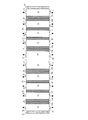
- the electrodialysis apparatus includes a compartment 1 (12) between a cathode chamber (10) including a cathode plate (21) and an anode chamber (11) including an anode plate (22).
- a section 2 (13) and a section 3 (14) are provided.
- the tub compartment 2 (13) and the compartment 3 (14) also include an inlet (33, 34) for introducing an aqueous electrolyte solution and an outlet (43, 44) for discharging, respectively.
- Step ii is a step of separating the epoxy compound from the composition having a reduced inorganic salt concentration discharged from the section 1 of Step 2 after Step 2.
- the epoxy compound can be introduced into the compartment 1 (12) without separating the epoxy compound from the composition containing the epoxy compound, inorganic salt, and water obtained in the step 1 of the present invention (hereinafter referred to as the following).
- the epoxy compound can be separated from the composition with a reduced inorganic salt concentration discharged from compartment 1 (12) of the electrodialyzer (ie, implementation of step ii).
- the separation of the epoxy compound is performed by a method such as distillation separation commonly used in this field, including a layer separation technique in which the composition is allowed to stand and separate into an oil phase containing the epoxy compound and an aqueous phase. Can be implemented.
- Step iii is a step of supplying the composition having a reduced inorganic salt concentration discharged from the section 1 of the step 2 to the section 2 and / or the section 3 of the step 2 after the step i.
- the aqueous electrolyte solution to be introduced into the compartment 2 (13) and / or the compartment 3 (14) is not particularly limited as long as electrodialysis proceeds and the alkali agent / acid can be recovered. From the viewpoint of reducing the amount of waste water accompanying the production of the epoxy compound, waste water produced by the production of the epoxy compound is used.
- compartment 1 (12) of the electrodialysis apparatus and electrodialysis that is, in the above embodiment a
- compartment 1 (12) It is preferable to collect an aqueous solution having a reduced concentration of inorganic salt discharged from the gas and supply it to the compartment 2 (13) and / or the compartment 3 (14) (ie, a combination of step i and step iii). Implementation, hereinafter referred to as “aspect c”).
- FIG. 1 illustrated an electrodialyzer having one each of the section 1 (12), the section 2 (13), and the section 3 (14), as shown in FIG. Those skilled in the art will readily understand that an electrodialyzer can be used.
- step 4 it is not necessary to recycle the total amount of the recovered alkali to step 1, and by recycling at least a part thereof, the amount of alkali agent used as a raw material for producing the epoxy compound can be reduced.
- the waste water generated by the production of the epoxy compound is reused as an aqueous electrolyte solution to be introduced into the compartment 2 (13) and / or the compartment 3 (14) of the electrodialyzer.
- the amount of waste water itself associated with the production of the epoxy compound can be significantly reduced.
- Process 2 Cation exchange membrane (Astom Co., Ltd. trade name Neocepta CMB, effective area 55 cm 2 ) 10 sheets, Anion exchange membrane (Astom Co., Ltd. trade name Neocepta AHA, effective area 55 cm 2 ) 10 sheets, Bipolar membrane (Co., Ltd.) Astom's product name Neocepta BP-1E, effective area 55cm 2 ) Eleven sections of electrodialyzer (Astom Co., Ltd. microassisser EX3B type) arranged alternately as shown in Fig. 2 Then, the whole amount of 1037 g of the 11.3% sodium chloride aqueous solution obtained above was introduced.
- Step 2 The entire amount of 1020 g of the 11.3% sodium chloride aqueous solution obtained in Step 1 (second batch) was introduced into compartment 1 (12) of the electrodialyzer.
- Step 3 Section 2 contains 367 g of a 0.03% aqueous sodium chloride solution obtained from Section 1 in Step 2 of Example 1 (first batch), and Section 3 contains Section 1 in Step 2 (first batch).
- a mixture of 98.4 g of a 0.03% sodium chloride aqueous solution obtained from the above and 381 g of ion-exchanged water was introduced (implementation of step iii).
- 500 g of 1 mol / L sodium hydroxide solution was introduced into each of the anode chamber and the cathode chamber.
- Each compartment 1, 2 and 3 was circulated with a pump under agitation, and electrodialysis was performed for 103 minutes by applying a direct current while keeping the cathode-anode voltage constant at 30V.
- the accumulated current flowed was 10.2 Ah
- the average current density was 1000 A / m 2
- the liquid temperature in compartment 1 (12) was in the range of 20-40 ° C.
- 603 g of a 1.93% sodium chloride aqueous solution from compartment 1, 639 g of a 10.3% aqueous sodium hydroxide solution from compartment 2, and 617 g of 8.8% hydrochloric acid from compartment 3 were obtained.
- Step 2 The entire amount of 1060 g of the 11.9% sodium chloride aqueous solution obtained in Step 1 (third batch) was introduced into compartment 1 (12) of the electrodialyzer.
- Step 3 In section 2, 338 g of a 1.93% aqueous sodium chloride solution obtained from section 1 in step 2 (second batch) and in section 3, 1.93 obtained from section 1 in step 2 (second batch) A mixture of 219 g of a 1% sodium chloride aqueous solution and 252 g of ion-exchanged water was introduced (implementation of step iii). 500 g of 1 mol / L sodium hydroxide solution was introduced into each of the anode chamber and the cathode chamber.
- step i 899 g of an aqueous solution containing 95.1 g of sodium chloride obtained after separation of the oil layer was neutralized with 187 g of hydrochloric acid adjusted to 10% to obtain 1086 g of a sodium chloride aqueous solution having a sodium chloride concentration of 9.52%.
- Step 2 The total amount of 1086 g of the 9.52% sodium chloride aqueous solution obtained in Step 1 (fourth batch) was introduced into compartment 1 (12) of the electrodialyzer.
- Section 2 contains 331.2 g of the 3.15% aqueous sodium chloride solution obtained from section 1 in step 2 (third batch), and section 3 contains 3.15% of the 3.15% solution obtained from section 1 in step 2 (third batch).
- a mixture of 260 g of sodium chloride aqueous solution and 222 g of ion-exchanged water was introduced (implementation of step iii).
- 500 g of 1 mol / L sodium hydroxide solution was introduced into each of the anode chamber and the cathode chamber.
- compartments 2 and 3 were introduced into the compartments 2 and 3, respectively, and 500.0 g of a 1 mol / L sodium hydroxide solution was introduced into the anode chamber and the cathode chamber, respectively.
- Each compartment 1, 2 and 3 was circulated with a pump under agitation and subjected to electrodialysis for 2.1 hours while applying a direct current while keeping the cathode-anode current constant at 30 V.
- the accumulated current flowed was 9.02 Ah
- the average current density was 1000 A / m 2
- the liquid temperature in compartment 1 (12) was in the range of 20-39 ° C.
- Step 2 Place 989.0 g of the aqueous solution obtained in Step 1 and 2008 g of ethyl acetate (manufactured by Wako Pure Chemical Industries, Ltd.) as an extractant in a glass container, and stir for 45 minutes at an extraction temperature of 21 ° C. The layers were separated to obtain 2071 g of an extract containing 41.30 g of 2,3-epoxy-1-propanol. Further, 912.1 g of a sodium chloride aqueous solution having a sodium chloride concentration of 10.9% and containing 110.8 g of sodium chloride was obtained as a residual extract.
- ethyl acetate manufactured by Wako Pure Chemical Industries, Ltd.
- Comparative Example 4 Step 1 Put 216.9 g of monochloropropanediol (manufactured by Wako Pure Chemical Industries, Ltd.) and 784.4 g of sodium hydroxide adjusted to 10.0% in a glass container, and adjust the temperature to 51 to 54 ° C. with stirring to perform the ring-closing reaction. Then, 1002 g of an aqueous solution containing 132.3 g of 2,3-epoxy-1-propanol and 112.3 g of sodium chloride was obtained.
- Table 2 summarizes the experimental conditions and results of Example 2 and Comparative Examples 3 and 4.
- Example 2 Even when monochloropropanediol was used as the chlorohydrin, the same effect as in Example 1 could be obtained as shown below.
- Example 2 it was confirmed that the sodium chloride concentration and the amount of wastewater in the wastewater were significantly reduced by electrodialyzing the inorganic salt and water generated in the ring closure reaction as compared with Comparative Example 3.
- the recovered alkaline agent is recycled to the ring-closing reaction, so that the production raw materials can be reduced and the recovery of hydrochloric acid, which is a valuable material, is realized at the same time.
- Example 2 recycles wastewater having a low inorganic salt concentration after electrodialysis treatment, so that not only Comparative Example 3 but also Comparative Example 4 in which wastewater is electrodialyzed, the amount of wastewater itself is reduced. A significant reduction was confirmed. Furthermore, the amount of water used for electrodialysis treatment can be reduced, which is extremely useful from the viewpoint of effective use of water resources.
Landscapes
- Chemical & Material Sciences (AREA)
- Organic Chemistry (AREA)
- Epoxy Compounds (AREA)
- Separation Using Semi-Permeable Membranes (AREA)
- Electrolytic Production Of Non-Metals, Compounds, Apparatuses Therefor (AREA)
- Water Treatment By Electricity Or Magnetism (AREA)
Priority Applications (2)
| Application Number | Priority Date | Filing Date | Title |
|---|---|---|---|
| CN201180050513.8A CN103168034B (zh) | 2010-08-19 | 2011-08-10 | 环氧化合物的制造方法 |
| PH1/2013/500290A PH12013500290A1 (en) | 2010-08-19 | 2011-08-10 | Method for producing epoxy compound |
Applications Claiming Priority (2)
| Application Number | Priority Date | Filing Date | Title |
|---|---|---|---|
| JP2010183653 | 2010-08-19 | ||
| JP2010-183653 | 2010-08-19 |
Publications (1)
| Publication Number | Publication Date |
|---|---|
| WO2012023468A1 true WO2012023468A1 (ja) | 2012-02-23 |
Family
ID=45605122
Family Applications (1)
| Application Number | Title | Priority Date | Filing Date |
|---|---|---|---|
| PCT/JP2011/068236 Ceased WO2012023468A1 (ja) | 2010-08-19 | 2011-08-10 | エポキシ化合物の製造方法 |
Country Status (5)
| Country | Link |
|---|---|
| JP (1) | JP5103547B2 (enExample) |
| CN (1) | CN103168034B (enExample) |
| MY (1) | MY161171A (enExample) |
| PH (1) | PH12013500290A1 (enExample) |
| WO (1) | WO2012023468A1 (enExample) |
Cited By (1)
| Publication number | Priority date | Publication date | Assignee | Title |
|---|---|---|---|---|
| CN103012322A (zh) * | 2012-12-18 | 2013-04-03 | 广州星业科技股份有限公司 | 一种缩水甘油的合成方法 |
Families Citing this family (2)
| Publication number | Priority date | Publication date | Assignee | Title |
|---|---|---|---|---|
| TWI622428B (zh) | 2017-03-31 | 2018-05-01 | 財團法人工業技術研究院 | 電透析模組及電透析系統 |
| CN120094234A (zh) * | 2022-12-01 | 2025-06-06 | 杭州蔚远医药科技有限公司 | 一种用于缩水甘油工业化生产的装置及其生产方法 |
Citations (5)
| Publication number | Priority date | Publication date | Assignee | Title |
|---|---|---|---|---|
| JPS55145676A (en) * | 1979-05-03 | 1980-11-13 | Lummus Co | Manufacture of epoxy compound from olefin compound |
| JPS56110682A (en) * | 1980-02-06 | 1981-09-01 | Mitsui Toatsu Chem Inc | Preparation of olefin oxide |
| JPS61139690A (ja) * | 1984-12-10 | 1986-06-26 | Kao Corp | グリシジル第4級アンモニウム塩の製造方法 |
| US5980724A (en) * | 1998-07-09 | 1999-11-09 | Ppg Industries Ohio, Inc. | Method of electrochemically producing epoxides |
| JP2005262051A (ja) * | 2004-03-17 | 2005-09-29 | Takuma Co Ltd | 二酸化炭素回収方法とそのシステム |
-
2011
- 2011-08-08 JP JP2011172543A patent/JP5103547B2/ja active Active
- 2011-08-10 MY MYPI2013000506A patent/MY161171A/en unknown
- 2011-08-10 WO PCT/JP2011/068236 patent/WO2012023468A1/ja not_active Ceased
- 2011-08-10 CN CN201180050513.8A patent/CN103168034B/zh active Active
- 2011-08-10 PH PH1/2013/500290A patent/PH12013500290A1/en unknown
Patent Citations (5)
| Publication number | Priority date | Publication date | Assignee | Title |
|---|---|---|---|---|
| JPS55145676A (en) * | 1979-05-03 | 1980-11-13 | Lummus Co | Manufacture of epoxy compound from olefin compound |
| JPS56110682A (en) * | 1980-02-06 | 1981-09-01 | Mitsui Toatsu Chem Inc | Preparation of olefin oxide |
| JPS61139690A (ja) * | 1984-12-10 | 1986-06-26 | Kao Corp | グリシジル第4級アンモニウム塩の製造方法 |
| US5980724A (en) * | 1998-07-09 | 1999-11-09 | Ppg Industries Ohio, Inc. | Method of electrochemically producing epoxides |
| JP2005262051A (ja) * | 2004-03-17 | 2005-09-29 | Takuma Co Ltd | 二酸化炭素回収方法とそのシステム |
Cited By (1)
| Publication number | Priority date | Publication date | Assignee | Title |
|---|---|---|---|---|
| CN103012322A (zh) * | 2012-12-18 | 2013-04-03 | 广州星业科技股份有限公司 | 一种缩水甘油的合成方法 |
Also Published As
| Publication number | Publication date |
|---|---|
| CN103168034B (zh) | 2014-09-17 |
| MY161171A (en) | 2017-04-14 |
| JP2012062306A (ja) | 2012-03-29 |
| PH12013500290A1 (en) | 2015-05-08 |
| CN103168034A (zh) | 2013-06-19 |
| JP5103547B2 (ja) | 2012-12-19 |
Similar Documents
| Publication | Publication Date | Title |
|---|---|---|
| CN102971450B (zh) | 烷基缩水甘油醚的制造方法 | |
| EP2229343B1 (de) | Verfahren zur herstellung von diarylcarbonat | |
| EP0421379B1 (en) | Preparation of monoepoxides | |
| US20140256980A1 (en) | Process for manufacturing hmb and salts thereof | |
| JP5103547B2 (ja) | エポキシ化合物の製造方法 | |
| Audinos | Ion‐exchange membrane processes for clean industrial chemistry | |
| CZ2013437A3 (cs) | Způsob výroby epoxy-monomerů a epoxidů | |
| CA1258472A (en) | Process for the production of dichlorohydrin | |
| EP0247670B1 (en) | A continuous process for the production of epichlorohydrin | |
| JP7390959B2 (ja) | グリコール酸塩およびグリコール酸の製造方法 | |
| WO2013122185A1 (ja) | エポキシ化合物の製造方法 | |
| US4657647A (en) | Process for the production of dichlorohydrin and the electrodialysis thereof | |
| KR101535471B1 (ko) | 알킬렌 유도체 제조용 촉매의 재생 방법 | |
| JP2012062306A5 (enExample) | ||
| JP2010143890A (ja) | エポキシ化合物の製造方法 | |
| JPH08143659A (ja) | ポリオキシアルキレンポリオールの製造方法 | |
| JP4738169B2 (ja) | グリセリルエーテルの製造方法 | |
| US6200454B1 (en) | Process for producing sodium persulfate | |
| JPS6323828A (ja) | ジクロロヒドリンの製造方法 | |
| JP5014773B2 (ja) | ビスフェノール類の製造方法 | |
| JP4587464B2 (ja) | グリセリルエーテルの製造方法 | |
| JP2013522200A (ja) | ジビニルアレーンジオキシドの製造方法 | |
| WO2006106940A1 (ja) | グリセリルエーテルの製造方法 | |
| CN112341336A (zh) | 应用醛亚硫酸钠与mgh酯化液反应制备mgh的方法 | |
| JPH10245379A (ja) | エポキシ化合物の製造方法およびトリス(2,3−エポキシプロピル)イソシアヌレートの製造方法 |
Legal Events
| Date | Code | Title | Description |
|---|---|---|---|
| 121 | Ep: the epo has been informed by wipo that ep was designated in this application |
Ref document number: 11818110 Country of ref document: EP Kind code of ref document: A1 |
|
| WWE | Wipo information: entry into national phase |
Ref document number: 12013500290 Country of ref document: PH |
|
| NENP | Non-entry into the national phase |
Ref country code: DE |
|
| 122 | Ep: pct application non-entry in european phase |
Ref document number: 11818110 Country of ref document: EP Kind code of ref document: A1 |