WO2011158922A1 - 光電変換素子およびその製造方法ならびに電子機器 - Google Patents
光電変換素子およびその製造方法ならびに電子機器 Download PDFInfo
- Publication number
- WO2011158922A1 WO2011158922A1 PCT/JP2011/063863 JP2011063863W WO2011158922A1 WO 2011158922 A1 WO2011158922 A1 WO 2011158922A1 JP 2011063863 W JP2011063863 W JP 2011063863W WO 2011158922 A1 WO2011158922 A1 WO 2011158922A1
- Authority
- WO
- WIPO (PCT)
- Prior art keywords
- photoelectric conversion
- dye
- conversion element
- additive
- porous photoelectrode
- Prior art date
- Legal status (The legal status is an assumption and is not a legal conclusion. Google has not performed a legal analysis and makes no representation as to the accuracy of the status listed.)
- Ceased
Links
Images









Classifications
-
- H—ELECTRICITY
- H01—ELECTRIC ELEMENTS
- H01G—CAPACITORS; CAPACITORS, RECTIFIERS, DETECTORS, SWITCHING DEVICES, LIGHT-SENSITIVE OR TEMPERATURE-SENSITIVE DEVICES OF THE ELECTROLYTIC TYPE
- H01G9/00—Electrolytic capacitors, rectifiers, detectors, switching devices, light-sensitive or temperature-sensitive devices; Processes of their manufacture
- H01G9/20—Light-sensitive devices
- H01G9/2004—Light-sensitive devices characterised by the electrolyte, e.g. comprising an organic electrolyte
-
- H—ELECTRICITY
- H10—SEMICONDUCTOR DEVICES; ELECTRIC SOLID-STATE DEVICES NOT OTHERWISE PROVIDED FOR
- H10F—INORGANIC SEMICONDUCTOR DEVICES SENSITIVE TO INFRARED RADIATION, LIGHT, ELECTROMAGNETIC RADIATION OF SHORTER WAVELENGTH OR CORPUSCULAR RADIATION
- H10F10/00—Individual photovoltaic cells, e.g. solar cells
-
- H—ELECTRICITY
- H01—ELECTRIC ELEMENTS
- H01M—PROCESSES OR MEANS, e.g. BATTERIES, FOR THE DIRECT CONVERSION OF CHEMICAL ENERGY INTO ELECTRICAL ENERGY
- H01M14/00—Electrochemical current or voltage generators not provided for in groups H01M6/00 - H01M12/00; Manufacture thereof
- H01M14/005—Photoelectrochemical storage cells
-
- H—ELECTRICITY
- H10—SEMICONDUCTOR DEVICES; ELECTRIC SOLID-STATE DEVICES NOT OTHERWISE PROVIDED FOR
- H10F—INORGANIC SEMICONDUCTOR DEVICES SENSITIVE TO INFRARED RADIATION, LIGHT, ELECTROMAGNETIC RADIATION OF SHORTER WAVELENGTH OR CORPUSCULAR RADIATION
- H10F71/00—Manufacture or treatment of devices covered by this subclass
-
- H—ELECTRICITY
- H01—ELECTRIC ELEMENTS
- H01G—CAPACITORS; CAPACITORS, RECTIFIERS, DETECTORS, SWITCHING DEVICES, LIGHT-SENSITIVE OR TEMPERATURE-SENSITIVE DEVICES OF THE ELECTROLYTIC TYPE
- H01G9/00—Electrolytic capacitors, rectifiers, detectors, switching devices, light-sensitive or temperature-sensitive devices; Processes of their manufacture
- H01G9/20—Light-sensitive devices
- H01G9/2027—Light-sensitive devices comprising an oxide semiconductor electrode
- H01G9/2031—Light-sensitive devices comprising an oxide semiconductor electrode comprising titanium oxide, e.g. TiO2
-
- H—ELECTRICITY
- H01—ELECTRIC ELEMENTS
- H01G—CAPACITORS; CAPACITORS, RECTIFIERS, DETECTORS, SWITCHING DEVICES, LIGHT-SENSITIVE OR TEMPERATURE-SENSITIVE DEVICES OF THE ELECTROLYTIC TYPE
- H01G9/00—Electrolytic capacitors, rectifiers, detectors, switching devices, light-sensitive or temperature-sensitive devices; Processes of their manufacture
- H01G9/20—Light-sensitive devices
- H01G9/2059—Light-sensitive devices comprising an organic dye as the active light absorbing material, e.g. adsorbed on an electrode or dissolved in solution
-
- Y—GENERAL TAGGING OF NEW TECHNOLOGICAL DEVELOPMENTS; GENERAL TAGGING OF CROSS-SECTIONAL TECHNOLOGIES SPANNING OVER SEVERAL SECTIONS OF THE IPC; TECHNICAL SUBJECTS COVERED BY FORMER USPC CROSS-REFERENCE ART COLLECTIONS [XRACs] AND DIGESTS
- Y02—TECHNOLOGIES OR APPLICATIONS FOR MITIGATION OR ADAPTATION AGAINST CLIMATE CHANGE
- Y02E—REDUCTION OF GREENHOUSE GAS [GHG] EMISSIONS, RELATED TO ENERGY GENERATION, TRANSMISSION OR DISTRIBUTION
- Y02E10/00—Energy generation through renewable energy sources
- Y02E10/50—Photovoltaic [PV] energy
- Y02E10/542—Dye sensitized solar cells
-
- Y—GENERAL TAGGING OF NEW TECHNOLOGICAL DEVELOPMENTS; GENERAL TAGGING OF CROSS-SECTIONAL TECHNOLOGIES SPANNING OVER SEVERAL SECTIONS OF THE IPC; TECHNICAL SUBJECTS COVERED BY FORMER USPC CROSS-REFERENCE ART COLLECTIONS [XRACs] AND DIGESTS
- Y02—TECHNOLOGIES OR APPLICATIONS FOR MITIGATION OR ADAPTATION AGAINST CLIMATE CHANGE
- Y02P—CLIMATE CHANGE MITIGATION TECHNOLOGIES IN THE PRODUCTION OR PROCESSING OF GOODS
- Y02P70/00—Climate change mitigation technologies in the production process for final industrial or consumer products
- Y02P70/50—Manufacturing or production processes characterised by the final manufactured product
Definitions
- the present invention relates to a photoelectric conversion element, a method of manufacturing the same, and an electronic device, for example, a photoelectric conversion element suitable for use in a dye-sensitized solar cell, a method of manufacturing the same, and an electronic device using the photoelectric conversion element.
- solar cells which are photoelectric conversion elements for converting sunlight into electrical energy, use sunlight as an energy source, they have very little influence on the global environment and are expected to be further spread.
- a solar cell a crystalline silicon solar cell and an amorphous silicon solar cell using single crystal or polycrystalline silicon are mainly used.
- the dye-sensitized solar cell proposed by Gretzel et al. In 1991 can obtain high photoelectric conversion efficiency, and unlike the conventional silicon solar cell, it does not require a large-scale device in manufacturing, and is low. Attention is paid to being able to manufacture at cost etc. (For example, refer nonpatent literature 1).
- a porous photoelectrode made of titanium oxide or the like to which a photosensitizing dye is bonded is opposed to a counter electrode made of platinum or the like, and an electrolyte layer made of an electrolytic solution between them.
- the electrolytic solution a solution in which an electrolyte containing an oxidation / reduction species such as iodine or iodide ion is dissolved in a solvent is often used.
- An additive is generally added to this electrolytic solution to prevent reverse electron transfer from the porous photoelectrode to the electrolytic solution, and 4-tert-butylpyridine (TBP) is the best as this additive.
- TBP 4-tert-butylpyridine
- the types of additives for the electrolyte solution of the dye-sensitized solar cell are limited, the range of selection of the additives is extremely narrow, and the degree of freedom in designing the electrolyte solution is low. Therefore, the problem to be solved by the present invention is that the range of selection of additives is large, and further, a dye-sensitized solar cell capable of obtaining better characteristics than the case of using 4-tert-butylpyridine as an additive And other photoelectric conversion elements.
- Another problem to be solved by the present invention is to provide a method of manufacturing a photoelectric conversion element capable of manufacturing the above-described excellent photoelectric conversion element.
- Still another problem to be solved by the present invention is to provide a high-performance electronic device using the above-described excellent photoelectric conversion element.
- pK a is 6.04 or more 7.03 or less, that is, if the additive of 6.04 ⁇ pK a ⁇ 7.3, to obtain better performance than 4-tert-butylpyridine
- the present invention is It has a structure in which an electrolyte layer is filled between the porous photoelectrode and the counter electrode, An additive of 6.04 ⁇ pK a ⁇ 7.3 is added to the electrolyte layer, and / or a surface facing the electrolyte layer of at least one of the porous photoelectrode and the counter electrode is 6.04 It is a photoelectric conversion element to which the additive of ⁇ pK a ⁇ 7.3 is adsorbed.
- this invention is An additive of 6.04 ⁇ pK a ⁇ 7.3 is added to the electrolyte layer filled between the porous photoelectrode and the counter electrode, and / or at least one of the porous photoelectrode and the counter electrode. And a step of adsorbing the additive of 6.04 ⁇ pK a ⁇ 7.3 on the surface facing the electrolyte layer.
- this invention is Having at least one photoelectric conversion element,
- the photoelectric conversion element is It has a structure in which an electrolyte layer is filled between the porous photoelectrode and the counter electrode, An additive of 6.04 ⁇ pK a ⁇ 7.3 is added to the electrolyte layer, and / or a surface facing the electrolyte layer of at least one of the porous photoelectrode and the counter electrode is 6.04 It is an electronic device which is a photoelectric conversion element to which the additive of ⁇ pK a ⁇ 7.3 is adsorbed.
- the additive added to the electrolyte layer or adsorbed to the surface of at least one of the porous photoelectrode and the counter electrode is basically selected as long as 6.04 ⁇ pK a ⁇ 7.3. Anything may be used.
- K a is the equilibrium constant of the dissociation equilibrium of the conjugate acid in water.
- the additive is typically a pyridine-based additive, an additive having a heterocycle, and the like. Specific examples of the pyridine-based additive include 2-aminopyridine (2-NH2-Py), 4-methoxypyridine (4-MeO-Py), 4-ethylpyridine (4-Et-Py), etc. Not limited to this.
- additive having a heterocycle examples include N-methylimidazole (MIm), 2,4-lutidine (24-Lu), 2,5-lutidine (25-Lu), 2,6-lutidine Examples include (26-Lu), 3,4-lutidine (34-Lu), 3,5-lutidine (35-Lu) and the like, but are not limited thereto.
- the additives are, for example, their 2-aminopyridine, 4-methoxypyridine, 4-ethylpyridine, N-methylimidazole, 2,4-lutidine, 2,5-lutidine, 2,6-lutidine, 3,4- It consists of at least one selected from the group consisting of lutidine and 3,5-lutidine.
- a compound having in its molecule the structure of a pyridine or heterocyclic compound having 6.04 ⁇ pK a ⁇ 7.3 also has the same effect as the above-mentioned additive of 6.04 ⁇ pK a ⁇ 7.3. It is expected that you can get it.
- the additive may be brought into contact with the surface of the porous photoelectrode or counter electrode using the additive itself, an organic solvent containing the additive, an electrolytic solution containing the additive, or the like.
- the porous photoelectrode or counter electrode may be immersed in an organic solvent containing an additive, or the organic solvent containing an additive may be spray-coated on the surface of the porous photoelectrode or counter electrode.
- the electrolyte layer is typically composed of an electrolytic solution, but may be one that is quasi-solidified by adding nanostructures such as silica fine particles, clay and carbon nanotubes to the electrolytic solution.
- the electrolyte layer may be made of a solid material capable of hole transport with an appropriate redox potential.
- the molecular weight of the solvent of the electrolytic solution is preferably 47.36 or more.
- a solvent examples include nitrile solvents such as 3-methoxypropionitrile (MPN), methoxyacetonitrile (MAN), acetonitrile (AN) and valeronitrile (VN), and carbonates such as ethylene carbonate and propylene carbonate Examples thereof include, but are not limited to, solvents, sulfone solvents such as sulfolane, lactone solvents such as ⁇ -butyrolactone, or a mixture of any two or more of these solvents.
- the photoelectric conversion element is typically a dye-sensitized photoelectric conversion element in which a photosensitizing dye is bonded (or adsorbed) to a porous photoelectrode.
- the method for producing a photoelectric conversion device typically further includes the step of binding a photosensitizing dye to the porous photoelectrode.
- the porous photoelectrode is composed of fine particles of semiconductor.
- the semiconductor preferably comprises titanium oxide (TiO 2 ), in particular TiO 2 of the anatase type.
- TiO 2 titanium oxide
- this porous photoelectrode preferably, one composed of fine particles composed of a core made of a metal and a shell made of a metal oxide surrounding the core is used.
- the electrolyte of the electrolyte layer may be in contact with the metal core of metal / metal oxide fine particles. Since it does not exist, dissolution of the porous photoelectrode by the electrolyte can be prevented. For this reason, it is difficult to use conventionally as a metal which comprises the core of metal / metal oxide fine particles, and to use gold (Au), silver (Ag), copper (Cu) etc. with a large effect of surface plasmon resonance. And the effect of surface plasmon resonance can be sufficiently obtained in photoelectric conversion.
- an iodine-based electrolyte can be used as the electrolyte of the electrolyte layer.
- Platinum (Pt), palladium (Pd) or the like can also be used as the metal constituting the core of the metal / metal oxide fine particles.
- a metal oxide which comprises the shell of a metal / metal oxide fine particle the metal oxide which does not melt
- Such metal oxide is preferably at least one selected from the group consisting of titanium oxide (TiO 2 ), tin oxide (SnO 2 ), niobium oxide (Nb 2 O 5 ) and zinc oxide (ZnO). Are used, but not limited thereto.
- the particle size of the fine particles is appropriately selected, but is preferably 1 to 500 nm. Further, the particle diameter of the core of the fine particles is also appropriately selected, but is preferably 1 to 200 nm.
- the photoelectric conversion element is most typically configured as a solar cell. However, the photoelectric conversion element may be something other than a solar cell, for example, an optical sensor or the like.
- the electronic device may be basically anything, including both portable and stationary devices, but specific examples include mobile phones, mobile devices, robots, personal computers , In-vehicle devices, various home electric appliances, etc.
- the photoelectric conversion element is, for example, a solar cell used as a power source of these electronic devices.
- volatile organic solvents such as acetonitrile have been used as the solvent of the electrolyte solution of the dye-sensitized solar cell.
- this dye-sensitized solar cell if the electrolytic solution is exposed to the atmosphere due to breakage or the like, there is a problem that evaporation of the electrolytic solution occurs to cause a failure.
- poorly volatile molten salts called ionic liquids have come to be used instead of volatile organic solvents as solvents for electrolytes (for example, Non-Patent Document 2, 3).
- the problem of volatilization of the electrolyte in dye-sensitized solar cells is being improved.
- the ionic liquid has a viscosity much higher than that of the conventionally used organic solvent
- the photoelectric conversion characteristics of the dye-sensitized solar cell using this ionic liquid are the photoelectric conversion of the conventional dye-sensitized solar cell The fact is that it is inferior to the characteristics.
- the dye-sensitized solar cell which can suppress volatilization of electrolyte solution and can acquire the outstanding photoelectric conversion characteristic is desired. Therefore, the present inventors have intensively studied to solve such problems.
- the above-mentioned “ionic liquid” is a salt which exhibits a liquid state at 100 ° C. (including those which become a liquid state at room temperature even if the melting point or glass transition temperature is 100 ° C. or more), and others Even salts include salts that form one or more phases by addition of a solvent and become liquid.
- the ionic liquid may be basically anything as long as it is an ionic liquid having an electron pair accepting functional group, and the organic solvent may basically be as long as it has an electron pair donating functional group. It may be anything.
- the ionic liquid is typically one whose cation has an electron pair accepting functional group.
- the ionic liquid preferably comprises an aromatic amine cation having a quaternary nitrogen atom, and an organic cation having a hydrogen atom in the aromatic ring and an anion having a van der Waals volume of 76 ⁇ or more.
- organic anions for example, inorganic anions such as AlCl 4 ⁇ and FeCl 4 ⁇ are included, for example
- the content of the ionic liquid in the solvent is selected as necessary, but preferably, the solvent composed of the ionic liquid and the organic solvent contains 15% by weight or more and less than 100% by weight of the ionic liquid.
- the electron pair donating functional group of the organic solvent is preferably, but not limited to, an ether group or an amino group.
- the solvent of the electrolytic solution contains the ionic liquid having the electron pair accepting functional group and the organic solvent having the electron pair donating functional group
- the following effects can be obtained. That is, in the solvent of the electrolytic solution, a hydrogen bond is formed between the electron pair accepting functional group of the ionic liquid and the electron pair donating functional group of the organic solvent.
- the molecules of the ionic liquid and the molecules of the organic solvent are bonded via the hydrogen bond, so that the volatilization of the organic solvent, that is, the electrolytic solution can be suppressed as compared with the case of using the organic solvent alone.
- the solvent of the electrolytic solution contains an organic solvent in addition to the ionic liquid, the viscosity of the electrolytic solution can be lowered as compared with the case where only the ionic liquid is used as the solvent, thereby preventing the deterioration of photoelectric conversion characteristics. be able to. For this reason, volatilization of the electrolytic solution can be suppressed, and a photoelectric conversion element capable of obtaining excellent photoelectric conversion characteristics can be realized.
- the additive of 6.04 ⁇ pK a ⁇ 7.3 is added to the electrolyte layer, and / or the surface facing the electrolyte layer of at least one of the porous photoelectrode and the counter electrode is By adsorbing the additive of 04 ⁇ pK a ⁇ 7.3, the range of selection of the additive for the electrolyte layer is broadened, and the characteristics superior to the case of using 4-tert-butylpyridine as the additive are obtained.
- a photoelectric conversion element that can be obtained can be obtained. By using this excellent photoelectric conversion element, high-performance electronic devices and the like can be realized.
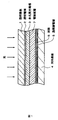
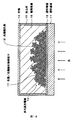
- FIG. 1 is a cross-sectional view showing a dye-sensitized photoelectric conversion element according to a first embodiment of the present invention.
- FIG. 2 is a schematic diagram for explaining the operation principle of the dye-sensitized photoelectric conversion device according to the first embodiment of the present invention.
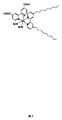
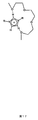
- FIG. 3 is a schematic diagram showing the structural formula of Z907.
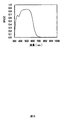
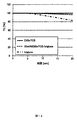
- FIG. 4 is a schematic diagram showing the measurement results of the IPCE spectrum of the dye-sensitized photoelectric conversion element in which Z 907 alone is bonded to the porous photoelectrode.
- FIG. 5 is a schematic diagram showing the structural formula of dye A.
- FIG. 1 is a cross-sectional view showing a dye-sensitized photoelectric conversion element according to a first embodiment of the present invention.
- FIG. 2 is a schematic diagram for explaining the operation principle of the dye-sensitized photoelectric conversion device according to the first embodiment of the present invention.
- FIG. 3 is a schematic diagram showing the structural formula of Z9
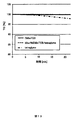
- FIG. 6 is a schematic diagram showing the measurement results of the IPCE spectrum of the dye-sensitized photoelectric conversion element in which the dye A is bonded alone to the porous photoelectrode.
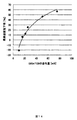
- Figure 7 is a schematic diagram showing the relationship between the photoelectric conversion efficiency of the pK a dye-sensitized photoelectric conversion element was added to the electrolyte additives Toko of various additives.
- Figure 8 is a schematic diagram showing the relationship between the internal resistance of the various additives pK a dye-sensitized photoelectric conversion element was added to the electrolytic solution and the additive added to the electrolyte.
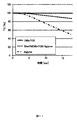
- FIG. 9 is a schematic diagram showing the solvent type dependency of the electrolytic solution of the effect of the additive.
- FIG. 9 is a schematic diagram showing the solvent type dependency of the electrolytic solution of the effect of the additive.
- FIG. 10 is a schematic diagram showing the results of TG-DTA measurement of various solvents.
- FIG. 11 is a schematic diagram showing the results of TG-DTA measurement of various solvents.
- FIG. 12 is a schematic diagram showing the results of TG-DTA measurement of various solvents.
- FIG. 13 is a schematic diagram showing the results of TG-DTA measurement of various solvents.
- FIG. 14 is a schematic diagram showing the results of measurement of the relationship between the content of EMImTCB in a mixed solvent of EMImTCB and triglyme and the evaporation rate reduction rate.
- FIG. 15 is a schematic diagram showing the results of measuring the relationship between the van der Waals volume of the anion of various ionic liquids and the evaporation rate reduction rate.
- FIG. 11 is a schematic diagram showing the results of TG-DTA measurement of various solvents.
- FIG. 12 is a schematic diagram showing the results of TG-DTA measurement of various solvents.
- FIG. 13 is
- FIG. 16 is a schematic diagram showing how a hydrogen bond is formed between an ionic liquid having an electron pair accepting functional group and an organic solvent having an electron pair donating functional group.
- FIG. 17 is a schematic diagram showing how a plurality of hydrogen bonds are formed between an ionic liquid having an electron pair accepting functional group and an organic solvent having a plurality of electron pair donating functional groups.
- FIG. 18 is a cross-sectional view showing a dye-sensitized photoelectric conversion element according to the third embodiment of the present invention.
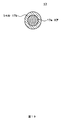
- FIG. 19 is a cross-sectional view showing the configuration of metal / metal oxide fine particles constituting the porous photoelectrode in the dye-sensitized photoelectric conversion element according to the third embodiment of the present invention.
- FIG. 20 is a cross-sectional view showing a photoelectric conversion element according to the fourth embodiment of the present invention.
- FIG. 21 is a schematic diagram showing the structural formula of Z991.
- FIG. 1 is a sectional view of an essential part showing a dye-sensitized photoelectric conversion element according to the first embodiment.
- a transparent electrode 2 is provided on one main surface of a transparent substrate 1, and a porous photoelectrode 3 is provided on the transparent electrode 2.
- One or more photosensitizing dyes are bonded to the porous photoelectrode 3.
- the transparent conductive layer 5 is provided on one main surface of the counter substrate 4, and the counter electrode 6 is provided on the transparent conductive layer 5.
- an electrolyte layer 7 made of an electrolytic solution is filled between the porous photoelectrode 3 on the transparent substrate 1 and the counter electrode 6 on the counter substrate 4, and the outer peripheral portions of the transparent substrate 1 and the counter substrate 4 are sealed. It is sealed with a material (not shown).
- a porous photoelectrode 3 typically, a porous semiconductor layer obtained by sintering semiconductor fine particles is used. The photosensitizing dye is adsorbed on the surface of the semiconductor fine particles.
- an element semiconductor represented by silicon, a compound semiconductor, a semiconductor having a perovskite structure, or the like can be used.
- These semiconductors are preferably n-type semiconductors in which conduction band electrons become carriers under light excitation to generate an anode current.
- titanium oxide (TiO 2 2 ) Zinc oxide (ZnO), tungsten oxide (WO) 3 ), Niobium oxide (Nb 2 O 5 ), Strontium titanate (SrTiO) 3 ), Tin oxide (SnO) 2 Semiconductors are used.
- TiO 2 In particular anatase type TiO 2 It is preferable to use
- the types of semiconductors are not limited to these, and two or more types of semiconductors can be mixed or compounded as needed.
- the form of the semiconductor fine particles may be any of granular, tube-like, rod-like and the like.
- the particle size of the semiconductor fine particles is not particularly limited, but the average particle size of primary particles is preferably 1 to 200 nm, particularly preferably 5 to 100 nm. It is also possible to mix particles of a size larger than that of the semiconductor fine particles, scatter incident light with these particles, and improve the quantum yield. In this case, the average size of the separately mixed particles is preferably 20 to 500 nm, but is not limited thereto.
- the porous photoelectrode 3 has a large real surface area including the particle surface facing pores in the porous semiconductor layer made of semiconductor particles so that as many photosensitizing dyes as possible can be bound. preferable.
- an actual surface area in a state in which the porous photoelectrode 3 is formed on the transparent electrode 2 is 10 or more times the area (projected area) of the outer surface of the porous photoelectrode 3 More preferably, it is 100 times or more. There is no particular upper limit to this ratio, but it is usually about 1000 times.
- the actual surface area increases, and the amount of photosensitizing dye that can be held in the unit projected area Increases the light absorption rate.
- the thickness of the porous photoelectrode 3 when the thickness of the porous photoelectrode 3 is increased, the distance of diffusion of electrons transferred from the photosensitizing dye to the porous photoelectrode 3 before reaching the transparent electrode 2 is increased.
- this thickness is generally 0.1 to 100 ⁇ m, preferably 1 to 50 ⁇ m, and more preferably 3 to 30 ⁇ m. Particularly preferred.
- the electrolytic solution constituting the electrolyte layer 7 include a solution containing a redox system (redox couple).
- the redox system is not particularly limited as long as it is a substance having an appropriate redox potential.
- iodine (I 2 ) With metal or organic iodide salts, bromine (Br 2 And the like, or a combination of metal or organic bromide salt and the like.
- the cation constituting the metal salt is, for example, lithium (Li + ), Sodium (Na) + ), Potassium (K + ), Cesium (Cs) + ), Magnesium (Mg 2+ ), Calcium (Ca 2+ And so on.
- quaternary ammonium ions such as tetraalkyl ammonium ions, pyridinium ions and imidazolium ions are preferable, and these may be used alone or in combination of two or more kinds. Can be used.
- a combination of an oxidized form and a reduced form of an organic metal complex composed of a transition metal such as cobalt, iron, copper, nickel, platinum, etc., poly sodium sulfide, an alkyl thiol Sulfur compounds such as combinations with alkyl disulfides, viologen dyes, combinations of hydroquinone and quinone, and the like can also be used.
- iodine (I 2 And a quaternary ammonium compound such as lithium iodide (LiI), sodium iodide (NaI), and imidazolium iodide are preferable.
- the concentration of the electrolyte salt is preferably 0.05 M to 10 M, more preferably 0.2 M to 3 M with respect to the solvent.
- the concentration of is preferably 0.0005 M to 1 M, and more preferably 0.001 to 0.5 M. In this case, 6.04 ⁇ pK in the electrolyte constituting the electrolyte layer 7 a Additives of ⁇ 7.3 are added.
- Such additives are, for example, pyridine type additives and additives having a heterocyclic ring.
- pyridine-based additive include 2-NH 2 -Py, 4-MeO-Py, 4-Et-Py and the like.
- additive having a heterocycle include MIm, 24-Lu, 25-Lu, 26-Lu, 34-Lu, 35-Lu and the like.
- solvent of the electrolyte solution which comprises the electrolyte layer 7 the solvent whose molecular weight is 47.36 or more is used.
- Such solvent is, for example, 3-methoxypropionitrile (MPN), methoxyacetonitrile (MAN), a mixed solution of acetonitrile (AN) and valeronitrile (VN), and the like.
- the transparent substrate 1 is not particularly limited as long as it has a material and a shape that easily transmits light, and various substrate materials can be used. In particular, a substrate material having a high visible light transmittance is used Is preferred. In addition, a material having high blocking performance to block moisture and gas from entering the dye-sensitized photoelectric conversion element from the outside and having excellent solvent resistance and weather resistance is preferable.
- transparent inorganic materials such as quartz and glass, polyethylene terephthalate, polyethylene naphthalate, polycarbonate, polystyrene, polyethylene, polypropylene, polyphenylene sulfide, polyvinylidene fluoride, acetyl cellulose, bromone as the material of the transparent substrate 1
- transparent plastics such as phenoxy, aramids, polyimides, polystyrenes, polyarylates, polysulfones, and polyolefins.
- the thickness of the transparent substrate 1 is not particularly limited, and can be appropriately selected in consideration of the light transmittance and the performance of blocking the inside and the outside of the photoelectric conversion element.
- the sheet resistance of the transparent electrode 2 provided on the transparent substrate 1 is preferably as small as possible, specifically 500 ⁇ / ⁇ or less is preferable, and 100 ⁇ / ⁇ or less is more preferable.
- a well-known material can be used as a material which forms the transparent electrode 2, It selects as needed.
- the material forming the transparent electrode 2 is indium-tin complex oxide (ITO), tin oxide doped with fluorine (IV) SnO 2 (FTO), tin oxide (IV) SnO 2 , Zinc oxide (II) ZnO, indium-zinc composite oxide (IZO) and the like.
- the material which forms the transparent electrode 2 is not limited to these, It can also be used combining two or more types.
- the photosensitizing dye to be bonded to the porous photoelectrode 3 is not particularly limited as long as it exhibits a sensitizing function, and an organic metal complex, an organic dye, metal / semiconductor nanoparticles and the like can be used. It is preferable to have an acid functional group that adsorbs to the surface of the photoelectrode 3.
- the photosensitizing dye is preferably one having a carboxy group, a phosphate group or the like, and among these, one having a carboxy group is particularly preferable.
- photosensitizing dyes include, for example, rhodamine B, xanthene dyes such as rose bengal, eosin and erythrosine, cyan dyes such as merocyanine, quinocyanine and cryptocyanin, phenosafranine, fog blue, thiocine, methylene blue and the like.
- Basic dyes porphyrins such as chlorophyll, zinc porphyrin, and magnesium porphyrin, and the like; azo dyes, phthalocyanine compounds, coumarin compounds, pyridine complex compounds, anthraquinone dyes, polycyclic quinone dyes, and the like.
- Examples thereof include triphenylmethane dyes, indoline dyes, perylene dyes, ⁇ -conjugated polymers such as polythiophene and the like, 2- to 20-mers of their monomers, and quantum dots such as CdS and CdSe.
- cis-bis (isothiocyanate) -N, N-bis (2,2'-dipyridyl-4,4'-dicarboxylic acid) -ruthenium (II) or tris (isothiocyanate) -ruthenium (II)- Dye molecules having a 2,2 ′: 6 ′, 2 ′ ′-terpyridine-4,4 ′, 4 ′ ′-tricarboxylic acid as a basic skeleton preferably have a wide absorption wavelength range.
- photosensitizing dyes are not limited to these. As the photosensitizing dye, typically, one of them is used, but two or more kinds of photosensitizing dyes may be mixed and used.
- the photosensitizing dye is preferably an inorganic complex dye having a property of causing MLCT (Metal to Ligand Charge Transfer), which is held by a porous photoelectrode. And an organic molecular dye having the property of intramolecular CT (Charge Transfer) held by the porous photoelectrode 3.
- MLCT Metal to Ligand Charge Transfer
- organic molecular dye having the property of intramolecular CT (Charge Transfer) held by the porous photoelectrode 3.
- the inorganic complex dye and the organic molecular dye adsorb to the porous photoelectrode in different conformations.
- the inorganic complex dye preferably has a carboxyl group or a phosphono group as a functional group to be bonded to the porous photoelectrode 3.
- the organic molecular dye preferably has, on the same carbon, a carboxyl group or a phosphono group and a cyano group, an amino group, a thiol group or a thione group as a functional group to be bonded to the porous photoelectrode 3.
- the inorganic complex dye is, for example, a polypyridine complex
- the organic molecular dye is, for example, an aromatic polycyclic conjugated molecule having both an electron donating group and an electron accepting group and having the property of intramolecular CT.
- the method for adsorbing the photosensitizing dye to the porous photoelectrode 3 is not particularly limited.
- alcohols, nitriles, nitromethane, halogenated hydrocarbons, ethers, dimethyl sulfoxide, amides may be used as the above photosensitizing dye.
- a solvent such as N-methylpyrrolidone, 1,3-dimethylimidazolidinone, 3-methyloxazolidinone, esters, carbonates, ketones, hydrocarbons, water, etc.
- a solution containing a photosensitizing dye can be applied onto the porous photoelectrode 3.
- deoxycholic acid or the like may be added for the purpose of reducing the association between molecules of the photosensitizing dye.
- An ultraviolet absorber can also be used together as needed.
- the surface of the porous photoelectrode 3 may be treated with amines for the purpose of promoting the removal of the photosensitizing dye adsorbed in excess.
- amines include pyridine, 4-tert-butylpyridine, polyvinylpyridine and the like, and when these are liquids, they may be used as they are or may be used by being dissolved in an organic solvent. Any material can be used as the material of the counter electrode 6 as long as it is a conductive substance, but if a conductive layer is formed on the side facing the electrolyte layer 7 of the insulating material, this can also be used.
- the counter electrode 6 it is preferable to use an electrochemically stable material, and specifically, it is desirable to use platinum, gold, carbon, a conductive polymer or the like. Further, in order to improve the catalytic action on the reduction reaction at the counter electrode 6, it is preferable that the surface of the counter electrode 6 in contact with the electrolyte layer 7 be formed so as to form a fine structure and increase the real surface area. .
- the surface of the counter electrode 6 is preferably formed in a platinum black state in the case of platinum, and in a porous carbon state in the case of carbon.
- Platinum black can be formed by anodic oxidation of platinum, chloroplatinic acid treatment or the like, and porous carbon can be formed by methods such as sintering of carbon fine particles or baking of an organic polymer.
- the counter electrode 6 is formed on the transparent conductive layer 5 formed on one main surface of the counter substrate 4, the present invention is not limited to this.
- opaque glass, plastic, ceramic, metal or the like may be used, or a transparent material such as transparent glass or plastic may be used.
- As the transparent conductive layer 5, one similar to the transparent electrode 2 can be used.
- As a material of the sealing material it is preferable to use a material provided with light resistance, insulation, moisture resistance, and the like.
- the material of the sealing material include epoxy resin, ultraviolet curing resin, acrylic resin, polyisobutylene resin, EVA (ethylene vinyl acetate), ionomer resin, ceramic, various heat fusion films and the like.
- an injection port is required, but the position of the injection port is not particularly limited as long as it is not on the porous photoelectrode 3 and the counter electrode 6 of the portion facing this.
- the method of injecting the electrolyte is not particularly limited, but a method of injecting under pressure into the interior of the photoelectric conversion element whose outer periphery is sealed in advance and the solution inlet is opened is preferable.
- the liquid injection can be performed under reduced pressure or heating as necessary. After the solution is completely infused, remove the solution remaining in the inlet and seal the inlet.
- the sealing method is not particularly limited, but if necessary, a glass plate or a plastic substrate may be attached with a sealing agent to seal.
- an electrolytic solution can be dropped onto a substrate and bonded and sealed under reduced pressure as in a liquid crystal drop injection (ODF; One Drop Filling) process of a liquid crystal panel.
- ODF liquid crystal drop injection
- a method of preparing a paste-like dispersion liquid in which powder or sol of semiconductor fine particles is uniformly dispersed in a solvent such as water, and coating or printing this dispersion liquid on the transparent electrode 2 of the transparent substrate 1 Is preferred.
- a dip method, a spray method, a wire bar method, a spin coat method, a roller coat method, a blade coat method, a gravure coat method, and the like can be used.
- a letterpress printing method an offset printing method, a gravure printing method, an intaglio printing method, a rubber plate printing method, a screen printing method, or the like can be used.
- Anatase-type TiO as a material for semiconductor particles 2 When using this anatase type TiO 2 A powdery, sol-like or slurry-like commercial product may be used, or one having a predetermined particle size may be formed by a known method such as hydrolysis of titanium oxide alkoxide.
- polymers such as polyethylene oxide and polyvinyl alcohol, or various thickeners such as a cellulose-based thickener can be added to the paste-like dispersion.
- the porous photoelectrode 3 electrically connects the semiconductor fine particles to each other, improves the mechanical strength of the porous photoelectrode 3, and adheres to the transparent electrode 2.
- baking is preferred. There is no particular limitation on the range of the firing temperature, but if the temperature is raised too much, the electrical resistance of the transparent electrode 2 may increase, and furthermore, the transparent electrode 2 may be melted. -650 ° C. is more preferred.
- the firing time is not particularly limited, but is usually about 10 minutes to 10 hours.
- a dip treatment with an aqueous solution of titanium tetrachloride or a titanium oxide ultrafine particle sol having a diameter of 10 nm or less may be performed in order to increase the surface area of the semiconductor particles or enhance necking between the semiconductor particles.
- a plastic substrate is used as the transparent substrate 1 supporting the transparent electrode 2
- the porous photoelectrode 3 is formed on the transparent electrode 2 using a paste-like dispersion containing a binder, and the transparent electrode is heated by a heat press. Crimping to 2 is also possible.
- the transparent substrate 1 on which the porous photoelectrode 3 is formed is immersed in a solution in which a photosensitizing dye is dissolved in a predetermined solvent, thereby binding the photosensitizing dye to the porous photoelectrode 3.
- transparent conductive layer 5 and counter electrode 6 are sequentially formed on counter substrate 4 by sputtering or the like.
- the transparent substrate 1 and the counter substrate 4 are disposed so that the porous photoelectrode 3 and the counter electrode 6 face each other at a predetermined distance, for example, a distance of 1 to 100 ⁇ m, preferably 1 to 50 ⁇ m.
- a sealing material (not shown) is formed on the outer peripheral portions of the transparent substrate 1 and the counter substrate 4 to form a space in which the electrolyte layer 7 is sealed, and liquid injection previously formed on the transparent substrate 1 is made in this space.
- An electrolyte solution to which the above-described additive is added is injected from a port (not shown) to form an electrolyte layer 7. After this, the liquid inlet is closed.
- This dye-sensitized photoelectric conversion element operates as a battery using the counter electrode 6 as a positive electrode and the transparent electrode 2 as a negative electrode when light is incident.
- the principle is as follows.
- FTO is used as the material of the transparent electrode 2
- TiO is used as the material of the porous photoelectrode 3. 2
- a redox couple I - / I 3 - It is assumed that the redox species of is used, but it is not limited thereto. Further, it is assumed that one type of photosensitizing dye is bound to the porous photoelectrode 3.
- the photosensitizing dye which is transmitted through the transparent substrate 1 and the transparent electrode 2 and enters the porous photoelectrode 3 is absorbed by the photosensitizing dye bonded to the porous photoelectrode 3, the electrons in the photosensitizing dye are in the ground state (HOMO) ) To an excited state (LUMO).
- the electrons thus excited form TiO 2 constituting the porous photoelectrode 3 through the electrical coupling between the photosensitizing dye and the porous photoelectrode 3. 2
- the light passes through the porous photoelectrode 3 to reach the transparent electrode 2.
- the photosensitizing dye which has lost the electron is a reducing agent in the electrolyte layer 7, for example I -
- the electron is received from the electrolyte by the following reaction, and an oxidant such as I 3 - (I 2 And I - To form a combination of 2I - ⁇ I 2 + 2e - I 2 + I - ⁇ I 3 -
- the oxidant thus generated reaches the counter electrode 6 by diffusion, receives electrons from the counter electrode 6 by the reverse reaction of the above reaction, and is reduced to the original reducing agent.
- Dye A is 2-Cyano-3- [4- [4- (2,2-diphenylethenyl) phenyl] -1,2,3,3a, 4,8b-hexahydrocyclopent [b] indol-7-yl] -2- It is propenoic acid.
- FIG. 2 is an energy diagram for explaining the operation principle of this dye-sensitized photoelectric conversion element.
- This dye-sensitized photoelectric conversion element operates as a battery using the counter electrode 6 as a positive electrode and the transparent electrode 2 as a negative electrode when light is incident.
- the principle is as follows.
- FTO is used as the material of the transparent electrode 2
- TiO is used as the material of the porous photoelectrode 3.
- FIG. 3 shows the structural formula of Z 907
- FIG. 5 shows the structural formula of the dye A
- FIG. 6 shows the measurement results of the IPCE spectrum when the dye A is adsorbed on the surface of the porous photoelectrode 3 alone.
- Z 907 can absorb light of a wide range of wavelengths, but there is a region where the absorbance is insufficient in the short wavelength region, and in this short wavelength region, the large absorbance in this short wavelength region
- the dye A having the following relationship is in favor of light absorption. That is, the dye A works as a photosensitizing dye having a large absorbance in the short wavelength region.
- Z 907 has a carboxy group (—COOH) as a functional group strongly bound to the porous photoelectrode 3, and this carboxy group is bound to the porous photoelectrode 3.
- —COOH carboxy group
- the dye A is a functional group that strongly bonds to the porous photoelectrode 3, and a cyano group that is a functional group that weakly binds to the porous photoelectrode 3. (—CN) is bonded to the same carbon.
- these carboxy and cyano groups bonded to the same carbon are bonded to the porous photoelectrode 3. That is, the dye A is adsorbed to the porous photoelectrode 3 by the carboxy group and cyano group bonded to the same carbon, and is porous in a configuration different from Z907 in which only the carboxy group is adsorbed to the porous photoelectrode 3 It adsorbs to the photo electrode 3.
- the dye A adsorbed to the porous photoelectrode 3
- the degree of freedom in the steric configuration of is reduced, and the effect of the presence of a plurality of functional groups bonded to the same carbon is less likely to be exhibited.
- the cyano group weakly bound to the porous photoelectrode 3 additionally functions, and moreover, the carboxy group strongly bound is not prevented from binding to the porous photoelectrode 3.
- the effect that the carboxy group and the cyano group are bonded to the same carbon is effectively expressed.
- the dye A and Z 907 are adjacent to each other on the surface of the porous photoelectrode 3, they can coexist without exerting strong interaction with each other, so that the photoelectric conversion performance of each other is not impaired.
- the dye A effectively intervenes between Z 907 bonded to the surface of the same porous photoelectrode 3 to suppress the association of Z 907 and prevent useless electron transfer between Z 907. For this reason, since excited electrons are efficiently taken out to the porous photoelectrode 3 from Z 907 that has absorbed light without being unnecessarily moved between Z 907, the photoelectric conversion efficiency of Z 907 is improved.
- the excited electrons of the dye A that has absorbed light are extracted from the strongly bonding carboxy group to the porous photoelectrode 3, charge transfer to the porous photoelectrode 3 is efficiently performed.
- the photosensitizing dye which is bound to the porous photoelectrode 3, ie, Z907 and dye A absorbs the photons transmitted through the transparent substrate 1, the transparent electrode 2 and the porous photoelectrode 3, the electrons in these Z907 and the dye A Is excited from the ground state (HOMO) to the excited state (LUMO).
- a photosensitizing dye consists of Z907 and dye A
- the light of a wider wavelength range is higher light absorbance. It can be absorbed.
- the electrons in the excited state are extracted to the conduction band of the porous photoelectrode 3 through the electrical coupling between the photosensitizing dye, ie, Z 907 and the dye A and the porous photoelectrode 3, and the porous photoelectrode 3 To reach the transparent electrode 2.
- One of them is a direct path P drawn directly from the excited state of the dye A to the conduction band of the porous photoelectrode 3. 1 It is.
- the other is an indirect path P in which electrons in the excited state of the dye A are first extracted to the excited state of Z907 with a low energy level and then extracted to the conduction band of the porous photoelectrode 3 from the excited state of Z907. 2 It is.
- This indirect route P 2 The photoelectric conversion efficiency of the dye A is improved in a system in which Z 907 is present in addition to the dye A due to the contribution of
- Z 907 and dye A which have lost electrons are reduced in the electrolyte layer 7, for example I -
- the electron is received from the electrolyte by the following reaction, and an oxidant such as I 3 - (I 2 And I - To form a combination of 2I - ⁇ I 2 + 2e - I 2 + I - ⁇ I 3 -
- the oxidant thus generated reaches the counter electrode 6 by diffusion, receives electrons from the counter electrode 6 by the reverse reaction of the above reaction, and is reduced to the original reducing agent.
- the dye-sensitized photoelectric conversion device was manufactured as follows.
- the paste-like dispersion of TiO 2 which is a raw material for forming the porous photoelectrode 3, is referred to “The latest technology of dye-sensitized solar cell” (Supervised by Hironori Arakawa, CMC Co., Ltd.).
- the sol solution was allowed to cool to room temperature and filtered through a glass filter, and then the solvent was added to make the solution volume 700 ml.
- the obtained sol solution was transferred to an autoclave, subjected to a hydrothermal reaction at 220 ° C. for 12 hours, and then subjected to a dispersing treatment by ultrasonication for 1 hour. Next, this solution was concentrated at 40 ° C. using an evaporator, and the content of TiO 2 was adjusted to 20 wt%.
- a 0.1 M aqueous solution of titanium (IV) chloride TiCl 4 was dropped to the sintered TiO 2 film, and kept at room temperature for 15 hours, then washed and baked again at 500 ° C. for 30 minutes. After that, the TiO 2 sintered body is irradiated with ultraviolet light for 30 minutes using an ultraviolet light irradiation apparatus, and impurities such as organic substances contained in the TiO 2 sintered body are oxidized and decomposed by the photocatalytic action of TiO 2 and removed The porous photoelectrode 3 was obtained by performing treatment to increase the activity of the TiO 2 sintered body.
- a photosensitizing dye solution was prepared by dissolving 23.8 mg of sufficiently purified Z907 as a photosensitizing dye in 50 ml of a mixed solvent in which acetonitrile and tert-butanol were mixed at a volume ratio of 1: 1.
- Z907 and dye A are used as photosensitizing dyes
- 23.8 mg of sufficiently purified Z907 and 2.5 mg of dye A are used in a volume ratio of 1: 1 of acetonitrile and tert-butanol.
- the mixture is dissolved in 50 ml of mixed solvent to prepare a photosensitizing dye solution.
- the porous photoelectrode 3 was immersed in this photosensitizing dye solution at room temperature for 24 hours to hold the photosensitizing dye on the surface of the TiO 2 fine particles.
- the porous photoelectrode 3 was washed with a solution of 4-tert-butylpyridine in acetonitrile and acetonitrile in order, and then the solvent was evaporated and dried in the dark.
- a 50 nm thick chromium layer and a 100 nm thick platinum layer are sequentially deposited by sputtering on the FTO layer on which a 0.5 mm diameter injection port has been formed beforehand, and the chloroplatinic acid It was formed by spray coating an isopropyl alcohol (2-propanol) solution and heating at 385 ° C. for 15 minutes.
- the transparent substrate 1 and the opposite substrate 4 are disposed so that their porous photoelectrodes 3 and the counter electrode 6 face each other, and the outer periphery is sealed with an ionomer resin film with a thickness of 30 ⁇ m and an acrylic ultraviolet curing resin. did.
- An electrolyte is prepared by dissolving 1.0 g of dimethylimidazolium iodide, 0.10 g of iodine I 2 and 0.054 g of 2-NH 2 -Py as an additive.
- the electrolytic solution was injected from a liquid injection port of a dye-sensitized photoelectric conversion element prepared in advance using a liquid feed pump, and bubbles in the element were expelled by reducing pressure. Thus, the electrolyte layer 7 is formed.
- the injection port was sealed with an ionomer resin film, an acrylic resin and a glass substrate to complete a dye-sensitized photoelectric conversion element.
- An electrolyte was prepared using 4-MeO-Py as an additive.
- a dye-sensitized photoelectric conversion element was manufactured in the same manner as in Example 1 except for the above.
- An electrolyte was prepared using 4-Et-Py as an additive.
- a dye-sensitized photoelectric conversion element was manufactured in the same manner as in Example 1 except for the above.
- An electrolyte was prepared using MIm as an additive.
- a dye-sensitized photoelectric conversion element was manufactured in the same manner as in Example 1 except for the above.
- An electrolyte was prepared using 24-Lu as an additive.
- a dye-sensitized photoelectric conversion element was manufactured in the same manner as in Example 1 except for the above.
- An electrolyte was prepared using 25-Lu as an additive.
- a dye-sensitized photoelectric conversion element was manufactured in the same manner as in Example 1 except for the above.
- An electrolyte was prepared using 26-Lu as an additive.
- a dye-sensitized photoelectric conversion element was manufactured in the same manner as in Example 1 except for the above.
- An electrolyte was prepared using 34-Lu as an additive.
- a dye-sensitized photoelectric conversion element was manufactured in the same manner as in Example 1 except for the above.
- An electrolyte was prepared using 35-Lu as an additive.
- a dye-sensitized photoelectric conversion element was manufactured in the same manner as in Example 1 except for the above.
- Comparative Example 1 An electrolyte was prepared without the use of additives.
- a dye-sensitized photoelectric conversion element was manufactured in the same manner as in Example 1 except for the above.
- Comparative Example 2 An electrolyte was prepared using TBP as an additive.
- a dye-sensitized photoelectric conversion element was manufactured in the same manner as in Example 1 except for the above.
- Comparative Example 3 An electrolyte was prepared using 4-pic as an additive.
- a dye-sensitized photoelectric conversion element was manufactured in the same manner as in Example 1 except for the above.
- Comparative Example 4 An electrolyte was prepared using 4-COOMe-Py as an additive. A dye-sensitized photoelectric conversion element was manufactured in the same manner as in Example 1 except for the above. Comparative Example 5 An electrolytic solution was prepared using 4-CN-Py as an additive. A dye-sensitized photoelectric conversion element was manufactured in the same manner as in Example 1 except for the above. Comparative Example 6 An electrolyte was prepared using 4-NH 2 -Py as an additive. A dye-sensitized photoelectric conversion element was manufactured in the same manner as in Example 1 except for the above. Comparative Example 7 An electrolyte was prepared using 4-MeNH-Py as an additive.
- a dye-sensitized photoelectric conversion element was manufactured in the same manner as in Example 1 except for the above.
- a dye-sensitized photoelectric conversion element was manufactured in the same manner as in Example 1 except for the above.
- a dye-sensitized photoelectric conversion element was manufactured in the same manner as in Example 1 except for the above.
- a dye-sensitized photoelectric conversion element was manufactured in the same manner as in Example 1 except for the above.
- Comparative Example 11 An electrolyte was prepared using Py as an additive. A dye-sensitized photoelectric conversion element was manufactured in the same manner as in Example 1 except for the above. Comparative Example 12 An electrolyte was prepared using 3-Br-Py as an additive. A dye-sensitized photoelectric conversion element was manufactured in the same manner as in Example 1 except for the above. Comparative Example 13 An electrolyte was prepared using NMB as an additive. A dye-sensitized photoelectric conversion element was manufactured in the same manner as in Example 1 except for the above. Comparative Example 14 An electrolyte was prepared using pirazine as an additive. A dye-sensitized photoelectric conversion element was manufactured in the same manner as in Example 1 except for the above.
- Comparative Example 15 An electrolyte was prepared using thiazole as an additive. A dye-sensitized photoelectric conversion element was manufactured in the same manner as in Example 1 except for the above. Comparative Example 16 An electrolyte was prepared using Me-pyrazole as an additive. A dye-sensitized photoelectric conversion element was manufactured in the same manner as in Example 1 except for the above. Comparative Example 17 An electrolyte was prepared using quinoline as an additive. A dye-sensitized photoelectric conversion element was manufactured in the same manner as in Example 1 except for the above. Comparative Example 18 An electrolyte was prepared using isoquinoline as an additive. A dye-sensitized photoelectric conversion element was manufactured in the same manner as in Example 1 except for the above.
- Comparative Example 19 An electrolyte was prepared using bpy as an additive. A dye-sensitized photoelectric conversion element was manufactured in the same manner as in Example 1 except for the above. Comparative Example 20 An electrolyte was prepared using pyridazine as an additive. A dye-sensitized photoelectric conversion element was manufactured in the same manner as in Example 1 except for the above. Comparative Example 21 An electrolyte was prepared using pyrimidine as an additive. A dye-sensitized photoelectric conversion element was manufactured in the same manner as in Example 1 except for the above. Comparative Example 22 An electrolyte was prepared using acridine as an additive. A dye-sensitized photoelectric conversion element was manufactured in the same manner as in Example 1 except for the above.
- Comparative Example 23 An electrolyte was prepared using 56-benzoquinoline as an additive.
- a dye-sensitized photoelectric conversion element was manufactured in the same manner as in Example 1 except for the above.
- Table 1 shows the pK a of Examples 1-3 and Comparative Examples 1 to 12 using pyridine-based additive (water), photoelectric conversion efficiency (Eff.) And internal resistance (Rs).
- Table 2 shows the pK a of Examples 4-9 and Comparative Examples 13 to 23 using an additive having a heterocyclic ring (water), photoelectric conversion efficiency (Eff.) And internal resistance (Rs).
- FIG. 7 is a plot of the photoelectric conversion efficiencies (Eff.) Of Examples 1 to 9 and Comparative Examples 1 to 23 with respect to pKa.
- FIG. 8 is a plot of the internal resistances (Rs) of Examples 1 to 9 and Comparative Examples 1 to 23 with respect to pKa.
- the effect of the additive was confirmed for each solvent having a different molecular weight.
- pK a and the was compared relatively close 4-tert-butylpyridine (TBP) and 4-Et-Py (4- ethylpyridine).
- the evaluation method is as follows.
- the photoelectric conversion efficiency (Eff (TBP)) of the dye-sensitized photoelectric conversion element is measured.
- ⁇ Eff Eff (4-Et-Py) -Eff (TBP) of these photoelectric conversion efficiencies is used as an index of the effect.
- solvents four kinds of acetonitrile (AN), a mixture of acetonitrile (AN) and valeronitrile (VN), methoxyacetonitrile (MAN) and 3-methoxypropionitrile (MPN) were used.
- Table 3 shows molecular weights, Eff (4-Et-Py), Eff (TBP) and ⁇ Eff for each solvent.
- FIG. 9 is a plot of the difference ⁇ Eff of the photoelectric conversion efficiency against the molecular weight of each solvent. From Table 3 and FIG. 9, it is understood that the range of the molecular weight in which Eff (4-Et-Py) is larger than ⁇ Eff> 0, in other words, Eff (TBP) is 47.36 or more. However, the value 47.36 is an apparent molecular weight calculated using a volume fraction of a mixture of acetonitrile (AN) and valeronitrile (VN).
- the additive of 6.04 ⁇ pK a ⁇ 7.3 is used as the additive of the electrolytic solution constituting the electrolyte layer 7.
- the equivalent or more photoelectric conversion efficiency and the equivalent or less internal resistance can be obtained, and it is excellent.
- a dye-sensitized photoelectric conversion element having photoelectric conversion characteristics can be obtained.
- the solvent of the electrolytic solution constituting the electrolyte layer 7 includes at least an ionic liquid having an electron pair accepting functional group and an organic solvent having an electron pair donating functional group.
- the second embodiment differs from the first embodiment in that one is used.
- the electron-accepting functional group is possessed by the cation constituting the ionic liquid.
- the cation of the ionic liquid preferably consists of an aromatic amine cation having a quaternary nitrogen atom and is an organic cation having a hydrogen atom in the aromatic ring.
- the organic cation include, but not limited to, imidazolium cation, pyridinium cation, thiazolium cation and pyrazolium cation.
- Anion of the ionic liquid is preferably 76 ⁇ 3 or more, the anion is employed having a van der Waals volume of 100 ⁇ 3 or more in size and more suitable.
- Specific examples of the ionic liquid having a functional group capable of accepting an electron pair are as follows.
- EMImTCB 1-ethyl-3-methylimidazolium tetracyanoborate (1-ethyl-3-methylimidazolium tetracyanoborate)
- EMIm TFSI 1-ethyl-3-methylimidazolium bis (trifluoromethanesulfone) amide (1-ethyl-3-methylimidazolium bis (trifluoromethanesulfone) imide)
- EMImFAP 1-ethyl-3-methylimidazolium tris (pentafluoroethyl) trifluorophosphate (1-ethyl-3-methylimidazolium tris (pentafluoroethyl) trifluorophosphate)
- EMImBF 4 1-ethyl-3-methylimidazolium tetrafluoroborate (1-ethyl-3-methylimidazolium tetrafluoroborate)
- MPN 3-methoxypropionitrile
- GBL ⁇ -butyrolactone ( ⁇ -butyrolactone)
- DMF N, N-dimethylformamide (N, N-dimethylformamide) diglyce: diethylene glycol dimethyl ether triglyme: triethylene glycol dimethyl ether tetraglyme: tetraethylene glycol dimethyl ether
- PhOAN phenoxy acetonitrile
- PC Propylene carbonate aniline: aniline (aniline)
- DManiline N, N-dimethylaniline (N, N-dimethylaniline)
- NBB N-butylbenzimidazole (N-butylbenzimidazole)
- TBP tert-butylpyridine (tert-butylpyridine)
- Specific examples of the organic solvent having a tertiary nitrogen atom are as follows, divided into five types.
- the dye-sensitized photoelectric conversion device was manufactured as follows. In the same manner as in Example 1, a porous photoelectrode 3 supporting a photosensitizing dye on a transparent substrate 1 was produced, and a counter electrode 6 was formed on a counter substrate 4. Next, the transparent substrate 1 and the opposite substrate 4 are disposed so that their porous photoelectrodes 3 and the counter electrode 6 face each other, and the outer periphery is sealed with an ionomer resin film with a thickness of 30 ⁇ m and an acrylic ultraviolet curing resin. did.
- An electrolyte is prepared by dissolving 1.0 g of -propyl-2,3-dimethylimidazolium iodide, 0.10 g of iodine I 2 and 0.054 g of 2-NH 2 -Py as an additive.
- the electrolytic solution was injected from a liquid injection port of a dye-sensitized photoelectric conversion element prepared in advance using a liquid feed pump, and bubbles in the element were expelled by reducing pressure. Thus, the electrolyte layer 7 is formed.
- the injection port was sealed with an ionomer resin film, an acrylic resin and a glass substrate to complete a dye-sensitized photoelectric conversion element.
- An electrolyte was prepared using a mixed solvent in which EMImTCB and triglyme were mixed at a weight ratio of 1: 1 as a solvent.
- a dye-sensitized photoelectric conversion element was manufactured in the same manner as in Example 10 except for the above.
- An electrolyte was prepared using a mixed solvent in which EMImTCB and tetraglyme were mixed at a weight ratio of 1: 1 as a solvent.
- a dye-sensitized photoelectric conversion element was manufactured in the same manner as in Example 10 except for the above.
- An electrolyte was prepared using a mixed solvent in which EMImTCB and MPN were mixed at a weight ratio of 1: 1 as a solvent.
- a dye-sensitized photoelectric conversion element was manufactured in the same manner as in Example 10 except for the above.
- An electrolyte was prepared using a mixed solvent in which EMImTCB and PhOAN were mixed at a weight ratio of 1: 1 as a solvent.
- a dye-sensitized photoelectric conversion element was manufactured in the same manner as in Example 10 except for the above.
- An electrolyte was prepared using a mixed solvent in which EMImTCB and GBL were mixed at a weight ratio of 1: 1 as a solvent.
- a dye-sensitized photoelectric conversion element was manufactured in the same manner as in Example 10 except for the above.
- An electrolyte was prepared using a mixed solvent in which EMImTCB and PC were mixed at a weight ratio of 1: 1 as a solvent.
- a dye-sensitized photoelectric conversion element was manufactured in the same manner as in Example 10 except for the above.
- An electrolyte was prepared using a mixed solvent in which EMImTCB and aniline were mixed at a weight ratio of 1: 1 as a solvent.
- a dye-sensitized photoelectric conversion element was manufactured in the same manner as in Example 10 except for the above.
- An electrolyte was prepared using a mixed solvent in which EMImTCB and DMF were mixed at a weight ratio of 1: 1 as a solvent.
- a dye-sensitized photoelectric conversion element was manufactured in the same manner as in Example 10 except for the above.
- An electrolyte was prepared using a mixed solvent in which EMImTCB and DManiline were mixed at a weight ratio of 1: 1 as a solvent.
- a dye-sensitized photoelectric conversion element was manufactured in the same manner as in Example 10 except for the above.
- An electrolyte was prepared using a mixed solvent in which EMImTCB and NBB were mixed at a weight ratio of 1: 1 as a solvent.
- a dye-sensitized photoelectric conversion element was manufactured in the same manner as in Example 10 except for the above.
- An electrolyte was prepared using a mixed solvent in which EMImTCB and TBP were mixed at a weight ratio of 1: 1 as a solvent.
- a dye-sensitized photoelectric conversion element was manufactured in the same manner as in Example 10 except for the above.
- An electrolyte was prepared using a mixed solvent in which EMImTFSI and triglyme were mixed at a weight ratio of 1: 1 as a solvent.
- a dye-sensitized photoelectric conversion element was manufactured in the same manner as in Example 10 except for the above.
- An electrolyte was prepared using a mixed solvent in which EMImFAP and triglyme were mixed at a weight ratio of 1: 1 as a solvent.
- a dye-sensitized photoelectric conversion element was manufactured in the same manner as in Example 10 except for the above.
- Comparative Example 24 An electrolyte was prepared using diglyme as a solvent.
- a dye-sensitized photoelectric conversion element was manufactured in the same manner as in Example 10 except for the above.
- Comparative Example 25 An electrolyte was prepared using EMImTCB as a solvent.
- a dye-sensitized photoelectric conversion element was manufactured in the same manner as in Example 10 except for the above.
- Comparative Example 26 An electrolyte was prepared using MPN as a solvent.
- a dye-sensitized photoelectric conversion element was manufactured in the same manner as in Example 10 except for the above.
- Comparative Example 27 An electrolyte was prepared using a mixed solvent in which EMImTCB and PhAN (phenylacetonitrile) were mixed at a weight ratio of 1: 1 as a solvent.
- a dye-sensitized photoelectric conversion element was manufactured in the same manner as in Example 10 except for the above.
- a dye-sensitized photoelectric conversion element was manufactured in the same manner as in Example 10 except for the above. Comparative Example 29 An electrolyte was prepared using a mixed solvent in which EMImOTf (1-ethyl-3-methylimidazolium trifluoromethanesulfonate) and triglyme were mixed at a weight ratio of 1: 1 as a solvent. . A dye-sensitized photoelectric conversion element was manufactured in the same manner as in Example 10 except for the above.
- Comparative Example 30 A mixed solvent of P 222 MOMTFSI (triethyl (methoxymethyl) phosphonium bis (trifluoromethylmethyl) phosphonium bis (trifluoromethylsulfonyl) imide) mixed with triglyme in a weight ratio of 1: 1 as a solvent is used.
- a dye-sensitized photoelectric conversion element was produced in the same manner as in Example 10 except that an electrolyte was prepared.
- Comparative Example 31 An electrolyte was prepared using a mixed solvent in which EMImBF 4 and triglyme were mixed at a weight ratio of 1: 1 as a solvent.
- a dye-sensitized photoelectric conversion element was manufactured in the same manner as in Example 10 except for the above.
- Table 4 shows the results of determination of evaporation rate reduction rate Z vapor of the mixed solvent of the ionic liquid and the organic solvent in Examples 10 to 23 and Comparative Examples 27 to 30.
- the weight ratio of the organic solvent in the mixed solvent is 50% by weight.
- Z vapor (%) [1 ⁇ (weight ratio of organic solvent in mixed solvent) ⁇ (k mixture / k neat )] ⁇ 100.
- k neat is the evaporation rate of the organic solvent alone
- k mixture is the evaporation rate of the mixed solvent of the ionic liquid and the organic solvent, both of which are TG (Thermo Gravimetry) -DTA (Differential Thermal Analysis) measurement (differential heat-thermal weight simultaneously) Measurement).
- Z vapor shows a large positive value, and the decrease in the volatility of the organic solvent component due to the mixture of the ionic liquid and the organic solvent can be seen.
- Z vapor exhibits a value of 0 or a negative value, and the decrease in the volatility of the organic solvent component due to the mixing of the ionic liquid and the organic solvent is not observed.
- FIG. 10 shows TG-DTA curves of various solvents. As can be seen from FIG.
- FIG. 11 shows TG-DTA curves when using a mixed solvent of EMImTCB and diglyme (weight ratio of EMImTCB is 50 wt%), using EMImTCB alone, and using diglyme alone. From FIG.
- FIG. 12 shows TG-DTA curves when using a mixed solvent of EMImTCB and triglyme (weight ratio of EMImTCB is 50 wt%) (Example 11), when using EMImTCB alone, and using triglyme alone. . From FIG.
- FIG. 13 shows TG-DTA curves when using a mixed solvent of EMImTCB and tetraglyme (weight ratio of EMImTCB is 50 wt%) (Example 12), using EMImTCB alone, or using tetraglyme alone . From FIG.
- FIG. 14 shows the result of investigating the relationship between the content of EMImTCB in the mixed solvent and the evaporation rate reduction rate when the mixed solvent of EMImTCB and diglyme is used as the solvent of the electrolytic solution. According to FIG. 14, when the content of EMImTCB is 15% by weight or more, the evaporation rate decreases.
- an organic cation comprising an aromatic amine cation having a quaternary nitrogen atom and having a hydrogen atom in the aromatic ring is preferred.
- organic cations include imidazolium cations, pyridinium cations, thiazolium cations, pyrazolium cations and the like.
- the anion can be defined by the van der Waals volume (the size of the electron cloud) of the anion calculated computationally.
- FIG. 15 is a diagram in which the evaporation rate reduction rate is plotted against the van der Waals volume of several anions (TCB ⁇ , TFSI ⁇ , OTf ⁇ , BF 4 ⁇ ).
- van der Waals volume of each anion was referred to Journal of The Electrochemical Society 002, 149 (10), A1385-A1388 (2002).
- van der Waals volume of the TCB anion the van der Waals volume of the (C 2 H 5 ) 4 B ⁇ anion having a structure similar to that of the TCB anion was used. These data were fitted by a linear function.
- the van der Waals volume is represented by x and the evaporation rate reduction rate is represented by y
- van der Waals volume of 76 ⁇ 3 or more, preferably considered reduction in evaporation rate occurs at 100 ⁇ 3 or more anions.
- a hydrogen bond (indicated by a broken line) between the electron pair accepting functional group (acidic proton) of the imidazolium cation of the ionic liquid and the ether group (-O-) of the diglyme molecule ) Is formed.
- the evaporation rate is reduced because the hydrogen bond is formed between the ionic liquid and the organic solvent to thermally stabilize it.
- the evaporation rate reduction rate increases. For example, FIG.
- FIG. 17 shows an example in which the organic solvent is triglyme, but in this example, two electron pair accepting functional groups (acidic proton) of the imidazolium cation of the ionic liquid and two ether groups of triglyme are shown. In the meantime, hydrogen bonds are formed to make them thermally more stable. Also, in this case, when a hydrogen bond is formed between the electron pair accepting functional group of one imidazolium cation of the ionic liquid and one ether group of triglyme, the other electron of the imidazolium cation of the ionic liquid is formed. The other ether group of triglyme is adjacent to the functional group of receptiveness.
- the solvent of the electrolytic solution constituting the electrolyte layer 7 is composed of an ionic liquid having a functional group accepting an electron pair and an organic solvent having a functional group having an electron pair donating property. A mixed solvent is used. Therefore, volatilization of the electrolytic solution can be effectively suppressed.
- FIG. 18 is a cross-sectional view of essential parts showing a dye-sensitized photoelectric conversion element according to the third embodiment.
- a transparent electrode 12 is provided on one main surface of a transparent substrate 11, and one or more photosensitizing dyes are bonded onto the transparent electrode 12 ( Alternatively, a porous photoelectrode 13 is provided.
- a counter electrode 14 is provided to face the transparent substrate 11. Then, the outer peripheral portions of the transparent substrate 11 and the counter electrode 14 are sealed with a sealing material 15, and an electrolyte layer 16 made of an electrolytic solution is filled between the porous photoelectrode 13 on the transparent substrate 11 and the counter electrode 14. ing.
- the porous photoelectrode 13 is composed of metal / metal oxide fine particles 17, and typically, these metal / metal oxide fine particles 17 are sintered.
- FIG. As shown in FIG. 19, the metal / metal oxide fine particle 17 has a core / shell structure comprising a spherical core 17a made of metal and a shell 17b made of metal oxide surrounding the core 17a.
- One or a plurality of photosensitizing dyes 18 are bonded (or adsorbed) on the surface of the shell 17 b of the metal oxide of the metal / metal oxide fine particles 17.
- titanium oxide (TiO 2 ), tin oxide (SnO 2 ), niobium oxide (Nb 2 O 5 ), zinc oxide (ZnO), etc. are used as the metal oxide constituting the shell 17 b of the metal / metal oxide fine particles 17. Used.
- TiO 2 particularly anatase type TiO 2 .
- the types of metal oxides are not limited to these, and two or more types of metal oxides can be mixed or compounded as needed.
- the form of the metal / metal oxide fine particles 17 may be any of granular, tube-like, rod-like and the like.
- the particle diameter of the metal / metal oxide fine particles 17 is not particularly limited, but in general, the average particle diameter of primary particles is 1 to 500 nm, preferably 1 to 200 nm, and particularly preferably 5 to 100 nm. is there.
- the particle diameter of the core 17 a of the metal / metal oxide fine particles 17 is generally 1 to 200 nm.
- the transparent substrate 11, the transparent electrode 12, the counter electrode 14, and the electrolyte layer 16 are the same as the transparent substrate 1, the transparent electrode 2, the counter electrode 6, and the electrolyte layer 7 of the dye-sensitized photoelectric conversion device according to the first embodiment. be able to.
- the transparent electrode 12 is formed on one main surface of the transparent substrate 11 by sputtering or the like.
- the porous photoelectrode 13 made of metal / metal oxide fine particles 17 is formed on the transparent electrode 12.
- the porous photoelectrode 13 electrically connects the metal / metal oxide fine particles 17 after applying or printing the metal / metal oxide fine particles 17 on the transparent electrode 12, and the mechanical strength of the porous photoelectrode 13 is obtained.
- the transparent substrate 11 on which the porous photoelectrode 13 is formed is immersed in a solution in which the photosensitizing dye 18 is dissolved in a predetermined solvent, whereby the photosensitizing dye 18 is adsorbed to the porous photoelectrode 13
- the counter electrode 14 is formed on the counter substrate by sputtering or the like.
- the transparent substrate 11 on which the porous photoelectrode 13 is formed and the counter electrode 14 are separated from each other by a predetermined distance, for example, 1 to 100 ⁇ m, preferably 1 to 50 ⁇ m, between the porous photo electrode 13 and the counter electrode 14. Arrange so as to face each other.
- the sealing material 15 is formed on the outer peripheral portion of the transparent substrate 11 and the counter electrode 14 to form a space in which the electrolyte layer is sealed, and a liquid injection port (not shown) formed in advance in the transparent substrate 11 in this space. And the electrolyte layer 16 is injected. After this, the liquid inlet is closed.
- the other than the above is the same as the method of manufacturing the dye-sensitized photoelectric conversion device according to the first embodiment.
- the target dye-sensitized photoelectric conversion element is manufactured.
- the metal / metal oxide fine particles 17 constituting the porous photoelectrode 13 can be manufactured by a conventionally known method (for example, Jpn. J. Appl. Phys. Vol. 46, No.
- the outline of the method for producing the metal / metal oxide fine particles 17 in which the core 17 a is made of Au and the shell 17 b is made of TiO 2 as an example is as follows. That is, first, dehydrated trisodium citrate is mixed and stirred in a heated solution of 500 mL of 5 ⁇ 10 ⁇ 4 M HAuCl 4 . Next, 2.5% by weight of mercaptoundecanoic acid is added to and stirred in an aqueous ammonia solution, and then added to the Au nanoparticle dispersion solution, and kept warm for 2 hours. Next, 1 M HCl is added to bring the pH of the solution to 3.
- FTO is used as the material of the transparent electrode 12
- Au is used as the material of the core 17a of the metal / metal oxide fine particles 17 constituting the porous photoelectrode 13
- TiO 2 is used as the material of the shell 17b. It is assumed to use an I ⁇ / I 3 ⁇ redox species as However, it is not limited to this.
- the photosensitizing dye 18 which is transmitted through the transparent substrate 11 and the transparent electrode 12 and enters the porous photoelectrode 13 is absorbed by the photosensitizing dye 18 bound to the porous photoelectrode 13, the electrons in the photosensitizing dye 18 are in the ground state It is excited from (HOMO) to an excited state (LUMO).
- the electrons thus excited constitute the shell 17 b of the metal / metal oxide fine particles 17 constituting the porous photoelectrode 13 through the electrical coupling between the photosensitizing dye 18 and the porous photoelectrode 13. It is drawn to the conduction band of TiO 2 and reaches the transparent electrode 12 through the porous photoelectrode 13.
- the conduction band of TiO 2 when light is incident on the surface of the core 17 a of the metal / metal oxide fine particle 17, localized surface plasmons are excited to obtain an electric field enhancing effect. Then, a large amount of electrons are excited in the conduction band of TiO 2 constituting the shell 17 b by the enhanced electric field, and reach the transparent electrode 12 through the porous photoelectrode 13.
- the core of the metal / metal oxide fine particles 17 also The excited electrons also reach the conduction band of TiO 2 constituting the shell 17 b by the excitation of localized surface plasmons on the surface of 17 a. Therefore, high photoelectric conversion efficiency can be obtained.
- the photosensitizing dye 18 which has lost an electron receives an electron from a reducing agent in the electrolyte layer 16, for example, I ⁇ by the following reaction, and an oxidizing agent, for example, I 3 ⁇ (I 2 and I 2) - generating a conjugate) with.
- the porous photoelectrode 13 is composed of metal / metal oxide fine particles 17 having a core / shell structure comprising a spherical core 17a made of metal and a shell 17b made of metal oxide surrounding the periphery of the core 17a. ing. Therefore, when the electrolyte layer 16 is filled between the porous photoelectrode 13 and the counter electrode 14, the electrolyte of the electrolyte layer 16 does not come in contact with the core 17 a made of the metal of the metal / metal oxide fine particles 17. Dissolution of the porous photoelectrode 13 by the electrolyte can be prevented.
- the photoelectric conversion element When light enters, the photoelectric conversion element operates as a battery in which the counter electrode 14 is a positive electrode and the transparent electrode 12 is a negative electrode.
- the principle is as follows.
- FTO is used as the material of the transparent electrode 12
- Au is used as the material of the core 17a of the metal / metal oxide fine particles 17 constituting the porous photoelectrode 13
- TiO 2 is used as the material of the shell 17b. It is assumed to use an I ⁇ / I 3 ⁇ redox species as However, it is not limited to this.
- the porous photoelectrode 13 having lost the electrons, reducing agent in the electrolyte layer 16, for example, I - receive electrons by the following reaction, oxidizing agent in the electrolyte layer 16, for example, I 3 - (I 2 and I - generating a conjugate) with. 2I ⁇ ⁇ I 2 + 2e ⁇ I 2 + I ⁇ ⁇ I 3 ⁇
- the oxidant thus generated reaches the counter electrode 14 by diffusion, receives electrons from the counter electrode 14 by the reverse reaction of the above reaction, and is reduced to the original reducing agent.
- FIG. 21 shows the structural formula of Z991.
- the manufacturing method of this dye-sensitized photoelectric conversion device is the same as the dye-sensitized photoelectric conversion device according to the first embodiment except that Z991 is used as the photosensitizing dye 18 adsorbed to the porous photoelectrode 13. is there.
- An electrolyte was prepared using 4-MeO-Py as an additive.
- a dye-sensitized photoelectric conversion element was manufactured in the same manner as in Example 1 except for the above.
- An electrolyte was prepared using 25-Lu as an additive.
- a dye-sensitized photoelectric conversion element was manufactured in the same manner as in Example 1 except for the above.
- An electrolyte was prepared using 26-Lu as an additive.
- a dye-sensitized photoelectric conversion element was manufactured in the same manner as in Example 1 except for the above.
- Comparative Example 32 An electrolyte was prepared using TBP as an additive.
- a dye-sensitized photoelectric conversion element was manufactured in the same manner as in Example 1 except for the above.
- Table 5 shows the pK a of Examples 24-26 and Comparative Example 32 (water), photoelectric conversion efficiency (Eff.) And internal resistance (Rs).
- SYMBOLS 1 Transparent substrate, 2 ... transparent electrode, 3 ... porous photo electrode, 4 ... opposing substrate, 5 ... transparent conductive layer, 6 ... counter electrode, 7 ... electrolyte layer, 11 ... transparent substrate, 12 ... transparent electrode, 13 ... porous material 14: A counter electrode, 15: Sealing material, 16: Electrolyte layer, 17: Metal / metal oxide fine particles, 17a: core, 17b: shell, 18: photosensitizing dye
Landscapes
- Chemical & Material Sciences (AREA)
- Chemical Kinetics & Catalysis (AREA)
- Electrochemistry (AREA)
- Engineering & Computer Science (AREA)
- Power Engineering (AREA)
- General Chemical & Material Sciences (AREA)
- Microelectronics & Electronic Packaging (AREA)
- Hybrid Cells (AREA)
- Photovoltaic Devices (AREA)
Priority Applications (5)
| Application Number | Priority Date | Filing Date | Title |
|---|---|---|---|
| CN2011800032863A CN102473990A (zh) | 2010-06-18 | 2011-06-10 | 光电转换元件及其制造方法以及电子设备 |
| EP11795824A EP2453516A4 (en) | 2010-06-18 | 2011-06-10 | PHOTOELECTRIC CONVERSION ELEMENT AND METHOD FOR THE PRODUCTION THEREOF AND ELECTRONIC DEVICE THEREFOR |
| US13/389,968 US20120138147A1 (en) | 2010-06-18 | 2011-06-10 | Photoelectric conversion element, manufacturing method of the same and electronic equipment |
| KR1020127003634A KR20130098129A (ko) | 2010-06-18 | 2011-06-10 | 광전 변환 소자 및 그 제조 방법 및 전자 기기 |
| IN1239DEN2012 IN2012DN01239A (https=) | 2010-06-18 | 2011-06-10 |
Applications Claiming Priority (2)
| Application Number | Priority Date | Filing Date | Title |
|---|---|---|---|
| JP2010139179A JP2012004010A (ja) | 2010-06-18 | 2010-06-18 | 光電変換素子およびその製造方法ならびに電子機器 |
| JP2010-139179 | 2010-06-18 |
Publications (1)
| Publication Number | Publication Date |
|---|---|
| WO2011158922A1 true WO2011158922A1 (ja) | 2011-12-22 |
Family
ID=45348314
Family Applications (1)
| Application Number | Title | Priority Date | Filing Date |
|---|---|---|---|
| PCT/JP2011/063863 Ceased WO2011158922A1 (ja) | 2010-06-18 | 2011-06-10 | 光電変換素子およびその製造方法ならびに電子機器 |
Country Status (7)
| Country | Link |
|---|---|
| US (1) | US20120138147A1 (https=) |
| EP (1) | EP2453516A4 (https=) |
| JP (1) | JP2012004010A (https=) |
| KR (1) | KR20130098129A (https=) |
| CN (1) | CN102473990A (https=) |
| IN (1) | IN2012DN01239A (https=) |
| WO (1) | WO2011158922A1 (https=) |
Cited By (2)
| Publication number | Priority date | Publication date | Assignee | Title |
|---|---|---|---|---|
| WO2015033698A1 (ja) * | 2013-09-05 | 2015-03-12 | 富士フイルム株式会社 | 光電変換素子、色素増感太陽電池および光電変換素子用逆電子移動防止剤 |
| JP2017028028A (ja) * | 2015-07-17 | 2017-02-02 | 積水化学工業株式会社 | 固体接合型光電変換素子および固体接合型光電変換素子用p型半導体層 |
Families Citing this family (13)
| Publication number | Priority date | Publication date | Assignee | Title |
|---|---|---|---|---|
| JP5023866B2 (ja) * | 2007-07-27 | 2012-09-12 | ソニー株式会社 | 色素増感光電変換素子およびその製造方法ならびに電子機器 |
| JP2010003468A (ja) * | 2008-06-19 | 2010-01-07 | Sony Corp | 色素増感太陽電池およびその製造方法 |
| JP5428555B2 (ja) * | 2009-06-08 | 2014-02-26 | ソニー株式会社 | 色素増感光電変換素子の製造方法 |
| JP2011204662A (ja) * | 2010-03-05 | 2011-10-13 | Sony Corp | 光電変換素子およびその製造方法ならびに電子機器 |
| WO2012118044A1 (ja) * | 2011-03-02 | 2012-09-07 | 株式会社フジクラ | 低照度用色素増感太陽電池 |
| FR3013901B1 (fr) * | 2013-11-28 | 2017-03-24 | Centre Nat Rech Scient | Dispositif electrochimique autophotorechargeable |
| KR20150103950A (ko) | 2014-03-04 | 2015-09-14 | 현대자동차주식회사 | 장기 안정성 전해질의 효율 개선 방법 및 이를 이용한 자동차용 염료감응 태양전지 |
| CN103904147A (zh) * | 2014-03-28 | 2014-07-02 | 中国科学院上海技术物理研究所 | 基于纳米氧化物电子传输层的钙钛矿电池 |
| JP2019176136A (ja) * | 2018-03-29 | 2019-10-10 | 株式会社リコー | 光電変換素子、及び光電変換素子モジュール |
| EP3769352A4 (en) * | 2018-03-19 | 2021-05-19 | Ricoh Company, Ltd. | Photoelectric conversion element and photoelectric conversion element module |
| JP2020102602A (ja) * | 2018-03-19 | 2020-07-02 | 株式会社リコー | 光電変換素子、及び光電変換素子モジュール |
| JP7290954B2 (ja) * | 2019-02-06 | 2023-06-14 | 株式会社豊田中央研究所 | 電解質、太陽電池、太陽電池モジュール及び太陽電池の製造方法 |
| KR102294924B1 (ko) * | 2019-09-09 | 2021-08-27 | 동국대학교 산학협력단 | 고투과 및 고안정성 전해질 조성물 및 이를 포함하는 감응형 태양전지 |
Citations (3)
| Publication number | Priority date | Publication date | Assignee | Title |
|---|---|---|---|---|
| JP2003068374A (ja) * | 2001-06-14 | 2003-03-07 | Fuji Photo Film Co Ltd | 電荷輸送材料、それを用いた光電変換素子及び光電池、並びにピリジン化合物 |
| JP2003331936A (ja) * | 2002-05-13 | 2003-11-21 | National Institute Of Advanced Industrial & Technology | ピリジン及び/又はピリジン系化合物を含む電解質溶液を用いた光電変換素子及びそれを用いた色素増感型太陽電池 |
| JP2004047229A (ja) * | 2002-07-10 | 2004-02-12 | National Institute Of Advanced Industrial & Technology | アミノピリジン系化合物を含む電解質溶液を用いた光電変換素子及びそれを用いた色素増感型太陽電池 |
Family Cites Families (8)
| Publication number | Priority date | Publication date | Assignee | Title |
|---|---|---|---|---|
| JP2000090991A (ja) * | 1998-09-09 | 2000-03-31 | Fuji Photo Film Co Ltd | 光電気化学電池 |
| JP4579160B2 (ja) * | 2003-07-14 | 2010-11-10 | 株式会社フジクラ | 電解質組成物、これを用いた光電変換素子および色素増感太陽電池 |
| US7351359B2 (en) * | 2003-10-08 | 2008-04-01 | The Yokohama Rubber Co., Ltd. | Method for producing conductive polyaniline and organic polymer composition |
| WO2005114748A2 (en) * | 2004-04-13 | 2005-12-01 | Solaris Nanosciences, Inc. | Plasmon enhanced sensitized photovoltaic cells |
| JP2008186752A (ja) * | 2007-01-31 | 2008-08-14 | Konica Minolta Business Technologies Inc | 光電変換素子及び太陽電池 |
| JP2010009831A (ja) * | 2008-06-25 | 2010-01-14 | Tdk Corp | 光電変換素子 |
| CN201430460Y (zh) * | 2009-06-29 | 2010-03-24 | 吴洪利 | 太阳能便携式应急电源 |
| CN101635204B (zh) * | 2009-07-13 | 2011-09-07 | 北京理工大学 | 基于氧化钛凝胶电解质的染料敏化太阳能电池及制备方法 |
-
2010
- 2010-06-18 JP JP2010139179A patent/JP2012004010A/ja active Pending
-
2011
- 2011-06-10 US US13/389,968 patent/US20120138147A1/en not_active Abandoned
- 2011-06-10 CN CN2011800032863A patent/CN102473990A/zh active Pending
- 2011-06-10 KR KR1020127003634A patent/KR20130098129A/ko not_active Withdrawn
- 2011-06-10 WO PCT/JP2011/063863 patent/WO2011158922A1/ja not_active Ceased
- 2011-06-10 EP EP11795824A patent/EP2453516A4/en not_active Withdrawn
- 2011-06-10 IN IN1239DEN2012 patent/IN2012DN01239A/en unknown
Patent Citations (3)
| Publication number | Priority date | Publication date | Assignee | Title |
|---|---|---|---|---|
| JP2003068374A (ja) * | 2001-06-14 | 2003-03-07 | Fuji Photo Film Co Ltd | 電荷輸送材料、それを用いた光電変換素子及び光電池、並びにピリジン化合物 |
| JP2003331936A (ja) * | 2002-05-13 | 2003-11-21 | National Institute Of Advanced Industrial & Technology | ピリジン及び/又はピリジン系化合物を含む電解質溶液を用いた光電変換素子及びそれを用いた色素増感型太陽電池 |
| JP2004047229A (ja) * | 2002-07-10 | 2004-02-12 | National Institute Of Advanced Industrial & Technology | アミノピリジン系化合物を含む電解質溶液を用いた光電変換素子及びそれを用いた色素増感型太陽電池 |
Non-Patent Citations (11)
| Title |
|---|
| "The State of the Art of Dye Sensitized Solar Cells", 2001, CMC PUBLISHING |
| HITOSHI KUSAMA ET AL.: "Density functional study of imidazole-iodine interaction and its implication in dye-sensitized solar cell", JOURNAL OF PHOTOCHEMISTRY AND PHOTOBIOLOGY A: CHEMISTRY, vol. 171, December 2004 (2004-12-01), pages 197 - 204, XP027788520 * |
| INORG. CHEM., vol. 35, 1996, pages 1168 - 1178 |
| J. CHEM. PHYS., vol. 124, 2006, pages 184902 |
| JPN. J. APPL. PHYS., vol. 46, no. 4B, 2007, pages 2567 - 2570 |
| M. K. NAZEERUDDIN ET AL.: "Conversion of light to electricity by cis-X2bis(2,2'-bipyridyl-4, 4'-dicarboxylate)ruthenium(II) charge-transfer sensitizers (X = Cl-, Br-, I-, CN-, and SCN-) on nanocrystalline titanium dioxide electrodes", J. AM. CHEM. SOC., vol. 115, July 1993 (1993-07-01), pages 6382 - 6390, XP002634911 * |
| NATURE, vol. 353, 1991, pages 737 - 740 |
| PHUONG TUYET NGUYEN ET AL.: "Dye stability and performances of dye-sensitized solar cells with different nitrogen additives at elevated temperatures-Can sterically hindered pyridines prevent dye degradation?", SOLAR ENERGY MATERIALS AND SOLAR CELLS, vol. 94, May 2010 (2010-05-01), pages 1582 - 1590, XP008152192 * |
| See also references of EP2453516A4 |
| SOLAR ENERGY MATERIALS & SOLAR CELLS, vol. 80, 2003, pages 167 |
| THE JOURNAL OF THE ELECTROCHEMICAL SOCIETY, vol. 149, no. 10, 2002, pages A1385 - A1388 |
Cited By (3)
| Publication number | Priority date | Publication date | Assignee | Title |
|---|---|---|---|---|
| WO2015033698A1 (ja) * | 2013-09-05 | 2015-03-12 | 富士フイルム株式会社 | 光電変換素子、色素増感太陽電池および光電変換素子用逆電子移動防止剤 |
| JP2015053149A (ja) * | 2013-09-05 | 2015-03-19 | 富士フイルム株式会社 | 光電変換素子、色素増感太陽電池および光電変換素子用逆電子移動防止剤 |
| JP2017028028A (ja) * | 2015-07-17 | 2017-02-02 | 積水化学工業株式会社 | 固体接合型光電変換素子および固体接合型光電変換素子用p型半導体層 |
Also Published As
| Publication number | Publication date |
|---|---|
| EP2453516A4 (en) | 2013-01-16 |
| US20120138147A1 (en) | 2012-06-07 |
| CN102473990A (zh) | 2012-05-23 |
| EP2453516A1 (en) | 2012-05-16 |
| JP2012004010A (ja) | 2012-01-05 |
| KR20130098129A (ko) | 2013-09-04 |
| IN2012DN01239A (https=) | 2015-05-15 |
Similar Documents
| Publication | Publication Date | Title |
|---|---|---|
| WO2011158922A1 (ja) | 光電変換素子およびその製造方法ならびに電子機器 | |
| US20110214739A1 (en) | Photoelectric conversion element and method of manufacturing the same, and electronic apparatus | |
| JP5023866B2 (ja) | 色素増感光電変換素子およびその製造方法ならびに電子機器 | |
| JP2012084374A (ja) | 光電変換素子、光電変換素子の製造方法、光電変換素子用電解質層および電子機器 | |
| US20110315213A1 (en) | Photoelectric conversion element, method of manufacturing the same, photoelectric conversion element module, and method of manufacturing the same | |
| WO2012117867A1 (ja) | 光電変換素子、光電変換素子の製造方法および電子機器 | |
| US20120097251A1 (en) | Photoelectric conversion device method for making same and electronic device | |
| JP2007234580A (ja) | 色素増感型光電変換装置 | |
| JP4380779B2 (ja) | 色素増感型光電変換装置 | |
| JP2005327515A (ja) | 光電変換素子、及び半導体電極 | |
| JP2012212615A (ja) | 光電変換素子の製造方法、光電変換素子および電子機器 | |
| CN103733287A (zh) | 色素敏化太阳能电池 | |
| WO2012086663A1 (ja) | 色素、色素増感光電変換素子、電子機器および建築物 | |
| JP2012243436A (ja) | 光電変換素子およびその製造方法ならびに電子機器 | |
| WO2012128016A1 (ja) | 光電変換素子の製造方法および電子装置の製造方法 | |
| JP2013161660A (ja) | 光電変換素子、光電変換素子の製造方法、電子機器および建築物 | |
| JP5996255B2 (ja) | 光電変換素子及びπ共役型有機ラジカル化合物 | |
| JP2012146640A (ja) | 色素、色素増感光電変換素子、電子機器および建築物 | |
| JP2013058424A (ja) | 光増感色素、色素増感光電変換素子、電子機器および建築物 |
Legal Events
| Date | Code | Title | Description |
|---|---|---|---|
| WWE | Wipo information: entry into national phase |
Ref document number: 201180003286.3 Country of ref document: CN |
|
| ENP | Entry into the national phase |
Ref document number: 20127003634 Country of ref document: KR Kind code of ref document: A |
|
| WWE | Wipo information: entry into national phase |
Ref document number: 13389968 Country of ref document: US Ref document number: 1239/DELNP/2012 Country of ref document: IN Ref document number: 2011795824 Country of ref document: EP |
|
| 121 | Ep: the epo has been informed by wipo that ep was designated in this application |
Ref document number: 11795824 Country of ref document: EP Kind code of ref document: A1 |
|
| NENP | Non-entry into the national phase |
Ref country code: DE |