WO2011102246A1 - 情報処理装置、携帯型装置及び情報処理システム - Google Patents
情報処理装置、携帯型装置及び情報処理システム Download PDFInfo
- Publication number
- WO2011102246A1 WO2011102246A1 PCT/JP2011/052446 JP2011052446W WO2011102246A1 WO 2011102246 A1 WO2011102246 A1 WO 2011102246A1 JP 2011052446 W JP2011052446 W JP 2011052446W WO 2011102246 A1 WO2011102246 A1 WO 2011102246A1
- Authority
- WO
- WIPO (PCT)
- Prior art keywords
- unit
- information
- display
- voice
- information processing
- Prior art date
- Legal status (The legal status is an assumption and is not a legal conclusion. Google has not performed a legal analysis and makes no representation as to the accuracy of the status listed.)
- Ceased
Links
Images












Classifications
-
- G—PHYSICS
- G10—MUSICAL INSTRUMENTS; ACOUSTICS
- G10L—SPEECH ANALYSIS TECHNIQUES OR SPEECH SYNTHESIS; SPEECH RECOGNITION; SPEECH OR VOICE PROCESSING TECHNIQUES; SPEECH OR AUDIO CODING OR DECODING
- G10L15/00—Speech recognition
- G10L15/22—Procedures used during a speech recognition process, e.g. man-machine dialogue
-
- G—PHYSICS
- G06—COMPUTING OR CALCULATING; COUNTING
- G06F—ELECTRIC DIGITAL DATA PROCESSING
- G06F16/00—Information retrieval; Database structures therefor; File system structures therefor
- G06F16/30—Information retrieval; Database structures therefor; File system structures therefor of unstructured textual data
- G06F16/35—Clustering; Classification
-
- G—PHYSICS
- G06—COMPUTING OR CALCULATING; COUNTING
- G06F—ELECTRIC DIGITAL DATA PROCESSING
- G06F16/00—Information retrieval; Database structures therefor; File system structures therefor
- G06F16/20—Information retrieval; Database structures therefor; File system structures therefor of structured data, e.g. relational data
- G06F16/25—Integrating or interfacing systems involving database management systems
- G06F16/258—Data format conversion from or to a database
-
- G—PHYSICS
- G06—COMPUTING OR CALCULATING; COUNTING
- G06F—ELECTRIC DIGITAL DATA PROCESSING
- G06F21/00—Security arrangements for protecting computers, components thereof, programs or data against unauthorised activity
- G06F21/30—Authentication, i.e. establishing the identity or authorisation of security principals
- G06F21/31—User authentication
- G06F21/32—User authentication using biometric data, e.g. fingerprints, iris scans or voiceprints
-
- G—PHYSICS
- G06—COMPUTING OR CALCULATING; COUNTING
- G06F—ELECTRIC DIGITAL DATA PROCESSING
- G06F21/00—Security arrangements for protecting computers, components thereof, programs or data against unauthorised activity
- G06F21/60—Protecting data
- G06F21/62—Protecting access to data via a platform, e.g. using keys or access control rules
- G06F21/6218—Protecting access to data via a platform, e.g. using keys or access control rules to a system of files or objects, e.g. local or distributed file system or database
-
- G—PHYSICS
- G06—COMPUTING OR CALCULATING; COUNTING
- G06F—ELECTRIC DIGITAL DATA PROCESSING
- G06F21/00—Security arrangements for protecting computers, components thereof, programs or data against unauthorised activity
- G06F21/60—Protecting data
- G06F21/62—Protecting access to data via a platform, e.g. using keys or access control rules
- G06F21/6218—Protecting access to data via a platform, e.g. using keys or access control rules to a system of files or objects, e.g. local or distributed file system or database
- G06F21/6245—Protecting personal data, e.g. for financial or medical purposes
- G06F21/6254—Protecting personal data, e.g. for financial or medical purposes by anonymising data, e.g. decorrelating personal data from the owner's identification
-
- G—PHYSICS
- G06—COMPUTING OR CALCULATING; COUNTING
- G06F—ELECTRIC DIGITAL DATA PROCESSING
- G06F3/00—Input arrangements for transferring data to be processed into a form capable of being handled by the computer; Output arrangements for transferring data from processing unit to output unit, e.g. interface arrangements
- G06F3/16—Sound input; Sound output
- G06F3/167—Audio in a user interface, e.g. using voice commands for navigating, audio feedback
-
- G—PHYSICS
- G10—MUSICAL INSTRUMENTS; ACOUSTICS
- G10L—SPEECH ANALYSIS TECHNIQUES OR SPEECH SYNTHESIS; SPEECH RECOGNITION; SPEECH OR VOICE PROCESSING TECHNIQUES; SPEECH OR AUDIO CODING OR DECODING
- G10L15/00—Speech recognition
- G10L15/26—Speech to text systems
-
- G—PHYSICS
- G10—MUSICAL INSTRUMENTS; ACOUSTICS
- G10L—SPEECH ANALYSIS TECHNIQUES OR SPEECH SYNTHESIS; SPEECH RECOGNITION; SPEECH OR VOICE PROCESSING TECHNIQUES; SPEECH OR AUDIO CODING OR DECODING
- G10L15/00—Speech recognition
- G10L15/28—Constructional details of speech recognition systems
- G10L15/30—Distributed recognition, e.g. in client-server systems, for mobile phones or network applications
-
- G—PHYSICS
- G06—COMPUTING OR CALCULATING; COUNTING
- G06F—ELECTRIC DIGITAL DATA PROCESSING
- G06F2221/00—Indexing scheme relating to security arrangements for protecting computers, components thereof, programs or data against unauthorised activity
- G06F2221/21—Indexing scheme relating to G06F21/00 and subgroups addressing additional information or applications relating to security arrangements for protecting computers, components thereof, programs or data against unauthorised activity
- G06F2221/2111—Location-sensitive, e.g. geographical location, GPS
-
- G—PHYSICS
- G06—COMPUTING OR CALCULATING; COUNTING
- G06F—ELECTRIC DIGITAL DATA PROCESSING
- G06F2221/00—Indexing scheme relating to security arrangements for protecting computers, components thereof, programs or data against unauthorised activity
- G06F2221/21—Indexing scheme relating to G06F21/00 and subgroups addressing additional information or applications relating to security arrangements for protecting computers, components thereof, programs or data against unauthorised activity
- G06F2221/2113—Multi-level security, e.g. mandatory access control
-
- G—PHYSICS
- G06—COMPUTING OR CALCULATING; COUNTING
- G06F—ELECTRIC DIGITAL DATA PROCESSING
- G06F2221/00—Indexing scheme relating to security arrangements for protecting computers, components thereof, programs or data against unauthorised activity
- G06F2221/21—Indexing scheme relating to G06F21/00 and subgroups addressing additional information or applications relating to security arrangements for protecting computers, components thereof, programs or data against unauthorised activity
- G06F2221/2149—Restricted operating environment
-
- G—PHYSICS
- G10—MUSICAL INSTRUMENTS; ACOUSTICS
- G10L—SPEECH ANALYSIS TECHNIQUES OR SPEECH SYNTHESIS; SPEECH RECOGNITION; SPEECH OR VOICE PROCESSING TECHNIQUES; SPEECH OR AUDIO CODING OR DECODING
- G10L17/00—Speaker identification or verification techniques
- G10L17/06—Decision making techniques; Pattern matching strategies
-
- G—PHYSICS
- G10—MUSICAL INSTRUMENTS; ACOUSTICS
- G10L—SPEECH ANALYSIS TECHNIQUES OR SPEECH SYNTHESIS; SPEECH RECOGNITION; SPEECH OR VOICE PROCESSING TECHNIQUES; SPEECH OR AUDIO CODING OR DECODING
- G10L17/00—Speaker identification or verification techniques
- G10L17/22—Interactive procedures; Man-machine interfaces
Definitions
- the present invention relates to an information processing device, a portable device, and an information processing system.
- Patent Document 1 a user records a voice message on a first server via a mobile phone, the recorded message is divided into a plurality of messages, and each divided message is converted into a text by a plurality of outside secretaries. After that, a technique for managing a user's schedule by storing it in a second server has been proposed.
- voice input means and communication means are provided in a portable information terminal, and voice input from the voice input means is transmitted to the voice recognition server by the communication means and generated from the voice by the voice recognition server.
- a technique has been proposed in which received character information is received by a portable information terminal.
- the present invention has been made in view of the above problems, and an object thereof is to provide a user-friendly information processing apparatus, a portable apparatus and an information processing system with improved usability in consideration of security.
- the first information processing apparatus includes an input unit for inputting information, an extraction unit for extracting a predetermined word from the information input to the input unit, and the word extracted by the extraction unit.
- a classification unit for classifying the first word and the second word; converting the first word by a first conversion method; and converting the second word by a second conversion method different from the first conversion method.
- An information processing apparatus comprising: a conversion unit that performs:
- the input unit may include a communication unit that communicates with an external information processing device, and the result of conversion by the conversion unit may be transmitted to the external information processing device by the communication unit.
- the input unit may include a voice input unit that inputs voice information.
- a text data generation unit that generates text data from the voice information may be provided, and the extraction unit may extract the predetermined word from the text data generated by the text data generation unit.
- the input unit may include a text data input unit for inputting text data.
- the classifying unit may classify a word used in business as a first word and classify a word used in private into a second word. Furthermore, the conversion unit may convert the first word and the second word into a higher concept word, and may convert the first word into a higher concept word than the second word. The conversion unit may convert at least a part of the first word and the second word into initials. In this case, the conversion unit may vary the length of the portion converted to the initial between the first conversion method and the second conversion method. In this case, when the word to be converted by the conversion unit is a name, the first conversion method converts both the name and the name to initials, and the second conversion method converts the name to the name. Either of these can be converted to initials.
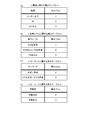
- the first conversion method converts the place name into information of a predetermined area, and In this conversion method, the place name may be converted into information of an area narrower than the predetermined area.
- the second information processing apparatus includes a display unit that displays information, an input unit that inputs voice, and a control unit that displays information related to the voice on the display unit according to the analysis result of the voice. And an information processing apparatus.
- control unit can display information related to the voice on the display unit according to an analysis result of the analysis unit that analyzes the voice print of the voice.
- said control part is good also as displaying the information relevant to the predetermined word contained in the said audio
- control unit can cause the display unit to display information related to the predetermined word according to the frequency of input to the input unit together with the predetermined word.
- a position detection unit that detects position information
- the control unit detects the position when the sound is input among information corresponding to the analysis result of the sound.
- Information corresponding to the position information detected by the unit may be displayed on the display unit.
- the control unit can cause the display unit to display information corresponding to position information within a predetermined range from the position information detected by the position detection unit when the sound is input. .
- the second information processing apparatus of the present invention includes a position detection unit that detects a position, and the control unit changes a display mode on the display unit according to an output of the position detection unit. Also good. In this case, the control unit may not display the information related to the position on the display unit when the position information detected by the position detection information is included in the voice input by the voice input unit. .
- the second information processing apparatus further includes a time detection unit that detects information related to time, and the control unit displays information on the display unit in consideration of information related to time of the time detection unit. It's also good.
- the control unit causes the display unit to display information corresponding to the time detected by the time detection unit when the sound is input, among the information corresponding to the analysis result of the sound. Also good.
- the control unit can cause the display unit to display information input within a predetermined time from the time detected by the time detection unit when the sound is input.
- a portable device including the display unit and the input unit may be provided.
- the control unit when the voice input by the voice input unit includes date information, the control unit displays on the display unit based on the date information. It's also good.
- the second information processing apparatus of the present invention may include a calendar unit that outputs date information, and the control unit may display the display unit based on the date information of the calendar unit.
- the information processing apparatus according to the present invention may further include a text data generation unit that converts voice input by the voice input unit into text data.
- the control unit may convert the specific keyword into a different term and display it on the display unit when the input information includes a specific keyword.
- the control unit determines whether or not to display on the display unit based on whether or not there is a fixed word in the speech and based on the inflection of the speech. It's also good.
- control unit includes a weighting unit that performs weighting based on at least one of the magnitude, frequency, and meaning of the input voice
- voice input unit includes: The display mode of the display unit can be changed based on the input voice and the weight of the weighting unit.
- the weighting unit can specify a person who has emitted the sound by using at least the frequency of the sound, and can perform weighting according to the person.
- the weighting unit may perform weighting according to confidentiality from the meaning of the voice.
- the said control part gives priority to the weighting result of the said weighting part rather than the information regarding the time of the said time detection part, and displays it on the said display part. It is also good.
- the control unit displays on the display unit based on the date information. It's also good.
- the control unit may change the display order of the input information based on the weighting result. Moreover, you may provide the change part which changes the setting of the said weighting part. Furthermore, the control unit may change at least one of a color, a display size, and a display font based on the weighting result.
- the second information processing apparatus of the present invention may include a setting unit that allows the user to set the weighting.
- a third information processing apparatus includes at least one of a voice input unit that inputs voice, a text data generation unit that can convert the input voice into text data, information about the voice, and information about a user.
- a control unit that starts conversion by the text data generation unit according to the information.
- control unit may start conversion by the text data generation unit when the voice input unit inputs a specific frequency.
- the control unit may start conversion by the text data generation unit when the voice input unit inputs a frequency related to a telephone. Further, the control unit can start conversion by the text data generation unit when a frequency of a specific person's voice is input.
- the information processing apparatus includes an obtaining unit that obtains a schedule, and the control unit starts conversion by the text data generating unit according to the schedule obtained by the obtaining unit. can do.
- the control unit can detect the scheduled end time and start conversion by the text data generation unit according to the end time.
- control unit can start conversion by the text data generation unit based on a user's biological information.
- the third information processing apparatus of the present invention can include a biological information input unit that inputs the user's biological information.
- the third information processing apparatus of the present invention further includes a time detection unit that detects time information related to time, and the control unit detects that the time information detected by the time detection unit matches a specific time.
- the conversion by the text data generation unit can be started.
- a position detection unit that detects position information may be provided, and the control unit may prohibit the conversion by the text data generation unit in accordance with the detection result of the position detection unit.
- the portable device of the present invention includes an input unit that performs input, a display unit that displays information related to the input, a detection unit that detects at least one of position information and time information, and the detection unit detects A control unit that restricts display on the display unit according to information.
- the detection unit is a position detection unit that detects position information of the display unit, and the control unit determines that security is not maintained based on an output of the position detection unit.
- the display on the display unit can be restricted.
- control unit may release at least a part of the display restriction on the display unit.
- the detection unit is a time detection unit that detects information related to time
- the control unit determines that security is not maintained based on the output of the time detection unit.
- the display on the display unit can be limited.
- control unit when the control unit determines that security is maintained based on the output of the time detection unit, the control unit may release at least a part of the display restriction on the display unit.
- the input unit may be a voice input unit that inputs voice.
- the control unit can cause the display unit to display information obtained by limiting the input voice.
- the input unit may be a keyboard device that performs input using a keyboard.
- the control unit can cause the display unit to display information obtained by adding restrictions to the information input from the keyboard.
- the first information processing system of the present invention includes the portable device of the present invention and a conversion device that applies display restrictions to at least a part of information input from the portable device.
- a second information processing system includes an input unit for inputting voice, a text data generation unit for generating text data based on the voice input to the input unit, and voice print data of the voice input to the input unit And an erasing unit for erasing the voice in which the text data is generated by the text data generating unit according to the analysis result by the analyzing unit.
- an extraction unit that extracts a predetermined word from the voice input to the input unit, a classification unit that classifies the word extracted by the extraction unit into a first word and a second word, and the first A conversion unit that converts one word by a first conversion method and converts the second word by a second conversion method different from the first conversion method may be provided.
- the analysis unit analyzes whether or not the voice print data is registered user's voice print data, and the erasure unit is based on the analysis unit. Voices other than those registered users may be deleted based on the analysis result.
- the erasure unit may vary the time until erasure is performed after the analysis by the analysis unit between the voice of the registered user and the voice other than the registered user.
- the second information processing system of the present invention may include a warning unit that warns when the text data generation unit cannot generate text data from the voice.
- the text data generation unit includes a reproduction unit that reproduces the sound, and the erasure unit analyzes the sound reproduced by the reproduction unit by the analysis unit It is good also as erasing according to.
- the erasure unit may erase the sound reproduced by the reproduction unit according to the analysis result by the analysis unit after a predetermined time has elapsed since the reproduction.
- a portable portable terminal housing provided with the reproducing unit may be provided.
- the present invention has an effect that it is possible to provide an information processing apparatus that is improved in usability, a portable apparatus and an information processing system that are improved in usability in consideration of security.
- FIG. 2A to FIG. 2D are flowcharts showing a recording process of voice input from the voice input unit. It is a figure which shows voiceprint DB. It is a flowchart regarding the process of audio
- FIG. 15A to FIG. 15D are diagrams showing examples of weight tables. It is a figure which shows keyword recording DB. It is a figure which shows command DB.
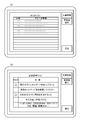
- FIG. 18A is a diagram showing a display example of a task list, and FIG. 18B is a diagram showing a display example of a recorded voice list. It is a flowchart which shows the process (the 1) performed simultaneously in step S96. It is a flowchart which shows the process (the 2) performed simultaneously in step S96.
- step S96 It is a flowchart which shows the process (the 3) performed simultaneously in step S96. It is a figure which shows security possible range DB. It is a figure which shows ambiguous word DB. It is a flowchart which shows the deletion process of the data by the portable terminal side. It is a flowchart which shows the deletion process of the audio
- FIG. 1 A block diagram of a personal assistant system 100 is shown in FIG.
- the personal assistant system 100 includes a portable terminal 10 and a server 50.
- the portable terminal 10 is a terminal that can be carried by a user, such as a mobile phone, a smart phone, a PHS (Personal Handy-phone System), or a PDA (Personal Digital Assistant).
- the size of the portable terminal 10 is, for example, enough to fit into a breast pocket.
- the portable terminal 10 includes an input unit 12, a display unit 14, a playback unit 16, a warning unit 18, a biological information input unit 20, a position detection unit 22, and a time detection unit 24.
- the portable terminal 10 has a portable portable terminal housing that stores at least a part of these components.
- the input unit 12 includes a voice input unit 42 and a text data input unit 44.
- the voice input unit 42 includes a microphone, and acquires the voice of the user and the voice uttered around the user.
- the text data input unit 44 includes an input interface such as a keyboard and a touch panel, and acquires text data corresponding to a user input operation.
- the input unit 12 also has a function of accepting user operation instructions from a touch panel or the like.
- the display unit 14 includes a display such as a liquid crystal display or an organic EL display.
- the display unit 14 displays data such as image data and character data on a display, and displays a menu for a user to perform an operation.
- the playback unit 16 includes a speaker and outputs voice and sound.
- the warning unit 18 gives a warning to the user when an error occurs in the portable terminal 10. For example, the warning unit 18 outputs a warning sound via the playback unit 16 or a warning via the display unit 14. Display and so on.
- the biometric information input unit 20 acquires, for example, at least one of biometric information such as the state of the user's muscles (tension and relaxation) or blood pressure, heart rate, pulse, body temperature, etc., to the terminal-side control unit 30.
- This is a device that inputs data.
- a wristwatch type as described in JP-A-2005-270543 (US Pat. No. 7,538,890) can be adopted.
- the blood pressure and pulse may be detected by a pulse wave detection sensor using infrared rays, and the heart rate may be detected by a vibration sensor.
- the heart rate is higher than normal, it is in a tension state, and when it is reduced, it is in a relaxed state.
- a configuration may be applied in which the pupil is detected to determine whether the pupil is in the tension state or the relaxation state.
- the position detection unit 22 detects a user's position (absolute position), and here, for example, a GPS (Global Positioning System) is adopted.
- a GPS Global Positioning System
- an absolute position measurement system using RFID (Radio ⁇ ⁇ Frequency IDentification) or the like may be employed.
- the time detection unit 24 has a time measuring function for detecting the current time.
- the calendar unit 26 stores a date and a day of the week in association with each other.
- the flash memory 28 is a memory that temporarily stores data.
- the communication unit 32 includes a wireless LAN unit for accessing an access point by WiFi communication, a wired connection unit using an Ethernet (registered trademark) cable, or a USB connection unit for communicating with an external device such as a computer. ing. In the present embodiment, the communication unit 32 can communicate with the communication unit 52 of the server 50.
- the terminal-side control unit 30 performs overall control of the components of the portable terminal 10 and executes processing on the portable terminal 10 side. For example, the terminal-side control unit 30 acquires the time when the voice data is input to the voice input unit 42 via the time detection unit 24 and determines the position of the portable terminal 10 when the voice data is input. Obtained via the position detector 22. Then, when transmitting the voice data to the server 50 side, the terminal-side control unit 30 also transmits time and position information together with the voice data.
- the server 50 is installed in a company where a user who uses the portable terminal 10 works, for example.
- the present invention is not limited to this, and the server 50 may be installed in a system management company.
- the server 50 includes a communication unit 52, a text data generation unit 54, a voice print analysis unit 55, a weighting unit 56, an extraction unit 58, a classification unit 60, a conversion unit 62, A flash memory 64, a hard disk 66, and a server-side control unit 70 are included.
- the communication unit 52 is the same as the communication unit 32 on the portable terminal 10 side, and in this embodiment, communication with the communication unit 32 on the portable terminal 10 side is possible.
- Data (speech data and text data) received by the communication unit 52 is stored in the flash memory 64 via the server-side control unit 70. That is, the communication unit 52 functions as a voice input unit or a text data input unit in the server 50.
- the text data generation unit 54 acquires voice data stored in the flash memory 64, converts the voice data, and generates text data.
- the generated text data is stored in the flash memory 64 via the server side control unit 70.
- the voiceprint analysis unit 55 performs voiceprint analysis by pattern matching with registered voiceprint data using the loudness (strength), frequency, and length of the voice, and identifies the person who produced the voice. is there. In the voiceprint analysis, it is not necessary to use all of the size (intensity), frequency, and length of the voice, and it is also possible to specify the person who has produced the voice by using at least the frequency of the voice.
- the weighting unit 56 acquires voice data stored in the flash memory 64 and text data generated from the voice data, or text data input from the text data input unit 44, and weights each text data.
- the weighting unit 56 stores the numerical value (task priority) obtained by weighting in the flash memory 64 together with the text data.
- the weighting by the weighting unit 56 is performed based on, for example, the size and frequency of speech and the meaning of text data. Specifically, the weighting unit 56 performs weighting based on the result (information indicating who is the person who made the sound) analyzed by the voiceprint analysis unit 55 based on the volume and frequency of the sound, and confidentiality from the meaning of the text data. We perform weighting according to sex. In the present embodiment, confidentiality means a degree of preference that is not seen by others (unspecified third parties).
- the changing unit 72 and the setting unit 74 are connected to the weighting unit 56.
- the changing unit 72 changes the setting related to the weighting of the weighting unit 56
- the setting unit 74 changes the setting related to the weighting of the weighting unit 56 based on a user instruction.
- the setting unit 74 may change the setting based on a user instruction input from an input unit (keyboard or the like) of the server, or may be input from the portable terminal 10 via the communication units 52 and 32.
- the setting may be changed in response to a user instruction input from the unit 12.
- the extraction unit 58 extracts a predetermined word from the text data stored in the flash memory 64. That is, a predetermined word is extracted from information input to the input unit 12 of the portable terminal 10.
- the predetermined word means a word that is preferably not seen by others, that is, a word having a relatively high confidentiality. This word is determined in advance in a keyword DB (see FIG. 7) stored in the hard disk 66. ing.
- the classification unit 60 classifies the words extracted by the extraction unit 58 into words having a high confidentiality level (first word) and words having a slightly high confidentiality level (intermediate) (second word). This classification is performed based on a keyword DB (see FIG. 7) stored in the hard disk 66.
- the conversion unit 62 converts the word having the confidentiality level “high” and the word having the confidentiality level “medium” based on a predetermined rule, and stores the converted word in the flash memory 64.
- the flash memory 64 temporarily stores data to be processed in the server 50.
- An erase unit 76 is connected to the flash memory 64.
- the erasure unit 76 erases voice data and text data stored in the flash memory 64 at a predetermined timing based on an instruction from the server-side control unit 70. The specific timing for erasing data will be described later. Note that other volatile memories may be used instead of the flash memory 64.
- the hard disk 66 stores data such as a database used in various processes. In place of the hard disk 66, other nonvolatile memory may be used.
- the server side control unit 70 performs overall control of each unit in the server 50 and executes processing on the server 50 side.
- the server 50 actually has a CPU (Central Processing Unit), a ROM (Read Only Memory), a RAM (Random Access Memory), etc., and the CPU stores a program stored (installed) in the ROM or the like.
- the functions of the above-described units such as the text data generation unit 54, the weighting unit 56, the extraction unit 58, the classification unit 60, the conversion unit 62, and the voiceprint analysis unit 55 are realized.
- FIGS. 2 (a) to 2 (d) a process for storing the voice input from the voice input unit 42 in the flash memory 64 on the server 50 side will be described with reference to FIGS. 2 (a) to 2 (d).
- the recording process may be performed all the time.
- the recording process shown in FIGS. 2 (a) to 2 (d) is performed.
- the processes at least two processes are performed in parallel or only one process is performed.
- FIG. 2A is a flowchart showing a process of recording only while a certain person is uttering sound. Note that the voice input to the voice input unit 42 is input to the server-side control unit 70 via the communication units 32 and 52.
- step S10 the server-side control unit 70 determines whether or not a voice is input from the voice input unit 42. If the determination here is affirmed, in step S12, under the instruction of the server-side control unit 70, the voiceprint analysis unit 55 performs voiceprint analysis of the input voice.
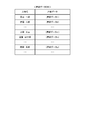
- the voice data included in the voiceprint DB (see FIG. 3) stored in the hard disk 66 and the input voice data are collated (pattern matching) to thereby generate a person who has emitted the input voice. Is identified.
- the voiceprint DB of FIG. 3 a person name and voiceprint data of the person are associated with each other.
- voiceprint data of all employees of the company can be registered in the voiceprint DB.
- each user can individually register voiceprint data of family members, relatives, friends, etc. in the voiceprint DB. This registration is performed from the voice input unit 42 of the portable terminal 10.
- step S14 the server-side control unit 70 determines whether or not a person has been specified in step S12, that is, whether or not the voice of the person registered in the voiceprint DB. If the determination here is affirmed, the server-side control unit 70 starts recording (storage in the flash memory 64) in step S16. Since the recorded voice data is converted into text data by the text data generation unit 54, it can be said that the recording start timing is the text data generation timing. On the other hand, if the determination in step S14 is negative, the process returns to step S10.
- step S14 After the determination in step S14 is affirmed and the process proceeds to step S16, the server-side control unit 70 continues recording until the voice input is interrupted for a predetermined time in step S18. Then, when there is no voice input for a predetermined time, that is, when it is considered that the voice input has ended, the determination in step S18 is affirmed. If the determination in step S18 is positive, the terminal-side control unit 30 ends the recording in step S20 and returns to step S10.
- recording is performed at each timing when a person registered in the voiceprint DB utters a voice.
- the person who determines the recording timing may be managed in a DB different from the voiceprint DB. Thereby, for example, the person who determines the recording timing can be limited to the meeting organizer.
- FIG. 2A the case where recording is started at a timing when a certain person utters based on a voiceprint has been described.
- the present invention is not limited to this, and for example, a frequency related to a telephone (for example, a frequency of a ringtone) ) May be started from the point in time when it is input from the voice input unit 42.
- a frequency related to a telephone for example, a frequency of a ringtone
- FIG. 2B is a flowchart showing a process for performing recording at a pre-registered time. 2B is different from the case of FIG. 2A in that the voice data is transmitted from the communication unit 32 on the portable terminal 10 side to the server 50 side or not. The recording timing is switched.
- step S24 the terminal-side control unit 30 detects the current time via the time detection unit 24.
- step S26 the terminal-side control unit 30 determines whether it is a predetermined recording start time.
- the recording start time may be determined in advance when the portable terminal 10 is shipped, or may be input in advance by the user or the like from the input unit 12.
- the recording start time for example, there are many conversations with people and the amount of information is considered to be large (for example, one hour immediately after entering the company), or the time when concentration is easily interrupted (for example, before and after lunch break) 30 minutes or overtime (after 8 pm, etc.) at which fatigue reaches its peak.
- step S26 When the determination in step S26 is affirmed, the process proceeds to step S28, and the communication unit 32 transmits the voice data input to the voice input unit 42 to the server 50 side under the instruction of the terminal-side control unit 30. start. In this case, the audio data is stored (recorded) in the flash memory 64 via the communication unit 52 and the server-side control unit 70.
- step S30 the terminal side control unit 30 detects the current time via the time detection unit 24.
- step S32 the terminal-side control unit 30 determines whether or not a predetermined recording end time has arrived. If the determination here is affirmed, the process proceeds to step S34. If the determination is denied, the process returns to step S30.
- step S34 the communication unit 32 stops the audio data transmission to the server 50 side under the instruction of the terminal-side control unit 30. Thereby, recording ends. After that, it returns to step S24 and repeats the said process. Thereby, recording can be performed every time the recording start time arrives.
- FIG. 2C is a flowchart showing a process for performing recording at the end of a conference registered in advance.
- the recording timing is switched by switching whether or not the voice data is transmitted from the communication unit 32 to the server 50 side, as in FIG. 2B.
- step S36 the terminal-side control unit 30 detects the current time via the time detection unit 24.
- step S38 the terminal-side control unit 30 extracts a meeting schedule from a task list (to be described later) stored in the flash memory 28, and a predetermined time before the meeting end time (for example, 10 minutes ago). If the determination here is affirmed, in step S40, recording is started in the same manner as in step S28 in FIG.
- the terminal-side control unit 30 detects the current time via the time detection unit 24.
- the terminal-side control unit 30 determines whether or not the conference end time used for the determination in step S38 has come. If the determination here is affirmed, the process proceeds to step S46. If the determination is denied, the process returns to step S42.
- the communication unit 32 stops the audio data transmission to the server 50 side under the instruction of the terminal side control unit 30. After that, it returns to step S36 and repeats the said process. This enables recording at a predetermined time at the end of the conference. The reason for recording at the end of the conference is that the conclusion of the conference is more likely to be announced and the schedule of the next conference is more likely to be announced at the end of the conference.
- recording may be continuously performed during the time when the conference is being performed.
- the presenter or presenter of the conference is registered in the task list, only the voice of the registered presenter or presenter is recorded in combination with the process of FIG. obviously.
- FIG. 2D is a flowchart showing a process of performing recording based on information input from the biological information input unit 20 (here, the user's muscle state (tension and relaxation)). is there. Note that the processing in FIG. 2D is also performed in the same manner as in FIGS. 2B and 2C, by switching whether or not the voice data is transmitted from the communication unit 32 to the server 50 side, thereby recording timing. Is to switch.
- the terminal side control part 30 acquires the state of a user's muscle via the biometric information input part 20 in step S50.
- the terminal-side control unit 30 compares the muscle state with a predetermined threshold value, and determines whether or not a predetermined relaxed state. If the determination here is affirmative, in step S54, recording is started in the same manner as in step S28 in FIG.
- next step S56 when the terminal side control unit 30 acquires the muscle state again, in the next step S58, the terminal side control unit 30 compares the muscle state with a predetermined threshold value. It is determined whether or not the predetermined tension state. If the determination here is affirmed, the process proceeds to step S60. If the determination is denied, the process returns to step S56.
- the communication unit 32 stops the audio data transmission to the server 50 side under the instruction of the terminal-side control unit 30. After that, it returns to step S50 and repeats the said process.
- the degree of tension of the user is determined from the state of the muscles, and the voice of the user in a situation where the user is too relaxed and is not listening to other people's story (for example, a dozing situation). Automatic recording can be performed.
- the voice is recorded only when the person is too relaxed.
- the voice may be recorded when the person is moderately nervous together with or instead of this. good. This is because there is a high possibility that an important story is given when the person is moderately nervous.
- the outputs of the perspiration sensor and the pressure sensor are transmitted to the terminal-side control unit 30, and the terminal-side control unit 30 starts recording by the voice input unit 42 when it is determined that the user is in a tension state or a relaxation state. May be.
- a sweating sensor As a sweat sensor, it is only necessary to provide a plurality of electrodes and measure the impedance of the hand. Mental sweating such as emotion, excitement, and tension has a small amount of sweating and a short sweating time, so a sweating sensor may be provided on the handset corresponding to the palm side of the middle hand where the amount of sweating is greater than that of a finger.
- any of a capacitance type, a strain gauge, and an electrostrictive element may be used.
- a pressure that is 10% or more higher than the pressure at which the user normally grips the handset it is determined that the tension state is present. You just have to do it.
- At least one of the perspiration sensor and the pressure sensor may be provided in the portable terminal 10 or may be provided in a mobile phone or the like.
- the recording prohibition position for example, a company other than the company where the user works can be employed.
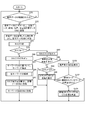
- FIG. 4 is a flowchart relating to processing of audio data.
- the server-side control unit 70 determines whether audio data has been recorded in the flash memory 64. If the determination here is affirmed, the process proceeds to step S72, and the text data generation unit 54 converts the voice data into text under the instruction of the server-side control unit 70. In this case, the audio data is converted into text every time a predetermined time is interrupted.
- the server-side control unit 70 also converts the voice data into text (text data), the time when the voice data is input to the voice input unit 42, the position where the voice data is input, and the voice level of the voice data. Is registered in the storage data DB (FIG. 5) in the flash memory 64. Note that the time and position information registered here is transmitted from the communication unit 32 together with the audio data as described above.
- step S74 the voiceprint analysis unit 55 specifies a person who has made voice analysis by voiceprint analysis under the instruction of the server-side control unit 70, and registers it in the storage data DB.
- the content of step S12 may be registered in the storage data DB without performing step S74.
- FIG. 5 shows the data structure of the storage data DB.
- the storage data DB stores the time, position, text data, voiced person, voice level, task flag, and task priority described above. The items of task flag and task priority will be described later.
- a task determination subroutine is executed.
- the processing of FIG. 6 is executed.
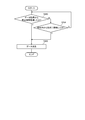
- the server-side control unit 70 determines whether the date and time is included in the text data.
- the date and time includes not only a specific date and time of what year, month, day, but also date and time such as tomorrow, the day after tomorrow, morning, and afternoon. If the determination here is affirmed, the process proceeds to step S78 in FIG. 4 after it is determined as a task in step S114. If the determination is negative, the process proceeds to step S112.
- step S112 the server-side control unit 70 determines whether or not a specific word is included in the text data.
- a specific word is a word related to a task, for example, “to do”, “please do”, “do” (or “shiro”, “do”), “do” (or “do”) ) "," I will ",” I am planning ".
- This specific word may be stored as a table in the hard disk 66 in advance when the apparatus is shipped, or may be added by the user as needed. If the determination in step S112 is affirmative, the process proceeds to step S78 in FIG. 4 after it is determined as a task in step S114. On the other hand, if the determination in step S112 is negative, after determining that the task is not a task in step S116, the process proceeds to step S78 in FIG.
- step S ⁇ b> 78 the server-side control unit 70 determines whether it is determined as a task as a result of the processing in FIG. 6.
- processing when the determination in step S78 is affirmed and when it is denied will be described.
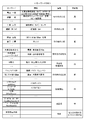
- step S78 determines whether the keyword DB is associated with detailed information, attributes, and confidentiality levels of the keywords. Therefore, the extraction unit 58 pays attention to the keyword item in the keyword DB, and extracts the keyword registered in the keyword DB from the text data.
- the extraction unit 58 extracts “Cool Blue Speaker 2”, “Software”, “Specification”, “Dai Tokyo Co.”, and “Ichiro Aoyama” registered in the keyword DB of FIG. 7 as keywords. .
- keywords may be registered with attributes such as patent information, budget information, and business negotiation information in addition to attributes such as personal names, company names, and technical terms.
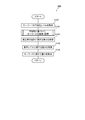
- FIG. 8 is a flowchart showing specific processing of the analysis subroutine in step S84.
- step S120 the classification unit 60 acquires the level of confidentiality of the keyword from the keyword DB under the instruction of the server-side control unit 70. Specifically, the classification unit 60 acquires “medium” as the confidentiality level of “cool blue speaker 2” from the keyword DB, acquires “medium” as the confidentiality level of “software”, and sets “specification”. Obtain “Medium” as the confidentiality level, “High” as the confidentiality level of “Dai Tokyo Co., Ltd.”, and “High” as the level of “Ichiro Aoyama”.
- step S122 the conversion unit 62 converts the keyword based on the confidentiality acquired in step S120 under the instruction of the server-side control unit 70, and stores the converted keyword in the flash memory 64. Execute.
- FIG. 9 is a flowchart showing specific processing of the subroutine of step S122.
- the conversion unit 62 first selects one keyword from the keywords extracted by the extraction unit 58 in step S138.
- step S140 the conversion unit 62 determines whether or not the confidentiality level of the selected keyword is “high”. As described above, since “Great Tokyo Co., Ltd.” has the confidentiality level “High”, the determination here is affirmed, and the process proceeds to Step S142.
- step S142 the conversion unit 62 executes a subroutine for converting keywords according to confidentiality. Specifically, the process is executed according to the flowchart shown in FIG.
- the conversion unit 62 determines whether or not a specific conversion word is included in the selected keyword.
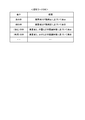
- the specific conversion word is, for example, a word that is frequently used for a company name as defined in the specific conversion word DB of FIG. 11 (corporation, limited company, (stock), (present), etc.) Also, it means words that are frequently used in institutions such as countries (mechanisms, ceremonies, agencies, etc.) and words that are frequently used in educational institutions (universities, high schools, etc.).
- step S162 the conversion unit 62 converts the specific conversion word based on the specific conversion word DB. In this case, the part of “Corporation” in “Dai Tokyo Co., Ltd.” is converted to “Company”.
- step S164 a conversion subroutine other than the specific conversion word is executed.
- FIG. 12 is a flowchart showing specific processing of the conversion subroutine of step S164.
- the conversion unit 62 determines whether the conversion target portion (portion other than the specific conversion word) is a place name.
- the conversion target portion “Daito Tokyo” includes the place name, it is not the place name itself, so the determination is denied and the process proceeds to step S194.
- step S194 the conversion unit 62 determines whether the conversion target part is a name. Here, since it is not a name, judgment is denied and it transfers to step S198.
- step S198 the conversion unit 62 initially converts the conversion target portion “DaiTokyo” to “D”. When the process of step S198 ends, the process proceeds to step S165 of FIG.
- step S165 the conversion unit 62 combines the words after the conversion in steps S162 and S164. Specifically, “D” and “Company” are combined into “D Company”.
- step S168 the conversion unit 62 determines whether information is attached to the conversion target keyword “Dai Tokyo Co., Ltd.”.
- the fact that the information is attached means a case where information is input in the information column of the keyword DB in FIG.
- step S168 the determination in step S168 is affirmed and the process proceeds to step S170.
- step S170 the conversion unit 62 selects one piece of information that has not yet been selected from the accompanying information.
- step S172 the conversion unit 62 determines whether or not the confidentiality level of the selected information (for example, “electric machine”) is “high” or “medium”. Here, if the “electricity” has a confidentiality level of “low”, the determination in step S172 is negative, and the process proceeds to step S182.
- step S182 the conversion unit 62 determines whether all information has been selected. Here, since “Shinagawa-ku, Tokyo” is not yet selected, the determination is denied and the process returns to step S170.
- step S172 the conversion unit 62 selects unselected information “Shinagawa-ku, Tokyo” in step S170, and whether or not the confidentiality level of “Shinagawa-ku, Tokyo” is “high” or “medium” in step S172. Determine whether.
- the place name is defined as “low” or according to the confidentiality level of the accompanying keyword, so “Shinagawa Ward, Tokyo” ”, The confidentiality level is“ high ”. Therefore, the determination in step S172 is affirmed, and the process proceeds to step S174.
- step S174 the conversion unit 62 determines whether or not a specific conversion word is included in “Shinagawa-ku, Tokyo”. If the determination is negative, the process proceeds to step S180, and a conversion subroutine for converting information is executed.
- the conversion subroutine in step S180 is basically the same processing as in step S164 described above (FIG. 12).
- the conversion unit 62 determines whether “Shinagawa-ku, Tokyo” is the place name in step S190. If the determination here is affirmed, in step S192, the conversion unit 62 executes conversion processing based on the place name DB shown in FIG. Specifically, the conversion unit 62 converts “Shinagawa-ku, Tokyo” to “Southern Kanto” by converting it with a conversion method having a confidentiality level of “high”.
- the place name DB of FIG. 13 when the confidentiality level is “high”, the place name is expressed as a position in a relatively wide area, and when the confidentiality level is “medium”, the place name is displayed. Is expressed as a position in a narrower area than when the confidentiality level is “high”.
- step S192 After the process of step S192 is complete
- step S182 since all information (electrical equipment, Shinagawa-ku, Tokyo) has already been selected, the determination in step S182 is affirmed and the process proceeds to step S184.
- step S184 the conversion unit 62 associates the converted information with the converted keyword (step S165 or S166). Here, “Company D (Electric machinery, southern Kanto)”. Thereafter, the process proceeds to step S144 in FIG.
- the converted keyword is stored in the area A of the keyword storage DB (see FIG. 14) stored in the flash memory 64.
- the keyword storage DB includes storage areas for areas O, B, and C in addition to area A.
- raw keyword data keyword before conversion
- the process proceeds to step S154, and it is determined whether or not all the keywords extracted by the extraction unit 58 have been selected. If the determination here is negative, the process returns to step S138.
- step S138 the conversion unit 62 selects “Cool Blue Speaker 2” as a keyword in step S138 will be described.
- the keyword is “cool blue speaker 2” and the confidentiality level is “medium”
- the determination in step S140 is denied, and the determination in step S146 is affirmed, and the process proceeds to step S148. .
- step S148 a subroutine for converting keywords according to confidentiality is executed. Specifically, as in step S142, the processing in FIG. 10 is executed.
- step S160 the conversion unit 62 determines whether or not the “cool blue speaker 2” includes the specific conversion word. However, since the determination here is negative, the conversion unit 62 determines in step S166. Migrate and execute the conversion subroutine.
- step S166 the processing of FIG. 12 is executed in the same manner as steps S164 and S180 described above.
- the conversion unit 62 performs initial conversion in step S198.
- the English notation “Cool Blue Speaker2” written together with “Cool Blue Speaker 2 (Japanese notation)” is converted into “CBS2” by initial conversion (upper case part is converted to initial).
- step S150 the converted keyword is stored in area B of flash memory 64 shown in FIG. That is, the conversion unit 62 stores the keyword itself in the region O and stores “CBS2” in the region B corresponding to the keyword.
- step S154 it is determined whether or not all the keywords extracted by the extraction unit 58 have been selected. If the determination here is negative, the process returns to step S138 again.
- step S138 a case where the conversion unit 62 selects the keyword “Ichiro Aoyama” in step S138 will be described.
- the confidentiality level of “Ichiro Aoyama” is “high”
- the determination in step S140 is affirmed and the process proceeds to step S142.
- step S142 the process of FIG. 10 is executed as described above.
- step S160 is denied and the process proceeds to step S166 (process of FIG. 12).
- step S190 of FIG. 12 the determination is denied and the process proceeds to step S194.
- step S194 the conversion unit 62 determines whether “Ichiro Aoyama” is the name. And if judgment here is affirmed, it will transfer to step S196.
- step S194 it is determined that “Ichiro Aoyama” is the name because the attribute of “Ichiro Aoyama” in the keyword DB of FIG. 7 is the name of the supplier.
- step S196 the conversion unit 62 initially converts “Ichiro Aoyama”.
- step S196 if the confidentiality level of the keyword is “high”, both the name and the name are initially converted. That is, “Aoyama Ichiro” is converted to “AI”.
- the confidentiality level of the keyword is “medium” as “Saburo Ueda (Ueda ⁇ ⁇ ⁇ ⁇ Saburo)” registered in the keyword DB of FIG. 7, only the name is initially converted. That is, “Ueda Saburo” is initially converted to “Ueda S”. In addition, only Mr. may be converted into "U Saburo" by initial conversion.
- step S168 the process proceeds to step S168 in FIG.
- the keyword “Ichiro Aoyama” is accompanied by “Dai Tokyo Co., Ltd., Camera AF Motor, October 15, 2009 Patent Workshop (Tokyo)” as information, so step S168.
- This determination is affirmed, and the routine goes to Step S170.
- step S170 for example, the information “Dai Tokyo Co., Ltd.” is selected. Since “Great Tokyo Co., Ltd.” has the confidentiality level “High” as described above, the determination in Step S172 is affirmed and the process proceeds to Step S174.
- Step S174 determination in step S174 is affirmed, conversion of the specific conversion word (step S176), and conversion other than the specific conversion word (Step S178) is executed. Steps S176 and S178 are the same as steps S162 and S164 described above. If the determination in step S182 is negative, the process returns to step S170.
- step S170 to step S182 are repeated until all information has been selected.
- step S184 the converted information is associated with the converted keyword. Here, for example, it is associated with “AI (camera, AFM, October 15, 2009 T meeting (Tokyo))”. Then, when the storage in the area A is completed in step S144 in FIG. 9, the process proceeds to step S154, and it is determined whether or not all the keywords extracted by the extraction unit 58 have been selected. If the determination here is negative, the process returns to step S138 again.
- step S146 of FIG. 9 determines whether the confidentiality level of the keyword is “low” or not. If the determination in step S146 of FIG. 9 is negative, that is, if the confidentiality level of the keyword is “low”, the keyword is left as it is in region C (and region C) in step S152. O).
- the information is also stored in the area C. For example, as shown in FIG. 14, in the case of the keyword “SBS Company”, the area C is stored as “SBS Machine Kunststoff, Germany”.
- step S138 for example, if the keyword selected in step S138 is “software”, the software is initially converted to “SW” and the information ⁇ sponge> shown in FIG. 7 is converted. Without associating with SW.
- the notation ⁇ xx> means that the word is handled on an equal basis with the keyword. That is, it means that either “software” or “sponge” is used. Therefore, when the above process is performed on the keyword “software”, “SW” and “sponge” are stored in the area B of the flash memory 64 on an equal basis. The use of “SW” and “sponge” will be described later.
- step S154 in FIG. 9 the process proceeds to step S124 in FIG.
- step S124 the server-side control unit 70 acquires a weight related to the attribute of the speaker.
- the weight (Tw) is acquired from the position of the speaker based on the weight table regarding the attribute shown in FIG. For example, when the speaker is Saburo Ueda in FIG. 7, “2” of the manager (M) is acquired as the weight (Tw).
- step S126 the server-side control unit 70 acquires a weight related to the sound level.
- the server-side control unit 70 obtains the weight (Vw) based on the weight table relating to the sound level shown in FIG. 15B and the sound level stored in the storage data DB (see FIG. 5). To do. As shown in FIG. 5, when the audio level is 70 db, the weight (Vw) is 3. The reason why the weight (Vw) is larger as the voice level is larger is that the greater the voice level, the stronger the request and the higher the importance.
- the server-side control unit 70 acquires a weight related to the keyword.
- the server-side control unit 70 acquires the weight (Kw) based on the weight table related to the keyword shown in FIG. 15C and the keyword included in the text data of the storage data DB.
- the weight (Kw) is 2 Or 3 is acquired.
- the server-side control unit 70 determines how many keywords with a confidentiality level “high” and keywords with a confidentiality level “medium” are included in the text data, and the determination result.
- step S86 the server-side control unit 70 calculates the task priority (Tp) and registers it in the storage data DB (FIG. 5). Specifically, the server-side control unit 70 calculates the task priority (Tp) using the following equation (1).
- Tp Uvw ⁇ Vw + Utw ⁇ Tw + Ufw ⁇ Fw + Ukw ⁇ Kw + Ucw ⁇ Cw (1)
- Uvw, Utw, Ufw, Ukw, and Ucw in the above equation (1) are weighting factors that take into account the importance of each weight (Vw, Tw, Fw, Kw, Cw). Can be set via the setting unit 74.
- the process proceeds to step S88 in FIG. 4, and the server-side control unit 70 registers the keywords included in the text data in the keyword recording DB shown in FIG.
- the keyword record DB of FIG. 16 is created, for example, in units of one week, one month, or one year.
- the number of times the registered keyword is associated with the related information is recorded as the degree of association.
- the number of times the registered keyword is issued is recorded as the appearance frequency. Note that the search frequency item in the keyword record DB in FIG. 16 will be described later.
- step S88 After the process of step S88 is completed, it returns to step S70.
- step S78 determines whether or not the speaker is the user himself / herself. If the determination here is affirmed, the process proceeds to step S94, and it is determined whether or not the word issued by the user is a command.
- the word “task list” is a command for displaying a task list
- the word “voice recording text” is a command for displaying a voice recording list.
- the word “conversion” is a command for conversion processing. It is assumed that this command DB is stored in the flash memory 28 on the portable terminal 10 side or the hard disk 66 on the server 50 side. In this command DB, for example, when a user's voice is a “task list”, it is defined that a task list as shown in FIG. Details of the task list will be described later. Further, the command DB defines that when the user's voice is a “voice recording list”, a voice recording list as shown in FIG. 18B is displayed. Details of the voice recording list will be described later.
- step S94 determines that the command A subroutine that executes processing according to the above is executed. Specifically, the processes of FIGS. 19, 20, and 21 are executed concurrently.
- step S202 the server-side control unit 70 determines whether or not the command is a display request.
- commands such as “task list” and “voice recording list” correspond to the display request.
- step S204 the server-side control unit 70 extracts data necessary for performing display according to the command from the flash memory 64.
- the command is “task list”
- text data to be displayed in the task list text data with the task flag in FIG. 5 turned on
- the text data in which the task flag is turned on includes not only text data converted from voice data but also text data directly input from the text data input unit 44. Note that the task flag of the text data that is directly input is turned on / off by the same process as in FIG.
- step S206 the server-side control unit 70 acquires the current position of the user.
- the position information detected by the position detection unit 22 included in the portable terminal 10 is acquired via the terminal-side control unit 30, the communication units 32 and 52, and the like.
- step S208 the server-side control unit 70 determines whether it is a place where security can be ensured based on the acquired position information (current position).
- a place where security can be ensured for example, the inside of a company can be mentioned. Registration of the company location is performed by the following method.
- the user connects the portable terminal 10 to a PC (Personal Computer) via USB or the like, and activates a dedicated application using map information on the PC. Then, the location of the company is registered with the application by designating the location of the company. The location is specified by a drawing operation using a mouse or the like.
- the position of this company is represented as an area of a predetermined area. Accordingly, the company position can be represented by two diagonal points (latitude and longitude) of a rectangular area as shown in the security assured range DB of FIG. 22 is stored in the hard disk 66 of the server-side control unit 70.
- step S208 the server-side control unit 70 refers to the security assured range DB in FIG. 22 and is located in a place where security can be ensured when the user is within the range. To be judged.
- step S210 the server-side control unit 70 acquires a conversion word associated with the keyword included in the extracted data from the regions O, A, B, and C, and proceeds to step S214.
- step S212 the server-side control unit 70 acquires a conversion word associated with the keyword included in the extracted data from the areas A and B, and proceeds to step S214.
- step S214 the server-side control unit 214 transmits the extracted data and the conversion word associated with the keyword to the portable terminal 10 via the communication unit 52.
- step S202 determines whether the command is a command other than a display request. If the determination in step S202 is negative, that is, if the command is a command other than a display request, the server-side control unit 70 performs processing according to the command in step S216.
- step S220 of FIG. 20 the terminal-side control unit 30 determines whether data has been transmitted from the server side. In this step, the determination is affirmed after step S214 of FIG. 19 is executed.
- step S221 the terminal-side control unit 30 determines whether or not the conversion words in the areas A, B, and C have been transmitted.
- the determination is affirmed when step S210 in FIG. 19 is passed, and the determination is denied when step S212 is passed.
- step S222 the terminal-side control unit 30 converts the keywords included in the extracted data with the conversion words of the regions A, B, and C. That is, for example, the extracted data is “At 13:00 on November 20th, we will have a meeting with Ichiro Aoyama of Dai Tokyo Co., Ltd. regarding the software specifications of Cool Blue Speaker 2.” Suppose that In this case, using the conversion words of regions A, B, and C, “At 13:00 on November 20th, we will have a meeting with AI (Camera, AFM, T-Meeting, Tokyo, October 15, 2009) from Company D (Electricity, Southern Kanto) about SWSP of CBS2.” Is converted.
- step S223 the terminal-side control unit 30 converts the extracted data with the conversion word of the region B and deletes the word of the region A.
- the extracted data is “Scheduled meeting with Nosan about CBS2 SWSP at 13:00 on November 20” Is converted.
- the data display mode is changed depending on whether security is ensured.
- step S224 the terminal-side control unit 30 displays the converted text data at a predetermined position on the display unit 14.
- the task time (date and time) may be simply displayed in order from the current time (date and time), but in this embodiment, the task priority is displayed in descending order instead. .
- the terminal-side control unit 30 may issue a warning via the warning unit 18, or a person related to a schedule with a lower priority is included in the task.
- the terminal-side control unit 30 may automatically request the person to change the task schedule request by e-mail.
- the display is not limited to the order in which the task priority is high as described above. Further, it may be displayed in order of date and time so that the font, color, size, etc. of the task with high task priority are changed and displayed prominently. In addition, the tasks having the same task priority may be displayed in order of date and time after being arranged in the order of higher task priority.
- the screen display as shown in FIGS. 18A and 18B is performed by the processing of FIGS.
- a task item is provided in the recorded voice list of FIG.
- the user can switch the task flag on and off by touching the item of the task on the touch panel.
- the server-side control unit 70 changes the task flag in FIG. 5 when recognizing the task flag switching operation by the user.
- the server-side control unit 70 may automatically turn on the task flag for text data similar to the text data of the task thereafter.
- the terminal-side control unit 30 transmits the current position acquired by the position detection unit 22 to the server-side control unit 70 side, and uses the conversion word transmitted from the server-side control unit 70.
- the text data is converted and displayed. Therefore, in the present embodiment, it can be said that the terminal-side control unit 30 restricts display on the display unit 14 according to the current position acquired by the position detection unit 22.
- step S232 the terminal-side control unit 30 determines whether or not the document conversion button has been pressed by the user.
- the document conversion button is a button displayed at the upper right end in FIGS. 18A and 18B. The user presses the document conversion button by a touch panel operation, a keyboard operation, or the like. If the determination in step S232 is affirmed, the process proceeds to step S234. If the determination is negative, the process proceeds to step S238.
- step S234 the terminal-side control unit 30 determines whether or not a convertible keyword is displayed.
- the convertible keyword means a keyword in which a plurality of conversion words are associated with one keyword, such as “SW” and “sponge” shown in FIG. Accordingly, when such keywords are included in the text data displayed on the display unit 14, the determination here is affirmed, and the process proceeds to step S236. On the other hand, if the determination in step S234 is negative, the process proceeds to step S238.
- the terminal-side control unit 30 converts the keyword. Specifically, for example, “At 13:00 on November 20th, we will have a meeting with AI (Camera, AFM, T-Meeting, Tokyo, October 15, 2009) from Company D (Electricity, Southern Kanto) about SWSP of CBS2.” Can be converted into “sponge”, the terminal-side control unit 30 “At 13:00 on November 20, CBS2 sponge SP is scheduled to be discussed with AI (Camera, AFM, October 15, 2009 T meeting (Tokyo)) of Company D (Denki, South Kanto)” And converted and displayed.
- AI Cera, AFM, T-Meeting, Tokyo, October 15, 2009
- CBS2 sponge SP is scheduled to be discussed with AI (Camera, AFM, October 15, 2009 T meeting (Tokyo)) of Company D (Denki, South Kanto)” And converted and displayed.
- step S2308 the terminal-side control unit 30 determines whether or not the pre-conversion display button (see FIGS. 18A and 18B) has been pressed.
- the case where the user presses the pre-conversion display button is when the user wants to see a sentence in which the keyword is not converted. If the determination is negative, the process returns to step S232. If the determination is positive, the process proceeds to step S240.
- step S240 the terminal-side control unit 30 acquires the current position of the user.
- step S242 the terminal-side control unit 30 determines whether the current position is a place where security can be ensured.
- step S252 display on the display unit 14, a warning via the warning unit 18, or the like can be employed.
- step S242 If the determination in step S242 is affirmed, the process proceeds to step S244, and the terminal-side control unit 30 displays a question item (a question that can be easily answered by a user) on the display unit 14.
- the question items are assumed to be stored in the hard disk 66 on the server 50 side, and the terminal-side control unit 30 reads the question items from the hard disk 66 and displays them on the display unit 14. For example, the user may register the questions and answer examples in advance.
- step S246 the terminal-side control unit 30 determines whether or not the user has input an answer to the input unit 12 by voice. If the determination here is affirmed, in step S248, the terminal-side control unit 30 determines whether or not it is the voice of the user and the answer is correct. Whether or not the voice is a user's voice is determined by using the result of analyzing the voice in the voice print analyzing unit 55 on the server 50 side. If the determination is negative, in step S252, the user is notified that display is impossible. On the other hand, if the determination in step S248 is affirmed, the process proceeds to step S250, and the keyword is converted into a pre-conversion state with the conversion word in region O and displayed.
- the sentence as it is input by voice that is, in the above example, “At 13:00 on November 20th, we will have a meeting with Ichiro Aoyama of Dai Tokyo Co., Ltd. regarding the software specifications of Cool Blue Speaker 2.” Is displayed. Thereafter, the process proceeds to step S232, and the above process is repeated.
- the terminal-side control unit 30 may determine whether to display the state before conversion based on the result of biometric authentication such as fingerprint authentication in addition to the answer to the question.
- step S96 in FIG. 4 the process returns to step S70.
- step S92 of FIG. 4 determines whether the speaker is a user. If the determination in step S92 of FIG. 4 is negative, that is, if the speaker is not a user, the process proceeds to step S100, and the terminal-side control unit 30 displays the speaker information.
- the terminal-side control unit 30 performs display based on the information received from the server-side control unit 70. Specifically, if the speaker is Ichiro Aoyama, the terminal side control unit 30 receives the information from the server side control unit 70 and displays “Ichiro Aoyama”. In addition, when the information incidental to Ichiro Aoyama is received, the information may be displayed. Further, when a task related to Ichiro Aoyama is received from the server-side control unit 70, the task may be displayed together.
- step S102 the server-side control unit 70 determines whether or not a word registered in the ambiguous word DB shown in FIG. If the determination is negative, the process returns to step S70, but if the determination is affirmative, the process proceeds to step S104.
- step S104 the server-side control unit 70 and the terminal-side control unit 30 execute processing corresponding to the spoken word based on the ambiguous word DB of FIG. Specifically, when “that case” or “example case” is stated, the server-side control unit 70 refers to the keyword record DB, and the speaker appears among the keywords included in the related information. A keyword having a frequency higher than a predetermined threshold is extracted and transmitted to the terminal-side control unit 30. Then, the terminal side control unit 30 displays the received keyword on the display unit 14. For example, when the speaker is the manager Yamaguchi and the appearance frequency threshold is 10, the keyword “project A” in the keyword record DB of FIG. 16 is displayed on the display unit 14. Further, as shown in FIG.
- the date and time when the speaker is included in the related information and the voice data is entered is ⁇
- the keyword or speaker that matches the day (MM / DD) is included in the related information, and the word “ ⁇ month ⁇ day (MM / DD)” is included in the related information
- the keywords are extracted and displayed on the display unit 14. Furthermore, there is a case where it can be easily estimated from a keyword record DB in FIG. 16 that a person speaks at a certain time (date and time). In such a case, related keywords may be displayed from the speaker and the current time.
- step S104 even if the speaker has asked an ambiguous question by executing the processing as described above, the question is automatically judged and displayed to the user. It becomes possible.
- step S104 each time a keyword is displayed, the server-side control unit 70 updates the keyword record DB search frequency. This search frequency can be used, for example, when a keyword with a higher search frequency is preferentially displayed.
- FIG. 24 is a flowchart showing processing for deleting information acquired by the portable terminal 10 from the server 50 side.
- the terminal-side control unit 30 determines whether or not a certain time (for example, 2 to 3 hours) has elapsed since data acquisition. If the determination here is affirmative, the process proceeds to step S262, and the terminal-side control unit 30 erases the text data (including the word before conversion and the word after conversion) stored in the flash memory 28. To do. On the other hand, even if the determination in step S260 is negative, the terminal-side control unit 30 determines whether or not the user has moved from the company to the outside in step S264.
- a certain time for example, 2 to 3 hours
- step S262 If the determination here is affirmed, the process proceeds to step S262, and data is erased in the same manner as described above. If the determination in step S264 is negative, the process returns to step S260.
- step S264 As described above, when a predetermined time elapses after data is acquired or when security cannot be ensured, leakage of important data can be prevented by deleting the data. In the above description, the case of deleting all of the text data has been described. However, the present invention is not limited to this, and only the most important data may be deleted in step S262. For example, only the data in the area A and the data in the area O may be erased.
- the converted data may be erased from the flash memory 28 immediately after being displayed on the display unit 14. .
- the server-side control unit 70 executes the erasure process of FIG. 25 for each audio data.
- the server-side control unit 70 determines whether or not the text data generation unit 54 has converted (successfully) the speech data into text data in step S270 of FIG. If the determination is negative, the process proceeds to step S280. If the determination is positive, the process proceeds to step S272, and the server-side control unit 70 acquires the name of the person who uttered the voice data. To do.
- the server-side control unit 70 acquires the name of the person who uttered from the voiceprint analysis unit 55, and proceeds to step S274.
- step S274 the server-side control unit 70 determines whether or not the uttered person is other than the user himself / herself. If the determination here is affirmed, the server-side control unit 70 deletes the voice data converted into the text data in step S276. On the other hand, if the determination in step S274 is negative, that is, if it is the user's own voice data, the process proceeds to step S278, where the voice data is deleted after a predetermined time has elapsed, and all the processes in FIG. To do.
- step S280 the server-side control unit 70 enables the audio data to be reproduced. Specifically, the server-side control unit 70 transmits audio data to the flash memory 28 of the portable terminal 10.
- step S280 the user is warned via the warning unit 18 that the voice data could not be converted into text data. Based on this warning, when the user inputs an instruction to reproduce audio data from the input unit 12 of the portable terminal 10, the audio data stored in the flash memory 28 is reproduced via the reproduction unit 16.
- step S282 the server-side control unit 70 deletes the audio data transmitted to the flash memory 28 (that is, the audio data reproduced by the reproducing unit 16), and the entire processing in FIG.
- the storage amount of the audio data in the server 50 can be reduced, so that the storage capacity of the flash memory 64 of the server 50 can be reduced.
- the server-side control unit 70 deletes the task according to the following rules. (1) When the task is related to a meeting outside the company In this case, the current position detected by the position detection unit 22 matches the meeting holding location specified by the task, and the current time detected by the time detection unit 24 When the meeting start time specified by the task has passed, the task is deleted. When the current time has passed the conference start time, but the current position does not match the conference location, the server-side control unit 70 receives the warning from the warning unit 18 via the terminal-side control unit 30. Alert the user. Thereby, it is possible to suppress forgetting to execute the task.
- the present invention is not limited to this, and for example, a warning may be issued before a predetermined time (30 minutes before the task). Thereby, it is possible to prevent forgetting to execute the task.
- a position detection unit that can detect that the user has entered the conference room, such as RFID, is adopted as the position detection unit 22.
- the task is deleted when the current position detected by is coincident with the conference room specified by the task, and the current time detected by the time detection unit 24 has passed the conference start time specified by the task.
- a warning can be used together as in (1) above.
- the task is related to shopping and the place to shop is specified In this case, the current position detected by the position detector 22 matches the place specified by the task, and “Thank you.
- the task is erased when a voice such as “It was received” is input from the voice input unit 42 or purchase information is input from the POS cash register terminal to the input unit 12 by radio or the like.
- the task may be deleted at the stage where payment is completed by the function.
- the time is specified in the task In this case, the task is deleted when the current time detected by the time detection unit 24 has passed the implementation time specified in the task.
- the communication unit 52 to which information is input the extraction unit 58 that extracts a predetermined keyword from the data input to the communication unit 52, and the keyword extracted by the extraction unit 58
- a classification unit 60 that classifies keywords with a confidentiality level of “high” and keywords with a confidentiality level of “medium”, and converts a keyword with a confidentiality level of “high” by a predetermined conversion method.
- a conversion unit 62 that converts a keyword of “medium” by a conversion method different from that of a keyword of “high” confidentiality level. In this way, by classifying keywords according to the confidentiality level and performing different conversions according to the respective levels, it is possible to display data in consideration of the confidentiality level. Thereby, usability can be improved.
- the communication part 52 which communicates with the portable terminal 10 transmits the result converted by the conversion part 62 to the portable terminal 10, even if it does not process a data in the portable terminal 10, It is possible to display data that considers the level of confidentiality.
- the text data generation unit 54 that generates text data from voice data is provided, and the extraction unit 58 extracts keywords from the text data generated by the text data generation unit 54. Keywords can be easily extracted.
- each keyword can be easily converted without creating a special conversion table for each keyword.
- the keyword is a full name
- the confidentiality level is “High”
- both the full name and the name are converted to initials
- the confidentiality level is “Medium”
- either the full name or the first name is converted to the initial. Therefore, display according to the confidentiality level can be performed.
- the keyword is a place name
- the confidentiality level is “high”
- it is converted into information of a predetermined area (position information within a wide range)
- the confidentiality level is “medium” Since the information is converted into information of an area narrower than the area (position information within a narrow range), display according to the confidentiality level can also be performed from this point.
- the position detection unit 22 that detects position information
- the input unit 12 that performs input
- the display unit 14 that displays information related to input
- the position detected by the position detection unit 22 are used.
- a terminal-side control unit 30 that restricts display on the display unit 14. In this way, by limiting the display according to the position, it is possible to perform display in consideration of security, and as a result, it is possible to improve usability.
- the personal assistant system 100 performs the display restriction in consideration of security as described above, and the server 50 that applies the display restriction to at least part of the data input from the portable terminal 10. Therefore, the mobile terminal 10 can display data with display restrictions on the display unit 14 of the portable terminal 10 without applying display restrictions to at least a part of the data. . As a result, the processing burden on the portable terminal 10 can be reduced, and as a result, the portable terminal 10 can be simplified, reduced in size and weight, and the like.
- the display part 14 which displays text data
- voice input part 42 which inputs an audio
- the terminal side control which displays the information relevant to the said audio
- the terminal-side control unit 30 and the server-side control unit 70 determine whether a predetermined word (for example, “that case” or “Hokkaido case” included in the voice data according to the analysis result of the voice print analysis unit 55. ) Etc.) is displayed on the display unit 14, so even if an ambiguous question such as “That case” or “Hokkaido case” is made, by confirming the display unit 14, Can be remembered.
- a predetermined word for example, “that case” or “Hokkaido case” included in the voice data according to the analysis result of the voice print analysis unit 55. ) Etc.
- information related to a predetermined word (such as “Hokkaido”) is selected according to the frequency of input to the input unit together with the predetermined word (for example, “Hokkaido”), Since it displays on the display part 14 (step S104 of FIG. 4), appropriate information display becomes possible.
- step S104 of FIG. 4 since information corresponding to the position when the voice data is input is displayed on the display unit 14, it is possible to display appropriate information from this point.
- step S104 in FIG. 4 information corresponding to the time when the voice data is input (such as information input within a predetermined time from the time when the voice data is input) is displayed on the display unit 14. Therefore, appropriate information can be displayed from this point.
- the input unit 42 for inputting voice the text data generating unit 54 for generating text data based on the voice data input to the input unit 42, and the voiceprint data of the voice data input to the input unit 42
- the storage capacity required for the flash memory 64 can be reduced by erasing the voice data after the text data is generated.
- since the voice data is erased according to the analysis result by the voiceprint analysis unit 55, it is possible to realize a good usability in consideration of privacy by erasing the voice data of a specific person. Become.
- the confidentiality level of the communication unit 52 to which information is input, the extraction unit 58 that extracts a predetermined keyword from data input to the communication unit 52, and the keyword extracted by the extraction unit 58 is “
- a classification unit 60 that classifies the keywords having a high level and a keyword having a confidentiality level of “medium”, converts a keyword having a confidentiality level of “high” by a predetermined conversion method, and also converts the keyword having a confidentiality level of “medium”.
- a conversion unit 62 that converts the keyword by a conversion method different from that of the keyword having a confidentiality level of “high”. In this way, by classifying keywords according to the confidentiality level and performing different conversions according to the respective levels, it is possible to display data in consideration of the confidentiality level.
- the voiceprint analysis unit 55 analyzes whether or not the voiceprint data of the voice data is the registered user's voiceprint data, and the erasure unit 76 erases the voice other than the user. It is possible to effectively reduce the storage capacity of the flash memory 64 and to increase privacy considerations.
- the erasure unit 76 uses a user's voice and a voice other than the user to vary the time until erasure after the analysis (steps S276 and S278). Thereby, the user's voice is also erased after a predetermined time, so that the storage capacity can be further reduced.
- the warning unit 18 issues a warning, so that the user recognizes that the text data could not be generated from the voice data. be able to.
- the playback unit 16 plays back the voice data according to the user's instruction. The contents that could not be made into text data can be confirmed by reproducing the voice data.
- the display unit 14 that performs display, the audio input unit 42 that inputs sound, the weighting unit 56 that performs weighting based on at least one of the magnitude, frequency, and meaning of the input sound, And control units 70 and 30 that change the display mode of the task on the display unit based on the voice input by the voice input unit 42 and the weighting of the weighting unit 56.
- the display mode of the task in the display unit 14 is changed based on the weighting performed by the weighting unit 56 in accordance with the input method of the audio data, the content of the audio data, and the like.
- the display mode according to the can be realized. As a result, usability can be improved.
- the weighting unit 54 uses at least the frequency of the audio data to identify the person who has emitted the sound, and performs weighting according to the person (title in the present embodiment). Thus, it is possible to perform appropriate weighting regarding the importance of the audio data.
- the weighting unit 54 performs weighting according to confidentiality based on the meaning of the voice. From this point as well, appropriate weighting regarding the importance of the voice data can be performed. .
- the task when date information is included in the voice input from the voice input unit 42, the task can be displayed based on the date information. Can also be satisfied. In the present embodiment, the task is displayed in consideration of information related to the time detected by the time detection unit 24 or in consideration of date information in the calendar unit 26. Tasks to be performed can be displayed in an order such as in order of distance from the time.
- the weighting unit 56 can weight the text data. As a result, weighting can be performed more simply than when audio data is handled.
- the weighting result can be expressed by various methods.
- the display mode on the display unit is changed according to the output of the position detection unit 22 that detects the position, that is, it is determined that the task has been executed based on the current position.
- the storage capacity can be reduced.
- the task is a task based on whether or not the fixed word is included in the audio data, and whether or not to display on the display unit 14 is determined using the determination result. Since it is determined, it is possible to automatically determine whether or not it is a task, and it is also possible to automatically determine whether or not to display on the display unit.
- the setting unit 74 is provided in the server 50 in order to allow the user to set the weighting, the user can set the weighting according to his / her preference. Is possible.
- the voice input unit 42 that inputs voice
- the text data generation unit 54 that can convert the input voice into text data
- a server-side control unit 70 that starts conversion by the data generation unit 54, that is, starts recording and starts conversion into text data. Therefore, when a certain person utters and a sound of a specific frequency is input, recording and conversion to text data are started based on the input of the sound (see FIG. 2A). Now you can start recording and converting to text data. This simplifies the user's operation and improves usability.
- the voice input unit 42 can start conversion to text data when a frequency related to the telephone is input, for example, the voice of the telephone from the time when the telephone ringtone is generated. Can be recorded and converted to text data. Thereby, recording and conversion into text data can be performed without leaking the telephone conversation.
- recording and conversion to text data can be started at an appropriate timing based on the task, for example, when the date and time of the meeting is reached. It is possible to simplify and improve usability.
- recording or conversion to text data can be performed according to the end time of the conference (see FIG. 2C). Data recording and conversion to text data can be automatically started.
- recording and conversion to text data can be started at an appropriate timing based on the user's biological information (see FIG. 2D). Can be simplified, and usability can be improved.
- recording and conversion to text data can be started when the current time reaches a predetermined time (see FIG. 2B).
- a predetermined time see FIG. 2B.
- conversion by the text data generation unit 54 can be prohibited according to the detection result of the position detection unit 22, so that there is a problem in recording such as an outside meeting, for example.
- recording can be automatically prohibited. Thereby, usability can be further improved.
- the level of confidentiality is determined for each word.
- the present invention is not limited to this.
- a word used in a business has a high level of confidentiality
- Private words may be classified as words with a low level of confidentiality.
- the present invention is not limited to this.
- the display on the display unit 14 may be limited. Even in this case, it is possible to perform display in consideration of security as in the above embodiment.
- it may be determined whether it is a time when security can be ensured.
- whether or not the voice data is a task is determined based on the presence / absence of date / time information and the type of ending of the voice data.
- the present invention is not limited to this. Based on the above, task determination may be performed.
- a converted word for each word may be defined in the keyword DB.
- a word after conversion for the keyword “camera” it is possible to define “precise equipment” that is a superordinate concept of the camera, “imaging device” that is a subordinate concept.
- “camera” is confidentiality level “high”, it is converted to “precision equipment”, and if “camera” is confidentiality level “medium”, it may be converted to “photographing device”. it can.
- a foreign language such as English
- the case where the flash memory 28 is mounted has been described in order to reduce the size and weight of the portable terminal 10.
- a storage device such as a hard disk is used as the portable terminal 10. It is good also as mounting in.
- the present invention is not limited to this.
- the company position may be registered in advance in the hard disk 66 of the server 50 and the company position may be downloaded from the hard disk 66.
- the company position or the like may be set on the portable terminal 10.
- the task priority is calculated based on the above formula (1).
- the present invention is not limited to this, and the task priority may be calculated using another formula. For example, each weight may be added or simply multiplied.
- the task priority may be determined using the above formula (1) or the like, and any of the weights may be selected and the task priority may be determined in descending order of the selected weights. In this case, the user may be allowed to set which weight determines the task priority.
- the initialized keyword out of the keyword initialized (for example, “SW” in software) and the image based (for example, “sponge” in software) is displayed first.
- the present invention is not limited to this, and an image-based one may be displayed first.
- the initial version and the image-based version may be displayed at the same time.
- the present invention is not limited to this. You may make it display the image regarding a speaker, such as a face photograph. In this case, for example, it is necessary to store the images in the hard disk 66 of the server 50 and register the images in the information item of the keyword DB.
- the closeness with the user may be used as the weight.
- a person who receives a relatively large amount of voice or a person who has a chance to approach among people who have a portable terminal can be set as a highly intimate person.
- the configuration described in the above embodiment is an example. That is, at least a part of the configuration of the server 50 described in the above embodiment may be provided on the portable terminal 10 side, or at least a part of the configuration of the portable terminal 10 described in the above embodiment may be provided on the server 50 side. It is good also as providing in. Specifically, for example, the voice terminal analysis unit 55 and the text data generation unit 54 of the server 50 may be provided in the portable terminal 10.
- the present invention is used for business is mainly described.
- the present invention may be used privately, or may be used both privately and for business.
Landscapes
- Engineering & Computer Science (AREA)
- Theoretical Computer Science (AREA)
- Physics & Mathematics (AREA)
- Health & Medical Sciences (AREA)
- General Physics & Mathematics (AREA)
- General Engineering & Computer Science (AREA)
- Databases & Information Systems (AREA)
- Computer Security & Cryptography (AREA)
- General Health & Medical Sciences (AREA)
- Multimedia (AREA)
- Audiology, Speech & Language Pathology (AREA)
- Human Computer Interaction (AREA)
- Software Systems (AREA)
- Computer Hardware Design (AREA)
- Bioethics (AREA)
- Computational Linguistics (AREA)
- Acoustics & Sound (AREA)
- Data Mining & Analysis (AREA)
- Medical Informatics (AREA)
- Telephone Function (AREA)
- Telephonic Communication Services (AREA)
- Document Processing Apparatus (AREA)
- User Interface Of Digital Computer (AREA)
- Digital Computer Display Output (AREA)
Abstract
Description
図2(a)は、ある人物が音声を発している間だけ、録音を実行する処理を示すフローチャートである。なお、音声入力部42に入力される音声は、通信部32、52を介して、サーバ側制御部70に入力されているものとする。
図2(b)は、予め登録されている時刻において録音を実行する処理を示すフローチャートである。なお、この図2(b)の処理は、図2(a)の場合と異なり、携帯型端末10側の通信部32から音声データをサーバ50側に送信するか、しないかを切り替えることで、録音タイミングを切り替えるものである。
図2(c)は、予め登録されている会議の終盤に録音を実行する処理を示すフローチャートである。なお、この図2(c)の処理も、図2(b)と同様、通信部32から音声データをサーバ50側に送信するか、しないかを切り替えることで、録音タイミングを切り替えるものである。
図2(d)には、生体情報入力部20から入力される情報(ここでは、ユーザの筋肉の状態(緊張度及び弛緩度)とする)に基づいて、録音を実行する処理を示すフローチャートである。なお、この図2(d)の処理も、図2(b)、図2(c)と同様、通信部32から音声データをサーバ50側に送信するか、しないかを切り替えることで、録音タイミングを切り替えるものである。
次に、音声データが録音された後に行われる音声データの処理について、図4~図23に基づいて説明する。図4は、音声データの処理に関するフローチャートである。
ステップS78の判断が肯定されると、ステップS80に移行し、サーバ側制御部70は、記憶データDB(図5)のタスクフラグをオンに設定する。次いで、ステップS82では、抽出部58が、サーバ側制御部70の指示の下、ハードディスク66に格納されているキーワードDB(図7)に基づいて、キーワードを抽出する。図7に示すように、キーワードDBには、キーワードと、そのキーワードの詳細情報、属性、守秘性のレベルと、が紐付けられている。したがって、抽出部58は、このキーワードDBのキーワードの項目に着目し、テキストデータから、キーワードDBに登録されているキーワードを抽出するようにする。
『11月20日13時に、クールブルースピーカ2のソフトウェア仕様について、大東京株式会社の青山一郎さんと打合せ予定』
であったとする。
Tp=Uvw×Vw+Utw×Tw
+Ufw×Fw+Ukw×Kw+Ucw×Cw …(1)
次に、ステップS78の判断が否定された場合について、説明する。ステップS78が否定されると、ステップS90に移行して、サーバ側制御部70が、タスクフラグをオフにする。次いで、ステップS92では、サーバ側制御部70が、発声者がユーザ自身であるか否かを判断する。ここでの判断が肯定された場合には、ステップS94に移行し、ユーザが発した言葉はコマンドであるか否かを判断する。ここでは、例えば、図17のコマンドDBに示すように、「タスクリスト」という言葉が、タスクリストを表示するコマンドであり、「音声録音テキスト」という言葉が、音声録音リストを表示するコマンドであり、「変換」という言葉が、変換処理のコマンドであるものとする。なお、このコマンドDBは、携帯型端末10側のフラッシュメモリ28又はサーバ50側のハードディスク66に格納されているものとする。このコマンドDBでは、例えば、ユーザの音声が「タスクリスト」であった場合に、図18(a)に示すようなタスクリストを表示することが定義されている。なお、タスクリストの詳細については後述する。また、コマンドDBでは、ユーザの音声が「音声録音リスト」であった場合に、図18(b)に示すような音声録音リストを表示することが定義されている。なお、この音声録音リストの詳細についても後述する。
『11月20日13時に、クールブルースピーカ2のソフトウェア仕様について、大東京株式会社の青山一郎さんと打合せ予定』
であったとする。この場合、領域A,B、Cの変換ワードを用いて、
『11月20日13時に、CBS2のSWSPについて、D社(電機,関東南部)のAI(カメラ,AFM,2009年10月15日T会(東京))さんと打合せ予定』
と変換される。
『11月20日13時に、CBS2のSWSPについて、 の さんと打合せ予定』
と変換される。このように、本実施形態では、セキュリティが確保されているか否かによって、データの表示態様が変更されるようになっている。
『11月20日13時に、CBS2のSWSPについて、D社(電機,関東南部)のAI(カメラ,AFM,2009年10月15日T会(東京))さんと打合せ予定』
と表示されている文章では、「SW」を「スポンジ」に変換することができるので、端末側制御部30は、
『11月20日13時に、CBS2のスポンジSPについて、D社(電機,関東南部)のAI(カメラ,AFM,2009年10月15日T会(東京))さんと打合せ予定』
と、変換して表示する。
『11月20日13時に、クールブルースピーカ2のソフトウェア仕様について、大東京株式会社の青山一郎さんと打合せ予定』
と表示する。その後は、ステップS232に移行し、上記処理を繰り返す。なお、上記においては、ユーザが声で質問に回答する場合について説明したが、これに限らず、キーボード等から回答を入力することとしても良い。この場合、端末側制御部30は、質問の回答に加えて、指紋認証などの生体認証の結果に基づいて、変換前の状態の表示を行うか否かを判断しても良い。
図24には、携帯型端末10がサーバ50側から取得した情報を消去する処理がフローチャートにて示されている。この図24に示すように、端末側制御部30は、ステップS260において、データ取得から一定時間(例えば2~3時間)経過したか否かを判断する。ここでの判断が肯定された場合には、ステップS262に移行し、端末側制御部30は、フラッシュメモリ28に記憶されているテキストデータ(変換前のワード及び変換後のワードを含む)を消去する。一方、ステップS260の判断が否定された場合でも、端末側制御部30は、ステップS264においてユーザが会社内から社外に移動したか否かを判断する。そして、ここでの判断が肯定された場合には、ステップS262に移行して、上記と同様にデータを消去する。なお、ステップS264の判断が否定された場合には、ステップS260に戻る。このように、データを取得してから所定時間経過した場合、又はセキュリティが確保できなくなった場合に、データを消去することで、重要なデータの流出等を防止することができる。なお、上記においては、テキストデータのすべてを消去する場合について説明したが、これに限らず、ステップS262では、最重要のデータのみを消去することとしても良い。例えば、領域Aのデータと領域Oのデータのみを消去することとしても良い。
サーバ側制御部70では、各音声データに対して、図25の消去処理を実行する。サーバ側制御部70は、図25のステップS270において、テキストデータ生成部54が音声データをテキストデータに変換したか(できたか)否かを判断する。ここでの判断が否定された場合には、ステップS280に移行するが、判断が肯定された場合には、ステップS272に移行し、サーバ側制御部70は、音声データを発声した人物名を取得する。ここでは、サーバ側制御部70は、声紋分析部55から、発声した人物名を取得し、ステップS274に移行する。
サーバ側制御部70では、以下に示すルールに従って、タスクを消去する。
(1)タスクが社外での会議に関するものである場合
この場合、位置検出部22が検出する現在位置がタスクで特定されている会議開催場所と一致し、かつ時刻検出部24の検出する現在時刻がタスクで規定されている会議開始時刻を過ぎた場合に、タスクを消去する。なお、現在時刻が会議開始時刻を過ぎているのに、現在位置が会議開催場所と一致していない場合には、サーバ側制御部70は、端末側制御部30を介して、警告部18からユーザに対して警告を発するようにする。これにより、タスクの実行し忘れを抑制することができる。また、これに限らず、例えば、タスクの所定時間前(30分前など)に、警告を発するようにしても良い。これにより、タスクの実行し忘れを未然に防止することができる。
(2)タスクが社内での会議に関するものである場合
この場合、位置検出部22としてRFIDのように会議室に入ったことを検出できるような位置検出部を採用しておき、位置検出部22が検出する現在位置がタスクで特定されている会議室と一致し、かつ時刻検出部24の検出する現在時刻がタスクで規定されている会議開始時刻を過ぎた場合に、タスクを消去する。この場合にも、上記(1)のように警告を併用することができる。
(3)タスクが買い物に関するものであり、買い物をする場所が特定されている場合
この場合、位置検出部22が検出する現在位置がタスクで特定されている場所と一致し、かつ、「ありがとうございました」などの音声が音声入力部42から入力されたり、あるいはPOSレジ端末から購入情報が入力部12に無線等で入力された場合に、タスクを消去する。なお、POSレジ端末からの入力以外に、例えば、携帯型端末が電子マネー機能を有している場合には、当該機能により支払いを済ませた段階で、タスクを消去することとしても良い。
(4)その他、タスクにおいて時間が特定されている場合
この場合、時刻検出部24の検出する現在時刻が、タスクで規定されている実施時刻を過ぎた場合に、タスクを消去する。
Claims (67)
- 情報が入力される入力部と、
前記入力部に入力された前記情報から所定のワードを抽出する抽出部と、
前記抽出部により抽出した前記ワードを第1ワードと第2ワードとに分類する分類部と、
前記第1ワードを第1の変換方法で変換するとともに、前記第2ワードを前記第1の変換方法とは異なる第2の変換方法で変換する変換部と、
を備えることを特徴とする情報処理装置。 - 前記入力部は、外部の情報処理装置と通信する通信部を備え、
前記変換部により変換した結果を前記通信部により前記外部の情報処理装置に送信することを特徴とする請求項1に記載の情報処理装置。 - 前記入力部は、音声情報を入力する音声入力部を備えていることを特徴とする請求項1に記載の情報処理装置。
- 前記音声情報からテキストデータを生成するテキストデータ生成部を備え、
前記抽出部は、前記テキストデータ生成部により生成したテキストデータから前記所定のワードを抽出することを特徴とする請求項3に記載の情報処理装置。 - 前記入力部は、テキストデータを入力するテキストデータ入力部を備えていることを特徴とする請求項1に記載の情報処理装置。
- 前記分類部は、ビジネスで用いられるワードを第1ワードに分類し、プライベートで用いられるワードを第2ワードに分類することを特徴とする請求項1に記載の情報処理装置。
- 前記変換部は、前記第1ワードと前記第2ワードとを上位概念のワードに変換するとともに、前記第1ワードを前記第2ワードよりも上位概念のワードに変換することを特徴とする請求項1に記載の情報処理装置。
- 前記変換部は、前記第1ワード及び前記第2ワードの少なくとも一部をイニシャルに変換することを特徴とする請求項1に記載の情報処理装置。
- 前記変換部は、前記第1の変換方法と前記第2の変換方法とで、前記イニシャルに変換する部分の長さを異ならせていることを特徴とする請求項8に記載の情報処理装置。
- 前記変換部により変換するワードが氏名である場合には、
前記第1の変換方法では、氏と名の両方をイニシャルに変換し、
前記第2の変換方法では、氏と名のいずれか一方をイニシャルに変換することを特徴とする請求項9に記載の情報処理装置。 - 前記変換部により変換するワードが地名である場合には、
前記第1の変換方法では、前記地名を所定の区域の情報に変換し、
前記第2の変換方法では、前記地名を前記所定の区域よりも狭い区域の情報に変換することを特徴とする請求項1に記載の情報処理装置。 - 情報を表示する表示部と、
音声を入力する入力部と、
前記音声の解析結果に応じて前記音声に関連する情報を前記表示部に表示させる制御部と、を備えることを特徴とする情報処理装置。 - 前記制御部は、前記音声の声紋を解析する解析部の解析結果に応じて前記音声に関連する情報を前記表示部に表示させることを特徴とする請求項12に記載の情報処理装置。
- 前記制御部は、前記解析部の解析結果に応じて前記音声に含まれる所定のワードに関連する情報を前記表示部に表示させることを特徴とする請求項13に記載の情報処理装置。
- 前記制御部は、前記所定のワードに関連する情報を前記所定のワードとともに前記入力部に入力された頻度に応じて前記表示部に表示させることを特徴とする請求項14に記載の情報処理装置。
- 位置情報を検出する位置検出部を備え、
前記制御部は、前記音声の解析結果に応じた情報のうち、前記音声が入力されたときに前記位置検出部により検出された位置情報に応じた情報を前記表示部に表示させることを特徴とする請求項12に記載の情報処理装置。 - 前記制御部は、前記音声が入力されたときに前記位置検出部により検出された位置情報から所定範囲内の位置情報に応じた情報を前記表示部に表示させることを特徴とする請求項16に記載の情報処理装置。
- 位置情報を検出する位置検出部を備え、
前記制御部は、前記位置検出部の出力に応じて、前記表示部への表示態様を変更することを特徴とする請求項12に記載の情報処理装置。 - 前記制御部は、前記音声入力部が入力した音声に前記位置検出情報が検出した位置の情報が含まれていた場合に、前記位置に関する情報を前記表示部に表示させないことを特徴とする請求項18に記載の情報処理装置。
- 時刻に関する情報を検出する時刻検出部を有し、
前記制御部は、前記時刻検出部の時刻に関する情報を考慮して前記表示部に表示を行うことを特徴とする請求項12に記載の情報処理装置。 - 前記制御部は、前記音声の解析結果に応じた情報のうち、前記音声が入力されたときに前記時刻検出部により検出された時刻に応じた情報を前記表示部に表示させることを特徴とする請求項20に記載の情報処理装置。
- 前記制御部は、前記音声が入力されたときに前記時刻検出部により検出された時刻から所定時間内に入力された情報を前記表示部に表示させることを特徴とする請求項21に記載の情報処理装置。
- 前記表示部と前記入力部とを備える携帯可能な装置を備えることを特徴とする請求項12に記載の情報処理装置。
- 前記制御部は、前記音声入力部が入力した音声に日付情報が含まれている際に、該日付情報に基づいて前記表示部に表示を行うことを特徴とする請求項12に記載の情報処理装置。
- 日付情報を出力するカレンダ部を備え、
前記制御部は、前記カレンダ部の日付情報に基づいて前記表示部に表示を行うことを特徴とする請求項12に記載の情報処理装置。 - 前記音声入力部が入力した音声をテキストデータに変換するテキストデータ生成部を備えることを特徴とする請求項12に記載の情報処理装置。
- 前記制御部は、前記入力した情報に特定のキーワードが含まれていたときに、前記特定のキーワードを異なる用語に変換して、前記表示部に表示させることを請求項12に記載の情報処理装置。
- 前記制御部は、前記音声に定型ワードがあるか否か、及び前記音声の抑揚に基づいて、前記表示部への表示を行うかどうかを決定することを特徴とする請求項12に記載の情報処理装置。
- 前記制御部は、前記入力した音声の大きさ、周波数および意味の少なくとも1つに基づいて重み付けを行う重み付け部を有し、
前記音声入力部が入力した音声と、前記重み付け部の重み付けとに基づいて、前記表示部における表示態様を変更することを特徴とする請求項12に記載の情報処理装置。 - 前記重み付け部は、少なくとも前記音声の周波数を用いて、前記音声を発した人を特定し、当該人に応じた重み付けを行うことを特徴とする請求項29に記載の情報処理装置。
- 前記重み付け部は、前記音声の意味から守秘性に応じた重み付けを行うことを特徴とする請求項29に記載の情報処理装置。
- 時刻に関する情報を検出する時刻検出部を有し、
前記制御部は、前記時刻検出部の時刻に関する情報よりも、前記重み付け部の重み付け結果を優先して、前記表示部に表示を行うことを特徴とする請求項29に記載の情報処理装置。 - 日付情報を出力するカレンダ部を備え、
前記制御部は、前記カレンダ部の日付情報よりも、前記重み付け部の重み付け結果を優先して、前記表示部に表示を行うことを特徴とする請求項29に記載の情報処理装置。 - テキストデータを入力するテキストデータ入力部を備え、
前記重み付け部が前記テキストデータの重み付けを行うことを特徴とする請求項29に記載の情報処理装置。 - 前記制御部は、前記テキストデータの重み付けに基づいて、前記表示部に表示を行うことを特徴とする請求項34記載の情報処理装置。
- 前記制御部は、前記重み付け結果に基づいて、前記入力した情報の表示順序を変更することを特徴とする請求項29に記載の情報処理装置。
- 前記重み付け部の設定を変更する変更部を備えたことを特徴とする請求項29に記載の情報処理装置。
- 前記制御部は、前記重み付け結果に基づいて、色、表示サイズ、表示フォントの少なくとも1つを変更することを特徴とする請求項29に記載の情報処理装置。
- 前記重み付けを使用者に設定させる設定部を備えたことを特徴とする請求項29に記載の情報処理装置。
- 音声を入力する音声入力部と、
入力した音声をテキストデータに変換可能なテキストデータ生成部と、
前記音声に関する情報と、使用者に関する情報との少なくとも一方の情報に応じて、前記テキストデータ生成部による変換を開始する制御部と、を備えたことを特徴とする情報処理装置。 - 前記制御部は、前記音声入力部が特定の周波数を入力した際に、前記テキストデータ生成部による変換を開始することを特徴とする請求項40に記載の情報処理装置。
- 前記制御部は、前記音声入力部が電話に関連した周波数を入力した際に前記テキストデータ生成部による変換を開始することを特徴とする請求項41記載の情報処理装置。
- 前記制御部は、特定の人の音声の周波数を入力した際に前記テキストデータ生成部による変換を開始することを特徴とする請求項41記載の情報処理装置。
- 予定を入手する入手部を備え、
前記制御部は、前記入手部が入手した予定に応じて、前記テキストデータ生成部による変換を開始することを特徴とする請求項40に記載の情報処理装置。 - 前記制御部は、前記予定の終了時刻を検出し、当該終了時刻に応じて、前記テキストデータ生成部による変換を開始することを特徴とする請求項44に記載の情報処理装置。
- 前記制御部は、使用者の生体情報に基づいて、前記テキストデータ生成部による変換を開始することを特徴とする請求項40に記載の情報処理装置。
- 前記使用者の生体情報を入力する生体情報入力部を備えたことを特徴とする請求項46に記載の情報処理装置。
- 時刻に関する時刻情報を検出する時刻検出部を備え、
前記制御部は、前記時刻検出部が検出した時刻情報と、特定の時刻とが一致した際に、前記テキストデータ生成部による変換を開始することを特徴とする請求項40に記載の情報処理装置。 - 位置情報を検出する位置検出部を備え、
前記制御部は、前記位置検出部の検出結果に応じて、前記テキストデータ生成部による変換を禁止することを特徴とする請求項40に記載の情報処理装置。 - 入力を行う入力部と、
前記入力に関連した情報を表示する表示部と、
位置情報と時刻情報との少なくとも一方を検出する検出部と、
前記検出部が検出した情報に応じて、前記表示部への表示を制限する制御部と、を備えたことを特徴とする携帯型装置。 - 前記検出部は、前記表示部の位置情報を検出する位置検出部であり、
前記制御部は、前記位置検出部の出力に基づいてセキュリティが保たれないと判断した際に、前記表示部への表示を制限することを特徴とする請求項50に記載の携帯型装置。 - 前記制御部は、前記位置検出部の出力に基づいてセキュリティが保たれると判断した際に、前記表示部への表示の制限の少なくとも一部を解除することを特徴とする請求項51記載の携帯型装置。
- 前記検出部は、時刻に関する情報を検出する時刻検出部であり、
前記制御部は、前記時刻検出部の出力に基づいてセキュリティが保たれないと判断した際に、前記表示部への表示を制限することを特徴とする請求項50に記載の携帯型装置。 - 前記制御部は、前記時刻検出部の出力に基づいてセキュリティが保たれると判断した際に、前記表示部への表示の制限の少なくとも一部を解除することを特徴とする請求項53に記載の携帯型装置。
- 前記入力部は音声を入力する音声入力部であることを特徴とする請求項50に記載の携帯型装置。
- 前記制御部は、前記入力した音声に制限を加えた情報を前記表示部に表示させることを特徴とする請求項55に記載の携帯型装置。
- 前記入力部はキーボードにより入力を行うキーボード装置であることを特徴とする請求項50に記載の携帯型装置。
- 前記制御部は、前記キーボードより入力した情報に制限を加えた情報を前記表示部に表示させることを特徴とする請求項57に記載の携帯型装置。
- 請求項50に記載の携帯型装置と、
前記携帯型装置から入力した情報の少なくとも一部に表示制限を加える変換装置と、を備えることを特徴とする情報処理システム。 - 音声を入力する入力部と、
前記入力部に入力した音声に基づいてテキストデータを生成するテキストデータ生成部と、
前記入力部に入力した音声の声紋データを解析する解析部と、
前記解析部による解析結果に応じて前記テキストデータ生成部によりテキストデータが生成された音声を消去する消去部と、
を備えることを特徴とする情報処理システム。 - 前記入力部に入力された前記音声から所定のワードを抽出する抽出部と、
前記抽出部により抽出した前記ワードを第1ワードと第2ワードとに分類する分類部と、
前記第1ワードを第1の変換方法で変換するとともに、前記第2ワードを前記第1の変換方法とは異なる第2の変換方法で変換する変換部と、
を備えることを特徴とする請求項60に記載の情報処理システム。 - 前記解析部は、前記音声の声紋データが、登録されたユーザの声紋データであるか否かを解析し、
前記消去部は、前記解析部による解析の結果に基づいて登録ユーザ以外の音声を消去することを特徴とする請求項60に記載の情報処理システム。 - 前記消去部は、前記登録ユーザの音声と前記登録ユーザ以外の音声とで前記解析部による解析後に消去するまでの時間を異ならせることを特徴とする請求項60に記載の情報処理システム。
- 前記テキストデータ生成部が前記音声からテキストデータを生成できない場合に、警告する警告部を備えることを特徴とする請求項60に記載の情報処理システム。
- 前記テキストデータ生成部が前記音声からテキストデータを生成できない場合に、前記音声を再生する再生部を備え、
前記消去部は、前記再生部により再生された前記音声を前記解析部による解析結果に応じて消去することを特徴とする請求項60に記載の情報処理システム。 - 前記消去部は、前記再生部により再生された音声を、当該再生から所定時間経過した後に、前記解析部による解析結果に応じて消去することを特徴とする請求項65に記載の情報処理システム。
- 前記再生部を備える携帯可能な携帯端末筐体を備えることを特徴とする請求項60に記載の情報処理システム。
Priority Applications (9)
| Application Number | Priority Date | Filing Date | Title |
|---|---|---|---|
| US13/575,612 US9013399B2 (en) | 2010-02-18 | 2011-02-04 | Information processing device, portable device and information processing system |
| CN202310240578.3A CN116312567A (zh) | 2010-02-18 | 2011-02-04 | 便携式装置以及信息处理系统 |
| CN201180010169.XA CN102934107B (zh) | 2010-02-18 | 2011-02-04 | 信息处理装置、便携式装置以及信息处理系统 |
| US14/612,776 US9626151B2 (en) | 2010-02-18 | 2015-02-03 | Information processing device, portable device and information processing system |
| US15/462,448 US20170193994A1 (en) | 2010-02-18 | 2017-03-17 | Information processing device |
| US16/560,045 US20190392835A1 (en) | 2010-02-18 | 2019-09-04 | Information processing device |
| US18/517,797 US20240087571A1 (en) | 2010-02-18 | 2023-11-22 | Information processing device |
| US18/946,416 US20250069598A1 (en) | 2010-02-18 | 2024-11-13 | Information processing device |
| US19/388,350 US20260073919A1 (en) | 2010-02-18 | 2025-11-13 | Information processing device |
Applications Claiming Priority (12)
| Application Number | Priority Date | Filing Date | Title |
|---|---|---|---|
| JP2010-033985 | 2010-02-18 | ||
| JP2010-033982 | 2010-02-18 | ||
| JP2010033982A JP5348010B2 (ja) | 2010-02-18 | 2010-02-18 | 情報処理装置 |
| JP2010-034013 | 2010-02-18 | ||
| JP2010033988A JP2011170634A (ja) | 2010-02-18 | 2010-02-18 | 情報処理装置 |
| JP2010033997A JP5577737B2 (ja) | 2010-02-18 | 2010-02-18 | 情報処理システム |
| JP2010033985A JP2011170633A (ja) | 2010-02-18 | 2010-02-18 | 携帯型装置及び情報処理システム |
| JP2010-033988 | 2010-02-18 | ||
| JP2010-034003 | 2010-02-18 | ||
| JP2010-033997 | 2010-02-18 | ||
| JP2010034003A JP5353750B2 (ja) | 2010-02-18 | 2010-02-18 | 情報処理装置 |
| JP2010034013A JP5869209B2 (ja) | 2010-02-18 | 2010-02-18 | 情報処理装置 |
Related Child Applications (2)
| Application Number | Title | Priority Date | Filing Date |
|---|---|---|---|
| US13/575,612 A-371-Of-International US9013399B2 (en) | 2010-02-18 | 2011-02-04 | Information processing device, portable device and information processing system |
| US14/612,776 Division US9626151B2 (en) | 2010-02-18 | 2015-02-03 | Information processing device, portable device and information processing system |
Publications (1)
| Publication Number | Publication Date |
|---|---|
| WO2011102246A1 true WO2011102246A1 (ja) | 2011-08-25 |
Family
ID=44482835
Family Applications (1)
| Application Number | Title | Priority Date | Filing Date |
|---|---|---|---|
| PCT/JP2011/052446 Ceased WO2011102246A1 (ja) | 2010-02-18 | 2011-02-04 | 情報処理装置、携帯型装置及び情報処理システム |
Country Status (3)
| Country | Link |
|---|---|
| US (7) | US9013399B2 (ja) |
| CN (4) | CN110347834A (ja) |
| WO (1) | WO2011102246A1 (ja) |
Cited By (2)
| Publication number | Priority date | Publication date | Assignee | Title |
|---|---|---|---|---|
| CN110765502A (zh) * | 2019-10-30 | 2020-02-07 | Oppo广东移动通信有限公司 | 信息处理方法及相关产品 |
| WO2020255600A1 (ja) * | 2019-06-20 | 2020-12-24 | ソニー株式会社 | 情報処理装置、情報処理方法、及びプログラム |
Families Citing this family (16)
| Publication number | Priority date | Publication date | Assignee | Title |
|---|---|---|---|---|
| WO2011102246A1 (ja) * | 2010-02-18 | 2011-08-25 | 株式会社ニコン | 情報処理装置、携帯型装置及び情報処理システム |
| US9087213B2 (en) * | 2011-02-22 | 2015-07-21 | Fedex Corporate Services, Inc. | Systems and methods for rule-driven management of sensor data across geographic areas and derived actions |
| US20120259924A1 (en) * | 2011-04-05 | 2012-10-11 | Cisco Technology, Inc. | Method and apparatus for providing summary information in a live media session |
| US20150056952A1 (en) * | 2013-08-22 | 2015-02-26 | Vonage Network Llc | Method and apparatus for determining intent of an end-user in a communication session |
| WO2016167459A1 (ko) * | 2015-04-15 | 2016-10-20 | 상명대학교서울산학협력단 | 심장박동에 따른 동공크기변화를 이용한 가상-아바타의 사회적 실재감 표현 방법 및 이를 적용하는 시스템 |
| US9865281B2 (en) * | 2015-09-02 | 2018-01-09 | International Business Machines Corporation | Conversational analytics |
| KR20170044386A (ko) * | 2015-10-15 | 2017-04-25 | 삼성전자주식회사 | 전자기기 및 전자기기의 제어방법 |
| JP6374854B2 (ja) * | 2015-11-10 | 2018-08-15 | 株式会社オプティム | 画面共有システム及び画面共有方法 |
| US10621992B2 (en) * | 2016-07-22 | 2020-04-14 | Lenovo (Singapore) Pte. Ltd. | Activating voice assistant based on at least one of user proximity and context |
| KR20190091265A (ko) * | 2016-12-05 | 2019-08-05 | 소니 주식회사 | 정보 처리 장치, 정보 처리 방법, 및 정보 처리 시스템 |
| US11599857B2 (en) * | 2017-01-31 | 2023-03-07 | Microsoft Technology Licensing, Llc | Categorized time designation on calendars |
| KR102068182B1 (ko) | 2017-04-21 | 2020-01-20 | 엘지전자 주식회사 | 음성 인식 장치, 및 음성 인식 시스템 |
| US10664533B2 (en) | 2017-05-24 | 2020-05-26 | Lenovo (Singapore) Pte. Ltd. | Systems and methods to determine response cue for digital assistant based on context |
| US10403288B2 (en) * | 2017-10-17 | 2019-09-03 | Google Llc | Speaker diarization |
| JP7410557B2 (ja) * | 2020-02-04 | 2024-01-10 | 株式会社Agama-X | 情報処理装置及びプログラム |
| CN112287691B (zh) * | 2020-11-10 | 2024-02-13 | 深圳市天彦通信股份有限公司 | 会议录音方法及相关设备 |
Citations (2)
| Publication number | Priority date | Publication date | Assignee | Title |
|---|---|---|---|---|
| JPH10134047A (ja) * | 1996-10-28 | 1998-05-22 | Casio Comput Co Ltd | 移動端末音声認識/議事録作成通信システム |
| JP2002259363A (ja) * | 2001-03-01 | 2002-09-13 | Nippon Telegr & Teleph Corp <Ntt> | 文書伏字加工方法、文書伏字加工装置、文書伏字加工処理プログラム及びその記録媒体 |
Family Cites Families (92)
| Publication number | Priority date | Publication date | Assignee | Title |
|---|---|---|---|---|
| JP2596260B2 (ja) | 1990-07-18 | 1997-04-02 | 三菱電機株式会社 | 対応表使用データベース検索装置 |
| US5442780A (en) | 1991-07-11 | 1995-08-15 | Mitsubishi Denki Kabushiki Kaisha | Natural language database retrieval system using virtual tables to convert parsed input phrases into retrieval keys |
| JPH05234338A (ja) | 1992-02-19 | 1993-09-10 | Sony Corp | 音声認識装置 |
| JPH07222248A (ja) | 1994-02-08 | 1995-08-18 | Hitachi Ltd | 携帯型情報端末における音声情報の利用方式 |
| DE19645716A1 (de) * | 1995-11-06 | 1997-05-07 | Ricoh Kk | Digitale Einzelbild-Videokamera |
| JPH1131000A (ja) | 1997-07-11 | 1999-02-02 | Kenwood Corp | ボイスレコーダ |
| JP3045713B1 (ja) * | 1998-12-09 | 2000-05-29 | 富士通株式会社 | 車載型車両誘導装置及び通信サーバシステム並びに代替車両誘導システム |
| US6526335B1 (en) * | 2000-01-24 | 2003-02-25 | G. Victor Treyz | Automobile personal computer systems |
| JP2001318915A (ja) | 2000-05-11 | 2001-11-16 | Matsushita Electric Ind Co Ltd | フォント変換装置 |
| CN1334532A (zh) * | 2000-07-13 | 2002-02-06 | 白涛 | 全球通多语种自动语音同声翻译系统 |
| JP4812928B2 (ja) | 2000-08-09 | 2011-11-09 | 株式会社ジャコス | 声紋電話システム |
| EP1402652A4 (en) * | 2001-03-29 | 2005-01-19 | Harmonicolor System Co Ltd | SPEAKER AND METHOD FOR CONVERTING SOUND IN PICTURE AND DISPLAYING IT TO THE SCREEN |
| US7735105B2 (en) * | 2001-08-28 | 2010-06-08 | Panasonic Corporation | Broadcast receiving method |
| JP2003143256A (ja) * | 2001-10-30 | 2003-05-16 | Nec Corp | 端末装置と通信制御方法 |
| JP2003256287A (ja) | 2002-03-06 | 2003-09-10 | Hitachi Ltd | モバイル端末管理装置 |
| US7113169B2 (en) * | 2002-03-18 | 2006-09-26 | The United States Of America As Represented By The Secretary Of The Air Force | Apparatus and method for a multiple-user interface to interactive information displays |
| JP2003345379A (ja) * | 2002-03-20 | 2003-12-03 | Japan Science & Technology Corp | 音声映像変換装置及び方法、音声映像変換プログラム |
| JP3777337B2 (ja) | 2002-03-27 | 2006-05-24 | ドコモ・モバイルメディア関西株式会社 | データサーバのアクセス制御方法、そのシステム、管理装置、及びコンピュータプログラム並びに記録媒体 |
| JP2003316803A (ja) | 2002-04-19 | 2003-11-07 | Nec Corp | 携帯端末装置およびサービス提供システム |
| US7190950B1 (en) * | 2002-06-27 | 2007-03-13 | Bellsouth Intellectual Property Corporation | Storage of voicemail messages at an alternate storage location |
| US8509736B2 (en) * | 2002-08-08 | 2013-08-13 | Global Tel*Link Corp. | Telecommunication call management and monitoring system with voiceprint verification |
| JP2004086441A (ja) | 2002-08-26 | 2004-03-18 | Ntt Data Corp | コンテンツ管理システム |
| JP2004129168A (ja) | 2002-10-07 | 2004-04-22 | Yoshitaka Yamamoto | 携帯電話を用いたデータ処理装置 |
| JP2004287201A (ja) * | 2003-03-24 | 2004-10-14 | Seiko Epson Corp | 議事録作成装置及び方法、ならびに、コンピュータプログラム |
| JP2004330891A (ja) * | 2003-05-08 | 2004-11-25 | Fujitsu Ten Ltd | 利便性向上装置 |
| JP4059824B2 (ja) * | 2003-08-29 | 2008-03-12 | アルパイン株式会社 | 情報表示方法および装置 |
| JP3968522B2 (ja) | 2003-10-06 | 2007-08-29 | ソニー株式会社 | 記録装置、及び記録方法 |
| JP2005202014A (ja) * | 2004-01-14 | 2005-07-28 | Sony Corp | 音声信号処理装置、音声信号処理方法および音声信号処理プログラム |
| KR20050078426A (ko) * | 2004-01-29 | 2005-08-05 | 엘지전자 주식회사 | 휴대단말기의 개선된 문자메시지 전송장치 및 방법 |
| JP4485234B2 (ja) | 2004-03-26 | 2010-06-16 | セイコーインスツル株式会社 | 生体情報計測装置 |
| JP4581452B2 (ja) | 2004-03-29 | 2010-11-17 | 日本電気株式会社 | 電子機器、そのロック機能解除方法及びそのプログラム |
| KR100617826B1 (ko) * | 2004-05-11 | 2006-08-28 | 삼성전자주식회사 | 음성메시지를 문자메시지로 변환하는 이동단말기 및 방법 |
| US7783308B2 (en) * | 2004-07-06 | 2010-08-24 | Sony Ericsson Mobile Communications Ab | Method of and apparatus for zone dependent content in a mobile device |
| JP2006039681A (ja) | 2004-07-22 | 2006-02-09 | Nec Corp | 情報照会システム、情報管理サーバ、情報照会方法及び情報照会プログラム |
| JP2006039294A (ja) | 2004-07-28 | 2006-02-09 | Fuji Photo Film Co Ltd | 視聴者監視システム |
| CN101023658A (zh) * | 2004-08-31 | 2007-08-22 | 椎名一博 | 伴有通话的推送型信息通信系统 |
| JP4686160B2 (ja) | 2004-10-04 | 2011-05-18 | 沖コンサルティングソリューションズ株式会社 | 会話記録装置および会話記録方法 |
| JP2006155283A (ja) | 2004-11-30 | 2006-06-15 | Fuji Xerox Co Ltd | 文書処理装置及び方法 |
| JP4622514B2 (ja) | 2004-12-28 | 2011-02-02 | 日本電気株式会社 | 文書匿名化装置、文書管理装置、文書匿名化方法及び文書匿名化プログラム |
| JP4457904B2 (ja) | 2005-01-31 | 2010-04-28 | 株式会社カシオ日立モバイルコミュニケーションズ | 携帯通信端末装置及びプログラム |
| JP2006309356A (ja) | 2005-04-26 | 2006-11-09 | Mark-I Inc | スケジュール等管理システムおよびスケジュール等管理方法 |
| JP2006308848A (ja) | 2005-04-28 | 2006-11-09 | Honda Motor Co Ltd | 車両機器制御装置 |
| JP2006330577A (ja) | 2005-05-30 | 2006-12-07 | Alpine Electronics Inc | 音声認識装置及び音声認識方法 |
| US7672931B2 (en) | 2005-06-30 | 2010-03-02 | Microsoft Corporation | Searching for content using voice search queries |
| US7949529B2 (en) * | 2005-08-29 | 2011-05-24 | Voicebox Technologies, Inc. | Mobile systems and methods of supporting natural language human-machine interactions |
| JP4560463B2 (ja) * | 2005-09-13 | 2010-10-13 | キヤノン株式会社 | データ処理装置、データ処理方法及びコンピュータプログラム |
| JP4626460B2 (ja) | 2005-09-15 | 2011-02-09 | 富士ゼロックス株式会社 | 電子文書処理システム、文書配送サーバ |
| CN1859086B (zh) * | 2005-12-31 | 2010-06-09 | 华为技术有限公司 | 一种内容分级访问控制系统和方法 |
| JP2007233075A (ja) | 2006-03-01 | 2007-09-13 | Murata Mach Ltd | 議事録作成装置 |
| JP5115944B2 (ja) | 2006-04-20 | 2013-01-09 | アルパイン株式会社 | 音声認識装置 |
| US7787697B2 (en) * | 2006-06-09 | 2010-08-31 | Sony Ericsson Mobile Communications Ab | Identification of an object in media and of related media objects |
| US8595007B2 (en) * | 2006-06-15 | 2013-11-26 | NITV Federal Services, LLC | Voice print recognition software system for voice identification and matching |
| US8553854B1 (en) * | 2006-06-27 | 2013-10-08 | Sprint Spectrum L.P. | Using voiceprint technology in CALEA surveillance |
| US8059790B1 (en) * | 2006-06-27 | 2011-11-15 | Sprint Spectrum L.P. | Natural-language surveillance of packet-based communications |
| JP4912060B2 (ja) | 2006-07-03 | 2012-04-04 | シャープ株式会社 | 文字パターン生成装置、文字パターン生成プログラム、および文字パターン生成プログラムを記録した記録媒体 |
| US9318108B2 (en) | 2010-01-18 | 2016-04-19 | Apple Inc. | Intelligent automated assistant |
| US9514746B2 (en) * | 2006-09-26 | 2016-12-06 | Storz Endoskop Produktions Gmbh | System and method for hazard mitigation in voice-driven control applications |
| JP4690999B2 (ja) | 2006-11-15 | 2011-06-01 | 三菱電機インフォメーションシステムズ株式会社 | オペレータ業務支援システム |
| JP2008154125A (ja) | 2006-12-20 | 2008-07-03 | Casio Hitachi Mobile Communications Co Ltd | 映像出力装置及びプログラム |
| US10304464B2 (en) * | 2007-01-22 | 2019-05-28 | Auraya Pty. Ltd. | Voice recognition system and methods |
| KR100828166B1 (ko) * | 2007-06-12 | 2008-05-08 | 고려대학교 산학협력단 | 동영상의 음성 인식과 자막 인식을 통한 메타데이터 추출방법, 메타데이터를 이용한 동영상 탐색 방법 및 이를기록한 기록매체 |
| JP4918896B2 (ja) | 2007-08-23 | 2012-04-18 | 富士通東芝モバイルコミュニケーションズ株式会社 | 携帯端末 |
| JP2009093420A (ja) | 2007-10-09 | 2009-04-30 | Yamaha Corp | 情報処理装置及びプログラム |
| JP2009104237A (ja) | 2007-10-19 | 2009-05-14 | Seiko Epson Corp | 情報処理装置、情報処理方法、情報処理プログラム、および、icカード |
| JP2009145973A (ja) | 2007-12-11 | 2009-07-02 | Canon Inc | 情報処理装置および情報処理方法 |
| JP2009145755A (ja) * | 2007-12-17 | 2009-07-02 | Toyota Motor Corp | 音声認識装置 |
| CN101464773A (zh) * | 2007-12-19 | 2009-06-24 | 神基科技股份有限公司 | 随使用者位置而显示程序执行视窗的方法与电脑系统 |
| JP5082822B2 (ja) | 2007-12-19 | 2012-11-28 | 富士ゼロックス株式会社 | 画像表示システム、電子ペーパー用画像情報制御装置及び電子ペーパー用画像情報制御プログラム |
| US9177551B2 (en) * | 2008-01-22 | 2015-11-03 | At&T Intellectual Property I, L.P. | System and method of providing speech processing in user interface |
| JP2009237625A (ja) | 2008-03-25 | 2009-10-15 | Science Park Corp | メモリ装置、及び電子データ管理方法 |
| US10496753B2 (en) | 2010-01-18 | 2019-12-03 | Apple Inc. | Automatically adapting user interfaces for hands-free interaction |
| US9081590B2 (en) * | 2008-06-24 | 2015-07-14 | Microsoft Technology Licensing, Llc | Multimodal input using scratchpad graphical user interface to edit speech text input with keyboard input |
| JP5197188B2 (ja) | 2008-06-30 | 2013-05-15 | 株式会社東芝 | イベント識別システム |
| CN106156360B (zh) * | 2008-07-21 | 2019-07-02 | 上海天统电子科技有限公司 | 一种多媒体播放器的应用方法 |
| CN201307938Y (zh) * | 2008-09-02 | 2009-09-09 | 宇龙计算机通信科技(深圳)有限公司 | 一种移动终端 |
| US20100125791A1 (en) * | 2008-11-14 | 2010-05-20 | Rebelvox, Llc | User interface for a telecommunication and multimedia management system and method |
| EP2196989B1 (en) * | 2008-12-10 | 2012-06-27 | Nuance Communications, Inc. | Grammar and template-based speech recognition of spoken utterances |
| JP4735731B2 (ja) * | 2009-03-23 | 2011-07-27 | 富士ゼロックス株式会社 | 画像処理システム |
| US9547642B2 (en) * | 2009-06-17 | 2017-01-17 | Empire Technology Development Llc | Voice to text to voice processing |
| CN101673544B (zh) * | 2009-10-10 | 2012-07-04 | 上海电虹软件有限公司 | 一种基于声纹识别和定位跟踪的交叉监控方法和系统 |
| EP2325838A1 (en) * | 2009-10-27 | 2011-05-25 | verbavoice GmbH | A method and system for transcription of spoken language |
| US8737975B2 (en) * | 2009-12-11 | 2014-05-27 | At&T Mobility Ii Llc | Audio-based text messaging |
| US8543143B2 (en) * | 2009-12-23 | 2013-09-24 | Nokia Corporation | Method and apparatus for grouping points-of-interest according to area names |
| EP4318463A3 (en) * | 2009-12-23 | 2024-02-28 | Google LLC | Multi-modal input on an electronic device |
| US9413869B2 (en) * | 2010-02-10 | 2016-08-09 | Qualcomm Incorporated | Mobile device having plurality of input modes |
| WO2011102246A1 (ja) * | 2010-02-18 | 2011-08-25 | 株式会社ニコン | 情報処理装置、携帯型装置及び情報処理システム |
| JP5577737B2 (ja) | 2010-02-18 | 2014-08-27 | 株式会社ニコン | 情報処理システム |
| US9015046B2 (en) * | 2010-06-10 | 2015-04-21 | Nice-Systems Ltd. | Methods and apparatus for real-time interaction analysis in call centers |
| US9349368B1 (en) * | 2010-08-05 | 2016-05-24 | Google Inc. | Generating an audio notification based on detection of a triggering event |
| US8965759B2 (en) * | 2012-09-01 | 2015-02-24 | Sarah Hershenhorn | Digital voice memo transfer and processing |
| KR102158315B1 (ko) * | 2013-10-14 | 2020-09-21 | 삼성전자주식회사 | 음성 제어를 수행하는 디스플레이 장치 및 그 음성 제어 방법 |
| KR102277749B1 (ko) * | 2014-11-13 | 2021-07-16 | 엘지전자 주식회사 | 디스플레이 장치 및 그 제어 방법 |
-
2011
- 2011-02-04 WO PCT/JP2011/052446 patent/WO2011102246A1/ja not_active Ceased
- 2011-02-04 CN CN201910615325.3A patent/CN110347834A/zh active Pending
- 2011-02-04 CN CN201180010169.XA patent/CN102934107B/zh not_active Expired - Fee Related
- 2011-02-04 US US13/575,612 patent/US9013399B2/en active Active
- 2011-02-04 CN CN202310240578.3A patent/CN116312567A/zh active Pending
- 2011-02-04 CN CN201610670174.8A patent/CN106294796B/zh not_active Expired - Fee Related
-
2015
- 2015-02-03 US US14/612,776 patent/US9626151B2/en active Active
-
2017
- 2017-03-17 US US15/462,448 patent/US20170193994A1/en not_active Abandoned
-
2019
- 2019-09-04 US US16/560,045 patent/US20190392835A1/en not_active Abandoned
-
2023
- 2023-11-22 US US18/517,797 patent/US20240087571A1/en not_active Abandoned
-
2024
- 2024-11-13 US US18/946,416 patent/US20250069598A1/en not_active Abandoned
-
2025
- 2025-11-13 US US19/388,350 patent/US20260073919A1/en active Pending
Patent Citations (2)
| Publication number | Priority date | Publication date | Assignee | Title |
|---|---|---|---|---|
| JPH10134047A (ja) * | 1996-10-28 | 1998-05-22 | Casio Comput Co Ltd | 移動端末音声認識/議事録作成通信システム |
| JP2002259363A (ja) * | 2001-03-01 | 2002-09-13 | Nippon Telegr & Teleph Corp <Ntt> | 文書伏字加工方法、文書伏字加工装置、文書伏字加工処理プログラム及びその記録媒体 |
Cited By (3)
| Publication number | Priority date | Publication date | Assignee | Title |
|---|---|---|---|---|
| WO2020255600A1 (ja) * | 2019-06-20 | 2020-12-24 | ソニー株式会社 | 情報処理装置、情報処理方法、及びプログラム |
| CN110765502A (zh) * | 2019-10-30 | 2020-02-07 | Oppo广东移动通信有限公司 | 信息处理方法及相关产品 |
| CN110765502B (zh) * | 2019-10-30 | 2022-02-18 | Oppo广东移动通信有限公司 | 信息处理方法及相关产品 |
Also Published As
| Publication number | Publication date |
|---|---|
| US20250069598A1 (en) | 2025-02-27 |
| CN116312567A (zh) | 2023-06-23 |
| CN106294796B (zh) | 2020-02-28 |
| CN102934107B (zh) | 2016-09-14 |
| CN106294796A (zh) | 2017-01-04 |
| US20150145770A1 (en) | 2015-05-28 |
| US20170193994A1 (en) | 2017-07-06 |
| CN102934107A (zh) | 2013-02-13 |
| US20260073919A1 (en) | 2026-03-12 |
| CN110347834A (zh) | 2019-10-18 |
| US9013399B2 (en) | 2015-04-21 |
| US9626151B2 (en) | 2017-04-18 |
| US20240087571A1 (en) | 2024-03-14 |
| US20190392835A1 (en) | 2019-12-26 |
| US20120299824A1 (en) | 2012-11-29 |
Similar Documents
| Publication | Publication Date | Title |
|---|---|---|
| US20260073919A1 (en) | Information processing device | |
| JP2012170024A (ja) | 情報処理装置 | |
| Kang | Biometric imaginaries: Formatting voice, body, identity to data | |
| CN114155860A (zh) | 摘要记录方法、装置、计算机设备和存储介质 | |
| JP5577737B2 (ja) | 情報処理システム | |
| JP5353750B2 (ja) | 情報処理装置 | |
| Neustein | Advances in speech recognition: mobile environments, call centers and clinics | |
| JP2017182075A (ja) | 情報処理装置 | |
| JP6004039B2 (ja) | 情報処理装置 | |
| JP5825387B2 (ja) | 電子機器 | |
| JP5869209B2 (ja) | 情報処理装置 | |
| JP2011170634A (ja) | 情報処理装置 | |
| JP2011170633A (ja) | 携帯型装置及び情報処理システム | |
| JP6332369B2 (ja) | 情報処理装置及びプログラム | |
| JP5348010B2 (ja) | 情報処理装置 | |
| JP2018156670A (ja) | 情報処理装置及びプログラム | |
| JP2022169564A (ja) | 情報処理装置及び電子機器 | |
| JP2022168256A (ja) | 情報処理装置 | |
| JP2016122467A (ja) | 情報処理装置 | |
| JP2015149780A (ja) | 情報処理装置 | |
| US20250104170A1 (en) | Universal legal aid | |
| Hernández Acosta | Enhancing Transparency and Control in Voice-Controlled Digital Assistants: Identifying Privacy Risks, Understanding User Expectations, and Developing Mitigation Strategies | |
| Garrett | Irish social workers in Britain and the politics of (mis) recognition | |
| CN121146728A (zh) | 会议助手模型训练方法、装置、电子设备和存储介质 |
Legal Events
| Date | Code | Title | Description |
|---|---|---|---|
| WWE | Wipo information: entry into national phase |
Ref document number: 201180010169.X Country of ref document: CN |
|
| 121 | Ep: the epo has been informed by wipo that ep was designated in this application |
Ref document number: 11744534 Country of ref document: EP Kind code of ref document: A1 |
|
| WWE | Wipo information: entry into national phase |
Ref document number: 13575612 Country of ref document: US |
|
| WWE | Wipo information: entry into national phase |
Ref document number: 6853/DELNP/2012 Country of ref document: IN |
|
| NENP | Non-entry into the national phase |
Ref country code: DE |
|
| 122 | Ep: pct application non-entry in european phase |
Ref document number: 11744534 Country of ref document: EP Kind code of ref document: A1 |