WO2011083554A1 - ホスフィンオキサイドを含むポリアミド又はポリイミド樹脂組成物並びにその硬化物 - Google Patents
ホスフィンオキサイドを含むポリアミド又はポリイミド樹脂組成物並びにその硬化物 Download PDFInfo
- Publication number
- WO2011083554A1 WO2011083554A1 PCT/JP2010/007568 JP2010007568W WO2011083554A1 WO 2011083554 A1 WO2011083554 A1 WO 2011083554A1 JP 2010007568 W JP2010007568 W JP 2010007568W WO 2011083554 A1 WO2011083554 A1 WO 2011083554A1
- Authority
- WO
- WIPO (PCT)
- Prior art keywords
- compound
- resin composition
- meth
- photosensitive resin
- acrylate
- Prior art date
- Legal status (The legal status is an assumption and is not a legal conclusion. Google has not performed a legal analysis and makes no representation as to the accuracy of the status listed.)
- Ceased
Links
Classifications
-
- C—CHEMISTRY; METALLURGY
- C08—ORGANIC MACROMOLECULAR COMPOUNDS; THEIR PREPARATION OR CHEMICAL WORKING-UP; COMPOSITIONS BASED THEREON
- C08L—COMPOSITIONS OF MACROMOLECULAR COMPOUNDS
- C08L79/00—Compositions of macromolecular compounds obtained by reactions forming in the main chain of the macromolecule a linkage containing nitrogen with or without oxygen or carbon only, not provided for in groups C08L61/00 - C08L77/00
- C08L79/04—Polycondensates having nitrogen-containing heterocyclic rings in the main chain; Polyhydrazides; Polyamide acids or similar polyimide precursors
- C08L79/08—Polyimides; Polyester-imides; Polyamide-imides; Polyamide acids or similar polyimide precursors
-
- C—CHEMISTRY; METALLURGY
- C08—ORGANIC MACROMOLECULAR COMPOUNDS; THEIR PREPARATION OR CHEMICAL WORKING-UP; COMPOSITIONS BASED THEREON
- C08K—Use of inorganic or non-macromolecular organic substances as compounding ingredients
- C08K5/00—Use of organic ingredients
- C08K5/49—Phosphorus-containing compounds
- C08K5/51—Phosphorus bound to oxygen
- C08K5/53—Phosphorus bound to oxygen bound to oxygen and to carbon only
- C08K5/5313—Phosphinic compounds, e.g. R2=P(:O)OR'
-
- G—PHYSICS
- G03—PHOTOGRAPHY; CINEMATOGRAPHY; ANALOGOUS TECHNIQUES USING WAVES OTHER THAN OPTICAL WAVES; ELECTROGRAPHY; HOLOGRAPHY
- G03F—PHOTOMECHANICAL PRODUCTION OF TEXTURED OR PATTERNED SURFACES, e.g. FOR PRINTING, FOR PROCESSING OF SEMICONDUCTOR DEVICES; MATERIALS THEREFOR; ORIGINALS THEREFOR; APPARATUS SPECIALLY ADAPTED THEREFOR
- G03F7/00—Photomechanical, e.g. photolithographic, production of textured or patterned surfaces, e.g. printing surfaces; Materials therefor, e.g. comprising photoresists; Apparatus specially adapted therefor
- G03F7/004—Photosensitive materials
- G03F7/027—Non-macromolecular photopolymerisable compounds having carbon-to-carbon double bonds, e.g. ethylenic compounds
- G03F7/028—Non-macromolecular photopolymerisable compounds having carbon-to-carbon double bonds, e.g. ethylenic compounds with photosensitivity-increasing substances, e.g. photoinitiators
- G03F7/029—Inorganic compounds; Onium compounds; Organic compounds having hetero atoms other than oxygen, nitrogen or sulfur
-
- G—PHYSICS
- G03—PHOTOGRAPHY; CINEMATOGRAPHY; ANALOGOUS TECHNIQUES USING WAVES OTHER THAN OPTICAL WAVES; ELECTROGRAPHY; HOLOGRAPHY
- G03F—PHOTOMECHANICAL PRODUCTION OF TEXTURED OR PATTERNED SURFACES, e.g. FOR PRINTING, FOR PROCESSING OF SEMICONDUCTOR DEVICES; MATERIALS THEREFOR; ORIGINALS THEREFOR; APPARATUS SPECIALLY ADAPTED THEREFOR
- G03F7/00—Photomechanical, e.g. photolithographic, production of textured or patterned surfaces, e.g. printing surfaces; Materials therefor, e.g. comprising photoresists; Apparatus specially adapted therefor
- G03F7/004—Photosensitive materials
- G03F7/027—Non-macromolecular photopolymerisable compounds having carbon-to-carbon double bonds, e.g. ethylenic compounds
- G03F7/032—Non-macromolecular photopolymerisable compounds having carbon-to-carbon double bonds, e.g. ethylenic compounds with binders
- G03F7/037—Non-macromolecular photopolymerisable compounds having carbon-to-carbon double bonds, e.g. ethylenic compounds with binders the binders being polyamides or polyimides
-
- H—ELECTRICITY
- H05—ELECTRIC TECHNIQUES NOT OTHERWISE PROVIDED FOR
- H05K—PRINTED CIRCUITS; CASINGS OR CONSTRUCTIONAL DETAILS OF ELECTRIC APPARATUS; MANUFACTURE OF ASSEMBLAGES OF ELECTRICAL COMPONENTS
- H05K3/00—Apparatus or processes for manufacturing printed circuits
- H05K3/22—Secondary treatment of printed circuits
- H05K3/28—Applying non-metallic protective coatings
- H05K3/285—Permanent coating compositions
- H05K3/287—Photosensitive compositions
Definitions
- the present invention relates to a curable resin composition using a phosphine oxide compound that is a reactive compound that can be polymerized to various polymer materials for the purpose of making the polymer material flame-retardant.
- a phosphine oxide compound that is a reactive compound that can be polymerized to various polymer materials for the purpose of making the polymer material flame-retardant.
- Examples of the application include film forming materials, solder resists in the production of printed (wiring circuit) substrates, other resist materials capable of alkali development, adhesives, lenses, displays, optical fibers, optical waveguides, holograms, and the like.
- phosphorus compounds are used by simply being added to a resin composition or the like, but since the resin composition or the like bleeds out during curing or over time, a uniform flame retardant effect cannot be obtained. There is a risk that the thermal, electrical, or mechanical characteristics may be deteriorated. Therefore, in order to solve these problems, development of a flame retardant having reactivity in which a phosphorus compound is incorporated into a skeleton such as a resin is required.
- Patent Document 1 As a polymerizable (meth) acrylic monomer containing phosphorus, a phosphoric acid type compound represented by the following general formula (2) is known (Patent Document 1).
- R ′ 1 and R ′ 2 represent a linear or branched alkylene group having 1 to 10 carbon atoms, and R 3 and R 4 represent a hydrogen atom or a methyl group. R ′ 1 and R ′ 2 May be the same as or different from each other.
- the phosphoric acid type structure (acidic group) represented by the formula (2) has some undesirable effects on the material.
- the acidic group promotes hydrolysis or promotes corrosion of a substrate such as a metal
- the cured product does not exhibit long-term durability.
- the presence of acidic groups is a big problem because it is used for the purpose of protecting a circuit for a long period of time.
- a liquid resin composition and a curing agent liquid containing an epoxy compound are used as a set, and these two liquids are mixed before use. Yes.
- the resin composition contains a lot of acidic groups
- the storage stability after mixing the two liquids and the reaction of the curing agent is promoted in the steps up to development after coating, and development is impossible. There was also a problem.
- the phosphoric acid type compound cross-linked with the epoxy resin was hydrolyzed under high-humidity heat conditions, and thus had a defect in reliability tests such as electrical characteristics.
- Patent Document 2 discloses a technique in which an epoxy group is interposed in a phosphine oxide having a hydroxyl group excellent in heat resistance and moisture resistance to introduce an ethylenically unsaturated group.
- this technique has a problem that the phosphine oxide bleeds out from the resin composition without sensitivity when cured with active energy rays.
- Patent Document 3 discloses a phosphine oxide compound (A) used in the present invention, and further discloses a resin composition comprising the compound (A) and a photopolymerization initiator.
- Patent Document 4 includes the phosphine oxide compound (A), a reactive compound (B) having two or more active energy ray reactive functional groups (specifically, an epoxy compound) and a photopolymerization initiator.
- a curable resin composition is disclosed.
- the phosphine oxide compound is not hydrolyzed under high-humidity heat conditions, and there is a problem in reliability tests such as electrical characteristics. It is an object of the present invention to obtain a resin composition capable of forming a cured product layer that is excellent in heat resistance and moisture resistance.
- the present inventors have conducted extensive research on a photosensitive resin composition having both photosensitivity and excellent insulating properties over a long period of time.
- the phosphine oxide compound (A) having a specific structure and a polyamic acid
- the present inventors have found that a composition containing a polyamic acid) or an imide thereof solves the above-mentioned problems, and has completed the present invention. That is, the present invention relates to the following (1) to (15).
- the photosensitive resin composition as described in said (2) containing the said phosphine oxide compound (A), the said (B) component, and a photosensitive agent (C).
- the photosensitive resin composition according to the above (4) which contains a bi- to hexa-functional (meth) acrylate compound as the reactive compound (D).
- the resin composition according to (1) or the photosensitive resin composition according to any one of (2) to (8) which is a molding material.
- a multilayer material comprising the cured product layer of the resin composition of (1) or the cured product layer of the photosensitive resin composition according to any one of (2) to (8). .
- the phosphine oxide compound is not hydrolyzed under high-humidity heat conditions, a defect in a reliability test such as electrical characteristics does not occur, and a cured layer having excellent heat resistance and moisture resistance is formed. It is related with the resin composition which can do.
- the present invention can provide a photosensitive composition that has sufficient flame retardancy without using a large amount of the phosphine oxide compound, and further provides a cured product having excellent heat resistance and moisture resistance and good electrical insulation. .
- the cured product of the photosensitive resin composition of the present invention sufficiently satisfies the adhesion to the metal and the flame retardancy of the resin, has excellent heat resistance and moisture resistance, has good electrical insulation, and has long-term reliability. Excellent material.
- the photosensitive resin composition of the present invention comprises a film-forming material, a solder resist for manufacturing a printed (wiring circuit) substrate, a resist material capable of alkali development, an adhesive, a lens, a display, an optical fiber, an optical waveguide, and a hologram. It is suitable as a composition for equal use.
- the present invention relates to a phosphine oxide compound (A) represented by the formula (1) and a polyamide compound (B-1) or a polyimide compound obtained by reacting a diamine compound and a tetrabasic acid dianhydride as the component (B).
- the present invention relates to a resin composition containing (B-2).
- the phosphine oxide compound (A) represented by the formula (1) used in the present invention is publicly known because its production method is described in Patent Document 3. For example, it can be obtained by reacting the alcohol compound of formula (3) with a monocarboxylic acid compound having an ethylenically unsaturated group in the molecule (specifically, (meth) acrylic acid).
- the alcohol compound represented by the formula (3) is obtained by reacting formaldehyde with a phosphorus-containing compound having at least one active hydrogen in the molecule as represented by the formula (4).
- This compound can utilize a commercial item, for example, Sanko Co., Ltd. HCA (brand name) is mentioned.
- the monocarboxylic acid compound having an ethylenically unsaturated group in the molecule used for producing the phosphine oxide compound (A) used in the present invention has a reactivity to active energy rays in the phosphine oxide compound (A).
- Specific examples include acrylic acid and methacrylic acid.
- the phosphine oxide compound (A) used in the present invention can be produced by dehydrating and condensing the alcohol compound and the monocarboxylic acid compound in the presence of an acid catalyst.
- the acid catalyst used can be arbitrarily selected from known ones such as sulfuric acid, methanesulfonic acid, p-toluenesulfonic acid, and the amount used is 0.1 to 10 mol%, preferably 0.1 mol% based on the monocarboxylic acid compound. 1 to 5 mol%.
- An azeotropic solvent can be used to distill off the water produced by the reaction.
- the azeotropic solvent here has a boiling point of 60 to 130 ° C. and can be easily separated from water, and in particular, an aliphatic hydrocarbon such as n-hexane and n-heptane, and an aromatic such as benzene and toluene.
- the use of alicyclic hydrocarbons such as aromatic hydrocarbons and cyclohexane is preferred.
- the amount used is arbitrary, but is preferably 10 to 70% by mass with respect to the reaction mixture.
- the reaction temperature may be in the range of 60 to 130 ° C, but is preferably 75 to 120 ° C from the viewpoint of shortening the reaction time and preventing polymerization.
- polymerization inhibitor such as p-methoxyphenol already added, but a polymerization inhibitor is added again during the reaction. May be.
- polymerization inhibitors include hydroquinone, p-methoxyphenol, 2,4-dimethyl-6-t-butylphenol, 3-hydroxythiophenol, p-benzoquinone, 2,5-dihydroxy-p-benzoquinone, Phenothiazine and the like are preferable.
- the amount used is 0.01 to 1% by mass with respect to the reaction raw material mixture.
- the polyamide compound (B-1) used as the component (B) is any polyamide compound (B-1) obtained by reacting a diamine compound with tetrabasic acid dianhydride. I can do it.
- the polyimide compound (B-2) any known polyimide compound can be used.
- the polyimide compound (B-2) can be usually obtained by a dehydration cyclization reaction of the polyamide compound (B-1).
- These (B) components are preferably solvent-soluble so that a flame-retardant film or layer can be formed from the resin composition of the present invention.
- the polyamide compound (B-1) or the polyimide compound (B-2) is used in combination with the phosphine oxide compound (A) represented by the formula (1), thereby providing flame retardancy.
- the amide group or imide group in the component (B) constitutes a strong crosslinked structure in combination with the monofunctional phosphine oxide compound (A).
- the resin composition of the present invention can be used for electronic or electrical parts and the like to give a cured product layer having high reliability.
- the molecular weight of the polyamide compound (B-1) or the polyimide compound (B-2) when the molecular weight of the polyamide compound (B-1) or the polyimide compound (B-2) is within a certain range, the coating property and solubility of the resin composition of the present invention are excellent. preferable.
- the molecular weight of the polyamide compound (B-1) or the polyimide compound (B-2) is in the range of 8,000 to 150,000, preferably 15,000 to 80,000 in terms of weight average molecular weight.
- the molecular weight is too large, the coating property, solubility, or developability deteriorates.
- the cured film obtained becomes weak.
- the adjustment of the molecular weight of the polyamide compound (B-1) or the polyimide compound (B-2) can be controlled by the molar ratio of the diamine used and the tetrabasic acid dianhydride.
- a suitable molecular weight is obtained when the value of the molar amount of diamine / the molar amount of tetrabasic dianhydride is in the range of 2 to 0.5, more preferably 1.1 to 0.9.
- the diamine compound used in the present invention has two amino groups in one molecule and is used as a component for constituting a polyamide compound or a polyimide compound (B) together with a tetrabasic acid anhydride described later.
- the diamine compound to be used is not particularly limited and is appropriately selected according to the purpose of the resin composition of the present invention.
- linear aliphatic diamines such as ethylenediamine, propylenediamine, hexamethylenediamine, octamethylenediamine, and nonamethylenediamine, preferably C5-C10 linear aliphatic diamines, cyclohexyldiamine, isophorone.
- Cyclic aliphatic diamines such as diamine, norbornene diamine, dicyclohexane diamine, tricyclodecane diamine, diaminodicyclohexyl methane, monocyclic aromatic diamines such as phenylene diamine, dimethyl phenylene diamine, biphenylene diamine, dianisidine, bis (aminophenyl) Ether, bis (methylaminophenyl) ether, bis (hydroxyaminophenyl) ether, bis (carboxyaminophenyl) ether, bis (aminophenyl) sulfur Bis (aminophenyl) methane, bis (aminophenyl) propane, bis (aminophenyl) sulfide, bis (aminophenyl) hexafluoropropane, naphthalenediamine, and other bicyclic aromatic diamines, bis (hydroxyaminophenyl) Tricyclic aromatic diamines such as benz
- the cured product provided by the resin composition of the present invention is flexible. And flame retardancy at a high level.
- Preferred diamines include linear aliphatic diamines and bicyclic or tricyclic aromatic diamines whose aromatic rings are benzene rings.
- C5-C10 linear aliphatic diamines such as hexanediamine, octanediamine, dodecanediamine, two amino-substituted benzene rings, a direct bond or a bridging group (preferably —SO 2 A bicyclic aromatic diamine connected by —, —O—, —C (CF 3 ) 2 — or the like, or a tricyclic aromatic diamine having a benzene ring sandwiched between them.
- the amino-substituted benzene ring may be substituted with a hydroxyl group in addition to the amino group.
- biphenylenediamine bis (aminophenyl) ether, bis (hydroxyaminophenyl) ether, bis (aminophenyl) sulfone, bis (hydroxyaminophenyl) sulfone, bis (aminophenyl) hexafluoropropane, bis (hydroxyaminophenyl) benzene And bis (hydroxyaminophenoxy) benzene.
- a diamine in which the crosslinking group is —SO 2 — is more preferable, and bis (aminophenyl) sulfone is most preferable.
- the tetrabasic acid dianhydride used in the present invention refers to a dianhydride of a tetracarboxylic acid compound having four carboxyl groups in one molecule. These are used as a component for constituting a polyamide compound or a polyimide compound (B) together with the diamine compound.
- a polyamide compound or a polyimide compound (B) together with the diamine compound.
- monocyclic aromatic tetrabasic acid dianhydrides such as pyromellitic acid anhydride, biphenyl tetracarboxylic acid anhydride, benzophenone tetracarboxylic acid dianhydride, naphthyl tetracarboxylic acid anhydride, diphenyl ether tetra Diols such as carboxylic acid anhydride, diphenylsulfone tetracarboxylic acid anhydride, ethylene glycol bistrimellitic acid anhydride, hexanediol bistrimellitic acid anhydride, diol bistrimellitic acid anhydrides (for example, hexanediol bistrimellitic acid anhydride) Bicyclic aromatic tetrabasic dianhydrides such as bistrimellitic anhydride, polycyclic aromatic tetrabasic dianhydrides such as fluorene anhydride, biphenol bistrimellitic anhydride, butanete
- alicyclic acid anhydrides obtained by nuclear hydrogenation of these aromatic anhydrides can also be used.
- Preferred tetrabasic dianhydrides include two benzene rings having one carboxylic anhydride group, a direct bond or a bridging group (preferably —SO 2 —, —O—, —C (CF 3 ) 2.
- Preferred examples of the polyamide compound (B-1) include polyamide compounds obtained by a reaction of a bicyclic or tricyclic aromatic diamine in which the aromatic ring is a benzene ring with a bicyclic aromatic tetrabasic dianhydride. be able to. More preferably, using a compound in which at least one of a bicyclic aromatic diamine and a bicyclic aromatic tetrabasic dianhydride is bonded via a direct bond, —SO 2 —crosslinking group, or —O— bridging group The resulting polyamide compound.
- a compound in which at least one of a bicyclic aromatic diamine and a bicyclic aromatic tetrabasic dianhydride is directly bonded or bonded with a —SO 2 — bridging group, for example, as a diamine component Use a ring aromatic diamine (specifically bis (aminophenyl) sulfone) or a tetracyclic acid dianhydride as a bicyclic aromatic tetrabasic dianhydride (specifically diphenylsulfone tetracarboxylic anhydride) Product) is a polyamide compound obtained.
- the preferred polyimide compound (B-2) is the polyimide compound (B-2) obtained by dehydration ring closure from the preferred polyamide compound (B-1).
- the component (B) may be included as the component (B), depending on the purpose. Is preferred.
- the component (B) is added to the polyamide compound (B- By setting it as 1), it can be set as the resin composition excellent in developability, and the hardened
- the component (B) is added to the polyimide compound ( By setting to B-2), a cured product layer having flame resistance and remarkably excellent long-term reliability can be obtained.
- excellent developability that is inferior in any case whether the component (B) is the polyamide compound (B-1) or the polyimide compound (B-2). High flame resistance and high reliability effect under high temperature and high humidity can be achieved.
- a polyamide compound (B-1) can be obtained by reacting the diamines with tetrabasic dianhydride. This reaction can be generally performed by a known method and reaction conditions. Furthermore, a polyimide compound (B-2) can be obtained by subjecting the polyamide compound (B-1) to a dehydration condensation reaction. This reaction can also be carried out by generally known methods and reaction conditions. In synthesizing the polyamide compound (B-1) and the polyimide compound (B-2), a solvent can be appropriately used. The solvent that can be used is not particularly limited as long as the obtained polyamide compound (B-1) and polyimide compound (B-2) are soluble. Specific examples include polar solvents.
- amide solvents such as dimethylformamide, dimethylacetamide and N-methylpyrrolidone
- ester solvents such as butyrolactone
- glycol solvents such as butyl diglycol
- amide solvents or ester solvents are more preferable
- ketone solvents such as N-methylpyrrolidone and butyrolactone are more preferable
- N-methylpyrrolidone is most preferable.
- each of the component (A) and the component (B) with respect to the total composition (100% by mass) of the present invention is 1 to 95% by mass of the component (A) (phosphine oxide compound (A)), preferably 5 to 92% by mass, component (B) (polyamide compound (B-1) or polyimide compound (B-2)) is 5 to 99% by mass, preferably 8 to 95% by mass.
- the ratio with respect to the whole composition of this invention is a ratio of the internal ratio with respect to the total amount of this composition unless there is particular notice.
- the photosensitive agent (C) that can be used in the present invention is added for the purpose of reacting with an active energy ray and reacting to bring about a change in characteristics of the resin composition, specifically, positive photosensitive characteristics. is there.
- patterning can be performed by changing the solubility of the resin composition of the present invention in a solvent or an alkaline aqueous solution between the active energy ray irradiated portion and the non-irradiated portion.
- the solubility of the irradiated portion in a developing solution such as an alkaline aqueous solution is improved, while the non-irradiated portion is exposed to the developing solution.
- So-called positive photosensitive characteristics can be imparted with poor solubility.
- quinonediazide compounds are generally used as those that give positive photosensitive characteristics. These can be obtained by esterifying a polyhydroxy compound having a plurality of phenolic hydroxyl groups with naphthoquinone diazide sulfonate.
- naphthoquinone diazide sulfonate 1,2-naphthoquinone-2-diazide-5-sulfonic acid ester, 1,2-naphthoquinone-2-diazide-4-sulfonic acid ester, 2,3,4-trihydroxybenzophenone and 2,3,4,
- Examples include 6-diazo-dihydro-5-oxo-1-naphthalenesulfonic acid ester of 4′-tetrahydroxybenzophenone.
- Specific product names include PC-5, NT-200, 4NT-300 manufactured by Toyo Gosei Co., Ltd., DTEP-300, DTEP-350 manufactured by Daito Chemix, and the like.
- the photosensitizer (C) When used, it is in the range of 0.5 to 50% by mass, preferably 1 to 30% by mass, more preferably 5 to 30% by mass in the total composition (100% by mass) of the present invention. Can be added as appropriate.
- a reactive compound (D) having two or more active energy ray-reactive functional groups in one molecule can also be used. These cause the curing reaction to proceed with the irradiation of the active energy rays, and the irradiated portion is insolubilized in the developer. Since the curing reaction does not proceed in the non-irradiated part, the developability (solubility in the developer) with the developer (alkaline aqueous solution or organic solvent) is maintained. Accordingly, the reactive compound (D) imparts a so-called negative photosensitive property to the resin composition of the present invention.
- the reactive compound (D) having two or more active energy ray-reactive functional groups in one molecule in combination with the phosphine oxide compound (A) and the component (B) By using the reactive compound (D) having two or more active energy ray-reactive functional groups in one molecule in combination with the phosphine oxide compound (A) and the component (B), excellent flame retardancy can be obtained. It has a tough cured product. Since it has two or more active energy ray reactive functional groups in one molecule, it forms a strong cross-linked structure in combination with the monofunctional phosphine oxide compound (A) together with the component (B). The hydrolysis behavior and bleed-out of the phosphine oxide compound (A) can be suppressed, and stable flame retardancy and reliability in the long term can be derived.
- the active energy ray-reactive functional group refers to a functional group that can react with active energy rays to form a cross-linked bond.
- a functional group that reacts with radicals generated by irradiation with active energy rays polymerizable unsaturated bonds such as a (meth) acryl group, a vinyl group, and a vinyl ether group can be given.
- unsaturated ether groups such as cyclic ether groups, such as an epoxy group and an oxetane group, a vinyl ether group, etc. which react with the cation produced by active energy ray irradiation are mentioned.
- a reactive compound having two or more active energy ray-reactive functional groups in one molecule also includes both radical and cationic functional groups such as glycidyl (meth) acrylate in one molecule. D).
- an epoxy compound may be used as a curing agent as will be described later. Usually, the curing agent is only combined in one set until use. Since it is often added to the resin composition of the present invention, the epoxy resin used as a curing agent is not included in the reactive compound (D) in the resin composition of the present invention.
- Examples of the reactive compound (D) having two or more (meth) acryl groups include (meth) acrylate compounds having 2 to 6 (meth) acryl groups. Specifically, butanediol di (meth) acrylate, hexanediol di (meth) acrylate, neopentyl glycol di (meth) acrylate, nonanediol di (meth) acrylate, glycol di (meth) acrylate, diethylene di (meth) acrylate , Polyethylene glycol di (meth) acrylate, tris (meth) acryloyloxyethyl isocyanurate, polypropylene glycol di (meth) acrylate; adipic acid epoxy di (meth) acrylate, bisphenol ethylene oxide di (meth) acrylate, hydrogenated bisphenol ethylene oxide ( (Meth) acrylate, bisphenol di (meth) acrylate; ⁇ -caprolactone-modified hydroxybiva
- Examples of the reactive compound (D) having two or more vinyl groups include vinyl ethers such as ethylene glycol divinyl ether, styrenes such as divinylbenzene, and other vinyl compounds such as triallyl isocyanurate and trimethallyl isocyanurate. It is done.
- the reactive compound (D) having two or more cyclic ether groups is not particularly limited as long as it is generally a compound having an epoxy group or an oxetane group.
- alkyl diglycidyl ethers such as butyl diglycidyl ether, bisphenol A diglycidyl ether, 3,4-epoxycyclohexylmethyl-3,4, -epoxycyclohexanecarboxylate (“Syracure UVR-6110” manufactured by Union Carbide Corporation) Etc.), 3,4-epoxycyclohexylethyl-3,4-epoxycyclohexanecarboxylate, vinylcyclohexene dioxide (such as “ELR-4206” manufactured by Union Carbide Corporation), limonene dioxide (manufactured by Daicel Chemical Industries, Ltd.) Celoxide 3000 "), allyl cyclohexylene dioxide, 3,4-epoxy-4-methylcyclohexyl-2-propylene oxide
- urethane (meth) acrylates having a plurality of (meth) acryl groups and urethane bonds in the same molecule, as well as a plurality of (meth) acryl groups and ester bonds in the same molecule.
- a compound having two or more active energy ray-reactive functional groups can also be used.
- the urethane (meth) acrylates that can be used as the reactive compound (D) in the present invention are a reaction product of a hydroxyl group-containing (meth) acrylate and a polyisocyanate, and other alcohols used as necessary.
- hydroxyalkyl (meth) acrylates such as hydroxyethyl (meth) acrylate, hydroxypropyl (meth) acrylate, hydroxybutyl (meth) acrylate, glycerin (meta) such as glycerin mono (meth) acrylate and glycerin di (meth) acrylate )
- Sugars (meth) acrylates such as acrylates, pentaerythritol di (meth) acrylate, pentaerythritol tri (meth) acrylate, dipentaerythritol penta (meth) acrylate, toluene diisocyanate, hexamethylene diisocyanate, trimethylhexamethylene diisocyanate , Isophorone diisocyanate, norbornene diisocyanate, xylene diisocyanate, hydrogenated xylene diisocyanate , Dicyclohexane di
- the epoxy (meth) acrylates that can be used as the reactive compound (D) in the present invention are carboxylate compounds of a compound having an epoxy group and (meth) acrylic acid.
- carboxylate compounds of a compound having an epoxy group and (meth) acrylic acid for example, phenol novolac type epoxy (meth) acrylate, cresol novolac type epoxy (meth) acrylate, trishydroxyphenylmethane type epoxy (meth) acrylate, dicyclopentadienephenol type epoxy (meth) acrylate, bisphenol-A type epoxy (meth) Acrylate, bisphenol-F type epoxy (meth) acrylate, biphenol type epoxy (meth) acrylate, bisphenol-A novolac type epoxy (meth) acrylate, naphthalene skeleton-containing epoxy (meth) acrylate, glyoxal type epoxy (meth) acrylate, heterocyclic ring
- examples thereof include epoxy (meth) acrylates and the like, and anhydr
- a radically curable compound having a (meth) acryl group preferably a compound having a plurality of (meth) acryl groups (also referred to as a poly (meth) acrylate compound).
- a radically curable compound having a (meth) acryl group preferably a compound having a plurality of (meth) acryl groups (also referred to as a poly (meth) acrylate compound).
- Preferable examples include (meth) acrylate compounds containing 2 to 6, preferably 3 to 6, (meth) acrylate groups.
- Preferred examples of such compounds include pentaerythritol poly (2-4) (meth) acrylate, dipentaerythritol poly (2-6) (meth) acrylate and their ⁇ -caprolactone adduct or ethylene oxide adduct. Can be mentioned.
- Examples of (meth) acrylate compounds containing 2 to 6 (meth) acrylate groups include ⁇ -caprolactone-modified dipentaerythritol hexa (meth) acrylate, ⁇ - Caprolactone-modified dipentaerythritol poly (meth) acrylate; dipentaerythritol poly (2-6) (meth) acrylate such as dipentaerythritol hexa (meth) acrylate, trimethylolpropane tri (meth) acrylate and triethylolpropane tri (meth) ) Acrylates and their ethylene oxide adducts; pentaerythritol tri (meth) acrylate and its ethylene oxide adducts; pentaerythritol tetra (meth) acrylate and its ethylene oxide Side adducts can be mentioned.
- the reactive compound (D) includes a bi- to hexa-functional (meth) acrylate compound
- the content thereof is preferably about 50 to 100% by mass, more preferably 80 to 100%, based on the total amount of the component (D).
- the remaining is the other reactive compound (D).
- An embodiment in which all components (D) are the polyfunctional (meth) acrylate compounds is also a preferred embodiment.
- the epoxy group reacts with a slight acid derived from the phosphine oxide compound (A), so that it is necessary to use a two-component mixed type.
- An acid value can also be imparted to the reactive compound (D) having two or more active energy ray-reactive functional groups.
- the component (D) For example, by using the reactive compound (D) having an acid value, the non-exposed portion can be eluted with an alkaline aqueous solution.
- the acid value of the reactive compound (D) is usually 30 to 150 mg ⁇ KOH / g, preferably 60 to 110 mg ⁇ KOH / g.
- the acid value at this time is less than 30 mg ⁇ KOH / g, the developability of the aqueous solution of the active energy ray-curable resin of the present invention is remarkably lowered, and in the worst case, development may not be possible.
- the acid value exceeds 150 mg ⁇ KOH / g, the developability becomes too high and patterning becomes difficult.
- Examples of the reactive compound (D) imparted with an acid value include compounds having both an active energy ray-reactive functional group and an acidic group such as a carboxyl group and a phenol group.
- Examples thereof include acid-modified (meth) acrylate compounds such as acid-modified epoxy (meth) acrylate and acid-modified urethane (meth) acrylate.
- an acid-modified epoxy (meth) acrylate compound is preferable as the acid-modified (meth) acrylate compound.
- the reactive compound (D) imparted with an acid value is, for example, a method in which an acid anhydride or the like is added to the aforementioned reactive compound (D) having a hydroxyl group to introduce an acid group (an acid anhydride addition reaction type compound) And a polymer having an active energy ray-reactive functional group to a polymer obtained by (co) polymerization of a monomer having an acidic group, for example, (meth) acrylic acid or vinylphenol. It can be obtained by a method (in the case of a copolymer type compound) or the like.
- the acid anhydride used in the synthesis of the reactive compound (D) having the acid value is not particularly limited, and any compound having an acid anhydride structure in the molecule can be used.
- Phthalic anhydride, trimellitic anhydride or maleic anhydride is particularly preferred.
- the compound having a carboxyl group specifically includes a pentaerythritol triacrylate modified product, an acid modified phenol novolak type.
- acid-modified epoxy (meth) acrylate is preferable as described above.
- acid-modified epoxy (meth) acrylate acid-modified biphenol type epoxy (meth) acrylate is more preferable. When this compound is used, flame retardancy higher than that of other acid-modified epoxy (meth) acrylates can be exhibited.
- the acid-modified (meth) acrylate compound is 30 to 80% by mass, preferably 50 to 80%, based on the total amount of the component (D). It is contained in the range of mass%, and the remainder is the other reactive compound (D).
- the copolymer-type compound in the reactive compound (D) to which the acid value is imparted include (meth) acrylic acid containing a carboxylic acid and vinylphenol having a phenol group alone or other single unit.
- glycidyl (meth) acrylate or isocyanatoethyl (meth) acrylate was grafted to a polymer or copolymer obtained by polymerization or copolymerization with a monomer, and an active energy ray-reactive functional group was introduced.
- the acid anhydride addition type compound and the copolymer type compound described above can be appropriately used depending on the application and development mode.
- development with an alkaline (water) solution is possible by imparting an acid value to the resin, and any of them can be used equally in the present invention.
- the acid anhydride addition type with a high degree of freedom in the resin structure prior to acid anhydride addition is suitable, and flexibility, film-forming properties, and cost are reduced. If desired, a copolymer type is preferred.
- the functional group imparting acid value is preferably a carboxyl group rather than a phenol group. This is because they are readily available, have good developability, and have a stable cured product and are well balanced.
- the reactive compound (D) is derived from an epoxy resin and is a functional group capable of functionalizing active energy rays.
- epoxy (meth) acrylates having both in the same molecule and acid-modified products thereof. This is because they are excellent in hardness, insulation and heat resistance, which are required as an electrical insulating material.
- the reactive compound (D) when used, it is 10 to 80% by mass, preferably 20 to 70% by mass, more preferably 30 to 60% by mass in the whole composition (100% by mass) of the present invention. %, More preferably 20 to 50% by mass is the reactive compound (D).
- the active energy ray-curable resin composition of the present invention comprises the phosphine oxide compound (A), the polyamide compound or polyimide compound as the component (B), and two or more active energy ray reactive functional groups in one molecule. It can obtain by mixing with the reactive compound (D) which has.
- the resin composition further contains a photosensitizer (C) or a photopolymerization initiator (E). In that case, the three components and the photosensitizer (C) or photopolymerization initiator (E ) Can be mixed to obtain the resin composition.
- limiting in particular in the order to mix You may mix sequentially in arbitrary orders, and may mix together at once.
- Examples of the photopolymerization initiator (E) include benzoins such as benzoin, benzoin methyl ether, benzoin ethyl ether, benzoin propyl ether, and benzoin isobutyl ether; acetophenone, 2,2-diethoxy-2-phenylacetophenone, 2,2- Diethoxy-2-phenylacetophenone, 1,1-dichloroacetophenone, 2-hydroxy-2-methyl-phenylpropan-1-one, diethoxyacetophenone, 1-hydroxyhexylphenyl ketone, 2-methyl-1- [4- Acetophenones such as (methylthio) phenyl] -2-morpholino-propan-1-one; anthra such as 2-ethylanthraquinone, 2-t-butylanthraquinone, 2-chloroanthraquinone, 2-amylanthraquinone Nons; Thioxanthones such as 2,4-diethy
- an azo initiator such as azobisisobutyronitrile, a peroxide radical initiator sensitive to heat such as benzoyl peroxide, and the like may be used in combination.
- One initiator can be used alone, or two or more initiators can be used in combination.
- the content of the photopolymerization initiator (E) is 0.5 to 20% by mass, preferably 1 to 10% by mass with respect to the entire composition (100% by mass) of the present invention. %.
- the resin composition of the present invention has advantages and disadvantages for both the negative type and the positive type, respectively. Therefore, the resin composition is appropriately selected depending on the purpose of use of the resin composition or the production process for obtaining a cured product. preferable.
- the phosphine oxide compound (A) since the phosphine oxide compound (A) has an active energy ray-reactive functional group, a negative resin composition is preferred in order to maximize the effects of the present invention.
- curing agent can be added suitably according to a use.
- the curing agent plays a role of forming a strong cured film by reacting with an acid group contained in the resin in a material having negative photosensitive characteristics and intended for electrical insulation.
- the resin composition of the present invention is used as a solder resist composition
- the resin composition of the present invention containing a curing agent can be used. It is preferable to use a two-component resin composition of the present invention blended so as to mix a curing agent.
- solder resist composition when used, it is blended into two liquids, a main agent solution (resin composition) containing the above-mentioned components (A), (B) and (D), and a curing agent solution containing an epoxy compound. It is one of the preferable embodiments that the two-component solder resist composition is used. In use, these two liquids can be mixed and used as a mixed liquid for forming a coating film or the like.
- “mixed” or “mixed” in “mixed” includes cases where they are mixed, but is further mixed at the time of use or the like to form a single mixture (or mixed solution). In order to be used as a), until now, the case where it is combined as a set without being mixed is included.
- the curing agent examples include an epoxy compound.
- the epoxy compound is arbitrarily selected depending on the purpose of use of the cured product and the required properties, and known general epoxy compounds can be arbitrarily used. Specifically, it is a monofunctional epoxy and an epoxy compound containing two or more epoxy groups in one molecule. An epoxy compound containing two or more epoxy groups in one molecule is preferably used. This is because a stronger cured product can be obtained than using a monofunctional epoxy compound.
- the epoxy equivalent of these epoxy compounds is preferably in the range of 150 to 450 g / eq, more preferably 180 to 350 g / eq. When the epoxy equivalent is too small, the obtained cured product becomes fragile, and when it is too large, the cured product obtained is weak because the number of crosslinking sites is reduced.
- Monofunctional epoxy includes phenyl glycidyl ether, glycidyl (meth) acrylate, and the like.
- epoxy compounds having a plurality of (two or more) epoxy groups in the molecule include novolak epoxy resins (eg, phenol novolac epoxy resins, cresol novolac epoxy resins, bisphenols). -A novolac type epoxy resin), trishydroxyphenylmethane type epoxy resin, dicyclopentadiene phenol type epoxy resin, bisphenol-A type epoxy resin, bisphenol-F type epoxy resin, biphenol type epoxy resin, naphthalene skeleton-containing epoxy resin, glyoxal Type epoxy resin, heterocyclic epoxy resin and the like.
- novolak epoxy resins eg, phenol novolac epoxy resins, cresol novolac epoxy resins, bisphenols.
- -A novolac type epoxy resin trishydroxyphenylmethane type epoxy resin
- dicyclopentadiene phenol type epoxy resin bisphenol-A type epoxy resin
- bisphenol-F type epoxy resin bisphenol-F type epoxy resin
- biphenol type epoxy resin bisphenol type epoxy resin
- Examples of the phenol novolac type epoxy resin include Epicron RTM N-770 (manufactured by DIC Corporation), D.I. E. N438 (manufactured by Dow Chemical Company), jER154 (manufactured by Japan Epoxy Resin Co., Ltd.), EPPN-201, RE-306 (manufactured by Nippon Kayaku Co., Ltd.) and the like.
- Examples of the cresol novolac type epoxy resin include Epicron RTM N-695 (manufactured by DIC Corporation), EOCN-102S, EOCN-103S, EOCN-104S (manufactured by Nippon Kayaku Co., Ltd.), UVR-6650 (manufactured by Union Carbide Corporation).
- ESCN-195 manufactured by Sumitomo Chemical Co., Ltd.
- Examples of the trishydroxyphenylmethane type epoxy resin include EPPN-503, EPPN-502H, EPPN-501H (manufactured by Nippon Kayaku Co., Ltd.), TACTIX-742 (manufactured by Dow Chemical Co., Ltd.), jER E1032H60 (Japan Epoxy Resin Co., Ltd.). Manufactured) and the like.
- Examples of the dicyclopentadiene phenol type epoxy resin include Epicron RTM EXA-7200 (manufactured by DIC Corporation), TACTIX-556 (manufactured by Dow Chemical Company), and the like.
- bisphenol type epoxy resins examples include jER828, jER1001 (manufactured by Japan Epoxy Resin Co., Ltd.), UVR-6410 (manufactured by Union Carbide), D.I. E. Bisphenol-A type epoxy resins such as R-331 (manufactured by Dow Chemical Co., Ltd.), YD-8125 (manufactured by Toto Kasei Co., Ltd.), NER- 1202, NER-1302 (manufactured by Nippon Kayaku Co., Ltd.), UVR-6490 ( And bisphenol-F type epoxy resins such as YDF-8170 (manufactured by Toto Kasei Co., Ltd.), NER-7403, and NER-7604 (manufactured by Nippon Kayaku Co., Ltd.).
- biphenol type epoxy resin examples include biphenol type epoxy resins such as NC-3000 and NC-3000-H (Nippon Kayaku Co., Ltd.), and bixylenol type epoxy resins such as YX-4000 (Japan Epoxy Resin Co., Ltd.). YL-6121 (manufactured by Japan Epoxy Resin Co., Ltd.) and the like.
- bisphenol A novolac type epoxy resin examples include Epicron RTM N-880 (manufactured by DIC Corporation), jER E157S75 (manufactured by Japan Epoxy Resin Corporation), and the like.
- Examples of the naphthalene skeleton-containing epoxy resin include NC-7000 (manufactured by Nippon Kayaku Co., Ltd.), EXA-4750 (manufactured by DIC Corporation), and the like.
- Examples of the glyoxal type epoxy resin include GTR-1800 (manufactured by Nippon Kayaku Co., Ltd.).
- Examples of the alicyclic epoxy resin include EHPE-3150 (manufactured by Daicel Chemical Industries, Ltd.).
- Examples of the heterocyclic epoxy resin include TEPIC (manufactured by Nissan Chemical Industries, Ltd.).
- an embodiment in which the polyfunctional epoxy resin acting as a curing agent is used in combination with the poly (meth) acrylate compound is one of preferred embodiments.
- the polyfunctional epoxy resin is preferably a novolak epoxy resin or a biphenol type epoxy resin from the viewpoint of developability and flame retardancy.
- a novolak epoxy resin a phenol novolak resin, a cresol novolak resin, a bisphenol A novolak epoxy resin, or the like is preferable from the viewpoint of developability and flame retardancy, and a cresol novolak resin is more preferable in some cases.
- an embodiment in which a cresol novolac resin or a biphenol type epoxy resin is used as the polyfunctional epoxy resin is one of the preferred embodiments.
- the curing agent When the curing agent is used, the curing agent is 2 to 50% by mass, preferably 3 to 50% by mass, more preferably 4 to 30% by mass, based on the entire composition (100% by mass) of the present invention. %, More preferably 5 to 20% by mass.
- the proportion of the curing agent used is usually 5 to 60 parts by mass, preferably about 10 to 50 parts by mass with respect to 100 parts by mass of the total amount of the components (A), (B) and (D). When the amount is too small, the resulting cured product becomes soft, and when too large, the curability and the like are adversely affected.
- “other components” can be added up to 70 mass% of the entire composition of the present invention.
- examples of other components include additives, coloring materials, and pigment materials. Examples of other components that can be used are shown below.
- additives include thermosetting catalysts such as melamine, thixotropic agents such as aerosil, silicone leveling agents, fluorine leveling agents and antifoaming agents, hydroquinone, hydroquinone monomethyl ether and other polymerization inhibitors, stabilizers and antioxidants. Etc. can be used.
- color pigment examples include organic pigments such as phthalocyanine, azo, and quinacridone, carbon black, and inorganic pigments such as titanium oxide.
- the pigment material for example, a material not intended for coloring, a so-called extender pigment can be used.
- examples include talc, barium sulfate, calcium carbonate, magnesium carbonate, barium titanate, aluminum hydroxide, silica, clay and the like.
- resins that are not reactive with active energy rays such as other epoxy resins, phenol resins, urethane resins, polyester resins, ketone formaldehyde resins, cresol resins, xylene resins, diallyl phthalate resins, styrene Resins, guanamine resins, natural and synthetic rubbers, acrylic resins, polyolefin resins, and modified products thereof can also be used. These are preferably used in the range of up to 40% by mass of the total composition of the present invention.
- a volatile solvent may be added in a range of 70% by mass, more preferably up to 50% by mass of the total composition of the present invention.
- the content of the solvent is usually 0 to 1000 parts by weight, preferably 50 to 900 parts by weight, and more preferably 150 parts by weight based on 100 parts by weight of the solid content of the resin composition or photosensitive resin composition of the present invention that does not contain a solvent. It is the range of -900 mass parts.
- the volatile solvent include the solvents mentioned in the section on the synthesis of the polyamide compound or the polyimide compound.
- Preferable examples include ketone solvents such as butyrolactone and N-methylpyrrolidone.
- the phosphine oxide compound (A) is 1 to 94% by mass
- the component (B) is 5 to 98% by mass
- the photosensitizer (C) is 1 to 30% by mass or light based on the entire photosensitive resin composition.
- a photosensitive resin composition comprising 1 to 20% by mass of a polymerization initiator (E). 2.
- the phosphine oxide compound (A) is contained in the range of 5 to 20% by mass and the component (B) in the range of 5 to 40% by mass, and the total content of both is 15 to 49% by mass with respect to the entire photosensitive resin composition. 4.
- the photosensitive resin composition according to 3 above comprising 50% to 75% by mass of the reactive compound (D) and 1 to 10% by mass of the photopolymerization initiator (E). 5.
- a bi- to hexa-functional (meth) acrylate compound is contained in a range of 50 to 100% by mass with respect to the total amount of the component (D), and the remainder is the other reactive compound ( 5.
- an acid-modified (meth) acrylate compound is contained in a range of 30 to 80% by mass with respect to the total amount of the component (D), and the remainder is the other reactivity. 6.
- Component (B) is a polyamide compound (B-1) or a polyimide compound (B) obtained by reaction of a bicyclic or tricyclic aromatic diamine whose aromatic ring is a benzene ring with a bicyclic aromatic tetrabasic dianhydride. -2), or the photosensitivity according to any one of (2), (4) to (7) above in the “Means for Solving the Problems”. Resin composition. 11.
- Component (B) is a polyamide compound (B-1) or a polyimide compound (B-2) obtained by a reaction of a bicyclic aromatic diamine and a bicyclic aromatic tetrabasic dianhydride, and at least one of them
- -SO 2 - two joined by a bridging group aromatic diamine or -SO 2 - any one of the above 1 to 10 which is a bicyclic aromatic tetracarboxylic acid dianhydride which is coupled with a bridging group Or the photosensitive resin composition according to any one of items (2) and (4) to (7) in the “Means for Solving the Problems”.
- the bicyclic aromatic diamine bonded with —SO 2 — bridging group is bis (aminophenyl) sulfone, and the bicyclic aromatic tetrabasic acid dianhydride bonded with —SO 2 — bridging group is diphenyl sulfone tetracarboxylic 12.
- the polyfunctional epoxy compound is a novolac epoxy resin or a bisphenol epoxy resin.
- penta to hexafunctional (meth) acrylate compounds pentaerythritol poly (2-4) (meth) acrylate, dipentaerythritol poly (2-6) (meth) acrylate, and their ⁇ -caprolactone modified products and 13.
- the molecular weight of the polyamide compound (B-1) or polyimide compound (B-2) as the component (B) is in the range of 8,000 to 150,000, preferably 15,000 to 80,000 in terms of weight average molecular weight.
- the photosensitive resin composition according to any one of 1 to 15 or (2), (4) to (7) of the “Means for Solving the Problem”, or the “Problem” The resin composition according to (1) of “Means for Solving the Problem”.
- the photosensitive resin composition of the present invention can be formed into a positive photosensitive resin composition by adding the photosensitizer (C) or the photopolymerization initiator (E), or negative. It can also be set as a photosensitive resin composition of a mold.
- active energy rays include electromagnetic waves such as ultraviolet rays, visible rays, infrared rays, X rays, gamma rays and laser rays, particle rays such as alpha rays, beta rays and electron rays. Of these, ultraviolet rays, laser beams, visible rays, or electron beams are preferred in view of suitable applications of the present invention.
- the molding material is formed by placing an uncured composition in a mold, or pressing a mold to form an object, and then reacting with a positive type or a negative type, preferably a negative type by an active energy ray. It refers to a material used for the purpose of forming a negative type characteristic change by irradiating an uncured composition with a focused light such as a laser.
- Specific applications include a sheet formed into a flat shape, a sealing material for protecting the element, a so-called nanoimprint material that performs fine molding by pressing a "mold” that has been micro-processed into an uncured composition, Furthermore, sealing materials and the like for the purpose of electrical insulation, which are required to have flame retardancy and high reliability and are repelled from halogen compounds, are mentioned as suitable applications.
- the film forming material is used for the purpose of coating the surface of a substrate.
- Specific applications include gravure inks, flexo inks, silk screen inks, offset inks and other ink materials, hard coats, top coats, overprint varnishes, clear coats and other coating materials, laminating, optical disk and other various adhesives.
- Such materials include adhesive materials such as adhesives and adhesives, resist materials such as solder resists, etching resists, and resists for micromachines. Furthermore, after the film forming material is temporarily applied to the peelable substrate and formed into a film, it is bonded to the original target substrate to form a film, so-called dry film also corresponds to the film forming material. .
- the insulating material composition means that a film layer of the composition is formed on a substrate, and the electric resistance is large even when a voltage is applied between two target portions in an electronic circuit or its components.
- an active energy curable resin composition that does not flow.
- Specific applications include overcoat materials for flexible wiring boards and interlayer insulation films for multilayer substrates, molding materials for insulation films and passivation films for solid elements in the semiconductor industry, and interlayers for semiconductor integrated circuits and multilayer printed wiring boards. It is also preferably used for an insulating material, a solder resist used for protecting the substrate, and the like. It is particularly suitable for flexible substrates that are particularly required to have high flame resistance.
- the photosensitive resin composition of the present invention can not only provide high flame retardancy but also exhibit long-term insulation stability.
- the insulating material has a portion requiring insulation and a portion requiring conduction on the substrate, and these must be patterned as necessary. At that time, a pattern may be formed by a printing method, but fine patterning is difficult and is not suitable for producing a high-density substrate.
- the photosensitive resin composition of the present invention is used to form a coating layer of the composition on a substrate, and then irradiated with active energy rays such as ultraviolet rays, so that the physical properties of irradiated and unirradiated portions By drawing using this difference, fine patterning can be performed.
- the photosensitive resin composition of the present invention is also used as an optical waveguide for which high flame retardancy is similarly required, for printed wiring boards, electrical / electronic / optical substrates such as optoelectronic substrates and optical substrates, and the like.
- an insulating material that requires patterning such as a permanent resist application such as a solder resist, taking advantage of the characteristics that can provide flame retardancy and high reliability.
- the phosphine oxide compound (A) and the polyamide compound (B-1) or the polyimide compound (B-2) as the component (B) used in the present invention higher flame retardancy is exhibited, and further, the reactivity When combined with the compound (D) and the photopolymerization initiator (E), they react in the solder resist material, so that they also have an effect as a crosslinking agent. Therefore, it is possible to achieve both high flame retardancy and flexibility without adding extender pigments.
- the photosensitive resin composition of the present invention does not contain a halogen-based flame retardant and has flame retardancy even though the halogen compound content is 10000 ppm or less, more preferably 5000 ppm or less.
- the method for forming the film is not particularly limited, but an intaglio printing method such as gravure, a relief printing method such as flexo, a stencil printing method such as silk screen, a lithographic printing method such as offset, a roll coater, a knife coater, and a die coater.
- Various coating methods such as curtain coater, spin coater and spray coater can be arbitrarily adopted.
- the present invention includes a cured product of the photosensitive resin composition of the present invention.
- the cured product of the present invention refers to a product obtained by irradiating the photosensitive resin composition of the present invention with active energy rays and further curing.
- the multilayer material of the present invention refers to a material having at least two layers obtained by forming and curing a film of the resin composition of the present invention on a substrate.
- R represents a hydrogen atom or a methyl group.
- the phosphine oxide compound (A) represented by the formula was synthesized according to the method of Synthesis Example 1-1 below.
- Synthesis Example 1-1 Synthesis of phosphine oxide compound (A) 9,10-dihydro-9-oxa-10-phosphaphenanthrene-10-oxide (Sanko Co., Ltd.) was added to a 2 L reactor equipped with a stirrer, a thermometer and a condenser. 216.2 g (1.0 mol) and 246.2 g of toluene (trade name: HCA) manufactured by company were charged and dissolved at a temperature of 80 to 90 ° C. Next, 30.0 g (1.0 mol) of paraformaldehyde was gradually added thereto with stirring, and reacted at a reaction temperature of 80 ° C. to 90 ° C. for 3 hours.
- Synthesis Example 2-1 Synthesis of Polyamide Compound 1
- a 1 L reactor equipped with a stirrer, a thermometer, and a condenser 121 g (0.5 mol) of bis (3-aminophenyl) sulfone as a diamine compound and N-methyl as a solvent Pyrrolidone was charged so that the solid content of the target product was 40% by weight (471 g).
- 193 g (0.5 mol) of 3,3′-4,4′-diphenylsulfonetetracarboxylic anhydride was added as a tetrabasic acid dianhydride. Then, it was made to react at 100 degreeC for 10 hours, and the polyamide compound 1 (Poly-A1) solution (solid content of 40 weight%) was obtained.
- the weight average molecular weight of the polyamide compound 1 (Poly-A1) was 65,000.
- Synthesis Example 2-2 Synthesis of Polyimide Compound (Poly-I)
- the solid content was adjusted to 350 g of N-methylpyrrolidone solution (solid content: 140 g) of the polyamide compound 1 (Poly-A1) synthesized in Synthesis Example 2-1. Therefore, N-methylpyrrolidone was added to a solid content of 25% (350 g). 10 g of toluene was added as a dehydration aid. Thereafter, a dehydration imidation reaction was performed while azeotroping with toluene at 200 ° C. for 20 hours to obtain a polyimide compound (Poly-I) solution (solid content 25%). The weight average molecular weight of the polyimide compound (Poly-I) was 73,000.
- Synthesis Example 2-3 Synthesis of Polyamide Compound 2 (Poly-A2) Into a 1 L reactor equipped with a stirrer, a thermometer and a condenser, 121 g (0.5 mol) of bis (3-aminophenyl) sulfone was further added as a diamine compound. As a solvent, N-methylpyrrolidone was charged (471 g) so that the solid content of the target product was 40% by weight. Further, 147 g (0.5 mol) of a hydrogenated product of 3,3 ′, 4,4′-biphenyltetracarboxylic anhydride was added as a tetrabasic dianhydride. Then, it was made to react at 100 degreeC for 10 hours, and the polyamide compound 2 (Poly-A2) solution (solid content of 40 weight%) was obtained. The weight average molecular weight of the polyamide compound 2 (Poly-A2) was 68,000.
- Synthesis Example 2-4 Synthesis of polyamide compound 3 (Poly-A3)
- Poly-A3 polyamide compound 3
- 1,8-octamethylenediamine as a diamine compound was added.
- 1,3-Bis (3-aminophenoxy) benzene 73.1 g (0.25 mol) and 393.6 g of N-methylpyrrolidone as a solvent were charged so that the solid content of the target product was 40% by weight.
- Comparative Example 1 Preparation and Evaluation of Positive Solder Resist Composition
- the phosphine oxide compound (A) of the present invention obtained in the above synthesis example is not used, or 5 g of HCA-HQ (a flame retardant manufactured by Sanko Co., Ltd.) is used.
- Photosensitive resin compositions for comparison (Comparative Examples 1-1 to 1-3) were obtained in the same manner as Example 1 except for the points used. It attached to the obtained resin composition, it carried out similarly to the said Example, formation of the coating film, image development, and hardening were performed, and the copper circuit printed board which has a hardened
- the developability evaluation was evaluated based on the time until the pattern shape portion was completely developed, that is, the so-called break time when developing the exposed portion that passed through the pattern mask (unit: second). In addition, about what did not break within 120 seconds, it was set as x.
- Example 2 Preparation and Evaluation of Negative Solder Resist Composition 10 g of the phosphine oxide compound (A) obtained in the synthesis example and 25 g of the polyamide compound solution obtained in the synthesis example 2-1 or 2-3. Or 40 g of the polyimide compound solution obtained in Synthesis Example 2-2, 10 g of ethylene oxide-modified dipentaerythritol hexaacrylate (KAYARAD RTM DPEA-12X manufactured by Nippon Kayaku Co., Ltd.) as the reactive compound (D), acid Modified epoxy acrylate (oxidation: 100 mg KOH / g, KAYARAD RTM CCR-1159X, Nippon Kayaku Co., Ltd.) 30 g, photopolymerization initiator (E), Irgacure RTM 907 (Ciba Specialty Chemicals) 3 g, KAYACURE RTM DETX-S HP (Nippon Kayaku Co., Ltd.
- KAYARAD RTM DPEA-12X manufactured by N
- Example 3 Preparation and Evaluation of Negative Solder Resist Composition 10 g of the reactive compound (A) of the present invention obtained in the synthesis example and 25 g of the polyamide solution obtained in the synthesis example 2-4 were reacted. 10 g of polyethylene glycol diacrylate (KAYARAD RTM PEG-400DAX Nippon Kayaku) as the active compound (D), acid-modified epoxy acrylate (KAYARAD ZCR-1569X solid content 65% (propylene glycol monomethyl ether acetate) Nippon Kayaku) 30 g, Irgacure RTM 907 (manufactured by Ciba Specialty Chemicals) as photopolymerization initiator (E), 0.5 g of KAYACURE RTM DETX-SHP (manufactured by Nippon Kayaku), 8 g of biphenol type epoxy resin as a curing agent, and solvent N-methylpyrrolidone Was mixed to obtain an active energy ray-curable resin composition of the present invention having a solid
- Example 2 This was applied to a copper circuit printed board by a screen printing method so as to have a thickness of 25 microns, and the coating film was dried for 60 minutes by a hot air dryer at 80 ° C. Thereafter, in the same manner as in Example 1, a copper circuit printed board having the cured product layer of the present invention was obtained. Evaluation of the developability of the coating film, reliability of the cured product layer, and evaluation of flame retardancy were carried out in the same manner as in Example 1. The results are shown in Table 2.
- Comparative Example 2 Preparation and Evaluation of Negative Solder Resist Composition
- the reactive compound (A) of the present invention obtained in the above synthesis example is not used, or 5 g of HCA-HQ (Sanko Co., Ltd. flame retardant) is used.
- Other photosensitive resin compositions were obtained according to Example 2 except for the points used. The results are shown in Table 2.
- the photosensitive resin composition of the present invention is particularly excellent in flame retardancy, reliability and developability, which are basic characteristics as a solder resist. These basic characteristics such as flame retardancy, reliability, and developability are universal characteristics required not only for photosensitive solder resist but also for other purposes for flame retardancy.
- the functional resin composition can be suitably used for a wide range of applications regardless of the application.
Landscapes
- Chemical & Material Sciences (AREA)
- Physics & Mathematics (AREA)
- Medicinal Chemistry (AREA)
- Health & Medical Sciences (AREA)
- Polymers & Plastics (AREA)
- Organic Chemistry (AREA)
- Chemical Kinetics & Catalysis (AREA)
- Spectroscopy & Molecular Physics (AREA)
- General Physics & Mathematics (AREA)
- Inorganic Chemistry (AREA)
- Macromolecular Compounds Obtained By Forming Nitrogen-Containing Linkages In General (AREA)
- Compositions Of Macromolecular Compounds (AREA)
- Materials For Photolithography (AREA)
Abstract
下記式(1)で表されるホスフィンオキサイド化合物(A)と、(B)成分としてジアミン化合物と四塩基酸二無水物を反応させて得られるポリアミド化合物もしくはポリイミド化合物を含む樹脂組成物及び、更に、感光剤(C)又は光重合開始剤(D)を含む感光性樹脂組成物に関するものであり、該組成物より得られる硬化膜は難燃性、耐熱性、耐湿性に優れ、電気絶縁性にも優れる。
Description
本発明は、高分子材料の難燃化を目的として、種々の高分子材料に重合可能な反応性化合物であるホスフィンオキサイド化合物を用いた硬化型樹脂組成物に関する。その用途としては、特に皮膜形成用材料、プリント(配線回路)基板製造の際のソルダーレジスト、アルカリ現像可能なその他レジスト材料、接着剤、レンズ、ディスプレー、光ファイバー、光導波路、ホログラム等が挙げられる。
成形物、皮膜形成用材料等に難燃性を持たせる試みは広く行われている。従来、臭素化合物に代表されるハロゲン系化合物を用いた難燃材料が広く用いられてきたが、近年環境問題の高まりからこれらが忌避されるようになってきた。これらに替わるものとしてリン系化合物等の難燃材料を用いることの検討が行われている。
一般にリン系化合物は、樹脂組成物等に単に添加されて用いられるが、樹脂組成物等が硬化時や経時的にブリードアウトするために、均一な難燃効果が得られない、また硬化物の熱的、電気的、若しくは機械的特性等が低下する等のおそれがあった。そこでこれらの問題を解決するために、リン系化合物を樹脂等の骨格に組み込んだ反応性を有する難燃剤の開発が求められている。
この中でリンを含む重合可能な(メタ)アクリル系モノマーとしては、次の一般式(2)に示すようなリン酸型の化合物が知られている(特許文献1)。

(式中、R'1、R'2は炭素数1~10の直鎖または分岐状のアルキレン基を表わし、R3、R4は水素原子又はメチル基を表わす。R'1、R'2は、互いに同一であっても、異なっていてもよい。)
しかしながら、前記式(2)で表わされるようなリン酸型構造(酸性基)にはいくつかの好ましくない影響を材料に与える。例えば、酸性基が加水分解を促進する、または金属等の基材の腐食を促進するために、硬化物に長期の耐久性がみられない、などである。特に回路基板用の永久レジスト等に用いられる場合は、長期間にわたり回路を保護する目的に用いられることから、酸性基の存在は大きな問題となる。
現像を必要とするソルダーレジスト等の用途においては、一般的に、液状の樹脂組成物と、エポキシ化合物等を含む硬化剤液とをセットとし、使用前にこの二液を混合して用いられている。この際、酸性基が該樹脂組成物中に多く含まれる場合は、二液混合後の保存安定性や塗工後、現像までの工程で硬化剤の反応が促進されてしまい、現像出来なくなるという問題もあった。
加えて、エポキシ樹脂と架橋したリン酸型化合物は、高湿熱条件下において加水分解してしまうために電気特性等の信頼性試験における不具合があった。
一方、耐熱性、耐湿性に優れた水酸基を有するホスフィンオキサイドにエポキシ基を介在させ、エチレン性不飽和基を導入する技術が特許文献2に記載されている。しかしこの技術では、活性エネルギー線で硬化させた場合感度が出ずに、樹脂組成物中から前記ホスフィンオキサイドがブリードアウトする問題があった。
レジスト材料に難燃性を付与させるために、反応性を有する難燃剤及び無機の体質顔料を配合することも行われていた。しかしながら、フレキシブル回路基板に用いるためのレジスト材料においては、高い柔軟性を要求されるため、体質顔料を多く添加して難燃性を付与することは難しい。
特許文献3には本発明で用いられるホスフィンオキサイド化合物(A)が開示され、更に、該化合物(A)と光重合開始剤からなる樹脂組成物が開示されている。また、特許文献4には該ホスフィンオキサイド化合物(A)、2個以上の活性エネルギー線反応性官能基を有する反応性化合物(B)(具体的には、エポキシ化合物)及び光重合開始剤からなる硬化性樹脂組成物が開示されている。
これらの特許文献には、該ホスフィンオキサイド化合物(A)とポリアミド化合物、またはポリイミド化合物を含む樹脂組成物についての開示はない。
これらの特許文献には、該ホスフィンオキサイド化合物(A)とポリアミド化合物、またはポリイミド化合物を含む樹脂組成物についての開示はない。
また、ポリアミド化合物またはポリイミド化合物を用いた感光性組成物は多く知られている。しかしながら、満足できる難燃性と高信頼性を両立するポリアミド化合物またはポリイミド化合物を用いた感光性組成物は知られていない。ポリアミド化合物またはポリイミド化合物を用いた樹脂組成物を現像によりパターニングできるようにアルカリ溶解性を持たせるためにはカルボン酸、スルホン酸、フェノール性水酸基などを骨格に導入するのが一般的であり、さらに溶剤溶解性を高めるためには脂肪族系の骨格を導入する手法が考えられるがこれらいずれの方法も難燃性は低下する。
前記感光性を有するホスフィンオキサイド化合物及びポリアミド化合物もしくはポリイミド化合物を配合した感光性樹脂組成物において、高湿熱条件下において前記ホスフィンオキサイド化合物が加水分解することがなく、電気特性等の信頼性試験における不具合が出ず、かつ耐熱性及び耐湿性に優れた硬化物層を形成することの出来る樹脂組成物を得ることが本発明の課題である。
本発明者らは、前記課題に鑑み、感光性と長期にわたる優れた絶縁性を併せ持つ感光性樹脂組成物について鋭意研究を重ねた結果、特定の構造を有するホスフィンオキサイド化合物(A)とポリアミック酸(ポリアミド酸)又はそのイミド体を含有する組成物が前記課題を解決するものであることを見出し、本発明を完成するに至った。即ち、本発明は、次の(1)~(15)に関する。
(1) 下記式(1)
 (式中、Rは水素原子又はメチル基を示す。)で表わされるホスフィンオキサイド化合物(A)、及び(B)成分として、ジアミン化合物と四塩基酸二無水物を反応させて得られるポリアミド化合物又はポリイミド化合物を含む樹脂組成物。
(2) 下記式(1)
 (式中、Rは水素原子又はメチル基を示す。)で表わされるホスフィンオキサイド化合物(A)、(B)成分として、ジアミン化合物と四塩基酸二無水物を反応させて得られるポリアミド化合物又はポリイミド化合物及び、感光剤(C)又は光重合開始剤(E)を含む感光性樹脂組成物。
(2) 下記式(1)
(3) 前記ホスフィンオキサイド化合物(A)、前記(B)成分及び感光剤(C)を含む上記(2)に記載の感光性樹脂組成物。
(4) 前記ホスフィンオキサイド化合物(A)、前記(B)成分及び1分子内に2個以上の活性エネルギー線反応性官能基を有する反応性化合物(D)及び光重合開始剤(E)を含む上記(1)又は(2)に記載の感光性樹脂組成物。
(5) 前記反応性化合物(D)として、2~6官能(メタ)アクリレート化合物を含む上記(4)に記載の感光性樹脂組成物。
(6) 更に硬化剤として、多官能エポキシ化合物を配合された上記(4)又は(5)に記載の感光性樹脂組成物。
(7) 反応性化合物(D)として、酸変性(メタ)アクリレート化合物を含む上記(4)乃至(6)のいずれか一項に記載の感光性樹脂組成物。
(8) 樹脂組成物全体に対して、ホスフィンオキサイド化合物(A)を1~95質量%及び(B)成分を5~99質量%含む上記(1)乃至(7)に記載の樹脂組成物。
(4) 前記ホスフィンオキサイド化合物(A)、前記(B)成分及び1分子内に2個以上の活性エネルギー線反応性官能基を有する反応性化合物(D)及び光重合開始剤(E)を含む上記(1)又は(2)に記載の感光性樹脂組成物。
(5) 前記反応性化合物(D)として、2~6官能(メタ)アクリレート化合物を含む上記(4)に記載の感光性樹脂組成物。
(6) 更に硬化剤として、多官能エポキシ化合物を配合された上記(4)又は(5)に記載の感光性樹脂組成物。
(7) 反応性化合物(D)として、酸変性(メタ)アクリレート化合物を含む上記(4)乃至(6)のいずれか一項に記載の感光性樹脂組成物。
(8) 樹脂組成物全体に対して、ホスフィンオキサイド化合物(A)を1~95質量%及び(B)成分を5~99質量%含む上記(1)乃至(7)に記載の樹脂組成物。
(9) 成形用材料である上記(1)の樹脂組成物又は上記(2)乃至(8)のいずれか一項に記載の感光性樹脂組成物。
(10) 皮膜形成用材料である上記(1)の樹脂組成物又は上記(2)乃至(8)のいずれか一項に記載の感光性樹脂組成物。
(11)電気絶縁材料である上記(1)の樹脂組成物又は上記(2)乃至(8)のいずれか一項に記載の感光性樹脂組成物。
(12)ソルダーレジスト組成物である上記(1)の樹脂組成物又は上記(2)乃至(8)のいずれか一項に記載の感光性樹脂組成物。
(13)上記(1)の樹脂組成物の硬化物層又は上記(2)乃至(8)のいずれか一項に記載の感光性樹脂組成物の硬化物層を有することを特徴とする多層材料。
(14)請求項1の樹脂組成物の硬化物。
(15) 請求項2乃至8のいずれか一項に記載の感光性樹脂組成物の硬化物。
(10) 皮膜形成用材料である上記(1)の樹脂組成物又は上記(2)乃至(8)のいずれか一項に記載の感光性樹脂組成物。
(11)電気絶縁材料である上記(1)の樹脂組成物又は上記(2)乃至(8)のいずれか一項に記載の感光性樹脂組成物。
(12)ソルダーレジスト組成物である上記(1)の樹脂組成物又は上記(2)乃至(8)のいずれか一項に記載の感光性樹脂組成物。
(13)上記(1)の樹脂組成物の硬化物層又は上記(2)乃至(8)のいずれか一項に記載の感光性樹脂組成物の硬化物層を有することを特徴とする多層材料。
(14)請求項1の樹脂組成物の硬化物。
(15) 請求項2乃至8のいずれか一項に記載の感光性樹脂組成物の硬化物。
本発明は、高湿熱条件下において前記ホスフィンオキサイド化合物が加水分解することがなく、電気特性等の信頼性試験における不具合が出ず、かつ耐熱性及び耐湿性に優れた硬化物層を形成することが出来る樹脂組成物に関する。本発明は前記ホスフィンオキサイド化合物を大量に用いずとも十分な難燃性があり、さらには耐熱性、耐湿性に優れ、電気絶縁性が良好な硬化物を与える感光性組成物を得ることができる。本発明の感光性樹脂組成物の硬化物は、金属への密着性、樹脂の難燃性を十分に満足し、かつ耐熱性、耐湿性に優れ、電気絶縁性が良好で長期にわたる信頼性に優れた材料である。従って、本発明の感光性樹脂組成物は、皮膜形成用材料、プリント(配線回路)基板製造の際のソルダーレジスト、アルカリ現像可能なレジスト材料、接着剤、レンズ、ディスプレー、光ファイバー、光導波路、ホログラム等用の組成物として好適である。
以下、本発明の詳細を説明する。
本発明は式(1)で表されるホスフィンオキサイド化合物(A)と、(B)成分として、ジアミン化合物と四塩基酸二無水物を反応させて得られるポリアミド化合物(B-1)又はポリイミド化合物(B-2)を含む樹脂組成物に関する。
本発明で使用される式(1)で表されるホスフィンオキサイド化合物(A)は、前記特許文献3にその製造法等が記載されており、公知である。
例えば、式(3)のアルコール化合物と分子中にエチレン性不飽和基を有するモノカルボン酸化合物(具体的には(メタ)アクリル酸)とを反応させることにより得ることが出来る。
本発明は式(1)で表されるホスフィンオキサイド化合物(A)と、(B)成分として、ジアミン化合物と四塩基酸二無水物を反応させて得られるポリアミド化合物(B-1)又はポリイミド化合物(B-2)を含む樹脂組成物に関する。
本発明で使用される式(1)で表されるホスフィンオキサイド化合物(A)は、前記特許文献3にその製造法等が記載されており、公知である。
例えば、式(3)のアルコール化合物と分子中にエチレン性不飽和基を有するモノカルボン酸化合物(具体的には(メタ)アクリル酸)とを反応させることにより得ることが出来る。

式(3)で表されるアルコール化合物は、式(4)のような分子内に少なくとも1個の活性水素を有するリン含有化合物とホルムアルデヒドを反応させて得られる。この化合物は、市販品を利用することができ、例えば三光株式会社製のHCA(商品名)が挙げられる。

本発明で使用されるホスフィンオキサイド化合物(A)を製造するために用いられる分子中にエチレン性不飽和基を有するモノカルボン酸化合物は、ホスフィンオキサイド化合物(A)に活性エネルギー線への反応性を付与する。具体的には、アクリル酸やメタアクリル酸が挙げられる。
本発明で使用されるホスフィンオキサイド化合物(A)は前記アルコール化合物と前記モノカルボン酸化合物を酸触媒の存在下で脱水縮合させることで製造できる。
使用される酸触媒は、硫酸、メタンスルホン酸、p-トルエンスルホン酸等公知のものから任意に選択でき、その使用量は、モノカルボン酸化合物に対して0.1~10モル%、好ましくは1~5モル%である。
反応により生成した水を留去するのには共沸溶媒を用いることができる。ここでいう共沸溶媒とは60~130℃の沸点を有し、水と容易に分離できるものであり、特に、n-ヘキサン、n-ヘプタン等の脂肪族炭化水素、ベンゼン、トルエン等の芳香族炭化水素、シクロヘキサン等の脂環式炭化水素の使用が好ましい。その使用量は任意であるが、好ましくは反応混合物に対し10~70質量%である。
反応温度は60~130℃の範囲でよいが、反応時間の短縮と重合防止の点から、75~120℃で行なうのが好ましい。
反応温度は60~130℃の範囲でよいが、反応時間の短縮と重合防止の点から、75~120℃で行なうのが好ましい。
モノカルボン酸化合物のうち、市販品の(メタ)アクリル酸等には、既にp-メトキシフェノール等の重合禁止剤が添加されているのが普通であるが、反応時に改めて重合禁止剤を添加してもよい。そのような重合禁止剤の例としては、ハイドロキノン、p-メトキシフェノール、2,4-ジメチル-6-t-ブチルフェノール、3-ヒドロキシチオフェノール、p-ベンゾキノン、2,5-ジヒドロキシ-p-ベンゾキノン、フェノチアジン等が好ましい。その使用量は反応原料混合物に対し0.01~1質量%である。
本発明において、(B)成分として使用するポリアミド化合物(B-1)は、ジアミン化合物と四塩基酸二無水物とを反応させて得られるポリアミド化合物(B-1)であればいずれも使用することが出来る。また、ポリイミド化合物(B-2)としては公知のポリイミド化合物をいずれも使用することが出来る。該ポリイミド化合物(B-2)は、通常、上記ポリアミド化合物(B-1)の脱水閉環反応により得ることが出来る。
これらの(B)成分は、本発明の樹脂組成物で難燃性の膜又は層等が形成出来る様に、溶媒可溶性のものが好ましい。
本発明においては、ポリアミド化合物(B-1)又はポリイミド化合物(B-2)を、前記式(1)で表されるホスフィンオキサイド化合物(A)と組み合わせて使用することにより、難燃性を有し、かつ、電気電子部品に用いられた時、高信頼性の強靭な硬化物を得ることが出来る。 即ち、(B)成分中におけるアミド基またはイミド基は、単官能であるホスフィンオキサイド化合物(A)との組み合わせにおいて、強固な架橋構造を構成する。その結果、本来式(1)のホスフィンオキサイド化合物(A)自体は加水分解されやすいにもかかわらず、該ホスフィンオキサイド化合物(A)の加水分解挙動やブリードアウトが押さえられ、本発明の樹脂組成物の硬化物に、長期にわたる安定した難燃性と絶縁性を付与する。従って本発明の樹脂組成物は電子又は電気部品等に使用されて高い信頼性を有する硬化物層を与えることが出来る。
これらの(B)成分は、本発明の樹脂組成物で難燃性の膜又は層等が形成出来る様に、溶媒可溶性のものが好ましい。
本発明においては、ポリアミド化合物(B-1)又はポリイミド化合物(B-2)を、前記式(1)で表されるホスフィンオキサイド化合物(A)と組み合わせて使用することにより、難燃性を有し、かつ、電気電子部品に用いられた時、高信頼性の強靭な硬化物を得ることが出来る。 即ち、(B)成分中におけるアミド基またはイミド基は、単官能であるホスフィンオキサイド化合物(A)との組み合わせにおいて、強固な架橋構造を構成する。その結果、本来式(1)のホスフィンオキサイド化合物(A)自体は加水分解されやすいにもかかわらず、該ホスフィンオキサイド化合物(A)の加水分解挙動やブリードアウトが押さえられ、本発明の樹脂組成物の硬化物に、長期にわたる安定した難燃性と絶縁性を付与する。従って本発明の樹脂組成物は電子又は電気部品等に使用されて高い信頼性を有する硬化物層を与えることが出来る。
本発明において、該ポリアミド化合物(B-1)または該ポリイミド化合物(B-2)の分子量が一定の範囲であると本発明の樹脂組成物の塗工性、溶解性が優れたものとなるので好ましい。通常、ポリアミド化合物(B-1)またはポリイミド化合物(B-2)の分子量は重量平均分子量において8,000~150,000、好ましくは15,000~80,000の範囲である。分子量が大き過ぎる場合には、塗工性、溶解性、または現像性が悪化する。また、分子量が小さ過ぎる場合には、得られる硬化膜が脆弱となる。該ポリアミド化合物(B-1)または該ポリイミド化合物(B-2)の分子量の調整は、使用するジアミン類と四塩基酸二無水物のモル比で制御することができる。ジアミン類のモル量/四塩基酸二無水物のモル量の値が、2~0.5、より好ましくは1.1~0.9の範囲である場合に、好適な分子量となる。
本発明において使用するジアミン化合物は1分子内に2個のアミノ基を有し、後記四塩基酸無水物と併せてポリアミド化合物、またはポリイミド化合物(B)を構成するための成分として用いられる。使用されるジアミン化合物には特段の限定はなく、本発明の樹脂組成物の目的に応じて適宜選択される。
具体的に例示すれば、エチレンジアミン、プロピレンジアミン、ヘキサメチレンジアミン、オクタメチレンジアミン、ノナンメチレンジアミン等の直鎖状脂肪族ジアミン類、好ましくはC5~C10直鎖状脂肪族ジアミン類、シクロヘキシルジアミン、イソホロンジアミン、ノルボルネンジアミン、ジシクロヘキサンジアミン、トリシクロデカンジアミン、ジアミノジシクロヘキシルメタン等の環状脂肪族ジアミン類、フェニレンジアミン、ジメチルフェニレンジアミン等単環型芳香族ジアミン類、ビフェニレンジアミン、ジアニシジン、ビス(アミノフェニル)エーテル、ビス(メチルアミノフェニル)エーテル、ビス(ヒドロキシアミノフェニル)エーテル、ビス(カルボキシアミノフェニル)エーテル、ビス(アミノフェニル)スルホン、ビス(アミノフェニル)メタン、ビス(アミノフェニル)プロパン、ビス(アミノフェニル)スルフィド、ビス(アミノフェニル)ヘキサフロロプロパン、ナフタレンジアミン等の二環型芳香族ジアミン類、ビス(ヒドロキシアミノフェニル)ベンゼン、ビス(ヒドロキシアミノフェノキシ)ベンゼン等の三環型芳香族ジアミン類、ビスアミノフェニルフルオレン、ビス[[アミノフェノキシ]フェニル]プロパン、ビス[[アミノフェノキシ]フェニル]スルホン等の多環型芳香族ジアミン類、及びそれらの誘導体が挙げられる。この他、シリコーンジアミン等のその他ジアミン類も使用できる。
本発明においては直鎖状脂肪族ジアミン類、環状脂肪族ジアミン類、二環型芳香族ジアミン類、三環型芳香族ジアミン類を用いる場合、本発明の樹脂組成物が与える硬化物において柔軟性と難燃性を高い次元で両立させることができる。
好ましいジアミン類としては、直鎖状脂肪族ジアミン類、芳香環がベンゼン環である二環又は三環芳香族ジアミンを挙げることができる。より具体的には、C5~C10直鎖状脂肪族ジアミン類、例えば、ヘキサンジアミン、オクタンジアミン、ドデカンジアミン、アミノ置換されたベンゼン環が2つ、直接結合又は、架橋基(好ましくは-SO2-、-O-、-C(CF3)2-等)で連結した二環芳香族ジアミン又はベンゼン環を更に一つ間に挟んだ三環芳香族ジアミンを挙げることが出来る。アミノ置換されたベンゼン環は、アミノ基以外に水酸基等で置換されていてもよい。例えばビフェニレンジアミン、ビス(アミノフェニル)エーテル、ビス(ヒドロキシアミノフェニル)エーテル、ビス(アミノフェニル)スルホン、ビス(ヒドロキシアミノフェニル)スルホン、ビス(アミノフェニル)ヘキサフロロプロパン、ビス(ヒドロキシアミノフェニル)ベンゼン、ビス(ヒドロキシアミノフェノキシ)ベンゼン等を挙げることができる。硬化物層の難燃性及び柔軟性の点から、架橋基が-SO2-であるジアミンはより好ましく、最も好ましくはビス(アミノフェニル)スルホンである。
好ましいジアミン類としては、直鎖状脂肪族ジアミン類、芳香環がベンゼン環である二環又は三環芳香族ジアミンを挙げることができる。より具体的には、C5~C10直鎖状脂肪族ジアミン類、例えば、ヘキサンジアミン、オクタンジアミン、ドデカンジアミン、アミノ置換されたベンゼン環が2つ、直接結合又は、架橋基(好ましくは-SO2-、-O-、-C(CF3)2-等)で連結した二環芳香族ジアミン又はベンゼン環を更に一つ間に挟んだ三環芳香族ジアミンを挙げることが出来る。アミノ置換されたベンゼン環は、アミノ基以外に水酸基等で置換されていてもよい。例えばビフェニレンジアミン、ビス(アミノフェニル)エーテル、ビス(ヒドロキシアミノフェニル)エーテル、ビス(アミノフェニル)スルホン、ビス(ヒドロキシアミノフェニル)スルホン、ビス(アミノフェニル)ヘキサフロロプロパン、ビス(ヒドロキシアミノフェニル)ベンゼン、ビス(ヒドロキシアミノフェノキシ)ベンゼン等を挙げることができる。硬化物層の難燃性及び柔軟性の点から、架橋基が-SO2-であるジアミンはより好ましく、最も好ましくはビス(アミノフェニル)スルホンである。
本発明において使用する四塩基酸二無水物とは、1分子内に4個のカルボキシル基を有するテトラカルボン酸化合物の二無水物を示す。これらは、前記ジアミン化合物と併せてポリアミド化合物、またはポリイミド化合物(B)を構成するための成分として用いられる。使用される四塩基酸二無水物には特段の限定はなく、本発明の樹脂組成物の目的に応じて適宜選択される。
具体的に例示すれば、ピロメリット酸無水物等の単環型芳香族四塩基酸二無水物、ビフェニルテトラカルボン酸無水物、ベンゾフェノンテトラカルボン酸二無水物、ナフチルテトラカルボン酸無水物、ジフェニルエーテルテトラカルボン酸無水物、ジフェニルスルホンテトラカルボン酸無水物、エチレングリコールビストリメリット酸無水物、ヘキサンジオールビストリメリット酸無水物、ジオールビストリメリット酸無水物類(例えば、ヘキサンジオールビストリメリット酸無水物)等のジオールビストリメリット酸無水物類等の二環型芳香族四塩基酸二無水物類、ビスフタル酸フルオレン無水物、ビフェノールビストリメリット酸無水物等の多環型芳香族四塩基酸二無水物類、ブタンテトラカルボン酸無水物等が挙げられる。さらにこれら芳香族無水物の核水添反応による脂環族酸無水物類も使用できる。本発明においては二環型芳香族四塩基酸二無水物類とその水添物を用いる場合、柔軟性と難燃性が高い次元で両立させることができる。
好ましい四塩基酸二無水物としては、カルボン酸無水物基を一つ有するベンゼン環が2つ、直接結合又は、架橋基(好ましくは-SO2-、-O-、-C(CF3)2-、-(OCH2CH2)n-等)で連結した二環芳香族四塩基酸二無水物を挙げることが出来る。より好ましい四塩基酸二無水物としては、ビフェニルテトラカルボン酸無水物又はジフェニルスルホンテトラカルボン酸無水物を挙げることができる。
好ましい四塩基酸二無水物としては、カルボン酸無水物基を一つ有するベンゼン環が2つ、直接結合又は、架橋基(好ましくは-SO2-、-O-、-C(CF3)2-、-(OCH2CH2)n-等)で連結した二環芳香族四塩基酸二無水物を挙げることが出来る。より好ましい四塩基酸二無水物としては、ビフェニルテトラカルボン酸無水物又はジフェニルスルホンテトラカルボン酸無水物を挙げることができる。
好ましい該ポリアミド化合物(B-1)としては、上記の芳香環がベンゼン環である二環又は三環芳香族ジアミンと二環芳香族四塩基酸二無水物との反応で得られるポリアミド化合物を挙げることができる。より好ましくは、二環芳香族ジアミンと二環芳香族四塩基酸二無水物の少なくともいずれか一方が直接結合、-SO2-架橋基、又は-O-架橋基で結合された化合物を用いて得られるポリアミド化合物である。更に好ましくは、二環芳香族ジアミンと二環芳香族四塩基酸二無水物の少なくともいずれか一方が直接結合、又は、-SO2-架橋基で結合された化合物、例えば、ジアミン成分として、二環芳香族ジアミン(具体的にはビス(アミノフェニル)スルホン)を使用するか、又は四塩基酸二無水物として二環芳香族四塩基酸二無水物(具体的にはジフェニルスルホンテトラカルボン酸無水物)を使用することにより得られるポリアミド化合物である。
好ましい該ポリイミド化合物(B-2)としては、上記好ましい該ポリアミド化合物(B-1)からの脱水閉環により得られた該ポリイミド化合物(B-2)である。
好ましい該ポリイミド化合物(B-2)としては、上記好ましい該ポリアミド化合物(B-1)からの脱水閉環により得られた該ポリイミド化合物(B-2)である。
本発明の樹脂組成物においては、(B)成分として、少なくとも該ポリアミド化合物(B-1)と該ポリイミド化合物(B-2)のいずれか一方を含めば良く、目的によって、いずれにするか決めるのが好ましい。
例えば、ポジ型の場合であれば、高温高湿度(120℃、85%相対湿度)下での信頼性を、それほど長期に必要としない場合には、(B)成分を該ポリアミド化合物(B-1)とすることにより、現像性の優れた樹脂組成物とすることができ、かつ、優れた難燃性を有する硬化物層を得ることができる。また、多少現像性を犠牲にしても、できるだけ長期にわたって、高温高湿度(120℃、85%相対湿度)下での高い信頼性を必要とする場合には、(B)成分を該ポリイミド化合物(B-2)とすることにより、難燃性で、かつ顕著に優れた長期の該信頼性を有する硬化物層を得ることが出来る。
また、ネガ型の場合であれば、(B)成分が該ポリアミド化合物(B-1)であっても、該ポリイミド化合物(B-2)であっても、いずれも遜色の無い優れた現像性、難燃性及び高温高湿度下での高い信頼性効果を達成することができる。
例えば、ポジ型の場合であれば、高温高湿度(120℃、85%相対湿度)下での信頼性を、それほど長期に必要としない場合には、(B)成分を該ポリアミド化合物(B-1)とすることにより、現像性の優れた樹脂組成物とすることができ、かつ、優れた難燃性を有する硬化物層を得ることができる。また、多少現像性を犠牲にしても、できるだけ長期にわたって、高温高湿度(120℃、85%相対湿度)下での高い信頼性を必要とする場合には、(B)成分を該ポリイミド化合物(B-2)とすることにより、難燃性で、かつ顕著に優れた長期の該信頼性を有する硬化物層を得ることが出来る。
また、ネガ型の場合であれば、(B)成分が該ポリアミド化合物(B-1)であっても、該ポリイミド化合物(B-2)であっても、いずれも遜色の無い優れた現像性、難燃性及び高温高湿度下での高い信頼性効果を達成することができる。
前記ジアミン類と四塩基酸二無水物を反応させることで、ポリアミド化合物(B-1)を得ることができる。この反応は一般的に公知の方法及び反応条件で行うことができる。
さらに、該ポリアミド化合物(B-1)を脱水縮合反応させることで、ポリイミド化合物(B-2)にすることができる。この反応についても、一般的に公知の方法及び反応条件で行うことができる。
ポリアミド化合物(B-1)及びポリイミド化合物(B-2)の合成に際して、適宜溶剤を使用することができる。使用できる溶剤としては、得られるポリアミド化合物(B-1)及びポリイミド化合物(B-2)が溶解するものであれば特に限定は無い。具体的には極性溶剤が挙げられる。極性溶剤の中でも、例えば、ジメチルホルムアミド、ジメチルアセトアミド、N-メチルピロリドン等のアミド系溶剤、ブチロラクトン等のエステル系溶剤、ブチルジグリコール等のグリコール系溶剤が好適に用いられる。これらの中でより好ましくはアミド系溶剤又はエステル系溶媒であり、更に好ましくは、N-メチルピロリドン、ブチロラクトン等のケトン溶媒であり、N-メチルピロリドンは最も好ましい。
さらに、該ポリアミド化合物(B-1)を脱水縮合反応させることで、ポリイミド化合物(B-2)にすることができる。この反応についても、一般的に公知の方法及び反応条件で行うことができる。
ポリアミド化合物(B-1)及びポリイミド化合物(B-2)の合成に際して、適宜溶剤を使用することができる。使用できる溶剤としては、得られるポリアミド化合物(B-1)及びポリイミド化合物(B-2)が溶解するものであれば特に限定は無い。具体的には極性溶剤が挙げられる。極性溶剤の中でも、例えば、ジメチルホルムアミド、ジメチルアセトアミド、N-メチルピロリドン等のアミド系溶剤、ブチロラクトン等のエステル系溶剤、ブチルジグリコール等のグリコール系溶剤が好適に用いられる。これらの中でより好ましくはアミド系溶剤又はエステル系溶媒であり、更に好ましくは、N-メチルピロリドン、ブチロラクトン等のケトン溶媒であり、N-メチルピロリドンは最も好ましい。
本発明の組成物全体(100質量%)に対して、(A)成分及び(B)成分のそれぞれの含量は、(A)成分(ホスフィンオキサイド化合物(A))1~95質量%、好ましくは5~92質量%、(B)成分(ポリアミド化合物(B-1)、もしくはポリイミド化合物(B-2))5~99質量%、好ましくは8~95質量%である。なお、本発明の組成物全体に対する割合は、特に断らない限り、該組成物の総量に対する内割での割合である。
本発明において使用し得る感光剤(C)とは、活性エネルギー線と感応して反応し、樹脂組成物の特性変化、具体的にはポジ型の感光特性をもたらすことを目的として加えられるものである。例えば、本発明の樹脂組成物の活性エネルギー線照射部と非照射部によって溶剤やアルカリ水溶液への溶解性を変化させることで、パターニングすることなどを可能とさせる。
例えば、光の照射に伴い酸性基を発生させる前記感光剤(C)を用いることにより、照射部のアルカリ水溶液等の現像液への溶解性を向上させる一方で、非照射部は現像液への溶解性が乏しいままとする、いわゆるポジ型の感光特性を付与することができる。
具体的には、キノンジアジド系化合物がポジ型の感光特性を与えるものとして一般的に使用されている。これらは、フェノール性水酸基を複数有するポリヒドロキシ化合物とナフトキノンジアジドスルホン酸塩化物等とをエステル化反応させることで得られる。例えば、1,2-ナフトキノン-2-ジアジド-5-スルホン酸エステル、1,2-ナフトキノン-2-ジアジド-4-スルホン酸エステル、2,3,4-トリヒドロキシベンゾフェノン及び2,3,4,4’-テトラヒドロキシベンゾフェノンの6-ジアゾ-ジヒドロ-5-オキソ-1-ナフタレンスルホン酸エステル等を挙げることができる。具体的な商品名としては、東洋合成工業株式会社製のPC-5、NT-200、4NT-300やダイトーケミックス社製のDTEP-300、DTEP-350等を挙げることができる。
感光剤(C)を使用する場合、本発明の組成物全体(100質量%)のうち、0.5~50質量%、好ましくは1~30質量%、より好ましくは5~30質量%の範囲で適宜添加することができる。
本発明においては1分子内に2個以上の活性エネルギー線反応性官能基を有する反応性化合物(D)も使用し得る。これらは、活性エネルギー線の照射に伴って硬化反応を進行せしめ、照射部を現像液に不溶化する。非照射部は硬化反応が進行しないため現像液(アルカリ水溶液や有機溶剤)での現像性(現像液への溶解性)を維持する。従って、該反応性化合物(D)は本発明の樹脂組成物に、いわゆるネガ型の感光特性を付与する。
1分子内に2個以上の活性エネルギー線反応性官能基を有する反応性化合物(D)は前記ホスフィンオキサイド化合物(A)及び(B)成分と組み合わせて使用することにより、優れた難燃性を有し、かつ強靭な硬化物を与える。1分子内に2個以上の活性エネルギー線反応性官能基を有するので、(B)成分と共に、単官能であるホスフィンオキサイド化合物(A)との組み合わせにおいて、強固な架橋構造を構成し、また、ホスフィンオキサイド化合物(A)の加水分解挙動やブリードアウトを押さえ、長期における安定した難燃性と信頼性を引き出すことができる。
本発明において活性エネルギー線反応型官能基とは、活性エネルギー線により反応を生じ、架橋結合を構成しうる官能基を示す。例えば、活性エネルギー線照射に伴い生じるラジカルにより反応する官能基として、(メタ)アクリル基、ビニル基、ビニルエーテル基等の重合性不飽和結合が挙げられる。また活性エネルギー線照射に伴い生じるカチオンにより反応する、エポキシ基、オキセタン基等の環状エーテル基、ビニルエーテル基等の不飽和エーテル基等が挙げられる。なお、グリシジル(メタ)アクリレート等のラジカル系、カチオン系双方の官能基を一分子中に一つずつ含む場合も1分子内に2個以上の活性エネルギー線反応性官能基を有する反応性化合物(D)として扱われる。
但し、本発明において、後記するようにエポキシ化合物が硬化剤として使用される場合があるが、通常、該硬化剤は使用時まで、一つのセットして組み合わされているのみで、使用時に、本発明の樹脂組成物に添加されることが多いので、硬化剤として使用されるエポキシ樹脂は、本発明の樹脂組成物における反応性化合物(D)には含めないものとする。
但し、本発明において、後記するようにエポキシ化合物が硬化剤として使用される場合があるが、通常、該硬化剤は使用時まで、一つのセットして組み合わされているのみで、使用時に、本発明の樹脂組成物に添加されることが多いので、硬化剤として使用されるエポキシ樹脂は、本発明の樹脂組成物における反応性化合物(D)には含めないものとする。
2個以上の(メタ)アクリル基を有する反応性化合物(D)としては、例えば2~6個の(メタ)アクリル基を有する(メタ)アクリレート化合物を挙げることができる。具体的には、ブタンジオールジ(メタ)アクリレート、ヘキサンジオールジ(メタ)アクリレート、ネオペンチルグリコールジ(メタ)アクリレート、ノナンジオールジ(メタ)アクリレート、グリコールジ(メタ)アクリレート、ジエチレンジ(メタ)アクリレート、ポリエチレングリコールジ(メタ)アクリレート、トリス(メタ)アクリロイルオキシエチルイソシアヌレート、ポリプロピレングリコールジ(メタ)アクリレート;アジピン酸エポキシジ(メタ)アクリレート、ビスフェノールエチレンオキサイドジ(メタ)アクリレート、水素化ビスフェノールエチレンオキサイド(メタ)アクリレート、ビスフェノールジ(メタ)アクリレート;ε-カプロラクトン変性ヒドロキシビバリン酸ネオペンチルグリコールジ(メタ)アクリレート、ε-カプロラクトン変性ジペンタエリスリトールヘキサ(メタ)アクリレート、ε-カプロラクトン変性ジペンタエリスリトールポリ(メタ)アクリレート;ジペンタエリスリトールヘキサ(メタ)アクリレートなどのジペンタエリスリトールポリ(2~6)(メタ)アクリレート、トリメチロールプロパントリ(メタ)アクリレート及びトリエチロールプロパントリ(メタ)アクリレート、及びそれらのエチレンオキサイド付加物;ペンタエリスリトールトリ(メタ)アクリレート及びそのエチレンオキサイド付加物;ペンタエリスリトールテトラ(メタ)アクリレートおよびそのエチレンオキサイド付加物;等の(メタ)アクリル酸エステルが挙げられる。
2個以上のビニル基を有する反応性化合物(D)としてはエチレングリコールジビニルエーテル等のビニルエーテル類、ジビニルベンゼン等のスチレン類、トリアリルイソシアヌレート、トリメタアリルイソシアヌレート等のその他ビニル化合物等が挙げられる。
また、2個以上の環状エーテル基を有する反応性化合物(D)としては、一般的にエポキシ基、オキセタン基を有する化合物であれば特に限定はない。例えば、ブチルジグリシジルエーテル等のアルキルジグリシジルエーテル類、ビスフェノールA ジグリジジルエーテル、3,4-エポキシシクロヘキシルメチル-3,4,-エポキシシクロヘキサンカルボキシレート(ユニオン・カーバイド株式会社製「サイラキュアUVR-6110」等)、3,4-エポキシシクロヘキシルエチル-3,4-エポキシシクロヘキサンカルボキシレート、ビニルシクロヘキセンジオキシド(ユニオン・カーバイド株式会社製「ELR-4206」等)、リモネンジオキシド(ダイセル化学工業株式会社製「セロキサイド3000」等)、アリルシクロヘキセンジオキシド、3,4-エポキシ-4-メチルシクロヘキシル-2-プロピレンオキシド、2-(3,4-エポキシシクロヘキシル-5,5-スピロ-3,4-エポキシ)シクロヘキサン-m-ジオキサン、ビス(3,4-エポキシシクロヘキシル)アジペート(ユニオン・カーバイド株式会社製「サイラキュアUVR-6128」等)、ビス(3,4-エポキシシクロヘキシルメチル)アジペート、ビス(3,4-エポキシシクロヘキシル)エーテル、ビス(3,4-エポキシシクロヘキシルメチル)エーテル、ビス(3,4-エポキシシクロヘキシル)ジエチルシロキサン等が挙げられる。
この他にも、反応性化合物(D)として複数の(メタ)アクリル基とウレタン結合を同一分子内に併せ持つウレタン(メタ)アクリレート類、同様に複数の(メタ)アクリル基とエステル結合を同一分子内に併せ持つポリエステル(メタ)アクリレート、エポキシ樹脂から誘導され、複数の(メタ)アクリル基を併せ持つエポキシ(メタ)アクリレート、これらの結合が複合的に用いられている反応性オリゴマーや酸価を付与した2個以上の活性エネルギー線反応性官能基を有する化合物等も用いることができる。
本発明において反応性化合物(D)として使用されうるウレタン(メタ)アクリレート類とは、水酸基含有(メタ)アクリレートとポリイソシアネート、必要に応じて用いられるその他アルコール類との反応物である。たとえば、ヒドロキシエチル(メタ)アクリレート、ヒドロキシプロピル(メタ)アクリレート、ヒドロキシブチル(メタ)アクリレート等のヒドロキシアルキル(メタ)アクリレート類、グリセリンモノ(メタ)アクリレート、グリセリンジ(メタ)アクリレート等のグリセリン(メタ)アクリレート類、ペンタエリスリトールジ(メタ)アクリレート、ペンタエリスリトールトリ(メタ)アクリレート、ジペンタエリスリトールペンタ(メタ)アクリレート等の糖アルコール(メタ)アクリレート類と、トルエンジイソシアネート、ヘキサメチレンジイソシアネート、トリメチルヘキサメチレンジイソシアネート、イソホロンジイソシアネート、ノルボルネンジイソシアネート、キシレンジイソシアネート、水添キシレンジイソシアネート、ジシクロヘキサンメチレンジイソシアネート、及びそれらのイソシアヌレート、ビュレット反応物等のポリイソシアネート等を反応させ、ウレタン(メタ)アクリレート類となる。
本発明において反応性化合物(D)として使用されうるエポキシ(メタ)アクリレート類とは、エポキシ基を有する化合物と(メタ)アクリル酸とのカルボキシレート化合物である。たとえば、フェノールノボラック型エポキシ(メタ)アクリレート、クレゾールノボラック型エポキシ(メタ)アクリレート、トリスヒドロキシフェニルメタン型エポキシ(メタ)アクリレート、ジシクロペンタジエンフェノール型エポキシ(メタ)アクリレート、ビスフェノール-A型エポキシ(メタ)アクリレート、ビスフェノール-F型エポキシ(メタ)アクリレート、ビフェノール型エポキシ(メタ)アクリレート、ビスフェノール-Aノボラック型エポキシ(メタ)アクリレート、ナフタレン骨格含有エポキシ(メタ)アクリレート、グリオキサール型エポキシ(メタ)アクリレート、複素環式エポキシ(メタ)アクリレート等、及びそれらの酸無水物変性エポキシアクリレート等が挙げられる。
これらのうち、反応性化合物(D)としては、ラジカル硬化型である(メタ)アクリル基を有する化合物、好ましくは複数の(メタ)アクリル基を有する化合物(ポリ(メタ)アクリレート化合物とも言う)が好ましく、(メタ)アクリレート基を2~6個、好ましくは3~6個含む(メタ)アクリレート化合物を挙げることができる。そのような化合物の好ましい例としては、ペンタエリスリトールポリ(2~4)(メタ)アクリレート、ジペンタエリスリトールポリ(2~6)(メタ)アクリレート及びそれらのε-カプロラクトン付加物又はエチレンオキサイド付加物などを挙げることができる。
なお「ポリ(2~4)」等の「ポリ」の後の数字は、「ポリ」の数を示す。
また、本明細書において、(メタ)アクリレートは、メタクリレート及びアクリレートの少なくとも一種の意味で使用される。また、同様な表現も同様な意味で使用される。
上記の(メタ)アクリレート基を2~6個含む(メタ)アクリレート化合物(2~6官能(メタ)アクリレート化合物ともいう)としては例えば、ε-カプロラクトン変性ジペンタエリスリトールヘキサ(メタ)アクリレート、ε-カプロラクトン変性ジペンタエリスリトールポリ(メタ)アクリレート;ジペンタエリスリトールヘキサ(メタ)アクリレートなどのジペンタエリスリトールポリ(2~6)(メタ)アクリレート、トリメチロールプロパントリ(メタ)アクリレート及びトリエチロールプロパントリ(メタ)アクリレート、及びそれらのエチレンオキサイド付加物;ペンタエリスリトールトリ(メタ)アクリレート及びそのエチレンオキサイド付加物;ペンタエリスリトールテトラ(メタ)アクリレートおよびそのエチレンオキサイド付加物を挙げることができる。
前記反応性化合物(D)として、2~6官能(メタ)アクリレート化合物を含む場合、その含量は(D)成分の総量に対して、50~100質量%程度が好ましく、より好ましくは80~100質量%であり、残部がそれ以外の前記反応性化合物(D)である。(D)成分が全て該多官能(メタ)アクリレート化合物である態様も好ましい態様の一つである。
なお、カチオン硬化型の場合、ホスフィンオキサイド化合物(A)に由来するわずかな酸によりエポキシ基が反応してしまうため2液混合型にする必要が生じる。
なお「ポリ(2~4)」等の「ポリ」の後の数字は、「ポリ」の数を示す。
また、本明細書において、(メタ)アクリレートは、メタクリレート及びアクリレートの少なくとも一種の意味で使用される。また、同様な表現も同様な意味で使用される。
上記の(メタ)アクリレート基を2~6個含む(メタ)アクリレート化合物(2~6官能(メタ)アクリレート化合物ともいう)としては例えば、ε-カプロラクトン変性ジペンタエリスリトールヘキサ(メタ)アクリレート、ε-カプロラクトン変性ジペンタエリスリトールポリ(メタ)アクリレート;ジペンタエリスリトールヘキサ(メタ)アクリレートなどのジペンタエリスリトールポリ(2~6)(メタ)アクリレート、トリメチロールプロパントリ(メタ)アクリレート及びトリエチロールプロパントリ(メタ)アクリレート、及びそれらのエチレンオキサイド付加物;ペンタエリスリトールトリ(メタ)アクリレート及びそのエチレンオキサイド付加物;ペンタエリスリトールテトラ(メタ)アクリレートおよびそのエチレンオキサイド付加物を挙げることができる。
前記反応性化合物(D)として、2~6官能(メタ)アクリレート化合物を含む場合、その含量は(D)成分の総量に対して、50~100質量%程度が好ましく、より好ましくは80~100質量%であり、残部がそれ以外の前記反応性化合物(D)である。(D)成分が全て該多官能(メタ)アクリレート化合物である態様も好ましい態様の一つである。
なお、カチオン硬化型の場合、ホスフィンオキサイド化合物(A)に由来するわずかな酸によりエポキシ基が反応してしまうため2液混合型にする必要が生じる。
2個以上の活性エネルギー線反応性官能基を有する反応性化合物(D)には酸価を付与することもできる。例えば、光による架橋反応を利用し、露光部を架橋し、アルカリ水溶液を現像液として、非露光部を溶出させることによりパターニングを行う、アルカリ水溶液現像法を用いる場合には、(D)成分の一つとして、酸価を有する反応性化合物(D)を使用することにより、非露光部をアルカリ水溶液により溶出することができる。
この場合、反応性化合物(D)の酸価は、通常30~150mg・KOH/gであり、好ましくは60~110mg・KOH/gである。このときの酸価が30mg・KOH/g未満の場合、本発明の活性エネルギー線硬化型樹脂組成物のアルカリ水溶液現像性が著しく低下し、最悪の場合現像できなくなるおそれがある。また酸価が150mg・KOH/gを越える場合、現像性が高くなりすぎ、パターニングがしにくくなる。
酸価を付与した反応性化合物(D)としては、活性エネルギー線反応性官能基と共に、カルボキシル基、フェノール基等の酸性基を併せ持つ化合物が挙げられる。例えば、酸変性エポキシ(メタ)アクリレート又は酸変性ウレタン(メタ)アクリレート等の酸変性(メタ)アクリレート化合物が挙げられる。酸変性(メタ)アクリレート化合物として本発明においては酸変性エポキシ(メタ)アクリレート化合物が好ましい。
酸価を付与した反応性化合物(D)は、例えば、水酸基を有する前述の反応性化合物(D)に酸無水物等を付加反応させて酸性基を導入する方法(酸無水物付加反応型化合物の場合)や、酸性基を有する単量体、たとえば(メタ)アクリル酸やビニルフェノール等を(共)重合させて得られる重合体に、活性エネルギー線反応性官能基を有する化合物をグラフト反応させる方法(共重合体型化合物の場合)等により得ることが出来る。
酸価を付与した反応性化合物(D)は、例えば、水酸基を有する前述の反応性化合物(D)に酸無水物等を付加反応させて酸性基を導入する方法(酸無水物付加反応型化合物の場合)や、酸性基を有する単量体、たとえば(メタ)アクリル酸やビニルフェノール等を(共)重合させて得られる重合体に、活性エネルギー線反応性官能基を有する化合物をグラフト反応させる方法(共重合体型化合物の場合)等により得ることが出来る。
上記酸価を付与した反応性化合物(D)の合成に使用される酸無水物としては、特に限定はなく、分子中に酸無水物構造を有する化合物であればすべて用いることができるが、アルカリ水溶液現像性、耐熱性、加水分解耐性等に優れた無水コハク酸、無水フタル酸、テトラヒドロ無水フタル酸、ヘキサヒドロ無水フタル酸、無水イタコン酸、3-メチル-テトラヒドロ無水フタル酸、4-メチル-ヘキサヒドロ無水フタル酸、無水トリメリット酸または、無水マレイン酸が特に好ましい。
上記酸価を付与した反応性化合物(D)における上記酸無水物付加反応型化合物において、カルボキシル基を併せもつ化合物としては、具体的には、ペンタエリスリトールトリアクリレート酸変性物、酸変性フェノールノボラック型エポキシ(メタ)アクリレート、酸変性クレゾールノボラック型エポキシ(メタ)アクリレート、酸変性トリスヒドロキシフェニルメタン型エポキシ(メタ)アクリレート、酸変性ジシクロペンタジエンフェノール型エポキシ(メタ)アクリレート、酸変性ビスフェノール-A型エポキシ(メタ)アクリレート、酸変性ビスフェノール-F型エポキシ(メタ)アクリレート、酸変性ビフェノール型エポキシ(メタ)アクリレート、酸変性ビスフェノール-Aノボラック型エポキシ(メタ)アクリレート、酸変性ナフタレン骨格含有エポキシ(メタ)アクリレート、酸変性グリオキサール型エポキシ(メタ)アクリレート、酸変性複素環式エポキシ(メタ)アクリレート、酸変性ビフェノール型エポキシ(メタ)アクリレート等が挙げられる。
本発明においては、酸無水物付加型の反応性化合物(D)としては、上記したように酸変性エポキシ(メタ)アクリレートが好ましい。酸変性エポキシ(メタ)アクリレートとしては、酸変性ビフェノール型エポキシ(メタ)アクリレートがより好ましい。この化合物を用いた場合、他の酸変性エポキシ(メタ)アクリレートより高い難燃性を発揮することができる。
前記反応性化合物(D)として、酸変性(メタ)アクリレート化合物を含む場合、酸変性(メタ)アクリレート化合物を、(D)成分の総量に対して、30~80質量%、好ましくは50~80質量%の範囲で含み、残部がそれ以外の前記反応性化合物(D)である。
前記反応性化合物(D)として、酸変性(メタ)アクリレート化合物を含む場合、酸変性(メタ)アクリレート化合物を、(D)成分の総量に対して、30~80質量%、好ましくは50~80質量%の範囲で含み、残部がそれ以外の前記反応性化合物(D)である。
上記酸価を付与した反応性化合物(D)における前記共重合体型化合物としては、具体的には、カルボン酸を含有する(メタ)アクリル酸やフェノール基を有するビニルフェノールを単独、もしくはその他の単量体、と重合若しくは共重合させて得られた重合体若しくは共重合体に、たとえばグリシジル(メタ)アクリレートやイソシアナトエチル(メタ)アクリレートをグラフト反応させ、活性エネルギー線反応性官能基を導入した化合物が挙げられる。
なお、前記した酸無水物付加型化合物と共重合体型化合物は、それぞれ用途や現像形態により適宜使い分けられる。いずれも樹脂に酸価を付与することでアルカリ性(水)溶液での現像を可能にするものであり、本発明においてはいずれも同等に使用できる。
特に電気絶縁材料等の硬度や長期の信頼性を求める用途では酸無水物付加前の樹脂構造の自由度が高い酸無水物付加型が好適であり、また、柔軟性や製膜性や価格を求める場合には共重合体型が好適である。
これらのうち、酸価を付与する官能基としては、フェノール基よりもカルボキシル基が好ましい。これは入手の容易さ、良好な現像性、硬化物の安定性がよく、バランスが取れているためである。
さらに、反応性化合物(D)を使用した本発明の樹脂組成物を電気絶縁材料組成物として用いる場合、反応性化合物(D)は、エポキシ樹脂から誘導され、活性エネルギー線に官能可能な官能基を同一分子内に併せ持つエポキシ(メタ)アクリレート類、及びその酸変性物が好ましい。これらは、電気絶縁材料として必要とされる、硬度、絶縁性、耐熱性に優れているためである。
本発明において、反応性化合物(D)を使用する場合、本発明の組成物全体(100質量%)のうち、10~80質量%、好ましくは20~70質量%、より好ましくは30~60質量%、更に好ましくは、20~50質量%が、反応性化合物(D)である。
本発明の活性エネルギー線硬化型樹脂組成物は前記ホスフィンオキサイド化合物(A)と、(B)成分としての前記ポリアミド化合物又はポリイミド化合物、及び1分子内に2個以上の活性エネルギー線反応性官能基を有する反応性化合物(D)とを混合することにより、得ることができる。好ましい態様においては、該樹脂組成物は、更に、感光剤(C)又は光重合開始剤(E)を含有し、その場合には上記3成分と感光剤(C)又は光重合開始剤(E)を混合することにより、該樹脂組成物を得ることができる。混合する順序は特に制限はなく、任意の順序で、逐次混合しても、一度に一緒に混合しても良い。
光重合開始剤(E)としては、例えばベンゾイン、ベンゾインメチルエーテル、ベンゾインエチルエーテル、ベンゾインプロピルエーテル、ベンゾインイソブチルエーテル等のベンゾイン類;アセトフェノン、2,2-ジエトキシ-2-フェニルアセトフェノン、2,2-ジエトキシ-2-フェニルアセトフェノン、1,1-ジクロロアセトフェノン、2-ヒドロキシ-2-メチル-フェニルプロパン-1-オン、ジエトキシアセトフェノン、1-ヒドロキシンクロヘキシルフェニルケトン、2-メチル-1-[4-(メチルチオ)フェニル]-2-モルホリノ-プロパン-1-オン等のアセトフェノン類;2-エチルアントラキノン、2-t-ブチルアントラキノン、2-クロロアントラキノン、2-アミルアントラキノン等のアントラキノン類;2,4-ジエチルチオキサントン、2-イソプロピルチオキサントン、2-クロロチオキサントン等のチオキサントン類;アセトフエノンジメチルケタール、ベンジルジメチルケタール等のケタール類;ベンゾフェノン、4-ベンゾイル-4’-メチルジフェニルサルファイド、4,4’-ビスメチルアミノベンゾフェノン等のベンゾフェノン類;2,4,6-トリメチルベンゾイルジフェニルホスフィンオキサイド、ビス(2,4,6-トリメチルベンゾイル)-フェニルホスフィンオキサイド等のホスフィンオキサイド類等の公知一般のラジカル型光反応開始剤が挙げられる。この他、アゾビスイソブチロニトリル等のアゾ系開始剤、過酸化ベンゾイル等の熱に感応する過酸化物系ラジカル型開始剤等を併せて用いても良い。開始剤は1種類を単独で用いることもできるし、2種類以上を併せて用いることもできる。
光重合開始剤(E)を含む場合、光重合開始剤(E)の含量は本発明の組成物全体(100質量%)に対して、0.5~20質量%、好ましくは1~10質量%である。
本発明の樹脂組成物は、ネガ型又はポジ型の双方について、それぞれ、一長一短があるので、該樹脂組成物の使用目的、又は、硬化物を得るための製造工程等により、適宜選択するのが好ましい。本発明においては、ホスフィンオキサイド化合物(A)が活性エネルギー線反応性官能基を有していることから、本発明の効果を最大限発揮させるために、ネガ型の樹脂組成物が好ましい。
更に、本発明においては、適宜用途に応じて、硬化剤を加えることができる。本発明において硬化剤は、ネガ型の感光特性を有し、かつ電気絶縁性を目的とする材料等において、樹脂に含有される酸性基と反応して、強固な硬化膜を形成する役割を果たす。
本発明の樹脂組成物をソルダーレジスト組成物として用いる場合においては、硬化剤を含む本発明の樹脂組成物とすることもできるが、通常硬化剤を含まない本発明の樹脂組成物に、使用時、硬化剤を混合するように配合した二液型の本発明の樹脂組成物とする方が好ましい。例えば、該ソルダーレジスト組成物とする場合、前述の(A)成分、(B)成分及び(D)成分を含む主剤溶液(樹脂組成物)と、エポキシ化合物を含む硬化剤溶液の二液に配合した二液型のソルダーレジスト組成物とするのは好ましい態様の一つである。使用に際してこれら二液を混合して、両者の混合液として、塗膜等の形成に用いることができる。
なお、本明細書において、「配合した」、又は「配合された」等における「配合」は、混合されている場合も含むが、更に、使用時等に混合されて一つの混合物(又は混合液)として使用されるために、それまでは、混合されずに、一つのセットとして組み合わされている場合をもふくむものである。
本発明の樹脂組成物をソルダーレジスト組成物として用いる場合においては、硬化剤を含む本発明の樹脂組成物とすることもできるが、通常硬化剤を含まない本発明の樹脂組成物に、使用時、硬化剤を混合するように配合した二液型の本発明の樹脂組成物とする方が好ましい。例えば、該ソルダーレジスト組成物とする場合、前述の(A)成分、(B)成分及び(D)成分を含む主剤溶液(樹脂組成物)と、エポキシ化合物を含む硬化剤溶液の二液に配合した二液型のソルダーレジスト組成物とするのは好ましい態様の一つである。使用に際してこれら二液を混合して、両者の混合液として、塗膜等の形成に用いることができる。
なお、本明細書において、「配合した」、又は「配合された」等における「配合」は、混合されている場合も含むが、更に、使用時等に混合されて一つの混合物(又は混合液)として使用されるために、それまでは、混合されずに、一つのセットとして組み合わされている場合をもふくむものである。
上記の硬化剤としては、エポキシ化合物を挙げることができる。エポキシ化合物は、硬化物の使用目的や要求される特性により任意に選ばれるものであり、公知一般のエポキシ化合物が任意に使用できる。
具体的には単官能エポキシと一分子中に2個以上のエポキシ基を含むエポキシ化合物である。なお、一分子中に2個以上のエポキシ基を含むエポキシ化合物が好ましく用いられる。これは、単官能エポキシ化合物を用いるよりも、より強固な硬化物を得ることができるためである。
また、これらエポキシ化合物のエポキシ当量は、150~450g/eq、さらに好ましくは180~350g/eqの範囲であることが好ましい。エポキシ当量が小さ過ぎる場合には得られる硬化物が脆弱となり、また大き過ぎる場合には、架橋部位が減るために得られる硬化物は軟弱となる。
具体的には単官能エポキシと一分子中に2個以上のエポキシ基を含むエポキシ化合物である。なお、一分子中に2個以上のエポキシ基を含むエポキシ化合物が好ましく用いられる。これは、単官能エポキシ化合物を用いるよりも、より強固な硬化物を得ることができるためである。
また、これらエポキシ化合物のエポキシ当量は、150~450g/eq、さらに好ましくは180~350g/eqの範囲であることが好ましい。エポキシ当量が小さ過ぎる場合には得られる硬化物が脆弱となり、また大き過ぎる場合には、架橋部位が減るために得られる硬化物は軟弱となる。
単官能エポキシとしては、フェニルグリシジルエーテル、グリシジル(メタ)アクリレート等があげられる。
分子中に複数(2個以上)のエポキシ基を有するエポキシ化合物(多官能エポキシ化合物とも言う)としては、具体的には、ノボラックエポキシ樹脂(例えばフェノールノボラック型エポキシ樹脂、クレゾールノボラック型エポキシ樹脂、ビスフェノール-Aノボラック型エポキシ樹脂)、トリスヒドロキシフェニルメタン型エポキシ樹脂、ジシクロペンタジエンフェノール型エポキシ樹脂、ビスフェノール-A型エポキシ樹脂、ビスフェノール-F型エポキシ樹脂、ビフェノール型エポキシ樹脂、ナフタレン骨格含有エポキシ樹脂、グリオキサール型エポキシ樹脂、複素環式エポキシ樹脂等が挙げられる。
フェノールノボラック型エポキシ樹脂としては、例えばエピクロンRTMN-770(DIC株式会社製)、D.E.N438(ダウ・ケミカル社製)、jER154(ジャパンエポキシレジン株式会社製)、EPPN-201、RE-306(日本化薬株式会社製)等が挙げられる。クレゾールノボラック型エポキシ樹脂としては、例えばエピクロンRTMN-695(DIC株式会社製)、EOCN-102S、EOCN-103S、EOCN-104S(日本化薬株式会社製)、UVR-6650(ユニオンカーバイド社製)、ESCN-195(住友化学工業株式会社製)等が挙げられる。
トリスヒドロキシフェニルメタン型エポキシ樹脂としては、例えばEPPN-503、EPPN-502H、EPPN-501H(日本化薬株式会社製)、TACTIX-742(ダウ・ケミカル社製)、jER E1032H60(ジャパンエポキシレジン株式会社製)等が挙げられる。ジシクロペンタジエンフェノール型エポキシ樹脂としては、例えばエピクロンRTMEXA-7200(DIC株式会社製)、TACTIX-556(ダウ・ケミカル社製)等が挙げられる。
ビスフェノール型エポキシ樹脂としては、例えばjER828、jER1001(ジャパンエポキシレジン株式会社製)、UVR-6410(ユニオンカーバイド社製)、D.E.R-331(ダウ・ケミカル社製)、YD-8125(東都化成株式会社製)、NER-1202、NER-1302(日本化薬株式会社製)等のビスフェノール-A型エポキシ樹脂、UVR-6490(ユニオンカーバイド社製)、YDF-8170(東都化成株式会社製)、NER-7403、NER-7604(日本化薬株式会社製)等のビスフェノール-F型エポキシ樹脂等が挙げられる。
ビフェノール型エポキシ樹脂としては、例えば、NC-3000、NC-3000-H(日本化薬株式会社性)等のビフェノール型エポキシ樹脂、YX-4000(ジャパンエポキシレジン株式会社製)のビキシレノール型エポキシ樹脂、YL-6121(ジャパンエポキシレジン株式会社製)等が挙げられる。ビスフェノールAノボラック型エポキシ樹脂としては、例えばエピクロンRTMN-880(DIC株式会社製)、jER E157S75(ジャパンエポキシレジン株式会社製)等が挙げられる。
ナフタレン骨格含有エポキシ樹脂としては、例えばNC-7000(日本化薬株式会社製)、EXA-4750(DIC株式会社製)等が挙げられる。グリオキサール型エポキシ樹脂としては、例えばGTR-1800(日本化薬株式会社製)等が挙げられる。脂環式エポキシ樹脂としては、例えばEHPE-3150(ダイセル化学工業株式会社製)等が挙げられる。複素環式エポキシ樹脂としては、例えばTEPIC(日産化学工業株式会社製)等が挙げられる。
本発明の感光性樹脂組成物において、前記ポリ(メタ)アクリレート化合物と共に、硬化剤として作用する上記多官能エポキシ樹脂を併用する態様は好ましい態様の一つである。該多官能エポキシ樹脂として、現像性、難燃性等の点から、ノボラックエポキシ樹脂又はビフェノール型エポキシ樹脂等が好ましい。ノボラックエポキシ樹脂としては現像性及び難燃性からフェノールノボラック樹脂、クレゾールノボラック樹脂又はビスフェノールAノボラックエポキシ樹脂等が好ましく、場合によりクレゾールノボラック樹脂がより好ましい。 また、難燃性の点からも、該多官能エポキシ樹脂として、クレゾールノボラック樹脂又はビフェノール型エポキシ樹脂を使用する態様は好ましい態様の一つである。
前記の硬化剤を使用する場合、硬化剤は本発明の組成物全体(100質量%)に対して、2~50質量%、好ましくは3~50質量%であり、より好ましくは4~30質量%、更に好ましくは5~20質量%である。また、(A)成分、(B)成分及び(D)成分の総量100質量部に対する、硬化剤の使用割合は通常5~60質量部、好ましくは10~50質量部程度である。配合量が少な過ぎる場合は、得られる硬化物が軟弱となり、また多すぎる場合は硬化性等に悪影響が生じる。
この他、本発明の感光性樹脂組成物を各種用途に適合させる目的で、本発明の組成物全体の70質量%を上限に「その他の成分」を加えることもできる。その他の成分としては添加剤、着色材料、顔料材料等が挙げられる。下記に使用しうるその他の成分を例示する。
添加剤としては、例えばメラミン等の熱硬化触媒、アエロジル等のチキソトロピー付与剤、シリコーン系、フッ素系のレベリング剤や消泡剤、ハイドロキノン、ハイドロキノンモノメチルエーテル等の重合禁止剤、安定剤、酸化防止剤等を使用することが出来る。
着色顔料としては、フタロシアニン系、アゾ系、キナクリドン系等の有機顔料、カーボンブラック等、酸化チタン等の無機顔料が挙げられる。
また、顔料材料としては例えば、着色を目的としないもの、いわゆる体質顔料を用いることも出来る。例えば、タルク、硫酸バリウム、炭酸カルシウム、炭酸マグネシウム、チタン酸バリウム、水酸化アルミニウム、シリカ、クレー等が挙げられる。
この他に活性エネルギー線に反応性を示さない樹脂類(いわゆるイナートポリマー)、たとえばその他のエポキシ樹脂、フェノール樹脂、ウレタン樹脂、ポリエステル樹脂、ケトンホルムアルデヒド樹脂、クレゾール樹脂、キシレン樹脂、ジアリルフタレート樹脂、スチレン樹脂、グアナミン樹脂、天然及び合成ゴム、アクリル樹脂、ポリオレフィン樹脂、及びこれらの変性物を用いることもできる。これらは本発明の組成物全体の40質量%までの範囲において用いることが好ましい。
また、使用目的に応じて、粘度を調整する目的で、揮発性溶剤を、本発明の組成物全体の70質量%、さらに好ましくは50質量%までの範囲において添加することも出来る。通常溶剤の含量は、溶剤を含まない本発明の樹脂組成物又は感光性樹脂組成物の固形分100質量部に対して、0~1000質量部、好ましくは50~900質量部、より好ましくは150~900質量部の範囲である。該揮発性溶剤としては、前記ポリアミド化合物又はポリイミド化合物の合成の個所で挙げた溶媒を挙げることができる。好ましいものとしてはブチロラクトン又はN-メチルピロリドンなどのケトン系溶媒が挙げられる。通常、該溶媒を、本発明の樹脂組成物の固形分100質量部に対して、10~100質量部程度含む方が好ましい。
前記「課題を解決するための手段」の(2)項で記載した本発明の感光性樹脂組成物の好ましい態様を以下に記載する。
1.感光性樹脂組成物全体に対して、前記ホスフィンオキサイド化合物(A)を1~94質量%、(B)成分を5~98質量%、及び、感光剤(C)を1~30質量%又は光重合開始剤(E)を1~20質量%含む感光性樹脂組成物。
2.前記ホスフィンオキサイド化合物(A)と(B)成分の合計含量が80~99質量%で、感光剤(C)の含量が1~30質量%である上記1に記載の感光性樹脂組成物。
3.感光性樹脂組成物全体に対して、前記ホスフィンオキサイド化合物(A)と(B)成分の合計含量が10~89質量%、1分子内に2個以上の活性エネルギー線反応性官能基を有する反応性化合物(D)を10~80質量%及び光重合開始剤(E)を1~10質量%含む上記1に記載の感光性樹脂組成物。
4.感光性樹脂組成物全体に対して、前記ホスフィンオキサイド化合物(A)を5~20質量%及び(B)成分を5~40質量%の範囲で含有し、かつ両者の合計含量が15~49質量%、前記反応性化合物(D)を50~75質量%及び光重合開始剤(E)を1~10質量%含む上記3に記載の感光性樹脂組成物。
5.前記反応性化合物(D)として、2~6官能(メタ)アクリレート化合物を、(D)成分の総量に対して、50~100質量%の範囲で含み、残部がそれ以外の前記反応性化合物(D)である上記3又は4に記載の感光性樹脂組成物。
6.上記の2~6官能(メタ)アクリレート化合物として、酸変性(メタ)アクリレート化合物を、(D)成分の総量に対して、30~80質量%の範囲で含み、残部がそれ以外の前記反応性化合物(D)である上記3~5のいずれか一項に記載の感光性樹脂組成物。
1.感光性樹脂組成物全体に対して、前記ホスフィンオキサイド化合物(A)を1~94質量%、(B)成分を5~98質量%、及び、感光剤(C)を1~30質量%又は光重合開始剤(E)を1~20質量%含む感光性樹脂組成物。
2.前記ホスフィンオキサイド化合物(A)と(B)成分の合計含量が80~99質量%で、感光剤(C)の含量が1~30質量%である上記1に記載の感光性樹脂組成物。
3.感光性樹脂組成物全体に対して、前記ホスフィンオキサイド化合物(A)と(B)成分の合計含量が10~89質量%、1分子内に2個以上の活性エネルギー線反応性官能基を有する反応性化合物(D)を10~80質量%及び光重合開始剤(E)を1~10質量%含む上記1に記載の感光性樹脂組成物。
4.感光性樹脂組成物全体に対して、前記ホスフィンオキサイド化合物(A)を5~20質量%及び(B)成分を5~40質量%の範囲で含有し、かつ両者の合計含量が15~49質量%、前記反応性化合物(D)を50~75質量%及び光重合開始剤(E)を1~10質量%含む上記3に記載の感光性樹脂組成物。
5.前記反応性化合物(D)として、2~6官能(メタ)アクリレート化合物を、(D)成分の総量に対して、50~100質量%の範囲で含み、残部がそれ以外の前記反応性化合物(D)である上記3又は4に記載の感光性樹脂組成物。
6.上記の2~6官能(メタ)アクリレート化合物として、酸変性(メタ)アクリレート化合物を、(D)成分の総量に対して、30~80質量%の範囲で含み、残部がそれ以外の前記反応性化合物(D)である上記3~5のいずれか一項に記載の感光性樹脂組成物。
7.酸変性(メタ)アクリレート化合物が酸変性エポキシ(メタ)アクリレートである上記6に記載の感光性樹脂組成物。
8.更に、硬化剤として、分子中に複数のエポキシ基を有するエポキシ化合物(多官能エポキシ化合物)を、(A)成分、(B)成分及び(D)成分にの総量100質量部に対して、5~60質量部の割合で配合した上記3~7のいずれか一項に記載の感光性樹脂組成物。
9.溶剤を、樹脂組成物の固形分総量100質量部に対して、50~900質量部の含量で含有する上記1~8のいずれか一項に記載の感光性樹脂組成物。
10.(B)成分が、芳香環がベンゼン環である二環又は三環芳香族ジアミンと二環芳香族四塩基酸二無水物との反応で得られるポリアミド化合物(B-1)又はポリイミド化合物(B-2)である上記1~9のいずれか一項、又は、前記「課題を解決するための手段」の(2)、(4)~(7)項のいずれか一項に記載の感光性樹脂組成物。
11.(B)成分が、二環芳香族ジアミンと二環芳香族四塩基酸二無水物の反応で得られるポリアミド化合物(B-1)又はポリイミド化合物(B-2)であり、かつ、少なくともいずれか一方が、-SO2-架橋基で結合された二環芳香族ジアミン又は-SO2-架橋基で結合された二環芳香族四塩基酸二無水物である上記1~10のいずれか一項、又は、前記「課題を解決するための手段」の(2)、(4)~(7)項のいずれか一項に記載の感光性樹脂組成物。
12.-SO2-架橋基で結合された二環芳香族ジアミンがビス(アミノフェニル)スルホンであり、-SO2-架橋基で結合された二環芳香族四塩基酸二無水物がジフェニルスルホンテトラカルボン酸無水物である上記11に記載の感光性樹脂組成物。
8.更に、硬化剤として、分子中に複数のエポキシ基を有するエポキシ化合物(多官能エポキシ化合物)を、(A)成分、(B)成分及び(D)成分にの総量100質量部に対して、5~60質量部の割合で配合した上記3~7のいずれか一項に記載の感光性樹脂組成物。
9.溶剤を、樹脂組成物の固形分総量100質量部に対して、50~900質量部の含量で含有する上記1~8のいずれか一項に記載の感光性樹脂組成物。
10.(B)成分が、芳香環がベンゼン環である二環又は三環芳香族ジアミンと二環芳香族四塩基酸二無水物との反応で得られるポリアミド化合物(B-1)又はポリイミド化合物(B-2)である上記1~9のいずれか一項、又は、前記「課題を解決するための手段」の(2)、(4)~(7)項のいずれか一項に記載の感光性樹脂組成物。
11.(B)成分が、二環芳香族ジアミンと二環芳香族四塩基酸二無水物の反応で得られるポリアミド化合物(B-1)又はポリイミド化合物(B-2)であり、かつ、少なくともいずれか一方が、-SO2-架橋基で結合された二環芳香族ジアミン又は-SO2-架橋基で結合された二環芳香族四塩基酸二無水物である上記1~10のいずれか一項、又は、前記「課題を解決するための手段」の(2)、(4)~(7)項のいずれか一項に記載の感光性樹脂組成物。
12.-SO2-架橋基で結合された二環芳香族ジアミンがビス(アミノフェニル)スルホンであり、-SO2-架橋基で結合された二環芳香族四塩基酸二無水物がジフェニルスルホンテトラカルボン酸無水物である上記11に記載の感光性樹脂組成物。
13.多官能エポキシ化合物が、ノボラックエポキシ樹脂又はビスフェノールエポキシ樹脂である上記8~12のいずれか一項に記載の感光性樹脂組成物。
14.2~6官能(メタ)アクリレート化合物として、ペンタエリスリトールポリ(2~4)(メタ)アクリレート、ジペンタエリスリトールポリ(2~6)(メタ)アクリレート、及び、それらのε-カプロラクトン変性体及びエチレンオキサイド変性体からなる群から選択される少なくとも一種を、(D)成分の総量に対して、10~50質量%含む上記6~12のいずれか一項に記載の感光性樹脂組成物。
15.ペンタエリスリトールポリ(2~4)(メタ)アクリレート、ジペンタエリスリトールポリ(2~6)(メタ)アクリレート、及び、それらのε-カプロラクトン変性体及びエチレンオキサイド変性体からなる群から選択される少なくとも一種がエチレンオキサイド変性ジペンタエリスリトールポリ(2~6)(メタ)アクリレートである上記14に記載の感光性樹脂組成物。
16.前記(B)成分のポリアミド化合物(B-1)またはポリイミド化合物(B-2)の分子量が重量平均分子量において8,000~150,000、好ましくは15,000~80,000の範囲である上記1~15のいずれか一項又は前記「課題を解決するための手段」の(2)、(4)~(7)項のいずれか一項に記載の感光性樹脂組成物、又は前記「課題を解決するための手段」の(1)に記載の樹脂組成物。
14.2~6官能(メタ)アクリレート化合物として、ペンタエリスリトールポリ(2~4)(メタ)アクリレート、ジペンタエリスリトールポリ(2~6)(メタ)アクリレート、及び、それらのε-カプロラクトン変性体及びエチレンオキサイド変性体からなる群から選択される少なくとも一種を、(D)成分の総量に対して、10~50質量%含む上記6~12のいずれか一項に記載の感光性樹脂組成物。
15.ペンタエリスリトールポリ(2~4)(メタ)アクリレート、ジペンタエリスリトールポリ(2~6)(メタ)アクリレート、及び、それらのε-カプロラクトン変性体及びエチレンオキサイド変性体からなる群から選択される少なくとも一種がエチレンオキサイド変性ジペンタエリスリトールポリ(2~6)(メタ)アクリレートである上記14に記載の感光性樹脂組成物。
16.前記(B)成分のポリアミド化合物(B-1)またはポリイミド化合物(B-2)の分子量が重量平均分子量において8,000~150,000、好ましくは15,000~80,000の範囲である上記1~15のいずれか一項又は前記「課題を解決するための手段」の(2)、(4)~(7)項のいずれか一項に記載の感光性樹脂組成物、又は前記「課題を解決するための手段」の(1)に記載の樹脂組成物。
本発明の感光性樹脂組成物は前記のように、感光剤(C)を加えるか又は光重合開始剤(E)を加えるかにより、ポジ型の感光性樹脂組成物とすることも、又はネガ型の感光性樹脂組成物とすることもできる。該樹脂組成物に活性エネルギー線を照射することにより、目的とする特性変化を生じさせることができる。ここで活性エネルギー線の具体例としては、紫外線、可視光線、赤外線、X線、ガンマー線、レーザー光線等の電磁波、アルファー線、ベータ線、電子線等の粒子線等が挙げられる。本発明の好適な用途を考慮すれば、これらのうち、紫外線、レーザー光線、可視光線、または電子線が好ましい。
本発明において成形用材料とは、未硬化の組成物を型にいれ、もしくは型を押し付け物体を成形したのち、活性エネルギー線によりポジ型、又はネガ型、好ましくはネガ型の反応を起こさせ成形させるもの、もしくは未硬化の組成物にレーザー等の焦点光などを照射し、ネガ型の特性変化を起こさせ成形させる用途に用いられる材料を指す。
具体的な用途としては、平面状に成形したシート、素子を保護するための封止材、未硬化の組成物に微細加工された「型」を押し当て微細な成形を行う、所謂ナノインプリント材料、さらには難燃性と高い信頼性を求められかつハロゲン化合物が忌避される電気絶縁を目的とした封止材料等が好適な用途として挙げられる。
本発明において皮膜形成用材料とは、基材表面を被覆することを目的として利用されるものである。具体的な用途としては、グラビアインキ、フレキソインキ、シルクスクリーンインキ、オフセットインキ等のインキ材料、ハードコート、トップコート、オーバープリントニス、クリヤコート等の塗工材料、ラミネート用、光ディスク用他各種接着剤、粘着剤等の接着材料、ソルダーレジスト、エッチングレジスト、マイクロマシン用レジスト等のレジスト材料等がこれに該当する。さらには、皮膜形成用材料を一時的に剥離性基材に塗工しフイルム化した後、本来目的とする基材に貼合し皮膜を形成させる、いわゆるドライフイルムも皮膜形成用材料に該当する。
具体的な用途としては、平面状に成形したシート、素子を保護するための封止材、未硬化の組成物に微細加工された「型」を押し当て微細な成形を行う、所謂ナノインプリント材料、さらには難燃性と高い信頼性を求められかつハロゲン化合物が忌避される電気絶縁を目的とした封止材料等が好適な用途として挙げられる。
本発明において皮膜形成用材料とは、基材表面を被覆することを目的として利用されるものである。具体的な用途としては、グラビアインキ、フレキソインキ、シルクスクリーンインキ、オフセットインキ等のインキ材料、ハードコート、トップコート、オーバープリントニス、クリヤコート等の塗工材料、ラミネート用、光ディスク用他各種接着剤、粘着剤等の接着材料、ソルダーレジスト、エッチングレジスト、マイクロマシン用レジスト等のレジスト材料等がこれに該当する。さらには、皮膜形成用材料を一時的に剥離性基材に塗工しフイルム化した後、本来目的とする基材に貼合し皮膜を形成させる、いわゆるドライフイルムも皮膜形成用材料に該当する。
本発明において絶縁材料組成物とは、基材上に該組成物の皮膜層を形成させ、電子回路やその部品などにおいて、対象とする2箇所の間で電気抵抗が大きく電圧を掛けても電流が流れない状態にする活性エネルギー硬化型樹脂組成物を指す。具体的な用途としては、フレキシブル配線板のオーバーコート材や多層基板の層間絶縁膜、半導体工業における固体素子への絶縁膜やパッシベーション膜の成型材料、及び半導体集積回路や多層プリント配線板等の層間絶縁材料、基板保護のために用いられるソルダーレジスト等にも好適に用いられる。とくに高い難燃性を求められるフレキシブル基板には特に好適である。本発明の感光性樹脂組成物は高い難燃性を付与できるだけでなく、長期にわたる絶縁の安定性を発揮することができるためである。
絶縁材料は、基板上に絶縁の必要な部分と導通が必要な部分とがあり、これらをそれぞれ必要に応じてパターニングしなければならない。その際、印刷法によりパターンを成形する場合もあるが精細なパターニングが困難であり、高密度の基板作成には向かない。しかしながら、本発明の感光性樹脂組成物を用いて基板上に該組成物の皮膜層を形成させ、その後、紫外線等の活性エネルギー線を部分的に照射し、照射部、未照射部の物性的な差異を利用して描画することで、精細なパターニングをさせることが可能となる。
絶縁材料は、基板上に絶縁の必要な部分と導通が必要な部分とがあり、これらをそれぞれ必要に応じてパターニングしなければならない。その際、印刷法によりパターンを成形する場合もあるが精細なパターニングが困難であり、高密度の基板作成には向かない。しかしながら、本発明の感光性樹脂組成物を用いて基板上に該組成物の皮膜層を形成させ、その後、紫外線等の活性エネルギー線を部分的に照射し、照射部、未照射部の物性的な差異を利用して描画することで、精細なパターニングをさせることが可能となる。
このほかにも本発明の感光性樹脂組成物は、同様に高い難燃性を求められる光導波路としてプリント配線板、光電子基板や光基板のような電気・電子・光基材等にも利用される。特に好適な用途としては、難燃性と高い信頼性を得ることができる特性を生かして、ソルダーレジスト等の永久レジスト用途などのパターニングが必要な絶縁材料として好ましい。本発明において用いられるホスフィンオキサイド化合物(A)及び(B)成分としてのポリアミド化合物(B-1)又はポリイミド化合物(B-2)を組み合わせることでより高い難燃性を発揮し、さらには反応性化合物(D)、光重合開始剤(E)と組み合わせた場合には、これらはソルダーレジスト材料中で反応するため、架橋剤としての効果も有する。従って、体質顔料を添加せずに、高い難燃性と柔軟性を両立できる。
本発明の感光性樹脂組成物は、ハロゲン系難燃剤を含有せず、かつハロゲン化合物含有量が10000ppm以下、さらに好ましくは5000ppm以下であるにも関わらず、難燃性を有する。
皮膜を形成させる方法としては特に制限はないが、グラビア等の凹版印刷方式、フレキソ等の凸版印刷方式、シルクスクリーン等の孔版印刷方式、オフセット等の平版印刷方式、ロールコーター、ナイフコーター、ダイコーター、カーテンコーター、スピンコーター、スプレーコータ等の各種塗工方式が任意に採用できる。
本発明には本発明の感光性樹脂組成物の硬化物も含まれる。本発明の硬化物とは、本発明の感光性樹脂組成物に活性エネルギー線を照射し、さらに硬化させたものを指す。
本発明の多層材料とは、本発明の樹脂組成物を基材上に皮膜形成・硬化させて得られる、少なくとも二層以上の層をもつ材料を示す。
以下、本発明を実施例により更に詳細に説明するが、本発明はこれら実施例に限定されるものではない。また、実施例中特に断りがない限り、「部」は質量部を、「%」は質量%を示す。なおポリアミド化合物及びポリイミド化合物の分子量の測定は、10mM臭化リチウムN-メチルピロリドン溶液を溶離液として用いたゲルろ過クロマトグラフ法により行った。この際、分子量標準としてポリスチレンを用いた。
下記式(1)

(式中、Rは水素原子又はメチル基を示す。)
で表わされるホスフィンオキサイド化合物(A)は以下の合成例1-1の方法に従って合成した。
で表わされるホスフィンオキサイド化合物(A)は以下の合成例1-1の方法に従って合成した。
合成例1-1:ホスフィンオキサイド化合物(A)の合成
攪拌機、温度計及びコンデンサーを備えた2L反応器に、9,10-ジヒドロ-9-オキサ-10-ホスファフェナントレン-10-オキサイド(三光株式会社製、商品名:HCA)を216.2g(1.0mol)とトルエン246.2gを仕込み、温度80~90℃にて溶解させた。次に、そこに、攪拌下、パラホルムアルデヒド30.0g(1.0mol)を徐々に仕込み、80℃~90℃の反応温度で3時間反応させた。その結果、白色結晶を246.2g得た。
次いで、得られた白色結晶246.2g(1.0mol)、アクリル酸144.7g(2.0mol)、トルエン400g、メトキノン1.5g及びP-トルエンスルホン酸一水和物14.5gを上記と同様な反応器に仕込み、105~110℃で13時間脱水縮合反応を行った。得られた反応液を10%炭酸ナトリウム水溶液で2回、20%食塩水で1回洗浄した。その後、トルエンを減圧蒸留して淡黄色液状のホスフィンオキサイド化合物(A)(式(1)においてR=H)((A)R=H)を267.9g(収率89.2%)得た。
このホスフィンオキサイド化合物(A)は以下の物性を示す。
粘 度(40℃) 6300 CPS
屈折率(20℃) 1.6145
H-NMR(重クロロホルム溶液として測定)
4.80ppm=2H、5.60ppm=1H、6.16ppm=1H、6.45ppm=1H、7.24-7.93ppm=8H
攪拌機、温度計及びコンデンサーを備えた2L反応器に、9,10-ジヒドロ-9-オキサ-10-ホスファフェナントレン-10-オキサイド(三光株式会社製、商品名:HCA)を216.2g(1.0mol)とトルエン246.2gを仕込み、温度80~90℃にて溶解させた。次に、そこに、攪拌下、パラホルムアルデヒド30.0g(1.0mol)を徐々に仕込み、80℃~90℃の反応温度で3時間反応させた。その結果、白色結晶を246.2g得た。
次いで、得られた白色結晶246.2g(1.0mol)、アクリル酸144.7g(2.0mol)、トルエン400g、メトキノン1.5g及びP-トルエンスルホン酸一水和物14.5gを上記と同様な反応器に仕込み、105~110℃で13時間脱水縮合反応を行った。得られた反応液を10%炭酸ナトリウム水溶液で2回、20%食塩水で1回洗浄した。その後、トルエンを減圧蒸留して淡黄色液状のホスフィンオキサイド化合物(A)(式(1)においてR=H)((A)R=H)を267.9g(収率89.2%)得た。
このホスフィンオキサイド化合物(A)は以下の物性を示す。
粘 度(40℃) 6300 CPS
屈折率(20℃) 1.6145
H-NMR(重クロロホルム溶液として測定)
4.80ppm=2H、5.60ppm=1H、6.16ppm=1H、6.45ppm=1H、7.24-7.93ppm=8H
合成例2-1:ポリアミド化合物1の合成
攪拌機、温度計、コンデンサーを備えた1L反応器に、ジアミン化合物として、ビス(3-アミノフェニル)スルホンを121g(0.5mol)、溶剤として、Nメチルピロリドンを、目的物の固形分が40重量%となるよう(471g)仕込んだ。さらに、そこに、四塩基酸二無水物として3,3’-4,4’-ジフェニルスルホンテトラカルボン酸無水物193g(0.5mol)を仕込んだ。
その後、100℃で10時間反応させ、ポリアミド化合物1(Poly-A1)溶液(固形分40重量%)を得た。ポリアミド化合物1(Poly-A1)の重量平均分子量は65,000であった。
攪拌機、温度計、コンデンサーを備えた1L反応器に、ジアミン化合物として、ビス(3-アミノフェニル)スルホンを121g(0.5mol)、溶剤として、Nメチルピロリドンを、目的物の固形分が40重量%となるよう(471g)仕込んだ。さらに、そこに、四塩基酸二無水物として3,3’-4,4’-ジフェニルスルホンテトラカルボン酸無水物193g(0.5mol)を仕込んだ。
その後、100℃で10時間反応させ、ポリアミド化合物1(Poly-A1)溶液(固形分40重量%)を得た。ポリアミド化合物1(Poly-A1)の重量平均分子量は65,000であった。
合成例2-2:ポリイミド化合物(Poly-I)の合成
合成例2-1で合成したしたポリアミド化合物1(Poly-A1)のN-メチルピロリドン溶液350g(固形分140g)に、固形分調整のためN-メチルピロリドンを固形分が25%になるよう(350g)追加した。脱水補助剤としてトルエンを10g加えた。その後、200℃で20時間、トルエンと共沸させながら脱水イミド化反応を行い、ポリイミド化合物(Poly-I)溶液(固形分含量25%)を得た。ポリイミド化合物(Poly-I)の重量平均分子量は73,000であった。
合成例2-1で合成したしたポリアミド化合物1(Poly-A1)のN-メチルピロリドン溶液350g(固形分140g)に、固形分調整のためN-メチルピロリドンを固形分が25%になるよう(350g)追加した。脱水補助剤としてトルエンを10g加えた。その後、200℃で20時間、トルエンと共沸させながら脱水イミド化反応を行い、ポリイミド化合物(Poly-I)溶液(固形分含量25%)を得た。ポリイミド化合物(Poly-I)の重量平均分子量は73,000であった。
合成例2-3:ポリアミド化合物2(Poly-A2)の合成
攪拌機、温度計、コンデンサーを備えた1L反応器に、ジアミン化合物として、更にビス(3-アミノフェニル)スルホンを121g(0.5mol)、溶剤として、Nメチルピロリドンを、目的物の固形分が40重量%となるよう(471g)仕込んだ。さらに、四塩基酸二無水物として3,3’,4,4’-ビフェニルテトラカルボン酸無水物の水添物147g(0.5mol)を仕込んだ。
その後、100℃で10時間反応させ、ポリアミド化合物2(Poly-A2)溶液(固形分含量40重量%)を得た。ポリアミド化合物2(Poly-A2)の重量平均分子量は68,000であった。
攪拌機、温度計、コンデンサーを備えた1L反応器に、ジアミン化合物として、更にビス(3-アミノフェニル)スルホンを121g(0.5mol)、溶剤として、Nメチルピロリドンを、目的物の固形分が40重量%となるよう(471g)仕込んだ。さらに、四塩基酸二無水物として3,3’,4,4’-ビフェニルテトラカルボン酸無水物の水添物147g(0.5mol)を仕込んだ。
その後、100℃で10時間反応させ、ポリアミド化合物2(Poly-A2)溶液(固形分含量40重量%)を得た。ポリアミド化合物2(Poly-A2)の重量平均分子量は68,000であった。
合成例2-4:ポリアミド化合物3(Poly-A3)の合成
撹拌機、温度計、コンデンサーを備えた1L反応器に、ジアミン化合物として1,8-オクタメチレンジアミン36.1g(0.25mol)と1,3-ビス(3-アミノフェノキシ)ベンゼン73.1g(0.25mol)、溶剤として、N-メチルピロリドンを目的物の固形分が40重量%となるよう393.6g仕込んだ。さらに、四塩基酸二無水物として3,3’,4,4’-ビフェニルテトラカルボン酸無水物の水添物153.2g(0.5mol)を仕込んだ。
その後、100℃にて10時間反応させポリアミド化合物3(Poly-A3)溶液(固形分含量40重量%)を得た。ポリアミド化合物3(Poly-A3)の重量平均分子量は65,000であった。
撹拌機、温度計、コンデンサーを備えた1L反応器に、ジアミン化合物として1,8-オクタメチレンジアミン36.1g(0.25mol)と1,3-ビス(3-アミノフェノキシ)ベンゼン73.1g(0.25mol)、溶剤として、N-メチルピロリドンを目的物の固形分が40重量%となるよう393.6g仕込んだ。さらに、四塩基酸二無水物として3,3’,4,4’-ビフェニルテトラカルボン酸無水物の水添物153.2g(0.5mol)を仕込んだ。
その後、100℃にて10時間反応させポリアミド化合物3(Poly-A3)溶液(固形分含量40重量%)を得た。ポリアミド化合物3(Poly-A3)の重量平均分子量は65,000であった。
実施例1:ポジ型ソルダーレジスト用組成物の調製と評価
前記合成例1-1で得られたホスフィンオキサイド化合物(A)((A)R=H)
を5g、前記合成例2-1又は2-3で得られたポリアミド化合物溶液(固形分含量40重量%)を75g、又は前記合成例2-2で得られたポリイミド化合物溶液(固形分含量25%)を120g、及び感光剤(C)としてDTEP-350(ダイトーケミックス社製)10gを表1に示す組み合わせで混合し、本発明の感光性樹脂組成物(実施例1-1~1-3)を得た。これをスクリーン印刷法により、乾燥後の厚さが25μmになるように銅回路プリント基板に塗布し、塗膜を80℃の熱風乾燥器で60分乾燥させた。
次いで、パターンの描画されたマスクフィルムを密着させ、紫外線露光装置(USHIO製:500Wマルチライト)を用いて、紫外線を照射した。次に現像液として、1%テトラメチルアンモニウムヒドロキシド水溶液(温度30℃)を用いて120秒間スプレー(スプレー圧:0.2MPa)現像を行った。水洗後、150℃の熱風乾燥器で60分間熱処理を行い本発明の硬化物層を有する銅回路プリント基板を得た。
上記塗膜の現像性の評価を、後記方法で実施し、その結果を表1に示す。また、硬化物層の信頼性、及び難燃性の評価を後記方法で行い、その結果を表1に示した。
前記合成例1-1で得られたホスフィンオキサイド化合物(A)((A)R=H)
を5g、前記合成例2-1又は2-3で得られたポリアミド化合物溶液(固形分含量40重量%)を75g、又は前記合成例2-2で得られたポリイミド化合物溶液(固形分含量25%)を120g、及び感光剤(C)としてDTEP-350(ダイトーケミックス社製)10gを表1に示す組み合わせで混合し、本発明の感光性樹脂組成物(実施例1-1~1-3)を得た。これをスクリーン印刷法により、乾燥後の厚さが25μmになるように銅回路プリント基板に塗布し、塗膜を80℃の熱風乾燥器で60分乾燥させた。
次いで、パターンの描画されたマスクフィルムを密着させ、紫外線露光装置(USHIO製:500Wマルチライト)を用いて、紫外線を照射した。次に現像液として、1%テトラメチルアンモニウムヒドロキシド水溶液(温度30℃)を用いて120秒間スプレー(スプレー圧:0.2MPa)現像を行った。水洗後、150℃の熱風乾燥器で60分間熱処理を行い本発明の硬化物層を有する銅回路プリント基板を得た。
上記塗膜の現像性の評価を、後記方法で実施し、その結果を表1に示す。また、硬化物層の信頼性、及び難燃性の評価を後記方法で行い、その結果を表1に示した。
比較例1:ポジ型ソルダーレジスト用組成物の調製と評価
前記合成例で得られた本発明のホスフィンオキサイド化合物(A)を使用しない、もしくはHCA-HQ(三光株式会社製難燃剤)を5gを使用した以外の点については、実施例1と同様にして比較用の感光性樹脂組成物(比較例1-1~1-3)を得た。得られた樹脂組成物に付き、上記実施例と同様にして、塗膜の形成、現像及び硬化を行い、硬化物層を有するを銅回路プリント基板を得た。
下記に示す方法で塗膜の現像性の評価を行った。その評価結果を表1に示す。また、硬化物層の信頼性、及び難燃性の評価を後記方法で行い、その結果を表1に示した。
前記合成例で得られた本発明のホスフィンオキサイド化合物(A)を使用しない、もしくはHCA-HQ(三光株式会社製難燃剤)を5gを使用した以外の点については、実施例1と同様にして比較用の感光性樹脂組成物(比較例1-1~1-3)を得た。得られた樹脂組成物に付き、上記実施例と同様にして、塗膜の形成、現像及び硬化を行い、硬化物層を有するを銅回路プリント基板を得た。
下記に示す方法で塗膜の現像性の評価を行った。その評価結果を表1に示す。また、硬化物層の信頼性、及び難燃性の評価を後記方法で行い、その結果を表1に示した。
(現像性評価)
現像性は、パターンマスクを透過した露光部を現像する際に、パターン形状部が完全に現像されきるまでの時間、いわゆるブレイクタイムをもって現像性の評価とした(単位:秒)。なお、120秒以内にブレイクしなかったものに関しては×とした。
現像性は、パターンマスクを透過した露光部を現像する際に、パターン形状部が完全に現像されきるまでの時間、いわゆるブレイクタイムをもって現像性の評価とした(単位:秒)。なお、120秒以内にブレイクしなかったものに関しては×とした。
(信頼性評価)
ライン/スペース=50/50μmのくし型電極を構成させたポリイミド基板上に、シルクスクリーン法を用いて、各組成物で、硬化後に厚さがおおよそ25μmとなるように塗膜を作成し、上記と同様に紫外線を照射して硬化物層を有するポリイミド基板を得た。該硬化物層付きポリイミド基板を120℃・85%相対湿度の高温槽中に入れて100Vの電圧を印加し、試験開始から、その抵抗値の推移を観察し、抵抗値が1MΩを下回った時点の時間を計測し、それを後記表1に示した。時間が長い方が、回路の長期の信頼性が確保できていると判定する。
ライン/スペース=50/50μmのくし型電極を構成させたポリイミド基板上に、シルクスクリーン法を用いて、各組成物で、硬化後に厚さがおおよそ25μmとなるように塗膜を作成し、上記と同様に紫外線を照射して硬化物層を有するポリイミド基板を得た。該硬化物層付きポリイミド基板を120℃・85%相対湿度の高温槽中に入れて100Vの電圧を印加し、試験開始から、その抵抗値の推移を観察し、抵抗値が1MΩを下回った時点の時間を計測し、それを後記表1に示した。時間が長い方が、回路の長期の信頼性が確保できていると判定する。
(難燃性評価)
難燃性は、日立化成製のノンハロゲンの難燃性基板RO-67G(厚さ0.2mm)のそれぞれに、実施例及び比較例で得られたそれぞれの組成物を、片面15μmの厚さにスクリーン印刷で全面塗布し、塗膜を実施例と同様にして硬化した後、UL試験法に準拠した方法で難燃性を評価した。評価基準は下記の通りである。
◎:UL V-0相当
(試験片5本を、それぞれ2回着火した時の合計燃焼時間が、50秒以下)
○:UL V-1相当
(試験片5本を、それぞれ2回着火した時の合計燃焼時間が、50~250秒。試験後に燃焼落下物は無い)
△:UL V-2相当
(試験片5本を、それぞれ2回着火した時の合計燃焼時間が、50~250秒。試験後に燃焼落下物あり)
×:自己消火性なし
難燃性は、日立化成製のノンハロゲンの難燃性基板RO-67G(厚さ0.2mm)のそれぞれに、実施例及び比較例で得られたそれぞれの組成物を、片面15μmの厚さにスクリーン印刷で全面塗布し、塗膜を実施例と同様にして硬化した後、UL試験法に準拠した方法で難燃性を評価した。評価基準は下記の通りである。
◎:UL V-0相当
(試験片5本を、それぞれ2回着火した時の合計燃焼時間が、50秒以下)
○:UL V-1相当
(試験片5本を、それぞれ2回着火した時の合計燃焼時間が、50~250秒。試験後に燃焼落下物は無い)
△:UL V-2相当
(試験片5本を、それぞれ2回着火した時の合計燃焼時間が、50~250秒。試験後に燃焼落下物あり)
×:自己消火性なし
表1:実施例1、比較例1
実施例 難燃化合物 (B)成分 現像性 信頼性 難燃性
実施例1-1 (A)R=H Poly-A1 38sec 80hr 48sec ◎
実施例1-2 (A)R=H Poly-I 115sec 270hr 41sec ◎
実施例1-3 (A)R=H Poly-A2 25sec 100hr 47sec ◎
比較例1-1 なし Poly-A1 55sec 78hr ×
比較例1-2 なし Poly-I × 78hr ×
比較例1-3 HCA-HQ Poly-A1 50sec 22hr 56sec △
実施例 難燃化合物 (B)成分 現像性 信頼性 難燃性
実施例1-1 (A)R=H Poly-A1 38sec 80hr 48sec ◎
実施例1-2 (A)R=H Poly-I 115sec 270hr 41sec ◎
実施例1-3 (A)R=H Poly-A2 25sec 100hr 47sec ◎
比較例1-1 なし Poly-A1 55sec 78hr ×
比較例1-2 なし Poly-I × 78hr ×
比較例1-3 HCA-HQ Poly-A1 50sec 22hr 56sec △
実施例2:ネガ型ソルダーレジスト用組成物の調製と評価
前記合成例で得られたホスフィンオキサイド化合物(A)を10g、前記合成例2-1又は2-3で得られたポリアミド化合物溶液を25g、または前記合成例2-2で得られたポリイミド化合物溶液を40g、反応性化合物(D)としてエチレンオキサイド変性ジペンタエリスリトールヘキサアクリレート(KAYARADRTMDPEA-12X 日本化薬株式会社製)を10g、酸変性エポキシアクリレート(酸化:100mgKOH/g、KAYARADRTMCCR-1159X 日本化薬株式会社製)30g、光重合開始剤(E)として、イルガキュアRTM907(チバスペシャリティケミカルズ製)3g、KAYACURERTMDETX-S HP(日本化薬株式会社製)0.5g、更に硬化剤として、クレゾールノボラック型エポキシ樹脂8gを混合し、本発明の活性エネルギー線硬化型樹脂組成物を得た。これをスクリーン印刷法により、乾燥後の厚さが25μmになるように銅回路プリント基板に塗布し、塗膜を80℃の熱風乾燥器で60分乾燥させた。以後実施例1と同様にして、本発明の硬化物層を有する銅回路プリント基板を得た。
塗膜の現像性の評価、硬化物層の信頼性、及び難燃性の評価を実施例1と同様にして実施した。
その結果を表2に示す。
前記合成例で得られたホスフィンオキサイド化合物(A)を10g、前記合成例2-1又は2-3で得られたポリアミド化合物溶液を25g、または前記合成例2-2で得られたポリイミド化合物溶液を40g、反応性化合物(D)としてエチレンオキサイド変性ジペンタエリスリトールヘキサアクリレート(KAYARADRTMDPEA-12X 日本化薬株式会社製)を10g、酸変性エポキシアクリレート(酸化:100mgKOH/g、KAYARADRTMCCR-1159X 日本化薬株式会社製)30g、光重合開始剤(E)として、イルガキュアRTM907(チバスペシャリティケミカルズ製)3g、KAYACURERTMDETX-S HP(日本化薬株式会社製)0.5g、更に硬化剤として、クレゾールノボラック型エポキシ樹脂8gを混合し、本発明の活性エネルギー線硬化型樹脂組成物を得た。これをスクリーン印刷法により、乾燥後の厚さが25μmになるように銅回路プリント基板に塗布し、塗膜を80℃の熱風乾燥器で60分乾燥させた。以後実施例1と同様にして、本発明の硬化物層を有する銅回路プリント基板を得た。
塗膜の現像性の評価、硬化物層の信頼性、及び難燃性の評価を実施例1と同様にして実施した。
その結果を表2に示す。
実施例3:ネガ型ソルダーレジスト用組成物の調製と評価
前記合成例で得られた本発明の反応性化合物(A)を10g、前記合成例2-4で得られたポリアミド溶液を25g、反応性化合物(D)としてポリエチレングリコールジアクリレート、(KAYARADRTMPEG-400DAX 日本化薬製)を10g、酸変性エポキシアクリレート(KAYARAD ZCR-1569X 固形分65%(プロピレングリコールモノメチルエーテルアセテート) 日本化薬製)30g、光重合開始剤(E)として、イルガキュアRTM907(チバスペシャリティケミカルズ製)3g、KAYACURERTM DETX-SHP(日本化薬製)0.5g、更に硬化剤として、ビフェノール型エポキシ樹脂8g、溶剤としてN-メチルピロリドンを83.5g混合し、固形分30%である本発明の活性エネルギー線硬化型樹脂組成物を得た。これをスクリーン印刷法により、25ミクロンの厚さになるように銅回路プリント基板に塗布し、塗膜を80℃の熱風乾燥器で60分乾燥させた。
以後実施例1同様にして、本発明の硬化物層を有する銅回路プリント基板を得た。塗膜の現像性の評価、硬化物層の信頼性、及び難燃性の評価を実施例1と同様にして実施した。その結果を表2に示す。
前記合成例で得られた本発明の反応性化合物(A)を10g、前記合成例2-4で得られたポリアミド溶液を25g、反応性化合物(D)としてポリエチレングリコールジアクリレート、(KAYARADRTMPEG-400DAX 日本化薬製)を10g、酸変性エポキシアクリレート(KAYARAD ZCR-1569X 固形分65%(プロピレングリコールモノメチルエーテルアセテート) 日本化薬製)30g、光重合開始剤(E)として、イルガキュアRTM907(チバスペシャリティケミカルズ製)3g、KAYACURERTM DETX-SHP(日本化薬製)0.5g、更に硬化剤として、ビフェノール型エポキシ樹脂8g、溶剤としてN-メチルピロリドンを83.5g混合し、固形分30%である本発明の活性エネルギー線硬化型樹脂組成物を得た。これをスクリーン印刷法により、25ミクロンの厚さになるように銅回路プリント基板に塗布し、塗膜を80℃の熱風乾燥器で60分乾燥させた。
以後実施例1同様にして、本発明の硬化物層を有する銅回路プリント基板を得た。塗膜の現像性の評価、硬化物層の信頼性、及び難燃性の評価を実施例1と同様にして実施した。その結果を表2に示す。
比較例2:ネガ型ソルダーレジスト用組成物の調製と評価
前記合成例で得られた本発明の反応性化合物(A)を使用しない、もしくはHCA-HQ(株式会社三光製難燃剤)を5gを使用した以外の点については、実施例2に準拠してその他感光性樹脂組成物を得た。その結果を表2に示す。
前記合成例で得られた本発明の反応性化合物(A)を使用しない、もしくはHCA-HQ(株式会社三光製難燃剤)を5gを使用した以外の点については、実施例2に準拠してその他感光性樹脂組成物を得た。その結果を表2に示す。
表2:実施例2、比較例2
実施例 難燃化合物 B)成分 現像性 信頼性 難燃性
実施例2-1 (A)R=H Poly-A1 18sec 140hr ◎(45sec)
実施例2-2 (A)R=H Poly-I 30sec 130hr ◎(40sec)
実施例3-1 (A)R=H Poly-A3 15sec 240hr ◎(37sec)
比較例2-1 なし Poly-A1 25sec 150hr ×
比較例2-2 なし Poly-I 45sec 170hr ×
比較例2-3 HCA-HQ Poly-A1 50sec 33hr △(59sec)
比較例2-4 (A)R=H なし 10sec 150hr ×
実施例 難燃化合物 B)成分 現像性 信頼性 難燃性
実施例2-1 (A)R=H Poly-A1 18sec 140hr ◎(45sec)
実施例2-2 (A)R=H Poly-I 30sec 130hr ◎(40sec)
実施例3-1 (A)R=H Poly-A3 15sec 240hr ◎(37sec)
比較例2-1 なし Poly-A1 25sec 150hr ×
比較例2-2 なし Poly-I 45sec 170hr ×
比較例2-3 HCA-HQ Poly-A1 50sec 33hr △(59sec)
比較例2-4 (A)R=H なし 10sec 150hr ×
上記の結果から判るように、ホスフィンオキサイド化合物(A)と本発明における(B)成分(ポリアミド化合物又はポリイミド化合物)を併用することで、特に優れた難燃性と信頼性、現像性を有する樹脂組成物を得ることができることが明らかである。
本発明の感光性樹脂組成物はソルダーレジストとしての基本的特性である、難燃性、信頼性及び現像性において特に優れている。
これらの優れた難燃性と信頼性、現像性といった基本特性は、感光性ソルダーレジストのみならず、難燃性を目的とするその他用途にも求められる普遍的な特性であり、本発明の感光性樹脂組成物は用途を問わず、広範な用途に好適に使用できる。
これらの優れた難燃性と信頼性、現像性といった基本特性は、感光性ソルダーレジストのみならず、難燃性を目的とするその他用途にも求められる普遍的な特性であり、本発明の感光性樹脂組成物は用途を問わず、広範な用途に好適に使用できる。
Claims (15)
- 下記式(1)
(式中、Rは水素原子又はメチル基を示す。)で表わされるホスフィンオキサイド化合物(A)、及び(B)成分として、ジアミン化合物と四塩基酸二無水物を反応させて得られるポリアミド化合物又はポリイミド化合物を含む樹脂組成物。
- 下記式(1)
(式中、Rは水素原子又はメチル基を示す。)で表わされるホスフィンオキサイド化合物(A)、(B)成分として、ジアミン化合物と四塩基酸二無水物を反応させて得られるポリアミド化合物又はポリイミド化合物及び、感光剤(C)又は光重合開始剤(E)を含む感光性樹脂組成物。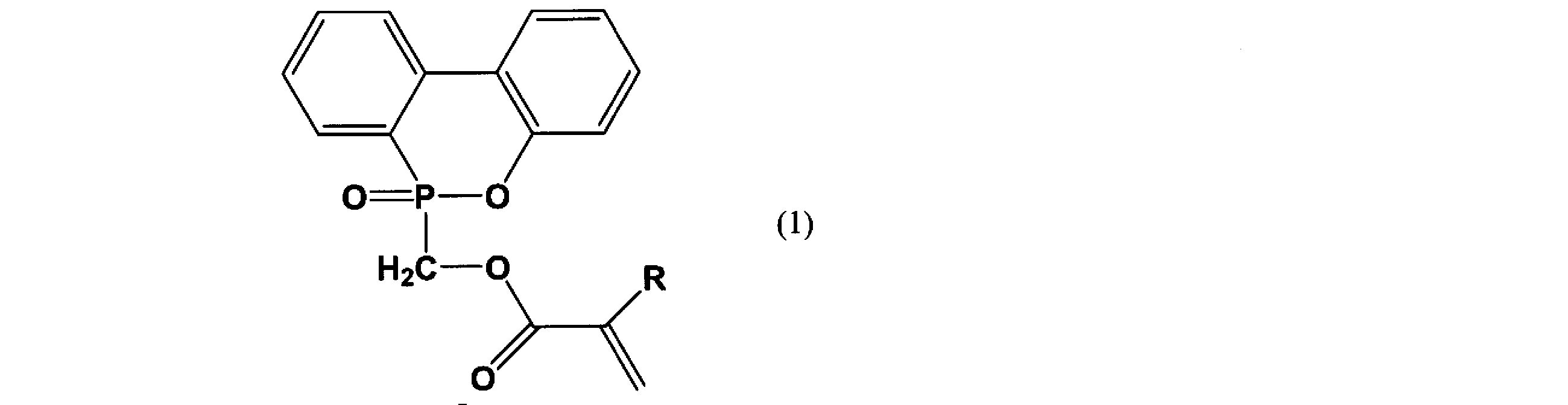
- 前記ホスフィンオキサイド化合物(A)、前記(B)成分及び感光剤(C)を含む請求項2に記載の感光性樹脂組成物。
- 前記ホスフィンオキサイド化合物(A)、前記(B)成分及び1分子内に2個以上の活性エネルギー線反応性官能基を有する反応性化合物(D)及び光重合開始剤(E)を含む請求項2に記載の感光性樹脂組成物。
- 前記反応性化合物(D)として、2~6官能(メタ)アクリレート化合物含む請求項4に記載の感光性樹脂組成物。
- 更に硬化剤として、多官能エポキシ化合物を配合された請求項4に記載の感光性樹脂組成物。
- 反応性化合物(D)として、酸変性(メタ)アクリレート化合物を含む請求項4に記載の感光性樹脂組成物。
- 樹脂組成物全体に対して、ホスフィンオキサイド化合物(A)を1~95質量%及び(B)成分を5~99質量%含む請求項1に記載の樹脂組成物。
- 成形用材料である請求項1の樹脂組成物又は請求項2乃至8のいずれか一項に記載の感光性樹脂組成物。
- 皮膜形成用材料である請求項1の樹脂組成物又は請求項2乃至8のいずれか一項に記載の感光性樹脂組成物。
- 電気絶縁材料である請求項1の樹脂組成物又は請求項2乃至8のいずれか一項に記載の感光性樹脂組成物。
- ソルダーレジスト組成物である請求項1の樹脂組成物又は請求項2乃至8のいずれか一項に記載の感光性樹脂組成物。
- 請求項1の樹脂組成物又は請求項2乃至8のいずれか一項に記載の感光性樹脂組成物の硬化物層を有することを特徴とする多層材料。
- 請求項1の樹脂組成物の硬化物。
- 請求項2乃至8のいずれか一項に記載の感光性樹脂組成物の硬化物。
Priority Applications (1)
| Application Number | Priority Date | Filing Date | Title |
|---|---|---|---|
| JP2011548874A JP5715577B2 (ja) | 2010-01-05 | 2010-12-27 | ホスフィンオキサイドを含むポリアミド又はポリイミド樹脂組成物並びにその硬化物 |
Applications Claiming Priority (2)
| Application Number | Priority Date | Filing Date | Title |
|---|---|---|---|
| JP2010000516 | 2010-01-05 | ||
| JP2010-000516 | 2010-01-05 |
Publications (1)
| Publication Number | Publication Date |
|---|---|
| WO2011083554A1 true WO2011083554A1 (ja) | 2011-07-14 |
Family
ID=44305300
Family Applications (1)
| Application Number | Title | Priority Date | Filing Date |
|---|---|---|---|
| PCT/JP2010/007568 Ceased WO2011083554A1 (ja) | 2010-01-05 | 2010-12-27 | ホスフィンオキサイドを含むポリアミド又はポリイミド樹脂組成物並びにその硬化物 |
Country Status (3)
| Country | Link |
|---|---|
| JP (1) | JP5715577B2 (ja) |
| TW (1) | TW201132692A (ja) |
| WO (1) | WO2011083554A1 (ja) |
Cited By (5)
| Publication number | Priority date | Publication date | Assignee | Title |
|---|---|---|---|---|
| JP2013147599A (ja) * | 2012-01-20 | 2013-08-01 | Ube Industries Ltd | ポリイミド前駆体及びポリイミド |
| WO2013187025A1 (ja) * | 2012-06-12 | 2013-12-19 | Jfeケミカル株式会社 | 樹脂組成物およびその硬化物 |
| JP2014070084A (ja) * | 2012-09-27 | 2014-04-21 | Nippon Steel & Sumikin Chemical Co Ltd | ポリアミド酸組成物、ポリイミド組成物、積層体、回路基板、その使用方法、積層体の製造方法及び回路基板の製造方法 |
| CN105155018A (zh) * | 2015-07-22 | 2015-12-16 | 东华大学 | 一种共聚阻燃聚酰胺66纤维及其制备方法 |
| JP2023108082A (ja) * | 2022-01-25 | 2023-08-04 | 日本化薬株式会社 | ポリイミド樹脂、該ポリイミド樹脂含有する樹脂組成物及びその硬化物 |
Families Citing this family (4)
| Publication number | Priority date | Publication date | Assignee | Title |
|---|---|---|---|---|
| TWI499617B (zh) * | 2014-04-25 | 2015-09-11 | Taiflex Scient Co Ltd | Photoresist polyimide composition, the main agent, the preparation of its main agent and the preparation of polyimide solder film |
| CN105085911B (zh) * | 2014-05-07 | 2017-10-31 | 台虹科技股份有限公司 | 光感性聚酰亚胺组成物、其主剂、其主剂的制法及其制得的聚酰亚胺防焊薄膜 |
| US9285680B2 (en) | 2014-07-16 | 2016-03-15 | Taiflex Scientific Co., Ltd. | Photosensitive polyimide composition, base agent thereof, method of making the base agent, and solder-resistant polyimide thin film made from the composition |
| TWI572674B (zh) * | 2015-02-09 | 2017-03-01 | 奇美實業股份有限公司 | 軟性基板用組成物及軟性基板 |
Citations (5)
| Publication number | Priority date | Publication date | Assignee | Title |
|---|---|---|---|---|
| JPH0748394A (ja) * | 1993-08-02 | 1995-02-21 | Nippon Kayaku Co Ltd | (メタ)アクリル酸エステル、その製造方法、それを用いた硬化性樹脂組成物およびその硬化物 |
| WO2008139720A1 (ja) * | 2007-05-11 | 2008-11-20 | Mitsui Chemicals, Inc. | 樹脂組成物、ドライフィルム、およびそれから得られる加工品 |
| JP2009256622A (ja) * | 2008-03-18 | 2009-11-05 | Nippon Kayaku Co Ltd | 難燃性を有する反応性化合物を用いた活性エネルギー線硬化型樹脂組成物並びにその硬化物 |
| JP2010254906A (ja) * | 2009-04-28 | 2010-11-11 | Nippon Kayaku Co Ltd | 難燃性を有する化合物を含む熱硬化型樹脂組成物及びその硬化物 |
| JP2011039417A (ja) * | 2009-08-18 | 2011-02-24 | Kyocera Chemical Corp | 感光性樹脂組成物、並びにこれを用いた感光性フィルム及び感光性レジスト |
-
2010
- 2010-12-27 WO PCT/JP2010/007568 patent/WO2011083554A1/ja not_active Ceased
- 2010-12-27 JP JP2011548874A patent/JP5715577B2/ja not_active Expired - Fee Related
- 2010-12-30 TW TW99146859A patent/TW201132692A/zh unknown
Patent Citations (5)
| Publication number | Priority date | Publication date | Assignee | Title |
|---|---|---|---|---|
| JPH0748394A (ja) * | 1993-08-02 | 1995-02-21 | Nippon Kayaku Co Ltd | (メタ)アクリル酸エステル、その製造方法、それを用いた硬化性樹脂組成物およびその硬化物 |
| WO2008139720A1 (ja) * | 2007-05-11 | 2008-11-20 | Mitsui Chemicals, Inc. | 樹脂組成物、ドライフィルム、およびそれから得られる加工品 |
| JP2009256622A (ja) * | 2008-03-18 | 2009-11-05 | Nippon Kayaku Co Ltd | 難燃性を有する反応性化合物を用いた活性エネルギー線硬化型樹脂組成物並びにその硬化物 |
| JP2010254906A (ja) * | 2009-04-28 | 2010-11-11 | Nippon Kayaku Co Ltd | 難燃性を有する化合物を含む熱硬化型樹脂組成物及びその硬化物 |
| JP2011039417A (ja) * | 2009-08-18 | 2011-02-24 | Kyocera Chemical Corp | 感光性樹脂組成物、並びにこれを用いた感光性フィルム及び感光性レジスト |
Cited By (8)
| Publication number | Priority date | Publication date | Assignee | Title |
|---|---|---|---|---|
| JP2013147599A (ja) * | 2012-01-20 | 2013-08-01 | Ube Industries Ltd | ポリイミド前駆体及びポリイミド |
| WO2013187025A1 (ja) * | 2012-06-12 | 2013-12-19 | Jfeケミカル株式会社 | 樹脂組成物およびその硬化物 |
| CN104364291A (zh) * | 2012-06-12 | 2015-02-18 | 杰富意化学株式会社 | 树脂组合物及其固化物 |
| CN104364291B (zh) * | 2012-06-12 | 2017-03-08 | 杰富意化学株式会社 | 树脂组合物及其固化物 |
| JP2014070084A (ja) * | 2012-09-27 | 2014-04-21 | Nippon Steel & Sumikin Chemical Co Ltd | ポリアミド酸組成物、ポリイミド組成物、積層体、回路基板、その使用方法、積層体の製造方法及び回路基板の製造方法 |
| CN105155018A (zh) * | 2015-07-22 | 2015-12-16 | 东华大学 | 一种共聚阻燃聚酰胺66纤维及其制备方法 |
| JP2023108082A (ja) * | 2022-01-25 | 2023-08-04 | 日本化薬株式会社 | ポリイミド樹脂、該ポリイミド樹脂含有する樹脂組成物及びその硬化物 |
| JP7682113B2 (ja) | 2022-01-25 | 2025-05-23 | 日本化薬株式会社 | ポリイミド樹脂、該ポリイミド樹脂含有する樹脂組成物及びその硬化物 |
Also Published As
| Publication number | Publication date |
|---|---|
| JP5715577B2 (ja) | 2015-05-07 |
| TW201132692A (en) | 2011-10-01 |
| JPWO2011083554A1 (ja) | 2013-05-13 |
Similar Documents
| Publication | Publication Date | Title |
|---|---|---|
| JP5384149B2 (ja) | 難燃性を有する反応性化合物を用いた活性エネルギー線硬化型樹脂組成物並びにその硬化物 | |
| JP5715577B2 (ja) | ホスフィンオキサイドを含むポリアミド又はポリイミド樹脂組成物並びにその硬化物 | |
| US20120070780A1 (en) | Photosensitive resin composition, dry film solder resist, and circuit board | |
| KR101799845B1 (ko) | 감광성 수지 조성물, 드라이 필름, 프린트 배선판 | |
| KR20170017999A (ko) | 경화성 수지 조성물, 드라이 필름, 경화물 및 프린트 배선판 | |
| KR20170109621A (ko) | 카르복실기 함유 수지, 감광성 수지 조성물, 드라이 필름, 프린트 배선판, 및 카르복실기 함유 수지의 제조 방법 | |
| CN111886545B (zh) | 光固化性热固化性树脂组合物和干膜和固化物以及印刷电路板 | |
| TW202219125A (zh) | 感光性樹脂組成物、其硬化物及多層材料 | |
| WO2003078494A1 (en) | Curable resins and curable resin compositions containing the same | |
| KR101041958B1 (ko) | 불포화기 함유 폴리아미드산 수지 및 그것을 이용한 감광성수지 조성물 및 그 경화물 | |
| KR20230008035A (ko) | 경화성 수지 조성물, 드라이 필름, 경화물 및 프린트 배선판 | |
| US20070161100A1 (en) | Photosensitive resin composition and cured product thereof | |
| US10508169B2 (en) | Curable resin and producing process therefor | |
| KR20140115988A (ko) | 에폭시아크릴레이트 수지, 에폭시아크릴레이트 산무수물 부가체, 경화성 수지 조성물, 알칼리 현상형 감광성 수지 조성물 및 이들의 경화물 | |
| JPWO2007032326A1 (ja) | 感光性樹脂組成物並びにその硬化物 | |
| US12291604B2 (en) | Curable resin composition, dry film and cured product thereof, and electronic component including cured product | |
| JP5115002B2 (ja) | 重合性化合物、それを用いた高分子化合物、及び樹脂組成物 | |
| TWI838054B (zh) | 基板上的樹脂硬化物之製造方法 | |
| TWI924919B (zh) | 含不飽和基之多元羧酸樹脂及其製法、含有含不飽和基之多元羧酸樹脂之感光性樹脂組成物及其硬化物 | |
| JP7572290B2 (ja) | 新規不飽和基含有エポキシカルボキシレート化合物、その誘導体、それを含有する感光性樹脂組成物及びその硬化物 | |
| JP2007219334A (ja) | 感光性樹脂組成物、並びにその硬化物 | |
| KR20260057139A (ko) | 감광성 수지 조성물, 드라이 필름, 경화물 및 프린트배선판 | |
| JP5737054B2 (ja) | 感光性樹脂組成物およびその硬化物 | |
| CN117120929A (zh) | 层叠结构体、干膜、固化物和电子部件 | |
| CN115926162A (zh) | 含不饱和基的多元羧酸树脂及其制法、感光性树脂组合物及其硬化物 |
Legal Events
| Date | Code | Title | Description |
|---|---|---|---|
| 121 | Ep: the epo has been informed by wipo that ep was designated in this application |
Ref document number: 10842074 Country of ref document: EP Kind code of ref document: A1 |
|
| WWE | Wipo information: entry into national phase |
Ref document number: 2011548874 Country of ref document: JP |
|
| NENP | Non-entry into the national phase |
Ref country code: DE |
|
| 122 | Ep: pct application non-entry in european phase |
Ref document number: 10842074 Country of ref document: EP Kind code of ref document: A1 |