WO2011052562A1 - レール鋼のフラッシュバット溶接方法 - Google Patents
レール鋼のフラッシュバット溶接方法 Download PDFInfo
- Publication number
- WO2011052562A1 WO2011052562A1 PCT/JP2010/068927 JP2010068927W WO2011052562A1 WO 2011052562 A1 WO2011052562 A1 WO 2011052562A1 JP 2010068927 W JP2010068927 W JP 2010068927W WO 2011052562 A1 WO2011052562 A1 WO 2011052562A1
- Authority
- WO
- WIPO (PCT)
- Prior art keywords
- flash
- late
- welding
- rail
- butt welding
- Prior art date
- Legal status (The legal status is an assumption and is not a legal conclusion. Google has not performed a legal analysis and makes no representation as to the accuracy of the status listed.)
- Ceased
Links
Images






Classifications
-
- E—FIXED CONSTRUCTIONS
- E01—CONSTRUCTION OF ROADS, RAILWAYS, OR BRIDGES
- E01B—PERMANENT WAY; PERMANENT-WAY TOOLS; MACHINES FOR MAKING RAILWAYS OF ALL KINDS
- E01B29/00—Laying, rebuilding, or taking-up tracks; Tools or machines therefor
- E01B29/42—Undetachably joining or fastening track components in or on the track, e.g. by welding, by gluing; Pre-assembling track components by gluing; Sealing joints with filling components
-
- B—PERFORMING OPERATIONS; TRANSPORTING
- B23—MACHINE TOOLS; METAL-WORKING NOT OTHERWISE PROVIDED FOR
- B23K—SOLDERING OR UNSOLDERING; WELDING; CLADDING OR PLATING BY SOLDERING OR WELDING; CUTTING BY APPLYING HEAT LOCALLY, e.g. FLAME CUTTING; WORKING BY LASER BEAM
- B23K11/00—Resistance welding; Severing by resistance heating
- B23K11/04—Flash butt welding
-
- B—PERFORMING OPERATIONS; TRANSPORTING
- B23—MACHINE TOOLS; METAL-WORKING NOT OTHERWISE PROVIDED FOR
- B23K—SOLDERING OR UNSOLDERING; WELDING; CLADDING OR PLATING BY SOLDERING OR WELDING; CUTTING BY APPLYING HEAT LOCALLY, e.g. FLAME CUTTING; WORKING BY LASER BEAM
- B23K2101/00—Articles made by soldering, welding or cutting
- B23K2101/26—Railway- or like rails
Definitions
- the present invention relates to a method for flash butt welding of rail steel.
- the present invention relates to a flash butt welding method for rail steel that can reduce the heat-affected zone of a high carbon hypereutectoid rail steel weld and reduce uneven wear and surface damage of the rail.
- Flash butt welding is widely used as a welding method for steel materials. Its features include that it can be automated, has high quality stability, and has a short welding time.
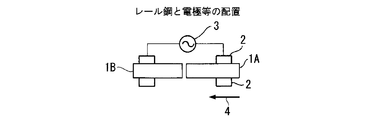
- FIG. 1A a voltage is applied from a power source 3 through an electrode 2 to each of a pair of rail steels 1 ⁇ / b> A and 1 ⁇ / b> B as materials to be welded that are installed facing each other.
- the rail steel 1A is moved in the direction of the arrow 4 to gradually approach the end surfaces of the rail steels 1A and 1B as the welding surfaces. If it does so, a short circuit current will flow locally and will be heated rapidly by resistance heat_generation
- occur
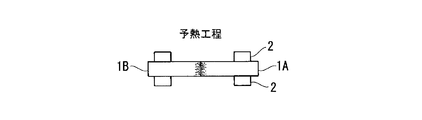
- the process shown in FIG. 1C is a process for the purpose of performing heat input to the entire end surfaces of the rail steels 1A and 1B in the flash process described above in a short time, and is called a preheating process.
- a preheating process first, a large current is passed for a certain time in a state where the pair of rail steels 1A and 1B are forcibly brought into contact with each other, and the vicinity of the end face is heated by resistance heat generation. Thereafter, the process of separating the pair of rail steels 1A and 1B is repeated several times.
- heat input to the welding surface is effectively performed and an effect of shortening the welding time is obtained. Therefore, a welding method combined with a flash process is employed. Further, since flash butt welding is performed in an air atmosphere, a large amount of oxide is generated in the formed molten metal portion.
- the speed at which a pair of rail steels are brought close to each other during the flash process is called the flash speed.
- the amount of erosion in which the rail steel approaches during the flashing process, the molten metal scatters, and the material to be melted is removed is called the flashing fee. If the flash rate is too high with insufficient heat input to the welding surface, the contact area will increase at a stretch without the occurrence of arc and molten metal scattering, a large current will flow, and freezing will not occur continuously. This occurs. This freezing needs to be avoided as much as possible because it generates oxides that can hinder bending performance. In order to prevent freezing, it is important to balance the heat input to the weld surface with the flash rate.
- flash butt welding is a technique for joining a pair of steel materials by melting the end surfaces of a pair of steel materials by heating and then bringing the end surfaces into pressure contact with each other.
- the steel material which is a material to be welded in flash butt welding, undergoes a temperature rising process from the room temperature to the melting point and a subsequent cooling process, and therefore changes in the metal structure.
- Such an altered region of mechanical properties such as the structure and hardness of the workpiece to be welded is called a heat affected zone (HAZ).
- HAZ heat affected zone
- Rail steel using high carbon hypereutectoid steel contains 0.85 to 1.20% C and exhibits a pearlite structure.
- the pearlite structure has a layered structure in which pure iron phases called ferrite containing almost no carbon and iron carbide (Fe 3 C) layers called cementite are alternately and densely stacked.
- Fe 3 C iron carbide
- transformation energy is converted into interfacial energy between ferrite and cementite, and thus such a layered structure is formed.
- the structural changes in the temperature rising process of rail steel exhibiting a pearlite structure are as follows. (1) The pearlite structure does not change from room temperature to 500 ° C. (2) When the temperature exceeds 550 ° C., the change of the structure in the direction of reducing the interfacial energy of the layered structure, that is, splitting of cementite and spheroidization start. At this time, cementite spheroidization progresses as the temperature rises. (3) The pearlite structure starts to transform to an austenite structure from around 720 ° C. of the Ac1 transformation point.
- the pearlite region (the portion that has not undergone the structural change during the temperature rising process) does not change from the original structure after cooling.
- the spheroidized cementite region In the spheroidized cementite region, the spheroidized cementite is cooled as it is and exhibits a spheroidized structure even at room temperature.
- the hardness of the spheroidized cementite structure is low, about Hv300. That is, in the temperature raising process, spheroidization of cementite progresses as the maximum temperature reaches, so that the closer to the weld surface, the more spheroidized cementite exists. Therefore, in the spheroidized cementite region, it becomes softer as it gets closer to the weld surface in the cooling process.
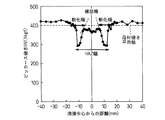
- Patent Document 2 shows the weld hardness distribution of a flash butt welded pearlite steel joint.
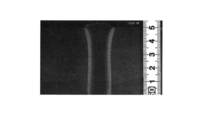
- the HAZ width is about 42 mm and the softened width is about 25 to 30 mm.
- Patent Document 3 in a railroad rail, if the softening width is smaller than the contact area between the wheel and the rail, uneven wear hardly occurs, and further, the contact area between the wheel and the rail is considered to be about 15 mm. It is described that it is desirable that the softening width reduced by Hv50 or more from the hardness is 15 mm or less.
- the HAZ boundary determined from the macro cross section is located on the center side of the welded portion with respect to the range where the hardness change occurs, and is located slightly outside the position where the hardness is most reduced. ing.
- the HAZ width is 35 mm and the softening width is 19 mm, resulting in the possibility of the above-mentioned uneven wear.
- Patent Document 3 discloses a technique in which the rail head is cooled with the metal pad during welding by flash-butt welding the rail with the metal pad attached.
- the contact range between the contact metal and the rail includes at least the top surface of the rail in the cross section of the rail, and the length of the contact range on the top surface in the rail axial direction is 15 mm or more.
- the thickness of the portion in contact with the contact metal and the top surface is 10 mm or more.
- the tip on the rail end face side of the contact metal is located within 20 mm or more and 50 mm or less from the rail end face before welding. Using this technique, it is shown that the width in the longitudinal direction, which is lower by Hv50 or more than the base material hardness, can be made 15 mm or less.
- Patent Document 4 when the hot-rolling steel slab is extracted from the steel slab heating furnace and welded by the flash welding machine of the AC power supply while being supplied to the first rolling mill, the range of the late flash cost is 2 An example is shown in which the range of 8 mm and the late flash speed is 1 to 4 mm / sec. Here, the late flash speed is (total flash charge-previous flash charge) / (total flash time-previous flash time).
- Patent Document 5 the rear end of the preceding rolled material is joined to the leading end of the subsequent rolled material by flash butt welding, and then rolled continuously in the downstream rolling mill row to obtain a metal finish.
- the flash amount Y flash cost
- the flash amount (flash cost) is set so as to satisfy the following formula (2) and the joining is performed.
- Y flash amount (flash amount) (mm)
- D thickness (mm) of the material to be rolled
- the flash amount (flash amount) is a length that is dissolved and removed by an arc in flash butt welding. Is the sum of
- Non-Patent Document 2 shows a method for rapidly increasing the flushing (flash) speed immediately before the upset and smoothing the butt end face as a method for obtaining a good quality flash butt weld joint by flash butt welding of the rail. ing. Specifically, it is indicated that the final flushing (flash) speed may be 1.0 to 1.25 mm / sec. The flash cost at this time is written as 3 mm.
- a softened portion with reduced hardness is generated in the rail welded portion. If the length of the softened portion in the rail longitudinal direction is long and the hardness is remarkably reduced, uneven wear may occur in the softened portion due to the passage of the wheel at the head of the rail, which may cause noise vibration. In addition, when the partial wear increases, the impact on the rail may increase when the wheels pass.
- the conventional technique has the following problems.
- Patent Document 4 shows that the late flash speed is in the range of 1 to 4 mm / sec, but the welded material is a high-temperature heated steel piece extracted from the heating furnace, and not only the butt end face.
- the other parts are techniques that can be applied only under sufficiently high temperature conditions. Under these conditions, flashing is likely to occur and freezing is unlikely to occur. Moreover, since this condition is also an easy condition for increasing the flash speed, it cannot be applied to the present problem in which the rail is heated from the room temperature.
- the cross-sectional area perpendicular to the rail longitudinal direction is 8500 mm 2 or more.
- the flash cost is in the range of 5 mm to 16 mm.
- the material to be welded in Patent Document 5 is a material to be rolled by rolling a metal raw material such as a billet extracted from a heating furnace, or a metal rough material having a predetermined size into a metal rough material.
- This technology relates to a continuous rolling method of a metal material in which a preceding rolled material and a subsequent rolled material in a rolling line are joined by flash butt welding and then continuously rolled in a downstream rolling mill row. That is, as in Patent Document 4, not only the butt end surfaces but also other portions can be applied only under a sufficiently high temperature condition, and cannot be applied to this problem of heating the rail from a normal temperature state.
- Non-Patent Document 2 although it is a method of flash butt welding of rails, it is a description content with an emphasis on bending performance. Furthermore, since the final flash speed is slow and the flash margin is not sufficient, a narrow softening width cannot be obtained.
- a method according to an aspect of the present invention is a method for performing flash butt welding between a pair of track rail steels, applying a voltage to the pair of track rail steels, A short-circuit current is caused to flow locally by gradually approaching, the welding surface is heated and melted by resistance heating, and further, flash is generated in the welding surface, and the welding surface is heated by resistance heating and arc heating of the flash.
- An initial flash step of heating the welding surface a preheating step of heating the vicinity of the welding surface by causing a current to flow for a predetermined time in a state where the welding surfaces are forcibly brought into contact with each other, and a part of the welding surface
- a flashing step for heating the welded surface by the resistance heat generation and the arc heat generation of the flash And a later flash step in which heat is uniformly applied to the entire weld surface by the resistance heat generation and arc heat generation of the flash, and the later flash speed in the later flash step is 2.1 mm / It is not less than sec and not more than 2.8 mm / sec.
- the late flash allowance in the late flash step may be 10 mm or greater and 60 mm or less.
- the late flash allowance in the late flash step may be not less than the melting loss amount of the late flash step per 22.6-6 ⁇ 1 second and not more than 60 mm.
- the rail steel for raceway may contain C: 0.85 to 1.20% by mass.
- the heat affected width of the weld joint may be 27 mm or less and the softening width may be 10 mm or less.
- a method according to another aspect of the present invention is a flash butt welding method for a pair of track rail steels, wherein the welding surfaces of the pair of track rail steels are forcibly brought into contact with each other.
- a preheating step in which a current is passed and the vicinity of the welding surface is heated by resistance heating, and the flash is partially generated on the welding surface, and the welding surface is heated by resistance heating and arc heating of the flash.
- a flash step and a later flash step of causing the flash to be further generated on the entire welded surface and applying heat uniformly to the entire welded surface by resistance heat generation and arc heat generation of the flash, Late flash allowance is greater than or equal to 22.6-6 ⁇ 1 second flash step per second and greater than or equal to 60 mm.
- the heat distribution on the weld surface becomes steep. Therefore, the HAZ width is narrowed, and the softening width is also narrowed.
- uneven wear due to contact of the rail head with the wheel is reduced, so that damage caused to the rail head surface can be reduced, and further, noise and vibration can be reduced.
- FIG. 1 It is a cross-sectional schematic diagram for demonstrating the principle of a flash butt welding method, and shows arrangement
- the flash process of the flash butt welding method is shown.
- the preheating process of the flash butt welding method is shown.
- the upset process of the flash butt welding method is shown.
- the method described in this embodiment is a flash butt welding method for a pair of track rail steels, in which a voltage is applied to the pair of track rail steels, and the welding surfaces that are the end surfaces of both are gradually approached.
- An initial flash process in which a short-circuit current is applied, the welding surface is heated and melted by resistance heating, and a flash is generated on the welding surface, and the welding surface is heated by resistance heating and arc heating of the flash, and the welding surface
- a preheating process that heats the vicinity of the welded surface by resistance heat generation while passing current for a predetermined time in a state where they are forcibly brought into contact with each other, and a flash is partially generated on the welded surface, and the resistance heat generation and arc heat generation of the flash
- the flash process that heats the weld surface, and further flashing occurs on the entire weld surface, and the resistance heat generation of the flash
- the entire weld surface by chromatography click heating uniformly comprises a late flush step of applying heat, a late
- the inventors performed flash butt welding using AREA (American Railway Engineering Association) standard 136RE rails weighing 136 pounds (61.2 kg) per meter.
- AREA American Railway Engineering Association
- 136RE rails weighing 136 pounds (61.2 kg) per meter.
- AREA American Railway Engineering Association
- a flash welding machine with a transformer capacity of 320 kVA and an upset load of 70 kN was used with an AC power source, and the flash process and the preheating process were combined.
- the same method can be used for the 141 lb (63.45 kg) AREA standard 141AB, and the same effect as the 136 lb (61.2 kg) AREA standard 136RE rail can be obtained.
- the composition component of the rail steel for a track is not necessarily limited, but preferably contains C: 0.85 to 1.20% by mass.
- the flash butt welding in the present embodiment includes an initial flash process, a preheating process, an early flash process, a late flash process, and an upset process.
- the initial flash process is a flash process that starts from cold (room temperature), and in order to facilitate the contact of the weld surface in the subsequent preheating process, the weld surface is made to move in the longitudinal direction of the rail by generating a flash. In this process, the welding surface is heated by the resistance heat generation and arc heat generation of the flash. In addition, since the flash is generated in the initial flash process, the flash allowance (melting loss) increases as shown in FIG. The flash allowance is the length of the rail lost due to melting or deformation in each process.
- the preheating step in a pair of rail steels, a large current is passed for a certain time in a state where the welding surfaces facing each other are forcibly brought into contact with each other, and the vicinity of the welding surfaces is heated by resistance heat generation. Thereafter, the process of separating the pair of rail steels is repeated several times.
- the preheating frequency is 4 times or more. More preferably, it is 7 times or more, More preferably, it is 10 times or more.
- the preheating process has a higher heat input efficiency than the flash process because the opposed welding surfaces are forcibly brought into contact with each other to flow a large current. For this reason, it is preferable to increase the number of times of preheating.
- this preheating process is normally performed in an atmospheric environment, the oxide which becomes a welding defect will generate
- the flash process after the preheating process includes a first-stage flash process and a second-stage flash process with different flash rates.
- the first flash step flash is partially generated between the welding surfaces facing each other, and the welding surface is heated by resistance heat generation and arc heat generation of the flash.
- the flash generated in the first flash step is called the first flash.
- the total time of the time required for the initial flash process (initial flash time) and the time required for the previous flash process (first flash time) is preferably 20 sec or more and 180 sec or less.
- the end face needs to be vertical in order to perform the subsequent preheating process efficiently.
- the total time of the initial flash time and the previous flash time is preferably 180 sec or less.
- the upset process will be described. After the entire welding surface is melted by the latter flash process, the welding surfaces are brought into close contact with each other with a large applied pressure, and most of the molten metal on the welding surface is discharged to the outside, and the high temperature behind the welding surface is maintained. Pressurization and deformation are applied to the heated portion to form a joint. In other words, since the oxide generated during welding is discharged and finely dispersed, it is possible to reduce the possibility of remaining on the joint surface as a defect that hinders bending performance. In addition, the oxide (bead part) discharged
- FIG. 3 shows an example in which the previous flash speed is constant, but the same effect can be obtained when the speed increases with time.
- the average speed is set as the previous flash speed.
- the late flash speed is accelerated, the average speed is set as the late flash speed.
- the flash speed increases with time in the process from the preheating process to the upset process, and it is difficult to distinguish the first flash process and the second flash process, the elapsed time from the end of the preheat process to the start of the upset process
- the first half of the first half is the first-stage flash process
- the second half is the second-stage flash process.
- the average flash speed in the first flash process is the first flash speed
- the average flash speed in the second flash process is the second flash speed.
- the flash speed and the flash allowance are set in the condition setting before welding, so that the elapsed time from the end of the preheating process to the start of the upset process can be known in advance.
- the rolling fatigue tester includes a rail moving slider 5, a rail 6, a wheel 7, a motor 8, and a load loading device 9.
- the rolling fatigue test a 136-lb rail (AREA standard 136RE) having a length of 2 m was used as the rail steel, and an AAR (American Railway Association) type having a diameter of 920 mm was used as the wheel.
- the radial load was 196 kN and the thrust load was 9.8 kN.
- the test was performed by intermittently supplying water between the rail steel and the wheels.
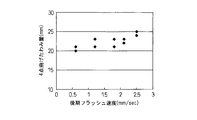
- the bending performance of the joint in which the HAZ width and the softening width are narrowed by increasing the late flash speed satisfies the standard value 19 mm, which is the AREMA standard.
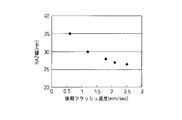
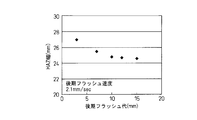
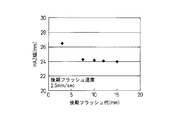
- the late flash speed was set to 2.5 mm / sec, and flash butt welding was performed under the above-described welding conditions, and the relationship between the late flash allowance and the HAZ width was obtained. These relationships are shown in FIG. As shown in FIG. 12, even when the late flash speed is 2.5 mm / sec, the HAZ width is narrowed if the late flash allowance is increased. When the flash speed is 2.5 mm / sec, the late flash cost is 7.5 mm or more and the HAZ width is saturated.
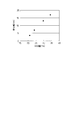
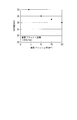
- the relationship between the late flash cost and the HAZ width was determined. These relationships are shown in FIG. As shown in FIG. 13, the HAZ width was 30 mm when the late flash allowance was 3 mm, but the HAZ width was narrowed when the late flash allowance was increased, and the HAZ width was 27 mm or less when the late flash allowance was 15 mm. Was realized. Although illustration is omitted, in this case also, the bending performance could exceed the 4-point bending reference value.
- AREA standard 136RE rail steel was subjected to flash butt welding.
- the flash butt welder an AC power source and a flash welder having a transformer capacity of 400 kVA and an upset load of 70 kN were used.
- Welding is a combination of the flash process and the preheating process, the number of preheating is 10 times, the total time of the initial flash process and the initial flash process is 90 sec, and the late flash speed and late flash cost in the late flash process are shown in Table 1. Each was changed.
- the evaluation of the HAZ width was based on 27 mm or less in which the wear depth of uneven wear was significantly reduced in the rolling fatigue test described above.
- the softening width was based on 10 mm or less corresponding to 27 mm of HAZ width.
- the AREMA standard is based on a 4-point bending deflection of 19 mm or more.
Landscapes
- Engineering & Computer Science (AREA)
- Architecture (AREA)
- Civil Engineering (AREA)
- Structural Engineering (AREA)
- Mechanical Engineering (AREA)
- Butt Welding And Welding Of Specific Article (AREA)
- Heat Treatment Of Articles (AREA)
- Arc Welding In General (AREA)
- Machines For Laying And Maintaining Railways (AREA)
- Pressure Welding/Diffusion-Bonding (AREA)
Priority Applications (9)
| Application Number | Priority Date | Filing Date | Title |
|---|---|---|---|
| CA2778891A CA2778891C (en) | 2009-10-30 | 2010-10-26 | Flash butt welding method of rail steel |
| AU2010312602A AU2010312602C1 (en) | 2009-10-30 | 2010-10-26 | Flash butt welding method of rail steel |
| IN3791DEN2012 IN2012DN03791A (https=) | 2009-10-30 | 2010-10-26 | |
| BR112012009852A BR112012009852B1 (pt) | 2009-10-30 | 2010-10-26 | método de soldagem a arco de topo de trilhos de aço |
| US13/503,928 US9617690B2 (en) | 2009-10-30 | 2010-10-26 | Flash butt welding method of rail steel |
| CN201080048430.0A CN102665994B (zh) | 2009-10-30 | 2010-10-26 | 钢轨钢的闪光对焊方法 |
| RU2012117761/02A RU2507045C2 (ru) | 2009-10-30 | 2010-10-26 | Способ стыковой сварки оплавлением рельсовой стали |
| EP10826694.1A EP2495064A4 (en) | 2009-10-30 | 2010-10-26 | Flash-butt welding method for rail steel |
| JP2011509331A JP4902021B2 (ja) | 2009-10-30 | 2010-10-26 | レール鋼のフラッシュバット溶接方法 |
Applications Claiming Priority (2)
| Application Number | Priority Date | Filing Date | Title |
|---|---|---|---|
| JP2009251071 | 2009-10-30 | ||
| JP2009-251071 | 2009-10-30 |
Publications (1)
| Publication Number | Publication Date |
|---|---|
| WO2011052562A1 true WO2011052562A1 (ja) | 2011-05-05 |
Family
ID=43921986
Family Applications (1)
| Application Number | Title | Priority Date | Filing Date |
|---|---|---|---|
| PCT/JP2010/068927 Ceased WO2011052562A1 (ja) | 2009-10-30 | 2010-10-26 | レール鋼のフラッシュバット溶接方法 |
Country Status (10)
| Country | Link |
|---|---|
| US (1) | US9617690B2 (https=) |
| EP (1) | EP2495064A4 (https=) |
| JP (1) | JP4902021B2 (https=) |
| CN (1) | CN102665994B (https=) |
| AU (1) | AU2010312602C1 (https=) |
| BR (1) | BR112012009852B1 (https=) |
| CA (1) | CA2778891C (https=) |
| IN (1) | IN2012DN03791A (https=) |
| RU (1) | RU2507045C2 (https=) |
| WO (1) | WO2011052562A1 (https=) |
Cited By (9)
| Publication number | Priority date | Publication date | Assignee | Title |
|---|---|---|---|---|
| CN102423841A (zh) * | 2011-12-03 | 2012-04-25 | 江苏欧玛机械有限公司 | 一种重型吊装用圆环链的制备方法 |
| CN102513786A (zh) * | 2011-12-03 | 2012-06-27 | 江苏欧玛机械有限公司 | 一种高性能圆环链的制备方法 |
| WO2012167225A3 (en) * | 2011-06-02 | 2013-03-28 | Taylor Winfield Technologies, Inc. | Methods of and systems for forced freeze flash welding of advanced high strength steels with an offset stage |
| CN105382391A (zh) * | 2015-12-14 | 2016-03-09 | 中国铁道科学研究院金属及化学研究所 | 一种钢轨焊接方法 |
| US10144983B2 (en) | 2011-05-25 | 2018-12-04 | Nippon Steel and Sumitomo Metal Corporation | Method of reheating rail weld zone |
| US10544479B2 (en) | 2014-04-08 | 2020-01-28 | Nippon Steel Corporation | Heat treatment device, heat treatment method, and rail steel |
| CN112427790A (zh) * | 2020-11-10 | 2021-03-02 | 贵州建工集团第一建筑工程有限责任公司 | 一种建筑工程用钢筋闪光对焊方法 |
| JPWO2022071007A1 (https=) * | 2020-09-30 | 2022-04-07 | ||
| JP7364992B1 (ja) * | 2023-02-10 | 2023-10-19 | 日本製鉄株式会社 | フラッシュバット溶接レールの製造方法 |
Families Citing this family (27)
| Publication number | Priority date | Publication date | Assignee | Title |
|---|---|---|---|---|
| RU2585589C2 (ru) * | 2011-10-13 | 2016-05-27 | Феликс ДЖУРИ Брент | Оборудование и метод стыковой сварки железнодорожных рельсов с оплавлением |
| JP6226083B2 (ja) * | 2015-07-10 | 2017-11-08 | Jfeスチール株式会社 | 抵抗スポット溶接方法 |
| RU2641586C1 (ru) * | 2016-12-07 | 2018-01-18 | Федеральное государственное бюджетное образовательное учреждение высшего образования "Сибирский государственный индустриальный университет" | Способ контактной стыковой сварки рельсов |
| CN107520529B (zh) * | 2017-08-31 | 2019-10-11 | 攀钢集团研究院有限公司 | 136re+ss热处理钢轨移动闪光焊接的方法 |
| BR112019015220B1 (pt) | 2017-09-29 | 2023-10-03 | CF&I Steel L.P. D/B/A EVRAZ Rocky Mountain Steel | Método para unir trilhos de aço com entrada de calor por solda controlada |
| CN108890106B (zh) * | 2018-07-26 | 2020-10-30 | 攀钢集团攀枝花钢铁研究院有限公司 | 60kg/m R260热轧钢轨移动闪光焊接的方法 |
| CN109365971B (zh) * | 2018-11-28 | 2021-03-23 | 贵州大学 | 一种clam钢的闪光焊成形方法 |
| EP3928910A4 (en) * | 2019-02-19 | 2022-04-27 | JFE Steel Corporation | RAIL AND RAIL MANUFACTURING PROCESS |
| CN110102864B (zh) * | 2019-04-28 | 2021-06-01 | 铁科(北京)轨道装备技术有限公司 | 一种合金钢与槽型钢轨的焊接工艺 |
| CN109986189B (zh) * | 2019-05-08 | 2020-08-21 | 西南交通大学 | 一种细化钢轨闪光焊焊缝晶粒的工艺 |
| KR102178723B1 (ko) * | 2019-09-06 | 2020-11-13 | 주식회사 포스코 | 휠림 용접부 성형성이 우수한 플래시벗 용접부재 및 플래시벗 용접방법 |
| CN110712069B (zh) * | 2019-11-12 | 2021-11-12 | 中冶赛迪工程技术股份有限公司 | 一种基于集中管控的无人化焊接生产系统及生产流程 |
| RU2725821C1 (ru) * | 2019-11-29 | 2020-07-06 | Федеральное государственное бюджетное образовательное учреждение высшего образования "Сибирский государственный индустриальный университет", ФГБОУ ВО "СибГИУ" | Способ контактной стыковой сварки рельсов |
| RU2743440C1 (ru) * | 2020-06-05 | 2021-02-18 | Федеральное государственное бюджетное образовательное учреждение высшего образования "Сибирский государственный индустриальный университет", ФГБОУ ВО "СибГИУ" | Способ контактной стыковой сварки рельсов |
| CN112761684B (zh) * | 2021-02-09 | 2024-12-17 | 中交路桥建设有限公司 | 隧道防水板结构及用于隧道防水板结构的施工方法 |
| RU2756553C1 (ru) * | 2021-02-25 | 2021-10-01 | Федеральное государственное бюджетное образовательное учреждение высшего образования "Сибирский государственный индустриальный университет", ФГБОУ ВО "СибГИУ" | Способ контактной стыковой сварки рельсов |
| CN113414480B (zh) * | 2021-07-23 | 2022-10-11 | 攀钢集团攀枝花钢铁研究院有限公司 | 消除75kg/m过共析钢轨移动闪光焊接头过烧缺陷的方法 |
| WO2023037786A1 (ja) * | 2021-09-13 | 2023-03-16 | Jfeスチール株式会社 | 電磁鋼帯の接合継手および摩擦撹拌接合方法、ならびに、電磁鋼帯の製造方法 |
| CN114012227A (zh) * | 2021-11-24 | 2022-02-08 | 攀钢集团攀枝花钢铁研究院有限公司 | 一种钢轨的焊接方法 |
| CN115502531B (zh) * | 2022-11-01 | 2023-10-27 | 江苏省沙钢钢铁研究院有限公司 | 低温钢筋的闪光对焊方法 |
| CN115488482B (zh) * | 2022-11-03 | 2023-12-22 | 攀钢集团攀枝花钢铁研究院有限公司 | 减小高强珠光体钢轨闪光焊接头热影响区宽度的方法 |
| AT18135U1 (de) * | 2022-12-30 | 2024-02-15 | Voestalpine Railway Systems GmbH | Verfahren und eine Vorrichtung zum Verschweißen von befahrbaren Komponenten eines Gleises mittels Abbrennstumpfschweißen |
| KR102867835B1 (ko) * | 2023-02-28 | 2025-10-13 | 주식회사 포스코 | 가공성이 우수한 플래시벗 접합부재 및 제조방법 |
| CN116252030A (zh) * | 2023-03-24 | 2023-06-13 | 河钢股份有限公司 | 一种Gleeble热模拟试验机的闪光对焊试验方法 |
| CN116770048A (zh) * | 2023-05-19 | 2023-09-19 | 包头钢铁(集团)有限责任公司 | 一种稀土高强热处理钢轨固定闪光焊接及接头热处理方法 |
| CN117161529A (zh) * | 2023-09-07 | 2023-12-05 | 攀钢集团攀枝花钢铁研究院有限公司 | 增加钢轨闪光焊接头轨头硬化厚度的方法及钢轨 |
| CN119927391A (zh) * | 2025-02-18 | 2025-05-06 | 哈焊所华通(常州)焊业股份有限公司 | 一种用于变截面钢轨闪光焊机的夹持方法 |
Citations (15)
| Publication number | Priority date | Publication date | Assignee | Title |
|---|---|---|---|---|
| JPS52104439A (en) * | 1976-03-01 | 1977-09-01 | Mitsubishi Electric Corp | Method of flash butt welding |
| JPS537559A (en) | 1976-07-09 | 1978-01-24 | Nippon Steel Corp | Flash welding for heated steel members |
| JPH01224169A (ja) * | 1988-03-04 | 1989-09-07 | Kawasaki Steel Corp | フラッシュ・バット溶接法における酸化物除去方法 |
| JPH02307682A (ja) * | 1989-05-23 | 1990-12-20 | Nippon Steel Corp | 薄鋼板の溶接方法 |
| JPH06145791A (ja) | 1992-11-06 | 1994-05-27 | Sumitomo Metal Ind Ltd | 電縫溶接部の特性に優れた低合金高張力鋼板の製造方法 |
| JPH09267183A (ja) * | 1996-03-29 | 1997-10-14 | Kawasaki Steel Corp | フラッシュバット溶接機の制御装置 |
| JPH10225775A (ja) * | 1997-02-14 | 1998-08-25 | Araco Corp | フラッシュバット溶接装置 |
| JPH10263835A (ja) * | 1997-03-24 | 1998-10-06 | Nkk Corp | フラッシュ溶接における被溶接部材の送り方法 |
| JP2001152291A (ja) | 1999-11-26 | 2001-06-05 | Nippon Steel Corp | 耐ころがり疲労損傷性、耐内部疲労損傷性、溶接継ぎ手特性に優れたベイナイト系レールおよびその製造法 |
| JP2001179461A (ja) * | 1999-12-17 | 2001-07-03 | Nkk Corp | フラッシュバット溶接用電源装置及びフラッシュバット溶接方法 |
| JP2002160063A (ja) * | 2000-11-27 | 2002-06-04 | Nkk Corp | フラッシュ溶接方法および装置 |
| JP2002346611A (ja) | 2001-05-24 | 2002-12-03 | Daiwa Steel Corp | 金属材の連続圧延方法 |
| JP2006055863A (ja) * | 2004-08-18 | 2006-03-02 | Jfe Koken Corp | フラッシュ溶接装置及びフラッシュ溶接方法 |
| JP2006104816A (ja) * | 2004-10-06 | 2006-04-20 | Dengensha Mfg Co Ltd | 鋼材階段用ササラ桁の製造方法及び装置 |
| JP2007289970A (ja) | 2006-04-21 | 2007-11-08 | Nippon Steel Corp | レールのフラッシュバット溶接方法 |
Family Cites Families (20)
| Publication number | Priority date | Publication date | Assignee | Title |
|---|---|---|---|---|
| US2945940A (en) | 1957-10-11 | 1960-07-19 | Schlatter Ag | Resistance welding process |
| US3748430A (en) * | 1971-08-16 | 1973-07-24 | Wean Ind Inc | Flash welding |
| DE2733559B1 (de) | 1977-07-26 | 1979-01-18 | Miebach Gmbh Hugo | Verfahren zum Abbrenn-Stumpfschweissen von ringfoermigen Werkstuecken |
| CA1164057A (en) | 1980-08-08 | 1984-03-20 | Vladimir K. Lebedev | Method of resistance flash butt welding |
| CA1267697A (en) | 1986-11-28 | 1990-04-10 | Mikhail V. Bogorsky | Flash-butt resistance welding process |
| SU1500447A1 (ru) | 1987-02-24 | 1989-08-15 | Институт Электросварки Им.Е.О.Патона | Способ контактной стыковой сварки оплавлением |
| JPS63215383A (ja) | 1987-03-04 | 1988-09-07 | Nippon Steel Corp | フラッシュ溶接方法 |
| JP2601741B2 (ja) * | 1991-12-18 | 1997-04-16 | 新日本製鐵株式会社 | レ−ルの補修溶接方法 |
| US5270514A (en) | 1992-01-08 | 1993-12-14 | Chemetron-Railway Products, Inc. | Method and apparatus for flash butt welding railway rails |
| JPH06142939A (ja) | 1992-11-09 | 1994-05-24 | Osaka Denki Co Ltd | フラッシュバット溶接機の条件設定装置 |
| USRE41033E1 (en) * | 1994-11-15 | 2009-12-08 | Nippn Steel Corporation | Pearlitic steel rail having excellent wear resistance and method of producing the same |
| GB2299044B (en) | 1995-03-20 | 1998-09-30 | British Steel Plc | Improvements in and relating to steel rails and methods of producing the same |
| CN1110398C (zh) | 1998-02-04 | 2003-06-04 | 乌克兰国家科学学会E·O·派顿电子焊接协会 | 闪光对接焊钢轨焊机 |
| RU2222415C2 (ru) | 1999-04-13 | 2004-01-27 | Институт Электросварки Им. Е.О.Патона Нан Украины | Способ контактной сварки оплавлением |
| GB2357259B (en) * | 1999-12-16 | 2004-04-14 | E O Paton Electric Welding Ins | Method of flash-butt welding |
| US6886470B2 (en) | 2000-08-18 | 2005-05-03 | Holland Corporation | Rail welderhead shear apparatus |
| ITMI20030589A1 (it) * | 2003-03-25 | 2004-09-26 | Danieli Off Mecc | Sistema e metodo per il controllo in linea di una macchina |
| GB2403174B (en) | 2003-06-26 | 2006-11-15 | Corus Uk Ltd | Steel rails |
| AU2005237524A1 (en) * | 2004-04-23 | 2005-11-10 | Holland Lp | High carbon welding electrode and method of welding with high carbon welding electrode |
| AU2009216933B2 (en) * | 2008-02-22 | 2013-07-25 | British Steel Limited | Rail steel with an excellent combination of wear properties and rolling contact fatigue resistance |
-
2010
- 2010-10-26 IN IN3791DEN2012 patent/IN2012DN03791A/en unknown
- 2010-10-26 EP EP10826694.1A patent/EP2495064A4/en not_active Withdrawn
- 2010-10-26 US US13/503,928 patent/US9617690B2/en active Active
- 2010-10-26 CN CN201080048430.0A patent/CN102665994B/zh not_active Expired - Fee Related
- 2010-10-26 WO PCT/JP2010/068927 patent/WO2011052562A1/ja not_active Ceased
- 2010-10-26 CA CA2778891A patent/CA2778891C/en active Active
- 2010-10-26 AU AU2010312602A patent/AU2010312602C1/en active Active
- 2010-10-26 BR BR112012009852A patent/BR112012009852B1/pt active IP Right Grant
- 2010-10-26 JP JP2011509331A patent/JP4902021B2/ja active Active
- 2010-10-26 RU RU2012117761/02A patent/RU2507045C2/ru active
Patent Citations (15)
| Publication number | Priority date | Publication date | Assignee | Title |
|---|---|---|---|---|
| JPS52104439A (en) * | 1976-03-01 | 1977-09-01 | Mitsubishi Electric Corp | Method of flash butt welding |
| JPS537559A (en) | 1976-07-09 | 1978-01-24 | Nippon Steel Corp | Flash welding for heated steel members |
| JPH01224169A (ja) * | 1988-03-04 | 1989-09-07 | Kawasaki Steel Corp | フラッシュ・バット溶接法における酸化物除去方法 |
| JPH02307682A (ja) * | 1989-05-23 | 1990-12-20 | Nippon Steel Corp | 薄鋼板の溶接方法 |
| JPH06145791A (ja) | 1992-11-06 | 1994-05-27 | Sumitomo Metal Ind Ltd | 電縫溶接部の特性に優れた低合金高張力鋼板の製造方法 |
| JPH09267183A (ja) * | 1996-03-29 | 1997-10-14 | Kawasaki Steel Corp | フラッシュバット溶接機の制御装置 |
| JPH10225775A (ja) * | 1997-02-14 | 1998-08-25 | Araco Corp | フラッシュバット溶接装置 |
| JPH10263835A (ja) * | 1997-03-24 | 1998-10-06 | Nkk Corp | フラッシュ溶接における被溶接部材の送り方法 |
| JP2001152291A (ja) | 1999-11-26 | 2001-06-05 | Nippon Steel Corp | 耐ころがり疲労損傷性、耐内部疲労損傷性、溶接継ぎ手特性に優れたベイナイト系レールおよびその製造法 |
| JP2001179461A (ja) * | 1999-12-17 | 2001-07-03 | Nkk Corp | フラッシュバット溶接用電源装置及びフラッシュバット溶接方法 |
| JP2002160063A (ja) * | 2000-11-27 | 2002-06-04 | Nkk Corp | フラッシュ溶接方法および装置 |
| JP2002346611A (ja) | 2001-05-24 | 2002-12-03 | Daiwa Steel Corp | 金属材の連続圧延方法 |
| JP2006055863A (ja) * | 2004-08-18 | 2006-03-02 | Jfe Koken Corp | フラッシュ溶接装置及びフラッシュ溶接方法 |
| JP2006104816A (ja) * | 2004-10-06 | 2006-04-20 | Dengensha Mfg Co Ltd | 鋼材階段用ササラ桁の製造方法及び装置 |
| JP2007289970A (ja) | 2006-04-21 | 2007-11-08 | Nippon Steel Corp | レールのフラッシュバット溶接方法 |
Non-Patent Citations (1)
| Title |
|---|
| See also references of EP2495064A4 * |
Cited By (12)
| Publication number | Priority date | Publication date | Assignee | Title |
|---|---|---|---|---|
| US10144983B2 (en) | 2011-05-25 | 2018-12-04 | Nippon Steel and Sumitomo Metal Corporation | Method of reheating rail weld zone |
| WO2012167225A3 (en) * | 2011-06-02 | 2013-03-28 | Taylor Winfield Technologies, Inc. | Methods of and systems for forced freeze flash welding of advanced high strength steels with an offset stage |
| CN102423841A (zh) * | 2011-12-03 | 2012-04-25 | 江苏欧玛机械有限公司 | 一种重型吊装用圆环链的制备方法 |
| CN102513786A (zh) * | 2011-12-03 | 2012-06-27 | 江苏欧玛机械有限公司 | 一种高性能圆环链的制备方法 |
| US10544479B2 (en) | 2014-04-08 | 2020-01-28 | Nippon Steel Corporation | Heat treatment device, heat treatment method, and rail steel |
| CN105382391A (zh) * | 2015-12-14 | 2016-03-09 | 中国铁道科学研究院金属及化学研究所 | 一种钢轨焊接方法 |
| JPWO2022071007A1 (https=) * | 2020-09-30 | 2022-04-07 | ||
| WO2022071007A1 (ja) * | 2020-09-30 | 2022-04-07 | 日本製鉄株式会社 | 溶接レール |
| JP7417170B2 (ja) | 2020-09-30 | 2024-01-18 | 日本製鉄株式会社 | 溶接レール |
| CN112427790A (zh) * | 2020-11-10 | 2021-03-02 | 贵州建工集团第一建筑工程有限责任公司 | 一种建筑工程用钢筋闪光对焊方法 |
| JP7364992B1 (ja) * | 2023-02-10 | 2023-10-19 | 日本製鉄株式会社 | フラッシュバット溶接レールの製造方法 |
| WO2024166374A1 (ja) * | 2023-02-10 | 2024-08-15 | 日本製鉄株式会社 | フラッシュバット溶接レールの製造方法 |
Also Published As
| Publication number | Publication date |
|---|---|
| JP4902021B2 (ja) | 2012-03-21 |
| JPWO2011052562A1 (ja) | 2013-03-21 |
| RU2507045C2 (ru) | 2014-02-20 |
| CN102665994A (zh) | 2012-09-12 |
| US9617690B2 (en) | 2017-04-11 |
| CA2778891A1 (en) | 2011-05-05 |
| AU2010312602A1 (en) | 2012-05-31 |
| BR112012009852B1 (pt) | 2019-10-22 |
| AU2010312602B2 (en) | 2014-10-23 |
| EP2495064A4 (en) | 2017-07-19 |
| AU2010312602C1 (en) | 2016-10-27 |
| RU2012117761A (ru) | 2013-12-10 |
| CA2778891C (en) | 2016-09-13 |
| US20120234806A1 (en) | 2012-09-20 |
| EP2495064A1 (en) | 2012-09-05 |
| CN102665994B (zh) | 2015-04-01 |
| BR112012009852A2 (pt) | 2016-08-16 |
| IN2012DN03791A (https=) | 2015-08-28 |
Similar Documents
| Publication | Publication Date | Title |
|---|---|---|
| JP4902021B2 (ja) | レール鋼のフラッシュバット溶接方法 | |
| JP5659965B2 (ja) | レール鋼のフラッシュバット溶接方法 | |
| Saita et al. | Trends in rail welding technologies and our future approach | |
| CN102365377B (zh) | 钢轨焊接区的冷却方法、钢轨焊接区的冷却装置以及钢轨焊接接头 | |
| JP5531845B2 (ja) | フラッシュバット溶接部近傍の後熱処理方法 | |
| JP2011251335A (ja) | レール鋼のフラッシュバット溶接方法 | |
| JP4869773B2 (ja) | レールのフラッシュバット溶接方法 | |
| JP2011020162A (ja) | 押抜きせん断装置及びそれを用いた溶接継手の形成方法 | |
| WO2024127454A1 (ja) | フラッシュバット溶接レールの溶接継手部の熱処理方法、及びフラッシュバット溶接レールの製造方法 | |
| JP2022533902A (ja) | 鉄道車輪の再生用溶接部材およびこれを用いた鉄道車輪の再生方法 | |
| Hauser | Welding of railroad rails-A literature and industry survey | |
| Farhangi et al. | Horizontal split-web fractures of flash butt welded rails | |
| JP7364992B1 (ja) | フラッシュバット溶接レールの製造方法 | |
| Rajanna et al. | Improvement in mechanical behavior of expulsion with heat treated thermite welded rail steel | |
| JP7741463B1 (ja) | 溶接レールの製造方法 | |
| Rajesh et al. | Selection of parameters for flash butt welding on mild steel brake tension rods | |
| Harun et al. | Investigation of welding residual stress in flash-butt joint of R260 grade rail | |
| Bulatović et al. | Correlation between Microstructure and Hardness of a Flash Butt-Welded Rail Joint | |
| WO2025211027A1 (ja) | 溶接レールの製造方法 | |
| Workman et al. | Flash butt wedge repair of weld head defects | |
| JPH08206853A (ja) | クロッシングレールの接合方法及び装置 | |
| Zakir | Microstructural Origin of Strength and Hardness of Thermite Welded Railhead | |
| CN103418983B (zh) | 一种挖掘机齿尖的修复方法 | |
| Hua et al. | Welding Technique for New High Speed Railway Track Key Part | |
| Suk et al. | Recent Application of Rail Joint Welding in Europe-Flash Butt Welding Gains Increasing Importance |
Legal Events
| Date | Code | Title | Description |
|---|---|---|---|
| WWE | Wipo information: entry into national phase |
Ref document number: 201080048430.0 Country of ref document: CN |
|
| WWE | Wipo information: entry into national phase |
Ref document number: 2011509331 Country of ref document: JP |
|
| 121 | Ep: the epo has been informed by wipo that ep was designated in this application |
Ref document number: 10826694 Country of ref document: EP Kind code of ref document: A1 |
|
| WWE | Wipo information: entry into national phase |
Ref document number: 13503928 Country of ref document: US Ref document number: 2778891 Country of ref document: CA |
|
| NENP | Non-entry into the national phase |
Ref country code: DE |
|
| WWE | Wipo information: entry into national phase |
Ref document number: 3791/DELNP/2012 Country of ref document: IN |
|
| WWE | Wipo information: entry into national phase |
Ref document number: 2010312602 Country of ref document: AU Ref document number: 2010826694 Country of ref document: EP |
|
| WWE | Wipo information: entry into national phase |
Ref document number: 2012117761 Country of ref document: RU |
|
| ENP | Entry into the national phase |
Ref document number: 2010312602 Country of ref document: AU Date of ref document: 20101026 Kind code of ref document: A |
|
| REG | Reference to national code |
Ref country code: BR Ref legal event code: B01A Ref document number: 112012009852 Country of ref document: BR |
|
| ENP | Entry into the national phase |
Ref document number: 112012009852 Country of ref document: BR Kind code of ref document: A2 Effective date: 20120426 |