WO2010107116A1 - Sox2由来のhla-a24結合性癌抗原ペプチド - Google Patents
Sox2由来のhla-a24結合性癌抗原ペプチド Download PDFInfo
- Publication number
- WO2010107116A1 WO2010107116A1 PCT/JP2010/054852 JP2010054852W WO2010107116A1 WO 2010107116 A1 WO2010107116 A1 WO 2010107116A1 JP 2010054852 W JP2010054852 W JP 2010054852W WO 2010107116 A1 WO2010107116 A1 WO 2010107116A1
- Authority
- WO
- WIPO (PCT)
- Prior art keywords
- peptide
- cells
- sox2
- cancer
- hla
- Prior art date
- Legal status (The legal status is an assumption and is not a legal conclusion. Google has not performed a legal analysis and makes no representation as to the accuracy of the status listed.)
- Ceased
Links
Images



Classifications
-
- C—CHEMISTRY; METALLURGY
- C07—ORGANIC CHEMISTRY
- C07K—PEPTIDES
- C07K14/00—Peptides having more than 20 amino acids; Gastrins; Somatostatins; Melanotropins; Derivatives thereof
- C07K14/435—Peptides having more than 20 amino acids; Gastrins; Somatostatins; Melanotropins; Derivatives thereof from animals; from humans
- C07K14/46—Peptides having more than 20 amino acids; Gastrins; Somatostatins; Melanotropins; Derivatives thereof from animals; from humans from vertebrates
- C07K14/47—Peptides having more than 20 amino acids; Gastrins; Somatostatins; Melanotropins; Derivatives thereof from animals; from humans from vertebrates from mammals
- C07K14/4701—Peptides having more than 20 amino acids; Gastrins; Somatostatins; Melanotropins; Derivatives thereof from animals; from humans from vertebrates from mammals not used
- C07K14/4748—Tumour specific antigens; Tumour rejection antigen precursors [TRAP], e.g. MAGE
-
- C—CHEMISTRY; METALLURGY
- C07—ORGANIC CHEMISTRY
- C07K—PEPTIDES
- C07K14/00—Peptides having more than 20 amino acids; Gastrins; Somatostatins; Melanotropins; Derivatives thereof
- C07K14/435—Peptides having more than 20 amino acids; Gastrins; Somatostatins; Melanotropins; Derivatives thereof from animals; from humans
- C07K14/46—Peptides having more than 20 amino acids; Gastrins; Somatostatins; Melanotropins; Derivatives thereof from animals; from humans from vertebrates
- C07K14/47—Peptides having more than 20 amino acids; Gastrins; Somatostatins; Melanotropins; Derivatives thereof from animals; from humans from vertebrates from mammals
- C07K14/4701—Peptides having more than 20 amino acids; Gastrins; Somatostatins; Melanotropins; Derivatives thereof from animals; from humans from vertebrates from mammals not used
- C07K14/4702—Regulators; Modulating activity
-
- A—HUMAN NECESSITIES
- A61—MEDICAL OR VETERINARY SCIENCE; HYGIENE
- A61K—PREPARATIONS FOR MEDICAL, DENTAL OR TOILETRY PURPOSES
- A61K39/00—Medicinal preparations containing antigens or antibodies
- A61K39/0005—Vertebrate antigens
- A61K39/0011—Cancer antigens
-
- A—HUMAN NECESSITIES
- A61—MEDICAL OR VETERINARY SCIENCE; HYGIENE
- A61P—SPECIFIC THERAPEUTIC ACTIVITY OF CHEMICAL COMPOUNDS OR MEDICINAL PREPARATIONS
- A61P35/00—Antineoplastic agents
-
- C—CHEMISTRY; METALLURGY
- C07—ORGANIC CHEMISTRY
- C07K—PEPTIDES
- C07K7/00—Peptides having 5 to 20 amino acids in a fully defined sequence; Derivatives thereof
- C07K7/04—Linear peptides containing only normal peptide links
- C07K7/06—Linear peptides containing only normal peptide links having 5 to 11 amino acids
-
- A—HUMAN NECESSITIES
- A61—MEDICAL OR VETERINARY SCIENCE; HYGIENE
- A61K—PREPARATIONS FOR MEDICAL, DENTAL OR TOILETRY PURPOSES
- A61K38/00—Medicinal preparations containing peptides
Definitions
- the present invention relates to a peptide capable of inducing cytotoxic T cells (CTL) targeting cancer cells. Moreover, this invention relates to the cancer vaccine and anticancer agent containing the said peptide. The present invention further relates to the use of the peptide for inducing CTL targeting cancer cells, the resulting CTL and an anticancer agent comprising the CTL.
- CTL cytotoxic T cells
- cancer antigens have been identified in epithelial cancers such as colorectal cancer, stomach cancer, breast cancer, lung cancer, and bladder cancer that occupy the majority of cancers, and immunotherapy targeting cancer antigens has not been established. .
- the Sex determinig Region Y-box2 (Sox2) gene is expressed in the central nervous system of the embryonic period and is known as a gene related to the self-renewal of neural stem cells, but it is also highly expressed in malignant glioma I know.
- An announcement by M. Schmitz et al. Discloses that it is possible to artificially cause CTLs and eliminate gliomas using the HLA-A2-restricted epitope of Sox2 (Non-patent Document 8). ).
- Non-patent Document 8 Moreover, recent studies have shown that a large amount of Sox2 gene is expressed in cancer tissues including cancer stem cells that are considered to be the main cause of cancer recurrence and metastasis (Non-patent Document 1). ⁇ 7).
- An object of the present invention is to provide a cancer vaccine and an anticancer agent that can be used for cancer immunotherapy.
- CD8 (+) CTL recognizes and activates a complex composed of a major histocompatibility antigen complex (in humans, HLA) on cancer cells and a cancer antigen peptide presented on the HLA.
- HLA major histocompatibility antigen complex
- the activated CTL recognizes and attacks cancer cells via the T cell antigen receptor on the cell surface. Therefore, once a cancer antigen peptide is identified, it can be used as a cancer vaccine and an anticancer agent to efficiently induce CTLs to prevent and treat cancer.
- SOX2 is a gene transcription regulatory factor, and its expression level is particularly high in cancer stem cells having stem cell-like traits among cancer cells.
- SOX2 is expressed in many cancers such as lung cancer and renal cancer, but expression in normal tissues is limited to fetal stem cells and neural stem cells.
- the present inventors have conducted extensive studies on cancer antigenicity, that is, CTL inducing ability of various SOX2-derived peptides. As a result, there is an HLA-A24 binding motif in the 317 amino acid sequence encoded by the SOX2 gene. We have found that certain peptides in this can induce CTL. These findings have led to the completion of the present invention.
- the present invention is a peptide capable of inducing cytotoxic T cells targeting cancer cells, wherein the peptide consists of an amino acid sequence derived from a polypeptide encoded by the Sox2 gene, or an amino acid sequence thereof In which one or several amino acids are deleted, substituted or added, and presented as an antigen by HLA-A24.
- the present invention also provides the peptide according to the above, wherein the peptide consists of the amino acid sequence shown in SEQ ID NOs: 1, 4 to 9 and 12, or a sequence in which one or several amino acids are deleted, substituted or added in the amino acid sequence. Relates to peptides.
- the invention further relates to cytotoxic T cells induced by the above peptides.
- the present invention further relates to a DNA encoding the above peptide.
- the present invention also relates to a pharmaceutical composition comprising the above peptide and / or the above cytotoxic T cell and / or the above DNA. Furthermore, this invention relates to said pharmaceutical composition whose pharmaceutical composition is a cancer vaccine.
- the present invention also relates to the pharmaceutical composition as described above, wherein the pharmaceutical composition is an anticancer agent.
- the present invention further relates to the aforementioned pharmaceutical composition, wherein the pharmaceutical composition is a DNA vaccine.
- the present invention further relates to the use of the above peptides for inducing cytotoxic T cells targeting cancer cells.
- the modified peptide obtained by modifying the peptide of the present invention and 1-2 amino acids can induce CTLs that damage HLA-A24-positive SOX2-positive cancer cells that are thought to present the peptide of the present invention.
- the expression rate of HLA-A24 is 20-30% in Westerners and 50% or more in Japanese. Therefore, the cancer antigen peptide of the present invention can be used as a cancer vaccine and an anticancer agent useful for various types of SOX2-positive malignant tumors all over the world.
- FIG. 1 shows the results of an HLA-A24 binding assay for SOX2 polypeptide-derived peptides. Peptides that showed an MFI similar or close to that of the peptides used as positive controls were identified as HLA-A24 binding peptides.
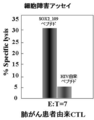
- FIG. 2 shows the results of cytotoxicity assay of SOX2_109 peptide. Significantly large cytotoxicity has been detected against the negative control HIV-derived peptide.
- FIG. 3 shows the results of ELISPOT assay of SOX2_109 peptide. The HIV-derived peptide as a negative control did not detect the release of IFN ⁇ , whereas the SOX2 — 109 peptide confirmed the release of IFN ⁇ .
- FIG. 4 shows the results of ELISPOT assay of SOX2-derived peptides.
- sur2B represents a group added with survivin2B as a negative control, and ( ⁇ ) represents a group where no peptide was added.
- CTLs responding to SOX2_50 and _58 were not derived from any patient, and CTLs responding to SOX2_124 and _216 were derived from 4 patients.
- FIG. 5a) shows the results of cytotoxicity assay on T2-A24 cells presenting SOX2-derived peptides as antigens
- b) shows the results of cytotoxicity assays in LHK2 lung cancer cells and normal LHK2 cells forcibly expressing SOX.
- Identification of the peptides of the present invention involves the following steps: (1) providing a peptide derived from SOX2 polypeptide having a sequence corresponding to the binding motif of HLA-A24 which is human major histocompatibility complex (MHC) class I; (2) adding the peptide to an antigen-presenting cell expressing HLA-A24 to obtain an antigen-presenting cell presenting the peptide by HLA-A24; (3) stimulating T cells with the antigen-presenting cells to induce CTL, and (4) measuring the cancer cytotoxicity of the induced CTL, It can carry out by the method containing.
- MHC human major histocompatibility complex
- the peptide of the present invention Since the peptide of the present invention has as few as 10 amino acids, it can be synthesized by a general amino acid chemical synthesis method, for example, the Fmoc method. It can also be synthesized using a commercially available amino acid synthesizer.
- the peptide of the present invention is derived from SOX2 polypeptide expressed inside cancer cells, it can be obtained from cancer cells of cancer patients (Suzuki, K. et al., J. Immunol., 163, 2783-2791 ( 1999)), the cell surface HLA-binding peptide can be isolated to obtain the corresponding peptide.
- the peptides of the present invention include those obtained by optionally modifying one or more amino acids of the above peptides.
- the modified peptide can also cause CTL induction that damages cells that have presented the SOX2 polypeptide-derived peptide with HLA-A24.
- the peptide of the present invention can induce cytotoxic T cells targeting cancer cells.
- Cells expressing HLA-A24 used for induction may be collected from cancer patients, but may be prepared by introducing a gene encoding HLA-A24 into non-HLA-A24 expressing cells.
- the peptide of the present invention may be any peptide derived from the SOX2 polypeptide, as long as it can induce CTLs that damage cells presented with antigen by HLA-A24, and has a certain binding affinity with HLA-A24.
- Peptides represented by SEQ ID NOs: 1, 4 to 9, and 11 are preferable in that they have sex.
- DNA encoding the peptide of the present invention is also included in the present invention.
- the DNA encoding the peptide of the present invention may be any DNA as long as it produces the peptide of the present invention when subjected to transcription and translation. Preferably, it encodes the peptide portion of the present invention in the Sox2 gene sequence. DNA having the same sequence as the target sequence.
- the peptide or DNA of the present invention can be used by itself or with an adjuvant, and further contains a pharmaceutically acceptable carrier as appropriate.
- Adjuvants include adjuvants intended to enhance the immune response, such as incomplete (complete) adjuvants of floyd, aluminum adjuvants, virus envelope vectors and the like.
- the pharmaceutically acceptable carrier include diluents such as PBS and distilled water, and physiological saline.
- the DNA used as the pharmaceutical composition includes a vector construct incorporating the DNA of the present invention in addition to the DNA alone.
- Any vector can be used as long as it allows the DNA of the present invention to act as a pharmaceutical composition, and a vector suitable for the form and purpose of the pharmaceutical composition can be appropriately employed by techniques well known in the art.
- the vector include, but are not limited to, a plasmid vector, a Sendai virus, a retrovirus, a vaccinia virus, an adenovirus, an adeno-associated virus, a herpes virus, an influenza virus, and the like.
- the pharmaceutical composition of the present invention can be used in the form of a cancer vaccine, an anticancer agent or a DNA vaccine.
- the cancer vaccine, anticancer agent or DNA vaccine of the present invention can be formed into a liquid, oil, emulsion, soft capsule, hard capsule, tablet, granule, solid agent or the like by a method well known in the art.
- the cancer vaccine and anticancer agent of the present invention can be administered orally, parenterally or transdermally depending on the form of use.
- intravenous administration, intramuscular administration, subcutaneous administration, intradermal administration and the like can be mentioned.
- the dosage usually varies depending on the patient's body weight, the nature and condition of the disease, but is up to 5-10 mg per day for adult use.
- the dose is 0.1 to 10 mg per week, preferably 100 to 1000 ⁇ g.
- CTL obtained by using the peptide of the present invention targets cancer cells, it can be used as an anticancer agent.
- it may contain a pharmaceutically acceptable carrier as appropriate and can take various forms.
- the anticancer agent containing the CTL of the present invention can be administered parenterally in the same manner as the cancer vaccine and anticancer agent containing the peptide of the present invention.
- the cancer to which the cancer vaccine, anticancer agent and DNA vaccine of the present invention can be applied is a cancer comprising cancer cells presenting the peptide of the present invention with HLA-A24, for example, epithelial cancer. Examples of epithelial cancer include lung cancer, stomach cancer, colon cancer, bladder cancer, pancreatic cancer, prostate cancer, breast cancer and the like.
- the peptides of the present invention can also be used to induce CTL targeting cancer cells.
- the induction can be performed according to the method described in the literature (Nabeta, Y. et al., Jpn. J. Cancer Res, 91, 616-621 (2000)). Specifically, the following steps: (1) providing a cell expressing HLA-A24; (2) A step of adding the peptide of the present invention to the cells and presenting the peptides on HLA-A24 (3) Stimulating T cells with cells presenting the peptides by HLA-A24, and treating the T cells with cancer Inducing cell target CTL, Can be used.
- Cells expressing HLA-A24 may be collected from cancer patients, but may be prepared by introducing a gene encoding HLA-A24 into non-HLA-A24 expressing cells.
- Example 1 Sox2-derived peptide HLA-A24 peptide binding assay The amino acid sequence of Sox2 is shown in SEQ ID NO: 16. It is known that the peptide that binds to HLA-A24 has tyrosine, tryptophan, phenylalanine or methionine as the second amino acid, and leucine, isoleucine, tryptophan, phenylalanine or methionine as the C-terminal amino acid. Among sequences contained in the amino acid sequence of Sox2, 9 to 11 amino acid sequences having this HLA-A24 binding motif were selected, and a total of 13 types of the following peptides were synthesized.
- SOX2_1 MYNMMETEL (SEQ ID NO: 1) SOX2_50: VWSRGQRRKM (SEQ ID NO: 2) SOX2_58: KMAQENPKM (SEQ ID NO: 3) SOX2 — 89: PFIDAAKRL (SEQ ID NO: 4) SOX2 — 109: KYRPRRKTTKTL (SEQ ID NO: 5) SOX2 — 119: LMKKDKKYTL (SEQ ID NO: 6) SOX2 — 124: KYTLPGGLL (SEQ ID NO: 7) SOX2 — 165: GWSNGSYSM (SEQ ID NO: 8) SOX2 — 170: SYSMMQDQL (SEQ ID NO: 9) SOX2 — 196: PMHRYDVSAL (SEQ ID NO: 10) SOX2 — 209: SMTSSQTYM (SEQ ID NO: 11) SOX2 — 216: YMNGSPTYSM (SEQ ID NO: 12)
- T2-A24 cells are a cell line in which HLA-A2402 gene is introduced into human lymphoblastoid T2 cells and expressed.
- a low level of HLA-A24 molecule is expressed on the cell surface of this cell and can be detected using an HLA-A24-specific monoclonal antibody and a flow cytometer.
- the expression level is quantified as mean fluorescence intensity (MFI).
- MFI mean fluorescence intensity
- T2-A24 cells were cultured overnight at 26 ° C. Thereafter, the cells were washed with PBS, a synthetic peptide derived from SOX2, HIV peptide (SEQ ID NO: 14) derived from human immunodeficiency virus as a positive control, and EBV peptide (SEQ ID NO: 15) derived from Epstein-Barr virus.
- SL8 peptide SEQ ID NO: 17
- SL8 peptide which is a peptide derived from ovalbumin
- HLA-A24 antibody (C7709A2.6) was added to the isolated cells, and the mixture was allowed to stand at 4 ° C. for 1 hour, and then washed with PBS.
- a fluorescently labeled anti-mouse IgG + IgM antibody was added as a secondary antibody, and the mixture was allowed to stand at 4 ° C. for 30 minutes, and then 1% formalin was added to fix the cells.
- FITC fluorescence intensity was measured for the fixed cells with a flow cytometer (BD FACS Calibur).
- PBMC Peripheral blood mononuclear cells
- Treated cells were co-cultured with 20 U / ml IL-2 (Takeda Pharmaceutical Co., Ltd.), 100,000 cells / well of CD8 positive lymphocytes, stimulated with CD8 positive lymphocytes once a week, and stimulated 3 times in total. Induced.
- the peptide-specific reactivity of the induced CTL was evaluated by cytotoxicity assay or ELISPOT assay.
- Example 3 Cr 51 was added to the cytotoxicity assay T2A24, cultured for 1 hour at 37 ° C. in RPMI medium, radiolabeled, and then washed four times with RPMI medium.
- SOX2 peptide or control peptide HV peptide
- 2000 / well T2A24 pulsed with SOX2 peptide or control peptide and 14000 / well CD8 positive lymphocytes induced in Example 2 were co-cultured in RPMI medium at 37 ° C. for 4 hours. Thereafter, the supernatant was collected, and the gamma dose was measured with a gamma counter.
- the dose when cultivating peptide pulse T2A24 only with RPMI medium is spontaneously released (SPR), and the dose when cultivating cell lysate (2% NP40) and peptide pulse T2A24 is maximum released (MXR).
- SPR spontaneously released
- MXR maximum released
- the activity was calculated as (measured value ⁇ SPR) / (MXR ⁇ SPR) ⁇ 100.
- CTLs that specifically impaired T2A24 pulsed with SOX2 — 109 peptide were detected.
- the results are shown in FIG. In the HIV-derived peptide that is a control peptide, radiation derived from damaged cells was hardly detected, whereas in the SOX2_109 peptide, a large amount was detected.
- Example 4 ELISPOT assay experiments were performed using a Human IFN ⁇ ELISPOT set (BD).
- the ELISPOT plate was coated with the anti-IFN ⁇ antibody by standing overnight at 4 ° C.
- SOX2 peptide or control peptide (HIV peptide) was added to T2A24, and allowed to stand at room temperature for 1 hour.
- 50000 peptide-pulsed T2A24 and 10000 CTL derived in Example 2 were co-cultured overnight at 37 ° C. on a plate coated with anti-IFN ⁇ antibody. After washing with 1 ⁇ PBS and 0.05% Tween 20, a biotin-labeled anti-IFN ⁇ antibody was added and allowed to stand at room temperature for 2 hours.
- Example 5 Comparison of cytotoxic T cell induction ability of each SOX2-derived peptide Peripheral blood derived from 6 HLA-A2402-positive lung cancer patients was used. Informed consent is obtained from all patients. PBMCs were separated by conventional density gradient centrifugation with Lymphoprep® (Nycomed, Oslo, Norway).
- C1R lymphoma subcell line C1R-A24 cells expressing HLA-A24 were pulsed with 10 ⁇ g / mL of each of the SOX2 peptides and survivin2B peptide as a negative control. Thereafter, 5 ⁇ 10 3 CTLs were co-cultured with 5 ⁇ 10 4 antigen-presenting cells C1R-A24 cells. After 24 hours incubation at 37 ° C., 5% CO 2 , the wells were washed 5 times with PBS and incubated with biotinylated anti-human IFN- ⁇ antibody and horseradish peroxidase-conjugated avidin. The formed IFN ⁇ spots were counted using KS ELISPOT (Carl Zeiss).
- CTLs that respond to SOX2_50 and _58 are not derived from any patient and are considered to be the least antigenic peptides. In contrast, CTLs that respond to SOX2_124 and _216 are derived from four patients and are considered to be the most antigenic peptides.
- Example 6 Cytotoxicity assay (1) Toxicity to cells presenting antigens of SOX2-derived peptides CD8 positive T cells were isolated from peripheral blood lymphocytes of patient A in Example 5 in the same manner as in Example 2, and other mononuclear cells were separated. Added phytohemagglutinin (PHA) and allowed to blast. Irradiate blasted mononuclear cells, add a mixture of 13 SOX2-derived peptides at a concentration of 10 ⁇ g / mL, add 50 units of IL-2, and mix culture with CD8 positive T cells did.
- PHA phytohemagglutinin
- T2-A24 cells Similar peptide stimulation was performed 3 times per week, and 5 days after the third stimulation, T2-A24 cells, T2-A24 cells (T2-A24-SOX2) added with a mixture of 13 SOX2 peptides, and negative control A cytotoxic assay was conducted targeting human erythroblast-like leukemia cells (K562).
- Cytotoxicity measurement by cytotoxicity assays were performed by a 51 Cr release assay.
- Target cells were labeled with 100 ⁇ Ci 51 Cr for 1 hour at 37 ° C. and washed 3 times with RPMI 1640 medium.
- Target cells labeled with 51 Cr were then incubated with effector cells at various effector / target ratios (E / T ratio) at 37 ° C. for 6 hours in a V-bottom 96-well microtiter plate. Thereafter, the supernatant was collected and the radioactivity was measured with a gamma counter.
- % Specific cell lysis was calculated as in Example 3. The results are shown in FIG. CD8 positive T cells mixed and cultured with SOX2-derived peptides specifically damaged T2-A24 cells to which SOX2-derived peptides were added.
- the cancer vaccine or anticancer agent based on the present invention can be an effective treatment or prevention means for cancer that has been difficult to treat or prevent by conventional treatment methods.
- the present invention contributes to medical improvement and human welfare.
Landscapes
- Health & Medical Sciences (AREA)
- Chemical & Material Sciences (AREA)
- Life Sciences & Earth Sciences (AREA)
- Organic Chemistry (AREA)
- General Health & Medical Sciences (AREA)
- Medicinal Chemistry (AREA)
- Biochemistry (AREA)
- Biophysics (AREA)
- Proteomics, Peptides & Aminoacids (AREA)
- Animal Behavior & Ethology (AREA)
- Molecular Biology (AREA)
- Public Health (AREA)
- Veterinary Medicine (AREA)
- Pharmacology & Pharmacy (AREA)
- Genetics & Genomics (AREA)
- Toxicology (AREA)
- Immunology (AREA)
- Gastroenterology & Hepatology (AREA)
- Zoology (AREA)
- General Chemical & Material Sciences (AREA)
- Nuclear Medicine, Radiotherapy & Molecular Imaging (AREA)
- Chemical Kinetics & Catalysis (AREA)
- Mycology (AREA)
- Microbiology (AREA)
- Oncology (AREA)
- Epidemiology (AREA)
- Medicines Containing Antibodies Or Antigens For Use As Internal Diagnostic Agents (AREA)
- Peptides Or Proteins (AREA)
- Medicines That Contain Protein Lipid Enzymes And Other Medicines (AREA)
- Medicines Containing Material From Animals Or Micro-Organisms (AREA)
- Micro-Organisms Or Cultivation Processes Thereof (AREA)
- Pharmaceuticals Containing Other Organic And Inorganic Compounds (AREA)
Abstract
Description
また本発明は、前記ペプチドを含む癌ワクチン及び抗癌剤に関する。
更に本発明は、癌細胞を標的とするCTLを誘導するための前記ペプチドの使用、得られたCTL及び前記CTLを含む抗癌剤に関する。
また、近年の研究で、癌の再発や転移の主要な原因と考えられている癌幹細胞を含む癌組織中においても、Sox2遺伝子が多く発現していることが示されている(非特許文献1~7)。
本発明者等は、種々のSOX2由来のペプチドについて癌抗原性、すなわちCTL誘導能について鋭意検討を重ねたところ、SOX2遺伝子によりコードされる317個からなるアミノ酸配列内にHLA-A24結合モチーフがあり、このなかの特定のペプチドがCTLを誘導することができることを見いだした。これらの知見により、本発明を完成するに至った。
本発明はまた、ペプチドが、配列番号1、4~9および12に示されるアミノ酸配列、または該アミノ酸配列において1もしくは数個のアミノ酸が欠失、置換もしくは付加されている配列からなる、上記のペプチドに関する。
本発明はさらに、上記のペプチドにより誘導された細胞傷害性T細胞に関する。
また、本発明は、上記のペプチドおよび/または上記の細胞傷害性T細胞および/または上記のDNAを含む、医薬組成物に関する。
さらにまた、本発明は、医薬組成物が、癌ワクチンである、上記の医薬組成物に関する。
本発明はまた、医薬組成物が、抗癌剤である、上記の医薬組成物に関する。
本発明はさらに、医薬組成物が、DNAワクチンである、上記の医薬組成物に関する。
本発明はさらにまた、癌細胞を標的とする細胞傷害性T細胞を誘導するための、上記のペプチドの使用に関する。
本発明のペプチドの同定は、以下の工程:
(1)ヒト主要組織適合抗原複合体(MHC)クラスIであるHLA-A24の結合モチーフに対応する配列を有する、SOX2ポリペプチド由来のペプチドを提供する工程、
(2)前記のペプチドを、HLA-A24を発現する抗原提示細胞に添加しHLA-A24により前記ペプチドを提示している抗原提示細胞を得る工程、
(3)前記抗原提示細胞でT細胞を刺激してCTLを誘導する工程、及び、
(4)誘導されたCTLの癌細胞傷害能を測定する工程、
を含む方法により行うことができる。
医薬的に許容しうる担体としては、例えばPBS、蒸留水等の希釈剤、生理食塩水等が挙げられる。
本発明の癌ワクチン及び抗癌剤は、その使用形態に応じて経口、非経口又は経皮投与することができる。例えば、静注投与、筋注投与、皮下投与、皮内投与等が挙げられる。投与量は、通常、患者の体重、疾患の性質及び状態に依存して変化するが、成人に使用する場合、1日あたり最大で5~10mgである。例えば、成人癌患者に皮下注射により使用する場合、1週間あたり0.1~10mgであり、好ましくは100~1000μgである。
本発明の癌ワクチン、抗癌剤およびDNAワクチンを適用しうる癌は、本発明のペプチドをHLA-A24により提示している癌細胞からなる癌、例えば上皮癌である。上皮癌としては、肺癌、胃癌、大腸癌、膀胱癌、膵癌、前立腺癌、乳癌等が挙げられる。
具体的には以下の工程:
(1)HLA-A24を発現している細胞を提供する工程、
(2)前記細胞に本発明のペプチドを添加して、HLA-A24上に提示させる工程
(3)前記ペプチドをHLA-A24により提示している細胞でT細胞を刺激し、前記T細胞を癌細胞標的CTLへ誘導する工程、
を含む方法を使用することができる。
HLA-A24を発現する細胞は癌患者から採取したものでもよいが、非HLA-A24発現細胞に、HLA-A24をコードする遺伝子を導入して作成してもよい。
Sox2由来ペプチドのHLA-A24ペプチド結合アッセイ
Sox2のアミノ酸配列は、配列番号16に示されている。HLA-A24に結合するペプチドは、2番目のアミノ酸がチロシン、トリプトファン、フェニルアラニンまたはメチオニンであり、C末端のアミノ酸がロイシン、イソロイシン、トリプトファン、フェニルアラニンまたはメチオニンであることが知られている。Sox2のアミノ酸配列に含まれる配列のうち、このHLA-A24結合モチーフを有する9から11アミノ酸配列を選択し、以下のペプチドを計13種類合成した。
SOX2_50:VWSRGQRRKM(配列番号2)
SOX2_58:KMAQENPKM(配列番号3)
SOX2_89:PFIDEAKRL(配列番号4)
SOX2_109:KYRPRRKTKTL(配列番号5)
SOX2_119:LMKKDKYTL(配列番号6)
SOX2_124:KYTLPGGLL(配列番号7)
SOX2_165:GWSNGSYSM(配列番号8)
SOX2_170:SYSMMQDQL(配列番号9)
SOX2_196:PMHRYDVSAL(配列番号10)
SOX2_209:SMTSSQTYM(配列番号11)
SOX2_216:YMNGSPTYSM(配列番号12)
SOX2_226:SYSQQGTPGM(配列番号13)
CTL誘導
インフォームドコンセントを得たHLA-A24陽性肺がん患者あるいはHLA-A24陽性健常者の末梢血50mlから、フィコール・コンレイ密度勾配中で遠心することにより、末梢血単核球(PBMC)を分離、回収した。続いてCD8 MACS beadsを用いて、PBMCよりCD8陽性リンパ球とCD8陰性リンパ球に分離した。
96ウェルプレートで200000個/ウェルのCD8陰性リンパ球と上記HLA-A24結合性SOX2ペプチドをそれぞれ混ぜ、室温で2時間静置後、100Gy分放射線処理した。処理した細胞を20U/mlのIL-2(武田薬品工業)、100000個/ウェルのCD8陽性リンパ球と共培養し、CD8陽性リンパ球刺激を週1回行い、計3回刺激してCTLを誘導した。誘導したCTLのペプチド特異的反応性を細胞傷害アッセイあるいはELISPOTアッセイにて評価した。
細胞傷害アッセイ
T2A24にCr51を加え、RPMI培地中で、37℃で1時間培養して放射線標識した後、RPMI培地で4回洗浄した。Cr標識したT2A24にSOX2ペプチドあるいはコントロールペプチド(HIVペプチド)を混ぜ、室温で1時間静置した。SOX2ペプチドあるいはコントロールペプチドをパルスした2000個/ウェルのT2A24と、実施例2にて誘導した14000個/ウェルのCD8陽性リンパ球をRPMI培地中で、37℃で4時間共培養した。その後上清を回収し、ガンマカウンターにてガンマ線量を測定した。
その結果、SOX2_109ペプチドをパルスしたT2A24に対して特異的に障害するCTLを検出した。結果を図2に示す。コントロールペプチドであるHIV由来ペプチドでは、傷害細胞由来の放射線がほとんど検出されないのに対して、SOX2_109ペプチドでは多く検出された。
ELISPOTアッセイ
実験はHuman IFNγ ELISPOT set (BD)を使用して行った。ELISPOTプレートに抗IFNγ抗体を4℃で一晩静置してコートした。T2A24にSOX2ペプチドあるいはコントロールペプチド(HIVペプチド)をそれぞれ加え、室温1時間静置した。50000個のペプチドパルスしたT2A24と、実施例2にて誘導した10000個のCTLを抗IFNγ抗体をコートしたプレートで、37℃で一晩共培養した。1×PBSと0.05%のTween20で洗浄後、ビオチン標識抗IFNγ抗体を加え、室温で2時間静置した。1×PBSと0.05%のTween20で洗浄後、HRP標識ストレプトアビジンを加え、室温で1時間静置した。1×PBSと0.05%のTween20で洗浄後、発色試薬を加え、スポット数を測定した。
各SOX2由来ペプチドの細胞傷害性T細胞誘導能比較
HLA-A2402陽性の肺がん患者6人由来の末梢血を使用した。全ての患者からインフォームドコンセントを取得している。PBMCsを、Lymphoprep(登録商標)(Nycomed社、オスロ、ノルウェー)で、常法の密度勾配遠心分離法により分離した。
上記で分離したPBMCsを、1×10⁷PBMCs/ウェルとなるように播種し、10%のプールヒトAB血清を含むAIM培地(ライフテクノロジーズ社)で培養した。pcDNA3.1 plasmid(Invitrogen)にSOX2全長をコードするcDNAを挿入し、これをマンノース被覆リポソームに包埋した(OML-SOX2、株式会社バイオメッドコアにて作製)。1日目に、OML-SOX2を0.1μg/mLまたは1μg/mLの濃度でパルスし、50UのIL-2を添加して1週間培養した。その後エンザイムリンクトエリスポット(以下、「ELISPOT」という)アッセイによりSOX2由来ペプチド特異的CTLsを検出した。
前記SOX2由来ペプチドに対するCTLsの特異性を、既に報告されている方法(Tsuruma, Tら、J. Transl. Med.,6:24(2008))に従って、IFNγ ELISPOTアッセイにより判定した。まずマルチスクリーン96ウェルプレート(ミリポア社、ベッドフォード、マサチューセッツ州)に、PBS中の5μg/mLの抗IFNγ捕捉抗体(Beckton Dickinson Biosciences)を100μL/ウェルで添加し、4℃で一晩無菌的に静置してコートした。プレートを200μL/ウェルで一回洗浄し、10%ヒト血清入りAIM-V培地200μL/ウェルを用いて室温で2時間ブロッキングした。抗原提示細胞として、HLA-A24を発現するC1Rリンパ腫の亜細胞株C1R-A24細胞を10μg/mLの前記各SOX2ペプチドおよびネガティブコントロールとしてsurvivin2Bペプチドでパルスしたものを用いた。その後、5×103個のCTLsを、5×104個の抗原提示細胞C1R-A24細胞と共培養した。37℃、5%CO2で24時間培養後、PBSでウェルを5回洗浄し、ビオチン化抗ヒトIFN-γ抗体および西洋ワサビペルオキシダーゼ結合アビジンとともにインキュベートした。形成されたIFNγスポットをKS ELISPOT(Carl Zeiss)を用いてカウントした。
細胞傷害アッセイ
(1)SOX2由来ペプチドを抗原提示する細胞に対する傷害性
実施例5における患者Aの末梢血リンパ球からCD8陽性T細胞を実施例2と同様に分離し、その他の単核球細胞にはフィトヘマグルチニン(PHA)を添加して芽球化させた。芽球化させた単核球細胞に放射線を照射し、前記SOX2由来ペプチド13種の混合物を10μg/mLの濃度で添加し、IL-2を50単位添加して、CD8陽性T細胞とともに混合培養した。同様のペプチド刺激を1週間毎に3回行い、3回目の刺激から5日後に、T2-A24細胞、SOX2ペプチド13種の混合物を添加したT2-A24細胞(T2-A24-SOX2)およびネガティブコントロールとしてヒト赤芽球様白血病細胞(K562)を標的として細胞傷害アッセイを行った。
結果を図5a)に示す。SOX2由来ペプチドと混合培養したCD8陽性T細胞は、SOX2由来ペプチドを添加したT2-A24細胞を特異的に傷害した。
(1)と同様に、HLA-A24陽性LHK2肺がん細胞およびSOX2遺伝子導入LHK2細胞(LHK2-SOX2)を標的として、細胞傷害アッセイを行った。
結果を図5b)に示す。SOX2由来ペプチドと混合培養したCD8陽性T細胞は、SOX2を強制発現したLHK2細胞に対して高い細胞傷害活性を示した。
Claims (9)
- 癌細胞を標的とする細胞傷害性T細胞を誘導しうるペプチドであって、該ペプチドが、Sox2遺伝子によってコードされるポリペプチド由来のアミノ酸配列からなるか、またはそのアミノ酸配列において1もしくは数個のアミノ酸が欠失、置換もしくは付加されているアミノ酸配列からなり、かつHLA-A24によって抗原提示される、前記ペプチド。
- ペプチドが、配列番号1、4~9および12に示されるアミノ酸配列、または該アミノ酸配列において1もしくは数個のアミノ酸が欠失、置換もしくは付加されている配列からなる、請求項1に記載のペプチド。
- 請求項1または2に記載のペプチドにより誘導された、細胞傷害性T細胞。
- 請求項1または2に記載のペプチドをコードする、DNA。
- 請求項1もしくは2に記載のペプチドおよび/または請求項3に記載の細胞傷害性T細胞および/または請求項4に記載のDNAを含む、医薬組成物。
- 医薬組成物が、癌ワクチンである、請求項5に記載の医薬組成物。
- 医薬組成物が、抗癌剤である、請求項5に記載の医薬組成物。
- 医薬組成物が、DNAワクチンである、請求項5に記載の医薬組成物。
- 癌細胞を標的とする細胞傷害性T細胞を誘導するための、請求項1または2に記載のペプチドの使用。
Priority Applications (2)
| Application Number | Priority Date | Filing Date | Title |
|---|---|---|---|
| CN201080012815.1A CN102369281B (zh) | 2009-03-19 | 2010-03-19 | 来源于sox2的hla-a24结合性癌抗原肽 |
| JP2011504898A JPWO2010107116A1 (ja) | 2009-03-19 | 2010-03-19 | Sox2由来のhla−a24結合性癌抗原ペプチド |
Applications Claiming Priority (2)
| Application Number | Priority Date | Filing Date | Title |
|---|---|---|---|
| JP2009-068656 | 2009-03-19 | ||
| JP2009068656 | 2009-03-19 |
Publications (1)
| Publication Number | Publication Date |
|---|---|
| WO2010107116A1 true WO2010107116A1 (ja) | 2010-09-23 |
Family
ID=42739772
Family Applications (1)
| Application Number | Title | Priority Date | Filing Date |
|---|---|---|---|
| PCT/JP2010/054852 Ceased WO2010107116A1 (ja) | 2009-03-19 | 2010-03-19 | Sox2由来のhla-a24結合性癌抗原ペプチド |
Country Status (4)
| Country | Link |
|---|---|
| JP (1) | JPWO2010107116A1 (ja) |
| KR (1) | KR20110134482A (ja) |
| CN (1) | CN102369281B (ja) |
| WO (1) | WO2010107116A1 (ja) |
Cited By (4)
| Publication number | Priority date | Publication date | Assignee | Title |
|---|---|---|---|---|
| WO2017200017A1 (ja) * | 2016-05-19 | 2017-11-23 | 東洋製罐グループホールディングス株式会社 | 細胞調製方法、及び細胞培養容器 |
| JP2020531846A (ja) * | 2017-08-21 | 2020-11-05 | サヴィセル ダイアグノスティック リミテッドSavicell Diagnostic Ltd. | 肺癌を診断及び治療する方法 |
| CN113861276A (zh) * | 2021-10-22 | 2021-12-31 | 厦门大学 | 靶向结合CDP上Sox2-CDP蛋白复合物中结合结构域的多肽及其合成方法和应用 |
| WO2022066965A3 (en) * | 2020-09-24 | 2022-07-07 | Fred Hutchinson Cancer Research Center | Immunotherapy targeting sox2 antigens |
Families Citing this family (1)
| Publication number | Priority date | Publication date | Assignee | Title |
|---|---|---|---|---|
| CN105031631A (zh) * | 2015-05-22 | 2015-11-11 | 深圳市中美康士生物科技有限公司 | 一种HLA-A0201限制性抗Sox2特异性CTL的制备方法及其应用 |
Citations (2)
| Publication number | Priority date | Publication date | Assignee | Title |
|---|---|---|---|---|
| WO2001053349A2 (en) * | 2000-01-21 | 2001-07-26 | Ludwig Institute For Cancer Research | Small cell lung cancer associated antigens and uses therefor |
| JP2008044848A (ja) * | 2004-11-30 | 2008-02-28 | Univ Kurume | Hla−a24拘束性腫瘍抗原ペプチド |
Family Cites Families (1)
| Publication number | Priority date | Publication date | Assignee | Title |
|---|---|---|---|---|
| EP3118326B1 (en) * | 2008-10-27 | 2020-04-29 | Sapporo Medical University | Molecular marker for cancer stem cell |
-
2010
- 2010-03-19 WO PCT/JP2010/054852 patent/WO2010107116A1/ja not_active Ceased
- 2010-03-19 KR KR1020117024426A patent/KR20110134482A/ko not_active Withdrawn
- 2010-03-19 CN CN201080012815.1A patent/CN102369281B/zh not_active Expired - Fee Related
- 2010-03-19 JP JP2011504898A patent/JPWO2010107116A1/ja active Pending
Patent Citations (2)
| Publication number | Priority date | Publication date | Assignee | Title |
|---|---|---|---|---|
| WO2001053349A2 (en) * | 2000-01-21 | 2001-07-26 | Ludwig Institute For Cancer Research | Small cell lung cancer associated antigens and uses therefor |
| JP2008044848A (ja) * | 2004-11-30 | 2008-02-28 | Univ Kurume | Hla−a24拘束性腫瘍抗原ペプチド |
Non-Patent Citations (4)
| Title |
|---|
| MUNEHIDE NAKATSUGAWA ET AL.: "Gan Kansaibo Kogen Bunshi Toshite no SOX2", SOCIETY FOR FUNDAMENTAL CANCER IMMUNOLOGY SOKAI SHOROKU, vol. 12TH, 2008, pages 39 * |
| SCHMITZ, M. ET AL.: "Corrigendum, Identification of SOX2 as a novel glioma- associated antigen and potential target for T cell-based immunotherapy", BRT. J. CANCER, vol. 96, 2007, pages 1928 * |
| SCHMITZ, M. ET AL.: "Identification of SOX2 as a novel glioma-associated antigen and potential target for T cell-based immunotherapy", BRT. J. CANCER, vol. 96, 2007, pages 1293 - 1301 * |
| YOSHIHIKO HIROHASHI ET AL.: "Gan Kansaibo o Hyoteki to suru Men'eki Ryoho", JAPAN SOCIETY OF IMMUNOLOGY & ALLERGOLOGY IN OTOLARYNGOLOGY, vol. 27TH, January 2009 (2009-01-01), pages 75 * |
Cited By (8)
| Publication number | Priority date | Publication date | Assignee | Title |
|---|---|---|---|---|
| WO2017200017A1 (ja) * | 2016-05-19 | 2017-11-23 | 東洋製罐グループホールディングス株式会社 | 細胞調製方法、及び細胞培養容器 |
| JP2020531846A (ja) * | 2017-08-21 | 2020-11-05 | サヴィセル ダイアグノスティック リミテッドSavicell Diagnostic Ltd. | 肺癌を診断及び治療する方法 |
| US11619634B2 (en) | 2017-08-21 | 2023-04-04 | Savicell Diagnostic Ltd. | Methods of diagnosing and treating lung cancer |
| JP7356412B2 (ja) | 2017-08-21 | 2023-10-04 | サヴィセル ダイアグノスティック リミテッド | 肺癌を検出する方法 |
| US12306188B2 (en) | 2017-08-21 | 2025-05-20 | Savicell Diagnostic | Methods of diagnosing and treating lung cancer |
| WO2022066965A3 (en) * | 2020-09-24 | 2022-07-07 | Fred Hutchinson Cancer Research Center | Immunotherapy targeting sox2 antigens |
| JP2023542528A (ja) * | 2020-09-24 | 2023-10-10 | フレッド ハッチンソン キャンサー センター | Sox2抗原を標的とする免疫療法 |
| CN113861276A (zh) * | 2021-10-22 | 2021-12-31 | 厦门大学 | 靶向结合CDP上Sox2-CDP蛋白复合物中结合结构域的多肽及其合成方法和应用 |
Also Published As
| Publication number | Publication date |
|---|---|
| JPWO2010107116A1 (ja) | 2012-09-20 |
| KR20110134482A (ko) | 2011-12-14 |
| CN102369281A (zh) | 2012-03-07 |
| CN102369281B (zh) | 2014-01-08 |
Similar Documents
| Publication | Publication Date | Title |
|---|---|---|
| RU2721574C2 (ru) | Вакцинная композиция против злокачественной опухоли | |
| JP4185147B2 (ja) | Kdrペプチド及びこれを含むワクチン | |
| RU2435782C2 (ru) | Hla-a*3303-рестриктированный пептид wt1 и содержащая его фармацевтическая композиция | |
| CN108478780B (zh) | Ctl诱导剂组合物 | |
| CN107148469A (zh) | 肿瘤抗原肽 | |
| CN109970846A (zh) | 一种肿瘤相关抗原XAGE-1b九肽及其应用 | |
| WO2010107116A1 (ja) | Sox2由来のhla-a24結合性癌抗原ペプチド | |
| CN106279392B (zh) | 肿瘤相关抗原XAGE-1b短肽及其应用 | |
| JPWO2017115798A1 (ja) | 腫瘍抗原ペプチド | |
| JP4780540B2 (ja) | サバイビン由来癌抗原ペプチド | |
| JP4779067B2 (ja) | HLA−A2402拘束性Ep−CAM特異的CTLが認識するエピトープ・ペプチド及びその用途 | |
| JP4365405B2 (ja) | Mhc分子と結合する腫瘍関連ペプチド | |
| WO2017086354A1 (ja) | Hla-a11拘束性細胞傷害性t細胞エピトープペプチド | |
| CN105531368A (zh) | 肿瘤抗原肽 | |
| JP4602006B2 (ja) | サバイビン由来のhla−a24結合性癌抗原ペプチド | |
| Rodeberg et al. | Generation of tumoricidal PAX3 peptide antigen specific cytotoxic T lymphocytes | |
| US10617750B2 (en) | Partner of SLD five 1 (PSF1)-derived peptide | |
| CN106279391B (zh) | 肿瘤相关抗原XAGE-1b短肽及应用 | |
| JP2008289380A (ja) | 新規癌抗原ペプチドおよびその利用 | |
| CN110016073A (zh) | 一种XAGE-1b九肽及其应用 |
Legal Events
| Date | Code | Title | Description |
|---|---|---|---|
| WWE | Wipo information: entry into national phase |
Ref document number: 201080012815.1 Country of ref document: CN |
|
| 121 | Ep: the epo has been informed by wipo that ep was designated in this application |
Ref document number: 10753607 Country of ref document: EP Kind code of ref document: A1 |
|
| DPE1 | Request for preliminary examination filed after expiration of 19th month from priority date (pct application filed from 20040101) | ||
| WWE | Wipo information: entry into national phase |
Ref document number: 2011504898 Country of ref document: JP |
|
| NENP | Non-entry into the national phase |
Ref country code: DE |
|
| ENP | Entry into the national phase |
Ref document number: 20117024426 Country of ref document: KR Kind code of ref document: A |
|
| 122 | Ep: pct application non-entry in european phase |
Ref document number: 10753607 Country of ref document: EP Kind code of ref document: A1 |