WO2010087022A1 - 連結車両の挙動制御装置 - Google Patents
連結車両の挙動制御装置 Download PDFInfo
- Publication number
- WO2010087022A1 WO2010087022A1 PCT/JP2009/051722 JP2009051722W WO2010087022A1 WO 2010087022 A1 WO2010087022 A1 WO 2010087022A1 JP 2009051722 W JP2009051722 W JP 2009051722W WO 2010087022 A1 WO2010087022 A1 WO 2010087022A1
- Authority
- WO
- WIPO (PCT)
- Prior art keywords
- trailer
- tractor
- braking
- vehicle
- driving force
- Prior art date
- Legal status (The legal status is an assumption and is not a legal conclusion. Google has not performed a legal analysis and makes no representation as to the accuracy of the status listed.)
- Ceased
Links
Images
Classifications
-
- B—PERFORMING OPERATIONS; TRANSPORTING
- B60—VEHICLES IN GENERAL
- B60T—VEHICLE BRAKE CONTROL SYSTEMS OR PARTS THEREOF; BRAKE CONTROL SYSTEMS OR PARTS THEREOF, IN GENERAL; ARRANGEMENT OF BRAKING ELEMENTS ON VEHICLES IN GENERAL; PORTABLE DEVICES FOR PREVENTING UNWANTED MOVEMENT OF VEHICLES; VEHICLE MODIFICATIONS TO FACILITATE COOLING OF BRAKES
- B60T7/00—Brake-action initiating means
- B60T7/12—Brake-action initiating means for automatic initiation; for initiation not subject to will of driver or passenger
- B60T7/20—Brake-action initiating means for automatic initiation; for initiation not subject to will of driver or passenger specially for trailers, e.g. in case of uncoupling of or overrunning by trailer
-
- B—PERFORMING OPERATIONS; TRANSPORTING
- B60—VEHICLES IN GENERAL
- B60T—VEHICLE BRAKE CONTROL SYSTEMS OR PARTS THEREOF; BRAKE CONTROL SYSTEMS OR PARTS THEREOF, IN GENERAL; ARRANGEMENT OF BRAKING ELEMENTS ON VEHICLES IN GENERAL; PORTABLE DEVICES FOR PREVENTING UNWANTED MOVEMENT OF VEHICLES; VEHICLE MODIFICATIONS TO FACILITATE COOLING OF BRAKES
- B60T8/00—Arrangements for adjusting wheel-braking force to meet varying vehicular or ground-surface conditions, e.g. limiting or varying distribution of braking force
- B60T8/17—Using electrical or electronic regulation means to control braking
- B60T8/1701—Braking or traction control means specially adapted for particular types of vehicles
- B60T8/1708—Braking or traction control means specially adapted for particular types of vehicles for lorries or tractor-trailer combinations
-
- B—PERFORMING OPERATIONS; TRANSPORTING
- B60—VEHICLES IN GENERAL
- B60T—VEHICLE BRAKE CONTROL SYSTEMS OR PARTS THEREOF; BRAKE CONTROL SYSTEMS OR PARTS THEREOF, IN GENERAL; ARRANGEMENT OF BRAKING ELEMENTS ON VEHICLES IN GENERAL; PORTABLE DEVICES FOR PREVENTING UNWANTED MOVEMENT OF VEHICLES; VEHICLE MODIFICATIONS TO FACILITATE COOLING OF BRAKES
- B60T8/00—Arrangements for adjusting wheel-braking force to meet varying vehicular or ground-surface conditions, e.g. limiting or varying distribution of braking force
- B60T8/17—Using electrical or electronic regulation means to control braking
- B60T8/1755—Brake regulation specially adapted to control the stability of the vehicle, e.g. taking into account yaw rate or transverse acceleration in a curve
-
- B—PERFORMING OPERATIONS; TRANSPORTING
- B60—VEHICLES IN GENERAL
- B60T—VEHICLE BRAKE CONTROL SYSTEMS OR PARTS THEREOF; BRAKE CONTROL SYSTEMS OR PARTS THEREOF, IN GENERAL; ARRANGEMENT OF BRAKING ELEMENTS ON VEHICLES IN GENERAL; PORTABLE DEVICES FOR PREVENTING UNWANTED MOVEMENT OF VEHICLES; VEHICLE MODIFICATIONS TO FACILITATE COOLING OF BRAKES
- B60T8/00—Arrangements for adjusting wheel-braking force to meet varying vehicular or ground-surface conditions, e.g. limiting or varying distribution of braking force
- B60T8/24—Arrangements for adjusting wheel-braking force to meet varying vehicular or ground-surface conditions, e.g. limiting or varying distribution of braking force responsive to vehicle inclination or change of direction, e.g. negotiating bends
- B60T8/246—Change of direction
-
- B—PERFORMING OPERATIONS; TRANSPORTING
- B60—VEHICLES IN GENERAL
- B60T—VEHICLE BRAKE CONTROL SYSTEMS OR PARTS THEREOF; BRAKE CONTROL SYSTEMS OR PARTS THEREOF, IN GENERAL; ARRANGEMENT OF BRAKING ELEMENTS ON VEHICLES IN GENERAL; PORTABLE DEVICES FOR PREVENTING UNWANTED MOVEMENT OF VEHICLES; VEHICLE MODIFICATIONS TO FACILITATE COOLING OF BRAKES
- B60T8/00—Arrangements for adjusting wheel-braking force to meet varying vehicular or ground-surface conditions, e.g. limiting or varying distribution of braking force
- B60T8/24—Arrangements for adjusting wheel-braking force to meet varying vehicular or ground-surface conditions, e.g. limiting or varying distribution of braking force responsive to vehicle inclination or change of direction, e.g. negotiating bends
- B60T8/248—Trailer sway, e.g. for preventing jackknifing
-
- B—PERFORMING OPERATIONS; TRANSPORTING
- B60—VEHICLES IN GENERAL
- B60T—VEHICLE BRAKE CONTROL SYSTEMS OR PARTS THEREOF; BRAKE CONTROL SYSTEMS OR PARTS THEREOF, IN GENERAL; ARRANGEMENT OF BRAKING ELEMENTS ON VEHICLES IN GENERAL; PORTABLE DEVICES FOR PREVENTING UNWANTED MOVEMENT OF VEHICLES; VEHICLE MODIFICATIONS TO FACILITATE COOLING OF BRAKES
- B60T2230/00—Monitoring, detecting special vehicle behaviour; Counteracting thereof
- B60T2230/06—Tractor-trailer swaying
-
- B—PERFORMING OPERATIONS; TRANSPORTING
- B62—LAND VEHICLES FOR TRAVELLING OTHERWISE THAN ON RAILS
- B62D—MOTOR VEHICLES; TRAILERS
- B62D53/00—Tractor-trailer combinations; Road trains
- B62D53/04—Tractor-trailer combinations; Road trains comprising a vehicle carrying an essential part of the other vehicle's load by having supporting means for the front or rear part of the other vehicle
- B62D53/08—Fifth wheel traction couplings
- B62D53/0871—Fifth wheel traction couplings with stabilising means, e.g. to prevent jack-knifing, pitching, rolling, buck jumping
Definitions
- the present invention relates to a behavior control device for a vehicle such as an automobile, and more particularly to a behavior control device for avoiding or suppressing a jackknife phenomenon in a connected vehicle in which a tractor pulls a trailer.
- a trailer to be pulled by a tractor is pivotally connected by a pin or a coupler provided at a rear portion of the tractor.
- the connection angle (hitch angle) between the tractor and trailer increases suddenly when the vehicle is suddenly braked, suddenly steered or retreated, and the vehicle is not connected to the pin or coupler. It is known that the “jackknife phenomenon” that results in an unstable behavior bent in a V shape is likely to occur.
- Patent Document 1 proposes a tractor-trailer coupler that incorporates a braking control mechanism that generates a braking force difference between left and right wheels so that a yaw moment is generated in a direction that reduces the hitch angle in the trailer.
- Patent Document 2 discloses that an electronically controlled braking control device independently controls the braking force of the left and right wheels of a vehicle when the danger of a jackknife phenomenon is detected.
- Patent Documents 3 to 5 in order to prevent the jackknife phenomenon due to the pushing of the tractor by the trailer at the start of the yaw moment control of the tractor, at the start of the automatic deceleration control or at the time of braking while running downhill, It has been proposed to brake the trailer early.
- Patent Document 6 proposes avoiding the jackknife phenomenon by providing driving means such as an electric motor on the trailer wheel and adjusting the driving force of the left and right wheels of the trailer so as to control the traveling track of the trailer. ing.
- the jackknife phenomenon of a connected vehicle as described above is such that when the yaw rate of the tractor and trailer is reversed and the difference between them increases, the tire lateral force suppresses the rotational approach between the trailer and the tractor. It is caused by not being able to finish. Then, the rotational kinetic energy or rotational force (rotational action) when the trailer and the tractor approach while rotating relatively around the connecting pin increases with the vehicle speed and deceleration. On the other hand, there is a limit to the rotational force or energy that can be suppressed by braking control or yaw rate control of the tractor or trailer.
- the yaw rate difference between the tractor and trailer is reduced early before the relative rotational action of the trailer and tractor becomes excessive.
- the relative rotational action between the trailer and the tractor can be increased by the vehicle speed or the deceleration.
- one object of the present invention is to provide a behavior control device for preventing a jackknife phenomenon of a connected vehicle considering that the relative rotational action of a trailer and a tractor can increase due to an increase in vehicle speed or deceleration. It is to be.
- Another object of the present invention is a behavior control apparatus as described above, which performs early control of the yaw rate of the trailer or tractor when the vehicle speed or deceleration is high, and the relative rotation between the trailer and the tractor.
- An object of the present invention is to provide a device that can suppress an action before the action becomes large.
- a behavior control apparatus for a coupled vehicle including a tractor and a trailer that is pivotally coupled to and pulled by a coupling pin provided at the rear of the tractor includes: a yaw rate of the tractor; A braking / driving force control unit that controls the braking / driving force of the tractor or trailer so as to reduce a deviation from the trailer yaw rate, and a determination unit that determines whether the braking / driving force control of the tractor or trailer by the braking / driving force control unit is necessary. And when the determination unit determines that the braking / driving force control is necessary, the braking / driving force control unit executes the braking / driving force control.
- the determination as to whether driving force control is necessary is configured to be changed based on the vehicle speed or deceleration of the vehicle.
- the magnitude of the relative rotational action of the trailer around the connecting pin with respect to the tractor varies depending on the vehicle speed or deceleration of the vehicle. Therefore, according to the above configuration, behavior control for reducing the deviation between the tractor yaw rate and the trailer yaw rate corresponding to the magnitude of the relative rotational action between the trailer and the tractor, that is, the jackknife phenomenon is prevented.
- Whether or not to execute the control is determined, and the execution of the control for preventing the jackknife phenomenon can be started at a more appropriate time.
- the determination unit determines that the braking / driving force control is necessary when the vehicle speed or deceleration of the vehicle is high compared to when the vehicle speed or deceleration of the vehicle is low. It may be easy to do.
- the determination unit may be configured to easily determine that the braking / driving force control is necessary as the vehicle deceleration is higher or the vehicle speed is higher.
- the determination unit needs the braking / driving force control when the magnitude of the deviation between the tractor yaw rate and the trailer yaw rate exceeds a predetermined control threshold. May be configured to determine. In this case, when the vehicle speed or deceleration of the vehicle is high, as one easy configuration for making it easier to determine that the braking / driving force control is necessary than when the vehicle speed or deceleration of the vehicle is low, The threshold value may be reduced when the vehicle speed or deceleration of the vehicle is high compared to when the vehicle speed or deceleration of the vehicle is low.
- control threshold ⁇ _th is determined using the control threshold initial value ⁇ _o, the vehicle speed dependent gain ⁇ v, and the deceleration dependent gain ⁇ g.
- ⁇ _th ⁇ _o ⁇ ⁇ v ⁇ ⁇ g (1)
- the vehicle speed dependent gain ⁇ v may be set so as to decrease as the vehicle speed increases, and the deceleration dependent gain ⁇ g may be set to decrease as the deceleration increases.
- the control threshold when at least one of the vehicle speed or deceleration of the vehicle is high, the control threshold is low (when both the vehicle speed and deceleration are high, the control threshold is low), and therefore to prevent the jackknife phenomenon Therefore, it is expected that the conversion of the kinetic energy or the inertial force to the effect of the rotational approach of the trailer can be prevented more surely.
- the behavior control for preventing the jackknife phenomenon that is, the braking / driving force control for reducing the deviation between the tractor yaw rate and the trailer yaw rate may be performed by an arbitrary method.
- the braking / driving force control unit causes the yaw moment to be generated in the direction in which the magnitude of the yaw rate deviation between the tractor and the trailer is reduced in at least one of the tractor and the trailer. This may be done by controlling the braking / driving force of at least one wheel of the tractor and trailer. It should be understood that such yaw moment generation is most preferably achieved by applying a braking force left / right difference in both the tractor and trailer, but is not limited thereto.
- the braking / driving force control that reduces the deviation between the tractor yaw rate and the trailer yaw rate is, for example, a sign that a jackknife may be generated, or a sign that the kinetic energy or inertial force is converted to the effect of the rotational approach of the trailer. If there is none, it may not be executed.
- An indication of the conversion of such kinetic energy or inertial force into the effect of a trailer's rotational approach can be captured by referring to, for example, the magnitude of the connecting angle or hitch angle between the tractor and trailer. Therefore, in the embodiment, for example, the determination unit is configured to determine whether or not the braking / driving force control of the tractor or trailer is necessary when the connection angle or hitch angle between the tractor and the trailer exceeds a predetermined angle. May have been.
- the rotational action when the vehicle speed and / or deceleration of the vehicle is referred to, that is, when the conversion of the kinetic energy or inertial force to the effect of the rotational approach of the trailer occurs.
- the behavior control for preventing the jackknife phenomenon. Therefore, it is expected that such behavior control is executed at a more appropriate time than before, and it is possible to prevent the occurrence of relative rotational approaching motion between the tractor and the trailer that may cause the jackknife phenomenon.
- the vehicle speed and / or deceleration of the vehicle is high, it is easier to determine that the braking / driving force control is necessary.
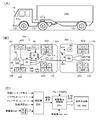
- FIG. 1A is a schematic side view of a vehicle on which a behavior control device for preventing a jackknife phenomenon, which is a preferred embodiment of the present invention, is mounted.
- FIG. 1B is a schematic plan view of the vehicle showing the signal flow of the vehicle braking system and the electronic control unit that controls the braking system.
- FIG. 1C shows the internal configuration of the behavior control apparatus according to a preferred embodiment of the present invention in the form of a control block.
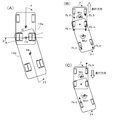
- FIG. 2A is a schematic plan view of a vehicle for explaining parameters referred to in the determination unit of the behavior control apparatus of the present invention.
- 2B and 2C are schematic plan views of the vehicle showing an example of each wheel braking drive force control during execution of jackknife suppression control.
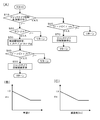
- FIG. 3A shows the flow of processing of the behavior control apparatus of the present invention in the form of a flowchart.
- FIG. 3B is a graph showing the change of the vehicle speed dependent gain ⁇ v of the control threshold with respect to the vehicle speed V.
- FIG. 3C shows the change of the control threshold with respect to the deceleration dependent gain ⁇ g with respect to the deceleration
- the vehicle 10 is, for example, a known semi-trailer type connected vehicle of any type, that is, a tractor 10a having a pair of front wheels 12f and a pair of rear wheels 12r, and a connecting pin 14 provided at the rear of the tractor 10a. It may be a coupled vehicle comprising a trailer 10b having a pair of wheels 12t that are pivotably coupled in the direction of the arrow inside.
- the vehicle is illustrated as a semi-trailer type truck as an example, but the behavior control device of the present invention is configured such that the tractor and the trailer are pivotably connected to each other, and therefore, the jackknife phenomenon. It should be understood that the invention may be applied to any type of truck (which may be a full trailer type), bus or the like, and such cases are also within the scope of the present invention. .
- the braking of each wheel of the connected vehicle 10 is performed by a braking system device 40 capable of independently controlling the braking force of each wheel, as schematically shown in FIG.
- the braking system device 40 is typically an electronically controlled pneumatic braking system device, an air / hydraulic (combined) braking system device or a hydraulic braking system device, and the front wheel of the tractor 10a.
- the wheel cylinder 42tl equipped with the wheel 12tl, tr, and the fluid pressure circuit 46t for adjusting the brake pressure in the tr, that is, the braking force of each trailer wheel, are included.
- the wheel cylinder of each wheel is selectively transferred to an air compressor, an air tank, a braking force booster, an oil pump, an oil reservoir, etc. (not shown) in a normal manner.
- valves (a modulator, a fluid pressure holding valve, a pressure reducing valve, etc.) communicating with each other and a brake pipe for transmitting the fluid pressure to the fluid pressure circuit 46t of the trailer 10b are provided.
- the fluid pressure circuit 46t of the trailer 10b includes Various valves (a modulator, a fluid pressure holding valve, a pressure reducing valve, etc.) for selectively applying the fluid pressure from the fluid pressure circuit 46 of the tractor 10a to the wheel cylinder of the trailer wheel are provided.
- the brake valve (or master cylinder) 45 is operated in response to the depression of the brake pedal 44 by the driver, and the pressure of the air tank, the brake booster, or the master cylinder is changed to each wheel.
- the electronic control unit 50 may include a microcomputer having a CPU, a ROM, a RAM, and an input / output port unit connected to each other by a bidirectional common bus and a driving circuit.
- Brake pedal depression amount ⁇ b from a given depression amount sensor (not shown), wheel speed Vwi from a wheel speed sensor (not shown) provided for each wheel, and in the wheel cylinder of each wheel from a wheel cylinder pressure sensor Pressure Pbi, longitudinal G sensor provided on the tractor and acceleration / deceleration Gx from the yaw rate sensor 60, tractor yaw rate ⁇ , trailer yaw rate ⁇ t from the yaw rate sensor 60t provided on the trailer, angle sensor provided on the connecting pin (FIG.
- Detected value such as hitch angle (connection angle between tractor and trailer) ⁇ from not shown It is (others depicted, various detection signals representative of the values of various parameters required for various controls to be performed at the vehicle of the present embodiment, such as lateral acceleration may be entered.).
- FIG. 1C shows the behavior control device of the present invention incorporated in the electronic control device 50 in the form of a block diagram.
- a determination unit 50a for determining whether or not jackknife suppression control is necessary, and each jackknife suppression control to execute jackknife suppression control according to the control request of the determination unit 50a.
- a braking / driving force control unit 50b for controlling the braking / driving force of the wheel is configured.
- the determination unit 50a performs an arbitrary method from the hitch angle ⁇ of the connecting pin, the tractor yaw rate ⁇ , the trailer yaw rate ⁇ t, the longitudinal acceleration / deceleration Gx of the vehicle, and the wheel speed value Vwi of each wheel according to the processing operation described later.
- the determined vehicle speed V is read to determine whether to start the jackknife suppression control and whether to stop the jackknife suppression control, and transmit the determination result (control request) to the braking / driving force control unit 50b. .
- the braking / driving force control unit 50b reduces the magnitude of the deviation between the tractor yaw rate ⁇ and the trailer yaw rate ⁇ t, or increases the tractor yaw rate ⁇ or the trailer yaw rate ⁇ t.
- a target value of brake pressure or braking force to be applied to each wheel is determined, and a control command is issued to each part of the fluid pressure circuits 46 and 46t so that the target value is achieved.
- the determination unit 50a and the braking / driving force control unit 50b are realized by processing operations of the CPU and other elements according to a program stored in advance in a storage device such as a memory in the electronic control unit 50. Should be.
- the jackknife phenomenon in which the hitch angle ⁇ of the connecting pin 14 of the connected vehicle is excessive is abrupt when braking the vehicle.
- the yaw rate ⁇ around the center of gravity G of the tractor 10a and the yaw rate ⁇ t around the center of gravity Gt of the trailer 10b are opposite and the difference
- the vehicle speed is high, the kinetic energy of the vehicle is large.
- jackknife suppression control that is, control for generating a yaw moment on the tractor and / or trailer in a direction that reduces the magnitude of the yaw rate difference between the tractor and the trailer.
- FIG. 3A shows, in the form of a flowchart, the processing operation of the determination unit 50a for executing jackknife suppression control earlier when the vehicle speed and / or deceleration is high as described above. .
- the control threshold for determining the magnitude of the yaw rate difference between the tractor and the trailer is changed depending on the vehicle speed and the deceleration.
- the illustrated control process is repeatedly executed in a predetermined cycle while the vehicle is traveling.
- the magnitude (absolute value) of hitch angle ⁇ is a predetermined angle ⁇ th. Whether it is larger than
- ⁇ _th ⁇ _o ⁇ ⁇ v ⁇ ⁇ g (3)
- ⁇ _o is an initial value of the control threshold (this value may be arbitrarily set experimentally or theoretically).
- ⁇ v is a control gain that depends on the vehicle speed, and is set so as to decrease as the vehicle speed V increases as illustrated in FIG.
- ⁇ g is a deceleration-dependent control gain.
- ⁇ g is a deceleration (the absolute value of the acceleration / deceleration value Gx during braking while the vehicle is moving forward).
- the acceleration / deceleration value Gx during driving is set to decrease as the value increases (absolute value). Therefore, the control threshold value ⁇ _th is set to decrease as the vehicle speed V and / or the deceleration Gx increases.
- control threshold ⁇ _th when the control threshold ⁇ _th is set, whether or not the magnitude of the yaw rate difference
- the condition (4) when the condition (4) is satisfied, the jack knife phenomenon is likely to occur, and a request for execution of jack knife suppression control is given to the braking / driving force control unit 50b (step). 50). Then, the braking / driving force control unit 50b starts correcting the behavior of the tractor and / or trailer according to some of the modes described below.
- control threshold ⁇ _th is set so as to decrease as the vehicle speed V and / or the deceleration Gx increases, so that the vehicle speed V and / or the deceleration Gx increases, that is,
- the higher the vehicle speed V and / or the deceleration Gx the more easily the execution of the jackknife suppression control is started.
- the behavior of the tractor / trailer is corrected at an early stage, which is more reliable than before.
- the jackknife suppression control executed by the braking / driving force control unit 50b may be executed by any method. For example, when braking is performed during forward travel of the vehicle, as illustrated in FIG. 2B, in the tractor, the braking force of the wheel on the side opposite to the direction of the yaw rate (in the drawing) Fb_fl) is increased relative to the braking force of the other wheels, and in the trailer, the braking force of the wheel on the same side as the yaw rate direction (Fbtr in the figure) is higher than the braking force of the other wheels.
- the yaw moment Mc and the yaw moment Mct may be generated in the direction of decreasing the hitch angle of the connecting pin in the tractor or trailer, respectively.
- the braking force of the wheel on the same side as the yaw rate direction (Fb_fr in the figure) is controlled by other wheels.
- the braking force of the wheel on the side opposite to the yaw rate direction (Fbtl in the figure) is increased relative to the braking force of the other wheels.
- the yaw moment Mc and the yaw moment Mct may be generated in the direction in which the hitch angle of the connecting pin is reduced.
- the control yaw moment in the direction to reduce the hitch angle of the connecting pin is preferably generated in both the tractor and the trailer, but is generated only in either the tractor or the trailer. Good.
- the yaw moment is generated in the vehicle body by the difference in braking force between the left and right wheels, but when the driving force distribution between the wheels is possible, the same as above due to the difference in driving force between the left and right wheels.
- the yaw moment may be generated. (The yaw moment applied to the vehicle body or the magnitude of the braking / driving force of each wheel may be determined in the same manner as with any VSC.)
- the jackknife suppression control that is once executed may be ended when the yaw rate difference
- the braking / driving force control unit 50b is instructed to stop the jackknife suppression control (step 70).
- the end threshold value ⁇ _end of the jackknife suppression control may be changed along with an increase in the vehicle speed or deceleration similarly to the control threshold value ⁇ _th (may be the same as the control threshold value ⁇ _th). .
- the criterion for determining whether or not the execution of the jackknife suppression control is necessary is changed according to the vehicle speed or the deceleration, whereby the vehicle speed or the deceleration is determined.
- the speed is high, it is easy to execute the jackknife suppression control, and it is expected that the jackknife phenomenon can be more reliably prevented by correcting the behavior of the tractor or trailer at an early stage.
- the differential value of the connecting pin hitch angle ⁇ corresponds to the yaw rate difference ⁇ t between the tractor and the trailer, the determination in steps 40 and 60 in FIG.
- the absolute value of the differential value of the connecting pin hitch angle ⁇ may be determined based on whether the absolute value is larger than the control threshold value or the end threshold value. (In other words, the jackknife suppression control is executed such that the absolute value of the differential value of the connecting pin hitch angle ⁇ is small.) In that case, the angle sensor that detects the hitch angle of the connecting pin may not be used.
- the dependence of the control gain on the vehicle speed or deceleration is arbitrarily determined experimentally or theoretically so as to match the actual configuration and characteristics of the vehicle. It should be understood that the present invention is not limited to the illustrated example.
Landscapes
- Engineering & Computer Science (AREA)
- Transportation (AREA)
- Mechanical Engineering (AREA)
- Regulating Braking Force (AREA)
Abstract
Description
γ_th=γ_o・αv・αg …(1)
により与えられ、車速依存ゲインαvが車速の増大と伴に低減し、減速度依存ゲインαgが減速度の増大と伴に低減するよう設定されるようになっていてよい。かかる構成によって、車両の車速又は減速度の少なくとも一方が高いときには、制御閾値が低くなり(車速と減速度との双方が高いときには更に制御閾値が低くなり)、従って、ジャックナイフ現象を防止するための挙動制御が実行され易くなるので、より確実に、運動エネルギー又は慣性力のトレーラの回転接近の作用への転化を未然に防止できるようになることが期待される。
10a…トラクタ
10b…トレーラ
12fl、fr…トラクタ前輪
12rl、rr…トラクタ後輪
12tl、tr…トレーラ車輪
14…連結ピン
40…制動系装置
42fl、fr、rl、rr、tl、tr…ホイールシリンダ
44…ブレーキペダル
45…ブレーキバルブ又はマスタシリンダ
46…流体圧回路(トラクタ)
46t…流体圧回路(トレーラ)
50…電子制御装置
60…加減速度センサ、ヨーレートセンサ(トラクタ)
60t…ヨーレートセンサ(トレーラ)
図1(A)は、本発明によるジャックナイフ現象を抑制するための挙動制御装置の好ましい実施形態が搭載される車両10を概略的に示している。車両10は、例えば、公知の任意の形式のセミトレーラ型の連結車両、即ち、一対の前輪12f及び一対の後輪12rを有するトラクタ10aと、トラクタ10aの後部に設けられた連結ピン14にて図中の矢印の方向に枢動可能に連結された一対の車輪12tを有するトレーラ10bとから成る連結車両であってよい。なお、図では、車両は、一つの例として、セミトレーラ型のトラックとして描かれているが、本発明の挙動制御装置は、トラクタとトレーラとが互い枢動可能に連結され、従って、ジャックナイフ現象が発生し得る任意の形式のトラック(フルトレーラ型であってもよい。)、バス等の車両に適用されてよく、そのような場合も本発明の範囲に属することは理解されるべきである。
図2(A)を参照して、「発明の開示」に於いて触れた如く、連結車両の連結ピン14のヒッチ角φが過大となるジャックナイフ現象は、車両の制動時、急操舵時又は後退時に於いて、トラクタ10aの重心G周りのヨーレートγとトレーラ10bの重心Gt周りのヨーレートγtが逆向きとなり、且つ、その差|γ-γt|が大きくなったとき、タイヤ横力がトレーラとトラクタとの回転接近を抑制しきれないことによって惹起される。特に、車速が高いときには、車両の運動エネルギーが大きくなっているので、その大きな運動エネルギーがトラクタとトレーラとの相対的な回転接近のエネルギーに転化すると、その回転作用は大きくなる。また、車両の減速度が高いときにも、車両にかかる慣性力が大きくなるので、その大きな慣性力がトラクタとトレーラとの相対的な回転接近の力に転化すると、その回転作用は大きくなる。本発明の装置に於いては、かかる知見に基づいて、ジャックナイフ抑制制御、即ち、トラクタとトレーラとのヨーレート差の大きさを低減する方向にトラクタ及び/又はトレーラ上にヨーモーメントを発生させる制御(図2(B)、(C)参照)を、車速及び/又は減速度が高いときには、より早期に実行できるようにし、これにより、車両の大きな運動エネルギー又は大きな慣性力がトラクタとトレーラとの相対的な回転接近の回転作用に転化することを予防又は抑制することが試みられる。
|φ|>φth …(2)
が成立しているか否かが判定される(ステップ20)。もしここで条件(2)が成立している場合には、トラクタとトレーラの向きにずれが生じており、トレーラ又はトラクタの運動エネルギー又は慣性力がトレーラとトラクタとの相対回転作用に転化する可能性又は兆候が存在することとなる(条件(2)が成立していないときには、何の処理も実行せずに制御サイクルが繰り返される。)。そこで、その場合には、ジャックナイフ抑制制御の実行の要否を判定するための制御閾値γ_thが下記の式にて設定される(ステップ30)。
γ_th=γ_o・αv・αg …(3)
ここで、γ_oは、制御閾値の初期値である(かかる値は、実験的に又は理論的に任意に設定されてよい。)。αvは、車速依存の制御ゲインであり、図3(B)に例示されている如く、車速Vの大きさの増大と伴に低減するよう設定される。また、αgは、減速度依存の制御ゲインであり、図3(C)に例示されている如く、減速度(車両の前進中では、制動時の加減速度値Gxの絶対値であり、車両の後退中では、駆動時の加減速度値Gxの絶対値)の増大と伴に低減するよう設定される。従って、制御閾値γ_thは、車速V及び/又は減速度Gxが高くなると、低くなるよう設定されることとなる。
|γ-γt|>γ_th …(4)
が成立しているか否かが判定される(ステップ40)。ここで、条件(4)が成立している場合には、ジャックナイフ現象が発生し易い状態となっていることとなり、ジャックナイフ抑制制御の実行要求が制駆動力制御部50bへ与えられる(ステップ50)。そして、制駆動力制御部50bは、後述の態様のいくつかにより、トラクタ及び/又はトレーラの挙動の修正を開始する。
|γ-γt|<γ_end …(5)
が成立すると、ジャックナイフ抑制制御の停止が、制駆動力制御部50bに指示される(ステップ70)。なお、ジャックナイフ抑制制御の終了閾値γ_endも、制御閾値γ_thと同様に車速又は減速度の増大と伴に変更されるようになっていてもよい(制御閾値γ_thと同じであってもよい。)。
ヨーレート=左右車輪速差/トレッド …(6)
により与えられてよい。その場合、ヨーレートセンサは用いられなくてよい。また、連結ピンヒッチ角φの微分値は、トラクタとトレーラのヨーレート差γ-γtに相当するので、図3(A)のステップ40、60の判定、即ち、ジャックナイフ抑制制御の要否の判定は、連結ピンヒッチ角φの微分値の絶対値が制御閾値又は終了閾値より大きいか否かにより為されてよい。(換言すれば、ジャックナイフ抑制制御は、連結ピンヒッチ角φの微分値の絶対値が小さくなるよう実行される。)その場合、連結ピンのヒッチ角を検出する角度センサは用いられなくてよい。
Claims (8)
- トラクタと該トラクタの後部に設けられた連結ピンに枢動可能に連結され牽引されるトレーラとを含む連結車両の挙動制御装置であって、前記トラクタのヨーレートと前記トレーラのヨーレートとの偏差を低減するよう前記トラクタ又は前記トレーラの制駆動力を制御する制駆動力制御部と、該制駆動力制御部による前記トラクタ又は前記トレーラの制駆動力制御の要否を判定する判定部とを含み、前記判定部が前記制駆動力制御が必要であると判定したときに前記制駆動力制御部が前記制駆動力制御を実行し、前記判定部が前記制駆動力制御の要否の判定を前記車両の車速又は減速度に基づいて変更する装置。
- 請求項1の装置であって、前記判定部が、前記車両の車速又は減速度が高いとき、前記車両の車速又は減速度が低いときに比して、前記制駆動力制御が必要であると判定し易くなっている装置。
- 請求項1又は2の装置であって、前記判定部が、前記トラクタのヨーレートと前記トレーラのヨーレートとの偏差の大きさが所定の制御閾値を超えたときに前記制駆動力制御が必要であると判定する装置。
- 請求項3の装置であって、前記制御閾値が、前記車両の車速又は減速度が高いとき、前記車両の車速又は減速度が低いときに比して、低減される装置。
- 請求項1乃至4のいずれかの装置であって、前記判定部が、前記車両の減速度が高いほど、前記制駆動力制御が必要であると判定し易くなっている装置。
- 請求項1乃至5のいずれかの装置であって、前記判定部が、前記車両の車速が高いほど、前記制駆動力制御が必要であると判定し易くなっている装置。
- 請求項3又は請求項3を引用する請求項4乃至6のいずれかの装置であって、前記制御閾値γ_thが、制御閾値初期値γ_oと、車速依存ゲインαvと、減速度依存ゲインαgとを用いて、
γ_th=γ_o・αv・αg
により与えられ、前記車速依存ゲインαvが前記車速の増大と伴に低減し、前記減速度依存ゲインαgが前記減速度の増大と伴に低減する装置。 - 請求項1乃至7のいずれかの装置であって、前記制駆動力制御の実行時、前記制駆動力制御部が前記トラクタ及び前記トレーラのうちの少なくとも一方に於いて前記トラクタと前記トレーラとのヨーレート偏差の大きさが低減する方向にヨーモーメントが発生するよう前記トラクタ及び前記トレーラのうちの少なくとも一方の車輪の制駆動力を制御する装置。
Priority Applications (3)
| Application Number | Priority Date | Filing Date | Title |
|---|---|---|---|
| JP2010548348A JP5201219B2 (ja) | 2009-02-02 | 2009-02-02 | 連結車両の挙動制御装置 |
| PCT/JP2009/051722 WO2010087022A1 (ja) | 2009-02-02 | 2009-02-02 | 連結車両の挙動制御装置 |
| US13/147,350 US9043105B2 (en) | 2009-02-02 | 2009-02-02 | Behavior control device for a combination vehicle |
Applications Claiming Priority (1)
| Application Number | Priority Date | Filing Date | Title |
|---|---|---|---|
| PCT/JP2009/051722 WO2010087022A1 (ja) | 2009-02-02 | 2009-02-02 | 連結車両の挙動制御装置 |
Publications (1)
| Publication Number | Publication Date |
|---|---|
| WO2010087022A1 true WO2010087022A1 (ja) | 2010-08-05 |
Family
ID=42395293
Family Applications (1)
| Application Number | Title | Priority Date | Filing Date |
|---|---|---|---|
| PCT/JP2009/051722 Ceased WO2010087022A1 (ja) | 2009-02-02 | 2009-02-02 | 連結車両の挙動制御装置 |
Country Status (3)
| Country | Link |
|---|---|
| US (1) | US9043105B2 (ja) |
| JP (1) | JP5201219B2 (ja) |
| WO (1) | WO2010087022A1 (ja) |
Cited By (10)
| Publication number | Priority date | Publication date | Assignee | Title |
|---|---|---|---|---|
| WO2015041042A1 (ja) * | 2013-09-19 | 2015-03-26 | 日立オートモティブシステムズ株式会社 | 車両制御装置 |
| JP2017502867A (ja) * | 2013-11-18 | 2017-01-26 | ローベルト ボツシユ ゲゼルシヤフト ミツト ベシユレンクテル ハフツングRobert Bosch Gmbh | 牽引車両のためのベクトルベースのドライバアシスタンス |
| JP2018134945A (ja) * | 2017-02-21 | 2018-08-30 | トヨタ自動車株式会社 | ブレーキ制御装置 |
| JP2019217802A (ja) * | 2018-06-15 | 2019-12-26 | トヨタ自動車株式会社 | 連結車両の制動制御装置 |
| JP2020037301A (ja) * | 2018-09-03 | 2020-03-12 | 日立オートモティブシステムズ株式会社 | 操舵制御装置、操舵制御方法、及び操舵制御システム |
| DE102018122273A1 (de) * | 2018-09-12 | 2020-03-12 | Wabco Gmbh | Verfahren zum Ermitteln eines instabilen Verhaltens eines Anhängers und Verfahren zum Stabilisieren eines Anhängers sowie Auswerteeinheit und Fahrzeug-Gespann |
| KR20210052561A (ko) * | 2018-09-21 | 2021-05-10 | 페이몬빌 디스트리뷰션 에이쥐 | 이동될 화물을 운송하기 위한 세미 트레일러 |
| CN113911087A (zh) * | 2021-11-15 | 2022-01-11 | 吉林大学 | 一种半挂汽车防折叠控制系统 |
| JP2023101979A (ja) * | 2022-01-11 | 2023-07-24 | トヨタ自動車株式会社 | 車両運転支援装置 |
| JP2023180977A (ja) * | 2022-06-10 | 2023-12-21 | トヨタ自動車株式会社 | 減速旋回補助装置、被牽引車両および連結車両 |
Families Citing this family (8)
| Publication number | Priority date | Publication date | Assignee | Title |
|---|---|---|---|---|
| US9108598B2 (en) * | 2011-01-13 | 2015-08-18 | Continental Automotive Systems, Inc. | System and method for maneuvering a vehicle-trailer unit in reverse travel |
| DE102013003853A1 (de) * | 2013-03-06 | 2014-09-25 | Wabco Gmbh | Verfahren, Steuersystem und Bremssystem zur Steuerung des Rückwärtsrangierens eines Gespannfahrzeugs |
| DE102015215802B4 (de) | 2015-08-19 | 2024-06-06 | Zf Friedrichshafen Ag | Stabilisierung einer Fahrzeugkombination |
| DE102016117438A1 (de) | 2016-09-16 | 2018-03-22 | Knorr-Bremse Systeme für Nutzfahrzeuge GmbH | Verfahren und Vorrichtung zum Steuern einer Bewegung eines Fahrzeugs und Fahrzeugbewegungssteuersystem |
| WO2019037870A1 (en) * | 2017-08-25 | 2019-02-28 | Volvo Truck Corporation | METHOD FOR DIRECTING AN ARTICULATED VEHICLE |
| US11740622B2 (en) * | 2019-06-12 | 2023-08-29 | Ford Global Technologies, Llc | Remote trailer maneuver-assist |
| US11548573B1 (en) * | 2021-08-20 | 2023-01-10 | David M Regen | Jackknife prevention apparatus |
| KR20250062997A (ko) * | 2023-10-31 | 2025-05-08 | 현대자동차주식회사 | 전동화 차량 및 그의 피견인 중 제어 방법 |
Citations (5)
| Publication number | Priority date | Publication date | Assignee | Title |
|---|---|---|---|---|
| JPH09136634A (ja) * | 1995-11-16 | 1997-05-27 | Akebono Brake Ind Co Ltd | 制動力制御装置 |
| JPH10129461A (ja) * | 1996-10-25 | 1998-05-19 | J K C Toratsuku Brake Syst:Kk | トラクタ・トレーラのブレーキ制御装置 |
| JPH10236289A (ja) * | 1997-02-25 | 1998-09-08 | Toyota Motor Corp | 連結車のトレーラブレーキ制御装置 |
| JP2001206211A (ja) * | 2000-01-27 | 2001-07-31 | Nissan Diesel Motor Co Ltd | 車両挙動制御装置 |
| JP2001219832A (ja) * | 1999-12-30 | 2001-08-14 | Robert Bosch Gmbh | トラクタおよび少なくとも1つのセミトレーラないしトレーラからなる連結車の安定化装置および方法 |
Family Cites Families (13)
| Publication number | Priority date | Publication date | Assignee | Title |
|---|---|---|---|---|
| US3948544A (en) * | 1975-02-24 | 1976-04-06 | The Bendix Corporation | Surge brake combination vehicle stabilizer |
| US5522652A (en) * | 1995-06-07 | 1996-06-04 | Kelsey-Hayes Company | Method and system for controlling an anti-lock brake system |
| EP0798615B1 (en) | 1996-02-27 | 2002-01-02 | KNORR-BREMSE SYSTEME FÜR NUTZFAHRZEUGE GmbH | Procedure for drive stability enhancement |
| JPH10157652A (ja) | 1996-12-03 | 1998-06-16 | Honda Motor Co Ltd | トレーラの操縦装置 |
| JP4117425B2 (ja) | 1998-07-29 | 2008-07-16 | 三菱ふそうトラック・バス株式会社 | 連結車両の制動制御装置 |
| JP4083881B2 (ja) | 1998-07-29 | 2008-04-30 | 三菱ふそうトラック・バス株式会社 | 連結車両の自動減速制御装置 |
| JP4105363B2 (ja) | 2000-03-29 | 2008-06-25 | 日産ディーゼル工業株式会社 | 制動力制御装置 |
| US20020107627A1 (en) * | 2000-11-29 | 2002-08-08 | Visteon Global Technologies, Inc. | Trailer and simulator |
| US6668225B2 (en) * | 2000-11-29 | 2003-12-23 | Visteon Global Technologies, Inc. | Trailer control system |
| JP3989201B2 (ja) * | 2001-07-31 | 2007-10-10 | 日野自動車株式会社 | 連結車両の制動装置 |
| SE533870C2 (sv) * | 2005-07-11 | 2011-02-15 | Volvo Lastvagnar Ab | System och förfarande för stabilisering av en fordonskombination |
| JP2007069907A (ja) * | 2006-12-18 | 2007-03-22 | Mitsubishi Fuso Truck & Bus Corp | 連結車両の制動制御装置 |
| US20080208424A1 (en) * | 2007-02-22 | 2008-08-28 | Honeywell International Inc. | Electronic protection for articulated vehicles |
-
2009
- 2009-02-02 US US13/147,350 patent/US9043105B2/en not_active Expired - Fee Related
- 2009-02-02 WO PCT/JP2009/051722 patent/WO2010087022A1/ja not_active Ceased
- 2009-02-02 JP JP2010548348A patent/JP5201219B2/ja not_active Expired - Fee Related
Patent Citations (5)
| Publication number | Priority date | Publication date | Assignee | Title |
|---|---|---|---|---|
| JPH09136634A (ja) * | 1995-11-16 | 1997-05-27 | Akebono Brake Ind Co Ltd | 制動力制御装置 |
| JPH10129461A (ja) * | 1996-10-25 | 1998-05-19 | J K C Toratsuku Brake Syst:Kk | トラクタ・トレーラのブレーキ制御装置 |
| JPH10236289A (ja) * | 1997-02-25 | 1998-09-08 | Toyota Motor Corp | 連結車のトレーラブレーキ制御装置 |
| JP2001219832A (ja) * | 1999-12-30 | 2001-08-14 | Robert Bosch Gmbh | トラクタおよび少なくとも1つのセミトレーラないしトレーラからなる連結車の安定化装置および方法 |
| JP2001206211A (ja) * | 2000-01-27 | 2001-07-31 | Nissan Diesel Motor Co Ltd | 車両挙動制御装置 |
Cited By (28)
| Publication number | Priority date | Publication date | Assignee | Title |
|---|---|---|---|---|
| WO2015041042A1 (ja) * | 2013-09-19 | 2015-03-26 | 日立オートモティブシステムズ株式会社 | 車両制御装置 |
| JP2015058832A (ja) * | 2013-09-19 | 2015-03-30 | 日立オートモティブシステムズ株式会社 | 車両制御装置 |
| CN105492288A (zh) * | 2013-09-19 | 2016-04-13 | 日立汽车系统株式会社 | 车辆控制装置 |
| CN105492288B (zh) * | 2013-09-19 | 2018-01-23 | 日立汽车系统株式会社 | 车辆控制装置 |
| JP2017502867A (ja) * | 2013-11-18 | 2017-01-26 | ローベルト ボツシユ ゲゼルシヤフト ミツト ベシユレンクテル ハフツングRobert Bosch Gmbh | 牽引車両のためのベクトルベースのドライバアシスタンス |
| US9956909B2 (en) | 2013-11-18 | 2018-05-01 | Robert Bosch Gmbh | Vector-based driver assistance for towing vehicle |
| JP2018134945A (ja) * | 2017-02-21 | 2018-08-30 | トヨタ自動車株式会社 | ブレーキ制御装置 |
| JP2019217802A (ja) * | 2018-06-15 | 2019-12-26 | トヨタ自動車株式会社 | 連結車両の制動制御装置 |
| JP7031506B2 (ja) | 2018-06-15 | 2022-03-08 | トヨタ自動車株式会社 | 連結車両の制動制御装置 |
| US11225233B2 (en) | 2018-06-15 | 2022-01-18 | Toyota Jidosha Kabushiki Kaisha | Braking control apparatus for a combination vehicle |
| JP2020037301A (ja) * | 2018-09-03 | 2020-03-12 | 日立オートモティブシステムズ株式会社 | 操舵制御装置、操舵制御方法、及び操舵制御システム |
| JP7152906B2 (ja) | 2018-09-03 | 2022-10-13 | 日立Astemo株式会社 | 操舵制御装置、操舵制御方法、及び操舵制御システム |
| WO2020049919A1 (ja) * | 2018-09-03 | 2020-03-12 | 日立オートモティブシステムズ株式会社 | 操舵制御装置、操舵制御方法、及び操舵制御システム |
| WO2020052904A1 (de) | 2018-09-12 | 2020-03-19 | Wabco Gmbh | Verfahren zum ermitteln eines instabilen verhaltens eines anhängers und verfahren zum stabilisieren eines anhängers sowie auswerteeinheit und fahrzeug-gespann |
| US11919498B2 (en) | 2018-09-12 | 2024-03-05 | Zf Cv Systems Europe Bv | Method for determining unstable behavior of a trailer and method for stabilizing a trailer, and evaluation unit and vehicle combination |
| DE102018122273A1 (de) * | 2018-09-12 | 2020-03-12 | Wabco Gmbh | Verfahren zum Ermitteln eines instabilen Verhaltens eines Anhängers und Verfahren zum Stabilisieren eines Anhängers sowie Auswerteeinheit und Fahrzeug-Gespann |
| JP2022503743A (ja) * | 2018-09-21 | 2022-01-12 | フェイモンビル ディストリビューション アーゲー | 移動される荷重を輸送するためのセミトレーラ |
| JP7342110B2 (ja) | 2018-09-21 | 2023-09-11 | フェイモンビル ディストリビューション アーゲー | 移動される荷重を輸送するためのセミトレーラ |
| KR20210052561A (ko) * | 2018-09-21 | 2021-05-10 | 페이몬빌 디스트리뷰션 에이쥐 | 이동될 화물을 운송하기 위한 세미 트레일러 |
| KR102675733B1 (ko) | 2018-09-21 | 2024-06-17 | 페이몬빌 디스트리뷰션 에이쥐 | 이동될 화물을 운송하기 위한 세미 트레일러 |
| CN113911087B (zh) * | 2021-11-15 | 2022-06-17 | 吉林大学 | 一种半挂汽车防折叠控制系统 |
| CN113911087A (zh) * | 2021-11-15 | 2022-01-11 | 吉林大学 | 一种半挂汽车防折叠控制系统 |
| JP2023101979A (ja) * | 2022-01-11 | 2023-07-24 | トヨタ自動車株式会社 | 車両運転支援装置 |
| JP7505509B2 (ja) | 2022-01-11 | 2024-06-25 | トヨタ自動車株式会社 | 車両運転支援装置 |
| US12330636B2 (en) | 2022-01-11 | 2025-06-17 | Toyota Jidosha Kabushiki Kaisha | Vehicle driving assistance apparatus |
| JP2023180977A (ja) * | 2022-06-10 | 2023-12-21 | トヨタ自動車株式会社 | 減速旋回補助装置、被牽引車両および連結車両 |
| JP7687279B2 (ja) | 2022-06-10 | 2025-06-03 | トヨタ自動車株式会社 | 減速旋回補助装置、被牽引車両および連結車両 |
| US12606135B2 (en) | 2022-06-10 | 2026-04-21 | Toyota Jidosha Kabushiki Kaisha | Deceleration turning assistance device, towed vehicle and coupled vehicles |
Also Published As
| Publication number | Publication date |
|---|---|
| US9043105B2 (en) | 2015-05-26 |
| US20120029782A1 (en) | 2012-02-02 |
| JP5201219B2 (ja) | 2013-06-05 |
| JPWO2010087022A1 (ja) | 2012-07-26 |
Similar Documents
| Publication | Publication Date | Title |
|---|---|---|
| JP5201219B2 (ja) | 連結車両の挙動制御装置 | |
| Palkovics et al. | Roll-over prevention system for commercial vehicles–additional sensorless function of the electronic brake system | |
| US7260464B2 (en) | Vehicle braking control device | |
| US20180029585A1 (en) | Vehicle controller, vehicle, and control system | |
| CN109927700B (zh) | 一种纯线控汽车制动系统 | |
| US7118184B2 (en) | Roll-over suppressing control apparatus for a vehicle | |
| JPH0585330A (ja) | トレーラブレーキ制御装置および制御方法 | |
| JPH09142272A (ja) | 車両の制動力制御装置 | |
| US7571043B2 (en) | Roll-over suppressing control apparatus and method for a vehicle | |
| US20050102084A1 (en) | Roll-over suppressing control apparatus for a vehicle | |
| WO2014122786A1 (ja) | 車両重心状態判定装置および車両挙動制御システム | |
| US20220355789A1 (en) | Method and device for stabilising a traction vehicle-trailer combination, and control unit | |
| JP2011079470A (ja) | 連結車両の挙動制御装置 | |
| JP2000043705A (ja) | 連結車両の自動減速制御装置 | |
| CN110606068B (zh) | 连结车辆的制动控制装置 | |
| JP3841048B2 (ja) | 車両の統合制御装置 | |
| JP4028950B2 (ja) | 車両挙動制御装置 | |
| WO2010106643A1 (ja) | 車両運動制御システム | |
| JP5333245B2 (ja) | 車両挙動制御装置 | |
| JP3517954B2 (ja) | 車両のアンチスキッド制御装置 | |
| JP3214163B2 (ja) | アンチスキッド制御装置 | |
| JP3405387B2 (ja) | 車両の制動力制御装置 | |
| JP3851049B2 (ja) | 車両挙動制御装置 | |
| JP4877593B2 (ja) | 車両制御装置 | |
| JP3839920B2 (ja) | 車両姿勢制御装置 |
Legal Events
| Date | Code | Title | Description |
|---|---|---|---|
| 121 | Ep: the epo has been informed by wipo that ep was designated in this application |
Ref document number: 09839212 Country of ref document: EP Kind code of ref document: A1 |
|
| WWE | Wipo information: entry into national phase |
Ref document number: 2010548348 Country of ref document: JP |
|
| WWE | Wipo information: entry into national phase |
Ref document number: 13147350 Country of ref document: US |
|
| NENP | Non-entry into the national phase |
Ref country code: DE |
|
| 122 | Ep: pct application non-entry in european phase |
Ref document number: 09839212 Country of ref document: EP Kind code of ref document: A1 |