WO2010032560A1 - ペレット混合物、成形体、及び成形体の製造方法 - Google Patents
ペレット混合物、成形体、及び成形体の製造方法 Download PDFInfo
- Publication number
- WO2010032560A1 WO2010032560A1 PCT/JP2009/063561 JP2009063561W WO2010032560A1 WO 2010032560 A1 WO2010032560 A1 WO 2010032560A1 JP 2009063561 W JP2009063561 W JP 2009063561W WO 2010032560 A1 WO2010032560 A1 WO 2010032560A1
- Authority
- WO
- WIPO (PCT)
- Prior art keywords
- cyclic olefin
- resin
- hydrogenated petroleum
- petroleum resin
- mass
- Prior art date
- Legal status (The legal status is an assumption and is not a legal conclusion. Google has not performed a legal analysis and makes no representation as to the accuracy of the status listed.)
- Ceased
Links
Images
Classifications
-
- C—CHEMISTRY; METALLURGY
- C08—ORGANIC MACROMOLECULAR COMPOUNDS; THEIR PREPARATION OR CHEMICAL WORKING-UP; COMPOSITIONS BASED THEREON
- C08J—WORKING-UP; GENERAL PROCESSES OF COMPOUNDING; AFTER-TREATMENT NOT COVERED BY SUBCLASSES C08B, C08C, C08F, C08G or C08H
- C08J3/00—Processes of treating or compounding macromolecular substances
- C08J3/20—Compounding polymers with additives, e.g. colouring
- C08J3/201—Pre-melted polymers
-
- C—CHEMISTRY; METALLURGY
- C08—ORGANIC MACROMOLECULAR COMPOUNDS; THEIR PREPARATION OR CHEMICAL WORKING-UP; COMPOSITIONS BASED THEREON
- C08L—COMPOSITIONS OF MACROMOLECULAR COMPOUNDS
- C08L45/00—Compositions of homopolymers or copolymers of compounds having no unsaturated aliphatic radicals in side chain, and having one or more carbon-to-carbon double bonds in a carbocyclic or in a heterocyclic ring system; Compositions of derivatives of such polymers
-
- C—CHEMISTRY; METALLURGY
- C08—ORGANIC MACROMOLECULAR COMPOUNDS; THEIR PREPARATION OR CHEMICAL WORKING-UP; COMPOSITIONS BASED THEREON
- C08L—COMPOSITIONS OF MACROMOLECULAR COMPOUNDS
- C08L65/00—Compositions of macromolecular compounds obtained by reactions forming a carbon-to-carbon link in the main chain; Compositions of derivatives of such polymers
Definitions
- the present invention relates to a pellet mixture containing a cyclic olefin resin pellet and a hydrogenated petroleum resin pellet, a molded article formed by molding the pellet mixture, and a molded article containing a cyclic olefin resin and a hydrogenated petroleum resin. It relates to a manufacturing method.
- Cyclic olefin-based resins are excellent in transparency, chemical resistance, moisture resistance, mechanical properties, etc., and are therefore used as materials for optical applications, pharmaceutical or medical equipment applications, and the like.
- the cyclic olefin-based resin is excellent in melt processability and fluidity, and is also used for film-shaped or sheet-shaped molded products and packaging materials.
- cyclic olefin resin is excellent also in heat shrinkability and printing characteristics.
- the cyclic olefin resin is used in various fields.
- the cyclic olefin-based resin also has a surface in which a gel-like material is generated when melt-molded, the molded surface becomes rough, and the appearance characteristics deteriorate. This deterioration in appearance characteristics has a great influence particularly when a cyclic olefin-based resin is used as a transparent material, optical application, or packaging material.
- the gel-like material is generated when a strong shearing force is applied to the cyclic olefin resin before melting in the step of heat plasticizing the cyclic olefin resin during molding, and the cyclic olefin resin generates a crosslinked structure. .
- Patent Document 1 a method of adding a lubricant such as a fatty acid amide lubricant or a metal soap lubricant (Patent Document 1) and a method of devising molding conditions (Patent Document 2) are known. ing.
- an additive is added to the cyclic olefin resin material to improve the physical properties of the molded body.
- the physical properties that can be improved are not determined depending on the type of the additive, and the physical properties that can be improved differ depending on the physical properties such as the additive amount and the softening point of the additive itself.
- a hydrogenated petroleum resin can be added as an additive to a cyclic olefin-based resin, but the weather resistance and surface roughness of the film can be improved depending on the blending amount of the hydrogenated petroleum resin (Patent Document 3), It is known to improve strength and oil resistance (Patent Document 4).
- various additives are used for the purpose of improving the physical properties of the cyclic olefin resin, and the physical properties that can be improved include not only the type of additive, but also the amount of additive added and the physical properties of the additive itself.
- the physical properties of the cyclic olefin resin to be improved are also affected, and various physical properties can be improved by adjusting the blending amount and the like using a predetermined additive. For this reason, if a specific amount of a specific additive is added to the cyclic olefin resin, the various properties of the cyclic olefin resin can be maintained and used in various situations, but a gel-like material is generated. It is speculated that it is possible to effectively suppress this.
- JP 2006-321902 A JP 2005-305941 A Japanese Patent Laid-Open No. 2002-3658 Japanese Patent Laid-Open No. 5-262898
- the present invention has been made in order to solve the above-mentioned problems, and its purpose is to include a specific amount of a specific additive, to maintain various excellent physical properties of a cyclic olefin resin, and to A pellet mixture that can be effectively used in a scene but can effectively suppress the generation of a gel-like material, a molded body formed by molding the pellet mixture, and a molding that includes a cyclic olefin-based resin and a hydrogenated petroleum resin It is in providing the manufacturing method of a body.
- a hydrogenated petroleum resin having a glass transition point of cyclic olefin-based resin (hereinafter sometimes referred to as “Tg”) + 40 ° C. or lower softening point is used with respect to 100 parts by mass of cyclic olefin-based resin. It is found that the above problem can be solved by forming the molded body after the step of dry blending the cyclic olefin-based resin pellets and the hydrogenated petroleum resin pellets, exceeding 1 part by mass and containing 20 parts by mass or less.
- the invention has been completed. More specifically, the present invention provides the following.
- the hydrogenated petroleum resin pellets are included in an amount exceeding 1 part by mass and not more than 20 parts by mass, and the softening point of the hydrogenated petroleum resin is that of the cyclic olefin resin.
- a method for producing a molded article containing a cyclic olefin-based resin comprising 100 parts by mass of the cyclic olefin-based resin, containing hydrogenated petroleum resin in an amount of more than 1 part by mass and 20 parts by mass or less. Molding which is molded after the step of dry blending the pellet of the cyclic olefin resin and the pellet of the hydrogenated petroleum resin, wherein the softening point of the added petroleum resin is a glass transition point of the cyclic olefin resin + 40 ° C. or less. Body manufacturing method.
- the hydrogenated petroleum resin having a glass transition point of a cyclic olefin resin + a softening point of 40 ° C. or less as an additive is more than 1 part by mass with respect to 100 parts by mass of the cyclic olefin resin.
- the molded product is molded after the process of dry blending the cyclic olefin resin pellets and the hydrogenated petroleum resin pellets to maintain various physical properties of the cyclic olefin resin. While being usable, it is possible to effectively suppress the generation of a gel and smooth the surface of the molded product.
- the method for producing a molded article of the present invention is characterized by molding after a step of dry blending a pellet of a cyclic olefin resin and a pellet of a hydrogenated petroleum resin.
- the pellet mixture of the present invention contains hydrogenated petroleum resin pellets in excess of 1 part by mass and 20 parts by mass or less with respect to 100 parts by mass of cyclic olefinic resin pellets, and the softening point of the hydrogenated petroleum resin is cyclic olefinic resin.
- the glass transition point is + 40 ° C. or lower.
- the cyclic olefin resin contained in the cyclic olefin resin pellet used in the present invention will be described.
- the cyclic olefin resin used in the present invention contains a cyclic olefin component as a copolymerization component, and is not particularly limited as long as it is a polyolefin resin containing a cyclic olefin component in the main chain.
- (A4) A resin obtained by grafting and / or copolymerizing an unsaturated compound having a polar group to the resins (a1) to (a3).
- Examples of the polar group include a carboxyl group, an acid anhydride group, an epoxy group, an amide group, an ester group, and a hydroxyl group.
- Examples of the unsaturated compound having a polar group include (meth) acrylic acid and maleic acid. Acid, maleic anhydride, itaconic anhydride, glycidyl (meth) acrylate, alkyl (meth) acrylate (carbon number 1-10) ester, alkyl maleate (carbon number 1-10) ester, (meth) acrylamide, (meta And 2-hydroxyethyl acrylate.
- the cyclic olefin resins (a1) to (a4) containing the above cyclic olefin component as a copolymerization component may be used singly or in combination of two or more.
- cyclic olefin resin containing the cyclic olefin component used in the present invention as a copolymerization component a commercially available resin can also be used.
- commercially available cyclic olefin-based resins include TOPAS (registered trademark) (manufactured by Topas Advanced Polymers), Apel (registered trademark) (manufactured by Mitsui Chemicals), Zeonex (registered trademark) (manufactured by Nippon Zeon), Examples include ZEONOR (registered trademark) (manufactured by ZEON Corporation), ARTON (registered trademark) (manufactured by JSR Corporation), and the like.
- the (a2) cyclic olefin / ⁇ -olefin addition copolymer preferably used in the composition of the present invention is not particularly limited. Particularly preferred examples include a copolymer comprising [1] an ⁇ -olefin component having 2 to 20 carbon atoms and [2] a cyclic olefin component represented by the following general formula (I).
- R 1 to R 12 may be the same or different and are selected from the group consisting of a hydrogen atom, a halogen atom, and a hydrocarbon group, and R 9 and R 10 , R 11 and R 12 may be integrated to form a divalent hydrocarbon group, and R 9 or R 10 and R 11 or R 12 may form a ring with each other, and n is Represents 0 or a positive integer, and when n is 2 or more, R 5 to R 8 may be the same or different in each repeating unit.
- ⁇ -olefin component having 2 to 20 carbon atoms which is a copolymer component of an addition polymer of a cyclic olefin component preferably used in the present invention and another copolymer component such as ethylene, is not particularly limited.
- ethylene is most preferably used alone.
- R 1 to R 12 in the general formula (I) may be the same or different and are selected from the group consisting of a hydrogen atom, a halogen atom, and a hydrocarbon group.
- R 1 to R 8 include, for example, a hydrogen atom; a halogen atom such as fluorine, chlorine and bromine; a lower alkyl group such as a methyl group, an ethyl group, a propyl group and a butyl group. May be different from each other, may be partially different, or all may be the same.
- R 9 to R 12 include, for example, hydrogen atom; halogen atom such as fluorine, chlorine, bromine; methyl group, ethyl group, propyl group, isopropyl group, butyl group, isobutyl group, hexyl group, stearyl.
- Alkyl group such as cyclohexyl group; cycloalkyl group such as cyclohexyl group; substituted or unsubstituted aromatic hydrocarbon group such as phenyl group, tolyl group, ethylphenyl group, isopropylphenyl group, naphthyl group, anthryl group; benzyl group, phenethyl And an aralkyl group in which an aryl group is substituted with an alkyl group, and the like. These may be different from each other, may be partially different, or all may be the same.
- R 9 and R 10 or R 11 and R 12 are integrated to form a divalent hydrocarbon group
- alkylidene groups such as an ethylidene group, a propylidene group, and an isopropylidene group. Can be mentioned.
- the formed ring may be monocyclic or polycyclic, or may be a polycyclic ring having a bridge.
- a ring having a double bond, or a ring composed of a combination of these rings may be used.
- these rings may have a substituent such as a methyl group.
- cyclic olefin component represented by the general formula (I) include those similar to those described in JP-A-2007-302722.
- cyclic olefin components may be used singly or in combination of two or more.
- bicyclo [2.2.1] hept-2-ene (common name: norbornene) is preferably used alone.
- a method for polymerizing an ⁇ -olefin component having 2 to 20 carbon atoms and a [2] cyclic olefin component represented by formula (I) and a method for hydrogenating the obtained polymer are particularly limited. Instead, it can be carried out according to known methods. It may be random copolymerization or block copolymerization.
- the polymerization catalyst used is not particularly limited and can be obtained by a known method using a conventionally known catalyst such as a Ziegler-Natta, metathesis, or metallocene catalyst.
- a conventionally known catalyst such as a Ziegler-Natta, metathesis, or metallocene catalyst.
- the addition copolymer of cyclic olefin and ⁇ -olefin or a hydrogenated product thereof preferably used in the present invention is preferably produced using a metallocene catalyst or a Ziegler-Natta catalyst.
- metathesis catalyst examples include molybdenum or tungsten-based metathesis catalysts known as cycloolefin ring-opening polymerization catalysts (for example, described in JP-A Nos. 58-127728 and 58-129003).
- the polymer obtained by the metathesis catalyst uses an inorganic carrier-supported transition metal catalyst, etc., and 90% or more of the double bonds in the main chain and 98% or more of the carbon-carbon double bonds in the side chain aromatic ring are hydrogenated. It is preferable to add.
- the glass transition point of the cyclic olefin resin obtained by the above method is not particularly limited, but is preferably 70 ° C. or higher and 100 ° C. or lower, or 130 ° C. or higher and 150 ° C. or lower.
- the glass transition point (Tg) employ adopts the value measured on DSC method (method of JIS K7121 description) on temperature rise rate 10 degree-C / min conditions.
- the (a2) addition copolymer of cyclic olefin and ⁇ -olefin particularly preferably used in the composition of the present invention comprises [1] the ⁇ -olefin component having 2 to 20 carbon atoms and [2] the general formula (I
- other copolymerizable unsaturated monomer components may be contained as necessary within the range not impairing the object of the present invention.
- the unsaturated monomer that may be optionally copolymerized is not particularly limited, and examples thereof include hydrocarbon monomers containing two or more carbon-carbon double bonds in one molecule. Can be mentioned. Specific examples of the hydrocarbon monomer having two or more carbon-carbon double bonds in one molecule include those similar to those described in JP-A-2007-302722.
- the hydrogenated petroleum resin that can be used in the present invention is not particularly limited as long as the softening point measured by a method in accordance with JIS K2207 is not higher than the glass transition point of the cyclic olefin-based resin + 40 ° C. or lower. Can do.
- Examples of conventionally known hydrogenated petroleum resins include C5-aromatic hydrogenated petroleum resins, hydrogenated C9 petroleum resins, hydrogenated dicyclopentadiene petroleum resins, hydrogenated terpene resins, hydrogenated coumarone / indene resins, and the like. Can be given.
- a hydrogenated petroleum resin having higher transparency is preferable.
- highly transparent hydrogenated petroleum resins include Imabe (registered trademark) (manufactured by Idemitsu Kosan Co., Ltd.), Alcon (registered trademark) (manufactured by Arakawa Chemical Industries, Ltd.) and the like.
- hydrogenated petroleum resin is used. This is because an unhydrogenated petroleum resin has a poor color tone and is not suitable for a molded article using a cyclic olefin resin characterized by high transparency.
- the hydrogenation rate is not particularly limited, but is preferably 80% or more. If the hydrogenation rate is 80% or more, the transparency of the cyclic olefin-based resin is not impaired.
- the softening point is the glass transition point of the cyclic olefin resin + 40 ° C. or lower.
- the softening point of the petroleum resin By setting the softening point of the petroleum resin within the above range, the generation of gel-like substances can be reduced, and a molded article having a smooth surface can be obtained. It is presumed that the petroleum resin pellets start to melt before the cyclic olefin resin pellets start to melt, thereby preventing a strong shearing force from being applied to the cyclic olefin resin pellets from the screw.
- a more preferable softening point range of the hydrogenated petroleum resin is (Tg ⁇ 40) ° C. or more and (Tg + 30) ° C. or less.
- the softening point of the hydrogenated petroleum resin is preferably 130 ° C. or lower. More preferably, it is 90 degreeC or more and 120 degrees C or less.
- the softening point of hydrogenated petroleum resin is 150 degrees C or less. More preferably, it is 100 degreeC or more and 140 degrees C or less. This is because the above-described relationship exists between the cyclic olefin-based resin and the hydrogenated petroleum resin, thereby further improving the gel reduction effect.
- the pellet mixture of the present invention contains hydrogenated petroleum resin pellets exceeding 1 part by mass and not more than 20 parts by mass with respect to 100 parts by mass of the cyclic olefin-based resin pellets. If it exceeds 1 part by mass, the gel reduction effect is obtained, which is preferable.
- the hydrogenated petroleum resin is contained in order to suppress the generation of a gel-like substance, and it is preferable that the content is originally low. When the content of the hydrogenated petroleum resin pellet is 20 parts by mass or less, the obtained molded body can sufficiently exhibit the performance as a cyclic olefin-based resin.
- the content of the preferable hydrogenated petroleum resin pellet is 2 parts by mass or more and 10 parts by mass or less with respect to 100 parts by mass of the cyclic olefin-based resin.
- the pellet mixture of the present invention can be applied to all films, injection-molded articles, fibers, sheets, pipes, foams, profile extrusions, and other materials processed with pellets.
- the method for producing a molded article of the present invention is characterized by dry blending a cyclic olefin-based resin pellet and a hydrogenated petroleum resin pellet.
- dry blending the various physical properties of the cyclic olefin-based resin can be maintained, and the gel-like product can be effectively suppressed while being usable in various situations. Even if the hydrogenated petroleum resin is internally added to the cyclic olefin resin, the effect of the present invention cannot be obtained.
- the molding conditions, molding method, and the like are not particularly limited as long as the process includes a dry blending process, the type of cyclic olefin resin to be used, the type of hydrogenated petroleum resin, the shape of a desired molded body, and the like. Accordingly, the molding conditions and the molding method can be changed as appropriate.
- Examples of conventionally known molding methods include injection molding, injection compression molding, gas assist method injection molding, extrusion molding, multilayer extrusion molding, rotational molding, hot press molding, blow molding, foam molding, and the like.
- the kind of the molded product obtained by molding the pellet mixture of the present invention is not particularly limited, and for example, it can be molded into an injection molded product, a tube, a sheet, a film, a pipe, a bottle and the like. Among these, a film is particularly preferable.
- the physical properties of the molded product are deteriorated.
- the molded article of the present invention is characterized in that the physical properties hardly deteriorate. For example, the transparency does not decrease and the glass transition point decreases within 5 ° C. The determination of transparency was made visually.
- Cyclic olefin resin A TOPAS 8007F-04 (Topas Advanced Polymers), glass transition point 78 ° C.
- Cyclic olefin resin B TOPAS 6013F-04 (Topas Advanced Polymers), glass transition point 138 ° C.
- Hydrogenated petroleum resin A C5-aromatic hydrogenated petroleum resin (Imabe P-90 (made by Idemitsu Kosan Co., Ltd.)) Hydrogenated petroleum resin B: C5-aromatic hydrogenated petroleum resin (Imabe P-100 (manufactured by Idemitsu Kosan Co., Ltd.)) Hydrogenated petroleum resin C: C5-aromatic hydrogenated petroleum resin (Imabe P-125 (made by Idemitsu Kosan Co., Ltd.)) Hydrogenated petroleum resin D: C5-aromatic hydrogenated petroleum resin (Imabe P-140 (made by Idemitsu Kosan Co., Ltd.)) Hydrogenated petroleum resin E: Hydrogenated C9 petroleum resin (Alcon P90 (Arakawa Chemical Co., Ltd.)) Hydrogenated petroleum resin F: Hydrogenated C9 petroleum resin (Alcon P115 (Arakawa Chemical Co., Ltd.)) ⁇ Device> Film forming machine: ⁇ 20mm plast mill ex
- Examples 1 to 8 Cyclic olefin resin pellets and hydrogenated petroleum resin pellets were mixed at the materials and blending ratios shown in Table 1 to obtain a pellet mixture of the present invention. While flowing nitrogen into the hopper port, this pellet mixture was supplied to a molding machine, and a film of an example was produced with a T-die under the following molding conditions. The size of the obtained film was 10 m long ⁇ 12 cm wide ⁇ 50 ⁇ m thick.
- Screw Single axis full flight screw Feed amount: Full feed screw rotation speed: 70rpm Extrusion rate: 3kg / h Roll temperature: 60 ° C Extrusion temperature: (C1) 210 ° C, (C2 to C4) 230 ° C Die temperature: 230 ° C
- Evaluation 1 An innumerable gel-like material is recognized within the observation range, and it is not suitable for practical use.
- Evaluation 2 Intermediate state between Evaluation 1 and Evaluation 3.
- Evaluation 3 Although a gel-like substance is observed within the observation range, it is practical depending on the application.
- Evaluation 4 Intermediate state between Evaluation 3 and Evaluation 5.
- Evaluation 5 No gel-like material is observed within the observation range. When the film around the gel-like material was cut out and immersed in cyclohexane at room temperature, only the gel-like material was insoluble.
- the softening point of the hydrogenated petroleum resin (softening point measured by a method according to JIS K2207) is the glass transition of the cyclic olefin resin. It was confirmed that the generation of the gel-like material can be suppressed if the point is 40 ° C. or lower.
- Example 1 As is clear from the results of Example 1 and Comparative Example 3 in Table 1, it was confirmed that when the content of the hydrogenated petroleum resin exceeds 1 part by mass, the generation of a gel-like substance can be suppressed.
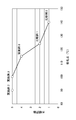
- FIG. 1 is a diagram showing the relationship between the softening point of hydrogenated petroleum resin and appearance evaluation when cyclic olefin-based resin A is used.
- the softening point of the hydrogenated petroleum resin was equal to or lower than the glass transition point of the cyclic olefin resin + 40 ° C., it was confirmed that the appearance evaluation exceeded 3.
- Example 2 the temperature decreased by 1.5 ° C., in Example 5 by 2.6 ° C., and in Example 6 by 1.8 ° C., the glass transition point hardly decreased. It was. Thus, it was confirmed that the addition of hydrogenated petroleum resin hardly affects the glass transition point of the cyclic olefin resin.
Landscapes
- Chemical & Material Sciences (AREA)
- Health & Medical Sciences (AREA)
- Chemical Kinetics & Catalysis (AREA)
- Medicinal Chemistry (AREA)
- Polymers & Plastics (AREA)
- Organic Chemistry (AREA)
- Compositions Of Macromolecular Compounds (AREA)
Abstract
特定の添加剤を特定の量含み、環状オレフィン系樹脂の持つ様々な優れた物性を保持し、様々な場面で使用可能でありながら、ゲル状物の発生を効果的に抑えることが可能なペレット混合物、当該ペレット混合物を成形してなる成形体、及び環状オレフィン系樹脂と水添石油樹脂とを含む成形体の製造方法を提供する。 軟化点が、環状オレフィン系樹脂のガラス転移点+40℃以下である水添石油樹脂を、環状オレフィン系樹脂ペレット100質量部に対して、1質量部を超えて20質量部以下用いる。
Description
本発明は、環状オレフィン系樹脂ペレットと、水添石油樹脂ペレットと、を含むペレット混合物、当該ペレット混合物を成形してなる成形体、及び環状オレフィン系樹脂と水添石油樹脂とを含む成形体の製造方法に関する。
環状オレフィン系樹脂は、透明性、耐薬品性、防湿性、機械的特性等に優れるため、光学用途や、医薬又は医療機器用途等の材料として用いられている。また、環状オレフィン系樹脂は、溶融加工性や流動性にも優れ、フィルム状又はシート状の成形品や、包装材料にも利用されている。さらに、環状オレフィン系樹脂は、熱収縮性や印刷特性にも優れる。このように、環状オレフィン系樹脂は様々な分野に利用されている。
環状オレフィン系樹脂は、上記のような有用な面以外に、溶融成形するとゲル状物が発生し成形表面が荒れ外観特性が低下するという面も持つ。この外観特性の低下は、特に透明材料、光学用途、包装材料として環状オレフィン系樹脂を利用する場合に大きな影響を与える。
上記ゲル状物は、成形の際の環状オレフィン系樹脂を加熱可塑化する工程において、溶融前の環状オレフィン系樹脂に強力なせん断力が加わり、環状オレフィン系樹脂が架橋構造を生じることにより発生する。
上記のようなゲル状物の発生を抑える方法として、脂肪酸アミド系滑剤、金属石鹸系滑剤等の滑剤を添加する方法(特許文献1)、成形条件を工夫する方法(特許文献2)が知られている。
しかしながら、環状オレフィン系樹脂の持つ様々な物性を保持し、様々な場面で使用可能でありながら、ゲル状物の発生を効果的に抑えることは難しく、さらなる改善が求められている。
ところで、上記の特許文献1のように環状オレフィン系樹脂材料に対して添加剤を加えて、成形体の物性を改善することは一般的に行われている。そして、添加剤の種類によって、改善できる物性が決まるわけではなく、添加剤の配合量、添加剤自身の軟化点等の物性により改善可能な物性が異なることが知られている。例えば、環状オレフィン系樹脂に水添石油樹脂を添加剤として含有させることができるが、水添石油樹脂の配合量によって、フィルムの耐候性、表面ベタツキを改善したり(特許文献3)、機械的強度、耐油性を改善したりすることが知られている(特許文献4)。
上記の通り、環状オレフィン系樹脂の物性を改善する目的で様々な添加剤が使用されており、改善できる物性には、添加剤の種類のみならず、添加剤の配合量、添加剤自身の物性、改善対象となる環状オレフィン系樹脂の物性等も影響し、所定の添加剤を用いて、配合量等を調整することで様々な物性を改善することが可能である。このため、特定の添加剤を特定の量、環状オレフィン系樹脂に含有させれば、環状オレフィン系樹脂の持つ様々な物性を保持し、様々な場面で使用可能でありながら、ゲル状物の発生を効果的に抑えることが可能であると推測される。
しかしながら、上記の通り、改善される物性は材料、配合量等から様々な影響を受けるため、環状オレフィン系樹脂の良好な物性を維持したまま、ゲル状物の発生を抑えるような添加剤、配合量等を見出すことは容易ではない。さらに、クリーンルームで成形体の製造が容易になるように原料は粉体ではないものにする必要がある。
本発明は以上のような課題を解決するためになされたものであり、その目的は、特定の添加剤を特定の量含み、環状オレフィン系樹脂の持つ様々な優れた物性を保持し、様々な場面で使用可能でありながら、ゲル状物の発生を効果的に抑えることが可能なペレット混合物、当該ペレット混合物を成形してなる成形体、及び環状オレフィン系樹脂と水添石油樹脂とを含む成形体の製造方法を提供することにある。
本発明者らは、上記課題を解決するために鋭意研究を重ねた。その結果、添加剤として、環状オレフィン系樹脂のガラス転移点(以下「Tg」という場合がある。)+40℃以下の軟化点を持つ水添石油樹脂を、環状オレフィン系樹脂100質量部に対して1質量部を超えて20質量部以下含有させ、成形体を環状オレフィン系樹脂ペレットと、水添石油樹脂ペレットと、をドライブレンドする工程後に成形することで、上記課題を解決できることを見出し、本発明を完成するに至った。より具体的には、本発明は以下のものを提供する。
(1) 環状オレフィン系樹脂ペレット100質量部に対して、水添石油樹脂ペレットを、1質量部を超えて20質量部以下含み、前記水添石油樹脂の軟化点が、前記環状オレフィン系樹脂のガラス転移点+40℃以下であるペレット混合物。
(2) 前記環状オレフィン系樹脂のガラス転移点が、70℃以上100℃以下であり、前記水添石油樹脂の軟化点が、130℃以下である(1)に記載のペレット混合物。
(3) 前記環状オレフィン系樹脂のガラス転移点が、130℃以上150℃以下であり、前記水添石油樹脂の軟化点が、150℃以下である(1)に記載のペレット混合物。
(4) (1)から(4)のいずれかに記載のペレット混合物を成形してなる成形体。
(5) 環状オレフィン系樹脂を含む成形体の製造方法であって、前記環状オレフィン系樹脂100質量部に対して、水添石油樹脂を、1質量部を超えて20質量部以下含み、前記水添石油樹脂の軟化点が、前記環状オレフィン系樹脂のガラス転移点+40℃以下であり、前記環状オレフィン系樹脂のペレットと、前記水添石油樹脂のペレットと、をドライブレンドする工程後に成形する成形体の製造方法。
(6) 前記環状オレフィン系樹脂のガラス転移点が、70℃以上100℃以下であり、前記水添石油樹脂の軟化点が、130℃以下である(5)に記載の成形体の製造方法。
(7) 前記環状オレフィン系樹脂のガラス転移点が、130℃以上150℃以下であり、前記水添石油樹脂の軟化点が、150℃以下である(5)に記載の成形体の製造方法。
本発明によれば、添加剤として、環状オレフィン系樹脂のガラス転移点+40℃以下の軟化点を持つ水添石油樹脂を、環状オレフィン系樹脂100質量部に対して1質量部を超えて20質量部以下含有させ、成形体を環状オレフィン系樹脂ペレットと、水添石油樹脂ペレットと、をドライブレンドする工程後に成形することで、環状オレフィン系樹脂の持つ様々な物性を保持し、様々な場面で使用可能でありながら、ゲル状物の発生を効果的に抑え、成形品の表面を平滑にすることができる。
本発明の成形体の製造方法は、環状オレフィン系樹脂のペレットと、水添石油樹脂のペレットと、をドライブレンドする工程後に成形することが特徴である。このように粉体でない原料を用いて成形体を製造することで、製造中に粉体が舞う等して製造の妨げになることを防ぎ、優れた成形体を容易に製造することができる。
以下、本発明の実施形態について詳細に説明するが、本発明は、以下の実施形態に何ら限定されるものではなく、本発明の目的の範囲内において、適宜変更を加えて実施することができる。なお、説明が重複する箇所については、適宜説明を省略する場合があるが、発明の要旨を限定するものではない。
<ペレット混合物>
本発明のペレット混合物は、環状オレフィン系樹脂ペレット100質量部に対して、水添石油樹脂ペレットを1質量部を超えて20質量部以下含み、水添石油樹脂の軟化点が、環状オレフィン系樹脂のガラス転移点+40℃以下であることが特徴である。このようなペレット混合物を成形することで、環状オレフィン系樹脂の持つ様々な物性を保持し、様々な場面で使用可能でありながら、ゲル状物の発生を効果的に抑えることができる。
本発明のペレット混合物は、環状オレフィン系樹脂ペレット100質量部に対して、水添石油樹脂ペレットを1質量部を超えて20質量部以下含み、水添石油樹脂の軟化点が、環状オレフィン系樹脂のガラス転移点+40℃以下であることが特徴である。このようなペレット混合物を成形することで、環状オレフィン系樹脂の持つ様々な物性を保持し、様々な場面で使用可能でありながら、ゲル状物の発生を効果的に抑えることができる。
[環状オレフィン系樹脂]
本発明に用いられる環状オレフィン系樹脂ペレットに含まれる環状オレフィン系樹脂について説明する。本発明に用いられる環状オレフィン系樹脂は、環状オレフィン成分を共重合成分として含むものであり、環状オレフィン成分を主鎖に含むポリオレフィン系樹脂であれば、特に限定されるものではない。例えば、
(a1)環状オレフィンの付加重合体又はその水素添加物、
(a2)環状オレフィンとα-オレフィンの付加共重合体又はその水素添加物、
(a3)環状オレフィンの開環(共)重合体又はその水素添加物、を挙げることができる。
本発明に用いられる環状オレフィン系樹脂ペレットに含まれる環状オレフィン系樹脂について説明する。本発明に用いられる環状オレフィン系樹脂は、環状オレフィン成分を共重合成分として含むものであり、環状オレフィン成分を主鎖に含むポリオレフィン系樹脂であれば、特に限定されるものではない。例えば、
(a1)環状オレフィンの付加重合体又はその水素添加物、
(a2)環状オレフィンとα-オレフィンの付加共重合体又はその水素添加物、
(a3)環状オレフィンの開環(共)重合体又はその水素添加物、を挙げることができる。
また、本発明に用いられる環状オレフィン成分を共重合成分として含む環状オレフィン系樹脂としては、
(a4)上記(a1)~(a3)の樹脂に、さらに極性基を有する不飽和化合物をグラフト及び/又は共重合したもの。
(a4)上記(a1)~(a3)の樹脂に、さらに極性基を有する不飽和化合物をグラフト及び/又は共重合したもの。
極性基としては、例えば、カルボキシル基、酸無水物基、エポキシ基、アミド基、エステル基、ヒドロキシル基等を挙げることができ、極性基を有する不飽和化合物としては、(メタ)アクリル酸、マレイン酸、無水マレイン酸、無水イタコン酸、グリシジル(メタ)アクリレート、(メタ)アクリル酸アルキル(炭素数1~10)エステル、マレイン酸アルキル(炭素数1~10)エステル、(メタ)アクリルアミド、(メタ)アクリル酸-2-ヒドロキシエチル等を挙げることができる。
本発明においては、上記の環状オレフィン成分を共重合成分として含む環状オレフィン系樹脂(a1)~(a4)は、1種単独であっても、二種以上を混合使用してもよい。
また、本発明に用いられる環状オレフィン成分を共重合成分として含む環状オレフィン系樹脂としては、市販の樹脂を用いることも可能である。市販されている環状オレフィン系樹脂としては、例えば、TOPAS(登録商標)(Topas Advanced Polymers社製)、アペル(登録商標)(三井化学社製)、ゼオネックス(登録商標)(日本ゼオン社製)、ゼオノア(登録商標)(日本ゼオン社製)、アートン(登録商標)(JSR社製)等を挙げることができる。
本発明の組成物に好ましく用いられる(a2)環状オレフィンとα-オレフィンの付加共重合体としては、特に限定されるものではない。特に好ましい例としては、〔1〕炭素数2~20のα-オレフィン成分と、〔2〕下記一般式(I)で示される環状オレフィン成分と、を含む共重合体を挙げることができる。

(式中、R1~R12は、それぞれ同一でも異なっていてもよく、水素原子、ハロゲン原子、及び、炭化水素基からなる群より選ばれるものであり、R9とR10、R11とR12は、一体化して2価の炭化水素基を形成してもよく、R9又はR10と、R11又はR12とは、互いに環を形成していてもよい。また、nは、0又は正の整数を示し、nが2以上の場合には、R5~R8は、それぞれの繰り返し単位の中で、それぞれ同一でも異なっていてもよい。)
〔〔1〕炭素数2~20のα-オレフィン成分〕
本発明に好ましく用いられる環状オレフィン成分とエチレン等の他の共重合成分との付加重合体の共重合成分となる炭素数2~20のα-オレフィンは、特に限定されるものではない。例えば、特開2007-302722と同様のものを挙げることができる。また、これらのα-オレフィン成分は、1種単独でも2種以上を同時に使用してもよい。これらの中では、エチレンの単独使用が最も好ましい。
本発明に好ましく用いられる環状オレフィン成分とエチレン等の他の共重合成分との付加重合体の共重合成分となる炭素数2~20のα-オレフィンは、特に限定されるものではない。例えば、特開2007-302722と同様のものを挙げることができる。また、これらのα-オレフィン成分は、1種単独でも2種以上を同時に使用してもよい。これらの中では、エチレンの単独使用が最も好ましい。
〔〔2〕一般式(I)で示される環状オレフィン成分〕
本発明に好ましく用いられる環状オレフィン成分とエチレン等の他の共重合成分との付加重合体において、共重合成分となる一般式(I)で示される環状オレフィン成分について説明する。
本発明に好ましく用いられる環状オレフィン成分とエチレン等の他の共重合成分との付加重合体において、共重合成分となる一般式(I)で示される環状オレフィン成分について説明する。
一般式(I)におけるR1~R12は、それぞれ同一でも異なっていてもよく、水素原子、ハロゲン原子、及び、炭化水素基からなる群より選ばれるものである。
R1~R8の具体例としては、例えば、水素原子;フッ素、塩素、臭素等のハロゲン原子;メチル基、エチル基、プロピル基、ブチル基等の低級アルキル基等を挙げることができ、これらはそれぞれ異なっていてもよく、部分的に異なっていてもよく、また、全部が同一であってもよい。
また、R9~R12の具体例としては、例えば、水素原子;フッ素、塩素、臭素等のハロゲン原子;メチル基、エチル基、プロピル基、イソプロピル基、ブチル基、イソブチル基、ヘキシル基、ステアリル基等のアルキル基;シクロヘキシル基等のシクロアルキル基;フェニル基、トリル基、エチルフェニル基、イソプロピルフェニル基、ナフチル基、アントリル基等の置換又は無置換の芳香族炭化水素基;ベンジル基、フェネチル基、その他アルキル基にアリール基が置換したアラルキル基等を挙げることができ、これらはそれぞれ異なっていてもよく、部分的に異なっていてもよく、また、全部が同一であってもよい。
R9とR10、又はR11とR12とが一体化して2価の炭化水素基を形成する場合の具体例としては、例えば、エチリデン基、プロピリデン基、イソプロピリデン基等のアルキリデン基等を挙げることができる。
R9又はR10と、R11又はR12とが、互いに環を形成する場合には、形成される環は単環でも多環であってもよく、架橋を有する多環であってもよく、二重結合を有する環であってもよく、またこれらの環の組み合わせからなる環であってもよい。また、これらの環はメチル基等の置換基を有していてもよい。
一般式(I)で示される環状オレフィン成分の具体例としては、特開2007-302722と同様のものを挙げることができる。
これらの環状オレフィン成分は、1種単独でも、また2種以上を組み合わせて使用してもよい。上記公報に記載の具体例の中では、ビシクロ[2.2.1]ヘプタ-2-エン(慣用名:ノルボルネン)を単独使用することが好ましい。
〔1〕炭素数2~20のα-オレフィン成分と〔2〕一般式(I)で表される環状オレフィン成分との重合方法及び得られた重合体の水素添加方法は、特に限定されるものではなく、公知の方法に従って行うことができる。ランダム共重合であっても、ブロック共重合であってもよい。
また、用いられる重合触媒についても特に限定されるものではなく、チーグラー・ナッタ系、メタセシス系、メタロセン系触媒等の従来周知の触媒を用いて周知の方法により得ることができる。本発明に好ましく用いられる環状オレフィンとα-オレフィンの付加共重合体又はその水素添加物は、メタロセン系触媒やチーグラー・ナッタ系触媒を用いて製造されることが好ましい。
メタセシス触媒としては、シクロオレフィンの開環重合用触媒として公知のモリブデン又はタングステン系メタセシス触媒(例えば、特開昭58-127728号公報、同58-129013号公報等に記載)が挙げられる。また、メタセシス触媒で得られる重合体は無機担体担持遷移金属触媒等を用い、主鎖の二重結合を90%以上、側鎖の芳香環中の炭素-炭素二重結合の98%以上を水素添加することが好ましい。
上記のような方法で得られた環状オレフィン系樹脂のガラス転移点は特に限定されないが、70℃以上100℃以下、又は130℃以上150℃以下であることが好ましい。なお、ガラス転移点(Tg)は、DSC法(JIS K7121記載の方法)によって昇温速度10℃/分の条件で測定した値を採用する。
〔その他共重合成分〕
本発明の組成物に特に好ましく用いられる(a2)環状オレフィンとα-オレフィンの付加共重合体は、上記の〔1〕炭素数2~20のα-オレフィン成分と、〔2〕一般式(I)で示される環状オレフィン成分以外に、本発明の目的を損なわない範囲で、必要に応じて他の共重合可能な不飽和単量体成分を含有していてもよい。
本発明の組成物に特に好ましく用いられる(a2)環状オレフィンとα-オレフィンの付加共重合体は、上記の〔1〕炭素数2~20のα-オレフィン成分と、〔2〕一般式(I)で示される環状オレフィン成分以外に、本発明の目的を損なわない範囲で、必要に応じて他の共重合可能な不飽和単量体成分を含有していてもよい。
任意に共重合されていてもよい不飽和単量体としては、特に限定されるものではないが、例えば、炭素-炭素二重結合を1分子内に2個以上含む炭化水素系単量体等を挙げることができる。炭素-炭素二重結合を1分子内に2個以上含む炭化水素系単量体の具体例としては、特開2007-302722と同様のものを挙げることができる。
<水添石油樹脂>
本発明に使用可能な水添石油樹脂は、JIS K2207に準拠の方法で測定される軟化点が環状オレフィン系樹脂のガラス転移点+40℃以下であれば特に限定されず従来公知のものを用いることができる。従来公知の水添石油樹脂としては、例えば、C5-芳香族系水添石油樹脂、水素化C9系石油樹脂、水素化ジシクロペンタジエン系石油樹脂、水素化テルペン樹脂、水素化クマロン・インデン樹脂等があげられる。環状オレフィン系樹脂の透明性を損なわないように、より透明性の高い水添石油樹脂であることが好ましい。透明性の特に高い水添石油樹脂としては、アイマーブ(登録商標)(出光興産社製)、アルコン(登録商標)(荒川化学工業社製)等が挙げられる。
本発明に使用可能な水添石油樹脂は、JIS K2207に準拠の方法で測定される軟化点が環状オレフィン系樹脂のガラス転移点+40℃以下であれば特に限定されず従来公知のものを用いることができる。従来公知の水添石油樹脂としては、例えば、C5-芳香族系水添石油樹脂、水素化C9系石油樹脂、水素化ジシクロペンタジエン系石油樹脂、水素化テルペン樹脂、水素化クマロン・インデン樹脂等があげられる。環状オレフィン系樹脂の透明性を損なわないように、より透明性の高い水添石油樹脂であることが好ましい。透明性の特に高い水添石油樹脂としては、アイマーブ(登録商標)(出光興産社製)、アルコン(登録商標)(荒川化学工業社製)等が挙げられる。
本発明では水添の石油樹脂を用いることが特徴である。未水添の石油樹脂は色調が悪く、高い透明性を特徴とする環状オレフィン系樹脂を用いる成形体には適さないからである。水素添加率は特に限定されないが、80%以上であることが好ましい。水素添加率が80%以上であれば、環状オレフィン系樹脂の透明性を損なわないためである。
本発明の水添石油樹脂は、軟化点が環状オレフィン系樹脂のガラス転移点+40℃以下である。石油樹脂の軟化点を上記範囲にすることで、ゲル状物の発生を低減することができ、表面が平滑な成形体を得ることができる。環状オレフィン系樹脂ペレットが溶け始める前に石油樹脂ペレットが溶け始めることで、環状オレフィン系樹脂ペレットに対してスクリューから強力なせん断力がかかることを防ぐためと推測される。水添石油樹脂のより好ましい軟化点の範囲は、(Tg-40)℃以上(Tg+30)℃以下である。
特に、環状オレフィン系樹脂のガラス転移点が、70℃以上100℃以下である場合には、水添石油樹脂の軟化点は、130℃以下であることが好ましい。より好ましくは90℃以上120℃以下である。また、環状オレフィン系樹脂のガラス転移点が130℃以上150℃以下である場合には、水添石油樹脂の軟化点は150℃以下であることが好ましい。より好ましくは100℃以上140℃以下である。上記のような関係が、環状オレフィン系樹脂と水添石油樹脂との間にあることで、さらにゲル低減の効果が高まるからである。
本発明のペレット混合物は、環状オレフィン系樹脂ペレット100質量部に対して水添石油樹脂ペレットを、1質量部を超えて20質量部以下含有させる。1質量部を超えていればゲル低減の効果が得られるため好ましい。また、水添石油樹脂はゲル状物の発生を抑えるために含有させるものであり、本来その含有量は少ない方が好ましい。水添石油樹脂ペレットの含有量が20質量部以下であれば、得られる成形体は、環状オレフィン系樹脂としての性能を充分に発揮することができる。好ましい水添石油樹脂ペレットの含有量は、環状オレフィン系樹脂100質量部に対して2質量部以上10質量部以下である。
本発明のペレット混合物を原料として成形体を成形することで、環状オレフィン系樹脂の持つ様々な物性を保持し、様々な場面で使用可能でありながら、ゲル状物の発生を効果的に抑えることができる。
本発明のペレット混合物は、フィルム、射出成形品、繊維、シート、パイプ、発泡体、異形押出品、その他ペレットで加工されるもの全てに適用することができる。
<成形体の製造方法>
本発明の成形体の製象方法は、環状オレフィン系樹脂ペレットと、水添石油樹脂ペレットと、をドライブレンドすることを特徴とする。ドライブレンドすることにより、環状オレフィン系樹脂の持つ様々な物性を保持し、様々な場面で使用可能でありながら、ゲル状物の発生を効果的に抑えることができる。環状オレフィン系樹脂に水添石油樹脂を内添させても本発明の効果を得ることはできない。
本発明の成形体の製象方法は、環状オレフィン系樹脂ペレットと、水添石油樹脂ペレットと、をドライブレンドすることを特徴とする。ドライブレンドすることにより、環状オレフィン系樹脂の持つ様々な物性を保持し、様々な場面で使用可能でありながら、ゲル状物の発生を効果的に抑えることができる。環状オレフィン系樹脂に水添石油樹脂を内添させても本発明の効果を得ることはできない。
上記の通り、ドライブレンドする工程を備えるものであれば、成形条件、成形方法等は特に限定されず、使用する環状オレフィン系樹脂の種類、水添石油樹脂の種類、所望の成形体の形状等に応じて、成形条件、成形方法は適宜変更することができる。
従来公知の成形方法としては、例えば射出成形、射出圧縮成形、ガスアシスト法射出成形、押出成形、多層押出成形、回転成形、熱プレス成形、ブロー成形、発泡成形等の方法が挙げられる。
<成形体>
本発明のペレット混合物を成形して得られる成形体の種類は特に限定されず、例えば、射出成形体、チューブ、シート、フィルム、パイプ、ボトル等に成形することができる。これらの中でも、特にフィルムであることが好ましい。
本発明のペレット混合物を成形して得られる成形体の種類は特に限定されず、例えば、射出成形体、チューブ、シート、フィルム、パイプ、ボトル等に成形することができる。これらの中でも、特にフィルムであることが好ましい。
通常、ゲル発生等の問題解決のために環状オレフィン系樹脂に添加剤を配合すると、成形体の物性が低下してしまうことが知られている。しかしながら、本発明の成形体は、物性がほとんど低下しないことが特徴である。例えば、透明性が低下しないこと、ガラス転移点の低下が5℃以内であること等が挙げられる。なお、透明性の判断は目視で行った。
以下に、実施例を挙げて本発明をさらに詳細に説明するが、本発明はこれらの実施例により限定されるものではない。
<材料>
環状オレフィン系樹脂A:TOPAS8007F-04(Topas Advanced Polymers社製)、ガラス転移点78℃
環状オレフィン系樹脂B:TOPAS6013F-04(Topas Advanced Polymers社製)、ガラス転移点138℃
水添石油樹脂A:C5-芳香族系水添石油樹脂(アイマーブP-90(出光興産社製))
水添石油樹脂B:C5-芳香族系水添石油樹脂(アイマーブP-100(出光興産社製))
水添石油樹脂C:C5-芳香族系水添石油樹脂(アイマーブP-125(出光興産社製))
水添石油樹脂D:C5-芳香族系水添石油樹脂(アイマーブP-140(出光興産社製))
水添石油樹脂E:水素化C9系石油樹脂(アルコンP90(荒川化学社製))
水添石油樹脂F:水素化C9系石油樹脂(アルコンP115(荒川化学社製))
<装置>
フィルム成形機:φ20mmプラストミル押出機(東洋精機製作所製)
150mm巾Tダイ
環状オレフィン系樹脂A:TOPAS8007F-04(Topas Advanced Polymers社製)、ガラス転移点78℃
環状オレフィン系樹脂B:TOPAS6013F-04(Topas Advanced Polymers社製)、ガラス転移点138℃
水添石油樹脂A:C5-芳香族系水添石油樹脂(アイマーブP-90(出光興産社製))
水添石油樹脂B:C5-芳香族系水添石油樹脂(アイマーブP-100(出光興産社製))
水添石油樹脂C:C5-芳香族系水添石油樹脂(アイマーブP-125(出光興産社製))
水添石油樹脂D:C5-芳香族系水添石油樹脂(アイマーブP-140(出光興産社製))
水添石油樹脂E:水素化C9系石油樹脂(アルコンP90(荒川化学社製))
水添石油樹脂F:水素化C9系石油樹脂(アルコンP115(荒川化学社製))
<装置>
フィルム成形機:φ20mmプラストミル押出機(東洋精機製作所製)
150mm巾Tダイ
<実施例1から8>
表1に記載する材料、配合比にて、環状オレフィン系樹脂ペレットと、水添石油樹脂ペレットとを混合し本発明のペレット混合物を得た。ホッパー口に窒素を流入しながら、このペレット混合物を成形機に供給し、以下の成形条件でTダイにて実施例のフィルムを作製した。得られたフィルムの大きさは長さ10m×巾12cm×厚み50μmであった。
[成形条件]
スクリュー:単軸フルフライトスクリュー
フィード量:フルフィード
スクリュー回転数:70rpm
押出量:3kg/h
ロール温度:60℃
押出温度:(C1)210℃、(C2からC4)230℃
ダイ温度:230℃
表1に記載する材料、配合比にて、環状オレフィン系樹脂ペレットと、水添石油樹脂ペレットとを混合し本発明のペレット混合物を得た。ホッパー口に窒素を流入しながら、このペレット混合物を成形機に供給し、以下の成形条件でTダイにて実施例のフィルムを作製した。得られたフィルムの大きさは長さ10m×巾12cm×厚み50μmであった。
[成形条件]
スクリュー:単軸フルフライトスクリュー
フィード量:フルフィード
スクリュー回転数:70rpm
押出量:3kg/h
ロール温度:60℃
押出温度:(C1)210℃、(C2からC4)230℃
ダイ温度:230℃
<比較例1から3>
表1に記載する材料、配合比にて、環状オレフィン系樹脂ペレットと、水添石油樹脂ペレットと、を混合し本発明のペレット混合物を得た。実施例と同様にして同じ大きさのフィルムを作製した。
表1に記載する材料、配合比にて、環状オレフィン系樹脂ペレットと、水添石油樹脂ペレットと、を混合し本発明のペレット混合物を得た。実施例と同様にして同じ大きさのフィルムを作製した。
<比較例4>
表1に記載する材料、配合比にて、環状オレフィン系樹脂ペレットと、水添石油樹脂ペレットと、をあらかじめ二軸スクリューを有する押出機にて可塑化混練し、混合ペレットを調整した。この混合ペレットを用いて実施例と同様の方法で実施例と同じ大きさのフィルムを作製した。
表1に記載する材料、配合比にて、環状オレフィン系樹脂ペレットと、水添石油樹脂ペレットと、をあらかじめ二軸スクリューを有する押出機にて可塑化混練し、混合ペレットを調整した。この混合ペレットを用いて実施例と同様の方法で実施例と同じ大きさのフィルムを作製した。
<評価>
実施例及び比較例のフィルムについて、8cm×5.5cmの範囲を目視にて観察し5点法にて評価を行った。評価結果を表1に示した。
評価1:観察範囲内に無数のゲル状物が認められ全く実用には適さない。
評価2:評価1と評価3の中間的な状態。
評価3:観察範囲内にゲル状物は認められるが、用途によっては実用可能。
評価4:評価3と評価5の中間的な状態。
評価5:観察範囲内にゲル状物は認められない。
なお、ゲル状物周辺のフィルムを切り出し、シクロヘキサンに室温にて浸漬させたところ、ゲル状物のみ不溶であった。
実施例及び比較例のフィルムについて、8cm×5.5cmの範囲を目視にて観察し5点法にて評価を行った。評価結果を表1に示した。
評価1:観察範囲内に無数のゲル状物が認められ全く実用には適さない。
評価2:評価1と評価3の中間的な状態。
評価3:観察範囲内にゲル状物は認められるが、用途によっては実用可能。
評価4:評価3と評価5の中間的な状態。
評価5:観察範囲内にゲル状物は認められない。
なお、ゲル状物周辺のフィルムを切り出し、シクロヘキサンに室温にて浸漬させたところ、ゲル状物のみ不溶であった。

表1の実施例8及び比較例1、2の結果から明らかなように、水添石油樹脂の軟化点(JIS K2207に準拠の方法で測定される軟化点)が、環状オレフィン系樹脂のガラス転移点+40℃以下であれば、ゲル状物の発生が抑えられることが確認された。
表1の実施例1と比較例3の結果から明らかなように、水添石油樹脂の含有量が1質量部を超えると、ゲル状物発生が抑えられることが確認された。
表1の実施例と比較例4の結果から明らかなように、環状オレフィン系樹脂に水添石油樹脂を内添すると効果が無く、ドライブレンドでなければゲル状物の発生を抑える効果は出ないことが確認された。
図1には、環状オレフィン系樹脂Aを用いた場合の、水添石油樹脂の軟化点と外観評価との関係を示す図である。水添石油樹脂の軟化点が、環状オレフィン系樹脂のガラス転移点+40℃以下であれば、外観評価は3を超えることが確認された。
また、実施例2、5、6で得られたフィルムを用いてガラス転移点を測定し、環状オレフィン系樹脂単独の場合のガラス転移点と比較をした。その結果、実施例2では1.5℃の低下、実施例5では2.6℃の低下、実施例6では1.8℃の低下であり、いずれも、ガラス転移点はほとんど低下していなかった。このように水添石油樹脂の添加は環状オレフィン系樹脂のガラス転移点にほとんど影響を与えないことが確認された。
以上の通り、本発明によれば、環状オレフィン系樹脂の持つ様々な優れた物性を保持し、様々な場面で使用可能でありながら、ゲル状物の発生を効果的に抑えることができる。
Claims (7)
- 環状オレフィン系樹脂ペレット100質量部に対して、水添石油樹脂ペレットを、1質量部を超えて20質量部以下含み、
前記水添石油樹脂の軟化点が、前記環状オレフィン系樹脂のガラス転移点+40℃以下であるペレット混合物。 - 前記環状オレフィン系樹脂のガラス転移点が、70℃以上100℃以下であり、
前記水添石油樹脂の軟化点が、130℃以下である請求項1に記載のペレット混合物。 - 前記環状オレフィン系樹脂のガラス転移点が、130℃以上150℃以下であり、
前記水添石油樹脂の軟化点が、150℃以下である請求項1に記載のペレット混合物。 - 請求項1から3のいずれかに記載のペレット混合物を成形してなる成形体。
- 環状オレフィン系樹脂を含む成形体の製造方法であって、
前記環状オレフィン系樹脂100質量部に対して、水添石油樹脂を1質量部を超えて20質量部以下含み、
前記水添石油樹脂の軟化点が、前記環状オレフィン系樹脂のガラス転移点+40℃以下であり、
前記環状オレフィン系樹脂のペレットと、前記水添石油樹脂のペレットと、をドライブレンドする工程後に成形する成形体の製造方法。 - 前記環状オレフィン系樹脂のガラス転移点が、70℃以上100℃以下であり、
前記水添石油樹脂の軟化点が、130℃以下である請求項5に記載の成形体の製造方法。 - 前記環状オレフィン系樹脂のガラス転移点が、130℃以上150℃以下であり、
前記水添石油樹脂の軟化点が、150℃以下である請求項5に記載の成形体の製造方法。
Applications Claiming Priority (2)
| Application Number | Priority Date | Filing Date | Title |
|---|---|---|---|
| JP2008-238832 | 2008-09-18 | ||
| JP2008238832 | 2008-09-18 |
Publications (1)
| Publication Number | Publication Date |
|---|---|
| WO2010032560A1 true WO2010032560A1 (ja) | 2010-03-25 |
Family
ID=42039402
Family Applications (1)
| Application Number | Title | Priority Date | Filing Date |
|---|---|---|---|
| PCT/JP2009/063561 Ceased WO2010032560A1 (ja) | 2008-09-18 | 2009-07-30 | ペレット混合物、成形体、及び成形体の製造方法 |
Country Status (2)
| Country | Link |
|---|---|
| TW (1) | TW201026771A (ja) |
| WO (1) | WO2010032560A1 (ja) |
Cited By (2)
| Publication number | Priority date | Publication date | Assignee | Title |
|---|---|---|---|---|
| WO2012165534A1 (ja) * | 2011-06-01 | 2012-12-06 | 出光興産株式会社 | 粒状物の貯蔵装置 |
| JP2019129285A (ja) * | 2018-01-26 | 2019-08-01 | 株式会社ハイブリッド太陽電池研究所 | デラミネーション防止複合封止材および太陽電池モジュール |
Citations (3)
| Publication number | Priority date | Publication date | Assignee | Title |
|---|---|---|---|---|
| JP2004018781A (ja) * | 2002-06-19 | 2004-01-22 | Jsr Corp | 特定の環状オレフィン系重合体からなる射出成形体 |
| JP2004066533A (ja) * | 2002-08-02 | 2004-03-04 | Mitsubishi Plastics Ind Ltd | 熱収縮性ポリオレフィン系積層フィルム |
| JP2007021756A (ja) * | 2005-07-12 | 2007-02-01 | Mitsubishi Plastics Ind Ltd | ポリオレフィン系樹脂積層シートおよびこれを用いたptp包装体 |
-
2009
- 2009-07-30 WO PCT/JP2009/063561 patent/WO2010032560A1/ja not_active Ceased
- 2009-08-13 TW TW98127227A patent/TW201026771A/zh unknown
Patent Citations (3)
| Publication number | Priority date | Publication date | Assignee | Title |
|---|---|---|---|---|
| JP2004018781A (ja) * | 2002-06-19 | 2004-01-22 | Jsr Corp | 特定の環状オレフィン系重合体からなる射出成形体 |
| JP2004066533A (ja) * | 2002-08-02 | 2004-03-04 | Mitsubishi Plastics Ind Ltd | 熱収縮性ポリオレフィン系積層フィルム |
| JP2007021756A (ja) * | 2005-07-12 | 2007-02-01 | Mitsubishi Plastics Ind Ltd | ポリオレフィン系樹脂積層シートおよびこれを用いたptp包装体 |
Cited By (7)
| Publication number | Priority date | Publication date | Assignee | Title |
|---|---|---|---|---|
| WO2012165534A1 (ja) * | 2011-06-01 | 2012-12-06 | 出光興産株式会社 | 粒状物の貯蔵装置 |
| JP2012250730A (ja) * | 2011-06-01 | 2012-12-20 | Idemitsu Kosan Co Ltd | 粒状物の貯蔵装置 |
| CN103502116A (zh) * | 2011-06-01 | 2014-01-08 | 出光兴产株式会社 | 粒状物的贮藏装置 |
| US9120615B2 (en) | 2011-06-01 | 2015-09-01 | Idemitsu Kosan Co., Ltd. | Storage device for granular material |
| CN103502116B (zh) * | 2011-06-01 | 2016-04-13 | 出光兴产株式会社 | 粒状物的贮藏装置 |
| KR101921770B1 (ko) * | 2011-06-01 | 2018-11-23 | 이데미쓰 고산 가부시키가이샤 | 입상물의 저장 장치 |
| JP2019129285A (ja) * | 2018-01-26 | 2019-08-01 | 株式会社ハイブリッド太陽電池研究所 | デラミネーション防止複合封止材および太陽電池モジュール |
Also Published As
| Publication number | Publication date |
|---|---|
| TW201026771A (en) | 2010-07-16 |
Similar Documents
| Publication | Publication Date | Title |
|---|---|---|
| CN104583285B (zh) | 透明薄膜 | |
| CN103128956A (zh) | 环状烯烃树脂组合物 | |
| JP5281497B2 (ja) | 溶融押出用ポリオレフィン系樹脂組成物及びそれを用いたフィルム | |
| CN100351304C (zh) | 树脂组合物及由此获得的薄膜 | |
| JP5058860B2 (ja) | フィルム | |
| WO2010032560A1 (ja) | ペレット混合物、成形体、及び成形体の製造方法 | |
| JP2009258571A (ja) | 位相差フィルム | |
| JP5619378B2 (ja) | 溶融押出用環状オレフィン系樹脂組成物及びそれを用いたフィルム | |
| JP2010180318A (ja) | ペレット混合物、成形体、及び成形体の製造方法 | |
| WO2017217063A1 (ja) | 3dプリンター用造形材料及び三次元物体の製造方法 | |
| TWI355402B (en) | Process for preparing resin composition | |
| JP5155703B2 (ja) | 環状オレフィン系樹脂ペレットの製造方法 | |
| JP4687308B2 (ja) | 延伸成形体 | |
| WO2023243691A1 (ja) | ラミネート用延伸ポリエチレンフィルム | |
| JP4815755B2 (ja) | フィルム成形用樹脂組成物およびそれからなるフィルム | |
| JPH10237129A (ja) | フィルム | |
| JP4582860B2 (ja) | 熱収縮フィルム | |
| JP2013136792A (ja) | 成形体の製造方法及び成形体 | |
| JP2010116499A (ja) | 樹脂組成物および熱収縮性フィルム | |
| JP5341347B2 (ja) | 射出成形品の製造方法及びそれに用いるマスターバッチ | |
| CN103391835A (zh) | 成型品的制造方法及成型品 | |
| JP2008115274A (ja) | マスターバッチおよびそれを用いた成形体の製造方法 | |
| JP4341286B2 (ja) | 接着性樹脂組成物、積層体およびガソリンタンク | |
| JP5375454B2 (ja) | ポリプロピレン系樹脂組成物および延伸フィルム | |
| JP2012006304A (ja) | 成形体の製造方法 |
Legal Events
| Date | Code | Title | Description |
|---|---|---|---|
| 121 | Ep: the epo has been informed by wipo that ep was designated in this application |
Ref document number: 09814405 Country of ref document: EP Kind code of ref document: A1 |
|
| NENP | Non-entry into the national phase |
Ref country code: DE |
|
| 122 | Ep: pct application non-entry in european phase |
Ref document number: 09814405 Country of ref document: EP Kind code of ref document: A1 |
|
| NENP | Non-entry into the national phase |
Ref country code: JP |