WO2010029951A1 - 分岐鎖アミノ酸含有経口製剤 - Google Patents
分岐鎖アミノ酸含有経口製剤 Download PDFInfo
- Publication number
- WO2010029951A1 WO2010029951A1 PCT/JP2009/065765 JP2009065765W WO2010029951A1 WO 2010029951 A1 WO2010029951 A1 WO 2010029951A1 JP 2009065765 W JP2009065765 W JP 2009065765W WO 2010029951 A1 WO2010029951 A1 WO 2010029951A1
- Authority
- WO
- WIPO (PCT)
- Prior art keywords
- chain amino
- amino acid
- glycine
- oral preparation
- branched chain
- Prior art date
- Legal status (The legal status is an assumption and is not a legal conclusion. Google has not performed a legal analysis and makes no representation as to the accuracy of the status listed.)
- Ceased
Links
Images



Classifications
-
- A—HUMAN NECESSITIES
- A61—MEDICAL OR VETERINARY SCIENCE; HYGIENE
- A61K—PREPARATIONS FOR MEDICAL, DENTAL OR TOILETRY PURPOSES
- A61K9/00—Medicinal preparations characterised by special physical form
- A61K9/14—Particulate form, e.g. powders, Processes for size reducing of pure drugs or the resulting products, Pure drug nanoparticles
- A61K9/141—Intimate drug-carrier mixtures characterised by the carrier, e.g. ordered mixtures, adsorbates, solid solutions, eutectica, co-dried, co-solubilised, co-kneaded, co-milled, co-ground products, co-precipitates, co-evaporates, co-extrudates, co-melts; Drug nanoparticles with adsorbed surface modifiers
- A61K9/145—Intimate drug-carrier mixtures characterised by the carrier, e.g. ordered mixtures, adsorbates, solid solutions, eutectica, co-dried, co-solubilised, co-kneaded, co-milled, co-ground products, co-precipitates, co-evaporates, co-extrudates, co-melts; Drug nanoparticles with adsorbed surface modifiers with organic compounds
-
- A—HUMAN NECESSITIES
- A61—MEDICAL OR VETERINARY SCIENCE; HYGIENE
- A61K—PREPARATIONS FOR MEDICAL, DENTAL OR TOILETRY PURPOSES
- A61K9/00—Medicinal preparations characterised by special physical form
- A61K9/14—Particulate form, e.g. powders, Processes for size reducing of pure drugs or the resulting products, Pure drug nanoparticles
- A61K9/16—Agglomerates; Granulates; Microbeadlets ; Microspheres; Pellets; Solid products obtained by spray drying, spray freeze drying, spray congealing,(multiple) emulsion solvent evaporation or extraction
-
- A—HUMAN NECESSITIES
- A61—MEDICAL OR VETERINARY SCIENCE; HYGIENE
- A61K—PREPARATIONS FOR MEDICAL, DENTAL OR TOILETRY PURPOSES
- A61K31/00—Medicinal preparations containing organic active ingredients
- A61K31/185—Acids; Anhydrides, halides or salts thereof, e.g. sulfur acids, imidic, hydrazonic or hydroximic acids
- A61K31/19—Carboxylic acids, e.g. valproic acid
- A61K31/195—Carboxylic acids, e.g. valproic acid having an amino group
- A61K31/197—Carboxylic acids, e.g. valproic acid having an amino group the amino and the carboxyl groups being attached to the same acyclic carbon chain, e.g. gamma-aminobutyric acid [GABA], beta-alanine, epsilon-aminocaproic acid or pantothenic acid
- A61K31/198—Alpha-amino acids, e.g. alanine or edetic acid [EDTA]
-
- A—HUMAN NECESSITIES
- A61—MEDICAL OR VETERINARY SCIENCE; HYGIENE
- A61K—PREPARATIONS FOR MEDICAL, DENTAL OR TOILETRY PURPOSES
- A61K47/00—Medicinal preparations characterised by the non-active ingredients used, e.g. carriers or inert additives; Targeting or modifying agents chemically bound to the active ingredient
- A61K47/06—Organic compounds, e.g. natural or synthetic hydrocarbons, polyolefins, mineral oil, petrolatum or ozokerite
- A61K47/08—Organic compounds, e.g. natural or synthetic hydrocarbons, polyolefins, mineral oil, petrolatum or ozokerite containing oxygen, e.g. ethers, acetals, ketones, quinones, aldehydes, peroxides
- A61K47/12—Carboxylic acids; Salts or anhydrides thereof
-
- A—HUMAN NECESSITIES
- A61—MEDICAL OR VETERINARY SCIENCE; HYGIENE
- A61K—PREPARATIONS FOR MEDICAL, DENTAL OR TOILETRY PURPOSES
- A61K47/00—Medicinal preparations characterised by the non-active ingredients used, e.g. carriers or inert additives; Targeting or modifying agents chemically bound to the active ingredient
- A61K47/06—Organic compounds, e.g. natural or synthetic hydrocarbons, polyolefins, mineral oil, petrolatum or ozokerite
- A61K47/16—Organic compounds, e.g. natural or synthetic hydrocarbons, polyolefins, mineral oil, petrolatum or ozokerite containing nitrogen, e.g. nitro-, nitroso-, azo-compounds, nitriles, cyanates
- A61K47/18—Amines; Amides; Ureas; Quaternary ammonium compounds; Amino acids; Oligopeptides having up to five amino acids
-
- A—HUMAN NECESSITIES
- A61—MEDICAL OR VETERINARY SCIENCE; HYGIENE
- A61K—PREPARATIONS FOR MEDICAL, DENTAL OR TOILETRY PURPOSES
- A61K9/00—Medicinal preparations characterised by special physical form
- A61K9/14—Particulate form, e.g. powders, Processes for size reducing of pure drugs or the resulting products, Pure drug nanoparticles
-
- A—HUMAN NECESSITIES
- A61—MEDICAL OR VETERINARY SCIENCE; HYGIENE
- A61P—SPECIFIC THERAPEUTIC ACTIVITY OF CHEMICAL COMPOUNDS OR MEDICINAL PREPARATIONS
- A61P3/00—Drugs for disorders of the metabolism
- A61P3/02—Nutrients, e.g. vitamins, minerals
-
- A—HUMAN NECESSITIES
- A61—MEDICAL OR VETERINARY SCIENCE; HYGIENE
- A61P—SPECIFIC THERAPEUTIC ACTIVITY OF CHEMICAL COMPOUNDS OR MEDICINAL PREPARATIONS
- A61P43/00—Drugs for specific purposes, not provided for in groups A61P1/00-A61P41/00
Definitions
- the present invention relates to a branched-chain amino acid-containing oral preparation that is easy to swallow, a swallowing promoter for a branched-chain amino acid-containing oral preparation, and a method for promoting swallowing of a branched-chain amino acid.
- branched-chain amino acids consisting of three amino acids, valine, leucine, and isoleucine (hereinafter sometimes simply abbreviated as “BCAA”) play an important role in increasing protein and as an energy source during exercise.
- BCAA isoleucine
- branched-chain amino acids are hydrophobic or water-repellent, for example, granule preparations containing branched-chain amino acids are difficult to adapt to water and can be swallowed when swallowed without water or taken with water. There was a problem that a large amount of granules remained in the mouth. This is a more serious problem in elderly people wearing dentures because the remaining granule preparation enters between the dentures and gums, causing discomfort and pain.
- Problems to be solved by the present invention include branched-chain amino acid-containing oral preparations with improved feeling of taking and easy to swallow even when taken without water, swallowing promoters and branched-chain amino acid oral preparations of branched-chain amino acid-containing oral preparations It is to provide a method for promoting swallowing.
- the oral preparation is a combination of a branched chain amino acid and glycine, and the embodiment (1) (containing no amino acids other than the branched chain amino acid and glycine)
- the present inventors have found that the time required for swallowing can be shortened in addition to the effect of improving the feeling of dosing by further combining an organic acid with the branched chain amino acid and glycine.
- the inventors of the present invention in particular, by making a single preparation containing a branched chain amino acid, glycine and citric acid at the same time, the improvement in dosing becomes even more remarkable and the time required for swallowing is shortened.
- the preparation can be easily adapted to water. The present inventors have completed the present invention based on these findings.
- the present invention includes the following inventions.
- An oral preparation comprising a combination of a branched chain amino acid and glycine, which satisfies the following aspect (1) or aspect (2).
- Aspect (1) An oral preparation containing no amino acids other than branched chain amino acids and glycine.
- a swallowing promoter for a branched-chain amino acid-containing oral preparation comprising a combination of glycine.
- a method for promoting swallowing of a branched-chain amino acid-containing oral preparation comprising taking the branched-chain amino acid in the presence of glycine in the mouth.
- the branched-chain amino acid-containing oral preparation of the present invention is excellent in taking feeling and easy to swallow even when taken without water or with water.
- the branched chain amino acid-containing oral preparation of the present invention takes a short time to be taken.
- the branched-chain amino acid-containing oral preparation of the present invention has good solubility in the mouth and good taste and aftertaste.
- the oral preparation of the present invention is excellent in hydrophilicity and is well adapted to water.
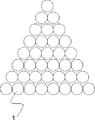
- the granule when taking only a branched chain amino acid-containing granule without water, the granule is unfamiliar with water. Does not penetrate and remains in an aggregated state (FIGS. 1A to 1C). That is, as shown in FIG. 1A, the branched-chain amino acid-containing granule is usually hydrophobic, and thus becomes agglomerated in the mouth. Moreover, immediately after containing in a mouth, the branched chain amino acid containing granule is not wet with saliva. From immediately after taking to about 15 seconds, as shown in FIG.
- the branched-chain amino acid-containing granules on the surface are wetted by saliva, but the branched-chain amino acid-containing granules are not well-adapted to water, so saliva does not penetrate into the center. Furthermore, even after about 30 seconds after taking, as shown in FIG. 1C, the branched chain amino acid-containing granules are only gradually wetted from the surface, and the aggregation state continues.
- FIG. 3 is an explanatory diagram showing the state of a branched chain amino acid-containing granule in the mouth (immediately after taking it to about 15 seconds) when only the branched chain amino acid-containing granule is taken without water. It is explanatory drawing which showed the state (after about 30 second after taking) of the branched-chain amino acid containing granule in a mouth at the time of taking only the branched-chain amino acid containing granule without water.
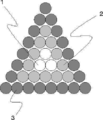
- FIG. 3 is an explanatory diagram showing the state of a branched-chain amino acid-containing granule and glycine powder in the mouth (immediately after taking to about 10 seconds) when the branched-chain amino acid-containing granule and glycine powder are taken simultaneously without water.
- FIG. 3 is an explanatory diagram showing the state of a branched-chain amino acid-containing granule and glycine powder in the mouth (immediately after taking to about 10 seconds) when the branched-chain amino acid-containing granule and glycine powder are taken simultaneously without water.
- FIG. 3 is an explanatory diagram showing the state of the branched chain amino acid-containing granules and glycine powder in the mouth (about 10 seconds to about 20 seconds after taking) when the branched chain amino acid-containing granules and glycine powder are taken simultaneously without water. It is explanatory drawing which showed the state (after about 20 second after taking) of the branched chain amino acid containing granule and glycine powder in a mouth at the time of taking a branched chain amino acid containing granule and glycine powder simultaneously without water.
- the oral preparation of the present invention is a combination of a branched chain amino acid and glycine.
- branched chain amino acid refers to, for example, three types of amino acids: valine, leucine and isoleucine.
- the “oral preparation comprising a combination of a branched chain amino acid and glycine” is a single preparation containing the branched chain amino acid and glycine at the same time, or the branched chain amino acid and glycine are separately formulated.
- a combination of two or more types of preparations are provided.
- Valine which is one of the branched chain amino acids of the present invention, is usually produced by a fermentation method or a synthesis method and preferably satisfies the Japanese Pharmacopoeia standards, but is not limited thereto.
- Leucine which is one of the branched chain amino acids of the present invention, is usually produced by a fermentation method or a synthesis method and desirably satisfies the Japanese Pharmacopoeia standards, but is not limited thereto.
- isoleucine which is one of the branched chain amino acids of the present invention, is usually produced by a fermentation method or a synthesis method and satisfies the Japanese Pharmacopoeia standards, but is not limited thereto.
- the oral preparation of the present invention satisfies the following aspect (1) or aspect (2).
- Aspect (1) An oral preparation containing no amino acids other than branched chain amino acids and glycine.
- the oral preparation of the present invention contains substantially no amino acids other than branched-chain amino acids and glycine in the aspect (1).
- Branched chain amino acids are known to be useful amino acids for patients with liver diseases and the like, and it is preferable that the additional components be the minimum necessary in consideration of the effect on the effects.
- INDUSTRIAL APPLICABILITY The present invention has the advantageous effect that the amount of the preparation can be suppressed and the increase in cost can be prevented if it contains substantially no amino acids other than branched chain amino acids and glycine, and branched chains by amino acids other than branched chain amino acids and glycine This is preferable in that it has an advantageous effect of preventing an unexpected decrease in the effect of amino acids.
- “substantially does not contain” means that it may be contained in an amount that does not exhibit the advantageous effects described above.
- the branched chain amino acid of the present invention is preferably at least one selected from the group consisting of valine, leucine and isoleucine.
- valine / leucine / isoleucine 1.0 to 1.3 / 1.9 to 2.2 / 1
- the amount of branched chain amino acid in the oral preparation of the present invention is usually 50% to 95% by weight. Usually, it is necessary to add an additive for performing branching amino acid flavoring or granulation operation, but since it is difficult to take if the total amount of the preparation is too much, the amount of the branched chain amino acid in the oral preparation of the present invention is 70% by weight to 90% by weight is particularly preferable.
- the amount of glycine is 2.5% by weight or more based on the amount of the branched chain amino acid, and granulated. From the viewpoint of adjusting the property and sourness, it is preferably 2.5% by weight to 49% by weight, and particularly preferably 5% by weight to 15% by weight. If the amount is less than 2.5% by weight, it is difficult to prepare a powder formulation that is well-familiar with water.
- the amount of glycine in the oral preparation of the present invention is 12.5% by weight or more with respect to the amount of the branched-chain amino acid, the feeling of taking the oral preparation In particular, the necessity of water, dissolution in the mouth, taste and aftertaste are improved, and the time required for taking is shortened, so 25 to 50% by weight is most preferable.
- the oral preparation of the present invention may further be combined with an organic acid.
- the oral preparation of the present invention takes a shorter time for taking by combining an organic acid.
- the taste and aftertaste of oral preparations may be reduced due to the balance of sourness derived from organic acids, bitterness derived from branched chain amino acids, and sweetness derived from glycine, resulting in an improved feeling of taking.
- the organic acid include citric acid, malic acid, tartaric acid, succinic acid, lactic acid, fumaric acid, adipic acid, acetic acid, gluconic acid, maleic acid, malonic acid, ascorbic acid, itaconic acid, phytic acid, and the like.
- citric acid, malic acid, and tartaric acid are preferable in terms of the addition amount for improving the balance of bitterness with branched chain amino acids and the feeling of taking.
- the amount of the organic acid in the oral preparation of the present invention is usually 0.5% by weight to 47.5% by weight with respect to the amount of the branched chain amino acid, and preferably 0.5% by weight from the viewpoint of adjusting the sourness. % To 10% by weight. If the amount is less than 0.5% by weight, the sourness derived from the organic acid is not felt, and the effect of improving the feeling of taking the taste and aftertaste is not recognized. On the other hand, when the amount of the organic acid exceeds 47.5% by weight, the sour taste becomes too strong, resulting in an oral preparation that is difficult to take.
- the content of citric acid in the oral preparation of the present invention is The content is usually 1% by weight to 47.5% by weight with respect to the amino acid content, and preferably 3% by weight to 10% by weight from the viewpoint of adjusting granulation properties and acidity. If the content is less than 1% by weight, it is difficult to prepare a powder formulation that is well-familiar with water. Conversely, if the content exceeds 47.5% by weight, the acidity is too strong.
- the organic acid is citric acid
- the sum of the content of glycine and the content of citric acid is usually 5% by weight or more of the content of branched chain amino acids.
- it is preferably 10% by weight to 20% by weight, and most preferably 14% by weight to 16% by weight. . If the total is less than 5% by weight, good water familiarity cannot be ensured, and since the acidity and sweetness are weak, the powder preparation is difficult to take.
- the oral preparation of the present invention may be a single preparation in which a branched chain amino acid, glycine and citric acid are formulated simultaneously, or include two or more preparations formulated separately.
- the oral preparation contains branched chain amino acids, glycine and citric acid, it is a single preparation formulated at the same time, which improves the feeling of taking, the need for water, dissolution in the mouth, taste and aftertaste.
- the time required for taking is shortened, which is particularly preferable.
- the dosage form of the oral preparation of the present invention is not particularly limited.
- granules, powders, fine granules, fine granules, tablets, pills, capsules, oral solutions, syrups, suspensions, Emulsions, oral jelly preparations and the like can be mentioned. From the viewpoint of ingestion, granules, powders and fine granules are preferred.
- a powder preparation is preferable in view of the effect.
- “powder” includes granules, fine granules, fine granules, etc.
- “powder preparation” includes granules, powders, fine granules, fine granules, etc. prescribed by the Japanese Pharmacopoeia. And preferably a granule.
- the “powder preparation” of the present invention includes solid preparations such as powder and granules having a particle size of 2000 ⁇ m or less.
- particle size refers to the particle size of the powder.
- the dosage form of the oral preparation of the present invention is a powder preparation
- the powder preparation usually has a powder content with a particle size of 1700 ⁇ m or more (preferably 1400 ⁇ m or more) of 1% or less, preferably not contained at all. .
- a particle size of 1700 ⁇ m or more preferably 1400 ⁇ m or more
- the feeling of touch at the time of taking becomes worse.
- the powder preparation of the present invention usually has a particle size of 150 ⁇ m or less (preferably 250 ⁇ m or less) and a powder content of 15 wt% or less (preferably 10 wt%, particularly preferably 5 wt% or less). is there.
- a particle size of the powder formulation having such a particle size is, for example, about 8 cm in diameter with a particle size distribution measuring apparatus (robot shifter RPS-95C, manufactured by Seishin Enterprise Co., Ltd.) in a sonic vibration type for a powder formulation sieved with a sieve having an opening of 1700 ⁇ m.
- Measurement is performed using a sieve having openings 1400, 850, 500, 355, 250, 180, 150, 106, and 75 ⁇ m. About 5 g of the granulated product is put into the particle size distribution measuring apparatus, shaken for 5 minutes, the particle size distribution is calculated from the weight of the granules on each sieve after sieving, and approximated to the lognormal distribution, thereby obtaining a geometric mean This can be confirmed by determining the particle size.
- the dosage forms of the two or more preparations may be the same or different.
- Specific combinations of dosage forms of preparations formulated separately include, but are not limited to, the following combinations. (1) Combination of granules containing branched chain amino acids and granules containing glycine (2) Combination of granules containing branched chain amino acids and fine granules containing glycine (3) Fine granules containing branched chain amino acids (4) Combination of fine granules containing branched chain amino acids and fine granules containing glycine
- the oral preparation of the present invention is a combination of two or more preparations formulated separately, as a method of combining the two or more preparations, the two or more preparations can be mixed substantially uniformly.
- the method is not particularly limited, but, for example, a general container rotation type mixer (eg, V type, double cone type, rotary swing type, etc.), a container fixed type mixer (eg, ribbon type, conical screw) Type), and a method using a mixer such as an airflow stirring type mixer. If there is a problem with mixing uniformity, there may be mentioned a method in which a prescribed amount of each preparation is put into a predetermined container and mixed by a packaging machine or the like.
- the preparation of the present invention may contain a binder.
- a binder those satisfying standards such as Japanese Pharmacopoeia or pharmaceutical additive standards are preferable.
- cellulose derivatives such as methylcellulose, hydroxypropylcellulose, hydroxypropylmethylcellulose, hydroxypropylmethylcellulose phthalate: corn starch, wheat Starches such as starch: synthetic polymers such as polyvinylpyrrolidone, polyvinyl alcohol, and acrylic acid polymers: natural polymers such as agar, xanthan gum, gum arabic, and gelatin.
- the content should just be in the range in which normal granulation is possible.
- the preparation of the present invention may contain a taste-masking substance or a taste-masking substance.
- taste-masking substances include saccharin, saccharin sodium, aspartame, glycyrrhizic acid, monoammonium glycyrrhizinate, diammonium glycyrrhizinate, dipotassium glycyrrhizinate, disodium glycyrrhizinate, trisodium glycyrrhizinate, acesulfame K, mannitol, erystole, Examples include sorbitol, xylitol, trehalose, cacao powder, and examples of flavoring substances include various flavors such as lemon flavor and menthol.
- the granulation method is not particularly limited, and a known granulation method is adopted.
- the granulator that can be used include a high-speed kneading granulator, a stirring granulator, an extrusion granulator, a fluidized bed granulator, a rolling granulator, and the like. Is preferred.
- the high-speed kneading granulator is equipped with a kneading member (agitator) for kneading and shearing and a crushing member (chopper) for shearing and crushing, and both members are driven by adjusting the revolution speed and the rotation speed independently.
- a kneading member agitator
- a crushing member chopper
- the agitation granulation method is a method in which water or a binder liquid is charged or sprayed into a powder and granulated by shearing, rolling, or compacting by rotating a stirring blade, and a vertical or horizontal agitation granulator. Etc. are used.
- the extrusion granulation method is a method of granulating a powder imparted with plasticity by extruding it from a screen with a large number of holes. It is an extrusion granulator, a disk pelleter granulator, a ring die granulator. A granulator, a basket granulator, an oscillating granulator, a cylinder granulator, etc. are used.
- the fluidized bed granulation method is a granulation method performed by spraying water or a binder liquid while flowing a powder, and aggregating the powder.
- a fluidized bed granulator, a stirred fluidized bed granulator, A rolling fluidized bed granulator, a stirring rolling fluidized bed granulator, or the like is used.
- the rolling granulation method is a method of rolling and granulating a powder, and a drum granulator, a dish granulator, a vibration granulator, a disk rotary granulator, or the like is used.
- the single dose of the oral preparation of the present invention is usually 1500 mg to 5000 mg, preferably 2500 mg to 4500 mg as a branched chain amino acid.
- the dosage form is a powder preparation, it is usually 2 mg as a powder preparation. ⁇ 6g.
- “easy to become familiar with water” means excellent hydrophilicity.
- the powder when the powder is spread on the surface of the water, the powder is not subjected to operations such as stirring and shaking. Is that the water drop time measured by the water drop test described below is less than 120 seconds, preferably less than 60 seconds. Say. In addition, when mixing, it is not required until the powder or the like is dissolved or suspended in water.
- “unsuitable to water” means that, for example, when powder is distributed on the surface of the water, the powder does not fall off the surface of the water and floats on the surface of the water after a certain period of time. It means that the powder is piled up. Specifically, it means that the water drop time measured in the water drop test described below exceeds 120 seconds.
- the water drop time of the water drop test is less than 120 seconds, preferably less than 60 seconds.
- the hydrophilicity is not sufficient and it is difficult to be familiar with water. Therefore, even if the preparation is taken together with water, there are many residual powders in the oral cavity and the drinking comfort is deteriorated.
- the “water drop test” in the present invention is a test for measuring the “water drop time” which is an index of the ease with which the powder preparation is familiar with water, and specifically, by the following method.
- a 30 mL beaker having a diameter of about 4 cm and a height of about 5 cm is charged with 30 mL of room temperature water.
- Time measurement is started, and 5 to 7 seconds later, 2 g of the powder preparation is instantaneously dropped from the height of 5 cm to 10 cm onto the water surface of the beaker.
- the time when the powder preparation piled up from the water surface from the start of measurement falls into the water and the height of the powder preparation piled up from the water surface becomes 2 mm or less is defined as the water drop time.
- the oral preparation of the present invention can be a commercial package packaged with a description describing matters relating to a method for promoting swallowing of a branched-chain amino acid-containing oral preparation including taking a branched-chain amino acid in the presence of glycine in the mouth.
- a preparation, food or supplement comprising a combination of a branched-chain amino acid-containing oral preparation and glycine, similarly, taking a branched-chain amino acid in the presence of glycine in the mouth, and a method for promoting swallowing of a branched-chain amino acid-containing oral preparation It can be a commercial package that is packaged with a description that describes the matter.
- the method of taking a branched chain amino acid in the presence of glycine in the mouth is not particularly limited as long as it can cause the branched chain amino acid and glycine to exist in the mouth at the same time.
- a method of taking a mixture of two or more kinds of preparations in a substantially uniform manner can be mentioned.
- the mixture was granulated at 500 rpm for agitator rotation and 3914 rpm for chopper rotation for 10 minutes.
- the obtained wet granulated product is dried at a supply air temperature of about 80 ° C. using a fluidized bed dryer (Flow coater FLO-1 manufactured by Freund Sangyo Co., Ltd.), and sieved with a sieve having an opening of 1700 ⁇ m.
- the large particles were removed to obtain the desired powder formulations.
- all powder preparations obtained by this method had an amount of particles of 150 ⁇ m or less of 10% by weight or less.
- Example 3 Comparative Example 5>
- the target powder formulation was obtained in the same manner as in Example 1 except that 800 g of isoleucine having an average particle size of 270 ⁇ m was used instead of 800 g of the branched chain amino acid.
- all powder preparations obtained by this method had an amount of particles of 150 ⁇ m or less of 10% by weight or less.
- Samples A to R were prepared by mixing granules containing branched-chain amino acids and fine granules containing glycine and organic acid, which were formulated separately.
- As the granules containing the branched chain amino acids React (trade name) manufactured by Ajinomoto Co., Inc. (containing 2076 mg of L-isoleucine, 476 mg, L-leucine, 952 mg, and L-valine, 572 mg) was used, and each mixture was divided into one package.
- Each sample weighed a specified amount was put into an aluminum stick, and a sample with the inlet sealed in a heat seal was shaken for about 1 minute per sample.
- samples S and T the powder formulation produced in Example 1 or 2 above, and as samples U and V, the powder formulation produced in the same manner as in Example 1 or 2 except that citric acid was not added, Each was used.
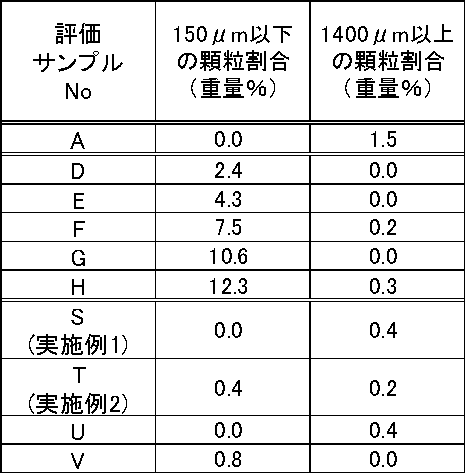
- Table 3 shows the content ratios of granules having a particle size of 150 ⁇ m or less and granules of 1400 ⁇ m or more in the samples A, D, E, F, G, H, S, T, U, and V, respectively.
- the particle size and the content ratio of the granule of each particle size were measured in accordance with the general test method 6.03 “Test method for the particle size of the preparation” described in the Japanese Pharmacopoeia, using a particle size distribution measuring device (Robot Shifter RPS-95C, Seisin (Made by company company).
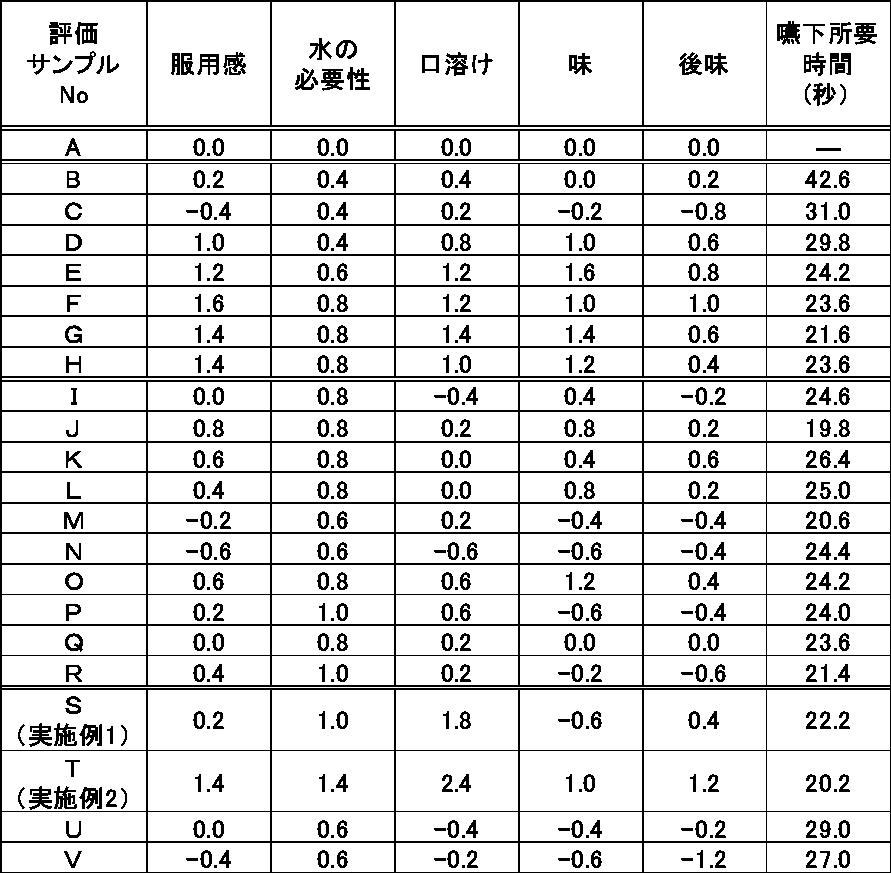
- ⁇ Time required for swallowing The time required for the subject to swallow all the samples in the mouth after all the samples were contained in the mouth was measured, and the average of the five subjects for the required time was calculated as the time required for swallowing.
- samples B to H which are a combination of branched chain amino acids and glycine, have improved dosing feeling compared to sample A containing only branched chain amino acids, and water during swallowing.
- the need for improved In particular, Samples D to H in which the amount of glycine is 250 mg or more, that is, 12.5% by weight or more with respect to the amount of branched chain amino acids are not only about the feeling of taking and the need for water, but also about mouth melting, taste and aftertaste Also improved significantly.
- Samples I to R in which organic acids were combined with glycine, the feeling of taking and the need for water were improved and the time required for swallowing was further reduced compared to C and D in which only glycine was combined.
- Samples S and T which are single preparations containing a branched chain amino acid, glycine and citric acid at the same time, improved the feeling of taking, the need for water, and shortened the swallowing time. As shown in the results of the water drop test described above, the samples S and T had improved affinity for water and became easy to become familiar with water. Therefore, from these results, the affinity for water was improved. It was suggested that the improvement actually leads to an improvement in taking feeling.
- the oral preparation of the present invention is very easy to take even when taken without water because it has a good feeling of taking and the time required for swallowing is short.
- the present invention is based on Japanese Patent Application No. 2008-231296 filed in Japan, the contents of which are incorporated in full herein.
Landscapes
- Health & Medical Sciences (AREA)
- Chemical & Material Sciences (AREA)
- Life Sciences & Earth Sciences (AREA)
- Engineering & Computer Science (AREA)
- General Health & Medical Sciences (AREA)
- Public Health (AREA)
- Medicinal Chemistry (AREA)
- Veterinary Medicine (AREA)
- Animal Behavior & Ethology (AREA)
- Pharmacology & Pharmacy (AREA)
- Bioinformatics & Cheminformatics (AREA)
- Epidemiology (AREA)
- General Chemical & Material Sciences (AREA)
- Chemical Kinetics & Catalysis (AREA)
- Nuclear Medicine, Radiotherapy & Molecular Imaging (AREA)
- Organic Chemistry (AREA)
- Oil, Petroleum & Natural Gas (AREA)
- Nutrition Science (AREA)
- Diabetes (AREA)
- Hematology (AREA)
- Obesity (AREA)
- Proteomics, Peptides & Aminoacids (AREA)
- Acyclic And Carbocyclic Compounds In Medicinal Compositions (AREA)
- Medicinal Preparation (AREA)
Abstract
Description
また、分岐鎖アミノ酸は、疎水性ないし撥水性であるため、例えば、分岐鎖アミノ酸を含有する顆粒製剤は、水に馴染みにくく、水無しで嚥下した場合又は水とともに服用した場合に、嚥下しきれなかった顆粒が口中に多量に残存する等の問題があった。このことは、入れ歯を装着した高齢者等においては、残存した顆粒製剤が入れ歯と歯茎の間に入り込むと、不快感や痛みの原因となるため、一層深刻な問題であった。
[1]分岐鎖アミノ酸及びグリシンを組み合わせてなる経口製剤であって、下記態様(1)又は態様(2)を満たす経口製剤。
態様(1):分岐鎖アミノ酸及びグリシン以外のアミノ酸を含有しない、経口製剤。
態様(2):バリン、ロイシン、イソロイシンの配合割合(質量比)が、バリン/ロイシン/イソロイシン=1.0~1.3/1.9~2.2/1.0である、経口製剤。
[2]態様(1)において、分岐鎖アミノ酸が、バリン、ロイシン及びイソロイシンからなる群より選ばれる少なくとも1種である、上記[1]記載の経口製剤。
[3]バリン、ロイシン、イソロイシンの配合割合(質量比)が、バリン/ロイシン/イソロイシン=1.1~1.3/1.9~2.2/1.0である、上記[1]又は[2]記載の経口製剤。
[4]グリシンの量が、分岐鎖アミノ酸の量の2.5重量%以上である、上記[1]~[3]のいずれかに記載の経口製剤。
[5]有機酸を含有する、上記[1]~[4]のいずれかに記載の経口製剤。
[6]有機酸が、クエン酸、リンゴ酸及び酒石酸からなる群より選ばれる少なくとも1種である、上記[5]記載の経口製剤。
[7]有機酸が、クエン酸である、上記[6]記載の経口製剤。
[8]分岐鎖アミノ酸、グリシン及び有機酸を、同時に含有する単一の製剤である、上記[5]~[7]のいずれかに記載の経口製剤。
[9]剤型が、粉末製剤である、上記[1]~[8]のいずれかに記載の経口製剤。
[10]グリシンの量及びクエン酸の量の合計が、分岐鎖アミノ酸の量の5重量%以上である、上記[7]~[9]のいずれかに記載の経口製剤。
[11]グリシンの量及びクエン酸の量の合計が、分岐鎖アミノ酸の量の10重量%以上である、上記[7]~[10]のいずれかに記載の経口製剤。
[12]1回の服用量が、2g以上である、上記[1]~[11]のいずれかに記載の経口製剤。
[13]水落下試験の水落下時間が、120秒未満の粉末製剤である、上記[7]~[12]のいずれかに記載の経口製剤。
[14]粒度が1700μm以上である粉末の量が1重量%以下であり、かつ、粒度が150μm以下の粉末の量が15重量%以下の粉末製剤である、上記[1]~[13]のいずれかに記載の経口製剤。
[15]粒度が150μm以下の粉末の量が10重量%以下である、上記[14]記載の経口製剤。
[16]分岐鎖アミノ酸とグリシンとクエン酸とを組み合わせてなる、分岐鎖アミノ酸含有粉末製剤を水に馴染みやすくする方法。
[17]グリシンを組み合わせてなる、分岐鎖アミノ酸含有経口製剤の嚥下促進剤。
[18]グリシンの口中存在下に分岐鎖アミノ酸を服用することを含む、分岐鎖アミノ酸含有経口製剤の嚥下促進方法。
[19]分岐鎖アミノ酸とグリシンとを組み合わせてなる経口製剤を、上記[18]記載の方法に関する事項を記載した記載物とともに包装した商業的パッケージ。
態様(1):分岐鎖アミノ酸及びグリシン以外のアミノ酸を含有しない、経口製剤。
態様(2):バリン、ロイシン、イソロイシンの配合割合(質量比)が、バリン/ロイシン/イソロイシン=1.0~1.3/1.9~2.2/1.0である、経口製剤。
該有機酸としては、例えば、クエン酸、リンゴ酸、酒石酸、コハク酸、乳酸、フマル酸、アジピン酸、酢酸、グルコン酸、マレイン酸、マロン酸、アスコルビン酸、イタコン酸、フィチン酸等及びそれらの塩等が挙げられ、中でも、分岐鎖アミノ酸との苦味のバランスや服用感を改善させる為の添加量の点において、クエン酸、リンゴ酸、酒石酸が好ましい。
本発明の経口製剤の剤型が粉末製剤である場合、該粉末製剤は、通常、粒度が1700μm以上(好ましくは、1400μm以上)である粉末の含量が1%以下であり、好ましくは全く含まない。粒度が1700μm以上である粉末を多く含むと、服用時の口触り感が悪くなる。また、本発明の粉末製剤は、通常、粒度が150μm以下(好ましくは、250μm以下)の粉末の含有量が15重量%以下(好ましくは、10重量%、特に好ましくは、5重量%以下)である。粒度が150μm以下の粉末の含有量が15重量%を超えると、服用時に粉っぽく感じ、むせることもある。
かかる粒度の粉末製剤の粒度は、例えば、目開き1700μmの篩により篩分した粉末製剤について、音波振動形式の粒度分布測定装置(ロボットシフターRPS-95C、セイシン企業社製)により、直径8cm、目開き1400、850、500、355、250、180、150、106、75μmの篩を用いて測定する。該粒度分布測定装置に造粒物約5gを投入し、5分間振動を行い、篩分後の各篩上の顆粒重量より、粒度分布を計算し、対数正規分布に近似することにより、幾何平均粒子径を求めることによって確認することができる。
(1)分岐鎖アミノ酸を含有する顆粒とグリシンを含有する顆粒との組合せ
(2)分岐鎖アミノ酸を含有する顆粒とグリシンを含有する細粒との組合せ
(3)分岐鎖アミノ酸を含有する細粒とグリシンを含有する顆粒との組合せ
(4)分岐鎖アミノ酸を含有する細粒とグリシンを含有する細粒との組合せ
攪拌造粒法とは、粉末に水又はバインダー液を、投入又は噴霧し、攪拌羽根の回転によりせん断・転動・圧密化を行い造粒する方法であり、縦型・横型の攪拌造粒機等が使用される。
押出し造粒法とは、可塑性を付与された粉末を、多数の穴のあいたスクリーンから押し出すことにより造粒する方法であり、押出し式造粒機、ディスクペレッター式造粒機、リングダイ式造粒機、バスケット式造粒機、オシレーティング式造粒機、シリンダー式造粒機等が使用される。
流動層造粒法とは、粉末を流動しながら水又はバインダー液を噴霧し、粉末を凝集させることにより行われる造粒法であり、流動層型造粒機、攪拌流動層型造粒機、転動流動層型造粒機、攪拌転動流動層型造粒機等が使用される。
転動造粒法とは、粉末を転がして造粒する方法のことであり、ドラム型造粒機、皿型造粒機、振動造粒機、円盤回転式造粒機等が使用される。
直径約4cm、高さ約5cmの30mL容量ビーカーに、30mLの常温の水を入れる。時間の測定を開始し、その5秒後から7秒後までに、2gの粉末製剤を、5cm~10cmの高さから該ビーカーの水面に瞬時に落下させる。測定開始から水面上から積みあがった粉末製剤が水中に落下し、水面から積みあがっている粉末製剤の高さが2mm以下になる時間を、水落下時間とする。
なお、本発明において、グリシンの口中存在下に分岐鎖アミノ酸を服用する方法としては、分岐鎖アミノ酸とグリシンとを口中に同時に存在せしめ得るものであれば特に制限されないが、例えば、本発明が、分岐鎖アミノ酸とグリシンとが別々に製剤化された2種以上の製剤を組み合わせてなるものである場合、2種以上の製剤を略均一に混合したものを服用する方法等が挙げられる。
<実施例1及び2、比較例1~4>
予めバリン、ロイシン及びイソロイシンを、バリン:ロイシン:イソロイシン=1.2:2:1の質量比で混合し、奈良式自由粉砕機を用いて粗粉砕した。粗粉砕した分岐鎖アミノ酸混合物の平均粒子径は、250μmであった。該分岐鎖アミノ酸混合物800gに、下記表1記載の組成の副原料と水112gとを加えて、高速混練造粒機(トリプルマスターTMG-5、株式会社品川工業所製)に投入し、公転26rpm、アジテーター自転500rpm、チョッパー自転3914rpmで10分間造粒した。得られたウェットな造粒物を、流動層乾燥機(フローコーター FLO-1 フロイント産業株式会社製)を用いて、給気温度約80℃で乾燥し、目開き1700μmの篩により篩分して、大粒子を除去し目的とする粉末製剤をそれぞれ得た。なお、この手法で得た粉末製剤はすべて150μm以下の粒子の量が10重量%以下であった。
分岐鎖アミノ酸800gに代えて、平均粒子径270μmのイソロイシン800gを用いた以外は、実施例1と同様の操作を行い、目的とする粉末製剤をそれぞれ得た。なお、この手法で得た粉末製剤はすべて150μm以下の粒子の量が10重量%以下であった。
実施例1~3、比較例1~5において得られた粉末製剤について、それぞれ水落下時間を測定した。なお、かかる水落下時間の測定は、上述の水落下試験により行った。結果を下記表1に示す。評価については、水落下時間が、120秒未満であったものは「良」とし、120秒以上であったものは「不可」とした。また、表中の単位は、全てgとする。

5名の被験者により、表2記載の各サンプルの服用感、口溶け、水の必要性、味、後味について、5段階に評価し、該評価の平均を算出した。

サンプルS及びTとしては、上記実施例1又は2において製造した粉末製剤を、サンプルU及びVとしては、クエン酸を加えなかった以外は上記実施例1又は2と同様に製造した粉末製剤を、それぞれ用いた。
粒度及び各粒度の顆粒の含有割合の測定は、日本薬局方記載の一般試験法6.03「製剤の粒度の試験法」に従い、音波振動形式の粒度分布測定装置(ロボットシフターRPS-95C、セイシン企業社製)を用いて行った。
<服用感、口溶け、味、後味>
-4:非常に悪い、-2:悪い、0:同じ、+2:良い、+4:非常によい
<水の必要性>
0:必要、+1:有るほうが良い、+2:どちらでも良い、+3:無くても良い、+4:必要ない
被験者が各サンプルの全てを口中に含んでから、口中の全てのサンプルを飲み込むまでの所要時間を計測し、該所要時間の被験者5人の平均を算出して、嚥下所要時間とした。
2 少し濡れた分岐鎖アミノ酸含有顆粒
3 湿潤状態の分岐鎖アミノ酸含有顆粒
4 乾燥状態のグリシン粉末
5 少し濡れたグリシン粉末
6 湿潤状態のグリシン粉末
Claims (19)
- 分岐鎖アミノ酸及びグリシンを組み合わせてなる経口製剤であって、下記態様(1)又は態様(2)を満たす経口製剤。
態様(1):分岐鎖アミノ酸及びグリシン以外のアミノ酸を含有しない、経口製剤。
態様(2):バリン、ロイシン、イソロイシンの配合割合(質量比)が、バリン/ロイシン/イソロイシン=1.0~1.3/1.9~2.2/1.0である、経口製剤。 - 態様(1)において、分岐鎖アミノ酸が、バリン、ロイシン及びイソロイシンからなる群より選ばれる少なくとも1種である、請求項1記載の経口製剤。
- バリン、ロイシン、イソロイシンの配合割合(質量比)が、バリン/ロイシン/イソロイシン=1.1~1.3/1.9~2.2/1.0である、請求項1又は2記載の経口製剤。
- グリシンの量が、分岐鎖アミノ酸の量の2.5重量%以上である、請求項1~3のいずれか1項に記載の経口製剤。
- 有機酸を含有する、請求項1~4のいずれか1項に記載の経口製剤。
- 有機酸が、クエン酸、リンゴ酸及び酒石酸からなる群より選ばれる少なくとも1種である、請求項5記載の経口製剤。
- 有機酸が、クエン酸である、請求項6記載の経口製剤。
- 分岐鎖アミノ酸、グリシン及び有機酸を、同時に含有する単一の製剤である、請求項5~7のいずれか1項に記載の経口製剤。
- 剤型が、粉末製剤である、請求項1~8のいずれか1項に記載の経口製剤。
- グリシンの量及びクエン酸の量の合計が、分岐鎖アミノ酸の量の5重量%以上である、請求項7~9のいずれか1項に記載の経口製剤。
- グリシンの量及びクエン酸の量の合計が、分岐鎖アミノ酸の量の10重量%以上である、請求項7~10記載のいずれか1項に記載の経口製剤。
- 1回の服用量が、2g以上である、請求項1~11のいずれか1項に記載の経口製剤。
- 水落下試験の水落下時間が、120秒未満の粉末製剤である、請求項7~12のいずれか1項に記載の経口製剤。
- 粒度が1700μm以上である粉末の量が1重量%以下であり、かつ、粒度が150μm以下の粉末の量が15重量%以下の粉末製剤である、請求項1~13のいずれか1項に記載の経口製剤。
- 粒度が150μm以下の粉末の量が10重量%以下の粉末製剤である、請求項14記載の経口製剤。
- 分岐鎖アミノ酸とグリシンとクエン酸とを組み合わせてなる、分岐鎖アミノ酸含有粉末製剤を水に馴染みやすくする方法。
- グリシンを組み合わせてなる、分岐鎖アミノ酸含有経口製剤の嚥下促進剤。
- グリシンの口中存在下に分岐鎖アミノ酸を服用することを含む、分岐鎖アミノ酸含有経口製剤の嚥下促進方法。
- 分岐鎖アミノ酸とグリシンとを組み合わせてなる経口製剤を、請求項18記載の方法に関する事項を記載した記載物とともに包装した商業的パッケージ。
Priority Applications (2)
| Application Number | Priority Date | Filing Date | Title |
|---|---|---|---|
| JP2010528740A JP5582033B2 (ja) | 2008-09-09 | 2009-09-09 | 分岐鎖アミノ酸含有経口製剤 |
| CN2009801352062A CN102149374B (zh) | 2008-09-09 | 2009-09-09 | 含有支链氨基酸的口服制剂 |
Applications Claiming Priority (2)
| Application Number | Priority Date | Filing Date | Title |
|---|---|---|---|
| JP2008-231296 | 2008-09-09 | ||
| JP2008231296 | 2008-09-09 |
Publications (1)
| Publication Number | Publication Date |
|---|---|
| WO2010029951A1 true WO2010029951A1 (ja) | 2010-03-18 |
Family
ID=42005204
Family Applications (1)
| Application Number | Title | Priority Date | Filing Date |
|---|---|---|---|
| PCT/JP2009/065765 Ceased WO2010029951A1 (ja) | 2008-09-09 | 2009-09-09 | 分岐鎖アミノ酸含有経口製剤 |
Country Status (4)
| Country | Link |
|---|---|
| JP (1) | JP5582033B2 (ja) |
| KR (1) | KR101641068B1 (ja) |
| CN (1) | CN102149374B (ja) |
| WO (1) | WO2010029951A1 (ja) |
Cited By (1)
| Publication number | Priority date | Publication date | Assignee | Title |
|---|---|---|---|---|
| WO2018173986A1 (ja) * | 2017-03-21 | 2018-09-27 | 株式会社明治 | アミノ酸含有顆粒およびその製造方法 |
Families Citing this family (4)
| Publication number | Priority date | Publication date | Assignee | Title |
|---|---|---|---|---|
| CN103734716A (zh) * | 2013-12-16 | 2014-04-23 | 无锡金维氨生物科技有限公司 | 一种支链氨基酸 |
| CN105288638B (zh) * | 2015-10-27 | 2018-07-06 | 江苏金维氨生物工程有限公司 | 一种提高支链氨基酸粉剂堆积密度的方法 |
| AU2017222125B2 (en) * | 2016-02-23 | 2022-07-14 | Merck Patent Gmbh | Glycine particles |
| CN120617552B (zh) * | 2025-08-15 | 2025-10-28 | 成都桥然生物科技有限公司 | 一种骨骼肌供能的支链氨基酸组合物及其应用 |
Citations (3)
| Publication number | Priority date | Publication date | Assignee | Title |
|---|---|---|---|---|
| JPH01285157A (ja) * | 1988-05-11 | 1989-11-16 | Sanwa Kagaku Kenkyusho Co Ltd | アミノ酸食品素材 |
| JPH0725838A (ja) * | 1993-05-13 | 1995-01-27 | Yotsuba Yuka Kk | 疲労の予防または回復のための経口投与剤 |
| JPH07118150A (ja) * | 1993-08-31 | 1995-05-09 | Yoshiaki Akiyama | 分枝鎖アミノ酸を有効成分とする、呈味の調整された経口投与薬 |
Family Cites Families (3)
| Publication number | Priority date | Publication date | Assignee | Title |
|---|---|---|---|---|
| JPS61186320A (ja) * | 1985-02-12 | 1986-08-20 | Morishita Seiyaku Kk | アミノ酸製剤 |
| DE60329744D1 (de) | 2002-02-22 | 2009-12-03 | Ajinomoto Kk | Aminosäurepulver und verfahren zu seiner herstellung |
| WO2008105368A1 (ja) * | 2007-02-28 | 2008-09-04 | Meiji Dairies Corporation | アミノ酸組成物 |
-
2009
- 2009-09-09 KR KR1020117008054A patent/KR101641068B1/ko active Active
- 2009-09-09 CN CN2009801352062A patent/CN102149374B/zh active Active
- 2009-09-09 JP JP2010528740A patent/JP5582033B2/ja active Active
- 2009-09-09 WO PCT/JP2009/065765 patent/WO2010029951A1/ja not_active Ceased
Patent Citations (3)
| Publication number | Priority date | Publication date | Assignee | Title |
|---|---|---|---|---|
| JPH01285157A (ja) * | 1988-05-11 | 1989-11-16 | Sanwa Kagaku Kenkyusho Co Ltd | アミノ酸食品素材 |
| JPH0725838A (ja) * | 1993-05-13 | 1995-01-27 | Yotsuba Yuka Kk | 疲労の予防または回復のための経口投与剤 |
| JPH07118150A (ja) * | 1993-08-31 | 1995-05-09 | Yoshiaki Akiyama | 分枝鎖アミノ酸を有効成分とする、呈味の調整された経口投与薬 |
Non-Patent Citations (1)
| Title |
|---|
| EDITED BY JAPAN PHARMACEUTICAL EXCIPIENTS COUNCIL,: "Iyakuhin Tenkabutsu Jiten", 25 July 2007, YAKUJI NIPPO LTD., pages: 79 - 80 * |
Cited By (1)
| Publication number | Priority date | Publication date | Assignee | Title |
|---|---|---|---|---|
| WO2018173986A1 (ja) * | 2017-03-21 | 2018-09-27 | 株式会社明治 | アミノ酸含有顆粒およびその製造方法 |
Also Published As
| Publication number | Publication date |
|---|---|
| JPWO2010029951A1 (ja) | 2012-02-02 |
| KR20110053268A (ko) | 2011-05-19 |
| JP5582033B2 (ja) | 2014-09-03 |
| CN102149374B (zh) | 2013-06-12 |
| CN102149374A (zh) | 2011-08-10 |
| KR101641068B1 (ko) | 2016-07-21 |
Similar Documents
| Publication | Publication Date | Title |
|---|---|---|
| US9339483B2 (en) | Amino-acid-containing medicinal granular preparation highly easy to take | |
| WO2018077310A1 (zh) | 一种含维生素c钠的泡腾片及其制备方法 | |
| SG184950A1 (en) | Fexofenadine-based composition and preparation process therefor | |
| JP5582033B2 (ja) | 分岐鎖アミノ酸含有経口製剤 | |
| CA2403594A1 (en) | Granules having good taking property | |
| CN103415220A (zh) | 由内包膳食补充剂的盖体和填充了膳食补充剂分散介质的瓶所形成的瓶装饮料 | |
| CN107625786A (zh) | 一种碳酸钙维生素d3组合物及其无水吞服颗粒 | |
| JP2004242509A (ja) | コエンザイムq10およびアミノ酸類を含有する食品 | |
| JP6267862B2 (ja) | ゼリー化組成物 | |
| JP2018154598A (ja) | アミノ酸含有顆粒およびその製造方法 | |
| JP5454142B2 (ja) | アミノ酸高含量固形製剤の低容量化製法 | |
| JP4820288B2 (ja) | 食物繊維を含有する健康食品の製造方法 | |
| JP2011093879A (ja) | 分岐鎖アミノ酸を含有する顆粒、およびその製造方法 | |
| JP2002173423A (ja) | 分岐鎖アミノ酸を含有する医薬用顆粒製剤 | |
| JP6093181B2 (ja) | 分岐鎖アミノ酸含有ゼリー | |
| US9333170B2 (en) | Polyvalent polymeric matrix for modified release solid oral preparations and method of preparation thereof | |
| US12576056B2 (en) | Amino acid-containing granules | |
| KR102555664B1 (ko) | 과립 제제 | |
| JP2006111582A (ja) | カルシウム含有顆粒の製造方法 | |
| JP2002145769A (ja) | 分岐鎖アミノ酸含有医薬用顆粒製剤 | |
| TWI245605B (en) | Method for producing nutritional product containing L-Arginine | |
| JP2013201988A (ja) | サプリメントを内包する蓋体とサプリメント分散媒を充填したボトルからなるボトル入り飲料 | |
| JP2014068601A (ja) | ロイシン及びカテキン含有栄養補助食品 | |
| WO2013146068A1 (ja) | ボトル飲料 | |
| JP2022121348A (ja) | シアル酸誘導物質含有剤含有製剤、及び、シアル酸誘導物質含有剤含有製剤の製造方法 |
Legal Events
| Date | Code | Title | Description |
|---|---|---|---|
| WWE | Wipo information: entry into national phase |
Ref document number: 200980135206.2 Country of ref document: CN |
|
| 121 | Ep: the epo has been informed by wipo that ep was designated in this application |
Ref document number: 09813097 Country of ref document: EP Kind code of ref document: A1 |
|
| WWE | Wipo information: entry into national phase |
Ref document number: 2010528740 Country of ref document: JP |
|
| NENP | Non-entry into the national phase |
Ref country code: DE |
|
| ENP | Entry into the national phase |
Ref document number: 20117008054 Country of ref document: KR Kind code of ref document: A |
|
| 122 | Ep: pct application non-entry in european phase |
Ref document number: 09813097 Country of ref document: EP Kind code of ref document: A1 |