WO2007111136A1 - エポキシ樹脂硬化性組成物 - Google Patents

エポキシ樹脂硬化性組成物 Download PDF

Info

Publication number
WO2007111136A1
WO2007111136A1 PCT/JP2007/055106 JP2007055106W WO2007111136A1 WO 2007111136 A1 WO2007111136 A1 WO 2007111136A1 JP 2007055106 W JP2007055106 W JP 2007055106W WO 2007111136 A1 WO2007111136 A1 WO 2007111136A1
Authority
WO
WIPO (PCT)
Prior art keywords
substituent
compound
group
epoxy
general formula
Prior art date
Legal status (The legal status is an assumption and is not a legal conclusion. Google has not performed a legal analysis and makes no representation as to the accuracy of the status listed.)
Ceased
Application number
PCT/JP2007/055106
Other languages
English (en)
French (fr)
Inventor
Takahiro Mori
Current Assignee (The listed assignees may be inaccurate. Google has not performed a legal analysis and makes no representation or warranty as to the accuracy of the list.)
Adeka Corp
Original Assignee
Adeka Corp
Priority date (The priority date is an assumption and is not a legal conclusion. Google has not performed a legal analysis and makes no representation as to the accuracy of the date listed.)
Filing date
Publication date
Application filed by Adeka Corp filed Critical Adeka Corp
Priority to US12/280,418 priority Critical patent/US7763700B2/en
Priority to CN2007800064020A priority patent/CN101389684B/zh
Publication of WO2007111136A1 publication Critical patent/WO2007111136A1/ja
Priority to KR1020087020443A priority patent/KR101344704B1/ko
Anticipated expiration legal-status Critical
Ceased legal-status Critical Current

Links

Classifications

    • CCHEMISTRY; METALLURGY
    • C08ORGANIC MACROMOLECULAR COMPOUNDS; THEIR PREPARATION OR CHEMICAL WORKING-UP; COMPOSITIONS BASED THEREON
    • C08GMACROMOLECULAR COMPOUNDS OBTAINED OTHERWISE THAN BY REACTIONS ONLY INVOLVING UNSATURATED CARBON-TO-CARBON BONDS
    • C08G59/00Polycondensates containing more than one epoxy group per molecule; Macromolecules obtained by polymerising compounds containing more than one epoxy group per molecule using curing agents or catalysts which react with the epoxy groups
    • C08G59/18Macromolecules obtained by polymerising compounds containing more than one epoxy group per molecule using curing agents or catalysts which react with the epoxy groups ; e.g. general methods of curing
    • C08G59/20Macromolecules obtained by polymerising compounds containing more than one epoxy group per molecule using curing agents or catalysts which react with the epoxy groups ; e.g. general methods of curing characterised by the epoxy compounds used
    • C08G59/22Di-epoxy compounds
    • C08G59/26Di-epoxy compounds heterocyclic
    • CCHEMISTRY; METALLURGY
    • C07ORGANIC CHEMISTRY
    • C07DHETEROCYCLIC COMPOUNDS
    • C07D235/00Heterocyclic compounds containing 1,3-diazole or hydrogenated 1,3-diazole rings, condensed with other rings
    • C07D235/02Heterocyclic compounds containing 1,3-diazole or hydrogenated 1,3-diazole rings, condensed with other rings condensed with carbocyclic rings or ring systems
    • C07D235/04Benzimidazoles; Hydrogenated benzimidazoles
    • C07D235/18Benzimidazoles; Hydrogenated benzimidazoles with aryl radicals directly attached in position 2
    • CCHEMISTRY; METALLURGY
    • C07ORGANIC CHEMISTRY
    • C07DHETEROCYCLIC COMPOUNDS
    • C07D263/00Heterocyclic compounds containing 1,3-oxazole or hydrogenated 1,3-oxazole rings
    • C07D263/52Heterocyclic compounds containing 1,3-oxazole or hydrogenated 1,3-oxazole rings condensed with carbocyclic rings or ring systems
    • C07D263/54Benzoxazoles; Hydrogenated benzoxazoles
    • C07D263/56Benzoxazoles; Hydrogenated benzoxazoles with only hydrogen atoms, hydrocarbon or substituted hydrocarbon radicals, directly attached in position 2
    • CCHEMISTRY; METALLURGY
    • C07ORGANIC CHEMISTRY
    • C07DHETEROCYCLIC COMPOUNDS
    • C07D263/00Heterocyclic compounds containing 1,3-oxazole or hydrogenated 1,3-oxazole rings
    • C07D263/52Heterocyclic compounds containing 1,3-oxazole or hydrogenated 1,3-oxazole rings condensed with carbocyclic rings or ring systems
    • C07D263/54Benzoxazoles; Hydrogenated benzoxazoles
    • C07D263/56Benzoxazoles; Hydrogenated benzoxazoles with only hydrogen atoms, hydrocarbon or substituted hydrocarbon radicals, directly attached in position 2
    • C07D263/57Aryl or substituted aryl radicals
    • CCHEMISTRY; METALLURGY
    • C07ORGANIC CHEMISTRY
    • C07DHETEROCYCLIC COMPOUNDS
    • C07D413/00Heterocyclic compounds containing two or more hetero rings, at least one ring having nitrogen and oxygen atoms as the only ring hetero atoms
    • C07D413/02Heterocyclic compounds containing two or more hetero rings, at least one ring having nitrogen and oxygen atoms as the only ring hetero atoms containing two hetero rings
    • C07D413/04Heterocyclic compounds containing two or more hetero rings, at least one ring having nitrogen and oxygen atoms as the only ring hetero atoms containing two hetero rings directly linked by a ring-member-to-ring-member bond
    • CCHEMISTRY; METALLURGY
    • C07ORGANIC CHEMISTRY
    • C07DHETEROCYCLIC COMPOUNDS
    • C07D413/00Heterocyclic compounds containing two or more hetero rings, at least one ring having nitrogen and oxygen atoms as the only ring hetero atoms
    • C07D413/02Heterocyclic compounds containing two or more hetero rings, at least one ring having nitrogen and oxygen atoms as the only ring hetero atoms containing two hetero rings
    • C07D413/12Heterocyclic compounds containing two or more hetero rings, at least one ring having nitrogen and oxygen atoms as the only ring hetero atoms containing two hetero rings linked by a chain containing hetero atoms as chain links
    • CCHEMISTRY; METALLURGY
    • C07ORGANIC CHEMISTRY
    • C07DHETEROCYCLIC COMPOUNDS
    • C07D413/00Heterocyclic compounds containing two or more hetero rings, at least one ring having nitrogen and oxygen atoms as the only ring hetero atoms
    • C07D413/14Heterocyclic compounds containing two or more hetero rings, at least one ring having nitrogen and oxygen atoms as the only ring hetero atoms containing three or more hetero rings
    • CCHEMISTRY; METALLURGY
    • C07ORGANIC CHEMISTRY
    • C07DHETEROCYCLIC COMPOUNDS
    • C07D513/00Heterocyclic compounds containing in the condensed system at least one hetero ring having nitrogen and sulfur atoms as the only ring hetero atoms, not provided for in groups C07D463/00, C07D477/00 or C07D499/00 - C07D507/00
    • C07D513/02Heterocyclic compounds containing in the condensed system at least one hetero ring having nitrogen and sulfur atoms as the only ring hetero atoms, not provided for in groups C07D463/00, C07D477/00 or C07D499/00 - C07D507/00 in which the condensed system contains two hetero rings
    • C07D513/04Ortho-condensed systems
    • CCHEMISTRY; METALLURGY
    • C08ORGANIC MACROMOLECULAR COMPOUNDS; THEIR PREPARATION OR CHEMICAL WORKING-UP; COMPOSITIONS BASED THEREON
    • C08GMACROMOLECULAR COMPOUNDS OBTAINED OTHERWISE THAN BY REACTIONS ONLY INVOLVING UNSATURATED CARBON-TO-CARBON BONDS
    • C08G59/00Polycondensates containing more than one epoxy group per molecule; Macromolecules obtained by polymerising compounds containing more than one epoxy group per molecule using curing agents or catalysts which react with the epoxy groups
    • C08G59/18Macromolecules obtained by polymerising compounds containing more than one epoxy group per molecule using curing agents or catalysts which react with the epoxy groups ; e.g. general methods of curing
    • C08G59/40Macromolecules obtained by polymerising compounds containing more than one epoxy group per molecule using curing agents or catalysts which react with the epoxy groups ; e.g. general methods of curing characterised by the curing agents used
    • CCHEMISTRY; METALLURGY
    • C08ORGANIC MACROMOLECULAR COMPOUNDS; THEIR PREPARATION OR CHEMICAL WORKING-UP; COMPOSITIONS BASED THEREON
    • C08GMACROMOLECULAR COMPOUNDS OBTAINED OTHERWISE THAN BY REACTIONS ONLY INVOLVING UNSATURATED CARBON-TO-CARBON BONDS
    • C08G59/00Polycondensates containing more than one epoxy group per molecule; Macromolecules obtained by polymerising compounds containing more than one epoxy group per molecule using curing agents or catalysts which react with the epoxy groups
    • C08G59/18Macromolecules obtained by polymerising compounds containing more than one epoxy group per molecule using curing agents or catalysts which react with the epoxy groups ; e.g. general methods of curing
    • C08G59/40Macromolecules obtained by polymerising compounds containing more than one epoxy group per molecule using curing agents or catalysts which react with the epoxy groups ; e.g. general methods of curing characterised by the curing agents used
    • C08G59/4007Curing agents not provided for by the groups C08G59/42 - C08G59/66
    • C08G59/4014Nitrogen containing compounds
    • HELECTRICITY
    • H05ELECTRIC TECHNIQUES NOT OTHERWISE PROVIDED FOR
    • H05KPRINTED CIRCUITS; CASINGS OR CONSTRUCTIONAL DETAILS OF ELECTRIC APPARATUS; MANUFACTURE OF ASSEMBLAGES OF ELECTRICAL COMPONENTS
    • H05K1/00Printed circuits
    • H05K1/02Details
    • H05K1/03Use of materials for the substrate
    • H05K1/0313Organic insulating material
    • H05K1/032Organic insulating material consisting of one material
    • H05K1/0326Organic insulating material consisting of one material containing O

Definitions

  • the present invention relates to an epoxy resin curable composition containing a phenol compound having a benzoxazole structure or an epoxy compound having a benzoxazole structure, and more specifically, the benzoxazole structure.
  • the present invention relates to a novel compound having a benzoxazole structure.
  • Epoxy resins are widely used for printed circuit boards due to their characteristics, and the use of epoxy resins is also being investigated for the higher density associated with the recent reduction in size and weight.
  • the MMA resist that remains on the printed wiring board as an insulating layer, such as build-up can cope with heat generation due to highly integrated wiring, thinning of the insulating layer, and decrease in the adhesive strength between the conductor layer and the insulating layer. High glass transition temperature, volume resistivity, mechanical properties and low water absorption are required.
  • epoxy resin used for pre-predder and the like is reduced in linear expansion by blending various inorganic fillers and suppressed deformation due to temperature.
  • an inorganic filler when added, there are drawbacks such as a decrease in tensile strength and elongation, and short circuiting due to aggregation, thereby impairing circuit reliability.
  • epoxy resin diglycidyl ether of bisphenol A is widely known as a general-purpose product, and polyphenol compounds such as phenol novolak are also useful as epoxy resin hardeners. Are known.
  • Non-Patent Document 1 describes various phenolic curing agents.
  • a compound having a structure in which phenol is added to a fused ring having a heteroatom is used as a curing agent for epoxy resin, and p-hydroxyphenylmaleimide Z-butylatariate. Rate copolymers are described.
  • Patent documents 1 to 3 consist of phenolic hydroxyl group-containing polyamide resin and epoxy resin An epoxy resin composition as a component is described.
  • Patent Document 4 describes a phenolic compound having a benzoxazole structure, which is not used as a hardener for epoxy compounds. It ’s not fat!
  • Patent Document 1 Japanese Patent Laid-Open No. 2001-31784
  • Patent Document 2 JP 2001-49082 A
  • Patent Document 3 Japanese Patent Laid-Open No. 2005-29720
  • Patent Document 4 U.S. Pat.No. 5,270,432
  • Non-patent document 1 "New development of epoxy resin hardener" P. 154 CMC Corporation 1 May 31, 994
  • an epoxy resin curable composition having a low linear expansion coefficient and excellent physical properties such as tensile strength and elongation without using a filler.
  • a phenolic compound having a benzoxazole structure can be used as an epoxy resin hardener, and the benzoxazole structure. It was found that by using an epoxy resin having an epoxy resin as an epoxy resin, an epoxy resin curable composition having a low coefficient of linear expansion and excellent physical properties such as tensile strength and elongation can be obtained. .
  • the present invention provides an epoxy resin curable composition
  • x 1 and x 2 are each independently a hydrogen atom which may be the same or different;
  • X 1 and X 2 may not be hydrogen atoms at the same time), and X 1 and X 2 may be bridged with each other to form a saturated or unsaturated heterocyclic ring having 3 to 8 atoms.
  • the unsaturated heterocyclic ring has a substituent having a phenolic hydroxyl group or a substituent having an epoxy group as a substituent.
  • Y 1 represents an oxygen atom or a sulfur atom.
  • Z 1 may have a substituent !, or may have a hydrocarbon group having 1 to 8 carbon atoms or a substituent, and may represent an alkoxy group having 1 to 8 carbon atoms, m represents an integer of 0 to 4, and when m is 2 to 4, a plurality of Z 1 may be the same or different. n represents an integer of 0-2.
  • a 1 represents a hydrogen atom, a substituent having a phenolic hydroxyl group or a substituent having an epoxy group.
  • X 1 or X 2 is an epoxy ⁇ curable composition characterized in that it is the table the following general formula (la) By providing this, the above objective has been achieved.
  • Y 1 represents an oxygen atom or a sulfur atom
  • Z 1 may have a hydrocarbon group having 1 to 8 carbon atoms which may have a substituent or a substituent.
  • m represents an integer of 0 to 4
  • n represents an integer of 0-2.
  • a 1 represents a hydrogen atom, a substituent having a phenolic hydroxyl group or a substituent having an epoxy group.
  • ⁇ 1 represents an oxygen atom or a sulfur atom
  • ⁇ 1 may have a hydrocarbon group having 1 to 8 carbon atoms which may have a substituent or a substituent.
  • m represents an integer of 0 to 4
  • n represents an integer of 0-2.
  • a 1 is a hydrogen atom, a substituent having a phenolic hydroxyl group, or a substituent having an epoxy group.
  • the present invention is characterized in that, in the general formula (I), X 1 and X 2 are bridged with each other to form a heterocyclic ring represented by the following general formula (Ic) or (Id)
  • the above object is achieved by providing an epoxy resin curable composition.
  • Y 1 represents an oxygen atom or a sulfur atom
  • Z 1 may have a hydrocarbon group having 1 to 8 carbon atoms which may have a substituent or a substituent.
  • m represents an integer of 0 to 4
  • a plurality of Z 1 may be the same or different.
  • a 1 represents a hydrogen atom, a substituent having a phenolic hydroxyl group or a substituent having an epoxy group.
  • Y 1 represents an oxygen atom or a sulfur atom
  • Z 1 represents an optionally substituted carbon.
  • m represents an integer of 0 to 4
  • m is 2 to 4
  • the plurality of Z 1 may be the same or different.
  • a 1 represents a hydrogen atom, a substituent having a phenolic hydroxyl group or a substituent having an epoxy group.
  • the present invention is to provide the above formula (I), epoxy ⁇ curable compositions feature that A 1 is a substituent having an epoxy group, achieve the object It has been.
  • the present invention also provides an epoxy resin curable composition characterized by comprising a compound having a benzoxazole structure represented by the following general formula (II). The goal is achieved.
  • Y 2 represents an oxygen atom or a sulfur atom.
  • Z 2 represents an optionally substituted hydrocarbon group having 1 to 8 carbon atoms or an optionally substituted hydrocarbon group having 1 to 8 carbon atoms, and r is 0 Represents an integer of ⁇ 3, and when r is 2 to 3, a plurality of Z 2 may be the same or different.
  • p represents an integer of 0-2.
  • q represents a number from 1 to 100.
  • a 2 represents a hydrogen atom, a substituent having a phenolic hydroxyl group or a substituent having an epoxy group.
  • the present invention also provides an epoxy resin curable composition characterized by comprising a compound having a benzoxazole structure represented by the following general formula (III). The goal is achieved.
  • Y 3 represents an oxygen atom or a sulfur atom.
  • Zeta 3 represents a hydrocarbon group or have a substituent 1-8C good carbon atoms ⁇ alkoxy group which may carbon atom number of 1 to 8 which may have a substituent, t is 0 Represents an integer of ⁇ 3, and when t is 2 to 3, a plurality of Z 3 may be the same or different.
  • s represents a number from 1 to 100.
  • a 3 is a hydrogen atom, a substituent having a phenolic hydroxyl group or a substituent having an epoxy group.
  • the present invention also provides an epoxy resin curable composition characterized by comprising a compound having a benzoxazole structure represented by the following general formula (IV). The goal is achieved.
  • represents an oxygen atom or a sulfur atom.
  • it represents a hydrocarbon group having 1 to 8 carbon atoms which may have a substituent or an alkoxy group having 1 to 8 carbon atoms which may have a substituent
  • V represents 0 to Represents an integer of 3
  • u represents a number from 1 to 100.
  • a 4 represents a hydrogen atom, a substituent having a phenolic hydroxyl group or a substituent having an epoxy group.
  • the present invention achieves the above object by providing a curable composition for laminated plates using the epoxy resin curable composition.
  • this invention achieves the said objective by providing the hardened
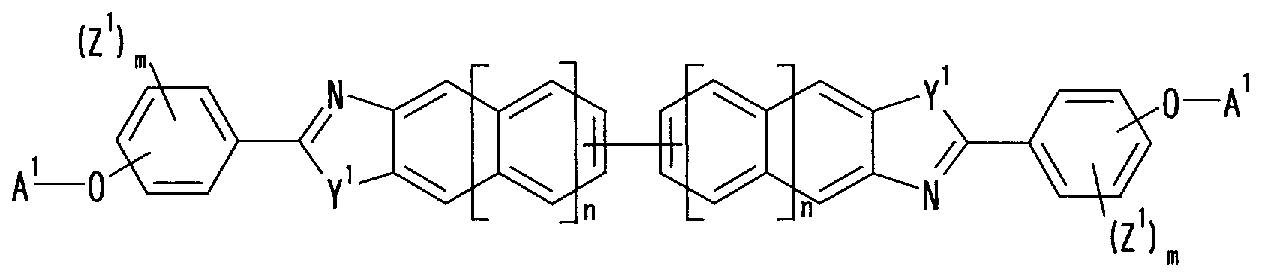
  • the present invention also achieves the above object by providing a novel benzoxazole compound represented by the following general formula (V).
  • Y 1 represents an oxygen atom or a sulfur atom.
  • ⁇ 1 represents an optionally substituted hydrocarbon group having 1 to 8 carbon atoms or a substituent, and may represent an alkoxy group having 1 to 8 carbon atoms,
  • m is Represents an integer of 0 to 4, and when m is 2 to 4, a plurality of Z 1 may be the same or different.
  • n represents an integer of 0-2.
  • a 1 represents a substituent having a phenolic hydroxyl group or a substituent having an epoxy group.
  • the present invention achieves the above object by providing a novel benzoxazole compound represented by the following general formula (VI).
  • Y 1 represents an oxygen atom or a sulfur atom.
  • z 1 represents an optionally substituted hydrocarbon group having 1 to 8 carbon atoms or a substituent, and represents an alkoxy group having 1 to 8 carbon atoms
  • m is Represents an integer of 0 to 4, and when m is 2 to 4, a plurality of Z 1 may be the same or different.
  • n represents an integer of 0-2.
  • a 1 represents a substituent having a phenolic hydroxyl group or a substituent having an epoxy group.
  • ⁇ 1 It is a diagram showing the lamination conditions of the vacuum press method.
  • FIG. 2 is an IR chart of Compound No. 12.
  • FIG. 3 is an IR chart of Compound No. 13.
  • FIG. 4 is an IR chart of Compound No. 4.
  • FIG. 5 is an IR chart of Compound No. 14.
  • the epoxy resin curable composition of the present invention contains a compound having a benzoxazole structure represented by the following general formula (I).
  • X 1 and X 2 each independently represent a hydrogen atom, a substituent having a phenolic hydroxyl group, or a substituent having an epoxy group, which may be the same or different (provided that X 1 and X 2 2 may not be simultaneously hydrogen atoms), and X 1 and X 2 may be bridged with each other to form a saturated or unsaturated heterocyclic ring having 3 to 8 atoms.
  • the ring has a substituent having a phenolic hydroxyl group or a substituent having an epoxy group as a substituent. Represents an oxygen atom or a sulfur atom.
  • Z 1 has V as a substituent and may be a hydrocarbon group having 1 to 8 carbon atoms or a substituent and may represent an alkoxy group having 1 to 8 carbon atoms; m represents an integer of 0 to 4, and when m is 2 to 4, a plurality of Z 1 may be the same or different. n represents an integer of 0-2.
  • a 1 represents a hydrogen atom, a substituent having a phenolic hydroxyl group or a substituent having an epoxy group.
  • the substituent having a phenolic hydroxyl group is not limited as long as it has a phenolic hydroxyl group in the substituent, and may be a simple phenol group.
  • B 1 represents a substituent
  • w represents a number of 0 to 4.
  • the substituent B 1 is not particularly limited, and examples thereof include an organic group such as an alkyl group, an alkoxy group, and an aryl group, and when w is 2 to 4, a plurality of B1s may be the same or different.
  • the substituent having an epoxy group may have another substituent as long as it has an epoxy group in the substituent.
  • examples include epoxy groups
  • Ar represents an alkylene group which may have a substituent and an arylene group which may have a substituent, and the alkylene group or arylene group has an unsaturated bond, an ether bond, It may be interrupted by a thioether bond or an ester bond.
  • Examples of the alkylene group or arylene group include a methylene group, an ethylene group, a propylene group, a butylene group, a phenylene group, and the like. Manufacturing cost and reactivity, thermal linear expansion coefficient, glass transition From the viewpoint of physical properties of the cured product such as a point, an alkylene group or a phenylene group is preferable.
  • the substituent having the epoxy group is preferably a glycidyl group or a substituent having a glycidyl group represented by the general formula (VIII) from the viewpoint of production cost and physical properties.
  • Z 1 may be a hydrocarbon group having 1 to 8 carbon atoms which may have a substituent, or a carbon atom which may have a substituent.
  • m represents an integer of 0 to 4
  • a plurality of Z 1 may be the same or different, but the production cost and physical properties Accordingly, m is preferably 0.
  • hydrocarbon group having 1 to 8 carbon atoms which may have the above substituent include alkyl groups such as a methyl group, an ethyl group and an isopropyl group, a cycloalkyl group such as a cyclohexyl group, and a fullerene.
  • alkyl groups such as a methyl group, an ethyl group and an isopropyl group
  • a cycloalkyl group such as a cyclohexyl group
  • a fullerene examples include aryl groups such as a group
  • substituent include a halogen atom, an alkoxy group such as a trifluoromethyl group and a methoxy group, and a hydroxyl group.
  • substituent may have the above-mentioned substituent, but as an alkoxy group having 1 to 8 carbon atoms, a phenol ether Group, alkyl ether group, phenoxy group, methoxy group and the like, and examples of the substituent include a hydrogen atom, a rogen atom, a trifluoromethyl group, a hydroxyl group and a methoxy group.
  • X 1 and X 2 may be bridged with each other to form a saturated or unsaturated heterocycle having 3 to 8 atoms, and the saturated or unsaturated heterocycle has a phenolic hydroxyl group as a substituent. Or a substituent having an epoxy group.
  • examples of the saturated heterocyclic ring include morpholine, and examples of the unsaturated heterocyclic ring include oxazole and thiazole.
  • the compound having a benzoxazole structure represented by the above general formula (I) from the viewpoint of the physical properties of the cured product such as production cost and reactivity, thermal linear expansion coefficient, glass transition point, etc.
  • Preferred examples of the compound having V or a benzoxazole structure include compounds in which at least one of X 1 and X 2 has a benzoxazole structure represented by the following general formula (la).
  • Y 1 represents an oxygen atom or a sulfur atom
  • z 1 may have a hydrocarbon group having 1 to 8 carbon atoms which may have a substituent or a substituent.
  • m represents an integer of 0 to 4
  • n represents an integer of 0-2.
  • a 1 represents a hydrogen atom, a substituent having a phenolic hydroxyl group or a substituent having an epoxy group.
  • the substituent having a phenolic hydroxyl group and the substituent having an epoxy group are the same as those described in the general formula (I), and preferable ones are also the same. It is. Further, m is preferably 0 as in the general formula (I).
  • the compound having the benzoxazole structure represented by the general formula (I) it is preferable from the viewpoint of the production properties and properties of the cured product such as reactivity, thermal expansion coefficient, and glass transition point.
  • the compound having a benzoxazole structure X 1 or X 2 !, At least one 1S, a compound having a benzoxazole structure represented by the following general formula (lb)
  • Y 1 represents an oxygen atom or a sulfur atom
  • ⁇ 1 may have a hydrocarbon group having 1 to 8 carbon atoms which may have a substituent or a substituent.
  • m represents an integer of 0 to 4
  • a plurality of Z 1 may be the same or different.
  • a 1 represents a hydrogen atom, a substituent having a phenolic hydroxyl group or a substituent having an epoxy group.
  • the substituent having a phenolic hydroxyl group and the substituent having an epoxy group are the same as those described in the general formula (I), and preferable ones are also the same. is there. Further, m is preferably 0 as in the general formula (I).
  • the compound having the benzoxazole structure represented by the general formula (I) it is preferable from the viewpoint of the production cost and reactivity, the physical properties of the cured product such as the thermal expansion coefficient and the glass transition point.
  • the compound having a benzoxazole structure include a compound having a benzoxazole structure in which X 1 and X 2 are bridged with each other to form a heterocyclic ring represented by the following general formula (Ic) or (Id). It is done.
  • Y 1 represents an oxygen atom or a sulfur atom
  • Z 1 may have a hydrocarbon group having 1 to 8 carbon atoms which may have a substituent or a substituent. 1-8 carbon atoms Represents a ruoxy group
  • m represents an integer of 0 to 4
  • a plurality of Z 1 may be the same or different.
  • a 1 represents a hydrogen atom, a substituent having a phenolic hydroxyl group or a substituent having an epoxy group.
  • the substituent having a phenolic hydroxyl group and the substituent having an epoxy group are the same as those described in the general formula (I) and are preferable. The same applies to. Further, m is preferably 0 as in the general formula (I).
  • X 1 and X 2 are bridged with each other to form a saturated or unsaturated heterocyclic ring having 3 to 8 atoms.
  • an unsaturated heterocyclic ring having 5 atoms is preferred from the viewpoint of the physical properties of the cured product such as production cost, reactivity, coefficient of thermal expansion, and glass transition point.
  • a 1 is a substituent having a phenolic hydroxyl group (a phenol group itself).
  • a 1 is a substituent having an epoxy group (including the epoxy group itself).
  • Compound power having a benzoxazole structure represented by the general formula (I) of the present invention When having a phenolic hydroxyl group, the compound is an epoxy resin curing agent (phenolic hardener).
  • the content of the compound is preferably 10% by mass to 90% by mass and more preferably 30% by mass to 80% by mass in the epoxy resin-curable composition. .
  • the compound having a benzoxazole structure represented by the general formula (I) of the present invention has an epoxy group, it is preferably used as an epoxy component (also referred to as an epoxy resin).
  • the amount is preferably 30% by mass to 80% by mass, more preferably 10% by mass to 90% by mass, especially in the epoxy resin curable composition.
  • the epoxy resin-curable composition of the present invention contains a compound having a benzoxazole structure represented by the following general formula (II).
  • a 2 has a substituent having a phenolic hydroxyl group (including a phenol group itself).
  • a 2 is a substituent having an epoxy group (including the epoxy group itself).
  • the compound having a benzoxazole structure represented by the general formula (II) of the present invention has a phenolic hydroxyl group
  • the compound is an epoxy resin curing agent (phenolic hardener). It is preferably used as a glaze), and the content of the compound in the epoxy resin curable composition is preferably 10% by mass to 90% by mass, more preferably 30% by mass to 80% by mass. is there.
  • the compound having a benzoxazole structure represented by the general formula (II) of the present invention has an epoxy group, it is preferably used as an epoxy component (also referred to as epoxy resin).
  • the content of is preferably 30% by mass to 80% by mass, more preferably 10% by mass to 90% by mass in the epoxy resin curable composition.
  • Epoxy resin curable composition of the present invention contains a compound having a benzoxazole structure represented by the following general formula (III):
  • Y 3 represents an oxygen atom or a sulfur atom.
  • z 3 represents an optionally substituted hydrocarbon group having 1 to 8 carbon atoms or an optionally substituted hydrocarbon group having 1 to 8 carbon atoms, and t is 0 Represents an integer of ⁇ 3, and when t is 2 to 3, a plurality of Z 3 may be the same or different.
  • s represents a number from 1 to 100.
  • a 3 represents a hydrogen atom, a substituent having a phenolic hydroxyl group or a substituent having an epoxy group.
  • the substituent having a phenolic hydroxyl group and the substituent having an epoxy group are the same as those described in the general formula (I), and preferable ones are also the same. It is. Further, t is preferably 0 from the viewpoint of production cost and physical properties. s is preferably from 1 to 10 from the viewpoints of production cost, solvent solubility, affinity for rosin, and reactivity.
  • Compound power having a benzoxazole structure represented by the general formula (III) When having a phenolic hydroxyl group, the compound serves as a curing agent for epoxy resin (also referred to as a phenolic curing agent). It is preferably used, and the content of the compound is preferably 30% by mass to 80% by mass, more preferably 10% by mass to 90% by mass, in the epoxy resin-curable composition.
  • the compound has an epoxy group having a benzoxazole structure represented by the general formula (III), it is preferably used as an epoxy component (also referred to as epoxy resin), and the content of the compound is Among epoxy resin curable compositions, 10% to 90% by weight is particularly preferred. More preferably, it is 30% by mass to 80% by mass.
  • the epoxy resin-curable composition of the present invention contains a compound having a benzoxazole structure represented by the following general formula (IV).
  • represents an oxygen atom or a sulfur atom.
  • it represents a hydrocarbon group having 1 to 8 carbon atoms which may have a substituent or an alkoxy group having 1 to 8 carbon atoms which may have a substituent
  • V represents 0 to Represents an integer of 3
  • u represents a number from 1 to 100.
  • a 4 represents a hydrogen atom, a substituent having a phenolic hydroxyl group or a substituent having an epoxy group.
  • the substituent having a phenolic hydroxyl group and the substituent having an epoxy group are the same as those described in the general formula (I), and preferable ones are also the same.
  • V is preferably 0 from the viewpoint of production cost and physical properties.
  • u is preferably 1 to 10 from the viewpoints of production cost, solvent solubility, affinity for resin, and reactivity.
  • Compound power having a benzoxazole structure represented by the general formula (IV) When having a phenolic hydroxyl group, the compound is preferably used as a curing agent for epoxy resin (also referred to as a phenolic curing agent).
  • the content of the compound is preferably 30% by mass to 80% by mass, more preferably 10% by mass to 90% by mass, especially in the epoxy resin curable composition.
  • Compound power having a benzoxazole structure represented by the general formula (IV) When it has, it is preferably used as an epoxy component (also referred to as epoxy resin), and the content of the compound is more preferably 10% by mass to 90% by mass in the epoxy resin resin curable composition. 30% by mass to 80% by mass.
  • an epoxy component also referred to as epoxy resin
  • the content of the compound is more preferably 10% by mass to 90% by mass in the epoxy resin resin curable composition. 30% by mass to 80% by mass.
  • the compound having a phenolic hydroxyl group represented by the general formula (I) for example, the following structures No. 1 to 8 can be mentioned, and the phenol represented by the general formula (II)
  • the specific structure of the compound having a rutile hydroxyl group is the structure of No. 9 below.
  • the compound represented by the general formula (III), No. 10-1 the compound of the general formula (IV) Examples of the compound include compounds No. 10-2.
  • the present invention is not limited by the following structure.
  • a diaminophenol derivative and a hydroxyphthalic acid derivative are combined with triphenyl phosphite—
  • a direct polycondensation reaction may be performed using a pyridine-based condensing agent, followed by heating to perform a ring closure reaction.
  • triphenyl phosphite-pyridine condensing agent For direct polycondensation reactions, refer to the Chemical Society of Japan, 4th edition, Experimental Chemistry Course 28 Polymer Synthesis, page 2 66 (Maruzen Co., Ltd., issued on May 6, 1992). The above compound No.
  • Amidol and 5-hydroxyisophthalic acid are subjected to a polycondensation reaction in N-methylpyrrolidone solvent in the presence of triphenyl phosphite, pyridine, and lithium chloride. After the reaction, the polycondensate may be taken out and subjected to a ring closure reaction by heat treatment.
  • a method for synthesizing a compound having a phenolic hydroxyl group represented by the general formula (III) or (IV) includes diaminoresorcinol derivative and hydroxyphthalic acid derivative described above. Similar to the synthesis method of the compound having a phenolic hydroxyl group represented by the general formula ( ⁇ ), a direct polycondensation reaction is carried out using a triphenyl phosphite-pyridine condensing agent, followed by heating. A ring closure reaction may be performed.
  • a method for synthesizing a compound having an epoxy group represented by the general formula (I) (also an epoxy compound) is represented by the general formula (I) as shown in the following reaction formula (C). It can be obtained by reacting a compound having a phenolic hydroxyl group (also referred to as a phenol compound) with epichlorohydrin in a solvent in the presence of a base.
  • compounds having an epoxy group represented by the general formula (II), (III) or (IV) are also represented by the corresponding general formulas (11), (111), (IV )
  • a compound having a phenolic hydroxyl group also referred to as a phenol compound represented by formula (1) in a solvent in the presence of a base and epichlorohydrin.
  • the epoxy resin curable composition of the present invention has, as a curing agent, a compound having a phenolic hydroxyl group of the present invention (also referred to as a phenol compound), that is, a phenolic compound represented by the general formula (I) (for example, the compound No. 1 to 8), a phenol compound represented by the general formula (II) (for example, the compound No. 9), a phenolic compound represented by the general formula (III) (for example, The compound No. 10-1), a phenolic compound represented by the general formula (IV) (for example, the compound No. 10-2), of course, the compound having an epoxy group of the present invention.
  • a compound having a phenolic hydroxyl group of the present invention also referred to as a phenol compound
  • a compound having a phenolic hydroxyl group of the present invention also referred to as a phenol compound
  • a compound having a phenolic hydroxyl group of the present invention also referred to as a phenol compound
  • Products also referred to as epoxy compounds
  • epoxy compounds represented by the general formula (I) for example, the above-mentioned compounds No. 11 to 18
  • epoxy compounds represented by the general formula (II) Product (for example, the compound No. 19), an epoxy compound represented by the general formula (III) (for example, the former In the case of using the compound No. 20-1) and the epoxy compound represented by the general formula (IV) (for example, the compound No. 202), other epoxy compounds known as epoxy compounds may be used.
  • the epoxy compound used in the epoxy resin-curable composition of the present invention is not particularly limited, and known aromatic epoxy compounds, alicyclic epoxy compounds, aliphatic epoxy compounds, and the like. Used.
  • Aromatic epoxy compounds include, for example, hydroquinone, resorcinol, bisphenol A, bisphenol no F, 4,4,1 dihydroxybiphenol, novolac, tetrabromobisphenol A, 2,2 bis (4 hydroxyphenol).
  • 1, 1, 1, 1, 3, 3, 3 Polyglycol glycidylate such as hexafluoropropane Louis compound.
  • alicyclic epoxy compound a polyglycidyl ether of a polyhydric alcohol having at least one alicyclic ring or a compound containing a cyclopentene-pentene ring is epoxidized with an oxidizing agent. And cyclohexene oxide containing cyclopentene oxide-containing compounds.
  • Aliphatic epoxy compounds include polyglycidyl ethers of aliphatic polyhydric alcohols or alkylene oxide adducts thereof, polyglycidyl esters of aliphatic long-chain polybasic acids, vinyl polymerization of glycidyl acrylate or glycidyl methacrylate. And a copolymer synthesized by butyl polymerization of glycidyl acrylate or glycidyl methacrylate and other butyl monomers.
  • Typical compounds include 1,4 butanediol diglycidyl ether, 1,6 hexanediol diglycidyl ether, triglycidyl ether of glycerin, triglycidyl ether of trimethylolpropane, tetraglycidyl ether of sorbitol, dipentaerythris
  • polyhydric alcohol glycidyl ethers such as lithoganol hexaglycidinole ether, polyethylene glycol diglycidyl ether, polypropylene glycol diglycidyl ether, and aliphatic polyhydric alcohols such as propylene glycol, trimethylolpropane and glycerin.
  • the amount of the curing agent used in the epoxy resin curable composition of the present invention is not particularly limited. Usually, the ratio of the total number of epoxy moles of the epoxy compound to the number of functional groups of the curing agent is 0.9 /. 1.0 to 1.0 / 0.9, and when the epoxy compound of the present invention is used as an epoxy resin, the amount of the curing agent used is 30% in the epoxy resin curable composition of the present invention. It is preferably contained in an amount of 80% by mass to 80% by mass.
  • a fluorine-substituted curing agent is preferable because it becomes an epoxy resin having a low water absorption rate. However, a fluorine-substituted compound is generally expensive and is appropriately selected depending on the application including other characteristic values.
  • the ratio of the total number of epoxy moles of the epoxy compound to the number of functional groups of the curing agent is 0.9 /. 1.0 to 1.0 / 0.9, and when the epoxy compound of the present invention is used as an epoxy resin, the amount of the curing
  • the epoxy resin curable composition of the present invention includes, as an epoxy compound, the epoxy compound of the present invention, that is, the epoxy compound represented by the general formula (I) (for example, the compound No. 1). 11 to 18), an epoxy compound represented by the general formula (II) (for example, the compound No. 19), an epoxy compound represented by the general formula (III) (for example, the compound No. 20— 1)
  • the epoxy compound represented by the general formula (IV) for example, the compound No. 20-2
  • the phenol compound of the present invention that is, Phenolic compounds represented by the general formula (I) (for example, the compound Nos.
  • phenolic compounds represented by the general formula (II) for example, the compound No. 9
  • a phenolic compound represented by the formula (III) for example, the compound No. 10-1
  • a phenol represented by the general formula (IV) Lee ⁇ (e.g., the compound No. 10- 2) in the case of using a can also be used other known curing agent as a curing agent.
  • the viscosity and curing characteristics of the curable composition obtained by using in combination with other curing agents, and the physical properties after curing will be controlled.
  • other curing agents include latent curing agents, polyamine compounds, polyphenol compounds, and cationic photoinitiators.
  • latent curing agent include dicyandiamide, hydrazide, imidazole compound, amine adduct, sulfo salt, salt, ketimine, acid anhydride, and tertiary amine. These latent curing agents are preferable because they give a one-pack type curable composition and are easy to handle.
  • acid anhydrides include phthalic anhydride, trimellitic anhydride, pyromellitic anhydride, tetrahydrophthalic anhydride, hexahydrophthalic anhydride, maleic anhydride,
  • succinic anhydride 2,2bis (3,4 dicarboxyphenol) —1,1,1,3,3,3hexafluoropropane dianhydride, and the like.
  • polyamine compound examples include aliphatic polyamines such as ethylenediamine, diethylenetriamine and triethylenetetramine, mensendiamine, isophoronediamine, bis (4 amino-3-methylcyclohexyl) methane, and bis (aminomethyl) cyclohexane.
  • aliphatic polyamines such as ethylenediamine, diethylenetriamine and triethylenetetramine, mensendiamine, isophoronediamine, bis (4 amino-3-methylcyclohexyl) methane, and bis (aminomethyl) cyclohexane.
  • polyphenol compounds examples include phenol novolak, ⁇ cresol novolac, t-butyl phenol novolak, dicyclopentagen cresol, terpene diphenol, terpene dicatechol, 1, 1, 3 tris (3 tert-butyl-4-hydroxy — 6-methylphenol) butane, butylidenebis (3-tert-butyl 4-hydroxy 6-methylphenol), 2,2 bis (4-hydroxyphenol) 1, 1, 1, 3, 3, 3 Hexafluoropropane and the like can be mentioned.
  • Phenol novolac is preferred because the electrical properties and mechanical strength of the resulting epoxy resin are suitable for laminates.
  • the cationic photoinitiator used in the present invention is a compound capable of releasing a substance that initiates cation polymerization by energy ray irradiation, and particularly preferable one releases a Lewis acid by irradiation. It is a double salt which is an o-um salt or a derivative thereof. Typical examples of such compounds include a cation and an anion represented by the general formula: [A] m + [B] m — Ionic salts can be mentioned.
  • R 1 is an organic group having 1 to 60 carbon atoms and may contain any number of atoms other than carbon atoms.
  • a is an integer of 1 to 5.
  • a R 19 s are independent and may be the same or different.
  • the anion [B] m — is preferably a halogenated complex, and its structure can be represented, for example, by the general formula: [LX
  • b can be expressed as ⁇ .
  • L is a metal or metalloid which is a central atom of a halide complex
  • B P, As, Sb, Fe, Sn, Bi ⁇ Al, Ca, In, Ti, Zn, Sc , V, Cr, Mn, Co, etc.
  • X is a halogen atom.
  • the anion B m — preferably has a structure represented by [LX ( ⁇ ) ⁇ — b-1
  • Can do. L, X, and b are the same as above.
  • Other anions that can be used include perchlorate ion (CIO)-, trifluoromethylsulfite ion (CFSO)-, fluoro
  • Diphenol such as difluorohexafluoroantimonate, di (4 methylphenol) jordenhexafluorophosphate, di (4-tert butylphenol) jordon hexafluorophosphate Donium salt
  • Triphenylsulfo-hexafluoroantimonate tris (4-methoxyphenol) sulfo-hexafluorophosphate, diphenol-to 4-thiophenoxyphenylsulfo-um Xafluoroantimonate, diphenol-4-thiophenephenol-norethnoreform hexaphnorenophosphate phosphate, 4, 4'-bis (diphenol-noresnorefo) fenorenoredo bis-hexaphenoleoantimonate 4,4'-bis (diphenylsulfo-) phenenolesnoreuid bis-hexafluorophosphate, 4,4'-bis [di (j8-hydroxyethoxy) phenolsulfo] phenol -Rulsulfide-bis-hexafluoroantimonate, 4, 4'-bis [di (j8-hydroxyethoxy) phenolsulfo] phenol -
  • iron-arene complexes such as iron hexahexafluorate phosphate
  • aluminum complexes such as tris (acetylacetonato) aluminum, tris (ethylsylacetonate) aluminum, and tris (salicylaldehyde) aluminum
  • silanols such as triphenylsilanol.
  • an aromatic iodine salt an aromatic sulfone salt, or an iron-arene complex.
  • photoinitiators are known photopolymerization accelerators such as benzoic acid type or tertiary amine type. These may be used alone or in combination with two or more.
  • the photoinitiator is preferably contained in an amount of 0.1 to 30% by weight in the composition of the present invention. If it is less than 1% by weight, the effect of addition may not be obtained. If it exceeds 30% by weight, the mechanical strength of the cured product may be lowered.
  • a light source used for polymerization in the case of using a photoinitiator a known light source such as a high-pressure mercury lamp, a metal halide lamp, or a xenon lamp is used.
  • the epoxy compound is made effective by releasing Lewis acid from the photoinitiator upon irradiation with energy rays.
  • light sources having a wavelength of 400 nm or less are effective.
  • An epoxy resin curable composition using a curing agent (phenol compound) represented by the general formula (1), general formula (11), general formula (111), or general formula (IV) of the present invention is a method for curing, curing by a curing agent using any of the conventionally known epoxy resin curing methods, curing by self-polymerization using a curing catalyst, photocuring by a photoinitiator, or a combination of curing accelerators. Curing speed can be controlled.
  • a fibrous filler such as glass fiber, aluminum borate whisker or boron nitride whisker, or a spherical filler such as silica or alumina as necessary.
  • a fibrous filler such as glass fiber, aluminum borate whisker or boron nitride whisker, or a spherical filler such as silica or alumina.
  • the fibrous filler it is preferable to select the length and aspect ratio in the major axis direction according to the application, and the spherical filler is preferably a spherical shape with a small particle size.
  • the epoxy resin-curable composition of the present invention is diluted with a suitable organic solvent such as propylene glycol monomethyl ether to form a varnish, which is a porous glass such as a glass nonwoven fabric or a glass woven fabric.
  • a prepreg can be produced by the usual method of coating, impregnating and heating the substrate.
  • a laminated board can be obtained by overlapping a plurality of the pre-predas.
  • a glass epoxy copper clad laminate can be obtained by superposing a copper foil on one or both sides of the laminated structure and then heating and pressing it under normal conditions.
  • a multilayer board can be produced by the usual method of heating and pressurizing for 90 minutes.
  • a through hole is formed in the copper-clad laminate or the multilayer board, and a predetermined circuit is formed by a normal method of forming a predetermined circuit after performing through-hole plating.
  • a wiring board can be manufactured.
  • the epoxy resin curable composition of the present invention comprises a copper clad laminate, a pre-preda, a printed wiring board, a sealing material, a casting material, an adhesive, an electrical insulating coating used for an electronic circuit board as described above.
  • Various electronic and electrical materials such as paints; paints (powder paints, anticorrosion paints, etc.); adhesives; building materials, etc., can be used in various applications of conventionally known epoxy resins.
  • Y 1 represents an oxygen atom or a sulfur atom.
  • z 1 represents an optionally substituted hydrocarbon group having 1 to 8 carbon atoms or a substituent, and represents an alkoxy group having 1 to 8 carbon atoms
  • m is Represents an integer of 0 to 4, and when m is 2 to 4, a plurality of Z 1 may be the same or different.
  • n represents an integer of 0-2.
  • a 1 represents a substituent having a phenolic hydroxyl group or a substituent having an epoxy group.
  • the substituent having a phenolic hydroxyl group and the substituent having an epoxy group are the same as those described in general formula (I) above, and preferable ones are also the same. is there.
  • the case where the novel compound has a phenolic hydroxyl group is a case where A 1 is a substituent having a phenolic hydroxyl group (including the phenolic group itself). In this case, A 1 is a substituent having an epoxy group (including the epoxy group itself).
  • More specific structures in the case where the novel compound has a phenolic hydroxyl group include, for example, the structures of the compounds Nos. 2 and 3, and the novel compound has an epoxy group. More specific structures include, for example, the structures of the above compound Nos. 11 to 13. However, the present invention is not limited by the following structure.
  • novel compound has a phenolic hydroxyl group and the novel compound
  • the synthesis method in the case of having an epoxy group is, for example, the method described above.
  • the novel compound is used as an epoxy resin hardener or epoxy resin in the epoxy resin curable composition, as well as an adhesive epoxy composition, a low linear expansion prepreg resin, and the like. Used.
  • Y 1 represents an oxygen atom or a sulfur atom.
  • Z 1 represents an optionally substituted hydrocarbon group having 1 to 8 carbon atoms or a substituent, and represents an alkoxy group having 1 to 8 carbon atoms, m is Represents an integer of 0 to 4, and when m is 2 to 4, a plurality of Z 1 may be the same or different.
  • n represents an integer of 0-2.
  • a 1 represents a substituent having a phenolic hydroxyl group or a substituent having an epoxy group.
  • the substituent having a phenolic hydroxyl group and the substituent having an epoxy group are the same as those described in the general formula (I), and preferable ones are also the same. is there.
  • the case where the novel compound has a phenolic hydroxyl group is a case where A 1 is a substituent having a phenolic hydroxyl group (including the phenolic group itself). This is the case where A 1 is a substituent having an epoxy group (including the epoxy group itself).
  • the specific structure of the novel compound includes, for example, the structure of Compound No. 14 above when it has an epoxy group.
  • the present invention is not limited by the following structure.
  • the synthesis method in the case where the novel compound has a phenolic hydroxyl group and the case where the novel compound has an epoxy group is, for example, the method described above.
  • the above novel compound like the novel benzoxazole ich compound represented by the above general formula (V), is used as an epoxy resin hardener or epoxy resin, and the epoxy resin hardenability described above. In addition to being used in compositions, it is used in adhesive epoxy compositions, low linear expansion prepreg resins, and the like.
  • Examples 1-10 show the synthesis example of the epoxy compound using the phenolic compound and this phenolic compound.
  • the epoxy resin curable composition of the present invention containing the epoxy compound was prepared according to the formulation described in [Table 1] and [Table 2] below.
  • Comparative Examples 1 to 3 show the preparation of comparative epoxy resin curable compositions containing comparative compounds according to the formulation described in [Table 3].
  • test specimens A to C were prepared by the following preparation method, and a chemical resistance test was performed by the following test method. Glass transition temperature, linear expansion coefficient, tensile strength, elongation, solder heat resistance, and heat cycle resistance were tested. The results are shown in [Table 1] to [Table 3].
  • the used curing agents 1 to 3 are shown below.
  • Curing agent 2 had an OH equivalent weight of 270 g / eq.
  • Epoxy compound No. 12 was obtained from phenol compound No. 2 obtained by the following method by the method described below.
  • the epoxy equivalent of the obtained compound No. 12 was 358 g / eq.
  • Epoxy compound No. 13 was obtained from phenol compound No. 3 obtained by the following method by the method described below.
  • Epoxy compound No. 11 was obtained from the following phenol compound No. 1 in the same manner as described in Example 1. In addition, phenol compound No. 1 was synthesized in the same manner as described in Example 1.
  • the epoxy equivalent of the obtained compound No. 11 was 266 gZeq.
  • Epoxy compound No. 17 was prepared in the same manner as described in Example 1 with the following phenol compound.
  • Epoxy compound No. 14 was obtained by the following method of phenol compound No. 4 obtained by the following method. [0147] [Chemical 58] 14
  • the epoxy equivalent of the obtained Compound No. 14 was 341 gZeq.
  • Epoxy compound No. 15 was obtained from the following phenol compound No. 5 in the same manner as described in Example 1. Phenolic compound No. 5 was synthesized in the same manner as described in Example 1.
  • the epoxy equivalent of the obtained Compound No. 15 was 229 gZeq.
  • Epoxy compound No. 16 was prepared in the same manner as described in Example 1 with the following phenol compound.
  • Epoxy compound No. 18 was obtained from the following phenol compound No. 8 in the same manner as described in Example 1. In addition, phenol compound No. 8 was synthesized in the same manner as described in Example 1, 7 pieces. [0157] [Chemical 64] Compound No. 18 The epoxy equivalent of the obtained Compound No. 18 was 316 gZeq.
  • Epoxy compound No. 19 was obtained in the same manner as described in Example 1 from phenol compound No. 9 obtained by the following method.
  • the epoxy equivalent of the obtained compound No. 20-1 was 336 g / eq.
  • Comparative epoxy resin curable compositions described in Table 3 for comparative epoxy resin curable compositions 1 to 5 A test piece was prepared and evaluated in the same manner as in the above example. The results are shown in [Table 3].
  • the epoxy equivalent of comparative epoxy compound 1 was 136 g / eq.
  • the epoxy equivalent of comparative epoxy compound 2 was 170 g / eq.
  • Comparative epoxidation 3 The epoxy equivalent of comparative epoxy compound 3 was 126 g / eq.
  • Comparative epoxidation ⁇ 3 ⁇ 4 / 4 The epoxy equivalent of comparative epoxy compound 4 was 180 g / eq.
  • the epoxy equivalent of comparative epoxy compound 5 was 162 g / eq.
  • Specimen A Surface release treatment with a thickness of 38 m. Apply an epoxy resin curable composition or a comparative epoxy resin curable composition to a thickness of 200 m on a PET film, and heat it at 130 ° C in a heating oven. The film was dried for 10 minutes, and the resin was B-staged to produce a dry film. This dry film is applied to the glass substrate that has been surface-exfoliated by 90 ° C for 10 minutes so that the resin surface and glass surface come into contact with each other. Then, the PET film is peeled off and the glass substrate is removed. The B stage rosin was transferred. Place the glass substrate with the B stage resin transferred into a heating oven, completely cure the resin in 150 ° C for 1 hour, return to room temperature, peel off the resin from the glass substrate, and completely A cured resin film (test piece A) was obtained.
  • Specimen B An epoxy resin curable composition or a comparative epoxy resin curable composition was applied to a mat surface of a 12 ⁇ m-thick electrolytic copper foil for printed circuit boards to a thickness of 100 m, and heated oven. Inside, it was dried at 130 ° C for 10 minutes to prepare a resin-coated copper foil with B-staged resin. This resin-coated copper foil is applied to both sides with a vacuum press method (lamination conditions are shown in Fig. 1 below) using 0.1 mm thick glass epoxy double-sided board (FR-4) as the core material. To obtain a test substrate (test piece B).
  • specimen A the surface of the specimen was rubbed with a cotton swab dipped in NMP (N-methylpyrrolidone), and the number of times until the specimen surface was damaged was measured.
  • NMP N-methylpyrrolidone
  • test piece A Using test piece A, it was molded to a size of 5 ⁇ 50 mm with a cutter knife, and the dynamic viscoelasticity was measured with DMS-6100 manufactured by SII Nanotechnology. The temperature showing the maximum value of Tan ⁇ was defined as the glass transition temperature.
  • the sample was molded into a size of 5 ⁇ 50 mm with a cutter knife, and the heat expansion curve was measured with TMA / SS6000 manufactured by SII Nanotechnology.
  • the linear expansion coefficient was calculated from the elongation in the range of 40 to 100 ° C.
  • test piece A was measured in accordance with JIS-K7127 (using test piece type 5).
  • test condition E After test according to IPC-D-275 (test condition E) using Specimen C, the appearance was observed and the change in resistivity of the circuit was inspected to check for abnormalities such as disconnection, wiring cracks, and poor connections. was judged.
  • NMP ll.OOg ll.OOg ll-34g 11.05g Chemical resistance 100 times or more 100 times or more 100 times or more 100 times or more 100 times or more 100 times or more Glass transition temperature i8o 175: 195: 160 180t: ⁇ Expansion coefficient o.Oppm o 3 lO .Oppm o.Oppm
  • Solder heat resistance 10 times 10 times 10 times IO IPI 10 times Heat cycle property No abnormality No abnormality No abnormality No abnormality II No abnormality
  • Example 6 Example 7
  • Example 8 Example 9
  • Example 10 Compound No. 15 1 0 g
  • Hardener 2 ll.Sg 10.6g 8.5g
  • Hardener 3 5.0g 5.0g Triphenylphosphine 0.65g 0.62g 0.56g 0.45g 0.45g
  • Hardener 1 2.62g 2.11g 2.83g 1.98g 2-20g Hardener 2
  • an epoxy resin having excellent physical properties such as tensile strength and elongation having a low linear expansion coefficient without using a filler By using the compound having the benzoxazole structure of the present invention as a curing agent or as an epoxy resin, an epoxy resin having excellent physical properties such as tensile strength and elongation having a low linear expansion coefficient without using a filler.
  • a fat-curable composition can be provided.

Landscapes

  • Chemical & Material Sciences (AREA)
  • Organic Chemistry (AREA)
  • Health & Medical Sciences (AREA)
  • Chemical Kinetics & Catalysis (AREA)
  • Medicinal Chemistry (AREA)
  • Polymers & Plastics (AREA)
  • Engineering & Computer Science (AREA)
  • Microelectronics & Electronic Packaging (AREA)
  • Epoxy Resins (AREA)

Abstract

 下記一般式(I)で表されるベンゾオキサゾール構造を有する化合物を含有することを特徴とするエポキシ樹脂硬化性組成物。 [式中、X1及びX2は、それぞれ互いに独立し、同一でも異なっていてもよく、水素原子、フェノール性水酸基を有する置換基またはエポキシ基を有する置換基であり(但し、X1とX2は同時に水素原子とはならない)、また、X1及びX2は互いに架橋して原子数3~8の飽和または不飽和の複素環を形成してもよく、前記飽和または不飽和の複素環は、置換基として、フェノール性水酸基を有する置換基またはエポキシ基を有する置換基を有する。Y1は、酸素原子または硫黄原子を表す。Z1は、置換基を有していてもよい炭素原子数1~8の炭化水素基または置換基を有していてもよい炭素原子数1~8のアルコキシ基を表し、mは0~4の整数を表し、mが2~4の場合、複数のZ1は同一でも異なっていてもよい。nは0~2の整数を表す。A1は、水素原子、フェノール性水酸基を有する置換基またはエポキシ基を有する置換基である。]

Description

明 細 書
エポキシ樹脂硬化性組成物
技術分野
[0001] 本発明は、ベンゾォキサゾール構造を有するフエノール化合物又はべンゾォキサゾ ール構造を有するエポキシ化合物を含有するエポキシ榭脂硬化性組成物に関し、よ り詳細には、ベンゾォキサゾール構造を有するフエノールイ匕合物をエポキシ榭脂の 硬化剤とするか、ベンゾォキサゾール構造を有するエポキシ化合物をエポキシ榭脂と する、線膨張係数が小さく引張強度に優れたエポキシ榭脂硬化性組成物に関し、更 にはべンゾォキサゾール構造を有する新規な化合物に関する。
背景技術
[0002] プリント配線基板にはその特性カゝらエポキシ榭脂が広く用いられており、近年の小 型軽量ィ匕に伴う高密度化においてもエポキシ榭脂による対応が検討されている。 特にビルドアップのように絶縁層としてプリント配線基板に残存するメツキレジストは 、高度に集積化された配線による発熱や絶縁層の薄層化、導体層と絶縁層との接着 強度の低下に対応できる高いガラス転移温度、体積固有抵抗、機械特性及び低い 吸水性を有することが要求される。
また、プリプレダ等に用いられるエポキシ榭脂は、種々の無機フィラーを配合するこ とで線膨張を低減して、温度による変形を抑制することが行われている。しかし、無機 フィラーを配合すると引張強度や伸びが低下したり、凝集によりショートして回路の信 頼性を損なうなどの欠点がある。
[0003] エポキシ榭脂としては、ビスフエノール Aのジグリシジルエーテルが汎用品として広 く知られており、フエノールノボラックなどのポリフエノール化合物がエポキシ榭脂の硬 ィ匕剤として有用であることも広く知られている。
非特許文献 1には種々のフヱノール系硬化剤が記載され、ヘテロ原子を有する縮 合環にフエノールが付加した構造の化合物をエポキシ榭脂の硬化剤として、 p—ヒド ロキシフエニルマレイミド Zブチルアタリレート共重合体が記載されている。
特許文献 1〜3には、フエノール性水酸基含有ポリアミド榭脂とエポキシ榭脂を構成 成分とするエポキシ榭脂組成物が記載されている。
[0004] しかし、これら従来のエポキシ榭脂組成物においては、線膨張係数や、引っ張り強 度、伸びなど、その物性において充分な性能を得ることはできな力つた。
また、特許文献 4には、ベンゾォキサゾール構造を有するフエノールイ匕合物が記載 されている力 これはエポキシィ匕合物の硬ィ匕剤として使用されているものではなぐ得 られるポリマーもエポキシ榭脂ではな!/、。
[0005] 特許文献 1 :特開 2001— 31784号公報
特許文献 2:特開 2001—49082号公報
特許文献 3:特開 2005 - 29720号公報
特許文献 4:米国特許第 5270432号明細書
非特許文献 1 :「エポキシ榭脂硬化剤の新展開」 P. 154 株式会社シーエムシー 1 994年 5月 31日
発明の開示
発明が解決しょうとする課題
[0006] フィラーを用いなくても、線膨張係数が低ぐ引張強度や伸びなどの物性にも優れ るエポキシ榭脂硬化性組成物を提供する。 課題を解決するための手段
[0007] 本発明者らは上記の現状に鑑み鋭意検討を行った結果、ベンゾォキサゾール構造 を有するフエノールイ匕合物をエポキシ榭脂の硬ィ匕剤とする力、ベンゾォキサゾール構 造を有するエポキシィ匕合物をエポキシ榭脂とすることで、線膨張係数が低ぐ引張強 度や伸びなどの物性にも優れるエポキシ榭脂硬化性組成物が得られることを見出し 本発明に到達した。
[0008] すなわち本発明は、下記一般式 (I)で表されるベンゾォキサゾール構造を有する化 合物を含有することを特徴とするエポキシ榭脂硬化性組成物を提供することで、上記 目的を達成したものである。
[0009] [化 1]
Figure imgf000004_0001
[式中、 x1及び x2は、それぞれ互いに独立し、同一でも異なっていてもよぐ水素原子
、フエノール性水酸基を有する置換基またはエポキシ基を有する置換基を表し (但し
、 X1及び X2は同時に水素原子とはならない)、また、 X1及び X2は互いに架橋して原 子数 3〜8の飽和または不飽和の複素環を形成してもよく、前記飽和または不飽和の 複素環は、置換基として、フエノール性水酸基を有する置換基またはエポキシ基を有 する置換基を有する。 Y1は、酸素原子または硫黄原子を表す。 Z1は、置換基を有し て!、てもよ 、炭素原子数 1〜8の炭化水素基または置換基を有して 、てもよ 、炭素 原子数 1〜8のアルコキシ基を表し、 mは 0〜4の整数を表し、 mが 2〜4の場合、複数 の Z1は同一でも異なっていてもよい。 nは 0〜2の整数を表す。 A1は、水素原子、フエ ノール性水酸基を有する置換基またはエポキシ基を有する置換基を表す。]
[0010] また本発明は、上記一般式 (I)中、 X1または X2のいずれかが、下記一般式 (la)で表 されることを特徴とする上記エポキシ榭脂硬化性組成物を提供することで、上記目的 を達成したものである。
[0011] [化 2]
Figure imgf000004_0002
[式中、 Y1は、酸素原子または硫黄原子を表し、 Z1は、置換基を有していてもよい炭 素原子数 1〜8の炭化水素基または置換基を有していてもよい炭素原子数 1〜8のァ ルコキシ基を表し、 mは 0〜4の整数を表し、 mが 2〜4の場合、複数の Z1は同一でも 異なっていてもよい。 nは 0〜2の整数を表す。 A1は、水素原子、フエノール性水酸基 を有する置換基またはエポキシ基を有する置換基を表す。 ]
[0012] また本発明は、上記一般式 (I)中、 X1または X2のいずれかが、下記一般式 (lb)で 表されることを特徴とするエポキシ榭脂硬化性組成物を提供することで、上記目的を 達成したものである。
[化 3]
Figure imgf000005_0001
[式中、 γ1は、酸素原子、または硫黄原子を表し、 ζ1は、置換基を有していてもよい炭 素原子数 1〜8の炭化水素基または置換基を有していてもよい炭素原子数 1〜8のァ ルコキシ基を表し、 mは 0〜4の整数を表し、 mが 2〜4の場合、複数の Z1は同一でも 異なっていてもよい。 nは 0〜2の整数を表す。 A1は、水素原子、フエノール性水酸基 を有する置換基、またはエポキシ基を有する置換基である。 ]
[0014] また本発明は、上記一般式 (I)中、 X1及び X2が、互いに架橋して、下記一般式 (Ic) または (Id)で表される複素環を形成することを特徴とするエポキシ榭脂硬化性組成 物を提供することで、上記目的を達成したものである。
[0015] [化 4]
Figure imgf000005_0002
[式中、 Y1は、酸素原子または硫黄原子を表し、 Z1は、置換基を有していてもよい炭 素原子数 1〜8の炭化水素基または置換基を有していてもよい炭素原子数 1〜8のァ ルコキシ基を表し、 mは 0〜4の整数を表し、 mが 2〜4の場合、複数の Z1は同一でも 異なっていてもよい。 A1は、水素原子、フエノール性水酸基を有する置換基またはェ ポキシ基を有する置換基を表す。 ]
[0016] [化 5]
Figure imgf000005_0003
[式中、 Y1は、酸素原子または硫黄原子を表し、 Z1は、置換基を有していてもよい炭 素原子数 1〜8の炭化水素基または置換基を有していてもよい炭素原子数 1〜8のァ ルコキシ基を表し、 mは 0〜4の整数を表し、 mが 2〜4の場合、複数の Z1は同一でも 異なっていてもよい。 A1は、水素原子、フエノール性水酸基を有する置換基またはェ ポキシ基を有する置換基を表す。 ]
[0017] また本発明は、上記一般式 (I)中、 A1がエポキシ基を有する置換基であることを特 徴とするエポキシ榭脂硬化性組成物を提供することで、上記目的を達成したものであ る。
[0018] また本発明は、下記一般式 (II)で表されるベンゾォキサゾール構造を有する化合 物を含有することを特徴とするエポキシ榭脂硬化性組成物を提供することで、上記目 的を達成したものである。
[0019] [化 6]
Figure imgf000006_0001
[式中、 Y2は、酸素原子または硫黄原子を表す。 Z2は、置換基を有していてもよい炭 素原子数 1〜8の炭化水素基または置換基を有していてもよい炭素原子数 1〜8のァ ルコキシ基を表し、 rは 0〜3の整数を表し、 rが 2〜3の場合、複数の Z2は同一でも異 なっていてもよい。 pは 0〜2の整数を表す。 qは 1〜100の数を表す。 A2は、水素原 子、フエノール性水酸基を有する置換基またはエポキシ基を有する置換基を表す。 ]
[0020] また本発明は、下記一般式 (III)で表されるベンゾォキサゾール構造を有する化合 物を含有することを特徴とするエポキシ榭脂硬化性組成物を提供することで、上記目 的を達成したものである。
[0021] [化 7]
Figure imgf000006_0002
[式中、 Y3は、酸素原子または硫黄原子を表す。 Ζ3は、置換基を有していてもよい炭 素原子数 1〜8の炭化水素基または置換基を有していてもよい炭素原子数 1〜8のァ ルコキシ基を表し、 tは 0〜3の整数を表し、 tが 2〜3の場合、複数の Z3は同一でも異 なっていてもよい。 sは 1〜100の数を表す。 A3は、水素原子、フエノール性水酸基を 有する置換基またはエポキシ基を有する置換基である。 ]
[0022] また本発明は、下記一般式 (IV)で表されるベンゾォキサゾール構造を有する化合 物を含有することを特徴とするエポキシ榭脂硬化性組成物を提供することで、上記目 的を達成したものである。
[0023] [化 8]
Figure imgf000007_0001
[式中、 ΥΊま、酸素原子または硫黄原子を表す。 ΖΊま、置換基を有していてもよい炭 素原子数 1〜8の炭化水素基または置換基を有していてもよい炭素原子数 1〜8のァ ルコキシ基を表し、 Vは 0〜3の整数を表し、 Vが 2〜3の場合、複数の Z4は同一でも異 なっていてもよい。 uは 1〜100の数を表す。 A4は、水素原子、フエノール性水酸基を 有する置換基またはエポキシ基を有する置換基を表す。 ]
[0024] 上記一般式 (II)中の A2、上記一般式 (III)中の A3または上記一般式 (IV)中の A4が エポキシ基を有する置換基であることを特徴とするエポキシ榭脂硬化性組成物を提 供することで、上記目的を達成したものである。
[0025] また本発明は、上記エポキシ榭脂硬化性組成物を用いた積層版用硬化性組成物 を提供することで、上記目的を達成したものである。
また本発明は、上記エポキシ榭脂硬化性組成物を硬化させた硬化物を提供するこ とで、上記目的を達成したものである。
[0026] また本発明は、下記一般式 (V)で表される新規ベンゾォキサゾールイ匕合物を提供 することで、上記目的を達成したものである。
[0027] [化 9]
Figure imgf000008_0001
[式中 Y1は、酸素原子または硫黄原子を表す。 ζ1は、置換基を有していてもよい炭素 原子数 1〜8の炭化水素基または置換基を有して 、てもよ 、炭素原子数 1〜8のアル コキシ基を表し、 mは 0〜4の整数を表し、 mが 2〜4の場合、複数の Z1は同一でも異 なっていてもよい。 nは 0〜2の整数を表す。 A1は、フエノール性水酸基を有する置換 基またはエポキシ基を有する置換基を表す。 ]
[0028] また本発明は、下記一般式 (VI)で表される新規ベンゾォキサゾールイ匕合物を提供 することで、上記目的を達成したものである。
[0029] [化 10]
Figure imgf000008_0002
[式中 Y1は、酸素原子または硫黄原子を表す。 z1は、置換基を有していてもよい炭素 原子数 1〜8の炭化水素基または置換基を有して 、てもよ 、炭素原子数 1〜8のアル コキシ基を表し、 mは 0〜4の整数を表し、 mが 2〜4の場合、複数の Z1は同一でも異 なっていてもよい。 nは 0〜2の整数を表す。 A1は、フエノール性水酸基を有する置換 基またはエポキシ基を有する置換基を表す。 ]
図面の簡単な説明
圆 1]真空プレス法の積層条件を示した図である。
[図 2]化合物 No. 12の IRチャートである。
[図 3]化合物 No. 13の IRチャートである。
[図 4]化合物 No. 4の IRチャートである。
[図 5]化合物 No. 14の IRチャートである。
発明を実施するための最良の形態 [0031] 以下に本発明の好ましい実施形態について、詳細に説明する。
本発明のエポキシ榭脂硬化性組成物は、下記一般式 (I)で表されるベンゾォキサ ゾール構造を有する化合物を含有する。
[0032] [化 11]
Figure imgf000009_0001
[式中、 X1及び X2は、それぞれ互いに独立し、同一でも異なっていてもよぐ水素原子 、フエノール性水酸基を有する置換基またはエポキシ基を有する置換基を表し (但し 、 X1及び X2は同時に水素原子とはならない)、また、 X1及び X2は互いに架橋して原 子数 3〜8の飽和または不飽和の複素環を形成してもよく、前記飽和または不飽和の 複素環は、置換基として、フエノール性水酸基を有する置換基またはエポキシ基を有 する置換基を有する。 は、酸素原子または硫黄原子を表す。 Z1は置換基を有して V、てもよ 、炭素原子数 1〜8の炭化水素基または置換基を有して 、てもよ 、炭素原 子数 1〜8のアルコキシ基を表し、 mは 0〜4の整数を表し、 mが 2〜4の場合、複数の Z1は同一でも異なっていてもよい。 nは 0〜2の整数を表す。 A1は、水素原子、フエノ ール性水酸基を有する置換基またはエポキシ基を有する置換基を表す。]
[0033] 上記一般式 (I)中、フエノール性水酸基を有する置換基とは、置換基中に、フエノー ル性水酸基を有するものであればよぐもちろん単なるフ ノール基でもよい。例とし ては、下記一般式 (VII)で表される置換基が挙げられる。
[0034] [化 12]
Figure imgf000009_0002
〔式中、 B1は置換基を表し、 wは 0〜4の数を表す。置換基 B1は特に限定されないが 、アルキル基、アルコキシ基、ァリール基等の有機基が挙げられ、 wが 2〜4の場合、 複数の B1は、同一でも異なっていてもよい〕 [0035] 上記フエノール性水酸基を有する置換基は、製造のコストと熱線膨張等の硬化物 の物性の点から、 w=0である、フエノール基が好ましい。
また、上記一般式 (I)中、エポキシ基を有する置換基とは、置換基中にエポキシ基 を有するものであればよぐ他の置換基を有していてもよい。例としては、エポキシ基
、脂環式エポキシ基、グリシジル基、または下記一般式 (VIII)で表されるグリシジル基 を有する置換基が挙げられる。
[0036] [化 13]
0
O-Ar— (VIII)
〔式中 Arは、置換基を有していてもよいアルキレン基、置換基を有していてもよいァリ 一レン基を表し、該アルキレン基またはァリーレン基は、不飽和結合、エーテル結合 、チォエーテル結合、エステル結合により中断されていてもよい。〕
[0037] 上記アルキレン基またはァリーレン基の例としては、メチレン基、エチレン基、プロピ レン基、ブチレン基、フエ-レン基等が挙げられ、製造のコストと反応性、熱線膨張係 数、ガラス転移点等の硬化物の物性の点から、アルキレン基またはフエ-レン基が好 ましい。
上記エポキシ基を有する置換基は、製造のコストと物性の点から、グリシジル基また は上記一般式 (VIII)で表されるグリシジル基を有する置換基が好ま 、。
[0038] 一般式 (I)中、 Z1は、置換基を有していてもよい炭素原子数 1〜8の炭化水素基、ま たは置換基を有して 、てもよ 、炭素原子数 1〜8のアルコキシ基を表し、 mは 0〜4の 整数を表し、 mが 2〜4の場合、複数の Z1は同一でも異なっていてもよいが、製造のコ ストと物性の点から、 mが 0のものが好ましい。
また、上記置換基を有していてもよい炭素原子数 1〜8の炭化水素基として、メチル 基、ェチル基、イソプロピル基等のアルキル基、シクロへキシル基等のシクロアルキ ル基、フ -ル基等のァリール基等が挙げられ、該置換基として、ハロゲン原子、トリ フルォロメチル基、メトキシ基等のアルコキシ基、水酸基等が挙げられる。さらに上記 置換基を有して 、てもよ 、炭素原子数 1〜8のアルコキシ基として、フエ-ルエーテル 基、アルキルエーテル基、フエノキシ基、メトキシ基等が挙げられ、該置換基として、 ノ、ロゲン原子、トリフルォロメチル基、水酸基、メトキシ基等が挙げられる。
X1及び X2は互いに架橋して原子数 3〜8の飽和または不飽和の複素環を形成して もよぐ前記飽和または不飽和の複素環は、置換基として、フ ノール性水酸基を有 する置換基またはエポキシ基を有する置換基を有する。
原子数 3〜8の飽和または不飽和の複素環を形成する場合、該飽和の複素環とし て、モルフォリン等が挙げられ、該不飽和の複素環として、ォキサゾール、チアゾール 等が挙げられる。
[0039] 上記一般式 (I)で表されるベンゾォキサゾール構造を有する化合物にお 、て、製造 のコストと反応性、熱線膨張係数、ガラス転移点等の硬化物の物性の点から、好まし V、ベンゾォキサゾール構造を有する化合物として、 X1または X2の 、ずれかひとつが、 下記一般式 (la)で表されるベンゾォキサゾール構造を有する化合物が挙げられる。
[0040] [化 14]
Figure imgf000011_0001
[式中、 Y1は、酸素原子または硫黄原子を表し、 z1は、置換基を有していてもよい炭 素原子数 1〜8の炭化水素基または置換基を有していてもよい炭素原子数 1〜8のァ ルコキシ基を表し、 mは 0〜4の整数を表し、 mが 2〜4の場合、複数の Z1は同一でも 異なっていてもよい。 nは 0〜2の整数を表す。 A1は、水素原子、フエノール性水酸基 を有する置換基またはエポキシ基を有する置換基を表す。 ]
[0041] 上記一般式 (la)にお 、て、フエノール性水酸基を有する置換基、エポキシ基を有 する置換基は、前記一般式 (I)で記載したものと同様であり、好ましいものも同様であ る。また、 mも一般式 (I)と同様に、 0のものが好ましい。
[0042] さらに、一般式 (I)で表されるベンゾォキサゾール構造を有する化合物において、 製造のコストと反応性、熱線膨張係数、ガラス転移点等の硬化物の物性の点から、好 まし 、ベンゾォキサゾール構造を有する化合物として、 X1または X2の!、ずれかひとつ 1S 下記一般式 (lb)で表されるベンゾォキサゾール構造を有する化合物が挙げられ
Figure imgf000012_0001
[式中、 Y1は、酸素原子または硫黄原子を表し、 Ζ1は、置換基を有していてもよい炭 素原子数 1〜8の炭化水素基または置換基を有していてもよい炭素原子数 1〜8のァ ルコキシ基を表し、 mは 0〜4の整数を表し、 mが 2〜4の場合、複数の Z1は同一でも 異なっていてもよい。 A1は、水素原子、フエノール性水酸基を有する置換基またはェ ポキシ基を有する置換基を表す。 ]
[0044] 一般式 (lb)にお 、て、フ ノール性水酸基を有する置換基、エポキシ基を有する 置換基は、前記一般式 (I)で記載したものと同様であり、好ましいものも同様である。 また、 mも一般式 (I)と同様に、 0のものが好ましい。
[0045] さらに、一般式 (I)ので表されるベンゾォキサゾール構造を有する化合物において、 製造のコストと反応性、熱線膨張係数、ガラス転移点等の硬化物の物性の点から、好 ましいベンゾォキサゾール構造を有する化合物として、 X1及び X2が、互いに架橋して 、下記一般式 (Ic)または (Id)で表される複素環を形成するべンゾォキサゾール構造 を有する化合物が挙げられる。
[0046] [化 16]
Figure imgf000012_0002
[式中、 Y1は、酸素原子または硫黄原子を表し、 Z1は、置換基を有していてもよい炭 素原子数 1〜8の炭化水素基または置換基を有していてもよい炭素原子数 1〜8のァ ルコキシ基を表し、 mは 0〜4の整数を表し、 mが 2〜4の場合、複数の Z1は同一でも 異なっていてもよい。 A1は、水素原子、フエノール性水酸基を有する置換基またはェ ポキシ基を有する置換基を表す。 ]
[0047] 一般式 (Ic)または (Id)にお 、て、フエノール性水酸基を有する置換基、エポキシ基 を有する置換基は、前記一般式 (I)で記載したものと同様であり、好ましいものも同様 である。また、 mも一般式 (I)と同様に、 0のものが好ましい。
一般式 (I)で表されるベンゾォキサゾール構造を有する化合物にぉ 、て、 X1及び X2 は互!、に架橋して原子数 3〜8の飽和または不飽和の複素環を形成する場合、製造 コスト、反応性、熱線膨張係数、ガラス転移点等の硬化物の物性の点から、原子数 5 の不飽和の複素環が好ま 、。
[0048] 一般式 (I)で表されるベンゾォキサゾール構造を有する化合物がフ ノール性水酸 基を有する場合とは、 A1がフエノール性水酸基を有する置換基 (フエノール基そのも のも含まれる)である場合と、水素原子の場合であり、エポキシ基を有する場合とは、 A1が、エポキシ基を有する置換基 (エポキシ基そのものも含まれる)である場合である
[0049] 本発明の一般式 (I)で表されるベンゾォキサゾール構造を有する化合物力 フエノ ール性水酸基を有する場合、該化合物は、エポキシ榭脂の硬化剤(フ ノール系硬 ィ匕剤ともいう)として好ましく用いられ、該化合物の含有量は、エポキシ榭脂硬化性組 成物中、特に 10質量%〜90質量%が好ましぐより好ましくは 30質量%〜80質量 %である。
[0050] 本発明の一般式 (I)で表されるベンゾォキサゾール構造を有する化合物力 ェポキ シ基を有する場合は、エポキシ成分 (エポキシ榭脂ともいう)として好ましく用いられ、 該化合物の含有量は、エポキシ榭脂硬化性組成物中、特に 10質量%〜90質量% が好ましぐより好ましくは 30質量%〜80質量%である。
[0051] 次に一般式 (II)の化合物に関して説明する。本発明のエポキシ榭脂硬化性組成物 は下記一般式 (II)で表されるベンゾォキサゾール構造を有する化合物を含有する。
[0052] [化 17]
Figure imgf000014_0001
[式中、 γ2は、酸素原子または硫黄原子を表す。 ζ2は、置換基を有していてもよい炭 素原子数 1〜8の炭化水素基または置換基を有していてもよい炭素原子数 1〜8のァ ルコキシ基を表し、 rは 0〜3の整数を表し、 rが 2〜3の場合、複数の Z2は同一でも異 なっていてもよい。 pは 0〜2の整数を表す。 qは 1〜100の数を表す。 A2は、水素原 子、フエノール性水酸基を有する置換基またはエポキシ基を有する置換基を表す。 ]
[0053] 一般式 (II)にお 、て、フ ノール性水酸基を有する置換基、エポキシ基を有する置 換基は、前記一般式 (I)で記載したものと同様であり、好ましいものも同様である。ま た、 rは、製造コストと物性の点から、 0のものが好ましい。 qは、製造コストと 溶媒溶 解度、榭脂親和性、反応性の点から、 1〜10が好ましい。
[0054] 一般式 (II)で表されるベンゾォキサゾール構造を有する化合物がフ ノール性水 酸基を有する場合とは、 A2がフエノール性水酸基を有する置換基 (フエノール基その ものも含まれる)である場合と、水素原子の場合であり、エポキシ基を有する場合とは 、 A2が、エポキシ基を有する置換基 (エポキシ基そのものも含まれる)である場合であ る。
[0055] 本発明の一般式 (II)で表されるベンゾォキサゾール構造を有する化合物が、フエノ ール性水酸基を有する場合、該化合物は、エポキシ榭脂の硬化剤(フ ノール系硬 ィ匕剤ともいう)として好ましく用いられ、該化合物の含有量は、エポキシ榭脂硬化性組 成物中、特に 10質量%〜90質量%が好ましぐより好ましくは 30質量%〜80質量 %である。
[0056] 本発明の一般式 (II)で表されるベンゾォキサゾール構造を有する化合物が、ェポ キシ基を有する場合は、エポキシ成分 (エポキシ榭脂ともいう)として好ましく用いられ 、該化合物の含有量は、エポキシ榭脂硬化性組成物中、特に 10質量%〜90質量 %が好ましぐより好ましくは 30質量%〜80質量%である。
[0057] 次に一般式 (III)の化合物に関して説明する。本発明のエポキシ榭脂硬化性組成 物は、下記、一般式 (III)で表されるベンゾォキサゾール構造を有する化合物を含有
[0058] [化 18]
Figure imgf000015_0001
[式中、 Y3は、酸素原子または硫黄原子を表す。 z3は、置換基を有していてもよい炭 素原子数 1〜8の炭化水素基または置換基を有していてもよい炭素原子数 1〜8のァ ルコキシ基を表し、 tは 0〜3の整数を表し、 tが 2〜3の場合、複数の Z3は同一でも異 なっていてもよい。 sは 1〜100の数を表す。 A3は、水素原子、フエノール性水酸基を 有する置換基またはエポキシ基を有する置換基を表す。 ]
[0059] 一般式 (III)にお 、て、フ ノール性水酸基を有する置換基、エポキシ基を有する置 換基は、前記一般式 (I)で記載したものと同様であり、好ましいものも同様である。ま た、 tは、製造コストと物性の点から、 0のものが好ましい。 sは、製造コストと溶媒溶解 度、榭脂親和性、反応性の点から、 1〜10が好ましい。
[0060] 一般式 (III)で表されるベンゾォキサゾール構造を有する化合物がフ ノール性水 酸基を有する場合とは、 A3がフエノール性水酸基を有する置換基 (フエノール基その ものも含まれる)である場合と、水素原子の場合であり、エポキシ基を有する場合とは 、 A3が、エポキシ基を有する置換基 (エポキシ基そのものも含まれる)である場合であ る。
[0061] 一般式 (III)で表されるベンゾォキサゾール構造を有する化合物力 フ ノール性水 酸基を有する場合、該化合物は、エポキシ榭脂の硬化剤(フエノール系硬化剤ともい う)として好ましく用いられ、該化合物の含有量は、エポキシ榭脂硬化性組成物中、 特に 10質量%〜90質量%が好ましぐより好ましくは 30質量%〜80質量%である。
[0062] 一般式 (III)で表されるベンゾォキサゾール構造を有する化合物力 エポキシ基を 有する場合は、エポキシ成分 (エポキシ榭脂ともいう)として好ましく用いられ、該化合 物の含有量は、エポキシ榭脂硬化性組成物中、特に 10質量%〜90質量%が好まし ぐより好ましくは 30質量%〜80質量%である。
[0063] 次に一般式 (IV)の化合物に関して説明する。本発明のエポキシ榭脂硬化性組成 物は、下記、一般式 (IV)で表されるベンゾォキサゾール構造を有する化合物を含有 する。
[0064] [化 19]
Figure imgf000016_0001
[式中、 ΥΊま、酸素原子または硫黄原子を表す。 ΖΊま、置換基を有していてもよい炭 素原子数 1〜8の炭化水素基または置換基を有していてもよい炭素原子数 1〜8のァ ルコキシ基を表し、 Vは 0〜3の整数を表し、 Vが 2〜3の場合、複数の Z4は同一でも異 なっていてもよい。 uは 1〜100の数を表す。 A4は、水素原子、フエノール性水酸基を 有する置換基またはエポキシ基を有する置換基を表す。 ]
[0065] 一般式 (IV)にお 、て、フ ノール性水酸基を有する置換基、エポキシ基を有する 置換基は、前記一般式 (I)で記載したものと同様であり、好ましいものも同様である。 また、 Vは、製造コストと物性の点から、 0のものが好ましい。 uは、製造コストと溶媒溶 解度、榭脂親和性、反応性の点から、 1〜10が好ましい。
[0066] 一般式 (IV)で表されるベンゾォキサゾール構造を有する化合物がフエノール性水 酸基を有する場合とは、 A4がフエノール性水酸基を有する置換基 (フエノール基その ものも含まれる)である場合と、水素原子の場合であり、エポキシ基を有する場合とは 、 A4が、エポキシ基を有する置換基 (エポキシ基そのものも含まれる)である場合であ る。
[0067] 一般式 (IV)で表されるベンゾォキサゾール構造を有する化合物力 フエノール性 水酸基を有する場合、該化合物は、エポキシ榭脂の硬化剤(フエノール系硬化剤とも いう)として好ましく用いられ、該化合物の含有量は、エポキシ榭脂硬化性組成物中、 特に 10質量%〜90質量%が好ましぐより好ましくは 30質量%〜80質量%である。
[0068] 一般式 (IV)で表されるベンゾォキサゾール構造を有する化合物力 エポキシ基を 有する場合は、エポキシ成分 (エポキシ榭脂ともいう)として好ましく用いられ、該化合 物の含有量は、エポキシ榭脂硬化性組成物中、特に 10質量%〜90質量%が好まし ぐより好ましくは 30質量%〜80質量%である。
[0069] ベンゾォキサゾール構造を有する化合物であって、フエノール性水酸基を有する場 合についてより具体的に説明する。
一般式 (I)で表されるフエノール性水酸基を有する化合物のより具体的な構造とし ては、例えば、以下の No. 1〜8の構造が挙げられ、一般式 (II)で表されるフエノー ル性水酸基を有する化合物の具体的な構造として、以下の No. 9の構造が挙げられ 、同様に一般式 (III)で表される化合物として、 No. 10- 1,一般式 (IV)の化合物と して No. 10— 2の化合物が挙げられる。ただし、本発明は以下の構造によりなんら制 限を受けるものではない。
[0070] [化 20]
Figure imgf000017_0001
[0071] [化 21]
Figure imgf000017_0002
[0072] [化 22]
Figure imgf000017_0003
[0073] [化 23] 4
Figure imgf000018_0001
[0077] [化 27]
Figure imgf000018_0002
[0080] [化 30] 化合物 No. 10-2
Figure imgf000019_0001
[0081] 一般式 (I)で表されるフ ノール性水酸基を有する化合物(フ ノールイ匕合物とも!、 う)の合成方法としては、ジヒドロキシベンジジン誘導体と安息香酸誘導体から、ォキ サジン環合成を行うことによって、化合物中に、ベンゾォキサゾール構造を得ることが できる。上記化合物 No. 2を例にして詳しく説明すると、まず下記反応式 (A)のように 、ォキサジン環合成を行う。すなわち、 3, 3—ジヒドロキシベンジジンと 4 フルォロ安 息香酸を、溶媒中で、ベンゾォキサジンィ匕反応を行い、フッ素体(2, 2' ビス (4ーフ ルォロフエ-ル)ビスべンゾォキサゾールを得る。次に、下記反応式 (B)のように、溶 媒中、塩基存在下で、フッ素体とレゾルシノールを反応させ、エーテル化反応を行い 、上記化合物 No. 3のフエノール化合物を得ることができる。
[0082] [化 31]
Figure imgf000019_0002
[0083] [化 32]
反応式 (B )
Figure imgf000019_0003
次に、一般式 (II)で表されるフ ノール性水酸基を有する化合物(フエノール化合 物ともいう)の合成方法としては、ジァミノフ ノール誘導体と、ヒドロキシフタル酸誘導 体とを、亜リン酸トリフエニル—ピリジン系縮合剤を用いて、直接重縮合反応を行った 後、加熱し、閉環反応を行えばよい。亜リン酸トリフエニル—ピリジン系縮合剤を用い ての直接重縮合反応は、 日本化学会編、「第 4版 実験化学講座 28 高分子合成」 2 66頁 (丸善株式会社 平成 4年 5月 6日発行)を参考にすればよ 、。上記化合物 No . 9を例にして詳しく説明すると、アミドールと 5—ヒドロキシイソフタル酸を、 N—メチル ピロリドン溶媒中、亜リン酸トリフエ-ル、ピリジン、塩化リチウム存在下、重縮合反応 を行う。反応後、重縮合物を取り出し、加熱処理により閉環反応を行えばよい。
[0085] 次に、一般式 (III)または(IV)で表されるフ ノール性水酸基を有する化合物(フ ノール化合物ともいう)の合成方法は、ジアミノレゾルシノール誘導体と、ヒドロキシフ タル酸誘導体を上記一般式 (Π)で表されるフエノール性水酸基を有する化合物の合 成法と同様に、亜リン酸トリフエ-ル—ピリジン系縮合剤を用いて、直接重縮合反応 を行った後、加熱し、閉環反応を行えばよい。上記化合物 No. 10— 1を例にして詳 しく説明すると、 4, 6—ジアミノレゾルシノール二塩酸塩と 5—ヒドロキシイソフタル酸 を、 N—メチルピロリドン溶媒中、亜リン酸トリフエニル、ピリジン、塩化リチウム存在下 、重縮合反応を行う。反応後、重縮合物を取り出し、加熱処理により閉環反応を行え ばよい。
[0086] ベンゾォキサゾール構造を有する化合物であって、エポキシ基を有する場合につ いてより具体的に説明する。
一般式 (I)で表されるエポキシ基を有する化合物のより具体的な構造としては、例 えば、以下の No. 11〜18の構造が挙げられ、一般式 (II)で表されるエポキシ基を有 する化合物の具体的な構造として、以下の No. 19の構造が挙げられ、同様に一般 式(III)で表される化合物として、 No. 20— 1、一般式(IV)の化合物として No. 20— 2の化合物が挙げられる。ただし、本発明は以下の構造によりなんら制限を受けるも のではない。
[0087] [化 33]
Figure imgf000020_0001
[0088] [化 34]
Figure imgf000021_0001
[0089] [化 35]
Figure imgf000021_0002
[0090] [化 36]
Figure imgf000021_0003
14
[0091] [化 37] 化合物 Ν 15
Figure imgf000021_0004
[0092] [化 38] 化合物 No. 16
Figure imgf000021_0005
[0093] [化 39]
Figure imgf000021_0006
化合物 No. 17 [0094] [化 40]
Figure imgf000022_0001
[0098] また、一般式 (I)で表されるエポキシ基を有する化合物(エポキシィ匕合物とも 、う)の 合成方法は、下記反応式 (C)のように、一般式 (I)で表されるフ ノール性水酸基を 有する化合物(フエノール化合物ともいう)と、溶媒中、塩基存在下、ェピクロロヒドリン と反応させること〖こより得ることができる。
[0099] [化 44] 反応式 (c)
Figure imgf000023_0001
[0100] また、一般式 (II)、 (III)または(IV)で表されるエポキシ基を有する化合物(エポキシ 化合物ともいう)も、それぞれ対応する一般式 (11)、(111)、(IV)で表されるフ ノール 性水酸基を有する化合物 (フ ノール化合物ともいう)と、溶媒中、塩基存在下、ェピ クロロヒドリンと反応させることにより得ることができる。
本発明のエポキシ榭脂硬化性組成物は、硬化剤として、本発明のフエノール性水 酸基を有する化合物 (フエノール化合物ともいう)、すなわち、一般式 (I)で表されるフ エノールイヒ合物(例えば、前記化合物 No. 1〜8)、一般式 (II)で表されるフ ノール 化合物(例えば、前記化合物 No. 9)、一般式 (III)で表されるフ ノールイヒ合物(例 えば、前記化合物 No. 10— 1)、一般式 (IV)で表されるフ ノールイ匕合物(例えば、 前記化合物 No. 10— 2)を用いる場合はもちろん、本発明のエポキシ基を有するィ匕 合物 (エポキシィ匕合物ともいう)、すなわち、一般式 (I)で表されるエポキシィ匕合物 (例 えば、前記化合物 No. 11〜18)、一般式 (II)で表されるエポキシィ匕合物(例えば、 前記化合物 No. 19)、一般式 (III)で表されるエポキシィヒ合物(例えば、前記化合物 No. 20— 1)、一般式 (IV)で表されるエポキシィ匕合物(例えば、前記化合物 No. 20 2)を用いる場合にぉ 、ても、エポキシ化合物として公知の他のエポキシ化合物を 用!/、ることができる。
[0101] 本発明のエポキシ榭脂硬化性組成物に用いられるエポキシ化合物としては、特に 制限されず、公知の芳香族エポキシィ匕合物、脂環族エポキシィ匕合物、脂肪族ェポキ シ化合物などが用いられる。芳香族エポキシィ匕合物としては、例えば、ハイドロキノン 、レゾルシノール、ビスフエノーノレ A、ビスフエノーノレ F、 4, 4,一ジヒドロキシビフエ- ル、ノボラック、テトラブロモビスフエノール A、 2, 2 ビス(4 ヒドロキシフエ-ル)一 1 , 1, 1, 3, 3, 3 へキサフルォロプロパンなどの多価フエノールのグリシジルエーテ ルイ匕合物が挙げられる。脂環族エポキシィ匕合物としては、少なくとも 1個以上の脂環 族環を有する多価アルコールのポリグリシジルエーテルまたはシクロへキセンゃシク 口ペンテン環含有ィ匕合物を酸化剤でエポキシ化することによって得られるシクロへキ センオキサイドゃシクロペンテンオキサイド含有ィ匕合物が挙げられる。例えば、水素 添カ卩ビスフエノール Aジグリシジルエーテル、 3, 4—エポキシシクロへキシルメチルー 3, 4 エポキシシクロへキシルカルボキシレート、 3, 4 エポキシ 1ーメチルシクロ へキシルー 3, 4 エポキシ 1ーメチルへキサンカルボキシレート、 6—メチルー 3, 4 エポキシシクロへキシメチノレ 6—メチノレ 3, 4—エポキシシクロへキサンカノレボ キシレート、 3, 4 エポキシー3—メチルシクロへキシルメチルー 3, 4—エポキシー3 ーメチルシクロへキサンカルボキシレート、 3, 4 エポキシ 5—メチルシクロへキシ ルメチルー 3, 4—エポキシ 5—メチルシクロへキサンカルボキシレート、ビス(3, 4 エポキシシクロへキシルメチル)アジペート、メチレンビス(3, 4—エポキシシクロへ キサン)、 2, 2 ビス(3, 4 エポキシシクロへキシノレ)プロパン、ジシクロペンタジェ ンジェポキサイド、エチレンビス(3, 4—エポキシシクロへキサンカルボキシレート)、 エポキシへキサヒドロフタル酸ジォクチル、エポキシへキサヒドロフタル酸ジ 2—ェ チルへキシルなどが挙げられる。脂肪族エポキシィ匕合物としては、脂肪族多価アルコ ールまたはそのアルキレンオキサイド付加物のポリグリシジルエーテル、脂肪族長鎖 多塩基酸のポリグリシジルエステル、グリシジルアタリレートまたはグリシジルメタクリレ ートのビニル重合により合成したホモポリマー、グリシジルアタリレートまたはグリシジ ルメタタリレートとその他のビュルモノマーとのビュル重合により合成したコポリマー等 が挙げられる。代表的な化合物として、 1, 4 ブタンジオールジグリシジルエーテル 、 1, 6 へキサンジオールジグリシジルエーテル、グリセリンのトリグリシジルエーテル 、トリメチロールプロパンのトリグリシジルエーテル、ソルビトールのテトラグリシジルェ 一テル、ジペンタエリスリトーノレのへキサグリシジノレエーテル、ポリエチレングリコーノレ のジグリシジルエーテル、ポリプロピレングリコールのジグリシジルエーテル等の多価 アルコールのグリシジルエーテル、またプロピレングリコール、トリメチロールプロパン 、グリセリン等の脂肪族多価アルコールに 1種または 2種以上のアルキレンオキサイド を付加することにより得られるポリエーテルポリオールのポリグリシジルエーテル、脂 肪族長鎖二塩基酸のジグリシジルエステルが挙げられる。さらに、脂肪族高級アルコ ールのモノグリシジルエーテルやフエノール、クレゾール、ブチルフエノール、また、こ れらにアルキレンオキサイドを付加することによって得られるポリエーテルアルコール のモノグリシジルエーテル、高級脂肪酸のグリシジルエステル、エポキシ化大豆油、 エポキシステアリン酸オタチル、エポキシステアリン酸プチル、エポキシ化ポリブタジ ェン等が挙げられる。
[0102] 本発明のエポキシ榭脂硬化性組成物における硬化剤の使用量は、特に限定され ず、通常は、エポキシィ匕合物の全エポキシモル数と硬化剤の官能基数の比が 0. 9/ 1. 0〜1. 0/0. 9であり、本発明のエポキシィ匕合物をエポキシ榭脂として用いる場 合、硬化剤の使用量は、本発明のエポキシ榭脂硬化性組成物中、 30質量%〜80 質量%含有されていることが好ましい。また、フッ素置換された硬化剤は吸水率の低 いエポキシ榭脂となるので好ましいが、フッ素置換ィ匕合物は一般に高価であり、他の 特性値なども含め、用途に応じて適宜選択される。
[0103] さらに、本発明のエポキシ榭脂硬化性組成物は、エポキシ化合物として、本発明の ェポキ化合物、すなわち、一般式 (I)で表されるエポキシィ匕合物(例えば、前記化合 物 No. 11〜18)、一般式 (II)で表されるエポキシィ匕合物(例えば、前記化合物 No. 19)、一般式 (III)で表されるエポキシィ匕合物(例えば、前記化合物 No. 20— 1)、一 般式 (IV)で表されるエポキシィ匕合物(例えば、前記化合物 No. 20— 2)を用いる場 合は、もちろん、硬化剤として、本発明のフエノールイ匕合物、すなわち、一般式 (I)で 表されるフ ノールイ匕合物(例えば、前記化合物 No. 1〜8)、一般式 (II)で表される フエノールイ匕合物(例えば、前記化合物 No. 9)、一般式 (III)で表されるフ ノールイ匕 合物(例えば、前記化合物 No. 10— 1)、一般式 (IV)で表されるフ ノールイ匕合物( 例えば、前記化合物 No. 10— 2)を用いる場合においても、硬化剤として公知の他 の硬化剤を用いることができる。
[0104] 他の硬化剤と組み合わせて使用することで得られる硬化性組成物の粘度や硬化特 性、また、硬化後の物性などを制御することが期待できる。他の硬化剤としては、潜在 性硬化剤、ポリアミンィ匕合物、ポリフエノールイ匕合物およびカチオン系光開始剤など が挙げられる。 潜在性硬化剤としては、ジシアンジアミド、ヒドラジド、イミダゾール化合物,アミンァ ダクト、スルホ -ゥム塩、ォ -ゥム塩、ケチミン、酸無水物、三級ァミンなどが挙げられ る。これら潜在性硬化剤は、一液型の硬化性組成物を与え、取り扱いが容易なので 好ましい。
[0105] 酸無水物としては、例えば、フタル酸無水物、トリメリット酸無水物、ピロメリット酸無 水物、テトラヒドロフタル酸無水物、へキサヒドロフタル酸無水物、マレイン酸無水物、 コノヽク酸無水物、 2, 2 ビス(3, 4 ジカルボキシフエ-ル)— 1, 1 , 1, 3, 3, 3 へ キサフルォロプロパン二無水物などが挙げられる。
[0106] ポリアミン化合物としては、例えば、エチレンジァミン、ジエチレントリァミン、トリェチ レンテトラミンなどの脂肪族ポリアミン、メンセンジァミン、イソホロンジァミン、ビス(4 アミノー 3—メチルシクロへキシル)メタン、ビス(アミノメチル)シクロへキサン、 3, 9— ビス(3 ァミノプロピル) 2, 4, 8, 10—テトラオキサスピロ [5, 5]ゥンデカンなどの脂 環族ポリアミン、 m—キシレンジァミンなどの芳香環を有する脂肪族ァミン、 m—フエ 二レンジァミン、 2, 2 ビス(4 ァミノフエ-ル)プロパン、ジアミノジフエ-ルメタン、 ジアミノジフエ-ルスルホン、 α , α ビス(4 -ァミノフエ-ル) ρ ジイソプロピル ベンゼン、 2, 2 ビス(4 ァミノフエ-ル)一 1, 1, 1, 3, 3, 3 へキサフルォロプロ パンなどの芳香族ポリアミンが挙げられる。
ポリフエノール化合物としては、例えば、フエノールノボラック、 ο クレゾールノボラ ック、 t ブチルフエノールノボラック、ジシクロペンタジェンクレゾール、テルペンジフ ェノール、テルペンジカテコール、 1, 1 , 3 トリス(3 第三ブチル—4 ヒドロキシ— 6—メチルフエ-ル)ブタン、ブチリデンビス(3—第三ブチル 4—ヒドロキシ 6—メ チルフエ-ル)、 2, 2 ビス(4 ヒドロキシフエ-ル)一 1, 1, 1, 3, 3, 3 へキサフ ルォロプロパンなどが挙げられる。フエノールノボラックは得られるエポキシ榭脂の電 気特性、機械強度が積層板に適して ヽるので好ま Uヽ。
[0107] 本発明に使用するカチオン系光開始剤とは、エネルギー線照射によりカチオン重 合を開始させる物質を放出させることが可能な化合物であり、特に好ましいものは、 照射によってルイス酸を放出するォ -ゥム塩である複塩またはその誘導体である。か 力る化合物の代表的なものとしては、一般式、 [A]m+[B]m— で表される陽イオンと陰 イオンの塩を挙げることができる。
[0108] ここで陽イオン [A]m+はォ -ゥムであるのが好ましぐその構造は、例えば、一般式、
[ (R1) Q]m+
a で表すことができる。
更にここで、 R1は炭素数が 1〜60であり、炭素原子以外の原子をいくつ含んでもよ い有機の基である。 aは 1〜5なる整数である。 a個の R19は各々独立で、同一でも異な つていてもよい。また、少なくとも 1つは、芳香環を有する上記の如き有機の基である こと力 S好ましい。 Qは S、 N、 Se、 Te、 P、 As、 Sb、 Bi、 0、 I、 Br、 Cl、 F、 N=N力らな る群力も選ばれる原子あるいは原子団である。また、陽イオン [A]m+中の Qの原子価 を qとしたとき、 m = a— qなる関係が成り立つことが必要である(但し、 N = Nは原子価 0として扱う)。
[0109] また、陰イオン [B]m—は、ハロゲンィ匕物錯体であるのが好ましぐその構造は、例え ば、一般式、 [LX
b Γ で表すことができる。
更にここで、 Lはハロゲン化物錯体の中心原子である金属または半金属 (Metalloid) であり、 B、 P、 As,、 Sb、 Fe、 Sn、 Biゝ Al、 Ca、 In、 Ti、 Zn、 Sc、 V、 Cr、 Mn、 Co等 である。 Xはハロゲン原子である。 bは 3〜7なる整数である。また、陰イオン [B]m—中の Lの原子価を pとしたとき、 m=b—pなる関係が成り立つことが必要である。
上記一般式で表される陰イオン [LX ]m—の具体例としては、テトラフルォロボレ一ト( b
BF )―、へキサフルオロフォスフェート(PF )―、へキサフルォロアンチモネート(SbF )
4 6 6
、へキサフルォロアルセネート(AsF )―、へキサクロ口アンチモネート(SbCl )—等が挙
6 6 げられる。
[0110] また、陰イオン Bm—は、 [LX (ΟΗ) Γ— で表される構造のものも好ましく用いること b-1
ができる。 L、 X、 bは上記と同様である。また、その他用いることができる陰イオンとし ては、過塩素酸イオン (CIO )―、トリフルォロメチル亜硫酸イオン (CF SO )―、フルォ
4 3 3 ロスルホン酸イオン(FSO )―、トルエンスルホン酸陰イオン、トリニトロベンゼンスルホ
3
ン酸陰イオン等が挙げられる。
本発明では、この様なォ -ゥム塩の中でも、下記のィ)〜ノ、)の芳香族ォ-ゥム塩を 使用するのが特に有効である。これらの中から、その 1種を単独で、または 2種以上を 混合して使用することができる。 [0111] ィ)フエ-ルジァゾ -ゥムへキサフルォロホスフェート、 4—メトキシフエニルジァゾ- ゥムへキサフルォロアンチモネート、 4 メチルフエ-ルジァゾ -ゥムへキサフルォロ ホスフェートなどのァリーノレジァゾ二ゥム塩
口)ジフエ-ルョードニゥムへキサフルォロアンチモネート、ジ(4 メチルフエ-ル) ョードニゥムへキサフルォロホスフェート、ジ(4— tert ブチルフエ-ル)ョードニゥム へキサフルォロホスフェートなどのジァリールョードニゥム塩
ノ、)トリフエ-ルスルホ -ゥムへキサフルォロアンチモネート、トリス(4ーメトキシフエ -ル)スルホ -ゥムへキサフルォロホスフェート、ジフエ-ルー 4—チオフエノキシフエ ニルスルホ -ゥムへキサフルォロアンチモネート、ジフエ-ルー 4ーチオフエノキシフ ェ-ノレスノレホ-ゥムへキサフノレオ口ホスフェート、 4, 4'—ビス(ジフエ-ノレスノレフォ- ォ)フエ-ノレスノレフイド ビス一へキサフノレオ口アンチモネート、 4, 4 '—ビス(ジフエ- ルスルフォ -ォ)フエニノレスノレフイド ビス -へキサフルォロホスフェート、 4, 4' -ビス [ジ( j8—ヒドロキシエトキシ)フエ-ルスルホ-ォ]フエ-ルスルフイド一ビス一へキサ フルォロアンチモネート、 4, 4 '—ビス [ジ(j8—ヒドロキシエトキシ)フエ-ルスルホ- ォ]フエ-ルスルフイド一ビス一へキサフルォロホスフェート、 4— [4'— (ベンゾィル) フエ-ルチオ]フエニル一ジ一(4—フルオロフェニル)スルホ -ゥムへキサフルォロア ンチモネート、 4 [4' - (ベンゾィル)フエ-ルチオ]フエ-ルージー(4 フルオロフ ェ -ル)スルホ -ゥムへキサフルォロホスフェートなどのトリァリールスルホ-ゥム塩等 が好ましい。
[0112] また、その他好ましいものとしては、( 7? 5—2, 4 シクロペンタジェン一 1—ィル)〔( 1, 2, 3, 4, 5, 6, 7? )—(1ーメチルェチル)ベンゼン〕 アイアン一へキサフルォ 口ホスフェート等の鉄—アレーン錯体や、トリス(ァセチルァセトナト)アルミニウム、トリ ス(ェチルァセトナトァセタト)アルミニウム、トリス(サリチルアルデヒダト)アルミニウム などのアルミニウム錯体とトリフエ-ルシラノールなどのシラノール類との混合物なども 挙げられる。
これらの中でも実用面と光感度の観点から、芳香族ョードニゥム塩、芳香族スルホ ニゥム塩、鉄一アレーン錯体を用いることが好ましい。
[0113] これらの光開始剤は安息香酸系または第三級ァミン系などの公知の光重合促進剤 の 1種または 2種以上と組み合わせて用いても良い。光開始剤は、本発明の組成物 中、 0. 1〜30重量%含有していることが好ましい。 0. 1重量%未満では添加効果が 得られないことがあり、 30重量%より多いと硬化物の機械強度が低下することがある。
[0114] 光開始剤を用いる場合の重合に用いる光源としては、高圧水銀灯、メタルノヽライド ランプ、キセノンランプなどの公知の光源を用い、紫外線、電子線、 X線、放射線、高 周波などの活性エネルギー線の照射により上記光開始剤からルイス酸を放出するこ とで、上記エポキシィ匕合物を効果させる。これら光源としては、 400nm以下の波長を 有する光源が有効である。
[0115] 本発明の一般式 (1)、一般式 (11)、一般式 (111)、または一般式 (IV)で表される硬化 剤(フエノール化合物)を用いたエポキシ榭脂硬化性組成物を硬化させる方法として は、従来公知のエポキシ榭脂の硬化方法のいずれでもよぐ硬化剤による硬化、硬 化触媒を用いた自己重合による硬化、光開始剤による光硬化、硬化促進剤の併用 による硬化速度の制御などができる。
さらに、必要に応じてガラス繊維、ホウ酸アルミニウムウイスカー、窒化ホウ素ゥイス カーなどの繊維状充填剤やシリカ、アルミナなどの球状充填剤を用いることが好まし い。繊維状充填剤は長軸方向の長さやアスペクト比を用途に応じて適宜選択するこ とが好ましぐ球状充填剤は真球状で粒径が小さ 、ものが好ま 、。
[0116] 本発明のエポキシ榭脂硬化性組成物は、これをプロピレングリコールモノメチルェ 一テル等の好適な有機溶媒で希釈してワニスとなし、これをガラス不織布、ガラス織 布等の多孔質ガラス基材に塗布 ·含浸させ、加熱するという通常の方法によりプリプ レグを製造することができる。また、このプリプレダを複数枚重ね合わせることで積層 板が得られる。その積層構造の片面又は両面に銅箔を重ね合わせた後、これを通常 の条件で加熱'加圧することにより、ガラスエポキシ銅張積層板を得ることができる。 該銅張積層板(内層板)に回路を形成し、ついで銅箔をエッチング処理した後、内層 板の少なくとも片面にプリプレダ及び銅箔を重ね合わせ、これを例えば 170°C、 40k gZcm2の圧力で 90分間加熱'加圧するという通常の方法により、多層板を製造する ことができる。さらに、該銅張積層板もしくは該多層板にスルーホールを形成し、スル 一ホールメツキを行った後、所定の回路を形成するという通常の方法により、プリント 配線板を製造することができる。
[0117] 本発明のエポキシ榭脂硬化性組成物は、前記したような電子回路基板に用いられ る銅張積層板、プリプレダ、プリント配線板、封止材、注型材、接着剤、電気絶縁塗 料、等の各種電子,電気材料;塗料 (粉体塗料、防食塗料等);接着剤;建材等、従来 公知のエポキシ榭脂の種々の用途に使用することができる。
[0118] 次に下記一般式 (V)で表される新規ベンゾォキサゾールイヒ合物について説明する
[0119] [化 45]
Figure imgf000030_0001
[式中 Y1は、酸素原子または硫黄原子を表す。 z1は、置換基を有していてもよい炭素 原子数 1〜8の炭化水素基または置換基を有して 、てもよ 、炭素原子数 1〜8のアル コキシ基を表し、 mは 0〜4の整数を表し、 mが 2〜4の場合、複数の Z1は同一でも異 なっていてもよい。 nは 0〜2の整数を表す。 A1は、フエノール性水酸基を有する置換 基またはエポキシ基を有する置換基を表す。 ]
[0120] 一般式 (V)にお 、て、フエノール性水酸基を有する置換基、エポキシ基を有する置 換基は、上記一般式 (I)で記載したものと同様であり、好ましいものも同様である。 上記新規ィ匕合物がフエノール性水酸基を有する場合とは、 A1がフエノール性水酸 基を有する置換基 (フエノール基そのものも含まれる)である場合であり、エポキシ基 を有する場合とは、 A1が、エポキシ基を有する置換基 (エポキシ基そのものも含まれ る)である場合である。
[0121] 上記新規化合物が、フエノール性水酸基を有する場合のより具体的な構造としては 、例えば、上記化合物 No. 2及び 3の構造が挙げられ、上記新規化合物が、ェポキ シ基を有する場合のより具体的な構造としては、例えば、上記化合物 No. 11〜13の 構造が挙げられる。ただし、本発明は以下の構造によりなんら制限を受けるものでは ない。
また、上記新規化合物がフ ノール性水酸基を有する場合及び上記新規化合物が エポキシ基を有する場合の合成方法は、例えば、上記に記載した方法による。
[0122] 上記新規化合物は、エポキシ榭脂の硬化剤またはエポキシ榭脂として、上記ェポ キシ榭脂硬化性組成物に用いられる他、接着性エポキシ組成物、低線膨張プリプレ グ榭脂等に用いられる。
[0123] 次に下記一般式 (VI)で表される新規ベンゾォキサゾールイヒ合物につ!、て説明す る。
[0124] [化 46]
Figure imgf000031_0001
[式中 Y1は、酸素原子または硫黄原子を表す。 Z1は、置換基を有していてもよい炭素 原子数 1〜8の炭化水素基または置換基を有して 、てもよ 、炭素原子数 1〜8のアル コキシ基を表し、 mは 0〜4の整数を表し、 mが 2〜4の場合、複数の Z1は同一でも異 なっていてもよい。 nは 0〜2の整数を表す。 A1は、フエノール性水酸基を有する置換 基またはエポキシ基を有する置換基を表す。 ]
[0125] 一般式 (VI)にお 、て、フ ノール性水酸基を有する置換基、エポキシ基を有する 置換基は、上記一般式 (I)で記載したものと同様であり、好ましいものも同様である。 上記新規ィ匕合物がフエノール性水酸基を有する場合とは、 A1がフエノール性水酸 基を有する置換基 (フエノール基そのものも含まれる)である場合であり、エポキシ基 を有する場合とは、 A1が、エポキシ基を有する置換基 (エポキシ基そのものも含まれ る)である場合である。
[0126] 上記新規ィ匕合物の具体的な構造としては、例えば、エポキシ基を有する場合、上 記化合物 No. 14の構造が挙げられる。ただし、本発明は以下の構造によりなんら制 限を受けるものではない。
また、上記新規化合物がフ ノール性水酸基を有する場合及び上記新規化合物が エポキシ基を有する場合の合成方法は、例えば、上記に記載した方法による。
[0127] 上記新規化合物は、上記一般式 (V)で表される新規ベンゾォキサゾールイヒ合物と 同様、エポキシ榭脂の硬化剤またはエポキシ榭脂として、上記エポキシ榭脂硬化性 組成物に用いられる他、接着性エポキシ組成物、低線膨張プリプレダ榭脂等に用い られる。
実施例
[0128] 実施例により本発明を詳細に説明する。ただし、以下の実施例により本発明はなん ら制限を受けるものではな 、。
尚、実施例 1〜10は、フエノールイ匕合物及び該フエノールイ匕合物を用いたエポキシ 化合物の合成例を示す。下記〔表 1〕及び〔表 2〕に記載の配合により、該エポキシィ匕 合物を含有する本発明のエポキシ榭脂硬化性組成物を調製した。また、比較例 1〜 3は、〔表 3〕に記載の配合による、比較化合物を含有する比較エポキシ榭脂硬化性 組成物の調製を示す。得られた該エポキシ榭脂硬化性組成物または該比較ェポキ シ榭脂硬化性組成物を用いて、下記作製方法により試験片 A〜Cを作製し、下記試 験方法により、耐薬品性試験、ガラス転移温度、線膨張係数、引張強度、伸び、ハン ダ耐熱性、耐熱サイクル性について試験した。結果は〔表 1〕〜〔表 3〕に示した。使用 した硬化剤 1〜 3を下記に示す。
[0129] [化 47]
Figure imgf000032_0001
[0130] [化 48]
Figure imgf000032_0002
硬化剤 2の OH当量は 270g/eqであった。
[0131] [化 49]
Figure imgf000032_0003
[0132] 〔実施例 1 (フエノールイ匕合物 No. 2の合成例及び該化合物 No. 2を用いたエポキシ 化合物 No. 12の合成例)〕
エポキシ化合物 No. 12を、下記方法で得られたフ ノール化合物 No. 2から、下 記記載の方法で得た。
[0133] [化 50]
Figure imgf000033_0001
[0135] 窒素気流下、 200mLの 4口フラスコに、 3,3'-ジヒドロキシベンジジン 21.624g(0.10mo 1)、 4-フルォロ安息香酸 29.42g(0.21mol)、及び N-シクロへキシル -2-ピロリドン 65mLを 仕込み、 130-140°Cで 24時間アミドィ匕反応を行った。その後、 260°Cまで昇温し 2時間 ホールドする。途中、 4-フルォロ安息香酸 5gを追加で仕込み、更に 260°C X 24時間 反応させた。冷却後、析出する黄色結晶を濾取しメタノール 50mLで洗浄し、 2, 2' - ビス(4 フルオロフェ -ル)ビベンゾォキサゾール 28.4gを得た。
次に、窒素気流下、 lOOmLの 4口フラスコに、 2, 2 '—ビス(4 フルオロフェ -ル)ビ ベンゾォキサゾール 6.36g (0.015mol)、ハイドロキノン 8.253g(0.075mol)、炭酸カリウム 7.69g(0.06mol)、 N—メチルピロリドン(NMP) 40mL、及びトルエン 25mLを加え、 130 °C X 2時間リフラックス (reflux)しながら留出水を系外に除いた。その後昇温し、脱トル ェンを行いながら 160°C X 6時間ホールドする。更に 185°C X 3時間反応を行い、黄色 反応クルードを得た。この反応クルードを水 800mL中に投入し、更に pH=7となるように 希釈塩酸水を滴下した。中和後 2時間水中で攪拌し濾取し、 150°C X 2時間減圧乾燥 を行い、フエノールイ匕合物である化合物 No. 2を 8.72g得た。
(2) (エポキシィ匕合物 No. 12の合成例)
窒素気流下、 50mLの 3口フラスコに、(1)で得られた化合物 No. 2を、 2.0g(0.0033m ol)、 NaOH 0.264g(0.0066mol)、水 10g、及びジメチルスルホキシド(DMSO) lO.Ogを仕 込み 60°Cまで昇温し攪拌溶解させた。その後、ェピクロロヒドリン 1.647g(0.007mol) を滴下し、 80°C X 3時間ホールドする。冷却後析出した黄色のエポキシィ匕物を濾取し 、水 lOOmL,メタノール lOOmLで洗浄した。 150°C X 2時間減圧乾燥することにより、ェ ポキシィ匕合物である、化合物 No.12を 2.38g得た。〔図 2〕に得られたィ匕合物 No. 12の IRチャートを示す。
得られた化合物 No.12のエポキシ当量は 358g/eqであった。
[0136] 〔実施例 2 (フエノールイ匕合物 No. 3の合成例及び該化合物 No. 3を用いたエポキシ 化合物 No. 13の合成例)〕
エポキシ化合物 No. 13を、下記方法で得られたフ ノール化合物 No. 3から、下 記記載の方法で得た。
[0137] [化 52]
Figure imgf000034_0001
(1) (フエノール化合物 No. 3の合成例)
[0138] [化 53]
Figure imgf000034_0002
[0139] 窒素気流下、 200mLの 4口フラスコに、 3,3'-ジヒドロキシベンジジン 21.624g(0.10mo 1)、 4-フルォロ安息香酸 29.42g(0.21mol)、及び N-シクロへキシル -2-ピロリドン 65mLを 仕込み、 130-140°Cで 24時間アミドィ匕反応を行った。その後、 260°Cまで昇温し 2時間 ホールドする。途中、 4-フルォロ安息香酸 5gを追加で仕込み、更に 260°C X 24時間 反応させた。冷却後、析出する黄色結晶を濾取しメタノール 50mLで洗浄し 2, 2' ビ ス(4—フルオロフェ -ル)ビベンゾォキサゾール 28.4gを得た。
次に、窒素気流下、 lOOmLの 4口フラスコに、 2, 2 '—ビス(4 フルオロフェ -ル)ビ ベンゾォキサゾール 6.36g (0.015mol)、レゾルシノール 8.253g(0.075mol)、炭酸力リウ ム 7.69g(0.06mol)、 N—メチルピロリドン(NMP) 40mL、及びトルエン 25mLをカ卩え 130 °C X 2時間リフラックス (reflux)しながら留出水を系外に除いた。その後昇温し、脱トル ェンを行いながら 160°C X 6時間ホールドする。更に 185°C X 3時間反応を行い、黄色 反応クルードを得た。この反応クルードを水 800mL中に投入し、更に pH=7となるように 希釈塩酸水を滴下した。中和後 2時間水中で攪拌し濾取し、 150°C X 2時間減圧乾燥 を行い、フエノール化合物である化合物 No. 3を、 8.72gを得た。
(2) (エポキシィ匕合物 No. 13の合成例)
窒素気流下、 50mLの 3口フラスコに、(1)で得られた化合物 No. 3を、 2.0g(0.0033 mol)、 NaOH 0.264g(0.0066mol)、水 10g、及びジメチルスルホキシド(DMSO) lO.Ogを 仕込み 60°Cまで昇温し攪拌溶解させた。その後、ェピクロロヒドリン 1.647g(0.007mol )を滴下し、 80°C X 3時間ホールドする。冷却後析出した黄色のエポキシィ匕物を濾取 し、水 100mL、メタノール lOOmLで洗浄した。 150°C X 2時間減圧乾燥することにより、 エポキシィ匕合物である、化合物 No. 13を 2.38g得た。〔図 3〕に得られたィ匕合物 No. 1 3の IRチャートを示す。得られた化合物 No. 13のエポキシ当量は 358g/eqであった。
[0140] 〔実施例 3 (フエノールイ匕合物 No. 1の合成例及び該化合物 No. 1を用いたエポキシ 化合物 No. 11の合成例)〕
エポキシィ匕合物 No. 11を、実施例 1記載と同様の方法で、下記フエノールイ匕合物 No. 1から得た。また、フエノール化合物 No. 1は、実施例 1記載と同様の方法で合 成した。
[0141] [化 54]
Figure imgf000036_0001
得られた化合物 No.11のエポキシ当量は 266gZeqであった。
[0142] [化 55]
Figure imgf000036_0002
[0143] 〔実施例 4 (フエノールイ匕合物 No. 7の合成例及び該化合物 No. 7を用いたエポキシ 化合物 No. 17の合成例)〕
エポキシィ匕合物 No. 17を、実施例 1記載と同様の方法で、下記フエノールイ匕合物
No. 7から得た。また、フエノール化合物 No. 7は、実施例 1記載と同様の方法で合 成した。
[0144] [化 56]
Figure imgf000036_0003
化合物 Mo. 17 得られた化合物 No.17のエポキシ当量は 300gZeqであった。
[0145] [化 57]
Figure imgf000036_0004
[0146] 〔実施例 5 (フエノール化合物 No. 4の合成例及び該化合物 No. 4を用いたエポキシ 化合物 No. 14の合成例)〕
エポキシ化合物 No. 14を、下記方法で得られたフ ノール化合物 No. 4力ら、下 記記載の方法で得た。 [0147] [化 58]
Figure imgf000037_0001
14
(1) (フ ノ ル化合物 No 4の合成例)
[0148] [化 59]
Figure imgf000037_0002
化合物 No. 4
[0149] 窒素気流下、 200mLの 4口フラスコに、 2, 2—ビス(3ァミノ- 4-ヒドロキシフエ-ルへ キサフルォロプロパン) 39.23g (0. lmol)及び p—ヒドロキシ安息香酸フエ-ルエステル を 44.99g(0.21mol)を仕込み 150°Cまで加熱する。系内を減圧しフエノールを留去しつ つ 180°Cまで昇温し 3時間ホールドする。大気圧に戻してから、系内を 240°Cまで昇温 し閉環脱水反応を 20時間行なう。 NMPlOOgで溶解させ、反応溶液を水 lOOOmLに投 入し再沈させ、結晶を取り出しイオン交換水及びメタノールで洗浄し、最後に結晶を 1 20°C X 3時間乾燥させることで、フエノールイ匕合物である化合物 No. 4を 50g得た (収 率 83.8%)。〔図 4〕に得られた化合物 No. 4の IRチャートを示す。
(2) (エポキシィ匕合物 No. 14の合成例)
前記(1)で得られた化合物 No. 4の 20gをェピクロロヒドリン 200mL〖こ溶解し、 48 %水酸ィ匕ナトリウム 5. 59gによってエーテルィ匕及び閉環を行い化合物 No. 14を得 た。〔図 5〕に得られたィ匕合物 No. 14の IRチャートを示す。
得られた化合物 No. 14のエポキシ当量は 341gZeqであった。
[0150] 〔実施例 6 (フエノール化合物 No. 5の合成例及び該化合物 No. 5を用いたエポキシ 化合物 No. 15の合成例)〕
エポキシィ匕合物 No. 15を、実施例 1記載と同様の方法で、下記フエノールイ匕合物 No. 5から得た。また、フエノール化合物 No. 5は、実施例 1記載と同様の方法で合 成した。
[0151] [化 60] 化合物 No. 15
Figure imgf000038_0001
得られた化合物 No. 15のエポキシ当量は 229gZeqであった。
[0152] [化 61] 化合物 No. 5
Figure imgf000038_0002
[0153] 〔実施例 7 (フエノールイ匕合物 No. 6の合成例及び該化合物 No. 6を用いたエポキシ 化合物 No. 16の合成例)〕
エポキシィ匕合物 No. 16を、実施例 1記載と同様の方法で、下記フエノールイ匕合物
No. 6から得た。また、フエノール化合物 No. 6は、実施例 1記載と同様の方法で合 成した。
[0154] [化 62]
Figure imgf000038_0003
得られた化合物 No. 16のエポキシ当量は 254g/eqであった。
[0155] [化 63]
化合物 Να 6
Figure imgf000038_0004
〔実施例 8 (フエノールイ匕合物 No. 8の合成例及び該化合物 No. 8を用いたエポキシ 化合物 No. 18の合成例)〕
エポキシィ匕合物 No. 18を、実施例 1記載と同様の方法で、下記フエノールイ匕合物 No. 8から得た。また、フエノール化合物 No. 8は、実施例 1記載と同様の方法で合 成し 7こ。 [0157] [化 64]
Figure imgf000039_0001
化合物 No. 18 得られた化合物 No.18のエポキシ当量は 316gZeqであった
[0158] [化 65] 化合物 No. 8
Figure imgf000039_0002
[0159] 〔実施例 9 (フエノールイ匕合物 No. 9の合成例及び該化合物 No. 9を用いたエポキシ 化合物 No. 19の合成例)〕
エポキシ化合物 No. 19を、下記方法で得られたフ ノール化合物 No. 9から、実 施例 1記載と同様の方法で得た。
[0160] [化 66]
化合物 No. 19
Figure imgf000039_0003
得られた化合物 No. 19のエポキシ当量は 338g/eqであった
(フエノール化合物 No. 9の合成例)
[0161] [化 67]
化合物 No. 9
Figure imgf000039_0004
[0162] 5—ヒドロキシイソフタル酸 (0. 03mol)5. 46g、アミドール (0. 03mol)5. 91g、亜リン 酸トリフエ-ル (0. 03mol)9. 31g、塩ィ匕リチウム (0. 06mol)2. 54g、 N—メチルピロリ ドン (NMP) 37. 8g、及びピリジン 9. 45gを一括で仕込み、 100°CX3時間反応を行 なった。反応後、アセトン約 1. 5Lにより再沈を行い、濾過により粗生成物を得、ァセ トン約 300mlで 30分煮沸洗浄後、濾過し、 150°Cで 3時間減圧乾燥を行い、引き続 き 260°Cで 10時間、真空乾燥で閉環を行なってフエノールイ匕合物である化合物 No . 9を得た。
[0163] 〔実施例 10 (フエノールイ匕合物 No. 10— 1の合成例及び該化合物 No. 10— 1を用 V、たエポキシィ匕合物 No . 20- 1の合成例)〕
エポキシィ匕合物の化合物 No. 20— 1を、下記方法で得られたフエノールイ匕合物 N o. 10—1から、実施例 1記載と同様の方法で得た。
[0164] [化 68]
化合物 No. 20-1
Figure imgf000040_0001
得られた化合物 No.20-1のエポキシ当量は 336g/eqであった
(フエノールイ匕合物 10— 1の製造例)
[0165] [化 69] 化合物 No. 10-1
Figure imgf000040_0002
[0166] 5-ヒドロキシイソフタル酸 (0.03mol)5.46g、 4,6-ジアミノレゾルシノール二塩酸塩 (0.0 3mol)6.39g、亜リン酸トリフエニル (0.03mol)9.31g、塩化リチウム (0.06mol)2.54g、 N-メ チルピロリドン (NMP)37.8g、及びピリジン 9.45gを一括で仕込み、 100°C X 3時間反応 を行なった。反応後、アセトン約 1.5Lにより再沈を行い、濾過により粗生成物を得、ァ セトン約 300mlで 30分煮沸洗浄後、濾過し、 150°Cで 3時間減圧乾燥を行い、引き続き 260°Cで 10時間、真空乾燥により閉環を行なってフエノールイ匕合物である化合物 No . 10— 1を得た。
[0167] 〔比較例 1〜5 (比較エポキシ化合物 1〜5を含有するエポキシ榭脂硬化性組成物の 調製)〕
〔表 3〕に記載の比較エポキシィ匕合物 1〜5につ 、て比較エポキシ榭脂硬化性組成 物を調製し、上記実施例と同様に試験片を作製し、評価した。結果を〔表 3〕に示す。
[0168] [化 70]
比較エポキシ化 ¾t
Figure imgf000041_0001
比較エポキシ化合物 1のエポキシ当量は 136g/eqであった。
[0169] [化 71]
比較エポキシ化
Figure imgf000041_0002
比較エポキシ化合物 2のエポキシ当量は 170g/eqであった。
[0170] [化 72]
比較エポキシ化 3
Figure imgf000041_0003
比較エポキシ化合物 3のエポキシ当量は 126g/eqであつた。
[0171] [化 73]
比較エポキシ化^ ¾/4
Figure imgf000041_0004
比較エポキシ化合物 4のエポキシ当量は 180g/eqであった。
[0172] [化 74] 比較エポキシ化 ·&¾5
Figure imgf000042_0001
比較エポキシ化合物 5のエポキシ当量は 162g/eqであつた。
〔試験方法〕
( 1)試験片の作成
試験片 A : 38 m厚の表面剥離処理 PETフィルム上に、エポキシ榭脂硬化性組成 物または比較エポキシ榭脂硬化性組成物をそれぞれ 200 mの厚さに塗布し、加熱 オーブン中で 130°C、 10分間乾燥して榭脂を Bステージィ匕しドライフィルムを作製した 。このドライフィルムを、表面剥離処理したガラス基板上に榭脂面とガラス面とが接触 するように 90°C、 10分で、真空ラミネート法で貼り付けた後 PETフィルムをはがし、ガラ ス基板上に Bステージの榭脂を転写した。 Bステージの榭脂が転写されたガラス基板 を加熱オーブンに入れ、 150°C、 1時間で榭脂を完全に硬化させ、室温に戻した後榭 脂をガラス基板カゝら剥離し、完全に硬化した榭脂フィルム (試験片 A)を得た。
試験片 B: 12 μ m厚のプリント基板用電解銅箔のマット面に、エポキシ榭脂硬化性 組成物または比較エポキシ榭脂硬化性組成物を 100 mの厚さに塗布し、加熱ォー ブン中で 130°C、 10分間乾燥して榭脂を Bステージィ匕した榭脂付銅箔を作製した。こ の榭脂付銅箔を、 0.1mm厚ガラスエポキシ両面基板 (FR-4)をコア材として、真空プレ ス法 (積層条件は以下の図 1に示す)で両面に貼り付け榭脂を完全に硬化して試験基 板 (試験片 B)を得た。
試験片 C :試験片 Bを用い、電極径 70 μ m、電極ピッチ 120 μ mの電極を備える 40m m角の配線基板を作製した。電極径 70 m、電極ピッチ 120 mの金バンプ電極を有 する縦 X横 X高さ =8.5 X 8.5 X 0.06mmの LSIチップを作製し、各実施例または比較例 のエポキシ榭脂硬化性組成物または比較エポキシ榭脂硬化性組成物を LSIチップの 電極周辺に塗布した後、基板とチップの電極が接触するように LSIチップを配線基板 上に設置し、加熱オーブンに入れ 150°C、 1時間で榭脂を完全に硬化し試験片 Cを得 た。
[0174] (2)耐薬品性試験
試験片 Aを用い、 NMP(N—メチルピロリドン)を浸した綿棒で試験片表面を擦り、試 験片表面に傷が入るまでの回数を測定した。
(3)ガラス転移温度
試験片 Aを用い、カッターナイフで 5 X 50mmの大きさに成形し、エスアイアイナノテ クノロジ一社製 DMS-6100で動的粘弾性を測定した。 Tan δの極大値を示す温度をガ ラス転移温度とした。
(4)線膨張係数
試験片 Αを用い、カッターナイフで 5 X 50mmの大きさに成形し、エスアイアイナノテ クノロジ一社製 TMA/SS6000で加熱膨張曲線を測定した。 40〜100°Cの範囲の伸び率 から、線膨張係数を算出した。
(5)引張強度、伸び
試験片 Aを用い、 JIS-K7127に準拠し (試験片タイプ 5を使用)、測定した。
(6)ハンダ耐熱性試験
試験片 Bを用い、 40mm角に成形し、 288°Cに調整したノヽンダ浴に 1分間浮かせ表面 に剥離等の異常等がな ヽかを検査した。試験片をノヽンダ浴から取り出し室温で 1分 間静置した後、同様の操作を 10回まで繰り返し何サイクル耐えうるかを検査した。
(7)耐熱サイクル性試験
試験片 Cを用い、 IPC-D-275 (試験条件 E)に準拠し、試験した後、外観観察と、回 路の抵抗率変化を検査し、断線、配線クラック、接続不良等の異常の有無を判定し た。
[0175] [表 1] 実施例 実施例 2 実施例 3 実施例 4 実施例 5 化合物 No.12 0 g
化合物 No.13 1 0 g
化合物 No.11 1 0 g
化合物 No.17 g 化合物 No.14 g 硬化剤 1 l.OOg l.OOg l-34g l-19g 1.05g 硬化剤 2
硬化剤 3
トリフエニル フィン
NMP ll.OOg ll.OOg ll-34g 11.05g 耐薬品性 100回以上 100回以上 100回以上 100回以上 100回以上 ガラス転移温度 i8o 175 : 195 : 160 180t: 鎳膨張係数 o.Oppm o 3 lO.Oppm o.Oppm 引張強度 90MPa 90MPa 80 Pa 105MPa 95MPa 伸び 5.0% 5.5% 3.0 8.0 6.0 八ンダ耐熱性 10回 10回 10回 IO IPI 10回 耐熱サイクル性 異常なし 異常なし 異常なし 異常なし II常なし
実施例 6 実施例 7 実施例 8 実施例 9 実施例 10 化合物 No.15 1 0 g
化合物 No.16 1 0 g
化合物 ΝοΛ8 1 0 g
化合物 No.19 1 0 g 化合物 No.20-1 1 0 g 硬化剤 1
硬化剤 2 ll.Sg 10.6g 8.5g
硬化剤 3 5.0g 5.0g トリフエニルホスフィン 0.65g 0.62g 0.56g 0.45g 0.45g
NMP 22.45g 21.22g 19.06g 15.45g 15.45g 耐薬品性 100回以上 100回以上 100回以 h 100回以上 100冋以上 ガラス転移温度 185t: 1901: 160 : 18CTC 190 : 線膨張係数 15.0ppm 12.0ppm 18.0ppm 5.0ppm 5.0ppm 引張強度 80MPa 85MPa lOOMPa 90MPa 80MPa 伸び 3.0% 3.5% 4.5% 4.0% 3.0% ハンダ耐熱性 10回 10 [nl 10回 10回 10回 耐熱サイクル性 異常なし 異常なし 異常なし 異常なし 異常なし
比較例 1 比較例 2 比較例 3 比較例 4 比較例 5
1 1 0 g
2 1 0 g
3 1 0 g
4 1 0 g
5 1 0 g
硬化剤 1 2.62g 2.11g 2.83g 1.98g 2-20g 硬化剤 2
硬化剤 3
トリフエ::ルホスフィン
NMP 12.62g 12.11g 12.83 H.98g 12.20g
100回以
耐薬品性 100回以上 100回以上 100回以上 100回以上
転移温度 150 135 0 160T: 170T: 180 線膨張係数 50ppm 60ppm 55ppm 50ppm 50ppm
引張強度 80MPa 80MPa 85MPa 75MPa 70Mpa 伸び 3.0% 4.0% 5.0% 2.5 2.0 八ンダ耐熱性 1回 0回 1回 2回 2回
耐熱サイクル性 産業上の利用可能性
本発明のベンゾォキサゾール構造を有する化合物を硬化剤とするか、エポキシ樹 脂として用いることで、フィラーを用いなくても線膨張係数が低ぐ引張強度や伸びな どの物性にも優れるエポキシ榭脂硬化性組成物を提供できる。

Claims

請求の範囲
下記一般式 (I)で表されるベンゾォキサゾール構造を有する化合物を含有すること を特徴とするエポキシ榭脂硬化性組成物。
[化 1]
Figure imgf000047_0001
[式中、 X1及び X2は、それぞれ互いに独立し、同一でも異なっていてもよぐ水素原子
、フエノール性水酸基を有する置換基またはエポキシ基を有する置換基を表し (但し
、 X1及び X2は同時に水素原子とはならない)、また、 X1及び X2は互いに架橋して原 子数 3〜8の飽和または不飽和の複素環を形成してもよく、前記飽和または不飽和の 複素環は、置換基として、フエノール性水酸基を有する置換基またはエポキシ基を有 する置換基を有する。 Y1は、酸素原子または硫黄原子を表す。 Z1は、置換基を有し て!、てもよ 、炭素原子数 1〜8の炭化水素基または置換基を有して 、てもよ 、炭素 原子数 1〜8のアルコキシ基を表し、 mは 0〜4の整数を表し、 mが 2〜4の場合、複数 の Z1は同一でも異なっていてもよい。 nは 0〜2の整数を表す。 A1は、水素原子、フエ ノール性水酸基を有する置換基またはエポキシ基を有する置換基を表す。] 上記一般式 (I)中、 X1または X2のいずれかが、下記一般式 (la)で表されることを特 徴とする請求の範囲第 1項記載のエポキシ榭脂硬化性組成物。
[化 2]
Figure imgf000047_0002
[式中、 Y1は、酸素原子または硫黄原子を表し、 Z1は、置換基を有していてもよい炭 素原子数 1〜8の炭化水素基または置換基を有していてもよい炭素原子数 1〜8のァ ルコキシ基を表し、 mは 0〜4の整数を表し、 mが 2〜4の場合、複数の Z1は同一でも 異なっていてもよい。 nは 0〜2の整数を表す。 A1は、水素原子、フエノール性水酸基 を有する置換基またはエポキシ基を有する置換基を表す。 ]
上記一般式 (I)中、 X1または X2のいずれかが、下記一般式 (lb)で表されることを特 徴とする請求の範囲第 1項記載のエポキシ榭脂硬化性組成物。
[化 3]
Figure imgf000048_0001
[式中、 Y1は、酸素原子または硫黄原子を表し、 Z1は、置換基を有していてもよい炭 素原子数 1〜8の炭化水素基または置換基を有していてもよい炭素原子数 1〜8のァ ルコキシ基を表し、 mは 0〜4の整数を表し、 mが 2〜4の場合、複数の Z1は同一でも 異なっていてもよい。 nは 0〜2の整数を表す。 A1は、水素原子、フエノール性水酸基 を有する置換基またはエポキシ基を有する置換基を表す。 ]
上記一般式 (I)中、 X1及び X2が、互いに架橋して、下記一般式 (Ic)または (Id)で表 される複素環を形成することを特徴とする請求の範囲第 1項記載のエポキシ榭脂硬 化性組成物。
[化 4]
Figure imgf000048_0002
[式中、 Y1は、酸素原子または硫黄原子を表し、 Z1は、置換基を有していてもよい炭 素原子数 1〜8の炭化水素基または置換基を有していてもよい炭素原子数 1〜8のァ ルコキシ基を表し、 mは 0〜4の整数を表し、 mが 2〜4の場合、複数の Z1は同一でも 異なっていてもよい。 A1は、水素原子、フエノール性水酸基を有する置換基またはェ ポキシ基を有する置換基を表す。 ]
[化 5]
Figure imgf000048_0003
[式中、 Y1は、酸素原子または硫黄原子を表し、 Ζ1は、置換基を有していてもよい炭 素原子数 1〜8の炭化水素基または置換基を有していてもよい炭素原子数 1〜8のァ ルコキシ基を表し、 mは 0〜4の整数を表し、 mが 2〜4の場合、複数の Z1は同一でも 異なっていてもよい。 A1は、水素原子、フエノール性水酸基を有する置換基またはェ ポキシ基を有する置換基を表す。 ]
[5] 上記一般式 (I)中、 A1がエポキシ基を有する置換基であることを特徴とする請求の 範囲第 1項に記載のエポキシ榭脂硬化性組成物。
[6] 下記一般式 (II)で表されるベンゾォキサゾール構造を有する化合物を含有すること を特徴とするエポキシ榭脂硬化性組成物。
Figure imgf000049_0001
[式中、 ΥΊま、酸素原子または硫黄原子を表す。 Z2は、置換基を有していてもよい炭 素原子数 1〜8の炭化水素基または置換基を有していてもよい炭素原子数 1〜8のァ ルコキシ基を表し、 rは 0〜3の整数を表し、 rが 2〜3の場合、複数の Z2は同一でも異 なっていてもよい。 pは 0〜2の整数を表す。 qは 1〜100の数を表す。 A2は、水素原 子、フエノール性水酸基を有する置換基またはエポキシ基を有する置換基を表す。 ] 下記一般式 (III)で表されるベンゾォキサゾール構造を有する化合物を含有するこ とを特徴とするエポキシ榭脂硬化性組成物。
Figure imgf000049_0002
[式中、 Y3は、酸素原子または硫黄原子を表す。 Z3は、置換基を有していてもよい炭 素原子数 1〜8の炭化水素基または置換基を有していてもよい炭素原子数 1〜8のァ ルコキシ基を表し、 tは 0〜3の整数を表し、 tが 2〜3の場合、複数の Z3は同一でも異 なっていてもよい。 sは 1〜100の数を表す。 A3は、水素原子、フエノール性水酸基を 有する置換基またはエポキシ基を有する置換基を表す。 ]
下記一般式 (IV)で表されるベンゾォキサゾール構造を有する化合物を含有するこ とを特徴とするエポキシ榭脂硬化性組成物。
[化 8]
Figure imgf000050_0001
[式中、 ΥΊま、酸素原子または硫黄原子を表す。 ΖΊま、置換基を有していてもよい炭 素原子数 1〜8の炭化水素基または置換基を有していてもよい炭素原子数 1〜8のァ ルコキシ基を表し、 Vは 0〜3の整数を表し、 Vが 2〜3の場合、複数の Z4は同一でも異 なっていてもよい。 uは 1〜100の数を表す。 A4は、水素原子、フエノール性水酸基を 有する置換基またはエポキシ基を有する置換基を表す。 ]
[9] 上記一般式 (II)中の A2、上記一般式 (III)中の A3または上記一般式 (IV)中の A4が エポキシ基を有する置換基であることを特徴とする請求の範囲第 6〜8項のいずれか に記載のエポキシ榭脂硬化性組成物。
[10] 請求の範囲第 1〜9項の 、ずれかに記載のエポキシ榭脂硬化性組成物を用いた積 層版用硬化性組成物。
[11] 請求の範囲第 1〜9項のいずれかに記載のエポキシ榭脂硬化性組成物を硬化させ た硬化物。
[12] 下記一般式 (V)で表される新規ベンゾォキサゾールイヒ合物。
[化 9]
Figure imgf000050_0002
[式中 Y1は、酸素原子または硫黄原子を表す。 Ζ1は、置換基を有していてもよい炭素 原子数 1〜8の炭化水素基または置換基を有して 、てもよ 、炭素原子数 1〜8のアル コキシ基を表し、 mは 0〜4の整数を表し、 mが 2〜4の場合、複数の Z1は同一でも異 なっていてもよい。 nは 0〜2の整数を表す。 A1は、フエノール性水酸基を有する置換 基またはエポキシ基を有する置換基を表す。 ]
下記一般式 (VI)で表される新規ベンゾォキサゾールイヒ合物。
[化 10]
Figure imgf000051_0001
[式中 Y1は、酸素原子または硫黄原子を表す。 Z1は、置換基を有していてもよい炭素 原子数 1〜8の炭化水素基または置換基を有して 、てもよ 、炭素原子数 1〜8のアル コキシ基を表し、 mは 0〜4の整数を表し、 mが 2〜4の場合、複数の Z1は同一でも異 なっていてもよい。 nは 0〜2の整数を表す。 A1は、フエノール性水酸基を有する置換 基またはエポキシ基を有する置換基を表す。 ]
PCT/JP2007/055106 2006-03-28 2007-03-14 エポキシ樹脂硬化性組成物 Ceased WO2007111136A1 (ja)

Priority Applications (3)

Application Number Priority Date Filing Date Title
US12/280,418 US7763700B2 (en) 2006-03-28 2007-03-14 Epoxy resin curing composition
CN2007800064020A CN101389684B (zh) 2006-03-28 2007-03-14 环氧树脂固化性组合物
KR1020087020443A KR101344704B1 (ko) 2006-03-28 2008-08-21 에폭시 수지 경화성 조성물

Applications Claiming Priority (2)

Application Number Priority Date Filing Date Title
JP2006087843A JP4986485B2 (ja) 2006-03-28 2006-03-28 エポキシ樹脂硬化性組成物
JP2006-087843 2006-03-28

Publications (1)

Publication Number Publication Date
WO2007111136A1 true WO2007111136A1 (ja) 2007-10-04

Family

ID=38541057

Family Applications (1)

Application Number Title Priority Date Filing Date
PCT/JP2007/055106 Ceased WO2007111136A1 (ja) 2006-03-28 2007-03-14 エポキシ樹脂硬化性組成物

Country Status (6)

Country Link
US (1) US7763700B2 (ja)
JP (1) JP4986485B2 (ja)
KR (1) KR101344704B1 (ja)
CN (2) CN101389684B (ja)
TW (1) TWI403530B (ja)
WO (1) WO2007111136A1 (ja)

Cited By (2)

* Cited by examiner, † Cited by third party
Publication number Priority date Publication date Assignee Title
WO2020080158A1 (ja) * 2018-10-17 2020-04-23 東洋紡株式会社 熱伝導性樹脂組成物
WO2022080938A1 (ko) * 2020-10-16 2022-04-21 주식회사 엘지화학 폴리카보네이트 및 이의 제조방법

Families Citing this family (12)

* Cited by examiner, † Cited by third party
Publication number Priority date Publication date Assignee Title
JP4151573B2 (ja) * 2003-12-16 2008-09-17 東洋紡績株式会社 硬化型組成物
EP2408753A4 (en) * 2009-03-20 2012-11-07 Univ Brandeis COMPOUNDS AND METHOD FOR THE TREATMENT OF MICROBIAL STOMACH DARM INFECTIONS IN MAMMALS
CN102250117B (zh) * 2011-05-11 2013-07-24 华东理工大学 一种含噁唑环的双苯并噁嗪及其制备方法
CN102558605B (zh) * 2011-12-05 2013-12-04 深圳市科聚新材料有限公司 阻燃剂、其制备方法和应用
JP6190256B2 (ja) * 2013-12-05 2017-08-30 本州化学工業株式会社 新規なビス(ヒドロキシフェニル)ベンゾオキサゾール化合物
JP6517043B2 (ja) * 2015-02-25 2019-05-22 ルネサスエレクトロニクス株式会社 光結合装置、光結合装置の製造方法および電力変換システム
KR102869873B1 (ko) * 2019-11-14 2025-10-10 삼성전자주식회사 고열전도성 에폭시 화합물, 및 이를 포함하는 조성물, 반도체 패키징용 소재, 성형물, 전기전자 소자 및 반도체 패키지
KR102517520B1 (ko) * 2020-10-16 2023-04-04 주식회사 엘지화학 폴리카보네이트 및 이의 제조방법
CN112625442B (zh) * 2020-12-18 2023-08-22 广东盈骅新材料科技有限公司 氰酸酯树脂组合物、预浸料、层压板及印刷电路板
CN112694714B (zh) * 2020-12-18 2023-01-06 广东盈骅新材料科技有限公司 环氧树脂组合物、预浸料、层压板及印刷电路板
CN115557899B (zh) * 2022-09-30 2024-03-08 福州大学 一种环氧树脂固化促进剂及其制备方法
CN116874979A (zh) * 2023-06-06 2023-10-13 石家庄市长安育才建材有限公司 低线性热膨胀系数环氧树脂及其制备方法、环氧砂浆

Citations (9)

* Cited by examiner, † Cited by third party
Publication number Priority date Publication date Assignee Title
JPH11504928A (ja) * 1995-05-12 1999-05-11 ドクトル カルル トーマエ ゲゼルシャフト ミット ベシュレンクテル ハフツング ベンゾチアゾール及びベンゾオキサゾール、これらの化合物を含む医薬組成物並びにそれらの使用及びそれらの調製方法
JP2001039034A (ja) * 1999-08-03 2001-02-13 Mitsui Chemicals Inc 光記録媒体
JP2003213086A (ja) * 2002-01-28 2003-07-30 Sumitomo Bakelite Co Ltd 半導体用樹脂ペースト及び半導体装置
WO2004010996A1 (ja) * 2002-07-29 2004-02-05 Shizuoka Coffein Co., Ltd. 1,3アゾール誘導体及び同誘導体を含む血栓症治療のための医薬組成物
JP2004524289A (ja) * 2000-12-22 2004-08-12 アストラゼネカ・アクチエボラーグ 治療化合物
WO2004072053A1 (ja) * 2003-02-14 2004-08-26 Idemitsu Kosan Co., Ltd. 複素多環系化合物、それを用いた色素、顔料又は染料、色変換材料組成物及び色変換膜
JP2005514382A (ja) * 2001-11-30 2005-05-19 メルク エンド カムパニー インコーポレーテッド メタボトロピックグルタミン酸受容体−5モジュレーター
JP2005179404A (ja) * 2003-12-16 2005-07-07 Toyobo Co Ltd 硬化型組成物
JP2005520794A (ja) * 2001-12-05 2005-07-14 ワイス エストロゲン剤としての置換ベンゾオキサゾールおよびアナログ

Family Cites Families (9)

* Cited by examiner, † Cited by third party
Publication number Priority date Publication date Assignee Title
US5270432A (en) 1992-04-10 1993-12-14 The United States Of America As Represented By The Administrator Of The National Aeronautics And Space Administration Polybenzoxazole via aromatic nucleophilic displacement
JP2001049082A (ja) 1999-06-04 2001-02-20 Nippon Kayaku Co Ltd エポキシ樹脂組成物、そのワニス、それを用いたフィルム状接着剤及びその硬化物
JP2001031784A (ja) 1999-07-19 2001-02-06 Nippon Kayaku Co Ltd プリプレグ及びプリント配線基板の製造方法
AU2003249852A1 (en) * 2002-07-01 2004-01-19 Merck Patent Gmbh Polymerizable, luminescent compounds and mixtures, luminescent polymer materials and their use
AU2003280750A1 (en) * 2002-11-13 2004-06-03 Asahi Glass Company, Limited Actinic radiation curable coating composition and molded articles having coating films made from the composition through curing
JP2004210932A (ja) * 2002-12-27 2004-07-29 Daicel Chem Ind Ltd 硬化性樹脂組成物及び硬化物
CN1747943A (zh) * 2003-02-14 2006-03-15 出光兴产株式会社 杂多环化合物,以及由其制备的色素、颜料、染料、变色材料组合物和变色薄膜
JP4428505B2 (ja) 2003-07-09 2010-03-10 日本化薬株式会社 芳香族ポリアミド樹脂、エポキシ樹脂組成物及びその硬化物
US8138303B2 (en) * 2006-02-10 2012-03-20 Basf Se Polymers

Patent Citations (9)

* Cited by examiner, † Cited by third party
Publication number Priority date Publication date Assignee Title
JPH11504928A (ja) * 1995-05-12 1999-05-11 ドクトル カルル トーマエ ゲゼルシャフト ミット ベシュレンクテル ハフツング ベンゾチアゾール及びベンゾオキサゾール、これらの化合物を含む医薬組成物並びにそれらの使用及びそれらの調製方法
JP2001039034A (ja) * 1999-08-03 2001-02-13 Mitsui Chemicals Inc 光記録媒体
JP2004524289A (ja) * 2000-12-22 2004-08-12 アストラゼネカ・アクチエボラーグ 治療化合物
JP2005514382A (ja) * 2001-11-30 2005-05-19 メルク エンド カムパニー インコーポレーテッド メタボトロピックグルタミン酸受容体−5モジュレーター
JP2005520794A (ja) * 2001-12-05 2005-07-14 ワイス エストロゲン剤としての置換ベンゾオキサゾールおよびアナログ
JP2003213086A (ja) * 2002-01-28 2003-07-30 Sumitomo Bakelite Co Ltd 半導体用樹脂ペースト及び半導体装置
WO2004010996A1 (ja) * 2002-07-29 2004-02-05 Shizuoka Coffein Co., Ltd. 1,3アゾール誘導体及び同誘導体を含む血栓症治療のための医薬組成物
WO2004072053A1 (ja) * 2003-02-14 2004-08-26 Idemitsu Kosan Co., Ltd. 複素多環系化合物、それを用いた色素、顔料又は染料、色変換材料組成物及び色変換膜
JP2005179404A (ja) * 2003-12-16 2005-07-07 Toyobo Co Ltd 硬化型組成物

Cited By (4)

* Cited by examiner, † Cited by third party
Publication number Priority date Publication date Assignee Title
WO2020080158A1 (ja) * 2018-10-17 2020-04-23 東洋紡株式会社 熱伝導性樹脂組成物
US11767397B2 (en) 2018-10-17 2023-09-26 Toyobo Co., Ltd. Thermally conductive resin composition
WO2022080938A1 (ko) * 2020-10-16 2022-04-21 주식회사 엘지화학 폴리카보네이트 및 이의 제조방법
JP2023539211A (ja) * 2020-10-16 2023-09-13 エルジー・ケム・リミテッド ポリカーボネートおよびその製造方法

Also Published As

Publication number Publication date
CN102190777B (zh) 2012-09-05
KR20080105044A (ko) 2008-12-03
US20090253887A1 (en) 2009-10-08
TWI403530B (zh) 2013-08-01
TW200804450A (en) 2008-01-16
JP2007262204A (ja) 2007-10-11
CN101389684A (zh) 2009-03-18
US7763700B2 (en) 2010-07-27
CN101389684B (zh) 2012-05-30
JP4986485B2 (ja) 2012-07-25
KR101344704B1 (ko) 2013-12-26
CN102190777A (zh) 2011-09-21

Similar Documents

Publication Publication Date Title
KR101344704B1 (ko) 에폭시 수지 경화성 조성물
EP3075735B1 (en) Glycolurils having functional group and use thereof
JP6366590B2 (ja) エポキシ樹脂混合物、エポキシ樹脂組成物、硬化物および半導体装置
JP6366504B2 (ja) エポキシ樹脂、エポキシ樹脂組成物および硬化物
JP6227954B2 (ja) 硬化性樹脂組成物及びその用途
TWI664226B (zh) 環氧樹脂組成物、樹脂片、預浸體及覆金屬積層板、印刷配線基板、半導體裝置
WO2007108242A1 (ja) プリプレグ用エポキシ樹脂硬化性組成物
TW202534069A (zh) 樹脂組成物
CN106661195B (zh) 环氧树脂组合物、树脂片、预浸料及覆金属层叠板、印刷布线基板、半导体装置
JP5486505B2 (ja) フェノール樹脂混合物、エポキシ樹脂混合物、エポキシ樹脂組成物、及び硬化物
TWI623566B (zh) 多羥基聚醚樹脂之製造方法,多羥基聚醚樹脂,其樹脂組成物及其硬化物
JP7230285B1 (ja) エポキシ樹脂、硬化性樹脂組成物、およびその硬化物
KR20240037177A (ko) 에폭시 수지, 경화성 수지 조성물 및 그 경화물
TWI922798B (zh) 樹脂組成物、樹脂片材、多層印刷配線板、及半導體裝置
JP6636599B2 (ja) エポキシ樹脂組成物、プリプレグ及び金属張積層板、プリント配線基板
JPH0224309A (ja) 組成物
JP2025118710A (ja) エポキシ樹脂、硬化性樹脂組成物、およびその硬化物
TW202317694A (zh) 樹脂組成物

Legal Events

Date Code Title Description
121 Ep: the epo has been informed by wipo that ep was designated in this application

Ref document number: 07738576

Country of ref document: EP

Kind code of ref document: A1

WWE Wipo information: entry into national phase

Ref document number: 1020087020443

Country of ref document: KR

WWE Wipo information: entry into national phase

Ref document number: 12280418

Country of ref document: US

Ref document number: 200780006402.0

Country of ref document: CN

NENP Non-entry into the national phase

Ref country code: DE

122 Ep: pct application non-entry in european phase

Ref document number: 07738576

Country of ref document: EP

Kind code of ref document: A1