US7671532B2 - Organic electroluminescent device and method of manufacturing the same - Google Patents
Organic electroluminescent device and method of manufacturing the same Download PDFInfo
- Publication number
- US7671532B2 US7671532B2 US11/249,403 US24940305A US7671532B2 US 7671532 B2 US7671532 B2 US 7671532B2 US 24940305 A US24940305 A US 24940305A US 7671532 B2 US7671532 B2 US 7671532B2
- Authority
- US
- United States
- Prior art keywords
- layer
- electroluminescent device
- organic electroluminescent
- pixels
- substrate
- Prior art date
- Legal status (The legal status is an assumption and is not a legal conclusion. Google has not performed a legal analysis and makes no representation as to the accuracy of the status listed.)
- Active, expires
Links
Images




Classifications
-
- H—ELECTRICITY
- H10—SEMICONDUCTOR DEVICES; ELECTRIC SOLID-STATE DEVICES NOT OTHERWISE PROVIDED FOR
- H10K—ORGANIC ELECTRIC SOLID-STATE DEVICES
- H10K77/00—Constructional details of devices covered by this subclass and not covered by groups H10K10/80, H10K30/80, H10K50/80 or H10K59/80
- H10K77/10—Substrates, e.g. flexible substrates
-
- H—ELECTRICITY
- H10—SEMICONDUCTOR DEVICES; ELECTRIC SOLID-STATE DEVICES NOT OTHERWISE PROVIDED FOR
- H10K—ORGANIC ELECTRIC SOLID-STATE DEVICES
- H10K50/00—Organic light-emitting devices
- H10K50/80—Constructional details
- H10K50/84—Passivation; Containers; Encapsulations
- H10K50/844—Encapsulations
-
- H—ELECTRICITY
- H10—SEMICONDUCTOR DEVICES; ELECTRIC SOLID-STATE DEVICES NOT OTHERWISE PROVIDED FOR
- H10P—GENERIC PROCESSES OR APPARATUS FOR THE MANUFACTURE OR TREATMENT OF DEVICES COVERED BY CLASS H10
- H10P14/00—Formation of materials, e.g. in the shape of layers or pillars
- H10P14/60—Formation of materials, e.g. in the shape of layers or pillars of insulating materials
- H10P14/68—Organic materials, e.g. photoresists
- H10P14/683—Organic materials, e.g. photoresists carbon-based polymeric organic materials, e.g. polyimides, poly cyclobutene or PVC
-
- Y—GENERAL TAGGING OF NEW TECHNOLOGICAL DEVELOPMENTS; GENERAL TAGGING OF CROSS-SECTIONAL TECHNOLOGIES SPANNING OVER SEVERAL SECTIONS OF THE IPC; TECHNICAL SUBJECTS COVERED BY FORMER USPC CROSS-REFERENCE ART COLLECTIONS [XRACs] AND DIGESTS
- Y02—TECHNOLOGIES OR APPLICATIONS FOR MITIGATION OR ADAPTATION AGAINST CLIMATE CHANGE
- Y02E—REDUCTION OF GREENHOUSE GAS [GHG] EMISSIONS, RELATED TO ENERGY GENERATION, TRANSMISSION OR DISTRIBUTION
- Y02E10/00—Energy generation through renewable energy sources
- Y02E10/50—Photovoltaic [PV] energy
- Y02E10/549—Organic PV cells
-
- Y—GENERAL TAGGING OF NEW TECHNOLOGICAL DEVELOPMENTS; GENERAL TAGGING OF CROSS-SECTIONAL TECHNOLOGIES SPANNING OVER SEVERAL SECTIONS OF THE IPC; TECHNICAL SUBJECTS COVERED BY FORMER USPC CROSS-REFERENCE ART COLLECTIONS [XRACs] AND DIGESTS
- Y02—TECHNOLOGIES OR APPLICATIONS FOR MITIGATION OR ADAPTATION AGAINST CLIMATE CHANGE
- Y02P—CLIMATE CHANGE MITIGATION TECHNOLOGIES IN THE PRODUCTION OR PROCESSING OF GOODS
- Y02P70/00—Climate change mitigation technologies in the production process for final industrial or consumer products
- Y02P70/50—Manufacturing or production processes characterised by the final manufactured product
Definitions
- the present invention relates to an organic electroluminescent device and a method of manufacturing the same. More particularly, the present invention relates to a thin organic electroluminescent device capable of preventing permeation of oxygen or water and a method of manufacturing the same.
- An organic electroluminescent device as self light-emitting device emits a light having a predetermined wavelength when a certain voltage is applied thereto.
- FIG. 1A is a plane view illustrating a conventional first organic electroluminescent device.
- the organic electroluminescent device includes a plurality of pixels 30 , a getter 50 and a cell cap 70 .
- Each of the pixels 30 includes an anode electrode layer 100 , an organic layer 120 and a cathode electrode layer 140 formed in sequence on a substrate 10 .
- a positive voltage and a negative voltage are respectively applied to the anode electrode layer 100 and the cathode electrode layer 140 , a light having a certain wavelength is emitted from the organic layer 120 .
- the getter 50 is attached to the cell cap 70 , and removes oxygen (O 2 ) or water (H 2 O) in the organic electroluminescent device.
- the cell cap 70 covers the pixels 30 so that oxygen (O 2 ), water (H 2 O), etc. are not permeated into the inside of the cell cap 70 .
- the getter 50 should not be contacted to the cathode electrode layer 140 . Therefore, a space is required between the getter 50 and the cathode electrode layer 140 , and so the thickness of the first organic electroluminescent device is increased.
- the first organic electroluminescent device includes the cell cap 70 to which the getter 50 is attached, and so the thickness of a mobile phone employing the conventional first organic electroluminescent device could not be reduced.
- FIG. 1B is a plane view illustrating a conventional second organic electroluminescent device.
- the second organic electroluminescent device includes pixels 30 , a planarization layer 200 and a passivation layer 220 .
- the planarization layer 200 is formed on the pixels 30 , thereby intensifying the adhesive force between the pixels 30 and the passivation layer 220 .
- the passivation layer 220 is formed on the planarization layer 200 to prevent oxygen (O 2 ), water (H 2 O), etc. permeating into the inside of the passivation layer 220 .
- the thickness of edge part of the passivation layer 220 which is attached to the substrate 10 is thin, and thus oxygen (O 2 ), water (H 2 O), etc. could be permeated into the inside of the planarization layer 200 .
- a part of the pixels 30 may not emit a light.
- An organic electroluminescent device includes a substrate, a plurality of pixels and a planarization layer.
- the substrate has grooves formed at the periphery of an active area.
- the pixels are formed in the active area.
- the planarization layer covers the pixels on the substrate.
- the passivation layer covers the planarization layer and the grooves.
- An organic electroluminescent device includes a substrate, a planarization layer, a permeation-preventing layer and a passivation layer.
- the substrate has a plurality of pixels formed in active area.
- the planarization layer covers the pixels.
- the permeation-preventing layer covers the planarization layer.
- the passivation layer is formed on the permeation preventing layer.
- An organic electroluminescent device having a plurality of pixels formed on a substrate according to a third embodiment of the present invention includes a planarization layer, a plurality of path extending sections and a passivation layer.
- the planarization layer covers the pixels.
- the path extending sections are formed on the substrate at the periphery of the planarization layer.
- the passivation layer covers the planarization layer and the path extending sections.
- a method of manufacturing an organic electroluminescent device includes producing a substrate having a plurality of grooves at the periphery of an active area by patterning the substrate; forming a plurality of pixels in the active area; forming a planarization layer on the pixels so that the pixels are covered by the planarization layer; and forming a passivation layer on the planarization layer and the grooves so that the planarization layer and the grooves are covered by the passivation layer.
- a method of manufacturing an organic electroluminescent device having a plurality of pixels formed on a substrate according to a second embodiment of the present invention includes forming a planarization layer on the pixels so that the pixels are covered by the planarization layer; forming a plurality of path extending sections on the substrate at the periphery of an area in which the planarization layer is formed; and forming a passivation layer on the planarization layer and the path extending sections.
- a method of manufacturing an organic electroluminescent device having a plurality of pixels includes forming a planarization layer on the pixels so that the pixels are covered by the planarization layer; forming a permeation-preventing layer on the planarization layer so that the planarization layer is covered by the permeation-preventing layer; and forming a passivation layer on the permeation-preventing layer.
- the present organic electroluminescent device and a method of manufacturing the same includes grooves or path extending sections, and thus oxygen (O 2 ), water (H 2 O), etc. are not permeated into the inside of a passivation layer.
- the present organic electroluminescent device and a method of manufacturing the same includes a permeation-preventing layer, and thus (O 2 ), water (H 2 O), etc. are not permeated into the inside of the permeation-preventing layer.
- FIG. 1A is a plane view illustrating a conventional first organic electroluminescent device
- FIG. 1B is a plane view illustrating a conventional second organic electroluminescent device
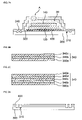
- FIG. 2A is a plane view illustrating an organic electroluminescent device according to a first embodiment of the present invention
- FIG. 2B is a view illustrating enlarged A part in FIG. 2A according to one embodiment of the present invention.
- FIG. 2C is a view illustrating enlarged A part in FIG. 2A according to another embodiment of the present invention.
- FIG. 3A to FIG. 3D are plane views illustrating an organic electroluminescent device according to other embodiments of the present invention.
- FIG. 4A is a plane view illustrating an organic electroluminescent device according to a second embodiment of the present invention.
- FIG. 4B is a view illustrating the enlarged B of FIG. 4A according to one embodiment of the present invention.
- FIG. 4C is a view illustrating the enlarged B of FIG. 4A according to another embodiment of the present invention.
- FIG. 5 is a plane view illustrating an organic electroluminescent device according to a third embodiment of the present invention.
- FIG. 6A is a plane view illustrating an organic electroluminescent device according to a fourth embodiment of the present invention.
- FIG. 6B is a plane view illustrating an organic electroluminescent device according to a fifth embodiment of the present invention.
- FIG. 7A is a plane view illustrating an organic electroluminescent device according to a sixth embodiment of the present invention.
- FIG. 7B is a plane view illustrating an organic electroluminescent device according to a seventh embodiment of the present invention.
- FIG. 8A is a plane view illustrating an organic electroluminescent device according to an eighth embodiment of the present invention.
- FIG. 8B is a plane view illustrating an organic electroluminescent device according to a ninth embodiment of the present invention.
- FIG. 2A is a plane view illustrating an organic electroluminescent device according to a first embodiment of the present invention
- FIG. 2B is a view illustrating enlarged A part in FIG. 2A according to one embodiment of the present invention
- FIG. 2C is a view illustrating enlarged A part in FIG. 2A according to another embodiment of the present invention.
- the organic electroluminescent device of the present invention includes a substrate 300 , pixels 30 , a planarization layer 320 and a passivation layer 340 .
- the substrate 300 has grooves 310 formed at the periphery of an active area in which the pixels 30 are formed.
- the pixels 30 are formed in the active area on the substrate 300 as shown in FIG. 2A . Additionally, the pixels 30 are formed by depositing in sequence an anode electrode layer 100 , an organic layer 120 and a cathode electrode layer 140 on the substrate 300 .
- the anode electrode layer 100 provides holes to the organic layer 120 in case a certain positive voltage is applied thereto, for example, indium tin oxide film (ITO film).
- ITO film indium tin oxide film
- the cathode electrode layer 140 provides electrons to the organic layer 120 in case a certain negative voltage is applied thereto.
- the organic layer 120 includes a hole transporting layer (HTL), an emitting layer (EML) and an electron transporting layer (ETL) formed in sequence on the anode electrode layer 100 .
- HTL hole transporting layer
- EML emitting layer
- ETL electron transporting layer
- the HTL transports the holes provided from the anode electrode layer 100 into the EML
- the ETL transports the electrons provided from the cathode electrode layer 140 into the EML.
- the transported holes and electrons are recombined in the EML, and so a light having a predetermined wavelength is emitted from the EML.
- the planarization layer 320 covers the pixels 30 , and is a non-conductive organic layer.
- the planarization layer 320 consisted of BenzoCyclo-Butene (BCB) or SiLK (Trademark of Dow Chemical Company) intensifies the adhesive force between the pixels 30 and the passivation layer 340 .
- the passivation layer 340 as an inorganic layer is formed on the planarization 320 and the grooves 310 , and prevents the permeation of oxygen (O 2 ) or water (H 2 O).
- the passivation layer 340 includes a first silicon oxide layer 340 A, a silicon nitride layer 340 B and a second silicon oxide layer 340 C formed in sequence on the planarization layer 320 and the grooves 310 , and so prevents oxygen (O 2 ) or water (H 2 O) from permeating into the inside of the passivation layer 340 .
- the silicon nitride layer 340 B is excellent to prevent the permeation of oxygen (O 2 ) or water (H 2 O), but if formed thick, it may make the substrate 300 bend.
- the silicon nitride layer 340 B should be formed thinly in order to prevent the permeation of oxygen (O 2 ) or water (H 2 O).
- the passivation layer 340 includes a first silicon oxide layer 340 A, a first silicon nitride layer 340 B, a second silicon oxide layer 340 C, a second silicon nitride layer 340 D and a third silicon oxide layer 340 E formed in sequence on the planarization layer 320 and the grooves 310 .
- the passivation layer 340 may include at least one silicon nitride layer. However, it is desirable that the passivation layer 340 includes a plurality of thin silicon nitride layers as shown in FIG. 2C .
- the passivation layer 340 is formed on the substrate 300 to which the grooves 310 are formed, and thus the length of a permeation pathway through which oxygen (O 2 ), water (H 2 O), etc. can permeate is augmented. As a result, oxygen (O 2 ), water (H 2 O), etc. are not permeated into the inside of the passivation layer 340 .
- the organic electroluminescent device does not include a cell cap unlike the conventional organic electroluminescent device.
- the organic electroluminescent device of the present invention is thinner than the conventional organic electroluminescent device. Accordingly, a mobile phone, etc. employing the organic electroluminescent device of the present invention may be thinner than a mobile phone, etc. employing the conventional organic electroluminescent device.
- FIG. 3A to FIG. 3D are plane views illustrating an organic electroluminescent device according to other embodiments of the present invention.
- grooves 310 are formed on a substrate 300 by etching the substrate 300 by using a certain mask 400 .
- pixels 30 are formed on the substrate 300 as shown in FIG. 3B .
- a planarization layer 320 is formed on the substrate 300 to cover the pixels 30 as shown in FIG. 3C .
- the planarization layer 320 is formed when planarization material of non-conductive organic material is deposited on the pixels.
- the planarization layer 320 is formed by polishing the upper side of the planarization material when the material is deposited on the pixels 30 .
- the passivation layer 340 is formed on the planarization layer 320 and the grooves 310 as shown in FIG. 3D .
- the grooves 310 are formed after the planarization layer 320 is deposited to cover the pixels 30 .
- the grooves 310 should be formed in a vacuum atmosphere in order to prevent the permeation of oxygen (O 2 ), water (H 2 O), etc.
- FIG. 4A is a plane view illustrating an organic electroluminescent device according to a second embodiment of the present invention
- FIG. 4B is a view illustrating enlarged B of FIG. 4A according to one embodiment of the present invention.
- FIG. 4C is a view illustrating enlarged B of FIG. 4A according to another embodiment of the present invention.
- the organic electroluminescent device of the present invention includes path extending sections 400 , pixels 30 , a planarization layer 420 and a passivation layer 440 .
- the path extending sections 400 are formed on the substrate 10 at the periphery of the planarization layer 420 as shown in FIG. 4A .
- the path extending sections 400 have square shape or rectangular shape.
- the planarization layer 420 as a non-conductive organic layer covers the pixels 30 .
- the planarization layer 420 consisted of BCB or SiLK intensifies the adhesive force between the pixels 30 and the passivation layer 440 .
- the passivation layer 440 is formed on the substrate 10 on which the planarization layer 420 and the path extending sections 400 are formed.
- the passivation layer 440 as an inorganic layer prevents the permeation of oxygen (O 2 ) or water (H 2 O).
- the passivation layer 440 includes a first silicon oxide layer 440 A, a silicon nitride layer 440 B and a second silicon oxide-layer 440 C formed in sequence on the substrate 10 on which the planarization layer 420 and the path extending sections 400 are formed.
- the passivation layer 440 includes a first silicon oxide layer 440 A, a first silicon nitride layer 440 B, a second silicon oxide layer 440 C, a second silicon nitride layer 440 D and a third silicon oxide layer 440 E formed in sequence on the substrate 10 on which the planarization layer 320 and the path extending sections 400 are formed.
- the passivation layer 440 is formed on the substrate 10 on which the path extending sections 400 are formed, and thus the length of the permeation pathway through which oxygen (O 2 ), water (H 2 O), etc. are permeated is augmented. As a result, oxygen (O 2 ), water (H 2 O), etc. are not permeated into the inside of the passivation layer 440 .
- the pixels 30 are formed on the substrate 10 .
- planarization layer 420 is deposited to cover the pixels 30 .
- the path extending sections 400 are deposited on the substrate 10 at the periphery of the planarization layer 420 .
- the path extending sections 400 are formed on the substrate 10 before the pixels 30 are formed on the substrate 10 .
- the passivation layer 440 is formed on the substrate 10 on which the planarization layer 420 and the path extending sections 400 are deposited.
- FIG. 5 is a plane view illustrating an organic electroluminescent device according to a third embodiment of the present invention.
- the organic electroluminescent device of the present invention includes pixels 30 , path extending sections 500 , a planarization layer 520 and a passivation layer 540 .
- planarization layer 520 and the passivation layer 540 are the same as those in the second embodiment, and so any further detailed descriptions concerning the same elements will be omitted.
- the path extending sections 500 have overhang shape, i.e. the upper base of the path extending sections 500 is longer than the lower base thereof as shown in FIG. 5 , and extends the permeation pathway through which oxygen (O 2 ) or water (H 2 O) permeates. As a result, oxygen (O 2 ) or water (H 2 O) is not permeated into the inside of the passivation layer 540 .
- the lower base of the path extending section 500 may be longer than the upper base thereof.
- path extending sections 500 are made up of the same material as a wall 180 .
- An anode electrode layer 100 and an insulating layer 160 are deposited in sequence on a substrate 10 .
- the path extending sections 500 are formed on the substrate 10 when the wall 180 is formed on the insulating layer 160 .
- the path extending sections 500 may be formed before the pixels 30 are formed, or after the planarization layer 520 is formed.
- an organic layer 120 and a cathode electrode layer 140 are formed in sequence on the anode electrode layer 100 , i.e. the pixels 30 are formed on the substrate 10 .
- planarization layer 520 is formed on the pixels 30 to cover the pixels 30 .
- the passivation layer 540 is formed on the substrate 10 on which the planarization layer 520 and the path extending sections 500 are formed.
- FIG. 6A is a plane view illustrating an organic electroluminescent device according to a fourth embodiment of the present invention.
- the organic electroluminescent device of the present invention includes pixels 30 , a planarization layer 600 , a permeation-preventing layer 620 and a passivation layer 640 .
- the planarization layer 600 covers the pixels 30 .
- the permeation-preventing layer 620 is formed on the planarization layer 600 to cover the planarization layer 600 , and is made up of metal such as aluminium (Al), titanium (Ti) or titanium nitride (TiN).
- the metal is reactive to oxygen (O 2 ) or water (H 2 O).
- the metal is oxidized in case oxygen (O 2 ) or water (H 2 O) is permeated, and so the permeation-preventing layer 620 is converted into an oxide layer.
- the density of the converted oxide layer is higher than that of the metal, and thus oxygen (O 2 ) or water (H 2 O) is not diffused along the converted oxide layer.
- oxygen (O 2 ) or water (H 2 O) is not permeated into the inside of the permeation-preventing layer 620 .
- the passivation layer 640 is formed on the permeation-preventing layer 620 .
- the passivation layer 640 is formed by depositing in sequence a first silicon oxide layer, a silicon nitride layer and a second silicon oxide layer on the permeation-preventing section 620 .
- the passivation layer 640 is formed by depositing in sequence a first silicon oxide layer, a first silicon nitride layer, a second silicon oxide layer, a second silicon nitride layer and a third silicon oxide layer on the permeation-preventing layer 620 .
- the pixels 30 are formed on the substrate 10 , and then the planarization layer 600 is formed on the pixels 30 to cover the pixels 30 .
- the permeation-preventing layer 620 is formed on the planarization layer 600 to cover the planarization layer 600 , and then the passivation layer 640 is formed on the permeation-preventing layer 620 .
- the organic electroluminescent device of the present invention includes the permeation-preventing layer 620 converted into an oxide layer in case oxygen (O 2 ) or water (H 2 O) is permeated, unlike the conventional organic electroluminescent device. Hence, oxygen (O 2 ) or water (H 2 O) permeated after the permeation-preventing layer 620 is converted into the oxide layer is not permeated into the inside of the permeation-preventing layer 620 .
- FIG. 6B is a plane view illustrating an organic electroluminescent device according to a fifth embodiment of the present invention.
- the organic electroluminescent device of the present invention includes pixels 30 , a planarization layer 600 , a permeation-preventing layer 660 and a passivation layer 640 .
- the permeation-preventing layer 660 as an oxide layer is formed by forming a metal layer such as Al, Ti or TiN on the planarization layer 600 , and then oxidizing the metal layer in an oxygen atmosphere.
- the permeation-preventing layer 660 is formed before oxygen (O 2 ) or water (H 2 O) is permeated, unlike the permeation-preventing layer 320 in the fourth embodiment.
- FIG. 7A is a plane view illustrating an organic electroluminescent device according to a sixth embodiment of the present invention.
- the organic electroluminescent device of the present invention includes a substrate 700 , pixels 30 , a planarization layer 740 , a permeation-preventing layer 760 and a passivation layer 780 .
- the substrate 700 has grooves 720 at the periphery of an active area as shown in FIG. 7A .
- the planarization layer 740 is formed on the pixels 30 to cover the pixels 30 , and is made up of non-conductive organic layer such as BCB or SiLK.
- the permeation-preventing layer 760 is formed to cover the planarization layer 740 and grooves 720 , and is made up of metal such as Al, Ti or TiN.
- the metal is reactive to oxygen (O 2 ) or water (H 2 O).
- the metal is oxidized in case oxygen (O 2 ) or water (H 2 O) is permeated, and so the permeation-preventing layer 760 is converted into an oxide layer.
- the density of the converted oxide layer is higher than that of the metal, and thus oxygen (O 2 ) or water (H 2 O) is not diffused along the converted oxide layer.
- oxygen (O 2 ) or water (H 2 O) is not permeated into the inside of the permeation-preventing layer 760 .
- the passivation layer 780 is formed on the permeation-preventing layer 760 .
- the passivation layer 780 is formed by depositing in sequence a first silicon oxide layer, a silicon nitride layer and a second silicon oxide layer on the permeation-preventing section 760 .
- the passivation layer 780 is formed by depositing in sequence a first silicon oxide layer, a first silicon nitride layer, a second silicon oxide layer, a second silicon nitride layer and a third silicon oxide layer on the permeation-preventing layer 760 .
- the grooves 720 are formed on the substrate 700 by etching the substrate 700 by using a certain mask.
- the pixels 30 are formed on the substrate 700 .
- planarization layer 740 is deposited on the pixels 30 to cover the pixels 30 .
- the permeation-preventing layer 760 is formed on the substrate 700 on which the planarization 740 and the grooves 720 are formed.
- the passivation layer 780 is formed on the permeation-preventing layer 760 .
- the grooves 720 are formed after the planarization layer 740 is deposited on the pixels 30 .
- the grooves 720 should be formed in a vacuum atmosphere in order to prevent the permeation of oxygen (O 2 ), water (H 2 O), etc.
- FIG. 7B is a plane view illustrating an organic electroluminescent device according to a seventh embodiment of the present invention.
- the organic electroluminescent device of the present invention includes a substrate 700 , pixels 30 , a planarization layer 740 , a permeation-preventing layer 790 and a passivation layer 780 .
- the permeation-preventing layer 790 as an oxide layer is formed by forming a metal layer such as Al, Ti or TiN to cover the substrate 700 on which the planarization layer 740 and the grooves 720 are formed, and then oxidizing the metal layer in an oxygen atmosphere.
- the permeation-preventing layer 790 is formed before oxygen (O 2 ) or water (H 2 O) is permeated, unlike the permeation-preventing layer 760 in the sixth embodiment.
- FIG. 8A is a plane view illustrating an organic electroluminescent device according to an eighth embodiment of the present invention.
- the organic electroluminescent device of the present invention includes path extending sections 820 , pixels 30 , a planarization layer 840 , a permeation-preventing layer 860 and a passivation layer 880 .
- the path extending sections 820 are formed on the substrate 800 at the periphery of an active area in which the pixels 30 are formed.
- the path extending sections 820 have square shape, rectangular shape, or overhang shape.
- the planarization layer 840 covers the pixels 30 , and is made up of non-conductive organic film such as BCB or SiLK.
- the permeation-preventing layer 860 is formed to cover the planarization layer 840 and the path extending sections 820 , and is made up of metal such as Al, Ti or TiN.
- the metal is reactive to oxygen (O 2 ) or water (H 2 O).
- the metal is oxidized in case oxygen (O 2 ) or water (H 2 O) is permeated, and so the permeation-preventing layer 860 is converted into an oxide layer.
- the density of the converted oxide layer is higher than that of the metal, and thus oxygen (O 2 ) or water (H 2 O) is not diffused along the converted oxide layer.
- oxygen (O 2 ) or water (H 2 O) is not permeated into the inside of the permeation-preventing layer 860 .
- the passivation layer 880 as an inorganic layer is formed on the permeation-preventing layer 860 .
- the pixels 30 are formed on the substrate 800 .
- planarization layer 840 is deposited to cover the pixels 30 .
- the path extending sections 820 are formed at the periphery of the planarization layer 840 on the substrate 800 .
- the path extending sections 820 may be formed before the pixels 30 are formed on the substrate 800 .
- the path extending sections 820 may be formed on the substrate 800 when a wall 180 is formed.
- the permeation-preventing layer 860 is formed on the substrate 800 on which the planarization layer 840 and the path extending layers 820 are formed.
- the passivation layer 880 is formed on the permeation-preventing layer 860 .
- FIG. 8B is a plane view illustrating an organic electroluminescent device according to a ninth embodiment of the present invention.
- the organic electroluminescent device of the present invention includes pixels 30 , a planarization layer 840 , a permeation-preventing layer 890 and a passivation layer 880 .
- the permeation-preventing layer 890 as an oxide layer is formed by forming a metal layer such as Al, Ti or TiN to cover the substrate 800 on which the planarization layer 840 and the path extending sections 820 are formed, and then oxidizing the metal layer in an oxygen atmosphere.
- the permeation-preventing layer 890 is formed before oxygen (O 2 ) or water (H 2 O) is permeated, unlike the permeation-preventing layer 860 in the eighth embodiment.
Landscapes
- Physics & Mathematics (AREA)
- Optics & Photonics (AREA)
- Electroluminescent Light Sources (AREA)
Applications Claiming Priority (15)
| Application Number | Priority Date | Filing Date | Title |
|---|---|---|---|
| KR2004-84502 | 2004-10-21 | ||
| KR10-2004-0084502 | 2004-10-21 | ||
| KR1020040084505A KR100629071B1 (ko) | 2004-10-21 | 2004-10-21 | 유기 전계 발광 소자 및 이를 제조하는 방법 |
| KR2004-84505 | 2004-10-21 | ||
| KR1020040084502A KR100623338B1 (ko) | 2004-10-21 | 2004-10-21 | 유기 전계 발광 소자 및 이를 제조하는 방법 |
| KR10-2004-0084505 | 2004-10-21 | ||
| KR10-2004-0085201 | 2004-10-25 | ||
| KR2004-85201 | 2004-10-25 | ||
| KR1020040085201A KR100629072B1 (ko) | 2004-10-25 | 2004-10-25 | 유기 전계 발광 소자 및 이를 제조하는 방법 |
| KR10-2004-0094954 | 2004-11-19 | ||
| KR10-2004-0094957 | 2004-11-19 | ||
| KR2004-94957 | 2004-11-19 | ||
| KR1020040094954A KR100629610B1 (ko) | 2004-11-19 | 2004-11-19 | 유기 전계 발광 소자 및 이를 제조하는 방법 |
| KR1020040094957A KR100634679B1 (ko) | 2004-11-19 | 2004-11-19 | 유기 전계 발광 소자 및 이를 제조하는 방법 |
| KR2004-94954 | 2004-11-19 |
Publications (2)
| Publication Number | Publication Date |
|---|---|
| US20060087229A1 US20060087229A1 (en) | 2006-04-27 |
| US7671532B2 true US7671532B2 (en) | 2010-03-02 |
Family
ID=35595074
Family Applications (1)
| Application Number | Title | Priority Date | Filing Date |
|---|---|---|---|
| US11/249,403 Active 2027-06-21 US7671532B2 (en) | 2004-10-21 | 2005-10-14 | Organic electroluminescent device and method of manufacturing the same |
Country Status (6)
| Country | Link |
|---|---|
| US (1) | US7671532B2 (de) |
| EP (2) | EP1655790B1 (de) |
| JP (1) | JP4932218B2 (de) |
| AT (2) | ATE476757T1 (de) |
| DE (1) | DE602005022665D1 (de) |
| TW (1) | TWI311447B (de) |
Cited By (10)
| Publication number | Priority date | Publication date | Assignee | Title |
|---|---|---|---|---|
| US20090174318A1 (en) * | 2007-12-24 | 2009-07-09 | Lg Display Co., Ltd. | Organic electro-luminescence display device |
| US20090218925A1 (en) * | 2008-02-28 | 2009-09-03 | Won-Kyu Kwak | Organic light emitting display device |
| CN104103665A (zh) * | 2013-04-12 | 2014-10-15 | 三星显示有限公司 | 有机发光显示设备和制造它的方法 |
| US10319938B2 (en) | 2016-07-19 | 2019-06-11 | Samsung Display Co., Ltd. | Display apparatus having a larger display region and moisture impermeability |
| US10586949B2 (en) | 2013-08-28 | 2020-03-10 | Samsung Display Co., Ltd. | Organic light-emitting display apparatus and method of manufacturing the same |
| US10651420B2 (en) * | 2017-07-27 | 2020-05-12 | Boe Technology Group Co., Ltd. | Display device having grooves formed in an insulation layer and method for encapsulating same |
| US20210328170A1 (en) * | 2014-11-28 | 2021-10-21 | Pioneer Corporation | Light-emitting device |
| US11289676B2 (en) * | 2017-11-24 | 2022-03-29 | Kunshan Go-Visionox Opto-Electronics Co., Ltd. | Display device having a closed circular groove planarization layer |
| US11296301B2 (en) * | 2018-05-11 | 2022-04-05 | Yungu (Gu'an) Technology Co., Ltd. | Display screen and method of manufacturing thereof |
| US11545647B2 (en) | 2019-09-06 | 2023-01-03 | Canon Kabushiki Kaisha | Light-emitting apparatus having a groove in the insulating layer between the light-emitting region and an end of the insulating layer |
Families Citing this family (17)
| Publication number | Priority date | Publication date | Assignee | Title |
|---|---|---|---|---|
| JP2008226859A (ja) * | 2004-10-22 | 2008-09-25 | Seiko Epson Corp | 有機エレクトロルミネッセンス装置の製造方法、及び有機エレクトロルミネッセンス装置 |
| KR100730225B1 (ko) * | 2006-08-01 | 2007-06-19 | 삼성에스디아이 주식회사 | 평판표시장치 |
| JP4245032B2 (ja) * | 2006-10-03 | 2009-03-25 | セイコーエプソン株式会社 | 発光装置および電子機器 |
| KR100893864B1 (ko) * | 2007-11-07 | 2009-04-20 | 엘지전자 주식회사 | 유기 전계 발광 소자 및 그 제조방법 |
| JP5409315B2 (ja) * | 2009-12-11 | 2014-02-05 | キヤノン株式会社 | 表示装置 |
| KR101155904B1 (ko) * | 2010-01-04 | 2012-06-20 | 삼성모바일디스플레이주식회사 | 유기 발광 표시 장치 |
| FR2958795B1 (fr) * | 2010-04-12 | 2012-06-15 | Commissariat Energie Atomique | Dispositif optoelectronique organique et son procede d'encapsulation. |
| KR102080296B1 (ko) * | 2013-12-03 | 2020-02-21 | 엘지디스플레이 주식회사 | 유기 발광 장치 |
| KR101893281B1 (ko) * | 2014-03-13 | 2018-08-29 | 파이오니아 가부시키가이샤 | 발광 장치 |
| CN104505465B (zh) * | 2014-12-04 | 2016-06-29 | 深圳市华星光电技术有限公司 | Oled封装结构及其封装方法 |
| CN106647077B (zh) * | 2016-12-29 | 2020-02-28 | 惠科股份有限公司 | 一种显示面板和显示装置 |
| DE102017106018A1 (de) * | 2017-03-21 | 2018-09-27 | Osram Oled Gmbh | Verfahren zum herstellen eines optoelektronischen bauelements und ein optoelektronisches bauelement |
| DE102017121245B3 (de) | 2017-09-13 | 2018-12-20 | Westfälische Wilhelms-Universität Münster | Strukturierung von OLED-Schichten und entsprechend strukturierte OLEDs |
| KR102470063B1 (ko) | 2017-12-15 | 2022-11-22 | 엘지디스플레이 주식회사 | 조명 장치용 oled 패널 |
| CN108963103B (zh) | 2018-06-28 | 2020-07-10 | 武汉华星光电半导体显示技术有限公司 | Oled显示面板 |
| EP3985725A4 (de) | 2019-06-14 | 2022-12-28 | BOE Technology Group Co., Ltd. | Anzeigesubstrat und herstellungsverfahren dafür sowie anzeigevorrichtung |
| KR20250034959A (ko) | 2022-07-12 | 2025-03-11 | 소니 세미컨덕터 솔루션즈 가부시키가이샤 | 표시 장치 및 전자 기기 |
Citations (34)
| Publication number | Priority date | Publication date | Assignee | Title |
|---|---|---|---|---|
| US2440135A (en) | 1944-08-04 | 1948-04-20 | Alexander Paul | Method of and apparatus for depositing substances by thermal evaporation in vacuum chambers |
| JPS60255971A (ja) | 1984-05-30 | 1985-12-17 | Mitsubishi Electric Corp | 薄膜形成装置 |
| DD262551A3 (de) | 1982-05-19 | 1988-12-07 | Kpi,Su | Verdampfer |
| US5157240A (en) | 1989-09-13 | 1992-10-20 | Chow Loren A | Deposition heaters |
| US5272298A (en) | 1991-04-03 | 1993-12-21 | Mitsubishi Jukogyo Kabushiki Kaisha | Apparatus for vacuum deposition of sublimative substance |
| US6195142B1 (en) | 1995-12-28 | 2001-02-27 | Matsushita Electrical Industrial Company, Ltd. | Organic electroluminescence element, its manufacturing method, and display device using organic electroluminescence element |
| US20020113549A1 (en) | 2001-02-21 | 2002-08-22 | Semiconductor Energy Laboratory Co., Ltd. | Light emitting device, electronic equipment, and method of manufacturing thereof |
| US20020140347A1 (en) * | 2001-03-29 | 2002-10-03 | Weaver Michael Stuart | Methods and structures for reducing lateral diffusion through cooperative barrier layers |
| US20030016966A1 (en) | 2001-04-27 | 2003-01-23 | Yoshio Hattori | Image forming apparatus with improved capabilities for toner supply |
| US20030017297A1 (en) * | 2001-07-20 | 2003-01-23 | Lg Electronics Inc. | Panel display device and method for forming protective layer within the same |
| US20030062533A1 (en) | 2001-09-28 | 2003-04-03 | Yee Low Hong | Sealing for OLED devices |
| US20030082859A1 (en) * | 2001-09-27 | 2003-05-01 | Mitsuhiro Ichijo | Method of manufacturing a semiconductor device |
| US6576351B2 (en) * | 2001-02-16 | 2003-06-10 | Universal Display Corporation | Barrier region for optoelectronic devices |
| CN1429052A (zh) | 2001-12-26 | 2003-07-09 | 三星Sdi株式会社 | 有机电致发光显示器件 |
| US20030168966A1 (en) | 2002-01-16 | 2003-09-11 | Seiko Epson Corporation | Display device |
| US20040041147A1 (en) | 2002-08-31 | 2004-03-04 | Lg.Philips Lcd Co., Ltd. | Organic electro-luminescent display device and method of fabricating the same |
| JP2004079408A (ja) * | 2002-08-21 | 2004-03-11 | Ntt Advanced Technology Corp | 有機elディスプレイの封止構造 |
| US20040113550A1 (en) * | 2002-12-12 | 2004-06-17 | Hitachi Displays, Ltd. | Light-emitting element and display device using same |
| KR20040058102A (ko) | 2001-11-29 | 2004-07-03 | 스미토모덴키고교가부시키가이샤 | 엘렉트로 루미네슨스 표시장치 |
| US20040178727A1 (en) * | 2003-03-14 | 2004-09-16 | Samsung Sdi Co., Ltd. | Electroluminescence device |
| JP2004265615A (ja) * | 2003-02-04 | 2004-09-24 | Sanyo Electric Co Ltd | 有機エレクトロルミネッセンス装置およびその製造方法 |
| CN1533682A (zh) | 2002-01-15 | 2004-09-29 | ������������ʽ���� | 具有阻挡隔膜的电子元件、显示装置、电子设备密封结构及制作电子元件的方法 |
| US20040195960A1 (en) * | 2001-08-20 | 2004-10-07 | Grzegorz Czeremuszkin | Coatings with low permeation of gases and vapors |
| US6833668B1 (en) * | 1999-09-29 | 2004-12-21 | Sanyo Electric Co., Ltd. | Electroluminescence display device having a desiccant |
| US20050014022A1 (en) * | 2003-07-19 | 2005-01-20 | Park Jin-Woo | Encapsulated organic electroluminescent display |
| US20050046346A1 (en) * | 2003-08-29 | 2005-03-03 | Semiconductor Energy Laboratory Co., Ltd. | Display device and method for manufacturing the same |
| US20050068474A1 (en) * | 2003-09-30 | 2005-03-31 | Chih-Hung Su | Full-color organic light-emitting diode display and method of fabricating the same |
| US20050082534A1 (en) * | 2003-10-16 | 2005-04-21 | Mu-Hyun Kim | Organic light-emitting display device and method for manufacturing the same |
| CN1612650A (zh) | 2003-10-29 | 2005-05-04 | 铼宝科技股份有限公司 | 有机发光显示面板 |
| US20050140347A1 (en) * | 2003-12-26 | 2005-06-30 | Jiun-Chiang Chen | Time-sharing current sense circuit for a multi-phase converter |
| US20050155704A1 (en) * | 2004-01-16 | 2005-07-21 | Eastman Kodak Company | Method of making an OLED display device with enhanced optical and mechanical properties |
| EP1562231A2 (de) | 1999-06-04 | 2005-08-10 | Sel Semiconductor Energy Laboratory Co., Ltd. | Elektrooptische Vorrichtung und elektronisches Gerät |
| US20050260827A1 (en) * | 2004-05-20 | 2005-11-24 | Taiwan Semiconductor Manufacturing Co., Ltd. | Ozone vapor clean method |
| US7145290B2 (en) * | 2003-11-29 | 2006-12-05 | Samsung Sdi Co., Ltd. | Organic electroluminescent devices |
Family Cites Families (3)
| Publication number | Priority date | Publication date | Assignee | Title |
|---|---|---|---|---|
| US6477271B1 (en) * | 2000-04-07 | 2002-11-05 | Avid Technology, Inc. | Secondary color modification of a digital image |
| JP2003059646A (ja) * | 2001-08-10 | 2003-02-28 | Ulvac Japan Ltd | 有機薄膜表示装置 |
| JP2004119016A (ja) * | 2002-09-20 | 2004-04-15 | Semiconductor Energy Lab Co Ltd | 発光装置 |
-
2005
- 2005-10-06 AT AT05021846T patent/ATE476757T1/de not_active IP Right Cessation
- 2005-10-06 AT AT07007351T patent/ATE541327T1/de active
- 2005-10-06 EP EP05021846A patent/EP1655790B1/de not_active Expired - Lifetime
- 2005-10-06 EP EP07007351A patent/EP1798786B1/de not_active Expired - Lifetime
- 2005-10-06 DE DE602005022665T patent/DE602005022665D1/de not_active Expired - Lifetime
- 2005-10-14 US US11/249,403 patent/US7671532B2/en active Active
- 2005-10-18 JP JP2005303145A patent/JP4932218B2/ja not_active Expired - Lifetime
- 2005-10-19 TW TW094136544A patent/TWI311447B/zh not_active IP Right Cessation
Patent Citations (35)
| Publication number | Priority date | Publication date | Assignee | Title |
|---|---|---|---|---|
| US2440135A (en) | 1944-08-04 | 1948-04-20 | Alexander Paul | Method of and apparatus for depositing substances by thermal evaporation in vacuum chambers |
| DD262551A3 (de) | 1982-05-19 | 1988-12-07 | Kpi,Su | Verdampfer |
| JPS60255971A (ja) | 1984-05-30 | 1985-12-17 | Mitsubishi Electric Corp | 薄膜形成装置 |
| US5157240A (en) | 1989-09-13 | 1992-10-20 | Chow Loren A | Deposition heaters |
| US5272298A (en) | 1991-04-03 | 1993-12-21 | Mitsubishi Jukogyo Kabushiki Kaisha | Apparatus for vacuum deposition of sublimative substance |
| US6195142B1 (en) | 1995-12-28 | 2001-02-27 | Matsushita Electrical Industrial Company, Ltd. | Organic electroluminescence element, its manufacturing method, and display device using organic electroluminescence element |
| EP1562231A3 (de) | 1999-06-04 | 2005-10-26 | Sel Semiconductor Energy Laboratory Co., Ltd. | Elektrooptische Vorrichtung und elektronisches Gerät |
| EP1562231A2 (de) | 1999-06-04 | 2005-08-10 | Sel Semiconductor Energy Laboratory Co., Ltd. | Elektrooptische Vorrichtung und elektronisches Gerät |
| US6833668B1 (en) * | 1999-09-29 | 2004-12-21 | Sanyo Electric Co., Ltd. | Electroluminescence display device having a desiccant |
| US6576351B2 (en) * | 2001-02-16 | 2003-06-10 | Universal Display Corporation | Barrier region for optoelectronic devices |
| US20020113549A1 (en) | 2001-02-21 | 2002-08-22 | Semiconductor Energy Laboratory Co., Ltd. | Light emitting device, electronic equipment, and method of manufacturing thereof |
| US20020140347A1 (en) * | 2001-03-29 | 2002-10-03 | Weaver Michael Stuart | Methods and structures for reducing lateral diffusion through cooperative barrier layers |
| US20030016966A1 (en) | 2001-04-27 | 2003-01-23 | Yoshio Hattori | Image forming apparatus with improved capabilities for toner supply |
| US20030017297A1 (en) * | 2001-07-20 | 2003-01-23 | Lg Electronics Inc. | Panel display device and method for forming protective layer within the same |
| US20040195960A1 (en) * | 2001-08-20 | 2004-10-07 | Grzegorz Czeremuszkin | Coatings with low permeation of gases and vapors |
| US20030082859A1 (en) * | 2001-09-27 | 2003-05-01 | Mitsuhiro Ichijo | Method of manufacturing a semiconductor device |
| US20030062533A1 (en) | 2001-09-28 | 2003-04-03 | Yee Low Hong | Sealing for OLED devices |
| KR20040058102A (ko) | 2001-11-29 | 2004-07-03 | 스미토모덴키고교가부시키가이샤 | 엘렉트로 루미네슨스 표시장치 |
| CN1429052A (zh) | 2001-12-26 | 2003-07-09 | 三星Sdi株式会社 | 有机电致发光显示器件 |
| CN1533682A (zh) | 2002-01-15 | 2004-09-29 | ������������ʽ���� | 具有阻挡隔膜的电子元件、显示装置、电子设备密封结构及制作电子元件的方法 |
| US20030168966A1 (en) | 2002-01-16 | 2003-09-11 | Seiko Epson Corporation | Display device |
| JP2004079408A (ja) * | 2002-08-21 | 2004-03-11 | Ntt Advanced Technology Corp | 有機elディスプレイの封止構造 |
| US20040041147A1 (en) | 2002-08-31 | 2004-03-04 | Lg.Philips Lcd Co., Ltd. | Organic electro-luminescent display device and method of fabricating the same |
| US20040113550A1 (en) * | 2002-12-12 | 2004-06-17 | Hitachi Displays, Ltd. | Light-emitting element and display device using same |
| JP2004265615A (ja) * | 2003-02-04 | 2004-09-24 | Sanyo Electric Co Ltd | 有機エレクトロルミネッセンス装置およびその製造方法 |
| US20040178727A1 (en) * | 2003-03-14 | 2004-09-16 | Samsung Sdi Co., Ltd. | Electroluminescence device |
| US20050014022A1 (en) * | 2003-07-19 | 2005-01-20 | Park Jin-Woo | Encapsulated organic electroluminescent display |
| US20050046346A1 (en) * | 2003-08-29 | 2005-03-03 | Semiconductor Energy Laboratory Co., Ltd. | Display device and method for manufacturing the same |
| US20050068474A1 (en) * | 2003-09-30 | 2005-03-31 | Chih-Hung Su | Full-color organic light-emitting diode display and method of fabricating the same |
| US20050082534A1 (en) * | 2003-10-16 | 2005-04-21 | Mu-Hyun Kim | Organic light-emitting display device and method for manufacturing the same |
| CN1612650A (zh) | 2003-10-29 | 2005-05-04 | 铼宝科技股份有限公司 | 有机发光显示面板 |
| US7145290B2 (en) * | 2003-11-29 | 2006-12-05 | Samsung Sdi Co., Ltd. | Organic electroluminescent devices |
| US20050140347A1 (en) * | 2003-12-26 | 2005-06-30 | Jiun-Chiang Chen | Time-sharing current sense circuit for a multi-phase converter |
| US20050155704A1 (en) * | 2004-01-16 | 2005-07-21 | Eastman Kodak Company | Method of making an OLED display device with enhanced optical and mechanical properties |
| US20050260827A1 (en) * | 2004-05-20 | 2005-11-24 | Taiwan Semiconductor Manufacturing Co., Ltd. | Ozone vapor clean method |
Non-Patent Citations (2)
| Title |
|---|
| H. Lifka et al., "Thin Film Encapsulation of OLED Displays with a NONON Stack," SID Symposium Digest of Technical Papers, May 2004, pp. 1384-1387. |
| V. Kuznetsov et al., "Production of Thin Films of Silicon Monoxide Without Through Holes," vol. 1968, No. 3, May 1, 1968, pp. 723-724, XP002300025. |
Cited By (16)
| Publication number | Priority date | Publication date | Assignee | Title |
|---|---|---|---|---|
| US7851993B2 (en) * | 2007-12-24 | 2010-12-14 | Lg Display Co., Ltd. | Organic electro-luminescence display device |
| US20090174318A1 (en) * | 2007-12-24 | 2009-07-09 | Lg Display Co., Ltd. | Organic electro-luminescence display device |
| US20090218925A1 (en) * | 2008-02-28 | 2009-09-03 | Won-Kyu Kwak | Organic light emitting display device |
| US8049412B2 (en) * | 2008-02-28 | 2011-11-01 | Samsung Mobile Display Co., Ltd. | Organic light emitting display device |
| CN104103665A (zh) * | 2013-04-12 | 2014-10-15 | 三星显示有限公司 | 有机发光显示设备和制造它的方法 |
| CN104103665B (zh) * | 2013-04-12 | 2019-07-30 | 三星显示有限公司 | 有机发光显示设备和制造它的方法 |
| US10586949B2 (en) | 2013-08-28 | 2020-03-10 | Samsung Display Co., Ltd. | Organic light-emitting display apparatus and method of manufacturing the same |
| US11063242B2 (en) | 2013-08-28 | 2021-07-13 | Samsung Display Co., Ltd. | Organic light-emitting display apparatus and method of manufacturing the same |
| US11864409B2 (en) * | 2014-11-28 | 2024-01-02 | Pioneer Corporation | Light-emitting device |
| US20210328170A1 (en) * | 2014-11-28 | 2021-10-21 | Pioneer Corporation | Light-emitting device |
| US10319938B2 (en) | 2016-07-19 | 2019-06-11 | Samsung Display Co., Ltd. | Display apparatus having a larger display region and moisture impermeability |
| US11264587B2 (en) | 2016-07-19 | 2022-03-01 | Samsung Display Co., Ltd. | Display apparatus having a larger display region and moisture impermeability |
| US10651420B2 (en) * | 2017-07-27 | 2020-05-12 | Boe Technology Group Co., Ltd. | Display device having grooves formed in an insulation layer and method for encapsulating same |
| US11289676B2 (en) * | 2017-11-24 | 2022-03-29 | Kunshan Go-Visionox Opto-Electronics Co., Ltd. | Display device having a closed circular groove planarization layer |
| US11296301B2 (en) * | 2018-05-11 | 2022-04-05 | Yungu (Gu'an) Technology Co., Ltd. | Display screen and method of manufacturing thereof |
| US11545647B2 (en) | 2019-09-06 | 2023-01-03 | Canon Kabushiki Kaisha | Light-emitting apparatus having a groove in the insulating layer between the light-emitting region and an end of the insulating layer |
Also Published As
| Publication number | Publication date |
|---|---|
| EP1798786A3 (de) | 2009-08-05 |
| JP4932218B2 (ja) | 2012-05-16 |
| EP1655790A2 (de) | 2006-05-10 |
| ATE541327T1 (de) | 2012-01-15 |
| TW200626008A (en) | 2006-07-16 |
| EP1798786A2 (de) | 2007-06-20 |
| US20060087229A1 (en) | 2006-04-27 |
| EP1655790B1 (de) | 2010-08-04 |
| EP1655790A3 (de) | 2006-06-14 |
| DE602005022665D1 (de) | 2010-09-16 |
| ATE476757T1 (de) | 2010-08-15 |
| EP1798786B1 (de) | 2012-01-11 |
| JP2006120635A (ja) | 2006-05-11 |
| TWI311447B (en) | 2009-06-21 |
Similar Documents
| Publication | Publication Date | Title |
|---|---|---|
| US7671532B2 (en) | Organic electroluminescent device and method of manufacturing the same | |
| KR102894711B1 (ko) | 광 투과 영역을 포함하는 광전자 디바이스 | |
| US10566394B2 (en) | Organic light-emitting display panel, device and method for manufacturing the same | |
| US10084154B2 (en) | Organic light-emitting display apparatus and method of manufacturing the same | |
| US8981362B2 (en) | Organic light-emitting display device and method of manufacturing the same | |
| US10734461B2 (en) | Thin film transistor array panel and organic light emitting diode display including the same | |
| JP4048830B2 (ja) | 有機電子デバイス素子 | |
| US20060043886A1 (en) | Electro-luminescent display device and method for fabricating the same | |
| KR100771464B1 (ko) | 유기 el 디스플레이 및 그 제조 방법 | |
| CN100539776C (zh) | 有机电致发光器件及其制造方法 | |
| JP4776993B2 (ja) | 有機電界発光素子 | |
| JP5313769B2 (ja) | 積層基板および発光素子の製造方法 | |
| KR100611650B1 (ko) | 유기 전계 발광 소자 및 그 제조 방법 | |
| KR100634679B1 (ko) | 유기 전계 발광 소자 및 이를 제조하는 방법 | |
| KR100629071B1 (ko) | 유기 전계 발광 소자 및 이를 제조하는 방법 | |
| KR100629072B1 (ko) | 유기 전계 발광 소자 및 이를 제조하는 방법 | |
| KR100629610B1 (ko) | 유기 전계 발광 소자 및 이를 제조하는 방법 | |
| KR102580219B1 (ko) | 박막 트랜지스터, 이의 제조 방법 및 이를 포함하는 표시 장치 |
Legal Events
| Date | Code | Title | Description |
|---|---|---|---|
| AS | Assignment |
Owner name: LG ELECTRONICS INC.,KOREA, REPUBLIC OF Free format text: ASSIGNMENT OF ASSIGNORS INTEREST;ASSIGNOR:KIM, WOO CHAN;REEL/FRAME:017094/0849 Effective date: 20050915 Owner name: LG ELECTRONICS INC., KOREA, REPUBLIC OF Free format text: ASSIGNMENT OF ASSIGNORS INTEREST;ASSIGNOR:KIM, WOO CHAN;REEL/FRAME:017094/0849 Effective date: 20050915 |
|
| AS | Assignment |
Owner name: LG DISPLAY CO., LTD., KOREA, REPUBLIC OF Free format text: COMPANY TO COMPANY;ASSIGNOR:LG ELECTRONICS INC.;REEL/FRAME:020826/0926 Effective date: 20080404 Owner name: LG DISPLAY CO., LTD.,KOREA, REPUBLIC OF Free format text: COMPANY TO COMPANY;ASSIGNOR:LG ELECTRONICS INC.;REEL/FRAME:020826/0926 Effective date: 20080404 |
|
| FEPP | Fee payment procedure |
Free format text: PAYOR NUMBER ASSIGNED (ORIGINAL EVENT CODE: ASPN); ENTITY STATUS OF PATENT OWNER: LARGE ENTITY |
|
| STCF | Information on status: patent grant |
Free format text: PATENTED CASE |
|
| FPAY | Fee payment |
Year of fee payment: 4 |
|
| FPAY | Fee payment |
Year of fee payment: 8 |
|
| MAFP | Maintenance fee payment |
Free format text: PAYMENT OF MAINTENANCE FEE, 12TH YEAR, LARGE ENTITY (ORIGINAL EVENT CODE: M1553); ENTITY STATUS OF PATENT OWNER: LARGE ENTITY Year of fee payment: 12 |