US5299745A - Process for the preparation of a dry aggregate for the production of electrodes - Google Patents
Process for the preparation of a dry aggregate for the production of electrodes Download PDFInfo
- Publication number
- US5299745A US5299745A US07/905,790 US90579092A US5299745A US 5299745 A US5299745 A US 5299745A US 90579092 A US90579092 A US 90579092A US 5299745 A US5299745 A US 5299745A
- Authority
- US
- United States
- Prior art keywords
- grain size
- process according
- fractions
- fraction
- mixture
- Prior art date
- Legal status (The legal status is an assumption and is not a legal conclusion. Google has not performed a legal analysis and makes no representation as to the accuracy of the status listed.)
- Expired - Fee Related
Links
- 238000000034 method Methods 0.000 title claims abstract description 41
- 238000002360 preparation method Methods 0.000 title claims abstract description 9
- 238000004519 manufacturing process Methods 0.000 title claims abstract description 7
- 238000002156 mixing Methods 0.000 claims abstract description 40
- 238000011049 filling Methods 0.000 claims description 28
- 239000000463 material Substances 0.000 claims description 26
- 239000000203 mixture Substances 0.000 claims description 25
- 239000000428 dust Substances 0.000 claims description 21
- 239000002006 petroleum coke Substances 0.000 claims description 16
- 238000003860 storage Methods 0.000 claims description 15
- 238000000265 homogenisation Methods 0.000 claims description 11
- 238000007873 sieving Methods 0.000 claims description 11
- 238000005303 weighing Methods 0.000 claims description 8
- XAGFODPZIPBFFR-UHFFFAOYSA-N aluminium Chemical compound [Al] XAGFODPZIPBFFR-UHFFFAOYSA-N 0.000 claims description 6
- 229910052782 aluminium Inorganic materials 0.000 claims description 6
- 238000005868 electrolysis reaction Methods 0.000 claims description 6
- 230000000694 effects Effects 0.000 claims description 4
- 238000000227 grinding Methods 0.000 claims description 4
- 238000012545 processing Methods 0.000 claims description 4
- 230000001105 regulatory effect Effects 0.000 claims description 3
- 230000004927 fusion Effects 0.000 claims 1
- 239000000126 substance Substances 0.000 abstract description 17
- 238000001033 granulometry Methods 0.000 abstract description 7
- 238000009434 installation Methods 0.000 abstract 1
- 239000007858 starting material Substances 0.000 description 17
- 239000010405 anode material Substances 0.000 description 3
- 239000007788 liquid Substances 0.000 description 3
- 238000005259 measurement Methods 0.000 description 3
- 239000007787 solid Substances 0.000 description 3
- 238000004898 kneading Methods 0.000 description 2
- 238000011017 operating method Methods 0.000 description 2
- 238000012216 screening Methods 0.000 description 2
- 238000007493 shaping process Methods 0.000 description 2
- 238000011144 upstream manufacturing Methods 0.000 description 2
- 239000011230 binding agent Substances 0.000 description 1
- 238000001354 calcination Methods 0.000 description 1
- 239000000470 constituent Substances 0.000 description 1
- 238000009826 distribution Methods 0.000 description 1
- 238000005070 sampling Methods 0.000 description 1
- 238000005204 segregation Methods 0.000 description 1
- 238000012546 transfer Methods 0.000 description 1
- 239000002699 waste material Substances 0.000 description 1
- 230000004580 weight loss Effects 0.000 description 1
Images

Classifications
-
- C—CHEMISTRY; METALLURGY
- C25—ELECTROLYTIC OR ELECTROPHORETIC PROCESSES; APPARATUS THEREFOR
- C25C—PROCESSES FOR THE ELECTROLYTIC PRODUCTION, RECOVERY OR REFINING OF METALS; APPARATUS THEREFOR
- C25C7/00—Constructional parts, or assemblies thereof, of cells; Servicing or operating of cells
- C25C7/02—Electrodes; Connections thereof
- C25C7/025—Electrodes; Connections thereof used in cells for the electrolysis of melts
-
- C—CHEMISTRY; METALLURGY
- C04—CEMENTS; CONCRETE; ARTIFICIAL STONE; CERAMICS; REFRACTORIES
- C04B—LIME, MAGNESIA; SLAG; CEMENTS; COMPOSITIONS THEREOF, e.g. MORTARS, CONCRETE OR LIKE BUILDING MATERIALS; ARTIFICIAL STONE; CERAMICS; REFRACTORIES; TREATMENT OF NATURAL STONE
- C04B35/00—Shaped ceramic products characterised by their composition; Ceramics compositions; Processing powders of inorganic compounds preparatory to the manufacturing of ceramic products
- C04B35/515—Shaped ceramic products characterised by their composition; Ceramics compositions; Processing powders of inorganic compounds preparatory to the manufacturing of ceramic products based on non-oxide ceramics
- C04B35/52—Shaped ceramic products characterised by their composition; Ceramics compositions; Processing powders of inorganic compounds preparatory to the manufacturing of ceramic products based on non-oxide ceramics based on carbon, e.g. graphite
- C04B35/528—Shaped ceramic products characterised by their composition; Ceramics compositions; Processing powders of inorganic compounds preparatory to the manufacturing of ceramic products based on non-oxide ceramics based on carbon, e.g. graphite obtained from carbonaceous particles with or without other non-organic components
- C04B35/532—Shaped ceramic products characterised by their composition; Ceramics compositions; Processing powders of inorganic compounds preparatory to the manufacturing of ceramic products based on non-oxide ceramics based on carbon, e.g. graphite obtained from carbonaceous particles with or without other non-organic components containing a carbonisable binder
-
- C—CHEMISTRY; METALLURGY
- C25—ELECTROLYTIC OR ELECTROPHORETIC PROCESSES; APPARATUS THEREFOR
- C25C—PROCESSES FOR THE ELECTROLYTIC PRODUCTION, RECOVERY OR REFINING OF METALS; APPARATUS THEREFOR
- C25C3/00—Electrolytic production, recovery or refining of metals by electrolysis of melts
- C25C3/06—Electrolytic production, recovery or refining of metals by electrolysis of melts of aluminium
- C25C3/08—Cell construction, e.g. bottoms, walls, cathodes
- C25C3/12—Anodes
- C25C3/125—Anodes based on carbon
Definitions
- the invention relates to a process for the preparation of a dry aggregate for the production of electrodes.
- Electrodes for example anodes, for aluminum electrolysis, are produced from various solid and liquid carbonaceous starting materials by mixing, shaping and baking.
- the solid starting materials used are petroleum coke, baked and green and scrap electrode residues.
- Baked electrode residues are anode residues which are recycled from the aluminum electrolysis operation and scrap from baked anodes, while green scrap occurs as waste after an electrode shaping operation and prior to the calcination or baking operation.
- the solid starting materials are processed in anode plants by crushing, screening or sieving and mixing to provide a granular dry substance which is subjected to further processing in mixing equipment, therein mixed with liquid binder material, generally pitch, to provide what is known as green anode material.
- Anodes for example are formed from the green anode material and then calcinated or baked.
- crushed, baked anode residues are sieved out and stored as coarse grain in silo batteries.
- Petroleum coke is sieved out together with the undersize grain of the baked residues, and stored as middle grain in silos.
- the oversize grain which is produced in that sieving operation is crushed up and recycled while the undersize grain and the overflow material is processed in a mill to produce dust and is stored as such in a silo battery.
- Coarse grain, middle grain and dust are individually withdrawn from the silos of the silo batteries by means of discharge equipment, mixed and fed to metering silos. From there the discharge is metered by way of a weighing apparatus together with granular green scrap, and mixed with pitch in kneading equipment.
- petroleum coke, baked and green anode scrap are accommodated separately in storage silos.
- Petroleum coke and pre-broken, baked scrap, downstream of intermediate silos are mixed, broken and divided up by means of sieving machines into coarse, medium and fine fractions, and introduced into corresponding fraction silos.
- Coarse and fine mills crush the overflow material from the fraction silos for the coarse and medium grain.
- Undersize grain and possibly also overflow material from the fraction silos for medium and fine grain are processed in a mill to produce dust which is also passed into silos.
- the dry substance fractions, petroleum coke, baked scrap and dust are passed by way of a preheating screw and are then fed with green residues and liquid pitch pursuant to recipe provisions directly into kneading equipment.
- That componentization operation requires expensive large-scale silo equipment, both on the starting material side and on the fraction side, as well as expensive weighing equipment for each fraction.
- the proportions of the starting materials for green paste are set in accordance with given compositions, which include material and geometry, that is to say grain sizes and grain size components of the starting materials. Maintaining the appropriate composition by means of the known processes is an expensive method, because of the separate preparation of the constituents of the dry material, silo storage thereof with segregation phenomena which occur as a result, and by virtue of the fraction of the green residues being brought together with the other materials, upstream of the mixing equipment, together with the gravimetric measuring operation. It has also been found that the granulometry fluctuates within wide limits around a predetermined target line.
- the inventor set himself the object of providing a process for the preparation of a dry aggregate for the production of electrodes, in particular anodes for aluminum electrolysis, which process can be operated on the starting material side (dry substances upstream of sieving machines) without large-scale silos and on the fraction side (dry substances downstream of sieving machines) with inexpensive small-scale silos without weighing equipment automatically compensates for fluctuations in the quality of the starting materials without additional equipment, and which in a simple manner makes it possible to keep to the composition of the dry aggregate, avoiding deviations from a predetermined granulometry target line.
- Petroleum coke, baked and green anode scrap are each divided into at least two grain fractions and mixed, wherein the fractions are again combined to form a fraction in the starting material mixture. That starting material mixture, in accordance with the invention, is then divided into individual fractions so that each fraction comprises a mix of petroleum coke, baked and green electrode scrap.
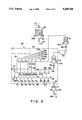
- FIG. 1 is a diagrammatic view showing the operating procedure of the process according to the invention.
- Prepared petroleum coke from the feed 10, and baked and green scrap from the feeds 11 and 12 are successively individually drawn in any sequence from the feed arrangements and divided into at least two fractions of smaller grain size ranges than the initial grain size ranges of the petroleum coke and the scrap.
- anodes for the aluminum electrolysis preferably petroleum coke, baked and green scrap (hereinafter also referred to as dry aggregate) are divided into three fractions, more specifically into a coarse fraction 15 with grains of a size of from 16 to 6 mm, a middle fraction 16 with grain sizes of from 6 to 2 mm and a fine fraction 17 with grains of a size of from 2 to 0 mm, that is to say, grain sizes which already substantially correspond to thatof the final granulometry of the anodes.
- the dry substances are conveyed into a continuous-flow silo 13 and passed by way of sieving or screening machines 14 which dividethe dry substances into the three fractions by way of coarse, medium and fine sieves of sifters as indicated at 18, 19 and 20 respectively.
- the oversize grain, which overflows the sieves 18, 19 and 20, of the coarse fraction 15, middle fraction 16 and fine fraction 17 is passed to crushingequipment, the oversize grain of the coarse fraction 15 is passed to crushes 21, and that of the middle and fine fractions 17 and 18 are passedto roll crushing mills 22 and 23 which crush the respective oversize grain to provide a crushed material with grains of a size which is capable of being sieved off.
- the crushed materials are fed to the continuous flow silo and there added to the dry material mass flow which is respectively going to the fractional division step.
- the sieved-off coarse fraction 15, middle fraction 16 and fine fraction 17, before passing into the mixing apparatus 24, are monitored in regard to their chemical composition and quantitive yield; for that purpose, provided at their conveyor apparatuses between the sieving machine 14 and the mixing apparatus 24 are sampling devices 25 forthe chemical composition and quantitative measuring apparatuses 26 for the quantitative yield.
- the dry substances are mixed in a mixing apparatus 24, the mixing operation for the dry aggregate, the coarse fractions 15, middle fractions 16 and fine fractions 17 preferably being effected by means of a blending bed mixing operation.
- a blending bed mixing operation preferred is a Chevron or Windrow type blending bed which bring various mixing materials together to provide a mixed material of homogenous composition, by virtue of given feed configurations, charging phase and removal from the feed arrangements.
- the process according to the invention independent of the sequence in which the dry substances are supplied and insensitive in relation to the effects of fluctuations in the qualities of the dry aggregate so that there is no need for additional items of equipment for receiving and mixing dry substances of different qualitities, in order to set an averagequality in respect of the dry aggregates.
- themixed material 27, of a grain size of from 16 to 0 mm, according to the needs of a grading equipment 28, is introduced in a batch-wise manner intoa mass flow silo 29 and from there passed to the grading equipment 28.
- the mixed material 27 is divided up, to produce a mixture comprising at least two defined grain fractions.
- the material is to be divided up into seven fractions, a first fraction 30 with a grain size of 16-8 mm, a second fraction 31 with a grain size of 8-4 mm, a third fraction 32 with a grain size of 4-2 mm, a fourth fraction33 with a grain size of 2-1 mm, a fifth fraction 34 with a grain size of 1-0.5 mm, a sixth fraction 35 with a grain size of 0.5- 0.25 mm and a dustfraction 36, those fractions being accommodated in metering or dispensing silos 30a to 36c.
- the respective fractions are discharged onto a feeder 44 by way of conveyor devices 37 to 42, for example screws or conduits, and dust is discharged by way of rotary valves43 from the silos 36a to 36c onto the feeder 44, those materials are then passed to a filling level weighing apparatus 47 with filling level indicators 60, and from there passed to a mixer 45 by way of a conveyor 46a and a preheating apparatus 46 for the dry aggregate.
- the silos 30a to 35a each co-operate with load cells 48 or similar bin level indicators which indicate when a metering silo is full and how much was discharged byway of the conveyor apparatuses 37 to 42 from the metering silos corresponding to their speeds of rotation or frequencies, per unit of time.
- the discharge capacities for a discharge from an individual silo are set for adjustment of a composition formed from all silo contents, that is to say a grain mixof a defined grain distribution, to which dust is then added.
- pitch 61 is added to that mixture when it passes into the mixing apparatus.
- the through-put through the grading apparatus 28, from the mass flow silo to the mixer 45, is also regulated by the filling level weighing apparatus47 in that, when the filling level falls below a certain level, the discharge capacities of the feeders 37 to 42 and the rotary valve positions 43 are increased, by way of a proportional regulation effect, bymeans of an increased yield (by increases in the speed of rotation or an increase in frequency, or enlarged control valve openings), until the proper filling level is regained, so that the mixer 45 is continuously supplied with the same amount. If the filling level rises above a predetermined value, the proportional regulating system regulates the quantitative yield in the opposite direction.
- the invention provides that measurement of the dry aggregate proportions which are intended for mixing is effected volumetrically by adjustment of the conveyor outputs of the continuously conveying feeders 37 to 42 and rotary valves 43.
- Granulometry lines can bekept within close limits by virtue of the operation according to the invention of fractioning the mixed material 27 in the grading apparatus 28, in conjunction with volumetric measurement.
- Division of the material 27 in the grading apparatus 28 is effected starting from the mass flow silo 29 with a discharge apparatus 50 by way of a sieving machine 49 whose sieves 49a (grain size 16-8 mm), 49b (grain size 8-4 mm), 49c (grain size 4-2 mm), 49d (grain size 2-1 mm), 49e (grainsize 1-0.5 mm) and 49f (grain size 0.5 to 0.25 mm) divide the material 27 into the fractions 30 to 35 and pass them to the metering silos 30a to 35aof a capacity of from 0.5 to 15 metric tons, preferably from 2 to 4 metric tons.
- the undersize grain of the fraction 35 (grains smaller than 0.25 mm) are passed to a mill storage bin 51, to a mill 52 for processing the undersize grain to produce dust 36, from there in a homogenisation bin 53 and from there to the metering silos 36a to 36c, of approximately the same capacity as the silos 30a to 35a, for mill dust. Ifthere is an increased dust requirement, then mixed material of the fraction33 and/or 34, which is sieved off by change-over switching devices 55 and 56 disposed between the meterin silos 33a and 34a and the sieves 49d and 49e can be passed together with the fraction 35 to the mill 52.
- the metering silos 30a and 35a are continuously fed in an overflow condition (degree of filling of 100%) with their grain size fractions 30 to 35, while the overflow 57 which is not required for filling the metering silosis discharged from the grading apparatus 28 and passed to the mixing apparatus 24 by way of the continuous flow silo 13.
- the overflow 57 there is therefore a continuous circuit which promotes mixing and homogenization of the fractions in the blending bed.
- the discharge apparatus 50 ist set to a higher level of discharge capacity until corresponding metering silos are again 100% filled and are kept in an overflow condition, while the overflow 57 which is not required, from the grading apparatus 28, is fed to the mixing apparatus 24 as described above.
- the mass flow silo 29 has load cells 29a, the mill storage bin 51 is provided with load cells 51a, the homogenisation bin 53 co-operates with load cells 53a and the preferably three-part metering silo 36a to c is provided with load cells 48.
- the load cells 51a, 53a and 48 show upper filling levels and lower filling levels in the corresponding bins and silos. In normal operation the mill storage bin operates with for example maximum and minimum filling levels of 80% and 40% respectively.
- the homogenization bin 53 Arranged downstream of the mill 52 is the homogenization bin 53 which continuously feeds into the metering silo 36 by way of a discharge control valve 59.
- the filling levels of the homogenisation bin 53 for example an upper level of 90% and a lower levelof 60%, determine the feed flow and operation of the mill 52 by way of adjustment of the quantitative flow of crushing material through the discharge control valve 58 to the mill 52, for grinding and transfer of ground material into the homogenisation bin 53.
- the crushed material yield from the mill storage bin 51 is reduced for example by 10% by way of the discharge control valve or lock device 58. If, with such a reduction, the filling level rises further to the upper value, the mill 52 is stopped until the lower filling level of 60% is regained. When the mill 52 starts, the feed to the mill is increased by 10% until an intermediate value, for example 80% of the filling level, is reached.
- the metering silo for mill dust 36 preferably includes three bins 36a, b and c, wherein the bins b and c are constantly kept 100% filled.
- the filling levels of the bin 36a are controlled by way of the discharge control valve 59 between the metering silo and the homogenization bin 53.
- the bin 36a operates with a filling level of at least 60% and at most 80%. If the filling level rises from 60% towards 80%, the feed by way of the discharge control valve 59 is reduced, it is interrupted in the event of a rise above 80% until 60% is regained, and itis then restored.
- the dust side is however continuously operated in a discrete-need mode, in that an actualquantitative dust need is produced and kept ready for further mixing without excess amounts of dust having to be passed to the blending bed.
- the mill storage bin 51 which draws certain fractions on the grain side as required
- the homogenisation bin 53 co-operating by way of the mill 52 with the mill storage bin 51 on the one hand and the metering silo for mill dust on the other hand, which bins, by way of mutually matched filling level indications, with corresponding settings of the discharge control valves or lock devices 58,59, ensuring a constant supply of dust and detecting and compensating for fluctuations in the dust requirement in the bin system, so that for the purposes of setting an anode material composition, besides the six grain fractions which are provided in accordance with the invention, the seventhfraction, the dust fraction, is also processed in such a way that it is continuously available in a requirement-discrete fashion.
Landscapes
- Chemical & Material Sciences (AREA)
- Engineering & Computer Science (AREA)
- Materials Engineering (AREA)
- Organic Chemistry (AREA)
- Ceramic Engineering (AREA)
- Chemical Kinetics & Catalysis (AREA)
- Electrochemistry (AREA)
- Metallurgy (AREA)
- Structural Engineering (AREA)
- Manufacturing & Machinery (AREA)
- Electrolytic Production Of Metals (AREA)
- Processing Of Solid Wastes (AREA)
- Manufacture And Refinement Of Metals (AREA)
- Carbon And Carbon Compounds (AREA)
Applications Claiming Priority (2)
| Application Number | Priority Date | Filing Date | Title |
|---|---|---|---|
| CH1961/91A CH683155A5 (de) | 1991-07-03 | 1991-07-03 | Verfahren zur Aufbereitung eines Trockenstoffes zur Herstellung von Elektroden. |
| CH01961/91 | 1991-07-03 |
Publications (1)
| Publication Number | Publication Date |
|---|---|
| US5299745A true US5299745A (en) | 1994-04-05 |
Family
ID=4222653
Family Applications (1)
| Application Number | Title | Priority Date | Filing Date |
|---|---|---|---|
| US07/905,790 Expired - Fee Related US5299745A (en) | 1991-07-03 | 1992-06-29 | Process for the preparation of a dry aggregate for the production of electrodes |
Country Status (13)
| Country | Link |
|---|---|
| US (1) | US5299745A (enExample) |
| AU (1) | AU660987B2 (enExample) |
| BR (1) | BR9202588A (enExample) |
| CA (1) | CA2071784A1 (enExample) |
| CH (1) | CH683155A5 (enExample) |
| FR (1) | FR2678646A1 (enExample) |
| GB (1) | GB2257983B (enExample) |
| NL (1) | NL9201183A (enExample) |
| NO (1) | NO922606L (enExample) |
| NZ (1) | NZ243161A (enExample) |
| RU (1) | RU2085622C1 (enExample) |
| SG (1) | SG43038A1 (enExample) |
| ZA (1) | ZA924915B (enExample) |
Cited By (8)
| Publication number | Priority date | Publication date | Assignee | Title |
|---|---|---|---|---|
| FR2801303A1 (fr) * | 1999-11-24 | 2001-05-25 | Pechiney Aluminium | Procede de fabrication de blocs carbones a haute resistance aux chocs thermiques |
| DE10056158A1 (de) * | 2000-11-13 | 2002-05-29 | Krupp Polysius Ag | Verfahren und Anlage zur Herstellung von Feingut |
| US20050135991A1 (en) * | 2003-12-19 | 2005-06-23 | Engle Michael J. | Carbonaceous reductant for use in the fluidized bed chlorination of titanium-containing solids |
| RU2312938C1 (ru) * | 2006-02-14 | 2007-12-20 | Общество с ограниченной ответственностью "Русская инжиниринговая компания" | Способ производства анодной массы |
| CN102861628A (zh) * | 2012-07-26 | 2013-01-09 | 济南海川投资集团有限公司 | 预焙阳极物料无配比系统 |
| CN109850869A (zh) * | 2019-03-14 | 2019-06-07 | 中国铝业股份有限公司 | 一种预焙阳极用干料的制备方法 |
| CN111013784A (zh) * | 2019-12-18 | 2020-04-17 | 福建省绿能环保科技有限公司 | 一种沥青混凝土精品级配骨料的生产工艺 |
| US20210277526A1 (en) * | 2018-07-19 | 2021-09-09 | Basf Se | Blend composition comprising petroleum coke and pyrolytic carbon for electrodes |
Families Citing this family (1)
| Publication number | Priority date | Publication date | Assignee | Title |
|---|---|---|---|---|
| RU2337895C2 (ru) * | 2006-09-04 | 2008-11-10 | Закрытое акционерное общество "Институт новых углеродных материалов и технологий" (ЗАО "ИНУМиТ") | Способ изготовления связующего для производства электродных материалов |
Citations (4)
| Publication number | Priority date | Publication date | Assignee | Title |
|---|---|---|---|---|
| US4231790A (en) * | 1975-04-18 | 1980-11-04 | Hermann C. Starck Berlin | Process for the preparation of tantalum and niobium powders of improved efficiency |
| US4897170A (en) * | 1986-04-07 | 1990-01-30 | Borden, Inc. | Manufacture of a Soderberg electrode incorporating a high carbon-contributing phenolic sacrificial binder |
| US4968481A (en) * | 1989-09-28 | 1990-11-06 | V Tech Corporation | Tantalum powder with improved capacitor anode processing characteristics |
| US5110056A (en) * | 1990-02-20 | 1992-05-05 | Krupp Polysius Ag | Method and apparatus for reducing brittle material for subsequent grinding |
Family Cites Families (9)
| Publication number | Priority date | Publication date | Assignee | Title |
|---|---|---|---|---|
| JPS4941006B1 (enExample) * | 1970-03-16 | 1974-11-06 | ||
| US4072599A (en) * | 1975-08-28 | 1978-02-07 | Reynolds Metals Company | Carbon electrodes having stabilized binders derived from the entire organic fraction of bituminous coal |
| CH637308A5 (de) * | 1979-04-05 | 1983-07-29 | Alusuisse | Verfahren zur aufbereitung eines bei der herstellung von elektroden verwendeten mischguts. |
| GB2116587A (en) * | 1982-03-16 | 1983-09-28 | Alcan Int Ltd | Production of carbon electrodes for electrolytic reduction cells |
| CA1214456A (en) * | 1982-05-14 | 1986-11-25 | Glen W. Fisher | Material blending system |
| DE3540169A1 (de) * | 1985-11-13 | 1987-05-21 | Kloeckner Humboldt Deutz Ag | Verfahren und anlage zur aufbereitung koerniger rohmassen zur herstellung von gruenen kohlenstofformkoerpern |
| FR2624886B2 (fr) * | 1986-11-14 | 1992-01-03 | Savoie Electrodes Refract | Perfectionnement aux revetements de protection des rondins d'anodes precuites et de la partie emergeante de ces anodes |
| US4757948A (en) * | 1987-02-05 | 1988-07-19 | Cpc International Inc. | Process for producing a high total dietary corn fiber |
| AU8374791A (en) * | 1990-09-07 | 1992-03-12 | Bernard Anthony Peri | Treatment of particulate material |
-
1991
- 1991-07-03 CH CH1961/91A patent/CH683155A5/de not_active IP Right Cessation
-
1992
- 1992-06-16 NZ NZ243161A patent/NZ243161A/en unknown
- 1992-06-22 CA CA002071784A patent/CA2071784A1/en not_active Abandoned
- 1992-06-22 AU AU18409/92A patent/AU660987B2/en not_active Ceased
- 1992-06-25 SG SG1996002786A patent/SG43038A1/en unknown
- 1992-06-25 GB GB9213560A patent/GB2257983B/en not_active Expired - Fee Related
- 1992-06-29 US US07/905,790 patent/US5299745A/en not_active Expired - Fee Related
- 1992-07-01 NO NO92922606A patent/NO922606L/no not_active Application Discontinuation
- 1992-07-02 NL NL9201183A patent/NL9201183A/nl active Search and Examination
- 1992-07-02 RU SU925052212A patent/RU2085622C1/ru active
- 1992-07-02 FR FR9208158A patent/FR2678646A1/fr active Granted
- 1992-07-02 ZA ZA924915A patent/ZA924915B/xx unknown
- 1992-07-02 BR BR929202588A patent/BR9202588A/pt not_active IP Right Cessation
Patent Citations (4)
| Publication number | Priority date | Publication date | Assignee | Title |
|---|---|---|---|---|
| US4231790A (en) * | 1975-04-18 | 1980-11-04 | Hermann C. Starck Berlin | Process for the preparation of tantalum and niobium powders of improved efficiency |
| US4897170A (en) * | 1986-04-07 | 1990-01-30 | Borden, Inc. | Manufacture of a Soderberg electrode incorporating a high carbon-contributing phenolic sacrificial binder |
| US4968481A (en) * | 1989-09-28 | 1990-11-06 | V Tech Corporation | Tantalum powder with improved capacitor anode processing characteristics |
| US5110056A (en) * | 1990-02-20 | 1992-05-05 | Krupp Polysius Ag | Method and apparatus for reducing brittle material for subsequent grinding |
Cited By (16)
| Publication number | Priority date | Publication date | Assignee | Title |
|---|---|---|---|---|
| WO2001038253A1 (fr) * | 1999-11-24 | 2001-05-31 | Aluminium Pechiney | Procede de fabrication de blocs carbones a haute resistance aux chocs thermiques |
| US6838024B1 (en) | 1999-11-24 | 2005-01-04 | Aluminium Pechiney | Method for making carbon blocks highly resistant to thermal shock |
| FR2801303A1 (fr) * | 1999-11-24 | 2001-05-25 | Pechiney Aluminium | Procede de fabrication de blocs carbones a haute resistance aux chocs thermiques |
| DE10056158C5 (de) * | 2000-11-13 | 2014-11-13 | Thyssenkrupp Industrial Solutions Ag | Verfahren und Anlage zur Herstellung von Feingut |
| DE10056158A1 (de) * | 2000-11-13 | 2002-05-29 | Krupp Polysius Ag | Verfahren und Anlage zur Herstellung von Feingut |
| DE10056158B4 (de) * | 2000-11-13 | 2008-11-27 | Polysius Ag | Verfahren und Anlage zur Herstellung von Feingut |
| US20050135991A1 (en) * | 2003-12-19 | 2005-06-23 | Engle Michael J. | Carbonaceous reductant for use in the fluidized bed chlorination of titanium-containing solids |
| WO2005068687A3 (en) * | 2003-12-19 | 2007-11-29 | Union Oil Co | A carbonaceous reductant and a process for using the carbonaceous reductant |
| RU2312938C1 (ru) * | 2006-02-14 | 2007-12-20 | Общество с ограниченной ответственностью "Русская инжиниринговая компания" | Способ производства анодной массы |
| CN102861628A (zh) * | 2012-07-26 | 2013-01-09 | 济南海川投资集团有限公司 | 预焙阳极物料无配比系统 |
| CN102861628B (zh) * | 2012-07-26 | 2014-06-18 | 济南海川投资集团有限公司 | 预焙阳极物料无配比系统 |
| US20210277526A1 (en) * | 2018-07-19 | 2021-09-09 | Basf Se | Blend composition comprising petroleum coke and pyrolytic carbon for electrodes |
| US12486587B2 (en) * | 2018-07-19 | 2025-12-02 | Basf Se | Blend composition comprising petroleum coke and pyrolytic carbon for electrodes |
| CN109850869A (zh) * | 2019-03-14 | 2019-06-07 | 中国铝业股份有限公司 | 一种预焙阳极用干料的制备方法 |
| CN111013784A (zh) * | 2019-12-18 | 2020-04-17 | 福建省绿能环保科技有限公司 | 一种沥青混凝土精品级配骨料的生产工艺 |
| CN111013784B (zh) * | 2019-12-18 | 2021-02-19 | 福建省绿能环保科技有限公司 | 一种沥青混凝土精品级配骨料的生产工艺 |
Also Published As
| Publication number | Publication date |
|---|---|
| NZ243161A (en) | 1994-12-22 |
| AU1840992A (en) | 1993-01-07 |
| FR2678646A1 (fr) | 1993-01-08 |
| FR2678646B1 (enExample) | 1995-01-20 |
| GB2257983A (en) | 1993-01-27 |
| SG43038A1 (en) | 1997-10-17 |
| ZA924915B (en) | 1993-03-31 |
| NO922606L (no) | 1993-01-04 |
| GB2257983B (en) | 1995-03-29 |
| CH683155A5 (de) | 1994-01-31 |
| GB9213560D0 (en) | 1992-08-12 |
| RU2085622C1 (ru) | 1997-07-27 |
| NL9201183A (nl) | 1993-02-01 |
| NO922606D0 (no) | 1992-07-01 |
| AU660987B2 (en) | 1995-07-13 |
| BR9202588A (pt) | 1993-03-16 |
| CA2071784A1 (en) | 1993-01-04 |
Similar Documents
| Publication | Publication Date | Title |
|---|---|---|
| US5299745A (en) | Process for the preparation of a dry aggregate for the production of electrodes | |
| EP0466858A1 (de) | Anlage zum kontinuierlichen mischen und homogenisieren. | |
| US5754423A (en) | Method and apparatus for preparing a mixture of materials | |
| NL193360C (nl) | Werkwijze voor het vervaardigen van elektroden. | |
| CN101269529A (zh) | 弹性体细碎组合装置及其配置方法 | |
| KR20140085873A (ko) | 소결용 분코크스의 균일 입도 파쇄 장치 및 그 제어방법 | |
| EP2089167A1 (de) | Sichter zum sichten körnigen gutes | |
| AU2010232000B2 (en) | A method and a mixing station for mixing of bulk solid materials with broad particle size distribution | |
| DE4122062C2 (de) | Verfahren zur Aufbereitung eines Trockenstoffes zur Herstellung von Elektroden | |
| JPH10296117A (ja) | 製砂方法並びに製砂装置 | |
| US4560285A (en) | Material blending system | |
| CN216321714U (zh) | 一种uv油墨自动配料装置 | |
| CN105601137B (zh) | 利用至少两种粉体生产胶凝材料的设备及方法 | |
| IES65617B2 (en) | An animal feed production system | |
| EP0094803A2 (en) | Material blending system | |
| GB2115303A (en) | A method of and apparatus for mixing separately stored materials | |
| CN205710453U (zh) | 利用至少两种粉体生产胶凝材料的设备 | |
| CN119002428B (zh) | 一种电石工艺中电石炉生产控制方法 | |
| CN220587472U (zh) | 鸡精在线加香装置 | |
| SU1125032A1 (ru) | Устройство непрерывного действи дл смешени сыпучих материалов | |
| DE19949868B4 (de) | Verfahren zur Herstellung von Kohlekörpern | |
| DE1813134C3 (de) | Zementmahlanlage mit Sichteinrichtung | |
| JP2022108791A (ja) | 製造プラント、及び製造方法 | |
| CN101353163B (zh) | 预焙阳极生产中回收粉的加入方法 | |
| IE77521B1 (en) | An animal feed production system |
Legal Events
| Date | Code | Title | Description |
|---|---|---|---|
| AS | Assignment |
Owner name: R & D CARBON LTD., FRANCE Free format text: ASSIGNMENT OF ASSIGNORS INTEREST.;ASSIGNOR:FISCHER, WERNER;REEL/FRAME:006178/0230 Effective date: 19920601 |
|
| FPAY | Fee payment |
Year of fee payment: 4 |
|
| FEPP | Fee payment procedure |
Free format text: PAT HLDR NO LONGER CLAIMS SMALL ENT STAT AS SMALL BUSINESS (ORIGINAL EVENT CODE: LSM2); ENTITY STATUS OF PATENT OWNER: LARGE ENTITY |
|
| FPAY | Fee payment |
Year of fee payment: 8 |
|
| REMI | Maintenance fee reminder mailed | ||
| LAPS | Lapse for failure to pay maintenance fees | ||
| LAPS | Lapse for failure to pay maintenance fees |
Free format text: PATENT EXPIRED FOR FAILURE TO PAY MAINTENANCE FEES (ORIGINAL EVENT CODE: EXP.); ENTITY STATUS OF PATENT OWNER: LARGE ENTITY |
|
| STCH | Information on status: patent discontinuation |
Free format text: PATENT EXPIRED DUE TO NONPAYMENT OF MAINTENANCE FEES UNDER 37 CFR 1.362 |
|
| FP | Lapsed due to failure to pay maintenance fee |
Effective date: 20060405 |