US5143906A - Kedarcidin antitumor chromophore and pharmaceutical composition containing same - Google Patents
Kedarcidin antitumor chromophore and pharmaceutical composition containing same Download PDFInfo
- Publication number
- US5143906A US5143906A US07/763,465 US76346591A US5143906A US 5143906 A US5143906 A US 5143906A US 76346591 A US76346591 A US 76346591A US 5143906 A US5143906 A US 5143906A
- Authority
- US
- United States
- Prior art keywords
- kedarcidin
- chromophore
- exhibits
- methanol
- antitumor
- Prior art date
- Legal status (The legal status is an assumption and is not a legal conclusion. Google has not performed a legal analysis and makes no representation as to the accuracy of the status listed.)
- Expired - Fee Related
Links
Images


Classifications
-
- A—HUMAN NECESSITIES
- A61—MEDICAL OR VETERINARY SCIENCE; HYGIENE
- A61K—PREPARATIONS FOR MEDICAL, DENTAL OR TOILETRY PURPOSES
- A61K31/00—Medicinal preparations containing organic active ingredients
- A61K31/70—Carbohydrates; Sugars; Derivatives thereof
-
- C—CHEMISTRY; METALLURGY
- C07—ORGANIC CHEMISTRY
- C07H—SUGARS; DERIVATIVES THEREOF; NUCLEOSIDES; NUCLEOTIDES; NUCLEIC ACIDS
- C07H17/00—Compounds containing heterocyclic radicals directly attached to hetero atoms of saccharide radicals
-
- A—HUMAN NECESSITIES
- A61—MEDICAL OR VETERINARY SCIENCE; HYGIENE
- A61P—SPECIFIC THERAPEUTIC ACTIVITY OF CHEMICAL COMPOUNDS OR MEDICINAL PREPARATIONS
- A61P35/00—Antineoplastic agents
Definitions
- the protein antitumor antibiotic designated kedarcidin is disclosed in U.S. Pat. No. 5,001,112. This antibiotic is reported to be a complex of a single chain polypeptide and a non-protein chromophore.
- the kedarcidin antibiotic is produced by fermentation of Streptoalloteichus sp. nov. strain L585-6 (ATCC-53650) and the isolation and purification of kedarcidin are described in Example 4 of the aforementioned U. S. patent.
- the patent reference does not disclose or suggest any procedure for separating the chromophore from the isolated kedarcidin antibiotic nor does it suggest that the antitumor activity of kedarcidin resides in the non-protein chromophore.
- the antitumor antibiotic designated neocarzinostatin consists of a 1:1 complex of a protein and a non-protein chromophore.
- the literature discloses that the chromophore moiety of neocarzinostatin can be separated from the neocarzinostatin complex by extraction with acidic methanol and that the antitumor properties of neocarzinostatin reside mainly in the chromophore.
- the structure of the chromophore has been determined (see, for example, J. Antibiotics, 1989, 42, 761-768. In the case of kedarcidin, however, the methanol extraction procedure was not satisfactory to obtain the purified chromophore.
- aureomycin Another protein antitumor antibiotic designated aureomycin also contains a protein component and a non-protein chromophore.
- the chromophore of this antibiotic was also separated from the antibiotic by methanol extraction (see Biochem. Biophys. Res. Commun., 1980, 94, 255-261, and the antitumor activity was again found primarily in the chromophore.
- Applicant is aware of other protein antitumor antibiotics containing a non-protein chromophore where the chromophore was not able to be successfully separated from the antibiotic either with the methanol extraction procedure described above or with other conventional purification procedures.
- the chromophores of such protein antibiotics even if they can be separated and isolated, are much more unstable than the antibiotic complex per se.
- the present invention relates to a novel antitumor chromophore obtained from kedarcidin antibiotic.
- the present invention also provides a process for the production of kedarcidin chromophore which comprises the steps of (a) providing an aqueous solution of kedarcidin; (b) subjecting said aqueous solution to organic extraction with ethyl acetate; (c) collecting the ethyl acetate extract; (d) subjecting said ethyl acetate extract to silica gel column chromatography using a benzene-methanol step gradient eluant; and (e) collecting the fraction containing the kedarcidin chromophore.
- Another aspect of the present invention is a method for inhibiting tumor growth in a mammalian host which comprises administering to said host a tumor-inhibiting amount of kedarcidin chromophore or a pharmaceutical composition thereof.
- the present invention also provides a pharmaceutical composition
- a pharmaceutical composition comprising a tumor-inhibiting amount of kedarcidin and a pharmaceutically acceptable carrier of diluent.
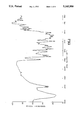
- FIG. 1 shows the infrared absorption spectrum of kedarcidin chromophore (KBr pellet).
- FIG. 2 shows the ultraviolet absorption spectrum of kedarcidin chromophore when dissolved in methanol.
- FIG. 3 shows the proton magnetic resonance spectrum of kedarcidin chromophore in DMSO-d6 (500.13 MHz).
- FIG. 4 shows the 13 C magnetic resonance spectrum of kedarcidin chromophore in DMSO-d6 (125.76 MHz).
- the kedarcidin chromophore may be obtained from the antitumor antibiotic kedarcidin isolated in U.S. Pat. No. 5,001,112 or from the fermentation broth used to produce kedarcidin.
- One preferred starting material is purified kedarcidin isolated and purified as described in Example 4 of the above-mentioned U.S. patent.
- Another preferred starting material is obtained by filtering the fermentation broth cultured with a kedarcidin-producing strain of Streotoalloteichus, subjecting the filtrate to anionic-exchange chromatography using as eluant a cationic buffer in the pH range of 7-8 followed by the same buffer containing sodium chloride, and collecting the fraction eluted with the NaCl buffer.
- the eluate resulting from this chromatographic procedure has many of the impurities removed and results in higher yields of the desired kedarcidin chromophore. I have found it convenient to lyophilize this eluate for storage prior to the extraction step described below, but the aqueous eluate can be used directly as well.
- the filtered fermentation broth can also be used in the process of the present invention without the anion exchange purification step, but this requires additional purification steps to obtain the chromophore and is much less efficient than starting with purified kedarcidin or with the partially purified fermentation broth which has been subjected to an anion exchange step.
- An aqueous solution of purified or partially purified kedarcidin as described above is then subjected to organic extraction with ethyl acetate.
- organic solvents such as the acidic methanol used to obtain the chromophore of neocarzinostatin, n-butanol, benzene-methanol and chloroform-methanol resulted in decomposition or formation of emulsions.
- the ethyl acetate extract is then subjected to silica gel liquid chromatography using as the eluant a step gradient of benzene containing increasing concentrations of methanol.
- the fractions are monitored by thin layer chromatography (TLC) and the desired fraction containing the purified kedarcidin chromophore may then be concentrated in vacuo to obtain the product as a buff-colored amorphous solid.
- TLC thin layer chromatography
- Stability Very unstable. Decomposes within hours when in solution with benzene, methanol, chloroform and dimethyl sulfoxide (DMSO).
- Infrared Spectrum Perkin Elmer 1800 Fourier Transform IR Spectrometer; KBr Pellet. Major IR Bands (cm -1 ): 3432, 3076, 2976, 2832, 2188, 1742, 1656, 1622, 1524, 1470, 1450, 1434, 1386, 1354, 1298, 1240, 1192, 1164, 1114, 1080, 1060, 1032, 1010, 980, 936, 902, 862, 824, 798, 680.
- the antitumor activity of kedarcidin chromophore was evaluated in an in vitro cytotoxicity assay against several human tumor cell lines and in vivo against transplantable murine P388 leukemia and B-16 melanoma. A description of the methods employed and results obtained is provided below.
- the cell lines used to evaluate in vitro cytotoxic potency include the human colon adenocarcinoma HCT116 drug sensitive line, HCT 116/VP35 and HCT116/VM46 daughter drug resistant cell lines that have low Topoisomerase II and elevated P-170 glycoprotein levels 1 ; respectively, and the human ovarian carcinoma A2780 drug sensitive and the A2780/DDP daughter drug resistant cell line.
- the A2780/DDP cell line is reported to be resistant through enhanced DNA repair mechanisms and elevated GSH/GST levels.
- Cells were cultured in McCoy's media and 10% fetal bovine serum. When in log phase growth, 4 ⁇ 10 3 cells/well were plated into 96 well microtiter plates and incubated at 37° C.
- the P388 tumor was maintained in ascitic form in DBA/2 mice.
- Experimental tumor models used CDF 1 mice implanted via the intraperitoneal or intravenous route with 1 ⁇ 10 6 leukemia cells on day 0 and dosed with drugs according to the indicated route and schedule. Mice were weighed on day 0 and on day 5 or 6. Weight loss of 20% or greater was an indicator of drug toxicity.
- Each dose group consisted of 6 mice with 10 mice in the untreated control group.
- the dosing schedule was Q1DX1;1. Death checks were performed daily and the median life span of each group determined. An increase in lifespan of 25% or greater of the drug treated group compared to untreated control mice was the criteria for activity (%T/C>125%). Experiments were terminated on or about day 30.
- the B-16 murine melanoma was maintained as a subcutaneous growing tumor in C57BL/6 mice.
- Experimental tumor models used BDF 1 mice implanted with a 25 mg tumor fragment implanted subcutaneously via trochar on day 0.
- Kedarcidin chromophore was administered iv on a Q1DX1;1 schedule. Mice were weighed on day 0 and on day 9.
- kedarcidin chromophore was extremely potent (compared to VP-16 (etoposide)) in its ability to inhibit cell growth (IC50 values expressed as nanograms of compound/ml, final concentration). Kedarcidin chromophore was 285 and 1725 fold more potent than VP-16 on the two VP-16 sensitive cell lines. In addition, kedarcidin chromophore was not cross-resistant with VP-16 on the HCT116/VP35 or HCT116/VM46 cell lines. When evaluated on the A2780 sensitive and A2780/DDP cell lines, both VP-16 and kedarcidin chromophore were about 6.6 fold less potent on the resistant cell line compared to the sensitive cell line.
- kedarcidin chromophore When evaluated against the ip implanted P388 murine leukemia, kedarcidin chromophore produced a T/C% of 175 at an optimal dose of 1 mg/kg/inj when administered ip one day after tumor implant.
- iv implanted P388 tumor cells were also sensitive to the antitumor effects of kedarcidin chromophore.
- kedarcidin chromophore When administered iv one day after tumor implant, kedarcidin chromophore produced a T/C% of 214 at an optimal dose of 0.25 mg/kg/inj. Two different lots of kedarcidin were equally efficacious although somewhat less potent when compared to kedarcidin chromophore in this experiment.
- kedarcidin chromophore against the P388 murine leukemia was confirmed in Experiment 8328.
- kedarcidin chromophore administered ip, Q1DX1;1 produced a T/C% of 185 at an optimal dose of 0.25 mg/kg/inj.
- kedarcidin chromophore produced a T/C% of 186 at an optimal dose of 0.125 mg/kg/inj when administered iv on the same schedule.
- Two different lots of kedarcidin were equally efficacious, if somewhat less potent compared to kedarcidin chromophore in this experiment.
- kedarcidin chromophore was both potent and efficacious, regardless of whether the ip, ip model or the iv, iv model was used to evaluate the antitumor activity of this compound.
- Kedarcidin chromophore was as efficacious as, and slightly more potent than, kedarcidin in the P388 model.
- kedarcidin chromophore was evaluated using the B-16 murine melanoma model.
- kedarcidin chromophore was active by the lifespan criterion with a T/C% of 164 when administered iv one day after tumor implant at an optimum dose of 0.062 mg/kg/inj.
- kedarcidin produced an identical T/C% at an optimum dose of 0.75 mg/kg/inj using the same route and schedule.
- Neither kedarcidin chromophore or kedarcidin were active by the tumor growth delay criterion.
- Kedarcidin chromophore showed significant antitumor activity in the ip or iv implanted P388 murine leukemia model and in the sc implanted B-16 murine melanoma model by lifespan criterion. It was as active as, and slightly more potent than, kedarcidin when compared directly in these experiments.
- test results indicate that kedarcidin chromophore displays potent antitumor in vitro activity against several human tumor cell lines and in vivo antitumor activity against murine leukemia P388 and B16 melanoma.
- compositions containing an effective tumor-inhibiting amount of kedarcidin chromophore in combination with a pharmaceutically acceptable carrier of diluent.
- Such compositions may also contain other active antitumor agents and may be made up in any pharmaceutical form appropriate for the desired route of administration.
- examples of such compositions include solid compositions for oral administration such as tablets, capsules, pills, powders and granules, liquid compositions for oral administration such as solutions, suspensions, syrups or elixers and preparations for parenteral administration such as sterile solutions, suspensions or emulsions. They may also be manufactured in the form of sterile solid compositions which can be dissolved in sterile water, physiological saline or some other sterile injectable medium immediately before use.
- optimal dosages and regimens for a given mammalian host can be readily ascertained by those skilled in the art. It will, of course, be appreciated that the actual dose used will vary according to the particular composition formulated, the route of administration and the particular situs, host and disease being treated. Many factors that modify the action of the drug will be taken into account including age, weight, sex, diet, time of administration, route of administration, rate of excretion, condition of the patient, drug combinations, reaction sensitivities and severity of the disease.
- Chloroform, benzene, ethyl acetate, and methanol were anhydrous ACS grade solvents. Tetrahydrofuran was preservative-free HPLC grade solvent. These solvents were not repurified or redistilled.
- Water used in solvent partition experiments refers to in-house deionized water.
- Water used in chromatography experiments refers to inhouse deionized water passed through a Millipore 4 cartridge reagent grade water system (10 mega ohm MilliQ water).
- Ammonium acetate was HPLC grade reagent.
- Silica gel for vacuum liquid chromatography was Merck LiChroprep Si 60, particle size 25-40 ⁇ m. Cerium sulfate hydrate and ammonium molybdate (VI) tetrahydrate are ACS grade reagents.
- Ceric sulfate spray reagent for thin layer chromatography was prepared by dissolving 6 g of cerium sulfate hydrate and 28 g of ammonium molybdate (VI) tetrahydrate in 20% aqueous sulfuric acid (500 ml). The sprayed TLC plate was developed by heating at approximately 150° C. for 5-10 minutes.
- Kedarcidin fermentation broth is obtained following the general procedures of Examples 1-3 U.S. Pat. No. 5,001,112.
- the raw fermentation broth is subjected to filtration and anion exchange chromatography to obtain the eluate described at column 13, line 34 of U.S. Pat. No. 5,001,112.
- This eluate containing partially purified kedarcidin antibiotic is employed, after lyophilization, as the starting material in the following extraction step.
- Partially purified lyophilized kedarcidin (76 g) prepared by lyophilization of the eluate described above was dissolved in 1100 ml water.
- the aqueous solution was extracted four times with an equal volume of ethyl acetate using a 6L separatory funnel.
- the ethyl acetate extracts were pooled and evaporated in vacuo to dryness in a rotary evaporator to yield 0.34 g of residue A.
- a small Kontes fritted filter funnel (2.5 cm i.d. ⁇ 11 cm) was packed three-quarters full with dry silica gel (Merck LiChroprep 25-40 ⁇ m), 12 g.
- the column was equilibrated with 100 ml benzene using inhouse vacuum to elute the solvent.
- Residue A was dissolved in ethyl acetate-methanol 3:1 (5 ml) and preadsorbed onto 3 g silica gel. The sample was slurried in benzene, transferred to the column and the vacuum applied.
Landscapes
- Chemical & Material Sciences (AREA)
- Health & Medical Sciences (AREA)
- Life Sciences & Earth Sciences (AREA)
- Organic Chemistry (AREA)
- General Health & Medical Sciences (AREA)
- Molecular Biology (AREA)
- Medicinal Chemistry (AREA)
- Animal Behavior & Ethology (AREA)
- Biotechnology (AREA)
- Biochemistry (AREA)
- Veterinary Medicine (AREA)
- Genetics & Genomics (AREA)
- Engineering & Computer Science (AREA)
- Public Health (AREA)
- Pharmacology & Pharmacy (AREA)
- General Chemical & Material Sciences (AREA)
- Nuclear Medicine, Radiotherapy & Molecular Imaging (AREA)
- Chemical Kinetics & Catalysis (AREA)
- Epidemiology (AREA)
- Pharmaceuticals Containing Other Organic And Inorganic Compounds (AREA)
- Compounds Of Unknown Constitution (AREA)
- Preparation Of Compounds By Using Micro-Organisms (AREA)
- Medicines Containing Material From Animals Or Micro-Organisms (AREA)
- Medicines Containing Plant Substances (AREA)
- Saccharide Compounds (AREA)
- Medicines That Contain Protein Lipid Enzymes And Other Medicines (AREA)
Priority Applications (17)
| Application Number | Priority Date | Filing Date | Title |
|---|---|---|---|
| US07/763,465 US5143906A (en) | 1991-09-26 | 1991-09-26 | Kedarcidin antitumor chromophore and pharmaceutical composition containing same |
| TW081103762A TW215900B (ref) | 1991-09-26 | 1992-05-13 | |
| AU20800/92A AU647300B2 (en) | 1991-09-26 | 1992-08-05 | Kedarcidin antitumor chromophore |
| CA002075453A CA2075453A1 (en) | 1991-09-26 | 1992-08-06 | Kedarcidin antitumor chromophore |
| SU925052758A RU2067117C1 (ru) | 1991-09-26 | 1992-08-17 | Противоопухолевой антибиотический хромофор кедарцидин и способ его получения |
| MX9204765A MX9204765A (es) | 1991-09-26 | 1992-08-18 | Cromoforo de kedarcina, proceso para su producciony composicion farmaceutica que lo comprende. |
| HU9202712A HU211108B (en) | 1991-09-26 | 1992-08-19 | Process to prepare kedarcidine chromophores with antitumor activity |
| EP19920114277 EP0534137A3 (en) | 1991-09-26 | 1992-08-20 | Kedarcidin antitumor chromophore |
| NO923260A NO178892C (no) | 1991-09-26 | 1992-08-20 | Antibiotikum betegnet kedarcidinkromofor og fremgangsmåte til fremstilling og anvendelse derav, samt et farmasöytisk preparat omfattende kedarcidinkromofor |
| JP4264030A JPH06179623A (ja) | 1991-09-26 | 1992-08-21 | ケダルシジン抗腫瘍発色団 |
| PL92295725A PL168918B1 (pl) | 1991-09-26 | 1992-08-25 | Sposób wytwarzania nowego chromoforu kedarcydyny PL PL |
| IL102942A IL102942A0 (en) | 1991-09-26 | 1992-08-25 | Kedarcidin antitumor chromophore |
| ZA926421A ZA926421B (en) | 1991-09-26 | 1992-08-25 | Kedarcidin antitumor chromophore. |
| KR1019920015415A KR930005632A (ko) | 1991-09-26 | 1992-08-26 | 케다르시딘 항종양 발색단 |
| FI923827A FI923827A7 (fi) | 1991-09-26 | 1992-08-26 | Kedarsidiiniantituumorikromofori |
| CN92110256A CN1032235C (zh) | 1991-09-26 | 1992-08-26 | 卡达西叮发色团的生产方法 |
| NZ244149A NZ244149A (en) | 1991-09-26 | 1992-08-31 | Kedarcidin chromophore and pharmaceutical compositions. |
Applications Claiming Priority (1)
| Application Number | Priority Date | Filing Date | Title |
|---|---|---|---|
| US07/763,465 US5143906A (en) | 1991-09-26 | 1991-09-26 | Kedarcidin antitumor chromophore and pharmaceutical composition containing same |
Publications (1)
| Publication Number | Publication Date |
|---|---|
| US5143906A true US5143906A (en) | 1992-09-01 |
Family
ID=25067899
Family Applications (1)
| Application Number | Title | Priority Date | Filing Date |
|---|---|---|---|
| US07/763,465 Expired - Fee Related US5143906A (en) | 1991-09-26 | 1991-09-26 | Kedarcidin antitumor chromophore and pharmaceutical composition containing same |
Country Status (17)
| Country | Link |
|---|---|
| US (1) | US5143906A (ref) |
| EP (1) | EP0534137A3 (ref) |
| JP (1) | JPH06179623A (ref) |
| KR (1) | KR930005632A (ref) |
| CN (1) | CN1032235C (ref) |
| AU (1) | AU647300B2 (ref) |
| CA (1) | CA2075453A1 (ref) |
| FI (1) | FI923827A7 (ref) |
| HU (1) | HU211108B (ref) |
| IL (1) | IL102942A0 (ref) |
| MX (1) | MX9204765A (ref) |
| NO (1) | NO178892C (ref) |
| NZ (1) | NZ244149A (ref) |
| PL (1) | PL168918B1 (ref) |
| RU (1) | RU2067117C1 (ref) |
| TW (1) | TW215900B (ref) |
| ZA (1) | ZA926421B (ref) |
Citations (2)
| Publication number | Priority date | Publication date | Assignee | Title |
|---|---|---|---|---|
| US3706729A (en) * | 1963-11-21 | 1972-12-19 | Andrew David Batcho | Antibiotics and processes for their preparation |
| US5001112A (en) * | 1988-04-12 | 1991-03-19 | Bristol-Myers Company | Antitumor antibiotic kedarcidin |
-
1991
- 1991-09-26 US US07/763,465 patent/US5143906A/en not_active Expired - Fee Related
-
1992
- 1992-05-13 TW TW081103762A patent/TW215900B/zh active
- 1992-08-05 AU AU20800/92A patent/AU647300B2/en not_active Ceased
- 1992-08-06 CA CA002075453A patent/CA2075453A1/en not_active Abandoned
- 1992-08-17 RU SU925052758A patent/RU2067117C1/ru active
- 1992-08-18 MX MX9204765A patent/MX9204765A/es unknown
- 1992-08-19 HU HU9202712A patent/HU211108B/hu not_active IP Right Cessation
- 1992-08-20 NO NO923260A patent/NO178892C/no unknown
- 1992-08-20 EP EP19920114277 patent/EP0534137A3/en not_active Ceased
- 1992-08-21 JP JP4264030A patent/JPH06179623A/ja active Pending
- 1992-08-25 PL PL92295725A patent/PL168918B1/pl unknown
- 1992-08-25 ZA ZA926421A patent/ZA926421B/xx unknown
- 1992-08-25 IL IL102942A patent/IL102942A0/xx unknown
- 1992-08-26 FI FI923827A patent/FI923827A7/fi not_active Application Discontinuation
- 1992-08-26 CN CN92110256A patent/CN1032235C/zh not_active Expired - Fee Related
- 1992-08-26 KR KR1019920015415A patent/KR930005632A/ko not_active Ceased
- 1992-08-31 NZ NZ244149A patent/NZ244149A/en unknown
Patent Citations (2)
| Publication number | Priority date | Publication date | Assignee | Title |
|---|---|---|---|---|
| US3706729A (en) * | 1963-11-21 | 1972-12-19 | Andrew David Batcho | Antibiotics and processes for their preparation |
| US5001112A (en) * | 1988-04-12 | 1991-03-19 | Bristol-Myers Company | Antitumor antibiotic kedarcidin |
Non-Patent Citations (4)
| Title |
|---|
| H. Suzuki et al., Biochemical and Biophysical Research Communications, 1980, 94, 255 261. * |
| H. Suzuki et al., Biochemical and Biophysical Research Communications, 1980, 94, 255-261. |
| Otto D. Hensens et al., The Journal of Antibiotics, 1989, 42, 761 768. * |
| Otto D. Hensens et al., The Journal of Antibiotics, 1989, 42, 761-768. |
Also Published As
| Publication number | Publication date |
|---|---|
| FI923827A0 (fi) | 1992-08-26 |
| EP0534137A3 (en) | 1994-07-06 |
| NO178892B (no) | 1996-03-18 |
| IL102942A0 (en) | 1993-01-31 |
| ZA926421B (en) | 1993-03-01 |
| HUT62908A (en) | 1993-06-28 |
| NO923260L (no) | 1993-03-29 |
| AU647300B2 (en) | 1994-03-17 |
| MX9204765A (es) | 1993-03-01 |
| NO178892C (no) | 1996-06-26 |
| JPH06179623A (ja) | 1994-06-28 |
| PL295725A1 (en) | 1993-04-05 |
| HU211108B (en) | 1995-10-30 |
| CN1032235C (zh) | 1996-07-10 |
| RU2067117C1 (ru) | 1996-09-27 |
| FI923827L (fi) | 1993-03-27 |
| TW215900B (ref) | 1993-11-11 |
| PL168918B1 (pl) | 1996-05-31 |
| NZ244149A (en) | 1994-01-26 |
| AU2080092A (en) | 1993-04-01 |
| CA2075453A1 (en) | 1993-03-27 |
| KR930005632A (ko) | 1993-04-20 |
| FI923827A7 (fi) | 1993-03-27 |
| EP0534137A2 (en) | 1993-03-31 |
| CN1073447A (zh) | 1993-06-23 |
| NO923260D0 (no) | 1992-08-20 |
Similar Documents
| Publication | Publication Date | Title |
|---|---|---|
| KR0149493B1 (ko) | 항종양 항생물질인 ll-e33288의 n-아실 유도체와 그의 제조 방법 및 그의 사용 | |
| CA1060002A (en) | Process for preparing anthracycline glycosides | |
| AU612189B2 (en) | New antibiotics, benanomicins a and b and dexylosylbenanomicin b, and production and uses thereof | |
| US4064014A (en) | Antibiotic compounds marcellomycin and musettamycin | |
| CA1060003A (en) | N-trifluoroacetyladriamycin-14-alkanoates and therapeutic compositions containing same | |
| SU1586521A3 (ru) | Способ получени производных гликопептидов | |
| RU2032693C1 (ru) | N-алкилпроизводные антибиотиков или их фармацевтически приемлемые соли, обладающие противогрибковой активностью, соединение в качестве промежуточного соединения в синтезе n-алкилпроизводных антибиотиков и способ получения n-алкилпроизводных антибиотика или их фармацевтически приемлемых солей | |
| Levin | Studies on verdohemochrome | |
| US5143906A (en) | Kedarcidin antitumor chromophore and pharmaceutical composition containing same | |
| NOBLE et al. | G2201-C, a new cyclopentenedione antibiotic, isolated from the fermentation broth of Streptomyces cattleya | |
| DK146342B (da) | Fremgangsmaade til fremstilling af anthracyclinglycosidantibiotika betegnet ma 144-m1 og ma 144-m2 eller ikke toksiske syreadditionssalte eller komplekser deraf med desoxyribonucleinsyre | |
| NOBLE et al. | G7063-2, a new nitrogen-containing antibiotic of the epoxydon group, isolated from the fermentation broth of a species of Streptomyces | |
| Argoudelis et al. | New paulomycins produced by Streptomyces paulus | |
| US4237225A (en) | Process for preparing tunicamycin | |
| US4360595A (en) | Fermentation process for producing anandimycin | |
| US5451581A (en) | Antibiotic LL-14E605β and O-methyl-LL-14E605β | |
| IL39302A (en) | Antibiotic em-49 | |
| EP0206138B1 (en) | Anthracycline compounds, a process for their preparation and their use as medicaments | |
| US3936526A (en) | Alkyl esters of polyene antibiotics | |
| US4162938A (en) | Antibiotic compound | |
| Argoudelis et al. | O-demethylpaulomycins A and B, U-77, 802 and U-77, 803, paulomenols A and B, new metabolites produced by Streptomyces paulus | |
| CA2171116C (en) | Substance it-62-b and medicinal composition containing the same | |
| US5132112A (en) | Hs-142-1 compounds | |
| JP3502655B2 (ja) | 制癌性抗生物質チアジノトリエノマイシン及びその製造法 | |
| US4038382A (en) | Alkyl esters of polyene antibiotics |
Legal Events
| Date | Code | Title | Description |
|---|---|---|---|
| AS | Assignment |
Owner name: BRISTOL-MYERS SQUIBB COMPANY, NEW YORK Free format text: ASSIGNMENT OF ASSIGNORS INTEREST.;ASSIGNOR:LEET, JOHN E.;REEL/FRAME:006100/0893 Effective date: 19920427 |
|
| AS | Assignment |
Owner name: BRISTOL-MYERS SQUIBB COMPANY, NEW YORK Free format text: ASSIGNMENT OF ASSIGNORS INTEREST.;ASSIGNOR:LEET, JOHN E.;REEL/FRAME:006104/0137 Effective date: 19920504 |
|
| FPAY | Fee payment |
Year of fee payment: 4 |
|
| REMI | Maintenance fee reminder mailed | ||
| LAPS | Lapse for failure to pay maintenance fees | ||
| FP | Lapsed due to failure to pay maintenance fee |
Effective date: 20000901 |
|
| STCH | Information on status: patent discontinuation |
Free format text: PATENT EXPIRED DUE TO NONPAYMENT OF MAINTENANCE FEES UNDER 37 CFR 1.362 |