KR20180098666A - Methods for producing carbon fibers from versatile commercial fibers - Google Patents
Methods for producing carbon fibers from versatile commercial fibers Download PDFInfo
- Publication number
- KR20180098666A KR20180098666A KR1020187022137A KR20187022137A KR20180098666A KR 20180098666 A KR20180098666 A KR 20180098666A KR 1020187022137 A KR1020187022137 A KR 1020187022137A KR 20187022137 A KR20187022137 A KR 20187022137A KR 20180098666 A KR20180098666 A KR 20180098666A
- Authority
- KR
- South Korea
- Prior art keywords
- fibers
- precursor
- acrylonitrile
- fiber
- filament
- Prior art date
- Legal status (The legal status is an assumption and is not a legal conclusion. Google has not performed a legal analysis and makes no representation as to the accuracy of the status listed.)
- Withdrawn
Links
Images





Classifications
-
- D—TEXTILES; PAPER
- D01—NATURAL OR MAN-MADE THREADS OR FIBRES; SPINNING
- D01F—CHEMICAL FEATURES IN THE MANUFACTURE OF ARTIFICIAL FILAMENTS, THREADS, FIBRES, BRISTLES OR RIBBONS; APPARATUS SPECIALLY ADAPTED FOR THE MANUFACTURE OF CARBON FILAMENTS
- D01F9/00—Artificial filaments or the like of other substances; Manufacture thereof; Apparatus specially adapted for the manufacture of carbon filaments
- D01F9/08—Artificial filaments or the like of other substances; Manufacture thereof; Apparatus specially adapted for the manufacture of carbon filaments of inorganic material
- D01F9/12—Carbon filaments; Apparatus specially adapted for the manufacture thereof
- D01F9/14—Carbon filaments; Apparatus specially adapted for the manufacture thereof by decomposition of organic filaments
- D01F9/20—Carbon filaments; Apparatus specially adapted for the manufacture thereof by decomposition of organic filaments from polyaddition, polycondensation or polymerisation products
- D01F9/21—Carbon filaments; Apparatus specially adapted for the manufacture thereof by decomposition of organic filaments from polyaddition, polycondensation or polymerisation products from macromolecular compounds obtained by reactions only involving carbon-to-carbon unsaturated bonds
- D01F9/22—Carbon filaments; Apparatus specially adapted for the manufacture thereof by decomposition of organic filaments from polyaddition, polycondensation or polymerisation products from macromolecular compounds obtained by reactions only involving carbon-to-carbon unsaturated bonds from polyacrylonitriles
- D01F9/225—Carbon filaments; Apparatus specially adapted for the manufacture thereof by decomposition of organic filaments from polyaddition, polycondensation or polymerisation products from macromolecular compounds obtained by reactions only involving carbon-to-carbon unsaturated bonds from polyacrylonitriles from stabilised polyacrylonitriles
-
- D—TEXTILES; PAPER
- D01—NATURAL OR MAN-MADE THREADS OR FIBRES; SPINNING
- D01F—CHEMICAL FEATURES IN THE MANUFACTURE OF ARTIFICIAL FILAMENTS, THREADS, FIBRES, BRISTLES OR RIBBONS; APPARATUS SPECIALLY ADAPTED FOR THE MANUFACTURE OF CARBON FILAMENTS
- D01F9/00—Artificial filaments or the like of other substances; Manufacture thereof; Apparatus specially adapted for the manufacture of carbon filaments
- D01F9/08—Artificial filaments or the like of other substances; Manufacture thereof; Apparatus specially adapted for the manufacture of carbon filaments of inorganic material
- D01F9/12—Carbon filaments; Apparatus specially adapted for the manufacture thereof
- D01F9/14—Carbon filaments; Apparatus specially adapted for the manufacture thereof by decomposition of organic filaments
- D01F9/32—Apparatus therefor
- D01F9/328—Apparatus therefor for manufacturing filaments from polyaddition, polycondensation, or polymerisation products
Landscapes
- Engineering & Computer Science (AREA)
- Chemical & Material Sciences (AREA)
- Chemical Kinetics & Catalysis (AREA)
- General Chemical & Material Sciences (AREA)
- Textile Engineering (AREA)
- Manufacturing & Machinery (AREA)
- Inorganic Fibers (AREA)
- Artificial Filaments (AREA)
Abstract
탄소 섬유를 생산하는 방법은 폴리아크릴로니트릴 전구체 중합체 섬유 필라멘트를 제공하는 단계를 포함한다. 상기 폴리아크릴로니트릴 전구체 필라멘트는 87 내지 97몰%의 아크릴로니트릴 및 0.5몰% 미만의 촉진 작용기를 포함한다. 상기 필라멘트는 필라멘트 당 3데니어 이하이다. 상기 폴리아크릴로니트릴 전구체 섬유 필라멘트는 인치 너비 당 적어도 150,000데니어인 토우 내에 배열될 수 있다. 상기 배열된 폴리아크릴로니트릴 전구체 섬유 토우는 안정화된 전구체 섬유 토우를 수득하기 위해 상기 토우를 적어도 10% 정도 연신하면서 산소 기체를 함유하고 제 1 온도(T1)로 유지되는 적어도 하나의 산화 구역에서 상기 토우를 가열함으로써 안정화된다. 상기 안정화된 전구체 섬유 토우는 탄화 구역을 통해 상기 안정화된 전구체 섬유 토우를 통과시킴으로써 탄화된다. 상기 공정에 의해 생산된 탄소 섬유가 또한 개시되어 있다.The method for producing carbon fibers comprises providing a polyacrylonitrile precursor polymer fiber filament. The polyacrylonitrile precursor filament contains 87 to 97 mole percent of acrylonitrile and less than 0.5 mole percent of the promoting functionality. The filament is 3 denier or less per filament. The polyacrylonitrile precursor fiber filament may be arranged in a tow at least 150,000 denier per inch width. The arrayed polyacrylonitrile precursor fiber tow comprises at least one oxidation zone containing oxygen gas and maintained at a first temperature (T 1 ) while stretching the tow by at least 10% to obtain a stabilized precursor fiber tow The tow is stabilized by heating. The stabilized precursor fiber tow is carbonized by passing the stabilized precursor fiber tow through a carbonization zone. Carbon fibers produced by this process are also disclosed.
Description
본 발명은 일반적으로는 탄소 섬유 및 탄소 섬유 생산 방법에 관한 것이다.The present invention relates generally to carbon fiber and carbon fiber production methods.
관련 출원에 대한 상호 참조Cross-reference to related application
본 출원은 2015년 12월 31일자로 출원된 미국 특허 가출원 제 62/273,559 호 및 2016년 03월 08일자로 출원된 미국 특허 가출원 제 62/305,232 호에 대한 정식 출원이며, 이들 특허 둘 모두는 "다목적 상업용 섬유로부터 탄소 섬유를 생산하는 방법"이란 표제를 가지며, 그 전문은 본원에 전체가 참고로 인용된다.This application is a continuation-in-part of U.S. Provisional Patent Application No. 62 / 273,559, filed December 31, 2015, and U.S. Provisional Patent Application No. 62 / 305,232, filed on Mar. 08, 2016, Method for producing carbon fibers from multi-purpose commercial fibers ", which is incorporated herein by reference in its entirety.
연방정부 후원 연구에 관한 성명서Statement on federal sponsorship research
본 발명은 미국 에너지국(U.S. Department of Energy)에 의해 부여된 계약 번호 제 DE-AK-00OR22725 호 하에 이루어진 정부 지원으로 수행되었다. 상기 정부는 본 발명에서 특정 권리를 갖는다.The present invention was made with Government support under contract number DE-AK-00OR22725 granted by the United States Department of Energy. The government has certain rights in the present invention.
통상적인 탄소 섬유 가공 방법에서는 필라멘트 또는 "토우(tow)"의 비트위스팅 번들(untwisted bundle)이 소량으로 사용되고, 예비 연신된 신속 산화 중합체(촉진제와 함께) 또는 섬유(이는 촉진제로 구성되거나 촉진제를 포함함)는 저용량으로 사용된다. 이 같은 가공 방법을 위한 탄소 섬유 전구체 물질은 종종 특히 탄소 섬유의 생산용으로 의도된 특수 제품이다.In conventional carbon fiber processing methods, a small amount of untwisted bundle of filament or "tow " is used, and pre-drawn rapidly oxidized polymer (with accelerator) or fiber (which is comprised of an accelerator or promoter) Are used at low doses. Carbon fiber precursor materials for such processing methods are often special products specifically intended for the production of carbon fibers.
자동차 산업에서는 주로 탄소 섬유 물질의 비용이 비교적 높은 특수 물질 가격으로 유지되기 때문에 탄소 섬유 물질이 광범위하게 사용되지 않았던 반면, 자동차 제조에서의 광범위한 사용으로 인해 비교적 낮은 물가가 요구되었을 수 있다. 이 같은 가격이 구현되었을지라도 상기 물질은 상기 자동차 산업에서 요구하는 성능 기준을 충족해야 한다. 탄소 섬유 물질에 대해 일부 자동차 제조사가 규정한 성능 기준은, 상기 물질은 자동차 탄소 섬유의 사용을 포함하도록 최소 물성으로서 적어도 1%의 변형율과 함께 400ksi의 인장 강도 및 40Msi의 인장 탄성률을 충족하거나 이를 초과해야 한다는 것이다. 일부 준구조 자동차(semi-structural automotive) 복합 응용에서, 적어도 1%의 변형율과 함께 250ksi의 인장 강도 및 25Msi의 인장 탄성률을 갖는 탄소 섬유가 요구되고 있다.In the automotive industry, carbon fiber materials have not been used extensively, primarily because the cost of carbon fiber materials is kept at a relatively high specific material price, while a relatively low price may have been required due to widespread use in automobile manufacturing. Even though such prices have been implemented, the material must meet the performance criteria required by the automotive industry. The performance criterion specified by some automotive manufacturers for carbon fiber materials is that these materials meet or exceed a tensile strength of 400 ksi and a tensile modulus of 40 Msi with a minimum strain of at least 1% It should be. In some semi-structural automotive composite applications, there is a need for carbon fibers having a tensile strength of 250 ksi and a tensile modulus of 25 Msi with a strain of at least 1%.
탄소 섬유의 생산은 탄소질 전구체 섬유 물질로 시작된다. 일반적인 탄소질 전구체 물질은 폴리아크릴로니트릴(PAN)이다. 특수 PAN 전구체 섬유는 다양한 공단량체 및 촉진제와 함께 이용 가능하다. 공단량체는 전구체 섬유 및 탄소 섬유 완제품에 목적하는 물성을 부여하기 위해 제공된다. 상업용 등급의 특수 아크릴 섬유는 다양하게 선택된 공단량체와 함께 아크릴로니트릴의 공중합체로 이루어져 있다. 통계 공중합체(statistical copolymer)는 통상적으로 2 내지 5몰%의 공단량체를 함유한다. 상기 공단량체는 통상적으로는 카르복실산(아크릴산, 메타크릴산, 이타콘산) 또는 이들의 에스테르(메틸아크릴레이트, 메틸메타크릴레이트) 또는 이들의 아미드(아크릴아미드)를 갖는 비닐 화합물이다. 이들 중합체는 통상적으로 고분자량 및 좁은 분자량 분포를 갖도록 설계된다. 이들 조성물은 증기 연신 또는 당해 기술분야에 공지된 기타 방법에 의해 구현된 유의한 권취비(draw down ratio)(연신율), 통상적으로 14배 이상의 권취비를 갖는 섬유 형태로 중합되고 용액 방사된다. 공단량체 함량의 증가는 섬유 축 방향을 따라 분자를 연신하고 정렬하는데 도움을 주지만, 이는 또한 상기 탄소 전구체 섬유의 후속적인 열적 가공 도중에 사슬이 절단될 가능성을 증가시킨다. 따라서 최적으로 낮은 공단량체 함량이 사용된다. 상기 섬유는 통상적으로는 180℃ 내지 300℃ 범위의 온도에서 열적 고리화(thermal cyclization) 및 산화적 가교 반응을 겪게 된다. 이들 반응은 자연에서 발열성이며, 종래 기술은 가교되고 다루기 힘든 섬유에 전구체 섬유를 제공하기 전에 상기 섬유의 사슬 절단 반응 및 용융을 제어하기 위해 상기 전구체 섬유의 가열을 피하는 것을 선호한다. 또한 과열은 상기 섬유의 열적 이완 및 가끔 필라멘트의 발화를 야기한다. 따라서 충분한 열전달을 고려한다면 이들 특수 아크릴 섬유는 80,000개 미만의 필라멘트 계수(filament count)를 갖는 토우(필라멘트 번들(bundle))로 만들어진다.The production of carbon fibers begins with a carbonaceous precursor fiber material. A common carbonaceous precursor material is polyacrylonitrile (PAN). Special PAN precursor fibers are available with a variety of comonomers and promoters. Comonomers are provided to impart desired physical properties to the precursor fibers and carbon fiber articles. Commercial grade specialty acrylic fibers consist of copolymers of acrylonitrile with a variety of selected comonomers. Statistical copolymers typically contain from 2 to 5 mole percent comonomer. The comonomer is typically a vinyl compound having a carboxylic acid (acrylic acid, methacrylic acid, itaconic acid) or an ester thereof (methyl acrylate, methyl methacrylate) or an amide thereof (acrylamide). These polymers are typically designed to have a high molecular weight and a narrow molecular weight distribution. These compositions are polymerized and solution cast in the form of fibers having a significant draw down ratio (elongation) as embodied by steam stretching or other methods known in the art, typically a take-up ratio of at least 14 times. The increase in comonomer content helps to stretch and align the molecules along the fiber axis direction, but it also increases the likelihood that the chains will be cut during subsequent thermal processing of the carbon precursor fibers. Thus, optimally low comonomer content is used. The fibers typically undergo thermal cyclization and oxidative cross-linking reactions at temperatures ranging from 180 ° C to 300 ° C. These reactions are exothermic in nature and the prior art prefers to avoid heating of the precursor fibers to control the chain cleavage reaction and melting of the fibers prior to providing the precursor fibers to the crosslinked and unwieldy fibers. Also, overheating causes thermal relaxation of the fibers and, occasionally, ignition of the filaments. Thus, given sufficient heat transfer, these special acrylic fibers are made of tows (filament bundles) having a filament count of less than 80,000.
직물 등급의 아크릴 섬유는 의류 응용을 위한 스테이플 얀(staple yarn) 형태로 사용된다. 이들 섬유는 또한 수공예(편조(knitting) 및 코바늘뜨기(crochet)), 합성 양모 및 내화성 패브릭(fabric) 응용에 사용된다. 이의 의복 사용으로 인해 상기 섬유의 염색은 중요한 양태이다. 따라서 화학 조성물은 주로 섬유 표면 상의 염료의 유의한 흡착을 가능케 하는 공단량체에 초점을 맞추고 있다. 비닐아세테이트 및 메틸아크릴레이트는 흔히 사용되는 공단량체로, 난연 물성의 유도를 위해 염화비닐 또는 염화비닐리덴이 임의적으로 로딩(loading)된다. 직물 섬유는 대형 토우 크기(토우 당 대략 500,000개 이상의 필라멘트)로 생산되며, 통상적으로는 특수 아크릴 탄소 전구체 섬유보다 작은 분자량을 갖는다.Fabric grade acrylic fibers are used in the form of staple yarns for garment applications. These fibers are also used in handicrafts (knitting and crochet), synthetic wool and refractory fabric applications. The dyeing of the fibers due to the use of their garments is an important aspect. Thus, the chemical composition focuses primarily on comonomers that allow for significant adsorption of the dye on the fiber surface. Vinyl acetate and methyl acrylate are commonly used comonomers, and vinyl chloride or vinylidene chloride is optionally loaded to induce flame retardant properties. Fabric fibers are produced in large tow sizes (approximately 500,000 filaments per tow) and typically have a smaller molecular weight than special acrylic carbon precursor fibers.
직물 PAN 중합체는 PAN 용액을 생산하기 위해 디메틸포름아미드, 디메틸설폭시드, 디메틸아세트아미드와 같은 용매에서 중합된 아크릴로니트릴의 통계 공중합체이며, 이때 상기 PAN 용액은 저분자량 올리고머성 생성물의 제거 없이 섬유를 생산하기 위해 직접 가공된다. 직물 PAN 섬유에 이들 저분자량 생성물이 존재하면 표준 특수 아크릴 PAN 탄소 전구체 섬유(특수 아크릴 섬유 또는 SAF로도 공지됨)에 비해 광범위한 분자량 분포가 일상 용품에서 야기된다. 이들 직물 섬유는 크게 연신되지 않으며(3 내지 5배의 권취비); 오히려 적당한 정도의 연신이 끝날 무렵에 상기 섬유는 변형되지 않은 비정질 상을 갖는 섬유를 수득하기 위해 분자적으로 이환되며, 이때 염료 분자는 이동하여 착색된 직물을 형성할 수 있다.The fabric PAN polymer is a statistical copolymer of acrylonitrile polymerized in a solvent such as dimethylformamide, dimethylsulfoxide, dimethylacetamide to produce a PAN solution, wherein the PAN solution is a styrene- To be produced directly. The presence of these low molecular weight products in textile PAN fibers results in a wide range of molecular weight distributions in everyday articles compared to standard specialty acrylic PAN carbon precursor fibers (also known as special acrylic fibers or SAF). These fabric fibers are not largely stretched (3 to 5 fold coiling ratio); Rather, at the end of the appropriate degree of drawing, the fibers are molecularly bonded to obtain fibers with an unmodified amorphous phase, wherein the dye molecules can migrate to form a colored fabric.
탄소 섬유 생산 공정의 중요한 성분은 상기 공정의 산화/안정화 단계이다. 산화에 대한 시간 요건(실질적일 수 있음) 및 탄소 섬유 생산 공정의 시간 및 생산 부피 제한 인자를 줄이기 위해 촉진제는 상기 산화/안정화 공정을 가소화하기 위해 제공된다.An important component of the carbon fiber production process is the oxidation / stabilization step of the process. Accelerators are provided to plasticize the oxidation / stabilization process to reduce the time requirements for oxidation (which may be substantial) and the time and production volume constraints of the carbon fiber production process.
상기 산화/안정화 공정은 복잡하고 발열성이다. PAN 전구체 섬유의 경우, 가열 시에 시아노 측쇄기(side group)는 서로 환형 고리를 형성하고(고리화 반응), 대기에서 추가의 가열 시에 이들 고리는 방향족 피리딘이 된다. 대기 중에 존재하는 산소 분자는 고리화된 고리에서의 열적 탈수소화(thermal dehydrogenation)를 가능케 하여 방향족 피리딘 구조를 형성한다. 추가의 가열 시에 인접한 사슬은 함께 결합하여 리본(ribbon)을 형성하며, 이는 시안화수소 기체를 배출한다. 산소는 또한 에테르 결합을 형성함으로써 리본 구조를 가교시키기 위해 사용되며; 산화는 또한 카르보닐 및 니트론(nitrone; 배위 결합을 통해 산소 원자에 대한 환형 구조 결합 내의 질소) 구조를 형성하는 것으로 알려져 있다. 상기 안정화 공정은 고도로 발열성이며, 생성된 열을 제어하거나 분산시키도록 주의하지 않으면 안 된다.The oxidation / stabilization process is complex and exothermic. In the case of PAN precursor fibers, the cyano side groups form cyclic rings with each other upon heating (cyclization reaction) and these rings become aromatic pyridines upon further heating in the atmosphere. Oxygen molecules present in the atmosphere allow thermal dehydrogenation in the ring to form an aromatic pyridine structure. Upon further heating, adjacent chains join together to form a ribbon, which releases hydrogen cyanide gas. Oxygen is also used to crosslink the ribbon structure by forming ether bonds; Oxidation is also known to form carbonyl and nitrone structures (nitrogen in cyclic structure bonds to oxygen atoms via coordination bonds). The stabilization process is highly exothermic and care must be taken to control or disperse the generated heat.
열적 산화 도중에 상기 전구체 중합체는 고리화 및 가교 반응으로 인해 각각의 산화 구역에서 이의 구조를 변경한다. 섬유에서 중합체의 실제 용융 온도는 공정 조건 및 조성물의 열 이력(thermal history)에 따라 달라지지만; 일반적으로는 융합 온도는 산화에서의 각각의 통과(pass) 이후에 보다 높으며, 상기 섬유의 밀도는 증가한다. 보다 높은 산화 속도를 구현하기 위해, 후속적인 산화 구역에서의 온도는 점진적으로 증가한다.During thermal oxidation, the precursor polymer alters its structure in each oxidation zone due to cyclization and cross-linking reactions. The actual melting temperature of the polymer in the fiber depends on the process conditions and the thermal history of the composition; Generally, the fusion temperature is higher after each pass in the oxidation, and the density of the fibers increases. To achieve a higher oxidation rate, the temperature in the subsequent oxidation zone gradually increases.
상기 산화 공정 도중에 상기 섬유의 온도는 필라멘트 내 융합을 피하기 위해 이의 연화 온도 미만으로 유지할 필요가 있다. 상기 필라멘트의 온도가 갑작스럽게 증가하면 필라멘트의 기계적 강도가 낮아지고, 종종 필라멘트가 파손되며, 이때 상기 필라멘트는 고리화 및 산화적 가교 반응에 의해 야기된 지나친 수축력에 대해 기계적 연신을 겪게 된다.During the oxidation process, the temperature of the fibers needs to be kept below its softening temperature to avoid fusion within the filaments. If the temperature of the filament suddenly increases, the mechanical strength of the filament lowers and often the filament breaks, whereupon the filament undergoes mechanical stretching against the excessive retractive force caused by the cyclization and oxidative crosslinking reaction.
산소 흡수 정도가 높은 안정화된 PAN 섬유는 높은 정도의 가교 반응을 구현하기 위해 통상적으로는 섬유 밀도가 증가하는 것으로 증명된다. PAN 전구체 섬유는 1.18 내지 1.20g/cc의 밀도를 갖는 반면; 산화된 PAN 섬유는 1.25 내지 1.45g/cc 범위의 밀도를 가질 수 있다. 높은 밀도 범위(1.40g/cc 초과)를 갖는 산화된 섬유는 유의한 난연성을 나타낸다.Stabilized PAN fibers with high oxygen uptake are typically demonstrated to increase fiber density to achieve a high degree of crosslinking. PAN precursor fibers have a density of 1.18 to 1.20 g / cc; The oxidized PAN fibers may have a density ranging from 1.25 to 1.45 g / cc. Oxidized fibers having a high density range (greater than 1.40 g / cc) exhibit significant flame retardancy.
상기 섬유의 안정화 이후, 불활성(N2) 분위기 하에 가열로(furnace) 내에서 추가적인 가열(탄화로 지칭되는 공정)은 산소 함유 화합물 및 기타 휘발성 유기 타르 형성 화합물과 함께 질소 기체를 배출하여 보다 높은 정도의 방향족 화학 구조를 갖는 탄소 섬유를 형성한다.After stabilization of the fibers, additional heating (a process referred to as carbonization) in a furnace under an inert (N 2 ) atmosphere can be accomplished by discharging nitrogen gas with oxygen-containing compounds and other volatile organic tar- Of aromatic chemical structure.
생산 부피를 증가시키려는 욕망으로 인해 산화 반응을 가속화하기 위한 촉진제를 포함하는 예비 연신된 특수 전구체 섬유가 광범위하게 사용되었다. 촉진 작용기(accelerant functionality)의 존재는 PAN의 열적 고리화 반응의 동력학을 향상시킨다. 상기 전구체 섬유는 약 100,000데니어 미만의 토우 내에 배열되고, 통상적으로 열기 분위기로 유지되는 산화 오븐을 신속하게 통과한다. 또한 상기 산화 반응이 진행될 수 있도록 하기 위해 가열이 인가되고 제어된다. 이 같은 외부 열의 인가는 상기 공정에 대해 에너지 비용을 초래한다. 이들 토우에 저장된 열(즉, 고리화 및 산화 반응 도중에 방출되는 열)로 인해 상기 섬유는 안정화 오븐 내에서 너비 인치 당 100,000데니어의 섬유 로딩 농도가 될 때까지 얇게 펼쳐져야 한다. 전구체 섬유의 산화 도중에 방출된 열에 의해 야기되는 필라멘트 내 융합을 피하기 위해 산화에서의 이러한 낮은 섬유 로딩 농도 요건은 적어도 부분적으로는 탄소 섬유의 높은 비용에 책임이 있다.Pre-elongated special precursor fibers containing accelerators to accelerate the oxidation reaction due to desire to increase production volume have been extensively used. The presence of accelerant functionality improves the kinetics of the thermal cyclization reaction of PAN. The precursor fibers are arranged in a tow of less than about 100,000 denier and rapidly pass through an oxidation oven that is typically maintained in a hot atmosphere. Heating is also applied and controlled to allow the oxidation reaction to proceed. The application of such an external heat results in an energy cost for the process. Due to the heat stored in these tows (i. E., The heat released during the cyclization and oxidation reaction), the fibers must be spread thinly until a fiber loading concentration of 100,000 denier per inch width in the stabilization oven. This low fiber loading concentration requirement in the oxidation is responsible, at least in part, for the high cost of the carbon fiber to avoid fusing within filaments caused by the heat released during the oxidation of the precursor fibers.
탄소 섬유를 생산하는 방법은 폴리아크릴로니트릴 전구체 중합체 섬유(또는 필라멘트)를 제공하는 단계를 포함한다. 상기 폴리아크릴로니트릴 전구체 필라멘트는 87 내지 97몰%의 아크릴로니트릴을 포함하고 0.5몰% 미만의 촉진 작용기를 포함한다. 상기 필라멘트는 섬유 당 3데니어 이하일 수 있다. 상기 폴리아크릴로니트릴 전구체 필라멘트는 인치 너비 당 적어도 150,000데니어인 토우 내에 배열된다. 상기 배열된 폴리아크릴로니트릴 전구체 섬유 토우는 안정화된 전구체 섬유를 수득하기 위해 적어도 10% 정도로 연신하면서 산소 기체 또는 공기를 함유하고 제 1 온도로 유지되는 적어도 하나의 산화 구역에서 상기 토우를 가열함으로써 안정화된다. 상기 안정화된 전구체 섬유는 탄소 섬유를 생산하기 위해 탄화되고, 난연성 물질로서 사용된다.The method of producing carbon fibers includes providing polyacrylonitrile precursor polymer fibers (or filaments). The polyacrylonitrile precursor filaments comprise from 87 to 97 mole percent of acrylonitrile and less than 0.5 mole percent of a promoter. The filament may be 3 denier or less per fiber. The polyacrylonitrile precursor filament is arranged in a tow at least 150,000 denier per inch width. The arrayed polyacrylonitrile precursor fiber tow is stabilized by heating the tow in at least one oxidation zone that contains oxygen gas or air and is maintained at a first temperature while stretching to at least about 10% to obtain stabilized precursor fibers do. The stabilized precursor fibers are carbonized to produce carbon fibers and are used as flame retardant materials.
본 발명에 의해 생산되는 탄소 섬유는 적어도 30Msi의 인장 탄성률을 가질 수 있다. 상기 탄소 섬유는 적어도 1%의 인장 변형율을 가질 수 있다.The carbon fibers produced by the present invention may have a tensile modulus of at least 30 Msi. The carbon fibers may have a tensile strain of at least 1%.
상기 촉진 작용기는 상기 전구체 중합체의 폴리아크릴로니트릴 분절에서 고리화 반응을 개시할 수 있는 산 작용기일 수 있다. 상기 촉진 작용기는 상기 전구체 중합체의 폴리아크릴로니트릴 분절에서 고리화 반응을 개시할 수 있는 아미노기(-NH2), 치환된 아미노기(-NH-), -아미드기(-CO-NH-), 카르복실산기(COOH) 및 설폰산기(-SO3H)로 이루어진 군으로부터 선택된 적어도 하나일 수 있다. 상기 촉진 작용기는 상기 전구체 중합체의 폴리아크릴로니트릴 분절에서 고리화 반응을 개시할 수 있는 전자 공여 작용기일 수 있다.The promoting functional group may be an acid functional group capable of initiating a cyclization reaction in the polyacrylonitrile segment of the precursor polymer. The promoting functional group is selected from the group consisting of an amino group (-NH 2 ), a substituted amino group (-NH-), an amide group (-CO-NH-), and a carboxyl group capable of initiating a cyclization reaction in the polyacrylonitrile segment of the precursor polymer. (COOH) and a sulfonic acid group (-SO 3 H). The promoting functional group may be an electron donating functional group capable of initiating a cyclization reaction in the polyacrylonitrile segment of the precursor polymer.
상기 폴리아크릴로니트릴 전구체 중합체 섬유 또는 필라멘트는 91 내지 94몰%의 아크릴로니트릴을 포함할 수 있다. 상기 폴리아크릴로니트릴 전구체 중합체 섬유는 적어도 87몰%의 아크릴로니트릴을 포함할 수 있다. 상기 폴리아크릴로니트릴 전구체 중합체 섬유는 적어도 88몰%의 아크릴로니트릴을 포함할 수 있다. 상기 폴리아크릴로니트릴 전구체 중합체 섬유는 적어도 89몰%의 아크릴로니트릴을 포함할 수 있다. 상기 폴리아크릴로니트릴 전구체 중합체 섬유는 적어도 90몰%의 아크릴로니트릴을 포함할 수 있다. 상기 폴리아크릴로니트릴 전구체 중합체 섬유는 적어도 91몰%의 아크릴로니트릴을 포함할 수 있다. 상기 폴리아크릴로니트릴 전구체 섬유는 적어도 92몰%의 아크릴로니트릴을 포함할 수 있다. 상기 폴리아크릴로니트릴 전구체 중합체 섬유는 적어도 93몰%의 아크릴로니트릴을 포함할 수 있다. 상기 폴리아크릴로니트릴 전구체 중합체 섬유는 적어도 94몰%의 아크릴로니트릴을 포함할 수 있다. 상기 폴리아크릴로니트릴 전구체 중합체 섬유는 적어도 95몰%의 아크릴로니트릴을 포함할 수 있다. 상기 폴리아크릴로니트릴 전구체 중합체 섬유는 적어도 96몰%의 아크릴로니트릴을 포함할 수 있다. 상기 폴리아크릴로니트릴 전구체 중합체 섬유는 97몰% 이하의 아크릴로니트릴을 포함할 수 있다.The polyacrylonitrile precursor polymer fibers or filaments may comprise from 91 to 94 mole percent of acrylonitrile. The polyacrylonitrile precursor polymer fiber may comprise at least 87 mole percent of acrylonitrile. The polyacrylonitrile precursor polymer fiber may comprise at least 88 mole% of acrylonitrile. The polyacrylonitrile precursor polymer fiber may comprise at least 89 mole% of acrylonitrile. The polyacrylonitrile precursor polymer fibers may comprise at least 90 mole percent of acrylonitrile. The polyacrylonitrile precursor polymer fibers may comprise at least 91 mole percent of acrylonitrile. The polyacrylonitrile precursor fibers may comprise at least 92 mole percent of acrylonitrile. The polyacrylonitrile precursor polymer fiber may comprise at least 93 mole percent of acrylonitrile. The polyacrylonitrile precursor polymer fiber may comprise at least 94 mole percent of acrylonitrile. The polyacrylonitrile precursor polymer fibers may comprise at least 95 mole percent of acrylonitrile. The polyacrylonitrile precursor polymer fiber may comprise at least 96 mole percent of acrylonitrile. The polyacrylonitrile precursor polymer fibers may comprise up to 97 mole percent of acrylonitrile.
상기 폴리아크릴로니트릴 전구체 중합체 섬유 또는 필라멘트는 96몰% 이하의 아크릴로니트릴을 포함할 수 있다. 상기 폴리아크릴로니트릴 전구체 중합체 섬유는 95몰% 이하의 아크릴로니트릴을 포함할 수 있다. 상기 폴리아크릴로니트릴 전구체 중합체 섬유는 94몰% 이하의 아크릴로니트릴을 포함할 수 있다. 상기 폴리아크릴로니트릴 전구체 중합체 섬유는 93몰% 이하의 아크릴로니트릴을 포함할 수 있다. 상기 폴리아크릴로니트릴 전구체 중합체 섬유는 92몰% 이하의 아크릴로니트릴을 포함할 수 있다. 상기 폴리아크릴로니트릴 전구체 중합체 섬유는 91몰% 이하의 아크릴로니트릴을 포함할 수 있다. 상기 폴리아크릴로니트릴 전구체 중합체 필라멘트는 90몰% 이하의 아크릴로니트릴을 포함할 수 있다. 상기 폴리아크릴로니트릴 전구체 중합체 섬유는 89몰% 이하의 아크릴로니트릴을 포함할 수 있다. 상기 폴리아크릴로니트릴 전구체 중합체 섬유는 88몰% 이하의 아크릴로니트릴을 포함할 수 있다.The polyacrylonitrile precursor polymer fibers or filaments may comprise up to 96 mole% of acrylonitrile. The polyacrylonitrile precursor polymer fibers may comprise up to 95 mole% of acrylonitrile. The polyacrylonitrile precursor polymer fibers may comprise up to 94 mole percent of acrylonitrile. The polyacrylonitrile precursor polymer fiber may comprise up to 93 mole percent of acrylonitrile. The polyacrylonitrile precursor polymer fiber may comprise up to 92 mole% of acrylonitrile. The polyacrylonitrile precursor polymer fiber may comprise up to 91 mole percent of acrylonitrile. The polyacrylonitrile precursor polymer filament may comprise up to 90 mole percent of acrylonitrile. The polyacrylonitrile precursor polymer fiber may comprise up to 89 mole% of acrylonitrile. The polyacrylonitrile precursor polymer fiber may comprise up to 88 mole percent of acrylonitrile.
상기 배열된 전구체 섬유 토우는 인치 너비 당 150,000데니어 내지 인치 너비 당 3,000,000데니어 범위 일 수 있다. 상기 배열된 전구체 섬유 토우는 인치 너비 당 250,000데니어 내지 인치 너비 당 3,000,000데니어 범위 일 수 있다. 상기 배열된 전구체 섬유 토우는 인치 너비 당 500,000데니어 내지 인치 너비 당 3,000,000데니어 범위 일 수 있다.The ordered precursor fiber tow may range from 150,000 denier per inch width to 3,000,000 denier per inch width. The ordered precursor fiber tow may range from 250,000 denier per inch width to 3,000,000 denier per inch width. The ordered precursor fiber tow may range from 500,000 denier per inch width to 3,000,000 denier per inch width.
상기 폴리아크릴로니트릴 전구체 중합체 섬유는 상기 아크릴로니트릴 단량체와 중합되는 공단량체를 포함할 수 있다. 상기 공단량체는 메틸아크릴레이트 및 비닐아세테이트로 이루어진 군으로부터 선택된 적어도 하나일 수 있다. 상기 공단량체는 아크릴레이트 또는 메타크릴레이트 화합물일 수 있다.The polyacrylonitrile precursor polymer fiber may comprise a comonomer polymerized with the acrylonitrile monomer. The comonomer may be at least one selected from the group consisting of methyl acrylate and vinyl acetate. The comonomer may be an acrylate or methacrylate compound.
상기 전구체 섬유 또는 필라멘트는 3,000개 내지 3,000,000개의 전구체 필라멘트를 포함하는 섬유 토우 내에 배열될 수 있다. 상기 전구체 섬유 계수(precursor fiber count)는 인치 너비 당 100,000개 내지 3,000,000개의 필라멘트일 수 있다.The precursor fibers or filaments may be arranged in a fiber tow comprising from 3,000 to 3,000,000 precursor filaments. The precursor fiber count may be from 100,000 to 3,000,000 filaments per inch width.
상기 방법은 상기 산화 단계 이전에 연신 단계를 포함할 수 있으며, 이때 상기 연신 단계는 상기 전구체 섬유의 직경을 감소시키는 단계이다. 탄화 단계는 적어도 2개의 탄화 구역을 통해 상기 안정화된 전구체 섬유 토우를 통과시키는 단계를 포함할 수 있다. 상기 제 1 탄화 구역은 500 내지 1,000℃의 온도로 유지될 수 있고, 상기 제 2 탄화 구역은 1,000 내지 2,000℃의 온도로 유지될 수 있다.The method may include an elongating step prior to the oxidizing step, wherein the elongating step is a step of reducing the diameter of the precursor fibers. The carbonization step may include passing the stabilized precursor fiber tow through at least two carbonization zones. The first carbonization zone may be maintained at a temperature of 500-1,000 ° C, and the second carbonation zone may be maintained at a temperature of 1,000-2,000 ° C.
상기 방법은 산소 기체를 함유하고 온도(T2)로 유지되는 제 2 산화 구역에서 상기 토우를 가열하는 단계를 포함할 수 있으며, 이때 T2는 상기 제 1 산화 구역의 제 1 온도(T1)보다 낮다.The method may include heating the tow in a second oxidation zone containing oxygen gas and maintained at a temperature T 2 , wherein T 2 is the first temperature T 1 of the first oxidation zone, .
상기 방법은 상기 탄화 단계 이후에 사이징(sizing) 단계를 포함할 수 있다. 상기 방법은 상기 탄화 단계 이후에 표면 처리 단계를 포함할 수 있다.The method may include a sizing step after the carbonization step. The method may include a surface treatment step after the carbonization step.
상기 폴리아크릴로니트릴 전구체 중합체 섬유는 상기 산화 공정 도중에 100 내지 600% 범위로 연신될 수 있다.The polyacrylonitrile precursor polymer fibers may be stretched in the range of 100 to 600% during the oxidation process.
상기 전구체 필라멘트의 처리 속도는 1분 당 산화 구역의 인치 너비 당 적어도 900데니어일 수 있다. 상기 전구체 필라멘트의 처리 속도는 1분 당 산화 구역의 인치 너비 당 적어도 1,200데니어일 수 있다. 상기 전구체 필라멘트의 처리 속도는 1분 당 산화 구역의 인치 너비 당 적어도 2,000데니어일 수 있다. 상기 전구체 필라멘트의 처리 속도는 1분 당 산화 구역의 인치 너비 당 적어도 3,000데니어일 수 있다. 상기 전구체 필라멘트의 처리 속도는 1분 당 산화 구역의 인치 너비 당 적어도 4,000데니어일 수 있다. 상기 전구체 필라멘트의 처리 속도는 1분 당 산화 구역의 인치 너비 당 적어도 5,000데니어일 수 있다.The processing rate of the precursor filament may be at least 900 denier per inch width of the oxidation zone per minute. The processing rate of the precursor filament may be at least 1,200 denier per inch width of the oxidation zone per minute. The processing rate of the precursor filament may be at least 2,000 denier per inch width of the oxidation zone per minute. The processing rate of the precursor filament may be at least 3,000 denier per inch width of the oxidation zone per minute. The processing rate of the precursor filament may be at least 4,000 denier per inch width of oxidation zone per minute. The processing rate of the precursor filament may be at least 5,000 denier per inch width of the oxidation zone per minute.
탄소 섬유를 생산하는 방법은 폴리아크릴로니트릴 전구체 중합체 섬유를 제공하는 단계를 포함할 수 있다. 상기 폴리아크릴로니트릴 전구체 중합체 섬유는 87 내지 97몰%의 아크릴로니트릴을 포함하고 0.5몰% 미만의 촉진 작용기를 포함할 수 있다. 상기 전구체 섬유는 전구체 섬유 당 3데니어일 수 있다. 상기 폴리아크릴로니트릴 전구체 섬유는 인치 너비 당 적어도 150,000데니어인 토우 내로 배열될 수 있다. 상기 배열된 폴리아크릴로니트릴 전구체 섬유는 안정화된 전구체 섬유를 수득하기 위해 상기 토우를 적어도 10% 정도 연신하면서 산소 기체를 함유하고 제 1 온도로 유지되는 적어도 하나의 산화 구역에서 상기 배열된 전구체 섬유를 가열함으로써 안정화된다. 상기 방법은 상기 안정화된 전구체 섬유를 탄화하는 단계를 더 포함할 수 있다. 상기 안정화된 전구체 섬유는 자연에서 본질적으로 난연성을 나타낸다.The method of producing carbon fibers may include providing a polyacrylonitrile precursor polymer fiber. The polyacrylonitrile precursor polymer fibers may comprise from 87 to 97 mole percent of acrylonitrile and less than 0.5 mole percent of promoting functional groups. The precursor fibers may be 3 denier per precursor fiber. The polyacrylonitrile precursor fibers can be arranged in a tow that is at least 150,000 denier per inch width. Wherein the arrayed polyacrylonitrile precursor fibers are oriented in at least one oxidation zone containing oxygen gas and maintained at a first temperature while stretching the tow by at least 10% to obtain stabilized precursor fibers And stabilized by heating. The method may further comprise carbonizing the stabilized precursor fibers. The stabilized precursor fibers are inherently flammable in nature.
난연성 섬유를 생산하는 방법은 이러한 폴리아크릴로니트릴 전구체 중합체 섬유(또는 필라멘트)를 제공하는 단계를 포함한다. 상기 폴리아크릴로니트릴 전구체 섬유는 87 내지 97몰%의 아크릴로니트릴을 포함하고 0.5몰% 미만의 촉진 작용기를 포함한다. 상기 전구체 섬유는 필라멘트 당 3데니어 이하이다. 상기 폴리아크릴로니트릴 전구체 섬유는 인치 너비 당 적어도 150,000데니어인 토우 내로 배열될 수 있다. 상기 배열된 폴리아크릴로니트릴 전구체 섬유 토우는 안정화된 전구체 섬유를 수득하기 위해 적어도 10% 정도 연신하면서 산소 기체를 함유하고 제 1 온도로 유지되는 적어도 하나의 산화 구역에서 상기 토우를 가열함으로써 안정화될 수 있다.Methods for producing flame retardant fibers include providing such polyacrylonitrile precursor polymer fibers (or filaments). The polyacrylonitrile precursor fibers comprise from 87 to 97 mole percent of acrylonitrile and less than 0.5 mole percent of a promoter. The precursor fibers are 3 denier or less per filament. The polyacrylonitrile precursor fibers can be arranged in a tow that is at least 150,000 denier per inch width. The ordered polyacrylonitrile precursor fiber tow can be stabilized by heating the tow in at least one oxidation zone containing oxygen gas and stretching to at least about 10% to obtain stabilized precursor fibers and maintained at a first temperature have.
안정화된 섬유를 생산하는 방법은 상기 폴리아크릴로니트릴 전구체 중합체 섬유를 제공하는 단계를 포함할 수 있다. 상기 폴리아크릴로니트릴 전구체 섬유는 87 내지 97몰%의 아크릴로니트릴을 포함하고 0.5몰% 미만의 촉진 작용기를 포함한다. 상기 전구체 섬유는 필라멘트 3데니어 이하일 수 있다. 상기 폴리아크릴로니트릴 전구체 섬유는 인치 너비 당 적어도 150,000데니어인 토우 내로 배열된다. 상기 배열된 폴리아크릴로니트릴 전구체 섬유 토우는 안정화된 전구체 섬유를 수득하기 위해 적어도 10% 정도 연신하면서 산소 기체를 함유하고 제 1 온도로 유지되는 적어도 하나의 산화 구역에서 상기 토우를 가열함으로써 안정화된다.The method of producing a stabilized fiber may comprise providing the polyacrylonitrile precursor polymer fiber. The polyacrylonitrile precursor fibers comprise from 87 to 97 mole percent of acrylonitrile and less than 0.5 mole percent of a promoter. The precursor fibers may have a filament of 3 denier or less. The polyacrylonitrile precursor fibers are arranged in a tow that is at least 150,000 denier per inch width. The arrayed polyacrylonitrile precursor fiber tow is stabilized by heating the tow in at least one oxidation zone containing oxygen gas and stretching to at least 10% to obtain stabilized precursor fibers and maintained at a first temperature.
본 발명에 따른 탄소 섬유는 흑연 평면에 대해 0.55 내지 0.80의 헤르만 배향 인자(Herman orientation factor; S), 30 내지 40Msi의 인장 탄성률 및 적어도 1%의 인장 변형율을 가질 수 있다. 상기 탄소 섬유는 흑연 평면에 대해 0.55 내지 0.70의 헤르만 배향 인자(S), 30 내지 40Msi의 인장 탄성률 및 적어도 1%의 인장 변형율을 가질 수 있다. 상기 탄소 섬유는 PAN계일 수 있다.The carbon fibers according to the present invention may have a Herman orientation factor (S) of 0.55 to 0.80 for the graphite plane, a tensile modulus of 30 to 40 Msi and a tensile strain of at least 1%. The carbon fibers may have a Harmony orientation factor (S) of from 0.55 to 0.70 for the graphite plane, a tensile modulus of 30 to 40 Msi and a tensile strain of at least 1%. The carbon fibers may be PAN-based.
현재 바람직한 실시형태가 도면에 나타나 있지만, 본 발명은 도시된 방식 및 수단에 제한되지 않은 것으로 이해된다. 도면에서:
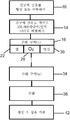
도 1은 본 발명의 방법을 나타낸 순서도이다.
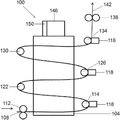
도 2는 본 발명에 따른 탄소 섬유 생산 시스템의 개략도이다.
도 3은 산화 구역에 진입하는 전구체 섬유의 개략도이다.
도 4는 산화 구역의 개략도이다.
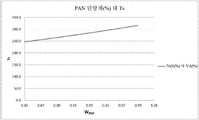
도 5는 비닐아세테이트 공단량체를 갖는 전구체 섬유 조성물에 대한 PAN(중량%) 대 연화점(Ts)의 플롯(plot)이다.
도 6은 메틸아크릴레이트 공단량체를 갖는 전구체 조성물에 대한 PAN(중량%) 대 연화점(Ts)의 플롯이다.
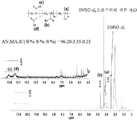
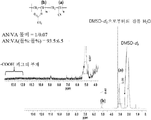
도 7a는 촉진제(-COOH) 함유 특수 아크릴 섬유(SAF 1) 또는 99몰%의 AN 및 1몰%의 아크릴산(98.6중량%의 AN 및 1.4중량%의 아크릴산에 상응함)으로 이루어진 특수 PAN 전구체의 1H-NMR 스펙트럼이다.
도 7b는 대략 94.5몰%의 AN, 약 5.4몰%의 메틸아크릴레이트 및 약 0.1몰%의 2-아크릴아미도-2-메틸프로판 설폰산으로 이루어진 비-카르복실산 함유 직물 PAN 전구체(직물 1)의 1H-NMR 스펙트럼이다.
도 7c는 촉진제(-COOH) 함유 특수 아크릴 섬유(SAF 2) 또는 약 96.2몰%의 AN, 약 3.55몰%의 메틸아크릴레이트 및 약 0.25몰%의 이타콘산(93.8중량%의 AN, 5.6중량%의 메틸아크릴레이트 및 0.6중량%의 이타콘산에 상응함)으로 이루어진 특수 PAN 전구체의 1H-NMR 스펙트럼이다.
도 7d는 약 93.5몰%의 AN 및 약 6.5몰%의 비닐아세테이트(89.9중량%의 AN 및 10.1중량%의 비닐아세테이트에 상응함)으로 이루어진 비-촉진제 함유 직물 PAN 전구체(직물 2)의 1H-NMR 스펙트럼이다.
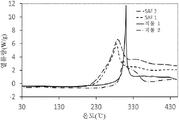
도 8은 촉진제 함유 특수 PAN 전구체(SAF 1 및 SAF 2) 및 비-촉진제 함유 직물 PAN 전구체(직물 1 및 직물 2)의 시차 주사 열량계 열분석도(differential scanning calorimeter thermogram)이며, 대기 중에서 (10℃/분의 주사 속도로) 발열성 산화 반응과 연관된 이들의 개시 온도에서 차이가 있다는 것을 보여준다.
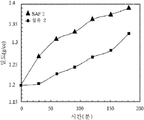
도 9는 220℃의 대기 중에서 산화 구역 내에서 (동시에) 등온으로 처리하는 경우에 촉진 작용기(-COOH) 함유 특수 PAN 전구체 샘플 및 비-촉진제 함유 직물 PAN 전구체의 시간-의존 밀도 전개 프로파일(time-dependent density evolution profile)이다.
도 10은 직물 PAN계 탄소 섬유의 주사 전자 현미경 사진(scanning electron micrograph)이다.
도 11은 방위각(φ)의 함수로서 직물 1의 전구체로부터 만들어진 상이한 탄소 섬유의 (002) 반사 세기의 방위각 프로파일(azimuthal profile)이다.While presently preferred embodiments are shown in the drawings, it is understood that the invention is not limited to the schemes and means shown. In the drawing:
Figure 1 is a flow chart illustrating the method of the present invention.
2 is a schematic view of a carbon fiber production system according to the present invention.
Figure 3 is a schematic view of the precursor fibers entering the oxidation zone.
Figure 4 is a schematic view of an oxidation zone.
Figure 5 is a plot of PAN (wt%) versus softening point (T s ) for a precursor fiber composition with vinyl acetate comonomer.
Figure 6 is a plot of PAN (wt%) versus softening point (T s ) for a precursor composition with methyl acrylate comonomer.
Figure 7a shows a special PAN precursor consisting of an accelerator (-COOH) -containing special acrylic fiber (SAF 1) or 99 mol% AN and 1 mol% acrylic acid (corresponding to 98.6 wt% AN and 1.4 wt% acrylic acid) ≪ 1 > H-NMR spectrum.
Figure 7b shows a non-carboxylic acid containing fabric PAN precursor (fabric 1 (1)) consisting of approximately 94.5 mol% AN, approximately 5.4 mol% methyl acrylate and approximately 0.1 mol% 2-acrylamido- ) ≪ 1 > H-NMR spectrum.
Figure 7C shows a graphical representation of the results of a comparison of a specific acrylic fiber containing a promoter (-COOH) (SAF 2) or about 96.2 mol% AN, about 3.55 mol% methyl acrylate and about 0.25 mol% itaconic acid (93.8 wt% AN, 5.6 wt% of a 1 H-NMR spectrum of a specific PAN precursor consisting of methyl acrylate and the corresponding box) to itaconic acid of 0.6% by weight.
Figure 7d shows 1 H of fabric non-promoter containing PAN precursor (fabric 2) consisting of about 93.5 mol% AN and about 6.5 mol% vinyl acetate (corresponding to 89.9 wt% AN and 10.1 wt% vinyl acetate) -NMR spectrum.
Figure 8 is a differential scanning calorimeter thermogram of a special PAN precursor (
Figure 9 shows a time-dependent density profile of a promoter (-COOH) -containing special PAN precursor sample and a non-promoter containing textile PAN precursor in the presence of (iso) dependent density evolution profile.
10 is a scanning electron micrograph of a fabric PAN-based carbon fiber.
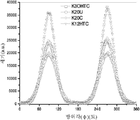
FIG. 11 is an azimuthal profile of the (002) reflection intensity of different carbon fibers made from the precursor of
본 발명은 탄소 함유 섬유를 생산하기 위한 방법에 관한 것으로, 상기 탄소 함유 섬유로는 다목적 용도로 개발되었던 상업적으로 이용 가능한 범용 전구체 섬유로부터 생산된 탄소 섬유를 들 수 있지만, 이에 제한되지 않는다. 본 발명의 방법을 이용하여 얻어진 탄소 섬유에 대한 생산 비용은 전통적인 탄소 섬유의 생산 방법의 50% 미만일 수 있다.The present invention relates to a method for producing carbon-containing fibers, wherein the carbon-containing fibers include, but are not limited to, carbon fibers produced from commercially available general purpose precursor fibers that have been developed for general-purpose applications. The production cost for the carbon fibers obtained using the method of the present invention may be less than 50% of the conventional production method of carbon fibers.
탄소 섬유를 생산하는 방법은 폴리아크릴로니트릴(PAN) 전구체 섬유를 제공하는 단계를 포함한다. 상기 PAN 전구체 섬유는 전구체 섬유 당 3데니어 이하일 수 있고, 상기 PAN 전구체 섬유의 조성물 내 모든 구성성분의 총 몰비에 기초하여 0.5몰% 미만의 촉진 작용기를 포함한다. 상기 PAN 전구체 섬유는 87몰% 내지 97몰%의 아크릴로니트릴을 가질 수 있다. 상기 PAN 전구체 섬유는 토우 내에 배열될 수 있다. 토우는 상기 전구체의 공급자에 의해 제공될 수 있다. 상기 토우는 변환 공정이 아닌 방사 공정에서 형성된다. 이러한 응용은 인치 너비 당 적어도 150,000데니어인 PAN 전구체 필라멘트의 임의의 주입 공급원료 배열(inlet feedstock arrangement)로서의 가장 넓은 의미에서 "토우"를 지칭한다. 데니어는 직물 산업에서 사용되는 섬유 치수(선형 밀도)의 척도이며, 9,000미터(m)의 섬유 길이 당 섬유의 무게(그램(g))로서 정의된다.The method of producing carbon fibers includes providing polyacrylonitrile (PAN) precursor fibers. The PAN precursor fibers can be up to 3 denier per precursor fiber and include less than 0.5 mole% of promoting functionality based on the total mole ratio of all components in the composition of the PAN precursor fiber. The PAN precursor fiber may have from 87 mol% to 97 mol% acrylonitrile. The PAN precursor fibers can be arranged in the tow. The tow may be provided by the supplier of the precursor. The tow is formed in a spinning process rather than a conversion process. This application refers to the "tow" in the broadest sense as any optional inlet feedstock arrangement of PAN precursor filaments of at least 150,000 denier per inch width. Denier is a measure of the fiber dimension (linear density) used in the textile industry and is defined as the weight (gram (g)) of fiber per fiber length of 9,000 meters (m).
상기 폴리아크릴로니트릴 전구체 섬유에 대해 본원에서 사용된 바와 같이 섬유 및 필라멘트란 용어들은 상호 교환 가능하게 사용된다.The terms fiber and filament as used herein for the polyacrylonitrile precursor fiber are used interchangeably.
상기 PAN 전구체 중의 아크릴로니트릴 함량 또는 AN 함량은 거의 100%일 수 없거나, 상기 섬유는 충분히 연신할 수 없고 산화 공정 도중에 적절히 배향될 수 없어, 상기 얻어진 탄소 섬유의 기계적 성능 저하를 야기한다. 상기 AN 함량은 또한 매우 낮을 수 없거나, 상기 섬유는 합리적이고 비용-효율적인 산화 체류 시간 및 조건 하에 융합할 것이며, 또한 이는 상기 얻어진 탄소 섬유의 기계적 성능 저하를 야기한다.The acrylonitrile content or AN content in the PAN precursor can not be nearly 100%, or the fibers can not be stretched sufficiently and can not be properly oriented during the oxidation process, resulting in a deterioration in the mechanical performance of the obtained carbon fibers. The AN content can also not be very low, or the fibers will fuse under reasonable and cost-effective oxidation residence time and conditions, which also leads to mechanical degradation of the resulting carbon fibers.
상기 PAN 및 공단량체 전구체 섬유 필라멘트 중합체는 88 내지 97몰%의 아크릴로니트릴을 가질 수 있다. 상기 PAN 전구체 섬유 필라멘트는 90 내지 95몰%의 아크릴로니트릴 또는 91 내지 94몰%의 아크릴로니트릴을 포함할 수 있다. 상기 아크릴로니트릴의 함량(몰%)은 87%, 88%, 89%, 90%, 91%, 92%, 93%, 94%, 95%, 96% 및 97%일 수 있으며, 이들 값들 사이의 임의의 낮은 값 내지 임의의 높은 값의 범위일 수 있다. 상기 전구체 섬유 중합체의 나머지는 공단량체일 수 있거나 공단량체의 조합일 수 있다.The PAN and comonomer precursor fiber filament polymers may have from 88 to 97 mole percent of acrylonitrile. The PAN precursor fiber filaments may comprise from 90 to 95 mole percent of acrylonitrile or from 91 to 94 mole percent of acrylonitrile. The content (mol%) of the acrylonitrile may be 87%, 88%, 89%, 90%, 91%, 92%, 93%, 94%, 95%, 96% and 97% Lt; / RTI > may range from any lower value to any higher value. The remainder of the precursor fiber polymer may be a comonomer or a combination of comonomers.
상기 배열된 PAN 전구체 섬유 토우는 대기와 같이 산소 함유 기체를 함유하고 제 1 온도(T1)로 유지되는 적어도 하나의 산화 구역에서 상기 토우를 가열함으로써 안정화되며, 이때 상기 제 1 온도(T1)는 상기 전구체 섬유의 융합 온도 미만이지만 산화 반응을 진행하도록 하기에 충분한 온도이다. 상기 제 1 온도는 일 실시예에서 적어도 220℃일 수 있다. 상기 섬유 온도는 중합체 제형의 융합 온도 미만으로 유지되어야 한다. 일부의 경우, (섬유 화학 조성물로 인해) 상기 섬유 융합 온도가 낮은 경우, 상기 제 1 산화 온도는 허용 가능한 산화 동력학과 필라멘트의 가능한 융합의 제거 사이의 균형을 유지하기 위해 적어도 180℃일 수 있다. 상기 토우는 안정화된 전구체 섬유 토우를 수득하기 위해 상기 산화 안정화 단계 도중에 적어도 10% 정도 연신된다.The arrayed PAN precursor fiber tow containing an oxygen-containing gas such as air, and is stabilized by heating the tow at least one oxidation zone is maintained at a first temperature (T 1), wherein the first temperature (T 1) Is a temperature lower than the fusion temperature of the precursor fibers but sufficient to allow the oxidation reaction to proceed. The first temperature may be at least 220 [deg.] C in one embodiment. The fiber temperature should be maintained below the fusion temperature of the polymer formulation. In some cases, if the fiber fusion temperature is low (due to the fibrochemical composition), the first oxidation temperature may be at least 180 ° C to maintain a balance between acceptable oxidation kinetics and removal of possible fusion of the filaments. The tow is stretched by at least 10% during the oxidation stabilization step to obtain a stabilized precursor fiber tow.
이어 상기 안정화된 전구체 섬유 토우는 적합한 탄화 조건으로 유지되는 적어도 하나의 탄화 구역을 통해 상기 안정화된 전구체 섬유 토우를 통과시킴으로써 탄화된다. 상기 탄화 방법 및 장비는 탄소 섬유의 생산에 적합한 임의의 것일 수 있다.The stabilized precursor fiber tow is then carbonized by passing the stabilized precursor fiber tow through at least one carbonization zone maintained in suitable carbonization conditions. The carbonization method and equipment may be any suitable for the production of carbon fibers.
본원에서 사용된 바와 같이 '촉진 작용기'란 용어는 안정화 공정의 반응에 참가하고 산화 속도를 향상시키는 화학적 모이어티(chemical moiety)를 지칭한다. 촉진 작용기로는 카르복실산(-COOH)을 들 수 있지만, 이에 제한되지 않는다. 기타 촉진 작용기로는 아미노기(-NH2), 치환된 아미노기(-NH-), 아미드기(-CO-NH-) 또는 이들 모든 촉진 작용기의 염과 같은 전자 공여 작용기를 들 수 있으며, 이때 이들 작용기는 상기 전구체 중합체 및 섬유의 폴리아크릴로니트릴 분절에서 고리화 반응을 개시할 수 있다. 또한 촉진 작용기는 설폰산(-SO3H) 기일 수 있다. 상기 중합체 전구체의 구성 분자가 1개 초과의 작용기를 함유하는 경우(즉, 촉진제 분자 내에 다중 작용기(multifunctionality)가 존재하는 경우), 상기 촉진 작용기의 몰비(몰%)는 개개의 촉진제 분자에 존재하는 촉진 작용기의 개수의 배수로 존재하는 개개의 촉진제의 몰비(몰%)를 곱함으로써 수득될 수 있다.As used herein, the term "promoter" refers to a chemical moiety that participates in the reaction of the stabilization process and enhances the rate of oxidation. The accelerating functional group includes, but is not limited to, carboxylic acid (-COOH). Examples of other accelerating functional groups include electron donating functional groups such as an amino group (-NH 2 ), a substituted amino group (-NH-), an amide group (-CO-NH-), or a salt of all these promoting functional groups, Can initiate the cyclization reaction in the polyacrylonitrile segments of the precursor polymer and fiber. The promoter may also be a sulfonic acid (-SO 3 H) group. When the constituent molecules of the polymer precursor contain more than one functional group (i.e., when multifunctionality is present in the promoter molecule), the molar ratio (mol%) of the promoter is present in the individual promoter molecule (Mol%) of the individual promoters present in multiples of the number of promoting functional groups.
이타콘산은, 예를 들어 각각의 분자 내에 2개의 카르복실산 촉진 작용기를 갖는다. 상기 촉진 작용기의 몰비(몰%)는 상기 전구체 섬유 조성물 중의 이타콘산의 몰비(몰%)를 2로 곱함으로써 수득될 수 있다. 상기 전구체 섬유 중의 이타콘산의 몰비(몰%)가, 예를 들어 0.1몰%인 경우, 상기 촉진 작용기의 몰비(몰%)는 0.2몰%일 수 있다. 상기 촉진 작용기의 몰비(몰%)는 0.5% 미만, 0.45% 미만, 0.4% 미만, 0.35% 미만, 0.3% 미만, 0.25% 미만, 0.2% 미만, 0.15% 미만, 0.1% 미만, 0.09% 미만, 0.08% 미만, 0.07% 미만, 0.06% 미만, 0.05% 미만, 0.04% 미만, 0.03% 미만, 0.02% 미만, 0.01% 미만, 0.005% 미만 또는 0.001몰% 미만일 수 있다. 또한 상기 촉진 작용기의 몰비(몰%)는 0%일 수 있다. 상기 촉진 작용기의 몰비(몰%)는 이들 값으로부터 선택된 임의의 높은 값 내지 낮은 값의 범위 내에 있을 수 있다. 상기 촉진 작용기의 최소 몰비(몰%)는 0, 0.001%, 0.01%, 0.02%, 0.03%, 0.04%, 0.05%, 0.06%, 0.07%, 0.08%, 0.09%, 0.1% 및 0%일 수 있다. 상기 촉진 작용기의 몰비(몰%)는 상기 전구체 중합체의 성분인 아크릴로니트릴 및 공단량체에 기초하여 측정될 수 있지만, 촉진 작용기를 갖는 전구체 중합체 섬유에 함입되거나 상기 전구체 중합체 섬유를 코팅한 기타 첨가제가 존재하는 경우, 상기 몰비(몰%)는 아크릴로니트릴, 공단량체(들) 및 첨가제의 총 성분 몰비에 기초하여 측정된다.Itaconic acid has, for example, two carboxylic acid promoting functional groups in each molecule. The molar ratio (mol%) of the promoting functional groups can be obtained by multiplying the molar ratio (mol%) of itaconic acid in the precursor fiber composition by two. When the molar ratio (mol%) of itaconic acid in the precursor fibers is, for example, 0.1 mol%, the molar ratio (mol%) of the promoting functional groups may be 0.2 mol%. Less than 0.45%, less than 0.4%, less than 0.35%, less than 0.3%, less than 0.25%, less than 0.2%, less than 0.15%, less than 0.1%, less than 0.09% Less than 0.08%, less than 0.07%, less than 0.06%, less than 0.05%, less than 0.04%, less than 0.03%, less than 0.02%, less than 0.01%, less than 0.005%, or less than 0.001% The molar ratio (mole%) of the promoting functional groups may be 0%. The molar ratio (mole%) of the promoter may be in the range of any high value to low value selected from these values. The minimum molar ratio (mol%) of the promoter may be 0, 0.001%, 0.01%, 0.02%, 0.03%, 0.04%, 0.05%, 0.06%, 0.07%, 0.08%, 0.09%, 0.1% and 0% have. The molar ratio (mole%) of the promoter can be measured based on acrylonitrile and comonomers which are components of the precursor polymer, but other additives that are incorporated into the precursor polymer fibers having a promoter or coated with the precursor polymer fibers If present, the molar ratio (mole%) is determined based on the total molar ratio of components of acrylonitrile, comonomer (s) and additive.
현재 산업계에서 사용되고 촉진 작용기를 갖는 촉진제로는 다수의 다른 것들 중에서 이타콘산을 들 수 있다. 적합한 촉진제의 기타 예로는 아크릴산, 메타크릴산, 크로톤산, 에타크릴산, 말레산, 메사콘산, 이들 카르복실산의 염(예를 들어, 나트륨 염 및 암모늄 염), 아크릴아미드, 메타크릴아미드 및 아민 함유 기 또는 이들의 염을 들 수 있다.Among the accelerators currently used in the industry and having a promoter, among others, itaconic acid can be mentioned. Other examples of suitable accelerators are acrylic acid, methacrylic acid, crotonic acid, ethacrylic acid, maleic acid, mesaconic acid, salts of these carboxylic acids (e.g. sodium and ammonium salts), acrylamide, methacrylamide and An amine-containing group or a salt thereof.
상기 PAN 전구체 섬유는 흔히 상기 아크릴로니트릴 단량체 이외에도 적어도 하나의 공단량체와 함께 형성된 공중합체로 만들어진다. 탄소 섬유의 생산에 적합한 공중합체 조성물 중의 임의의 공단량체가 잠재적으로 이용 가능하지만, 촉진 작용기를 갖는 공단량체는 그 함량이 0.5몰% 미만의 촉진 작용기로 제한되어야 한다. 일반적인 공단량체로는 아크릴산, 이타콘산 및 메타크릴산과 같은 산; 메틸아크릴레이트, 에틸아크릴레이트, 부틸아크릴레이트, 메틸메타크릴레이트, 에틸메타크릴레이트, 프로필메타크릴레이트, 부틸메타크릴레이트, β-하이드록시에틸메타크릴레이트, 디메틸아미노에틸메타크릴레이트, 2-에틸헥실아크릴레이트, 이소프로필아세테이트, 비닐아세테이트 및 비닐프로피오네이트와 같은 비닐 에스테르; 아크릴아미드, 디아세톤 아크릴아미드 및 N-메틸올아크릴아미드와 같은 비닐 아미드; 염화알릴, 브롬화비닐, 염화비닐 및 염화비닐리덴(1,1-디클로로에틸렌)과 같은 비닐 할로겐화물; 아미노에틸-2-메틸프로피오네이트의 4차 암모늄 염과 같은 비닐 화합물의 암모늄 염을 들 수 있다. 기타 공단량체가 가능하다.The PAN precursor fibers are often made of a copolymer formed with at least one comonomer in addition to the acrylonitrile monomer. While any comonomer in the copolymer composition suitable for the production of carbon fibers is potentially usable, the comonomer having the promoter should be limited to less than 0.5 mol% of the promoter. Typical comonomers include acids such as acrylic acid, itaconic acid and methacrylic acid; Methyl acrylate, ethyl acrylate, butyl acrylate, methyl methacrylate, ethyl methacrylate, propyl methacrylate, butyl methacrylate,? -Hydroxyethyl methacrylate, dimethylaminoethyl methacrylate, 2- Vinyl esters such as ethylhexyl acrylate, isopropyl acetate, vinyl acetate and vinyl propionate; Vinyl amides such as acrylamide, diacetone acrylamide and N-methylol acrylamide; Vinyl halides such as allyl chloride, vinyl bromide, vinyl chloride and vinylidene chloride (1,1-dichloroethylene); And ammonium salts of vinyl compounds such as quaternary ammonium salts of aminoethyl-2-methylpropionate. Other comonomers are possible.
PAN 및 공단량체 중합체 이외에도 기타 화합물(촉진제, 안정제 및 PAN 섬유의 생성을 위해 수성 용매에서 사용된 촉매 또는 무기 염에서 유래한 나트륨, 철, 및 아연 잔류물과 같이 성능을 향상시키지 않는 일부 화합물)은 탄소 섬유 제품에 목적하는 물성을 부여할 수 있는 전구체 섬유에 존재할 수 있다. 이 같은 기타 화합물은 촉진 작용기를 함유하는 경우에 상기 전구체 섬유의 모든 성분의 총량에 기초하여 상기 작용기의 몰비(몰%)가 0.5몰%를 초과하지 않도록 제한되어야 한다.In addition to PAN and comonomer polymers, other compounds (some compounds that do not improve performance, such as catalysts used in aqueous solvents for the production of promoters, stabilizers and PAN fibers, or sodium, iron, and zinc residues from inorganic salts) Can be present in the precursor fibers which can impart the desired properties to the carbon fiber product. Such other compounds should be limited so that the molar ratio (mole%) of the functional groups does not exceed 0.5 mol% based on the total amount of all components of the precursor fibers when containing promoting functional groups.
본 발명의 전구체 섬유는 직물 가공에서 흔희 사용되는 바와 같은 범용 전구체 섬유일 수 있다. 이 같은 섬유는 악사(Aksa), 돌란(Dolan), 드랄론(Dralon), 칼텍스(Kaltex), 몬테파이버(Montefibre), 파수파티(Pasupati), 태광(Taekwang), 타이 아크릴릭(Thai Acrylic) 및 다수의 기타 회사와 같은 대부분 상업용 PAN 직물 생산자로부터 용이하게 이용 가능하다. 전형적으로는, 사용 가능한 PAN 직물 섬유는 필라멘트 당 3데니어(DPF) 미만일 것이며, 크림핑(crimping)되거나 크림핑되지 않은 밝은 광택제(TiO2 부재)이고, 연속적이다. 이들 직물 PAN 섬유 모두는 전형적으로는 대형 토우 크기로 제작되며, 그 결과 상기 섬유 번들의 매우 높은 선형 밀도를 초래한다.The precursor fibers of the present invention can be general purpose precursor fibers as is commonly used in fabric processing. Such fibers include, but are not limited to: Aksa, Dolan, Dralon, Kaltex, Montefibre, Pasupati, Taekwang, Thai Acrylic, Lt; RTI ID = 0.0 > PAN < / RTI > Typically, the available PAN fabric fibers will be less than 3 denier per filament (DPF) and are bright brighteners (TiO 2 members) that are not crimped or crimped, and are continuous. All of these fabric PAN fibers are typically fabricated in large tow sizes, resulting in a very high linear density of the fiber bundles.
섬유 융합은 성공적인 산화 및 탄소 섬유 변환에 있어서 치명적인 결함일 수 있으며, 상당한 융합이 일어난 후에 이러한 융합은 극복할 수 없거나 끝날 때까지 계속될 수 있다. 이는 충분한 산화 및 가교가 일어날 때까지 각각의 안정화 단계 도중에 상기 융합 온도에 근접하지만 상기 융합 온도 미만인 온도에서 상기 산화 공정이 시작하거나 유지되어야 한다는 것을 의미한다. 이는 매우 길고 느린 산화 공정을 필요로 하며, 이는 상기 중합체 내에 포함된 공단량체의 양 및 유형에 직접 비례한다. 적절히 형성되고 안정화된 섬유를 생산하기 위해 상기 산화/안정화 공정 도중의 섬유 융합은 산화/안정화 반응에 있어서 피해야 된다. 일부 융합은 불가피하고 상당할 수 있다. 현미경적 융합과 격변성 융합(catastrophic fusion) 사이에 만들어질 수 있는 차이가 존재한다. 현미경적 융합은 융합하는 낮은 비율의 섬유에 적용되는 용어로서, 최적의 조건 하에서도 이를 완전히 피하기 어렵다. 격변성 융합은 비교적 높은 비율의 섬유가 융합하는 경우에 적용되는 용어이며, 이로 인해 생성물 또는 심지어는 전체 생산 운행 중 일부 운행에서 불이행을 초래한다. 바람직하게는, 전체 산화 공정(오븐 모두) 도중에 상기 섬유의 길이 분절의 5% 미만이 융합되거나, 현미경적 융합의 경우에 4% 미만, 3% 미만, 2% 미만 또는 1% 미만이 융합된다. 상기 산화/안정화 공정 도중의 연신은 융합을 조장하는 섬유들 사이의 접촉을 피하기 위해 상기 섬유를 분리시키는데 도움을 준다.Fiber fusion can be a fatal flaw in successful oxidation and carbon fiber conversion, and after significant fusion has occurred, such fusion can not be overcome or can continue until the end. This means that the oxidation process should be started or maintained at a temperature that is close to but below the fusion temperature during each stabilization step until sufficient oxidation and cross-linking occurs. This requires a very long and slow oxidation process, which is directly proportional to the amount and type of comonomer contained in the polymer. Fiber fusion during the oxidation / stabilization process to produce properly formed and stabilized fibers should be avoided in oxidation / stabilization reactions. Some convergence is inevitable and significant. There is a difference that can be made between microscopic fusion and catastrophic fusion. Microscopic fusion is a term applied to a low proportion of fibers that fuse, and it is difficult to completely avoid it under optimal conditions. Catastrophic fusion is a term applied to the case where a relatively high proportion of fibers are fused, thereby causing a failure in some operations of the product or even in the entire production run. Preferably, less than 5% of the length segments of the fibers are fused during the entire oxidation process (both ovens), or less than 4%, less than 3%, less than 2%, or less than 1% in the case of microscopic fusion. Stretching during the oxidation / stabilization process helps separate the fibers to avoid contact between the fibers that promote fusion.
본 발명의 산화/안정화 공정 도중의 연신은 상당한 융합을 피하게 하며, 적절한 정렬 및 미세구조를 탄소 섬유 제품에 부여할 수 있다. 연신은 상기 전구체 섬유의 선형 밀도(g/㎜)에서의 감소로서 정의될 수 있다. 상기 섬유 상의 연신 또는 장력의 제어, 특히 열 단위 운전(thermal unit operation)에서의 제어는 PAN계 탄소 섬유에서 기계적 물성을 구현하는데 매우 중요하다. 복수의 시도(trial)에 따르면 고품질 상업용 전구체에 대해 연신이 없을 때와 최적의 연신이 있을 때의 열처리 사이에는 인장 강도가 약 3배 증가는 것으로 나타났다. 산화에서 연신은 기계적 물성의 향상 및 발열성 열의 발생 속도의 제어 둘 모두를 위해 특히 중요하다.Stretching during the oxidation / stabilization process of the present invention avoids significant fusion and can impart appropriate alignment and microstructure to the carbon fiber product. Stretching can be defined as a reduction in the linear density (g / mm) of the precursor fibers. Control of the stretching or tensioning of the fiber phase, especially in a thermal unit operation, is very important for realizing mechanical properties in PAN based carbon fibers. According to multiple trials, the tensile strength increased about three times between the absence of elongation for the high quality commercial precursor and the heat treatment for the optimal elongation. Stretching from oxidation is particularly important for both improving mechanical properties and controlling the rate of evolution of exothermic heat.
PAN 섬유의 산화는 통상적으로는 상기 섬유에서의 상당한 수축력을 야기한다. 산화 도중에 상기 섬유에서의 축방향 응력의 결여는 PAN의 이완된 분자 분절로 인해 분자 내 랜덤 고리화를 가능케 하고, 섬유 단면을 통한 산소의 신속한 확산을 가능케 함으로써 산화 동력학을 향상시킨다. 축방향 장력의 부재(또는 연신의 부재)는 산화 속도의 향상을 조장한다. 그러나 이 같은 배향되지 않고 산화된 섬유 제품은 상기 얻어진 탄소 섬유에 양호한 물성(즉, 250ksi 미만의 인장 강도 및 25Msi 미만의 인장 탄성률)을 제공하지 못한다. 또한 산화 도중의 연신은 발열성 반응을 제어하는데 있어 중요하며, 인치 너비 당 적어도 150,000데니어인 PAN 전구체 필라멘트의 주입 공급원료 배열을 포함하는 공정에 있어서 특히 중요하다.The oxidation of PAN fibers typically results in significant retractive force in the fibers. The lack of axial stress in the fibers during oxidation allows for intramolecular random cyclization due to relaxed molecular segments of the PAN and allows for rapid diffusion of oxygen through the fiber cross-section, thereby improving the oxidation kinetics. The absence (or elongation) of the axial tension promotes the improvement of the oxidation rate. However, such unoriented, oxidized fiber products do not provide good physical properties (i. E., A tensile strength of less than 250 ksi and a tensile modulus of less than 25 Msi) to the resulting carbon fibers. Also, stretching during oxidation is important in controlling exothermic reactions and is particularly important in processes involving the injection feedstock arrangement of PAN precursor filaments of at least 150,000 denier per inch width.
연신은 속도 제어에 의해 달성될 수 있다. 연신 장치는 상기 산화 공정 전반에 걸쳐 전략적으로 위치할 수 있다. 각각의 연신 장치는 그러한 위치에서 섬유 라인 속도(fiber line speed)를 정밀하게 제어한다. 연신률은 연속 연신 장치의 속도비에 의해 확립된다. 게다가, 상기 오븐에는 산화 도중에 미세-조정된 연신 제어를 가능케 하는 전동형 "패스백 롤(passback roll)"이 구비될 수 있다.Stretching can be achieved by speed control. The elongating device may be strategically located throughout the oxidation process. Each elongating device precisely controls the fiber line speed at that location. The elongation percentage is established by the speed ratio of the continuous stretching apparatus. In addition, the oven may be provided with a motorized "passback roll" that allows fine-tuned elongation control during oxidation.
산화 구역에서의 연신량(amount of stretching)은 달라질 수 있다. 상기 제 1 산화 구역(구역 1)에서, 상기 연신은 10% 초과일 수 있거나, 11% 초과, 12% 초과, 13% 초과, 14% 초과, 15% 초과, 16% 초과, 17% 초과, 18% 초과, 19% 초과, 20% 초과, 21% 초과, 22% 초과, 23% 초과, 24% 초과 또는 25% 초과일 수 있다. 구역 1에서의 연신은 최대 약 100%일 수 있다. 구역 1에서의 연신은 10% 내지 100%일 수 있다. 연신은 상기 산화/안정화 공정의 초기 단계 동안에 구역 1에서 가장 중요하다. 후속적인 산화 단계에서의 연신은 통상적으로는 제 1 산화/안정화 단계보다 낮을 수 있으며, 이는 상기 섬유들 사이의 가교가 진행됨에 따라 연신이 덜 바람직하게 되기 때문이다. 연신은 임의의 적합한 장치 또는 공정에 의해 달성될 수 있다. 일 실시예에서, 연신은 하류 구동 롤러를 상류 구동 롤러보다 빠른 속도로 운전시킴으로써 달성된다.The amount of stretching in the oxidation zone may vary. In the first oxidation zone (zone 1), the elongation may be greater than 10%, or greater than 11%, greater than 12%, greater than 13%, greater than 14%, greater than 15%, greater than 16%, greater than 17% , Greater than 19%, greater than 20%, greater than 21%, greater than 22%, greater than 23%, greater than 24%, or greater than 25%. The stretching in
상기 산화 도중의 연신은 산화 구역에 따라 달라질 수 있다. 필수적이지 않지만 통상적으로는, 연신은 후속적인 산화 구역에서보다 상기 제 1 산화 구역에서 더 클 것이다. 필수적이지 않지만 통상적으로는, 임의의 주어진 산화 구역에서의 연신은 후속적인 산화 구역 또는 하류 산화 구역에서의 연신보다 크거나 바로 이전의 구역에서의 연신보다는 작을 것이다. 산화 구역에서의 연신량은 0 내지 100% 범위일 수 있다. 연신 가능한 일부 직물 PAN 전구체에 있어서, 이는 최대 200%로 유의하게 연신될 수 있다. 산화 구역에서의 연신량은 0%, 5%, 10%, 15%, 20%, 25%, 30%, 35%, 40%, 45%, 50%, 55%, 60%, 65%, 70%, 75%, 80%, 85%, 90%, 95%, 100%, 105%, 110%, 115%, 120%, 125%, 130%, 135%, 140%, 145%, 150%, 155%, 160%, 165%, 170%, 175%, 180%, 185%, 190%, 195% 또는 200%일 수 있거나, 이들 사이의 임의의 높은 값 내지 낮은 값의 범위일 수 있다. 일 실시예에서, 이에 의해 제한되지 않는 한, 4개의 산화 구역의 공정에서 상기 연신은 구역 1에서 80 내지 100%, 구역 2에서 65%, 구역 3에서 20% 및 구역 4에서 0%일 수 있다. 상기 필라멘트의 산화 및 가교가 진행됨에 따라 융합이 이루어질 가능성이 낮거나 보다 어렵기 때문에 추후 산화 단계에서는 연신이 더 적을 수 있다. 전체 (모든 산화 구역) 산화 공정에서의 연신량은 달라질 수 있다. 상기 전체 산화/안정화 공정을 통한 연신량은 100 내지 600%, 200 내지 500% 또는 300 내지 400%일 수 있다. 상기 전체 공정에서 보다 많거나 보다 적은 연신이 또한 가능하다.The stretching during the oxidation may vary depending on the oxidation zone. Typically, although not necessarily, the elongation will be greater in the first oxidation zone than in the subsequent oxidation zone. Typically, although not necessarily, the elongation in any given oxidation zone will be smaller than the elongation in the subsequent or the downstream oxidation zone, or less than the elongation in the immediately preceding zone. The amount of stretching in the oxidation zone may range from 0 to 100%. For some stretchable fabric PAN precursors, this can be significantly extended to a maximum of 200%. The elongation in the oxidation zone was 0%, 5%, 10%, 15%, 20%, 25%, 30%, 35%, 40%, 45%, 50%, 55%, 60% %, 75%, 80%, 85%, 90%, 95%, 100%, 105%, 110%, 115%, 120%, 125%, 130%, 135%, 140% 155%, 160%, 165%, 170%, 175%, 180%, 185%, 190%, 195% or 200%, or any range of high to low values therebetween. In one embodiment, in the process of four oxidation zones, the stretching may be 80-100% in
또한 상기 방법은 상기 산화 단계 이전에 연신 단계(산화 전 연신 또는 예비 연신으로도 지칭됨)를 포함할 수 있다. 이러한 연신 단계는 상기 산화 공정 이전에 필라멘트 직경을 감소시키는 단계이다. 이러한 예비 연신량은 존재하는 경우에 5% 내지 150% 범위일 수 있으며, 상기 직물 전구체 섬유를 제조하기 위해 전형적으로 사용되는 연신에 추가된다.The method may also include a stretching step (also referred to as pre-oxidizing or pre-stretching) prior to the oxidizing step. This stretching step is a step of reducing the filament diameter before the oxidation step. This pre-stretch amount can range from 5% to 150%, if present, and is added to the stretch typically used to make the fabric precursor fiber.
산화 도중의 유의한 연신으로 인해 상기 섬유는 연신의 인가에 의한 섬유 길이의 빠른 증가로 인해 상기 산화 구역을 매우 신속하게 빠져 나갈 수 있게 된다. 유의한 연신(예를 들어, 100% 초과의 연신)이 바람직한 경우, 예비 연신 단계는 상기 섬유를 산화 단계로 공급하기 전에 수행될 수 있다. 이는 상기 산화 구역에서의 일부 부가적인 연신을 허용하면서도 상기 섬유에서 식별 가능한 정도의 산화를 수행하기 위해 상기 산화 구역에서의 적합한 섬유 잔류 시간을 허용할 것이다. 상기 예비 연신은 적합한 온도, 예를 들어 섬유의 유리 전이 온도(Tg)와 연화점 사이의 온도에서 수행될 수 있지만, 상기 섬유의 유의한 산화가 일어나지 않는 조건 하에서 수행될 수 있다. 특정 조성물에 따라 PAN 전구체 섬유의 Tg는 전형적으로는 80 내지 105℃의 범위이다. 예비 연신 온도는 상기 제 1 산화 구역의 온도, 예를 들어 230℃이거나 그 미만일 수 있다. 상기 예비 연신 온도는 130 내지 230℃ 범위일 수 있다. 임의의 적합한 가열 수단은 예비 연신을 위해 사용될 수 있다. 상기 섬유를 가열하고 예비 연신하기 위해 가열 고데트 롤러(godet roller)를 사용하는 것이 가능하다. 이러한 경우, 제 2 가열 고데트 롤러는 제 1 가열 고데트 롤러보다 빠른 속도로 회전한다.Due to the significant stretching during oxidation, the fibers can exit the oxidation zone very quickly due to the rapid increase in fiber length due to the application of stretching. Where significant stretching (e.g., greater than 100% elongation) is desired, the pre-stretching step may be performed prior to feeding the fibers to the oxidation step. This will allow for adequate fiber retention time in the oxidation zone to perform an appreciable degree of oxidation in the fiber while allowing some additional stretching in the oxidation zone. The pre-stretching can be carried out under a suitable temperature, for example, but glass transition of the fibers can be carried out at a temperature between the temperature (T g) and a softening point, no significant oxidation of the fiber is not induced conditions. The T g of the PAN precursor fibers typically ranges from 80 to 105 ° C, depending on the particular composition. The pre-stretching temperature may be the temperature of the first oxidation zone, for example, 230 ° C or less. The pre-stretching temperature may range from 130 to 230 < 0 > C. Any suitable heating means may be used for the preliminary stretching. It is possible to use a heating and godet roller to heat and pre-stretch the fibers. In this case, the second heating gate roller turns at a higher speed than the first heating gate roller.
산화 구역의 개수는 공정 특성에 따라 달라질 수 있다. 1개, 2개, 3개, 4개, 5개, 6개, 7개, 8개, 9개, 10개, 11개, 12개, 13개, 14개 또는 15개의 산화 구역이 존재할 수 있다. 보다 많거나 보다 적은 수의 산화 구역이 가능하다.The number of oxidation zones may vary depending on process characteristics. There may be one, two, three, four, five, six, seven, eight, nine, ten, eleven, twelve, thirteen, fourteen or fifteen oxidation zones . More or fewer oxidation zones are possible.
본원에서 사용된 바와 같이 산화 구역이란 용어는 상기 산화 공정의 하나의 부분이 온도, 연신, 산소 유량 및 전구체 필라멘트의 특성과 같은 공정 특정에 의해 산화 공정의 다른 부분과 구별되는 영역으로 정의된다. 개별 산화 구역은 상기 산화 공정 전반에 걸쳐 산화 공정 변수의 보다 정밀한 제어를 가능케 한다. 산화 구역은 단일 오븐의 경계로서 물리적 경계로 정의될 수 있으며, 오븐 내의 위치로 정의될 수 있다. 1개 초과의 산화 구역은 단일 산화 오븐 내에 수용될 수 있으며, 1개 초과의 물리적 산화 오븐이 사용될 수 있다. 일반적인 현재 관행에 따라 복수의 산화 오븐이 순차적으로 배열된다. 상기 섬유는 산화 구역을 1회 또는 수회 통과할 수 있다. 임의의 개수의 산화 구역이 가능하다. 각각의 산화 구역을 통한 복수의 통과가 흔히 사용된다. 산화 구역을 통한 통과 회수는 1회, 2회, 3회, 4회, 5회, 6회, 7회, 8회, 9회, 10회, 11회, 12회, 13회, 14회, 15회, 16회, 17회, 18회, 19회, 20회, 21회, 22회, 23회 또는 24회일 수 있거나, 이들 사이의 임의의 높은 값 내지 낮은 값의 범위일 수 있다.As used herein, the term oxidation zone is defined as a region in which a portion of the oxidation process is distinguished from other portions of the oxidation process by process specifications such as temperature, stretching, oxygen flow rate, and properties of precursor filaments. The individual oxidation zones enable more precise control of the oxidation process parameters throughout the oxidation process. The oxidation zone can be defined as the physical boundary as the boundary of a single oven and can be defined as the location in the oven. More than one oxidation zone may be accommodated in a single oxidation oven, and more than one physical oxidation oven may be used. A plurality of oxidation ovens are sequentially arranged in accordance with conventional practice. The fibers can pass through the oxidation zone once or several times. Any number of oxidation zones are possible. Multiple passes through each oxidation zone are commonly used. The number of passages through the oxidation zone is 1, 2, 3, 4, 5, 6, 7, 8, 9, 10, 11, 12, 13, 14, 15 16, 17, 18, 19, 20, 21, 22, 23 or 24, or any range of high to low values therebetween.
상기 방법은 어도 하나 부가적인 산화 구역에서 상기 토우의 산화/안정화를 수행하는 단계를 더 포함할 수 있다. 후속적인 산화 구역의 운전 변수는 상기 전구체 섬유의 크기 및 조성, 목적하는 처리량 및 탄소 섬유 제품의 목적하는 특성을 포함한 공정 변수에 따라 달라질 수 있다. 대기와 같은 산소 함유 기체를 함유하는 제 2 산화 구역이 제공될 수 있다. 상기 제 2 산화 구역은 온도(T2)로 유지될 수 있으며, 이때 T2는 이전 구역의 온도 또는 T1보다 낮다(예를 들어, T2 - T1은 음의 값임). 일부의 경우, 구역 2와 구역 1 사이의 온도 차이(즉, T2 - T1)는 -5℃이다. 일부의 경우, T2 - T1 = -10℃이다. 일부의 경우, T2 - T1은 0℃일 수 있다(즉, T2 = T1). 구체적인 경우, 상기 T2 - T1 = -1℃이다. 산화 구역에서의 온도(Tn+1)는 이전의 상류 산화 구역의 온도(Tn)와 동일하거나 이보다 낮을 수 있어, Tn+1 - Tn은 0℃, -1℃, -2℃, -3℃, -4℃, -5℃, -6℃, -7℃, -8℃, -9℃, -10℃, -11℃, -12℃, -13℃, -14℃, -15℃, -16℃, -17℃, -18℃, -19℃, -20℃, -21℃, -22℃, -23℃, -24℃ 또는 -25℃일 수 있거나, 이들로부터 선택된 임의의 높은 값 내지 낮은 값의 범위 내에 있을 수 있다. 일반적으로, 최종 산화 구역의 온도(Tf)는 초기 산화 구역에서의 온도(T1)보다 높을 것이다. 일부 실시예에서, Tf - T1은 0℃ 내지 +70℃ 사이의 임의의 온도일 수 있다. 일부 실시예에서, Tf - T1은 0℃ 내지 +30℃ 사이의 임의의 온도일 수 있다. 일부 실시예에서, Tf - T1은 0℃ 내지 +10℃ 사이의 임의의 온도일 수 있다. 일부 실시예에서, Tf - T1은 0℃ 내지 +5℃ 사이의 임의의 온도일 수 있다.The method may further comprise performing oxidation / stabilization of the tow in one additional oxidation zone. The operating parameters of the subsequent oxidation zone may vary depending on the process parameters including the size and composition of the precursor fibers, the desired throughput and the desired properties of the carbon fiber product. A second oxidation zone may be provided that contains an oxygen-containing gas such as air. The second oxidation zone may be maintained at a temperature T 2 , where T 2 is lower than the temperature or T 1 of the previous zone (e.g., T 2 - T 1 is a negative value). In some cases, the temperature difference between
선행 기술에 따르면 제 2 산화 구역은 상기 제 1 산화 구역보다 낮은 온도에서 운전되는 것이 일반적지 않은 것으로 나타나 있다. 통상적인 지식에 따르면 구역 2에서의 산화 온도(T2)를 상기 제 1 산화 구역의 온도(T1)보다 높게 유지하는 것이 제시되어 있다. 선행 기술에 따른 공정에서 산화 구역 온도의 증가는 상기 산화 공정 전반에 걸쳐 계속된다. 이는 상기 공정이 후속적인 단계에서 산화 운전 동력학을 향상시키는 것을 목표로 하기 때문에 일반적인 관행이다. 산화 이후에 제 1 구역에서 상기 필라멘트는 부분적으로 산화되고 가교된 PAN(시스 물질(sheath material))을 통해 산소가 여전히 확산되는 비산화 코어를 둘러싼 부분적으로 산회된 PAN의 표면을 형성한다는 것이 선행 기술분야에서 또한 일반적이다. 통상적인 특수 아크릴 섬유(SAF)에 있어서, 구체적으로는 PAN 전구체가 T2 > T1을 유지하는 것이 하나의 요건이다. 이 같은 특수 아크릴 섬유 또는 SAF-PAN(유의한 촉진 작용기를 갖는 통상적인 PAN 탄소 섬유 전구체)은 구역 2에서는 상기 구역 1의 온도보다 높은 온도에서 산화된다(즉, SAF의 경우 T2 > T1). 이는 촉진 작용기의 존재가 고리화되고 부분적으로 가교된 시스 구조를 야기하며, 이때 상기 구조는 섬유 직경을 가로질러 균일한 정도의 산화를 달성하기 위해 상기 코어로의 산소의 확산에 대한 내성을 부여하기 때문이다. 구역 2의 온도 증가는 또한 산화 속도를 향상시키고, 따라서 공정 경제성을 향상시킨다. 그러나 산화는 여전히 발열성 공정이고, 필라멘트의 용융 또는 파손 및 섬유 내 융합을 피하기 위해 열분산(heat dissipation)이 최우선 과제이다. 따라서 이들 통상적인 SAF-PAN 전구체 필라멘트의 주입 공급원료 배열은 인치 너비 당 150,000데니어보다 훨씬 낮게 유지된다. 인치 너비 당 150,000데니어로 통상적인 SAF-PAN 전구체 필라멘트(0.5몰% 초과의 촉진제를 함유함)를 공급하려는 시도로 인해 상기 부분적으로 산화된 토우의 발화 및 연소와 함께 격렬한 발열성 반응 및 필라멘트 파손이 야기된다.According to the prior art, it is not uncommon for the second oxidation zone to operate at a lower temperature than the first oxidation zone. According to conventional knowledge, it has been proposed to maintain the oxidation temperature (T 2 ) in
일반적으로, 선행 기술에 따르면 상기 산화/안정화 공정이 진행됨에 따라 상기 산화 구역의 운전 온도는 하류에서 증가하는 것으로 나타난다. 후속적인 산화 구역은 동일하거나 서로 다른 온도에서 운전할 수 있다. 각각의 산화 구역에서 목표는 융합을 피하고 연신에 의해 상기 전구체 섬유를 적절히 배향시키면서 상기 섬유의 산화/안정화 공정을 진행하는 것이다. 후자의 산화 구역에서, 융합 및 배향은 이들 단계에서의 산화/안정화 공정이 연신이 필요하지 않거나 불리할 수 있는 지점까지 진행됨에 따라 관심을 덜 받게 된다. 산화가 끝날 무렵, 상기 전구체 토우는 주로 불용해성이 되며, 배향된 흑연 형태를 갖는 비다공성 탄소 섬유를 형성할 준비가 된다.Generally, according to the prior art, as the oxidation / stabilization process progresses, the operating temperature of the oxidation zone appears to increase downstream. Subsequent oxidation zones can be operated at the same or different temperatures. In each oxidation zone, the goal is to proceed with the oxidation / stabilization process of the fibers while avoiding fusion and properly orienting the precursor fibers by stretching. In the latter oxidation zone, fusion and orientation are less of a concern as the oxidation / stabilization process at these stages proceeds to the point where stretching is not necessary or may be disadvantageous. At the end of oxidation, the precursor tow becomes predominantly insoluble and is ready to form non-porous carbon fibers having an oriented graphite morphology.
상기 제 1 산화 구역에 진입하는 상기 배열된 전구체 섬유 토우는 인치 너비 당 150,000(150k)데니어 내지 인치 너비 당 3,000,000(3M)데니어 범위일 수 있다. 상기 배열된 전구체 섬유 토우는 인치 너비 당 250k데니어 내지 인치 너비 당 3M 데니어 범위일 수 있다. 상기 배열된 전구체 섬유 토우는 인치 너비 당 500k데니어 내지 인치 너비 당 3M데니어 범위일 수 있다. 상기 배열된 전구체 섬유 토우(단위: 인치 너비 당 데니어)는 150k, 175k, 200k, 225k, 250k, 300k, 400k, 500k, 600k, 700k, 800k, 900k, 1M, 1.1M, 1.2M, 1.3M, 1.4, 1.5, 1.6M, 1.7M, 1.8M, 1.9M, 2M, 2.1M, 2.2M, 2.3M, 2.4M, 2.5M, 2.6M, 2.7M, 2.8M, 2.9M 및 3.0M일 수 있거나, 이들 사이의 임의의 높은 값 내지 낮은 값의 범위일 수 있다.The ordered precursor fiber tow entering the first oxidation zone may range from 150,000 (150k) denier per inch width to 3,000,000 (3M) denier per inch width. The ordered precursor fiber tow may be in the range of from 3Om denier per inch width to 250k denier per inch width. The ordered precursor fiber tow may be in the range of from 500k denier per inch width to 3M denier per inch width. The ordered precursor fiber tows (in denier per inch width) can be selected from the group consisting of 150k, 175k, 200k, 225k, 250k, 300k, 400k, 500k, 600k, 700k, 800k, 900k, 1M, 1.1M, 1.4, 1.5, 1.6M, 1.7M, 1.8M, 1.9M, 2M, 2.1M, 2.2M, 2.3M, 2.4M, 2.5M, 2.6M, 2.7M, 2.8M, 2.9M and 3.0M , And may range from any high value to low value between them.
상기 전구체 섬유 토우는 토우 당 3,000개 내지 3,000,000개의 전구체 섬유를 포함할 수 있다. 보다 많거나 적은 개수의 토우 당 섬유가 가능하다. 일부 섬유에 있어서, 상기 토우 크기는 토우 당 6,000개 내지 60,000개의 섬유일 수 있는 반면, 기타 섬유에 있어서 상기 토우의 크기는 토우 당 70,000개 내지 200,000개의 섬유일 수 있다. 상기 토우의 크기는 토우 당 400,000개 내지 600,000개의 섬유일 수 있거나, 토우 당 800,000개 내지 1,200,000개의 섬유일 수 있다. 상기 인치 너비 당 섬유는 100,000개 내지 3,000,000개의 범위일 수 있다. 상기 인치 너비 당 섬유는 일부 섬유에 있어서 200k개, 300k개, 400k개, 500k개, 600k개, 700k개, 800k개, 900k개 또는 1,000,000개일 수 있거나, 이들 중의 높은 값 내지 낮은 값의 범위일 수 있다.The precursor fiber tow may comprise from 3,000 to 3,000,000 precursor fibers per tow. More or fewer fibers per tow are possible. For some fibers, the tow size may be from 6,000 to 60,000 fibers per tow, while for other fibers the size of the tow may be from 70,000 to 200,000 fibers per tow. The size of the tow can be from 400,000 to 600,000 fibers per tow, or from 800,000 to 1,200,000 fibers per tow. The fibers per inch width may range from 100,000 to 3,000,000. The fibers per inch width may be 200k, 300k, 400k, 500k, 600k, 700k, 800k, 900k or 1,000,000 in some fibers, have.
상기 전구체 섬유는 필라멘트 당 3데니어(DPF) 이하일 수 있다. 상기 전구체 섬유는 전구체 섬유 당 0.1데니어, 0.2데니어, 0.3데니어, 0.4데니어, 0.5데니어, 0.6데니어, 0.7데니어, 0.8데니어, 0.9데니어, 1.0데니어, 1.1데니어, 1.2데니어, 1.3데니어, 1.4데니어, 1.5데니어, 1.6데니어, 1.7데니어, 1.8데니어, 1.9데니어, 2.0데니어, 2.1데니어, 2.2데니어, 2.3데니어, 2.4데니어, 2.5데니어, 2.6데니어, 2.7데니어, 2.8데니어, 2.9데니어 및 3데니어일 수 있거나, 이들 사이의 임의의 높은 값 내지 낮은 값의 범위일 수 있다. 상기 섬유 필라멘트는 필라멘트 당 3데니어 이하일 수 있다. 상기 최소 섬유 치수는 전구체 섬유(필라멘트) 당 0.8 내지 1.2 데니어 범위일 수 있다.The precursor fibers may be 3 denier per filament (DPF) or less. Wherein the precursor fibers are selected from the group consisting of 0.1 denier, 0.2 denier, 0.3 denier, 0.4 denier, 0.5 denier, 0.6 denier, 0.7 denier, 0.8 denier, 0.9 denier, 1.0 denier, 1.1 denier, 1.2 denier, 1.3 denier, 1.4 denier, 1.5 denier Denier, denier, 1.6 denier, 1.7 denier, 1.8 denier, 1.9 denier, 2.0 denier, 2.1 denier, 2.2 denier, 2.3 denier, 2.4 denier, 2.5 denier, 2.6 denier, 2.7 denier, 2.8 denier, 2.9 denier, And may range from any high value to a low value between them. The fiber filament may be 3 denier or less per filament. The minimum fiber dimension may range from 0.8 to 1.2 denier per precursor fiber (filament).
상기 섬유가 예비 연신 또는 기타 적합한 수단에 의해 3DPF 이하까지 감소하는 한, 본 발명은 3DPF 초과인 전구체 섬유와 함께 사용될 수 있다. 상기 전구체 섬유가 3DPF보가 큰 경우, 이들은 산화 구역 1을 통한 공급 이전에 보다 작은 선형 밀도(DPF) 및 보다 작은 섬유 단면을 형성하기 위해 예비 산화적 고온 연신을 필요로 할 수 있다. 3DPF의 섬유 선형 밀도에 대한 상한은 상기 필라멘트 직경을 가로지르는 산소의 확산을 통해 합리적인 시간 내에서 전구체의 적절한 산화를 달성하기 위해 요구된다.As long as the fibers are reduced to less than or equal to 3DPF by pre-stretching or other suitable means, the present invention can be used with precursor fibers that are in excess of 3DPF. If the precursor fibers are large in 3DPF beams, they may require pre-oxidative high temperature stretching to form smaller linear density (DPF) and smaller fiber cross-sections prior to feed through
상기 산화 구역을 통한 공기 흐름 또는 O2 흐름은 제어될 수 있다. 상기 공기 흐름은 보충 공기 흐름(makeup airflow)과 함께 순환될 수 있다. 공기 흐름의 방향은 상기 산화 구역을 통한 섬유 이동에 대해 교차 흐름, 평행 흐름, 하강 흐름 또는 임의의 기타 적합한 방향일 수 있다. 배기 공기 흐름은 제어될 수 있다. 배기 공기 및 보충 공기의 체적 흐름은 상기 산화 구역으로부터 과량의 누수를 방지하기 위해 균형이 맞아야 하며, 폭발성 또는 고도로 휘발성인 인화성 기체가 상기 산화 구역에 농축되는 것을 방지하기에 충분해야 한다(단위: 1분 당 입방피트(CFM)).Air flow or O 2 flow through the oxidation zone can be controlled. The airflow can be cycled with makeup airflow. The direction of the air flow may be a cross flow, a parallel flow, a down flow or any other suitable direction for fiber movement through the oxidation zone. The exhaust air flow can be controlled. The volumetric flow of exhaust air and supplemental air must be balanced to prevent excessive leakage from the oxidation zone and sufficient to prevent the explosive or highly volatile flammable gas from concentrating in the oxidation zone Cubic feet per minute (CFM)).
상기 산화 구역의 온도, 특히 제 1 산화 구역의 온도는 섬유 대 섬유의 융합을 피하기 위해 유지되어야 한다. 상이한 전구체 섬유 제형의 용융 온도는 변형된 플로리-폭스 방정식(Flory-Fox equation), 즉 1/Ts = w1/Ts1 + w2/Ts2(여기서, Ts는 성분 1의 w1 분율 및 성분 2의 w2 분율로 얻어진 조성물의 연화점이고, Ts1 및 Ts2는 각각 성분 1 및 성분 2의 연화점임)을 이용하여 계산될 수 있다. 이러한 이론적 연화점 데이터는 제형의 융합 온도를 결정하는데 도움을 줄 수 있다. 그러나 상기 중합체는 고리화 및 가교 반응과 연관된 구조적 변화로 인해 각각의 가열 단계 이후에 변하게 된다. 실제 용융 온도는 상기 공정 조건 및 상기 조성물의 열 이력에 따라 가변적일 수 있지만, 일반적으로는 상기 융합 온도는 산화에서의 각각의 통과 이후에 보다 높을 것이며, 상기 섬유의 밀도는 증가한다. 비닐아세테이트가 공단량체이고 상기 제형의 나머지를 보충하는 경우(이러한 관계는 도 5에서 그래프로 나타나 있음) PAN 단량체(아크릴로니트릴) 함량(중량%) 대 Ts(연화점 또는 유리-고무 전이 온도(Tg))의 표가 표 1에 나타나 있다. 이러한 경우, 순수한 폴리비닐아세테이트의 Tg는 30℃ 또는 303K이다. PAN의 융합 온도는 322℃ 또는 595K이다. 메틸아크릴레이트가 공단량체이고 상기 제형의 나머지를 보충하는 경우(이러한 관계는 도 6에서 그래프로 나타나 있음) PAN 단량체 함량(중량%) 대 Ts의 표가 표 2에 나타나 있다. 이러한 경우, 순수한 폴리메틸아크릴레이트의 Tg는 10℃ 또는 283K이다. 상기 산화 반응은 발열성이며, 상기 섬유 온도는 상기 섬유의 질량에 따라 통상적으로 상기 산화 구역 온도를 적어도 5℃ 정도 초과할 것이다. 상기 산화 구역 온도는 상기 섬유가 산화 구역에서 빠져나올 때 융합하는지를 결정함으로써 경험적으로 설정되며, 이는 실험적으로 설정되거나, 심지어는 상기 토우를 공급함으로써 설정된다. 또한 각각의 구역 이후에 상기 섬유의 밀도를 측정할 수 있다.The temperature of the oxidation zone, in particular the temperature of the first oxidation zone, must be maintained to avoid fiber-to-fiber fusion. The melting temperature of the different precursor fiber formulation is a modified Flory-Fox equation (Flory-Fox equation), that is 1 / Ts = w 1 / Ts 1 +
본 발명의 공정은 적어도 하나 후속적인 산화 구역 온도의 설정값을 예상외로 상기 상응하는 통상적인 SAF-PAN 산화 공정보다 낮은 값으로 유지하면서 인치 너비 당 적어도 150,000데니어인 특정 PAN 전구체 필라멘트의 주입 공급원료 배열을 이용함으로써 보다 높은 물질 부피를 제공한다. 본 발명은 가공된 단위 질량 당 사용 비용(utility cost)의 측면에서 유리할 잠재성이 있다.The process of the present invention provides for an injection feedstock arrangement of the specific PAN precursor filaments of at least 150,000 denier per inch width while maintaining at least one subsequent oxidizing zone temperature setting at a lower value than would otherwise be anticipated below the corresponding conventional SAF- Thereby providing a higher mass volume. The present invention has the potential to be advantageous in terms of utility cost per unit mass processed.
복수의 산화 및 탄화 구역을 포함하는 턴키 연속 탄소 섬유 생산 라인(turnkey continuous carbon fiber production line)에서의 물질 처리량은 상기 생산 라인의 용량에 의존한다. 이어 상기 용량은 산화 오븐의 크기에 의존한다. 산화 구역 1의 단위 너비 당 물질의 처리량이 측정된 경우, 이는 시스템을 통해 상기 물질이 공급되는 속도에 의존할 것이다. 전구체의 산화 동력학 변수(들)는 상기 전구체의 화학적 성질(예를 들어, 촉진 작용기의 존재 또는 부재 및 이의 농도(몰%))에 의존한다. 특정 전구체에 있어서, 산화 공정에서의 잔류 시간 요건은 명시된 공정 윈도우(process window)(온도 및 연신 요건)에서는 다소 일정하다. 따라서 산화 구역 또는 이들 구역의 조합을 통해 상기 전구체 물질이 공급될 수 있는 속도는 상기 산화 구역의 가열 길이에 의존할 것이다. 단위 시간 당 및 산화 구역의 단위 너비 당 물질의 처리량을 정량화하기 위해, 당업자는 산화-가열 길이에 대해 이를 정규화할 필요가 있다. 단위 시간 당 물질의 처리량은 이러한 산화 구역에서 산화를 완료하는데 필요한 잔류 시간에 대해 정규화된 산화 구역의 단위 너비 당 데니어 단위의 섬유 충전 밀도일 수 있다.The amount of material throughput in a turnkey continuous carbon fiber production line, which includes a plurality of oxidation and carbonization zones, depends on the capacity of the production line. The capacity then depends on the size of the oxidation oven. If the throughput of the material per unit width of the
상기 물질의 처리량은 전체 산화 공정을 완료하기에 필요한 산화 구역 길이의 합으로 결정할 때 가열 길이 당 구역 1에서의 섬유 충전 밀도(상기 산화 구역 1의 주입구의 인치 너비 당 데니어로 표시됨)와 섬유 속도(단위: 미터/분)의 곱으로서 정량화된다. 단순성을 위해, 가열 길이는 전체 산화 공정에서 모든 산화 구역 길이의 합일 수 있다. 따라서 상기 처리량은 다음과 같다:The throughput of the material is determined by the fiber packing density (expressed in denier per inch width of the inlet of the oxidation zone 1) and the fiber speed (as determined by the width of the inlet of the oxidation zone 1) per zone of
[산화 구역 1의 주입 섬유 배열(데니어/인치 너비) * 구역 1의 입구에서의 섬유 속도(미터/분)]/[전체 산화 공정에서의 모든 산화 구역 길이의 합으로부터의 섬유의 가열 길이(미터)] = 값(데니어/산화 오븐의 너비 인치/분)[Fiberspeed arrangement (denier / inch width) of the
또한 상기 처리량은 가열된 토우 밴드(tow band)의 단위 표면적 당 시간 당 가공된 전구체 섬유의 양(킬로그램(㎏))으로 표시될 수 있다.The throughput may also be expressed in terms of the amount of precursor fibers processed (kilograms (kg)) per unit surface area of the heated tow band.
예를 들어, 2DPF 직물 전구체 섬유의 457,000개의 필라멘트 토우에 대한 5개의 토우 밴드가 상기 전체 산화 경로의 154미터의 가열 길이를 통해 목적하는 산화에 대해 0.38미터/분의 속도로 12인치 너비의 산화 구역 1을 통해 공급되는 경우, 상기 처리량은 다음과 같이 결정될 수 있다:For example, five tow bands for 457,000 filament tows of 2 DPF fabric precursor fibers were passed through a heating length of 154 meters of the total oxidation path to a 12 inch wide oxidation zone at a rate of 0.38 meters / minute for the desired
(5개의 토우 * 457,000개의 필라멘트/토우 * 2개의 데니어/필라멘트 * 0.38미터/분)/(12인치 너비 * 154미터의 가열 길이) = 1분 당 산화 구역의 인치 너비 당 939.7데니어.(5 tows * 457,000 filaments / tow * 2 deniers / filament * 0.38 meters / min) / (12 inch width * heating length of 154 meters) = 939.7 denier per inch width of oxidation zone per minute.
이는 하기에 상응한다:This corresponds to the following:
[939.7그램/9,000미터]/1분 당 인치 너비 = [939.7그램 * 60분/시간/9,000미터]/1시간 당 인치 너비 = 6.26g/인치 너비/1시간 당 가열 길이(미터)[939.7 grams / 9,000 meters] / inch width = [939.7 grams * 60 minutes / hour / 9,000 meters] / inch width per hour = 6.26 g / inch width /
동일한 턴키 장비는 1.7미터/분의 주입 속도로 산화 구역 1의 12인치 너비를 가로지르는 토우 당 24,000개의 필라멘트를 갖는 필라멘트 SAF-PAN 토우에 대해 1.30데니어를 갖는 24개의 토우의 배열을 가공할 수 있다. 이는 SAF-PAN의 처리량으로부터 기인한다:The same turnkey equipment can process an array of 24 tows with a 1.30 denier for a filament SAF-PAN tow having 24,000 filaments per tow across a 12 inch width of
(24개의 토우 * 24,000개의 필라멘트/토우 * 1.30데니어/필라멘트 * 1.7미터/분)/(12인치 너비 * 154미터의 가열 길이) = 1분 당 산화 구역의 인치 너비 당 688.8데니어.(24 tows * 24,000 filaments / tow * 1.30 denier / filament * 1.7 meters / min) / (12 inch width * heating length of 154 meters) = 688.8 denier per inch width of oxidation zone per minute.
이러한 데이터에 따르면 본 발명의 공정은 동일한 장비를 통한 SAF-PAN 전구체의 가공과 비교할 때 직물 전구체에 대한 물질의 처리량에서 거의 36.4%의 증가[(939.7 * 100/688.8) - 1]를 제공한다는 것을 암시한다.According to this data, the process of the present invention provides an increase of approximately 36.4% in the throughput of the material to the fabric precursor compared to the processing of the SAF-PAN precursor through the same equipment [(939.7 * 100 / 688.8) - 1] It implies.
구체적인 실시예에서, 2DPF의 직물 전구체 섬유의 533,000개의 필라멘트 토우에 대한 3개의 토우 밴드는 상기 전체 산화 경로의 154미터의 가열 길이를 통해 목적하는 산화에 대해 0.40미터/분의 속도로 6인치 너비의 산화 구역 1을 통해 공급될 수 있다. 이 같은 공정에 있어서, 상기 처리량은 하기와 같이 결정될 수 있다:In a specific embodiment, three tow bands of 533,000 filament tows of the fabric precursor fibers of 2 DPF were transferred through the heating length of 154 meters of the total oxidation path to a 6 inch width < RTI ID = 0.0 > Can be supplied through
(3개의 토우 * 533,000개의 필라멘트/토우 * 2데니어/필라멘트 * 0.40미터/분)/(6인치 너비 * 154미터의 가열 길이) = 1분 당 산화 구역의 인치 너비 당 1384.4데니어.(3 tows * 533,000 filaments / tow * 2 denier / filament * 0.40 meters / min) / (6 inches wide * heating length of 154 meters) = 1384.4 deniers per inch width of oxidation zone per minute.
이는 SAF-PAN 가공 방법의 기본 사례와 비교하여 동일한 장비에서 직물 PAN 전구체에 대한 물질의 처리량에서 본 발명에 의해 100% 이상 향상된 것이다.This is an improvement of more than 100% by the present invention in the throughput of the material to the fabric PAN precursor in the same equipment as compared to the basic case of the SAF-PAN processing method.
본 발명의 공정은 1분의 전구체 물질 처리 속도 당 산화 구역의 인치 너비 당 적어도 900데니어를 제공한다. 구체적인 실시예에서, 본 발명의 공정은 1분의 전구체 물질 처리 속도 당 산화 구역의 인치 너비 당 적어도 1,200데니어를 제공한다. 일부 실시예에서, 본 발명의 공정은 1분의 전구체 물질 처리 속도 당 산화 구역의 인치 너비 당 적어도 2,000데니어를 제공한다. 전구체 필라멘트의 처리 속도는 1분 당 산화 구역의 인치 너비 당 적어도 3,000데니어일 수 있다. 전구체 필라멘트의 처리 속도는 1분 당 산화 구역의 인치 너비 당 적어도 4,000데니어일 수 있다. 1분 당 산화 구역의 인치 너비 당 적어도 5,000데니어일 수 있다. 상기 처리 속도는 1분 당 산화 구역의 인치 너비 당 적어도 900데니어, 1,000데니어, 1,100데니어, 1,200데니어, 1,300데니어, 1,400데니어, 1,500데니어, 1,600데니어, 1,700데니어, 1,800데니어, 1,900데니어, 2,000데니어, 2,100데니어, 2,200데니어, 2,300데니어, 2,400데니어, 2,500데니어, 2,600데니어, 2,700데니어, 2,800데니어, 2,900데니어, 3,000데니어, 3,100데니어, 3,200데니어, 3,300데니어, 3,400데니어, 3,500데니어, 3,600데니어, 3,700데니어, 3,800데니어, 3,900데니어, 4,000데니어, 4,100데니어, 4,200데니어, 4,300데니어, 4,400데니어, 4,500데니어, 4,600데니어, 4,700데니어, 4,800데니어, 4,900데니어 또는 5,000데니어일 수 있거나, 이들 값으로부터 선택된 임의의 높은 값 내지 낮은 값의 범위 내에 있을 수 있다.The process of the present invention provides at least 900 denier per inch width of the oxidation zone per 1 minute of precursor material processing rate. In a specific embodiment, the process of the present invention provides at least 1,200 denier per inch width of the oxidation zone per 1 minute of precursor material processing rate. In some embodiments, the process of the present invention provides at least 2,000 denier per inch width of oxidation zone per 1 minute of precursor material processing rate. The throughput rate of the precursor filaments can be at least 3,000 denier per inch width of the oxidation zone per minute. The throughput rate of the precursor filaments can be at least 4,000 denier per inch width of the oxidation zone per minute. It may be at least 5,000 denier per inch width of oxidation zone per minute. The processing rate is at least 900 denier, 1,000 denier, 1,100 denier, 1,200 denier, 1,300 denier, 1,400 denier, 1,500 denier, 1,600 denier, 1,700 denier, 1,800 denier, 1,900 denier, 2,100 denier 2,200 denier 2,300 denier 2,400 denier 2,500 denier 2,600 denier 2,700 denier 2,800 denier 2,900 denier 3,000 denier 3,100 denier 3,200 denier 3,300 denier 3,400 denier 3,500 denier 3,600 denier 3,700 denier , 3,800 denier, 3,900 denier, 4,000 denier, 4,100 denier, 4,200 denier, 4,300 denier, 4,400 denier, 4,500 denier, 4,600 denier, 4,700 denier, 4,800 denier, 4,900 denier, or 5,000 denier, Value to a low value.
본 발명의 공정은 보다 높은 AN 함량(97몰% 초과) 또는 보다 높은 촉진 작용기 함량(0.5몰% 초과) 또는 둘 모두를 함유하는 SAF PAN 전구체의 가공과 비교할 때 복수의 산화 및 탄화 구역을 포함하는 턴키 연속 탄소 섬유 생산 라인을 통해 0.5몰% 미만의 촉진 작용기 함유 직물 전구체에 대한 물질의 처리 속도에서 적어도 30%의 증가를 제공한다.The process of the present invention is advantageous in that it comprises a plurality of oxidation and carbonization zones as compared to the processing of SAF PAN precursors containing either a higher AN content (greater than 97 mole percent) or a higher promoted functional group content (greater than 0.5 mole percent) Provides an increase of at least 30% in the throughput rate of the material through the turn-key continuous carbon fiber production line to less than 0.5 mol% promoted functional group containing fabric precursors.
상기 탄화 단계는 임의의 적합한 탄화 공정일 수 있고, 임의의 적합한 탄화 장비에 의해 수행될 수 있다. 상기 탄화 공정 및 온도는 기타 공정 특성 및 가공되고 있는 전구체 필라멘트의 특성에 따라 달라질 수 있다. 일 실시예에서, 탄화는 탄소 섬유 토우를 생산하기 위해 산소의 부재 하에 상기 안정화된 전구체 섬유 토우에 적어도 500℃를 인가함으로써 수행된다. 상기 탄화는 1초과의 탄화 구역을 포함할 수 있다. 제 1 탄화 구역은 제 2 탄화 구역 또는 후속적인 탄화 구역보다 낮은 온도로 운전될 수 있다. 예를 들어, 제 1 탄화 구역은 500 내지 1,200℃ 범위로 운전될 수 있고, 제 2 탄화 구역은 700 내지 3,000℃ 범위로 운전될 수 있다. 상기 제 1 탄화 구역은 500 내지 1,000℃ 범위의 온도로 유지될 수 있고, 상기 제 2 탄화 구역은 1,000 내지 2,000℃ 범위의 온도로 유지될 수 있다.The carbonization step may be any suitable carbonization process and may be performed by any suitable carbonization equipment. The carbonization process and temperature may vary depending on other process characteristics and properties of the precursor filament being processed. In one embodiment, carbonization is performed by applying at least 500 캜 to the stabilized precursor fiber tow in the absence of oxygen to produce a carbon fiber tow. The carbonization may include more than one carbonization zone. The first carbonization zone may be operated at a lower temperature than the second carbonization zone or a subsequent carbonization zone. For example, the first carbonization zone may be operated in the range of 500 to 1,200 ° C, and the second carbonation zone may be operated in the range of 700 to 3,000 ° C. The first carbonization zone may be maintained at a temperature in the range of 500 to 1,000 ° C, and the second carbonation zone may be maintained at a temperature in the range of 1,000 to 2,000 ° C.
탄화는 통상적으로는 불활성 공정 환경에서 발생하고, 상기 산화/안정화 공정보다 높은 온도에서 발생한다. 탄화는 임의의 적합한 장치 또는 단일 가열로에서 수행될 수 있으며, 1회 통과에 의해 수행될 수 있다. 일련의 가열로가 가능하며, 수회의 통과가 가능하다. 온도 프로파일은 가열로에 따라 단차적일 수 있다. 장력은 제어될 수 있다. 상기 섬유는 섬유의 분해 및/또는 연소를 방지하기 위해 각각의 가열로에서 빠져나가기 전에 냉각될 수 있다. 화학적으로 향상된 탄화가 또한 가능하다. 상기 처리는 표면 결함을 치유하고 표면 상에 탄소질 구조를 성장시키기 위해 수행될 수 있다. 상기 섬유는 섬유의 분해 및/또는 연소를 방지하기 위해 상기 탄화 공정을 빠져나기 전에 상기 분위기까지 냉각될 수 있다.Carbonization typically occurs in an inert process environment and occurs at a higher temperature than the oxidation / stabilization process. The carbonization can be carried out in any suitable apparatus or in a single furnace and can be carried out by a single pass. A series of heating furnaces are possible and several passes are possible. The temperature profile may be stepped depending on the furnace. The tension can be controlled. The fibers may be cooled before exiting the respective furnace to prevent decomposition and / or combustion of the fibers. Chemically enhanced carbonization is also possible. The treatment can be performed to heal surface defects and to grow carbonaceous structures on the surface. The fibers may be cooled to the atmosphere before exiting the carbonization process to prevent decomposition and / or combustion of the fibers.
본 발명에 의해 생산된 탄소 섬유는 적어도 25Msi, 적어도 30Msi, 적어도 35Msi 또는 적어도 40Msi의 인장 탄성률을 가질 수 있다. 본 발명에 의해 생산된 탄소 섬유의 인장 강도는 최대 600ksi 이상일 수 있다. 본 발명에 의해 생산된 탄소 섬유는 적어도 1%의 인장 변형율을 가질 수 있다. 본 발명에 의해 생산된 탄소 섬유는 적어도 0.8%의 인장 변형율을 가질 수 있다.The carbon fibers produced by the present invention may have a tensile modulus of at least 25 Msi, at least 30 Msi, at least 35 Msi, or at least 40 Msi. The tensile strength of the carbon fiber produced by the present invention may be at most 600 ksi or more. The carbon fibers produced by the present invention may have a tensile strain of at least 1%. The carbon fibers produced by the present invention may have a tensile strain of at least 0.8%.
오븐 및 가열로 내로 및/또는 외부로 공기 흐름의 제어 및 처리는 타르 및 기타 독소를 제거하기 위해 수행될 수 있다. 이는 오븐 및 가열로 내에서의 타르 및 기타 오염물의 증가를 방지할 것이며, 상기 분위기로 배출되는 것을 방지할 것이다.Control and treatment of airflow into and / or out of the oven and furnace may be performed to remove tar and other toxins. This will prevent an increase in tar and other contaminants in the oven and furnace and will prevent it from escaping into the atmosphere.
다양한 탄소 섬유 생산 후 가공 단계가 공지되어 있으며, 본 발명에 따라 생산된 탄소 섬유에 적합하다. 상기 탄화 단계 이후에 사이징 단계가 수행될 수 있다. 표면 처리 단계는 상기 탄화 단계 이후에 제공될 수 있다.Various post-production steps are known and are suitable for carbon fibers produced according to the present invention. A sizing step may be performed after the carbonization step. The surface treatment step may be provided after the carbonization step.
본 발명의 탄소 섬유 변환 공정은 현재 탄소 섬유 가공 방법에서 사용되는 단계들을 포함할 수 있다. 상기 출발 물질은 스풀링(spooling)된 탄소 섬유 전구체 또는 스풀링되지 않은(피들링(piddling)된) 직물 중합체 섬유일 수 있다. 상기 전구체 섬유는 크림핑되거나 크림핑되지 않을 수 있다. 상기 공정은 크릴링(creeling)을 포함할 수 있다. 상기 섬유는 공정 공급의 개시를 시작하기 위해 포장지로부터 제거될 수 있다.The carbon fiber conversion process of the present invention may include the steps currently used in the carbon fiber processing method. The starting material may be a spooled carbon fiber precursor or an unspooled (piddled) fabric polymeric fiber. The precursor fibers may be crimped or uncrimped. The process may include creeling. The fibers may be removed from the wrapper to begin the process feed.
탄소 섬유의 제조 분야에 공지되어 있고 본 발명에서 사용될 수도 있는 전구체 섬유에 대한 다수의 가능한 전처리 선택안이 존재한다. 이들 선택안으로는 세정, 사이징, 재사이징, 풀림(dis-entanglement), 건조(섬유가 젖어있는 경우) 및 예비 연신을 들 수 있다.There are a number of possible pre-treatment options for precursor fibers that are known in the art of making carbon fibers and which may be used in the present invention. These choices include cleaning, sizing, resizing, dis-entanglement, drying (where the fibers are wet), and pre-stretching.
산화 안정화 이외에도 화학적 안정화가 이용될 수 있다. 이는 가요성 공정 순서의 일부일 수 있다. 상기 화학적 안정화는 연신 및/또는 산화적 안정화 이전에 이루어질 수 있거나, 연신 및/또는 산화적 안정화와 동시에 이루어질 수 있으며, 연신 및/또는 산화적 안정화 이후에 이루어질 수 있다. 기체 반응물 또는 액체 반응물(피클 라인(pickle line)이 사용될 수 있다.Besides chemical stabilization, chemical stabilization can be used. This can be part of the flexible process sequence. The chemical stabilization may occur prior to the stretching and / or oxidative stabilization, or may occur simultaneously with the stretching and / or oxidative stabilization, and may be after stretching and / or oxidative stabilization. Gas reactants or liquid reactants (pickle lines can be used.
장력 조절(tensioning)은 수축을 제어하기 위해 사용될 수 있다. 추가의 연신은 얽힘(entanglement)을 방지하기 위해 수행될 수 있다. 선택적인 감결합(de-coupling; 연속 생산 공정의 중단)은 중간 섬유 제품을 생산하기 위해 사용될 수 있다. 상기 중간 섬유 제품은 박스 내에 또는 저장 수풀(storage spool) 상에 피들링 또는 와인딩(winding)함으로써 가공될 수 있다. 상기 중간 섬유 제품은 탄화와 같은 추가의 가공을 위해 다른 위치로 전송될 수 있다. 이어 상기 중간 섬유 제품은 공정 공급(재크릴링)을 개시함으로써 추가로 가공될 수 있으며, 일정한 장력을 도입할 수 있다. 본원에 개시된 방법에 따라 만들어진 중간 섬유는 난연성 특성을 가지며, 건축 절연재, 포목, 가구, 의류, 장식용 패브릭, 장갑 장수, 옥외 텐트 및 덮개, 자동차 커버, 위장 재료 및 소방 장비 및 부속품을 포함하지만 이에 제한되지 않은 다수의 응용에 사용될 수 있다.Tensioning can be used to control contraction. Additional stretching may be performed to prevent entanglement. Selective decoupling (de-coupling) can be used to produce intermediate fiber products. The intermediate fiber product can be processed by fading or winding in a box or on a storage spool. The intermediate fiber product can be transferred to another location for further processing, such as carbonization. The intermediate fiber product can then be further processed by initiating process feeding (jacking) and a constant tension can be introduced. Intermediate fibers made in accordance with the methods disclosed herein have flame retardant properties and include, but are not limited to, architectural insulators, braids, furniture, clothing, decorative fabrics, gloves, outdoor tents and covers, automotive covers, camouflage materials and fire fighting equipment and accessories. Can be used in a number of applications.
상기 안정화된 또는 산화된 섬유는 추후 소비 또는 탄화를 위해 저장될 수 있다. 탄화 전 처리가 가능하다. 불활성 기체, 탄소질 기체, 질소 및 기타 적합한 반응물 기체에 의한 처리와 같은 화학적 처리가 사용될 수 있다. 물을 제거하거나 상기 섬유를 화학적으로 개질하기 위해 열을 인가할 수 있다. 탄화 후 운전은 아세틸렌과 같은 탄소 전구체 기체의 사용에 의한 탄소의 화학적 증착 또는 촉매적 성장에 의한 탄소 나노구조의 성장과 같은 통상적인 방법을 사용함으로써 탄소 섬유 표면 상에 탄소 구조의 이차적인 성장을 포함할 수 있다.The stabilized or oxidized fiber may be stored for later consumption or carbonization. Carbonization pre-treatment is possible. Chemical treatments such as treatment with an inert gas, carbonaceous gas, nitrogen and other suitable reactant gases may be used. Heat can be applied to remove water or chemically modify the fibers. Post-carbonization operation involves the secondary growth of the carbon structure on the carbon fiber surface by using conventional methods such as chemical vapor deposition of carbon by use of a carbon precursor gas such as acetylene or growth of carbon nanostructure by catalytic growth can do.
상기 탄소 섬유 제품의 표면 처리는 널리 공지되어 있으며, 전해 처리, 화학적 처리 및 오존 처리와 같은 통상적인 공정이 이용될 수 있다. 적합한 사이징이 상기 탄소 섬유 제품에 적용될 수 있다. 2차 건조 또는 건식 및/또는 경화 사이징에 의한 다양한 중합체의 적용을 포함한 임의의 적합한 사이징이 가능하다. 상기 공정은 박스 내 또는 저장 수풀 상의 피들링 또는 와인딩 및 포장과 같은 공지된 말단 과정(terminal procedure)으로 끝맺을 수 있다.The surface treatment of the carbon fiber products is well known and conventional processes such as electrolytic treatment, chemical treatment and ozone treatment can be used. Appropriate sizing can be applied to the carbon fiber product. Any suitable sizing is possible, including the application of various polymers by secondary drying or by dry and / or curing sizing. The process may be terminated by a known terminal procedure such as fiddling or wrapping and packaging in a box or on a storage bush.
상기 전체 공정 또는 상기 공정의 임의의 일부분은 적합한 프로세서 또는 컴퓨터의 제어에 의해 제어될 수 있다. 임의의 적합한 프로세서 또는 컴퓨터 제어가 가능하며, 장비 제조사 또는 설치 업자에 의해 제공될 수 있다.The entire process or any portion of the process may be controlled by control of a suitable processor or computer. Any suitable processor or computer control is possible and may be provided by the equipment manufacturer or installer.
상기 공정을 나타낸 순서도는 도 1에 나타나 있다. 상기 전구체 섬유는 단계(10)에서 적합한 공급원으로 만들어지거나 수득될 수 있다. 이어 상기 전구체 섬유는 단계(14)에서 인치 너비 당 적어도 150,000데니어인 공급원료 또는 토우 내로 배열된다. 초기 산화 단계(단계(18))는 상기 전구체 섬유에 대한 열의 인가(단계(22)), O2 또는 공기의 접촉(단계(26)) 및 연신(단계(30))을 포함할 수 있다. 임의의 개수의 후속적인 산화 구역(n)이 가능하며 단계(34)에 나타나 있다. 단계(38)에서는 산화/안정화 이후에 탄화가 이어진다. 상기 얻어진 탄소 섬유는 하나 이상의 생산 후 처리 단계(단계(42))에 의해 처리될 수 있다.The flowchart showing the above process is shown in Fig. The precursor fibers can be made or obtained as a suitable source in step (10). The precursor fibers are then arranged in a feedstock or tow of at least 150,000 denier per inch width in step (14). The initial oxidation step (step 18) may include application of heat to the precursor fibers (step 22), O 2 or air contact (step 26), and stretching (step 30). Any number of subsequent oxidation zones ( n ) are possible and are shown in step (34). In
상기 공정을 수행하기 위한 시스템의 개략도는 도 2에 나타나 있다. 상기 전구체 섬유가 인치 너비 당 적어도 150,000데니어인 토우 내에 배열되면 상기 시스템(50)은 출발점(54)에서 개시한다. 상기 토우가 열, 공기 또는 O2로 처리되고 연신 처리되는 경우에 상기 전구체 섬유 토우는 제 1 산화 구역 O1(58)에 들어간다. 이어 상기 토우는 비록 보다 많거나 보다 적은 산화 구역이 가능할지라도 구역 O2(64), 구역 O3(68) 및 구역 O4(72)와 같은 후속적인 산화 구역으로 전달된다. 이어 상기 안정화된 섬유는 저온(LT) 탄화 구역 C1(76) 및 고온(HT) 탄화 구역 C2(80)과 같은 하나 이상의 탄화 구역으로 전달된다. 탄소 섬유는 탄화 구역을 빠져나온 후, 장치 P(84)로서 집합적으로 예시된 하나 이상의 생산 후 처리 단계로 전달 될 수 있다.A schematic diagram of a system for carrying out this process is shown in Fig. The
상기 제 1 산화 구역에 대한 주입구는 도 3에서 개략적으로 나타나 있다. 상기 토우(88)는 상기 산화/안정화 오븐의 주입구(92) 내에 위치하도록 나타나 있다. 상기 토우(88)는 높이(h) 및 너비(w)를 갖는다. 상기 충전된 섬유 함량은 인치 너비(w) 당 적어도 150,000데니어이다.The injection port for the first oxidation zone is schematically shown in Fig. The
본 발명에 유용한 오븐(100)의 개략도는 도 4에 나타나 있으며, 상기 산화 구역을 한정하는 외부 하우징(104)을 포함할 수 있다. 상기 주입 섬유 토우(108)는 진입 롤러(112)를 통과할 수 있으며, 적합한 구동 모터(118)에 의해 전력이 전달된 초기 구동 롤러(114)에 의해 산화 구역을 통해 견인된다. 제 2 구동 롤러(126)에 의해 상기 섬유가 상기 산화 구역을 통해 한 번 더 견인되는 경우에 상기 섬유는 다시 상기 산화 구역을 통과하고 수동 롤러(122) 둘레에 와인딩된다. 상기 제 2 또는 하류 구동 롤러(126)는 보다 빠는 회전 속도로 운전될 수 있으며, 상기 섬유가 제 2 구동 롤러(126)를 통과함에 따라 연신되도록 상기 초기 또는 상류 구동 롤러(114)보다 큰 원주를 가질 수 있다. 이러한 공정은 추가적인 연신을 초래하기 위해 기타 구동 롤러에 의해 반복될 수 있다. 상기 섬유는 다시 상기 산화 구역을 통과하고 수동 롤러(130) 둘레에 와인딩된 후, 제 3 구동 롤러(134)에 의해 상기 산화 구역을 통해 다시 견인된다. 상기 섬유가 화살표(142)로 나타낸 바와 같이 상기 공정의 후속적인 단계로 전송되는 경우에 상기 섬유는 배출 롤러(138)를 통해 산화 구역을 빠져나간다. 공기 주입구(146)는 상기 산화 공정을 위해 산소를 공급하며, 적합한 가열기(150)는 공기를 적절한 온도까지 가열하기 위해 제공될 수 있다. 기타 산화 구역 구성이 가능하다. 본 발명의 공정의 발열 특성으로 인해, 통상적인 탄소 섬유 생산 라인에서 산화 오븐용으로 요구되는 외부 에너지의 최대 25%의 감소가 가능하다. 많은 유형 및 크기의 산화 오븐이 산업계에 공지되어 있으며 본 발명에 적합한 것으로 인지될 것이다.A schematic diagram of an
실시예 1: 대략 94.5몰%의 아크릴로니트릴 함량 및 대략 5.4몰%의 메틸아크릴레이트 및 0.1몰%의 2-아크릴아미도-2-메틸프로판 설폰산[대략 91.3중량%의 아크릴로니트릴 및 8.7중량%의 메틸아크릴레이트 및 2-아크릴아미도-2-메틸프로판 설폰산]을 함유하는 이중 용도의 아크릴 섬유 전구체 공중합체(직물 1): 필라멘트 당 2.0데니어인 1개의 토우 내 457,000개의 필라멘트는 세미-생산 규모 라인(semi-production scale line) 상에서 탄소 섬유로 전환되었다. 상기 라인은 4개의 산화 구역, 저온 가열로, 고온 가열로, 통상적인 전해 표면 처리, 사이징 및 운송 장비로 이루어져 있다. 상기 산화 구역 각각에 대한 가열 길이는 7 내지 8미터 범위였다. 상기 섬유는 4개의 산화 구역을 통해 총 22회 통과하였다. 상기 저온 가열로는 4개의 온도 구역을 가졌고, 상기 고온 가열로는 5개의 온도 구역을 가졌다. 각각의 가열로는 5미터의 가열 길이를 가졌다. 공정 챔버의 너비는 12.5인치였다. 상기 탄소 섬유 토우는 상기 산화 오븐의 너비를 가로질러 총 4,570,000데니어에 대해 밴드 당 457,000개의 필라멘트를 갖는 5개의 분리된 밴드를 포함하였다. 이는 장비 설계를 초과하였으며, 대략 600,000데니어의 너비 농도(width concentration)에 상응하는 장비 설계를 초과하였다. 상기 제 1 산화 오븐에 진입하는 롤의 너비를 가로지르는 섬유 농도는 인치 너비 당 4,570,000데니어 또는 381,000데니어였다.Example 1: An acrylonitrile content of approximately 94.5 mol% and approximately 5.4 mol% of methyl acrylate and 0.1 mol% of 2-acrylamido-2-methylpropane sulfonic acid [approximately 91.3 wt% acrylonitrile and 8.7 Acrylate and 2-acrylamido-2-methylpropanesulfonic acid] (fabric 1): 457,000 filaments in one tow, 2.0 denier per filament, - converted to carbon fibers on a semi-production scale line. The line consists of four oxidation zones, a low temperature furnace, a high temperature furnace, conventional electrolytic surface treatment, sizing and transport equipment. The heating length for each of the oxidation zones was in the range of 7 to 8 meters. The fibers passed through a total of 22 passes through four oxidation zones. The low temperature furnace had four temperature zones, and the high temperature furnace had five temperature zones. Each heating furnace had a heating length of 5 meters. The width of the process chamber was 12.5 inches. The carbon fiber tow contained five separate bands with 457,000 filaments per band for a total of 4,570,000 deniers across the width of the oxidation oven. This exceeded the equipment design and exceeded the equipment design corresponding to a width concentration of approximately 600,000 denier. The fiber density across the width of the roll entering the first oxidation oven was 4,570,000 denier or 381,000 denier per inch width.
기타 공정 변수 및 얻어진 탄소 섬유 물성과 함께 각각의 산화 단계에서 측정된 산화된 섬유 밀도는 표 3에 나타나 있다.The oxidized fiber densities measured at each oxidation step, along with other process variables and the resulting carbon fiber properties, are shown in Table 3.
산화 연신
구역 1(233℃): 87%
구역 2(232℃): 63%
구역 3(234℃): 10%
구역 4(242℃): -2%
탄화 연신
저온(565 내지 665℃): +4%
고온(1,450 내지 1,900℃): -4% Fiber speed at the time of entering oxidation zone 1: 0.38 m / min
Oxidation elongation
Zone 1 (233 ° C): 87%
Zone 2 (232 ° C): 63%
Zone 3 (234 ° C): 10%
Zone 4 (242 ° C): -2%
Carbonization stretching
Low temperature (565 to 665 ° C): + 4%
High temperature (1,450 to 1,900 ° C): -4%
직물 PAN에서의 높은 섬유 로딩 및 산화적 발열(oxidative exotherm)로부터의 누적열(cumulative heat)은 상기 산화 구역(예를 들어, 오븐) 경계 외부에 있는 패스백 롤 또는 구동 롤을 통한 복수의 통과 도중에도 상기 섬유가 보다 높은 온도를 유지하도록 한다. 두꺼운 전구체 섬유 밴드에서의 온도의 유지는 산화적 발열성 가열로 인해 상기 산화 구역 또는 오븐의 표준 길이를 넘어서 가열 길이를 효과적으로 증가시킬 수 있으며, 이때 상기 발열성 가열은 상기 산화 구역 외부에서 계속될 것이다. 본 발명보다 적은 섬유 로딩은 상기 섬유가 산화 구역 또는 오븐에서 빠져나올 때 섬유의 유의한 냉각을 초래할 수 있다(도 4 참조).The high fiber loading in the fabric PAN and the cumulative heat from the oxidative exotherm can occur during multiple passes through the passback roll or drive roll outside the oxidation zone (e.g., oven) Also allows the fibers to maintain a higher temperature. The maintenance of the temperature in the thick precursor fiber band can effectively increase the heating length beyond the standard length of the oxidation zone or oven due to the oxidative exothermic heating wherein the exothermic heating will continue outside the oxidation zone . Less fiber loading than the present invention can result in significant cooling of the fibers as they exit the oxidation zone or oven (see FIG. 4).
실시예 2: 2차 시도는 초기 평가를 위해 직물 섬유의 제 2 공급원[직물 2: 약 93.5몰%의 AN 및 약 6.5몰%의 비닐아세테이트(대략 89.9중량%의 AN 및 10.1중량%의 비닐아세테이트에 상응함)로 이루어져 있음]에 의해 수행되었다. 상기 섬유 융합 온도는 주로 높은 비닐아세테이트 함량으로 인해 이전 실시예의 경우보다 유의하게 낮다. 높은 비닐아세테이트 함량은 또한 PAN 쌍극자 상호작용(PAN dipolar interaction)에서의 높은 정도의 중단으로 인해 상기 필라멘트의 유의한 신장성(extensibility)을 허용한다. 따라서, 발열성 산화 도중에 높은 섬유 로딩 밀도로 국소 융합이 기대되었다.Example 2: A second attempt was made for the initial evaluation of a second source of fabric fibers [Fabric 2: about 93.5 mol% AN and about 6.5 mol% vinyl acetate (about 89.9 wt% AN and 10.1 wt% vinyl acetate &Quot;). The fiber fusion temperature is significantly lower than in the previous embodiments due primarily to the high vinyl acetate content. High vinyl acetate content also permits significant extensibility of the filament due to the high degree of interruption in PAN dipolar interactions. Thus, local fusion was expected with high fiber loading density during exothermic oxidation.
상기 섬유를 산화시키기 위한 시도로 상기 산화 공정 장비의 체류 시간 및 연신 제한은 초과되었다. 오직 1.26g/cc의 허용 불가능한 최대 섬유 밀도가 달성되었다. 상기 섬유가 제 1 산화 구역에서 유의하게(100% 초과) 연신됨에 따라 상기 산화 구역 내에서의 잔류 시간은 유의하게 감소하게 되며, 이는 불충분한 안정화를 초래한다. 상기 섬유가 성공적으로 탄화되기 전에 요구되는 섬유 밀도는 적어도 1.33g/cc이다. 저온 가열로를 통해 이러한 섬유를 인출하기 위해 2회 시도하였지만, 둘 모두 실패하였다. 높은 로딩 농도에서 제어되지 않은 발열성 반응에는 문제는 없었지만, (필라멘트 내 융합을 피하기 위해 낮은 산화 온도에서의) 보다 긴 산화 체류 시간은 성공적인 결과를 위해 필요할 수 있다. 10시간 초과의 체류 시간은 본 실시예에서 성공적인 결과를 위해 필요한 것으로 여겨진다. 이로부터 내릴 수 있는 결론은, 상기 전구체의 예비 배향도(이는 배향되지 않은 전구체에서의 유의하게 낮은 연신 및 변환 운전에서의 보다 낮은 장력을 의미함)와 함께 결합된 촉진제의 존재 또는 부재는 전통적인 탄소 섬유 전구체가 용융하도록 하고 열을 방출하도록 하는 2개의 주요 인자이며, 이때 방출된 열은 상기 섬유 농도가 최대 로딩 수준을 초과하는 경우에 종종 파손된 필라멘트의 연소를 초래한다는 것이다.Attempts to oxidize the fibers have exceeded the residence time and elongation limits of the oxidation process equipment. An unacceptable maximum fiber density of only 1.26 g / cc was achieved. As the fibers are significantly (100% more) elongated in the first oxidation zone, the residence time in the oxidation zone is significantly reduced, which results in insufficient stabilization. The fiber density required prior to successful carbonization of the fibers is at least 1.33 g / cc. Two attempts were made to pull these fibers through a low temperature furnace, but both failed. There was no problem with uncontrolled pyrogenic reactions at high loading concentrations, but longer oxidation residence times (at low oxidation temperatures to avoid fusion within filaments) may be required for successful results. A residence time of more than 10 hours is considered necessary for successful results in this embodiment. The conclusion that can be drawn from this is that the presence or absence of the combined promoter with the pre-orientation of the precursor (which implies a significantly lower stretch in the unoriented precursor and a lower tension in the conversion operation) Two main factors that cause the precursor to melt and release heat are the fact that the heat released will often lead to burning of the broken filaments when the fiber concentration exceeds the maximum loading level.
실시예 3: 246℃까지의 점진적인 온도 증가와 함께 3개의 연속 오븐에서의 1회 통과 및 그 이후에 3개의 상이한 산화 구역에서의 복수의 통과에 의해 190℃, 210℃ 및 219℃에서 예비 연신된 경우에 실시예 2에서 토의된 동일한 전구체(직물 2): 산화된 섬유(높은 주입 섬유 로딩 조건(상기 오븐에서 토우 너비에 대해 276,666데니어/인치로 산화 로딩))으로 생산됨)는 1.34g/cc의 밀도를 나타낸다. 이어 이 같은 섬유는 성공적으로 탄화될 수 있다. 상기 얻어진 섬유의 가공 조건 및 물성은 표 4에 나타나 있다.Example 3: Pre-stretched at 190 占 폚, 210 占 폚 and 219 占 폚 by a single pass in three successive ovens with progressive temperature increase to 246 占 폚 and then by multiple passes in three different oxidation zones The same precursor (fabric 2) discussed in Example 2: oxidized fiber (produced by high loading fiber loading conditions (oxidation loading at 276,666 denier per inch to the breadth of the oven)) was 1.34 g / cc Lt; / RTI > Such fibers can then be successfully carbonized. Table 4 shows the processing conditions and physical properties of the obtained fibers.
산화 연신
구역 1(190℃): 72%
구역 2(210℃): 72%
구역 3(219℃): 37%
구역 4(226℃): 28%
구역 5(235℃): 4%
구역 6(246℃): 3%
탄화 연신
저온(500 내지 625℃): 0%
고온(1,450 내지 1,700℃): -6% Fiber speed at entry of oxidation zone 1: 0.42 m / min
Oxidation elongation
Zone 1 (190 < 0 > C): 72%
Zone 2 (210 < 0 > C): 72%
Zone 3 (219 < 0 > C): 37%
Zone 4 (226 ° C): 28%
Zone 5 (235 ° C): 4%
Zone 6 (246 ° C): 3%
Carbonization stretching
Low temperature (500 to 625 ° C): 0%
High temperature (1,450 to 1,700 ° C): -6%
실시예 4: 3차 시도는 약 96.4몰%의 AN 함량(약 3.6몰%의 메틸아크릴레이트 함량)을 갖는 전구체 섬유에 의해 수행되었다. 이러한 전구체 섬유는 준완성 직물(as-received textile)에서의 높은 PAN 함량 및 일부 다공성 구조로 인해 잘 부서졌다. 이는 이러한 기법을 이용하여 변환 라인에서 가공하는 것이 어려운 것처럼 보였다. 높은 AN 함량은 섬유 내 전구체 분자의 AN 분절에서의 덜 차단된 쌍극자-쌍극자 상호작용으로 인해 반응열의 증가 및 신장성의 감소를 야기하였다. 이는 산화 주입구에서의 고농도 로딩을 제한한다. 상기 공정 조건 및 얻어진 탄소 섬유의 물성은 하기 표 5에 나타나 있다.Example 4: The third trial was carried out with precursor fibers having an AN content of about 96.4 mol% (methyl acrylate content of about 3.6 mol%). These precursor fibers were well broken due to high PAN content and some porous structure in as-received textiles. This seemed to be difficult to process in the conversion line using this technique. The high AN content caused an increase in the heat of reaction and a decrease in elongation due to less blocked dipole-dipole interactions in the AN segment of the precursor molecules in the fiber. This limits the high concentration loading at the oxidation inlet. The process conditions and the physical properties of the obtained carbon fiber are shown in Table 5 below.
구역 1(228℃): 55%
구역 2(232℃): 25%
구역 3(249℃): 18%
구역 4(260℃): -2%
탄화 연신
저온(550 내지 650℃): 2%
고온(1,450℃): -6%Oxidation elongation
Zone 1 (228 < 0 > C): 55%
Zone 2 (232 ° C): 25%
Zone 3 (249 ° C): 18%
Zone 4 (260 ° C): -2%
Carbonization stretching
Low temperature (550 to 650 ° C): 2%
High temperature (1,450 ° C): -6%
실시예 5: 부가적인 시도는 이러한 방법을 이용하여 상기 공정의 반복 가능성 및 최적의 기계적 탄소 섬유 성능을 결정하려는 시도를 증명하기 위해 산화 주입구에서의 고농도 로딩으로 직물 1(실시예 1 참고)을 사용하여 수행되었다. 실시예 5는 이들 시도들 중 하나를 나타낸다. 그 결과에 따르면 상기 공정은 안정하며 신뢰 가능한 것으로 나타났다. 운송 장비의 제한 또는 상기 섬유를 인출기 위한 구동 용량이 충족되며, 산화에서 이러한 로딩 수준으로 초과하였다. 이러한 시도는 성공적이었지만, 기존의 운송 장비를 이용한 전구체 토우 밴드의 보다 높은 로딩(5 초과)은 이의 전력 제한으로 인해 불가능한 것처럼 보인다. 산화에서의 열화학 반응은 이러한 수준을 넘어서 로딩 농도를 증대하기 위한 추가의 용량을 갖는 것처럼 보였다. 상기 공정 조건 및 얻어진 탄소 섬유의 물성은 하기 표 6에 나타나 있다. 약 94.5몰%의 아크릴로니트릴 함량을 함유한 아크릴 섬유 전구체 공중합체인 직물 1(실시예 1과 동일함)이 본 연구에 사용되었다.Example 5: An additional attempt was made to use Fabry 1 (see Example 1) with high concentration loading at the oxidizing inlet to demonstrate the repeatability of the process and an attempt to determine the optimal mechanical carbon fiber performance using this method . Example 5 represents one of these attempts. The results show that the process is stable and reliable. Limitations of the transport equipment or the drive capacity for withdrawing the fibers are met and exceeded this loading level in the oxidation. Although this attempt was successful, the higher loading (over 5) of the precursor tow band using conventional transport equipment appears to be impossible due to its power limitation. The thermochemical reaction in oxidation appeared to have an additional capacity to increase the loading concentration beyond this level. The process conditions and the physical properties of the obtained carbon fiber are shown in Table 6 below. Fabric 1 (identical to Example 1), an acrylic fiber precursor copolymer containing an acrylonitrile content of about 94.5 mol%, was used in this study.
산화 연신
구역 1(233℃): 72%
구역 2(232℃): 55%
구역 3(234℃): 18%
구역 4(242℃): 0%
탄화 연신
저온(565 내지 665℃): 3%
고온(1,470 내지 1,950℃): -4%Fiber speed at the time of entering oxidation zone 1: 0.38 m / min
Oxidation elongation
Zone 1 (233 < 0 > C): 72%
Zone 2 (232 ° C): 55%
Zone 3 (234 ° C): 18%
Zone 4 (242 ° C): 0%
Carbonization stretching
Low temperature (565-665 占 폚): 3%
High temperature (1,470 to 1,950 ° C): -4%
실시예 6: 가공된 다른 직물 등급의 전구체는 약 94.3몰%의 AN 및 5.7몰%의 비닐아세테이트 공단량체[대략 91.1중량%의 AN 및 나머지 분율(약 8.9중량%)의 비닐아세테이트에 상응함]를 함유하고 있었다. 이러한 섬유는 사실상 토우 크기(토우 당 750,000개의 필라멘트)가 보다 컸다. 상기 전구체 섬유는 1.6데니어의 선형 밀도를 가졌다. 대형 토우가 높은 주입 로딩(300,000데니어/오븐의 인치 너비)으로 산화 오븐에 로딩되고, 4개의 산화 구역 내에서 219 내지 252℃로 산화되었다. 1.39g/cc의 밀도를 갖는 산화된 섬유가 성공적으로 수득되었으며, 성공적으로 탄화되어 허용 가능한 물성(250ksi 초과의 인장 강도 및 25Msi 초과의 인장 탄성률)을 갖는 탄화 섬유를 수득하였다. 상기 공정 변수 및 물성은 표 7에 나타나 있다.Example 6: Another fabric grade precursor processed was a mixture of about 94.3 mole percent AN and 5.7 mole percent vinyl acetate comonomer (corresponding to approximately 91.1 weight percent AN and balance (about 8.9 weight percent) of vinyl acetate) . These fibers were actually larger in tow size (750,000 filaments per tow). The precursor fibers had a linear density of 1.6 denier. The large tows were loaded into the oxidation oven at high injection loading (300,000 denier / inch width of the oven) and oxidized to 219-252 ° C in four oxidation zones. Oxidized fibers having a density of 1.39 g / cc were successfully obtained and successfully carbonized to obtain carbon fibers with acceptable physical properties (tensile strength in excess of 250 ksi and tensile modulus in excess of 25 Msi). The process parameters and physical properties are shown in Table 7.
산화 연신
구역 1(219℃): 77%
구역 2(228℃): 50%
구역 3(239℃): 11%
구역 4(252℃): 3%
탄화 연신
저온(565 내지 665℃): -8%
고온(1,427 내지 1,600℃): -4% Fiber speed at entry of oxidation zone 1: 0.25 m / min
Oxidation elongation
Zone 1 (219 ° C): 77%
Zone 2 (228 < 0 > C): 50%
Zone 3 (239 ° C): 11%
Zone 4 (252 ° C): 3%
Carbonization stretching
Low temperature (565-665 ° C): -8%
High temperature (1,427 to 1,600 ° C): -4%
실시예 7: 촉진 작용기의 유무에 따른 전구체의 특성: 1몰%의 아크릴산 및 99몰%의 AN[98.6중량%의 AN 및 1.4중량%의 아크릴산에 상응함]을 함유하는 조성물을 갖는 특수 PAN 전구체(SAF 1)의 1H-NMR 스펙트럼은 도 7a에 나타나 있다. 이러한 조성물은 양성자 NMR 스펙트럼의 13ppm 범위에서 도 7a에서 관측되는 아크릴산 공단량체로부터의 촉진 작용기(-COOH)를 함유하는 특수 아크릴 섬유의 일례이다. 대략 94.6몰%의 AN 및 약 5.4몰%의 메틸아크릴레이트[대략 91.5중량%의 AN 및 8.5중량%의 메틸아크릴레이트에 상응함]를 함유하는 조성물을 갖는 PAN 전구체의 1H-NMR 스펙트럼은 도 7b에 나타나 있다. 상기 스펙트럼에서 12 내지 13ppm에서의 임의의 식별 가능한 피크의 부재는 -COOH 촉진 작용기의 결여를 나타낸다. 그러나 상기 중합체는 8ppm 및 6ppm 주변에서 미세 구조를 나타내며, 이는 아크릴아미드 유도체의 농도가 매우 낮다는 것을 암시한다. 추가의 분석에 의해 상기 중합체 내에 0.1몰%의 2-아크릴아미도-2-메틸프로판 설폰산이 존재하는 것으로 확인되었다. 따라서 이러한 조성물에는 0.2몰%의 비-카르복실산 촉진 작용기(아미드 및 설폰산기 둘 모두)가 존재한다는 것을 암시한다. 약 96.2몰%의 AN, 약 3.55몰%의 메틸아크릴레이트 및 약 0.25몰%의 이타콘산으로 이루어진 특수 PAN 전구체(SAF 2)는 도 7c에 나타나 있다. 0.25몰%의 이타콘산의 존재는 0.5몰%의 촉진 작용기(-COOH)를 나타낸다. 도 7d는 대략 93.5몰%의 AN 및 약 6.5몰%의 비닐아세테이트를 함유하는 조성물을 갖는 직물 PAN 전구체(직물 2)의 1H-NMR 스펙트럼을 나타낸다. 이들 4개 모두의 샘플 중, -COOH기를 갖지 않은 샘플(도 7b 및 도 7d에 도시됨; 즉, 직물 1 및 직물 2)만이 성공적으로 안정화되고 고농도 로딩 공정(산화 구역 1의 주입구에서 토우 배열의 인치 당 150,000데니어 초과)에서 탄화될 수 있었다. 도 7a 및 도 7c에 도시된 조성물을 함유하는 전구체 샘플(즉, 유의한 -COOH 촉진 작용기를 함유하는 샘플)들은 극한의 발열성 반응 조건으로 인해 파손되고 연소를 겪기 때문에 상기 산화 구역을 통해 고농도 로딩으로는 공급될 수 없었다.Example 7: Properties of precursors with and without accelerating functional groups: A special PAN precursor with a composition containing 1 mol% acrylic acid and 99 mol% AN [98.6 wt% AN and 1.4 wt% acrylic acid] The 1 H-NMR spectrum of (SAF 1) is shown in Fig. 7A. This composition is an example of a special acrylic fiber containing the promoter (-COOH) from the acrylic acid comonomer observed in Figure 7a in the 13 ppm range of the proton NMR spectrum. The 1 H-NMR spectrum of the PAN precursor having a composition containing approximately 94.6 mol% of AN and approximately 5.4 mol% of methyl acrylate (corresponding to approximately 91.5 wt% AN and 8.5 wt% methyl acrylate) 7b. The absence of any identifiable peak at 12-13 ppm in this spectrum indicates a lack of -COOH promoting functionality. However, the polymer shows microstructure around 8 ppm and 6 ppm, suggesting that the concentration of the acrylamide derivative is very low. Further analysis confirmed the presence of 0.1 molar% 2-acrylamido-2-methylpropanesulfonic acid in the polymer. Thus, this composition implies that there is a 0.2 mol% non-carboxylic acid promoting functionality (both amide and sulfonic groups). A special PAN precursor (SAF 2) consisting of about 96.2 mole percent AN, about 3.55 mole percent methyl acrylate, and about 0.25 mole percent itaconic acid is shown in Figure 7c. The presence of 0.25 mole percent itaconic acid represents 0.5 mole percent of the promoter (-COOH). Figure 7d shows the 1 H-NMR spectrum of the fabric PAN precursor (fabric 2) having a composition containing approximately 93.5 mol% AN and approximately 6.5 mol% vinyl acetate. Of these four samples, only samples without -COOH groups (shown in FIGS. 7B and 7D; i.e.,
촉진 작용기(-COOH기) 함유 탄소 섬유 전구체(SAF 1 및 SAF 2) 및 유의한 촉진 작용기가 없는 직물 섬유직물 1 및 직물 2)에 대한 시차 주사 열량계 열분석도는 도 8에 나타나 있다. 이들 열분석도는 10℃/분의 가열 주사 속도로 수득되었다. -COOH기의 존재는 상기 SAF 샘플에서 225℃ 이상에서 신속한 발열성 열 방출을 야기하였다. 상기 직물 PAN에 있어서, 발열성 반응은 275℃에 도달할 때까지는 유의하지 않다. 직물 PAN 섬유에서 275℃ 미만에서의 보다 느린 산화 동력학은 산화 구역에서 상기 섬유의 220℃에서의 지속된 등온선 및 동시 노출로부터 얻어진 밀도 전개 곡선으로부터 확인되었다. 등온선 잔류 시간의 함수로서 상기 샘플(SAF 1 및 직물 1)의 밀도 프로파일은 도 9에 나타나 있다. 이러한 데이터에 따르면 상기 직물 PAN 전구체에서의 촉진제의 중요한 역할이 결여된 것으로 확인되었다. 220 내지 250℃에서의 직물 PAN 섬유의 갑작스런 발열성 반응의 결여로 인해 이들 섬유는 촉진 작용기를 함유하고 높은 로딩 조건 하에 자기 발화 및 연소를 겪는 특수 아크릴 섬유와 비교하여 고도의 충전 조건 하에 산화 구역에서 로딩하게 된다.Fig. 8 shows a differential scanning calorimetry thermal analysis diagram for the carbon fiber precursors (
1,400℃에서 생산된 직물 PAN 유래 탄소 섬유(1.77g/cc의 밀도, 3.08GPa의 인장 강도 및 228GPa의 인장 탄성률을 가짐)는 도 10에 주사 전자 현미경 사진으로 나타나 있는 바와 같이 콩 형상의 단면을 나타낸다. 동일한 전구체 섬유가 상이한 연신 및 탄화 조건에서 가공되는 경우, 상이한 물성을 갖는 섬유가 수득되었다(2.5 내지 3.1GPa의 인장 강도 및 200 내지 280GPa의 인장 탄성률). 상기 섬유의 X선 회절 패턴은 이들 흑연 평면의 배향 인자를 포함한 상기 탄소 섬유의 특성을 결정하기 위해 사용될 수 있다. (002) 흑연 반사 피크에 대한 방위각 분포 곡선의 반치전폭(full width at half maximum)으로서 측정할 때 이들 탄소 섬유 샘플의 회절 패턴으로부터의 방위각 폭(azimuthal breadth: 단위: 도)은 특수 PAN 전구체로부터 수득된 방위각 폭(10 내지 35ㅀ)보다 유의하게 크다(비교적 덜 배향된 직물 전구체 섬유의 연신 도중에 수득된 배향도(degree of orientation)에 따라 45 내지 68 범위임). 직물 1의 섬유로부터 수득된 상이한 탄소 섬유의 대표적인 방위각 프로파일은 도 11에 나타나 있다. 도 11에서 사용된 샘플 ID 및 이들의 상응하는 특성은 표 8에 요약되어 있다.Fabric PAN-derived carbon fibers (having a density of 1.77 g / cc, a tensile strength of 3.08 GPa and a tensile modulus of 228 GPa) produced at 1,400 ° C show a bean-shaped cross-section as shown in the scanning electron micrograph . When the same precursor fibers were processed in different stretching and carbonization conditions, fibers with different properties were obtained (tensile strength of 2.5 to 3.1 GPa and tensile modulus of 200 to 280 GPa). The X-ray diffraction pattern of the fiber can be used to determine the properties of the carbon fiber including the orientation factor of these graphite planes. The azimuthal breadth (unit: degrees) from the diffraction pattern of these carbon fiber samples, as measured as the full width at half maximum of the azimuthal distribution curve for the (002) graphite reflection peak, (Ranging from 45 to 68, depending on the degree of orientation obtained during stretching of relatively less oriented fabric precursor fibers). Representative azimuth profiles of the different carbon fibers obtained from the fibers of
방위각(φ)의 함수로서 직물 1의 전구체로 만들어진 상이한 탄소 섬유의 (002) 반사 세기[I(φ)]에 대한 방위각 프로파일은 φ의 코사인의 평균 제곱근, 즉 <cos2φ>를 측정하기 위해 사용되었으며, 여기서:The azimuth profile for the (002) reflection intensity [I (φ)] of different carbon fibers made of the precursor of

이러한 값은 헤르만 배향 인자(S)로 표시된 흑연 결정성 배향 인자를 측정하기 위해 사용되었으며, 여기서:These values have been used to determine the graphite crystalline orientation factors indicated by the Hermann's orientation factor (S), where:
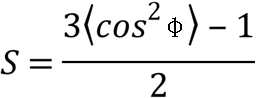
따라서 모든 흑연 평면이 섬유 축 방향을 따라 완벽하게 배향되는 경우, S = 1이다. 상기 흑연 평면의 랜덤 배향에 있어서, S = 0이다. 이전 연구에 따르면 상기 탄소 섬유는 통상적으로는 0.76 내지 0.99 범위의 헤르만 배향 인자를 갖는 것으로 나타났다(본원에서 참고로 인용되는 문헌{Anderson, David P. Carbon Fiber Morphology. 2. Expanded Wide-Angle X-Ray Diffraction Studies of Carbon Fibers. DAYTON UNIV. OH RESEARCH INST., 1991}). 이는 통상적인 탄소 섬유에서의 그래핀 평면(graphene plane)은 주로 상기 섬유의 축 방향을 따라 배향된다는 것을 보여준다.Thus, if all graphite planes are perfectly oriented along the fiber axis direction, S = 1. In the random orientation of the graphite plane, S = 0. Previous studies have shown that the carbon fibers typically have a hermane orientation factor in the range of 0.76 to 0.99 (see Anderson, David P. Carbon Fiber Morphology. Expanded Wide-Angle X-Ray Diffraction Studies of Carbon Fibers, DAYTON UNIV. OH RESEARCH INST., 1991}. This shows that the graphene plane in a typical carbon fiber is oriented mainly along the axial direction of the fiber.
직물 1의 전구체로부터 수득된 탄소 섬유에서의 흑연 결정 크기(Lc)가 표준 PAN계 탄소 섬유의 결정 크기(1.8 내지 2.2㎚)와 거의 유사할지라도 상기 얻어진 탄소 섬유는 매우 낮은 배향도[0.7 미만의 헤르만 배향 인자]를 나타낸다. 도 11에 나타나 있는 탄소 섬유(직물 1로부터의 탄소 섬유)에 대한 헤르만 배향 인자는 0.55, 0.61, 0.61 및 0.68의 S 값을 갖는다. 완벽하게 정렬된 탄소 결정은 헤르만 배향 인자의 최대 가능한 값인 1을 제공할 수 있다. 이 같은 높은 배향 값은 흑연 단일 결정으로 달성될 수 있다. 피치계 탄소 섬유(pitch-based carbon fiber)는 이 같은 높은 배향 인자에 접근할 수 있다. 직물 전구체가 주로 배향되지 않은 플라스틱 섬유(권취비: 3 내지 5배)인 경우, 산화적 가교 및 안정화 도중에 연신될지라도 이들은 흑연 결정에서 낮은 배향 특징을 갖는 탄소 섬유를 생산한다. 그럼에도 불구하고, 이들 직물 섬유의 배향(및 이로부터 유래된 탄소 섬유의 물성)은 산화 및 탄화 단계 도중에 예비 산화적 연신을 전개하고 높은 배향 및 연신을 유지함으로써 유의하게 개선될 수 있다. 그러나 특수 아크릴 섬유(SAF-PAN)로 만들어진 탄소 섬유와 같이 높은 배향 인자를 달성하는 것이 불가능할 수 있다.Although the graphite crystal size (Lc) in the carbon fiber obtained from the precursor of
본 발명에서는 새로운 탄소 섬유 제품을 생산할 수 있다. 이 같은 제품은 0.55 내지 0.80의 헤르만 배향 인자(S)를 갖는다. 이들 탄소 섬유 제품의 S는 0.55, 0.56, 0.57, 0.58, 0.59, 0.60, 0.61, 0.62, 0.63, 0.64, 0.65, 0.66, 0.67, 0.68, 0.69, 0.70, 0.71, 0.72, 0.73, 0.74, 0.75, 0.76, 0.77, 0.78, 0.79 또는 0.80일 수 있거나, 이들 값으로부터 선택된 임의의 높은 값 내지 낮은 값의 범위 내에 있을 수 있다. 상기 탄소 섬유 제품은 25 내지 40Msi의 인장 탄성률을 가질 수 있다. 상기 탄소 섬유 제품은 25Msi, 26Msi, 27Msi, 28Msi, 29Msi, 30Msi, 31Msi, 32Msi, 33Msi, 34Msi, 35Msi, 36Msi, 37Msi, 38Msi, 39Msi 또는 40Msi의 인장 탄성률을 가질 수 있거나, 이들 값으로부터 선택된 임의의 높은 값 내지 낮은 값의 범위 내에 있는 인장 탄성률을 가질 수 있다. 상기 탄소 섬유 제품은 적어도 1%의 인장 변형율을 가질 수 있다.The present invention can produce a new carbon fiber product. Such products have a hermane orientation factor (S) of from 0.55 to 0.80. S of these carbon fiber products was 0.55, 0.56, 0.57, 0.58, 0.59, 0.60, 0.61, 0.62, 0.63, 0.64, 0.65, 0.66, 0.67, 0.68, 0.69, 0.70, 0.71, 0.72, 0.73, 0.74, 0.75, 0.76 , 0.77, 0.78, 0.79, or 0.80, or may be in the range of any high value to a low value selected from these values. The carbon fiber product may have a tensile modulus of 25 to 40 Msi. The carbon fiber product may have a tensile modulus of elasticity of 25 Msi, 26 Msi, 27 Msi, 28 Msi, 29 Msi, 30 Msi, 31 Msi, 32 Msi, 33 Msi, 34 Msi, 35 Msi, 36 Msi, 37 Msi, 38 Msi, 39 Msi, And may have a tensile modulus within a range from a high value to a low value. The carbon fiber product may have a tensile strain of at least 1%.
실시예 8: 직물 PAN 전구체의 이러한 변환 방법을 이용하여 명판 생산 용량(nameplate production capacity)에서의 2배 증가의 확인: 도 2, 도 3 및 도 4에서 토의된 산화 오븐 및 탄화 가열로는 실제로 스풀링된 24k 또는 48k 토우 탄소 전구체 섬유 표준물질에 대한 작업을 위해 설계된다. 12인 오븐 너비에서 SAF 2의 24k 토우 전구체 밴드의 약 24개의 말단이 관통하여 공급될 수 있다. 표준 운행 조건 및 얻어진 탄소 섬유의 물성은 표 9에 나열되어 있다.Example 8 Confirmation of a 2-fold increase in nameplate production capacity using this conversion method of the fabric PAN precursor: The oxidation oven and carbonization furnace discussed in Figures 2, 3 and 4 are actually spooling 24k or 48k tow carbon precursor fiber standard material. Approximately 24 ends of the 24k tow precursor band of
산화 연신
구역 1(226℃): 19%
구역 2(229℃): -2%
구역 3(242℃): -4%
구역 4(254℃): 4%
탄화 연신
저온(565 내지 665℃): +4%
고온(1,433 내지 1,800℃): -5%Fiber speed at entry into oxidation zone 1: 1.70 m / min
Oxidation elongation
Zone 1 (226 ° C): 19%
Zone 2 (229 ° C): -2%
Zone 3 (242 ° C): -4%
Zone 4 (254 ° C): 4%
Carbonization stretching
Low temperature (565 to 665 ° C): + 4%
High temperature (1,433 to 1,800 DEG C): -5%
상기 산화 오븐 1에서의 상술한 질량 처리량에 기초하여, 질량 처리량 = 1.7m/분 * 24개의 토우 * 24,000개의 필라멘트/토우 * 1.3(g/9,000m)/필라멘트 = 141g/분 = 8.486㎏/시간의 전구체. 수율이 48%라고 가정하면, 상술한 처리량은 4.073㎏/시간의 탄소 섬유 생산량에 상응한다. 이것이 이러한 파일럿 라인(pilot line)의 명판 용량이다. 실시예 1에 나타나 있는 결과에 의해 고무되어 직물 1의 전구체의 533,000개의 필라멘트 토우에 대한 3개의 토우 밴드를 로딩하고 상기 오븐의 6인치 너비에 대해 동일한 산화 오븐을 통해 고농도로 대형 토우 조합을 로딩하려고 시도하였다. 상기 운전 변수 및 상기 섬유의 물성은 표 10에 나타나 있다.Based on the above-described mass throughput in the
산화 연신
구역 1(231℃): 85% 누적 연신
구역 2(229℃): 45% 누적 연신
구역 3(230℃): 11% 누적 연신
구역 4(232℃): -2.5% 누적 연신
탄화 연신
저온(565 내지 665℃): +2%
고온(1,365 내지 1,400℃): -4%Fiber speed at entry of oxidation zone 1: 0.40 m / min
Oxidation elongation
Zone 1 (231 ° C): 85% cumulative stretching
Zone 2 (229 ° C): 45% cumulative stretching
Zone 3 (230 캜): 11% cumulative stretching
Zone 4 (232 ° C): -2.5% cumulative stretching
Carbonization stretching
Low temperature (565 to 665 ° C): + 2%
High temperature (1,365 to 1,400 ° C): -4%
필라멘트의 파손 없이 안정된 상태를 유지하기 위해 인치 너비 당 533,000데니어인 산화 구역에서는 매우 높은 섬유 농도에서 상기 산화 구역의 온도가 감소하는 것으로 주지될 수 있다. 이러한 경우, 상기 산화 구역의 온도를 유의하게 증가시키지 않은 채 상기 산화 반응을 계속하기 위해서는 느린 산화 반응에 의해 방출된 발열 에너지가 상당하였다. 상기 안정화되고 저온 탄화된 섬유는 1,400℃까지 열처리될지라도 이들은 성능이 중간 정도(360ksi의 강도 및 30Msi의 탄성율)인 것으로 증명되었으며, 상기 탄성율은 아마도 탄화 온도의 추가적인 증가와 함께 증가할 것이다.It can be noted that at an oxidation zone of 533,000 denier per inch width to maintain a steady state without breakage of filaments, the temperature of the oxidation zone decreases at very high fiber concentrations. In this case, the exothermic energy released by the slow oxidation reaction was significant in order to continue the oxidation reaction without significantly increasing the temperature of the oxidation zone. Although the stabilized, low temperature carbonized fibers are heat treated to 1,400 ° C, they have proven to be moderate in performance (strength of 360 ksi and modulus of 30 Msi), which will likely increase with an additional increase in carbonization temperature.
상기 산화 구역 1에서의 상술한 질량 처리량(533k 토우의 3개의 밴드/6인치 너비 = 533k 토우의 6개의 밴드/12인치 너비에서의 질량 처리량)에 기초하여, 질량 처리량 = 0.4m/분 * 6개의 토우 * 533,000개의 필라멘트/토우 * 2.0(g/9,000m)/필라멘트 = 284g/분 = 17.056㎏/시간의 전구체. 수율이 48%라고 가정하면, 상술한 처리량은 8.186㎏/시간의 탄소 생산량에 상응한다. 이는 본 연구에서 사용된 파일럿 라인의 명판 용량의 대략 2배이다.Based on the above-described mass throughput in the oxidation zone 1 (3 bands of 533 k tow / 6 inches width = mass throughput at 6 bands / 12 inch width of 533 k tow), mass throughput = 0.4 m / min * 6 Tow of precursor of 533,000 filaments / tow * 2.0 (g / 9,000 m) / filament = 284 g / min = 17.056 kg / hr. Assuming a yield of 48%, the above-mentioned throughput corresponds to a carbon yield of 8.186 kg / hr. This is approximately twice the nameplate capacity of the pilot line used in this study.
이들 직물이 감소된 데니어를 형성하기 위해 예비 연신되는 경우에 이는 상기 산화 구역 내에서 연신할 것을 요구하는 연신되지 않은 전구체보다 빠른 속도로 상기 산화 구역을 통과하는 것으로 실험적으로 관측되어 왔다. 이러한 조건 하에서 이는 더욱 향상된 처리량을 나타낸다.It has been experimentally observed that when these fabrics are pre-stretched to form a reduced denier, they pass through the oxidation zone at a higher rate than the unstretched precursors which require stretching in the oxidation zone. Under these conditions it exhibits even greater throughput.
본 발명의 방법 및 기법은 전통적인 탄소 섬유 변환 공정 장비의 명판 용량의 최대 3배 이상의 연장을 초래할 수 있다. 게다가, 본 발명의 공정을 위해 생산된 단위 탄소 섬유 당 전력 감소는 최대 80%일 수 있으며, 이는 산화적 안정화 단계에서 개시된 열화학 반응으로 인해 전통적인 탄소 섬유 변환 기법보다 낮다. 전통적인 3k, 6k, 12k, 24k 및 50k 필라멘트보다 큰 토우 번들 크기는 중간체 및 복합 물질의 제조 효율을 개선시킬 수 있다. 예로는 탄소 섬유 프리프레그(prepreg), 크림핑되지 않은 탄소 섬유 직물, 절단 섬유(chopped fiber) 및 스티치-결합된 프리폼(stitch bonded preform) 제조가 있다. 범용 섬유 변환 능력은 보다 큰 토우 번들 선택안으로 인해 하류 복합 공정에서의 최적의 가요성 및 효율성을 가능케 한다.The methods and techniques of the present invention can result in up to three times or more extension of the nameplate capacity of conventional carbon fiber conversion process equipment. In addition, the power reduction per unit carbon fiber produced for the process of the present invention can be up to 80%, which is lower than traditional carbon fiber conversion techniques due to thermochemical reactions initiated in the oxidative stabilization step. Tow bundle sizes larger than traditional 3k, 6k, 12k, 24k and 50k filaments can improve the efficiency of the production of intermediates and composite materials. Examples include carbon fiber prepregs, uncrimped carbon fiber fabrics, chopped fibers, and stitch bonded preforms. The universal fiber conversion capability allows optimal flexibility and efficiency in the downstream composite process due to the larger tow bundle selection.
범위: 본 명세서 전반에 걸쳐 본 발명의 다양한 양태는 범위 형식으로 제시될 수 있다. 상기 범위 형식에서의 설명은 단지 편의 및 간결성을 위한 것이며, 본 발명의 범주에 대한 융통성 없는 제한으로서 해석되어서는 안 되는 것으로 이해되어야 한다. 따라서 범위에 대한 설명은 그 범위 내에 있는 개개의 수치뿐만 아니라 가능한 모든 하위 범위를 구체적으로 개시하고 있는 것으로 고려되어야 한다. 예를 들어, 1 내지 6과 같은 범위에 대한 설명은 그 범위 내에 있는 개개의 숫자, 예를 들어 1, 2, 2.7, 3, 4, 5, 5.3 및 6뿐만 아니라 1 내지 3, 1 내지 4, 1 내지 5, 2 내지 4, 2 내지 6, 3 내지 6 등과 같은 하위 범위를 구체적으로 개시하고 있는 것으로 고려되어야 한다. 이는 상기 범위 폭과는 무관하게 적용된다.Scope: Throughout this specification various aspects of the invention may be presented in scoped form. It should be understood that the description in the above range format is merely for convenience and brevity, and should not be construed as an inflexible limitation on the scope of the present invention. Accordingly, the description of the scope should be considered as disclosing all possible sub-ranges as well as individual values within the range. For example, an explanation for a range such as 1 to 6 may be applied to individual numbers within the range, such as 1, 2, 2.7, 3, 4, 5, 5.3 and 6, as well as 1 to 3, 1 to 5, 2 to 4, 2 to 6, 3 to 6, and the like. This applies irrespective of the range width.
본 발명은 이의 진의 또는 본질적 속성에서 벗어나지 않는 한 기타 형태로 구현될 수 있으며, 따라서 본 발명의 범주를 결정하기 위해 하기 특허청구범위를 참고해야 한다.The present invention may be embodied in other forms without departing from the spirit or essential attributes thereof, and therefore, reference should be made to the following claims to determine the scope of the invention.
Claims (52)
폴리아크릴로니트릴 전구체 중합체 섬유를 제공하는 단계로서, 상기 폴리아크릴로니트릴 전구체 필라멘트는 87 내지 97몰%의 아크릴로니트릴을 포함하고 0.5몰% 미만의 촉진 작용기를 포함하며, 상기 필라멘트는 필라멘트 당 3데니어 이하인 단계;
인치 너비 당 적어도 150,000데니어인 토우(tow) 내에 상기 폴리아크릴로니트릴 전구체 필라멘트를 배열하는 단계;
안정화된 전구체 섬유를 수득하기 위해, 적어도 10% 정도 연신하면서 산소 기체를 함유하고 제 1 온도로 유지되는 적어도 하나의 산화 구역에서 상기 배열된 폴리아크릴로니트릴 전구체 섬유 토우를 가열함으로써 상기 토우를 안정화시키는 단계; 및
상기 안정화된 전구체 섬유를 탄화시켜 탄소 섬유를 생산하는 단계를 포함하는, 탄소 섬유를 생산하는 방법.As a method of producing carbon fibers,
Providing a polyacrylonitrile precursor polymer fiber, wherein the polyacrylonitrile precursor filament comprises 87 to 97 mole% of acrylonitrile and less than 0.5 mole% of a promoter, wherein the filament has 3 per filament Denier;
Arranging said polyacrylonitrile precursor filament in a tow of at least 150,000 denier per inch width;
In order to obtain stabilized precursor fibers, the towed polyacrylonitrile precursor fiber tow is heated to at least one oxidation zone containing oxygen gas and maintained at a first temperature while being stretched by at least 10% step; And
And carbonizing the stabilized precursor fibers to produce carbon fibers.
폴리아크릴로니트릴 전구체 중합체 섬유 필라멘트를 제공하는 단계로서, 상기 폴리아크릴로니트릴 전구체 중합체 섬유 필라멘트는 87 내지 97몰%의 아크릴로니트릴을 포함하고 0.5몰% 미만의 촉진 작용기를 포함하며, 상기 필라멘트는 필라멘트 당 3데니어 이하인 단계;
인치 너비 당 적어도 150,000데니어인 토우 내에 상기 폴리아크릴로니트릴 전구체 섬유 필라멘트를 배열하는 단계; 및
안정화된 전구체 섬유를 수득하기 위해, 상기 토우를 적어도 10% 정도 연신하면서 산소 기체를 함유하고 제 1 온도로 유지되는 적어도 하나의 산화 구역에서 상기 배열된 섬유 필라멘트를 가열함으로써 상기 배열된 폴리아크릴로니트릴 전구체 섬유를 안정화시키는 단계를 포함하는, 탄소 섬유를 생산하는 방법.As a method of producing carbon fibers,
Providing a polyacrylonitrile precursor polymeric fiber filament wherein the polyacrylonitrile precursor polymeric filament filament comprises 87 to 97 mole percent of acrylonitrile and less than 0.5 mole percent of a promoter functionality, Less than 3 denier per filament;
Arranging the polyacrylonitrile precursor fiber filament in a tow at least 150,000 denier per inch width; And
By heating the arranged filament filaments in at least one oxidation zone containing oxygen gas and maintaining a first temperature while stretching the tow by at least 10% to obtain stabilized precursor fibers, the arrayed polyacrylonitrile And stabilizing the precursor fibers.
폴리아크릴로니트릴 전구체 중합체 섬유를 제공하는 단계로서, 상기 폴리아크릴로니트릴 전구체 필라멘트는 87 내지 97몰%의 아크릴로니트릴을 포함하고 0.5몰% 미만의 촉진 작용기를 포함하며, 상기 필라멘트는 필라멘트 당 3데니어 이하인 단계;
인치 너비 당 적어도 150,000데니어인 토우 내에 상기 폴리아크릴로니트릴 전구체 필라멘트를 배열하는 단계; 및
안정화된 전구체 섬유를 수득하기 위해, 적어도 10% 정도 연신하면서 산소 기체를 함유하고 제 1 온도로 유지되는 적어도 하나의 산화 구역에서 상기 배열된 폴리아크릴로니트릴 전구체 섬유 토우를 가열함으로써 상기 토우를 안정화시키는 단계를 포함하는, 난연성 섬유를 생산하는 방법.As a method of producing flame retardant fibers,
Providing a polyacrylonitrile precursor polymer fiber, wherein the polyacrylonitrile precursor filament comprises 87 to 97 mole% of acrylonitrile and less than 0.5 mole% of a promoter, wherein the filament has 3 per filament Denier;
Arranging said polyacrylonitrile precursor filament in a tow at least 150,000 denier per inch width; And
In order to obtain stabilized precursor fibers, the towed polyacrylonitrile precursor fiber tow is heated to at least one oxidation zone containing oxygen gas and maintained at a first temperature while being stretched by at least 10% RTI ID = 0.0 > 1, < / RTI >
폴리아크릴로니트릴 전구체 중합체 섬유를 제공하는 단계로서, 상기 폴리아크릴로니트릴 전구체 필라멘트는 87 내지 97몰%의 아크릴로니트릴을 포함하고 0.5몰% 미만의 촉진 작용기를 포함하며, 상기 필라멘트는 필라멘트 당 3데니어 이하인 단계;
인치 너비 당 적어도 150,000데니어인 토우 내에 상기 폴리아크릴로니트릴 전구체 필라멘트를 배열하는 단계; 및
안정화된 전구체 섬유를 수득하기 위해 적어도 10% 정도 연신하면서 산소 기체를 함유하고 제 1 온도로 유지되는 적어도 하나의 산화 구역에서 상기 배열된 폴리아크릴로니트릴 전구체 섬유 토우를 가열함으로써 상기 토우를 안정화시키는 단계를 포함하는, 안정화된 섬유를 생산하는 방법.A method of producing stabilized fibers,
Providing a polyacrylonitrile precursor polymer fiber, wherein the polyacrylonitrile precursor filament comprises 87 to 97 mole% of acrylonitrile and less than 0.5 mole% of a promoter, wherein the filament has 3 per filament Denier;
Arranging said polyacrylonitrile precursor filament in a tow at least 150,000 denier per inch width; And
Stabilizing said tow by heating said arrayed polyacrylonitrile precursor fiber tow in at least one oxidation zone containing oxygen gas and at a first temperature while stretching by at least 10% to obtain stabilized precursor fibers; ≪ / RTI >
흑연 평면에 대해 0.55 내지 0.80의 헤르만 배향 인자(Herman orientation factor; S), 30 내지 40Msi의 인장 탄성률 및 적어도 1%의 인장 변형율을 갖는 탄소 섬유.As the carbon fiber,
Carbon fiber having a Herman orientation factor (S) of 0.55 to 0.80 for graphite plane, a tensile modulus of 30 to 40 Msi and a tensile strain of at least 1%.
Applications Claiming Priority (5)
| Application Number | Priority Date | Filing Date | Title |
|---|---|---|---|
| US201562273559P | 2015-12-31 | 2015-12-31 | |
| US62/273,559 | 2015-12-31 | ||
| US201662305232P | 2016-03-08 | 2016-03-08 | |
| US62/305,232 | 2016-03-08 | ||
| PCT/US2016/069537 WO2017117544A1 (en) | 2015-12-31 | 2016-12-30 | Method of producing carbon fibers from multipurpose commercial fibers |
Publications (1)
| Publication Number | Publication Date |
|---|---|
| KR20180098666A true KR20180098666A (en) | 2018-09-04 |
Family
ID=59225459
Family Applications (1)
| Application Number | Title | Priority Date | Filing Date |
|---|---|---|---|
| KR1020187022137A Withdrawn KR20180098666A (en) | 2015-12-31 | 2016-12-30 | Methods for producing carbon fibers from versatile commercial fibers |
Country Status (10)
| Country | Link |
|---|---|
| US (3) | US10407802B2 (en) |
| EP (1) | EP3397797B1 (en) |
| JP (1) | JP2019500511A (en) |
| KR (1) | KR20180098666A (en) |
| CN (1) | CN108431310A (en) |
| AU (1) | AU2016381341B2 (en) |
| CA (1) | CA3008672A1 (en) |
| MX (1) | MX2018007988A (en) |
| RU (1) | RU2018126669A (en) |
| WO (1) | WO2017117544A1 (en) |
Cited By (1)
| Publication number | Priority date | Publication date | Assignee | Title |
|---|---|---|---|---|
| KR102197333B1 (en) * | 2020-08-04 | 2021-01-04 | 효성첨단소재 주식회사 | Polyacrylonitrile-based STABILIZED FIBER, CARBON FIBER, AND PREPARATION METHOD THEREOF |
Families Citing this family (10)
| Publication number | Priority date | Publication date | Assignee | Title |
|---|---|---|---|---|
| EP3536840B1 (en) * | 2016-11-01 | 2020-12-16 | Nissan Motor Co., Ltd. | Composite material reinforcement substrate, composite material, and production method for composite material reinforcement substrate |
| TWI654240B (en) | 2017-11-22 | 2019-03-21 | 財團法人工業技術研究院 | Carbon fiber precursor composition and method for preparing carbon fiber precursor |
| CN112708971B (en) * | 2021-01-13 | 2022-11-25 | 荣成碳纤维科技有限公司 | Automatic fire prevention and extinguishing method and device for carbon fiber oxidation furnace |
| US20250091254A1 (en) * | 2021-06-04 | 2025-03-20 | University Of Tennessee Research Foundation | Thermoplastic impregnation of large tow textile grade carbon fiber |
| CN113186718B (en) * | 2021-06-10 | 2022-11-22 | 浙江工商大学 | Chelate fiber PAN-DAAM, preparation method and application thereof |
| US20230001618A1 (en) * | 2021-06-30 | 2023-01-05 | Connie Jackson | Carbon-fiber fuel tank |
| JP7753705B2 (en) * | 2021-07-26 | 2025-10-15 | 東レ株式会社 | Carbon fiber bundle and its manufacturing method |
| US20240301590A1 (en) * | 2021-08-20 | 2024-09-12 | Hexcel Corporation | Carbon fibers having improved strength and modulus and an associated method and apparatus for preparing same |
| WO2023094650A2 (en) * | 2021-11-29 | 2023-06-01 | Teijin Carbon Europe Gmbh | Continuous oven |
| CN118186681B (en) * | 2024-02-23 | 2026-04-21 | 太原理工大学 | A high-temperature resistant bifunctional nanomaterial for power generation, its preparation method and application |
Family Cites Families (90)
| Publication number | Priority date | Publication date | Assignee | Title |
|---|---|---|---|---|
| US2913802A (en) | 1953-07-16 | 1959-11-24 | Johns Manville | Thermal modification of acrylonitrile yarns |
| US3296341A (en) | 1963-07-15 | 1967-01-03 | Dow Chemical Co | Method for impregnating acrylonitrile polymer fibers to improve dyeability |
| GB1110791A (en) | 1964-04-24 | 1968-04-24 | Nat Res Dev | The production of carbon fibres |
| GB1196599A (en) | 1966-11-24 | 1970-07-01 | Courtaulds Ltd | Polyacrylonitrile and carbon fibre production |
| US3607817A (en) | 1967-03-09 | 1971-09-21 | Celanese Corp | Production of dyeable polyacrylonitrile compositions and articles |
| US3466716A (en) * | 1967-06-02 | 1969-09-16 | Du Pont | Twisted chute for improved tow stacking |
| US3533743A (en) | 1968-05-28 | 1970-10-13 | Great Lakes Carbon Corp | Process for the manufacture of continuous high modulus carbon yarns and monofilaments |
| US3539295A (en) | 1968-08-05 | 1970-11-10 | Celanese Corp | Thermal stabilization and carbonization of acrylic fibrous materials |
| NL165611B (en) | 1968-10-04 | Accumulateurs Fixes | ELECTROCHEMICAL CELL WITH A LITHIUM ELECTRODE. | |
| JPS527796B1 (en) | 1968-10-04 | 1977-03-04 | ||
| US3607059A (en) | 1969-04-02 | 1971-09-21 | Great Lakes Carbon Corp | Process for the manufacture of filamentary carbon products |
| GB1324041A (en) | 1969-10-31 | 1973-07-18 | Nippon Carbon Co Ltd | Method of producing carbon fibres |
| US3716331A (en) | 1970-04-10 | 1973-02-13 | Union Carbide Corp | Process for producing carbon fibers having a high young's modulus of elasticity |
| GB1354880A (en) | 1970-09-23 | 1974-06-05 | Nat Res Dev | Carbon fibre tow production |
| GB1370366A (en) | 1970-12-12 | 1974-10-16 | Mitsubishi Rayon Co | Production of carbon fibres |
| US3917776A (en) | 1970-12-12 | 1975-11-04 | Mitsubishi Rayon Co | Process for producing carbon fiber |
| US4002426A (en) | 1971-01-25 | 1977-01-11 | Celanese Corporation | Production of stabilized non-burning acrylic fibers and films |
| US3965227A (en) | 1971-06-22 | 1976-06-22 | Ceskoslovenska Akademie Ved | Method of simultaneously manufacturing acrylic fibers and nitrates |
| US3914394A (en) | 1973-02-15 | 1975-10-21 | Japan Exlan Co Ltd | Process for producing carbon fibers |
| JPS5133211B2 (en) | 1974-02-04 | 1976-09-18 | ||
| US3945093A (en) | 1974-06-10 | 1976-03-23 | Hitco | Method and apparatus for producing high modulus bixial fabric |
| GB1498721A (en) | 1975-02-17 | 1978-01-25 | Morganite Modmor Ltd | Production of carbon fibre |
| JPS51119833A (en) | 1975-04-08 | 1976-10-20 | Toho Rayon Co Ltd | A process for manufacturing carbon fibers |
| JPS5231124A (en) | 1975-09-01 | 1977-03-09 | Japan Exlan Co Ltd | Improved preparation of carbon fiber |
| US4100004A (en) | 1976-05-11 | 1978-07-11 | Securicum S.A. | Method of making carbon fibers and resin-impregnated carbon fibers |
| JPS5920004B2 (en) * | 1977-03-23 | 1984-05-10 | 日本エクスラン工業株式会社 | Carbon fiber manufacturing method |
| GB2014971A (en) | 1977-12-14 | 1979-09-05 | Securicum Sa | Carbon Fibre |
| US4336022A (en) | 1979-08-01 | 1982-06-22 | E. I. Du Pont De Nemours And Company | Acrylic precursor fibers suitable for preparing carbon or graphite fibers |
| US4698413A (en) | 1979-08-01 | 1987-10-06 | E. I. Du Pont De Nemours And Company | Acrylic fiber suitable for preparing carbon or graphite fibers |
| JPS5663014A (en) | 1979-10-25 | 1981-05-29 | Toho Rayon Co Ltd | Flameproofing and carbonizing method of acrylonitrile fiber |
| US4526770A (en) * | 1980-10-02 | 1985-07-02 | Fiber Materials, Inc. | Method of producing carbon fiber and product thereof |
| CA1156409A (en) | 1980-10-02 | 1983-11-08 | Roger T. Pepper | Method of producing carbon fiber and product thereof |
| JPS58139645A (en) | 1982-02-10 | 1983-08-19 | 三菱電機株式会社 | Generating plant bus switching device |
| JPS59199809A (en) | 1983-04-20 | 1984-11-13 | Japan Exlan Co Ltd | Polyacrylonitrile yarn having high strength and its preparation |
| US5004590A (en) | 1983-08-05 | 1991-04-02 | Hercules Incorporated | Carbon fibers |
| DE3485026D1 (en) | 1983-10-13 | 1991-10-10 | Mitsubishi Rayon Co | CARBON FIBERS WITH HIGH STRENGTH AND HIGH ELASTICITY MODULE AND THEIR PRODUCTION PROCESS. |
| US4610860A (en) * | 1983-10-13 | 1986-09-09 | Hitco | Method and system for producing carbon fibers |
| US5078926A (en) | 1984-03-07 | 1992-01-07 | American Cyanamid Company | Rapid stabilization process for carbon fiber precursors |
| US4874563A (en) | 1984-03-15 | 1989-10-17 | Basf Structural Materials Inc. | Process for preparing tows from composite fiber blends |
| US4728395A (en) * | 1984-10-12 | 1988-03-01 | Stackpole Fibers Company, Inc. | Controlled resistivity carbon fiber paper and fabric sheet products and method of manufacture |
| US4726770A (en) | 1985-01-12 | 1988-02-23 | Kurer Hans G | Tooth restoration and means for use therein |
| KR890005273B1 (en) | 1985-10-09 | 1989-12-20 | 미쓰비시레이욘 가부시끼가이샤 | Process for producing carbon fibers |
| EP0223199B1 (en) | 1985-11-18 | 1992-05-27 | Toray Industries, Inc. | Process for producing high-strenght, high-modulus carbon fibers |
| US4661336A (en) | 1985-11-25 | 1987-04-28 | Hitco | Pretreatment of pan fiber |
| JPS62257422A (en) | 1986-04-25 | 1987-11-10 | Mitsubishi Rayon Co Ltd | Carbon fiber manufacturing method |
| US5268158A (en) | 1987-03-11 | 1993-12-07 | Hercules Incorporated | High modulus pan-based carbon fiber |
| JPS6445830A (en) | 1987-08-13 | 1989-02-20 | Toray Industries | High performance carbon fiber cord |
| CA1327258C (en) | 1988-02-16 | 1994-03-01 | James Toner Paul Jr. | Method of manufacturing carbon fiber using preliminary stretch |
| US5066433A (en) | 1988-02-16 | 1991-11-19 | Hercules Incorporated | Method of manufacturing carbon fiber using preliminary stretch |
| US4935180A (en) | 1988-08-25 | 1990-06-19 | Basf Aktiengesellschaft | Formation of melt-spun acrylic fibers possessing a highly uniform internal structure which are particularly suited for thermal conversion to quality carbon fibers |
| CA2007067A1 (en) * | 1989-01-11 | 1990-07-11 | Martin E. Ketterer | Composite metal-loaded carbon fibers |
| US5256344A (en) | 1989-02-23 | 1993-10-26 | Hercules Incorporated | Process of thermally stabilizing pan fibers |
| US4933128A (en) | 1989-07-06 | 1990-06-12 | Basf Aktiengesellschaft | Formation of melt-spun acrylic fibers which are well suited for thermal conversion to high strength carbon fibers |
| EP0451263B1 (en) | 1989-11-01 | 1995-11-08 | The Dow Chemical Company | Linear carbonaceous fiber with improved elongatability |
| JPH0633531A (en) | 1992-07-17 | 1994-02-08 | Shigekiyo Tsuge | Foam plastic panel and three-layer structure panel |
| JPH10121325A (en) | 1996-10-14 | 1998-05-12 | Toray Ind Inc | Precursor fiber bundle for carbon fiber, method for producing the same, and method for producing carbon fiber |
| US6054214A (en) | 1996-10-31 | 2000-04-25 | Wilkinson; Kenneth | Process for the preparation of carbon fiber |
| US5804108A (en) | 1996-10-31 | 1998-09-08 | Wilkinson; Kenneth | Process for the preparation of carbon fiber |
| JPH10167564A (en) | 1996-12-05 | 1998-06-23 | Toray Ind Inc | Carbon fiber package and carbon fiber package |
| US6268450B1 (en) | 1998-05-11 | 2001-07-31 | Solutia Inc. | Acrylic fiber polymer precursor and fiber |
| KR100570592B1 (en) | 1998-07-22 | 2006-04-13 | 미쯔비시 레이온 가부시끼가이샤 | Acrylonitrile precursor fiber for carbon fiber and its manufacturing method |
| JP2000336529A (en) | 1999-05-28 | 2000-12-05 | Toray Ind Inc | Carbon fiber production method |
| HU229839B1 (en) | 1999-06-15 | 2014-09-29 | Mitsubishi Rayon Co | Acrylic yarn as thick carbon fiber precursor and method for producing the same |
| JP3552953B2 (en) | 1999-07-05 | 2004-08-11 | 日本電信電話株式会社 | Reserve VP design apparatus, reserve VP design method, and recording medium |
| US6210622B1 (en) | 1999-07-19 | 2001-04-03 | Arteva North America S.A.R.L. | Process of making polymeric fibers |
| US7223376B2 (en) | 2000-02-10 | 2007-05-29 | Industrial Technology And Equipment Company | Apparatus and method for making carbon fibers |
| US6641915B1 (en) | 2000-05-09 | 2003-11-04 | Mitsubishi Rayon Co., Ltd. | Acrylonitrile-based fiber bundle for carbon fiber precursor and method for preparation thereof |
| JP2001355120A (en) | 2000-06-12 | 2001-12-26 | Toho Tenax Co Ltd | Large tow precursor, method for producing the same and method for producing carbon fiber |
| EP1719829B1 (en) | 2004-02-13 | 2010-07-14 | Mitsubishi Rayon Co., Ltd. | Carbon fiber precursor fiber bundle, production method and production device therefor, and carbon fiber and production method therefor |
| JP4360233B2 (en) | 2004-03-11 | 2009-11-11 | 東レ株式会社 | Golf shaft |
| JP4957251B2 (en) | 2005-12-13 | 2012-06-20 | 東レ株式会社 | Carbon fiber, method for producing polyacrylonitrile-based precursor fiber for carbon fiber production, and method for producing carbon fiber |
| EP2060525B1 (en) | 2006-09-06 | 2012-03-21 | Mitsubishi Rayon Co., Ltd. | Carbon fiber package and process for producing the same |
| US7749479B2 (en) | 2006-11-22 | 2010-07-06 | Hexcel Corporation | Carbon fibers having improved strength and modulus and an associated method and apparatus for preparing same |
| JP5012089B2 (en) | 2007-03-02 | 2012-08-29 | 東レ株式会社 | Carbon fiber precursor fiber bundle and method for producing the same |
| JP5207796B2 (en) * | 2008-03-28 | 2013-06-12 | 三菱レイヨン株式会社 | Flame resistant treatment apparatus and precursor fiber bundle flame resistant treatment method |
| CN101560701B (en) | 2009-05-13 | 2010-12-08 | 北京化工大学 | A kind of preparation method of high-strength carbon fiber |
| US8608992B2 (en) | 2010-09-24 | 2013-12-17 | The Board Of Trustees Of The University Of Illinois | Carbon nanofibers derived from polymer nanofibers and method of producing the nanofibers |
| TWI553175B (en) | 2010-10-13 | 2016-10-11 | 三菱麗陽股份有限公司 | Carbon fiber precursor acrylic fiber bundle,flame retardant treatment method, carbon fiber and method for manufacturing the same, carbon fiber prepreg, unidirectional fiber reinforced fabrics and method for forming fiber reinforced plastics |
| PT2735575T (en) | 2011-07-22 | 2016-11-14 | Mitsubishi Rayon Co | Polyacrylonitrile-based copolymer, polyacrylonitrile-based precursor fiber for carbon fiber, carbon fiber bundles, process for producing flameproofed fiber bundles, and process for producing carbon fiber bundles |
| MX349435B (en) | 2011-10-04 | 2017-07-28 | Toray Industries | Carbon fiber-reinforced thermoplastic resin composition, molding material, prepreg, and methods for producing same. |
| DE202012013359U1 (en) | 2011-10-26 | 2016-07-15 | Deutsche Institute Für Textil- Und Faserforschung Denkendorf | Carbon fibers and carbon fiber precursors |
| CN102505189B (en) * | 2011-10-27 | 2013-05-01 | 北京化工大学 | Preparation method for high strength high modulus carbon fiber |
| KR101417217B1 (en) | 2011-11-22 | 2014-07-09 | 현대자동차주식회사 | Method for preparing carbon fiber precursor |
| TWI527946B (en) * | 2012-04-12 | 2016-04-01 | 三菱麗陽股份有限公司 | Carbon fiber precursor acrylic fiber bundle and method for producing the same, thermal oxide treatment furnace and method for producing carbon fiber |
| HUE044063T2 (en) | 2012-04-18 | 2019-09-30 | Mitsubishi Chem Corp | Carbon fiber bundle |
| JP5765420B2 (en) | 2012-04-18 | 2015-08-19 | 三菱レイヨン株式会社 | Carbon fiber bundle and method for producing carbon fiber |
| CN103572411B (en) | 2012-07-31 | 2015-09-23 | 金发科技股份有限公司 | polyacrylonitrile-based carbon fibre, preparation method and application thereof |
| CN104372445B (en) | 2013-08-13 | 2018-03-09 | 中国石油化工股份有限公司 | A kind of preparation method for being copolymerized the polyacrylonitrile carbon fiber that sequence is evenly distributed |
| JP2015183165A (en) * | 2014-03-26 | 2015-10-22 | 東レ株式会社 | Acrylonitrile copolymer, polyacrylonitrile carbon fiber precursor fiber, and method for producing carbon fiber |
| JP6295890B2 (en) | 2014-08-27 | 2018-03-20 | 三菱ケミカル株式会社 | Carbon fiber bundle |
-
2016
- 2016-12-30 CN CN201680077572.7A patent/CN108431310A/en active Pending
- 2016-12-30 CA CA3008672A patent/CA3008672A1/en not_active Abandoned
- 2016-12-30 US US15/395,926 patent/US10407802B2/en active Active
- 2016-12-30 EP EP16882761.6A patent/EP3397797B1/en active Active
- 2016-12-30 MX MX2018007988A patent/MX2018007988A/en unknown
- 2016-12-30 AU AU2016381341A patent/AU2016381341B2/en active Active
- 2016-12-30 WO PCT/US2016/069537 patent/WO2017117544A1/en not_active Ceased
- 2016-12-30 KR KR1020187022137A patent/KR20180098666A/en not_active Withdrawn
- 2016-12-30 JP JP2018534082A patent/JP2019500511A/en active Pending
- 2016-12-30 RU RU2018126669A patent/RU2018126669A/en not_active Application Discontinuation
-
2019
- 2019-08-30 US US16/557,309 patent/US10961642B2/en active Active
-
2021
- 2021-03-09 US US17/196,964 patent/US12146242B2/en active Active
Cited By (3)
| Publication number | Priority date | Publication date | Assignee | Title |
|---|---|---|---|---|
| KR102197333B1 (en) * | 2020-08-04 | 2021-01-04 | 효성첨단소재 주식회사 | Polyacrylonitrile-based STABILIZED FIBER, CARBON FIBER, AND PREPARATION METHOD THEREOF |
| WO2022030854A1 (en) * | 2020-08-04 | 2022-02-10 | 효성첨단소재 주식회사 | Polyacrylonitrile-based flame-retardant fiber, carbon fiber, and manufacturing method therefor |
| US12410542B2 (en) | 2020-08-04 | 2025-09-09 | Hs Hyosung Advanced Materials Corporation | Polyacrylonitrile-based stabilized fiber, carbon fiber, and manufacturing method therefor |
Also Published As
| Publication number | Publication date |
|---|---|
| RU2018126669A (en) | 2020-02-03 |
| US20210198816A1 (en) | 2021-07-01 |
| EP3397797A1 (en) | 2018-11-07 |
| AU2016381341A1 (en) | 2018-07-05 |
| US10961642B2 (en) | 2021-03-30 |
| US12146242B2 (en) | 2024-11-19 |
| CA3008672A1 (en) | 2017-07-06 |
| MX2018007988A (en) | 2018-11-09 |
| CN108431310A (en) | 2018-08-21 |
| JP2019500511A (en) | 2019-01-10 |
| EP3397797B1 (en) | 2023-08-30 |
| AU2016381341B2 (en) | 2021-06-03 |
| US10407802B2 (en) | 2019-09-10 |
| WO2017117544A1 (en) | 2017-07-06 |
| EP3397797A4 (en) | 2019-07-31 |
| US20170191194A1 (en) | 2017-07-06 |
| US20190382925A1 (en) | 2019-12-19 |
Similar Documents
| Publication | Publication Date | Title |
|---|---|---|
| US12146242B2 (en) | System for producing carbon fibers from multipurpose commercial fibers | |
| AU2022287549B2 (en) | Precursor stabilisation process | |
| CN111263834B (en) | Carbon fiber bundle and method for producing same | |
| CN109154109B (en) | Carbon fiber bundle and method for producing same | |
| CN1104268A (en) | Method and apparatus for producing polyester fibers | |
| CN114262956B (en) | Carbonization yarn splicing method for large-tow carbon fiber precursor | |
| Perepelkin | Oxidized (cyclized) polyacrylonitrile fibres—oxypan. A review | |
| US4526770A (en) | Method of producing carbon fiber and product thereof | |
| CA1156409A (en) | Method of producing carbon fiber and product thereof | |
| WO1987002391A1 (en) | Process for producing carbon fibers | |
| JPS62215018A (en) | Carbon fiber manufacturing method | |
| GB2170491A (en) | Method of producing graphite fiber and product thereof | |
| JPS6142006B2 (en) | ||
| JPS60246821A (en) | Preparation of carbon yarn | |
| JPS58214524A (en) | Continuous production of graphite fiber | |
| JPS61258020A (en) | Production of pitch based carbon fiber | |
| JPH01282334A (en) | Infusibilization treatment of pitch-based material | |
| JPH07109615A (en) | Production of polyvinyl alcohol fiber |
Legal Events
| Date | Code | Title | Description |
|---|---|---|---|
| PA0105 | International application |
Patent event date: 20180731 Patent event code: PA01051R01D Comment text: International Patent Application |
|
| PG1501 | Laying open of application | ||
| PC1203 | Withdrawal of no request for examination | ||
| WITN | Application deemed withdrawn, e.g. because no request for examination was filed or no examination fee was paid |