EP4527872A1 - Catalyseur pour la dépolymérisation de polyesters ou pour la synthèse d'esters cycliques, procédé de préparation associé et son utilisation - Google Patents
Catalyseur pour la dépolymérisation de polyesters ou pour la synthèse d'esters cycliques, procédé de préparation associé et son utilisation Download PDFInfo
- Publication number
- EP4527872A1 EP4527872A1 EP23814721.9A EP23814721A EP4527872A1 EP 4527872 A1 EP4527872 A1 EP 4527872A1 EP 23814721 A EP23814721 A EP 23814721A EP 4527872 A1 EP4527872 A1 EP 4527872A1
- Authority
- EP
- European Patent Office
- Prior art keywords
- catalyst
- hydroxyl
- structural formula
- ion
- chain
- Prior art date
- Legal status (The legal status is an assumption and is not a legal conclusion. Google has not performed a legal analysis and makes no representation as to the accuracy of the status listed.)
- Pending
Links
Images


Classifications
-
- B—PERFORMING OPERATIONS; TRANSPORTING
- B01—PHYSICAL OR CHEMICAL PROCESSES OR APPARATUS IN GENERAL
- B01J—CHEMICAL OR PHYSICAL PROCESSES, e.g. CATALYSIS OR COLLOID CHEMISTRY; THEIR RELEVANT APPARATUS
- B01J31/00—Catalysts comprising hydrides, coordination complexes or organic compounds
- B01J31/16—Catalysts comprising hydrides, coordination complexes or organic compounds containing coordination complexes
- B01J31/18—Catalysts comprising hydrides, coordination complexes or organic compounds containing coordination complexes containing nitrogen, phosphorus, arsenic or antimony as complexing atoms, e.g. in pyridine ligands, or in resonance therewith, e.g. in isocyanide ligands C=N-R or as complexed central atoms
- B01J31/1805—Catalysts comprising hydrides, coordination complexes or organic compounds containing coordination complexes containing nitrogen, phosphorus, arsenic or antimony as complexing atoms, e.g. in pyridine ligands, or in resonance therewith, e.g. in isocyanide ligands C=N-R or as complexed central atoms the ligands containing nitrogen
- B01J31/181—Cyclic ligands, including e.g. non-condensed polycyclic ligands, comprising at least one complexing nitrogen atom as ring member, e.g. pyridine
-
- C—CHEMISTRY; METALLURGY
- C08—ORGANIC MACROMOLECULAR COMPOUNDS; THEIR PREPARATION OR CHEMICAL WORKING-UP; COMPOSITIONS BASED THEREON
- C08G—MACROMOLECULAR COMPOUNDS OBTAINED OTHERWISE THAN BY REACTIONS ONLY INVOLVING UNSATURATED CARBON-TO-CARBON BONDS
- C08G63/00—Macromolecular compounds obtained by reactions forming a carboxylic ester link in the main chain of the macromolecule
- C08G63/02—Polyesters derived from hydroxycarboxylic acids or from polycarboxylic acids and polyhydroxy compounds
- C08G63/06—Polyesters derived from hydroxycarboxylic acids or from polycarboxylic acids and polyhydroxy compounds derived from hydroxycarboxylic acids
-
- B—PERFORMING OPERATIONS; TRANSPORTING
- B01—PHYSICAL OR CHEMICAL PROCESSES OR APPARATUS IN GENERAL
- B01J—CHEMICAL OR PHYSICAL PROCESSES, e.g. CATALYSIS OR COLLOID CHEMISTRY; THEIR RELEVANT APPARATUS
- B01J31/00—Catalysts comprising hydrides, coordination complexes or organic compounds
- B01J31/02—Catalysts comprising hydrides, coordination complexes or organic compounds containing organic compounds or metal hydrides
- B01J31/0215—Sulfur-containing compounds
- B01J31/0225—Sulfur-containing compounds comprising sulfonic acid groups or the corresponding salts
-
- B—PERFORMING OPERATIONS; TRANSPORTING
- B01—PHYSICAL OR CHEMICAL PROCESSES OR APPARATUS IN GENERAL
- B01J—CHEMICAL OR PHYSICAL PROCESSES, e.g. CATALYSIS OR COLLOID CHEMISTRY; THEIR RELEVANT APPARATUS
- B01J31/00—Catalysts comprising hydrides, coordination complexes or organic compounds
- B01J31/02—Catalysts comprising hydrides, coordination complexes or organic compounds containing organic compounds or metal hydrides
- B01J31/0234—Nitrogen-, phosphorus-, arsenic- or antimony-containing compounds
- B01J31/0235—Nitrogen containing compounds
- B01J31/0239—Quaternary ammonium compounds
-
- B—PERFORMING OPERATIONS; TRANSPORTING
- B01—PHYSICAL OR CHEMICAL PROCESSES OR APPARATUS IN GENERAL
- B01J—CHEMICAL OR PHYSICAL PROCESSES, e.g. CATALYSIS OR COLLOID CHEMISTRY; THEIR RELEVANT APPARATUS
- B01J31/00—Catalysts comprising hydrides, coordination complexes or organic compounds
- B01J31/02—Catalysts comprising hydrides, coordination complexes or organic compounds containing organic compounds or metal hydrides
- B01J31/0277—Catalysts comprising hydrides, coordination complexes or organic compounds containing organic compounds or metal hydrides comprising ionic liquids, as components in catalyst systems or catalysts per se, the ionic liquid compounds being used in the molten state at the respective reaction temperature
- B01J31/0278—Catalysts comprising hydrides, coordination complexes or organic compounds containing organic compounds or metal hydrides comprising ionic liquids, as components in catalyst systems or catalysts per se, the ionic liquid compounds being used in the molten state at the respective reaction temperature containing nitrogen as cationic centre
- B01J31/0281—Catalysts comprising hydrides, coordination complexes or organic compounds containing organic compounds or metal hydrides comprising ionic liquids, as components in catalyst systems or catalysts per se, the ionic liquid compounds being used in the molten state at the respective reaction temperature containing nitrogen as cationic centre the nitrogen being a ring member
-
- B—PERFORMING OPERATIONS; TRANSPORTING
- B01—PHYSICAL OR CHEMICAL PROCESSES OR APPARATUS IN GENERAL
- B01J—CHEMICAL OR PHYSICAL PROCESSES, e.g. CATALYSIS OR COLLOID CHEMISTRY; THEIR RELEVANT APPARATUS
- B01J31/00—Catalysts comprising hydrides, coordination complexes or organic compounds
- B01J31/02—Catalysts comprising hydrides, coordination complexes or organic compounds containing organic compounds or metal hydrides
- B01J31/0277—Catalysts comprising hydrides, coordination complexes or organic compounds containing organic compounds or metal hydrides comprising ionic liquids, as components in catalyst systems or catalysts per se, the ionic liquid compounds being used in the molten state at the respective reaction temperature
- B01J31/0278—Catalysts comprising hydrides, coordination complexes or organic compounds containing organic compounds or metal hydrides comprising ionic liquids, as components in catalyst systems or catalysts per se, the ionic liquid compounds being used in the molten state at the respective reaction temperature containing nitrogen as cationic centre
- B01J31/0281—Catalysts comprising hydrides, coordination complexes or organic compounds containing organic compounds or metal hydrides comprising ionic liquids, as components in catalyst systems or catalysts per se, the ionic liquid compounds being used in the molten state at the respective reaction temperature containing nitrogen as cationic centre the nitrogen being a ring member
- B01J31/0284—Catalysts comprising hydrides, coordination complexes or organic compounds containing organic compounds or metal hydrides comprising ionic liquids, as components in catalyst systems or catalysts per se, the ionic liquid compounds being used in the molten state at the respective reaction temperature containing nitrogen as cationic centre the nitrogen being a ring member of an aromatic ring, e.g. pyridinium
-
- B—PERFORMING OPERATIONS; TRANSPORTING
- B01—PHYSICAL OR CHEMICAL PROCESSES OR APPARATUS IN GENERAL
- B01J—CHEMICAL OR PHYSICAL PROCESSES, e.g. CATALYSIS OR COLLOID CHEMISTRY; THEIR RELEVANT APPARATUS
- B01J31/00—Catalysts comprising hydrides, coordination complexes or organic compounds
- B01J31/02—Catalysts comprising hydrides, coordination complexes or organic compounds containing organic compounds or metal hydrides
- B01J31/0277—Catalysts comprising hydrides, coordination complexes or organic compounds containing organic compounds or metal hydrides comprising ionic liquids, as components in catalyst systems or catalysts per se, the ionic liquid compounds being used in the molten state at the respective reaction temperature
- B01J31/0278—Catalysts comprising hydrides, coordination complexes or organic compounds containing organic compounds or metal hydrides comprising ionic liquids, as components in catalyst systems or catalysts per se, the ionic liquid compounds being used in the molten state at the respective reaction temperature containing nitrogen as cationic centre
- B01J31/0285—Catalysts comprising hydrides, coordination complexes or organic compounds containing organic compounds or metal hydrides comprising ionic liquids, as components in catalyst systems or catalysts per se, the ionic liquid compounds being used in the molten state at the respective reaction temperature containing nitrogen as cationic centre also containing elements or functional groups covered by B01J31/0201 - B01J31/0274
-
- B—PERFORMING OPERATIONS; TRANSPORTING
- B01—PHYSICAL OR CHEMICAL PROCESSES OR APPARATUS IN GENERAL
- B01J—CHEMICAL OR PHYSICAL PROCESSES, e.g. CATALYSIS OR COLLOID CHEMISTRY; THEIR RELEVANT APPARATUS
- B01J31/00—Catalysts comprising hydrides, coordination complexes or organic compounds
- B01J31/02—Catalysts comprising hydrides, coordination complexes or organic compounds containing organic compounds or metal hydrides
- B01J31/04—Catalysts comprising hydrides, coordination complexes or organic compounds containing organic compounds or metal hydrides containing carboxylic acids or their salts
-
- B—PERFORMING OPERATIONS; TRANSPORTING
- B01—PHYSICAL OR CHEMICAL PROCESSES OR APPARATUS IN GENERAL
- B01J—CHEMICAL OR PHYSICAL PROCESSES, e.g. CATALYSIS OR COLLOID CHEMISTRY; THEIR RELEVANT APPARATUS
- B01J31/00—Catalysts comprising hydrides, coordination complexes or organic compounds
- B01J31/02—Catalysts comprising hydrides, coordination complexes or organic compounds containing organic compounds or metal hydrides
- B01J31/06—Catalysts comprising hydrides, coordination complexes or organic compounds containing organic compounds or metal hydrides containing polymers
-
- B—PERFORMING OPERATIONS; TRANSPORTING
- B01—PHYSICAL OR CHEMICAL PROCESSES OR APPARATUS IN GENERAL
- B01J—CHEMICAL OR PHYSICAL PROCESSES, e.g. CATALYSIS OR COLLOID CHEMISTRY; THEIR RELEVANT APPARATUS
- B01J31/00—Catalysts comprising hydrides, coordination complexes or organic compounds
- B01J31/16—Catalysts comprising hydrides, coordination complexes or organic compounds containing coordination complexes
- B01J31/22—Organic complexes
- B01J31/2204—Organic complexes the ligands containing oxygen or sulfur as complexing atoms
- B01J31/226—Sulfur, e.g. thiocarbamates
-
- C—CHEMISTRY; METALLURGY
- C07—ORGANIC CHEMISTRY
- C07C—ACYCLIC OR CARBOCYCLIC COMPOUNDS
- C07C67/00—Preparation of carboxylic acid esters
- C07C67/08—Preparation of carboxylic acid esters by reacting carboxylic acids or symmetrical anhydrides with the hydroxy or O-metal group of organic compounds
-
- C—CHEMISTRY; METALLURGY
- C07—ORGANIC CHEMISTRY
- C07D—HETEROCYCLIC COMPOUNDS
- C07D233/00—Heterocyclic compounds containing 1,3-diazole or hydrogenated 1,3-diazole rings, not condensed with other rings
- C07D233/54—Heterocyclic compounds containing 1,3-diazole or hydrogenated 1,3-diazole rings, not condensed with other rings having two double bonds between ring members or between ring members and non-ring members
- C07D233/56—Heterocyclic compounds containing 1,3-diazole or hydrogenated 1,3-diazole rings, not condensed with other rings having two double bonds between ring members or between ring members and non-ring members with only hydrogen atoms or radicals containing only hydrogen and carbon atoms, attached to ring carbon atoms
- C07D233/60—Heterocyclic compounds containing 1,3-diazole or hydrogenated 1,3-diazole rings, not condensed with other rings having two double bonds between ring members or between ring members and non-ring members with only hydrogen atoms or radicals containing only hydrogen and carbon atoms, attached to ring carbon atoms with hydrocarbon radicals, substituted by oxygen or sulfur atoms, attached to ring nitrogen atoms
-
- C—CHEMISTRY; METALLURGY
- C07—ORGANIC CHEMISTRY
- C07D—HETEROCYCLIC COMPOUNDS
- C07D277/00—Heterocyclic compounds containing 1,3-thiazole or hydrogenated 1,3-thiazole rings
- C07D277/02—Heterocyclic compounds containing 1,3-thiazole or hydrogenated 1,3-thiazole rings not condensed with other rings
- C07D277/20—Heterocyclic compounds containing 1,3-thiazole or hydrogenated 1,3-thiazole rings not condensed with other rings having two or three double bonds between ring members or between ring members and non-ring members
- C07D277/22—Heterocyclic compounds containing 1,3-thiazole or hydrogenated 1,3-thiazole rings not condensed with other rings having two or three double bonds between ring members or between ring members and non-ring members with only hydrogen atoms, hydrocarbon or substituted hydrocarbon radicals, directly attached to ring carbon atoms
-
- C—CHEMISTRY; METALLURGY
- C07—ORGANIC CHEMISTRY
- C07D—HETEROCYCLIC COMPOUNDS
- C07D277/00—Heterocyclic compounds containing 1,3-thiazole or hydrogenated 1,3-thiazole rings
- C07D277/60—Heterocyclic compounds containing 1,3-thiazole or hydrogenated 1,3-thiazole rings condensed with carbocyclic rings or ring systems
- C07D277/62—Benzothiazoles
- C07D277/64—Benzothiazoles with only hydrocarbon or substituted hydrocarbon radicals attached in position 2
-
- C—CHEMISTRY; METALLURGY
- C07—ORGANIC CHEMISTRY
- C07D—HETEROCYCLIC COMPOUNDS
- C07D313/00—Heterocyclic compounds containing rings of more than six members having one oxygen atom as the only ring hetero atom
- C07D313/02—Seven-membered rings
- C07D313/04—Seven-membered rings not condensed with other rings
-
- C—CHEMISTRY; METALLURGY
- C07—ORGANIC CHEMISTRY
- C07D—HETEROCYCLIC COMPOUNDS
- C07D319/00—Heterocyclic compounds containing six-membered rings having two oxygen atoms as the only ring hetero atoms
- C07D319/10—1,4-Dioxanes; Hydrogenated 1,4-dioxanes
- C07D319/12—1,4-Dioxanes; Hydrogenated 1,4-dioxanes not condensed with other rings
-
- C—CHEMISTRY; METALLURGY
- C07—ORGANIC CHEMISTRY
- C07D—HETEROCYCLIC COMPOUNDS
- C07D321/00—Heterocyclic compounds containing rings having two oxygen atoms as the only ring hetero atoms, not provided for by groups C07D317/00 - C07D319/00
-
- C—CHEMISTRY; METALLURGY
- C08—ORGANIC MACROMOLECULAR COMPOUNDS; THEIR PREPARATION OR CHEMICAL WORKING-UP; COMPOSITIONS BASED THEREON
- C08G—MACROMOLECULAR COMPOUNDS OBTAINED OTHERWISE THAN BY REACTIONS ONLY INVOLVING UNSATURATED CARBON-TO-CARBON BONDS
- C08G63/00—Macromolecular compounds obtained by reactions forming a carboxylic ester link in the main chain of the macromolecule
- C08G63/02—Polyesters derived from hydroxycarboxylic acids or from polycarboxylic acids and polyhydroxy compounds
- C08G63/06—Polyesters derived from hydroxycarboxylic acids or from polycarboxylic acids and polyhydroxy compounds derived from hydroxycarboxylic acids
- C08G63/08—Lactones or lactides
-
- C—CHEMISTRY; METALLURGY
- C08—ORGANIC MACROMOLECULAR COMPOUNDS; THEIR PREPARATION OR CHEMICAL WORKING-UP; COMPOSITIONS BASED THEREON
- C08G—MACROMOLECULAR COMPOUNDS OBTAINED OTHERWISE THAN BY REACTIONS ONLY INVOLVING UNSATURATED CARBON-TO-CARBON BONDS
- C08G63/00—Macromolecular compounds obtained by reactions forming a carboxylic ester link in the main chain of the macromolecule
- C08G63/02—Polyesters derived from hydroxycarboxylic acids or from polycarboxylic acids and polyhydroxy compounds
- C08G63/12—Polyesters derived from hydroxycarboxylic acids or from polycarboxylic acids and polyhydroxy compounds derived from polycarboxylic acids and polyhydroxy compounds
- C08G63/16—Dicarboxylic acids and dihydroxy compounds
-
- C—CHEMISTRY; METALLURGY
- C08—ORGANIC MACROMOLECULAR COMPOUNDS; THEIR PREPARATION OR CHEMICAL WORKING-UP; COMPOSITIONS BASED THEREON
- C08G—MACROMOLECULAR COMPOUNDS OBTAINED OTHERWISE THAN BY REACTIONS ONLY INVOLVING UNSATURATED CARBON-TO-CARBON BONDS
- C08G63/00—Macromolecular compounds obtained by reactions forming a carboxylic ester link in the main chain of the macromolecule
- C08G63/02—Polyesters derived from hydroxycarboxylic acids or from polycarboxylic acids and polyhydroxy compounds
- C08G63/60—Polyesters derived from hydroxycarboxylic acids or from polycarboxylic acids and polyhydroxy compounds derived from the reaction of a mixture of hydroxy carboxylic acids, polycarboxylic acids and polyhydroxy compounds
-
- C—CHEMISTRY; METALLURGY
- C08—ORGANIC MACROMOLECULAR COMPOUNDS; THEIR PREPARATION OR CHEMICAL WORKING-UP; COMPOSITIONS BASED THEREON
- C08G—MACROMOLECULAR COMPOUNDS OBTAINED OTHERWISE THAN BY REACTIONS ONLY INVOLVING UNSATURATED CARBON-TO-CARBON BONDS
- C08G63/00—Macromolecular compounds obtained by reactions forming a carboxylic ester link in the main chain of the macromolecule
- C08G63/66—Polyesters containing oxygen in the form of ether groups
-
- C—CHEMISTRY; METALLURGY
- C08—ORGANIC MACROMOLECULAR COMPOUNDS; THEIR PREPARATION OR CHEMICAL WORKING-UP; COMPOSITIONS BASED THEREON
- C08G—MACROMOLECULAR COMPOUNDS OBTAINED OTHERWISE THAN BY REACTIONS ONLY INVOLVING UNSATURATED CARBON-TO-CARBON BONDS
- C08G63/00—Macromolecular compounds obtained by reactions forming a carboxylic ester link in the main chain of the macromolecule
- C08G63/68—Polyesters containing atoms other than carbon, hydrogen and oxygen
- C08G63/681—Polyesters containing atoms other than carbon, hydrogen and oxygen containing elements not provided for by groups C08G63/682 - C08G63/698
-
- C—CHEMISTRY; METALLURGY
- C08—ORGANIC MACROMOLECULAR COMPOUNDS; THEIR PREPARATION OR CHEMICAL WORKING-UP; COMPOSITIONS BASED THEREON
- C08G—MACROMOLECULAR COMPOUNDS OBTAINED OTHERWISE THAN BY REACTIONS ONLY INVOLVING UNSATURATED CARBON-TO-CARBON BONDS
- C08G63/00—Macromolecular compounds obtained by reactions forming a carboxylic ester link in the main chain of the macromolecule
- C08G63/68—Polyesters containing atoms other than carbon, hydrogen and oxygen
- C08G63/685—Polyesters containing atoms other than carbon, hydrogen and oxygen containing nitrogen
- C08G63/6852—Polyesters containing atoms other than carbon, hydrogen and oxygen containing nitrogen derived from hydroxy carboxylic acids
-
- C—CHEMISTRY; METALLURGY
- C08—ORGANIC MACROMOLECULAR COMPOUNDS; THEIR PREPARATION OR CHEMICAL WORKING-UP; COMPOSITIONS BASED THEREON
- C08G—MACROMOLECULAR COMPOUNDS OBTAINED OTHERWISE THAN BY REACTIONS ONLY INVOLVING UNSATURATED CARBON-TO-CARBON BONDS
- C08G63/00—Macromolecular compounds obtained by reactions forming a carboxylic ester link in the main chain of the macromolecule
- C08G63/68—Polyesters containing atoms other than carbon, hydrogen and oxygen
- C08G63/685—Polyesters containing atoms other than carbon, hydrogen and oxygen containing nitrogen
- C08G63/6854—Polyesters containing atoms other than carbon, hydrogen and oxygen containing nitrogen derived from polycarboxylic acids and polyhydroxy compounds
- C08G63/6856—Dicarboxylic acids and dihydroxy compounds
-
- C—CHEMISTRY; METALLURGY
- C08—ORGANIC MACROMOLECULAR COMPOUNDS; THEIR PREPARATION OR CHEMICAL WORKING-UP; COMPOSITIONS BASED THEREON
- C08G—MACROMOLECULAR COMPOUNDS OBTAINED OTHERWISE THAN BY REACTIONS ONLY INVOLVING UNSATURATED CARBON-TO-CARBON BONDS
- C08G63/00—Macromolecular compounds obtained by reactions forming a carboxylic ester link in the main chain of the macromolecule
- C08G63/68—Polyesters containing atoms other than carbon, hydrogen and oxygen
- C08G63/688—Polyesters containing atoms other than carbon, hydrogen and oxygen containing sulfur
-
- C—CHEMISTRY; METALLURGY
- C08—ORGANIC MACROMOLECULAR COMPOUNDS; THEIR PREPARATION OR CHEMICAL WORKING-UP; COMPOSITIONS BASED THEREON
- C08G—MACROMOLECULAR COMPOUNDS OBTAINED OTHERWISE THAN BY REACTIONS ONLY INVOLVING UNSATURATED CARBON-TO-CARBON BONDS
- C08G63/00—Macromolecular compounds obtained by reactions forming a carboxylic ester link in the main chain of the macromolecule
- C08G63/68—Polyesters containing atoms other than carbon, hydrogen and oxygen
- C08G63/688—Polyesters containing atoms other than carbon, hydrogen and oxygen containing sulfur
- C08G63/6882—Polyesters containing atoms other than carbon, hydrogen and oxygen containing sulfur derived from hydroxy carboxylic acids
-
- C—CHEMISTRY; METALLURGY
- C08—ORGANIC MACROMOLECULAR COMPOUNDS; THEIR PREPARATION OR CHEMICAL WORKING-UP; COMPOSITIONS BASED THEREON
- C08G—MACROMOLECULAR COMPOUNDS OBTAINED OTHERWISE THAN BY REACTIONS ONLY INVOLVING UNSATURATED CARBON-TO-CARBON BONDS
- C08G63/00—Macromolecular compounds obtained by reactions forming a carboxylic ester link in the main chain of the macromolecule
- C08G63/78—Preparation processes
- C08G63/82—Preparation processes characterised by the catalyst used
- C08G63/83—Alkali metals, alkaline earth metals, beryllium, magnesium, copper, silver, gold, zinc, cadmium, mercury, manganese, or compounds thereof
-
- C—CHEMISTRY; METALLURGY
- C08—ORGANIC MACROMOLECULAR COMPOUNDS; THEIR PREPARATION OR CHEMICAL WORKING-UP; COMPOSITIONS BASED THEREON
- C08G—MACROMOLECULAR COMPOUNDS OBTAINED OTHERWISE THAN BY REACTIONS ONLY INVOLVING UNSATURATED CARBON-TO-CARBON BONDS
- C08G63/00—Macromolecular compounds obtained by reactions forming a carboxylic ester link in the main chain of the macromolecule
- C08G63/78—Preparation processes
- C08G63/82—Preparation processes characterised by the catalyst used
- C08G63/84—Boron, aluminium, gallium, indium, thallium, rare-earth metals, or compounds thereof
-
- C—CHEMISTRY; METALLURGY
- C08—ORGANIC MACROMOLECULAR COMPOUNDS; THEIR PREPARATION OR CHEMICAL WORKING-UP; COMPOSITIONS BASED THEREON
- C08G—MACROMOLECULAR COMPOUNDS OBTAINED OTHERWISE THAN BY REACTIONS ONLY INVOLVING UNSATURATED CARBON-TO-CARBON BONDS
- C08G63/00—Macromolecular compounds obtained by reactions forming a carboxylic ester link in the main chain of the macromolecule
- C08G63/78—Preparation processes
- C08G63/82—Preparation processes characterised by the catalyst used
- C08G63/87—Non-metals or inter-compounds thereof
-
- C—CHEMISTRY; METALLURGY
- C08—ORGANIC MACROMOLECULAR COMPOUNDS; THEIR PREPARATION OR CHEMICAL WORKING-UP; COMPOSITIONS BASED THEREON
- C08G—MACROMOLECULAR COMPOUNDS OBTAINED OTHERWISE THAN BY REACTIONS ONLY INVOLVING UNSATURATED CARBON-TO-CARBON BONDS
- C08G63/00—Macromolecular compounds obtained by reactions forming a carboxylic ester link in the main chain of the macromolecule
- C08G63/91—Polymers modified by chemical after-treatment
- C08G63/912—Polymers modified by chemical after-treatment derived from hydroxycarboxylic acids
-
- C—CHEMISTRY; METALLURGY
- C08—ORGANIC MACROMOLECULAR COMPOUNDS; THEIR PREPARATION OR CHEMICAL WORKING-UP; COMPOSITIONS BASED THEREON
- C08G—MACROMOLECULAR COMPOUNDS OBTAINED OTHERWISE THAN BY REACTIONS ONLY INVOLVING UNSATURATED CARBON-TO-CARBON BONDS
- C08G63/00—Macromolecular compounds obtained by reactions forming a carboxylic ester link in the main chain of the macromolecule
- C08G63/91—Polymers modified by chemical after-treatment
- C08G63/914—Polymers modified by chemical after-treatment derived from polycarboxylic acids and polyhydroxy compounds
- C08G63/916—Dicarboxylic acids and dihydroxy compounds
-
- C—CHEMISTRY; METALLURGY
- C08—ORGANIC MACROMOLECULAR COMPOUNDS; THEIR PREPARATION OR CHEMICAL WORKING-UP; COMPOSITIONS BASED THEREON
- C08G—MACROMOLECULAR COMPOUNDS OBTAINED OTHERWISE THAN BY REACTIONS ONLY INVOLVING UNSATURATED CARBON-TO-CARBON BONDS
- C08G65/00—Macromolecular compounds obtained by reactions forming an ether link in the main chain of the macromolecule
- C08G65/02—Macromolecular compounds obtained by reactions forming an ether link in the main chain of the macromolecule from cyclic ethers by opening of the heterocyclic ring
- C08G65/32—Polymers modified by chemical after-treatment
- C08G65/321—Polymers modified by chemical after-treatment with inorganic compounds
- C08G65/328—Polymers modified by chemical after-treatment with inorganic compounds containing other elements
-
- C—CHEMISTRY; METALLURGY
- C08—ORGANIC MACROMOLECULAR COMPOUNDS; THEIR PREPARATION OR CHEMICAL WORKING-UP; COMPOSITIONS BASED THEREON
- C08J—WORKING-UP; GENERAL PROCESSES OF COMPOUNDING; AFTER-TREATMENT NOT COVERED BY SUBCLASSES C08B, C08C, C08F, C08G or C08H
- C08J11/00—Recovery or working-up of waste materials
- C08J11/04—Recovery or working-up of waste materials of polymers
- C08J11/10—Recovery or working-up of waste materials of polymers by chemically breaking down the molecular chains of polymers or breaking of crosslinks, e.g. devulcanisation
- C08J11/18—Recovery or working-up of waste materials of polymers by chemically breaking down the molecular chains of polymers or breaking of crosslinks, e.g. devulcanisation by treatment with organic material
- C08J11/28—Recovery or working-up of waste materials of polymers by chemically breaking down the molecular chains of polymers or breaking of crosslinks, e.g. devulcanisation by treatment with organic material by treatment with organic compounds containing nitrogen, sulfur or phosphorus
-
- B—PERFORMING OPERATIONS; TRANSPORTING
- B01—PHYSICAL OR CHEMICAL PROCESSES OR APPARATUS IN GENERAL
- B01J—CHEMICAL OR PHYSICAL PROCESSES, e.g. CATALYSIS OR COLLOID CHEMISTRY; THEIR RELEVANT APPARATUS
- B01J2231/00—Catalytic reactions performed with catalysts classified in B01J31/00
- B01J2231/10—Polymerisation reactions involving at least dual use catalysts, e.g. for both oligomerisation and polymerisation
- B01J2231/14—Other (co) polymerisation, e.g. of lactides or epoxides
-
- B—PERFORMING OPERATIONS; TRANSPORTING
- B01—PHYSICAL OR CHEMICAL PROCESSES OR APPARATUS IN GENERAL
- B01J—CHEMICAL OR PHYSICAL PROCESSES, e.g. CATALYSIS OR COLLOID CHEMISTRY; THEIR RELEVANT APPARATUS
- B01J2231/00—Catalytic reactions performed with catalysts classified in B01J31/00
- B01J2231/20—Olefin oligomerisation or telomerisation
-
- B—PERFORMING OPERATIONS; TRANSPORTING
- B01—PHYSICAL OR CHEMICAL PROCESSES OR APPARATUS IN GENERAL
- B01J—CHEMICAL OR PHYSICAL PROCESSES, e.g. CATALYSIS OR COLLOID CHEMISTRY; THEIR RELEVANT APPARATUS
- B01J2231/00—Catalytic reactions performed with catalysts classified in B01J31/00
- B01J2231/40—Substitution reactions at carbon centres, e.g. C-C or C-X, i.e. carbon-hetero atom, cross-coupling, C-H activation or ring-opening reactions
- B01J2231/48—Ring-opening reactions
-
- B—PERFORMING OPERATIONS; TRANSPORTING
- B01—PHYSICAL OR CHEMICAL PROCESSES OR APPARATUS IN GENERAL
- B01J—CHEMICAL OR PHYSICAL PROCESSES, e.g. CATALYSIS OR COLLOID CHEMISTRY; THEIR RELEVANT APPARATUS
- B01J2231/00—Catalytic reactions performed with catalysts classified in B01J31/00
- B01J2231/40—Substitution reactions at carbon centres, e.g. C-C or C-X, i.e. carbon-hetero atom, cross-coupling, C-H activation or ring-opening reactions
- B01J2231/49—Esterification or transesterification
-
- B—PERFORMING OPERATIONS; TRANSPORTING
- B01—PHYSICAL OR CHEMICAL PROCESSES OR APPARATUS IN GENERAL
- B01J—CHEMICAL OR PHYSICAL PROCESSES, e.g. CATALYSIS OR COLLOID CHEMISTRY; THEIR RELEVANT APPARATUS
- B01J2531/00—Additional information regarding catalytic systems classified in B01J31/00
- B01J2531/20—Complexes comprising metals of Group II (IIA or IIB) as the central metal
- B01J2531/26—Zinc
-
- B—PERFORMING OPERATIONS; TRANSPORTING
- B01—PHYSICAL OR CHEMICAL PROCESSES OR APPARATUS IN GENERAL
- B01J—CHEMICAL OR PHYSICAL PROCESSES, e.g. CATALYSIS OR COLLOID CHEMISTRY; THEIR RELEVANT APPARATUS
- B01J2531/00—Additional information regarding catalytic systems classified in B01J31/00
- B01J2531/30—Complexes comprising metals of Group III (IIIA or IIIB) as the central metal
- B01J2531/31—Aluminium
-
- B—PERFORMING OPERATIONS; TRANSPORTING
- B01—PHYSICAL OR CHEMICAL PROCESSES OR APPARATUS IN GENERAL
- B01J—CHEMICAL OR PHYSICAL PROCESSES, e.g. CATALYSIS OR COLLOID CHEMISTRY; THEIR RELEVANT APPARATUS
- B01J2531/00—Additional information regarding catalytic systems classified in B01J31/00
- B01J2531/40—Complexes comprising metals of Group IV (IVA or IVB) as the central metal
- B01J2531/42—Tin
-
- B—PERFORMING OPERATIONS; TRANSPORTING
- B01—PHYSICAL OR CHEMICAL PROCESSES OR APPARATUS IN GENERAL
- B01J—CHEMICAL OR PHYSICAL PROCESSES, e.g. CATALYSIS OR COLLOID CHEMISTRY; THEIR RELEVANT APPARATUS
- B01J2531/00—Additional information regarding catalytic systems classified in B01J31/00
- B01J2531/80—Complexes comprising metals of Group VIII as the central metal
- B01J2531/84—Metals of the iron group
- B01J2531/842—Iron
-
- Y—GENERAL TAGGING OF NEW TECHNOLOGICAL DEVELOPMENTS; GENERAL TAGGING OF CROSS-SECTIONAL TECHNOLOGIES SPANNING OVER SEVERAL SECTIONS OF THE IPC; TECHNICAL SUBJECTS COVERED BY FORMER USPC CROSS-REFERENCE ART COLLECTIONS [XRACs] AND DIGESTS
- Y02—TECHNOLOGIES OR APPLICATIONS FOR MITIGATION OR ADAPTATION AGAINST CLIMATE CHANGE
- Y02W—CLIMATE CHANGE MITIGATION TECHNOLOGIES RELATED TO WASTEWATER TREATMENT OR WASTE MANAGEMENT
- Y02W30/00—Technologies for solid waste management
- Y02W30/50—Reuse, recycling or recovery technologies
- Y02W30/62—Plastics recycling; Rubber recycling
Definitions
- the present disclosure belongs to the technical field of polyester catalysts and preparation and use thereof.
- the present disclosure specifically relates to a catalyst for polyester depolymerization or cyclic ester synthesis, and a preparation method and use thereof.
- Synthetic polymer materials are widely used in production and life due to their advantages such as light weight, low price and good processability. With the large-scale production and use of polymer materials, the amount of waste is also increasing continuously, which not only consumes a lot of resources but also causes serious environmental pollution. Therefore, the development of recycling technology for polymer materials has become increasingly important and urgent.
- the existing catalysts and their catalytic methods cannot achieve viscosity reduction effects while catalyzing the reaction, resulting in not only a slow reaction rate but also a high content of impurity in the product; (2)
- the catalysts currently used often have poor compatibility with polyesters and thus are difficult to fully exert their catalytic effect, resulting in high catalyst consumption, low depolymerization efficiency, and high depolymerization cost; (3)
- the existing catalytic methods often require the use of extreme conditions such as strong acid, strong base, and high temperature; therefore, stereoisomerization reactions will occur during the reaction, resulting in racemization of the product and low utilization value.
- One aspect of the present disclosure is to provide a catalyst for polyester depolymerization or cyclic ester synthesis to address the problems existing in the current depolymerization and recovery and cyclic ester synthesis.
- Another aspect of the present disclosure is to provide a method of preparing the above catalyst for polyester depolymerization or cyclic ester synthesis.
- Another aspect of the present disclosure is to provide use of the above catalyst for polyester depolymerization or cyclic ester synthesis.
- the long alkyl chain of the long-chain structure in the catalyst is an n-octane chain, an n-pentadecane chain or an ⁇ -hexyldodecane chain;
- the aliphatic polyester chain is poly(ethylene succinate), polybutylene succinate, poly(hexylene succinate), poly(ethylene adipate), polybutylene adipate, poly(hexylene adipate), polylactic acid, polyglycolide, polycaprolactone or polyvalerolactone;
- the polyether-ester chain is polydioxanone, poly(3,4-dihydro-2H-benzo[1,4]dioxepine-2-one) or poly(4-phenyl-3,4-dihydro-2H-benzo[1,4]dioxepine-2-one); and the polyether chain is polyethylene glycol or polytetrahydrofuran.
- the cation in the above structural formula I of the catalyst is an imidazolium ion or a thiazolium ion, and the anion is a halide ion or a halogenated metal chloride;
- the anion in the structural formula II is an organic carboxylate ion or an organic sulfonate ion, and the cation is a metal ion or a quaternary ammonium ion.
- the imidazolium ion in the above structural formula I of the catalyst is a 1-long-chain substituted-3-methylimidazolium ion or a 1-long-chain substituted-3-butylimidazolium ion
- the thiazolium ion is a 3-long-chain substituted-4-methylthiazolium ion, a 3-long-chain substituted benzothiazolium ion or a 3-long-chain substituted thiazolium ion
- the halide ion in the structural formula I is a chloride ion or a bromide ion
- the halogenated metal chloride in the structural formula I is chlorinated stannous chloride, chlorinated aluminum chloride, chlorinated zinc chloride, brominated ferric chloride or chlorinated ferric chloride
- the organic carboxylate ion in the structural formula II is an aliphatic carboxylate ion
- the hydroxyl-containing alkyl halide used in the quaternization reaction described in the method one is 8-chloro-1-octanol, 3-chloro-1-propanol or 2-bromo-1-ethanol
- the imidazole or thiazole structure-containing compound used is 1-methylimidazole, 1-butylimidazole, 4-methylthiazole, thiazole or benzothiazole
- the reaction temperature is 60-120 °C
- the reaction time is 12-48 h;
- the present disclosure also provides use of the catalyst for polyester depolymerization or cyclic ester synthesis, wherein the use is for catalyzing the hydrolysis, alcoholysis or cyclodepolymerization of a polyester homopolymer, copolymer, blend or complex to recover the corresponding monomers or monomers and oligomers, or for catalyzing the synthesis of a cyclic ester monomer or a cyclic ester monomer and cyclic oligomer from hydroxy acids or hydroxy esters through a polycondensation and cyclization reaction.
- the specific method for the use for catalyzing the hydrolysis, alcoholysis or cyclodepolymerization of a polyester homopolymer, copolymer, blend or complex to recover the corresponding monomers or monomers and oligomers is as follows: mixing the polyester, water or alcohol, and catalyst according to a proportion, heating the mixture to 40-200 °C at 0.1-2 MPa for a hydrolysis or alcoholysis reaction for 1-12 h, and then recovering a solution of the corresponding monomers or monomers and oligomers in water or alcohol; or heating the mixture to 80-400 °C at 1-1*10 4 Pa for cyclodepolymerization for 0.5-12 h, and simultaneously distilling or extracting the mixture to separate the generated cyclic ester monomers or cyclic ester monomers and cyclic oligomers from the reaction system; wherein the ratio of polyester to water or alcohol is 100:50-2000 wt%, and the molar ratio of the catalyst to the ester bond in the polyester is 0.
- the specific method for the use for catalyzing the synthesis of a cyclic ester monomer or cyclic ester monomer and cyclic oligomer from hydroxy acids or hydroxy esters through a polycondensation and cyclization reaction is as follows:
- any numerical range recited herein is intended to include all subranges within that range and any combination of various endpoints of such ranges or subranges.
- the integers 1-10 include 1, 2, 3, 4, 5, 6, 7, 8, 9, and 10, and also include subranges 1-3, 1-4, 1-9, 2-4, 2-10, etc.
- the cation in the structural formula I of the above catalyst is, for example, an imidazolium ion or a thiazolium ion
- the anion is, for example, a halide ion (X - ) or a halogenated metal chloride (m ⁇ MCl n -X - , wherein M represents a Lewis-acidic metal ion; n represents the number of chloride ions, which is equal to the valence state of the metal ion M; and m represents the molar ratio of the metal chloride to the halide ion, which is any value between 1 and 3);
- the anion in the structural formula II is, for example, an organic carboxylate ion or an organic sulfonate ion
- the cation is, for example, a metal ion or a quaternary ammonium ion.
- the imidazolium ion in the above structural formula I of the catalyst is, for example, a 1-long-chain substituted-3-methylimidazolium ion or a 1-long-chain substituted-3-butylimidazolium ion
- the thiazolium ion is, for example, a 3-long-chain substituted-4-methylthiazolium ion, a 3-long-chain substituted benzothiazolium ion or a 3-long-chain substituted thiazolium ion
- the X - in the structural formula I is, for example, a chloride ion (Cl - ) or a bromide ion (Br - )
- the m ⁇ MCl n -X - in the structural formula I is, for example, chlorinated stannous chloride (m ⁇ SnCl 2 -Cl - ), chlorinated aluminum chloride (m ⁇ AlCl 3 -Cl - ), chlorinated
- the number of carbon atoms in the main chain of the long-chain structure in the above catalyst is alternatively 8-1200.
- the hydroxyl-containing alkyl halide used in the quaternization reaction described in the above method one is alternatively 8-chloro-1-octanol, 3-chloro-1-propanol or 2-bromo-1-ethanol
- the imidazole or thiazole structure-containing compound used is alternatively 1-methylimidazole, 1-butylimidazole, 4-methylthiazole, thiazole or benzothiazole
- the reaction temperature is alternatively 60-120 °C, yet alternatively 100-120 °C
- the reaction time is alternatively 12-48 h, yet alternatively 12-24 h.
- the MCl n used in the Lewis acid-base neutralization reaction described in the above method one is alternatively zinc chloride (ZnCl 2 ), stannous chloride (SnCl 2 ), aluminum chloride (AlCl 3 ) or ferric chloride (FeCl 3 ), the reaction temperature is alternatively 25-120 °C, yet alternatively 25-80 °C, the reaction time is alternatively 0.5-12 h, yet alternatively 0.5-4 h.
- the cyclic ester or cyclic ether-ester used in the ring-opening polymerization reaction described in the above method one or method two is alternatively lactide (LA), glycolide (GA), ⁇ -caprolactone ( ⁇ -CL), ⁇ -valerolactone ( ⁇ -VL), p-dioxanone (PDO), 3,4-dihydro-2H-benzo[1,4]dioxepine-2-one (BDXO) or 4-phenyl-3,4-dihydro-2H-benzo[1,4]dioxepine-2-one (BDXOP), the reaction temperature is alternatively 60-220 °C, yet alternatively 120-180 °C, the reaction time is alternatively 1-48 h, yet alternatively 2-12 h.
- LA lactide
- GA glycolide
- ⁇ -CL ⁇ -caprolactone
- ⁇ -VL ⁇ -valerolactone
- PDO p-dioxanone
- the dibasic acid used in the esterification polycondensation reaction described in the above method one or method two is alternatively 1,4-butanedioic acid or 1,6-hexanedioic acid
- the diol used is alternatively 1,2-ethanediol, 1,4-butanediol or 1,6-hexanediol
- the reaction temperature is alternatively 80-220 °C, yet alternatively 80-160 °C
- the reaction time is alternatively 8-48 h, yet alternatively 8-16 h
- the reaction pressure is alternatively 1-1*10 4 Pa, yet alternatively 100-3000 Pa.
- the aliphatic polyester used in the ester bond alkaline hydrolysis reaction described in the above method three is alternatively PES, PBS, PHS, PEA, PBA, PHA, PLA, PGA, PCL or PVL, the polyether-ester used is alternatively PPDO, PBDXO or PDBXOP, the reaction temperature is alternatively 60-220 °C, yet alternatively 120-220 °C, the reaction time is 1-48 h, yet alternatively 2-12 h.
- the corresponding monomers or monomers and oligomers recovered by hydrolysis of a polycyclic ester or a polyether-ester are monomers of a hydroxy acid of the following structural formula viii, oligomers of a hydroxy acid of the following structural formula ix;
- the corresponding monomers or monomers and oligomers recovered by alcoholysis are monomers of a hydroxy ester of the following structural formula x, oligomers of a hydroxy ester of the following structural formula xi;
- the corresponding monomers or monomers and oligomers recovered by cyclodepolymerization are monomers of a cyclic ester or cyclic ether ester of the following structural formula xii, or cyclic oligomers of a cyclic ester or cyclic ether ester of the following structural formula xii: in the formulas, R 3 is an aliphatic or aromatic group, the degree
- the polyester with the structural unit of an aliphatic polyester of a dibasic acid and a diol is at least one of PES, PBS, PHS, PEA, PBA and PHA
- the polyester with the structural unit of a polycyclic ester is at least one of PLA, PGA, PCL and PVL
- the polyester with the structural unit of a polyether ester is at least one of PPDO, PBDXO and PDBXOP.
- the hydroxy acid is alternatively glycolic acid, lactic acid, 6-hydroxyhexanoic acid, 5-hydroxypentanoic acid or 12-hydroxyoctadecanoic acid
- the hydroxy ester is any one of methyl glycolate, ethyl glycolate, methyl lactate, ethyl lactate, methyl 6-hydroxyhexanoate, ethyl 6-hydroxyhexanoate, methyl 5-hydroxypentanoate, ethyl 5-hydroxypentanoate, methyl 12-hydroxyoctadecanoate and ethyl 12-hydroxyoctadecanoate.
- the cyclic ester monomer and cyclic oligomer are glycolide, lactide, ⁇ -caprolactone monomer or ⁇ -caprolactone cyclic oligomer.
- the present disclosure has one or more of the following positive effects:
- the long-chain structure is a polyester chain, a polyether-ester chain or a polyether chain
- the number of carbon atoms in the long-chain structure the average degree of polymerization of the chain segment of the polymer * the number of carbon atoms of the main chain in the structural unit + the number of carbon atoms in the R-OH group.
- the calculation of the average degree of polymerization of the chain segment of the polymer is as shown in Fig. 3 and Fig. 5 .
- melt viscosity of the cyclodepolymerization reaction system was measured in situ by an online viscometer (using a BROOKFIELD DV-II+ Pro online viscometer, equipped with an LV-1 model rotor, and measured at a rotational speed of 2.5-100 RPM).
- Step (1) was the same as example 8 (1).
- (2) 20 mmol Cl - + MIm-C 3 -OH and 20 mmol ZnCl 2 were added into a round-bottom flask. The mixture was heated, stirred and reacted at 25 °C in an oil bath under nitrogen for 4 h to give ZnCl 2 -Cl - + MIm-C 3 -OH.
- (3) 10 mmol ZnCl 2 -Cl -+ MIm-C 3 -OH and 100 mmol ⁇ -VL were added into a round-bottom flask.
- step (2) 6 mmol Na + - OOC-poly(L-LA) 10 -OH and 3 mmol ZnCl 2 were mixed, and the mixture was stirred at 180 °C for 1 h to give poly-L-lactide containing a terminal zinc carboxylate and a terminal hydroxyl (Zn 2+ [ - OOC-poly(L-LA) 10 -OH] 2 ).
- step (2) 6 mmol Na + - OOC-poly( ⁇ -CL) 14.5 -OH and 3 mmol ZnCl 2 were mixed, and the mixture was stirred at 120 °C for 2 h to give polycaprolactone containing a terminal zinc carboxylate and a terminal hydroxyl (Zn 2+ [ - OOC-poly( ⁇ -CL) 14.5 -OH] 2 ).
- step (2) 6 mmol Na + - OOC-poly( ⁇ -VL) 10 -OH and 3 mmol ZnCl 2 were mixed, and the mixture was stirred at 100 °C for 2 h to give polyvalerolactone containing a terminal zinc carboxylate and a terminal hydroxyl (Zn 2+ [ - OOC-poly( ⁇ -VL) 10 -OH] 2 ).
- step (2) 6 mmol Na + - OOC-poly(PDO) 10 -OH and 6.6 mmol ZnCl 2 were mixed, and the mixture was stirred at 120 °C for 2 h to give polydioxanone containing a terminal zinc carboxylate and a terminal hydroxyl (Zn 2+ [ - OOC-poly(PDO) 10 -OH] 2 ).
- the Cl - + MIm-C 8 -OH prepared in step (1) of example 1 was used to catalyze the hydrolysis of PVL.
- the molar ratio of the terminal hydroxyl of the catalyst to the ester bond of PVL was 1/100, and the mass ratio of the added water to PVL was 1/1.
- the mixture was hydrolyzed at 140 °C for 4 h in a hydrothermal reactor, and then cooled to room temperature. The depolymerization conversion rate was 98%.
- the Cl - + MIm-C 8 -OH prepared in step (1) of example 1 was used to catalyze the alcoholysis of PVL.
- the molar ratio of the terminal hydroxyl of the catalyst to the ester bond of PVL was 1/100, and the mass ratio of the added methanol to PVL was 2/1.
- the mixture was alcoholyzed at 140 °C for 4 h in a hydrothermal reactor, and then cooled to room temperature.
- the depolymerization conversion rate was 99%.
- the Cl - + MIm-C 8 -OH prepared in step (1) of example 1 was used to catalyze the cyclodepolymerization of PVL.
- the molar ratio of the terminal hydroxyl of the catalyst to the ester bond of PVL was 1/100.
- the mixture was stirred at 160 °C and a pressure of 100 Pa reduced by an oil pump, and a product of cyclodepolymerization was continuously distilled out. After 2 h, the yield of depolymerization was 56%.
- the FeCl 3 -Cl - + MIm-C 8 -OH prepared in step (2) of example 1 was used to catalyze the hydrolysis of PVL.
- the molar ratio of the terminal hydroxyl of the catalyst to the ester bond of PVL was 1/100, and the mass ratio of the added water to PVL was 1.5/1.
- the mixture was hydrolyzed at 140 °C for 3 h in a hydrothermal reactor, and then cooled to room temperature.
- the depolymerization conversion rate was 99%.
- the FeCl 3 -Cl - + MIm-C 8 -OH prepared in step (2) of example 1 was used to catalyze the alcoholysis of PVL.
- the molar ratio of the terminal hydroxyl of the catalyst to the ester bond of PVL was 1/100, and the mass ratio of the added methanol to PVL was 2/1.
- the mixture was alcoholyzed at 140 °C for 3 h in a hydrothermal reactor, and then cooled to room temperature.
- the depolymerization conversion rate was 99%.
- the FeCl 3 -Cl - + MIm-C 8 -OH prepared in step (2) of example 1 was used to catalyze the cyclodepolymerization of PVL.
- the molar ratio of the terminal hydroxyl of the catalyst to the ester bond of PVL was 1/100.
- the mixture was stirred at 160 °C and a pressure of 100 Pa reduced by an oil pump, and a product of cyclodepolymerization was continuously distilled out. After 2 h, the yield of depolymerization was 85%.
- the FeCl 3 -Cl - + MIm-C 8 -poly( ⁇ -VL) 10 -OH prepared in step (3) of example 1 was used to catalyze the hydrolysis of PVL.
- the molar ratio of the terminal hydroxyl of the catalyst to the ester bond of PVL was 1/100, and the mass ratio of the added water to PVL was 1.2/1.
- the mixture was hydrolyzed at 140 °C for 2 h in a hydrothermal reactor, and then cooled to room temperature. The depolymerization conversion rate was 100%.
- the FeCl 3 -Cl - + MIm-C 8 -poly( ⁇ -VL) 10 -OH prepared in step (3) of example 1 was used to catalyze the alcoholysis of PVL.
- the molar ratio of the terminal hydroxyl of the catalyst to the ester bond of PVL was 1/100, and the mass ratio of the added methanol to PVL was 5/1.
- the mixture was alcoholyzed at 140 °C for 2 h in a hydrothermal reactor, and then cooled to room temperature. The depolymerization conversion rate was 100%.
- the FeCl 3 -Cl - + MIm-C 8 -poly( ⁇ -VL) 10 -OH prepared in step (3) of example 1 was used to catalyze the cyclodepolymerization of PVL.
- the molar ratio of the terminal hydroxyl of the catalyst to the ester bond of PVL was 1/100.
- the mixture was stirred at 160 °C and a pressure of 100 Pa reduced by an oil pump, and a product of cyclodepolymerization was continuously distilled out. After 1.5 h, the yield of depolymerization was 98%. After 2 h, the yield of depolymerization was 107%. (due to the presence of -poly( ⁇ -VL)- segments in the catalyst, the catalyst would depolymerize when over-reacted, resulting in the mass of the product being greater than the mass of the reactant PVL).
- the FeCl 3 -Cl - + MIm-C 3 -poly( ⁇ -VL) 5 -OH prepared in step (3) of example 2 was used to catalyze the cyclodepolymerization of PVL.
- the molar ratio of the terminal hydroxyl of the catalyst to the ester bond of PVL was 1/100.
- the mixture was stirred at 160 °C and a pressure of 100 Pa reduced by an oil pump, and a product of cyclodepolymerization was continuously distilled out. After 1.5 h, the yield of depolymerization was 97%.
- the FeCl 3 -Br - + MIm-C 2 -poly( ⁇ -VL) 30 -OH prepared in step (3) of example 3 was used to catalyze the cyclodepolymerization of PVL.
- the molar ratio of the terminal hydroxyl of the catalyst to the ester bond of PVL was 1/100.
- the mixture was stirred at 160 °C and a pressure of 100 Pa reduced by an oil pump, and a product of cyclodepolymerization was continuously distilled out. After 1.5 h, the yield of depolymerization was 94%.
- the FeCl 3 -Cl - + BIm-C 3 -poly( ⁇ -VL) 50 -OH prepared in step (3) of example 4 was used to catalyze the cyclodepolymerization of PVL.
- the molar ratio of the terminal hydroxyl of the catalyst to the ester bond of PVL was 1/100.
- the mixture was stirred at 160 °C and a pressure of 100 Pa reduced by an oil pump, and a product of cyclodepolymerization was continuously distilled out. After 1.5 h, the yield of depolymerization was 107%.
- the FeCl 3 -Cl - + MThi-C 3 -poly( ⁇ -VL) 70 -OH prepared in step (3) of example 5 was used to catalyze the cyclodepolymerization of PVL.
- the molar ratio of the terminal hydroxyl of the catalyst to the ester bond of PVL was 1/100.
- the mixture was stirred at 160 °C and a pressure of 100 Pa reduced by an oil pump, and a product of cyclodepolymerization was continuously distilled out. After 1.5 h, the yield of depolymerization was 109%.
- the FeCl 3 -Cl - + Thi-C 3 -poly( ⁇ -VL) 90 -OH prepared in step (3) of example 6 was used to catalyze the cyclodepolymerization of PVL.
- the molar ratio of the terminal hydroxyl of the catalyst to the ester bond of PVL was 1/100.
- the mixture was stirred at 160 °C and a pressure of 100 Pa reduced by an oil pump, and a product of cyclodepolymerization was continuously distilled out. After 1.5 h, the yield of depolymerization was 118%.
- the FeCl 3 -Cl - + BzThi-C 3 -poly( ⁇ -VL) 10 -OH prepared in step (3) of example 7 was used to catalyze the cyclodepolymerization of PVL.
- the molar ratio of the terminal hydroxyl of the catalyst to the ester bond of PVL was 1/100.
- the mixture was stirred at 160 °C and a pressure of 100 Pa reduced by an oil pump, and a product of cyclodepolymerization was continuously distilled out. After 1.5 h, the yield of depolymerization was 96%.
- the SnCl 2 -Cl - + MIm-C 3 -poly( ⁇ -VL) 10 -OH prepared in step (3) of example 8 was used to catalyze the cyclodepolymerization of PVL.
- the molar ratio of the terminal hydroxyl of the catalyst to the ester bond of PVL was 1/100.
- the mixture was stirred at 160 °C and a pressure of 100 Pa reduced by an oil pump, and a product of cyclodepolymerization was continuously distilled out. After 1 h, the yield of depolymerization was 98%.
- the ZnCl 2 -Cl - + MIm-C 8 -poly( ⁇ -VL) 10 -OH prepared in step (3) of example 9 was used to catalyze the cyclodepolymerization of PVL.
- the molar ratio of the terminal hydroxyl of the catalyst to the ester bond of PVL was 1/100.
- the mixture was stirred at 160 °C and a pressure of 100 Pa reduced by an oil pump, and a product of cyclodepolymerization was continuously distilled out. After 1 h, the yield of depolymerization was 94%.
- the 1.3 ⁇ FeCl 3 -Cl - + MIm-C 3 -poly( ⁇ -VL) 10 -OH prepared in step (3) of example 13 was used to catalyze the cyclodepolymerization of PVL.
- the molar ratio of the terminal hydroxyl of the catalyst to the ester bond of PVL was 1/100.
- the mixture was stirred at 160 °C and a pressure of 100 Pa reduced by an oil pump, and a product of cyclodepolymerization was continuously distilled out. After 1 h, the yield of depolymerization was 90%.
- the FeCl 3 -Cl - + MIm-C 3 -poly(L-LA) 10 -OH prepared in step (3) of example 14 was used to catalyze the cyclodepolymerization of PLLA.
- the molar ratio of the terminal hydroxyl of the catalyst to the ester bond of PLLA was 1/50.
- the mixture was stirred at 200 °C and a pressure of 100 Pa reduced by an oil pump, and a product of cyclodepolymerization was continuously distilled out. After 0.75 h, the yield of depolymerization was 96%. After 1 h, the yield of depolymerization was 104%.
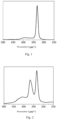
- the product was subjected to 1 H NMR spectroscopy, and the results were shown in Fig.
- the FeCl 3 -Cl - + MIm-C 3 -poly(GA) 10 -OH prepared in step (3) of example 15 was used to catalyze the cyclodepolymerization of PGA.
- the molar ratio of the terminal hydroxyl of the catalyst to the ester bond of PGA was 1/100.
- the mixture was stirred at 220 °C and a pressure of 100 Pa reduced by an oil pump, and a product of cyclodepolymerization was continuously distilled out. After 1 h, the yield of depolymerization was 98%.
- the FeCl 3 -Cl - + MIm-C 3 -poly( ⁇ -CL) 10 -OH prepared in step (3) of example 16 was used to catalyze the cyclodepolymerization of PCL.
- the molar ratio of the terminal hydroxyl of the catalyst to the ester bond of PCL was 1/100.
- the mixture was stirred at 200 °C and a pressure of 100 Pa reduced by an oil pump, and a product of cyclodepolymerization was continuously distilled out. After 4 h, the yield of depolymerization was 98%. After 6 h, the yield of depolymerization was 107%.
- the product was subjected to 1 H NMR spectroscopy, and the results were shown in Fig.
- the FeCl 3 -Cl - + MIm-C 3 -poly(PDO) 10 -OH prepared in step (3) of example 17 was used to catalyze the cyclodepolymerization of PPDO.
- the molar ratio of the terminal hydroxyl of the catalyst to the ester bond of PPDO was 1/100.
- the mixture was stirred at 160 °C and a pressure of 100 Pa reduced by an oil pump, and a product of cyclodepolymerization was continuously distilled out. After 1 h, the yield of depolymerization was 99%.
- the product was subjected to 1 H NMR spectroscopy, and the results were shown in Fig.
- the FeCl 3 -Cl - + MIm-C 3 -poly(PDO) 10 -OH prepared in step (3) of example 18 was used to catalyze the cyclodepolymerization of PPDO.
- the molar ratio of the terminal hydroxyl of the catalyst to the ester bond of PPDO was 1/100.
- the mixture was stirred at 140 °C and a pressure of 100 Pa reduced by an oil pump, and a product of cyclodepolymerization was continuously distilled out. After 1 h, the yield of depolymerization was 97%.
- the FeCl 3 -Cl - + MIm-C 3 -poly(BDXO) 10 -OH prepared in step (3) of example 19 was used to catalyze the cyclodepolymerization of PBDXO.
- the molar ratio of the terminal hydroxyl of the catalyst to the ester bond of PBDXO was 1/100.
- the mixture was stirred at 160 °C and a pressure of 100 Pa reduced by an oil pump, and a product of cyclodepolymerization was continuously distilled out. After 2 h, the yield of depolymerization was 94%.
- the FeCl 3 -Cl - + MIm-C 3 -poly( ⁇ -VL) 100 -OH prepared in step (3) of example 22 was used to catalyze the cyclodepolymerization of PVL.
- the molar ratio of the terminal hydroxyl of the catalyst to the ester bond of PVL was 1/100.
- the mixture was stirred at 160 °C and a pressure of 100 Pa reduced by an oil pump, and a product of cyclodepolymerization was continuously distilled out. After 1.5 h, the yield of depolymerization was 80%.
- the FeCl 3 -Cl - + MIm-C 3 -poly(L-LA) 10 -OH prepared in step (3) of example 23 was used to catalyze the cyclodepolymerization of PLLA.
- the molar ratio of the terminal hydroxyl of the catalyst to the ester bond of PLLA was 1/100.
- the mixture was stirred at 200 °C and a pressure of 100 Pa reduced by an oil pump, and a product of cyclodepolymerization was continuously distilled out. After 0.75 h, the yield of depolymerization was 98%.
- the FeCl 3 -Cl - + MIm-C 3 -poly(GA) 25 -OH prepared in step (3) of example 24 was used to catalyze the cyclodepolymerization of PGA.
- the molar ratio of the terminal hydroxyl of the catalyst to the ester bond of PGA was 1/100.
- the mixture was stirred at 220 °C and a pressure of 100 Pa reduced by an oil pump, and a product of cyclodepolymerization was continuously distilled out. After 1 h, the yield of depolymerization was 108%.
- the FeCl 3 -Cl - + MIm-C 3 -poly(ES) 1 -OH prepared in step (3) of example 25 was used to catalyze the hydrolysis of PES.
- the molar ratio of the terminal hydroxyl of the catalyst to the ester bond of PES was 1/100, and the mass ratio of the added water to PES was 4/1.
- the mixture was hydrolyzed at 140 °C for 4 h in a hydrothermal reactor, and then cooled to room temperature.
- the depolymerization conversion rate was 99%.
- the FeCl 3 -Cl - + MIm-C 3 -poly(BS) 10 -OH prepared in step (3) of example 26 was used to catalyze the hydrolysis of PBS.
- the molar ratio of the terminal hydroxyl of the catalyst to the ester bond of PBS was 1/100, and the mass ratio of the added water to PBS was 8/1.
- the mixture was hydrolyzed at 140 °C for 4 h in a hydrothermal reactor, and then cooled to room temperature. The depolymerization conversion rate was 100%.
- the FeCl 3 -Cl - + MIm-C 3 -poly(HS) 70 -OH prepared in step (3) of example 27 was used to catalyze the hydrolysis of PHS.
- the molar ratio of the terminal hydroxyl of the catalyst to the ester bond of PHS was 1/100, and the mass ratio of the added water to PHS was 2/1.
- the mixture was hydrolyzed at 140 °C for 4 h in a hydrothermal reactor, and then cooled to room temperature.
- the depolymerization conversion rate was 97%.
- the FeCl 3 -Cl - + MIm-C 3 -poly(EA) 10 -OH prepared in step (3) of example 28 was used to catalyze the hydrolysis of PEA.
- the molar ratio of the terminal hydroxyl of the catalyst to the ester bond of PEA was 1/100, and the mass ratio of the added water to PEA was 15/1.
- the mixture was hydrolyzed at 140 °C for 4 h in a hydrothermal reactor, and then cooled to room temperature. The depolymerization conversion rate was 100%.
- the FeCl 3 -Cl - + MIm-C 3 -poly(BA) 10 -OH prepared in step (3) of example 29 was used to catalyze the hydrolysis of PBA.
- the molar ratio of the terminal hydroxyl of the catalyst to the ester bond of PBA was 1/100, and the mass ratio of the added water to PBA was 20/1.
- the mixture was hydrolyzed at 140 °C for 4 h in a hydrothermal reactor, and then cooled to room temperature. The depolymerization conversion rate was 100%.
- the FeCl 3 -Cl - + MIm-C 3 -poly(HA) 100 -OH prepared in step (3) of example 30 was used to catalyze the hydrolysis of PHA.
- the molar ratio of the terminal hydroxyl of the catalyst to the ester bond of PHA was 1/100, and the mass ratio of the added water to PHA was 12/1.
- the mixture was hydrolyzed at 140 °C for 4 h in a hydrothermal reactor, and then cooled to room temperature.
- the depolymerization conversion rate was 99%.
- the Al 3+ [ - OOC-C 11 (C 6 )-OH] 3 prepared in step (2) of example 31 was used to catalyze the cyclodepolymerization of PVL.
- the molar ratio of the terminal hydroxyl of the catalyst to the ester bond of PVL was 1/100.
- the mixture was stirred at 160 °C and a pressure of 100 Pa reduced by an oil pump, and a product of cyclodepolymerization was continuously distilled out. After 2 h, the yield of depolymerization was 85%.
- the Al 3+ [ - OOC-C 11 (C 6 )-poly( ⁇ -VL) 10 -OH] 3 prepared in step (3) of example 31 was used to catalyze the cyclodepolymerization of PVL.
- the molar ratio of the terminal hydroxyl of the catalyst to the ester bond of PVL was 1/100.
- the mixture was stirred at 160 °C and a pressure of 100 Pa reduced by an oil pump, and a product of cyclodepolymerization was continuously distilled out. After 2 h, the yield of depolymerization was 94%.
- the Al 3+ [ - OOC-C 5 -poly( ⁇ -VL) 5 -OH] 3 prepared in step (3) of example 32 was used to catalyze the cyclodepolymerization of PVL.
- the molar ratio of the terminal hydroxyl of the catalyst to the ester bond of PVL was 1/100.
- the mixture was stirred at 160 °C and a pressure of 100 Pa reduced by an oil pump, and a product of cyclodepolymerization was continuously distilled out. After 2 h, the yield of depolymerization was 95%.
- the Me 4 N + - SO 3 -C 4 -poly( ⁇ -VL) 30 -OH prepared in step (2) of example 33 was used to catalyze the cyclodepolymerization of PVL.
- the molar ratio of the terminal hydroxyl of the catalyst to the ester bond of PVL was 1/100.
- the mixture was stirred at 160 °C and a pressure of 100 Pa reduced by an oil pump, and a product of cyclodepolymerization was continuously distilled out. After 2 h, the yield of depolymerization was 59%.
- step (2) of example 34 The Et 4 N + - SO 3 -C 3 -poly( ⁇ -VL) 50 -OH prepared in step (2) of example 34 was used to catalyze the cyclodepolymerization of PVL.
- the molar ratio of the terminal hydroxyl of the catalyst to the ester bond of PVL was 1/100.
- the mixture was stirred at 160 °C and a pressure of 100 Pa reduced by an oil pump, and a product of cyclodepolymerization was continuously distilled out. After 2 h, the yield of depolymerization was 47%.
- the Al 3+ [ - OOC-C 14 -poly( ⁇ -VL) 70 -OH] 3 prepared in step (3) of example 35 was used to catalyze the cyclodepolymerization of PVL.
- the molar ratio of the terminal hydroxyl of the catalyst to the ester bond of PVL was 1/100.
- the mixture was stirred at 160 °C and a pressure of 100 Pa reduced by an oil pump, and a product of cyclodepolymerization was continuously distilled out. After 2 h, the yield of depolymerization was 133%.
- the Al 3+ [ - OOC-C 5 -poly( ⁇ -VL) 90 -OH] 3 prepared in step (3) of example 36 was used to catalyze the cyclodepolymerization of PVL.
- the molar ratio of the terminal hydroxyl of the catalyst to the ester bond of PVL was 1/100.
- the mixture was stirred at 160 °C and a pressure of 100 Pa reduced by an oil pump, and a product of cyclodepolymerization was continuously distilled out. After 2 h, the yield of depolymerization was 142%.
- the Mg 2+ [ - OOC-C 14 -poly( ⁇ -VL) 10 -OH] 2 prepared in step (2) of example 37 was used to catalyze the cyclodepolymerization of PVL.
- the molar ratio of the terminal hydroxyl of the catalyst to the ester bond of PVL was 1/100.
- the mixture was stirred at 160 °C and a pressure of 100 Pa reduced by an oil pump, and a product of cyclodepolymerization was continuously distilled out. After 2 h, the yield of depolymerization was 105%.
- the Ca 2+ [ - OOC-C 14 -poly( ⁇ -VL) 10 -OH] 2 prepared in step (2) of example 38 was used to catalyze the cyclodepolymerization of PVL.
- the molar ratio of the terminal hydroxyl of the catalyst to the ester bond of PVL was 1/100.
- the mixture was stirred at 160 °C and a pressure of 100 Pa reduced by an oil pump, and a product of cyclodepolymerization was continuously distilled out. After 2 h, the yield of depolymerization was 98%.
- the Fe 3+ [ - OOC-C 14 -poly( ⁇ -VL) 10 -OH] 3 prepared in step (3) of example 39 was used to catalyze the cyclodepolymerization of PVL.
- the molar ratio of the terminal hydroxyl of the catalyst to the ester bond of PVL was 1/100.
- the mixture was stirred at 160 °C and a pressure of 100 Pa reduced by an oil pump, and a product of cyclodepolymerization was continuously distilled out. After 1 h, the yield of depolymerization was 96%.
- the Zn 2+ [ - OOC-C 14 -poly( ⁇ -VL) 10 -OH] 2 prepared in step (3) of example 40 was used to catalyze the cyclodepolymerization of PVL.
- the molar ratio of the terminal hydroxyl of the catalyst to the ester bond of PVL was 1/100.
- the mixture was stirred at 160 °C and a pressure of 100 Pa reduced by an oil pump, and a product of cyclodepolymerization was continuously distilled out. After 1 h, the yield of depolymerization was 100%.
- the Sn 2+ [ - OOC-C 14 -poly( ⁇ -VL) 10 -OH] 2 prepared in step (3) of example 41 was used to catalyze the cyclodepolymerization of PVL.
- the molar ratio of the terminal hydroxyl of the catalyst to the ester bond of PVL was 1/100.
- the mixture was stirred at 160 °C and a pressure of 100 Pa reduced by an oil pump, and a product of cyclodepolymerization was continuously distilled out. After 1 h, the yield of depolymerization was 103%.
- the Al 3+ [ - OOC-C 14 -poly( ⁇ -VL) 10 -OH] 3 prepared in step (3) of example 42 was used to catalyze the cyclodepolymerization of PVL.
- the molar ratio of the terminal hydroxyl of the catalyst to the ester bond of PVL was 1/100.
- the mixture was stirred at 160 °C and a pressure of 100 Pa reduced by an oil pump, and a product of cyclodepolymerization was continuously distilled out. After 2 h, the yield of depolymerization was 94%.
- the Al 3+ [ - OOC-C 14 -poly( ⁇ -VL) 10 -OH] 3 prepared in step (3) of example 43 was used to catalyze the cyclodepolymerization of PVL.
- the molar ratio of the terminal hydroxyl of the catalyst to the ester bond of PVL was 1/100.
- the mixture was stirred at 160 °C and a pressure of 100 Pa reduced by an oil pump, and a product of cyclodepolymerization was continuously distilled out. After 2 h, the yield of depolymerization was 94%.
- the Al 3+ [ - OOC-C 11 (C 6 )-poly(L-LA) 10 -OH] 3 prepared in step (3) of example 44 was used to catalyze the cyclodepolymerization of PLLA.
- the molar ratio of the terminal hydroxyl of the catalyst to the ester bond of PLLA was 1/100.
- the mixture was stirred at 200 °C and a pressure of 100 Pa reduced by an oil pump, and a product of cyclodepolymerization was continuously distilled out. After 2 h, the yield of depolymerization was 98%.
- the Al 3+ [ - OOC-C 11 (C 6 )-poly(GA) 10 -OH] 3 prepared in step (3) of example 45 was used to catalyze the cyclodepolymerization of PGA.
- the molar ratio of the terminal hydroxyl of the catalyst to the ester bond of PGA was 1/100.
- the mixture was stirred at 220 °C and a pressure of 100 Pa reduced by an oil pump, and a product of cyclodepolymerization was continuously distilled out. After 1 h, the yield of depolymerization was 88%.
- the Al 3+ [ - OOC-C 11 (C 6 )-poly( ⁇ -CL) 10 -OH] 3 prepared in step (3) of example 46 was used to catalyze the cyclodepolymerization of PCL.
- the molar ratio of the terminal hydroxyl of the catalyst to the ester bond of PCL was 1/100.
- the mixture was stirred at 200 °C and a pressure of 100 Pa reduced by an oil pump, and a product of cyclodepolymerization was continuously distilled out. After 6 h, the yield of depolymerization was 84%.
- the Al 3+ [ - OOC-C 17 -poly(PDO) 10 -OH] 3 prepared in step (3) of example 47 was used to catalyze the cyclodepolymerization of PPDO.
- the molar ratio of the terminal hydroxyl of the catalyst to the ester bond of PPDO was 1/100.
- the mixture was stirred at 160 °C and a pressure of 100 Pa reduced by an oil pump, and a product of cyclodepolymerization was continuously distilled out. After 2 h, the yield of depolymerization was 101%.
- the Al 3+ [ - OOC-C 7 -poly(PDO) 10 -OH] 3 prepared in step (3) of example 48 was used to catalyze the cyclodepolymerization of PPDO.
- the molar ratio of the terminal hydroxyl of the catalyst to the ester bond of PPDO was 1/100.
- the mixture was stirred at 160 °C and a pressure of 100 Pa reduced by an oil pump, and a product of cyclodepolymerization was continuously distilled out. After 2 h, the yield of depolymerization was 102%.
- the Al 3+ [ - SO 3 -C 2 -poly(PDO) 10 -OH] 3 prepared in step (3) of example 49 was used to catalyze the cyclodepolymerization of PBDXO.
- the molar ratio of the terminal hydroxyl of the catalyst to the ester bond of PBDXO was 1/100.
- the mixture was stirred at 160 °C and a pressure of 100 Pa reduced by an oil pump, and a product of cyclodepolymerization was continuously distilled out. After 4 h, the yield of depolymerization was 89%.
- the Al 3+ [ - OOC-C 11 (C 6 )-poly(BDXOP) 10 -OH] 3 prepared in step (3) of example 50 was used to catalyze the cyclodepolymerization of PBDXOP.
- the molar ratio of the terminal hydroxyl of the catalyst to the ester bond of PBDXOP was 1/100.
- the mixture was stirred at 160 °C and a pressure of 100 Pa reduced by an oil pump, and a product of cyclodepolymerization was continuously distilled out. After 4 h, the yield of depolymerization was 83%.
- the Al 3+ [ - OOC-C 11 (C 6 )-poly( ⁇ -VL) 1 -OH] 3 prepared in step (3) of example 51 was used to catalyze the cyclodepolymerization of PVL.
- the molar ratio of the terminal hydroxyl of the catalyst to the ester bond of PVL was 1/100.
- the mixture was stirred at 160 °C and a pressure of 100 Pa reduced by an oil pump, and a product of cyclodepolymerization was continuously distilled out. After 2 h, the yield of depolymerization was 68%.
- the Al 3+ [ - OOC-C 11 (C 6 )-poly( ⁇ -VL) 100 -OH] 3 prepared in step (3) of example 52 was used to catalyze the cyclodepolymerization of PVL.
- the molar ratio of the terminal hydroxyl of the catalyst to the ester bond of PVL was 1/100.
- the mixture was stirred at 160 °C and a pressure of 100 Pa reduced by an oil pump, and a product of cyclodepolymerization was continuously distilled out. After 2 h, the yield of depolymerization was 83%.
- the Al 3+ [ - OOC-C 11 (C 6 )-poly(L-LA) 10 -OH] 3 prepared in step (3) of example 53 was used to catalyze the cyclodepolymerization of PLLA.
- the molar ratio of the terminal hydroxyl of the catalyst to the ester bond of PLLA was 1/100.
- the mixture was stirred at 200 °C and a pressure of 100 Pa reduced by an oil pump, and a product of cyclodepolymerization was continuously distilled out. After 2 h, the yield of depolymerization was 100%.
- the Al 3+ [ - OOC-C 11 (C 6 )-poly(GA) 25 -OH] 3 prepared in step (3) of example 54 was used to catalyze the cyclodepolymerization of PGA.
- the molar ratio of the terminal hydroxyl of the catalyst to the ester bond of PGA was 1/100.
- the mixture was stirred at 220 °C and a pressure of 100 Pa reduced by an oil pump, and a product of cyclodepolymerization was continuously distilled out. After 1 h, the yield of depolymerization was 101%.
- the Al 3+ [ - OOC-C 11 (C 6 )-poly(ES) 1 -OH] 3 prepared in step (3) of example 55 was used to catalyze the hydrolysis of PES.
- the molar ratio of the terminal hydroxyl of the catalyst to the ester bond of PES was 1/100, and the mass ratio of the added water to PES was 2/1.
- the mixture was hydrolyzed at 140 °C for 4 h in a hydrothermal reactor, and then cooled to room temperature.
- the depolymerization conversion rate was 99%.
- the Al 3+ [ - OOC-C 11 (C 6 )-poly(BS) 10 -OH] 3 prepared in step (3) of example 56 was used to catalyze the hydrolysis of PBS.
- the molar ratio of the terminal hydroxyl of the catalyst to the ester bond of PBS was 1/100, and the mass ratio of the added water to PBS was 2/1.
- the mixture was hydrolyzed at 140 °C for 4 h in a hydrothermal reactor, and then cooled to room temperature. The depolymerization conversion rate was 100%.
- the Al 3+ [ - OOC-C 11 (C 6 )-poly(HA) 100 -OH] 3 prepared in step (3) of example 60 was used to catalyze the hydrolysis of PHA.
- the molar ratio of the terminal hydroxyl of the catalyst to the ester bond of PHA was 1/100, and the mass ratio of the added water to PHA was 2/1.
- the mixture was hydrolyzed at 140 °C for 4 h in a hydrothermal reactor, and then cooled to room temperature. The depolymerization conversion rate was 98%.
- the Zn 2+ [ - OOC-poly(ES) 10 -OH] 2 prepared in step (2) of example 61 was used to catalyze the hydrolysis of PES.
- the molar ratio of the terminal hydroxyl of the catalyst to the ester bond of PES was 1/100, and the mass ratio of the added water to PES was 2/1.
- the mixture was hydrolyzed at 140 °C for 3 h in a hydrothermal reactor, and then cooled to room temperature. The depolymerization conversion rate was 100%.
- the Zn 2+ [ - OOC-poly(BS) 1 -OH] 2 prepared in step (2) of example 62 was used to catalyze the hydrolysis of PBS.
- the molar ratio of the terminal hydroxyl of the catalyst to the ester bond of PBS was 1/50, and the mass ratio of the added water to PBS was 2/1.
- the mixture was hydrolyzed at 140 °C for 3 h in a hydrothermal reactor, and then cooled to room temperature.
- the depolymerization conversion rate was 99%.
- the Mg 2+ [ - OOC-poly(HS) 100 -OH] 2 prepared in example 63 was used to catalyze the hydrolysis of PHS.
- the molar ratio of the terminal hydroxyl of the catalyst to the ester bond of PHS was 1/20, and the mass ratio of the added water to PHS was 2/1.
- the mixture was hydrolyzed at 140 °C for 3 h in a hydrothermal reactor, and then cooled to room temperature.
- the depolymerization conversion rate was 100%.
- the Ca 2+ [ - OOC-poly(EA) 50 -OH] 2 prepared in example 64 was used to catalyze the hydrolysis of PEA.
- the molar ratio of the terminal hydroxyl of the catalyst to the ester bond of PEA was 1/10, and the mass ratio of the added water to PEA was 2/1.
- the mixture was hydrolyzed at 140 °C for 3 h in a hydrothermal reactor, and then cooled to room temperature.
- the depolymerization conversion rate was 100%.
- the Me 4 N + - OOC-poly(BA) 20 -OH prepared in example 65 was used to catalyze the hydrolysis of PBA.
- the molar ratio of the terminal hydroxyl of the catalyst to the ester bond of PBA was 1/100, and the mass ratio of the added water to PBA was 2/1.
- the mixture was hydrolyzed at 140 °C for 3 h in a hydrothermal reactor, and then cooled to room temperature.
- the depolymerization conversion rate was 96%.
- the Et 4 N + - OOC-poly(HA) 10 -OH prepared in example 66 was used to catalyze the hydrolysis of PHA.
- the molar ratio of the terminal hydroxyl of the catalyst to the ester bond of PHA was 1/100, and the mass ratio of the added water to PHA was 2/1.
- the mixture was hydrolyzed at 140 °C for 3 h in a hydrothermal reactor, and then cooled to room temperature.
- the depolymerization conversion rate was 96%.
- the Zn 2+ [ - OOC-poly(L-LA) 10 -OH] 2 prepared in step (2) of example 67 was used to catalyze the cyclodepolymerization of PLLA.
- the molar ratio of the terminal hydroxyl of the catalyst to the ester bond of PLLA was 1/100.
- the mixture was stirred at 200 °C and a pressure of 100 Pa reduced by an oil pump, and a product of cyclodepolymerization was continuously distilled out. After 1 h, the yield of depolymerization was 106%. In the first 0.5 h of the reaction, the viscosity of the reaction system decreased from 570 Pa ⁇ s to 22 Pa ⁇ s.
- the Zn 2+ [ - OOC-poly(GA) 10 -OH] 2 prepared in step (2) of example 68 was used to catalyze the cyclodepolymerization of PGA.
- the molar ratio of the terminal hydroxyl of the catalyst to the ester bond of PGA was 1/100.
- the mixture was stirred at 220 °C and a pressure of 100 Pa reduced by an oil pump, and a product of cyclodepolymerization was continuously distilled out. After 1 h, the yield of depolymerization was 103%.
- the Zn 2+ [ - OOC-poly( ⁇ -CL) 14.5 -OH] 2 prepared in step (2) of example 69 was used to catalyze the cyclodepolymerization of PCL.
- the molar ratio of the terminal hydroxyl of the catalyst to the ester bond of PCL was 1/100.
- the mixture was stirred at 200 °C and a pressure of 100 Pa reduced by an oil pump, and a product of cyclodepolymerization was continuously distilled out. After 4 h, the yield of depolymerization was 98%.
- the Zn 2+ [ - OOC-poly( ⁇ -VL) 10 -OH] 2 prepared in step (2) of example 70 was used to catalyze the cyclodepolymerization of PVL.
- the molar ratio of the terminal hydroxyl of the catalyst to the ester bond of PVL was 1/100.
- the mixture was stirred at 160 °C and a pressure of 100 Pa reduced by an oil pump, and a product of cyclodepolymerization was continuously distilled out. After 1 h, the yield of depolymerization was 102%.
- the Zn 2+ [ - OOC-poly(PDO) 10 -OH] 2 prepared in step (2) of example 71 was used to catalyze the cyclodepolymerization of PPDO.
- the molar ratio of the terminal hydroxyl of the catalyst to the ester bond of PPDO was 1/100.
- the mixture was stirred at 160 °C and a pressure of 100 Pa reduced by an oil pump, and a product of cyclodepolymerization was continuously distilled out. After 1 h, the yield of depolymerization was 109%.
- the Zn 2+ [ - OOC-poly(BDXO) 10 -OH] 2 prepared in step (2) of example 72 was used to catalyze the cyclodepolymerization of PBDXO.
- the molar ratio of the terminal hydroxyl of the catalyst to the ester bond of PBDXO was 1/100.
- the mixture was stirred at 160 °C and a pressure of 100 Pa reduced by an oil pump, and a product of cyclodepolymerization was continuously distilled out. After 1 h, the yield of depolymerization was 89%.
- the Zn 2+ [ - OOC-poly(BDXOP) 10 -OH] 2 prepared in step (2) of example 73 was used to catalyze the cyclodepolymerization of PBDXOP.
- the molar ratio of the terminal hydroxyl of the catalyst to the ester bond of PBDXOP was 1/100.
- the mixture was stirred at 160 °C and a pressure of 100 Pa reduced by an oil pump, and a product of cyclodepolymerization was continuously distilled out. After 1 h, the yield of depolymerization was 94%.
- the Zn 2+ [ - OOC-poly(EG) 100 -OH] 2 prepared in step (2) of example 74 was used to catalyze the cyclodepolymerization of PVL.
- the molar ratio of the terminal hydroxyl of the catalyst to the ester bond of PVL was 1/100.
- the mixture was stirred at 160 °C and a pressure of 100 Pa reduced by an oil pump, and a product of cyclodepolymerization was continuously distilled out. After 1 h, the yield of depolymerization was 97%.
- the Zn 2+ ( - OOC-poly(THF) 50 -OH) 2 and HOOC-poly(THF) 50 -OH prepared in step (2) of example 75 were used to catalyze the cyclodepolymerization of PVL.
- the molar ratio of the terminal hydroxyl of the catalyst to the ester bond of PVL was 1/100.
- the mixture was stirred at 160 °C and a pressure of 100 Pa reduced by an oil pump, and a product of cyclodepolymerization was continuously distilled out. After 1 h, the yield of depolymerization was 55%.
- the Zn 2+ [ - OOC-poly(EG) 100 -OH] 2 prepared in step (2) of example 76 was used to catalyze the cyclodepolymerization of PVL.
- the molar ratio of the terminal hydroxyl of the catalyst to the ester bond of PVL was 1/100.
- the mixture was stirred at 160 °C and a pressure of 100 Pa reduced by an oil pump, and a product of cyclodepolymerization was continuously distilled out. After 1 h, the yield of depolymerization was 96%.
- the Sn 2+ [ - OOC-poly(EG) 100 -OH] 2 prepared in step (2) of example 77 was used to catalyze the cyclodepolymerization of PVL.
- the molar ratio of the terminal hydroxyl of the catalyst to the ester bond of PVL was 1/100.
- the mixture was stirred at 160 °C and a pressure of 100 Pa reduced by an oil pump, and a product of cyclodepolymerization was continuously distilled out. After 1 h, the yield of depolymerization was 105%.
- the Fe 3+ [ - OOC-poly(EG) 100 -OH] 3 prepared in step (2) of example 78 was used to catalyze the cyclodepolymerization of PVL.
- the molar ratio of the terminal hydroxyl of the catalyst to the ester bond of PVL was 1/100.
- the mixture was stirred at 160 °C and a pressure of 100 Pa reduced by an oil pump, and a product of cyclodepolymerization was continuously distilled out. After 1 h, the yield of depolymerization was 97%.
- the Al 3+ [ - OOC-poly(EG) 100 -OH] 3 prepared in step (2) of example 79 was used to catalyze the cyclodepolymerization of PVL.
- the molar ratio of the terminal hydroxyl of the catalyst to the ester bond of PVL was 1/100.
- the mixture was stirred at 160 °C and a pressure of 100 Pa reduced by an oil pump, and a product of cyclodepolymerization was continuously distilled out. After 2 h, the yield of depolymerization was 92%.
- the Zn 2+ [ - OOC-poly(EG) 100 -OH] 2 prepared in step (2) of example 80 was used to catalyze the cyclodepolymerization of PVL.
- the molar ratio of the terminal hydroxyl of the catalyst to the ester bond of PVL was 1/100.
- the mixture was stirred at 160 °C and a pressure of 100 Pa reduced by an oil pump, and a product of cyclodepolymerization was continuously distilled out. After 1 h, the yield of depolymerization was 99%.
- the FeCl 3 -Cl - + MIm-C 3 -poly(BS) 10 -OH prepared in step (3) of example 26 was used to catalyze the hydrolysis of PBS.
- the molar ratio of the terminal hydroxyl of the catalyst to the ester bond of PBS was 1/100, and the mass ratio of the added water to PBS was 1/2.
- the mixture was hydrolyzed at 140 °C for 1 h in a hydrothermal reactor, and then cooled to room temperature.
- the depolymerization conversion rate was 72%.
- the product contained succinic acid, butanediol, butylene succinate and oligomers of butylene succinate.
- the FeCl 3 -Cl - + MIm-C 3 -poly(BS) 10 -OH prepared in step (3) of example 26 was used to catalyze the hydrolysis of PBS.
- the molar ratio of the terminal hydroxyl of the catalyst to the ester bond of PBS was 1/100, and the mass ratio of the added water to PBS was 10/1.
- the mixture was hydrolyzed at 160 °C for 2 h in a hydrothermal reactor, and then cooled to room temperature. The depolymerization conversion rate was 100%.
- the FeCl 3 -Cl - + MIm-C 3 -poly(BS) 10 -OH prepared in step (3) of example 26 was used to catalyze the hydrolysis of PBS.
- the molar ratio of the terminal hydroxyl of the catalyst to the ester bond of PBS was 1/100, and the mass ratio of the added water to PBS was 20/1.
- the mixture was hydrolyzed at 80 °C for 12 h in a hydrothermal reactor, and then cooled to room temperature.
- the depolymerization conversion rate was 71%.
- the FeCl 3 -Cl - + MIm-C 3 -poly(BS) 10 -OH prepared in step (3) of example 26 was used to catalyze the hydrolysis of PBS.
- the molar ratio of the terminal hydroxyl of the catalyst to the ester bond of PBS was 1/100, and the mass ratio of the added methanol to PBS was 2/1.
- the mixture was alcoholyzed at 40 °C for 12 h.
- the depolymerization conversion rate was 11%.
- the FeCl 3 -Cl - + MIm-C 3 -poly(BS) 10 -OH prepared in step (3) of example 26 was used to catalyze the hydrolysis of PBS.
- the molar ratio of the terminal hydroxyl of the catalyst to the ester bond of PBS was 1/100, and the mass ratio of the added butanediol to PBS was 2/1.
- the mixture was alcoholyzed at 200 °C for 1 h, and then cooled to room temperature. The depolymerization conversion rate was 100%.
- the Zn 2+ [ - OOC-poly(PDO) 10 -OH] 2 prepared in step (2) of example 71 was used to catalyze the cyclodepolymerization of PPDO.
- the molar ratio of the terminal hydroxyl of the catalyst to the ester bond of PPDO was 1/10000.
- the mixture was stirred at 160 °C and a pressure of 100 Pa reduced by an oil pump, and a product of cyclodepolymerization was continuously distilled out. After 1 h, the yield of depolymerization was 55%.
- the Zn 2+ [ - OOC-poly(PDO) 10 -OH] 2 prepared in step (2) of example 71 was used to catalyze the cyclodepolymerization of PPDO.
- the molar ratio of the terminal hydroxyl of the catalyst to the ester bond of PPDO was 1/1000.
- the mixture was stirred at 160 °C and a pressure of 100 Pa reduced by an oil pump, and a product of cyclodepolymerization was continuously distilled out. After 1 h, the yield of depolymerization was 79%.
- the Zn 2+ [ - OOC-poly(PDO) 10 -OH] 2 prepared in step (2) of example 71 was used to catalyze the cyclodepolymerization of PPDO.
- the molar ratio of the terminal hydroxyl of the catalyst to the ester bond of PPDO was 1/10.
- the mixture was stirred at 120 °C and a pressure of 100 Pa reduced by an oil pump, and a product of cyclodepolymerization was continuously distilled out. After 12 h, the yield of depolymerization was 101%.
- the Zn 2+ [ - OOC-poly(PDO) 10 -OH] 2 prepared in step (2) of example 71 was used to catalyze the cyclodepolymerization of PPDO.
- the molar ratio of the terminal hydroxyl of the catalyst to the ester bond of PPDO was 1/100.
- PPDO and the catalyst were melt blended and then cooled to room temperature, then crushed and passed through a 40-mesh sieve. Then, the mixture was extracted with toluene at 80 °C and atmospheric pressure (1*10 5 Pa), and monomers were continuously generated and transferred to the extract (toluene). After 12 hours, the depolymerization conversion rate was 47%.
- the Zn 2+ [ - OOC-poly(PDO) 10 -OH] 2 prepared in step (2) of example 71 was used to catalyze the cyclodepolymerization of PPDO.
- the molar ratio of the terminal hydroxyl of the catalyst to the ester bond of PPDO was 1/100.
- the mixture was stirred at 300 °C and a pressure of 100 Pa reduced by an oil pump, and a product of cyclodepolymerization was continuously distilled out. After 0.5 h, the yield of depolymerization was 103%.
- the Zn 2+ [ - OOC-poly(PDO) 10 -OH] 2 prepared in step (2) of example 71 was used to catalyze the cyclodepolymerization of PPDO.
- the molar ratio of the terminal hydroxyl of the catalyst to the ester bond of PPDO was 1/100.
- the mixture was stirred at 400 °C and a pressure of 100 Pa reduced by an oil pump, and a product of cyclodepolymerization was continuously distilled out. After 0.5 h, the yield of depolymerization was 101%.
- the Zn 2+ [ - OOC-poly(PDO) 10 -OH] 2 prepared in step (2) of example 71 was used to catalyze the cyclodepolymerization of PPDO.
- the molar ratio of the terminal hydroxyl of the catalyst to the ester bond of PPDO was 1/100.
- the mixture was stirred at 160 °C and a pressure of 1 Pa reduced by an oil pump, and a product of cyclodepolymerization was continuously distilled out. After 1 h, the yield of depolymerization was 107%.
- the Zn 2+ [ - OOC-poly(PDO) 10 -OH] 2 prepared in step (2) of example 71 was used to catalyze the cyclodepolymerization of PPDO.
- the molar ratio of the terminal hydroxyl of the catalyst to the ester bond of PPDO was 1/100.
- the mixture was stirred at 160 °C and a pressure of 10 Pa reduced by an oil pump, and a product of cyclodepolymerization was continuously distilled out. After 1 h, the yield of depolymerization was 105%.
- the Zn 2+ [ - OOC-poly(PDO) 10 -OH] 2 prepared in step (2) of example 71 was used to catalyze the cyclodepolymerization of PPDO.
- the molar ratio of the terminal hydroxyl of the catalyst to the ester bond of PPDO was 1/100.
- the mixture was stirred at 160 °C and a pressure of 1000 Pa reduced by an oil pump, and a product of cyclodepolymerization was continuously distilled out. After 1 h, the yield of depolymerization was 98%.
- the Zn 2+ [ - OOC-poly(PDO) 10 -OH] 2 prepared in step (2) of example 71 was used to catalyze the cyclodepolymerization of PPDO.
- the molar ratio of the terminal hydroxyl of the catalyst to the ester bond of PPDO was 1/100.
- the mixture was stirred at 160 °C and a pressure of 1*10 4 Pa reduced by a water pump, and a product of cyclodepolymerization was continuously distilled out. After 1 h, the yield of depolymerization was 93%.
- the Zn 2+ [ - OOC-poly(L-LA) 10 -OH] 2 prepared in step (2) of example 67 was used to catalyze the polycondensation and cyclodepolymerization of L-lactic acid.
- the molar ratio of the terminal hydroxyl of the catalyst to L-lactic acid was 1/50.
- the mixture was reacted at 80, 100, 120, and 140 °C successively at a pressure of 3000 Pa reduced by a water pump for 2 h, respectively, and the generated water was continuously distilled out. Then, the mixture was reacted at 140 °C and a pressure of 100 Pa reduced by an oil pump for 2 h, and the generated water was continuously distilled out to give an oligomer.
- the resulting product was heated to 160 °C, and subjected to cyclodepolymerization at 1 Pa.
- the product was continuously generated and distilled out. After 3 h, the yield was 99%.
- the content of L-LA in the crude product was about 92%, and the content of meso-LA was about 1%.
- the Zn 2+ [ - OOC-poly(L-LA) 10 -OH] 2 prepared in step (2) of example 67 was used to catalyze the polycondensation and cyclodepolymerization of L-methyl lactate.
- the molar ratio of the terminal hydroxyl of the catalyst to L-methyl lactate was 1/100.
- the mixture was reacted at 140 °C and atmospheric pressure for 4 h, and the generated methanol was continuously distilled out. Then, the pressure was slowly reduced to 3000 Pa, and the mixture was reacted for another 2 h, and the generated methanol was continuously distilled out to give an oligomer.
- the resulting product was heated to 160 °C, and subjected to cyclodepolymerization at 100 Pa.
- the product was continuously generated and distilled out. After 3 h, the yield was 96%.
- the content of L-LA in the crude product was about 93%, and the content of meso-LA was about 1%.
- the Zn 2+ [ - OOC-poly(L-LA) 10 -OH] 2 prepared in step (2) of example 67 was used to catalyze the polycondensation and cyclodepolymerization of L-ethyl lactate.
- the molar ratio of the terminal hydroxyl of the catalyst to L-ethyl lactate was 1/200.
- the mixture was reacted at 140 °C and atmospheric pressure for 6 h, and the generated ethanol was continuously distilled out. Then, the pressure was slowly reduced to 3000 Pa, and the mixture was reacted for another 2 h, and the generated ethanol was continuously distilled out to give an oligomer.
- the resulting product was heated to 160 °C, and subjected to cyclodepolymerization at 10 Pa.
- the product was continuously generated and distilled out. After 3 h, the yield was 95%.
- the content of L-LA in the crude product was about 93%, and the content of meso-LA was about 1%.
- the Zn 2+ [ - OOC-poly( ⁇ -CL) 14.5 -OH] 2 prepared in step (2) of example 69 was used to catalyze the polycondensation and cyclodepolymerization of 6-hydroxyhexanoic acid.
- the molar ratio of the terminal hydroxyl of the catalyst to 6-hydroxyhexanoic acid was 1/20.
- the mixture was reacted at 80, 100, 120, and 140 °C successively at a pressure of 3000 Pa reduced by a water pump for 2 h, respectively, and the generated water was continuously distilled out. Then, the mixture was reacted at 160 °C and a pressure of 100 Pa reduced by an oil pump for 2 h, and the generated water was continuously distilled out to give an oligomer.
- the resulting product was heated to 200 °C, and subjected to cyclodepolymerization at 1 Pa.
- the product was continuously generated and distilled out. After 4 h, the yield was 101%.
- the content of ⁇ -CL monomers was about 81%
- the content of ⁇ -CL cyclic dimers was about 16%
- the content of ⁇ -CL cyclic trimers was about 2%.
- the Zn 2+ [ - OOC-poly( ⁇ -CL) 14.5 -OH] 2 prepared in step (2) of example 69 was used to catalyze the polycondensation and cyclodepolymerization of methyl 6-hydroxyhexanoate.
- the molar ratio of the terminal hydroxyl of the catalyst to methyl 6-hydroxyhexanoate was 1/10.
- the mixture was reacted at 160 °C and atmospheric pressure for 2 h, and the generated methanol was continuously distilled out. Then, the pressure was slowly reduced to 3000 Pa, and the mixture was reacted for another 2 h, and the generated methanol was continuously distilled out to give an oligomer.
- the resulting product was heated to 200 °C, and subjected to cyclodepolymerization at 100 Pa.
- the product was continuously generated and distilled out. After 4 h, the yield was 96%.
- the content of ⁇ -CL monomers was about 80%
- the content of ⁇ -CL cyclic dimers was about 17%
- the content of ⁇ -CL cyclic trimers was about 2%.
- the Zn 2+ [ - OOC-poly( ⁇ -CL) 14.5 -OH] 2 prepared in step (2) of example 69 was used to catalyze the polycondensation and cyclodepolymerization of ethyl 6-hydroxyhexanoate.
- the molar ratio of the terminal hydroxyl of the catalyst to ethyl 6-hydroxyhexanoate was 1/20.
- the mixture was reacted at 160 °C and atmospheric pressure for 4 h, and the generated ethanol was continuously distilled out. Then, the pressure was slowly reduced to 3000 Pa, and the mixture was reacted for another 4 h, and the generated ethanol was continuously distilled out to give an oligomer.
- the resulting product was heated to 200 °C, and subjected to cyclodepolymerization at 10 Pa.
- the product was continuously generated and distilled out. After 4 h, the yield was 95%.
- the content of ⁇ -CL monomers was about 78%
- the content of ⁇ -CL cyclic dimers was about 18%
- the content of ⁇ -CL cyclic trimers was about 2%.
- the Zn 2+ [ - OOC-poly(GA) 10 -OH] 2 prepared in step (2) of example 68 was used to catalyze the polycondensation and cyclodepolymerization of glycolic acid.
- the molar ratio of the terminal hydroxyl of the catalyst to glycolic acid was 1/100.
- the mixture was reacted at 100, 120, and 140 °C successively at a pressure of 3000 Pa reduced by a water pump for 3 h, respectively, and the generated water was continuously distilled out.
- the mixture was reacted at 160 °C and a pressure of 100 Pa reduced by an oil pump for 2 h, and the generated water was continuously distilled out to give an oligomer of glycolic acid.
- the resulting product was heated to 220 °C, and subjected to cyclodepolymerization at 1000 Pa.
- the product was continuously generated and distilled out. After 1 h, the yield was 95%.
- the Zn 2+ [ - OOC-poly(GA) 10 -OH] 2 prepared in step (2) of example 68 was used to catalyze the polycondensation and cyclodepolymerization of methyl glycolate.
- the molar ratio of the terminal hydroxyl of the catalyst to methyl glycolate was 1/1000.
- the mixture was reacted at 140 °C and atmospheric pressure for 2 h, and the generated methanol was continuously distilled out. Then, the pressure was slowly reduced to 3000 Pa, and the mixture was slowly heated to 180 °C and reacted for 6 h. The generated methanol was continuously distilled out to give an oligomer of glycolic acid.
- the resulting product was cooled to room temperature, and then crushed and passed through a 40-mesh sieve. Then, the resulting product was extracted with xylene at 80 °C and atmospheric pressure (1*10 5 Pa), and monomers were continuously generated and transferred to the extract (xylene). After 12 h, the depolymerization conversion rate was 31%.
- the Zn 2+ [ - OOC-poly(GA) 10 -OH] 2 prepared in step (2) of example 68 was used to catalyze the polycondensation and cyclodepolymerization of ethyl glycolate.
- the molar ratio of the terminal hydroxyl of the catalyst to ethyl glycolate was 1/10000.
- the mixture was reacted at 140 °C and atmospheric pressure for 2 h, and the generated ethanol was continuously distilled out. Then, the pressure was slowly reduced to 3000 Pa, and the mixture was slowly heated to 180 °C and reacted for 6 h. The generated ethanol was continuously distilled out. Then, the mixture was heated to 220 °C and reacted for 0.5 h.
- the generated ethanol was continuously distilled out to give an oligomer of glycolic acid. Then, the resulting product was heated to 400 °C and subjected to cyclodepolymerization at 1*10 4 Pa. The product was continuously generated and distilled out. After 1 h, the yield was 91%.
- the Zn 2+ [ - OOC-poly( ⁇ -VL) 10 -OH] 2 prepared in step (2) of example 70 was used to catalyze the polycondensation and cyclodepolymerization of 5-hydroxypentanoic acid.
- the molar ratio of the terminal hydroxyl of the catalyst to 5-hydroxypentanoic acid was 1/50.
- the mixture was reacted at 80, 100, 120, 140 and 160 °C successively at a pressure of 3000 Pa reduced by a water pump for 2 h, respectively, and the generated water was continuously distilled out.
- the mixture was reacted at 160 °C and a pressure of 100 Pa reduced by an oil pump for 2 h, and the generated water was continuously distilled out to give an oligomer of 5-hydroxypentanoic acid. Then, the resulting product was subjected to cyclodepolymerization at 160 °C and 1 Pa. The product was continuously generated and distilled out. After 2 h, the yield was 105%.
- the Zn 2+ [ - OOC-poly( ⁇ -VL) 10 -OH] 2 prepared in step (2) of example 70 was used to catalyze the polycondensation and cyclodepolymerization of methyl 5-hydroxypentanoate.
- the molar ratio of the terminal hydroxyl of the catalyst to methyl 5-hydroxypentanoate was 1/100.
- the mixture was reacted at 160 °C and atmospheric pressure for 6 h, and the generated methanol was continuously distilled out. Then, the pressure was slowly reduced to 3000 Pa, and the mixture was reacted for another 2 h.
- the generated methanol was continuously distilled out to give an oligomer of 5-hydroxypentanoic acid.
- the resulting product was subjected to cyclodepolymerization at 160 °C and 100 Pa. The product was continuously generated and distilled out. After 6 h, the yield was 100%.
- the Zn 2+ [ - OOC-poly( ⁇ -VL) 10 -OH] prepared in step (2) of example 70 was used to catalyze the polycondensation and cyclodepolymerization of ethyl 5-hydroxypentanoate.
- the molar ratio of the terminal hydroxyl of the catalyst to ethyl 5-hydroxypentanoate was 1/200.
- the mixture was reacted at 160 °C and atmospheric pressure for 6 h, and the generated ethanol was continuously distilled out. Then, the pressure was slowly reduced to 3000 Pa, and the mixture was reacted for another 2 h.
- the generated ethanol was continuously distilled out to give an oligomer of 5-hydroxypentanoic acid.
- the resulting product was subjected to cyclodepolymerization at 160 °C and 10 Pa. The product was continuously generated and distilled out. After 6 h, the yield was 92%.
- the Al 3+ ( - OOC-C 17 -OH) 3 prepared in step (2) of example 47 was used to catalyze the polycondensation and cyclodepolymerization of 12-hydroxyoctadecanoic acid.
- the molar ratio of the terminal hydroxyl of the catalyst to 12-hydroxyoctadecanoic acid was 1/100.
- the mixture was reacted at 80, 100, 120, 140 and 160 °C successively at a pressure of 3000 Pa reduced by a water pump for 2 h, respectively, and the generated water was continuously distilled out.
- the mixture was reacted at 160 °C and a pressure of 100 Pa reduced by an oil pump for 2 h, and the generated water was continuously distilled out to give an oligomer of 12-hydroxyoctadecanoic acid.
- the resulting product was heated to 220 °C, and subjected to cyclodepolymerization at 1 Pa. The product was continuously generated and distilled out. After 1.5 h, the yield was 95%.
- the Al 3+ ( - OOC-C 17 -OH) 3 prepared in step (2) of example 47 was used to catalyze the polycondensation and cyclodepolymerization of methyl 12-hydroxyoctadecanoate.
- the molar ratio of the terminal hydroxyl of the catalyst to methyl 12-hydroxyoctadecanoate was 1/100.
- the mixture was reacted at 160 °C and atmospheric pressure for 6 h, and the generated methanol was continuously distilled out. Then, the pressure was slowly reduced to 3000 Pa, and the mixture was reacted for another 2 h.
- the generated methanol was continuously distilled out to give an oligomer of 12-hydroxyoctadecanoic acid.
- the resulting product was heated to 220 °C, and subjected to cyclodepolymerization at 1 Pa. The product was continuously generated and distilled out. After 1.5 h, the yield was 91%.
- the Al 3+ ( - OOC-C 17 -OH) 3 prepared in step (2) of example 47 was used to catalyze the polycondensation and cyclodepolymerization of ethyl 12-hydroxyoctadecanoate.
- the molar ratio of the terminal hydroxyl of the catalyst to ethyl 12-hydroxyoctadecanoate was 1/100.
- the mixture was reacted at 160 °C and atmospheric pressure for 6 h, and the generated ethanol was continuously distilled out. Then, the pressure was slowly reduced to 3000 Pa, and the mixture was reacted for another 2 h.
- the generated ethanol was continuously distilled out to give an oligomer of 12-hydroxyoctadecanoic acid.
- the resulting product was heated to 220 °C, and subjected to cyclodepolymerization at 1 Pa. The product was continuously generated and distilled out. After 1.5 h, the yield was 89%.
- the Zn 2+ [ - OOC-poly(L-LA) 10 -OH] 2 prepared in step (2) of example 67 was used to catalyze the cyclodepolymerization of a blend of PCL and PLLA (the mass ratio was 50/50).
- the molar ratio of the terminal hydroxyl of the catalyst to the ester bond of the polyester was 1/100.
- the mixture was stirred at 200 °C and a pressure of 100 Pa reduced by an oil pump, and a product of cyclodepolymerization was continuously distilled out. After 1 h, the yield of depolymerization was 51% (relative to the blend).
- the content of L-LA was 96%
- the content of ⁇ -CL monomers and the cyclic oligomers thereof was 3%.
- the Zn 2+ [ - OOC-poly(L-LA) 10 -OH] 2 prepared in step (2) of example 67 was used to catalyze the cyclodepolymerization of a block copolymer of L-LA and ⁇ -CL (the molar ratio of the copolymer structural units was 57/43).
- the molar ratio of the terminal hydroxyl of the catalyst to the ester bond of the polyester was 1/100.
- the mixture was stirred at 200 °C and a pressure of 100 Pa reduced by an oil pump, and a product of cyclodepolymerization was continuously distilled out. After 1 h, the yield of depolymerization was 66% (relative to the copolymer).
- the content of L-LA was 95%
- the content of ⁇ -CL monomers and the cyclic oligomers thereof was 7%.
- the Zn 2+ [ - OOC-poly(L-LA) 10 -OH] 2 prepared in step (2) of example 67 was used to catalyze the cyclodepolymerization of a random copolymer of L-LA and PDO (the molar ratio of the copolymer structural units was 45/55).
- the molar ratio of the terminal hydroxyl of the catalyst to the ester bond of the polyester was 1/100.
- the mixture was stirred at 200 °C and a pressure of 100 Pa reduced by an oil pump, and a product of cyclodepolymerization was continuously distilled out. After 1 h, the yield of depolymerization was 93% (relative to the copolymer). In the product of depolymerization, the content of L-LA was 95%, and the content of PDO was 91%.
- the Zn 2+ [ - OOC-poly(L-LA) 10 -OH] 2 prepared in step (2) of example 67 was used to catalyze the cyclodepolymerization of a blend of polybutylene adipate terephthalate (PBAT) and PLLA (the mass ratio was 30/70).
- the molar ratio of the terminal hydroxyl of the catalyst to the ester bond of the polyester was 1/100.
- the mixture was stirred at 200 °C and a pressure of 100 Pa reduced by an oil pump, and a product of cyclodepolymerization was continuously distilled out. After 1 h, the yield of depolymerization was 101% (relative to PLLA). In the product of depolymerization, the content of L-LA was 99%.
- the Zn 2+ [ - OOC-poly(L-LA) 10 -OH] 2 prepared in step (2) of example 67 was used to catalyze the cyclodepolymerization of a complex of calcium carbonate and PLLA (the mass ratio was 38/62).
- the molar ratio of the terminal hydroxyl of the catalyst to the ester bond of the polyester was 1/100.
- the mixture was stirred at 200 °C and a pressure of 100 Pa reduced by an oil pump, and a product of cyclodepolymerization was continuously distilled out. After 1 h, the yield of depolymerization was 105% (relative to PLLA). In the product of depolymerization, the content of L-LA was 99%.
- the Zn 2+ [ - OOC-poly(L-LA) 10 -OH] 2 prepared in step (2) of example 67 was used to catalyze the cyclodepolymerization of a complex of starch and PLLA (the mass ratio was 20/80).
- the molar ratio of the terminal hydroxyl of the catalyst to the ester bond of the polyester was 1/100.
- the mixture was stirred at 200 °C and a pressure of 100 Pa reduced by an oil pump, and a product of cyclodepolymerization was continuously distilled out. After 1 h, the yield of depolymerization was 98% (relative to PLLA). In the product of depolymerization, the content of L-LA was 99%.
- the Zn 2+ [ - OOC-poly(PDO) 10 -OH] 2 prepared in step (2) of example 71 was used to catalyze the cyclodepolymerization of PPDO polyurethane.
- the molar ratio of the terminal hydroxyl of the catalyst to the ester bond of PPDO was 1/100.
- the mixture was stirred at 180 °C and a pressure of 100 Pa reduced by an oil pump, and a product of cyclodepolymerization was continuously distilled out. After 2 h, the yield of depolymerization was 95% (relative to PPDO).
- the Zn 2+ [ - OOC-poly(PDO) 10 -OH] 2 prepared in step (2) of example 71 was used to catalyze the cyclodepolymerization of a composite material of PPDO and carbon fiber.
- the molar ratio of the terminal hydroxyl of the catalyst to the ester bond of PPDO was 1/100.
- the mixture was stirred at 180 °C and a pressure of 100 Pa reduced by an oil pump, and a product of cyclodepolymerization was continuously distilled out. After 2 h, the yield of depolymerization was 93% (relative to PPDO).
- the Zn 2+ [ - OOC-poly(PDO) 10 -OH] 2 prepared in step (2) of example 71 was used to catalyze the cyclodepolymerization of chemically cross-linked PPDO.
- the molar ratio of the terminal hydroxyl of the catalyst to the ester bond of PPDO was 1/100.
- the mixture was stirred at 180 °C and a pressure of 100 Pa reduced by an oil pump, and a product of cyclodepolymerization was continuously distilled out. After 2 h, the yield of depolymerization was 82% (relative to the mass of PPDO).
Landscapes
- Chemical & Material Sciences (AREA)
- Organic Chemistry (AREA)
- Chemical Kinetics & Catalysis (AREA)
- Polymers & Plastics (AREA)
- Health & Medical Sciences (AREA)
- Medicinal Chemistry (AREA)
- Engineering & Computer Science (AREA)
- Materials Engineering (AREA)
- General Chemical & Material Sciences (AREA)
- Inorganic Chemistry (AREA)
- Life Sciences & Earth Sciences (AREA)
- Sustainable Development (AREA)
- Polyesters Or Polycarbonates (AREA)
- Catalysts (AREA)
Applications Claiming Priority (2)
| Application Number | Priority Date | Filing Date | Title |
|---|---|---|---|
| CN202210623079.8A CN114805776A (zh) | 2022-06-02 | 2022-06-02 | 一种聚酯解聚或环酯合成催化剂及制备方法和应用 |
| PCT/CN2023/082814 WO2023231524A1 (fr) | 2022-06-02 | 2023-03-21 | Catalyseur pour la dépolymérisation de polyesters ou pour la synthèse d'esters cycliques, procédé de préparation associé et son utilisation |
Publications (2)
| Publication Number | Publication Date |
|---|---|
| EP4527872A1 true EP4527872A1 (fr) | 2025-03-26 |
| EP4527872A4 EP4527872A4 (fr) | 2025-09-17 |
Family
ID=82518525
Family Applications (1)
| Application Number | Title | Priority Date | Filing Date |
|---|---|---|---|
| EP23814721.9A Pending EP4527872A4 (fr) | 2022-06-02 | 2023-03-21 | Catalyseur pour la dépolymérisation de polyesters ou pour la synthèse d'esters cycliques, procédé de préparation associé et son utilisation |
Country Status (4)
| Country | Link |
|---|---|
| US (1) | US20250325970A1 (fr) |
| EP (1) | EP4527872A4 (fr) |
| CN (1) | CN114805776A (fr) |
| WO (1) | WO2023231524A1 (fr) |
Families Citing this family (5)
| Publication number | Priority date | Publication date | Assignee | Title |
|---|---|---|---|---|
| CN114805776A (zh) * | 2022-06-02 | 2022-07-29 | 四川大学 | 一种聚酯解聚或环酯合成催化剂及制备方法和应用 |
| CN116396248B (zh) * | 2023-04-12 | 2024-05-03 | 大连理工大学 | 一种将聚酯解聚为环状内酯的方法 |
| CN116510781B (zh) * | 2023-04-13 | 2025-05-16 | 山东新和成药业有限公司 | 催化剂及其制备方法、麝香-t生产过程中的釜残高聚物回收利用方法 |
| CN118994088B (zh) * | 2023-05-17 | 2025-10-31 | 中国石油化工股份有限公司 | 一种连续化制备乙交酯的方法及其所得到的乙交酯 |
| CN117304159A (zh) * | 2023-08-25 | 2023-12-29 | 华南理工大学 | 一种热催化解聚PCL获得高收率、高纯度ε-CL的方法 |
Family Cites Families (13)
| Publication number | Priority date | Publication date | Assignee | Title |
|---|---|---|---|---|
| EP0416321B1 (fr) * | 1989-08-28 | 1994-11-09 | Chisso Corporation | Composition de polyoléfine cristalline |
| WO2011153656A1 (fr) * | 2010-06-07 | 2011-12-15 | 中国科学院过程工程研究所 | Procédé de préparation d'éthylène glycol catalysé par un liquide ionique |
| US9255194B2 (en) * | 2013-10-15 | 2016-02-09 | International Business Machines Corporation | Methods and materials for depolymerizing polyesters |
| CN104447341B (zh) * | 2014-11-03 | 2016-02-10 | 东华大学 | 一种聚酯醇解方法 |
| CN104327260B (zh) * | 2014-11-03 | 2016-04-06 | 东华大学 | 一种生物可降解再生聚酯的制备方法 |
| EP3392288A1 (fr) * | 2017-04-21 | 2018-10-24 | Sulzer Chemtech AG | Procédé pour préparer un oligomère cyclique et oligomère cyclique ainsi obtenu et son procédé de polymérisation |
| KR101888612B1 (ko) * | 2017-12-26 | 2018-08-14 | (주)시온텍 | 글리콜 변성 폴리에틸렌 테레프탈레이트 폐기물의 화학적 재활용 방법 |
| CN109337059B (zh) * | 2018-09-06 | 2021-01-08 | 四川大学 | 一种以噻唑鎓盐为催化剂的环酯本体开环聚合方法及催化剂制备方法 |
| CN109776782B (zh) * | 2019-01-03 | 2021-02-19 | 华南理工大学 | 一种离子型有机催化剂及其制备方法和应用 |
| WO2022041326A1 (fr) * | 2020-08-27 | 2022-03-03 | 中国科学院青岛生物能源与过程研究所 | Catalyseur à base de zinc pour catalyser la polymérisation par ouverture de cycle d'esters cycliques et dépolymérisation contrôlée de matériaux de polyester et procédé catalytique associé |
| CN114315728B (zh) * | 2020-10-12 | 2024-04-19 | 中国科学院大连化学物理研究所 | 一种咪唑类离子液体及其在醇解聚2,5-呋喃二甲酸酯中的应用 |
| CN112264090B (zh) * | 2020-11-19 | 2023-05-16 | 沈阳工业大学 | 一种双酸型离子液体催化剂及其制备方法与应用 |
| CN114805776A (zh) * | 2022-06-02 | 2022-07-29 | 四川大学 | 一种聚酯解聚或环酯合成催化剂及制备方法和应用 |
-
2022
- 2022-06-02 CN CN202210623079.8A patent/CN114805776A/zh active Pending
-
2023
- 2023-03-21 US US18/870,775 patent/US20250325970A1/en active Pending
- 2023-03-21 EP EP23814721.9A patent/EP4527872A4/fr active Pending
- 2023-03-21 WO PCT/CN2023/082814 patent/WO2023231524A1/fr not_active Ceased
Also Published As
| Publication number | Publication date |
|---|---|
| EP4527872A4 (fr) | 2025-09-17 |
| WO2023231524A1 (fr) | 2023-12-07 |
| US20250325970A1 (en) | 2025-10-23 |
| WO2023231524A9 (fr) | 2025-04-17 |
| CN114805776A (zh) | 2022-07-29 |
Similar Documents
| Publication | Publication Date | Title |
|---|---|---|
| EP4527872A1 (fr) | Catalyseur pour la dépolymérisation de polyesters ou pour la synthèse d'esters cycliques, procédé de préparation associé et son utilisation | |
| CN104327254B (zh) | 一种再生聚酯的制备方法 | |
| CN101903370B (zh) | 获得丙交酯的方法 | |
| CN104447341B (zh) | 一种聚酯醇解方法 | |
| CN102746500B (zh) | 三元复合催化剂催化乳酸熔融缩聚合成高分子量聚乳酸的方法 | |
| NZ251210A (en) | Process for preparation of cyclic esters (especially lactide) from hydroxy acids | |
| CN104327260B (zh) | 一种生物可降解再生聚酯的制备方法 | |
| WO2012043488A1 (fr) | Procédé de production de polyester | |
| CN105273176A (zh) | 聚酯制备用的催化剂及其制备方法和应用 | |
| CN101649042A (zh) | 一种高分子量聚乳酸的制备方法 | |
| CN112742418B (zh) | 一种催化内消旋丙交酯制备d,l-丙交酯的催化剂及其制备方法 | |
| CN106256845A (zh) | 一种高分子量脂肪族聚碳酸酯的制备方法 | |
| CN109666131B (zh) | 聚对苯二甲酸丁二醇酯树脂的制备方法 | |
| KR101183982B1 (ko) | 젖산 발효액으로부터 락타이드 및 폴리락타이드를 제조하는 방법 | |
| KR20130099623A (ko) | 유산으로부터 락타이드의 제조방법 | |
| CN109575262B (zh) | 半消光钛系聚酯的生产方法 | |
| CN111087593A (zh) | 抑制thf生成及耐水解的催化剂组合物及其制备方法和应用 | |
| CN113735817B (zh) | 一种脂肪族环状低聚酯的制备方法 | |
| CN113845508B (zh) | 一种双金属复合催化剂制备丙交酯的方法 | |
| JP5729217B2 (ja) | 脂肪族ポリエステルの製造方法 | |
| KR101428340B1 (ko) | 이온성 용매를 이용한 락타이드 제조법 | |
| CN114773310A (zh) | 一种复合催化法合成光学纯丙交酯的方法 | |
| CN116212895B (zh) | 一种复合催化剂及其制备方法和应用 | |
| JP4003287B2 (ja) | ラセミ化を抑制できるラクチドの製造方法 | |
| CN116063274B (zh) | 一种高效催化合成丙交酯的方法 |
Legal Events
| Date | Code | Title | Description |
|---|---|---|---|
| STAA | Information on the status of an ep patent application or granted ep patent |
Free format text: STATUS: THE INTERNATIONAL PUBLICATION HAS BEEN MADE |
|
| PUAI | Public reference made under article 153(3) epc to a published international application that has entered the european phase |
Free format text: ORIGINAL CODE: 0009012 |
|
| STAA | Information on the status of an ep patent application or granted ep patent |
Free format text: STATUS: REQUEST FOR EXAMINATION WAS MADE |
|
| 17P | Request for examination filed |
Effective date: 20241219 |
|
| AK | Designated contracting states |
Kind code of ref document: A1 Designated state(s): AL AT BE BG CH CY CZ DE DK EE ES FI FR GB GR HR HU IE IS IT LI LT LU LV MC ME MK MT NL NO PL PT RO RS SE SI SK SM TR |
|
| DAV | Request for validation of the european patent (deleted) | ||
| DAX | Request for extension of the european patent (deleted) | ||
| A4 | Supplementary search report drawn up and despatched |
Effective date: 20250819 |