EP4497474A2 - Verfahren zur behandlung von rheumatischen erkrankungen unter verwendung von trimetazidinbasierten verbindungen - Google Patents
Verfahren zur behandlung von rheumatischen erkrankungen unter verwendung von trimetazidinbasierten verbindungen Download PDFInfo
- Publication number
- EP4497474A2 EP4497474A2 EP24208227.9A EP24208227A EP4497474A2 EP 4497474 A2 EP4497474 A2 EP 4497474A2 EP 24208227 A EP24208227 A EP 24208227A EP 4497474 A2 EP4497474 A2 EP 4497474A2
- Authority
- EP
- European Patent Office
- Prior art keywords
- jpg
- disease
- composition
- compound
- trimetazidine
- Prior art date
- Legal status (The legal status is an assumption and is not a legal conclusion. Google has not performed a legal analysis and makes no representation as to the accuracy of the status listed.)
- Pending
Links
Images



























































Classifications
-
- A—HUMAN NECESSITIES
- A61—MEDICAL OR VETERINARY SCIENCE; HYGIENE
- A61K—PREPARATIONS FOR MEDICAL, DENTAL OR TOILETRY PURPOSES
- A61K31/00—Medicinal preparations containing organic active ingredients
- A61K31/33—Heterocyclic compounds
- A61K31/395—Heterocyclic compounds having nitrogen as a ring hetero atom, e.g. guanethidine or rifamycins
- A61K31/495—Heterocyclic compounds having nitrogen as a ring hetero atom, e.g. guanethidine or rifamycins having six-membered rings with two or more nitrogen atoms as the only ring heteroatoms, e.g. piperazine or tetrazines
- A61K31/496—Non-condensed piperazines containing further heterocyclic rings, e.g. rifampin, thiothixene or sparfloxacin
-
- A—HUMAN NECESSITIES
- A61—MEDICAL OR VETERINARY SCIENCE; HYGIENE
- A61K—PREPARATIONS FOR MEDICAL, DENTAL OR TOILETRY PURPOSES
- A61K31/00—Medicinal preparations containing organic active ingredients
- A61K31/33—Heterocyclic compounds
- A61K31/395—Heterocyclic compounds having nitrogen as a ring hetero atom, e.g. guanethidine or rifamycins
- A61K31/495—Heterocyclic compounds having nitrogen as a ring hetero atom, e.g. guanethidine or rifamycins having six-membered rings with two or more nitrogen atoms as the only ring heteroatoms, e.g. piperazine or tetrazines
-
- A—HUMAN NECESSITIES
- A61—MEDICAL OR VETERINARY SCIENCE; HYGIENE
- A61K—PREPARATIONS FOR MEDICAL, DENTAL OR TOILETRY PURPOSES
- A61K31/00—Medicinal preparations containing organic active ingredients
- A61K31/33—Heterocyclic compounds
- A61K31/335—Heterocyclic compounds having oxygen as the only ring hetero atom, e.g. fungichromin
- A61K31/336—Heterocyclic compounds having oxygen as the only ring hetero atom, e.g. fungichromin having three-membered rings, e.g. oxirane, fumagillin
-
- A—HUMAN NECESSITIES
- A61—MEDICAL OR VETERINARY SCIENCE; HYGIENE
- A61K—PREPARATIONS FOR MEDICAL, DENTAL OR TOILETRY PURPOSES
- A61K31/00—Medicinal preparations containing organic active ingredients
- A61K31/33—Heterocyclic compounds
- A61K31/395—Heterocyclic compounds having nitrogen as a ring hetero atom, e.g. guanethidine or rifamycins
- A61K31/435—Heterocyclic compounds having nitrogen as a ring hetero atom, e.g. guanethidine or rifamycins having six-membered rings with one nitrogen as the only ring hetero atom
- A61K31/44—Non condensed pyridines; Hydrogenated derivatives thereof
- A61K31/445—Non condensed piperidines, e.g. piperocaine
- A61K31/4458—Non condensed piperidines, e.g. piperocaine only substituted in position 2, e.g. methylphenidate
-
- A—HUMAN NECESSITIES
- A61—MEDICAL OR VETERINARY SCIENCE; HYGIENE
- A61K—PREPARATIONS FOR MEDICAL, DENTAL OR TOILETRY PURPOSES
- A61K31/00—Medicinal preparations containing organic active ingredients
- A61K31/33—Heterocyclic compounds
- A61K31/395—Heterocyclic compounds having nitrogen as a ring hetero atom, e.g. guanethidine or rifamycins
- A61K31/495—Heterocyclic compounds having nitrogen as a ring hetero atom, e.g. guanethidine or rifamycins having six-membered rings with two or more nitrogen atoms as the only ring heteroatoms, e.g. piperazine or tetrazines
- A61K31/4965—Non-condensed pyrazines
-
- A—HUMAN NECESSITIES
- A61—MEDICAL OR VETERINARY SCIENCE; HYGIENE
- A61K—PREPARATIONS FOR MEDICAL, DENTAL OR TOILETRY PURPOSES
- A61K31/00—Medicinal preparations containing organic active ingredients
- A61K31/33—Heterocyclic compounds
- A61K31/395—Heterocyclic compounds having nitrogen as a ring hetero atom, e.g. guanethidine or rifamycins
- A61K31/495—Heterocyclic compounds having nitrogen as a ring hetero atom, e.g. guanethidine or rifamycins having six-membered rings with two or more nitrogen atoms as the only ring heteroatoms, e.g. piperazine or tetrazines
- A61K31/4965—Non-condensed pyrazines
- A61K31/497—Non-condensed pyrazines containing further heterocyclic rings
-
- A—HUMAN NECESSITIES
- A61—MEDICAL OR VETERINARY SCIENCE; HYGIENE
- A61K—PREPARATIONS FOR MEDICAL, DENTAL OR TOILETRY PURPOSES
- A61K47/00—Medicinal preparations characterised by the non-active ingredients used, e.g. carriers or inert additives; Targeting or modifying agents chemically bound to the active ingredient
- A61K47/50—Medicinal preparations characterised by the non-active ingredients used, e.g. carriers or inert additives; Targeting or modifying agents chemically bound to the active ingredient the non-active ingredient being chemically bound to the active ingredient, e.g. polymer-drug conjugates
- A61K47/51—Medicinal preparations characterised by the non-active ingredients used, e.g. carriers or inert additives; Targeting or modifying agents chemically bound to the active ingredient the non-active ingredient being chemically bound to the active ingredient, e.g. polymer-drug conjugates the non-active ingredient being a modifying agent
- A61K47/54—Medicinal preparations characterised by the non-active ingredients used, e.g. carriers or inert additives; Targeting or modifying agents chemically bound to the active ingredient the non-active ingredient being chemically bound to the active ingredient, e.g. polymer-drug conjugates the non-active ingredient being a modifying agent the modifying agent being an organic compound
- A61K47/55—Medicinal preparations characterised by the non-active ingredients used, e.g. carriers or inert additives; Targeting or modifying agents chemically bound to the active ingredient the non-active ingredient being chemically bound to the active ingredient, e.g. polymer-drug conjugates the non-active ingredient being a modifying agent the modifying agent being an organic compound the modifying agent being also a pharmacologically or therapeutically active agent, i.e. the entire conjugate being a codrug
-
- A—HUMAN NECESSITIES
- A61—MEDICAL OR VETERINARY SCIENCE; HYGIENE
- A61K—PREPARATIONS FOR MEDICAL, DENTAL OR TOILETRY PURPOSES
- A61K9/00—Medicinal preparations characterised by special physical form
- A61K9/0012—Galenical forms characterised by the site of application
- A61K9/0019—Injectable compositions; Intramuscular, intravenous, arterial, subcutaneous administration; Compositions to be administered through the skin in an invasive manner
-
- A—HUMAN NECESSITIES
- A61—MEDICAL OR VETERINARY SCIENCE; HYGIENE
- A61K—PREPARATIONS FOR MEDICAL, DENTAL OR TOILETRY PURPOSES
- A61K9/00—Medicinal preparations characterised by special physical form
- A61K9/0012—Galenical forms characterised by the site of application
- A61K9/0053—Mouth and digestive tract, i.e. intraoral and peroral administration
-
- A—HUMAN NECESSITIES
- A61—MEDICAL OR VETERINARY SCIENCE; HYGIENE
- A61P—SPECIFIC THERAPEUTIC ACTIVITY OF CHEMICAL COMPOUNDS OR MEDICINAL PREPARATIONS
- A61P17/00—Drugs for dermatological disorders
- A61P17/06—Antipsoriatics
-
- A—HUMAN NECESSITIES
- A61—MEDICAL OR VETERINARY SCIENCE; HYGIENE
- A61P—SPECIFIC THERAPEUTIC ACTIVITY OF CHEMICAL COMPOUNDS OR MEDICINAL PREPARATIONS
- A61P19/00—Drugs for skeletal disorders
-
- A—HUMAN NECESSITIES
- A61—MEDICAL OR VETERINARY SCIENCE; HYGIENE
- A61P—SPECIFIC THERAPEUTIC ACTIVITY OF CHEMICAL COMPOUNDS OR MEDICINAL PREPARATIONS
- A61P19/00—Drugs for skeletal disorders
- A61P19/02—Drugs for skeletal disorders for joint disorders, e.g. arthritis, arthrosis
-
- A—HUMAN NECESSITIES
- A61—MEDICAL OR VETERINARY SCIENCE; HYGIENE
- A61P—SPECIFIC THERAPEUTIC ACTIVITY OF CHEMICAL COMPOUNDS OR MEDICINAL PREPARATIONS
- A61P43/00—Drugs for specific purposes, not provided for in groups A61P1/00-A61P41/00
-
- A—HUMAN NECESSITIES
- A61—MEDICAL OR VETERINARY SCIENCE; HYGIENE
- A61P—SPECIFIC THERAPEUTIC ACTIVITY OF CHEMICAL COMPOUNDS OR MEDICINAL PREPARATIONS
- A61P9/00—Drugs for disorders of the cardiovascular system
Definitions
- the application is related to compositions and methods for treating a subject having a rheumatic condition.
- Rheumatic conditions include hundreds of diseases and syndromes, such as arthritis, fibromyalgia, lupus, and gout, that affect the joints, spine, connective tissue, muscles, and tendons. Most rheumatic conditions result from the attack of the body's own tissue by cells of the immune system. Rheumatic conditions afflict over 50 million people in the United States and collectively are the leading cause of disability in the country. According to the Centers for Disease Control and Prevention, the combined direct and economic costs of arthritis in the United States in 2013 were over $300 billion, equal to about 1% of the country's gross domestic product for that year.
- DMARDs Disease-modifying antirheumatic drugs
- DMARD biologics require lengthy injections in clinical settings, and annual supplies of biologics such as etanercept and adalimumab cost more than $50,000 per patient in some markets. Consequently, existing drugs to treat rheumatic conditions are inadequate, and diseases such as arthritis and lupus continue to disable millions of sufferers.
- the invention provides methods for treatment of subjects having rheumatic conditions.
- the methods include providing compositions containing compounds that include a molecule that shifts cellular metabolism from fatty acid oxidation to glucose oxidation, such as trimetazidine, and a molecule, such as nicotinic acid, that serves as a precursor for synthesis of nicotinamide adenine dinucleotide (NAD + ).
- the molecules may be covalently linked in a single compound.
- Such compounds can be metabolized in the body to allow the individual components to exert distinct biochemical effects to increase glucose oxidation relative to fatty acid oxidation and improve overall mitochondrial respiration.
- trimetazidine can cause Parkinsonian symptoms for a portion of the population. Without being limited by any particular theory or mechanism of action, it is also believed that delivery of trimetazidine as a component of a larger molecule may improve its efficacy and mitigate its side effects.
- the invention provides methods of treating a rheumatic disease, disorder, or condition in a subject.
- the methods include providing to the subject a composition comprising a compound represented by formula (VII): A-C (VII), in which:
- the rheumatic disease, disorder, or condition may be acute kidney injury, alcoholic cardiomyopathy, angina (e.g., refractory angina and angina associated with heart failure), ankylosing spondylitis, autoimmune-related lung disease, Behcet's Disease, bursitis, cachexia, cardiac fibrosis, chemotherapy chronic fatigue syndrome, claudication (e.g., peripheral claudication), contrast nephropathy, cyanotic heart disease, dermatomyositis, dilated cardiomyopathy, disequilibrium, fibromyalgia, frailty, gout, Gulf War syndrome, heart failure, hypertrophic cardiomyopathy, induced nephropathy, infectious arthritis, inflammatory arthritis, inflammatory eye disease, inflammatory myositis, ischemic cardiomyopathy, juvenile idiopathic arthritis, left ventricular dysfunction, lupus, muscle myopathy, myofascial pain syndrome, myositis, osteoarthritis, osteonecrosis
- the composition may be administered in a single unit dose.
- the composition may be administered in a dose including multiple units.
- composition may be formulated for any route of administration.
- the composition may be formulated for oral or intravenous administration.
- A may be PEGylated with an ethylene glycol moiety.
- C may be covalently linked to A.
- the covalent linkage may be via the ethylene glycol moiety, or it may not be via the ethylene glycol moiety.
- A may be trimetazidine, etomoxir, perhexiline, a PPAR agonist, a malonyl CoA decarboxylase inhibitor, or dichloroacetate.
- C may be nicotinic acid, nicotinamide, or nicotinamide riboside.
- the compound may be represented by formula (X):
- the invention provides methods of treating a rheumatic disease, disorder, or condition in a subject.
- the method include providing to the subject a composition comprising a compound represented by formula (VIII): A-L-C (VIII), in which:
- the rheumatic disease, disorder, or condition may be any of those described above.
- composition may be administered as a single unit dose or in a dose comprising multiple units, as described above.
- composition may be formulated for any route of administration, as described above.
- A may include any of the elements described above.
- C may include any of the elements described above.
- the compound may be represented by formula (X), as show
- the compound may be represented by formula (X):
- the invention provides methods of treating a rheumatic disease, disorder, or condition in a subject.
- the rheumatic disease, disorder, or condition may be any of those described above.
- composition may be administered as a single unit dose or in a dose comprising multiple units, as described above.
- composition may be formulated for any route of administration, as described above.
- the compound may have a substitution at position F.
- the compound may be represented by formula (IX):
- the invention includes methods of treating a rheumatic disease, disorder, or condition in a subject by providing to the subject compounds represented by formula (I): A-L-B (I), in which A is a compound that shifts cellular metabolism from fatty acid oxidation to glucose oxidation, L is a linker, and B is a compound that promotes mitochondrial respiration.
- A is a compound that shifts cellular metabolism from fatty acid oxidation to glucose oxidation
- L is a linker
- B is a compound that promotes mitochondrial respiration.
- the compound that shifts cellular metabolism from fatty acid oxidation to glucose oxidation may be trimetazidine, etomoxir, perhexiline, a PPAR agonist, a malonyl CoA decarboxylase inhibitor, or dichloroacetate.
- the compound that promotes mitochondrial respiration may be an intermediate of the citric acid cycle or a molecule that can be metabolized to enter the citric acid cycle.
- the compound may be succinate, fumarate, malate, oxaloacetate, citrate, isocitrate, ⁇ -ketoglutarate, pyruvate, acetone, acetoacetic acid, ⁇ -hydroxybutyric acid, ⁇ -ketopentanoate, or ⁇ -hydroxypentanoate.
- the linker may be any suitable linker that can be cleaved in vivo.
- the linker may be an alkoxy group.
- the linker may be polyethylene glycol of any length.
- the compound may include a NAD + precursor molecule covalently linked to another component of the compound.
- the NAD + precursor molecule may be nicotinic acid, nicotinamide, or nicotinamide riboside.
- the NAD + precursor molecule may be attached to the compound that shifts cellular metabolism, the compound that promotes mitochondrial respiration, or the linker.
- the NAD + precursor molecule may be attached to another component via an additional linker.
- the NAD + precursor molecule is attached to the compound that promotes mitochondrial respiration via a 1,3-propanediol linkage.
- R 1 , R 2 , and R 3 are independently H or a (C 1 -C 4 )alkyl group
- One or more ring position of R 6 may include a substituent that includes a compound that promotes mitochondrial respiration, such as succinate, fumarate, malate, oxaloacetate, citrate, isocitrate, ⁇ -ketoglutarate, pyruvate, acetone, acetoacetic acid, ⁇ -hydroxybutyric acid, ⁇ -ketopentanoate, or ⁇ -hydroxypentanoate.
- the substituent may include a NAD + precursor molecule, such as nicotinic acid, nicotinamide, and nicotinamide riboside.
- R 6 may be
- the compound of formula (IV) may have a structure represented formula (IX) or formula (X):
- V formula (V): in which R 1 , R 2 , and R 3 are independently H or
- the compound that promotes mitochondrial respiration may be an intermediate of the citric acid cycle or a molecule that can be metabolized to enter the citric acid cycle.
- the compound may be succinate, fumarate, malate, oxaloacetate, citrate, isocitrate, ⁇ -ketoglutarate, pyruvate, acetone, acetoacetic acid, ⁇ -hydroxybutyric acid, ⁇ -ketopentanoate, or ⁇ -hydroxypentanoate.
- R 11 may include a linker, such as polyethylene glycol.
- R 11 may include a NAD + precursor molecule.
- R 11 may include nicotinic acid, nicotinamide, or nicotinamide riboside.
- the invention includes methods of treating a rheumatic disease, disorder, or condition in a subject by providing to the subject a compound represented by formula (VII): A-C (VII), in which A is a compound that shifts cellular metabolism from fatty acid oxidation to glucose oxidation, and C is a NAD + precursor molecule. A and C may be covalently linked.
- the compound that shifts cellular metabolism from fatty acid oxidation to glucose oxidation may be trimetazidine, etomoxir, perhexiline, a PPAR agonist, a malonyl CoA decarboxylase inhibitor, or dichloroacetate.
- the compound that shifts cellular metabolism from fatty acid oxidation to glucose oxidation may be PEGylated with an ethylene glycol moiety.
- the compound that shifts cellular metabolism from fatty acid oxidation to glucose oxidation may have multiple ethylene glycol moieties, such as one, two three, four, five, or more ethylene glycol moieties.
- the ethylene glycol moiety may form a covalent linkage between the compound that shifts cellular metabolism from fatty acid oxidation to glucose oxidation and the NAD + precursor molecule.
- the ethylene glycol moiety may be separate from a covalent linkage between the compound that shifts cellular metabolism from fatty acid oxidation to glucose oxidation and the NAD + precursor molecule.
- the compound that shifts cellular metabolism from fatty acid oxidation to glucose oxidation may be a PEGylated form of trimetazidine.
- the NAD + precursor molecule may be nicotinic acid, nicotinamide, or nicotinamide riboside.
- the compound of formula (VII) may include nicotinic acid that is covalently linked to a PEGylated form of trimetazidine.
- the nicotinic acid may be covalently linked via the PEGylated moiety, i.e., via an ethylene glycol linkage.
- the nicotinic acid may be covalently linked via the trimetazidine moiety.
- the compound of formula (VII) may have a structure represented by formula (X), as shown above.
- the invention includes compounds represented by formula (VIII): A-L-C (VIII), in which A is a compound that shifts cellular metabolism from fatty acid oxidation to glucose oxidation, L is a linker, and C is a NAD + precursor molecule. A may be covalently linked to L, and L may be covalently linked to C.
- the compound that shifts cellular metabolism from fatty acid oxidation to glucose oxidation, the linker, and the NAD + precursor molecule may be as described above in relation to compounds of other formulas.
- the compound of formula (VIII) may have a structure represented by formula (X), as shown above.
- any of the compounds described above may include one or more atoms that are enriched for an isotope.
- the compounds may have one or more hydrogen atoms replaced with deuterium or tritium.
- the isotopically enriched atom or atoms may be located at any position within the compound.
- the invention includes methods of treating a rheumatic disease, disorder, or condition in a subject by providing to the subject a composition that includes at least two of A, B, and C, in which A is a compound that shifts cellular metabolism from fatty acid oxidation to glucose oxidation as described above, B is a compound that promotes mitochondrial respiration as described above, and C is a NAD + precursor molecule as described above.
- the compositions may include A, B, and C.
- Each of components A, B, and C may be provided as a separate molecule, or two or more of the components may be covalently linked in a single molecule.
- components A and B may be covalently linked in a single molecule
- C may be provided as a separate molecule.
- compositions may include co-crystals of two or more separate molecules that include two or more of components A, B, and C.
- a co-crystal may include (1) a compound of formula (I), (III), (IV), or (V) and (2) nicotinic acid, nicotinamide, or nicotinamide riboside.
- the co-crystal includes nicotinamide.
- the compounds may be provided in any suitable manner.
- the compounds may be provided in a single composition.
- the compounds may not be provided in a single composition.
- one or two of the compounds may be provided in a single composition, and another compound may be provided in a separate composition.
- each compound may be provided in a separate composition.
- the compounds may be provided simultaneously or sequentially.
- the compounds may be provided at different intervals, with different frequency, or in different quantities.
- the invention provides methods for treating a subject having a rheumatic condition by providing compositions that contain compounds that include a molecule that shift metabolism from fatty acid oxidation to glucose oxidation and a molecule that is a precursor for NAD + synthesis.
- Glucose oxidation and fatty acid oxidation are energy-producing metabolic pathways that compete with each other for substrates.
- glucose oxidation glucose is broken down to pyruvate via glycolysis in the cytosol of the cell. Pyruvate then enters the mitochondria, where it is converted to acetyl coenzyme A (acetyl-CoA).
- acetyl-CoA acetyl coenzyme A
- beta-oxidation of fatty acids which occurs in the mitochondria, two-carbon units from long-chain fatty acids are sequentially converted to acetyl-CoA.
- Acetyl-CoA is oxidized to carbon dioxide (CO 2 ) via the citric acid cycle, which results in the conversion of nicotinamide adenine dinucleotide (NAD + ) to its reduced form, NADH.
- NADH nicotinamide adenine dinucleotide
- NADH drives the mitochondrial electron transport chain.
- the electron transport chain comprises a series of four mitochondrial membrane-bound complexes that transfer electrons via redox reactions and pump protons across the membrane to create a proton gradient.
- the redox reactions of the electron transport chain require molecular oxygen (O 2 ).
- O 2 molecular oxygen
- compositions are compounds represented by formula (I): A-L-B (I), in which A is a compound that shifts cellular metabolism from fatty acid oxidation to glucose oxidation, L is a linker, and B is a compound that promotes mitochondrial respiration.
- Component A may be any suitable compound that shifts cellular metabolism from fatty acid oxidation to glucose oxidation. Such compounds can be classified based on their mechanism of action. See Fillmore, N., et al., Mitochondrial fatty acid oxidation alterations in heart failure, ischemic heart disease and diabetic cardiomyopathy, Brit. J. Pharmacol. 171:2080-2090 (2014 ), incorporated herein by reference.
- One class of glucose-shifting compounds includes compounds that inhibit fatty acid oxidation directly.
- Compounds in this class include inhibitors of malonyl CoA decarboxylase (MCD), carnitine palmitoyl transferase 1 (CPT-1), or mitochondrial fatty acid oxidation.
- Mitochondrial fatty acid oxidation inhibitors include trimetazidine and other compounds described in WO 2002/064576 , which is incorporated herein by reference. Trimetazidine binds to distinct sites on the inner and outer mitochondrial membranes and affects both ion permeability and metabolic function of mitochondria.
- MCD inhibitors include CBM-301106, CBM-300864, CBM-301940, 5-(1,1,1,3,3,3-hexafluoro-2-hydroxypropan-2-yl)-4,5-dihydroisoxazole-3-carboxamides, methyl 5-(N-(4-(1,1,1,3,3,3-hexafluoro-2-hydroxypropan-2-yl)phenyl)morpholine-4-carboxamido)pentanoate, and other compounds described in Chung, J.F., et al., Discovery of Potent and Orally Available Malonyl-CoA Decarboxylase Inhibitors as Cardioprotective Agents, J. Med. Chem.
- CPT-1 inhibitors include oxfenicine, perhexiline, etomoxir, and other compounds described in WO 2015/018660 , WO 2008/109991 ; WO 2009/015485 ; US Publication No. 2011/0212072 ; and WO 2009/156479 , which are incorporated herein by reference.
- glucose-shifting compounds includes compounds that stimulate glucose oxidation directly. Examples of such compounds are described in US Publication No. 2003/0191182 ; WO 2006/117686 ; US Patent No. 8,202,901 , which are incorporated herein by reference.
- glucose-shifting compounds includes compounds that decrease the level of circulating fatty acids that supply the heart.
- examples of such compounds include agonists of PPAR ⁇ and PPAR ⁇ , including fibrate drugs, such as clofibrate, gemfibrozil, ciprofibrate, bezafibrate, and fenofibrate, and thiazolidinediones, GW-9662, and other compounds described in US Patent No. 9096538 , which is incorporated herein by reference.
- Component L may be any suitable linker.
- the linker can be cleaved in vivo to release components A and B.
- the linker may be an alkoxy group.
- the linker may be polyethylene glycol of any length.
- linkers include 1,3-propanediol, diazo linkers, phosphoramidite linkers, disulfide linkers, cleavable peptides, iminodiacetic acid linkers, thioether linkers, and other linkers described in Leriche, G., et al., Cleavable linkers in chemical biology, Bioorg. Med. Chem. 20:571-582 (2012 ); WO 1995000165 ; and US Patent No. 8461117 , which are incorporated herein by reference.
- Component B may be any compound that promotes mitochondrial respiration.
- component B may be an intermediate of the citric acid cycle or a molecule that can be metabolized to enter the citric acid cycle, such as succinate, fumarate, malate, oxaloacetate, citrate, isocitrate, ⁇ -ketoglutarate, pyruvate, acetone, acetoacetic acid, ⁇ -hydroxybutyric acid, ⁇ -ketopentanoate,, or ⁇ -hydroxypentanoate.
- Intermediates of the citric acid cycle may become depleted if these molecules are used for biosynthetic purposes, resulting in inefficient generation of ATP from the citric acid cycle.
- providing one intermediate of the citric acid cycle leads to restoration of all intermediates as the cycle turns.
- intermediates of the citric acid cycle can promote mitochondrial respiration.
- the compound may include a NAD + precursor molecule.
- NAD + is an important oxidizing agent that acts as a coenzyme in multiple reactions of the citric acid cycle. In these reactions, NAD + is reduced to NADH. Conversely, NADH is oxidized back to NAD + when it donates electrons to mitochondrial electron transport chain.
- NAD + can be synthesized de novo from tryptophan, but not in quantities sufficient to meet metabolic demands. Consequently, NAD + is also synthesized via a salvage pathway, which uses precursors that must be supplied from the diet.
- the precursors used by the salvage pathway for NAD + synthesis are nicotinic acid, nicotinamide, and nicotinamide riboside.
- NAD + precursor in compounds of the invention allows the compounds to stimulate energy production in cellular mitochondria in multiple ways.
- component A shifts cellular metabolism from fatty acid oxidation to glucose oxidation, which is inherently more efficient.
- component B ensures that the intermediates of the citric acid cycle are present at adequate levels and do not become depleted or limiting.
- glucose-derived acetyl CoA is efficiently oxidized.
- the NAD + precursor provides an essential coenzyme that cycles between oxidized and reduced forms to promote respiration.
- NAD + drives reactions of the citric acid cycle.
- NADH promotes electron transport to create a proton gradient that enables ATP synthesis. Consequently, the chemical potential resulting from oxidation of acetyl CoA is efficiently converted to ATP that can be used for various cellular functions.
- the NAD + precursor molecule may be covalently attached to the compound in any suitable manner. For example, it may linked to A, L, or B, and it may be attached directly or via another linker. Preferably, it is attached via a linker that can be cleaved in vivo.
- the NAD + precursor molecule may be attached via a 1,3-propanediol linkage.
- the compound may be covalently attached to one or more molecules of polyethylene glycol (PEG), i.e., the compound may be PEGylated.
- PEG polyethylene glycol
- the compound may contain a PEG polymer of any size.
- the PEG polymer may have from 1-500 (CH 2 CH 2 O) units.
- the PEG polymer may have any suitable geometry, such as a straight chain, branched chain, star configuration, or comb configuration.
- the compound may be PEGylated at any site.
- the compound may be PEGylated on component A, component B, component L, or, if present, the NAD + precursor.
- the compound may be PEGylated at multiple sites.
- the various PEG polymers may be of the same or different size and of the same or different configuration.
- the compound may be a PEGylated form of trimetazidine.
- the carbon atoms at positions A, B, C, D, and E may have two PEG substituents.
- the different PEG chains may have the same or different length.
- R 6 may be a single or multi-ring structure of any size.
- the structure may contain 3-22 atoms, not including hydrogen atoms bonded to atoms in ring positions.
- the structure may include one or more alkyl, alkenyl, or aromatic rings.
- the structure may include one or more heteroatoms, i.e., atoms other than carbon.
- the heteroatom may be oxygen, nitrogen, or sulfur, or phosphorus.
- One or more ring position of R 6 may include a substituent that includes a compound that promotes mitochondrial respiration, as described above in relation to component B of formula (I).
- the substituent may include a linker, as described above in relation to component L of formula (I).
- the substituent may include a NAD + precursor molecule, as described above in relation to compounds of formula (I).
- R 6 may be
- the compound of formula (IV) may have structure represented by formula (IX) or formula (X):
- R 11 may include a linker, as described above in relation to component L of formula (I).
- R 11 may include a NAD + precursor molecule, as described above in relation to compounds of formula (I).
- compounds of the invention include multiple active agents joined by linkers in a single molecule. It may be advantageous to deliver multiple active agents as components of a single molecule. Without wishing to be bound by a particular theory, there are several reasons why co-delivery of active agents in a single molecule may be advantageous. One possibility is that a single large molecule may have reduced side effects compared to the component agents. Free trimetazidine causes symptoms similar to those in Parkinson's disease in a fraction of patients. However, when trimetazidine is derivatized to include other components, such as succinate, the molecule is bulkier and may not be able to access sites where free trimetazidine can causes unintended effects.
- Trimetazidine derivatized as described above is also more hydrophilic and thus may be less likely to cross the blood-brain barrier to cause neurological effects.
- modification of trimetazidine may alter its pharmacokinetic properties. Because the derivatized molecule is metabolized to produce the active agent, the active agent is released gradually. Consequently, levels of the active agent in the body may not reach peaks as high as when a comparable amount is administered in a single bolus.
- Another possibility is that less of each active agent, such as trimetazidine, is required because the compounds of the invention include multiple active agents. For example, trimetazidine shifts metabolism from fatty acid oxidation to glucose oxidation, and succinate improves mitochondrial respiration generally. Thus, a compound that provides both agents stimulates a larger increase in glucose-driven ATP production for a given amount of trimetazidine than does a compound that delivers trimetazidine alone.
- the invention also provides compounds represented by formula (VII): A-C (VII), in which A is a compound that shifts cellular metabolism from fatty acid oxidation to glucose oxidation, and C is a NAD + precursor molecule. A and C may be covalently linked.
- the compound that shifts cellular metabolism from fatty acid oxidation to glucose oxidation may be PEGylated with an ethylene glycol moiety.
- the compound that shifts cellular metabolism from fatty acid oxidation to glucose oxidation may have multiple ethylene glycol moieties, such as one, two three, four, five, or more ethylene glycol moieties.
- the ethylene glycol moiety may form a covalent linkage between the compound that shifts cellular metabolism from fatty acid oxidation to glucose oxidation and the NAD + precursor molecule.
- the ethylene glycol moiety may be separate from a covalent linkage between the compound that shifts cellular metabolism from fatty acid oxidation to glucose oxidation and the NAD + precursor molecule.
- the compound of formula (VII) may include nicotinic acid that is covalently linked to a PEGylated form of trimetazidine.
- the nicotinic acid may be covalently linked via a PEGylated moiety, i.e., via an ethylene glycol linkage.
- the nicotinic acid may be covalently linked via the trimetazidine moiety.
- the invention also provides compounds represented by formula (VIII): A-L-C (VIII), in which A is a compound that shifts cellular metabolism from fatty acid oxidation to glucose oxidation, L is a linker, and C is a NAD + precursor molecule. A may be covalently linked to L, and L may be covalently linked to C.
- the compound that shifts cellular metabolism from fatty acid oxidation to glucose oxidation, the linker, and the NAD + precursor molecule may be as described above in relation to compounds of other formulas.
- compositions that include at least two of (1) a compound that shifts cellular metabolism from fatty acid oxidation to glucose oxidation, (2) a compound that promotes mitochondrial respiration, and (3) a NAD + precursor molecule.
- a compound that shifts cellular metabolism from fatty acid oxidation to glucose oxidation (2) a compound that promotes mitochondrial respiration, and (3) a NAD + precursor molecule.
- the aforementioned components of the composition may be provided as separate molecules.
- compositions may include each of a (1) a compound that shifts cellular metabolism from fatty acid oxidation to glucose oxidation, (2) a compound that promotes mitochondrial respiration, and (3) a NAD + precursor molecule.
- each of the three components may be provided as a separate molecule.
- two of the components may be covalently linked as part of single molecule, and the third component may be provided as a separate molecule.
- the compound that shifts cellular metabolism from fatty acid oxidation to glucose oxidation may be linked to the compound that promotes mitochondrial respiration, and the NAD + precursor may be provided as a separate molecule.
- the compounds of the invention may be provided as co-crystals with other compounds.
- Co-crystals are crystalline materials composed of two or more different molecules in the same crystal lattice. The different molecules may be neutral and interact non-ionically within the lattice.
- Co-crystals of the invention may include one or more compounds of the invention with one or more other molecules that stimulate mitochondrial respiration or serve as NAD + precursors.
- a co-crystal may include any of the following combinations: (1) a compound that shifts cellular metabolism from fatty acid oxidation to glucose oxidation and (2) a NAD + precursor molecule; (1) a compound that promotes mitochondrial respiration and (2) a NAD + precursor molecule; (1) a compound that shifts cellular metabolism from fatty acid oxidation to glucose oxidation and (2) a compound that promotes mitochondrial respiration; (1) a molecule comprising a compound that shifts cellular metabolism from fatty acid oxidation to glucose oxidation covalently linked to a compound that promotes mitochondrial respiration and (2) a NAD + precursor molecule.
- a co-crystal may include (1) a compound of formula (I), (III), (IV), or (V) and (2) nicotinic acid, nicotinamide, or nicotinamide riboside.
- the compounds may include one or more atoms that are enriched for an isotope.
- the compounds may have one or more hydrogen atoms replaced with deuterium or tritium. Isotopic substitution or enrichment may occur at carbon, sulfur, or phosphorus, or other atoms.
- the compounds may be isotopically substituted or enriched for a given atom at one or more positions within the compound, or the compounds may be isotopically substituted or enriched at all instances of a given atom within the compound.
- compositions containing one or more of the compounds described above may be in a form suitable for oral use, for example, as tablets, troches, lozenges, fast-melts, aqueous or oily suspensions, dispersible powders or granules, emulsions, hard or soft capsules, syrups or elixirs.
- Compositions intended for oral use may be prepared according to any method known in the art for the manufacture of pharmaceutical compositions and such compositions may contain one or more agents selected from sweetening agents, flavoring agents, coloring agents and preserving agents, in order to provide pharmaceutically elegant and palatable preparations.
- Tablets contain the compounds in admixture with non-toxic pharmaceutically acceptable excipients which are suitable for the manufacture of tablets.
- excipients may be for example, inert diluents, such as calcium carbonate, sodium carbonate, lactose, calcium phosphate or sodium phosphate; granulating and disintegrating agents, for example corn starch, or alginic acid; binding agents, for example starch, gelatin or acacia, and lubricating agents, for example magnesium stearate, stearic acid or talc.
- the tablets may be uncoated or they may be coated by known techniques to delay disintegration in the stomach and absorption lower down in the gastrointestinal tract and thereby provide a sustained action over a longer period.
- a time delay material such as glyceryl monostearate or glyceryl distearate may be employed. They may also be coated by the techniques described in U.S. Patents 4,256,108 , 4,166,452 and 4,265,874 , to form osmotic therapeutic tablets for control release. Preparation and administration of compounds is discussed in U.S. Pat. 6,214,841 and U.S. Pub. 2003/0232877 , incorporated by reference herein in their entirety.
- Formulations for oral use may also be presented as hard gelatin capsules in which the compounds are mixed with an inert solid diluent, for example calcium carbonate, calcium phosphate or kaolin, or as soft gelatin capsules in which the compounds are mixed with water or an oil medium, for example peanut oil, liquid paraffin or olive oil.
- an inert solid diluent for example calcium carbonate, calcium phosphate or kaolin
- an oil medium for example peanut oil, liquid paraffin or olive oil.
- An alternative oral formulation where control of gastrointestinal tract hydrolysis of the compound is sought, can be achieved using a controlled-release formulation, where a compound of the invention is encapsulated in an enteric coating.
- Aqueous suspensions may contain the compounds in admixture with excipients suitable for the manufacture of aqueous suspensions.
- excipients are suspending agents, for example sodium carboxymethylcellulose, methylcellulose, hydroxypropylmethylcellulose, sodium alginate, polyvinylpyrrolidone, gum tragacanth and gum acacia; dispersing or wetting agents such as a naturally occurring phosphatide, for example lecithin, or condensation products of an alkylene oxide with fatty acids, for example, polyoxyethylene stearate, or condensation products of ethylene oxide with long chain aliphatic alcohols, for example heptadecaethyleneoxycetanol, or condensation products of ethylene oxide with partial esters derived from fatty acids and a hexitol such a polyoxyethylene with partial esters derived from fatty acids and hexitol anhydrides, for example polyoxyethylene sorbitan monooleate.
- suspending agents for example sodium carboxymethylcellulose, methylcellulose
- the aqueous suspensions may also contain one or more preservatives, for example ethyl, or n-propyl p-hydroxybenzoate, one or more coloring agents, one or more flavoring agents, and one or more sweetening agents, such as sucrose or saccharin.
- preservatives for example ethyl, or n-propyl p-hydroxybenzoate
- coloring agents for example ethyl, or n-propyl p-hydroxybenzoate
- flavoring agents for example ethyl, or n-propyl p-hydroxybenzoate
- sweetening agents such as sucrose or saccharin.
- Oily suspensions may be formulated by suspending the compounds in a vegetable oil, for example, arachis oil, olive oil, sesame oil or coconut oil, or in a mineral oil such as liquid paraffin.
- the oily suspensions may contain a thickening agent, for example beeswax, hard paraffin or cetyl alcohol. Sweetening agents such as those set forth above, and flavoring agents may be added to provide a palatable oral preparation. These compositions may be preserved by the addition of an anti-oxidant such as ascorbic acid.
- Dispersible powders and granules suitable for preparation of an aqueous suspension by the addition of water provide the compounds in admixture with a dispersing or wetting agent, suspending agent and one or more preservatives.
- a dispersing or wetting agent, suspending agent and one or more preservatives Suitable dispersing or wetting agents and suspending agents are exemplified, for example sweetening, flavoring and coloring agents, may also be present.
- the pharmaceutical compositions of the invention may also be in the form of oil-in-water emulsions.
- the oily phase may be a vegetable oil, for example olive oil or arachis oil, or a mineral oil, for example liquid paraffin or mixtures of these.
- Suitable emulsifying agents may be naturally-occurring gums, for example gum acacia or gum tragacanth, naturally occurring phosphatides, for example soya bean, lecithin, and esters or partial esters derived from fatty acids and hexitol anhydrides, for example sorbitan monooleate and condensation products of the said partial esters with ethylene oxide, for example polyoxyethylene sorbitan monooleate.
- the emulsions may also contain sweetening and flavoring agents.
- Syrups and elixirs may be formulated with sweetening agents, such as glycerol, propylene glycol, sorbitol or sucrose. Such formulations may also contain a demulcent, a preservative, and agents for flavoring and/or coloring.
- the pharmaceutical compositions may be in the form of a sterile injectable aqueous or oleaginous suspension. This suspension may be formulated according to the known art using those suitable dispersing or wetting agents and suspending agents which have been mentioned above.
- the sterile injectable preparation may also be in a sterile injectable solution or suspension in a non-toxic parenterally acceptable diluent or solvent, for example as a solution in 1,3-butanediol.
- Suitable vehicles and solvents that may be employed are water, Ringer's solution and isotonic sodium chloride solution.
- sterile, fixed oils are conventionally employed as a solvent or suspending medium.
- any bland fixed oil may be employed including synthetic mono- or di-glycerides.
- fatty acids such as oleic acid find use in the preparation of injectables.
- the compounds of the invention are useful for improving cardiac efficiency.
- cardiac efficiency A variety of definitions of cardiac efficiency exist in the medical literature. See, e.g.. Schipke, J.D. Cardiac efficiency, Basic Res. Cardiol. 89:207-40 (1994 ); and Gibbs, C.L. and Barclay, C.J. Cardiac efficiency, Cardiovasc. Res. 30:627-634 (1995 ), incorporated herein by reference.
- One definition of cardiac mechanical efficiency is the ratio of external cardiac power to cardiac energy expenditure by the left ventricle. See Lopaschuk G.D., et al., Myocardial Fatty Acid Metabolism in Health and Disease, Phys. Rev. 90:207-258 (2010 ), incorporated herein by reference.
- Another definition is the ratio between stroke work and oxygen consumption, which ranges from 20-25% in the normal human heart. Visser, F., Measuring cardiac efficiency: is it useful? Hear Metab. 39:3-4 (2008 ), incorporated herein by reference. Another definition is the ratio of the stroke volume to mean arterial blood pressure. Any suitable definition of cardiac efficiency may be used to measure the effects of compounds of the invention
- the invention also provides methods of altering cellular metabolism in a subject to increase glucose oxidation relative to fatty acid oxidation.
- the methods may include providing a composition of the invention, such as any the compounds described above, including the compounds represented by formulas (I), (II), (III), (IV), or (V) or formulations thereof.
- the methods may include providing a compound that shifts cellular metabolism from fatty acid oxidation to glucose oxidation, as described above, and a compound that promotes mitochondrial respiration, as described above.
- the compounds may be provided as components of a single molecule, as separate molecules in a single composition, or as separate compositions.
- the methods may also include providing a NAD + precursor molecule, as described above.
- compounds may be provided as components of a single molecule, two different molecules, or three different molecules.
- the compounds may be provided in one, two, three, or any number of different compositions.
- the compounds may be provided together, separately, or in any combination.
- the compounds may be provided simultaneously or sequentially.
- the compounds may be provided at different intervals, with different frequency, in different quantities, or at different dosages.
- the invention also provides methods of treating rheumatic diseases, disorders, and conditions by providing compositions of the invention.
- a rheumatic disease, disorder, or condition is any condition that affects the joints, tendons, ligaments, bones, muscles, or connective tissue or is associated with pain in or more of such tissues.
- the rheumatic disease, disorder, or condition may primarily affect the joints, tendons, ligaments, bones, muscles, or connective tissue.
- Examples of such conditions include ankylosing spondylitis, autoimmune-related lung disease, Behcet's Disease, bursitis, chronic fatigue syndrome, dermatomyositis, fibromyalgia, gout, Gulf War syndrome, infectious arthritis, inflammatory arthritis, inflammatory eye disease, inflammatory myositis, juvenile idiopathic arthritis, lupus, myofascial pain syndrome, osteoarthritis, osteonecrosis of the jaw, osteoporosis, polymyalgia rheumatica, polymyositis, psoriatic arthritis, rheumatoid arthritis, sarcoidosis, scleroderma, Sjogren's syndrome, tendinitis, or vasculitis.
- the rheumatic disease, disorder, or condition may primarily affect the cardiovascular system and have secondary effects on the joints, tendons, ligaments, bones, muscles, or connective tissue.
- the condition may be alcoholic cardiomyopathy, aneurysm, angina (including refractory angina and angina in the context of heart failure), atherosclerosis, cardiac fibrosis, cardiomyopathy, cerebral vascular disease, claudication (e.g., peripheral claudication) congenital heart disease.
- coronary artery disease coronary heart disease, cyanotic heart disease, diabetic cardiomyopathy, dilated cardiomyopathy, heart attack, heart failure, high blood pressure (hypertension), hypertrophic cardiomyopathy, ischemic cardiomyopathy, ischemic heart disease, left ventricular dysfunction, pericardial disease, peripheral arterial disease, rheumatic heart disease, stroke, transient ischemic attacks, or valvular heart disease.
- the rheumatic disease, disorder, or condition may be a rare muscle disease.
- the condition may be CAV3-related distal myopathy, Duchenne Muscular Dystrophy, hypertrophic cardiomyopathy, isolated hyperCKemia, limb-girdle muscular dystrophy 1C, muscle myopathy, myositis, or rippling muscle disease.
- the rare muscle disease may be associated with a mutation in BICD2, CAV3, or DMD.
- the rheumatic disease, disorder, or condition may be a glycogen storage disease.
- the glycogen storage disease may be aldolase A deficiency, Andersen disease, Cori's disease, Fanconi-Bickel syndrome, Hers' disease, Lafora disease, McArdle disease, Pompe's disease, Tarui's disease, or von Gierke's disease.
- the glycogen storage disease may be associated with a deficiency in an enzyme or protein, such as acid alpha-glucosidase, aldolase A, ⁇ -enolase, glucose transporter, glucose-6-phosphatase, glycogen branching enzyme, glycogen debranching enzyme, glycogen synthase, glycogenin-1, liver glycogen phosphorylase, muscle glycogen phosphorylase, muscle lactate dehydrogenase, muscle phosphofructokinase, muscle phosphoglycerate mutase, phosphoglycerate mutase, or phosphorylase kinase.
- an enzyme or protein such as acid alpha-glucosidase, aldolase A, ⁇ -enolase, glucose transporter, glucose-6-phosphatase, glycogen branching enzyme, glycogen debranching enzyme, glycogen synthase, glycogenin-1, liver glycogen phosphorylase, muscle glycogen phosphorylase, muscle lactate dehydrogenase,
- the glycogen storage disease may be associated with a mutation in a gene, such as AGL, ALDOA, ENO3, G6PC, GAA, GBE1, GLUT2, GYG1, GYS2, LDHA, PGAM2, PGAM2, PHKA1, PHKA2, PHKB, PHKG2, PKFM, PYGL, PYGM, or SLC37A4.
- a gene such as AGL, ALDOA, ENO3, G6PC, GAA, GBE1, GLUT2, GYG1, GYS2, LDHA, PGAM2, PGAM2, PHKA1, PHKA2, PHKB, PHKG2, PKFM, PYGL, PYGM, or SLC37A4.
- the rheumatic disease, disorder, or condition may be another condition that affects the joints, tendons, ligaments, bones, muscles, or connective tissue, such as acute kidney injury, cachexia, chemotherapy induced nephropathy, contrast nephropathy, disequilibrium, frailty, pulmonary arterial hypertension, pulmonary fibrosis, sarcopenia, tinnitus, or vertigo.
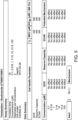
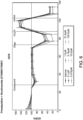
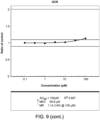
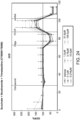
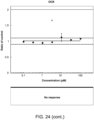
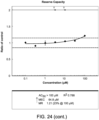
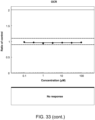
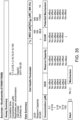
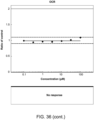
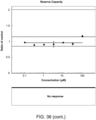
- a compound was identified as positive mitochondrial-active compound when it caused a change in oxygen consumption rate (OCR) or extracellular acidification rate (ECAR) in the absence of cytotoxicity. Cytotoxicity was determined when both OXPHOS (OCR) and glycolysis (ECAR) were inhibited.
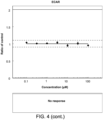
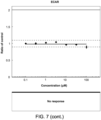
- Extracellular acidification rate is the measurement of extracellular proton concentration (pH).
- An increase in signal means an increase in rate in number of pH ions (thus decreasing pH value) and seen as an increase in glycolysis.
- ECAR is expressed as a fraction of basal control (rate prior to addition of compound).
- ECAR compound ECAR basal ECAR
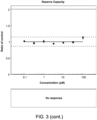
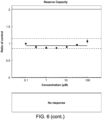
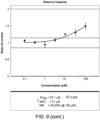
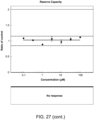
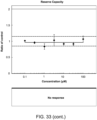
- Reserve capacity FCCP OCR ⁇ non mitochondrial OCR basal OCR ⁇ non mitochondrial OCR
- a series of compounds were added sequentially to the cells to assess a bioenergetics profile, effects of test compounds on parameters such as proton leak, and reserve capacity. This can be used to assist in understanding potential mechanisms of mitochondrial toxicity.
- the following compounds were added in order: (1) oligomycin, (2) FCCP, and (3) rotenone and antimycin A.
- Oligomycin is a known inhibitor of ATP synthase and prevents the formation of ATP. Oligomycin treatment provides a measurement of the amount of oxygen consumption related to ATP production and ATP turnover . The addition of oligomycin results in a decrease in OCR under normal conditions, and residual OCR is related to the natural proton leak.
- FCCP is a protonophore and is a known uncoupler of oxygen consumption from ATP production. FCCP treatment allows the maximum achievable transfer of electrons and oxygen consumption rate and provides a measurement of reserve capacity.
- Rotenone and antimycin A are known inhibitors of complex I and III of the electron transport chain, respectively. Treatment with these compounds inhibits electron transport completely, and any residual oxygen consumption is due to non-mitochondrial activity via oxygen requiring enzymes.
- An electron transport chain inhibitor is an inhibitor of mitochondrial respiration that causes an increase in glycolysis as an adaptive response (e.g. decrease OCR and increase in ECAR).
- the inhibition of oxygen consumption may also be due to reduced substrate availability (e.g. glucose, fatty acids, glutamine, pyruvate), for example, via transporter inhibition.
- substrate availability e.g. glucose, fatty acids, glutamine, pyruvate
- Compounds that reduce the availability of substrates are substrate inhibitors.
- a substrate inhibitor does not result in an increase in glycolysis (e.g. OCR decrease, no response in ECAR).
- compositions on the coronary flow, cardiac function, and infarct size was analyzed.
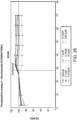
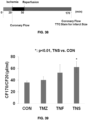
- FIG. 38 is a schematic of the ischemia-reperfusion (IR) method used to analyze the effects of compositions of the invention on coronary flow, cardiac function, and infarct size.
- mice were given (1) 20 ⁇ M trimetazidine (TMZ), (2) 2 ⁇ M each of trimetazidine, nicotinamide, and succinate (TNF), (3) 20 ⁇ M each of trimetazidine, nicotinamide, and succinate (TNS), or (4) the delivery vehicle (CON).
- TTC triphenyltetrazolium chloride
- FIG. 39 is a graph of coronary flow of after IR. Data is expressed as ratio cardiac flow at 170 minutes to cardiac flow at 20 minutes. TNS treatment preserved coronary flow after IR.
- Raw data is provided in Tables 1-2. Table 1. CF20 (ml/min) CF170 (ml/min) CF170/CF20 ( ⁇ l/ml) CON11 2.31E+00 1.11E-01 4.81E+01 CON13 1.07E+00 4.80E-02 4.48E+01 CON14 8.28E-01 4.50E-02 5.43E+01 CON9 2.11E+00 6.96E-02 3.30E+01 CON10 1.85E+00 4.92E-02 2.66E+01 CON7 1.57E+00 5.40E-02 3.44E+01 CON8 3.22E+00 6.78E-02 2.11E+01 CON5 2.18E+00 6.60E-02 3.03E+01 CON3 2.24E+00 7.92E-02 3.53E+01 CON4 2.22E+00 7.84E-
- FIG. 40 is graph of left ventricular developed pressure (LVDP) after IR. Blue bars indicate LVDP at 20 minutes, and orange bars indicate LVDP at 170 minutes. TMZ, TNS, and TNF treatment prevented a decline in cardiac function after IR. Raw data is provided in Tables 3-6. Table 3.
- FIG. 41 shows images of TTC-stained heart slices after IR.
- TMZ and TNS treatment decreased infarct size after IR.
- FIG. 42 is graph of infarct size after IR.
- TMZ and TNS treatment decreased infarct size after IR.
- Raw data is provided in Tables 7-55.
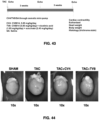
- FIG. 43 is a schematic of the method used to analyze the effects of compositions of the invention on cardiac function.
- TAC transverse aortic constriction
- mice were given one of the following via an osmotic mini-pump: CV8814 at 5.85 mg/kg/day (CV4); CV8814 at 5.85 mg/kg/day, nicotinic acid at 1.85 mg/kg/day, and succinate at 2.43 mg/kg/day (TV8); or saline (SA). Echocardiograms were measured immediately following TAC, three weeks after TAC, and 6 weeks after TAC. Mice were sacrificed at 6 weeks, and tissues were analyzed.
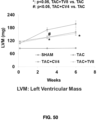
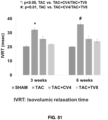
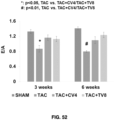
- FIG. 44 shows hearts from mice six weeks after a sham procedure (SHAM), TAC followed by saline administration (TAC), TAC followed by CV4 administration (CV4), or TAC followed by TV8 administration.
- FIG. 45 is of graph of heart weight relative to body weight six weeks after transverse aortic constriction. Treatments are as indicated in relation to FIG. 44 .
- FIG. 46 is graph of heart weight six weeks after transverse aortic constriction. Treatments are as indicated in relation to FIG. 44 .
- FIG. 47 shows graphs of fractional shortening (FS) and ejection fraction (EF) at indicated time points after transverse aortic constriction. Treatments are as indicated in relation to FIG. 44 .
- FIG. 48 is a graph of left ventricular end-systolic diameter at indicated time points after transverse aortic constriction. Treatments are as indicated in relation to FIG. 44 .
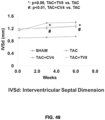
- FIG. 49 is a graph of intraventricular septal dimension at indicated time points after transverse aortic constriction. Treatments are as indicated in relation to FIG. 44 .
- FIG. 50 is a graph of left ventricular mass at indicated time points after transverse aortic constriction. Treatments are as indicated in relation to FIG. 44 .
- FIG. 51 is a graph of isovolumic relaxation time at indicated time points after transverse aortic constriction. Treatments are as indicated in relation to FIG. 44 .
- FIG. 52 is a graph of the ratio peak velocity flow in early diastole vs. late diastole at indicated time points after transverse aortic constriction. Treatments are as indicated in relation to FIG. 44 .
- FIG. 53 is a graph of left ventricular developed pressure at six weeks after transverse aortic constriction. Treatments are as indicated in relation to FIG. 44 .
- FIG. 54 is a graph of the rate of left ventricle pressure rise at six weeks after transverse aortic constriction. Treatments are as indicated in relation to FIG. 44 .
- Compounds of the invention include 2-(4-(2,3,4-trimethoxybenzyl)piperazin-1-yl)ethan-1-ol (referred to herein as CV8814) and 2-(4-(2,3,4-trimethoxybenzyl)piperazin-1-yl)ethyl nicotinate (referred to herein as CV-8972). These compounds may be synthesized according to the following scheme:
- the product was converted to the desired polymorph by recrystallization.
- the percentage of water and the ratio of methanol: methyl ethyl ketone (MEK) were varied in different batches using 2.5 g of product.
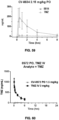
- FIG. 55 is a graph showing levels of CV-8814 (solid triangles, solid lines) and trimetazidine (open triangles, dashed lines) after intravenous administration of CV-8834 at 2.34 mg/kg.
- FIG. 56 is a graph showing levels of CV-8814 (solid triangles, solid lines) and trimetazidine (open triangles, dashed lines) after oral administration of CV-8834 at 77.4 mg/kg.
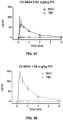
- FIG. 57 is a graph showing levels of CV-8814 (solid triangles, solid lines) and trimetazidine (open triangles, dashed lines) after oral administration of CV-8834 at 0.54 mg/kg.
- FIG. 58 is a graph showing levels of CV-8814 (solid triangles, solid lines) and trimetazidine (open triangles, dashed lines) after oral administration of CV-8834 at 1.08 mg/kg.
- FIG. 59 is a graph showing levels of CV-8814 (solid triangles, solid lines) and trimetazidine (open triangles, dashed lines) after oral administration of CV-8834 at 2.15 mg/kg.
- Table 57 Compound Route of admin. Dose (mg/kg) Analyte Tmax (hours) Cmax (ng/mL) AUC 0-8 (ng x hr/mL) %F CV-8834 PO 77.4 8814 0.75 12100 38050 69 CV-8834 PO 77.4 TMZ 1.67 288 1600 72 CV-8834 IV 2.34 8814 0.083 974 1668 -- CV-8834 IV 2.34 TMZ 2.67 13.4 66.7 -- CV-8834 PO 0.54 8814 0.5 74.0 175 45 CV-8834 PO 0.54 TMZ 1.17 3.63 17.6 >100 CV-8834 PO 1.08 8814 0.5 136 335 44 CV-8834 PO 1.08 TMZ 0.866 6.19 30.4 99 CV-8834 PO 2.15 8814 0.583 199 536 35 CV-8834 PO 2.15 TMZ 1.17 9.80 51.6 84
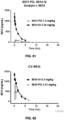
- FIG. 60 is a graph showing levels of trimetazidine after oral administration of CV-8972 at 1.5 mg/kg (triangles) or intravenous administration of trimetazidine at 2 mg/kg (squares).
- FIG. 61 is a graph showing levels of CV-8814 after oral administration of CV-8972 at 1.5 mg/kg (triangles) or intravenous administration of CV-8814 at 2.34 mg/kg (squares).
- FIG. 62 is a graph showing levels of CV-8814 after intravenous administration of CV-8834 at 4.3 mg/kg (squares) or oral administration of CV-8834 at 2.15 mg/kg (triangles).
- FIG. 63 is a graph showing levels of CV-8814 after intravenous administration of CV-8814 at 2.34 mg/kg (squares) or oral administration of CV-8814 at 2.34 mg/kg (triangles).
- CV-8814 The effect of CV-8814 on the activity of various enzymes was analyzed in in vitro assays. Enzyme activity was assayed in the presence of 10 ⁇ M CV-8814 using conditions of time, temperature, substrate, and buffer that were optimized for each enzyme based on published literature.
- CV-8972 (2-(4-(2,3,4-trimethoxybenzyl)piperazin-1-yl)ethyl nicotinate, HCl salt, monohydrate) was prepared and analyzed. The batch was determined to be 99.62% pure by HPLC.
- FIG. 64 is a graph showing the HPLC elution profile of a batch of CV-8972.
- FIG. 65 is a graph showing analysis of molecular species present in a batch of CV-8972.
- FIG. 66 is a pair of graphs showing HPLC elution profiles of molecular species present in a batch of CV-8972.
- FIG. 67 is a pair of graphs showing HPLC elution profiles of molecular species present in a batch of CV-8972.
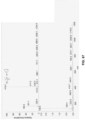
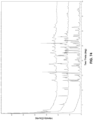
- FIG. 68 is a graph showing X-ray powder diffraction analysis of a batch of CV-8972.
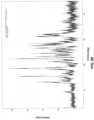
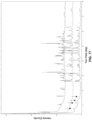
- FIG. 69 is a graph showing X-ray powder diffraction analysis of batches of CV-8972.
- Batch 289-MBA-15-A shown in blue, contains form B of CV-8972
- batch 276-MBA-172 shown in black contains form A of CV-8972
- batch 289-MBA-16 shown in red, contains a mixture of forms A and B.
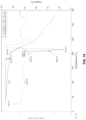
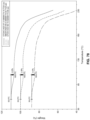
- FIG. 70 is a graph showing differential scanning calorimetry and thermal gravimetric analysis of batch 276-MBA-172 of CV-8972.
- FIG. 71 is a graph showing dynamic vapor sorption (DVS) of batch 276-MBA-172 of CV-8972.
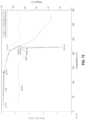
- FIG. 72 is a graph showing differential scanning calorimetry and thermal gravimetric analysis of batch 289-MBA-15-A of CV-8972.
- FIG. 73 is a graph showing dynamic vapor sorption (DVS) of batch 289-MBA-15-A of CV-8972.
- FIG. 74 is a graph showing X-ray powder diffraction analysis of samples of CV-8972.
- a pre-DVS sample from batch 276-MBA-172 is shown in blue
- a pre-DVS sample from batch 289-MBA-15-A is shown in red
- a post-DVS sample from batch 289-MBA-15-A is shown in black.
- FIG. 75 is a graph showing differential scanning calorimetry and thermal gravimetric analysis of batch 289-MBA-16 of CV-8972.
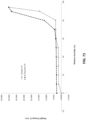
- FIG. 76 is a graph showing X-ray powder diffraction analysis of samples of CV-8972.
- Form B is shown in green
- form A is shown in blue
- a sample from an ethanol slurry of batch 289-MBA-15-A is shown in red
- a sample from an ethanol slurry of batch 289-MBA-16 is shown in black.
- FIG. 77 is a graph showing X-ray powder diffraction analysis of samples of CV-8972.
- a sample containing form B is shown in blue, a sample containing form A is shown in red, and a sample containing a mixture of forms A and C is shown in black.
- FIG. 78 is a graph showing differential scanning calorimetry and thermal gravimetric analysis of samples containing form A of CV-8972.
- a sample from an ethanol acetate-water slurry is shown with solid lines
- a sample from a methanol-water slurry is shown with regularly-dashed lines
- a sample from an ethanol-water slurry is shown with dashed-dotted lines.
- FIG. 79 is a graph showing differential scanning calorimetry and thermal gravimetric analysis of a sample containing form A of CV-8972. Prior to analysis, the sample was dried at 100°C for 20 minutes.
- the brain-to-plasma ratio of trimetazidine and CV-8814 was analyzed after intravenous administration of the compounds to rats. Dosing solutions were analyzed by liquid chromatography tandem mass spectrometry (LC-MS/MS). Results are shown in Table 67. Table 67. Test Article Route of Administration Vehicle Nominal Dosing Conc. (mg/mL) Measured Dosing Solution Conc. (mg/mL) % of Nominal TMZ IV Normal Saline* 1.0 1.14 114 CV-8814 IV Normal Saline* 0.585 0.668 114
- mice The concentrations of compounds in the brain and plasma were analyzed 2 hours after administering compounds at 1 mg/kg to rats. Results from trimetazidine-treated rats are shown in Table 68. Results from CV-8814-treated rats are shown in Table 69. Table 68: TMZ-treated rats Rat# 11 12 13 Brain Weight (g) 1.781 1.775 1.883 Brain Homogenate Volume (mL) 8.91 8.88 9.42 Brain Homogenate Conc. (ng/mL) 7.08 7.35 7.90 Brain Tissue Conc. (ng/g) 35.4 36.8 39.5 Plasma Conc.
- the average B:P ratio for trimetazidine-treated rats was 2.33 ⁇ 0.672.
- the average B:P ratio for trimetazidine-treated rats was 1.32 ⁇ 0.335.
Landscapes
- Health & Medical Sciences (AREA)
- Chemical & Material Sciences (AREA)
- Medicinal Chemistry (AREA)
- Pharmacology & Pharmacy (AREA)
- Life Sciences & Earth Sciences (AREA)
- Animal Behavior & Ethology (AREA)
- General Health & Medical Sciences (AREA)
- Public Health (AREA)
- Veterinary Medicine (AREA)
- Epidemiology (AREA)
- Engineering & Computer Science (AREA)
- Bioinformatics & Cheminformatics (AREA)
- Organic Chemistry (AREA)
- Nuclear Medicine, Radiotherapy & Molecular Imaging (AREA)
- Chemical Kinetics & Catalysis (AREA)
- General Chemical & Material Sciences (AREA)
- Dermatology (AREA)
- Physical Education & Sports Medicine (AREA)
- Nutrition Science (AREA)
- Physiology (AREA)
- Immunology (AREA)
- Orthopedic Medicine & Surgery (AREA)
- Rheumatology (AREA)
- Cardiology (AREA)
- Heart & Thoracic Surgery (AREA)
- Pharmaceuticals Containing Other Organic And Inorganic Compounds (AREA)
Applications Claiming Priority (5)
| Application Number | Priority Date | Filing Date | Title |
|---|---|---|---|
| US201862746670P | 2018-10-17 | 2018-10-17 | |
| US201862757805P | 2018-11-09 | 2018-11-09 | |
| US201962819819P | 2019-03-18 | 2019-03-18 | |
| PCT/US2019/055640 WO2020081361A1 (en) | 2018-10-17 | 2019-10-10 | Methods of treating rheumatic diseases using trimetazidine-based compounds |
| EP19872680.4A EP3866794B1 (de) | 2018-10-17 | 2019-10-10 | Verfahren zur behandlung von rheumatischen erkrankungen unter verwendung von trimetazidinbasierten verbindungen |
Related Parent Applications (2)
| Application Number | Title | Priority Date | Filing Date |
|---|---|---|---|
| EP19872680.4A Division EP3866794B1 (de) | 2018-10-17 | 2019-10-10 | Verfahren zur behandlung von rheumatischen erkrankungen unter verwendung von trimetazidinbasierten verbindungen |
| EP19872680.4A Division-Into EP3866794B1 (de) | 2018-10-17 | 2019-10-10 | Verfahren zur behandlung von rheumatischen erkrankungen unter verwendung von trimetazidinbasierten verbindungen |
Publications (2)
| Publication Number | Publication Date |
|---|---|
| EP4497474A2 true EP4497474A2 (de) | 2025-01-29 |
| EP4497474A3 EP4497474A3 (de) | 2025-04-23 |
Family
ID=70284702
Family Applications (2)
| Application Number | Title | Priority Date | Filing Date |
|---|---|---|---|
| EP24208227.9A Pending EP4497474A3 (de) | 2018-10-17 | 2019-10-10 | Verfahren zur behandlung von rheumatischen erkrankungen unter verwendung von trimetazidinbasierten verbindungen |
| EP19872680.4A Active EP3866794B1 (de) | 2018-10-17 | 2019-10-10 | Verfahren zur behandlung von rheumatischen erkrankungen unter verwendung von trimetazidinbasierten verbindungen |
Family Applications After (1)
| Application Number | Title | Priority Date | Filing Date |
|---|---|---|---|
| EP19872680.4A Active EP3866794B1 (de) | 2018-10-17 | 2019-10-10 | Verfahren zur behandlung von rheumatischen erkrankungen unter verwendung von trimetazidinbasierten verbindungen |
Country Status (3)
| Country | Link |
|---|---|
| US (2) | US12318382B2 (de) |
| EP (2) | EP4497474A3 (de) |
| WO (1) | WO2020081361A1 (de) |
Families Citing this family (15)
| Publication number | Priority date | Publication date | Assignee | Title |
|---|---|---|---|---|
| WO2018236745A1 (en) | 2017-06-20 | 2018-12-27 | Carnot, Llc | COMPOSITIONS AND METHODS FOR INCREASING THE EFFICACY OF CARDIAC METABOLISM |
| EP4497474A3 (de) | 2018-10-17 | 2025-04-23 | Imbria Pharmaceuticals, Inc. | Verfahren zur behandlung von rheumatischen erkrankungen unter verwendung von trimetazidinbasierten verbindungen |
| EP3976101A4 (de) * | 2019-05-31 | 2023-06-21 | Imbria Pharmaceuticals, Inc. | Verfahren zur behandlung von fibrose unter verwendung von verbindungen zur förderung der glucoseoxidation |
| US20230210845A1 (en) * | 2020-05-04 | 2023-07-06 | Imbria Pharmaceuticals, Inc. | Dosing methods for treatment of cardiovascular conditions |
| US11780811B2 (en) | 2020-06-30 | 2023-10-10 | Imbria Pharmaceuticals, Inc. | Methods of synthesizing 2-[4-[(2,3,4-trimethoxyphenyl)methyl]piperazin-1-yl]ethyl pyridine-3-carboxylate |
| US11530184B2 (en) | 2020-06-30 | 2022-12-20 | Imbria Pharmaceuticals, Inc. | Crystal forms of 2-[4-[(2,3,4-trimethoxyphenyl)methyl]piperazin-1-yl]ethyl pyridine-3-carboxylate |
| CA3187827A1 (en) * | 2020-06-30 | 2022-01-06 | Imbria Pharmaceuticals, Inc. | Modified release formulations of modified forms of trimetazidine |
| US11793807B2 (en) | 2020-12-10 | 2023-10-24 | Imbria Pharmaceuticals, Inc. | Methods of treating heart failure with preserved ejection fraction using modified forms of trimetazidine |
| EP4259138A4 (de) * | 2020-12-10 | 2024-11-06 | Imbria Pharmaceuticals, Inc. | Verfahren zur behandlung von herzerkrankungen mit modifizierten formen von trimetazidin |
| US11730733B2 (en) | 2020-12-10 | 2023-08-22 | Imbria Pharmaceuticals, Inc. | Methods of treating non-obstructive hypertrophic cardiomyopathy using modified forms of trimetazidine |
| US11969422B2 (en) | 2020-12-10 | 2024-04-30 | Imbria Pharmaceuticals, Inc. | Methods of treating heart failure with reduced ejection fraction using modified forms of trimetazidine |
| US12076318B2 (en) | 2020-12-10 | 2024-09-03 | Imbria Pharmaceuticals, Inc. | Methods of treating heart failure with hibernating myocardium using modified forms of trimetazidine |
| EP4274436A4 (de) * | 2021-01-06 | 2024-12-11 | Imbria Pharmaceuticals, Inc. | Kombinationstherapien |
| CN116829000A (zh) * | 2021-01-06 | 2023-09-29 | 安布里亚制药公司 | 组合疗法 |
| US11883396B2 (en) | 2021-05-03 | 2024-01-30 | Imbria Pharmaceuticals, Inc. | Methods of treating kidney conditions using modified forms of trimetazidine |
Citations (18)
| Publication number | Priority date | Publication date | Assignee | Title |
|---|---|---|---|---|
| US4166452A (en) | 1976-05-03 | 1979-09-04 | Generales Constantine D J Jr | Apparatus for testing human responses to stimuli |
| US4256108A (en) | 1977-04-07 | 1981-03-17 | Alza Corporation | Microporous-semipermeable laminated osmotic system |
| US4265874A (en) | 1980-04-25 | 1981-05-05 | Alza Corporation | Method of delivering drug with aid of effervescent activity generated in environment of use |
| WO1995000165A1 (en) | 1993-06-21 | 1995-01-05 | Selectide Corporation | Selectively cleavable linkers based on iminodiacetic acid ester bonds |
| US6214841B1 (en) | 1997-05-15 | 2001-04-10 | Eli Lilly And Company | Antithrombotic compound |
| WO2002058698A2 (en) | 2001-01-26 | 2002-08-01 | Chugai Seiyaku Kabushiki Kaisha | Malonyl-coa decarboxylase inhibitors useful as metabolic modulators |
| WO2002064576A1 (en) | 2000-10-23 | 2002-08-22 | Cv Therapeutics, Inc. | Heteroaryl alkyl piperazine derivatives as fatty acid oxidation inhibitors |
| US20030191182A1 (en) | 2001-03-30 | 2003-10-09 | Lopaschuk Gary David | Compounds that stimulate glucose utilization and methods of use |
| US20030232877A1 (en) | 2001-12-19 | 2003-12-18 | Sikorski James A. | 1,3-Bis-(substituted-phenyl)-2-propyn-1-ones and their use to treat disorders |
| US20040082564A1 (en) | 2001-02-20 | 2004-04-29 | Thomas Arrhenius | Methods for treating metabolic diseases using malonyl-coa decarboxylase inhibitors |
| WO2006117686A2 (en) | 2005-02-23 | 2006-11-09 | The Governors Of The University Of Alberta | Compounds that stimulate glucose utilization and methods of use |
| WO2008109991A1 (en) | 2007-03-09 | 2008-09-18 | University Health Network | Inhibitors of carnitine palmitoyltransferase and treating cancer |
| WO2009015485A1 (en) | 2007-08-01 | 2009-02-05 | University Health Network | Cyclic inhibitors of carnitine palmitoyltransferase and treating cancer |
| WO2009156479A1 (en) | 2008-06-27 | 2009-12-30 | Meta-Iq Aps | Inhibitors of carnitin-palmitoyl-transferase-1 for the treatment and prevention of disorders caused by delipidation of neural tissue |
| US20110212072A1 (en) | 2001-10-26 | 2011-09-01 | Medigene Ag | Inhibitors of Fatty Acid Oxidation for Prophylaxis and Treatment of Diseases Related to Mitochondrial Dysfunction |
| US8461117B2 (en) | 2006-12-28 | 2013-06-11 | Medarex, Inc. | Chemical linkers and cleavable substrates and conjugates thereof |
| WO2015018660A1 (en) | 2013-08-05 | 2015-02-12 | Vib Vzw | Carnitine palmitoyltransferase 1 inhibitors for inhibition of pathological angiogenesis |
| US9096538B2 (en) | 2005-11-28 | 2015-08-04 | Senju Pharmaceutical Co., Ltd. | Pharmaceutical comprising PPAR agonist |
Family Cites Families (96)
| Publication number | Priority date | Publication date | Assignee | Title |
|---|---|---|---|---|
| US4100285A (en) | 1976-04-09 | 1978-07-11 | Nippon Shinyaku Co., Ltd. | N-substituted trialkoxybenzyl piperazine derivatives |
| JPS57131777A (en) | 1981-07-24 | 1982-08-14 | Nippon Shinyaku Co Ltd | Preparation of piperazine derivative |
| JPS60155171A (ja) * | 1983-12-10 | 1985-08-15 | Wako Pure Chem Ind Ltd | ポリメトキシベンジルピペラジン誘導体 |
| JPS632986A (ja) | 1986-06-23 | 1988-01-07 | Kanebo Ltd | 新規なピペラジン誘導体および該化合物を有効成分とする抗潰瘍薬 |
| DE3633977A1 (de) | 1986-10-06 | 1988-04-07 | Cassella Ag | Tetrahydrochinolinderivate, ein verfahren zu ihrer herstellung, ihre verwendung und sie enthaltende pharmazeutische zubereitungen |
| US4885300A (en) | 1988-03-03 | 1989-12-05 | Ortho Pharmaceutical Corporation | 4-Substituted pyrazolo[3,4-D]pyrimidine derivatives |
| US4876257A (en) | 1988-03-03 | 1989-10-24 | Ortho Pharmaceutical Corporation | 6-Substituted purinyl piperazine derivatives useful as cardiotonic and antiarrhythmic agents |
| FR2644786B1 (fr) | 1989-03-21 | 1993-12-31 | Adir Cie | Nouveaux derives fluoro-4 benzoiques, leurs procedes de preparation et les compositions pharmaceutiques qui les contiennent |
| DE4111861A1 (de) | 1991-04-11 | 1992-10-15 | Schwabe Willmar Gmbh & Co | Benzopyranone, verfahren zu ihrer herstellung und verwendung |
| FR2676055B1 (fr) | 1991-05-03 | 1993-09-03 | Sanofi Elf | Composes polycycliques amines et leurs enantiomeres, procede pour leur preparation et compositions pharmaceutiques les contenant. |
| DE4119758A1 (de) | 1991-06-15 | 1992-12-17 | Basf Ag | Aminoalkylsubstituierte 2-amino-5-mercaptothiadiazole, ihre herstellung und verwendung |
| EP0524146A1 (de) | 1991-07-19 | 1993-01-20 | Ciba-Geigy Ag | Aminosubstituierte Piperazinderivate |
| EP0557526B8 (de) | 1991-08-07 | 2003-08-13 | Daiichi Suntory Pharma Co., Ltd. | Pyrroloazepinverbindungen |
| CA2093631C (en) | 1991-08-07 | 2003-09-23 | Akira Mizuno | Pyrroloazepine derivative |
| FR2680508B1 (fr) | 1991-08-20 | 1995-03-03 | Adir | Nouveaux composes amidiques des 1-(alcoxybenzyl)piperazines, leurs procedes de preparation et les compositions pharmaceutiques qui les contiennent. |
| FR2699918B1 (fr) | 1992-12-30 | 1995-03-17 | Pf Medicament | Ligands sélectifs des récepteurs 5HY1D-5HT1B dérivés d'indole-pipérazine utiles comme médicaments. |
| US5384319A (en) | 1993-01-06 | 1995-01-24 | Ciba-Geigy Corporation | Aminoalkylphenyl compounds |
| US5380726A (en) | 1993-01-15 | 1995-01-10 | Ciba-Geigy Corporation | Substituted dialkylthio ethers |
| TW248556B (de) | 1993-01-18 | 1995-06-01 | Takeda Pharm Industry Co | |
| US5441795A (en) | 1993-03-19 | 1995-08-15 | Xerox Corporation | Recording sheets containing pyridinium compounds |
| US6087346A (en) | 1993-06-23 | 2000-07-11 | Cambridge Neuroscience, Inc. | Sigma receptor ligands and the use thereof |
| DE4330175A1 (de) | 1993-08-31 | 1995-03-02 | Schering Ag | Alkoxy-substituierte beta-Carboline |
| JPH0912562A (ja) | 1995-06-22 | 1997-01-14 | Suntory Ltd | 置換ベンゾチアジン誘導体 |
| EP0661266A1 (de) | 1993-12-27 | 1995-07-05 | Toa Eiyo Ltd. | Substituierte cyclische Aminverbindungen als 5HT2 Antagonisten |
| EP0670313A1 (de) | 1994-03-04 | 1995-09-06 | Takeda Chemical Industries, Ltd. | Spiro-Verbindungen, ihre Herstellung und Verwendung |
| DE4410822A1 (de) | 1994-03-24 | 1995-09-28 | Schering Ag | Neue Piperidin-Derivate |
| DE4439846A1 (de) | 1994-11-08 | 1996-05-09 | Merck Patent Gmbh | Adhäsionsrezeptor-Antagonisten |
| IL117149A0 (en) | 1995-02-23 | 1996-06-18 | Schering Corp | Muscarinic antagonists |
| WO1996030054A1 (en) | 1995-03-28 | 1996-10-03 | Mallinckrodt Medical, Inc. | 99mTc - LABELLED SEROTONIN RECEPTOR BINDING SUBSTANCES |
| IL117580A0 (en) | 1995-03-29 | 1996-07-23 | Merck & Co Inc | Inhibitors of farnesyl-protein transferase and pharmaceutical compositions containing them |
| US5856326A (en) | 1995-03-29 | 1999-01-05 | Merck & Co., Inc. | Inhibitors of farnesyl-protein transferase |
| JPH0967367A (ja) | 1995-06-23 | 1997-03-11 | Suntory Ltd | チオピラン誘導体 |
| CA2212092A1 (en) | 1995-12-01 | 1997-06-12 | Makoto Shibata | Pyrroloazepine derivatives |
| FR2744449B1 (fr) | 1996-02-02 | 1998-04-24 | Pf Medicament | Nouvelles piperazines aromatiques derivees de cycloazanes substitues, ainsi que leur procede de preparation, les compositions pharmaceutiques et leur utilisation comme medicaments |
| AU2446297A (en) | 1996-04-30 | 1997-11-19 | Warner-Lambert Company | Substituted piperazines and piperidines as central nervous system agents |
| WO1997046549A1 (en) | 1996-06-05 | 1997-12-11 | Novartis Ag | Anti-neurodegeneratively effective xanthene derivatives |
| FR2757164B1 (fr) | 1996-12-16 | 1999-01-22 | Adir | Nouveaux derives de n-benzylpiperazine, leur procede de preparation et les compositions pharmaceutiques qui les contiennent |
| US5998458A (en) | 1997-06-25 | 1999-12-07 | University Technology Corporation | Method of treating heart failure |
| ID24525A (id) | 1997-07-31 | 2000-07-20 | Hoffmann La Roche | Turunan-turunan hidroksikumaranon tersubstitusi-0 sebagai zat anti tumor dan zat antimetastatik |
| JPH11193289A (ja) | 1997-12-26 | 1999-07-21 | Suntory Ltd | ピロールスルホンアミド誘導体 |
| JPH11193290A (ja) | 1997-12-26 | 1999-07-21 | Suntory Ltd | ピロールスルホンアミド系化合物 |
| AU762726B2 (en) | 1998-03-31 | 2003-07-03 | Acadia Pharmaceuticals, Inc. | Compounds with activity on muscarinic receptors |
| US6528529B1 (en) | 1998-03-31 | 2003-03-04 | Acadia Pharmaceuticals Inc. | Compounds with activity on muscarinic receptors |
| JP4013367B2 (ja) | 1998-11-10 | 2007-11-28 | Jsr株式会社 | 感放射線性樹脂組成物 |
| US6696495B2 (en) * | 1998-12-02 | 2004-02-24 | Snowden Pharmaceuticals, Llc | Treatment of disorders secondary to organic impairments |
| AR025884A1 (es) | 1999-10-01 | 2002-12-18 | Takeda Pharmaceutical | Compuestos de amina ciclica, su produccion y su uso |
| US6693099B2 (en) | 2000-10-17 | 2004-02-17 | The Procter & Gamble Company | Substituted piperazine compounds optionally containing a quinolyl moiety for treating multidrug resistance |
| JP2005509594A (ja) | 2001-07-13 | 2005-04-14 | バーチャル ドラッグ ディヴェロップメント、インコーポレイティッド | Nadシンテターゼ阻害剤およびその使用 |
| DE10322191B4 (de) | 2003-05-16 | 2014-02-27 | The Medicines Company (Leipzig) Gmbh | N-sulfonylierte Aminosäurederivate, Verfahren zu ihrer Herstellung und ihre Verwendung |
| JP4605801B2 (ja) | 2003-06-30 | 2011-01-05 | シェーリング コーポレイション | 肥満治療用のmchアンタゴニスト |
| US7320675B2 (en) | 2003-08-21 | 2008-01-22 | Cardiac Pacemakers, Inc. | Method and apparatus for modulating cellular metabolism during post-ischemia or heart failure |
| US7510710B2 (en) | 2004-01-08 | 2009-03-31 | The Regents Of The University Of Colorado | Compositions of UCP inhibitors, Fas antibody, a fatty acid metabolism inhibitor and/or a glucose metabolism inhibitor |
| EP1755605A2 (de) | 2004-04-15 | 2007-02-28 | Samaritan Pharmaceuticals, Inc. | Verwendung von (4-alkylpiperazinyl-(phenyl)-methanonen zur behandlung von alzheimer |
| EP1634598A1 (de) | 2004-09-07 | 2006-03-15 | Laboratorios Del Dr. Esteve, S.A. | Verwendung von Piperazinderivaten und Analogen zur Behandlung oder Prophylaxe von Essstörungen |
| JP2006113343A (ja) | 2004-10-15 | 2006-04-27 | Konica Minolta Medical & Graphic Inc | 平版印刷版材料 |
| ATE440833T1 (de) | 2004-11-29 | 2009-09-15 | Lilly Co Eli | Antithrombotische diamide |
| AU2006209216A1 (en) | 2005-01-25 | 2006-08-03 | Galenea Corp | Substituted arylamine compounds and their use as 5-HT6 modulators |
| DE102005061657A1 (de) | 2005-06-16 | 2006-12-28 | Merck Patent Gmbh | Verwendung von substituierten Piperazin- und Morpholinderivaten |
| US7754724B2 (en) | 2005-06-30 | 2010-07-13 | Dow Agrosciences Llc | N-substituted piperazines |
| WO2007059362A2 (en) | 2005-11-21 | 2007-05-24 | The Board Of Regents Of The University Of Oklahoma | Activation of cardiac alpha receptors by spinal cord stimulation produces cardioprotection against ischemia, arrhythmias, and heart failure |
| EP1976848A2 (de) | 2005-12-21 | 2008-10-08 | Schering Corporation | Phenoxypiperidine und analoge davon als histamin-h3-antagonisten |
| ITRM20060090A1 (it) | 2006-02-22 | 2007-08-23 | Sigma Tau Ind Farmaceuti | Nuovi composti inibitori cpt a livello del snc come farmaci antidiabetici e o antiobesita |
| WO2007116074A1 (en) | 2006-04-10 | 2007-10-18 | Mintails Limited | Trimetazidine for use in the treatment of fibromyalgia syndrome and related conditions |
| WO2007116243A2 (en) | 2006-04-10 | 2007-10-18 | Mintails Limited | Method for treating fibromyalgia and related conditions |
| US20080161400A1 (en) | 2006-10-26 | 2008-07-03 | Xenoport, Inc. | Use of forms of propofol for treating diseases associated with oxidative stress |
| DE102006060598A1 (de) | 2006-12-21 | 2008-06-26 | Merck Patent Gmbh | Tetrahydrobenzoisoxazole |
| WO2009066315A2 (en) | 2007-08-08 | 2009-05-28 | Usv Limited | Sustained release compositions of trimetazidine and process for preparation thereof |
| WO2009058818A2 (en) | 2007-10-29 | 2009-05-07 | The Board Of Regents Of The University Of Texas System | Compositions comprising a micro-rna and methods of their use in regulating cardiac remodeling |
| TW200938203A (en) | 2007-12-17 | 2009-09-16 | Intervet Int Bv | Anthelmintic agents and their use |
| EP2445506B1 (de) | 2009-06-24 | 2014-12-31 | Entarco SA | Die verwendung von spinosyn und spinosyn enthaltenden zubereitungen zur behandlung von protozoen verursachten erkrankungen, von viralen infektionen und von krebs. |
| KR101256018B1 (ko) | 2009-08-20 | 2013-04-18 | 한국과학기술연구원 | 단백질 키나아제 저해활성을 갖는 1,3,6-치환된 인돌 화합물 |
| RU2569063C2 (ru) | 2009-09-01 | 2015-11-20 | Катабэйсис Фармасьютикалз, Инк. | Конъюгаты жирных кислот и ниацина и их применение |
| WO2011032099A1 (en) | 2009-09-11 | 2011-03-17 | The Board Of Trustees Of The University Of Illinois | Methods of treating diastolic dysfunction and related conditions |
| US20120214818A1 (en) | 2009-09-11 | 2012-08-23 | The Board Of Trustees Of The University Of Illinois | Methods of treating diastolic dysfunction and related conditions |
| CN101747292B (zh) | 2009-12-29 | 2011-07-20 | 中国药科大学 | 苯甲酰胍-曲美他嗪的偶联物、其制备方法及其医药用途 |
| EA021417B1 (ru) | 2010-04-08 | 2015-06-30 | Ацьенде Кимике Рьюните Анджелини Франческо А.К.Р.А.Ф. С.П.А. | Трициклическое индазольное соединение, способ его получения и содержащая его фармацевтическая композиция |
| CN103189365B (zh) | 2010-10-14 | 2015-01-07 | 巴斯夫欧洲公司 | 制备环状叔胺的方法 |
| EP2727916A1 (de) | 2012-10-30 | 2014-05-07 | Universitat Autònoma de Barcelona | Nervenzellenschützende Arzneimittel mit Ausrichtung auf mehrere Ziele |
| WO2014169988A1 (en) | 2013-04-16 | 2014-10-23 | Merck Patent Gmbh | Device containing a liquid-crystalline medium |
| JP6184830B2 (ja) | 2013-06-14 | 2017-08-23 | 花王株式会社 | 漂白洗浄剤組成物 |
| US10167258B2 (en) | 2013-12-13 | 2019-01-01 | The Board Of Regents Of The University Of Texas System | Inhibitors of mitochondrial pyruvate dehydrogenase kinase isoforms 1-4 and uses thereof |
| WO2015131231A1 (en) * | 2014-03-03 | 2015-09-11 | Adelaide Research & Innovation Pty Ltd | Methods for using (-)-perhexiline |
| SI3116486T1 (sl) | 2014-03-14 | 2020-07-31 | Biomolecular Holdings Llc | Hibridni imunoglobulin, ki vsebuje nepeptidilno vezavo |
| US10676711B2 (en) | 2014-06-06 | 2020-06-09 | Riken | Agent for inducing callus and method for inducing callus |
| WO2015186114A1 (en) * | 2014-06-06 | 2015-12-10 | Glaxosmithkline Intellectual Property (No.2) Limited | Nicotinamide riboside analogs and pharmaceutical compositions and uses thereof |
| BR112017000398A2 (pt) | 2014-07-11 | 2018-01-23 | Intervet Int Bv | composto ou sal do mesmo, método de tratamento de uma infecção causada por dirofilaria immitis, e, kit. |
| CN105753814A (zh) | 2015-01-01 | 2016-07-13 | 成都贝斯凯瑞生物科技有限公司 | 取代氮杂环衍生物及其应用 |
| US10611790B2 (en) * | 2015-11-02 | 2020-04-07 | Mitobridge, Inc. | Nicotinamide riboside and nicotinamide mononucleotide derivatives for use in the treatments of mitochondrial-related diseases |
| PL3400025T3 (pl) * | 2016-01-06 | 2024-06-24 | The Trustees Of Columbia University In The City Of New York | Stosowanie gwajakolu w zapobieganiu i leczeniu choroby spichrzeniowej glikogenu |
| FR3048968B1 (fr) | 2016-03-16 | 2018-03-02 | Commissariat A L'energie Atomique Et Aux Energies Alternatives | Procede de preparation d'alkylamines |
| IL317124A (en) * | 2017-02-22 | 2025-01-01 | Hadasit Med Res Service | Compounds for the treatment of glycogen storage diseases |
| WO2018236745A1 (en) * | 2017-06-20 | 2018-12-27 | Carnot, Llc | COMPOSITIONS AND METHODS FOR INCREASING THE EFFICACY OF CARDIAC METABOLISM |
| EP4497474A3 (de) | 2018-10-17 | 2025-04-23 | Imbria Pharmaceuticals, Inc. | Verfahren zur behandlung von rheumatischen erkrankungen unter verwendung von trimetazidinbasierten verbindungen |
| US11730733B2 (en) * | 2020-12-10 | 2023-08-22 | Imbria Pharmaceuticals, Inc. | Methods of treating non-obstructive hypertrophic cardiomyopathy using modified forms of trimetazidine |
| US11793807B2 (en) * | 2020-12-10 | 2023-10-24 | Imbria Pharmaceuticals, Inc. | Methods of treating heart failure with preserved ejection fraction using modified forms of trimetazidine |
| US11883396B2 (en) * | 2021-05-03 | 2024-01-30 | Imbria Pharmaceuticals, Inc. | Methods of treating kidney conditions using modified forms of trimetazidine |
-
2019
- 2019-10-10 EP EP24208227.9A patent/EP4497474A3/de active Pending
- 2019-10-10 EP EP19872680.4A patent/EP3866794B1/de active Active
- 2019-10-10 WO PCT/US2019/055640 patent/WO2020081361A1/en not_active Ceased
- 2019-10-10 US US17/282,584 patent/US12318382B2/en active Active
-
2025
- 2025-05-02 US US19/197,314 patent/US20260060978A1/en active Pending
Patent Citations (19)
| Publication number | Priority date | Publication date | Assignee | Title |
|---|---|---|---|---|
| US4166452A (en) | 1976-05-03 | 1979-09-04 | Generales Constantine D J Jr | Apparatus for testing human responses to stimuli |
| US4256108A (en) | 1977-04-07 | 1981-03-17 | Alza Corporation | Microporous-semipermeable laminated osmotic system |
| US4265874A (en) | 1980-04-25 | 1981-05-05 | Alza Corporation | Method of delivering drug with aid of effervescent activity generated in environment of use |
| WO1995000165A1 (en) | 1993-06-21 | 1995-01-05 | Selectide Corporation | Selectively cleavable linkers based on iminodiacetic acid ester bonds |
| US6214841B1 (en) | 1997-05-15 | 2001-04-10 | Eli Lilly And Company | Antithrombotic compound |
| WO2002064576A1 (en) | 2000-10-23 | 2002-08-22 | Cv Therapeutics, Inc. | Heteroaryl alkyl piperazine derivatives as fatty acid oxidation inhibitors |
| WO2002058698A2 (en) | 2001-01-26 | 2002-08-01 | Chugai Seiyaku Kabushiki Kaisha | Malonyl-coa decarboxylase inhibitors useful as metabolic modulators |
| US20040082564A1 (en) | 2001-02-20 | 2004-04-29 | Thomas Arrhenius | Methods for treating metabolic diseases using malonyl-coa decarboxylase inhibitors |
| US20030191182A1 (en) | 2001-03-30 | 2003-10-09 | Lopaschuk Gary David | Compounds that stimulate glucose utilization and methods of use |
| US20110212072A1 (en) | 2001-10-26 | 2011-09-01 | Medigene Ag | Inhibitors of Fatty Acid Oxidation for Prophylaxis and Treatment of Diseases Related to Mitochondrial Dysfunction |
| US20030232877A1 (en) | 2001-12-19 | 2003-12-18 | Sikorski James A. | 1,3-Bis-(substituted-phenyl)-2-propyn-1-ones and their use to treat disorders |
| US8202901B2 (en) | 2002-04-01 | 2012-06-19 | The Governors Of The University Of Alberta | Compounds that stimulate glucose utilization and methods of use |
| WO2006117686A2 (en) | 2005-02-23 | 2006-11-09 | The Governors Of The University Of Alberta | Compounds that stimulate glucose utilization and methods of use |
| US9096538B2 (en) | 2005-11-28 | 2015-08-04 | Senju Pharmaceutical Co., Ltd. | Pharmaceutical comprising PPAR agonist |
| US8461117B2 (en) | 2006-12-28 | 2013-06-11 | Medarex, Inc. | Chemical linkers and cleavable substrates and conjugates thereof |
| WO2008109991A1 (en) | 2007-03-09 | 2008-09-18 | University Health Network | Inhibitors of carnitine palmitoyltransferase and treating cancer |
| WO2009015485A1 (en) | 2007-08-01 | 2009-02-05 | University Health Network | Cyclic inhibitors of carnitine palmitoyltransferase and treating cancer |
| WO2009156479A1 (en) | 2008-06-27 | 2009-12-30 | Meta-Iq Aps | Inhibitors of carnitin-palmitoyl-transferase-1 for the treatment and prevention of disorders caused by delipidation of neural tissue |
| WO2015018660A1 (en) | 2013-08-05 | 2015-02-12 | Vib Vzw | Carnitine palmitoyltransferase 1 inhibitors for inhibition of pathological angiogenesis |
Non-Patent Citations (9)
| Title |
|---|
| CHENG J.F. ET AL.: "Synthesis and structure-activity relationship of small-molecule malonyl coenzyme A decarboxylase inhibitors", J. MED. CHEM., vol. 49, 2006, pages 1517 - 1525, XP002464356, DOI: 10.1021/jm050109n |
| CHUNG, J.F. ET AL.: "Discovery of Potent and Orally Available Malonyl-CoA Decarboxylase Inhibitors as Cardioprotective Agents", J. MED. CHEM., vol. 49, 2006, pages 4055 - 4058 |
| FILLMORE, N. ET AL.: "Mitochondrial fatty acid oxidation alterations in heart failure, ischemic heart disease and diabetic cardiomyopathy", BRIT. J. PHARMACOL., vol. 171, 2014, pages 2080 - 2090, XP071035711, DOI: 10.1111/bph.12475 |
| GIBBS, C.L.BARCLAY, C.J., CARDIAC EFFICIENCY, CARDIOVASC. RES., vol. 30, 1995, pages 627 - 634 |
| LERICHE, G. ET AL.: "Cleavable linkers in chemical biology", BIOORG. MED. CHEM., vol. 20, 2012, pages 571 - 582, XP028442289, DOI: 10.1016/j.bmc.2011.07.048 |
| LOPASCHUK G.D. ET AL.: "Myocardial Fatty Acid Metabolism in Health and Disease", PHYS. REV., vol. 90, 2010, pages 207 - 258, XP093197040, DOI: 10.1152/physrev.00015.2009 |
| MORIN, D. ET AL.: "Evidence for the existence of [3H]-trimetazidine binding sites involved in the regulation of the mitochondrial permeability transition pore", BRIT. J. PHARMACOL., vol. 123, 1998, pages 1385 - 1394, XP071122444, DOI: 10.1038/sj.bjp.0701755 |
| SCHIPKE, J.D.: "Cardiac efficiency", BASIC RES. CARDIOL., vol. 89, 1994, pages 207 - 40 |
| VISSER, F: "Measuring cardiac efficiency: is it useful?", HEAR METAB., vol. 39, 2008, pages 3 - 4 |
Also Published As
| Publication number | Publication date |
|---|---|
| WO2020081361A1 (en) | 2020-04-23 |
| EP3866794A4 (de) | 2022-07-20 |
| EP4497474A3 (de) | 2025-04-23 |
| US20210353617A1 (en) | 2021-11-18 |
| EP3866794B1 (de) | 2024-12-04 |
| US20260060978A1 (en) | 2026-03-05 |
| US12318382B2 (en) | 2025-06-03 |
| EP3866794A1 (de) | 2021-08-25 |
Similar Documents
| Publication | Publication Date | Title |
|---|---|---|
| US20260060978A1 (en) | Methods of treating rheumatic diseases using trimetazidine-based compounds | |
| US11844840B2 (en) | Compositions and methods for increasing efficiency of cardiac metabolism | |
| US20220249463A1 (en) | Methods of altering cardiac remodeling using compounds that promote glucose oxidation | |
| US20220226313A1 (en) | Combination therapies that include an agent that promotes glucose oxidation and an inhibitor of pyruvate dehydrogenase kinase | |
| US12569480B2 (en) | Methods of treating fibrosis using compounds that promote glucose oxidation | |
| US20220168431A1 (en) | Methods of treating cancer using trimetazidine-based compounds |
Legal Events
| Date | Code | Title | Description |
|---|---|---|---|
| PUAI | Public reference made under article 153(3) epc to a published international application that has entered the european phase |
Free format text: ORIGINAL CODE: 0009012 |
|
| STAA | Information on the status of an ep patent application or granted ep patent |
Free format text: STATUS: THE APPLICATION HAS BEEN PUBLISHED |
|
| AC | Divisional application: reference to earlier application |
Ref document number: 3866794 Country of ref document: EP Kind code of ref document: P |
|
| AK | Designated contracting states |
Kind code of ref document: A2 Designated state(s): AL AT BE BG CH CY CZ DE DK EE ES FI FR GB GR HR HU IE IS IT LI LT LU LV MC MK MT NL NO PL PT RO RS SE SI SK SM TR |
|
| REG | Reference to a national code |
Ref country code: DE Ref legal event code: R079 Free format text: PREVIOUS MAIN CLASS: A61P0019020000 Ipc: A61K0031497000 |
|
| PUAL | Search report despatched |
Free format text: ORIGINAL CODE: 0009013 |
|
| AK | Designated contracting states |
Kind code of ref document: A3 Designated state(s): AL AT BE BG CH CY CZ DE DK EE ES FI FR GB GR HR HU IE IS IT LI LT LU LV MC MK MT NL NO PL PT RO RS SE SI SK SM TR |
|
| RIC1 | Information provided on ipc code assigned before grant |
Ipc: A61P 19/02 20060101ALI20250317BHEP Ipc: A61P 19/00 20060101ALI20250317BHEP Ipc: A61P 17/06 20060101ALI20250317BHEP Ipc: A61P 9/00 20060101ALI20250317BHEP Ipc: A61K 31/4965 20060101ALI20250317BHEP Ipc: A61K 31/5575 20060101ALI20250317BHEP Ipc: A61K 31/4439 20060101ALI20250317BHEP Ipc: A61K 31/437 20060101ALI20250317BHEP Ipc: A61P 43/00 20060101ALI20250317BHEP Ipc: A61K 31/497 20060101AFI20250317BHEP |
|
| STAA | Information on the status of an ep patent application or granted ep patent |
Free format text: STATUS: REQUEST FOR EXAMINATION WAS MADE |
|
| 17P | Request for examination filed |
Effective date: 20251006 |