EP4459376A2 - Alkoholverbindung, chemisch verstärkte negative resistzusammensetzung und verfahren zur formung einer resiststruktur - Google Patents
Alkoholverbindung, chemisch verstärkte negative resistzusammensetzung und verfahren zur formung einer resiststruktur Download PDFInfo
- Publication number
- EP4459376A2 EP4459376A2 EP24200469.5A EP24200469A EP4459376A2 EP 4459376 A2 EP4459376 A2 EP 4459376A2 EP 24200469 A EP24200469 A EP 24200469A EP 4459376 A2 EP4459376 A2 EP 4459376A2
- Authority
- EP
- European Patent Office
- Prior art keywords
- group
- repeat units
- saturated
- bond
- formula
- Prior art date
- Legal status (The legal status is an assumption and is not a legal conclusion. Google has not performed a legal analysis and makes no representation as to the accuracy of the status listed.)
- Pending
Links
Images
Classifications
-
- C—CHEMISTRY; METALLURGY
- C07—ORGANIC CHEMISTRY
- C07C—ACYCLIC OR CARBOCYCLIC COMPOUNDS
- C07C43/00—Ethers; Compounds having groups, groups or groups
- C07C43/02—Ethers
- C07C43/20—Ethers having an ether-oxygen atom bound to a carbon atom of a six-membered aromatic ring
-
- C—CHEMISTRY; METALLURGY
- C07—ORGANIC CHEMISTRY
- C07C—ACYCLIC OR CARBOCYCLIC COMPOUNDS
- C07C43/00—Ethers; Compounds having groups, groups or groups
- C07C43/02—Ethers
- C07C43/20—Ethers having an ether-oxygen atom bound to a carbon atom of a six-membered aromatic ring
- C07C43/23—Ethers having an ether-oxygen atom bound to a carbon atom of a six-membered aromatic ring containing hydroxy or O-metal groups
-
- C—CHEMISTRY; METALLURGY
- C07—ORGANIC CHEMISTRY
- C07C—ACYCLIC OR CARBOCYCLIC COMPOUNDS
- C07C43/00—Ethers; Compounds having groups, groups or groups
- C07C43/02—Ethers
- C07C43/257—Ethers having an ether-oxygen atom bound to carbon atoms both belonging to six-membered aromatic rings
- C07C43/263—Ethers having an ether-oxygen atom bound to carbon atoms both belonging to six-membered aromatic rings the aromatic rings being non-condensed
-
- C—CHEMISTRY; METALLURGY
- C07—ORGANIC CHEMISTRY
- C07C—ACYCLIC OR CARBOCYCLIC COMPOUNDS
- C07C69/00—Esters of carboxylic acids; Esters of carbonic or haloformic acids
- C07C69/34—Esters of acyclic saturated polycarboxylic acids having an esterified carboxyl group bound to an acyclic carbon atom
- C07C69/44—Adipic acid esters
-
- C—CHEMISTRY; METALLURGY
- C07—ORGANIC CHEMISTRY
- C07C—ACYCLIC OR CARBOCYCLIC COMPOUNDS
- C07C69/00—Esters of carboxylic acids; Esters of carbonic or haloformic acids
- C07C69/66—Esters of carboxylic acids having esterified carboxylic groups bound to acyclic carbon atoms and having any of the groups OH, O—metal, —CHO, keto, ether, acyloxy, groups, groups, or in the acid moiety
- C07C69/67—Esters of carboxylic acids having esterified carboxylic groups bound to acyclic carbon atoms and having any of the groups OH, O—metal, —CHO, keto, ether, acyloxy, groups, groups, or in the acid moiety of saturated acids
- C07C69/708—Ethers
- C07C69/712—Ethers the hydroxy group of the ester being etherified with a hydroxy compound having the hydroxy group bound to a carbon atom of a six-membered aromatic ring
-
- C—CHEMISTRY; METALLURGY
- C07—ORGANIC CHEMISTRY
- C07C—ACYCLIC OR CARBOCYCLIC COMPOUNDS
- C07C69/00—Esters of carboxylic acids; Esters of carbonic or haloformic acids
- C07C69/76—Esters of carboxylic acids having a carboxyl group bound to a carbon atom of a six-membered aromatic ring
-
- C—CHEMISTRY; METALLURGY
- C07—ORGANIC CHEMISTRY
- C07C—ACYCLIC OR CARBOCYCLIC COMPOUNDS
- C07C69/00—Esters of carboxylic acids; Esters of carbonic or haloformic acids
- C07C69/76—Esters of carboxylic acids having a carboxyl group bound to a carbon atom of a six-membered aromatic ring
- C07C69/78—Benzoic acid esters
-
- C—CHEMISTRY; METALLURGY
- C07—ORGANIC CHEMISTRY
- C07C—ACYCLIC OR CARBOCYCLIC COMPOUNDS
- C07C69/00—Esters of carboxylic acids; Esters of carbonic or haloformic acids
- C07C69/76—Esters of carboxylic acids having a carboxyl group bound to a carbon atom of a six-membered aromatic ring
- C07C69/80—Phthalic acid esters
- C07C69/82—Terephthalic acid esters
-
- C—CHEMISTRY; METALLURGY
- C07—ORGANIC CHEMISTRY
- C07D—HETEROCYCLIC COMPOUNDS
- C07D307/00—Heterocyclic compounds containing five-membered rings having one oxygen atom as the only ring hetero atom
-
- C—CHEMISTRY; METALLURGY
- C07—ORGANIC CHEMISTRY
- C07D—HETEROCYCLIC COMPOUNDS
- C07D493/00—Heterocyclic compounds containing oxygen atoms as the only ring hetero atoms in the condensed system
- C07D493/12—Heterocyclic compounds containing oxygen atoms as the only ring hetero atoms in the condensed system in which the condensed system contains three hetero rings
- C07D493/18—Bridged systems
-
- C—CHEMISTRY; METALLURGY
- C07—ORGANIC CHEMISTRY
- C07D—HETEROCYCLIC COMPOUNDS
- C07D495/00—Heterocyclic compounds containing in the condensed system at least one hetero ring having sulfur atoms as the only ring hetero atoms
- C07D495/12—Heterocyclic compounds containing in the condensed system at least one hetero ring having sulfur atoms as the only ring hetero atoms in which the condensed system contains three hetero rings
- C07D495/18—Bridged systems
-
- C—CHEMISTRY; METALLURGY
- C08—ORGANIC MACROMOLECULAR COMPOUNDS; THEIR PREPARATION OR CHEMICAL WORKING-UP; COMPOSITIONS BASED THEREON
- C08F—MACROMOLECULAR COMPOUNDS OBTAINED BY REACTIONS ONLY INVOLVING CARBON-TO-CARBON UNSATURATED BONDS
- C08F2/00—Processes of polymerisation
- C08F2/44—Polymerisation in the presence of compounding ingredients, e.g. plasticisers, dyestuffs, fillers
-
- C—CHEMISTRY; METALLURGY
- C08—ORGANIC MACROMOLECULAR COMPOUNDS; THEIR PREPARATION OR CHEMICAL WORKING-UP; COMPOSITIONS BASED THEREON
- C08F—MACROMOLECULAR COMPOUNDS OBTAINED BY REACTIONS ONLY INVOLVING CARBON-TO-CARBON UNSATURATED BONDS
- C08F212/00—Copolymers of compounds having one or more unsaturated aliphatic radicals, each having only one carbon-to-carbon double bond, and at least one being terminated by an aromatic carbocyclic ring
- C08F212/02—Monomers containing only one unsaturated aliphatic radical
- C08F212/04—Monomers containing only one unsaturated aliphatic radical containing one ring
- C08F212/14—Monomers containing only one unsaturated aliphatic radical containing one ring substituted by heteroatoms or groups containing heteroatoms
- C08F212/22—Oxygen
- C08F212/24—Phenols or alcohols
-
- C—CHEMISTRY; METALLURGY
- C08—ORGANIC MACROMOLECULAR COMPOUNDS; THEIR PREPARATION OR CHEMICAL WORKING-UP; COMPOSITIONS BASED THEREON
- C08F—MACROMOLECULAR COMPOUNDS OBTAINED BY REACTIONS ONLY INVOLVING CARBON-TO-CARBON UNSATURATED BONDS
- C08F220/00—Copolymers of compounds having one or more unsaturated aliphatic radicals, each having only one carbon-to-carbon double bond, and only one being terminated by only one carboxyl radical or a salt, anhydride ester, amide, imide or nitrile thereof
- C08F220/02—Monocarboxylic acids having less than ten carbon atoms; Derivatives thereof
- C08F220/10—Esters
- C08F220/22—Esters containing halogen
-
- C—CHEMISTRY; METALLURGY
- C08—ORGANIC MACROMOLECULAR COMPOUNDS; THEIR PREPARATION OR CHEMICAL WORKING-UP; COMPOSITIONS BASED THEREON
- C08F—MACROMOLECULAR COMPOUNDS OBTAINED BY REACTIONS ONLY INVOLVING CARBON-TO-CARBON UNSATURATED BONDS
- C08F220/00—Copolymers of compounds having one or more unsaturated aliphatic radicals, each having only one carbon-to-carbon double bond, and only one being terminated by only one carboxyl radical or a salt, anhydride ester, amide, imide or nitrile thereof
- C08F220/02—Monocarboxylic acids having less than ten carbon atoms; Derivatives thereof
- C08F220/10—Esters
- C08F220/26—Esters containing oxygen in addition to the carboxy oxygen
- C08F220/30—Esters containing oxygen in addition to the carboxy oxygen containing aromatic rings in the alcohol moiety
- C08F220/301—Esters containing oxygen in addition to the carboxy oxygen containing aromatic rings in the alcohol moiety and one oxygen in the alcohol moiety
-
- C—CHEMISTRY; METALLURGY
- C08—ORGANIC MACROMOLECULAR COMPOUNDS; THEIR PREPARATION OR CHEMICAL WORKING-UP; COMPOSITIONS BASED THEREON
- C08F—MACROMOLECULAR COMPOUNDS OBTAINED BY REACTIONS ONLY INVOLVING CARBON-TO-CARBON UNSATURATED BONDS
- C08F220/00—Copolymers of compounds having one or more unsaturated aliphatic radicals, each having only one carbon-to-carbon double bond, and only one being terminated by only one carboxyl radical or a salt, anhydride ester, amide, imide or nitrile thereof
- C08F220/02—Monocarboxylic acids having less than ten carbon atoms; Derivatives thereof
- C08F220/10—Esters
- C08F220/26—Esters containing oxygen in addition to the carboxy oxygen
- C08F220/30—Esters containing oxygen in addition to the carboxy oxygen containing aromatic rings in the alcohol moiety
- C08F220/302—Esters containing oxygen in addition to the carboxy oxygen containing aromatic rings in the alcohol moiety and two or more oxygen atoms in the alcohol moiety
-
- C—CHEMISTRY; METALLURGY
- C08—ORGANIC MACROMOLECULAR COMPOUNDS; THEIR PREPARATION OR CHEMICAL WORKING-UP; COMPOSITIONS BASED THEREON
- C08F—MACROMOLECULAR COMPOUNDS OBTAINED BY REACTIONS ONLY INVOLVING CARBON-TO-CARBON UNSATURATED BONDS
- C08F8/00—Chemical modification by after-treatment
-
- C—CHEMISTRY; METALLURGY
- C08—ORGANIC MACROMOLECULAR COMPOUNDS; THEIR PREPARATION OR CHEMICAL WORKING-UP; COMPOSITIONS BASED THEREON
- C08K—Use of inorganic or non-macromolecular organic substances as compounding ingredients
- C08K5/00—Use of organic ingredients
- C08K5/0008—Organic ingredients according to more than one of the "one dot" groups of C08K5/01 - C08K5/59
- C08K5/0016—Plasticisers
-
- C—CHEMISTRY; METALLURGY
- C08—ORGANIC MACROMOLECULAR COMPOUNDS; THEIR PREPARATION OR CHEMICAL WORKING-UP; COMPOSITIONS BASED THEREON
- C08K—Use of inorganic or non-macromolecular organic substances as compounding ingredients
- C08K5/00—Use of organic ingredients
- C08K5/04—Oxygen-containing compounds
- C08K5/06—Ethers; Acetals; Ketals; Ortho-esters
-
- C—CHEMISTRY; METALLURGY
- C09—DYES; PAINTS; POLISHES; NATURAL RESINS; ADHESIVES; COMPOSITIONS NOT OTHERWISE PROVIDED FOR; APPLICATIONS OF MATERIALS NOT OTHERWISE PROVIDED FOR
- C09D—COATING COMPOSITIONS, e.g. PAINTS, VARNISHES OR LACQUERS; FILLING PASTES; CHEMICAL PAINT OR INK REMOVERS; INKS; CORRECTING FLUIDS; WOODSTAINS; PASTES OR SOLIDS FOR COLOURING OR PRINTING; USE OF MATERIALS THEREFOR
- C09D125/00—Coating compositions based on homopolymers or copolymers of compounds having one or more unsaturated aliphatic radicals, each having only one carbon-to-carbon double bond, and at least one being terminated by an aromatic carbocyclic ring; Coating compositions based on derivatives of such polymers
- C09D125/18—Homopolymers or copolymers of aromatic monomers containing elements other than carbon and hydrogen
-
- G—PHYSICS
- G03—PHOTOGRAPHY; CINEMATOGRAPHY; ANALOGOUS TECHNIQUES USING WAVES OTHER THAN OPTICAL WAVES; ELECTROGRAPHY; HOLOGRAPHY
- G03F—PHOTOMECHANICAL PRODUCTION OF TEXTURED OR PATTERNED SURFACES, e.g. FOR PRINTING, FOR PROCESSING OF SEMICONDUCTOR DEVICES; MATERIALS THEREFOR; ORIGINALS THEREFOR; APPARATUS SPECIALLY ADAPTED THEREFOR
- G03F7/00—Photomechanical, e.g. photolithographic, production of textured or patterned surfaces, e.g. printing surfaces; Materials therefor, e.g. comprising photoresists; Apparatus specially adapted therefor
- G03F7/004—Photosensitive materials
- G03F7/0045—Photosensitive materials with organic non-macromolecular light-sensitive compounds not otherwise provided for, e.g. dissolution inhibitors
-
- G—PHYSICS
- G03—PHOTOGRAPHY; CINEMATOGRAPHY; ANALOGOUS TECHNIQUES USING WAVES OTHER THAN OPTICAL WAVES; ELECTROGRAPHY; HOLOGRAPHY
- G03F—PHOTOMECHANICAL PRODUCTION OF TEXTURED OR PATTERNED SURFACES, e.g. FOR PRINTING, FOR PROCESSING OF SEMICONDUCTOR DEVICES; MATERIALS THEREFOR; ORIGINALS THEREFOR; APPARATUS SPECIALLY ADAPTED THEREFOR
- G03F7/00—Photomechanical, e.g. photolithographic, production of textured or patterned surfaces, e.g. printing surfaces; Materials therefor, e.g. comprising photoresists; Apparatus specially adapted therefor
- G03F7/004—Photosensitive materials
- G03F7/0046—Photosensitive materials with perfluoro compounds, e.g. for dry lithography
-
- G—PHYSICS
- G03—PHOTOGRAPHY; CINEMATOGRAPHY; ANALOGOUS TECHNIQUES USING WAVES OTHER THAN OPTICAL WAVES; ELECTROGRAPHY; HOLOGRAPHY
- G03F—PHOTOMECHANICAL PRODUCTION OF TEXTURED OR PATTERNED SURFACES, e.g. FOR PRINTING, FOR PROCESSING OF SEMICONDUCTOR DEVICES; MATERIALS THEREFOR; ORIGINALS THEREFOR; APPARATUS SPECIALLY ADAPTED THEREFOR
- G03F7/00—Photomechanical, e.g. photolithographic, production of textured or patterned surfaces, e.g. printing surfaces; Materials therefor, e.g. comprising photoresists; Apparatus specially adapted therefor
- G03F7/004—Photosensitive materials
- G03F7/038—Macromolecular compounds which are rendered insoluble or differentially wettable
-
- G—PHYSICS
- G03—PHOTOGRAPHY; CINEMATOGRAPHY; ANALOGOUS TECHNIQUES USING WAVES OTHER THAN OPTICAL WAVES; ELECTROGRAPHY; HOLOGRAPHY
- G03F—PHOTOMECHANICAL PRODUCTION OF TEXTURED OR PATTERNED SURFACES, e.g. FOR PRINTING, FOR PROCESSING OF SEMICONDUCTOR DEVICES; MATERIALS THEREFOR; ORIGINALS THEREFOR; APPARATUS SPECIALLY ADAPTED THEREFOR
- G03F7/00—Photomechanical, e.g. photolithographic, production of textured or patterned surfaces, e.g. printing surfaces; Materials therefor, e.g. comprising photoresists; Apparatus specially adapted therefor
- G03F7/004—Photosensitive materials
- G03F7/038—Macromolecular compounds which are rendered insoluble or differentially wettable
- G03F7/0382—Macromolecular compounds which are rendered insoluble or differentially wettable the macromolecular compound being present in a chemically amplified negative photoresist composition
-
- G—PHYSICS
- G03—PHOTOGRAPHY; CINEMATOGRAPHY; ANALOGOUS TECHNIQUES USING WAVES OTHER THAN OPTICAL WAVES; ELECTROGRAPHY; HOLOGRAPHY
- G03F—PHOTOMECHANICAL PRODUCTION OF TEXTURED OR PATTERNED SURFACES, e.g. FOR PRINTING, FOR PROCESSING OF SEMICONDUCTOR DEVICES; MATERIALS THEREFOR; ORIGINALS THEREFOR; APPARATUS SPECIALLY ADAPTED THEREFOR
- G03F7/00—Photomechanical, e.g. photolithographic, production of textured or patterned surfaces, e.g. printing surfaces; Materials therefor, e.g. comprising photoresists; Apparatus specially adapted therefor
- G03F7/20—Exposure; Apparatus therefor
- G03F7/2002—Exposure; Apparatus therefor with visible light or UV light, through an original having an opaque pattern on a transparent support, e.g. film printing, projection printing; by reflection of visible or UV light from an original such as a printed image
- G03F7/2004—Exposure; Apparatus therefor with visible light or UV light, through an original having an opaque pattern on a transparent support, e.g. film printing, projection printing; by reflection of visible or UV light from an original such as a printed image characterised by the use of a particular light source, e.g. fluorescent lamps or deep UV light
-
- G—PHYSICS
- G03—PHOTOGRAPHY; CINEMATOGRAPHY; ANALOGOUS TECHNIQUES USING WAVES OTHER THAN OPTICAL WAVES; ELECTROGRAPHY; HOLOGRAPHY
- G03F—PHOTOMECHANICAL PRODUCTION OF TEXTURED OR PATTERNED SURFACES, e.g. FOR PRINTING, FOR PROCESSING OF SEMICONDUCTOR DEVICES; MATERIALS THEREFOR; ORIGINALS THEREFOR; APPARATUS SPECIALLY ADAPTED THEREFOR
- G03F7/00—Photomechanical, e.g. photolithographic, production of textured or patterned surfaces, e.g. printing surfaces; Materials therefor, e.g. comprising photoresists; Apparatus specially adapted therefor
- G03F7/20—Exposure; Apparatus therefor
- G03F7/2002—Exposure; Apparatus therefor with visible light or UV light, through an original having an opaque pattern on a transparent support, e.g. film printing, projection printing; by reflection of visible or UV light from an original such as a printed image
- G03F7/2004—Exposure; Apparatus therefor with visible light or UV light, through an original having an opaque pattern on a transparent support, e.g. film printing, projection printing; by reflection of visible or UV light from an original such as a printed image characterised by the use of a particular light source, e.g. fluorescent lamps or deep UV light
- G03F7/2006—Exposure; Apparatus therefor with visible light or UV light, through an original having an opaque pattern on a transparent support, e.g. film printing, projection printing; by reflection of visible or UV light from an original such as a printed image characterised by the use of a particular light source, e.g. fluorescent lamps or deep UV light using coherent light; using polarised light
-
- G—PHYSICS
- G03—PHOTOGRAPHY; CINEMATOGRAPHY; ANALOGOUS TECHNIQUES USING WAVES OTHER THAN OPTICAL WAVES; ELECTROGRAPHY; HOLOGRAPHY
- G03F—PHOTOMECHANICAL PRODUCTION OF TEXTURED OR PATTERNED SURFACES, e.g. FOR PRINTING, FOR PROCESSING OF SEMICONDUCTOR DEVICES; MATERIALS THEREFOR; ORIGINALS THEREFOR; APPARATUS SPECIALLY ADAPTED THEREFOR
- G03F7/00—Photomechanical, e.g. photolithographic, production of textured or patterned surfaces, e.g. printing surfaces; Materials therefor, e.g. comprising photoresists; Apparatus specially adapted therefor
- G03F7/26—Processing photosensitive materials; Apparatus therefor
- G03F7/30—Imagewise removal using liquid means
- G03F7/32—Liquid compositions therefor, e.g. developers
-
- G—PHYSICS
- G03—PHOTOGRAPHY; CINEMATOGRAPHY; ANALOGOUS TECHNIQUES USING WAVES OTHER THAN OPTICAL WAVES; ELECTROGRAPHY; HOLOGRAPHY
- G03F—PHOTOMECHANICAL PRODUCTION OF TEXTURED OR PATTERNED SURFACES, e.g. FOR PRINTING, FOR PROCESSING OF SEMICONDUCTOR DEVICES; MATERIALS THEREFOR; ORIGINALS THEREFOR; APPARATUS SPECIALLY ADAPTED THEREFOR
- G03F7/00—Photomechanical, e.g. photolithographic, production of textured or patterned surfaces, e.g. printing surfaces; Materials therefor, e.g. comprising photoresists; Apparatus specially adapted therefor
- G03F7/26—Processing photosensitive materials; Apparatus therefor
- G03F7/30—Imagewise removal using liquid means
- G03F7/32—Liquid compositions therefor, e.g. developers
- G03F7/325—Non-aqueous compositions
- G03F7/327—Non-aqueous alkaline compositions, e.g. anhydrous quaternary ammonium salts
-
- G—PHYSICS
- G03—PHOTOGRAPHY; CINEMATOGRAPHY; ANALOGOUS TECHNIQUES USING WAVES OTHER THAN OPTICAL WAVES; ELECTROGRAPHY; HOLOGRAPHY
- G03F—PHOTOMECHANICAL PRODUCTION OF TEXTURED OR PATTERNED SURFACES, e.g. FOR PRINTING, FOR PROCESSING OF SEMICONDUCTOR DEVICES; MATERIALS THEREFOR; ORIGINALS THEREFOR; APPARATUS SPECIALLY ADAPTED THEREFOR
- G03F7/00—Photomechanical, e.g. photolithographic, production of textured or patterned surfaces, e.g. printing surfaces; Materials therefor, e.g. comprising photoresists; Apparatus specially adapted therefor
- G03F7/26—Processing photosensitive materials; Apparatus therefor
- G03F7/38—Treatment before imagewise removal, e.g. prebaking
-
- G—PHYSICS
- G03—PHOTOGRAPHY; CINEMATOGRAPHY; ANALOGOUS TECHNIQUES USING WAVES OTHER THAN OPTICAL WAVES; ELECTROGRAPHY; HOLOGRAPHY
- G03F—PHOTOMECHANICAL PRODUCTION OF TEXTURED OR PATTERNED SURFACES, e.g. FOR PRINTING, FOR PROCESSING OF SEMICONDUCTOR DEVICES; MATERIALS THEREFOR; ORIGINALS THEREFOR; APPARATUS SPECIALLY ADAPTED THEREFOR
- G03F7/00—Photomechanical, e.g. photolithographic, production of textured or patterned surfaces, e.g. printing surfaces; Materials therefor, e.g. comprising photoresists; Apparatus specially adapted therefor
- G03F7/26—Processing photosensitive materials; Apparatus therefor
- G03F7/40—Treatment after imagewise removal, e.g. baking
-
- G—PHYSICS
- G03—PHOTOGRAPHY; CINEMATOGRAPHY; ANALOGOUS TECHNIQUES USING WAVES OTHER THAN OPTICAL WAVES; ELECTROGRAPHY; HOLOGRAPHY
- G03G—ELECTROGRAPHY; ELECTROPHOTOGRAPHY; MAGNETOGRAPHY
- G03G7/00—Selection of materials for use in image-receiving members, i.e. for reversal by physical contact; Manufacture thereof
- G03G7/0006—Cover layers for image-receiving members; Strippable coversheets
- G03G7/002—Organic components thereof
- G03G7/0026—Organic components thereof being macromolecular
- G03G7/004—Organic components thereof being macromolecular obtained by reactions only involving carbon-to-carbon unsaturated bonds
-
- C—CHEMISTRY; METALLURGY
- C08—ORGANIC MACROMOLECULAR COMPOUNDS; THEIR PREPARATION OR CHEMICAL WORKING-UP; COMPOSITIONS BASED THEREON
- C08F—MACROMOLECULAR COMPOUNDS OBTAINED BY REACTIONS ONLY INVOLVING CARBON-TO-CARBON UNSATURATED BONDS
- C08F220/00—Copolymers of compounds having one or more unsaturated aliphatic radicals, each having only one carbon-to-carbon double bond, and only one being terminated by only one carboxyl radical or a salt, anhydride ester, amide, imide or nitrile thereof
- C08F220/02—Monocarboxylic acids having less than ten carbon atoms; Derivatives thereof
- C08F220/10—Esters
- C08F220/22—Esters containing halogen
- C08F220/24—Esters containing halogen containing perhaloalkyl radicals
Definitions
- This invention relates to a novel alcohol compound, a chemically amplified negative resist composition, and a resist pattern forming process.
- Resist compositions for photolithography include positive type compositions adapted to form a pattern by dissolving the exposed region of resist film and negative type compositions adapted to form a pattern while retaining the exposed region of resist film. Either one composition which is easier to use is chosen in accordance with the form of the desired resist pattern.
- the method of imagewise writing with EB in the case of positive type, involves the step of sequentially irradiating EB having a minute area to a region of resist film other than the region to be left, without using a mask.
- the region of resist film to be left is sequentially irradiated.
- the operation is to scan the overall region of a processing surface which is divided into minute sections, and thus time-consuming as compared with batch exposure through a photomask.
- the resist film must have a high sensitivity in order to avoid a lowering of throughput.
- the stability with time of the exposed region in vacuum is one of important performance requirements.
- some surface materials for example, a chromium compound, typically chromium oxide film
- a chromium compound typically chromium oxide film
- Polymers comprising a major proportion of aromatic structure having an acidic side chain, for example, polyhydroxystyrene are useful in resist materials for the KrF lithography using KrF excimer laser. These polymers are not used in resist materials for the ArF lithography using ArF excimer laser since they exhibit strong absorption at a wavelength of around 200 nm. Yet, these polymers are expected to form useful resist materials for the EB and EUV lithography for forming patterns of smaller feature size than the processing limit of ArF lithography because they offer high etching resistance. See Patent Documents 1 to 3.
- chemically amplified negative resist compositions comprise a polymer adapted to dissolve in aqueous alkaline developer and containing hydroxystyrene as the main constituent unit, an acid generator which is decomposed with exposure radiation to generate an acid, and a crosslinker which causes the polymer to crosslink in the presence of the acid serving as a catalyst so that the polymer is insolubilized in the developer (sometimes the crosslinker is integrated with the polymer).
- a basic compound is added for controlling the diffusion of the acid generated upon light exposure.
- the base polymer is insufficiently insolubilized as a result of diffusion of acid from the exposed region to the unexposed region. Consequently, the lack of resistance to alkaline development invites a top-loss profile.
- the unexposed region to be originally dissolved away becomes less alkali soluble, leaving scum.
- an acid-catalyzed chemically amplified negative resist composition capable of forming a pattern, typically line-and-space (LS) pattern with a high sensitivity, reduced values of LER, LWR and CDU, and improved maximum resolution.
- LS line-and-space
- An object of the invention is to provide an alcohol compound useful as a crosslinker, a chemically amplified negative resist composition comprising the compound, which when processed by lithography, exhibits a high sensitivity and dissolution contrast and forms a resist pattern of good profile with reduced values of LER, LWR and CDU, and a resist pattern forming process using the resist composition.
- a chemically amplified negative resist composition comprising a crosslinker in the form of an alcohol compound of specific structure and a base polymer, when processed by lithography to form a resist pattern, exhibits a high sensitivity, high dissolution contrast, reduced values of LER, LWR and CDU, controlled dissolution in alkaline developer of a resist film in the exposed region, and satisfactory resolution of isolated lines (IL) and isolated spaces (IS).
- the invention provides an alcohol compound having the formula (A1).
- k is an integer of 2 to 4
- m is 1 or 2
- n is an integer of 0 to 10
- the alcohol compound has the formula (A2): wherein R, R 1 , R 2 , L, X, m, and k are as defined above, and s is an integer of 0 to 2.
- the invention provides a crosslinker comprising the alcohol compound defined above.
- the invention provides a chemically amplified negative resist composition comprising the crosslinker defined above.
- the resist composition further comprises a base polymer comprising repeat units having the formula (B1) and repeat units having the formula (B2).
- R A is hydrogen, fluorine, methyl or trifluoromethyl
- the base polymer may further comprise repeat units of at least one type selected from repeat units having the formula (B3) and repeat units having the formula (B4).
- R 13 is a hydroxy group, halogen atom, acetoxy group, an optionally halogenated C 1 -C 8 alkyl group, an optionally halogenated C 1 -C 8 saturated hydrocarbyloxy group, an optionally halogenated C 2 -C 8 saturated hydrocarbylcarbonyl group, or an optionally halogenated C 2 -C 8 saturated hydrocarbylcarbonyloxy group, with the proviso that R 13 is exclusive of an acid labile group,
- the base polymer may further comprise repeat units of at least one type selected from repeat units having the formulae (B5), (B6) and (B7).
- R B is each independently hydrogen or methyl
- the base polymer comprises a polymer containing repeat units having formula (B1) and repeat units having formula (B2), but not repeat units having formula (B5), repeat units having formula (B6), and repeat units having formula (B7).
- the resist composition may further comprise an organic solvent, an acid generator, and/or a quencher.
- the resist composition may further comprise a fluorinated polymer containing a polymer comprising repeat units having formula (D1) and repeat units of at least one type selected from repeat units having formulae (D2) to (D5).
- R C is each independently hydrogen or methyl;
- R D is each independently hydrogen, fluorine, methyl or trifluoromethyl;
- R 301 is hydrogen or a C 1 -C 5 straight or branched hydrocarbyl group in which a heteroatom-containing moiety may intervene in a carbon-carbon bond;
- R 302 is a C 1 -C 5 straight or branched hydrocarbyl group in which a heteroatom-containing moiety may intervene in a carbon-carbon bond;
- R 303 , R 304 , R 306 and R 307 are each independently hydrogen or a C 1 -C 10 saturated hydrocarbyl group;
- R 305 , R 308 , R 309 and R 310 are each independently hydrogen, a C 1 -C 15 hydrocarbyl group, C 1 -C 15 fluorinated hydrocarbyl group, or acid labile group, when R 305 , R 308 , R 309 or R 310 is a hydrocarbyl or fluorinated
- Also provided is a process for forming a resist pattern comprising the steps of applying the chemically amplified negative resist composition defined herein onto a substrate to form a resist film thereon, exposing patternwise the resist film to high-energy radiation, and developing the exposed resist film in an alkaline developer.
- the high-energy radiation is EB or EUV of wavelength 3 to 15 nm.
- the alcohol compound is characterized by possessing a secondary or tertiary hydroxy group and functions as a crosslinker.
- the chemically amplified negative resist composition forms a negative pattern through the mechanisms that when an acid is generated upon exposure, dehydrating reaction of a secondary or tertiary hydroxy group or hydrocarbyloxy group in the alcohol compound takes place to form a cation and an olefin, the cation acting to induce crosslinking reaction to a base polymer and the olefin acting to reduce dissolution in an alkaline developer.
- the alcohol compound exhibits high hydrophilicity by virtue of the hydroxy group.
- the alcohol compound undergoes dehydrating reaction under the action of acid generated upon exposure, to promote crosslinking of the base polymer.
- the dissolution contrast is high and the exposed region is fully insolubilized.
- the alcohol compound undergoes dehydrating reaction, that is, polarity switch under the action of acid generated upon exposure, whereby the dissolution in an alkaline developer is reduced.
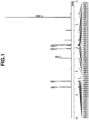
- FIG. 1 is a diagram showing 1 H-NMR spectrum of Compound CA-1 in Example 1-1.
- the invention provides an alcohol compound having the formula (A1).
- k is an integer of 2 to 4
- m is 1 or 2
- n is an integer of 0 to 10.
- the atom bonded to L is always carbon.
- the aliphatic hydrocarbon group R may be saturated or unsaturated and straight, branched or cyclic. Examples thereof include C 1 -C 10 aliphatic hydrocarbylene groups, and tri- or tetravalent groups obtained by removing one or two hydrogen atoms from the aliphatic hydrocarbylene groups.
- Suitable aliphatic hydrocarbylene groups include C 1 -C 10 alkanediyl groups such as methanediyl, ethane-1,1-diyl, ethane-1,2-diyl, propane-1,1-diyl, propane-1,2-diyl, propane-1,3-diyl, propane-2,2-diyl, butane-1,1-diyl, butane-1,2-diyl, butane-1,3-diyl, butane-2,3-diyl, butane-1,4-diyl, 1,1-dimethylethane-1,2-diyl, pentane-1,5-diyl, 2-methylbutane-1,2-diyl, hexane-1,6-diyl, heptane-1,7-diyl, octane-1,8-diyl, nonane-1,9-diy
- aromatic hydrocarbon group R examples include phenyl, tolyl, naphthyl and anthracenyl. Of these, phenyl is preferred for availability of reactants.
- R 1 and R 2 are not hydrogen at the same time.
- R 1 and R 2 may bond together to form an aliphatic ring with the carbon atom to which they are attached.
- the hydrocarbyl group represented by R 1 and R 2 may be saturated or unsaturated and straight, branched or cyclic. Examples thereof include C 1 -C 10 alkyl groups such as methyl, ethyl, propyl, isopropyl, n-butyl, sec-butyl, tert-butyl, n-pentyl, tert-pentyl, n-hexyl, 2-ethylhexyl, n-octyl, n-nonyl, and n-decyl; C 3 -C 10 cyclic saturated hydrocarbyl groups such as cyclopentyl, cyclohexyl, cyclopentylmethyl, cyclopentylethyl, cyclopentylbutyl, cyclohexylmethyl, cyclohexylethyl, cyclohexylbutyl, norbornyl, and adamantyl; alkeny
- suitable aliphatic rings include cyclopropane, cyclobutane, cyclopentane and cyclohexane rings, but are not limited thereto.
- R 3 is each independently hydrogen or a C 1 -C 20 hydrocarbyl group which may contain a heteroatom.
- the hydrocarbyl group may be saturated or unsaturated and straight, branched or cyclic. Examples thereof include C 1 -C 20 alkyl groups such as methyl, ethyl, propyl, isopropyl, n-butyl, sec-butyl, tert-butyl, n-pentyl, tert-pentyl, n-hexyl, n-octyl, 2-ethylhexyl, n-nonyl, and n-decyl; C 3 -C 20 cyclic saturated hydrocarbyl groups such as cyclopentyl, cyclohexyl, cyclopentylmethyl, cyclopentylethyl, cyclopentylbutyl, cyclohexylmethyl, cyclohexylethyl,
- some or all of the hydrogen atoms may be substituted by a moiety containing a heteroatom such as oxygen, sulfur, nitrogen or halogen, and a constituent -CH 2 - may be replaced by a moiety containing a heteroatom such as oxygen, sulfur or nitrogen, so that the group may contain a hydroxy, fluorine, chlorine, bromine, iodine, cyano, carbonyl, ether bond, ester bond, sulfonic ester bond, carbonate bond, carbamate bond, amide bond, imide bond, lactone ring, sultone ring, thiolactone ring, lactam ring, sultam ring, carboxylic anhydride or haloalkyl moiety.
- a plurality of R 3 may be the same or different, or at least two R 3 may bond together to form a ring with the atom on W to which they are attached.
- the ring thus formed include cyclopropane, cyclobutane, cyclopentane, cyclohexane, norbornane, and adamantane rings. It is acceptable that two R 3 bond to a common carbon atom and bond to each other to form a spiro ring structure with W.
- R 3 is preferably hydrogen for availability of reactants.
- W is preferably a group having a cyclohexane, benzene or naphthalene ring for availability of reactants.
- L is a single bond, ether bond, ester bond, ketone bond, sulfonic ester bond, carbonate bond or carbamate bond.
- L is a single bond or ester bond.
- X is a single bond or a C 1 -C 40 hydrocarbylene group which may contain a heteroatom.
- Examples of the C 1 -C 40 hydrocarbyl group which may contain a heteroatom are shown below, but not limited thereto. It is noted that the asterisk (*) designates a point of attachment to L or O.
- R, R 1 , R 2 , L, X, m, and k are as defined above, and s is an integer of 0 to 2.
- p is an integer of 1 to 8.
- the alcohol compound having formula (A1) can be synthesized, for example, according to the following scheme A, B or C. Although reference is made to the synthesis of a compound having the formula (A1-1), also referred to as compound A1-1, a compound having the formula (A1-2), also referred to as compound A1-2, and a compound having the formula (A1-3), also referred to as compound A1-3, as typical examples, the synthesis method is not limited thereto.
- R, W, R 1 , R 3 , k, m, and n are as defined above, R 00 is a C 1 -C 3 hydrocarbyl group, and X Hal is a halogen atom other than fluorine.
- R, W, R 1 , R 3 , k, m, n, and X Hal are as defined above.
- R, W, R 1 , R 3 , k, m, n, and X Hal are as defined above.
- Scheme A illustrates the process for the synthesis of compound A1-1, including the first step of reacting an intermediate In-A, which is commercially available or can be synthesized by any well-known organic synthesis method, with a Grignard reagent or organic lithium reagent to form an intermediate In-B.
- the reaction may be performed by any well-known organic synthesis method. Specifically, the reaction is performed by diluting the Grignard reagent or organic lithium reagent with a solvent such as tetrahydrofuran (THF) or diethyl ether, and adding dropwise a solution of intermediate In-A in a solvent such as THF or diethyl ether thereto.
- a solvent such as tetrahydrofuran (THF) or diethyl ether
- the amount of the Grignard reagent or organic lithium reagent used is preferably (2m 1 +2) equivalents in consideration of the number of ester bonds in intermediate In-A and the amount of deactivation by hydroxy group.
- the reaction temperature preferably ranges from room temperature to approximately the boiling point of the solvent. It is desirable from the standpoint of yield that the reaction time is determined so as to drive the reaction to completion by monitoring the reaction process by gas chromatography (GC) or silica gel thin layer chromatography (TLC). Usually, the reaction time is about 30 minutes to 2 hours. From the reaction mixture, the intermediate In-B is recovered through an ordinary aqueous workup. If necessary, the intermediate In-B may be purified by a standard technique such as chromatography or recrystallization.
- the second step is to react intermediate In-B with a haloacetate compound to form an intermediate In-C.
- the reaction may be performed by any well-known organic synthesis method. Specifically, the reaction is performed by dissolving intermediate In-B and a base in a polar aprotic solvent such as N,N-dimethylformamide (DMF) or dimethyl sulfoxide (DMSO), and adding dropwise the haloacetate compound thereto.
- a polar aprotic solvent such as N,N-dimethylformamide (DMF) or dimethyl sulfoxide (DMSO)
- examples of the base used herein include inorganic bases such as potassium carbonate and cesium carbonate and organic bases such as triethylamine and N,N-diisopropylethylamine.
- the reaction rate may be accelerated by adding a catalytic amount of sodium iodide or potassium iodide.
- the reaction temperature preferably ranges from room temperature to 100°C. It is desirable from the standpoint of yield that the reaction time is determined so as to drive the reaction to completion by monitoring the reaction process by GC or TLC. Usually, the reaction time is about 2 to 12 hours.
- the intermediate In-C is recovered through an ordinary aqueous workup. If necessary, the intermediate In-C may be purified by a standard technique such as chromatography or recrystallization.
- the third step is hydrolysis of the intermediate In-C to form an intermediate In-D.
- the reaction may be performed by any well-known organic synthesis method. Specifically, the reaction is performed by dissolving intermediate In-C in 1,4-dioxane or the like and adding dropwise a base thereto. Examples of the base used herein include inorganic bases such as sodium hydroxide and potassium hydroxide.
- the reaction temperature preferably ranges from room temperature to 600°C. It is desirable from the standpoint of yield that the reaction time is determined so as to drive the reaction to completion by monitoring the reaction process by TLC. Usually, the reaction time is about 2 to 12 hours. At the end of reaction, an acid is added to the reaction mixture to quench the reaction.
- Suitable acids include aqueous solutions such as hydrochloric acid and nitric acid.
- the intermediate In-D is recovered through an ordinary aqueous workup. If necessary, the intermediate In-D may be purified by a standard technique such as chromatography or recrystallization.
- the fourth step is reaction of the intermediate In-D with an intermediate In-E to form a compound A1-1.
- a variety of condensing agents may be used. Suitable condensing agents include N,N'-dicyclohexylcarbodiimide, N,N'-diisopropylcarbodiimide, 1-[3-(dimethylamino)propyl]-3-ethylcarbodiimide, and 1-ethyl-3-(3-dimethylaminopropyl)carbodiimide hydrochloride.
- the reaction is performed by dissolving intermediate In-D and intermediate In-E in a halogenated solvent such as methylene chloride and adding a condensing agent thereto.
- the reaction rate may be accelerated by adding N,N-dimethyl-4-dimethylaminopyridine as a catalyst. It is desirable from the standpoint of yield that the reaction time is determined so as to drive the reaction to completion by monitoring the reaction process by TLC. Usually, the reaction time is about 12 to 24 hours.
- the urea compound as by-product is removed by filtration or water washing if necessary.
- the target compound A1-1 is recovered through an ordinary aqueous workup. If necessary, the compound A1-1 may be purified by a standard technique such as chromatography or recrystallization.
- Scheme B illustrates the process for the synthesis of compound A1-2, including the step of reacting an intermediate In-B with a haloalkyl intermediate In-F.
- the reaction may be performed by any well-known organic synthesis method. Specifically, the reaction is performed by dissolving intermediate In-B and a base in a polar aprotic solvent such as DMF or DMSO, and adding dropwise a solution of the haloalkyl intermediate In-F in the same solvent thereto.
- the base used herein include inorganic bases such as potassium carbonate and cesium carbonate and organic bases such as triethylamine and N,N-diisopropylethylamine.
- the reaction rate may be accelerated by adding a catalytic amount of sodium iodide or potassium iodide.
- the reaction temperature preferably ranges from room temperature to 100°C. It is desirable from the standpoint of yield that the reaction time is determined so as to drive the reaction to completion by monitoring the reaction process by GC or TLC. Usually, the reaction time is about 2 to 12 hours. From the reaction mixture, the compound A1-2 is recovered through an ordinary aqueous workup. If necessary, the compound A1-2 may be purified by a standard technique such as chromatography or recrystallization.
- Scheme C illustrates the process for the synthesis of compound A1-3, including the step of reacting an intermediate In-B with a haloacyl intermediate In-G.
- the reaction may be performed by any well-known organic synthesis method. Specifically, the reaction is performed by dissolving intermediate In-B and a base in a polar aprotic solvent such as DMF or DMSO, and adding dropwise a solution of the haloacyl intermediate In-G in the same solvent thereto.
- the base used herein include inorganic bases such as potassium carbonate and cesium carbonate and organic bases such as triethylamine and N,N-diisopropylethylamine.
- the reaction temperature preferably ranges from room temperature to 100°C.
- reaction time is determined so as to drive the reaction to completion by monitoring the reaction process by GC or TLC. Usually, the reaction time is about 2 to 12 hours.
- the compound A1-3 is recovered through an ordinary aqueous workup. If necessary, the compound A1-3 may be purified by a standard technique such as chromatography or recrystallization.
- Schemes A to C are merely exemplary, and the method for preparing the inventive alcohol compound is not limited thereto.
- Schemes A to C refer to the synthesis of compounds having an ester bond or ether bond, it will occur to the skilled artisan to synthesize compounds having a sulfonic ester bond, carbonate bond or carbamate bond using any known organic chemistry method.
- the invention also provides a chemically amplified negative resist composition comprising essentially a crosslinker in the form of the alcohol compound defined above.
- the resist composition contains a base polymer of specific structure in addition to the alcohol compound.
- the crosslinker in the form of the alcohol compound is preferably present in an amount of 0.01 to 40 parts by weight, more preferably 0.05 to 10 parts by weight per 80 parts by weight of the base polymer, in view of sensitivity and acid diffusion controlling effect.
- the base polymer in the resist composition is defined as comprising repeat units having the following formula (B1), also referred to as repeat units (B1), and repeat units having the following formula (B2), also referred to as repeat units (B2).
- the repeat units (B1) are units for establishing etch resistance and for providing adhesion to substrates and dissolution in alkaline developer.
- the repeat units (B2) are units for allowing the acid labile group to undergo elimination reaction under the action of acid which is generated from the acid generator upon exposure to high-energy radiation, for thereby inducing alkaline insolubilization and crosslinking reaction among polymer molecules.
- the repeat units (B2) act to promote the progress of negative reaction to enhance resolution performance.
- R A is hydrogen, fluorine, methyl or trifluoromethyl.
- R 11 and R 12 are each independently halogen, an optionally halogenated C 1 -C 6 saturated hydrocarbyl group, optionally halogenated C 2 -C 8 saturated hydrocarbylcarbonyloxy group, or optionally halogenated C 1 -C 6 saturated hydrocarbyloxy group.
- the saturated hydrocarbyl group and the saturated hydrocarbyl moiety in the saturated hydrocarbylcarbonyloxy group and saturated hydrocarbyloxy group may be straight, branched or cyclic.
- Examples thereof include alkyl groups such as methyl, ethyl, propyl, isopropyl, butyl, pentyl and hexyl, cycloalkyl groups such as cyclopropyl, cyclobutyl, cyclopentyl and cyclohexyl, and a combination thereof. As long as the carbon count does not exceed the upper limit, the polymer is fully dissolvable in alkaline developer.
- a 1 and A 2 are each independently a single bond or a C 1 -C 10 saturated hydrocarbylene group in which a constituent -CH 2 - may be replaced by -O-.
- the saturated hydrocarbylene group may be straight, branched or cyclic and examples thereof include alkanediyl groups such as methylene, ethane-1,1-diyl, ethane-1,2-diyl, propane-1,2-diyl, propane-1,3-diyl, butane-1,4-diyl, pentane-1,5-diyl, and hexane-1,6-diyl; cyclic saturated hydrocarbylene groups such as cyclopropanediyl, cyclobutanediyl, cyclopentanediyl, and cyclohexanediyl; and combinations thereof.
- the ether bond may be situated at any position excluding the position between the carbon at ⁇ -position and the carbon at ⁇ -position relative to the ester oxygen.
- the atom attached to the main chain becomes the ether oxygen atom
- a second ether bond may be situated at any position excluding the position between the carbon at ⁇ -position and the carbon at ⁇ -position relative to the ether oxygen atom. Since the carbon count of the saturated hydrocarbylene group is 10 or less, the polymer is fully dissolvable in alkaline developer.
- W 11 is hydrogen, a C 1 -C 10 aliphatic hydrocarbyl group or an optionally substituted aryl group.
- the aliphatic hydrocarbyl group may be straight, branched or cyclic and examples thereof include alkyl groups such as methyl, ethyl, propyl, isopropyl, and cyclic aliphatic hydrocarbyl groups such as cyclopentyl, cyclohexyl and adamantyl.
- Typical of the aryl group is phenyl.
- the constituent -CH 2 - in the hydrocarbyl group may bond to the oxygen atom in formula (B2). Typical of the group after such replacement is methylcarbonyl.
- R x and R y are each independently hydrogen, or a C 1 -C 15 saturated hydrocarbyl group which may be substituted with a hydroxy moiety or saturated hydrocarbyloxy moiety, or an optionally substituted aryl group. Both R x and R y are not hydrogen at the same time. R x and R y may bond together to form a ring with the carbon atom to which they are attached.
- the saturated hydrocarbyl group may be straight, branched or cyclic and examples thereof include alkyl groups such as methyl, ethyl, propyl, butyl and structural isomers thereof, and substituted forms of these groups in which some hydrogen is substituted by a hydroxy moiety or saturated hydrocarbyloxy moiety.
- t 1 and t 2 are each independently 0 or 1.
- a 1 and b 1 are each independently an integer of 1 to 3, a 2 is an integer satisfying 0 ⁇ a 2 ⁇ 5+2x 1 -a 1 , and b 2 is an integer satisfying 0 ⁇ b 2 ⁇ 5+2x 2 -b 1 .
- the repeat units (B1) are preferably repeat units having the following formula (B1-1), which are also referred to as repeat units (B 1-1), hereinafter.
- R A , R 11 , a 1 , and a 2 are as defined above.
- Preferred examples of the repeat unit (B 1) include units derived from 3-hydroxystyrene, 4-hydroxystyrene, 5-hydroxy-2-vinylnaphthalene, and 6-hydroxy-2-vinylnaphthalene. Units of the formulae shown below are more preferred.
- R A is as defined above.
- t 1 1
- the unit has an ester bond as the linker
- preferred examples of the repeat unit (B 1) are shown below, but not limited thereto.
- R A is as defined above.
- the repeat units (B2) are preferably repeat units having the following formula (B2-1), which are also referred to as repeat units (B2-1), hereinafter.
- R A , R 12 , R x , R y , W 11 , b 1 , and b 2 are as defined above.
- repeat unit (B2) Preferred examples of the repeat unit (B2) are shown below, but not limited thereto.
- the content of repeat units is determined so as to establish a high contrast between the exposed region (which turns negative) and the unexposed region (which does not turn negative) upon exposure to high-energy radiation for the purpose of obtaining a high resolution.
- the lower limit is preferably 30 mol%, more preferably 40 mol%, even more preferably 50 mol%, and the upper limit is preferably 95 mol%, more preferably 90 mol%, even more preferably 80 mol%, based on the overall repeat units of the base polymer.
- the lower limit is preferably 5 mol%, more preferably 10 mol%, even more preferably 20 mol%, and the upper limit is preferably 70 mol%, more preferably 60 mol%, even more preferably 50 mol%, based on the overall repeat units of the base polymer.
- the repeat units (B 1-1) contribute to a further improvement in etch resistance and improvements in adhesion to the substrate and dissolution in alkaline developer whereas the repeat units (B2-1) contribute to a more efficient progress of negative reaction and a further improvement in resolution.
- the base polymer may further comprise repeat units of at least one type selected from repeat units having the formula (B3) and repeat units having the formula (B4). It is noted that these units are also referred to as repeat units (B3) and (B4), hereinafter.
- R 13 is each independently hydroxy, halogen, acetoxy, an optionally halogenated C 1 -C 8 alkyl group, optionally halogenated C 1 -C 8 saturated hydrocarbyloxy group, optionally halogenated C 2 -C 8 saturated hydrocarbylcarbonyl group, or optionally halogenated C 2 -C 8 saturated hydrocarbylcarbonyloxy group, with the proviso that R 13 is not an acid labile group.
- groups R 13 may be the same or different.
- R 14 is halogen, acetoxy, an optionally halogenated C 1 -C 8 alkyl group, optionally halogenated C 1 -C 8 saturated hydrocarbyloxy group, optionally halogenated C 2 -C 8 saturated hydrocarbylcarbonyl group, or optionally halogenated C 2 -C 8 saturated hydrocarbylcarbonyloxy group, with the proviso that R 14 is not an acid labile group.
- groups R 14 may be the same or different.
- c and d are each independently an integer of 0 to 4.
- repeat units (B3) and (B4) units of one type or a mixture of two or more types may be used.
- the content of repeat units (B3) and/or (B4) is determined so as to achieve the effect of improving etch resistance, and its lower limit is preferably 2 mol%, more preferably 5 mol% and its upper limit is preferably 30 mol%, more preferably 20 mol%, based on the overall repeat units of the base polymer.
- the base polymer may further comprise repeat units of at least one type selected from repeat units having the formula (B5), repeat units having the formula (B6), and repeat units having the formula (B7). It is noted that these units are also referred to as repeat units (B5), (B6) and (B7), hereinafter.
- R B is each independently hydrogen or methyl.
- Z 21 is an optionally heteroatom-containing C 1 -C 20 hydrocarbylene group, examples of which are shown below, but not limited thereto.
- R 21 to R 28 are each independently halogen or a C 1 -C 20 hydrocarbyl group which may contain a heteroatom.
- a pair of R 21 and R 22 , R 23 and R 24 , or R 26 and R 27 may bond together to form a ring with the sulfur atom to which they are attached.
- Examples of the optionally heteroatom-containing hydrocarbyl group are as exemplified above for R 1 .
- R 21 and R 22 , R 23 and R 24 , or R 26 and R 27 bond together to form a ring with the sulfur atom to which they are attached, examples of the ring are shown below, but not limited thereto.
- M - is a non-nucleophilic counter ion.
- the repeat units (B5) to (B7) are units adapted to generate an acid upon exposure to high-energy radiation.
- the inclusion of these units in the polymer is effective for suppressing acid diffusion adequately and forming a pattern with reduced LER or LWR.
- the inclusion of these units in the polymer is also effective for preventing the acid from volatilizing from the exposed region to deposit on the unexposed region again during bake in vacuum for thereby reducing LER or LWR, and for suppressing undesired negative reaction in the unexposed region for thereby reducing defects.
- the base polymer contains repeat units (B5) to (B7), their content is preferably 0.5 to 20 mol% based on the overall repeat units.
- the base polymer may contain (meth)acrylate units protected with a commonly used acid labile group and/or (meth)acrylate units having an adhesive group such as lactone structure. The inclusion of these units allows for fine adjustment of properties of a resist film, but is not critical.
- Examples of the (meth)acrylate unit having an adhesive group include units having the following formulae (B8) to (B 10). These units, which do not exhibit acidity, may be used as auxiliary units for promoting adhesion to the substrate and/or for adjusting solubility.
- R A is as defined above, R 31 is -O- or -CH 2 -, R 32 is hydrogen or hydroxy, R 13 is a C 1 -C 4 saturated hydrocarbyl group, and f is an integer of 0 to 3.
- the content of such repeat units is preferably 0 to 30 mol%, more preferably 0 to 20 mol% based on the overall repeat units of the base polymer.
- a base polymer containing repeat units having formula (B 1-2), repeat units having formula (B2-2), and repeat units having formula (B6) as shown below is preferred.
- R A , R B , Z 2 , R 23 to R 21 , R x , R y , W 11 , a 1 , and b 1 are as defined above.
- the base polymer is a mixture of a base polymer free of repeat units (B5) to (B7) and a base polymer containing any one of repeat units (B5) to (B7).
- Preferred is a mixture of 80 parts by weight of the base polymer containing any one of repeat units (B5) to (B7) and 2 to 5,000 parts by weight, especially 10 to 1,000 parts by weight of the base polymer free of repeat units (B5) to (B7).
- the lithography of the advanced generation employs a coating film having a thickness of up to 150 nm, preferably up to 100 nm. Since an intense development process is often employed to minimize defects resulting from resist residues, the base polymer should preferably have a dissolution rate in alkaline developer (typically 2.38 wt% tetramethylammonium hydroxide (TMAH) aqueous solution) of up to 80 nm/sec, more preferably up to 50 nm/sec in order to form a small size pattern.
- alkaline developer typically 2.38 wt% tetramethylammonium hydroxide (TMAH) aqueous solution
- the coating film When the chemically amplified negative resist composition is used in the EUV lithography process for fabricating an LSI chip from a wafer, for example, the coating film often has a thickness of up to 100 nm, in view of the necessity of patterning narrow lines of 50 nm or less.
- the polymer preferably has a dissolution rate of up to 80 nm/sec, more preferably up to 50 nm/sec.
- a thick film having a thickness of 200 nm or greater is often employed in the KrF lithography process although the film thickness depends on a particular purpose. In this case, the polymer is preferably designed to a dissolution rate of at least 90 nm/sec.
- the polymer may be synthesized by copolymerizing monomers optionally protected with a protective group, and optionally effecting deprotection reaction.
- the copolymerization reaction is preferably radical or anionic polymerization, but not limited thereto.
- WO 2006/121096 JP-A 2008-102383 , JP-A 2008-304590 , and JP-A 2004-115630 .
- the base polymer should preferably have a weight average molecular weight (Mw) in the range of 1,000 to 500,000, and more preferably 2,000 to 20,000, as measured by GPC versus polystyrene standards.
- Mw weight average molecular weight
- a Mw of at least 1,000 eliminates the risk of rounding of pattern top which invites a lowering of resolution and degradation of LER or LWR.
- a Mw of up to 50,000 eliminates the risk of LER or LWR increasing when a pattern having a line width of up to 100 nm is formed.
- the base polymer should preferably have a narrow dispersity (Mw/Mn) of 1.0 to 2.0, especially 1.0 to 1.8.
- Mw/Mn narrow dispersity in the range eliminates the risks that foreign particles are left on the pattern after development and the pattern profile is aggravated.
- the chemically amplified negative resist composition of the invention may further contain other components such as an organic solvent, acid generator, quencher, fluorinated polymer, and surfactant, if necessary and in any suitable combination.
- the chemically amplified negative resist composition thus constructed has the advantages that the dissolution in alkaline developer is suppressed and a pattern of good profile with minimal top loss is formed, as compared with negative patterns formed from prior art negative resist compositions.
- the resist film has a high dissolution contrast, resolution, exposure latitude, and process adaptability, and provides a good pattern profile after exposure, and minimal proximity bias because of restrained acid diffusion.
- the composition is fully useful in commercial application and suited as a pattern-forming material for the fabrication of VLSIs.
- the organic solvent used herein is not particularly limited as long as the foregoing and other components are soluble therein. Examples of the organic solvent are described in JP-A 2008-111103 , paragraphs [0144]-[0145] ( USP 7,537,880 ).
- Exemplary solvents include ketones such as cyclohexanone, cyclopentanone, methyl-2-n-pentyl ketone and 2-heptanone; alcohols such as 3-methoxybutanol, 3-methyl-3-methoxybutanol, 1-methoxy-2-propanol, 1-ethoxy-2-propanol, and diacetone alcohol (DAA); ethers such as propylene glycol monomethyl ether (PGME), ethylene glycol monomethyl ether, propylene glycol monoethyl ether, ethylene glycol monoethyl ether, propylene glycol dimethyl ether, and diethylene glycol dimethyl ether; esters such as propylene glycol monomethyl ether acetate (PGMEA), propylene glycol monoethyl ether acetate, ethyl lactate, ethyl pyruvate, butyl acetate, methyl 3-methoxypropionate, ethyl 3-ethoxy
- 1-ethoxy-2-propanol PGMEA, PGME, ethyl lactate, cyclohexanone, ⁇ -butyrolactone, and mixtures thereof are preferred because many components are fully soluble therein.
- the organic solvent is preferably added in an amount of 200 to 12,000 parts, and more preferably 400 to 10,000 parts by weight per 80 parts by weight of the base polymer.
- the acid generator also referred to as acid generator of addition type, is typically a compound (PAG) capable of generating an acid in response to actinic ray or radiation.
- PAG used herein may be any compound capable of generating an acid upon exposure to high-energy radiation.
- Suitable PAGs include sulfonium salts, iodonium salts, sulfonyldiazomethane, N-sulfonyloxyimide, and oxime-O-sulfonate acid generators, which may be used alone or in admixture of two or more.
- Suitable PAGs include nonafluorobutane sulfonate, partially fluorinated sulfonates described in JP-A 2012-189977 , paragraphs [0247]-[0251], partially fluorinated sulfonates described in JP-A 2013-101271 , paragraphs [0261]-[0265], and those described in JP-A 2008-111103 , paragraphs [0122]-[0142] and JP-A 2010-215608 , paragraphs [0080]-[0081].
- arylsulfonate and alkanesulfonate type PAGs are preferred because they generate acids having an appropriate strength to promote reaction of the crosslinker with the base polymer.
- the PAG capable of generating an acid having a pKa value in the range of -3.0 to 1.5, more preferably -1.0 to 1.5 is preferred because the effect of improving LER or LWR by combining the generated acid with an onium salt (to be described later) to induce exchange reaction is achievable.
- the preferred acid generators are compounds having a sulfonium anion of the structure shown below. Notably the cation that pairs with the anion is as exemplified for the sulfonium cation in formulae (B6) and (B7)
- An appropriate amount of the acid generator of addition type used is 2 to 20 parts, more preferably 5 to 15 parts by weight per 80 parts by weight of the base polymer.
- the acid generator may be used alone or in admixture. Where the base polymer contains repeat units (B5) to (B7) (that is, in the case of polymer-bound acid generator), the acid generator of addition type may be omitted.
- the resist composition may contain a quencher which is typically selected from conventional basic compounds.
- Conventional basic compounds include primary, secondary, and tertiary aliphatic amines, mixed amines, aromatic amines, heterocyclic amines, nitrogen-containing compounds with carboxy group, nitrogen-containing compounds with sulfonyl group, nitrogen-containing compounds with hydroxy group, nitrogen-containing compounds with hydroxyphenyl group, alcoholic nitrogen-containing compounds, amide derivatives, imide derivatives, and carbamate derivatives.
- primary, secondary, and tertiary amine compounds specifically amine compounds having a hydroxy group, ether bond, ester bond, lactone ring, cyano group, or sulfonic ester bond as described in JP-A 2008-111103 , paragraphs [0146]-[0164], and compounds having a carbamate group as described in JP 3790649 .
- Addition of a basic compound is effective for further suppressing the diffusion rate of acid in the resist film or correcting the pattern profile.
- Onium salts such as sulfonium, iodonium and ammonium salts of carboxylic acids which are not fluorinated at ⁇ -position as described in USP 8,795,942 ( JP-A 2008-158339 ) may also be used as the quencher. While an ⁇ -fluorinated sulfonic acid, imide acid, and methide acid are necessary to deprotect the acid labile group, an ⁇ -non-fluorinated carboxylic acid is released by salt exchange with an ⁇ -non-fluorinated carboxylic onium salt. The ⁇ -non-fluorinated carboxylic acid functions as a quencher because it induces no or little deprotection reaction.
- Examples of the onium salt of ⁇ -non-fluorinated carboxylic acid include compounds having the formula (C1). R 101 -CO 2 - Mq + (C1)
- R 101 is hydrogen or a C 1 -C 40 hydrocarbyl group which may contain a heteroatom, exclusive of the hydrocarbyl group in which the hydrogen bonded to the carbon atom at ⁇ -position of the carboxy group is substituted by fluorine or fluoroalkyl.
- the hydrocarbyl group may be saturated or unsaturated and straight, branched or cyclic.
- alkyl groups such as methyl, ethyl, propyl, isopropyl, n-butyl, sec-butyl, tert-butyl, n-pentyl, tert-pentyl, n-hexyl, n-octyl, 2-ethylhexyl, n-nonyl, n-decyl; cyclic saturated hydrocarbyl groups such as cyclopentyl, cyclohexyl, cyclopentylmethyl, cyclopentylethyl, cyclopentylbutyl, cyclohexylmethyl, cyclohexylethyl, cyclohexylbutyl, norbornyl, tricyclo[5.2.1.0 2,6 ]decanyl, adamantyl, adamantylmethyl; al
- some hydrogen may be substituted by a moiety containing a heteroatom such as oxygen, sulfur, nitrogen or halogen, and some carbon may be replaced by a moiety containing a heteroatom such as oxygen, sulfur or nitrogen, so that the group may contain a hydroxy moiety, cyano moiety, carbonyl moiety, ether bond, thioether bond, ester bond, sulfonic ester bond, carbonate bond, lactone ring, sultone ring, carboxylic anhydride, or haloalkyl moiety.
- heteroatom-containing hydrocarbyl group examples include heteroaryl groups such as thienyl; alkoxyphenyl groups such as 4-hydroxyphenyl, 4-methoxyphenyl, 3-methoxyphenyl, 2-methoxyphenyl, 4-ethoxyphenyl, 4-tert-butoxyphenyl, 3-tert-butoxyphenyl; alkoxynaphthyl groups such as methoxynaphthyl, ethoxynaphthyl, n-propoxynaphthyl, n-butoxynaphthyl; dialkoxynaphthyl groups such as dimethoxynaphthyl, diethoxynaphthyl; and aryloxoalkyl groups, typically 2-aryl-2-oxoethyl groups such as 2-phenyl-2-oxoethyl, 2-(1-naphthyl)-2-oxoethyl, 2-(2-
- Mq + is an onium cation.
- the preferred onium cations include sulfonium, iodonium and ammonium cations, with the sulfonium and iodonium cations being more preferred.
- a sulfonium salt of iodized benzene ring-containing carboxylic acid having the formula (C2) is also useful as the quencher.
- x is an integer of 1 to 5
- y is an integer of 0 to 3
- z is an integer of 1 to 3.
- L 1 is a single bond, or a C 1 -C 20 (z+1)-valent linking group which may contain an ether bond, carbonyl, ester bond, amide bond, sultone ring, lactam ring, carbonate, halogen, hydroxy or carboxy moiety.
- the saturated hydrocarbyl group, saturated hydrocarbyloxy group, saturated hydrocarbylcarbonyloxy group and saturated hydrocarbylsulfonyloxy groups may be straight, branched or cyclic.
- groups R 201 may be the same or different.
- R 202 , R 203 and R 204 are each independently halogen or a C 1 -C 20 hydrocarbyl group which may contain a heteroatom.
- the hydrocarbyl group may be saturated or unsaturated and straight, branched or cyclic. Examples thereof include C 1 -C 20 alkyl, C 2 -C 20 alkenyl, C 6 -C 20 aryl, and C 7 -C 20 aralkyl groups.
- some or all hydrogen may be substituted by hydroxy, carboxy, halogen, oxo, cyano, nitro, sultone, sulfone, or sulfonium salt-containing moiety, or some carbon may be replaced by an ether bond, ester bond, carbonyl, amide bond, carbonate or sulfonic ester bond.
- a pair of R 202 and R 203 may bond together to form a ring with the sulfur atom to which they are attached.
- Examples of the compound having formula (C2) include those described in JP-A 2017-219836 .
- the compound is highly absorptive and has a high sensitizing effect and acid diffusion controlling effect.
- Betaine type compounds of weak acids are also useful as the quencher. Their examples are shown below, but not limited thereto.
- quenchers of polymer type as described in USP 7,598,016 ( JP-A 2008- 239918 ).
- the polymeric quencher segregates at the resist surface after coating and thus enhances the rectangularity of resist pattern.
- the polymeric quencher is also effective for preventing a film thickness loss of resist pattern or rounding of pattern top.
- the quencher is preferably added in an amount of 0 to 40 parts, more preferably 0 to 30 parts by weight per 80 parts by weight of the base polymer.
- the resist composition may further comprise a fluorinated polymer comprising repeat units having the formula (D1) and repeat units of at least one type selected from repeat units having the formulae (D2), (D3), (D4), and (D5), for the purposes of enhancing contrast, preventing chemical flare of acid upon exposure to high-energy radiation, and suppressing unexpected unnecessary pattern degradation.
- repeat units having formulae (D1), (D2), (D3), (D4), and (D5) are simply referred to as repeat units (D1), (D2), (D3), (D4), and (D5), respectively.
- the fluorinated polymer also has a surface active function, it can prevent insoluble residues from re-depositing onto the substrate during the development step and is thus effective for preventing development defects.
- R C is each independently hydrogen or methyl.
- R D is each independently hydrogen, fluorine, methyl or trifluoromethyl.
- R 301 is hydrogen or a C 1 -C 5 straight or branched hydrocarbyl group in which a heteroatom-containing moiety may intervene in a carbon-carbon bond.
- R 302 is a C 1 -C 5 straight or branched hydrocarbyl group in which a heteroatom-containing moiety may intervene in a carbon-carbon bond.
- R 303 , R 304 , R 306 and R 307 are each independently hydrogen or a C 1 -C 10 saturated hydrocarbyl group.
- R 305 , R 308 , R 309 and R 310 are each independently hydrogen, a C 1 -C 15 hydrocarbyl group or fluorinated hydrocarbyl group, or an acid labile group, with the proviso that an ether or carbonyl moiety may intervene in a carbon-carbon bond in the hydrocarbyl groups or fluorinated hydrocarbyl groups represented by R 305 , R 308 , R 309 and R 310 .
- the subscript g 1 is an integer of 1 to 3
- g 2 is an integer satisfying: 0 ⁇ g 2 ⁇ 5+2g 3 -g 1 , g 3 is 0 or 1
- h is an integer of 1 to 3.
- X 2 is a C 1 -C 20 (h+1)-valent hydrocarbon group or fluorinated hydrocarbon group.
- Suitable C 1 -C 5 hydrocarbyl groups R 301 and R 302 include alkyl, alkenyl and alkynyl groups, with the alkyl groups being preferred.
- Suitable alkyl groups include methyl, ethyl, n-propyl, isopropyl, n-butyl, isobutyl, sec-butyl, and n-pentyl. In these groups, a moiety containing a heteroatom such as oxygen, sulfur or nitrogen may intervene in a carbon-carbon bond.
- -OR 301 is preferably a hydrophilic group.
- R 301 is preferably hydrogen or a C 1 -C 5 alkyl group in which oxygen intervenes in a carbon-carbon bond.
- R C is as defined above.
- the inclusion of carbonyl in X 1 enhances the ability to trap the acid originating from an anti-charging film.
- a polymer wherein R C is methyl is a rigid polymer having a high glass transition temperature (Tg) which is effective for suppressing acid diffusion. As a result, the stability with time of a resist film is improved, and neither resolution nor pattern profile is degraded.
- examples of the C 1 -C 10 saturated hydrocarbyl group represented by R 303 , R 304 , R 306 and R 307 include alkyl groups such as methyl, ethyl, n-propyl, isopropyl, n-butyl, isobutyl, sec-butyl, tert-butyl, n-pentyl, n-hexyl, n-heptyl, n-octyl, n-nonyl, n-decyl; and cyclic saturated hydrocarbyl groups such as cyclopropyl, cyclobutyl, cyclopentyl, cyclohexyl, adamantyl, and norbornyl.
- C 1 -C 6 saturated hydrocarbyl groups are preferred.
- examples of the C 1 -C 15 hydrocarbyl group represented by R 305 , R 308 , R 309 and R 310 include alkyl, alkenyl and alkynyl groups, with the alkyl groups being preferred. Suitable alkyl groups include n-undecyl, n-dodecyl, tridecyl, tetradecyl and pentadecyl as well as those exemplified above.
- the fluorinated hydrocarbyl groups correspond to the foregoing hydrocarbyl groups in which some or all carbon-bonded hydrogen atoms are substituted by fluorine atoms.
- Examples of the C 1 -C 20 (h+1)-valent hydrocarbon group or fluorinated hydrocarbon group X 2 include the foregoing hydrocarbyl groups and fluorinated hydrocarbyl groups, with number (h) of hydrogen atoms being eliminated.
- R D is as defined above.
- the repeat unit (D1) is preferably incorporated in an amount of 5 to 85 mol%, more preferably 15 to 80 mol% based on the overall repeat units of the fluorinated polymer.
- the repeat units (D2) to (D5) which may be used alone or in admixture, are preferably incorporated in an amount of 15 to 95 mol%, more preferably 20 to 85 mol% based on the overall repeat units of the fluorinated polymer.
- the fluorinated polymer may comprise additional repeat units as well as the repeat units (D1) to (D5). Suitable additional repeat units include those described in USP 9,091,918 ( JP-A 2014-177407 , paragraphs [0046]-[0078]). When the fluorinated polymer comprises additional repeat units, their content is preferably up to 50 mol% based on the overall repeat units.
- the fluorinated polymer may be synthesized by combining suitable monomers optionally protected with a protective group, copolymerizing them in the standard way, and effecting deprotection reaction if necessary.
- the copolymerization reaction is preferably radical polymerization or anionic polymerization though not limited thereto.
- JP-A 2004-115630 for the polymerization reaction, reference may be made to JP-A 2004-115630 .
- the fluorinated polymer should preferably have a weight average molecular weight (Mw) of 2,000 to 50,000, and more preferably 3,000 to 20,000.
- Mw weight average molecular weight
- a fluorinated polymer with a Mw of less than 2,000 allows acid diffusion, degrading resolution and detracting from age stability.
- a polymer with too high Mw has a reduced solubility in solvent, leading to coating defects.
- the fluorinated polymer preferably has a dispersity (Mw/Mn) of 1.0 to 2.2, more preferably 1.0 to 1.7.
- the fluorinated polymer is preferably used in an amount of 0.01 to 30 parts, more preferably 0.1 to 20 parts by weight per 80 parts by weight of the base polymer.
- any of surfactants commonly used for improving coating characteristics to the substrate may be added as an optional component.
- Numerous surfactants are known in the art and commercially available, for example, PF-636 (by Omnova Solutions) and FC-4430 (by 3M) and those described in JP-A 2004-115630 . A choice may be made with reference to such patent documents.
- An appropriate amount of the surfactant used is 0 to 5 parts by weight per 80 parts by weight of the base polymer.
- a further embodiment of the invention is a resist pattern forming process comprising the steps of applying the chemically amplified negative resist composition defined above onto a substrate to form a resist film thereon, exposing the resist film patternwise to high-energy radiation, and developing the exposed resist film in an alkaline developer to form a resist pattern.
- the resist composition is first applied onto a substrate such as a substrate for IC fabrication (e.g., Si, SiO 2 , SiN, SiON, TiN, WSi, BPSG, SOG, organic antireflective coating, etc.) or a substrate for mask circuit fabrication (e.g., Cr, CrO, CrON, MoSi 2 , SiO 2 , etc.) by a suitable coating technique such as spin coating.
- a suitable coating technique such as spin coating.
- the coating is prebaked on a hotplate preferably at a temperature of 60 to 150°C for 1 to 20 minutes, more preferably at 80 to 140°C for 1 to 10 minutes to form a resist film of 0.03 to 2 ⁇ m thick.
- the resist film is exposed patternwise to high-energy radiation such as UV, deep UV, excimer laser (e.g., KrF, ArF), EUV, x-ray, ⁇ -ray, synchrotron radiation or EB.
- high-energy radiation such as UV, deep UV, excimer laser (e.g., KrF, ArF), EUV, x-ray, ⁇ -ray, synchrotron radiation or EB.
- EUV or EB is used for exposure.
- UV, deep UV, excimer laser, EUV, x-ray, ⁇ -ray, or synchrotron radiation exposure is made through a mask having the desired pattern in a dose of preferably 1 to 200 mJ/cm 2 , more preferably 10 to 200 mJ/cm 2 .
- the desired pattern may be drawn by directly irradiating EB in a dose of preferably 1 to 300 ⁇ C/cm 2 , more preferably 10 to 200 ⁇ C/cm 2 .
- the resist film is then baked (PEB) on a hotplate preferably at 60 to 150°C for 1 to 20 minutes, more preferably at 80 to 140°C for 1 to 10 minutes.
- the resist film is developed with a developer in the form of an aqueous base solution, for example, 0.1 to 5 wt%, preferably 2 to 3 wt% aqueous solution of tetramethylammonium hydroxide (TMAH) for 0.1 to 3 minutes, preferably 0.5 to 2 minutes by conventional techniques such as dip, puddle and spray techniques.
- a developer in the form of an aqueous base solution, for example, 0.1 to 5 wt%, preferably 2 to 3 wt% aqueous solution of tetramethylammonium hydroxide (TMAH) for 0.1 to 3 minutes, preferably 0.5 to 2 minutes by conventional techniques such as dip, puddle and spray techniques.
- TMAH tetramethylammonium hydroxide
- pure water rinsing may be performed for extracting the acid generator or the like from the film surface or washing away foreign particles.
- rinsing may be performed for removing any residual water from the resist film.
- FIG. 1 shows the NMR spectrum ( 1 H-NMR in DMSO-d 6 ).
- IR (D-ATR): v 3405, 3040, 2972, 2928, 2874, 1610, 1583, 1512, 1456, 1413, 1363, 1297, 1245, 1179, 1134, 1064, 1012, 953, 864, 832, 731, 684, 560 cm -1
- Crosslinkers CA-2 to CA-15 were synthesized by similar organic synthesis methods.
- CA-2 to CA-15 and cCA-1 to cCA-3 is shown below.
- a 3-L flask was charged with 301.8 g of 4-acetoxystyrene, 190.7 g of acenaphthylene, 513 g of a 55.8 wt% PGMEA solution of 4-ethenyl- ⁇ , ⁇ -dimethylbenzenemethanol, and 814 g of toluene as solvent.
- the reactor was cooled at -70°C in a nitrogen atmosphere, after which vacuum pumping and nitrogen flow were repeated three times.
- the reactor was warmed up to room temperature, whereupon 40.5 g of 2,2'-azobis(2,4-dimethylvaleronitrile) (V-65 by Fuji Film Wako Chemicals) was added as polymerization initiator.
- the reactor was heated at 45°C whereupon reaction ran for 20 hours and then heated at 55°C whereupon reaction ran for a further 20 hours.
- the reaction solution was concentrated to one-half, which was added to 7,000 g of hexane for precipitation.
- the resulting precipitate was collected by filtration and dried at 40°C under reduced pressure, obtaining a white solid.
- the white solid was dissolved in a mixture of 300 g of methanol and 900 g of THF again, to which 170.5 g of 2-ethanolamine was added.
- the reaction mixture was heated at 60°C for 3 hours for deprotection reaction.
- the reaction solution was concentrated.
- the concentrate was dissolved in 1,500 g of ethyl acetate, whereupon the solution was subjected to one neutralization separatory washing with a mixture of 450 g of water and 85.3 g of acetic acid, one washing with a mixture of 450 g of water and 113.7 g of pyridine, and 4 times of separatory washing with 450 g of water.
- the upper layer, ethyl acetate solution was concentrated.
- the concentrate was dissolved in 850 g of acetone and added to 15 L of water for precipitation.
- the precipitate was filtered and dried in vacuum at 50°C for 40 hours, yielding 349.4 g of Polymer P-1 as white solid.
- Polymer P-1 was identified as below.
- a 3000-mL dropping funnel was charged with 890 g of 50.0 wt% PGMEA solution of 4-hydroxystyrene, 47.7 g of acenaphthylene, 310 g of 54.7 wt% PGMEA solution of 4-(2-hydroxy-2-propyl)styrene, 87.0 g of triphenylsulfonium 1,1,3,3,3-pentafluoro-2-methacryloyloxypropane-1-sulfonate, 96.1 g of dimethyl 2,2'-azobis(2-methylpropionate) (V-601 by Fuji Film Wako Chemicals), and 360 g of ⁇ -butyronitrile and 220 g of PGMEA as solvents to form a monomer solution.
- Polymers P-2 to P-12 and P-14 to P-24 were synthesized as in Synthesis Example 1 or 2 aside from changing the type and incorporation ratio (mol%) of monomers.
- the repeat units constituting Polymers P-1 to P-24 and their incorporation ratio are tabulated in Table 1. It is noted that the Mw of Polymers P-1 to P-12 and P-20 to P-23 is measured by GPC versus polystyrene standards using THF whereas the Mw of Polymers P-13 to P-19 and P-24 is measured by GPC versus polystyrene standards using DMF.
- each repeat unit is shown below.
- Chemically amplified negative resist compositions R-1 to R-53 and comparative chemically amplified negative resist compositions cR-1 to cR-13 were prepared by dissolving selected components in an organic solvent according to the formulation shown in Tables 2 to 4, and filtering through a UPE filter and/or nylon filter with a pore size of 0.02 ⁇ m.
- the organic solvent used in R-1 to R-51 and cR-1 to cR-9 was a mixture of 1,204 pbw of PGMEA, 1,204 pbw of ethyl lactate (EL), and 1,606 pbw of propylene glycol monomethyl ether (PGME).
- the organic solvent used in R-52, R-53 and cR-10 to cR-13 was a mixture of 1,780 pbw of PGMEA, 1,920 pbw of EL, and 2,800 pbw of PGME.
- acid generators PAG-1 to PAG-3, fluorine-containing polymers FP-1 to FP-3, and quenchers Q-1 to Q-3 in Tables 2 to 4 are identified below.
- Fluoropolymers FP-1 to FP-3 Fluoropolymers FP-1 to FP-3:
- each of the negative resist compositions R-1 to R-51 and cR-1 to cR-9 was spin coated onto a mask blank of 152 mm squares having the outermost surface of chromium and prebaked on a hotplate at 110°C for 600 seconds to form a resist film of 80 nm thick.
- the thickness of the resist film was measured by an optical film thickness measurement system Nanospec (Nanometrics Inc.). Measurement was made at 81 points in the plane of the blank substrate excluding a peripheral band extending 10 mm inward from the blank periphery, and an average film thickness and a film thickness range were computed therefrom.
- the resist film was exposed to EB using an EB writer system EBM-5000Plus (NuFlare Technology Inc., accelerating voltage 50 kV), then baked (PEB) at 120°C for 600 seconds, and developed in a 2.38 wt% TMAH aqueous solution, thereby yielding a negative line-and-space (LS) pattern.
- the resist pattern was evaluated as follows, with the results shown in Tables 5 to 7.
- the patterned mask blank was observed under a top-down scanning electron microscope (TD-SEM).
- the optimum exposure was defined as an exposure dose ( ⁇ C/cm 2 ) which provided a 1:1 resolution of a 200-nm 1:1 LS pattern.
- the 200-nm LS pattern printed by exposure at the optimum dose was observed under SEM.
- edge detection was carried out at 80 points, from which a 3-fold value (3 ⁇ ) of standard deviation ( ⁇ ) was determined and reported as LER (nm).
- the size was measured at 144 spots within the plane of the blank substrate, from which a 3-fold value (3 ⁇ ) of standard deviation ( ⁇ ) was determined and reported as CDU.
- 3 ⁇ 3-fold value of standard deviation
- the minimum size of IL printed at an exposure dose that allows an actual size of 200 nm to be resolved from an isolated line (IL) having a design size of 200 nm is regarded as IL resolution (maximum resolution).
- the minimum size of IS printed at an exposure dose that allows an actual size of 200 nm to be resolved from an isolated space (IS) having a design size of 200 nm is regarded as IS resolution (maximum resolution).
- the IL resolution is the resolution of a single isolated line pattern
- the IS resolution is the resolution of a single isolated space pattern.
- the negative resist compositions R-52, R-53, cR-10 to cR-13 were baked at 200°C for water removal.
- Each resist composition was spin coated on a silicon substrate (which had underwent vapor prime treatment with hexamethyldisilazane at 100°C for 90 seconds) and prebaked on a hotplate at 110°C for 60 seconds to form a resist film of 30 nm thick.
- the resist film was exposed to EUV.
- the resist film was baked (PEB) on a hotplate at 120°C for 60 seconds and puddle developed in a 2.38 wt% TMAH aqueous solution for 60 seconds, obtaining a negative LS pattern.
- the resist pattern was evaluated as follows, with the results shown in Table 8.
- the pattern-bearing wafer was observed under TD-SEM.
- the optimum dose was defined as an exposure dose (mJ/cm 2 ) which provided a 1:1 resolution of a 22-nm 1:1 LS pattern, and reported as sensitivity.
- the chemically amplified negative resist compositions within the scope of the invention show excellent lithography performance factors including sensitivity, CDU, resolution, and roughness when processed by the EB or EUV lithography.
Landscapes
- Chemical & Material Sciences (AREA)
- Organic Chemistry (AREA)
- Physics & Mathematics (AREA)
- General Physics & Mathematics (AREA)
- Health & Medical Sciences (AREA)
- Spectroscopy & Molecular Physics (AREA)
- Chemical Kinetics & Catalysis (AREA)
- Medicinal Chemistry (AREA)
- Polymers & Plastics (AREA)
- Emergency Medicine (AREA)
- Life Sciences & Earth Sciences (AREA)
- Engineering & Computer Science (AREA)
- Materials Engineering (AREA)
- Wood Science & Technology (AREA)
- General Chemical & Material Sciences (AREA)
- Materials For Photolithography (AREA)
- Exposure And Positioning Against Photoresist Photosensitive Materials (AREA)
- Organic Low-Molecular-Weight Compounds And Preparation Thereof (AREA)
- Addition Polymer Or Copolymer, Post-Treatments, Or Chemical Modifications (AREA)
Applications Claiming Priority (2)
| Application Number | Priority Date | Filing Date | Title |
|---|---|---|---|
| JP2020213114A JP7444049B2 (ja) | 2020-12-23 | 2020-12-23 | アルコール化合物、化学増幅ネガ型レジスト組成物及びレジストパターン形成方法 |
| EP21216712.6A EP4019489A1 (de) | 2020-12-23 | 2021-12-22 | Alkoholverbindung, chemisch verstärkte negativresistzusammensetzung und verfahren zur herstellung eines resistmusters |
Related Parent Applications (1)
| Application Number | Title | Priority Date | Filing Date |
|---|---|---|---|
| EP21216712.6A Division EP4019489A1 (de) | 2020-12-23 | 2021-12-22 | Alkoholverbindung, chemisch verstärkte negativresistzusammensetzung und verfahren zur herstellung eines resistmusters |
Publications (2)
| Publication Number | Publication Date |
|---|---|
| EP4459376A2 true EP4459376A2 (de) | 2024-11-06 |
| EP4459376A3 EP4459376A3 (de) | 2025-01-15 |
Family
ID=79019201
Family Applications (3)
| Application Number | Title | Priority Date | Filing Date |
|---|---|---|---|
| EP23192171.9A Pending EP4258056A3 (de) | 2020-12-23 | 2021-12-22 | Alkoholverbindung, chemisch verstärkte negativresistzusammensetzung und verfahren zur herstellung eines resistmusters |
| EP24200469.5A Pending EP4459376A3 (de) | 2020-12-23 | 2021-12-22 | Alkoholverbindung, chemisch verstärkte negative resistzusammensetzung und verfahren zur formung einer resiststruktur |
| EP21216712.6A Pending EP4019489A1 (de) | 2020-12-23 | 2021-12-22 | Alkoholverbindung, chemisch verstärkte negativresistzusammensetzung und verfahren zur herstellung eines resistmusters |
Family Applications Before (1)
| Application Number | Title | Priority Date | Filing Date |
|---|---|---|---|
| EP23192171.9A Pending EP4258056A3 (de) | 2020-12-23 | 2021-12-22 | Alkoholverbindung, chemisch verstärkte negativresistzusammensetzung und verfahren zur herstellung eines resistmusters |
Family Applications After (1)
| Application Number | Title | Priority Date | Filing Date |
|---|---|---|---|
| EP21216712.6A Pending EP4019489A1 (de) | 2020-12-23 | 2021-12-22 | Alkoholverbindung, chemisch verstärkte negativresistzusammensetzung und verfahren zur herstellung eines resistmusters |
Country Status (6)
| Country | Link |
|---|---|
| US (1) | US20220197140A1 (de) |
| EP (3) | EP4258056A3 (de) |
| JP (1) | JP7444049B2 (de) |
| KR (1) | KR102747245B1 (de) |
| CN (1) | CN114656341B (de) |
| TW (1) | TWI801042B (de) |
Families Citing this family (1)
| Publication number | Priority date | Publication date | Assignee | Title |
|---|---|---|---|---|
| JP2024175442A (ja) * | 2023-06-06 | 2024-12-18 | 信越化学工業株式会社 | モノマー、ポリマー、化学増幅ネガ型レジスト組成物及びパターン形成方法 |
Citations (17)
| Publication number | Priority date | Publication date | Assignee | Title |
|---|---|---|---|---|
| JP2004115630A (ja) | 2002-09-25 | 2004-04-15 | Shin Etsu Chem Co Ltd | 高分子化合物及びポジ型レジスト材料並びにこれを用いたパターン形成方法 |
| JP3790649B2 (ja) | 1999-12-10 | 2006-06-28 | 信越化学工業株式会社 | レジスト材料 |
| EP1684118A1 (de) | 2005-01-21 | 2006-07-26 | Shin-Etsu Chemical Co., Ltd. | Negativ arbeitende Resistzusammensetzung und Mustererzeugungsverfahren |
| JP2006215180A (ja) | 2005-02-02 | 2006-08-17 | Fuji Photo Film Co Ltd | ネガ型レジスト組成物及びそれを用いたパターン形成方法 |
| WO2006121096A1 (ja) | 2005-05-11 | 2006-11-16 | Jsr Corporation | 新規化合物および重合体、ならびに感放射線性樹脂組成物 |
| JP2008102383A (ja) | 2006-10-20 | 2008-05-01 | Shin Etsu Chem Co Ltd | レジスト材料及びパターン形成方法 |
| JP2008111103A (ja) | 2006-10-04 | 2008-05-15 | Shin Etsu Chem Co Ltd | 高分子化合物、レジスト材料、及びパターン形成方法 |
| JP2008158339A (ja) | 2006-12-25 | 2008-07-10 | Shin Etsu Chem Co Ltd | ポジ型レジスト材料及びパターン形成方法 |
| EP1975711A1 (de) | 2007-03-29 | 2008-10-01 | Shin-Etsu Chemical Co., Ltd. | Chemisch verstärkte negative Resistzusammensetzung und Verfahren zur Herstellung von Mustern |
| JP2008239918A (ja) | 2007-03-29 | 2008-10-09 | Shin Etsu Chem Co Ltd | レジスト材料及びこれを用いたパターン形成方法 |
| JP2008304590A (ja) | 2007-06-06 | 2008-12-18 | Shin Etsu Chem Co Ltd | フォトマスクブランク、レジストパターンの形成方法、及びフォトマスクの製造方法 |
| US7537880B2 (en) | 2006-10-04 | 2009-05-26 | Shin-Etsu Chemical Co., Ltd. | Polymer, resist composition, and patterning process |
| JP2010215608A (ja) | 2009-02-19 | 2010-09-30 | Shin-Etsu Chemical Co Ltd | 新規スルホン酸塩及びその誘導体、光酸発生剤並びにこれを用いたレジスト材料及びパターン形成方法 |
| JP2012189977A (ja) | 2010-07-28 | 2012-10-04 | Sumitomo Chemical Co Ltd | レジスト組成物及びレジストパターンの製造方法 |
| JP2013101271A (ja) | 2011-11-09 | 2013-05-23 | Fujifilm Corp | パターン形成方法、感活性光線性又は感放射線性樹脂組成物、感活性光線性又は感放射線性膜、電子デバイスの製造方法、及び、電子デバイス |
| JP2014177407A (ja) | 2013-03-13 | 2014-09-25 | Shin Etsu Chem Co Ltd | スルホニウム塩及び高分子化合物、レジスト材料及びパターン形成方法 |
| JP2017219836A (ja) | 2016-06-07 | 2017-12-14 | 信越化学工業株式会社 | レジスト材料及びパターン形成方法 |
Family Cites Families (19)
| Publication number | Priority date | Publication date | Assignee | Title |
|---|---|---|---|---|
| US3663625A (en) * | 1970-04-23 | 1972-05-16 | Bechtel Int Corp | Bis(1-alkyl(or aryl)vinyl)p-phenylene oxide monomers |
| JP3026133B2 (ja) * | 1992-11-05 | 2000-03-27 | コニカ株式会社 | ハロゲン化銀写真感光材料 |
| KR101287575B1 (ko) * | 2005-12-26 | 2013-07-18 | 주식회사 동진쎄미켐 | 용해 억제제 및 이를 포함하는 화학 증폭형 포토레지스트조성물 |
| JP5097583B2 (ja) | 2008-03-14 | 2012-12-12 | Hoya株式会社 | 内視鏡用フード |
| JP5544103B2 (ja) | 2009-03-04 | 2014-07-09 | 出光興産株式会社 | 芳香族化合物、有機電子素子用材料及びそれを用いた有機エレクトロルミネッセンス素子 |
| US9244348B2 (en) * | 2012-02-13 | 2016-01-26 | Shin-Etsu Chemical Co., Ltd. | Chemically amplified negative resist composition and pattern forming process |
| SI3075751T1 (sl) | 2013-11-29 | 2020-02-28 | Asymchem Laboratories (Tianjin) Co., Ltd | Polimer, ki vsebuje karboksilno skupino in njegova uporaba |
| WO2016017248A1 (ja) * | 2014-08-01 | 2016-02-04 | 富士フイルム株式会社 | パターン形成方法、電子デバイスの製造方法、電子デバイス、感活性光線性又は感放射線性樹脂組成物、レジスト膜、及びマスクブランクス |
| JP6336136B2 (ja) * | 2015-01-27 | 2018-06-06 | 富士フイルム株式会社 | 感放射線性又は感活性光線性組成物、並びに、それを用いた膜、マスクブランクス、レジストパターン形成方法、及び電子デバイスの製造方法 |
| KR102171947B1 (ko) * | 2015-06-30 | 2020-10-30 | 후지필름 가부시키가이샤 | 감활성광선성 또는 감방사선성 수지 조성물, 감활성광선성 또는 감방사선성막, 감활성광선성 또는 감방사선성막을 구비한 마스크 블랭크, 패턴 형성 방법, 및 전자 디바이스의 제조 방법 |
| US10053539B2 (en) | 2015-12-01 | 2018-08-21 | Jsr Corporation | Composition for film formation, film, production method of patterned substrate, and compound |
| JP6459989B2 (ja) * | 2016-01-20 | 2019-01-30 | 信越化学工業株式会社 | レジスト材料及びパターン形成方法 |
| JP6561937B2 (ja) | 2016-08-05 | 2019-08-21 | 信越化学工業株式会社 | ネガ型レジスト組成物及びレジストパターン形成方法 |
| JP7009980B2 (ja) | 2016-12-28 | 2022-01-26 | 信越化学工業株式会社 | 化学増幅ネガ型レジスト組成物及びレジストパターン形成方法 |
| JP7009978B2 (ja) * | 2016-12-28 | 2022-01-26 | 信越化学工業株式会社 | 化学増幅ポジ型レジスト組成物及びレジストパターン形成方法 |
| KR101907410B1 (ko) * | 2017-01-17 | 2018-10-12 | 주식회사 트리엘 | 신규한 비닐페닐옥시기를 포함하는 화합물 및 이를 포함하는 감광성 포토레지스트 조성물 |
| JP6874738B2 (ja) | 2018-05-25 | 2021-05-19 | 信越化学工業株式会社 | 化学増幅ネガ型レジスト組成物及びレジストパターン形成方法 |
| KR20180084716A (ko) * | 2018-07-17 | 2018-07-25 | 주식회사 트리엘 | 신규한 비닐페닐옥시기를 포함하는 화합물 및 이를 포함하는 감광성 포토레지스트 조성물 |
| JP7096188B2 (ja) * | 2019-03-22 | 2022-07-05 | 信越化学工業株式会社 | レジスト組成物及びパターン形成方法 |
-
2020
- 2020-12-23 JP JP2020213114A patent/JP7444049B2/ja active Active
-
2021
- 2021-12-08 US US17/545,062 patent/US20220197140A1/en active Pending
- 2021-12-20 TW TW110147608A patent/TWI801042B/zh active
- 2021-12-20 KR KR1020210183015A patent/KR102747245B1/ko active Active
- 2021-12-22 EP EP23192171.9A patent/EP4258056A3/de active Pending
- 2021-12-22 EP EP24200469.5A patent/EP4459376A3/de active Pending
- 2021-12-22 EP EP21216712.6A patent/EP4019489A1/de active Pending
- 2021-12-23 CN CN202111587281.1A patent/CN114656341B/zh active Active
Patent Citations (24)
| Publication number | Priority date | Publication date | Assignee | Title |
|---|---|---|---|---|
| JP3790649B2 (ja) | 1999-12-10 | 2006-06-28 | 信越化学工業株式会社 | レジスト材料 |
| JP2004115630A (ja) | 2002-09-25 | 2004-04-15 | Shin Etsu Chem Co Ltd | 高分子化合物及びポジ型レジスト材料並びにこれを用いたパターン形成方法 |
| EP1684118A1 (de) | 2005-01-21 | 2006-07-26 | Shin-Etsu Chemical Co., Ltd. | Negativ arbeitende Resistzusammensetzung und Mustererzeugungsverfahren |
| US20060166133A1 (en) | 2005-01-21 | 2006-07-27 | Shin-Etsu Chemical Co., Ltd. | Negative resist composition and patterning process |
| JP2006201532A (ja) | 2005-01-21 | 2006-08-03 | Shin Etsu Chem Co Ltd | ネガ型レジスト材料及びパターン形成方法 |
| JP2006215180A (ja) | 2005-02-02 | 2006-08-17 | Fuji Photo Film Co Ltd | ネガ型レジスト組成物及びそれを用いたパターン形成方法 |
| WO2006121096A1 (ja) | 2005-05-11 | 2006-11-16 | Jsr Corporation | 新規化合物および重合体、ならびに感放射線性樹脂組成物 |
| JP2008111103A (ja) | 2006-10-04 | 2008-05-15 | Shin Etsu Chem Co Ltd | 高分子化合物、レジスト材料、及びパターン形成方法 |
| US7537880B2 (en) | 2006-10-04 | 2009-05-26 | Shin-Etsu Chemical Co., Ltd. | Polymer, resist composition, and patterning process |
| JP2008102383A (ja) | 2006-10-20 | 2008-05-01 | Shin Etsu Chem Co Ltd | レジスト材料及びパターン形成方法 |
| JP2008158339A (ja) | 2006-12-25 | 2008-07-10 | Shin Etsu Chem Co Ltd | ポジ型レジスト材料及びパターン形成方法 |
| US8795942B2 (en) | 2006-12-25 | 2014-08-05 | Shin-Etsu Chemical Co., Ltd. | Positive resist composition and patterning process |
| JP2008249762A (ja) | 2007-03-29 | 2008-10-16 | Shin Etsu Chem Co Ltd | 化学増幅ネガ型レジスト組成物及びパターン形成方法 |
| JP2008239918A (ja) | 2007-03-29 | 2008-10-09 | Shin Etsu Chem Co Ltd | レジスト材料及びこれを用いたパターン形成方法 |
| US7598016B2 (en) | 2007-03-29 | 2009-10-06 | Shin-Etsu Chemical Co., Ltd. | Resist composition and patterning process |
| EP1975711A1 (de) | 2007-03-29 | 2008-10-01 | Shin-Etsu Chemical Co., Ltd. | Chemisch verstärkte negative Resistzusammensetzung und Verfahren zur Herstellung von Mustern |
| US9075306B2 (en) | 2007-03-29 | 2015-07-07 | Shin-Etsu Chemical Co., Ltd. | Chemically amplified negative resist composition and patterning process |
| JP2008304590A (ja) | 2007-06-06 | 2008-12-18 | Shin Etsu Chem Co Ltd | フォトマスクブランク、レジストパターンの形成方法、及びフォトマスクの製造方法 |
| JP2010215608A (ja) | 2009-02-19 | 2010-09-30 | Shin-Etsu Chemical Co Ltd | 新規スルホン酸塩及びその誘導体、光酸発生剤並びにこれを用いたレジスト材料及びパターン形成方法 |
| JP2012189977A (ja) | 2010-07-28 | 2012-10-04 | Sumitomo Chemical Co Ltd | レジスト組成物及びレジストパターンの製造方法 |
| JP2013101271A (ja) | 2011-11-09 | 2013-05-23 | Fujifilm Corp | パターン形成方法、感活性光線性又は感放射線性樹脂組成物、感活性光線性又は感放射線性膜、電子デバイスの製造方法、及び、電子デバイス |
| JP2014177407A (ja) | 2013-03-13 | 2014-09-25 | Shin Etsu Chem Co Ltd | スルホニウム塩及び高分子化合物、レジスト材料及びパターン形成方法 |
| US9091918B2 (en) | 2013-03-13 | 2015-07-28 | Shin-Etsu Chemical Co., Ltd. | Sulfonium salt, polymer, resist composition, and patterning process |
| JP2017219836A (ja) | 2016-06-07 | 2017-12-14 | 信越化学工業株式会社 | レジスト材料及びパターン形成方法 |
Also Published As
| Publication number | Publication date |
|---|---|
| EP4459376A3 (de) | 2025-01-15 |
| KR20220092396A (ko) | 2022-07-01 |
| CN114656341B (zh) | 2024-05-28 |
| US20220197140A1 (en) | 2022-06-23 |
| KR102747245B1 (ko) | 2024-12-27 |
| EP4019489A1 (de) | 2022-06-29 |
| TWI801042B (zh) | 2023-05-01 |
| JP7444049B2 (ja) | 2024-03-06 |
| JP2022099387A (ja) | 2022-07-05 |
| CN114656341A (zh) | 2022-06-24 |
| EP4258056A2 (de) | 2023-10-11 |
| EP4258056A3 (de) | 2024-02-28 |
| TW202233563A (zh) | 2022-09-01 |
Similar Documents
| Publication | Publication Date | Title |
|---|---|---|
| US10725377B2 (en) | Chemically amplified negative resist composition and resist pattern forming process | |
| US10120279B2 (en) | Negative resist composition and resist pattern forming process | |
| EP3343291B1 (de) | Chemisch verstärkte positive resistzusammensetzung und resistmusterformungsverfahren | |
| EP4060407B1 (de) | Chemisch erweiterte positive resistzusammensetzung und resistmusterformungsverfahren | |
| US12060317B2 (en) | Onium salt, chemically amplified negative resist composition, and pattern forming process | |
| US12164227B2 (en) | Chemically amplified negative resist composition and resist pattern forming process | |
| US11773059B2 (en) | Onium salt, chemically amplified negative resist composition, and pattern forming process | |
| EP4459376A2 (de) | Alkoholverbindung, chemisch verstärkte negative resistzusammensetzung und verfahren zur formung einer resiststruktur | |
| EP4675352A1 (de) | Chemisch verstärkte negative resistzusammensetzung und verfahren zur bildung einer resiststruktur | |
| TWI892529B (zh) | 鎓鹽、化學增幅正型阻劑組成物及阻劑圖案形成方法 | |
| EP4455118B1 (de) | Polymer, chemisch verstärkte positivresistzusammensetzung und resistmusterformungsverfahren | |
| EP4610729A2 (de) | Polymer, chemisch verstärkte negative resistzusammensetzung und verfahren zur formung einer resiststruktur | |
| EP4703798A2 (de) | Chemisch verstärkte negative resistzusammensetzung und verfahren zur bildung einer resiststruktur | |
| EP4485076A1 (de) | Acetalmodifikator, polymer, chemisch verstärkte positivresistzusammensetzung und resistmusterformungsverfahren | |
| EP4474910A1 (de) | Monomer, polymer, chemisch verstärkte negative resistzusammensetzung und strukturbildungsverfahren | |
| EP4703797A2 (de) | Chemisch verstärkte negative resistzusammensetzung und verfahren zur bildung einer resiststruktur | |
| EP4703796A2 (de) | Chemisch verstärkte positivresistzusammensetzung und verfahren zur bildung einer resiststruktur | |
| EP4336261A1 (de) | Chemisch verstärkte positivresistzusammensetzung und verfahren zur bildung einer resiststruktur |
Legal Events
| Date | Code | Title | Description |
|---|---|---|---|
| PUAI | Public reference made under article 153(3) epc to a published international application that has entered the european phase |
Free format text: ORIGINAL CODE: 0009012 |
|
| STAA | Information on the status of an ep patent application or granted ep patent |
Free format text: STATUS: THE APPLICATION HAS BEEN PUBLISHED |
|
| AC | Divisional application: reference to earlier application |
Ref document number: 4019489 Country of ref document: EP Kind code of ref document: P |
|
| AK | Designated contracting states |
Kind code of ref document: A2 Designated state(s): AL AT BE BG CH CY CZ DE DK EE ES FI FR GB GR HR HU IE IS IT LI LT LU LV MC MK MT NL NO PL PT RO RS SE SI SK SM TR |
|
| REG | Reference to a national code |
Ref country code: DE Ref legal event code: R079 Free format text: PREVIOUS MAIN CLASS: G03F0007038000 Ipc: C07C0043230000 |
|
| PUAL | Search report despatched |
Free format text: ORIGINAL CODE: 0009013 |
|
| AK | Designated contracting states |
Kind code of ref document: A3 Designated state(s): AL AT BE BG CH CY CZ DE DK EE ES FI FR GB GR HR HU IE IS IT LI LT LU LV MC MK MT NL NO PL PT RO RS SE SI SK SM TR |
|
| RIC1 | Information provided on ipc code assigned before grant |
Ipc: G03F 7/038 20060101ALI20241209BHEP Ipc: C08L 33/16 20060101ALI20241209BHEP Ipc: C08L 33/26 20060101ALI20241209BHEP Ipc: C07C 69/82 20060101ALI20241209BHEP Ipc: C07C 69/76 20060101ALI20241209BHEP Ipc: C07C 69/712 20060101ALI20241209BHEP Ipc: C07C 69/44 20060101ALI20241209BHEP Ipc: C07C 43/23 20060101AFI20241209BHEP |
|
| STAA | Information on the status of an ep patent application or granted ep patent |
Free format text: STATUS: REQUEST FOR EXAMINATION WAS MADE |
|
| 17P | Request for examination filed |
Effective date: 20250612 |