EP4431196A1 - Carbonation treatment device and carbonation treatment method - Google Patents
Carbonation treatment device and carbonation treatment method Download PDFInfo
- Publication number
- EP4431196A1 EP4431196A1 EP22883266.3A EP22883266A EP4431196A1 EP 4431196 A1 EP4431196 A1 EP 4431196A1 EP 22883266 A EP22883266 A EP 22883266A EP 4431196 A1 EP4431196 A1 EP 4431196A1
- Authority
- EP
- European Patent Office
- Prior art keywords
- housing space
- treatment
- stirrer
- carbonation
- carbonation treatment
- Prior art date
- Legal status (The legal status is an assumption and is not a legal conclusion. Google has not performed a legal analysis and makes no representation as to the accuracy of the status listed.)
- Pending
Links
Images
Classifications
-
- B—PERFORMING OPERATIONS; TRANSPORTING
- B01—PHYSICAL OR CHEMICAL PROCESSES OR APPARATUS IN GENERAL
- B01F—MIXING, e.g. DISSOLVING, EMULSIFYING OR DISPERSING
- B01F27/00—Mixers with rotary stirring devices in fixed receptacles; Kneaders
- B01F27/23—Mixers with rotary stirring devices in fixed receptacles; Kneaders characterised by the orientation or disposition of the rotor axis
- B01F27/232—Mixers with rotary stirring devices in fixed receptacles; Kneaders characterised by the orientation or disposition of the rotor axis with two or more rotation axes
- B01F27/2324—Mixers with rotary stirring devices in fixed receptacles; Kneaders characterised by the orientation or disposition of the rotor axis with two or more rotation axes planetary
-
- B—PERFORMING OPERATIONS; TRANSPORTING
- B01—PHYSICAL OR CHEMICAL PROCESSES OR APPARATUS IN GENERAL
- B01F—MIXING, e.g. DISSOLVING, EMULSIFYING OR DISPERSING
- B01F23/00—Mixing according to the phases to be mixed, e.g. dispersing or emulsifying
- B01F23/30—Mixing gases with solids
-
- B—PERFORMING OPERATIONS; TRANSPORTING
- B01—PHYSICAL OR CHEMICAL PROCESSES OR APPARATUS IN GENERAL
- B01F—MIXING, e.g. DISSOLVING, EMULSIFYING OR DISPERSING
- B01F27/00—Mixers with rotary stirring devices in fixed receptacles; Kneaders
- B01F27/05—Stirrers
- B01F27/09—Stirrers characterised by the mounting of the stirrers with respect to the receptacle
- B01F27/091—Stirrers characterised by the mounting of the stirrers with respect to the receptacle with elements co-operating with receptacle wall or bottom, e.g. for scraping the receptacle wall
-
- B—PERFORMING OPERATIONS; TRANSPORTING
- B01—PHYSICAL OR CHEMICAL PROCESSES OR APPARATUS IN GENERAL
- B01F—MIXING, e.g. DISSOLVING, EMULSIFYING OR DISPERSING
- B01F27/00—Mixers with rotary stirring devices in fixed receptacles; Kneaders
- B01F27/05—Stirrers
- B01F27/11—Stirrers characterised by the configuration of the stirrers
- B01F27/17—Stirrers with additional elements mounted on the stirrer, for purposes other than mixing
- B01F27/171—Stirrers with additional elements mounted on the stirrer, for purposes other than mixing for disintegrating, e.g. for milling
-
- B—PERFORMING OPERATIONS; TRANSPORTING
- B01—PHYSICAL OR CHEMICAL PROCESSES OR APPARATUS IN GENERAL
- B01F—MIXING, e.g. DISSOLVING, EMULSIFYING OR DISPERSING
- B01F27/00—Mixers with rotary stirring devices in fixed receptacles; Kneaders
- B01F27/60—Mixers with rotary stirring devices in fixed receptacles; Kneaders with stirrers rotating about a horizontal or inclined axis
- B01F27/75—Mixers with rotary stirring devices in fixed receptacles; Kneaders with stirrers rotating about a horizontal or inclined axis with stirrers having planetary motion, i.e. rotating about their own axis and about a sun axis
-
- B—PERFORMING OPERATIONS; TRANSPORTING
- B01—PHYSICAL OR CHEMICAL PROCESSES OR APPARATUS IN GENERAL
- B01F—MIXING, e.g. DISSOLVING, EMULSIFYING OR DISPERSING
- B01F27/00—Mixers with rotary stirring devices in fixed receptacles; Kneaders
- B01F27/80—Mixers with rotary stirring devices in fixed receptacles; Kneaders with stirrers rotating about a substantially vertical axis
- B01F27/82—Pan-type mixers, i.e. mixers in which the stirring elements move along the bottom of a pan-shaped receptacle
-
- B—PERFORMING OPERATIONS; TRANSPORTING
- B01—PHYSICAL OR CHEMICAL PROCESSES OR APPARATUS IN GENERAL
- B01F—MIXING, e.g. DISSOLVING, EMULSIFYING OR DISPERSING
- B01F27/00—Mixers with rotary stirring devices in fixed receptacles; Kneaders
- B01F27/80—Mixers with rotary stirring devices in fixed receptacles; Kneaders with stirrers rotating about a substantially vertical axis
- B01F27/84—Mixers with rotary stirring devices in fixed receptacles; Kneaders with stirrers rotating about a substantially vertical axis with two or more stirrers rotating at different speeds or in opposite directions about the same axis
-
- B—PERFORMING OPERATIONS; TRANSPORTING
- B01—PHYSICAL OR CHEMICAL PROCESSES OR APPARATUS IN GENERAL
- B01F—MIXING, e.g. DISSOLVING, EMULSIFYING OR DISPERSING
- B01F27/00—Mixers with rotary stirring devices in fixed receptacles; Kneaders
- B01F27/80—Mixers with rotary stirring devices in fixed receptacles; Kneaders with stirrers rotating about a substantially vertical axis
- B01F27/95—Mixers with rotary stirring devices in fixed receptacles; Kneaders with stirrers rotating about a substantially vertical axis with stirrers having planetary motion, i.e. rotating about their own axis and about a sun axis
-
- B—PERFORMING OPERATIONS; TRANSPORTING
- B01—PHYSICAL OR CHEMICAL PROCESSES OR APPARATUS IN GENERAL
- B01F—MIXING, e.g. DISSOLVING, EMULSIFYING OR DISPERSING
- B01F35/00—Accessories for mixers; Auxiliary operations or auxiliary devices; Parts or details of general application
- B01F35/90—Heating or cooling systems
- B01F35/92—Heating or cooling systems for heating the outside of the receptacle, e.g. heated jackets or burners
-
- B—PERFORMING OPERATIONS; TRANSPORTING
- B01—PHYSICAL OR CHEMICAL PROCESSES OR APPARATUS IN GENERAL
- B01J—CHEMICAL OR PHYSICAL PROCESSES, e.g. CATALYSIS OR COLLOID CHEMISTRY; THEIR RELEVANT APPARATUS
- B01J19/00—Chemical, physical or physico-chemical processes in general; Their relevant apparatus
- B01J19/18—Stationary reactors having moving elements inside
-
- B—PERFORMING OPERATIONS; TRANSPORTING
- B09—DISPOSAL OF SOLID WASTE; RECLAMATION OF CONTAMINATED SOIL
- B09B—DISPOSAL OF SOLID WASTE NOT OTHERWISE PROVIDED FOR
- B09B3/00—Destroying solid waste or transforming solid waste into something useful or harmless
- B09B3/30—Destroying solid waste or transforming solid waste into something useful or harmless involving mechanical treatment
- B09B3/38—Stirring or kneading
-
- B—PERFORMING OPERATIONS; TRANSPORTING
- B01—PHYSICAL OR CHEMICAL PROCESSES OR APPARATUS IN GENERAL
- B01F—MIXING, e.g. DISSOLVING, EMULSIFYING OR DISPERSING
- B01F35/00—Accessories for mixers; Auxiliary operations or auxiliary devices; Parts or details of general application
- B01F35/90—Heating or cooling systems
- B01F2035/98—Cooling
-
- B—PERFORMING OPERATIONS; TRANSPORTING
- B01—PHYSICAL OR CHEMICAL PROCESSES OR APPARATUS IN GENERAL
- B01F—MIXING, e.g. DISSOLVING, EMULSIFYING OR DISPERSING
- B01F2215/00—Auxiliary or complementary information in relation with mixing
- B01F2215/04—Technical information in relation with mixing
- B01F2215/0413—Numerical information
- B01F2215/0436—Operational information
- B01F2215/0468—Numerical pressure values
-
- B—PERFORMING OPERATIONS; TRANSPORTING
- B01—PHYSICAL OR CHEMICAL PROCESSES OR APPARATUS IN GENERAL
- B01F—MIXING, e.g. DISSOLVING, EMULSIFYING OR DISPERSING
- B01F2215/00—Auxiliary or complementary information in relation with mixing
- B01F2215/04—Technical information in relation with mixing
- B01F2215/0413—Numerical information
- B01F2215/0436—Operational information
- B01F2215/0481—Numerical speed values
-
- B—PERFORMING OPERATIONS; TRANSPORTING
- B09—DISPOSAL OF SOLID WASTE; RECLAMATION OF CONTAMINATED SOIL
- B09B—DISPOSAL OF SOLID WASTE NOT OTHERWISE PROVIDED FOR
- B09B2101/00—Type of solid waste
- B09B2101/30—Incineration ashes
Definitions
- the present invention relates to a carbonation treatment apparatus and a carbonation treatment method.
- Patent Literature 1 A known apparatus for such a carbonation treatment is disclosed in Patent Literature 1 below, which includes a reaction vessel having a cylindrical body with both ends closed, and disposed to have a center axis of the cylindrical body extending in a horizontal direction, and a stirrer having a rotational shaft disposed along the center axis of the reaction vessel.
- the carbonation treatment in the apparatus of this type includes circulating a gas containing carbon dioxide within the apparatus while stirring a treatment object in the form of paste or slurry containing fly ash and water, thereby transforming calcium oxide, calcium hydroxide or the like to calcium carbonate.
- Patent Literature 1 JP 2002-224640 A
- the rotational shaft can be dimensioned to have a length approximating the entire length of the reaction vessel, and stirring impellers can be disposed at plural places along such a longitudinal axis.
- This configuration can suppress occurrence of a site in the apparatus where the treatment object is barely stirred, and hence enables carbon dioxide to be easily distributed over the entire treatment object.
- the stirring impellers of the apparatus of this type which vertically rotate, are likely to jump up the treatment object.
- Fly ash and water are relatively homogeneously mixed together in the treatment object in a downstream stage of the carbonation treatment, but the fly ash sometimes agglomerates in a pre-treatment stage.
- using the stirrer including the vertically rotating stirring impellers may cause ash to easily fly upward inside the apparatus.
- the ash thus flew may be entrained with a gas to be discharged from the apparatus and hence discharged to the outside the apparatus. In a situation where fly ash intrudes into a gas discharge system, cleaning must be frequently performed, which hinders efficient operation.
- the present inventors have made intensive studies to solve the above problem, found that, even with a stirring impeller rotating not vertically but horizontally, carbon dioxide can be easily distributed over the entire treatment object when the rotation of the stirring impeller is made in a specific manner and furthermore, a solid matter can be suppressed from being discharged from the reaction vessel, and hence accomplished the present invention.
- the present invention provides a carbonation treatment apparatus for subjecting a solid matter contained in a treatment object to a carbonation treatment by bringing the treatment object into contact with carbon dioxide while stirring the treatment object, the apparatus including: a reaction vessel having a housing space in which the treatment object is housed; at least one stirrer that rotates about a vertically extending axis to stir the treatment object housed in the housing space; and the at least one stirrer configured to move in planetary motion in the housing space when the treatment object is stirred.
- the present invention also provides a carbonation treatment method for subjecting a solid matter to a carbonation treatment by carbon dioxide using a carbonation treatment apparatus, the carbonation treatment apparatus including: a reaction vessel having a housing space in which a treatment object containing the solid matter is housed; at least one stirrer that rotates about a vertically extending axis to stir the treatment object housed in the housing space; and the at least one stirrer being configured to move in planetary motion in the housing space, the method including stirring the treatment object by the at least one stirrer, thereby carrying out the carbonation treatment.
- fly ash is subjected to a carbonation treatment through contact of a treatment object containing fly ash and water with a gas containing carbon dioxide.
- Fly ash particles have a large specific area and therefore an efficient carbonation treatment can be carried out for fly ash itself, but fly ash is likely to agglomerate. Therefore, it is difficult to sufficiently stir fly ash by a conventional method.
- fly ash is likely to be entrained with a gas, which has been used for the carbonation treatment, and discharged to the outside along with the gas.
- a treatment object subjected to the carbonation treatment of this embodiment may be any carbonatable material and is not limited to fly ash.
- a treatment object subjected to the carbonation treatment by the carbonation treatment apparatus of this embodiment is also not limited to particles.
- an object to be subjected to the carbonation treatment is a solid matter
- the efficiency for the carbonation treatment can be increased by breaking the solid matter into small pieces and hence increasing the specific surface area of the solid matter.
- small pieces of the solid matter are likely to be entrained with the gas to be discharged.
- those agglomerates collide with each other into small fragments, which may be entrained with the gas to be discharged.
- a treatment object subjected to the carbonation treatment by the carbonation treatment apparatus of this embodiment is a solid matter.
- the solid matter to be subjected to the carbonation treatment may be a product resulting from the heat treatment.
- Examples of the heat treatment include the treatment causing only the melting accompanied by no thermal decomposition, and the treatment causing the thermal decomposition.
- Examples of the thermal decomposition include those performed for the purpose of incineration, firing, gasification, or roasting.
- Examples of the object to be subjected to the thermal decomposition include municipal waste, biomass, paper making sludge, sewage sludge, cement raw materials, and iron raw materials.
- the solid matter to be subjected to the carbonation treatment may be a product derived from an object to be subjected to the thermal decomposition of these types.
- Examples of the product resulting from the thermal decomposition include incineration ash.
- Examples of the incineration ash include main ash and fly ash.
- the incineration ash to be subjected to the carbonation treatment may be in molten slag form.
- the product resulting from the thermal decomposition may be slag generated during the metal refining process.
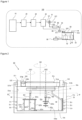
- Fig. 1 shows a facility generating a carbonatable material in the form of an incineration facility 100 including an incinerator 10.
- the incinerator 10 incinerates an incineration object such as wastes, and discharges an exhaust gas of high temperature.
- An exhaust gas discharged from the incinerator 10 contains fly ash as a solid matter in addition to a gas such as carbon dioxide, sulfur oxide, nitrogen oxide, or hydrogen chloride.
- the fly ash typically includes a component derived from an alkaline agent in addition to a component derived from an incineration object.
- the fly ash typically contains at least one chemical compound selected from the group consisting of potassium, calcium, and magnesium.
- Fly ash to be subjected to the carbonation treatment by the carbonation treatment apparatus and the carbonation treatment method in this embodiment may contain at least one chemical compound selected from the group consisting of, for example, sulfur, phosphorus, and silicon.
- the fly ash may include at least one selected from the group consisting of sodium, zinc, iron, aluminum, copper, and a compound thereof.
- the fly ash can also contain a heavy metal such as lead or hexavalent chromium, or a compound thereof.
- a carbonation treatment apparatus 50 in this embodiment is used to suppress the heavy metal from eluting when the fly ash is subjected to the carbonation treatment and the fly ash after the carbonation treatment is buried in the ground or the like.
- fly ash in which an elution amount of lead is 0.3 mg/L or more is used for the carbonation treatment.
- fly ash in which an elution amount of hexavalent chromium is 1.5 mg/L or more is used for the carbonation treatment.
- the carbonation treatment method can be carried out for any applications, and there is no limitation on the facility in which the method is used.
- the method can be carried out in the incineration facility 100.
- the incineration facility 100 of this embodiment includes the incinerator 10, a temperature reduction tower 20 for cooling an exhaust gas discharged from the incinerator 10, an alkali treatment device 30 for adding an alkali agent such as slaked lime to the exhaust gas in order to neutralize an acidic gas contained in the exhaust gas that has been cooled in the temperature reduction tower 20, a fly ash removing device 40 equipped with a bag filter for removing fly ash as a solid content from the exhaust gas added with the alkali agent in the alkali treatment device 30, and a carbonation treatment apparatus 50 for subjecting the fly ash, which has been removed by the fly ash removing device 40, to a carbonation treatment.
- the carbonation treatment apparatus 50 of this embodiment is configured so that a clay-like treatment object X can be prepared by adding water to the housed fly ash, and as will be described later, the treatment object X can be subjected to the carbonization treatment while stirring the treatment object X.
- the incineration facility 100 is configured to be able to use carbon dioxide contained in an exhaust gas, in which fly ash has been removed by the fly ash removing device 40 by making the fly ash pass therethrough, for the carbonation treatment in the carbonation treatment apparatus 50. More specifically, according to the configuration of the incineration facility 100 of this embodiment, an exhaust gas which has passed through the fly ash removing device 40 is partially or entirely brought into contact with water in a water contacting device 60 equipped with a scrubber to remove a readily soluble gas by the water contacting device 60, so that the exhaust gas with the readily soluble gas removed can be supplied to the carbonation treatment apparatus 50.
- an exhaust gas is supplied to the carbonation treatment apparatus 50 as a gas containing carbon dioxide, but the gas is not limited to the exhaust gas and various gases can be used.
- a carbon dioxide gas having ⁇ 99 mass% purity which is filled in a cylinder and commercially available, can be supplied to the carbonation treatment apparatus 50.
- Carbon dioxide used for the carbonation treatment in the carbonation treatment apparatus 50 can be introduced into the carbonation treatment apparatus 50 in liquid form or solid form.
- a liquefied carbon dioxide or carbonated water may be used for the carbonation treatment.
- Dry ice may be used for the carbonation treatment.
- a liquid or solid (e.g., sodium hydrogen carbonate, sodium carbonate), from which carbon dioxide is generated by the thermal decomposition or the chemical reaction, can be used for the carbonation treatment.
- the carbonation treatment can be carried out by using a high purity carbon dioxide gas or dry ice even without utilizing the water contacting device 60, a later-described blower 70, a later-described moisture removing device 80, a later-described cooling device 90, or the like.
- the carbonation treatment can be carried out without utilizing these devices, even in the case where an exhaust gas is used.
- an exhaust gas line LE that is a passage for discharging the exhaust gas from the fly ash removing device 40 branches into an exhaust gas discharge line LE 1 for discharging the exhaust gas to the outside of the system, and an exhaust gas supply line LE2 for supplying the exhaust gas to the carbonation treatment apparatus 50.
- a valve V1 is mounted at a branching point of the exhaust gas line LE to be able to switch the exhaust gas passage between the exhaust gas discharge line LE1 and the exhaust gas supply line LE2, and adjust the amount of the exhaust gas to be supplied to the carbonation treatment apparatus 50.
- the exhaust gas supply line LE2 includes the water contacting device 60 and the blower 70, and is configured to so that a back pressure can be applied to the exhaust gas supplied to the carbonation treatment apparatus 50.
- the exhaust gas supply line LE2 includes the moisture removing device 80 such as a mist separator to be able to reduce moisture contained in the exhaust gas supplied to the carbonation treatment apparatus 50.
- the incineration facility 100 of this embodiment further includes the cooling device 90 for cooling an inner wall surface of the carbonation treatment apparatus 50 that is in contact with the treatment object X.
- the cooling device 90 is configured to be able to circulate a cooling liquid between itself and the carbonation treatment apparatus 50, cool the cooling liquid which has been heated in the carbonation treatment apparatus 50 to make it have a lowered temperature, and thereafter supply the cooling liquid again to the carbonation treatment apparatus 50.
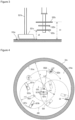
- the carbonation treatment apparatus 50 includes a reaction vessel 51 that has a housing space 51a for housing the treatment object containing the fly ash and water, at least one stirrer 52 that rotates about a vertically extending axis within the housing space 51a to stir the treatment object X housed in the housing space 51a, and a scraper 53 for scraping off the treatment object X adhering to an inner wall surface of the reaction vessel 51.
- the stirrer 52 is configured to move in planetary motion in the housing space 51a when the treatment object X is stirred.
- the stirrer 52 is configured to move in planetary motion
- the stirrer 52 has a rotational axis parallel to a vertically extending center axis, and is movable on the circular path around the center axis.
- the reaction vessel 51 includes a material supply part 510, through which the fly ash and water can be introduced into the housing space 51a.
- the material supply part 510 includes a through-hole that extends through a wall of the reaction vessel 51 to provide communication between the housing space 51a (hereinafter also referred to as material supply hole 510h) and an outside space, and a cover 510p that opens and closes the through hole (i.e., material supply hole 510h).
- the reaction vessel 51 includes a gas intake part 511 for taking a gas containing carbon dioxide (i.e., exhaust gas which has passed through the water contacting device 60) into the housing space 51a in order to subject the fly ash contained in the treatment object X to the carbonation treatment while stirring the treatment object X by the stirrer 52, and a gas outlet part 512 for discharging the gas which has been taken into the housing space 51a from the gas intake part 511 and used for the carbonization treatment from the housing space 51a.
- the gas outlet part 512 of this embodiment is configured to be able to discharge the gas of an upper end area of the housing space 51a.
- reaction vessel without the gas intake part 511 or the gas outlet part can be used.
- the reaction vessel 51 of this embodiment has a low-profile, hollow cylindrical shape with a dimension of the horizontal direction larger than the dimension of the vertical direction. That is, the housing space 51a of the reaction vessel 51 has a cylindrical shape.
- the reaction vessel 51 has a circumferential side wall 51s having a cylindrical shape defining side of the housing space 51a, a bottom wall 51b having a circular plate shape defining bottom of the housing space 51a, and a ceiling wall 51c having a circular plate shape defining top of the housing space 51a.
- the material supply hole 510h is disposed to extend through the ceiling wall 51c.
- the gas intake part 511 has a through hole extending through the ceiling wall 51c (hereinafter also referred to as gas intake hole 511h) in the same manner as the material supply part 510.
- the gas outlet part 512 also has a through hole extending through the ceiling wall 51c (hereinafter also referred to as gas outlet hole 512h) in the same manner as the gas intake part 511.
- the gas outlet part 512 opens to an inner wall surface 51cs of the ceiling wall 51c so that the gas of an upper end area of the housing space 51a can be discharged therethrough.
- the gas intake hole 511h and the gas outlet hole 512h are disposed opposite to each other with respect to the center axis of the housing space 51a with a large distance from each other in the horizontal direction.
- the circumferential side wall 51s and the bottom wall 51b are formed integrally with each other, while being formed separately from the ceiling wall 51c.
- the ceiling wall 51c is detachably attached to the circumferential side wall 51s and can be fitted onto an upper end opening of the cylindrical shaped circumferential side wall 51s.
- the housing space 51a of the reaction vessel 51 is configured to be a closed space by the ceiling wall 51c and the circumferential side wall 51s mounted together with no clearance therebetween so that the housing space 51a can be made into a positive pressure state (i.e., pressurized state) or a negative pressure state (i.e., depressurized state) by adjusting the amount of a gas to be taken from the gas intake hole 511h or the amount of a gas to be discharged from the gas outlet hole 512h.
- a positive pressure state i.e., pressurized state
- a negative pressure state i.e., depressurized state
- the circumferential side wall 51s is configured to allow at least a lower side of the inner wall surface 51ss to be cooled by a cooling liquid supplied from the cooling device 90, and has a flow passage 51r through which the cooling liquid is circulated.
- the reaction vessel 51 can be configured to be able to cool not only the inner wall surface 51ss of the circumferential side wall 51s, but also an inner wall surface 51bs of the bottom wall 51b.
- the carbonation treatment apparatus 50 includes a plurality of stirrers 52 to stir the treatment object X housed in the reaction vessel 51.
- the plurality of stirrers 52 include a first stirrer 521 and a second stirrer 522.
- the second stirrer 522 can rotate faster than the first stirrer 521 according to the rotational speed per unit time (rpm).
- rpm rotational speed per unit time
- first stirrer 521 a stirrer having a maximum rotational speed of ⁇ 500 rpm can be used
- second stirrer 521 a stirrer having a maximum rotational speed of ⁇ 3000 rpm can be used.
- the first stirrer 521 can be driven to rotate at, for example, a speed of 25 rpm to 250 rpm for the carbonation treatment.
- the second stirrer 522 can be driven to rotate at, for example, 100 rpm to 1000 rpm for the carbonation treatment.
- the first stirrer 521 and the second stirrer 522 of this embodiment extend or hang from the ceiling wall 51c. More specifically, the first stirrer 521 and the second stirrer 522 hang from the ceiling wall 51c via a plate shaped body 52a that is disposed below the ceiling wall 51c in parallel to the ceiling wall 51c and horizontally rotatable.
- the plate shaped body 52a has a disc shape smaller than the ceiling wall 51c, and is configured as a gearbox to control the rotation of the stirrers 52.
- the plate shaped body 52a can horizontally rotate about an axis (hereinafter also referred to as revolution axis C52) vertically extending through the center of the reaction vessel 51.
- the thus hanging first stirrer 521 and second stirrer 522 are located away from the aforementioned axis (i.e., revolution axis C52) in the horizontal direction in the plate shaped body 52a to be able to move in planetary motion about the revolution axis C52.
- the first stirrer 521 is configured to be able to rotate about an axis (hereinafter also referred to as first rotation axis C521) which vertically extends through a mounting point at which the first stirrer 521 is mounted to the plate shaped body 52a, and thereby stir the treatment object X.
- the second stirrer 522 is configured to be able to rotate about an axis (hereinafter also referred to as second rotation axis C522), which vertically extends through a mounting point at which the second stirrer 522 is mounted to the plate shaped body 52a, and thereby stir the treatment object X. That is, each of the first stirrer 521 and the second stirrer 522 is configured to be able to rotate about its axis while revolving (i.e., moving in planetary motion, and thereby stir the treatment object X.
- the revolution axis C52, the first rotation axis C521, and the second rotation axis C522 may not extend along the perpendicular direction, but may extend at a slight angle (e.g., 10 degrees or less) to the perpendicular. It is to be noted however that the angle to the perpendicular is preferably 5 degrees or less. In this embodiment, the revolution axis C52, the first rotation axis C521, and the second rotation axis C522 extend in the perpendicular direction.
- Each of the first stirrer 521 and the second stirrer 522 includes a stirring impeller that rotates about its rotation axis (i.e., first rotation axis C521 and second rotation axis C522) to stir the treatment object X.
- the stirring impeller of the first stirrer 521 (hereinafter also referred to as first stirring impeller 521c), and the stirring impeller of the second stirrer 522 (hereinafter also referred to as second stirring impeller 522c) are located different from each other in the perpendicular direction, as shown in Fig. 3 .
- the second stirrer 522 rotates faster than the first stirrer 521 as described above, it is possible to instantly stir the treatment object X into a homogenized state.
- stirring impeller i.e., second stirring impeller 522c
- stirring impeller i.e., first stirring impeller 521c
- the first stirrer 521 includes a plurality of arms 521a that extend radially outwardly from the first rotation axis C521, a plurality of legs 521b that extend from the respective distal ends of the plurality of arms 521a, and the first stirring impellers 521c disposed respectively at lower ends of the legs 521b. More specifically, the first stirrer 521 includes the first stirring impellers 521c that move along the inner wall surface 51bs (upper surface) of the bottom wall 51b so as to be able to scoop up the treatment object X from the bottom of the reaction vessel 51 and stir the scooped-up treatment object X by the revolution about its revolution axis and the rotation about its rotation axis.
- Each of the first stirring impellers 521c is disposed from the lower end of the corresponding leg 521b in a direction opposite to the direction toward the rotation axis (i.e., first rotation axis C521) of the first stirrer 521 to form an inverted T-shape in conjunction with the corresponding leg 521b.
- This combined shape can be an L-shape.
- the legs 521b of the first stirrer 521 are disposed at positions radially away from the first rotation axis C521 at which they vertically extend, and therefore the legs 521b circle around the first rotation axis C521. That is, the first stirrer 521 is configured so that the treatment object X can be stirred not only by the first stirring impellers 521c but also by the legs 521b.
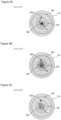
- the first stirrer 521 is configured such that when a circle drawn as a trajectory of the first rotation axis C521 in the revolution is a revolution circle CV1, its radius is a revolution radius rv1, a circle that is an outermost trajectory among trajectories drawn by the first stirring impellers 521c in the rotation is a rotation circle CR1, and its radius is a rotation radius rr1, the rotation radius rr1 can be larger than the revolution circle rv1.
- the rotation circle CR1 circles around the revolution axis C52 so that one point of the revolution circle CR1 constantly contacts the revolution axis C52, as shown in Fig. 5A .
- the revolution axis C52 constantly lies within the rotation circle CR1 while the rotation circle CR1 circles around the revolution axis C52, as shown in Fig. 5B .
- the rotation radius rr1 of the first stirrer 521 can be smaller than the revolution radius rv1, but is preferably equal to or larger than the revolution radius rv1.
- the rotation radius rr1 and the revolution radius rv1 of the first stirrer 521 can satisfy any one of the following relationships (1) to (3): 0.8 ⁇ rv1 ⁇ rr1 ⁇ 1.2 ⁇ rv1 0.9 ⁇ rv1 ⁇ rr1 ⁇ 1.2 ⁇ rv1 rv1 ⁇ rr1 ⁇ 1.2 ⁇ rv1 ⁇ rv1 ⁇ rv1 ⁇ 1.2 ⁇ rv1
- Each of the first stirrers 521 is preferably configured such that the first stirring impeller 521c is disposed to pass near the circumferential side wall 51s when the treatment object X is stirred.
- the total length of the rotation radius rr1 and the revolution radius rv1 can be ⁇ 0.8 r and ⁇ 1.0 r, and can be ⁇ 0.9 r and ⁇ 1.0 r.
- the length of the rotation radius rr1 can be, for example, >_0.3 r and ⁇ 0.7 r.
- the second stirrer 522 includes the second stirring impeller 522c that rotates above the first stirring impeller 521c so as to be able to crush agglomerates contained in the treatment object X scooped up by the first stirrer 521.
- the second stirrer 522 of this embodiment includes the second stirring impeller 522c disposed above the upper ends of the first stirring impellers 521c.
- the second stirring impeller 522c can be a flat plate shaped impeller.
- the second stirring impeller 522c can be, for example, a flat plate shaped impeller disposed to have its plate face substantially parallel to the travelling direction during the rotation.
- the ratio the height (h1) of the upper edge of the second stirring impeller 522c from the inner wall surface 51bs of the bottom wall 51b to the height (h0) of the housing space 51a (h1/h0) can be ⁇ 0.8.
- the ratio (h1/h0) can be ⁇ 07, or can be ⁇ 0.6.
- the ratio (h1/h0) can be, for example, ⁇ 0.3.
- the ratio (h1/h0) can be ⁇ 0.4.
- the ratio of the distance (d1) from the lower edge of the second impeller 522c to the inner wall surface 51bs of the bottom wall 51b to the height (h0) of the housing space 51a (d1/h0) can be ⁇ 0.1, or can be ⁇ 0.2.
- the distance in the vertical direction from the lower edge of the second impeller 522c to the upper edge thereof can be, for example, ⁇ 0.1h0 and ⁇ 0.4h0.
- the second stirrer 522 can include a plurality of second stirring impellers 522c.
- the plurality of second stirring impellers 522c can be mounted at different positions in the vertical direction.
- the number of the second stirring impellers 522c included in the second stirrer 522 can be, for example, two or more and six or less.
- the plurality of second stirring impellers 522c can be disposed at certain intervals in the vertical direction.
- One of the second stirring impellers 522c and a remaining one(s) of them can be disposed to cross each other to form an X-shape in plan view.
- the one of the second stirring impellers 522c and the remaining one(s) of the second stirring impellers 522c can cross each other at an angle of about 90° (e.g., 80° to 90°) in plan view.
- the upper edge of the second stirring impeller 522c means an upper edge of the second stirring impeller 522c disposed at a highest position (i.e., highermost second impeller 522c).
- a distance (d1) from the lower edge of the second stirring impeller 522c to the inner wall surface 51bs of the bottom wall 51b means a distance from the lower edge of the second stirring impeller 522c disposed at a lowest position (i.e., lowermost second impeller 522c) to the inner wall surface 51bs.
- the highermost second impeller 522c can be configured to rotate within a range of ⁇ 0.3h0 and ⁇ 0.6h0.
- the lowermost second impeller 522c can be configured to rotate within a range of ⁇ 0.1h0 and ⁇ 0.3h0.
- Each of the second stirring impellers 522c has a rectangular shape as viewed in the axial direction of the second rotation axis C522.
- Each of the second stirring impellers 522c of this embodiment can have a parallelogram shape.
- the second stirring impeller 522c having a parallelogram shape can rotate about a cross point of the diagonal lines. It can be configured such that, among four corners of the second stirring impeller 522c, two corners located on the front side in the rotational direction each form an obtuse angle, while two corners located on the rear side in the rotational direction each form an acute angle.
- a revolution radius rv2 of the second stirrer 522 can be smaller or larger than a revolution radius rv1 of the first stirrer 521, and can be equal to the revolution radius rv1 of the first stirrer 521.
- the total length of the revolution radius rv2 and the rotation radius rr2, of the second stirrer 522 can be, for example, >_0.2 r and ⁇ 0.8 r.
- the length of the rotation radius rr2 of the second stirrer 522 can be, for example, ⁇ 0.1 r and ⁇ 0.5 r.
- the carbonation treatment apparatus 50 can be subjected to modification without limitation to the above illustrated embodiment.
- the carbonation treatment apparatus 50 can include two first stirrers 521.
- the carbonation treatment apparatus 50 can include one first stirrer 521 and two second stirrers 522.
- the scraper 53 also hangs from the plate shaped body 52a. That is, the scraper 53 is disposed to move along the inner side of the circumferential side wall 51s during the planetary motion of the stirrer 52.
- the treatment object X is likely to adhere to the inner wall surface of the reaction vessel 51 when the treatment object X is subjected to the carbonation treatment.
- the reaction of the carbonation in the treatment object X adhering to the inner wall surface is less likely to progress than that in the treatment object X which is being stirred.
- the treatment object X is prevented from adhering to the bottom wall 51b by the first stirring impeller 521c, and is prevented from adhering to the circumferential side wall 51s by the scraper 53.
- the upper end of the scraper 53 can be positioned within a range of ⁇ 0.3 h0 and ⁇ 0.6 h0 above the inner wall surface 51bs of the bottom wall 51b, while the lower end of the scraper 53 can be positioned within a range of ⁇ 0.3 h0 above the inner wall surface 51bs of the bottom wall 51b.
- the scraper 53 can be disposed to have the lower end in contact with the inner wall surface 51bs of the bottom wall 51b.
- fly ash is subjected to the carbonization treatment using a gas containing carbon dioxide as described above.
- a heavy metal immobilizing agent in addition to fly ash, water and a gas containing carbon dioxide, a heavy metal immobilizing agent can be used in combination.
- a calcium compound such as calcium silicate, calcium hydroxide, calcium oxide, or calcium carbonate
- a phosphoric acid compound such as calcium phosphate or hydroxyapatite
- an inorganic immobilizing agent including an iron compound such as ferrous sulfate or ferrous chloride, or an organic (chelating) immobilizing agent including a dithiocarbamic acid-based compound
- an inorganic immobilizing agent including an iron compound such as ferrous sulfate or ferrous chloride, or an organic (chelating) immobilizing agent including a dithiocarbamic acid-based compound
- a treatment object X that contains fly ash and water is prepared.
- fly ash to be treated In order to prepare the treatment object X, fly ash to be treated, water for use in the treatment, and a heavy metal immobilizing agent are respectively weighed.
- the weighing of fly ash can be performed before or after housing of the fly ash in the reaction vessel 51. That is, in this embodiment, previously weighed fly ash can be housed in the reaction vessel 51, or fly ash and the reaction vessel 51 can be weighed in total while adding fly ash to the reaction vessel 51.
- the water can be purified water, industrial water or the like, and can be river water, lake water or the like. It is preferable that the treatment object X at the start time of the carbonation treatment contains water in an amount of 5 parts by mass or more based on 100 parts by mass of the solid content. By containing 5 parts by mass or more of water, fly ash is barely stirred up during the carbonation treatment, and fly ash can be suppressed from being discharged from the reaction vessel 51.
- the proportion of water can be 10 parts by mass or more, or 12 parts by mass or more.
- the amount of water to be maintained is preferably equal to or less than a certain value so that the viscosity of the treatment object X does not excessively increase.
- the treatment object X at the start time of the carbonation treatment contains water at a ratio of 30 parts by mass or less per 100 parts by mass of the solid content.
- the proportion of water can be 25 parts by mass or less, or can be 22 parts by mass or less.
- the proportion of water can be 20 parts by mass.
- fly ash and water for use in the treatment be adjusted so that the proportion of water to be added to 100 parts by mass of fly ash can be in the range as described above (i.e., 10 parts by mass or more and 20 parts by mass or less)
- the addition of water to fly ash is carried out, for example, in the reaction vessel 51.
- water When water is added to fly ash, there is a possibility that the temperature of a contact point between water and fly ash becomes high due to the heat of hydration, and water partially evaporates.
- the reaction vessel 51 can be sealed, water that has been added to fly ash in the reaction vessel 51 and hence evaporated can be again absorbed into fly ash, so that a treatment object having an accurate amount ratio between fly ash and water can be prepared.
- the heavy metal immobilizing agent can be added along with water to fly ash, and can be added before adding water or after adding water.
- the treatment object X housed in the reaction vessel 51 through the inner wall surface can be cooled by driving the cooling device 90 to circulate a cooling liquid in a flow passage 51r.
- the scraper 53 is provided to scrape off the treatment object X adhering to the circumferential side wall 51s by the revolution of the stirrer 52.
- the treatment object X which has been cooled through the circumferential side wall 51s, can be instantly separated therefrom to allow the treatment object X to be sequentially cooled so that excellent cooling efficiency can be produced.
- the first stirrer 521 of this embodiment is configured to scoop up the treatment object X adhering to the inner wall surface 51bs of the bottom wall 51b and stir the scooped-up treatment object X, and therefore provision of the fluid passage of the cooling liquid in the bottom wall 51b can produce higher cooling efficiency. That is, in this embodiment, high cooling efficiency can be produced by cooling the treatment object X by cooling either or both of the inner wall surface 51bs of the bottom wall 51b and the inner wall surface 51ss of the circumferential side wall 51s.
- the treatment object X having an amount ratio between water and fly ash adjusted with accuracy can be thus prepared.
- the exhaust gas is circulated within the housing space 51a of the reaction vessel 51 to subject fly ash contained in the treatment object X to the carbonation treatment.
- it may be configured such that the exhaust gas is allowed to pass through a water contacting device 60 and the moisture removing device 80 and is introduced into the housing space 51a of the reaction vessel 51 through the gas intake part 511 of the carbonation treatment device 50. Therefore, the exhaust gas turns to be a gas containing carbon dioxide while containing low amounts of excessive water and a corrosive gas, and is supplied to the carbonation treatment device 50.
- corrosion of a piping system and the carbonation treatment device 50 can be suppressed.
- the possibility of, for example, hindrance to the carbonation treatment due to the presence of excessive water is reduced, and hence the possibility of large variation of the water ratio of the treatment object X can be reduced.
- an exhaust gas containing ⁇ 10 ppm of hydrogen chloride is used as a gas to be supplied to the carbonation treatment device 50
- the concentration of hydrogen chloride of the gas to be supplied to the carbonation treatment device 50 is preferably 5 ppm or less, more preferably 1 ppm or less.
- a drafter for use in the water contacting device 60 can have a simple structure as long as it can allow an exhaust gas to pass through water that is quiet and still, and, for example, a submerged weir type drafter can be used.
- a gas containing carbon dioxide can be circulated into the housing space 51a before or after the completion of addition of water to fly ash. That is, the carbonation treatment can be started either before or after addition of the total amount of water.
- a gas in an upper end area of the housing space 51a is discharged by the gas outlet part 512, while a new gas is introduced into the housing space 51a from the gas intake part 511. Since the treatment object X is greatly stirred by the stirrer 52 in the housing space 51a, contact between fly ash and carbon dioxide can be made under the good conditions so that the carbonation treatment of fly ash can be smoothly progressed.
- the first stirrer 521 can be rotated (about its axis) at a speed of 25 rpm to 250 rpm, while the second stirrer 522 can be rotated (about its axis) at a speed of 100 rpm to 1000 rpm.
- These stirrers 52 can be revolved (moved in a planetary motion) at a speed of 10 to 60 rpm when the carbonation treatment is carried out.
- an extra space in which the treatment object X is not housed can be provided on the upper side within the reaction vessel 51 to enable the treatment object X to be stirred in the extra space so that the treatment object X can be homogenized in a short period of time.
- a gas is discharged from the upper end area of the housing space 51a.
- all of the second stirring impellers 522c of the second stirrer 522 can be configured to stir the treatment object X while being placed within the treatment object X.
- an average height (hx) of the treatment object X at the start time of the carbonation treatment can be ⁇ 0.1 h0, or can be ⁇ 0.3 h0.
- the average height (hx) can be ⁇ 0.7 h0, or can be ⁇ 0.5 h0.
- the average height (hx) of the treatment object X can be adjusted to have the following relationship with the height (h1) of the upper edge of the second stirring impeller 522c: h1 ⁇ hx ⁇ 1.2 h1
- the average height (hx) of the treatment object X means a height on the assumption that the treatment object X is housed in the reaction vessel 51 to have a uniform height from the inner wall surface 51bs of the bottom wall 51b.
- the average height (hx) of the housing space 51a can be determined by dividing the volume of the treatment object X by the area of the inner wall surface 51bs of the bottom wall 51b.
- a flow velocity of the gas discharged from the gas outlet part 512 can be adjusted to achieve the required gas velocity, for example, adjusted to be ⁇ 1 m/s and ⁇ 5 m/s.
- the flow velocity can be adjusted to be ⁇ 4 m/s, or can be adjusted to be ⁇ 3 m/s.
- the flow velocity can be determined by the cross sectional area of a discharge hole (area of an opening facing the housing space: A (m 2 )), and the amount of the gas discharged per unit time: V (Nm 3 /min). That is, the flow velocity can be determined by the following equation. Adjusting the flow velocity in this way makes it possible to suppress discharge of fly ash even when the amount of fly ash contained in a gas varies.
- Flow velocity m/s V/60 / A
- the gas to be introduced into the housing space 51a by the gas intake part 511 have a constant flow velocity or more for the purpose of promoting the carbonation treatment by generating a moderate gas flow.
- the flow velocity can be, for example, >_10 m/s.
- the flow velocity can be ⁇ 12 m/s.
- introduction of a gas into the housing space 51a at an excessive flow velocity causes ash or the like to easily fly upward inside the housing space 51a.
- the flow velocity can be ⁇ 40 m/s.
- the flow velocity can be ⁇ 30 m/s, or can be ⁇ 20 m/s.
- the flow velocity can be determined in the same manner as the flow velocity in the gas outlet part 512.
- the flow velocity of a gas to be introduced into the housing space 51a or the flow velocity of a gas to be discharged from the housing space 51a can be adjusted according to the size of the gas intake hole or the gas outlet hole.
- a gas introduced through the gas intake hole is mostly absorbed in the treatment object, it is possible to eliminate the gas outlet hole.
- a solid matter or the like from which carbon dioxide is generated by decomposition is introduced along with the treatment object into the housing space 51a in advance and then the carbonation treatment is carried out, it is also possible to eliminate the gas intake hole.
- the flow velocities in discharging of the gas and supplying of the gas need not be maintained at the aforementioned flow velocities throughout the entire carbonation treatment time.
- the aforementioned flow velocities can be applied in 80% or more, or 50% or more of the entire carbonation treatment time.
- the housing space 51a can be maintained at a positive pressure by blowing a gas flow from the gas intake part 511.
- the housing space 51a can be adjusted to exceed 0 kPa in terms of gauge pressure.
- the pressure of the housing space 51a can be ⁇ 1 kPa.
- the pressure of the housing space 51a can be ⁇ 10 kPa, or can be ⁇ 5 kPa.
- the pressure of the housing space 51a can be ⁇ 3 kPa.
- the concentration of carbon dioxide in a gas to be introduced into the housing space 51a is typically ⁇ 5% to ⁇ 30% by mass.
- the gas introduced into the housing space 51a is mostly absorbed in the treatment object X. Therefore, in such a case where a gas containing a high concentration of carbon dioxide is used, the pressure of the housing space 51a can be set to be higher than the aforementioned pressures so as to accelerate the carbonation treatment.
- the pressure of the housing space 51a can be, for example, ⁇ 3 kPa in terms of gauge pressure.
- the pressure of the housing space 51a can be ⁇ 5 kPa, or ⁇ 10 kPa.
- the pressure of the housing space 51a can be ⁇ 30 kPa.
- the pressure of the housing space 51a can be ⁇ 25 kPa, or can be ⁇ 20 kPa.
- a reaction vessel having no gas discharge part can be used.
- the aforementioned pressure needs not to maintained throughout the entire carbonization treatment time.
- the aforementioned pressure can be applied in 50% or more, or 80% or more of the entire carbonation treatment time.
- the aforementioned carbonation treatment can be carried out by time control.
- it can be configured such that the amount of carbon dioxide in a gas introduced into the housing space 51a and the amount of carbon dioxide discharged from the housing space 51a are measured to monitor the progress of the carbonation treatment and an end point of the carbonation treatment is determined by the monitoring.
- fly ash About 300 kg of fly ash was placed in the carbonation treatment apparatus as shown in Fig. 2 , and water was gradually added to the fly ash while stirring the fly ash to prepare a treatment object to be subjected to the carbonation treatment. A total of about 45 kg of water was added.
- the amount of eluted lead was about 4.0 mg/L and the amount of eluted hexavalent chromium was about 1.7 mg/L in the elution test according to Notification No. 13 from the Environment Agency.
- the carbonation treatment was carried out by circulating a simulated exhaust gas containing about 9% of carbon dioxide into the carbonation treatment device at a flow rate of about 600 to 1000 m 3 /h while stirring the treatment object prepared in the manner described above.
- a flow rate at the time of discharge was 1.6 to 2.7 m/s, and an extra space was 50%.
- a visual observation of the inside of an outlet piping after the treatment for about 10 minutes was repeated 42 times under the above conditions was made, and it was confirmed that discharge of fly ash in the carbonation treatment could be sufficiently prevented.
- the difference between the amount of carbon dioxide introduced into the carbonation treatment apparatus and the amount of carbon dioxide discharged therefrom was monitored as the absorbing amount of carbon dioxide, and it was found that the absorbing amount of carbon dioxide based on 100 parts by mass of fly ash was about 0.7 mass parts when about 5 minutes elapsed after the start of the carbonation treatment, and at that time, the amount of eluted lead was about 0.02 mg/L and the amount of eluted hexavalent chromium was about 0.1 mg/L.
- the carbonation treatment apparatus and the carbonation treatment method As described above, according to the carbonation treatment apparatus and the carbonation treatment method, the carbonation treatment could be efficiently performed.
Landscapes
- Chemical & Material Sciences (AREA)
- Chemical Kinetics & Catalysis (AREA)
- Engineering & Computer Science (AREA)
- Environmental & Geological Engineering (AREA)
- Organic Chemistry (AREA)
- Processing Of Solid Wastes (AREA)
- Mixers Of The Rotary Stirring Type (AREA)
- Accessories For Mixers (AREA)
- Physical Or Chemical Processes And Apparatus (AREA)
Applications Claiming Priority (2)
| Application Number | Priority Date | Filing Date | Title |
|---|---|---|---|
| JP2021173299A JP7050211B1 (ja) | 2021-10-22 | 2021-10-22 | 炭酸化処理装置および炭酸化処理方法 |
| PCT/JP2022/034528 WO2023067956A1 (ja) | 2021-10-22 | 2022-09-15 | 炭酸化処理装置および炭酸化処理方法 |
Publications (1)
| Publication Number | Publication Date |
|---|---|
| EP4431196A1 true EP4431196A1 (en) | 2024-09-18 |
Family
ID=81259246
Family Applications (1)
| Application Number | Title | Priority Date | Filing Date |
|---|---|---|---|
| EP22883266.3A Pending EP4431196A1 (en) | 2021-10-22 | 2022-09-15 | Carbonation treatment device and carbonation treatment method |
Country Status (6)
| Country | Link |
|---|---|
| US (1) | US20250205661A1 (enExample) |
| EP (1) | EP4431196A1 (enExample) |
| JP (2) | JP7050211B1 (enExample) |
| AU (1) | AU2022369533A1 (enExample) |
| GB (1) | GB2612187B (enExample) |
| WO (1) | WO2023067956A1 (enExample) |
Families Citing this family (1)
| Publication number | Priority date | Publication date | Assignee | Title |
|---|---|---|---|---|
| JP2025154574A (ja) * | 2024-03-29 | 2025-10-10 | 株式会社神鋼環境ソリューション | 炭酸化プロセス及び炭酸化装置 |
Family Cites Families (25)
| Publication number | Priority date | Publication date | Assignee | Title |
|---|---|---|---|---|
| US3913238A (en) * | 1972-07-20 | 1975-10-21 | Day J H Co | Method and apparatus for drying particulate materials |
| JPS5330570U (enExample) * | 1976-08-21 | 1978-03-16 | ||
| JP2987461B2 (ja) * | 1990-04-20 | 1999-12-06 | 伸洋産業株式会社 | 生ごみ分解処理装置 |
| JP3627768B2 (ja) * | 1994-09-19 | 2005-03-09 | Jfeスチール株式会社 | 焼却灰の処理方法 |
| US5544424A (en) * | 1995-05-17 | 1996-08-13 | Mallinckrodt Medical, Inc. | Aggressive convective drying in a conical screw type mixer/dryer |
| JP3672680B2 (ja) * | 1996-08-30 | 2005-07-20 | 鹿島北共同発電株式会社 | 含水燃焼灰または燃焼灰スラリーの調製方法 |
| JPH11218320A (ja) * | 1998-02-02 | 1999-08-10 | Nippon Steel Corp | ゴミ処理施設の灰処理用電気抵抗溶融炉及びその操業方法 |
| JP2000111023A (ja) * | 1998-10-08 | 2000-04-18 | Chugai Ro Co Ltd | 単段式焼却炉 |
| JP4813636B2 (ja) | 1999-08-31 | 2011-11-09 | 株式会社神戸製鋼所 | 安定化処理土 |
| JP3508641B2 (ja) * | 1999-08-30 | 2004-03-22 | 栗田工業株式会社 | アルカリ飛灰処理装置及びアルカリ飛灰処理方法 |
| JP3968998B2 (ja) | 2001-02-02 | 2007-08-29 | 栗田工業株式会社 | 重金属含有アルカリ飛灰の処理方法及び処理装置 |
| DE10137489A1 (de) | 2001-07-31 | 2003-02-13 | Martin Theodor Melchior | Mischvorrichtung zum Mischen von pulverförmigen Stoffen mit Wasser |
| JP4177071B2 (ja) * | 2002-10-09 | 2008-11-05 | 株式会社アーステクニカ | ミキサー |
| JP2004267908A (ja) * | 2003-03-07 | 2004-09-30 | Kurita Water Ind Ltd | 焼却灰の処理装置及び処理方法 |
| JP4709997B2 (ja) * | 2004-10-28 | 2011-06-29 | 国立大学法人北海道大学 | 土壌鉱物−鉄錯合体による難分解性有機化合物の分解方法およびその装置 |
| CN201013841Y (zh) * | 2006-12-06 | 2008-01-30 | 罗久亨 | 行星式轮混机的齿轮传动机构 |
| EP2617544A1 (en) * | 2012-01-20 | 2013-07-24 | Haarup Maskinfabrik A/S | A batch mixer for mixing concrete and a method for mixing concrete in a batch mixer |
| JP6722429B2 (ja) * | 2015-07-06 | 2020-07-15 | 日本製鉄株式会社 | 鉄鋼スラグの処理装置及びこれを用いた鉄鋼スラグの処理方法 |
| GB2550170B (en) | 2016-05-11 | 2022-10-05 | Carbon8 Systems Ltd | Improved production of aggregates |
| CN108453122B (zh) * | 2018-04-02 | 2023-12-12 | 广东省生态环境技术研究所 | 场地重金属污染土壤治理设备及其治理方法 |
| CN208678890U (zh) * | 2018-08-21 | 2019-04-02 | 青岛博隆机械设备有限公司 | 一种锥形粉体颗粒混合机 |
| CN109910152A (zh) * | 2019-04-24 | 2019-06-21 | 福建南方路面机械有限公司 | 一种高强度固化造粒物的制造设备及制造方法 |
| CN110813126B (zh) * | 2019-10-31 | 2024-11-26 | 浙江锋锂新能源科技有限公司 | 电池浆料的分散装置及其温控方法 |
| CN112275782B (zh) | 2020-10-30 | 2023-12-05 | 南京师范大学 | 一种基于二氧化碳调质的飞灰水洗装置及方法 |
| CN213929373U (zh) | 2020-12-15 | 2021-08-10 | 柳州市豪杰特化工机械有限责任公司 | 一种气压平衡式防尘行星箱及其行星搅拌机 |
-
2021
- 2021-10-22 JP JP2021173299A patent/JP7050211B1/ja active Active
-
2022
- 2022-03-04 JP JP2022033792A patent/JP7735204B2/ja active Active
- 2022-09-15 US US18/848,879 patent/US20250205661A1/en active Pending
- 2022-09-15 WO PCT/JP2022/034528 patent/WO2023067956A1/ja not_active Ceased
- 2022-09-15 GB GB2213526.3A patent/GB2612187B/en active Active
- 2022-09-15 EP EP22883266.3A patent/EP4431196A1/en active Pending
- 2022-09-15 AU AU2022369533A patent/AU2022369533A1/en active Pending
Also Published As
| Publication number | Publication date |
|---|---|
| US20250205661A1 (en) | 2025-06-26 |
| JP2023063211A (ja) | 2023-05-09 |
| GB2612187A (en) | 2023-04-26 |
| JP7735204B2 (ja) | 2025-09-08 |
| GB202213526D0 (en) | 2022-11-02 |
| AU2022369533A1 (en) | 2024-09-12 |
| JP2023063045A (ja) | 2023-05-09 |
| JP7050211B1 (ja) | 2022-04-07 |
| GB2612187B (en) | 2024-04-10 |
| WO2023067956A1 (ja) | 2023-04-27 |
Similar Documents
| Publication | Publication Date | Title |
|---|---|---|
| EP4431196A1 (en) | Carbonation treatment device and carbonation treatment method | |
| CA2272976C (en) | Method of removal of light metals from aluminum | |
| HK40116916A (en) | Carbonation treatment device and carbonation treatment method | |
| CN223518262U (zh) | 碳化处理设备 | |
| JPH05500632A (ja) | ガス―液体接触を効果的に行う方法および装置 | |
| US6676911B1 (en) | Exhaust gas treating agent, process for producing the same, and method of treating exhaust gas | |
| CN207422248U (zh) | 一种密闭防泄漏捞渣机 | |
| JP2001062426A (ja) | アルカリ飛灰処理装置 | |
| JP5917363B2 (ja) | 水処理装置 | |
| JP2007314854A (ja) | 高温スラグの処理方法 | |
| JP3830494B2 (ja) | 硫酸ピッチ処理装置及び焼却処理装置 | |
| US3021202A (en) | Discharge seal device for rotating vessels | |
| CN209968316U (zh) | 一种飞灰固化系统搅拌机除尘除潮装置 | |
| JP2008174403A (ja) | 水和反応熱を利用した反応遅延性生石灰の製造方法 | |
| WO2007145310A1 (ja) | 石灰焼成装置のコーチング防止剤及びコーチング防止方法 | |
| CN223458163U (zh) | 一种废水处理的生石灰粉投加装置 | |
| CN212188893U (zh) | 一种工业废弃物处理用搅拌设备 | |
| CN219615263U (zh) | 一种干法脱酸输送及半干法脱酸制浆装置 | |
| WO2022210389A1 (ja) | 汚染物質処理システム及び汚染物質処理方法 | |
| JP6556696B2 (ja) | 表面が汚染された塊状アルカリ土類金属酸化物の精製処理容器及び精製処理方法 | |
| JP4095660B2 (ja) | 繊維状被処理物の固化剤又は固定化処理方法 | |
| JP2016073921A (ja) | 焼却灰の処理方法および処理設備 | |
| CN222943234U (zh) | 一种水泥窑烟气脱硫脱硝装置 | |
| CN117105360A (zh) | 一种用于污水处理的除磷装置及除磷方法 | |
| JP4016203B2 (ja) | ピッチ処理剤を使用した硫酸ピッチの無害化再利用物処理装置 |
Legal Events
| Date | Code | Title | Description |
|---|---|---|---|
| STAA | Information on the status of an ep patent application or granted ep patent |
Free format text: STATUS: THE INTERNATIONAL PUBLICATION HAS BEEN MADE |
|
| PUAI | Public reference made under article 153(3) epc to a published international application that has entered the european phase |
Free format text: ORIGINAL CODE: 0009012 |
|
| STAA | Information on the status of an ep patent application or granted ep patent |
Free format text: STATUS: REQUEST FOR EXAMINATION WAS MADE |
|
| 17P | Request for examination filed |
Effective date: 20240801 |
|
| AK | Designated contracting states |
Kind code of ref document: A1 Designated state(s): AL AT BE BG CH CY CZ DE DK EE ES FI FR GB GR HR HU IE IS IT LI LT LU LV MC MK MT NL NO PL PT RO RS SE SI SK SM TR |
|
| TPAC | Observations filed by third parties |
Free format text: ORIGINAL CODE: EPIDOSNTIPA |
|
| DAV | Request for validation of the european patent (deleted) | ||
| DAX | Request for extension of the european patent (deleted) | ||
| RAP1 | Party data changed (applicant data changed or rights of an application transferred) |
Owner name: O.C.O. TECHNOLOGY GROUP LIMITED |
|
| REG | Reference to a national code |
Ref country code: HK Ref legal event code: DE Ref document number: 40116916 Country of ref document: HK |