EP4431109A2 - Kombination aus multimeren fusionspolypeptiden und immuncheckpoint-inhibitor zur behandlung von hpv-assoziiertem krebs - Google Patents
Kombination aus multimeren fusionspolypeptiden und immuncheckpoint-inhibitor zur behandlung von hpv-assoziiertem krebs Download PDFInfo
- Publication number
- EP4431109A2 EP4431109A2 EP24174985.2A EP24174985A EP4431109A2 EP 4431109 A2 EP4431109 A2 EP 4431109A2 EP 24174985 A EP24174985 A EP 24174985A EP 4431109 A2 EP4431109 A2 EP 4431109A2
- Authority
- EP
- European Patent Office
- Prior art keywords
- amino acid
- polypeptide
- acid sequence
- cases
- ala
- Prior art date
- Legal status (The legal status is an assumption and is not a legal conclusion. Google has not performed a legal analysis and makes no representation as to the accuracy of the status listed.)
- Pending
Links
Images















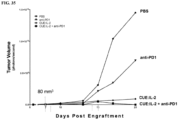


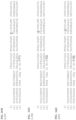
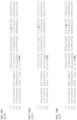
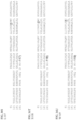



















Classifications
-
- A—HUMAN NECESSITIES
- A61—MEDICAL OR VETERINARY SCIENCE; HYGIENE
- A61K—PREPARATIONS FOR MEDICAL, DENTAL OR TOILETRY PURPOSES
- A61K38/00—Medicinal preparations containing peptides
- A61K38/16—Peptides having more than 20 amino acids; Gastrins; Somatostatins; Melanotropins; Derivatives thereof
- A61K38/17—Peptides having more than 20 amino acids; Gastrins; Somatostatins; Melanotropins; Derivatives thereof from animals; from humans
- A61K38/19—Cytokines; Lymphokines; Interferons
- A61K38/20—Interleukins [IL]
- A61K38/2013—IL-2
-
- A—HUMAN NECESSITIES
- A61—MEDICAL OR VETERINARY SCIENCE; HYGIENE
- A61K—PREPARATIONS FOR MEDICAL, DENTAL OR TOILETRY PURPOSES
- A61K38/00—Medicinal preparations containing peptides
- A61K38/16—Peptides having more than 20 amino acids; Gastrins; Somatostatins; Melanotropins; Derivatives thereof
- A61K38/162—Peptides having more than 20 amino acids; Gastrins; Somatostatins; Melanotropins; Derivatives thereof from virus
-
- A—HUMAN NECESSITIES
- A61—MEDICAL OR VETERINARY SCIENCE; HYGIENE
- A61K—PREPARATIONS FOR MEDICAL, DENTAL OR TOILETRY PURPOSES
- A61K38/00—Medicinal preparations containing peptides
- A61K38/16—Peptides having more than 20 amino acids; Gastrins; Somatostatins; Melanotropins; Derivatives thereof
- A61K38/17—Peptides having more than 20 amino acids; Gastrins; Somatostatins; Melanotropins; Derivatives thereof from animals; from humans
- A61K38/177—Receptors; Cell surface antigens; Cell surface determinants
- A61K38/1774—Immunoglobulin superfamily (e.g. CD2, CD4, CD8, ICAM molecules, B7 molecules, Fc-receptors, MHC-molecules)
-
- A—HUMAN NECESSITIES
- A61—MEDICAL OR VETERINARY SCIENCE; HYGIENE
- A61K—PREPARATIONS FOR MEDICAL, DENTAL OR TOILETRY PURPOSES
- A61K39/00—Medicinal preparations containing antigens or antibodies
- A61K39/395—Antibodies; Immunoglobulins; Immune serum, e.g. antilymphocytic serum
- A61K39/39533—Antibodies; Immunoglobulins; Immune serum, e.g. antilymphocytic serum against materials from animals
- A61K39/3955—Antibodies; Immunoglobulins; Immune serum, e.g. antilymphocytic serum against materials from animals against proteinaceous materials, e.g. enzymes, hormones, lymphokines
-
- A—HUMAN NECESSITIES
- A61—MEDICAL OR VETERINARY SCIENCE; HYGIENE
- A61K—PREPARATIONS FOR MEDICAL, DENTAL OR TOILETRY PURPOSES
- A61K47/00—Medicinal preparations characterised by the non-active ingredients used, e.g. carriers or inert additives; Targeting or modifying agents chemically bound to the active ingredient
- A61K47/50—Medicinal preparations characterised by the non-active ingredients used, e.g. carriers or inert additives; Targeting or modifying agents chemically bound to the active ingredient the non-active ingredient being chemically bound to the active ingredient, e.g. polymer-drug conjugates
- A61K47/51—Medicinal preparations characterised by the non-active ingredients used, e.g. carriers or inert additives; Targeting or modifying agents chemically bound to the active ingredient the non-active ingredient being chemically bound to the active ingredient, e.g. polymer-drug conjugates the non-active ingredient being a modifying agent
- A61K47/62—Medicinal preparations characterised by the non-active ingredients used, e.g. carriers or inert additives; Targeting or modifying agents chemically bound to the active ingredient the non-active ingredient being chemically bound to the active ingredient, e.g. polymer-drug conjugates the non-active ingredient being a modifying agent the modifying agent being a protein, peptide or polyamino acid
- A61K47/64—Drug-peptide, drug-protein or drug-polyamino acid conjugates, i.e. the modifying agent being a peptide, protein or polyamino acid which is covalently bonded or complexed to a therapeutically active agent
- A61K47/644—Transferrin, e.g. a lactoferrin or ovotransferrin
-
- A—HUMAN NECESSITIES
- A61—MEDICAL OR VETERINARY SCIENCE; HYGIENE
- A61K—PREPARATIONS FOR MEDICAL, DENTAL OR TOILETRY PURPOSES
- A61K47/00—Medicinal preparations characterised by the non-active ingredients used, e.g. carriers or inert additives; Targeting or modifying agents chemically bound to the active ingredient
- A61K47/50—Medicinal preparations characterised by the non-active ingredients used, e.g. carriers or inert additives; Targeting or modifying agents chemically bound to the active ingredient the non-active ingredient being chemically bound to the active ingredient, e.g. polymer-drug conjugates
- A61K47/51—Medicinal preparations characterised by the non-active ingredients used, e.g. carriers or inert additives; Targeting or modifying agents chemically bound to the active ingredient the non-active ingredient being chemically bound to the active ingredient, e.g. polymer-drug conjugates the non-active ingredient being a modifying agent
- A61K47/68—Medicinal preparations characterised by the non-active ingredients used, e.g. carriers or inert additives; Targeting or modifying agents chemically bound to the active ingredient the non-active ingredient being chemically bound to the active ingredient, e.g. polymer-drug conjugates the non-active ingredient being a modifying agent the modifying agent being an antibody, an immunoglobulin or a fragment thereof, e.g. an Fc-fragment
-
- A—HUMAN NECESSITIES
- A61—MEDICAL OR VETERINARY SCIENCE; HYGIENE
- A61K—PREPARATIONS FOR MEDICAL, DENTAL OR TOILETRY PURPOSES
- A61K9/00—Medicinal preparations characterised by special physical form
- A61K9/0012—Galenical forms characterised by the site of application
- A61K9/0019—Injectable compositions; Intramuscular, intravenous, arterial, subcutaneous administration; Compositions to be administered through the skin in an invasive manner
-
- A—HUMAN NECESSITIES
- A61—MEDICAL OR VETERINARY SCIENCE; HYGIENE
- A61P—SPECIFIC THERAPEUTIC ACTIVITY OF CHEMICAL COMPOUNDS OR MEDICINAL PREPARATIONS
- A61P35/00—Antineoplastic agents
-
- A—HUMAN NECESSITIES
- A61—MEDICAL OR VETERINARY SCIENCE; HYGIENE
- A61P—SPECIFIC THERAPEUTIC ACTIVITY OF CHEMICAL COMPOUNDS OR MEDICINAL PREPARATIONS
- A61P37/00—Drugs for immunological or allergic disorders
- A61P37/02—Immunomodulators
- A61P37/06—Immunosuppressants, e.g. drugs for graft rejection
-
- C—CHEMISTRY; METALLURGY
- C07—ORGANIC CHEMISTRY
- C07K—PEPTIDES
- C07K14/00—Peptides having more than 20 amino acids; Gastrins; Somatostatins; Melanotropins; Derivatives thereof
- C07K14/435—Peptides having more than 20 amino acids; Gastrins; Somatostatins; Melanotropins; Derivatives thereof from animals; from humans
- C07K14/52—Cytokines; Lymphokines; Interferons
- C07K14/54—Interleukins [IL]
- C07K14/55—IL-2
-
- C—CHEMISTRY; METALLURGY
- C07—ORGANIC CHEMISTRY
- C07K—PEPTIDES
- C07K14/00—Peptides having more than 20 amino acids; Gastrins; Somatostatins; Melanotropins; Derivatives thereof
- C07K14/435—Peptides having more than 20 amino acids; Gastrins; Somatostatins; Melanotropins; Derivatives thereof from animals; from humans
- C07K14/705—Receptors; Cell surface antigens; Cell surface determinants
- C07K14/70503—Immunoglobulin superfamily
- C07K14/70539—MHC-molecules, e.g. HLA-molecules
-
- C—CHEMISTRY; METALLURGY
- C07—ORGANIC CHEMISTRY
- C07K—PEPTIDES
- C07K14/00—Peptides having more than 20 amino acids; Gastrins; Somatostatins; Melanotropins; Derivatives thereof
- C07K14/435—Peptides having more than 20 amino acids; Gastrins; Somatostatins; Melanotropins; Derivatives thereof from animals; from humans
- C07K14/79—Transferrins, e.g. lactoferrins, ovotransferrins
-
- C—CHEMISTRY; METALLURGY
- C07—ORGANIC CHEMISTRY
- C07K—PEPTIDES
- C07K16/00—Immunoglobulins [IGs], e.g. monoclonal or polyclonal antibodies
- C07K16/18—Immunoglobulins [IGs], e.g. monoclonal or polyclonal antibodies against material from animals or humans
- C07K16/28—Immunoglobulins [IGs], e.g. monoclonal or polyclonal antibodies against material from animals or humans against receptors, cell surface antigens or cell surface determinants
- C07K16/2803—Immunoglobulins [IGs], e.g. monoclonal or polyclonal antibodies against material from animals or humans against receptors, cell surface antigens or cell surface determinants against the immunoglobulin superfamily
- C07K16/2818—Immunoglobulins [IGs], e.g. monoclonal or polyclonal antibodies against material from animals or humans against receptors, cell surface antigens or cell surface determinants against the immunoglobulin superfamily against CD28 or CD152
-
- C—CHEMISTRY; METALLURGY
- C07—ORGANIC CHEMISTRY
- C07K—PEPTIDES
- C07K16/00—Immunoglobulins [IGs], e.g. monoclonal or polyclonal antibodies
- C07K16/18—Immunoglobulins [IGs], e.g. monoclonal or polyclonal antibodies against material from animals or humans
- C07K16/28—Immunoglobulins [IGs], e.g. monoclonal or polyclonal antibodies against material from animals or humans against receptors, cell surface antigens or cell surface determinants
- C07K16/2803—Immunoglobulins [IGs], e.g. monoclonal or polyclonal antibodies against material from animals or humans against receptors, cell surface antigens or cell surface determinants against the immunoglobulin superfamily
- C07K16/2827—Immunoglobulins [IGs], e.g. monoclonal or polyclonal antibodies against material from animals or humans against receptors, cell surface antigens or cell surface determinants against the immunoglobulin superfamily against B7 molecules, e.g. CD80, CD86
-
- C—CHEMISTRY; METALLURGY
- C12—BIOCHEMISTRY; BEER; SPIRITS; WINE; VINEGAR; MICROBIOLOGY; ENZYMOLOGY; MUTATION OR GENETIC ENGINEERING
- C12N—MICROORGANISMS OR ENZYMES; COMPOSITIONS THEREOF; PROPAGATING, PRESERVING, OR MAINTAINING MICROORGANISMS; MUTATION OR GENETIC ENGINEERING; CULTURE MEDIA
- C12N15/00—Mutation or genetic engineering; DNA or RNA concerning genetic engineering, vectors, e.g. plasmids, or their isolation, preparation or purification; Use of hosts therefor
- C12N15/09—Recombinant DNA-technology
- C12N15/11—DNA or RNA fragments; Modified forms thereof; Non-coding nucleic acids having a biological activity
- C12N15/62—DNA sequences coding for fusion proteins
-
- A—HUMAN NECESSITIES
- A61—MEDICAL OR VETERINARY SCIENCE; HYGIENE
- A61K—PREPARATIONS FOR MEDICAL, DENTAL OR TOILETRY PURPOSES
- A61K39/00—Medicinal preparations containing antigens or antibodies
- A61K2039/505—Medicinal preparations containing antigens or antibodies comprising antibodies
-
- A—HUMAN NECESSITIES
- A61—MEDICAL OR VETERINARY SCIENCE; HYGIENE
- A61K—PREPARATIONS FOR MEDICAL, DENTAL OR TOILETRY PURPOSES
- A61K2300/00—Mixtures or combinations of active ingredients, wherein at least one active ingredient is fully defined in groups A61K31/00 - A61K41/00
-
- C—CHEMISTRY; METALLURGY
- C07—ORGANIC CHEMISTRY
- C07K—PEPTIDES
- C07K2317/00—Immunoglobulins specific features
- C07K2317/50—Immunoglobulins specific features characterized by immunoglobulin fragments
- C07K2317/52—Constant or Fc region; Isotype
- C07K2317/524—CH2 domain
-
- C—CHEMISTRY; METALLURGY
- C07—ORGANIC CHEMISTRY
- C07K—PEPTIDES
- C07K2317/00—Immunoglobulins specific features
- C07K2317/70—Immunoglobulins specific features characterized by effect upon binding to a cell or to an antigen
- C07K2317/71—Decreased effector function due to an Fc-modification
-
- C—CHEMISTRY; METALLURGY
- C07—ORGANIC CHEMISTRY
- C07K—PEPTIDES
- C07K2317/00—Immunoglobulins specific features
- C07K2317/70—Immunoglobulins specific features characterized by effect upon binding to a cell or to an antigen
- C07K2317/76—Antagonist effect on antigen, e.g. neutralization or inhibition of binding
-
- C—CHEMISTRY; METALLURGY
- C07—ORGANIC CHEMISTRY
- C07K—PEPTIDES
- C07K2319/00—Fusion polypeptide
-
- C—CHEMISTRY; METALLURGY
- C12—BIOCHEMISTRY; BEER; SPIRITS; WINE; VINEGAR; MICROBIOLOGY; ENZYMOLOGY; MUTATION OR GENETIC ENGINEERING
- C12N—MICROORGANISMS OR ENZYMES; COMPOSITIONS THEREOF; PROPAGATING, PRESERVING, OR MAINTAINING MICROORGANISMS; MUTATION OR GENETIC ENGINEERING; CULTURE MEDIA
- C12N2770/00—MICROORGANISMS OR ENZYMES; COMPOSITIONS THEREOF; PROPAGATING, PRESERVING, OR MAINTAINING MICROORGANISMS; MUTATION OR GENETIC ENGINEERING; CULTURE MEDIA ssRNA viruses positive-sense
- C12N2770/00011—Details
- C12N2770/36011—Togaviridae
- C12N2770/36111—Alphavirus, e.g. Sindbis virus, VEE, EEE, WEE, Semliki
- C12N2770/36141—Use of virus, viral particle or viral elements as a vector
- C12N2770/36143—Use of virus, viral particle or viral elements as a vector viral genome or elements thereof as genetic vector
Definitions
- An adaptive immune response involves the engagement of the T cell receptor (TCR), present on the surface of a T cell, with a small peptide antigen non-covalently presented on the surface of an antigen presenting cell (APC) by a major histocompatibility complex (MHC; also referred to in humans as a human leukocyte antigen (HLA) complex).
- TCR T cell receptor
- APC antigen presenting cell
- MHC major histocompatibility complex
- HLA human leukocyte antigen
- TCR is specific for a given epitope; however, the costimulatory protein not epitope specific and instead is generally expressed on all T cells or on large T cell subsets.
- the present disclosure provides methods of modulating an immune response in an individual.
- the present disclosure provides methods of treatment.
- the present disclosure provides methods comprising administering a multimeric polypeptide (synTac) and an immune checkpoint inhibitor to an individual.
- the present disclosure provides methods comprising administering a multimeric polypeptide (synTac) to an individual who is undergoing treatment with immune checkpoint inhibitor.
- polynucleotide and “nucleic acid,” used interchangeably herein, refer to a polymeric form of nucleotides of any length, either ribonucleotides or deoxyribonucleotides. Thus, this term includes, but is not limited to, single-, double-, or multi-stranded DNA or RNA, genomic DNA, cDNA, DNA-RNA hybrids, or a polymer comprising purine asnd pyrimidine bases or other natural, chemically or biochemically modified, non-natural, or derivatized nucleotide bases.
- peptide refers to a polymeric form of amino acids of any length, which can include coded and non-coded amino acids, chemically or biochemically modified or derivatized amino acids, and polypeptides having modified peptide backbones.
- a polynucleotide or polypeptide has a certain percent "sequence identity" to another polynucleotide or polypeptide, meaning that, when aligned, that percentage of bases or amino acids are the same, and in the same relative position, when comparing the two sequences. Sequence identity can be determined in a number of different ways.
- sequences can be aligned using various convenient methods and computer programs (e.g., BLAST, T-COFFEE, MUSCLE, MAFFT, etc.), available over the world wide web at sites including ncbi.nlm.nili.gov/BLAST, ebi.ac.uk/Tools/msa/tcoffee/, ebi.ac.uk/Tools/msa/muscle/, mafft.cbrc.jp/alignment/software/. See, e.g., Altschul et al. (1990), J. Mol. Bioi. 215:403-10 .
- a group of amino acids having aliphatic side chains consists of glycine, alanine, valine, leucine, and isoleucine; a group of amino acids having aliphatic-hydroxyl side chains consists of serine and threonine; a group of amino acids having amide containing side chains consisting of asparagine and glutamine; a group of amino acids having aromatic side chains consists of phenylalanine, tyrosine, and tryptophan; a group of amino acids having basic side chains consists of lysine, arginine, and histidine; a group of amino acids having acidic side chains consists of glutamate and aspartate; and a group of amino acids having sulfur containing side chains consists of cysteine and methionine.
- Exemplary conservative amino acid substitution groups are: valine-leucine-isoleucine, phenylalanine-tyrosine, lysine-arginine, alanine-valine-glycine, and asparagine-glutamine.
- Binding refers to a non-covalent interaction between. Binding interactions are generally characterized by a dissociation constant (K D ) of less than 10 -6 M, less than 10 -7 M, less than 10 -8 M, less than 10 -9 M, less than 10 -10 M, less than 10 -11 M, less than 10 -12 M, less than 10 -13 M, less than 10 -14 M, or less than 10 -15 M.
- K D dissociation constant
- Affinity refers to the strength of binding, increased binding affinity being correlated with a lower K D .
- immunological synapse or “immune synapse” as used herein generally refers to the natural interface between two interacting immune cells of an adaptive immune response including, e.g., the interface between an antigen-presenting cell (APC) or target cell and an effector cell, e.g., a lymphocyte, an effector T cell, a natural killer cell, and the like.
- An immunological synapse between an APC and a T cell is generally initiated by the interaction of a T cell antigen receptor and major histocompatibility complex molecules, e.g., as described in Bromley et al., Annu Rev Immunol. 2001;19:375-96 ; the disclosure of which is incorporated herein by reference in its entirety.
- T cell includes all types of immune cells expressing CD3, including T-helper cells (CD4 + cells), cytotoxic T-cells (CD8 + cells), T-regulatory cells (Treg), and NK-T cells.
- Co-stimulatory polypeptide includes a polypeptide on an antigen presenting cell (APC) (e.g., a dendritic cell, a B cell, and the like) that specifically binds a cognate co-stimulatory polypeptide (also referred to herein as a "cognate co-immunomodulatory polypeptide”) on a T cell, thereby providing a signal which, in addition to the primary signal provided by, for instance, binding of a TCR/CD3 complex with a major histocompatibility complex (MHC) polypeptide loaded with peptide, mediates a T cell response, including, but not limited to, proliferation, activation, differentiation, and the like.
- APC antigen presenting cell
- MHC major histocompatibility complex
- a co-stimulatory ligand can include, but is not limited to, CD7, B7-1 (CD80), B7-2 (CD86), PD-L1, PD-L2, 4-1BBL, OX40L, Fas ligand (FasL), inducible costimulatory ligand (ICOS-L), intercellular adhesion molecule (ICAM), CD30L, CD40, CD70, CD83, HLA-G, MICA, MICB, HVEM, lymphotoxin beta receptor, 3/TR6, ILT3, ILT4, HVEM, an agonist or antibody that binds Toll ligand receptor and a ligand that specifically binds with B7-H3.
- a co-stimulatory ligand also encompasses, inter alia, an antibody that specifically binds with a co-stimulatory molecule present on a T cell, such as, but not limited to, CD27, CD28, 4-1BB, OX40, CD30, CD40, PD-1, ICOS, lymphocyte function-associated antigen-1 (LFA-1), CD2, LIGHT, NKG2C, B7-H3, and a ligand that specifically binds to CD83.
- an antibody that specifically binds with a co-stimulatory molecule present on a T cell such as, but not limited to, CD27, CD28, 4-1BB, OX40, CD30, CD40, PD-1, ICOS, lymphocyte function-associated antigen-1 (LFA-1), CD2, LIGHT, NKG2C, B7-H3, and a ligand that specifically binds to CD83.
- a “modulatory domain” ("MOD") of a T-cell modulatory multimeric polypeptide comprises a co-stimulatory polypeptide, e.g., an IL-2 polypeptide, such as a variant IL-2 polypeptide.
- Heterologous means a nucleotide or polypeptide that is not found in the native nucleic acid or protein, respectively.
- Recombinant means that a particular nucleic acid (DNA or RNA) is the product of various combinations of cloning, restriction, polymerase chain reaction (PCR) and/or ligation steps resulting in a construct having a structural coding or non-coding sequence distinguishable from endogenous nucleic acids found in natural systems.
- DNA sequences encoding polypeptides can be assembled from cDNA fragments or from a series of synthetic oligonucleotides, to provide a synthetic nucleic acid which is capable of being expressed from a recombinant transcriptional unit contained in a cell or in a cell-free transcription and translation system.
- recombinant expression vector or "DNA construct” are used interchangeably herein to refer to a DNA molecule comprising a vector and one insert.
- Recombinant expression vectors are usually generated for the purpose of expressing and/or propagating the insert(s), or for the construction of other recombinant nucleotide sequences.
- the insert(s) may or may not be operably linked to a promoter sequence and may or may not be operably linked to DNA regulatory sequences.
- antibodies and immunoglobulin include antibodies or immunoglobulins of any isotype, fragments of antibodies that retain specific binding to antigen, including, but not limited to, Fab, Fv, scFv, and Fd fragments, chimeric antibodies, humanized antibodies, single-chain antibodies (scAb), single domain antibodies (dAb), single domain heavy chain antibodies, a single domain light chain antibodies, bi-specific antibodies, multi-specific antibodies, and fusion proteins comprising an antigen-binding (also referred to herein as antigen binding) portion of an antibody and a non-antibody protein.
- a monoclonal antibody is an antibody produced by a group of identical cells, all of which were produced from a single cell by repetitive cellular replication. That is, the clone of cells only produces a single antibody species. While a monoclonal antibody can be produced using hybridoma production technology, other production methods known to those skilled in the art can also be used (e.g., antibodies derived from antibody phage display libraries).
- An antibody can be monovalent or bivalent.
- An antibody can be an Ig monomer, which is a "Y-shaped" molecule that consists of four polypeptide chains: two heavy chains and two light chains connected by disulfide bonds.
- humanized antibody refers to an antibody comprising portions of antibodies of different origin, wherein at least one portion comprises amino acid sequences of human origin.
- a humanized antibody can comprise portions derived from an immunoglobulin of nonhuman origin with the requisite specificity, such as a mouse, and from immunoglobulin sequences of human origin (e.g., chimeric immunoglobulin), joined together chemically by conventional techniques (e.g., synthetic) or prepared as a contiguous polypeptide using genetic engineering techniques (e.g., DNA encoding the protein portions of the chimeric antibody can be expressed to produce a contiguous polypeptide chain).
- humanized antibody is an antibody containing one or more antibody chains comprising a CDR derived from an antibody of nonhuman origin and a framework region derived from a light and/or heavy chain of human origin (e.g., CDR-grafted antibodies with or without framework changes). Chimeric or CDR-grafted single chain antibodies are also encompassed by the term humanized immunoglobulin. See, e.g., Cabilly et al., U.S. Pat. No. 4,816,567 ; Cabilly et al., European Patent No. 0,125,023 B1 ; Boss et al., U.S. Pat. No. 4,816,397 ; Boss et al., European Patent No.
- humanized antibodies can be produced using synthetic and/or recombinant nucleic acids to prepare genes (e.g., cDNA) encoding the desired humanized chain.
- nucleic acid (e.g., DNA) sequences coding for humanized variable regions can be constructed using PCR mutagenesis methods to alter DNA sequences encoding a human or humanized chain, such as a DNA template from a previously humanized variable region (see e.g., Kamman, M., et al., Nucl. Acids Res., 17: 5404 (1989 )); Sato, K., et al., Cancer Research, 53: 851-856 (1993 ); Daugherty, B. L.
- variants can also be readily produced.
- cloned variable regions can be mutagenized, and sequences encoding variants with the desired specificity can be selected (e.g., from a phage library; see e.g., Krebber et al., U.S. Pat. No. 5,514,548 ; Hoogenboom et al., WO 93/06213, published Apr. 1, 1993 )).
- Antibody fragments comprise a portion of an intact antibody, for example, the antigen binding or variable region of the intact antibody.
- antibody fragments include Fab, Fab', F(ab') 2 , and Fv fragments; diabodies; linear antibodies ( Zapata et al., Protein Eng. 8(10): 1057-1062 (1995 )); domain antibodies (dAb; Holt et al. (2003) Trends Biotechnol. 21:484 ); single-chain antibody molecules; and multi-specific antibodies formed from antibody fragments.
- Papain digestion of antibodies produces two identical antigen-binding fragments, called “Fab” fragments, each with a single antigen-binding site, and a residual "Fc” fragment, a designation reflecting the ability to crystallize readily.
- Pepsin treatment yields an F(ab') 2 fragment that has two antigen combining sites and is still capable of cross-linking antigen.
- Fv is the minimum antibody fragment that contains a complete antigen-recognition and - binding site. This region consists of a dimer of one heavy- and one light-chain variable domain in tight, non-covalent association. It is in this configuration that the three CDRS of each variable domain interact to define an antigen-binding site on the surface of the V H -V L dimer. Collectively, the six CDRs confer antigen-binding specificity to the antibody. However, even a single variable domain (or half of an Fv comprising only three CDRs specific for an antigen) has the ability to recognize and bind antigen, although at a lower affinity than the entire binding site.
- the "Fab” fragment also contains the constant domain of the light chain and the first constant domain (CH 1 ) of the heavy chain.
- Fab fragments differ from Fab' fragments by the addition of a few residues at the carboxyl terminus of the heavy chain CH 1 domain including one or more cysteines from the antibody hinge region.
- Fab'-SH is the designation herein for Fab' in which the cysteine residue(s) of the constant domains bear a free thiol group.
- F(ab') 2 antibody fragments originally were produced as pairs of Fab' fragments which have hinge cysteines between them. Other chemical couplings of antibody fragments are also known.
- immunoglobulins The "light chains" of antibodies (immunoglobulins) from any vertebrate species can be assigned to one of two clearly distinct types, called kappa and lambda, based on the amino acid sequences of their constant domains. Depending on the amino acid sequence of the constant domain of their heavy chains, immunoglobulins can be assigned to different classes. There are five major classes of immunoglobulins: IgA, IgD, IgE, IgG, and IgM, and several of these classes can be further divided into subclasses (isotypes), e.g., IgG1, IgG2, IgG3, IgG4, IgA, and IgA2. The subclasses can be further divided into types, e.g., IgG2a and IgG2b.
- immunoglobulins There are five major classes of immunoglobulins: IgA, IgD, IgE, IgG, and IgM, and several of these classes can be further divided
- Single-chain Fv or “sFv” or “scFv” antibody fragments comprise the V H and V L domains of antibody, wherein these domains are present in a single polypeptide chain.
- the Fv polypeptide further comprises a polypeptide linker between the V H and V L domains, which enables the sFv to form the desired structure for antigen binding.
- diabodies refers to small antibody fragments with two antigen-binding sites, which fragments comprise a heavy-chain variable domain (V H ) connected to a light-chain variable domain (V L ) in the same polypeptide chain (V H -V L ).
- V H heavy-chain variable domain
- V L light-chain variable domain
- the domains are forced to pair with the complementary domains of another chain and create two antigen-binding sites.
- Diabodies are described more fully in, for example, EP 404,097 ; WO 93/11161 ; and Hollinger et al. (1993) Proc. Natl. Acad. Sci. USA 90:6444-6448 .
- affinity refers to the equilibrium constant for the reversible binding of two agents (e.g., an antibody and an antigen) and is expressed as a dissociation constant (K D ).
- Affinity can be at least 1-fold greater, at least 2-fold greater, at least 3-fold greater, at least 4-fold greater, at least 5-fold greater, at least 6-fold greater, at least 7-fold greater, at least 8-fold greater, at least 9-fold greater, at least 10-fold greater, at least 20-fold greater, at least 30-fold greater, at least 40-fold greater, at least 50-fold greater, at least 60-fold greater, at least 70-fold greater, at least 80-fold greater, at least 90-fold greater, at least 100-fold greater, or at least 1,000-fold greater, or more, than the affinity of an antibody for unrelated amino acid sequences.
- Affinity of an antibody to a target protein can be, for example, from about 100 nanomolar (nM) to about 0.1 nM, from about 100 nM to about 1 picomolar (pM), or from about 100 nM to about 1 femtomolar (fM) or more.
- nM nanomolar
- pM picomolar
- fM femtomolar
- the term “avidity” refers to the resistance of a complex of two or more agents to dissociation after dilution.
- the terms “immunoreactive” and “preferentially binds” are used interchangeably herein with respect to antibodies and/or antigen-binding fragments.
- binding refers to a direct association between two molecules, due to, for example, covalent, electrostatic, hydrophobic, and ionic and/or hydrogen-bond interactions, including interactions such as salt bridges and water bridges.
- Specific binding refers to binding with an affinity of at least about 10 -7 M or greater, e.g., 5 ⁇ 10 -7 M, 10 -8 M, 5 ⁇ 10 -8 M, and greater.
- Non-specific binding refers to binding with an affinity of less than about 10 -7 M, e.g., binding with an affinity of 10 -6 M, 10 -5 M, 10 -4 M, etc.
- CDR complementarity determining region
- CDRs have been described by Kabat et al., J. Biol. Chem. 252:6609-6616 (1977 ); Kabat et al., U.S. Dept. of Health and Human Services, "Sequences of proteins of immunological interest” (1991 ) (also referred to herein as Kabat 1991); by Chothia et al., J. Mol. Biol. 196:901-917 (1987 ) (also referred to herein as Chothia 1987); and MacCallum et al., J. Mol.
- CDR-L1 refers, respectively, to the first, second, and third CDRs in a light chain variable region.
- CDR-H1 refers, respectively, to the first, second, and third CDRs in a heavy chain variable region.
- CDR-1 refers, respectively, to the first, second and third CDRs of either chain's variable region.
- variable region when used in reference to an antibody variable region is intended to mean all amino acid residues outside the CDR regions within the variable region of an antibody.
- a variable region framework is generally a discontinuous amino acid sequence between about 100-120 amino acids in length but is intended to reference only those amino acids outside of the CDRs.
- framework region is intended to mean each domain of the framework that is separated by the CDRs.
- treatment generally mean obtaining a desired pharmacologic and/or physiologic effect.
- the effect may be prophylactic in terms of completely or partially preventing a disease or symptom thereof and/or may be therapeutic in terms of a partial or complete cure for a disease and/or adverse effect attributable to the disease.
- Treatment covers any treatment of a disease or symptom in a mammal, and includes: (a) preventing the disease or symptom from occurring in a subject which may be predisposed to acquiring the disease or symptom but has not yet been diagnosed as having it; (b) inhibiting the disease or symptom, i.e., arresting its development; or (c) relieving the disease, i.e., causing regression of the disease.
- the therapeutic agent may be administered before, during or after the onset of disease or injury.
- the treatment of ongoing disease, where the treatment stabilizes or reduces the undesirable clinical symptoms of the patient, is of particular interest. Such treatment is desirably performed prior to complete loss of function in the affected tissues.
- the subject therapy will desirably be administered during the symptomatic stage of the disease, and in some cases after the symptomatic stage of the disease.
- mammals include, e.g., humans, non-human primates, rodents (e.g., rats; mice), lagomorphs (e.g., rabbits), ungulates (e.g., cows, sheep, pigs, horses, goats, and the like), etc.
- rodents e.g., rats; mice
- lagomorphs e.g., rabbits
- ungulates e.g., cows, sheep, pigs, horses, goats, and the like
- the present disclosure provides treatment methods comprising administering to an individual in need thereof a T-cell modulatory multimeric polypeptide (a "synTac" multimeric polypeptide) and at least one additional therapeutic agent.
- the at least one additional therapeutic agent is an immune checkpoint inhibitor.
- the immune checkpoint inhibitor is an antibody specific for the immune checkpoint.
- the present disclosure provides methods comprising administering a multimeric polypeptide (synTac) and an immune checkpoint inhibitor to an individual.
- the present disclosure provides methods comprising administering a multimeric polypeptide (synTac) to an individual who is undergoing treatment with immune checkpoint inhibitor.
- a "T-cell modulatory multimeric polypeptide” is also referred herein to as a “synTac polypeptide” or a “synTac multimeric polypeptide” or simply “synTac.”
- a synTac polypeptide comprises a modulatory domain.
- the modulatory domain comprises a wild-type amino acid sequence, e.g., an amino acid sequence found in a naturally-occurring modulatory polypeptide.
- the modulatory domain is a variant modulatory domain, where the variant modulatory domain exhibits reduced binding affinity to an immunomodulatory polypeptide, compared to the affinity of a wild-type modulatory domain for the immunomodulatory polypeptide.
- a synTac polypeptide can modulate the activity of a target T-cell.
- a synTac polypeptide comprising a variant modulatory domain provides for enhanced target cell specificity.
- a treatment method of the present disclosure comprises administering to an individual in need thereof a synTac and an immune checkpoint inhibitor.
- the synTac and the immune checkpoint inhibitor provide synergistic effects, compared to the effect(s) of the synTac when administered alone (in monotherapy) or the immune checkpoint inhibitor alone (in monotherapy).
- a synTac and an immune checkpoint inhibitor is in some cases more effective than the additive effects of the synTac administered as monotherapy or the immune checkpoint inhibitor administered as monotherapy.
- a synergistic effect of a synTac and an immune checkpoint inhibitor permits the use of lower dosages of the synTac or the immune checkpoint inhibitor and/or less frequent administration of the synTac or the immune checkpoint inhibitor to an individual in need thereof.
- the ability to utilize lower dosages of therapeutic agents (a synTac or an immune checkpoint inhibitor) and/or to administer such agents less frequently can reduce toxicity or other adverse side effects that may be associated with the administration of the therapeutic agent in monotherapy, without reducing the efficacy of the therapeutic agent in a treatment.
- a synergistic effect of a synTac and an immune checkpoint inhibitor can result in enhanced clinical benefit, compared to the clinical benefit obtained with synTac monotherapy or immune checkpoint inhibitor monotherapy.
- clinical benefit include, e.g., reduced tumor mass in an individual; reduced number of cancer cells in an individual; increased survival time of the individual; increased remission time; and the like.
- a synergistic effect of a synTac and an immune checkpoint inhibitor can be reduced adverse or unwanted side effects associated with synTac monotherapy or immune checkpoint inhibitor monotherapy.
- immune checkpoint inhibitors include inhibitors that target immune checkpoint polypeptide such as CD27, CD28, CD40, CD122, CD96, CD73, CD47, OX40, GITR, CSF1R, JAK, PI3K delta, PI3K gamma, TAM, arginase, CD137 (also known as 4-1BB), ICOS, A2AR, B7-H3, B7-H4, BTLA, CTLA-4, LAG3, TIM3, VISTA, CD96, TIGIT, CD122, PD-1, PD-L1 and PD-L2.
- target immune checkpoint polypeptide such as CD27, CD28, CD40, CD122, CD96, CD73, CD47, OX40, GITR, CSF1R, JAK, PI3K delta, PI3K gamma, TAM, arginase, CD137 (also known as 4-1BB), ICOS, A2AR, B7-H3, B7-H4, BTLA, CTLA
- the immune checkpoint polypeptide is a stimulatory checkpoint molecule selected from CD27, CD28, CD40, ICOS, OX40, GITR, CD122 and CD137. In some cases, the immune checkpoint polypeptide is an inhibitory checkpoint molecule selected from A2AR, B7-H3, B7-H4, BTLA, CTLA-4, IDO, KIR, LAG3, PD-1, TIM3, CD96, TIGIT and VISTA.
- the immune checkpoint inhibitor is an antibody specific for an immune checkpoint.
- the anti-immune checkpoint antibody is a monoclonal antibody.
- the anti-immune checkpoint antibody is humanized, or de-immunized such that the antibody does not substantially elicit an immune response in a human.
- the anti-immune checkpoint antibody is a humanized monoclonal antibody.
- the anti-immune checkpoint antibody is a de-immunized monoclonal antibody.
- the anti-immune checkpoint antibody is a fully human monoclonal antibody.
- the anti-immune checkpoint antibody inhibits binding of the immune checkpoint polypeptide to a ligand for the immune checkpoint polypeptide. In some cases, the anti-immune checkpoint antibody inhibits binding of the immune checkpoint polypeptide to a receptor for the immune checkpoint polypeptide.
- Antibodies e.g., monoclonal antibodies, that are specific for immune checkpoints and that function as immune checkpoint inhibitors, are known in the art. See, e.g., Wurz et al. (2016) Ther. Adv. Med. Oncol. 8:4 ; and Naidoo et al. (2015) Ann. Oncol. 26:2375 .
- Suitable anti-immune checkpoint antibodies include, but are not limited to, nivolumab (Bristol-Myers Squibb), pembrolizumab (Merck), pidilizumab (Curetech), AMP-224 (GlaxoSmithKline/Amplimmune), MPDL3280A (Roche), MDX-1105 (Medarex, Inc./Bristol Myer Squibb), MEDI-4736 (Medimmune/AstraZeneca), arelumab (Merck Serono), ipilimumab (YERVOY, (Bristol-Myers Squibb), tremelimumab (Pfizer), pidilizumab (CureTech, Ltd.), IMP321 (Immutep S.A.), MGA271 (Macrogenics), BMS-986016 (Bristol-Meyers Squibb), lirilumab (Bristol-Myers Squibb
- Suitable anti-LAG3 antibodies include, e.g., BMS-986016 and LAG525.
- Suitable anti-GITR antibodies include, e.g., TRX518, MK-4166, INCAGN01876, and MK-1248.
- Suitable anti-OX40 antibodies include, e.g., MEDI0562, INCAGN01949, GSK2831781, GSK-3174998, MOXR-0916, PF-04518600, and LAG525.
- Suitable anti-VISTA antibodies are provided in, e.g., WO 2015/097536 .
- a suitable dosage of an anti-immune checkpoint antibody is from about 1 mg/kg to about 2400 mg/kg per day, such as from about 1 mg/kg to about 1200 mg/kg per day, including from about 50 mg/kg to about 1200 mg/kg per day.
- Other representative dosages of such agents include about 5 mg/kg, 10 mg/kg, 15 mg/kg, 20 mg/kg, 25 mg/kg, 30 mg/kg, 35 mg/kg, 40 mg/kg, 45 mg/kg, 50 mg/kg, 60 mg/kg, 70 mg/kg, 80 mg/kg, 90 mg/kg, 100 mg/kg, 125 mg/kg, 150 mg/kg, 175 mg/kg, 200 mg/kg, 250 mg/kg, 300 mg/kg, 400 mg/kg, 500 mg/kg, 600 mg/kg, 700 mg/kg, 800 mg/kg, 900 mg/kg, 1000 mg/kg, 1100 mg/kg, 1200 mg/kg, 1300 mg/kg, 1400 mg/kg, 1500 mg/kg, 1600 mg/kg, 1700 mg/kg, 1800 mg/kg, 1900 mg/kg, 2000 mg/kg, 2100 mg/kg, 2200 mg/kg, and 2300 mg/kg per day.
- the effective dose of the antibody may be administered as two, three, four, five, six or more sub-dose
- an immune checkpoint inhibitor is an anti-PD-1 antibody.
- Suitable anti-PD-1 antibodies include, e.g., nivolumab, pembrolizumab (also known as MK-3475), pidilizumab, SHR-1210, PDR001, and AMP-224.
- the anti-PD-1 monoclonal antibody is nivolumab, pembrolizumab or PDR001.
- Suitable anti-PD1 antibodies are described in U.S. Patent Publication No. 2017/0044259 .
- For pidilizumab see, e.g., Rosenblatt et al. (2011) J. Immunother. 34:409-18 .
- the anti-PD1 antibody is pembrolizumab.
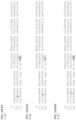
- the amino acid sequence of the heavy chain of pembrolizumab is: QVQLVQSGVEVKKPGASVKVSCKASGYTFTNYYMYWVRQAPGQGLEWMGGI NPSNGGTNFNEKFKNRVTLTTDSSTTTAYMELKSLQFDDTAVYYCARRDYRFDMGFDY WGQG TTVTVSSASTKGPSVFPLAPCSRSTSESTAALGCLVKDYFPEPVTVSWNSGALTS GVHTFPAVLQSSGLYSLSSVVTVPSSSLGTKTYTCNVDHKPSNTKVDKRVESKYGPPCP PCPAPEFLGGPSVFLFPPKPKDTLMISRTPEVTCVVVDVSQEDPEVQFNWYVDGVEVHN AKTKPREEQFNSTYRVVSVLTVLHQDWLNGKEYKCKVSNKGLPSSIEKTISKAKGQPRE PQVYTLPPSQEEMTKN
- the amino acid sequence of the light chain of pembrolizumab is: EIVLTQSPATLSLSPGERATLSCRASKGVSTSGYSYLHWYQQKPGQAPRLLIYLA SYLESGVPARFSGSGSGTDFTLTISSLEPEDFAVYYCQH SRDLPLTFGGGTKVEIKRTVAA PSVFIFPPSDEQLKSGTASVVCLLNNFYPREAKVQWKVDNALQSGNSQESVTEQDSKDS TYSLSSTLTLSKADYEKHKVYACEVTHQGLSSPVTKSFNRGEC (SEQ ID NO:52).
- the amino acid sequence of the light chain variable (VL) region is underlined.
- the anti-PD-1 antibody comprises the VH and VL regions of pembrolizumab. In some cases, the anti-PD-1 antibody comprises heavy and light chain CDRs of pembrolizumab.
- the anti-PD-1 antibody is nivolumab (also known as MDX-1106 or BMS-936558; see, e.g., Topalian et al. (2012) N. Eng. J. Med. 366:2443-2454 ; and U.S. Patent No. 8,008,449 ).
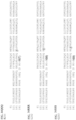
- the amino acid sequence of the heavy chain of nivolumab is:
- amino acid sequence of the light chain of nivolumab is:
- the anti-PD-1 antibody comprises heavy and light chain CDRs of nivolumab.
- the anti-CTLA-4 antibody is ipilimumab or tremelimumab.
- tremelimumab see, e.g., Ribas et al. (2013) J. Clin. Oncol. 31:616-22 .
- the anti-CTLA-4 antibody is ipilimumab.
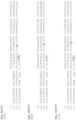
- the amino acid sequence of the heavy chain of ipilimumab is: QVQLVESGGGVVQPGRSLRLSCAASGFTFSSYTMHWVRQAPGKGLEWVTFISY DGNNKYYADSVKGRFTISRDNSKNTLYLQMNSLRAEDTAIYYCARTGWLGPFDYWGQ GTLVTVSSASTKGPSVFPLAPSSKSTSGGT AALGCLVKDYFPEPVTVSWNSGALTSGVH TFPAVLQSSGLYSLSSVVTVPSSSLGTQTYICNVNHKPSNTKVDKRVEPKSCDKTHTCPP CPAPELLGGPSVFLFPPKPKDTLMISRTPEVTCVVVDVSHEDPEVKFNWYVDGVEVHNA KTKPREEQYNSTYRVVSVLTVLHQDWLNGKEYKCKVSNKALPAPIEKTISKAKGQPREP QVYTLPPSRDELTKNQV
- the amino acid sequence of the light chain of ipilimumab is: EIVLTQSPGTLSLSPGERATLSCRASQSVGSSYLAWYQQKPGQAPRLLIYGAFSR ATGIPDRFSGSGSGTDFTLTISRLEPEDFAVYYCQQYGSSP WTFGQGTKVEIKRTVAAPS VFIFPPSDEQLKSGTASVVCLLNNFYPREAKVQWKVDNALQSGNSQESVTEQDSKDSTY SLSSTLTLSKADYEKHKVYACEVTHQGLSSPVTKSFNRGEC (SEQ ID NO:56).
- the amino acid sequence of the VL region is underlined.
- the anti-CTLA4 antibody comprises the VH and VL regions of ipilimumab. In some cases, the anti-CTLA4 antibody comprises heavy and light chain CDRs of ipilimumab.
- the immune checkpoint inhibitor is an anti-PD-L1 monoclonal antibody.
- the anti-PD-L1 monoclonal antibody is BMS-935559, MEDI4736, MPDL3280A (also known as RG7446), KN035, or MSB0010718C.
- the anti-PD-L1 monoclonal antibody is MPDL3280A (atezolizumab) or MEDI4736 (durvalumab).
- durvalumab see, e.g., WO 2011/066389 .
- atezolizumab see, e.g., U.S. Patent No. 8,217,149 .
- the anti-PD-L1 antibody is atezolizumab.
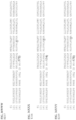
- the amino acid sequence of the heavy chain of atezolizumab is:
- amino acid sequence of the light chain of atezolizumab is:
- the anti-PD-L1 antibody comprises heavy and light chain CDRs of atezolizumab.
- the anti-PDL1 antibody is KN035, a fully humanized anti-PD-L1 single domain antibody fused to a human IgG1 Fc polypeptide. Zhang et al. (2017) Cell Discov. 3:17004 ; and WO 2017/020801 .
- the single-domain antibody portion of KN035 can comprise the amino acid sequence: QVQLQESGGGLVQPGGSLRLSCAAS GKMSSRRC MAWFRQAPGKERERVAK LLTTSGST YLADSVKGRFTISQNNAKSTVYLQMNSLKPEDTAMYYC AADSFEDPTCTLVTSSGAFQY WGQGTQVTVS (SEQ ID NO:216), where the underlined amino acids are CDR1, CDR2, and CDR3.
- Multimeric (e.g., heterodimeric, heterotrimeric) polypeptides suitable for use in a method of the present disclosure are described below.
- the multimeric polypeptides are T cell modulatory polypeptides, and are also referred to herein as "T-cell modulatory multimeric polypeptides," or “synTac” (for "immunological syn apse for T cell ac tivation").
- a T-cell modulatory multimeric polypeptide comprises: a) a first polypeptide comprising, in order from N-terminus to C-terminus: i) an epitope; ii) a first major histocompatibility complex (MHC) polypeptide; and b) a second polypeptide comprising, in order from N-terminus to C-terminus: i) a second MHC polypeptide; and ii) optionally an immunoglobulin (Ig) Fc polypeptide or a non-Ig scaffold, where the multimeric polypeptide comprises one or more immunomodulatory ("MOD") domains, wherein the one or more immunomodulatory domain is: A) at the C-terminus of the first polypeptide; B) at the N-terminus of the second polypeptide; C) at the C-terminus of the second polypeptide; or D) at the C-terminus of the first polypeptide and at the N-terminus of the second polypeptide.
- MOD immunomodulatory
- a T-cell multimeric polypeptide comprises: a) a first polypeptide comprising, in order from N-terminus to C-terminus: i) an epitope; ii) a first MHC polypeptide; and iii) an immunomodulatory domain; and b) a second polypeptide comprising, in order from N-terminus to C-terminus: i) a second MHC polypeptide; and ii) an Ig Fc polypeptide.
- a T-cell multimeric polypeptide comprises: a) a first polypeptide comprising, in order from N-terminus to C-terminus: i) an epitope; and ii) a first MHC polypeptide; and b) a second polypeptide comprising, in order from N-terminus to C-terminus: i) an immunomodulatory domain; iii) a second MHC polypeptide; and ii) an Ig Fc polypeptide.
- a T-cell multimeric polypeptide comprises: a) a first polypeptide comprising, in order from N-terminus to C-terminus: i) an epitope; and ii) a first MHC polypeptide; and b) a second polypeptide comprising, in order from N-terminus to C-terminus: i) a second MHC polypeptide; and ii) an Ig Fc polypeptide; and iii) an immunomodulatory ("MOD") domain.
- a first polypeptide comprising, in order from N-terminus to C-terminus: i) an epitope; and ii) a first MHC polypeptide
- a second polypeptide comprising, in order from N-terminus to C-terminus: i) a second MHC polypeptide; and ii) an Ig Fc polypeptide; and iii) an immunomodulatory ("MOD") domain.
- MOD immunomodulatory
- a T-cell multimeric polypeptide comprises: a) a first polypeptide comprising, in order from N-terminus to C-terminus: i) an epitope; and ii) a first MHC polypeptide; and b) a second polypeptide comprising, in order from N-terminus to C-terminus: i) a second MHC polypeptide; and ii) an immunomodulatory domain.
- a T-cell multimeric polypeptide comprises: a) a first polypeptide comprising, in order from N-terminus to C-terminus: i) an epitope; and ii) a first MHC polypeptide; and b) a second polypeptide comprising, in order from N-terminus to C-terminus: i) an immunomodulatory domain; and ii) a second MHC polypeptide.
- a T-cell multimeric polypeptide comprises: a) a first polypeptide comprising, in order from N-terminus to C-terminus: i) an epitope; ii) a first MHC polypeptide; and iii) an immunomodulatory domain; and b) a second polypeptide comprising, in order from N-terminus to C-terminus: i) a second MHC polypeptide.
- a multimeric polypeptide comprises a non-Ig scaffold.
- the non-Ig scaffold is an XTEN polypeptide, a transferrin polypeptide, an Fc receptor polypeptide, an elastin-like polypeptide, a silk-like polypeptide, or a silk-elastin-like polypeptide.
- the first MHC polypeptide is a ⁇ 2-microglobulin ( ⁇ 2M) polypeptide; and the second MHC polypeptide is an MHC class I heavy chain polypeptide.
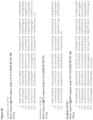
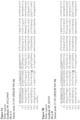
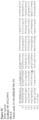
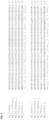
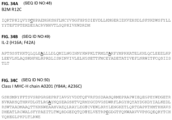
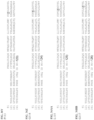
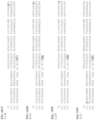
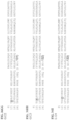
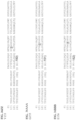
- a suitable ⁇ 2-M polypeptide comprises an amino acid sequence having at least 85%, at least 90%, at least 95%, at least 98%, at least 99%, or 100%, amino acid sequence identity to the amino acid sequence of a ⁇ 2M polypeptide depicted in FIG. 6 .
- the MHC class I heavy chain polypeptide is an HLA-A, an HLA-B, or an HLA-C heavy chain.
- the MHC class I heavy chain polypeptide comprises an amino acid sequence having at least 85%, at least 90%, at least 95%, at least 98%, at least 99%, or 100%, amino acid sequence identity to the amino acid sequence set forth in one of FIG. 5A-5C .
- the first MHC polypeptide is an MHC Class II alpha chain polypeptide; and the second MHC polypeptide is an MHC class II beta chain polypeptide.
- the epitope present in a multimeric polypeptide can be a T-cell epitope.
- a multimeric polypeptide comprises an Ig Fc polypeptide.
- the Ig Fc polypeptide is an IgG1 Fc polypeptide, an IgG2 Fc polypeptide, an IgG3 Fc polypeptide, an IgG4 Fc polypeptide, an IgA Fc polypeptide, or an IgM Fc polypeptide.
- the Ig Fc polypeptide comprises an amino acid sequence having at least 85%, at least 90%, at least 95%, at least 98%, at least 99%, or 100%, amino acid sequence identity to an amino acid sequence depicted in FIG. 4A-4C .
- the first polypeptide and the second polypeptide of a multimeric polypeptide can be non-covalently associated.
- the first polypeptide and the second polypeptide of a multimeric polypeptide can be covalently linked.
- the first polypeptide and the second polypeptide of a multimeric polypeptide can be covalently linked, where the covalent linkage is via a disulfide bond.
- the first MHC polypeptide or a linker between the epitope and the first MHC polypeptide comprises an amino acid substitution to provide a first Cys residue
- the second MHC polypeptide comprises an amino acid substitution to provide a second Cys residue
- the disulfide linkage is between the first and the second Cys residues.
- a multimeric polypeptide can include a linker between one or more of: the epitope and the first MHC polypeptide; two copies of the immunomodulatory ("MOD") polypeptide; the immunomodulatory polypeptide and the second MHC polypeptide; and the second MHC polypeptide and the Ig Fc polypeptide.
- MOD immunomodulatory
- Immunomodulatory polypeptides suitable for inclusion in a T-cell multimeric polypeptide include, but are not limited to, a 4-1BBL polypeptide, a B7-1 polypeptide; a B7-2 polypeptide, an ICOS-L polypeptide, an OX-40L polypeptide, a CD80 polypeptide, a CD86 polypeptide, an IL-2 polypeptide, a PD-L1 polypeptide, a FasL polypeptide, and a PD-L2 polypeptide.
- a multimeric polypeptide can include 2 or more immunomodulatory polypeptides.
- a multimeric polypeptide can include 2 immunomodulatory polypeptides. In some cases, the 2 immunomodulatory polypeptides are in tandem.
- a multimeric polypeptide can include 3 immunomodulatory polypeptides. In some cases, the 3 immunomodulatory polypeptides are in tandem.
- a multimeric polypeptide can comprise a third polypeptide, where the third polypeptide comprises an immunomodulatory polypeptide comprising an amino acid sequence having at least 90%, amino acid sequence identity to the immunomodulatory polypeptide of the first polypeptide or the second polypeptide. In some cases, the third polypeptide is covalently linked to the first polypeptide.
- WO 2017/151940 WO 2017/201210
- PCT/US2017/067663 examples of suitable multimeric polypeptides are described in WO 2017/151940 ; WO 2017/201210 ; and PCT/US2017/067663 .
- the disclosures of WO 2017/151940 , WO 2017/201210 , and PCT/US2017/067663 are incorporated by reference herein.
- MHC polypeptides include MHC polypeptides of various species, including human MHC (also referred to as human leukocyte antigen (HLA)) polypeptides, rodent (e.g., mouse, rat, etc.) MHC polypeptides, and MHC polypeptides of other mammalian species (e.g., lagomorphs, non-human primates, canines, felines, ungulates (e.g., equines, bovines, ovines, caprines, etc.), and the like.
- human MHC also referred to as human leukocyte antigen (HLA)
- rodent e.g., mouse, rat, etc.
- MHC polypeptides of other mammalian species e.g., lagomorphs, non-human primates, canines, felines, ungulates (e.g., equines, bovines, ovines, caprines, etc.), and the like.
- MHC polypeptide is meant to include Class I MHC polypeptides (e.g., ⁇ -2 microglobulin and MHC class I heavy chain) and MHC Class II polypeptides (e.g., MHC Class II ⁇ polypeptide and MHC Class II ⁇ polypeptide).
- Class I MHC polypeptides e.g., ⁇ -2 microglobulin and MHC class I heavy chain
- MHC Class II polypeptides e.g., MHC Class II ⁇ polypeptide and MHC Class II ⁇ polypeptide.
- the first and the second MHC polypeptides are Class I MHC polypeptides; e.g., in some cases, the first MHC polypeptide is an MHC Class I ⁇ 2-microglobulin ( ⁇ 2M) polypeptide, and the second MHC polypeptide is an MHC Class I heavy chain (H chain).
- the first and the second MHC polypeptides are Class II MHC polypeptides; e.g., in some cases, the first MHC polypeptide is an MHC Class II ⁇ -chain polypeptide, and the second MHC polypeptide is an MHC Class II ⁇ -chain polypeptide.
- the first polypeptide is an MHC Class II ⁇ -chain polypeptide
- the second MHC polypeptide is an MHC Class II ⁇ -chain polypeptide.
- an MHC polypeptide of a multimeric polypeptide of the present disclosure is a human MHC polypeptide, where human MHC polypeptides are also referred to as "human leukocyte antigen" ("HLA") polypeptides.
- HLA human leukocyte antigen
- an MHC polypeptide of a multimeric polypeptide of the present disclosure is a Class I HLA polypeptide, e.g., a ⁇ 2-microglobulin polypeptide, or a Class I HLA heavy chain polypeptide.
- Class I HLA heavy chain polypeptides include HLA-A heavy chain polypeptides, HLA-B heavy chain polypeptides, HLA-C heavy chain polypeptides, HLA-E heavy chain polypeptides, HLA-F heavy chain polypeptides, and HLA-G heavy chain polypeptides.
- an MHC polypeptide of a multimeric polypeptide of the present disclosure is a Class II HLA polypeptide, e.g., a Class II HLA ⁇ chain or a Class II HLA ⁇ chain.
- MHC Class II polypeptides include MCH Class II DP ⁇ and ⁇ polypeptides, DM ⁇ and ⁇ polypeptides, DOA ⁇ and ⁇ polypeptides, DOB ⁇ and ⁇ polypeptides, DQ ⁇ and ⁇ polypeptides, and DR ⁇ and ⁇ polypeptides.
- an MHC Class I heavy chain polypeptide of a multimeric polypeptide can comprise an amino acid sequence having at least 75%, at least 80%, at least 85%, at least 90%, at least 95%, at least 98%, at least 99%, or 100%, amino acid sequence identity to an amino acid sequence depicted in one of FIG. 5A-5C .
- an MHC Class I heavy chain polypeptide of a multimeric polypeptide can comprise an amino acid sequence having at least 75%, at least 80%, at least 85%, at least 90%, at least 95%, at least 98%, at least 99%, or 100%, amino acid sequence identity to the following human HLA-A heavy chain amino acid sequence:
- HLA-A (Y84A; A236C)
- the MHC Class I heavy chain polypeptide comprises Y84A and A236C substitutions.
- the MHC Class I heavy chain polypeptide comprises an amino acid sequence having at least 75%, at least 80%, at least 85%, at least 90%, at least 95%, at least 98%, at least 99%, or 100%, amino acid sequence identity to the following human HLA-A heavy chain (Y84A; A236C) amino acid sequence: GSHSMRYFFTSVSRPGRGEPRFIAVGYVDDTQFVRFDSDAASQRMEPRAPWIEQEGPEY WDGETRKVKAHSQTHRVDLGTLRG A YNQSEAGSHTVQRMYGCDVGSDWRFLRGYHQ YAYDGKDYIALKEDLRSWTAADMAAQTTKHKWEAAHVAEQLRAYLEGTCVEWLRRY LENGKETLQRTDAPKTHMTHHAVSDHEATLRCWALSFYPAEITLTWQRDGEDQTQDTE LV
- HLA-A (Y84C; A139C)
- the MHC Class I heavy chain polypeptide comprises Y84C and A139C substitutions.
- the MHC Class I heavy chain polypeptide comprises an amino acid sequence having at least 75%, at least 80%, at least 85%, at least 90%, at least 95%, at least 98%, at least 99%, or 100%, amino acid sequence identity to the following human HLA-A heavy chain (Y84C; A139C) amino acid sequence: GSHSMRYFFTSVSRPGRGEPRFIAVGYVDDTQFVRFDSDAASQRMEPRAPWIEQEGPEY WDGETRKVKAHSQTHRVDLGTLRG C YNQSEAGSHTVQRMYGCDVGSDWRFLRGYHQ YAYDGKDYIALKEDLRSWTAADM C AQTTKHKWEAAHVAEQLRAYLEGTCVEWLRRY LENGKETLQRTDAPKTHMTHHAVSDHEATLRCWALSFYPAEITLTWQRDGEDQTQDTE LV
- HLA-A A11 HLA-A11
- an MHC Class I heavy chain polypeptide of a multimeric polypeptide can comprise an amino acid sequence having at least 75%, at least 80%, at least 85%, at least 90%, at least 95%, at least 98%, at least 99%, or 100%, amino acid sequence identity to the following human HLA-A A11 (also referred to as "HLA-A11") heavy chain amino acid sequence:
- Such an MHC Class I heavy chain may be prominent in Asian populations, including populations of individuals of Asian descent.
- HLA-A A11 (Y84A; A236C)
- the MHC Class I heavy chain polypeptide is an HLA-A A11 allele that comprises Y84A and A236C substitutions.
- the MHC Class I heavy chain polypeptide comprises an amino acid sequence having at least 75%, at least 80%, at least 85%, at least 90%, at least 95%, at least 98%, at least 99%, or 100%, amino acid sequence identity to the following human HLA-A A11 heavy chain (Y84A;
- A236C amino acid sequence: where amino acid 84 is Ala and amino acid 236 is Cys.
- the Cys-236 forms an interchain disulfide bond with Cys-12 of a variant ⁇ 2M polypeptide that comprises an R12C substitution.
- an MHC Class I heavy chain polypeptide of a multimeric polypeptide can comprise an amino acid sequence having at least 75%, at least 80%, at least 85%, at least 90%, at least 95%, at least 98%, at least 99%, or 100%, amino acid sequence identity to the following human HLA-B heavy chain amino acid sequence:
- HLA-B (Y84A; A236C)
- the MHC Class I heavy chain polypeptide is an HLA-B polypeptide that comprises Y84A and A236C substitutions.
- the MHC Class I heavy chain polypeptide comprises an amino acid sequence having at least 75%, at least 80%, at least 85%, at least 90%, at least 95%, at least 98%, at least 99%, or 100%, amino acid sequence identity to the following human HLA-B heavy chain (Y84A; A236C) amino acid sequence: where amino acid 84 is Ala and amino acid 236 is Cys.
- the Cys-236 forms an interchain disulfide bond with Cys-12 of a variant ⁇ 2M polypeptide that comprises an R12C substitution.
- HLA-B (Y84C; A139C)
- the MHC Class I heavy chain polypeptide comprises Y84C and A139C substitutions.
- the MHC Class I heavy chain polypeptide comprises an amino acid sequence having at least 75%, at least 80%, at least 85%, at least 90%, at least 95%, at least 98%, at least 99%, or 100%, amino acid sequence identity to the following human HLA-B heavy chain (Y84C; A139C) amino acid sequence: where amino acid 84 is Cys and amino acid 139 is Cys.
- Cys-84 forms an intrachain disulfide bond with Cys-139.
- an MHC Class I heavy chain polypeptide of a multimeric polypeptide can comprise an amino acid sequence having at least 75%, at least 80%, at least 85%, at least 90%, at least 95%, at least 98%, at least 99%, or 100%, amino acid sequence identity to the following human HLA-C heavy chain amino acid sequence:
- HLA-C (Y84A; A236C)
- the MHC Class I heavy chain polypeptide is an HLA-C polypeptide that comprises Y84A and A236C substitutions.
- the MHC Class I heavy chain polypeptide comprises an amino acid sequence having at least 75%, at least 80%, at least 85%, at least 90%, at least 95%, at least 98%, at least 99%, or 100%, amino acid sequence identity to the following human HLA-C heavy chain (Y84A; A236C) amino acid sequence: where amino acid 84 is Ala and amino acid 236 is Cys.
- the Cys-236 forms an interchain disulfide bond with Cys-12 of a variant ⁇ 2M polypeptide that comprises an R12C substitution.
- HLA-C (Y84C; A139C)
- the MHC Class I heavy chain polypeptide comprises Y84C and A139C substitutions.
- the MHC Class I heavy chain polypeptide comprises an amino acid sequence having at least 75%, at least 80%, at least 85%, at least 90%, at least 95%, at least 98%, at least 99%, or 100%, amino acid sequence identity to the following human HLA-C heavy chain (Y84C; A139C) amino acid sequence: where amino acid 84 is Cys and amino acid 139 is Cys.
- Cys-84 forms an intrachain disulfide bond with Cys-139.
- an MHC Class I heavy chain polypeptide of a multimeric polypeptide can comprise an amino acid sequence having at least 75%, at least 80%, at least 85%, at least 90%, at least 95%, at least 98%, at least 99%, or 100%, amino acid sequence identity to an amino acid sequence depicted in one of FIG. 3A-3C .
- an MHC Class I heavy chain polypeptide of a multimeric polypeptide can comprise an amino acid sequence having at least 75%, at least 80%, at least 85%, at least 90%, at least 95%, at least 98%, at least 99%, or 100%, amino acid sequence identity to amino acids 25-365 of the amino acid sequence of the human HLA-A heavy chain polypeptide depicted in FIG. 3A .
- an MHC Class I heavy chain polypeptide of a multimeric polypeptide can comprise an amino acid sequence having at least 75%, at least 80%, at least 85%, at least 90%, at least 95%, at least 98%, at least 99%, or 100%, amino acid sequence identity to amino acids 25-362 of the amino acid sequence of the human HLA-B heavy chain polypeptide depicted in FIG. 3B .
- an MHC Class I heavy chain polypeptide of a multimeric polypeptide can comprise an amino acid sequence having at least 75%, at least 80%, at least 85%, at least 90%, at least 95%, at least 98%, at least 99%, or 100%, amino acid sequence identity to amino acids 25-362 of the amino acid sequence of the human HLA-C heavy chain polypeptide depicted in FIG. 3C .
- an MHC Class I heavy chain polypeptide of a multimeric polypeptide can comprise an amino acid sequence having at least 75%, at least 80%, at least 85%, at least 90%, at least 95%, at least 98%, at least 99%, or 100%, amino acid sequence identity to the following amino acid sequence:
- a ⁇ 2-microglobulin ( ⁇ 2M) polypeptide of a multimeric polypeptide can be a human ⁇ 2M polypeptide, a non-human primate ⁇ 2M polypeptide, a murine ⁇ 2M polypeptide, and the like.
- a ⁇ 2M polypeptide comprises an amino acid sequence having at least 75%, at least 80%, at least 85%, at least 90%, at least 95%, at least 98%, at least 99%, or 100%, amino acid sequence identity to a ⁇ 2M amino acid sequence depicted in FIG. 6 .
- a ⁇ 2M polypeptide comprises an amino acid sequence having at least 75%, at least 80%, at least 85%, at least 90%, at least 95%, at least 98%, at least 99%, or 100%, amino acid sequence identity to amino acids 21 to 119 of a ⁇ 2M amino acid sequence depicted in FIG. 6 .
- an MHC polypeptide comprises a single amino acid substitution relative to a reference MHC polypeptide (where a reference MHC polypeptide can be a wild-type MHC polypeptide), where the single amino acid substitution substitutes an amino acid with a cysteine (Cys) residue.
- cysteine residues when present in an MHC polypeptide of a first polypeptide of a multimeric polypeptide of the present disclosure, can form a disulfide bond with a cysteine residue present in a second polypeptide chain of a multimeric polypeptide of the present disclosure.
- a first MHC polypeptide in a first polypeptide of a multimeric polypeptide, and/or the second MHC polypeptide in the second polypeptide of a multimeric polypeptide includes an amino acid substitution to substitute an amino acid with a cysteine, where the substituted cysteine in the first MHC polypeptide forms a disulfide bond with a cysteine in the second MHC polypeptide, where a cysteine in the first MHC polypeptide forms a disulfide bond with the substituted cysteine in the second MHC polypeptide, or where the substituted cysteine in the first MHC polypeptide forms a disulfide bond with the substituted cysteine in the second MHC polypeptide.
- one of following pairs of residues in an HLA ⁇ 2-microglobulin and an HLA Class I heavy chain is substituted with cysteines (where residue numbers are those of the mature polypeptide): 1) ⁇ 2M residue 12, HLA Class I heavy chain residue 236; 2) ⁇ 2M residue 12, HLA Class I heavy chain residue 237; 3) ⁇ 2M residue 8, HLA Class I heavy chain residue 234; 4) ⁇ 2M residue 10, HLA Class I heavy chain residue 235; 5) ⁇ 2M residue 24, HLA Class I heavy chain residue 236; 6) ⁇ 2M residue 28, HLA Class I heavy chain residue 232; 7) ⁇ 2M residue 98, HLA Class I heavy chain residue 192; 8) ⁇ 2M residue 99, HLA Class I heavy chain residue 234; 9) ⁇ 2M residue 3, HLA Class I heavy chain residue 120; 10) ⁇ 2M residue 31, HLA Class I heavy chain residue 96; 11) ⁇ 2M residue 53, HLA Class I heavy chain residue 35; 12)
- the amino acid numbering of the MHC/HLA Class I heavy chain is in reference to the mature MHC/HLA Class I heavy chain, without a signal peptide.
- Gly120 is Gly144
- Gln96 is Gln120
- the ⁇ 2M polypeptide comprises an R12C substitution
- the HLA Class I heavy chain comprises an A236C substitution; in such cases, a disulfide bond forms between Cys-12 of the ⁇ 2M polypeptide and Cys-236 of the HLA Class I heavy chain.
- residue 236 of the mature HLA-A amino acid sequence i.e., residue 260 of the amino acid sequence depicted in FIG. 5A
- residue 236 of the mature HLA-B amino acid sequence i.e., residue 260 of the amino acid sequence depicted in FIG. 5B
- residue 236 of the mature HLA-C amino acid sequence i.e., residue 260 of the amino acid sequence depicted in FIG. 5C
- residue 32 (corresponding to Arg-12 of mature ⁇ 2M) of an amino acid sequence depicted in FIG. 6 is substituted with a Cys.
- a ⁇ 2M polypeptide comprises the amino acid sequence: IQRTPKIQVY S R HPAENGKS NFLNCYVSGF HPSDIEVDLLKNGERIEKVE HSDLSFSKDW SFYLLYYTEF TPTEKDEYAC RVNHVTLSQP KIVKWDRDM (SEQ ID NO:61).
- a ⁇ 2M polypeptide comprises the amino acid sequence: IQRTPKIQVY S C HPAENGKS NFLNCYVSGF HPSDIEVDLLKNGERIEKVE HSDLSFSKDW SFYLLYYTEF TPTEKDEYAC RVNHVTLSQP KIVKWDRDM (SEQ ID NO:48).
- an HLA Class I heavy chain polypeptide comprises the amino acid sequence:
- an HLA Class I heavy chain polypeptide comprises the amino acid sequence:
- an HLA Class I heavy chain polypeptide comprises the amino acid sequence:
- the ⁇ 2M polypeptide comprises the following amino acid sequence: IQRTPKIQVY S C HPAENGKS NFLNCYVSGF HPSDIEVDLLKNGERIEKVE HSDLSFSKDW SFYLLYYTEF TPTEKDEYAC RVNHVTLSQP KIVKWDRDM (SEQ ID NO:48); and the HLA ClassI heavy chain polypeptide of a multimeric polypeptide of the present disclosure comprises the following amino acid sequence: GSHSMRYFFTSVSRPGRGEPRFIAVGYVDDTQFVRFDSDAASQRMEPRAPWIEQ EGPEYWDGETRKVKAHSQTHRVDLGTLRGYYNQSEAGSHTVQRMYGCDVGSDWRFL RGYHQYAYDGKDYIALKEDLRSWTAADMAAQTTKHKWEAAHVAEQLRAYLEGTCVE WLRRYLENGKETLQRTDAPKTHMTHHAVSDHEATLRCWALSFYPAEITLTWQRDGED QTQDTE
- the ⁇ 2M polypeptide comprises the amino acid sequence:
- a T-cell modulatory multimeric polypeptide comprises an Fc polypeptide, or another suitable scaffold polypeptide.
- Suitable scaffold polypeptides include antibody-based scaffold polypeptides and non-antibody-based scaffolds.
- Non-antibody-based scaffolds include, e.g., albumin, an XTEN (extended recombinant) polypeptide, transferrin, an Fc receptor polypeptide, an elastin-like polypeptide (see, e.g., Hassouneh et al. (2012) Methods Enzymol.
- a silk-like polypeptide see, e.g., Valluzzi et al. (2002) Philos Trans R Soc Lond B Biol Sci. 357:165
- SELP silk-elastin-like polypeptide
- Suitable XTEN polypeptides include, e.g., those disclosed in WO 2009/023270 , WO 2010/091122 , WO 2007/103515 , US 2010/0189682 , and US 2009/0092582 ; see also Schellenberger et al. (2009) Nat Biotechnol. 27:1186 ).
- Suitable albumin polypeptides include, e.g., human serum albumin.
- Suitable scaffold polypeptides will in some cases be a half-life extending polypeptides.
- a suitable scaffold polypeptide increases the in vivo half-life (e.g., the serum half-life) of the multimeric polypeptide, compared to a control multimeric polypeptide lacking the scaffold polypeptide.
- a scaffold polypeptide increases the in vivo half-life (e.g., the serum half-life) of the multimeric polypeptide, compared to a control multimeric polypeptide lacking the scaffold polypeptide, by at least about 10%, at least about 15%, at least about 20%, at least about 25%, at least about 50%, at least about 2-fold, at least about 2.5-fold, at least about 5-fold, at least about 10-fold, at least about 25-fold, at least about 50-fold, at least about 100-fold, or more than 100-fold.
- the in vivo half-life e.g., the serum half-life
- an Fc polypeptide increases the in vivo half-life (e.g., the serum half-life) of the multimeric polypeptide, compared to a control multimeric polypeptide lacking the Fc polypeptide, by at least about 10%, at least about 15%, at least about 20%, at least about 25%, at least about 50%, at least about 2-fold, at least about 2.5-fold, at least about 5-fold, at least about 10-fold, at least about 25-fold, at least about 50-fold, at least about 100-fold, or more than 100-fold.
- the in vivo half-life e.g., the serum half-life
- the first and/or the second polypeptide chain of a multimeric polypeptide comprises an Fc polypeptide.
- the Fc polypeptide of a multimeric polypeptide can be a human IgG1 Fc, a human IgG2 Fc, a human IgG3 Fc, a human IgG4 Fc, etc.
- the Fc polypeptide comprises an amino acid sequence having at least about 70%, at least about 75%, at least about 80%, at least about 85%, at least about 90%, at least about 95%, at least about 98%, at least about 99%, or 100%, amino acid sequence identity to an amino acid sequence of an Fc region depicted in Figures 4A-C .
- the Fc region comprises an amino acid sequence having at least about 70%, at least about 75%, at least about 80%, at least about 85%, at least about 90%, at least about 95%, at least about 98%, at least about 99%, or 100%, amino acid sequence identity to the human IgG1 Fc polypeptide depicted in Figure 4A .
- the Fc region comprises an amino acid sequence having at least about 70%, at least about 75%, at least about 80%, at least about 85%, at least about 90%, at least about 95%, at least about 98%, at least about 99%, or 100%, amino acid sequence identity to the human IgG1 Fc polypeptide depicted in Figure 4A ; and comprises a substitution of N77; e.g., the Fc polypeptide comprises an N77A substitution.
- the Fc polypeptide comprises an amino acid sequence having at least about 70%, at least about 75%, at least about 80%, at least about 85%, at least about 90%, at least about 95%, at least about 98%, at least about 99%, or 100%, amino acid sequence identity to the human IgG2 Fc polypeptide depicted in Figure 4A ; e.g., the Fc polypeptide comprises an amino acid sequence having at least about 70%, at least about 75%, at least about 80%, at least about 85%, at least about 90%, at least about 95%, at least about 98%, at least about 99%, or 100%, amino acid sequence identity to amino acids 99-325 of the human IgG2 Fc polypeptide depicted in Figure 4A .
- the Fc polypeptide comprises an amino acid sequence having at least about 70%, at least about 75%, at least about 80%, at least about 85%, at least about 90%, at least about 95%, at least about 98%, at least about 99%, or 100%, amino acid sequence identity to the human IgG3 Fc polypeptide depicted in Figure 4A ; e.g., the Fc polypeptide comprises an amino acid sequence having at least about 70%, at least about 75%, at least about 80%, at least about 85%, at least about 90%, at least about 95%, at least about 98%, at least about 99%, or 100%, amino acid sequence identity to amino acids 19-246 of the human IgG3 Fc polypeptide depicted in Figure 4A .
- the Fc polypeptide comprises an amino acid sequence having at least about 70%, at least about 75%, at least about 80%, at least about 85%, at least about 90%, at least about 95%, at least about 98%, at least about 99%, or 100%, amino acid sequence identity to the human IgM Fc polypeptide depicted in FIG. 4B ; e.g., the Fc polypeptide comprises an amino acid sequence having at least about 70%, at least about 75%, at least about 80%, at least about 85%, at least about 90%, at least about 95%, at least about 98%, at least about 99%, or 100%, amino acid sequence identity to amino acids 1-276 to the human IgM Fc polypeptide depicted in FIG. 4B .
- the Fc polypeptide comprises an amino acid sequence having at least about 70%, at least about 75%, at least about 80%, at least about 85%, at least about 90%, at least about 95%, at least about 98%, at least about 99%, or 100%, amino acid sequence identity to the human IgA Fc polypeptide depicted in Figure 4C ; e.g., the Fc polypeptide comprises an amino acid sequence having at least about 70%, at least about 75%, at least about 80%, at least about 85%, at least about 90%, at least about 95%, at least about 98%, at least about 99%, or 100%, amino acid sequence identity to amino acids 1-234 to the human IgA Fc polypeptide depicted in FIG. 4C .
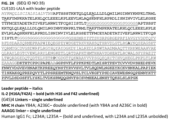
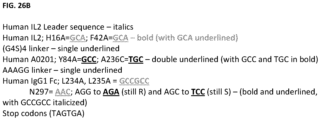
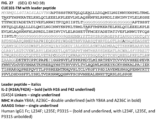
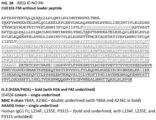
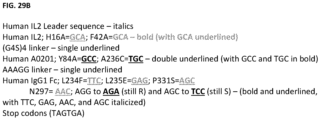
- the Fc polypeptide present in a multimeric polypeptide comprises the amino acid sequence depicted in FIG. 33A (human IgG1 Fc). In some cases, the Fc polypeptide present in a multimeric polypeptide of the present disclosure comprises the amino acid sequence depicted in FIG. 33A (human IgG1 Fc), except for a substitution of N297 with an amino acid other than asparagine. In some cases, the Fc polypeptide present in a multimeric polypeptide of the present disclosure comprises the amino acid sequence depicted in FIG. 33C (human IgG1 Fc comprising an N297A substitution).
- the Fc polypeptide present in a multimeric polypeptide of the present disclosure comprises the amino acid sequence depicted in FIG. 33A (human IgG1 Fc), except for a substitution of L234 with an amino acid other than leucine. In some cases, the Fc polypeptide present in a multimeric polypeptide of the present disclosure comprises the amino acid sequence depicted in FIG. 33A (human IgG1 Fc), except for a substitution of L235 with an amino acid other than leucine. In some cases, the Fc polypeptide present in a multimeric polypeptide of the present disclosure comprises the amino acid sequence depicted in FIG. 33D (human IgG1 Fc comprising an L234A substitution and an L235A substitution).
- the Fc polypeptide present in a multimeric polypeptide of the present disclosure comprises the amino acid sequence depicted in FIG. 33A (human IgG1 Fc), except for a substitution of P331 with an amino acid other than proline; in some cases, the substitution is a P331S substitution.
- the Fc polypeptide present in a multimeric polypeptide of the present disclosure comprises the amino acid sequence depicted in FIG. 33A (human IgG1 Fc), except for substitutions at L234 and L235 with amino acids other than leucine.
- the Fc polypeptide present in a multimeric polypeptide of the present disclosure comprises the amino acid sequence depicted in FIG.
- the Fc polypeptide present in a multimeric polypeptide of the present disclosure comprises the amino acid sequence depicted in FIG. 33B (human IgG1 Fc comprising L234F, L235E, and P331S substitutions).
- the Fc polypeptide present in a multimeric polypeptide is an IgG1 Fc polypeptide that comprises L234A and L235A substitutions.
- a multimeric polypeptide can include linker peptides interposed between, e.g., an epitope and an MHC polypeptide; between an MHC polypeptide and an immunomodulatory polypeptide; between an MHC polypeptide and an Ig Fc polypeptide; between a first immunomodulatory polypeptide and a second immunomodulatory polypeptide; or a between a second immunomodulatory polypeptide and a third immunomodulatory polypeptide.
- a multimeric polypeptide can include linker peptides interposed between, e.g., an epitope and an MHC polypeptide; between an MHC polypeptide and an immunomodulatory polypeptide; between an MHC polypeptide and an Ig Fc polypeptide; between a first variant IL-2 polypeptide and a second variant IL-2 polypeptide; or a between a second variant IL-2 polypeptide and a third variant IL-2 polypeptide.
- a multimeric polypeptide can include linker peptides interposed between, e.g., an epitope and an MHC polypeptide; between an MHC polypeptide and an immunomodulatory polypeptide; between an MHC polypeptide and an Ig Fc polypeptide; between a first variant 4-1BBL polypeptide and a second variant 4-1BBL polypeptide; or a between a second variant 4-1BBL polypeptide and a third variant 4-1BBL polypeptide.
- linker peptides interposed between, e.g., an epitope and an MHC polypeptide; between an MHC polypeptide and an immunomodulatory polypeptide; between an MHC polypeptide and an Ig Fc polypeptide; between a first variant 4-1BBL polypeptide and a second variant 4-1BBL polypeptide; or a between a second variant 4-1BBL polypeptide and a third variant 4-1BBL polypeptide.
- Suitable linkers can be readily selected and can be of any of a number of suitable lengths, such as from 1 amino acid to 25 amino acids, from 3 amino acids to 20 amino acids, from 2 amino acids to 15 amino acids, from 3 amino acids to 12 amino acids, including 4 amino acids to 10 amino acids, 5 amino acids to 9 amino acids, 6 amino acids to 8 amino acids, or 7 amino acids to 8 amino acids.
- a suitable linker can be 1, 2, 3, 4, 5, 6, 7, 8, 9, 10, 11, 12, 13, 14, 15, 16, 17, 18, 19, 20, 21, 22, 23, 24, or 25 amino acids in length.
- Exemplary linkers include glycine polymers (G) n , glycine-serine polymers (including, for example, (GS) n , (GSGGS) n (SEQ ID NO:210) and (GGGS) n (SEQ ID NO:211), where n is an integer of at least one), glycine-alanine polymers, alanine-serine polymers, and other flexible linkers known in the art.
- Glycine and glycine-serine polymers can be used; both Gly and Ser are relatively unstructured, and therefore can serve as a neutral tether between components.
- Glycine polymers can be used; glycine accesses significantly more phi-psi space than even alanine, and is much less restricted than residues with longer side chains (see Scheraga, Rev. Computational Chem. 11173-142 (1992 )).
- Exemplary linkers can comprise amino acid sequences including, but not limited to, GGSG (SEQ ID NO:65), GGSGG (SEQ ID NO:66), GSGSG (SEQ ID NO:67), GSGGG (SEQ ID NO:68), GGGSG (SEQ ID NO:69), GSSSG (SEQ ID NO:70), and the like.
- Exemplary linkers can include, e.g., Gly(Ser 4 )n, where n is 1, 2, 3, 4, 5, 6, 7, 8, 9, or 10.
- a linker comprises the amino acid sequence (GSSSS)n (SEQ ID NO:71), where n is 4.
- a linker comprises the amino acid sequence (GSSSS)n (SEQ ID NO:72), where n is 5.
- a linker comprises the amino acid sequence (GGGGS)n (SEQ ID NO:205), where n is 1. In some cases, a linker comprises the amino acid sequence (GGGGS)n (SEQ ID NO:206), where n is 2. In some cases, a linker comprises the amino acid sequence (GGGGS)n (SEQ ID NO:207), where n is 3. In some cases, a linker comprises the amino acid sequence (GGGGS)n (SEQ ID NO:208), where n is 4. In some cases, a linker comprises the amino acid sequence (GGGGS)n (SEQ ID NO:209), where n is 5. In some cases, a linker comprises the amino acid sequence AAAGG (SEQ ID NO:73).
- a linker polypeptide, present in a first polypeptide of a multimeric polypeptide of the present disclosure includes a cysteine residue that can form a disulfide bond with a cysteine residue present in a second polypeptide of a multimeric polypeptide of the present disclosure.
- a suitable linker comprises the amino acid sequence G C GASGGGGSGGGGS (SEQ ID NO:74).
- An epitope (a peptide presenting one or more epitopes) present in a multimeric polypeptide of the present disclosure can have a length of from about 4 amino acids to about 25 amino acids, e.g., the epitope can have a length of from 4 amino acids (aa) to 10 aa, from 10 aa to 15 aa, from 15 aa to 20 aa, or from 20 aa to 25 aa.
- an epitope present in a multimeric polypeptide of the present disclosure can have a length of 4 amino acids (aa), 5 aa, 6 aa, 7, aa, 8 aa, 9 aa, 10 aa, 11 aa, 12 aa, 13 aa, 14 aa, 15 aa, 16 aa, 17 aa, 18 aa, 19 aa, 20 aa, 21 aa, 22 aa, 23 aa, 24 aa, or 25 aa.
- an epitope present in a multimeric polypeptide of the present disclosure has a length of from 5 amino acids to 10 amino acids, e.g., 5 aa, 6 aa, 7 aa, 8 aa, 9 aa, or 10 aa.
- An epitope present in a multimeric polypeptide of the present disclosure is specifically bound by a T-cell, i.e., the epitope is specifically bound by an epitope-specific T cell.
- An epitope-specific T cell binds an epitope having a reference amino acid sequence, but does not substantially bind an epitope that differs from the reference amino acid sequence.
- an epitope-specific T cell binds an epitope having a reference amino acid sequence, and binds an epitope that differs from the reference amino acid sequence, if at all, with an affinity that is less than 10 -6 M, less than 10 -5 M, or less than 10 -4 M.
- An epitope-specific T cell can bind an epitope for which it is specific with an affinity of at least 10 -7 M, at least 10 -8 M, at least 10 -9 M, or at least 10 -10 M.
- Suitable epitopes include, but are not limited to, epitopes present in a cancer-associated antigen.
- Cancer-associated antigens include, but are not limited to, ⁇ -folate receptor; carbonic anhydrase IX (CAIX); CD19; CD20; CD22; CD30; CD33; CD44v7/8; carcinoembryonic antigen (CEA); epithelial glycoprotein-2 (EGP-2); epithelial glycoprotein-40 (EGP-40); folate binding protein (FBP); fetal acetylcholine receptor; ganglioside antigen GD2; Her2/neu; IL-13R-a2; kappa light chain; LeY; L1 cell adhesion molecule; melanoma-associated antigen (MAGE); MAGE-A1; mesothelin; MUC1; NKG2D ligands; oncofetal antigen (h5T4); prostate stem cell antigen (PSCA); prostate-specific membrane antigen (PSMA
- the epitope is a human papilloma virus E7 antigen epitope; see, e.g., Ramos et al. (2013) J. Immunother. 36:66 .
- the epitope is HPV16E7/82-90 (LLMGTLGIV; SEQ ID NO:75). In some cases, the epitope is HPV16E7/86-93 (TLGIVCPI; SEQ ID NO:76). In some cases, the epitope is HPV16E7/11-20 (YMLDLQPETT; SEQ ID NO:77). In some cases, the epitope is HPV16E7/11-19 (YMLDLQPET; SEQ ID NO:78). See, e.g., Ressing et al. ((1995) J. Immunol. 154:5934 ) for additional suitable HPV epitopes.
- Suitable immunomodulatory polypeptides include, but are not limited to, an IL-2 polypeptide, a 4-1BBL polypeptide, a B7-1 polypeptide; a B7-2 polypeptide, an ICOS-L polypeptide, an OX-40L polypeptide, a CD80 polypeptide, a CD86 polypeptide, a PD-L1 polypeptide, a FasL polypeptide, and a PD-L2 polypeptide.
- the immunomodulatory polypeptide comprises an amino acid sequence having at least 80%, at least 85%, at least 90%, at least 95%, at least 98%, at least 99%, or 100%, amino acid sequence identity with the amino acid sequence of a PD-L1 polypeptide depicted in FIG. 50A or FIG. 50B .
- the immunomodulatory polypeptide comprises an amino acid sequence having at least 80%, at least 85%, at least 90%, at least 95%, at least 98%, at least 99%, or 100%, amino acid sequence identity with the amino acid sequence of a CD80 polypeptide depicted in FIG. 51 .
- the immunomodulatory polypeptide comprises an amino acid sequence having at least 80%, at least 85%, at least 90%, at least 95%, at least 98%, at least 99%, or 100%, amino acid sequence identity with the amino acid sequence of an ICOS-L polypeptide depicted in FIG. 51 .
- the immunomodulatory polypeptide comprises an amino acid sequence having at least 80%, at least 85%, at least 90%, at least 95%, at least 98%, at least 99%, or 100%, amino acid sequence identity with the amino acid sequence of an OX40L polypeptide depicted in FIG. 53 .
- the immunomodulatory polypeptide comprises an amino acid sequence having at least 80%, at least 85%, at least 90%, at least 95%, at least 98%, at least 99%, or 100%, amino acid sequence identity with the amino acid sequence of a PD-L2 polypeptide depicted in FIG. 54 .
- the immunomodulatory polypeptide comprises an amino acid sequence having at least 80%, at least 85%, at least 90%, at least 95%, at least 98%, at least 99%, or 100%, amino acid sequence identity with the amino acid sequence of a CD86 polypeptide depicted in FIG. 55 .
- the immunomodulatory polypeptide comprises an amino acid sequence having at least 80%, at least 85%, at least 90%, at least 95%, at least 98%, at least 99%, or 100%, amino acid sequence identity with the amino acid sequence of a FAS-L polypeptide depicted in FIG. 56 .
- the immunomodulatory polypeptide present in a synTac exhibits reduced binding affinity to a cognate co-immunomodulatory polypeptide expressed on the surface of a T cell, compared to the binding affinity of a wild-type immunomodulatory polypeptide for the same cognate co-immunomodulatory polypeptide.
- a synTac comprises a reduced-affinity immunomodulatory polypeptide
- the synTac polypeptide exhibits reduced binding to a cognate co-immunomodulatory polypeptide expressed on the surface of a T cell.
- a synTac polypeptide that comprises a reduced-affinity immunomodulatory polypeptid binds a cognate co-immunomodulatory polypeptide with a binding affinity that is at least 10%, at least 15%, at least 20%, at least 25%, at least 30%, at least 35%, at least 40%, at least 45%, at least 50% less, at least 55% less, at least 60% less, at least 65% less, at least 70% less, at least 75% less, at least 80% less, at least 85% less, at least 90% less, at least 95% less, or more than 95% less, than the binding affinity of a control synTac polypeptide comprising a wild-type immunomodulatory polypeptide for the same cognate co-immunomodulatory polypeptide.
- Binding affinity between an immunomodulatory polypeptide and its cognate co-immunomodulatory polypeptide can be determined by bio-layer interferometry (BLI) using purified immunomodulatory polypeptide and purified cognate co-immunomodulatory polypeptide. Binding affinity between a synTac of the present disclosure and its cognate co-immunomodulatory polypeptide can also be determined by BLI using purified synTac and the cognate co-immunomodulatory polypeptide. BLI methods are well known to those skilled in the art. See, e.g., Lad et al. (2015) J. Biomol. Screen. 20(4):498-507 ; and Shah and Duncan (2014) J. Vis. Exp.
- a BLI assay can be carried out using an Octet RED 96 (Pal FortéBio) instrument, or a similar instrument, as follows.
- a T-cell modulatory multimeric polypeptide e.g., a synTac of the present disclosure; or a control T-cell modulatory multimeric polypeptide (where a control T-cell modulatory multimeric polypeptide comprises a wild-type immunomodulatory polypeptide)
- the T-cell modulatory multimeric polypeptide is immobilized onto an insoluble support (a "biosensor").
- the immobilized T-cell modulatory multimeric polypeptide is the "target.” Immobilization can be effected by immobilizing a capture antibody onto the insoluble support, where the capture antibody immobilizes the T-cell modulatory multimeric polypeptide.
- immobilization can be effected by immobilizing anti-Fc (e.g., anti-human IgG Fc) antibodies onto the insoluble support, where the immobilized anti-Fc antibodies bind to and immobilize the T-cell modulatory multimeric polypeptide (where the T-cell modulatory multimeric polypeptide comprises an IgFc polypeptide).
- anti-Fc e.g., anti-human IgG Fc
- a co-immunomodulatory polypeptide is applied, at several different concentrations, to the immobilized T-cell modulatory multimeric polypeptide, and the instrument's response recorded. Assays are conducted in a liquid medium comprising 25mM HEPES pH 6.8, 5% poly(ethylene glycol) 6000, 50 mM KCl, 0.1% bovine serum albumin, and 0.02% Tween 20 nonionic detergent. Binding of the co-immunomodulatory polypeptide to the immobilized T-cell modulatory multimeric polypeptide is conducted at 30°C. As a positive control for binding affinity, an anti-MHC Class I monoclonal antibody can be used.
- anti-HLA Class I monoclonal antibody W6/32 (American Type Culture Collection No. HB-95; Parham et al. (1979) J. Immunol. 123:342 ), which has a K D of 7 nM, can be used.
- a standard curve can be generated using serial dilutions of the anti-MHC Class I monoclonal antibody.
- the co-immunomodulatory polypeptide, or the anti-MHC Class I mAb is the "analyte.”
- BLI analyzes the interference pattern of white light reflected from two surfaces: i) from the immobilized polypeptide ("target"); and ii) an internal reference layer.
- a change in the number of molecules ("analyte”; e.g., co-immunomodulatory polypeptide; anti-HLA antibody) bound to the biosensor tip causes a shift in the interference pattern; this shift in interference pattern can be measured in real time.
- the two kinetic terms that describe the affinity of the target/analyte interaction are the association constant ( k a ) and dissociation constant ( k d ). The ratio of these two terms ( k d / a ) gives rise to the affinity constant K D .
- determining binding affinity between an immunomodulatory polypeptide e.g., IL-2 or an IL-2 variant
- its cognate co-immunomodulatory polypeptide e.g., IL-2R
- BLI binding affinity between an immunomodulatory polypeptide and its cognate co-immunomodulatory polypeptide
- the assay is similar to that described above for the synTac multimeric polypeptide.
- a BLI assay can be carried out using an Octet RED 96 (Pal FortéBio) instrument, or a similar instrument, as follows.
- a component immunomodulatory polypeptide of a synTac of the present disclosure e.g., a variant IL-2 polypeptide of the present disclosure
- a control immunomodulatory polypeptide where a control immunomodulatory polypeptide comprises a wild-type immunomodulatory polypeptide, e.g. wild-type IL-2)
- the immunomodulatory polypeptide is the "target.” Immobilization can be effected by immobilizing a capture antibody onto the insoluble support, where the capture antibody immobilizes the immunomodulatory polypeptide. For example, if the target is fused to an immuno-affinity tag (e.g.
- FLAG, human IgG Fc immobilization can be effected by immobilizing with the appropriate antibody to the immuno-affinity tag (e.g. anti-human IgG Fc) onto the insoluble support, where the immobilized antibodies bind to and immobilize the immunomodulatory polypeptide (where the immunomodulatory polypeptide comprises an IgFc polypeptide).
- a co-immunomodulatory polypeptide (or polypeptides) is applied, at several different concentrations, to the immobilized immunomodulatory polypeptide, and the instrument's response recorded.
- a co-immunomodulatory polypeptide (or polypeptides) is immobilized to the biosensor (e.g., for the IL-2 receptor heterotrimer, as a monomeric subunit, heterodimeric subcomplex, or the complete heterotrimer) and the immunomodulatory polypeptide is applied, at several different concentrations, to the immoobilized coimmunomodulatory polypeptide(s), and the instrument's response is recorded. Assays are conducted in a liquid medium comprising 25mM HEPES pH 6.8, 5% poly(ethylene glycol) 6000, 50 mM KCl, 0.1% bovine serum albumin, and 0.02% Tween 20 nonionic detergent.
- Binding of the co-immunomodulatory polypeptide to the immobilized immunomodulatory polypeptide is conducted at 30°C.
- an anti-MHC Class I monoclonal antibody can be used.
- anti-HLA Class I monoclonal antibody W6/32 American Type Culture Collection No. HB-95; Parham et al. (1979) J. Immunol. 123:342 ), which has a K D of 7 nM, can be used.
- a standard curve can be generated using serial dilutions of the anti-MHC Class I monoclonal antibody.
- the co-immunomodulatory polypeptide, or the anti-MHC Class I mAb, is the "analyte.”
- BLI analyzes the interference pattern of white light reflected from two surfaces: i) from the immobilized polypeptide ("target”); and ii) an internal reference layer.
- a change in the number of molecules e.g., co-immunomodulatory polypeptide; anti-HLA antibody
- bound to the biosensor tip causes a shift in the interference pattern; this shift in interference pattern can be measured in real time.
- the two kinetic terms that describe the affinity of the target/analyte interaction are the association constant ( k a ) and dissociation constant ( k d ).
- the BLI assay is carried out in a multi-well plate.
- the plate layout is defined, the assay steps are defined, and biosensors are assigned in Octet Data Acquisition software.
- the biosensor assembly is hydrated.
- the hydrated biosensor assembly and the assay plate are equilibrated for 10 minutes on the Octet instrument.
- the acquired data are loaded into the Octet Data Analysis software.
- the data are processed in the Processing window by specifying method for reference subtraction, y-axis alignment, inter-step correction, and Savitzky-Golay filtering.
- Data are analyzed in the Analysis window by specifying steps to analyze (Association and Dissociation), selecting curve fit model (1:1), fitting method (global), and window of interest (in seconds).
- K D values for each data trace can be averaged if within a 3-fold range.
- K D error values should be within one order of magnitude of the affinity constant values; R 2 values should be above 0.95. See, e.g., Abdiche et al. (2008) J. Anal. Biochem. 377:209 .
- the ratio of: i) the binding affinity of a control immunomodulatory polypeptide (where the control comprises a wild-type immunomodulatory polypeptide) to a cognate co-immunomodulatory polypeptide to ii) the binding affinity of a immunomodulatory polypeptide of the present disclosure comprising a variant of the wild-type immunomodulatory polypeptide to the cognate co-immunomodulatory polypeptide, when measured by BLI, is in a range of from 1.5:1 to 10 6 :1, e.g., from 1.5:1 to 10:1, from 10:1 to 50:1, from 50:1 to 10 2 :1, from 10 2 :1 to 10 3 :1, from10 3 :1 to 10 4 :1, from 10 4 :1 to 10 5 :1, or from 10 5 :1 to 10 6 :1.
- a multimeric polypeptide comprises a wild-type (naturally-occuring) IL-2 as the modulatory domain. In some cases, a multimeric polypeptide comprises a variant IL-2 polypeptide as the modulatory domain.
- a T-cell modulatory multimeric polypeptide that comprises an IL-2 polypeptide as the modulatory (“MOD") domain is also referred to as an "IL-2/synTac,” “an IL-2/synTac polypeptide” or an “IL-2/multimeric polypeptide.”
- an IL-2/synTac polypeptide comprises a wild-type IL-2 polypeptide.
- a synTac polypeptide comprises a single copy of a wild-type IL-2 polypeptide.
- a synTac polypeptide comprises two copies of a wild-type IL-2 polypeptide.
- a synTac polypeptide comprises three copies of a wild-type IL-2 polypeptide.
- the wild-type IL-2 polypeptide comprises an amino acid sequence having at least 90%, at least 95%, at least 98%, or at least 99%, amino acid sequence identity to the amino acid sequence depicted in FIG. 2A .
- a wild-type amino acid sequence of a human IL2 polypeptide can be as follows: APTSSSTKKT QLQL EH LLL D LQMILNGINN YKNPKLTRML T F KF Y MPKKA TELKHLQCLEEELKPLEEVL NLAQSKNFHL RPRDLISNIN VIVLELKGSE TTFMCEYADE TATIVEFLNRWITFC Q SIIS TLT (SEQ ID NO:1).
- a synTac polypeptide comprises a variant IL-2 polypeptide.
- a variant IL-2 polypeptide present in a multimeric polypeptide exhibits reduced binding affinity to an IL2R, compared to the binding affinity of wild-type IL-2 to the IL2R.
- a multimeric polypeptide that comprises a variant IL-2 polypeptide also exhibits reduced binding affinity for an IL2R, compared to a control multimeric polypeptide comprising a wild-type IL-2 for IL2R (e.g., an IL2R comprising alpha, beta, and gamma polypeptides comprising the amino acid sequences (mature form) depicted in FIG. 3A-3C ).
- an IL-2/synTac polypeptide exhibits reduced binding affinity to IL2R, compared to the binding affinity of an IL2 polypeptide comprising the amino acid sequence depicted in FIG. 2A for IL2R.
- an IL-2/synTac polypeptide binds IL2R with a binding affinity that is less than the binding affinity of a control synTac polypeptide comprising an IL2 polypeptide comprising the amino acid sequence depicted in FIG. 2A for an IL2R comprising alpha, beta, and gamma polypeptides comprising the amino acid sequences (mature form) depicted in FIG. 3A-3C .
- an IL-2/synTac polypeptide binds IL2R with a binding affinity that is at least 10%, at least 15%, at least 20%, at least 25%, at least 30%, at least 35%, at least 40%, at least 45%, at least 50% less, at least 55% less, at least 60% less, at least 65% less, at least 70% less, at least 75% less, at least 80% less, at least 85% less, at least 90% less, at least 95% less, or more than 95% less, than the binding affinity of a control synTac polypeptide comprising an IL-2 polypeptide comprising the amino acid sequence depicted in FIG. 2A for IL2R (e.g., an IL2R comprising alpha, beta, and gamma polypeptides comprising the amino acid sequences (mature form) depicted in FIG. 3A-3C ).
- a control synTac polypeptide comprising an IL-2 polypeptide comprising the amino acid sequence depicted in FIG. 2A
- an IL-2/synTac polypeptide has a binding affinity for IL2R that is from 100 nm to about 100 ⁇ M. In some cases, an IL-2/synTac polypeptide has a binding affinity for IL2R that is from about 100 nM to 500 nM. For example, in some cases, an IL-2/synTac polypeptide has a binding affinity for IL2R (e.g., an IL2R comprising alpha, beta, and gamma polypeptides comprising the amino acid sequences (mature form) depicted in FIG.
- IL2R e.g., an IL2R comprising alpha, beta, and gamma polypeptides comprising the amino acid sequences (mature form) depicted in FIG.
- an IL-2/synTac polypeptide has a binding affinity for IL2R (e.g., an IL2R comprising alpha, beta, and gamma polypeptides comprising the amino acid sequences (mature form) depicted in FIG.
- an IL-2/synTac polypeptide has a binding affinity for IL2R (e.g., an IL2R comprising alpha, beta, and gamma polypeptides comprising the amino acid sequences (mature form) depicted in FIG. 3A-3C ) that is from about 500 nM to about 600 nM, from about 600 nM to about 700 nM, from about 700 nM to about 800 nM, from about 800 nM to about 900 nM, or from about 900 nM to about 1 ⁇ M.
- IL2R e.g., an IL2R comprising alpha, beta, and gamma polypeptides comprising the amino acid sequences (mature form) depicted in FIG. 3A-3C
- IL2R e.g., an IL2R comprising alpha, beta, and gamma polypeptides comprising the amino acid sequences (mature form) depicted in FIG. 3A-3
- an IL-2/synTac polypeptide has a binding affinity for IL2R (e.g., an IL2R comprising alpha, beta, and gamma polypeptides comprising the amino acid sequences (mature form) depicted in FIG. 3A-3C ) that is from about 1 ⁇ M to 10 ⁇ M.
- an IL-2/synTac polypeptide has a binding affinity for IL2R (e.g., an IL2R comprising alpha, beta, and gamma polypeptides comprising the amino acid sequences (mature form) depicted in FIG.
- 3A-3C that is from about 1 ⁇ M to 2 ⁇ M, from about 2 ⁇ M to about 3 ⁇ M, from about 3 ⁇ M to about 4 ⁇ M, from about 4 ⁇ M to about 5 ⁇ M, from about 5 ⁇ M to about 6 ⁇ M, from about 6 ⁇ M to about 7 ⁇ M, from about 7 ⁇ M to about 8 ⁇ M, from about 8 ⁇ M to about 9 ⁇ M, or from about 9 ⁇ M to about 10 ⁇ M.
- an IL-2/synTac polypeptide has a binding affinity for IL2R (e.g., an IL2R comprising alpha, beta, and gamma polypeptides comprising the amino acid sequences (mature form) depicted in FIG. 3A-3C ) that is from about 10 ⁇ M to 100 ⁇ M.
- an IL-2/synTac polypeptide has a binding affinity for IL2R (e.g., an IL2R comprising alpha, beta, and gamma polypeptides comprising the amino acid sequences (mature form) depicted in FIG.
- 3A-3C that is from about 10 ⁇ M to about 20 ⁇ M, from about 20 ⁇ M to about 30 ⁇ M, from about 30 ⁇ M to about 40 ⁇ M, from about 40 ⁇ M to about 50 ⁇ M, from about 50 ⁇ M to about 60 ⁇ M, from about 60 ⁇ M to about 70 ⁇ M, from about 70 ⁇ M to about 80 ⁇ M, from about 80 ⁇ M to about 90 ⁇ M, or from about 90 ⁇ M to about 100 ⁇ M.
- a variant IL2 polypeptide present in an IL-2/synTac polypeptide can have a single amino acid substitution relative to a wild-type IL2 polypeptide (e.g., a IL2 polypeptide comprising the amino acid sequence depicted in FIG. 2A or as set forth in SEQ ID NO:1).
- a variant IL2 polypeptide present in an IL-2/synTac polypeptide has from 2 to 10 amino acid substitutions relative to a wild-type IL2 polypeptide (e.g., a IL2 polypeptide comprising the amino acid sequence depicted in FIG. 2A or as set forth in SEQ ID NO:1).
- a variant IL2 polypeptide present in a synTac polypeptide of the present disclosure has 2 amino acid substitutions relative to a wild-type IL2 polypeptide (e.g., a IL2 polypeptide comprising the amino acid sequence depicted in FIG. 2A or as set forth in SEQ ID NO:1). In some cases, a variant IL2 polypeptide present in a synTac polypeptide of the present disclosure has 3 amino acid substitutions relative to a wild-type IL2 polypeptide (e.g., a IL2 polypeptide comprising the amino acid sequence depicted in FIG. 2A or as set forth in SEQ ID NO:1).
- a variant IL2 polypeptide present in a synTac polypeptide of the present disclosure has 4 amino acid substitutions relative to a wild-type IL2 polypeptide (e.g., a IL2 polypeptide comprising the amino acid sequence depicted in FIG. 2A or as set forth in SEQ ID NO:1). In some cases, a variant IL2 polypeptide present in a synTac polypeptide of the present disclosure has 5 amino acid substitutions relative to a wild-type IL2 polypeptide (e.g., a IL2 polypeptide comprising the amino acid sequence depicted in FIG. 2A or as set forth in SEQ ID NO:1).
- a variant IL2 polypeptide present in a synTac polypeptide of the present disclosure has 6 amino acid substitutions relative to a wild-type IL2 polypeptide (e.g., a IL2 polypeptide comprising the amino acid sequence depicted in FIG. 2A or as set forth in SEQ ID NO:1). In some cases, a variant IL2 polypeptide present in a synTac polypeptide of the present disclosure has 7 amino acid substitutions relative to a wild-type IL2 polypeptide (e.g., a IL2 polypeptide comprising the amino acid sequence depicted in FIG. 2A or as set forth in SEQ ID NO:1).
- a variant IL2 polypeptide present in a synTac polypeptide of the present disclosure has 8 amino acid substitutions relative to a wild-type IL2 polypeptide (e.g., a IL2 polypeptide comprising the amino acid sequence depicted in FIG. 2A or as set forth in SEQ ID NO:1). In some cases, a variant IL2 polypeptide present in a synTac polypeptide of the present disclosure has 9 amino acid substitutions relative to a wild-type IL2 polypeptide (e.g., a IL2 polypeptide comprising the amino acid sequence depicted in FIG. 2A or as set forth in SEQ ID NO:1).
- a variant IL2 polypeptide present in a synTac polypeptide of the present disclosure has 10 amino acid substitutions relative to a wild-type IL2 polypeptide (e.g., a IL2 polypeptide comprising the amino acid sequence depicted in FIG. 2A or as set forth in SEQ ID NO:1).
- a multimeric polypeptide of the present disclosure comprises a first polypeptide and a second polypeptide, where the first polypeptide comprises, in order from amino terminus (N-terminus) to carboxyl terminus (C-terminus): a) an epitope (e.g., a T-cell epitope); b) a first major histocompatibility complex (MHC) polypeptide and c) an immunomodulatory polypeptide (e.g., a variant IL2 polypeptide of the present disclosure); and where the second polypeptide comprises, in order from N-terminus to C-terminus: a) a second MHC polypeptide; and b) an immunoglobulin (Ig) Fc polypeptide.
- the first polypeptide comprises, in order from amino terminus (N-terminus) to carboxyl terminus (C-terminus): a) an epitope (e.g., a T-cell epitope); b) a first major histocompatibility complex
- a multimeric polypeptide of the present disclosure comprises a first polypeptide and a second polypeptide, where the first polypeptide comprises, in order from N-terminus to C-terminus: a) an epitope (e.g., a T-cell epitope); and b) a first MHC polypeptide; and where the second polypeptide comprises, in order from N-terminus to C-terminus: a) an immunomodulatory polypeptide (e.g., a variant IL2 polypeptide of the present disclosure); b) a second MHC polypeptide; and c) an Ig Fc polypeptide.
- an immunomodulatory polypeptide e.g., a variant IL2 polypeptide of the present disclosure
- the first and the second MHC polypeptides are Class I MHC polypeptides; e.g., in some cases, the first MHC polypeptide is an MHC Class I ⁇ 2-microglobulin (B2M or ⁇ 2M) polypeptide, and the second MHC polypeptide is an MHC Class I heavy chain (H chain); or the first MHC polypeptide is an MHC Class I H chain, and the second MHC polypeptide is an MHC Class I ⁇ 2M polypeptide).
- B2M or ⁇ 2M MHC Class I ⁇ 2-microglobulin
- H chain MHC Class I heavy chain
- the first and the second MHC polypeptides are Class II MHC polypeptides; e.g., in some cases, the first MHC polypeptide is an MHC Class II ⁇ -chain polypeptide, and the second MHC polypeptide is an MHC Class II ⁇ -chain polypeptide. In other cases, the first polypeptide is an MHC Class II ⁇ -chain polypeptide, and the second MHC polypeptide is an MHC Class II ⁇ -chain polypeptide. In some cases, the multimeric polypeptide includes two or more immunomodulatory polypeptides, where at least one of the immunomodulatory polypeptides is a variant IL2 immunomodulatory polypeptide of the present disclosure.
- a multimeric polypeptide of the present disclosure includes two or more immunomodulatory polypeptides
- the two or more immunomodulatory polypeptides are present in the same polypeptide chain, and may be in tandem.
- a multimeric polypeptide of the present disclosure includes two or more immunomodulatory polypeptides
- the two or more immunomodulatory polypeptides are present in separate polypeptides.
- a multimeric polypeptide of the present disclosure is a heterodimer.
- a multimeric polypeptide of the present disclosure is a trimeric polypeptide.
- a multimeric polypeptide comprises: a) a first polypeptide comprising, in order from N-terminus to C-terminus: i) an epitope; and ii) a first MHC polypeptide; and b) a second polypeptide comprising, in order from N-terminus to C-terminus: i) a second MHC polypeptide; and ii) an Ig Fc polypeptide; and iii) an immunomodulatory domain (e.g., a variant IL2 polypeptide of the present disclosure).
- a multimeric polypeptide of the present disclosure comprises: a) a first polypeptide comprising, in order from N-terminus to C-terminus: i) an epitope; and ii) a first MHC polypeptide; and b) a second polypeptide comprising, in order from N-terminus to C-terminus: i) a second MHC polypeptide; and ii) an immunomodulatory domain (e.g., a variant IL2 polypeptide of the present disclosure).
- a multimeric polypeptide of the present disclosure comprises: a) a first polypeptide comprising, in order from N-terminus to C-terminus: i) an epitope; and ii) a first MHC polypeptide; and b) a second polypeptide comprising, in order from N-terminus to C-terminus: i) an immunomodulatory domain (e.g., a variant IL2 polypeptide of the present disclosure); and ii) a second MHC polypeptide.
- an immunomodulatory domain e.g., a variant IL2 polypeptide of the present disclosure
- a multimeric polypeptide of the present disclosure comprises: a) a first polypeptide comprising, in order from N-terminus to C-terminus: i) an epitope; ii) a first MHC polypeptide; and iii) an immunomodulatory domain (e.g., a variant IL2 polypeptide of the present disclosure); and b) a second polypeptide comprising, in order from N-terminus to C-terminus: i) a second MHC polypeptide.
- a multimeric polypeptide of the present disclosure comprises a non-Ig scaffold
- the non-Ig scaffold is an XTEN peptide, a transferrin polypeptide, an Fc receptor polypeptide, an elastin-like polypeptide, a silk-like polypeptide, or a silk-elastin-like polypeptide.
- a multimeric polypeptide of the present disclosure is monovalent. In some cases, a multimeric polypeptide of the present disclosure is multivalent. In some cases, a multivalent multimeric polypeptide of the present disclosure comprises an immunoglobulin Fc polypeptide on one of the first or the second polypeptide.
- the multimeric polypeptide can be a homodimer, where two molecules of the multimeric polypeptide are present in the homodimer, where the two molecules of the multimeric polypeptide can be disulfide linked to one another, e.g., via the Fc polypeptide present in the two molecules.
- a multimeric polypeptide of the present disclosure can comprise three, four, or five molecules of the multimeric polypeptide, where the molecules of the multimeric polypeptide can be disulfide linked to one another, e.g., via the Fc polypeptide present in the molecules.
- a multimeric polypeptide comprises: a) a first polypeptide comprising, in order from N-terminus to C-terminus: i) an epitope; ii) a ⁇ 2M polypeptide; and iii) a variant IL2 polypeptide of the present disclosure; and b) a second polypeptide comprising, in order from N-terminus to C-terminus: i) a Class I MHC heavy chain; and ii) an Fc polypeptide.
- a multimeric polypeptide of the present disclosure comprises: a) a first polypeptide comprising, in order from N-terminus to C-terminus: i) an epitope; and ii) a ⁇ 2M polypeptide; and b) a second polypeptide comprising, in order from N-terminus to C-terminus: i) a variant IL2 polypeptide of the present disclosure; ii) a Class I MHC heavy chain; and iii) an Fc polypeptide.
- a multimeric polypeptide of the present disclosure comprises: a) a first polypeptide comprising, in order from N-terminus to C-terminus: i) an epitope; ii) a ⁇ 2M polypeptide; iii) a first variant IL2 polypeptide of the present disclosure; iv) a second variant IL2 polypeptide of the present disclosure; and v) a third variant IL2 polypeptide of the present disclosure; and b) a second polypeptide comprising, in order from N-terminus to C-terminus: i) a Class I MHC heavy chain; and ii) an Fc polypeptide.
- the first, second, and third variant IL2 polypeptides have the same amino acid sequence. In some cases, the first, second, and third variant IL2 polypeptides differ from one another in amino acid sequence.
- a multimeric polypeptide of the present disclosure comprises: a) a first polypeptide comprising, in order from N-terminus to C-terminus: i) an epitope; and ii) a ⁇ 2M polypeptide; and b) a second polypeptide comprising, in order from N-terminus to C-terminus: i) a first variant IL2 polypeptide of the present disclosure; ii) a second variant IL2 polypeptide of the present disclosure; and iii) a third variant IL2 polypeptide of the present disclosure; iv) a Class I MHC heavy chain; and v) an Fc polypeptide. In some cases, the first, second, and third variant IL2 polypeptides have the same amino acid sequence. In some
- a variant IL-2 polypeptide present in a multimeric polypeptide comprises an amino acid sequence having at least 90%, at least 95%, at least 98%, or at least 99%, amino acid sequence identity to the amino acid sequence depicted in FIG. 2B , where amino acid 42 is an amino acid other than a phenylalanine, e.g., where amino acid 42 is Gly, Ala, Val, Leu, Ile, Pro, Tyr, Trp, Ser, Thr, Cys, Met, Asn, Gln, Lys, Arg, His, Asp, or Glu.
- a variant IL-2 polypeptide present in a multimeric polypeptide of the present disclosure comprises an amino acid sequence having at least 90%, at least 95%, at least 98%, or at least 99%, amino acid sequence identity to the amino acid sequence depicted in FIG. 2B , where amino acid 42 is Ala, Gly, Val, Leu, or Ile.
- a variant IL-2 polypeptide present in a multimeric polypeptide of the present disclosure comprises an amino acid sequence having at least 90%, at least 95%, at least 98%, or at least 99%, amino acid sequence identity to the amino acid sequence depicted in FIG. 2B , where amino acid 42 is Ala.
- a variant IL-2 polypeptide present in a multimeric polypeptide of the present disclosure comprises an amino acid sequence having at least 90%, at least 95%, at least 98%, or at least 99%, amino acid sequence identity to the amino acid sequence depicted in FIG. 2B , where amino acid 42 is Gly.
- a variant IL-2 polypeptide present in a multimeric polypeptide of the present disclosure comprises an amino acid sequence having at least 90%, at least 95%, at least 98%, or at least 99%, amino acid sequence identity to the amino acid sequence depicted in FIG. 2B , where amino acid 42 is Val.
- a variant IL-2 polypeptide present in a multimeric polypeptide of the present disclosure comprises an amino acid sequence having at least 90%, at least 95%, at least 98%, or at least 99%, amino acid sequence identity to the amino acid sequence depicted in FIG. 2B , where amino acid 42 is Leu.
- a variant IL-2 polypeptide present in a multimeric polypeptide of the present disclosure comprises an amino acid sequence having at least 90%, at least 95%, at least 98%, or at least 99%, amino acid sequence identity to the amino acid sequence depicted in FIG. 2B , where amino acid 42 is Ile.
- a single copy of the variant IL-2 polypeptide is present in a multimeric polypeptide of the present disclosure.
- a multimeric polypeptide of the present disclosure comprises two copies of the variant IL-2 polypeptide, e.g., where the two copies are in tandem with no linker between the two copies, or are in tandem and separated by a linker peptide. In some cases, a multimeric polypeptide of the present disclosure comprises three copies of the variant IL-2 polypeptide, e.g., where the three copies are in tandem with no linker between the three copies, or are in tandem and separated by a linker peptide. In some cases, where an IL-2/synTac of the present disclosure comprises HLA Class I heavy chain and ⁇ 2M, the IL-2 polypeptide(s) is/are on the polypeptide chain comprising the HLA Class I heavy chain.
- an IL-2/synTac of the present disclosure comprises HLA Class I heavy chain and ⁇ 2M
- the IL-2 polypeptide(s) is/are on the polypeptide chain comprising the ⁇ 2M polypeptide.
- the variant IL-2 polypeptide, or the synTac comprising same has a binding affinity for IL2R that is from about 100 nM to 150 nM, from about 150 nM to about 200 nM, from about 200 nM to about 250 nM, from about 250 nM to about 300 nM, from about 300 nM to about 350 nM, from about 350 nM to about 400 nM, from about 400 nM to about 500 nM, from about 500 nM to about 600 nM, from about 600 nM to about 700 nM, from about 700 nM to about 800 nM, from about 800 nM to about 900 nM, from about 900 nM to about 1 ⁇ M,
- a variant IL-2 polypeptide present in a multimeric polypeptide of the present disclosure comprises an amino acid sequence having at least 90%, at least 95%, at least 98%, or at least 99%, amino acid sequence identity to the amino acid sequence depicted in FIG. 2F , where amino acid 45 is an amino acid other than a tyrosine, e.g., where amino acid 45 is Gly, Ala, Val, Leu, Ile, Pro, Phe, Trp, Ser, Thr, Cys, Met, Asn, Gln, Lys, Arg, His, Asp, or Glu.
- a variant IL-2 polypeptide present in a multimeric polypeptide of the present disclosure comprises an amino acid sequence having at least 90%, at least 95%, at least 98%, or at least 99%, amino acid sequence identity to the amino acid sequence depicted in FIG. 2F , where amino acid 45 is Ala, Gly, Val, Leu, or Ile.
- a variant IL-2 polypeptide present in a multimeric polypeptide of the present disclosure comprises an amino acid sequence having at least 90%, at least 95%, at least 98%, or at least 99%, amino acid sequence identity to the amino acid sequence depicted in FIG. 2F , where amino acid 45 is Ala.
- a variant IL-2 polypeptide present in a multimeric polypeptide of the present disclosure comprises an amino acid sequence having at least 90%, at least 95%, at least 98%, or at least 99%, amino acid sequence identity to the amino acid sequence depicted in FIG. 2F , where amino acid 45 is Gly.
- a variant IL-2 polypeptide present in a multimeric polypeptide of the present disclosure comprises an amino acid sequence having at least 90%, at least 95%, at least 98%, or at least 99%, amino acid sequence identity to the amino acid sequence depicted in FIG. 2F , where amino acid 45 is Val.
- a multimeric polypeptide of the present disclosure comprises two copies of the variant IL-2 polypeptide, e.g., where the two copies are in tandem with no linker between the two copies, or are in tandem and separated by a linker peptide. In some cases, a multimeric polypeptide of the present disclosure comprises three copies of the variant IL-2 polypeptide, e.g., where the three copies are in tandem with no linker between the three copies, or are in tandem and separated by a linker peptide. In some cases, where an IL-2/synTac of the present disclosure comprises HLA Class I heavy chain and ⁇ 2M, the IL-2 polypeptide(s) is/are on the polypeptide chain comprising the HLA Class I heavy chain.
- an IL-2/synTac of the present disclosure comprises HLA Class I heavy chain and ⁇ 2M
- the IL-2 polypeptide(s) is/are on the polypeptide chain comprising the ⁇ 2M polypeptide.
- the variant IL-2 polypeptide, or the synTac comprising same has a binding affinity for IL2R that is from about 100 nM to 150 nM, from about 150 nM to about 200 nM, from about 200 nM to about 250 nM, from about 250 nM to about 300 nM, from about 300 nM to about 350 nM, from about 350 nM to about 400 nM, from about 400 nM to about 500 nM, from about 500 nM to about 600 nM, from about 600 nM to about 700 nM, from about 700 nM to about 800 nM, from about 800 nM to about 900 nM, from about 900 nM to about 1 ⁇ M,
- a variant IL-2 polypeptide present in a multimeric polypeptide of the present disclosure comprises an amino acid sequence having at least 90%, at least 95%, at least 98%, or at least 99%, amino acid sequence identity to the amino acid sequence depicted in FIG. 2G , where amino acid 126 is an amino acid other than a glutamine, e.g., where amino acid 126 is Gly, Ala, Val, Leu, Ile, Pro, Phe, Tyr, Trp, Ser, Thr, Cys, Met, Asn, Lys, Arg, His, Asp, or Glu.
- a variant IL-2 polypeptide present in a multimeric polypeptide of the present disclosure comprises an amino acid sequence having at least 90%, at least 95%, at least 98%, or at least 99%, amino acid sequence identity to the amino acid sequence depicted in FIG. 2G , where amino acid 126 is Ala, Gly, Val, Leu, or Ile.
- a variant IL-2 polypeptide present in a multimeric polypeptide of the present disclosure comprises an amino acid sequence having at least 90%, at least 95%, at least 98%, or at least 99%, amino acid sequence identity to the amino acid sequence depicted in FIG. 2G , where amino acid 126 is Ala.
- a variant IL-2 polypeptide present in a multimeric polypeptide of the present disclosure comprises an amino acid sequence having at least 90%, at least 95%, at least 98%, or at least 99%, amino acid sequence identity to the amino acid sequence depicted in FIG. 2G , where amino acid 126 is Gly.
- a variant IL-2 polypeptide present in a multimeric polypeptide of the present disclosure comprises an amino acid sequence having at least 90%, at least 95%, at least 98%, or at least 99%, amino acid sequence identity to the amino acid sequence depicted in FIG. 2G , where amino acid 126 is Val.
- a variant IL-2 polypeptide present in a multimeric polypeptide of the present disclosure comprises an amino acid sequence having at least 90%, at least 95%, at least 98%, or at least 99%, amino acid sequence identity to the amino acid sequence depicted in FIG. 2G , where amino acid 126 is Leu.
- a variant IL-2 polypeptide present in a multimeric polypeptide of the present disclosure comprises an amino acid sequence having at least 90%, at least 95%, at least 98%, or at least 99%, amino acid sequence identity to the amino acid sequence depicted in FIG. 2G , where amino acid 126 is Ile.
- a single copy of the variant IL-2 polypeptide is present in a multimeric polypeptide of the present disclosure.
- a multimeric polypeptide of the present disclosure comprises two copies of the variant IL-2 polypeptide, e.g., where the two copies are in tandem with no linker between the two copies, or are in tandem and separated by a linker peptide. In some cases, a multimeric polypeptide of the present disclosure comprises three copies of the variant IL-2 polypeptide, e.g., where the three copies are in tandem with no linker between the three copies, or are in tandem and separated by a linker peptide. In some cases, where an IL-2/synTac of the present disclosure comprises HLA Class I heavy chain and ⁇ 2M, the IL-2 polypeptide(s) is/are on the polypeptide chain comprising the HLA Class I heavy chain.
- an IL-2/synTac of the present disclosure comprises HLA Class I heavy chain and ⁇ 2M
- the IL-2 polypeptide(s) is/are on the polypeptide chain comprising the ⁇ 2M polypeptide.
- the variant IL-2 polypeptide, or a synTac comprising same has a binding affinity for IL2R that is from about 100 nM to 150 nM, from about 150 nM to about 200 nM, from about 200 nM to about 250 nM, from about 250 nM to about 300 nM, from about 300 nM to about 350 nM, from about 350 nM to about 400 nM, from about 400 nM to about 500 nM, from about 500 nM to about 600 nM, from about 600 nM to about 700 nM, from about 700 nM to about 800 nM, from about 800 nM to about 900 nM, from about 900 nM to about 1 ⁇ M
- a variant IL-2 polypeptide present in a multimeric polypeptide of the present disclosure comprises an amino acid sequence having at least 90%, at least 95%, at least 98%, or at least 99%, amino acid sequence identity to the amino acid sequence depicted in FIG.
- amino acid 42 is an amino acid other than a phenylalanine, e.g., where amino acid 42 is Gly, Ala, Val, Leu, Ile, Pro, Tyr, Trp, Ser, Thr, Cys, Met, Asn, Gln, Lys, Arg, His, Asp, or Glu; and where amino acid 16 is an amino acid other than a histidine, e.g., where amino acid 16 is Gly, Ala, Val, Leu, Ile, Pro, Phe, Tyr, Trp, Ser, Thr, Cys, Met, Asn, Gln, Lys, Arg, Asp, or Glu.
- a variant IL-2 polypeptide present in a multimeric polypeptide of the present disclosure comprises an amino acid sequence having at least 90%, at least 95%, at least 98%, or at least 99%, amino acid sequence identity to the amino acid sequence depicted in FIG. 2H , where amino acid 42 is Ala, Gly, Val, Leu, or Ile; and where amino acid 16 is Ala, Gly, Val, Leu, or Ile.
- a variant IL-2 polypeptide present in a multimeric polypeptide of the present disclosure comprises an amino acid sequence having at least 90%, at least 95%, at least 98%, or at least 99%, amino acid sequence identity to the amino acid sequence depicted in FIG.
- a variant IL-2 polypeptide present in a multimeric polypeptide of the present disclosure comprises an amino acid sequence having at least 90%, at least 95%, at least 98%, or at least 99%, amino acid sequence identity to the amino acid sequence depicted in FIG. 2H , where amino acid 42 is Ala and amino acid 16 is Gly.
- a variant IL-2 polypeptide present in a multimeric polypeptide of the present disclosure comprises an amino acid sequence having at least 90%, at least 95%, at least 98%, or at least 99%, amino acid sequence identity to the amino acid sequence depicted in FIG. 2H , where amino acid 42 is Val and amino acid 16 is Ala.
- a variant IL-2 polypeptide present in a multimeric polypeptide of the present disclosure comprises an amino acid sequence having at least 90%, at least 95%, at least 98%, or at least 99%, amino acid sequence identity to the amino acid sequence depicted in FIG. 2H , where amino acid 42 is Leu, and amino acid 16 is Ala.
- a variant IL-2 polypeptide present in a multimeric polypeptide of the present disclosure comprises an amino acid sequence having at least 90%, at least 95%, at least 98%, or at least 99%, amino acid sequence identity to the amino acid sequence depicted in FIG. 2H , where amino acid 42 is Ile and amino acid 16 is Ala.
- a single copy of the variant IL-2 polypeptide is present in a multimeric polypeptide of the present disclosure.
- a multimeric polypeptide of the present disclosure comprises two copies of the variant IL-2 polypeptide, e.g., where the two copies are in tandem with no linker between the two copies, or are in tandem and separated by a linker peptide.
- a multimeric polypeptide of the present disclosure comprises three copies of the variant IL-2 polypeptide, e.g., where the three copies are in tandem with no linker between the three copies, or are in tandem and separated by a linker peptide.
- an IL-2/synTac of the present disclosure comprises HLA Class I heavy chain and ⁇ 2M
- the IL-2 polypeptide(s) is/are on the polypeptide chain comprising the HLA Class I heavy chain.
- the IL-2 polypeptide(s) is/are on the polypeptide chain comprising the ⁇ 2M polypeptide.
- a multimeric polypeptide of the present disclosure comprises 2 copies of the IL-2 variant comprising F42A and H16A substitutions, where the multimeric polypeptide comprises HLA Class I heavy chain and ⁇ 2M polypeptides, and where the 2 copies of IL-2 (F42A, H16A) are on the polypeptide chain comprising the HLA Class I heavy chain.
- the variant IL-2 polypeptide, or a synTac comprising same has a binding affinity for IL2R that is from about 100 nM to 150 nM, from about 150 nM to about 200 nM, from about 200 nM to about 250 nM, from about 250 nM to about 300 nM, from about 300 nM to about 350 nM, from about 350 nM to about 400 nM, from about 400 nM to about 500 nM, from about 500 nM to about 600 nM, from about 600 nM to about 700 nM, from about 700 nM to about 800 nM, from about 800 nM to about 900 nM, from about 900 nM to about 1 ⁇ M, to about 1 ⁇ M to about 5 ⁇ M, from about 5 ⁇ M to about 10 ⁇ M, from about 10 ⁇ M to about 15 ⁇ M, from about 15 ⁇ M to about 20 ⁇ M, from about 20 ⁇ M to about 25
- the variant IL-2 polypeptide present in a multimeric polypeptide of the present disclosure has a length of 133 amino acids.
- the variant IL-2 polypeptide comprises the amino acid sequence depicted in FIG. 34B (comprising H16A and F42A substitutions).
- a variant IL-2 polypeptide present in a multimeric polypeptide of the present disclosure comprises an amino acid sequence having at least 90%, at least 95%, at least 98%, or at least 99%, amino acid sequence identity to the amino acid sequence depicted in FIG.
- amino acid 42 is an amino acid other than a phenylalanine, e.g., where amino acid 42 is Gly, Ala, Val, Leu, Ile, Pro, Tyr, Trp, Ser, Thr, Cys, Met, Asn, Gln, Lys, Arg, His, Asp, or Glu; and where amino acid 20 is an amino acid other than an aspartic acid, e.g., where amino acid 20 is Gly, Ala, Val, Leu, Ile, Pro, Phe, Tyr, Trp, Ser, Thr, Cys, Met, Asn, Gln, Lys, Arg, His, or Glu.
- a variant IL-2 polypeptide present in a multimeric polypeptide of the present disclosure comprises an amino acid sequence having at least 90%, at least 95%, at least 98%, or at least 99%, amino acid sequence identity to the amino acid sequence depicted in FIG. 2I , where amino acid 42 is Ala, Gly, Val, Leu, or Ile; and where amino acid 20 is Ala, Gly, Val, Leu, or Ile.
- a variant IL-2 polypeptide present in a multimeric polypeptide of the present disclosure comprises an amino acid sequence having at least 90%, at least 95%, at least 98%, or at least 99%, amino acid sequence identity to the amino acid sequence depicted in FIG.
- a variant IL-2 polypeptide present in a multimeric polypeptide of the present disclosure comprises an amino acid sequence having at least 90%, at least 95%, at least 98%, or at least 99%, amino acid sequence identity to the amino acid sequence depicted in FIG. 2I , where amino acid 42 is Ala and amino acid 20 is Ala.
- a variant IL-2 polypeptide present in a multimeric polypeptide of the present disclosure comprises an amino acid sequence having at least 90%, at least 95%, at least 98%, or at least 99%, amino acid sequence identity to the amino acid sequence depicted in FIG. 2I , where amino acid 42 is Ala and amino acid 20 is Gly.
- a variant IL-2 polypeptide present in a multimeric polypeptide of the present disclosure comprises an amino acid sequence having at least 90%, at least 95%, at least 98%, or at least 99%, amino acid sequence identity to the amino acid sequence depicted in FIG. 2I , where amino acid 42 is Val and amino acid 20 is Ala.
- a variant IL-2 polypeptide present in a multimeric polypeptide of the present disclosure comprises an amino acid sequence having at least 90%, at least 95%, at least 98%, or at least 99%, amino acid sequence identity to the amino acid sequence depicted in FIG. 21 , where amino acid 42 is Leu, and amino acid 20 is Ala.
- a variant IL-2 polypeptide present in a multimeric polypeptide of the present disclosure comprises an amino acid sequence having at least 90%, at least 95%, at least 98%, or at least 99%, amino acid sequence identity to the amino acid sequence depicted in FIG. 21 , where amino acid 42 is Ile and amino acid 20 is Ala.
- a variant IL-2 polypeptide present in a multimeric polypeptide of the present disclosure comprises an amino acid sequence having at least 90%, at least 95%, at least 98%, or at least 99%, amino acid sequence identity to the amino acid sequence depicted in FIG. 21 , where amino acid 42 is Ala and amino acid 20 is Asn.
- a variant IL-2 polypeptide present in a multimeric polypeptide of the present disclosure comprises an amino acid sequence having at least 90%, at least 95%, at least 98%, or at least 99%, amino acid sequence identity to the amino acid sequence depicted in FIG. 21 , where amino acid 42 is Ala and amino acid 20 is Gln.
- a variant IL-2 polypeptide present in a multimeric polypeptide of the present disclosure comprises an amino acid sequence having at least 90%, at least 95%, at least 98%, or at least 99%, amino acid sequence identity to the amino acid sequence depicted in FIG. 21 , where amino acid 42 is Ala and amino acid 20 is Lys.
- a variant IL-2 polypeptide present in a multimeric polypeptide of the present disclosure comprises an amino acid sequence having at least 90%, at least 95%, at least 98%, or at least 99%, amino acid sequence identity to the amino acid sequence depicted in FIG. 21 , where amino acid 42 is Ala and amino acid 20 is Arg.
- a variant IL-2 polypeptide present in a multimeric polypeptide of the present disclosure comprises an amino acid sequence having at least 90%, at least 95%, at least 98%, or at least 99%, amino acid sequence identity to the amino acid sequence depicted in FIG. 21 , where amino acid 42 is Ala and amino acid 20 is His.
- a single copy of the variant IL-2 polypeptide is present in a multimeric polypeptide of the present disclosure.
- a multimeric polypeptide of the present disclosure comprises two copies of the variant IL-2 polypeptide, e.g., where the two copies are in tandem with no linker between the two copies, or are in tandem and separated by a linker peptide.
- a multimeric polypeptide of the present disclosure comprises three copies of the variant IL-2 polypeptide, e.g., where the three copies are in tandem with no linker between the three copies, or are in tandem and separated by a linker peptide.
- an IL-2/synTac of the present disclosure comprises HLA Class I heavy chain and ⁇ 2M
- the IL-2 polypeptide(s) is/are on the polypeptide chain comprising the HLA Class I heavy chain.
- an IL-2/synTac of the present disclosure comprises HLA Class I heavy chain and ⁇ 2M
- the IL-2 polypeptide(s) is/are on the polypeptide chain comprising the ⁇ 2M polypeptide.
- the variant IL-2 polypeptide, or a synTac comprising same has a binding affinity for IL2R that is from about 100 nM to 150 nM, from about 150 nM to about 200 nM, from about 200 nM to about 250 nM, from about 250 nM to about 300 nM, from about 300 nM to about 350 nM, from about 350 nM to about 400 nM, from about 400 nM to about 500 nM, from about 500 nM to about 600 nM, from about 600 nM to about 700 nM, from about 700 nM to about 800 nM, from about 800 nM to about 900 nM, from about 900 nM to about 1 ⁇ M, to about 1 ⁇ M to about 5 ⁇ M, from about 5 ⁇ M to about 10 ⁇ M, from about 10 ⁇ M to about 15 ⁇ M, from about 15 ⁇ M to about 20 ⁇ M, from about 20 ⁇ M to about 25
- a variant IL-2 polypeptide present in a multimeric polypeptide of the present disclosure comprises an amino acid sequence having at least 90%, at least 95%, at least 98%, or at least 99%, amino acid sequence identity to the amino acid sequence depicted in FIG.
- amino acid 42 is an amino acid other than a phenylalanine, e.g., where amino acid 42 is Gly, Ala, Val, Leu, Ile, Pro, Tyr, Trp, Ser, Thr, Cys, Met, Asn, Gln, Lys, Arg, His, Asp, or Glu; where amino acid 20 is an amino acid other than an aspartic acid, e.g., where amino acid 20 is Gly, Ala, Val, Leu, Ile, Pro, Phe, Tyr, Trp, Ser, Thr, Cys, Met, Asn, Gln, Lys, Arg, His, or Glu; and where amino acid 15 is an amino acid other than a glutamic acid, e.g., where amino acid 15 is Gly, Ala, Val, Leu, Ile, Pro, Phe, Tyr, Trp, Ser, Thr, Cys, Met, Asn, Gln, Lys, Arg, His, or Asp.
- amino acid 15 is an amino acid other
- a variant IL-2 polypeptide of the present disclosure comprises an amino acid sequence having at least 90%, at least 95%, at least 98%, or at least 99%, amino acid sequence identity to the amino acid sequence depicted in FIG. 2J , where amino acid 42 is Ala, Gly, Val, Leu, or Ile; where amino acid 20 is Ala, Gly, Val, Leu, or Ile; and where amino acid 15 is Ala, Gly, Val, Leu, or Ile.
- a variant IL-2 polypeptide present in a multimeric polypeptide of the present disclosure comprises an amino acid sequence having at least 90%, at least 95%, at least 98%, or at least 99%, amino acid sequence identity to the amino acid sequence depicted in FIG.
- a variant IL-2 polypeptide present in a multimeric polypeptide of the present disclosure comprises an amino acid sequence having at least 90%, at least 95%, at least 98%, or at least 99%, amino acid sequence identity to the amino acid sequence depicted in FIG. 2J , where amino acid 42 is Ala, amino acid 20 is Ala, and amino acid 15 is Ala.
- a variant IL-2 polypeptide present in a multimeric polypeptide of the present disclosure comprises an amino acid sequence having at least 90%, at least 95%, at least 98%, or at least 99%, amino acid sequence identity to the amino acid sequence depicted in FIG. 2J , where amino acid 42 is Ala, amino acid 20 is Gly, and amino acid 15 is Gly.
- a variant IL-2 polypeptide present in a multimeric polypeptide of the present disclosure comprises an amino acid sequence having at least 90%, at least 95%, at least 98%, or at least 99%, amino acid sequence identity to the amino acid sequence depicted in FIG. 2J , where amino acid 42 is Val, amino acid 20 is Ala, and amino acid 15 is Gly.
- a variant IL-2 polypeptide present in a multimeric polypeptide of the present disclosure comprises an amino acid sequence having at least 90%, at least 95%, at least 98%, or at least 99%, amino acid sequence identity to the amino acid sequence depicted in FIG. 2J , where amino acid 42 is Leu, amino acid 20 is Ala, and amino acid 15 is Gly.
- a variant IL-2 polypeptide present in a multimeric polypeptide of the present disclosure comprises an amino acid sequence having at least 90%, at least 95%, at least 98%, or at least 99%, amino acid sequence identity to the amino acid sequence depicted in FIG. 2J , where amino acid 42 is Ile, amino acid 20 is Ala, and amino acid 15 is Ala.
- a variant IL-2 polypeptide present in a multimeric polypeptide of the present disclosure comprises an amino acid sequence having at least 90%, at least 95%, at least 98%, or at least 99%, amino acid sequence identity to the amino acid sequence depicted in FIG. 2J , where amino acid 42 is Ala, amino acid 20 is Asn, and amino acid 15 is Ala.
- a variant IL-2 polypeptide present in a multimeric polypeptide of the present disclosure comprises an amino acid sequence having at least 90%, at least 95%, at least 98%, or at least 99%, amino acid sequence identity to the amino acid sequence depicted in FIG. 2I , where amino acid 42 is Ala, amino acid 20 is Gln, and amino acid 15 is Ala.
- a variant IL-2 polypeptide present in a multimeric polypeptide of the present disclosure comprises an amino acid sequence having at least 90%, at least 95%, at least 98%, or at least 99%, amino acid sequence identity to the amino acid sequence depicted in FIG. 2J , where amino acid 42 is Ala, amino acid 20 is Lys, and amino acid 15 is Ala.
- a variant IL-2 polypeptide present in a multimeric polypeptide of the present disclosure comprises an amino acid sequence having at least 90%, at least 95%, at least 98%, or at least 99%, amino acid sequence identity to the amino acid sequence depicted in FIG. 2J , where amino acid 42 is Ala, amino acid 20 is Arg, and amino acid 15 is Ala.
- a variant IL-2 polypeptide present in a multimeric polypeptide of the present disclosure comprises an amino acid sequence having at least 90%, at least 95%, at least 98%, or at least 99%, amino acid sequence identity to the amino acid sequence depicted in FIG. 2I , where amino acid 42 is Ala, amino acid 20 is His, and amino acid 15 is Ala.
- a single copy of the variant IL-2 polypeptide is present in a multimeric polypeptide of the present disclosure.
- a multimeric polypeptide of the present disclosure comprises two copies of the variant IL-2 polypeptide, e.g., where the two copies are in tandem with no linker between the two copies, or are in tandem and separated by a linker peptide.
- an IL-2/synTac of the present disclosure comprises HLA Class I heavy chain and ⁇ 2M
- the IL-2 polypeptide(s) is/are on the polypeptide chain comprising the HLA Class I heavy chain.
- the IL-2 polypeptide(s) is/are on the polypeptide chain comprising the ⁇ 2M polypeptide.
- a multimeric polypeptide of the present disclosure comprises three copies of the variant IL-2 polypeptide, e.g., where the three copies are in tandem with no linker between the three copies, or are in tandem and separated by a linker peptide.
- the variant IL-2 polypeptide, or a synTac comprising same has a binding affinity for IL2R that is from about 100 nM to 150 nM, from about 150 nM to about 200 nM, from about 200 nM to about 250 nM, from about 250 nM to about 300 nM, from about 300 nM to about 350 nM, from about 350 nM to about 400 nM, from about 400 nM to about 500 nM, from about 500 nM to about 600 nM, from about 600 nM to about 700 nM, from about 700 nM to about 800 nM, from about 800 nM to about 900 nM, from about 900 nM to about 1 ⁇ M, to about 1 ⁇ M to about 5 ⁇ M, from about 5 ⁇ M to about 10 ⁇ M, from about 10 ⁇ M to about 15 ⁇ M, from about 15 ⁇ M to about 20 ⁇ M, from about 20 ⁇ M to about 25
- a variant IL-2 polypeptide present in a multimeric polypeptide of the present disclosure comprises an amino acid sequence having at least 90%, at least 95%, at least 98%, or at least 99%, amino acid sequence identity to the amino acid sequence depicted in FIG.
- amino acid 42 is an amino acid other than a phenylalanine, e.g., where amino acid 42 is Gly, Ala, Val, Leu, Ile, Pro, Tyr, Trp, Ser, Thr, Cys, Met, Asn, Gln, Lys, Arg, His, Asp, or Glu; where amino acid 20 is an amino acid other than an aspartic acid, e.g., where amino acid 20 is Gly, Ala, Val, Leu, Ile, Pro, Phe, Tyr, Trp, Ser, Thr, Cys, Met, Asn, Gln, Lys, Arg, His, or Glu; and where amino acid 16 is an amino acid other than a histidine, e.g., where amino acid 16 is Gly, Ala, Val, Leu, Ile, Pro, Phe, Tyr, Trp, Ser, Thr, Cys, Met, Asn, Gln, Lys, Arg, Asp, or Glu.
- a variant IL-2 polypeptide present in a multimeric polypeptide of the present disclosure comprises an amino acid sequence having at least 90%, at least 95%, at least 98%, or at least 99%, amino acid sequence identity to the amino acid sequence depicted in FIG. 2K , where amino acid 42 is Ala, Gly, Val, Leu, or Ile; where amino acid 20 is Ala, Gly, Val, Leu, or Ile; and where amino acid 16 is Ala, Gly, Val, Leu, or Ile.
- a variant IL-2 polypeptide present in a multimeric polypeptide of the present disclosure comprises an amino acid sequence having at least 90%, at least 95%, at least 98%, or at least 99%, amino acid sequence identity to the amino acid sequence depicted in FIG. 2K , where amino acid 42 is Ala, Gly, Val, Leu, or Ile; where amino acid 20 is Asn, Gln, Lys, Arg, or His; and where amino acid 16 is Ala, Gly, Val, Leu, or Ile.
- a variant IL-2 polypeptide present in a multimeric polypeptide of the present disclosure comprises an amino acid sequence having at least 90%, at least 95%, at least 98%, or at least 99%, amino acid sequence identity to the amino acid sequence depicted in FIG. 2K , where amino acid 42 is Ala, amino acid 20 is Ala, and amino acid 16 is Ala.
- a variant IL-2 polypeptide present in a multimeric polypeptide of the present disclosure comprises an amino acid sequence having at least 90%, at least 95%, at least 98%, or at least 99%, amino acid sequence identity to the amino acid sequence depicted in FIG. 2K , where amino acid 42 is Ala, amino acid 20 is Gly, and amino acid 16 is Gly.
- a variant IL-2 polypeptide present in a multimeric polypeptide of the present disclosure comprises an amino acid sequence having at least 90%, at least 95%, at least 98%, or at least 99%, amino acid sequence identity to the amino acid sequence depicted in FIG. 2K , where amino acid 42 is Val, amino acid 20 is Ala, and amino acid 16 is Gly.
- a variant IL-2 polypeptide present in a multimeric polypeptide of the present disclosure comprises an amino acid sequence having at least 90%, at least 95%, at least 98%, or at least 99%, amino acid sequence identity to the amino acid sequence depicted in FIG. 2K , where amino acid 42 is Leu, amino acid 20 is Ala, and amino acid 16 is Gly.
- a variant IL-2 polypeptide present in a multimeric polypeptide of the present disclosure comprises an amino acid sequence having at least 90%, at least 95%, at least 98%, or at least 99%, amino acid sequence identity to the amino acid sequence depicted in FIG. 2K , where amino acid 42 is Ile, amino acid 20 is Ala, and amino acid 16 is Ala.
- a variant IL-2 polypeptide present in a multimeric polypeptide of the present disclosure comprises an amino acid sequence having at least 90%, at least 95%, at least 98%, or at least 99%, amino acid sequence identity to the amino acid sequence depicted in FIG. 2K , where amino acid 42 is Ala, amino acid 20 is Asn, and amino acid 16 is Ala.
- a variant IL-2 polypeptide present in a multimeric polypeptide of the present disclosure comprises an amino acid sequence having at least 90%, at least 95%, at least 98%, or at least 99%, amino acid sequence identity to the amino acid sequence depicted in FIG. 2K , where amino acid 42 is Ala, amino acid 20 is Gln, and amino acid 16 is Ala.
- a variant IL-2 polypeptide present in a multimeric polypeptide of the present disclosure comprises an amino acid sequence having at least 90%, at least 95%, at least 98%, or at least 99%, amino acid sequence identity to the amino acid sequence depicted in FIG. 2K , where amino acid 42 is Ala, amino acid 20 is Lys, and amino acid 16 is Ala.
- a variant IL-2 polypeptide present in a multimeric polypeptide of the present disclosure comprises an amino acid sequence having at least 90%, at least 95%, at least 98%, or at least 99%, amino acid sequence identity to the amino acid sequence depicted in FIG. 2K , where amino acid 42 is Ala, amino acid 20 is Arg, and amino acid 16 is Ala.
- a variant IL-2 polypeptide present in a multimeric polypeptide of the present disclosure comprises an amino acid sequence having at least 90%, at least 95%, at least 98%, or at least 99%, amino acid sequence identity to the amino acid sequence depicted in FIG. 2K , where amino acid 42 is Ala, amino acid 20 is His, and amino acid 16 is Ala.
- a single copy of the variant IL-2 polypeptide is present in a multimeric polypeptide of the present disclosure.
- a multimeric polypeptide of the present disclosure comprises two copies of the variant IL-2 polypeptide, e.g., where the two copies are in tandem with no linker between the two copies, or are in tandem and separated by a linker peptide.
- a multimeric polypeptide of the present disclosure comprises three copies of the variant IL-2 polypeptide, e.g., where the three copies are in tandem with no linker between the three copies, or are in tandem and separated by a linker peptide.
- an IL-2/synTac of the present disclosure comprises HLA Class I heavy chain and ⁇ 2M
- the IL-2 polypeptide(s) is/are on the polypeptide chain comprising the HLA Class I heavy chain.
- the IL-2 polypeptide(s) is/are on the polypeptide chain comprising the ⁇ 2M polypeptide.
- the variant IL-2 polypeptide, or a synTac comprising same has a binding affinity for IL2R that is from about 100 nM to 150 nM, from about 150 nM to about 200 nM, from about 200 nM to about 250 nM, from about 250 nM to about 300 nM, from about 300 nM to about 350 nM, from about 350 nM to about 400 nM, from about 400 nM to about 500 nM, from about 500 nM to about 600 nM, from about 600 nM to about 700 nM, from about 700 nM to about 800 nM, from about 800 nM to about 900 nM, from about 900 nM to about 1 ⁇ M, to about 1 ⁇ M to about 5 ⁇ M, from about 5 ⁇ M to about 10 ⁇ M, from about 10 ⁇ M to about 15 ⁇ M, from about 15 ⁇ M to about 20 ⁇ M, from about 20 ⁇ M to about 25
- a variant IL-2 polypeptide present in a multimeric polypeptide of the present disclosure comprises an amino acid sequence having at least 90%, at least 95%, at least 98%, or at least 99%, amino acid sequence identity to the amino acid sequence depicted in FIG.
- amino acid 42 is an amino acid other than a phenylalanine, e.g., where amino acid 42 is Gly, Ala, Val, Leu, Ile, Pro, Tyr, Trp, Ser, Thr, Cys, Met, Asn, Gln, Lys, Arg, His, Asp, or Glu; where amino acid 20 is an amino acid other than an aspartic acid, e.g., where amino acid 20 is Gly, Ala, Val, Leu, Ile, Pro, Phe, Tyr, Trp, Ser, Thr, Cys, Met, Asn, Gln, Lys, Arg, His, or Glu; and where amino acid 126 is an amino acid other than a glutamine, e.g., where amino acid 126 is Gly, Ala, Val, Leu, Ile, Pro, Phe, Tyr, Trp, Ser, Thr, Cys, Met, Asn, Lys, Arg, His, Asp, or Glu.
- a variant IL-2 polypeptide present in a multimeric polypeptide of the present disclosure comprises an amino acid sequence having at least 90%, at least 95%, at least 98%, or at least 99%, amino acid sequence identity to the amino acid sequence depicted in FIG. 2L , where amino acid 42 is Ala, Gly, Val, Leu, or Ile; where amino acid 20 is Ala, Gly, Val, Leu, or He; and where amino acid 126 is Ala, Gly, Val, Leu, or Ile.
- a variant IL-2 polypeptide present in a multimeric polypeptide of the present disclosure comprises an amino acid sequence having at least 90%, at least 95%, at least 98%, or at least 99%, amino acid sequence identity to the amino acid sequence depicted in FIG. 2L , where amino acid 42 is Ala, Gly, Val, Leu, or Ile; where amino acid 20 is Asn, Gln, Lys, Arg, or His; and where amino acid 126 is Ala, Gly, Val, Leu, or Ile.
- a variant IL-2 polypeptide present in a multimeric polypeptide of the present disclosure comprises an amino acid sequence having at least 90%, at least 95%, at least 98%, or at least 99%, amino acid sequence identity to the amino acid sequence depicted in FIG. 2L , where amino acid 42 is Ala, amino acid 20 is Ala, and amino acid 126 is Ala.
- a variant IL-2 polypeptide present in a multimeric polypeptide of the present disclosure comprises an amino acid sequence having at least 90%, at least 95%, at least 98%, or at least 99%, amino acid sequence identity to the amino acid sequence depicted in FIG. 2L , where amino acid 42 is Ala, amino acid 20 is Gly, and amino acid 126 is Gly.
- a variant IL-2 polypeptide present in a multimeric polypeptide of the present disclosure comprises an amino acid sequence having at least 90%, at least 95%, at least 98%, or at least 99%, amino acid sequence identity to the amino acid sequence depicted in FIG. 2L , where amino acid 42 is Val, amino acid 20 is Ala, and amino acid 126 is Gly.
- a variant IL-2 polypeptide present in a multimeric polypeptide of the present disclosure comprises an amino acid sequence having at least 90%, at least 95%, at least 98%, or at least 99%, amino acid sequence identity to the amino acid sequence depicted in FIG. 2L , where amino acid 42 is Leu, amino acid 20 is Ala, and amino acid 126 is Gly.
- a variant IL-2 polypeptide present in a multimeric polypeptide of the present disclosure comprises an amino acid sequence having at least 90%, at least 95%, at least 98%, or at least 99%, amino acid sequence identity to the amino acid sequence depicted in FIG. 2L , where amino acid 42 is Ile, amino acid 20 is Ala, and amino acid 126 is Ala.
- a variant IL-2 polypeptide present in a multimeric polypeptide of the present disclosure comprises an amino acid sequence having at least 90%, at least 95%, at least 98%, or at least 99%, amino acid sequence identity to the amino acid sequence depicted in FIG. 2L , where amino acid 42 is Ala, amino acid 20 is Asn, and amino acid 126 is Ala.
- a variant IL-2 polypeptide present in a multimeric polypeptide of the present disclosure comprises an amino acid sequence having at least 90%, at least 95%, at least 98%, or at least 99%, amino acid sequence identity to the amino acid sequence depicted in FIG. 2L , where amino acid 42 is Ala, amino acid 20 is Gln, and amino acid 126 is Ala.
- a variant IL-2 polypeptide present in a multimeric polypeptide of the present disclosure comprises an amino acid sequence having at least 90%, at least 95%, at least 98%, or at least 99%, amino acid sequence identity to the amino acid sequence depicted in FIG. 2L , where amino acid 42 is Ala, amino acid 20 is Lys, and amino acid 126 is Ala.
- a variant IL-2 polypeptide present in a multimeric polypeptide of the present disclosure comprises an amino acid sequence having at least 90%, at least 95%, at least 98%, or at least 99%, amino acid sequence identity to the amino acid sequence depicted in FIG. 2L , where amino acid 42 is Ala, amino acid 20 is Arg, and amino acid 126 is Ala.
- a variant IL-2 polypeptide present in a multimeric polypeptide of the present disclosure comprises an amino acid sequence having at least 90%, at least 95%, at least 98%, or at least 99%, amino acid sequence identity to the amino acid sequence depicted in FIG. 2L , where amino acid 42 is Ala, amino acid 20 is His, and amino acid 126 is Ala.
- a single copy of the variant IL-2 polypeptide is present in a multimeric polypeptide of the present disclosure.
- a multimeric polypeptide of the present disclosure comprises two copies of the variant IL-2 polypeptide, e.g., where the two copies are in tandem with no linker between the two copies, or are in tandem and separated by a linker peptide.
- a multimeric polypeptide of the present disclosure comprises three copies of the variant IL-2 polypeptide, e.g., where the three copies are in tandem with no linker between the three copies, or are in tandem and separated by a linker peptide.
- an IL-2/synTac of the present disclosure comprises HLA Class I heavy chain and ⁇ 2M
- the IL-2 polypeptide(s) is/are on the polypeptide chain comprising the HLA Class I heavy chain.
- the IL-2 polypeptide(s) is/are on the polypeptide chain comprising the ⁇ 2M polypeptide.
- the variant IL-2 polypeptide, or a synTac comprising same has a binding affinity for IL2R that is from about 100 nM to 150 nM, from about 150 nM to about 200 nM, from about 200 nM to about 250 nM, from about 250 nM to about 300 nM, from about 300 nM to about 350 nM, from about 350 nM to about 400 nM, from about 400 nM to about 500 nM, from about 500 nM to about 600 nM, from about 600 nM to about 700 nM, from about 700 nM to about 800 nM, from about 800 nM to about 900 nM, from about 900 nM to about 1 ⁇ M, to about 1 ⁇ M to about 5 ⁇ M, from about 5 ⁇ M to about 10 ⁇ M, from about 10 ⁇ M to about 15 ⁇ M, from about 15 ⁇ M to about 20 ⁇ M, from about 20 ⁇ M to about 25
- a variant IL-2 polypeptide present in a multimeric polypeptide of the present disclosure comprises an amino acid sequence having at least 90%, at least 95%, at least 98%, or at least 99%, amino acid sequence identity to the amino acid sequence depicted in FIG.
- amino acid 42 is an amino acid other than a phenylalanine, e.g., where amino acid 42 is Gly, Ala, Val, Leu, Ile, Pro, Tyr, Trp, Ser, Thr, Cys, Met, Asn, Gln, Lys, Arg, His, Asp, or Glu; where amino acid 20 is an amino acid other than an aspartic acid, e.g., where amino acid 20 is Gly, Ala, Val, Leu, Ile, Pro, Phe, Tyr, Trp, Ser, Thr, Cys, Met, Asn, Gln, Lys, Arg, His, or Glu; and where amino acid 45 is an amino acid other than a tyrosine, e.g., where amino acid 45 is Gly, Ala, Val, Leu, Ile, Pro, Phe, Trp, Ser, Thr, Cys, Met, Asn, Gln, Lys, Arg, His, or Glu.
- a variant IL-2 polypeptide present in a multimeric polypeptide of the present disclosure comprises an amino acid sequence having at least 90%, at least 95%, at least 98%, or at least 99%, amino acid sequence identity to the amino acid sequence depicted in FIG. 2M , where amino acid 42 is Ala, Gly, Val, Leu, or Ile; where amino acid 20 is Ala, Gly, Val, Leu, or Ile; and where amino acid 45 is Ala, Gly, Val, Leu, or Ile.
- a variant IL-2 polypeptide present in a multimeric polypeptide of the present disclosure comprises an amino acid sequence having at least 90%, at least 95%, at least 98%, or at least 99%, amino acid sequence identity to the amino acid sequence depicted in FIG. 2M , where amino acid 42 is Ala, Gly, Val, Leu, or Ile; where amino acid 20 is Asn, Gln, Lys, Arg, or His; and where amino acid 45 is Ala, Gly, Val, Leu, or Ile.
- a variant IL-2 polypeptide present in a multimeric polypeptide of the present disclosure comprises an amino acid sequence having at least 90%, at least 95%, at least 98%, or at least 99%, amino acid sequence identity to the amino acid sequence depicted in FIG. 2M , where amino acid 42 is Ala, amino acid 20 is Ala, and amino acid 45 is Ala.
- a variant IL-2 polypeptide present in a multimeric polypeptide of the present disclosure comprises an amino acid sequence having at least 90%, at least 95%, at least 98%, or at least 99%, amino acid sequence identity to the amino acid sequence depicted in FIG. 2M , where amino acid 42 is Ala, amino acid 20 is Gly, and amino acid 45 is Gly.
- a variant IL-2 polypeptide present in a multimeric polypeptide of the present disclosure comprises an amino acid sequence having at least 90%, at least 95%, at least 98%, or at least 99%, amino acid sequence identity to the amino acid sequence depicted in FIG. 2M , where amino acid 42 is Val, amino acid 20 is Ala, and amino acid 45 is Gly.
- a variant IL-2 polypeptide present in a multimeric polypeptide of the present disclosure comprises an amino acid sequence having at least 90%, at least 95%, at least 98%, or at least 99%, amino acid sequence identity to the amino acid sequence depicted in FIG. 2M , where amino acid 42 is Leu, amino acid 20 is Ala, and amino acid 45 is Gly.
- a variant IL-2 polypeptide present in a multimeric polypeptide of the present disclosure comprises an amino acid sequence having at least 90%, at least 95%, at least 98%, or at least 99%, amino acid sequence identity to the amino acid sequence depicted in FIG. 2M , where amino acid 42 is Ile, amino acid 20 is Ala, and amino acid 45 is Ala.
- a variant IL-2 polypeptide present in a multimeric polypeptide of the present disclosure comprises an amino acid sequence having at least 90%, at least 95%, at least 98%, or at least 99%, amino acid sequence identity to the amino acid sequence depicted in FIG. 2M , where amino acid 42 is Ala, amino acid 20 is Asn, and amino acid 45 is Ala.
- a variant IL-2 polypeptide present in a multimeric polypeptide of the present disclosure comprises an amino acid sequence having at least 90%, at least 95%, at least 98%, or at least 99%, amino acid sequence identity to the amino acid sequence depicted in FIG. 2M , where amino acid 42 is Ala, amino acid 20 is Gln, and amino acid 45 is Ala.
- a variant IL-2 polypeptide present in a multimeric polypeptide of the present disclosure comprises an amino acid sequence having at least 90%, at least 95%, at least 98%, or at least 99%, amino acid sequence identity to the amino acid sequence depicted in FIG. 2M , where amino acid 42 is Ala, amino acid 20 is Lys, and amino acid 45 is Ala.
- a variant IL-2 polypeptide present in a multimeric polypeptide of the present disclosure comprises an amino acid sequence having at least 90%, at least 95%, at least 98%, or at least 99%, amino acid sequence identity to the amino acid sequence depicted in FIG. 2M , where amino acid 42 is Ala, amino acid 20 is Arg, and amino acid 45 is Ala.
- a variant IL-2 polypeptide present in a multimeric polypeptide of the present disclosure comprises an amino acid sequence having at least 90%, at least 95%, at least 98%, or at least 99%, amino acid sequence identity to the amino acid sequence depicted in FIG. 2M , where amino acid 42 is Ala, amino acid 20 is His, and amino acid 45 is Ala.
- a single copy of the variant IL-2 polypeptide is present in a multimeric polypeptide of the present disclosure.
- a multimeric polypeptide of the present disclosure comprises two copies of the variant IL-2 polypeptide, e.g., where the two copies are in tandem with no linker between the two copies, or are in tandem and separated by a linker peptide.
- a multimeric polypeptide of the present disclosure comprises three copies of the variant IL-2 polypeptide, e.g., where the three copies are in tandem with no linker between the three copies, or are in tandem and separated by a linker peptide.
- an IL-2/synTac of the present disclosure comprises HLA Class I heavy chain and ⁇ 2M
- the IL-2 polypeptide(s) is/are on the polypeptide chain comprising the HLA Class I heavy chain.
- the IL-2 polypeptide(s) is/are on the polypeptide chain comprising the ⁇ 2M polypeptide.
- the variant IL-2 polypeptide, or a synTac comprising same has a binding affinity for IL2R that is from about 100 nM to 150 nM, from about 150 nM to about 200 nM, from about 200 nM to about 250 nM, from about 250 nM to about 300 nM, from about 300 nM to about 350 nM, from about 350 nM to about 400 nM, from about 400 nM to about 500 nM, from about 500 nM to about 600 nM, from about 600 nM to about 700 nM, from about 700 nM to about 800 nM, from about 800 nM to about 900 nM, from about 900 nM to about 1 ⁇ M, to about 1 ⁇ M to about 5 ⁇ M, from about 5 ⁇ M to about 10 ⁇ M, from about 10 ⁇ M to about 15 ⁇ M, from about 15 ⁇ M to about 20 ⁇ M, from about 20 ⁇ M to about 25
- a variant IL-2 polypeptide present in a multimeric polypeptide of the present disclosure comprises an amino acid sequence having at least 90%, at least 95%, at least 98%, or at least 99%, amino acid sequence identity to the amino acid sequence depicted in FIG.
- amino acid 42 is an amino acid other than a phenylalanine, e.g., where amino acid 42 is Gly, Ala, Val, Leu, Ile, Pro, Tyr, Trp, Ser, Thr, Cys, Met, Asn, Gln, Lys, Arg, His, Asp, or Glu; where amino acid 20 is an amino acid other than an aspartic acid, e.g., where amino acid 20 is Gly, Ala, Val, Leu, Ile, Pro, Phe, Tyr, Trp, Ser, Thr, Cys, Met, Asn, Gln, Lys, Arg, His, or Glu; where amino acid 45 is an amino acid other than a tyrosine, e.g., where amino acid 45 is Gly, Ala, Val, Leu, Ile, Pro, Phe, Trp, Ser, Thr, Cys, Met, Asn, Gln, Lys, Arg, His, or Glu; and where amino acid 16
- a variant IL-2 polypeptide present in a multimeric polypeptide of the present disclosure comprises an amino acid sequence having at least 90%, at least 95%, at least 98%, or at least 99%, amino acid sequence identity to the amino acid sequence depicted in FIG. 2N , where amino acid 42 is Ala, Gly, Val, Leu, or Ile; where amino acid 20 is Ala, Gly, Val, Leu, or Ile; where amino acid 45 is Ala, Gly, Val, Leu, or Ile; and where amino acid 16 is Ala, Gly, Val, Leu, or Ile.
- a variant IL-2 polypeptide present in a multimeric polypeptide of the present disclosure comprises an amino acid sequence having at least 90%, at least 95%, at least 98%, or at least 99%, amino acid sequence identity to the amino acid sequence depicted in FIG. 2N , where amino acid 42 is Ala, Gly, Val, Leu, or Ile; where amino acid 20 is Asn, Gln, Lys, Arg, or His; where amino acid 45 is Ala, Gly, Val, Leu, or Ile; and where amino acid 16 is Ala, Gly, Val, Leu, or Ile.
- a variant IL-2 polypeptide present in a multimeric polypeptide of the present disclosure comprises an amino acid sequence having at least 90%, at least 95%, at least 98%, or at least 99%, amino acid sequence identity to the amino acid sequence depicted in FIG. 2N , where amino acid 42 is Ala, amino acid 20 is Ala, amino acid 45 is Ala, and amino acid 16 is Ala.
- a variant IL-2 polypeptide present in a multimeric polypeptide of the present disclosure comprises an amino acid sequence having at least 90%, at least 95%, at least 98%, or at least 99%, amino acid sequence identity to the amino acid sequence depicted in FIG.
- a variant IL-2 polypeptide present in a multimeric polypeptide of the present disclosure comprises an amino acid sequence having at least 90%, at least 95%, at least 98%, or at least 99%, amino acid sequence identity to the amino acid sequence depicted in FIG. 2N , where amino acid 42 is Val, amino acid 20 is Ala, amino acid 45 is Gly, and amino acid 16 is Ala.
- a variant IL-2 polypeptide present in a multimeric polypeptide of the present disclosure comprises an amino acid sequence having at least 90%, at least 95%, at least 98%, or at least 99%, amino acid sequence identity to the amino acid sequence depicted in FIG. 2N , where amino acid 42 is Leu, amino acid 20 is Ala, amino acid 45 is Gly, and amino acid 16 is Val.
- a variant IL-2 polypeptide present in a multimeric polypeptide of the present disclosure comprises an amino acid sequence having at least 90%, at least 95%, at least 98%, or at least 99%, amino acid sequence identity to the amino acid sequence depicted in FIG.
- a variant IL-2 polypeptide present in a multimeric polypeptide of the present disclosure comprises an amino acid sequence having at least 90%, at least 95%, at least 98%, or at least 99%, amino acid sequence identity to the amino acid sequence depicted in FIG. 2N , where amino acid 42 is Ala, amino acid 20 is Asn, amino acid 45 is Ala, and amino acid 16 is Ala.
- a variant IL-2 polypeptide present in a multimeric polypeptide of the present disclosure comprises an amino acid sequence having at least 90%, at least 95%, at least 98%, or at least 99%, amino acid sequence identity to the amino acid sequence depicted in FIG. 2N , where amino acid 42 is Ala, amino acid 20 is Gln, amino acid 45 is Ala, and amino acid 16 is Ala.
- a variant IL-2 polypeptide present in a multimeric polypeptide of the present disclosure comprises an amino acid sequence having at least 90%, at least 95%, at least 98%, or at least 99%, amino acid sequence identity to the amino acid sequence depicted in FIG.
- a variant IL-2 polypeptide present in a multimeric polypeptide of the present disclosure comprises an amino acid sequence having at least 90%, at least 95%, at least 98%, or at least 99%, amino acid sequence identity to the amino acid sequence depicted in FIG. 2N , where amino acid 42 is Ala, amino acid 20 is Arg, amino acid 45 is Ala, and amino acid 16 is Ala.
- a variant IL-2 polypeptide present in a multimeric polypeptide of the present disclosure comprises an amino acid sequence having at least 90%, at least 95%, at least 98%, or at least 99%, amino acid sequence identity to the amino acid sequence depicted in FIG. 2N , where amino acid 42 is Ala, amino acid 20 is His, amino acid 45 is Ala, and amino acid 16 is Ala.
- amino acid 42 is Ala
- amino acid 20 is His
- amino acid 45 is Ala
- amino acid 16 is Ala.
- a single copy of the variant IL-2 polypeptide is present in a multimeric polypeptide of the present disclosure.
- a multimeric polypeptide of the present disclosure comprises two copies of the variant IL-2 polypeptide, e.g., where the two copies are in tandem with no linker between the two copies, or are in tandem and separated by a linker peptide. In some cases, a multimeric polypeptide of the present disclosure comprises three copies of the variant IL-2 polypeptide, e.g., where the three copies are in tandem with no linker between the three copies, or are in tandem and separated by a linker peptide. In some cases, where an IL-2/synTac of the present disclosure comprises HLA Class I heavy chain and ⁇ 2M, the IL-2 polypeptide(s) is/are on the polypeptide chain comprising the HLA Class I heavy chain.
- an IL-2/synTac of the present disclosure comprises HLA Class I heavy chain and ⁇ 2M
- the IL-2 polypeptide(s) is/are on the polypeptide chain comprising the ⁇ 2M polypeptide.
- the variant IL-2 polypeptide, or a synTac comprising same has a binding affinity for IL2R that is from about 100 nM to 150 nM, from about 150 nM to about 200 nM, from about 200 nM to about 250 nM, from about 250 nM to about 300 nM, from about 300 nM to about 350 nM, from about 350 nM to about 400 nM, from about 400 nM to about 500 nM, from about 500 nM to about 600 nM, from about 600 nM to about 700 nM, from about 700 nM to about 800 nM, from about 800 nM to about 900 nM, from about 900 nM to about 1 ⁇ M
- a variant IL-2 polypeptide present in a multimeric polypeptide of the present disclosure comprises an amino acid sequence having at least 90%, at least 95%, at least 98%, or at least 99%, amino acid sequence identity to the amino acid sequence depicted in FIG.
- amino acid 42 is an amino acid other than a phenylalanine, e.g., where amino acid 42 is Gly, Ala, Val, Leu, Ile, Pro, Tyr, Trp, Ser, Thr, Cys, Met, Asn, Gln, Lys, Arg, His, Asp, or Glu; where amino acid 20 is an amino acid other than an aspartic acid, e.g., where amino acid 20 is Gly, Ala, Val, Leu, Ile, Pro, Phe, Tyr, Trp, Ser, Thr, Cys, Met, Asn, Gln, Lys, Arg, His, or Glu; where amino acid 45 is an amino acid other than a tyrosine, e.g., where amino acid 45 is Gly, Ala, Val, Leu, Ile, Pro, Phe, Trp, Ser, Thr, Cys, Met, Asn, Gln, Lys, Arg, His, or Glu; and where amino acid 45 is Gly, Ala,
- a variant IL-2 polypeptide present in a multimeric polypeptide of the present disclosure comprises an amino acid sequence having at least 90%, at least 95%, at least 98%, or at least 99%, amino acid sequence identity to the amino acid sequence depicted in FIG. 20 , where amino acid 42 is Ala, Gly, Val, Leu, or Ile; where amino acid 20 is Ala, Gly, Val, Leu, or Ile; where amino acid 45 is Ala, Gly, Val, Leu, or Ile; and where amino acid 126 is Ala, Gly, Val, Leu, or Ile.
- a variant IL-2 polypeptide present in a multimeric polypeptide of the present disclosure comprises an amino acid sequence having at least 90%, at least 95%, at least 98%, or at least 99%, amino acid sequence identity to the amino acid sequence depicted in FIG. 2O , where amino acid 42 is Ala, Gly, Val, Leu, or Ile; where amino acid 20 is Asn, Gln, Lys, Arg, or His; where amino acid 45 is Ala, Gly, Val, Leu, or Ile; and where amino acid 126 is Ala, Gly, Val, Leu, or Ile.
- a variant IL-2 polypeptide present in a multimeric polypeptide of the present disclosure comprises an amino acid sequence having at least 90%, at least 95%, at least 98%, or at least 99%, amino acid sequence identity to the amino acid sequence depicted in FIG. 2O , where amino acid 42 is Ala, amino acid 20 is Ala, amino acid 45 is Ala, and amino acid 126 is Ala.
- a variant IL-2 polypeptide present in a multimeric polypeptide of the present disclosure comprises an amino acid sequence having at least 90%, at least 95%, at least 98%, or at least 99%, amino acid sequence identity to the amino acid sequence depicted in FIG.
- a variant IL-2 polypeptide present in a multimeric polypeptide of the present disclosure comprises an amino acid sequence having at least 90%, at least 95%, at least 98%, or at least 99%, amino acid sequence identity to the amino acid sequence depicted in FIG. 2O , where amino acid 42 is Val, amino acid 20 is Ala, amino acid 45 is Gly, and amino acid 126 is Ala.
- a variant IL-2 polypeptide present in a multimeric polypeptide of the present disclosure comprises an amino acid sequence having at least 90%, at least 95%, at least 98%, or at least 99%, amino acid sequence identity to the amino acid sequence depicted in FIG. 2O , where amino acid 42 is Leu, amino acid 20 is Ala, amino acid 45 is Gly, and amino acid 126 is Val.
- a variant IL-2 polypeptide present in a multimeric polypeptide of the present disclosure comprises an amino acid sequence having at least 90%, at least 95%, at least 98%, or at least 99%, amino acid sequence identity to the amino acid sequence depicted in FIG.
- a variant IL-2 polypeptide present in a multimeric polypeptide of the present disclosure comprises an amino acid sequence having at least 90%, at least 95%, at least 98%, or at least 99%, amino acid sequence identity to the amino acid sequence depicted in FIG. 2O , where amino acid 42 is Ala, amino acid 20 is Asn, amino acid 45 is Ala, and amino acid 126 is Ala.
- a variant IL-2 polypeptide present in a multimeric polypeptide of the present disclosure comprises an amino acid sequence having at least 90%, at least 95%, at least 98%, or at least 99%, amino acid sequence identity to the amino acid sequence depicted in FIG. 2O , where amino acid 42 is Ala, amino acid 20 is Gln, amino acid 45 is Ala, and amino acid 126 is Ala.
- a variant IL-2 polypeptide present in a multimeric polypeptide of the present disclosure comprises an amino acid sequence having at least 90%, at least 95%, at least 98%, or at least 99%, amino acid sequence identity to the amino acid sequence depicted in FIG.
- a variant IL-2 polypeptide present in a multimeric polypeptide of the present disclosure comprises an amino acid sequence having at least 90%, at least 95%, at least 98%, or at least 99%, amino acid sequence identity to the amino acid sequence depicted in FIG. 2O , where amino acid 42 is Ala, amino acid 20 is Arg, amino acid 45 is Ala, and amino acid 126 is Ala.
- a variant IL-2 polypeptide present in a multimeric polypeptide of the present disclosure comprises an amino acid sequence having at least 90%, at least 95%, at least 98%, or at least 99%, amino acid sequence identity to the amino acid sequence depicted in FIG. 2O , where amino acid 42 is Ala, amino acid 20 is His, amino acid 45 is Ala, and amino acid 126 is Ala.
- a single copy of the variant IL-2 polypeptide is present in a multimeric polypeptide of the present disclosure.
- a multimeric polypeptide of the present disclosure comprises two copies of the variant IL-2 polypeptide, e.g., where the two copies are in tandem with no linker between the two copies, or are in tandem and separated by a linker peptide. In some cases, a multimeric polypeptide of the present disclosure comprises three copies of the variant IL-2 polypeptide, e.g., where the three copies are in tandem with no linker between the three copies, or are in tandem and separated by a linker peptide. In some cases, where an IL-2/synTac of the present disclosure comprises HLA Class I heavy chain and ⁇ 2M, the IL-2 polypeptide(s) is/are on the polypeptide chain comprising the HLA Class I heavy chain.
- an IL-2/synTac of the present disclosure comprises HLA Class I heavy chain and ⁇ 2M
- the IL-2 polypeptide(s) is/are on the polypeptide chain comprising the ⁇ 2M polypeptide.
- the variant IL-2 polypeptide, or a synTac comprising same has a binding affinity for IL2R that is from about 100 nM to 150 nM, from about 150 nM to about 200 nM, from about 200 nM to about 250 nM, from about 250 nM to about 300 nM, from about 300 nM to about 350 nM, from about 350 nM to about 400 nM, from about 400 nM to about 500 nM, from about 500 nM to about 600 nM, from about 600 nM to about 700 nM, from about 700 nM to about 800 nM, from about 800 nM to about 900 nM, from about 900 nM to about 1 ⁇ M
- a variant IL-2 polypeptide present in a multimeric polypeptide of the present disclosure comprises an amino acid sequence having at least 90%, at least 95%, at least 98%, or at least 99%, amino acid sequence identity to the amino acid sequence depicted in FIG.
- amino acid 42 is an amino acid other than a phenylalanine, e.g., where amino acid 42 is Gly, Ala, Val, Leu, Ile, Pro, Tyr, Trp, Ser, Thr, Cys, Met, Asn, Gln, Lys, Arg, His, Asp, or Glu; where amino acid 20 is an amino acid other than an aspartic acid, e.g., where amino acid 20 is Gly, Ala, Val, Leu, Ile, Pro, Phe, Tyr, Trp, Ser, Thr, Cys, Met, Asn, Gln, Lys, Arg, His, or Glu; where amino acid 45 is an amino acid other than a tyrosine, e.g., where amino acid 45 is Gly, Ala, Val, Leu, Ile, Pro, Phe, Trp, Ser, Thr, Cys, Met, Asn, Gln, Lys, Arg, His, or Glu; where amino acid 126
- a variant IL-2 polypeptide present in a multimeric polypeptide of the present disclosure comprises an amino acid sequence having at least 90%, at least 95%, at least 98%, or at least 99%, amino acid sequence identity to the amino acid sequence depicted in FIG. 2P , where amino acid 42 is Ala, Gly, Val, Leu, or Ile; where amino acid 20 is Ala, Gly, Val, Leu, or Ile; where amino acid 45 is Ala, Gly, Val, Leu, or Ile; where amino acid 126 is Ala, Gly, Val, Leu, or Ile; and where amino acid 16 is Ala, Gly, Val, Leu, or Ile.
- a variant IL-2 polypeptide present in a multimeric polypeptide of the present disclosure comprises an amino acid sequence having at least 90%, at least 95%, at least 98%, or at least 99%, amino acid sequence identity to the amino acid sequence depicted in FIG. 2P , where amino acid 42 is Ala, Gly, Val, Leu, or Ile; where amino acid 20 is Asn, Gln, Lys, Arg, or His; where amino acid 45 is Ala, Gly, Val, Leu, or Ile; where amino acid 126 is Ala, Gly, Val, Leu, or Ile; and where amino acid 16 is Ala, Gly, Val, Leu, or Ile.
- a variant IL-2 polypeptide present in a multimeric polypeptide of the present disclosure comprises an amino acid sequence having at least 90%, at least 95%, at least 98%, or at least 99%, amino acid sequence identity to the amino acid sequence depicted in FIG. 2P , where amino acid 42 is Ala, amino acid 20 is Ala, amino acid 45 is Ala, amino acid 126 is Ala, and amino acid 16 is Ala.
- a variant IL-2 polypeptide present in a multimeric polypeptide of the present disclosure comprises an amino acid sequence having at least 90%, at least 95%, at least 98%, or at least 99%, amino acid sequence identity to the amino acid sequence depicted in FIG.
- a variant IL-2 polypeptide present in a multimeric polypeptide of the present disclosure comprises an amino acid sequence having at least 90%, at least 95%, at least 98%, or at least 99%, amino acid sequence identity to the amino acid sequence depicted in FIG. 2P , where amino acid 42 is Val, amino acid 20 is Ala, amino acid 45 is Gly, amino acid 126 is Ala, and amino acid 16 is Ala.
- a variant IL-2 polypeptide present in a multimeric polypeptide of the present disclosure comprises an amino acid sequence having at least 90%, at least 95%, at least 98%, or at least 99%, amino acid sequence identity to the amino acid sequence depicted in FIG. 2P , where amino acid 42 is Leu, amino acid 20 is Ala, amino acid 45 is Gly, amino acid 126 is Val, and amino acid 16 is Ala.
- a variant IL-2 polypeptide present in a multimeric polypeptide of the present disclosure comprises an amino acid sequence having at least 90%, at least 95%, at least 98%, or at least 99%, amino acid sequence identity to the amino acid sequence depicted in FIG.
- a variant IL-2 polypeptide present in a multimeric polypeptide of the present disclosure comprises an amino acid sequence having at least 90%, at least 95%, at least 98%, or at least 99%, amino acid sequence identity to the amino acid sequence depicted in FIG. 2P , where amino acid 42 is Ala, amino acid 20 is Asn, amino acid 45 is Ala, amino acid 126 is Ala, and amino acid 16 is Ala.
- a variant IL-2 polypeptide present in a multimeric polypeptide of the present disclosure comprises an amino acid sequence having at least 90%, at least 95%, at least 98%, or at least 99%, amino acid sequence identity to the amino acid sequence depicted in FIG. 2P , where amino acid 42 is Ala, amino acid 20 is Gln, amino acid 45 is Ala, amino acid 126 is Ala, and amino acid 16 is Ala.
- a variant IL-2 polypeptide present in a multimeric polypeptide of the present disclosure comprises an amino acid sequence having at least 90%, at least 95%, at least 98%, or at least 99%, amino acid sequence identity to the amino acid sequence depicted in FIG.
- a variant IL-2 polypeptide present in a multimeric polypeptide of the present disclosure comprises an amino acid sequence having at least 90%, at least 95%, at least 98%, or at least 99%, amino acid sequence identity to the amino acid sequence depicted in FIG. 2P , where amino acid 42 is Ala, amino acid 20 is Arg, amino acid 45 is Ala, amino acid 126 is Ala, and amino acid 16 is Ala.
- a variant IL-2 polypeptide present in a multimeric polypeptide of the present disclosure comprises an amino acid sequence having at least 90%, at least 95%, at least 98%, or at least 99%, amino acid sequence identity to the amino acid sequence depicted in FIG. 2P , where amino acid 42 is Ala, amino acid 20 is His, amino acid 45 is Ala, amino acid 126 is Ala, and amino acid 16 is Ala.
- amino acid 42 is Ala
- amino acid 20 is His
- amino acid 45 is Ala
- amino acid 126 is Ala
- amino acid 16 is Ala.
- a single copy of the variant IL-2 polypeptide is present in a multimeric polypeptide of the present disclosure.
- a multimeric polypeptide of the present disclosure comprises two copies of the variant IL-2 polypeptide, e.g., where the two copies are in tandem with no linker between the two copies, or are in tandem and separated by a linker peptide. In some cases, a multimeric polypeptide of the present disclosure comprises three copies of the variant IL-2 polypeptide, e.g., where the three copies are in tandem with no linker between the three copies, or are in tandem and separated by a linker peptide. In some cases, where an IL-2/synTac of the present disclosure comprises HLA Class I heavy chain and ⁇ 2M, the IL-2 polypeptide(s) is/are on the polypeptide chain comprising the HLA Class I heavy chain.
- an IL-2/synTac of the present disclosure comprises HLA Class I heavy chain and ⁇ 2M
- the IL-2 polypeptide(s) is/are on the polypeptide chain comprising the ⁇ 2M polypeptide.
- the variant IL-2 polypeptide , or a synTac comprising same has a binding affinity for IL2R that is from about 100 nM to 150 nM, from about 150 nM to about 200 nM, from about 200 nM to about 250 nM, from about 250 nM to about 300 nM, from about 300 nM to about 350 nM, from about 350 nM to about 400 nM, from about 400 nM to about 500 nM, from about 500 nM to about 600 nM, from about 600 nM to about 700 nM, from about 700 nM to about 800 nM, from about 800 nM to about 900 nM, from about 900 nM to about 1 ⁇
- a variant IL-2 polypeptide present in a multimeric polypeptide of the present disclosure comprises an amino acid sequence having at least 90%, at least 95%, at least 98%, or at least 99%, amino acid sequence identity to the amino acid sequence depicted in FIG.
- amino acid 42 is an amino acid other than a phenylalanine, e.g., where amino acid 42 is Gly, Ala, Val, Leu, Ile, Pro, Tyr, Trp, Ser, Thr, Cys, Met, Asn, Gln, Lys, Arg, His, Asp, or Glu; where amino acid 126 is an amino acid other than a glutamine, e.g., where amino acid 126 is Gly, Ala, Val, Leu, Ile, Pro, Phe, Tyr, Trp, Ser, Thr, Cys, Met, Asn, Lys, Arg, His, Asp, or Glu; and where amino acid 16 is an amino acid other than a histidine, e.g., where amino acid 16 is Gly, Ala, Val, Leu, Ile, Pro, Phe, Tyr, Trp, Ser, Thr, Cys, Met, Asn, Gln, Lys, Arg, Asp, or Glu.
- a variant IL-2 polypeptide present in a multimeric polypeptide of the present disclosure comprises an amino acid sequence having at least 90%, at least 95%, at least 98%, or at least 99%, amino acid sequence identity to the amino acid sequence depicted in FIG. 2Q , where amino acid 42 is Ala, Gly, Val, Leu, or Ile; where amino acid 126 is Ala, Gly, Val, Leu, or Ile; and where amino acid 16 is Ala, Gly, Val, Leu, or Ile.
- a variant IL-2 polypeptide present in a multimeric polypeptide of the present disclosure comprises an amino acid sequence having at least 90%, at least 95%, at least 98%, or at least 99%, amino acid sequence identity to the amino acid sequence depicted in FIG. 2Q , where amino acid 42 is Ala, Gly, Val, Leu, or Ile; where amino acid 126 is Asn, Gln, Lys, Arg, or His; and where amino acid 16 is Ala, Gly, Val, Leu, or Ile.
- a variant IL-2 polypeptide present in a multimeric polypeptide of the present disclosure comprises an amino acid sequence having at least 90%, at least 95%, at least 98%, or at least 99%, amino acid sequence identity to the amino acid sequence depicted in FIG. 2Q , where amino acid 42 is Ala, amino acid 126 is Ala, and amino acid 16 is Ala.
- a variant IL-2 polypeptide present in a multimeric polypeptide of the present disclosure comprises an amino acid sequence having at least 90%, at least 95%, at least 98%, or at least 99%, amino acid sequence identity to the amino acid sequence depicted in FIG. 2Q , where amino acid 42 is Ala, amino acid 126 is Gly, and amino acid 16 is Gly.
- a variant IL-2 polypeptide present in a multimeric polypeptide of the present disclosure comprises an amino acid sequence having at least 90%, at least 95%, at least 98%, or at least 99%, amino acid sequence identity to the amino acid sequence depicted in FIG. 2Q , where amino acid 42 is Val, amino acid 126 is Ala, and amino acid 16 is Gly.
- a variant IL-2 polypeptide present in a multimeric polypeptide of the present disclosure comprises an amino acid sequence having at least 90%, at least 95%, at least 98%, or at least 99%, amino acid sequence identity to the amino acid sequence depicted in FIG. 2Q , where amino acid 42 is Leu, amino acid 126 is Ala, and amino acid 16 is Gly.
- a variant IL-2 polypeptide present in a multimeric polypeptide of the present disclosure comprises an amino acid sequence having at least 90%, at least 95%, at least 98%, or at least 99%, amino acid sequence identity to the amino acid sequence depicted in FIG. 2Q , where amino acid 42 is Ile, amino acid 126 is Ala, and amino acid 16 is Ala.
- a variant IL-2 polypeptide present in a multimeric polypeptide of the present disclosure comprises an amino acid sequence having at least 90%, at least 95%, at least 98%, or at least 99%, amino acid sequence identity to the amino acid sequence depicted in FIG. 2Q , where amino acid 42 is Ala, amino acid 126 is Asn, and amino acid 16 is Ala.
- a variant IL-2 polypeptide present in a multimeric polypeptide of the present disclosure comprises an amino acid sequence having at least 90%, at least 95%, at least 98%, or at least 99%, amino acid sequence identity to the amino acid sequence depicted in FIG. 2Q , where amino acid 42 is Ala, amino acid 126 is Ala, and amino acid 16 is Ala.
- a variant IL-2 polypeptide present in a multimeric polypeptide of the present disclosure comprises an amino acid sequence having at least 90%, at least 95%, at least 98%, or at least 99%, amino acid sequence identity to the amino acid sequence depicted in FIG. 2Q , where amino acid 42 is Ala, amino acid 126 is Lys, and amino acid 16 is Ala.
- a variant IL-2 polypeptide present in a multimeric polypeptide of the present disclosure comprises an amino acid sequence having at least 90%, at least 95%, at least 98%, or at least 99%, amino acid sequence identity to the amino acid sequence depicted in FIG. 2Q , where amino acid 42 is Ala, amino acid 126 is Arg, and amino acid 16 is Ala.
- a variant IL-2 polypeptide present in a multimeric polypeptide of the present disclosure comprises an amino acid sequence having at least 90%, at least 95%, at least 98%, or at least 99%, amino acid sequence identity to the amino acid sequence depicted in FIG. 2Q , where amino acid 42 is Ala, amino acid 126 is His, and amino acid 16 is Ala.
- a single copy of the variant IL-2 polypeptide is present in a multimeric polypeptide of the present disclosure.
- a multimeric polypeptide of the present disclosure comprises two copies of the variant IL-2 polypeptide, e.g., where the two copies are in tandem with no linker between the two copies, or are in tandem and separated by a linker peptide.
- a multimeric polypeptide of the present disclosure comprises three copies of the variant IL-2 polypeptide, e.g., where the three copies are in tandem with no linker between the three copies, or are in tandem and separated by a linker peptide.
- an IL-2/synTac of the present disclosure comprises HLA Class I heavy chain and ⁇ 2M
- the IL-2 polypeptide(s) is/are on the polypeptide chain comprising the HLA Class I heavy chain.
- the IL-2 polypeptide(s) is/are on the polypeptide chain comprising the ⁇ 2M polypeptide.
- the variant IL-2 polypeptide, or a synTac comprising the variant IL-2 polypeptide has a binding affinity for IL2R that is from about 100 nM to 150 nM, from about 150 nM to about 200 nM, from about 200 nM to about 250 nM, from about 250 nM to about 300 nM, from about 300 nM to about 350 nM, from about 350 nM to about 400 nM, from about 400 nM to about 500 nM, from about 500 nM to about 600 nM, from about 600 nM to about 700 nM, from about 700 nM to about 800 nM, from about 800 nM to about 900 nM, from about 900 nM to about 1 ⁇ M, to about 1 ⁇ M to about 5 ⁇ M, from about 5 ⁇ M to about 10 ⁇ M, from about 10 ⁇ M to about 15 ⁇ M, from about 15 ⁇ M to about 20 ⁇ M, from about 20
- a synTac suitable for use in a method of the present disclosure comprises a 4-1BBL polypeptide as the immunomodulatory domain(s).
- Suitable 4-1BBL immunomodulatory domains include a wild-type 4-1BBL immunomodulatory domain, and a variant 4-1BBL immunomodulatory domain.
- a wild-type human 4-1BBL amino acid sequence is provided in FIG. 36A .
- the tumor necrosis factor (TNF) homology domain (THD) of human 4-1BBL comprises amino acids 81-254, amino acids 80-254, or amino acids 80-246 of the amino acid sequence depicted in FIG. 36A .
- TNF tumor necrosis factor
- THD tumor necrosis factor
- a wild-type amino acid sequence of the THD of human 4-1BBL can be, e.g., one of SEQ ID NOs:213-215, as follows:
- Wild-type 4-1BBL binds to 4-1BB (CD137).
- An amino acid sequences of 4-1BB is provided in FIG. 37 .
- a variant 4-1BBL polypeptide of the present disclosure binds to 4-1BB with reduced affinity compared to binding of wild-type 4-1BBL to 4-1BB.
- Variant 4-1BBL polypeptides include those having an amino acid sequence that has at least 80%, at least 85%, at least 90%, at least 95%, or at least 99% amino acid sequence identity to a corresponding wild-type 4-1BBL polypeptide, and include variant 4-1BBL polypeptides that differ by 1, 2, 3,4, 5, 6, 7, 8, 9, 10, 11, 12, 13, 14, or 15 amino acids, or more than 15 amino acids, relative to a corresponding wild-type 4-1BBL polypeptide. In some cases, a variant 4-1BBL polypeptide differs in amino acid sequence from a wild-type 4-1BBL polypeptide by only a single amino acid.
- a variant 4-1BBL polypeptide differs in amino acid sequence from a wild-type 4-1BBL polypeptide by no more than 2 amino acids. In some cases, a variant 4-1BBL polypeptide differs in amino acid sequence from a wild-type 4-1BBL polypeptide by no more than 3 amino acids. In some cases, a variant 4-1BBL polypeptide differs in amino acid sequence from a wild-type 4-1BBL polypeptide by no more than 4 amino acids. In some cases, a variant 4-1BBL polypeptide differs in amino acid sequence from a wild-type 4-1BBL polypeptide by no more than 5 amino acids.
- the variant 4-1BBL polypeptide present in a multimeric polypeptide of the present disclosure exhibits reduced binding affinity to 4-1BB, compared to the binding affinity of a 4-1BBL polypeptide comprising the amino acid sequence depicted in FIG. 36A for 4-1BB.
- the variant 4-1BBL polypeptide present in a multimeric polypeptide of the present disclosure binds 4-1BB with a binding affinity that is less than the binding affinity of a 4-1BBL polypeptide comprising the amino acid sequence depicted in FIG. 36A for a 4-1BB polypeptide comprising the amino acid sequence depicted in FIG. 37 .
- the variant 4-1BBL polypeptide present in a multimeric polypeptide of the present disclosure binds 4-1BB with a binding affinity that is at least 10% less, at least 15% less, at least 20% less, at least 25% less, at least 30% less, at least 35% less, at least 40% less, at least 45% less, at least 50% less, at least 55% less, at least 60% less, at least 65% less, at least 70% less, at least 75% less, at least 80% less, at least 85% less, at least 90% less, at least 95% less, or more than 95% less, than the binding affinity of a 4-1BBL polypeptide comprising the amino acid sequence depicted in FIG. 36A for 4-1BB (e.g., a 4-1BB polypeptide comprising the amino acid sequence depicted in FIG. 37 ).
- the variant 4-1BBL polypeptide present in a multimeric polypeptide of the present disclosure exhibits reduced binding affinity to 4-1BB, compared to the binding affinity of a 4-1BBL polypeptide comprising the amino acid sequence depicted in SEQ ID NO:213 for 4-1BB.
- the variant 4-1BBL polypeptide present in a multimeric polypeptide of the present disclosure binds 4-1BB with a binding affinity that is less than the binding affinity of a 4-1BBL polypeptide comprising the amino acid sequence depicted in SEQ ID NO:213 for a 4-1BB polypeptide comprising the amino acid sequence depicted in one of FIG. 37A-37C.
- the variant 4-1BBL polypeptide present in a multimeric polypeptide of the present disclosure binds 4-1BB with a binding affinity that is at least 10% less, at least 15% less, at least 20% less, at least 25% less, at least 30% less, at least 35% less, at least 40% less, at least 45% less, at least 50% less, at least 55% less, at least 60% less, at least 65% less, at least 70% less, at least 75% less, at least 80% less, at least 85% less, at least 90% less, at least 95% less, or more than 95% less, than the binding affinity of a 4-1BBL polypeptide comprising the amino acid sequence depicted in SEQ ID NO:213 for 4-1BB (e.g., a 4-1BB polypeptide comprising the amino acid sequence depicted in FIG. 37 ).
- a variant 4-1BBL polypeptide present in a multimeric polypeptide of the present disclosure has a binding affinity to 4-1BB that is from 100 nM to 100 ⁇ M.
- a variant 4-1BBL polypeptide present in a multimeric polypeptide of the present disclosure has a binding affinity for 4-1BB (e.g., a 4-1BB polypeptide comprising the amino acid sequence depicted in FIG.
- a variant 4-1BBL polypeptide present in a multimeric polypeptide of the present disclosure exhibits increased production in a mammalian host cell, compared to the production in the same mammalian host cell of a control multimeric polypeptide comprising a wild-type 4-1BBL polypeptide (e.g., a 4-1BBL polypeptide comprising the amino acid sequence depicted in FIG. 36A or as set forth in SEQ ID NO:213).
- a wild-type 4-1BBL polypeptide e.g., a 4-1BBL polypeptide comprising the amino acid sequence depicted in FIG. 36A or as set forth in SEQ ID NO:213
- a variant 4-1BBL polypeptide present in a multimeric polypeptide when expressed in a mammalian host cell, is produced in an amount that is from 25% higher to about 50% higher, from about 50% higher to about 75% higher, from about 75% higher to about 2-fold higher, from about 2-fold higher to about 5-fold higher, from about 5-fold higher to about 10-fold higher, from about 10-fold higher to about 20-fold higher, from about 20-fold higher to about 30-fold higher, from about 30-fold higher to about 40-fold higher, from about 40-fold higher to about 50-fold higher, from abouat 50-fold higher to about 75-fold higher, from about 75-fold higher to about 100-fold higher, or more than 100-fold higher, than the amount of a control multimeric polypeptide comprising a wild-type 4-1BBL polypeptide (e.g., a 4-1BBL polypeptide comprising the amino acid sequence depicted in FIG. 36A or as set forth in SEQ ID NO:213) produced in the same ma
- a variant 4-1BBL polypeptide present in a multimeric polypeptide is produced in a mammalian host cell in an amount of from about 50 mg/L to about 75 mg/L, from about 75 mg/L to about 100 mg/L, from about 100 mg/L to about 150 mg/L, from about 150 mg/L to about 200 mg/L, from about 200 mg/L to about 250 mg/L, from about 250 mg/L to about 500 mg/L, or more than 500 mg/L.
- a variant 4-1BBL polypeptide present in a multimeric polypeptide is produced in a mammalian host cell in an amount of from about 10 mg/L to about 15 mg/L, from about 15 mg/L to about 20 mg/L, from about 20 mg/L to about 25 mg/L, from about 25 mg/L to about 30 mg/L, from about 35 mg/L to about 40 mg/L, from about 40 mg/L to about 45 mg/L, or from about 45 mg/L to about 50 mg/L.
- a variant 4-1BBL polypeptide present in a multimeric polypeptide can have a single amino acid substitution relative to a wild-type 4-1BBL polypeptide (e.g., a 4-1BBL polypeptide comprising the amino acid sequence depicted in FIG. 36A or as set forth in SEQ ID NO:213).
- a variant 4-1BBL polypeptide present in a multimeric polypeptide of the present disclosure has from 2 to 10 amino acid substitutions relative to a wild-type 4-1BBL polypeptide (e.g., a 4-1BBL polypeptide comprising the amino acid sequence depicted in FIG. 36A or as set forth in SEQ ID NO:213).
- a variant 4-1BBL polypeptide present in a multimeric polypeptide of the present disclosure has 2 amino acid substitutions relative to a wild-type 4-1BBL polypeptide (e.g., a 4-1BBL polypeptide comprising the amino acid sequence depicted in FIG. 36A or as set forth in SEQ ID NO:213). In some cases, a variant 4-1BBL polypeptide present in a multimeric polypeptide of the present disclosure has 3 amino acid substitutions relative to a wild-type 4-1BBL polypeptide (e.g., a 4-1BBL polypeptide comprising the amino acid sequence depicted in FIG. 36A or as set forth in SEQ ID NO:213).
- a variant 4-1BBL polypeptide present in a multimeric polypeptide of the present disclosure has 4 amino acid substitutions relative to a wild-type 4-1BBL polypeptide (e.g., a 4-1BBL polypeptide comprising the amino acid sequence depicted in FIG. 36A or as set forth in SEQ ID NO:213). In some cases, a variant 4-1BBL polypeptide present in a multimeric polypeptide of the present disclosure has 5 amino acid substitutions relative to a wild-type 4-1BBL polypeptide (e.g., a 4-1BBL polypeptide comprising the amino acid sequence depicted in FIG. 36A or as set forth in SEQ ID NO:213).
- a variant 4-1BBL polypeptide present in a multimeric polypeptide of the present disclosure has 6 amino acid substitutions relative to a wild-type 4-1BBL polypeptide (e.g., a 4-1BBL polypeptide comprising the amino acid sequence depicted in FIG. 36A or as set forth in SEQ ID NO:213). In some cases, a variant 4-1BBL polypeptide of the present disclosure has 7 amino acid substitutions relative to a wild-type 4-1BBL polypeptide (e.g., a 4-1BBL polypeptide comprising the amino acid sequence depicted in FIG. 36A or as set forth in SEQ ID NO:213).
- a variant 4-1BBL polypeptide present in a multimeric polypeptide of the present disclosure has 8 amino acid substitutions relative to a wild-type 4-1BBL polypeptide (e.g., a 4-1BBL polypeptide comprising the amino acid sequence depicted in FIG. 36A or as set forth in SEQ ID NO:213). In some cases, a variant 4-1BBL polypeptide present in a multimeric polypeptide of the present disclosure has 9 amino acid substitutions relative to a wild-type 4-1BBL polypeptide (e.g., a 4-1BBL polypeptide comprising the amino acid sequence depicted in FIG. 36A or as set forth in SEQ ID NO:213).
- a variant 4-1BBL polypeptide present in a multimeric polypeptide of the present disclosure has 10 amino acid substitutions relative to a wild-type 4-1BBL polypeptide (e.g., a 4-1BBL polypeptide comprising the amino acid sequence depicted in FIG. 36A or as set forth in SEQ ID NO:213).
- a variant 4-1BBL polypeptide present in a multimeric polypeptide of the present disclosure has from 11 to 50 amino acid substitutions relative to a wild-type 4-1BBL polypeptide (e.g., a 4-1BBL polypeptide comprising the amino acid sequence depicted in FIG. 36A or as set forth in SEQ ID NO:213).
- a variant 4-1BBL polypeptide present in a multimeric polypeptide of the present disclosure has from 11 to 15, from 15 to 20, from 20 to 25, from 25 to 30, from 30 to 35, from 35 to 40, from 40 to 45, or from 45 to 50, amino acid substitutions relative to a wild-type 4-1BBL polypeptide (e.g., a 4-1BBL polypeptide comprising the amino acid sequence depicted in FIG. 36A or as set forth in SEQ ID NO:213).
- a wild-type 4-1BBL polypeptide e.g., a 4-1BBL polypeptide comprising the amino acid sequence depicted in FIG. 36A or as set forth in SEQ ID NO:213
- Suitable variant 4-1BBL polypeptides that can be included in a multimeric polypeptide of the present disclosure include those described above.
- the variant 4-1BBL polypeptide present in a multimeric polypeptide of the present disclosure comprises an amino acid sequence having at least 90%, at least 95%, at least 98%, or at least 99%, amino acid sequence identity to the amino acid sequence depicted in FIG. 36B , where amino acid 127 (indicated by an "x") is an amino acid other than a lysine, e.g., where amino acid 127 is Gly, Ala, Val, Leu, Ile, Pro, Phe, Tyr, Trp, Ser, Thr, Cys, Met, Asn, Gln, Arg, His, Asp, or Glu.
- the variant 4-1BBL polypeptide present in a multimeric polypeptide of the present disclosure comprises an amino acid sequence having at least 90%, at least 95%, at least 98%, or at least 99%, amino acid sequence identity to the amino acid sequence set forth in SEQ ID NO:213, where amino acid 47 is an amino acid other than a lysine, e.g., where amino acid 47 is Gly, Ala, Val, Leu, Ile, Pro, Phe, Tyr, Trp, Ser, Thr, Cys, Met, Asn, Gln, Arg, His, Asp, or Glu.
- a variant 4-1BBL polypeptide present in a multimeric polypeptide of the present disclosure comprises an amino acid sequence having at least 90%, at least 95%, at least 98%, or at least 99%, amino acid sequence identity to the amino acid sequence set forth in SEQ ID NO:214, with an amino acid substitution at K48.
- a variant 4-1BBL polypeptide present in a multimeric polypeptide of the present disclosure comprises the amino acid sequence set forth in SEQ ID NO:214, with an amino acid substitution at K48.
- a variant 4-1BBL polypeptide present in a multimeric polypeptide of the present disclosure comprises an amino acid sequence having at least 90%, at least 95%, at least 98%, or at least 99%, amino acid sequence identity to the amino acid sequence set forth in SEQ ID NO:215, with an amino acid substitution at K48.
- a variant 4-1BBL polypeptide present in a multimeric polypeptide of the present disclosure comprises the amino acid sequence set forth in SEQ ID NO:215, with an amino acid substitution at K48.
- the variant 4-1BBL polypeptide present in a multimeric polypeptide of the present disclosure comprises an amino acid sequence having at least 90%, at least 95%, at least 98%, or at least 99%, amino acid sequence identity to the amino acid sequence depicted in FIG.
- amino acid 127 (indicated by an "x") is an amino acid other than a lysine, e.g., where amino acid 127 is Gly, Ala, Val, Leu, Ile, Pro, Phe, Tyr, Trp, Ser, Thr, Cys, Met, Asn, Gln, Arg, His, Asp, or Glu; and ii) an amino acid substitution at M91, where amino acid 91 is Gly, Ala, Val, Leu, Ile, Pro, Phe, Tyr, Trp, Ser, Thr, Cys, Asn, Gln, Lys, Arg, His, Asp, or Glu.
- amino acid 127 is Ala; and amino acid 91 is Ala.
- the variant 4-1BBL polypeptide present in a multimeric polypeptide of the present disclosure comprises an amino acid sequence having at least 90%, at least 95%, at least 98%, or at least 99%, amino acid sequence identity to the amino acid sequence set forth in SEQ ID NO:213, where: i) amino acid 47 is an amino acid other than a lysine, e.g., where amino acid 47 is Gly, Ala, Val, Leu, Ile, Pro, Phe, Tyr, Trp, Ser, Thr, Cys, Met, Asn, Gln, Arg, His, Asp, or Glu; and ii) amino acid 11 is other than methionine, e.g., where amino acid 11 is Gly, Ala, Val, Leu, Ile, Pro, Phe, Tyr, Trp, Ser, Thr, Cys, Asn, Gln, Lys, Arg, His, Asp, or
- the variant 4-1BBL polypeptide present in a multimeric polypeptide of the present disclosure comprises an amino acid sequence having at least 90%, at least 95%, at least 98%, or at least 99%, amino acid sequence identity to the amino acid sequence depicted in FIG.
- amino acid 127 (indicated by an "x") is an amino acid other than a lysine, e.g., where amino acid 127 is Gly, Ala, Val, Leu, Ile, Pro, Phe, Tyr, Trp, Ser, Thr, Cys, Met, Asn, Gln, Arg, His, Asp, or Glu; and ii) an amino acid substitution at F92, where amino acid 92 is Gly, Ala, Val, Leu, Ile, Pro, Tyr, Trp, Ser, Thr, Cys, Met, Asn, Gln, Lys, Arg, His, Asp, or Glu.
- amino acid 127 is Ala; and amino acid 92 is Ala.
- the variant 4-1BBL polypeptide present in a multimeric polypeptide of the present disclosure comprises an amino acid sequence having at least 90%, at least 95%, at least 98%, or at least 99%, amino acid sequence identity to the amino acid sequence set forth in SEQ ID NO:213, where: i) amino acid 47 is an amino acid other than a lysine, e.g., where amino acid 47 is Gly, Ala, Val, Leu, Ile, Pro, Phe, Tyr, Trp, Ser, Thr, Cys, Met, Asn, Gln, Arg, His, Asp, or Glu; and ii) amino acid 12 is other than phenylalanine, e.g., where amino acid 12 is Gly, Ala, Val, Leu, Ile, Pro, Tyr, Trp, Ser, Thr, Cys, Met, Asn, Gln, Lys, Arg, His, Asp,
- the variant 4-1BBL polypeptide present in a multimeric polypeptide of the present disclosure comprises an amino acid sequence having at least 90%, at least 95%, at least 98%, or at least 99%, amino acid sequence identity to the amino acid sequence depicted in FIG.
- amino acid 127 (indicated by an "x") is an amino acid other than a lysine, e.g., where amino acid 127 is Gly, Ala, Val, Leu, Ile, Pro, Phe, Tyr, Trp, Ser, Thr, Cys, Met, Asn, Gln, Arg, His, Asp, or Glu; and ii) an amino acid substitution at Q94, where amino acid 94 is Gly, Ala, Val, Leu, Ile, Pro, Phe, Tyr, Trp, Ser, Thr, Cys, Met, Asn, Lys, Arg, His, Asp, or Glu.
- amino acid 127 is Ala
- amino acid 94 is Ala.
- the variant 4-1BBL polypeptide present in a multimeric polypeptide of the present disclosure comprises an amino acid sequence having at least 90%, at least 95%, at least 98%, or at least 99%, amino acid sequence identity to the amino acid sequence set forth in SEQ ID NO:213, where: i) amino acid 47 is an amino acid other than a lysine, e.g., where amino acid 47 is Gly, Ala, Val, Leu, Ile, Pro, Phe, Tyr, Trp, Ser, Thr, Cys, Met, Asn, Gln, Arg, His, Asp, or Glu; and ii) amino acid 14 is other than glutamine, e.g., where amino acid 14 is Gly, Ala, Val, Leu, Ile, Pro, Phe, Tyr, Trp, Ser, Thr, Cys, Met, Asn, Lys, Arg, His, Asp, or Glu.
- amino acid 47 is Ala
- amino acid 14 is Ala.
- the variant 4-1BBL polypeptide present in a multimeric polypeptide of the present disclosure comprises an amino acid sequence having at least 90%, at least 95%, at least 98%, or at least 99%, amino acid sequence identity to the amino acid sequence depicted in FIG.
- amino acid 127 (indicated by an "x") is an amino acid other than a lysine, e.g., where amino acid 127 is Gly, Ala, Val, Leu, Ile, Pro, Phe, Tyr, Trp, Ser, Thr, Cys, Met, Asn, Gln, Arg, His, Asp, or Glu; and ii) an amino acid substitution at L95, where amino acid 95 is Gly, Ala, Val, Ile, Pro, Phe, Tyr, Trp, Ser, Thr, Cys, Met, Asn, Gln, Lys, Arg, His, Asp, or Glu.
- amino acid 127 is Ala
- amino acid 95 is Ala.
- the variant 4-1BBL polypeptide present in a multimeric polypeptide of the present disclosure comprises an amino acid sequence having at least 90%, at least 95%, at least 98%, or at least 99%, amino acid sequence identity to the amino acid sequence set forth in SEQ ID NO:213, where: i) amino acid 47 is an amino acid other than a lysine, e.g., where amino acid 47 is Gly, Ala, Val, Leu, Ile, Pro, Phe, Tyr, Trp, Ser, Thr, Cys, Met, Asn, Gln, Arg, His, Asp, or Glu; and ii) amino acid 15 is other than leucine, e.g., where amino acid 15 is Gly, Ala, Val, Ile, Pro, Phe, Tyr, Trp, Ser, Thr, Cys, Met, Asn, Gln, Lys, Arg, His, Asp, or Glu.
- amino acid 47 is Ala
- amino acid 15 is Ala.
- the variant 4-1BBL polypeptide present in a multimeric polypeptide of the present disclosure comprises an amino acid sequence having at least 90%, at least 95%, at least 98%, or at least 99%, amino acid sequence identity to the amino acid sequence depicted in FIG.
- amino acid 127 (indicated by an "x") is an amino acid other than a lysine, e.g., where amino acid 127 is Gly, Ala, Val, Leu, Ile, Pro, Phe, Tyr, Trp, Ser, Thr, Cys, Met, Asn, Gln, Arg, His, Asp, or Glu; and ii) an amino acid substitution at V96, where amino acid 96 is Gly, Ala, Leu, Ile, Pro, Phe, Tyr, Trp, Ser, Thr, Cys, Met, Asn, Gln, Lys, Arg, His, Asp, or Glu.
- amino acid 127 is Ala; and amino acid 96 is Ala.
- the variant 4-1BBL polypeptide present in a multimeric polypeptide of the present disclosure comprises an amino acid sequence having at least 90%, at least 95%, at least 98%, or at least 99%, amino acid sequence identity to the amino acid sequence set forth in SEQ ID NO:213, where: i) amino acid 47 is an amino acid other than a lysine, e.g., where amino acid 47 is Gly, Ala, Val, Leu, Ile, Pro, Phe, Tyr, Trp, Ser, Thr, Cys, Met, Asn, Gln, Arg, His, Asp, or Glu; and ii) amino acid 16 is other than a valine, e.g., where amino acid 16 is Gly, Ala, Leu, Ile, Pro, Phe, Tyr, Trp, Ser, Thr, Cys, Met, Asn, Gln, Lys, Arg, His, Asp, or
- the variant 4-1BBL polypeptide present in a multimeric polypeptide of the present disclosure comprises an amino acid sequence having at least 90%, at least 95%, at least 98%, or at least 99%, amino acid sequence identity to the amino acid sequence depicted in FIG.
- amino acid 127 (indicated by an "x") is an amino acid other than a lysine, e.g., where amino acid 127 is Gly, Ala, Val, Leu, Ile, Pro, Phe, Tyr, Trp, Ser, Thr, Cys, Met, Asn, Gln, Arg, His, Asp, or Glu; and ii) an amino acid substitution at Q98, where amino acid 98 is Gly, Ala, Val, Leu, Ile, Pro, Phe, Tyr, Trp, Ser, Thr, Cys, Met, Asn, Lys, Arg, His, Asp, or Glu.
- amino acid 127 is Ala
- amino acid 98 is Ala.
- the variant 4-1BBL polypeptide present in a multimeric polypeptide of the present disclosure comprises an amino acid sequence having at least 90%, at least 95%, at least 98%, or at least 99%, amino acid sequence identity to the amino acid sequence set forth in SEQ ID NO:213, where: i) amino acid 47 is an amino acid other than a lysine, e.g., where amino acid 47 is Gly, Ala, Val, Leu, Ile, Pro, Phe, Tyr, Trp, Ser, Thr, Cys, Met, Asn, Gln, Arg, His, Asp, or Glu; and ii) amino acid 18 is other than glutamine, e.g., where amino acid 18 is Gly, Ala, Val, Leu, Ile, Pro, Phe, Tyr, Trp, Ser, Thr, Cys, Met, Asn, Lys, Arg, His, Asp, or Glu.
- amino acid 47 is Ala
- amino acid 18 is Ala.
- the variant 4-1BBL polypeptide present in a multimeric polypeptide of the present disclosure comprises an amino acid sequence having at least 90%, at least 95%, at least 98%, or at least 99%, amino acid sequence identity to the amino acid sequence depicted in FIG.
- amino acid 127 (indicated by an "x") is an amino acid other than a lysine, e.g., where amino acid 127 is Gly, Ala, Val, Leu, Ile, Pro, Phe, Tyr, Trp, Ser, Thr, Cys, Met, Asn, Gln, Arg, His, Asp, or Glu; and ii) an amino acid substitution at N99, where amino acid 99 is Gly, Ala, Val, Leu, Ile, Pro, Phe, Tyr, Trp, Ser, Thr, Cys, Met, Gln, Lys, Arg, His, Asp, or Glu.
- amino acid 127 is Ala
- amino acid 99 is Ala.
- the variant 4-1BBL polypeptide present in a multimeric polypeptide of the present disclosure comprises an amino acid sequence having at least 90%, at least 95%, at least 98%, or at least 99%, amino acid sequence identity to the amino acid sequence set forth in SEQ ID NO:213, where: i) amino acid 47 is an amino acid other than a lysine, e.g., where amino acid 47 is Gly, Ala, Val, Leu, Ile, Pro, Phe, Tyr, Trp, Ser, Thr, Cys, Met, Asn, Gln, Arg, His, Asp, or Glu; and ii) amino acid 19 is other than an asparagine, e.g., where amino acid 19 is Gly, Ala, Val, Leu, Ile, Pro, Phe, Tyr, Trp, Ser, Thr, Cys, Met, Gln, Lys, Arg, His, Asp, or Glu..
- amino acid 47 is Ala
- amino acid 19 is Ala
- the variant 4-1BBL polypeptide present in a multimeric polypeptide of the present disclosure comprises an amino acid sequence having at least 90%, at least 95%, at least 98%, or at least 99%, amino acid sequence identity to the amino acid sequence depicted in FIG.
- amino acid 127 (indicated by an "x") is an amino acid other than a lysine, e.g., where amino acid 127 is Gly, Ala, Val, Leu, Ile, Pro, Phe, Tyr, Trp, Ser, Thr, Cys, Met, Asn, Gln, Arg, His, Asp, or Glu; and ii) an amino acid substitution at V100, where amino acid 100 is Gly, Ala, Leu, Ile, Pro, Phe, Tyr, Trp, Ser, Thr, Cys, Met, Asn, Gln, Lys, Arg, His, Asp, or Glu. In some cases, amino acid 127 is Ala; and amino acid 100 is Ala.
- the variant 4-1BBL polypeptide present in a multimeric polypeptide of the present disclosure comprises an amino acid sequence having at least 90%, at least 95%, at least 98%, or at least 99%, amino acid sequence identity to the amino acid sequence set forth in SEQ ID NO:213, where: i) amino acid 47 is an amino acid other than a lysine, e.g., where amino acid 47 is Gly, Ala, Val, Leu, Ile, Pro, Phe, Tyr, Trp, Ser, Thr, Cys, Met, Asn, Gln, Arg, His, Asp, or Glu; and ii) amino acid 20 is other than a valine, e.g., where amino acid 20 is Gly, Ala, Leu, Ile, Pro, Phe, Tyr, Trp, Ser, Thr, Cys, Met, Asn, Gln, Lys, Arg, His, Asp, or Glu.
- amino acid 47 is Ala
- amino acid 20 is Ala
- the variant 4-1BBL polypeptide present in a multimeric polypeptide of the present disclosure comprises an amino acid sequence having at least 90%, at least 95%, at least 98%, or at least 99%, amino acid sequence identity to the amino acid sequence depicted in FIG.
- amino acid 127 (indicated by an "x") is an amino acid other than a lysine, e.g., where amino acid 127 is Gly, Ala, Val, Leu, Ile, Pro, Phe, Tyr, Trp, Ser, Thr, Cys, Met, Asn, Gln, Arg, His, Asp, or Glu; and ii) an amino acid substitution at L101, where amino acid 101 is Gly, Ala, Val, Ile, Pro, Phe, Tyr, Trp, Ser, Thr, Cys, Met, Asn, Gln, Lys, Arg, His, Asp, or Glu.
- amino acid 127 is Ala
- amino acid 101 is Ala.
- the variant 4-1BBL polypeptide present in a multimeric polypeptide of the present disclosure comprises an amino acid sequence having at least 90%, at least 95%, at least 98%, or at least 99%, amino acid sequence identity to the amino acid sequence set forth in SEQ ID NO:213, where: i) amino acid 47 is an amino acid other than a lysine, e.g., where amino acid 47 is Gly, Ala, Val, Leu, Ile, Pro, Phe, Tyr, Trp, Ser, Thr, Cys, Met, Asn, Gln, Arg, His, Asp, or Glu; and ii) amino acid 21 is other than leucine, e.g., where amino acid 21 is Gly, Ala, Val, Ile, Pro, Phe, Tyr, Trp, Ser, Thr, Cys, Met, Asn, Gln, Lys, Arg, His, Asp, or Glu.
- amino acid 47 is Ala
- amino acid 21 is Ala.
- the variant 4-1BBL polypeptide present in a multimeric polypeptide of the present disclosure comprises an amino acid sequence having at least 90%, at least 95%, at least 98%, or at least 99%, amino acid sequence identity to the amino acid sequence depicted in FIG.
- amino acid 127 (indicated by an "x") is an amino acid other than a lysine, e.g., where amino acid 127 is Gly, Ala, Val, Leu, Ile, Pro, Phe, Tyr, Trp, Ser, Thr, Cys, Met, Asn, Gln, Arg, His, Asp, or Glu; and ii) an amino acid substitution at L102, where amino acid 102 is Gly, Ala, Val, Ile, Pro, Phe, Tyr, Trp, Ser, Thr, Cys, Met, Asn, Gln, Lys, Arg, His, Asp, or Glu.
- amino acid 127 is Ala; and amino acid 102 is Ala.
- the variant 4-1BBL polypeptide present in a multimeric polypeptide of the present disclosure comprises an amino acid sequence having at least 90%, at least 95%, at least 98%, or at least 99%, amino acid sequence identity to the amino acid sequence set forth in SEQ ID NO:213, where: i) amino acid 47 is an amino acid other than a lysine, e.g., where amino acid 47 is Gly, Ala, Val, Leu, Ile, Pro, Phe, Tyr, Trp, Ser, Thr, Cys, Met, Asn, Gln, Arg, His, Asp, or Glu; and ii) amino acid 22 is other than leucine, e.g., where amino acid 22 is Gly, Ala, Val, Ile, Pro, Phe, Tyr, Trp, Ser, Thr, Cys, Met, Asn, Gln, Lys, Arg, His, Asp, or Glu
- the variant 4-1BBL polypeptide present in a multimeric polypeptide of the present disclosure comprises an amino acid sequence having at least 90%, at least 95%, at least 98%, or at least 99%, amino acid sequence identity to the amino acid sequence depicted in FIG.
- amino acid 127 (indicated by an "x") is an amino acid other than a lysine, e.g., where amino acid 127 is Gly, Ala, Val, Leu, Ile, Pro, Phe, Tyr, Trp, Ser, Thr, Cys, Met, Asn, Gln, Arg, His, Asp, or Glu; and ii) an amino acid substitution at I103, where amino acid 103 is Gly, Ala, Val, Leu, Pro, Phe, Tyr, Trp, Ser, Thr, Cys, Met, Asn, Gln, Lys, Arg, His, Asp, or Glu.
- amino acid 127 is Ala; and amino acid 103 is Ala.
- the variant 4-1BBL polypeptide present in a multimeric polypeptide of the present disclosure comprises an amino acid sequence having at least 90%, at least 95%, at least 98%, or at least 99%, amino acid sequence identity to the amino acid sequence set forth in SEQ ID NO:213, where: i) amino acid 47 is an amino acid other than a lysine, e.g., where amino acid 47 is Gly, Ala, Val, Leu, Ile, Pro, Phe, Tyr, Trp, Ser, Thr, Cys, Met, Asn, Gln, Arg, His, Asp, or Glu; and ii) amino acid 23 is other than isoleucine, e.g., where amino acid 23 is Gly, Ala, Val, Leu, Pro, Phe, Tyr, Trp, Ser, Thr, Cys, Met, Asn, Gln, Lys, Arg, His, Asp, or
- the variant 4-1BBL polypeptide present in a multimeric polypeptide of the present disclosure comprises an amino acid sequence having at least 90%, at least 95%, at least 98%, or at least 99%, amino acid sequence identity to the amino acid sequence depicted in FIG.
- amino acid 127 (indicated by an "x") is an amino acid other than a lysine, e.g., where amino acid 127 is Gly, Ala, Val, Leu, Ile, Pro, Phe, Tyr, Trp, Ser, Thr, Cys, Met, Asn, Gln, Arg, His, Asp, or Glu; and ii) an amino acid substitution at D104, where amino acid 104 is Gly, Ala, Val, Leu, Ile, Pro, Phe, Tyr, Trp, Ser, Thr, Cys, Met, Asn, Gln, Lys, Arg, His, or Glu.
- amino acid 127 is Ala; and amino acid 104 is Ala.
- the variant 4-1BBL polypeptide present in a multimeric polypeptide of the present disclosure comprises an amino acid sequence having at least 90%, at least 95%, at least 98%, or at least 99%, amino acid sequence identity to the amino acid sequence set forth in SEQ ID NO:213, where: i) amino acid 47 is an amino acid other than lysine, e.g., where amino acid 47 is Gly, Ala, Val, Leu, Ile, Pro, Phe, Tyr, Trp, Ser, Thr, Cys, Met, Asn, Gln, Arg, His, Asp, or Glu; and ii) amino acid 24 is other than aspartic acid, e.g., where amino acid 24 is Gly, Ala, Val, Leu, Ile, Pro, Phe, Tyr, Trp, Ser, Thr, Cys, Met, Asn, Gln, Lys, Arg, His, or Glu.
- the variant 4-1BBL polypeptide present in a multimeric polypeptide of the present disclosure comprises an amino acid sequence having at least 90%, at least 95%, at least 98%, or at least 99%, amino acid sequence identity to the amino acid sequence depicted in FIG.
- amino acid 127 (indicated by an "x") is an amino acid other than a lysine, e.g., where amino acid 127 is Gly, Ala, Val, Leu, Ile, Pro, Phe, Tyr, Trp, Ser, Thr, Cys, Met, Asn, Gln, Arg, His, Asp, or Glu; and ii) an amino acid substitution at G105, where amino acid 105 is Ala, Val, Leu, Ile, Pro, Phe, Tyr, Trp, Ser, Thr, Cys, Met, Asn, Gln, Lys, Arg, His, Asp, or Glu.
- amino acid 127 is Ala; and amino acid 105 is Ala.
- the variant 4-1BBL polypeptide present in a multimeric polypeptide of the present disclosure comprises an amino acid sequence having at least 90%, at least 95%, at least 98%, or at least 99%, amino acid sequence identity to the amino acid sequence set forth in SEQ ID NO:213, where: i) amino acid 47 is an amino acid other than a lysine, e.g., where amino acid 47 is Gly, Ala, Val, Leu, Ile, Pro, Phe, Tyr, Trp, Ser, Thr, Cys, Met, Asn, Gln, Arg, His, Asp, or Glu; and ii) amino acid 25 is other than glycine, e.g., where amino acid 25 is Ala, Val, Leu, Ile, Pro, Phe, Tyr, Trp, Ser, Thr, Cys, Met, Asn, Gln, Lys, Arg, His, Asp, or Glu; and i
- the variant 4-1BBL polypeptide present in a multimeric polypeptide of the present disclosure comprises an amino acid sequence having at least 90%, at least 95%, at least 98%, or at least 99%, amino acid sequence identity to the amino acid sequence depicted in FIG.
- amino acid 127 (indicated by an "x") is an amino acid other than a lysine, e.g., where amino acid 127 is Gly, Ala, Val, Leu, Ile, Pro, Phe, Tyr, Trp, Ser, Thr, Cys, Met, Asn, Gln, Arg, His, Asp, or Glu; and ii) an amino acid substitution at P106, where amino acid 106 is Gly, Ala, Val, Leu, Ile, Phe, Tyr, Trp, Ser, Thr, Cys, Met, Asn, Gln, Lys, Arg, His, Asp, or Glu.
- amino acid 127 is Ala; and amino acid 106 is Ala.
- the variant 4-1BBL polypeptide present in a multimeric polypeptide of the present disclosure comprises an amino acid sequence having at least 90%, at least 95%, at least 98%, or at least 99%, amino acid sequence identity to the amino acid sequence set forth in SEQ ID NO:213, where: i) amino acid 47 is an amino acid other than a lysine, e.g., where amino acid 47 is Gly, Ala, Val, Leu, Ile, Pro, Phe, Tyr, Trp, Ser, Thr, Cys, Met, Asn, Gln, Arg, His, Asp, or Glu; and ii) amino acid 26 is other than proline, e.g., where amino acid 26 is Gly, Ala, Val, Leu, Ile, Phe, Tyr, Trp, Ser, Thr, Cys, Met, Asn, Gln, Lys, Arg, His, Asp, or Glu
- the variant 4-1BBL polypeptide present in a multimeric polypeptide of the present disclosure comprises an amino acid sequence having at least 90%, at least 95%, at least 98%, or at least 99%, amino acid sequence identity to the amino acid sequence depicted in FIG.
- amino acid 127 (indicated by an "x") is an amino acid other than a lysine, e.g., where amino acid 127 is Gly, Ala, Val, Leu, Ile, Pro, Phe, Tyr, Trp, Ser, Thr, Cys, Met, Asn, Gln, Arg, His, Asp, or Glu; and ii) an amino acid substitution at L107, where amino acid 107 is Gly, Ala, Val, Ile, Pro, Phe, Tyr, Trp, Ser, Thr, Cys, Met, Asn, Gln, Lys, Arg, His, Asp, or Glu.
- amino acid 127 is Ala; and amino acid 107 is Ala.
- the variant 4-1BBL polypeptide present in a multimeric polypeptide of the present disclosure comprises an amino acid sequence having at least 90%, at least 95%, at least 98%, or at least 99%, amino acid sequence identity to the amino acid sequence set forth in SEQ ID NO:213, where: i) amino acid 47 is an amino acid other than a lysine, e.g., where amino acid 47 is Gly, Ala, Val, Leu, Ile, Pro, Phe, Tyr, Trp, Ser, Thr, Cys, Met, Asn, Gln, Arg, His, Asp, or Glu; and ii) amino acid 27 is other than leucine, e.g., where amino acid 27 is Gly, Ala, Val, Ile, Pro, Phe, Tyr, Trp, Ser, Thr, Cys, Met, Asn, Gln, Lys, Arg, His, Asp, or Glu
- the variant 4-1BBL polypeptide present in a multimeric polypeptide of the present disclosure comprises an amino acid sequence having at least 90%, at least 95%, at least 98%, or at least 99%, amino acid sequence identity to the amino acid sequence depicted in FIG.
- amino acid 127 (indicated by an "x") is an amino acid other than a lysine, e.g., where amino acid 127 is Gly, Ala, Val, Leu, Ile, Pro, Phe, Tyr, Trp, Ser, Thr, Cys, Met, Asn, Gln, Arg, His, Asp, or Glu; and ii) an amino acid substitution at S108, where amino acid 108 is Gly, Ala, Val, Leu, Ile, Pro, Phe, Tyr, Trp, Thr, Cys, Met, Asn, Gln, Lys, Arg, His, Asp, or Glu.
- amino acid 127 is Ala; and amino acid 108 is Ala.
- the variant 4-1BBL polypeptide present in a multimeric polypeptide of the present disclosure comprises an amino acid sequence having at least 90%, at least 95%, at least 98%, or at least 99%, amino acid sequence identity to the amino acid sequence set forth in SEQ ID NO:213, where: i) amino acid 47 is an amino acid other than a lysine, e.g., where amino acid 47 is Gly, Ala, Val, Leu, Ile, Pro, Phe, Tyr, Trp, Ser, Thr, Cys, Met, Asn, Gln, Arg, His, Asp, or Glu; and ii) amino acid 28 is other than serine, e.g., where amino acid 28 is Gly, Ala, Val, Leu, Ile, Pro, Phe, Tyr, Trp, Thr, Cys, Met, Asn, Gln, Lys, Arg, His, Asp, or Glu
- the variant 4-1BBL polypeptide present in a multimeric polypeptide of the present disclosure comprises an amino acid sequence having at least 90%, at least 95%, at least 98%, or at least 99%, amino acid sequence identity to the amino acid sequence depicted in FIG.
- amino acid 127 (indicated by an "x") is an amino acid other than a lysine, e.g., where amino acid 127 is Gly, Ala, Val, Leu, Ile, Pro, Phe, Tyr, Trp, Ser, Thr, Cys, Met, Asn, Gln, Arg, His, Asp, or Glu; and ii) an amino acid substitution at W109, where amino acid 109 is Gly, Ala, Val, Leu, Ile, Pro, Phe, Tyr, Ser, Thr, Cys, Met, Asn, Gln, Lys, Arg, His, Asp, or Glu.
- amino acid 127 is Ala; and amino acid 109 is Ala.
- the variant 4-1BBL polypeptide present in a multimeric polypeptide of the present disclosure comprises an amino acid sequence having at least 90%, at least 95%, at least 98%, or at least 99%, amino acid sequence identity to the amino acid sequence set forth in SEQ ID NO:213, where: i) amino acid 47 is an amino acid other than a lysine, e.g., where amino acid 47 is Gly, Ala, Val, Leu, Ile, Pro, Phe, Tyr, Trp, Ser, Thr, Cys, Met, Asn, Gln, Arg, His, Asp, or Glu; and ii) amino acid 29 is other than tryptophan, e.g., where amino acid 29 is Gly, Ala, Val, Leu, Ile, Pro, Phe, Tyr, Ser, Thr, Cys, Met, Asn, Gln, Lys, Arg, His, Asp, or Glu; and i
- the variant 4-1BBL polypeptide present in a multimeric polypeptide of the present disclosure comprises an amino acid sequence having at least 90%, at least 95%, at least 98%, or at least 99%, amino acid sequence identity to the amino acid sequence depicted in FIG.
- amino acid 127 (indicated by an "x") is an amino acid other than a lysine, e.g., where amino acid 127 is Gly, Ala, Val, Leu, Ile, Pro, Phe, Tyr, Trp, Ser, Thr, Cys, Met, Asn, Gln, Arg, His, Asp, or Glu; and ii) an amino acid substitution at Y110, where amino acid 110 is Gly, Ala, Val, Leu, Ile, Pro, Phe, Trp, Ser, Thr, Cys, Met, Asn, Gln, Lys, Arg, His, Asp, or Glu.
- amino acid 127 is Ala; and amino acid 110 is Ala.
- the variant 4-1BBL polypeptide present in a multimeric polypeptide of the present disclosure comprises an amino acid sequence having at least 90%, at least 95%, at least 98%, or at least 99%, amino acid sequence identity to the amino acid sequence set forth in SEQ ID NO:213, where: i) amino acid 47 is an amino acid other than a lysine, e.g., where amino acid 47 is Gly, Ala, Val, Leu, Ile, Pro, Phe, Tyr, Trp, Ser, Thr, Cys, Met, Asn, Gln, Arg, His, Asp, or Glu; and ii) amino acid 30 is other than tyrosine, e.g., where amino acid 30 is Gly, Ala, Val, Leu, Ile, Pro, Phe, Trp, Ser, Thr, Cys, Met, Asn, Gln, Lys, Arg, His, Asp, or Glu; and
- the variant 4-1BBL polypeptide present in a multimeric polypeptide of the present disclosure comprises an amino acid sequence having at least 90%, at least 95%, at least 98%, or at least 99%, amino acid sequence identity to the amino acid sequence depicted in FIG.
- amino acid 127 (indicated by an "x") is an amino acid other than a lysine, e.g., where amino acid 127 is Gly, Ala, Val, Leu, Ile, Pro, Phe, Tyr, Trp, Ser, Thr, Cys, Met, Asn, Gln, Arg, His, Asp, or Glu; and ii) an amino acid substitution at S111, where amino acid 111 is Gly, Ala, Val, Leu, Ile, Pro, Phe, Tyr, Trp, Thr, Cys, Met, Asn, Gln, Lys, Arg, His, Asp, or Glu.
- amino acid 127 is Ala; and amino acid 111 is Ala.
- the variant 4-1BBL polypeptide present in a multimeric polypeptide of the present disclosure comprises an amino acid sequence having at least 90%, at least 95%, at least 98%, or at least 99%, amino acid sequence identity to the amino acid sequence set forth in SEQ ID NO:213, where: i) amino acid 47 is an amino acid other than a lysine, e.g., where amino acid 47 is Gly, Ala, Val, Leu, Ile, Pro, Phe, Tyr, Trp, Ser, Thr, Cys, Met, Asn, Gln, Arg, His, Asp, or Glu; and ii) amino acid 31 is other than serine, e.g., where amino acid 31 is Gly, Ala, Val, Leu, Ile, Pro, Phe, Tyr, Trp, Thr, Cys, Met, Asn, Gln, Lys, Arg, His, Asp, or Glu
- the variant 4-1BBL polypeptide present in a multimeric polypeptide of the present disclosure comprises an amino acid sequence having at least 90%, at least 95%, at least 98%, or at least 99%, amino acid sequence identity to the amino acid sequence depicted in FIG.
- amino acid 127 (indicated by an "x") is an amino acid other than a lysine, e.g., where amino acid 127 is Gly, Ala, Val, Leu, Ile, Pro, Phe, Tyr, Trp, Ser, Thr, Cys, Met, Asn, Gln, Arg, His, Asp, or Glu; and ii) an amino acid substitution at D112, where amino acid 112 is Gly, Ala, Val, Leu, Ile, Pro, Phe, Tyr, Trp, Ser, Thr, Cys, Met, Asn, Gln, Lys, Arg, His, or Glu.
- amino acid 127 is Ala; and amino acid 112 is Ala.
- the variant 4-1BBL polypeptide present in a multimeric polypeptide of the present disclosure comprises an amino acid sequence having at least 90%, at least 95%, at least 98%, or at least 99%, amino acid sequence identity to the amino acid sequence set forth in SEQ ID NO:213, where: i) amino acid 47 is an amino acid other than lysine, e.g., where amino acid 47 is Gly, Ala, Val, Leu, Ile, Pro, Phe, Tyr, Trp, Ser, Thr, Cys, Met, Asn, Gln, Arg, His, Asp, or Glu; and ii) amino acid 32 is other than aspartic acid, e.g., where amino acid 32 is Gly, Ala, Val, Leu, Ile, Pro, Phe, Tyr, Trp, Ser, Thr, Cys, Met, Asn, Gln, Lys, Arg, His, or Glu.
- the variant 4-1BBL polypeptide present in a multimeric polypeptide of the present disclosure comprises an amino acid sequence having at least 90%, at least 95%, at least 98%, or at least 99%, amino acid sequence identity to the amino acid sequence depicted in FIG.
- amino acid 127 (indicated by an "x") is an amino acid other than a lysine, e.g., where amino acid 127 is Gly, Ala, Val, Leu, Ile, Pro, Phe, Tyr, Trp, Ser, Thr, Cys, Met, Asn, Gln, Arg, His, Asp, or Glu; and ii) an amino acid substitution at P113, where amino acid 113 is Gly, Ala, Val, Leu, Ile, Phe, Tyr, Trp, Ser, Thr, Cys, Met, Asn, Gln, Lys, Arg, His, Asp, or Glu.
- amino acid 127 is Ala; and amino acid 113 is Ala.
- the variant 4-1BBL polypeptide present in a multimeric polypeptide of the present disclosure comprises an amino acid sequence having at least 90%, at least 95%, at least 98%, or at least 99%, amino acid sequence identity to the amino acid sequence set forth in SEQ ID NO:213, where: i) amino acid 47 is an amino acid other than a lysine, e.g., where amino acid 47 is Gly, Ala, Val, Leu, Ile, Pro, Phe, Tyr, Trp, Ser, Thr, Cys, Met, Asn, Gln, Arg, His, Asp, or Glu; and ii) amino acid 33 is other than proline, e.g., where amino acid 33 is Gly, Ala, Val, Leu, Ile, Phe, Tyr, Trp, Ser, Thr, Cys, Met, Asn, Gln, Lys, Arg, His, Asp, or Glu
- the variant 4-1BBL polypeptide present in a multimeric polypeptide of the present disclosure comprises an amino acid sequence having at least 90%, at least 95%, at least 98%, or at least 99%, amino acid sequence identity to the amino acid sequence depicted in FIG.
- amino acid 127 (indicated by an "x") is an amino acid other than a lysine, e.g., where amino acid 127 is Gly, Ala, Val, Leu, Ile, Pro, Phe, Tyr, Trp, Ser, Thr, Cys, Met, Asn, Gln, Arg, His, Asp, or Glu; and ii) an amino acid substitution at G114, where amino acid 114 is Ala, Val, Leu, Ile, Pro, Phe, Tyr, Trp, Ser, Thr, Cys, Met, Asn, Gln, Lys, Arg, His, Asp, or Glu.
- amino acid 127 is Ala; and amino acid 114 is Ala.
- the variant 4-1BBL polypeptide present in a multimeric polypeptide of the present disclosure comprises an amino acid sequence having at least 90%, at least 95%, at least 98%, or at least 99%, amino acid sequence identity to the amino acid sequence set forth in SEQ ID NO:213, where: i) amino acid 47 is an amino acid other than a lysine, e.g., where amino acid 47 is Gly, Ala, Val, Leu, Ile, Pro, Phe, Tyr, Trp, Ser, Thr, Cys, Met, Asn, Gln, Arg, His, Asp, or Glu; and ii) amino acid 34 is other than glycine, e.g., where amino acid 34 is Ala, Val, Leu, Ile, Pro, Phe, Tyr, Trp, Ser, Thr, Cys, Met, Asn, Gln, Lys, Arg, His, Asp, or Glu; and i
- the variant 4-1BBL polypeptide present in a multimeric polypeptide of the present disclosure comprises an amino acid sequence having at least 90%, at least 95%, at least 98%, or at least 99%, amino acid sequence identity to the amino acid sequence depicted in FIG.
- amino acid 127 (indicated by an "x") is an amino acid other than a lysine, e.g., where amino acid 127 is Gly, Ala, Val, Leu, Ile, Pro, Phe, Tyr, Trp, Ser, Thr, Cys, Met, Asn, Gln, Arg, His, Asp, or Glu; and ii) an amino acid substitution at L115, where amino acid 115 is Gly, Ala, Val, Ile, Pro, Phe, Tyr, Trp, Ser, Thr, Cys, Met, Asn, Gln, Lys, Arg, His, Asp, or Glu.
- amino acid 127 is Ala; and amino acid 115 is Ala.
- the variant 4-1BBL polypeptide present in a multimeric polypeptide of the present disclosure comprises an amino acid sequence having at least 90%, at least 95%, at least 98%, or at least 99%, amino acid sequence identity to the amino acid sequence set forth in SEQ ID NO:213, where: i) amino acid 47 is an amino acid other than a lysine, e.g., where amino acid 47 is Gly, Ala, Val, Leu, Ile, Pro, Phe, Tyr, Trp, Ser, Thr, Cys, Met, Asn, Gln, Arg, His, Asp, or Glu; and ii) amino acid 35 is other than leucine, e.g., where amino acid 35 is Gly, Ala, Val, Ile, Pro, Phe, Tyr, Trp, Ser, Thr, Cys, Met, Asn, Gln, Lys, Arg, His, Asp, or Glu
- the variant 4-1BBL polypeptide present in a multimeric polypeptide of the present disclosure comprises an amino acid sequence having at least 90%, at least 95%, at least 98%, or at least 99%, amino acid sequence identity to the amino acid sequence depicted in FIG. 36D where amino acid 227 (indicated by an "x") is an amino acid other than a glutamine, e.g., where amino acid 227 is Gly, Ala, Val, Leu, Ile, Pro, Phe, Tyr, Trp, Ser, Thr, Cys, Met, Asn, Lys, Arg, His, Asp, or Glu.
- the variant 4-1BBL polypeptide present in a multimeric polypeptide of the present disclosure comprises an amino acid sequence having at least 90%, at least 95%, at least 98%, or at least 99%, amino acid sequence identity to the amino acid sequence set forth in SEQ ID NO:213, where amino acid 147 is other than glutamine, e.g., where amino acid 147 is Gly, Ala, Val, Leu, Ile, Pro, Phe, Tyr, Trp, Ser, Thr, Cys, Met, Asn, Lys, Arg, His, Asp, or Glu.
- a variant 4-1BBL polypeptide present in a multimeric polypeptide of the present disclosure comprises an amino acid sequence having at least 90%, at least 95%, at least 98%, or at least 99%, amino acid sequence identity to the amino acid sequence set forth in SEQ ID NO:214, with an amino acid substitution at Q148.
- a variant 4-1BBL polypeptide present in a multimeric polypeptide of the present disclosure comprises the amino acid sequence set forth in SEQ ID NO:214, with an amino acid substitution at Q148.
- a variant 4-1BBL polypeptide present in a multimeric polypeptide of the present disclosure comprises an amino acid sequence having at least 90%, at least 95%, at least 98%, or at least 99%, amino acid sequence identity to the amino acid sequence set forth in SEQ ID NO:215, with an amino acid substitution at Q148.
- a variant 4-1BBL polypeptide present in a multimeric polypeptide of the present disclosure comprises the amino acid sequence set forth in SEQ ID NO:215, with an amino acid substitution at Q148.
- the variant 4-1BBL polypeptide present in a multimeric polypeptide of the present disclosure comprises an amino acid sequence having at least 90%, at least 95%, at least 98%, or at least 99%, amino acid sequence identity to the amino acid sequence depicted in FIG. 36E , where amino acid 91 (indicated by an "x") is an amino acid other than a methionine, e.g., where amino acid 91 is Gly, Ala, Val, Leu, Ile, Pro, Phe, Tyr, Trp, Ser, Thr, Cys, Asn, Gln, Lys, Arg, His, Asp, or Glu.
- amino acid 91 is Gly, Ala, Val, Leu, Ile, Pro, Phe, Tyr, Trp, Ser, Thr, Cys, Asn, Gln, Lys, Arg, His, Asp, or Glu.
- the variant 4-1BBL polypeptide present in a multimeric polypeptide of the present disclosure comprises an amino acid sequence having at least 90%, at least 95%, at least 98%, or at least 99%, amino acid sequence identity to the amino acid sequence set forth in SEQ ID NO:213, where amino acid 11 is other than a methionine, e.g., where amino acid 11 is Gly, Ala, Val, Leu, Ile, Pro, Phe, Tyr, Trp, Ser, Thr, Cys, Asn, Gln, Lys, Arg, His, Asp, or Glu.
- a variant 4-1BBL polypeptide present in a multimeric polypeptide of the present disclosure comprises an amino acid sequence having at least 90%, at least 95%, at least 98%, or at least 99%, amino acid sequence identity to the amino acid sequence set forth in SEQ ID NO:214, with an amino acid substitution at M12.
- a variant 4-1BBL polypeptide present in a multimeric polypeptide of the present disclosure comprises the amino acid sequence set forth in SEQ ID NO:214, with an amino acid substitution at M12.
- a variant 4-1BBL polypeptide present in a multimeric polypeptide of the present disclosure comprises an amino acid sequence having at least 90%, at least 95%, at least 98%, or at least 99%, amino acid sequence identity to the amino acid sequence set forth in SEQ ID NO:215, with an amino acid substitution at M12.
- a variant 4-1BBL polypeptide present in a multimeric polypeptide of the present disclosure comprises the amino acid sequence set forth in SEQ ID NO:215, with an amino acid substitution at M12.
- the variant 4-1BBL polypeptide present in a multimeric polypeptide of the present disclosure comprises an amino acid sequence having at least 90%, at least 95%, at least 98%, or at least 99%, amino acid sequence identity to the amino acid sequence depicted in FIG. 36F , where amino acid 92 (indicated by an "x") is an amino acid other than a phenylalanine, e.g., where amino acid 92 is Gly, Ala, Val, Leu, Ile, Pro, Tyr, Trp, Ser, Thr, Cys, Met, Asn, Gln, Lys, Arg, His, Asp, or Glu.
- the variant 4-1BBL polypeptide present in a multimeric polypeptide of the present disclosure comprises an amino acid sequence having at least 90%, at least 95%, at least 98%, or at least 99%, amino acid sequence identity to the amino acid sequence set forth in SEQ ID NO:213, where amino acid 12 is other than a phenylalanine, e.g., where amino acid 12 is Gly, Ala, Val, Leu, Ile, Pro, Tyr, Trp, Ser, Thr, Cys, Met, Asn, Gln, Lys, Arg, His, Asp, or Glu.
- a variant 4-1BBL polypeptide present in a multimeric polypeptide of the present disclosure comprises an amino acid sequence having at least 90%, at least 95%, at least 98%, or at least 99%, amino acid sequence identity to the amino acid sequence set forth in SEQ ID NO:214, with an amino acid substitution at F13.
- a variant 4-1BBL polypeptide present in a multimeric polypeptide of the present disclosure comprises the amino acid sequence set forth in SEQ ID NO:214, with an amino acid substitution at F13.
- a variant 4-1BBL polypeptide present in a multimeric polypeptide of the present disclosure comprises an amino acid sequence having at least 90%, at least 95%, at least 98%, or at least 99%, amino acid sequence identity to the amino acid sequence set forth in SEQ ID NO:215, with an amino acid substitution at F13.
- a variant 4-1BBL polypeptide present in a multimeric polypeptide of the present disclosure comprises the amino acid sequence set forth in SEQ ID NO:215, with an amino acid substitution at F13.
- the variant 4-1BBL polypeptide present in a multimeric polypeptide of the present disclosure comprises an amino acid sequence having at least 90%, at least 95%, at least 98%, or at least 99%, amino acid sequence identity to the amino acid sequence depicted in FIG. 36G , where amino acid 94 (indicated by an "x") is an amino acid other than a glutamine, e.g., where amino acid 94 is Gly, Ala, Val, Leu, Ile, Pro, Phe, Tyr, Trp, Ser, Thr, Cys, Met, Asn, Lys, Arg, His, Asp, or Glu.
- the variant 4-1BBL polypeptide present in a multimeric polypeptide of the present disclosure comprises an amino acid sequence having at least 90%, at least 95%, at least 98%, or at least 99%, amino acid sequence identity to the amino acid sequence set forth in SEQ ID NO:213, where amino acid 14 is other than a glutamine, e.g., where amino acid 14 is Gly, Ala, Val, Leu, Ile, Pro, Phe, Tyr, Trp, Ser, Thr, Cys, Met, Asn, Lys, Arg, His, Asp, or Glu.
- a variant 4-1BBL polypeptide present in a multimeric polypeptide of the present disclosure comprises an amino acid sequence having at least 90%, at least 95%, at least 98%, or at least 99%, amino acid sequence identity to the amino acid sequence set forth in SEQ ID NO:214, with an amino acid substitution at Q15.
- a variant 4-1BBL polypeptide present in a multimeric polypeptide of the present disclosure comprises the amino acid sequence set forth in SEQ ID NO:214, with an amino acid substitution at Q15.
- a variant 4-1BBL polypeptide present in a multimeric polypeptide of the present disclosure comprises an amino acid sequence having at least 90%, at least 95%, at least 98%, or at least 99%, amino acid sequence identity to the amino acid sequence set forth in SEQ ID NO:215, with an amino acid substitution at Q15.
- a variant 4-1BBL polypeptide present in a multimeric polypeptide of the present disclosure comprises the amino acid sequence set forth in SEQ ID NO:215, with an amino acid substitution at Q15.
- the variant 4-1BBL polypeptide present in a multimeric polypeptide of the present disclosure comprises an amino acid sequence having at least 90%, at least 95%, at least 98%, or at least 99%, amino acid sequence identity to the amino acid sequence depicted in FIG. 36H , where amino acid 95 (indicated by an "x") is an amino acid other than a leucine, e.g., where amino acid 95 is Gly, Ala, Val, Ile, Pro, Phe, Tyr, Trp, Ser, Thr, Cys, Met, Asn, Gln, Lys, Arg, His, Asp, or Glu.
- amino acid 95 is Gly, Ala, Val, Ile, Pro, Phe, Tyr, Trp, Ser, Thr, Cys, Met, Asn, Gln, Lys, Arg, His, Asp, or Glu.
- the variant 4-1BBL polypeptide present in a multimeric polypeptide of the present disclosure comprises an amino acid sequence having at least 90%, at least 95%, at least 98%, or at least 99%, amino acid sequence identity to the amino acid sequence set forth in SEQ ID NO:213, where amino acid 15 is other than a leucine, e.g., where amino acid 15 is Gly, Ala, Val, Ile, Pro, Phe, Tyr, Trp, Ser, Thr, Cys, Met, Asn, Gln, Lys, Arg, His, Asp, or Glu.
- a variant 4-1BBL polypeptide present in a multimeric polypeptide of the present disclosure comprises an amino acid sequence having at least 90%, at least 95%, at least 98%, or at least 99%, amino acid sequence identity to the amino acid sequence set forth in SEQ ID NO:214, with an amino acid substitution at L16.
- a variant 4-1BBL polypeptide present in a multimeric polypeptide of the present disclosure comprises the amino acid sequence set forth in SEQ ID NO:214, with an amino acid substitution at L16.
- a variant 4-1BBL polypeptide present in a multimeric polypeptide of the present disclosure comprises an amino acid sequence having at least 90%, at least 95%, at least 98%, or at least 99%, amino acid sequence identity to the amino acid sequence set forth in SEQ ID NO:215, with an amino acid substitution at L16.
- a variant 4-1BBL polypeptide present in a multimeric polypeptide of the present disclosure comprises the amino acid sequence set forth in SEQ ID NO:215, with an amino acid substitution at L16.
- the variant 4-1BBL polypeptide present in a multimeric polypeptide of the present disclosure comprises an amino acid sequence having at least 90%, at least 95%, at least 98%, or at least 99%, amino acid sequence identity to the amino acid sequence depicted in FIG. 36I , where amino acid 96 (indicated by an "x") is an amino acid other than a valine, e.g., where amino acid 96 is Gly, Ala, Leu, Ile, Pro, Phe, Tyr, Trp, Ser, Thr, Cys, Met, Asn, Gln, Lys, Arg, His, Asp, or Glu.
- the variant 4-1BBL polypeptide present in a multimeric polypeptide of the present disclosure comprises an amino acid sequence having at least 90%, at least 95%, at least 98%, or at least 99%, amino acid sequence identity to the amino acid sequence set forth in SEQ ID NO:213, where amino acid 16 is other than a valine, e.g., where amino acid 16 is Gly, Ala, Leu, Ile, Pro, Phe, Tyr, Trp, Ser, Thr, Cys, Met, Asn, Gln, Lys, Arg, His, Asp, or Glu.
- a variant 4-1BBL polypeptide present in a multimeric polypeptide of the present disclosure comprises an amino acid sequence having at least 90%, at least 95%, at least 98%, or at least 99%, amino acid sequence identity to the amino acid sequence set forth in SEQ ID NO:214, with an amino acid substitution at V17.
- a variant 4-1BBL polypeptide present in a multimeric polypeptide of the present disclosure comprises the amino acid sequence set forth in SEQ ID NO:214, with an amino acid substitution at V17.
- a variant 4-1BBL polypeptide present in a multimeric polypeptide of the present disclosure comprises an amino acid sequence having at least 90%, at least 95%, at least 98%, or at least 99%, amino acid sequence identity to the amino acid sequence set forth in SEQ ID NO:215, with an amino acid substitution at V17.
- a variant 4-1BBL polypeptide present in a multimeric polypeptide of the present disclosure comprises the amino acid sequence set forth in SEQ ID NO:215, with an amino acid substitution at V17.
- the variant 4-1BBL polypeptide present in a multimeric polypeptide of the present disclosure comprises an amino acid sequence having at least 90%, at least 95%, at least 98%, or at least 99%, amino acid sequence identity to the amino acid sequence depicted in FIG. 36J , where amino acid 98 (indicated by an "x") is an amino acid other than a glutamine, e.g., where amino acid 98 is Gly, Ala, Val, Leu, Ile, Pro, Phe, Tyr, Trp, Ser, Thr, Cys, Met, Asn, Lys, Arg, His, Asp, or Glu.
- the variant 4-1BBL polypeptide present in a multimeric polypeptide of the present disclosure comprises an amino acid sequence having at least 90%, at least 95%, at least 98%, or at least 99%, amino acid sequence identity to the amino acid sequence set forth in SEQ ID NO:213, where amino acid 18 is other than a glutamine, e.g., where amino acid 18 is Gly, Ala, Val, Leu, Ile, Pro, Phe, Tyr, Trp, Ser, Thr, Cys, Met, Asn, Lys, Arg, His, Asp, or Glu.
- a variant 4-1BBL polypeptide present in a multimeric polypeptide of the present disclosure comprises an amino acid sequence having at least 90%, at least 95%, at least 98%, or at least 99%, amino acid sequence identity to the amino acid sequence set forth in SEQ ID NO:214, with an amino acid substitution at Q19.
- a variant 4-1BBL polypeptide present in a multimeric polypeptide of the present disclosure comprises the amino acid sequence set forth in SEQ ID NO:214, with an amino acid substitution at Q19.
- a variant 4-1BBL polypeptide present in a multimeric polypeptide of the present disclosure comprises an amino acid sequence having at least 90%, at least 95%, at least 98%, or at least 99%, amino acid sequence identity to the amino acid sequence set forth in SEQ ID NO:215, with an amino acid substitution at Q19.
- a variant 4-1BBL polypeptide present in a multimeric polypeptide of the present disclosure comprises the amino acid sequence set forth in SEQ ID NO:215, with an amino acid substitution at Q19.
- the variant 4-1BBL polypeptide present in a multimeric polypeptide of the present disclosure comprises an amino acid sequence having at least 90%, at least 95%, at least 98%, or at least 99%, amino acid sequence identity to the amino acid sequence depicted in FIG. 36K , where amino acid 99 (indicated by an "x") is an amino acid other than an asparagine, e.g., where amino acid 99 is Gly, Ala, Val, Leu, Ile, Pro, Phe, Tyr, Trp, Ser, Thr, Cys, Met, Gln, Lys, Arg, His, Asp, or Glu.
- the variant 4-1BBL polypeptide present in a multimeric polypeptide of the present disclosure comprises an amino acid sequence having at least 90%, at least 95%, at least 98%, or at least 99%, amino acid sequence identity to the amino acid sequence set forth in SEQ ID NO:213, where amino acid 19 is other than an asparagine, e.g., where amino acid 19 is Gly, Ala, Val, Leu, Ile, Pro, Phe, Tyr, Trp, Ser, Thr, Cys, Met, Gln, Lys, Arg, His, Asp, or Glu.
- a variant 4-1BBL polypeptide present in a multimeric polypeptide of the present disclosure comprises an amino acid sequence having at least 90%, at least 95%, at least 98%, or at least 99%, amino acid sequence identity to the amino acid sequence set forth in SEQ ID NO:214, with an amino acid substitution at N20.
- a variant 4-1BBL polypeptide present in a multimeric polypeptide of the present disclosure comprises the amino acid sequence set forth in SEQ ID NO:214, with an amino acid substitution at N20.
- a variant 4-1BBL polypeptide present in a multimeric polypeptide of the present disclosure comprises an amino acid sequence having at least 90%, at least 95%, at least 98%, or at least 99%, amino acid sequence identity to the amino acid sequence set forth in SEQ ID NO:215, with an amino acid substitution at N20.
- a variant 4-1BBL polypeptide present in a multimeric polypeptide of the present disclosure comprises the amino acid sequence set forth in SEQ ID NO:215, with an amino acid substitution at N20.
- the variant 4-1BBL polypeptide present in a multimeric polypeptide of the present disclosure comprises an amino acid sequence having at least 90%, at least 95%, at least 98%, or at least 99%, amino acid sequence identity to the amino acid sequence depicted in FIG. 36L , where amino acid 100 (indicated by an "x") is an amino acid other than a valine, e.g., where amino acid 100 is Gly, Ala, Leu, Ile, Pro, Phe, Tyr, Trp, Ser, Thr, Cys, Met, Asn, Gln, Lys, Arg, His, Asp, or Glu.
- the variant 4-1BBL polypeptide present in a multimeric polypeptide of the present disclosure comprises an amino acid sequence having at least 90%, at least 95%, at least 98%, or at least 99%, amino acid sequence identity to the amino acid sequence set forth in SEQ ID NO:213, where amino acid 20 is other than a valine, e.g., where amino acid 20 is Gly, Ala, Leu, Ile, Pro, Phe, Tyr, Trp, Ser, Thr, Cys, Met, Asn, Gln, Lys, Arg, His, Asp, or Glu.
- a variant 4-1BBL polypeptide present in a multimeric polypeptide of the present disclosure comprises an amino acid sequence having at least 90%, at least 95%, at least 98%, or at least 99%, amino acid sequence identity to the amino acid sequence set forth in SEQ ID NO:214, with an amino acid substitution at V21.
- a variant 4-1BBL polypeptide present in a multimeric polypeptide of the present disclosure comprises the amino acid sequence set forth in SEQ ID NO:214, with an amino acid substitution at V21.
- a variant 4-1BBL polypeptide present in a multimeric polypeptide of the present disclosure comprises an amino acid sequence having at least 90%, at least 95%, at least 98%, or at least 99%, amino acid sequence identity to the amino acid sequence set forth in SEQ ID NO:215, with an amino acid substitution at V21.
- a variant 4-1BBL polypeptide present in a multimeric polypeptide of the present disclosure comprises the amino acid sequence set forth in SEQ ID NO:215, with an amino acid substitution at V21.
- the variant 4-1BBL polypeptide present in a multimeric polypeptide of the present disclosure comprises an amino acid sequence having at least 90%, at least 95%, at least 98%, or at least 99%, amino acid sequence identity to the amino acid sequence depicted in FIG. 36M , where amino acid 101 (indicated by an "x") is an amino acid other than a leucine, e.g., where amino acid 101 is Gly, Ala, Val, Ile, Pro, Phe, Tyr, Trp, Ser, Thr, Cys, Met, Asn, Gln, Lys, Arg, His, Asp, or Glu.
- the variant 4-1BBL polypeptide present in a multimeric polypeptide of the present disclosure comprises an amino acid sequence having at least 90%, at least 95%, at least 98%, or at least 99%, amino acid sequence identity to the amino acid sequence set forth in SEQ ID NO:213, where amino acid 21 is other than a leucine, e.g., where amino acid 21 is Gly, Ala, Val, Ile, Pro, Phe, Tyr, Trp, Ser, Thr, Cys, Met, Asn, Gln, Lys, Arg, His, Asp, or Glu.
- a variant 4-1BBL polypeptide present in a multimeric polypeptide of the present disclosure comprises an amino acid sequence having at least 90%, at least 95%, at least 98%, or at least 99%, amino acid sequence identity to the amino acid sequence set forth in SEQ ID NO:214, with an amino acid substitution at L22.
- a variant 4-1BBL polypeptide present in a multimeric polypeptide of the present disclosure comprises the amino acid sequence set forth in SEQ ID NO:214, with an amino acid substitution at L22.
- a variant 4-1BBL polypeptide present in a multimeric polypeptide of the present disclosure comprises an amino acid sequence having at least 90%, at least 95%, at least 98%, or at least 99%, amino acid sequence identity to the amino acid sequence set forth in SEQ ID NO:215, with an amino acid substitution at L22.
- a variant 4-1BBL polypeptide present in a multimeric polypeptide of the present disclosure comprises the amino acid sequence set forth in SEQ ID NO:215, with an amino acid substitution at L22.
- the variant 4-1BBL polypeptide present in a multimeric polypeptide of the present disclosure comprises an amino acid sequence having at least 90%, at least 95%, at least 98%, or at least 99%, amino acid sequence identity to the amino acid sequence depicted in FIG. 36N , where amino acid 102 (indicated by an "x") is an amino acid other than a leucine, e.g., where amino acid 102 is Gly, Ala, Val, Ile, Pro, Phe, Tyr, Trp, Ser, Thr, Cys, Met, Asn, Gln, Lys, Arg, His, Asp, or Glu.
- amino acid 102 is Gly, Ala, Val, Ile, Pro, Phe, Tyr, Trp, Ser, Thr, Cys, Met, Asn, Gln, Lys, Arg, His, Asp, or Glu.
- the variant 4-1BBL polypeptide present in a multimeric polypeptide of the present disclosure comprises an amino acid sequence having at least 90%, at least 95%, at least 98%, or at least 99%, amino acid sequence identity to the amino acid sequence set forth in SEQ ID NO:213, where amino acid 22 is other than a leucine, e.g., where amino acid 22 is Gly, Ala, Val, Ile, Pro, Phe, Tyr, Trp, Ser, Thr, Cys, Met, Asn, Gln, Lys, Arg, His, Asp, or Glu.
- a variant 4-1BBL polypeptide present in a multimeric polypeptide of the present disclosure comprises an amino acid sequence having at least 90%, at least 95%, at least 98%, or at least 99%, amino acid sequence identity to the amino acid sequence set forth in SEQ ID NO:214, with an amino acid substitution at L23.
- a variant 4-1BBL polypeptide present in a multimeric polypeptide of the present disclosure comprises the amino acid sequence set forth in SEQ ID NO:214, with an amino acid substitution at L23.
- a variant 4-1BBL polypeptide present in a multimeric polypeptide of the present disclosure comprises an amino acid sequence having at least 90%, at least 95%, at least 98%, or at least 99%, amino acid sequence identity to the amino acid sequence set forth in SEQ ID NO:215, with an amino acid substitution at L23.
- a variant 4-1BBL polypeptide present in a multimeric polypeptide of the present disclosure comprises the amino acid sequence set forth in SEQ ID NO:215, with an amino acid substitution at L23.
- the variant 4-1BBL polypeptide present in a multimeric polypeptide of the present disclosure comprises an amino acid sequence having at least 90%, at least 95%, at least 98%, or at least 99%, amino acid sequence identity to the amino acid sequence depicted in FIG. 36O , where amino acid 103 (indicated by an "x") is an amino acid other than an isoleucine, e.g., where amino acid 103 is Gly, Ala, Val, Leu, Pro, Phe, Tyr, Trp, Ser, Thr, Cys, Met, Asn, Gln, Lys, Arg, His, Asp, or Glu.
- the variant 4-1BBL polypeptide present in a multimeric polypeptide of the present disclosure comprises an amino acid sequence having at least 90%, at least 95%, at least 98%, or at least 99%, amino acid sequence identity to the amino acid sequence set forth in SEQ ID NO:213, where amino acid 23 is other than an isoleucine, e.g., where amino acid 23 is Gly, Ala, Val, Leu, Pro, Phe, Tyr, Trp, Ser, Thr, Cys, Met, Asn, Gln, Lys, Arg, His, Asp, or Glu.
- a variant 4-1BBL polypeptide present in a multimeric polypeptide of the present disclosure comprises an amino acid sequence having at least 90%, at least 95%, at least 98%, or at least 99%, amino acid sequence identity to the amino acid sequence set forth in SEQ ID NO:214, with an amino acid substitution at I24.
- a variant 4-1BBL polypeptide present in a multimeric polypeptide of the present disclosure comprises the amino acid sequence set forth in SEQ ID NO:214, with an amino acid substitution at I24.
- a variant 4-1BBL polypeptide present in a multimeric polypeptide of the present disclosure comprises an amino acid sequence having at least 90%, at least 95%, at least 98%, or at least 99%, amino acid sequence identity to the amino acid sequence set forth in SEQ ID NO:215, with an amino acid substitution at I24.
- a variant 4-1BBL polypeptide present in a multimeric polypeptide of the present disclosure comprises the amino acid sequence set forth in SEQ ID NO:215, with an amino acid substitution at I24.
- the variant 4-1BBL polypeptide present in a multimeric polypeptide of the present disclosure comprises an amino acid sequence having at least 90%, at least 95%, at least 98%, or at least 99%, amino acid sequence identity to the amino acid sequence depicted in FIG. 36P , where amino acid 104 (indicated by an "x") is an amino acid other than an aspartic acid, e.g., where amino acid 104 is Gly, Ala, Val, Leu, Ile, Pro, Phe, Tyr, Trp, Ser, Thr, Cys, Met, Asn, Gln, Lys, Arg, His, or Glu.
- amino acid 104 is Gly, Ala, Val, Leu, Ile, Pro, Phe, Tyr, Trp, Ser, Thr, Cys, Met, Asn, Gln, Lys, Arg, His, or Glu.
- the variant 4-1BBL polypeptide present in a multimeric polypeptide of the present disclosure comprises an amino acid sequence having at least 90%, at least 95%, at least 98%, or at least 99%, amino acid sequence identity to the amino acid sequence set forth in SEQ ID NO:213, where amino acid 24 is other than an aspartic acid, e.g., where amino acid 24 is Gly, Ala, Val, Leu, Ile, Pro, Phe, Tyr, Trp, Ser, Thr, Cys, Met, Asn, Gln, Lys, Arg, His, or Glu.
- a variant 4-1BBL polypeptide present in a multimeric polypeptide of the present disclosure comprises an amino acid sequence having at least 90%, at least 95%, at least 98%, or at least 99%, amino acid sequence identity to the amino acid sequence set forth in SEQ ID NO:214, with an amino acid substitution at D25.
- a variant 4-1BBL polypeptide present in a multimeric polypeptide of the present disclosure comprises the amino acid sequence set forth in SEQ ID NO:214, with an amino acid substitution at D25.
- a variant 4-1BBL polypeptide present in a multimeric polypeptide of the present disclosure comprises an amino acid sequence having at least 90%, at least 95%, at least 98%, or at least 99%, amino acid sequence identity to the amino acid sequence set forth in SEQ ID NO:215, with an amino acid substitution at D25.
- a variant 4-1BBL polypeptide present in a multimeric polypeptide of the present disclosure comprises the amino acid sequence set forth in SEQ ID NO:215, with an amino acid substitution at D25.
- the variant 4-1BBL polypeptide present in a multimeric polypeptide of the present disclosure comprises an amino acid sequence having at least 90%, at least 95%, at least 98%, or at least 99%, amino acid sequence identity to the amino acid sequence depicted in FIG. 36Q , where amino acid 105 (indicated by an "x") is an amino acid other than a glycine, e.g., where amino acid 105 is Ala, Val, Leu, Ile, Pro, Phe, Tyr, Trp, Ser, Thr, Cys, Met, Asn, Gln, Lys, Arg, His, Asp, or Glu.
- the variant 4-1BBL polypeptide present in a multimeric polypeptide of the present disclosure comprises an amino acid sequence having at least 90%, at least 95%, at least 98%, or at least 99%, amino acid sequence identity to the amino acid sequence set forth in SEQ ID NO:213, where amino acid 25 is other than a glycine, e.g., where amino acid 25 is Ala, Val, Leu, Ile, Pro, Phe, Tyr, Trp, Ser, Thr, Cys, Met, Asn, Gln, Lys, Arg, His, Asp, or Glu.
- a variant 4-1BBL polypeptide present in a multimeric polypeptide of the present disclosure comprises an amino acid sequence having at least 90%, at least 95%, at least 98%, or at least 99%, amino acid sequence identity to the amino acid sequence set forth in SEQ ID NO:214, with an amino acid substitution at G26.
- a variant 4-1BBL polypeptide present in a multimeric polypeptide of the present disclosure comprises the amino acid sequence set forth in SEQ ID NO:214, with an amino acid substitution at G26.
- a variant 4-1BBL polypeptide present in a multimeric polypeptide of the present disclosure comprises an amino acid sequence having at least 90%, at least 95%, at least 98%, or at least 99%, amino acid sequence identity to the amino acid sequence set forth in SEQ ID NO:215, with an amino acid substitution at G26.
- a variant 4-1BBL polypeptide present in a multimeric polypeptide of the present disclosure comprises the amino acid sequence set forth in SEQ ID NO:215, with an amino acid substitution at G26.
- the variant 4-1BBL polypeptide present in a multimeric polypeptide of the present disclosure comprises an amino acid sequence having at least 90%, at least 95%, at least 98%, or at least 99%, amino acid sequence identity to the amino acid sequence depicted in FIG. 36R , where amino acid 106 (indicated by an "x") is an amino acid other than a proline, e.g., where amino acid 106 is Gly, Ala, Val, Leu, Ile, Phe, Tyr, Trp, Ser, Thr, Cys, Met, Asn, Gln, Lys, Arg, His, Asp, or Glu.
- the variant 4-1BBL polypeptide present in a multimeric polypeptide of the present disclosure comprises an amino acid sequence having at least 90%, at least 95%, at least 98%, or at least 99%, amino acid sequence identity to the amino acid sequence set forth in SEQ ID NO:213, where amino acid 26 is other than a proline, e.g., where amino acid 26 is Gly, Ala, Val, Leu, Ile, Phe, Tyr, Trp, Ser, Thr, Cys, Met, Asn, Gln, Lys, Arg, His, Asp, or Glu.
- a variant 4-1BBL polypeptide present in a multimeric polypeptide of the present disclosure comprises an amino acid sequence having at least 90%, at least 95%, at least 98%, or at least 99%, amino acid sequence identity to the amino acid sequence set forth in SEQ ID NO:214, with an amino acid substitution at P27.
- a variant 4-1BBL polypeptide present in a multimeric polypeptide of the present disclosure comprises the amino acid sequence set forth in SEQ ID NO:214, with an amino acid substitution at P27.
- a variant 4-1BBL polypeptide present in a multimeric polypeptide of the present disclosure comprises an amino acid sequence having at least 90%, at least 95%, at least 98%, or at least 99%, amino acid sequence identity to the amino acid sequence set forth in SEQ ID NO:215, with an amino acid substitution at P27.
- a variant 4-1BBL polypeptide present in a multimeric polypeptide of the present disclosure comprises the amino acid sequence set forth in SEQ ID NO:215, with an amino acid substitution at P27.
- the variant 4-1BBL polypeptide present in a multimeric polypeptide of the present disclosure comprises an amino acid sequence having at least 90%, at least 95%, at least 98%, or at least 99%, amino acid sequence identity to the amino acid sequence depicted in FIG. 36S , where amino acid 107 (indicated by an "x") is an amino acid other than a leucine, e.g., where amino acid 107 is Gly, Ala, Val, Ile, Pro, Phe, Tyr, Trp, Ser, Thr, Cys, Met, Asn, Gln, Lys, Arg, His, Asp, or Glu.
- amino acid 107 is Gly, Ala, Val, Ile, Pro, Phe, Tyr, Trp, Ser, Thr, Cys, Met, Asn, Gln, Lys, Arg, His, Asp, or Glu.
- the variant 4-1BBL polypeptide present in a multimeric polypeptide of the present disclosure comprises an amino acid sequence having at least 90%, at least 95%, at least 98%, or at least 99%, amino acid sequence identity to the amino acid sequence set forth in SEQ ID NO:213, where amino acid 27 is other than a leucine, e.g., where amino acid 27 is Gly, Ala, Val, Ile, Pro, Phe, Tyr, Trp, Ser, Thr, Cys, Met, Asn, Gln, Lys, Arg, His, Asp, or Glu.
- a variant 4-1BBL polypeptide present in a multimeric polypeptide of the present disclosure comprises an amino acid sequence having at least 90%, at least 95%, at least 98%, or at least 99%, amino acid sequence identity to the amino acid sequence set forth in SEQ ID NO:214, with an amino acid substitution at L28.
- a variant 4-1BBL polypeptide present in a multimeric polypeptide of the present disclosure comprises the amino acid sequence set forth in SEQ ID NO:214, with an amino acid substitution at L28.
- a variant 4-1BBL polypeptide present in a multimeric polypeptide of the present disclosure comprises an amino acid sequence having at least 90%, at least 95%, at least 98%, or at least 99%, amino acid sequence identity to the amino acid sequence set forth in SEQ ID NO:215, with an amino acid substitution at L28.
- a variant 4-1BBL polypeptide present in a multimeric polypeptide of the present disclosure comprises the amino acid sequence set forth in SEQ ID NO:215, with an amino acid substitution at L28.
- the variant 4-1BBL polypeptide present in a multimeric polypeptide of the present disclosure comprises an amino acid sequence having at least 90%, at least 95%, at least 98%, or at least 99%, amino acid sequence identity to the amino acid sequence depicted in FIG. 36T , where amino acid 108 (indicated by an "x") is an amino acid other than a serine, e.g., where amino acid 108 is Gly, Ala, Val, Leu, Ile, Pro, Phe, Tyr, Trp, Thr, Cys, Met, Asn, Gln, Lys, Arg, His, Asp, or Glu.
- the variant 4-1BBL polypeptide present in a multimeric polypeptide of the present disclosure comprises an amino acid sequence having at least 90%, at least 95%, at least 98%, or at least 99%, amino acid sequence identity to the amino acid sequence set forth in SEQ ID NO:213, where amino acid 28 is other than a serine, e.g., where amino acid 28 is Gly, Ala, Val, Leu, Ile, Pro, Phe, Tyr, Trp, Thr, Cys, Met, Asn, Gln, Lys, Arg, His, Asp, or Glu.
- a variant 4-1BBL polypeptide present in a multimeric polypeptide of the present disclosure comprises an amino acid sequence having at least 90%, at least 95%, at least 98%, or at least 99%, amino acid sequence identity to the amino acid sequence set forth in SEQ ID NO:214, with an amino acid substitution at S29.
- a variant 4-1BBL polypeptide present in a multimeric polypeptide of the present disclosure comprises the amino acid sequence set forth in SEQ ID NO:214, with an amino acid substitution at S29.
- a variant 4-1BBL polypeptide present in a multimeric polypeptide of the present disclosure comprises an amino acid sequence having at least 90%, at least 95%, at least 98%, or at least 99%, amino acid sequence identity to the amino acid sequence set forth in SEQ ID NO:215, with an amino acid substitution at S29.
- a variant 4-1BBL polypeptide present in a multimeric polypeptide of the present disclosure comprises the amino acid sequence set forth in SEQ ID NO:215, with an amino acid substitution at S29.
- the variant 4-1BBL polypeptide present in a multimeric polypeptide of the present disclosure comprises an amino acid sequence having at least 90%, at least 95%, at least 98%, or at least 99%, amino acid sequence identity to the amino acid sequence depicted in FIG. 36U , where amino acid 109 (indicated by an "x") is an amino acid other than a tryptophan, e.g., where amino acid 109 is Gly, Ala, Val, Leu, Ile, Pro, Phe, Tyr, Ser, Thr, Cys, Met, Asn, Gln, Lys, Arg, His, Asp, or Glu.
- the variant 4-1BBL polypeptide present in a multimeric polypeptide of the present disclosure comprises an amino acid sequence having at least 90%, at least 95%, at least 98%, or at least 99%, amino acid sequence identity to the amino acid sequence set forth in SEQ ID NO:213, where amino acid 29 is other than a tryptophan, e.g., where amino acid 29 is Gly, Ala, Val, Leu, Ile, Pro, Phe, Tyr, Ser, Thr, Cys, Met, Asn, Gln, Lys, Arg, His, Asp, or Glu.
- a variant 4-1BBL polypeptide present in a multimeric polypeptide of the present disclosure comprises an amino acid sequence having at least 90%, at least 95%, at least 98%, or at least 99%, amino acid sequence identity to the amino acid sequence set forth in SEQ ID NO:214, with an amino acid substitution at W30.
- a variant 4-1BBL polypeptide present in a multimeric polypeptide of the present disclosure comprises the amino acid sequence set forth in SEQ ID NO:214, with an amino acid substitution at W30.
- a variant 4-1BBL polypeptide present in a multimeric polypeptide of the present disclosure comprises an amino acid sequence having at least 90%, at least 95%, at least 98%, or at least 99%, amino acid sequence identity to the amino acid sequence set forth in SEQ ID NO:215, with an amino acid substitution at W30.
- a variant 4-1BBL polypeptide present in a multimeric polypeptide of the present disclosure comprises the amino acid sequence set forth in SEQ ID NO:215, with an amino acid substitution at W30.
- the variant 4-1BBL polypeptide present in a multimeric polypeptide of the present disclosure comprises an amino acid sequence having at least 90%, at least 95%, at least 98%, or at least 99%, amino acid sequence identity to the amino acid sequence depicted in FIG. 36V , where amino acid 110 (indicated by an "x") is an amino acid other than a tyrosine, e.g., where amino acid 110 is Gly, Ala, Val, Leu, Ile, Pro, Phe, Trp, Ser, Thr, Cys, Met, Asn, Gln, Lys, Arg, His, Asp, or Glu.
- amino acid 110 is Gly, Ala, Val, Leu, Ile, Pro, Phe, Trp, Ser, Thr, Cys, Met, Asn, Gln, Lys, Arg, His, Asp, or Glu.
- the variant 4-1BBL polypeptide present in a multimeric polypeptide of the present disclosure comprises an amino acid sequence having at least 90%, at least 95%, at least 98%, or at least 99%, amino acid sequence identity to the amino acid sequence set forth in SEQ ID NO:213, where amino acid 30 is other than a tyrosine, e.g., where amino acid 30 is Gly, Ala, Val, Leu, Ile, Pro, Phe, Trp, Ser, Thr, Cys, Met, Asn, Gln, Lys, Arg, His, Asp, or Glu.
- a variant 4-1BBL polypeptide present in a multimeric polypeptide of the present disclosure comprises an amino acid sequence having at least 90%, at least 95%, at least 98%, or at least 99%, amino acid sequence identity to the amino acid sequence set forth in SEQ ID NO:214, with an amino acid substitution at Y31.
- a variant 4-1BBL polypeptide present in a multimeric polypeptide of the present disclosure comprises the amino acid sequence set forth in SEQ ID NO:214, with an amino acid substitution at Y31.
- a variant 4-1BBL polypeptide present in a multimeric polypeptide of the present disclosure comprises an amino acid sequence having at least 90%, at least 95%, at least 98%, or at least 99%, amino acid sequence identity to the amino acid sequence set forth in SEQ ID NO:215, with an amino acid substitution at Y31.
- a variant 4-1BBL polypeptide present in a multimeric polypeptide of the present disclosure comprises the amino acid sequence set forth in SEQ ID NO:215, with an amino acid substitution at Y31.
- the variant 4-1BBL polypeptide present in a multimeric polypeptide of the present disclosure comprises an amino acid sequence having at least 90%, at least 95%, at least 98%, or at least 99%, amino acid sequence identity to the amino acid sequence depicted in FIG. 36W , where amino acid 111 (indicated by an "x") is an amino acid other than a serine, e.g., where amino acid 111 is Gly, Ala, Val, Leu, Ile, Pro, Phe, Tyr, Trp, Thr, Cys, Met, Asn, Gln, Lys, Arg, His, Asp, or Glu.
- the variant 4-1BBL polypeptide present in a multimeric polypeptide of the present disclosure comprises an amino acid sequence having at least 90%, at least 95%, at least 98%, or at least 99%, amino acid sequence identity to the amino acid sequence set forth in SEQ ID NO:213, where amino acid 31 is other than a serine, e.g., where amino acid 31 is Gly, Ala, Val, Leu, Ile, Pro, Phe, Tyr, Trp, Thr, Cys, Met, Asn, Gln, Lys, Arg, His, Asp, or Glu.
- a variant 4-1BBL polypeptide present in a multimeric polypeptide of the present disclosure comprises an amino acid sequence having at least 90%, at least 95%, at least 98%, or at least 99%, amino acid sequence identity to the amino acid sequence set forth in SEQ ID NO:214, with an amino acid substitution at S32.
- a variant 4-1BBL polypeptide present in a multimeric polypeptide of the present disclosure comprises the amino acid sequence set forth in SEQ ID NO:214, with an amino acid substitution at S32.
- a variant 4-1BBL polypeptide present in a multimeric polypeptide of the present disclosure comprises an amino acid sequence having at least 90%, at least 95%, at least 98%, or at least 99%, amino acid sequence identity to the amino acid sequence set forth in SEQ ID NO:215, with an amino acid substitution at S32.
- a variant 4-1BBL polypeptide present in a multimeric polypeptide of the present disclosure comprises the amino acid sequence set forth in SEQ ID NO:215, with an amino acid substitution at S32.
- the variant 4-1BBL polypeptide present in a multimeric polypeptide of the present disclosure comprises an amino acid sequence having at least 90%, at least 95%, at least 98%, or at least 99%, amino acid sequence identity to the amino acid sequence depicted in FIG. 36X , where amino acid 112 (indicated by an "x") is an amino acid other than an aspartic acid, e.g., where amino acid 112 is Gly, Ala, Val, Leu, Ile, Pro, Phe, Tyr, Trp, Ser, Thr, Cys, Met, Asn, Gln, Lys, Arg, His, or Glu.
- amino acid 112 is Gly, Ala, Val, Leu, Ile, Pro, Phe, Tyr, Trp, Ser, Thr, Cys, Met, Asn, Gln, Lys, Arg, His, or Glu.
- the variant 4-1BBL polypeptide present in a multimeric polypeptide of the present disclosure comprises an amino acid sequence having at least 90%, at least 95%, at least 98%, or at least 99%, amino acid sequence identity to the amino acid sequence set forth in SEQ ID NO:213, where amino acid 32 is other than an aspartic acid, e.g., where amino acid 32 is Gly, Ala, Val, Leu, Ile, Pro, Phe, Tyr, Trp, Ser, Thr, Cys, Met, Asn, Gln, Lys, Arg, His, or Glu.
- a variant 4-1BBL polypeptide present in a multimeric polypeptide of the present disclosure comprises an amino acid sequence having at least 90%, at least 95%, at least 98%, or at least 99%, amino acid sequence identity to the amino acid sequence set forth in SEQ ID NO:214, with an amino acid substitution at D33.
- a variant 4-1BBL polypeptide present in a multimeric polypeptide of the present disclosure comprises the amino acid sequence set forth in SEQ ID NO:214, with an amino acid substitution at D33.
- a variant 4-1BBL polypeptide present in a multimeric polypeptide of the present disclosure comprises an amino acid sequence having at least 90%, at least 95%, at least 98%, or at least 99%, amino acid sequence identity to the amino acid sequence set forth in SEQ ID NO:215, with an amino acid substitution at D33.
- a variant 4-1BBL polypeptide present in a multimeric polypeptide of the present disclosure comprises the amino acid sequence set forth in SEQ ID NO:215, with an amino acid substitution at D33.
- the variant 4-1BBL polypeptide present in a multimeric polypeptide of the present disclosure comprises an amino acid sequence having at least 90%, at least 95%, at least 98%, or at least 99%, amino acid sequence identity to the amino acid sequence depicted in FIG. 36Y , where amino acid 113 (indicated by an "x") is an amino acid other than a proline, e.g., where amino acid 113 is Gly, Ala, Val, Leu, Ile, Phe, Tyr, Trp, Ser, Thr, Cys, Met, Asn, Gln, Lys, Arg, His, Asp, or Glu.
- the variant 4-1BBL polypeptide present in a multimeric polypeptide of the present disclosure comprises an amino acid sequence having at least 90%, at least 95%, at least 98%, or at least 99%, amino acid sequence identity to the amino acid sequence set forth in SEQ ID NO:213, where amino acid 33 is other than a proline, e.g., where amino acid 33 is Gly, Ala, Val, Leu, Ile, Phe, Tyr, Trp, Ser, Thr, Cys, Met, Asn, Gln, Lys, Arg, His, Asp, or Glu.
- a variant 4-1BBL polypeptide present in a multimeric polypeptide of the present disclosure comprises an amino acid sequence having at least 90%, at least 95%, at least 98%, or at least 99%, amino acid sequence identity to the amino acid sequence set forth in SEQ ID NO:214, with an amino acid substitution at P34.
- a variant 4-1BBL polypeptide present in a multimeric polypeptide of the present disclosure comprises the amino acid sequence set forth in SEQ ID NO:214, with an amino acid substitution at P34.
- a variant 4-1BBL polypeptide present in a multimeric polypeptide of the present disclosure comprises an amino acid sequence having at least 90%, at least 95%, at least 98%, or at least 99%, amino acid sequence identity to the amino acid sequence set forth in SEQ ID NO:215, with an amino acid substitution at P34.
- a variant 4-1BBL polypeptide present in a multimeric polypeptide of the present disclosure comprises the amino acid sequence set forth in SEQ ID NO:215, with an amino acid substitution at P34.
- the variant 4-1BBL polypeptide present in a multimeric polypeptide of the present disclosure comprises an amino acid sequence having at least 90%, at least 95%, at least 98%, or at least 99%, amino acid sequence identity to the amino acid sequence depicted in FIG. 36Z , where amino acid 114 (indicated by an "x") is an amino acid other than a glycine, e.g., where amino acid 114 is Ala, Val, Leu, Ile, Pro, Phe, Tyr, Trp, Ser, Thr, Cys, Met, Asn, Gln, Lys, Arg, His, Asp, or Glu.
- the variant 4-1BBL polypeptide present in a multimeric polypeptide of the present disclosure comprises an amino acid sequence having at least 90%, at least 95%, at least 98%, or at least 99%, amino acid sequence identity to the amino acid sequence set forth in SEQ ID NO:213, where amino acid 34 is other than a glycine, e.g., where amino acid 34 is Ala, Val, Leu, Ile, Pro, Phe, Tyr, Trp, Ser, Thr, Cys, Met, Asn, Gln, Lys, Arg, His, Asp, or Glu.
- a variant 4-1BBL polypeptide present in a multimeric polypeptide of the present disclosure comprises an amino acid sequence having at least 90%, at least 95%, at least 98%, or at least 99%, amino acid sequence identity to the amino acid sequence set forth in SEQ ID NO:214, with an amino acid substitution at G35.
- a variant 4-1BBL polypeptide present in a multimeric polypeptide of the present disclosure comprises the amino acid sequence set forth in SEQ ID NO:214, with an amino acid substitution at G35.
- a variant 4-1BBL polypeptide present in a multimeric polypeptide of the present disclosure comprises an amino acid sequence having at least 90%, at least 95%, at least 98%, or at least 99%, amino acid sequence identity to the amino acid sequence set forth in SEQ ID NO:215, with an amino acid substitution at G35.
- a variant 4-1BBL polypeptide present in a multimeric polypeptide of the present disclosure comprises the amino acid sequence set forth in SEQ ID NO:215, with an amino acid substitution at G35.
- the variant 4-1BBL polypeptide present in a multimeric polypeptide of the present disclosure comprises an amino acid sequence having at least 90%, at least 95%, at least 98%, or at least 99%, amino acid sequence identity to the amino acid sequence depicted in FIG. 36AA , where amino acid 115 (indicated by an "x") is an amino acid other than a leucine, e.g., where amino acid 115 is Gly, Ala, Val, Ile, Pro, Phe, Tyr, Trp, Ser, Thr, Cys, Met, Asn, Gln, Lys, Arg, His, Asp, or Glu.
- amino acid 115 is Gly, Ala, Val, Ile, Pro, Phe, Tyr, Trp, Ser, Thr, Cys, Met, Asn, Gln, Lys, Arg, His, Asp, or Glu.
- the variant 4-1BBL polypeptide present in a multimeric polypeptide of the present disclosure comprises an amino acid sequence having at least 90%, at least 95%, at least 98%, or at least 99%, amino acid sequence identity to the amino acid sequence set forth in SEQ ID NO:213, where amino acid 35 is other than a leucine, e.g., where amino acid 35 is Gly, Ala, Val, Ile, Pro, Phe, Tyr, Trp, Ser, Thr, Cys, Met, Asn, Gln, Lys, Arg, His, Asp, or Glu.
- a variant 4-1BBL polypeptide present in a multimeric polypeptide of the present disclosure comprises an amino acid sequence having at least 90%, at least 95%, at least 98%, or at least 99%, amino acid sequence identity to the amino acid sequence set forth in SEQ ID NO:214, with an amino acid substitution at L36.
- a variant 4-1BBL polypeptide present in a multimeric polypeptide of the present disclosure comprises the amino acid sequence set forth in SEQ ID NO:214, with an amino acid substitution at L36.
- a variant 4-1BBL polypeptide present in a multimeric polypeptide of the present disclosure comprises an amino acid sequence having at least 90%, at least 95%, at least 98%, or at least 99%, amino acid sequence identity to the amino acid sequence set forth in SEQ ID NO:215, with an amino acid substitution at L36.
- a variant 4-1BBL polypeptide present in a multimeric polypeptide of the present disclosure comprises the amino acid sequence set forth in SEQ ID NO:215, with an amino acid substitution at L36.
- the variant 4-1BBL polypeptide present in a multimeric polypeptide of the present disclosure comprises an amino acid sequence having at least 90%, at least 95%, at least 98%, or at least 99%, amino acid sequence identity to the amino acid sequence depicted in FIG. 36BB , where amino acid 117 (indicated by an "x") is an amino acid other than a glycine, e.g., where amino acid 117 is Ala, Val, Leu, Ile, Pro, Phe, Tyr, Trp, Ser, Thr, Cys, Met, Asn, Gln, Lys, Arg, His, Asp, or Glu.
- the variant 4-1BBL polypeptide present in a multimeric polypeptide of the present disclosure comprises an amino acid sequence having at least 90%, at least 95%, at least 98%, or at least 99%, amino acid sequence identity to the amino acid sequence set forth in SEQ ID NO:213, where amino acid 37 is other than a glycine, e.g., where amino acid 37 is Ala, Val, Leu, Ile, Pro, Phe, Tyr, Trp, Ser, Thr, Cys, Met, Asn, Gln, Lys, Arg, His, Asp, or Glu.
- a variant 4-1BBL polypeptide present in a multimeric polypeptide of the present disclosure comprises an amino acid sequence having at least 90%, at least 95%, at least 98%, or at least 99%, amino acid sequence identity to the amino acid sequence set forth in SEQ ID NO:214, with an amino acid substitution at G38.
- a variant 4-1BBL polypeptide present in a multimeric polypeptide of the present disclosure comprises the amino acid sequence set forth in SEQ ID NO:214, with an amino acid substitution at G38.
- a variant 4-1BBL polypeptide present in a multimeric polypeptide of the present disclosure comprises an amino acid sequence having at least 90%, at least 95%, at least 98%, or at least 99%, amino acid sequence identity to the amino acid sequence set forth in SEQ ID NO:215, with an amino acid substitution at G38.
- a variant 4-1BBL polypeptide present in a multimeric polypeptide of the present disclosure comprises the amino acid sequence set forth in SEQ ID NO:215, with an amino acid substitution at G38.
- the variant 4-1BBL polypeptide present in a multimeric polypeptide of the present disclosure comprises an amino acid sequence having at least 90%, at least 95%, at least 98%, or at least 99%, amino acid sequence identity to the amino acid sequence depicted in FIG. 36CC , where amino acid 118 (indicated by an "x") is an amino acid other than a valine, e.g., where amino acid 118 is Gly, Ala, Leu, Ile, Pro, Phe, Tyr, Trp, Ser, Thr, Cys, Met, Asn, Gln, Lys, Arg, His, Asp, or Glu.
- the variant 4-1BBL polypeptide present in a multimeric polypeptide of the present disclosure comprises an amino acid sequence having at least 90%, at least 95%, at least 98%, or at least 99%, amino acid sequence identity to the amino acid sequence set forth in SEQ ID NO:213, where amino acid 38 is other than a valine, e.g., where amino acid 38 is Gly, Ala, Leu, Ile, Pro, Phe, Tyr, Trp, Ser, Thr, Cys, Met, Asn, Gln, Lys, Arg, His, Asp, or Glu.
- a variant 4-1BBL polypeptide present in a multimeric polypeptide of the present disclosure comprises an amino acid sequence having at least 90%, at least 95%, at least 98%, or at least 99%, amino acid sequence identity to the amino acid sequence set forth in SEQ ID NO:214, with an amino acid substitution at V39.
- a variant 4-1BBL polypeptide present in a multimeric polypeptide of the present disclosure comprises the amino acid sequence set forth in SEQ ID NO:214, with an amino acid substitution at V39.
- a variant 4-1BBL polypeptide present in a multimeric polypeptide of the present disclosure comprises an amino acid sequence having at least 90%, at least 95%, at least 98%, or at least 99%, amino acid sequence identity to the amino acid sequence set forth in SEQ ID NO:215, with an amino acid substitution at V39.
- a variant 4-1BBL polypeptide present in a multimeric polypeptide of the present disclosure comprises the amino acid sequence set forth in SEQ ID NO:215, with an amino acid substitution at V39.
- the variant 4-1BBL polypeptide present in a multimeric polypeptide of the present disclosure comprises an amino acid sequence having at least 90%, at least 95%, at least 98%, or at least 99%, amino acid sequence identity to the amino acid sequence depicted in FIG. 36DD , where amino acid 119 (indicated by an "x") is an amino acid other than a serine, e.g., where amino acid 119 is Gly, Ala, Val, Leu, Ile, Pro, Phe, Tyr, Trp, Thr, Cys, Met, Asn, Gln, Lys, Arg, His, Asp, or Glu.
- the variant 4-1BBL polypeptide present in a multimeric polypeptide of the present disclosure comprises an amino acid sequence having at least 90%, at least 95%, at least 98%, or at least 99%, amino acid sequence identity to the amino acid sequence set forth in SEQ ID NO:213, where amino acid 39 is other than a serine, e.g., where amino acid 39 is Gly, Ala, Val, Leu, Ile, Pro, Phe, Tyr, Trp, Thr, Cys, Met, Asn, Gln, Lys, Arg, His, Asp, or Glu.
- a variant 4-1BBL polypeptide present in a multimeric polypeptide of the present disclosure comprises an amino acid sequence having at least 90%, at least 95%, at least 98%, or at least 99%, amino acid sequence identity to the amino acid sequence set forth in SEQ ID NO:214, with an amino acid substitution at S40.
- a variant 4-1BBL polypeptide present in a multimeric polypeptide of the present disclosure comprises the amino acid sequence set forth in SEQ ID NO:214, with an amino acid substitution at S40.
- a variant 4-1BBL polypeptide present in a multimeric polypeptide of the present disclosure comprises an amino acid sequence having at least 90%, at least 95%, at least 98%, or at least 99%, amino acid sequence identity to the amino acid sequence set forth in SEQ ID NO:215, with an amino acid substitution at S40.
- a variant 4-1BBL polypeptide present in a multimeric polypeptide of the present disclosure comprises the amino acid sequence set forth in SEQ ID NO:215, with an amino acid substitution at S40.
- the variant 4-1BBL polypeptide present in a multimeric polypeptide of the present disclosure comprises an amino acid sequence having at least 90%, at least 95%, at least 98%, or at least 99%, amino acid sequence identity to the amino acid sequence depicted in FIG. 36EE , where amino acid 120 (indicated by an "x") is an amino acid other than a leucine, e.g., where amino acid 120 is Gly, Ala, Val, Ile, Pro, Phe, Tyr, Trp, Ser, Thr, Cys, Met, Asn, Gln, Lys, Arg, His, Asp, or Glu.
- amino acid 120 is Gly, Ala, Val, Ile, Pro, Phe, Tyr, Trp, Ser, Thr, Cys, Met, Asn, Gln, Lys, Arg, His, Asp, or Glu.
- the variant 4-1BBL polypeptide present in a multimeric polypeptide of the present disclosure comprises an amino acid sequence having at least 90%, at least 95%, at least 98%, or at least 99%, amino acid sequence identity to the amino acid sequence set forth in SEQ ID NO:213, where amino acid 40 is other than a leucine, e.g., where amino acid 40 is Gly, Ala, Val, Ile, Pro, Phe, Tyr, Trp, Ser, Thr, Cys, Met, Asn, Gln, Lys, Arg, His, Asp, or Glu.
- amino acid 40 is Gly, Ala, Val, Ile, Pro, Phe, Tyr, Trp, Ser, Thr, Cys, Met, Asn, Gln, Lys, Arg, His, Asp, or Glu.
- a variant 4-1BBL polypeptide present in a multimeric polypeptide of the present disclosure comprises an amino acid sequence having at least 90%, at least 95%, at least 98%, or at least 99%, amino acid sequence identity to the amino acid sequence set forth in SEQ ID NO:214, with an amino acid substitution at L41.
- a variant 4-1BBL polypeptide present in a multimeric polypeptide of the present disclosure comprises the amino acid sequence set forth in SEQ ID NO:214, with an amino acid substitution at L41.
- a variant 4-1BBL polypeptide present in a multimeric polypeptide of the present disclosure comprises an amino acid sequence having at least 90%, at least 95%, at least 98%, or at least 99%, amino acid sequence identity to the amino acid sequence set forth in SEQ ID NO:215, with an amino acid substitution at L41.
- a variant 4-1BBL polypeptide present in a multimeric polypeptide of the present disclosure comprises the amino acid sequence set forth in SEQ ID NO:215, with an amino acid substitution at L41.
- the variant 4-1BBL polypeptide present in a multimeric polypeptide of the present disclosure comprises an amino acid sequence having at least 90%, at least 95%, at least 98%, or at least 99%, amino acid sequence identity to the amino acid sequence depicted in FIG. 36FF , where amino acid 121 (indicated by an "x") is an amino acid other than a threonine, e.g., where amino acid 121 is Gly, Ala, Val, Leu, Ile, Pro, Phe, Tyr, Trp, Ser, Cys, Met, Asn, Gln, Lys, Arg, His, Asp, or Glu.
- the variant 4-1BBL polypeptide present in a multimeric polypeptide of the present disclosure comprises an amino acid sequence having at least 90%, at least 95%, at least 98%, or at least 99%, amino acid sequence identity to the amino acid sequence set forth in SEQ ID NO:213, where amino acid 41 is other than a threonine, e.g., where amino acid 41 is Gly, Ala, Val, Leu, Ile, Pro, Phe, Tyr, Trp, Ser, Cys, Met, Asn, Gln, Lys, Arg, His, Asp, or Glu.
- a variant 4-1BBL polypeptide present in a multimeric polypeptide of the present disclosure comprises an amino acid sequence having at least 90%, at least 95%, at least 98%, or at least 99%, amino acid sequence identity to the amino acid sequence set forth in SEQ ID NO:214, with an amino acid substitution at T42.
- a variant 4-1BBL polypeptide present in a multimeric polypeptide of the present disclosure comprises the amino acid sequence set forth in SEQ ID NO:214, with an amino acid substitution at T42.
- a variant 4-1BBL polypeptide present in a multimeric polypeptide of the present disclosure comprises an amino acid sequence having at least 90%, at least 95%, at least 98%, or at least 99%, amino acid sequence identity to the amino acid sequence set forth in SEQ ID NO:215, with an amino acid substitution at T42.
- a variant 4-1BBL polypeptide present in a multimeric polypeptide of the present disclosure comprises the amino acid sequence set forth in SEQ ID NO:215, with an amino acid substitution at T42.
- the variant 4-1BBL polypeptide present in a multimeric polypeptide of the present disclosure comprises an amino acid sequence having at least 90%, at least 95%, at least 98%, or at least 99%, amino acid sequence identity to the amino acid sequence depicted in FIG. 36GG , where amino acid 122 (indicated by an "x") is an amino acid other than a glycine, e.g., where amino acid 122 is Ala, Val, Leu, Ile, Pro, Phe, Tyr, Trp, Ser, Thr, Cys, Asn, Gln, Lys, Arg, His, Asp, or Glu.
- the variant 4-1BBL polypeptide present in a multimeric polypeptide of the present disclosure comprises an amino acid sequence having at least 90%, at least 95%, at least 98%, or at least 99%, amino acid sequence identity to the amino acid sequence set forth in SEQ ID NO:213, where amino acid 42 is other than a glycine, e.g., where amino acid 42 is Ala, Val, Leu, Ile, Pro, Phe, Tyr, Trp, Ser, Thr, Cys, Asn, Gln, Lys, Arg, His, Asp, or Glu.
- a variant 4-1BBL polypeptide present in a multimeric polypeptide of the present disclosure comprises an amino acid sequence having at least 90%, at least 95%, at least 98%, or at least 99%, amino acid sequence identity to the amino acid sequence set forth in SEQ ID NO:214, with an amino acid substitution at G43.
- a variant 4-1BBL polypeptide present in a multimeric polypeptide of the present disclosure comprises the amino acid sequence set forth in SEQ ID NO:214, with an amino acid substitution at G43.
- a variant 4-1BBL polypeptide present in a multimeric polypeptide of the present disclosure comprises an amino acid sequence having at least 90%, at least 95%, at least 98%, or at least 99%, amino acid sequence identity to the amino acid sequence set forth in SEQ ID NO:215, with an amino acid substitution at G43.
- a variant 4-1BBL polypeptide present in a multimeric polypeptide of the present disclosure comprises the amino acid sequence set forth in SEQ ID NO:215, with an amino acid substitution at G43.
- the variant 4-1BBL polypeptide present in a multimeric polypeptide of the present disclosure comprises an amino acid sequence having at least 90%, at least 95%, at least 98%, or at least 99%, amino acid sequence identity to the amino acid sequence depicted in FIG. 36HH , where amino acid 123 (indicated by an "x") is an amino acid other than a glycine, e.g., where amino acid 123 is Ala, Val, Leu, Ile, Pro, Phe, Tyr, Trp, Ser, Thr, Cys, Asn, Gln, Lys, Arg, His, Asp, or Glu.
- the variant 4-1BBL polypeptide present in a multimeric polypeptide of the present disclosure comprises an amino acid sequence having at least 90%, at least 95%, at least 98%, or at least 99%, amino acid sequence identity to the amino acid sequence set forth in SEQ ID NO:213, where amino acid 43 is other than a glycine, e.g., where amino acid 43 is Ala, Val, Leu, Ile, Pro, Phe, Tyr, Trp, Ser, Thr, Cys, Asn, Gln, Lys, Arg, His, Asp, or Glu.
- a variant 4-1BBL polypeptide present in a multimeric polypeptide of the present disclosure comprises an amino acid sequence having at least 90%, at least 95%, at least 98%, or at least 99%, amino acid sequence identity to the amino acid sequence set forth in SEQ ID NO:214, with an amino acid substitution at G44.
- a variant 4-1BBL polypeptide present in a multimeric polypeptide of the present disclosure comprises the amino acid sequence set forth in SEQ ID NO:214, with an amino acid substitution at G44.
- a variant 4-1BBL polypeptide present in a multimeric polypeptide of the present disclosure comprises an amino acid sequence having at least 90%, at least 95%, at least 98%, or at least 99%, amino acid sequence identity to the amino acid sequence set forth in SEQ ID NO:215, with an amino acid substitution at G44.
- a variant 4-1BBL polypeptide present in a multimeric polypeptide of the present disclosure comprises the amino acid sequence set forth in SEQ ID NO:215, with an amino acid substitution at G44.
- the variant 4-1BBL polypeptide present in a multimeric polypeptide of the present disclosure comprises an amino acid sequence having at least 90%, at least 95%, at least 98%, or at least 99%, amino acid sequence identity to the amino acid sequence depicted in FIG. 36II , where amino acid 124 (indicated by an "x") is an amino acid other than a leucine, e.g., where amino acid 124 is Gly, Ala, Val, Ile, Pro, Phe, Tyr, Trp, Ser, Thr, Cys, Met, Asn, Gln, Lys, Arg, His, Asp, or Glu.
- the variant 4-1BBL polypeptide present in a multimeric polypeptide of the present disclosure comprises an amino acid sequence having at least 90%, at least 95%, at least 98%, or at least 99%, amino acid sequence identity to the amino acid sequence set forth in SEQ ID NO:213, where amino acid 44 is other than a leucine, e.g., where amino acid 44 is Gly, Ala, Val, Ile, Pro, Phe, Tyr, Trp, Ser, Thr, Cys, Met, Asn, Gln, Lys, Arg, His, Asp, or Glu.
- a variant 4-1BBL polypeptide present in a multimeric polypeptide of the present disclosure comprises an amino acid sequence having at least 90%, at least 95%, at least 98%, or at least 99%, amino acid sequence identity to the amino acid sequence set forth in SEQ ID NO:214, with an amino acid substitution at L45.
- a variant 4-1BBL polypeptide present in a multimeric polypeptide of the present disclosure comprises the amino acid sequence set forth in SEQ ID NO:214, with an amino acid substitution at L45.
- a variant 4-1BBL polypeptide present in a multimeric polypeptide of the present disclosure comprises an amino acid sequence having at least 90%, at least 95%, at least 98%, or at least 99%, amino acid sequence identity to the amino acid sequence set forth in SEQ ID NO:215, with an amino acid substitution at L45.
- a variant 4-1BBL polypeptide present in a multimeric polypeptide of the present disclosure comprises the amino acid sequence set forth in SEQ ID NO:215, with an amino acid substitution at L45.
- the variant 4-1BBL polypeptide present in a multimeric polypeptide of the present disclosure comprises an amino acid sequence having at least 90%, at least 95%, at least 98%, or at least 99%, amino acid sequence identity to the amino acid sequence depicted in FIG. 36JJ , where amino acid 125 (indicated by an "x") is an amino acid other than a serine, e.g., where amino acid 125 is Gly, Ala, Val, Leu, Ile, Pro, Phe, Tyr, Trp, Thr, Cys, Met, Asn, Gln, Lys, Arg, His, Asp, or Glu.
- the variant 4-1BBL polypeptide present in a multimeric polypeptide of the present disclosure comprises an amino acid sequence having at least 90%, at least 95%, at least 98%, or at least 99%, amino acid sequence identity to the amino acid sequence set forth in SEQ ID NO:213, where amino acid 45 is other than a serine, e.g., where amino acid 45 is Gly, Ala, Val, Leu, Ile, Pro, Phe, Tyr, Trp, Thr, Cys, Met, Asn, Gln, Lys, Arg, His, Asp, or Glu.
- a variant 4-1BBL polypeptide present in a multimeric polypeptide of the present disclosure comprises an amino acid sequence having at least 90%, at least 95%, at least 98%, or at least 99%, amino acid sequence identity to the amino acid sequence set forth in SEQ ID NO:214, with an amino acid substitution at S46.
- a variant 4-1BBL polypeptide present in a multimeric polypeptide of the present disclosure comprises the amino acid sequence set forth in SEQ ID NO:214, with an amino acid substitution at S46.
- a variant 4-1BBL polypeptide present in a multimeric polypeptide of the present disclosure comprises an amino acid sequence having at least 90%, at least 95%, at least 98%, or at least 99%, amino acid sequence identity to the amino acid sequence set forth in SEQ ID NO:215, with an amino acid substitution at S46.
- a variant 4-1BBL polypeptide present in a multimeric polypeptide of the present disclosure comprises the amino acid sequence set forth in SEQ ID NO:215, with an amino acid substitution at S46.
- the variant 4-1BBL polypeptide present in a multimeric polypeptide of the present disclosure comprises an amino acid sequence having at least 90%, at least 95%, at least 98%, or at least 99%, amino acid sequence identity to the amino acid sequence depicted in FIG. 36KK , where amino acid 126 (indicated by an "x") is an amino acid other than a tyrosine, e.g., where amino acid 126 is Gly, Ala, Val, Leu, Ile, Pro, Phe, Trp, Ser, Thr, Cys, Met, Asn, Gln, Lys, Arg, His, Asp, or Glu.
- amino acid 126 is Gly, Ala, Val, Leu, Ile, Pro, Phe, Trp, Ser, Thr, Cys, Met, Asn, Gln, Lys, Arg, His, Asp, or Glu.
- the variant 4-1BBL polypeptide present in a multimeric polypeptide of the present disclosure comprises an amino acid sequence having at least 90%, at least 95%, at least 98%, or at least 99%, amino acid sequence identity to the amino acid sequence set forth in SEQ ID NO:213, where amino acid 46 is other than a tyrosine, e.g., where amino acid 46 is Gly, Ala, Val, Leu, Ile, Pro, Phe, Trp, Ser, Thr, Cys, Met, Asn, Gln, Lys, Arg, His, Asp, or Glu.
- a variant 4-1BBL polypeptide present in a multimeric polypeptide of the present disclosure comprises an amino acid sequence having at least 90%, at least 95%, at least 98%, or at least 99%, amino acid sequence identity to the amino acid sequence set forth in SEQ ID NO:214, with an amino acid substitution at Y47.
- a variant 4-1BBL polypeptide present in a multimeric polypeptide of the present disclosure comprises the amino acid sequence set forth in SEQ ID NO:214, with an amino acid substitution at Y47.
- a variant 4-1BBL polypeptide present in a multimeric polypeptide of the present disclosure comprises an amino acid sequence having at least 90%, at least 95%, at least 98%, or at least 99%, amino acid sequence identity to the amino acid sequence set forth in SEQ ID NO:215, with an amino acid substitution at Y47.
- a variant 4-1BBL polypeptide present in a multimeric polypeptide of the present disclosure comprises the amino acid sequence set forth in SEQ ID NO:215, with an amino acid substitution at Y47.
- the variant 4-1BBL polypeptide present in a multimeric polypeptide of the present disclosure comprises an amino acid sequence having at least 90%, at least 95%, at least 98%, or at least 99%, amino acid sequence identity to the amino acid sequence depicted in FIG. 36LL , where amino acid 128 (indicated by an "x") is an amino acid other than a glutamic acid, e.g., where amino acid 128 is Gly, Ala, Val, Leu, Ile, Pro, Phe, Tyr, Trp, Ser, Thr, Cys, Met, Asn, Gln, Lys, Arg, His, or Asp.
- amino acid 128 is Gly, Ala, Val, Leu, Ile, Pro, Phe, Tyr, Trp, Ser, Thr, Cys, Met, Asn, Gln, Lys, Arg, His, or Asp.
- the variant 4-1BBL polypeptide present in a multimeric polypeptide of the present disclosure comprises an amino acid sequence having at least 90%, at least 95%, at least 98%, or at least 99%, amino acid sequence identity to the amino acid sequence set forth in SEQ ID NO:213, where amino acid 48 is other than a glutamic acid, e.g., where amino acid 48 is Gly, Ala, Val, Leu, Ile, Pro, Phe, Tyr, Trp, Ser, Thr, Cys, Met, Asn, Gln, Lys, Arg, His, or Asp.
- a variant 4-1BBL polypeptide present in a multimeric polypeptide of the present disclosure comprises an amino acid sequence having at least 90%, at least 95%, at least 98%, or at least 99%, amino acid sequence identity to the amino acid sequence set forth in SEQ ID NO:214, with an amino acid substitution at E49.
- a variant 4-1BBL polypeptide present in a multimeric polypeptide of the present disclosure comprises the amino acid sequence set forth in SEQ ID NO:214, with an amino acid substitution at E49.
- a variant 4-1BBL polypeptide present in a multimeric polypeptide of the present disclosure comprises an amino acid sequence having at least 90%, at least 95%, at least 98%, or at least 99%, amino acid sequence identity to the amino acid sequence set forth in SEQ ID NO:215, with an amino acid substitution at E49.
- a variant 4-1BBL polypeptide present in a multimeric polypeptide of the present disclosure comprises the amino acid sequence set forth in SEQ ID NO:215, with an amino acid substitution at E49.
- the variant 4-1BBL polypeptide present in a multimeric polypeptide of the present disclosure comprises an amino acid sequence having at least 90%, at least 95%, at least 98%, or at least 99%, amino acid sequence identity to the amino acid sequence depicted in FIG. 36MM , where amino acid 129 (indicated by an "x") is an amino acid other than an aspartic acid, e.g., where amino acid 129 is Gly, Ala, Val, Leu, Ile, Pro, Phe, Tyr, Trp, Ser, Thr, Cys, Met, Asn, Gln, Lys, Arg, His, or Glu.
- the variant 4-1BBL polypeptide present in a multimeric polypeptide of the present disclosure comprises an amino acid sequence having at least 90%, at least 95%, at least 98%, or at least 99%, amino acid sequence identity to the amino acid sequence set forth in SEQ ID NO:213, where amino acid 49 is other than an aspartic acid, e.g., where amino acid 49 is Gly, Ala, Val, Leu, Ile, Pro, Phe, Tyr, Trp, Ser, Thr, Cys, Met, Asn, Gln, Lys, Arg, His, or Glu.
- a variant 4-1BBL polypeptide present in a multimeric polypeptide of the present disclosure comprises an amino acid sequence having at least 90%, at least 95%, at least 98%, or at least 99%, amino acid sequence identity to the amino acid sequence set forth in SEQ ID NO:214, with an amino acid substitution at D50.
- a variant 4-1BBL polypeptide present in a multimeric polypeptide of the present disclosure comprises the amino acid sequence set forth in SEQ ID NO:214, with an amino acid substitution at D50.
- a variant 4-1BBL polypeptide present in a multimeric polypeptide of the present disclosure comprises an amino acid sequence having at least 90%, at least 95%, at least 98%, or at least 99%, amino acid sequence identity to the amino acid sequence set forth in SEQ ID NO:215, with an amino acid substitution at D50.
- a variant 4-1BBL polypeptide present in a multimeric polypeptide of the present disclosure comprises the amino acid sequence set forth in SEQ ID NO:215, with an amino acid substitution at D50.
- the variant 4-1BBL polypeptide present in a multimeric polypeptide of the present disclosure comprises an amino acid sequence having at least 90%, at least 95%, at least 98%, or at least 99%, amino acid sequence identity to the amino acid sequence depicted in FIG. 36NN , where amino acid 130 (indicated by an "x") is an amino acid other than a threonine, e.g., where amino acid 130 is Gly, Ala, Val, Leu, Ile, Pro, Phe, Tyr, Trp, Ser, Cys, Met, Asn, Gln, Lys, Arg, His, Asp, or Glu.
- the variant 4-1BBL polypeptide present in a multimeric polypeptide of the present disclosure comprises an amino acid sequence having at least 90%, at least 95%, at least 98%, or at least 99%, amino acid sequence identity to the amino acid sequence set forth in SEQ ID NO:213, where amino acid 50 is other than a threonine, e.g., where amino acid 50 is Gly, Ala, Val, Leu, Ile, Pro, Phe, Tyr, Trp, Ser, Cys, Met, Asn, Gln, Lys, Arg, His, Asp, or Glu.
- a variant 4-1BBL polypeptide present in a multimeric polypeptide of the present disclosure comprises an amino acid sequence having at least 90%, at least 95%, at least 98%, or at least 99%, amino acid sequence identity to the amino acid sequence set forth in SEQ ID NO:214, with an amino acid substitution at T51.
- a variant 4-1BBL polypeptide present in a multimeric polypeptide of the present disclosure comprises the amino acid sequence set forth in SEQ ID NO:214, with an amino acid substitution at T51.
- a variant 4-1BBL polypeptide present in a multimeric polypeptide of the present disclosure comprises an amino acid sequence having at least 90%, at least 95%, at least 98%, or at least 99%, amino acid sequence identity to the amino acid sequence set forth in SEQ ID NO:215, with an amino acid substitution at T51.
- a variant 4-1BBL polypeptide present in a multimeric polypeptide of the present disclosure comprises the amino acid sequence set forth in SEQ ID NO:215, with an amino acid substitution at T51.
- the variant 4-1BBL polypeptide present in a multimeric polypeptide of the present disclosure comprises an amino acid sequence having at least 90%, at least 95%, at least 98%, or at least 99%, amino acid sequence identity to the amino acid sequence depicted in FIG. 36OO , where amino acid 131 (indicated by an "x") is an amino acid other than a lysine, e.g., where amino acid 131 is Gly, Ala, Val, Leu, Ile, Pro, Phe, Tyr, Trp, Ser, Thr, Cys, Met, Asn, Gln, Arg, His, Asp, or Glu.
- the variant 4-1BBL polypeptide present in a multimeric polypeptide of the present disclosure comprises an amino acid sequence having at least 90%, at least 95%, at least 98%, or at least 99%, amino acid sequence identity to the amino acid sequence set forth in SEQ ID NO:213, where amino acid 51 is other than a lysine, e.g., where amino acid 51 is Gly, Ala, Val, Leu, Ile, Pro, Phe, Tyr, Trp, Ser, Thr, Cys, Met, Asn, Gln, Arg, His, Asp, or Glu.
- a variant 4-1BBL polypeptide present in a multimeric polypeptide of the present disclosure comprises an amino acid sequence having at least 90%, at least 95%, at least 98%, or at least 99%, amino acid sequence identity to the amino acid sequence set forth in SEQ ID NO:214, with an amino acid substitution at K52.
- a variant 4-1BBL polypeptide present in a multimeric polypeptide of the present disclosure comprises the amino acid sequence set forth in SEQ ID NO:214, with an amino acid substitution at K52.
- a variant 4-1BBL polypeptide present in a multimeric polypeptide of the present disclosure comprises an amino acid sequence having at least 90%, at least 95%, at least 98%, or at least 99%, amino acid sequence identity to the amino acid sequence set forth in SEQ ID NO:215, with an amino acid substitution at K52.
- a variant 4-1BBL polypeptide present in a multimeric polypeptide of the present disclosure comprises the amino acid sequence set forth in SEQ ID NO:215, with an amino acid substitution at K52.
- the variant 4-1BBL polypeptide present in a multimeric polypeptide of the present disclosure comprises an amino acid sequence having at least 90%, at least 95%, at least 98%, or at least 99%, amino acid sequence identity to the amino acid sequence depicted in FIG. 36PP , where amino acid 132 (indicated by an "x") is an amino acid other than a glutamic acid, e.g., where amino acid 132 is Gly, Ala, Val, Leu, Ile, Pro, Phe, Tyr, Trp, Ser, Thr, Cys, Met, Asn, Gln, Lys, Arg, His, or Asp.
- amino acid 132 is Gly, Ala, Val, Leu, Ile, Pro, Phe, Tyr, Trp, Ser, Thr, Cys, Met, Asn, Gln, Lys, Arg, His, or Asp.
- the variant 4-1BBL polypeptide present in a multimeric polypeptide of the present disclosure comprises an amino acid sequence having at least 90%, at least 95%, at least 98%, or at least 99%, amino acid sequence identity to the amino acid sequence set forth in SEQ ID NO:213, where amino acid 52 is other than a glutamic acid, e.g., where amino acid 52 is Gly, Ala, Val, Leu, Ile, Pro, Phe, Tyr, Trp, Ser, Thr, Cys, Met, Asn, Gln, Lys, Arg, His, or Asp.
- a variant 4-1BBL polypeptide present in a multimeric polypeptide of the present disclosure comprises an amino acid sequence having at least 90%, at least 95%, at least 98%, or at least 99%, amino acid sequence identity to the amino acid sequence set forth in SEQ ID NO:214, with an amino acid substitution at E53.
- a variant 4-1BBL polypeptide present in a multimeric polypeptide of the present disclosure comprises the amino acid sequence set forth in SEQ ID NO:214, with an amino acid substitution at E53.
- a variant 4-1BBL polypeptide present in a multimeric polypeptide of the present disclosure comprises an amino acid sequence having at least 90%, at least 95%, at least 98%, or at least 99%, amino acid sequence identity to the amino acid sequence set forth in SEQ ID NO:215, with an amino acid substitution at E53.
- a variant 4-1BBL polypeptide present in a multimeric polypeptide of the present disclosure comprises the amino acid sequence set forth in SEQ ID NO:215, with an amino acid substitution at E53.
- the variant 4-1BBL polypeptide present in a multimeric polypeptide of the present disclosure comprises an amino acid sequence having at least 90%, at least 95%, at least 98%, or at least 99%, amino acid sequence identity to the amino acid sequence depicted in FIG. 36QQ , where amino acid 144 (indicated by an "x") is an amino acid other than a phenylalanine, e.g., where amino acid 144 is Gly, Ala, Val, Leu, Ile, Pro, Tyr, Trp, Ser, Thr, Cys, Met, Asn, Gln, Lys, Arg, His, Asp, or Glu.
- the variant 4-1BBL polypeptide present in a multimeric polypeptide of the present disclosure comprises an amino acid sequence having at least 90%, at least 95%, at least 98%, or at least 99%, amino acid sequence identity to the amino acid sequence set forth in SEQ ID NO:213, where amino acid 64 is other than a phenylalanine, e.g., where amino acid 64 is Gly, Ala, Val, Leu, Ile, Pro, Tyr, Trp, Ser, Thr, Cys, Met, Asn, Gln, Lys, Arg, His, Asp, or Glu.
- a variant 4-1BBL polypeptide present in a multimeric polypeptide of the present disclosure comprises an amino acid sequence having at least 90%, at least 95%, at least 98%, or at least 99%, amino acid sequence identity to the amino acid sequence set forth in SEQ ID NO:214, with an amino acid substitution at F65.
- a variant 4-1BBL polypeptide present in a multimeric polypeptide of the present disclosure comprises the amino acid sequence set forth in SEQ ID NO:214, with an amino acid substitution at F65.
- a variant 4-1BBL polypeptide present in a multimeric polypeptide of the present disclosure comprises an amino acid sequence having at least 90%, at least 95%, at least 98%, or at least 99%, amino acid sequence identity to the amino acid sequence set forth in SEQ ID NO:215, with an amino acid substitution at F65.
- a variant 4-1BBL polypeptide present in a multimeric polypeptide of the present disclosure comprises the amino acid sequence set forth in SEQ ID NO:215, with an amino acid substitution at F65.
- the variant 4-1BBL polypeptide present in a multimeric polypeptide of the present disclosure comprises an amino acid sequence having at least 90%, at least 95%, at least 98%, or at least 99%, amino acid sequence identity to the amino acid sequence depicted in FIG. 36RR , where amino acid 145 (indicated by an "x") is an amino acid other than a phenylalanine, e.g., where amino acid 145 is Gly, Ala, Val, Leu, Ile, Pro, Tyr, Trp, Ser, Thr, Cys, Met, Asn, Gln, Lys, Arg, His, Asp, or Glu.
- the variant 4-1BBL polypeptide present in a multimeric polypeptide of the present disclosure comprises an amino acid sequence having at least 90%, at least 95%, at least 98%, or at least 99%, amino acid sequence identity to the amino acid sequence set forth in SEQ ID NO:213, where amino acid 65 is other than a phenylalanine, e.g., where amino acid 65 is Gly, Ala, Val, Leu, Ile, Pro, Tyr, Trp, Ser, Thr, Cys, Met, Asn, Gln, Lys, Arg, His, Asp, or Glu.
- a variant 4-1BBL polypeptide present in a multimeric polypeptide of the present disclosure comprises an amino acid sequence having at least 90%, at least 95%, at least 98%, or at least 99%, amino acid sequence identity to the amino acid sequence set forth in SEQ ID NO:214, with an amino acid substitution at F66.
- a variant 4-1BBL polypeptide present in a multimeric polypeptide of the present disclosure comprises the amino acid sequence set forth in SEQ ID NO:214, with an amino acid substitution at F66.
- a variant 4-1BBL polypeptide present in a multimeric polypeptide of the present disclosure comprises an amino acid sequence having at least 90%, at least 95%, at least 98%, or at least 99%, amino acid sequence identity to the amino acid sequence set forth in SEQ ID NO:215, with an amino acid substitution at F66.
- a variant 4-1BBL polypeptide present in a multimeric polypeptide of the present disclosure comprises the amino acid sequence set forth in SEQ ID NO:215, with an amino acid substitution at F66.
- the variant 4-1BBL polypeptide present in a multimeric polypeptide of the present disclosure comprises an amino acid sequence having at least 90%, at least 95%, at least 98%, or at least 99%, amino acid sequence identity to the amino acid sequence depicted in FIG. 36SS , where amino acid 146 (indicated by an "x") is an amino acid other than a glutamine, e.g., where amino acid 146 is Gly, Ala, Val, Leu, Ile, Pro, Phe, Tyr, Trp, Ser, Thr, Cys, Met, Asn, Lys, Arg, His, Asp, or Glu.
- amino acid 146 is Gly, Ala, Val, Leu, Ile, Pro, Phe, Tyr, Trp, Ser, Thr, Cys, Met, Asn, Lys, Arg, His, Asp, or Glu.
- the variant 4-1BBL polypeptide present in a multimeric polypeptide of the present disclosure comprises an amino acid sequence having at least 90%, at least 95%, at least 98%, or at least 99%, amino acid sequence identity to the amino acid sequence set forth in SEQ ID NO:213, where amino acid 66 is other than a glutamine, e.g., where amino acid 66 is Gly, Ala, Val, Leu, Ile, Pro, Phe, Tyr, Trp, Ser, Thr, Cys, Met, Asn, Lys, Arg, His, Asp, or Glu.
- a variant 4-1BBL polypeptide present in a multimeric polypeptide of the present disclosure comprises an amino acid sequence having at least 90%, at least 95%, at least 98%, or at least 99%, amino acid sequence identity to the amino acid sequence set forth in SEQ ID NO:214, with an amino acid substitution at Q67.
- a variant 4-1BBL polypeptide present in a multimeric polypeptide of the present disclosure comprises the amino acid sequence set forth in SEQ ID NO:214, with an amino acid substitution at Q67.
- a variant 4-1BBL polypeptide present in a multimeric polypeptide of the present disclosure comprises an amino acid sequence having at least 90%, at least 95%, at least 98%, or at least 99%, amino acid sequence identity to the amino acid sequence set forth in SEQ ID NO:215, with an amino acid substitution at Q67.
- a variant 4-1BBL polypeptide present in a multimeric polypeptide of the present disclosure comprises the amino acid sequence set forth in SEQ ID NO:215, with an amino acid substitution at Q67.
- the variant 4-1BBL polypeptide present in a multimeric polypeptide of the present disclosure comprises an amino acid sequence having at least 90%, at least 95%, at least 98%, or at least 99%, amino acid sequence identity to the amino acid sequence depicted in FIG. 36TT , where amino acid 147 (indicated by an "x") is an amino acid other than a leucine, e.g., where amino acid 147 is Gly, Ala, Val, Ile, Pro, Phe, Tyr, Trp, Ser, Thr, Cys, Met, Asn, Gln, Lys, Arg, His, Asp, or Glu.
- amino acid 147 is Gly, Ala, Val, Ile, Pro, Phe, Tyr, Trp, Ser, Thr, Cys, Met, Asn, Gln, Lys, Arg, His, Asp, or Glu.
- the variant 4-1BBL polypeptide present in a multimeric polypeptide of the present disclosure comprises an amino acid sequence having at least 90%, at least 95%, at least 98%, or at least 99%, amino acid sequence identity to the amino acid sequence set forth in SEQ ID NO:213, where amino acid 67 is other than a leucine, e.g., where amino acid 67 is Gly, Ala, Val, Ile, Pro, Phe, Tyr, Trp, Ser, Thr, Cys, Met, Asn, Gln, Lys, Arg, His, Asp, or Glu.
- a variant 4-1BBL polypeptide present in a multimeric polypeptide of the present disclosure comprises an amino acid sequence having at least 90%, at least 95%, at least 98%, or at least 99%, amino acid sequence identity to the amino acid sequence set forth in SEQ ID NO:214, with an amino acid substitution at L68.
- a variant 4-1BBL polypeptide present in a multimeric polypeptide of the present disclosure comprises the amino acid sequence set forth in SEQ ID NO:214, with an amino acid substitution at L68.
- a variant 4-1BBL polypeptide present in a multimeric polypeptide of the present disclosure comprises an amino acid sequence having at least 90%, at least 95%, at least 98%, or at least 99%, amino acid sequence identity to the amino acid sequence set forth in SEQ ID NO:215, with an amino acid substitution at L68.
- a variant 4-1BBL polypeptide present in a multimeric polypeptide of the present disclosure comprises the amino acid sequence set forth in SEQ ID NO:215, with an amino acid substitution at L68.
- the variant 4-1BBL polypeptide present in a multimeric polypeptide of the present disclosure comprises an amino acid sequence having at least 90%, at least 95%, at least 98%, or at least 99%, amino acid sequence identity to the amino acid sequence depicted in FIG. 36UU , where amino acid 148 (indicated by an "x") is an amino acid other than a glutamic acid, e.g., where amino acid 148 is Gly, Ala, Val, Leu, Ile, Pro, Phe, Tyr, Trp, Ser, Thr, Cys, Met, Asn, Gln, Lys, Arg, His, or Asp.
- the variant 4-1BBL polypeptide present in a multimeric polypeptide of the present disclosure comprises an amino acid sequence having at least 90%, at least 95%, at least 98%, or at least 99%, amino acid sequence identity to the amino acid sequence set forth in SEQ ID NO:213, where amino acid 68 is other than a glutamic acid, e.g., where amino acid 68 is Gly, Ala, Val, Leu, Ile, Pro, Phe, Tyr, Trp, Ser, Thr, Cys, Met, Asn, Gln, Lys, Arg, His, or Asp.
- a variant 4-1BBL polypeptide present in a multimeric polypeptide of the present disclosure comprises an amino acid sequence having at least 90%, at least 95%, at least 98%, or at least 99%, amino acid sequence identity to the amino acid sequence set forth in SEQ ID NO:214, with an amino acid substitution at E69.
- a variant 4-1BBL polypeptide present in a multimeric polypeptide of the present disclosure comprises the amino acid sequence set forth in SEQ ID NO:214, with an amino acid substitution at E69.
- a variant 4-1BBL polypeptide present in a multimeric polypeptide of the present disclosure comprises an amino acid sequence having at least 90%, at least 95%, at least 98%, or at least 99%, amino acid sequence identity to the amino acid sequence set forth in SEQ ID NO:215, with an amino acid substitution at E69.
- a variant 4-1BBL polypeptide present in a multimeric polypeptide of the present disclosure comprises the amino acid sequence set forth in SEQ ID NO:215, with an amino acid substitution at E69.
- the variant 4-1BBL polypeptide present in a multimeric polypeptide of the present disclosure comprises an amino acid sequence having at least 90%, at least 95%, at least 98%, or at least 99%, amino acid sequence identity to the amino acid sequence depicted in FIG. 36VV , where amino acid 149 (indicated by an "x") is an amino acid other than a leucine, e.g., where amino acid 149 is Gly, Ala, Val, Ile, Pro, Phe, Tyr, Trp, Ser, Thr, Cys, Met, Asn, Gln, Lys, Arg, His, Asp, or Glu.
- the variant 4-1BBL polypeptide present in a multimeric polypeptide of the present disclosure comprises an amino acid sequence having at least 90%, at least 95%, at least 98%, or at least 99%, amino acid sequence identity to the amino acid sequence set forth in SEQ ID NO:213, where amino acid 69 is other than a leucine, e.g., where amino acid 69 is Gly, Ala, Val, Ile, Pro, Phe, Tyr, Trp, Ser, Thr, Cys, Met, Asn, Gln, Lys, Arg, His, Asp, or Glu.
- a variant 4-1BBL polypeptide present in a multimeric polypeptide of the present disclosure comprises an amino acid sequence having at least 90%, at least 95%, at least 98%, or at least 99%, amino acid sequence identity to the amino acid sequence set forth in SEQ ID NO:214, with an amino acid substitution at L70.
- a variant 4-1BBL polypeptide present in a multimeric polypeptide of the present disclosure comprises the amino acid sequence set forth in SEQ ID NO:214, with an amino acid substitution at L70.
- a variant 4-1BBL polypeptide present in a multimeric polypeptide of the present disclosure comprises an amino acid sequence having at least 90%, at least 95%, at least 98%, or at least 99%, amino acid sequence identity to the amino acid sequence set forth in SEQ ID NO:215, with an amino acid substitution at L70.
- a variant 4-1BBL polypeptide present in a multimeric polypeptide of the present disclosure comprises the amino acid sequence set forth in SEQ ID NO:215, with an amino acid substitution at L70.
- the variant 4-1BBL polypeptide present in a multimeric polypeptide of the present disclosure comprises an amino acid sequence having at least 90%, at least 95%, at least 98%, or at least 99%, amino acid sequence identity to the amino acid sequence depicted in FIG. 36WW , where amino acid 150 (indicated by an "x") is an amino acid other than an arginine, e.g., where amino acid 150 is Gly, Ala, Val, Leu, Ile, Pro, Phe, Tyr, Trp, Ser, Thr, Cys, Met, Asn, Gln, Lys, His, Asp, or Glu.
- the variant 4-1BBL polypeptide present in a multimeric polypeptide of the present disclosure comprises an amino acid sequence having at least 90%, at least 95%, at least 98%, or at least 99%, amino acid sequence identity to the amino acid sequence set forth in SEQ ID NO:213, where amino acid 70 is other than an arginine, e.g., where amino acid 70 is Gly, Ala, Val, Leu, Ile, Pro, Phe, Tyr, Trp, Ser, Thr, Cys, Met, Asn, Gln, Lys, His, Asp, or Glu.
- a variant 4-1BBL polypeptide present in a multimeric polypeptide of the present disclosure comprises an amino acid sequence having at least 90%, at least 95%, at least 98%, or at least 99%, amino acid sequence identity to the amino acid sequence set forth in SEQ ID NO:214, with an amino acid substitution at R71.
- a variant 4-1BBL polypeptide present in a multimeric polypeptide of the present disclosure comprises the amino acid sequence set forth in SEQ ID NO:214, with an amino acid substitution at R71.
- a variant 4-1BBL polypeptide present in a multimeric polypeptide of the present disclosure comprises an amino acid sequence having at least 90%, at least 95%, at least 98%, or at least 99%, amino acid sequence identity to the amino acid sequence set forth in SEQ ID NO:215, with an amino acid substitution at R71.
- a variant 4-1BBL polypeptide present in a multimeric polypeptide of the present disclosure comprises the amino acid sequence set forth in SEQ ID NO:215, with an amino acid substitution at R71.
- the variant 4-1BBL polypeptide present in a multimeric polypeptide of the present disclosure comprises an amino acid sequence having at least 90%, at least 95%, at least 98%, or at least 99%, amino acid sequence identity to the amino acid sequence depicted in FIG. 36XX , where amino acid 151 (indicated by an "x") is an amino acid other than an arginine, e.g., where amino acid 151 is Gly, Ala, Val, Leu, Ile, Pro, Phe, Tyr, Trp, Ser, Thr, Cys, Met, Asn, Gln, Lys, His, Asp, or Glu.
- the variant 4-1BBL polypeptide present in a multimeric polypeptide of the present disclosure comprises an amino acid sequence having at least 90%, at least 95%, at least 98%, or at least 99%, amino acid sequence identity to the amino acid sequence set forth in SEQ ID NO:213, where amino acid 71 is is other than an arginine, e.g., where amino acid 71 is Gly, Ala, Val, Leu, Ile, Pro, Phe, Tyr, Trp, Ser, Thr, Cys, Met, Asn, Gln, Lys, His, Asp, or Glu.
- a variant 4-1BBL polypeptide present in a multimeric polypeptide of the present disclosure comprises an amino acid sequence having at least 90%, at least 95%, at least 98%, or at least 99%, amino acid sequence identity to the amino acid sequence set forth in SEQ ID NO:214, with an amino acid substitution at R72.
- a variant 4-1BBL polypeptide present in a multimeric polypeptide of the present disclosure comprises the amino acid sequence set forth in SEQ ID NO:214, with an amino acid substitution at R72.
- a variant 4-1BBL polypeptide present in a multimeric polypeptide of the present disclosure comprises an amino acid sequence having at least 90%, at least 95%, at least 98%, or at least 99%, amino acid sequence identity to the amino acid sequence set forth in SEQ ID NO:215, with an amino acid substitution at R72.
- a variant 4-1BBL polypeptide present in a multimeric polypeptide of the present disclosure comprises the amino acid sequence set forth in SEQ ID NO:215, with an amino acid substitution at R72.
- the variant 4-1BBL polypeptide present in a multimeric polypeptide of the present disclosure comprises an amino acid sequence having at least 90%, at least 95%, at least 98%, or at least 99%, amino acid sequence identity to the amino acid sequence depicted in FIG. 36YY , where amino acid 152 (indicated by an "x") is an amino acid other than a valine, e.g., where amino acid 152 is Gly, Ala, Leu, Ile, Pro, Phe, Tyr, Trp, Ser, Thr, Cys, Met, Asn, Gln, Lys, Arg, His, Asp, or Glu.
- the variant 4-1BBL polypeptide present in a multimeric polypeptide of the present disclosure comprises an amino acid sequence having at least 90%, at least 95%, at least 98%, or at least 99%, amino acid sequence identity to the amino acid sequence set forth in SEQ ID NO:213, where amino acid 72 is other than a valine, e.g., where amino acid 72 is Gly, Ala, Leu, Ile, Pro, Phe, Tyr, Trp, Ser, Thr, Cys, Met, Asn, Gln, Lys, Arg, His, Asp, or Glu.
- a variant 4-1BBL polypeptide present in a multimeric polypeptide of the present disclosure comprises an amino acid sequence having at least 90%, at least 95%, at least 98%, or at least 99%, amino acid sequence identity to the amino acid sequence set forth in SEQ ID NO:214, with an amino acid substitution at V73.
- a variant 4-1BBL polypeptide present in a multimeric polypeptide of the present disclosure comprises the amino acid sequence set forth in SEQ ID NO:214, with an amino acid substitution at V73.
- a variant 4-1BBL polypeptide present in a multimeric polypeptide of the present disclosure comprises an amino acid sequence having at least 90%, at least 95%, at least 98%, or at least 99%, amino acid sequence identity to the amino acid sequence set forth in SEQ ID NO:215, with an amino acid substitution at V73.
- a variant 4-1BBL polypeptide present in a multimeric polypeptide of the present disclosure comprises the amino acid sequence set forth in SEQ ID NO:215, with an amino acid substitution at V73.
- the variant 4-1BBL polypeptide present in a multimeric polypeptide of the present disclosure comprises an amino acid sequence having at least 90%, at least 95%, at least 98%, or at least 99%, amino acid sequence identity to the amino acid sequence depicted in FIG. 36ZZ , where amino acid 153 (indicated by an "x") is an amino acid other than a valine, e.g., where amino acid 153 is Gly, Ala, Leu, Ile, Pro, Phe, Tyr, Trp, Ser, Thr, Cys, Met, Asn, Gln, Lys, Arg, His, Asp, or Glu.
- the variant 4-1BBL polypeptide present in a multimeric polypeptide of the present disclosure comprises an amino acid sequence having at least 90%, at least 95%, at least 98%, or at least 99%, amino acid sequence identity to the amino acid sequence set forth in SEQ ID NO:213, where amino acid 73 is other than a valine, e.g., where amino acid 73 is Gly, Ala, Leu, Ile, Pro, Phe, Tyr, Trp, Ser, Thr, Cys, Met, Asn, Gln, Lys, Arg, His, Asp, or Glu.
- a variant 4-1BBL polypeptide present in a multimeric polypeptide of the present disclosure comprises an amino acid sequence having at least 90%, at least 95%, at least 98%, or at least 99%, amino acid sequence identity to the amino acid sequence set forth in SEQ ID NO:214, with an amino acid substitution at V74.
- a variant 4-1BBL polypeptide present in a multimeric polypeptide of the present disclosure comprises the amino acid sequence set forth in SEQ ID NO:214, with an amino acid substitution at V74.
- a variant 4-1BBL polypeptide present in a multimeric polypeptide of the present disclosure comprises an amino acid sequence having at least 90%, at least 95%, at least 98%, or at least 99%, amino acid sequence identity to the amino acid sequence set forth in SEQ ID NO:215, with an amino acid substitution at V74.
- a variant 4-1BBL polypeptide present in a multimeric polypeptide of the present disclosure comprises the amino acid sequence set forth in SEQ ID NO:215, with an amino acid substitution at V74.
- the variant 4-1BBL polypeptide present in a multimeric polypeptide of the present disclosure comprises an amino acid sequence having at least 90%, at least 95%, at least 98%, or at least 99%, amino acid sequence identity to the amino acid sequence depicted in FIG. 36AAA , where amino acid 155 (indicated by an "x") is an amino acid other than a glycine, e.g., where amino acid 155 is Ala, Val, Leu, Ile, Pro, Phe, Tyr, Trp, Ser, Thr, Cys, Met, Asn, Gln, Lys, Arg, His, Asp, or Glu.
- the variant 4-1BBL polypeptide present in a multimeric polypeptide of the present disclosure comprises an amino acid sequence having at least 90%, at least 95%, at least 98%, or at least 99%, amino acid sequence identity to the amino acid sequence set forth in SEQ ID NO:213, where amino acid 75 is other than a glycine, e.g., where amino acid 75 is Ala, Val, Leu, Ile, Pro, Phe, Tyr, Trp, Ser, Thr, Cys, Met, Asn, Gln, Lys, Arg, His, Asp, or Glu.
- a variant 4-1BBL polypeptide present in a multimeric polypeptide of the present disclosure comprises an amino acid sequence having at least 90%, at least 95%, at least 98%, or at least 99%, amino acid sequence identity to the amino acid sequence set forth in SEQ ID NO:214, with an amino acid substitution at G76.
- a variant 4-1BBL polypeptide present in a multimeric polypeptide of the present disclosure comprises the amino acid sequence set forth in SEQ ID NO:214, with an amino acid substitution at G76.
- a variant 4-1BBL polypeptide present in a multimeric polypeptide of the present disclosure comprises an amino acid sequence having at least 90%, at least 95%, at least 98%, or at least 99%, amino acid sequence identity to the amino acid sequence set forth in SEQ ID NO:215, with an amino acid substitution at G76.
- a variant 4-1BBL polypeptide present in a multimeric polypeptide of the present disclosure comprises the amino acid sequence set forth in SEQ ID NO:215, with an amino acid substitution at G76.
- the variant 4-1BBL polypeptide present in a multimeric polypeptide of the present disclosure comprises an amino acid sequence having at least 90%, at least 95%, at least 98%, or at least 99%, amino acid sequence identity to the amino acid sequence depicted in FIG. 36BBB , where amino acid 156 (indicated by an "x") is an amino acid other than a glutamic acid, e.g., where amino acid 156 is Gly, Ala, Val, Leu, Ile, Pro, Phe, Tyr, Trp, Ser, Thr, Cys, Met, Asn, Gln, Lys, Arg, His, or Asp.
- amino acid 156 is Gly, Ala, Val, Leu, Ile, Pro, Phe, Tyr, Trp, Ser, Thr, Cys, Met, Asn, Gln, Lys, Arg, His, or Asp.
- the variant 4-1BBL polypeptide present in a multimeric polypeptide of the present disclosure comprises an amino acid sequence having at least 90%, at least 95%, at least 98%, or at least 99%, amino acid sequence identity to the amino acid sequence set forth in SEQ ID NO:213, where amino acid 76 is other than a glutamic acid, e.g., where amino acid 76 is Gly, Ala, Val, Leu, Ile, Pro, Phe, Tyr, Trp, Ser, Thr, Cys, Met, Asn, Gln, Lys, Arg, His, or Asp.
- a variant 4-1BBL polypeptide present in a multimeric polypeptide of the present disclosure comprises an amino acid sequence having at least 90%, at least 95%, at least 98%, or at least 99%, amino acid sequence identity to the amino acid sequence set forth in SEQ ID NO:214, with an amino acid substitution at E77.
- a variant 4-1BBL polypeptide present in a multimeric polypeptide of the present disclosure comprises the amino acid sequence set forth in SEQ ID NO:214, with an amino acid substitution at E77.
- a variant 4-1BBL polypeptide present in a multimeric polypeptide of the present disclosure comprises an amino acid sequence having at least 90%, at least 95%, at least 98%, or at least 99%, amino acid sequence identity to the amino acid sequence set forth in SEQ ID NO:215, with an amino acid substitution at E77.
- a variant 4-1BBL polypeptide present in a multimeric polypeptide of the present disclosure comprises the amino acid sequence set forth in SEQ ID NO:215, with an amino acid substitution at E77.
- the variant 4-1BBL polypeptide present in a multimeric polypeptide of the present disclosure comprises an amino acid sequence having at least 90%, at least 95%, at least 98%, or at least 99%, amino acid sequence identity to the amino acid sequence depicted in FIG. 36CCC , where amino acid 157 (indicated by an "x") is an amino acid other than a glycine, e.g., where amino acid 157 is Ala, Val, Leu, Ile, Pro, Phe, Tyr, Trp, Ser, Thr, Cys, Met, Asn, Gln, Lys, Arg, His, Asp, or Glu.
- the variant 4-1BBL polypeptide present in a multimeric polypeptide of the present disclosure comprises an amino acid sequence having at least 90%, at least 95%, at least 98%, or at least 99%, amino acid sequence identity to the amino acid sequence set forth in SEQ ID NO:213, where amino acid 77 is other than a glycine, e.g., where amino acid 77 is Ala, Val, Leu, Ile, Pro, Phe, Tyr, Trp, Ser, Thr, Cys, Met, Asn, Gln, Lys, Arg, His, Asp, or Glu.
- a variant 4-1BBL polypeptide present in a multimeric polypeptide of the present disclosure comprises an amino acid sequence having at least 90%, at least 95%, at least 98%, or at least 99%, amino acid sequence identity to the amino acid sequence set forth in SEQ ID NO:214, with an amino acid substitution at G78.
- a variant 4-1BBL polypeptide present in a multimeric polypeptide of the present disclosure comprises the amino acid sequence set forth in SEQ ID NO:214, with an amino acid substitution at G78.
- a variant 4-1BBL polypeptide present in a multimeric polypeptide of the present disclosure comprises an amino acid sequence having at least 90%, at least 95%, at least 98%, or at least 99%, amino acid sequence identity to the amino acid sequence set forth in SEQ ID NO:215, with an amino acid substitution at G78.
- a variant 4-1BBL polypeptide present in a multimeric polypeptide of the present disclosure comprises the amino acid sequence set forth in SEQ ID NO:215, with an amino acid substitution at G78.
- the variant 4-1BBL polypeptide present in a multimeric polypeptide of the present disclosure comprises an amino acid sequence having at least 90%, at least 95%, at least 98%, or at least 99%, amino acid sequence identity to the amino acid sequence depicted in FIG. 36DDD , where amino acid 158 (indicated by an "x") is an amino acid other than a serine, e.g., where amino acid 158 is Gly, Ala, Val, Leu, Ile, Pro, Phe, Tyr, Trp, Thr, Cys, Met, Asn, Gln, Lys, Arg, His, Asp, or Glu.
- the variant 4-1BBL polypeptide present in a multimeric polypeptide of the present disclosure comprises an amino acid sequence having at least 90%, at least 95%, at least 98%, or at least 99%, amino acid sequence identity to the amino acid sequence set forth in SEQ ID NO:213, where amino acid 78 is other than a serine, e.g., where amino acid 78 is Gly, Ala, Val, Leu, Ile, Pro, Phe, Tyr, Trp, Thr, Cys, Met, Asn, Gln, Lys, Arg, His, Asp, or Glu.
- a variant 4-1BBL polypeptide present in a multimeric polypeptide of the present disclosure comprises an amino acid sequence having at least 90%, at least 95%, at least 98%, or at least 99%, amino acid sequence identity to the amino acid sequence set forth in SEQ ID NO:214, with an amino acid substitution at S79.
- a variant 4-1BBL polypeptide present in a multimeric polypeptide of the present disclosure comprises the amino acid sequence set forth in SEQ ID NO:214, with an amino acid substitution at S79.
- a variant 4-1BBL polypeptide present in a multimeric polypeptide of the present disclosure comprises an amino acid sequence having at least 90%, at least 95%, at least 98%, or at least 99%, amino acid sequence identity to the amino acid sequence set forth in SEQ ID NO:215, with an amino acid substitution at S79.
- a variant 4-1BBL polypeptide present in a multimeric polypeptide of the present disclosure comprises the amino acid sequence set forth in SEQ ID NO:215, with an amino acid substitution at S79.
- the variant 4-1BBL polypeptide present in a multimeric polypeptide of the present disclosure comprises an amino acid sequence having at least 90%, at least 95%, at least 98%, or at least 99%, amino acid sequence identity to the amino acid sequence depicted in FIG. 36EEE , where amino acid 184 (indicated by an "x") is an amino acid other than an aspartic acid, e.g., where amino acid 184 is Gly, Ala, Val, Leu, Ile, Pro, Phe, Tyr, Trp, Ser, Thr, Cys, Met, Asn, Gln, Lys, Arg, His, or Glu.
- the variant 4-1BBL polypeptide present in a multimeric polypeptide of the present disclosure comprises an amino acid sequence having at least 90%, at least 95%, at least 98%, or at least 99%, amino acid sequence identity to the amino acid sequence set forth in SEQ ID NO:213, where amino acid 104 is other than an aspartic acid, e.g., where amino acid 104 is Gly, Ala, Val, Leu, Ile, Pro, Phe, Tyr, Trp, Ser, Thr, Cys, Met, Asn, Gln, Lys, Arg, His, or Glu.
- a variant 4-1BBL polypeptide present in a multimeric polypeptide of the present disclosure comprises an amino acid sequence having at least 90%, at least 95%, at least 98%, or at least 99%, amino acid sequence identity to the amino acid sequence set forth in SEQ ID NO:214, with an amino acid substitution at D105.
- a variant 4-1BBL polypeptide present in a multimeric polypeptide of the present disclosure comprises the amino acid sequence set forth in SEQ ID NO:214, with an amino acid substitution at D105.
- a variant 4-1BBL polypeptide present in a multimeric polypeptide of the present disclosure comprises an amino acid sequence having at least 90%, at least 95%, at least 98%, or at least 99%, amino acid sequence identity to the amino acid sequence set forth in SEQ ID NO:215, with an amino acid substitution at D105.
- a variant 4-1BBL polypeptide present in a multimeric polypeptide of the present disclosure comprises the amino acid sequence set forth in SEQ ID NO:215, with an amino acid substitution at D105.
- the variant 4-1BBL polypeptide present in a multimeric polypeptide of the present disclosure comprises an amino acid sequence having at least 90%, at least 95%, at least 98%, or at least 99%, amino acid sequence identity to the amino acid sequence depicted in FIG. 36FFF , where amino acid 185 (indicated by an "x") is an amino acid other than a leucine, e.g., where amino acid 185 is Gly, Ala, Val, Ile, Pro, Phe, Tyr, Trp, Ser, Thr, Cys, Met, Asn, Gln, Lys, Arg, His, Asp, or Glu.
- the variant 4-1BBL polypeptide present in a multimeric polypeptide of the present disclosure comprises an amino acid sequence having at least 90%, at least 95%, at least 98%, or at least 99%, amino acid sequence identity to the amino acid sequence set forth in SEQ ID NO:213, where amino acid 105 is other than a leucine, e.g., where amino acid 105 is Gly, Ala, Val, Ile, Pro, Phe, Tyr, Trp, Ser, Thr, Cys, Met, Asn, Gln, Lys, Arg, His, Asp, or Glu.
- a variant 4-1BBL polypeptide present in a multimeric polypeptide of the present disclosure comprises an amino acid sequence having at least 90%, at least 95%, at least 98%, or at least 99%, amino acid sequence identity to the amino acid sequence set forth in SEQ ID NO:214, with an amino acid substitution at L106.
- a variant 4-1BBL polypeptide present in a multimeric polypeptide of the present disclosure comprises the amino acid sequence set forth in SEQ ID NO:214, with an amino acid substitution at L106.
- a variant 4-1BBL polypeptide present in a multimeric polypeptide of the present disclosure comprises an amino acid sequence having at least 90%, at least 95%, at least 98%, or at least 99%, amino acid sequence identity to the amino acid sequence set forth in SEQ ID NO:215, with an amino acid substitution at L106.
- a variant 4-1BBL polypeptide present in a multimeric polypeptide of the present disclosure comprises the amino acid sequence set forth in SEQ ID NO:215, with an amino acid substitution at L106.
- the variant 4-1BBL polypeptide present in a multimeric polypeptide of the present disclosure comprises an amino acid sequence having at least 90%, at least 95%, at least 98%, or at least 99%, amino acid sequence identity to the amino acid sequence depicted in FIG. 36GGG , where amino acid 186 (indicated by an "x") is an amino acid other than a proline, e.g., where amino acid 186 is Gly, Ala, Val, Leu, Ile, Phe, Tyr, Trp, Ser, Thr, Cys, Met, Asn, Gln, Lys, Arg, His, Asp, or Glu.
- the variant 4-1BBL polypeptide present in a multimeric polypeptide of the present disclosure comprises an amino acid sequence having at least 90%, at least 95%, at least 98%, or at least 99%, amino acid sequence identity to the amino acid sequence set forth in SEQ ID NO:213, where amino acid 106 is other than a proline, e.g., where amino acid 106 is Gly, Ala, Val, Leu, Ile, Phe, Tyr, Trp, Ser, Thr, Cys, Met, Asn, Gln, Lys, Arg, His, Asp, or Glu.
- a variant 4-1BBL polypeptide present in a multimeric polypeptide of the present disclosure comprises an amino acid sequence having at least 90%, at least 95%, at least 98%, or at least 99%, amino acid sequence identity to the amino acid sequence set forth in SEQ ID NO:214, with an amino acid substitution at P107.
- a variant 4-1BBL polypeptide present in a multimeric polypeptide of the present disclosure comprises the amino acid sequence set forth in SEQ ID NO:214, with an amino acid substitution at P107.
- a variant 4-1BBL polypeptide present in a multimeric polypeptide of the present disclosure comprises an amino acid sequence having at least 90%, at least 95%, at least 98%, or at least 99%, amino acid sequence identity to the amino acid sequence set forth in SEQ ID NO:215, with an amino acid substitution at P107.
- a variant 4-1BBL polypeptide present in a multimeric polypeptide of the present disclosure comprises the amino acid sequence set forth in SEQ ID NO:215, with an amino acid substitution at P107.
- the variant 4-1BBL polypeptide present in a multimeric polypeptide of the present disclosure comprises an amino acid sequence having at least 90%, at least 95%, at least 98%, or at least 99%, amino acid sequence identity to the amino acid sequence depicted in FIG. 36HHH , where amino acid 187 (indicated by an "x") is an amino acid other than a proline, e.g., where amino acid 187 is Gly, Ala, Val, Leu, Ile, Phe, Tyr, Trp, Ser, Thr, Cys, Met, Asn, Gln, Lys, Arg, His, Asp, or Glu.
- the variant 4-1BBL polypeptide present in a multimeric polypeptide of the present disclosure comprises an amino acid sequence having at least 90%, at least 95%, at least 98%, or at least 99%, amino acid sequence identity to the amino acid sequence set forth in SEQ ID NO:213, where amino acid 107 is other than a proline, e.g., where amino acid 107 is Gly, Ala, Val, Leu, Ile, Phe, Tyr, Trp, Ser, Thr, Cys, Met, Asn, Gln, Lys, Arg, His, Asp, or Glu.
- a variant 4-1BBL polypeptide present in a multimeric polypeptide of the present disclosure comprises an amino acid sequence having at least 90%, at least 95%, at least 98%, or at least 99%, amino acid sequence identity to the amino acid sequence set forth in SEQ ID NO:214, with an amino acid substitution at P108.
- a variant 4-1BBL polypeptide present in a multimeric polypeptide of the present disclosure comprises the amino acid sequence set forth in SEQ ID NO:214, with an amino acid substitution at P108.
- a variant 4-1BBL polypeptide present in a multimeric polypeptide of the present disclosure comprises an amino acid sequence having at least 90%, at least 95%, at least 98%, or at least 99%, amino acid sequence identity to the amino acid sequence set forth in SEQ ID NO:215, with an amino acid substitution at P108.
- a variant 4-1BBL polypeptide present in a multimeric polypeptide of the present disclosure comprises the amino acid sequence set forth in SEQ ID NO:215, with an amino acid substitution at P108.
- the variant 4-1BBL polypeptide present in a multimeric polypeptide of the present disclosure comprises an amino acid sequence having at least 90%, at least 95%, at least 98%, or at least 99%, amino acid sequence identity to the amino acid sequence depicted in FIG. 36III , where amino acid 189 (indicated by an "x") is an amino acid other than a serine, e.g., where amino acid 189 is Gly, Ala, Val, Leu, Ile, Pro, Phe, Tyr, Trp, Thr, Cys, Met, Asn, Gln, Lys, Arg, His, Asp, or Glu.
- the variant 4-1BBL polypeptide present in a multimeric polypeptide of the present disclosure comprises an amino acid sequence having at least 90%, at least 95%, at least 98%, or at least 99%, amino acid sequence identity to the amino acid sequence set forth in SEQ ID NO:213, where amino acid 109 is other than a serine, e.g., where amino acid 109 is Gly, Ala, Val, Leu, Ile, Pro, Phe, Tyr, Trp, Thr, Cys, Met, Asn, Gln, Lys, Arg, His, Asp, or Glu.
- a variant 4-1BBL polypeptide present in a multimeric polypeptide of the present disclosure comprises an amino acid sequence having at least 90%, at least 95%, at least 98%, or at least 99%, amino acid sequence identity to the amino acid sequence set forth in SEQ ID NO:214, with an amino acid substitution at S110.
- a variant 4-1BBL polypeptide present in a multimeric polypeptide of the present disclosure comprises the amino acid sequence set forth in SEQ ID NO:214, with an amino acid substitution at S110.
- a variant 4-1BBL polypeptide present in a multimeric polypeptide of the present disclosure comprises an amino acid sequence having at least 90%, at least 95%, at least 98%, or at least 99%, amino acid sequence identity to the amino acid sequence set forth in SEQ ID NO:215, with an amino acid substitution at S110.
- a variant 4-1BBL polypeptide present in a multimeric polypeptide of the present disclosure comprises the amino acid sequence set forth in SEQ ID NO:215, with an amino acid substitution at S110.
- the variant 4-1BBL polypeptide present in a multimeric polypeptide of the present disclosure comprises an amino acid sequence having at least 90%, at least 95%, at least 98%, or at least 99%, amino acid sequence identity to the amino acid sequence depicted in FIG. 36JJJ , where amino acid 190 (indicated by an "x") is an amino acid other than a serine, e.g., where amino acid 190 is Gly, Ala, Val, Leu, Ile, Pro, Phe, Tyr, Trp, Thr, Cys, Met, Asn, Gln, Lys, Arg, His, Asp, or Glu.
- the variant 4-1BBL polypeptide present in a multimeric polypeptide of the present disclosure comprises an amino acid sequence having at least 90%, at least 95%, at least 98%, or at least 99%, amino acid sequence identity to the amino acid sequence set forth in SEQ ID NO:213, where amino acid 110 is other than a serine, e.g., where amino acid 110 is Gly, Ala, Val, Leu, Ile, Pro, Phe, Tyr, Trp, Thr, Cys, Met, Asn, Gln, Lys, Arg, His, Asp, or Glu.
- a variant 4-1BBL polypeptide present in a multimeric polypeptide of the present disclosure comprises an amino acid sequence having at least 90%, at least 95%, at least 98%, or at least 99%, amino acid sequence identity to the amino acid sequence set forth in SEQ ID NO:214, with an amino acid substitution at S111.
- a variant 4-1BBL polypeptide present in a multimeric polypeptide of the present disclosure comprises the amino acid sequence set forth in SEQ ID NO:214, with an amino acid substitution at S111.
- a variant 4-1BBL polypeptide present in a multimeric polypeptide of the present disclosure comprises an amino acid sequence having at least 90%, at least 95%, at least 98%, or at least 99%, amino acid sequence identity to the amino acid sequence set forth in SEQ ID NO:215, with an amino acid substitution at 5111.
- a variant 4-1BBL polypeptide present in a multimeric polypeptide of the present disclosure comprises the amino acid sequence set forth in SEQ ID NO:215, with an amino acid substitution at S111.
- the variant 4-1BBL polypeptide present in a multimeric polypeptide of the present disclosure comprises an amino acid sequence having at least 90%, at least 95%, at least 98%, or at least 99%, amino acid sequence identity to the amino acid sequence depicted in FIG. 36KKK , where amino acid 191 (indicated by an "x") is an amino acid other than a glutamic acid, e.g., where amino acid 191 is Gly, Ala, Val, Leu, Ile, Pro, Phe, Tyr, Trp, Ser, Thr, Cys, Met, Asn, Gln, Lys, Arg, His, or Asp.
- the variant 4-1BBL polypeptide present in a multimeric polypeptide of the present disclosure comprises an amino acid sequence having at least 90%, at least 95%, at least 98%, or at least 99%, amino acid sequence identity to the amino acid sequence set forth in SEQ ID NO:213, where amino acid 111 is other than a glutamic acid, e.g., where amino acid 111 is Gly, Ala, Val, Leu, Ile, Pro, Phe, Tyr, Trp, Ser, Thr, Cys, Met, Asn, Gln, Lys, Arg, His, or Asp.
- a variant 4-1BBL polypeptide present in a multimeric polypeptide of the present disclosure comprises an amino acid sequence having at least 90%, at least 95%, at least 98%, or at least 99%, amino acid sequence identity to the amino acid sequence set forth in SEQ ID NO:214, with an amino acid substitution at E112.
- a variant 4-1BBL polypeptide present in a multimeric polypeptide of the present disclosure comprises the amino acid sequence set forth in SEQ ID NO:214, with an amino acid substitution at E112.
- a variant 4-1BBL polypeptide present in a multimeric polypeptide of the present disclosure comprises an amino acid sequence having at least 90%, at least 95%, at least 98%, or at least 99%, amino acid sequence identity to the amino acid sequence set forth in SEQ ID NO:215, with an amino acid substitution at E112.
- a variant 4-1BBL polypeptide present in a multimeric polypeptide of the present disclosure comprises the amino acid sequence set forth in SEQ ID NO:215, with an amino acid substitution at E112.
- the variant 4-1BBL polypeptide present in a multimeric polypeptide of the present disclosure comprises an amino acid sequence having at least 90%, at least 95%, at least 98%, or at least 99%, amino acid sequence identity to the amino acid sequence depicted in FIG. 36LLL , where amino acid 193 (indicated by an "x") is an amino acid other than an arginine, e.g., where amino acid 193 is Gly, Ala, Val, Leu, Ile, Pro, Phe, Tyr, Trp, Ser, Thr, Cys, Met, Asn, Gln, Lys, His, Asp, or Glu.
- the variant 4-1BBL polypeptide present in a multimeric polypeptide of the present disclosure comprises an amino acid sequence having at least 90%, at least 95%, at least 98%, or at least 99%, amino acid sequence identity to the amino acid sequence set forth in SEQ ID NO:213, where amino acid 113 is other than arginine, e.g., where amino acid 113 is Gly, Ala, Val, Leu, Ile, Pro, Phe, Tyr, Trp, Ser, Thr, Cys, Met, Asn, Gln, Lys, His, Asp, or Glu.
- a variant 4-1BBL polypeptide present in a multimeric polypeptide of the present disclosure comprises an amino acid sequence having at least 90%, at least 95%, at least 98%, or at least 99%, amino acid sequence identity to the amino acid sequence set forth in SEQ ID NO:214 with an amino acid substitution at R114.
- a variant 4-1BBL polypeptide present in a multimeric polypeptide of the present disclosure comprises the amino acid sequence set forth in SEQ ID NO:214 with an amino acid substitution at R114.
- a variant 4-1BBL polypeptide present in a multimeric polypeptide of the present disclosure comprises an amino acid sequence having at least 90%, at least 95%, at least 98%, or at least 99%, amino acid sequence identity to the amino acid sequence set forth in SEQ ID NO:215, with an amino acid substitution at R114.
- a variant 4-1BBL polypeptide present in a multimeric polypeptide of the present disclosure comprises the amino acid sequence set forth in SEQ ID NO:215, with an amino acid substitution at R114.
- the variant 4-1BBL polypeptide present in a multimeric polypeptide of the present disclosure comprises an amino acid sequence having at least 90%, at least 95%, at least 98%, or at least 99%, amino acid sequence identity to the amino acid sequence depicted in FIG. 36MMM , where amino acid 194 (indicated by an "x") is an amino acid other than a asparagine, e.g., where amino acid 194 is Gly, Ala, Val, Leu, Ile, Pro, Phe, Tyr, Trp, Ser, Thr, Cys, Met, Gln, Lys, Arg, His, Asp, or Glu.
- amino acid 194 is Gly, Ala, Val, Leu, Ile, Pro, Phe, Tyr, Trp, Ser, Thr, Cys, Met, Gln, Lys, Arg, His, Asp, or Glu.
- the variant 4-1BBL polypeptide present in a multimeric polypeptide of the present disclosure comprises an amino acid sequence having at least 90%, at least 95%, at least 98%, or at least 99%, amino acid sequence identity to the amino acid sequence set forth in SEQ ID NO:213, where amino acid 114 is other than a asparagine, e.g., where amino acid 114 is Gly, Ala, Val, Leu, Ile, Pro, Phe, Tyr, Trp, Ser, Thr, Cys, Met, Gln, Lys, Arg, His, Asp, or Glu.
- a variant 4-1BBL polypeptide present in a multimeric polypeptide of the present disclosure comprises an amino acid sequence having at least 90%, at least 95%, at least 98%, or at least 99%, amino acid sequence identity to the amino acid sequence set forth in SEQ ID NO:214 with an amino acid substitution at N115.
- a variant 4-1BBL polypeptide present in a multimeric polypeptide of the present disclosure comprises the amino acid sequence set forth in SEQ ID NO:214 with an amino acid substitution at N115.
- a variant 4-1BBL polypeptide present in a multimeric polypeptide of the present disclosure comprises an amino acid sequence having at least 90%, at least 95%, at least 98%, or at least 99%, amino acid sequence identity to the amino acid sequence set forth in SEQ ID NO:215, with an amino acid substitution at N115.
- a variant 4-1BBL polypeptide present in a multimeric polypeptide of the present disclosure comprises the amino acid sequence set forth in SEQ ID NO:215, with an amino acid substitution at N115.
- the variant 4-1BBL polypeptide present in a multimeric polypeptide of the present disclosure comprises an amino acid sequence having at least 90%, at least 95%, at least 98%, or at least 99%, amino acid sequence identity to the amino acid sequence depicted in FIG. 36NNN , where amino acid 195 (indicated by an "x") is an amino acid other than a serine, e.g., where amino acid 195 is Gly, Ala, Val, Leu, Ile, Pro, Phe, Tyr, Trp, Thr, Cys, Met, Asn, Gln, Lys, Arg, His, Asp, or Glu.
- the variant 4-1BBL polypeptide present in a multimeric polypeptide of the present disclosure comprises an amino acid sequence having at least 90%, at least 95%, at least 98%, or at least 99%, amino acid sequence identity to the amino acid sequence set forth in SEQ ID NO:213, where amino acid 115 is other than a serine, e.g., where amino acid 115 is Gly, Ala, Val, Leu, Ile, Pro, Phe, Tyr, Trp, Thr, Cys, Met, Asn, Gln, Lys, Arg, His, Asp, or Glu.
- a variant 4-1BBL polypeptide present in a multimeric polypeptide of the present disclosure comprises an amino acid sequence having at least 90%, at least 95%, at least 98%, or at least 99%, amino acid sequence identity to the amino acid sequence set forth in SEQ ID NO:214 with an amino acid substitution at S116.
- a variant 4-1BBL polypeptide present in a multimeric polypeptide of the present disclosure comprises the amino acid sequence set forth in SEQ ID NO:214 with an amino acid substitution at S116.
- a variant 4-1BBL polypeptide present in a multimeric polypeptide of the present disclosure comprises an amino acid sequence having at least 90%, at least 95%, at least 98%, or at least 99%, amino acid sequence identity to the amino acid sequence set forth in SEQ ID NO:215, with an amino acid substitution at S116.
- a variant 4-1BBL polypeptide present in a multimeric polypeptide of the present disclosure comprises the amino acid sequence set forth in SEQ ID NO:215, with an amino acid substitution at S116.
- the variant 4-1BBL polypeptide present in a multimeric polypeptide of the present disclosure comprises an amino acid sequence having at least 90%, at least 95%, at least 98%, or at least 99%, amino acid sequence identity to the amino acid sequence depicted in FIG. 36OOO , where amino acid 197 (indicated by an "x") is an amino acid other than a phenylalanine, e.g., where amino acid 197 is Gly, Ala, Val, Leu, Ile, Pro, Tyr, Trp, Ser, Thr, Cys, Met, Asn, Gln, Lys, Arg, His, Asp, or Glu.
- the variant 4-1BBL polypeptide present in a multimeric polypeptide of the present disclosure comprises an amino acid sequence having at least 90%, at least 95%, at least 98%, or at least 99%, amino acid sequence identity to the amino acid sequence set forth in SEQ ID NO:213, where amino acid 117 is other than a phenylalanine, e.g., where amino acid 117 is Gly, Ala, Val, Leu, Ile, Pro, Tyr, Trp, Ser, Thr, Cys, Met, Asn, Gln, Lys, Arg, His, Asp, or Glu.
- a variant 4-1BBL polypeptide present in a multimeric polypeptide of the present disclosure comprises an amino acid sequence having at least 90%, at least 95%, at least 98%, or at least 99%, amino acid sequence identity to the amino acid sequence set forth in SEQ ID NO:214 with an amino acid substitution at F118.
- a variant 4-1BBL polypeptide present in a multimeric polypeptide of the present disclosure comprises the amino acid sequence set forth in SEQ ID NO:214 with an amino acid substitution at F118.
- a variant 4-1BBL polypeptide present in a multimeric polypeptide of the present disclosure comprises an amino acid sequence having at least 90%, at least 95%, at least 98%, or at least 99%, amino acid sequence identity to the amino acid sequence set forth in SEQ ID NO:215, with an amino acid substitution at F118.
- a variant 4-1BBL polypeptide present in a multimeric polypeptide of the present disclosure comprises the amino acid sequence set forth in SEQ ID NO:215, with an amino acid substitution at F118.
- the variant 4-1BBL polypeptide present in a multimeric polypeptide of the present disclosure comprises an amino acid sequence having at least 90%, at least 95%, at least 98%, or at least 99%, amino acid sequence identity to the amino acid sequence depicted in FIG. 36PPP , where amino acid 210 (indicated by an "x") is an amino acid other than a glutamine, e.g., where amino acid 210 is Gly, Ala, Val, Leu, Ile, Pro, Phe, Tyr, Trp, Ser, Thr, Cys, Met, Asn, Lys, Arg, His, Asp, or Glu.
- the variant 4-1BBL polypeptide present in a multimeric polypeptide of the present disclosure comprises an amino acid sequence having at least 90%, at least 95%, at least 98%, or at least 99%, amino acid sequence identity to the amino acid sequence set forth in SEQ ID NO:213, where amino acid 130 is other than a glutamine, e.g., where amino acid 130 is Gly, Ala, Val, Leu, Ile, Pro, Phe, Tyr, Trp, Ser, Thr, Cys, Met, Asn, Lys, Arg, His, Asp, or Glu.
- a variant 4-1BBL polypeptide present in a multimeric polypeptide of the present disclosure comprises an amino acid sequence having at least 90%, at least 95%, at least 98%, or at least 99%, amino acid sequence identity to the amino acid sequence set forth in SEQ ID NO:214 with an amino acid substitution at Q131.
- a variant 4-1BBL polypeptide present in a multimeric polypeptide of the present disclosure comprises the amino acid sequence set forth in SEQ ID NO:214 with an amino acid substitution at Q131.
- a variant 4-1BBL polypeptide present in a multimeric polypeptide of the present disclosure comprises an amino acid sequence having at least 90%, at least 95%, at least 98%, or at least 99%, amino acid sequence identity to the amino acid sequence set forth in SEQ ID NO:215, with an amino acid substitution at Q131.
- a variant 4-1BBL polypeptide present in a multimeric polypeptide of the present disclosure comprises the amino acid sequence set forth in SEQ ID NO:215, with an amino acid substitution at Q131.
- the variant 4-1BBL polypeptide present in a multimeric polypeptide of the present disclosure comprises an amino acid sequence having at least 90%, at least 95%, at least 98%, or at least 99%, amino acid sequence identity to the amino acid sequence depicted in FIG. 36QQQ , where amino acid 211 (indicated by an "x") is an amino acid other than an arginine, e.g., where amino acid 211 is Gly, Ala, Val, Leu, Ile, Pro, Phe, Tyr, Trp, Ser, Thr, Cys, Met, Asn, Gln, Lys, His, Asp, or Glu.
- the variant 4-1BBL polypeptide present in a multimeric polypeptide of the present disclosure comprises an amino acid sequence having at least 90%, at least 95%, at least 98%, or at least 99%, amino acid sequence identity to the amino acid sequence set forth in SEQ ID NO:213, where amino acid 131 is other than an arginine, e.g., where amino acid 131 is Gly, Ala, Val, Leu, Ile, Pro, Phe, Tyr, Trp, Ser, Thr, Cys, Met, Asn, Gln, Lys, His, Asp, or Glu.
- a variant 4-1BBL polypeptide present in a multimeric polypeptide of the present disclosure comprises an amino acid sequence having at least 90%, at least 95%, at least 98%, or at least 99%, amino acid sequence identity to the amino acid sequence set forth in SEQ ID NO:214 with an amino acid substitution at R132.
- a variant 4-1BBL polypeptide present in a multimeric polypeptide of the present disclosure comprises the amino acid sequence set forth in SEQ ID NO:214 with an amino acid substitution at R132.
- a variant 4-1BBL polypeptide present in a multimeric polypeptide of the present disclosure comprises an amino acid sequence having at least 90%, at least 95%, at least 98%, or at least 99%, amino acid sequence identity to the amino acid sequence set forth in SEQ ID NO:215, with an amino acid substitution at R132.
- a variant 4-1BBL polypeptide present in a multimeric polypeptide of the present disclosure comprises the amino acid sequence set forth in SEQ ID NO:215, with an amino acid substitution at R132.
- the variant 4-1BBL polypeptide present in a multimeric polypeptide of the present disclosure comprises an amino acid sequence having at least 90%, at least 95%, at least 98%, or at least 99%, amino acid sequence identity to the amino acid sequence depicted in FIG. 36RRR , where amino acid 212 (indicated by an "x") is an amino acid other than a leucine, e.g., where amino acid 212 is Gly, Ala, Val, Ile, Pro, Phe, Tyr, Trp, Ser, Thr, Cys, Met, Asn, Gln, Lys, Arg, His, Asp, or Glu.
- the variant 4-1BBL polypeptide present in a multimeric polypeptide of the present disclosure comprises an amino acid sequence having at least 90%, at least 95%, at least 98%, or at least 99%, amino acid sequence identity to the amino acid sequence set forth in SEQ ID NO:213, where amino acid 132 is other than a leucine, e.g., where amino acid 132 is Gly, Ala, Val, Ile, Pro, Phe, Tyr, Trp, Ser, Thr, Cys, Met, Asn, Gln, Lys, Arg, His, Asp, or Glu.
- a variant 4-1BBL polypeptide present in a multimeric polypeptide of the present disclosure comprises an amino acid sequence having at least 90%, at least 95%, at least 98%, or at least 99%, amino acid sequence identity to the amino acid sequence set forth in SEQ ID NO:214 with an amino acid substitution at L133.
- a variant 4-1BBL polypeptide present in a multimeric polypeptide of the present disclosure comprises the amino acid sequence set forth in SEQ ID NO:214 with an amino acid substitution at L133.
- a variant 4-1BBL polypeptide present in a multimeric polypeptide of the present disclosure comprises an amino acid sequence having at least 90%, at least 95%, at least 98%, or at least 99%, amino acid sequence identity to the amino acid sequence set forth in SEQ ID NO:215, with an amino acid substitution at L133.
- a variant 4-1BBL polypeptide present in a multimeric polypeptide of the present disclosure comprises the amino acid sequence set forth in SEQ ID NO:215, with an amino acid substitution at L133.
- the variant 4-1BBL polypeptide present in a multimeric polypeptide of the present disclosure comprises an amino acid sequence having at least 90%, at least 95%, at least 98%, or at least 99%, amino acid sequence identity to the amino acid sequence depicted in FIG. 36SSS , where amino acid 213 (indicated by an "x") is an amino acid other than a glycine, e.g., where amino acid 213 is Ala, Val, Leu, Ile, Pro, Phe, Tyr, Trp, Ser, Thr, Cys, Met, Asn, Gln, Lys, Arg, His, Asp, or Glu.
- the variant 4-1BBL polypeptide present in a multimeric polypeptide of the present disclosure comprises an amino acid sequence having at least 90%, at least 95%, at least 98%, or at least 99%, amino acid sequence identity to the amino acid sequence set forth in SEQ ID NO:213, where amino acid 133 is other than a glycine, e.g., where amino acid 133 is Ala, Val, Leu, Ile, Pro, Phe, Tyr, Trp, Ser, Thr, Cys, Met, Asn, Gln, Lys, Arg, His, Asp, or Glu.
- a variant 4-1BBL polypeptide present in a multimeric polypeptide of the present disclosure comprises an amino acid sequence having at least 90%, at least 95%, at least 98%, or at least 99%, amino acid sequence identity to the amino acid sequence set forth in SEQ ID NO:214 with an amino acid substitution at G134.
- a variant 4-1BBL polypeptide present in a multimeric polypeptide of the present disclosure comprises the amino acid sequence set forth in SEQ ID NO:214 with an amino acid substitution at G134.
- a variant 4-1BBL polypeptide present in a multimeric polypeptide of the present disclosure comprises an amino acid sequence having at least 90%, at least 95%, at least 98%, or at least 99%, amino acid sequence identity to the amino acid sequence set forth in SEQ ID NO:215, with an amino acid substitution at G134.
- a variant 4-1BBL polypeptide present in a multimeric polypeptide of the present disclosure comprises the amino acid sequence set forth in SEQ ID NO:215, with an amino acid substitution at G134.
- the variant 4-1BBL polypeptide present in a multimeric polypeptide of the present disclosure comprises an amino acid sequence having at least 90%, at least 95%, at least 98%, or at least 99%, amino acid sequence identity to the amino acid sequence depicted in FIG. 36TTT , where amino acid 214 (indicated by an "x") is an amino acid other than a valine, e.g., where amino acid 214 is Gly, Ala, Leu, Ile, Pro, Phe, Tyr, Trp, Ser, Thr, Cys, Met, Asn, Gln, Lys, Arg, His, Asp, or Glu.
- the variant 4-1BBL polypeptide present in a multimeric polypeptide of the present disclosure comprises an amino acid sequence having at least 90%, at least 95%, at least 98%, or at least 99%, amino acid sequence identity to the amino acid sequence set forth in SEQ ID NO:213, where amino acid 134 is other than a valine, e.g., where amino acid 134 is Gly, Ala, Leu, Ile, Pro, Phe, Tyr, Trp, Ser, Thr, Cys, Met, Asn, Gln, Lys, Arg, His, Asp, or Glu.
- a variant 4-1BBL polypeptide present in a multimeric polypeptide of the present disclosure comprises an amino acid sequence having at least 90%, at least 95%, at least 98%, or at least 99%, amino acid sequence identity to the amino acid sequence set forth in SEQ ID NO:214 with an amino acid substitution at V135.
- a variant 4-1BBL polypeptide present in a multimeric polypeptide of the present disclosure comprises the amino acid sequence set forth in SEQ ID NO:214 with an amino acid substitution at V135.
- a variant 4-1BBL polypeptide present in a multimeric polypeptide of the present disclosure comprises an amino acid sequence having at least 90%, at least 95%, at least 98%, or at least 99%, amino acid sequence identity to the amino acid sequence set forth in SEQ ID NO:215, with an amino acid substitution at V135.
- a variant 4-1BBL polypeptide present in a multimeric polypeptide of the present disclosure comprises the amino acid sequence set forth in SEQ ID NO:215, with an amino acid substitution at V135.
- the variant 4-1BBL polypeptide present in a multimeric polypeptide of the present disclosure comprises an amino acid sequence having at least 90%, at least 95%, at least 98%, or at least 99%, amino acid sequence identity to the amino acid sequence depicted in FIG. 36UUU , where amino acid 215 (indicated by an "x") is an amino acid other than a histidine, e.g., where amino acid 215 is Gly, Ala, Val, Leu, Ile, Pro, Phe, Tyr, Trp, Ser, Thr, Cys, Met, Asn, Gln, Lys, Arg, Asp, or Glu.
- the variant 4-1BBL polypeptide present in a multimeric polypeptide of the present disclosure comprises an amino acid sequence having at least 90%, at least 95%, at least 98%, or at least 99%, amino acid sequence identity to the amino acid sequence set forth in SEQ ID NO:213, where amino acid 135 is other than a histidine, e.g., where amino acid 135 is Gly, Ala, Val, Leu, Ile, Pro, Phe, Tyr, Trp, Ser, Thr, Cys, Met, Asn, Gln, Lys, Arg, Asp, or Glu.
- a variant 4-1BBL polypeptide present in a multimeric polypeptide of the present disclosure comprises an amino acid sequence having at least 90%, at least 95%, at least 98%, or at least 99%, amino acid sequence identity to the amino acid sequence set forth in SEQ ID NO:214 with an amino acid substitution at H136.
- a variant 4-1BBL polypeptide present in a multimeric polypeptide of the present disclosure comprises the amino acid sequence set forth in SEQ ID NO:214 with an amino acid substitution at H136.
- a variant 4-1BBL polypeptide present in a multimeric polypeptide of the present disclosure comprises an amino acid sequence having at least 90%, at least 95%, at least 98%, or at least 99%, amino acid sequence identity to the amino acid sequence set forth in SEQ ID NO:215, with an amino acid substitution at H136.
- a variant 4-1BBL polypeptide present in a multimeric polypeptide of the present disclosure comprises the amino acid sequence set forth in SEQ ID NO:215, with an amino acid substitution at H136.
- the variant 4-1BBL polypeptide present in a multimeric polypeptide of the present disclosure comprises an amino acid sequence having at least 90%, at least 95%, at least 98%, or at least 99%, amino acid sequence identity to the amino acid sequence depicted in FIG. 36VVV , where amino acid 216 (indicated by an "x") is an amino acid other than a leucine, e.g., where amino acid 216 is Gly, Ala, Val, Ile, Pro, Phe, Tyr, Trp, Ser, Thr, Cys, Met, Asn, Gln, Lys, Arg, His, Asp, or Glu.
- the variant 4-1BBL polypeptide present in a multimeric polypeptide of the present disclosure comprises an amino acid sequence having at least 90%, at least 95%, at least 98%, or at least 99%, amino acid sequence identity to the amino acid sequence set forth in SEQ ID NO:213, where amino acid 136 is other than a leucine, e.g., where amino acid 136 is Gly, Ala, Val, Ile, Pro, Phe, Tyr, Trp, Ser, Thr, Cys, Met, Asn, Gln, Lys, Arg, His, Asp, or Glu.
- a variant 4-1BBL polypeptide present in a multimeric polypeptide of the present disclosure comprises an amino acid sequence having at least 90%, at least 95%, at least 98%, or at least 99%, amino acid sequence identity to the amino acid sequence set forth in SEQ ID NO:214 with an amino acid substitution at L137.
- a variant 4-1BBL polypeptide present in a multimeric polypeptide of the present disclosure comprises the amino acid sequence set forth in SEQ ID NO:214 with an amino acid substitution at L137.
- a variant 4-1BBL polypeptide present in a multimeric polypeptide of the present disclosure comprises an amino acid sequence having at least 90%, at least 95%, at least 98%, or at least 99%, amino acid sequence identity to the amino acid sequence set forth in SEQ ID NO:215, with an amino acid substitution at L137.
- a variant 4-1BBL polypeptide present in a multimeric polypeptide of the present disclosure comprises the amino acid sequence set forth in SEQ ID NO:215, with an amino acid substitution at L137.
- the variant 4-1BBL polypeptide present in a multimeric polypeptide of the present disclosure comprises an amino acid sequence having at least 90%, at least 95%, at least 98%, or at least 99%, amino acid sequence identity to the amino acid sequence depicted in FIG. 36WWW , where amino acid 217 (indicated by an "x") is an amino acid other than a histidine, e.g., where amino acid 217 is Gly, Ala, Val, Leu, Ile, Pro, Phe, Tyr, Trp, Ser, Thr, Cys, Met, Asn, Gln, Lys, Arg, Asp, or Glu.
- the variant 4-1BBL polypeptide present in a multimeric polypeptide of the present disclosure comprises an amino acid sequence having at least 90%, at least 95%, at least 98%, or at least 99%, amino acid sequence identity to the amino acid sequence set forth in SEQ ID NO:213, where amino acid 137 is other than a histidine, e.g., where amino acid 137 is Gly, Ala, Val, Leu, Ile, Pro, Phe, Tyr, Trp, Ser, Thr, Cys, Met, Asn, Gln, Lys, Arg, Asp, or Glu.
- a variant 4-1BBL polypeptide present in a multimeric polypeptide of the present disclosure comprises an amino acid sequence having at least 90%, at least 95%, at least 98%, or at least 99%, amino acid sequence identity to the amino acid sequence set forth in SEQ ID NO:214 with an amino acid substitution at H138.
- a variant 4-1BBL polypeptide present in a multimeric polypeptide of the present disclosure comprises the amino acid sequence set forth in SEQ ID NO:214 with an amino acid substitution at H138.
- a variant 4-1BBL polypeptide present in a multimeric polypeptide of the present disclosure comprises an amino acid sequence having at least 90%, at least 95%, at least 98%, or at least 99%, amino acid sequence identity to the amino acid sequence set forth in SEQ ID NO:215, with an amino acid substitution at H138.
- a variant 4-1BBL polypeptide present in a multimeric polypeptide of the present disclosure comprises the amino acid sequence set forth in SEQ ID NO:215, with an amino acid substitution at H138.
- the variant 4-1BBL polypeptide present in a multimeric polypeptide of the present disclosure comprises an amino acid sequence having at least 90%, at least 95%, at least 98%, or at least 99%, amino acid sequence identity to the amino acid sequence depicted in FIG. 36XXX , where amino acid 218 (indicated by an "x") is an amino acid other than a threonine, e.g., where amino acid 218 is Gly, Ala, Val, Leu, Ile, Pro, Phe, Tyr, Trp, Ser, Cys, Met, Asn, Gln, Lys, Arg, His, Asp, or Glu.
- the variant 4-1BBL polypeptide present in a multimeric polypeptide of the present disclosure comprises an amino acid sequence having at least 90%, at least 95%, at least 98%, or at least 99%, amino acid sequence identity to the amino acid sequence set forth in SEQ ID NO:213, where amino acid 138 is other than a threonine, e.g., where amino acid 138 is Gly, Ala, Val, Leu, Ile, Pro, Phe, Tyr, Trp, Ser, Cys, Met, Asn, Gln, Lys, Arg, His, Asp, or Glu.
- a variant 4-1BBL polypeptide present in a multimeric polypeptide of the present disclosure comprises an amino acid sequence having at least 90%, at least 95%, at least 98%, or at least 99%, amino acid sequence identity to the amino acid sequence set forth in SEQ ID NO:214 with an amino acid substitution at T139.
- a variant 4-1BBL polypeptide present in a multimeric polypeptide of the present disclosure comprises the amino acid sequence set forth in SEQ ID NO:214 with an amino acid substitution at T139.
- a variant 4-1BBL polypeptide present in a multimeric polypeptide of the present disclosure comprises an amino acid sequence having at least 90%, at least 95%, at least 98%, or at least 99%, amino acid sequence identity to the amino acid sequence set forth in SEQ ID NO:215, with an amino acid substitution at T139.
- a variant 4-1BBL polypeptide present in a multimeric polypeptide of the present disclosure comprises the amino acid sequence set forth in SEQ ID NO:215, with an amino acid substitution at T139.
- the variant 4-1BBL polypeptide present in a multimeric polypeptide of the present disclosure comprises an amino acid sequence having at least 90%, at least 95%, at least 98%, or at least 99%, amino acid sequence identity to the amino acid sequence depicted in FIG. 36YYY , where amino acid 219 (indicated by an "x") is an amino acid other than a glutamic acid, e.g., where amino acid 219 is Gly, Ala, Val, Leu, Ile, Pro, Phe, Tyr, Trp, Ser, Thr, Cys, Met, Asn, Gln, Lys, Arg, His, or Asp.
- the variant 4-1BBL polypeptide present in a multimeric polypeptide of the present disclosure comprises an amino acid sequence having at least 90%, at least 95%, at least 98%, or at least 99%, amino acid sequence identity to the amino acid sequence set forth in SEQ ID NO:213, where amino acid 139 is other than a glutamic acid, e.g., where amino acid 139 is Gly, Ala, Val, Leu, Ile, Pro, Phe, Tyr, Trp, Ser, Thr, Cys, Met, Asn, Gln, Lys, Arg, His, or Asp.
- a variant 4-1BBL polypeptide present in a multimeric polypeptide of the present disclosure comprises an amino acid sequence having at least 90%, at least 95%, at least 98%, or at least 99%, amino acid sequence identity to the amino acid sequence set forth in SEQ ID NO:214 with an amino acid substitution at E140.
- a variant 4-1BBL polypeptide present in a multimeric polypeptide of the present disclosure comprises the amino acid sequence set forth in SEQ ID NO:214 with an amino acid substitution at E140.
- a variant 4-1BBL polypeptide present in a multimeric polypeptide of the present disclosure comprises an amino acid sequence having at least 90%, at least 95%, at least 98%, or at least 99%, amino acid sequence identity to the amino acid sequence set forth in SEQ ID NO:215, with an amino acid substitution at E140.
- a variant 4-1BBL polypeptide present in a multimeric polypeptide of the present disclosure comprises the amino acid sequence set forth in SEQ ID NO:215, with an amino acid substitution at E140.
- the variant 4-1BBL polypeptide present in a multimeric polypeptide of the present disclosure comprises an amino acid sequence having at least 90%, at least 95%, at least 98%, or at least 99%, amino acid sequence identity to the amino acid sequence depicted in FIG. 36ZZZ , where amino acid 221 (indicated by an "x") is an amino acid other than an arginine, e.g., where amino acid 221 is Gly, Ala, Val, Leu, Ile, Pro, Phe, Tyr, Trp, Ser, Thr, Cys, Met, Asn, Gln, Lys, His, Asp, or Glu.
- the variant 4-1BBL polypeptide present in a multimeric polypeptide of the present disclosure comprises an amino acid sequence having at least 90%, at least 95%, at least 98%, or at least 99%, amino acid sequence identity to the amino acid sequence set forth in SEQ ID NO:213, where amino acid 141 is other than an arginine, e.g., where amino acid 141 is Gly, Ala, Val, Leu, Ile, Pro, Phe, Tyr, Trp, Ser, Thr, Cys, Met, Asn, Gln, Lys, His, Asp, or Glu.
- a variant 4-1BBL polypeptide present in a multimeric polypeptide of the present disclosure comprises an amino acid sequence having at least 90%, at least 95%, at least 98%, or at least 99%, amino acid sequence identity to the amino acid sequence set forth in SEQ ID NO:214 with an amino acid substitution at R142.
- a variant 4-1BBL polypeptide present in a multimeric polypeptide of the present disclosure comprises the amino acid sequence set forth in SEQ ID NO:214 with an amino acid substitution at R142.
- a variant 4-1BBL polypeptide present in a multimeric polypeptide of the present disclosure comprises an amino acid sequence having at least 90%, at least 95%, at least 98%, or at least 99%, amino acid sequence identity to the amino acid sequence set forth in SEQ ID NO:215, with an amino acid substitution at R142.
- a variant 4-1BBL polypeptide present in a multimeric polypeptide of the present disclosure comprises the amino acid sequence set forth in SEQ ID NO:215, with an amino acid substitution at R142.
- the variant 4-1BBL polypeptide present in a multimeric polypeptide of the present disclosure comprises an amino acid sequence having at least 90%, at least 95%, at least 98%, or at least 99%, amino acid sequence identity to the amino acid sequence depicted in FIG. 36AAAA , where amino acid 223 (indicated by an "x") is an amino acid other than an arginine, e.g., where amino acid 223 is Gly, Ala, Val, Leu, Ile, Pro, Phe, Tyr, Trp, Ser, Thr, Cys, Met, Asn, Gln, Lys, His, Asp, or Glu.
- the variant 4-1BBL polypeptide present in a multimeric polypeptide of the present disclosure comprises an amino acid sequence having at least 90%, at least 95%, at least 98%, or at least 99%, amino acid sequence identity to the amino acid sequence set forth in SEQ ID NO:213, where amino acid 143 is other than an arginine, e.g., where amino acid 143 is Gly, Ala, Val, Leu, Ile, Pro, Phe, Tyr, Trp, Ser, Thr, Cys, Met, Asn, Gln, Lys, His, Asp, or Glu.
- a variant 4-1BBL polypeptide present in a multimeric polypeptide of the present disclosure comprises an amino acid sequence having at least 90%, at least 95%, at least 98%, or at least 99%, amino acid sequence identity to the amino acid sequence set forth in SEQ ID NO:214 with an amino acid substitution at R144.
- a variant 4-1BBL polypeptide present in a multimeric polypeptide of the present disclosure comprises the amino acid sequence set forth in SEQ ID NO:214 with an amino acid substitution at R144.
- a variant 4-1BBL polypeptide present in a multimeric polypeptide of the present disclosure comprises an amino acid sequence having at least 90%, at least 95%, at least 98%, or at least 99%, amino acid sequence identity to the amino acid sequence set forth in SEQ ID NO:215, with an amino acid substitution at R144.
- a variant 4-1BBL polypeptide present in a multimeric polypeptide of the present disclosure comprises the amino acid sequence set forth in SEQ ID NO:215, with an amino acid substitution at R144.
- the variant 4-1BBL polypeptide present in a multimeric polypeptide of the present disclosure comprises an amino acid sequence having at least 90%, at least 95%, at least 98%, or at least 99%, amino acid sequence identity to the amino acid sequence depicted in FIG. 36BBBB , where amino acid 224 (indicated by an "x") is an amino acid other than a histidine, e.g., where amino acid 224 is Gly, Ala, Val, Leu, Ile, Pro, Phe, Tyr, Trp, Ser, Thr, Cys, Met, Asn, Gln, Lys, Arg, Asp, or Glu.
- the variant 4-1BBL polypeptide present in a multimeric polypeptide of the present disclosure comprises an amino acid sequence having at least 90%, at least 95%, at least 98%, or at least 99%, amino acid sequence identity to the amino acid sequence set forth in SEQ ID NO:213, where amino acid 144 is other than a histidine, e.g., where amino acid 144 is Gly, Ala, Val, Leu, Ile, Pro, Phe, Tyr, Trp, Ser, Thr, Cys, Met, Asn, Gln, Lys, Arg, Asp, or Glu.
- a variant 4-1BBL polypeptide present in a multimeric polypeptide of the present disclosure comprises an amino acid sequence having at least 90%, at least 95%, at least 98%, or at least 99%, amino acid sequence identity to the amino acid sequence set forth in SEQ ID NO:214 with an amino acid substitution at H145.
- a variant 4-1BBL polypeptide present in a multimeric polypeptide of the present disclosure comprises the amino acid sequence set forth in SEQ ID NO:214 with an amino acid substitution at H145.
- a variant 4-1BBL polypeptide present in a multimeric polypeptide of the present disclosure comprises an amino acid sequence having at least 90%, at least 95%, at least 98%, or at least 99%, amino acid sequence identity to the amino acid sequence set forth in SEQ ID NO:215, with an amino acid substitution at H145.
- a variant 4-1BBL polypeptide present in a multimeric polypeptide of the present disclosure comprises the amino acid sequence set forth in SEQ ID NO:215, with an amino acid substitution at H145.
- the variant 4-1BBL polypeptide present in a multimeric polypeptide of the present disclosure comprises an amino acid sequence having at least 90%, at least 95%, at least 98%, or at least 99%, amino acid sequence identity to the amino acid sequence depicted in FIG. 36CCCC , where amino acid 226 (indicated by an "x") is an amino acid other than a tryptophan, e.g., where amino acid 226 is Gly, Ala, Val, Leu, Ile, Pro, Phe, Tyr, Ser, Thr, Cys, Met, Asn, Gln, Lys, Arg, His, Asp, or Glu.
- the variant 4-1BBL polypeptide present in a multimeric polypeptide of the present disclosure comprises an amino acid sequence having at least 90%, at least 95%, at least 98%, or at least 99%, amino acid sequence identity to the amino acid sequence set forth in SEQ ID NO:213, where amino acid 146 is other than a tryptophan, e.g., where amino acid 146 is Gly, Ala, Val, Leu, Ile, Pro, Phe, Tyr, Ser, Thr, Cys, Met, Asn, Gln, Lys, Arg, His, Asp, or Glu.
- a variant 4-1BBL polypeptide present in a multimeric polypeptide of the present disclosure comprises an amino acid sequence having at least 90%, at least 95%, at least 98%, or at least 99%, amino acid sequence identity to the amino acid sequence set forth in SEQ ID NO:214 with an amino acid substitution at W147.
- a variant 4-1BBL polypeptide present in a multimeric polypeptide of the present disclosure comprises the amino acid sequence set forth in SEQ ID NO:214 with an amino acid substitution at W147.
- a variant 4-1BBL polypeptide present in a multimeric polypeptide of the present disclosure comprises an amino acid sequence having at least 90%, at least 95%, at least 98%, or at least 99%, amino acid sequence identity to the amino acid sequence set forth in SEQ ID NO:215, with an amino acid substitution at W147.
- a variant 4-1BBL polypeptide present in a multimeric polypeptide of the present disclosure comprises the amino acid sequence set forth in SEQ ID NO:215, with an amino acid substitution at W147.
- the variant 4-1BBL polypeptide present in a multimeric polypeptide of the present disclosure comprises an amino acid sequence having at least 90%, at least 95%, at least 98%, or at least 99%, amino acid sequence identity to the amino acid sequence depicted in FIG. 36DDDD , where amino acid 228 (indicated by an "x") is an amino acid other than a leucine, e.g., where amino acid 228 is Gly, Ala, Val, Ile, Pro, Phe, Tyr, Trp, Ser, Thr, Cys, Met, Asn, Gln, Lys, Arg, His, Asp, or Glu.
- the variant 4-1BBL polypeptide present in a multimeric polypeptide of the present disclosure comprises an amino acid sequence having at least 90%, at least 95%, at least 98%, or at least 99%, amino acid sequence identity to the amino acid sequence set forth in SEQ ID NO:213, where amino acid 148 is other than a leucine, e.g., where amino acid 148 is Gly, Ala, Val, Ile, Pro, Phe, Tyr, Trp, Ser, Thr, Cys, Met, Asn, Gln, Lys, Arg, His, Asp, or Glu.
- a variant 4-1BBL polypeptide present in a multimeric polypeptide of the present disclosure comprises an amino acid sequence having at least 90%, at least 95%, at least 98%, or at least 99%, amino acid sequence identity to the amino acid sequence set forth in SEQ ID NO:214 with an amino acid substitution at L149.
- a variant 4-1BBL polypeptide present in a multimeric polypeptide of the present disclosure comprises the amino acid sequence set forth in SEQ ID NO:214 with an amino acid substitution at L149.
- a variant 4-1BBL polypeptide present in a multimeric polypeptide of the present disclosure comprises an amino acid sequence having at least 90%, at least 95%, at least 98%, or at least 99%, amino acid sequence identity to the amino acid sequence set forth in SEQ ID NO:215, with an amino acid substitution at L149.
- a variant 4-1BBL polypeptide present in a multimeric polypeptide of the present disclosure comprises the amino acid sequence set forth in SEQ ID NO:215, with an amino acid substitution at L149.
- the variant 4-1BBL polypeptide present in a multimeric polypeptide of the present disclosure comprises an amino acid sequence having at least 90%, at least 95%, at least 98%, or at least 99%, amino acid sequence identity to the amino acid sequence depicted in FIG. 36EEEE , where amino acid 229 (indicated by an "x") is an amino acid other than a threonine, e.g., where amino acid 229 is Gly, Ala, Val, Leu, Ile, Pro, Phe, Tyr, Trp, Ser, Cys, Met, Asn, Gln, Lys, Arg, His, Asp, or Glu.
- the variant 4-1BBL polypeptide present in a multimeric polypeptide of the present disclosure comprises an amino acid sequence having at least 90%, at least 95%, at least 98%, or at least 99%, amino acid sequence identity to the amino acid sequence set forth in SEQ ID NO:213, where amino acid 149 is other than a threonine, e.g., where amino acid 149 is Gly, Ala, Val, Leu, Ile, Pro, Phe, Tyr, Trp, Ser, Cys, Met, Asn, Gln, Lys, Arg, His, Asp, or Glu.
- a variant 4-1BBL polypeptide present in a multimeric polypeptide of the present disclosure comprises an amino acid sequence having at least 90%, at least 95%, at least 98%, or at least 99%, amino acid sequence identity to the amino acid sequence set forth in SEQ ID NO:214 with an amino acid substitution at T150.
- a variant 4-1BBL polypeptide present in a multimeric polypeptide of the present disclosure comprises the amino acid sequence set forth in SEQ ID NO:214 with an amino acid substitution at T150.
- a variant 4-1BBL polypeptide present in a multimeric polypeptide of the present disclosure comprises an amino acid sequence having at least 90%, at least 95%, at least 98%, or at least 99%, amino acid sequence identity to the amino acid sequence set forth in SEQ ID NO:215, with an amino acid substitution at T150.
- a variant 4-1BBL polypeptide present in a multimeric polypeptide of the present disclosure comprises the amino acid sequence set forth in SEQ ID NO:215, with an amino acid substitution at T150.
- the variant 4-1BBL polypeptide present in a multimeric polypeptide of the present disclosure comprises an amino acid sequence having at least 90%, at least 95%, at least 98%, or at least 99%, amino acid sequence identity to the amino acid sequence depicted in FIG. 36FFFF , where amino acid 230 (indicated by an "x") is an amino acid other than a glutamine, e.g., where amino acid 230 is Gly, Ala, Val, Leu, Ile, Pro, Phe, Tyr, Trp, Ser, Thr, Cys, Met, Asn, Lys, Arg, His, Asp, or Glu.
- the variant 4-1BBL polypeptide present in a multimeric polypeptide of the present disclosure comprises an amino acid sequence having at least 90%, at least 95%, at least 98%, or at least 99%, amino acid sequence identity to the amino acid sequence set forth in SEQ ID NO:213, where amino acid 150 is other than a glutamine, e.g., where amino acid 150 is Gly, Ala, Val, Leu, Ile, Pro, Phe, Tyr, Trp, Ser, Thr, Cys, Met, Asn, Lys, Arg, His, Asp, or Glu.
- a variant 4-1BBL polypeptide present in a multimeric polypeptide of the present disclosure comprises an amino acid sequence having at least 90%, at least 95%, at least 98%, or at least 99%, amino acid sequence identity to the amino acid sequence set forth in SEQ ID NO:214 with an amino acid substitution at Q151.
- a variant 4-1BBL polypeptide present in a multimeric polypeptide of the present disclosure comprises the amino acid sequence set forth in SEQ ID NO:214 with an amino acid substitution at Q151.
- a variant 4-1BBL polypeptide present in a multimeric polypeptide of the present disclosure comprises an amino acid sequence having at least 90%, at least 95%, at least 98%, or at least 99%, amino acid sequence identity to the amino acid sequence set forth in SEQ ID NO:215, with an amino acid substitution at Q151.
- a variant 4-1BBL polypeptide present in a multimeric polypeptide of the present disclosure comprises the amino acid sequence set forth in SEQ ID NO:215, with an amino acid substitution at Q151.
- the variant 4-1BBL polypeptide present in a multimeric polypeptide of the present disclosure comprises an amino acid sequence having at least 90%, at least 95%, at least 98%, or at least 99%, amino acid sequence identity to the amino acid sequence depicted in FIG. 36GGGG , where amino acid 231 (indicated by an "x") is an amino acid other than a glycine, e.g., where amino acid 231 is Ala, Val, Leu, Ile, Pro, Phe, Tyr, Trp, Ser, Thr, Cys, Met, Asn, Gln, Lys, Arg, His, Asp, or Glu.
- the variant 4-1BBL polypeptide present in a multimeric polypeptide of the present disclosure comprises an amino acid sequence having at least 90%, at least 95%, at least 98%, or at least 99%, amino acid sequence identity to the amino acid sequence set forth in SEQ ID NO:213, where amino acid 151 is other than a glycine, e.g., where amino acid 151 is Ala, Val, Leu, Ile, Pro, Phe, Tyr, Trp, Ser, Thr, Cys, Met, Asn, Gln, Lys, Arg, His, Asp, or Glu.
- a variant 4-1BBL polypeptide present in a multimeric polypeptide of the present disclosure comprises an amino acid sequence having at least 90%, at least 95%, at least 98%, or at least 99%, amino acid sequence identity to the amino acid sequence set forth in SEQ ID NO:214 with an amino acid substitution at G152.
- a variant 4-1BBL polypeptide present in a multimeric polypeptide of the present disclosure comprises the amino acid sequence set forth in SEQ ID NO:214 with an amino acid substitution at G152.
- a variant 4-1BBL polypeptide present in a multimeric polypeptide of the present disclosure comprises an amino acid sequence having at least 90%, at least 95%, at least 98%, or at least 99%, amino acid sequence identity to the amino acid sequence set forth in SEQ ID NO:215, with an amino acid substitution at G152.
- a variant 4-1BBL polypeptide present in a multimeric polypeptide of the present disclosure comprises the amino acid sequence set forth in SEQ ID NO:215, with an amino acid substitution at G152.
- the variant 4-1BBL polypeptide present in a multimeric polypeptide of the present disclosure comprises an amino acid sequence having at least 90%, at least 95%, at least 98%, or at least 99%, amino acid sequence identity to the amino acid sequence depicted in FIG. 36HHHH , where amino acid 233 (indicated by an "x") is an amino acid other than a threonine, e.g., where amino acid 233 is Gly, Ala, Val, Leu, Ile, Pro, Phe, Tyr, Trp, Ser, Cys, Met, Asn, Gln, Lys, Arg, His, Asp, or Glu.
- the variant 4-1BBL polypeptide present in a multimeric polypeptide of the present disclosure comprises an amino acid sequence having at least 90%, at least 95%, at least 98%, or at least 99%, amino acid sequence identity to the amino acid sequence set forth in SEQ ID NO:213, where amino acid 153 is other than a threonine, e.g., where amino acid 153 is Gly, Ala, Val, Leu, Ile, Pro, Phe, Tyr, Trp, Ser, Cys, Met, Asn, Gln, Lys, Arg, His, Asp, or Glu.
- a variant 4-1BBL polypeptide present in a multimeric polypeptide of the present disclosure comprises an amino acid sequence having at least 90%, at least 95%, at least 98%, or at least 99%, amino acid sequence identity to the amino acid sequence set forth in SEQ ID NO:214 with an amino acid substitution at T154.
- a variant 4-1BBL polypeptide present in a multimeric polypeptide of the present disclosure comprises the amino acid sequence set forth in SEQ ID NO:214 with an amino acid substitution at T154.
- a variant 4-1BBL polypeptide present in a multimeric polypeptide of the present disclosure comprises an amino acid sequence having at least 90%, at least 95%, at least 98%, or at least 99%, amino acid sequence identity to the amino acid sequence set forth in SEQ ID NO:215, with an amino acid substitution at T154.
- a variant 4-1BBL polypeptide present in a multimeric polypeptide of the present disclosure comprises the amino acid sequence set forth in SEQ ID NO:215, with an amino acid substitution at T154.
- the variant 4-1BBL polypeptide present in a multimeric polypeptide of the present disclosure comprises an amino acid sequence having at least 90%, at least 95%, at least 98%, or at least 99%, amino acid sequence identity to the amino acid sequence depicted in FIG. 36IIII , where amino acid 234 (indicated by an "x") is an amino acid other than a valine, e.g., where amino acid 234 is Gly, Ala, Leu, Ile, Pro, Phe, Tyr, Trp, Ser, Thr, Cys, Met, Asn, Gln, Lys, Arg, His, Asp, or Glu.
- the variant 4-1BBL polypeptide present in a multimeric polypeptide of the present disclosure comprises an amino acid sequence having at least 90%, at least 95%, at least 98%, or at least 99%, amino acid sequence identity to the amino acid sequence set forth in SEQ ID NO:213, where amino acid 154 is other than a valine, e.g., where amino acid 154 is Gly, Ala, Leu, Ile, Pro, Phe, Tyr, Trp, Ser, Thr, Cys, Met, Asn, Gln, Lys, Arg, His, Asp, or Glu.
- a variant 4-1BBL polypeptide present in a multimeric polypeptide of the present disclosure comprises an amino acid sequence having at least 90%, at least 95%, at least 98%, or at least 99%, amino acid sequence identity to the amino acid sequence set forth in SEQ ID NO:214 with an amino acid substitution at V155.
- a variant 4-1BBL polypeptide present in a multimeric polypeptide of the present disclosure comprises the amino acid sequence set forth in SEQ ID NO:214 with an amino acid substitution at V155.
- a variant 4-1BBL polypeptide present in a multimeric polypeptide of the present disclosure comprises an amino acid sequence having at least 90%, at least 95%, at least 98%, or at least 99%, amino acid sequence identity to the amino acid sequence set forth in SEQ ID NO:215, with an amino acid substitution at V155.
- a variant 4-1BBL polypeptide present in a multimeric polypeptide of the present disclosure comprises the amino acid sequence set forth in SEQ ID NO:215, with an amino acid substitution at V155.
- Exemplary multimeric polypeptides comprising 4-1BBL immunomodulatory polypeptide
- a multimeric polypeptide of the present disclosure comprises: a) a first polypeptide comprising, in order from N-terminus to C-terminus: i) an epitope; ii) a ⁇ 2M polypeptide; and iii) a variant 4-1BBL polypeptide comprising an amino acid sequence having at least 90%, at least 95%, at least 98%, or at least 99%, amino acid sequence identity to the amino acid sequence depicted in FIG.
- amino acid 127 is an amino acid other than a lysine, e.g., where amino acid 127 is Gly, Ala, Val, Leu, Ile, Pro, Phe, Tyr, Trp, Ser, Thr, Cys, Met, Asn, Gln, Arg, His, Asp, or Glu; or a variant 4-1BBL polypeptide of the present disclosure comprising an amino acid sequence having at least 90%, at least 95%, at least 98%, or at least 99%, amino acid sequence identity to the amino acid sequence set forth in SEQ ID NO:213, with an amino acid substitution at K47, e.g., where amino acid 47 is Gly, Ala, Val, Leu, Ile, Pro, Phe, Tyr, Trp, Ser, Thr, Cys, Met, Asn, Gln, Arg, His, Asp, or Glu; and b) a second polypeptide comprising, in order from N-terminus to C-terminus
- a multimeric polypeptide of the present disclosure comprises: a) a first polypeptide comprising, in order from N-terminus to C-terminus: i) an epitope; and ii) a ⁇ 2M polypeptide; and b) a second polypeptide comprising, in order from N-terminus to C-terminus: i) a variant 4-1BBL polypeptide comprising an amino acid sequence having at least 90%, at least 95%, at least 98%, or at least 99%, amino acid sequence identity to the amino acid sequence depicted in FIG.
- amino acid 127 is an amino acid other than a lysine, e.g., where amino acid 127 is Gly, Ala, Val, Leu, Ile, Pro, Phe, Tyr, Trp, Ser, Thr, Cys, Met, Asn, Gln, Arg, His, Asp, or Glu; or a variant 4-1BBL polypeptide of the present disclosure comprising an amino acid sequence having at least 90%, at least 95%, at least 98%, or at least 99%, amino acid sequence identity to the amino acid sequence set forth in SEQ ID NO:213, with an amino acid substitution at K47, e.g., where amino acid 47 is Gly, Ala, Val, Leu, Ile, Pro, Phe, Tyr, Trp, Ser, Thr, Cys, Met, Asn, Gln, Arg, His, Asp, or Glu; ii) a Class I MHC heavy chain; and iii) an Fc polypeptide
- a multimeric polypeptide of the present disclosure comprises: a) a first polypeptide comprising, in order from N-terminus to C-terminus: i) an epitope; ii) a ⁇ 2M polypeptide; iii) a first variant 4-1BBL polypeptide of the present disclosure; iv) a second variant 4-1BBL polypeptide of the present disclosure; and v) a third variant 4-1BBL polypeptide of the present disclosure; and b) a second polypeptide comprising, in order from N-terminus to C-terminus: i) a Class I MHC heavy chain; and ii) an Fc polypeptide.
- each of the first, second, and third variant 4-1BBL polypeptides comprises an amino acid sequence having at least 90%, at least 95%, at least 98%, or at least 99%, amino acid sequence identity to the amino acid sequence depicted in FIG. 36B , where amino acid 127 (indicated by an "x") is an amino acid other than a lysine, e.g., where amino acid 127 is Gly, Ala, Val, Leu, Ile, Pro, Phe, Tyr, Trp, Ser, Thr, Cys, Met, Asn, Gln, Arg, His, Asp, or Glu; e.g., each of the first, second, and third variant 4-1BBL polypeptides comprises an amino acid sequence having at least 90%, at least 95%, at least 98%, or at least 99%, amino acid sequence identity to the amino acid sequence set forth in SEQ ID NO:213, with an amino acid substitution at K47, e.g., where amino acid 47 is Gly, Ala, Val
- a multimeric polypeptide of the present disclosure comprises: a) a first polypeptide comprising, in order from N-terminus to C-terminus: i) an epitope; and ii) a ⁇ 2M polypeptide; and b) a second polypeptide comprising, in order from N-terminus to C-terminus: i) a first variant 4-1BBL polypeptide of the present disclosure; ii) a second variant 4-1BBL polypeptide of the present disclosure; and iii) a third variant 4-1BBL polypeptide of the present disclosure; iv) a Class I MHC heavy chain; and v) an Fc polypeptide.
- each of the first, second, and third variant 4-1BBL polypeptides comprises an amino acid sequence having at least 90%, at least 95%, at least 98%, or at least 99%, amino acid sequence identity to the amino acid sequence depicted in FIG. 36B , where amino acid 127 (indicated by an "x") is an amino acid other than a lysine, e.g., where amino acid 127 is Gly, Ala, Val, Leu, Ile, Pro, Phe, Tyr, Trp, Ser, Thr, Cys, Met, Asn, Gln, Arg, His, Asp, or Glu; e.g., each of the first, second, and third variant 4-1BBL polypeptides comprises an amino acid sequence having at least 90%, at least 95%, at least 98%, or at least 99%, amino acid sequence identity to the amino acid sequence set forth in SEQ ID NO:213, with an amino acid substitution at K47, e.g., where amino acid 47 is Gly, Ala, Val
- the variant 4-1BBL polypeptide comprises a K127 substitution and an M91 substitution (based on the numbering depicted in FIG. 36A ). In some cases, the variant 4-1BBL polypeptide comprises a K127 substitution and an F92 substitution (based on the numbering depicted in FIG. 36A ). In some cases, the variant 4-1BBL polypeptide comprises a K127 substitution and a Q94 substitution (based on the numbering depicted in FIG. 36A ). In some cases, the variant 4-1BBL polypeptide comprises a K127 substitution and an L95 substitution (based on the numbering depicted in FIG. 36A ).
- the variant 4-1BBL polypeptide comprises a K127 substitution and a V96 substitution (based on the numbering depicted in FIG. 36A ). In some cases, the variant 4-1BBL polypeptide comprises a K127 substitution and a Q98 substitution (based on the numbering depicted in FIG. 36A ). In some cases, the variant 4-1BBL polypeptide comprises a K127 substitution and an N99 substitution (based on the numbering depicted in FIG. 36A ). In some cases, the variant 4-1BBL polypeptide comprises a K127 substitution and a V100 substitution (based on the numbering depicted in FIG. 36A ).
- the variant 4-1BBL polypeptide comprises a K127 substitution and an L101 substitution (based on the numbering depicted in FIG. 36A ). In some cases, the variant 4-1BBL polypeptide comprises a K127 substitution and an L102 substitution (based on the numbering depicted in FIG. 36A ). In some cases, the variant 4-1BBL polypeptide comprises a K127 substitution and an 1103 substitution (based on the numbering depicted in FIG. 36A ). In some cases, the variant 4-1BBL polypeptide comprises a K127 substitution and a D104 substitution (based on the numbering depicted in FIG. 36A ).
- the variant 4-1BBL polypeptide comprises a K127 substitution and a G105 substitution (based on the numbering depicted in FIG. 36A ). In some cases, the variant 4-1BBL polypeptide comprises a K127 substitution and a P106 substitution (based on the numbering depicted in FIG. 36A ). In some cases, the variant 4-1BBL polypeptide comprises a K127 substitution and an L107 substitution (based on the numbering depicted in FIG. 36A ). In some cases, the variant 4-1BBL polypeptide comprises a K127 substitution and an S108 substitution (based on the numbering depicted in FIG. 36A ).
- the variant 4-1BBL polypeptide comprises a K127 substitution and a W109 substitution (based on the numbering depicted in FIG. 36A ). In some cases, the variant 4-1BBL polypeptide comprises a K127 substitution and a Y110 substitution (based on the numbering depicted in FIG. 36A ). In some cases, the variant 4-1BBL polypeptide comprises a K127 substitution and an S111 substitution (based on the numbering depicted in FIG. 36A ). In some cases, the variant 4-1BBL polypeptide comprises a K127 substitution and a D112 substitution (based on the numbering depicted in FIG. 36A ).
- the variant 4-1BBL polypeptide comprises a K127 substitution and a P113 substitution (based on the numbering depicted in FIG. 36A ). In some cases, the variant 4-1BBL polypeptide comprises a K127 substitution and a G114 substitution (based on the numbering depicted in FIG. 36A ). In some cases, the variant 4-1BBL polypeptide comprises a K127 substitution and an L115 substitution (based on the numbering depicted in FIG. 36A ).
- a multimeric polypeptide of the present disclosure comprises: a) a first polypeptide comprising, in order from N-terminus to C-terminus: i) an epitope; and ii) a ⁇ 2M polypeptide; and b) a second polypeptide comprising, in order from N-terminus to C-terminus: i) a first variant 4-1BBL polypeptide of the present disclosure; ii) a linker; iii) a second variant 4-1BBL polypeptide of the present disclosure; iv) a linker; v) a third variant 4-1BBL polypeptide of the present disclosure; vi) a Class I MHC heavy chain; and vii) an Fc polypeptide.
- each of the first, second, and third variant 4-1BBL polypeptides comprises an amino acid sequence having at least 90%, at least 95%, at least 98%, or at least 99%, amino acid sequence identity to the amino acid sequence depicted in FIG. 36B , where amino acid 127 (indicated by an "x") is an amino acid other than a lysine, e.g., where amino acid 127 is Gly, Ala, Val, Leu, Ile, Pro, Phe, Tyr, Trp, Ser, Thr, Cys, Met, Asn, Gln, Arg, His, Asp, or Glu; e.g., each of the first, second, and third variant 4-1BBL polypeptides comprises an amino acid sequence having at least 90%, at least 95%, at least 98%, or at least 99%, amino acid sequence identity to the amino acid sequence set forth in SEQ ID NO:213, with an amino acid substitution at K47, e.g., where amino acid 47 is Gly, Ala, Val
- the linker comprises a (GSSSS)n (SEQ ID NO:131) sequence, where n is 1, 2, 3, 4, or 5. In some cases, n is 4. In some cases, n is 5.
- the variant 4-1BBL polypeptide comprises a K127 substitution and an M91 substitution (based on the numbering depicted in FIG. 36A ). In some cases, the variant 4-1BBL polypeptide comprises a K127 substitution and an F92 substitution (based on the numbering depicted in FIG. 36A ). In some cases, the variant 4-1BBL polypeptide comprises a K127 substitution and a Q94 substitution (based on the numbering depicted in FIG. 36A ).
- the variant 4-1BBL polypeptide comprises a K127 substitution and an L95 substitution (based on the numbering depicted in FIG. 36A ). In some cases, the variant 4-1BBL polypeptide comprises a K127 substitution and a V96 substitution (based on the numbering depicted in FIG. 36A ). In some cases, the variant 4-1BBL polypeptide comprises a K127 substitution and a Q98 substitution (based on the numbering depicted in FIG. 36A ). In some cases, the variant 4-1BBL polypeptide comprises a K127 substitution and an N99 substitution (based on the numbering depicted in FIG. 36A ).
- the variant 4-1BBL polypeptide comprises a K127 substitution and a V100 substitution (based on the numbering depicted in FIG. 36A ). In some cases, the variant 4-1BBL polypeptide comprises a K127 substitution and an L101 substitution (based on the numbering depicted in FIG. 36A ). In some cases, the variant 4-1BBL polypeptide comprises a K127 substitution and an L102 substitution (based on the numbering depicted in FIG. 36A ). In some cases, the variant 4-1BBL polypeptide comprises a K127 substitution and an 1103 substitution (based on the numbering depicted in FIG. 36A ).
- the variant 4-1BBL polypeptide comprises a K127 substitution and a D104 substitution (based on the numbering depicted in FIG. 36A ). In some cases, the variant 4-1BBL polypeptide comprises a K127 substitution and a G105 substitution (based on the numbering depicted in FIG. 36A ). In some cases, the variant 4-1BBL polypeptide comprises a K127 substitution and a P106 substitution (based on the numbering depicted in FIG. 36A ). In some cases, the variant 4-1BBL polypeptide comprises a K127 substitution and an L107 substitution (based on the numbering depicted in FIG. 36A ).
- the variant 4-1BBL polypeptide comprises a K127 substitution and an S108 substitution (based on the numbering depicted in FIG. 36A ). In some cases, the variant 4-1BBL polypeptide comprises a K127 substitution and a W109 substitution (based on the numbering depicted in FIG. 36A ). In some cases, the variant 4-1BBL polypeptide comprises a K127 substitution and a Y110 substitution (based on the numbering depicted in FIG. 36A ). In some cases, the variant 4-1BBL polypeptide comprises a K127 substitution and an S111 substitution (based on the numbering depicted in FIG. 36A ).
- the variant 4-1BBL polypeptide comprises a K127 substitution and a D112 substitution (based on the numbering depicted in FIG. 36A ). In some cases, the variant 4-1BBL polypeptide comprises a K127 substitution and a P113 substitution (based on the numbering depicted in FIG. 36A ). In some cases, the variant 4-1BBL polypeptide comprises a K127 substitution and a G114 substitution (based on the numbering depicted in FIG. 36A ). In some cases, the variant 4-1BBL polypeptide comprises a K127 substitution and an L115 substitution (based on the numbering depicted in FIG. 36A ).
- a multimeric polypeptide of the present disclosure comprises: a) a first polypeptide comprising, in order from N-terminus to C-terminus: i) an epitope; ii) a ⁇ 2M polypeptide; and iii) a variant 4-1BBL polypeptide comprising an amino acid sequence having at least 90%, at least 95%, at least 98%, or at least 99%, amino acid sequence identity to the amino acid sequence depicted in FIG.
- amino acid 227 is an amino acid other than a glutamine, e.g., where amino acid 227 is Gly, Ala, Val, Leu, Ile, Pro, Phe, Tyr, Trp, Ser, Thr, Cys, Met, Asn, Lys, Arg, His, Asp, or Glu; or a variant 4-1BBL polypeptide of the present disclosure comprising an amino acid sequence having at least 90%, at least 95%, at least 98%, or at least 99%, amino acid sequence identity to the amino acid sequence set forth in SEQ ID NO:213, with an amino acid substitution at Q147, e.g., where amino acid 147 is Gly, Ala, Val, Leu, Ile, Pro, Phe, Tyr, Trp, Ser, Thr, Cys, Met, Asn, Lys, Arg, His, Asp, or Glu; and b) a second polypeptide comprising, in order from N-terminus to C-terminus: i
- a multimeric polypeptide of the present disclosure comprises: a) a first polypeptide comprising, in order from N-terminus to C-terminus: i) an epitope; and ii) a ⁇ 2M polypeptide; and b) a second polypeptide comprising, in order from N-terminus to C-terminus: i) a variant 4-1BBL polypeptide comprising an amino acid sequence having at least 90%, at least 95%, at least 98%, or at least 99%, amino acid sequence identity to the amino acid sequence depicted in FIG.
- amino acid 227 is an amino acid other than a glutamine, e.g., where amino acid 227 is Gly, Ala, Val, Leu, Ile, Pro, Phe, Tyr, Trp, Ser, Thr, Cys, Met, Asn, Lys, Arg, His, Asp, or Glu; or a variant 4-1BBL polypeptide of the present disclosure comprising an amino acid sequence having at least 90%, at least 95%, at least 98%, or at least 99%, amino acid sequence identity to the amino acid sequence set forth in SEQ ID NO:213, with an amino acid substitution at Q147, e.g., where amino acid 147 is Gly, Ala, Val, Leu, Ile, Pro, Phe, Tyr, Trp, Ser, Thr, Cys, Met, Asn, Lys, Arg, His, Asp, or Glu; ii) a Class I MHC heavy chain; and iii) an Fc polypeptide.
- amino acid 147 is Gly, Ala, Val,
- a multimeric polypeptide of the present disclosure comprises: a) a first polypeptide comprising, in order from N-terminus to C-terminus: i) an epitope; ii) a ⁇ 2M polypeptide; iii) a first variant 4-1BBL polypeptide of the present disclosure; iv) a second variant 4-1BBL polypeptide of the present disclosure; and v) a third variant 4-1BBL polypeptide of the present disclosure; and b) a second polypeptide comprising, in order from N-terminus to C-terminus: i) a Class I MHC heavy chain; and ii) an Fc polypeptide.
- each of the first, second, and third variant 4-1BBL polypeptides comprises an amino acid sequence having at least 90%, at least 95%, at least 98%, or at least 99%, amino acid sequence identity to the amino acid sequence depicted in FIG. 36D , where amino acid 227 (indicated by an "x") is an amino acid other than a glutamine, e.g., where amino acid 227 is Gly, Ala, Val, Leu, Ile, Pro, Phe, Tyr, Trp, Ser, Thr, Cys, Met, Asn, Lys, Arg, His, Asp, or Glu; or each of the first, second, and third variant 4-1BBL polypeptides comprises an amino acid sequence having at least 90%, at least 95%, at least 98%, or at least 99%, amino acid sequence identity to the amino acid sequence set forth in SEQ ID NO:213, with an amino acid substitution at Q147, e.g., where amino acid 147 is Gly, Ala, Val, Leu, Ile,
- a multimeric polypeptide of the present disclosure comprises: a) a first polypeptide comprising, in order from N-terminus to C-terminus: i) an epitope; and ii) a ⁇ 2M polypeptide; and b) a second polypeptide comprising, in order from N-terminus to C-terminus: i) a first variant 4-1BBL polypeptide of the present disclosure; ii) a second variant 4-1BBL polypeptide of the present disclosure; and iii) a third variant 4-1BBL polypeptide of the present disclosure; iv) a Class I MHC heavy chain; and v) an Fc polypeptide.
- each of the first, second, and third variant 4-1BBL polypeptides comprises an amino acid sequence having at least 90%, at least 95%, at least 98%, or at least 99%, amino acid sequence identity to the amino acid sequence depicted in FIG. 36D , where amino acid 227 (indicated by an "x") is an amino acid other than a glutamine, e.g., where amino acid 227 is Gly, Ala, Val, Leu, Ile, Pro, Phe, Tyr, Trp, Ser, Thr, Cys, Met, Asn, Lys, Arg, His, Asp, or Glu; or each of the first, second, and third variant 4-1BBL polypeptides comprises an amino acid sequence having at least 90%, at least 95%, at least 98%, or at least 99%, amino acid sequence identity to the amino acid sequence set forth in SEQ ID NO:213, with an amino acid substitution at Q147, e.g., where amino acid 147 is Gly, Ala, Val, Leu, Ile,
- a multimeric polypeptide of the present disclosure comprises: a) a first polypeptide comprising, in order from N-terminus to C-terminus: i) an epitope; and ii) a ⁇ 2M polypeptide; and b) a second polypeptide comprising, in order from N-terminus to C-terminus: i) a first variant 4-1BBL polypeptide of the present disclosure; ii) a linker; iii) a second variant 4-1BBL polypeptide of the present disclosure; iv) a linker; v) a third variant 4-1BBL polypeptide of the present disclosure; vi) a Class I MHC heavy chain; and vii) an Fc polypeptide.
- each of the first, second, and third variant 4-1BBL polypeptides comprises an amino acid sequence having at least 90%, at least 95%, at least 98%, or at least 99%, amino acid sequence identity to the amino acid sequence depicted in FIG. 36D , where amino acid 227 (indicated by an "x") is an amino acid other than a glutamine, e.g., where amino acid 227 is Gly, Ala, Val, Leu, Ile, Pro, Phe, Tyr, Trp, Ser, Thr, Cys, Met, Asn, Lys, Arg, His, Asp, or Glu; or each of the first, second, and third variant 4-1BBL polypeptides comprises an amino acid sequence having at least 90%, at least 95%, at least 98%, or at least 99%, amino acid sequence identity to the amino acid sequence set forth in SEQ ID NO:213, with an amino acid substitution at Q147, e.g., where amino acid 147 is Gly, Ala, Val, Leu, Ile,
- the linker comprises a (GSSSS)n (SEQ ID NO:131) sequence, where n is 1, 2, 3, 4, or 5. In some cases, the linker comprises a (GSSSS)n (SEQ ID NO:131) sequence, where n is 4. In some cases, the linker comprises a (GSSSS)n (SEQ ID NO:131) sequence, where n is 5. In some cases, the linker comprises a (GGGGS)n sequence, where n is 1, 2, 3, 4, 5, 6, 7, 8, 9, or 10. In some cases, the linker comprises a (GGGGS)n sequence, where n is 2. In some cases, the linker comprises a (GGGGS)n sequence, where n is 3. In some cases, the linker comprises a (GGGGS)n sequence, where n is 4. In some cases, the linker comprises a (GGGGS)n sequence, where n is 5.
- a multimeric polypeptide comprises two or more immunomodulatory polypeptides.
- at least one of the two or more immunomodulatory polypeptide is a variant immunomodulatory polypeptide.
- at least one of the two or more immunomodulatory polypeptide is a variant IL-2 polypeptide.
- at least one of the two or more immunomodulatory polypeptide is a variant 4-1BBL polypeptide.
- a multimeric polypeptide comprises two or more copies of a variant IL-2 polypeptide of the present disclosure.
- the two or more variant IL-2 polypeptides are on the same polypeptide chain of a multimeric polypeptide.
- the two or more variant IL-2 polypeptides are on separate polypeptide chains of a multimeric polypeptide.
- a multimeric polypeptide comprises a first immunomodulatory polypeptide, and at least a second immunomodulatory polypeptide, where the first immunomodulatory polypeptide is a variant IL-2 polypeptide of the present disclosure, and the second immunomodulatory polypeptide is not an IL-2 polypeptide.
- the second immunomodulatory polypeptide is a member of the tumor necrosis factor (TNF) superfamily; e.g., a FasL polypeptide, a 4-1BBL polypeptide, a CD40 polypeptide, an OX40L polypeptide, a CD30L polypeptide, a CD70 polypeptide, etc.
- TNF tumor necrosis factor
- the second immunomodulatory polypeptide of a multimeric polypeptide is a T-cell co-stimulatory polypeptide and is a member of the immunoglobulin (Ig) superfamily; e.g., a CD7 polypeptide, a CD86 polypeptide, an ICAM polypeptide, etc.
- the second immunomodulatory polypeptide is 4-1BBL, OX40L, ICOS-L, ICAM, PD-L1, CD86, FasL, and PD-L2.
- Suitable immunomodulatory polypeptides of a multimeric polypeptide of the present disclosure include, e.g., CD7, CD30L, CD40, CD70, CD83, HLA-G, MICA, MICB, HVEM, lymphotoxin beta receptor, 3/TR6, ILT3, ILT4, or HVEM.
- T cell modulatory domains that can be included in a multimeric polypeptide of the present disclosure include naturally occurring or synthetic human gene products (protein), affinity reagents (e.g., an antibody, antibody fragment, single chain Fvs, aptamers, nanobody) targeting a human gene product, including, but not limited to all secreted proteins arising from classical and non-classical (e.g., FGF2, IL1, S100A4) secretion mechanisms, and ecto-domains of all cell surface proteins anchored by naturally occurring genetically encoded protein segments (single or multiple membrane spans) or post-translational modifications such as GPI linkages).
- protein protein
- affinity reagents e.g., an antibody, antibody fragment, single chain Fvs, aptamers, nanobody
- FGF2, IL1, S100A4 e.g., FGF2, IL1, S100A4
- affinity reagent e.g., antibody, antibody fragment, single chain Fvs, aptamer, nanobody, lectin, etc
- a cell surface glycan e.g., a cell surface glycan or other post-translational modification (e.g., sulfation).
- TNF/TNFR family examples include, but are not limited to, members of the TNF/TNFR family (OX40L, ICOSL, FASL, LTA, LTB TRAIL, CD153, TNFSF9, RANKL, TWEAK, TNFSF13, TNFSF13b, TNFSF14, TNFSF15, TNFSF18, CD40LG, CD70) or affinity reagents directed at the TNF/TNFR family members; members of the Immunoglobulin superfamily (VISTA, PD1, PD-L1, PD-L2, B71, B72, CTLA4, CD28, TIM3, CD4, CD8, CD19, T cell receptor chains, ICOS, ICOS ligand, HHLA2, butyrophilins, BTLA, B7-H3, B7-H4, CD3, CD79a, CD79b, IgSF CAMS (including CD2, CD58, CD48, CD150, CD229, CD244, ICAM-1), Leukocyte immunoglobulin like receptors (LI
- active homologs/orthologs of these gene products including but not limited to, viral sequences (e.g., CMV, EBV), bacterial sequences, fungal sequences, eukaryotic pathogens (e.g., Schistosoma, Plasmodium, Babesia, Eimeria, Theileria, Toxoplasma, Entamoeba, Leishmania, and Trypanosoma ) , and mammalian -derived coding regions.
- a MOD may comprise a small molecules drug targeting a human gene product.
- a polypeptide chain of a multimeric polypeptide can include one or more polypeptides in addition to those described above. Suitable additional polypeptides include epitope tags and affinity domains. The one or more additional polypeptide can be included at the N-terminus of a polypeptide chain of a multimeric polypeptide, at the C-terminus of a polypeptide chain of a multimeric polypeptide, or internally within a polypeptide chain of a multimeric polypeptide.
- Suitable epitope tags include, but are not limited to, hemagglutinin (HA; e.g., YPYDVPDYA (SEQ ID NO:79); FLAG (e.g., DYKDDDDK (SEQ ID NO:80); c-myc (e.g., EQKLISEEDL; SEQ ID NO:81), and the like.
- HA hemagglutinin
- FLAG e.g., DYKDDDDK (SEQ ID NO:80
- c-myc e.g., EQKLISEEDL; SEQ ID NO:81
- Affinity domains include peptide sequences that can interact with a binding partner, e.g., such as one immobilized on a solid support, useful for identification or purification.
- DNA sequences encoding multiple consecutive single amino acids, such as histidine, when fused to the expressed protein, may be used for one-step purification of the recombinant protein by high affinity binding to a resin column, such as nickel sepharose.
- affinity domains include His5 (HHHHH) (SEQ ID NO:82), HisX6 (HHHHHH) (SEQ ID NO:83), C-myc (EQKLISEEDL) (SEQ ID NO:81), Flag (DYKDDDDK) (SEQ ID NO:80), StrepTag (WSHPQFEK) (SEQ ID NO:84), hemagglutinin, e.g., HA Tag (YPYDVPDYA) (SEQ ID NO:79), glutathione-S-transferase (GST), thioredoxin, cellulose binding domain, RYIRS (SEQ ID NO:85), Phe-His-His-Thr (SEQ ID NO:86), chitin binding domain, S-peptide, T7 peptide, SH2 domain, C-end RNA tag, WEAAAREACCRECCARA (SEQ ID NO:87), metal binding domains, e.g., zinc binding domains or calcium binding domains such as those from calcium-binding proteins
- IL-2/synTac multimeric polypeptide suitable for use in a treatment method of the present disclosure.
- an IL-2/synTac multimeric polypeptide comprises: a) a first polypeptide comprising, in order from N-terminus to C-terminus: i) an epitope; ii) a ⁇ 2-microglobulin ( ⁇ 2M) polypeptide comprising the amino acid sequence depicted in FIG. 34A ; and b) a second polypeptide comprising, in order from N-terminus to C-terminus: i) a variant IL-2 polypeptide of the present disclosure; ii) a major histocompatibility complex (MHC) heavy chain polypeptide comprising the amino acid sequence depicted in FIG.
- MHC major histocompatibility complex
- an IgG1 Fc polypeptide comprising one or more amino acid substitutions selected from N297A, L234A, L235A, L234F, L235E, and P331S.
- the variant IL-2 polypeptide comprises an H16A and an F42A substitution.
- the IgG1 Fc polypeptide comprises an N297A substitution.
- the IgG1 Fc polypeptide comprises an L234A substitution and an L235A substitution.
- the IgG1 Fc polypeptide comprises an L234F substitution and an L235E substitution.
- the IgG1 Fc polypeptide comprises an L234F substitution, an L235E substitution, and a P331S substitution.
- the second polypeptide comprises two copies of the variant IL-2 polypeptide.
- the first polypeptide comprises a peptide linker between the epitope and the ⁇ 2M polypeptide.
- the second polypeptide comprises a peptide linker between one or more of: a) a first copy of the variant IL-2 polypeptide and a second copy of the variant IL-2 polypeptide; b) the variant IL-2 polypeptide and the MHC heavy chain polypeptide; and c) between the MHC heavy chain polypeptide and the IgG1 Fc polypeptide.
- the peptide linker is selected from (GGGGS) 3 (SEQ ID NO:207), (GGGGS) 4 (SEQ ID NO:208), and AAAGG (SEQ ID NO:73).
- the IgG1 Fc polypeptide comprises the amino acid sequence depicted in FIG. 33B .
- the IgG1 Fc polypeptide comprises the amino acid sequence depicted in FIG. 33C .
- the IgG1 Fc polypeptide comprises the amino acid sequence depicted in FIG. 33D .
- a multimeric polypeptide comprises: a) a first polypeptide comprising, in order from N-terminus to C-terminus: i) an epitope; ii) a ⁇ 2-microglobulin polypeptide comprising the amino acid sequence depicted in FIG. 34A ; and b) a second polypeptide comprising, in order from N-terminus to C-terminus: i) a variant IL-2 polypeptide comprising the amino acid sequence depicted in FIG. 34B ; ii) a major histocompatibility complex (MHC) heavy chain polypeptide comprising the amino acid sequence depicted in FIG.
- MHC major histocompatibility complex
- an IgG1 Fc polypeptide comprising one or more amino acid substitutions selected from N297A, L234A, L235A, L234F, L235E, and P331S.
- the IgG1 Fc polypeptide comprises an N297A substitution.
- the IgG1 Fc polypeptide comprises an L234A substitution and an L235A substitution.
- the IgG1 Fc polypeptide comprises an L234F substitution and an L235E substitution.
- the IgG1 Fc polypeptide comprises an L234F substitution, an L235E substitution, and a P331S substitution.
- the IgG1 Fc polypeptide comprises the amino acid sequence depicted in FIG. 33B . In some cases, the IgG1 Fc polypeptide comprises the amino acid sequence depicted in FIG. 33C . In some cases, the IgG1 Fc polypeptide comprises the amino acid sequence depicted in FIG. 33D . In some cases, in the second polypeptide comprises two copies of the variant IL-2 polypeptide. In some cases, the first polypeptide comprises a peptide linker between the epitope and the ⁇ 2M polypeptide.
- the second polypeptide comprises a peptide linker between one or more of: a) a first copy of the variant IL-2 polypeptide and a second copy of the variant IL-2 polypeptide; b) the variant IL-2 polypeptide and the MHC heavy chain polypeptide; and c) between the MHC heavy chain polypeptide and the IgG1 Fc polypeptide.
- the peptide linker is selected from (GGGGS) 3 (SEQ ID NO:207), (GGGGS) 4 (SEQ ID NO:208), and AAAGG (SEQ ID NO:73).
- multimeric polypeptide comprises: a) a first polypeptide comprising, in order from N-terminus to C-terminus: i) an epitope comprising the amino acid sequence YMLDLQPETT (SEQ ID NO:77); ii) a ⁇ 2-microglobulin polypeptide comprising the amino acid sequence depicted in FIG. 34A ; and b) a second polypeptide comprising, in order from N-terminus to C-terminus: i) a variant IL-2 polypeptide comprising the amino acid sequence depicted in FIG. 34B ; ii) a major histocompatibility complex (MHC) heavy chain polypeptide comprising the amino acid sequence depicted in FIG.
- MHC major histocompatibility complex
- the IgG1 Fc polypeptide comprises the amino acid sequence depicted in FIG. 33B .
- the IgG1 Fc polypeptide comprises the amino acid sequence depicted in FIG. 33C .
- the IgG1 Fc polypeptide comprises the amino acid sequence depicted in FIG. 33D .
- the second polypeptide comprises two copies of the variant IL-2 polypeptide.
- the first polypeptide comprises a peptide linker between the epitope and the ⁇ 2M polypeptide.
Landscapes
- Health & Medical Sciences (AREA)
- Life Sciences & Earth Sciences (AREA)
- Chemical & Material Sciences (AREA)
- Immunology (AREA)
- Medicinal Chemistry (AREA)
- General Health & Medical Sciences (AREA)
- Organic Chemistry (AREA)
- Engineering & Computer Science (AREA)
- Bioinformatics & Cheminformatics (AREA)
- Proteomics, Peptides & Aminoacids (AREA)
- Genetics & Genomics (AREA)
- Animal Behavior & Ethology (AREA)
- Veterinary Medicine (AREA)
- Pharmacology & Pharmacy (AREA)
- Public Health (AREA)
- Molecular Biology (AREA)
- Epidemiology (AREA)
- Zoology (AREA)
- Biochemistry (AREA)
- Biophysics (AREA)
- Gastroenterology & Hepatology (AREA)
- Toxicology (AREA)
- Biomedical Technology (AREA)
- Microbiology (AREA)
- Cell Biology (AREA)
- Chemical Kinetics & Catalysis (AREA)
- General Chemical & Material Sciences (AREA)
- Nuclear Medicine, Radiotherapy & Molecular Imaging (AREA)
- Biotechnology (AREA)
- Wood Science & Technology (AREA)
- General Engineering & Computer Science (AREA)
- Endocrinology (AREA)
- Mycology (AREA)
- Transplantation (AREA)
- Dermatology (AREA)
- Plant Pathology (AREA)
- Physics & Mathematics (AREA)
- Virology (AREA)
- Peptides Or Proteins (AREA)
- Medicines That Contain Protein Lipid Enzymes And Other Medicines (AREA)
Applications Claiming Priority (4)
| Application Number | Priority Date | Filing Date | Title |
|---|---|---|---|
| US201762471832P | 2017-03-15 | 2017-03-15 | |
| US201762521009P | 2017-06-16 | 2017-06-16 | |
| PCT/US2018/022492 WO2018170168A1 (en) | 2017-03-15 | 2018-03-14 | Methods for modulating an immune response |
| EP18768154.9A EP3596118B1 (de) | 2017-03-15 | 2018-03-14 | Verfahren zur modulierung einer immunreaktion |
Related Parent Applications (2)
| Application Number | Title | Priority Date | Filing Date |
|---|---|---|---|
| EP18768154.9A Division EP3596118B1 (de) | 2017-03-15 | 2018-03-14 | Verfahren zur modulierung einer immunreaktion |
| EP18768154.9A Division-Into EP3596118B1 (de) | 2017-03-15 | 2018-03-14 | Verfahren zur modulierung einer immunreaktion |
Publications (2)
| Publication Number | Publication Date |
|---|---|
| EP4431109A2 true EP4431109A2 (de) | 2024-09-18 |
| EP4431109A3 EP4431109A3 (de) | 2024-11-27 |
Family
ID=63523265
Family Applications (2)
| Application Number | Title | Priority Date | Filing Date |
|---|---|---|---|
| EP18768154.9A Active EP3596118B1 (de) | 2017-03-15 | 2018-03-14 | Verfahren zur modulierung einer immunreaktion |
| EP24174985.2A Pending EP4431109A3 (de) | 2017-03-15 | 2018-03-14 | Kombination aus multimeren fusionspolypeptiden und immuncheckpoint-inhibitor zur behandlung von hpv-assoziiertem krebs |
Family Applications Before (1)
| Application Number | Title | Priority Date | Filing Date |
|---|---|---|---|
| EP18768154.9A Active EP3596118B1 (de) | 2017-03-15 | 2018-03-14 | Verfahren zur modulierung einer immunreaktion |
Country Status (12)
| Country | Link |
|---|---|
| US (10) | US20200010528A1 (de) |
| EP (2) | EP3596118B1 (de) |
| JP (3) | JP7717440B2 (de) |
| KR (2) | KR20240005989A (de) |
| CN (2) | CN111010875B (de) |
| AU (2) | AU2018234628B2 (de) |
| CA (1) | CA3054955A1 (de) |
| ES (1) | ES2989063T3 (de) |
| IL (2) | IL269000B2 (de) |
| PH (1) | PH12019502076A1 (de) |
| SG (1) | SG11201908391XA (de) |
| WO (1) | WO2018170168A1 (de) |
Families Citing this family (44)
| Publication number | Priority date | Publication date | Assignee | Title |
|---|---|---|---|---|
| US10580122B2 (en) | 2015-04-14 | 2020-03-03 | Chongqing University Of Ports And Telecommunications | Method and system for image enhancement |
| CN106397592A (zh) * | 2015-07-31 | 2017-02-15 | 苏州康宁杰瑞生物科技有限公司 | 针对程序性死亡配体(pd-l1)的单域抗体及其衍生蛋白 |
| KR20190019068A (ko) * | 2016-05-18 | 2019-02-26 | 큐 바이오파마, 인크. | T-세포 조절 다량체 폴리펩타이드 및 이의 사용 방법 |
| PT3558339T (pt) | 2016-12-22 | 2024-03-15 | Cue Biopharma Inc | Polipeptídeos multiméricos moduladores de células t e métodos de utilização dos mesmos |
| US11851471B2 (en) | 2017-01-09 | 2023-12-26 | Cue Biopharma, Inc. | T-cell modulatory multimeric polypeptides and methods of use thereof |
| JP7252526B2 (ja) * | 2017-01-23 | 2023-04-05 | スチョー アルファマブ カンパニー リミテッド | Pd-l1結合ポリペプチド又は化合物 |
| CA3054955A1 (en) | 2017-03-15 | 2018-09-20 | Cue Biopharma, Inc. | Methods for modulating an immune response |
| CA3056630A1 (en) | 2017-03-15 | 2018-09-20 | Pandion Therapeutics, Inc. | Targeted immunotolerance |
| JP2020521452A (ja) | 2017-05-24 | 2020-07-27 | パンディオン・セラピューティクス・インコーポレイテッド | 標的化免疫寛容 |
| CA3074839A1 (en) | 2017-09-07 | 2019-03-14 | Cue Biopharma, Inc. | T-cell modulatory multimeric polypeptide with conjugation sites and methods of use thereof |
| US10946068B2 (en) | 2017-12-06 | 2021-03-16 | Pandion Operations, Inc. | IL-2 muteins and uses thereof |
| US10174091B1 (en) | 2017-12-06 | 2019-01-08 | Pandion Therapeutics, Inc. | IL-2 muteins |
| USRE50550E1 (en) | 2017-12-06 | 2025-08-26 | Pandion Operations, Inc. | IL-2 muteins and uses thereof |
| EP3737689A4 (de) * | 2018-01-09 | 2021-12-01 | Cue Biopharma, Inc. | Multimere t-zell-modulierende polypeptide und verfahren zur verwendung davon |
| CN112334153A (zh) | 2018-06-20 | 2021-02-05 | 丹麦技术大学 | 用于免疫细胞操作的具有稳定的mhc分子的支架 |
| TWI856047B (zh) * | 2018-12-19 | 2024-09-21 | 美商信號生物製藥公司 | 多聚體t細胞調節多肽及其使用方法 |
| WO2020132368A1 (en) * | 2018-12-19 | 2020-06-25 | Cue Biopharma, Inc. | T-cell modulatory multimeric polypeptides with conjugation sites and methods of use thereof |
| CN113924311A (zh) * | 2019-01-07 | 2022-01-11 | 印希比股份有限公司 | 包含修饰的il-2多肽的多肽及其用途 |
| EP3935080A4 (de) * | 2019-03-06 | 2023-04-05 | Cue Biopharma, Inc. | T-zell-modulierende multimere polypeptide und verfahren zur verwendung davon |
| CA3141327A1 (en) | 2019-05-20 | 2020-11-26 | Pandion Operations, Inc. | Madcam targeted immunotolerance |
| MX2021014476A (es) * | 2019-05-29 | 2022-02-11 | Cue Biopharma Inc | Polipeptidos multimericos moduladores de linfocitos t y metodos de uso de estos. |
| EP3980051A4 (de) * | 2019-06-05 | 2023-09-13 | Asher Biotherapeutics, Inc. | Fusionen von mutanten interleukin-2-polypeptiden mit antigen-bindenden molekülen zur modulation der funktion von immunzellen |
| WO2020257191A1 (en) * | 2019-06-19 | 2020-12-24 | Cue Biopharma, Inc. | Multimeric t-cell modulatory polypeptides and methods of use thereof |
| WO2021007434A1 (en) * | 2019-07-09 | 2021-01-14 | Tavotek Biotherapeutics (Hong Kong) Limited | Modulator of antigen specific t cell (modastc) molecules and uses thereof |
| KR20220066075A (ko) * | 2019-09-20 | 2022-05-23 | 큐 바이오파마, 인크. | T-세포 조절 폴리펩타이드 및 이의 사용 방법 |
| WO2021081239A1 (en) * | 2019-10-23 | 2021-04-29 | Cue Biopharma, Inc. | T-cell modulatory chimeric molecules and methods of use thereof |
| TW202128961A (zh) | 2019-11-20 | 2021-08-01 | 美商安維塔生物科學股份有限公司 | 細胞激素融合蛋白及其醫藥組合物及治療應用 |
| WO2021127495A1 (en) * | 2019-12-20 | 2021-06-24 | Regeneron Pharmaceuticals, Inc. | Novel il2 agonists and methods of use thereof |
| US20230293630A1 (en) * | 2020-02-12 | 2023-09-21 | La Jolla Institute For Immunology | Coronavirus T Cell Epitopes and Uses Thereof |
| WO2021168079A1 (en) | 2020-02-21 | 2021-08-26 | Pandion Operations, Inc. | Tissue targeted immunotolerance with a cd39 effector |
| CN115176015A (zh) * | 2020-02-28 | 2022-10-11 | 国立大学法人金泽大学 | 免疫调节法、免疫调节用核酸组合物及其用途 |
| CN118490818A (zh) | 2020-04-22 | 2024-08-16 | 生物技术欧洲股份公司 | 冠状病毒疫苗 |
| US11897930B2 (en) | 2020-04-28 | 2024-02-13 | Anwita Biosciences, Inc. | Interleukin-2 polypeptides and fusion proteins thereof, and their pharmaceutical compositions and therapeutic applications |
| WO2021231376A2 (en) | 2020-05-12 | 2021-11-18 | Cue Biopharma, Inc. | Multimeric t-cell modulatory polypeptides and methods of use thereof |
| US20230201335A1 (en) * | 2020-05-26 | 2023-06-29 | Cue Biopharma, Inc. | Antigen Presenting Polypeptide Complexes and Methods of Use Thereof |
| AU2021309842A1 (en) * | 2020-07-14 | 2023-02-16 | Cue Biopharma, Inc. | T-cell modulatory polypeptides with conjugation sites and methods of use thereof |
| JP2023541366A (ja) | 2020-09-09 | 2023-10-02 | キュー バイオファーマ, インコーポレイテッド | 1型真性糖尿病(t1d)を治療するためのmhcクラスii t細胞調節多量体ポリペプチド及びその使用方法 |
| CA3208643A1 (en) * | 2021-01-18 | 2022-07-21 | Conserv Bioscience Limited | Coronavirus immunogenic compositions, methods and uses thereof |
| KR20240024829A (ko) | 2021-05-19 | 2024-02-26 | 애셔 바이오테라퓨틱스, 인크. | Il-21 폴리펩타이드 및 표적화된 작제물 |
| US12186387B2 (en) | 2021-11-29 | 2025-01-07 | BioNTech SE | Coronavirus vaccine |
| WO2024002985A1 (en) | 2022-06-26 | 2024-01-04 | BioNTech SE | Coronavirus vaccine |
| CN120379692A (zh) * | 2022-09-30 | 2025-07-25 | 弗特附属公司 | 抗cd122抗体及其用途 |
| WO2025059162A1 (en) * | 2023-09-11 | 2025-03-20 | Dana-Farber Cancer Institute, Inc. | Car-engager containing il-2 variants to enhance the functionality of car t cells |
| WO2025207816A1 (en) * | 2024-03-27 | 2025-10-02 | Cue Biopharma, Inc. | Treatment of b-cell mediated immune disorders by t-cell mediated depletion of b cells, plasmablasts and plasma cells |
Citations (28)
| Publication number | Priority date | Publication date | Assignee | Title |
|---|---|---|---|---|
| US4235871A (en) | 1978-02-24 | 1980-11-25 | Papahadjopoulos Demetrios P | Method of encapsulating biologically active materials in lipid vesicles |
| US4501728A (en) | 1983-01-06 | 1985-02-26 | Technology Unlimited, Inc. | Masking of liposomes from RES recognition |
| WO1986001533A1 (en) | 1984-09-03 | 1986-03-13 | Celltech Limited | Production of chimeric antibodies |
| US4816567A (en) | 1983-04-08 | 1989-03-28 | Genentech, Inc. | Recombinant immunoglobin preparations |
| US4816397A (en) | 1983-03-25 | 1989-03-28 | Celltech, Limited | Multichain polypeptides or proteins and processes for their production |
| US4837028A (en) | 1986-12-24 | 1989-06-06 | Liposome Technology, Inc. | Liposomes with enhanced circulation time |
| US4946778A (en) | 1987-09-21 | 1990-08-07 | Genex Corporation | Single polypeptide chain binding molecules |
| EP0404097A2 (de) | 1989-06-22 | 1990-12-27 | BEHRINGWERKE Aktiengesellschaft | Bispezifische und oligospezifische, mono- und oligovalente Rezeptoren, ihre Herstellung und Verwendung |
| EP0519596A1 (de) | 1991-05-17 | 1992-12-23 | Merck & Co. Inc. | Verfahren zur Verringerung der Immunogenität der variabelen Teile von Antikörpern |
| WO1993006213A1 (en) | 1991-09-23 | 1993-04-01 | Medical Research Council | Production of chimeric antibodies - a combinatorial approach |
| WO1993011161A1 (en) | 1991-11-25 | 1993-06-10 | Enzon, Inc. | Multivalent antigen-binding proteins |
| US5225539A (en) | 1986-03-27 | 1993-07-06 | Medical Research Council | Recombinant altered antibodies and methods of making altered antibodies |
| EP0239400B1 (de) | 1986-03-27 | 1994-08-03 | Medical Research Council | Rekombinante Antikörper und Verfahren zu deren Herstellung |
| US5476786A (en) | 1987-05-21 | 1995-12-19 | Creative Biomolecules, Inc. | Biosynthetic antibody binding sites |
| US5514548A (en) | 1993-02-17 | 1996-05-07 | Morphosys Gesellschaft Fur Proteinoptimerung Mbh | Method for in vivo selection of ligand-binding proteins |
| US6287860B1 (en) | 2000-01-20 | 2001-09-11 | Isis Pharmaceuticals, Inc. | Antisense inhibition of MEKK2 expression |
| WO2007103515A2 (en) | 2006-03-06 | 2007-09-13 | Amunix, Inc. | Unstructured recombinant polymers and uses thereof |
| WO2009023270A2 (en) | 2007-08-15 | 2009-02-19 | Amunix, Inc. | Compositions and methods for modifying properties of biologically active polypeptides |
| US20100189682A1 (en) | 2005-09-27 | 2010-07-29 | Volker Schellenberger | Biologically active proteins having increased In Vivo and/or In Vitro stability |
| WO2010091122A1 (en) | 2009-02-03 | 2010-08-12 | Amunix, Inc. | Extended recombinant polypeptides and compositions comprising same |
| WO2011066389A1 (en) | 2009-11-24 | 2011-06-03 | Medimmmune, Limited | Targeted binding agents against b7-h1 |
| US8008449B2 (en) | 2005-05-09 | 2011-08-30 | Medarex, Inc. | Human monoclonal antibodies to programmed death 1 (PD-1) and methods for treating cancer using anti-PD-1 antibodies alone or in combination with other immunotherapeutics |
| US8217149B2 (en) | 2008-12-09 | 2012-07-10 | Genentech, Inc. | Anti-PD-L1 antibodies, compositions and articles of manufacture |
| WO2015097536A2 (en) | 2013-12-24 | 2015-07-02 | Janssen Pharmaceutical Nv | Anti-vista antibodies and fragments |
| WO2017020801A1 (zh) | 2015-07-31 | 2017-02-09 | 苏州康宁杰瑞生物科技有限公司 | 针对程序性死亡配体(pd-l1)的单域抗体及其衍生蛋白 |
| US20170044259A1 (en) | 2015-07-13 | 2017-02-16 | Cytomx Therapeutics, Inc. | Anti-pd1 antibodies, activatable anti-pd1 antibodies, and methods of use thereof |
| WO2017151940A2 (en) | 2016-03-03 | 2017-09-08 | Cue Biopharma, Inc. | T-cell modulatory multimeric polypeptides and methods of use thereof |
| WO2017201210A1 (en) | 2016-05-18 | 2017-11-23 | Cue Biopharma, Inc. | T-cell modulatory multimeric polypeptides and methods of use thereof |
Family Cites Families (145)
| Publication number | Priority date | Publication date | Assignee | Title |
|---|---|---|---|---|
| US6322789B1 (en) | 1991-08-26 | 2001-11-27 | Epimmune, Inc. | HLA-restricted hepatitis B virus CTL epitopes |
| US5635363A (en) | 1995-02-28 | 1997-06-03 | The Board Of Trustees Of The Leland Stanford Junior University | Compositions and methods for the detection, quantitation and purification of antigen-specific T cells |
| US5869270A (en) | 1996-01-31 | 1999-02-09 | Sunol Molecular Corporation | Single chain MHC complexes and uses thereof |
| US6211342B1 (en) | 1996-07-18 | 2001-04-03 | Children's Hospital Medical Center | Multivalent MHC complex peptide fusion protein complex for stimulating specific T cell function |
| US20050003431A1 (en) | 1996-08-16 | 2005-01-06 | Wucherpfennig Kai W. | Monovalent, multivalent, and multimeric MHC binding domain fusion proteins and conjugates, and uses therefor |
| US6218363B1 (en) | 1996-08-28 | 2001-04-17 | Thomas Jefferson University | MHC peptides and methods of use |
| DE69836209D1 (de) | 1997-02-13 | 2006-11-30 | Univ California | Vorbeugung und behandlunhg des hepatozellulären krebses |
| US7098306B2 (en) | 1997-02-13 | 2006-08-29 | The Regents Of The University Of California | Method and compositions for treating hepatocellular cancer |
| US6268411B1 (en) | 1997-09-11 | 2001-07-31 | The Johns Hopkins University | Use of multivalent chimeric peptide-loaded, MHC/ig molecules to detect, activate or suppress antigen-specific T cell-dependent immune responses |
| ATE491465T1 (de) | 1997-05-08 | 2011-01-15 | Oncothyreon Inc | Verfahren zur gewinnung aktivierter t-zellen und mit antigen-inkubierten antigen-präsentierender zellen |
| US20030007978A1 (en) | 1997-09-16 | 2003-01-09 | Burrows Gregory G. | Recombinant MHC molecules useful for manipulation of antigen-specific T-cells |
| US6696304B1 (en) | 1999-02-24 | 2004-02-24 | Luminex Corporation | Particulate solid phase immobilized protein quantitation |
| US7446189B1 (en) | 1999-04-30 | 2008-11-04 | Institut De Recherches Cliniques De Montreal | Nucleic acids encoding mutant human CD80 and compositions comprising the same |
| US20020006664A1 (en) | 1999-09-17 | 2002-01-17 | Sabatini David M. | Arrayed transfection method and uses related thereto |
| CA2410642A1 (en) | 2000-05-25 | 2001-11-29 | Sunol Molecular Corporation | Modulation of t-cell receptor interactions |
| US20020122820A1 (en) | 2001-01-16 | 2002-09-05 | Hildebrand William H. | Soluble MHC artificial antigen presenting cells |
| US6800748B2 (en) | 2001-01-25 | 2004-10-05 | Large Scale Biology Corporation | Cytoplasmic inhibition of gene expression and expression of a foreign protein in a monocot plant by a plant viral vector |
| WO2002072631A2 (en) | 2001-03-14 | 2002-09-19 | Dakocytomation Denmark A/S | Mhc molecule constructs and their usesfor diagnosis and therapy |
| WO2002093129A2 (en) | 2001-05-15 | 2002-11-21 | University Of Medicine & Dentistry Of New Jersey | Methods for analyzing interactions between proteins in live and intact cells |
| WO2002099089A1 (en) | 2001-06-04 | 2002-12-12 | Corixa Corporation | Compositions and methods for high-level, large-scale production of recombinant proteins |
| US20030017134A1 (en) | 2001-06-19 | 2003-01-23 | Technion Research And Development Foundation Ltd. | Methods and pharmaceutical compositions for immune deception, particularly useful in the treatment of cancer |
| EP1497426A2 (de) | 2001-06-22 | 2005-01-19 | Maxygen, Inc. | Ko-stimulierende moleküle |
| WO2003006632A2 (en) | 2001-07-12 | 2003-01-23 | Canvac | Methods and compisitions for activation human t cells in vitro |
| US20040038349A1 (en) | 2001-07-27 | 2004-02-26 | Hilbert David M. | Heteromultimeric TNF ligand family members |
| EP2354791A1 (de) | 2001-12-04 | 2011-08-10 | Merck Patent GmbH | Immunocytokine mit modulierter Selektivität |
| CA2479212A1 (en) | 2002-03-15 | 2003-09-25 | Brigham And Women's Hospital, Inc. | Central airway administration for systemic delivery of therapeutics |
| US8895020B2 (en) | 2002-04-19 | 2014-11-25 | Washington University | Single chain trimers and uses therefor |
| ATE466085T1 (de) | 2002-09-09 | 2010-05-15 | Hanall Pharmaceutical Co Ltd | Protease-resistente modifizierte interferon alpha polypeptide |
| US7432351B1 (en) | 2002-10-04 | 2008-10-07 | Mayo Foundation For Medical Education And Research | B7-H1 variants |
| CA2516832A1 (en) | 2003-02-27 | 2004-09-10 | Theravision Gmbh | A molecule which binds cd80 and cd86 |
| AU2003901876A0 (en) | 2003-04-17 | 2003-05-08 | The Macfarlane Burnet Institute For Medical Research And Public Health | Viral vector |
| US20050042641A1 (en) | 2003-05-27 | 2005-02-24 | Cold Spring Harbor Laboratory | In vivo high throughput selection of RNAi probes |
| US7696306B2 (en) | 2003-07-11 | 2010-04-13 | Board of Agents of the University of Nebraska | Compositions and methods for preventing or treating cancer |
| EP2783699A1 (de) | 2003-09-05 | 2014-10-01 | Oregon Health & Science University | Monomere rekombinante MHC-Moleküle zur Manipulation antigenspezifischer T-Zellen |
| US7470513B2 (en) | 2003-11-10 | 2008-12-30 | Academia Sinica | Risk assessment for adverse drug reactions |
| CA2557677A1 (en) | 2004-03-05 | 2005-10-06 | Chiron Corporation | In vitro test system for predicting patient tolerability of therapeutic agents |
| DE102004014983A1 (de) | 2004-03-26 | 2005-10-20 | Univ Stuttgart | Rekombinante Polypeptide der Mitglieder der TNF Ligandenfamilie und deren Verwendung |
| CA2567814C (en) | 2004-05-27 | 2013-07-23 | Jon A. Weidanz | Antibodies as t cell receptor mimics, methods of production and uses thereof |
| US7670595B2 (en) | 2004-06-28 | 2010-03-02 | Merck Patent Gmbh | Fc-interferon-beta fusion proteins |
| CA2523032A1 (en) | 2005-10-07 | 2007-04-07 | Immunovaccine Technologies Inc. | Vaccines for cancer therapy |
| BRPI0618449A2 (pt) | 2005-11-10 | 2011-08-30 | Receptor Biologix Inc | métodos para produção de isoformas de receptor e ligante |
| US7943133B2 (en) | 2006-02-02 | 2011-05-17 | Boston Biocom Llc | Mesothelin antibody protein fusions and methods of use |
| US8518697B2 (en) | 2006-04-04 | 2013-08-27 | Washington University | Single chain trimers and uses therefor |
| AU2007254167B2 (en) | 2006-05-19 | 2012-11-15 | Technion Research And Development Foundation Ltd. | Fusion proteins, uses thereof and processes for producing same |
| EP1889851A1 (de) | 2006-08-18 | 2008-02-20 | Charite Universitätsmedizin-Berlin | PAX2 und PAX8 als Ziele für immunologische und molekulare Tumorbehandlungsstrategien |
| US8992937B2 (en) | 2006-08-28 | 2015-03-31 | Washington University | Disulfide trap MHC class I molecules and uses therefor |
| EP2980219B1 (de) | 2006-12-28 | 2018-11-14 | International Institute of Cancer Immunology, Inc. | Hla-a*1101-beschränktes wt1-peptid und pharmazeutische zusammensetzung damit |
| ES2527412T3 (es) | 2007-02-15 | 2015-01-23 | Mannkind Corporation | Método para aumentar la respuesta de los linfocitos T |
| WO2008113970A2 (en) | 2007-03-16 | 2008-09-25 | Ucl Business Plc | Peptides |
| EP2361930A3 (de) | 2007-03-26 | 2011-10-26 | Dako Denmark A/S | Multimere von peptide-mhc komplexen und deren verwendung in borrelia infektionskrankheiten |
| CA2685326A1 (en) | 2007-04-27 | 2008-11-06 | Dow Global Technologies Inc. | Method for rapidly screening microbial hosts to identify certain strains with improved yield and/or quality in the expression of heterologous proteins |
| US8926961B2 (en) | 2007-10-03 | 2015-01-06 | Board Of Trustees Of The University Of Arkansas | HPV E6 protein T cell epitopes and uses thereof |
| CN101418309B (zh) | 2007-10-23 | 2011-05-04 | 中国农业科学院上海兽医研究所 | 柔嫩艾美耳球虫蛋白质二硫键异构酶基因的克隆、表达及应用 |
| DE102008023820A1 (de) | 2008-05-08 | 2009-11-12 | Aicuris Gmbh & Co. Kg | Mittel zur Behandlung und/oder Prophylaxe einer Autoimmunerkrankung und zur Bildung von Regulatorischen T-Zellen |
| TW201008574A (en) | 2008-08-19 | 2010-03-01 | Oncotherapy Science Inc | INHBB epitope peptides and vaccines containing the same |
| EP2337795A2 (de) | 2008-10-01 | 2011-06-29 | Dako Denmark A/S | Mhc-multimere in krebsimpfstoffen und der untersuchung der immunreaktion |
| EP2184070A1 (de) | 2008-11-07 | 2010-05-12 | Hla-G Technologies | HLA-G-Proteine und pharmazeutische Verwendungen davon |
| US20110274650A1 (en) | 2009-01-21 | 2011-11-10 | Amgen Inc. | Compositions and methods of treating inflammatory and autoimmune diseases |
| US9359424B2 (en) | 2009-06-25 | 2016-06-07 | Commissariat A L'energie Atomique Et Aux Energies Alternatives | Multimeric polypeptides of HLA-G including alpha1-alpha3 monomers and pharmaceutical uses thereof |
| JP2013512251A (ja) | 2009-11-24 | 2013-04-11 | アンプリミューン、インコーポレーテッド | Pd−l1/pd−l2の同時阻害 |
| US9695410B2 (en) | 2010-07-15 | 2017-07-04 | Technion Research & Development Foundation Limited | Isolated high affinity entities with T-cell receptor like specificity towards native complexes of MHC class II and glutamic acid decarboxylase (GAD) autoantigenic peptides |
| EP4385570A3 (de) | 2010-09-21 | 2024-09-11 | Altor BioScience, LLC | Lösliche multimere il-15-fusionsmoleküle sowie verfahren zu ihrer herstellung und verwendung |
| CA2860170C (en) | 2010-12-22 | 2022-06-14 | The Board Of Trustees Of The Leland Stanford Junior University | Superagonists and antagonists of interleukin-2 |
| CN105440123B (zh) | 2011-02-10 | 2020-10-09 | 罗切格利卡特公司 | 突变体白介素-2多肽 |
| WO2012127464A2 (en) | 2011-03-23 | 2012-09-27 | Gavish-Galilee Bio Applications Ltd | Constitutively activated t cells for use in adoptive cell therapy |
| EA201892619A1 (ru) | 2011-04-29 | 2019-04-30 | Роше Гликарт Аг | Иммуноконъюгаты, содержащие мутантные полипептиды интерлейкина-2 |
| AU2012274127B2 (en) | 2011-06-22 | 2017-06-22 | F. Hoffmann-La Roche Ag | Removal of target cells by circulating virus-specific cytotoxic T-cells using MHC class I comprising complexes |
| EP3357511B1 (de) | 2011-06-30 | 2020-05-13 | Genzyme Corporation | Inhibitoren der t-zell-aktivierung |
| DE112011100879A5 (de) | 2011-08-30 | 2013-11-14 | Jacobs University Bremen Ggmbh | Gen codiert für ein MHC-Klasse-I-Molekül, Plasmid, Expressionssystem, Protein, Multimer, Reagenz und Kit zum Analysieren einer T-Zellen-Frequenz |
| US8956619B2 (en) | 2011-10-25 | 2015-02-17 | University Of Maryland, Baltimore County | Soluble CD80 as a therapeutic to reverse immune supression in cancer patients |
| LT2785375T (lt) | 2011-11-28 | 2020-11-10 | Merck Patent Gmbh | Anti-pd-l1 antikūnai ir jų panaudojimas |
| EP2802347B1 (de) | 2012-01-13 | 2019-01-09 | Memorial Sloan Kettering Cancer Center | Immunogene wt-1-peptide und verfahren zur verwendung davon |
| EP2809345A4 (de) | 2012-02-03 | 2015-11-25 | Univ Emory | Immunstimulierende zusammensetzungen, teilchen damit und verwendungen im zusammenhang damit |
| US20140044675A1 (en) | 2012-08-10 | 2014-02-13 | Roche Glycart Ag | Interleukin-2 fusion proteins and uses thereof |
| EP2925780B1 (de) | 2012-11-30 | 2017-10-18 | Roche Glycart AG | Beseitigung von krebszellen durch zirkulation virusspezifischer cytotoxischer t-zellen unter verwendung von auf krebszellen gerichtete mhc-klasse-i mit multifunktionellen proteinen |
| BR112015013557B1 (pt) | 2012-12-11 | 2021-12-14 | Albert Einstein College Of Medicine | Sistema, método, método para determinar o efeito de um resíduo de aminoácido predeterminado de uma primeira proteína sobre a ligação da primeira proteína a uma segunda proteína e polipeptídeo pd-l1 mutante |
| WO2014096015A1 (en) | 2012-12-21 | 2014-06-26 | F. Hoffmann-La Roche Ag | Disulfide-linked multivalent mhc class i comprising multi-function proteins |
| US10815273B2 (en) | 2013-01-15 | 2020-10-27 | Memorial Sloan Kettering Cancer Center | Immunogenic WT-1 peptides and methods of use thereof |
| SI2945647T1 (sl) | 2013-01-15 | 2021-01-29 | Memorial Sloan Kettering Cancer Center | Imunogeni peptidi WT-1 in postopki za uporabo le-teh |
| WO2014116846A2 (en) | 2013-01-23 | 2014-07-31 | Abbvie, Inc. | Methods and compositions for modulating an immune response |
| JP2016519651A (ja) | 2013-03-15 | 2016-07-07 | アンジェリカ セラピューティックス,インク. | 改質された毒素 |
| WO2014145806A2 (en) | 2013-03-15 | 2014-09-18 | Xencor, Inc. | Heterodimeric proteins |
| WO2014157692A1 (ja) | 2013-03-29 | 2014-10-02 | 大日本住友製薬株式会社 | Wt1抗原ペプチドコンジュゲートワクチン |
| CA2912514A1 (en) | 2013-05-13 | 2014-11-20 | International Institute Of Cancer Immunology, Inc. | Method for predicting clinical effect of immunotherapy |
| GB201311475D0 (en) | 2013-06-27 | 2013-08-14 | Alligator Bioscience Ab | Polypeptides |
| AU2014291961B2 (en) | 2013-07-19 | 2018-09-27 | Centre Hospitalier Regional Universitaire De Montpellier | Targeted modified TNF family members |
| JP6875126B2 (ja) | 2014-01-21 | 2021-05-19 | アルバート アインシュタイン カレッジ オブ メディシン | 迅速かつ包括的なt細胞免疫モニタリング用の細胞プラットフォーム |
| US20160152725A1 (en) | 2014-02-25 | 2016-06-02 | Memorial Sloan-Kettering Cancer Center | Antigen-binding proteins specific for hla-a2-restricted wilms tumor 1 peptide |
| WO2015129790A1 (ja) | 2014-02-26 | 2015-09-03 | 株式会社バイオイミュランス | Wt1抗原性ポリペプチド、及び該ポリペプチドを含む抗腫瘍剤 |
| US10150802B2 (en) | 2014-04-24 | 2018-12-11 | The Board Of Trustees Of The Leland Stanford Junior University | Superagonists, partial agonists and antagonists of interleukin-2 |
| US20170058015A1 (en) * | 2014-06-18 | 2017-03-02 | Albert Einstein College Of Medicine, Inc. | Syntac polypeptides and uses thereof |
| JP6526189B2 (ja) | 2014-07-03 | 2019-06-05 | ベイジーン リミテッド | 抗pd−l1抗体並びにその治療及び診断のための使用 |
| KR102493543B1 (ko) | 2014-07-21 | 2023-01-30 | 데리니아, 인크. | 자가면역 질환의 치료를 위한 조절 t 세포를 선택적으로 활성화시키는 분자 |
| EP3180018B1 (de) * | 2014-08-12 | 2019-07-24 | Massachusetts Institute Of Technology | Synergistische tumorbehandlung mit il-2 und integrin-bindendem fc-fusionsprotein |
| US11111284B2 (en) | 2014-08-21 | 2021-09-07 | The General Hospital Corporation | Tumor necrosis factor superfamily and TNF-like ligand muteins and methods of preparing |
| RS59939B1 (sr) | 2014-08-29 | 2020-03-31 | Hoffmann La Roche | Kombinovana terapija il-2 varijantom imunocitokina sa ciljanim delovanjem na tumor i antitelima na humani pd-l1 |
| MY196588A (en) | 2015-03-05 | 2023-04-19 | Hutchinson Fred Cancer Res | Immunomodulatory Fusion Proteins and uses Thereof |
| US20180086832A1 (en) | 2015-03-23 | 2018-03-29 | The Johns Hopkins University | Hla-restricted epitopes encoded by somatically mutated genes |
| PT3283508T (pt) | 2015-04-17 | 2021-06-21 | Alpine Immune Sciences Inc | Proteínas imuno modulatórias com afinidades afináveis |
| WO2016198932A2 (en) | 2015-05-06 | 2016-12-15 | Uti Limited Partnership | Nanoparticle compositions for sustained therapy |
| WO2017008844A1 (en) | 2015-07-14 | 2017-01-19 | Biontech Ag | Peptide mimotopes of the cd3 t-cell co-receptor epsilon chain and uses thereof |
| EP3328377A4 (de) | 2015-07-31 | 2019-03-13 | Tarveda Therapeutics, Inc. | Zusammensetzungen und verfahren für immun-onkologie-therapien |
| CN106565836B (zh) | 2015-10-10 | 2020-08-18 | 中国科学院广州生物医药与健康研究院 | 高亲和力的可溶性pdl-1分子 |
| CA3005896C (en) | 2015-11-20 | 2025-09-23 | Memorial Sloan Kettering Cancer Center | METHODS AND COMPOSITIONS FOR THE TREATMENT OF CANCER BY MEANS OF THE COMBINATION OF A WT1 PEPTIDE AND A CHECKPOINT INHIBITOR |
| CA3009799A1 (en) | 2016-01-04 | 2017-07-13 | Cour Pharmaceuticals Development Company Inc. | Particles encapsulating fusion proteins containing linked epitopes |
| JP2019511458A (ja) | 2016-01-27 | 2019-04-25 | ツェー・エス・エル・ベーリング・レングナウ・アクチエンゲゼルシャフト | 組み換えIgG Fc多量体 |
| WO2017151818A2 (en) | 2016-03-02 | 2017-09-08 | Cue Biopharma, Inc. | T-cell modulatory multimeric polypeptides and methods of use thereof |
| KR20250133490A (ko) | 2016-05-04 | 2025-09-05 | 암젠 인크 | T-조절 세포의 증식을 위한 인터류킨-2 뮤테인 |
| CN109689096A (zh) * | 2016-05-18 | 2019-04-26 | 阿尔伯特爱因斯坦医学院公司 | 变体pd-l1多肽、t细胞调节性多聚体多肽及其使用方法 |
| JP2020500015A (ja) | 2016-11-09 | 2020-01-09 | ユーティーアイ リミテッド パートナーシップ | 組換えpMHCクラスII分子 |
| PT3558339T (pt) | 2016-12-22 | 2024-03-15 | Cue Biopharma Inc | Polipeptídeos multiméricos moduladores de células t e métodos de utilização dos mesmos |
| US11851471B2 (en) | 2017-01-09 | 2023-12-26 | Cue Biopharma, Inc. | T-cell modulatory multimeric polypeptides and methods of use thereof |
| WO2018165631A1 (en) | 2017-03-09 | 2018-09-13 | President And Fellows Of Harvard College | Cancer vaccine |
| CA3054955A1 (en) | 2017-03-15 | 2018-09-20 | Cue Biopharma, Inc. | Methods for modulating an immune response |
| JP2020511136A (ja) | 2017-03-17 | 2020-04-16 | フレッド ハッチンソン キャンサー リサーチ センター | 免疫調節性融合タンパク質およびその使用 |
| EP3446702A1 (de) | 2017-08-23 | 2019-02-27 | Medizinische Hochschule Hannover | Synthetischer impfstoff |
| IL272085B2 (en) | 2017-09-07 | 2023-03-01 | Cue Biopharma Inc | Multimeric t-cell modulatory polypeptides and methods of use thereof |
| WO2019051126A1 (en) | 2017-09-07 | 2019-03-14 | Cue Biopharma, Inc. | ANTIGEN PRESENTING POLYPEPTIDES COMPRISING CHEMICAL CONJUGATION SITES AND METHODS OF USE THEREOF |
| CA3074839A1 (en) | 2017-09-07 | 2019-03-14 | Cue Biopharma, Inc. | T-cell modulatory multimeric polypeptide with conjugation sites and methods of use thereof |
| AU2018328283A1 (en) | 2017-09-07 | 2020-02-20 | Cue Biopharma, Inc. | Antigen-presenting polypeptides and methods of use thereof |
| EP3692063A1 (de) | 2017-10-03 | 2020-08-12 | Juno Therapeutics, Inc. | Hpv-spezifische bindungsmoleküle |
| EP3737689A4 (de) | 2018-01-09 | 2021-12-01 | Cue Biopharma, Inc. | Multimere t-zell-modulierende polypeptide und verfahren zur verwendung davon |
| EP3755711A4 (de) | 2018-02-20 | 2021-11-24 | Technion Research & Development Foundation Limited | Immuntherapeutische zusammensetzung zur behandlung von krebs |
| WO2020132138A1 (en) | 2018-12-19 | 2020-06-25 | Cue Biopharma, Inc. | Multimeric t-cell modulatory polypeptides and methods of use thereof |
| TWI856047B (zh) | 2018-12-19 | 2024-09-21 | 美商信號生物製藥公司 | 多聚體t細胞調節多肽及其使用方法 |
| WO2020132135A1 (en) | 2018-12-19 | 2020-06-25 | Cue Biopharma, Inc. | Multimeric t-cell modulatory polypeptides and methods of use thereof |
| WO2020132136A1 (en) | 2018-12-19 | 2020-06-25 | Cue Biopharma, Inc. | Multimeric t-cell modulatory polypeptides and methods of use thereof |
| JP7691927B2 (ja) | 2019-03-06 | 2025-06-12 | キュー バイオファーマ, インコーポレイテッド | T細胞調節抗原提示ポリペプチド及びその使用方法 |
| EP3935080A4 (de) | 2019-03-06 | 2023-04-05 | Cue Biopharma, Inc. | T-zell-modulierende multimere polypeptide und verfahren zur verwendung davon |
| MX2021014476A (es) | 2019-05-29 | 2022-02-11 | Cue Biopharma Inc | Polipeptidos multimericos moduladores de linfocitos t y metodos de uso de estos. |
| EP3980051A4 (de) | 2019-06-05 | 2023-09-13 | Asher Biotherapeutics, Inc. | Fusionen von mutanten interleukin-2-polypeptiden mit antigen-bindenden molekülen zur modulation der funktion von immunzellen |
| WO2020257191A1 (en) | 2019-06-19 | 2020-12-24 | Cue Biopharma, Inc. | Multimeric t-cell modulatory polypeptides and methods of use thereof |
| KR20220066075A (ko) | 2019-09-20 | 2022-05-23 | 큐 바이오파마, 인크. | T-세포 조절 폴리펩타이드 및 이의 사용 방법 |
| WO2021081239A1 (en) | 2019-10-23 | 2021-04-29 | Cue Biopharma, Inc. | T-cell modulatory chimeric molecules and methods of use thereof |
| JP2023500573A (ja) | 2019-10-23 | 2023-01-10 | キュー バイオファーマ, インコーポレイテッド | 改変された細胞傷害性t細胞及びその使用方法 |
| CA3163549A1 (en) | 2019-12-02 | 2021-06-10 | Regeneron Pharmaceuticals, Inc. | Peptide-mhc ii protein constructs and uses thereof |
| WO2021127495A1 (en) | 2019-12-20 | 2021-06-24 | Regeneron Pharmaceuticals, Inc. | Novel il2 agonists and methods of use thereof |
| CN115176015A (zh) | 2020-02-28 | 2022-10-11 | 国立大学法人金泽大学 | 免疫调节法、免疫调节用核酸组合物及其用途 |
| GB202005617D0 (en) | 2020-04-17 | 2020-06-03 | Adaptimmune Ltd | Improved t cell manufacturing process |
| WO2021231376A2 (en) | 2020-05-12 | 2021-11-18 | Cue Biopharma, Inc. | Multimeric t-cell modulatory polypeptides and methods of use thereof |
| CN113823723A (zh) | 2020-06-18 | 2021-12-21 | 光宝光电(常州)有限公司 | 发光二极管封装结构 |
| AU2021309842A1 (en) | 2020-07-14 | 2023-02-16 | Cue Biopharma, Inc. | T-cell modulatory polypeptides with conjugation sites and methods of use thereof |
| MX2023004598A (es) | 2020-10-23 | 2023-06-29 | Asher Biotherapeutics Inc | Fusiones con moléculas de unión al antígeno cd8 para modular la función de las células inmunitarias. |
| JP2023553216A (ja) | 2020-12-09 | 2023-12-20 | アシャ バイオセラピューティクス,インク. | 遺伝子操作細胞療法のための標的化サイトカイン構築物 |
| WO2022125694A1 (en) | 2020-12-09 | 2022-06-16 | Asher Biotherapeutics, Inc. | Fusions of interleukin polypeptides with bispecific antigen binding molecules for modulating immune cell function |
-
2018
- 2018-03-14 CA CA3054955A patent/CA3054955A1/en active Pending
- 2018-03-14 KR KR1020237044568A patent/KR20240005989A/ko not_active Withdrawn
- 2018-03-14 EP EP18768154.9A patent/EP3596118B1/de active Active
- 2018-03-14 US US16/489,586 patent/US20200010528A1/en not_active Abandoned
- 2018-03-14 WO PCT/US2018/022492 patent/WO2018170168A1/en not_active Ceased
- 2018-03-14 IL IL269000A patent/IL269000B2/en unknown
- 2018-03-14 KR KR1020197027119A patent/KR102619015B1/ko active Active
- 2018-03-14 IL IL309479A patent/IL309479A/en unknown
- 2018-03-14 PH PH1/2019/502076A patent/PH12019502076A1/en unknown
- 2018-03-14 EP EP24174985.2A patent/EP4431109A3/de active Pending
- 2018-03-14 SG SG11201908391X patent/SG11201908391XA/en unknown
- 2018-03-14 ES ES18768154T patent/ES2989063T3/es active Active
- 2018-03-14 CN CN201880031776.6A patent/CN111010875B/zh active Active
- 2018-03-14 JP JP2019551341A patent/JP7717440B2/ja active Active
- 2018-03-14 AU AU2018234628A patent/AU2018234628B2/en active Active
- 2018-03-14 CN CN202410306985.4A patent/CN118453840A/zh active Pending
-
2020
- 2020-03-26 US US16/830,831 patent/US11479595B2/en active Active
- 2020-07-07 US US16/922,697 patent/US10927161B2/en active Active
-
2021
- 2021-02-19 US US17/180,064 patent/US11104712B2/en active Active
- 2021-07-21 US US17/381,858 patent/US11958893B2/en active Active
-
2022
- 2022-10-06 US US17/961,001 patent/US11767355B2/en active Active
-
2023
- 2023-03-30 JP JP2023056663A patent/JP7412622B2/ja active Active
- 2023-07-27 US US18/227,057 patent/US11993641B2/en active Active
- 2023-10-17 AU AU2023251412A patent/AU2023251412B2/en active Active
- 2023-12-21 US US18/393,153 patent/US20240166719A1/en not_active Abandoned
- 2023-12-26 JP JP2023218877A patent/JP7622193B2/ja active Active
-
2024
- 2024-05-28 US US18/676,139 patent/US20250136660A1/en active Pending
- 2024-11-27 US US18/962,550 patent/US20250145685A1/en active Pending
Patent Citations (32)
| Publication number | Priority date | Publication date | Assignee | Title |
|---|---|---|---|---|
| US4235871A (en) | 1978-02-24 | 1980-11-25 | Papahadjopoulos Demetrios P | Method of encapsulating biologically active materials in lipid vesicles |
| US4501728A (en) | 1983-01-06 | 1985-02-26 | Technology Unlimited, Inc. | Masking of liposomes from RES recognition |
| US4816397A (en) | 1983-03-25 | 1989-03-28 | Celltech, Limited | Multichain polypeptides or proteins and processes for their production |
| EP0120694B1 (de) | 1983-03-25 | 1993-07-21 | Celltech Therapeutics Limited | Verfahren zur Herstellung vielkettige Polypeptide oder Proteine |
| US4816567A (en) | 1983-04-08 | 1989-03-28 | Genentech, Inc. | Recombinant immunoglobin preparations |
| EP0125023B1 (de) | 1983-04-08 | 1991-06-05 | Genentech, Inc. | Rekombinante Immunoglobulin-Präparate, Verfahren zu ihrer Herstellung, DNA-Sequenzen, Expressionsvektoren und rekombinante Wirkzellen hierfür |
| WO1986001533A1 (en) | 1984-09-03 | 1986-03-13 | Celltech Limited | Production of chimeric antibodies |
| EP0194276B1 (de) | 1984-09-03 | 1993-08-11 | Celltech Therapeutics Limited | Herstellung von chimären antikörpern |
| US5225539A (en) | 1986-03-27 | 1993-07-06 | Medical Research Council | Recombinant altered antibodies and methods of making altered antibodies |
| EP0239400B1 (de) | 1986-03-27 | 1994-08-03 | Medical Research Council | Rekombinante Antikörper und Verfahren zu deren Herstellung |
| US4837028A (en) | 1986-12-24 | 1989-06-06 | Liposome Technology, Inc. | Liposomes with enhanced circulation time |
| US5476786A (en) | 1987-05-21 | 1995-12-19 | Creative Biomolecules, Inc. | Biosynthetic antibody binding sites |
| US4946778A (en) | 1987-09-21 | 1990-08-07 | Genex Corporation | Single polypeptide chain binding molecules |
| EP0404097A2 (de) | 1989-06-22 | 1990-12-27 | BEHRINGWERKE Aktiengesellschaft | Bispezifische und oligospezifische, mono- und oligovalente Rezeptoren, ihre Herstellung und Verwendung |
| EP0519596A1 (de) | 1991-05-17 | 1992-12-23 | Merck & Co. Inc. | Verfahren zur Verringerung der Immunogenität der variabelen Teile von Antikörpern |
| WO1993006213A1 (en) | 1991-09-23 | 1993-04-01 | Medical Research Council | Production of chimeric antibodies - a combinatorial approach |
| WO1993011161A1 (en) | 1991-11-25 | 1993-06-10 | Enzon, Inc. | Multivalent antigen-binding proteins |
| US5514548A (en) | 1993-02-17 | 1996-05-07 | Morphosys Gesellschaft Fur Proteinoptimerung Mbh | Method for in vivo selection of ligand-binding proteins |
| US6287860B1 (en) | 2000-01-20 | 2001-09-11 | Isis Pharmaceuticals, Inc. | Antisense inhibition of MEKK2 expression |
| US8008449B2 (en) | 2005-05-09 | 2011-08-30 | Medarex, Inc. | Human monoclonal antibodies to programmed death 1 (PD-1) and methods for treating cancer using anti-PD-1 antibodies alone or in combination with other immunotherapeutics |
| US20100189682A1 (en) | 2005-09-27 | 2010-07-29 | Volker Schellenberger | Biologically active proteins having increased In Vivo and/or In Vitro stability |
| WO2007103515A2 (en) | 2006-03-06 | 2007-09-13 | Amunix, Inc. | Unstructured recombinant polymers and uses thereof |
| US20090092582A1 (en) | 2007-08-15 | 2009-04-09 | Oren Bogin | Compositions and methods for modifying properties of biologically active polypeptides |
| WO2009023270A2 (en) | 2007-08-15 | 2009-02-19 | Amunix, Inc. | Compositions and methods for modifying properties of biologically active polypeptides |
| US8217149B2 (en) | 2008-12-09 | 2012-07-10 | Genentech, Inc. | Anti-PD-L1 antibodies, compositions and articles of manufacture |
| WO2010091122A1 (en) | 2009-02-03 | 2010-08-12 | Amunix, Inc. | Extended recombinant polypeptides and compositions comprising same |
| WO2011066389A1 (en) | 2009-11-24 | 2011-06-03 | Medimmmune, Limited | Targeted binding agents against b7-h1 |
| WO2015097536A2 (en) | 2013-12-24 | 2015-07-02 | Janssen Pharmaceutical Nv | Anti-vista antibodies and fragments |
| US20170044259A1 (en) | 2015-07-13 | 2017-02-16 | Cytomx Therapeutics, Inc. | Anti-pd1 antibodies, activatable anti-pd1 antibodies, and methods of use thereof |
| WO2017020801A1 (zh) | 2015-07-31 | 2017-02-09 | 苏州康宁杰瑞生物科技有限公司 | 针对程序性死亡配体(pd-l1)的单域抗体及其衍生蛋白 |
| WO2017151940A2 (en) | 2016-03-03 | 2017-09-08 | Cue Biopharma, Inc. | T-cell modulatory multimeric polypeptides and methods of use thereof |
| WO2017201210A1 (en) | 2016-05-18 | 2017-11-23 | Cue Biopharma, Inc. | T-cell modulatory multimeric polypeptides and methods of use thereof |
Non-Patent Citations (37)
| Title |
|---|
| "Pharmaceutical Dosage Forms and Drug Delivery Systems", 1999, LIPPINCOTT, WILLIAMS, & WILKINS |
| A. GENNARO: "Remington: The Science and Practice of Pharmacy", 2000, LIPPINCOTT, WILLIAMS, & WILKINS |
| ABDICHE ET AL., J. ANAL. BIOCHEM., vol. 377, 2008, pages 209 |
| ALTSCHUL ET AL., J. MOL. BIOI., vol. 215, 1990, pages 403 - 10 |
| BIRD, R. E. ET AL., SCIENCE, vol. 242, 1988, pages 423 - 426 |
| BROMLEY ET AL., ANNU REV IMMUNOL., vol. 19, 2001, pages 375 - 96 |
| CHOTHIA ET AL., J. MOL. BIOL., vol. 196, 1987, pages 901 - 917 |
| DAUGHERTY, B. L. ET AL., NUCLEIC ACIDS RES., vol. 19, no. 9, 1991, pages 2471 - 2476 |
| HASSOUNEH ET AL., METHODS ENZYMOL., vol. 502, 2012, pages 215 |
| HOLLINGER ET AL., PROC. NATL. ACAD. SCI. USA, vol. 90, 1993, pages 6444 - 6448 |
| HOLT ET AL., TRENDS BIOTECHNOL., vol. 21, 2003, pages 484 |
| KABAT ET AL., J. BIOL. CHEM., vol. 252, 1977, pages 6609 - 6616 |
| KABAT ET AL.: "Sequences of proteins of immunological interest", 1991, U.S. DEPT. OF HEALTH AND HUMAN SERVICES |
| KAMMAN, M ET AL., NUCL. ACIDS RES., vol. 17, 1989, pages 5404 |
| LAD ET AL., J. BIOMOL. SCREEN, vol. 20, no. 4, 2015, pages 498 - 507 |
| LEWIS, A. P.J. S. CROWE, GENE, vol. 101, 1991, pages 297 - 302 |
| MACCALLUM ET AL., J. MOL. BIOL., vol. 262, 1996, pages 732 - 745 |
| MEGEED ET AL., ADV DRUG DELIV REV, vol. 54, 2002, pages 1075 |
| NAIDOO ET AL., ANN. ONCOL., vol. 26, 2015, pages 2375 |
| PARHAM ET AL., J. IMMUNOL., vol. 123, 1979, pages 342 |
| PLUCKTHUN: "The Pharmacology of Monoclonal Antibodies", vol. 113, 1994, SPRINGER-VERLAG, pages: 269 - 315 |
| RAMOS, J. IMMUNOTHER., vol. 36, 2013, pages 66 |
| RESSING ET AL., J. IMMUNOL., vol. 154, 1995, pages 5934 |
| RIBAS ET AL., J. CLIN. ONCOL, vol. 31, 2013, pages 616 - 22 |
| ROSENBLATT ET AL., J. IMMUNOTHER, vol. 34, 2011, pages 409 - 18 |
| SATO, K ET AL., CANCER RESEARCH, vol. 53, 1993, pages 851 - 856 |
| SCHELLENBERGER ET AL., NAT BIOTECHNOL., vol. 27, 2009, pages 1186 |
| SCHERAGA, REV. COMPUTATIONAL CHEM., 1992, pages 11173 - 142 |
| SHAHDUNCAN, J. VIS. EXP., vol. 18, 2014, pages e51383 |
| SZOKA ET AL., ANN. REV. BIOPHYS. BIOENG., vol. 9, 1980, pages 467 |
| TOPALIAN ET AL., N. ENG. J. MED., vol. 366, 2012, pages 2443 - 2454 |
| VALLUZZI ET AL., PHILOS TRANS R SOC LOND B BIOL SCI, vol. 357, 2002, pages 165 |
| VIGNERON ET AL., CANCER IMMUNITY, vol. 13, 2013, pages 15 |
| VIGNERON, BIOMED RES. INT'L, 2015 |
| WURZ ET AL., THER. ADV. MED. ONCOL., vol. 8, 2016, pages 4 |
| ZAPATA ET AL., PROTEIN ENG, vol. 8, no. 10, 1995, pages 1057 - 1062 |
| ZHANG ET AL., CELL DISCOV., vol. 3, 2017, pages 17004 |
Also Published As
Similar Documents
| Publication | Publication Date | Title |
|---|---|---|
| US11993641B2 (en) | Methods for modulating an immune response | |
| JP7531545B2 (ja) | インターロイキン-21ムテイン及び治療方法 | |
| WO2021081239A1 (en) | T-cell modulatory chimeric molecules and methods of use thereof | |
| HK40116196A (en) | Combination of multimeric fusion polypeptides and immune checkpoint inhibitor for treating hpv-associated cancer | |
| EA049999B1 (ru) | Способы модулирования иммунного ответа | |
| HK40020576B (en) | Combination of multimeric fusion polypeptides and immune checkpoint inhibitor for treating hpv-associated cancer | |
| HK40020576A (en) | Combination of multimeric fusion polypeptides and immune checkpoint inhibitor for treating hpv-associated cancer | |
| EA042111B1 (ru) | Способы модулирования иммунного ответа |
Legal Events
| Date | Code | Title | Description |
|---|---|---|---|
| PUAI | Public reference made under article 153(3) epc to a published international application that has entered the european phase |
Free format text: ORIGINAL CODE: 0009012 |
|
| STAA | Information on the status of an ep patent application or granted ep patent |
Free format text: STATUS: THE APPLICATION HAS BEEN PUBLISHED |
|
| AC | Divisional application: reference to earlier application |
Ref document number: 3596118 Country of ref document: EP Kind code of ref document: P |
|
| AK | Designated contracting states |
Kind code of ref document: A2 Designated state(s): AL AT BE BG CH CY CZ DE DK EE ES FI FR GB GR HR HU IE IS IT LI LT LU LV MC MK MT NL NO PL PT RO RS SE SI SK SM TR |
|
| REG | Reference to a national code |
Ref country code: DE Ref legal event code: R079 Free format text: PREVIOUS MAIN CLASS: A61K0038200000 Ipc: C07K0014705000 |
|
| PUAL | Search report despatched |
Free format text: ORIGINAL CODE: 0009013 |
|
| AK | Designated contracting states |
Kind code of ref document: A3 Designated state(s): AL AT BE BG CH CY CZ DE DK EE ES FI FR GB GR HR HU IE IS IT LI LT LU LV MC MK MT NL NO PL PT RO RS SE SI SK SM TR |
|
| RIC1 | Information provided on ipc code assigned before grant |
Ipc: A61K 39/00 20060101ALI20241023BHEP Ipc: A61P 37/06 20060101ALI20241023BHEP Ipc: A61P 35/00 20060101ALI20241023BHEP Ipc: C07K 16/28 20060101ALI20241023BHEP Ipc: A61K 39/395 20060101ALI20241023BHEP Ipc: A61K 38/17 20060101ALI20241023BHEP Ipc: A61K 38/20 20060101ALI20241023BHEP Ipc: C07K 14/705 20060101AFI20241023BHEP |
|
| REG | Reference to a national code |
Ref country code: HK Ref legal event code: DE Ref document number: 40116196 Country of ref document: HK |
|
| STAA | Information on the status of an ep patent application or granted ep patent |
Free format text: STATUS: REQUEST FOR EXAMINATION WAS MADE |
|
| 17P | Request for examination filed |
Effective date: 20250527 |