EP4310122B1 - Herstellungsverfahren und anwendung von chlorarmem epoxidharz - Google Patents
Herstellungsverfahren und anwendung von chlorarmem epoxidharz Download PDFInfo
- Publication number
- EP4310122B1 EP4310122B1 EP23186320.0A EP23186320A EP4310122B1 EP 4310122 B1 EP4310122 B1 EP 4310122B1 EP 23186320 A EP23186320 A EP 23186320A EP 4310122 B1 EP4310122 B1 EP 4310122B1
- Authority
- EP
- European Patent Office
- Prior art keywords
- epoxy resin
- chlorine
- bisphenol
- low
- reaction
- Prior art date
- Legal status (The legal status is an assumption and is not a legal conclusion. Google has not performed a legal analysis and makes no representation as to the accuracy of the status listed.)
- Active
Links
Images
Classifications
-
- C—CHEMISTRY; METALLURGY
- C08—ORGANIC MACROMOLECULAR COMPOUNDS; THEIR PREPARATION OR CHEMICAL WORKING-UP; COMPOSITIONS BASED THEREON
- C08G—MACROMOLECULAR COMPOUNDS OBTAINED OTHERWISE THAN BY REACTIONS ONLY INVOLVING UNSATURATED CARBON-TO-CARBON BONDS
- C08G59/00—Polycondensates containing more than one epoxy group per molecule; Macromolecules obtained by polymerising compounds containing more than one epoxy group per molecule using curing agents or catalysts which react with the epoxy groups
- C08G59/02—Polycondensates containing more than one epoxy group per molecule
- C08G59/025—Polycondensates containing more than one epoxy group per molecule characterised by the purification methods used
-
- C—CHEMISTRY; METALLURGY
- C08—ORGANIC MACROMOLECULAR COMPOUNDS; THEIR PREPARATION OR CHEMICAL WORKING-UP; COMPOSITIONS BASED THEREON
- C08G—MACROMOLECULAR COMPOUNDS OBTAINED OTHERWISE THAN BY REACTIONS ONLY INVOLVING UNSATURATED CARBON-TO-CARBON BONDS
- C08G59/00—Polycondensates containing more than one epoxy group per molecule; Macromolecules obtained by polymerising compounds containing more than one epoxy group per molecule using curing agents or catalysts which react with the epoxy groups
- C08G59/14—Polycondensates modified by chemical after-treatment
- C08G59/1433—Polycondensates modified by chemical after-treatment with organic low-molecular-weight compounds
-
- C—CHEMISTRY; METALLURGY
- C08—ORGANIC MACROMOLECULAR COMPOUNDS; THEIR PREPARATION OR CHEMICAL WORKING-UP; COMPOSITIONS BASED THEREON
- C08G—MACROMOLECULAR COMPOUNDS OBTAINED OTHERWISE THAN BY REACTIONS ONLY INVOLVING UNSATURATED CARBON-TO-CARBON BONDS
- C08G59/00—Polycondensates containing more than one epoxy group per molecule; Macromolecules obtained by polymerising compounds containing more than one epoxy group per molecule using curing agents or catalysts which react with the epoxy groups
-
- C—CHEMISTRY; METALLURGY
- C08—ORGANIC MACROMOLECULAR COMPOUNDS; THEIR PREPARATION OR CHEMICAL WORKING-UP; COMPOSITIONS BASED THEREON
- C08J—WORKING-UP; GENERAL PROCESSES OF COMPOUNDING; AFTER-TREATMENT NOT COVERED BY SUBCLASSES C08B, C08C, C08F, C08G or C08H
- C08J5/00—Manufacture of articles or shaped materials containing macromolecular substances
- C08J5/18—Manufacture of films or sheets
-
- C—CHEMISTRY; METALLURGY
- C08—ORGANIC MACROMOLECULAR COMPOUNDS; THEIR PREPARATION OR CHEMICAL WORKING-UP; COMPOSITIONS BASED THEREON
- C08J—WORKING-UP; GENERAL PROCESSES OF COMPOUNDING; AFTER-TREATMENT NOT COVERED BY SUBCLASSES C08B, C08C, C08F, C08G or C08H
- C08J2363/00—Characterised by the use of epoxy resins; Derivatives of epoxy resins
-
- Y—GENERAL TAGGING OF NEW TECHNOLOGICAL DEVELOPMENTS; GENERAL TAGGING OF CROSS-SECTIONAL TECHNOLOGIES SPANNING OVER SEVERAL SECTIONS OF THE IPC; TECHNICAL SUBJECTS COVERED BY FORMER USPC CROSS-REFERENCE ART COLLECTIONS [XRACs] AND DIGESTS
- Y02—TECHNOLOGIES OR APPLICATIONS FOR MITIGATION OR ADAPTATION AGAINST CLIMATE CHANGE
- Y02P—CLIMATE CHANGE MITIGATION TECHNOLOGIES IN THE PRODUCTION OR PROCESSING OF GOODS
- Y02P10/00—Technologies related to metal processing
- Y02P10/20—Recycling
Definitions
- the present application relates to the technical field of epoxy resins, and more particularly, to a method for preparation of a low-chlorine epoxy resin and the use of so-prepared low-chlorine epoxy resin in a copper-clad plate.
- Epoxy resins are widely used in various fields of the national economy due to their excellent physical and mechanical properties, chemical stability, chemical resistance, heat resistance and adhesiveness.
- Chlorine residues are inevitable during the synthesis of epoxy resins.
- the total chlorine content of the epoxy resin is required to be 800 ppm or less, but is required to be rather lower, especially in the high-end electronics industry, aerospace and other fields. Therefore, chlorine impurities in epoxy resins need to be removed to meet the demands of the electronics industry.
- JP 2013-095916 A discloses a method for removing chlorine impurities from epoxy resins which involves providing a solution of the crude epoxy resin in a keto group-containing solvent and then adding metal alkoxide compound thereto.
- JP H11-349661 A also discloses a method of manufacturing an epoxy resin having a low hydrolysable chlorine content. The multi-stage method involves dissolving an epoxy resin containing chlorine impurity in an aprotic polar solvent and adding an alkaline substance such as, e.g., sodium hydroxide, thereto.
- the aprotic polar solvent is, e.g., distilled off and replaced/substituted by an organic solvent other than said aprotic polar solvent and then an aqueous solution of an alkaline substance is added thereto.
- the organic solvent is distilled off to provide the purified epoxy resin.
- the conventional methods for removing chlorine from epoxy resins mainly include a multi-stage distillation method and a method for removing chlorine by chemical agents.
- the multi-stage distillation method consumes more energy, resulting in high cost.
- the method for removing chlorine by chemical agents can only remove part of inorganic chlorine, but is difficult to remove organic chlorine.
- the present invention provides a method for preparation of a low-chlorine epoxy resin, and the use of so-prepared low-chlorine epoxy resin in a copper-clad plate, as defined in the appended claims.
- a method for the preparation of a low-chlorine epoxy resin including:
- the perfluoroalkane is perfluoropentane, perfluorohexane or perfluorooctane.
- the polyfluoroalkyl aldehyde is perfluorohexyl aldehyde, or perfluorooctyl aldehyde.
- the molar ratio of the bisphenol A epoxy resin to the polyfluoroalkyl aldehyde is 1: (2.1 to 2.3).
- the first preset reaction condition includes: a reaction temperature of 30°C to 45°C, a reaction time of 2 to 3 hours, and a pH of the reaction solution during the reaction process of greater than 7.
- the method prior to the aldol condensation reaction of the bisphenol A epoxy resin containing chlorine impurities and the polyfluoroalkyl aldehyde, the method further includes: mixing the bisphenol A epoxy resin containing chlorine impurities with the polyfluoroalkyl aldehyde homogeneously, and dissolving the mixture in cyclohexane.
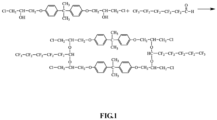
- a reaction principle of the aldol condensation reaction of the bisphenol A epoxy resin containing chlorine impurities and the polyfluoroalkyl aldehyde to provide the fluorine-containing chlorinated product is as follows:
- Another aspect of the present invention provides the use of a low-chlorine epoxy resin prepared in accordance with the method of the present invention in a copper-clad plate.
- the method of the present invention has the following beneficial effects: a hydroxyl group in the bisphenol A epoxy resin containing chlorine impurities undergoes an aldol condensation reaction with an aldehyde group in a perfluoroalkyl aldehyde to generate the fluorine-containing chlorinated product; further, due to the great difference in solubility between the fluorine-containing chlorinated product and the low-chlorine epoxy resin, a perfluoroalkane is thus selected as an extraction agent, only the fluorine-containing chlorinated product can be dissolved in the perfluoroalkane, and the extract phase is separated from the raffinate phase, so as to achieve the purpose of separating the fluorine-containing chlorinated product from the chlorine-free bisphenol A epoxy resin, thereby obtaining the low-chlorine bisphenol A epoxy resin.
- the method of the present invention has the characteristics of low cost, easy operation and high separation efficiency.
- the chlorine content of the low-chlorine bisphenol A epoxy resin prepared in accordance with the method of the present invention is less than 150 ppm.
- Fig. 1 is a diagram of a reaction principle of an aldol condensation reaction of a bisphenol A epoxy resin containing chlorine impurities and perfluorohexyl aldehyde as provided by an embodiment of the method of the present invention.
- an extraction method the removal of an impurity and purification of product is performed by extraction through the use of a difference in solubility, so the extraction method has the characteristics of low cost, simple operation, and high separation efficiency.
- solubility of an epoxy resin free of chlorine impurities and the solubility of an epoxy resin containing chlorine impurities is not much different, direct purification by extraction is unavailable, so there is no technology set forth in the prior art to remove chlorine impurities from an epoxy resin by the extraction method.
- the present invention provides a method for removing chlorine impurities from an epoxy resin which involves using an extraction method.
- the difference in solubility between a low-chlorine bisphenol A epoxy resin and a bisphenol A epoxy resin containing chlorine impurities is increased first to improve the recognition of the two epoxy resins to an extraction solvent; and then impurity-removal and purification are performed by using the extraction method so as to achieve the purpose of separating the desired low-chlorine bisphenol A epoxy resin.
- Fig. 1 is a diagram of a reaction principle of an aldol condensation reaction of a bisphenol A epoxy resin containing chlorine impurities and perfluorohexyl aldehyde as provided by an embodiment of the method of the present invention.
- a hydroxyl group in a bisphenol A epoxy resin (because an impurity chlorine in an epoxy resin containing chlorine impurities is often located at an end group, and a hydroxyl group on a carbon adjacent to an end group chlorine has good activity) and an aldehyde group in perfluorohexyl aldehyde undergo an aldol condensation reaction to obtain a reaction product, wherein the reaction product includes a fluorine-containing chlorinated product generated by the aldol condensation reaction of the bisphenol A epoxy resin containing chlorine impurities and polyfluoroalkyl aldehyde, and a bisphenol A epoxy resin free of chlorine impurities that does not react with perfluorohexyl aldehyde due to low hydroxyl activity.
- an perfluoroalkane is selected as the extraction agent: only the fluorine-containing chlorinated product can be dissolved in the perfluoroalkane to form an extract phase, and a low-chlorine bisphenol A epoxy resin of a bisphenol A epoxy resin free of chlorine impurities is a raffinate phase.
- the extract phase and the raffinate phase are separated, that is, the purpose of separating the fluorine-containing chlorinated product from the bisphenol A epoxy resin free of chlorine impurities is achieved, and the low-chlorine bisphenol A epoxy resin is thereby obtained.
- the total chlorine content of the low-chlorine bisphenol A epoxy resin extracted in accordance with the method of the present invention is lower than that of the bisphenol A epoxy resin before the aldol condensation reaction.
- Perfluorobutane is selected as the extraction agent and added to the reaction product, and extraction is performed. Because fluorine is a non-polar molecule and has the characteristics of being both insoluble in oil and water, only the fluorine-containing chlorinated product underlying the above-described reaction product can be dissolved in the perfluorobutane, and a low-chlorine bisphenol A epoxy resin is obtained after the fluorine-containing chlorinated product is removed therefrom.
- Perfluorohexane is selected as the extraction agent and added to the first reaction product, and extraction is performed. Because fluorine is a non-polar molecule and has the characteristics of being both insoluble in oil and water, only the fluorine-containing chlorinated product underlying the above-described reaction product can be dissolved in the perfluorohexane, and a low-chlorine bisphenol A epoxy resin is obtained after the fluorine-containing chlorinated product is removed therefrom.
- Perfluoropentane is selected as the extraction agent and added to the first reaction product, and extraction is performed. Because fluorine is a non-polar molecule and has the characteristics of being both insoluble in oil and water, only the fluorine-containing chlorinated product underlying the above-described reaction product can be dissolved in the perfluoropentane, and a low-chlorine bisphenol A epoxy resin is obtained after the fluorine-containing chlorinated product is removed therefrom.
- Perfluorooctane is selected as the extraction agent and added to the first reaction product, and extraction is performed. Because fluorine is a non-polar molecule and has the characteristics of being both insoluble in oil and water, only the fluorine-containing chlorinated product underlying the above-described reaction product can be dissolved in the perfluorooctane, and a low-chlorine bisphenol A epoxy resin is obtained after the fluorine-containing chlorinated product is removed therefrom.
- Perfluorohexane is selected as the extraction agent and added to the first reaction product, and extraction is performed. Because fluorine is a non-polar molecule and has the characteristics of being both insoluble in oil and water, only the fluorine-containing chlorinated product underlying the above-described reaction product can be dissolved in perfluorohexane, and a low-chlorine bisphenol A epoxy resin is obtained after a fluorine-containing chlorinated product is removed therefrom.
- a hydroxyl group in the bisphenol A epoxy resin containing chlorine impurities undergoes the aldol condensation reaction with an aldehyde group in the perfluorohexyl aldehyde to generate the fluorine-containing chlorinated product; further, due to the large difference in solubility between the fluorine-containing chlorinated product and the low-chlorine epoxy resin, a perfluoroalkane is selected as the extraction agent, only the fluorine-containing chlorinated product can be dissolved in the perfluoroalkane, and the extract phase is separated from the raffinate phase, so as to achieve the purpose of separating the fluorine-containing chlorinated product from the chlorine-free bisphenol A epoxy resin, thereby obtaining the low-chlorine bisphenol A epoxy resin.
- the method of the present invention has the characteristics of low cost, easy operation and high separation efficiency.
- the chlorine content of the low-chlorine bisphenol A epoxy resin prepared in accordance with the method of the present invention is less than 150 ppm.
Landscapes
- Chemical & Material Sciences (AREA)
- Health & Medical Sciences (AREA)
- Chemical Kinetics & Catalysis (AREA)
- Medicinal Chemistry (AREA)
- Polymers & Plastics (AREA)
- Organic Chemistry (AREA)
- Engineering & Computer Science (AREA)
- Manufacturing & Machinery (AREA)
- Materials Engineering (AREA)
- General Chemical & Material Sciences (AREA)
- Epoxy Resins (AREA)
Claims (8)
- Verfahren zur Herstellung eines chlorarmen Epoxidharzes, umfassend:Durchführen einer Aldolkondensationsreaktion eines Bisphenol-A-Epoxidharzes, das Chlorverunreinigungen enthält, und eines Polyfluoralkylaldehyds unter einer ersten voreingestellten Reaktionsbedingung, um ein Reaktionsprodukt zu erhalten;Zugeben einer Perfluoralkanlösung zu dem Reaktionsprodukt zur Abscheidung, Stehenlassen und anschließendes Trennen, um eine Extraktphase und eine Raffinatphase zu erhalten, wobei die Extraktphase ein fluorhaltiges chloriertes Produkt umfasst, das durch die Aldolkondensationsreaktion des Chlorverunreinigungen enthaltenden Bisphenol-A-Epoxidharzes und des Polyfluoralkylaldehyds erzeugt wird, und die Raffinatphase ein chlorarmes Bisphenol-A-Epoxidharz umfasst, undTrennen der Extraktphase von der Raffinatphase, um den Zweck des Trennens des fluorhaltigen chlorierten Produkts von dem Bisphenol-A-Epoxidharz zu erreichen, dadurch Erhalten des chlorarmen Bisphenol-A-Epoxidharzes, wobei der Chlorgehalt des chlorarmen Bisphenol-A-Epoxidharzes niedriger ist als der des Bisphenol-A-Epoxidharzes vor der Reaktion.
- Verfahren zur Herstellung des chlorarmen Epoxidharzes gemäß Anspruch 1, wobei das Perfluoralkan Perfluorpentan, Perfluorhexan oder Perfluoroctan ist.
- Verfahren zur Herstellung des chlorarmen Epoxidharzes gemäß Anspruch 1, wobei das Polyfluoralkylaldehyd Perfluorhexylaldehyd, oder Perfluoroctylaldehyd ist.
- Verfahren zur Herstellung des chlorarmen Epoxidharzes gemäß Anspruch 3, wobei das Molverhältnis des Bisphenol-A-Epoxidharzes zu dem Polyfluoralkylaldehyd 1: (2.1 bis 2.3.) ist.
- Verfahren zur Herstellung des chlorarmen Epoxidharzes gemäß Anspruch 1, wobei die erste voreingestellte Reaktionsbedingung umfasst: eine Reaktionstemperatur von 30 °C bis 45 °C, eine Reaktionszeit von 2 bis 3 Stunden, und einen pH der Reaktionslösung während des Reaktionsprozesses von mehr als 7.
- Verfahren zur Herstellung des chlorarmen Epoxidharzes gemäß Anspruch 1, wobei das Verfahren vor der Aldolkondensationsreaktion des Chlorverunreinigungen enthaltenden Bisphenol-A-Epoxidharzes und des Polyfluoralkylaldehyds ferner umfasst:
Mischen des Chlorverunreinigungen enthaltenden Bisphenol-A-Epoxidharzes homogen mit dem Polyfluoralkylaldehyd, und Auflösen des Gemisches in Cyclohexan. - Verfahren zur Herstellung des chlorarmen Epoxidharzes gemäß Anspruch 3, wobei ein Reaktionsprinzip der Aldolkondensationsreaktion des Chlorverunreinigungen enthaltenden Bisphenol-A-Epoxidharzes und des Polyfluorhexylaldehyds zum Bereitstellen des fluorhaltigen chlorierten Produkts wie folgt ist:

- Verwendung des chlorarmen Epoxidharzes, hergestellt nach dem Verfahren, definiert in einem der Ansprüche 1 bis 7, in einer kupferkaschierten Platte.
Applications Claiming Priority (1)
| Application Number | Priority Date | Filing Date | Title |
|---|---|---|---|
| CN202210858463.6A CN115073712B (zh) | 2022-07-20 | 2022-07-20 | 一种低氯环氧树脂的制备方法和应用 |
Publications (4)
| Publication Number | Publication Date |
|---|---|
| EP4310122A2 EP4310122A2 (de) | 2024-01-24 |
| EP4310122A3 EP4310122A3 (de) | 2024-02-28 |
| EP4310122C0 EP4310122C0 (de) | 2024-06-05 |
| EP4310122B1 true EP4310122B1 (de) | 2024-06-05 |
Family
ID=83242810
Family Applications (1)
| Application Number | Title | Priority Date | Filing Date |
|---|---|---|---|
| EP23186320.0A Active EP4310122B1 (de) | 2022-07-20 | 2023-07-19 | Herstellungsverfahren und anwendung von chlorarmem epoxidharz |
Country Status (2)
| Country | Link |
|---|---|
| EP (1) | EP4310122B1 (de) |
| CN (1) | CN115073712B (de) |
Families Citing this family (1)
| Publication number | Priority date | Publication date | Assignee | Title |
|---|---|---|---|---|
| CN117362593A (zh) * | 2023-11-10 | 2024-01-09 | 宁波环洋新材料股份有限公司 | 一种低氯高纯双酚a型环氧树脂的制备方法 |
Family Cites Families (7)
| Publication number | Priority date | Publication date | Assignee | Title |
|---|---|---|---|---|
| JP3044412B2 (ja) * | 1991-07-08 | 2000-05-22 | 東都化成株式会社 | 高純度エポキシ樹脂の製造方法 |
| JP4846078B2 (ja) * | 1998-06-04 | 2011-12-28 | 長春人造樹脂廠股▲分▼有限公司 | 加水分解性塩素含量の低いエポキシ樹脂の製造方法 |
| CN1493554A (zh) * | 2002-12-27 | 2004-05-05 | 中国科学院上海有机化学研究所 | 一种末端为乙烯基的多氟烷基醇及其衍生物、制备方法及其用途 |
| KR101363137B1 (ko) * | 2007-02-22 | 2014-02-13 | 재팬 에폭시 레진 가부시끼가이샤 | 정제 에폭시 수지의 제조 방법 |
| CN101250250A (zh) * | 2007-04-26 | 2008-08-27 | 荣成市科盛化工有限公司 | 酚醛树脂衍生物及其制备方法 |
| JP5905709B2 (ja) * | 2011-11-07 | 2016-04-20 | 旭化成イーマテリアルズ株式会社 | エポキシ樹脂の製造方法及び該製造方法を用いて得られたエポキシ樹脂 |
| JP5951962B2 (ja) * | 2011-11-07 | 2016-07-13 | 旭化成株式会社 | エポキシ樹脂の製造方法及び該製造方法を用いて得られたエポキシ樹脂 |
-
2022
- 2022-07-20 CN CN202210858463.6A patent/CN115073712B/zh active Active
-
2023
- 2023-07-19 EP EP23186320.0A patent/EP4310122B1/de active Active
Also Published As
| Publication number | Publication date |
|---|---|
| EP4310122C0 (de) | 2024-06-05 |
| EP4310122A2 (de) | 2024-01-24 |
| EP4310122A3 (de) | 2024-02-28 |
| CN115073712A (zh) | 2022-09-20 |
| CN115073712B (zh) | 2023-07-07 |
Similar Documents
| Publication | Publication Date | Title |
|---|---|---|
| DE60015190T2 (de) | Fluorierte lösungsmittel enthaltend ozon | |
| EP0014431B1 (de) | Verfahren zur Rückgewinnung fluorierter Emulgatorsäuren aus basischen Anionenaustauschern | |
| DE69113695T2 (de) | Verfahren zur Herstellung von Perfluoralkoxysulfonverbindungen. | |
| DE60200509T2 (de) | Verfahren zur Herstellung von Epoxidharz | |
| EP4310122A2 (de) | Herstellungsverfahren und anwendung von chlorarmem epoxidharz | |
| US4395305A (en) | Chemical etching of aluminum capacitor foil | |
| HK40098368B (en) | Preparation method and application of low-chlorine epoxy resin | |
| HK40098368A (en) | Preparation method and application of low-chlorine epoxy resin | |
| KR20230131356A (ko) | 비수용액을 이용한 선택적 침출에 의한 백금과 팔라듐의 분리 회수 방법 및 이를 위한 침출액 | |
| US2863889A (en) | Method for recovering fluorinated stabilizer | |
| JPS6399224A (ja) | フエノ−ル樹脂の製造法 | |
| DE60127652T2 (de) | Umweltfreundliches Verfahren zur Herstellung von hochreinem Tetrabrombisphenol-A | |
| EP0971931B1 (de) | Verfahren zur entbenzylierung von dibenzylbiotin | |
| EP2756884A1 (de) | Verfahren zur gewinnung anionischer fluorinierter emulgatoren | |
| KR101287494B1 (ko) | 혼합폐산으로부터 산을 회수하는 방법 | |
| JP2000239346A (ja) | エポキシ化合物の精製方法 | |
| CN117776998A (zh) | 一种含nmp废剥离液回收方法 | |
| CN111777494B (zh) | 一种苯酚钠和氢氧化钠固态混合物的浸取分离方法 | |
| CN115806459A (zh) | 一种从混合废溶剂中回收氟碳溶剂的纯化方法 | |
| US2267749A (en) | Process of converting dihydroxy compounds of the acetylene series into dihydroxy compounds of the ethylene series | |
| KR100738507B1 (ko) | 전자산업 에칭과정의 혼합폐산액으로부터 각 산을 분리회수하는 방법 | |
| US2779797A (en) | Separation of primary and tertiary cymene hydroperoxides | |
| AT226682B (de) | Verfahren zur Herstellung von kernchlorierten Phenoläthern | |
| DE60100237T2 (de) | Verfahren zur Reinigung von Difluormethan | |
| CN116924339B (zh) | 一种从全氟烷基碘下游产品生产尾液中回收碘的方法 |
Legal Events
| Date | Code | Title | Description |
|---|---|---|---|
| PUAI | Public reference made under article 153(3) epc to a published international application that has entered the european phase |
Free format text: ORIGINAL CODE: 0009012 |
|
| STAA | Information on the status of an ep patent application or granted ep patent |
Free format text: STATUS: REQUEST FOR EXAMINATION WAS MADE |
|
| 17P | Request for examination filed |
Effective date: 20230719 |
|
| AK | Designated contracting states |
Kind code of ref document: A2 Designated state(s): AL AT BE BG CH CY CZ DE DK EE ES FI FR GB GR HR HU IE IS IT LI LT LU LV MC ME MK MT NL NO PL PT RO RS SE SI SK SM TR |
|
| PUAL | Search report despatched |
Free format text: ORIGINAL CODE: 0009013 |
|
| AK | Designated contracting states |
Kind code of ref document: A3 Designated state(s): AL AT BE BG CH CY CZ DE DK EE ES FI FR GB GR HR HU IE IS IT LI LT LU LV MC ME MK MT NL NO PL PT RO RS SE SI SK SM TR |
|
| RIC1 | Information provided on ipc code assigned before grant |
Ipc: C08G 59/02 20060101AFI20240124BHEP |
|
| GRAP | Despatch of communication of intention to grant a patent |
Free format text: ORIGINAL CODE: EPIDOSNIGR1 |
|
| STAA | Information on the status of an ep patent application or granted ep patent |
Free format text: STATUS: GRANT OF PATENT IS INTENDED |
|
| REG | Reference to a national code |
Ref country code: HK Ref legal event code: DE Ref document number: 40098368 Country of ref document: HK |
|
| RAP3 | Party data changed (applicant data changed or rights of an application transferred) |
Owner name: ZILLION NEW MATERIAL TECHNOLOGY (XI'AN) CO., LTD. |
|
| RIC1 | Information provided on ipc code assigned before grant |
Ipc: C08G 59/02 20060101AFI20240320BHEP |
|
| GRAS | Grant fee paid |
Free format text: ORIGINAL CODE: EPIDOSNIGR3 |
|
| INTG | Intention to grant announced |
Effective date: 20240404 |
|
| GRAA | (expected) grant |
Free format text: ORIGINAL CODE: 0009210 |
|
| STAA | Information on the status of an ep patent application or granted ep patent |
Free format text: STATUS: THE PATENT HAS BEEN GRANTED |
|
| AK | Designated contracting states |
Kind code of ref document: B1 Designated state(s): AL AT BE BG CH CY CZ DE DK EE ES FI FR GB GR HR HU IE IS IT LI LT LU LV MC ME MK MT NL NO PL PT RO RS SE SI SK SM TR |
|
| REG | Reference to a national code |
Ref country code: CH Ref legal event code: EP |
|
| REG | Reference to a national code |
Ref country code: DE Ref legal event code: R096 Ref document number: 602023000135 Country of ref document: DE |
|
| REG | Reference to a national code |
Ref country code: IE Ref legal event code: FG4D |
|
| U01 | Request for unitary effect filed |
Effective date: 20240626 |
|
| U07 | Unitary effect registered |
Designated state(s): AT BE BG DE DK EE FI FR IT LT LU LV MT NL PT RO SE SI Effective date: 20240902 |
|
| PG25 | Lapsed in a contracting state [announced via postgrant information from national office to epo] |
Ref country code: HR Free format text: LAPSE BECAUSE OF FAILURE TO SUBMIT A TRANSLATION OF THE DESCRIPTION OR TO PAY THE FEE WITHIN THE PRESCRIBED TIME-LIMIT Effective date: 20240605 |
|
| PG25 | Lapsed in a contracting state [announced via postgrant information from national office to epo] |
Ref country code: GR Free format text: LAPSE BECAUSE OF FAILURE TO SUBMIT A TRANSLATION OF THE DESCRIPTION OR TO PAY THE FEE WITHIN THE PRESCRIBED TIME-LIMIT Effective date: 20240906 |
|
| PG25 | Lapsed in a contracting state [announced via postgrant information from national office to epo] |
Ref country code: ES Free format text: LAPSE BECAUSE OF FAILURE TO SUBMIT A TRANSLATION OF THE DESCRIPTION OR TO PAY THE FEE WITHIN THE PRESCRIBED TIME-LIMIT Effective date: 20240605 |
|
| U20 | Renewal fee for the european patent with unitary effect paid |
Year of fee payment: 2 Effective date: 20240924 |
|
| PG25 | Lapsed in a contracting state [announced via postgrant information from national office to epo] |
Ref country code: NO Free format text: LAPSE BECAUSE OF FAILURE TO SUBMIT A TRANSLATION OF THE DESCRIPTION OR TO PAY THE FEE WITHIN THE PRESCRIBED TIME-LIMIT Effective date: 20240905 Ref country code: HR Free format text: LAPSE BECAUSE OF FAILURE TO SUBMIT A TRANSLATION OF THE DESCRIPTION OR TO PAY THE FEE WITHIN THE PRESCRIBED TIME-LIMIT Effective date: 20240605 Ref country code: GR Free format text: LAPSE BECAUSE OF FAILURE TO SUBMIT A TRANSLATION OF THE DESCRIPTION OR TO PAY THE FEE WITHIN THE PRESCRIBED TIME-LIMIT Effective date: 20240906 Ref country code: ES Free format text: LAPSE BECAUSE OF FAILURE TO SUBMIT A TRANSLATION OF THE DESCRIPTION OR TO PAY THE FEE WITHIN THE PRESCRIBED TIME-LIMIT Effective date: 20240605 Ref country code: RS Free format text: LAPSE BECAUSE OF FAILURE TO SUBMIT A TRANSLATION OF THE DESCRIPTION OR TO PAY THE FEE WITHIN THE PRESCRIBED TIME-LIMIT Effective date: 20240905 |
|
| PG25 | Lapsed in a contracting state [announced via postgrant information from national office to epo] |
Ref country code: PL Free format text: LAPSE BECAUSE OF FAILURE TO SUBMIT A TRANSLATION OF THE DESCRIPTION OR TO PAY THE FEE WITHIN THE PRESCRIBED TIME-LIMIT Effective date: 20240605 |
|
| PG25 | Lapsed in a contracting state [announced via postgrant information from national office to epo] |
Ref country code: IS Free format text: LAPSE BECAUSE OF FAILURE TO SUBMIT A TRANSLATION OF THE DESCRIPTION OR TO PAY THE FEE WITHIN THE PRESCRIBED TIME-LIMIT Effective date: 20241005 |
|
| PG25 | Lapsed in a contracting state [announced via postgrant information from national office to epo] |
Ref country code: CZ Free format text: LAPSE BECAUSE OF FAILURE TO SUBMIT A TRANSLATION OF THE DESCRIPTION OR TO PAY THE FEE WITHIN THE PRESCRIBED TIME-LIMIT Effective date: 20240605 |
|
| PG25 | Lapsed in a contracting state [announced via postgrant information from national office to epo] |
Ref country code: SK Free format text: LAPSE BECAUSE OF FAILURE TO SUBMIT A TRANSLATION OF THE DESCRIPTION OR TO PAY THE FEE WITHIN THE PRESCRIBED TIME-LIMIT Effective date: 20240605 |
|
| PG25 | Lapsed in a contracting state [announced via postgrant information from national office to epo] |
Ref country code: SM Free format text: LAPSE BECAUSE OF FAILURE TO SUBMIT A TRANSLATION OF THE DESCRIPTION OR TO PAY THE FEE WITHIN THE PRESCRIBED TIME-LIMIT Effective date: 20240605 |
|
| PG25 | Lapsed in a contracting state [announced via postgrant information from national office to epo] |
Ref country code: SM Free format text: LAPSE BECAUSE OF FAILURE TO SUBMIT A TRANSLATION OF THE DESCRIPTION OR TO PAY THE FEE WITHIN THE PRESCRIBED TIME-LIMIT Effective date: 20240605 Ref country code: SK Free format text: LAPSE BECAUSE OF FAILURE TO SUBMIT A TRANSLATION OF THE DESCRIPTION OR TO PAY THE FEE WITHIN THE PRESCRIBED TIME-LIMIT Effective date: 20240605 Ref country code: PL Free format text: LAPSE BECAUSE OF FAILURE TO SUBMIT A TRANSLATION OF THE DESCRIPTION OR TO PAY THE FEE WITHIN THE PRESCRIBED TIME-LIMIT Effective date: 20240605 Ref country code: IS Free format text: LAPSE BECAUSE OF FAILURE TO SUBMIT A TRANSLATION OF THE DESCRIPTION OR TO PAY THE FEE WITHIN THE PRESCRIBED TIME-LIMIT Effective date: 20241005 Ref country code: CZ Free format text: LAPSE BECAUSE OF FAILURE TO SUBMIT A TRANSLATION OF THE DESCRIPTION OR TO PAY THE FEE WITHIN THE PRESCRIBED TIME-LIMIT Effective date: 20240605 |
|
| PG25 | Lapsed in a contracting state [announced via postgrant information from national office to epo] |
Ref country code: MC Free format text: LAPSE BECAUSE OF FAILURE TO SUBMIT A TRANSLATION OF THE DESCRIPTION OR TO PAY THE FEE WITHIN THE PRESCRIBED TIME-LIMIT Effective date: 20240605 |
|
| PG25 | Lapsed in a contracting state [announced via postgrant information from national office to epo] |
Ref country code: MC Free format text: LAPSE BECAUSE OF FAILURE TO SUBMIT A TRANSLATION OF THE DESCRIPTION OR TO PAY THE FEE WITHIN THE PRESCRIBED TIME-LIMIT Effective date: 20240605 |
|
| PLBE | No opposition filed within time limit |
Free format text: ORIGINAL CODE: 0009261 |
|
| STAA | Information on the status of an ep patent application or granted ep patent |
Free format text: STATUS: NO OPPOSITION FILED WITHIN TIME LIMIT |
|
| 26N | No opposition filed |
Effective date: 20250306 |
|
| U20 | Renewal fee for the european patent with unitary effect paid |
Year of fee payment: 3 Effective date: 20250728 |