EP4208453B1 - Verfahren zur herstellung eines tetrazol-substituierten anthranilsäurediamid-derivates - Google Patents
Verfahren zur herstellung eines tetrazol-substituierten anthranilsäurediamid-derivates Download PDFInfo
- Publication number
- EP4208453B1 EP4208453B1 EP21772771.8A EP21772771A EP4208453B1 EP 4208453 B1 EP4208453 B1 EP 4208453B1 EP 21772771 A EP21772771 A EP 21772771A EP 4208453 B1 EP4208453 B1 EP 4208453B1
- Authority
- EP
- European Patent Office
- Prior art keywords
- formula
- compound
- solvate
- process according
- crystalline
- Prior art date
- Legal status (The legal status is an assumption and is not a legal conclusion. Google has not performed a legal analysis and makes no representation as to the accuracy of the status listed.)
- Active
Links
Images



Classifications
-
- C—CHEMISTRY; METALLURGY
- C07—ORGANIC CHEMISTRY
- C07D—HETEROCYCLIC COMPOUNDS
- C07D401/00—Heterocyclic compounds containing two or more hetero rings, having nitrogen atoms as the only ring hetero atoms, at least one ring being a six-membered ring with only one nitrogen atom
- C07D401/14—Heterocyclic compounds containing two or more hetero rings, having nitrogen atoms as the only ring hetero atoms, at least one ring being a six-membered ring with only one nitrogen atom containing three or more hetero rings
-
- C—CHEMISTRY; METALLURGY
- C07—ORGANIC CHEMISTRY
- C07B—GENERAL METHODS OF ORGANIC CHEMISTRY; APPARATUS THEREFOR
- C07B2200/00—Indexing scheme relating to specific properties of organic compounds
- C07B2200/13—Crystalline forms, e.g. polymorphs
Definitions
- the present invention relates to a process for the preparation of a tetrazole-substituted anthranilic acid diamide derivative according to the formula (I) in crystalline form, via solvate crystals, in high purity and yield.
- the present invention also relates to new solvent-solvate crystals which, in comparison to a tetrazole-substituted anthranilic acid diamide derivative according to the above-mentioned formula (I) in crystalline form, are characterized by improved filtration properties.
- WO2011/157664 A1 describes a process for the preparation of tetrazole-substituted anthranilic acid diamide derivatives, among others, according to the above-mentioned formula (I). Furthermore, WO2011/157664 A1 a process for preparing a crystalline form of a tetrazole-substituted anthranilic acid diamide derivative according to the above formula (I) is described, which is easy to handle due to its physicochemical properties and enables the production of a stable formulation.
- the object of the present invention is therefore to provide a new process for the preparation of a tetrazole-substituted anthranilic acid diamide derivative according to the above-mentioned formula (I) in crystalline form with high purity and yield, which is also advantageous in large-scale production, taking economic aspects into account.
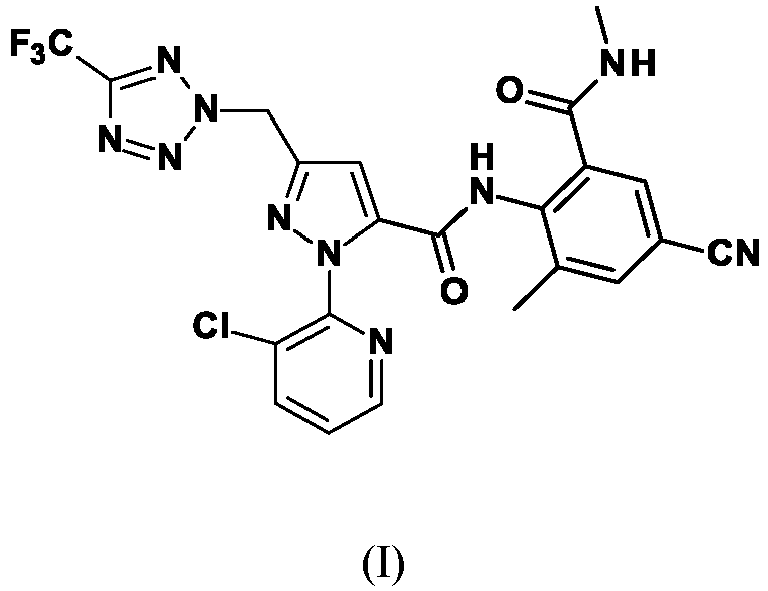
- the object was achieved according to the present invention by a process for preparing a compound of formula (I) in crystalline form, characterized in that a compound of formula (I) is dissolved in at least one amidic solvent and crystallized to a solvate by the presence of at least one antisolvent and/or by lowering the temperature and is then filtered and dried.
- the present invention further relates to solvent-solvate crystals of the formula (I) formed in the process according to the invention, which, in comparison to a tetrazole-substituted anthranilic acid diamide derivative according to the above-mentioned formula (I), are in crystalline form as in WO2011/157664 A1 described, are characterized by improved filtration properties.
- the formation of the solvent-solvate crystals of the compound of formula (I) is therefore crucial for the economic viability of the process according to the invention and its feasibility on an industrial production scale.
- the WO2011/157664 A1 does not describe solvent-solvate crystals, nor the possibility of their formation or their advantageous properties. Surprisingly, the solvent-solvate crystals could be obtained from amidic solvents in the process according to the invention, although amidic solvents are known to be good solvents for the compounds of formula (I).
- the crystalline form of the compound of formula (I) obtained by the process according to the invention is the thermodynamically stable crystal form.
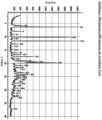
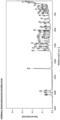
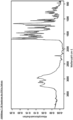
- the process according to the invention provides a compound of formula (I) in a crystalline form which has a characteristic X-ray powder diffractogram, Raman spectrum and IR spectrum (Tables 1 and 2, Fig. 1 , 2 , 3 ).
- a compound of the above formula (I) in this crystalline form is characterized in that its X-ray powder diffractogram at a temperature of 25°C and when using Cu K ⁇ radiation has at least the following reflection positions (2 theta): 5.8°, 6.4°, 11.6°, 17.5°, 19.8°, 20.8°, 23.5° and 24.2° (each ⁇ 0.2°).
- the X-ray powder diffractogram of the crystalline form at a temperature of 25°C and when using Cu K ⁇ radiation has at least the following further reflection positions (2 theta): 10.2°, 12.8°, 16.7°, 19.0°, 25.3°, 27.5°, 29.4° (each ⁇ 0.2°).
- the X-ray powder diffractogram of the crystalline form at a temperature of 25°C and using Cu K ⁇ radiation essentially corresponds to that in Figure 1 reproduced diffractogram.
- the Raman spectrum of the crystalline form has at least the following bands [cm -1 ]: 2927, 1663, 1386, 1334, 1022, 638 (each ⁇ 2° cm -1 ).
- the Raman spectrum of the crystalline form corresponds essentially to that in Figure 2 reproduced spectrum.
- the IR spectrum of the crystalline form particularly preferably has at least the following bands [cm -1 ]: 3286, 1662, 1219, 1181, 1154, 1055 (each ⁇ 2° cm -1 ).
- the IR spectrum of the crystalline form essentially corresponds to that in Figure 3 reproduced spectrum.
- the Raman spectra of the crystalline form were recorded with FT-Raman spectrometers from Bruker (e.g. with the models RFS100 or MultiRam) at 25°C and with a laser wavelength of 1064 nm and a resolution of 2 cm -1 .
- the starting point for the preparation of a compound of the abovementioned formula (I) in a crystalline form according to the present process is the presence of a reactant mixture in which a compound of the abovementioned formula (I) is dissolved in at least one amidic solvent selected from the group of N,N-dimethylformamide, N,N-dimethylacetamide, N-methylformanilide, N-methyl-2-pyrrolidone, N-methylcaprolactam and hexamethylphosphoric triamide and very particularly preferably selected from the group of N,N-dimethylacetamide and N-methyl-2-pyrrolidone.
- an amidic solvent is present and not a mixture of the abovementioned amidic solvents.
- the crystalline N-N-dimethylacetamide solvate of the compound of formula (I) (DMAc solvate) described below is obtained.
- N-methyl-2-pyrrolidone the crystalline N-methyl-2-pyrrolidone solvate of the compound of formula (I) (NMP solvate) described below is obtained.
- the DMAc solvate and the NMP solvate have significantly improved filtration properties (see Table 5).
- the filtration resistance ⁇ measured in Table 5 was measured by recording a pressure filtration curve.
- the filtration test was carried out in an apparatus for determining the specific filtration resistance (alpha value) was carried out in accordance with VDI guideline 2762 (manufacturer: BHS Sonthofen, model: pocket measuring device KPL TMG 400).
- the suspension to be determined was filled into the apparatus and the resulting filtrate quantity (mother liquor) was continuously measured by applying a pressure difference.
- the filtrate quantity V is recorded as a function of time t (filtrate curve).
- the specific filtration resistance (alpha value in m -2 ) can be determined (see also W. Beckmann: Crystallization - Basic Concepts and Industrial Applications, Wiley-VCH, 2013, chap. 14.2.3 ).
- the at least one amidic solvent is preferably used in a 2- to 20-fold weight excess, particularly preferably in a 3- to 10-fold weight excess, based on the compound of formula (I) in the reactant mixture.
- a compound of formula (I) in at least one amidic solvent can be crystallized to the solvate by lowering the temperature, without adding at least one antisolvent.
- the temperature reduction is preferably carried out slowly, particularly preferably in a range of 1 to 10 °C/hour and even more preferably in a range of 1 to 5 °C/hour in the temperature range specified below.
- the compound of formula (I) in at least one amidic solvent is preferably present in a homogeneous mixture, which can be achieved, for example, by stirring.
- At least one antisolvent is used, essentially to reduce the solubility and to achieve a higher yield of the solvate.
- the crystallization to the solvate can then also take place without lowering the temperature or even at a higher process temperature overall.
- the presence or addition of at least one antisolvent and the (preferably subsequent) reduction in temperature are combined for the crystallization to the solvate.
- an antisolvent selected from the group of water, acetonitrile, C 1 -C 6 alcohols, toluene, xylenes, esters of formic acid with C 1 -C 4 alcohols and esters of acetic acid with C 1 -C 4 alcohols is used as at least one antisolvent.
- at least one antisolvent selected from the group of water, acetonitrile, methanol, ethanol, isopropanol, 1-butanol, toluene and ethyl acetate is used.
- an antisolvent is present and not a mixture of the above-mentioned antisolvents.
- the weight ratio between the at least one amidic solvent and the at least one antisolvent is between 10:1 and 1:1, particularly preferably between 5:1 and 2:1 and most preferably about 4:1.
- the at least one amidic solvent can also already be diluted with the at least one antisolvent and the compound according to formula (I) in the reactant mixture, provided that the solvents used are inert under the reaction conditions and a homogeneous state is achieved before the crystallization of the solvate, for example by increasing the temperature accordingly.
- such inert solvents which, for example, also entered the reaction mixture with the solution of the compound of formula (II), can be removed by suitable measures, e.g. by distillation, if necessary under reduced pressure.
- the solvate crystallization according to the process according to the invention described above is preferably carried out at temperatures of -20 to +30 °C and particularly preferably at temperatures of -10 to +20 °C, generally under normal pressure.
- reaction time can be selected in a range between one hour and several hours, depending on the batch size, amidic solvent(s), antisolvent(s) and the temperature.
- Filtration can be carried out in a filtration apparatus known to those skilled in the art, such as a pressure Nutsche filter or a centrifuge. Drying can be carried out in a drying apparatus known to those skilled in the art, such as a horizontal or vertical mixer dryer or a Nutsche dryer. Drying takes place in a temperature range from 20 to 100 °C, preferably in a temperature range from 60 to 80 °C. Drying takes place in a pressure range from 1 to 100 mbar, preferably in a pressure range from 5 to 20 mbar.
- the reactant mixture used for the process described above consisting of a compound of the abovementioned formula (I) together with at least one amidic solvent, is prepared by a process in which a compound of the formula (II) with a compound of formula (III) in the presence of an amidic solvent.
- the coupling reaction can optionally be carried out in the presence of a catalyst.
- a catalyst examples include 4-dimethylaminopyridine and 1-hydroxybenzotriazole. Additional acid binders are not required for this reaction.
- the coupling reaction is further preferably carried out in such a way that the compound of the formula (III) is initially introduced into the amide solvent in equimolar amounts or in a slight excess of 1.0 - 1.2 molar equivalents based on the compound of the formula (II).
- the compound of the formula (II) is then metered in over a period of preferably 1 to 10 hours, preferably 2 to 5 hours, as a solution, preferably in an inert organic solvent, or as a melt at a temperature of preferably -10 to +50 °C, particularly preferably 0 to 40 °C, very particularly preferably 10 to 30 °C.
- This reaction is generally carried out under normal pressure. Alternatively, however, it is also possible to work in a vacuum or under excess pressure in an autoclave.
- the inert solvent is preferably removed as already described above.
- amidic solvents used for this coupling reaction are those described above for the reactant mixture.
- the compound of formula (II) can be used for this coupling reaction as a solid or as a melt.
- the use of the compound of formula (II) dissolved in an inert organic solvent is preferred.
- the compound of formula (II) is dissolved in an inert organic solvent which is preferably selected from the group of aliphatic, alicyclic and aromatic hydrocarbons, such as petroleum ether, hexane, heptane, cyclohexane, methylcyclohexane, benzene, toluene, xylene and decalin; halogenated hydrocarbons, such as chlorobenzene, dichlorobenzene, dichloromethane, chloroform, tetrachloromethane, dichloroethane and trichloroethane; ethers, such as diethyl ether, diisopropyl ether, methyl t-butyl ether, methyl t-amyl ether,
- a compound of formula (II) is prepared by reacting a compound of formula (IV) is reacted with an acid halide former selected from the group consisting of phosgene, phosphorus tribromide, phosphorus trichloride, phosphorus pentachloride, phosphorus oxychloride and thionyl chloride in the presence of an inert organic solvent.
- an acid halide former selected from the group consisting of phosgene, phosphorus tribromide, phosphorus trichloride, phosphorus pentachloride, phosphorus oxychloride and thionyl chloride in the presence of an inert organic solvent.
- the acid halide former is preferably selected from the group of phosgene, mesyl chloride and thionyl chloride. Thionyl chloride is particularly preferred.
- the inert organic solvents used are those already mentioned above for the preparation of the reactant mixture starting from the compounds of formula (II) and (III).
- the use of toluene is particularly preferred.
- This process step is preferably carried out at temperatures of +20 to +100 °C and particularly preferably at temperatures of +50 to +75 °C, generally under normal pressure.
- the reaction time is, depending on the batch size, the reactants used and the temperature, in a range between one hour and five hours, preferably between one hour and three hours.
- pyrazolecarboxylic acids of formula (IV) are known or can be obtained by known processes (cf. e.g. WO2011/157664 A1 ). Due to the tetrazole group, pyrazolecarboxylic acids of the formula (IV) usually exist as mixtures of different regioisomers.
- Another object of the present invention relates to a crystalline NN-dimethylacetamide solvate of a compound of formula (I) which in the X-ray powder diffractogram at a temperature of 25 °C using Cu K ⁇ radiation has at least the following reflection positions: 8.3, 8.9, 14.6, particularly preferably has at least the following reflection positions: 8.3, 8.9, 10.4, 14.6, 15.5, very particularly preferably has at least the following reflection positions: 8.3, 8.9, 10.4, 12.7, 14.6, 15.5, 27.6 (indicated as 2 theta/° value ⁇ 0.2°).
- the crystalline NN-dimethylacetamide solvate of a compound of formula (I) according to the invention (abbreviated DMAc solvate) has the reflection positions (2 theta) indicated in Table 3.
- the X-ray powder diffractogram of the DMAc solvate is also shown in the Figure 4 reproduced.
- Another object of the present invention relates to a crystalline N-methyl-2-pyrrolidone solvate of a compound of formula (I) which in the X-ray powder diffractogram at a temperature of 25 °C using Cu K ⁇ radiation has at least the following reflection positions: 8.3, 8.9, 14.6, particularly preferably has at least the following reflection positions: 8.3, 8.9, 10.5, 14.6, 15.4, very particularly preferably has at least the following reflection positions: 8.3, 8.9, 10.5, 12.7, 14.6, 15.4, 27.6 (indicated as 2 theta/° value ⁇ 0.2°).
- the crystalline N-methyl-2-pyrrolidone solvate of a compound of formula (I) (abbreviated NMP solvate) according to the invention has the reflection positions (2 theta) indicated in Table 3.
- the X-ray powder diffractogram of the NMP solvate is also shown in the Figure 5 reproduced.
- the crystalline NN-dimethylacetamide solvate and the crystalline N-methyl-2-pyrrolidone solvate of a compound of formula (I) can also be characterized by IR and Raman spectroscopy. The corresponding Raman and IR spectra are shown in Figure 6 , 7 and 8 shown.
- the IR spectra of the solvates were recorded by FTIR analysis in the spectral range from 400 to 4000 cm -1 with a Bruker Platinum ATR Tensor II and a resolution of 4 cm -1 .
- the Opus software from Bruker was used for configuration of the instruments, data recording and data evaluation.
- the Raman spectrum of the DMAc solvate has at least the following characteristic bands: 3126, 1685, 1340, particularly preferably the following bands: 3126, 3026, 1685, 1340, 1306, very particularly preferably the following bands: 3126, 3026, 2972, 1685, 1340, 1306, 963 (indicated as band [cm -1 ]; each ⁇ 2° cm -1 ).
- the IR spectrum of the DMAc solvate has at least the following characteristic bands: 3234, 1525, 926, particularly preferably the following bands: 3234, 3124, 1525, 1496, 926, very particularly preferably the following bands: 3234, 3124, 3078, 1525, 1496, 1016, 926 (indicated as band [cm -1 ]; in each case ⁇ 2° cm -1 ).
- the Raman spectrum of the NMP solvate has at least the following characteristic bands: 3125, 1684, 1342, particularly preferably the following bands: 3125, 3024, 1684, 1342, 1305, very particularly preferably the following bands: 3125, 3024, 2973, 1684, 1342, 1305, 963 (indicated as band [cm -1 ]; in each case ⁇ 2° cm -1 ).
- the IR spectrum of the NMP solvate has at least the following characteristic bands: 3234, 1525, 926, particularly preferably the following bands: 3234, 3124, 1525, 926, 848, very particularly preferentially the following bands: 3234, 3124, 3078, 1525, 1016, 926, 848 (expressed as band [cm -1 ], each ⁇ 2° cm -1 ).
- Toluene was then distilled off at 45 - 50 °C and 30 mbar, yielding an approximately 35% w/w solution of 1-(3-chloropyridin-2-yl)-N-[4-cyano-2-methyl-6-(methylcarbamoyl)phenyl]-3-[(5-(trifluoromethyl)-2H-tetrazol-2-yl)methyl]-1H-pyrazole-5-carboxamide and the corresponding isomer in DMAc.
Landscapes
- Chemical & Material Sciences (AREA)
- Organic Chemistry (AREA)
- Pharmaceuticals Containing Other Organic And Inorganic Compounds (AREA)
- Plural Heterocyclic Compounds (AREA)
Description
- Die vorliegende Erfindung betrifft ein Verfahren zur Herstellung eines tetrazol-substituierten Anthranilsäurediamid-Derivates gemäß der Formel (I)

- In der
WO2011/157664 A1 ist ein Verfahren zur Herstellung von tetrazol-substituierten Anthranilsäurediamid-Derivaten u.a. auch gemäß oben genannter Formel (I) beschrieben. Weiterhin ist inWO2011/157664 A1 ein Verfahren zur Herstellung einer kristallinen Form eines tetrazol-substituierten Anthranilsäurediamid-Derivates gemäß oben genannter Formel (I) beschrieben, welches aufgrund seiner physikochemischen Eigenschaften gut zu handhaben ist und die Produktion einer stabilen Formulierung ermöglicht. - Nachteilig am in
WO2011/157664 A1 beschriebenen Verfahren sind die physikalischen Eigenschaften der dort beschriebenen kristallinen Form eines tetrazol-substituierten Anthranilsäurediamid-Derivates gemäß oben genannter Formel (I) hinsichtlich seiner Filtrationseigenschaften. Nach dem inWO2011/157664 A1 beschriebenen Verfahren fällt die Verbindung gemäß oben genannter Formel (I) in Form von feinen Nadeln an, die bei der Isolierung durch Filtration lange Filtrationszeiten und hohe Restfeuchten im Filterkuchen verursachen. Die hohen Restfeuchten im Filterkuchen führen darüber hinaus zu langen Trocknungszeiten des Feuchtguts. Aufgrund der beschriebenen Probleme ist das inWO2011/157664 A1 beschriebene Verfahren zur Herstellung eines tetrazol-substituierten Anthranilsäurediamid-Derivates gemäß oben genannter Formel (I) im großtechnischen Produktionsmaßstab nicht zweckmäßig. - Aufgabe der vorliegenden Erfindung ist daher die Bereitstellung eines neuen Verfahrens zur Herstellung eines tetrazol-substituierten Anthranilsäurediamid-Derivates gemäß oben genannter Formel (I) in kristalliner Form mit hoher Reinheit und Ausbeute, welches auch im großtechnischen Produktionsmaßstab unter Einbeziehung von wirtschaftlichen Gesichtspunkten vorteilhaft ist.
- Die Aufgabe wurde gemäß der vorliegenden Erfindung gelöst durch ein Verfahren zur Herstellung einer Verbindung der Formel (I)
- Die vorliegende Erfindung betrifft weiterhin auch im erfindungsgemäßen Verfahren gebildete Lösungsmittel-Solvat-Kristalle der Formel (I), die sich im Vergleich zu einem tetrazol-substituierten Anthranilsäurediamid-Derivat gemäß oben genannter Formel (I) in kristalliner Form wie in
WO2011/157664 A1 beschrieben, durch verbesserte Filtrationseigenschaften auszeichnen. Die Bildung der Lösungsmittel-Solvat-Kristalle der Verbindung der Formel (I) ist somit entscheidend für die Wirtschaftlichkeit des erfindungsgemäßen Verfahrens und dessen Durchführbarkeit im großtechnischen Produktionsmaßstab. - Die
WO2011/157664 A1 beschreibt keine Lösungsmittel-Solvat-Kristalle und auch nicht die Möglichkeit ihrer Bildung oder ihre vorteilhaften Eigenschaften. Überraschenderweise konnten die Lösungsmittel-Solvat-Kristalle im Rahmen des erfindungsgemäßen Verfahrens aus amidischen Lösungsmitteln erhalten werden, obwohl amidische Lösungsmittel als gute Lösungsmittel für die Verbindungen der Formel (I) bekannt sind. - Überraschend ist insbesondere auch, dass im Rahmen des erfindungsgemäßen Verfahrens, durch Trocknung der Solvat-Kristalle, die Verbindung der Formel (I) in ihrer thermodynamisch stabilen kristallinen Form erhalten werden kann.
- Bevorzugt handelt es sich bei der gemäß dem erfindungsgemäßen Verfahren erhaltenen kristallinen Form der Verbindung der Formel (I) um die thermodynamisch stabile Kristallform.
- Ebenfalls bevorzugt wird nach dem erfindungsgemäßen Verfahren eine Verbindung der Formel (I) in einer kristallinen Form erhalten, die ein charakteristisches Röntgenpulverdiffraktogramm, Raman-Spektrum und IR-Spektrum (Tabelle 1 und 2,
Abb. 1 ,2 ,3 ) aufweist. Eine Verbindung der oben genannten Formel (I) in dieser kristallinen Form ist dadurch gekennzeichnet, dass ihr Röntgenpulverdiffraktogramm bei einer Temperatur von 25°C und bei Verwendung von Cu Kα Strahlung mindestens folgende Reflexlagen (2 Theta) aufweist: 5.8°, 6.4°, 11.6°, 17.5°, 19.8°, 20.8°, 23.5° und 24.2° (jeweils ± 0,2°). Vorzugsweise weist das Röntgenpulverdiffraktogramm der kristallinen Form bei einer Temperatur von 25°C und bei Verwendung von Cu Kα-Strahlung mindestens folgende weitere Reflexlagen (2 Theta) auf: 10.2°, 12.8°, 16.7°, 19.0°, 25.3°, 27.5°, 29.4° (jeweils ± 0,2°). In einer weiteren bevorzugten Variante der vorliegenden Erfindung entspricht das Röntgenpulverdiffraktogramm der kristallinen Form bei einer Temperatur von 25°C und Verwendung von Cu Kα-Strahlung im Wesentlichen dem inAbbildung 1 wiedergegebenen Diffraktogramm. - Besonders bevorzugt weist das Raman-Spektrum der kristallinen Form mindestens folgende Banden [cm-1] auf: 2927, 1663, 1386, 1334, 1022, 638 (jeweils± 2° cm-1). In einer weiteren besonders bevorzugten Ausführungsform der Erfindung entspricht das Raman-Spektrum der kristallinen Form im Wesentlichen dem in
Abbildung 2 wiedergegebenen Spektrum. - Besonders bevorzugt weist das IR-Spektrum der kristallinen Form mindestens folgende Banden [cm-1] auf: 3286, 1662, 1219, 1181, 1154, 1055 (jeweils± 2° cm-1). In einer weiteren besonders bevorzugten Ausführungsform der Erfindung entspricht das IR-Spektrum der kristallinen Form im Wesentlichen dem in
Abbildung 3 wiedergegebenen Spektrum. - Alle Röntgenpulverdiffraktometrie-Daten der kristallinen Form wurden mit folgenden Akquisitionsparametern bei 25°C erhalten:
Diffraktometer Typ: PANalytic X'Pert PRO Anodenmaterial: Cu Strahlung: Cu Kα 1 Wellenlänge: 1.54060 Ä Scan Modus: Transmission Scan Typ: 2Theta: Omega Angabe: 2 Theta (Peakmaximum) ± 0,2° - Die Raman-Spektren der kristallinen Form wurden mit FT-Ramanspektrometern der Firma Bruker (z.B. mit den Modellen RFS100 oder MultiRam) bei 25°C und mit einer Laserwellenlänge von 1064 nm und einer Auflösung von 2 cm-1 aufgenommen.
- Die IR-Spektren der kristallinen Form wurden mit IR-Spektrometern der Firma Bruker (z.B. mit dem Modell Tensor 37) mit einer universellen Diamant ATR-Einheit bei 25°C und mit einer Auflösung von 4 cm-1 aufgenommen.
-
Abbildung 1 zeigt das Röntgenpulverdiffraktogram der kristallinen Form -
Abbildung 2 zeigt das Raman Spektrum der kristallinen Form -
Abbildung 3 zeigt das IR Spektrum der kristallinen Form -
Abbildung 4 zeigt das Röntgenpulverdiffraktogram des DMAc Solvats -
Abbildung 5 zeigt das Röntgenpulverdiffraktogram des NMP Solvats -
Abbildung 6 zeigt das Raman Spektren des DMAc und NMP Solvats -
Abbildung 7 zeigt das IR Spektrum des DMAc Solvats -
Abbildung 8 zeigt das IR Spektrum des NMP Solvats - Ausgangspunkt für die Herstellung einer Verbindung der oben genannten Formel (I) in einer kristallinen Form gemäß dem vorliegenden Verfahren ist das Vorhandensein einer Eduktmischung bei der eine Verbindung der oben genannten Formel (I) in mindestens einem amidischen Lösungsmittel ausgewählt aus der Gruppe von N,N-Dimethylformamid, N,N-Dimethylacetamid, N-Methylformanilid, N-Methyl-2-pyrrolidon, N-Methylcaprolactam und Hexamethylphosphorsäuretriamid und ganz besonders bevorzugt ausgewählt aus der Gruppe von N-N-Dimethylacetamid und N-Methyl-2-pyrrolidon gelöst ist. In einer weiteren bevorzugten Ausführungsform der Erfindung liegt ein amidisches Lösungsmittel vor und kein Gemisch der oben genannten amidischen Lösungsmittel.
- Bei der Verwendung von N-N-Dimethylacetamid wird das weiter unten beschriebene kristalline N-N-Dimethylacetamid Solvat der Verbindung der Formel (I) (DMAc Solvat) erhalten. Bei der Verwendung von N-Methyl-2-pyrrolidon wird das weiter unten beschriebene kristalline N-Methyl-2-pyrrolidon Solvat der Verbindung der Formel (I) (NMP Solvat) erhalten.
- Im Vergleich zu der Verbindung der Formel (I) in kristalliner Form weist das DMAc Solvat und das NMP Solvat deutlich verbesserte Filtrationseigenschaften auf (siehe Tabelle 5). Der in der Tabelle 5 gemessene Filtrationswiderstand α wurde gemessen durch die Aufnahme einer Druckfiltrationskurve. Der Filtrationsversuch wurde in einer Apparatur zur Bestimmung des spezifischen Filtrationswiderstands (alpha-Wert) durchgeführt, entsprechend der VDI Richtlinie 2762 (Hersteller: BHS Sonthofen, Modell: Taschenmessgerät KPL TMG 400). Dafür wurde die zu bestimmende Suspension in die Apparatur eingefüllt und durch Anlegen einer Druckdifferenz die anfallende Filtratmenge (Mutterlauge) kontinuierlich gemessen. Die Filtratmenge V wird als Funktion der Zeit t aufgezeichnet (Filtratkurve). Durch Auftragen von t/V gegen V kann der spezifische Filtrationswiderstand (alpha-Wert in m-2) ermittelt werden (siehe auch W. Beckmann: Crystallization - Basic Concepts and Industrial Applications, Wiley-VCH, 2013, Kap. 14.2.3).
- Das mindestens eine amidische Lösungsmittel wird vorzugsweise in einem 2- bis 20-fachen Gewichtsüberschuß, besonders bevorzugt in einem 3- bis 10-fachen Gewichtsüberschuß bezogen auf die Verbindung der Formel (I) in der Eduktmischung eingesetzt.
- Eine Verbindung der Formel (I) in mindestens einem amidischen Lösungsmittel kann durch Temperaturerniedrigung zum Solvat, ohne Zugabe von mindestens einem Antilösungsmittel, kristallisiert werden. Die Temperaturerniedrigung erfolgt dabei vorzugsweise langsam, besonders bevorzugt in einem Bereich von 1 bis 10 °C / Stunde und noch bevorzugter in einem Bereich von 1 bis 5°C / Stunde in dem weiter unten angegebenen Temperaturbereich. Die Verbindung der Formel (I) in mindestens einem amidischen Lösungsmittel liegt dabei vorzugsweise in einer homogenen Mischung vor, die beispielsweise durch Rühren erreicht werden kann.
- Für das erfindungsgemäße beschriebene Verfahren wird in einer bevorzugten Ausführungsform der Erfindung mindestens ein Antilösungsmittel eingesetzt, im Wesentlichen um die Löslichkeit herab zu setzten und eine höhere Ausbeute des Solvats zu erzielen. Die Kristallisation zum Solvat kann dann auch ohne Temperaturerniedrigung bzw. insgesamt auch bei höherer Verfahrenstemperatur erfolgen. In einer besonders bevorzugten Ausführungsform der Erfindung wird für die Kristallisation zum Solvat das Vorhandensein bzw. die Zugabe von mindestens einem Antilösungsmittel und die (vorzugsweise anschließende) Temperaturerniedrigung miteinander kombiniert. Als mindestens ein Antilösungsmittel wird vorzugsweise ein Antilösungsmittel ausgewählt aus der Gruppe von Wasser, Acetonitril, C1-C6-Alkoholen, Toluol, Xylolen, Ester der Ameisensäure mit C1-C4 Alkoholen und Ester der Essigsäure mit C1-C4 Alkoholen verwendet. Besonders bevorzugt wird mindestens ein Antilösungsmittel ausgewählt aus der Gruppe von Wasser, Acetonitril, Methanol, Ethanol, Isopropanol, 1-Butanol, Toluol und Ethylacetat eingesetzt. In einer weiteren bevorzugten Ausführungsform der Erfindung liegt ein Antilösungsmittel vor und kein Gemisch der oben genannten Antilösungsmittel.
- Bei einer weiteren bevorzugten Ausführungsform der Erfindung ist das Gewichtsmengenverhältnis zwischen dem mindestens einen amidischen Lösungsmittel und dem mindestens einen Antilösungsmittel zwischen 10:1 und 1:1, besonders bevorzugt zwischen 5:1 und 2:1 und ganz besonders bevorzugt bei etwa 4:1.
- Das mindestens eine amidische Lösungsmittel kann auch bereits mit dem mindestens einen Antilösungsmittel und der Verbindung gemäß Formel (I) in der Eduktmischung verdünnt sein, soweit die eingesetzten Lösungsmittel unter den Reaktionsbedingungen inert sind und vor der Kristallisation des Solvats ein homogener Zustand durch bspw. entsprechende Temperaturerhöhung erreicht wird.
- Vor Zugabe des mindestens einen Antilösungsmittels zur Eduktmischung können solche inerten Lösungsmittel, die z.B. auch mit der Lösung der Verbindung der Formel (II) in das Reaktionsgemisch gelangten, durch geeignete Maßnahmen entfernt werden, z.B. durch Destillation ggfs. unter reduziertem Druck.
- Die Solvat-Kristallisation nach dem oben beschriebenen erfindungsgemäßen Verfahren wird vorzugsweise bei Temperaturen von -20 bis +30 °C und besonders bevorzugt bei Temperaturen von -10 bis +20 °C im Allgemeinen unter Normaldruck durchgeführt.
- Alternativ ist es jedoch auch möglich, im Vakuum oder unter Überdruck im Autoklav zu arbeiten. Die Reaktionszeit kann, in Abhängigkeit von der Ansatzgröße, amidischen Lösungsmittel(n), Antilösungsmittel(n) und der Temperatur, in einem Bereich zwischen einer Stunde und mehreren Stunden gewählt werden. Die Filtration kann in einem dem Fachmann bekannten Filtrationsapparat durchgeführt werden wie beispielsweise einer Drucknutsche oder einer Zentrifuge. Die Trocknung kann in einem dem Fachmann bekannten Trocknungsapparat durchgeführt werden wie beispielsweise einem horizontalen oder vertikalen Mischertrockner oder einem Nutschtrockner. Die Trocknung erfolgt in einem Temperaturbereich von 20 bis 100 °C, bevorzugt in einem Temperaturbereich von 60 bis 80 °C. Die Trocknung erfolgt in einem Druckbereich von 1 bis 100 mbar, bevorzugt in einem Druckbereich von 5 bis 20 mbar.
- Vorzugsweise wird die für das oben beschriebene Verfahren verwendete Eduktmischung bestehend aus einer Verbindung der oben genannten Formel (I) zusammen mit mindestens einem amidischen Lösungsmittel hergestellt durch ein Verfahren bei dem eine Verbindung der Formel (II)


- Die Kupplungsreaktion kann gegebenenfalls in Gegenwart eines Katalysators durchgeführt werden. Beispielsweise genannt seien 4-Dimethylaminopyridin, 1-Hydroxy-benzotriazol. Zusätzliche Säurebindemittel sind für diese Umsetzung nicht erforderlich.
- Die Kupplungsreaktion wird weiter bevorzugt so ausgeführt, dass die Verbindung der Formel (III) in dem amidischen Lösungsmittel in äquimolaren Mengen oder in einem leichten Überschuss von 1.0 - 1.2 Moläquivalenten bezogen auf die Verbindung der Formel (II) vorgelegt wird. Die Verbindung der Formel (II) wird dann über einen Zeitraum von vorzugsweise 1 bis 10 Stunden, bevorzugt 2 bis 5 Stunden als Lösung vorzugsweise in einem inerten organischen Lösungsmittel oder als Schmelze bei einer Temperatur von vorzugsweise -10 bis +50 °C, besonders bevorzugt 0 bis 40 °C, ganz besonders bevorzugt 10 bis 30 °C zudosiert. Diese Reaktion wird im Allgemeinen unter Normaldruck durchgeführt. Alternativ ist es jedoch auch möglich, im Vakuum oder unter Überdruck im Autoklav zu arbeiten. Nach Ende der Nachreaktionszeit wird das inerte Lösungsmittel wie oben bereits beschrieben vorzugsweise entfernt.
- Als amidische Lösungsmittel für diese Kupplungsreaktion werden die gleichen amidischen Lösungsmittel eingesetzt, wie für die Eduktmischung oben beschrieben.
- Die Verbindung der Formel (II) kann für diese Kupplungsreaktion als Feststoff bzw. als Schmelze eingesetzt werden. Der Einsatz der Verbindung der Formel (II) gelöst in einem inerten organischen Lösungsmittel ist jedoch bevorzugt. In diesem Zusammenhang wird die Verbindung der Formel (II) in einem inerten organischen Lösungsmittel gelöst, welches vorzugsweise ausgewählt ist aus der Gruppe von aliphatischen, alicyclischen und aromatischen Kohlenwasserstoffen, wie beispielsweise Petrolether, Hexan, Heptan, Cyclohexan, Methylcyclohexan, Benzol, Toluol, Xylol und Decalin; halogenierte Kohlenwasserstoffe, wie beispielsweise Chlorbenzol, Dichlorbenzol, Dichlormethan, Chloroform, Tetrachlormethan, Dichlorethan und Trichlorethan; Ether, wie Diethylether, Diisopropylether, Methyl-t-butylether, Methyl-t-amylether, Dioxan, Tetrahydrofuran, 1,2- Dimethoxyethan, 1,2-Diethoxyethan und Anisol; Ketone, wie Aceton, Butanon, Methylisobutylketon und Cyclohexanon; Nitrile, wie Acetonitril, Propionitril, n- oder i-Butyronitril und Benzonitril; Amide, wie N,N-Dimethylformamid, N,N-Dimethylacetamid, N-Methylformanilid, N-Methylpyrrolidon und Hexamethylphosphorsäuretriamid sowie deren Gemische verwendet. Besonders bevorzugt ist die Verwendung von Toluol.
- Verbindungen der Formel (III) sind bekannt oder können nach allgemeinen Synthesemethoden hergestellt werden (vgl. z. B. Baker et al. J. Org. Chem. 1952, 149-153; G. Reissenweber et al., Angew. Chem 1981, 93, 914-915, P.J. Montoya-Pelaez, J. Org. Chem. 2006, 71, 5921-5929; F. E. Sheibley, J. Org. Chem. 1938, 3, 414-423,
WO 2006023783 A1 ). - In einer bevorzugten Ausführungsform der Erfindung wird eine Verbindung der Formel (II) dadurch hergestellt, dass eine Verbindung der Formel (IV)

- Der Säurehalogenidbildner wird vorzugsweise ausgewählt aus der Gruppe von Phosgen, Mesylchlorid und Thionylchlorid. Besonders bevorzugt ist Thionylchlorid.
- Als inertes organisches Lösungsmittel werden die oben, für die Herstellung der Eduktmischung ausgehend von den Verbindungen der Formel (II) und (III), bereits genannten inerten organischen Lösungsmittel eingesetzt. Besonders bevorzugt ist die Verwendung von Toluol.
- Dieser Verfahrenschritt wird vorzugsweise bei Temperaturen von +20 bis +100 °C und besonders bevorzugt bei Temperaturen von +50 bis +75 °C im Allgemeinen unter Normaldruck durchgeführt. Die Reaktionszeit liegt, in Abhängigkeit von der Ansatzgröße, verwendeten Edukten und Temperatur, in einem Bereich zwischen einer Stunde und fünf Stunden vorzugsweise zwischen einer Stunde und drei Stunden.
- Die Pyrazolcarbonsäuren der Formel (IV) sind bekannt oder können nach bekannten Verfahren erhalten werden (vgl. z.B.
WO2011/157664 A1 ). Aufgrund der Tetrazolgruppe liegen Pyrazolcarbonsäuren der Formel (IV) in der Regel als Mischungen aus verschiedenen Regioisomeren vor. - Ein weiterer Gegenstand der vorliegenden Erfindung bezieht sich auf ein kristallines N-N-Dimethylacetamid Solvat einer Verbindung der Formel (I)

Abbildung 4 wiedergegeben. - Ein weiterer Gegenstand der vorliegenden Erfindung bezieht sich auf ein kristallines N-Methyl-2-pyrrolidon-Solvat einer Verbindung der Formel (I)

Abbildung 5 wiedergegeben. - Alle Röntgenpulverdiffraktometrie-Daten vom DMAc und NMP Solvat wurden an einem Bruker D2 PHASER Diffraktometer mit einem LynxEye Detektor unter Verwendung von Cu Kα Strahlung der Wellenlänge 1.5418 Ä bei 25 °C gemessen. Die Daten wurden in einer horizontalen Bragg-Brentano (θ/2θ) Geometrie zwischen 5 und 30° (2θ) in 0.0264119° Schritten bei 0.5 s/Schritt aufgenommen. Die Röntgenröhre wurde bei 30 kV und 10 mA betrieben. Alle Röntgenreflexionen werden als 2θ (theta) Werte (Peakmaxima) mit einer Auflösung von ±0.2° angegeben.
- Das kristalline N-N-Dimethylacetamid Solvat und das kristalline N-Methyl-2-pyrrolidon Solvat einer Verbindung der Formel (I) kann außerdem durch IR- und Raman-Spektroskopie charakterisiert werden. Die entsprechenden Raman- und IR-Spektren sind in
Abbildung 6 ,7 und8 abgebildet. - Alle Raman-Spektren der Solvate wurden mit einem Kaiser Raman RXN2 Spektrometer bei 25°C unter Verwendung einer Faser-gekoppelten Sonde zur in situ Detektion aufgenommen. Das verwendete System war ausgestattet mit einer MR Sonde zur kontaktlosen Bestimmung. Es wurde ein NIR Kaiser Invictus Laser (785 nm) mit einer Emission von 450 mW verwendet. Der Spektralbereich dieses Systems umfasst +100 bis +3425 cm-1 bei einer Auflösung von 4 cm-1. Die iC Raman Software der Firma Mettler Toledo wurde zur Konfiguration der Instrumente, der Datenaufzeichnung und der Datenauswertung verwendet.
- Die IR Spektren der Solvate wurden durch FTIR Analytik im Spektralbereich von 400 bis 4000 cm-1 mit einem Bruker Platinum ATR Tensor II und einer Auflösung von 4 cm-1 aufgenommen. Die Opus Software der Firma Bruker wurde zur Konfiguration der Instrumente, der Datenaufzeichnung und der Datenauswertung verwendet.
- Die IR- und Raman-Spektren der DMAc und NMP Solvate, enthalten die Banden, die der Tabelle 4 aufgelistet sind.
- Vorzugsweise weist das Raman-Spektrum des DMAc Solvats mindestens folgende charakteristische Banden auf: 3126, 1685, 1340, besonders bevorzugt folgende Banden: 3126, 3026, 1685, 1340, 1306, ganz besonders bevorzugt folgende Banden: 3126, 3026, 2972, 1685, 1340, 1306, 963 (angegeben als Bande [cm-1]; jeweils± 2° cm-1).
- Vorzugsweise weist das IR-Spektrum des DMAc Solvats mindestens folgende charakteristische Banden auf: 3234, 1525, 926, besonders bevorzugt folgende Banden: 3234, 3124, 1525, 1496, 926, ganz besonders bevorzugt folgende Banden: 3234, 3124, 3078, 1525, 1496, 1016, 926 (angegeben als Bande [cm-1]; jeweils± 2° cm-1).
- Vorzugsweise weist das Raman-Spektrum des NMP Solvats mindestens folgende charakteristische Banden auf: 3125, 1684, 1342, besonders bevorzugt folgende Banden: 3125, 3024, 1684, 1342, 1305, ganz besonders bevorzugt folgende Banden: 3125, 3024, 2973, 1684, 1342, 1305, 963 (angegeben als Bande [cm-1]; jeweils± 2° cm-1).
- Vorzugsweise weist das IR-Spektrum des NMP Solvats mindestens folgende charakteristische Banden auf: 3234, 1525, 926, besonders bevorzugt folgende Banden: 3234, 3124, 1525, 926, 848, ganz besonders bevorzugt folgende Banden: 3234, 3124, 3078, 1525, 1016, 926, 848 (angegeben als Bande [cm-1], jeweils± 2° cm-1).
- Im Folgenden wird das erfindungsgemäße Verfahren, durch welches u.a. die neuen kristallinen DMAc und NMP Solvate der Verbindung der Formel (I) erhalten werden, näher beschrieben:
- Die folgenden Herstellbeispiele illustrieren die Erfindung, ohne sie zu beschränken.
- 50.0 g 1-(3-chloropyridin-2-yl)-3-[(5-(trifluoromethyl)-2H-tetrazol-2-yl)methyl]-1H-pyrazol-5-carbonsäure und 1-(3-chloropyridin-2-yl)-3-{[5-(trifluoromethyl)-1H-tetrazol-1-yl]methyl}-1H-pyrazol-5-carbonsäure als 95:5 Isomerengemisch wurden in 200.0 g Toluol vorgelegt und auf 75 °C erhitzt. 17.1 g Thionylchlorid wurden innerhalb von 1h zudosiert und anschließend 1h bei 75 °C nachgerührt. Nach beendeter Reaktion wurde der Überschuss Thionylchlorid zusammen mit einer Teilmenge Toluol bei 70 °C und 150 mbar abdestilliert (27.0 g Destillat). Die Lösung wurde mit frischem Toluol auf ein Gesamtgewicht von 240.0 g aufgefüllt um eine ca. 20 Gew% Lösung des Produkts als 95:5 Isomerengemisch zu erhalten, die so in der nächsten Stufe eingesetzt wurde.
- 25.3 g 2-Amino-5-cyano-N-3-dimethylbenzamid wurden in 123.0 g DMAc gelöst und anschließend bei 65 °C und 20 mbar 20.0 g DMAc abdestilliert. Die Mischung wurde auf 10 - 15 °C gekühlt und die zuvor hergestellte 20% Lösung von 1-(3-chloropyridin-2-yl)-3-[(5-(trifluoromethyl)-2H-tetrazol-2-yl)methyl]-1H-pyrazol-5-carbonylchlorid und Isomer innerhalb von 1h zudosiert und nach beendeter Zugabe 3h bei 10 - 15 °C nachgerührt. Anschließend wurde Toluol bei 45 - 50 °C und 30 mbar abdestilliert und man erhielt eine ca. 35% w/w Lösung von 1-(3-chloropyridin-2-yl)-N-[4-cyano-2-methyl-6-(methylcarbamoyl)phenyl]-3-[(5-(trifluoromethyl)-2H-tetrazol-2-yl)methyl]-1H-pyrazol-5-carboxamid und dem entsprechenden Isomer in DMAc.
- Die ca. 35% w/w Lösung von 1-(3-chloropyridin-2-yl)-N-[4-cyano-2-methyl-6-(methylcarbamoyl)phenyl]-3-[(5-(trifluoromethyl)-2H-tetrazol-2-yl)methyl]-1H-pyrazol-5-carboxamid in DMAc wurde auf 25 - 30 °C abgekühlt und 27.0 g Methanol innerhalb von 10 Minuten zugegeben. Das Gemisch wurde über einen Zeitraum von 2 h auf 0 - 5°C abgekühlt und 1h nachgerührt. Eine Kristallprobe der Suspension zeigte rautenförmige DMAc Solvat Kristalle unter dem Lichtmikroskop. Das erhaltene DMAc Solvat zeigte die in Tabelle 3 und
Abbildung 4 beschriebenen XRPD Reflexe, sowie die in Tabelle 4 und den Abbildungen 6 und 7 angegebenen Raman- und IR Spektren. - Für eine Vervollständigung der Ausbeute wurden 30.0 g Wasser innerhalb von 10 Minuten zu obiger Suspension zugegeben und 1h bei 0 - 5°C nachgerührt. Der Feststoff wurde über eine Nutsche abfiltriert, bei 0 - 5 °C mit einer Mischung aus 50.0 g DMAc und 50.0 g Wasser gewaschen und der feuchte Filterkuchen bei 80 °C und 10 mbar getrocknet. Man erhielt 66.0 g des Produkts (89% Ausbeute) als 95:5 Isomerengemisch, einer Reinheit von 95% und in kristalliner Form. Die erhaltene kristalline Form zeigte das in Tabelle 1, sowie Abbildungen 1 angegebenen charakteristische Röntgenpulverdiffraktogramm, sowie die in Tabelle 2 und den Abbildungen 2 und 3 angegebenen Raman-bzw. IR-Spektren.
- 175.0 g der nach Beispiel 2a hergestellten 35% w/w Lösung von 1-(3-chloropyridin-2-yl)-N-[4-cyano-2-methyl-6-(methylcarbamoyl)phenyl]-3-[(5-(trifluoromethyl)-2H-tetrazol-2-yl)methyl]-1H-pyrazol-5-carboxamideund Isomer in DMAc wurden auf 30°C abgekühlt. 27.0 g eines der folgenden Lösemittel oder alternativ eines Gemisch der folgenden Lösemittel wurde innerhalb von 10 min zugegeben: Ethanol, 2-Propanol, 1-Butanol, Toluol, Xylol, Ethylacetat oder Isopropylacetat. Optional wurde kein Anti-Solvent zugegeben. Anschließend wurde innerhalb von 2h auf 0 - 5°C abgekühlt und 1h nachgerührt. Gegebenenfalls wurde die Lösung durch Zugabe einer kleinen Menge Solvat angeimpft um eine Kristallisation einzuleiten. Eine Kristallprobe der Suspension zeigte auch rautenförmige DMAc Solvat Kristalle unter dem Lichtmikroskop. Das erhaltene DMAc Solvat zeigte die in Tabelle 3 und
Abbildung 4 beschriebenen XRPD Reflexe, sowie die in Tabelle 4 und den Abbildungen 6 und 7 angegebenen Raman- und IR Spektren. - 114.0 g einer nach Beispiel 2a hergestellten 35% w/w Lösung von 1-(3-chloropyridin-2-yl)-N-[4-cyano-2-methyl-6-(methylcarbamoyl)phenyl]-3-[(5-(trifluoromethyl)-2H-tetrazol-2-yl)methyl]-1H-pyrazol-5-carboxamid und Isomer in NMP wurden auf 30°C abgekühlt. 17.0 g Methanol wurden innerhalb von 10 Minuten zugegeben. Das Gemisch wurde über einen Zeitraum von 2h auf 0 - 5°C abgekühlt und 1h nachgerührt. Eine Kristallprobe der Suspension zeigte rautenförmigen NMP Solvat Kristalle unter dem Lichtmikroskop. Das erhaltene NMP Solvat zeigte die in Tabelle 3 und
Abbildung 5 beschriebenen XRPD Reflexe, sowie die in Tabelle 4 und den Abbildungen 6 und 8 angegebenen Raman- und IR Spektren. - Der Feststoff wurde über eine Nutsche abfiltriert und der feuchte Filterkuchen bei 80°C und 10 mbar getrocknet. Man erhielt 31.4 g des Produkts als 95:5 Isomerengemisch in kristalliner Form. Die erhaltene kristalline Form zeigte das in Tabelle 1, sowie Abbildungen 1 angegebenen charakteristische Röntgenpulverdiffraktogramm, sowie die in Tabelle 2 und den Abbildungen 2 und 3 angegebenen Raman-bzw. IR-Spektren.
- Die Solvat-Proben für die Röntgenpulverdiffraktometrie, IR- und Raman Analysen wurden nach für den Fachmann bekannten Methoden bereitgestellt.
Tabelle 1: Röntgenpulverdiffraktometrie Reflexe [° 2 Theta] Kristalline Form 5.8 6.4 8.0 9.2 10.2 10.7 11.6 12.8 13.6 14.9 16.0 16.7 17.5 18.3 19.0 19.4 19.8 20.8 21.5 21.7 23.5 24.2 24.6 25.3 25.6 26.2 27.5 28.4 29.4 30.3 31.3 32.2 32.5 37.2 Tabelle 2: IR- und Raman-Banden Kristalline Form Kristalline Form IR-Banden [cm-1] Raman-Banden [cm-1] 3286 3073 3124 3059 3074 2998 3001 2952 2231 2927 1662 2232 1637 1663 1602 1639 1585 1603 1574 1574 1567 1543 1543 1528 1527 1512 1511 1466 1466 1442 1447 1435 1434 1424 1424 1386 1411 1334 1385 1274 1361 1246 1333 1229 1314 1219 1298 1190 1274 1159 1245 1139 1219 1116 1181 1081 1154 1056 1081 1043 1055 1029 1041 1022 1029 1009 1022 965 1009 927 991 903 964 897 955 882 927 806 902 772 882 761 830 746 806 672 796 638 774 554 758 539 745 490 729 475 707 457 693 435 670 412 635 402 626 387 592 367 581 349 573 339 566 327 553 295 272 259 239 219 196 169 145 119 95 Tabelle 3: Röntgenpulverdiffraktometrie Reflexe [° 2 Theta] DMAc Solvat NMP Solvat 8.3 8.3 8.9 8.9 10.4 10.5 11.4 11.4 12.7 12.2 13.8 12.7 14.6 13.9 15.5 14.6 16.0 15.4 16.6 15.9 16.9 16.4 17.3 17.0 18.0 17.4 18.1 17.6 19.1 18.2 19.5 19.2 19.6 20.0 20.0 20.4 21.4 21.4 22.0 22.1 22.2 22.5 22.5 23.1 23.2 24.6 24.5 25.4 24.8 25.9 25.5 26.3 26.3 27.6 27.6 28.7 28.7 29.4 Tabelle 4: IR- und Raman-Banden DMAc Solvat NMP Solvat DMAc Solvat NMP Solvat IR-Banden [cm-1] IR-Banden [cm-1] Raman-Banden [cm-1] Raman-Banden [cm-1] 3234 3234 3126 3125 3124 3124 3076 3077 3078 3078 3026 3024 2944 2971 2972 2973 2325 2228 2935 2936 1677 1677 2876 2887 1637 1637 2230 2229 1627 1635 1685 1684 1593 1593 1645 1643 1578 1578 1598 1598 1542 1542 1564 1563 1525 1525 1546 1546 1520 1520 1526 1526 1505 1505 1470 1469 1496 1468 1437 1437 1469 1456 1414 1413 1456 1436 1378 1378 1436 1413 1340 1342 1413 1340 1306 1305 1338 1303 1279 1279 1303 1278 1256 1256 1278 1218 1235 1235 1219 1158 1217 1217 1158 1080 1150 1150 1080 1057 1128 1127 1057 1044 1081 1080 1044 1027 1060 1060 1023 1022 1044 1044 1016 1016 1022 1022 926 926 963 963 894 895 926 928 851 848 893 893 821 821 821 821 799 799 799 801 771 771 768 765 752 752 740 739 694 697 703 711 651 651 653 694 625 625 629 628 589 594 593 593 472 470 536 537 424 424 493 494 471 472 446 446 424 424 384 382 352 353 329 328 263 262 Tabelle 5: Filtrationswiderstand α Kristalline Form DMAc Solvat Filtrationswiderstand α (in m-2): 3.0 - 7.0*1013 3.8*1011
Claims (16)
- Verfahren zur Herstellung einer Verbindung der Formel (I)

- Verfahren nach Anspruch 1, dadurch gekennzeichnet, dass für die Kristallisation zum Solvat mindestens ein Antilösungsmittel vorhanden ist und eine Temperaturerniedrigung eingeleitet wird.
- Verfahren nach einem der vorherigen Ansprüche, dadurch gekennzeichnet, dass das mindestens eine amidische Lösungsmittel ausgewählt ist aus der Gruppe von N,N-Dimethylformamid, N,N-Dimethylacetamid, N-Methylformanilid, N-Methyl-2-pyrrolidon, N-Methylcaprolactam und Hexamethylphosphorsäuretriamid.
- Verfahren nach einem der vorherigen Ansprüche, dadurch gekennzeichnet, dass das mindestens eine Antilösungsmittel ausgewählt sind aus der Gruppe von Wasser, Acetonitril, C1-C6-Alkoholen, Toluol, Xylolen, Ester der Ameisensäure mit C1-C4 Alkoholen und Ester der Essigsäure mit C1-C4 Alkoholen.
- Verfahren nach einem der vorherigen Ansprüche, dadurch gekennzeichnet, dass das Gewichtsmengenverhältnis zwischen dem mindestens einen amidischen Lösungsmittel und dem mindestens einen Antilösungsmittel zwischen 10:1 und 1:1 liegt.
- Verfahren nach einem der vorherigen Ansprüche, dadurch gekennzeichnet, dass die Solvat Kristallisation bei Temperaturen von -20 bis +30 °C durchgeführt wird.
- Verfahren nach einem der vorherigen Ansprüche, dadurch gekennzeichnet, dass die Verbindung der Formel (I) in einem amidischen Lösungsmittel dadurch hergestellt wird, dass eine Verbindung der Formel (II)


- Verfahren nach Anspruch 7, dadurch gekennzeichnet, dass die Verbindung der Formel (II) dadurch hergestellt wird, dass eine Verbindung der Formel (IV)

- Ein kristallines N-N-Dimethylacetamid Solvat einer Verbindung der Formel (I)

- Ein kristallines N-N-Dimethylacetamid Solvat einer Verbindung der Formel (I) nach Anspruch 9, dadurch gekennzeichnet, dass ihr Raman-Spektrum mindestens folgende Banden aufweist: 3126, 1685, 1340 (angegeben als Bande [cm-1]; jeweils± 2° cm-1).
- Ein kristallines N-Methyl-2-pyrrolidon Solvat einer Verbindung der Formel (I)

- Ein kristallines N-Methyl-2-pyrrolidon Solvat einer Verbindung der Formel (I) nach Anspruch 11, dadurch gekennzeichnet, dass ihr Raman-Spektrum mindestens folgende Banden aufweist: 3125, 1684, 1342 (angegeben als Bande [cm-1]; jeweils± 2° cm-1).
- Verwendung eines kristallinen N-N-Dimethylacetamid Solvats einer Verbindung der Formel (I) nach Anspruch 9 oder 10 und/oder eines kristallinen N-Methyl-2-pyrrolidon Solvats einer Verbindung der Formel (I) nach Anspruch 11 oder 12 zur Herstellung einer Verbindung der Formel (I) in kristalliner Form.
- Verfahren nach einem der Ansprüche 1 bis 8 oder Verwendung gemäß Anspruch 13, wobei die Verbindung der Formel (I) in einer kristallinen Form erhalten wird, die dadurch gekennzeichnet ist, dass ihr Röntgenpulverdiffraktogramm bei einer Temperatur von 25°C und bei Verwendung von Cu Kα Strahlung mindestens folgende Reflexlagen (2 Theta) aufweist: 5.8°, 6.4°, 11.6°, 17.5°, 19.8°, 20.8°, 23.5° und 24.2° (jeweils ± 0,2°).
- Verfahren nach einem der Ansprüche 1 bis 8 oder Verwendung gemäß Anspruch 13, wobei die Verbindung der Formel (I) in einer kristallinen Form erhalten wird, die dadurch gekennzeichnet ist, dass das ihr Raman-Spektrum mindestens folgende Banden [cm-1] aufweist: 2928, 1663, 1386, 1334, 1022, 638 (jeweils± 2° cm-1).
- Verfahren nach einem der Ansprüche 1 bis 8 oder Verwendung gemäß Anspruch 13, wobei die Verbindung der Formel (I) in einer kristallinen Form erhalten wird, die dadurch gekennzeichnet ist, dass ihr IR-Spektrum mindestens folgende Banden [cm-1] aufweist 3286, 1662, 1219, 1181, 1154, 1055 (jeweils± 2° cm-1).
Applications Claiming Priority (2)
| Application Number | Priority Date | Filing Date | Title |
|---|---|---|---|
| EP20194636.5A EP3964506A1 (de) | 2020-09-04 | 2020-09-04 | Verfahren zur herstellung eines tetrazol-substituierten anthranilsäurediamid-derivates |
| PCT/EP2021/074248 WO2022049186A1 (de) | 2020-09-04 | 2021-09-02 | Verfahren zur herstellung eines tetrazol-substituierten anthranilsäurediamid-derivates |
Publications (2)
| Publication Number | Publication Date |
|---|---|
| EP4208453A1 EP4208453A1 (de) | 2023-07-12 |
| EP4208453B1 true EP4208453B1 (de) | 2024-08-21 |
Family
ID=72381019
Family Applications (2)
| Application Number | Title | Priority Date | Filing Date |
|---|---|---|---|
| EP20194636.5A Withdrawn EP3964506A1 (de) | 2020-09-04 | 2020-09-04 | Verfahren zur herstellung eines tetrazol-substituierten anthranilsäurediamid-derivates |
| EP21772771.8A Active EP4208453B1 (de) | 2020-09-04 | 2021-09-02 | Verfahren zur herstellung eines tetrazol-substituierten anthranilsäurediamid-derivates |
Family Applications Before (1)
| Application Number | Title | Priority Date | Filing Date |
|---|---|---|---|
| EP20194636.5A Withdrawn EP3964506A1 (de) | 2020-09-04 | 2020-09-04 | Verfahren zur herstellung eines tetrazol-substituierten anthranilsäurediamid-derivates |
Country Status (11)
| Country | Link |
|---|---|
| US (1) | US12545661B2 (de) |
| EP (2) | EP3964506A1 (de) |
| JP (2) | JP7834723B2 (de) |
| KR (1) | KR20230061449A (de) |
| CN (1) | CN116057054A (de) |
| DK (1) | DK4208453T3 (de) |
| ES (1) | ES2991987T3 (de) |
| FI (1) | FI4208453T3 (de) |
| IL (1) | IL300956A (de) |
| MX (1) | MX2023002692A (de) |
| WO (1) | WO2022049186A1 (de) |
Family Cites Families (8)
| Publication number | Priority date | Publication date | Assignee | Title |
|---|---|---|---|---|
| WO2006023783A1 (en) | 2004-08-17 | 2006-03-02 | E.I. Dupont De Nemours And Company | Novel anthranilamides useful for controlling invertebrate pests |
| KR101687743B1 (ko) * | 2008-12-18 | 2016-12-19 | 바이엘 인텔렉쳐 프로퍼티 게엠베하 | 살해충제로서의 테트라졸 치환된 안트라닐산 아미드 |
| JP6199739B2 (ja) | 2010-06-15 | 2017-09-20 | バイエル・インテレクチュアル・プロパティ・ゲゼルシャフト・ミット・ベシュレンクテル・ハフツングBayer Intellectual Property GmbH | テトラゾール置換されたアントラニルアミド誘導体およびこれら誘導体の新規な結晶多形体の製造方法 |
| BR112014000471B1 (pt) * | 2011-07-08 | 2020-06-30 | Bayer Intellectual Property Gmbh. | processo para preparo de derivados de diamida de ácido antranílico substituídos com tetrazol por meio da reação de ácidos pirazóis com ésteres antranílicos |
| MX349771B (es) * | 2011-08-26 | 2017-08-10 | Bayer Ip Gmbh | Procedimiento para preparar derivados de diamida de acido antranilico sustituida con tetrazol haciendo reaccionar benzoxazinonas con aminas. |
| EP3057945A1 (de) * | 2013-10-17 | 2016-08-24 | Basf Se | Verfahren zur herstellung von substituierten isatosäure-anhydrid-verbindungen und deren derivaten |
| CN112119071B (zh) | 2018-05-21 | 2024-08-02 | Pi工业有限公司 | 制备邻甲酰氨基苯甲酰胺类化合物的方法 |
| IL279890B2 (en) * | 2018-07-20 | 2024-02-01 | Pi Industries Ltd | A process for the preparation of enteric diamides |
-
2020
- 2020-09-04 EP EP20194636.5A patent/EP3964506A1/de not_active Withdrawn
-
2021
- 2021-09-02 US US18/024,722 patent/US12545661B2/en active Active
- 2021-09-02 WO PCT/EP2021/074248 patent/WO2022049186A1/de not_active Ceased
- 2021-09-02 DK DK21772771.8T patent/DK4208453T3/da active
- 2021-09-02 EP EP21772771.8A patent/EP4208453B1/de active Active
- 2021-09-02 IL IL300956A patent/IL300956A/en unknown
- 2021-09-02 MX MX2023002692A patent/MX2023002692A/es unknown
- 2021-09-02 KR KR1020237010934A patent/KR20230061449A/ko active Pending
- 2021-09-02 CN CN202180053957.0A patent/CN116057054A/zh active Pending
- 2021-09-02 JP JP2023514811A patent/JP7834723B2/ja active Active
- 2021-09-02 ES ES21772771T patent/ES2991987T3/es active Active
- 2021-09-02 FI FIEP21772771.8T patent/FI4208453T3/fi active
-
2025
- 2025-12-24 JP JP2025280757A patent/JP2026053590A/ja not_active Withdrawn
Also Published As
| Publication number | Publication date |
|---|---|
| EP4208453A1 (de) | 2023-07-12 |
| DK4208453T3 (da) | 2024-09-30 |
| FI4208453T3 (fi) | 2024-09-25 |
| CN116057054A (zh) | 2023-05-02 |
| ES2991987T3 (es) | 2024-12-05 |
| JP2026053590A (ja) | 2026-03-25 |
| WO2022049186A1 (de) | 2022-03-10 |
| US20230339899A1 (en) | 2023-10-26 |
| JP2023540965A (ja) | 2023-09-27 |
| TW202229257A (zh) | 2022-08-01 |
| US12545661B2 (en) | 2026-02-10 |
| IL300956A (en) | 2023-04-01 |
| KR20230061449A (ko) | 2023-05-08 |
| JP7834723B2 (ja) | 2026-03-24 |
| EP3964506A1 (de) | 2022-03-09 |
| MX2023002692A (es) | 2023-04-03 |
Similar Documents
| Publication | Publication Date | Title |
|---|---|---|
| EP2582694B1 (de) | Verfahren zur herstellung von tetrazol-substituierten anthranilsäurediamid-derivaten und neue kristalline modifikation dieser derivate | |
| DE69716767T2 (de) | Verfahren zur herstellung von tolterodin | |
| DE4236400A1 (de) | N-Phenylacetaminonitrile | |
| DE69313771T2 (de) | Carbazolon - Derivate und Verfahren zu ihrer Herstellung | |
| EP1644314B1 (de) | Verfahren zum herstellen von difluoracetessigs urealkylestern | |
| AT404251B (de) | Neues kristallines salz von cefixim | |
| DE69401486T2 (de) | Verfahren zur Herstellung 2-cyanoimidazol Derivate | |
| DE2751901A1 (de) | Herstellungsverfahren fuer am stickstoff substituierte imide | |
| DE60000661T2 (de) | Eine methode zur herstellung eines polymorphes von einem doxazosin-mesylat | |
| DE69119714T2 (de) | Verfahren zur Herstellung von Benzylphthalazinonderivaten und von deren Salzen | |
| EP4208453A1 (de) | Verfahren zur herstellung eines tetrazol-substituierten anthranilsäurediamid-derivates | |
| DE60011739T2 (de) | Kristallines oder kristallisiertes Säureadditionssalz von Losartan und Verfahren zur Reinigung von Losartan | |
| DE60106760T2 (de) | Verfahren zur herstellung von chinolinderivaten | |
| DE60031315T2 (de) | Verfahren zur Herstellung von Derivaten von i(1,5-Diaryl)pyrazol-3-ylöpropansäure | |
| DE10331496A1 (de) | Verfahren zum Herstellen von Difluoracetessigsäurealkylestern | |
| DE10332684B3 (de) | Verfahren zur Herstellung von Bifonazol | |
| DE112005003147T5 (de) | Verfahren | |
| EP1232151A1 (de) | Verfahren zur herstellung von benzofuranonoximen | |
| DE3516631A1 (de) | Verfahren zur herstellung von 3-methyl-1,3,5-triazintrionen | |
| EP2313377B1 (de) | Verfahren zur stereoselektiven synthese bicyclischer heterocyclen | |
| DE69219545T2 (de) | Imine und deren Herstellung | |
| DE69211788T2 (de) | Verfahren zur Herstellung von 5-(2',4'-Difluorphenyl)-Salizylsäure in reiner Form II | |
| AT404726B (de) | Kristalline salze von derivaten der 3-vinyl-3-cephem-4-carbonsäure und verfahren zu deren herstellung | |
| DE3125990A1 (de) | Verfahren zur herstellung von imidazolderivaten | |
| WO2007065567A1 (de) | Verfahren zur herstellung von haloalkyl(thio)vinimidiniumsalzen und 4- (haloalkyl(thio))-pyrazolen und deren umsetzung zu pflanzenschutzmitteln |
Legal Events
| Date | Code | Title | Description |
|---|---|---|---|
| STAA | Information on the status of an ep patent application or granted ep patent |
Free format text: STATUS: UNKNOWN |
|
| STAA | Information on the status of an ep patent application or granted ep patent |
Free format text: STATUS: THE INTERNATIONAL PUBLICATION HAS BEEN MADE |
|
| PUAI | Public reference made under article 153(3) epc to a published international application that has entered the european phase |
Free format text: ORIGINAL CODE: 0009012 |
|
| STAA | Information on the status of an ep patent application or granted ep patent |
Free format text: STATUS: REQUEST FOR EXAMINATION WAS MADE |
|
| 17P | Request for examination filed |
Effective date: 20230404 |
|
| AK | Designated contracting states |
Kind code of ref document: A1 Designated state(s): AL AT BE BG CH CY CZ DE DK EE ES FI FR GB GR HR HU IE IS IT LI LT LU LV MC MK MT NL NO PL PT RO RS SE SI SK SM TR |
|
| DAV | Request for validation of the european patent (deleted) | ||
| DAX | Request for extension of the european patent (deleted) | ||
| GRAP | Despatch of communication of intention to grant a patent |
Free format text: ORIGINAL CODE: EPIDOSNIGR1 |
|
| STAA | Information on the status of an ep patent application or granted ep patent |
Free format text: STATUS: GRANT OF PATENT IS INTENDED |
|
| INTG | Intention to grant announced |
Effective date: 20240417 |
|
| P01 | Opt-out of the competence of the unified patent court (upc) registered |
Effective date: 20240506 |
|
| GRAS | Grant fee paid |
Free format text: ORIGINAL CODE: EPIDOSNIGR3 |
|
| GRAA | (expected) grant |
Free format text: ORIGINAL CODE: 0009210 |
|
| STAA | Information on the status of an ep patent application or granted ep patent |
Free format text: STATUS: THE PATENT HAS BEEN GRANTED |
|
| AK | Designated contracting states |
Kind code of ref document: B1 Designated state(s): AL AT BE BG CH CY CZ DE DK EE ES FI FR GB GR HR HU IE IS IT LI LT LU LV MC MK MT NL NO PL PT RO RS SE SI SK SM TR |
|
| REG | Reference to a national code |
Ref country code: GB Ref legal event code: FG4D Free format text: NOT ENGLISH |
|
| REG | Reference to a national code |
Ref country code: CH Ref legal event code: EP |
|
| REG | Reference to a national code |
Ref country code: DE Ref legal event code: R096 Ref document number: 502021004887 Country of ref document: DE |
|
| REG | Reference to a national code |
Ref country code: IE Ref legal event code: FG4D Free format text: LANGUAGE OF EP DOCUMENT: GERMAN |
|
| REG | Reference to a national code |
Ref country code: FI Ref legal event code: FGE |
|
| REG | Reference to a national code |
Ref country code: DK Ref legal event code: T3 Effective date: 20240925 |
|
| REG | Reference to a national code |
Ref country code: NL Ref legal event code: FP |
|
| REG | Reference to a national code |
Ref country code: ES Ref legal event code: FG2A Ref document number: 2991987 Country of ref document: ES Kind code of ref document: T3 Effective date: 20241205 |
|
| REG | Reference to a national code |
Ref country code: LT Ref legal event code: MG9D |
|
| PG25 | Lapsed in a contracting state [announced via postgrant information from national office to epo] |
Ref country code: NO Free format text: LAPSE BECAUSE OF FAILURE TO SUBMIT A TRANSLATION OF THE DESCRIPTION OR TO PAY THE FEE WITHIN THE PRESCRIBED TIME-LIMIT Effective date: 20241121 |
|
| PG25 | Lapsed in a contracting state [announced via postgrant information from national office to epo] |
Ref country code: PT Free format text: LAPSE BECAUSE OF FAILURE TO SUBMIT A TRANSLATION OF THE DESCRIPTION OR TO PAY THE FEE WITHIN THE PRESCRIBED TIME-LIMIT Effective date: 20241223 Ref country code: PL Free format text: LAPSE BECAUSE OF FAILURE TO SUBMIT A TRANSLATION OF THE DESCRIPTION OR TO PAY THE FEE WITHIN THE PRESCRIBED TIME-LIMIT Effective date: 20240821 Ref country code: GR Free format text: LAPSE BECAUSE OF FAILURE TO SUBMIT A TRANSLATION OF THE DESCRIPTION OR TO PAY THE FEE WITHIN THE PRESCRIBED TIME-LIMIT Effective date: 20241122 |
|
| PG25 | Lapsed in a contracting state [announced via postgrant information from national office to epo] |
Ref country code: BG Free format text: LAPSE BECAUSE OF FAILURE TO SUBMIT A TRANSLATION OF THE DESCRIPTION OR TO PAY THE FEE WITHIN THE PRESCRIBED TIME-LIMIT Effective date: 20240821 |
|
| PG25 | Lapsed in a contracting state [announced via postgrant information from national office to epo] |
Ref country code: LV Free format text: LAPSE BECAUSE OF FAILURE TO SUBMIT A TRANSLATION OF THE DESCRIPTION OR TO PAY THE FEE WITHIN THE PRESCRIBED TIME-LIMIT Effective date: 20240821 |
|
| PG25 | Lapsed in a contracting state [announced via postgrant information from national office to epo] |
Ref country code: IS Free format text: LAPSE BECAUSE OF FAILURE TO SUBMIT A TRANSLATION OF THE DESCRIPTION OR TO PAY THE FEE WITHIN THE PRESCRIBED TIME-LIMIT Effective date: 20241221 |
|
| PG25 | Lapsed in a contracting state [announced via postgrant information from national office to epo] |
Ref country code: HR Free format text: LAPSE BECAUSE OF FAILURE TO SUBMIT A TRANSLATION OF THE DESCRIPTION OR TO PAY THE FEE WITHIN THE PRESCRIBED TIME-LIMIT Effective date: 20240821 |
|
| PG25 | Lapsed in a contracting state [announced via postgrant information from national office to epo] |
Ref country code: RS Free format text: LAPSE BECAUSE OF FAILURE TO SUBMIT A TRANSLATION OF THE DESCRIPTION OR TO PAY THE FEE WITHIN THE PRESCRIBED TIME-LIMIT Effective date: 20241121 |
|
| PG25 | Lapsed in a contracting state [announced via postgrant information from national office to epo] |
Ref country code: RS Free format text: LAPSE BECAUSE OF FAILURE TO SUBMIT A TRANSLATION OF THE DESCRIPTION OR TO PAY THE FEE WITHIN THE PRESCRIBED TIME-LIMIT Effective date: 20241121 Ref country code: PT Free format text: LAPSE BECAUSE OF FAILURE TO SUBMIT A TRANSLATION OF THE DESCRIPTION OR TO PAY THE FEE WITHIN THE PRESCRIBED TIME-LIMIT Effective date: 20241223 Ref country code: PL Free format text: LAPSE BECAUSE OF FAILURE TO SUBMIT A TRANSLATION OF THE DESCRIPTION OR TO PAY THE FEE WITHIN THE PRESCRIBED TIME-LIMIT Effective date: 20240821 Ref country code: NO Free format text: LAPSE BECAUSE OF FAILURE TO SUBMIT A TRANSLATION OF THE DESCRIPTION OR TO PAY THE FEE WITHIN THE PRESCRIBED TIME-LIMIT Effective date: 20241121 Ref country code: LV Free format text: LAPSE BECAUSE OF FAILURE TO SUBMIT A TRANSLATION OF THE DESCRIPTION OR TO PAY THE FEE WITHIN THE PRESCRIBED TIME-LIMIT Effective date: 20240821 Ref country code: IS Free format text: LAPSE BECAUSE OF FAILURE TO SUBMIT A TRANSLATION OF THE DESCRIPTION OR TO PAY THE FEE WITHIN THE PRESCRIBED TIME-LIMIT Effective date: 20241221 Ref country code: HR Free format text: LAPSE BECAUSE OF FAILURE TO SUBMIT A TRANSLATION OF THE DESCRIPTION OR TO PAY THE FEE WITHIN THE PRESCRIBED TIME-LIMIT Effective date: 20240821 Ref country code: GR Free format text: LAPSE BECAUSE OF FAILURE TO SUBMIT A TRANSLATION OF THE DESCRIPTION OR TO PAY THE FEE WITHIN THE PRESCRIBED TIME-LIMIT Effective date: 20241122 Ref country code: BG Free format text: LAPSE BECAUSE OF FAILURE TO SUBMIT A TRANSLATION OF THE DESCRIPTION OR TO PAY THE FEE WITHIN THE PRESCRIBED TIME-LIMIT Effective date: 20240821 |
|
| PG25 | Lapsed in a contracting state [announced via postgrant information from national office to epo] |
Ref country code: SM Free format text: LAPSE BECAUSE OF FAILURE TO SUBMIT A TRANSLATION OF THE DESCRIPTION OR TO PAY THE FEE WITHIN THE PRESCRIBED TIME-LIMIT Effective date: 20240821 Ref country code: RO Free format text: LAPSE BECAUSE OF FAILURE TO SUBMIT A TRANSLATION OF THE DESCRIPTION OR TO PAY THE FEE WITHIN THE PRESCRIBED TIME-LIMIT Effective date: 20240821 |
|
| PG25 | Lapsed in a contracting state [announced via postgrant information from national office to epo] |
Ref country code: EE Free format text: LAPSE BECAUSE OF FAILURE TO SUBMIT A TRANSLATION OF THE DESCRIPTION OR TO PAY THE FEE WITHIN THE PRESCRIBED TIME-LIMIT Effective date: 20240821 |
|
| PG25 | Lapsed in a contracting state [announced via postgrant information from national office to epo] |
Ref country code: CZ Free format text: LAPSE BECAUSE OF FAILURE TO SUBMIT A TRANSLATION OF THE DESCRIPTION OR TO PAY THE FEE WITHIN THE PRESCRIBED TIME-LIMIT Effective date: 20240821 |
|
| PG25 | Lapsed in a contracting state [announced via postgrant information from national office to epo] |
Ref country code: SK Free format text: LAPSE BECAUSE OF FAILURE TO SUBMIT A TRANSLATION OF THE DESCRIPTION OR TO PAY THE FEE WITHIN THE PRESCRIBED TIME-LIMIT Effective date: 20240821 |
|
| PG25 | Lapsed in a contracting state [announced via postgrant information from national office to epo] |
Ref country code: LU Free format text: LAPSE BECAUSE OF NON-PAYMENT OF DUE FEES Effective date: 20240902 |
|
| REG | Reference to a national code |
Ref country code: DE Ref legal event code: R097 Ref document number: 502021004887 Country of ref document: DE |
|
| PLBE | No opposition filed within time limit |
Free format text: ORIGINAL CODE: 0009261 |
|
| STAA | Information on the status of an ep patent application or granted ep patent |
Free format text: STATUS: NO OPPOSITION FILED WITHIN TIME LIMIT |
|
| PG25 | Lapsed in a contracting state [announced via postgrant information from national office to epo] |
Ref country code: MC Free format text: LAPSE BECAUSE OF FAILURE TO SUBMIT A TRANSLATION OF THE DESCRIPTION OR TO PAY THE FEE WITHIN THE PRESCRIBED TIME-LIMIT Effective date: 20240821 |
|
| PG25 | Lapsed in a contracting state [announced via postgrant information from national office to epo] |
Ref country code: IE Free format text: LAPSE BECAUSE OF NON-PAYMENT OF DUE FEES Effective date: 20240902 |
|
| 26N | No opposition filed |
Effective date: 20250522 |
|
| PG25 | Lapsed in a contracting state [announced via postgrant information from national office to epo] |
Ref country code: SE Free format text: LAPSE BECAUSE OF FAILURE TO SUBMIT A TRANSLATION OF THE DESCRIPTION OR TO PAY THE FEE WITHIN THE PRESCRIBED TIME-LIMIT Effective date: 20240821 |
|
| PGFP | Annual fee paid to national office [announced via postgrant information from national office to epo] |
Ref country code: NL Payment date: 20250826 Year of fee payment: 5 |
|
| REG | Reference to a national code |
Ref country code: CH Ref legal event code: U11 Free format text: ST27 STATUS EVENT CODE: U-0-0-U10-U11 (AS PROVIDED BY THE NATIONAL OFFICE) Effective date: 20251001 |
|
| PGFP | Annual fee paid to national office [announced via postgrant information from national office to epo] |
Ref country code: FI Payment date: 20250912 Year of fee payment: 5 |
|
| PGFP | Annual fee paid to national office [announced via postgrant information from national office to epo] |
Ref country code: DE Payment date: 20250819 Year of fee payment: 5 Ref country code: DK Payment date: 20250911 Year of fee payment: 5 |
|
| PGFP | Annual fee paid to national office [announced via postgrant information from national office to epo] |
Ref country code: IT Payment date: 20250827 Year of fee payment: 5 |
|
| PGFP | Annual fee paid to national office [announced via postgrant information from national office to epo] |
Ref country code: BE Payment date: 20250825 Year of fee payment: 5 Ref country code: GB Payment date: 20250821 Year of fee payment: 5 |
|
| PGFP | Annual fee paid to national office [announced via postgrant information from national office to epo] |
Ref country code: FR Payment date: 20250821 Year of fee payment: 5 Ref country code: AT Payment date: 20251020 Year of fee payment: 5 |
|
| PGFP | Annual fee paid to national office [announced via postgrant information from national office to epo] |
Ref country code: CH Payment date: 20251001 Year of fee payment: 5 |
|
| PG25 | Lapsed in a contracting state [announced via postgrant information from national office to epo] |
Ref country code: CY Free format text: LAPSE BECAUSE OF FAILURE TO SUBMIT A TRANSLATION OF THE DESCRIPTION OR TO PAY THE FEE WITHIN THE PRESCRIBED TIME-LIMIT; INVALID AB INITIO Effective date: 20210902 |
|
| PGFP | Annual fee paid to national office [announced via postgrant information from national office to epo] |
Ref country code: ES Payment date: 20251015 Year of fee payment: 5 |
|
| PG25 | Lapsed in a contracting state [announced via postgrant information from national office to epo] |
Ref country code: HU Free format text: LAPSE BECAUSE OF FAILURE TO SUBMIT A TRANSLATION OF THE DESCRIPTION OR TO PAY THE FEE WITHIN THE PRESCRIBED TIME-LIMIT; INVALID AB INITIO Effective date: 20210902 |