EP4186507A1 - Compounds and pharmaceutical compositions thereof for use in the treatment of fibrotic diseases - Google Patents
Compounds and pharmaceutical compositions thereof for use in the treatment of fibrotic diseases Download PDFInfo
- Publication number
- EP4186507A1 EP4186507A1 EP23150594.2A EP23150594A EP4186507A1 EP 4186507 A1 EP4186507 A1 EP 4186507A1 EP 23150594 A EP23150594 A EP 23150594A EP 4186507 A1 EP4186507 A1 EP 4186507A1
- Authority
- EP
- European Patent Office
- Prior art keywords
- dihydro
- ylmethoxy
- isoquinolin
- pyrimido
- dioxan
- Prior art date
- Legal status (The legal status is an assumption and is not a legal conclusion. Google has not performed a legal analysis and makes no representation as to the accuracy of the status listed.)
- Withdrawn
Links
Images



Classifications
-
- A—HUMAN NECESSITIES
- A61—MEDICAL OR VETERINARY SCIENCE; HYGIENE
- A61K—PREPARATIONS FOR MEDICAL, DENTAL OR TOILETRY PURPOSES
- A61K31/00—Medicinal preparations containing organic active ingredients
- A61K31/33—Heterocyclic compounds
- A61K31/395—Heterocyclic compounds having nitrogen as a ring hetero atom, e.g. guanethidine or rifamycins
- A61K31/495—Heterocyclic compounds having nitrogen as a ring hetero atom, e.g. guanethidine or rifamycins having six-membered rings with two or more nitrogen atoms as the only ring heteroatoms, e.g. piperazine or tetrazines
- A61K31/505—Pyrimidines; Hydrogenated pyrimidines, e.g. trimethoprim
- A61K31/519—Pyrimidines; Hydrogenated pyrimidines, e.g. trimethoprim ortho- or peri-condensed with heterocyclic rings
-
- A—HUMAN NECESSITIES
- A61—MEDICAL OR VETERINARY SCIENCE; HYGIENE
- A61K—PREPARATIONS FOR MEDICAL, DENTAL OR TOILETRY PURPOSES
- A61K31/00—Medicinal preparations containing organic active ingredients
- A61K31/33—Heterocyclic compounds
- A61K31/395—Heterocyclic compounds having nitrogen as a ring hetero atom, e.g. guanethidine or rifamycins
- A61K31/435—Heterocyclic compounds having nitrogen as a ring hetero atom, e.g. guanethidine or rifamycins having six-membered rings with one nitrogen as the only ring hetero atom
- A61K31/4353—Heterocyclic compounds having nitrogen as a ring hetero atom, e.g. guanethidine or rifamycins having six-membered rings with one nitrogen as the only ring hetero atom ortho- or peri-condensed with heterocyclic ring systems
- A61K31/4375—Heterocyclic compounds having nitrogen as a ring hetero atom, e.g. guanethidine or rifamycins having six-membered rings with one nitrogen as the only ring hetero atom ortho- or peri-condensed with heterocyclic ring systems the heterocyclic ring system containing a six-membered ring having nitrogen as a ring heteroatom, e.g. quinolizines, naphthyridines, berberine, vincamine
-
- A—HUMAN NECESSITIES
- A61—MEDICAL OR VETERINARY SCIENCE; HYGIENE
- A61K—PREPARATIONS FOR MEDICAL, DENTAL OR TOILETRY PURPOSES
- A61K31/00—Medicinal preparations containing organic active ingredients
- A61K31/33—Heterocyclic compounds
- A61K31/395—Heterocyclic compounds having nitrogen as a ring hetero atom, e.g. guanethidine or rifamycins
- A61K31/435—Heterocyclic compounds having nitrogen as a ring hetero atom, e.g. guanethidine or rifamycins having six-membered rings with one nitrogen as the only ring hetero atom
- A61K31/44—Non condensed pyridines; Hydrogenated derivatives thereof
- A61K31/4412—Non condensed pyridines; Hydrogenated derivatives thereof having oxo groups directly attached to the heterocyclic ring
-
- A—HUMAN NECESSITIES
- A61—MEDICAL OR VETERINARY SCIENCE; HYGIENE
- A61K—PREPARATIONS FOR MEDICAL, DENTAL OR TOILETRY PURPOSES
- A61K31/00—Medicinal preparations containing organic active ingredients
- A61K31/33—Heterocyclic compounds
- A61K31/395—Heterocyclic compounds having nitrogen as a ring hetero atom, e.g. guanethidine or rifamycins
- A61K31/435—Heterocyclic compounds having nitrogen as a ring hetero atom, e.g. guanethidine or rifamycins having six-membered rings with one nitrogen as the only ring hetero atom
- A61K31/47—Quinolines; Isoquinolines
- A61K31/4738—Quinolines; Isoquinolines ortho- or peri-condensed with heterocyclic ring systems
- A61K31/4745—Quinolines; Isoquinolines ortho- or peri-condensed with heterocyclic ring systems condensed with ring systems having nitrogen as a ring hetero atom, e.g. phenantrolines
-
- A—HUMAN NECESSITIES
- A61—MEDICAL OR VETERINARY SCIENCE; HYGIENE
- A61K—PREPARATIONS FOR MEDICAL, DENTAL OR TOILETRY PURPOSES
- A61K31/00—Medicinal preparations containing organic active ingredients
- A61K31/33—Heterocyclic compounds
- A61K31/395—Heterocyclic compounds having nitrogen as a ring hetero atom, e.g. guanethidine or rifamycins
- A61K31/495—Heterocyclic compounds having nitrogen as a ring hetero atom, e.g. guanethidine or rifamycins having six-membered rings with two or more nitrogen atoms as the only ring heteroatoms, e.g. piperazine or tetrazines
- A61K31/496—Non-condensed piperazines containing further heterocyclic rings, e.g. rifampin, thiothixene or sparfloxacin
-
- A—HUMAN NECESSITIES
- A61—MEDICAL OR VETERINARY SCIENCE; HYGIENE
- A61K—PREPARATIONS FOR MEDICAL, DENTAL OR TOILETRY PURPOSES
- A61K45/00—Medicinal preparations containing active ingredients not provided for in groups A61K31/00 - A61K41/00
- A61K45/06—Mixtures of active ingredients without chemical characterisation, e.g. antiphlogistics and cardiaca
-
- A—HUMAN NECESSITIES
- A61—MEDICAL OR VETERINARY SCIENCE; HYGIENE
- A61K—PREPARATIONS FOR MEDICAL, DENTAL OR TOILETRY PURPOSES
- A61K47/00—Medicinal preparations characterised by the non-active ingredients used, e.g. carriers or inert additives; Targeting or modifying agents chemically bound to the active ingredient
- A61K47/06—Organic compounds, e.g. natural or synthetic hydrocarbons, polyolefins, mineral oil, petrolatum or ozokerite
- A61K47/08—Organic compounds, e.g. natural or synthetic hydrocarbons, polyolefins, mineral oil, petrolatum or ozokerite containing oxygen, e.g. ethers, acetals, ketones, quinones, aldehydes, peroxides
- A61K47/10—Alcohols; Phenols; Salts thereof, e.g. glycerol; Polyethylene glycols [PEG]; Poloxamers; PEG/POE alkyl ethers
-
- A—HUMAN NECESSITIES
- A61—MEDICAL OR VETERINARY SCIENCE; HYGIENE
- A61K—PREPARATIONS FOR MEDICAL, DENTAL OR TOILETRY PURPOSES
- A61K47/00—Medicinal preparations characterised by the non-active ingredients used, e.g. carriers or inert additives; Targeting or modifying agents chemically bound to the active ingredient
- A61K47/30—Macromolecular organic or inorganic compounds, e.g. inorganic polyphosphates
- A61K47/36—Polysaccharides; Derivatives thereof, e.g. gums, starch, alginate, dextrin, hyaluronic acid, chitosan, inulin, agar or pectin
- A61K47/38—Cellulose; Derivatives thereof
-
- A—HUMAN NECESSITIES
- A61—MEDICAL OR VETERINARY SCIENCE; HYGIENE
- A61K—PREPARATIONS FOR MEDICAL, DENTAL OR TOILETRY PURPOSES
- A61K9/00—Medicinal preparations characterised by special physical form
- A61K9/0012—Galenical forms characterised by the site of application
- A61K9/0014—Skin, i.e. galenical aspects of topical compositions
-
- A—HUMAN NECESSITIES
- A61—MEDICAL OR VETERINARY SCIENCE; HYGIENE
- A61K—PREPARATIONS FOR MEDICAL, DENTAL OR TOILETRY PURPOSES
- A61K9/00—Medicinal preparations characterised by special physical form
- A61K9/0012—Galenical forms characterised by the site of application
- A61K9/0019—Injectable compositions; Intramuscular, intravenous, arterial, subcutaneous administration; Compositions to be administered through the skin in an invasive manner
-
- A—HUMAN NECESSITIES
- A61—MEDICAL OR VETERINARY SCIENCE; HYGIENE
- A61K—PREPARATIONS FOR MEDICAL, DENTAL OR TOILETRY PURPOSES
- A61K9/00—Medicinal preparations characterised by special physical form
- A61K9/0087—Galenical forms not covered by A61K9/02 - A61K9/7023
- A61K9/0095—Drinks; Beverages; Syrups; Compositions for reconstitution thereof, e.g. powders or tablets to be dispersed in a glass of water; Veterinary drenches
-
- A—HUMAN NECESSITIES
- A61—MEDICAL OR VETERINARY SCIENCE; HYGIENE
- A61K—PREPARATIONS FOR MEDICAL, DENTAL OR TOILETRY PURPOSES
- A61K9/00—Medicinal preparations characterised by special physical form
- A61K9/20—Pills, tablets, discs, rods
- A61K9/2004—Excipients; Inactive ingredients
- A61K9/2022—Organic macromolecular compounds
- A61K9/2063—Proteins, e.g. gelatin
-
- A—HUMAN NECESSITIES
- A61—MEDICAL OR VETERINARY SCIENCE; HYGIENE
- A61K—PREPARATIONS FOR MEDICAL, DENTAL OR TOILETRY PURPOSES
- A61K9/00—Medicinal preparations characterised by special physical form
- A61K9/48—Preparations in capsules, e.g. of gelatin, of chocolate
- A61K9/4841—Filling excipients; Inactive ingredients
- A61K9/4866—Organic macromolecular compounds
-
- A—HUMAN NECESSITIES
- A61—MEDICAL OR VETERINARY SCIENCE; HYGIENE
- A61P—SPECIFIC THERAPEUTIC ACTIVITY OF CHEMICAL COMPOUNDS OR MEDICINAL PREPARATIONS
- A61P1/00—Drugs for disorders of the alimentary tract or the digestive system
- A61P1/16—Drugs for disorders of the alimentary tract or the digestive system for liver or gallbladder disorders, e.g. hepatoprotective agents, cholagogues, litholytics
-
- A—HUMAN NECESSITIES
- A61—MEDICAL OR VETERINARY SCIENCE; HYGIENE
- A61P—SPECIFIC THERAPEUTIC ACTIVITY OF CHEMICAL COMPOUNDS OR MEDICINAL PREPARATIONS
- A61P11/00—Drugs for disorders of the respiratory system
-
- A—HUMAN NECESSITIES
- A61—MEDICAL OR VETERINARY SCIENCE; HYGIENE
- A61P—SPECIFIC THERAPEUTIC ACTIVITY OF CHEMICAL COMPOUNDS OR MEDICINAL PREPARATIONS
- A61P43/00—Drugs for specific purposes, not provided for in groups A61P1/00-A61P41/00
Definitions
- the present invention relates to compounds useful in the prophylaxis and/or treatment of one or more fibrotic diseases.
- the compounds of the invention which antagonize GPR84, a G-protein-coupled receptor may useful in the prophylaxis and/or treatment of one or more fibrotic diseases.
- the present invention also provides pharmaceutical compositions comprising the compounds for use and methods for the prophylaxis and/or treatment of one or more fibrotic diseases by administering said compound.
- Fibrosis is a process that can be triggered by chronic tissue damage because of toxic substances, viral infection, inflammation, or mechanical stress (Nanthakumar et al., 2015); and may be defined as the abnormal or excessive production and accumulation of extracellular matrix (ECM).
- ECM extracellular matrix
- fibrosis is a key driver of progressive organ dysfunction in many inflammatory and metabolic diseases, including idiopathic pulmonary fibrosis (IPF), advanced liver disease (e.g. non-alcoholic steatohepatitis (NASH)) and advanced kidney disease.
- IPF idiopathic pulmonary fibrosis
- NASH non-alcoholic steatohepatitis
- IPF idiopathic pulmonary fibrosis
- NASH non-alcoholic steatohepatitis
- Non-alcoholic fatty liver disease is initially characterized by pure steatosis with progression to non-alcoholic steatohepatitis (NASH), mainly caused by excess energy intake and physical inactivity apart from genetic defects, and closely associated with obesity, insulin resistance, and other related metabolic complications. (Neuschwander-Tetri and Caldwell, 2003). If untreated, NASH leads to lethal liver failure.
- NASH non-alcoholic steatohepatitis
- GPR84 also known as EX33
- EX33 has been isolated and characterized from human B cells (Wittenberger et al., 2001) and also using a degenerate primer reverse transcriptase-polymerase chain reaction (RT-PCR) approach (Yousefi et al., 2001). It remained an orphan GPCR until the identification of medium-chain Free Fatty Acids (FFAs) with carbon chain lengths of 9-14 as ligands for this receptor (Wang et al., 2006).
- FFAs medium-chain Free Fatty Acids
- GPR84 is activated by medium-chain FFAs, such as capric acid (C10:0), undecanoic acid (C11:0) and lauric acid (12:0) which amplify lipopolysaccharide stimulated production of pro-inflammatory cytokines/chemokines (TNFa, IL-6, IL-8, CCL2 and others), and is highly expressed in neutrophils and monocytes (macrophages).
- medium-chain FFAs such as capric acid (C10:0), undecanoic acid (C11:0) and lauric acid (12:0) which amplify lipopolysaccharide stimulated production of pro-inflammatory cytokines/chemokines (TNFa, IL-6, IL-8, CCL2 and others), and is highly expressed in neutrophils and monocytes (macrophages).
- GPR84-ligand mediated chemotaxis of neutrophils and monocytes/macrophages is inhibited by GPR84 antagonists.
- the present invention relates to compounds useful in the prophylaxis and/or treatment of one or more fibrotic diseases.
- the compounds of the invention which antagonize GPR84, a G-protein-coupled receptor may be useful in the prophylaxis and/or treatment of one or more fibrotic diseases.
- the present invention also provides pharmaceutical compositions comprising the compounds for use and methods for the prophylaxis and/or treatment of one or more fibrotic diseases, by administering said compound.
- compounds having GPR84 antagonist activity for use in the prophylaxis and/or treatment of one or more fibrotic diseases.
- the compounds of the invention are provided for use in the prophylaxis and / or treatment of one or more fibrotic diseases.
- the fibrotic disease is NASH.
- the compounds of the invention may induce a reduction of the NAS score in mice, a clinical NASH diagnostic severity index, in particular the NAS steatosis component diagnostic.
- the compounds of the invention induce a reduction of the NAS score by at least 1, at least 2, at least 3, or at least 4.
- the present invention disclosed a method for treating NASH comprising the steps of
- the present invention disclosed a method for treating NASH comprising the steps of
- the present invention provides pharmaceutical compositions comprising a compound of the invention, and a pharmaceutical carrier, excipient or diluent for use in treatment of one or more fibrotic diseases.
- the pharmaceutical composition may additionally comprise further therapeutically active ingredients suitable for use in combination with the compounds of the invention.
- said further therapeutic agent is for the treatment and/or prophyslaxis of fibrotic disease.
- the further therapeutically active ingredient is an agent for the treatment of NASH.
- the further therapeutically active ingredient is an agent for the treatment of IPF.
- the compounds of the invention useful in the pharmaceutical compositions and treatment methods disclosed herein, are pharmaceutically acceptable as prepared and used.
- this invention provides a method of treating a mammal, in particular humans, afflicted with a condition selected from among those listed herein, and particularly NASH, which method comprises administering an effective amount of the pharmaceutical composition or compounds of the invention as described herein.
- the present invention also provides pharmaceutical compositions comprising a compound of the invention, and a suitable pharmaceutical carrier, excipient or diluent for use fibrotic diseases, and more particularly NASH.
- this invention provides a method of treating a mammal, in particular humans, suffering IPF, which method comprises administering an effective amount of the pharmaceutical composition or compounds of the invention as described herein.
- the present invention also provides pharmaceutical compositions comprising a compound of the invention, and a suitable pharmaceutical carrier, excipient or diluent for use in IPF.
- this invention provides methods for synthesizing the compounds of the invention, with representative synthetic protocols and pathways disclosed later on herein.
- the articles 'a' and 'an' may be used herein to refer to one or to more than one (i.e. at least one) of the grammatical objects of the article.
- ⁇ an analogue' means one analogue or more than one analogue.
- 'Alkyl' means straight or branched aliphatic hydrocarbon having the specified number of carbon atoms. Particular alkyl groups have 1 to 6 carbon atoms or 1 to 4 carbon atoms. Branched means that one or more alkyl groups such as methyl, ethyl or propyl is attached to a linear alkyl chain.
- alkyl groups are methyl (-CH 3 ), ethyl (-CH 2 -CH 3 ), n-propyl (-CH 2 -CH 2 -CH 3 ), isopropyl (-CH(CH 3 ) 2 ), n-butyl (-CH 2 -CH 2 -CH 2 -CH 3 ), tert-butyl (-CH 2 -C(CH 3 ) 3 ), sec-butyl (-CH 2 -CH(CH 3 ) 2 ), n-pentyl (-CH 2 -CH 2 -CH 2 -CH 2 -CH 3 ), n-hexyl (-CH 2 -CH 2 -CH 2 -CH 2 -CH 2 -CH 3 ), and 1,2-dimethylbutyl (-CHCH 3 )-C(CH 3 )H 2 -CH 2 -CH 3 ).
- Particular alkyl groups have between 1 and 4 carbon atoms.
- alkenyl' refers to monovalent olefinically (unsaturated) hydrocarbon groups with the number of carbon atoms specified.
- Particular alkenyl has 2 to 8 carbon atoms, and more particularly, from 2 to 6 carbon atoms, which can be straight-chained or branched and having at least 1 and particularly from 1 to 2 sites of olefinic unsaturation.
- ⁇ Alkylene' refers to divalent alkene radical groups having the number of carbon atoms specified, in particular having 1 to 6 carbon atoms and more particularly 1 to 4 carbon atoms which can be straight-chained or branched. This term is exemplified by groups such as methylene (-CH 2 -), ethylene (-CH 2 -CH 2 -), or -CH(CH 3 )- and the like.
- Alkynylene' refers to divalent alkyne radical groups having the number of carbon atoms and the number of triple bonds specified, in particular 2 to 6 carbon atoms and more particularly 2 to 4 carbon atoms which can be straight-chained or branched. This term is exemplified by groups such as -C ⁇ C-, -CH 2 -C ⁇ C-, and -C(CH 3 )H-C ⁇ CH-.
- alkoxy' refers to the group O-alkyl, where the alkyl group has the number of carbon atoms specified. In particular the term refers to the group -O-C 1-6 alkyl.
- Particular alkoxy groups are methoxy, ethoxy, n-propoxy, isopropoxy, n-butoxy, tert-butoxy, sec-butoxy, n-pentoxy, n-hexoxy, and 1,2-dimethylbutoxy.
- Particular alkoxy groups are lower alkoxy, i.e. with between 1 and 6 carbon atoms. Further particular alkoxy groups have between 1 and 4 carbon atoms.
- ⁇ Amino' refers to the radical -NH 2 .
- 'Aryl' refers to a monovalent aromatic hydrocarbon group derived by the removal of one hydrogen atom from a single carbon atom of a parent aromatic ring system.
- aryl refers to an aromatic ring structure, monocyclic or fused polycyclic, with the number of ring atoms specified.
- the term includes groups that include from 6 to 10 ring members.
- Particular aryl groups include phenyl, and naphthyl.
- ⁇ Cycloalkyl refers to a non-aromatic hydrocarbyl ring structure, monocyclic, fused polycyclic, bridged polycyclic, or spirocyclic, with the number of ring atoms specified.
- a cycloalkyl may have from 3 to 12 carbon atoms, in particular from 3 to 10, and more particularly from 3 to 7 carbon atoms.
- Such cycloalkyl groups include, by way of example, single ring structures such as cyclopropyl, cyclobutyl, cyclopentyl, cyclohexyl, and cycloheptyl.
- 'Cyano' refers to the radical -CN.
- ⁇ Halo' or ⁇ halogen' refers to fluoro (F), chloro (Cl), bromo (Br) and iodo (I). Particular halo groups are either fluoro or chloro.
- Hetero when used to describe a compound or a group present on a compound means that one or more carbon atoms in the compound or group have been replaced by a nitrogen, oxygen, or sulfur heteroatom. Hetero may be applied to any of the hydrocarbyl groups described above such as alkyl, e.g. heteroalkyl, cycloalkyl, e.g. heterocycloalkyl, aryl, e.g. heteroaryl, and the like having from 1 to 4, and particularly from 1 to 3 heteroatoms, more typically 1 or 2 heteroatoms, for example a single heteroatom.
- Heteroaryl' means an aromatic ring structure, monocyclic or fused polycyclic, that includes one or more heteroatoms independently selected from O, N and S and the number of ring atoms specified.
- the aromatic ring structure may have from 5 to 9 ring members.
- the heteroaryl group can be, for example, a five membered or six membered monocyclic ring or a fused bicyclic structure formed from fused five and six membered rings or two fused six membered rings or, by way of a further example, two fused five membered rings. Each ring may contain up to four heteroatoms typically selected from nitrogen, sulphur and oxygen.
- the heteroaryl ring will contain up to 4 heteroatoms, more typically up to 3 heteroatoms, more usually up to 2, for example a single heteroatom.
- the heteroaryl ring contains at least one ring nitrogen atom.
- the nitrogen atoms in the heteroaryl rings can be basic, as in the case of an imidazole or pyridine, or essentially non-basic as in the case of an indole or pyrrole nitrogen. In general the number of basic nitrogen atoms present in the heteroaryl group, including any amino group substituents of the ring, will be less than five.
- Examples of five membered monocyclic heteroaryl groups include but are not limited to pyrrolyl, furanyl, thiophenyl, imidazolyl, furazanyl, oxazolyl, oxadiazolyl, oxatriazolyl, isoxazolyl, thiazolyl, isothiazolyl, pyrazolyl, triazolyl and tetrazolyl groups.
- Examples of six membered monocyclic heteroaryl groups include but are not limited to pyridinyl, pyrazinyl, pyridazinyl, pyrimidinyl and triazinyl.
- bicyclic heteroaryl groups containing a five membered ring fused to another five-membered ring include but are not limited to imidazothiazolyl and imidazoimidazolyl.
- bicyclic heteroaryl groups containing a six membered ring fused to a five membered ring include but are not limited to benzofuranyl, benzothiophenyl, benzoimidazolyl, benzoxazolyl, isobenzoxazolyl, benzisoxazolyl, benzothiazolyl, benzoisothiazolyl, isobenzofuranyl, indolyl, isoindolyl, indolizinyl, purinyl (e.g. adenine, guanine), indazolyl, pyrazolopyrimidinyl, triazolopyrimidinyl, and pyrazolopyridinyl groups.
- bicyclic heteroaryl groups containing two fused six membered rings include but are not limited to quinolinyl, isoquinolinyl, pyridopyridinyl, quinoxalinyl, quinazolinyl, cinnolinyl, phthalazinyl, naphthyridinyl, and pteridinyl groups.
- Particular heteroaryl groups are those derived from thiophenyl, pyrrolyl, benzothiophenyl, benzofuranyl, indolyl, pyridinyl, quinolinyl, imidazolyl, oxazolyl and pyrazinyl.
- Heterocycloalkyl' means a non-aromatic fully saturated ring structure, monocyclic, fused polycyclic, spirocyclic, or bridged polycyclic, that includes one or more heteroatoms independently selected from O, N and S and the number of ring atoms specified.
- the heterocycloalkyl ring structure may have from 4 to 12 ring members, in particular from 4 to 10 ring members and more particularly from 4 to 7 ring members.
- Each ring may contain up to four heteroatoms typically selected from nitrogen, sulphur and oxygen.
- the heterocycloalkyl ring will contain up to 4 heteroatoms, more typically up to 3 heteroatoms, more usually up to 2, for example a single heteroatom.
- heterocyclic rings include, but are not limited to azetidinyl, oxetanyl, thietanyl, pyrrolidinyl (e.g. 1-pyrrolidinyl, 2-pyrrolidinyl and 3-pyrrolidinyl), tetrahydrofuranyl (e.g. 1-tetrahydrofuranyl, 2-tetrahydrofuranyl and 3-tetrahydrofuranyl), tetrahydrothiophenyl (e.g. 1-tetrahydrothiophenyl, 2-tetrahydrothiophenyl and 3-tetrahydrothiophenyl), piperidinyl (e.g.
- heterocycloalkenyl' means a 'heterocycloalkyl', which comprises at least one double bond.
- each W and Y is independently selected from -CH 2 -, -NH-, -O- and -S-.
- fused bicyclic rings are shown in the following illustrative examples: wherein each W and Y is independently selected from -CH 2 -, -NH-, -O- and -S-.
- bridged bicyclic rings are shown in the following illustrative examples: wherein each W and Y is independently selected from -CH 2 -, -NH-, -O- and -S- and each Z is selected from N or CH.
- each Y is selected from -CH 2 -, -NH-, -O- and -S-.
- ⁇ Hydroxyl' refers to the radical -OH.
- 'Substituted' refers to a group in which one or more hydrogen atoms are each independently replaced with the same or different substituent(s).
- 'Sulfo' or ⁇ sulfonic acid' refers to a radical such as -SO 3 H.
- 'Thiol' refers to the group -SH.
- term 'substituted with one or more' refers to one to four substituents. In one embodiment it refers to one to three substituents. In further embodiments it refers to one or two substituents. In a yet further embodiment it refers to one substituent.
- 'Thioalkoxy' refers to the group -S-alkyl where the alkyl group has the number of carbon atoms specified. In particular the term refers to the group -S-C 1-6 alkyl.
- Particular thioalkoxy groups are thiomethoxy, thioethoxy, n-thiopropoxy, isothiopropoxy, n-thiobutoxy, tert-thiobutoxy, sec-thiobutoxy, n-thiopentoxy, n-thiohexoxy, and 1,2-dimethylthiobutoxy.
- Particular thioalkoxy groups are lower thioalkoxy, i.e. with between 1 and 6 carbon atoms. Further particular alkoxy groups have between 1 and 4 carbon atoms.
- heterocyclic ring may have one to four heteroatoms so long as the heteroaromatic ring is chemically feasible and stable.
- 'Pharmaceutically acceptable means approved or approvable by a regulatory agency of the Federal or a state government or the corresponding agency in countries other than the United States, or that is listed in the U.S. Pharmacopoeia or other generally recognized pharmacopoeia for use in animals, and more particularly, in humans.
- 'Pharmaceutically acceptable salt' refers to a salt of a compound of the invention that is pharmaceutically acceptable and that possesses the desired pharmacological activity of the parent compound.
- such salts are non-toxic may be inorganic or organic acid addition salts and base addition salts.
- such salts include: (1) acid addition salts, formed with inorganic acids such as hydrochloric acid, hydrobromic acid, sulfuric acid, nitric acid, phosphoric acid, and the like; or formed with organic acids such as acetic acid, propionic acid, hexanoic acid, cyclopentanepropionic acid, glycolic acid, pyruvic acid, lactic acid, malonic acid, succinic acid, malic acid, maleic acid, fumaric acid, tartaric acid, citric acid, benzoic acid, 3-(4-hydroxybenzoyl) benzoic acid, cinnamic acid, mandelic acid, methanesulfonic acid, ethane sulfonic acid, 1,2-ethane-disulfonic acid, 2-hydroxyethanesulfonic acid, benzenesulfonic acid, 4-chlorobenzenesulfonic acid, 2-naphthalenesulfonic acid, 4-toluenesulfonic
- Salts further include, by way of example only, sodium, potassium, calcium, magnesium, ammonium, tetraalkylammonium, and the like; and when the compound contains a basic functionality, salts of non-toxic organic or inorganic acids, such as hydrochloride, hydrobromide, tartrate, mesylate, acetate, maleate, oxalate and the like.
- the term 'pharmaceutically acceptable cation' refers to an acceptable cationic counter-ion of an acidic functional group. Such cations are exemplified by sodium, potassium, calcium, magnesium, ammonium, tetraalkylammonium cations, and the like.
- 'Pharmaceutically acceptable vehicle' refers to a diluent, adjuvant, excipient or carrier with which a compound of the invention is administered.
- Prodrugs' refers to compounds, including derivatives of the compounds of the invention, which have cleavable groups and become by solvolysis or under physiological conditions the compounds of the invention which are pharmaceutically active in vivo.
- Such examples include, but are not limited to, choline ester derivatives and the like, N-alkylmorpholine esters and the like.
- ⁇ Solvate' refers to forms of the compound that are associated with a solvent, usually by a solvolysis reaction. This physical association includes hydrogen bonding.
- Conventional solvents include water, EtOH, acetic acid and the like.
- the compounds of the invention may be prepared e . g . in crystalline form and may be solvated or hydrated.
- Suitable solvates include pharmaceutically acceptable solvates, such as hydrates, and further include both stoichiometric solvates and non-stoichiometric solvates. In certain instances the solvate will be capable of isolation, for example when one or more solvent molecules are incorporated in the crystal lattice of the crystalline solid.
- 'Solvate' encompasses both solution-phase and isolable solvates.
- Representative solvates include hydrates, ethanolates and methanolates.
- 'Subject' includes humans.
- the terms 'human', 'patient' and 'subject' are used interchangeably herein.
- ⁇ Effective amount' means the amount of a compound of the invention that, when administered to a subject for treating a disease, is sufficient to effect such treatment for the disease.
- the "effective amount” can vary depending on the compound, the disease and its severity, and the age, weight, etc., of the subject to be treated.
- 'Preventing' or 'prevention' refers to a reduction in risk of acquiring or developing a disease or disorder ( i . e . causing at least one of the clinical symptoms of the disease not to develop in a subject that may be exposed to a disease-causing agent, or predisposed to the disease in advance of disease onset.
- 'prophylaxis' is related to 'prevention', and refers to a measure or procedure the purpose of which is to prevent, rather than to treat or cure a disease.
- prophylactic measures may include the administration of vaccines; the administration of low molecular weight heparin to hospital patients at risk for thrombosis due, for example, to immobilization; and the administration of an anti-malarial agent such as chloroquine, in advance of a visit to a geographical region where malaria is endemic or the risk of contracting malaria is high.
- 'Treating' or 'treatment' of any disease or disorder refers, in one embodiment, to ameliorating the disease or disorder (i.e. arresting the disease or reducing the manifestation, extent or severity of at least one of the clinical symptoms thereof).
- 'treating' or 'treatment' refers to ameliorating at least one physical parameter, which may not be discernible by the subject.
- 'treating' or 'treatment' refers to modulating the disease or disorder, either physically, ( e.g. stabilization of a discernible symptom), physiologically, ( e.g. stabilization of a physical parameter), or both.
- "treating" or "treatment” relates to slowing the progression of the disease.
- ⁇ fibrotic diseases refers to diseases characterized by excessive scarring due to excessive production, deposition, and contraction of extracellular matrix, and are that are associated with the abnormal accumulation of cells and/or fibronectin and/or collagen and/or increased fibroblast recruitment and include but are not limited to fibrosis of individual organs or tissues such as the heart, kidney, liver, joints, lung, pleural tissue, peritoneal tissue, skin, cornea, retina, musculoskeletal and digestive tract.
- fibrotic diseases refers to idiopathic pulmonary fibrosis (IPF); cystic fibrosis, other diffuse parenchymal lung diseases of different etiologies including iatrogenic drug-induced fibrosis, occupational and/or environmental induced fibrosis, granulomatous diseases (sarcoidosis, hypersensitivity pneumonia), collagen vascular disease, alveolar proteinosis, Langerhans cell granulomatosis, lymphangioleiomyomatosis, inherited diseases (Hermansky-Pudlak Syndrome, tuberous sclerosis, neurofibromatosis, metabolic storage diseases, familial interstitial lung disease); radiation induced fibrosis; chronic obstructive pulmonary disease; scleroderma; bleomycin induced pulmonary fibrosis; chronic asthma; silicosis; asbestos induced pulmonary fibrosis; acute respiratory distress syndrome (ARDS); kidney fibrosis; tubulointerstitium fibrosis; glomerular
- fibrotic diseases refers to idiopathic pulmonary fibrosis (IPF), Dupuytren disease, nonalcoholic steatohepatitis (NASH), nonalcoholic fatty liver disease (NAFLD), Alcoholic steato hepatitis, (ASH), portal hypertension, systemic sclerosis, renal fibrosis, and cutaneous fibrosis.
- IPF idiopathic pulmonary fibrosis
- NASH nonalcoholic steatohepatitis
- ASH Alcoholic steato hepatitis
- portal hypertension systemic sclerosis
- renal fibrosis and cutaneous fibrosis
- fibrotic diseases refers to IPF.
- Prodrugs include acid derivatives well know to practitioners of the art, such as, for example, esters prepared by reaction of the parent acid with a suitable alcohol, or amides prepared by reaction of the parent acid compound with a substituted or unsubstituted amine, or acid anhydrides, or mixed anhydrides. Simple aliphatic or aromatic esters, amides and anhydrides derived from acidic groups pendant on the compounds of this invention are particularly useful prodrugs.
- double ester type prodrugs such as (acyloxy)alkyl esters or ((alkoxycarbonyl)oxy)alkylesters.
- Particular such prodrugs are the C 1-8 alkyl, C 2-8 alkenyl, C 6-10 optionally substituted aryl, and (C 6-10 aryl)-(C 1-4 alkyl) esters of the compounds of the invention.
- the present disclosure includes all isotopic forms of the compounds of the invention provided herein, whether in a form (i) wherein all atoms of a given atomic number have a mass number (or mixture of mass numbers) which predominates in nature (referred to herein as the "natural isotopic form") or (ii) wherein one or more atoms are replaced by atoms having the same atomic number, but a mass number different from the mass number of atoms which predominates in nature (referred to herein as an "unnatural variant isotopic form"). It is understood that an atom may naturally exists as a mixture of mass numbers.
- unnatural variant isotopic form also includes embodiments in which the proportion of an atom of given atomic number having a mass number found less commonly in nature (referred to herein as an "uncommon isotope") has been increased relative to that which is naturally occurring e.g. to the level of >20%, >50%, >75%, >90%, >95% or> 99% by number of the atoms of that atomic number (the latter embodiment referred to as an "isotopically enriched variant form").
- the term “unnatural variant isotopic form” also includes embodiments in which the proportion of an uncommon isotope has been reduced relative to that which is naturally occurring.
- Isotopic forms may include radioactive forms (i.e. they incorporate radioisotopes) and non-radioactive forms. Radioactive forms will typically be isotopically enriched variant forms.
- An unnatural variant isotopic form of a compound may thus contain one or more artificial or uncommon isotopes such as deuterium ( 2 H or D), carbon-11 ( 11 C), carbon-13 ( 13 C), carbon-14 ( 14 C), nitrogen-13 ( 13 N), nitrogen-15 ( 15 N), oxygen-15 ( 15 O), oxygen-17 ( 17 O), oxygen-18 ( 18 O), phosphorus-32 ( 32 P), sulphur-35 ( 35 S), chlorine-36 ( 36 Cl), chlorine-37 ( 37 Cl), fluorine-18 ( 18 F) iodine-123 ( 123 I), iodine-125 ( 125 I) in one or more atoms or may contain an increased proportion of said isotopes as compared with the proportion that predominates in nature in one or more atoms.
- isotopes such as deuterium ( 2 H or D), carbon-11 ( 11 C), carbon-13 ( 13 C), carbon-14 ( 14 C), nitrogen-13 ( 13 N), nitrogen-15 ( 15 N), oxygen-15 ( 15 O), oxygen-17 ( 17 O), oxygen-18 (
- Unnatural variant isotopic forms comprising radioisotopes may, for example, be used for drug and/or substrate tissue distribution studies.
- the radioactive isotopes tritium, i.e. 3 H, and carbon-14, i.e. 14 C, are particularly useful for this purpose in view of their ease of incorporation and ready means of detection.
- Unnatural variant isotopic forms which incorporate deuterium i.e 2 H or D may afford certain therapeutic advantages resulting from greater metabolic stability, for example, increased in vivo halflife or reduced dosage requirements, and hence may be preferred in some circumstances.
- unnatural variant isotopic forms may be prepared which incorporate positron emitting isotopes, such as 11 C, 18 F, 15 0 and 13 N, and would be useful in Positron Emission Topography (PET) studies for examining substrate receptor occupancy.
- PET Positron Emission Topography
- Stereoisomers that are not mirror images of one another are termed 'diastereomers' and those that are non-superimposable mirror images of each other are termed 'enantiomers'.
- An enantiomer can be characterized by the absolute configuration of its asymmetric center and is described by the R- and S-sequencing rules of Cahn and Prelog, or by the manner in which the molecule rotates the plane of polarized light and designated as dextrorotatory or levorotatory (i.e. as (+) or (-)-isomers respectively).
- a chiral compound can exist as either individual enantiomer or as a mixture thereof. A mixture containing equal proportions of the enantiomers is called a ⁇ racemic mixture' .
- 'Tautomers' refer to compounds that are interchangeable forms of a particular compound structure, and that vary in the displacement of hydrogen atoms and electrons. Thus, two structures may be in equilibrium through the movement of ⁇ electrons and an atom (usually H).
- enols and ketones are tautomers because they are rapidly interconverted by treatment with either acid or base.
- Another example of tautomerism is the aci- and nitro- forms of phenyl nitro methane that are likewise formed by treatment with acid or base.
- Tautomeric forms may be relevant to the attainment of the optimal chemical reactivity and biological activity of a compound of interest.
- the compounds of the invention may possess one or more asymmetric centers; such compounds can therefore be produced as individual (R)- or (S)- stereoisomers or as mixtures thereof.
- the present invention relates to compounds useful in the prophylaxis and/or treatment of one or more fibrotic diseases.
- the compounds of the invention which antagonize GPR84, a G-protein-coupled receptor may useful in the prophylaxis and/or treatment of one or more fibrotic diseases.
- the present invention also provides pharmaceutical compositions comprising the compounds for use and methods for the prophylaxis and/or treatment of one or more fibrotic diseases by administering said compound.
- compounds having GPR84 antagonist activity for use in the prophylaxis and/or treatment of one or more fibrotic diseases.
- the compound according to Formula I is according to anyone of Formula I.Ia
- the compound according to Formula I is according to any one of Formula I.IIa
- the compound according to Formula I is according to any one of Formula I.IIIa
- the compound of the invention is according to anyone of Formula I.Ia, I.Ib, I.IIa, I.IIb, I.IIIa, or I.IIIb, wherein R 2 is C 3-7 cycloalkyl.
- R 2 is cyclopropyl, cyclobutyl, cyclopentyl, or cyclohexyl.
- R 2 is cyclopropyl.
- the compound of the invention is according to anyone of Formula I.Ia, I.Ib, I.IIa, I.IIb, I.IIIa, or I.IIIb, wherein R 2 is not C 3-7 cycloalkyl.
- R 2 is not cyclopropyl, cyclobutyl, cyclopentyl, or cyclohexyl.
- R 2 is not cyclopropyl.
- the compound of the invention is according to anyone of Formula I.Ia, I.Ib, I.IIa, I.IIb, I.IIIa, or I.IIIb, wherein R 2 is C 3-7 cycloalkyl substituted with one to three independently selected R 5 groups. In a preferred embodiment, R 2 is C 3-7 cycloalkyl substituted with one R 5 group. In a more preferred embodiment, R 2 is cyclopropyl, cyclobutyl, cyclopentyl or cyclohexyl, each of which is substituted with one R 5 group.
- R 2 is C 3-7 cycloalkyl substituted with one R 5 group, wherein R 5 is oxo, or R 6 wherein R 6 is selected from OH, or C 1-6 alkyl.
- R 2 is cyclopropyl, cyclobutyl, cyclopentyl or cyclohexyl, each of which is substituted with one R 5 group, wherein R 5 is oxo, or R 6 wherein R 6 is selected from OH, and C 1-6 alkyl.
- R 2 is cyclopropyl, cyclobutyl, cyclopentyl or cyclohexyl, each of which is substituted with one R 5 group, wherein R 5 is OH.
- the compound of the invention is according to anyone of Formula I.Ia, I.Ib, I.IIa, I.IIb, I.IIIa, or I.IIIb, wherein R 2 is not C 3-7 cycloalkyl substituted with one to three independently selected R 5 groups. In a preferred embodiment, R 2 is not C 3-7 cycloalkyl substituted with one R 5 group. In a more preferred embodiment, R 2 is not cyclopropyl, cyclobutyl, cyclopentyl or cyclohexyl, each of which is substituted with one R 5 group.
- R 2 is not C 3-7 cycloalkyl substituted with one R 5 group, wherein R 5 is oxo, or R 6 wherein R 6 is selected from OH, and C 1-6 alkyl.
- R 2 is not cyclopropyl, cyclobutyl, cyclopentyl or cyclohexyl, each of which is substituted with one R 5 group, wherein R 5 is oxo, or R 6 wherein R 6 is selected from OH, and C 1-6 alkyl.
- R 2 is not cyclopropyl, cyclobutyl, cyclopentyl or cyclohexyl, each of which is substituted with one R 5 group, wherein R 5 is OH.
- the compound of the invention is according to Formula I.Ic, I.Id, I.IIc, I.IId, I.IIIc, or I.IIId, wherein R 2 is 5-10 membered heteroaryl comprising one to three heteroatoms independently selected from N, S, and O.
- R 2 is furanyl, thienyl, oxazolyl, thiazolyl, oxadiazolyl, thiadiazolyl, imidazolyl, triazolyl, pyridinyl, pyrazinyl, pyrimidinyl, indanyl, or indazolyl.
- the compound of the invention is according to Formula I.Ic, I.Id, I.IIc, I.IId, I.IIIc, or I.IIId, wherein R 2 is not 5-10 membered heteroaryl comprising one to three heteroatoms independently selected from N, S, and O.
- R 2 is not furanyl, thienyl, oxazolyl, thiazolyl, oxadiazolyl, thiadiazolyl, imidazolyl, triazolyl, pyridinyl, pyrazinyl, pyrimidinyl, indanyl, or indazolyl.
- the compound of the invention is according to Formula I.Ic, I.Id, I.IIc, I.IId, I.IIIc, or I.IIId, wherein R 2 is 5-10 membered heteroaryl comprising one to three heteroatoms independently selected from N, S, and O, substituted with one to three independently selected R 6 groups. In a prefered embodiment, R 2 is 5-10 membered heteroaryl comprising one to three heteroatoms independently selected from N, S, and O, substituted with one or two independently selected R 6 groups.
- R 2 is furanyl, thienyl, oxazolyl, thiazolyl, oxadiazolyl, thiadiazolyl, imidazolyl, triazolyl, pyridinyl, pyrazinyl, pyrimidinyl, indanyl, or indazolyl, substituted with one or two independently selected R 6 groups.
- R 2 is 5-10 membered heteroaryl comprising one to three heteroatoms independently selected from N, S, and O, substituted with one or two independently selected R 6 groups, wherein each R 6 is independently selected from OH, halo, C 1-6 alkyl, C 1-6 alkyl substituted with one or more halo, C 1-6 alkoxy, -CN, C 3-7 cycloalkyl , 4-7 membered heterocycloalkyl comprising one to three heteroatoms independently selected from N, O, and S, and phenyl.
- R 2 is furanyl, thienyl, oxazolyl, thiazolyl, oxadiazolyl, thiadiazolyl, imidazolyl, triazolyl, pyridinyl, pyrazinyl, pyrimidinyl, indanyl, or indazolyl, each of which is substituted with one or two independently selected R 6 groups, wherein each R 6 is independently selected from OH, halo, C 1-6 alkyl, C 1-6 alkyl substituted with one or more halo, C 1-6 alkoxy, -CN, C 3-7 cycloalkyl, 4-7 membered heterocycloalkyl comprising one to three heteroatoms independently selected from N, O, and S, and phenyl.
- R 2 is 5-10 membered heteroaryl comprising one to three heteroatoms independently selected from N, S, and O, substituted with one or two independently selected R 6 groups, wherein each R 6 is independently selected from OH, F, Cl, Me, Et, Pr, i-Pr, t-Bu, -CF 3 , -OMe, -OEt, Oi-Pr, -CN, cyclopropyl, pyrrolidinyl, morpholinyl, piperidinyl, and phenyl.
- R 2 is furanyl, thienyl, oxazolyl, thiazolyl, oxadiazolyl, thiadiazolyl, imidazolyl, triazolyl, pyridinyl, pyrazinyl, pyrimidinyl, indanyl, or indazolyl, each of which is substituted with one or two independently selected R 6 groups, wherein each R 6 is independently selected from OH, F, Cl, Me, Et, Pr, i-Pr, t-Bu, -CF 3 , -OMe, -OEt, -Oi-Pr, -CN, cyclopropyl, pyrrolidinyl, morpholinyl, piperidinyl, and phenyl.
- the compound of the invention is according to Formula I.Ic, I.Id, I.IIc, I.IId, I.IIIc, or I.IIId, wherein R 2 is not 5-10 membered heteroaryl comprising one to three heteroatoms independently selected from N, S, and O, substituted with one to three independently selected R 6 groups. In a prefered embodiment, R 2 is not 5-10 membered heteroaryl comprising one to three heteroatoms independently selected from N, S, and O, substituted with one or two independently selected R 6 groups.
- R 2 is not furanyl, thienyl, oxazolyl, thiazolyl, oxadiazolyl, thiadiazolyl, imidazolyl, triazolyl, pyridinyl, pyrazinyl, pyrimidinyl, indanyl, or indazolyl, substituted with one or two independently selected R 6 groups.
- R 2 is not 5-10 membered heteroaryl comprising one to three heteroatoms independently selected from N, S, and O, substituted with one or two independently selected R 6 groups, wherein each R 6 is independently selected from OH, halo, C 1-6 alkyl, C 1-6 alkyl substituted with one or more halo, C 1-6 alkoxy, -CN, C 3-7 cycloalkyl , 4-7 membered heterocycloalkyl comprising one to three heteroatoms independently selected from N, O, and S, and phenyl.
- R 2 is not furanyl, thienyl, oxazolyl, thiazolyl, oxadiazolyl, thiadiazolyl, imidazolyl, triazolyl, pyridinyl, pyrazinyl, pyrimidinyl, indanyl, or indazolyl, each of which is substituted with one or two independently selected R 6 groups, wherein each R 6 is independently selected from OH, halo, C 1-6 alkyl, C 1-6 alkyl substituted with one or more halo, C 1-6 alkoxy, -CN, C 3-7 cycloalkyl , 4-7 membered heterocycloalkyl comprising one to three heteroatoms independently selected from N, O, and S, and phenyl.
- R 2 is not 5-10 membered heteroaryl comprising one to three heteroatoms independently selected from N, S, and O, substituted with one or two independently selected R 6 groups, wherein each R 6 is independently selected from OH, F, Cl, Me, Et, Pr, i-Pr, t-Bu, -CF 3 , -OMe, -OEt, Oi-Pr, -CN, cyclopropyl, pyrrolidinyl, morpholinyl, piperidinyl, and phenyl.
- R 2 is not furanyl, thienyl, oxazolyl, thiazolyl, oxadiazolyl, thiadiazolyl, imidazolyl, triazolyl, pyridinyl, pyrazinyl, pyrimidinyl, indanyl, or indazolyl, each of which is substituted with one or two independently selected R 6 groups, wherein each R 6 is independently selected from OH, F, Cl, Me, Et, Pr, i-Pr, t-Bu, -CF 3 , -OMe, -OEt, -Oi-Pr, -CN, cyclopropyl, pyrrolidinyl, morpholinyl, piperidinyl, and phenyl.
- the compound of the invention is according to Formula I.Ic, I.Id, I.IIc, I.IId, I.IIIc, or I.IIId, wherein R 2 is C 6-10 aryl. In a preferred embodiment, R 2 is phenyl.
- the compound of the invention is according to Formula I.Ic, I.Id, I.IIc, I.IId, I.IIIc, or I.IIId, wherein R 2 is not C 6-10 aryl. In a preferred embodiment, R 2 is not phenyl.
- R 2 is phenyl substituted with one or two independently selected R 6 groups.
- R 2 is not phenyl substituted with one or two independently selected R 6 groups.
- the compound according to Formula IV is according to Formula IV.Ia: wherein G 1 is as defined above.
- the compound according to Formula IV is according to Formula IV.Ib: wherein G 1 is as defined above.
- the compound according to Formula IV is according to Formula IV.Ia, or IV.Ib, wherein G 1 is C 3-6 cycloalkyl.
- G 1 is cyclopropyl, cyclobutyl, cyclopentyl or cyclohexyl.
- G 1 is cyclopropyl, cyclobutyl, or cyclopentyl.
- G 1 is cyclopropyl.
- the compound according to Formula IV is according to Formula IV.Ia, or IV.Ib, wherein G 1 is C 3-6 cycloalkyl substituted with one or more halo.
- G 1 is cyclopropyl, cyclobutyl, cyclopentyl or cyclohexyl, each of which is substituted with one or more halo.
- G 1 is cyclopropyl, cyclobutyl, or cyclopentyl, each of which is substituted with one or more halo.
- G 1 is C 3-6 cycloalkyl substituted with one or more F.
- G 1 is cyclopropyl, cyclobutyl, cyclopentyl or cyclohexyl, each of which is substituted with one or more F.
- G 1 is cyclopropyl, cyclobutyl, or cyclopentyl, each of which is substituted with one or more F.
- G 1 is cyclopropyl substituted with one or more F.
- the compound according to Formula IV is according to Formula IV.Ia, or IV.Ib, wherein G 1 is C 1-4 alkyl, substituted with one or more independently selected halo, -NR 7a R 7b , or C 1-4 alkoxy, which alkoxy is optionally substituted with one or more independently selected halo, and wherein R 7a and R 7b are independently H or C 1-4 alkyl.
- G 1 is -CH 3 , or - CH 2 CH 3 , each of which substituted with one or more independently selected halo, -NR 7a R 7b , or C 1-4 alkoxy, which alkoxy is optionally substituted with one or more independently selected halo, and wherein R 7a and R 7b are independently H or C 1-4 alkyl.
- G 1 is C 1-4 alkyl, substituted with one or more independently selected F, -NHCH 3 , -NHCH 2 CH 3 , -N(CH 3 ) 2 , -OCH 3 , -OCH 2 CH 3 , -OCF 3 , or -OCH 2 CF 3 .
- G 1 is C 1-4 alkyl, substituted with one -NHCH 3 , -NHCH 2 CH 3 , -N(CH 3 ) 2 , -OCH 3 , -OCH 2 CH 3 , -OCF 3 , or -OCH 2 CF 3 .
- G 1 is -CF 3 , -CHF 2 , -CH 2 -CHF 2 , -CH 2 -CF 3 , -CH 2 -CH 2 -N(CH 3 ) 2 , or -CH 2 -CH 2 -OCF 3 .
- G 1 is -CF 3 ,
- the compound for use is selected from:
- the compound for use is selected from:
- the compound for use is selected from:
- the compound for use is selected from
- the compound for use is 9-Cyclopropylethynyl-2-((S)-1-[1,4]dioxan-2-ylmethoxy)-6,7-dihydro-pyrimido [6,1 -a] isoquinolin-4-one.
- the compound for use is 4-[[(2S)-1,4-dioxan-2-yl]methoxy]-1-methyl-9-(2,2,2-trifluoroethoxy)-6,7-dihydrobenzo[a]quinolizin-2-one.
- a compound of the invention is not an isotopic variant.
- a compound of the invention according to any one of the embodiments herein described is present as the free base.
- a compound of the invention according to any one of the embodiments herein described is a pharmaceutically acceptable salt.
- a compound of the invention according to any one of the embodiments herein described is a solvate of the compound.
- a compound of the invention according to any one of the embodiments herein described is a solvate of a pharmaceutically acceptable salt of a compound.
- a compound of the invention may be one for which one or more variables (for example, R groups) is selected from one or more embodiments according to any of the Formula(e) listed above. Therefore, the present invention is intended to include all combinations of variables from any of the disclosed embodiments within its scope.
- the present invention provides prodrugs and derivatives of the compounds according to the formulae above.
- Prodrugs are derivatives of the compounds of the invention, which have metabolically cleavable groups and become by solvolysis or under physiological conditions the compounds of the invention, which are pharmaceutically active, in vivo.
- Such examples include, but are not limited to, choline ester derivatives and the like, N-alkylmorpholine esters and the like.
- Prodrugs include acid derivatives well known to practitioners of the art, such as, for example, esters prepared by reaction of the parent acid with a suitable alcohol, or amides prepared by reaction of the parent acid compound with a substituted or unsubstituted amine, or acid anhydrides, or mixed anhydrides. Simple aliphatic or aromatic esters, amides and anhydrides derived from acidic groups pendant on the compounds of this invention are preferred prodrugs.
- double ester type prodrugs such as (acyloxy)alkyl esters or ((alkoxycarbonyl)oxy)alkylesters.
- Particularly useful are the C 1 to C 8 alkyl, C 2 -C 8 alkenyl, aryl, C 7 -C 12 substituted aryl, and C 7 -C 12 arylalkyl esters of the compounds of the invention.
- a compound of the invention When employed as a pharmaceutical, a compound of the invention is typically administered in the form of a pharmaceutical composition. Such compositions can be prepared in a manner well known in the pharmaceutical art and comprise at least one active compound of the invention according to Formula I. Generally, a compound of the invention is administered in a pharmaceutically effective amount. The amount of compound of the invention actually administered will typically be determined by a physician, in the light of the relevant circumstances, including the condition to be treated, the chosen route of administration, the actual compound of the invention administered, the age, weight, and response of the individual patient, the severity of the patient's symptoms, and the like.
- compositions of this invention can be administered by a variety of routes including oral, rectal, transdermal, subcutaneous, intra-articular, intravenous, intramuscular, and intranasal.
- routes including oral, rectal, transdermal, subcutaneous, intra-articular, intravenous, intramuscular, and intranasal.
- a compound of the invention is preferably formulated as either injectable or oral compositions or as salves, as lotions or as patches all for transdermal administration.
- compositions for oral administration can take the form of bulk liquid solutions or suspensions, or bulk powders. More commonly, however, the compositions are presented in unit dosage forms to facilitate accurate dosing.
- the term ⁇ unit dosage forms' refers to physically discrete units suitable as unitary dosages for human subjects and other mammals, each unit containing a predetermined quantity of active material calculated to produce the desired therapeutic effect, in association with a suitable pharmaceutical excipient, vehicle or carrier.
- Typical unit dosage forms include prefilled, premeasured ampules or syringes of the liquid compositions or pills, tablets, capsules or the like in the case of solid compositions.
- the compound of the invention according to Formula I is usually a minor component (from about 0.1 to about 50% by weight or preferably from about 1 to about 40% by weight) with the remainder being various vehicles or carriers and processing aids helpful for forming the desired dosing form.
- Liquid forms suitable for oral administration may include a suitable aqueous or non-aqueous vehicle with buffers, suspending and dispensing agents, colorants, flavors and the like.
- Solid forms may include, for example, any of the following ingredients, or compound of the inventions of a similar nature: a binder such as microcrystalline cellulose, gum tragacanth or gelatin; an excipient such as starch or lactose, a disintegrating agent such as alginic acid, Primogel, or corn starch; a lubricant such as magnesium stearate; a glidant such as colloidal silicon dioxide; a sweetening agent such as sucrose or saccharin; or a flavoring agent such as peppermint or orange flavoring.
- a binder such as microcrystalline cellulose, gum tragacanth or gelatin
- an excipient such as starch or lactose, a disintegrating agent such as alginic acid, Primogel, or corn starch
- a lubricant
- Injectable compositions are typically based upon injectable sterile saline or phosphate-buffered saline or other injectable carriers known in the art.
- the active compound of the invention according to Formula I in such compositions is typically a minor component, often being from about 0.05 to 10% by weight with the remainder being the injectable carrier and the like.
- Transdermal compositions are typically formulated as a topical ointment or cream containing the active ingredient(s), generally in an amount ranging from about 0.01 to about 20% by weight, preferably from about 0.1 to about 20% by weight, preferably from about 0.1 to about 10% by weight, and more preferably from about 0.5 to about 15% by weight.
- the active ingredients When formulated as an ointment, the active ingredients will typically be combined with either a paraffinic or a water-miscible ointment base. Alternatively, the active ingredients may be formulated in a cream with, for example an oil-in-water cream base.
- Such transdermal formulations are well-known in the art and generally include additional ingredients to enhance the dermal penetration of stability of the active ingredients or the formulation. All such known transdermal formulations and ingredients are included within the scope of this invention.
- a compound of the invention can also be administered by a transdermal device. Accordingly, transdermal administration can be accomplished using a patch either of the reservoir or porous membrane type, or of a solid matrix variety.
- a compound of the invention can also be administered in sustained release forms or from sustained release drug delivery systems.
- sustained release materials can be found in Remington's Pharmaceutical Sciences.
- a compound of the invention according to Formula I may be admixed as a dry powder with a dry gelatin binder in an approximate 1:2 weight ratio.
- a minor amount of magnesium stearate may be added as a lubricant.
- the mixture may be formed into 240-270 mg tablets (80-90 mg of active compound of the invention according to Formula I per tablet) in a tablet press.
- a compound of the invention according to Formula I may be admixed as a dry powder with a starch diluent in an approximate 1: 1 weight ratio.
- the mixture may be filled into 250 mg capsules (125 mg of active compound of the invention according to Formula I per capsule).
- a compound of the invention according to Formula I may be admixed with sucrose (1.75 g) and xanthan gum (4 mg) and the resultant mixture may be blended, passed through a No. 10 mesh U.S. sieve, and then mixed with a previously made solution of microcrystalline cellulose and sodium carboxymethyl cellulose (11:89, 50 mg) in water.
- Sodium benzoate (10 mg) flavor, and color may be diluted with water and added with stirring. Sufficient water may then be added with stirring. Further sufficient water may be then added to produce a total volume of 5 mL.
- a compound of the invention according to Formula I may be admixed as a dry powder with a dry gelatin binder in an approximate 1:2 weight ratio.
- a minor amount of magnesium stearate may be added as a lubricant.
- the mixture may be formed into 450-900 mg tablets (150-300 mg of active compound of the invention according to Formula I) in a tablet press.
- a compound of the invention according to Formula I may be dissolved or suspended in a buffered sterile saline injectable aqueous medium to a concentration of approximately 5 mg/mL.
- Stearyl alcohol (250 g) and a white petrolatum (250 g) may be melted at about 75°C and then a mixture of A compound of the invention according to Formula I (50 g) methylparaben (0.25 g), propylparaben (0.15 g), sodium lauryl sulfate (10 g), and propylene glycol (120 g) dissolved in water (about 370 g) may be added and the resulting mixture may be stirred until it congeals.
- a compound of the invention according to Formula I 50 g) methylparaben (0.25 g), propylparaben (0.15 g), sodium lauryl sulfate (10 g), and propylene glycol (120 g) dissolved in water (about 370 g) may be added and the resulting mixture may be stirred until it congeals.
- the present invention provides compounds of the invention, or pharmaceutical compositions comprising a compound of the invention, for use in the prophylaxis and/or treatment of one or more fibrotic diseases.
- the fibrotic disease is NASH and/or NAFLD.
- the fibrotic disease is NASH.
- the fibrotic disease is idiopathic pulmonary fibrosis (IPF).
- the present invention provides compounds of the invention, or pharmaceutical compositions comprising a compound of the invention for use in the manufacture of a medicament for use in the prophylaxis and/or treatment of one or more fibrotic diseases.
- the fibrotic disease is NASH and/or NAFLD.
- the fibrotic disease is NASH.
- the fibrotic disease is idiopathic pulmonary fibrosis (IPF).
- this invention provides methods of prophylaxis and/or treatment of a mammal afflicted with fibrotic diseases, which methods comprise the administration of an effective amount of a compound of the invention or one or more of the pharmaceutical compositions herein described for the treatment or prophylaxis of said condition.
- the fibrotic disease is NASH and/or NAFLD.
- the fibrotic disease is NASH.
- the fibrotic disease is idiopathic pulmonary fibrosis (IPF).
- the present invention provides pharmaceutical compositions comprising a compound of the invention, and another therapeutic agent.
- the other therapeutic agent is a fibrotic disease treatment agent.
- the fibrotic disease is NASH and/or NAFLD.
- the fibrotic disease is NASH.
- the fibrotic disease is idiopathic pulmonary fibrosis (IPF).
- the present invention provides compounds of the invention, or pharmaceutical compositions comprising a compound of the invention, for use in the prophylaxis and/or treatment of a subject presenting a NAS score of at least 3, at least 4, at least 5, at least 6 or at least 7.
- the present invention provides compounds of the invention, or pharmaceutical compositions comprising a compound of the invention for use in the manufacture of a medicament for use in the prophylaxis and/or treatment of a subject presenting a NAS score ⁇ 5.
- this invention provides methods of prophylaxis and/or treatment of a mammal presenting a NAS score ⁇ 5, which methods comprise the administration of an effective amount of a compound of the invention or one or more of the pharmaceutical compositions herein described for the treatment or prophylaxis of said fibrotic diseases, in particular NASH, and/or NAFLD, more particularly NASH.
- the methods of prophylaxis and/or treatment of a mammal comprises measuring the forced vital capacity (FVC) in the subject, wherein the FVC does not decrease following treatment.
- FVC forced vital capacity
- FVC does not decrease over a period of 12, 16, 20 or 26 weeks of treatment.
- the method comprises measuring the FVC in the subject, wherein the FVC increases by at least 1mL, at least 2 mL, at least 3 mL, at least 4 mL, at least 5 mL, at least 6 mL, at least 7 mL or at least 8 mL.
- the FVC increases by at least 1mL, at least 2 mL, at least 3 mL, at least 4 mL, at least 5 mL, at least 6 mL, at least 7 mL or at least 8 mL over a period of 12, 16, 20 or 26 weeks of treatment.
- the method comprises measuring the airway volume wherein said airway volume decrease is no more than 5 mL/L, no more than 4 mL/l, or no more than 3 mL/L.
- said airway volume decrease is no more than 5 mL/L, no more than 4 mL/l, or no more than 3 mL/L after 12, 16, 20 or 26 weeks of treatment.
- Injection dose levels range from about 0.1 mg/kg/h to at least 10 mg/kg/h, all for from about 1 to about 120 h and especially 24 to 96 h.
- a preloading bolus of from about 0.1 mg/kg to about 10 mg/kg or more may also be administered to achieve adequate steady state levels.
- the maximum total dose is not expected to exceed about 1 g/day for a 40 to 80 kg human patient.
- the regimen for treatment usually stretches over many months or years so oral dosing is preferred for patient convenience and tolerance.
- one to four (1-4) regular doses daily especially one to three (1-3) regular doses daily, typically one to two (1-2) regular doses daily, and most typically one (1) regular dose daily are representative regimens.
- dosage regimen can be every 1-14 days, more particularly 1-10 days, even more particularly 1-7 days, and most particularly 1-3 days.
- each dose provides from about 1 to about 1000 mg of a compound of the invention, with particular doses each providing from about 10 to about 500 mg and especially about 30 to about 250 mg.
- a compound of the invention is administered in a 30 to 250 mg (such as 100 mg) daily dose for the treatment and/or prevention of fibrotic disease, more in particular the treatment and/or prevention of NASH, or, the treatment of IPF.
- said compound of the invention is 9-Cyclopropylethynyl-2-((S)-1-[1,4]dioxan-2-ylmethoxy)-6,7-dihydro-pyrimido [6,1 -a] isoquinolin-4-one.
- Transdermal doses are generally selected to provide similar or lower blood levels than are achieved using injection doses.
- a compound of the invention When used to prevent the onset of a condition, a compound of the invention will be administered to a patient at risk for developing the condition, typically on the advice and under the supervision of a physician, at the dosage levels described above.
- Patients at risk for developing a particular condition generally include those that have a family history of the condition, or those who have been identified by genetic testing or screening to be particularly susceptible to developing the condition.
- a compound of the invention can be administered as the sole active agent or it can be administered in combination with other therapeutic agents, including other compound of the inventions that demonstrate the same or a similar therapeutic activity and that are determined to be safe and efficacious for such combined administration.
- co-administration of two (or more) agents allows for significantly lower doses of each to be used, thereby reducing the side effects seen.
- a compound of the invention or a pharmaceutical composition comprising a compound of the invention is administered as a medicament.
- said pharmaceutical composition additionally comprises a further active ingredient.
- a compound of the invention is co-administered with one or more further therapeutic agents for the treatment and/or prophylaxis of a fibrotic disease.
- a compound of the invention is co-administered with one or two further therapeutic agents for the treatment and/or prophylaxis of a fibrotic disease.
- a compound of the invention is co-administered with one further therapeutic agent for the treatment and/or prophylaxis of a fibrotic disease.
- the further therapeutic agent for the treatment and/or prophylaxis of a fibrotic disease include, but are not limited to 5-methyl-1-phenyl-2-(1H)-pyridone (pirfenidone); nintedanib (Ofev ® or Vargatef ® ); STX-100 (ClinicalTrials.gov Identifier NCT01371305), FG-3019 (ClinicalTrials.gov Identifier NCT01890265), lebrikizumab ( CAS n# 953400-68-5 ); tralokinumab ( CAS n# 1044515-88-9 ), CC-90001 (ClinicalTrials.gov Identifier NCT03142191), tipelukast (MN-001; ClinicalTrials.gov Identifier NCT02503657), ND-L02-s0201 (ClinicalTrials.gov Identifier NCT03538301), KD025 (ClinicalTrials.gov
- the further therapeutic agent for the treatment and/or prophylaxis of a fibrotic disease is an autotaxin (or ectonucleotide pyrophosphatase/phosphodiesterase 2 or NPP2 or ENPP2) inhibitor, examples of which are described in WO 2014/139882 , such as GLPG1690.
- a compound of the invention is co-administered with another therapeutic agent for the treatment and/or prophylaxis of NASH
- particular agents include but are not limited to weight loss treatment agents (for example Sibutramine, or Orlistat), insulin-sensitizing agents (for example Metformin, Thiazolidinedione, Rosiglitazone, or Pioglitazone), lipid-lowering agents (for example Gemfibrozil), Antioxidants (for example Vitamine E, N-acetylcysteine, Betaine, or Pentoxifylline), Angiotensin-converting enzyme inhibitors, Angiotensin-receptor blockers, Monounsaturated fatty acids, or Polyunsaturated fatty acids.
- FXR agonists for example Obeticholic acid
- LOXL2 antagonists for example Simtuzumab
- ASK1 antagonists for example ceremoniessertib
- PPAR agonists for example clofibrate, gemfibrozil, ciprofibrate, bezafibrate, fenofibrate, thiazolidinediones, ibuprofen, GW-9662, aleglitazar, muraglitazar or tesaglitazar
- Acetyl CoA-Carboxylase (ACC) antagonists for example NDI-010976, PF-05221304), CCR2/CCR5 (for example Cenicriviroc), VAP1 antagonist.
- ACC Acetyl CoA-Carboxylase
- the further therapeutic agent is selected from GLPG1690, or one or more of the compounds of WO 2017/148787 .
- co-administration is included any means of delivering two or more therapeutic agents to the patient as part of the same treatment regime, as will be apparent to the skilled person. Whilst the two or more agents may be administered simultaneously in a single formulation, i.e. as a single pharmaceutical composition, this is not essential. The agents may be administered in different formulations and at different times.
- Example 1 In vitro assays.
- GPR84 agonists may induce neutrophil chemotaxis and GPR84 antagonists may block GPR84 agonist-induced chemotaxis but not IL8-induced chemotaxis, it follows that G Protein-Coupled Receptor 84 (GPR84) is linked to neutrophil recruitment.
- the effect of agonists or antagonists for GPR84 can therefore be assayed in a neutrophil migration test.
- neutrophil migration assay neutrophils, freshly isolated from buffy coats from human volunteers, are treated with a test compound for 30 minutes. Subsequently, the neutrophils are transferred to the upper wells of a Corning HTS transwell 96 permeable support system, of which the lower wells are filled with a embelin solution at ECso (concentration which gives 80% of the activity of GPR84).
- migration of the neutrophils towards embelin in the lower compartment can be quantified by measuring the ATP-content of the lower wells using the ATPlite luminescence ATP detection assay system (Perkin Elmer, Cat. N°.: 436110).
- a human buffy coat is diluted with an equal volume of ice cold DPBS. 20 mL of the diluted buffy coat is gently mixed with 4 mL of ACD buffer (140 mM citric acid, 200 mM sodium citrate and 220 mM dextrose). Then, 12 mL of the 6% dextran/0.9% NaCl solution (15 g dextran T2000 and 2.25 g NaCl dissolved in 250 mL H 2 O) is added to the mixture and the samples are inverted gently up to 20 times. The total volume is transferred to a new recipient and incubated at room temperature for 1 h for complete separation of the two phases to occur.
- ACD buffer 140 mM citric acid, 200 mM sodium citrate and 220 mM dextrose
- 12 mL of the 6% dextran/0.9% NaCl solution 15 g dextran T2000 and 2.25 g NaCl dissolved in 250 mL H 2 O
- the supernatant is then transferred to a clean centrifugation tube and centrifuged for 12 minutes at 1300 rpm and 4°C. After centrifugation, the supernatant is discarded and the remaining cell pellet is rapidly resuspended in 12 mL of ice-cold H 2 O for red blood cell lysis to occur. After 20 seconds, 4 mL of ice-cold 0.6 M KCl is added. Samples are mixed carefully and centrifuged for 6 minutes at 1300 rpm, 4°C. The supernatant is discarded and the red blood cell lysis procedure is repeated one more time.
- the cell pellet is resuspended in 4 mL of DPBS and layered over 5 mL of Lymphoprep (Nycomed Pharma, Cat. N°.: 1114545) in a 15 mL centrifuge tube. After centrifugation for 12 min at 1300 rpm, 4°C, the supernatant is removed and the cell pellet, containing the neutrophils, is resuspended in 25 mL chemotaxis buffer (RPMI 1640 medium, supplemented with 10 mM HEPES; freshly made for each experiment)
- RPMI 1640 medium supplemented with 10 mM HEPES
- a cell suspension of 8.9x10⁶ cells per milliliter is prepared. 20 ⁇ L of compound solution in chemotaxis buffer is added to 180 ⁇ L cell suspension. The mixture is incubated at 37°C for 30 minutes with intermediate resuspension of the cells after 15 minutes. Following this, 70 ⁇ L cell suspension is transferred to the upper compartment of a Corning HTS transwell 96 permeable support system with 5.0 ⁇ m pore size polycarbonate membrane (Corning, Cat. N°.: 3387). The receiver well of the transwell system is then filled with 200 ⁇ L chemotaxis buffer containing compound and chemotactic agent (embelin).
- the upper plate of the transwell system is removed and the cell suspension in the receiver plate is transferred to a 96-well V-bottom plate.
- 50 ⁇ L of DPBS is added to the receiver plate to prevent remaining cells from drying out.
- the V-bottom plate is centrifuged for 6 minutes at 1500 rpm.
- the supernatant is removed and the cells are resuspended in 50 ⁇ L DPBS.
- the cells are then transferred back to the receiver plate of the transwell system.
- 100 ⁇ L ATPlite solution Perkin Elmer, Cat. N°: 436110) is added to the cells.
- the plate is incubated for 10 minutes in the dark, while shaking. 170 ⁇ L of cell lysate is then transferred to a white 96-well plate and luminescence is measured.
- the detected luminescent signal is considered as linearly related to the number of cells having migrated from the upper well to the receiver well.
- CCl4 CCl4 leads to centrizonal necrosis and steatosis, while prolonged administration leads to liver fibrosis, cirrhosis, and hepatocellular carcinoma.
- mice Female Balb/cJ mice (Janvier Labs, France) maintained at 22°C ⁇ 2°C and humidity at 55% ⁇ 10%, with a 12-hrs dark/light cycle. All mice are fed a standard diet (chow (A04C-10, Safe, France). All animals have access to filtered tap drinking water.
- mice Twice a week, mice are injected intraperitoneally with 0.6 mL/kg of CCl 4 (319961, SIGMA) diluted at 1 ⁇ 2 in olive oil (01514, SIGMA) for 6 weeks.
- Control group 1 (C1) animals are injected with olive oil.
- Control group 2 (C2) animals are also injected with CCl 4 in olive oil.
- test group animals are assigned to a test-group or a control-group.
- Test group animals are dosed with a test compound at 30 mg/kg, i.e. Compound A (CpdA) or Compound B (CpdB), q.d., p.o. formulated in methylcellulose 0.5%, 1 equivalent HCl.
- the control groups receive a similar volume of vehicle (10 mL/kg).
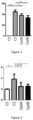
- Figure 1 shows the effect of Compound A (CpdA) and Compound B (CpdB) on CCl 4 induced necrosis in the liver.
- Figure 2 shows the F4/80 glycoprotein stained area fraction [%] observed in liver samples from the animals tested.
- the F4/80 glycoprotein is a murine macrophage specific cell-surface biomarker.
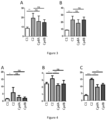
- Figure 3 shows the percentage of neutrophils (panel A) and of monocytes (panel B) in total leucocyte cell population of blood samples obtained from the tested animals.
- Figure 4 shows the percentage of neutrophils (panel A), of monocytes (panel B) and of monocytic macrophages (MoMF, panel C) in total leucocyte cell population of liver samples obtained from the tested animals.
- the methionine and choline deficient (MCD) diet model is used to produce a severe phenotype of NASH in a time (Santhekadur et al., 2017), and is used to evaluate the compounds of the invention.
- mice At induction, 8 weeks-old male C57BL/6 mice (Janvier Labs, France) maintained at 22°C ⁇ 2°C and humidity at 55% ⁇ 10%, with a 12-hrs dark/light cycle are fed a standard diet (chow (A04C-10, Safe, France) or a Methionine and Choline-deficient (MCD) diet (EFTD.90262, Ssniff, Soest, Germany) for 8 weeks. All animals have access to filtered tap drinking water.
- a standard diet chow (A04C-10, Safe, France
- MCD Methionine and Choline-deficient
- test group animals are dosed with the a test compound, i.e. Compound A (CpdA) or Compound B (CpdB), at 30 mg/kg, q.d., p.o. formulated in methylcellulose 0.5%, 1 equivalent HCl.
- the control groups receives a similar volume of vehicle (10 mL/kg), i.e. the standard diet for control group 1 (C1) and the MCD diet for control group 2 (C2). Mice are randomly assigned to a treatment group according to their body weight in order to ensure a homogenous repartition.
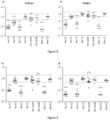
- Figure 5 shows the necrotic area fraction [%] observed in liver samples obtained from the tested animals.
- Figure 6 shows the F4/80 stained area fraction [%] observed in liver samples.
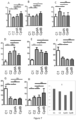
- Figure 7 shows Fluorescence-activated cell sorting (FACS) results measured in blood and liver samples obtained from animals in control group 1 (C1), control group 2 (C2), test group dosed with Compound A (CpdA) and test group dosed with Compound B (CpdB) for CD4 cells (Panel A), CD8 cells (Panel B), Blood monocyte (Panel C), Liver neutrophils cells (Panel D), Liver infiltrating monocyte-derived macrophage (MoMF) cells (Panel E), Liver CD19 cells (Panel F), Liver Natural Killer (NK) cells (Panel G), Liver Natural Killer T (NKT) cells (Panel H), and liver Kupfer cells (Panel I).
- Figure 8 shows gene expression of Col1
- test compound After sacrifice (week 8), the activity of the test compound on the development of NASH is assessed by plasma ALT and AST levels and in liver by histopathological examination of fibrosis and steatosis (Sirius red, Oil Red O), collagen (OH-Pro) and triglycerides content and expression of fibrotic and inflammatory genes.
- NAS score is determined to further evaluate the compounds with respect to their effect on diet induced NASH.
- the nonalcoholic fatty liver disease activity scoring (NAS) has been proposed and accepted as a tool to measure changes in NAFLD during therapeutic trials (Brunt et al., 2011; Kleiner et al., 2005).
- the NAS score (0-8) is defined as the sum of the steatosis score (0-3), lobular inflammation score (0-3), ballooning score (0-2).
- a NAS score of ⁇ 5 is indicative of a NASH diagnostic.
- Figure 10 shows NAS scores as obtained in tested animals. Table I.
- the choline-deficient, L-amino acid-defined, high-fat diet (CDAHFD) dietary model is another model that develops steatohepatitis, liver fibrosis and hepatocarcinogenesis similar to MCD diet (Santhekadur et al., 2017) and is used to evaluate the compounds of the invention.
- mice At induction, 8 weeks-old male C57BL/6 mice (Janvier Labs, France) maintained at 22°C ⁇ 2°C and humidity at 55% ⁇ 10%, with a 12-hrs dark/light cycle are fed a standard chow diet (A04C-10, SAFE, France) or choline deficient diet with 0.1% methionine (CDAHF) diet (A06071302, Research Diet, USA) for 8 weeks. All animals have access to filtered tap drinking water.
- a standard chow diet A04C-10, SAFE, France
- CDAHF methionine
- mice are randomly assigned to a treatment group according to their body weight in order to ensure a homogenous repartition.
- Test group animals are dosed with the test compound, i.e. Compound A (CpdA), at 30 mg/kg, q.d., p.o. formulated in methylcellulose 0.5%, 1 equivalent HCl.
- the control groups receives a similar volume of vehicle (10 mL/kg), i.e. the standard diet for control group 1 (C1) and the CDAHF diet for control groups 2 (C2, 8 weeks) and the CDAHF diet + Elafibranor dosed at 30 mg/kg, q.d., p.o. formulated in 0.1% Tween 80 + 1% methyl cellulose + 98.9% water (CpdC, 10 weeks).
- Fibrosis (Sirius red area %) - Figure 11 Chow diet 10W - vehicle CDAHFD 8W - vehicle CDAHFD 10W - vehicle CDAHFD 10W - CpdC CDAHFD 10W - Compound A (CpdA) 0.09 0.67 1.10 0.52 0.97 0.02 0.45 1.07 0.32 0.59 0.04 0.40 0.68 0.45 0.53 0.04 0.58 0.84 0.19 0.89 0.03 0.66 0.82 0.41 0.77 0.05 1.01 0.55 0.75 0.46 0.04 0.56 1.06 0.55 0.67 0.04 0.89 2.09 0.32 0.53 0.06 0.42 0.96 0.26 0.80 0.06 0.48 1.55 nd 0.64 nd: not determined Table VII.
- Col1a1 expression profiles (NRQ-scaled versus Disease-Vehicle) - Fig 12 panel A Chow diet 10W - vehicle CDAHFD 8W - vehicle CDAHFD 10W - vehicle CDAHFD 10W - CpdC CDAHFD 10W - Compound A (CpdA) 0.01 1.01 0.82 0.61 0.12 0.02 0.80 1.57 0.17 0.26 0.06 1.54 0.67 0.07 1.76 0.11 0.70 1.79 0.06 0.36 0.04 0.13 2.08 nd 0.49 0.12 0.09 1.16 0.48 0.35 0.13 0.63 0.19 0.15 0.43 0.05 0.74 0.41 0.09 0.38 0.02 0.21 1.30 0.43 0.10 0.02 0.78 2.72 nd 0.18 nd: not determined Table VIII.
- TNF ⁇ expression profiles (NRQ-scaled versus Disease-Vehicle) - Figure 12 panel B Chow diet 10W - vehicle CDAHFD 8W - vehicle CDAHFD 10W - vehicle CDAHFD 10W - CpdC CDAHFD 10W - Compound A (CpdA) 0.09 0.67 1.10 0.52 0.97 0.02 0.45 1.07 0.32 0.59 0.04 0.40 0.68 0.45 0.53 0.04 0.58 0.84 0.19 0.89 0.03 0.66 0.82 0.41 0.77 0.05 1.01 0.55 0.75 0.46 0.04 0.56 1.06 0.55 0.67 0.04 0.89 2.09 0.32 0.53 0.06 0.42 0.96 0.26 0.80 0.06 0.48 1.55 nd 0.64 nd: not determined
- the aim of the study is to test the efficacy of a test compound at three different doses in a 21-day model of bleomycin induced pulmonary fibrosis in mice.
- mice from Charles River 11 week-old C57BL/6N male mice from Charles River (Italy) are maintained on 12 h light/dark cycle at 22 °C with ad libidum access to tap water and food.
- mice in groups 2-4 receive a 1.5 U/kg oropharyngeal administration of bleomycin (BLM) to induce pulmonary fibrosis.
- Animals in group 1 are not administered bleomycin, but instead receive a single dose of saline via the oropharyngeal route, and are considered sham control mice. Table IX.
- PV loops between 0 and 30 cm H 2 O are generated to obtain Total Lung Capacity (A).
- a snapshot perturbation maneuver is imposed, which is a threefold sinusoidal wave of in- and expiration controlled by the ventilator, resulting in resistance (Rrs), compliance (Crs), and elastance (Ers) of the whole respiratory system (airways, lung and chest wall).
- Rrs resistance
- Crs compliance
- Ers elastance
- mice are sacrificed by anesthetic overdose.
- the lungs are excised and weighed individually.
- the lungs are then placed into marked bottles containing 10% buffered formalin for further histopathological evaluation.
- Body weight data and lung weight data are processed using MS Excel. Statistical analysis and graphical presentation are performed using GraphPad Prism software (version 5.04).
- Pulmonary histological changes are assessed using Matsuse's modification of Ashcroft score (Ashcroft et al., 1988; Matsuse et al., 1999). Statistical analysis and graphical presentation is performed using GraphPad Prism software (version 5.04). Mann-Whitney test is employed.
- Ashcroft Score 1 Normal lungs (no fibrosis) 2 Minimal fibrotic thickening of alveolar or bronchial walls (network of fine collagen fibrils) 3 Moderate fibrotic thickening of walls without obvious damage to lung architecture 4 Fibrosis with damage of pulmonary structure (coarse fibrous bands or small fibrous masses, intra-alveolar collagen fibrils) 5 Large fibrous area with severe distortion of lung structure Table X.
- Pneumonitis and lung fibrosis are the major radiation-induced complications following thoracic radiotherapy, which is one of the major treatment of lung and breast cancers, lymphomas and hematopoietic transplant conditioning.
- the objective of this model is to evaluate the effect of a compound of the invention in lung fibrosis induced by radiation in mice.
- Table XIV. Study groups Groups Purpose n Dose Treatment schedule Days (Frequency) Route Vehicle 1 Sham + vehicle control 10 - D1-D14 (QD) PO 0.1% Natrosol 2 Irradiated + vehicle control 12 - D1-D14 (QD) PO 0.1% Natrosol 3 Irradiated + nintedanib control 12 60 mg/kg D1-D14 (QD) PO 0.1% Natrosol 4 BLM + CpdA active 12 30 mg/kg D1-D14 (QD) PO 0.5% methylcellulose
- test compounds are dissolved/suspended in appropriate vehicle prior to using and then kept light-free, under agitation at room temperature.
- An aliquot of the formulation (approx. 200 ⁇ L) is frozen at T0 (day of preparation) and all the formulations are checked (daily) for any change in aspect.
- the dose volume administered is 10 mL/kg and the volume is adapted following mean body weight (BW) of the group as follows: 200 ⁇ L if mean BW ⁇ 22.5 g, 250 ⁇ L if mean BW ⁇ 22.5 g; 300 ⁇ L if mean BW > 27.5 g.
- BW mean body weight
- mice are randomized into 4 study groups (12 subjects per group, except sham group: 10 subjects): 1) sham (vehicle: methylcellulose 0.5%), 2) diseased (vehicle: methylcellulose 0.5%), 3) positive control (nintedanib 60 mg/kg in 0.1% Natrosol), and 4) test compound (30 mg/kg CpdA in 0.5% methylcellulose), and dosed p.o. q.d until Day 14 (week 21).
- mice Values for all mice from the same group are averaged. Data are expressed as mean ⁇ sem and are compared with a one-way ANOVA followed by Dunnett multiple comparison post hoc test.
- Oxidative stress is a key player in the pathogenesis of IPF (Matsuzawa et al., 2015) and fibrosis (Richter and Kietzmann, 2016).
- MnSOD Manganese superoxide dismutase
- the lungs are collected and fixed in 4% formaldehyde for 24 h before embedding in paraffin.
- 4 ⁇ m thick sections are immunostained with anti-MnSOD antibody (Enzo Life Sciences, Inc., Cat. N°: ADI-SOD110).
- the sections are deparaffinized and processed by heat-induced antigen retrieval before incubation one hour with the anti-MnSOD primary antibody.
- the anti-MnSOD antibody is detected by an anti-rabbit biotinylated antibody (Vector Laboratories, Cat. N°: BA-1100) amplified by avidin-biotin peroxidase (Vector Laboratories, Cat. N°: PK-6100).
- the peroxidase is revealed with DAB substrate (Sigma, Cat. N°: D5905) and 0.025% hydrogen peroxide.
- the immunostained sections counterstained with Gill's hematoxylin are then scanned (Nanozoomer 2.0HT, Hamamatsu) before quantification by image analysis (CaloPix software, TRIBVN Healthcare). Data are expressed as percentage MnSOD stained area per area of lung tissue.
- the study of the current example is a randomized, double-blind, parallel group, placebo-controlled, multicenter, Phase II study to evaluate the efficacy, safety and tolerability of Compound A in subjects with idiopathic pulmonary fibrosis (IPF).
- IPF idiopathic pulmonary fibrosis
- the primary objective of this study is to evaluate the efficacy of Compound A treatment in subjects with IPF on pulmonary function as evaluated by FVC compared to placebo over 26 weeks.
- Primary outcome measure is:
Landscapes
- Health & Medical Sciences (AREA)
- Chemical & Material Sciences (AREA)
- Animal Behavior & Ethology (AREA)
- Pharmacology & Pharmacy (AREA)
- Life Sciences & Earth Sciences (AREA)
- General Health & Medical Sciences (AREA)
- Public Health (AREA)
- Veterinary Medicine (AREA)
- Medicinal Chemistry (AREA)
- Epidemiology (AREA)
- Chemical Kinetics & Catalysis (AREA)
- General Chemical & Material Sciences (AREA)
- Engineering & Computer Science (AREA)
- Bioinformatics & Cheminformatics (AREA)
- Nuclear Medicine, Radiotherapy & Molecular Imaging (AREA)
- Organic Chemistry (AREA)
- Gastroenterology & Hepatology (AREA)
- Pulmonology (AREA)
- Dermatology (AREA)
- Oil, Petroleum & Natural Gas (AREA)
- Inorganic Chemistry (AREA)
- Pharmaceuticals Containing Other Organic And Inorganic Compounds (AREA)
- Nitrogen Condensed Heterocyclic Rings (AREA)
- Medicines That Contain Protein Lipid Enzymes And Other Medicines (AREA)
- Acyclic And Carbocyclic Compounds In Medicinal Compositions (AREA)
- Peptides Or Proteins (AREA)
Applications Claiming Priority (4)
| Application Number | Priority Date | Filing Date | Title |
|---|---|---|---|
| GBGB1718838.4A GB201718838D0 (en) | 2017-11-15 | 2017-11-15 | Compounds and pharmaceutical compositions thereof for use in the treatment of fibrotic diseases |
| GBGB1817346.8A GB201817346D0 (en) | 2018-10-25 | 2018-10-25 | Compounds and pharmaceutical compositions thereof for use in the treatment of diseases |
| PCT/EP2018/081457 WO2019096944A1 (en) | 2017-11-15 | 2018-11-15 | Compounds and pharmaceutical compositions thereof for use in the treatment of fibrotic diseases |
| EP18822268.1A EP3710004A1 (en) | 2017-11-15 | 2018-11-15 | Compounds and pharmaceutical compositions thereof for use in the treatment of fibrotic diseases |
Related Parent Applications (1)
| Application Number | Title | Priority Date | Filing Date |
|---|---|---|---|
| EP18822268.1A Division EP3710004A1 (en) | 2017-11-15 | 2018-11-15 | Compounds and pharmaceutical compositions thereof for use in the treatment of fibrotic diseases |
Publications (1)
| Publication Number | Publication Date |
|---|---|
| EP4186507A1 true EP4186507A1 (en) | 2023-05-31 |
Family
ID=64746511
Family Applications (2)
| Application Number | Title | Priority Date | Filing Date |
|---|---|---|---|
| EP23150594.2A Withdrawn EP4186507A1 (en) | 2017-11-15 | 2018-11-15 | Compounds and pharmaceutical compositions thereof for use in the treatment of fibrotic diseases |
| EP18822268.1A Withdrawn EP3710004A1 (en) | 2017-11-15 | 2018-11-15 | Compounds and pharmaceutical compositions thereof for use in the treatment of fibrotic diseases |
Family Applications After (1)
| Application Number | Title | Priority Date | Filing Date |
|---|---|---|---|
| EP18822268.1A Withdrawn EP3710004A1 (en) | 2017-11-15 | 2018-11-15 | Compounds and pharmaceutical compositions thereof for use in the treatment of fibrotic diseases |
Country Status (16)
| Country | Link |
|---|---|
| US (2) | US20210106582A1 (https=) |
| EP (2) | EP4186507A1 (https=) |
| JP (1) | JP2021502987A (https=) |
| KR (1) | KR20200088844A (https=) |
| CN (1) | CN111343986A (https=) |
| AU (1) | AU2018367193A1 (https=) |
| BR (1) | BR112020008425A2 (https=) |
| CA (1) | CA3082742A1 (https=) |
| CO (1) | CO2020005919A2 (https=) |
| IL (1) | IL274578A (https=) |
| MA (1) | MA50905A (https=) |
| MX (1) | MX2020004810A (https=) |
| PH (1) | PH12020550616A1 (https=) |
| RU (1) | RU2020119415A (https=) |
| SG (1) | SG11202004408YA (https=) |
| WO (1) | WO2019096944A1 (https=) |
Families Citing this family (9)
| Publication number | Priority date | Publication date | Assignee | Title |
|---|---|---|---|---|
| WO2021123394A1 (en) | 2019-12-20 | 2021-06-24 | University Of Copenhagen | G protein-coupled receptor modulators and a pharmaceutical composition |
| WO2022112186A1 (en) | 2020-11-24 | 2022-06-02 | Galapagos Nv | Compound for use in and methods of treatment of fibrotic diseases |
| US12378229B2 (en) | 2021-02-02 | 2025-08-05 | Liminal Biosciences Limited | GPR84 antagonists and uses thereof |
| CN115109072A (zh) * | 2021-03-18 | 2022-09-27 | 武汉人福创新药物研发中心有限公司 | 一种gpr84拮抗剂及其制备方法和用途 |
| WO2022218372A1 (zh) * | 2021-04-14 | 2022-10-20 | 武汉人福创新药物研发中心有限公司 | 一种二氢嘧啶并异喹啉酮类衍生物及用途 |
| EP4355743A1 (en) | 2021-06-18 | 2024-04-24 | University of Copenhagen | Polysubstituted 4-hydroxypyridine and 4-hydroxyquinoline derivatives as gpr84 antagonists |
| WO2022268088A1 (zh) * | 2021-06-21 | 2022-12-29 | 武汉人福创新药物研发中心有限公司 | 用于gpr84拮抗剂的三环化合物 |
| EP4698177A2 (en) * | 2023-04-17 | 2026-02-25 | The Board of Trustees of the Leland Stanford Junior University | Method for detecting innate immune action in vivo using gpr84-pet |
| CN119591596B (zh) * | 2024-12-04 | 2025-10-17 | 沈阳药科大学 | 4,5-二氢-3H-吡咯并[2,3-c]喹啉-4-酮衍生物及其应用 |
Citations (7)
| Publication number | Priority date | Publication date | Assignee | Title |
|---|---|---|---|---|
| WO2013092791A1 (en) | 2011-12-22 | 2013-06-27 | Galapagos Nv | Novel dihydropyrimidinoisoquinolinones and pharmaceutical compositions thereof for the treatment of inflammatory disorders |
| WO2014095798A1 (en) | 2012-12-20 | 2014-06-26 | Galapagos Nv | Novel dihydropyrimidinoisoquinolinones and pharmaceutical compositions thereof for the treatment of inflammatory disorders (gpr84 antagonists) |
| WO2014139882A1 (en) | 2013-03-14 | 2014-09-18 | Galapagos Nv | Compounds and pharmaceutical compositions thereof for the treatment of inflammatory disorders |
| WO2014138907A1 (en) * | 2013-03-15 | 2014-09-18 | Prometic Biosciences Inc. | Substituted aromatic compounds for the treatment of pulmonary fibrosis, liver fibrosis, skin fibrosis and cardiac fibrosis |
| WO2015197550A1 (en) | 2014-06-25 | 2015-12-30 | Galapagos Nv | Novel dihydropyridoisoquinolinones and pharmaceutical compositions thereof for the treatment of inflammatory disorders |
| WO2016169911A1 (en) | 2015-04-23 | 2016-10-27 | Galapagos Nv | Novel dihydropyridoisoquinolinones and pharmaceutical compositions thereof for the treatment of inflammatory disorders |
| WO2017148787A1 (en) | 2016-03-04 | 2017-09-08 | Galapagos Nv | Novel compounds and pharmaceutical compositions thereof for the treatment of fibrosis |
-
2018
- 2018-11-15 RU RU2020119415A patent/RU2020119415A/ru unknown
- 2018-11-15 AU AU2018367193A patent/AU2018367193A1/en not_active Abandoned
- 2018-11-15 WO PCT/EP2018/081457 patent/WO2019096944A1/en not_active Ceased
- 2018-11-15 MX MX2020004810A patent/MX2020004810A/es unknown
- 2018-11-15 SG SG11202004408YA patent/SG11202004408YA/en unknown
- 2018-11-15 CN CN201880074060.4A patent/CN111343986A/zh active Pending
- 2018-11-15 US US16/764,489 patent/US20210106582A1/en not_active Abandoned
- 2018-11-15 EP EP23150594.2A patent/EP4186507A1/en not_active Withdrawn
- 2018-11-15 MA MA050905A patent/MA50905A/fr unknown
- 2018-11-15 KR KR1020207016903A patent/KR20200088844A/ko not_active Ceased
- 2018-11-15 CA CA3082742A patent/CA3082742A1/en active Pending
- 2018-11-15 JP JP2020526530A patent/JP2021502987A/ja active Pending
- 2018-11-15 EP EP18822268.1A patent/EP3710004A1/en not_active Withdrawn
- 2018-11-15 BR BR112020008425-5A patent/BR112020008425A2/pt not_active IP Right Cessation
-
2020
- 2020-05-11 IL IL274578A patent/IL274578A/en unknown
- 2020-05-12 PH PH12020550616A patent/PH12020550616A1/en unknown
- 2020-05-14 CO CONC2020/0005919A patent/CO2020005919A2/es unknown
-
2022
- 2022-11-04 US US17/981,220 patent/US20230241068A1/en not_active Abandoned
Patent Citations (7)
| Publication number | Priority date | Publication date | Assignee | Title |
|---|---|---|---|---|
| WO2013092791A1 (en) | 2011-12-22 | 2013-06-27 | Galapagos Nv | Novel dihydropyrimidinoisoquinolinones and pharmaceutical compositions thereof for the treatment of inflammatory disorders |
| WO2014095798A1 (en) | 2012-12-20 | 2014-06-26 | Galapagos Nv | Novel dihydropyrimidinoisoquinolinones and pharmaceutical compositions thereof for the treatment of inflammatory disorders (gpr84 antagonists) |
| WO2014139882A1 (en) | 2013-03-14 | 2014-09-18 | Galapagos Nv | Compounds and pharmaceutical compositions thereof for the treatment of inflammatory disorders |
| WO2014138907A1 (en) * | 2013-03-15 | 2014-09-18 | Prometic Biosciences Inc. | Substituted aromatic compounds for the treatment of pulmonary fibrosis, liver fibrosis, skin fibrosis and cardiac fibrosis |
| WO2015197550A1 (en) | 2014-06-25 | 2015-12-30 | Galapagos Nv | Novel dihydropyridoisoquinolinones and pharmaceutical compositions thereof for the treatment of inflammatory disorders |
| WO2016169911A1 (en) | 2015-04-23 | 2016-10-27 | Galapagos Nv | Novel dihydropyridoisoquinolinones and pharmaceutical compositions thereof for the treatment of inflammatory disorders |
| WO2017148787A1 (en) | 2016-03-04 | 2017-09-08 | Galapagos Nv | Novel compounds and pharmaceutical compositions thereof for the treatment of fibrosis |
Non-Patent Citations (25)
| Title |
|---|
| "Remington's Pharmaceutical Sciences", 1985, MACK PUBLISHING COMPANY |
| ASHCROFT, T.SIMPSON, J.M.TIMBRELL, V.: "Simple method of estimating severity of pulmonary fibrosis on a numerical scale", J. CLIN. PATHOL., vol. 41, 1988, pages 467 - 470 |
| BICKELHAUPT, S.ERBEL, C.TIMKE, C.WIRKNER, U.DADRICH, M.FLECHSIG, P.TIETZ, A.PFOHLER, J.GROSS, WPESCHKE, P.: "Effects of CTGF Blockade on Attenuation and Reversal of Radiation-Induced Pulmonary Fibrosis", JNCI J. NATL. CANCER INST., vol. 109, 2017, Retrieved from the Internet <URL:https://doi.org/10.1093/jnci/djw339> |
| BRUNNEMER, E.WALSCHER, J.TENENBAUM, SHAUSMANNS, J.SCHULZE, K.SETTER, M.HEUSSEL, C.P.WARTH, A.HERTH, F.J.F.KREUTER, M.: "Real-World Experience with Nintedanib in Patients with Idiopathic Pulmonary Fibrosis", RESPIRATION, vol. 95, 2018, pages 301 - 309, Retrieved from the Internet <URL:https://doi.org/10.1159/000485933> |
| BRUNT, E.MKLEINER, D.E.WILSON, L.A.BELT, P.NEUSCHWANDER-TETRI, B.A.: "The NAS and The Histopathologic Diagnosis in NAFLD: Distinct Clinicopathologic Meanings", HEPATOL. BALTIM. MD, vol. 53, 2011, pages 810 - 820, XP071566713, Retrieved from the Internet <URL:https://doi.org/10.1002/hep.24127> DOI: 10.1002/hep.24127 |
| DAY, C.P.JAMES, O.F.W.: "Hepatic steatosis: Innocent bystander or guilty party?", HEPATOLOGY, vol. 27, 1998, pages 1463 - 1466, XP071557405, Retrieved from the Internet <URL:https://doi.org/10.1002/hep.510270601> DOI: 10.1002/hep.510270601 |
| DEVOS, F.C.MAASKE, A.ROBICHAUD, A.POLLARIS, L.SEYS, S.LOPEZ, C.A.VERBEKEN, ETENBUSCH, M.LORIES, R.NEMERY, B.: "Forced expiration measurements in mouse models of obstructive and restrictive lung diseases", RESPIR. RES, vol. 18, 2017, pages 123, Retrieved from the Internet <URL:https://doi.org/10.1186/s12931-017-0610-1> |
| FUJII, T.FUCHS, B.CYAMADA, S.LAUWERS, G.Y.KULU, Y.GOODWIN, J.M.LANUTI, MTANABE, K.K.: "Mouse model of carbon tetrachloride induced liver fibrosis: Histopathological changes and expression of CD133 and epidermal growth factor", BMC GASTROENTEROL, vol. 10, 2010, pages 79, XP021074101, Retrieved from the Internet <URL:https://doi.org/10.1186/1471-230X-10-79> DOI: 10.1186/1471-230X-10-79 |
| INGHILLERI, S.MORBINI, P.OGGIONNI, T.BARNI, S.FENOGLIO, C.: "In situ assessment of oxidant and nitrogenic stress in bleomycin pulmonary fibrosis. Histochem", CELL BIOL., vol. 125, 2006, pages 661 - 669, XP019426990, Retrieved from the Internet <URL:https://doi.org/10.1007/s00418-005-0116-7> |
| KLEINER, D.E.BRUNT, E.M.VAN NATTA, M.BEHLING, C.CONTOS, M.J.CUMMINGS, O.W.FERRELL, L.D.LIU, Y.-C.TORBENSON, M.S.UNALP-ARIDA, A.: "Nonalcoholic Steatohepatitis Clinical Research Network, 2005. Design and validation of a histological scoring system for nonalcoholic fatty liver disease", HEPATOL. BALTIM. MD, vol. 41, pages 1313 - 1321, Retrieved from the Internet <URL:https://doi.org/10.1002/hep.20701> |
| LANCASTER, L.H.ANDRADE, J.A. DEZIBRAK, J.D.PADILLA, M.L.ALBERA, C.NATHAN, S.D.WIJSENBEEK, M.S.STAUFFER, J.L.KIRCHGAESSLER, K.-U.CO: "Pirfenidone safety and adverse event management in idiopathic pulmonary fibrosis", EUR. RESPIR. REV., vol. 26, 2017, pages 170057, Retrieved from the Internet <URL:https://doi.org/10.1183/16000617.0057-2017> |
| MARRA, F.DEFRANCO, R.GRAPPONE, C.MILANI, SPASTACALDI, SPINZANI, M.ROMANELLI, R.G.LAFFI, G.GENTILINI, P: "Increased expression of monocyte chemotactic protein-1 during active hepatic fibrogenesis: correlation with monocyte infiltration", AM. J. PATHOL., vol. 152, 1998, pages 423 - 430, XP002907288 |
| MATSUSE, T.TERAMOTO, S.KATAYAMA, H.SUDO, E.EKIMOTO, H.MITSUHASHI, H.UEJIMA, Y.FUKUCHI, Y.OUCHI, Y: "ICAM-1 mediates lung leukocyte recruitment but not pulmonary fibrosis in a murine model of bleomycin-induced lung injury", EUR. RESPIR. J., vol. 13, 1999, pages 71 - 77 |
| MATSUZAWA, Y.KAWASHIMA, T.KUWABARA, R.HAYAKAWA, S.IRIE, T.YOSHIDA, T.RIKITAKE, H.WAKABAYASHI, T.OKADA, N.KAWASHIMA, K.: "Change in serum marker of oxidative stress in the progression of idiopathic pulmonary fibrosis", PULM. PHARMACOL. THER., vol. 32, 2015, pages 1 - 6, Retrieved from the Internet <URL:https://doi.org/10.1016/j.pupt.2015.03.005> |
| MIYAMOTO, J.HASEGAWA, S.KASUBUCHI, M.ICHIMURA, A.NAKAJIMA, A.KIMURA, I.: "Nutritional Signaling via Free Fatty Acid Receptors", INT. J. MOL. SCI., vol. 17, 2016, Retrieved from the Internet <URL:https://doi.org/10.3390/ijms17040450> |
| NANTHAKUMAR, C.B., HATLEY, R.J.D., LEMMA, S., GAULDIE, J., MARSHALL, R.P., MACDONALD, S.J.F.: "Dissecting fibrosis: therapeutic insights from the small-molecule toolbox", NAT. REV. DRUG DISCOV, vol. 14, 2015, pages 693 - 720 |
| NEUSCHWANDER-TETRI, B.A.CALDWELL, S.H.: "Nonalcoholic steatohepatitis: Summary of an AASLD Single Topic Conference", HEPATOLOGY, vol. 37, 2003, pages 1202 - 1219, Retrieved from the Internet <URL:https://doi.org/10.1053/jhep.2003.50193> |
| RICHELDI, LDU BOIS, R.M.RAGHU, G.AZUMA, A.BROWN, K.K.COSTABEL, U.COTTIN, V.FLAHERTY, K.R.HANSELL, D.M.INOUE, Y.: "Efficacy and safety of nintedanib in idiopathic pulmonary fibrosis", N. ENGL. J. MED., vol. 370, 2014, pages 2071 - 2082, XP055753710, Retrieved from the Internet <URL:https://doi.org/10.1056/NEJMoal402584> DOI: 10.1056/NEJMoa1402584 |
| RICHTER, K.KIETZMANN, T.: "Reactive oxygen species and fibrosis: further evidence of a significant liaison", CELL TISSUE RES, vol. 365, 2016, pages 591 - 605, XP036047054, Retrieved from the Internet <URL:https://doi.org/10.1007/s00441-016-2445-3> DOI: 10.1007/s00441-016-2445-3 |
| SANTHEKADUR, P.K.KUMAR, D.P.SANYAL, A.J.: "Preclinical Models of Nonalcoholic Fatty Liver Disease", J. HEPATOL, 2017, Retrieved from the Internet <URL:https://doi.org/10.1016/j.jhep.2017.10.031> |
| SUZUKI, M., TAKAISHI, S., NAGASAKI, M., ONOZAWA, Y., IINO, I., MAEDA, H., KOMAI, T., ODA, T.: "Medium-chain Fatty Acid-sensing Receptor, GPR84, Is a Proinflammatory Receptor", J. BIOL., 2013, pages 10684 - 10691, XP055380050, Retrieved from the Internet <URL:https://doi.org/10.1074/jbc.M112.420042> DOI: 10.1074/jbc.M112.420042 |
| WANG, J.WU, X.SIMONAVICIUS, N.TIAN, HLING, L.: "Medium-chain Fatty Acids as Ligands for Orphan G Protein-coupled Receptor GPR84", J. BIOL. CHEM., vol. 281, 2006, pages 34457 - 34464, XP002546609, Retrieved from the Internet <URL:https://doi.org/10.1074/jbc.M608019200> DOI: 10.1074/jbc.M608019200 |
| WITTENBERGER, T.SCHALLER, H.C.HELLEBRAND, S.: "An expressed sequence tag (EST) data mining strategy succeeding in the discovery of new G-protein coupled receptors", J. MOL. BIOL., vol. 307, 2001, pages 799 - 813, XP004464166, Retrieved from the Internet <URL:https://doi.org/10.1006/jmbi.2001.4520> DOI: 10.1006/jmbi.2001.4520 |
| YOUSEFI, S.COOPER, P.R.POTTER, S.LMUECK, B.JARAI, G.: "Cloning and expression analysis of a novel G-protein-coupled receptor selectively expressed on granulocytes", J. LEUKOC. BIOL., vol. 69, 2001, pages 1045 - 1052 |
| ZIMMERMANN, H.WSEIDLER, S.NATTERMANN, J.GASSLER, N.HELLERBRAND, C.ZERNECKE, A.TISCHENDORF, J.J.W.LUEDDE, T.WEISKIRCHEN, R.TRAUTWEI: "Functional Contribution of Elevated Circulating and Hepatic Non-Classical CD 14+CD 16+ Monocytes to Inflammation and Human Liver Fibrosis", PLOS ONE, vol. 5, 2010, pages e11049, Retrieved from the Internet <URL:https://doi.org/10.1371/journal.pone.0011049> |
Also Published As
| Publication number | Publication date |
|---|---|
| IL274578A (en) | 2020-06-30 |
| US20210106582A1 (en) | 2021-04-15 |
| US20230241068A1 (en) | 2023-08-03 |
| AU2018367193A1 (en) | 2020-07-02 |
| CN111343986A (zh) | 2020-06-26 |
| CA3082742A1 (en) | 2019-05-23 |
| MX2020004810A (es) | 2020-08-13 |
| SG11202004408YA (en) | 2020-06-29 |
| CO2020005919A2 (es) | 2020-05-29 |
| EP3710004A1 (en) | 2020-09-23 |
| RU2020119415A (ru) | 2021-12-16 |
| BR112020008425A2 (pt) | 2020-11-17 |
| KR20200088844A (ko) | 2020-07-23 |
| MA50905A (fr) | 2020-09-23 |
| WO2019096944A1 (en) | 2019-05-23 |
| JP2021502987A (ja) | 2021-02-04 |
| PH12020550616A1 (en) | 2021-03-01 |
Similar Documents
| Publication | Publication Date | Title |
|---|---|---|
| US20230241068A1 (en) | Compounds and pharmaceutical compositions thereof for use in the treatment of fibrotic diseases | |
| EP3601281B1 (en) | CRYSTALLINE FORMS OF 4-(1-(1,1-DI(PYRIDIN-2-YL)ETHYL)-6-(3,5-DIMETHYLISOXAZOL-4-YL)-1H-&#xA;PYRROLO[3,2-B]PYRIDIN-3-YL)BENZOIC ACID THAT INHIBITS BROMODOMAIN | |
| RU2303038C2 (ru) | Азаиндолоксоуксусные производные пиперазины и фармацевтическая композиция на их основе | |
| CA3077499C (en) | P38 kinase inhibitors reduce dux4 and downstream gene expression for the treatment of fshd | |
| TW202110839A (zh) | 用於疾病之治療之新穎化合物及其醫藥組合物 | |
| EP2431025A1 (en) | Capsule formulation of pirfenidone and pharmaceutically acceptable excipients | |
| CN101229164B (zh) | 含氮杂吲哚氧代乙酰哌嗪衍生物的药物制剂 | |
| AU2016384267B2 (en) | Orvepitant for the treatment of chronic cough | |
| US9907795B2 (en) | Method of treatment of chronic cough administering orvepitant in combination with other therapeutic agents | |
| EP2719697A1 (en) | Pyridonaphthyridine pi3k/mtor dual inhibitors and preparation and use thereof | |
| JP2019504054A (ja) | キノリン系化合物の塩、その結晶形、調製方法、組成物及び用途 | |
| US20240360135A1 (en) | Imidazo[1,2-b]pyridazinyl compounds and uses thereof | |
| EP4251160A1 (en) | Compound for use in and methods of treatment of fibrotic diseases | |
| JP2024516021A (ja) | 線維化症の予防または治療用薬学的組成物 | |
| WO2025101652A1 (en) | Selective mammalian sterile 20-like kinase 1 (mst1) modulator compounds as therapeutics for diabetes and liver regeneration | |
| HK40096647A (zh) | 用於预防或治疗纤维化的药物组合物 | |
| CN101137379A (zh) | 用于治疗医学病症的cxcr4拮抗剂 | |
| WO2004005259A1 (ja) | 置換ヒドロキシピリジン化合物のドラッグデリバリーシステムおよび置換ヒドロキシピリジン化合物の抱合体 |
Legal Events
| Date | Code | Title | Description |
|---|---|---|---|
| PUAI | Public reference made under article 153(3) epc to a published international application that has entered the european phase |
Free format text: ORIGINAL CODE: 0009012 |
|
| STAA | Information on the status of an ep patent application or granted ep patent |
Free format text: STATUS: THE APPLICATION HAS BEEN PUBLISHED |
|
| AC | Divisional application: reference to earlier application |
Ref document number: 3710004 Country of ref document: EP Kind code of ref document: P |
|
| AK | Designated contracting states |
Kind code of ref document: A1 Designated state(s): AL AT BE BG CH CY CZ DE DK EE ES FI FR GB GR HR HU IE IS IT LI LT LU LV MC MK MT NL NO PL PT RO RS SE SI SK SM TR |
|
| STAA | Information on the status of an ep patent application or granted ep patent |
Free format text: STATUS: REQUEST FOR EXAMINATION WAS MADE |
|
| 17P | Request for examination filed |
Effective date: 20231130 |
|
| RBV | Designated contracting states (corrected) |
Designated state(s): AL AT BE BG CH CY CZ DE DK EE ES FI FR GB GR HR HU IE IS IT LI LT LU LV MC MK MT NL NO PL PT RO RS SE SI SK SM TR |
|
| STAA | Information on the status of an ep patent application or granted ep patent |
Free format text: STATUS: THE APPLICATION IS DEEMED TO BE WITHDRAWN |
|
| 18D | Application deemed to be withdrawn |
Effective date: 20250603 |