EP4180549B1 - Legierung auf eisenbasis zur schmelzeverfestigungs-formung und metallpulver - Google Patents
Legierung auf eisenbasis zur schmelzeverfestigungs-formung und metallpulver Download PDFInfo
- Publication number
- EP4180549B1 EP4180549B1 EP22206707.6A EP22206707A EP4180549B1 EP 4180549 B1 EP4180549 B1 EP 4180549B1 EP 22206707 A EP22206707 A EP 22206707A EP 4180549 B1 EP4180549 B1 EP 4180549B1
- Authority
- EP
- European Patent Office
- Prior art keywords
- mass
- metal powder
- melt
- solidification
- amount
- Prior art date
- Legal status (The legal status is an assumption and is not a legal conclusion. Google has not performed a legal analysis and makes no representation as to the accuracy of the status listed.)
- Active
Links
Images

Classifications
-
- C—CHEMISTRY; METALLURGY
- C22—METALLURGY; FERROUS OR NON-FERROUS ALLOYS; TREATMENT OF ALLOYS OR NON-FERROUS METALS
- C22C—ALLOYS
- C22C38/00—Ferrous alloys, e.g. steel alloys
- C22C38/18—Ferrous alloys, e.g. steel alloys containing chromium
- C22C38/40—Ferrous alloys, e.g. steel alloys containing chromium with nickel
-
- B—PERFORMING OPERATIONS; TRANSPORTING
- B22—CASTING; POWDER METALLURGY
- B22F—WORKING METALLIC POWDER; MANUFACTURE OF ARTICLES FROM METALLIC POWDER; MAKING METALLIC POWDER; APPARATUS OR DEVICES SPECIALLY ADAPTED FOR METALLIC POWDER
- B22F1/00—Metallic powder; Treatment of metallic powder, e.g. to facilitate working or to improve properties
-
- B—PERFORMING OPERATIONS; TRANSPORTING
- B22—CASTING; POWDER METALLURGY
- B22F—WORKING METALLIC POWDER; MANUFACTURE OF ARTICLES FROM METALLIC POWDER; MAKING METALLIC POWDER; APPARATUS OR DEVICES SPECIALLY ADAPTED FOR METALLIC POWDER
- B22F5/00—Manufacture of workpieces or articles from metallic powder characterised by the special shape of the product
- B22F5/007—Manufacture of workpieces or articles from metallic powder characterised by the special shape of the product of moulds
-
- B—PERFORMING OPERATIONS; TRANSPORTING
- B33—ADDITIVE MANUFACTURING TECHNOLOGY
- B33Y—ADDITIVE MANUFACTURING, i.e. MANUFACTURING OF THREE-DIMENSIONAL [3D] OBJECTS BY ADDITIVE DEPOSITION, ADDITIVE AGGLOMERATION OR ADDITIVE LAYERING, e.g. BY 3D PRINTING, STEREOLITHOGRAPHY OR SELECTIVE LASER SINTERING
- B33Y70/00—Materials specially adapted for additive manufacturing
-
- B—PERFORMING OPERATIONS; TRANSPORTING
- B33—ADDITIVE MANUFACTURING TECHNOLOGY
- B33Y—ADDITIVE MANUFACTURING, i.e. MANUFACTURING OF THREE-DIMENSIONAL [3D] OBJECTS BY ADDITIVE DEPOSITION, ADDITIVE AGGLOMERATION OR ADDITIVE LAYERING, e.g. BY 3D PRINTING, STEREOLITHOGRAPHY OR SELECTIVE LASER SINTERING
- B33Y80/00—Products made by additive manufacturing
-
- C—CHEMISTRY; METALLURGY
- C22—METALLURGY; FERROUS OR NON-FERROUS ALLOYS; TREATMENT OF ALLOYS OR NON-FERROUS METALS
- C22C—ALLOYS
- C22C33/00—Making ferrous alloys
- C22C33/02—Making ferrous alloys by powder metallurgy
- C22C33/0257—Making ferrous alloys by powder metallurgy characterised by the range of the alloying elements
-
- C—CHEMISTRY; METALLURGY
- C22—METALLURGY; FERROUS OR NON-FERROUS ALLOYS; TREATMENT OF ALLOYS OR NON-FERROUS METALS
- C22C—ALLOYS
- C22C33/00—Making ferrous alloys
- C22C33/04—Making ferrous alloys by melting
- C22C33/06—Making ferrous alloys by melting using master alloys
-
- C—CHEMISTRY; METALLURGY
- C22—METALLURGY; FERROUS OR NON-FERROUS ALLOYS; TREATMENT OF ALLOYS OR NON-FERROUS METALS
- C22C—ALLOYS
- C22C38/00—Ferrous alloys, e.g. steel alloys
- C22C38/001—Ferrous alloys, e.g. steel alloys containing N
-
- C—CHEMISTRY; METALLURGY
- C22—METALLURGY; FERROUS OR NON-FERROUS ALLOYS; TREATMENT OF ALLOYS OR NON-FERROUS METALS
- C22C—ALLOYS
- C22C38/00—Ferrous alloys, e.g. steel alloys
- C22C38/002—Ferrous alloys, e.g. steel alloys containing In, Mg, or other elements not provided for in one single group C22C38/001 - C22C38/60
-
- C—CHEMISTRY; METALLURGY
- C22—METALLURGY; FERROUS OR NON-FERROUS ALLOYS; TREATMENT OF ALLOYS OR NON-FERROUS METALS
- C22C—ALLOYS
- C22C38/00—Ferrous alloys, e.g. steel alloys
- C22C38/02—Ferrous alloys, e.g. steel alloys containing silicon
-
- C—CHEMISTRY; METALLURGY
- C22—METALLURGY; FERROUS OR NON-FERROUS ALLOYS; TREATMENT OF ALLOYS OR NON-FERROUS METALS
- C22C—ALLOYS
- C22C38/00—Ferrous alloys, e.g. steel alloys
- C22C38/04—Ferrous alloys, e.g. steel alloys containing manganese
-
- C—CHEMISTRY; METALLURGY
- C22—METALLURGY; FERROUS OR NON-FERROUS ALLOYS; TREATMENT OF ALLOYS OR NON-FERROUS METALS
- C22C—ALLOYS
- C22C38/00—Ferrous alloys, e.g. steel alloys
- C22C38/06—Ferrous alloys, e.g. steel alloys containing aluminium
-
- C—CHEMISTRY; METALLURGY
- C22—METALLURGY; FERROUS OR NON-FERROUS ALLOYS; TREATMENT OF ALLOYS OR NON-FERROUS METALS
- C22C—ALLOYS
- C22C38/00—Ferrous alloys, e.g. steel alloys
- C22C38/18—Ferrous alloys, e.g. steel alloys containing chromium
- C22C38/34—Ferrous alloys, e.g. steel alloys containing chromium with more than 1.5% by weight of silicon
-
- C—CHEMISTRY; METALLURGY
- C22—METALLURGY; FERROUS OR NON-FERROUS ALLOYS; TREATMENT OF ALLOYS OR NON-FERROUS METALS
- C22C—ALLOYS
- C22C38/00—Ferrous alloys, e.g. steel alloys
- C22C38/18—Ferrous alloys, e.g. steel alloys containing chromium
- C22C38/40—Ferrous alloys, e.g. steel alloys containing chromium with nickel
- C22C38/42—Ferrous alloys, e.g. steel alloys containing chromium with nickel with copper
-
- C—CHEMISTRY; METALLURGY
- C22—METALLURGY; FERROUS OR NON-FERROUS ALLOYS; TREATMENT OF ALLOYS OR NON-FERROUS METALS
- C22C—ALLOYS
- C22C38/00—Ferrous alloys, e.g. steel alloys
- C22C38/18—Ferrous alloys, e.g. steel alloys containing chromium
- C22C38/40—Ferrous alloys, e.g. steel alloys containing chromium with nickel
- C22C38/44—Ferrous alloys, e.g. steel alloys containing chromium with nickel with molybdenum or tungsten
-
- C—CHEMISTRY; METALLURGY
- C22—METALLURGY; FERROUS OR NON-FERROUS ALLOYS; TREATMENT OF ALLOYS OR NON-FERROUS METALS
- C22C—ALLOYS
- C22C38/00—Ferrous alloys, e.g. steel alloys
- C22C38/18—Ferrous alloys, e.g. steel alloys containing chromium
- C22C38/40—Ferrous alloys, e.g. steel alloys containing chromium with nickel
- C22C38/46—Ferrous alloys, e.g. steel alloys containing chromium with nickel with vanadium
-
- C—CHEMISTRY; METALLURGY
- C22—METALLURGY; FERROUS OR NON-FERROUS ALLOYS; TREATMENT OF ALLOYS OR NON-FERROUS METALS
- C22C—ALLOYS
- C22C38/00—Ferrous alloys, e.g. steel alloys
- C22C38/18—Ferrous alloys, e.g. steel alloys containing chromium
- C22C38/40—Ferrous alloys, e.g. steel alloys containing chromium with nickel
- C22C38/48—Ferrous alloys, e.g. steel alloys containing chromium with nickel with niobium or tantalum
-
- C—CHEMISTRY; METALLURGY
- C22—METALLURGY; FERROUS OR NON-FERROUS ALLOYS; TREATMENT OF ALLOYS OR NON-FERROUS METALS
- C22C—ALLOYS
- C22C38/00—Ferrous alloys, e.g. steel alloys
- C22C38/18—Ferrous alloys, e.g. steel alloys containing chromium
- C22C38/40—Ferrous alloys, e.g. steel alloys containing chromium with nickel
- C22C38/50—Ferrous alloys, e.g. steel alloys containing chromium with nickel with titanium or zirconium
-
- C—CHEMISTRY; METALLURGY
- C22—METALLURGY; FERROUS OR NON-FERROUS ALLOYS; TREATMENT OF ALLOYS OR NON-FERROUS METALS
- C22C—ALLOYS
- C22C38/00—Ferrous alloys, e.g. steel alloys
- C22C38/18—Ferrous alloys, e.g. steel alloys containing chromium
- C22C38/40—Ferrous alloys, e.g. steel alloys containing chromium with nickel
- C22C38/58—Ferrous alloys, e.g. steel alloys containing chromium with nickel with more than 1.5% by weight of manganese
-
- B—PERFORMING OPERATIONS; TRANSPORTING
- B22—CASTING; POWDER METALLURGY
- B22F—WORKING METALLIC POWDER; MANUFACTURE OF ARTICLES FROM METALLIC POWDER; MAKING METALLIC POWDER; APPARATUS OR DEVICES SPECIALLY ADAPTED FOR METALLIC POWDER
- B22F1/00—Metallic powder; Treatment of metallic powder, e.g. to facilitate working or to improve properties
- B22F1/05—Metallic powder characterised by the size or surface area of the particles
-
- B—PERFORMING OPERATIONS; TRANSPORTING
- B22—CASTING; POWDER METALLURGY
- B22F—WORKING METALLIC POWDER; MANUFACTURE OF ARTICLES FROM METALLIC POWDER; MAKING METALLIC POWDER; APPARATUS OR DEVICES SPECIALLY ADAPTED FOR METALLIC POWDER
- B22F1/00—Metallic powder; Treatment of metallic powder, e.g. to facilitate working or to improve properties
- B22F1/06—Metallic powder characterised by the shape of the particles
- B22F1/065—Spherical particles
-
- B—PERFORMING OPERATIONS; TRANSPORTING
- B22—CASTING; POWDER METALLURGY
- B22F—WORKING METALLIC POWDER; MANUFACTURE OF ARTICLES FROM METALLIC POWDER; MAKING METALLIC POWDER; APPARATUS OR DEVICES SPECIALLY ADAPTED FOR METALLIC POWDER
- B22F1/00—Metallic powder; Treatment of metallic powder, e.g. to facilitate working or to improve properties
- B22F1/16—Metallic particles coated with a non-metal
-
- B—PERFORMING OPERATIONS; TRANSPORTING
- B22—CASTING; POWDER METALLURGY
- B22F—WORKING METALLIC POWDER; MANUFACTURE OF ARTICLES FROM METALLIC POWDER; MAKING METALLIC POWDER; APPARATUS OR DEVICES SPECIALLY ADAPTED FOR METALLIC POWDER
- B22F2303/00—Functional details of metal or compound in the powder or product
- B22F2303/15—Intermetallic
-
- B—PERFORMING OPERATIONS; TRANSPORTING
- B22—CASTING; POWDER METALLURGY
- B22F—WORKING METALLIC POWDER; MANUFACTURE OF ARTICLES FROM METALLIC POWDER; MAKING METALLIC POWDER; APPARATUS OR DEVICES SPECIALLY ADAPTED FOR METALLIC POWDER
- B22F2998/00—Supplementary information concerning processes or compositions relating to powder metallurgy
-
- B—PERFORMING OPERATIONS; TRANSPORTING
- B22—CASTING; POWDER METALLURGY
- B22F—WORKING METALLIC POWDER; MANUFACTURE OF ARTICLES FROM METALLIC POWDER; MAKING METALLIC POWDER; APPARATUS OR DEVICES SPECIALLY ADAPTED FOR METALLIC POWDER
- B22F2999/00—Aspects linked to processes or compositions used in powder metallurgy
-
- B—PERFORMING OPERATIONS; TRANSPORTING
- B33—ADDITIVE MANUFACTURING TECHNOLOGY
- B33Y—ADDITIVE MANUFACTURING, i.e. MANUFACTURING OF THREE-DIMENSIONAL [3D] OBJECTS BY ADDITIVE DEPOSITION, ADDITIVE AGGLOMERATION OR ADDITIVE LAYERING, e.g. BY 3D PRINTING, STEREOLITHOGRAPHY OR SELECTIVE LASER SINTERING
- B33Y40/00—Auxiliary operations or equipment, e.g. for material handling
- B33Y40/10—Pre-treatment
-
- Y—GENERAL TAGGING OF NEW TECHNOLOGICAL DEVELOPMENTS; GENERAL TAGGING OF CROSS-SECTIONAL TECHNOLOGIES SPANNING OVER SEVERAL SECTIONS OF THE IPC; TECHNICAL SUBJECTS COVERED BY FORMER USPC CROSS-REFERENCE ART COLLECTIONS [XRACs] AND DIGESTS
- Y02—TECHNOLOGIES OR APPLICATIONS FOR MITIGATION OR ADAPTATION AGAINST CLIMATE CHANGE
- Y02P—CLIMATE CHANGE MITIGATION TECHNOLOGIES IN THE PRODUCTION OR PROCESSING OF GOODS
- Y02P10/00—Technologies related to metal processing
- Y02P10/25—Process efficiency
Definitions
- the present invention relates to a Fe-based alloy for melt-solidification-shaping and a metal powder. Specifically, the present invention relates to a Fe-based alloy for melt-solidification-shaping, from which an object having small deformation during manufacturing, a high processing efficiency in an as-manufactured state and a low content of expensive alloying elements can be obtained through a melt-solidification-shaping such as overlaying welding and additive manufacturing, and relates to a metal powder having an average composition that is equivalent to that of the Fe-based alloy.
- metal additive manufacturing technology has attracted attention. This is because the metal additive manufacturing technology has the following advantages:
- the "additive manufacturing method” refers to a method of preparing a three-dimensional structure by stacking, using various methods, a thin layer corresponding to a structure obtained by slicing the three-dimensional structure in a horizontal direction.
- Examples of a method for stacking the thin layer include:
- the additive manufacturing method of irradiating a spread metal powder layer with a laser beam to locally melt and solidify the powder layer is also called a "selective laser melting (SLM)".
- SLM selective laser melting
- the additive manufacturing method of irradiating a metal powder with a laser or electron beam while supplying the metal powder, and selectively depositing the molten metal on an existing member, a substrate, or a material to be overlaid is also called a "direct energy deposition (DED)".
- DED direct energy deposition
- a non-linear or three-dimensional water-cooling circuit can be freely disposed inside the mold.
- Patent Literature 1 discloses a steel powder containing predetermined amounts of C, Si, Cr, Mn, Mo, V, and N, with the balance being Fe and unavoidable impurities.
- Patent Literature 2 discloses a metal powder for additive manufacturing, which is made of a maraging steel containing predetermined amounts of C, Ni, Co, Mo, Ti, and Al with the balance being Fe and unavoidable impurities, and has a median diameter D 50 of 200 ⁇ m or less.
- Powders of SUS420J2, a maraging steel, SKD61 or the like are often used in the additive manufacturing (SLM and DED) using a metal powder in the related art.
- the metal powder disclosed in Patent Literature 1 is excellent in thermal conductivity and corrosion resistance, and can thus be used for additive manufacturing of a plastic-molding mold.
- the maraging steel powder disclosed in Patent Literature 2 is excellent in toughness, and can thus be used for additive manufacturing of a plastic-molding mold.
- an additive manufacturing apparatus having both an additive manufacturing function and a cutting function is sometimes used.
- the cutting is performed in an as-manufactured state. It is preferable that the metal powder used in such an additive manufacturing apparatus satisfies the following three conditions.
- Patent Literature 3 discloses a steel in form of powder, in particular but not restricted to steel powder suitable for Additive Manufacturing (AM) (paragraph 0007) which can be produced by any suitable method.
- An object of the present invention is to provide a Fe-based alloy for melt-solidification-shaping, from which an object having small deformation during manufacturing, a high processing efficiency in an as-manufactured state and a low content of expensive alloying elements can be obtained through a melt-solidification-shaping such as overlaying welding and additive manufacturing.
- Another object of the present invention is to provide a metal powder having an average composition equivalent to that of such a Fe-based alloy for melt-solidification-shaping.
- Fe-based alloy for melt-solidification-shaping contains the following elements, with the balance being Fe and unavoidable impurities.
- the types of the added elements, component ranges thereof, and the reasons for limitation are as follows. 0.05 mass % ⁇ C ⁇ 0.25 mass % :
- the amount of C influences the hardness of martensite immediately after overlaying welding or immediately after additive manufacturing (hereinafter collectively referred to as "immediately after manufacturing"). In general, as the amount of C increases, the hardness of martensite immediately after manufacturing increases. In addition, C is also an element that can effectively lower the Ms point. In the case where the amount of C is too low, the hardness immediately after manufacturing may decrease, or the Ms point may increase. Therefore, the amount of C is required to be 0.05 mass% or more. The amount of C is preferably 0.08 mass% or more, and more preferably 0.11 mass% or more.
- the amount of C is required to be 0.25 mass% or less.
- the amount of C is preferably 0.22 mass% or less, and more preferably 0.19 mass% or less. 0.01 mass % ⁇ Si ⁇ 2.0 mass % :
- Si has an effect of improving machinability during cutting.
- the amount of Si is set to be 0.01 mass% or more.
- the amount of Si is preferably 0.05 mass% or more, and more preferably 0.10 mass% or more.
- the amount of Si is required to be 2.0 mass% or less.
- the amount of Si is preferably 1.5 mass% or less, more preferably 1.2 mass% or less, and still more preferably 0.5 mass% or less.
- Mn is an element effective for ensuring hardenability.
- Mn is also an element that effectively lowers Ms point. In the case where the amount of Mn is too low, hardenability may decrease or Ms point may increase. Therefore, the amount of Mn is required to be 0.05 mass% or more.
- the amount of Mn is preferably 0.1 mass% or more, and more preferably 0.3 mass% or more.
- the amount of Mn is required to be 2.5 mass% or less.
- the amount of Mn is preferably 2.3 mass% or less, and more preferably 1.9 mass% or less.
- 2.5 mass % ⁇ Ni ⁇ 9.0 mass % Ni is an element effective for ensuring hardenability.
- Ni is also an element that effectively lowers Ms point. In the case where the amount of Ni is too low, it may be difficult to lower Ms point. Therefore, the amount of Ni is required to be 2.5 mass% or more.
- the amount of Ni is preferably 2.8 mass% or more, more preferably 4.0 mass% or more, and still more preferably 5.0 mass% or more.
- the amount of Ni is required to be 9.0 mass% or less.
- the amount of Ni is preferably 8.0 mass% or less, and more preferably 7.0 mass% or less.
- Cr forms a carbide or a nitride, which contributes to an improvement in hardness and wear resistance by finely dispersing in steel.
- Cr is also an element effective for ensuring hardenability and corrosion resistance. In the case where the amount of Cr is too low, hardenability and hardness may decrease. Therefore, the amount of Cr is required to be 0.1 mass% or more.
- the amount of Cr is preferably 0.5 mass% or more, and more preferably 0.8 mass% or more.
- the amount of Cr is set to be 8.0 mass% or less.
- the amount of Cr is preferably 6.5 mass% or less, and more preferably 5.5 mass% or less.
- N is an element mixed into the Fe-based alloy when the molten metal is powdered by nitrogen atomization. Reducing the amount of N excessively causes a great rise in production cost. Therefore, the amount of N is set to be 0.005 mass% or more.
- the amount of N is preferably 0.010 mass% or more, and more preferably 0.015 mass% or more.
- the amount of N is required to be 0.200 mass% or less.
- the amount of N is preferably 0.100 mass% or less, and more preferably 0.050 mass% or less.
- the Fe-based alloy according to the present embodiment may contain the components shown below in the amounts shown below. In such cases, these components are treated as unavoidable impurities in the present invention.
- the Fe-based alloy according to the present embodiment may further contain one or more of the following elements in addition to the above main constituent elements.
- the types of the added elements, component ranges thereof, and the reasons for limitation are as follows. 0.5 mass % ⁇ Cu ⁇ 3.0 mass % :
- Cu is an element that contributes to an improvement in hardness by being precipitated in steel as fine Cu particles by an aging treatment and dispersed therein.
- the amount of Cu is preferably 0.5 mass% or more.
- the amount of Cu is more preferably 0.6 mass% or more.
- the amount of Cu is preferably 3.0 mass% or less.
- the amount of Cu is more preferably 2.5 mass% or less, and still more preferably 1.5 mass% or less.
- Mo is an element that forms a carbide or a nitride, which contributes to an improvement in hardness and wear resistance by finely dispersing in steel.
- the amount of Mo is preferably 0.2 mass% or more.
- the amount of Mo is more preferably 0.3 mass% or more.
- the amount of Mo is preferably 2.0 mass% or less.
- the amount of Mo is more preferably 1.8 mass% or less, and still more preferably 1.2 mass% or less.
- V is an element that forms a carbide or a nitride, which contributes to an improvement in hardness and wear resistance by finely dispersing in steel.
- the amount of V is preferably 0.05 mass% or more.
- the amount of V is preferably 0.1 mass% or less.
- the amount of V is more preferably 0.08 mass% or less.
- the Fe-based alloy according to the present embodiment may contain either Mo or V, or may contain both. 0.3 mass % ⁇ A 1 ⁇ 1.5 mass % :
- Al forms an intermetallic compound with Ni during tempering and precipitates in steel. Precipitation of the intermetallic compound contributes to an improvement in hardness.
- the amount of Al is preferably 0.3 mass% or more.
- the amount of Al is preferably 1.5 mass% or less.
- the amount of Al is more preferably 1.3 mass% or less, and further preferably 1.2 mass% or less.
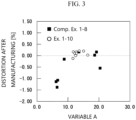
- the Fe-based alloy according to the present embodiment satisfies the following expression (1). 11.5 ⁇ 15 C + Mn + 0.5 Cr + Ni ⁇ 20
- the "15C+Mn+0.5Cr+Ni" correlates with the Ms point of the Fe-based alloy. All of the elements in the variable A have the effect of lowering the Ms point.
- the Ms point of the Fe-based alloy can be set in a range suitable for additive manufacturing (specifically, about 50°C to about 280°C).
- variable A is obtained by multiplying the content (mass%) of each element by a predetermined coefficient and adding them together.
- the Ms point of the Fe-based alloy is too low, the amount of residual austenite immediately after additive manufacturing is excessive, and sufficient hardness cannot be obtained. In addition, even when the material is cooled to room temperature immediately after additive manufacturing, the amount of martensite transformation is small and thus, an effect of reducing distortion due to transformation expansion may not be obtained. Therefore, the Ms point is preferably 50°C or higher.
- the variable A is preferably less than 20 in order to achieve the Ms point to be equal to or greater than the above value.
- the Ms point is preferably 280°C or lower.
- the variable A is preferably more than 11.5 in order to achieve the Ms point to be equal to or smaller than the above value.
- the shape of the Fe-based alloy is not particularly limited.
- the shape of the Fe-based alloy include lump, rod, tube, wire, powder, and the like.
- a powder is suitable as a raw material for melt-solidification-shaping.
- a metal powder according to the present embodiment has an average composition equivalent to that of the Fe-based alloy for melt-solidification-shaping according to the present invention.
- the individual metal particles may be pure metal particles composed of a single metal element, or may be alloy particles containing two or more metal elements.
- the average composition can be determined, for example, by extracting a sample of about 10 g from the mixture and analyzing the sample by using a method such as fluorescent X-ray analysis, combustion infrared absorption, or plasma emission spectrometry.
- composition (average composition) of the metal powder are the same as those of the Fe-based alloy described above, so the description is omitted.
- average particle diameter refers to the number frequency D 50 ( ⁇ m), i.e., the cumulative 50% of the number particle diameter (median diameter) of the powder. Examples of a method of measuring D 50 include:
- D 50 refers to the median diameter measured by a particle distribution measuring apparatus based on the laser diffraction/scattering method.
- the average particle diameter and particle diameter distribution of the metal powder can be controlled by production conditions of the metal powder and classification conditions of the metal powder.
- D 50 is preferably 10 ⁇ m or more.
- D 50 is more preferably 20 ⁇ m or more, and further preferably 30 ⁇ m or more.
- D 50 is preferably 50 ⁇ m or less.
- the particle shape of individual metal particles contained in the metal powder is not particularly limited.
- the metal particles may be spherical particles or irregularly shaped particles. In order to obtain high fluidity, the metal particles are preferably spherical particles.
- nanoparticle refers to inorganic compound particles having a diameter of 1 nm or more and 100 nm or less.
- the surface of the metal particles is coated with certain nanoparticles
- agglomeration of the metal particles can be prevented in some cases.
- the nanoparticles having such an effect of preventing agglomeration of metal particles include metal oxides such as silica (SiO 2 ), alumina (Al 2 O 3 ), manganese oxide (MnO), iron oxide (Fe 2 O 3 ), calcium oxide (CaO), and magnesium oxide (MgO).
- the content of nanoparticles is preferably 0.005 mass% or more.
- the nanoparticles may serve as inclusions, which may reduce strength and/or toughness of the manufactured object when melt-solidification-shaping is performed. Therefore, the content of nanoparticles is preferably 0.05 mass% or less.
- the metal powder according to the present embodiment can be used as a raw material powder for melt-solidification-shaping.
- melt-solidification-shaping method refers to a method of forming the entire or a part of a manufactured object by melting a metal powder by using various heat sources and solidifying and depositing the molten metal powder.
- forming the entire manufactured object refers to forming the entire manufactured object only by melting, solidifying, and depositing the metal powder.
- forming a part of a manufactured object refers to stacking, on a surface of a base material that constitutes another part of the manufactured object, a new layer that constitutes the part of the manufactured object by melting, solidifying, and depositing the metal powder (e.g., repair of a mold).
- melt-solidification-shaping method examples include:
- the "direct energy deposition (DED) method” refers to a method of irradiating a metal powder with a laser or an electron beam while supplying the metal powder, and selectively depositing the molten metal on an existing member, a substrate, or a material to be overlaid.
- a metal layer can be repeatedly deposited and can be overlaid in various shapes such as line, wall, and block.
- the volume of the melt to be deposited can be reduced, and deterioration in quality due to mixing of components occurring at an interface with the material to be overlaid can be prevented. Therefore, various materials such as a Fe-based alloy, a Ni-based alloy, and a Co-based alloy can be used as the material to be overlaid.
- the "powder bed fusion method” refers to a manufacturing method of creating slice data in units of several tens of ⁇ m based on three-dimensional data (e.g., STL data) generated by 3D-CAD or the like, selectively scanning and irradiating a powder bed with a laser or electron beam based on the obtained slice data, and stacking the sintered layer.
- the SLM method is one of the powder bed fusion method.
- the "plasma overlaying welding method” refers to a method in which a plasma arc is generated between an electrode and a base material, a metal powder is introduced into the plasma arc to melt the metal powder, and the metal is overlaid on the base material surface.
- the method for producing the metal powder is not particularly limited.
- the method for producing the metal powder include a gas atomization method, a water atomization method, a plasma atomization method, a plasma rotating electrode method, a centrifugal force atomization method, and the like.
- a high-pressure gas is blown onto the molten metal while the molten metal is dropped from a bottom of a tundish, to thereby pulverize and solidify the molten metal.
- an inert gas such as nitrogen gas, argon gas or helium gas can be used as the high-pressure gas.
- impurities such as P, S, Cu, Co, Ti, Zr, and Nb may be mixed unavoidably.
- the metal powder may be produced by mixing two or more types of metal powders and using, for example, a mechanical alloying method.
- the metal powder after producing the metal powder by using any one of the methods, the metal powder may be further subjected to a spheroidizing treatment using reducing thermal plasma.
- the particle surface may be coated with an appropriate amount of nanoparticles after the powder is produced.
- the particle diameter distribution of the metal powder can be controlled by production conditions, and can also be controlled by classification methods such as a wet cyclone, a dry cyclone, a dry sieve, and an ultrasonic sieve.
- the metal powder (Fe-based alloy) according to the present embodiment has a carbon amount lower than that of SUS420J2, the as-manufactured hardness is low, and the processing efficiency in an as-manufactured state is high.
- the maraging steel is an age-hardening ultra-high-strength steel obtained by adding a large amount of age-hardening elements such as Mo and Co to a low-carbon 18% Ni steel.
- age-hardening elements such as Mo and Co
- high hardness is obtained.
- Ni, Mo and Co are all expensive elements. In the case where the content of these elements is reduced in order to reduce the production cost, the required hardness may not be obtained.
- the metal powder (Fe-based alloy) according to the present embodiment has a higher carbon amount and lower contents of Ni, Mo, and Co than those in the maraging steel. Therefore, the metal powder (Fe-based alloy) according to the present embodiment is lower in cost than the maraging steel.
- the decrease in hardness due to the decrease in contents of Ni, Mo and Co can be compensated for by the increase in hardness due to the increase in carbon amount (strengthening due to martensite transformation, precipitation strengthening due to precipitation of carbides, etc.).
- Comparative Example 2 corresponds to a hot work tool steel (JIS SKD61)
- Comparative Example 3 corresponds to a martensitic stainless steel (JIS SUS420J2)
- Comparative Example 4 corresponds to an 18Ni maraging steel.
- An object (a cube of 15 mm ⁇ 15 mm ⁇ 15 mm) for measuring Ms point and hardness was prepared through additive manufacturing using a metal 3D printer M2 manufactured by Concept Laser.
- the conditions for the additive manufacturing were the same as the conditions for an evaluation test of the manufacturing property to be described later.
- test piece ( ⁇ 4 mm ⁇ 10 mm) for transformation point measurement was cut out from the additively manufactured object in an as-manufactured state.
- the test piece was heated to 1,000°C to 1,300°C, then cooled to 20°C at a cooling rate of 100°C/min, and a temperature change and a dimensional change during cooling were measured.
- a test piece for hardness measurement was cut out from the vicinity of the central portion of the additively manufactured object in an as-manufactured state.
- the Rockwell hardness (JIS Z2245: 2016) of the obtained test piece was measured.
- An object having a length of 18 mm, a width of 30 mm, and a height of 10 mm was prepared on a strip-shaped base plate having a length of 20 mm, a width of 150 mm, and a height of 15 mm through additive manufacturing using a metal 3D printer M2 manufactured by Concept Laser.
- the energy density was set to 85 J/mm 2 .
- the additive manufacturing was performed while preheating the additively manufactured object to a temperature of Ms-30°C to Ms-80°C by using a heater.
- the atmosphere during the manufacturing was a nitrogen atmosphere.
- the base plate with the additively manufactured object was taken out from the metal 3D printer, and the base plate with the additively manufactured object was placed on a surface plate.
- An appearance photograph of the manufactured object as a whole was taken from a horizontal direction.
- a curvature radius R and a thickness t of the additively manufactured object were calculated by image analysis on the appearance photograph.
- the curvature radius R was defined as a negative value when the additively manufactured object is deformed to be convex downward (i.e., convex toward the base plate side), and the curvature radius R was defined as a positive value when the additively manufactured object was deformed to be convex upward.
- the curvature radius R can also be calculated by placing the base plate on the surface plate, measuring the dimension from the surface plate at regular intervals in the longitudinal direction of the manufactured object with a laser displacement meter or a stylus type dimension-measuring instrument, and approximating the displacements as a circle.
- FIG. 1 shows a relationship between the variable A and the Ms point.
- FIG. 2 shows a relationship between the Ms point and the distortion after manufacturing.
- FIG. 3 shows a relationship between the variable A and the distortion after manufacturing.
- Example 1 38 252 -0.13
- Example 2 49 209 0.16
- Example 3 35 192 0.10
- Example 4 40 153 0.20
- Example 6 50 182 0.11
- Example 9 37 187 0.20
- Table 2 and FIG. 1 to FIG. 3 reveal the followings.
- the metal powder (Fe-based alloy) according to the present invention can be used as a powder raw material for producing a mold that requires cooling (such as a plastic molding mold, a die casting mold, a hot stamping mold, and a tailored die quenching mold) through an additive manufacturing method.
- a mold that requires cooling such as a plastic molding mold, a die casting mold, a hot stamping mold, and a tailored die quenching mold
- the metal powder (Fe-based alloy) according to the present invention can be applied not only to additive manufacturing that involves strict shape control of a manufactured object, but also to overlaying welding that does not involve strict shape control of a manufactured object.
Landscapes
- Chemical & Material Sciences (AREA)
- Engineering & Computer Science (AREA)
- Materials Engineering (AREA)
- Mechanical Engineering (AREA)
- Metallurgy (AREA)
- Organic Chemistry (AREA)
- Manufacturing & Machinery (AREA)
- Powder Metallurgy (AREA)
Claims (9)
- Fe-basierte Legierung für Schmelz-Verfestigungs-Formen,bestehend aus:0,05 Massen% ≤ C ≤ 0,25 Massen%,0,01 Massen% ≤ Si ≤ 2,0 Massen%,0,05 Massen% ≤ Mn ≤ 2,5 Massen%,2,5 Massen% ≤ Ni ≤ 9,0 Massen%,0,1 Massen% ≤ Cr ≤ 8,0 Massen%,0,005 Massen% ≤ N ≤ 0,200 Massen%,Cu ≤ 3,0 Massen%,Mo ≤ 2,0 Massen%,V ≤ 0,1 Massen%,Al ≤ 1,5 Massen%,P ≤ 0,05 Massen%,S ≤ 0,01 Massen%,O ≤ 0,08 Massen%,W ≤ 0,20 Massen%,Ti ≤ 0,20 Massen%,Co ≤ 0,05 Massen%,Sn ≤ 0,05 Massen%,Nb ≤ 0,05 Massen%,Ta ≤ 0,05 Massen%,Zr ≤ 0,05 Massen%,B ≤ 0,01 Massen%,Ca ≤ 0,01 Massen%,Se ≤ 0,03 Massen%,Te ≤ 0,01 Massen%,Bi ≤ 0,01 Massen%,Pb ≤ 0,05 Massen%,Mg ≤ 0,02 Massen%, undREM ≤ 0,01 Massen%mit dem Rest Fe und unvermeidliche Verunreinigungen, und den folgenden Ausdruck (1) erfüllend:

- Fe-basierte Legierung für Schmelz-Verfestigungs-Formen gemäß Anspruch 1, ferner beinhaltend:

- Fe-basierte Legierung für Schmelz-Verfestigungs-Formen gemäß Anspruch 1 oder 2, ferner beinhaltend wenigstens eines von:


- Fe-basierte Legierung für Schmelz-Verfestigungs-Formen gemäß einem der Ansprüche 1 bis 3, ferner beinhaltend:

- Metallpulver mit einer Durchschnitts-Zusammensetzung, die jener der in einem der Ansprüche 1 bis 4 beschriebenen Fe-basierten Legierung für Schmelz-Verfestigungs-Formen äquivalent ist, wobei sich die Durchschnitts-Zusammensetzung auch auf ein Metallpulver bezieht, das aus einer Mischung von zwei oder mehr Sorten von Metallpartikeln unterschiedlicher Zusammensetzung besteht, wobei eine oder mehr Sorten der Metallpartikel keine Zusammensetzung aufweisen, die in den in einem der Ansprüche 1 bis 4 beschriebenen Bereich fällt, und wobei die Durchschnitts-Zusammensetzung gemäß dem in der Beschreibung angegebenen Verfahren bestimmt wird.
- Verwendung der Fe-basierten Legierung für Schmelz-Verfestigungs-Formen gemäß einem der Ansprüche 1 bis 4, oder des Metallpulvers gemäß Anspruch 5, zum Schmelz-Verfestigungs-Formen.
- Verwendung nach Anspruch 6, wobei das Schmelz-Verfestigungs-Formen Auftragsschweißen ist.
- Verwendung nach Anspruch 6, wobei das Schmelz-Verfestigungs-Formen additive Fertigung ist.
- Verwendung nach Anspruch 8, wobei eine Form hergestellt wird.
Applications Claiming Priority (1)
| Application Number | Priority Date | Filing Date | Title |
|---|---|---|---|
| JP2021183724A JP7782216B2 (ja) | 2021-11-10 | 2021-11-10 | 溶融凝固成形用Fe基合金及び金属粉末 |
Publications (2)
| Publication Number | Publication Date |
|---|---|
| EP4180549A1 EP4180549A1 (de) | 2023-05-17 |
| EP4180549B1 true EP4180549B1 (de) | 2024-07-24 |
Family
ID=84330936
Family Applications (1)
| Application Number | Title | Priority Date | Filing Date |
|---|---|---|---|
| EP22206707.6A Active EP4180549B1 (de) | 2021-11-10 | 2022-11-10 | Legierung auf eisenbasis zur schmelzeverfestigungs-formung und metallpulver |
Country Status (5)
| Country | Link |
|---|---|
| US (1) | US11884999B2 (de) |
| EP (1) | EP4180549B1 (de) |
| JP (1) | JP7782216B2 (de) |
| KR (1) | KR102797374B1 (de) |
| CN (1) | CN116103581A (de) |
Families Citing this family (2)
| Publication number | Priority date | Publication date | Assignee | Title |
|---|---|---|---|---|
| CN117187711A (zh) * | 2023-08-29 | 2023-12-08 | 南京理工大学 | 一种适用激光粉末床熔融成型的2GPa级超高强韧不锈钢 |
| WO2026068982A1 (en) * | 2024-09-24 | 2026-04-02 | Arcelormittal | Medium nickel powder for additive manufacturing, printed part and method of manufacturing the same |
Family Cites Families (19)
| Publication number | Priority date | Publication date | Assignee | Title |
|---|---|---|---|---|
| US2532117A (en) * | 1946-09-17 | 1950-11-28 | Babcock & Wilcox Tube Company | Nickel steel alloys |
| USRE28523E (en) * | 1963-11-12 | 1975-08-19 | High strength alloy steel compositions and process of producing high strength steel including hot-cold working | |
| JPS5129963B2 (de) * | 1973-07-18 | 1976-08-28 | ||
| JPS5423328B2 (de) * | 1973-11-27 | 1979-08-13 | ||
| JPS62193625A (ja) | 1986-02-20 | 1987-08-25 | Ube Ind Ltd | 気液接触方法 |
| FR2619734A1 (fr) * | 1987-08-26 | 1989-03-03 | Uralsky Politekhn Inst | Procede de renovation des surfaces des articles d'acier |
| ES2275310T3 (es) * | 1997-07-28 | 2007-06-01 | Exxonmobil Upstream Research Company | Procedimiento para la produccion de aceros soldables de resistencia ultra-alta con tenacidad superior. |
| JP4220088B2 (ja) * | 1999-12-17 | 2009-02-04 | Jfeスチール株式会社 | 鋼構造物用溶接継手およびその製造方法 |
| JP2011153366A (ja) | 2010-01-28 | 2011-08-11 | Nippon Steel Corp | レーザ溶接用またはレーザ・アークハイブリッド溶接用の引張強さが1100MPa以上の高張力鋼板の製造方法 |
| JP2012091428A (ja) * | 2010-10-28 | 2012-05-17 | Jfe Steel Corp | 塗装耐食性に優れた船舶用鋼材 |
| JP6601051B2 (ja) * | 2015-01-28 | 2019-11-06 | 大同特殊鋼株式会社 | 鋼の粉末 |
| US10975460B2 (en) | 2015-01-28 | 2021-04-13 | Daido Steel Co., Ltd. | Steel powder and mold using the same |
| SE539763C2 (en) * | 2016-06-16 | 2017-11-21 | Uddeholms Ab | Steel suitable for plastic molding tools |
| WO2019124296A1 (ja) | 2017-12-18 | 2019-06-27 | 日立金属株式会社 | 積層造形物およびその製造方法、ならびに、積層造形用金属粉末 |
| JP2019173049A (ja) * | 2018-03-27 | 2019-10-10 | 山陽特殊製鋼株式会社 | 金型用粉末 |
| JP6605066B2 (ja) | 2018-03-30 | 2019-11-13 | 日鉄ステンレス株式会社 | Fe−Cr合金およびその製造方法 |
| CN112272712A (zh) * | 2018-10-31 | 2021-01-26 | 日本制铁株式会社 | 煤专用船或矿/煤兼用船的船舱用耐蚀钢及船舱 |
| CN111570814A (zh) * | 2020-06-05 | 2020-08-25 | 西安建筑科技大学 | 一种3d打印用低成本中碳钢球形粉末的制备方法 |
| JP2023028417A (ja) * | 2021-08-19 | 2023-03-03 | ヤフー株式会社 | 情報処理装置、情報処理方法および情報処理プログラム |
-
2021
- 2021-11-10 JP JP2021183724A patent/JP7782216B2/ja active Active
-
2022
- 2022-11-08 US US17/982,818 patent/US11884999B2/en active Active
- 2022-11-09 KR KR1020220148591A patent/KR102797374B1/ko active Active
- 2022-11-09 CN CN202211398007.4A patent/CN116103581A/zh active Pending
- 2022-11-10 EP EP22206707.6A patent/EP4180549B1/de active Active
Also Published As
| Publication number | Publication date |
|---|---|
| EP4180549A1 (de) | 2023-05-17 |
| KR102797374B1 (ko) | 2025-04-21 |
| JP7782216B2 (ja) | 2025-12-09 |
| KR20230068340A (ko) | 2023-05-17 |
| US20230151471A1 (en) | 2023-05-18 |
| CN116103581A (zh) | 2023-05-12 |
| US11884999B2 (en) | 2024-01-30 |
| JP2023071110A (ja) | 2023-05-22 |
Similar Documents
| Publication | Publication Date | Title |
|---|---|---|
| EP3912816A1 (de) | Metallpulver | |
| EP3738695A1 (de) | Edelstahlpulver zum formen | |
| EP4059638A1 (de) | Fe-basierte legierung und metallpulver | |
| EP4180549B1 (de) | Legierung auf eisenbasis zur schmelzeverfestigungs-formung und metallpulver | |
| EP4261302A1 (de) | Formkörper aus pulver | |
| JP2022148950A (ja) | Fe基合金粉末を用いた造形物の製造方法 | |
| JP7848608B2 (ja) | 溶融凝固成形用Fe基合金及び金属粉末 | |
| EP4260965B1 (de) | Eisengruppenlegierungspulver | |
| WO2023157965A1 (ja) | Fe基合金、合金部材、製造物及び合金部材の製造方法 | |
| JP2021123750A (ja) | Cr−Ni系合金部材およびその製造方法 | |
| EP4180227A1 (de) | Metallpulver | |
| EP4159883B1 (de) | Legierung auf fe-basis, metallpulver und deren verwendung für die schmelzverfestigungsformung | |
| JP2022072078A (ja) | 金属粉末 | |
| EP4589041A1 (de) | Legierungspulver auf eisenbasis und verfahren zur herstellung eines formkörpers | |
| CN118871228A (zh) | 层叠造型用马氏体时效钢粉末、马氏体时效钢层叠造型品及其制造方法 | |
| JP2023071145A (ja) | 金属粉末 | |
| JP7714313B2 (ja) | 積層造形用Fe基合金粉末および積層造形物 | |
| EP4450186A1 (de) | Verwaltung von stahlpulver frei von co, ti und al | |
| JP2022148199A (ja) | Fe基合金及び金属粉末 | |
| WO2025070373A1 (ja) | 積層造形用マルエージング鋼粉末、マルエージング鋼積層造形品およびその製造方法 | |
| CN121569054A (zh) | Ni基合金制的造型物 | |
| CN119894622A (zh) | 层叠造形用热作工具钢粉末及热作工具钢层叠造形品 | |
| EP1991715A1 (de) | Pulver und verfahren zur herstellung eines sinterkörpers und sinterkörper |
Legal Events
| Date | Code | Title | Description |
|---|---|---|---|
| PUAI | Public reference made under article 153(3) epc to a published international application that has entered the european phase |
Free format text: ORIGINAL CODE: 0009012 |
|
| STAA | Information on the status of an ep patent application or granted ep patent |
Free format text: STATUS: REQUEST FOR EXAMINATION WAS MADE |
|
| 17P | Request for examination filed |
Effective date: 20221110 |
|
| AK | Designated contracting states |
Kind code of ref document: A1 Designated state(s): AL AT BE BG CH CY CZ DE DK EE ES FI FR GB GR HR HU IE IS IT LI LT LU LV MC ME MK MT NL NO PL PT RO RS SE SI SK SM TR |
|
| GRAP | Despatch of communication of intention to grant a patent |
Free format text: ORIGINAL CODE: EPIDOSNIGR1 |
|
| STAA | Information on the status of an ep patent application or granted ep patent |
Free format text: STATUS: GRANT OF PATENT IS INTENDED |
|
| INTG | Intention to grant announced |
Effective date: 20240307 |
|
| GRAS | Grant fee paid |
Free format text: ORIGINAL CODE: EPIDOSNIGR3 |
|
| GRAA | (expected) grant |
Free format text: ORIGINAL CODE: 0009210 |
|
| STAA | Information on the status of an ep patent application or granted ep patent |
Free format text: STATUS: THE PATENT HAS BEEN GRANTED |
|
| AK | Designated contracting states |
Kind code of ref document: B1 Designated state(s): AL AT BE BG CH CY CZ DE DK EE ES FI FR GB GR HR HU IE IS IT LI LT LU LV MC ME MK MT NL NO PL PT RO RS SE SI SK SM TR |
|
| REG | Reference to a national code |
Ref country code: GB Ref legal event code: FG4D |
|
| REG | Reference to a national code |
Ref country code: CH Ref legal event code: EP |
|
| REG | Reference to a national code |
Ref country code: IE Ref legal event code: FG4D Ref country code: DE Ref legal event code: R096 Ref document number: 602022004806 Country of ref document: DE |
|
| REG | Reference to a national code |
Ref country code: SE Ref legal event code: TRGR |
|
| REG | Reference to a national code |
Ref country code: LT Ref legal event code: MG9D |
|
| REG | Reference to a national code |
Ref country code: NL Ref legal event code: MP Effective date: 20240724 |
|
| PG25 | Lapsed in a contracting state [announced via postgrant information from national office to epo] |
Ref country code: PT Free format text: LAPSE BECAUSE OF FAILURE TO SUBMIT A TRANSLATION OF THE DESCRIPTION OR TO PAY THE FEE WITHIN THE PRESCRIBED TIME-LIMIT Effective date: 20241125 |
|
| REG | Reference to a national code |
Ref country code: AT Ref legal event code: MK05 Ref document number: 1706388 Country of ref document: AT Kind code of ref document: T Effective date: 20240724 |
|
| PG25 | Lapsed in a contracting state [announced via postgrant information from national office to epo] |
Ref country code: NL Free format text: LAPSE BECAUSE OF FAILURE TO SUBMIT A TRANSLATION OF THE DESCRIPTION OR TO PAY THE FEE WITHIN THE PRESCRIBED TIME-LIMIT Effective date: 20240724 |
|
| PG25 | Lapsed in a contracting state [announced via postgrant information from national office to epo] |
Ref country code: PT Free format text: LAPSE BECAUSE OF FAILURE TO SUBMIT A TRANSLATION OF THE DESCRIPTION OR TO PAY THE FEE WITHIN THE PRESCRIBED TIME-LIMIT Effective date: 20241125 Ref country code: NL Free format text: LAPSE BECAUSE OF FAILURE TO SUBMIT A TRANSLATION OF THE DESCRIPTION OR TO PAY THE FEE WITHIN THE PRESCRIBED TIME-LIMIT Effective date: 20240724 |
|
| PG25 | Lapsed in a contracting state [announced via postgrant information from national office to epo] |
Ref country code: NO Free format text: LAPSE BECAUSE OF FAILURE TO SUBMIT A TRANSLATION OF THE DESCRIPTION OR TO PAY THE FEE WITHIN THE PRESCRIBED TIME-LIMIT Effective date: 20241024 |
|
| PG25 | Lapsed in a contracting state [announced via postgrant information from national office to epo] |
Ref country code: FI Free format text: LAPSE BECAUSE OF FAILURE TO SUBMIT A TRANSLATION OF THE DESCRIPTION OR TO PAY THE FEE WITHIN THE PRESCRIBED TIME-LIMIT Effective date: 20240724 Ref country code: PL Free format text: LAPSE BECAUSE OF FAILURE TO SUBMIT A TRANSLATION OF THE DESCRIPTION OR TO PAY THE FEE WITHIN THE PRESCRIBED TIME-LIMIT Effective date: 20240724 Ref country code: GR Free format text: LAPSE BECAUSE OF FAILURE TO SUBMIT A TRANSLATION OF THE DESCRIPTION OR TO PAY THE FEE WITHIN THE PRESCRIBED TIME-LIMIT Effective date: 20241025 |
|
| PG25 | Lapsed in a contracting state [announced via postgrant information from national office to epo] |
Ref country code: BG Free format text: LAPSE BECAUSE OF FAILURE TO SUBMIT A TRANSLATION OF THE DESCRIPTION OR TO PAY THE FEE WITHIN THE PRESCRIBED TIME-LIMIT Effective date: 20240724 |
|
| PG25 | Lapsed in a contracting state [announced via postgrant information from national office to epo] |
Ref country code: LV Free format text: LAPSE BECAUSE OF FAILURE TO SUBMIT A TRANSLATION OF THE DESCRIPTION OR TO PAY THE FEE WITHIN THE PRESCRIBED TIME-LIMIT Effective date: 20240724 |
|
| PG25 | Lapsed in a contracting state [announced via postgrant information from national office to epo] |
Ref country code: AT Free format text: LAPSE BECAUSE OF FAILURE TO SUBMIT A TRANSLATION OF THE DESCRIPTION OR TO PAY THE FEE WITHIN THE PRESCRIBED TIME-LIMIT Effective date: 20240724 Ref country code: IS Free format text: LAPSE BECAUSE OF FAILURE TO SUBMIT A TRANSLATION OF THE DESCRIPTION OR TO PAY THE FEE WITHIN THE PRESCRIBED TIME-LIMIT Effective date: 20241124 |
|
| PG25 | Lapsed in a contracting state [announced via postgrant information from national office to epo] |
Ref country code: HR Free format text: LAPSE BECAUSE OF FAILURE TO SUBMIT A TRANSLATION OF THE DESCRIPTION OR TO PAY THE FEE WITHIN THE PRESCRIBED TIME-LIMIT Effective date: 20240724 |
|
| PG25 | Lapsed in a contracting state [announced via postgrant information from national office to epo] |
Ref country code: RS Free format text: LAPSE BECAUSE OF FAILURE TO SUBMIT A TRANSLATION OF THE DESCRIPTION OR TO PAY THE FEE WITHIN THE PRESCRIBED TIME-LIMIT Effective date: 20241024 Ref country code: ES Free format text: LAPSE BECAUSE OF FAILURE TO SUBMIT A TRANSLATION OF THE DESCRIPTION OR TO PAY THE FEE WITHIN THE PRESCRIBED TIME-LIMIT Effective date: 20240724 |
|
| PG25 | Lapsed in a contracting state [announced via postgrant information from national office to epo] |
Ref country code: RS Free format text: LAPSE BECAUSE OF FAILURE TO SUBMIT A TRANSLATION OF THE DESCRIPTION OR TO PAY THE FEE WITHIN THE PRESCRIBED TIME-LIMIT Effective date: 20241024 Ref country code: PL Free format text: LAPSE BECAUSE OF FAILURE TO SUBMIT A TRANSLATION OF THE DESCRIPTION OR TO PAY THE FEE WITHIN THE PRESCRIBED TIME-LIMIT Effective date: 20240724 Ref country code: NO Free format text: LAPSE BECAUSE OF FAILURE TO SUBMIT A TRANSLATION OF THE DESCRIPTION OR TO PAY THE FEE WITHIN THE PRESCRIBED TIME-LIMIT Effective date: 20241024 Ref country code: LV Free format text: LAPSE BECAUSE OF FAILURE TO SUBMIT A TRANSLATION OF THE DESCRIPTION OR TO PAY THE FEE WITHIN THE PRESCRIBED TIME-LIMIT Effective date: 20240724 Ref country code: IS Free format text: LAPSE BECAUSE OF FAILURE TO SUBMIT A TRANSLATION OF THE DESCRIPTION OR TO PAY THE FEE WITHIN THE PRESCRIBED TIME-LIMIT Effective date: 20241124 Ref country code: HR Free format text: LAPSE BECAUSE OF FAILURE TO SUBMIT A TRANSLATION OF THE DESCRIPTION OR TO PAY THE FEE WITHIN THE PRESCRIBED TIME-LIMIT Effective date: 20240724 Ref country code: GR Free format text: LAPSE BECAUSE OF FAILURE TO SUBMIT A TRANSLATION OF THE DESCRIPTION OR TO PAY THE FEE WITHIN THE PRESCRIBED TIME-LIMIT Effective date: 20241025 Ref country code: FI Free format text: LAPSE BECAUSE OF FAILURE TO SUBMIT A TRANSLATION OF THE DESCRIPTION OR TO PAY THE FEE WITHIN THE PRESCRIBED TIME-LIMIT Effective date: 20240724 Ref country code: ES Free format text: LAPSE BECAUSE OF FAILURE TO SUBMIT A TRANSLATION OF THE DESCRIPTION OR TO PAY THE FEE WITHIN THE PRESCRIBED TIME-LIMIT Effective date: 20240724 Ref country code: BG Free format text: LAPSE BECAUSE OF FAILURE TO SUBMIT A TRANSLATION OF THE DESCRIPTION OR TO PAY THE FEE WITHIN THE PRESCRIBED TIME-LIMIT Effective date: 20240724 Ref country code: AT Free format text: LAPSE BECAUSE OF FAILURE TO SUBMIT A TRANSLATION OF THE DESCRIPTION OR TO PAY THE FEE WITHIN THE PRESCRIBED TIME-LIMIT Effective date: 20240724 |
|
| PG25 | Lapsed in a contracting state [announced via postgrant information from national office to epo] |
Ref country code: DK Free format text: LAPSE BECAUSE OF FAILURE TO SUBMIT A TRANSLATION OF THE DESCRIPTION OR TO PAY THE FEE WITHIN THE PRESCRIBED TIME-LIMIT Effective date: 20240724 Ref country code: SM Free format text: LAPSE BECAUSE OF FAILURE TO SUBMIT A TRANSLATION OF THE DESCRIPTION OR TO PAY THE FEE WITHIN THE PRESCRIBED TIME-LIMIT Effective date: 20240724 Ref country code: RO Free format text: LAPSE BECAUSE OF FAILURE TO SUBMIT A TRANSLATION OF THE DESCRIPTION OR TO PAY THE FEE WITHIN THE PRESCRIBED TIME-LIMIT Effective date: 20240724 |
|
| PG25 | Lapsed in a contracting state [announced via postgrant information from national office to epo] |
Ref country code: EE Free format text: LAPSE BECAUSE OF FAILURE TO SUBMIT A TRANSLATION OF THE DESCRIPTION OR TO PAY THE FEE WITHIN THE PRESCRIBED TIME-LIMIT Effective date: 20240724 |
|
| PG25 | Lapsed in a contracting state [announced via postgrant information from national office to epo] |
Ref country code: CZ Free format text: LAPSE BECAUSE OF FAILURE TO SUBMIT A TRANSLATION OF THE DESCRIPTION OR TO PAY THE FEE WITHIN THE PRESCRIBED TIME-LIMIT Effective date: 20240724 |
|
| REG | Reference to a national code |
Ref country code: DE Ref legal event code: R097 Ref document number: 602022004806 Country of ref document: DE |
|
| PG25 | Lapsed in a contracting state [announced via postgrant information from national office to epo] |
Ref country code: SK Free format text: LAPSE BECAUSE OF FAILURE TO SUBMIT A TRANSLATION OF THE DESCRIPTION OR TO PAY THE FEE WITHIN THE PRESCRIBED TIME-LIMIT Effective date: 20240724 Ref country code: IT Free format text: LAPSE BECAUSE OF FAILURE TO SUBMIT A TRANSLATION OF THE DESCRIPTION OR TO PAY THE FEE WITHIN THE PRESCRIBED TIME-LIMIT Effective date: 20240724 |
|
| PLBE | No opposition filed within time limit |
Free format text: ORIGINAL CODE: 0009261 |
|
| STAA | Information on the status of an ep patent application or granted ep patent |
Free format text: STATUS: NO OPPOSITION FILED WITHIN TIME LIMIT |
|
| 26N | No opposition filed |
Effective date: 20250425 |
|
| PG25 | Lapsed in a contracting state [announced via postgrant information from national office to epo] |
Ref country code: MC Free format text: LAPSE BECAUSE OF FAILURE TO SUBMIT A TRANSLATION OF THE DESCRIPTION OR TO PAY THE FEE WITHIN THE PRESCRIBED TIME-LIMIT Effective date: 20240724 |
|
| PG25 | Lapsed in a contracting state [announced via postgrant information from national office to epo] |
Ref country code: LU Free format text: LAPSE BECAUSE OF NON-PAYMENT OF DUE FEES Effective date: 20241110 |
|
| REG | Reference to a national code |
Ref country code: BE Ref legal event code: MM Effective date: 20241130 |
|
| PG25 | Lapsed in a contracting state [announced via postgrant information from national office to epo] |
Ref country code: BE Free format text: LAPSE BECAUSE OF NON-PAYMENT OF DUE FEES Effective date: 20241130 |
|
| PG25 | Lapsed in a contracting state [announced via postgrant information from national office to epo] |
Ref country code: FR Free format text: LAPSE BECAUSE OF NON-PAYMENT OF DUE FEES Effective date: 20241130 |
|
| PG25 | Lapsed in a contracting state [announced via postgrant information from national office to epo] |
Ref country code: IE Free format text: LAPSE BECAUSE OF NON-PAYMENT OF DUE FEES Effective date: 20241110 |
|
| PGFP | Annual fee paid to national office [announced via postgrant information from national office to epo] |
Ref country code: DE Payment date: 20250930 Year of fee payment: 4 |
|
| PGFP | Annual fee paid to national office [announced via postgrant information from national office to epo] |
Ref country code: SE Payment date: 20251001 Year of fee payment: 4 |
|
| PG25 | Lapsed in a contracting state [announced via postgrant information from national office to epo] |
Ref country code: HU Free format text: LAPSE BECAUSE OF FAILURE TO SUBMIT A TRANSLATION OF THE DESCRIPTION OR TO PAY THE FEE WITHIN THE PRESCRIBED TIME-LIMIT; INVALID AB INITIO Effective date: 20221110 |
|
| PG25 | Lapsed in a contracting state [announced via postgrant information from national office to epo] |
Ref country code: CY Free format text: LAPSE BECAUSE OF FAILURE TO SUBMIT A TRANSLATION OF THE DESCRIPTION OR TO PAY THE FEE WITHIN THE PRESCRIBED TIME-LIMIT; INVALID AB INITIO Effective date: 20221110 |