EP4157381B1 - Beschichteter schlauch für medizinische gegenstände - Google Patents
Beschichteter schlauch für medizinische gegenstände Download PDFInfo
- Publication number
- EP4157381B1 EP4157381B1 EP21719255.8A EP21719255A EP4157381B1 EP 4157381 B1 EP4157381 B1 EP 4157381B1 EP 21719255 A EP21719255 A EP 21719255A EP 4157381 B1 EP4157381 B1 EP 4157381B1
- Authority
- EP
- European Patent Office
- Prior art keywords
- parylene
- vapor
- tube
- tubing
- coating
- Prior art date
- Legal status (The legal status is an assumption and is not a legal conclusion. Google has not performed a legal analysis and makes no representation as to the accuracy of the status listed.)
- Active
Links
Images

Classifications
-
- A—HUMAN NECESSITIES
- A61—MEDICAL OR VETERINARY SCIENCE; HYGIENE
- A61L—METHODS OR APPARATUS FOR STERILISING MATERIALS OR OBJECTS IN GENERAL; DISINFECTION, STERILISATION OR DEODORISATION OF AIR; CHEMICAL ASPECTS OF BANDAGES, DRESSINGS, ABSORBENT PADS OR SURGICAL ARTICLES; MATERIALS FOR BANDAGES, DRESSINGS, ABSORBENT PADS OR SURGICAL ARTICLES
- A61L29/00—Materials for catheters, medical tubing, cannulae, or endoscopes or for coating catheters
- A61L29/08—Materials for coatings
- A61L29/085—Macromolecular materials
-
- A—HUMAN NECESSITIES
- A61—MEDICAL OR VETERINARY SCIENCE; HYGIENE
- A61L—METHODS OR APPARATUS FOR STERILISING MATERIALS OR OBJECTS IN GENERAL; DISINFECTION, STERILISATION OR DEODORISATION OF AIR; CHEMICAL ASPECTS OF BANDAGES, DRESSINGS, ABSORBENT PADS OR SURGICAL ARTICLES; MATERIALS FOR BANDAGES, DRESSINGS, ABSORBENT PADS OR SURGICAL ARTICLES
- A61L29/00—Materials for catheters, medical tubing, cannulae, or endoscopes or for coating catheters
- A61L29/04—Macromolecular materials
-
- A—HUMAN NECESSITIES
- A61—MEDICAL OR VETERINARY SCIENCE; HYGIENE
- A61L—METHODS OR APPARATUS FOR STERILISING MATERIALS OR OBJECTS IN GENERAL; DISINFECTION, STERILISATION OR DEODORISATION OF AIR; CHEMICAL ASPECTS OF BANDAGES, DRESSINGS, ABSORBENT PADS OR SURGICAL ARTICLES; MATERIALS FOR BANDAGES, DRESSINGS, ABSORBENT PADS OR SURGICAL ARTICLES
- A61L29/00—Materials for catheters, medical tubing, cannulae, or endoscopes or for coating catheters
- A61L29/08—Materials for coatings
-
- A—HUMAN NECESSITIES
- A61—MEDICAL OR VETERINARY SCIENCE; HYGIENE
- A61L—METHODS OR APPARATUS FOR STERILISING MATERIALS OR OBJECTS IN GENERAL; DISINFECTION, STERILISATION OR DEODORISATION OF AIR; CHEMICAL ASPECTS OF BANDAGES, DRESSINGS, ABSORBENT PADS OR SURGICAL ARTICLES; MATERIALS FOR BANDAGES, DRESSINGS, ABSORBENT PADS OR SURGICAL ARTICLES
- A61L29/00—Materials for catheters, medical tubing, cannulae, or endoscopes or for coating catheters
- A61L29/14—Materials characterised by their function or physical properties, e.g. lubricating compositions
- A61L29/141—Plasticizers
-
- A—HUMAN NECESSITIES
- A61—MEDICAL OR VETERINARY SCIENCE; HYGIENE
- A61L—METHODS OR APPARATUS FOR STERILISING MATERIALS OR OBJECTS IN GENERAL; DISINFECTION, STERILISATION OR DEODORISATION OF AIR; CHEMICAL ASPECTS OF BANDAGES, DRESSINGS, ABSORBENT PADS OR SURGICAL ARTICLES; MATERIALS FOR BANDAGES, DRESSINGS, ABSORBENT PADS OR SURGICAL ARTICLES
- A61L29/00—Materials for catheters, medical tubing, cannulae, or endoscopes or for coating catheters
- A61L29/14—Materials characterised by their function or physical properties, e.g. lubricating compositions
- A61L29/16—Biologically active materials, e.g. therapeutic substances
-
- A—HUMAN NECESSITIES
- A61—MEDICAL OR VETERINARY SCIENCE; HYGIENE
- A61L—METHODS OR APPARATUS FOR STERILISING MATERIALS OR OBJECTS IN GENERAL; DISINFECTION, STERILISATION OR DEODORISATION OF AIR; CHEMICAL ASPECTS OF BANDAGES, DRESSINGS, ABSORBENT PADS OR SURGICAL ARTICLES; MATERIALS FOR BANDAGES, DRESSINGS, ABSORBENT PADS OR SURGICAL ARTICLES
- A61L2300/00—Biologically active materials used in bandages, wound dressings, absorbent pads or medical devices
- A61L2300/40—Biologically active materials used in bandages, wound dressings, absorbent pads or medical devices characterised by a specific therapeutic activity or mode of action
- A61L2300/404—Biocides, antimicrobial agents, antiseptic agents
-
- A—HUMAN NECESSITIES
- A61—MEDICAL OR VETERINARY SCIENCE; HYGIENE
- A61L—METHODS OR APPARATUS FOR STERILISING MATERIALS OR OBJECTS IN GENERAL; DISINFECTION, STERILISATION OR DEODORISATION OF AIR; CHEMICAL ASPECTS OF BANDAGES, DRESSINGS, ABSORBENT PADS OR SURGICAL ARTICLES; MATERIALS FOR BANDAGES, DRESSINGS, ABSORBENT PADS OR SURGICAL ARTICLES
- A61L31/00—Materials for other surgical articles, e.g. stents, stent-grafts, shunts, surgical drapes, guide wires, materials for adhesion prevention, occluding devices, surgical gloves, tissue fixation devices
- A61L31/08—Materials for coatings
Definitions
- the current disclosure relates to methods for coating of polymeric tubing for use in medical articles.
- PVC polyvinyl chloride
- phthalates phthalate plasticizers
- the current disclosure relates to medical articles comprising a tube with an interior surface and an exterior surface, comprising a polymer composition containing one or more extractable components; and a vapor-deposited coating of a barrier polymer derived from at least one ethylenically unsaturated monomer covering at least a portion of at least the exterior surface of the tube, such that the vapor-deposited polymer coating barrier reduces the extraction of extractable component(s) from the tube,wherein the vapor-deposited barrier polymer comprises parylene, or a copolymer of parylene and methods of preparing such articles.
- the vapor-deposited polymer coating barrier reduces the extraction of extractable component(s) from the tube.
- the vapor-deposited barrier polymer is parylene or copolymers of parylene.
- the medical articles that utilize the barrier polymer coated tubing are stethoscopes.
- the method of preparing a medical article comprises providing a tube with an interior surface and an exterior surface, comprising a polymer composition containing one or more extractable components; and vapor coating a barrier polymer which comprises parylene, or a copolymer of parylene onto at least a portion of at least the exterior surface of the tube.
- Medical devices and articles utilize a wide range of polymeric materials.
- the materials used are polymers that contain extractable materials such as plasticizers, fillers, tackifiers, heat stabilizers, and the like. These extractable materials are often present in large quantities.
- the extractable materials can be extracted from the polymer by exposure to solvents, by heat, by contact with fluids such as aqueous or hydroalcoholic disinfectants, by high humidity (e.g. >90% relative humidity), by contact with skin, or even over time. This extraction is undesirable for many reasons and can cause difficulties in the use of the medical articles.
- PVC polyvinyl chloride
- VVC polyvinyl chloride
- plasticizers are added to the material to make it softer and more flexible.
- plasticizers are phthalates.
- the use of phthalate plasticizers in PVC for medical uses has fallen into disfavor, and phthalate-free PVC materials are being used more and more in medical applications.
- making a change in composition often causes changes in the properties of the materials.
- PVC materials are frequently used in tubing materials, such as the sound transmitting tubes of stethoscopes. These tubes have a variety of required property features. Among these properties are flexibility, resistance to degradation from exposure to heat and chemicals, durability, an aesthetically pleasant look, and a pleasant feel. The introduction of phthalate-free PVC materials has been observed to adversely affect some or all of these properties. As the stethoscopes are used, washing, and exposure to the body heat of the user tends to cause the PVC material to become more rigid as plasticizer leaches out or is washed away.
- coating of polymeric tubes that contain extractable components with a vapor-deposited coating of a polymer derived from at least one ethylenically unsaturated monomer not only reduces the extractability of the extractable components, but also provides a variety of additional desirable features.
- optical and tactile features such as the color, the texture, the coefficient of friction, the optical appearance of the tubing, or a combination thereof. Because the coating protects the tubing, the tubing retains its desirable properties over the lifetime of the article.
- tubes useful in tubing articles comprising a polymer composition containing one or more extractable components that have a vapor-deposited coating of a barrier polymer derived from at least one ethylenically unsaturated monomer on at least the exterior surface of the tube.
- the vapor-deposited coating is present on both the interior and exterior surface of the tube.
- the barrier polymer is derived from at least one ethylenically unsaturated monomer and may be optionally crosslinked by incorporation of at least one dimeric ethylenically unsaturated monomer.
- the vapor-deposited barrier polymer coating reduces the extraction of extractable component(s) from the tube.
- methods of preparing tubing articles such as medical articles. Among the tubing articles are stethoscopes.
- tube and “tubing” as used herein refers to a three-dimensional tubular article that is cylindrically symmetric. Tubes and tubing are defined by an inner diameter, an outer diameter, (the thickness of the tubing is the difference between the outer diameter and the inner diameter) and a length. While the thickness of the tubing can vary slightly through the length of the tube as the result of the method of preparation, etc., no intentional asymmetries are present in the tubing. Typically the length is substantially greater than the diameter of the tube.
- (meth)acrylate refers to monomeric acrylic or methacrylic esters of alcohols. Acrylate and methacrylate monomers or oligomers are referred to collectively herein as “(meth)acrylates”. Materials referred to as "(meth)acrylate functional" are materials that contain one or more (meth)acrylate groups.
- polysiloxane and “siloxane-based” as used herein refer to polymers or units of polymers that contain siloxane units.
- silicone or siloxane are used interchangeably and refer to units with dialkyl or diaryl siloxane (-SiRzO-) repeating units.
- room temperature and “ambient temperature” are used interchangeably to mean temperatures in the range of 20°C to 25°C.
- polymer and “macromolecule” are used herein consistent with their common usage in chemistry. Polymers and macromolecules are composed of many repeated subunits. As used herein, the term “macromolecule” is used to describe a group attached to a monomer that has multiple repeating units. The term “polymer” is used to describe the resultant material formed from a polymerization reaction.
- alkyl refers to a monovalent group that is a radical of an alkane, which is a saturated hydrocarbon.
- the alkyl can be linear, branched, cyclic, or combinations thereof and typically has 1 to 20 carbon atoms. In some embodiments, the alkyl group contains 1 to 18, 1 to 12, 1 to 10, 1 to 8, 1 to 6, or 1 to 4 carbon atoms.
- alkyl groups include, but are not limited to, methyl, ethyl, n-propyl, isopropyl, n-butyl, isobutyl, tert-butyl, n-pentyl, n-hexyl, cyclohexyl, n-heptyl, n-octyl, and ethylhexyl.
- aryl refers to a monovalent group that is aromatic and carbocyclic.
- the aryl can have one to five rings that are connected to or fused to the aromatic ring.
- the other ring structures can be aromatic, non-aromatic, or combinations thereof.
- Examples of aryl groups include, but are not limited to, phenyl, biphenyl, terphenyl, anthryl, naphthyl, acenaphthyl, anthraquinonyl, phenanthryl, anthracenyl, pyrenyl, perylenyl, and fluorenyl.
- free radically polymerizable and “ethylenically unsaturated” are used interchangeably and refer to a reactive group which contains a carbon-carbon double bond which is able to be polymerized via a free radical polymerization mechanism.
- PVC polyvinyl chloride
- phthalate-free PVC refers to a PVC material that does not contain phthalate plasticizer.
- plasticizer refers to a compound(s) which when added to a polymer results in increased flexibility.
- parylene is a trade name for a variety of chemical vapor deposited poly(p-xylylene) polymers.
- the term is used herein as a generic name for members of a unique polymer series.
- the basic member of the series, called Parylene N is poly-para-xylylene, a completely linear, highly crystalline material.
- Parylene C the second commercially available member of the series, is produced from the same monomer modified by the substitution of a chlorine atom for one of the aromatic hydrogens.
- the structures are shown in Figure 1 . Parylene N , C & D Chemical Structures.
- Parylene D the third member of the series, is produced from the same monomer modified by the substitution of the chlorine atom for two of the aromatic hydrogens. Parylene D is similar in properties to Parylene C with the added ability to withstand higher use temperatures.
- the parylene also may have one or more hydrogen atoms replaced by fluorine.
- Parylene AF-4 and parylene VT-4 (generic name, per-fluorinated aromatic ring).
- Parylene X is a crosslinkable parylene. Poly(methyl p-xylylene) or parylene M
- parylene copolymers are chemical vapor deposited derived from p-xylylene and at least one additional ethylenically unsaturated monomer.
- the tubes useful to prepare tubing articles, especially medical articles.
- the tubes have an interior surface and an exterior surface and are prepared from a polymer composition containing one or more extractable components.
- the tubes further have a vapor-deposited coating of a barrier polymer derived from at least one ethylenically unsaturated monomer covering at least the exterior surface of the tube. The vapor-deposited barrier polymer coating reduces the extraction of extractable component(s) from the tube.
- the polymer compositions comprise plasticized polyvinyl chloride (PVC), plasticized PVC copolymers, plasticized polyurethane, or polysiloxanes.
- PVC polyvinyl chloride
- Polysiloxanes may or may not include plasticizers like the other classes of polymers, but even if plasticizers are not used in the polysiloxanes, they may contain a variety of extractable materials such as unreacted cyclic siloxane, catalyst residue, tackifier, or a combination thereof.
- any of the above polymer compositions may contain additional materials that may be extractable including stabilizing agents such as thermal stabilizers and UV stabilizers, fillers, and the like.
- Polyurethane polymers are well known in the polymer arts, being prepared from the reaction of poly-isocyanates and polyols.
- a wide range of polyurethane polymers are suitable, including aromatic, aliphatic, urethane block copolymers and copolymers and mixtures thereof.
- a wide range of plasticizers can be used to plasticize the polyurethane polymers.
- the polyurethanes may be linear or crosslinked.
- the polyols used to prepare the polyurethanes may be poly-ether polyols, polyester polyols, aliphatic polyols, siloxane polyols, and the like.
- the crosslinked polyurethanes are generally made via a 2 part reaction.
- Polysiloxane polymers are also well known in the art. Typically, siloxane-based polymers can be prepared in a variety of ways including moisture-curing, hydrosilylation, and condensation reactions. Additionally, a wide range of polysiloxane polymers and polysiloxane precursors are commercially available. As mentioned above, the polysiloxanes can contain a variety of extractable components. Additionally, it can be desirable to apply a barrier coating to polysiloxane tubes, not only as a barrier against leaching of extractable components but also to alter the surface properties of the polysiloxane tube. Polysiloxanes often have a tacky or sticky feel that can be undesirable.
- the polymer compositions comprise plasticized PVC polymers and plasticized PVC copolymers.
- PVC copolymers are prepared by copolymerizing one or more ethylenically unsaturated co-monomers with vinyl chloride.
- An example of a PVC copolymer is polyvinyl chloride-vinyl acetate.
- the PVC copolymers typically contain plasticizers, often relatively high loadings of plasticizer.
- PVC polymers One particularly suitable class of polymers for tubing articles, especially medical tubing articles are PVC polymers.
- PVC polymers tend to be rigid materials, and therefore plasticizers are added to make the polymers flexible.
- the PVC polymer compositions contain a large quantity of plasticizer.
- the PVC polymer compositions typically contain up to 50-60% by weight plasticizer based on the total weight of the tube composition.
- the PVC polymer composition comprises at least 20% by weight plasticizer, typically at least 30% by weight plasticizer, more typically at least 35% by weight plasticizer, or even at least 40% or 45% by weight plasticizer by weight.
- the PVC polymer compositions comprise less than 60% by weight plasticizer or less than 55% by weight plasticizer.
- the polymer composition of the tubes of this disclosure comprise PVC polymer compositions that are free of phthalate plasticizers.
- plasticizers oligomeric or polymeric plasticizers having an average molecular weight of greater than 1000 Daltons, greater than 1500 Daltons, or even greater than 2000 Daltons as determined by GPC with the appropriate standards.
- Particularly suitable oligomeric or polymeric plasticizers are aliphatic or aromatic polyesters and are available from Hallstar under the PLASTHALL tradename or from Lanxess under the ULTRAMOL brandname.
- plasticizers are sulfonate esters such as MESAMOLL which is an alkylsulphonic acid ester with phenol.
- trimellitates such as trimethyl trimellitate, tri-(2-ethylhexyl) trimellitate, tri-(heptyl,nonyl) trimellitate and the like.
- Aliphatic dicarboxylic acid-based plasticizers such as bis(2-ethylhexyl)adipate dimethyl adipate, dioctyl adipate, dibutyl sebacate, dibutyl maleate and the like.
- plasticizers include azelates, benzoates, terephthalates such as dioctyl terephthalate/DEHT (Eastman Chemical Company Trademark: EASTMAN 168), 1,2-Cyclohexane dicarboxylic acid diisononyl ester (BASF trademark: HEXAMOLL DINCH).
- Sulfonamides such as N-ethyl toluene sulfonamide (o/p ETSA), ortho and para isomers, glycols and polyethers such as triethylene glycol dihexanoate and tetraethylene glycol diheptanoate.
- the polymeric tubes of this disclosure may have a wide range of diameters and thicknesses.
- the tubes are not wide tubes, often having an inner diameter of from 1 to 10 millimeters.
- the tube has a thickness of from 0.1-7 millimeters.
- the tubes are at least 20 centimeters in length, more typically at least 40 centimeters in length.
- the tubes of this disclosure also have a vapor-deposited coating of a barrier polymer derived from at least one ethylenically unsaturated monomer covering at least a portion of the exterior surface of the tube.
- a barrier polymer derived from at least one ethylenically unsaturated monomer covering at least a portion of the exterior surface of the tube.
- stethoscope tubing is desirably coated at least along the part of the tubing which would contact the skin when worn around the neck.
- the entire exterior surface of the tube has a vapor-deposited coating of a barrier polymer.
- the tube also has a vapor-deposited coating of a barrier polymer on the interior surface of the tube.
- the vapor-deposited coating of a barrier polymer comprises parylene or a copolymer of parylene.
- Parylene is the trade name for vapor-deposited poly-para-xylylene.
- Poly para-xylylene, also referred to as parylene N, is shown in Formula 1 below:
- Parylene is prepared when the precursor [2,2]paracyclophane (shown in Formula 2 below) is heated above 550°C in vacuum. Upon condensation on a surface, the poly-para-xylylene forms.
- the vapor-deposited coating of a crosslinked vinyl polymer comprises parylene, that is to say parylene N.
- the vapor-deposited coating of a crosslinked vinyl polymer comprises a substrituted parylene such as parylene C.
- Parylene C has the general structure shown in Formula 3 below. Parylene C is prepared by using a chlorine-substituted dimer.
- the vapor-deposited coating of a barrier polymer comprises a copolymer of parylene and at least one (meth)acrylate.
- (meth)acrylates are suitable.
- the (meth)acrylate comprises at least one C 3 -C 18 alkyl (meth)acrylate.
- the vapor-deposited coating of a barrier polymer can have a wide range of thicknesses.
- the coating may be a continuous coating, present on the entire exterior surface of the tubing or it can be present in selective regions of the exterior surface of the tubing. Additionally, the coating may be present on both the interior and exterior surfaces of the tubing.
- the vapor-deposited barrier polymer coating has a thickness of from 1-10 micrometers.
- the vapor-deposited crosslinked vinyl polymer coating has a thickness of from 2-5 micrometers.
- the coating may have a uniform or essentially uniform thickness, or the coating thickness may vary over the surface of the tubing. Typically, the coating has an essentially uniform thickness.
- the vapor-deposited coating of a barrier polymer may comprise additional additives.
- the additives are heat stabilizers, coloring agents, mold release agents, and anti-microbial agents.
- barrier polymers One necessary feature of the barrier polymers is their ability to strongly adhere to the tube. This is complicated by the fact that typically the tubing polymeric compositions contain high levels of plasticizer. Among the circumstances that make strong adhesion necessary is in bending. It is desirable that the barrier polymers are able to withstand 180° bending of the tubing for at least 5,000 cycles, more desirably at least 10,000 cycles and even more desirably at least 20,000 cycles when tested according to the "Bend Test" disclosed in the Examples Section below.
- the vapor-deposited coatings of a barrier polymer of the current disclosure reduce the extractability of the extractable components of the polymer compositions of the tubing.
- the coatings prevent the extraction of extractable components from the polymer compositions of the tubing.
- This extraction refers to a variety of extraction methods. It is particularly desirable that the barrier polymers prevent extraction by both polar fluids such as aqueous and hydroalcoholic (e.g. rubbing alcohol, 70/30 v/v isopropanol water) disinfectants as well as nonpolar fluids such as skin oil (sebum) and synthetic sebum.
- polar fluids such as aqueous and hydroalcoholic (e.g. rubbing alcohol, 70/30 v/v isopropanol water) disinfectants
- nonpolar fluids such as skin oil (sebum) and synthetic sebum.
- extraction methods include solvent extraction, heat extraction, and skin contact extraction. Solvent extraction involves the application of solvent to the polymer composition surface.
- Suitable solvents are described above and include polar fluids and nonpolar fluids. Upon removal of the solvent by wiping or similar techniques results in extractable components leaving the polymer composition. Heat extraction involves applying heat to the polymer composition which results in the extractable components leaching from the polymer composition. Heat can be used alone or in combination with the solvent extraction method described above. Skin contact extraction results from the contact of skin to the polymer composition where the extractable components in the polymer composition leach from the polymer composition. In practice, medical devices containing tubing articles can encounter each of these extraction methods, or a combination of them. The tubing article may be washed or cleaned with a solvent or other liquid, or the tubing may come into contact with a variety of fluids. Heat extraction can occur from contact with, for example, body heat, or higher temperatures such as, for example 50°C if the article is left in a vehicle on a hot day. Similarly, skin contact extraction can occur from exposure of the tubing article to skin.
- extractability of extractable components from a polymer composition can be modeled in a variety of ways. Among the useful methods are those described in the Examples section.
- the coatings of the current disclosure can affect other properties of the tubing.
- the vapor-deposited coating changes the color, the texture, the coefficient of friction, the optical appearance of the tubing, or a combination thereof. This can be particularly true of polysiloxane tubes which, as described above, can have a tacky or sticky feel.
- the coating can contain coloring agents to provide a patterned appearance as well as the functional advantages discussed above. For example, the tubing could be partially masked such that only selective regions of the surface of the tubing is coated. Suitable coloring agents include fluorescent or visible light reactive ethylenically unsaturated dyes.
- Suitable dyes include the fluorescent ethylenically unsaturated dyes: fluorescein dimethacrylate; Nile Blue (meth)acrylamide; (meth)acryloxyethyl thiocarbamoyl Rhodamine B; 9-anthracenylmethyl methacrylate; 2-naphthyl methacrylate.
- visible light reactive dyes examples include ethylenically unsaturated red or blue anthraquinone dyes and other ethylenically unsaturated colorants materials as described in US Patent Nos: 8,865,929 ; 7,662,937 ; 7,659,325 ; 7,179,308 ; 7,172,634 ; 7,141,685 ; 7,138,539 ; 7,105,688 ; 7,060,829 ; 7,030,244 .
- the coated tubing of the current disclosure can be used to prepare a wide variety of medical articles.
- One particularly suitable use is for the tubing of stethoscopes.
- a typical stethoscope is shown in Figure 1.
- Figure 1 shows a top view of stethoscope 10.
- Stethoscope 10 has tubing 11 attached to dual sound transmitting tubes 12, terminating in ear tips 14.
- the elements of stethoscope 10 can vary from those shown, but the fundamental elements are present.
- This disclosure relates to tubing 11.
- the reduction of extractability of plasticizer desirable features of the tubing 11. Among these features are flexibility, handleability, and pleasing aesthetics.
- tubing 11 is prepared from plasticizer-filled PVC polymer.
- Flexibility is imparted to the PVC polymer by high levels of plasticizer, and retention of this plasticizer within the polymer matrix, in other words the lack of plasticizer extraction, is important to the usefulness of the tubing. Because the PVC polymer, or other polymeric material if used, often have high levels of plasticizer or other extractable components, migration of the plasticizer out of the polymer can occur over time, or the plasticizer can be extracted by washing or cleaning, or by contact with skin either when worn or when handled. Loss of flexibility of the tubing reduces the usefulness of the stethoscope. Handleability relates to the feel of the tubing, which is going to be worn and handled by the user of the stethoscope.
- Another important feature of handleability also relates to the lack of plasticizer extraction in that if plasticizer exudes from the tubing, the feel of the tubing becomes unpleasant and plasticizer can be transferred to the user's hand.
- a variety of aesthetic features are desirable including the color, texture, gloss, and feel are desirable for the tubing of the stethoscope. Because the tubing comes into frequent contact with skin, the texture and feel of the tubing should be aesthetically pleasant, meaning that the tubing should be smooth and have a low coefficient of friction.
- the coated tubing of the present disclosure provides these desirable features.
- the coatings not only inhibit the extraction of plasticizer or other extractable components from the polymeric tubing, but also the coatings can provide desirable handleability and aesthetic features.
- the method comprises providing a tube with an interior surface and an exterior surface, and vapor coating a barrier polymer derived from at least one ethylenically unsaturated monomer onto at least a portion of the exterior surface of the tube.
- the barrier polymer may be coated on the entire exterior surface of the tube and may also be coated on the interior surface of the tube, as has been described above.
- the polymeric tubing has been described above and comprises a polymer composition containing one or more extractable components.
- vapor coating a barrier polymer onto at least a portion of the exterior surface of the tube comprises placing the tube in a deposition chamber, applying a vacuum to the deposition chamber, heating a precursor material to volatize and optionally pyrrolyze at least a portion of it, and introducing the volatilized and optionally pyrrolyzed percursor material into the deposition chamber.
- the precursor material comprises the at least one ethylenically unsaturated monomer.
- the precursor material comprises parylene or a mixture of parylene and at least one (meth)acrylate. Suitable parylene compositions are described above.
- the volatilized precursor material deposits on the tubing and polymerizes to form the barrier coating on the tubing surface. At least a portion of the exterior surface of the tubing is coated, and in many embodiments, the entire exterior surface of the tubing is coated. In some embodiments, both the interior and exterior surface of the tubing is coated.
- the tubing may be placed on a rotating basket or it may be hung from a rack in the deposition chamber.
- the tubing suitable for use in the methods of this disclosure are polymeric compositions with extractable components.
- suitable polymeric compositions have been described above.
- the polymer compositions comprise plasticized polyvinyl chloride (PVC), plasticized PVC copolymers, plasticized polyurethane, or polysiloxanes.
- Polysiloxanes may or may not include plasticizers like the other classes of polymers, but even if plasticizers are not used in the polysiloxanes, they may contain a variety of extractable materials such as unreacted cyclic siloxane, catalyst residue, tackifier, plasticizer, or a combination thereof. Additionally, any of the above polymer compositions may contain additional materials that may be extractable including stabilizing agents such as thermal stabilizers and UV stabilizers, fillers, and the like.
- the polymeric tubes of this disclosure may have a wide range of diameters and thicknesses.
- the tubes are not wide tubes, often having an internal diameter of from 1 to 10 millimeters.
- the tube has a thickness of from 0.1-7 millimeters.
- the tube may have a variety of lengths, typically at least 20 centimeters, often at least 40 centimeters.
- the polymer coating has a thickness of from 1-10 micrometers. In some embodiments, the polymer coating has a thickness of from 2-5 micrometers.
- the coated tubing can be used to prepare a wide variety of medical articles.
- the coated tubes are used in stethoscopes, as has been described above.
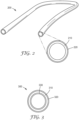
- tubing article 200 comprises tubing layer 210 and coating layer 220.
- Coating layer 220 is a vapor-deposited barrier polymer coating as described above. Also included in Figure 2 is a close up of a cross-section of tubing article 200.
- FIG. 3 shows a cross-sectional view of a segment of coated tube 300.
- Coated tube 300 includes tubing layer 310, outer coating layer 320, and inner coating layer 330.
- Outer coating layer 320 and inner coating layer 330 are vapor-deposited barrier polymer coatings as described above.
- the stethoscope tubes used in these Examples were polyvinyl chloride (PVC) sound transmission tubes prepared with a phthalate-free poly(vinyl chloride) (PVC) formulation, and are used in the manufacture of LITTMANN Cardiology stethoscopes (3M Company, St. Paul, MN).
- PVC polyvinyl chloride
- the PVC plastisol formulations were made with different color pigments that provided dip coated PVC sound transmission tubes with similar properties. Both color tubes were flexible and elastomeric having a composition very similar to that shown in Table 3 below.
- the exteriors of the uncoated sound transmission tubes were wiped once with a lab wipe wetted with isopropanol (IPA) and allowed to dry prior to loading into the reactor.
- IPA isopropanol
- the tubes were coated using a vacuum process at approximately 21.3 Pa (160 milliTorr) while either statically hung from a rotating carousel or while tumbled in a cylindrical wire cage. Sample lots of the tubes were coated with 2.3 micrometer thick coatings of either Parylene-C or Parylene-N. The coating process coated both interior and exterior surfaces of the tubing.
- the PVC sound transmission tubes Prior to coating, the PVC sound transmission tubes had a glossy finish and slightly tacky feel with a relatively high coefficient of friction. After application of either of the Parylene-C or Parylene-N coating, the Parylene-coated sound transmission tubes had a dry, slippery feel and a lower coefficient of friction. Sound transmission tubes coated with Parylene-N had a uniform matte finish. Sound transmission tubes coated with Parylene-C remained glossy in appearance but had a fine elephant-skin finish. Sound transmission tubes coated using the wire cage method showed occasional scuff marks, but all the coatings were fully functional and conformal. Tubing flexibility was not noticeably changed with either coating. (Sample testing of flat sheets of coated and uncoated PVC is presented below for CoF (coefficient of friction) against hair and simulated skin.)
- the coated tubing samples were tested for adhesion of the coating to the tubing and for bending to ensure that the coating remained adhered to the tubing upon bending. Because of the shape and limited surface area of tubing samples, modified testing techniques were used.
- Adhesion testing A modified test method similar to ASTM 3359 was used to determine the adhesion of the coating to the tubing. A cross hatch pattern was cut into the coating with a scalpel and a pressure sensitive adhesive tape was attached to the cross hatched surface and removed. Additionally, a tweezer was used to attempt to lift off the edges of the cross hatch pattern of the coating. All coated samples passed this adhesion testing.
- the ability of the Parylene-C and Parylene-N coatings to reduce the extraction of material from the sound transmission tubes was also evaluated using a skin oil extraction model.
- This test used a synthetic skin oil formulation to model extended contact of the sound transmission tubes with human skin.
- the synthetic skin oil was made by mixing 70% olive oil, 20% oleic acid, and 10% squalene until uniform.
- the tubing samples were prepared using the plastisol formulation shown in Table 3, using the sample preparation method presented below. Samples 1, 2, and 3 were uncoated, Samples B and N were coated. Samples of tubing were prepared by cutting the tubing into 1 inch (2.54 centimeters) pieces and sealing the ends using a hot plate set at 220°C and covered with aluminum foil.
- tubing samples were then coated with Parylene-C or Parylene-N.
- Each tubing sample was placed in a 40 mL vial and filled with 37 mL of the synthetic skin oil.
- the vials were then placed in a 50°C oven for a period of time as provided in Table 2.
- the vials were removed from the oven and the samples rinsed with IPA and wiped with a paper towel to remove synthetic skin oil from the surface. Residual IPA was removed by drying in a 50°C oven until a constant weight was achieved. Absorption of synthetic skin oil by the PVC may result in a net weight gain, in which case the weight loss is reported as a negative number.
- the results are reported in Table 2 and the reported percent mass loss is an average of multiple tests.
- Table 2 Percentage weight loss of material from sound transmission tubes extracted with a synthetic skin oil formulation. PVC tubing type Coating type Extraction time Mass loss Comparative Sample 1 None (Comparative) 7 days 5.5% Comparative Sample 2 None (Comparative) 7 days 5.2% Comparative Sample 3 None (Comparative) 7 days 6.7% Sample B Parylene-N 4 days 0.1% 7 days -0.3% Sample N Parylene-C 4 days -0.4% 7 days -2.2%
- a dip-molded PVC tube was made by immersing a silicone-coated metal rod heated to over 400°F (204°C) into a plastisol formulation provided in Table 3.
- the rod was slowly dipped into the plastisol formulation and slowly removed. It was subsequently heated in an oven at 330°F (166°C) for 9 minutes.
- the PVC tube was subsequently cooled and pulled off the rod.
- the tube had an inner diameter of approximately 5 mm and an outer diameter of 9-10 mm.
- the exterior of each tube was wiped clean with isopropanol.
- Three tube colors were made using STAN-TONE pigments available from PolyOne.
- the tubes were cut into sections approximately 1.5 inch (3.8 cm) in length.
- the ends of the tubing sections were sealed by pressing the end onto a piece of aluminum foil on top of a hotplate set at 220°C. This melted the end and the pressure applied deformed and sealed the end. After cooling the foil was removed.
- Table 3 Plastisol formulation. Material (Source, Location) Trade name or abbreviation Weight Percentage of Formulation Plasticizer (Lanxess Corp., Pittsburgh, PA) MESAMOLL 41.44% Poly(vinyl chloride) homopolymer resin (Formosa Plastics Corp.
- Acoustic performance of a stethoscope can be described in terms of its frequency response to a broadband or pink noise source coupled to the chestpiece in a manner that simulates the human torso.
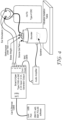
- the test apparatus used to characterize the acoustic performance is illustrated in Figure 4 .
- the sound source was a loudspeaker enclosed in a cylindrical sounder chamber with an 87 millimeter opening on top filled by a silicone gel pad with dimensions of 130 millimeters diameter ⁇ 30 millimeters thick.
- the silicone gel pad was used to simulate human skin/flesh and was made from ECOLFEX 00-10 Super Soft Shore 00-10 Platinum Silicone Rubber Compound, available from Reynolds Advanced Materials of Countryside, IL, USA.
- a 3M LITTMANN CARDIOLOGY IV Stethoscope (available from 3M Company of St. Paul, MN) was used with each of the example stethoscope assembly tested.
- the stethoscope chestpiece assembled with each example tube was placed on the gel pad.
- a select weight was applied to the top of the chest piece. The applied weight represented light force (100 grams).
- the stethoscope ear tips were inserted into the ears of a Head simulator.
- Microphones in the ear couplers detected the stethoscope sound as in a manner equivalent to the human ear and a reference microphone positioned above the loudspeaker provided a normalization signal for the transfer function frequency response.
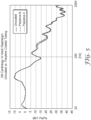
- Figure 5 shows a transfer function frequency response curves for the Cardiology IV stethoscope chestpiece assembled with uncoated tubes (comparative examples) and from tubes coated with Parylene-N and with Parylene-C. Virtually identical frequency response curves for all samples demonstrated that there is no change in the functional acoustic performance of stethoscope tubes coated with a Parylene coating.
- the flat film samples were prepared by curing PVC plastisol at 350°F (177°C) for 10 minutes between 2 PYREX sheets with a 0.25 inch (0.64 cm) rubber spacer between the PYREX sheets.
- the parylene coated samples were prepared as described above. Upon cooling, a sample of 6.25 ⁇ 12 inches (16 ⁇ 30 cm) was cut from the cured sheet.
- the hair samples were Hairstrips 3 inches (7.6 cm) wide, 6 inches (15 cm) long, and 1 inch (2.5 cm) thick from Spectrum Brands; Madison, WI.
- the Hairstrips were acclimated in the testing room for at least 4 days.
- the simulated skin samples were 2 inch (5 cm) wide strips of VITRO-SKIN from IMS, Bunnell, FL that were hydrolyzed by placing in a sealed container with a container of water for at least 16 hours.
- a VITRO-SKIN strip was wrapped around a 200 gram sled and adhered to the sled with double-sided tape.
- the testing was carried out on an IMASS Peel Tester (SP-2100) for 5.30 inches (13 cm) at a rate of 6 inches per minute (15 cm/min). The PVC sample tested was secured to the peel tester platform.
- VITRO-SKIN testing the VITRO-SKIN-wrapped sled was attached to the peel tester sensor. The PVC sample was then dragged across the VITRO-SKIN sample.
- a silicone sound transmission tube was coated with Parylene-C on a rotating carousel according to the process described above.
- the resulting Parylene-C coated silicone sound transmission tube had a matte appearance and was less tacky/sticky to the touch than the uncoated tube.
- the acoustic performance of the parylene-coated and uncoated ear tubes was indistinguishable.
Landscapes
- Health & Medical Sciences (AREA)
- Life Sciences & Earth Sciences (AREA)
- Veterinary Medicine (AREA)
- Animal Behavior & Ethology (AREA)
- General Health & Medical Sciences (AREA)
- Public Health (AREA)
- Epidemiology (AREA)
- Chemical & Material Sciences (AREA)
- Engineering & Computer Science (AREA)
- Biomedical Technology (AREA)
- Medicinal Chemistry (AREA)
- Molecular Biology (AREA)
- Materials For Medical Uses (AREA)
Claims (15)
- Ein medizinischer Gegenstand, umfassend:einen Schlauch mit einer Innenoberfläche und einer Außenoberfläche, umfassend eine Polymerzusammensetzung, die eine oder mehrere extrahierbare Komponenten enthält; undeine aufgedampfte Beschichtung aus einem Barrierepolymer, das von mindestens einem ethylenisch ungesättigten Monomer abgeleitet ist, die mindestens einen Teil mindestens der Außenoberfläche des Schlauchs bedeckt, so dass die aufgedampfte Polymerbeschichtungsbarriere die Extraktion von extrahierbarer/extrahierbaren Komponente(n) aus dem Schlauch reduziert,wobei das aufgedampfte Barrierepolymer Parylen oder ein Copolymer von Parylen umfasst.
- Der medizinische Gegenstand nach Anspruch 1, wobei die Polymerzusammensetzung, die eine oder mehrere extrahierbare Komponenten enthält, umfasst:weichgemachtes Polyvinylchlorid (PVC);weichgemachte PVC-Copolymere;weichgemachtes Polyurethan; oderPolysiloxan, das nicht umgesetztes cyclisches Siloxan, Katalysatorrückstände, Weichmacher, Klebrigmacher oder eine Kombination davon enthält.
- Der medizinische Gegenstand nach Anspruch 2, wobei die Polymerzusammensetzung, die eine oder mehrere extrahierbare Komponenten enthält, weichgemachtes PVC umfasst, wobei das weichgemachte PVC mindestens 25 Gewichtsprozent Weichmacher umfasst.
- Der medizinische Gegenstand nach Anspruch 1, wobei das aufgedampfte Barrierepolymer ein substituiertes Parylen umfasst.
- Der medizinische Gegenstand nach Anspruch 1, wobei das aufgedampfte Barrierepolymer Parylen N oder Parylen C umfasst.
- Der medizinische Gegenstand nach Anspruch 1, wobei die aufgedampfte Barrierepolymerbeschichtung eine Dicke von 1-10 Mikrometer aufweist.
- Der medizinische Gegenstand nach Anspruch 1, wobei die aufgedampfte Barrierepolymerbeschichtung ferner mindestens ein antimikrobielles Mittel aufweist.
- Der medizinische Gegenstand nach Anspruch 1, wobei die Polymerzusammensetzung, die eine oder mehrere extrahierbare Komponenten enthält, eine Dicke von 0,1 bis 7 Millimeter aufweist.
- Der medizinische Gegenstand nach Anspruch 1, wobei der Schlauch Schläuche für ein Stethoskop umfasst.
- Der medizinische Gegenstand nach Anspruch 1, wobei die aufgedampfte Beschichtung die Farbe, die Textur, den Reibungskoeffizienten, das optische Erscheinungsbild der Schläuche oder eine Kombination davon verändert.
- Der medizinische Gegenstand nach Anspruch 1, wobei das aufgedampfte Barrierepolymer ein Copolymer aus Parylen und mindestens einem (Meth)acrylat umfasst.
- Ein Verfahren zum Herstellen eines medizinischen Gegenstands, umfassend:Bereitstellen eines Schlauchs mit einer Innenoberfläche und einer Außenoberfläche, umfassend eine Polymerzusammensetzung, die eine oder mehrere extrahierbare Komponenten enthält; undAufdampfen eines Barrierepolymers, das Parylen oder ein Copolymer von Parylen umfasst, auf mindestens einen Teil mindestens der Außenoberfläche des Schlauchs.
- Das Verfahren nach Anspruch 12, wobei das Aufdampfen eines Barrierepolymers auf mindestens einen Teil mindestens der Außenoberfläche des Schlauchs umfasst:Platzieren des Schlauchs in einer Abscheidungskammer;Anlegen eines Vakuums an die Abscheidungskammer;Erhitzen eines Vorläufermaterials, um mindestens einen Teil davon zu verdampfen; undEinbringen des verdampften Vorläufermaterials in die Abscheidungskammer, wobei das Vorläufermaterial [2,2]Paracyclophan umfasst.
- Das Verfahren nach Anspruch 13, wobei das Platzieren des Schlauchs in einer Abscheidungskammer das Platzieren des Schlauchs in einem rotierenden Korb oder das Aufhängen des Schlauchs an einem Gestell umfasst.
- Das Verfahren nach Anspruch 12, wobei die aufgedampfte, vernetzte Polymerbeschichtung eine Dicke von 1-10 Mikrometer aufweist.
Applications Claiming Priority (2)
| Application Number | Priority Date | Filing Date | Title |
|---|---|---|---|
| US202063030350P | 2020-05-27 | 2020-05-27 | |
| PCT/IB2021/052861 WO2021240254A1 (en) | 2020-05-27 | 2021-04-06 | Coated tubing for medical articles |
Publications (2)
| Publication Number | Publication Date |
|---|---|
| EP4157381A1 EP4157381A1 (de) | 2023-04-05 |
| EP4157381B1 true EP4157381B1 (de) | 2024-08-07 |
Family
ID=75539708
Family Applications (1)
| Application Number | Title | Priority Date | Filing Date |
|---|---|---|---|
| EP21719255.8A Active EP4157381B1 (de) | 2020-05-27 | 2021-04-06 | Beschichteter schlauch für medizinische gegenstände |
Country Status (3)
| Country | Link |
|---|---|
| US (1) | US20230181800A1 (de) |
| EP (1) | EP4157381B1 (de) |
| WO (1) | WO2021240254A1 (de) |
Families Citing this family (1)
| Publication number | Priority date | Publication date | Assignee | Title |
|---|---|---|---|---|
| US20250058026A1 (en) * | 2021-09-07 | 2025-02-20 | 3M Innovative Properties Company | Parylene coatings for medical articles that are cleanable and reduce microbial touch transfer |
Family Cites Families (12)
| Publication number | Priority date | Publication date | Assignee | Title |
|---|---|---|---|---|
| DE2622502A1 (de) * | 1976-05-20 | 1977-11-24 | Rehau Plastiks | Verwendung eines mehrschichtigen kunststoff-schlauches fuer medizinische zwecke |
| US6727372B2 (en) | 2000-08-07 | 2004-04-27 | Eastman Chemical Company | Colorant compounds containing copolymerizable vinyl groups |
| CN1234778C (zh) | 2000-08-07 | 2006-01-04 | 伊斯曼化学公司 | 含可共聚乙烯基的热稳定蒽醌着色剂 |
| US7105688B2 (en) | 2003-08-25 | 2006-09-12 | Eastman Chemical Company | Ethylenically-unsaturated red anthraquinone dyes |
| US7172634B2 (en) | 2003-08-25 | 2007-02-06 | Eastman Chemical Company | Ethylenically-unsaturated blue anthraquinone dyes |
| AU2005323114A1 (en) * | 2004-12-30 | 2006-07-13 | 3M Innovative Properties Company | Stethoscope with frictional noise reduction |
| JP4291296B2 (ja) | 2005-04-08 | 2009-07-08 | 株式会社メニコン | 新規重合性染料およびそれを含む眼用レンズ |
| US7659325B2 (en) | 2005-11-03 | 2010-02-09 | Ophtec B.V. | Functionalized dyes and use thereof in ophthalmic lens material |
| TW200934449A (en) * | 2007-12-12 | 2009-08-16 | 3M Innovative Properties Co | Hydrophilic gel materials and methods of making |
| WO2012166291A2 (en) * | 2011-05-04 | 2012-12-06 | Restek Corporation | Protective barrier against contamination from sample preparation and extraction devices |
| US8865929B2 (en) | 2011-07-19 | 2014-10-21 | Coopervision International Holding Company, Lp | Reactive dyes for contact lenses |
| CN104684992B (zh) * | 2012-07-05 | 2019-06-28 | 3M创新有限公司 | 可硬化的抗微生物组合物 |
-
2021
- 2021-04-06 EP EP21719255.8A patent/EP4157381B1/de active Active
- 2021-04-06 WO PCT/IB2021/052861 patent/WO2021240254A1/en not_active Ceased
- 2021-04-06 US US17/926,449 patent/US20230181800A1/en active Pending
Also Published As
| Publication number | Publication date |
|---|---|
| EP4157381A1 (de) | 2023-04-05 |
| US20230181800A1 (en) | 2023-06-15 |
| WO2021240254A1 (en) | 2021-12-02 |
Similar Documents
| Publication | Publication Date | Title |
|---|---|---|
| JP6181652B2 (ja) | 形状適合性コーティング及び組成物 | |
| Pramudya et al. | POSS-containing bioinspired adhesives with enhanced mechanical and optical properties for biomedical applications | |
| JP6983170B2 (ja) | 接着剤層を備えたポリ乳酸ポリマー系フィルム | |
| JP6330161B2 (ja) | 重合基体およびシリコーンポリマーの層を含む物品 | |
| JPH0757737B2 (ja) | ポリシロキサン―グラフトコポリマー組成物 | |
| EP4157381B1 (de) | Beschichteter schlauch für medizinische gegenstände | |
| CN108430769A (zh) | 包括第二层的丙烯酸类聚乙烯醇缩醛膜 | |
| JP2008513232A (ja) | 貼り直し可能な光学フィルム | |
| CN110392705A (zh) | 可用作压敏粘合剂的组合物、其用途及包含该组合物的粘合剂制品 | |
| JP6516739B2 (ja) | 親水性/疎水性ポリマー水性エマルジョン並びにそれらに関連する製品及び方法 | |
| JPH01319518A (ja) | シリコーン/アクリル共重合体組成物 | |
| JP2019532456A (ja) | 潤滑性シリコーン・ケーブルジャケットおよびそれから形成されるケーブルアセンブリ | |
| Ngo et al. | Modification of the adhesive properties of silicone-based coatings by block copolymers | |
| JP5914692B2 (ja) | 再使用可能な複合接着剤 | |
| JP6537506B2 (ja) | 親水性/疎水性ポリマー水性エマルジョン並びにそれらに関連する製品及び方法 | |
| CN109337492B (zh) | 亲水超滑涂层以及免激活涂层导尿管 | |
| EP4370033B1 (de) | Schutzbeschichtungen für gedruckte oberflächen | |
| JPH07289630A (ja) | 抗血栓性塗料、およびこれを塗布した医療、生理衛生用品 | |
| JP6547623B2 (ja) | 皮膚粘着シートおよびシート状皮膚外用剤 | |
| JP3038167U (ja) | 超音波診断装置用音響レンズ | |
| CN111344373A (zh) | 用于微型扬声器膜片的阻尼粘合剂层 | |
| JPH07119398B2 (ja) | プライマー組成物 | |
| JP2021109917A (ja) | 離型用液組成物 | |
| JPH02252782A (ja) | 表面保護粘着シート又はテープ | |
| KR20160041337A (ko) | 식도 청진기의 제조 방법 |
Legal Events
| Date | Code | Title | Description |
|---|---|---|---|
| STAA | Information on the status of an ep patent application or granted ep patent |
Free format text: STATUS: UNKNOWN |
|
| STAA | Information on the status of an ep patent application or granted ep patent |
Free format text: STATUS: THE INTERNATIONAL PUBLICATION HAS BEEN MADE |
|
| PUAI | Public reference made under article 153(3) epc to a published international application that has entered the european phase |
Free format text: ORIGINAL CODE: 0009012 |
|
| STAA | Information on the status of an ep patent application or granted ep patent |
Free format text: STATUS: REQUEST FOR EXAMINATION WAS MADE |
|
| 17P | Request for examination filed |
Effective date: 20221123 |
|
| AK | Designated contracting states |
Kind code of ref document: A1 Designated state(s): AL AT BE BG CH CY CZ DE DK EE ES FI FR GB GR HR HU IE IS IT LI LT LU LV MC MK MT NL NO PL PT RO RS SE SI SK SM TR |
|
| DAV | Request for validation of the european patent (deleted) | ||
| DAX | Request for extension of the european patent (deleted) | ||
| GRAP | Despatch of communication of intention to grant a patent |
Free format text: ORIGINAL CODE: EPIDOSNIGR1 |
|
| STAA | Information on the status of an ep patent application or granted ep patent |
Free format text: STATUS: GRANT OF PATENT IS INTENDED |
|
| RAP1 | Party data changed (applicant data changed or rights of an application transferred) |
Owner name: SOLVENTUM INTELLECTUAL PROPERTIES COMPANY |
|
| INTG | Intention to grant announced |
Effective date: 20240228 |
|
| GRAS | Grant fee paid |
Free format text: ORIGINAL CODE: EPIDOSNIGR3 |
|
| GRAA | (expected) grant |
Free format text: ORIGINAL CODE: 0009210 |
|
| STAA | Information on the status of an ep patent application or granted ep patent |
Free format text: STATUS: THE PATENT HAS BEEN GRANTED |
|
| AK | Designated contracting states |
Kind code of ref document: B1 Designated state(s): AL AT BE BG CH CY CZ DE DK EE ES FI FR GB GR HR HU IE IS IT LI LT LU LV MC MK MT NL NO PL PT RO RS SE SI SK SM TR |
|
| REG | Reference to a national code |
Ref country code: GB Ref legal event code: FG4D |
|
| REG | Reference to a national code |
Ref country code: CH Ref legal event code: EP |
|
| REG | Reference to a national code |
Ref country code: IE Ref legal event code: FG4D |
|
| REG | Reference to a national code |
Ref country code: DE Ref legal event code: R096 Ref document number: 602021016829 Country of ref document: DE |
|
| REG | Reference to a national code |
Ref country code: LT Ref legal event code: MG9D |
|
| REG | Reference to a national code |
Ref country code: NL Ref legal event code: MP Effective date: 20240807 |
|
| PG25 | Lapsed in a contracting state [announced via postgrant information from national office to epo] |
Ref country code: NO Free format text: LAPSE BECAUSE OF FAILURE TO SUBMIT A TRANSLATION OF THE DESCRIPTION OR TO PAY THE FEE WITHIN THE PRESCRIBED TIME-LIMIT Effective date: 20241107 |
|
| REG | Reference to a national code |
Ref country code: AT Ref legal event code: MK05 Ref document number: 1710220 Country of ref document: AT Kind code of ref document: T Effective date: 20240807 |
|
| PG25 | Lapsed in a contracting state [announced via postgrant information from national office to epo] |
Ref country code: GR Free format text: LAPSE BECAUSE OF FAILURE TO SUBMIT A TRANSLATION OF THE DESCRIPTION OR TO PAY THE FEE WITHIN THE PRESCRIBED TIME-LIMIT Effective date: 20241108 Ref country code: NL Free format text: LAPSE BECAUSE OF FAILURE TO SUBMIT A TRANSLATION OF THE DESCRIPTION OR TO PAY THE FEE WITHIN THE PRESCRIBED TIME-LIMIT Effective date: 20240807 Ref country code: FI Free format text: LAPSE BECAUSE OF FAILURE TO SUBMIT A TRANSLATION OF THE DESCRIPTION OR TO PAY THE FEE WITHIN THE PRESCRIBED TIME-LIMIT Effective date: 20240807 Ref country code: PT Free format text: LAPSE BECAUSE OF FAILURE TO SUBMIT A TRANSLATION OF THE DESCRIPTION OR TO PAY THE FEE WITHIN THE PRESCRIBED TIME-LIMIT Effective date: 20241209 Ref country code: PL Free format text: LAPSE BECAUSE OF FAILURE TO SUBMIT A TRANSLATION OF THE DESCRIPTION OR TO PAY THE FEE WITHIN THE PRESCRIBED TIME-LIMIT Effective date: 20240807 |
|
| PG25 | Lapsed in a contracting state [announced via postgrant information from national office to epo] |
Ref country code: BG Free format text: LAPSE BECAUSE OF FAILURE TO SUBMIT A TRANSLATION OF THE DESCRIPTION OR TO PAY THE FEE WITHIN THE PRESCRIBED TIME-LIMIT Effective date: 20240807 |
|
| PG25 | Lapsed in a contracting state [announced via postgrant information from national office to epo] |
Ref country code: LV Free format text: LAPSE BECAUSE OF FAILURE TO SUBMIT A TRANSLATION OF THE DESCRIPTION OR TO PAY THE FEE WITHIN THE PRESCRIBED TIME-LIMIT Effective date: 20240807 |
|
| PG25 | Lapsed in a contracting state [announced via postgrant information from national office to epo] |
Ref country code: AT Free format text: LAPSE BECAUSE OF FAILURE TO SUBMIT A TRANSLATION OF THE DESCRIPTION OR TO PAY THE FEE WITHIN THE PRESCRIBED TIME-LIMIT Effective date: 20240807 Ref country code: IS Free format text: LAPSE BECAUSE OF FAILURE TO SUBMIT A TRANSLATION OF THE DESCRIPTION OR TO PAY THE FEE WITHIN THE PRESCRIBED TIME-LIMIT Effective date: 20241207 |
|
| PG25 | Lapsed in a contracting state [announced via postgrant information from national office to epo] |
Ref country code: HR Free format text: LAPSE BECAUSE OF FAILURE TO SUBMIT A TRANSLATION OF THE DESCRIPTION OR TO PAY THE FEE WITHIN THE PRESCRIBED TIME-LIMIT Effective date: 20240807 |
|
| PG25 | Lapsed in a contracting state [announced via postgrant information from national office to epo] |
Ref country code: RS Free format text: LAPSE BECAUSE OF FAILURE TO SUBMIT A TRANSLATION OF THE DESCRIPTION OR TO PAY THE FEE WITHIN THE PRESCRIBED TIME-LIMIT Effective date: 20241107 Ref country code: ES Free format text: LAPSE BECAUSE OF FAILURE TO SUBMIT A TRANSLATION OF THE DESCRIPTION OR TO PAY THE FEE WITHIN THE PRESCRIBED TIME-LIMIT Effective date: 20240807 |
|
| PG25 | Lapsed in a contracting state [announced via postgrant information from national office to epo] |
Ref country code: RS Free format text: LAPSE BECAUSE OF FAILURE TO SUBMIT A TRANSLATION OF THE DESCRIPTION OR TO PAY THE FEE WITHIN THE PRESCRIBED TIME-LIMIT Effective date: 20241107 Ref country code: PT Free format text: LAPSE BECAUSE OF FAILURE TO SUBMIT A TRANSLATION OF THE DESCRIPTION OR TO PAY THE FEE WITHIN THE PRESCRIBED TIME-LIMIT Effective date: 20241209 Ref country code: PL Free format text: LAPSE BECAUSE OF FAILURE TO SUBMIT A TRANSLATION OF THE DESCRIPTION OR TO PAY THE FEE WITHIN THE PRESCRIBED TIME-LIMIT Effective date: 20240807 Ref country code: NO Free format text: LAPSE BECAUSE OF FAILURE TO SUBMIT A TRANSLATION OF THE DESCRIPTION OR TO PAY THE FEE WITHIN THE PRESCRIBED TIME-LIMIT Effective date: 20241107 Ref country code: NL Free format text: LAPSE BECAUSE OF FAILURE TO SUBMIT A TRANSLATION OF THE DESCRIPTION OR TO PAY THE FEE WITHIN THE PRESCRIBED TIME-LIMIT Effective date: 20240807 Ref country code: LV Free format text: LAPSE BECAUSE OF FAILURE TO SUBMIT A TRANSLATION OF THE DESCRIPTION OR TO PAY THE FEE WITHIN THE PRESCRIBED TIME-LIMIT Effective date: 20240807 Ref country code: IS Free format text: LAPSE BECAUSE OF FAILURE TO SUBMIT A TRANSLATION OF THE DESCRIPTION OR TO PAY THE FEE WITHIN THE PRESCRIBED TIME-LIMIT Effective date: 20241207 Ref country code: HR Free format text: LAPSE BECAUSE OF FAILURE TO SUBMIT A TRANSLATION OF THE DESCRIPTION OR TO PAY THE FEE WITHIN THE PRESCRIBED TIME-LIMIT Effective date: 20240807 Ref country code: GR Free format text: LAPSE BECAUSE OF FAILURE TO SUBMIT A TRANSLATION OF THE DESCRIPTION OR TO PAY THE FEE WITHIN THE PRESCRIBED TIME-LIMIT Effective date: 20241108 Ref country code: FI Free format text: LAPSE BECAUSE OF FAILURE TO SUBMIT A TRANSLATION OF THE DESCRIPTION OR TO PAY THE FEE WITHIN THE PRESCRIBED TIME-LIMIT Effective date: 20240807 Ref country code: ES Free format text: LAPSE BECAUSE OF FAILURE TO SUBMIT A TRANSLATION OF THE DESCRIPTION OR TO PAY THE FEE WITHIN THE PRESCRIBED TIME-LIMIT Effective date: 20240807 Ref country code: BG Free format text: LAPSE BECAUSE OF FAILURE TO SUBMIT A TRANSLATION OF THE DESCRIPTION OR TO PAY THE FEE WITHIN THE PRESCRIBED TIME-LIMIT Effective date: 20240807 Ref country code: AT Free format text: LAPSE BECAUSE OF FAILURE TO SUBMIT A TRANSLATION OF THE DESCRIPTION OR TO PAY THE FEE WITHIN THE PRESCRIBED TIME-LIMIT Effective date: 20240807 |
|
| PG25 | Lapsed in a contracting state [announced via postgrant information from national office to epo] |
Ref country code: DK Free format text: LAPSE BECAUSE OF FAILURE TO SUBMIT A TRANSLATION OF THE DESCRIPTION OR TO PAY THE FEE WITHIN THE PRESCRIBED TIME-LIMIT Effective date: 20240807 Ref country code: SM Free format text: LAPSE BECAUSE OF FAILURE TO SUBMIT A TRANSLATION OF THE DESCRIPTION OR TO PAY THE FEE WITHIN THE PRESCRIBED TIME-LIMIT Effective date: 20240807 |
|
| PG25 | Lapsed in a contracting state [announced via postgrant information from national office to epo] |
Ref country code: EE Free format text: LAPSE BECAUSE OF FAILURE TO SUBMIT A TRANSLATION OF THE DESCRIPTION OR TO PAY THE FEE WITHIN THE PRESCRIBED TIME-LIMIT Effective date: 20240807 |
|
| PG25 | Lapsed in a contracting state [announced via postgrant information from national office to epo] |
Ref country code: CZ Free format text: LAPSE BECAUSE OF FAILURE TO SUBMIT A TRANSLATION OF THE DESCRIPTION OR TO PAY THE FEE WITHIN THE PRESCRIBED TIME-LIMIT Effective date: 20240807 |
|
| PG25 | Lapsed in a contracting state [announced via postgrant information from national office to epo] |
Ref country code: SK Free format text: LAPSE BECAUSE OF FAILURE TO SUBMIT A TRANSLATION OF THE DESCRIPTION OR TO PAY THE FEE WITHIN THE PRESCRIBED TIME-LIMIT Effective date: 20240807 |
|
| REG | Reference to a national code |
Ref country code: DE Ref legal event code: R097 Ref document number: 602021016829 Country of ref document: DE |
|
| PLBE | No opposition filed within time limit |
Free format text: ORIGINAL CODE: 0009261 |
|
| STAA | Information on the status of an ep patent application or granted ep patent |
Free format text: STATUS: NO OPPOSITION FILED WITHIN TIME LIMIT |
|
| PGFP | Annual fee paid to national office [announced via postgrant information from national office to epo] |
Ref country code: DE Payment date: 20250319 Year of fee payment: 5 |
|
| 26N | No opposition filed |
Effective date: 20250508 |
|
| PG25 | Lapsed in a contracting state [announced via postgrant information from national office to epo] |
Ref country code: SE Free format text: LAPSE BECAUSE OF FAILURE TO SUBMIT A TRANSLATION OF THE DESCRIPTION OR TO PAY THE FEE WITHIN THE PRESCRIBED TIME-LIMIT Effective date: 20240807 |
|
| REG | Reference to a national code |
Ref country code: CH Ref legal event code: H13 Free format text: ST27 STATUS EVENT CODE: U-0-0-H10-H13 (AS PROVIDED BY THE NATIONAL OFFICE) Effective date: 20251125 |
|
| PG25 | Lapsed in a contracting state [announced via postgrant information from national office to epo] |
Ref country code: LU Free format text: LAPSE BECAUSE OF NON-PAYMENT OF DUE FEES Effective date: 20250406 |
|
| PG25 | Lapsed in a contracting state [announced via postgrant information from national office to epo] |
Ref country code: MC Free format text: LAPSE BECAUSE OF FAILURE TO SUBMIT A TRANSLATION OF THE DESCRIPTION OR TO PAY THE FEE WITHIN THE PRESCRIBED TIME-LIMIT Effective date: 20240807 |
|
| GBPC | Gb: european patent ceased through non-payment of renewal fee |
Effective date: 20250406 |
|
| REG | Reference to a national code |
Ref country code: BE Ref legal event code: MM Effective date: 20250430 |
|
| PG25 | Lapsed in a contracting state [announced via postgrant information from national office to epo] |
Ref country code: GB Free format text: LAPSE BECAUSE OF NON-PAYMENT OF DUE FEES Effective date: 20250406 |
|
| PG25 | Lapsed in a contracting state [announced via postgrant information from national office to epo] |
Ref country code: FR Free format text: LAPSE BECAUSE OF NON-PAYMENT OF DUE FEES Effective date: 20250430 |
|
| PG25 | Lapsed in a contracting state [announced via postgrant information from national office to epo] |
Ref country code: BE Free format text: LAPSE BECAUSE OF NON-PAYMENT OF DUE FEES Effective date: 20250430 |
|
| PG25 | Lapsed in a contracting state [announced via postgrant information from national office to epo] |
Ref country code: CH Free format text: LAPSE BECAUSE OF NON-PAYMENT OF DUE FEES Effective date: 20250430 |
|
| PG25 | Lapsed in a contracting state [announced via postgrant information from national office to epo] |
Ref country code: IT Free format text: LAPSE BECAUSE OF FAILURE TO SUBMIT A TRANSLATION OF THE DESCRIPTION OR TO PAY THE FEE WITHIN THE PRESCRIBED TIME-LIMIT Effective date: 20240807 |