EP4131209B1 - Stopppositionssteuerungssystem und stopppositionssteuerungsverfahren - Google Patents
Stopppositionssteuerungssystem und stopppositionssteuerungsverfahren Download PDFInfo
- Publication number
- EP4131209B1 EP4131209B1 EP20927797.9A EP20927797A EP4131209B1 EP 4131209 B1 EP4131209 B1 EP 4131209B1 EP 20927797 A EP20927797 A EP 20927797A EP 4131209 B1 EP4131209 B1 EP 4131209B1
- Authority
- EP
- European Patent Office
- Prior art keywords
- stop
- vehicle
- luggage
- user
- interval
- Prior art date
- Legal status (The legal status is an assumption and is not a legal conclusion. Google has not performed a legal analysis and makes no representation as to the accuracy of the status listed.)
- Active
Links
Images



Classifications
-
- B—PERFORMING OPERATIONS; TRANSPORTING
- B60—VEHICLES IN GENERAL
- B60W—CONJOINT CONTROL OF VEHICLE SUB-UNITS OF DIFFERENT TYPE OR DIFFERENT FUNCTION; CONTROL SYSTEMS SPECIALLY ADAPTED FOR HYBRID VEHICLES; ROAD VEHICLE DRIVE CONTROL SYSTEMS FOR PURPOSES NOT RELATED TO THE CONTROL OF A PARTICULAR SUB-UNIT
- B60W30/00—Purposes of road vehicle drive control systems not related to the control of a particular sub-unit, e.g. of systems using conjoint control of vehicle sub-units
- B60W30/14—Adaptive cruise control
-
- B—PERFORMING OPERATIONS; TRANSPORTING
- B60—VEHICLES IN GENERAL
- B60W—CONJOINT CONTROL OF VEHICLE SUB-UNITS OF DIFFERENT TYPE OR DIFFERENT FUNCTION; CONTROL SYSTEMS SPECIALLY ADAPTED FOR HYBRID VEHICLES; ROAD VEHICLE DRIVE CONTROL SYSTEMS FOR PURPOSES NOT RELATED TO THE CONTROL OF A PARTICULAR SUB-UNIT
- B60W60/00—Drive control systems specially adapted for autonomous road vehicles
- B60W60/001—Planning or execution of driving tasks
- B60W60/0025—Planning or execution of driving tasks specially adapted for specific operations
- B60W60/00253—Taxi operations
-
- B—PERFORMING OPERATIONS; TRANSPORTING
- B60—VEHICLES IN GENERAL
- B60W—CONJOINT CONTROL OF VEHICLE SUB-UNITS OF DIFFERENT TYPE OR DIFFERENT FUNCTION; CONTROL SYSTEMS SPECIALLY ADAPTED FOR HYBRID VEHICLES; ROAD VEHICLE DRIVE CONTROL SYSTEMS FOR PURPOSES NOT RELATED TO THE CONTROL OF A PARTICULAR SUB-UNIT
- B60W60/00—Drive control systems specially adapted for autonomous road vehicles
- B60W60/001—Planning or execution of driving tasks
- B60W60/0025—Planning or execution of driving tasks specially adapted for specific operations
- B60W60/00256—Delivery operations
-
- G—PHYSICS
- G06—COMPUTING OR CALCULATING; COUNTING
- G06V—IMAGE OR VIDEO RECOGNITION OR UNDERSTANDING
- G06V20/00—Scenes; Scene-specific elements
- G06V20/50—Context or environment of the image
- G06V20/52—Surveillance or monitoring of activities, e.g. for recognising suspicious objects
-
- G—PHYSICS
- G06—COMPUTING OR CALCULATING; COUNTING
- G06V—IMAGE OR VIDEO RECOGNITION OR UNDERSTANDING
- G06V20/00—Scenes; Scene-specific elements
- G06V20/50—Context or environment of the image
- G06V20/56—Context or environment of the image exterior to a vehicle by using sensors mounted on the vehicle
- G06V20/58—Recognition of moving objects or obstacles, e.g. vehicles or pedestrians; Recognition of traffic objects, e.g. traffic signs, traffic lights or roads
-
- G—PHYSICS
- G08—SIGNALLING
- G08G—TRAFFIC CONTROL SYSTEMS
- G08G1/00—Traffic control systems for road vehicles
- G08G1/01—Detecting movement of traffic to be counted or controlled
- G08G1/0104—Measuring and analyzing of parameters relative to traffic conditions
- G08G1/0108—Measuring and analyzing of parameters relative to traffic conditions based on the source of data
- G08G1/0112—Measuring and analyzing of parameters relative to traffic conditions based on the source of data from the vehicle, e.g. floating car data [FCD]
-
- G—PHYSICS
- G08—SIGNALLING
- G08G—TRAFFIC CONTROL SYSTEMS
- G08G1/00—Traffic control systems for road vehicles
- G08G1/01—Detecting movement of traffic to be counted or controlled
- G08G1/0104—Measuring and analyzing of parameters relative to traffic conditions
- G08G1/0108—Measuring and analyzing of parameters relative to traffic conditions based on the source of data
- G08G1/0116—Measuring and analyzing of parameters relative to traffic conditions based on the source of data from roadside infrastructure, e.g. beacons
-
- G—PHYSICS
- G08—SIGNALLING
- G08G—TRAFFIC CONTROL SYSTEMS
- G08G1/00—Traffic control systems for road vehicles
- G08G1/01—Detecting movement of traffic to be counted or controlled
- G08G1/0104—Measuring and analyzing of parameters relative to traffic conditions
- G08G1/0125—Traffic data processing
- G08G1/0133—Traffic data processing for classifying traffic situation
-
- G—PHYSICS
- G08—SIGNALLING
- G08G—TRAFFIC CONTROL SYSTEMS
- G08G1/00—Traffic control systems for road vehicles
- G08G1/01—Detecting movement of traffic to be counted or controlled
- G08G1/0104—Measuring and analyzing of parameters relative to traffic conditions
- G08G1/0137—Measuring and analyzing of parameters relative to traffic conditions for specific applications
- G08G1/0145—Measuring and analyzing of parameters relative to traffic conditions for specific applications for active traffic flow control
-
- G—PHYSICS
- G08—SIGNALLING
- G08G—TRAFFIC CONTROL SYSTEMS
- G08G1/00—Traffic control systems for road vehicles
- G08G1/09—Arrangements for giving variable traffic instructions
-
- G—PHYSICS
- G08—SIGNALLING
- G08G—TRAFFIC CONTROL SYSTEMS
- G08G1/00—Traffic control systems for road vehicles
- G08G1/09—Arrangements for giving variable traffic instructions
- G08G1/0962—Arrangements for giving variable traffic instructions having an indicator mounted inside the vehicle, e.g. giving voice messages
- G08G1/0967—Systems involving transmission of highway information, e.g. weather, speed limits
- G08G1/096708—Systems involving transmission of highway information, e.g. weather, speed limits where the received information might be used to generate an automatic action on the vehicle control
- G08G1/096716—Systems involving transmission of highway information, e.g. weather, speed limits where the received information might be used to generate an automatic action on the vehicle control where the received information does not generate an automatic action on the vehicle control
-
- G—PHYSICS
- G08—SIGNALLING
- G08G—TRAFFIC CONTROL SYSTEMS
- G08G1/00—Traffic control systems for road vehicles
- G08G1/09—Arrangements for giving variable traffic instructions
- G08G1/0962—Arrangements for giving variable traffic instructions having an indicator mounted inside the vehicle, e.g. giving voice messages
- G08G1/0967—Systems involving transmission of highway information, e.g. weather, speed limits
- G08G1/096708—Systems involving transmission of highway information, e.g. weather, speed limits where the received information might be used to generate an automatic action on the vehicle control
- G08G1/096725—Systems involving transmission of highway information, e.g. weather, speed limits where the received information might be used to generate an automatic action on the vehicle control where the received information generates an automatic action on the vehicle control
-
- G—PHYSICS
- G08—SIGNALLING
- G08G—TRAFFIC CONTROL SYSTEMS
- G08G1/00—Traffic control systems for road vehicles
- G08G1/09—Arrangements for giving variable traffic instructions
- G08G1/0962—Arrangements for giving variable traffic instructions having an indicator mounted inside the vehicle, e.g. giving voice messages
- G08G1/0967—Systems involving transmission of highway information, e.g. weather, speed limits
- G08G1/096733—Systems involving transmission of highway information, e.g. weather, speed limits where a selection of the information might take place
- G08G1/096741—Systems involving transmission of highway information, e.g. weather, speed limits where a selection of the information might take place where the source of the transmitted information selects which information to transmit to each vehicle
-
- G—PHYSICS
- G08—SIGNALLING
- G08G—TRAFFIC CONTROL SYSTEMS
- G08G1/00—Traffic control systems for road vehicles
- G08G1/09—Arrangements for giving variable traffic instructions
- G08G1/0962—Arrangements for giving variable traffic instructions having an indicator mounted inside the vehicle, e.g. giving voice messages
- G08G1/0967—Systems involving transmission of highway information, e.g. weather, speed limits
- G08G1/096766—Systems involving transmission of highway information, e.g. weather, speed limits where the system is characterised by the origin of the information transmission
- G08G1/096775—Systems involving transmission of highway information, e.g. weather, speed limits where the system is characterised by the origin of the information transmission where the origin of the information is a central station
-
- B—PERFORMING OPERATIONS; TRANSPORTING
- B60—VEHICLES IN GENERAL
- B60W—CONJOINT CONTROL OF VEHICLE SUB-UNITS OF DIFFERENT TYPE OR DIFFERENT FUNCTION; CONTROL SYSTEMS SPECIALLY ADAPTED FOR HYBRID VEHICLES; ROAD VEHICLE DRIVE CONTROL SYSTEMS FOR PURPOSES NOT RELATED TO THE CONTROL OF A PARTICULAR SUB-UNIT
- B60W2420/00—Indexing codes relating to the type of sensors based on the principle of their operation
- B60W2420/40—Photo, light or radio wave sensitive means, e.g. infrared sensors
- B60W2420/403—Image sensing, e.g. optical camera
-
- B—PERFORMING OPERATIONS; TRANSPORTING
- B60—VEHICLES IN GENERAL
- B60W—CONJOINT CONTROL OF VEHICLE SUB-UNITS OF DIFFERENT TYPE OR DIFFERENT FUNCTION; CONTROL SYSTEMS SPECIALLY ADAPTED FOR HYBRID VEHICLES; ROAD VEHICLE DRIVE CONTROL SYSTEMS FOR PURPOSES NOT RELATED TO THE CONTROL OF A PARTICULAR SUB-UNIT
- B60W2556/00—Input parameters relating to data
- B60W2556/45—External transmission of data to or from the vehicle
- B60W2556/65—Data transmitted between vehicles
-
- B—PERFORMING OPERATIONS; TRANSPORTING
- B60—VEHICLES IN GENERAL
- B60W—CONJOINT CONTROL OF VEHICLE SUB-UNITS OF DIFFERENT TYPE OR DIFFERENT FUNCTION; CONTROL SYSTEMS SPECIALLY ADAPTED FOR HYBRID VEHICLES; ROAD VEHICLE DRIVE CONTROL SYSTEMS FOR PURPOSES NOT RELATED TO THE CONTROL OF A PARTICULAR SUB-UNIT
- B60W2754/00—Output or target parameters relating to objects
- B60W2754/10—Spatial relation or speed relative to objects
- B60W2754/30—Longitudinal distance
-
- G—PHYSICS
- G08—SIGNALLING
- G08G—TRAFFIC CONTROL SYSTEMS
- G08G1/00—Traffic control systems for road vehicles
- G08G1/20—Monitoring the location of vehicles belonging to a group, e.g. fleet of vehicles, countable or determined number of vehicles
- G08G1/202—Dispatching vehicles on the basis of a location, e.g. taxi dispatching
Definitions
- the present invention relates to a stop position control system, a stop position control method, and a stop position control device for controlling the stop position of a vehicle that is to stop in a stop area.
- Patent Literature 1 disclosed a parking assistance device that provides guidance to an appropriate getting-off position for safely opening and closing a trunk.
- the parking assistance device disclosed in Patent Literature 1 detects an obstacle present in the vicinity of a parking target position, before the host-vehicle is parked. Suppose that the detected obstacle will become an obstruction for the vehicle parked at the parking target position when opening and closing the trunk. In the above case, the parking assistance device calculates a prior getting-off position where the obstacle will not become an obstruction when opening and closing the trunk.
- Other examples of parking assistance devices are disclosed in patent documents DE 10 2017 220 567 A , DE 10 2014 218 002 A , DE 10 2015 012 762 A and WO 2018/007065 A .
- Patent Literature 1 Japanese Unexamined Patent Application Publication No. 2009-190560
- the present invention has been proposed in view of the above described problem, and an object of the present invention is to provide a stop position control system, a stop position control method, and a stop position control device capable of ensuring a stop interval in accordance with a user's luggage between a user vehicle and an adjacent vehicle.
- a stop position control system and a stop position control method according to the invention are defined by the appended independent claims. Specific embodiments are defined by the dependent claims.
- the present invention it is possible to perform control such that an adjacent vehicle which is to stop adjacent to a stop vehicle stops by ensuring a sufficient stop interval to the stop vehicle depending on luggage information of the stop vehicle.
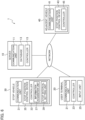
- FIG. 1 is a block diagram showing a configuration of a stop position control system according to the present embodiment.
- a stop position control system 1 includes a server 10 that controls the stop position of a stop vehicle that is to stop in a stop area.
- the server 10 is connected, via a wireless or wired network, to a user terminal 20, a stop vehicle 30 which is used by a user, and an adjacent vehicle 40 which is to stop adjacent to the stop vehicle 30 in a stop area.
- the network may be, for example, the Internet and may use a mobile communication function such as 4G/LTE and 5G.
- the adjacent vehicle means a vehicle which is to stop adjacent to the stop vehicle, for example, a vehicle that is to stop adjacent to the rear or the sides of the stop vehicle.
- a description will be given by taking an example where the adjacent vehicle 40 is a vehicle that is to stop adjacent to the rear of the stop vehicle.
- the stop position control system 1 manages the stop position of each vehicle by setting a stop interval between the arrived vehicle and the following vehicle depending on the amount of luggage of a user who is in the arrived vehicle.
- the stop vehicle 30 used by a user arrives at and stops in a stop area, and then the adjacent vehicle 40 arrives and stops at the stop area.
- the stop interval between the stop vehicle 30 and the adjacent vehicle 40 is too short.
- the stop position control system 1 sets an appropriate stop interval depending on the amount of luggage of the user so that loading/unloading of luggage can be performed smoothly.
- the server 10 controls the stop position of a vehicle that is to stop in a stop area. Specifically, the server 10 sets a stop interval between the stop vehicle 30 and the adjacent vehicle 40 depending on the amount of luggage of a user who is in the stop vehicle 30. As shown in FIG. 1 , the server 10 includes a communication unit 11, a database 13, and a controller 15.
- the communication unit 11 has a function of transmitting and receiving information via the network.
- the communication unit 11 acquires predetermined information via the network and records the acquired information in the database 13, the predetermined information being user's luggage information transmitted from the user terminal 20, vehicle information transmitted from the stop vehicle 30, or the like. Further, the communication unit 11 transmits information such as a necessary stop interval calculated by the controller 15 to the user terminal 20, the stop vehicle 30, and the adjacent vehicle 40 via the network.
- the database 13 stores information acquired by the communication unit 11. Specifically, the database 13 stores vehicle information acquired from the stop vehicle 30 and luggage information on luggage possessed by a user. When the amount of luggage possessed by a user is determined based on a user image obtained by capturing an image of a user, the database 13 also stores images from a camera of the stop vehicle 30 and a monitoring camera installed in a stop area. Further, when the schedule of a vehicle which is to stop in a stop area is determined in advance, the database 13 also stores a scheduled stop time and the like of the vehicle.
- the controller 15 performs a process for controlling a stop position for a vehicle that is to stop in a stop area. Specifically, the controller 15 acquires vehicle information on the stop vehicle 30 and luggage information on luggage possessed by a user who is using the stop vehicle 30. Then the controller 15 sets, based on the acquired vehicle information and luggage information, a necessary stop interval required for loading/unloading the luggage of the user from the stop vehicle 30 in the stop area. The controller 15 transmits the set necessary stop interval to the adjacent vehicle 40 that is to stop adjacent to the rear of the stop vehicle 30.
- the controller 15 includes an information acquisition unit 17 and a stop interval setting unit 19.
- the information acquisition unit 17 acquires vehicle information on the stop vehicle 30 from the stop vehicle 30.
- the vehicle information includes, as identification information of the stop vehicle 30, for example, a license plate registration number, the color of the vehicle, the type of the vehicle, a number displayed on a door or the like of the vehicle, and the like. Further, the vehicle information also includes the size of the seat and the size of the trunk of the stop vehicle 30, the size of the rear part of the vehicle which is required when opening and closing the trunk, and the like.
- the information acquisition unit 17 acquires luggage information on luggage possessed by the user who is using the stop vehicle 30.
- the luggage information includes at least the type or size of the user's luggage and may include the number of pieces of luggage.
- the information acquisition unit 17 may acquire luggage information from the user terminal 20 of the user.
- the information acquisition unit 17 may acquire a user image from a camera of the stop vehicle 30, and analyze the user image to acquire luggage information. Further, the information acquisition unit 17 may acquire a user image by means of a monitoring camera installed in the stop area.
- the stop interval setting unit 19 sets, based on the vehicle information and the luggage information, a necessary stop interval required for loading/unloading luggage of the user from the stop vehicle 30 in the stop area. At this time, the stop interval setting unit 19 determines the storage location of the luggage of the user in the stop vehicle 30 based on the type and size of the luggage. The stop interval setting unit 19 sets a necessary stop interval depending on the storage location and the size of the luggage.
- the stop interval setting unit 19 determines the storage location of the user's luggage in the stop vehicle 30 based on the type or size of luggage. As shown in FIG. 3 , the size of luggage is classified into three sizes of small size, medium size, and large size. The storage location of the luggage is determined depending on the size. The small size is, for example, a size which is smaller than a first predetermined range in which the lengths of three sides are less than 55 cm ⁇ 40 cm ⁇ 25 cm. The storage location of the small-sized luggage is in the passenger space in a vehicle such as a seat. Types of luggage include a backpack, a bag, a shopping bag, and the like.
- the medium size is a size which is equal to or larger than the first predetermined range and is smaller than a second predetermined range, in which the length of each of three sides is less than 1 m.
- the storage location of the medium-sized luggage is in the trunk of a vehicle.
- Types of luggage include a suitcase, a cardboard box, a musical instrument, golf equipment, and the like.
- the large size is a size which is equal to or larger than the second predetermined range, in which the length of each of the three sides is 1 m or more.
- the storage location of the large-sized luggage is in the trunk of a vehicle.
- Types of luggage include a wheelchair, a bicycle, a stroller, and the like.
- the stop interval setting unit 19 determines the size or type of luggage from information input to the user terminal 20 or a user image. Then, the stop interval setting unit 19 determines whether the size of the luggage of the user is smaller than the first predetermined range. When the luggage size is smaller than the first predetermined range, the stop interval setting unit 19 determines that the storage location of the luggage of the user is in the passenger space of the stop vehicle 30. Meanwhile, when the size of the user's luggage is equal to or larger than the first predetermined range, the stop interval setting unit 19 determines that the storage location of the luggage of the user is in the trunk of the stop vehicle 30.
- the stop interval setting unit 19 determines that the storage location of the luggage is in the trunk of the stop vehicle 30.
- the storage location of the luggage is determined in this way.
- the storage location of the user's luggage is determined to be in the passenger space of the stop vehicle 30, that is, suppose that the luggage is small in size or the type of luggage is a backpack, a bag, or the like.
- the stop interval setting unit 19 sets the necessary stop interval to a minimum stop interval.
- the minimum stop interval is the stop interval minimally required when two vehicles of a front vehicle and a rear vehicle stop in line with each other in the front-rear direction of the vehicles, and is 50 cm, for example.
- the stop interval setting unit 19 determines whether the size of the user's luggage is smaller than the second predetermined range.
- the stop interval setting unit 19 sets the necessary stop interval to a first stop interval.
- the first stop interval is a distance that is long enough to open and close the trunk of the vehicle, is longer than the minimum stop interval, and is 1.5 m, for example.
- the first stop interval is set according to the size of the rear of the vehicle that is required when the trunk is opened and closed, the size being included in the vehicle information.
- the necessary stop interval is set to a second stop interval.
- the second stop interval is a distance that is long enough to load/unload large-sized luggage, is longer than the first stop interval, and is 3 m, for example.
- the second stop interval may be set according to the size of the luggage. For example, a larger space is required for loading/unloading a bicycle than a stroller. Therefore, the second stop interval may be made larger in the case of a bicycle than in the case of a stroller.
- the stop interval setting unit 19 detects the adjacent vehicle 40 after the stop vehicle 30 stops in the stop area, and transmits the set necessary stop interval to the detected adjacent vehicle 40.
- the stop interval setting unit 19 detects, as the adjacent vehicle 40, a vehicle that travels toward the stop area within a predetermined range of the stop area after the stop vehicle 30 arrives at and stops in the stop area, and transmits the necessary stop interval to the detected adjacent vehicle 40.
- an expected arrival time at which the stop vehicle 30 is to arrive at the stop area is known in advance from a vehicle dispatch schedule or the like, and another vehicle which is to arrive at the stop area after the expected arrival time is also known.
- the adjacent vehicle 40 may be detected before the stop vehicle 30 stops in the stop area and the necessary stop interval may be transmitted to the detected adjacent vehicle 40.
- the controller 15 is composed of a general-purpose electronic circuit including a microcomputer, a microprocessor, and a CPU, and a peripheral device such as a memory.
- the controller 15 has a function of controlling the stop position of a vehicle that is to stop in the stop area.
- Each function of the controller can be implemented by one or more processing circuits.
- the processing circuits include a programmed processing device such as a processing device including, for example, an electronic circuit.
- the processing circuits also include devices such as an application specific integrated circuit (ASIC) that are arranged to perform functions described in the embodiments and conventional circuit components.
- ASIC application specific integrated circuit
- the user terminal 20 is a device that can access the server 10 via the network.
- the user terminal 20 is, for example, a portable terminal (a smartphone, a tablet, or the like) that is used by a user on a daily basis.
- An application is installed in the user terminal 20, the application being necessary for performing a stop position control service that is provided by the server 10. Therefore, the user terminal 20 can transmit necessary information to the server 10, and can receive and display information transmitted from the server 10.
- the user terminal 20 includes a communication unit 21, a controller 23, and an input unit 25.
- the communication unit 21 has a function of transmitting and receiving information to and from the server 10 and the stop vehicle 30 via the network.
- the communication unit 21 stores the received information in a memory (not shown) or the like, and transmits predetermined information such as luggage information.
- the communication unit 21 may be a device with a mobile communication function such as 4G/LTE.
- the controller 23 receives luggage information on luggage possessed by a user based on a user operation to the input unit 25.
- the type of luggage, the size of luggage, the number of pieces of luggage, and the like are input as the luggage information.
- Examples of the type of luggage include, for example, a backpack, a bag, a suitcase, a wheelchair, a stroller, and the like.
- Examples of the size of luggage include, for example, a small size in which three sides are less than 55 cm ⁇ 40 cm ⁇ 25 cm, a medium size in which each of the three sides is less than 1 m, and a large size in which each of the three sides is 1 m or longer.
- the controller 23 is a general-purpose microcomputer that includes a CPU (central processing unit), a memory, and an input/output unit.
- a computer program for causing the controller 23 to function as a part of the user terminal 20 is installed in the controller 23.
- the controller 23 controls the communication unit 21.
- Various types of information processes of the controller 23 may be realized by software or dedicated hardware.
- the input unit 25 receives user operations corresponding to various commands from the user.
- the input unit 25 may be an input interface with a plurality of buttons or a touch panel having a touch interface.
- the stop vehicle 30 is a vehicle which arrives at and stops in a stop area, and is used by a user who possesses luggage.
- the stop vehicle 30 may be a vehicle that arrives at and stops in a stop area with a user already in the vehicle, or a vehicle that a user gets on after the vehicle arrives at and stops in a stop area. That is, the stop vehicle 30 may be a vehicle onto which a user's luggage is to be loaded, or a vehicle from which a user's luggage is to be unloaded. Further, the stop vehicle 30 may be a vehicle which carries only luggage without a user getting on the vehicle. Therefore, the stop vehicle 30 is not limited to a taxi, and may be a vehicle for delivering luggage.
- the stop vehicle 30 may be an automatic driving vehicle or a vehicle driven by a driver.
- the stop vehicle 30 includes a communication unit 31 and a controller 33.
- the communication unit 31 has a function of transmitting and receiving information to and from the server 10, the user terminal 20, and the adjacent vehicle 40 via the network.
- the communication unit 31 stores the received information in a memory (not shown) or the like, and transmits predetermined information such as vehicle information.
- the communication unit 31 may be a device with a mobile communication function such as 4G/LTE.
- the controller 33 transmits vehicle information on the stop vehicle 30 via the communication unit 31 in response to a request from the server 10. Further, the controller 33 captures an image of a user by using a camera installed in the stop vehicle 30, and transmits the captured user image to the server 10.
- the controller 33 is a general-purpose microcomputer that includes a CPU (central processing unit), a memory, and an input/output unit.
- a computer program for causing the controller 33 to function in response to a request from the server 10 is installed in the controller 33.
- the controller 33 controls the communication unit 31.
- Various types of information processes of the controller 33 may be realized by software or dedicated hardware.
- the adjacent vehicle 40 arrives at the stop area and stops adjacent to the rear of the stop vehicle 30.
- the adjacent vehicle 40 may be an automatic driving vehicle or a vehicle that is driven by a driver.
- the adjacent vehicle 40 includes a communication unit 41 and is mounted with a stop position control device 43.
- the communication unit 41 has a function of transmitting and receiving information to and from the server 10, the user terminal 20, and the stop vehicle 30 via the network.
- the communication unit 41 stores received information such as vehicle information and the necessary stop interval in a memory (not shown) or the like, and transmits predetermined information.
- the communication unit 41 may be a device with a mobile communication function such as 4G/LTE.
- the stop position control device 43 is mounted on the adjacent vehicle 40 and includes a controller 45 that controls the stop position of the adjacent vehicle 40.
- the controller 45 acquires, from the server 10, vehicle information on the stop vehicle 30 and the necessary stop interval required for loading/unloading luggage of a user from the stop vehicle 30 in a stop area. After the adjacent vehicle 40 arrives at a stop area, the stop vehicle 30 is detected based on the vehicle information. The adjacent vehicle 40 is stopped adjacent to the rear of the detected stop vehicle 30 such that the stop interval to the stop vehicle 30 is the necessary stop interval.
- the controller 45 is a general-purpose microcomputer that includes a CPU (central processing unit), a memory, and an input/output unit.
- a computer program for controlling the stop position of the adjacent vehicle 40 is installed in the controller 45. By executing the computer program, the controller 45 controls the communication unit 41 and also controls the stop position of the adjacent vehicle 40.
- Various types of information processes of the controller 45 may be realized by software or dedicated hardware.
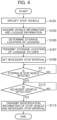
- FIG. 4 is a flowchart showing process procedures of a process for controlling a stop position performed by the stop position control system 1 according to the present embodiment.
- the server 10 specifies a vehicle that is traveling toward a stop area as the stop vehicle 30 that is to stop in the stop area. For example, suppose that, when a user gets on a taxi by using a vehicle dispatch service, the destination of the user is set to a stop area that is managed by the stop position control system 1. In the above case, the taxi is specified as the stop vehicle 30. When the user has called a taxi to the stop area by using a vehicle dispatch service, the taxi that has been called is specified as the stop vehicle 30.
- the server 10 acquires vehicle information on the stop vehicle 30 and luggage information on luggage possessed by the user who is using the stop vehicle 30.
- vehicle information includes identification information of the stop vehicle 30, the size of the seat, the size of the trunk, the size to the rear of the vehicle which is required when opening and closing the trunk, and the like.
- luggage information includes at least the type or size of the user's luggage, and further includes the number of pieces of luggage.
- the server 10 may acquire luggage information that is input by the user to the user terminal 20. Alternatively, the server 10 may acquire a user image obtained by capturing an image of the user from the stop vehicle 30 and analyze the user image to acquire luggage information. Also, when the user has called a taxi to the stop area, a user image may be acquired from a monitoring camera installed in the stop area.
- the server 10 determines the storage location of the user's luggage in the stop vehicle 30 based on the type or size of the luggage.
- the size of luggage is classified into three sizes of small size, medium size, and large size. Therefore, the server 10 determines the storage location of the luggage depending on the size.
- the small-sized type of luggage is a backpack, a bag, or a shopping bag. Therefore, the storage location of the luggage is determined to be in a passenger space in the vehicle, for example, on a seat.
- the medium-sized type of luggage is a suitcase, a cardboard box, a musical instrument, or golf equipment. Therefore, the storage location of the luggage is determined to be in the trunk of the vehicle.
- the large-sized type of luggage is a wheelchair, a bicycle, or a stroller. Therefore, the storage location of the luggage is determined to be in the trunk of the vehicle.
- step S107 the server 10 transmits the storage location of the luggage determined in step S 105 to the user terminal 20 of the user.
- step S 109 the server 10 sets the necessary stop interval required for loading/unloading the user's luggage from the stop vehicle 30 in the stop area. As shown in FIG. 3 , the server 10 sets the necessary stop interval to the minimum stop interval, in a case where the storage location of the user's luggage is determined to be on a seat in the stop vehicle 30, that is, in a case where the luggage is small in size.
- the server 10 determines whether the size of the user's luggage is smaller than the second predetermined range in a case where the storage location of the user's luggage is determined to be in the trunk. When the size is smaller than the second predetermined range, that is, when the luggage has a medium size, the server 10 sets the necessary stop interval to a first stop interval. Meanwhile, when the size is equal to or larger than the second predetermined range, that is, when the luggage is large in size, the server 10 sets the necessary stop interval to a second stop interval.
- step S111 the server 10 determines whether the stop vehicle 30 has arrived at and stopped in the stop area, and after detecting that the stop vehicle 30 has stopped in the stop area, the process proceeds to step S113.
- the server 10 receives location information of the stop vehicle 30 and determines whether the stop vehicle 30 has arrived at and stopped in the stop area.
- step S113 the server 10 determines whether an adjacent vehicle 40 that is to stop adjacent to the rear of the stop vehicle 30 can be detected.
- the process proceeds to step S115.
- the server 10 detects, as the adjacent vehicle 40, a vehicle that is traveling toward the stop area among vehicles that are traveling within a predetermined range of the stop area.
- the adjacent vehicle 40 is detected after the stop vehicle 30 stops in the stop area.
- the adjacent vehicle 40 may be detected before the stop vehicle 30 stops in the stop area. For example, suppose that an expected arrival time at which the stop vehicle 30 is to arrive at the stop area is known in advance based on a vehicle dispatch schedule or the like, and a vehicle which is to arrive at the stop area after the expected arrival time is also known. In the above case, the adjacent vehicle 40 may be detected before the stop vehicle 30 stops in the stop area.
- step S115 the server 10 transmits identification information of the stop vehicle 30 and the necessary stop interval to the adjacent vehicle 40 detected in step S113, and then ends the process for controlling a stop position according to the present embodiment.
- FIG. 5 is a flowchart showing process procedures of a process for controlling a stop position performed by the stop position control device 43 according to the present embodiment.
- step S201 the controller 45 of the stop position control device 43 receives and acquires identification information of the stop vehicle 30 and the necessary stop interval from the server 10 of the stop position control system 1.
- step S203 the controller 45 determines whether the adjacent vehicle 40 has arrived at the stop area. When the adjacent vehicle 40 has arrived at the stop area, the process proceeds to step S205.
- step S205 the controller 45 detects the stop vehicle 30 among vehicles that have stopped in the stop area based on identification information. Then, in step S207, the controller 45 causes the adjacent vehicle 40 to stop adjacent to the rear of the detected stop vehicle 30 such that the stop interval to the stop vehicle 30 becomes the necessary stop interval.
- the controller 45 detects the stop vehicle 30 from identification information such as a license plate registration number.
- the controller 45 instructs the automatic driving vehicle to stop adjacent to the rear of the detected stop vehicle 30 such that the stop interval between the vehicles becomes the necessary stop interval.
- identification information is displayed on a display for the driver to find the stop vehicle 30.
- the controller 45 displays an instruction on the display, which instructs the driver to stop the adjacent vehicle 40 adjacent to the rear of the stop vehicle 30.
- the controller 45 instructs the driver by using highlighting on the display such that the stop interval to the stop vehicle 30 becomes the necessary stop interval. In this way, after the adjacent vehicle 40 stops adjacent to the rear of the stop vehicle 30 such that the stop interval to the stop vehicle 30 becomes the necessary stop interval, the process for controlling a stop position according to the present embodiment is ended.
- vehicle information on a stop vehicle and luggage information on luggage possessed by a user who is using the stop vehicle are acquired.
- the necessary stop interval required for loading/unloading the user's luggage from the stop vehicle in a stop area is set based on the vehicle information and the luggage information.
- the necessary stop interval is transmitted to an adjacent vehicle that is to stop adjacent to the stop vehicle. This can sufficiently ensure the stop interval required for loading/unloading the user's luggage from the vehicle between vehicles that stop and line up in the stop area. Accordingly, it is possible to load/unload luggage smoothly in the stop area.
- luggage information includes at least the type or size of the user's luggage.
- the storage location of the user's luggage in the stop vehicle is determined based on the type or size of luggage. This can accurately set the stop interval required for loading/unloading luggage depending on the storage location of the luggage.
- the stop position control system 1 it is determined whether the size of the user's luggage is smaller than the first predetermined range.
- the luggage size is smaller than the first predetermined range
- the storage location of the user's luggage is determined to be in a passenger space of the stop vehicle.
- the luggage size is equal to or larger than the first predetermined range
- the storage location of the user's luggage is determined to be in the trunk of the stop vehicle. This can accurately determine whether the storage location of the luggage is in the passenger space or in the trunk based on the first predetermined range set in advance.
- the necessary stop interval is set to the minimum stop interval in a case where the storage location of the user's luggage is determined to be in the passenger space of the stop vehicle. This eliminates the necessity of increasing the stop interval for loading/unloading luggage, when the storage location of the luggage is on a seat. Therefore, the necessary stop interval is set to the minimum interval, and the stopping space can be effectively used.
- the stop position control system 1 it is determined whether the size of the user's luggage is smaller than the second predetermined range that is larger than the first predetermined range in a case where the storage location of the luggage is determined to be in the trunk of the stop vehicle.
- the necessary stop interval is set to a first stop interval that is longer than the minimum stop interval.
- the necessary stop interval is set to a second stop interval that is longer than the first stop interval. This increases the necessary stop interval according to the increase in the size of luggage. Accordingly, even if the user's luggage is large in size, it is possible to sufficiently ensure the stop interval required for loading/unloading luggage.
- the necessary stop interval is set to the minimum stop interval. Therefore, after the completion of loading/unloading of luggage, the necessary stop interval is set to the minimum interval to effectively use the stopping space.
- luggage information is acquired from a user terminal of the user. This allows the easy acquisition of the amount of luggage possessed by the user.
- a user image obtained by capturing an image of the user is acquired, and the acquired user image is analyzed to acquire luggage information. This eliminates the necessity for the user to input luggage information. Therefore, the convenience of the user can be enhanced.
- an adjacent vehicle is detected after the stop vehicle stops in the stop area, and the necessary stop interval is transmitted. This detects, as an adjacent vehicle, the vehicle closest to the stop area when the stop vehicle stops in the stop area. Accordingly, an adjacent vehicle can be accurately detected.
- an adjacent vehicle is detected before the stop vehicle stops in the stop area, and the necessary stop interval is transmitted. This can specify an adjacent vehicle at an early stage. Therefore, the stopping space required in the stop area can be reliably ensured.
- the stop position control device 43 acquires, from the stop position control system, vehicle information on the stop vehicle and the necessary stop interval required for loading/unloading the user's luggage from the stop vehicle in the stop area.
- the stop vehicle is detected based on the vehicle information when an adjacent vehicle arrives at the stop area.
- the adjacent vehicle is stopped adjacent to the detected stop vehicle such that the stop interval to the stop vehicle becomes the necessary stop interval. This can sufficiently ensure the stop interval required for loading/unloading the user's luggage from the vehicle between vehicles that stop and line up in the stop area. Therefore, it is possible to load/unload luggage smoothly in the stop area.
- FIG. 6 is a block diagram showing a configuration of a stop position control system according to the present embodiment.
- a stop position control system 1 according to the present embodiment differs from that in the first embodiment in that a stop position control device 35 is mounted on a stop vehicle 30. Therefore, while in the first embodiment, the server 10 performs the process for controlling a stop position, in the present embodiment, the controller 33 of the stop position control device 35 performs a process for controlling a stop position.
- the controller 33 includes an information acquisition unit 37 and a stop interval setting unit 39. However, a detailed description of the units will be omitted because the configurations of the units are the same as those of the information acquisition unit 17 and the stop interval setting unit 19 of the first embodiment shown in FIG. 1 . Further, the controller 33 may communicate with the user terminal 20 and the adjacent vehicle 40 directly or via the server 10. Particularly, the controller 33 may transmit the set necessary stop interval to the adjacent vehicle 40 via the server 10.
- a process for controlling a stop position performed by the stop position control device 35 according to the present embodiment is the same as the process for controlling a stop position according to the first embodiment shown in FIG. 4 .
- the server 10 performs the process for controlling a stop position
- the controller 33 performs the process for controlling a stop position. Therefore, in the description of the process for controlling a stop position, it is necessary to replace the server 10 with the controller 33.
- a stop position control method performed by a stop position control device 43 according to the present embodiment will be described.
- the process for controlling a stop position performed by the stop position control device 43 according to the present embodiment is the same as the process for controlling a stop position according to the first embodiment shown in FIG. 5 .
- the stop position control device 35 acquires vehicle information on a stop vehicle and luggage information on luggage possessed by a user who is using the stop vehicle.
- the necessary stop interval required for loading/unloading the user's luggage from the stop vehicle in a stop area is set based on the vehicle information and the luggage information.
- the necessary stop interval is transmitted to an adjacent vehicle that is to stop adjacent to the stop vehicle. This can sufficiently ensure the stop interval required for loading/unloading the user's luggage from the vehicle between vehicles that stop and line up in the stop area. Therefore, it is possible to load/unload luggage smoothly in the stop area.
- the stop position control device 35 transmits the necessary stop interval to the adjacent vehicle via a server in a stop position control system. This can reliably transmit the necessary stop interval to the adjacent vehicle via the server.
Landscapes
- Engineering & Computer Science (AREA)
- General Physics & Mathematics (AREA)
- Physics & Mathematics (AREA)
- Chemical & Material Sciences (AREA)
- Analytical Chemistry (AREA)
- Life Sciences & Earth Sciences (AREA)
- Atmospheric Sciences (AREA)
- Theoretical Computer Science (AREA)
- Multimedia (AREA)
- Automation & Control Theory (AREA)
- Transportation (AREA)
- Mechanical Engineering (AREA)
- Human Computer Interaction (AREA)
- Traffic Control Systems (AREA)
- Train Traffic Observation, Control, And Security (AREA)
- Control Of Driving Devices And Active Controlling Of Vehicle (AREA)
Claims (13)
- Ein Haltepositionssteuerungssystem (1), das aufweist:eine Steuerungseinheit (15, 33), die konfiguriert ist, um eine Halteposition eines Haltefahrzeugs (30) zu steuern, das in einem Haltebereich anhalten soll, wobeidie Steuerungseinheit (15, 33) konfiguriert ist, um:Fahrzeuginformationen über das Haltefahrzeug (30) zu erfassen,Gepäckinformationen über das Gepäck eines Benutzers zu erfassen, der das Haltefahrzeug (30) benutzt,basierend auf den Fahrzeuginformationen und den Gepäckinformationen ein notwendiges Halteintervall festzulegen, das für das Be-/Entladen des Gepäcks des Benutzers aus dem Haltefahrzeug (30) in dem Haltebereich erforderlich ist,das notwendige Halteintervall an ein benachbartes Fahrzeug (40) zu übertragen, wobei das benachbarte Fahrzeug (40) ein anderes Haltefahrzeug als das Haltefahrzeug (30) ist und angrenzend an das Haltefahrzeug (30) anhält, unddas notwendige Halteintervall auf das minimale Halteintervall einstellen, wenn festgestellt wird, dass das Be-/Entladen des Gepäcks des Benutzers aus dem Haltefahrzeug (30) abgeschlossen ist.
- Das Haltepositionssteuerungssystem (1) nach Anspruch 1, wobeidie Gepäckinformationen zumindest einen Typ oder eine Größe des Gepäcks des Benutzers aufweist, unddie Steuerungseinheit (15, 33) konfiguriert ist, um einen Speicher-Standort des Gepäcks des Benutzers in dem Haltefahrzeug (30) basierend auf dem Typ oder der Größe des Gepäcks zu bestimmen.
- Das Haltepositionssteuerungssystem (1) nach Anspruch 2, wobeidie Steuerungseinheit (15, 33) konfiguriert ist, um zu bestimmen, ob die Größe des Gepäcks des Benutzers kleiner als ein erster vorbestimmter Bereich ist,wenn die Größe kleiner als der erste vorbestimmte Bereich ist, zu bestimmen, dass der Standort des Gepäcks des Benutzers in einem Fahrgastraum des Haltefahrzeugs (30) liegt, undwenn die Größe gleich oder größer als der erste vorbestimmte Bereich ist, bestimmt, dass sich der Standort des Gepäcks des Benutzers in einem Kofferraum des Haltefahrzeugs (30) befindet.
- Das Haltepositionssteuerungssystem (1) nach Anspruch 3, wobei
die Steuerungseinheit (15, 33) konfiguriert ist, um das erforderliche Halteintervall auf ein minimales Halteintervall einzustellen, wenn der Standort des Gepäcks des Benutzers als im Fahrgastraum des Haltefahrzeugs (30) bestimmt wird. - Das Haltepositionssteuerungssystem (1) nach Anspruch 4, wobeidie Steuerungseinheit (15, 33) konfiguriert ist, um zu bestimmen, ob die Größe des Gepäcks des Benutzers kleiner als ein zweiter vorbestimmter Bereich ist, der größer als der erste vorbestimmte Bereich ist, in einem Fall, in dem der Standort des Gepäcks des Benutzers als im Kofferraum des Haltefahrzeugs (30) bestimmt ist,Einstellen des notwendigen Halteintervalls auf ein erstes Halteintervall, das länger ist als das minimale Halteintervall, wenn die Größe kleiner ist als der zweite vorbestimmte Bereich, undEinstellen des notwendigen Halteintervalls auf ein zweites Halteintervall, das länger ist als das erste Halteintervall, wenn die Größe gleich oder größer ist als der zweite vorbestimmte Bereich.
- Das Haltepositionssteuerungssystem (1) nach einem der Ansprüche 1 bis 5, wobei
die Steuerungseinheit (15, 33) konfiguriert ist, um die Gepäckinformationen von einem Benutzerterminal (20) des Benutzers zu erfassen. - Das Haltepositionssteuerungssystem (1) nach einem der Ansprüche 1 bis 5, wobei
die Steuerungseinheit (15, 33) konfiguriert ist, um ein Benutzerbild zu erfassen, das durch Aufnahme eines Bildes des Benutzers erhalten wird, und das Benutzerbild zu analysieren, um die Gepäckinformationen zu erfassen. - Das Haltepositionssteuerungssystem (1) nach einem der Ansprüche 1 bis 7, wobei
die Steuerungseinheit (15, 33) konfiguriert ist, um das angrenzende Fahrzeug (40) zu erkennen, nachdem das Haltefahrzeug (30) in dem Haltebereich anhält, und das erforderliche Halteintervall zu übertragen. - Das Haltepositionssteuerungssystem (1) nach einem der Ansprüche 1 bis 7, wobei
die Steuerungseinheit (15, 33) konfiguriert ist, um das angrenzende Fahrzeug (40) zu erfassen, bevor das Haltefahrzeug (30) im Haltebereich anhält, und das erforderliche Halteintervall zu übertragen. - Das Haltepositionssteuerungssystem (1) nach einem der Ansprüche 1 bis 9, ferner das Haltefahrzeug (30) aufweisend, wobei die Steuerungseinheit (33) an dem Haltefahrzeug (30) angebracht ist.
- Das Haltepositionssteuerungssystem (1) nach Anspruch 10, wobei die Steuerungseinheit (33) konfiguriert ist, um das erforderliche Halteintervall über einen Server (10) an das angrenzende Fahrzeug (40) zu übermitteln.
- Das Haltepositionssteuerungssystem (1) nach einem der Ansprüche 1 bis 9, ferner einen Server (10) aufweisend, wobei die Steuerungseinheit (15) in dem Server (10) bereitgestellt ist.
- Ein Haltepositionssteuerungsverfahren eines Haltepositionssteuerungssystems (1), das ein Haltefahrzeug (30) aufweist, das in einem Haltebereich anhalten soll, und eine Steuerungseinheit (15), die konfiguriert ist, um eine Halteposition des Haltefahrzeugs (30) zu steuern, wobei das Haltepositionssteuerungsverfahren folgende Schritte aufweist:Erfassen von Fahrzeuginformationen über das Haltefahrzeug (30);Erfassen von Gepäckinformationen über das Gepäck eines Benutzers, der das Haltefahrzeug (30) benutzt;Einstellen, basierend auf den Fahrzeuginformationen und den Gepäckinformationen, eines notwendigen Halteintervalls, das für das Be-/Entladen des Gepäcks des Benutzers aus dem Haltefahrzeug (30) in dem Haltebereich erforderlich ist;Übertragen des notwendigen Halteintervalls an ein benachbartes Fahrzeug (40), wobei das benachbarte Fahrzeug (40) ein anderes Haltefahrzeug als das Haltefahrzeug (30) ist und angrenzend an das Haltefahrzeug (30) anhält, undEinstellen des erforderlichen Halteintervalls auf das minimale Halteintervall, wenn festgestellt wird, dass das Be-/Entladen des Gepäcks des Benutzers aus dem Haltefahrzeug (30) abgeschlossen ist.
Applications Claiming Priority (1)
| Application Number | Priority Date | Filing Date | Title |
|---|---|---|---|
| PCT/IB2020/000307 WO2021191649A1 (ja) | 2020-03-27 | 2020-03-27 | 停車位置制御システム、停車位置制御方法及び停車位置制御装置 |
Publications (3)
| Publication Number | Publication Date |
|---|---|
| EP4131209A1 EP4131209A1 (de) | 2023-02-08 |
| EP4131209A4 EP4131209A4 (de) | 2023-04-26 |
| EP4131209B1 true EP4131209B1 (de) | 2024-10-16 |
Family
ID=77891588
Family Applications (1)
| Application Number | Title | Priority Date | Filing Date |
|---|---|---|---|
| EP20927797.9A Active EP4131209B1 (de) | 2020-03-27 | 2020-03-27 | Stopppositionssteuerungssystem und stopppositionssteuerungsverfahren |
Country Status (6)
| Country | Link |
|---|---|
| US (1) | US12263839B2 (de) |
| EP (1) | EP4131209B1 (de) |
| JP (1) | JP7392829B2 (de) |
| CN (1) | CN115335881A (de) |
| BR (1) | BR112022018970A2 (de) |
| WO (1) | WO2021191649A1 (de) |
Families Citing this family (1)
| Publication number | Priority date | Publication date | Assignee | Title |
|---|---|---|---|---|
| JP6791925B2 (ja) * | 2018-09-28 | 2020-11-25 | 株式会社Subaru | 車両制御装置、プログラム |
Family Cites Families (15)
| Publication number | Priority date | Publication date | Assignee | Title |
|---|---|---|---|---|
| JP4075651B2 (ja) * | 2003-03-18 | 2008-04-16 | 株式会社デンソー | 駐車支援システム |
| JP2009051267A (ja) | 2007-08-24 | 2009-03-12 | Aisin Aw Co Ltd | 車両制御装置、車両制御方法及びプログラム |
| JP2009190560A (ja) | 2008-02-14 | 2009-08-27 | Aisin Aw Co Ltd | 駐車支援装置、駐車支援方法及びコンピュータプログラム |
| DE102012201038A1 (de) | 2012-01-25 | 2013-07-25 | Robert Bosch Gmbh | Anzeige interessanter Haltepunkte innerhalb von automatisierten Einparksystemen |
| DE102014218002A1 (de) | 2014-09-09 | 2016-03-10 | Robert Bosch Gmbh | Verfahren zum Reservieren einer reservierbaren Parkmöglichkeit |
| DE102015012762A1 (de) | 2015-09-25 | 2016-05-12 | Daimler Ag | Sicherheitslichteinrichtung für ein Fahrzeug |
| US10088846B2 (en) * | 2016-03-03 | 2018-10-02 | GM Global Technology Operations LLC | System and method for intended passenger detection |
| GB201611886D0 (en) * | 2016-07-08 | 2016-08-24 | Jaguar Land Rover Ltd | Apparatus and method for vehicle parking |
| JP2018073336A (ja) * | 2016-11-04 | 2018-05-10 | 三菱自動車工業株式会社 | 車両用自動運転制御装置 |
| JP2018195158A (ja) * | 2017-05-19 | 2018-12-06 | パナソニック インテレクチュアル プロパティ コーポレーション オブ アメリカPanasonic Intellectual Property Corporation of America | 自律走行車、駐車位置決定装置、及び駐車位置決定方法 |
| DE102017220567A1 (de) | 2017-11-17 | 2019-05-23 | Audi Ag | Verfahren zur Durchführung eines manuellen oder eines pilotierten Parkvorgangs eines Kraftfahrzeugs und Parkassistenzsystem |
| JP7006458B2 (ja) * | 2018-03-30 | 2022-01-24 | トヨタ自動車株式会社 | 相乗り予約システム |
| CN108612431A (zh) * | 2018-04-10 | 2018-10-02 | 上海博泰悦臻网络技术服务有限公司 | 后备箱控制方法、装置及车辆 |
| JP6791925B2 (ja) | 2018-09-28 | 2020-11-25 | 株式会社Subaru | 車両制御装置、プログラム |
| JP2021142841A (ja) * | 2020-03-11 | 2021-09-24 | 本田技研工業株式会社 | 車両及びその制御装置 |
-
2020
- 2020-03-27 US US17/907,356 patent/US12263839B2/en active Active
- 2020-03-27 BR BR112022018970A patent/BR112022018970A2/pt not_active Application Discontinuation
- 2020-03-27 EP EP20927797.9A patent/EP4131209B1/de active Active
- 2020-03-27 JP JP2022509739A patent/JP7392829B2/ja active Active
- 2020-03-27 WO PCT/IB2020/000307 patent/WO2021191649A1/ja not_active Ceased
- 2020-03-27 CN CN202080099078.7A patent/CN115335881A/zh active Pending
Also Published As
| Publication number | Publication date |
|---|---|
| US12263839B2 (en) | 2025-04-01 |
| US20230115990A1 (en) | 2023-04-13 |
| EP4131209A4 (de) | 2023-04-26 |
| EP4131209A1 (de) | 2023-02-08 |
| JPWO2021191649A1 (de) | 2021-09-30 |
| CN115335881A (zh) | 2022-11-11 |
| JP7392829B2 (ja) | 2023-12-06 |
| BR112022018970A2 (pt) | 2022-11-01 |
| WO2021191649A1 (ja) | 2021-09-30 |
Similar Documents
| Publication | Publication Date | Title |
|---|---|---|
| CN109398357B (zh) | 车辆控制装置、车辆、车辆控制方法以及存储介质 | |
| CN110855976B (zh) | 摄像头异常检测方法、装置及终端设备 | |
| US11222214B2 (en) | Autonomous taxi | |
| EP2672354A1 (de) | Steuerungsvorrichtung für ein fahrzeug | |
| US20140278841A1 (en) | Remote sensing of vehicle occupancy | |
| US20200327317A1 (en) | Unmanned autonomous vehicle and method of controlling the same | |
| KR101105401B1 (ko) | 차량의 적재/적하 작업을 관리하는 물류관리 시스템 및 그 방법 | |
| JP6401849B1 (ja) | 駐車場管理システムおよびその制御方法 | |
| Ditta et al. | Number plate recognition smart parking management system using IoT | |
| US11443561B2 (en) | Vehicle device, system and method for payment processing using vehicle device | |
| JP2020111896A (ja) | 車両ドア制御装置 | |
| KR101815472B1 (ko) | 차량 출입에 따른 맞춤형 컨텐츠를 제공하는 서버 및 시스템 | |
| EP4131209B1 (de) | Stopppositionssteuerungssystem und stopppositionssteuerungsverfahren | |
| JP6222416B1 (ja) | 駐車場情報提供システムおよび駐車場情報提供方法 | |
| JP6185336B2 (ja) | 車線システム | |
| US12032374B2 (en) | Unmanned delivery machine | |
| US20210304128A1 (en) | Unmanned delivery system | |
| CN113507593A (zh) | 一种用于车辆座舱的监测方法、装置、系统及终端 | |
| CN113570092B (zh) | 闸口控制方法、装置、设备及计算机可读存储介质 | |
| JP2019040316A (ja) | 駐車支援装置、駐車支援方法および駐車支援プログラム | |
| CN114227683A (zh) | 机器人控制方法、系统、终端设备和存储介质 | |
| WO2023236147A1 (en) | System for controlling lighting equipment, prediction apparatus, controller and method thereof | |
| US20240104970A1 (en) | Information collection system and information collection method | |
| US20220343232A1 (en) | Vehicle management system and autonomous vehicle | |
| JP7548885B2 (ja) | 情報処理装置、情報処理システム、情報処理方法、及び情報処理プログラム |
Legal Events
| Date | Code | Title | Description |
|---|---|---|---|
| STAA | Information on the status of an ep patent application or granted ep patent |
Free format text: STATUS: THE INTERNATIONAL PUBLICATION HAS BEEN MADE |
|
| PUAI | Public reference made under article 153(3) epc to a published international application that has entered the european phase |
Free format text: ORIGINAL CODE: 0009012 |
|
| STAA | Information on the status of an ep patent application or granted ep patent |
Free format text: STATUS: REQUEST FOR EXAMINATION WAS MADE |
|
| 17P | Request for examination filed |
Effective date: 20221021 |
|
| AK | Designated contracting states |
Kind code of ref document: A1 Designated state(s): AL AT BE BG CH CY CZ DE DK EE ES FI FR GB GR HR HU IE IS IT LI LT LU LV MC MK MT NL NO PL PT RO RS SE SI SK SM TR |
|
| A4 | Supplementary search report drawn up and despatched |
Effective date: 20230323 |
|
| RIC1 | Information provided on ipc code assigned before grant |
Ipc: G06V 20/58 20220101ALI20230317BHEP Ipc: B60W 60/00 20200101ALI20230317BHEP Ipc: B60R 99/00 20090101ALI20230317BHEP Ipc: G08G 1/09 20060101AFI20230317BHEP |
|
| DAV | Request for validation of the european patent (deleted) | ||
| DAX | Request for extension of the european patent (deleted) | ||
| STAA | Information on the status of an ep patent application or granted ep patent |
Free format text: STATUS: EXAMINATION IS IN PROGRESS |
|
| 17Q | First examination report despatched |
Effective date: 20240305 |
|
| GRAP | Despatch of communication of intention to grant a patent |
Free format text: ORIGINAL CODE: EPIDOSNIGR1 |
|
| STAA | Information on the status of an ep patent application or granted ep patent |
Free format text: STATUS: GRANT OF PATENT IS INTENDED |
|
| INTG | Intention to grant announced |
Effective date: 20240718 |
|
| GRAS | Grant fee paid |
Free format text: ORIGINAL CODE: EPIDOSNIGR3 |
|
| GRAA | (expected) grant |
Free format text: ORIGINAL CODE: 0009210 |
|
| STAA | Information on the status of an ep patent application or granted ep patent |
Free format text: STATUS: THE PATENT HAS BEEN GRANTED |
|
| AK | Designated contracting states |
Kind code of ref document: B1 Designated state(s): AL AT BE BG CH CY CZ DE DK EE ES FI FR GB GR HR HU IE IS IT LI LT LU LV MC MK MT NL NO PL PT RO RS SE SI SK SM TR |
|
| REG | Reference to a national code |
Ref country code: GB Ref legal event code: FG4D |
|
| REG | Reference to a national code |
Ref country code: CH Ref legal event code: EP |
|
| REG | Reference to a national code |
Ref country code: IE Ref legal event code: FG4D |
|
| REG | Reference to a national code |
Ref country code: DE Ref legal event code: R096 Ref document number: 602020039743 Country of ref document: DE |
|
| REG | Reference to a national code |
Ref country code: LT Ref legal event code: MG9D |
|
| REG | Reference to a national code |
Ref country code: NL Ref legal event code: MP Effective date: 20241016 |
|
| REG | Reference to a national code |
Ref country code: AT Ref legal event code: MK05 Ref document number: 1733581 Country of ref document: AT Kind code of ref document: T Effective date: 20241016 |
|
| PG25 | Lapsed in a contracting state [announced via postgrant information from national office to epo] |
Ref country code: NL Free format text: LAPSE BECAUSE OF FAILURE TO SUBMIT A TRANSLATION OF THE DESCRIPTION OR TO PAY THE FEE WITHIN THE PRESCRIBED TIME-LIMIT Effective date: 20241016 |
|
| PG25 | Lapsed in a contracting state [announced via postgrant information from national office to epo] |
Ref country code: NL Free format text: LAPSE BECAUSE OF FAILURE TO SUBMIT A TRANSLATION OF THE DESCRIPTION OR TO PAY THE FEE WITHIN THE PRESCRIBED TIME-LIMIT Effective date: 20241016 |
|
| PG25 | Lapsed in a contracting state [announced via postgrant information from national office to epo] |
Ref country code: IS Free format text: LAPSE BECAUSE OF FAILURE TO SUBMIT A TRANSLATION OF THE DESCRIPTION OR TO PAY THE FEE WITHIN THE PRESCRIBED TIME-LIMIT Effective date: 20250216 Ref country code: PT Free format text: LAPSE BECAUSE OF FAILURE TO SUBMIT A TRANSLATION OF THE DESCRIPTION OR TO PAY THE FEE WITHIN THE PRESCRIBED TIME-LIMIT Effective date: 20250217 Ref country code: HR Free format text: LAPSE BECAUSE OF FAILURE TO SUBMIT A TRANSLATION OF THE DESCRIPTION OR TO PAY THE FEE WITHIN THE PRESCRIBED TIME-LIMIT Effective date: 20241016 |
|
| PG25 | Lapsed in a contracting state [announced via postgrant information from national office to epo] |
Ref country code: FI Free format text: LAPSE BECAUSE OF FAILURE TO SUBMIT A TRANSLATION OF THE DESCRIPTION OR TO PAY THE FEE WITHIN THE PRESCRIBED TIME-LIMIT Effective date: 20241016 |
|
| PG25 | Lapsed in a contracting state [announced via postgrant information from national office to epo] |
Ref country code: BG Free format text: LAPSE BECAUSE OF FAILURE TO SUBMIT A TRANSLATION OF THE DESCRIPTION OR TO PAY THE FEE WITHIN THE PRESCRIBED TIME-LIMIT Effective date: 20241016 |
|
| PG25 | Lapsed in a contracting state [announced via postgrant information from national office to epo] |
Ref country code: ES Free format text: LAPSE BECAUSE OF FAILURE TO SUBMIT A TRANSLATION OF THE DESCRIPTION OR TO PAY THE FEE WITHIN THE PRESCRIBED TIME-LIMIT Effective date: 20241016 |
|
| PG25 | Lapsed in a contracting state [announced via postgrant information from national office to epo] |
Ref country code: NO Free format text: LAPSE BECAUSE OF FAILURE TO SUBMIT A TRANSLATION OF THE DESCRIPTION OR TO PAY THE FEE WITHIN THE PRESCRIBED TIME-LIMIT Effective date: 20250116 |
|
| PG25 | Lapsed in a contracting state [announced via postgrant information from national office to epo] |
Ref country code: LV Free format text: LAPSE BECAUSE OF FAILURE TO SUBMIT A TRANSLATION OF THE DESCRIPTION OR TO PAY THE FEE WITHIN THE PRESCRIBED TIME-LIMIT Effective date: 20241016 Ref country code: AT Free format text: LAPSE BECAUSE OF FAILURE TO SUBMIT A TRANSLATION OF THE DESCRIPTION OR TO PAY THE FEE WITHIN THE PRESCRIBED TIME-LIMIT Effective date: 20241016 Ref country code: GR Free format text: LAPSE BECAUSE OF FAILURE TO SUBMIT A TRANSLATION OF THE DESCRIPTION OR TO PAY THE FEE WITHIN THE PRESCRIBED TIME-LIMIT Effective date: 20250117 |
|
| PG25 | Lapsed in a contracting state [announced via postgrant information from national office to epo] |
Ref country code: PL Free format text: LAPSE BECAUSE OF FAILURE TO SUBMIT A TRANSLATION OF THE DESCRIPTION OR TO PAY THE FEE WITHIN THE PRESCRIBED TIME-LIMIT Effective date: 20241016 |
|
| PG25 | Lapsed in a contracting state [announced via postgrant information from national office to epo] |
Ref country code: RS Free format text: LAPSE BECAUSE OF FAILURE TO SUBMIT A TRANSLATION OF THE DESCRIPTION OR TO PAY THE FEE WITHIN THE PRESCRIBED TIME-LIMIT Effective date: 20250116 |
|
| PG25 | Lapsed in a contracting state [announced via postgrant information from national office to epo] |
Ref country code: SM Free format text: LAPSE BECAUSE OF FAILURE TO SUBMIT A TRANSLATION OF THE DESCRIPTION OR TO PAY THE FEE WITHIN THE PRESCRIBED TIME-LIMIT Effective date: 20241016 |
|
| PG25 | Lapsed in a contracting state [announced via postgrant information from national office to epo] |
Ref country code: DK Free format text: LAPSE BECAUSE OF FAILURE TO SUBMIT A TRANSLATION OF THE DESCRIPTION OR TO PAY THE FEE WITHIN THE PRESCRIBED TIME-LIMIT Effective date: 20241016 |
|
| REG | Reference to a national code |
Ref country code: DE Ref legal event code: R097 Ref document number: 602020039743 Country of ref document: DE |
|
| PG25 | Lapsed in a contracting state [announced via postgrant information from national office to epo] |
Ref country code: EE Free format text: LAPSE BECAUSE OF FAILURE TO SUBMIT A TRANSLATION OF THE DESCRIPTION OR TO PAY THE FEE WITHIN THE PRESCRIBED TIME-LIMIT Effective date: 20241016 |
|
| PG25 | Lapsed in a contracting state [announced via postgrant information from national office to epo] |
Ref country code: RO Free format text: LAPSE BECAUSE OF FAILURE TO SUBMIT A TRANSLATION OF THE DESCRIPTION OR TO PAY THE FEE WITHIN THE PRESCRIBED TIME-LIMIT Effective date: 20241016 |
|
| PG25 | Lapsed in a contracting state [announced via postgrant information from national office to epo] |
Ref country code: SK Free format text: LAPSE BECAUSE OF FAILURE TO SUBMIT A TRANSLATION OF THE DESCRIPTION OR TO PAY THE FEE WITHIN THE PRESCRIBED TIME-LIMIT Effective date: 20241016 |
|
| PG25 | Lapsed in a contracting state [announced via postgrant information from national office to epo] |
Ref country code: CZ Free format text: LAPSE BECAUSE OF FAILURE TO SUBMIT A TRANSLATION OF THE DESCRIPTION OR TO PAY THE FEE WITHIN THE PRESCRIBED TIME-LIMIT Effective date: 20241016 |
|
| PG25 | Lapsed in a contracting state [announced via postgrant information from national office to epo] |
Ref country code: IT Free format text: LAPSE BECAUSE OF FAILURE TO SUBMIT A TRANSLATION OF THE DESCRIPTION OR TO PAY THE FEE WITHIN THE PRESCRIBED TIME-LIMIT Effective date: 20241016 |
|
| PLBE | No opposition filed within time limit |
Free format text: ORIGINAL CODE: 0009261 |
|
| STAA | Information on the status of an ep patent application or granted ep patent |
Free format text: STATUS: NO OPPOSITION FILED WITHIN TIME LIMIT |
|
| PG25 | Lapsed in a contracting state [announced via postgrant information from national office to epo] |
Ref country code: SE Free format text: LAPSE BECAUSE OF FAILURE TO SUBMIT A TRANSLATION OF THE DESCRIPTION OR TO PAY THE FEE WITHIN THE PRESCRIBED TIME-LIMIT Effective date: 20241016 |
|
| 26N | No opposition filed |
Effective date: 20250717 |
|
| PG25 | Lapsed in a contracting state [announced via postgrant information from national office to epo] |
Ref country code: MC Free format text: LAPSE BECAUSE OF FAILURE TO SUBMIT A TRANSLATION OF THE DESCRIPTION OR TO PAY THE FEE WITHIN THE PRESCRIBED TIME-LIMIT Effective date: 20241016 |
|
| REG | Reference to a national code |
Ref country code: CH Ref legal event code: H13 Free format text: ST27 STATUS EVENT CODE: U-0-0-H10-H13 (AS PROVIDED BY THE NATIONAL OFFICE) Effective date: 20251023 |
|
| PG25 | Lapsed in a contracting state [announced via postgrant information from national office to epo] |
Ref country code: LU Free format text: LAPSE BECAUSE OF NON-PAYMENT OF DUE FEES Effective date: 20250327 |
|
| REG | Reference to a national code |
Ref country code: BE Ref legal event code: MM Effective date: 20250331 |
|
| PG25 | Lapsed in a contracting state [announced via postgrant information from national office to epo] |
Ref country code: BE Free format text: LAPSE BECAUSE OF NON-PAYMENT OF DUE FEES Effective date: 20250331 |
|
| PG25 | Lapsed in a contracting state [announced via postgrant information from national office to epo] |
Ref country code: CH Free format text: LAPSE BECAUSE OF NON-PAYMENT OF DUE FEES Effective date: 20250331 |
|
| PG25 | Lapsed in a contracting state [announced via postgrant information from national office to epo] |
Ref country code: IE Free format text: LAPSE BECAUSE OF NON-PAYMENT OF DUE FEES Effective date: 20250327 |
|
| PGFP | Annual fee paid to national office [announced via postgrant information from national office to epo] |
Ref country code: GB Payment date: 20260219 Year of fee payment: 7 |
|
| PGFP | Annual fee paid to national office [announced via postgrant information from national office to epo] |
Ref country code: DE Payment date: 20260219 Year of fee payment: 7 |
|
| PGFP | Annual fee paid to national office [announced via postgrant information from national office to epo] |
Ref country code: FR Payment date: 20260219 Year of fee payment: 7 |