EP4086355A2 - Gattung von epimerase-enzymen zur umwandlung von fructose in allulose bei hoher temperatur und niedrigem ph-wert - Google Patents
Gattung von epimerase-enzymen zur umwandlung von fructose in allulose bei hoher temperatur und niedrigem ph-wert Download PDFInfo
- Publication number
- EP4086355A2 EP4086355A2 EP22152105.7A EP22152105A EP4086355A2 EP 4086355 A2 EP4086355 A2 EP 4086355A2 EP 22152105 A EP22152105 A EP 22152105A EP 4086355 A2 EP4086355 A2 EP 4086355A2
- Authority
- EP
- European Patent Office
- Prior art keywords
- seq
- protein
- fructose
- allulose
- nucleic acid
- Prior art date
- Legal status (The legal status is an assumption and is not a legal conclusion. Google has not performed a legal analysis and makes no representation as to the accuracy of the status listed.)
- Pending
Links
Images






Classifications
-
- C—CHEMISTRY; METALLURGY
- C12—BIOCHEMISTRY; BEER; SPIRITS; WINE; VINEGAR; MICROBIOLOGY; ENZYMOLOGY; MUTATION OR GENETIC ENGINEERING
- C12P—FERMENTATION OR ENZYME-USING PROCESSES TO SYNTHESISE A DESIRED CHEMICAL COMPOUND OR COMPOSITION OR TO SEPARATE OPTICAL ISOMERS FROM A RACEMIC MIXTURE
- C12P19/00—Preparation of compounds containing saccharide radicals
- C12P19/24—Preparation of compounds containing saccharide radicals produced by the action of an isomerase, e.g. fructose
-
- C—CHEMISTRY; METALLURGY
- C12—BIOCHEMISTRY; BEER; SPIRITS; WINE; VINEGAR; MICROBIOLOGY; ENZYMOLOGY; MUTATION OR GENETIC ENGINEERING
- C12N—MICROORGANISMS OR ENZYMES; COMPOSITIONS THEREOF; PROPAGATING, PRESERVING, OR MAINTAINING MICROORGANISMS; MUTATION OR GENETIC ENGINEERING; CULTURE MEDIA
- C12N9/00—Enzymes; Proenzymes; Compositions thereof; Processes for preparing, activating, inhibiting, separating or purifying enzymes
- C12N9/90—Isomerases (5.)
-
- C—CHEMISTRY; METALLURGY
- C12—BIOCHEMISTRY; BEER; SPIRITS; WINE; VINEGAR; MICROBIOLOGY; ENZYMOLOGY; MUTATION OR GENETIC ENGINEERING
- C12P—FERMENTATION OR ENZYME-USING PROCESSES TO SYNTHESISE A DESIRED CHEMICAL COMPOUND OR COMPOSITION OR TO SEPARATE OPTICAL ISOMERS FROM A RACEMIC MIXTURE
- C12P19/00—Preparation of compounds containing saccharide radicals
- C12P19/02—Monosaccharides
Definitions
- D-Allulose is the C-3 epimer of D-fructose and is a low-caloric sweetener. Allulose, also widely known as D-psicose, is very similar to glucose in regards to intensity and sweetness. However, because the body metabolizes allulose differently than most sugars, such as glucose and fructose, its caloric value is significantly lower. In fact, its caloric value is nearly zero. Like glucose, D-allulose has about 70% of the relative sweetness of sucrose but only provides 0.2 kcal/mol energy.
- D-tagatose-3-epimerase DT3E
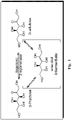
- D-psicose-3-epimerase Figure 1
- different enzymes having the required activity have different properties such as pH and cofactor requirements, equilibrium constants, temperature tolerance and the like.
- D-allulose it is desirable to discover or engineer enzymes with robust and advantageous properties.
- the conversion of D-fructose to D-allulose will diversify the traditional sweetener product portfolio associated with corn processing by adding a natural low caloric sweetener and bulking agent to the traditional portfolio of sweeteners derived from corn starch, i.e. corn syrup, high fructose corn syrup (HFCS), glucose and fructose.
- HFCS high fructose corn syrup
- epimerases that have been identified to date are of bacterial origin being principally derived from soil bacteria exemplified by Pseudomonas sp., Agrobacterium sp., Rhizobium sp., Clostridium sp., Desmospora sp., Rhodobactor sp., and Arthobactor sp. Most of these epimerases show dependence on manganese and/or cobalt as a cofactor and are inactive in absence of these metals. Notable exceptions are the epimerase from P. chicorii and A. globiformis which show activity in the presence of Mg +2 . The use of Mg +2 as a metal cofactor instead of Mn +2 or Co +2 provides a significant advantage when deploying these enzymes in commercial production, which helps in process integration with existing fructose production operations and avoids issues related to waste water treatment.
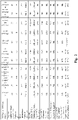
- Figure 2 is a table that list various properties for several known epimerases suggested for use in allulose production.
- the optimal pH range for these epimerases is between 7.0 and 9.0 with the majority being between 7.0 and 8.0.
- the optimum temperature ranges between 40°C and 70°C with the great majority being in the range of 55-60°C.
- the reaction should be operated as close to the optimum pH and temperature as is practical. For commercial production, it is desirable to use higher temperatures of 60 0 C or greater which allow a higher dissolved solids content for the input and output streams.
- fructose and allulose are subject to degradation at optimal operational pH's and temperatures.
- the present disclosure describes a method of producing allulose comprising, contacting a solution containing fructose with an enzyme having at least 64.2% sequence identity to SEQ ID NO: 22 for a time and under conditions suitable to convert at least a portion of the fructose to allulose.
- An exemplary embodiment of the invention is where the enzyme is encoded by one of the following: SEQ ID NO: 26, SEQ ID NO: 28, SEQ ID NO: 30, SEQ ID NO: 32, SEQ ID NO: 34, SEQ ID NO: 36, SEQ ID NO: 38, SEQ ID NO: 40, SEQ ID NO: 42, SEQ ID NO: 44, SEQ ID NO: 46, SEQ ID NO: 48, SEQ ID NO: 50, SEQ ID NO: 52, and SEQ ID NO: 54.
- Certain embodiments include a method wherein the enzyme has at least 72.7% sequence identity to SEQ ID NO: 20. Preferred embodiments include a method wherein the enzyme has at least 80.8% sequence identity to SEQ ID NO: 18. Exemplary embodiments include a method wherein the enzyme has at least 88.2% sequence identity to SEQ ID NO: 16. Most exemplary embodiments include a method wherein the enzyme has at least 97.3% sequence identity to SEQ ID NO: 14.
- a preferred embodiment includes a method wherein the enzyme is obtained from a microorganism containing a recombinant nucleic acid vector operably configured with a promoter to express a nucleic acid sequence encoding the protein having at least 64.2% sequence identity to SEQ ID NO: 22 wherein the promoter is non-native to the nucleic acid encoding said protein, wherein the microorganism is selected from the group consisting of Bacillus licheniformis, Saccharomyces cerevisiae, Schizosaccharomyces ombe, Pseudomonas putida, Pichia sp. Aspergillus sp., Trichoderma reesei, Corynebacterium glutamicum, E. coli and B. subtilis, more preferably E. coli and B. subtilis.
- An additional aspect of the invention is a recombinant nucleic acid sequence operably configured with a promoter to express a nucleic acid sequence encoding the protein having at least 64.2% sequence identity to SEQ ID NO: 22 wherein the promoter is non-native to the nucleic acid encoding the protein, in a microorganism.
- Another aspect of the invention is a microorganism transformed with the recombinant nucleic acid sequence is selected from the group consisting of Bacillus licheniformis, Saccharomyces cerevisiae, Schizosaccharomyces ombe, Pseudomonas putida, Pichia sp. Aspergillus sp., Trichoderma reesei, Corynebacterium glutamicum, E. coli and B. subtilis, most preferably E. coli and B. subtilis.
- An additional aspect of the invention is a solid matrix containing an enzyme having at least 64.2% sequence identity to SEQ ID NO: 22 immobilized thereon.
- a further aspect is a column containing the solid matrix and configured to receive an input flow of a solution containing fructose over the solid matrix and permit exit of an output flow of a solution containing fructose and allulose.
- Another aspect of the invention is a method of producing allulose comprising, contacting a solution containing fructose with an enzyme having at least 61.1% sequence identity to SEQ ID NO: 12 for a time and under conditions suitable to convert at least a portion of the fructose to allulose.
- An exemplary embodiment of the invention is wherein the enzyme is encoded by one of the following: SEQ ID NO: 84, SEQ ID NO: 86, SEQ ID NO: 88, SEQ ID NO: 90, SEQ ID NO: 92, SEQ ID NO: 94, SEQ ID NO: 96, SEQ ID NO: 98, SEQ ID NO: 100, SEQ ID NO: 102, SEQ ID NO: 104, SEQ ID NO: 106, SEQ ID NO: 108, SEQ ID NO: 110, SEQ ID NO: 112, SEQ ID NO: 114, SEQ ID NO: 116, SEQ ID NO: 118, SEQ ID NO: 120, SEQ ID NO: 122, SEQ ID NO: 124, SEQ ID NO: 126, SEQ ID NO: 128, SEQ ID NO: 130, SEQ ID NO: 132, and SEQ ID NO: 134.
- Certain embodiments of the invention include a method wherein the enzyme has at least 68.2% sequence identity to SEQ ID NO: 10. Another embodiment is a method wherein the enzyme has at least 76.8% sequence identity to SEQ ID NO: 8. Other embodiments include a method wherein the enzyme has at least 80.3% sequence identity to SEQ ID NO: 6. A preferred embodiment is a method wherein the enzyme has at least 87.2% sequence identity to SEQ ID NO: 4. Another preferably embodiment is a method wherein the enzyme has at least 98.6% sequence identity to SEQ ID NO: 2.
- An additional embodiment of the invention is a method wherein the enzyme is obtained from a microorganism containing a recombinant nucleic acid vector operably configured with a promoter to express a nucleic acid sequence encoding the protein having at least 61.1% sequence identity to SEQ ID NO: 12 wherein the promoter is non-native to the nucleic acid encoding said protein, wherein the microorganism is selected from the group consisting of Bacillus licheniformis, Saccharomyces cerevisiae, Schizosaccharomyces ombe, Pseudomonas putida, Pichia sp. Aspergillus sp., Trichoderma reesei, Corynebacterium glutamicum, E. coli and B. subtilis, most preferably E. coli and B. subtilis.
- An additional aspect of the invention is a recombinant nucleic acid sequence operably configured with a promoter to express a nucleic acid sequence encoding the protein having at least 61.1% sequence identity to SEQ ID NO: 12 wherein the promoter is non-native to the nucleic acid encoding said protein, in a microorganism.
- a further embodiment includes a microorganism transformed with the recombinant nucleic acid sequence selected from the group consisting of Bacillus licheniformis, Saccharomyces cerevisiae, Schizosaccharomyces ombe, Pseudomonas putida, Pichia sp. Aspergillus sp., Trichoderma reesei, Corynebacterium glutamicum, E. coli and B. subtilis, more preferably is E. coli and B. subtilis.
- Another aspect is a solid matrix containing an enzyme having at least 61.1% sequence identity to SEQ ID NO: 12 immobilized thereon.
- An additional aspect is a column containing the solid matrix and is configured to receive an input flow of a solution containing fructose over the solid matrix and permit exit of an output flow of a solution containing fructose and allulose.
- Additional aspects of the invention include performing the methods described herein wherein the conversion of fructose to allulose is done at a temperature of at least 50°C, more preferably at a temperature of 70°C. Exemplary embodiments include performing these methods wherein the conversion of fructose to allulose is done at pH 5.0. Additional embodiments include performing the methods described herein where the fructose solution is selected from the group consisting of solubilized crystalline fructose and high fructose corn syrup (HFCS), wherein the fructose solution has a dissolved solids content of at least 50%w/w.
- HFCS high fructose corn syrup
- Another aspect of the invention is a method of producing allulose comprising, contacting a solution containing fructose with an enzyme having an amino acid sequence selected from the group consisting of SEQ ID NO: 136, SEQ ID NO: 138, SEQ ID NO: 140, SEQ ID NO: 142, SEQ ID NO: 144, SEQ ID NO: 146, SEQ ID NO: 148, SEQ ID NO: 150, SEQ ID NO: 152, SEQ ID NO: 154, SEQ ID NO: 156, SEQ ID NO: 158, SEQ ID NO: 160, SEQ ID NO: 162, and SEQ ID NO: 164 for a time and under conditions suitable to convert at least a portion of the fructose to allulose.
- an enzyme having an amino acid sequence selected from the group consisting of SEQ ID NO: 136, SEQ ID NO: 138, SEQ ID NO: 140, SEQ ID NO: 142, SEQ ID NO: 144, SEQ ID NO: 146, SEQ ID NO:
- Certain embodiments include a method wherein the conversion of fructose to allulose is done at a temperature of at least 50°C and a pH of 6.0, more preferably wherein the conversion of fructose to allulose is done at a temperature of at least 60°C and a pH of 6.0, and most preferred wherein the conversion of fructose to allulose is done at a temperature of at least 70°C and a pH of 5.0.
- Exemplary embodiments include a method wherein the enzyme having the amino acid sequence selected from the group consisting of SEQ ID NO: 136, SEQ ID NO: 138, SEQ ID NO: 140, SEQ ID NO: 142, SEQ ID NO: 144, SEQ ID NO: 146, SEQ ID NO: 148, SEQ ID NO: 150, SEQ ID NO: 152, SEQ ID NO: 154, SEQ ID NO: 156, SEQ ID NO: 158, SEQ ID NO: 160, SEQ ID NO: 162, and SEQ ID NO: 164 is obtained from a microorganism containing a recombinant nucleic acid vector operably configured with a promoter to express a nucleic acid sequence encoding the protein having an amino acid sequence selected from the group consisting of SEQ ID NO: 136, SEQ ID NO: 138, SEQ ID NO: 140, SEQ ID NO: 142, SEQ ID NO: 144, SEQ ID NO: 146, SEQ ID NO: 148, SEQ
- An additional aspect is a recombinant nucleic acid sequence operably configured with a promoter to express a nucleic acid encoding an amino acid sequence selected from the group consisting of SEQ ID NO: 136, SEQ ID NO: 138, SEQ ID NO: 140, SEQ ID NO: 142, SEQ ID NO: 144, SEQ ID NO: 146, SEQ ID NO: 148, SEQ ID NO: 150, SEQ ID NO: 152, SEQ ID NO: 154, SEQ ID NO: 156, SEQ ID NO: 158, SEQ ID NO: 160, SEQ ID NO: 162, and SEQ ID NO: 164 wherein the promoter is non-native to the nucleic acid encoding said protein, in a microorganism, wherein the microorganism is selected from the group consisting of Bacillus licheniformis, Saccharomyces cerevisiae, Schizosaccharomyces ombe, Pseudomonas putida, Pichi
- a further aspect of the invention is a solid matrix containing an enzyme having an amino acid sequence selected from the group consisting of SEQ ID NO: 136, SEQ ID NO: 138, SEQ ID NO: 140, SEQ ID NO: 142, SEQ ID NO: 144, SEQ ID NO: 146, SEQ ID NO: 148, SEQ ID NO: 150, SEQ ID NO: 152, SEQ ID NO: 154, SEQ ID NO: 156, SEQ ID NO: 158, SEQ ID NO: 160, SEQ ID NO: 162, and SEQ ID NO: 164 immobilized thereon.
- An additional aspect is a column containing the solid matrix and is configured to receive an input flow of a solution containing fructose over the solid matrix and permit exit of an output flow of a solution containing fructose and allulose.
- FA epimerase is used hereafter as a shorthand to mean an enzymatic activity that converts D-fructose to D- allulose such as exhibited by enzymes previously denoted in the art as D-tagatose-3-epimerase or D-psicose-3-epimerase.
- the three families of FA epimerases disclosed herein were discovered by mining databases of disclosed nucleic acid sequences to discover sequences that encode proteins having at least 30% amino acid sequence identity to the D-psicose-3-epimerase from P. cichorii (gi
- the data mining was performed by doing a BLAST search ( http: // blast.ncbi.nlm.nih.gov / Blast.cgi ) on the Genbank non-redundant protein database. As disclosed in the background section hereof, P.
- cichorii is a known source for an FA epimerase which shows activity in the presence of Mg +2 as the metal cofactor and shows a pH optimal of 7.0 which is among the lowest pH optima of prior known FA epimerases (see Figure 2 ).
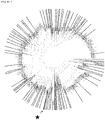
- Initial mining of nucleic acid sequences databases uncovered 660 sequences from as many different microorganism which were organized by phylogenetic relationship of the encoded protein sequences as depicted in Figure 3 .
- a synthetic DNA sequence encoding the P. cichorii FA epimerase designed to include codons that were optimized for expression of the encoded protein in E. coli (SEQ ID NO: 181) was cloned into an expression vector configured to express the nucleic acid sequence from a promoter operable in E. coli, and which contained sequences encoding a poly histidine tag to fuse to the N or C terminal of the encoded protein so the expressed protein could be readily isolated from a cell free extract from E. coli by binding to a nickel column
- a synthetic DNA sequence designed to include codons that were optimized for expression of the .P cichorii enzyme in B. subtilis (SEQ ID NO: 182) was cloned and expressed from a vector containing a promoter configured to express proteins in B. subtilis with and without a histidine tag. Extracts of B. subtilis were prepared and polyacrylamide gel electrophoresis was used to establish production of a protein of the correct size with and without the histidine tag.
- B. subtilis cells containing the synthetic DNA sequence expressed without a histidine tag were grown in medium lacking Mn +2 and Co +2 and extracts were prepared and assayed for FA epimerase enzymatic activity in an assay buffer that included Mg +2 .
- B. subtilis is at least as suitable as E. coli for expressing the P. cichorii FA epimerase and would be an appropriate host for expressing and screening other candidate sequences for FA epimerase activity in the presence of Mg +2 and absence of Mn +2 and Co +2 .
- an initial set of 96 candidate sequences representative of different sections of the phylogenetic tree from Figure 3 were selected for screening and analysis.
- the sequences selected for screening are indicated by the radial arms extending outward from the circular phylogenetic tree in Figure 3 .
- the position of the P. cichorii FA epimerase on the phylogenetic tree is highlighted for reference by a star.
- the extracts from the 96 candidate sequences were assayed for FA epimerase specific activity in a buffer containing Mg +2 .
- HPLC was used to quantify fructose to allulose conversion. It was discovered that only 22 of the 96 candidates exhibited detectable FA epimerase activity.
- the screening assay cocktail contained 200 mM fructose, 5 mM MgCl 2 , in 50 mM MES buffer pH 6.0 and the reaction was performed at 50°C for 2 hours.
- the activity levels varied widely.
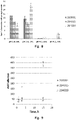
- the activity level of the F. plautti (SEQ ID NO: 142) is highlighted in Figure 5 as the black bar.
- F. plautti was determined as the threshold candidate for selection of the next group to be tested under more stringent conditions because it performed similarly to P. cichorii in the beginning stages of testing. Twelve of the 25 candidates that were tested in (as seen in Figure 6 ) exhibited a higher specific activity than the F. plautti FA epimerase.
- the 12 candidates showing greater specific activity than the F. plautti enzyme and the F. plautti enzyme itself were further screened for specific activity under conditions more representative of what would be desirable for commercial production of allulose from fructose, i.e., lower pH, higher temperature and higher dissolved fructose content.
- the reaction conditions were 50% wt/wt fructose, 5 mM MgCl 2 , in 50 mM Na acetate buffer pH 5.0 and the reaction was performed at 60 0 C for 2 hours.
- Figure 7 shows the results of this screening which showed four candidates having relatively high levels of FA epimerase activity, which were clone 203949 which encodes SEQ ID NO: 116 from Burkholderia sp.
- clone 203991 which encodes SEQ ID NO: 52 from the red algae Galdieria sulphuraria
- clone 204015 which encodes SEQ ID NO: 122 from a Delftia sp
- clone 204020 which encodes SEQ NO: 34 from Burkholderia multivorans. It was noted however, that as shown in Figure 5 , clone 203949 expressing the Burkholderia sp. Y123 FA epimerase showed relatively low levels of protein expression which was near the limit of accurate detectability so the error range in specific activity measurements was high.
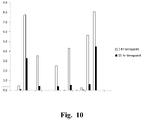
- the 12 candidates showing greater specific activity than the F. plautti enzyme FA, the F. plautti enzyme itself and the three other candidates representing the clones that showed the top 16 highest levels of specific FA epimerase activity from Figure 10 were further screened for activity at low pH and even higher temperature.
- the reaction conditions for this round of analysis were 50% wt/wt fructose, 5 mM MgCl 2 , in 50 mM Na acetate buffer pH 5.0 and the reaction was performed at 70 0 C.
- the specific activity levels were calculated from two different time periods of one hour and 15 hours to provide an indication of heat tolerance of the candidates.
- Figure 10 shows that at 1 hour the same four candidates that showed the highest calculated specific activity at 60 0 C for 2 hours also had the highest specific activity calculated for the reaction at 70 0 C for 1 hour.
- the two candidates from the Burkholderia species also showed the highest level of specific activity calculated for the reaction at 15 hours, indicating that these candidates have higher thermal stability than others.
- Figure 4 shows the phylogenetic mapping of the relative specific activity levels of these 25 candidates determined by the tests described above. The relative specific activity levels are indicated by numeric coding with #1 being the highest, #2 relatively high, and #3 relatively low, and #4 being lowest. For reference, the level of activity for the P. cichorii FA epimerase is in the #3 level and indicated by an ⁇ in Figure 4 .
- a second cluster located at approximately the 7 o'clock position on the phylogenetic map is the cluster that contains the P.
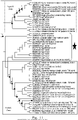
- hypothetical amino acid sequence for these ancestral node protein sequences are provided as SEQ ID NO: 12 for node 6, and SEQ ID NO: 22 for node 11.
- node 12 has a third unlabeled node lying between nodes 11 and 6, highlighted by a star on Figure 11 .
- the proteins encoded by species that descend from this third node include proteins previously known to exhibit FA epimerase activity such as SEQ ID NO: 166 derived from Arthrobacter globiformis.
- Synthetic DNA sequences encoding the proteins defined by SEQ ID NO: 12 and SEQ ID NO: 22 representing the ancestral proteins at nodes 6 and 11 were designed and made to include codons to optimize expression in B. subtilis. These were cloned into the same expression vector used to express the original 96 candidate sequences and the cells were grown and assayed for FA epimerase activity in the presence of Mg +2 as done for the original candidates. Both proteins having these hypothetical ancestral amino acid sequences exhibited the desired fructose to allulose epimerase activity as did each of SEQ ID NO's 34, 48, 52, 64, 84, 100, 116 and 122 which were all the species under these sub nodes that were randomly selected as candidate sequences. Accordingly, all the species of FA epimerases that descend from node 6 are expected to have a fructose to allulose activity suitable for use in commercial allulose production.
- Such relationships are: 64.2% amino acid sequence identity to SEQ ID NO: 22, 72.7% amino acid sequence identity to SEQ ID NO: 20, 80.8% amino acid sequence identity to SEQ ID NO: 18, 88.2% amino acid sequence identity to SEQ ID NO: 16, and 97.3% amino acid sequence identity to SEQ ID NO: 14.
- node 6 represented by nodes 5, 4, 3, 2 and 1. These are provided as SEQ ID Nos 10, 8, 6, 4, and 2.
- the amino acid sequence represented by node 6 has the desired FA epimerase activity as do all species actually tested that descend from this node (SEQ ID NO: 84, 100, 116, and 122), therefore is concluded that any protein sequence having the following relationships in sequence identity to node 6 will have the desired epimerase activity suitable for commercial production of fructose to allulose.
- Such relationships are: 61.1% amino acid sequence identity to SEQ ID NO: 10, 76.8% amino acid sequence identity to SEQ ID NO: 8, 80.3% amino acid sequence identity to SEQ ID NO: 6, 87.2% amino acid sequence identity to SEQ ID NO: 4, and 98.6% amino acid sequence identity to SEQ ID NO: 2.
- sequences from the 10 o'clock region that have the aforementioned sequence identity to the ancestral nodes 10 and 6 were not previously known to be useful for the production of allulose from fructose. Indeed, inspection of the database notations of these untested sequences indicates a variety of predicted activities such as xylose isomerase, hypothetical protein, sugar phosphate isomerase, AP endonuclease, and putative sugar phosphate isomerase. However, the data provided herein demonstrates that all of these sequences will have FA epimerase activities.
- the tested sequences from the 7 o'clock region which as a group generally show lower levels of FA epimerase activity than those from the 10 o'clock region, do not share the same ancestral decadency that demonstrates novelty of a genus having certain sequence identities to ancestral sequences. Nonetheless, the screening done for the present work revealed several amino acid sequences that were not definitively known prior to the present work to exhibit an FA epimerase activity suitable for production of allulose from fructose.
- the members of this group are SEQ ID NO: 136, 138, 140, 142, 144, 146, 148, 150, 152, 154, 156, 158, 160, 162, and 164, all of which were species tested for FA epimerase activity.
- the epimerase enzyme (P. cichorii ) was first cloned into E. coli using the method as follows.
- the P. cichorii epimerase enzyme according to SEQ ID NO: 176 was codon optimized using codon optimization software, many of which are commonly known in the art.
- SEQ ID NO: 181 is the codon optimized nucleotide sequence of the P. cichorii FA epimerase gene for expression in E. coli, which was cloned into the DNA2.0 vector pD861-SR via the Electra method (DNA2.0).
- the pD861-SR construct harboring the P cichorii epimerase gene optimized for expression in E. coli was used to transform E.coli strain BL21. Transformants were selected and cultured in Luria Broth (LB) media supplemented with 30 ug/ml kanamycin (Teknova) at 37°C for 16 h. 40 uL of this culture was used to inoculate 2 ml of fresh media and the resulting culture was incubated at 37°C to mid-log growth (OD at 600nm of ⁇ 0.8). The culture was then induced with 4mM rhamnose and incubation was continued at 37°C for 4 hours.
- LB Luria Broth
- Teknova kanamycin
- Cells were harvested by centrifugation, twice frozen and thawed, and lysed using the Peripreps full lysis protocol (Epicentre).
- the soluble protein in the lysates were prepared by collection of the supernatants fractions after centrifugation of the crude lysates.
- the P. cichorii epimerase enzyme according to SEQ ID NO: 176 was additionally codon optimized using codon optimization software, many of which are commonly known in the art to express FA epimerase activity in the B. subtilis expression system.
- the codon optimized nucleotide sequence that was synthesized is according to SEQ ID NO: 182, which was cloned into the expression vector pHT254 (Mobitech) at the BamHI and XmaI sites for expression in B. subtilis.
- the pHT254 construct harboring the P cichorii FA epimerase gene that was codon optimized for expression in B. subtilis was used to transform B. subtilis strain DP1077.
- Transformants were selected and cultured in either custom Azure media lacking Mn 2+ and Co 2+ (Teknova) supplemented with 1% glucose and 5 ug/ml chloramphenicol or in Davis minimal media (HiMedia) supplemented with 2g/L SC amino acids (MP Biomedicals), 1% glucose, and 5 ug/ml chloramphenicol. Cultures were grown at 37°C for 16 h.
- Epimerase protein levels in crude and soluble lysates from both the E. coli expression system and the B. subtilis expression system were analyzed by polyacrylamide gel electrophoresis on 4-12% Bis-Tris NuPAGE gels (Invitrogen). Protein levels were determined by densitometry of gels stained with SimplyBlue Safe Stain (Invitrogen) using protein quantification standards.
- reaction For epimerase activity screening of both the E. coli and the B. subtilis derived lysates, reactions were assayed in a volume of 100 ⁇ L: 10% v/v clarified lysate, 200 mM fructose, 50 mM MES, pH 6.0, and 5 mM MgCl 2 . Reactions were incubated at 50°C for 2 h and stopped by addition of 10% volume 2% HCl and chilling to 4°C. Reactions were filtered through a PES membrane at a 10 kDa molecular weight cutoff (Pall) prior to HPLC analysis.
- Pall molecular weight cutoff
- the vector (pHT254) utilized for this work was obtained from MoBiTech, Inc.
- the vector expresses the gene of interest from a strong Pgrac100 promoter which is derived from the promoter preceding the groESL operon of Bacillus subtilis. It contains improved regulatory elements fused to the lac operator allowing induction by IPTG and a strong ribosomal binding site. Nucleotides were optimized at the conserved regions of the groESL promoter including the UP element, the -35 and the -15 region (Phan et al, 2012). Each gene was cloned into expression vector pHT254 at the BamHI and XmaI restriction sites.
- Bacillus subtilis strain DP1077 is a sporulation-defective ( ⁇ spoIIG::ZeoR) derivative of the Bacillus Genetic Stock Center strain 1A976 (Em his nprE18 aprE3 eglS(DELTA)102 bglT/bglS(DELTA)EV lacA::PxylA-comK).
- ⁇ spoIIG::ZeoR Bacillus Genetic Stock Center strain 1A976
- the strain is defective in the ability to secrete neutral protease and subtilisin as a result of mutations in the nprE and aprE genes, respectively.
- the strain additionally bears an expression cassette placing the competence factor, comK, under the control of a xylose-inducible promoter for the simple production of competent cells.
- B. subtilis strain DP 1077 was transformed with each of the 96 expression constructs and cells were selected on LB agar media containing 5 ⁇ g/mL chloramphenicol.
- the 96 B. subtilis transformants were picked to Davis minimal media.
- Davis minimal media is made by using reagent grade water and in a final volume of 1 L, 10.6g Minimal Broth Davis w/o Dextrose (HIMEDIA cat. no. M390-500G) with 2g of SC Nucleotide Mixture (MP Biomedicals cat. no. 4400-022). Autoclave for 15 min at 121°C. Prior to use add glucose to 1% and chloramphenicol at 5 ug/ml.
- FA Epimerase expression levels were assayed in a reaction volume of 100 ⁇ L: 10% v/v clarified lysate, 200 mM fructose, 50 mM MES, pH 6.0, and 5mM MgCl2. Reactions were incubated at 50°C for 2h and stopped by addition of 10% volume 2% HCl and chilling to 4°C. Reactions were filtered through a PES membrane at a 10 kDa molecular weight cutoff (Pall) prior to HPLC analysis.
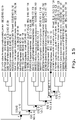
- Percent identities were calculated using Lasergene 12 software package from DNASTAR, Inc. Results of the sequence alignment and percent identities can be seen in Figures 12-13 , which are separated out according to relation to ancestral nodes. The percent identities for the Node 11 area (highlighted in Figure 11 by the dash lined box) and as seen in Figure 14 , can be seen in Figure 12 .
- Figure 12 clearly shows that all of the sequences in the Node 11 area have a higher percent identity to all of the nodes 7-12 than they do to SEQ ID NO: 166, 168 or 170, which are all proteins previously known to express FA epimerase activity.
- the other genus is herein described as the Node 6 area and is highlighted in Figure 11 by solid lined box. All species of this genus relate to the 204015 candidate. These can be more clearly seen in Figure 15 , along with SEQ ID NO's associated for each of them.
- the percent identities of the Node 6 area can be seen in Figure 13 which shows that all of the sequences in the Node 6 area have a higher percent identity to all of the nodes 1-6 than they do to any of the known sequences previously described in the art, more specifically SEQ ID NO: 166, 168, and 170.
- any nucleic acid encoding a species from the genus of FA epimerases disclosed herein may be engineered to be expressed in other suitable microorganisms commonly used to express enzymes for industrial scale production.
- suitable other organisms include, but are not limited to Bacillus licheniformis, Saccharomyces cerevisiae, Schizosaccharomyces ombe, Pseudomonas putida, Pichia sp. Aspergillus sp., Trichoderma reesei and Corynebacterium glutamicum.
- Vectors containing promoters and other necessary regulatory sequences to express any protein in these organisms are known and readily available to those of ordinary skill in the art.
- the FA epimerases proteins can be used for commercial scale production of allulose from fructose, most typically by binding the protein or extract from a microorganism containing the protein to a solid matrix and passing a flow of an input stream containing fructose over the matrix to convert at least a portion of the fructose to allulose and recovering an output stream containing allulose and fructose.
- the allulose may be separated from other components in the output stream and may additionally be concentrated.
- Many solid matrices suitable for binding enzymes are well known in the art. Exemplary solid matrices include.
- the microorganism expressing the FA epimerase may be permeabilized and immobilized on alginate beads such as described in US Pat. No. 8,735,106 , additionally incorporated herein by reference in its entirety, or onto clays, carbon, diatomaceous earth or a hydrogel such as poly acrylamide.
- a method of producing allulose comprising: contacting a solution containing fructose with an enzyme having at least 64.2% sequence identity to SEQ ID NO: 22 for a time and under conditions suitable to convert at least a portion of the fructose to allulose.
- said enzyme is obtained from a microorganism containing a recombinant nucleic acid vector operably configured with a promoter to express a nucleic acid sequence encoding the protein having at least 64.2% sequence identity to SEQ ID NO: 22 wherein said promoter is non-native to the nucleic acid encoding said protein.
- microorganism selected from of Bacillus licheniformis, Saccharomyces cerevisiae, Schizosaccharomyces ombe, Pseudomonas putida, Pichia sp. Aspergillus sp., Trichoderma reesei, Corynebacterium glutamicum, E. coli and B. subtilis.
- microorganism selected from E. coli and B. subtilis.
- microorganism as defined hereinbefore, wherein the microorganism is selected from Bacillus licheniformis, Saccharomyces cerevisiae, Schizosaccharomyces ombe, Pseudomonas putida, Pichia sp. Aspergillus sp., Trichoderma reesei, Corynebacterium glutamicum, E. coli and B. subtilis.
- microorganism as defined hereinbefore, wherein said microorganism is selected from E. coli and B. subtilis.
- said enzyme has a polypeptide sequence selected from SEQ ID NO: 26, SEQ ID NO: 28, SEQ ID NO: 30, SEQ ID NO: 32, SEQ ID NO: 34, SEQ ID NO: 36, SEQ ID NO: 38, SEQ ID NO: 40, SEQ ID NO: 42, SEQ ID NO: 44, SEQ ID NO: 46, SEQ ID NO: 48, SEQ ID NO: 50, SEQ ID NO: 52, and SEQ ID NO: 54.
- a method of producing allulose comprising: contacting a solution containing fructose with an enzyme having at least 61.1% sequence identity to SEQ ID NO: 12 for a time and under conditions suitable to convert at least a portion of the fructose to allulose.
- said enzyme is obtained from a microorganism containing a recombinant nucleic acid vector operably configured with a promoter to express a nucleic acid sequence encoding the protein having at least 61.1% sequence identity to SEQ ID NO: 12 wherein said promoter is non-native to the nucleic acid encoding said protein.
- microorganism selected from Bacillus licheniformis, Saccharomyces cerevisiae, Schizosaccharomyces ombe, Pseudomonas putida, Pichia sp. Aspergillus sp., Trichoderma reesei, Corynebacterium glutamicum, E. coli and B. subtilis.
- microorganism selected from E. coli and B. subtilis.
- microorganism as defined hereinbefore, wherein the microorganism is selected from Bacillus licheniformis, Saccharomyces cerevisiae, Schizosaccharomyces ombe, Pseudomonas putida, Pichia sp. Aspergillus sp., Trichoderma reesei, Corynebacterium glutamicum, E. coli and B. subtilis.
- microorganism as defined hereinbefore, wherein said microorganism is selected from E. coli and B. subtilis.
- said enzyme has a polypeptide sequence selected from SEQ ID NO: 84, SEQ ID NO: 86, SEQ ID NO: 88, SEQ ID NO: 90, SEQ ID NO: 92, SEQ ID NO: 94, SEQ ID NO: 96, SEQ ID NO: 98, SEQ ID NO: 100, SEQ ID NO: 102, SEQ ID NO: 104, SEQ ID NO: 106, SEQ ID NO: 108, SEQ ID NO: 110, SEQ ID NO: 112, SEQ ID NO: 114, SEQ ID NO: 116, SEQ ID NO: 118, SEQ ID NO: 120, SEQ ID NO: 122, SEQ ID NO: 124, SEQ ID NO: 126, SEQ ID NO: 128, SEQ ID NO: 130, SEQ ID NO: 132, and SEQ ID NO: 134.
- fructose solution is selected from the group consisting of solubilized crystalline fructose and high fructose corn syrup (HFCS).
- a method of producing allulose comprising: contacting a solution containing fructose with an enzyme having an amino acid sequence selected from SEQ ID NO: 136, SEQ ID NO: 138, SEQ ID NO: 140, SEQ ID NO: 142, SEQ ID NO: 144, SEQ ID NO: 146, SEQ ID NO: 148, SEQ ID NO: 150, SEQ ID NO: 152, SEQ ID NO: 154, SEQ ID NO: 156, SEQ ID NO: 158, SEQ ID NO: 160, SEQ ID NO: 162, and SEQ ID NO: 164 for a time and under conditions suitable to convert at least a portion of the fructose to allulose.
- microorganism selected from Bacillus licheniformis, Saccharomyces cerevisiae, Schizosaccharomyces ombe, Pseudomonas putida, Pichia sp. Aspergillus sp., Trichoderma reesei, Corynebacterium glutamicum, E. coli and B. subtilis.
- microorganism selected from E. coli and B. subtilis.
- microorganism as defined hereinbefore, wherein the microorganism is selected from Bacillus licheniformis, Saccharomyces cerevisiae, Schizosaccharomyces ombe, Pseudomonas putida, Pichia sp. Aspergillus sp., Trichoderma reesei, Corynebacterium glutamicum, E. coli and B. subtilis.
- microorganism as defined hereinbefore, wherein said microorganism is selected from E. coli and B. subtilis.
Landscapes
- Chemical & Material Sciences (AREA)
- Organic Chemistry (AREA)
- Life Sciences & Earth Sciences (AREA)
- Engineering & Computer Science (AREA)
- Zoology (AREA)
- Wood Science & Technology (AREA)
- Health & Medical Sciences (AREA)
- Genetics & Genomics (AREA)
- Bioinformatics & Cheminformatics (AREA)
- General Health & Medical Sciences (AREA)
- Biochemistry (AREA)
- General Engineering & Computer Science (AREA)
- Microbiology (AREA)
- Biotechnology (AREA)
- Chemical Kinetics & Catalysis (AREA)
- General Chemical & Material Sciences (AREA)
- Medicinal Chemistry (AREA)
- Molecular Biology (AREA)
- Biomedical Technology (AREA)
- Enzymes And Modification Thereof (AREA)
- Micro-Organisms Or Cultivation Processes Thereof (AREA)
Applications Claiming Priority (3)
| Application Number | Priority Date | Filing Date | Title |
|---|---|---|---|
| US201562165298P | 2015-05-22 | 2015-05-22 | |
| EP16800540.3A EP3298127B1 (de) | 2015-05-22 | 2016-05-20 | Verwendung von epimerase-enzymen zur umwandlung von fructose in allulose |
| PCT/US2016/033489 WO2016191267A1 (en) | 2015-05-22 | 2016-05-20 | A genus of epimerase enzymes for conversion of fructose to allulose at high temperature and low ph |
Related Parent Applications (1)
| Application Number | Title | Priority Date | Filing Date |
|---|---|---|---|
| EP16800540.3A Division EP3298127B1 (de) | 2015-05-22 | 2016-05-20 | Verwendung von epimerase-enzymen zur umwandlung von fructose in allulose |
Publications (2)
| Publication Number | Publication Date |
|---|---|
| EP4086355A2 true EP4086355A2 (de) | 2022-11-09 |
| EP4086355A3 EP4086355A3 (de) | 2023-01-25 |
Family
ID=57393655
Family Applications (2)
| Application Number | Title | Priority Date | Filing Date |
|---|---|---|---|
| EP16800540.3A Active EP3298127B1 (de) | 2015-05-22 | 2016-05-20 | Verwendung von epimerase-enzymen zur umwandlung von fructose in allulose |
| EP22152105.7A Pending EP4086355A3 (de) | 2015-05-22 | 2016-05-20 | Gattung von epimerase-enzymen zur umwandlung von fructose in allulose bei hoher temperatur und niedrigem ph-wert |
Family Applications Before (1)
| Application Number | Title | Priority Date | Filing Date |
|---|---|---|---|
| EP16800540.3A Active EP3298127B1 (de) | 2015-05-22 | 2016-05-20 | Verwendung von epimerase-enzymen zur umwandlung von fructose in allulose |
Country Status (8)
| Country | Link |
|---|---|
| US (1) | US10480018B2 (de) |
| EP (2) | EP3298127B1 (de) |
| DK (1) | DK3298127T3 (de) |
| ES (1) | ES2911890T3 (de) |
| HU (1) | HUE058347T2 (de) |
| PL (1) | PL3298127T3 (de) |
| PT (1) | PT3298127T (de) |
| WO (1) | WO2016191267A1 (de) |
Families Citing this family (31)
| Publication number | Priority date | Publication date | Assignee | Title |
|---|---|---|---|---|
| CN105821027B (zh) * | 2016-04-01 | 2023-11-21 | 南京朗奈生物技术有限公司 | 一种3-差向异构酶的用途 |
| EP3480306B1 (de) | 2016-06-30 | 2023-06-07 | Cj Cheiljedang Corporation | Neuartige hitzebeständige fructose-6-phosphat-3-epimerase und verfahren zur herstellung von allulose durch verwendung davon |
| CN108531527A (zh) * | 2017-03-03 | 2018-09-14 | 上海立足生物科技有限公司 | 一种d-阿洛酮糖-3-差向异构酶的应用 |
| KR101944104B1 (ko) * | 2017-06-02 | 2019-01-30 | 주식회사 삼양사 | 마이크로박테리움 속 균주 및 이를 이용한 사이코스 생산방법 |
| KR102187354B1 (ko) * | 2017-06-02 | 2020-12-04 | 주식회사 삼양사 | 사이코스 에피머화 효소 및 이를 이용한 사이코스의 제조 방법 |
| HUE072278T2 (hu) * | 2017-08-31 | 2025-11-28 | Novozymes As | D-pszikóz-3-epimeráz aktivitású polipeptidek és ezeket kódoló polinukleotidok |
| KR102055875B1 (ko) * | 2017-12-27 | 2019-12-13 | 씨제이제일제당 주식회사 | 신규 내열성 과당-6-인산 3-에피머화 효소 및 이를 이용한 알룰로스 제조방법 |
| KR102063908B1 (ko) * | 2017-12-27 | 2020-01-08 | 씨제이제일제당 주식회사 | 신규 내열성 과당-6-인산 3-에피머화 효소 및 이를 이용한 알룰로스 제조방법 |
| JP6647619B2 (ja) * | 2018-01-24 | 2020-02-14 | 松谷化学工業株式会社 | 熱安定性が向上したケトース 3−エピメラーゼ |
| WO2019166514A1 (en) | 2018-02-28 | 2019-09-06 | C-Lecta Gmbh | Enzymatic in-situ fortification of food with functional carbohydrates |
| EP3833756B9 (de) * | 2018-08-08 | 2023-10-04 | Archer Daniels Midland Company | Epimeraseenzyme und ihre verwendung |
| KR102138862B1 (ko) * | 2019-03-08 | 2020-07-30 | 씨제이제일제당 주식회사 | 알룰로스를 생산하는 스태필로코커스 속 미생물 및 이를 이용한 알룰로스 제조방법 |
| JP7641281B2 (ja) * | 2019-10-31 | 2025-03-06 | サムヤン コーポレイション | 優れた転換活性を有する菌体固定化ビーズおよびその製造方法 |
| WO2021193949A1 (ja) | 2020-03-26 | 2021-09-30 | 国立大学法人香川大学 | 新規l-ラムノースイソメラーゼ |
| KR102448351B1 (ko) * | 2020-04-27 | 2022-09-28 | 대상 주식회사 | 알룰로스 에피머화 효소 변이체, 이의 제조방법 및 이를 이용한 알룰로스의 제조방법 |
| WO2022075435A1 (ja) * | 2020-10-09 | 2022-04-14 | 天野エンザイム株式会社 | 新規ケトース-3-エピメラーゼを用いたケトースの製造方法 |
| IL309783A (en) * | 2021-06-27 | 2024-02-01 | Ambrosia Bio Ltd | Polypeptides with d-psicose 3-epimerase activity |
| KR102682846B1 (ko) * | 2021-11-19 | 2024-07-08 | 대상 주식회사 | 열 안정성이 우수한 알룰로스 에피머화 효소 변이체, 이의 제조방법 및 이를 이용한 알룰로스의 제조방법 |
| CN114277049A (zh) * | 2021-12-31 | 2022-04-05 | 李宪臻 | 一种异源表达蔗糖异构酶的基因工程菌及应用 |
| EP4481051A4 (de) * | 2022-02-18 | 2026-03-11 | Amano Enzyme Inc | Modifizierte d-allulose-3-epimerase |
| CN115109727A (zh) * | 2022-07-13 | 2022-09-27 | 西安工程大学 | 一种复合菌剂及其在提高香菇菌渣堆肥产品质量的应用 |
| CN116121321B (zh) * | 2022-09-07 | 2026-02-24 | 江南大学 | 一种添加Co2+提高多酶催化生产D-阿洛酮糖产率的方法 |
| CN116064619B (zh) * | 2022-09-26 | 2023-11-21 | 无锡特殊食品与营养健康研究院有限公司 | 一种可以稳定重复用于d-阿洛酮糖转化合成的地衣芽孢杆菌细胞 |
| KR20240108871A (ko) * | 2022-12-30 | 2024-07-10 | 주식회사 삼양사 | 알룰로스 3-에피머화 변이 효소 및 이의 용도 |
| CN116676300B (zh) * | 2023-04-27 | 2024-03-08 | 江南大学 | 一种高温度稳定性的d-阿洛酮糖3-差向异构酶突变体酶及其应用 |
| CN116987641A (zh) * | 2023-08-07 | 2023-11-03 | 湖南省微生物研究院 | 一种促腐保氮堆肥菌剂及其制备方法与应用 |
| CN122421844A (zh) * | 2023-12-15 | 2026-07-17 | 天野酶制品株式会社 | 阿洛酮糖增量剂 |
| KR20250103908A (ko) * | 2023-12-28 | 2025-07-08 | 주식회사 삼양사 | 열안정성이 향상된 알룰로스 3-에피머화 변이 효소 및 이의 용도 |
| WO2026102393A1 (en) * | 2024-11-11 | 2026-05-15 | Danisco Us Inc. | Compositions and methods for producing allulose |
| WO2026102382A2 (en) | 2024-11-11 | 2026-05-15 | International N&H Denmark Aps | Method for reducing sugar in foodstuff through conversion of fructose with epimerase |
| CN120098983B (zh) * | 2025-05-08 | 2025-07-18 | 山东三元生物科技股份有限公司 | 一种d-阿洛酮糖-3-差向异构酶突变体及其在合成阿洛酮糖中的应用 |
Citations (2)
| Publication number | Priority date | Publication date | Assignee | Title |
|---|---|---|---|---|
| US8735106B2 (en) | 2009-09-30 | 2014-05-27 | Cj Cheiljedang Corporation | Immobilization of psicose-epimerase and a method of producing D-psicose using the same |
| WO2015032761A1 (en) | 2013-09-03 | 2015-03-12 | Roquette Freres | Improved variant of d-psicose 3-epimerase and uses thereof |
Family Cites Families (4)
| Publication number | Priority date | Publication date | Assignee | Title |
|---|---|---|---|---|
| GB2508586B (en) | 2012-09-27 | 2020-09-02 | Tate & Lyle Ingredients Americas Llc | A protein |
| GB201217350D0 (en) | 2012-09-28 | 2012-11-14 | Strathkelvin Instr Ltd | Device for monitoring wastewater treatment |
| US20180251749A1 (en) | 2015-03-27 | 2018-09-06 | Archer Daniels Midland Company | Fructose to Allulose Conversion |
| EP3395952B1 (de) * | 2015-12-23 | 2021-01-13 | Cj Cheiljedang Corporation | Zusammensetzung zur herstellung von d-psicose mit d-psicose-3-epimerase und salz und verfahren zur herstellung von d-psicose unter verwendung davon |
-
2016
- 2016-05-20 EP EP16800540.3A patent/EP3298127B1/de active Active
- 2016-05-20 EP EP22152105.7A patent/EP4086355A3/de active Pending
- 2016-05-20 WO PCT/US2016/033489 patent/WO2016191267A1/en not_active Ceased
- 2016-05-20 PL PL16800540T patent/PL3298127T3/pl unknown
- 2016-05-20 PT PT168005403T patent/PT3298127T/pt unknown
- 2016-05-20 DK DK16800540.3T patent/DK3298127T3/da active
- 2016-05-20 US US15/575,636 patent/US10480018B2/en active Active
- 2016-05-20 ES ES16800540T patent/ES2911890T3/es active Active
- 2016-05-20 HU HUE16800540A patent/HUE058347T2/hu unknown
Patent Citations (2)
| Publication number | Priority date | Publication date | Assignee | Title |
|---|---|---|---|---|
| US8735106B2 (en) | 2009-09-30 | 2014-05-27 | Cj Cheiljedang Corporation | Immobilization of psicose-epimerase and a method of producing D-psicose using the same |
| WO2015032761A1 (en) | 2013-09-03 | 2015-03-12 | Roquette Freres | Improved variant of d-psicose 3-epimerase and uses thereof |
Non-Patent Citations (1)
| Title |
|---|
| LARKIN MABLACKSHIELDS GBROWN NPCHENNA RMCGETTIGAN PAME WILLIAM HVALENTIN FWALLACE IMWILM ALOPEZ R: "Clustal Wand Clustal X version 2. 0.", BIOINFORMATICS, vol. 23, 2007, pages 2947 - 2948 |
Also Published As
| Publication number | Publication date |
|---|---|
| PT3298127T (pt) | 2022-05-02 |
| HUE058347T2 (hu) | 2022-07-28 |
| EP3298127B1 (de) | 2022-02-02 |
| EP3298127A4 (de) | 2019-05-22 |
| EP3298127A1 (de) | 2018-03-28 |
| WO2016191267A1 (en) | 2016-12-01 |
| US10480018B2 (en) | 2019-11-19 |
| PL3298127T3 (pl) | 2022-05-30 |
| ES2911890T3 (es) | 2022-05-23 |
| DK3298127T3 (da) | 2022-04-25 |
| EP4086355A3 (de) | 2023-01-25 |
| US20180112244A1 (en) | 2018-04-26 |
Similar Documents
| Publication | Publication Date | Title |
|---|---|---|
| EP3298127B1 (de) | Verwendung von epimerase-enzymen zur umwandlung von fructose in allulose | |
| CN112301013B (zh) | 复合酶及其在制备麦角硫因中的应用 | |
| KR102132381B1 (ko) | 아스로박터 글로비포미스에 의해 생산되는 케토오스 3-에피머라제 | |
| Bollenbach et al. | Cooperation of endo-and exoribonucleases in chloroplast mRNA turnover | |
| Henne et al. | Construction of environmental DNA libraries in Escherichia coli and screening for the presence of genes conferring utilization of 4-hydroxybutyrate | |
| JP5468680B2 (ja) | 新規なアルファ−ネオアガロビオース加水分解酵素及びそれを用いた単糖類の獲得方法 | |
| US20170096656A1 (en) | Thermostable alginate degrading enzymes and their methods of use | |
| WO2008136997A2 (en) | Carbohydrase expression during degradation of whole plant material by saccharophagus degradans | |
| Xue et al. | Improved production of p-hydroxycinnamic acid from tyrosine using a novel thermostable phenylalanine/tyrosine ammonia lyase enzyme | |
| Empadinhas et al. | A gene from the mesophilic bacterium Dehalococcoides ethenogenes encodes a novel mannosylglycerate synthase | |
| US11859228B2 (en) | Epimerase enzymes and their use | |
| Liang et al. | Characterization and overexpression of a novel β‐agarase from Thalassomonas agarivorans | |
| Naz et al. | Enhanced production and characterization of a β-glucosidase from Bacillus halodurans expressed in Escherichia coli | |
| KR20200134333A (ko) | 발효에 의한 히스타민 생산을 위해 조작된 생합성 경로 | |
| Jiang et al. | Molecular cloning and functional characterization of a novel decarboxylase from uncultured microorganisms | |
| WO2014202838A1 (en) | Methods for producing styrene and genetically modified micro-organisms related thereto | |
| US11560582B2 (en) | Fusion moieties and microbial hosts for protein production | |
| CN105039366A (zh) | 一种密码子优化的磷酸胆碱胞苷转移酶的基因及其表达 | |
| Kang et al. | Crystal structure of dihydrodipicolinate synthase from Hahella chejuensis at 1.5 Å resolution | |
| KR101394467B1 (ko) | 메타게놈 유래의 하이드록실아미노벤젠 뮤타아제 | |
| Tadokoro et al. | Identification of the gene encoding a type 1 RNase H with an N‐terminal double‐stranded RNA binding domain from a psychrotrophic bacterium | |
| US11078499B2 (en) | Host cells and methods for producing toluene biochemically | |
| CN101407820A (zh) | 一种编码糖基水解酶家族32的蔗糖酶的基因及其应用 | |
| CA2987137C (en) | Thermostable cellulases | |
| CN122038335A (zh) | β1,4-半乳糖基转移酶Haβ4GalT-I211V及其在合成pLNnH中的应用 |
Legal Events
| Date | Code | Title | Description |
|---|---|---|---|
| PUAI | Public reference made under article 153(3) epc to a published international application that has entered the european phase |
Free format text: ORIGINAL CODE: 0009012 |
|
| STAA | Information on the status of an ep patent application or granted ep patent |
Free format text: STATUS: THE APPLICATION HAS BEEN PUBLISHED |
|
| AC | Divisional application: reference to earlier application |
Ref document number: 3298127 Country of ref document: EP Kind code of ref document: P |
|
| AK | Designated contracting states |
Kind code of ref document: A2 Designated state(s): AL AT BE BG CH CY CZ DE DK EE ES FI FR GB GR HR HU IE IS IT LI LT LU LV MC MK MT NL NO PL PT RO RS SE SI SK SM TR |
|
| PUAL | Search report despatched |
Free format text: ORIGINAL CODE: 0009013 |
|
| AK | Designated contracting states |
Kind code of ref document: A3 Designated state(s): AL AT BE BG CH CY CZ DE DK EE ES FI FR GB GR HR HU IE IS IT LI LT LU LV MC MK MT NL NO PL PT RO RS SE SI SK SM TR |
|
| RIC1 | Information provided on ipc code assigned before grant |
Ipc: C12N 9/90 20060101ALI20221216BHEP Ipc: C12P 19/24 20060101ALI20221216BHEP Ipc: C12P 19/02 20060101AFI20221216BHEP |
|
| STAA | Information on the status of an ep patent application or granted ep patent |
Free format text: STATUS: REQUEST FOR EXAMINATION WAS MADE |
|
| 17P | Request for examination filed |
Effective date: 20230719 |
|
| RBV | Designated contracting states (corrected) |
Designated state(s): AL AT BE BG CH CY CZ DE DK EE ES FI FR GB GR HR HU IE IS IT LI LT LU LV MC MK MT NL NO PL PT RO RS SE SI SK SM TR |
|
| STAA | Information on the status of an ep patent application or granted ep patent |
Free format text: STATUS: EXAMINATION IS IN PROGRESS |
|
| 17Q | First examination report despatched |
Effective date: 20260203 |