EP4049692B1 - Wound dressings with integrated negative pressure source having a fluid ingress inhibition component - Google Patents
Wound dressings with integrated negative pressure source having a fluid ingress inhibition component Download PDFInfo
- Publication number
- EP4049692B1 EP4049692B1 EP21211792.3A EP21211792A EP4049692B1 EP 4049692 B1 EP4049692 B1 EP 4049692B1 EP 21211792 A EP21211792 A EP 21211792A EP 4049692 B1 EP4049692 B1 EP 4049692B1
- Authority
- EP
- European Patent Office
- Prior art keywords
- wound
- layer
- wound dressing
- pump
- inlet
- Prior art date
- Legal status (The legal status is an assumption and is not a legal conclusion. Google has not performed a legal analysis and makes no representation as to the accuracy of the status listed.)
- Active
Links
Images



Classifications
-
- A—HUMAN NECESSITIES
- A61—MEDICAL OR VETERINARY SCIENCE; HYGIENE
- A61F—FILTERS IMPLANTABLE INTO BLOOD VESSELS; PROSTHESES; DEVICES PROVIDING PATENCY TO, OR PREVENTING COLLAPSING OF, TUBULAR STRUCTURES OF THE BODY, e.g. STENTS; ORTHOPAEDIC, NURSING OR CONTRACEPTIVE DEVICES; FOMENTATION; TREATMENT OR PROTECTION OF EYES OR EARS; BANDAGES, DRESSINGS OR ABSORBENT PADS; FIRST-AID KITS
- A61F13/00—Bandages or dressings; Absorbent pads
- A61F13/02—Adhesive bandages or dressings
- A61F13/0203—Adhesive bandages or dressings with fluid retention members
- A61F13/0206—Adhesive bandages or dressings with fluid retention members with absorbent fibrous layers, e.g. woven or non-woven absorbent pads or island dressings
- A61F13/0209—Adhesive bandages or dressings with fluid retention members with absorbent fibrous layers, e.g. woven or non-woven absorbent pads or island dressings comprising superabsorbent material
-
- A—HUMAN NECESSITIES
- A61—MEDICAL OR VETERINARY SCIENCE; HYGIENE
- A61F—FILTERS IMPLANTABLE INTO BLOOD VESSELS; PROSTHESES; DEVICES PROVIDING PATENCY TO, OR PREVENTING COLLAPSING OF, TUBULAR STRUCTURES OF THE BODY, e.g. STENTS; ORTHOPAEDIC, NURSING OR CONTRACEPTIVE DEVICES; FOMENTATION; TREATMENT OR PROTECTION OF EYES OR EARS; BANDAGES, DRESSINGS OR ABSORBENT PADS; FIRST-AID KITS
- A61F13/00—Bandages or dressings; Absorbent pads
- A61F13/05—Bandages or dressings; Absorbent pads specially adapted for use with sub-pressure or over-pressure therapy, wound drainage or wound irrigation, e.g. for use with negative-pressure wound therapy [NPWT]
-
- A—HUMAN NECESSITIES
- A61—MEDICAL OR VETERINARY SCIENCE; HYGIENE
- A61M—DEVICES FOR INTRODUCING MEDIA INTO, OR ONTO, THE BODY; DEVICES FOR TRANSDUCING BODY MEDIA OR FOR TAKING MEDIA FROM THE BODY; DEVICES FOR PRODUCING OR ENDING SLEEP OR STUPOR
- A61M1/00—Suction or pumping devices for medical purposes; Devices for carrying-off, for treatment of, or for carrying-over, body-liquids; Drainage systems
- A61M1/71—Suction drainage systems
- A61M1/78—Means for preventing overflow or contamination of the pumping systems
- A61M1/784—Means for preventing overflow or contamination of the pumping systems by filtering, sterilising or disinfecting the exhaust air, e.g. swellable filter valves
-
- A—HUMAN NECESSITIES
- A61—MEDICAL OR VETERINARY SCIENCE; HYGIENE
- A61M—DEVICES FOR INTRODUCING MEDIA INTO, OR ONTO, THE BODY; DEVICES FOR TRANSDUCING BODY MEDIA OR FOR TAKING MEDIA FROM THE BODY; DEVICES FOR PRODUCING OR ENDING SLEEP OR STUPOR
- A61M1/00—Suction or pumping devices for medical purposes; Devices for carrying-off, for treatment of, or for carrying-over, body-liquids; Drainage systems
- A61M1/90—Negative pressure wound therapy devices, i.e. devices for applying suction to a wound to promote healing, e.g. including a vacuum dressing
- A61M1/91—Suction aspects of the dressing
- A61M1/915—Constructional details of the pressure distribution manifold
-
- A—HUMAN NECESSITIES
- A61—MEDICAL OR VETERINARY SCIENCE; HYGIENE
- A61M—DEVICES FOR INTRODUCING MEDIA INTO, OR ONTO, THE BODY; DEVICES FOR TRANSDUCING BODY MEDIA OR FOR TAKING MEDIA FROM THE BODY; DEVICES FOR PRODUCING OR ENDING SLEEP OR STUPOR
- A61M1/00—Suction or pumping devices for medical purposes; Devices for carrying-off, for treatment of, or for carrying-over, body-liquids; Drainage systems
- A61M1/90—Negative pressure wound therapy devices, i.e. devices for applying suction to a wound to promote healing, e.g. including a vacuum dressing
- A61M1/96—Suction control thereof
- A61M1/962—Suction control thereof having pumping means on the suction site, e.g. miniature pump on dressing or dressing capable of exerting suction
Definitions
- Embodiments described herein relate to apparatuses, systems, and methods (not claimed) for the treatment of wounds, using dressings in combination with negative pressure wound therapy.
- Negative pressure wound therapy (NPWT) systems currently known in the art commonly involve placing a cover that is impermeable or semi-permeable to fluids over the wound, using various means to seal the cover to the tissue of the patient surrounding the wound, and connecting a source of negative pressure (such as a vacuum pump) to the cover in a manner so that negative pressure is created and maintained under the cover. It is believed that such negative pressures promote wound healing by facilitating the formation of granulation tissue at the wound site and assisting the body's normal inflammatory process while simultaneously removing excess fluid, which may contain adverse cytokines and/or bacteria.
- further improvements in NPWT are needed to fully realize the benefits of treatment.
- wound dressings are known for aiding in NPWT systems. These different types of wound dressings include many different types of materials and layers, for example, gauze, pads, foam pads or multi-layer wound dressings.
- a multi-layer wound dressing is the PICO dressing, available from Smith & Nephew, which includes a superabsorbent layer beneath a backing layer to provide a canister-less system for treating a wound with NPWT.
- the wound dressing may be sealed to a suction port providing connection to a length of tubing, which may be used to pump fluid out of the dressing and/or to transmit negative pressure from a pump to the wound dressing.
- Prior art dressings for use in negative pressure such as those described above have included a negative pressure source located in a remote location from the wound dressing. Negative pressure sources located remote from the wound dressing have to be held by or attached to the user or other pump support mechanism. Additionally, a tubing or connector is required to connect the remote negative pressure source to the wound dressing. The remote pump and tubing can be cumbersome and difficult to hide in or attach to patient clothing. Depending on the location of the wound dressing, it can be difficult to comfortably and conveniently position the remote pump and tubing. When used, wound exudate may soak into the dressing, and the moisture from the wound has made it difficult to incorporate electronic components into the dressing.
- Embodiments of the present disclosure relate to apparatuses and methods (not claimed) for wound treatment.
- Some of the wound treatment apparatuses described herein comprise a negative pressure source or a pump system for providing negative pressure to a wound.
- Wound treatment apparatuses may also comprise wound dressings that may be used in combination with the negative pressure sources and pump assemblies described herein.
- a negative pressure source is incorporated into a wound dressing apparatus so that the wound dressing and the negative pressure source are part of an integral or integrated wound dressing structure that applies the wound dressing and the negative pressure source simultaneously to a patient's wound.
- the negative pressure source and/or electronic components may be positioned between a wound contact layer and a cover layer of the wound dressing.
- a component may be used to prevent wound exudate from contacting the inlet of the negative pressure source.
- a wound dressing apparatus comprises a wound dressing configured to be positioned over a wound site, the wound dressing comprising a wound contact layer configured to be positioned in contact with a wound, a first area and a second area positioned adjacent to the first area, wherein the first area comprises an absorbent material and the second area is configured to receive a negative pressure source, and a cover layer configured to cover and form a seal over the wound contact layer, the first area, and the second area, a negative pressure source disposed on or positioned within the second area of the wound dressing, the negative pressure source comprising an inlet and an outlet and being operable to apply negative pressure to the wound site, and a component in fluid communication with the inlet, the component defining a plurality of flow paths between an interior of the wound dressing and the inlet such that occlusion of the inlet is inhibited, and wherein the component is in fluid communication with the absorbent material and configured to inhibit flow of wound exudate from the wound site into the inlet.
- the apparatus of the preceding paragraph may also include any combination of the following features described in this paragraph, among others described herein. Each of the features described in the following paragraphs may also be part of another embodiment that does not necessarily include all of the features of the previous paragraph.
- the component can comprise a hydrophobic material configured to repel wound exudate.
- the component can comprise a material having a pore size configured to resist ingress of wound exudate due to capillary action.
- the component can comprise one or more porous polymer molded components.
- the polymer comprising the one or more porous polymer molded components can be hydrophobic and can have a pore size in the range of approximately 20 microns to approximately 40 microns.
- the pore size can be approximately 30 microns.
- the polymer comprising the one or more porous polymer molded components can be hydrophobic and can have a pore size in the range of approximately 5 microns to approximately 40 microns.
- the pore size can be approximately 10 microns.
- the polymer can be POREX ® or PORVAIR ® .
- the polymer can be one of hydrophobic polyethylene or hydrophobic polypropylene.
- Each of the one or more porous polymer molded components can be configured to increase the contact area between the pump inlet and the interior of the wound dressing.
- the one or more porous polymer components have a three-dimensional shape.
- the one or more porous polymer components can be crescent-shaped, thimble-shaped, or cuboid or generally cuboid shaped.
- the one or more porous polymer components can also have curved or beveled corners and/or edges.
- the one or more porous polymer components can be configured to attach to at least one of the inlet and an end of a tubular extension in fluid communication with the inlet and the interior of the wound dressing.
- the component can comprise one or more micro porous membranes attached to the inlet.
- the wound dressing apparatus can comprise a spacer material disposed within the membrane, the spacer material configured to inhibit the membrane from collapsing.
- the micro porous membrane can comprise Versapore having a 0.2 micron pore size (Pall).
- the component can comprise one or more lengths of fine bore tubing defining a plurality of holes along their lengths.
- the one or more lengths of fine bore tubing can form one or more loops between the inlet and the wound dressing.
- the one or more lengths of fine bore tubing can extend from the inlet to one or more different points in the wound dressing.
- the negative pressure source can be a micro pump.
- the wound dressing apparatus can comprise a controller configured to control the operation of the micro pump to apply negative pressure to the wound site.
- the absorbent material can be configured to absorb wound exudate.
- the component can be attached to the inlet.
- the component can be fitted to the inlet.
- a wound dressing apparatus comprises a wound dressing configured to be positioned over a wound site, a negative pressure source disposed on or positioned within the wound dressing, the negative pressure source comprising an inlet and an outlet and being operable to apply negative pressure to the wound site, and a porous polymer component fitted to the inlet of the negative pressure source and in fluid communication with the inlet, the porous polymer component comprising a three-dimensional body defining a plurality of flow paths between an interior of the wound dressing and the inlet such that occlusion of the inlet is inhibited.
- the negative pressure source is a pump and the porous polymer component is provided on the inlet of the pump, wherein the porous polymer component comprises a port that is shaped to receive a portion of the pump inlet.
- the porous polymer component can comprise a hydrophobic material configured to repel wound exudate.
- the porous polymer component can have a pore size in the range of approximately 20 microns to approximately 40 microns. The pore size can be approximately 30 microns.
- the porous polymer component can have a pore size in the range of approximately 5 microns to approximately 40 microns. The pore size can be approximately 10 microns.
- the polymer can be PORVAIR Vyon ® .
- the porous polymer component can be crescent-shaped, thimble-shaped, or cuboid or generally cuboid shaped.
- the porous polymer component can also have curved or beveled corners and/or edges.
- Embodiments disclosed herein relate to apparatuses and methods of treating a wound with reduced pressure, including a source of negative pressure and wound dressing components and apparatuses.
- the apparatuses and components including the wound overlay and packing materials, if any, are sometimes collectively referred to herein as dressings.
- wound is to be broadly construed and encompasses open and closed wounds in which skin is torn, cut or punctured or where trauma causes a contusion, or any other superficial or other conditions or imperfections on the skin of a patient or otherwise that benefit from reduced pressure treatment.
- a wound is thus broadly defined as any damaged region of tissue where fluid may or may not be produced.
- wounds include, but are not limited to, abdominal wounds or other large or incisional wounds, either as a result of surgery, trauma, sterniotomies, fasciotomies, or other conditions, dehisced wounds, acute wounds, chronic wounds, subacute and dehisced wounds, traumatic wounds, flaps and skin grafts, lacerations, abrasions, contusions, bums, diabetic ulcers, pressure ulcers, stoma, surgical wounds, trauma and venous ulcers or the like.
- TNP therapy assists in the closure and healing of many forms of "hard to heal” wounds by reducing tissue oedema; encouraging blood flow and granular tissue formation; removing excess exudate and may reduce bacterial load (and thus infection risk).
- the therapy allows for less disturbance of a wound leading to more rapid healing.
- TNP therapy systems may also assist on the healing of surgically closed wounds by removing fluid and by helping to stabilize the tissue in the apposed position of closure.
- a further beneficial use of TNP therapy can be found in grafts and flaps where removal of excess fluid is important and close proximity of the graft to tissue is required in order to ensure tissue viability.
- reduced or negative pressure levels represent pressure levels relative to normal ambient atmospheric pressure, which can correspond to 760 mmHg (or 1 atm, 29.93 inHg, 101.325 kPa, 14.696 psi, etc.).
- a negative pressure value of -X mmHg reflects absolute pressure that is X mmHg below 760 mmHg or, in other words, an absolute pressure of (760-X) mmHg.
- negative pressure that is "less” or "smaller” than X mmHg corresponds to pressure that is closer to atmospheric pressure (e.g.,-40 mmHg is less than -60 mmHg).
- Negative pressure that is "more” or “greater” than -X mmHg corresponds to pressure that is further from atmospheric pressure (e.g., -80 mmHg is more than -60 mmHg).
- local ambient atmospheric pressure is used as a reference point, and such local atmospheric pressure may not necessarily be, for example, 760 mmHg.
- the negative pressure range for some embodiments of the present disclosure can be approximately -80 mmHg, or between about -20 mmHg and -200 mmHg. Note that these pressures are relative to normal ambient atmospheric pressure, which can be 760 mmHg. Thus, -200 mmHg would be about 560 mmHg in practical terms.
- the pressure range can be between about -40 mmHg and -150 mmHg.
- a pressure range of up to -75 mmHg, up to -80 mmHg or over -80 mmHg can be used.
- a pressure range of below -75 mmHg can be used.
- a pressure range of over approximately -100 mmHg, or even -150 mmHg can be supplied by the negative pressure apparatus.
- increased wound contraction can lead to increased tissue expansion in the surrounding wound tissue.
- This effect may be increased by varying the force applied to the tissue, for example by varying the negative pressure applied to the wound over time, possibly in conjunction with increased tensile forces applied to the wound via embodiments of the wound closure devices.
- negative pressure may be varied over time for example using a sinusoidal wave, square wave, and/or in synchronization with one or more patient physiological indices (e.g., heartbeat). Examples of such applications where additional disclosure relating to the preceding may be found include U.S. Patent No. 8,235,955, titled "Wound treatment apparatus and method," issued on August 7, 2012 ; and U.S. Patent No. 7,753,894, titled "Wound cleansing apparatus with stress,” issued July 13, 2010 .
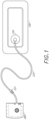
- FIG. 1 illustrates an embodiment of a TNP wound treatment including a wound dressing 2100 in combination with a pump 2800.
- the wound dressing 2100 can be any wound dressing embodiment disclosed herein or have any combination of features of any number of wound dressing embodiments disclosed herein.
- the dressing 2100 may be placed over a wound, and a conduit 2220 may then be connected to a port 2150, although in some embodiments the dressing 2100 may be provided with at least a portion of the conduit 2220 preattached to the port 2150.
- the dressing 2100 is provided as a single article with all wound dressing elements (including the port 2150) pre-attached and integrated into a single unit.
- the wound dressing 2100 may then be connected, via the conduit 2220, to a source of negative pressure such as the pump 2800.
- the pump 2800 can be miniaturized and portable, although larger conventional pumps may also be used with the dressing 2100.
- the pump 2800 may be attached or mounted onto or adjacent the dressing 2100.
- a connector 2221 may also be provided so as to permit the conduit 2220 leading to the wound dressing 2100 to be disconnected from the pump, which may be useful for example during dressing changes.
- a source of negative pressure (such as a pump) and some or all other components of the TNP system, such as power source(s), sensor(s), connector(s), user interface component(s) (such as button(s), switch(es), speaker(s), screen(s), etc.) and the like, can be integral with the wound dressing.
- the source of negative pressure and battery can be included within the integrated dressing 200.
- FIG. 2 illustrates the source of negative pressure and battery 210 placed on top of the dressing layer 240 (such as an absorbent layer), the source of negative pressure and one or more components can be incorporated into the dressing differently. The source of negative pressure and the one or more components need not all be incorporated into the dressing in the same manner.
- a pressure sensor can be positioned below (or closer to the wound) the layer 240 while the source of negative pressure can be positioned on top of the layer 240.
- the integrated dressing 200 illustrated in FIG. 2 includes a cover layer 230 that can secure the dressing to skin surrounding the wound.
- the cover layer 230 can be formed of substantially fluid impermeable material, such as film (e.g., plastic film).
- the cover layer can include an adhesive for securing the dressing to the surrounding skin or wound contact layer.
- the dressing can include the power source and other components, such as electronics, on and/or incorporated into the dressing and can utilize a wound contact layer and a first spacer layer within the dressing.
- the wound contact layer can be in contact with the wound.
- the wound contact layer can include an adhesive on the patient facing side for securing the dressing to the skin surrounding the wound or on the top side for securing the wound contact layer to a cover layer or other layer of the dressing.
- the wound contact layer can provide unidirectional flow so as to facilitate removal of exudate from the wound while blocking or substantially preventing exudate from returning to the wound.
- the first spacer layer assists in distributing negative pressure over the wound site and facilitating transport of wound exudate and fluids into the wound dressing.
- an absorbent layer (such as layer 240) for absorbing and retaining exudate aspirated from the wound can be utilized.
- the absorbent includes a shaped form of a superabsorber layer with recesses or compartments for the pump, electronics, and accompanying components. These layers can be covered with one or more layers of a film or cover layer (or a first cover layer).
- the first cover layer can include a filter set that can be positioned within one of the recesses.
- the filter can align with one of the at least one recesses of the absorbent layer, and the filter can include hydrophobic material to protect the pump and/or other components from liquid exudates.
- the filter can block fluids while permitting gases to pass through.
- one or more of the pump, electronics, switch and battery can be positioned on top of the first cover layer as illustrated in FIG. 2 .
- Another section of spacer, a second spacer can be positioned above and/or surrounding the pump.
- the second spacer can be smaller than the first spacer used above the wound contact layer.
- a section of top film or cover layer (or a second cover layer) is positioned over the top of the second spacer with a second filter associated with or positioned within the second cover layer.
- the first and second cover layer can be made of the same material.
- the first and second cover layers can be made of different material.
- the pump and/or other electronic components can be configured to be positioned adjacent to or next to the absorbent and/or transmission layers so that the pump and/or other electronic components are still part of a single apparatus to be applied to a patient with the pump and/or other electronics positioned away from the wound site.
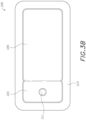
- FIGS. 3A-3C illustrates a wound dressing incorporating the source of negative pressure and/or other electronic components within the wound dressing.
- FIGS. 3A-3C illustrates a wound dressing 1200 with the pump and/or other electronics positioned away from the wound site.
- the wound dressing can include an electronics area 1261, 1361 and an absorbent area 1260, 1360.
- the dressing can comprise a wound contact layer 1310 (not shown in FIGS.
- FIGS. 3A-3B a moisture vapor permeable film or cover layer 1213, 1313 positioned above the contact layer and other layers of the dressing.
- the wound dressing layers and components of the electronics area as well as the absorbent area can be covered by one continuous cover layer 1213, 1313 as shown in FIGS. 3A-3C .
- the dressing can comprise a wound contact layer 1310, a spacer layer 1311, an absorbent layer 1212, 1322, a moisture vapor permeable film or cover layer 1213, 1313 positioned above the wound contact layer, spacer layer, absorbent layer, or other layers of the dressing.
- the wound contact layer can be configured to be in contact with the wound.
- the wound contact layer can include an adhesive on the patient facing side for securing the dressing to the surrounding skin or on the top side for securing the wound contact layer to a cover layer or other layer of the dressing.
- the wound contact layer can be configured to provide unidirectional flow so as to facilitate removal of exudate from the wound while blocking or substantially preventing exudate from returning to the wound.
- the wound contact layer 1310 can be a polyurethane layer or polyethylene layer or other flexible layer which is perforated, for example via a hot pin process, laser ablation process, ultrasound process or in some other way or otherwise made permeable to liquid and gas.
- the wound contact layer 1310 has a lower surface and an upper surface.
- the perforations preferably comprise through holes in the wound contact layer 1310 which enable fluid to flow through the layer 1310.
- the wound contact layer 1310 helps prevent tissue ingrowth into the other material of the wound dressing.
- the perforations are small enough to meet this requirement while still allowing fluid to flow therethrough.
- perforations formed as slits or holes having a size ranging from 0.025 mm to 1.2 mm are considered small enough to help prevent tissue ingrowth into the wound dressing while allowing wound exudate to flow into the dressing.
- the wound contact layer 1310 may help maintain the integrity of the entire dressing 1200, 1300 while also creating an air tight seal around the absorbent pad in order to maintain negative pressure at the wound.
- the wound contact layer 1310 may also act as a carrier for an optional lower and upper adhesive layer (not shown).
- a lower pressure sensitive adhesive may be provided on the lower surface of the wound dressing 1200, 1300 whilst an upper pressure sensitive adhesive layer may be provided on the upper surface of the wound contact layer.
- the pressure sensitive adhesive which may be a silicone, hot melt, hydrocolloid or acrylic based adhesive or other such adhesives, may be formed on both sides or optionally on a selected one or none of the sides of the wound contact layer.
- the wound contact layer may comprise perforated polyurethane film.
- the lower surface of the film may be provided with a silicone pressure sensitive adhesive and the upper surface may be provided with an acrylic pressure sensitive adhesive, which may help the dressing maintain its integrity.
- a polyurethane film layer may be provided with an adhesive layer on both its upper surface and lower surface, and all three layers may be perforated together.
- a layer 1311 of porous material can be located above the wound contact layer 1310.
- porous material, spacer, and/or transmission layer can be used interchangeably to refer to the layer of material in the dressing configured to distribute negative pressure throughout the wound area.
- This porous layer, or transmission layer, 1311 allows transmission of fluid including liquid and gas away from a wound site into upper layers of the wound dressing.
- the transmission layer 1311 preferably ensures that an open air channel can be maintained to communicate negative pressure over the wound area even when the absorbent layer has absorbed substantial amounts of exudates.
- the layer 1311 should preferably remain open under the typical pressures that will be applied during negative pressure wound therapy as described above, so that the whole wound site sees an equalized negative pressure.
- the layer 1311 may be formed of a material having a three-dimensional structure. For example, a knitted or woven spacer fabric (for example Baltex 7970 weft knitted polyester) or a non-woven fabric could be used.
- the spacer layer assists in distributing negative pressure over the wound site and facilitating transport of wound exudate and fluids into the wound dressing.
- the spacer layer can be formed at least partially from a three-dimensional (3D) fabric.
- the transmission layer 1311 comprises a 3D polyester spacer fabric layer including a top layer (that is to say, a layer distal from the wound-bed in use) which is a 84/144 textured polyester, and a bottom layer (that is to say, a layer which lies proximate to the wound bed in use) which is a 10 denier flat polyester and a third layer formed sandwiched between these two layers which is a region defined by a knitted polyester viscose, cellulose or the like monofilament fiber. Other materials and other linear mass densities of fiber could of course be used.
- top spacer fabric thus has more filaments in a yarn used to form it than the number of filaments making up the yarn used to form the bottom spacer fabric layer.
- This differential between filament counts in the spaced apart layers helps control moisture flow across the transmission layer.
- the top layer is made from a yarn having more filaments than the yarn used in the bottom layer, liquid tends to be wicked along the top layer more than the bottom layer.
- this differential tends to draw liquid away from the wound bed and into a central region of the dressing where the absorbent layer 1212,1322 helps lock the liquid away or itself wicks the liquid onwards towards the cover layer 1213, 1313 where it can be transpired.
- the 3D fabric may be treated with a dry cleaning agent (such as, but not limited to, Perchloro Ethylene) to help remove any manufacturing products such as mineral oils, fats or waxes used previously which might interfere with the hydrophilic capabilities of the transmission layer.
- a dry cleaning agent such as, but not limited to, Perchloro Ethylene
- an additional manufacturing step can subsequently be carried in which the 3D spacer fabric is washed in a hydrophilic agent (such as, but not limited to, Feran Ice 30g/l available from the Rudolph Group). This process step helps ensure that the surface tension on the materials is so low that liquid such as water can enter the fabric as soon as it contacts the 3D knit fabric. This also aids in controlling the flow of the liquid insult component of any exudates.
- an absorbent layer (such as layer 1212) for absorbing and retaining exudate aspirated from the wound can be utilized.
- a superabsorbent material can be used in the absorbent layer 1212.
- the absorbent includes a shaped form of a superabsorber layer.
- a layer 1212, 1322 of absorbent material is provided above the transmission layer 1311.
- the absorbent material which comprise a foam or non-woven natural or synthetic material, and which may optionally comprise a super-absorbent material, forms a reservoir for fluid, particularly liquid, removed from the wound site.
- the layer 10 may also aid in drawing fluids towards the backing layer 1213, 1313.
- the material of the absorbent layer 1212, 1322 may also prevent liquid collected in the wound dressing from flowing freely within the dressing, and preferably acts so as to contain any liquid collected within the dressing.
- the absorbent layer 1212, 1322 also helps distribute fluid throughout the layer via a wicking action so that fluid is drawn from the wound site and stored throughout the absorbent layer. This helps prevent agglomeration in areas of the absorbent layer.
- the capacity of the absorbent material must be sufficient to manage the exudates flow rate of a wound when negative pressure is applied. Since in use the absorbent layer experiences negative pressures the material of the absorbent layer is chosen to absorb liquid under such circumstances. A number of materials exist that are able to absorb liquid when under negative pressure, for example superabsorber material.
- the absorbent layer 1212, 1322 may typically be manufactured from ALLEVYN TM foam, Freudenberg 114-224-4 or Chem-Posite TM 11C-450.
- the absorbent layer 1212, 1322 may comprise a composite comprising superabsorbent powder, fibrous material such as cellulose, and bonding fibers.
- the composite is an airlaid, thermally-bonded composite.
- the absorbent layer 1212, 1322 is a layer of non-woven cellulose fibers having super-absorbent material in the form of dry particles dispersed throughout.
- Use of the cellulose fibers introduces fast wicking elements which help quickly and evenly distribute liquid taken up by the dressing.
- the juxtaposition of multiple strand-like fibers leads to strong capillary action in the fibrous pad which helps distribute liquid. In this way, the super-absorbent material is efficiently supplied with liquid.
- the wicking action also assists in bringing liquid into contact with the upper cover layer to aid increase transpiration rates of the dressing.
- cover layer and/or backing layer can be used interchangeably to refer to the layer of material in the dressing configured to cover the underlying dressing layers and seal to the wound contact layer and/or the skin surrounding the wound.
- the cover layer can include a moisture vapor permeable material that prevents liquid exudate removed from the wound and other liquids from passing through, while allowing gases through.
- the backing layer 1213, 1313 is preferably gas impermeable, but moisture vapor permeable, and can extend across the width of the wound dressing 100.
- the backing layer 1213, 1313 which may for example be a polyurethane film (for example, Elastollan SP9109) having a pressure sensitive adhesive on one side, is impermeable to gas and this layer thus operates to cover the wound and to seal a wound cavity over which the wound dressing is placed. In this way, an effective chamber is made between the backing layer 1213, 1313 and a wound site where a negative pressure can be established.
- the backing layer 1213, 1313 is preferably sealed to the wound contact layer 1310 in a border region around the circumference of the dressing, ensuring that no air is drawn in through the border area, for example via adhesive or welding techniques.
- the backing layer 1213, 1313 protects the wound from external bacterial contamination (bacterial barrier) and allows liquid from wound exudates to be transferred through the layer and evaporated from the film outer surface.
- the backing layer 1213, 1313 preferably comprises two layers; a polyurethane film and an adhesive pattern spread onto the film.
- the polyurethane film is preferably moisture vapor permeable and may be manufactured from a material that has an increased water transmission rate when wet. In some embodiments, the moisture vapor permeability of the backing layer increases when the backing layer becomes wet. The moisture vapor permeability of the wet backing layer may be up to about ten times more than the moisture vapor permeability of the dry backing layer.
- the electronics area 1261 can include a source of negative pressure (such as a pump) and some or all other components of the TNP system, such as power source(s), sensor(s), connector(s), user interface component(s) (such as button(s), switch(es), speaker(s), screen(s), etc.) and the like, that can be integral with the wound dressing.
- a source of negative pressure such as a pump
- the electronics area 1261 can include a button or switch 1211 as shown in FIGS. 3A-3B .
- the button or switch 1211 can be used for operating the pump (e.g., turning the pump on/off).
- the absorbent area 1260 can include an absorbent material 1212 and can be positioned over the wound site.
- the electronics area 1261 can be positioned away from the wound site, such as by being located off to the side from the absorbent area 1260.
- the electronics area 1261 can be positioned adjacent to and in fluid communication with the absorbent area 1260 as shown in FIGS. 3A-3B .
- each of the electronics area 1261 and absorbent area 1260 may be rectangular in shape and positioned adjacent to one another.
- additional layers of dressing material can be included in the electronics area 1261, the absorbent area 1260, or both areas.
- the dressing can comprise one or more spacer layers and/or one or more absorbent layer positioned above the wound contact layer 1310 and below the cover layer 1213, 1313 of the dressing.
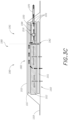
- FIG. 3C is a side cross-sectional view of a wound dressing system 1300, according to some embodiments.
- the wound dressing system 1300 can include a wound dressing 1302 with one or more embedded (also referred to as integrated) electronic components 1350.
- the wound dressing 1302 can include an absorbent area 1360 and an electronics area 1361.
- the electronic components 1350 can be positioned within the wound dressing 1302 in the electronics area 1361, although it should be appreciated that the electronic components 1350 can be integrated with the wound dressing 1302 in any suitable arrangement (e.g., disposed on and/or positioned within the wound dressing 1302, among other arrangements).
- the electronic components 1350 can optionally include a pump 1304, a power source, a controller, and/or an electronics package, although any suitable electronic component is appreciated.
- the pump 1304 can be in fluidic communication with one or more regions of the wound dressing 1302, such as, for example, the absorbent area 1360 of the dressing.
- the absorbent area 1360 and the electronics area 1361 of the wound dressing 1302 can have any suitable arrangement.
- FIG. 3C illustrates an embodiment of the wound dressing 1302 in which the electronics area 1361 is offset from the absorbent area 1360.
- the wound dressing 1302 can include a wound contact layer 1310 and a moisture vapor permeable film or cover layer 1313 that encloses one or both of the absorbent area 1360 and the electronics area 1361.
- the cover layer 1313 can seal at the perimeter of the cover layer 1319 to the wound contact layer 1310 at the perimeter of the wound contact layer.
- the dressing can optionally include an upper spacer layer or first spacer layer 1317 that includes a continuous layer of spacer material positioned below the cover layer 1313 and above the layers of the absorbent area and the layers of the electronics area. The continuous layer of spacer material or upper spacer layer 1317 can enable an air pathway between the two areas of the dressing.
- the absorbent area 1360 of the dressing can include a second spacer layer 1311 or lower spacer layer and an absorbent layer 1322 positioned above the wound contact layer 1310.
- the second spacer layer 1311 can allow for an open air path over the wound site.
- the absorbent layer 1322 can include a super absorber positioned in the absorbent area 1360 of the dressing.
- the absorbent layer 1322 can retain wound fluid within thereby preventing fluid passage of wound exudates into the electronics area 1361 of the dressing.
- the wound fluids can flow through the wound contact layer 1310, to the lower spacer layer 1311, and into the absorbent layer 1322.
- the wound fluids are then spread throughout the absorbent layer 1322 and retained in the absorbent layer 1322 as shown by the directional arrows for wound fluids in FIG. 3C .
- the electronics area 1361 of the dressing can include a plurality of layers of spacer material 1351.
- the electronic components 1350 can be embedded within the plurality of layers of spacer material 1351.
- the layers of spacer material can optionally have recesses or cut outs to embed the electronic components within whilst providing structure to prevent collapse.
- the electronic components 1350 can optionally include a pump, a power source, a controller, and/or an electronics package, although any suitable electronic component is appreciated.
- a partition 1362 can optionally be positioned between the absorbent area 1360 and the electronics area 1361. The partition 1362 can separate the absorbent layer 1322 and lower air flow spacer layer 1311 from the electronic housing segment of the dressing in the electronic area.
- the partition 1362 can prevent wound fluid (e.g., wound exudate) from entering the electronic housing section of the dressing.
- the partition can be a non-porous dam or other structure.
- the non-porous dam 1362 can include a cyanoacrylate adhesive bead or a strip of silicone.
- the air pathway through the dressing is shown in FIG. 3C by directional arrows. The air flows through the wound contact layer 1310, the lower spacer layer 1311, and the absorbent layer 1322 and into the first spacer layer 1317. The air can travel horizontally through the first spacer layer 1317 over and around the partition 1362 into the electronics area of the dressing.
- the wound dressing system 1300 can include a fluid ingress inhibition component 1510 in fluid communication with a pump 1304.
- the component 1510 can allow gas (e.g., air) but inhibit liquid (e.g., wound exudate) from passing through.
- the wound dressing layers and the component 1510 can be used with or without the optional partition 1362.
- the component 1510 can provide a plurality of flow paths between an interior of the wound dressing 1302 and the pump 1304 so that occlusion (e.g., from wound exudate) of the pump 1304 is inhibited.
- any of the plurality of flow paths become occluded one or more of the other flow paths of the plurality will be able to maintain an uninterrupted flow path between the wound dressing 1302 and the pump 1304.
- Such flow path redundancy can advantageously make operation of wound dressing systems 1300 more stable and reliable.
- the component 1510 can allow a more stable target pressure to be delivered to a wound site by ensuring that there is an open flow path between the wound dressing 1302 and the pump 1304 and by inhibiting occlusions that would otherwise cause the target pressure to be more varied.
- the surface area of the component 1510 can advantageously increase the contact area between the pump 1304 and the wound dressing 1302, thereby providing more flow paths into the inlet of the pump 1304 for the same sized inlet.
- the wound dressing system 1300 can include two or more components 1510.
- the wound dressing system 1300 can include between two and ten or more components 1510. The exact number used may depend on a number of factors, including the size of the wound site and the wound exudate discharge rate, in addition to the space constraints of the wound dressing, as well as other factors.
- the component 1510 can be made of a hydrophobic material that repels wound exudate, thereby inhibiting the ingress of fluid into the component 1510 and ultimately the pump 1304.
- component 1510 can be a hydrophobic coated material.
- the component 1510 can be made of a porous material. The pores can be small enough to inhibit the ingress of fluid through the component 1510 due to capillary action (i.e., from surface tension of the wound exudate against the component 1510) and the pressure differential between the environment and the wound dressing, but large enough to permit the passage of air.
- the component 1510 can be made of a material that has a pore size in the range of approximately 20 microns to approximately 100 microns.
- the material of the component 1510 can have a pore size of approximately 30 microns. In some embodiments, the material of the component 1510 can have a pore size of approximately 10 microns. However, it will be understood that any suitable pore size is appreciated. In some embodiments, the component can be a foam or a foam-like material. The hydrophobic nature of the material of the component 1510 and/or its pore size can function to inhibit the flow of wound exudate from the wound dressing 1302 to the pump 1304. The component 1510 thereby inhibits the pump 1304 in the wound dressing system 1300 from discharging wound exudate from the wound dressing 1302.
- the material of the component 1510 can be porous.
- the plurality of flow paths through the component 1510 can be defined by a series of sequentially connected pores formed in the material of the component 1510, beginning with pore(s) in fluid communication with an interior of the wound dressing 1302 and positioned on the exterior of the component 1510 and ending with pore(s) in fluid communication with the pump 1304 and positioned on the interior of the component 1510. Pores advantageously provide flow path redundancy because of their lattice arrangement and interconnected structure.
- the plurality of flow paths through the component 1510 that connect the first pore(s) in fluid communication with an interior of the wound dressing 1302 and the last pore(s) in fluid communication with the pump 1304 can be straight and/or tortuous.
- a group of open pores can effectively create one or more larger flow channels through the component 1510 that can sizably adjust as one or more occlusions materialize inside and/or outside the component 1510.
- one or more pores can define one or more overlapping flow paths. For example, if one or more adjacent and/or neighboring pores of an open pore become occluded by wound exudate, the open pore can maintain an open path from the wound dressing 1302 to the pump 1304 by helping to redefine one or more flow paths around the one or more occluded pores.
- the plurality of flow paths through the component can be formed with any suitable structure.
- the plurality of flow paths can be formed by one or more channels extending through the component 1510.
- the component 1510 can be a porous polymer component.
- the porous polymer component can be machined and/or molded (e.g., injection molded) into any suitable shape.
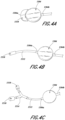
- FIGS. 4A-4C illustrate three differently shaped porous polymer components 1510 in fluid communication with a pump 1304.
- FIG. 4A illustrates a crescent-shaped component 1510.
- FIG. 4B illustrates a thimble-shaped component 1510 with a cylindrical body and rounded terminal end.
- FIG. 4C illustrates two thimble-shaped components 1510 with cylindrical bodies and flat terminal ends.
- Each of the components 1510 can allow gas (e.g., air) to pass from various points in the wound dressing (not shown) into the pump 1304 through one or more of a plurality of flow paths.
- the porous polymer component can be formed from POREX ® , PORVAIR ® , or any other suitable hydrophobic material, such as, for example, polyethylene and/or polypropylene, among others.
- the porous polymer component can be formed from PORVAIR Vyon ® porous polymer.
- the material of the component 1510 can be made of a material that has a pore size in the range of approximately 5 microns to approximately 100 microns (e.g., 5 microns, 100 microns).
- the material of the component 1510 can have a pore size of approximately 30 microns (e.g., 30 microns). In some embodiments, the material of the component 1510 can have a pore size of approximately 10 microns (e.g., 10 microns). However, it will be understood that any suitable pore size is appreciated.
- FIGS. 4A-4C are shown directly or indirectly coupled to an inlet 1304a of the pump 1304.
- FIG. 4A illustrates a component 1510 directly coupled to the pump inlet 1304a
- FIGS. 4B and 4C illustrate components 1510 indirectly coupled to the pump inlet 1304a via an intermediate tubular member 1512.
- FIG. 4C also illustrates a Y-shaped splitter 1514 that connects the two components 1510 to the intermediate tubular member 1512.
- the intermediate tubular member 1512 and the Y-shaped splitter 1514 in FIG. 4C can be a unitary piece.
- the internal diameter of the intermediate tubular member 1512 and the Y-shaped splitter 1514 can be in the range of approximately 1 mm to approximately 3 mm, such as for example, 2 mm.
- any suitable arrangement and structure is appreciated.
- a non-return valve and/or an exhaust system can be coupled to the pump outlet 1304b. Additional disclosure relating to exhaust systems and non-return valves can be found in International Application No. PCT/EP2017/055225, filed March 6, 2017 , titled "WOUND TREATMENT APPARATUSES AND METHODS WITH NEGATIVE PRESSURE SOURCE INTEGRATED INTO WOUND DRESSING.”
- the component 1510 can inhibit wound exudate from being drawn from the wound site through the pump and into the non-return valve and/or exhaust system.
- FIGS. 5A-5C illustrate cross-sectional views of the corresponding components 1510 shown in FIGS. 4A-4C , respectively.
- FIG. 5A illustrates the component 1510 of FIG. 4A having a port 1511 that receives a portion of the pump inlet 1304a.
- FIGS. 5B and 5C similarly illustrate components 1510 having ports 1511.
- the component 1510 can receive a portion of and/or be bonded to the member to which it connects (e.g., a pump inlet).
- the component 1510 in FIG. 5A can be bonded (e.g., glued or heat welded) to the pump inlet 1304a.
- the component 1510 in FIG. 5A can freely slide over the pump inlet 1304a.
- One or more surrounding features of the wound dressing system 1300 can help keep the component in place (e.g., compression between the cover layer 1313 and the wound contact layer 1310 shown in FIG. 3C ).
- FIGS. 6A and 6B illustrate a fluid ingress inhibition system similar to the system of FIG. 5C sitting on top of a wound dressing padding or other wound dressing layer.
- FIG. 6A illustrates two components 1510 sitting on top of a layer of the dressing with the cover layer 1313 removed.
- FIG. 6B shows FIG. 6A with the cover layer 1313 or other dressing layer drawn down onto the various internal components, including the two components 1510.
- the component 1510 does not reduce the pump flow rate by more than 50mL/min.
- the component 1510 can reduce the pump flow rate in the range of 15 mL/min to 35 mL/min (e.g., from 21mL/min to 31mL/min).
- the component 1510 does not reduce the free performance of the pump by more than 10%.
- the component 1510 can reduce the free performance of the pump in the range of 4% to 6%.
- the component 1510 can be a micro porous membrane attached to a pump inlet.
- the membrane can be formed into the shape of a pouch to fit over and attach to the pump inlet.
- a 3d spacer e.g., fabric
- the pouch can be elongate in form, but it will be appreciated that the pouch can take on any suitable form.
- the membrane can be hydrophobic to repel fluid (e.g., wound exudate) and have a porosity that inhibits fluid ingress into the pump inlet due to capillary action.
- the micro porous membrane can be made of Versapore having a 0.2 ⁇ m pore size (Pall).
- the component 1510 can be one or more lengths of fine bore tubing with a plurality of holes disposed along their lengths.
- the one or more lengths of fine bore tubing can form one or more loops between a pump inlet and a wound dressing.
- the one or more lengths of fine bore tubing can extend from the pump inlet to one or more different points in the wound dressing, similar to the way in which the two components 1510 in FIGS. 6A and 6B are positioned at two different points in the wound dressing.
- the size of the bore in the tubing can have an internal diameter such that the tubing resists collapse under reduce pressure.
- the component 1510 is designed so that a significant pressure drop is avoided by its use. In this way, the component 1510 prevents the pump 1304 from having to work harder and consume more power from any added resistance it may add to the flow path from the wound dressing to the environment through the pump 1304.
- FIGS. 7A and 7B illustrate embodiments of an electronics unit 1700 including a pump 1704 and a component 1710 directly coupled to the pump inlet 1704a.
- FIG. 7A illustrates the top view of the electronics unit.
- FIG. 7B illustrates a bottom or wound facing surface of the electronics unit.
- the electronics unit 1700 can include a pump and other electronic component such as power source(s), sensor(s), connector(s), circuit board(s), user interface component(s) (such as button(s), switch(es), speaker(s), screen(s), etc.) and the like.
- the electronics unit of FIGS. 7A-7B can be embedded into the electronics area 1361 of the wound dressing as one unit.
- the component 1710 can be pushed onto the pump inlet. This can be a friction fit.
- the port of the component 1710 that receives a portion of the pump inlet can be sized and shaped to be a complementary fit around the pump inlet.
- the component 1710 can be bonded onto the pump inlet using a silicone sealant or any other sealant or sealing technique.
- the electronics unit can be embedded within layers of the dressing in the electronics area 1361. In some embodiments, the layers of the dressing in the electronics area 1361 can include cutouts or recesses into which the electronics unit 1700 can be placed.
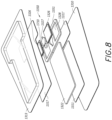
- FIG. 8 illustrates the wound dressing layers for embedding or integrating an electronics unit.
- the dressing can include a wound contact layer 1310 for placing in contact with the wound.
- Lower spacer layers 1311 and 1311' are provided above the wound contact layer 1310.
- the spacer layer 1311 can be a separate layer from spacer layer 1311' as shown in FIG. 8 .
- the lower spacer layers 1311 and/or 1311' can be a continuous layer of spacer material that is below both the electronics area and the absorbent area.
- the lower spacer layers 1311 and 1311' can assist in distributing pressure evenly to the wound surface and/or wicking fluid away from the wound.
- An absorbent layer 1322 can be positioned above the lower spacer layer 1311 and/or 1311'.
- a dressing layer 1351 can include cutouts or recesses 1328 for embedding the electronic components 1350 within the layer 1351.
- the layer 1351 can be an absorbent material.
- the dressing layer 1351 and absorbent layer 1322 can be one continuous piece of absorbent material.
- the layer 1351 can be a spacer layer or transmission material.
- the cutouts or recesses 1328 can be sized and shaped to embed a pump 1327, power source 1326, and/or other electronic components of the electronics unit.
- the pump 1327, power source 1326, and/or other electronic components can be incorporated into the cutouts or recesses 1328 as individual components or as an electronic assembly as shown in Figures 7A-7B .
- An upper layer 1317 optionally can be provided above the absorbent layer 1322, layer 1351, and/or electronic components 1350.
- a cover layer or backing layer 1313 can be positioned over the upper spacer layer. In some embodiments, when the upper layer 1317 is not used, the cover layer or backing layer 1313 can be provided above the absorbent layer 1322, layer 1351, and/or electronic components 1350.
- the backing layer 1313 can form a seal to the wound contact layer 1310 at a perimeter region enclosing the spacer layers 1311, 1311', and 1317, the absorbent layer 1322, layer 1351, and electronic components 1350.
- the backing layer 1313 can be a flexible sheet of material that forms and molds around the dressing components when they are applied to the wound.
- the backing layer 1313 can be a material that is preformed or premolded to fit around the dressing components as shown in FIG. 8 .
- the component 1710 is provided on the inlet of the pump 1327.
- the hydrophobicity of the component 1710 can keep the inlet to the pump free of exudate.
- the component 1710 can be in contact with and/or in fluid communication with superabsorbent and/or absorbent material. In this configuration, the component 1710 can prevent liquid from being pulled through to the inlet of the pump when negative pressure is applied.
- the component 1710 can be made of a material with a pore size larger than the pore size of traditional hydrophobic filters and liquid could get through if the material of the component were by itself in contact with water.
- the hydrophobicity of the hydrophobic component 1710 with a pore size as described herein can be in contact with the superabsorber and/or absorbent material and can prevent exudate from being pulled through the inlet of the pump when negative pressure is applied.
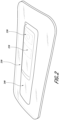
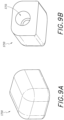
- FIG. 9A-9B illustrates an embodiment of a component 1710, as claimed, with a port 1715 for coupling to the pump inlet.
- the port 1715 similar to port 1511 of Figures 5A-5C , is shaped to receive a portion of the pump inlet 1304a.
- the shape of the pump inlet 1304a can be tubular or cylindrical as shown in the cross-section of the pump inlet 1304a in Figure 5A .
- the component 1710 can receive a portion of and/or be bonded to the member to which it connects (e.g., a pump inlet).
- the component 1710 can be bonded (e.g., glued or heat welded) to the pump inlet 1304a.
- the component 1710 can freely slide over the pump inlet 1304a.
- One or more surrounding features of the wound dressing system can help keep the component in place (e.g., compression between the cover layer and the wound contact layer).
- the component 1710 can have a 3-dimensional shape and circumferentially surrounds the pump inlet.
- the 3-dimensional shaped component 1710 can have a width, height, and/or length dimension that is greater than the width, height, and/or length of the pump inlet 1304a.
- the component 1710 can be a cuboid or generally cuboid shape as shown in FIGS. 9A and 9B .
- the component 1710 may have a flat pump-facing surface through which the port 1715 extends, with one or more beveled edges and/or corners.
- the 3-dimensional component can circumferentially surround the pump inlet when the pump inlet is inserted into the port 1715 of the component 1710.
- the 3-dimensional component By circumferentially surrounding the pump inlet, the 3-dimensional component can provide a surface area larger than the surface area available at the pump inlet 1304a.
- the larger surface area can provide a plurality of flow paths within the component 1710. This can allow air to be drawn through a portion of the component 1710 even when another portion of the component 1710 is surrounded by fluid or otherwise blocked.
Landscapes
- Health & Medical Sciences (AREA)
- Heart & Thoracic Surgery (AREA)
- General Health & Medical Sciences (AREA)
- Engineering & Computer Science (AREA)
- Biomedical Technology (AREA)
- Life Sciences & Earth Sciences (AREA)
- Animal Behavior & Ethology (AREA)
- Vascular Medicine (AREA)
- Public Health (AREA)
- Veterinary Medicine (AREA)
- Anesthesiology (AREA)
- Hematology (AREA)
- Media Introduction/Drainage Providing Device (AREA)
Applications Claiming Priority (3)
| Application Number | Priority Date | Filing Date | Title |
|---|---|---|---|
| US201662327676P | 2016-04-26 | 2016-04-26 | |
| EP17723292.3A EP3448451B1 (en) | 2016-04-26 | 2017-04-26 | Wound dressings and methods of use with integrated negative pressure source having a fluid ingress inhibition component |
| PCT/EP2017/059883 WO2017186771A1 (en) | 2016-04-26 | 2017-04-26 | Wound dressings and methods of use with integrated negative pressure source having a fluid ingress inhibition component |
Related Parent Applications (1)
| Application Number | Title | Priority Date | Filing Date |
|---|---|---|---|
| EP17723292.3A Division EP3448451B1 (en) | 2016-04-26 | 2017-04-26 | Wound dressings and methods of use with integrated negative pressure source having a fluid ingress inhibition component |
Publications (2)
| Publication Number | Publication Date |
|---|---|
| EP4049692A1 EP4049692A1 (en) | 2022-08-31 |
| EP4049692B1 true EP4049692B1 (en) | 2025-06-18 |
Family
ID=58707493
Family Applications (2)
| Application Number | Title | Priority Date | Filing Date |
|---|---|---|---|
| EP21211792.3A Active EP4049692B1 (en) | 2016-04-26 | 2017-04-26 | Wound dressings with integrated negative pressure source having a fluid ingress inhibition component |
| EP17723292.3A Active EP3448451B1 (en) | 2016-04-26 | 2017-04-26 | Wound dressings and methods of use with integrated negative pressure source having a fluid ingress inhibition component |
Family Applications After (1)
| Application Number | Title | Priority Date | Filing Date |
|---|---|---|---|
| EP17723292.3A Active EP3448451B1 (en) | 2016-04-26 | 2017-04-26 | Wound dressings and methods of use with integrated negative pressure source having a fluid ingress inhibition component |
Country Status (8)
| Country | Link |
|---|---|
| US (2) | US11285047B2 (enExample) |
| EP (2) | EP4049692B1 (enExample) |
| JP (1) | JP7027332B2 (enExample) |
| CN (2) | CN109121396B (enExample) |
| AU (2) | AU2017256692B2 (enExample) |
| SG (1) | SG11201809178XA (enExample) |
| WO (1) | WO2017186771A1 (enExample) |
| ZA (1) | ZA201807830B (enExample) |
Families Citing this family (74)
| Publication number | Priority date | Publication date | Assignee | Title |
|---|---|---|---|---|
| GB201115182D0 (en) | 2011-09-02 | 2011-10-19 | Trio Healthcare Ltd | Skin contact material |
| CN113367890B (zh) | 2015-04-27 | 2023-02-21 | 史密夫及内修公开有限公司 | 减压装置 |
| GB2543544A (en) | 2015-10-21 | 2017-04-26 | Brightwake Ltd | Wound dressing |
| CN114053031A (zh) | 2016-03-07 | 2022-02-18 | 史密夫及内修公开有限公司 | 利用整合到伤口敷料中的负压源的伤口治疗设备和方法 |
| EP4049692B1 (en) | 2016-04-26 | 2025-06-18 | Smith & Nephew PLC | Wound dressings with integrated negative pressure source having a fluid ingress inhibition component |
| WO2017191149A1 (en) | 2016-05-03 | 2017-11-09 | Smith & Nephew Plc | Optimizing power transfer to negative pressure sources in negative pressure therapy systems |
| US11096831B2 (en) | 2016-05-03 | 2021-08-24 | Smith & Nephew Plc | Negative pressure wound therapy device activation and control |
| WO2017191158A1 (en) | 2016-05-03 | 2017-11-09 | Smith & Nephew Plc | Systems and methods for driving negative pressure sources in negative pressure therapy systems |
| CA3023772A1 (en) | 2016-05-13 | 2017-11-16 | Smith & Nephew Plc | Sensor enabled wound monitoring and therapy apparatus |
| AU2017292881B2 (en) | 2016-07-08 | 2022-03-17 | Convatec Technologies Inc. | Flexible negative pressure system |
| EP3503857B1 (en) | 2016-08-25 | 2024-04-17 | Smith & Nephew plc | Absorbent negative pressure wound therapy dressing |
| US12263294B2 (en) | 2016-09-28 | 2025-04-01 | T.J.Smith And Nephew, Limited | Systems and methods for operating negative pressure wound therapy devices |
| WO2018060417A1 (en) | 2016-09-30 | 2018-04-05 | Smith & Nephew Plc | Negative pressure wound treatment apparatuses and methods with integrated electronics |
| EP3519000B1 (en) * | 2016-09-30 | 2025-12-10 | Smith & Nephew plc | Negative pressure wound treatment apparatuses and methods with integrated electronics |
| CA3046416A1 (en) | 2016-12-12 | 2018-06-21 | Smith & Nephew Plc | Pressure wound therapy status indication via external device |
| AU2018229808B2 (en) | 2017-03-08 | 2024-04-11 | Smith & Nephew Plc | Negative pressure wound therapy device control in presence of fault condition |
| US11690570B2 (en) | 2017-03-09 | 2023-07-04 | Smith & Nephew Plc | Wound dressing, patch member and method of sensing one or more wound parameters |
| US11324424B2 (en) | 2017-03-09 | 2022-05-10 | Smith & Nephew Plc | Apparatus and method for imaging blood in a target region of tissue |
| EP3592219B1 (en) | 2017-03-09 | 2023-05-10 | Smith & Nephew plc | Device and apparatus of determining skin perfusion pressure |
| EP3609449A1 (en) | 2017-04-11 | 2020-02-19 | Smith & Nephew PLC | Component positioning and stress relief for sensor enabled wound dressings |
| SG11201910129SA (en) | 2017-05-09 | 2019-11-28 | Smith & Nephew | Redundant controls for negative pressure wound therapy systems |
| CN110832598B (zh) | 2017-05-15 | 2024-03-15 | 史密夫及内修公开有限公司 | 伤口分析装置和方法 |
| US12033738B2 (en) | 2017-05-15 | 2024-07-09 | Smith & Nephew Plc | Negative pressure wound therapy system using eulerian video magnification |
| CA3066073A1 (en) | 2017-06-23 | 2018-12-27 | Smith & Nephew Plc | Positioning of sensors for sensor enabled wound monitoring or therapy |
| GB201809007D0 (en) | 2018-06-01 | 2018-07-18 | Smith & Nephew | Restriction of sensor-monitored region for sensor-enabled wound dressings |
| GB201804502D0 (en) | 2018-03-21 | 2018-05-02 | Smith & Nephew | Biocompatible encapsulation and component stress relief for sensor enabled negative pressure wound therapy dressings |
| JP7511468B2 (ja) | 2017-08-10 | 2024-07-05 | スミス アンド ネフュー ピーエルシー | センサを有効化した創傷モニタリングまたは治療のためのセンサの配置 |
| GB201804971D0 (en) | 2018-03-28 | 2018-05-09 | Smith & Nephew | Electrostatic discharge protection for sensors in wound therapy |
| WO2019048624A1 (en) | 2017-09-10 | 2019-03-14 | Smith & Nephew Plc | ENCAPSULATION INSPECTION SYSTEMS AND METHODS AND COMPONENTS IN SENSOR EQUIPMENT DRESSINGS |
| GB201718870D0 (en) | 2017-11-15 | 2017-12-27 | Smith & Nephew Inc | Sensor enabled wound therapy dressings and systems |
| US11701265B2 (en) | 2017-09-13 | 2023-07-18 | Smith & Nephew Plc | Negative pressure wound treatment apparatuses and methods with integrated electronics |
| GB201718070D0 (en) | 2017-11-01 | 2017-12-13 | Smith & Nephew | Negative pressure wound treatment apparatuses and methods with integrated electronics |
| GB201718859D0 (en) | 2017-11-15 | 2017-12-27 | Smith & Nephew | Sensor positioning for sensor enabled wound therapy dressings and systems |
| JP7282079B2 (ja) | 2017-09-27 | 2023-05-26 | スミス アンド ネフュー ピーエルシー | センサが使用可能な陰圧創傷監視および療法装置のph感知 |
| US11839464B2 (en) | 2017-09-28 | 2023-12-12 | Smith & Nephew, Plc | Neurostimulation and monitoring using sensor enabled wound monitoring and therapy apparatus |
| GB201718851D0 (en) | 2017-11-15 | 2017-12-27 | Smith & Nephew | Flocked conformable circuit boards for sensor enabled wound therapy dressings and systems |
| EP3703632B1 (en) * | 2017-11-01 | 2024-04-03 | Smith & Nephew plc | Negative pressure wound treatment apparatuses and methods with integrated electronics |
| GB201718072D0 (en) | 2017-11-01 | 2017-12-13 | Smith & Nephew | Negative pressure wound treatment apparatuses and methods with integrated electronics |
| GB201718054D0 (en) | 2017-11-01 | 2017-12-13 | Smith & Nephew | Sterilization of integrated negative pressure wound treatment apparatuses and sterilization methods |
| GB201718014D0 (en) | 2017-11-01 | 2017-12-13 | Smith & Nephew | Dressing for negative pressure wound therapy with filter |
| WO2019096828A1 (en) * | 2017-11-15 | 2019-05-23 | Smith & Nephew Plc | Integrated sensor enabled wound monitoring and/or therapy dressings and systems |
| JP7383695B2 (ja) | 2018-08-29 | 2023-11-20 | アートラ・メディカル、エルエルシー | 機械式化学ポンプを具える陰圧処理 |
| GB201814011D0 (en) | 2018-08-29 | 2018-10-10 | Smith & Nephew | Componet positioning and encapsulation for sensor enabled wound dressings |
| WO2020053290A1 (en) | 2018-09-12 | 2020-03-19 | Smith & Nephew Plc | Device, apparatus and method of determining skin perfusion pressure |
| USD898925S1 (en) | 2018-09-13 | 2020-10-13 | Smith & Nephew Plc | Medical dressing |
| EP3856104B1 (en) | 2018-09-28 | 2025-08-06 | T.J.Smith And Nephew, Limited | Optical fibers for optically sensing through wound dressings |
| GB201816838D0 (en) | 2018-10-16 | 2018-11-28 | Smith & Nephew | Systems and method for applying biocompatible encapsulation to sensor enabled wound monitoring and therapy dressings |
| EP3883510A1 (en) * | 2018-11-20 | 2021-09-29 | KCI Licensing, Inc. | Non-collapsing negative pressure wound dressing |
| GB201820927D0 (en) | 2018-12-21 | 2019-02-06 | Smith & Nephew | Wound therapy systems and methods with supercapacitors |
| GB201901242D0 (en) | 2019-01-30 | 2019-03-20 | Smith & Nephew | Optical sensing systems and methods for sensing enabled wound dressings and systems |
| GB2595176B (en) | 2019-01-30 | 2023-02-15 | Smith & Nephew | Sensor integrated dressings and systems |
| WO2020187851A1 (en) | 2019-03-18 | 2020-09-24 | Smith & Nephew Plc | Design rules for sensor integrated substrates |
| US12478279B2 (en) | 2019-03-19 | 2025-11-25 | Smith & Nephew Plc | Systems and methods for measuring tissue impedance |
| GB201903774D0 (en) | 2019-03-20 | 2019-05-01 | Smith & Nephew | Negative pressure wound treatment apparatuses and methods with integrated electronics |
| GB201903778D0 (en) * | 2019-03-20 | 2019-05-01 | Smith & Nephew | Exhaust blockage detection for negative pressure wound treatment apparatuses |
| USD934415S1 (en) * | 2019-05-03 | 2021-10-26 | Coloplast A/S | Cold sore patch applicator |
| GB201907716D0 (en) | 2019-05-31 | 2019-07-17 | Smith & Nephew | Systems and methods for extending operational time of negative pressure wound treatment apparatuses |
| GB201909947D0 (en) | 2019-07-11 | 2019-08-28 | Smith & Nephew | Sensor sheet with digital distributed data acquisition for wound monitoring and treatment |
| USD1006236S1 (en) * | 2019-10-07 | 2023-11-28 | 3M Innovative Properties Company | Wound dressing |
| GB201914443D0 (en) | 2019-10-07 | 2019-11-20 | Smith & Nephew | Sensor enabled negative pressure wound monitoring apparatus with different impedances inks |
| GB201914725D0 (en) * | 2019-10-11 | 2019-11-27 | Smith & Nephew | Apparatuses and methods for negative pressure wound therapy |
| GB201914706D0 (en) | 2019-10-11 | 2019-11-27 | Smith & Nephew | Apparatuses and methods for negative pressure wound therapy with switcheable fluid management |
| GB201918856D0 (en) | 2019-12-19 | 2020-02-05 | Smith & Nephew | Sensor integrated dressings and systems |
| GB202000274D0 (en) | 2020-01-09 | 2020-02-26 | Smith & Nephew | Systems and methods for monitoring operational lifetime of negative pressure wound treatment apparatuses |
| GB202002339D0 (en) | 2020-02-20 | 2020-04-08 | Convatec Ltd | A wound dressing and a wound therapy apparatus |
| GB202003203D0 (en) | 2020-03-05 | 2020-04-22 | Smith & Nephew | Sensor integrated dressings and systems |
| GB2609367B (en) | 2020-04-21 | 2024-09-25 | Smith & Nephew | Wound treatment management using augmented reality overlay |
| GB202006305D0 (en) | 2020-04-29 | 2020-06-10 | Smith & Nephew | Apparatures and methods for negative pressure wound therapy |
| GB202007391D0 (en) | 2020-05-19 | 2020-07-01 | Smith & Nephew | Patient protection from unsafe electric current in sensor integrated dressings and systems |
| DK3915530T3 (da) * | 2020-05-25 | 2024-05-06 | Moelnlycke Health Care Ab | Forbinding til undertryksbhehandling af sår (npwt) |
| WO2022073762A1 (en) | 2020-10-05 | 2022-04-14 | T.J.Smith And Nephew,Limited | Temperature monitoring and control for negative pressure wound therapy systems |
| US20220280701A1 (en) * | 2021-03-03 | 2022-09-08 | April Corella | Self-Enclosed Negative Pressure Wound Therapy Device |
| EP4108217A1 (en) * | 2021-06-22 | 2022-12-28 | Mölnlycke Health Care AB | A negative pressure wound therapy (npwt) dressing |
| WO2024178107A2 (en) | 2023-02-21 | 2024-08-29 | Osteal Therapeutics, Inc. | Methods of treating a localized infection with locally administered antibiotics |
Family Cites Families (377)
| Publication number | Priority date | Publication date | Assignee | Title |
|---|---|---|---|---|
| US3874387A (en) | 1972-07-05 | 1975-04-01 | Pasquale P Barbieri | Valved hemostatic pressure cap |
| GB1579425A (en) * | 1976-07-30 | 1980-11-19 | Wallace Ltd H G | Sterilizable pack |
| US4224941A (en) | 1978-11-15 | 1980-09-30 | Stivala Oscar G | Hyperbaric treatment apparatus |
| US4398910A (en) | 1981-02-26 | 1983-08-16 | Blake L W | Wound drain catheter |
| US4534356A (en) | 1982-07-30 | 1985-08-13 | Diamond Shamrock Chemicals Company | Solid state transcutaneous blood gas sensors |
| US4569674A (en) | 1982-08-03 | 1986-02-11 | Stryker Corporation | Continuous vacuum wound drainage system |
| DE3323973A1 (de) | 1983-07-02 | 1985-01-03 | Boehringer Mannheim Gmbh, 6800 Mannheim | Erythrozyten-rueckhaltesubstrate |
| US4624656A (en) | 1983-07-25 | 1986-11-25 | Hospitak, Inc. | Hyperbaric gas treatment device |
| DE3441891A1 (de) | 1984-11-16 | 1986-05-28 | Walter Beck | Verfahren und vorrichtung zum absaugen von sekretfluessigkeit aus einer wunde |
| DE3601363A1 (de) | 1986-01-18 | 1988-12-29 | Stierlen Maquet Ag | Elektrisches schaltelement |
| US5527293A (en) | 1989-04-03 | 1996-06-18 | Kinetic Concepts, Inc. | Fastening system and method |
| US5056510A (en) | 1989-04-13 | 1991-10-15 | The Kendall Company | Vented wound dressing |
| US4979944A (en) | 1989-08-21 | 1990-12-25 | The Pullman Company | Surgical vacuum evacuation device |
| US5181905A (en) | 1989-11-28 | 1993-01-26 | Eric Flam | Method of monitoring the condition of the skin or wound |
| US5152757A (en) | 1989-12-14 | 1992-10-06 | Brigham And Women's Hospital | System for diagnosis and treatment of wounds |
| US5055198A (en) | 1990-03-07 | 1991-10-08 | Shettigar U Ramakrishna | Autologous blood recovery membrane system and method |
| AU662901B2 (en) | 1991-05-07 | 1995-09-21 | Nippondenso Co. Ltd. | Electronic tag |
| US7198046B1 (en) | 1991-11-14 | 2007-04-03 | Wake Forest University Health Sciences | Wound treatment employing reduced pressure |
| US5636643A (en) | 1991-11-14 | 1997-06-10 | Wake Forest University | Wound treatment employing reduced pressure |
| US5266928A (en) | 1992-05-29 | 1993-11-30 | Johnson Lonnie G | Wet diaper detector |
| US5964723A (en) | 1992-06-19 | 1999-10-12 | Augustine Medical, Inc. | Normothermic tissue heating wound covering |
| USD357743S (en) | 1992-12-31 | 1995-04-25 | Alza Corporation | Electrotransport drug delivery system |
| US5902256A (en) | 1993-02-12 | 1999-05-11 | Jb Research, Inc. | Massage unit with replaceable hot and cold packs |
| GB9400994D0 (en) | 1994-01-20 | 1994-03-16 | Bristol Myers Squibb Co | Wound dressing |
| US5549584A (en) | 1994-02-14 | 1996-08-27 | The Kendall Company | Apparatus for removing fluid from a wound |
| CA2198243C (en) | 1994-08-22 | 2007-06-26 | Cesar Z. Lina | Wound drainage equipment |
| US5643189A (en) | 1994-12-07 | 1997-07-01 | Masini; Michael A. | Composite wound dressing including inversion means |
| US6599262B1 (en) | 1994-12-07 | 2003-07-29 | Masini Michael A | Bandage with thermal insert |
| US6225523B1 (en) | 1994-12-07 | 2001-05-01 | Masini Michael A | Invertible wound dressings and method of making the same |
| US6261276B1 (en) | 1995-03-13 | 2001-07-17 | I.S.I. International, Inc. | Apparatus for draining surgical wounds |
| US5779657A (en) | 1995-07-21 | 1998-07-14 | Daneshvar; Yousef | Nonstretchable wound cover and protector |
| GB9523253D0 (en) | 1995-11-14 | 1996-01-17 | Mediscus Prod Ltd | Portable wound treatment apparatus |
| US6783328B2 (en) | 1996-09-30 | 2004-08-31 | Terumo Cardiovascular Systems Corporation | Method and apparatus for controlling fluid pumps |
| DE19722075C1 (de) | 1997-05-27 | 1998-10-01 | Wilhelm Dr Med Fleischmann | Vorrichtung zur Applikation von Wirkstoffen an einer Wundoberfläche |
| US6071267A (en) | 1998-02-06 | 2000-06-06 | Kinetic Concepts, Inc. | Medical patient fluid management interface system and method |
| US6209541B1 (en) | 1998-02-25 | 2001-04-03 | Sims Portex Inc. | Hydrophobic electrostatic breathing filters, and methods of manufacturing the same |
| US6458109B1 (en) | 1998-08-07 | 2002-10-01 | Hill-Rom Services, Inc. | Wound treatment apparatus |
| US6168800B1 (en) | 1998-08-20 | 2001-01-02 | Medwrap Corporation | Antimcrobial multi-layer island dressing |
| DE19844355A1 (de) | 1998-09-28 | 2000-04-06 | Rainer E Sachse | Wundverband mit integrierter Saugvorrichtung |
| GB9822341D0 (en) | 1998-10-13 | 1998-12-09 | Kci Medical Ltd | Negative pressure therapy using wall suction |
| US7748233B2 (en) * | 1998-12-23 | 2010-07-06 | S.I.P. Technologies L.L.C. | Sanitized water dispenser |
| US6607495B1 (en) | 1999-06-18 | 2003-08-19 | University Of Virginia Patent Foundation | Apparatus for fluid transport and related method thereof |
| US6261283B1 (en) | 1999-08-31 | 2001-07-17 | Alcon Universal Ltd. | Liquid venting surgical system and cassette |
| PL366290A1 (en) | 1999-11-29 | 2005-01-24 | Hill-Rom Services, Inc. | Wound treatment apparatus |
| SE515473C2 (sv) * | 1999-12-21 | 2001-08-13 | Cardia Innovation Ab | Förfarande och anordning för att skapa en skyddande atmosfär i en volym |
| US6183438B1 (en) | 2000-01-04 | 2001-02-06 | Ramon Berguer | Catheter with centering wire |
| US20050119737A1 (en) | 2000-01-12 | 2005-06-02 | Bene Eric A. | Ocular implant and methods for making and using same |
| DE20000887U1 (de) | 2000-01-19 | 2001-06-07 | Riesinger, geb. Dahlmann, Birgit, 48346 Ostbevern | Auffangbeutel mit Aufsaugvorrichtung |
| US6794554B2 (en) | 2000-02-01 | 2004-09-21 | Ferris Pharmaceuticals, Inc. | Wound packing material |
| WO2001089431A1 (en) | 2000-05-22 | 2001-11-29 | Coffey Arthur C | Combination sis and vacuum bandage and method |
| US6855135B2 (en) | 2000-11-29 | 2005-02-15 | Hill-Rom Services, Inc. | Vacuum therapy and cleansing dressing for wounds |
| US6685681B2 (en) | 2000-11-29 | 2004-02-03 | Hill-Rom Services, Inc. | Vacuum therapy and cleansing dressing for wounds |
| US6976977B2 (en) | 2000-12-06 | 2005-12-20 | Sherwood Services Ag | Vacuum setting and indication system for a drainage device |
| JP4408018B2 (ja) | 2001-01-18 | 2010-02-03 | ナワ−ハイルミッテル ゲーエムベーハー | 包帯材および該包帯材とともに使用される処置溶液 |
| US7700819B2 (en) | 2001-02-16 | 2010-04-20 | Kci Licensing, Inc. | Biocompatible wound dressing |
| US7070584B2 (en) | 2001-02-20 | 2006-07-04 | Kci Licensing, Inc. | Biocompatible wound dressing |
| US7108683B2 (en) | 2001-04-30 | 2006-09-19 | Kci Licensing, Inc | Wound therapy and tissue management system and method with fluid differentiation |
| EP2204213B2 (en) | 2001-07-12 | 2020-04-01 | KCI Licensing, Inc. | Control of vacuum level rate of change |
| US7004915B2 (en) | 2001-08-24 | 2006-02-28 | Kci Licensing, Inc. | Negative pressure assisted tissue treatment system |
| US6787682B2 (en) | 2001-11-05 | 2004-09-07 | Hollister Incorporated | Absorbent foam wound dressing |
| US7645253B2 (en) | 2001-11-16 | 2010-01-12 | National Quality Care, Inc. | Wearable ultrafiltration device |
| US6648862B2 (en) | 2001-11-20 | 2003-11-18 | Spheric Products, Ltd. | Personally portable vacuum desiccator |
| GB2382305B (en) | 2001-11-23 | 2004-12-15 | Johnson & Johnson Medical Ltd | Absorbent wound dressings containing a hydrogel layer |
| EP1627662B1 (en) | 2004-06-10 | 2011-03-02 | Candela Corporation | Apparatus for vacuum-assisted light-based treatments of the skin |
| US7195624B2 (en) | 2001-12-26 | 2007-03-27 | Hill-Rom Services, Inc. | Vented vacuum bandage with irrigation for wound healing and method |
| DE60225480T2 (de) | 2001-12-26 | 2009-03-19 | Hill-Rom Services, Inc., Batesville | Vakuumbindenverpackung |
| EP1487389B1 (en) | 2002-02-28 | 2011-10-05 | KCI Medical Resources | External catheter access to vacuum bandage |
| US6780309B2 (en) * | 2002-03-22 | 2004-08-24 | Allegiance Corporation | Tapered hydrophobic filter for suction canisters |
| US6942633B2 (en) | 2002-03-22 | 2005-09-13 | Twin Star Medical, Inc. | System for treating tissue swelling |
| EP3424472A1 (en) | 2002-04-10 | 2019-01-09 | KCI Medical Resources | Access openings in vacuum bandage |
| AU2002253756A1 (en) * | 2002-04-15 | 2003-10-27 | Cardia Innovation Ab | A device for the supply of a gas |
| DE20207356U1 (de) | 2002-05-08 | 2003-06-12 | Riesinger, Birgit, 48346 Ostbevern | Absorptionskörper zum Anschluß an Haut- und Schleimhautoberflächen |
| US20030212357A1 (en) | 2002-05-10 | 2003-11-13 | Pace Edgar Alan | Method and apparatus for treating wounds with oxygen and reduced pressure |
| EP2650027B1 (en) | 2002-05-31 | 2017-09-20 | KCI Medical Resources | Wound treatment apparatus |
| EP1545644B2 (en) | 2002-08-21 | 2018-02-28 | KCI Medical Resources | Wound packing for preventing wound closure |
| US7846141B2 (en) | 2002-09-03 | 2010-12-07 | Bluesky Medical Group Incorporated | Reduced pressure treatment system |
| US6979324B2 (en) | 2002-09-13 | 2005-12-27 | Neogen Technologies, Inc. | Closed wound drainage system |
| US7520872B2 (en) | 2002-09-13 | 2009-04-21 | Neogen Technologies, Inc. | Closed wound drainage system |
| US7815616B2 (en) | 2002-09-16 | 2010-10-19 | Boehringer Technologies, L.P. | Device for treating a wound |
| GB0224986D0 (en) | 2002-10-28 | 2002-12-04 | Smith & Nephew | Apparatus |
| US20040087884A1 (en) | 2002-10-31 | 2004-05-06 | Haddock Teresa H. | Textured breathable films and their use as backing material for bandages |
| US7612248B2 (en) | 2002-12-19 | 2009-11-03 | 3M Innovative Properties Company | Absorbent medical articles |
| US7976519B2 (en) | 2002-12-31 | 2011-07-12 | Kci Licensing, Inc. | Externally-applied patient interface system and method |
| US6951553B2 (en) | 2002-12-31 | 2005-10-04 | Kci Licensing, Inc | Tissue closure treatment system and method with externally-applied patient interface |
| US7154017B2 (en) | 2002-12-31 | 2006-12-26 | Ossur Hf | Method for producing a wound dressing |
| EP2264651A3 (en) | 2003-07-07 | 2011-01-26 | Avery Dennison Corporation | RFID device with changeable characteristics |
| JP2007529089A (ja) | 2003-07-11 | 2007-10-18 | トライボテック,インコーポレイテッド | 多接点織成電気スイッチ |
| US20050033211A1 (en) | 2003-08-08 | 2005-02-10 | Samuel Scheinberg | Friction reducing bandage |
| US7942866B2 (en) | 2003-08-28 | 2011-05-17 | Boehringer Technologies, L.P. | Device for treating a wound |
| FR2859112A1 (fr) * | 2003-09-03 | 2005-03-04 | Gce Sas | Systeme de filtration pour dispositif d'aspiration par le vide |
| US7361184B2 (en) | 2003-09-08 | 2008-04-22 | Joshi Ashok V | Device and method for wound therapy |
| US7922676B2 (en) | 2003-09-10 | 2011-04-12 | Power Paper, Ltd. | Disposable electric bandage |
| US7531711B2 (en) | 2003-09-17 | 2009-05-12 | Ossur Hf | Wound dressing and method for manufacturing the same |
| US20050065471A1 (en) | 2003-09-23 | 2005-03-24 | Charles Kuntz | Continuous safe suction device |
| GB2432320B (en) | 2003-09-30 | 2007-10-17 | Synapse Medical Solutions Ltd | Control unit for tissue treatment |
| GB0325129D0 (en) | 2003-10-28 | 2003-12-03 | Smith & Nephew | Apparatus in situ |
| JP4660171B2 (ja) | 2004-02-05 | 2011-03-30 | 阿蘇製薬株式会社 | 救急用絆創膏 |
| US7776028B2 (en) | 2004-04-05 | 2010-08-17 | Bluesky Medical Group Incorporated | Adjustable overlay reduced pressure wound treatment system |
| US8062272B2 (en) | 2004-05-21 | 2011-11-22 | Bluesky Medical Group Incorporated | Flexible reduced pressure treatment appliance |
| GB0508528D0 (en) | 2005-04-27 | 2005-06-01 | Smith & Nephew | SAI with macrostress |
| US7753894B2 (en) | 2004-04-27 | 2010-07-13 | Smith & Nephew Plc | Wound cleansing apparatus with stress |
| US8529548B2 (en) | 2004-04-27 | 2013-09-10 | Smith & Nephew Plc | Wound treatment apparatus and method |
| US7153294B1 (en) * | 2004-06-16 | 2006-12-26 | H2Or, Inc. | Surgical vacuum canister |
| GB2415382A (en) | 2004-06-21 | 2005-12-28 | Johnson & Johnson Medical Ltd | Wound dressings for vacuum therapy |
| MY139135A (en) | 2004-06-30 | 2009-08-28 | Uni Charm Corp | Disposable wearing article |
| US7104767B2 (en) | 2004-07-19 | 2006-09-12 | Wilson Greatbatch Technologies, Inc. | Diaphragm pump for medical applications |
| ES2358083T3 (es) | 2004-09-20 | 2011-05-05 | Medela Holding Ag | Bomba de aspiración con una válvula de ventilación. |
| US7030329B1 (en) | 2004-10-22 | 2006-04-18 | Solectron Invotronics | Switch contact |
| DE202004017052U1 (de) | 2004-11-02 | 2005-06-09 | Riesinger, Birgit | Vorrichtung zur Wundbehandlung unter Einsatz von Unterdruck |
| DE202004018245U1 (de) | 2004-11-24 | 2005-07-07 | Riesinger, Birgit | Drainagevorrichtung zur Wundbehandlung unter Einsatz von Unterdruck |
| US7371270B2 (en) | 2004-11-24 | 2008-05-13 | Welland Medical Limited | Odour absorbing filters |
| US7161056B2 (en) | 2005-01-28 | 2007-01-09 | Ossur Hf | Wound dressing and method for manufacturing the same |
| DE102005007016A1 (de) | 2005-02-15 | 2006-08-24 | Fleischmann, Wilhelm, Dr.med. | Vorrichtung zur Behandlung von Wunden |
| GB0508194D0 (en) | 2005-04-22 | 2005-06-01 | The Technology Partnership Plc | Pump |
| US20080097291A1 (en) | 2006-08-23 | 2008-04-24 | Hanson Ian B | Infusion pumps and methods and delivery devices and methods with same |
| US7503910B2 (en) | 2006-02-01 | 2009-03-17 | Carmeli Adahan | Suctioning system, method and kit |
| US7837673B2 (en) | 2005-08-08 | 2010-11-23 | Innovative Therapies, Inc. | Wound irrigation device |
| WO2007030601A2 (en) | 2005-09-06 | 2007-03-15 | Tyco Healthcare Group Lp | Self contained wound dressing with micropump |
| EP1922044B1 (en) | 2005-09-07 | 2015-03-04 | Smith & Nephew, Inc. | Self contained wound dressing apparatus |
| CN101257938A (zh) | 2005-09-07 | 2008-09-03 | 泰科保健集团有限合伙公司 | 具有真空储存器的伤口敷料 |
| US10166147B2 (en) | 2005-11-02 | 2019-01-01 | Bsn Medical Gmbh | Absorbent article for application to human or animal skin surfaces |
| WO2007056575A2 (en) | 2005-11-09 | 2007-05-18 | Hill-Rom Services, Inc. | Pneumatic valve assembly for a patient support |
| US8075503B2 (en) | 2006-01-23 | 2011-12-13 | Kci Licensing, Inc. | System and method for treating a wound using ultrasonic debridement |
| US20090012484A1 (en) | 2006-02-02 | 2009-01-08 | Brian Nielsen | Pump and System for Treatment of a Wound |
| US20070196414A1 (en) * | 2006-02-23 | 2007-08-23 | Ola Hammarsten | Device to prevent blood leakage using intravenous catheters |
| US20070255187A1 (en) | 2006-04-26 | 2007-11-01 | Branch Alan P | Vibrating therapy device |
| US7615036B2 (en) * | 2006-05-11 | 2009-11-10 | Kalypto Medical, Inc. | Device and method for wound therapy |
| US7914611B2 (en) | 2006-05-11 | 2011-03-29 | Kci Licensing, Inc. | Multi-layered support system |
| US7779625B2 (en) | 2006-05-11 | 2010-08-24 | Kalypto Medical, Inc. | Device and method for wound therapy |
| USD574500S1 (en) | 2006-05-19 | 2008-08-05 | Altea Therapeutic Corporation | Disposable microporation porator |
| WO2009098696A2 (en) | 2008-02-10 | 2009-08-13 | Empire Bio-Medical Devices Inc. | Device and method for enhanced wound treatment |
| US8257245B2 (en) | 2006-07-21 | 2012-09-04 | Specialties Remeex International, S.L. | Adjustable sling as a support of internal organs or anatomical tissues |
| US8212100B2 (en) | 2006-08-04 | 2012-07-03 | Quandra Innovations International, LLC | Apparatus, system, and method for protecting and treating a traumatic wound |
| EP1884223A1 (en) | 2006-08-04 | 2008-02-06 | IP Randwyck B.V. | Wound-stimulating unit |
| US7858838B2 (en) | 2006-08-10 | 2010-12-28 | 3M Innovative Properties Company | Conformable wound dressing |
| ES2340085T5 (es) | 2006-09-28 | 2014-04-16 | Smith & Nephew, Inc. | Sistema portátil de terapia de heridas |
| CN110251740A (zh) | 2006-10-13 | 2019-09-20 | 凯希特许有限公司 | 用于对低严重性伤口提供治疗的减压输送系统 |
| AU2007311028B2 (en) | 2006-10-17 | 2013-06-27 | Smith & Nephew Plc | Auxiliary powered negative pressure wound therapy apparatuses and methods |
| RU2428208C2 (ru) | 2007-02-09 | 2011-09-10 | КейСиАй Лайсензинг Инк. | Система и способ управления пониженным давлением на участке ткани |
| BRPI0806222B8 (pt) | 2007-02-09 | 2021-06-22 | Kci Licensing Inc | curativo respirável para o tratamento de tecido |
| DE102008020553A1 (de) | 2007-04-29 | 2008-10-30 | Iskia Gmbh & Co.Kg | Flachdrainage für Wundbehandlungen |
| US7687678B2 (en) | 2007-05-10 | 2010-03-30 | Cisco Technology, Inc. | Electronic bandage with flexible electronic controller |
| GB0710846D0 (en) | 2007-06-06 | 2007-07-18 | Bristol Myers Squibb Co | A wound dressing |
| SE531259C2 (sv) | 2007-06-27 | 2009-02-03 | Moelnlycke Health Care Ab | Anordning för behandling av sår med reducerat tryck |
| DE102007029796A1 (de) | 2007-06-27 | 2009-01-08 | Paul Hartmann Ag | Wundverband |
| GB0715211D0 (en) * | 2007-08-06 | 2007-09-12 | Smith & Nephew | Apparatus |
| WO2009026139A1 (en) | 2007-08-17 | 2009-02-26 | Isis Biopolymer Llc | Iontophoretic drug delivery system |
| GB2452720A (en) | 2007-09-11 | 2009-03-18 | Ethicon Inc | Wound dressing with an antimicrobial absorbent layer and an apertured cover sheet |
| CA2702338C (en) | 2007-10-11 | 2016-11-08 | Spiracur, Inc. | Closed incision negative pressure wound therapy device and methods of use |
| GB0720373D0 (en) | 2007-10-18 | 2007-11-28 | Dallison Adam | Supports |
| EP2244756B1 (en) | 2007-10-18 | 2019-12-04 | ConvaTec Technologies Inc. | Body interface device for removing urine discharged by the human body |
| TWI340653B (en) | 2007-11-09 | 2011-04-21 | Ind Tech Res Inst | Detachable pump and the negative pressure wound therapy system using the same |
| HUE049431T2 (hu) | 2007-11-21 | 2020-09-28 | Smith & Nephew | Sebkötözés |
| EP2214612B1 (en) | 2007-11-21 | 2019-05-01 | Smith & Nephew PLC | Wound dressing |
| GB0723852D0 (en) | 2007-12-06 | 2008-01-16 | Smith & Nephew | Wound fillers |
| GB2455962A (en) | 2007-12-24 | 2009-07-01 | Ethicon Inc | Reinforced adhesive backing sheet, for plaster |
| US8377017B2 (en) | 2008-01-03 | 2013-02-19 | Kci Licensing, Inc. | Low-profile reduced pressure treatment system |
| WO2009102944A2 (en) | 2008-02-15 | 2009-08-20 | Piezo Resonance Innovations, Inc. | Transdermal micro-patch |
| US20090220386A1 (en) * | 2008-02-29 | 2009-09-03 | Ferri Joseph E | Porous Sealing Material |
| US8449508B2 (en) | 2008-03-05 | 2013-05-28 | Kci Licensing, Inc. | Dressing and method for applying reduced pressure to and collecting and storing fluid from a tissue site |
| BRPI0906093A2 (pt) | 2008-03-05 | 2016-10-25 | Kci Licensing Inc | sistema de tratamento com pressão reduzida, curativo com pressão reduzida adaptado pra distribuir uma pressão reduzida a um sítio tecidual, método para coletar fluido em um curativo posicionado em um sítio tecidual e kit de curativo com pressão reduzida. |
| EP2468322B1 (en) | 2008-03-13 | 2015-10-07 | KCI Licensing, Inc. | System for reduced pressure treatment |
| EP2653176B1 (en) | 2008-03-13 | 2015-06-03 | KCI Licensing, Inc. | Offloading and-reduced pressure treatment system |
| US8152785B2 (en) | 2008-03-13 | 2012-04-10 | Tyco Healthcare Group Lp | Vacuum port for vacuum wound therapy |
| WO2009120951A2 (en) | 2008-03-28 | 2009-10-01 | Nordson Corporation | Automated conformal coating inspection system and methods of use |
| CN102046121A (zh) | 2008-04-04 | 2011-05-04 | 3M创新有限公司 | 具有微型泵的伤口敷料 |
| SE533170C2 (sv) | 2008-04-09 | 2010-07-13 | Moelnlycke Health Care Ab | Anordning för att behandla sår med undertryck |
| US8267909B2 (en) * | 2008-05-01 | 2012-09-18 | Devilbiss Healthcare, Llc | Canister having fluid flow control |
| EP2687245B2 (en) | 2008-05-02 | 2019-05-15 | KCI Licensing, Inc. | Manually-actuated reduced pressure pump having regulated pressure capabilities |
| US8414519B2 (en) | 2008-05-21 | 2013-04-09 | Covidien Lp | Wound therapy system with portable container apparatus |
| US8007481B2 (en) | 2008-07-17 | 2011-08-30 | Tyco Healthcare Group Lp | Subatmospheric pressure mechanism for wound therapy system |
| BRPI0909606A2 (pt) | 2008-05-30 | 2016-02-16 | Kci Licensing Inc | sistema para prover força a uma área de tratamento desejada em uma parte curva de corpo de uma pessoa, sistema para prover força de compressão a uma área de tratamento desejada no torso de uma pessoa, método para fabricar um sistema para prover força de compressão a uma área de tratamento desejada em uma parte curva do corpo de uma pessoa |
| GB2461048C (en) | 2008-06-18 | 2012-11-21 | Jake Timothy | Improved wound dressing |
| CA2840415C (en) | 2008-06-25 | 2018-01-02 | Kci Licensing, Inc. | Absorbable, reduced-pressure manifolds and systems |
| US20100022990A1 (en) | 2008-07-25 | 2010-01-28 | Boehringer Technologies, L.P. | Pump system for negative pressure wound therapy and improvements thereon |
| CA127437S (en) | 2008-08-06 | 2009-03-16 | Ray Arbesman | Adhesive carpal tunnel brace |
| EP2992912B1 (en) | 2008-08-08 | 2017-11-22 | KCI Licensing, Inc. | Reduced-pressure treatment systems with reservoir control |
| US9414968B2 (en) | 2008-09-05 | 2016-08-16 | Smith & Nephew, Inc. | Three-dimensional porous film contact layer with improved wound healing |
| WO2010033272A1 (en) | 2008-09-18 | 2010-03-25 | Kci Licensing, Inc. | Therapy delivery systems and methods |
| AU2009293296B2 (en) | 2008-09-18 | 2015-02-05 | 3M Innovative Properties Company | Laminar dressings, systems, and methods for applying reduced pressure at a tissue site |
| TW201014624A (en) | 2008-09-18 | 2010-04-16 | Kci Licensing Inc | A system and method for delivering reduced pressure to subcutaneous tissue |
| US8158844B2 (en) | 2008-10-08 | 2012-04-17 | Kci Licensing, Inc. | Limited-access, reduced-pressure systems and methods |
| EP2349478A4 (en) | 2008-10-16 | 2012-04-25 | Carl Frederick Edman | METHOD AND DEVICES FOR AUTOMATICALLY ADJUSTING A PHOTOTHERAPEUTIC INTERVENTION |
| CN102196790B (zh) | 2008-10-24 | 2015-08-19 | 3M创新有限公司 | 伤口敷料 |
| JP5118255B2 (ja) | 2008-10-29 | 2013-01-16 | ケーシーアイ ライセンシング インコーポレイテッド | 減圧による創傷閉鎖および治療システムおよび方法 |
| MX2011005075A (es) | 2008-11-14 | 2011-05-25 | Kci Licensing Inc | Bolsa para fluidos, sistema y metodo para almacenar fluido proveniente de un sitio de tejido. |
| BRPI0915250A2 (pt) | 2008-11-18 | 2019-09-10 | Kci Licensing, Inc. | sistema de tratamento com pressão reduzida para tratar um ferimento em um paciente, distribuidor compósito para ser utilizado em um sistema de tratamento com pressão reduzida, método de fabricação de um distribuidor compósito para ser utilizado em um sistema de tratamento com pressão reduzida e método de tratamento de um local do ferimento em um paciente com a pressão reduzida |
| EP2346468B2 (en) | 2008-11-19 | 2025-03-26 | KCI Licensing, Inc. | Dynamic, reduced-pressure treatment systems |
| EP3614114A1 (en) | 2008-11-25 | 2020-02-26 | KCI Licensing, Inc. | Device for delivery of reduced pressure to body surfaces |
| FR2939320B1 (fr) | 2008-12-05 | 2010-12-31 | Ind Tech Res Inst | Pompe detachable et systeme de traitement de plaie par pression negative utilisant ce dispositif. |
| TWI396525B (zh) | 2008-12-19 | 2013-05-21 | Ind Tech Res Inst | 液體收集裝置 |
| US8529528B2 (en) | 2008-12-24 | 2013-09-10 | Kci Licensing, Inc. | Reduced-pressure wound treatment systems and methods employing microstrain-inducing manifolds |
| SG172026A1 (en) | 2008-12-30 | 2011-07-28 | Kci Licensing Inc | Apparatuses, systems, and methods for managing liquid flow associated with a tissue site using the presence of reduced pressure |
| SG172008A1 (en) * | 2008-12-31 | 2011-07-28 | Kci Licensing Inc | Manifolds, systems, and methods for administering reduced pressure to a subcutaneous tissue site |
| CA2745192C (en) | 2008-12-31 | 2017-04-11 | Kci Licensing, Inc. | Sleeves, manifolds, systems, and methods for applying reduced pressure to a subcutaneous tissue site |
| CA2745903C (en) | 2008-12-31 | 2018-07-17 | Kci Licensing, Inc. | System for providing fluid flow to nerve tissues |
| US9259558B2 (en) | 2009-01-15 | 2016-02-16 | Convatec Technologies, Inc. | Aspirated wound dressing |
| US8167869B2 (en) | 2009-02-10 | 2012-05-01 | Tyco Healthcare Group Lp | Wound therapy system with proportional valve mechanism |
| JP2012517324A (ja) | 2009-02-12 | 2012-08-02 | パーフュジア メディカル インコーポレーテッド | 患者の循環系の循環を操作するための装置及び方法 |
| CA129778S (en) | 2009-02-18 | 2010-01-21 | Ray Arbesman | Adhesive elbow support brace |
| US9452088B2 (en) | 2009-03-26 | 2016-09-27 | Medical Devices, Inc. | Vented emergency wound dressings |
| GB0905290D0 (en) | 2009-03-27 | 2009-05-13 | First Water Ltd | Multilayer compositions and dressings |
| AU2010233221B2 (en) | 2009-04-10 | 2014-09-04 | Kci Licensing, Inc. | Methods and devices for applying closed incision negative pressure wound therapy |
| US8444614B2 (en) | 2009-04-10 | 2013-05-21 | Spiracur, Inc. | Methods and devices for applying closed incision negative pressure wound therapy |
| US8663132B2 (en) | 2009-04-14 | 2014-03-04 | Kci Licensing, Inc. | Reduced-pressure treatment systems and methods employing a variable cover |
| EP2433594B1 (en) | 2009-04-24 | 2016-06-01 | Alcare Co., Ltd. | Wound-care product and method for producing the same |
| MX2011012974A (es) | 2009-06-03 | 2012-01-20 | The Technology Partnership Plc | Bomba con cavidad en forma de disco. |
| EP2438301B1 (en) | 2009-06-03 | 2015-10-28 | The Technology Partnership Plc | Fluid disc pump |
| GB2470940A (en) | 2009-06-10 | 2010-12-15 | Systagenix Wound Man Ip Co Bv | Vacuum wound dressing with hydrogel layer |
| JP6001449B2 (ja) | 2009-06-16 | 2016-10-05 | スリーエム イノベイティブ プロパティズ カンパニー | 自己支持基材を備える柔軟性のある接着性医療用物品 |
| DE102009031992A1 (de) | 2009-07-06 | 2011-01-13 | Paul Hartmann Ag | Vorrichtung zur Unterdrucktherapie von Wunden |
| WO2011022527A1 (en) | 2009-08-21 | 2011-02-24 | 3M Innovative Properties Company | Methods and products for reducing tissue trauma using water-resistant stress-distributing materials |
| US20110054429A1 (en) | 2009-08-25 | 2011-03-03 | Sns Nano Fiber Technology, Llc | Textile Composite Material for Decontaminating the Skin |
| US8690844B2 (en) | 2009-08-27 | 2014-04-08 | Kci Licensing, Inc. | Re-epithelialization wound dressings and systems |
| US10071196B2 (en) | 2012-05-15 | 2018-09-11 | West Pharma. Services IL, Ltd. | Method for selectively powering a battery-operated drug-delivery device and device therefor |
| ES3002194T3 (en) | 2009-09-30 | 2025-03-06 | Lohmann & Rauscher Gmbh & Co Kg | Vacuum sponge drainage |
| US8529526B2 (en) | 2009-10-20 | 2013-09-10 | Kci Licensing, Inc. | Dressing reduced-pressure indicators, systems, and methods |
| DE102009055951A1 (de) | 2009-11-27 | 2011-06-01 | Glatfelter Falkenhagen Gmbh | Absorbierende Struktur |
| JP6062247B2 (ja) | 2010-01-20 | 2017-01-18 | ケーシーアイ ライセンシング インク | 流体潅流および陰圧治療のための接続パッド |
| CN102712112B (zh) | 2010-01-20 | 2015-11-25 | 凯希特许有限公司 | 具有较高和较低密度区域的泡沫伤口插入物、伤口敷料以及方法 |
| EP3181184B1 (en) | 2010-01-20 | 2018-07-25 | KCI Licensing, Inc. | Leak-resistant bandage systems with hydrophilic foam wound insert for fluid-installation and/or negative-pressure wound therapies |
| US8646479B2 (en) | 2010-02-03 | 2014-02-11 | Kci Licensing, Inc. | Singulation of valves |
| US8371829B2 (en) | 2010-02-03 | 2013-02-12 | Kci Licensing, Inc. | Fluid disc pump with square-wave driver |
| US8500776B2 (en) | 2010-02-08 | 2013-08-06 | Covidien Lp | Vacuum patch for rapid wound closure |
| US8721606B2 (en) | 2010-03-11 | 2014-05-13 | Kci Licensing, Inc. | Dressings, systems, and methods for treating a tissue site |
| US8430867B2 (en) | 2010-03-12 | 2013-04-30 | Kci Licensing, Inc. | Reduced-pressure dressing connection pads, systems, and methods |
| US8814842B2 (en) | 2010-03-16 | 2014-08-26 | Kci Licensing, Inc. | Delivery-and-fluid-storage bridges for use with reduced-pressure systems |
| CN201664463U (zh) | 2010-04-08 | 2010-12-08 | 上海理工大学 | 一种手持式的低功耗创面负压治疗仪 |
| GB201006323D0 (en) | 2010-04-15 | 2010-06-02 | Systagenix Wound Man Ip Co Bv | Leakage-reducing dressing |
| US20190381222A9 (en) | 2010-04-16 | 2019-12-19 | Kci Licensing, Inc. | Reduced-Pressure Sources, Systems, And Methods Employing A Polymeric, Porous, Hydrophobic Material |
| US8821458B2 (en) | 2010-04-16 | 2014-09-02 | Kci Licensing, Inc. | Evaporative body-fluid containers and methods |
| EP2561128B1 (en) | 2010-04-22 | 2015-01-21 | 3M Innovative Properties Company | Nonwoven fibrous webs containing chemically active particulates and methods of making and using same |
| GB201006983D0 (en) | 2010-04-27 | 2010-06-09 | Smith & Nephew | Wound dressing |
| US9061095B2 (en) | 2010-04-27 | 2015-06-23 | Smith & Nephew Plc | Wound dressing and method of use |
| GB201008347D0 (en) * | 2010-05-19 | 2010-07-07 | Smith & Nephew | Wound protection |
| US8623047B2 (en) | 2010-04-30 | 2014-01-07 | Kci Licensing, Inc. | System and method for sealing an incisional wound |
| US8409160B2 (en) | 2010-05-18 | 2013-04-02 | Kci Licensing, Inc. | Reduced-pressure treatment systems and methods employing a fluidly isolated pump control unit |
| US8641693B2 (en) | 2010-05-18 | 2014-02-04 | Kci Licensing, Inc. | Reduced-pressure canisters and methods for recycling |
| US9456508B2 (en) | 2010-05-28 | 2016-09-27 | Apple Inc. | Methods for assembling electronic devices by internally curing light-sensitive adhesive |
| ES2443966T3 (es) | 2010-06-10 | 2014-02-21 | Medskin Solutions Dr. Suwelack Ag | Biomatrices perforadas estratificadas |
| DE102010036371A1 (de) | 2010-07-13 | 2012-01-19 | Birgit Riesinger | Wundpflegeartikel zur Wundbehandlung unter Einsatz von Unterdruck enthaltend Mikrofasern |
| CN102971020B (zh) | 2010-07-16 | 2016-02-10 | 凯希特许有限公司 | 用于接口连接一个减压敷件的系统和方法 |
| US8795257B2 (en) | 2010-07-19 | 2014-08-05 | Kci Licensing, Inc. | Systems and methods for electrically detecting the presence of exudate in dressings |
| CN103026066A (zh) | 2010-08-09 | 2013-04-03 | 凯希特许有限公司 | 用于测量由压电泵施加的压力的系统以及方法 |
| CA140189S (en) | 2010-10-15 | 2011-11-07 | Smith & Nephew | Medical dressing |
| US20120109034A1 (en) * | 2010-10-27 | 2012-05-03 | Kci Licensing, Inc. | Interactive, wireless reduced-pressure dressings, methods, and systems |
| CN103180059A (zh) | 2010-10-28 | 2013-06-26 | 3M创新有限公司 | 用于降低细菌粘附力的工程化表面 |
| EP3295971B1 (en) | 2010-11-17 | 2019-08-07 | KCI Licensing, Inc. | Systems for managing reduced pressure at a plurality of wound sites |
| JP6241877B2 (ja) * | 2010-12-01 | 2017-12-06 | ダニエル・エデュアード・クライナー | 管腔内減圧療法に使用される器具 |
| EP2658493B1 (en) | 2010-12-29 | 2014-10-08 | 3M Innovative Properties Company | An elastic strip |
| US9107990B2 (en) | 2011-02-14 | 2015-08-18 | Kci Licensing, Inc. | Reduced-pressure dressings, systems, and methods for use with linear wounds |
| US8439894B1 (en) | 2011-03-07 | 2013-05-14 | Larry W. Miller | Negative pressure bandage with internal storage chamber |
| MX2013010387A (es) | 2011-03-11 | 2014-03-27 | Lohmann & Rauscher Gmbh & Co | Sistema de vacio y disposicion de endoscopia para la terapia endoscopica al vacio. |
| US20120253302A1 (en) * | 2011-04-04 | 2012-10-04 | Tyco Healthcare Group Lp | Negative Pressure Wound Therapy Dressing |
| AU2012243056B2 (en) | 2011-04-12 | 2016-07-07 | Kci Licensing, Inc. | Evaporative fluid pouch and systems for use with body fluids |
| GB201108229D0 (en) * | 2011-05-17 | 2011-06-29 | Smith & Nephew | Tissue healing |
| EP2896413A1 (en) | 2011-05-25 | 2015-07-22 | KCI Licensing Inc. | Wound healing system using positive pressure to promote granulation at a tissue site |
| JP6195826B2 (ja) | 2011-05-27 | 2017-09-13 | ケーシーアイ ライセンシング インコーポレイテッド | 創傷治療ドレッシングに流体を供給するシステムおよび方法 |
| ITBS20110095A1 (it) | 2011-06-28 | 2012-12-29 | Copromec S R L | Pistone per una macchina per la pressofusione |
| CN103648452B (zh) | 2011-07-12 | 2018-08-17 | 3M创新有限公司 | 伤口敷料组件 |
| AU2012282287B2 (en) | 2011-07-14 | 2017-06-01 | Smith & Nephew Plc | Wound dressing and method of treatment |
| JP6193855B2 (ja) | 2011-07-26 | 2017-09-06 | ケーシーアイ ライセンシング インコーポレイテッド | マニホールドと接触するためのマルチルーメン導管を有する減圧インターフェースを含む、減圧を用いて組織部位を治療するためのシステムおよび方法 |
| BR112014002229A2 (pt) * | 2011-08-03 | 2017-02-21 | Kci Licensing Inc | sistema de pressão reduzida para o tratamento de um local de tecido que tem uma ferida linear, montagem de curativo de ferida para o tratamento de um local de tecido que tem uma ferida linear, método de tratamento de um local de tecido que tem uma ferida linear, método de fabricação de uma montagem de curativo de ferida para o tratamento de tecido subcutâneo lesionado e curativos, sistemas e interfaces de pressão reduzida |
| US10543303B2 (en) | 2013-11-08 | 2020-01-28 | Leviticus Cardio Ltd. | Batteries for use in implantable medical devices |
| JP6189845B2 (ja) | 2011-09-13 | 2017-08-30 | ケーシーアイ ライセンシング インコーポレイテッド | 疎水性細孔を有する減圧キャニスタ |
| US9393354B2 (en) | 2011-11-01 | 2016-07-19 | J&M Shuler Medical, Inc. | Mechanical wound therapy for sub-atmospheric wound care system |
| US9084845B2 (en) | 2011-11-02 | 2015-07-21 | Smith & Nephew Plc | Reduced pressure therapy apparatuses and methods of using same |
| WO2013067106A1 (en) * | 2011-11-03 | 2013-05-10 | Porex Corporation | Hydrophobic porous non mechanical valve for medical suction device |
| EP2776084B1 (en) | 2011-11-11 | 2015-10-28 | KCI Licensing, Inc. | Reduced-pressure, tunnel-wound dressings, systems, and methods |
| DE102011055782A1 (de) | 2011-11-28 | 2013-05-29 | Birgit Riesinger | Wundpflegevorrichtung zur behandlung von wunden mittels atmosphärischem unterdruck |
| CA2858074C (en) | 2011-12-16 | 2020-08-25 | Kci Licensing, Inc. | Releasable medical drapes |
| WO2013106251A1 (en) | 2012-01-10 | 2013-07-18 | Kcl Licensing, Inc. | Systems and methods for delivering fluid to a wound therapy dressing |
| US9078990B1 (en) | 2012-02-03 | 2015-07-14 | Andrew Thomas Obst | Devices and methods for treatment of fistulas and complex wounds |
| US8944659B2 (en) | 2012-02-21 | 2015-02-03 | Apple Inc. | Methods for assembling electronic devices using embedded light guide structures |
| EP2636417B1 (de) | 2012-03-05 | 2017-04-26 | Lohmann & Rauscher GmbH | Wundversorgungsanordnung und Abdeckeinrichtung dafür |
| CA3260090A1 (en) | 2012-03-12 | 2025-05-16 | Smith & Nephew Plc | Reduced pressure apparatus and methods |
| RU131622U1 (ru) | 2012-03-21 | 2013-08-27 | Владимир Николаевич Оболенский | Устройство для лечения инфицированных и гнойных ран |
| AU2013237989B2 (en) | 2012-03-28 | 2017-07-20 | 3M Innovative Properties Company | Reduced-pressure systems, dressings, and methods facilitating separation of electronic and clinical component parts |
| US20180021178A1 (en) | 2012-03-28 | 2018-01-25 | Kci Licensing, Inc. | Reduced-Pressure Systems, Dressings, Pump Assemblies And Methods |
| US9777851B2 (en) | 2012-04-19 | 2017-10-03 | Kci Licensing, Inc. | Disc pump valve with performance enhancing valve flap |
| WO2013158659A1 (en) | 2012-04-19 | 2013-10-24 | Kci Licensing, Inc. | Disc pump with perimeter valve configuration |
| US9427505B2 (en) | 2012-05-15 | 2016-08-30 | Smith & Nephew Plc | Negative pressure wound therapy apparatus |
| EP3650055B1 (en) | 2012-05-23 | 2026-01-07 | Smith & Nephew plc | Apparatuses and methods for negative pressure wound therapy |
| BR112014032458A2 (pt) | 2012-06-26 | 2017-06-27 | 3M Innovative Properties Co | curativos médicos e método de prender um dispositivo médico |
| WO2014004701A1 (en) | 2012-06-28 | 2014-01-03 | Kci Licensing, Inc. | Wound connection pad with rfid and integrated strain gauge pressure sensor |
| JP2015522123A (ja) | 2012-07-05 | 2015-08-03 | ケーシーアイ ライセンシング インコーポレイテッド | ディスクポンプキャビティの共振周波数を調整するためのシステムおよび方法 |
| EP3403624B1 (en) | 2012-07-30 | 2020-09-02 | KCI Licensing, Inc. | Reduced-pressure absorbent dressing, system for treating a tissue site, and method of manufacturing the dressing |
| HUE033329T2 (en) | 2012-08-01 | 2017-11-28 | Smith & Nephew | Wound dressing |
| WO2014020443A2 (en) | 2012-08-01 | 2014-02-06 | Smith & Nephew Pcl | Wound dressing and method of treatment |
| US9662427B2 (en) | 2012-08-13 | 2017-05-30 | Kci Licensing, Inc. | Intelligent therapy system with evaporation management |
| WO2014039557A1 (en) | 2012-09-04 | 2014-03-13 | Integrated Healing Technologies | Wound dressing |
| RU2641517C2 (ru) | 2012-09-24 | 2018-01-17 | Конинклейке Филипс Н.В. | Система молокоотсоса с приводом |
| US9320840B2 (en) | 2012-10-05 | 2016-04-26 | Luis F. Angel | Catheter vacuum dressing apparatus and methods of use |
| BR112015011271B1 (pt) | 2012-11-16 | 2022-03-03 | 3M Innovative Properties Company | Campo cirúrgico, sistema e método de fabricação de um campo cirúrgico |
| EP2934402B1 (en) | 2012-12-21 | 2020-10-07 | 3M Innovative Properties Company | Medical dressing comprising a flap |
| DE102012025125A1 (de) * | 2012-12-21 | 2014-06-26 | Paul Hartmann Ag | Saugkörper zur therapeutischen Behandlung einer Wunde mittels Unterdruck |
| CA2893947C (en) | 2013-01-03 | 2021-02-02 | Kci Licensing, Inc. | Recharging negative-pressure wound therapy |
| EP2945584B1 (en) | 2013-01-16 | 2016-07-20 | KCI Licensing, Inc. | Dressing with asymmetric absorbent core for negative pressure wound therapy |
| GB2511523B8 (en) | 2013-03-05 | 2016-06-22 | Jake Timothy | A vacuum Indicator |
| EP2968702B1 (en) | 2013-03-13 | 2019-12-11 | KCI Licensing, Inc. | Expandable fluid collection canister |
| EP3434236B2 (en) | 2013-03-14 | 2025-04-09 | Solventum Intellectual Properties Company | Absorbent dressing with hybrid drape |
| US9737649B2 (en) | 2013-03-14 | 2017-08-22 | Smith & Nephew, Inc. | Systems and methods for applying reduced pressure therapy |
| JP6491188B2 (ja) | 2013-03-14 | 2019-03-27 | ケーシーアイ ライセンシング インコーポレイテッド | 皮膚移植片採取用の吸収性基材 |
| US9427710B2 (en) * | 2013-03-15 | 2016-08-30 | Bemis Company, Inc. | Radial filtration vent and medical device packaging |
| WO2014145993A2 (en) | 2013-03-15 | 2014-09-18 | Kci Licensing Inc. | Topical vacuum-press surgical incisional dressings, surgical adjuncts, hybrids and composites |
| US20140331863A1 (en) * | 2013-05-08 | 2014-11-13 | Essentra Porous Technologies Corp. | Integrated Canister Shut-Off Valve and Filtration System |
| CN105555336B (zh) | 2013-08-05 | 2019-04-30 | 康迈德医疗器械有限公司 | 顺应性的贴片泵 |
| WO2015030963A1 (en) | 2013-08-26 | 2015-03-05 | Kci Licensing, Inc. | Dressing interface with moisture controlling feature and sealing function |
| EP3052158B1 (en) | 2013-10-02 | 2017-11-22 | KCI Licensing, Inc. | Disposable reduced-pressure therapy system with mechanical feedback |
| WO2015065742A1 (en) | 2013-10-28 | 2015-05-07 | Kci Licensing, Inc. | Hybrid sealing tape |
| EP3513773A1 (en) | 2013-10-30 | 2019-07-24 | KCI Licensing, Inc. | Condensate absorbing and dissipating system |
| ES2670710T3 (es) | 2013-10-30 | 2018-05-31 | Kci Licensing, Inc. | Apósito con perforaciones dimensionadas diferencialmente |
| WO2015065616A1 (en) | 2013-10-30 | 2015-05-07 | Kci Licensing, Inc. | Dressing with sealing and retention intereface |
| EP3744361B1 (en) | 2013-10-30 | 2024-07-24 | Solventum Intellectual Properties Company | Absorbent conduit and system |
| EP3068455B1 (de) | 2013-11-13 | 2017-10-18 | 3M Innovative Properties Company | Taschenförmiges wundauflagesystem |
| DE102013113905A1 (de) | 2013-12-12 | 2015-06-18 | Reinhausen Plasma Gmbh | Anordnung zur Behandlung von Wunden |
| EP3488880B1 (en) | 2014-01-30 | 2020-07-01 | Murata Manufacturing Co., Ltd. | Suction device |
| US10610623B2 (en) | 2014-02-14 | 2020-04-07 | Kci Licensing, Inc. | Systems and methods for increasing absorbent capacity of a dressing |
| US11026844B2 (en) * | 2014-03-03 | 2021-06-08 | Kci Licensing, Inc. | Low profile flexible pressure transmission conduit |
| US9248221B2 (en) | 2014-04-08 | 2016-02-02 | Incuvate, Llc | Aspiration monitoring system and method |
| WO2015172108A1 (en) | 2014-05-09 | 2015-11-12 | Kci Licensing, Inc. | Dressing with contracting layer for linear tissue sites |
| EP3263078B1 (en) | 2014-05-09 | 2019-05-08 | KCI Licensing, Inc. | Debriding dressing for use with negative pressure and fluid instillation |
| EP3354241B1 (en) | 2014-05-09 | 2020-12-30 | 3M Innovative Properties Company | Disruptive dressing for use with negative pressure and fluid instillation |
| JP6640748B2 (ja) | 2014-06-05 | 2020-02-05 | ケーシーアイ ライセンシング インコーポレイテッド | 流体獲得および分配特徴を備えるドレッシング |
| EP3165058B1 (en) | 2014-07-01 | 2021-03-17 | Isola USA Corp. | Prepregs and laminates having a uv curable resin layer |
| JP6659540B2 (ja) | 2014-07-07 | 2020-03-04 | 株式会社村田製作所 | 陰圧閉鎖治療装置 |
| JP6455515B2 (ja) | 2014-07-08 | 2019-01-23 | 株式会社村田製作所 | 陰圧閉鎖治療装置 |
| EP3169382B1 (en) | 2014-07-18 | 2018-09-26 | KCI Licensing, Inc. | Instillation cartridge for vacuum actuated fluid delivery |
| EP3424544B1 (en) | 2014-07-18 | 2021-10-27 | 3M Innovative Properties Company | Instillation cartridge and therapy system for negative-pressure therapy and instillation therapy |
| CN112121243B (zh) | 2014-07-24 | 2024-03-01 | 3M创新知识产权公司 | 组合的流体滴注和负压敷料 |
| US9364647B1 (en) | 2014-07-30 | 2016-06-14 | University Of South Florida | Shunt catheter system |
| WO2016025560A1 (en) * | 2014-08-13 | 2016-02-18 | University Of Florida Research Foundation, Inc. | Preservative removal from eye drops |
| USD787690S1 (en) | 2014-08-19 | 2017-05-23 | Kt Health, Llc | Kinesiology tape with an x-shaped configuration |
| CN106714858B (zh) | 2014-09-10 | 2020-04-14 | 凯希特许有限公司 | 滴注式动态负压治疗 |
| US10478536B2 (en) | 2014-09-10 | 2019-11-19 | Kci Licensing, Inc. | Therapy apparatus with integrated fluid conductors and noise attenuation |
| CA2963260A1 (en) | 2014-10-06 | 2016-04-14 | Kci Licensing, Inc. | Ion exchange absorbent systems, apparatuses, and methods |
| US9483726B2 (en) | 2014-12-10 | 2016-11-01 | VivaLnk Inc. | Three dimensional electronic patch |
| EP3034054B1 (en) | 2014-12-16 | 2021-01-20 | Absorbest AB | Wound dressing with a sensor and method for manufacturing the same |
| WO2016103033A2 (en) | 2014-12-22 | 2016-06-30 | Smith & Nephew Plc | Negative pressure wound therapy apparatus and methods |
| CA2972314A1 (en) | 2014-12-29 | 2016-07-07 | Smith & Nephew Plc | Negative pressure wound therapy apparatus and method of operating the apparatus |
| TWM506601U (zh) | 2015-01-08 | 2015-08-11 | Benq Materials Corp | 負壓傷口敷料 |
| US20160199550A1 (en) | 2015-01-14 | 2016-07-14 | Kci Licensing, Inc. | Closed abdominal manifold dressing |
| EP3616731B1 (en) | 2015-02-02 | 2021-05-26 | 3M Innovative Properties Company | Pressure-operated switch |
| KR101633497B1 (ko) * | 2015-02-10 | 2016-06-24 | (주)시지바이오 | 상처의 체적 측정 방법 및 장치 |
| JP7042084B2 (ja) | 2015-02-17 | 2022-03-25 | 帝人ファーマ株式会社 | 医療用ポンプ濾過装置、および、その製造方法ならびに使用方法 |
| US10285867B2 (en) | 2015-02-24 | 2019-05-14 | Scott Rapp | Pressure-sensing compression bandage |
| US10328185B2 (en) | 2015-04-06 | 2019-06-25 | Kci Licensing, Inc. | Apparatus, method, and system for controlling negative-pressure treatment |
| CN113367890B (zh) | 2015-04-27 | 2023-02-21 | 史密夫及内修公开有限公司 | 减压装置 |
| EP3294245B1 (en) * | 2015-05-08 | 2019-09-04 | KCI Licensing, Inc. | Low acuity dressing with integral pump |
| US10076594B2 (en) | 2015-05-18 | 2018-09-18 | Smith & Nephew Plc | Fluidic connector for negative pressure wound therapy |
| JP7060959B2 (ja) | 2015-07-07 | 2022-04-27 | スリーエム イノベイティブ プロパティズ カンパニー | 多方向流体管理 |
| CN106510960B (zh) | 2015-09-15 | 2020-02-28 | 华星科技股份有限公司 | 智能护理耗材及具有其的生理监控装置 |
| US20190336347A9 (en) | 2015-10-27 | 2019-11-07 | Hill-Rom Services, Inc. | Dressing and Dressing Assembly for Preventing Pressure Ulcers |
| US10315141B2 (en) * | 2015-10-29 | 2019-06-11 | Parker Hannifin Filtration (Us), Inc. | Thermally bonded multi-layer felt filtration media |
| JP6703125B2 (ja) | 2015-10-30 | 2020-06-03 | ロレン・カウンティー・コミュニティー・カレッジ・イノヴェイション・ファウンデイション | 創傷治療装置及び方法 |
| EP3370662B1 (en) | 2015-11-03 | 2018-12-05 | KCI Licensing, Inc. | Apparatus for regulating negative pressure in a negative pressure wound therapy system |
| WO2017093972A1 (en) | 2015-12-03 | 2017-06-08 | Sabic Global Technologies B.V. | Flexible phototherapy device for wound treatment |
| EP3195921A1 (en) * | 2016-01-22 | 2017-07-26 | Gambro Lundia AB | Filter membrane and device |
| CN114053031A (zh) | 2016-03-07 | 2022-02-18 | 史密夫及内修公开有限公司 | 利用整合到伤口敷料中的负压源的伤口治疗设备和方法 |
| EP4049692B1 (en) | 2016-04-26 | 2025-06-18 | Smith & Nephew PLC | Wound dressings with integrated negative pressure source having a fluid ingress inhibition component |
| WO2017191158A1 (en) | 2016-05-03 | 2017-11-09 | Smith & Nephew Plc | Systems and methods for driving negative pressure sources in negative pressure therapy systems |
| WO2017191149A1 (en) | 2016-05-03 | 2017-11-09 | Smith & Nephew Plc | Optimizing power transfer to negative pressure sources in negative pressure therapy systems |
| US11096831B2 (en) | 2016-05-03 | 2021-08-24 | Smith & Nephew Plc | Negative pressure wound therapy device activation and control |
| GB201608099D0 (en) | 2016-05-09 | 2016-06-22 | Convatec Technologies Inc | Negative pressure wound dressing |
| TWI595902B (zh) | 2016-05-10 | 2017-08-21 | 明基材料股份有限公司 | 攜帶型負壓裝置 |
| EP3503857B1 (en) | 2016-08-25 | 2024-04-17 | Smith & Nephew plc | Absorbent negative pressure wound therapy dressing |
| JP6361844B1 (ja) | 2016-09-23 | 2018-07-25 | 株式会社村田製作所 | 陰圧閉鎖療法器具 |
| EP3519000B1 (en) | 2016-09-30 | 2025-12-10 | Smith & Nephew plc | Negative pressure wound treatment apparatuses and methods with integrated electronics |
| WO2018060417A1 (en) | 2016-09-30 | 2018-04-05 | Smith & Nephew Plc | Negative pressure wound treatment apparatuses and methods with integrated electronics |
| US20190365571A1 (en) | 2016-12-22 | 2019-12-05 | Fleming Medical Ltd. | A dressing system |
| WO2018156730A1 (en) | 2017-02-22 | 2018-08-30 | Cornell University | Mechanical vacuum dressing for mechanically managing, protecting and suctioning small incisional wounds |
| WO2018158250A1 (en) | 2017-02-28 | 2018-09-07 | T.J.Smith And Nephew,Limited | Multiple dressing negative pressure wound therapy system |
| JP2020508794A (ja) | 2017-03-06 | 2020-03-26 | ケーシーアイ ライセンシング インコーポレイテッド | ヒステリシス制御を通じてポータブル陰圧療法の電池寿命を改善するためのシステム及び方法 |
| AU2018229808B2 (en) | 2017-03-08 | 2024-04-11 | Smith & Nephew Plc | Negative pressure wound therapy device control in presence of fault condition |
| EP3606426A1 (en) | 2017-04-04 | 2020-02-12 | Roche Diabetes Care GmbH | Body-wearable medical device |
| US10046095B1 (en) | 2017-04-04 | 2018-08-14 | Aatru Medical, LLC | Wound therapy device and method |
| DE102017003826A1 (de) | 2017-04-20 | 2018-10-25 | Lohmann & Rauscher Gmbh | Wundversorgungsanordnung für die Unterdrucktherapie |
-
2017
- 2017-04-26 EP EP21211792.3A patent/EP4049692B1/en active Active
- 2017-04-26 AU AU2017256692A patent/AU2017256692B2/en active Active
- 2017-04-26 SG SG11201809178XA patent/SG11201809178XA/en unknown
- 2017-04-26 CN CN201780023681.5A patent/CN109121396B/zh active Active
- 2017-04-26 JP JP2018553968A patent/JP7027332B2/ja active Active
- 2017-04-26 US US16/096,266 patent/US11285047B2/en active Active
- 2017-04-26 WO PCT/EP2017/059883 patent/WO2017186771A1/en not_active Ceased
- 2017-04-26 CN CN202210277450.XA patent/CN114469523A/zh active Pending
- 2017-04-26 EP EP17723292.3A patent/EP3448451B1/en active Active
-
2018
- 2018-11-20 ZA ZA201807830A patent/ZA201807830B/en unknown
-
2022
- 2022-03-02 US US17/685,251 patent/US12121420B2/en active Active
- 2022-05-26 AU AU2022203567A patent/AU2022203567B2/en active Active
Also Published As
| Publication number | Publication date |
|---|---|
| AU2017256692B2 (en) | 2022-03-03 |
| AU2022203567A1 (en) | 2022-06-16 |
| CN109121396A (zh) | 2019-01-01 |
| AU2022203567B2 (en) | 2024-06-27 |
| US11285047B2 (en) | 2022-03-29 |
| CN114469523A (zh) | 2022-05-13 |
| CN109121396B (zh) | 2022-04-05 |
| CA3022184A1 (en) | 2017-11-02 |
| JP7027332B2 (ja) | 2022-03-01 |
| EP3448451B1 (en) | 2021-12-08 |
| US20190159938A1 (en) | 2019-05-30 |
| SG11201809178XA (en) | 2018-11-29 |
| AU2017256692A1 (en) | 2018-11-29 |
| US12121420B2 (en) | 2024-10-22 |
| ZA201807830B (en) | 2019-10-30 |
| US20220218528A1 (en) | 2022-07-14 |
| EP3448451A1 (en) | 2019-03-06 |
| JP2019514467A (ja) | 2019-06-06 |
| WO2017186771A1 (en) | 2017-11-02 |
| EP4049692A1 (en) | 2022-08-31 |
Similar Documents
| Publication | Publication Date | Title |
|---|---|---|
| AU2022203567B2 (en) | Wound dressings and methods of use with integrated negative pressure source having a fluid ingress inhibition component | |
| AU2022200348B2 (en) | Negative pressure wound therapy apparatus | |
| US12447057B2 (en) | Negative pressure wound therapy apparatus | |
| EP3423123B1 (en) | Negative pressure wound therapy apparatus for post breast surgery wounds | |
| EP3503857A1 (en) | Absorbent negative pressure wound therapy dressing | |
| WO2020141059A1 (en) | Negative pressure wound therapy apparatus | |
| CA3022184C (en) | Wound dressings and methods of use with integrated negative pressure source having a fluid ingress inhibition component | |
| US20250090382A1 (en) | Wound treatment apparatuses and methods with negative pressure source integrated into wound dressing |
Legal Events
| Date | Code | Title | Description |
|---|---|---|---|
| PUAI | Public reference made under article 153(3) epc to a published international application that has entered the european phase |
Free format text: ORIGINAL CODE: 0009012 |
|
| STAA | Information on the status of an ep patent application or granted ep patent |
Free format text: STATUS: THE APPLICATION HAS BEEN PUBLISHED |
|
| AC | Divisional application: reference to earlier application |
Ref document number: 3448451 Country of ref document: EP Kind code of ref document: P |
|
| AK | Designated contracting states |
Kind code of ref document: A1 Designated state(s): AL AT BE BG CH CY CZ DE DK EE ES FI FR GB GR HR HU IE IS IT LI LT LU LV MC MK MT NL NO PL PT RO RS SE SI SK SM TR |
|
| STAA | Information on the status of an ep patent application or granted ep patent |
Free format text: STATUS: REQUEST FOR EXAMINATION WAS MADE |
|
| 17P | Request for examination filed |
Effective date: 20230228 |
|
| RBV | Designated contracting states (corrected) |
Designated state(s): AL AT BE BG CH CY CZ DE DK EE ES FI FR GB GR HR HU IE IS IT LI LT LU LV MC MK MT NL NO PL PT RO RS SE SI SK SM TR |
|
| REG | Reference to a national code |
Ref country code: DE Ref legal event code: R079 Free format text: PREVIOUS MAIN CLASS: A61M0001000000 Ipc: A61F0013050000 Ref country code: DE Ref legal event code: R079 Ref document number: 602017090087 Country of ref document: DE Free format text: PREVIOUS MAIN CLASS: A61M0001000000 Ipc: A61F0013050000 |
|
| GRAP | Despatch of communication of intention to grant a patent |
Free format text: ORIGINAL CODE: EPIDOSNIGR1 |
|
| STAA | Information on the status of an ep patent application or granted ep patent |
Free format text: STATUS: GRANT OF PATENT IS INTENDED |
|
| RIC1 | Information provided on ipc code assigned before grant |
Ipc: A61M 1/00 20060101ALI20250120BHEP Ipc: A61F 13/05 20240101AFI20250120BHEP |
|
| INTG | Intention to grant announced |
Effective date: 20250129 |
|
| RIN1 | Information on inventor provided before grant (corrected) |
Inventor name: ROBINSON, JOSEPH WILLIAM Inventor name: MUSGRAVE, DAMYN Inventor name: KELBIE, WILLIAM Inventor name: HUNT, ALLAN KENNETH FRAZER GRUGEON Inventor name: HESKETH, MARK RICHARD Inventor name: GOWANS, JOHN PHILIP Inventor name: BEADLE, VICTORIA Inventor name: ASKEM, BEN ALAN |
|
| GRAS | Grant fee paid |
Free format text: ORIGINAL CODE: EPIDOSNIGR3 |
|
| GRAA | (expected) grant |
Free format text: ORIGINAL CODE: 0009210 |
|
| STAA | Information on the status of an ep patent application or granted ep patent |
Free format text: STATUS: THE PATENT HAS BEEN GRANTED |
|
| AC | Divisional application: reference to earlier application |
Ref document number: 3448451 Country of ref document: EP Kind code of ref document: P |
|
| AK | Designated contracting states |
Kind code of ref document: B1 Designated state(s): AL AT BE BG CH CY CZ DE DK EE ES FI FR GB GR HR HU IE IS IT LI LT LU LV MC MK MT NL NO PL PT RO RS SE SI SK SM TR |
|
| REG | Reference to a national code |
Ref country code: GB Ref legal event code: FG4D |
|
| REG | Reference to a national code |
Ref country code: CH Ref legal event code: EP |
|
| P01 | Opt-out of the competence of the unified patent court (upc) registered |
Free format text: CASE NUMBER: APP_25740/2025 Effective date: 20250529 |
|
| REG | Reference to a national code |
Ref country code: DE Ref legal event code: R096 Ref document number: 602017090087 Country of ref document: DE |
|
| REG | Reference to a national code |
Ref country code: CH Ref legal event code: EP |
|
| REG | Reference to a national code |
Ref country code: IE Ref legal event code: FG4D |
|
| PG25 | Lapsed in a contracting state [announced via postgrant information from national office to epo] |
Ref country code: FI Free format text: LAPSE BECAUSE OF FAILURE TO SUBMIT A TRANSLATION OF THE DESCRIPTION OR TO PAY THE FEE WITHIN THE PRESCRIBED TIME-LIMIT Effective date: 20250618 |
|
| REG | Reference to a national code |
Ref country code: LT Ref legal event code: MG9D |
|
| PG25 | Lapsed in a contracting state [announced via postgrant information from national office to epo] |
Ref country code: NO Free format text: LAPSE BECAUSE OF FAILURE TO SUBMIT A TRANSLATION OF THE DESCRIPTION OR TO PAY THE FEE WITHIN THE PRESCRIBED TIME-LIMIT Effective date: 20250918 Ref country code: GR Free format text: LAPSE BECAUSE OF FAILURE TO SUBMIT A TRANSLATION OF THE DESCRIPTION OR TO PAY THE FEE WITHIN THE PRESCRIBED TIME-LIMIT Effective date: 20250919 |
|
| PG25 | Lapsed in a contracting state [announced via postgrant information from national office to epo] |
Ref country code: BG Free format text: LAPSE BECAUSE OF FAILURE TO SUBMIT A TRANSLATION OF THE DESCRIPTION OR TO PAY THE FEE WITHIN THE PRESCRIBED TIME-LIMIT Effective date: 20250618 |
|
| PG25 | Lapsed in a contracting state [announced via postgrant information from national office to epo] |
Ref country code: HR Free format text: LAPSE BECAUSE OF FAILURE TO SUBMIT A TRANSLATION OF THE DESCRIPTION OR TO PAY THE FEE WITHIN THE PRESCRIBED TIME-LIMIT Effective date: 20250618 |
|
| PG25 | Lapsed in a contracting state [announced via postgrant information from national office to epo] |
Ref country code: RS Free format text: LAPSE BECAUSE OF FAILURE TO SUBMIT A TRANSLATION OF THE DESCRIPTION OR TO PAY THE FEE WITHIN THE PRESCRIBED TIME-LIMIT Effective date: 20250918 |
|
| REG | Reference to a national code |
Ref country code: NL Ref legal event code: MP Effective date: 20250618 |
|
| PG25 | Lapsed in a contracting state [announced via postgrant information from national office to epo] |
Ref country code: LV Free format text: LAPSE BECAUSE OF FAILURE TO SUBMIT A TRANSLATION OF THE DESCRIPTION OR TO PAY THE FEE WITHIN THE PRESCRIBED TIME-LIMIT Effective date: 20250618 |
|
| PG25 | Lapsed in a contracting state [announced via postgrant information from national office to epo] |
Ref country code: NL Free format text: LAPSE BECAUSE OF FAILURE TO SUBMIT A TRANSLATION OF THE DESCRIPTION OR TO PAY THE FEE WITHIN THE PRESCRIBED TIME-LIMIT Effective date: 20250618 |
|
| PG25 | Lapsed in a contracting state [announced via postgrant information from national office to epo] |
Ref country code: PT Free format text: LAPSE BECAUSE OF FAILURE TO SUBMIT A TRANSLATION OF THE DESCRIPTION OR TO PAY THE FEE WITHIN THE PRESCRIBED TIME-LIMIT Effective date: 20251020 |
|
| REG | Reference to a national code |
Ref country code: AT Ref legal event code: MK05 Ref document number: 1803527 Country of ref document: AT Kind code of ref document: T Effective date: 20250618 |
|
| PG25 | Lapsed in a contracting state [announced via postgrant information from national office to epo] |
Ref country code: IS Free format text: LAPSE BECAUSE OF FAILURE TO SUBMIT A TRANSLATION OF THE DESCRIPTION OR TO PAY THE FEE WITHIN THE PRESCRIBED TIME-LIMIT Effective date: 20251018 |
|
| PG25 | Lapsed in a contracting state [announced via postgrant information from national office to epo] |
Ref country code: SM Free format text: LAPSE BECAUSE OF FAILURE TO SUBMIT A TRANSLATION OF THE DESCRIPTION OR TO PAY THE FEE WITHIN THE PRESCRIBED TIME-LIMIT Effective date: 20250618 Ref country code: AT Free format text: LAPSE BECAUSE OF FAILURE TO SUBMIT A TRANSLATION OF THE DESCRIPTION OR TO PAY THE FEE WITHIN THE PRESCRIBED TIME-LIMIT Effective date: 20250618 |
|
| PG25 | Lapsed in a contracting state [announced via postgrant information from national office to epo] |
Ref country code: CZ Free format text: LAPSE BECAUSE OF FAILURE TO SUBMIT A TRANSLATION OF THE DESCRIPTION OR TO PAY THE FEE WITHIN THE PRESCRIBED TIME-LIMIT Effective date: 20250618 |
|
| PG25 | Lapsed in a contracting state [announced via postgrant information from national office to epo] |
Ref country code: PL Free format text: LAPSE BECAUSE OF FAILURE TO SUBMIT A TRANSLATION OF THE DESCRIPTION OR TO PAY THE FEE WITHIN THE PRESCRIBED TIME-LIMIT Effective date: 20250618 |
|
| PG25 | Lapsed in a contracting state [announced via postgrant information from national office to epo] |
Ref country code: EE Free format text: LAPSE BECAUSE OF FAILURE TO SUBMIT A TRANSLATION OF THE DESCRIPTION OR TO PAY THE FEE WITHIN THE PRESCRIBED TIME-LIMIT Effective date: 20250618 |
|
| PG25 | Lapsed in a contracting state [announced via postgrant information from national office to epo] |
Ref country code: SK Free format text: LAPSE BECAUSE OF FAILURE TO SUBMIT A TRANSLATION OF THE DESCRIPTION OR TO PAY THE FEE WITHIN THE PRESCRIBED TIME-LIMIT Effective date: 20250618 |
|
| PG25 | Lapsed in a contracting state [announced via postgrant information from national office to epo] |
Ref country code: ES Free format text: LAPSE BECAUSE OF FAILURE TO SUBMIT A TRANSLATION OF THE DESCRIPTION OR TO PAY THE FEE WITHIN THE PRESCRIBED TIME-LIMIT Effective date: 20250618 |
|
| REG | Reference to a national code |
Ref country code: DE Ref legal event code: R097 Ref document number: 602017090087 Country of ref document: DE |
|
| PGFP | Annual fee paid to national office [announced via postgrant information from national office to epo] |
Ref country code: GB Payment date: 20260312 Year of fee payment: 10 |
|
| PG25 | Lapsed in a contracting state [announced via postgrant information from national office to epo] |
Ref country code: DK Free format text: LAPSE BECAUSE OF FAILURE TO SUBMIT A TRANSLATION OF THE DESCRIPTION OR TO PAY THE FEE WITHIN THE PRESCRIBED TIME-LIMIT Effective date: 20250618 |
|
| PG25 | Lapsed in a contracting state [announced via postgrant information from national office to epo] |
Ref country code: IT Free format text: LAPSE BECAUSE OF FAILURE TO SUBMIT A TRANSLATION OF THE DESCRIPTION OR TO PAY THE FEE WITHIN THE PRESCRIBED TIME-LIMIT Effective date: 20250618 |
|
| PGFP | Annual fee paid to national office [announced via postgrant information from national office to epo] |
Ref country code: FR Payment date: 20260323 Year of fee payment: 10 |
|
| PLBE | No opposition filed within time limit |
Free format text: ORIGINAL CODE: 0009261 |
|
| STAA | Information on the status of an ep patent application or granted ep patent |
Free format text: STATUS: NO OPPOSITION FILED WITHIN TIME LIMIT |
|
| REG | Reference to a national code |
Ref country code: CH Ref legal event code: L10 Free format text: ST27 STATUS EVENT CODE: U-0-0-L10-L00 (AS PROVIDED BY THE NATIONAL OFFICE) Effective date: 20260430 |
|
| 26N | No opposition filed |
Effective date: 20260319 |
|
| PG25 | Lapsed in a contracting state [announced via postgrant information from national office to epo] |
Ref country code: LT Free format text: LAPSE BECAUSE OF FAILURE TO SUBMIT A TRANSLATION OF THE DESCRIPTION OR TO PAY THE FEE WITHIN THE PRESCRIBED TIME-LIMIT Effective date: 20250618 |
|
| PGFP | Annual fee paid to national office [announced via postgrant information from national office to epo] |
Ref country code: DE Payment date: 20260317 Year of fee payment: 10 |
|
| PG25 | Lapsed in a contracting state [announced via postgrant information from national office to epo] |
Ref country code: SE Free format text: LAPSE BECAUSE OF FAILURE TO SUBMIT A TRANSLATION OF THE DESCRIPTION OR TO PAY THE FEE WITHIN THE PRESCRIBED TIME-LIMIT Effective date: 20250618 |