EP4044286A1 - Negativelektrodenmaterial und herstellungsverfahren dafür, lithiumionenbatterie und fahrzeug - Google Patents
Negativelektrodenmaterial und herstellungsverfahren dafür, lithiumionenbatterie und fahrzeug Download PDFInfo
- Publication number
- EP4044286A1 EP4044286A1 EP20883294.9A EP20883294A EP4044286A1 EP 4044286 A1 EP4044286 A1 EP 4044286A1 EP 20883294 A EP20883294 A EP 20883294A EP 4044286 A1 EP4044286 A1 EP 4044286A1
- Authority
- EP
- European Patent Office
- Prior art keywords
- silicon
- negative electrode
- based material
- doping
- doped
- Prior art date
- Legal status (The legal status is an assumption and is not a legal conclusion. Google has not performed a legal analysis and makes no representation as to the accuracy of the status listed.)
- Pending
Links
Images



Classifications
-
- H—ELECTRICITY
- H01—ELECTRIC ELEMENTS
- H01M—PROCESSES OR MEANS, e.g. BATTERIES, FOR THE DIRECT CONVERSION OF CHEMICAL ENERGY INTO ELECTRICAL ENERGY
- H01M4/00—Electrodes
- H01M4/02—Electrodes composed of, or comprising, active material
- H01M4/13—Electrodes for accumulators with non-aqueous electrolyte, e.g. for lithium-accumulators; Processes of manufacture thereof
- H01M4/134—Electrodes based on metals, Si or alloys
-
- H—ELECTRICITY
- H01—ELECTRIC ELEMENTS
- H01M—PROCESSES OR MEANS, e.g. BATTERIES, FOR THE DIRECT CONVERSION OF CHEMICAL ENERGY INTO ELECTRICAL ENERGY
- H01M4/00—Electrodes
- H01M4/02—Electrodes composed of, or comprising, active material
- H01M4/36—Selection of substances as active materials, active masses, active liquids
- H01M4/38—Selection of substances as active materials, active masses, active liquids of elements or alloys
- H01M4/386—Silicon or alloys based on silicon
-
- H—ELECTRICITY
- H01—ELECTRIC ELEMENTS
- H01M—PROCESSES OR MEANS, e.g. BATTERIES, FOR THE DIRECT CONVERSION OF CHEMICAL ENERGY INTO ELECTRICAL ENERGY
- H01M4/00—Electrodes
- H01M4/02—Electrodes composed of, or comprising, active material
- H01M4/13—Electrodes for accumulators with non-aqueous electrolyte, e.g. for lithium-accumulators; Processes of manufacture thereof
- H01M4/139—Processes of manufacture
- H01M4/1391—Processes of manufacture of electrodes based on mixed oxides or hydroxides, or on mixtures of oxides or hydroxides, e.g. LiCoOx
-
- H—ELECTRICITY
- H01—ELECTRIC ELEMENTS
- H01M—PROCESSES OR MEANS, e.g. BATTERIES, FOR THE DIRECT CONVERSION OF CHEMICAL ENERGY INTO ELECTRICAL ENERGY
- H01M4/00—Electrodes
- H01M4/02—Electrodes composed of, or comprising, active material
- H01M4/13—Electrodes for accumulators with non-aqueous electrolyte, e.g. for lithium-accumulators; Processes of manufacture thereof
- H01M4/139—Processes of manufacture
- H01M4/1393—Processes of manufacture of electrodes based on carbonaceous material, e.g. graphite-intercalation compounds or CFx
-
- H—ELECTRICITY
- H01—ELECTRIC ELEMENTS
- H01M—PROCESSES OR MEANS, e.g. BATTERIES, FOR THE DIRECT CONVERSION OF CHEMICAL ENERGY INTO ELECTRICAL ENERGY
- H01M4/00—Electrodes
- H01M4/02—Electrodes composed of, or comprising, active material
- H01M4/13—Electrodes for accumulators with non-aqueous electrolyte, e.g. for lithium-accumulators; Processes of manufacture thereof
- H01M4/139—Processes of manufacture
- H01M4/1395—Processes of manufacture of electrodes based on metals, Si or alloys
-
- H—ELECTRICITY
- H01—ELECTRIC ELEMENTS
- H01M—PROCESSES OR MEANS, e.g. BATTERIES, FOR THE DIRECT CONVERSION OF CHEMICAL ENERGY INTO ELECTRICAL ENERGY
- H01M4/00—Electrodes
- H01M4/02—Electrodes composed of, or comprising, active material
- H01M4/36—Selection of substances as active materials, active masses, active liquids
- H01M4/362—Composites
- H01M4/364—Composites as mixtures
-
- H—ELECTRICITY
- H01—ELECTRIC ELEMENTS
- H01M—PROCESSES OR MEANS, e.g. BATTERIES, FOR THE DIRECT CONVERSION OF CHEMICAL ENERGY INTO ELECTRICAL ENERGY
- H01M4/00—Electrodes
- H01M4/02—Electrodes composed of, or comprising, active material
- H01M4/36—Selection of substances as active materials, active masses, active liquids
- H01M4/362—Composites
- H01M4/366—Composites as layered products
-
- H—ELECTRICITY
- H01—ELECTRIC ELEMENTS
- H01M—PROCESSES OR MEANS, e.g. BATTERIES, FOR THE DIRECT CONVERSION OF CHEMICAL ENERGY INTO ELECTRICAL ENERGY
- H01M4/00—Electrodes
- H01M4/02—Electrodes composed of, or comprising, active material
- H01M4/36—Selection of substances as active materials, active masses, active liquids
- H01M4/48—Selection of substances as active materials, active masses, active liquids of inorganic oxides or hydroxides
-
- H—ELECTRICITY
- H01—ELECTRIC ELEMENTS
- H01M—PROCESSES OR MEANS, e.g. BATTERIES, FOR THE DIRECT CONVERSION OF CHEMICAL ENERGY INTO ELECTRICAL ENERGY
- H01M4/00—Electrodes
- H01M4/02—Electrodes composed of, or comprising, active material
- H01M4/36—Selection of substances as active materials, active masses, active liquids
- H01M4/48—Selection of substances as active materials, active masses, active liquids of inorganic oxides or hydroxides
- H01M4/483—Selection of substances as active materials, active masses, active liquids of inorganic oxides or hydroxides for non-aqueous cells
-
- H—ELECTRICITY
- H01—ELECTRIC ELEMENTS
- H01M—PROCESSES OR MEANS, e.g. BATTERIES, FOR THE DIRECT CONVERSION OF CHEMICAL ENERGY INTO ELECTRICAL ENERGY
- H01M4/00—Electrodes
- H01M4/02—Electrodes composed of, or comprising, active material
- H01M4/36—Selection of substances as active materials, active masses, active liquids
- H01M4/58—Selection of substances as active materials, active masses, active liquids of inorganic compounds other than oxides or hydroxides, e.g. sulfides, selenides, tellurides, halogenides or LiCoFy; of polyanionic structures, e.g. phosphates, silicates or borates
- H01M4/583—Carbonaceous material, e.g. graphite-intercalation compounds or CFx
- H01M4/587—Carbonaceous material, e.g. graphite-intercalation compounds or CFx for inserting or intercalating light metals
-
- H—ELECTRICITY
- H01—ELECTRIC ELEMENTS
- H01M—PROCESSES OR MEANS, e.g. BATTERIES, FOR THE DIRECT CONVERSION OF CHEMICAL ENERGY INTO ELECTRICAL ENERGY
- H01M4/00—Electrodes
- H01M4/02—Electrodes composed of, or comprising, active material
- H01M4/62—Selection of inactive substances as ingredients for active masses, e.g. binders, fillers
- H01M4/621—Binders
- H01M4/622—Binders being polymers
-
- H—ELECTRICITY
- H01—ELECTRIC ELEMENTS
- H01M—PROCESSES OR MEANS, e.g. BATTERIES, FOR THE DIRECT CONVERSION OF CHEMICAL ENERGY INTO ELECTRICAL ENERGY
- H01M4/00—Electrodes
- H01M4/02—Electrodes composed of, or comprising, active material
- H01M4/62—Selection of inactive substances as ingredients for active masses, e.g. binders, fillers
- H01M4/624—Electric conductive fillers
- H01M4/625—Carbon or graphite
-
- H—ELECTRICITY
- H01—ELECTRIC ELEMENTS
- H01M—PROCESSES OR MEANS, e.g. BATTERIES, FOR THE DIRECT CONVERSION OF CHEMICAL ENERGY INTO ELECTRICAL ENERGY
- H01M10/00—Secondary cells; Manufacture thereof
- H01M10/05—Accumulators with non-aqueous electrolyte
- H01M10/052—Li-accumulators
- H01M10/0525—Rocking-chair batteries, i.e. batteries with lithium insertion or intercalation in both electrodes; Lithium-ion batteries
-
- H—ELECTRICITY
- H01—ELECTRIC ELEMENTS
- H01M—PROCESSES OR MEANS, e.g. BATTERIES, FOR THE DIRECT CONVERSION OF CHEMICAL ENERGY INTO ELECTRICAL ENERGY
- H01M4/00—Electrodes
- H01M4/02—Electrodes composed of, or comprising, active material
- H01M2004/021—Physical characteristics, e.g. porosity, surface area
-
- H—ELECTRICITY
- H01—ELECTRIC ELEMENTS
- H01M—PROCESSES OR MEANS, e.g. BATTERIES, FOR THE DIRECT CONVERSION OF CHEMICAL ENERGY INTO ELECTRICAL ENERGY
- H01M4/00—Electrodes
- H01M4/02—Electrodes composed of, or comprising, active material
- H01M2004/026—Electrodes composed of, or comprising, active material characterised by the polarity
- H01M2004/027—Negative electrodes
-
- H—ELECTRICITY
- H01—ELECTRIC ELEMENTS
- H01M—PROCESSES OR MEANS, e.g. BATTERIES, FOR THE DIRECT CONVERSION OF CHEMICAL ENERGY INTO ELECTRICAL ENERGY
- H01M2220/00—Batteries for particular applications
- H01M2220/30—Batteries in portable systems, e.g. mobile phone, laptop
-
- Y—GENERAL TAGGING OF NEW TECHNOLOGICAL DEVELOPMENTS; GENERAL TAGGING OF CROSS-SECTIONAL TECHNOLOGIES SPANNING OVER SEVERAL SECTIONS OF THE IPC; TECHNICAL SUBJECTS COVERED BY FORMER USPC CROSS-REFERENCE ART COLLECTIONS [XRACs] AND DIGESTS
- Y02—TECHNOLOGIES OR APPLICATIONS FOR MITIGATION OR ADAPTATION AGAINST CLIMATE CHANGE
- Y02E—REDUCTION OF GREENHOUSE GAS [GHG] EMISSIONS, RELATED TO ENERGY GENERATION, TRANSMISSION OR DISTRIBUTION
- Y02E60/00—Enabling technologies; Technologies with a potential or indirect contribution to GHG emissions mitigation
- Y02E60/10—Energy storage using batteries
Definitions
- Embodiments of the present invention relate to the field of lithium-ion battery technologies, and in particular, to a negative electrode material, a production method thereof, a lithium-ion battery, and a terminal.
- a specific capacity of a silicon material may reach 4200 mAh/g that is ten times higher than a specific capacity of a graphite negative electrode. Therefore, the silicon material is considered as a very promising negative electrode material for a lithium-ion battery.
- silicon belongs to a semiconductor and has a low conductivity that is only 1.56x10 -3 S/m. This is not conducive to transmitting an electron.
- dynamic performance is poor, and a lithium insertion and extraction process of the material is affected.
- a lithium extraction potential of a cell is high, and an energy density of the cell is affected.
- dynamic performance is poor. This easily causes lithium precipitation, causes performance deterioration, and even causes a safety problem.
- a silicon alloy negative electrode material such as a ferrosilicon material is obtained through alloy.
- the alloy greatly improves the conductivity of the silicon material, because an alloy is generated, both physical and chemical characteristics of the material are changed, for example, a particle of a silicon alloy material is large, a metallic phase exists in a crystal structure, and a metal attribute is prominent. Consequently, in a charging/discharging cycle process, a volume effect in an expansion/contraction process cannot be suppressed. Finally, the material is rapidly pulverized, and electrical performance is rapidly deteriorated.
- embodiments of the present invention provide a negative electrode material that includes a doped silicon-based material, where the doped silicon-based material is internally doped with metal elements with a low content, has high conducting performance, and can maintain stability of an original crystal structure of the silicon-based material, to resolve the following problem to an extent: An existing alloyed silicon-based negative electrode material cannot maintain stability of the original crystal structure of the silicon-based material while improving a conductivity of the material.
- a first aspect of embodiments of the present invention provides a negative electrode material, including a doped silicon-based material, where the doped silicon-based material includes a silicon-based material and doping metal elements distributed inside particles of the silicon-based material, the silicon-based material includes nano-silicon or silicon monoxide, and a doping amount of the doping metal elements ranges from 1 ppm to 1000 ppm.
- the doping metal elements include one or more of titanium, nickel, tungsten, iron, copper, manganese, cobalt, zinc, gallium, antimony, and germanium.
- a part of the doping metal elements replace silicon atoms in a crystal structure of the silicon-based material, and a part of the doping metal elements are distributed in lattice defects of the crystal structure of the silicon-based material.
- an alloy phase and a metallic phase do not exist in a crystalline phase structure of the doped silicon-based material.
- a particle diameter size of the nano-silicon ranges from 1 nm to 150 nm.
- a particle diameter size of the silicon monoxide ranges from 500 nm to 10 ⁇ m.
- the doping metal elements are evenly distributed inside the particles of the silicon-based material.
- a conductivity of the doped silicon-based material ranges from 10 S/m to 1.0x10 4 S/m.
- the negative electrode material further includes a coating layer disposed on a surface of the doped silicon-based material.
- the coating layer includes a carbon coating layer and/or an organic polymer coating layer.
- the negative electrode material further includes another negative electrode active material, and the doped silicon-based material is composited with the another negative electrode active material to form a composite material.
- the negative electrode material includes a core including the doped silicon-based material and another negative electrode active material, and a coating layer that coats a surface of the core.
- the core includes the doped silicon-based material, graphite, and amorphous carbon, the amorphous carbon is filled between the graphite, and the doped silicon-based material is evenly distributed in the amorphous carbon.
- the negative electrode material provided in the first aspect of embodiments of the present invention includes the doped silicon-based material.
- the doped silicon-based material is obtained by doping highly conductive metal elements with a specified amount (a mass ratio is one part per million to one thousandth) into crystal structures of primary particles of the silicon-based material, to improve a conductivity of the silicon-based material. Therefore, this can effectively reduce a lithium extraction potential, improve an output voltage of a whole battery, and improve an energy density of a cell.
- doping the metal elements with the specified amount does not greatly change the crystal structure of the silicon-based material, and does not greatly change a phase characteristic of the material, so that structural stability of the material can be well maintained, and the material is not prone to be pulverized in a charging/discharging process.
- an embodiment of the present invention further provides a production method of a negative electrode material, including the following steps: doping doping metal elements into particles of a silicon-based material by using a physical or chemical doping method, to obtain a doped silicon-based material, where the doped silicon-based material includes the silicon-based material and the doping metal elements distributed inside the particles of the silicon-based material, the silicon-based material includes nano-silicon or silicon monoxide, and a doping amount of the doping metal elements ranges from 1 ppm to 1000 ppm.
- the physical or chemical doping method includes one or more of an ion injection method, a ball milling method, a sanding method, and a chemical vapor deposition method.
- annealing processing is further performed.
- the production method further includes: producing a coating layer on a surface of the produced doped silicon-based material.
- the production method further includes: compositing the produced doped silicon-based material with another negative electrode active material to produce a composite material, and producing a coating layer on a surface of the composite material.
- a specific operation of compositing the produced doped silicon-based material with another negative electrode active material to produce a composite material may be: mixing and granulating the doped silicon-based material and the another negative electrode active material to produce a composite particle. In the composite particle, the doped silicon-based material and the another negative electrode active material are evenly distributed.
- the production method provided in the second aspect of embodiments of the present invention has a simple process, is easy to control, and is suitable for industrial production.
- an embodiment of the present invention further provides a lithium-ion battery, including a positive electrode plate, a negative electrode plate, a separator, and an electrolyte, where the negative electrode plate includes a negative electrode material, and the negative electrode material includes the negative electrode material according to the first aspect of the present invention.
- An embodiment of the present invention further provides a terminal, including a terminal housing, and a circuit board and a battery that are located inside the terminal housing, where the battery includes the lithium-ion battery according to the third aspect of the present invention.
- Embodiments of the present invention provide a negative electrode material, and the negative electrode material may be used to manufacture a negative electrode of a lithium-ion battery.
- the lithium-ion battery may be used in a terminal consumer product such as a mobile phone, a tablet computer, a portable computer, a notebook computer, and another wearable or movable electronic device.
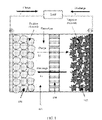
- core components of a lithium-ion battery include a positive electrode material 101, a negative electrode material 102, an electrolyte 103, a separator 104, and a corresponding connection auxiliary and loop.
- the positive electrode material 101 and the negative electrode material 102 may be used to insert/extract lithium ions to store and release energy.
- the electrolyte acts as a carrier for transmitting the lithium ion between a positive electrode and a negative electrode.
- the separator 104 may allow the lithium ion to pass through, but is not conductive, so that the positive electrode and the negative electrode are separated to avoid a short circuit.
- the positive and negative electrode materials play a decisive role in key performance of the lithium-ion battery, such as an energy storage function, an energy density of a cell, cycle performance, and safety performance.
- a negative electrode material provided in an embodiment of the present invention includes a doped silicon-based material 10.
- the doped silicon-based material 10 includes a silicon-based material 1 and doping metal elements 2 distributed inside particles of the silicon-based material 1.
- a doping amount of the doping metal elements 2 ranges from 1 ppm to 1000 ppm.
- the silicon-based material has a high specific capacity
- the silicon-based material belongs to a semiconductor, has a low conductivity, and is not conducive to transmitting an electron.
- dynamic performance is poor, and a lithium extraction potential of a cell is high.
- metal elements that has a high conductivity are doped into the silicon-based material, so that a conductivity of the silicon-based material is effectively improved.
- a doping amount of the metal elements is controlled to be a low content, so that stability of an original crystal structure of the material is ensured while the conductivity of the material is improved.
- performance of the lithium-ion battery can be effectively improved.
- the silicon-based material 1 may be nano-silicon. In another implementation of the present invention, the silicon-based material 1 may be silicon monoxide.
- the nano-silicon and the silicon monoxide may be spherical, sphere-like, or acicular particles.
- the silicon monoxide may be specifically SiO x , where 0.3 ⁇ x ⁇ 1.7, and may be specifically SiO.
- the doping metal elements 2 are distributed inside primary particles of the silicon-based material, and may specifically replace silicon atoms in a crystal structure of the silicon-based material, to form metal-silicon bonds with adjacent silicon atoms, or may be distributed in lattice defects of a crystal structure of the silicon-based material. Specifically, in an implementation of the present invention, a part of the doping metal elements replace the silicon atoms in the crystal structure of the silicon-based material, and a part of the doping metal elements are distributed in the lattice defects of the crystal structure of the silicon-based material.
- the doping metal elements are distributed in crystalline silicon cells or lattice defects. Therefore, in an implementation of the present invention, it is found, through XRD (X-ray diffraction, X-ray diffraction) detection, that an alloy phase and a metallic phase do not exist in a crystalline phase inside the doped silicon-based material. Therefore, in this embodiment of the present invention, according to the doped silicon-based material, an original structure of the silicon-based material is basically maintained while conducting performance of the silicon-based material is improved, so that structural stability of the material is ensured.
- XRD X-ray diffraction, X-ray diffraction
- FIG. 3 is a schematic diagram of replacing a silicon atom with a doping metal element in a doped silicon-based material according to an embodiment of the present invention.
- a face-centered cubic primitive cell including silicon atoms 11 four silicon atoms 11 are respectively located at 1/4 of four spatial diagonals.
- Doping metal element atoms 12 replace the silicon atoms 11 and enter crystalline silicon cells to form metal-silicon bonds, or exist in silicon-crystal defects and form no bond.
- the doping metal elements have an extremely low content, and are not sufficient to form a long-path ordered structure. Therefore, only a silicon phase or a silicon-oxygen phase exists in a crystalline phase of the material, and no alloy phase or metallic phase is generated.
- the doped silicon-based material in this embodiment of the present invention the doping metal elements with an extremely low amount are doped, so that the conductivity of the silicon-based material can be greatly improved, a lithium extraction platform can be lowered, and an energy density and a power density of the cell can be improved.
- the doped silicon-based material in this embodiment of the present invention has good structural stability, so that cycle performance of the battery can be improved.
- the doping metal elements may be selected as one or more of titanium (Ti), nickel (Ni), tungsten (W), iron (Fe), copper (Cu), manganese (Mn), cobalt (Co), zinc (Zn), gallium (Ga), antimony (Sb), and germanium (Ge).
- Ti titanium
- Ni nickel
- tungsten W
- iron Fe
- Cu copper
- Mn manganese
- Co cobalt
- Zn zinc
- gallium gallium
- Sb antimony
- germanium germanium
- a cobalt-doped silicon-based material, an iron-doped silicon-based material, or a germanium-doped silicon-based material is formed.
- the doping metal elements are evenly distributed inside the particles of the silicon-based material.
- a particle diameter size of the nano-silicon may range from 1 nm to 150 nm. In some other implementations of the present invention, a particle diameter size of the nano-silicon may range from 20 nm to 150 nm. In some other implementations of the present invention, a particle diameter size of the nano-silicon may range from 50 nm to 100 nm.
- the nano-silicon may be monocrystalline silicon, or may be polycrystalline silicon. The monocrystal silicon may be specifically P-type or N-type monocrystalline silicon.
- a particle diameter size of the silicon monoxide may range from 500 nm to 10 ⁇ m. In some other implementations of the present invention, a particle diameter size of the silicon monoxide may range from 1 ⁇ m to 8 ⁇ m. In some other implementations of the present invention, a particle diameter size of the silicon monoxide may range from 3 ⁇ m to 5 ⁇ m. Selecting a suitable particle diameter enables an expansion effect of the material to be well controlled, and enables processing performance of the material to be improved. A small particle diameter is conducive to alleviating the expansion effect.
- the negative electrode material in this embodiment of the present invention may further include a coating layer disposed on a surface of the doped silicon-based material, and the coating layer may be a carbon coating layer and/or an organic polymer coating layer.
- a material of the carbon coating layer may be specifically amorphous carbon formed by decomposing a carbon source, or a mixture of amorphous carbon and carbon nanotubes and/or graphene that are/is built in the amorphous carbon.
- a thickness of the coating layer may range from 5 nm to 50 nm, and further, may range from 10 nm to 20 nm.
- the coating layer can effectively alleviate the expansion effect of the silicon-based material, and can further avoid excessive surface side effects caused because an electrolyte is in direct contact with an active material, to reduce an irreversible capacity and a loss of lithium ions in the battery.
- the carbon coating layer may further improve an electronic conductivity of the material.
- the negative electrode material in this embodiment of the present invention may further include another negative electrode active material.
- a nano-doped silicon-based material is composited with another negative electrode active material to form a composite material, and a coating layer may be further disposed on a surface of the composite material.
- the nano-doped silicon-based material and the another negative electrode active material may be mixed to form a composite particle through granulating and sintering, and the nano-doped silicon-based material and the another negative electrode active material are evenly distributed in the composite particle.
- the negative electrode material includes a core including the doped silicon-based material and the another negative electrode active material, and a coating layer that coats a surface of the core.
- the core may be the foregoing composite particle.
- the another negative electrode active material may be but is not limited to a carbon material such as graphite, graphene, carbon nanotubes, carbon fibers, amorphous carbon, and porous carbon; or may be metal oxides such as cobalt oxide, nickel oxide, and manganese oxide; or may be another usable negative electrode active material.
- the negative electrode material in this embodiment of the present invention may include one or more other negative electrode active materials.
- a specific limitation of the coating layer is as previously described, and details are not described herein again. Both the coating layer and the another negative electrode active material such as graphite may alleviate volume expansion of the silicon-based material, effectively avoid pulverization due to a great volume change in a lithium insertion and extraction process, and improve cycle performance of the material.
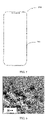
- the negative electrode material includes doped nano-silicon 21, graphite 22, and a carbon coating layer 30 that coats the doped nano-silicon 21 and the graphite 22.
- the doped nano-silicon 21 and the graphite 22 are evenly distributed in space surrounded by the carbon coating layer 30.
- a thickness of the carbon coating layer may range from 5 nm to 20 nm. Specifically, in some implementations of the present invention, the thickness of the carbon coating layer ranges from 8 nm to 15 nm.
- amorphous carbon 23 may be further filled between the graphite 22, and the doped nano-silicon 21 is evenly distributed in the amorphous carbon 23.
- amorphous carbon enables the graphite and the doped nano-silicon to be connected together better, and can facilitate even distribution of the doped nano-silicon, so that expansion/contraction of silicon inside particles is more evenly distributed in a charging/discharging process. Therefore, this helps improve structural stability of the material.
- the silicon-based material when the silicon-based material is silicon monoxide, the silicon-based material may be composited with the another negative electrode active material in the foregoing manner to form a composite material, and then a coating layer is disposed on a surface of the composite material.
- a conductivity of the doped silicon-based material ranges from 10 S/m to 1.0x10 4 S/m, and specifically, may range from 1.0 ⁇ 10 2 S/m to 1.0x10 4 S/m. Compared with a conductivity 1.56 ⁇ 10 -3 S/m of a pure silicon material, the conductivity of the doped silicon-based material obtained by doping the metal elements is greatly improved. It may be understood that doped silicon-based materials in different embodiments of the present invention have different conductivities based on different types of doping metal elements and different doping amounts.
- the doping amount of the doping metal elements ranges from 1 ppm to 1000 ppm.
- the doping amount of the doping metal elements may range from 50 ppm to 1000 ppm.
- the doping amount of the doping metal elements may range from 200 ppm to 1000 ppm.
- the doping amount of the doping metal elements may range from 500 ppm to 800 ppm. If the doping amount is larger, a doping process is better controlled, and the conductivity of the material is further improved. Therefore, when structural stability of the material is ensured, the doping amount may be relatively increased.
- the doped silicon-based material is obtained by doping metal elements with a low content (a mass ratio is one part per million to one thousandth) into crystal structures of the primary particles of the silicon-based material.
- Introduction of the doping metal elements improves the conductivity of the silicon-based material, effectively reduces the lithium extraction potential, and improves an output voltage of a whole battery and the energy density of the cell.
- doping the metal elements with the low content does not greatly change the crystal structure of the silicon material, and does not greatly change a phase characteristic of the material, so that structural stability of the material can be well maintained, and the material is not prone to be pulverized in the charging/discharging process.
- an embodiment of the present invention further provides a production method of the foregoing negative electrode material, including the following steps:
- Doping metal elements are doped into particles of a silicon-based material by using a physical or chemical doping method, to obtain a doped silicon-based material, where the doped silicon-based material includes the silicon-based material and the doping metal elements distributed inside the particles of the silicon-based material, the silicon-based material includes nano-silicon or silicon monoxide, and a doping amount of the doping metal elements ranges from 1 ppm to 1000 ppm.
- the physical or chemical doping method includes one or more of an ion injection method, a ball milling method, a sanding method, and a chemical vapor deposition method.
- the doping metal elements can enter crystalline silicon cells and replace silicon atoms to form bonds with other silicon atoms in the crystalline silicon cells; or the doping metal elements can exist in lattice defects.
- doping atoms are first ionized into ions, and the doping ions are accelerated by using a strong electric field, to obtain doping ions that have high dynamic energy and that may directly enter a doped crystal.
- a strong electric field to obtain doping ions that have high dynamic energy and that may directly enter a doped crystal.
- an ion injection technology is used for doping, many lattice defects are generated in a crystal, and some atoms also exist in a gap. Therefore, after the ion injection, low-temperature annealing or laser annealing needs to be performed to eliminate these defects and activate the doping elements.
- production of metal-doped nano-silicon is used as an example.
- a specific operation of performing doping by using the ion injection method may be as follows: Monocrystalline silicon is provided, and doping metal elements are injected into the monocrystalline silicon by using specified injection energy. Next, annealing is performed by using a pulse laser. After annealing is completed, metal-doped nano-silicon with a target size is obtained through pulverization.
- an amount of the injection energy may be set based on an actual requirement.
- the amount may be 50 KeV to 100 KeV.
- the ball milling/sanding method is a method for producing a new material by using mechanical energy to induce a chemical reaction or induce a change in tissue, a structure, and performance of a material.
- the method may significantly reduce reaction activation energy, refine a crystal grain, greatly improve powder activity, improve particle distribution evenness, promote diffusion of solid-state ions, and induce a low-temperature chemical reaction, so that density performance, electrical performance, and thermal performance, and the like of the material are improved.
- the method is an energy-saving and efficient material production technology.
- a specific operation of performing doping by using the ball milling method may be as follows: Silicon monoxide particles and metal-doped simple substance particles are provided, and are ball-milled for 4 to 10 hours in an inert atmosphere when a medium exists. After ball milling ends, the metal-doped silicon monoxide may be obtained through washing.
- the medium may be but is not limited to an organic solvent such as ethanol.
- the inert atmosphere may be nitrogen, helium, or the like.
- a particle diameter of the metal-doped simple substance particle may be but is not limited to 1 ⁇ m to 10 ⁇ m.
- the chemical vapor deposition method is a method for producing a final product by performing a chemical reaction on a surface of a substrate by using a vapor phase compound or a simple substance that includes doping elements.
- a metal-doped silicon-based material is obtained through chemical vapor deposition on a surface of a substrate by using silane and a vapor phase metal compound (for example, GeH 4 , SnH 4 , and SbH 3 ) that includes doping metal elements.
- An embodiment of the present invention further provides a lithium-ion battery, including a positive electrode plate, a negative electrode plate, a separator, and an electrolyte.
- the negative electrode plate includes a negative electrode active material, and the negative electrode active material includes the silicon negative electrode material described in the foregoing embodiment of the present invention.
- a coating layer may be further produced on a surface of the produced doped silicon-based material, to improve material performance.
- the coating layer may be a carbon coating layer and/or an organic polymer coating layer.
- the carbon coating layer may be produced in the following manner: The doped silicon-based material is placed into an inert atmosphere furnace, an organic carbon source gas is introduced into the inert atmosphere furnace, and the carbon source is subject to a decomposition reaction at a temperature of 400°C to 1100°C, so that the carbon coating layer is formed on the surface of the doped silicon-based material.
- solid-phase mixing carbon source coating, asphalt coating, hydrothermal reaction coating, bath oiling coating, or the like may be used.
- the doped silicon-based material is dispersed in a slurry system that includes an organic polymer, to form the coating layer through solidification.
- the produced doped silicon-based material may be further composited with another negative electrode active material based on a requirement, to produce a composite material, and a coating layer is further produced on a surface of the composite material.
- a method for forming the composite material may be specifically as follows: After being mixed, the doped silicon-based material and the another negative electrode active material are mixed, granulated, and sintered, to obtain a composite particle.
- a mixing method includes but is not limited to the ball milling method.
- an embodiment of the present invention further provides a terminal 200.
- the terminal 200 may be a mobile phone, or may be an electronic product such as a tablet computer, a notebook computer, a portable computer, and a smart wearable product.
- the terminal 200 includes a housing 201 assembled on an outer side of the terminal, and a circuit board and a battery (not shown in the figure) that are located inside the housing 201.
- the battery is the lithium-ion battery provided in the foregoing embodiment of the present invention.
- the housing 201 may include a front housing assembled on a front side of the terminal and a rear cover assembled on a rear side. The battery may be fastened to an inner side of the rear cover, to supply power to the terminal 200.
- a production method of a Co-doped silicon negative electrode material includes the following steps:
- a production method of a Fe-doped silicon monoxide (SiO) negative electrode material includes the following steps:
- SiO materials with a size of 10 ⁇ m and simple substance Fe particles with a size of 1 ⁇ m are mixed at a stoichiometric ratio of 10000:1, and are ball-milled for 4 hours in an inert atmosphere by using ethanol as a medium.
- An obtained product is washed by using 0.05 mol/L to 0.1 mol/L hydrochloric acid and deionized water, and then dried, to obtain the Fe-doped SiO negative electrode material with a particle diameter of 1 ⁇ m.
- a production method of a Ge-doped silicon negative electrode material includes the following steps:
- a laser beam power is set to 57 W by using a chemical vapor deposition-laser pyrolysis device.
- SiH 4 gas and GeH 4 gas are introduced into a reaction chamber at a molar ratio of 999:1 for reaction.
- a Ge-doped Si-nano particle with a particle diameter of 20 nm is collected.
- the chemical vapor deposition-laser pyrolysis device includes a CO 2 laser (a maximum power is 60 W, and an operating wavelength is 10.6 ⁇ m), a reaction chamber, a gas supply system (including a supply pipeline and a mass flow controller (MFC)), an NPs collector, and gas.
- a CO 2 laser a maximum power is 60 W, and an operating wavelength is 10.6 ⁇ m
- a reaction chamber a reaction chamber
- a gas supply system including a supply pipeline and a mass flow controller (MFC)
- MFC mass flow controller
- a conductivity test is performed on the metal-doped negative electrode materials produced in Embodiments 1 to 3 of the present invention, and a silicon-based material that is not doped with metal elements is used as a control group.
- a test result is shown in Table 1: Table 1 Doping amount Conductivity (before doping) Conductivity (after doping) Embodiment 1 Co-doped Si 200 ppm 1.56x10 -3 S/m 690 S/m Embodiment 2 Fe-doped SiO 60 ppm 8.0 S/m 130 S/m Embodiment 3 Ge-doped Si 920 ppm 1.56x10 -3 S/m 2600 S/m
- FIG. 7 shows a diagram of comparison between lithium extraction curves of the Co-doped nano-silicon material produced in Embodiment 1 of the present invention and a nano-silicon material that is not doped with the cobalt elements. As shown in FIG. 7 , compared with the nano-silicon material that is not doped with the cobalt elements, a lithium extraction potential of the nano-silicon material doped with the metallic cobalt elements in this embodiment of the present invention is effectively reduced.
Landscapes
- Chemical & Material Sciences (AREA)
- Chemical Kinetics & Catalysis (AREA)
- Electrochemistry (AREA)
- General Chemical & Material Sciences (AREA)
- Engineering & Computer Science (AREA)
- Composite Materials (AREA)
- Materials Engineering (AREA)
- Manufacturing & Machinery (AREA)
- Inorganic Chemistry (AREA)
- Battery Electrode And Active Subsutance (AREA)
- Silicon Compounds (AREA)
Applications Claiming Priority (2)
| Application Number | Priority Date | Filing Date | Title |
|---|---|---|---|
| CN201911064363.0A CN112751031B (zh) | 2019-10-30 | 2019-10-30 | 负极材料及其制备方法、锂离子电池和终端 |
| PCT/CN2020/123050 WO2021083034A1 (zh) | 2019-10-30 | 2020-10-23 | 负极材料及其制备方法、锂离子电池和终端 |
Publications (2)
| Publication Number | Publication Date |
|---|---|
| EP4044286A1 true EP4044286A1 (de) | 2022-08-17 |
| EP4044286A4 EP4044286A4 (de) | 2023-01-11 |
Family
ID=75645214
Family Applications (1)
| Application Number | Title | Priority Date | Filing Date |
|---|---|---|---|
| EP20883294.9A Pending EP4044286A4 (de) | 2019-10-30 | 2020-10-23 | Negativelektrodenmaterial und herstellungsverfahren dafür, lithiumionenbatterie und fahrzeug |
Country Status (4)
| Country | Link |
|---|---|
| US (1) | US20220255055A1 (de) |
| EP (1) | EP4044286A4 (de) |
| CN (2) | CN112751031B (de) |
| WO (1) | WO2021083034A1 (de) |
Cited By (1)
| Publication number | Priority date | Publication date | Assignee | Title |
|---|---|---|---|---|
| WO2024150391A1 (ja) * | 2023-01-13 | 2024-07-18 | Tdk株式会社 | リチウムイオン二次電池用負極材、リチウムイオン二次電池用負極及びリチウムイオン二次電池 |
Families Citing this family (9)
| Publication number | Priority date | Publication date | Assignee | Title |
|---|---|---|---|---|
| CN113517442B (zh) * | 2021-06-07 | 2023-03-24 | 宁德新能源科技有限公司 | 负极材料、电化学装置和电子装置 |
| CN113772678A (zh) * | 2021-08-30 | 2021-12-10 | 上海纳米技术及应用国家工程研究中心有限公司 | 一种制备碳包覆氧化亚硅负极材料降低其电荷转移阻抗的方法 |
| CN115832229B (zh) * | 2021-09-16 | 2026-02-17 | 南宁宸宇新能源科技有限公司 | 一种掺锗非晶氧化亚硅复合材料及其制备方法和应用 |
| CN114050247A (zh) * | 2021-11-16 | 2022-02-15 | 欣旺达电动汽车电池有限公司 | 改性硅基材料及其制备方法、锂电池负极材料 |
| CN114649533B (zh) * | 2022-03-31 | 2024-01-19 | 洛阳师范学院 | 一种硅基异质结构材料及其制备和应用 |
| KR20240158565A (ko) | 2023-04-27 | 2024-11-05 | 현대자동차주식회사 | 전고체 전지용 음극 활물질 |
| CN117133911A (zh) * | 2023-10-26 | 2023-11-28 | 中创新航科技集团股份有限公司 | 一种负极活性材料及应用其的锂离子电池 |
| CN117393741B (zh) * | 2023-12-12 | 2024-08-13 | 陕西晶泰新能源科技有限公司 | 碳包覆的异元素掺杂氧化亚硅/石墨复合材料的制备方法 |
| CN118676333B (zh) * | 2024-05-30 | 2025-06-13 | 江门市和创新能源材料有限公司 | 一种高倍率锂离子电池用硅碳负极材料及其制备方法和应用 |
Family Cites Families (19)
| Publication number | Priority date | Publication date | Assignee | Title |
|---|---|---|---|---|
| JP3713900B2 (ja) * | 1996-07-19 | 2005-11-09 | ソニー株式会社 | 負極材料及びこれを用いた非水電解液二次電池 |
| JP5184567B2 (ja) * | 2010-03-12 | 2013-04-17 | 信越化学工業株式会社 | 非水電解質二次電池用負極材並びにリチウムイオン二次電池及び電気化学キャパシタ |
| JP5666378B2 (ja) * | 2010-05-24 | 2015-02-12 | 信越化学工業株式会社 | 非水電解質二次電池用負極活物質の製造方法及び非水電解質二次電池用負極活物質並びに非水電解質二次電池用負極材、非水電解質二次電池用負極、非水電解質二次電池 |
| CN103000934B (zh) * | 2011-09-16 | 2016-03-30 | 苏州宝时得电动工具有限公司 | 锂硫电池 |
| CN102544461A (zh) * | 2012-02-17 | 2012-07-04 | 电子科技大学 | 一种锂离子电池负极材料及其制备方法 |
| JP6020331B2 (ja) * | 2012-05-16 | 2016-11-02 | 信越化学工業株式会社 | 珪素酸化物粒子及びその製造方法、ならびにリチウムイオン二次電池及び電気化学キャパシタ |
| JP2013008696A (ja) * | 2012-09-18 | 2013-01-10 | Shin Etsu Chem Co Ltd | 非水電解質二次電池用負極材の製造方法 |
| JP5737265B2 (ja) * | 2012-10-23 | 2015-06-17 | 信越化学工業株式会社 | 珪素酸化物及びその製造方法、負極、ならびにリチウムイオン二次電池及び電気化学キャパシタ |
| JP6156089B2 (ja) * | 2012-12-10 | 2017-07-05 | 信越化学工業株式会社 | 珪素酸化物及びその製造方法、負極、ならびにリチウムイオン二次電池及び電気化学キャパシタ |
| US11302920B2 (en) * | 2015-11-12 | 2022-04-12 | Cornell University | High performance electrodes, materials, and precursors thereof |
| CN106784640B (zh) * | 2015-11-25 | 2020-05-26 | 北京有色金属研究总院 | 锂离子电池用硅基复合负极材料、其制备方法及包含该材料的锂离子电池负极 |
| CN105406050B (zh) * | 2015-12-31 | 2018-11-02 | 深圳市贝特瑞新能源材料股份有限公司 | 一种复合硅负极材料、制备方法和用途 |
| CN107665994A (zh) * | 2016-07-29 | 2018-02-06 | 比亚迪股份有限公司 | 一种负极材料及其制备方法、负极和全固态锂离子电池 |
| CN108199030B (zh) * | 2018-01-11 | 2020-11-03 | 南开大学 | 锂离子二次电池多孔硅/石墨/碳复合负极材料的制备方法 |
| CN108987686B (zh) * | 2018-06-20 | 2025-11-28 | 深圳市比克动力电池有限公司 | 聚苯胺包覆硅基复合材料及其制备方法 |
| CN109103443B (zh) * | 2018-08-08 | 2020-10-27 | 欣旺达电子股份有限公司 | 硅基负极材料及其制备方法 |
| CN109713286B (zh) * | 2018-12-29 | 2020-07-24 | 安普瑞斯(南京)有限公司 | 一种用于锂离子二次电池的硅基复合材料及其制备方法 |
| CN110065945A (zh) * | 2019-03-22 | 2019-07-30 | 江苏载驰科技股份有限公司 | 一种锂电用纳米硅颗粒的制备方法 |
| CN110165187A (zh) * | 2019-06-05 | 2019-08-23 | 安普瑞斯(南京)有限公司 | 一种锂离子电池用硅碳二次颗粒材料及其制备方法 |
-
2019
- 2019-10-30 CN CN201911064363.0A patent/CN112751031B/zh active Active
- 2019-10-30 CN CN202311308302.0A patent/CN117374244A/zh active Pending
-
2020
- 2020-10-23 EP EP20883294.9A patent/EP4044286A4/de active Pending
- 2020-10-23 WO PCT/CN2020/123050 patent/WO2021083034A1/zh not_active Ceased
-
2022
- 2022-04-29 US US17/733,167 patent/US20220255055A1/en active Pending
Cited By (1)
| Publication number | Priority date | Publication date | Assignee | Title |
|---|---|---|---|---|
| WO2024150391A1 (ja) * | 2023-01-13 | 2024-07-18 | Tdk株式会社 | リチウムイオン二次電池用負極材、リチウムイオン二次電池用負極及びリチウムイオン二次電池 |
Also Published As
| Publication number | Publication date |
|---|---|
| EP4044286A4 (de) | 2023-01-11 |
| US20220255055A1 (en) | 2022-08-11 |
| CN112751031A (zh) | 2021-05-04 |
| CN117374244A (zh) | 2024-01-09 |
| WO2021083034A1 (zh) | 2021-05-06 |
| CN112751031B (zh) | 2023-10-20 |
Similar Documents
| Publication | Publication Date | Title |
|---|---|---|
| US20220255055A1 (en) | Negative Electrode Material, Production Method Thereof, Lithium-Ion Battery, and Terminal | |
| CN107994228B (zh) | 一种锂离子电池五元高熵氧化物纳米薄膜及其制备和应用 | |
| EP3131141B1 (de) | Negativelektrodenaktivmaterial für sekundärbatterie und verfahren zur herstellung davon | |
| JP7819219B2 (ja) | 正極活物質、電池、及びその製造方法 | |
| CN108682840B (zh) | 纳米(Mg0.2Co0.2Ni0.2Cu0.2Zn0.2)O的制备方法及应用 | |
| CN113422029A (zh) | 负极材料及其制备方法、锂离子电池 | |
| CN110518209B (zh) | 正极材料制备方法及制备的正极材料 | |
| CN116057009B (zh) | 活性物质及其制造方法、电极合剂以及电池 | |
| CN111628161A (zh) | 负极活性物质材料 | |
| WO2016110127A1 (zh) | 一种锂离子/钠离子电池用负极活性材料、负极及电池 | |
| KR101427743B1 (ko) | 금속이 도핑된 실리콘산화물, 이를 포함하는 이차전지용 음극재 및 그 제조방법 | |
| KR20140147448A (ko) | 셀프 템플릿 에칭을 이용한 다공성 일산화 규소의 제조방법 및 이를 이용한 리튬 이차전지용 음극재료 | |
| KR20150120349A (ko) | 축전 디바이스용 Si계 합금 음극재료 및 이를 이용한 전극 | |
| EP4071852A1 (de) | Silizium-basiertes negatives elektrodenmaterial und herstellungsverfahren dafür, batterie und endgerät | |
| CN114291796B (zh) | 一种钾离子电池负极材料及其制备方法和应用 | |
| Choi et al. | Carbon coated Si-metal silicide composite anode materials prepared by high-energy milling and carburization for Li-ion rechargeable batteries | |
| CN115799472B (zh) | 微米级硅-金属基复合锂离子电池负极材料的制备方法 | |
| CN117673280A (zh) | 硅负极材料及其制备方法和应用 | |
| JP4133116B2 (ja) | リチウムイオン二次電池用負極活物質、その製造法、リチウムイオン二次電池用負極及びリチウムイオン二次電池 | |
| Nithyadharseni et al. | Spark plasma-sintered Sn-based intermetallic alloys and their Li-storage studies | |
| CN110165177A (zh) | 一种锂离子电池硅基复合负极材料 | |
| Choi et al. | Fabrication and characterization of a LiCoO2 battery–supercapacitor combination for a high-pulse power system | |
| CN120024882A (zh) | 一种制备高压实、高倍率磷酸铁锂的方法及其应用 | |
| KR101718219B1 (ko) | 금속 실리사이드 초박막이 코팅된 전도성 단결정 실리콘 입자, 이를 포함하는 고용량 이차전지용 음극활물질 및 그 제조방법 | |
| Li et al. | Synthesis and characterization of nanocrystalline NiSb and NiSb2 at low temperature |
Legal Events
| Date | Code | Title | Description |
|---|---|---|---|
| STAA | Information on the status of an ep patent application or granted ep patent |
Free format text: STATUS: THE INTERNATIONAL PUBLICATION HAS BEEN MADE |
|
| PUAI | Public reference made under article 153(3) epc to a published international application that has entered the european phase |
Free format text: ORIGINAL CODE: 0009012 |
|
| STAA | Information on the status of an ep patent application or granted ep patent |
Free format text: STATUS: REQUEST FOR EXAMINATION WAS MADE |
|
| 17P | Request for examination filed |
Effective date: 20220512 |
|
| AK | Designated contracting states |
Kind code of ref document: A1 Designated state(s): AL AT BE BG CH CY CZ DE DK EE ES FI FR GB GR HR HU IE IS IT LI LT LU LV MC MK MT NL NO PL PT RO RS SE SI SK SM TR |
|
| A4 | Supplementary search report drawn up and despatched |
Effective date: 20221213 |
|
| RIC1 | Information provided on ipc code assigned before grant |
Ipc: H01M 4/1395 20100101ALI20221207BHEP Ipc: H01M 4/1393 20100101ALI20221207BHEP Ipc: H01M 4/1391 20100101ALI20221207BHEP Ipc: H01M 4/62 20060101ALI20221207BHEP Ipc: H01M 4/587 20100101ALI20221207BHEP Ipc: H01M 4/48 20100101ALI20221207BHEP Ipc: H01M 4/36 20060101ALI20221207BHEP Ipc: H01M 4/52 20100101ALI20221207BHEP Ipc: H01M 4/38 20060101AFI20221207BHEP |
|
| DAV | Request for validation of the european patent (deleted) | ||
| DAX | Request for extension of the european patent (deleted) | ||
| STAA | Information on the status of an ep patent application or granted ep patent |
Free format text: STATUS: EXAMINATION IS IN PROGRESS |
|
| 17Q | First examination report despatched |
Effective date: 20250530 |