EP3988293B1 - Liquid and viscoelastic material repellent and anti-biofouling coatings - Google Patents
Liquid and viscoelastic material repellent and anti-biofouling coatings Download PDFInfo
- Publication number
- EP3988293B1 EP3988293B1 EP21213099.1A EP21213099A EP3988293B1 EP 3988293 B1 EP3988293 B1 EP 3988293B1 EP 21213099 A EP21213099 A EP 21213099A EP 3988293 B1 EP3988293 B1 EP 3988293B1
- Authority
- EP
- European Patent Office
- Prior art keywords
- lubricant
- less
- feces
- oil
- slips
- Prior art date
- Legal status (The legal status is an assumption and is not a legal conclusion. Google has not performed a legal analysis and makes no representation as to the accuracy of the status listed.)
- Active
Links
Images



Classifications
-
- C—CHEMISTRY; METALLURGY
- C09—DYES; PAINTS; POLISHES; NATURAL RESINS; ADHESIVES; COMPOSITIONS NOT OTHERWISE PROVIDED FOR; APPLICATIONS OF MATERIALS NOT OTHERWISE PROVIDED FOR
- C09D—COATING COMPOSITIONS, e.g. PAINTS, VARNISHES OR LACQUERS; FILLING PASTES; CHEMICAL PAINT OR INK REMOVERS; INKS; CORRECTING FLUIDS; WOODSTAINS; PASTES OR SOLIDS FOR COLOURING OR PRINTING; USE OF MATERIALS THEREFOR
- C09D5/00—Coating compositions, e.g. paints, varnishes or lacquers, characterised by their physical nature or the effects produced; Filling pastes
- C09D5/16—Antifouling paints; Underwater paints
- C09D5/1681—Antifouling coatings characterised by surface structure, e.g. for roughness effect giving superhydrophobic coatings or Lotus effect
-
- C—CHEMISTRY; METALLURGY
- C09—DYES; PAINTS; POLISHES; NATURAL RESINS; ADHESIVES; COMPOSITIONS NOT OTHERWISE PROVIDED FOR; APPLICATIONS OF MATERIALS NOT OTHERWISE PROVIDED FOR
- C09D—COATING COMPOSITIONS, e.g. PAINTS, VARNISHES OR LACQUERS; FILLING PASTES; CHEMICAL PAINT OR INK REMOVERS; INKS; CORRECTING FLUIDS; WOODSTAINS; PASTES OR SOLIDS FOR COLOURING OR PRINTING; USE OF MATERIALS THEREFOR
- C09D5/00—Coating compositions, e.g. paints, varnishes or lacquers, characterised by their physical nature or the effects produced; Filling pastes
-
- B—PERFORMING OPERATIONS; TRANSPORTING
- B32—LAYERED PRODUCTS
- B32B—LAYERED PRODUCTS, i.e. PRODUCTS BUILT-UP OF STRATA OF FLAT OR NON-FLAT, e.g. CELLULAR OR HONEYCOMB, FORM
- B32B27/00—Layered products comprising a layer of synthetic resin
- B32B27/28—Layered products comprising a layer of synthetic resin comprising synthetic resins not wholly covered by any one of the sub-groups B32B27/30 - B32B27/42
-
- B—PERFORMING OPERATIONS; TRANSPORTING
- B32—LAYERED PRODUCTS
- B32B—LAYERED PRODUCTS, i.e. PRODUCTS BUILT-UP OF STRATA OF FLAT OR NON-FLAT, e.g. CELLULAR OR HONEYCOMB, FORM
- B32B7/00—Layered products characterised by the relation between layers; Layered products characterised by the relative orientation of features between layers, or by the relative values of a measurable parameter between layers, i.e. products comprising layers having different physical, chemical or physicochemical properties; Layered products characterised by the interconnection of layers
- B32B7/02—Physical, chemical or physicochemical properties
-
- C—CHEMISTRY; METALLURGY
- C09—DYES; PAINTS; POLISHES; NATURAL RESINS; ADHESIVES; COMPOSITIONS NOT OTHERWISE PROVIDED FOR; APPLICATIONS OF MATERIALS NOT OTHERWISE PROVIDED FOR
- C09D—COATING COMPOSITIONS, e.g. PAINTS, VARNISHES OR LACQUERS; FILLING PASTES; CHEMICAL PAINT OR INK REMOVERS; INKS; CORRECTING FLUIDS; WOODSTAINS; PASTES OR SOLIDS FOR COLOURING OR PRINTING; USE OF MATERIALS THEREFOR
- C09D183/00—Coating compositions based on macromolecular compounds obtained by reactions forming in the main chain of the macromolecule a linkage containing silicon, with or without sulfur, nitrogen, oxygen, or carbon only; Coating compositions based on derivatives of such polymers
- C09D183/04—Polysiloxanes
-
- C—CHEMISTRY; METALLURGY
- C09—DYES; PAINTS; POLISHES; NATURAL RESINS; ADHESIVES; COMPOSITIONS NOT OTHERWISE PROVIDED FOR; APPLICATIONS OF MATERIALS NOT OTHERWISE PROVIDED FOR
- C09D—COATING COMPOSITIONS, e.g. PAINTS, VARNISHES OR LACQUERS; FILLING PASTES; CHEMICAL PAINT OR INK REMOVERS; INKS; CORRECTING FLUIDS; WOODSTAINS; PASTES OR SOLIDS FOR COLOURING OR PRINTING; USE OF MATERIALS THEREFOR
- C09D4/00—Coating compositions, e.g. paints, varnishes or lacquers, based on organic non-macromolecular compounds having at least one polymerisable carbon-to-carbon unsaturated bond ; Coating compositions, based on monomers of macromolecular compounds of groups C09D183/00 - C09D183/16
-
- C—CHEMISTRY; METALLURGY
- C09—DYES; PAINTS; POLISHES; NATURAL RESINS; ADHESIVES; COMPOSITIONS NOT OTHERWISE PROVIDED FOR; APPLICATIONS OF MATERIALS NOT OTHERWISE PROVIDED FOR
- C09D—COATING COMPOSITIONS, e.g. PAINTS, VARNISHES OR LACQUERS; FILLING PASTES; CHEMICAL PAINT OR INK REMOVERS; INKS; CORRECTING FLUIDS; WOODSTAINS; PASTES OR SOLIDS FOR COLOURING OR PRINTING; USE OF MATERIALS THEREFOR
- C09D5/00—Coating compositions, e.g. paints, varnishes or lacquers, characterised by their physical nature or the effects produced; Filling pastes
- C09D5/16—Antifouling paints; Underwater paints
- C09D5/1656—Antifouling paints; Underwater paints characterised by the film-forming substance
- C09D5/1662—Synthetic film-forming substance
-
- E—FIXED CONSTRUCTIONS
- E03—WATER SUPPLY; SEWERAGE
- E03D—WATER-CLOSETS OR URINALS WITH FLUSHING DEVICES; FLUSHING VALVES THEREFOR
- E03D1/00—Water flushing devices with cisterns ; Setting up a range of flushing devices or water-closets; Combinations of several flushing devices
- E03D1/01—Shape or selection of material for flushing cisterns
-
- E—FIXED CONSTRUCTIONS
- E03—WATER SUPPLY; SEWERAGE
- E03D—WATER-CLOSETS OR URINALS WITH FLUSHING DEVICES; FLUSHING VALVES THEREFOR
- E03D13/00—Urinals ; Means for connecting the urinal to the flushing pipe and the wastepipe; Splashing shields for urinals
- E03D13/007—Waterless or low-flush urinals; Accessories therefor
-
- E—FIXED CONSTRUCTIONS
- E03—WATER SUPPLY; SEWERAGE
- E03D—WATER-CLOSETS OR URINALS WITH FLUSHING DEVICES; FLUSHING VALVES THEREFOR
- E03D1/00—Water flushing devices with cisterns ; Setting up a range of flushing devices or water-closets; Combinations of several flushing devices
-
- E—FIXED CONSTRUCTIONS
- E03—WATER SUPPLY; SEWERAGE
- E03D—WATER-CLOSETS OR URINALS WITH FLUSHING DEVICES; FLUSHING VALVES THEREFOR
- E03D13/00—Urinals ; Means for connecting the urinal to the flushing pipe and the wastepipe; Splashing shields for urinals
- E03D13/005—Accessories specially adapted for urinals
-
- Y—GENERAL TAGGING OF NEW TECHNOLOGICAL DEVELOPMENTS; GENERAL TAGGING OF CROSS-SECTIONAL TECHNOLOGIES SPANNING OVER SEVERAL SECTIONS OF THE IPC; TECHNICAL SUBJECTS COVERED BY FORMER USPC CROSS-REFERENCE ART COLLECTIONS [XRACs] AND DIGESTS
- Y10—TECHNICAL SUBJECTS COVERED BY FORMER USPC
- Y10T—TECHNICAL SUBJECTS COVERED BY FORMER US CLASSIFICATION
- Y10T428/00—Stock material or miscellaneous articles
- Y10T428/31—Surface property or characteristic of web, sheet or block
-
- Y—GENERAL TAGGING OF NEW TECHNOLOGICAL DEVELOPMENTS; GENERAL TAGGING OF CROSS-SECTIONAL TECHNOLOGIES SPANNING OVER SEVERAL SECTIONS OF THE IPC; TECHNICAL SUBJECTS COVERED BY FORMER USPC CROSS-REFERENCE ART COLLECTIONS [XRACs] AND DIGESTS
- Y10—TECHNICAL SUBJECTS COVERED BY FORMER USPC
- Y10T—TECHNICAL SUBJECTS COVERED BY FORMER US CLASSIFICATION
- Y10T428/00—Stock material or miscellaneous articles
- Y10T428/31504—Composite [nonstructural laminate]
-
- Y—GENERAL TAGGING OF NEW TECHNOLOGICAL DEVELOPMENTS; GENERAL TAGGING OF CROSS-SECTIONAL TECHNOLOGIES SPANNING OVER SEVERAL SECTIONS OF THE IPC; TECHNICAL SUBJECTS COVERED BY FORMER USPC CROSS-REFERENCE ART COLLECTIONS [XRACs] AND DIGESTS
- Y10—TECHNICAL SUBJECTS COVERED BY FORMER USPC
- Y10T—TECHNICAL SUBJECTS COVERED BY FORMER US CLASSIFICATION
- Y10T428/00—Stock material or miscellaneous articles
- Y10T428/31504—Composite [nonstructural laminate]
- Y10T428/31652—Of asbestos
- Y10T428/31663—As siloxane, silicone or silane
Definitions
- the present disclosure relates to a process for preparing a repellant coating on a smooth surface that can repel both liquids and viscoelastic solids, with applications for anti-fouling, anti-staining, anti-scaling, and water-saving systems such as toilets and urinals or other applications for repellant coatings.
- the repellant coating includes a chemical layer on the smooth surface and a lubricant thereon.
- Superhydrophobic surfaces are slippery to water, or even oils using special surface structure designs. However, these surfaces typically lose its repellency under the exposure of biological liquids, such as blood and bacteria fluids. For bacterial fluids, biofilm can form onto the surface structures and destroy the superhydrophobic property.
- superhydrophobic surfaces and slippery liquid-infused porous surfaces are not known to repel viscoelastic semi-solids, such as feces or mud.
- Advantages of the present disclosure include a surface design that can repel both liquids and viscoelastic semi-solids and solids (e.g., viscoelastic materials). Such surfaces are useful for anti-fouling, anti-staining, anti-scaling, and extreme water-saving applications or easy-to-clean medical devices or other applications that benefit from a repellant coating.
- the surface features a chemical layer and lubricating fluid thereon.
- Such a coating system is advantageously over a relatively smooth surface resulting in a corresponding smooth lubricating layer that repels both liquids and viscoelastic materials. This lubricating system can provide minimal surface area and hence minimized adhesion to any impacting viscoelastic material.
- a coating on a smooth surface of a substrate wherein the coating comprises a chemical layer on the surface of the substrate and a lubricant layer over the chemical layer, prepared by the method of the invention.
- the surface of the substrate to be coated is relatively smooth, e.g., the surface has an average roughness R a of less than about 4 ⁇ m, e.g., less than about 2 ⁇ m and less than about 1 ⁇ m average surface roughness and even less than about 500 nm, e.g., less than about 100 nm.
- An advantage of the coating of the present disclosure is that the underlying surface substrate is not roughened prior to depositing the coating on the surface.
- the coated surface is part of a surface of a toilet, e.g., an inner surface of a toilet, a urinal, or other device that is useful for processing liquids and viscoelastic materials such as human waste.
- a toilet e.g., an inner surface of a toilet, a urinal, or other device that is useful for processing liquids and viscoelastic materials such as human waste.
- the minimized adhesion between the viscoelastic materials and the coated surface advantageously allow minimal water consumption to remove the materials from the devices.
- the smooth surface interface and the liquid-repellent function can also prevent buildup of mineral deposits (e.g., calcium and magnesium carbonates) and other materials that cause stains such as caused by hard water.
- Such coated surfaces can also be applied to windows for buildings or vehicles such as automobiles or camera lenses to repel liquids (e.g., rain), ice, frost, insect residue, and bird feces.
- a window made of glass comprises the coating on a smooth surface thereof.
- the chemical layer and lubricant on such a glass surface can have a refractive index that matches the glass, e.g., the chemical layer and lubricant have a refractive index of between about 1.3 to about 1.6, e.g., between about 1.4 to about 1.5.
- water or other aqueous fluids can be applied to a device having a coating of the present disclosure to remove a viscoelastic material or a liquid deposited on the coating.
- Water or other aqueous fluids can be applied to the viscoelastic material or liquid on the coating to remove the material or liquid from the coating.
- the process advantageously can apply a minimal amount of aqueous fluids or other fluids to the viscoelastic material on the surface of the substrate to remove the viscoelastic material therefrom.
- lubricant either the same or a different lubricant than used to prepare the repellant coating, can be reapplied to the chemical layer to renew the coating system on the surface of the substrate.
- the present invention is a process for preparing a repellant surface.
- the process comprises applying a coating composition onto the surface to form a chemical layer on the surface.
- a lubricant is then applied to the formed chemical layer.
- the lubricant layer can be applied to form a stable lubricant layer over the chemical layer.
- the method is applied to a smooth surface of a substrate.
- Substrates that can be used with the coating system of the present disclosure include, for example, metals, ceramics, glasses, or any combination thereof.
- the coating composition includes a (i) a polymerizable silane or siloxane or both, (ii) a solvent and (iii) a catalyst such as an acid catalyst.
- the chemical layer can comprise a polydimethylsiloxane.
- the chemical layer can have nanometer height and be formed from a silane or siloxane to produce a polymer anchored to the surface such as a grafted polydimethylsiloxane.
- the lubricant is a perfluorinated oil or a silicone oil or a mineral oil or a plant oil or any combination thereof.
- the lubricant or a different lubricant can be reapplied to the chemical layer to renew the coating on the smooth surface.
- the present disclosure relates to a coated surface of a substrate that includes a chemical layer on the surface that can maintain a thin lubricant layer thereover to form a repellant surface.
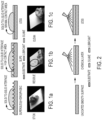
- the surface is relatively smooth and does not require surface roughening which contrast from certain other repellant surfaces such as superhydrophobic surfaces and slippery liquid-infused porous surfaces. Compare Figures 1a-1b to Figure 1c .
- Coated surfaces in accordance with the present disclosure are referred to herein as a liquid-entrenched smooth surface (LESS).
- Coated surfaces in accordance with the present disclosure are useful on certain devices such as toilets, urinals, or other devices for the processing of liquids and viscoelastic materials such as solid or semi-solid metabolic waste of human digestive system.
- Such coated surfaces can also be applied to windows for buildings or vehicles such as automobiles or camera lenses to repel liquids (e.g., rain), ice, frost, insect residues, and birds' feces.
- Such coated surfaces can delay frost or ice formation and can significantly reduce the de-icing time.
- the surface of the substrate to be coated is relatively smooth, e.g., the surface has an average roughness at a microscale level, e.g., R a less than a few microns, or less than a few hundreds of nanometers, and preferably less than a few nanometers.
- the surface of the substrate to be coated has an average surface roughness R a less than about 4 ⁇ m, e.g., less than about 2 ⁇ m and less than about 1 ⁇ m average surface roughness.
- the average surface roughness R a is less than about 500 nm, e.g., less than about 100 nm and even less than about 10 nm.
- the average surface roughness R a of the substrate to be coated can be in the range of greater than about 0.5 nm to less than about 2 ⁇ m.
- Average surface roughness can be measured by atomic force microscope (AFM) using tapping mode with a scanning area of 2 ⁇ 2 ⁇ m 2 for measuring average surface roughness in a 0.1-nanometer scale or equivalent technique.
- Average surface roughness can be measured by Zygo optical profilometer with an area of 475 ⁇ 475 ⁇ m 2 for measuring average surface roughness in a 1-nanometer scale or equivalent technique.
- an advantage of the coatings of the present disclosure is that the underlying surface substrate is not roughened as in a SLIPS coating system. As such the coatings of the present disclosure can be readily applied on smooth surfaces without the need to affect the surface roughness.
- the coatings of the present disclosure can be directly applied to toilet or urinal surfaces as well as window glass. Toilet and urinal surfaces generally have an average surface roughness of less than about 500 and even as low as about 200 nm and 50 nm, and window glass can have an average surface roughness of less than about 150 nm, e.g. between about 0.1 nm to about 100 nm.
- the surface to be coated can be smoothened prior to applying the coating system of the present disclosure.
- the surface roughness does not need to be altered prior to applying a coating according to the present disclosure.
- the surface can be made to have a lower surface roughness, not roughened, prior to prior to applying a coating according to the present disclosure.
- Substrates having a smooth surface that can be used in the present disclosure include those of silicon, ceramics, china, porcelain, glass, and metals such as carbon steel, copper, aluminum, and titanium. If metal surfaces are chosen as the base substrate, oxygen plasma can be used to treat the surface to generate hydroxyl functional groups thereon. The surface can be cleaned before applying the chemical layer.
- a process for preparing a repellant surface includes applying a coating composition onto the surface to form a chemical layer on the surface; and applying a lubricant to the chemical layer.
- a chemical layer can be formed on a smooth surface by applying a coating composition onto the surface to form a chemical layer on the surface.
- the coating composition can be applied by a dip coating process or spraying.
- the chemical layer can also be formed by chemical vapor deposition (CVD) method.
- the coating composition includes three components: a coating chemical, a solvent, and a catalyst. Applying a coating composition onto a smooth surface can form a chemical layer by anchoring the coating chemical to the surface and, in certain embodiments, further polymerize the coating chemical from the anchored coating chemical.
- Useful coating chemicals include silanes and siloxanes such as, for example, dimethyldimethoxysilane, trimethoxymethylsilane, 1H,1H,2H,2H-perfluorododecyltrichlorosilane, 1H,1H,2H,2H-perfluorodecyltrimethoxysilane, trimethoxy(3,3,3-trifluoropropyl)silane, dimethoxy-methyl(3,3,3-trifluoropropyl)silane, dimethoxy(methyl)octylsilane, trimethylmethoxysilane, diethoxydimethylsilane, dimethoxymethylvinylsilane, hexamethyldisiloxane, octyldimethylchlorosilane, octamethylcyclotetrasiloxane etc., 1H,1H,2H,2H-perfluorodecyltrie
- Useful solvents include alcohols such as ethanol, isopropanol, ketones such as acetone, methylethylketone, chlorinated solvents such as chloroform, etc.
- Useful catalysts are acid catalysts such as sulfuric acid, hydrochloric acid, and superabsorbent polymers soluble for isopropanol or ethanol etc.
- the chemical layer is a silane or siloxane polymer anchored onto the smooth surface, such as a polydimethylsiloxane grafted on the surface of the substrate, which can be prepared from a coating composition including a polymerizable coating chemical, a solvent, and a catalyst.
- a coating composition including a polymerizable coating chemical, a solvent, and a catalyst.
- dimethyldimethoxysilane was used as a polymerizable coating chemical.
- the coating composition included 10 wt% of the dimethyldimethoxysilane in isopropanol and the catalyst made up 1 wt% of the coating composition.
- the chemical layer can have a sub-nanometer height.
- a lubricant that is compatible with the chemical layer is then applied over the chemical layer.
- the lubricant can be applied by a wiping, spraying, etc.
- the lubricant should have a strong affinity to the chemical layer or the substrate.
- the lubricant is a perfluorinated oil or a silicone oil or a hydroxy polydimethylsiloxane (PDMS) or a mineral oil or a plant oil.
- PDMS hydroxy polydimethylsiloxane
- perfluorinated oils e.g. Krytox oil
- Krytox oil can form a stable lubrication layer on surfaces modified by silanes and especially perfluorinated silanes.
- Silicone oil can form a stable layer on surfaces having a chemical layer formed from siloxanes such as polydimethylsiloxane (PDMS) or grafted PDMS, for example.
- Hydroxy PDMS can also form a stable layer on surfaces having a chemical layer formed from siloxanes such as polydimethylsiloxane (PDMS) or grafted PDMS, for example.
- Mineral oils can form a stable layer on surface having a chemical layer formed by alkyltrichlorosilanes or alkyltrimethoxysilanes with various chain lengths.
- Other lubricants that will be compatible with alkyltricholosilanes or alkyltrimethoxysilanes with various chain lengths include alkane oils (e.g.
- plant based oils such as olive oil, palm oil, soybean oil, canola oil, rapeseed oil, corn oil, peanut oil, coconut oil, cottonseed oil, palm oil, safflower oil, sesame oil, sunflower oil, almond oil, cashew oil, hazelnut oil, macadamia oil, Mongongo nut oil, pecan oil, pine nut oil, walnut oil, grapefruit seed oil, lemon oil, orange oil, amaranth oil, apple seed oil, argan oil, avocado oil, babassu oil, ben oil, borneo tallow nut oil, cape chestnut oil, carob pod oil, coca butter, cocklebur oil, cohune oil, grape seed oil, Kapok seed oil, Kenaf seed oil, Lallemantia oil, Marula oil, Meadowfoam seed oil, mustard oil, Okra seed oil, papaya seed oil, Pequi oil, poppyseed
- the plant-based oils can be used alone or with other lubricants or as a mixture of plant-based oils alone or with other lubricants.
- Lubricant viscosities ranging from ⁇ 1 mPas (1 cSt) to ⁇ 1000 mPas (1000 cSt) would be preferable at temperature range from 15 °C to 25 °C.
- Lubricant densities of less than about 1 g/cm 3 would be preferable at temperature range from 15 °C to 25 °C.
- the coating according to the present disclosure is on a smooth surface, or part thereof, of a device such as toilets, urinals, for the processing of liquids and viscoelastic materials such as solid or semi-solid metabolic waste of human digestive system or household or industrial sinks.
- a device such as toilets, urinals
- viscoelastic materials such as solid or semi-solid metabolic waste of human digestive system or household or industrial sinks.
- Such coated surfaces can also be applied to windows for buildings or vehicles such as automobiles or camera lenses to repel liquids (e.g., rain and fog), ice, frost, insect residues, and birds' feces.
- such coated surfaces can delay frost/ice formation and can significantly reduce the de-icing time.
- a window made of glass comprises the coating on a smooth surface thereof.
- the chemical layer and lubricant can have a refractive index that matches the glass, e.g., the chemical layer and lubricant can have a refractive index of about 1.3 to about 1.6, e.g., between about 1.4 to about 1.5, such as where the chemical layer is a silane and the lubricant has a refractive index of about 1.3 to about 1.6, e.g., between about 1.4 to about 1.5.
- water or other aqueous fluids can be applied to a device having a coating of the present disclosure to remove solid, e.g., viscoelastic material, or liquid on the coating.
- viscoelastic materials such as viscoelastic semi-solid waste
- the coated surface includes a chemical layer on the surface and lubricant layer thereover.
- Water or other aqueous fluids can be applied to the viscoelastic materials or liquids on the coating to remove the materials from the coating.
- lubricant either the same or a different lubricant than used to prepare the repellant coating, can be reapplied to the chemical layer to renew the coating on the surface of the substrate.
- adhesion between a viscoelastic solid and the underlying solid surface can be quantified by the adhesion energy at the solid-to-solid interface.
- ⁇ ij is the interfacial energy at the i-j interface
- 1, 2, and 3 refer to the underlying solid substrate, the viscoelastic solid, and air, respectively.
- the adhesion between the underlying solid-air interface ( ⁇ 13 ) and the viscoelastic solid-air interface ( ⁇ 23 ) would need to be reduced.
- the first method involves surface chemistry modification of the underlying solid substrate (e.g. silanization), which can effectively reduce ⁇ 13 .
- the second method involves lubrication between the viscoelastic solid and the substrate surface. As reported previously, the lubricant could be absorbed by the viscoelastic solids instead of being adhered onto the substrate surface, resulting in the reduction of ⁇ 23 . In order to reduce both ⁇ 13 and ⁇ 23 concurrently, the lubricant would need to stably adhere on the underlying surface so as to retain a thin layer of lubricant.
- the adhesion interface changes from a solid-to-solid interface (i.e., viscoelastic solid-to-underlying solid substrate) to a solid-to-lubricant interface (i.e., lubricant-infused viscoelastic solid-to-lubricant-coated solid substrate).
- a solid-to-solid interface i.e., viscoelastic solid-to-underlying solid substrate
- a solid-to-lubricant interface i.e., lubricant-infused viscoelastic solid-to-lubricant-coated solid substrate
- the total work of adhesion between two surfaces is directly proportional to their respective contact area, which could be significantly increased by the presence of roughness.
- Carl A. Dahlquist showed experimentally that when the storage modulus of an adherent material is below a certain critical value (i.e., typically 0.3 MPa), the material will begin to flow and form conformal contact with the surface roughness of the adherent regardless of the applied pressure. This is widely known as the Dahlquist criterion, which has been the basis for the design of pressure sensitive adhesives. For a viscoelastic material that satisfies the Dahlquist criterion, any roughness present on the adherent would further increase the surface adhesion.
- composition of the synthetic feces is biologically very similar to human feces (see Table 2).
- the viscosity of the synthetic feces can be tuned by the percentage of solid contents.
- Table 1. Compositions of the synthetic feces. Ingredients % dry mass Nutrition Yeast 32.49 Biomass Psyllium 10.84 Fibre Peanut oil 17.31 Fat Miso 10.84 Fibre/Protein/Fat Polyethylene glycol 12.14 Carbohydrate Calcium phosphate 10.84 Biomass Cellulose 5.53 Carbohydrate Table 2.
- Health human feces contain about 70% of water with the rest consisting of organic matters. Therefore, we can estimate the upper bound of their surface energy ( ⁇ 13 ) to be similar to that of water (i.e., ⁇ 13 ⁇ 72 mJ/m 2 ).
- glass surface ( ⁇ 23 ) has surface energy as 310 mJ/m 2 . Based on the aforementioned equation, the work of adhesion between human feces and glass surface ( w a 0 ) is ⁇ 299 mJ/m 2 .
- the first method involves silanization of the glass surface with grafted-polydimethylsiloxane (PDMS). Since the grafted PDMS has nearly identical chemical structure as the silicone oil, one can assume their surface energies to be similar. The surface energy of silicone oil is measured to be about 21 mJ/m 2 . Therefore, the work of adhesion between the synthetic feces and a PDMS-grafted glass ( w a 1 ) would be ⁇ 78 mJ/m 2 .
- a lubricating layer silicone oil
- a lubricating layer can be added in between the feces and an untreated glass surface to reduce the adhesion.
- silicone oil is preferably to be absorbed to feces, only the surface energy of feces ( ⁇ 13 ) changes. Note that the silicone oil could be partially or fully infused into the feces, therefore we assume that the surface energy of feces ( ⁇ 13 ) to be ⁇ 72 mJ/m 2 ⁇ ⁇ 13 ⁇ ⁇ 21 mJ/m 2 . As a result, the work of adhesion between the synthetic feces and a silicone-oil lubricated glass ( w a 2 ) would be ⁇ 299 mJ/m 2 ⁇ w a 2 ⁇ ⁇ 161 mJ/m 2 .
- the third method involves coating a lubricating layer between the feces and a chemically treated glass so as to retain a thermodynamically stable lubricant layer on the substrate.
- w a 2 > w a 1 ⁇ w a 3 this trend is consistent with the experimental measurements.
- the solid contents of the synthetic feces range from 10 wt% to 60 wt%, which correspond to storage modulus of ⁇ 1 Pa ( ⁇ 10% solid content) to ⁇ 10 5 Pa ( ⁇ 60% solid content). These values closely emulate those of the fresh human feces. Based on the Dahlquist criterion, most of the synthetic feces used here would be conformally contacting the rough surfaces, particularly for the synthetic feces whose storage moduli are much less than 0.3 MPa.
- ⁇ E 1 ⁇ B cos ⁇ B ⁇ ⁇ A cos ⁇ A ⁇ ⁇ AB > 0
- ⁇ A and ⁇ B are, respectively, the surface tensions of the foreign liquids to be repelled and the immiscible lubricant
- ⁇ AB is the interfacial tension at the liquid-liquid interface
- ⁇ A and ⁇ B are, respectively, the equilibrium contact angles of the foreign liquids and the lubricant on a given flat solid surface.
- LESS use a relatively smooth surface for adhesion reduction.
- a SLIPS structure includes a synthetically roughened surface and has an average surface roughness greater than ⁇ 150 nm and as high as 100 ⁇ m). In accordance to the Dahlquist criterion, this smooth architecture is important for repelling viscoelastic solids.
- LESS can be formed onto a surface if 1) the base substrate is relatively smooth, preferably with less than about 500 nm average roughness, or even less than about 100 nm average roughness, and 2) ⁇ E 1 > 0 (stable lubricant formation), and 3) ⁇ E 2 > 0 (lubricant replenishment).
- LESS can be formed by first functionalizing the base substrate with a different surface chemistry, such that the lubricant can preferentially wet onto the functionalized surface and can satisfy the criteria ⁇ E 1 > 0 (stable lubricant formation) and ⁇ E 2 > 0 (lubricant replenishment).
- the smooth substrate is selected to be hydrophilic with hydroxyl groups available on the surface (either naturally available or after specific surface treatment such as oxygen plasma). Examples of such surfaces include glass, silicon, ceramic, china, porcelain, and certain metals such as carbon steel, copper, aluminum, and titanium. If metal surfaces are chosen as the base substrate, oxygen plasma can be used to treat the surface to generate hydroxyl functional groups thereon.
- the surface is preferably cleaned to remove any surface residues.
- One example for the cleaning involves the use of an alcohol, e.g., ethanol or isopropanol, and deionized water to rinse the surface. After the surface is allowed to dry, it can be treated with silane solution which enables alternation of the surface chemistry. Once the surface is clean, a solution containing silane or siloxane molecules can be sprayed or wiped onto the surface, allowing these molecules to react with the hydroxyl groups and forming a covalently-bonded chemical layer on the substrate. See, e.g. Figure 2 .
- the silane or siloxane solution can either be sprayed coated or wiped onto the surface and allowed to dry in ambient condition (temperature from 0 °C to 60 °C, and relative humidity from 30% to 80%) for 10 min.
- One specific example of the silane solution includes 10 wt% of dimethyldimethoxysilane with addition of 1 wt% concentrated sulfuric acid and was mixed successively with isopropanol as the solvent.
- the silanized substrate then becomes hydrophobic and can repel both water and alkanes.
- the formation of the new surface functional group was confirmed by X-ray photoelectron spectroscopy (XPS) measurements showing the formation of Si-O bonds associated with dimethyldimethoxysilane.
- the thickness of the chemical coating layer can range from about 1 nm to about 10 ⁇ m.
- lubricant can be applied onto the functionalized surface either by wiping or spray coating.
- the lubricants include silicone oil or hydroxy polydimethylsiloxane.
- Lubricant viscosities ranging from ⁇ 1 mPas (1 cSt) to ⁇ 500 mPas (500 cSt) would be preferable at temperature range from 15 °C to 25 °C.
- the PDMS-grafted surface is preferentially wetted by silicone oil, forming a stable lubricating layer. The rinsing process can be skipped as the excess coating chemical is soluble in lubricant (e.g. silicone oil).
- the thickness of the lubricant layer ranges from ⁇ 1 nm to ⁇ 1 mm.
- the coated surfaces of the present disclosure can be prepared by a facile fabrication process.
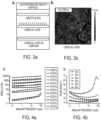
- Figure 3 shows an embodiment of preparing such a coated surface.
- a covalently bonded chemical layer on a smooth substrate ( Figure 3a ) can initially be formed.
- smooth glass slides were cleaned by ethanol and then hydroxidized by oxygen plasma for 10 min before dipping them into a coating solution which formed a PDMS on the surface of the silds.
- the glass slides were dried in ambient condition for 10 min.
- the glass slides were coated to form a thin chemical layer without introducing any additional roughness ( Figure 3b ).
- lubricant e.g. silicone oil here.
- the coated glass slides repel alkane oils and water, and have the ability to self-clean.
- lubricant was applied onto the surface by spin or spray coating.
- the substrate surface needs to have a strong chemical affinity to the lubricant.
- a graft PDMS layer was confirmed to be coated on the glass by the XPS data.
- the PDMS layer has a strong affinity to silicone oil. After lubrication, the coating can repel water and complex aqueous liquid (e.g. sheep blood).
- the coated surfaces of the present disclosure i.e., Liquid-Entrenched Smooth Surface (LESS)
- LESS Liquid-Entrenched Smooth Surface
- the presence of the surface roughness of SLIPS may lead to adhesion of the viscoelastic solids upon impact.
- the surface roughness does not need to be altered prior to applying a coating according to the present disclosure.
- the surface can be smoothened, not roughened, prior to prior to applying a coating according to the present disclosure.
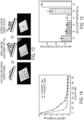
- the viscoelastic property was measured as shown in Figure 4 .
- the control surfaces in these tests include uncoated glass, glass lubricated with silicone oil, PDMS-grafted glass, and silicone-oil infused SLIPS samples with either microscale ( R a ⁇ 4 ⁇ m) or nanoscale roughness ( R a ⁇ 1 ⁇ m) on the underlying substrates.
- R a ⁇ 4 ⁇ m microscale roughness
- R a ⁇ 1 ⁇ m nanoscale roughness
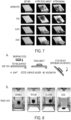
- LESS-coated glass was the only surface showing non-stickiness towards the feces sample and left no noticeable residue behind. Furthermore, we have shown in a different set of feces impact tests that traces of feces were left on a SLIPS-treated surface (with underlying surface roughness ⁇ 1 ⁇ m). See Figure 9 . Therefore, our tests further demonstrate that our LESS coating outperforms various state-of-the-art surfaces on repelling viscoelastic human feces.
- Organism (best match) Score Value Staphylococcus aureus 2.358 Enterobacter cloacae 2.281 Escherichia vulneris 2.256 Escherichia hermannii 2.212 Enterococcus mundtii 2.219 Acinetobacter calcoaceticus 2.077 Note: Any score value >2 indicates secure genus identification.
- Thermo Scientific TM Blood Agar (TSA with Sheep Blood) Medium Thermo Scientific TM MacConkey Agar Medium
- BD BBL CHROMagar Orientation Thermo Scientific TM MacConkey Agar Medium
- BD BBL MHB agar Thermo Scientific TM MacConkey Agar Medium
- Isolates were prepared for analysis using a direct transfer method following a standard Bruker protocol. Individual colonies from 24-hour cultures were transferred onto a MALDI target plate using a sterile pipette tip and allowed to dry.
- the cells were lysed by applying 1 ⁇ L of 80% formic acid solution in water, samples were allowed to dry and 1 ⁇ L of 10 mg/mL HCCA matrix solution in 50% aqueous acetonitrile containing 2.5% trifluoroacetic acid was applied to each sample and allowed to dry.
- a bacterial test standard (BTS; Bruker Daltonics) was used for instrument calibration and as a positive control. Matrix blank spots were included in each analysis to ensure that the target plate was thoroughly cleaned and there is no carryover signal.
- MALDI mass spectra were acquired on a Bruker Ultraflextreme MALDI TOF/TOF mass spectrometer in the linear, positive-ion mode. Spectra were processed using a factory default processing method for the Biotyper application and searched against a Bruker library containing entries of 6903 cellular organisms using MALDI Biotyper Version 3.1 software (Bruker).
- Water flushing in real toilets can be simplistic modelled as an open channel flow.
- the wall shear in our open channel flushing system is in the same order of magnitude with the shear in real toilet. Therefore, the open channel flushing system can realistically simulate the real toilet flushing condition.
- Figures 16a and 16b show the water consumption required to remove feces with 10% and 20% solid content from the surfaces.
- liquid-entrenched smooth surfaces (LESS) require the least amount of water, while untreated glass takes the largest amount of water.
- MR-SLIPS require similar amount of water to glass for two reasons.
- the feces with 10% and 20% solid content show more viscous property, which means they behave like viscous fluid. This viscous fluid took away large amount of lubricant on MR-SLIPS, and therefore more feces residues can adhere onto the surface.
- Second, the viscous feces removed large amount of lubricant and exposed the underlying surface structure. Once the feces residues attached on the surface structure, they are much harder to be removed.
- the synthetic feces were repelled from the slippery surfaces (MR-SLIPS, NP-SLIPS, and LESS), while sticking to glass surfaces when the solid content of the synthetic feces increased to 30% and 40%.
- Different amount of residues were left on slippery surfaces due to different surface roughness of underlying substrates.
- glass surface required the largest amount of water to remove the residue.
- Water consumption increased with underlying surface roughness in liquid-infused slippery surfaces. In general, the water consumption required to clean the synthetic feces (30% - 40% solid content) on the LESS is only ⁇ 10% to that of the glass ( Figure 16c and Figure 16d ).
- Synthetic feces with 50% and 60% solid content requires ⁇ 1/2 to ⁇ 1/3 of water consumption required to remove synthetic feces with 40% solid content. Synthetic feces with higher solid content are less adhesive than those with 30% and 40% solid content.
- LESS coating on a toilet bowl/urinal involves surface cleaning, surface functionalization and lubricant coating.
- Surface cleaning involves the use of ethanol wipe to clean the toilet bowl/urinal. If the toilet bowel/urinal has been used and staining is observed, it is recommended to use commercially available acid cleaner to remove the stain before the surface functionalization step.
- surface functionalization can be proceeded which involves spraying or wiping of a silane solution (e.g., composed of isopropanol alcohol, dimethyldimethoxysilane, and an acid catalyst such as sulfuric acid) onto the toilet/urinal surface to form a permanent functional layer.
- silane solution e.g., composed of isopropanol alcohol, dimethyldimethoxysilane, and an acid catalyst such as sulfuric acid
- the surface can be sprayed or wiped with a matching lubricant, such as silicone oil (a viscosity of 20 mPas (20 cSt), Sigma Aldrich, CAS No. 63148-62-9 ), to complete the LESS coating process.
- a matching lubricant such as silicone oil (a viscosity of 20 mPas (20 cSt), Sigma Aldrich, CAS No. 63148-62-9 ), to complete the LESS coating process.
- the lubricant can be reapplied or replenished from an external source (e.g., a lubricant reservoir) as needed.
- a LESS-coated toilet thus prepared repels human urine and greatly reduces stickiness of human feces.
- LESS can also be applied onto a window or camera lens to repel liquids (e.g., rain), ice, frost, insect residues, and birds' feces.
- liquids e.g., rain
- ice ice
- frost insect residues
- birds' feces e.g., we have applied LESS coating on a car windshield (Model: Mazda CX-5, 2013).
- the windshield was first cleaned with an ethanol clean wipe to remove residues on the surface.
- a previously described silane solution composed of isopropanol alcohol, dimethyldimethoxysilane, and an acid catalyst such as sulfuric acid
- silicone oil was sprayed or wiped onto the windshield to complete the coating process.
- This lubricant layer can be reapplied or replenished from an external source (e.g., a windshield wiper fluid reservoir) as necessary.
- the coating was applied under environment conditions at 4 °C and a relative humidity of ⁇ 60%.
- the lubricant used for the LESS coating will need to have a similar refractive index as the base glass substrate.
- typical glass has a refractive index, n ⁇ 1.4 - 1.5 and a typical matching lubricant would have a refractive index that is within the difference of +/- 0.1.
- the lubricants include silicone oil ( n ⁇ 1.4) and plant oils ( n ⁇ 1.46 - 1.47).
- the LESS-coated windshield has superior performance in repelling rain droplets as compared to an uncoated windshield glass and a windshield glass treated with commercial available coatings (e.g., Rain-X). Specifically, when the windshield is in static position, water droplets of ⁇ 1 - 3 mm will begin to slide off from the windshield. When the car is travelling at a speed of ⁇ 20 - 25 mph, water droplets of ⁇ 1 - 2 mm begin to shed off from the windshield. At a speed of ⁇ 30 - 35 mph, most of the water droplets (with size ⁇ ⁇ 1 mm) will shed off from the windshield.
- commercial available coatings e.g., Rain-X
- LESS-treated surface can delay frost/ice formation and can significantly reduce the de-icing time.
- LESS-coated silicon can delay the ice formation as compared to uncoated smooth silicon. Specifically, ice covers a 25 mm-by-25 mm area by ⁇ 9.7 ⁇ 0.4 min on untreated silicon wafer, and by 13.7 ⁇ 1.1 min on LESS-coated silicon. Meanwhile, the de-icing time of LESS-coated silicon is 1.3 ⁇ 0.1 min comparing to 1.5 ⁇ 0.1 min for untreated silicon.
- the LESS-coated silicon was made through the two-step spray coating process in room condition (23 °C and 50% relative humidity). Specifically, a smooth silicon wafer was cleaned with ethanol and deionized water. A silane solution was then applied by spraying the solution onto the cleaned, smooth silicon wafer. After the surface was dried, lubricant (e.g. silicone oil) was sprayed on the surface to complete the LESS coating.
- lubricant e.g. silicone oil
- the anti-icing test was performed on a Peltier plate with a 90° tilting angle. The surfaces were cooled down to ⁇ -5°C at room environment (23 °C and 30% relative humidity). The icing and de-icing was recorded by a camera for measuring the time.
- MR-SLIPS Slippery liquid-infused porous surfaces with micro-roughened surface structure
- NP-SLIPS Slippery liquid-infused porous surfaces with nano-porous surface structure
- Untreated quartz glass slide and grafted-PDMS coated quartz glass slide were characterized under XPS with area of 1 mm in diameter circle and depth of 10 nm for 3 different spots.
- Oscillatory rheology testing was conducted using a TA Instruments DHR-2 rheometer. Samples were maintained at 23 °C on a Peltier plate. Oscillatory frequency sweeps were performed to probe the materials. The angular frequency range was 0.1 to 100 rad/s. Oscillatory strain was set at 0.5% to ensure all tests were within the linear range.
- a TA Instruments DHR-2 rheometer was used to measure axial adhesion force using a probe method. Artificial feces were casted into a PDMS mold (25 mm ⁇ 25 mm ⁇ 4 mm) to maintain volume and placed on the lower Peltier plate kept at 23 °C. Sample surfaces (25 mm ⁇ 25 mm) were bounded to the rheometer upper head. First, the upper head drove the surfaces downward at 500 ⁇ m/s pressing the artificial feces to 1 mm high. Maximum preloading force was measured in this stage. Secondly the synthetic feces were left to relax for 5 min. Finally, the rheometer upper head moved upward at 10 ⁇ m/s until full detachment (axial force dropped to zero). Work of debonding, i.e. work done by the upper head in the final stage, was calculated to characterize the adhesion properties.
- the open channel flushing system include the following components: a water tank as flow source; pipes; a pump; a valve; a square duct as the flushing open channel; sample mount printed by a 3-D printer.
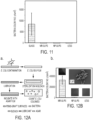
- E. coli culture solution was mixed into synthetic urine, with a concentration of 5 ⁇ 10 5 cfu/mL. 100 mL of this E. coli contaminated urine was poured onto the test surfaces.
- Solid agar was made by mixing Mueller Hinton broth powder (21 g/L) and agar powder (1.5 wt%) into DI water, and sterilizing for 2 hours. The agar was poured onto glass slides (50 ⁇ 75 mm 2 ) to solidify. Then a thick film of solid agar was formed. We adhered the agar films onto surfaces (glass, MR-SLIPS, NP-SLIPS, LESS) flushed by rainwater (1 gpm, 10 s), and culture the samples at 37 °C for 24 hours.
- NP-SLIPS had noticeable bacterial contamination. Only LESS was free of bacterial contamination. The result was shown in Fig. 12 .
- the SEM images for roughened glass with a conductive 30 nm platinum film was taken by Zeiss scanning electron microscope.
- the SEM images of bacteria on glass with a conductive 30 nm platinum film was taken by Zeiss scanning electron microscope.
- the component of synthetic feces used in all experiments is list in the following table.
- the nutrition percentage is similar to human feces. See, e.g., Rose et al., The Characterization of Feces and Urine: A Review of the Literature to Inform Advanced Treatment Technology. Critical Reviews in Environmental Science and Technology 45, 1827-1879, (2015 ).
Landscapes
- Chemical & Material Sciences (AREA)
- Life Sciences & Earth Sciences (AREA)
- Engineering & Computer Science (AREA)
- Materials Engineering (AREA)
- Wood Science & Technology (AREA)
- Organic Chemistry (AREA)
- Public Health (AREA)
- Hydrology & Water Resources (AREA)
- Health & Medical Sciences (AREA)
- Water Supply & Treatment (AREA)
- Chemical Kinetics & Catalysis (AREA)
- Crystallography & Structural Chemistry (AREA)
- Surface Treatment Of Glass (AREA)
- Application Of Or Painting With Fluid Materials (AREA)
- Laminated Bodies (AREA)
- Paints Or Removers (AREA)
Applications Claiming Priority (3)
| Application Number | Priority Date | Filing Date | Title |
|---|---|---|---|
| US201662424062P | 2016-11-18 | 2016-11-18 | |
| PCT/US2017/062206 WO2018094161A1 (en) | 2016-11-18 | 2017-11-17 | Liquid and viscoelastic material repellent and anti-biofouling coatings |
| EP17872728.5A EP3541619B1 (en) | 2016-11-18 | 2017-11-17 | Liquid and viscoelastic material repellent and anti-biofouling coatings |
Related Parent Applications (2)
| Application Number | Title | Priority Date | Filing Date |
|---|---|---|---|
| EP17872728.5A Division EP3541619B1 (en) | 2016-11-18 | 2017-11-17 | Liquid and viscoelastic material repellent and anti-biofouling coatings |
| EP17872728.5A Division-Into EP3541619B1 (en) | 2016-11-18 | 2017-11-17 | Liquid and viscoelastic material repellent and anti-biofouling coatings |
Publications (2)
| Publication Number | Publication Date |
|---|---|
| EP3988293A1 EP3988293A1 (en) | 2022-04-27 |
| EP3988293B1 true EP3988293B1 (en) | 2024-08-14 |
Family
ID=62145257
Family Applications (2)
| Application Number | Title | Priority Date | Filing Date |
|---|---|---|---|
| EP21213099.1A Active EP3988293B1 (en) | 2016-11-18 | 2017-11-17 | Liquid and viscoelastic material repellent and anti-biofouling coatings |
| EP17872728.5A Active EP3541619B1 (en) | 2016-11-18 | 2017-11-17 | Liquid and viscoelastic material repellent and anti-biofouling coatings |
Family Applications After (1)
| Application Number | Title | Priority Date | Filing Date |
|---|---|---|---|
| EP17872728.5A Active EP3541619B1 (en) | 2016-11-18 | 2017-11-17 | Liquid and viscoelastic material repellent and anti-biofouling coatings |
Country Status (5)
| Country | Link |
|---|---|
| US (3) | US10968353B2 (https=) |
| EP (2) | EP3988293B1 (https=) |
| JP (1) | JP7199350B2 (https=) |
| CN (2) | CN115925275A (https=) |
| WO (1) | WO2018094161A1 (https=) |
Families Citing this family (18)
| Publication number | Priority date | Publication date | Assignee | Title |
|---|---|---|---|---|
| CN111601708B (zh) * | 2018-01-16 | 2023-03-24 | 东洋制罐集团控股株式会社 | 含表面活性剂产品用包装材料 |
| EP3793628A4 (en) | 2018-05-14 | 2022-02-16 | The Penn State Research Foundation | Slippery surfaces on common substrates |
| FR3083503B1 (fr) * | 2018-07-06 | 2020-07-03 | Valeo Systemes D'essuyage | Protege-lame pour balai d'essuyage |
| DE102019101061B4 (de) * | 2019-01-16 | 2022-02-17 | Infineon Technologies Ag | Verfahren zum ausbilden einer kontaktstruktur, verfahren zum ausbilden eines chipgehäuses und chipgehäuse |
| CN114341235B (zh) * | 2019-06-19 | 2025-01-07 | 德州系统大学董事会 | 具有液体与固体排斥性的半液体表面 |
| DK4361228T3 (da) | 2019-09-13 | 2025-09-01 | Spotless Mat Inc | Formuleringer og fremgangsmåde til generering af afvisende overflader |
| US20230157281A1 (en) * | 2020-03-24 | 2023-05-25 | Texas Tech University System | Compositions and methods for repelling animals from an object |
| US20220290004A1 (en) * | 2021-03-10 | 2022-09-15 | Spotless Materials Inc. | Repellent coatings for high temperature surfaces |
| WO2022192480A1 (en) * | 2021-03-10 | 2022-09-15 | Spotless Materials Inc. | Repellent coatings for high temperature surfaces |
| WO2022197757A1 (en) * | 2021-03-17 | 2022-09-22 | Spotless Materials Inc. | Repellent coating formulation |
| US20220296786A1 (en) * | 2021-03-17 | 2022-09-22 | Spotless Materials Inc. | Formulations and processes to generate repellent surfaces on medical devices |
| JP7788285B2 (ja) * | 2022-01-18 | 2025-12-18 | 株式会社日立ハイテク | 防汚性部材および防汚性部材の製造方法 |
| IT202200012287A1 (it) * | 2022-06-10 | 2023-12-10 | Massimo Simonato | Rivestimento idrorepellente / distaccante a base di silicone ad alta viscosità per superfici bagno e wc e relativo metodo di applicazione. |
| CN115091746B (zh) * | 2022-06-23 | 2023-10-27 | 华中科技大学 | 一种节水超滑马桶内壁套3d打印方法、马桶组件 |
| CN115591023B (zh) * | 2022-09-30 | 2023-09-22 | 西安交通大学 | 一种具有自润滑层的减阻结构、人工关节及制备方法 |
| CN115785804B (zh) * | 2022-11-29 | 2023-07-28 | 东北农业大学 | 一种超疏水光热防冰涂层材料、制备方法及应用 |
| CN117299509A (zh) * | 2023-10-17 | 2023-12-29 | 山东大学 | 一种农用机械触土部件表面抗粘脱附的液体涂层的制备方法 |
| WO2025258631A1 (ja) * | 2024-06-14 | 2025-12-18 | 日本電気硝子株式会社 | 膜付き物品及びその製造方法、並びにコーティング液 |
Family Cites Families (37)
| Publication number | Priority date | Publication date | Assignee | Title |
|---|---|---|---|---|
| CA954640A (en) | 1972-12-01 | 1974-09-10 | James C. Wood | Nuclear fuel element and a method of manufacture thereof |
| US3978529A (en) * | 1974-10-15 | 1976-09-07 | Systems Design & Development | Powder room and bathroom system |
| US4839443A (en) * | 1987-02-04 | 1989-06-13 | Chisso Corporation | Polysiloxane containing hydroxyl groups and a silicone-modified polyurethane using the same |
| US4844986A (en) | 1988-02-16 | 1989-07-04 | Becton, Dickinson And Company | Method for preparing lubricated surfaces and product |
| JP2595678B2 (ja) * | 1988-04-15 | 1997-04-02 | ダイキン工業株式会社 | 防汚塗料組成物及び被覆品 |
| JP2000273934A (ja) | 1999-03-24 | 2000-10-03 | Toto Ltd | 水回り製品 |
| JP2000302581A (ja) * | 1999-04-13 | 2000-10-31 | Toto Ltd | 防汚性施釉製品 |
| JP2000351941A (ja) * | 1999-06-10 | 2000-12-19 | Jsr Corp | 防汚性物品用コーティング組成物および防汚性物品 |
| US6440550B1 (en) * | 1999-10-18 | 2002-08-27 | Honeywell International Inc. | Deposition of fluorosilsesquioxane films |
| US6432181B1 (en) | 2000-03-03 | 2002-08-13 | Resource Development, L.L.C. | Silicone compositions, methods of making and using VOC free, non-flammable creams, pastes and powders to render nonporous surfaces water, soil and stain repellent |
| JP2001259509A (ja) | 2000-03-15 | 2001-09-25 | Nissan Motor Co Ltd | 水滴滑落性に優れた膜形成用表面処理材および表面処理膜の形成方法 |
| US20040185445A1 (en) * | 2003-03-19 | 2004-09-23 | Ye Fang | Universal readout for target identification using biological microarrays |
| EP1601733A1 (en) | 2003-07-22 | 2005-12-07 | Leibniz-Institut für Neue Materialien gemeinnützige GmbH | Liquid-repellent coating composition and coating having high alkali resistance |
| US6994890B2 (en) | 2003-10-31 | 2006-02-07 | Resource Development L.L.C. | Cleaning and multifunctional coating composition containing an organosilane quaternary compound and hydrogen peroxide |
| WO2006138479A2 (en) * | 2005-06-15 | 2006-12-28 | Arizona Board Of Regents For And On Behalf Of Arizona State University | Microstructure and microdomain microarrays, methods of making and using thereof |
| US7754004B2 (en) | 2005-07-06 | 2010-07-13 | Resource Development, L.L.C. | Thickened surfactant-free cleansing and multifunctional liquid coating compositions containing nonreactive abrasive solid particles and an organosilane quaternary compound and methods of using |
| US8258206B2 (en) * | 2006-01-30 | 2012-09-04 | Ashland Licensing And Intellectual Property, Llc | Hydrophobic coating compositions for drag reduction |
| JP2007291314A (ja) | 2006-03-30 | 2007-11-08 | Fujifilm Corp | 滑水性被膜及びその製造方法 |
| EP1911791A1 (en) * | 2006-10-03 | 2008-04-16 | Institut Curie | Method for treating surfaces containing Si-H groups |
| WO2009047490A2 (en) * | 2007-10-08 | 2009-04-16 | Renishaw Plc | Catheter |
| KR100887573B1 (ko) | 2008-06-09 | 2009-03-09 | 주식회사 카츠 | 유리용 발수 코팅제 조성물 및 이의 제조방법 |
| US9376593B2 (en) * | 2009-04-30 | 2016-06-28 | Enki Technology, Inc. | Multi-layer coatings |
| US8864897B2 (en) * | 2009-04-30 | 2014-10-21 | Enki Technology, Inc. | Anti-reflective and anti-soiling coatings with self-cleaning properties |
| US9045651B2 (en) * | 2010-06-22 | 2015-06-02 | University Of Florida Research Foundation, Inc. | Antifouling surfaces, methods of manufacture thereof and articles comprising the same |
| CN103703085B (zh) * | 2011-01-19 | 2016-09-28 | 哈佛学院院长等 | 光滑注液多孔表面和其生物学应用 |
| CA2825008C (en) | 2011-01-19 | 2020-10-13 | President And Fellows Of Harvard College | Slippery surfaces with high pressure stability, optical transparency, and self-healing characteristics |
| US9999500B2 (en) * | 2011-03-10 | 2018-06-19 | University Of Florida Research Foundation, Inc. | Anti thrombogenic heart valve and medical implements |
| US9434857B2 (en) * | 2011-11-15 | 2016-09-06 | Ethicon, Inc. | Rapid cure silicone lubricious coatings |
| CA2860934A1 (en) * | 2012-01-10 | 2013-07-18 | President And Fellows Of Harvard College | Modification of surfaces for fluid and solid repellency |
| AU2013289879B2 (en) | 2012-07-12 | 2017-04-06 | President And Fellows Of Harvard College | Slippery self-lubricating polymer surfaces |
| WO2014012079A1 (en) * | 2012-07-13 | 2014-01-16 | President And Fellows Of Harvard College | Multifunctional repellent materials |
| WO2015125498A1 (ja) * | 2014-02-24 | 2015-08-27 | キヤノンオプトロン株式会社 | 防汚膜付光学部材およびタッチパネル式ディスプレイ |
| KR101544313B1 (ko) | 2014-04-10 | 2015-08-12 | 성균관대학교산학협력단 | 발수 코팅막 형성방법 |
| US20160177129A1 (en) | 2014-12-23 | 2016-06-23 | Thomas McCarthy | Compositions and methods for preparing liquid-repellent articles |
| KR20180020964A (ko) * | 2015-04-27 | 2018-02-28 | 더 리젠츠 오브 더 유니버시티 오브 미시건 | 내구성 아이스포빅 표면 |
| JP6706420B2 (ja) | 2016-03-23 | 2020-06-10 | 日産自動車株式会社 | 積層体及び該積層体を備える自動車部品 |
| EP3423271A4 (en) | 2016-04-05 | 2019-01-23 | Adaptive Surface Technologies, Inc. | HARDENABLE POLYSILOXANE COMPOSITIONS AND ARTICULATING AGENTS, AND COATINGS AND ARTICLES PRODUCED THEREFROM |
-
2017
- 2017-11-17 JP JP2019526541A patent/JP7199350B2/ja active Active
- 2017-11-17 EP EP21213099.1A patent/EP3988293B1/en active Active
- 2017-11-17 CN CN202211704420.9A patent/CN115925275A/zh active Pending
- 2017-11-17 WO PCT/US2017/062206 patent/WO2018094161A1/en not_active Ceased
- 2017-11-17 CN CN201780071292.XA patent/CN110072694B/zh active Active
- 2017-11-17 EP EP17872728.5A patent/EP3541619B1/en active Active
-
2018
- 2018-08-27 US US16/113,342 patent/US10968353B2/en active Active
-
2021
- 2021-03-16 US US17/202,512 patent/US11485863B2/en active Active
-
2022
- 2022-10-27 US US18/050,106 patent/US20230084928A1/en not_active Abandoned
Also Published As
| Publication number | Publication date |
|---|---|
| US20190016903A1 (en) | 2019-01-17 |
| US10968353B2 (en) | 2021-04-06 |
| JP7199350B2 (ja) | 2023-01-05 |
| CN110072694A (zh) | 2019-07-30 |
| JP2020500964A (ja) | 2020-01-16 |
| EP3541619A4 (en) | 2020-06-24 |
| EP3541619A1 (en) | 2019-09-25 |
| US11485863B2 (en) | 2022-11-01 |
| WO2018094161A1 (en) | 2018-05-24 |
| CN110072694B (zh) | 2023-01-17 |
| US20210222014A1 (en) | 2021-07-22 |
| EP3988293A1 (en) | 2022-04-27 |
| CN115925275A (zh) | 2023-04-07 |
| EP3541619B1 (en) | 2022-03-16 |
| US20230084928A1 (en) | 2023-03-16 |
Similar Documents
| Publication | Publication Date | Title |
|---|---|---|
| US11485863B2 (en) | Liquids and viscoelastic material repellent and anti-biofouling coatings | |
| Wang et al. | Fabrication of slippery lubricant-infused porous surface with high underwater transparency for the control of marine biofouling | |
| US10233334B2 (en) | Containers, bottles, drums, vats, and tanks having a slippery surface | |
| DE10239071A1 (de) | Verfahren zur Herstellung von Oberflächen, auf denen Flüssigkeiten nicht haften | |
| US12280175B2 (en) | Formulations and processes to generate repellent surfaces on medical devices | |
| Chen et al. | Preventing diatom adhesion using a hydrogel with an orthosilicic acid analog as a deceptive food | |
| CA3098872A1 (en) | Slippery surfaces on common substrates | |
| Zhu et al. | Robust lubricant-embedded solid slippery coating with excellent antifouling property, corrosion resistance, de-icing durability and fog collection properties | |
| Zhang et al. | Diving beetle-inspired durable omniphobic slippery coatings with pit-type non-smooth topography | |
| HK40012436A (en) | Liquid and viscoelastic material repellent and anti-biofouling coatings | |
| HK40012436B (en) | Liquid and viscoelastic material repellent and anti-biofouling coatings | |
| Wang | Design and Fabrication of Bio-Inspired Multifunctional Slippery Surface Coatings with Novel Functionalities | |
| TW202513732A (zh) | 具有低揮發性有機化合物之防護塗層調配物 | |
| JP7329909B2 (ja) | トイレ便器用コーティング剤 | |
| HK40071081B (en) | Formulations and processes to generate repellent surfaces | |
| Inbakandan | Application of Nanoparticles in Marine Biofilm Control and Characterization | |
| Zainudin et al. | The study of non-fouling and non-specific cellular binding on functionalized surface for mammalian cell identification and manipulation |
Legal Events
| Date | Code | Title | Description |
|---|---|---|---|
| PUAI | Public reference made under article 153(3) epc to a published international application that has entered the european phase |
Free format text: ORIGINAL CODE: 0009012 |
|
| STAA | Information on the status of an ep patent application or granted ep patent |
Free format text: STATUS: THE APPLICATION HAS BEEN PUBLISHED |
|
| AC | Divisional application: reference to earlier application |
Ref document number: 3541619 Country of ref document: EP Kind code of ref document: P |
|
| AK | Designated contracting states |
Kind code of ref document: A1 Designated state(s): AL AT BE BG CH CY CZ DE DK EE ES FI FR GB GR HR HU IE IS IT LI LT LU LV MC MK MT NL NO PL PT RO RS SE SI SK SM TR |
|
| STAA | Information on the status of an ep patent application or granted ep patent |
Free format text: STATUS: REQUEST FOR EXAMINATION WAS MADE |
|
| 17P | Request for examination filed |
Effective date: 20221027 |
|
| RBV | Designated contracting states (corrected) |
Designated state(s): AL AT BE BG CH CY CZ DE DK EE ES FI FR GB GR HR HU IE IS IT LI LT LU LV MC MK MT NL NO PL PT RO RS SE SI SK SM TR |
|
| STAA | Information on the status of an ep patent application or granted ep patent |
Free format text: STATUS: EXAMINATION IS IN PROGRESS |
|
| 17Q | First examination report despatched |
Effective date: 20230215 |
|
| P01 | Opt-out of the competence of the unified patent court (upc) registered |
Effective date: 20230526 |
|
| GRAP | Despatch of communication of intention to grant a patent |
Free format text: ORIGINAL CODE: EPIDOSNIGR1 |
|
| STAA | Information on the status of an ep patent application or granted ep patent |
Free format text: STATUS: GRANT OF PATENT IS INTENDED |
|
| INTG | Intention to grant announced |
Effective date: 20240327 |
|
| GRAS | Grant fee paid |
Free format text: ORIGINAL CODE: EPIDOSNIGR3 |
|
| GRAA | (expected) grant |
Free format text: ORIGINAL CODE: 0009210 |
|
| STAA | Information on the status of an ep patent application or granted ep patent |
Free format text: STATUS: THE PATENT HAS BEEN GRANTED |
|
| AC | Divisional application: reference to earlier application |
Ref document number: 3541619 Country of ref document: EP Kind code of ref document: P |
|
| AK | Designated contracting states |
Kind code of ref document: B1 Designated state(s): AL AT BE BG CH CY CZ DE DK EE ES FI FR GB GR HR HU IE IS IT LI LT LU LV MC MK MT NL NO PL PT RO RS SE SI SK SM TR |
|
| REG | Reference to a national code |
Ref country code: GB Ref legal event code: FG4D |
|
| REG | Reference to a national code |
Ref country code: CH Ref legal event code: EP |
|
| REG | Reference to a national code |
Ref country code: DE Ref legal event code: R096 Ref document number: 602017084197 Country of ref document: DE |
|
| REG | Reference to a national code |
Ref country code: IE Ref legal event code: FG4D |
|
| REG | Reference to a national code |
Ref country code: LT Ref legal event code: MG9D |
|
| REG | Reference to a national code |
Ref country code: NL Ref legal event code: MP Effective date: 20240814 |
|
| REG | Reference to a national code |
Ref country code: AT Ref legal event code: MK05 Ref document number: 1712924 Country of ref document: AT Kind code of ref document: T Effective date: 20240814 |
|
| PG25 | Lapsed in a contracting state [announced via postgrant information from national office to epo] |
Ref country code: NL Free format text: LAPSE BECAUSE OF FAILURE TO SUBMIT A TRANSLATION OF THE DESCRIPTION OR TO PAY THE FEE WITHIN THE PRESCRIBED TIME-LIMIT Effective date: 20240814 Ref country code: PL Free format text: LAPSE BECAUSE OF FAILURE TO SUBMIT A TRANSLATION OF THE DESCRIPTION OR TO PAY THE FEE WITHIN THE PRESCRIBED TIME-LIMIT Effective date: 20240814 Ref country code: GR Free format text: LAPSE BECAUSE OF FAILURE TO SUBMIT A TRANSLATION OF THE DESCRIPTION OR TO PAY THE FEE WITHIN THE PRESCRIBED TIME-LIMIT Effective date: 20241115 Ref country code: PT Free format text: LAPSE BECAUSE OF FAILURE TO SUBMIT A TRANSLATION OF THE DESCRIPTION OR TO PAY THE FEE WITHIN THE PRESCRIBED TIME-LIMIT Effective date: 20241216 Ref country code: FI Free format text: LAPSE BECAUSE OF FAILURE TO SUBMIT A TRANSLATION OF THE DESCRIPTION OR TO PAY THE FEE WITHIN THE PRESCRIBED TIME-LIMIT Effective date: 20240814 |
|
| PG25 | Lapsed in a contracting state [announced via postgrant information from national office to epo] |
Ref country code: BG Free format text: LAPSE BECAUSE OF FAILURE TO SUBMIT A TRANSLATION OF THE DESCRIPTION OR TO PAY THE FEE WITHIN THE PRESCRIBED TIME-LIMIT Effective date: 20240814 |
|
| PG25 | Lapsed in a contracting state [announced via postgrant information from national office to epo] |
Ref country code: LV Free format text: LAPSE BECAUSE OF FAILURE TO SUBMIT A TRANSLATION OF THE DESCRIPTION OR TO PAY THE FEE WITHIN THE PRESCRIBED TIME-LIMIT Effective date: 20240814 |
|
| PG25 | Lapsed in a contracting state [announced via postgrant information from national office to epo] |
Ref country code: AT Free format text: LAPSE BECAUSE OF FAILURE TO SUBMIT A TRANSLATION OF THE DESCRIPTION OR TO PAY THE FEE WITHIN THE PRESCRIBED TIME-LIMIT Effective date: 20240814 Ref country code: IS Free format text: LAPSE BECAUSE OF FAILURE TO SUBMIT A TRANSLATION OF THE DESCRIPTION OR TO PAY THE FEE WITHIN THE PRESCRIBED TIME-LIMIT Effective date: 20241214 |
|
| PG25 | Lapsed in a contracting state [announced via postgrant information from national office to epo] |
Ref country code: HR Free format text: LAPSE BECAUSE OF FAILURE TO SUBMIT A TRANSLATION OF THE DESCRIPTION OR TO PAY THE FEE WITHIN THE PRESCRIBED TIME-LIMIT Effective date: 20240814 |
|
| PG25 | Lapsed in a contracting state [announced via postgrant information from national office to epo] |
Ref country code: RS Free format text: LAPSE BECAUSE OF FAILURE TO SUBMIT A TRANSLATION OF THE DESCRIPTION OR TO PAY THE FEE WITHIN THE PRESCRIBED TIME-LIMIT Effective date: 20241114 Ref country code: ES Free format text: LAPSE BECAUSE OF FAILURE TO SUBMIT A TRANSLATION OF THE DESCRIPTION OR TO PAY THE FEE WITHIN THE PRESCRIBED TIME-LIMIT Effective date: 20240814 |
|
| PG25 | Lapsed in a contracting state [announced via postgrant information from national office to epo] |
Ref country code: RS Free format text: LAPSE BECAUSE OF FAILURE TO SUBMIT A TRANSLATION OF THE DESCRIPTION OR TO PAY THE FEE WITHIN THE PRESCRIBED TIME-LIMIT Effective date: 20241114 Ref country code: PT Free format text: LAPSE BECAUSE OF FAILURE TO SUBMIT A TRANSLATION OF THE DESCRIPTION OR TO PAY THE FEE WITHIN THE PRESCRIBED TIME-LIMIT Effective date: 20241216 Ref country code: PL Free format text: LAPSE BECAUSE OF FAILURE TO SUBMIT A TRANSLATION OF THE DESCRIPTION OR TO PAY THE FEE WITHIN THE PRESCRIBED TIME-LIMIT Effective date: 20240814 Ref country code: NL Free format text: LAPSE BECAUSE OF FAILURE TO SUBMIT A TRANSLATION OF THE DESCRIPTION OR TO PAY THE FEE WITHIN THE PRESCRIBED TIME-LIMIT Effective date: 20240814 Ref country code: LV Free format text: LAPSE BECAUSE OF FAILURE TO SUBMIT A TRANSLATION OF THE DESCRIPTION OR TO PAY THE FEE WITHIN THE PRESCRIBED TIME-LIMIT Effective date: 20240814 Ref country code: IS Free format text: LAPSE BECAUSE OF FAILURE TO SUBMIT A TRANSLATION OF THE DESCRIPTION OR TO PAY THE FEE WITHIN THE PRESCRIBED TIME-LIMIT Effective date: 20241214 Ref country code: HR Free format text: LAPSE BECAUSE OF FAILURE TO SUBMIT A TRANSLATION OF THE DESCRIPTION OR TO PAY THE FEE WITHIN THE PRESCRIBED TIME-LIMIT Effective date: 20240814 Ref country code: GR Free format text: LAPSE BECAUSE OF FAILURE TO SUBMIT A TRANSLATION OF THE DESCRIPTION OR TO PAY THE FEE WITHIN THE PRESCRIBED TIME-LIMIT Effective date: 20241115 Ref country code: FI Free format text: LAPSE BECAUSE OF FAILURE TO SUBMIT A TRANSLATION OF THE DESCRIPTION OR TO PAY THE FEE WITHIN THE PRESCRIBED TIME-LIMIT Effective date: 20240814 Ref country code: ES Free format text: LAPSE BECAUSE OF FAILURE TO SUBMIT A TRANSLATION OF THE DESCRIPTION OR TO PAY THE FEE WITHIN THE PRESCRIBED TIME-LIMIT Effective date: 20240814 Ref country code: BG Free format text: LAPSE BECAUSE OF FAILURE TO SUBMIT A TRANSLATION OF THE DESCRIPTION OR TO PAY THE FEE WITHIN THE PRESCRIBED TIME-LIMIT Effective date: 20240814 Ref country code: AT Free format text: LAPSE BECAUSE OF FAILURE TO SUBMIT A TRANSLATION OF THE DESCRIPTION OR TO PAY THE FEE WITHIN THE PRESCRIBED TIME-LIMIT Effective date: 20240814 |
|
| PG25 | Lapsed in a contracting state [announced via postgrant information from national office to epo] |
Ref country code: SM Free format text: LAPSE BECAUSE OF FAILURE TO SUBMIT A TRANSLATION OF THE DESCRIPTION OR TO PAY THE FEE WITHIN THE PRESCRIBED TIME-LIMIT Effective date: 20240814 Ref country code: RO Free format text: LAPSE BECAUSE OF FAILURE TO SUBMIT A TRANSLATION OF THE DESCRIPTION OR TO PAY THE FEE WITHIN THE PRESCRIBED TIME-LIMIT Effective date: 20240814 Ref country code: DK Free format text: LAPSE BECAUSE OF FAILURE TO SUBMIT A TRANSLATION OF THE DESCRIPTION OR TO PAY THE FEE WITHIN THE PRESCRIBED TIME-LIMIT Effective date: 20240814 |
|
| PG25 | Lapsed in a contracting state [announced via postgrant information from national office to epo] |
Ref country code: EE Free format text: LAPSE BECAUSE OF FAILURE TO SUBMIT A TRANSLATION OF THE DESCRIPTION OR TO PAY THE FEE WITHIN THE PRESCRIBED TIME-LIMIT Effective date: 20240814 |
|
| PG25 | Lapsed in a contracting state [announced via postgrant information from national office to epo] |
Ref country code: CZ Free format text: LAPSE BECAUSE OF FAILURE TO SUBMIT A TRANSLATION OF THE DESCRIPTION OR TO PAY THE FEE WITHIN THE PRESCRIBED TIME-LIMIT Effective date: 20240814 |
|
| PG25 | Lapsed in a contracting state [announced via postgrant information from national office to epo] |
Ref country code: IT Free format text: LAPSE BECAUSE OF FAILURE TO SUBMIT A TRANSLATION OF THE DESCRIPTION OR TO PAY THE FEE WITHIN THE PRESCRIBED TIME-LIMIT Effective date: 20240814 Ref country code: SK Free format text: LAPSE BECAUSE OF FAILURE TO SUBMIT A TRANSLATION OF THE DESCRIPTION OR TO PAY THE FEE WITHIN THE PRESCRIBED TIME-LIMIT Effective date: 20240814 |
|
| REG | Reference to a national code |
Ref country code: DE Ref legal event code: R097 Ref document number: 602017084197 Country of ref document: DE |
|
| PLBE | No opposition filed within time limit |
Free format text: ORIGINAL CODE: 0009261 |
|
| STAA | Information on the status of an ep patent application or granted ep patent |
Free format text: STATUS: NO OPPOSITION FILED WITHIN TIME LIMIT |
|
| REG | Reference to a national code |
Ref country code: CH Ref legal event code: PL |
|
| PG25 | Lapsed in a contracting state [announced via postgrant information from national office to epo] |
Ref country code: MC Free format text: LAPSE BECAUSE OF FAILURE TO SUBMIT A TRANSLATION OF THE DESCRIPTION OR TO PAY THE FEE WITHIN THE PRESCRIBED TIME-LIMIT Effective date: 20240814 |
|
| PG25 | Lapsed in a contracting state [announced via postgrant information from national office to epo] |
Ref country code: LU Free format text: LAPSE BECAUSE OF NON-PAYMENT OF DUE FEES Effective date: 20241117 |
|
| REG | Reference to a national code |
Ref country code: CH Ref legal event code: PL |
|
| 26N | No opposition filed |
Effective date: 20250515 |
|
| PG25 | Lapsed in a contracting state [announced via postgrant information from national office to epo] |
Ref country code: CH Free format text: LAPSE BECAUSE OF NON-PAYMENT OF DUE FEES Effective date: 20241130 |
|
| REG | Reference to a national code |
Ref country code: BE Ref legal event code: MM Effective date: 20241130 |
|
| PG25 | Lapsed in a contracting state [announced via postgrant information from national office to epo] |
Ref country code: SE Free format text: LAPSE BECAUSE OF FAILURE TO SUBMIT A TRANSLATION OF THE DESCRIPTION OR TO PAY THE FEE WITHIN THE PRESCRIBED TIME-LIMIT Effective date: 20240814 |
|
| PG25 | Lapsed in a contracting state [announced via postgrant information from national office to epo] |
Ref country code: BE Free format text: LAPSE BECAUSE OF NON-PAYMENT OF DUE FEES Effective date: 20241130 |
|
| PGFP | Annual fee paid to national office [announced via postgrant information from national office to epo] |
Ref country code: GB Payment date: 20250925 Year of fee payment: 9 |
|
| PGFP | Annual fee paid to national office [announced via postgrant information from national office to epo] |
Ref country code: FR Payment date: 20250908 Year of fee payment: 9 |
|
| PGFP | Annual fee paid to national office [announced via postgrant information from national office to epo] |
Ref country code: IE Payment date: 20250909 Year of fee payment: 9 |
|
| PGFP | Annual fee paid to national office [announced via postgrant information from national office to epo] |
Ref country code: DE Payment date: 20250923 Year of fee payment: 9 |
|
| PGFP | Annual fee paid to national office [announced via postgrant information from national office to epo] |
Ref country code: NO Payment date: 20251113 Year of fee payment: 9 |
|
| PG25 | Lapsed in a contracting state [announced via postgrant information from national office to epo] |
Ref country code: HU Free format text: LAPSE BECAUSE OF FAILURE TO SUBMIT A TRANSLATION OF THE DESCRIPTION OR TO PAY THE FEE WITHIN THE PRESCRIBED TIME-LIMIT; INVALID AB INITIO Effective date: 20171117 |
|
| PG25 | Lapsed in a contracting state [announced via postgrant information from national office to epo] |
Ref country code: CY Free format text: LAPSE BECAUSE OF FAILURE TO SUBMIT A TRANSLATION OF THE DESCRIPTION OR TO PAY THE FEE WITHIN THE PRESCRIBED TIME-LIMIT; INVALID AB INITIO Effective date: 20171117 |