EP3749440B1 - Sulfonated poly(arylene ether) membranes - Google Patents
Sulfonated poly(arylene ether) membranes Download PDFInfo
- Publication number
- EP3749440B1 EP3749440B1 EP19750604.1A EP19750604A EP3749440B1 EP 3749440 B1 EP3749440 B1 EP 3749440B1 EP 19750604 A EP19750604 A EP 19750604A EP 3749440 B1 EP3749440 B1 EP 3749440B1
- Authority
- EP
- European Patent Office
- Prior art keywords
- water
- sulfonated
- membranes
- copolymer
- crosslinked
- Prior art date
- Legal status (The legal status is an assumption and is not a legal conclusion. Google has not performed a legal analysis and makes no representation as to the accuracy of the status listed.)
- Active
Links
Images












Classifications
-
- B—PERFORMING OPERATIONS; TRANSPORTING
- B01—PHYSICAL OR CHEMICAL PROCESSES OR APPARATUS IN GENERAL
- B01D—SEPARATION
- B01D61/00—Processes of separation using semi-permeable membranes, e.g. dialysis, osmosis or ultrafiltration; Apparatus, accessories or auxiliary operations specially adapted therefor
- B01D61/02—Reverse osmosis; Hyperfiltration ; Nanofiltration
- B01D61/025—Reverse osmosis; Hyperfiltration
-
- B—PERFORMING OPERATIONS; TRANSPORTING
- B01—PHYSICAL OR CHEMICAL PROCESSES OR APPARATUS IN GENERAL
- B01D—SEPARATION
- B01D67/00—Processes specially adapted for manufacturing semi-permeable membranes for separation processes or apparatus
- B01D67/0002—Organic membrane manufacture
- B01D67/0006—Organic membrane manufacture by chemical reactions
-
- B—PERFORMING OPERATIONS; TRANSPORTING
- B01—PHYSICAL OR CHEMICAL PROCESSES OR APPARATUS IN GENERAL
- B01D—SEPARATION
- B01D69/00—Semi-permeable membranes for separation processes or apparatus characterised by their form, structure or properties; Manufacturing processes specially adapted therefor
- B01D69/02—Semi-permeable membranes for separation processes or apparatus characterised by their form, structure or properties; Manufacturing processes specially adapted therefor characterised by their properties
-
- B—PERFORMING OPERATIONS; TRANSPORTING
- B01—PHYSICAL OR CHEMICAL PROCESSES OR APPARATUS IN GENERAL
- B01D—SEPARATION
- B01D71/00—Semi-permeable membranes for separation processes or apparatus characterised by the material; Manufacturing processes specially adapted therefor
- B01D71/06—Organic material
- B01D71/66—Polymers having sulfur in the main chain, with or without nitrogen, oxygen or carbon only
- B01D71/68—Polysulfones; Polyethersulfones
-
- B—PERFORMING OPERATIONS; TRANSPORTING
- B01—PHYSICAL OR CHEMICAL PROCESSES OR APPARATUS IN GENERAL
- B01D—SEPARATION
- B01D71/00—Semi-permeable membranes for separation processes or apparatus characterised by the material; Manufacturing processes specially adapted therefor
- B01D71/06—Organic material
- B01D71/76—Macromolecular material not specifically provided for in a single one of groups B01D71/08 - B01D71/74
-
- B—PERFORMING OPERATIONS; TRANSPORTING
- B01—PHYSICAL OR CHEMICAL PROCESSES OR APPARATUS IN GENERAL
- B01D—SEPARATION
- B01D71/00—Semi-permeable membranes for separation processes or apparatus characterised by the material; Manufacturing processes specially adapted therefor
- B01D71/06—Organic material
- B01D71/76—Macromolecular material not specifically provided for in a single one of groups B01D71/08 - B01D71/74
- B01D71/82—Macromolecular material not specifically provided for in a single one of groups B01D71/08 - B01D71/74 characterised by the presence of specified groups, e.g. introduced by chemical after-treatment
-
- B—PERFORMING OPERATIONS; TRANSPORTING
- B01—PHYSICAL OR CHEMICAL PROCESSES OR APPARATUS IN GENERAL
- B01J—CHEMICAL OR PHYSICAL PROCESSES, e.g. CATALYSIS OR COLLOID CHEMISTRY; THEIR RELEVANT APPARATUS
- B01J39/00—Cation exchange; Use of material as cation exchangers; Treatment of material for improving the cation exchange properties
- B01J39/08—Use of material as cation exchangers; Treatment of material for improving the cation exchange properties
- B01J39/16—Organic material
- B01J39/18—Macromolecular compounds
- B01J39/20—Macromolecular compounds obtained by reactions only involving unsaturated carbon-to-carbon bonds
-
- B—PERFORMING OPERATIONS; TRANSPORTING
- B01—PHYSICAL OR CHEMICAL PROCESSES OR APPARATUS IN GENERAL
- B01J—CHEMICAL OR PHYSICAL PROCESSES, e.g. CATALYSIS OR COLLOID CHEMISTRY; THEIR RELEVANT APPARATUS
- B01J47/00—Ion-exchange processes in general; Apparatus therefor
- B01J47/12—Ion-exchange processes in general; Apparatus therefor characterised by the use of ion-exchange material in the form of ribbons, filaments, fibres or sheets, e.g. membranes
-
- C—CHEMISTRY; METALLURGY
- C02—TREATMENT OF WATER, WASTE WATER, SEWAGE, OR SLUDGE
- C02F—TREATMENT OF WATER, WASTE WATER, SEWAGE, OR SLUDGE
- C02F1/00—Treatment of water, waste water, or sewage
- C02F1/44—Treatment of water, waste water, or sewage by dialysis, osmosis or reverse osmosis
- C02F1/441—Treatment of water, waste water, or sewage by dialysis, osmosis or reverse osmosis by reverse osmosis
-
- C—CHEMISTRY; METALLURGY
- C08—ORGANIC MACROMOLECULAR COMPOUNDS; THEIR PREPARATION OR CHEMICAL WORKING-UP; COMPOSITIONS BASED THEREON
- C08G—MACROMOLECULAR COMPOUNDS OBTAINED OTHERWISE THAN BY REACTIONS ONLY INVOLVING UNSATURATED CARBON-TO-CARBON BONDS
- C08G65/00—Macromolecular compounds obtained by reactions forming an ether link in the main chain of the macromolecule
- C08G65/34—Macromolecular compounds obtained by reactions forming an ether link in the main chain of the macromolecule from hydroxy compounds or their metallic derivatives
- C08G65/38—Macromolecular compounds obtained by reactions forming an ether link in the main chain of the macromolecule from hydroxy compounds or their metallic derivatives derived from phenols
- C08G65/40—Macromolecular compounds obtained by reactions forming an ether link in the main chain of the macromolecule from hydroxy compounds or their metallic derivatives derived from phenols from phenols (I) and other compounds (II), e.g. OH-Ar-OH + X-Ar-X, where X is halogen atom, i.e. leaving group
- C08G65/4012—Other compound (II) containing a ketone group, e.g. X-Ar-C(=O)-Ar-X for polyetherketones
- C08G65/4018—(I) or (II) containing halogens other than as leaving group (X)
- C08G65/4025—(I) or (II) containing fluorine other than as leaving group (X)
-
- C—CHEMISTRY; METALLURGY
- C08—ORGANIC MACROMOLECULAR COMPOUNDS; THEIR PREPARATION OR CHEMICAL WORKING-UP; COMPOSITIONS BASED THEREON
- C08G—MACROMOLECULAR COMPOUNDS OBTAINED OTHERWISE THAN BY REACTIONS ONLY INVOLVING UNSATURATED CARBON-TO-CARBON BONDS
- C08G65/00—Macromolecular compounds obtained by reactions forming an ether link in the main chain of the macromolecule
- C08G65/34—Macromolecular compounds obtained by reactions forming an ether link in the main chain of the macromolecule from hydroxy compounds or their metallic derivatives
- C08G65/38—Macromolecular compounds obtained by reactions forming an ether link in the main chain of the macromolecule from hydroxy compounds or their metallic derivatives derived from phenols
- C08G65/40—Macromolecular compounds obtained by reactions forming an ether link in the main chain of the macromolecule from hydroxy compounds or their metallic derivatives derived from phenols from phenols (I) and other compounds (II), e.g. OH-Ar-OH + X-Ar-X, where X is halogen atom, i.e. leaving group
- C08G65/4012—Other compound (II) containing a ketone group, e.g. X-Ar-C(=O)-Ar-X for polyetherketones
- C08G65/4056—(I) or (II) containing sulfur
-
- C—CHEMISTRY; METALLURGY
- C08—ORGANIC MACROMOLECULAR COMPOUNDS; THEIR PREPARATION OR CHEMICAL WORKING-UP; COMPOSITIONS BASED THEREON
- C08G—MACROMOLECULAR COMPOUNDS OBTAINED OTHERWISE THAN BY REACTIONS ONLY INVOLVING UNSATURATED CARBON-TO-CARBON BONDS
- C08G65/00—Macromolecular compounds obtained by reactions forming an ether link in the main chain of the macromolecule
- C08G65/34—Macromolecular compounds obtained by reactions forming an ether link in the main chain of the macromolecule from hydroxy compounds or their metallic derivatives
- C08G65/48—Polymers modified by chemical after-treatment
-
- C—CHEMISTRY; METALLURGY
- C08—ORGANIC MACROMOLECULAR COMPOUNDS; THEIR PREPARATION OR CHEMICAL WORKING-UP; COMPOSITIONS BASED THEREON
- C08G—MACROMOLECULAR COMPOUNDS OBTAINED OTHERWISE THAN BY REACTIONS ONLY INVOLVING UNSATURATED CARBON-TO-CARBON BONDS
- C08G65/00—Macromolecular compounds obtained by reactions forming an ether link in the main chain of the macromolecule
- C08G65/34—Macromolecular compounds obtained by reactions forming an ether link in the main chain of the macromolecule from hydroxy compounds or their metallic derivatives
- C08G65/48—Polymers modified by chemical after-treatment
- C08G65/485—Polyphenylene oxides
-
- C—CHEMISTRY; METALLURGY
- C08—ORGANIC MACROMOLECULAR COMPOUNDS; THEIR PREPARATION OR CHEMICAL WORKING-UP; COMPOSITIONS BASED THEREON
- C08G—MACROMOLECULAR COMPOUNDS OBTAINED OTHERWISE THAN BY REACTIONS ONLY INVOLVING UNSATURATED CARBON-TO-CARBON BONDS
- C08G75/00—Macromolecular compounds obtained by reactions forming a linkage containing sulfur with or without nitrogen, oxygen, or carbon in the main chain of the macromolecule
- C08G75/20—Polysulfones
- C08G75/23—Polyethersulfones
-
- C—CHEMISTRY; METALLURGY
- C09—DYES; PAINTS; POLISHES; NATURAL RESINS; ADHESIVES; COMPOSITIONS NOT OTHERWISE PROVIDED FOR; APPLICATIONS OF MATERIALS NOT OTHERWISE PROVIDED FOR
- C09D—COATING COMPOSITIONS, e.g. PAINTS, VARNISHES OR LACQUERS; FILLING PASTES; CHEMICAL PAINT OR INK REMOVERS; INKS; CORRECTING FLUIDS; WOODSTAINS; PASTES OR SOLIDS FOR COLOURING OR PRINTING; USE OF MATERIALS THEREFOR
- C09D171/00—Coating compositions based on polyethers obtained by reactions forming an ether link in the main chain; Coating compositions based on derivatives of such polymers
-
- B—PERFORMING OPERATIONS; TRANSPORTING
- B01—PHYSICAL OR CHEMICAL PROCESSES OR APPARATUS IN GENERAL
- B01D—SEPARATION
- B01D2323/00—Details relating to membrane preparation
- B01D2323/30—Cross-linking
-
- B—PERFORMING OPERATIONS; TRANSPORTING
- B01—PHYSICAL OR CHEMICAL PROCESSES OR APPARATUS IN GENERAL
- B01D—SEPARATION
- B01D2323/00—Details relating to membrane preparation
- B01D2323/34—Use of radiation
-
- B—PERFORMING OPERATIONS; TRANSPORTING
- B01—PHYSICAL OR CHEMICAL PROCESSES OR APPARATUS IN GENERAL
- B01D—SEPARATION
- B01D2325/00—Details relating to properties of membranes
- B01D2325/14—Membrane materials having negatively charged functional groups
-
- B—PERFORMING OPERATIONS; TRANSPORTING
- B01—PHYSICAL OR CHEMICAL PROCESSES OR APPARATUS IN GENERAL
- B01D—SEPARATION
- B01D2325/00—Details relating to properties of membranes
- B01D2325/20—Specific permeability or cut-off range
-
- C—CHEMISTRY; METALLURGY
- C02—TREATMENT OF WATER, WASTE WATER, SEWAGE, OR SLUDGE
- C02F—TREATMENT OF WATER, WASTE WATER, SEWAGE, OR SLUDGE
- C02F2101/00—Nature of the contaminant
- C02F2101/10—Inorganic compounds
- C02F2101/12—Halogens or halogen-containing compounds
-
- C—CHEMISTRY; METALLURGY
- C02—TREATMENT OF WATER, WASTE WATER, SEWAGE, OR SLUDGE
- C02F—TREATMENT OF WATER, WASTE WATER, SEWAGE, OR SLUDGE
- C02F2303/00—Specific treatment goals
- C02F2303/04—Disinfection
-
- Y—GENERAL TAGGING OF NEW TECHNOLOGICAL DEVELOPMENTS; GENERAL TAGGING OF CROSS-SECTIONAL TECHNOLOGIES SPANNING OVER SEVERAL SECTIONS OF THE IPC; TECHNICAL SUBJECTS COVERED BY FORMER USPC CROSS-REFERENCE ART COLLECTIONS [XRACs] AND DIGESTS
- Y02—TECHNOLOGIES OR APPLICATIONS FOR MITIGATION OR ADAPTATION AGAINST CLIMATE CHANGE
- Y02A—TECHNOLOGIES FOR ADAPTATION TO CLIMATE CHANGE
- Y02A20/00—Water conservation; Efficient water supply; Efficient water use
- Y02A20/124—Water desalination
-
- Y—GENERAL TAGGING OF NEW TECHNOLOGICAL DEVELOPMENTS; GENERAL TAGGING OF CROSS-SECTIONAL TECHNOLOGIES SPANNING OVER SEVERAL SECTIONS OF THE IPC; TECHNICAL SUBJECTS COVERED BY FORMER USPC CROSS-REFERENCE ART COLLECTIONS [XRACs] AND DIGESTS
- Y02—TECHNOLOGIES OR APPLICATIONS FOR MITIGATION OR ADAPTATION AGAINST CLIMATE CHANGE
- Y02A—TECHNOLOGIES FOR ADAPTATION TO CLIMATE CHANGE
- Y02A20/00—Water conservation; Efficient water supply; Efficient water use
- Y02A20/124—Water desalination
- Y02A20/131—Reverse-osmosis
-
- Y—GENERAL TAGGING OF NEW TECHNOLOGICAL DEVELOPMENTS; GENERAL TAGGING OF CROSS-SECTIONAL TECHNOLOGIES SPANNING OVER SEVERAL SECTIONS OF THE IPC; TECHNICAL SUBJECTS COVERED BY FORMER USPC CROSS-REFERENCE ART COLLECTIONS [XRACs] AND DIGESTS
- Y02—TECHNOLOGIES OR APPLICATIONS FOR MITIGATION OR ADAPTATION AGAINST CLIMATE CHANGE
- Y02E—REDUCTION OF GREENHOUSE GAS [GHG] EMISSIONS, RELATED TO ENERGY GENERATION, TRANSMISSION OR DISTRIBUTION
- Y02E60/00—Enabling technologies; Technologies with a potential or indirect contribution to GHG emissions mitigation
- Y02E60/30—Hydrogen technology
- Y02E60/50—Fuel cells
Definitions
- Clean water is critical to the safety, security and survivability of mankind. Nearly 41% of the Earth's population lives in water-stressed areas, and water scarcity will be exacerbated by an increasing population. According to the U.S. Geological Survey, ⁇ 96.5% of the Earth's water is located in seas and oceans with the remaining in surface and ground water, mostly frozen in glaciers and ice caps. Approximately 96% of the total water is saline, and only ⁇ 0.8% is considered to be accessible fresh water. Thus, saltwater desalination is important for tackling the problem of water scarcity. Thermal desalination methods are not energetically efficient because they rely on an energy-intensive phase change and require a large quantity of fuel to vaporize the water.
- Membrane based desalination processes are more economical and energetically efficient than thermal methods for seawater desalination and for other related water purification applications.
- Anionic sulfonated poly(arylene ether) membranes for water desalination have been shown to have high water permeability and good rejection of monovalent salts (e.g., NaCl), but prior membranes made from such materials are typically not very good at rejecting monovalent ions (e.g., Na + Cl - ) in the presence of polyvalent cations (e.g., Ca 2+ , Mg 2+ , etc.).
- WO 2017/220363 discloses the use of a membrane, comprising at least one sulfonated polyarylene ether A for removing arsenic compounds from aqueous systems.
- the membrane is an ultrafiltration or microfiltration membrane with a molecular weight cutoff of at least 2,500 Da.
- Paul et al. Polymer 49 (2008) 2243-2252 discloses biphenol-based, partially disulfonated poly(arylene ether sulfone)s synthesized by direct copolymerization for reverse osmosis membranes. Crosslinking of these copolymers that have high degrees of disulfonation may improve salt rejection.
- WO 2017/029967 discloses a proton conductive polymer electrolyte comprising a sulfonated polyphenyl compound having a plurality of repeating units, and an average of 2 or more sulfones in one repeating unit.
- a proton-conducting solid polymer electrolyte membrane can be produced by forming a proton-conducting polymer electrolyte in the form of a membrane and crosslinking via a sulfone group.
- US 2007/0163951 US 8,028,842 discloses a membrane, kit, and method of making a hydrophilic-hydrophobic random copolymer membrane.
- the hydrophilic-hydrophobic random copolymer membrane includes a hydrophilic-hydrophobic random copolymer.
- the hydrophilic-hydrophobic random copolymer includes one or more hydrophilic monomers having a sulfonated polyarylsulfone monomer and a second monomer and one or more hydrophobic monomers having a non-sulfonated third monomer and a fourth monomer.
- the sulfonated polyarylsulfone monomer introduces a sulfonate into the hydrophilic-hydrophobic random copolymer prior to polymerization.
- EP 0 029 633 discloses a polyarylchlorosulfone copolymer, which can be controllably sulfonated to yield a hydrophilic sulfonated copolymer such that substantially all the first units A are sulfonated after sulfonation and substantially all the second units B, remain non-sulfonated after sulfonation.
- EP 0041780 discloses a polyaryletherketone copolymer which is a hydrophilic sulfonated copolymer derived by controllably sulfonating a copolymer having a first repeat unit A together with a second repeat unit B, with at least 70% of the units A being sulfonated after sulfonation and substantially all the units B remaining non-sulfonated after sulfonation.
- WO 03/028139 discloses a fuel cell or electrolytic cell comprising an ion-conductive polymeric material.
- EP 0932213 discloses a polymer electrolyte for a fuel cell, comprising a sulfonated polymer having an ion-exchange group equivalent weight of 500 to 2500 g/mol, which is obtainable by sulfonating a copolymer.
- US4414368 discloses polysulfone sulfonyl chlorides that are useful as intermediates in the preparation of polysulfone sulfonamides. Given that polyvalent salts are found in virtually all saline water and surface water sources, further development is needed.
- the present invention relates generally to methods and systems for desalinating water and compositions useful for desalinating water. More particularly, embodiments of the present invention provide sulfonated poly(arylene ether) polymers, methods of making such polymers, and methods and systems for using such polymers in desalination of water.
- linear sulfonated poly(arylene ether)s are provided.
- Linear sulfonated polymers may be copolymers, such as polymers comprising two or more different monomer units. The polymers may be polymerized via chemical reaction between monomers.
- Linear sulfonated copolymers of this aspect may be formed from presulfonated monomers, meaning that one or more substituents of the monomers may be a sulfonate group (e.g., -SO 3 - , SO 3 Na, SO 3 K, etc.).
- presulfonated and unsulfonated monomers are polymerized to form a copolymer.
- the disclosure provides unsulfonated monomers are polymerized to form a copolymer, then sulfonate groups are added in a post-sulfonation reaction.
- a copolymer may comprise the structure: where each L 1 is independently each L 2 is independently each L 3 is independently a single bond, Y 1 is SO 3 Z or H, Z is a counterion (e.g., a metal ion), and each R is independently H, F, or CH 3 .
- Values for x may be from 0 to 1, and values for n may be any suitable number for a polymer, such as from 2 to 100,000, for example.
- a terminating group on one or both ends of a polymer may be included and the molecular weights may be controlled by adjusting the stoichiometries among the monomers and terminating agents by state of the art methods for synthesizing step-growth copolymers.
- the terminating groups may include or comprise an alkenyl group, a styrenic group, a fluorinated styrenic group, a carbonyl group, a carboxylate ester, an amino group, a phenol group, or other crosslinkable groups, which may be useful for permitting crosslinking between polymer chains, such as when exposed to a crosslinking agent.
- a copolymer may comprise or further comprise one or more terminating groups A, each terminating group A independently selected from tetrafluorostyrene, an aminophenol or a phenol.
- a crosslinking agent such as heat, light, a free radical initiator, an epoxy reagent, etc.
- a crosslinked network may be formed of any of the copolymers described herein.
- Low molecular weight crosslinkable monomers may also be added to these copolymers to make crosslinked networks from such mixtures.
- An example crosslinkable oligomeric macromonomer of this aspect may have the structure: where each L 1 is independently each L 2 is independently each L 3 is independently a single bond, each Y 1 is independently H or SO 3 Z, Z is a counterion (e.g., Na + or K + ), each R is independently H, F, or CH 3 , each A is independently,
- the disclosure provides another crosslinkable oligomeric macromonomer prepared by post-sulfonation which may have the following structure where each L 1 is independently each L 2 is independently or each L 3 is independently a single bond, each Y 1 is independently H or SO 3 Z, Z is a counterion (e.g., Na + or K + ), each R is independently H, F, or CH 3 , and each A is independently, where Y 1 is SO 3 Z or H,
- Functional oligomeric macromonomers of the above aspects may optionally be crosslinked, such as after exposure to a crosslinking agent.
- blends of functional oligomeric macromonomers with different crosslinkable terminating agents or with different molecular weights may be crosslinked together, or low molecular weight monomers or crosslinking agents may be added to the mixture.
- Copolymers described herein may have any suitable molecular weight or length.
- the copolymers described herein are generally random copolymers in which a fractional amount (x or 1-x) of a sulfonate containing structural unit ranges from about 5% to about 95%, which may optionally be referred to herein as the degree of sulfonation.
- Example fractional amounts of sulfonate containing structural units may include from 5% to 10%, from 10% to 15%, from 15% to 20%, from 20% to 25%, from 25% to 30%, from 30% to 35%, from 35% to 40%, from 40% to 45%, from 45% to 50%, from 50% to 55%, from 55% to 60%, from 60% to 65%, from 65% to 70%, from 70% to 75%, from 75% to 80%, from 80% to 85%, from 85% to 90%, or from 90% to 95%.
- the copolymer molecular weight or length and/or the fractional amounts of sulfonate containing structural units in a copolymer may dictate the copolymer's properties, which may in turn impact the suitability of the polymer for use in different applications.
- the amount of sulfonation may correlate with the ion exchange capacity (IEC) of the copolymer.
- the IEC may be expressed in units of milliequivalents per gram of dry polymer.
- Example IEC values for the copolymers described herein may range from about 0.1 to about 5, such as from 0.1 to 0.5, from 0.5 to 1, from 1 to 2, from 2 to 3, from 3 to 4, or from 4 to 5.
- An example method of making a copolymer comprises reacting HO-L 2 -OH with optionally together with an aminophenol to endcap the copolymer and control the molecular weight, to generate a copolymer, where each L 1 is independently L 2 is L 3 is a single bond, each R is independently H, F, or CH 3 , and X is a halogen.
- a method of this aspect further comprises exposing the copolymer terminated with either a phenol or with an aromatic amine derived from reaction with an aminophenol to a crosslinking agent.
- a method of this aspect further comprises reacting a copolymer having phenol endgroups with or or reacting a copolymer with phenol or aminophenol endgroups with an acryloyl halide (e.g., acryloyl chloride), a methacryloyl halide (e.g., methacryloyl chloride), isocyanatoethyl acrylate or isocyanatoethyl methacrylate to generate an end-functionalized copolymer.
- the end-functionalized copolymer may be crosslinked by exposure to a crosslinking agent, such as heat, light, a free radical initiator, or an epoxy reagent.
- the disclosure provides another method of making a copolymer comprises reacting HO-L 2 -OH with optionally together with an aminophenol, to generate a copolymer, where each L 1 is independently L 2 is L 3 is a single bond, each R is independently H, F, or CH 3 , and X is a halogen.
- the stoichiometry can be offset to generate controlled molecular weight macromonomers with phenol endgroups by state of the art methods for step-growth polymers, or aminophenol can be added in calculated amounts to generate controlled molecular weight copolymers with aromatic amine endgroups.
- methods of this aspect further comprise reacting the phenol terminated copolymer or a sulfonated copolymer with or a phenol or aminophenol terminated copolymer or sulfonated copolymer with an acryloyl halide, a methacryloyl halide, isocyanatoethyl acrylate, or isocyanatoethyl methacrylate to generate an end-functionalized copolymer or end-functionalized sulfonated copolymer.
- methods of this aspect further comprise reacting the end-functionalized copolymer with a sulfonating reagent such as sulfuric acid to post-sulfonate the end-functionalized copolymer and generate an end-functionalized sulfonated copolymer.
- a sulfonating reagent such as sulfuric acid
- methods of this aspect may include a crosslinking step, such as a step comprising initiating a crosslinking reaction by subjecting the end-functional phenol, aromatic amine from aminophenol, fluorostyrene, fluoroinated aromatic, acrylate, acrylamide, methacrylate, methacrylamide, or urea or urethane acrylate or methacrylate terminated copolymer to a crosslinking agent, such as heat, light, a free radical initiator or an epoxy reagent.
- a crosslinking step such as a step comprising initiating a crosslinking reaction by subjecting the end-functional phenol, aromatic amine from aminophenol, fluorostyrene, fluoroinated aromatic, acrylate, acrylamide, methacrylate, methacrylamide, or urea or urethane acrylate or methacrylate terminated copolymer to a crosslinking agent, such as heat, light, a free radical initiator or an epoxy reagent.
- water desalination membranes are described.
- An example desalination membrane may comprise any one or more of the copolymers described herein.
- Various different properties may be established in the desalination membrane by selection of suitable copolymers. For example, it may be desirable to employ copolymers with crosslinkable endgroups to permit crosslinking in the membrane, such as to provide or increase mechanical robustness in the membrane.
- Linear sulfonated poly(arylene ether sulfone)s are known to be relatively stable toward aqueous chlorine compounds commonly used as disinfectants in water treatment systems.
- membranes comprising the polymers and copolymers described herein may be useful for desalinating water including mixed valence salts (e.g., monovalent salts, such as those comprising Na + and K + with appropriate counterions, and polyvalent salts, such as those comprising Ca 2+ , Mg 2+ with appropriate counterions, and any other ionic species).
- mixed valence salts e.g., monovalent salts, such as those comprising Na + and K + with appropriate counterions, and polyvalent salts, such as those comprising Ca 2+ , Mg 2+ with appropriate counterions, and any other ionic species.
- Prior sulfonated desalination membranes may exhibit poor performance for rejecting monovalent ions when divalent cations are present in a feed, but membranes comprising the polymers and copolymers described herein exhibit high rejection of monovalent ions despite the presence of divalent or polyvalent cations in a feed.
- the water desalination membranes described herein may exhibit a rejection of aqueous monovalent ions of over 90% in the presence of polyvalent cations.
- the rejection may be greater than or about 90%, greater than or about 91%, greater than or about 92%, greater than or about 93%, greater than or about 94%, greater than or about 95%, greater than or about 96%, greater than or about 97%, greater than or about 98%, greater than or about 99%, greater than or about 99.5%, or greater than or about 99.9%.
- a method of this aspect comprises exposing a first side of a sulfonated poly(arylene ether) water desalination membrane to an aqueous salt solution, the aqueous salt solution comprising a mixture of monovalent ions and polyvalent cations, wherein the water desalination membrane comprises a water desalination membrane that can reject at least 90% of the monovalent salts even in the presence of multivalent salts; pressurizing the aqueous salt solution to drive a reverse osmosis process wherein water from the aqueous salt solution passes from the first side of the water desalination membrane through to a second side of the water desalination membrane and wherein at least 90% of the monovalent ions are rejected from passing through the water desalination membrane in the presence of the polyvalent cations.
- a concentration of the polyvalent cations is from 1 part per million to 5000 parts per million.
- a concentration of the polyvalent cations may be at least or about 100 parts per million, at least or about 500 parts per million, at least or about 1000 parts per million, at least or about 1500 parts per million or at least or about 2000 parts per million.
- a concentration of the monovalent cations is from 500 parts per million to 50,000 parts per million.
- a concentration of the monovalent ions may be at least or about 1000 parts per million, at least or about 5000 parts per million, at least or about 10,000 parts per million, at least or about 15,000 parts per million, or at least or about 20,000 parts per million.
- the water is saline water or seawater.
- the polymers and copolymers described herein may be stable in the presence of chlorine and chlorine compounds due to the excellent chemical stabilities of sulfonated and unsulfonated poly(arylene ether)s.
- the aqueous salt solution includes a halide-based sterilization agent and the water desalination membrane remains substantially unoxidized by the halide-based sterilization agent.
- Embodiments of the present invention relate to water desalination membranes and methods of desalinating water.
- the water desalination membranes may employ poly(arylene ether)s, which may include one or more sulfonate groups at various points along the polymer chain, either directly attached to the chain or pendent to the polymer chain.
- the polymers may be made from sulfonated monomers, and the resulting sulfonated polymers may be referred to herein as pre-sulfonated polymers.
- the polymers may be made from non-sulfonated monomers but are subjected to a sulfonation process after polymerization, such as by exposing the polymers to sulfuric acid; the resulting sulfonated polymers may be referred to herein as post-sulfonated polymers.
- the sulfonated polymers described herein are useful for preventing transport of aqueous ionic species (e.g., NaCl) across a membrane made from the polymers while allowing water to pass.
- the sulfonated polymers described herein provide numerous benefits.
- the sulfonated polymers described herein exhibit good performance for rejecting monovalent ions in the presence of polyvalent cations. This is in contrast to data on separations of mixed salt feedwaters by reverse osmosis for previous sulfonated poly(arylene ether) membranes.
- Parekh, Reverse Osmosis, Chlorine resistant reverse osmosis membrane and module based on a paper presented at the first annual Ultrapure Water conference and exposition, Philadelphia, PA, April 13-15, 1987 .; and Arthur E. Stevens, Bill Mickols, Caleb V. Funk, Asymmetric reverse osmosis sulfonated poly(arylene ether sulfone) copolymer membranes, Journal of Membrane Science, 452 (2014), 193-202 .
- This aspect may be important for practical use in water desalination since polyvalent cations are always or almost always present in a source water feed used in desalination.
- embodiments of the present invention provide polymers that are stable in chlorinated waters.
- the sulfonated polymers described herein may include monosulfonated polymers, which may refer to a single sulfonate group bonded to one of the copolymer units, or disulfonated polymers, which may refer to two sulfonate groups bonded to one of the copolymer units. In some cases, each of these configurations may find practical utility in semi-permeable membranes used for water desalination.
- An example copolymer may comprise the structure: where each L 1 is independently each L 2 is independently each L 3 is independently a single bond, Z is a counterion (e.g., a metal ion), and each R is independently H, F, or CH 3 .
- Values for x may be from 0 to 1
- values for n may be any suitable number for a polymer, such as from 2 to 100,000, for example.
- one Y 1 is SO 3 Z and the other Y 1 is H.
- disulfonated polymers the disclosure provides both Y 1 may be SO 3 Z.
- These polymers may optionally be crosslinked, such as after exposure to a crosslinking agent.
- Another example copolymer which may be monosulfonated or disulfonated may have the structure where each L 1 is independently each L 2 is independently each L 3 is independently a single bond, each Y 1 is independently H or SO 3 Z, Z is a counterion (e.g., Na + or K + ), each R is independently H, F, or CH 3 , each A is independently, a phenol or an aromatic amine derived from an aminophenol, wherein X is a halogen.
- each L 1 is independently each L 2 is independently each L 3 is independently a single bond
- each Y 1 is independently H or SO 3 Z
- Z is a counterion (e.g., Na + or K + )
- each R is independently H, F, or CH 3
- each A is independently, a phenol or an aromatic amine derived from an aminophenol, wherein X is a halogen.
- the disclosure provides another example copolymer may comprise the structure: where each L 1 is independently wherein each L 2 is independently wherein each L 3 is independently a single bond, or wherein Y 1 is SO 3 Z or H, wherein Z is a counterion, and wherein each R is independently H, F, or CH 3 .
- Such a copolymer may correspond to a post-sulfonated copolymer, for example.
- Another example copolymer which may correspond to a post-sulfonated copolymer, may have the structure where each L 1 is independently each L 2 is independently or each L 3 is independently a single bond, each Y 1 is SO 3 Z or H, Z is a counterion (e.g., Na + or K + ), each R is independently H, F, or CH 3 , each A is independently, a phenol, or an aromatic amine derived from an aminophenol, wherein X is a halogen.
- each L 1 is independently each L 2 is independently or each L 3 is independently a single bond
- each Y 1 is SO 3 Z or H
- Z is a counterion (e.g., Na + or K + )
- each R is independently H, F, or CH 3
- each A is independently, a phenol, or an aromatic amine derived from an aminophenol, wherein X is a halogen.
- values for x may be from 0 to 1
- values for n may be any suitable number for a polymer, such as from 2 to 100,000, for example.
- Any of the aforementioned groups may have one or more hydrogen atoms optionally substituted by another group.
- These polymers may optionally be crosslinked, such as after exposure to a crosslinking agent.
- Linear polymer is used to describe a polymer exhibiting an overall non-crosslinked configuration in its individual molecular form.
- compositions or compounds are isolated or purified.
- an isolated or purified compound is at least partially isolated or purified as would be understood in the art.
- the molecules disclosed herein contain one or more ionizable groups.
- Ionizable groups include groups from which a proton can be removed (e.g., -SO 3 H) or added (e.g., amines) and groups which can be quaternized (e.g., amines). All possible ionic forms of such molecules and salts thereof are intended to be included individually in the disclosure herein.
- salts of the compounds described herein it will be appreciated that a wide variety of available counterions may be selected that are appropriate for salts of this invention for a given application. In specific applications, the selection of a given anion or cation for preparation of a salt can result in increased or decreased solubility of that salt.
- group and “moiety” may refer to a functional group of a chemical compound.
- Groups of the disclosed compounds refer to an atom or a collection of atoms that are a part of the compound.
- Groups of the disclosed compounds may be attached to other atoms of the compound via one or more covalent bonds.
- Groups may also be characterized with respect to their valence state.
- the present disclosure includes groups characterized as monovalent, divalent, trivalent, etc. valence states.
- substituteduent may be used interchangeably with the terms "group” and "moiety.”
- hydrogen atoms in chemical formulas disclosed herein are not always explicitly shown, for example, hydrogen atoms bonded to the carbon atoms of aliphatic, aromatic, alicyclic, carbocyclic and/or heterocyclic rings are not always explicitly shown in the formulas recited.
- the structures provided herein for example in the context of the description of any specific formulas and structures recited, are intended to convey the chemical composition of disclosed compounds of methods and compositions. It will be appreciated that the structures provided do not indicate the specific positions of atoms and bond angles between atoms of these compounds. In the case of substituted groups, one or more hydrogen atoms may be replaced by any one or more of the other groups described herein.
- Sulfonated poly(arylene ether) membranes for desalination of water can be prepared by direct polymerization using pre-sulfonated monomers or by synthesizing a non-sulfonated poly(arylene ether), then sulfonating the synthesized polymer, a process known as "post-sulfonation" since the sulfonation step is done after the polymer is synthesized.
- the sulfonate groups can be added to a linear copolymer, to a end functional macromonomer or to the crosslinked network.
- pre-sulfonated monomers can be used to synthesize poly(arylene ether sulfone)s or poly(arylene ether ketone)s.
- This method has an advantage of enabling control over the degree of sulfonation by choosing the desired level of the sulfonated comonomer. It also produces a randomly sulfonated copolymer. Moreover, there is no reduction in molecular weight that might be caused by harsh reactants in a post-sulfonation process. Sulfonated monomers with either chlorine or fluorine reactive groups produce such structures. The analogous sulfonated aromatic ketone monomers are also included.
- 4,4'-difluorobenzophenone would be used to replace 4,4'-dichlorodiphenylsulfone as depicted in FIG. 1 or sulfonated 4,4'-difluorobenzophenone can be incorporated.
- non-sulfonated poly(arylene ether)s can be synthesized, then selectively post- sulfonated only on aromatic rings that are not deactivated against electrophilic aromatic substitution post-sulfonation as shown in FIG. 2 .
- the conditions of post-sulfonation can be carefully optimized to sulfonate only the non-deactivated rings (toward electrophilic aromatic sulfonation) and to avoid degradation of the molecular weight.
- Membrane based desalination of water can be accomplished by reverse osmosis or by electrodialysis. In both processes, the separation membranes are non-porous and the separation process occurs by a solution-diffusion mechanism.
- Reverse osmosis utilizes saline feedwater pressurized against a membrane where the pressure must be at least sufficient to overcome the osmotic pressure ( FIG. 3 ).
- Membranes may be asymmetric or employ thin film composites with a sulfonated poly(arylene ether) atop a porous polymeric support. Effective reverse osmosis membranes must allow selective flux of water with high rejection of salt, and the separation layer must be thin ( ⁇ 100-500 nm) to afford sufficiently high water flux.
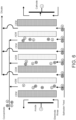
- Electrodialysis utilizes stacks of alternating anion exchange membranes (AEMs) and cation exchange membranes (CEMs) with compartments between the membranes for introduction of saline feedwater situated between an anode and a cathode. An electric current is applied that drives anions from the feedwater toward the positive electrode and cations toward the negative electrode ( FIG. 6 ).
- the CEMs are comprised of polyelectrolyte polymers that have fixed anions on their structure.
- the sulfonated poly(arylene ether)s of this invention similarly have fixed anions on their structures, so they may function as CEMs.
- the membranes and reject co-anions e.g., transport sodium ions and reject chloride ions.
- the AEMs contain fixed cations and those membranes must selectively transport anions and reject co-cations (e.g., transport chloride and reject sodium ions).
- the selectivity is driven by electrostatic Donnan exclusion of co-ions by the membrane fixed ions.
- the concentration of fixed ions on the membrane should be high. This means that the number of fixed ions per gram of dry polymer should be high and the amount of absorbed water should be kept relatively low.
- electrodialysis membranes should be as thin as possible to minimize electrical resistance since more energy is required to run the desalination process as electrical resistance increases.
- Electrodialysis membranes may comprise crosslinked polyelectrolytes that are synthesized by free radical copolymerization.
- Common commercial monomers include chloromethylstyrene-divinylbenzene that can be post-aminated to make AEMs, sulfonated styrenedivinylbenzene to make CEMs, or alternative monomers as shown in FIG. 7 .
- the mechanical properties of commercial AEMs and CEMs are poor, so they must be reinforced with substantial amounts of hydrophobic polymers to be used in electrodialysis stacks. This increases areal electrical resistance in electrodialysis processes that require additional energy to operate and reduces effective membrane area, which increases capital costs.
- the sulfonated poly(arylene ether)s of the present invention have superior mechanical properties relative to conventional CEMs, and thus may not require as much support by hydrophobic polymers.
- oligomers were reacted with a multifunctional epoxy reagent, tetraglycidyl bis(aminophenyl)methane (TGBAM), as shown in FIG. 8 to make crosslinked membranes.
- TGBAM tetraglycidyl bis(aminophenyl)methane
- the amount of fixed sulfonate anions on these linear and crosslinked copolymers is expressed as the ion exchange capacity (IEC) in units of milliequivalents per gram of dry polymer.
- IEC ion exchange capacity
- Table 1 Table 1
- the crosslinked XLB60-10 (60% disulfonated with a 10,000 g/mole oligomer) has an IEC of 2.03 and a water uptake of only 63% whereas the linear BPS-50 with 50% of the comonomer units disulfonated and an IEC of 1.93 (entry number 8 in Table 1) has a much higher water uptake of 105%.
- the fixed ion concentrations (moles of ions/Liter of absorbed water) are inherently higher for the networks relative to the analogous linear copolymers.
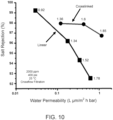
- the linear BPS-40 with 40% of the units disulfonated has a water uptake of 55% and an IEC of 1.78 while crosslinked membranes with IECs of 1.6 (water uptake of 26.6%) and 1.85 (water uptake of 41.3%) have significantly better sodium chloride rejection.
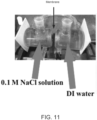
- Sodium chloride permeability was measured by monitoring the conductivity of a receptor solution as the ions diffused through a series of crosslinked disulfonated poly(arylene ether sulfone) membranes. The diffusion cell is depicted in FIG. 11 .
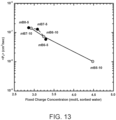
- FIG. 12 and FIG. 13 illustrate the decrease in salt passage with decreased water uptake and the corresponding desirable decrease in salt passage as the fixed charge concentration in the membranes is increased, respectively.
- the Manning parameter which characterizes the dimensionless fixed charge density, should be high to maintain selective low co-ion absorption and transport, and the Manning parameter decreases as the average distance between fixed charges on the membrane is increased. Methods to calculate the Manning parameter are set forth in J. Kamcev, M. Galizia, F.M. Benedetti, E.-S. Jang, D.R. Paul, B.D. Freeman, and G.S.
- results of sodium chloride rejection capacities in mixed sodium chloride/calcium chloride feeds are shown in Table 2.
- the water permeability (L ⁇ m m -2 h -1 bar -1 or cm 2 s -1 ), salt permeability (cm 2 s -1 ), salt rejection (%) and water/NaCl selectivity were determined at 25 °C using stainless steel crossflow cells.
- the pressure difference across the membrane (18.75 cm 2 ) was 400 psi.
- the initial aqueous feed contained 2000 ppm NaCl, and the feed solution was circulated past the samples at a continuous flow rate of 3.8 L min -1 .
- mBPS-XX copolymers (II) has sulfonate ions on isolated rings whereas BPS-XX (IV) has sulfonate ions in sets of two on adjacent sulfone rings. Both sets are random copolymers.
- copolymers that have the sulfonate ions distributed along the chain in sets of two that were prepared from the pre-disulfonated monomer (structure IV) uptake significantly more water relative to those that have the sulfonate ions on the isolated rings that were prepared from the pre-monosulfonated monomer (structure II) (Table 3).
- Table 3 Table 3.
- Example 1 Synthesis of monosulfonated dichlorodiphenylsulfone monomer.
- 4,4'-Dichlorodiphenylsulfone (17.4 mmol, 5 g) was introduced into a 250-mL, round bottom flask equipped with a mechanical stirrer and condenser, and purged with nitrogen for 5 minutes. The nitrogen flow was stopped and fuming sulfuric acid (19.1 mmol, 4.8 mL) was introduced to the reaction flask.
- the 4,4'-dichlorodiphenylsulfone dissolved in the fuming sulfuric acid at room temperature. When dissolution was complete, the oil bath temperature was raised to 100°C. The reaction was allowed to proceed for 6-7 hours.
- the reaction mixture was cooled to room temperature, then the reaction flask was placed in an ice bath. Over 10 minutes, a mixture of DI water (40 mL) and ice (40 g) was slowly added to the reaction while stirring. After complete addition of the ice water, the reaction was heated to 65 °C and NaCl (30 g) was slowly added to precipitate the mixture. The mixture was filtered and the filtrate was returned to the reaction flask. DI water (100 mL) was added to the flask to form a suspension that contained both insoluble and soluble products. The suspension was neutralized by slowly adding 10 M aqueous NaOH solution. The neutralization was constantly checked with litmus paper.
- the suspension was re-precipitated by adding NaCl (30 g) at 65 °C.
- the precipitate was filtered and the solid filtrate was collected.
- the solid was dissolved in a DI water (70 mL) and CHCl 3 (30 mL) mixture and the aqueous layer was collected.
- 1-Butanol 150 mL was added to the aqueous layer and the mixture was shaken and allowed to separate.
- the 1-butanol layer was collected, dried over MgSO 4 , and filtered. After solvent evaporation via rotary evaporator, the product was collected with a yield of 59%.
- the monosulfonated 4,4'-dichlorodiphenylsulfone did not melt up to the limit of 300 °C of the melting point apparatus.
- Example 2 A mBPS-80 with 80% of the repeat units monosulfonated was synthesized as follows. Biphenol (14.96 mmol, 2.7863 g), 4,4'-dichlorodiphenylsulfone (2.2445 mmol, 0.6445 g), monosulfonated 4,4'-dichlorodiphenylsulfone (12.85 mmol, 5.00 g), and DMAc (45 mL) were charged into a 250-mL three neck round bottom flask equipped with a mechanical stirrer, condenser, nitrogen inlet, and Dean-Stark trap filled with toluene. The mixture was stirred in an oil bath at 150 °C until the monomers completely dissolved.
- Example 3 Synthesis of a linear sulfonated poly(arylene ether sulfone) with isolated sulfonated rings by post-sulfonation.
- Aromatic nucleophilic substitution step copolymerization was used to synthesize a series of hydroquinone-based poly(arylene ether sulfone) copolymers (HQS xx).
- HQS-60 with 60% of the repeat units containing hydroquinone was synthesized as follows.
- the reaction was refluxed for 6 hours to azeotropically remove water from the system. Toluene was drained from the Dean-Stark trap, and the oil bath temperature was raised to 200 °C to remove residual toluene from the reaction. The reaction solution was stirred for 47 hours at 200°C. The reaction mixture was hot filtered to remove salts and precipitated in DI water. The polymer was stirred in boiling DI water for 4 hours to remove any residual solvent. The polymer was filtered and dried at 120 °C under reduced pressure in a vacuum oven.
- Example 4 Oligomer Synthesis with the Pre-monosulfonated Monomer.
- the reaction scheme for the synthesis is shown in FIG. 16 .
- the molecular weights may be controlled by adjusting the stoichiometry of the monomers and terminating reagents according to methods well known for step-growth polymerizations.
- the following procedure is for a 10,000 g/mole oligomer terminated with crosslinkable tetrafluorostyrene endgroups.
- the reaction vessel was immersed in an oil bath and heated to 150 °C to azeotropically dry the mixture for 4 hours.
- the toluene was drained from the Dean-Stark trap and the oil bath temperature was increased to 180 °C for 48 hours.
- the reaction was allowed to cool to room temperature, then pentafluorostyrene (72.44 mmol, 10 mL) was added to the reaction vessel, and the mixture was heated to 110 °C for 2 hours.
- the reaction was diluted with dimethylacetamide (80 mL) and allowed to cool to room temperature.
- the reaction mixture was precipitated into stirring isopropyl alcohol (2500 mL), resulting in a white polymer.
- the polymer was filtered and added to stirring deionized water (3000 mL) at room temperature overnight to remove salts and residual DMAc.
- the polymer was isolated and dried in vacuo at 65 °C for 48 hours to obtain an 87% yield.
- Example 5 Crosslinking a thin film of the ⁇ 10, 000 g / mole oligomer described above by free radical polymerization.
- the oligomer (0.4 g) was dissolved in 1 mL of dimethylacetamide.
- AIBN (0.008 g) was dissolved in the mixture.
- a clean glass plate was placed in an oven that was continuously purged with nitrogen, the plate was levelled, then heated to 80 °C.
- the polymer solution in DMAc was poured onto the plate and a doctor's blade with a gap of ⁇ 70 microns was utilized to spread the solution across the plate.
- the 80 °C temperature was maintained for 20 minutes, then the film was immersed in deionized water to delaminate the film from the glass plate.
- the film was boiled in deionized water for 2 hours to remove residual dimethylacetamide, then dried under vacuum at 140°C for 24 hours. Thermogravimetric analysis showed that ⁇ 2% of dimethylacetamide/water remained. The film was submerged in dimethylacetamide for 24 hours at room temperature to extract the sol fraction. The mixture was vacuum filtered, and the gel fraction was dried for 24 hours at 140°C under vacuum. Thermogravimetric analysis showed ⁇ 5wt% dimethylacetamide remaining. The gel fraction was 85 wt %.
- Another example reacted a mixture of the 10,000 g/mole tetrafluorostyrene terminated oligomer with a 2000 g/mole tetrafluorostyrene terminated oligomer.
- the oligomer mixture (0.7 g) contained the 10,000 g/mole oligomer (0.585 g) and the 2000 g/mole oligomer (0.115 g) and 17 mg of AIBN dissolved in 1.75 mL of dimethylacetamide. The mixture was cured under nitrogen at 80 °C for 20 minutes. The gel fraction after exhaustive extraction with dimethylacetamide was 70%.
- Another example reacted a mixture of the 10,000 g/mole tetrafluorostyrene terminated oligomer with a 2000 g/mole tetrafluorostyrene terminated oligomer with divinylbenzene as a low molecular weight reactant.
- the oligomer mixture (0.7 g) contained the 10,000 g/mole oligomer (0.585 g) and the 2000 g/mole oligomer (0.115 g).
- Divinylbenzene (7 mg) and 17 mg of AIBN were dissolved in 1.75 mL of dimethylacetamide. The mixture was cured under nitrogen at 80 °C for 20 minutes. The gel fraction after exhaustive extraction with dimethylacetamide was 57%.
- the ⁇ 10,000 g/mole tetrafluorostyrene-functional oligomer described above was cured with light.
- the oligomer (0.4 g) and 4 mg of 2,4,6-trimethylbenzoyl-diphenylphosphine oxide (TPO) were dissolved in 0.9 mL of dimethylacetamide plus 0.1 mL of diethylene glycol. The solution was cast on a glass plate and cured at 60 °C with 365 nm light for 3 seconds. The gel fraction of the film was 92% after exhaustive extraction with dimethylacetamide.
- Blends of different molecular weight oligomers with functional endgroups can be cured by free radical polymerization either thermally or photochemically.
- a blend of a minor amount of a 2,000 g/mole tetrafluorostyrene terminated oligomer can be mixed with a major amount of a 10,000 g/mole tetrafluorostyrene terminated oligomer and cured in a similar manner to that designated above in example 5.
- small amounts of low molecular weight monomers e.g., ⁇ 1-5 weight percent of divinylbenzene, may also be co-cured with such mixtures.
- the disclosure provides controlled post-sulfonation of linear non-sulfonated poly(arylene ether sulfone)s, some that contained hydroquinone comonomers and some that contained biphenol, have also been achieved.
- the hydroquinone (or biphenol) rings in the copolymers should be the only rings that are activated for electrophilic aromatic sulfonation. By using mild sulfonation conditions, those activated rings can be quantitatively monosulfonated (for hydroquinone) or disulfonated (for biphenol) without sulfonating any of the other positions on the backbone.
- controlled molecular weight end-functional oligomers can be prepared, then selectively post-sulfonated only on positions that are activated for electrophilic aromatic substitution.
- This inventive aspect has the advantage over other membranes in that no monosulfonated or disulfonated monomers are required.
- the method affords a means to prepare crosslinked sulfonated polysulfone networks without the need to synthesize pre-formed sulfonated monomers.
- the method allows for controlling both the level of sulfonation and also the distribution of sulfonate anions along the oligomer backbones. These networks provide a means for improving the fixed charge concentration without the necessity of synthesizing and purifying new monomers.
- the disclosure provides that historically, the post-sulfonation route led to uncontrolled sequences of sulfonic acid groups along the chains unless special compositions were utilized.
- post-sulfonation as an approach for sulfonating poly(arylene ether sulfone)s was abandoned due to poor control over the extent of sulfonation, inability to control the microstructure of the sulfonated units, and decrease in molecular weight due to chain scission during sulfonation.
- post sulfonated polysulfone membranes were found to be resistant to degradation by chlorine but showed relatively low salt rejections relative to the stateof-the-art interfacial polyamides.
- controlled post-sulfonation of poly(arylene ether sulfone)s that contained hydroquinone or biphenol units may be performed. The sulfonation reaction may proceed only at the hydroquinone (or biphenol) because all of the other rings were deactivated toward electrophilic aromatic sulfonation by the electron withdrawing sulfone groups.
- the disclosure provides description of various embodiments - Synthesis and characterization of controlled molecular weight oligomers that are made by post-sulfonation with crosslinkable endgroups.
- a systematic series of oligomers with a range of hydroquinone content was synthesized by varying the ratio of bisphenol sulfone and hydroquinone monomers. The polymerization takes place via the carbonate method in which K 2 CO 3 deprotonates the phenol monomers to form an anionic nucleophile. The nucleophile attacks the electronegative carbon attached to the halogen, with release of the halogen. Only a slight excess of K 2 CO 3 was utilized to avoid any hydrolysis of the halogen functional monomer, thus in turn, preventing unwanted endgroups.
- the disclosure provides that a reaction using post-sulfonation to generate controlled molecular weight aminophenol-terminated oligomers by post-sulfonation is provided.
- the first step is synthesis of the non-sulfonated oligomer
- the second step is post-sulfonation
- the third step is regeneration of the amine endgroups and conversion of the pendent sulfonic acid groups to salts.
- the hydroquinone units become sulfonated because all of the other rings are selected to be deactivated toward the electrophilic aromatic sulfonation reaction, so that they do not react under the mild conditions used for the post-sulfonation.
- the hydroquinone sulfonations are quantitative, thus allowing control over the degree of sulfonation by controlling how much hydroquinone is charged into the reaction, even though an excess of sulfuric acid is used in the post-sulfonation reaction.
- Rose showed ( U.S. 4,273,903, John B. Rose, inventor, to Imperial Chemical Industries, Ltd., June 16, 1981 ) selective sulfonation of the hydroquinone but he did not discuss any method for forming controlled molecular weight oligomers so that they could be functionalized with amine endgroups or with other types of functional endgroups. So the Rose patent does not disclose crosslinking reactions or crosslinked polymers.
- the copolymer moieties derived from the bisphenol sulfone do not post-sulfonate but the moieties derived from the hydroquinone do.
- An example utilizing biphenol instead of hydroquinone is provided herein. During post-sulfonation, it sulfonates with approximately one ion on each ring (the use of biphenol is not included in Rose's 1981 patent).
- each R can independently be H or CH 3 :
- Example 6 Synthesis of amine terminated hydroquinone polysulfone oligomers for subsequent post-sulfonation and crosslinking.
- a reaction to prepare a 10,000 g/mole M n , amine-terminated oligomer with 50 mole % of the bisphenol moieties being hydroquinone is provided. It is recognized that other molecular weights may be synthesized by adjusting the stoichiometry of the reactants.
- 4,4'-Dichlorodiphenylsulfone (14.358 g, 50 mmol) was added into the reaction and the reaction temperature was raised to 200-210°C. After 48 hours, the mixture was allowed to cool to ⁇ 150 °C and then diluted with 40 mL of N,N- dimethylacetamide. The solution was filtered hot to remove salts and subsequently precipitated in isopropanol. The polymer was boiled in water with 3 changes of water to remove trace amounts of sulfolane and then dried at 50 °C for 4 hours, followed by 12 hours under vacuum at 110 °C. The reaction had a yield of 97%.
- Example 7 Synthesis of amine terminated, biphenol polysulfone oligomers for subsequent post-sulfonation and crosslinking.
- a reaction to prepare a 10,000 g/mole M n , amine-terminated oligomer with 28 mole % of the bisphenol moieties being biphenol is provided.
- Biphenol (4.34 g, 0.0233 moles), bisphenol sulfone (15 g, 0.06 moles), and m- aminophenol (0.828 g, 0.0076 moles) were dissolved in 123 mL of sulfolane in a 3-neck round bottom flask equipped with a nitrogen inlet, overhead stirrer, and condenser with a Dean Stark trap.
- the reaction temperature was controlled with a temperature controller connected to a thermocouple in a salt bath.
- Toluene (34 mL) and K 2 CO 3 (13.80 g, 0.10 moles) were added and the reaction was refluxed at 180-185 °C to azeotropically remove any water. After ⁇ 4 hours, the toluene was removed from the Dean Stark trap.
- 4,4'-dichlorodiphenylsulfone 24.97 g, 0.087 moles was added into the reaction flask and the temperature was raised to 200-210 °C. After 48 hours, the mixture was allowed to cool to ⁇ 150 °C and then diluted with 30 mL of N,N- dimethylactamide.
- the mixture was hot-filtered, then kept above the melting point of sulfolane (27.5 °C) while it was precipitated in isopropanol to remove traces of solvents.
- the polymer was boiled in water with 3 changes of water to remove trace amounts of sulfolane and then dried at 50 °C for 4 hours, followed by 12 hours under vacuum at 110 °C.
- Example 8 Post sulfonation of amine-terminated, hydroquinone polysulfone oligomers.
- a dry 10,000 g/mole M n hydroquinone polysulfone oligomer (10 g) was dissolved in 100 mL of concentrated sulfuric acid in a 3-neck round bottom flask equipped with a nitrogen inlet and thermometer, overhead stirrer, and a condenser. An oil bath was used to maintain a reaction temperature of 50 °C. After 2 hours of reaction, the solution was precipitated into ice-cold water, then rinsed with water to remove excess acid until litmus paper showed no traces of acid in the filtrate.
- the sulfonated polysulfone oligomer with ammonium endgroups was converted to the salt form and the ammonium endgroups were converted to amines by stirring in 0.1 M aq. NaOH for 6 hours.
- the amine terminated sulfonated hydroquinone polysulfone oligomer was filtered and dried at 50 °C for 7 hours at atmospheric pressure, then for 12 hours under vacuum at 110 °C.
- Proton NMR showed that the hydroquinone units had been sulfonated. A water insoluble product was obtained and no degradation of the oligomer was observed.
- the sulfonic acid groups were only substituted on the activated hydroquinone for electrophilic aromatic substitution due to the mild reaction conditions.
- FIG. 17 provides a 1 H NMR spectrum of a 10k-65-HQS oligomer showing quantitative terminal endgroup functionality.
- the fraction of hydroquinonecontaining units were confirmed from the 1 H NMR spectra ( FIG. 17 ).
- the integral corresponding to the amine peaks (I) was standardized at 4 and integration of the cluster of peaks from the protons adjacent to the sulfone groups was subtracted from the integrals of the cluster of peaks B, B 1 , and C, to yield the number of protons on the hydroquinone units.
- molecular weights of the oligomers were calculated.
- FIG. 18 provides a 1 H NMR of 10k-65-SHQS. Quantitative monosulfonation of the hydroquinone rings in the oligomers was confirmed by 1 H NMR as shown in FIG. 18 . Due to the presence of water and the hydrophilicity, broad peaks were observed. However, appearance of the peak C' was observed simultaneously with a disappearance or reduction in C peaks. Correlation 1 H NMR spectroscopy ( FIG. 19 ) confirmed that the C' peak corresponded to the proton next to the sulfonic acid group since it did not correlate to any other proton. FIG. 19 provides COSY NMR data of 10k-65-SHQS confirming sulfonation only on the hydroquinone units.
- the disclosure provides End group analysis of the oligomers by fluorine derivatization.
- the amine terminated oligomers with amine and any residual phenolic end groups were reacted with trifluoroacetic anhydride to produce the respective trifluoroacetate derivatives.
- the reaction for the derivatization of a 5,000 g/mole, amine-terminated oligomer with 50 mole % of the bisphenol moieties being hydroquinone (50-HQS-5k) is provided.
- 50-HQS-5k oligomer 200 mg, 0.040 mmol
- amine end groups and possibly unreacted hydroxyl end groups was dissolved in 5 mL of CHCl 3 in a 25-mL flask and trifluoroacetic anhydride (0.5 mL, 3.53 mmol) was added.
- the reaction mixture was held at 25 °C for 12 hours.
- DI water 100 mL was added to the reaction mixture to hydrolyze the remaining anhydride, and the mixture was stirred at room temperature for 2 hours.
- the organic phase was analyzed by 19 F NMR.
- FIG. 25 provides an overview of the synthesis of controlled molecular weight random oligomers by nucleophilic aromatic substitution.
- X 0.40, 0.50, 0.65, 0.80.
- FIG. 27 provides an overview of the fluorine derivatization of the oligomers to check for unreacted monomers and completion of the reaction.
- the disclosure provides that to confirm the absence of undesirable residual phenol or chlorine end groups after the reaction, the oligomer was derivatized with trifluoroacetic anhydride as shown in FIG. 27 .
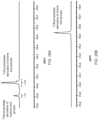
- the anhydride reacts with the amine end groups forming a derivative that resonates at ⁇ -74 ppm in the 19 F NMR spectrum ( FIG. 28A and 28B ).
- the anhydride also reacts with any unreacted end groups of Bis-S or hydroquinone, resonating downfield from the amine.
- An aliquot taken at 24 hours showed that there was one equivalent of phenol from Bis-S for very five equivalents of amine. However, an aliquot taken at 36 hours showed successful completion of the reaction.
- FIG. 27 The anhydride reacts with the amine end groups forming a derivative that resonates at ⁇ -74 ppm in the 19 F NMR spectrum ( FIG. 28A and 28B ).
- the anhydride also reacts with any unreacted end groups of Bis-S
- FIG. 28A provides 19 F NMR spectra of the oligomers showing unreacted hydroxyl end groups and amine groups of the oligomer-aliquot at 24 h of the reaction and
- FIG. 28B provides 19 F NMR spectra of only amine end groups of the oligomer-aliquot at 36 h of the reaction.
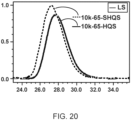
- FIG. 20 provides light scattering SEC curves of 10k-65-SHQS and 10k-65-HQS to confirm the molecular weights.
- FIG. 20 displays symmetric light scattering curves. The elution times of the sulfonated oligomers were lower than their non-sulfonated counterparts ( FIG. 20 ).
- the molecular weights and percentages of hydroquinone units are shown in Table 4. Table 4. Summary of molecular weights.
- Example 10 Crosslinking of amine-terminated, post-sulfonated, hydroquinone polysulfone oligomers with epoxy reagents.
- Film casting involved crosslinking of the post-sulfonated telechelic oligomers with the crosslinking agent TGBAM utilizing triphenylphosphine as a catalyst.
- the crosslinking reaction was conducted above the Tgs of the oligomers, which were suppressed by the solvent (DMAc).
- the IECs of the crosslinked networks were lower than the precursor oligomers due to incorporation of the hydrophobic TGBAM.
- the fixed charge concentration was calculated as the ratio of IEC to water uptake. High gel fractions ( ⁇ 90%) were observed for all of the networks.
- the disclosure provides that a crosslinking reaction for a 10,000 g/mole oligomer is provided.
- a 10,000 g/mole M n , amine-terminated, post-sulfonated hydroquinone polysulfone oligomer (0.046 mmol, 0.63 g), tetraglycidyl bis( p -aminophenyl)methane (0.114 mmol, 0.048 g) and triphenylphosphine (5.5 ⁇ 10 -3 mmol, 1.44 mg) were dissolved in 8 mL of N,N- dimethylacetamide. The solution was syringe-filtered through a 0.45 ⁇ m polytetrafluoroethylene filter.
- the solution was cast on a circular Teflon mold with flat edges and a diameter of 10 cm.
- the mold was placed on a levelled surface in an oven at 70 °C.
- the temperature was ramped from 70 to 175 °C over 6 hours and the film was cured at 175 °C for 12 hours.
- the epoxy-cured network was detached from the Teflon mold by immersion in deionized water and dried.
- FIG. 21A provides a graph of modulus vs water uptake for fully hydrated membranes
- FIG. 21B provides a plot of yield strength vs water uptake for fully hydrated membranes
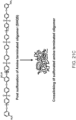
- FIG. 21C provides a schematic illustration of crosslinking of post-sulfonated amine terminated oligomers.
- FIG. 22A provides stress strain curves of fully hydrated membranes with a 5k-XX-SHQS series
- FIG. 22B provides stress strain curves of fully hydrated membranes with a 10k-XX-SHQS series.
- the 5,000 g/mole series networks were restricted to ⁇ 5.5% ultimate strains. This could be attributed to hydrostatic forces becoming much greater than the elastic forces of the polymer network as the networks absorbed more water.
- the 10,000 g/mole oligomer networks had higher water uptakes than the 5000 g/mole counterparts, likely attributable in part to the lower amount of hydrophobic crosslinking reagent used to crosslink the 10,000 g/mole oligomer.
- the crosslinking agent not only decreased the hydrophilicity of the system due to inherent hydrophobicity but it also reduced the flexibility of the 5000 g/mole networks to a greater extent than the networks prepared with the 10,000 g/mole oligomers. This made the networks with the 5000 g/mole oligomers more brittle than those containing the 10,000 g/mole prepolymers. Hence, networks that contained the 10,000 g/mole prepolymers were more flexible due to the higher chain length between crosslinks.
- Example 11 Reaction of amine-terminated, post-sulfonated polysulfone oligomers with endgroups for subsequent free radical crosslinking, then crossinking the oligomers with light.
- Amine-terminated, post-sulfonated polysulfone oligomers can be reacted with acrylate and methacrylate reagents to produce acrylate, methacrylate, acrylamide or methacrylamide endgroups. These functional oligomers can then be crosslinked thermally or with light by free radical polymerization.
- the disclosure provides that functionalization of an amine-terminated, post-sulfonated hydroquinone polysulfone oligomer with acryloyl chloride to produce a post-sulfonated oligomer crosslinkable by free radical polymerization.
- the disclosure provides that a procedure for synthesizing an ⁇ 10,000 g/mole M n , amine-terminated, post-sulfonated hydroquinone polysulfone oligomer with 40% of the repeat units sulfonated is provided.
- the oligomer (2 g, 2 ⁇ 10 -4 equivalents of amine) was dissolved in a mixture of 30 mL of N,N- dimethylacetamide and 15 mL of toluene in a 2-neck, round bottom flask equipped with a Dean Stark trap topped with a condenser and a nitrogen inlet.
- the mixture was azeotroped in an oil bath set at 160 °C to remove any water for 4 hours.
- the oligomer (0.4 g) and 1 mg of 2,4,6-trimethylbenzoyl-diphenylphosphine oxide (TPO) were dissolved in 0.5 mL of dimethylacetamide plus 0.5 mL of diethylene glycol.
- the solution was cast on a glass plate and cured with 385-nm light at 60 °C for 5 minutes.
- the cast membrane had a gel fraction of 92% after exhaustive extraction with dimethylacetamide.
- Post-sulfonation of phenol terminated oligomers then functionalization of terminal groups for free radical polymerization.
- Post-sulfonated oligomers can also be prepared with phenol endgroups by offsetting the stoichiometry according to known methods to control molecular weight, then further functionalized so that they can be crosslinked by free radical polymerization using either heat or light in conjunction with an initiator.
- the procedure involves synthesizing the oligomer containing bisphenol sulfone together with a bisphenol that can be selectively sulfonated under mild conditions, post-sulfonating the oligomer, then further reacting the phenol terminated sulfonated oligomer with pentafluorostyrene, acryloyl chloride or isocyanatoethyl acrylate, methacryloyl chloride or isocyanatoethyl methacrylate to form crosslinkable endgroups. These can be further reacted in the presence of either thermal, or UV initiators with light, to produce crosslinked networks.
- the networks with tetrafluorostyrene endgroups would be expected to be particularly chlorine stable.
- the salt permeabilities of the polymer networks were measured under a concentration gradient where the upstream salt concentration was kept constant for all measurements.
- the salt permeabilities are plotted against water uptake and fixed charge concentration ( FIG. 23 and FIG. 24 ). It was observed that with a decrease in water content in the networks, the salt permeability decreased for all of the networks ( FIG. 23 ). However, this trend depended upon the block length of the prepolymers.
- the 5,000 g/mole oligomers contain an average of just ⁇ 10 repeat units which is on the threshold of entanglement length and this may make both their hydrated mechanical properties and their transport properties more sensitive toward even small changes in water uptake or fixed charge concentration. However, the 10,000 g/mole blocks are likely more entangled and this may explain why their mechanical and transport properties were less sensitive to changes in water uptake or fixed charge concentration than the networks with the 5000 g/mole oligomers.
- Electrodialysis requires a high selectivity of counterions vs. co-ions and a high counterion permeability. Counterion permeability increases with increases in water content as water offers a medium of flow to the ions. However, this water uptake should be optimized, as an increase in water uptake causes a decrease in fixed charge concentration, especially in the case of linear ion exchange polymeric membranes. Low co-ion permeability, which manifests itself as low salt permeability, is not only a necessity in ED but also in other desalination processes, such as RO and forward osmosis, which utilize ion exchange membranes and where a high salt rejection is desirable. To optimize the water uptake and the fixed charge concentration, the membranes of this invention were crosslinked.
- the salt permeability was somewhat mitigated by crosslinking.
- the 10k-65-SHQS displays these optimal properties, not only in terms of water uptake and salt permeability, but also in the hydrated mechanical properties. It displayed a hydrated modulus of ⁇ 700 MPa.
- the cured membranes imbibed higher amounts of water with increasing degrees of sulfonation but they remained in the glassy state even when fully hydrated.
- the yield stresses of the fully hydrated, crosslinked networks ranged from approximately 10-25 MPa.
- the non-sulfonated and sulfonated oligomers were characterized by quantitative 1 H NMR to calculate the molecular weights and degrees of sulfonation ( FIG. 17 and FIG. 18 ). Completion of the reaction was confirmed by the absence of peaks of undesired end groups in the spectra. The spectra were normalized using the peaks from the amine end groups.
- the A, A1 signals overlapped and resonated at 7.88 to 8.02 ppm.
- the I peaks from the amine end groups resonated at 5.33 ppm.
- the C protons of the hydroquinone resonated at 7.2 ppm.
- the C protons shifted downfield to 7.45 ppm due to the electron withdrawing nature of the sulfonic acid groups that deshielded the protons.
- the amine end groups were acidified during the sulfonation at 50 °C for 2 hours, shifting the peaks downfield.
- the sulfonated oligomers were stirred in a solution of 0.1N NaOH to recover the amine end groups.
- the degree of sulfonation was calculated from the spectra of the sulfonated oligomers, and the ion exchange capacities were calculated using the degrees of sulfonation (Equation 3).
- DS is the degree of sulfonation
- MW SRU is the molecular weight of the sulfonated repeat unit in the Na + form
- MW NSRU is the molecular weight of the non-sulfonated repeat unit.
- IEC oligomer 1000 ⁇ DS DS ⁇ MW SRU + 1 ⁇ DS ⁇ MW NSRU
- FIG. 19 provides COSY-NMR of a sulfonated oligomer with a target molecular weight of ⁇ 5000 g/mol and 65% hydroquinone containing repeat units (65-SHQS-5k).
- FIG. 33 provides a plot showing fixed charge concentrations of the linear and the crosslinked ( ⁇ 5000 g/mole) membranes as a function of their ion exchange capacities.
- the IECs of the crosslinked membranes were calculated from the IECs of the oligomers measured by 1 H NMR, by taking into account the addition of the non-ionic crosslinking agent (Equation 4).
- the water uptakes of crosslinked membranes have been reported to be constrained due to reduced swelling and free volume. This is evident for the systems discussed in this example in FIG.
- IEC crosslinked membrane IEC oligomer ⁇ weight fraction of oligomer in the membrane
- the fixed charge concentration of the membranes is defined as the concentration of fixed ions on the polymer per unit of sorbed water (Equation 5 where ⁇ w is assumed to be 1 g/cc).
- C A m concentration of fixed ions on the polymer per unit of sorbed water
- C A m concentration of fixed ions on the polymer per unit of sorbed water
- C A m concentration of fixed ions on the polymer per unit of sorbed water
- C A m ⁇ IEC ⁇ ⁇ w water uptake
- Increasing the membrane fixed charge concentration increases the Donnan potential, which should lead to better co-ion and salt rejection.
- increasing the fixed charge groups in the polymer matrix can increase the fixed charge concentration.
- increasing the IEC also increases the water uptake of the membranes which acts to reduce the fixed charge concentration.
- FIG. 34 provides a plot showing water uptake of the linear and the crosslinked membranes ( ⁇ 5000 g/mole) as a function of their ion exchange capacities.
- FIG. 35 provides plots showing yield stress and elastic modulus decreases with an increase in water uptake for the crosslinked and linear SHQS membranes.
- the tensile data ( FIG. 35 ) showed that increasing water uptake decreased the elastic modulus and the yield stress in the crosslinked networks. This phenomenon occurred due to the plasticization effect of water independent of the degree of crosslinking.
- the high dielectric constant of the water reduces the van der Waals forces between the polymer chains, leading to an increase in the free volume and chain mobility.
Landscapes
- Chemical & Material Sciences (AREA)
- Chemical Kinetics & Catalysis (AREA)
- Organic Chemistry (AREA)
- Engineering & Computer Science (AREA)
- Health & Medical Sciences (AREA)
- Medicinal Chemistry (AREA)
- Polymers & Plastics (AREA)
- Water Supply & Treatment (AREA)
- General Chemical & Material Sciences (AREA)
- Manufacturing & Machinery (AREA)
- Life Sciences & Earth Sciences (AREA)
- Environmental & Geological Engineering (AREA)
- Nanotechnology (AREA)
- Hydrology & Water Resources (AREA)
- Wood Science & Technology (AREA)
- Materials Engineering (AREA)
- Separation Using Semi-Permeable Membranes (AREA)
- Polyethers (AREA)
- Treatment Of Water By Oxidation Or Reduction (AREA)
- Compositions Of Macromolecular Compounds (AREA)
- Manufacture Of Macromolecular Shaped Articles (AREA)
Applications Claiming Priority (3)
| Application Number | Priority Date | Filing Date | Title |
|---|---|---|---|
| US201862628349P | 2018-02-09 | 2018-02-09 | |
| US201862628347P | 2018-02-09 | 2018-02-09 | |
| PCT/US2019/017396 WO2019157407A1 (en) | 2018-02-09 | 2019-02-09 | Sulfonated poly(arylene ether) membranes with high monovalent salt rejection even in the presence of mixed salt feeds that contain multivalent salts |
Publications (4)
| Publication Number | Publication Date |
|---|---|
| EP3749440A1 EP3749440A1 (en) | 2020-12-16 |
| EP3749440A4 EP3749440A4 (en) | 2022-04-13 |
| EP3749440C0 EP3749440C0 (en) | 2025-05-14 |
| EP3749440B1 true EP3749440B1 (en) | 2025-05-14 |
Family
ID=67548608
Family Applications (1)
| Application Number | Title | Priority Date | Filing Date |
|---|---|---|---|
| EP19750604.1A Active EP3749440B1 (en) | 2018-02-09 | 2019-02-09 | Sulfonated poly(arylene ether) membranes |
Country Status (8)
| Country | Link |
|---|---|
| US (1) | US11525034B2 (https=) |
| EP (1) | EP3749440B1 (https=) |
| JP (2) | JP7670268B2 (https=) |
| CN (1) | CN112770831B (https=) |
| AU (1) | AU2019216955B2 (https=) |
| ES (1) | ES3028539T3 (https=) |
| SG (1) | SG11202007541VA (https=) |
| WO (2) | WO2019157377A1 (https=) |
Families Citing this family (6)
| Publication number | Priority date | Publication date | Assignee | Title |
|---|---|---|---|---|
| WO2019157377A1 (en) | 2018-02-09 | 2019-08-15 | Board Of Regents, The University Of Texas System | Sulfonated poly(arylene ether) membranes with high monovalent salt rejection even in the presence of mixed salt feeds that contain multivalent salts |
| CN112752789A (zh) * | 2018-09-25 | 2021-05-04 | 懿华水处理技术有限责任公司 | 通过uv引发的聚合的离子交换膜 |
| CN111393580B (zh) * | 2020-04-02 | 2022-12-13 | 宁夏清研高分子新材料有限公司 | 一种聚芳醚砜复合材料及其制备方法 |
| CN113214484B (zh) * | 2021-05-13 | 2025-02-14 | 山东浩然特塑股份有限公司 | 一种聚砜树脂及其制备方法和应用、一种复合反渗透膜 |
| FR3129148B1 (fr) | 2021-11-17 | 2025-11-21 | Arkema France | Purification de peroxyde d’hydrogène sur membrane |
| KR102807424B1 (ko) | 2024-05-08 | 2025-05-15 | 한국화학연구원 | 유기산 음이온의 분리 선택성이 증진된 이온교환막 및 이를 이용한 분리 장치 |
Family Cites Families (30)
| Publication number | Priority date | Publication date | Assignee | Title |
|---|---|---|---|---|
| FR2040950A5 (https=) | 1969-04-30 | 1971-01-22 | Rhone Poulenc Sa | |
| DE2964904D1 (en) | 1978-09-05 | 1983-03-31 | Ici Plc | Sulphonated polyarylethersulphone copolymers and process for the manufacture thereof |
| JPS5536296A (en) * | 1978-09-05 | 1980-03-13 | Ici Ltd | Sulfonated polyaryletherketone |
| EP0041780A1 (en) * | 1980-06-10 | 1981-12-16 | Imperial Chemical Industries Plc | Sulphonated polyaryletherketones |
| US4414368A (en) * | 1982-12-27 | 1983-11-08 | Albany International Corp. | Chlorosulfonated polysulfones and derivatives thereof |
| EP0574791B1 (de) * | 1992-06-13 | 1999-12-22 | Aventis Research & Technologies GmbH & Co. KG | Polymerelektrolyt-Membran und Verfahren zu ihrer Herstellung |
| JP3724064B2 (ja) | 1996-06-28 | 2005-12-07 | 住友化学株式会社 | 燃料電池用高分子電解質及び燃料電池 |
| DE19909028A1 (de) * | 1999-03-02 | 2000-09-07 | Aventis Res & Tech Gmbh & Co | Sulfonierte aromatische Polymere, Membran enthaltend diese Polymeren, Verfahren zu deren Herstellung und deren Verwendung |
| US6982303B2 (en) * | 2000-05-19 | 2006-01-03 | Jochen Kerres | Covalently cross-linked polymers and polymer membranes via sulfinate alkylation |
| GB0123109D0 (en) * | 2001-09-26 | 2001-11-14 | Victrex Mfg Ltd | Cells |
| JP3973503B2 (ja) * | 2002-07-11 | 2007-09-12 | 三井化学株式会社 | 燃料電池用イオン伝導性結着剤、電極形成用組成物およびワニス、並びに燃料電池 |
| CN1292015C (zh) * | 2002-10-08 | 2006-12-27 | 东洋纺织株式会社 | 含有磺酸基的聚亚芳基醚系化合物、含有其的组合物及其制备方法 |
| JP2005015607A (ja) * | 2003-06-25 | 2005-01-20 | Toyobo Co Ltd | スルホン化ポリマー、そのスルホン化ポリマーを含む組成物、成形物、燃料電池用プロトン交換膜およびそのスルホン化ポリマーの製造方法 |
| GB0400626D0 (en) * | 2004-01-13 | 2004-02-11 | Johnson Matthey Plc | Polymer |
| WO2006093257A1 (ja) * | 2005-03-04 | 2006-09-08 | Ube Industries, Ltd. | 新規高分子電解質、高分子電解質組成物、電解質膜およびその製造法と用途 |
| JP5028828B2 (ja) * | 2005-03-10 | 2012-09-19 | 住友化学株式会社 | ポリアリーレン系ブロック共重合体及びその用途 |
| WO2007084759A2 (en) * | 2006-01-18 | 2007-07-26 | Board Of Regents, The University Of Texas System | Chlorine resistant desalination membranes based on directly sulfonated poly(arylene ether sulfone) copolymers |
| JP2010510370A (ja) * | 2006-11-22 | 2010-04-02 | グワンジュ・インスティテュート・オブ・サイエンス・アンド・テクノロジー | 末端に架橋構造を形成するスルホン化ポリ(アリーレンエーテル)共重合体、その製造方法、及びそれを利用した高分子電解質膜 |
| ITMI20071034A1 (it) | 2007-05-23 | 2008-11-24 | St Microelectronics Srl | Sintesi e caratterizzazione di una nuova membrana a scambio protonico (pem) per applicazioni in celle a combustibile |
| KR100934529B1 (ko) * | 2007-10-11 | 2009-12-29 | 광주과학기술원 | 고분자 사슬 내부에 가교구조를 가지는 술폰화된폴리(아릴렌 에테르) 공중합체, 고분자 사슬 내부 및말단에 가교구조를 가지는 술폰화된 폴리(아릴렌 에테르)공중합체 및 이를 이용하는 고분자 전해질막 |
| EP2048182A1 (en) * | 2007-10-11 | 2009-04-15 | Gwangju Institute of Science and Technology | Sulfonate poly(arylene ether) having crosslinkable moiety combined in chain of polymer, sulfonated poly(arylene ether) having crosslinkable moieties combined in polymer and at polymer end group, and polymer electrolyte membrane using sulfonated poly(arylene ether) |
| US8378003B2 (en) * | 2007-12-05 | 2013-02-19 | The Board Of Trustees Of The University Of Illinois | Highly permeable polymeric membranes |
| US9861941B2 (en) * | 2011-07-12 | 2018-01-09 | Kraton Polymers U.S. Llc | Modified sulfonated block copolymers and the preparation thereof |
| US9199205B2 (en) * | 2012-04-20 | 2015-12-01 | Basf Se | Ultrafiltration membranes fabricated from sulfonated polyphenylenesulfones |
| JP6211059B2 (ja) * | 2012-04-20 | 2017-10-11 | ビーエーエスエフ ソシエタス・ヨーロピアBasf Se | スルホン化ポリフェニレンスルホンから製造された限外ろ過膜 |
| EP2674211A1 (en) * | 2012-06-14 | 2013-12-18 | Basf Se | Composite membranes comprising a sulfonated polyphenylenesulfone and their use in forward osmosis processes |
| KR20160067720A (ko) * | 2014-12-04 | 2016-06-14 | 주식회사 엘지화학 | 중합체 및 이를 포함하는 고분자 전해질막 |
| US10862151B2 (en) * | 2015-08-17 | 2020-12-08 | National Institute For Materials Science | Polyphenylsulfone-based proton conducting polymer electrolyte, proton conducting solid polymer electrolyte membrane, electrode catalyst layer for solid polymer fuel cells, method for producing electrode catalyst layer for slid polymer fuel cells, and fuel cell |
| WO2017220363A1 (en) * | 2016-06-20 | 2017-12-28 | Basf Se | Process for removing arsenic compounds from aqueous systems |
| WO2019157377A1 (en) | 2018-02-09 | 2019-08-15 | Board Of Regents, The University Of Texas System | Sulfonated poly(arylene ether) membranes with high monovalent salt rejection even in the presence of mixed salt feeds that contain multivalent salts |
-
2019
- 2019-02-08 WO PCT/US2019/017349 patent/WO2019157377A1/en not_active Ceased
- 2019-02-09 JP JP2020543106A patent/JP7670268B2/ja active Active
- 2019-02-09 ES ES19750604T patent/ES3028539T3/es active Active
- 2019-02-09 SG SG11202007541VA patent/SG11202007541VA/en unknown
- 2019-02-09 CN CN201980023709.4A patent/CN112770831B/zh active Active
- 2019-02-09 WO PCT/US2019/017396 patent/WO2019157407A1/en not_active Ceased
- 2019-02-09 AU AU2019216955A patent/AU2019216955B2/en active Active
- 2019-02-09 EP EP19750604.1A patent/EP3749440B1/en active Active
-
2020
- 2020-07-31 US US16/945,457 patent/US11525034B2/en active Active
-
2024
- 2024-11-08 JP JP2024195898A patent/JP2025026900A/ja active Pending
Also Published As
| Publication number | Publication date |
|---|---|
| JP2025026900A (ja) | 2025-02-26 |
| EP3749440A4 (en) | 2022-04-13 |
| ES3028539T3 (en) | 2025-06-19 |
| AU2019216955A1 (en) | 2020-09-10 |
| EP3749440C0 (en) | 2025-05-14 |
| CN112770831A (zh) | 2021-05-07 |
| AU2019216955B2 (en) | 2023-08-10 |
| WO2019157377A1 (en) | 2019-08-15 |
| JP2021520420A (ja) | 2021-08-19 |
| JP7670268B2 (ja) | 2025-04-30 |
| SG11202007541VA (en) | 2020-09-29 |
| CN112770831B (zh) | 2023-09-29 |
| US11525034B2 (en) | 2022-12-13 |
| US20200362107A1 (en) | 2020-11-19 |
| WO2019157407A1 (en) | 2019-08-15 |
| EP3749440A1 (en) | 2020-12-16 |
Similar Documents
| Publication | Publication Date | Title |
|---|---|---|
| EP3749440B1 (en) | Sulfonated poly(arylene ether) membranes | |
| US8028842B2 (en) | Chlorine resistant desalination membranes based on directly sulfonated poly(arylene ether sulfone) copolymers | |
| US8455557B2 (en) | Membranes, coatings and films and methods for their preparation | |
| US9120062B2 (en) | High performance positively charged composite membranes and their use in nanofiltration processes | |
| WO2012081026A2 (en) | Anion exchange membranes, methods of preparation and uses | |
| US8574462B2 (en) | High temperature stable polyelectrolytes having backbone aromatic groups | |
| Chen et al. | Densely quaternized anion exchange membranes synthesized from Ullmann coupling extension of ionic segments for vanadium redox flow batteries | |
| JP2003528212A (ja) | イオン交換材料 | |
| JP2003528187A (ja) | イオン交換材料 | |
| JP6312148B2 (ja) | 高性能の正荷電複合膜及びそれらをナノろ過プロセスに用いる使用 | |
| EP3723896A1 (en) | Removing metal ions with a membrane based on anionic polyarylene ethersulfone and a cationic polymer with amino groups | |
| CA2454698C (en) | Ion-conducting polymeric materials | |
| Jiang et al. | Poly (arylpiperidine) anion-exchange membranes utilizing varied side-chain cross-linking for enhanced electrodialytic ion separation in alkaline waste treatment | |
| HK40053029B (zh) | 即使在包含多价盐的混合盐进料的存在下对单价盐具有高脱除率的磺化聚(亚芳基醚)膜 | |
| HK40053029A (en) | Sulfonated poly(arylene ether) membranes with high monovalent salt rejection even in the presence of mixed salt feeds that contain multivalent salts | |
| KR20110066629A (ko) | 다중황산기를 포함하는 다중페닐 단위체를 지닌 양이온 교환 고분자 | |
| KR20100095725A (ko) | 말단에 가교구조를 형성하는 술폰화된 폴리(아릴렌 에테르)로 이루어진 염제거막 | |
| KR20110034842A (ko) | 사슬 내부에 가교구조를 형성하는 술폰화된 폴리(아릴렌 에터) 공중합체로 이루어진 고분자 염제거막 | |
| Paul et al. | 3. CHAPTER-3-Synthesis and Crosslinking of Partially Disulfonated Poly (Arylene Ether Sulfone) Random Copolymers as Candidates for Chlorine Resistant Reverse Osmosis Membranes | |
| Joseph et al. | Synthesis and Characterization of Mono-and Disulfonated Polyimide Membranes | |
| Paul | Synthesis, crosslinking and characterization of disulfonated poly (arylene ether sulfone) s for application in reverse osmosis and proton exchange membranes | |
| Liu et al. | Amphiphilic Block Copolymers with Ionically Cross-Linkable Side Chains for Monovalent Selective Cation Exchange Membranes Enable Highly Efficient Separation | |
| KR20110062845A (ko) | 폴리(아릴렌 에테르) 공중합체, 이의 제조방법, 및 이의 용도 |
Legal Events
| Date | Code | Title | Description |
|---|---|---|---|
| STAA | Information on the status of an ep patent application or granted ep patent |
Free format text: STATUS: THE INTERNATIONAL PUBLICATION HAS BEEN MADE |
|
| PUAI | Public reference made under article 153(3) epc to a published international application that has entered the european phase |
Free format text: ORIGINAL CODE: 0009012 |
|
| STAA | Information on the status of an ep patent application or granted ep patent |
Free format text: STATUS: REQUEST FOR EXAMINATION WAS MADE |
|
| 17P | Request for examination filed |
Effective date: 20200730 |
|
| AK | Designated contracting states |
Kind code of ref document: A1 Designated state(s): AL AT BE BG CH CY CZ DE DK EE ES FI FR GB GR HR HU IE IS IT LI LT LU LV MC MK MT NL NO PL PT RO RS SE SI SK SM TR |
|
| AX | Request for extension of the european patent |
Extension state: BA ME |
|
| DAV | Request for validation of the european patent (deleted) | ||
| DAX | Request for extension of the european patent (deleted) | ||
| RIC1 | Information provided on ipc code assigned before grant |
Ipc: C08G 75/23 20060101ALI20211012BHEP Ipc: C02F 103/08 20060101ALI20211012BHEP Ipc: B01D 71/52 20060101ALI20211012BHEP Ipc: B01D 71/68 20060101AFI20211012BHEP |
|
| A4 | Supplementary search report drawn up and despatched |
Effective date: 20220316 |
|
| RIC1 | Information provided on ipc code assigned before grant |
Ipc: C08G 75/23 20060101ALI20220310BHEP Ipc: C02F 103/08 20060101ALI20220310BHEP Ipc: B01D 71/52 20060101ALI20220310BHEP Ipc: B01D 71/68 20060101AFI20220310BHEP |
|
| STAA | Information on the status of an ep patent application or granted ep patent |
Free format text: STATUS: EXAMINATION IS IN PROGRESS |
|
| 17Q | First examination report despatched |
Effective date: 20240502 |
|
| GRAP | Despatch of communication of intention to grant a patent |
Free format text: ORIGINAL CODE: EPIDOSNIGR1 |
|
| STAA | Information on the status of an ep patent application or granted ep patent |
Free format text: STATUS: GRANT OF PATENT IS INTENDED |
|
| INTG | Intention to grant announced |
Effective date: 20241209 |
|
| GRAS | Grant fee paid |
Free format text: ORIGINAL CODE: EPIDOSNIGR3 |
|
| GRAA | (expected) grant |
Free format text: ORIGINAL CODE: 0009210 |
|
| STAA | Information on the status of an ep patent application or granted ep patent |
Free format text: STATUS: THE PATENT HAS BEEN GRANTED |
|
| AK | Designated contracting states |
Kind code of ref document: B1 Designated state(s): AL AT BE BG CH CY CZ DE DK EE ES FI FR GB GR HR HU IE IS IT LI LT LU LV MC MK MT NL NO PL PT RO RS SE SI SK SM TR |
|
| REG | Reference to a national code |
Ref country code: GB Ref legal event code: FG4D |
|
| REG | Reference to a national code |
Ref country code: CH Ref legal event code: EP |
|
| REG | Reference to a national code |
Ref country code: IE Ref legal event code: FG4D |
|
| U01 | Request for unitary effect filed |
Effective date: 20250514 |
|
| U07 | Unitary effect registered |
Designated state(s): AT BE BG DE DK EE FI FR IT LT LU LV MT NL PT RO SE SI Effective date: 20250520 |
|
| REG | Reference to a national code |
Ref country code: ES Ref legal event code: FG2A Ref document number: 3028539 Country of ref document: ES Kind code of ref document: T3 Effective date: 20250619 |
|
| PG25 | Lapsed in a contracting state [announced via postgrant information from national office to epo] |
Ref country code: GR Free format text: LAPSE BECAUSE OF FAILURE TO SUBMIT A TRANSLATION OF THE DESCRIPTION OR TO PAY THE FEE WITHIN THE PRESCRIBED TIME-LIMIT Effective date: 20250815 Ref country code: NO Free format text: LAPSE BECAUSE OF FAILURE TO SUBMIT A TRANSLATION OF THE DESCRIPTION OR TO PAY THE FEE WITHIN THE PRESCRIBED TIME-LIMIT Effective date: 20250814 |
|
| PG25 | Lapsed in a contracting state [announced via postgrant information from national office to epo] |
Ref country code: PL Free format text: LAPSE BECAUSE OF FAILURE TO SUBMIT A TRANSLATION OF THE DESCRIPTION OR TO PAY THE FEE WITHIN THE PRESCRIBED TIME-LIMIT Effective date: 20250514 |
|
| PG25 | Lapsed in a contracting state [announced via postgrant information from national office to epo] |
Ref country code: HR Free format text: LAPSE BECAUSE OF FAILURE TO SUBMIT A TRANSLATION OF THE DESCRIPTION OR TO PAY THE FEE WITHIN THE PRESCRIBED TIME-LIMIT Effective date: 20250514 |
|
| PG25 | Lapsed in a contracting state [announced via postgrant information from national office to epo] |
Ref country code: RS Free format text: LAPSE BECAUSE OF FAILURE TO SUBMIT A TRANSLATION OF THE DESCRIPTION OR TO PAY THE FEE WITHIN THE PRESCRIBED TIME-LIMIT Effective date: 20250814 |
|
| PG25 | Lapsed in a contracting state [announced via postgrant information from national office to epo] |
Ref country code: IS Free format text: LAPSE BECAUSE OF FAILURE TO SUBMIT A TRANSLATION OF THE DESCRIPTION OR TO PAY THE FEE WITHIN THE PRESCRIBED TIME-LIMIT Effective date: 20250914 |
|
| PG25 | Lapsed in a contracting state [announced via postgrant information from national office to epo] |
Ref country code: SM Free format text: LAPSE BECAUSE OF FAILURE TO SUBMIT A TRANSLATION OF THE DESCRIPTION OR TO PAY THE FEE WITHIN THE PRESCRIBED TIME-LIMIT Effective date: 20250514 |
|
| PG25 | Lapsed in a contracting state [announced via postgrant information from national office to epo] |
Ref country code: CZ Free format text: LAPSE BECAUSE OF FAILURE TO SUBMIT A TRANSLATION OF THE DESCRIPTION OR TO PAY THE FEE WITHIN THE PRESCRIBED TIME-LIMIT Effective date: 20250514 |
|
| PG25 | Lapsed in a contracting state [announced via postgrant information from national office to epo] |
Ref country code: SK Free format text: LAPSE BECAUSE OF FAILURE TO SUBMIT A TRANSLATION OF THE DESCRIPTION OR TO PAY THE FEE WITHIN THE PRESCRIBED TIME-LIMIT Effective date: 20250514 |
|
| U20 | Renewal fee for the european patent with unitary effect paid |
Year of fee payment: 8 Effective date: 20260119 |
|
| PLBE | No opposition filed within time limit |
Free format text: ORIGINAL CODE: 0009261 |
|
| STAA | Information on the status of an ep patent application or granted ep patent |
Free format text: STATUS: NO OPPOSITION FILED WITHIN TIME LIMIT |
|
| REG | Reference to a national code |
Ref country code: CH Ref legal event code: L10 Free format text: ST27 STATUS EVENT CODE: U-0-0-L10-L00 (AS PROVIDED BY THE NATIONAL OFFICE) Effective date: 20260325 |
|
| PGFP | Annual fee paid to national office [announced via postgrant information from national office to epo] |
Ref country code: GB Payment date: 20260119 Year of fee payment: 8 |
|
| PGFP | Annual fee paid to national office [announced via postgrant information from national office to epo] |
Ref country code: ES Payment date: 20260305 Year of fee payment: 8 |
|
| PGFP | Annual fee paid to national office [announced via postgrant information from national office to epo] |
Ref country code: TR Payment date: 20260206 Year of fee payment: 8 |
|
| 26N | No opposition filed |
Effective date: 20260217 |