EP3708142A1 - Wasser-in-öl-emulsionszusammensetzung mit hydrophoben sphärischen sol-gel-siliciumdioxid-feinteilchen - Google Patents
Wasser-in-öl-emulsionszusammensetzung mit hydrophoben sphärischen sol-gel-siliciumdioxid-feinteilchen Download PDFInfo
- Publication number
- EP3708142A1 EP3708142A1 EP18876023.5A EP18876023A EP3708142A1 EP 3708142 A1 EP3708142 A1 EP 3708142A1 EP 18876023 A EP18876023 A EP 18876023A EP 3708142 A1 EP3708142 A1 EP 3708142A1
- Authority
- EP
- European Patent Office
- Prior art keywords
- water
- fine particles
- silica fine
- gel silica
- hydrophobic
- Prior art date
- Legal status (The legal status is an assumption and is not a legal conclusion. Google has not performed a legal analysis and makes no representation as to the accuracy of the status listed.)
- Pending
Links
- VYPSYNLAJGMNEJ-UHFFFAOYSA-N Silicium dioxide Chemical compound O=[Si]=O VYPSYNLAJGMNEJ-UHFFFAOYSA-N 0.000 title claims abstract description 318
- 239000010419 fine particle Substances 0.000 title claims abstract description 152
- 239000000377 silicon dioxide Substances 0.000 title claims abstract description 151
- 239000000203 mixture Substances 0.000 title claims abstract description 76
- 230000002209 hydrophobic effect Effects 0.000 title claims abstract description 73
- 239000007762 w/o emulsion Substances 0.000 title claims abstract description 37
- XLYOFNOQVPJJNP-UHFFFAOYSA-N water Substances O XLYOFNOQVPJJNP-UHFFFAOYSA-N 0.000 claims abstract description 61
- 239000000126 substance Substances 0.000 claims abstract description 39
- 239000004094 surface-active agent Substances 0.000 claims abstract description 25
- 239000002245 particle Substances 0.000 claims description 69
- 239000003921 oil Substances 0.000 claims description 31
- 125000004432 carbon atom Chemical group C* 0.000 claims description 29
- 229910000077 silane Inorganic materials 0.000 claims description 27
- 238000009826 distribution Methods 0.000 claims description 26
- 150000002430 hydrocarbons Chemical group 0.000 claims description 23
- 229920002545 silicone oil Polymers 0.000 claims description 16
- 238000006243 chemical reaction Methods 0.000 claims description 10
- 125000004435 hydrogen atom Chemical group [H]* 0.000 claims description 7
- BLRPTPMANUNPDV-UHFFFAOYSA-N Silane Chemical compound [SiH4] BLRPTPMANUNPDV-UHFFFAOYSA-N 0.000 claims description 6
- 150000001875 compounds Chemical class 0.000 claims description 6
- 239000004215 Carbon black (E152) Substances 0.000 claims description 5
- 229930195733 hydrocarbon Natural products 0.000 claims description 5
- 229910004738 SiO1 Inorganic materials 0.000 claims description 3
- 150000002191 fatty alcohols Chemical class 0.000 claims 1
- 238000003860 storage Methods 0.000 abstract description 23
- 239000002537 cosmetic Substances 0.000 abstract description 16
- 238000002360 preparation method Methods 0.000 abstract description 14
- 239000000839 emulsion Substances 0.000 description 60
- 239000006185 dispersion Substances 0.000 description 39
- -1 dimethylsiloxane Chemical class 0.000 description 32
- 239000012071 phase Substances 0.000 description 32
- OKKJLVBELUTLKV-UHFFFAOYSA-N Methanol Chemical compound OC OKKJLVBELUTLKV-UHFFFAOYSA-N 0.000 description 30
- 230000015572 biosynthetic process Effects 0.000 description 30
- 238000003786 synthesis reaction Methods 0.000 description 30
- 235000019198 oils Nutrition 0.000 description 28
- 238000000034 method Methods 0.000 description 17
- 230000000052 comparative effect Effects 0.000 description 13
- 125000005372 silanol group Chemical group 0.000 description 13
- 239000007787 solid Substances 0.000 description 13
- LFQSCWFLJHTTHZ-UHFFFAOYSA-N Ethanol Chemical compound CCO LFQSCWFLJHTTHZ-UHFFFAOYSA-N 0.000 description 12
- 230000002776 aggregation Effects 0.000 description 12
- FFUAGWLWBBFQJT-UHFFFAOYSA-N hexamethyldisilazane Chemical compound C[Si](C)(C)N[Si](C)(C)C FFUAGWLWBBFQJT-UHFFFAOYSA-N 0.000 description 12
- 239000002904 solvent Substances 0.000 description 11
- QGZKDVFQNNGYKY-UHFFFAOYSA-N Ammonia Chemical compound N QGZKDVFQNNGYKY-UHFFFAOYSA-N 0.000 description 10
- 229920001296 polysiloxane Polymers 0.000 description 10
- 238000004381 surface treatment Methods 0.000 description 10
- 125000001495 ethyl group Chemical group [H]C([H])([H])C([H])([H])* 0.000 description 9
- 239000007788 liquid Substances 0.000 description 9
- 125000002496 methyl group Chemical group [H]C([H])([H])* 0.000 description 9
- 239000003960 organic solvent Substances 0.000 description 8
- 239000000243 solution Substances 0.000 description 8
- 238000003756 stirring Methods 0.000 description 8
- 125000003545 alkoxy group Chemical group 0.000 description 7
- 230000007062 hydrolysis Effects 0.000 description 7
- 238000006460 hydrolysis reaction Methods 0.000 description 7
- 239000000463 material Substances 0.000 description 7
- 238000005054 agglomeration Methods 0.000 description 6
- 238000004220 aggregation Methods 0.000 description 6
- 125000000217 alkyl group Chemical group 0.000 description 6
- 230000001186 cumulative effect Effects 0.000 description 6
- 230000001804 emulsifying effect Effects 0.000 description 6
- 239000000843 powder Substances 0.000 description 6
- 125000001436 propyl group Chemical group [H]C([*])([H])C([H])([H])C([H])([H])[H] 0.000 description 6
- BOTDANWDWHJENH-UHFFFAOYSA-N Tetraethyl orthosilicate Chemical compound CCO[Si](OCC)(OCC)OCC BOTDANWDWHJENH-UHFFFAOYSA-N 0.000 description 5
- 238000001035 drying Methods 0.000 description 5
- 239000000413 hydrolysate Substances 0.000 description 5
- 125000001449 isopropyl group Chemical group [H]C([H])([H])C([H])(*)C([H])([H])[H] 0.000 description 5
- LFQCEHFDDXELDD-UHFFFAOYSA-N tetramethyl orthosilicate Chemical compound CO[Si](OC)(OC)OC LFQCEHFDDXELDD-UHFFFAOYSA-N 0.000 description 5
- VHUUQVKOLVNVRT-UHFFFAOYSA-N Ammonium hydroxide Chemical compound [NH4+].[OH-] VHUUQVKOLVNVRT-UHFFFAOYSA-N 0.000 description 4
- XMSXQFUHVRWGNA-UHFFFAOYSA-N Decamethylcyclopentasiloxane Chemical compound C[Si]1(C)O[Si](C)(C)O[Si](C)(C)O[Si](C)(C)O[Si](C)(C)O1 XMSXQFUHVRWGNA-UHFFFAOYSA-N 0.000 description 4
- 125000004122 cyclic group Chemical group 0.000 description 4
- MTHSVFCYNBDYFN-UHFFFAOYSA-N diethylene glycol Chemical compound OCCOCCO MTHSVFCYNBDYFN-UHFFFAOYSA-N 0.000 description 4
- 229910052731 fluorine Inorganic materials 0.000 description 4
- 125000001153 fluoro group Chemical group F* 0.000 description 4
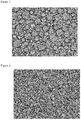
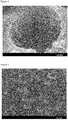
- 238000001000 micrograph Methods 0.000 description 4
- 239000007764 o/w emulsion Substances 0.000 description 4
- 238000012856 packing Methods 0.000 description 4
- 238000001179 sorption measurement Methods 0.000 description 4
- CPUDPFPXCZDNGI-UHFFFAOYSA-N triethoxy(methyl)silane Chemical compound CCO[Si](C)(OCC)OCC CPUDPFPXCZDNGI-UHFFFAOYSA-N 0.000 description 4
- DNIAPMSPPWPWGF-GSVOUGTGSA-N (R)-(-)-Propylene glycol Chemical compound C[C@@H](O)CO DNIAPMSPPWPWGF-GSVOUGTGSA-N 0.000 description 3
- ZWEHNKRNPOVVGH-UHFFFAOYSA-N 2-Butanone Chemical compound CCC(C)=O ZWEHNKRNPOVVGH-UHFFFAOYSA-N 0.000 description 3
- UIVPNOBLHXUKDX-UHFFFAOYSA-N 3,5,5-trimethylhexyl 3,5,5-trimethylhexanoate Chemical compound CC(C)(C)CC(C)CCOC(=O)CC(C)CC(C)(C)C UIVPNOBLHXUKDX-UHFFFAOYSA-N 0.000 description 3
- PEDCQBHIVMGVHV-UHFFFAOYSA-N Glycerine Chemical compound OCC(O)CO PEDCQBHIVMGVHV-UHFFFAOYSA-N 0.000 description 3
- RGMZNZABJYWAEC-UHFFFAOYSA-N Methyltris(trimethylsiloxy)silane Chemical compound C[Si](C)(C)O[Si](C)(O[Si](C)(C)C)O[Si](C)(C)C RGMZNZABJYWAEC-UHFFFAOYSA-N 0.000 description 3
- OQILCOQZDHPEAZ-UHFFFAOYSA-N Palmitinsaeure-octylester Natural products CCCCCCCCCCCCCCCC(=O)OCCCCCCCC OQILCOQZDHPEAZ-UHFFFAOYSA-N 0.000 description 3
- DNIAPMSPPWPWGF-UHFFFAOYSA-N Propylene glycol Chemical compound CC(O)CO DNIAPMSPPWPWGF-UHFFFAOYSA-N 0.000 description 3
- 150000001298 alcohols Chemical class 0.000 description 3
- 229910021529 ammonia Inorganic materials 0.000 description 3
- 125000004429 atom Chemical group 0.000 description 3
- 125000000484 butyl group Chemical group [H]C([*])([H])C([H])([H])C([H])([H])C([H])([H])[H] 0.000 description 3
- 229910052799 carbon Inorganic materials 0.000 description 3
- 229910052801 chlorine Inorganic materials 0.000 description 3
- 125000001309 chloro group Chemical group Cl* 0.000 description 3
- 229920001577 copolymer Polymers 0.000 description 3
- 239000006071 cream Substances 0.000 description 3
- 239000004205 dimethyl polysiloxane Substances 0.000 description 3
- 235000013870 dimethyl polysiloxane Nutrition 0.000 description 3
- PRAKJMSDJKAYCZ-UHFFFAOYSA-N dodecahydrosqualene Natural products CC(C)CCCC(C)CCCC(C)CCCCC(C)CCCC(C)CCCC(C)C PRAKJMSDJKAYCZ-UHFFFAOYSA-N 0.000 description 3
- 150000002148 esters Chemical class 0.000 description 3
- RSIHJDGMBDPTIM-UHFFFAOYSA-N ethoxy(trimethyl)silane Chemical compound CCO[Si](C)(C)C RSIHJDGMBDPTIM-UHFFFAOYSA-N 0.000 description 3
- 239000011521 glass Substances 0.000 description 3
- 229940057995 liquid paraffin Drugs 0.000 description 3
- VLKZOEOYAKHREP-UHFFFAOYSA-N n-Hexane Chemical compound CCCCCC VLKZOEOYAKHREP-UHFFFAOYSA-N 0.000 description 3
- 229920000435 poly(dimethylsiloxane) Polymers 0.000 description 3
- 229920006395 saturated elastomer Polymers 0.000 description 3
- 229920002050 silicone resin Polymers 0.000 description 3
- 238000003980 solgel method Methods 0.000 description 3
- 125000001424 substituent group Chemical group 0.000 description 3
- AAPLIUHOKVUFCC-UHFFFAOYSA-N trimethylsilanol Chemical compound C[Si](C)(C)O AAPLIUHOKVUFCC-UHFFFAOYSA-N 0.000 description 3
- WNWHHMBRJJOGFJ-UHFFFAOYSA-N 16-methylheptadecan-1-ol Chemical compound CC(C)CCCCCCCCCCCCCCCO WNWHHMBRJJOGFJ-UHFFFAOYSA-N 0.000 description 2
- SVTBMSDMJJWYQN-UHFFFAOYSA-N 2-methylpentane-2,4-diol Chemical compound CC(O)CC(C)(C)O SVTBMSDMJJWYQN-UHFFFAOYSA-N 0.000 description 2
- CSCPPACGZOOCGX-UHFFFAOYSA-N Acetone Chemical compound CC(C)=O CSCPPACGZOOCGX-UHFFFAOYSA-N 0.000 description 2
- CIWBSHSKHKDKBQ-JLAZNSOCSA-N Ascorbic acid Chemical compound OC[C@H](O)[C@H]1OC(=O)C(O)=C1O CIWBSHSKHKDKBQ-JLAZNSOCSA-N 0.000 description 2
- WKBOTKDWSSQWDR-UHFFFAOYSA-N Bromine atom Chemical group [Br] WKBOTKDWSSQWDR-UHFFFAOYSA-N 0.000 description 2
- WWZKQHOCKIZLMA-UHFFFAOYSA-N Caprylic acid Natural products CCCCCCCC(O)=O WWZKQHOCKIZLMA-UHFFFAOYSA-N 0.000 description 2
- ROSDSFDQCJNGOL-UHFFFAOYSA-N Dimethylamine Chemical compound CNC ROSDSFDQCJNGOL-UHFFFAOYSA-N 0.000 description 2
- 206010020751 Hypersensitivity Diseases 0.000 description 2
- KFZMGEQAYNKOFK-UHFFFAOYSA-N Isopropanol Chemical compound CC(C)O KFZMGEQAYNKOFK-UHFFFAOYSA-N 0.000 description 2
- TWRXJAOTZQYOKJ-UHFFFAOYSA-L Magnesium chloride Chemical compound [Mg+2].[Cl-].[Cl-] TWRXJAOTZQYOKJ-UHFFFAOYSA-L 0.000 description 2
- CSNNHWWHGAXBCP-UHFFFAOYSA-L Magnesium sulfate Chemical compound [Mg+2].[O-][S+2]([O-])([O-])[O-] CSNNHWWHGAXBCP-UHFFFAOYSA-L 0.000 description 2
- JOOMLFKONHCLCJ-UHFFFAOYSA-N N-(trimethylsilyl)diethylamine Chemical compound CCN(CC)[Si](C)(C)C JOOMLFKONHCLCJ-UHFFFAOYSA-N 0.000 description 2
- LRHPLDYGYMQRHN-UHFFFAOYSA-N N-Butanol Chemical compound CCCCO LRHPLDYGYMQRHN-UHFFFAOYSA-N 0.000 description 2
- AFCARXCZXQIEQB-UHFFFAOYSA-N N-[3-oxo-3-(2,4,6,7-tetrahydrotriazolo[4,5-c]pyridin-5-yl)propyl]-2-[[3-(trifluoromethoxy)phenyl]methylamino]pyrimidine-5-carboxamide Chemical compound O=C(CCNC(=O)C=1C=NC(=NC=1)NCC1=CC(=CC=C1)OC(F)(F)F)N1CC2=C(CC1)NN=N2 AFCARXCZXQIEQB-UHFFFAOYSA-N 0.000 description 2
- 229910020388 SiO1/2 Inorganic materials 0.000 description 2
- FAPWRFPIFSIZLT-UHFFFAOYSA-M Sodium chloride Chemical compound [Na+].[Cl-] FAPWRFPIFSIZLT-UHFFFAOYSA-M 0.000 description 2
- WYURNTSHIVDZCO-UHFFFAOYSA-N Tetrahydrofuran Chemical compound C1CCOC1 WYURNTSHIVDZCO-UHFFFAOYSA-N 0.000 description 2
- 125000001931 aliphatic group Chemical group 0.000 description 2
- 125000003277 amino group Chemical group 0.000 description 2
- 239000003963 antioxidant agent Substances 0.000 description 2
- 235000006708 antioxidants Nutrition 0.000 description 2
- KVYGGMBOZFWZBQ-UHFFFAOYSA-N benzyl nicotinate Chemical compound C=1C=CN=CC=1C(=O)OCC1=CC=CC=C1 KVYGGMBOZFWZBQ-UHFFFAOYSA-N 0.000 description 2
- DCFKHNIGBAHNSS-UHFFFAOYSA-N chloro(triethyl)silane Chemical compound CC[Si](Cl)(CC)CC DCFKHNIGBAHNSS-UHFFFAOYSA-N 0.000 description 2
- IJOOHPMOJXWVHK-UHFFFAOYSA-N chlorotrimethylsilane Chemical compound C[Si](C)(C)Cl IJOOHPMOJXWVHK-UHFFFAOYSA-N 0.000 description 2
- 239000000084 colloidal system Substances 0.000 description 2
- 239000007859 condensation product Substances 0.000 description 2
- 238000006482 condensation reaction Methods 0.000 description 2
- GHVNFZFCNZKVNT-UHFFFAOYSA-N decanoic acid Chemical compound CCCCCCCCCC(O)=O GHVNFZFCNZKVNT-UHFFFAOYSA-N 0.000 description 2
- HPNMFZURTQLUMO-UHFFFAOYSA-N diethylamine Chemical compound CCNCC HPNMFZURTQLUMO-UHFFFAOYSA-N 0.000 description 2
- NOPFSRXAKWQILS-UHFFFAOYSA-N docosan-1-ol Chemical compound CCCCCCCCCCCCCCCCCCCCCCO NOPFSRXAKWQILS-UHFFFAOYSA-N 0.000 description 2
- 238000002296 dynamic light scattering Methods 0.000 description 2
- 239000010696 ester oil Substances 0.000 description 2
- 125000001301 ethoxy group Chemical group [H]C([H])([H])C([H])([H])O* 0.000 description 2
- MVLVMROFTAUDAG-UHFFFAOYSA-N ethyl octadecanoate Chemical compound CCCCCCCCCCCCCCCCCC(=O)OCC MVLVMROFTAUDAG-UHFFFAOYSA-N 0.000 description 2
- LYCAIKOWRPUZTN-UHFFFAOYSA-N ethylene glycol Natural products OCCO LYCAIKOWRPUZTN-UHFFFAOYSA-N 0.000 description 2
- 238000011156 evaluation Methods 0.000 description 2
- 125000003976 glyceryl group Chemical group [H]C([*])([H])C(O[H])([H])C(O[H])([H])[H] 0.000 description 2
- 125000005843 halogen group Chemical group 0.000 description 2
- BXWNKGSJHAJOGX-UHFFFAOYSA-N hexadecan-1-ol Chemical compound CCCCCCCCCCCCCCCCO BXWNKGSJHAJOGX-UHFFFAOYSA-N 0.000 description 2
- 125000004051 hexyl group Chemical group [H]C([H])([H])C([H])([H])C([H])([H])C([H])([H])C([H])([H])C([H])([H])* 0.000 description 2
- 125000002887 hydroxy group Chemical group [H]O* 0.000 description 2
- 239000010410 layer Substances 0.000 description 2
- 239000012528 membrane Substances 0.000 description 2
- 229910052751 metal Inorganic materials 0.000 description 2
- 239000002184 metal Substances 0.000 description 2
- 125000000956 methoxy group Chemical group [H]C([H])([H])O* 0.000 description 2
- BFXIKLCIZHOAAZ-UHFFFAOYSA-N methyltrimethoxysilane Chemical compound CO[Si](C)(OC)OC BFXIKLCIZHOAAZ-UHFFFAOYSA-N 0.000 description 2
- 239000011259 mixed solution Substances 0.000 description 2
- 238000002156 mixing Methods 0.000 description 2
- GLDOVTGHNKAZLK-UHFFFAOYSA-N octadecan-1-ol Chemical compound CCCCCCCCCCCCCCCCCCO GLDOVTGHNKAZLK-UHFFFAOYSA-N 0.000 description 2
- HMMGMWAXVFQUOA-UHFFFAOYSA-N octamethylcyclotetrasiloxane Chemical compound C[Si]1(C)O[Si](C)(C)O[Si](C)(C)O[Si](C)(C)O1 HMMGMWAXVFQUOA-UHFFFAOYSA-N 0.000 description 2
- 238000005191 phase separation Methods 0.000 description 2
- 229940057874 phenyl trimethicone Drugs 0.000 description 2
- BASFCYQUMIYNBI-UHFFFAOYSA-N platinum Chemical compound [Pt] BASFCYQUMIYNBI-UHFFFAOYSA-N 0.000 description 2
- 239000011164 primary particle Substances 0.000 description 2
- 102000004196 processed proteins & peptides Human genes 0.000 description 2
- 108090000765 processed proteins & peptides Proteins 0.000 description 2
- 230000005855 radiation Effects 0.000 description 2
- SCPYDCQAZCOKTP-UHFFFAOYSA-N silanol Chemical compound [SiH3]O SCPYDCQAZCOKTP-UHFFFAOYSA-N 0.000 description 2
- 235000002639 sodium chloride Nutrition 0.000 description 2
- 239000008279 sol Substances 0.000 description 2
- 239000003381 stabilizer Substances 0.000 description 2
- 150000005846 sugar alcohols Polymers 0.000 description 2
- UQMOLLPKNHFRAC-UHFFFAOYSA-N tetrabutyl silicate Chemical compound CCCCO[Si](OCCCC)(OCCCC)OCCCC UQMOLLPKNHFRAC-UHFFFAOYSA-N 0.000 description 2
- HLZKNKRTKFSKGZ-UHFFFAOYSA-N tetradecan-1-ol Chemical compound CCCCCCCCCCCCCCO HLZKNKRTKFSKGZ-UHFFFAOYSA-N 0.000 description 2
- ZQZCOBSUOFHDEE-UHFFFAOYSA-N tetrapropyl silicate Chemical compound CCCO[Si](OCCC)(OCCC)OCCC ZQZCOBSUOFHDEE-UHFFFAOYSA-N 0.000 description 2
- DENFJSAFJTVPJR-UHFFFAOYSA-N triethoxy(ethyl)silane Chemical compound CCO[Si](CC)(OCC)OCC DENFJSAFJTVPJR-UHFFFAOYSA-N 0.000 description 2
- LINXHFKHZLOLEI-UHFFFAOYSA-N trimethyl-[phenyl-bis(trimethylsilyloxy)silyl]oxysilane Chemical compound C[Si](C)(C)O[Si](O[Si](C)(C)C)(O[Si](C)(C)C)C1=CC=CC=C1 LINXHFKHZLOLEI-UHFFFAOYSA-N 0.000 description 2
- 238000002525 ultrasonication Methods 0.000 description 2
- RSJKGSCJYJTIGS-UHFFFAOYSA-N undecane Chemical compound CCCCCCCCCCC RSJKGSCJYJTIGS-UHFFFAOYSA-N 0.000 description 2
- 238000001291 vacuum drying Methods 0.000 description 2
- PUPZLCDOIYMWBV-UHFFFAOYSA-N (+/-)-1,3-Butanediol Chemical compound CC(O)CCO PUPZLCDOIYMWBV-UHFFFAOYSA-N 0.000 description 1
- BJDAUCLANVMIOB-UHFFFAOYSA-N (3-decanoyloxy-2,2-dimethylpropyl) decanoate Chemical compound CCCCCCCCCC(=O)OCC(C)(C)COC(=O)CCCCCCCCC BJDAUCLANVMIOB-UHFFFAOYSA-N 0.000 description 1
- YYGNTYWPHWGJRM-UHFFFAOYSA-N (6E,10E,14E,18E)-2,6,10,15,19,23-hexamethyltetracosa-2,6,10,14,18,22-hexaene Chemical compound CC(C)=CCCC(C)=CCCC(C)=CCCC=C(C)CCC=C(C)CCC=C(C)C YYGNTYWPHWGJRM-UHFFFAOYSA-N 0.000 description 1
- KKYDYRWEUFJLER-UHFFFAOYSA-N 1,1,2,2,3,3,4,4,5,5,6,6,7,7,10,10,10-heptadecafluorodecyl(trimethoxy)silane Chemical compound CO[Si](OC)(OC)C(F)(F)C(F)(F)C(F)(F)C(F)(F)C(F)(F)C(F)(F)C(F)(F)CCC(F)(F)F KKYDYRWEUFJLER-UHFFFAOYSA-N 0.000 description 1
- RYHBNJHYFVUHQT-UHFFFAOYSA-N 1,4-Dioxane Chemical compound C1COCCO1 RYHBNJHYFVUHQT-UHFFFAOYSA-N 0.000 description 1
- 229940043375 1,5-pentanediol Drugs 0.000 description 1
- GIEMHYCMBGELGY-UHFFFAOYSA-N 10-undecen-1-ol Chemical compound OCCCCCCCCCC=C GIEMHYCMBGELGY-UHFFFAOYSA-N 0.000 description 1
- WAYINTBTZWQNSN-UHFFFAOYSA-N 11-methyldodecyl 3,5,5-trimethylhexanoate Chemical compound CC(C)CCCCCCCCCCOC(=O)CC(C)CC(C)(C)C WAYINTBTZWQNSN-UHFFFAOYSA-N 0.000 description 1
- LGEZTMRIZWCDLW-UHFFFAOYSA-N 14-methylpentadecyl octadecanoate Chemical compound CCCCCCCCCCCCCCCCCC(=O)OCCCCCCCCCCCCCC(C)C LGEZTMRIZWCDLW-UHFFFAOYSA-N 0.000 description 1
- YICVJSOYNBZJAK-UHFFFAOYSA-N 14-methylpentadecyl tetradecanoate Chemical compound CCCCCCCCCCCCCC(=O)OCCCCCCCCCCCCCC(C)C YICVJSOYNBZJAK-UHFFFAOYSA-N 0.000 description 1
- ABEXEQSGABRUHS-UHFFFAOYSA-N 16-methylheptadecyl 16-methylheptadecanoate Chemical compound CC(C)CCCCCCCCCCCCCCCOC(=O)CCCCCCCCCCCCCCC(C)C ABEXEQSGABRUHS-UHFFFAOYSA-N 0.000 description 1
- BFPYWIDHMRZLRN-UHFFFAOYSA-N 17alpha-ethynyl estradiol Natural products OC1=CC=C2C3CCC(C)(C(CC4)(O)C#C)C4C3CCC2=C1 BFPYWIDHMRZLRN-UHFFFAOYSA-N 0.000 description 1
- MPDGHEJMBKOTSU-YKLVYJNSSA-N 18beta-glycyrrhetic acid Chemical compound C([C@H]1C2=CC(=O)[C@H]34)[C@@](C)(C(O)=O)CC[C@]1(C)CC[C@@]2(C)[C@]4(C)CC[C@@H]1[C@]3(C)CC[C@H](O)C1(C)C MPDGHEJMBKOTSU-YKLVYJNSSA-N 0.000 description 1
- RKJGFHYCZPZJPE-UHFFFAOYSA-N 2,2-bis(16-methylheptadecanoyloxymethyl)butyl 16-methylheptadecanoate Chemical compound CC(C)CCCCCCCCCCCCCCC(=O)OCC(CC)(COC(=O)CCCCCCCCCCCCCCC(C)C)COC(=O)CCCCCCCCCCCCCCC(C)C RKJGFHYCZPZJPE-UHFFFAOYSA-N 0.000 description 1
- JNAYPSWVMNJOPQ-UHFFFAOYSA-N 2,3-bis(16-methylheptadecanoyloxy)propyl 16-methylheptadecanoate Chemical compound CC(C)CCCCCCCCCCCCCCC(=O)OCC(OC(=O)CCCCCCCCCCCCCCC(C)C)COC(=O)CCCCCCCCCCCCCCC(C)C JNAYPSWVMNJOPQ-UHFFFAOYSA-N 0.000 description 1
- IRVZFACCNZRHSJ-UHFFFAOYSA-N 2,4,6,8-tetramethyl-2,4,6,8-tetraphenyl-1,3,5,7,2,4,6,8-tetraoxatetrasilocane Chemical compound O1[Si](C)(C=2C=CC=CC=2)O[Si](C)(C=2C=CC=CC=2)O[Si](C)(C=2C=CC=CC=2)O[Si]1(C)C1=CC=CC=C1 IRVZFACCNZRHSJ-UHFFFAOYSA-N 0.000 description 1
- XNWFRZJHXBZDAG-UHFFFAOYSA-N 2-METHOXYETHANOL Chemical compound COCCO XNWFRZJHXBZDAG-UHFFFAOYSA-N 0.000 description 1
- POAOYUHQDCAZBD-UHFFFAOYSA-N 2-butoxyethanol Chemical compound CCCCOCCO POAOYUHQDCAZBD-UHFFFAOYSA-N 0.000 description 1
- ZNQVEEAIQZEUHB-UHFFFAOYSA-N 2-ethoxyethanol Chemical compound CCOCCO ZNQVEEAIQZEUHB-UHFFFAOYSA-N 0.000 description 1
- SVONRAPFKPVNKG-UHFFFAOYSA-N 2-ethoxyethyl acetate Chemical compound CCOCCOC(C)=O SVONRAPFKPVNKG-UHFFFAOYSA-N 0.000 description 1
- LCVHZNSIAYNAGX-UHFFFAOYSA-N 2-ethylhexyl 3,5,5-trimethylhexanoate Chemical compound CCCCC(CC)COC(=O)CC(C)CC(C)(C)C LCVHZNSIAYNAGX-UHFFFAOYSA-N 0.000 description 1
- QPAAEMZKFRASJX-UHFFFAOYSA-N 2-fluoro-2-(1,5,5,6,6-pentafluorocyclohex-2-en-1-yl)-2-triethoxysilyl-1-(1,2,2,3,3,4,4,5,5,6,6-undecafluorocyclohexyl)ethanone Chemical compound FC1(C(C(C(C(C2(C(C(C(C(C2(F)F)(F)F)(F)F)(F)F)(F)F)F)=O)([Si](OCC)(OCC)OCC)F)(C=CC1)F)(F)F)F QPAAEMZKFRASJX-UHFFFAOYSA-N 0.000 description 1
- NCLNAHJFXIKYBY-UHFFFAOYSA-N 2-hexyldecyl 16-methylheptadecanoate Chemical compound CCCCCCCCC(CCCCCC)COC(=O)CCCCCCCCCCCCCCC(C)C NCLNAHJFXIKYBY-UHFFFAOYSA-N 0.000 description 1
- VDHIEQOYPSVNIM-UHFFFAOYSA-N 2-hexyldecyl 2-ethylhexanoate Chemical compound CCCCCCCCC(CCCCCC)COC(=O)C(CC)CCCC VDHIEQOYPSVNIM-UHFFFAOYSA-N 0.000 description 1
- LEACJMVNYZDSKR-UHFFFAOYSA-N 2-octyldodecan-1-ol Chemical compound CCCCCCCCCCC(CO)CCCCCCCC LEACJMVNYZDSKR-UHFFFAOYSA-N 0.000 description 1
- BGRXBNZMPMGLQI-UHFFFAOYSA-N 2-octyldodecyl tetradecanoate Chemical compound CCCCCCCCCCCCCC(=O)OCC(CCCCCCCC)CCCCCCCCCC BGRXBNZMPMGLQI-UHFFFAOYSA-N 0.000 description 1
- HIQIXEFWDLTDED-UHFFFAOYSA-N 4-hydroxy-1-piperidin-4-ylpyrrolidin-2-one Chemical compound O=C1CC(O)CN1C1CCNCC1 HIQIXEFWDLTDED-UHFFFAOYSA-N 0.000 description 1
- BRORPGSJXSLXKN-UHFFFAOYSA-N 6-methylheptyl 3,5,5-trimethylhexanoate Chemical compound CC(C)CCCCCOC(=O)CC(C)CC(C)(C)C BRORPGSJXSLXKN-UHFFFAOYSA-N 0.000 description 1
- LHWUVOILCRBENG-UHFFFAOYSA-N 7-methyloctyl 7-methyloctanoate Chemical compound CC(C)CCCCCCOC(=O)CCCCCC(C)C LHWUVOILCRBENG-UHFFFAOYSA-N 0.000 description 1
- 229910002012 Aerosil® Inorganic materials 0.000 description 1
- 235000019489 Almond oil Nutrition 0.000 description 1
- QGZKDVFQNNGYKY-UHFFFAOYSA-O Ammonium Chemical class [NH4+] QGZKDVFQNNGYKY-UHFFFAOYSA-O 0.000 description 1
- 235000017519 Artemisia princeps Nutrition 0.000 description 1
- 244000065027 Artemisia princeps Species 0.000 description 1
- POMXRTXXYBYTOJ-UHFFFAOYSA-N C(C)C(CCCCC(=O)O)(CC)CC.C(O)C(CC)(CO)CO Chemical compound C(C)C(CCCCC(=O)O)(CC)CC.C(O)C(CC)(CO)CO POMXRTXXYBYTOJ-UHFFFAOYSA-N 0.000 description 1
- MMYWIHOOUIRMRS-UHFFFAOYSA-N CCCCCCCCCCCC.CCCCCCCCCCCCC Chemical compound CCCCCCCCCCCC.CCCCCCCCCCCCC MMYWIHOOUIRMRS-UHFFFAOYSA-N 0.000 description 1
- 239000005632 Capric acid (CAS 334-48-5) Substances 0.000 description 1
- 239000005635 Caprylic acid (CAS 124-07-2) Substances 0.000 description 1
- 229920000742 Cotton Polymers 0.000 description 1
- ZZZCUOFIHGPKAK-UHFFFAOYSA-N D-erythro-ascorbic acid Natural products OCC1OC(=O)C(O)=C1O ZZZCUOFIHGPKAK-UHFFFAOYSA-N 0.000 description 1
- RDOFJDLLWVCMRU-UHFFFAOYSA-N Diisobutyl adipate Chemical compound CC(C)COC(=O)CCCCC(=O)OCC(C)C RDOFJDLLWVCMRU-UHFFFAOYSA-N 0.000 description 1
- IUMSDRXLFWAGNT-UHFFFAOYSA-N Dodecamethylcyclohexasiloxane Chemical compound C[Si]1(C)O[Si](C)(C)O[Si](C)(C)O[Si](C)(C)O[Si](C)(C)O[Si](C)(C)O1 IUMSDRXLFWAGNT-UHFFFAOYSA-N 0.000 description 1
- LVGKNOAMLMIIKO-UHFFFAOYSA-N Elaidinsaeure-aethylester Natural products CCCCCCCCC=CCCCCCCCC(=O)OCC LVGKNOAMLMIIKO-UHFFFAOYSA-N 0.000 description 1
- 241000196324 Embryophyta Species 0.000 description 1
- 102000004190 Enzymes Human genes 0.000 description 1
- 108090000790 Enzymes Proteins 0.000 description 1
- BFPYWIDHMRZLRN-SLHNCBLASA-N Ethinyl estradiol Chemical compound OC1=CC=C2[C@H]3CC[C@](C)([C@](CC4)(O)C#C)[C@@H]4[C@@H]3CCC2=C1 BFPYWIDHMRZLRN-SLHNCBLASA-N 0.000 description 1
- BIVBRWYINDPWKA-VLQRKCJKSA-L Glycyrrhizinate dipotassium Chemical compound [K+].[K+].O([C@@H]1[C@@H](O)[C@H](O)[C@H](O[C@@H]1O[C@H]1CC[C@]2(C)[C@H]3C(=O)C=C4[C@@H]5C[C@](C)(CC[C@@]5(CC[C@@]4(C)[C@]3(C)CC[C@H]2C1(C)C)C)C(O)=O)C([O-])=O)[C@@H]1O[C@H](C([O-])=O)[C@@H](O)[C@H](O)[C@H]1O BIVBRWYINDPWKA-VLQRKCJKSA-L 0.000 description 1
- CMBYOWLFQAFZCP-UHFFFAOYSA-N Hexyl dodecanoate Chemical compound CCCCCCCCCCCC(=O)OCCCCCC CMBYOWLFQAFZCP-UHFFFAOYSA-N 0.000 description 1
- VJFUNCKASZQOPO-UHFFFAOYSA-N N-dioctylsilyl-N-trimethylsilylmethanamine Chemical compound CCCCCCCC[SiH](N(C)[Si](C)(C)C)CCCCCCCC VJFUNCKASZQOPO-UHFFFAOYSA-N 0.000 description 1
- 235000019482 Palm oil Nutrition 0.000 description 1
- 235000019483 Peanut oil Nutrition 0.000 description 1
- 239000004264 Petrolatum Substances 0.000 description 1
- 235000019484 Rapeseed oil Nutrition 0.000 description 1
- 235000019774 Rice Bran oil Nutrition 0.000 description 1
- 235000019485 Safflower oil Nutrition 0.000 description 1
- 240000004534 Scutellaria baicalensis Species 0.000 description 1
- 235000017089 Scutellaria baicalensis Nutrition 0.000 description 1
- 229910020489 SiO3 Inorganic materials 0.000 description 1
- 229910020487 SiO3/2 Inorganic materials 0.000 description 1
- 229920002385 Sodium hyaluronate Polymers 0.000 description 1
- 235000019486 Sunflower oil Nutrition 0.000 description 1
- 241001530209 Swertia Species 0.000 description 1
- BHEOSNUKNHRBNM-UHFFFAOYSA-N Tetramethylsqualene Natural products CC(=C)C(C)CCC(=C)C(C)CCC(C)=CCCC=C(C)CCC(C)C(=C)CCC(C)C(C)=C BHEOSNUKNHRBNM-UHFFFAOYSA-N 0.000 description 1
- 229930003268 Vitamin C Natural products 0.000 description 1
- LPGFSDGXTDNTCB-UHFFFAOYSA-N [3-(16-methylheptadecanoyloxy)-2,2-bis(16-methylheptadecanoyloxymethyl)propyl] 16-methylheptadecanoate Chemical compound CC(C)CCCCCCCCCCCCCCC(=O)OCC(COC(=O)CCCCCCCCCCCCCCC(C)C)(COC(=O)CCCCCCCCCCCCCCC(C)C)COC(=O)CCCCCCCCCCCCCCC(C)C LPGFSDGXTDNTCB-UHFFFAOYSA-N 0.000 description 1
- DRRMRHKHTQRWMB-UHFFFAOYSA-N [3-(2-ethylhexanoyloxy)-2,2-bis(2-ethylhexanoyloxymethyl)propyl] 2-ethylhexanoate Chemical compound CCCCC(CC)C(=O)OCC(COC(=O)C(CC)CCCC)(COC(=O)C(CC)CCCC)COC(=O)C(CC)CCCC DRRMRHKHTQRWMB-UHFFFAOYSA-N 0.000 description 1
- GORMSINSWZJIKL-UHFFFAOYSA-N [3-(2-ethylhexanoyloxy)-2,2-dimethylpropyl] 2-ethylhexanoate Chemical compound CCCCC(CC)C(=O)OCC(C)(C)COC(=O)C(CC)CCCC GORMSINSWZJIKL-UHFFFAOYSA-N 0.000 description 1
- APDDLLVYBXGBRF-UHFFFAOYSA-N [diethyl-(triethylsilylamino)silyl]ethane Chemical compound CC[Si](CC)(CC)N[Si](CC)(CC)CC APDDLLVYBXGBRF-UHFFFAOYSA-N 0.000 description 1
- 239000011149 active material Substances 0.000 description 1
- 125000004423 acyloxy group Chemical group 0.000 description 1
- 150000001335 aliphatic alkanes Chemical class 0.000 description 1
- 150000001336 alkenes Chemical class 0.000 description 1
- 125000003342 alkenyl group Chemical group 0.000 description 1
- 208000026935 allergic disease Diseases 0.000 description 1
- 208000030961 allergic reaction Diseases 0.000 description 1
- 239000008168 almond oil Substances 0.000 description 1
- 150000001413 amino acids Chemical class 0.000 description 1
- 125000000129 anionic group Chemical group 0.000 description 1
- 239000002260 anti-inflammatory agent Substances 0.000 description 1
- 229940121363 anti-inflammatory agent Drugs 0.000 description 1
- 239000002246 antineoplastic agent Substances 0.000 description 1
- 230000003078 antioxidant effect Effects 0.000 description 1
- 239000008346 aqueous phase Substances 0.000 description 1
- BTFJIXJJCSYFAL-UHFFFAOYSA-N arachidyl alcohol Natural products CCCCCCCCCCCCCCCCCCCCO BTFJIXJJCSYFAL-UHFFFAOYSA-N 0.000 description 1
- 229950004580 benzyl nicotinate Drugs 0.000 description 1
- WMNULTDOANGXRT-UHFFFAOYSA-N bis(2-ethylhexyl) butanedioate Chemical compound CCCCC(CC)COC(=O)CCC(=O)OCC(CC)CCCC WMNULTDOANGXRT-UHFFFAOYSA-N 0.000 description 1
- 230000017531 blood circulation Effects 0.000 description 1
- XGZGKDQVCBHSGI-UHFFFAOYSA-N butyl(triethoxy)silane Chemical compound CCCC[Si](OCC)(OCC)OCC XGZGKDQVCBHSGI-UHFFFAOYSA-N 0.000 description 1
- SXPLZNMUBFBFIA-UHFFFAOYSA-N butyl(trimethoxy)silane Chemical compound CCCC[Si](OC)(OC)OC SXPLZNMUBFBFIA-UHFFFAOYSA-N 0.000 description 1
- 229940119162 calendula officinalis flower extract Drugs 0.000 description 1
- 239000003054 catalyst Substances 0.000 description 1
- 125000002091 cationic group Chemical group 0.000 description 1
- 239000001913 cellulose Substances 0.000 description 1
- 229920002678 cellulose Polymers 0.000 description 1
- 229960000541 cetyl alcohol Drugs 0.000 description 1
- 239000003795 chemical substances by application Substances 0.000 description 1
- KOPOQZFJUQMUML-UHFFFAOYSA-N chlorosilane Chemical class Cl[SiH3] KOPOQZFJUQMUML-UHFFFAOYSA-N 0.000 description 1
- 238000004581 coalescence Methods 0.000 description 1
- 229910052681 coesite Inorganic materials 0.000 description 1
- 239000003086 colorant Substances 0.000 description 1
- 238000009833 condensation Methods 0.000 description 1
- 230000005494 condensation Effects 0.000 description 1
- 235000005687 corn oil Nutrition 0.000 description 1
- 239000002285 corn oil Substances 0.000 description 1
- 235000012343 cottonseed oil Nutrition 0.000 description 1
- 239000002385 cottonseed oil Substances 0.000 description 1
- 229910052906 cristobalite Inorganic materials 0.000 description 1
- 229940105984 diethylhexyl succinate Drugs 0.000 description 1
- 229940031769 diisobutyl adipate Drugs 0.000 description 1
- 229940101029 dipotassium glycyrrhizinate Drugs 0.000 description 1
- SZXQTJUDPRGNJN-UHFFFAOYSA-N dipropylene glycol Chemical compound OCCCOCCCO SZXQTJUDPRGNJN-UHFFFAOYSA-N 0.000 description 1
- 229940113120 dipropylene glycol Drugs 0.000 description 1
- 229960000735 docosanol Drugs 0.000 description 1
- LQZZUXJYWNFBMV-UHFFFAOYSA-N dodecan-1-ol Chemical compound CCCCCCCCCCCCO LQZZUXJYWNFBMV-UHFFFAOYSA-N 0.000 description 1
- 230000000694 effects Effects 0.000 description 1
- 229920001971 elastomer Polymers 0.000 description 1
- 239000003995 emulsifying agent Substances 0.000 description 1
- 238000005516 engineering process Methods 0.000 description 1
- 150000002170 ethers Chemical class 0.000 description 1
- 229960002568 ethinylestradiol Drugs 0.000 description 1
- DMMXZLMYEUEJFT-UHFFFAOYSA-N ethyl 16-methylheptadecanoate Chemical compound CCOC(=O)CCCCCCCCCCCCCCC(C)C DMMXZLMYEUEJFT-UHFFFAOYSA-N 0.000 description 1
- LVGKNOAMLMIIKO-QXMHVHEDSA-N ethyl oleate Chemical compound CCCCCCCC\C=C/CCCCCCCC(=O)OCC LVGKNOAMLMIIKO-QXMHVHEDSA-N 0.000 description 1
- 229940093471 ethyl oleate Drugs 0.000 description 1
- SBRXLTRZCJVAPH-UHFFFAOYSA-N ethyl(trimethoxy)silane Chemical compound CC[Si](OC)(OC)OC SBRXLTRZCJVAPH-UHFFFAOYSA-N 0.000 description 1
- 229940100549 ethylhexyl isononanoate Drugs 0.000 description 1
- GJQLBGWSDGMZKM-UHFFFAOYSA-N ethylhexyl palmitate Chemical compound CCCCCCCCCCCCCCCC(=O)OC(CC)CCCCC GJQLBGWSDGMZKM-UHFFFAOYSA-N 0.000 description 1
- 238000000605 extraction Methods 0.000 description 1
- HJUFTIJOISQSKQ-UHFFFAOYSA-N fenoxycarb Chemical compound C1=CC(OCCNC(=O)OCC)=CC=C1OC1=CC=CC=C1 HJUFTIJOISQSKQ-UHFFFAOYSA-N 0.000 description 1
- 235000021323 fish oil Nutrition 0.000 description 1
- 125000000524 functional group Chemical group 0.000 description 1
- SFFVATKALSIZGN-UHFFFAOYSA-N hexadecan-7-ol Chemical compound CCCCCCCCCC(O)CCCCCC SFFVATKALSIZGN-UHFFFAOYSA-N 0.000 description 1
- XJNUECKWDBNFJV-UHFFFAOYSA-N hexadecyl 2-ethylhexanoate Chemical compound CCCCCCCCCCCCCCCCOC(=O)C(CC)CCCC XJNUECKWDBNFJV-UHFFFAOYSA-N 0.000 description 1
- 229940100463 hexyl laurate Drugs 0.000 description 1
- CZWLNMOIEMTDJY-UHFFFAOYSA-N hexyl(trimethoxy)silane Chemical compound CCCCCC[Si](OC)(OC)OC CZWLNMOIEMTDJY-UHFFFAOYSA-N 0.000 description 1
- 229940051250 hexylene glycol Drugs 0.000 description 1
- 229940125697 hormonal agent Drugs 0.000 description 1
- 239000003906 humectant Substances 0.000 description 1
- 229920006007 hydrogenated polyisobutylene Polymers 0.000 description 1
- WGCNASOHLSPBMP-UHFFFAOYSA-N hydroxyacetaldehyde Natural products OCC=O WGCNASOHLSPBMP-UHFFFAOYSA-N 0.000 description 1
- 230000009610 hypersensitivity Effects 0.000 description 1
- 238000010348 incorporation Methods 0.000 description 1
- 229910000358 iron sulfate Inorganic materials 0.000 description 1
- BAUYGSIQEAFULO-UHFFFAOYSA-L iron(2+) sulfate (anhydrous) Chemical compound [Fe+2].[O-]S([O-])(=O)=O BAUYGSIQEAFULO-UHFFFAOYSA-L 0.000 description 1
- 229940078568 isocetyl myristate Drugs 0.000 description 1
- 229940078545 isocetyl stearate Drugs 0.000 description 1
- 229940100554 isononyl isononanoate Drugs 0.000 description 1
- 229940093629 isopropyl isostearate Drugs 0.000 description 1
- 229940074928 isopropyl myristate Drugs 0.000 description 1
- XUGNVMKQXJXZCD-UHFFFAOYSA-N isopropyl palmitate Chemical compound CCCCCCCCCCCCCCCC(=O)OC(C)C XUGNVMKQXJXZCD-UHFFFAOYSA-N 0.000 description 1
- 229940075495 isopropyl palmitate Drugs 0.000 description 1
- 229940060384 isostearyl isostearate Drugs 0.000 description 1
- 150000002576 ketones Chemical class 0.000 description 1
- 239000006210 lotion Substances 0.000 description 1
- 235000011147 magnesium chloride Nutrition 0.000 description 1
- 229910052943 magnesium sulfate Inorganic materials 0.000 description 1
- 235000019341 magnesium sulphate Nutrition 0.000 description 1
- 238000005259 measurement Methods 0.000 description 1
- GBMDVOWEEQVZKZ-UHFFFAOYSA-N methanol;hydrate Chemical compound O.OC GBMDVOWEEQVZKZ-UHFFFAOYSA-N 0.000 description 1
- POPACFLNWGUDSR-UHFFFAOYSA-N methoxy(trimethyl)silane Chemical compound CO[Si](C)(C)C POPACFLNWGUDSR-UHFFFAOYSA-N 0.000 description 1
- 229940073663 methyl trimethicone Drugs 0.000 description 1
- 239000012046 mixed solvent Substances 0.000 description 1
- 229940043348 myristyl alcohol Drugs 0.000 description 1
- JXTPJDDICSTXJX-UHFFFAOYSA-N n-Triacontane Natural products CCCCCCCCCCCCCCCCCCCCCCCCCCCCCC JXTPJDDICSTXJX-UHFFFAOYSA-N 0.000 description 1
- GOQYKNQRPGWPLP-UHFFFAOYSA-N n-heptadecyl alcohol Natural products CCCCCCCCCCCCCCCCCO GOQYKNQRPGWPLP-UHFFFAOYSA-N 0.000 description 1
- KAHVZNKZQFSBFW-UHFFFAOYSA-N n-methyl-n-trimethylsilylmethanamine Chemical compound CN(C)[Si](C)(C)C KAHVZNKZQFSBFW-UHFFFAOYSA-N 0.000 description 1
- 102000039446 nucleic acids Human genes 0.000 description 1
- 108020004707 nucleic acids Proteins 0.000 description 1
- 150000007523 nucleic acids Chemical class 0.000 description 1
- 235000015097 nutrients Nutrition 0.000 description 1
- 125000002347 octyl group Chemical group [H]C([*])([H])C([H])([H])C([H])([H])C([H])([H])C([H])([H])C([H])([H])C([H])([H])C([H])([H])[H] 0.000 description 1
- IIGMITQLXAGZTL-UHFFFAOYSA-N octyl octadecanoate Chemical compound CCCCCCCCCCCCCCCCCC(=O)OCCCCCCCC IIGMITQLXAGZTL-UHFFFAOYSA-N 0.000 description 1
- 229940073665 octyldodecyl myristate Drugs 0.000 description 1
- JRZJOMJEPLMPRA-UHFFFAOYSA-N olefin Natural products CCCCCCCC=C JRZJOMJEPLMPRA-UHFFFAOYSA-N 0.000 description 1
- 239000004006 olive oil Substances 0.000 description 1
- 235000008390 olive oil Nutrition 0.000 description 1
- 229920006136 organohydrogenpolysiloxane Polymers 0.000 description 1
- 239000003002 pH adjusting agent Substances 0.000 description 1
- 239000003346 palm kernel oil Substances 0.000 description 1
- 235000019865 palm kernel oil Nutrition 0.000 description 1
- 239000002540 palm oil Substances 0.000 description 1
- 239000012188 paraffin wax Substances 0.000 description 1
- 239000000312 peanut oil Substances 0.000 description 1
- WCVRQHFDJLLWFE-UHFFFAOYSA-N pentane-1,2-diol Chemical compound CCCC(O)CO WCVRQHFDJLLWFE-UHFFFAOYSA-N 0.000 description 1
- 239000002304 perfume Substances 0.000 description 1
- 229940066842 petrolatum Drugs 0.000 description 1
- 235000019271 petrolatum Nutrition 0.000 description 1
- 239000000049 pigment Substances 0.000 description 1
- 239000004033 plastic Substances 0.000 description 1
- 229910052697 platinum Inorganic materials 0.000 description 1
- 229920006122 polyamide resin Polymers 0.000 description 1
- 230000000379 polymerizing effect Effects 0.000 description 1
- 229920005862 polyol Polymers 0.000 description 1
- 150000003077 polyols Chemical class 0.000 description 1
- 229920000734 polysilsesquioxane polymer Polymers 0.000 description 1
- 239000003755 preservative agent Substances 0.000 description 1
- 230000002335 preservative effect Effects 0.000 description 1
- 239000000047 product Substances 0.000 description 1
- 230000001737 promoting effect Effects 0.000 description 1
- BDERNNFJNOPAEC-UHFFFAOYSA-N propan-1-ol Chemical compound CCCO BDERNNFJNOPAEC-UHFFFAOYSA-N 0.000 description 1
- NEOZOXKVMDBOSG-UHFFFAOYSA-N propan-2-yl 16-methylheptadecanoate Chemical compound CC(C)CCCCCCCCCCCCCCC(=O)OC(C)C NEOZOXKVMDBOSG-UHFFFAOYSA-N 0.000 description 1
- 239000002994 raw material Substances 0.000 description 1
- 239000005871 repellent Substances 0.000 description 1
- 230000002940 repellent Effects 0.000 description 1
- 238000011160 research Methods 0.000 description 1
- 239000008165 rice bran oil Substances 0.000 description 1
- 239000005060 rubber Substances 0.000 description 1
- 235000005713 safflower oil Nutrition 0.000 description 1
- 239000003813 safflower oil Substances 0.000 description 1
- 150000003839 salts Chemical class 0.000 description 1
- 239000000565 sealant Substances 0.000 description 1
- 238000000926 separation method Methods 0.000 description 1
- 239000008159 sesame oil Substances 0.000 description 1
- 235000011803 sesame oil Nutrition 0.000 description 1
- FZHAPNGMFPVSLP-UHFFFAOYSA-N silanamine Chemical class [SiH3]N FZHAPNGMFPVSLP-UHFFFAOYSA-N 0.000 description 1
- 229920002379 silicone rubber Polymers 0.000 description 1
- 239000002356 single layer Substances 0.000 description 1
- 239000011780 sodium chloride Substances 0.000 description 1
- 229940010747 sodium hyaluronate Drugs 0.000 description 1
- 229940045920 sodium pyrrolidone carboxylate Drugs 0.000 description 1
- YWIVKILSMZOHHF-QJZPQSOGSA-N sodium;(2s,3s,4s,5r,6r)-6-[(2s,3r,4r,5s,6r)-3-acetamido-2-[(2s,3s,4r,5r,6r)-6-[(2r,3r,4r,5s,6r)-3-acetamido-2,5-dihydroxy-6-(hydroxymethyl)oxan-4-yl]oxy-2-carboxy-4,5-dihydroxyoxan-3-yl]oxy-5-hydroxy-6-(hydroxymethyl)oxan-4-yl]oxy-3,4,5-trihydroxyoxane-2- Chemical compound [Na+].CC(=O)N[C@H]1[C@H](O)O[C@H](CO)[C@@H](O)[C@@H]1O[C@H]1[C@H](O)[C@@H](O)[C@H](O[C@H]2[C@@H]([C@@H](O[C@H]3[C@@H]([C@@H](O)[C@H](O)[C@H](O3)C(O)=O)O)[C@H](O)[C@@H](CO)O2)NC(C)=O)[C@@H](C(O)=O)O1 YWIVKILSMZOHHF-QJZPQSOGSA-N 0.000 description 1
- HYRLWUFWDYFEES-UHFFFAOYSA-M sodium;2-oxopyrrolidine-1-carboxylate Chemical compound [Na+].[O-]C(=O)N1CCCC1=O HYRLWUFWDYFEES-UHFFFAOYSA-M 0.000 description 1
- 239000002195 soluble material Substances 0.000 description 1
- 239000003549 soybean oil Substances 0.000 description 1
- 235000012424 soybean oil Nutrition 0.000 description 1
- 229940032094 squalane Drugs 0.000 description 1
- 229940031439 squalene Drugs 0.000 description 1
- TUHBEKDERLKLEC-UHFFFAOYSA-N squalene Natural products CC(=CCCC(=CCCC(=CCCC=C(/C)CCC=C(/C)CC=C(C)C)C)C)C TUHBEKDERLKLEC-UHFFFAOYSA-N 0.000 description 1
- 229910052682 stishovite Inorganic materials 0.000 description 1
- 150000003467 sulfuric acid derivatives Chemical class 0.000 description 1
- 239000002600 sunflower oil Substances 0.000 description 1
- 229910002029 synthetic silica gel Inorganic materials 0.000 description 1
- 239000000454 talc Substances 0.000 description 1
- 229910052623 talc Inorganic materials 0.000 description 1
- LITQZINTSYBKIU-UHFFFAOYSA-F tetracopper;hexahydroxide;sulfate Chemical compound [OH-].[OH-].[OH-].[OH-].[OH-].[OH-].[Cu+2].[Cu+2].[Cu+2].[Cu+2].[O-]S([O-])(=O)=O LITQZINTSYBKIU-UHFFFAOYSA-F 0.000 description 1
- YLQBMQCUIZJEEH-UHFFFAOYSA-N tetrahydrofuran Natural products C=1C=COC=1 YLQBMQCUIZJEEH-UHFFFAOYSA-N 0.000 description 1
- VNRWTCZXQWOWIG-UHFFFAOYSA-N tetrakis(trimethylsilyl) silicate Chemical compound C[Si](C)(C)O[Si](O[Si](C)(C)C)(O[Si](C)(C)C)O[Si](C)(C)C VNRWTCZXQWOWIG-UHFFFAOYSA-N 0.000 description 1
- 229940100611 topical cream Drugs 0.000 description 1
- 229910052905 tridymite Inorganic materials 0.000 description 1
- ZLGWXNBXAXOQBG-UHFFFAOYSA-N triethoxy(3,3,3-trifluoropropyl)silane Chemical compound CCO[Si](OCC)(OCC)CCC(F)(F)F ZLGWXNBXAXOQBG-UHFFFAOYSA-N 0.000 description 1
- WUMSTCDLAYQDNO-UHFFFAOYSA-N triethoxy(hexyl)silane Chemical compound CCCCCC[Si](OCC)(OCC)OCC WUMSTCDLAYQDNO-UHFFFAOYSA-N 0.000 description 1
- BJDLPDPRMYAOCM-UHFFFAOYSA-N triethoxy(propan-2-yl)silane Chemical compound CCO[Si](OCC)(OCC)C(C)C BJDLPDPRMYAOCM-UHFFFAOYSA-N 0.000 description 1
- NBXZNTLFQLUFES-UHFFFAOYSA-N triethoxy(propyl)silane Chemical compound CCC[Si](OCC)(OCC)OCC NBXZNTLFQLUFES-UHFFFAOYSA-N 0.000 description 1
- WVMSIBFANXCZKT-UHFFFAOYSA-N triethyl(hydroxy)silane Chemical compound CC[Si](O)(CC)CC WVMSIBFANXCZKT-UHFFFAOYSA-N 0.000 description 1
- JLGNHOJUQFHYEZ-UHFFFAOYSA-N trimethoxy(3,3,3-trifluoropropyl)silane Chemical compound CO[Si](OC)(OC)CCC(F)(F)F JLGNHOJUQFHYEZ-UHFFFAOYSA-N 0.000 description 1
- LGROXJWYRXANBB-UHFFFAOYSA-N trimethoxy(propan-2-yl)silane Chemical compound CO[Si](OC)(OC)C(C)C LGROXJWYRXANBB-UHFFFAOYSA-N 0.000 description 1
- HQYALQRYBUJWDH-UHFFFAOYSA-N trimethoxy(propyl)silane Chemical compound CCC[Si](OC)(OC)OC HQYALQRYBUJWDH-UHFFFAOYSA-N 0.000 description 1
- SCRSFLUHMDMRFP-UHFFFAOYSA-N trimethyl-(methyl-octyl-trimethylsilyloxysilyl)oxysilane Chemical compound CCCCCCCC[Si](C)(O[Si](C)(C)C)O[Si](C)(C)C SCRSFLUHMDMRFP-UHFFFAOYSA-N 0.000 description 1
- 239000005051 trimethylchlorosilane Substances 0.000 description 1
- 229940118594 trimethylolpropane triisostearate Drugs 0.000 description 1
- QHUNJMXHQHHWQP-UHFFFAOYSA-N trimethylsilyl acetate Chemical compound CC(=O)O[Si](C)(C)C QHUNJMXHQHHWQP-UHFFFAOYSA-N 0.000 description 1
- 235000013343 vitamin Nutrition 0.000 description 1
- 239000011782 vitamin Substances 0.000 description 1
- 229930003231 vitamin Natural products 0.000 description 1
- 229940088594 vitamin Drugs 0.000 description 1
- 235000019154 vitamin C Nutrition 0.000 description 1
- 239000011718 vitamin C Substances 0.000 description 1
- 229920003169 water-soluble polymer Polymers 0.000 description 1
Images
Classifications
-
- A—HUMAN NECESSITIES
- A61—MEDICAL OR VETERINARY SCIENCE; HYGIENE
- A61K—PREPARATIONS FOR MEDICAL, DENTAL OR TOILETRY PURPOSES
- A61K8/00—Cosmetics or similar toiletry preparations
- A61K8/02—Cosmetics or similar toiletry preparations characterised by special physical form
- A61K8/04—Dispersions; Emulsions
- A61K8/06—Emulsions
- A61K8/064—Water-in-oil emulsions, e.g. Water-in-silicone emulsions
-
- A—HUMAN NECESSITIES
- A61—MEDICAL OR VETERINARY SCIENCE; HYGIENE
- A61K—PREPARATIONS FOR MEDICAL, DENTAL OR TOILETRY PURPOSES
- A61K8/00—Cosmetics or similar toiletry preparations
- A61K8/02—Cosmetics or similar toiletry preparations characterised by special physical form
- A61K8/0241—Containing particulates characterized by their shape and/or structure
- A61K8/025—Explicitly spheroidal or spherical shape
-
- A—HUMAN NECESSITIES
- A61—MEDICAL OR VETERINARY SCIENCE; HYGIENE
- A61K—PREPARATIONS FOR MEDICAL, DENTAL OR TOILETRY PURPOSES
- A61K8/00—Cosmetics or similar toiletry preparations
- A61K8/18—Cosmetics or similar toiletry preparations characterised by the composition
- A61K8/19—Cosmetics or similar toiletry preparations characterised by the composition containing inorganic ingredients
- A61K8/25—Silicon; Compounds thereof
-
- A—HUMAN NECESSITIES
- A61—MEDICAL OR VETERINARY SCIENCE; HYGIENE
- A61K—PREPARATIONS FOR MEDICAL, DENTAL OR TOILETRY PURPOSES
- A61K8/00—Cosmetics or similar toiletry preparations
- A61K8/18—Cosmetics or similar toiletry preparations characterised by the composition
- A61K8/30—Cosmetics or similar toiletry preparations characterised by the composition containing organic compounds
- A61K8/31—Hydrocarbons
-
- A—HUMAN NECESSITIES
- A61—MEDICAL OR VETERINARY SCIENCE; HYGIENE
- A61K—PREPARATIONS FOR MEDICAL, DENTAL OR TOILETRY PURPOSES
- A61K8/00—Cosmetics or similar toiletry preparations
- A61K8/18—Cosmetics or similar toiletry preparations characterised by the composition
- A61K8/30—Cosmetics or similar toiletry preparations characterised by the composition containing organic compounds
- A61K8/33—Cosmetics or similar toiletry preparations characterised by the composition containing organic compounds containing oxygen
- A61K8/37—Esters of carboxylic acids
-
- A—HUMAN NECESSITIES
- A61—MEDICAL OR VETERINARY SCIENCE; HYGIENE
- A61K—PREPARATIONS FOR MEDICAL, DENTAL OR TOILETRY PURPOSES
- A61K8/00—Cosmetics or similar toiletry preparations
- A61K8/18—Cosmetics or similar toiletry preparations characterised by the composition
- A61K8/72—Cosmetics or similar toiletry preparations characterised by the composition containing organic macromolecular compounds
- A61K8/84—Cosmetics or similar toiletry preparations characterised by the composition containing organic macromolecular compounds obtained by reactions otherwise than those involving only carbon-carbon unsaturated bonds
- A61K8/89—Polysiloxanes
-
- A—HUMAN NECESSITIES
- A61—MEDICAL OR VETERINARY SCIENCE; HYGIENE
- A61K—PREPARATIONS FOR MEDICAL, DENTAL OR TOILETRY PURPOSES
- A61K8/00—Cosmetics or similar toiletry preparations
- A61K8/18—Cosmetics or similar toiletry preparations characterised by the composition
- A61K8/72—Cosmetics or similar toiletry preparations characterised by the composition containing organic macromolecular compounds
- A61K8/84—Cosmetics or similar toiletry preparations characterised by the composition containing organic macromolecular compounds obtained by reactions otherwise than those involving only carbon-carbon unsaturated bonds
- A61K8/89—Polysiloxanes
- A61K8/891—Polysiloxanes saturated, e.g. dimethicone, phenyl trimethicone, C24-C28 methicone or stearyl dimethicone
-
- A—HUMAN NECESSITIES
- A61—MEDICAL OR VETERINARY SCIENCE; HYGIENE
- A61K—PREPARATIONS FOR MEDICAL, DENTAL OR TOILETRY PURPOSES
- A61K9/00—Medicinal preparations characterised by special physical form
- A61K9/10—Dispersions; Emulsions
- A61K9/127—Synthetic bilayered vehicles, e.g. liposomes or liposomes with cholesterol as the only non-phosphatidyl surfactant
-
- A—HUMAN NECESSITIES
- A61—MEDICAL OR VETERINARY SCIENCE; HYGIENE
- A61Q—SPECIFIC USE OF COSMETICS OR SIMILAR TOILETRY PREPARATIONS
- A61Q1/00—Make-up preparations; Body powders; Preparations for removing make-up
-
- A—HUMAN NECESSITIES
- A61—MEDICAL OR VETERINARY SCIENCE; HYGIENE
- A61Q—SPECIFIC USE OF COSMETICS OR SIMILAR TOILETRY PREPARATIONS
- A61Q19/00—Preparations for care of the skin
-
- B—PERFORMING OPERATIONS; TRANSPORTING
- B01—PHYSICAL OR CHEMICAL PROCESSES OR APPARATUS IN GENERAL
- B01J—CHEMICAL OR PHYSICAL PROCESSES, e.g. CATALYSIS OR COLLOID CHEMISTRY; THEIR RELEVANT APPARATUS
- B01J13/00—Colloid chemistry, e.g. the production of colloidal materials or their solutions, not otherwise provided for; Making microcapsules or microballoons
-
- B—PERFORMING OPERATIONS; TRANSPORTING
- B01—PHYSICAL OR CHEMICAL PROCESSES OR APPARATUS IN GENERAL
- B01J—CHEMICAL OR PHYSICAL PROCESSES, e.g. CATALYSIS OR COLLOID CHEMISTRY; THEIR RELEVANT APPARATUS
- B01J13/00—Colloid chemistry, e.g. the production of colloidal materials or their solutions, not otherwise provided for; Making microcapsules or microballoons
- B01J13/0004—Preparation of sols
- B01J13/0047—Preparation of sols containing a metal oxide
-
- B—PERFORMING OPERATIONS; TRANSPORTING
- B01—PHYSICAL OR CHEMICAL PROCESSES OR APPARATUS IN GENERAL
- B01J—CHEMICAL OR PHYSICAL PROCESSES, e.g. CATALYSIS OR COLLOID CHEMISTRY; THEIR RELEVANT APPARATUS
- B01J13/00—Colloid chemistry, e.g. the production of colloidal materials or their solutions, not otherwise provided for; Making microcapsules or microballoons
- B01J13/02—Making microcapsules or microballoons
- B01J13/04—Making microcapsules or microballoons by physical processes, e.g. drying, spraying
-
- A—HUMAN NECESSITIES
- A61—MEDICAL OR VETERINARY SCIENCE; HYGIENE
- A61K—PREPARATIONS FOR MEDICAL, DENTAL OR TOILETRY PURPOSES
- A61K2800/00—Properties of cosmetic compositions or active ingredients thereof or formulation aids used therein and process related aspects
- A61K2800/20—Chemical, physico-chemical or functional or structural properties of the composition as a whole
- A61K2800/30—Characterized by the absence of a particular group of ingredients
- A61K2800/33—Free of surfactant
-
- A—HUMAN NECESSITIES
- A61—MEDICAL OR VETERINARY SCIENCE; HYGIENE
- A61K—PREPARATIONS FOR MEDICAL, DENTAL OR TOILETRY PURPOSES
- A61K2800/00—Properties of cosmetic compositions or active ingredients thereof or formulation aids used therein and process related aspects
- A61K2800/40—Chemical, physico-chemical or functional or structural properties of particular ingredients
- A61K2800/41—Particular ingredients further characterized by their size
- A61K2800/412—Microsized, i.e. having sizes between 0.1 and 100 microns
-
- A—HUMAN NECESSITIES
- A61—MEDICAL OR VETERINARY SCIENCE; HYGIENE
- A61K—PREPARATIONS FOR MEDICAL, DENTAL OR TOILETRY PURPOSES
- A61K2800/00—Properties of cosmetic compositions or active ingredients thereof or formulation aids used therein and process related aspects
- A61K2800/40—Chemical, physico-chemical or functional or structural properties of particular ingredients
- A61K2800/60—Particulates further characterized by their structure or composition
- A61K2800/61—Surface treated
- A61K2800/62—Coated
- A61K2800/623—Coating mediated by organosilicone compounds
Definitions
- the present invention relates to a water-in-oil Pickering emulsion composition comprising hydrophobic, spherical sol-gel silica fine particles which function as surfactants.
- the present invention relates to emulsion compositions which are suitable in the field of cosmetics and skin preparations.
- An emulsion comprises two phases which are immiscible or little missile with each other.
- One phase comprises fine liquid particles which are dispersed in another continuous phase.
- An emulsion in which oil droplets are finely dispersed in water is called an oil-in-water emulsion (O/W type emulsion).
- An emulsion in which water droplets are finely dispersed in oil is called a water-in-oil emulsion (W/O type emulsion).
- W/O type emulsion water-in-oil emulsion
- the relation between the two phases in the oil-in-water emulsion and the water-in-oil emulsion is opposite.
- the basic properties are determined by a type of oil.
- Emulsions generally require a surfactant.
- the surfactant has a polar (hydrophilic) moiety and a nonpolar (lipophilic) moiety and, thus, is amphiphilic to the two phases.
- Surfactants are classified into ionic (anionic, cationic, and amphoteric/zwitterionic) and nonionic types, depending on the property of the hydrophilic part.
- a surfactant is one of the important factors to form a stable emulsion which does not cause phase separate.
- surfactants in cosmetics or skin preparations is itself accepted. Nevertheless, surfactants, like other chemical materials, may cause an allergic reaction under certain circumstances or reactions based on the user's hypersensitivity. Therefore, it is required for safety to reduce an amount of the surfactant as small as possible or avoid use of a surfactant at all.
- the fine solid particles In an emulsion prepared using solid fine particles, the fine solid particles have higher adsorption energy than conventional surfactant molecules. Once the fine solid particles having an appropriate wettability adsorb on the interface, the particles do not easily desorb the interface. Therefore, the emulsion formed is stabile. It is known that the Pickering emulsion causes less coalescence of the droplets, compared to the conventional emulsions surfactant.
- Non-Patent Literature 1 The use of Pickering emulsions in the field of perfumery cosmetics has also been proposed.
- Patent Literature 1 describes an oil-in-water emulsion composition comprising hydrophobic fine particles which is useful for cosmetics and skin preparations.
- Patent Literature 2 describes an oil-in-water emulsion composition which has excellent emulsifying stability and comprises solid fine particles such as hydrophobic silica, hydrophobic cellulose, silicone resin powder, hollow hemispherical silicone particles, polyamide resin, talc and hydrophobic pigment.
- Patent Literature 3 describes a water-in-oil emulsion composition comprising a thermal decomposed silica (dry silica) subjected to a surface treatment or polysilsesquioxane particles obtained by polymerizing an alkylalkoxysilane.
- Non-Patent Literature 1 B. Binks et al., Advances in Colloid and Interface Science 2003, 100-102
- the water-in-oil Pickering emulsions described in the Patent Literatures have low storage stability to cause phase separation and, therefore, are insufficient for applications in cosmetic products such as creams.
- one of objects of the present invention is to provide a water-in-oil emulsion composition useful in cosmetics and skin preparations, which is excellent in storage stability even without a surfactant and is also excellent in safety.
- a water-in-oil emulsion which comprises, as a surface-active material, hydrophobic, spherical sol-gel silica fine particles and are obtained by hydrophobizing a surface of hydrophilic, spherical sol-gel silica fine particles which have a uniform particle diameter, ( i.e., a narrow particle size distribution) and a low agglomeration property, has excellent strage stability even without a conventional surfactant.
- the present invention provides a water-in-oil emulsion composition
- a water-in-oil emulsion composition comprising
- the water-in-oil emulsion composition of the present invention has excellent storage stability and high safety.
- the present emulsion composition may be used as a stable and safe material has the functions comparable with those of a water-in-oil emulsion containing a surfactant, and is suitable for cosmetics and skin preparations.
- the emulsion composition of the present invention is stabilized by solid fine particles which adsorb on the liquid/liquid interface and is a so-called Pickering emulsion.
- the present emulsion composition preferably contains no surfactant such as an emulsifier.
- oily substance examples include non-polar oils such as a silicone oil and a hydrocarbon oil; polar oils such as an aliphatic alcohol and an ester; and a mixture of them.
- non-polar oils such as a silicone oil and a hydrocarbon oil
- polar oils such as an aliphatic alcohol and an ester
- silicone oil examples include a linear or branched organopolysiloxane having a low viscosity to a high viscosity, such as dimethylpolysiloxane, tristrimethylsiloxymethylsilane, caprylylmethicone, phenyltrimethicone, tetrakis(trimethylsiloxy)silane, methylphenylpolysiloxane, methylhexylpolysiloxane, methylhydrogenpolysiloxane and a dimethylsiloxane/methylphenylsiloxane copolymer; cyclic organopolysiloxanes such as octamethylcyclotetrasiloxane, decamethylcyclopentasiloxane, dodecamethylcyclohexasiloxane, tetramethyltetrahydrogencyclotetrasiloxane and tetramethyltetraphenylcyclote
- a linear or branched organopolysiloxane having a low viscosity to a high viscosity such as dimethylpolysiloxane, phenyltrimethicone, methylphenylpolysiloxane, methylhexylpolysiloxane, methylhydrogenpolysiloxane, dimethylsiloxane/methylphenylsiloxane copolymers, and cyclic organopolysiloxanes such as octamethylcyclotetrasiloxane.
- the silicone oil may be organically modified.
- the organically modified silicone oil has one or more organic functional groups in the structure of the silicone oil.
- Examples of the organically modified silicone oil include modified silicone oils such as an amino-modified silicone oil, an epoxy-modified silicone oil, a polyether-modified silicone oil, a carboxy-modified silicone oil, an alcohol-modified silicone oil, an alkyl-modified silicone oil, an ammonium salt-modified silicone oil and a fluorine-modified silicone oil.
- hydrocarbon oil examples include a lower alkane having 6 to 16 carbon atoms which may be linear, branched or cyclic, such as hexane, undecane, dodecane tridecane and isoparaffin. Alternatively, it may be a linear or branched hydrocarbon having 17 or more carbon atoms, such as a liquid paraffin, a liquid petrolatum, a polydecene, a hydrogenated polyisobutene, olive oil, sesame oil, rice bran oil, safflower oil, soybean oil, corn oil, rapeseed oil, palm oil, palm kernel oil, sunflower oil, almond oil, cottonseed oil, cotton oil, peanut oil, fish oil, squalene and squalane.
- a lower alkane having 6 to 16 carbon atoms which may be linear, branched or cyclic, such as hexane, undecane, dodecane tridecane and isoparaffin. Alternatively, it may be a linear or branche
- Aliphatic alcohol has an R-OH structure, wherein R is a saturated or unsaturated, linear or branched monovalent hydrocarbon group having from 4 to 40 carbon atoms, preferably from 6 to 30 carbon atoms, more preferably from 12 to 20 carbon atoms.
- R is a saturated or unsaturated, linear or branched monovalent hydrocarbon group having from 4 to 40 carbon atoms, preferably from 6 to 30 carbon atoms, more preferably from 12 to 20 carbon atoms.
- Examples of the aliphatic alcohols include an alkyl group and an alkenyl group which have 12 to 20 carbon atoms.
- R may be substituted with at least one hydroxy group.
- aliphatic alcohol examples include lauryl alcohol, cetyl alcohol, stearyl alcohol, isostearyl alcohol, behenyl alcohol, undecylenyl alcohol, myristyl alcohol, octyldodecanol, hexyldecanol and a mixture thereof.
- the ester oil is a liquid ester obtained by condensation reaction of a saturated or unsaturated, linear or branched C1-C26 aliphatic monoacid or polyacid with a saturated or unsaturated, linear or branched C1-C26 aliphatic monoalcohol or polyalcohol.
- the total number of carbon atoms of the ester is preferably 10 or more.
- ester oil examples include diisobutyl adipate, diethylhexyl succinate, cetyl 2-ethylhexanoate, glyceryl tri2-ethylhexanoate, hexyldecyl ethylhexanoate, triethylhexanoine, neopentyl glycol diethyl hexanoate, trimethylolpropane triethylhexanate, pentaerythrityl tetraethylhexanoate, neopentyl glycol dicaprate, ethylhexyl isononanoate, isononyl isononanoate, isodecyl isononanoate, isotridecyl isononanoate, hexyl laurate, isopropyl myristate, octyldodecyl myristate, iso
- water, or water and a water-soluble substituent may preferably be in a form of droplets of a diameter of 1 to 300 ⁇ m, preferably 1 to 50 ⁇ m. If the particle size is larger than the afore-mentioned upper limit, the storage stability of the emulsion may be lower.
- the particle size may be determined by a laser diffraction/scattering particle size distribution measurement apparatus or a polarizing microscope.
- the water phase may comprise water, or water and a water-soluble substituent, as usual.
- the water phase may also comprise a storage stabilizer of an emulsion.
- the storage stabilizers for the emulsion include inorganic salts such as sodium chloride, magnesium dichloride and magnesium sulfate.
- An organic solvent miscible with water may also be incorporated.
- the organic solvent has 2 to 20 carbon atoms, preferably 2 to 10 carbon atoms, more preferably 2 to 6 carbon atoms.
- organic solvent examples include polyols such as glycerol, propylene glycol, butylene glycol, pentylene glycol, hexylene glycol, dipropylene glycol and diethylene glycol; and glycol ethers such as a mono-, di- or tri-propylene glycol alkyl ether and a mono-, di- or tri-ethylene glycol alkyl ether.
- polyols such as glycerol, propylene glycol, butylene glycol, pentylene glycol, hexylene glycol, dipropylene glycol and diethylene glycol
- glycol ethers such as a mono-, di- or tri-propylene glycol alkyl ether and a mono-, di- or tri-ethylene glycol alkyl ether.
- water-soluble substituent includes active components used in cosmetics, such as anti-inflammatory agents such as dipotassium glycyrrhizinate, ⁇ -glycyrrhetinic acid, and yomogi extract; antioxidants such as glucosylrutin; swertia extract; blood circulation promoting agents such as benzyl nicotinate; humectants such as sodium hyaluronate, sodium pyrrolidone carboxylate, calendula officinalis flower extract, scutellaria baicalensis root extract and silacoba extract; hormonal agents such as ethinylestradiol; vitamins such as vitamin C; nutrients such as amino acids, peptides, nucleic acids and derivatives thereof; biologically active peptides, various water-soluble anticancer agents, enzymes and repellents.
- active components used in cosmetics such as anti-inflammatory agents such as dipotassium glycyrrhizinate, ⁇ -
- a lower alcohol such as a polyhydric alcohol and ethanol
- a water-soluble polymer such as a plant extraction extract, a preservative, a metal sealant, an antioxidant, a colorant, a pH adjuster, and a perfume may be appropriately contained.
- the present invention is characterized in that the water-in-oil emulsion composition comprises the specific hydrophobic, spherical sol-gel silica fine particles. That is, the present invention is characterized by the hydrophobic, spherical sol-gel silica fine particles having a volumetric median diameter (d50) of 5 to 1500 nm.
- synthetic amorphous silica is roughly classified into a wet-process silica and a dry-process silica.
- Sol-gel silica fine particles are produced by the sol-gel method and are so-called wet-process silica fine particles.
- the dry-process silica has a high aggregation property. Therefore, though a primary particle size is obtained by particle size distribution determination in a solution dispersion system, the aggregation is remarkable in the microscopic observation in a powder state, so that the results do not match with each other.
- the sol-gel silica fine particles have a low aggregation property and a high dispersibility.
- the wet-process silica has more surface silanol groups than the dry-process silica.
- the silanol groups of the present sol-gel silica fine particles are hydrophobized by a method described later.
- the hydrophobic, spherical sol-gel silica fine particles of the present invention preferably have a hydrophobicity of 10 to 70 and an average circularity of 0.8 to 1.
- the hydrophobic, spherical sol-gel silica fine particles have a particle diameter of 5 to 1500 nm, preferably 5 to 1000 nm, more preferably 7 to 800 nm, and particularly preferably 10 to 500 nm. If the particle diameter is smaller than the afore-mentioned lower limit, an emulsion may not be formed in some cases. If the particle diameter is larger than the aforesaid upper limit, an emulsion is not formed, or has a small size of droplets of the aqueous phase is not easily attained, so that storage stability of the emulsion may be poor, which is not preferable.
- the aforesaid particle diameter is a volumetric median diameter, D50.
- the volumetric median diameter (D50) is a particle diameter corresponding to the cumulative 50 % when the volume particle size distribution is expressed as a cumulative distribution. The volumetric median diameter may be determined by a laser diffraction/scattering particle size distribution measuring apparatus.
- spherical means not only truly-spherical but also a sphere that is slightly distorted.
- the shape of a particle is evaluated by circularity obtained by projecting a particle in two dimensions. The circularity is (circumferential length of a circle having an area equal to the particle projected area)/(circumferential length of a particle).
- the term "spherical" in the present invention means, in particular, a sphere having an average circularity in the range of 0.8 to 1.
- the hydrophobic spherical sol-gel silica fine particles should have an average circularity of 0.8 to 1, preferably 0.85 to 1, more preferably 0.90 to 1.
- the circularity is determined from an image obtained by an electronic microscope.
- the hydrophobic, spherical sol-gel silica fine particles preferably have a D90/D10 of 3 or less, more preferably 2.9 or less, which is an index of volume particle size distributions.
- the particle diameter at 10 % in the cumulative distribution is D10.
- the particle diameter at 90 % in the cumulative distribution is D90.
- the D90/D10 of 3 or less, more preferably 2.9 or less means that the particle size distribution curve is sharp (single).
- the fine particles arrange with a closest-packing structure at the oil/water interface, which is preferable for increased storage stability of the emulsion.
- the hydrophobic, spherical sol-gel silica fine particles preferably have a hydrophobicity of 10 to 70, more preferably 30 to 70, as described above.
- the hydrophobicity is so-called methanol wettability (MW value).
- MW value methanol wettability
- a larger hydrophobicity means that a substance is more hydrophobic.
- the MW value is 70 or less, a good water-in-oil emulsion is obtained. If the MW value is less than the afore-mentioned lower limit, a water-in-oil emulsion may not be formed in some cases.
- the hydrophobic, spherical sol-gel silica fine particles are obtained by a surface-hydrophobizing treatment on hydrophilic spherical silica fine particles which consist substantially of SiO 2 units, and are preferably obtained by hydrolysis of tetraalkoxysilane, as will be described below.
- the hydrophobic, spherical sol-gel silica fine particles have a primary particle size of starting hydrophilic spherical sol-gel silica fine particles, do not show aggregation, and have a uniform.
- the hydrophobic, spherical sol-gel silica fine particles show a low agglomeration property despite their fine size.
- hydrophobic spherical sol-gel silica fine particles in a water-in-oil emulsion arrange in a closest-packing structure to form a single layer or multiple layers on the oil/water interface, whereby a good emulsion having high storage stability is provided.
- hydrophilic spherical silica fine particles "consist substantially of SiO 2 units" means that the particles are basically composed of SiO 2 units and have at least a plurality of silanol (Si-OH) groups on their surfaces.
- Some of the hydrolyzable group of tetraalkoxysilane and/or a partial hydrolysis condensation product thereof as the raw material may not be converted into a silanol group and remain, as it is, on or inside the particle surface.
- silanol groups and hydrolyzable groups are hydrophobized by the afore-mentioned surface treatment.
- the hydrophobic, spherical sol-gel silica fine particles according to the present invention have a group obtained by a reaction of a part or all of the -SiOR' group of the hydrophilic spherical sol-gel silica fine particles with a trifunctional, silane R 2 Si(OR 1 ) 3 .
- R' is a hydrogen atom or a substituted or unsubstituted monovalent hydrocarbon group having 1 to 20 carbon atoms.
- R 1 and R 2 are, independently of each other, a substituted or unsubstituted monovalent hydrocarbon group having 1 to 20 carbon atoms.
- the substituted or unsubstituted monovalent hydrocarbon group having 1 to 20 carbon atoms is preferably a monovalent hydrocarbon group having 1 to 6 carbon atoms, more preferably 1 to 3 carbon atoms, and particularly preferably 1 to 2 carbon atoms.
- the monovalent hydrocarbon groups include alkyl groups such as a methyl, ethyl, propyl, isopropyl, butyl and hexyl groups, preferably a methyl, ethyl, propyl and isopropyl groups. Particularly, a methyl and ethyl groups are preferred.
- halogen atoms such as a fluorine atom, a chlorine atom and a bromine atom, and preferably a fluorine atom.
- R 2 Si(OR 1 ) 3 the silanol group and the hydrolyzable group present on the surface are preferably hydrophobilized. That is, in a more preferred embodiment of the present hydrophobic, spherical sol-gel silica fine particles, component (c), a silanol group and a hydrolyzable group present on the surface of the hydrophobic, spherical sol-gel silica fine particles react with a silazane compound or a monofunctional silane to form R 3 3 SiO 1/2 -.
- R' is a hydrogen atom or a substituted or unsubstituted, monovalent hydrocarbon group having 1 to 20 carbon atoms
- R 1 and R 2 are, independently of each other, a substituted or unsubstituted, monovalent hydrocarbon group having 1 to 20 carbon atoms
- R 3 is a substituted or unsubstituted, monovalent hydrocarbon group having 1 to 10 carbon atoms.
- R 3 3 SiO 1/2 - bonds to the silanol group of hydrophilic spherical silica fine particles and the -SiOR 1 group of the trifunctional silane R 2 Si(OR 1 ) 3 .
- R 3 is, independently of each other, a substituted or unsubstituted, monovalent hydrocarbon group having 1 to 10 carbon atoms, preferably 1 to 6 carbon atoms, particularly preferably 1 or 2 carbon atoms.
- R 3 include alkyl groups such as methyl, ethyl, propyl, isopropyl, butyl, hexyl, and octyl groups, preferably methyl, ethyl and propyl groups. Particularly, a methyl group and an ethyl group are preferred.
- a part or all of the hydrogen atoms of the monovalent hydrocarbon group may be substituted with halogen atoms such as a fluorine atom, a chlorine atom and a bromine atom, preferably a fluorine atom.
- the present hydrophobic spherical sol-gel silica fine particles are obtained by subjecting the surface of spherical, silica fine particles prepared by a sol-gel method to the hydrophobic treatment, as described above.
- the preparation may be carried out any known method.
- the sol-gel method is such that a tetrafunctional silane compound is added to a mixture of a hydrophilic organic solvent such as an alcohol, water and a basic substance and allowed to react to obtain a solvent-dispersion containing hydrophilic spherical silica fine particles and, then, the dispersion is dried to obtain powder.
- a hydrophilic organic solvent such as an alcohol, water and a basic substance
- hydrophobic, spherical sol-gel silica particles of the present invention are obtained by a process including the following steps:
- Step (A1) Synthesis step of hydrophilic spherical sol-gel silica fine particles
- the hydrophilic spherical sol-gel silica fine particles are obtained by a hydrolysis and condensation of a tetrafunctional silane compound represented by the general formula (I): Si(OR 1 ) 4 (I) and/or a partial hydrolysate thereof.
- R 1 is a substituted or unsubstituted, monovalent hydrocarbon group having 1 to 20 carbon atoms.
- the hydrolysis and condensation reaction may be carried out according to a conventional manner.
- the reaction temperature may be between 20 to 70 degrees C.
- the reaction is carried out by adding a tetrafunctional silane compound and/or a partial hydrolysate thereof to a mixture of water, a hydrophilic organic solvent and a basic substance to obtain a solvent-dispersion comprising hydrophilic, spherical silica fine particles consisting essentially of SiO 2 units.
- Examples of the tetrafunctional silane compound represented by the general formula (1) include tetraalkoxysilanes such as tetramethoxysilane, tetraethoxysilane, tetrapropoxysilane and tetrabutoxysilane; and tetraphenoxysilanes. Preferred are tetramethoxysilane, tetraethoxysilane, tetrapropoxysilane and tetrabutoxysilane. Particularly, tetramethoxysilane and tetraethoxysilane are preferred.
- Examples of the partial hydrolysis condensation product of the tetrafunctional silane compound represented by the general formula (I) include a methylsilicate and an ethyl silicate.
- the hydrophilic organic solvent may be not particularly limited as long as it dissolves the afore-mentioned tetrafunctional silane compound, a partially hydrolyzed condensate and water.
- alcohols, cellosolves such as methyl cellosolve, ethyl cellosolve, butyl cellosolve and cellosolve acetate, ketones such as acetone and methyl ethyl ketone, and ethers such as dioxane and tetrahydrofuran may be used.
- the alcohol is, for example, represented by the formula (V): R 4 OH (V), wherein R 4 is a monovalent hydrocarbon group having 1 to 6 carbon atoms, preferably 1 to 4 carbon atoms, particularly preferably 1 to 2 carbon atoms.
- R 4 is a monovalent hydrocarbon group having 1 to 6 carbon atoms, preferably 1 to 4 carbon atoms, particularly preferably 1 to 2 carbon atoms.
- the monovalent hydrocarbon group includes alkyl groups such as a methyl, ethyl, propyl, isopropyl and butyl groups, preferably a methyl, ethyl, propyl and isopropyl groups.
- a methyl and an ethyl group are more preferable.
- the alcohol include methanol, ethanol, propanol, isopropanol and butanol. Methanol and ethanol are more preferable.
- Examples of the basic material include ammonia, dimethylamine and diethylamine, preferably ammonia and diethylamine. Particularly, ammonia is preferable.
- a desired amount of a basic material may be dissolved in water, which is then, mixed with the hydrophilic organic solvent.
- the amount of water to be mixed with the basic material is preferably 0.5 to 5 mol, more preferably 0.6 to 2 mols, and particularly preferably 0.7 to 1 mol, per total mole of the alkoxy group of the tetrafunctional silane compound and the partial hydrolysate thereof.
- a mass ratio of the amount of the hydrophilic organic solvent to the amount of water is preferably 0.5 to 10, more preferably 3 to 9, and particularly preferably from 5 to 8.
- the amount of the basic material is preferably 0.01 to 2 mol, more preferably from 0.02 to 0.5 mol, and particularly preferably from 0.04 to 0.12 mol, per total mole of the alkoxy group of the tetrafunctional silane compound and the partial hydrolysate thereof.
- the solvent dispersion of hydrophilic, spherical sol-gel silica fine particles is obtained in step (A1).
- the concentration of the spherical sol-gel silica fine particles in the dispersion is usually 3 % by mass or more to less than 15 % by mass, and preferably 5 to 10 % by mass. If the concentration of the silica fine particles is too low, the productivity is lower, which is not preferable. If the concentration is too high, aggregation among the spherical silica fine particles may occur.
- Step (A2) Surface treatment with a trifunctional silane compound
- a trifunctional silane compound represented by the general formula (II): R 2 Si(OR 1 ) 3 (II) and/or a partial hydrolysate thereof is added to the solvent dispersion of the hydrophilic spherical silica fine particles obtained in the aforesaid step (A1) and, then, allowed to react with a silanol group or an alkoxy group present on the surface of the hydrophilic spherical silica fine particle to obtain a solvent dispersion of first hydrophobic spherical sol-gel silica fine particles on the surface of which the R 2 SiO 3/2 unit is introduced.
- R 1 and R 2 are as defined above.
- the hydrophilic spherical silica fine particles obtained in the aforesaid step (A1) tend to aggregate. The aggregation among the silica fine particles is suppressed by the hydrophobizing treatment in step (A2).
- trifunctional silane compound examples include trialkoxysilanes such as methyltrimethoxysilane, methyltriethoxysilane, ethyltrimethoxysilane, ethyltriethoxysilane, n -propyltrimethoxysilane, n-propyltriethoxysilane, isopropyltrimethoxysilane, isopropyltriethoxysilane, butyltrimethoxysilane, butyltriethoxysilane, hexyltrimethoxysilane, hexyltriethoxysilane, trifluoropropyltrimethoxysilane, trifluoropropyltriethoxysilane, heptadecafluorodecyltrimethoxysilane and heptadecafluorodesyltriethoxysilane.
- the amount of the trifunctional silane compound is 0.001 to 1 mol, preferably 0.01 to 0.1 mol, and particularly preferably 0.01 to 0.05 mol, per mole of the Si atoms of the hydrophilic spherical silica fine particles. If the amount is less than 0.01 mol, the dispersibility may be worse. If the amount is more than 1 mol, agglomeration of the spherical silica fine particles among the particles may occur. It is noted that 1 mole of the Si atoms of the hydrophilic spherical silica fine particles means such with the supposition that all of tetraalkoxysilane reacted to give the hydrophilic particles.
- the solvent dispersion of the first hydrophobic spherical sol-gel silica fine particles is obtained in the aforesaid step (A2).
- the concentration of the spherical silica fine particles in the dispersion is preferably 3 % by mass and more and less than 15 % by mass, and preferably 5 to 10 % by mass. If the concentration of the spherical silica fine particles is too low, the productivity is lower, which is not preferable. If the concentration is too high, there is a possibility that agglomeration of the spherical silica fine particles occur.
- the first hydrophobic spherical sol-gel silica fine particles are converted into a powder state by atmospheric pressure drying or vacuum drying.
- Step (A3) Surface treatment with a monofunctional silane compound
- a silazane compound represented by the following general formula (III) and/or a monofunctional silane compound represented by the following general formula (IV) are added to the solvent dispersion of the first hydrophobic spherical sol-gel silica fine particles obtained in the aforesaid step (A2) and allowed to react with the silanol group or the alkoxy group present on the surface of the fine particles to obtain a solvent dispersion of second hydrophobic spherical sol gel silica fine particles in which the R 3 3 SiO 1/2 unit is further introduced on the surface of the first hydrophobic, spherical sol gel silica fine particle.
- R 3 3 SiX (IV) wherein R 3 is as defined above and X is a hydroxy group or a hydrizable group.
- step (A3) R 3 3 SiO 1/2 unit is introduced on the surface of the hydrophobic spherical sol-gel silica particles, hereinafter the particles are referred to as second hydrophobic spherical sol-gel silica particles.
- Examples of the hydrizable group represented by X include alkoxy groups, amino groups, acyloxy groups and a chlorine atom, preferably, alkoxy groups and amino groups.
- alkoxy groups particularly a methoxy group and an ethoxy group are preferred.
- Examples of the silazane compound represented by the general formula (III) include hexamethyldisilazane, hexaethyldisilazane, and dioctyltetramethyldisilazane, and preferably hexamethyldisilazane.
- Examples of the monofunctional silane compound represented by the general formula (IV) include monosilanol compounds such as trimethylsilanol and triethylsilanol; monochlorosilanes such as trimethylchlorosilane and triethylchlorosilane; monoalkoxysilanes such as trimethylmethoxysilane and trimethylethoxysilane, monoaminosilanes such as trimethylsilyldimethylamine and trimethylsilyldiethylamine; and monoacyloxysilanes such as trimethylacetoxysilane, preferably, trimethylsilanol, trimethylethoxysilane and trimethylsilyldiethylamine. Trimethylsilanol and trimethylethoxysilane are particularly preferable.
- the amount of the compounds represented by the above formula (III) or (IV) is 0.01 to 30 moles, preferably 0.05 to 20 moles, per mole of the Si atoms of the hydrophilic spherical silica fine particles. If the amount is less than 0.01 mole, agglomeration of the particles taken out is much noticeable and, thereby, the particles may not be successfully dried and separated, which is not preferable. An amount of more than 30 moles is economically disadvantageous.
- the hydrophobicity of the spherical silica fine particles to be taken out is arbitrarily controlled by the amount of the compounds represented by the formula (III) or (IV) in the hydrophobicity treatment.
- the solvent dispersion of the second hydrophobic spherical sol-gel silica fine particles is obtained in the aforesaid step (A3).
- the concentration of the spherical silica fine particles in the dispersion is preferably from 3 % by mass to less than 15 % by mass, preferably 5 to 10 % by mass. If the concentration of the spherical silica fine particles is too low, the productivity is lowers which is not preferable. If the concentration is too high, there is a possibility that agglomeration of spherical silica fine particles occurs.
- the hydrophobic spherical sol-gel silica fine particles are converted into a powder state by atmospheric pressure drying or vacuum drying.
- the present emulsion composition is a water-in-oil emulsion composition comprising the oily substance, the water phase substance, and the hydrophobic, spherical sol-gel silica fine particles.
- the amount of the spherical sol-gel silica fine particles in the emulsion composition is preferably from 0.5 to 40 parts by mass, more preferably from 7 to 25 parts by mass, relative to 100 parts by mass of the oily substance. If the amount of the spherical silica fine particles is less than the lower limit or more than the upper limit, a stable emulsion composition is not be obtained.
- the amount of the water phase substance is preferably from 11 to 800 parts by mass, more preferably from 100 to 500 parts by mass, based on 100 parts by mass of the oily substance. If the amount is less than the lower limit or more than the upper limit, the viscosity of the emulsion composition is too low, and the storage stability may be poor.
- a surfactant may be added into the emulsion composition to enhance storage stability. However, the amount of the surfactant is preferable minimized or no surfactant is added, because of safety concerns in use of cosmetics and skin preparations.
- the emulsion composition of the present invention does not contain a surfactant.
- the method for preparing the water-in-oil emulsion composition is not particularly limited, and may be any known method for preparing an emulsion. It is preferable that the oily substance and the hydrophobic spherical sol-gel silica fine particles are mixed and, then, the water phase substance is gradually added to the mixture to emulsify. An emulsion having an excellent storage stability is efficiently obtained by mixing the oily substance and the hydrophobic spherical sol-gel silica fine particles in advance as mentioned above. The water phase substance and the hydrophobic, spherical sol-gel silica fine particles have low affinity and low miscibility.
- the emulsifying ability of the fine particles may be lower, and a good emulsion may not be obtained, which is not preferable.
- a water-soluble material is incorporation, such is preferably dissolved in water in advance.
- the method for mixing the oily substance and the hydrophobic, spherical sol-gel silica fine particles is not particularly limited. Use may be made of conventional agitators such as propeller blades, turbine blades and paddle blades, and emulsifying-dispersion machines such as high-speed rotary centrifugal radiation type agitators such as homodispers and high-speed rotating shear type agitators such as homomixers.
- conventional agitators such as propeller blades, turbine blades and paddle blades
- emulsifying-dispersion machines such as high-speed rotary centrifugal radiation type agitators such as homodispers and high-speed rotating shear type agitators such as homomixers.
- the method for adding the water phase substance to the mixture of the oily substance and the hydrophobic spherical sol-gel silica fine particles is not particularly limited.
- the water phase substance is added to the mixture and then stirred, or the water phase substance is added at one time or gradually while stirring the mixture.
- the addition may be continuous or stepwise.
- the stirring may be conducted with an emulsifying-dispersion machine such as a high-speed rotary centrifugal radiation type stirrer such as a homodisper or a high-speed rotating shear type stirrer such as a homomixer.
- the obtained water-in-oil emulsion composition may be further treated by an emulsifying machine such as a high-pressure jet emulsifying and dispersing machine such as a pressure type homogenizer, a colloid mill, or an ultrasonic emulsifying machine.
- an emulsifying machine such as a high-pressure jet emulsifying and dispersing machine such as a pressure type homogenizer, a colloid mill, or an ultrasonic emulsifying machine.
- the water-in-oil emulsion composition of the present invention has excellent storage stability, and is particularly useful for cosmetics and skin preparations.
- the cosmetics include skin cosmetics such as a milky lotion, a cream, a foundation, a cosmetic base, a concealer, a lip cream, a blush, an eye shadow and a mascara.
- the skin preparations include a topical cream and a formentation.
- Step (A1) Synthesis process of hydrophilic spherical sol-gel silica fine particles
- R' is substantially mostly a hydrogen atom and may contain a small amount of an ethoxy group.
- Step (A2) Surface treatment with a trifunctional silane compound
- step (A1) To the dispersion of hydrophilic, spherical sol-gel silica fine particles obtained in step (A1), was added dropwise 4.7 g (0.03 mol) of methyltriethoxysilane for 0.5 hour at room temperature. The mixture was continuously stirred for further 12 hours after the dropwise addition to obtain a dispersion of spherical silica particles in which a part of the silanol groups present on the surface of the silica fine particles was hydrophobized, hereinafter referred to as a dispersion of first hydrophobic, spherical sol-gel silica fine particles.
- Step (A3) Surface treatment with a monofunctional silane compound
- step (A2) To the dispersion of first hydrophobic, spherical sol-gel silica fine particles obtained in step (A2), was added 84.5 g (0.52 mol) of hexamethyldisilazane at room temperature to attain a dispersion. The dispersion was heated to a temperature within 50 to 60 degrees C and allowed to react for 6 hours so as to trimethylsilylate the silanol groups present on the surface of the spherical silica particles. Next, the solvent in this dispersion was distilled off at a reduced pressure of 6650 Pa and 130 degrees C to obtain 168 g of spherical sol-gel silica fine particles 1, hereinafter referred to as second hydrophobic, spherical sol-gel silica fine particles. The average circularity determined as will be described later was 0.87, which meant "spherical".
- Steps (A1) through (A3) in Synthesis Example 1 were repeated, except that the reaction temperature, 60 degrees C, in step (A1) was changed to 50 degrees to obtain 166 g of spherical sol-gel silica fine particles 2.
- Steps (A1) through (A3) in Synthesis Example 1 were repeated, except that the reaction temperature, 60 degrees C, in step (A1) was changed to 40 degrees C to obtain 165 g of spherical sol-gel silica fine particles 3.
- Steps (A1) through (A3) in Synthesis Example 1 were repeated, except that the reaction temperature, 60 degrees C, in step (A1) was changed to 70 degrees C to obtain 170 g of spherical sol-gel silica fine particles 4.
- Step (A1) Synthesis of hydrophilic spherical silica fine particles
- R' is substantially mostly a hydrogen atom and may contain a small amount of methoxy groups.
- Step (A2) Surface treatment with a trifunctional silane compound
- step (A1) To the dispersion of hydrophilic, spherical sol-gel silica fine particles obtained in step (A1), was added dropwise 5.8 g (0.04 mol) of methyltrimethoxysilane for 0.5 hour at room temperature. The mixture was continuously stirred for further 12 hours after the dropwise addition to obtain a dispersion of spherical silica particles in which a part of the silanol groups present on the surface of the silica fine particles was hydrophobized, hereinafter referred to as a dispersion of first hydrophobic, spherical sol-gel silica fine particles.
- Step (A3) Surface treatment with a monofunctional silane compound
- step (A2) To the dispersion of first hydrophobic, spherical sol-gel silica fine particles obtained in step (A2), was added 136.9 g (0.85 mol) of hexamethyldisilazane at room temperature to attain dispersion. The dispersion was heated to a temperature within 50 to 60 degrees C and allowed to react for 6 hours so as to trimethylsilylate the silanol groups present on the surface of the spherical silica particles. Next, the solvent in this dispersion was distilled off at a reduced pressure of 6650 Pa and 130 degrees C to obtain 285 g of spherical sol-gel silica fine particles 5, hereinafter referred to as second hydrophobic, spherical sol-gel silica fine particles. The average circularity determined as will be described later was 0.90, which meant "spherical".
- Steps (A1) through (A3) of Synthesis Example 5 were repeated, except that the amount of hexamethyldisilazane, 136.9 g, in step (A3) of Synthesis Example 5 was changed to 34.2 g to obtain 280 g of spherical sol-gel silica fine particles 6.
- Steps (A1) through (A3) of Synthesis Example 5 were repeated, except that the amount of hexamethyldisilazane, 136.9 g, in step (A3) of Synthesis Example 5 was changed to 13.6 g to obtain 281 g of spherical sol-gel silica fine particles 7.
- the particle size of each of the hydrophilic spherical sol-gel silica fine particles obtained each in step (A1) was determined according to the following manners.
- the particle size and the particle size distribution of the spherical sol-gel silica particles 1 to 7 obtained in Synthesis Examples 1 to 7 were determined according to the following manners.
- the dispersion of the hydrophilic spherical sol-gel silica fine particles obtained in step (A1) was added to methanol so as to attain a concentration of the silica fine particles of 0.5 mass %, and the silica fine particles were dispersed by ultrasonication for 10 minutes.
- the particle size distribution of the dispersed silica fine particles was determined by a dynamic light scattering method/laser doppler method with a nanotrack partical size distribution analyzers (ex Nikkiso Co., Ltd., trade name: UPA-EX150).
- a volumetric median diameter was calculated.
- a median diameter is a particle diameter at 50% in cumulative particle size distribution. The results are as shown in Table 1.
- each of the spherical sol-gel silica particles 1 to 7 obtained in step (A3) was added to methanol so as to attain a concentration of the silica fine particles of 0.5 mass %, and the silica particles were dispersed by ultrasonication for 10 minutes.
- the particle size distribution of the dispersed silica fine particles was determined by a dynamic light scattering method/laser doppler method with a nanotrack partical size distribution analyzers (ex Nikkiso Co., Ltd., trade name: UPA-EX150). The volumetric median diameter was calculated. The results are as shown in Table 1.
- the particle diameter at 10 % in the cumulative distribution is D10.
- the particle diameter at 90 % is D90.
- D90 / D10 is the particle size distribution here. The results are as shown in Table 1.
- a shape of the spherical sol-gel silica fine particles were observed by an electron microscope (ex Hitachi, Ltd., trade name: S-4700, magnification: ⁇ 100,000).
- the shape of the fine particle is evaluated by a circularity of the particle projected in two-dimension.
- Circularity is (circumferential length of a circle having an area equal to the particle projected area) / (circumferential length of a particle).
- Particles having an average circularity of 0.8 to 1 are called as "spherical". The results are as shown in Table 1.
- the spherical sol-gel silica fine particles obtained in Comparative Synthesis Example 7 were hydrophilic.
- the spherical sol-gel silica particles obtained in Synthesis Examples 1 to 6 had a hydrophobicity of 33 to 67 as shown in Table 1 and, thus, were hydrophobic.
- these are referred to as "hydrophobic, spherical sol-gel silica fine particles”.
- VP NX-2000 dry silica, ex Nippon Aerosil Co., Ltd.
- VP NX-2000 has a volumetric median diameter of 1.3 ⁇ m, determined by a particle size distribution analyzer, MICRO TRACK, ex Nikkiso Co., Ltd. and a degree of hydrophobicity of 9.09 (wettability by methanol).
- compositions of Comparative Examples 1 and 2 were not emulsified and no emulsion was obtained. Therefore, the following evaluations were not conducted.
- An emulsion particle size of the emulsion composition was observed by a polarizing microscope (ECLIPSE LV100POL, ex Nikon Corporation). Each emulsion composition was taken up in a glass bottle and stored at room temperature for one month. Then, the appearance was observed to evaluate the storage stability of the emulsion composition.
- the storage stability was rated by the following indices.
- Figures 1 and 2 show the images taken by a polarizing microscope on the emulsion compositions obtained in Examples 4 and 10. The results of the observation by a polarizing microscope are as shown in Figures 1 and 2.
- Figure 1 is on the emulsion composition of Example 4
- Figure 2 is on the emulsion composition of Example 10.
- each of the water-in-oil emulsion compositions of the present invention has a particle size (droplet size) in 10 to 30 ⁇ m and the high storage stability.
- composition of Comparative Example 1 comprising spherical sol-gel silica fine particles having a hydrophobicity of 0
- composition of Comparative Example 2 comprising dry silica, as solid fine particles, having a hydrophobicity of 10 or less were not emulsified.
- the adsorption of the silica fine particles at the oil/water interface of the present water-in-oil emulsion composition was observed by an electronic microscope (S-4700, scanning microscope, ex Hitachi High Technologies, Ltd.) and evaluated.
- Example 4 In advance to the aforesaid observation, it was necessary to immobilize that the emulsion composition. To this end, the procedure in Example 4 were repeated to prepare a water-in-oil emulsion composition, except that KF-96A-6cs in Example 4 was changed to a reaction curable silicone composition comprising a polyorganosiloxane having a monovalent olefin unsaturated group and an organohydrogenpolysiloxane. Then, a platinum catalyst was added and the oil phase was cured to prepare a sample.
- Figures 3 and 4 show images taken by the electron microscope. Many depressions are seen, where water contained in the emulsion composition is used to exist.
- Figure 3 is an overall view of the particles.
- Figure 4 is a partial view of a particle.
- the hydrophobic, spherical sol-gel silica fine particles which are solid are regularly arranged and adsorbed in a closest-packing at the oil/water interface in the present water-in-oil emulsion composition.
- the silica fine particles form a layered structure at the oil/water interface.
- the interface membrane is of one layer or, even, multi-layers.
- the interface membrane is strengthened to provide a stable emulsion.
- the water-in-oil emulsion composition of the present invention has excellent storage stability and is particularly useful for cosmetics and skin preparations.
Landscapes
- Health & Medical Sciences (AREA)
- Life Sciences & Earth Sciences (AREA)
- Chemical & Material Sciences (AREA)
- Animal Behavior & Ethology (AREA)
- General Health & Medical Sciences (AREA)
- Public Health (AREA)
- Veterinary Medicine (AREA)
- Epidemiology (AREA)
- Birds (AREA)
- Dispersion Chemistry (AREA)
- Organic Chemistry (AREA)
- Oil, Petroleum & Natural Gas (AREA)
- Inorganic Chemistry (AREA)
- Chemical Kinetics & Catalysis (AREA)
- Dermatology (AREA)
- Medicinal Chemistry (AREA)
- Pharmacology & Pharmacy (AREA)
- Emergency Medicine (AREA)
- Cosmetics (AREA)
- Medicinal Preparation (AREA)
Applications Claiming Priority (2)
| Application Number | Priority Date | Filing Date | Title |
|---|---|---|---|
| JP2017214820A JP6883504B2 (ja) | 2017-11-07 | 2017-11-07 | 疎水性球状ゾルゲルシリカ微粒子を含む油中水滴型エマルジョン組成物 |
| PCT/JP2018/040378 WO2019093199A1 (ja) | 2017-11-07 | 2018-10-30 | 疎水性球状ゾルゲルシリカ微粒子を含む油中水滴型エマルジョン組成物 |
Publications (2)
| Publication Number | Publication Date |
|---|---|
| EP3708142A1 true EP3708142A1 (de) | 2020-09-16 |
| EP3708142A4 EP3708142A4 (de) | 2021-09-15 |
Family
ID=66438377
Family Applications (1)
| Application Number | Title | Priority Date | Filing Date |
|---|---|---|---|
| EP18876023.5A Pending EP3708142A4 (de) | 2017-11-07 | 2018-10-30 | Wasser-in-öl-emulsionszusammensetzung mit hydrophoben sphärischen sol-gel-siliciumdioxid-feinteilchen |
Country Status (6)
| Country | Link |
|---|---|
| US (1) | US20230149270A1 (de) |
| EP (1) | EP3708142A4 (de) |
| JP (1) | JP6883504B2 (de) |
| KR (1) | KR20200085758A (de) |
| CN (1) | CN111278406B (de) |
| WO (1) | WO2019093199A1 (de) |
Cited By (1)
| Publication number | Priority date | Publication date | Assignee | Title |
|---|---|---|---|---|
| EP4236905A4 (de) * | 2020-10-30 | 2024-07-31 | L'oreal | Zusammensetzung zur konditionierung keratinhaltiger materialien |
Families Citing this family (13)
| Publication number | Priority date | Publication date | Assignee | Title |
|---|---|---|---|---|
| JP7409789B2 (ja) * | 2019-06-19 | 2024-01-09 | ポーラ化成工業株式会社 | W/o型ピッカリングエマルション、及びこれを含む化粧料 |
| JP7536444B2 (ja) * | 2019-12-24 | 2024-08-20 | ロレアル | 球状疎水性シリカエアロゲル及びエステル油を含むw/o型エマルションの形態の化粧用組成物 |
| CN111195528A (zh) * | 2020-03-09 | 2020-05-26 | 常州大学 | 一种双功能性Pickering乳液催化剂的制备方法 |
| JP7455666B2 (ja) * | 2020-05-27 | 2024-03-26 | 株式会社トクヤマ | 多孔質金属酸化物粉末及びその製造方法 |
| JP2021195396A (ja) * | 2020-06-10 | 2021-12-27 | 信越化学工業株式会社 | 改質炭素繊維含有熱可塑性樹脂組成物の製造方法及び成形体の製造方法 |
| JP7571413B2 (ja) * | 2020-07-31 | 2024-10-23 | 株式会社リコー | 複合粒子、液体内包粒子形成用複合粒子、及び液体内包粒子 |
| KR102269866B1 (ko) * | 2020-10-30 | 2021-06-28 | 한국콜마주식회사 | 수분감이 극대화된 유중수형 화장료 조성물 |
| WO2022133713A1 (en) * | 2020-12-22 | 2022-06-30 | L'oreal | Composition for caring for the keratin materials |
| KR20230122605A (ko) * | 2020-12-25 | 2023-08-22 | 에이지씨 에스아이테크 가부시키가이샤 | 소수성 실리카 입자 및 그 용도, 그리고 소수성 실리카 입자의 제조 방법 |
| CN113060739A (zh) * | 2021-03-19 | 2021-07-02 | 中建材科创新技术研究院(山东)有限公司 | 氧化硅气凝胶微球及其制备方法和应用 |
| CN116143130B (zh) * | 2023-01-16 | 2025-11-04 | 中交上海三航科学研究院有限公司 | 一种疏水性气相二氧化硅的水分散性溶胶及其制备方法 |
| WO2024256601A1 (fr) * | 2023-06-16 | 2024-12-19 | Calyxia | Emulsions simples |
| FR3158433A1 (fr) | 2024-01-23 | 2025-07-25 | Lvmh Recherche | Emulsion cosmétique sans tensioactifs à faible teneur en phase aqueuse |
Family Cites Families (12)
| Publication number | Priority date | Publication date | Assignee | Title |
|---|---|---|---|---|
| FR2720644B1 (fr) | 1994-06-06 | 1996-07-05 | Oreal | Emulsion eau-dans-huile sans tensioactif. |
| KR100550967B1 (ko) * | 2003-12-03 | 2006-02-13 | 주식회사 엘지생활건강 | 유중수형 화장료 조성물 |
| DE102004014704A1 (de) * | 2004-03-25 | 2005-10-13 | Wacker-Chemie Gmbh | Partikelstabilisierte Emulsionen |
| JP4579265B2 (ja) * | 2007-04-25 | 2010-11-10 | 信越化学工業株式会社 | 高度の流動性を有する疎水性球状シリカ微粒子、その製造方法、それを用いた静電荷像現像用トナー外添剤およびそれを含有する有機樹脂組成物 |
| JP2010059076A (ja) | 2008-09-02 | 2010-03-18 | Shiseido Co Ltd | 水中油型乳化組成物 |
| KR101144372B1 (ko) * | 2009-10-09 | 2012-05-10 | (주)아모레퍼시픽 | 자외선 차단용 유중수형 피커링 에멀전 조성물 |
| JP2011088832A (ja) * | 2009-10-20 | 2011-05-06 | Shin-Etsu Chemical Co Ltd | 化粧料 |
| JP6321554B2 (ja) * | 2012-06-21 | 2018-05-09 | ロレアル | 毛穴隠蔽及び長期持続効果を有する化粧料組成物 |
| JP5949698B2 (ja) * | 2013-08-07 | 2016-07-13 | 信越化学工業株式会社 | 有機樹脂粒子の製造方法 |
| US20160316806A1 (en) * | 2013-12-13 | 2016-11-03 | Nestec S.A. | Emulsions stabilized by particles of an edible inorganic salt |
| US20160303004A1 (en) | 2013-12-18 | 2016-10-20 | L'oreal | Composition of pickering emulsion comprising low amount of alcohol |
| JP7086529B2 (ja) * | 2017-04-28 | 2022-06-20 | ロレアル | 分散体、好ましくはエマルション、より好ましくはピッカリングエマルションの形態の組成物 |
-
2017
- 2017-11-07 JP JP2017214820A patent/JP6883504B2/ja active Active
-
2018
- 2018-10-30 EP EP18876023.5A patent/EP3708142A4/de active Pending
- 2018-10-30 KR KR1020207013221A patent/KR20200085758A/ko not_active Withdrawn
- 2018-10-30 WO PCT/JP2018/040378 patent/WO2019093199A1/ja not_active Ceased
- 2018-10-30 US US16/761,949 patent/US20230149270A1/en not_active Abandoned
- 2018-10-30 CN CN201880072048.XA patent/CN111278406B/zh active Active
Cited By (1)
| Publication number | Priority date | Publication date | Assignee | Title |
|---|---|---|---|---|
| EP4236905A4 (de) * | 2020-10-30 | 2024-07-31 | L'oreal | Zusammensetzung zur konditionierung keratinhaltiger materialien |
Also Published As
| Publication number | Publication date |
|---|---|
| CN111278406A (zh) | 2020-06-12 |
| WO2019093199A1 (ja) | 2019-05-16 |
| JP6883504B2 (ja) | 2021-06-09 |
| CN111278406B (zh) | 2023-03-28 |
| KR20200085758A (ko) | 2020-07-15 |
| US20230149270A1 (en) | 2023-05-18 |
| JP2019085368A (ja) | 2019-06-06 |
| EP3708142A4 (de) | 2021-09-15 |
Similar Documents
| Publication | Publication Date | Title |
|---|---|---|
| EP3708142A1 (de) | Wasser-in-öl-emulsionszusammensetzung mit hydrophoben sphärischen sol-gel-siliciumdioxid-feinteilchen | |
| US11643505B2 (en) | Silicone particles, and cosmetic, coating, and resin formulated using same | |
| CN106163495B (zh) | 化妆品 | |
| CN101557795B (zh) | 用于制备化妆品的组合物、化妆品和含水化妆品的制备方法 | |
| CN102666664B (zh) | 共改性的有机聚硅氧烷 | |
| JP7371854B2 (ja) | 水中油型乳化化粧料 | |
| CN102639605B (zh) | 除臭的聚氧化烯改性聚硅氧烷组合物的生产方法 | |
| EP3357480B1 (de) | Mikroemulsionskosmetikum und verfahren zur herstellung davon | |
| JP6881353B2 (ja) | 有機基変性有機ケイ素樹脂及びその製造方法、ならびに化粧料 | |
| JPH10175816A5 (de) | ||
| JP6615935B2 (ja) | 化粧料 | |
| CN108137820B (zh) | 化妆品组合物、化妆品和皮肤外用制剂 | |
| EP3327064A1 (de) | Gehärtete silikonpartikel und kosmetikum mit einbindung davon | |
| BR112013022152A2 (pt) | base de emulsão água em silicone | |
| EP3233049B1 (de) | Körperpflegezusammensetzung mit silikonnetzwerk | |
| US12133910B2 (en) | Oil agent-containing silicone elastomer particle and use thereof in cosmetic composition, etc | |
| JP2006188592A (ja) | 複合シリコーンゴム粉末、その製造方法、塗料、および化粧料 | |
| WO2022102579A1 (ja) | スラリー状分散体、化粧料及びその製造方法 | |
| JP2001220316A (ja) | 化粧料組成物 | |
| JP7359072B2 (ja) | 水性固体ゲル球状粒子の分散体及びその製造方法 | |
| CN119894487A (zh) | 水包油型乳液用固体乳化剂、水包油型乳液的制造方法、水包油型乳液和化妆料组合物 |
Legal Events
| Date | Code | Title | Description |
|---|---|---|---|
| STAA | Information on the status of an ep patent application or granted ep patent |
Free format text: STATUS: THE INTERNATIONAL PUBLICATION HAS BEEN MADE |
|
| PUAI | Public reference made under article 153(3) epc to a published international application that has entered the european phase |
Free format text: ORIGINAL CODE: 0009012 |
|
| STAA | Information on the status of an ep patent application or granted ep patent |
Free format text: STATUS: REQUEST FOR EXAMINATION WAS MADE |
|
| 17P | Request for examination filed |
Effective date: 20200605 |
|
| AK | Designated contracting states |
Kind code of ref document: A1 Designated state(s): AL AT BE BG CH CY CZ DE DK EE ES FI FR GB GR HR HU IE IS IT LI LT LU LV MC MK MT NL NO PL PT RO RS SE SI SK SM TR |
|
| AX | Request for extension of the european patent |
Extension state: BA ME |
|
| DAV | Request for validation of the european patent (deleted) | ||
| DAX | Request for extension of the european patent (deleted) | ||
| A4 | Supplementary search report drawn up and despatched |
Effective date: 20210812 |
|
| RIC1 | Information provided on ipc code assigned before grant |
Ipc: B01J 13/22 20060101ALI20210806BHEP Ipc: A61K 9/107 20060101ALI20210806BHEP Ipc: A61K 8/891 20060101ALI20210806BHEP Ipc: A61K 8/37 20060101ALI20210806BHEP Ipc: A61K 8/31 20060101ALI20210806BHEP Ipc: A61K 8/02 20060101ALI20210806BHEP Ipc: B01J 13/00 20060101ALI20210806BHEP Ipc: A61Q 19/00 20060101ALI20210806BHEP Ipc: A61Q 1/00 20060101ALI20210806BHEP Ipc: A61K 47/04 20060101ALI20210806BHEP Ipc: A61K 9/127 20060101ALI20210806BHEP Ipc: A61K 8/89 20060101ALI20210806BHEP Ipc: A61K 8/25 20060101ALI20210806BHEP Ipc: A61K 8/06 20060101AFI20210806BHEP |
|
| STAA | Information on the status of an ep patent application or granted ep patent |
Free format text: STATUS: EXAMINATION IS IN PROGRESS |
|
| 17Q | First examination report despatched |
Effective date: 20241223 |