EP3690054B1 - Pharmaceutical composition for prevention or treatment of heart failure - Google Patents
Pharmaceutical composition for prevention or treatment of heart failure Download PDFInfo
- Publication number
- EP3690054B1 EP3690054B1 EP18861326.9A EP18861326A EP3690054B1 EP 3690054 B1 EP3690054 B1 EP 3690054B1 EP 18861326 A EP18861326 A EP 18861326A EP 3690054 B1 EP3690054 B1 EP 3690054B1
- Authority
- EP
- European Patent Office
- Prior art keywords
- ccn5
- serca2a
- protein
- nucleotide sequence
- aav9
- Prior art date
- Legal status (The legal status is an assumption and is not a legal conclusion. Google has not performed a legal analysis and makes no representation as to the accuracy of the status listed.)
- Active
Links
Images






Classifications
-
- A—HUMAN NECESSITIES
- A61—MEDICAL OR VETERINARY SCIENCE; HYGIENE
- A61K—PREPARATIONS FOR MEDICAL, DENTAL OR TOILETRY PURPOSES
- A61K35/00—Medicinal preparations containing materials or reaction products thereof with undetermined constitution
- A61K35/66—Microorganisms or materials therefrom
- A61K35/76—Viruses; Subviral particles; Bacteriophages
-
- A—HUMAN NECESSITIES
- A61—MEDICAL OR VETERINARY SCIENCE; HYGIENE
- A61K—PREPARATIONS FOR MEDICAL, DENTAL OR TOILETRY PURPOSES
- A61K38/00—Medicinal preparations containing peptides
- A61K38/16—Peptides having more than 20 amino acids; Gastrins; Somatostatins; Melanotropins; Derivatives thereof
- A61K38/17—Peptides having more than 20 amino acids; Gastrins; Somatostatins; Melanotropins; Derivatives thereof from animals; from humans
- A61K38/1703—Peptides having more than 20 amino acids; Gastrins; Somatostatins; Melanotropins; Derivatives thereof from animals; from humans from vertebrates
- A61K38/1709—Peptides having more than 20 amino acids; Gastrins; Somatostatins; Melanotropins; Derivatives thereof from animals; from humans from vertebrates from mammals
- A61K38/1738—Calcium binding proteins, e.g. calmodulin
-
- A—HUMAN NECESSITIES
- A61—MEDICAL OR VETERINARY SCIENCE; HYGIENE
- A61K—PREPARATIONS FOR MEDICAL, DENTAL OR TOILETRY PURPOSES
- A61K38/00—Medicinal preparations containing peptides
- A61K38/16—Peptides having more than 20 amino acids; Gastrins; Somatostatins; Melanotropins; Derivatives thereof
- A61K38/17—Peptides having more than 20 amino acids; Gastrins; Somatostatins; Melanotropins; Derivatives thereof from animals; from humans
- A61K38/177—Receptors; Cell surface antigens; Cell surface determinants
- A61K38/179—Receptors; Cell surface antigens; Cell surface determinants for growth factors; for growth regulators
-
- A—HUMAN NECESSITIES
- A61—MEDICAL OR VETERINARY SCIENCE; HYGIENE
- A61K—PREPARATIONS FOR MEDICAL, DENTAL OR TOILETRY PURPOSES
- A61K48/00—Medicinal preparations containing genetic material which is inserted into cells of the living body to treat genetic diseases; Gene therapy
- A61K48/005—Medicinal preparations containing genetic material which is inserted into cells of the living body to treat genetic diseases; Gene therapy characterised by an aspect of the 'active' part of the composition delivered, i.e. the nucleic acid delivered
- A61K48/0066—Manipulation of the nucleic acid to modify its expression pattern, e.g. enhance its duration of expression, achieved by the presence of particular introns in the delivered nucleic acid
-
- A—HUMAN NECESSITIES
- A61—MEDICAL OR VETERINARY SCIENCE; HYGIENE
- A61P—SPECIFIC THERAPEUTIC ACTIVITY OF CHEMICAL COMPOUNDS OR MEDICINAL PREPARATIONS
- A61P9/00—Drugs for disorders of the cardiovascular system
-
- C—CHEMISTRY; METALLURGY
- C07—ORGANIC CHEMISTRY
- C07K—PEPTIDES
- C07K14/00—Peptides having more than 20 amino acids; Gastrins; Somatostatins; Melanotropins; Derivatives thereof
- C07K14/435—Peptides having more than 20 amino acids; Gastrins; Somatostatins; Melanotropins; Derivatives thereof from animals; from humans
- C07K14/46—Peptides having more than 20 amino acids; Gastrins; Somatostatins; Melanotropins; Derivatives thereof from animals; from humans from vertebrates
- C07K14/47—Peptides having more than 20 amino acids; Gastrins; Somatostatins; Melanotropins; Derivatives thereof from animals; from humans from vertebrates from mammals
-
- C—CHEMISTRY; METALLURGY
- C07—ORGANIC CHEMISTRY
- C07K—PEPTIDES
- C07K14/00—Peptides having more than 20 amino acids; Gastrins; Somatostatins; Melanotropins; Derivatives thereof
- C07K14/435—Peptides having more than 20 amino acids; Gastrins; Somatostatins; Melanotropins; Derivatives thereof from animals; from humans
- C07K14/46—Peptides having more than 20 amino acids; Gastrins; Somatostatins; Melanotropins; Derivatives thereof from animals; from humans from vertebrates
- C07K14/47—Peptides having more than 20 amino acids; Gastrins; Somatostatins; Melanotropins; Derivatives thereof from animals; from humans from vertebrates from mammals
- C07K14/4701—Peptides having more than 20 amino acids; Gastrins; Somatostatins; Melanotropins; Derivatives thereof from animals; from humans from vertebrates from mammals not used
- C07K14/4702—Regulators; Modulating activity
- C07K14/4703—Inhibitors; Suppressors
-
- C—CHEMISTRY; METALLURGY
- C12—BIOCHEMISTRY; BEER; SPIRITS; WINE; VINEGAR; MICROBIOLOGY; ENZYMOLOGY; MUTATION OR GENETIC ENGINEERING
- C12N—MICROORGANISMS OR ENZYMES; COMPOSITIONS THEREOF; PROPAGATING, PRESERVING, OR MAINTAINING MICROORGANISMS; MUTATION OR GENETIC ENGINEERING; CULTURE MEDIA
- C12N15/00—Mutation or genetic engineering; DNA or RNA concerning genetic engineering, vectors, e.g. plasmids, or their isolation, preparation or purification; Use of hosts therefor
- C12N15/09—Recombinant DNA-technology
- C12N15/63—Introduction of foreign genetic material using vectors; Vectors; Use of hosts therefor; Regulation of expression
- C12N15/79—Vectors or expression systems specially adapted for eukaryotic hosts
- C12N15/85—Vectors or expression systems specially adapted for eukaryotic hosts for animal cells
-
- C—CHEMISTRY; METALLURGY
- C12—BIOCHEMISTRY; BEER; SPIRITS; WINE; VINEGAR; MICROBIOLOGY; ENZYMOLOGY; MUTATION OR GENETIC ENGINEERING
- C12N—MICROORGANISMS OR ENZYMES; COMPOSITIONS THEREOF; PROPAGATING, PRESERVING, OR MAINTAINING MICROORGANISMS; MUTATION OR GENETIC ENGINEERING; CULTURE MEDIA
- C12N15/00—Mutation or genetic engineering; DNA or RNA concerning genetic engineering, vectors, e.g. plasmids, or their isolation, preparation or purification; Use of hosts therefor
- C12N15/09—Recombinant DNA-technology
- C12N15/63—Introduction of foreign genetic material using vectors; Vectors; Use of hosts therefor; Regulation of expression
- C12N15/79—Vectors or expression systems specially adapted for eukaryotic hosts
- C12N15/85—Vectors or expression systems specially adapted for eukaryotic hosts for animal cells
- C12N15/86—Viral vectors
-
- C—CHEMISTRY; METALLURGY
- C12—BIOCHEMISTRY; BEER; SPIRITS; WINE; VINEGAR; MICROBIOLOGY; ENZYMOLOGY; MUTATION OR GENETIC ENGINEERING
- C12N—MICROORGANISMS OR ENZYMES; COMPOSITIONS THEREOF; PROPAGATING, PRESERVING, OR MAINTAINING MICROORGANISMS; MUTATION OR GENETIC ENGINEERING; CULTURE MEDIA
- C12N7/00—Viruses; Bacteriophages; Compositions thereof; Preparation or purification thereof
-
- C—CHEMISTRY; METALLURGY
- C12—BIOCHEMISTRY; BEER; SPIRITS; WINE; VINEGAR; MICROBIOLOGY; ENZYMOLOGY; MUTATION OR GENETIC ENGINEERING
- C12N—MICROORGANISMS OR ENZYMES; COMPOSITIONS THEREOF; PROPAGATING, PRESERVING, OR MAINTAINING MICROORGANISMS; MUTATION OR GENETIC ENGINEERING; CULTURE MEDIA
- C12N9/00—Enzymes; Proenzymes; Compositions thereof; Processes for preparing, activating, inhibiting, separating or purifying enzymes
- C12N9/14—Hydrolases (3)
-
- C—CHEMISTRY; METALLURGY
- C12—BIOCHEMISTRY; BEER; SPIRITS; WINE; VINEGAR; MICROBIOLOGY; ENZYMOLOGY; MUTATION OR GENETIC ENGINEERING
- C12Y—ENZYMES
- C12Y306/00—Hydrolases acting on acid anhydrides (3.6)
- C12Y306/03—Hydrolases acting on acid anhydrides (3.6) acting on acid anhydrides; catalysing transmembrane movement of substances (3.6.3)
- C12Y306/03008—Ca2+-transporting ATPase (3.6.3.8)
-
- G—PHYSICS
- G01—MEASURING; TESTING
- G01N—INVESTIGATING OR ANALYSING MATERIALS BY DETERMINING THEIR CHEMICAL OR PHYSICAL PROPERTIES
- G01N33/00—Investigating or analysing materials by specific methods not covered by groups G01N1/00 - G01N31/00
- G01N33/48—Biological material, e.g. blood, urine; Haemocytometers
- G01N33/50—Chemical analysis of biological material, e.g. blood, urine; Testing involving biospecific ligand binding methods; Immunological testing
- G01N33/68—Chemical analysis of biological material, e.g. blood, urine; Testing involving biospecific ligand binding methods; Immunological testing involving proteins, peptides or amino acids
- G01N33/6893—Chemical analysis of biological material, e.g. blood, urine; Testing involving biospecific ligand binding methods; Immunological testing involving proteins, peptides or amino acids related to diseases not provided for elsewhere
-
- A—HUMAN NECESSITIES
- A01—AGRICULTURE; FORESTRY; ANIMAL HUSBANDRY; HUNTING; TRAPPING; FISHING
- A01K—ANIMAL HUSBANDRY; AVICULTURE; APICULTURE; PISCICULTURE; FISHING; REARING OR BREEDING ANIMALS, NOT OTHERWISE PROVIDED FOR; NEW BREEDS OF ANIMALS
- A01K2227/00—Animals characterised by species
- A01K2227/10—Mammal
- A01K2227/105—Murine
-
- A—HUMAN NECESSITIES
- A01—AGRICULTURE; FORESTRY; ANIMAL HUSBANDRY; HUNTING; TRAPPING; FISHING
- A01K—ANIMAL HUSBANDRY; AVICULTURE; APICULTURE; PISCICULTURE; FISHING; REARING OR BREEDING ANIMALS, NOT OTHERWISE PROVIDED FOR; NEW BREEDS OF ANIMALS
- A01K2267/00—Animals characterised by purpose
- A01K2267/03—Animal model, e.g. for test or diseases
- A01K2267/035—Animal model for multifactorial diseases
- A01K2267/0375—Animal model for cardiovascular diseases
-
- A—HUMAN NECESSITIES
- A61—MEDICAL OR VETERINARY SCIENCE; HYGIENE
- A61K—PREPARATIONS FOR MEDICAL, DENTAL OR TOILETRY PURPOSES
- A61K38/00—Medicinal preparations containing peptides
-
- A—HUMAN NECESSITIES
- A61—MEDICAL OR VETERINARY SCIENCE; HYGIENE
- A61K—PREPARATIONS FOR MEDICAL, DENTAL OR TOILETRY PURPOSES
- A61K48/00—Medicinal preparations containing genetic material which is inserted into cells of the living body to treat genetic diseases; Gene therapy
-
- C—CHEMISTRY; METALLURGY
- C07—ORGANIC CHEMISTRY
- C07K—PEPTIDES
- C07K14/00—Peptides having more than 20 amino acids; Gastrins; Somatostatins; Melanotropins; Derivatives thereof
- C07K14/435—Peptides having more than 20 amino acids; Gastrins; Somatostatins; Melanotropins; Derivatives thereof from animals; from humans
- C07K14/475—Growth factors; Growth regulators
-
- C—CHEMISTRY; METALLURGY
- C07—ORGANIC CHEMISTRY
- C07K—PEPTIDES
- C07K2319/00—Fusion polypeptide
- C07K2319/50—Fusion polypeptide containing protease site
-
- C—CHEMISTRY; METALLURGY
- C12—BIOCHEMISTRY; BEER; SPIRITS; WINE; VINEGAR; MICROBIOLOGY; ENZYMOLOGY; MUTATION OR GENETIC ENGINEERING
- C12N—MICROORGANISMS OR ENZYMES; COMPOSITIONS THEREOF; PROPAGATING, PRESERVING, OR MAINTAINING MICROORGANISMS; MUTATION OR GENETIC ENGINEERING; CULTURE MEDIA
- C12N2750/00—MICROORGANISMS OR ENZYMES; COMPOSITIONS THEREOF; PROPAGATING, PRESERVING, OR MAINTAINING MICROORGANISMS; MUTATION OR GENETIC ENGINEERING; CULTURE MEDIA ssDNA viruses
- C12N2750/00011—Details
- C12N2750/14011—Parvoviridae
- C12N2750/14111—Dependovirus, e.g. adenoassociated viruses
- C12N2750/14141—Use of virus, viral particle or viral elements as a vector
-
- C—CHEMISTRY; METALLURGY
- C12—BIOCHEMISTRY; BEER; SPIRITS; WINE; VINEGAR; MICROBIOLOGY; ENZYMOLOGY; MUTATION OR GENETIC ENGINEERING
- C12N—MICROORGANISMS OR ENZYMES; COMPOSITIONS THEREOF; PROPAGATING, PRESERVING, OR MAINTAINING MICROORGANISMS; MUTATION OR GENETIC ENGINEERING; CULTURE MEDIA
- C12N2750/00—MICROORGANISMS OR ENZYMES; COMPOSITIONS THEREOF; PROPAGATING, PRESERVING, OR MAINTAINING MICROORGANISMS; MUTATION OR GENETIC ENGINEERING; CULTURE MEDIA ssDNA viruses
- C12N2750/00011—Details
- C12N2750/14011—Parvoviridae
- C12N2750/14111—Dependovirus, e.g. adenoassociated viruses
- C12N2750/14141—Use of virus, viral particle or viral elements as a vector
- C12N2750/14143—Use of virus, viral particle or viral elements as a vector viral genome or elements thereof as genetic vector
-
- C—CHEMISTRY; METALLURGY
- C12—BIOCHEMISTRY; BEER; SPIRITS; WINE; VINEGAR; MICROBIOLOGY; ENZYMOLOGY; MUTATION OR GENETIC ENGINEERING
- C12N—MICROORGANISMS OR ENZYMES; COMPOSITIONS THEREOF; PROPAGATING, PRESERVING, OR MAINTAINING MICROORGANISMS; MUTATION OR GENETIC ENGINEERING; CULTURE MEDIA
- C12N2800/00—Nucleic acids vectors
- C12N2800/10—Plasmid DNA
- C12N2800/106—Plasmid DNA for vertebrates
- C12N2800/107—Plasmid DNA for vertebrates for mammalian
-
- G—PHYSICS
- G01—MEASURING; TESTING
- G01N—INVESTIGATING OR ANALYSING MATERIALS BY DETERMINING THEIR CHEMICAL OR PHYSICAL PROPERTIES
- G01N2800/00—Detection or diagnosis of diseases
- G01N2800/32—Cardiovascular disorders
- G01N2800/325—Heart failure or cardiac arrest, e.g. cardiomyopathy, congestive heart failure
Definitions
- the present invention relates to a pharmaceutical composition for use in preventing or treating heart failure.
- the present invention relates to a gene construct that comprises a nucleotide sequence encoding a SERCA2a protein and a nucleotide sequence encoding a CCN5 protein, and to a pharmaceutical composition for use in preventing or treating heart failure which comprises the gene construct as an active ingredient.
- Heart failure is a disease in which complex symptoms occur due to structural and functional impairment in the ventricular pump function that fills or ejects blood. Heart failure is a disease with a higher mortality rate than cancer, and the mortality rate thereof within 5 years of diagnosis is 50% or higher.
- the number of heart failure patients is estimated at 38 million people all over the world, and prevalence thereof is also increasing with aging. However, there is no fundamental cure for heart failure, and current treatments can only slow down progression of the disease. Therefore, medical care thereof incurs a lot of treatment costs, which is a big burden on patients ( Braunwald E. Lancet, 2015; 385: 812-824 ).
- Heart failure is caused by a wide range of heart diseases that result from heart conditions, genetic defects, and systemic diseases.
- Diseases related to onset of heart failure typically include ischemic, hypertensive, and cardiac valvular diseases, and also include primary cardiomyopathy, secondary cardiomyopathy including amyloidosis, congenital heart diseases, pericardial diseases, and the like, which develop due to genetic or acquired causes ( Maron BJ. et al., Circulation., 2006; 113: 1807-1816 ).
- Heart failure which develops from various heart diseases, results in pathological cardiac remodeling that leads to structural alteration and dysfunction of the heart.
- remodeling there are remodeling at the cellular level, caused by alterations in size, shape, and function of cardiomyocytes, and remodeling at the tissue level, caused by heart tissue fibrosis resulting from excessive accumulation of extracellular matrix (ECM).
- ECM extracellular matrix
- the myocardial extracellular matrix is a sophisticated structure that supports the mechanical function for efficient contraction and relaxation of cardiomyocytes, and plays a role in facilitating adequate transfer of force, electrical signal transmission, intercellular communication, exchange of metabolites, and the like in a microenvironment within the cardiac muscle.
- Increased stress, damage, and disease in the heart wall result in progression of fibrosis in the extracellular matrix, thereby causing damage to the motor function, such as contraction and relaxation, of cardiomyocytes and myofibers ( Li AH. et al., Circ Res., 2014; 114(5): 916-27 ).
- pathological remodeling results in dysfunction in contraction and relaxation of the cardiac muscle, and disappearance of cardiomyocytes.
- Hypertrophy and death of cardiomyocytes at the cellular level affect myocardial excitation-contraction coupling and also result in pathological changes in the molecular mechanism that regulates cardiomyocyte contraction, cell survival, mitochondrial function related to energy metabolism, and oxidative stress ( Koitabashi N., et al., Nat. rev. Cardiol., 2012; 9:147-157 ).
- pathological structural alterations such as facilitating generation and fibrosis of myofibroblasts, stiffening of vascular smooth muscle, dysfunction in vascular endothelial cells, and inflammatory actions of immune cells.
- Such disease progression at the cellular level leads to remodeling at the tissue level through integrated processes such as hypertrophy and death of cardiomyocytes, loss of blood vessels, fibrosis, inflammation, metabolic dysfunction, and electrophysiological remodeling, thereby causing heart failure ( Burchfield JS et al., Circulation. 2013; 128: 388-400 ).
- Neurohormonal blockers have been used for last 40 years as a treatment for heart failure patients.
- efficacy of heart failure treatments to relieve symptoms and decrease overload stress in the heart prognosis of heart failure patients is very poor, with their mortality reaching 50% after 5 years of onset and 90% after 10 years of onset.
- there is no treatment method other than cardiac assist device and heart transplantation Therefore, there is an urgent need for development of fundamental cure for heart failure and new therapies to restore the heart.
- WO2017/082701 relates to a pharmaceutical composition for treatment of cardiac fibrosis.
- US2009/239940 relates to treating heart failure and ventricular arrhythmias.
- WO2013/010135 relates to SUMOylation of SERCA2a and cardiovascular disease.
- WO2011/118928 relates to a pharmaceutical composition for preventing or treating heart failure and a method for screening agent for preventing or treating heart failure.
- Kim JH et al., PLoS One., 2011; 6(4)e 18556 relates to high cleavage efficiency of a 2A peptide derived from porcine teschovirus-1 in human cell lines, zebrafish and mice.
- WO2007/054250 relates to recombinant expression of multiprotein complexes using polygenes.
- the present inventors have studied to develop an effective treatment for heart failure, and as a result, have identified that a gene construct, an expression vector, and a recombinant virus, each of which comprises a nucleotide sequence encoding a SERCA2a protein and a nucleotide sequence encoding a CCN5 protein, exhibit a synergistic therapeutic effect on dysfunction caused by heart failure in a mouse model, in which the heart failure has been induced by multiple etiologies, thereby completing the present invention.
- a gene construct comprising (i) a nucleotide sequence encoding a SERCA2a protein; and (ii) a nucleotide sequence encoding a CCN5 protein.
- the present invention provides a recombinant expression vector loaded with the gene construct.
- the present invention provides a recombinant virus comprising the gene construct.
- the present invention provides a pharmaceutical composition for use in preventing or treating heart failure, comprising, as an active ingredient, the gene construct, the recombinant expression vector, or the recombinant virus.
- the present invention provides a pharmaceutical composition for use in preventing or treating heart failure, comprising an expression vector loaded with a nucleotide sequence encoding a SERCA2a protein; and an expression vector loaded with a nucleotide sequence encoding a CCN5 protein.
- the present invention provides a pharmaceutical composition for use in preventing or treating heart failure, comprising a recombinant virus that contains a nucleotide sequence encoding a SERCA2a protein; and a recombinant virus that contains a nucleotide sequence encoding a CCN5 protein.
- the present invention provides an expression vector loaded with a nucleotide sequence encoding a SERCA2a protein for use with an expression vector loaded with a nucleotide sequence encoding a CCN5 protein in a method for preventing or treating heart failure, said method comprising the steps of administering, to a subject, (i) the expression vector loaded with a nucleotide sequence encoding a SERCA2a protein; and (ii) the expression vector loaded with a nucleotide sequence encoding a CCN5 protein.
- the present invention provides a recombinant virus that contains a nucleotide sequence encoding a SERCA2a protein for use with a recombinant virus that contains a nucleotide sequence encoding a CCN5 protein in a method for preventing or treating heart failure, said method comprising the steps of administering, to a subject, (i) the recombinant virus that contains a nucleotide sequence encoding a SERCA2a protein; and (ii) the recombinant virus that contains a nucleotide sequence encoding a CCN5 protein.
- a common feature of heart failure is that cardiomyocytes disappear and fibrosis of heart tissue progresses, and this structural remodeling of the heart causes dysfunction in the cardiac pump.
- disappearance of cardiomyocytes and fibrosis of cardiac tissue may vary depending on the stage of disease progression, and may interact with each other to show a vicious cycle. Therefore, simultaneously treating disappearance of cardiomyocytes and fibrosis of cardiac tissue may be the most effective treatment.
- the pharmaceutical composition for use in preventing and treating heart failure, of the present invention is such that a SERCA2a protein and a CCN5 protein are simultaneously expressed.
- the pharmaceutical composition can exert a synergistic therapeutic effect through prevention of disappearance of cardiomyocytes and increased activity thereof achieved by the SERCA2a protein as well as prevention of fibrosis of cardiac cells and tissues achieved by the CCN5 protein, and thus can be effectively used for prevention or treatment of heart failure that is a complex disease induced by various etiologies.
- a gene construct comprising (i) a nucleotide sequence encoding SERCA2a protein; and (ii) a nucleotide sequence encoding CCN5 protein.
- the nucleotide sequence may be in the form of mRNA.
- SERCA2a protein which is an abbreviation of sarcoplasmic reticulum calcium ATPase 2a, refers to a protein that functions to cause reuptake of calcium into the sarcoplasmic reticulum using ATP energy.
- the SERCA2a protein may have the amino acid sequence represented by SEQ ID NO: 1.
- the nucleotide sequence encoding the SERCA2a protein may be the sequence represented by SEQ ID NO: 2 or SEQ ID NO: 13.
- CCN5 protein refers to a matricellular protein belonging to the CCN family that plays various roles in regulation of cellular functions such as vascular disease induction, angiogenesis, tumorigenesis, fibrosis disease induction, cell differentiation, and survival.
- the CCN5 protein unlike other CCN family proteins, has no C-terminal domain and is also called WISP-2, HICP, Cop1, CTGF-L, or the like.
- the CCN5 protein consists of a single polypeptide chain having 250 amino acids. Owing to a 22-amino acid secretory leader sequence at the N-terminus, the CCN5 protein is secreted out of a cell and functions as a signaling protein.
- the CCN5 protein may have the amino acid sequence represented by SEQ ID NO: 3.
- the nucleotide sequence encoding the CCN5 protein may be the sequence represented by SEQ ID NO: 4 or SEQ ID NO: 14.
- the gene construct may further comprise a self-cleavage sequence located between the nucleotide sequence (i) and the nucleotide sequence (ii).
- the self-cleavage sequence may be a 2A peptide sequence derived from positive-stranded RNA viruses such as Picornaviridae, Iflaviruses, Tetraviridae, and Discistroviridae, or a 2A peptide sequence derived from double-stranded RNA viruses such as Rotaviruses, Cypoviruses, and Totiviridae ( Garry A Luke, et al Journal of General Virology, 2008; 89: 1036-1042 ).
- a nucleotide sequence encoding a 2A peptide derived from porcine teschovirus-1 may be present between the nucleotide encoding the SERCA2a protein and the nucleotide encoding the CCN5 protein.
- the self-cleavage sequence may be, but is not limited to, a nucleotide sequence encoding a 2A peptide derived from porcine teschovirus-1.
- the self-cleavage sequence may be the nucleotide sequence represented by SEQ ID NO: 6.
- the nucleotide sequence encoding the 2A peptide derived from porcine teschovirus-1 may be a nucleotide sequence encoding the amino acid sequence represented by SEQ ID NO: 5.
- the nucleotide sequence encoding the amino acid sequence represented by SEQ ID NO: 5 may be the nucleotide sequence represented by SEQ ID NO: 6.
- the nucleotide sequence encoding the 2A peptide derived from Thosea asigna virus may be a nucleotide sequence encoding the amino acid sequence represented by SEQ ID NO: 7.
- the nucleotide sequence encoding the amino acid sequence represented by SEQ ID NO: 7 may be the nucleotide sequence represented by SEQ ID NO: 8.
- the nucleotide sequence encoding the 2A peptide derived from equine rhinitis A virus may be a nucleotide sequence encoding the amino acid sequence represented by SEQ ID NO: 9.
- the nucleotide sequence encoding the amino acid sequence represented by SEQ ID NO: 9 may be the nucleotide sequence represented by SEQ ID NO: 10.
- the nucleotide sequence encoding the 2A peptide derived from foot-and-mouth disease virus may be a nucleotide sequence encoding the amino acid sequence represented by SEQ ID NO: 11.
- the nucleotide sequence encoding the amino acid sequence represented by SEQ ID NO: 11 may be the nucleotide sequence represented by SEQ ID NO: 12.
- 2A peptide sequence which is a representative self-cleavage sequence
- a variety of self-cleavage sequences exist, including Picornaviridae 2A sequences (for example, derived from Encephalomyocaditis virus, Theiler's murine encephalomyelitis virus, Theiler's-like virus, Saffold virus, equine rhinitis B virus, bovine rhinovirus, Ljungan virus, Seneca Valley virus, duck hepatitis virus) present in mammals, and 2A sequences derived from Iflaviruses (for example, infectious flacherie virus, Ectropisobliqua picorna-like virus, Perina nuda picorna-like virus), Tetraviruses (for example, Euprosterna elaeasa virus, Buffalo virus), or Dicistroviridae (for example, cricket paralysis virus, Drosophila C virus, Acute bee paralysis virus, Kashmir bee virus, Israeli acute bee paralysis virus) present
- RNA viruses examples thereof may include Rotaviral 2A sequences (for example, derived from porcine rotavirus A, Bovine rotavirus C, Human rotavirus C, adult diarrhea virus) present in mammals, Cypoviral 2A sequences (for example, derived from Bombyx mori cytoplasmic polyhedrosis virus, Lymantria dispar cypovirus, Dendrolimus punctatus cypovirus, Operophtera brumata cypovirus) present in insects, and Totiviridae 2A sequences (for example, derived from infectious myonecrosis virus) present in Penaeid Shrimp.
- Rotaviral 2A sequences for example, derived from porcine rotavirus A, Bovine rotavirus C, Human rotavirus C, adult diarrhea virus
- Cypoviral 2A sequences for example, derived from Bombyx mori cytoplasmic polyhedrosis virus, Lymantria dispar cypovirus, Dendrolimus punct
- the nucleotide sequences (i) and (ii) may be contained, in 5' to 3' direction, in the order of (i)-(ii).
- SERCA2a-P2A-CCN5 an embodiment of the gene construct, is expressed in a cell
- the SERCA2a protein may be inserted into the sarcoplasmic reticulum membrane, and the CCN5 protein may be secreted out of the cell.
- CCN5-P2A-SERCA2a an embodiment of the gene construct of the present invention, is expressed in a cell, the SERCA2a protein may be inserted into the sarcoplasmic reticulum membrane, and the CCN5 protein may be secreted out of the cell.
- gene construct of (i) or (ii) may contain a promoter sequence operatively linked thereto.
- operatively linked refers to functional linkage between a nucleotide expression regulatory sequence (such as promoter, signal sequence, or array of transcription factor binding sites) and other nucleotide sequences.
- the regulatory sequence regulates transcription and/or translation of the other nucleotide sequences.
- a promoter linked to a nucleotide sequence encoding a SERCA2a protein or CCN5 protein may operate in animal cells, preferably in mammalian cells, to regulate transcription of the SERCA2a gene or the CCN5 gene.
- the promoter may include promoters derived from mammalian viruses and promoters derived from mammalian cell genomes.
- the promoter includes a synthetic promoter (synthetic muscle- and cardiac-restricted promoter, SP C5-12 ) obtained by combination of genomic sequences of mammalian cells, intended to increase muscle- and heart-specific expression.
- the promoter may operate specifically in cardiac cells, and may also operate in any cells.
- the promoter may be linked in the form of i) promoter-SERCA2a-P2A-promoter-CCN5, ii) promoter-CCN5-P2A-SERCA2a, iii) promoter-SERCA2a-P2A-CCN5, or iv) promoter-CCN5-P2A-SERCA2a.
- the promoter may be any one selected from the group consisting of cytomegalovirus (CMV) promoter, adenovirus late promoter, vaccinia virus 7.5K promoter, SV40 promoter, HSV tk promoter, RSV promoter, EF1 alpha promoter, metallothionein promoter, beta-actin promoter, human IL-2 gene promoter, human IFN gene promoter, human IL-4 gene promoter, human lymphotoxin gene promoter, and human GM-CSF gene promoter, as well as synthetic muscle- and cardiac-restricted promoter (SP C5-12 ).
- the promoter is not limited thereto. Specifically, the promoter may be CMV promoter.
- the gene construct of the present invention may be delivered into a cell using liposomes.
- Liposomes are formed automatically by phospholipids dispersed in the aqueous phase, and liposomes containing SERCA2a gene and CCN5 gene may interact with cells, through a mechanism such as endocytosis, adsorption to cell surface, or fusion with plasma cell membrane, thereby delivering the SERCA2a gene and the CCN5 gene into a cell.
- a method of administering the pharmaceutical composition may be performed according to virus infection methods known in the art.
- a microinjection method, a liposome-mediated transfection method, a DEAE-dextran treatment method, and a gene bombardment method may be used to introduce a gene into cells.
- expression vector refers to a recombinant vector capable of expressing a target protein in a target host cell, the recombinant vector being a gene construct that contains essential regulatory elements operatively linked to a gene insert so that the gene insert is expressed.
- the expression vector may contain a signal sequence in order for cells to facilitate protein secretion.
- Specific initiation signals may also be required for efficient translation of an inserted nucleic acid sequence. These signals contain the ATG start codon and contiguous sequences. Expression efficiency may be increased by introduction of an appropriate transcription- or translation-enhancing element.
- the expression vector may be any one selected from the group consisting of plasmid vectors and cosmid vectors.
- the plasmid vector may include, but is not limited to, commercially available plasmids such as pUC18, pBAD, and pIDTSAMRT-AMP.
- a recombinant virus comprising the gene construct.
- the virus may be any one selected from the group consisting of adenovirus, adeno-associated virus (AAV), retrovirus, lentivirus, herpes simplex virus, vaccinia virus, and the like. Specifically, the virus may be, but is not limited to, adeno-associated virus.
- AAV adeno-associated virus
- retrovirus retrovirus
- lentivirus lentivirus
- herpes simplex virus vaccinia virus
- vaccinia virus and the like.
- the virus may be, but is not limited to, adeno-associated virus.
- the adenovirus is widely used as a gene transfer vector because of its mid-sized genome, ease of manipulation, high titer, wide target-cell range, and excellent infectivity. Its genome may be flanked by 100 to 200 bp of inverted terminal repeat (ITR) which is an essential cis element for DNA replication and packaging.
- ITR inverted terminal repeat
- the adenovirus may further contain E1 regions (E1A and E1B) of the genome which encode proteins involved in viral DNA replication.
- adenovirus vectors replication-incompetent adenoviruses lacking the E1 regions may be used.
- E3 region is deleted from conventional adenovirus vectors to provide a site for insertion of a foreign gene.
- a gene construct comprising the SERCA2a gene and the CCN5 gene, of the present invention may be inserted into the deleted E1 regions (E1A region and/or E1B region, preferably E1B region) or E3 region.
- the gene construct comprising the SERCA2a gene and the CCN5 gene of the present invention may be inserted into the E3 region.
- a foreign sequence to be inserted into adenovirus may be additionally linked to the adenoviral genome.
- Adenovirus has 42 different serotypes and subgroups A to F.
- the adenovirus vector of the present invention may be obtained from adenovirus type 5 belonging to subgroup C. Biochemical and genetic information on adenovirus type 5 is well known.
- the retrovirus is widely used as a gene transfer vector because the retrovirus is capable of inserting its gene into the host genome and delivering a large amount of foreign genetic material, and has a broad spectrum of cells it can infect.
- the gene construct comprising the SERCA2a gene and the CCN5 gene may be inserted into the retroviral genome instead of the retroviral sequence to produce a replication-incompetent virus.
- a packaging cell line which expresses gag, pol, and env genes, and does not express long terminal repeat (LTR) and ⁇ sequence, may be constructed and used.
- AAV adeno-associated virus
- AAV having a gene construct that contains SERCA2a gene and CCN5 gene may be produced by co-transformation of a plasmid containing the gene construct that contains SERCA2a gene and CCN5 gene, which is flanked by two AAV terminal repeats, and an expression plasmid containing the wild-type AVV coding sequence that lacks the terminal repeats.
- Vectors derived from the vaccinia virus, the lentivirus, or the herpes simplex virus may also be used to deliver, into a cell, the CCN5 gene and the target nucleotide sequence to be delivered.
- a pharmaceutical composition for use in preventing or treating heart failure comprising, as an active ingredient, a gene construct, a recombinant expression vector, or a recombinant virus, of the present invention.
- examples of a pharmaceutically acceptable carrier to be contained therein may include, but are not limited to, lactose, dextrose, sucrose, sorbitol, mannitol, starch, gum acacia, calcium phosphate, alginate, gelatin, calcium silicate, microcrystalline cellulose, polyvinylpyrrolidone, cellulose, water, syrup, methylcellulose, methylhydroxybenzoate, propylhydroxybenzoate, talc, magnesium stearate, and mineral oil.
- a dosage form of the pharmaceutical composition may vary depending on method of use, and may be made into injections.
- a dose of the pharmaceutical composition of the present invention is desirably determined in consideration of the patient's age, sex, condition, degree of absorption of active ingredients in the body, inactivation rate, and drugs used in combination; and when the pharmaceutical composition is a virus, the pharmaceutical composition may be administered in an amount of 1.0 ⁇ 10 3 to 1.0 ⁇ 10 20 viral genomes per day on an adult basis. Specifically, the pharmaceutical composition of the present invention may be administered in an amount of 1.0 ⁇ 10 3 to 1.0 ⁇ 10 20 , 1.0 ⁇ 10 8 to 1.0 ⁇ 10 16 , 1.0 ⁇ 10 12 to 1.0 ⁇ 10 15 , or 1.0 ⁇ 10 13 to 1.0 ⁇ 10 14 viral genomes per day on an adult basis.
- the pharmaceutical composition when the pharmaceutical composition is a plasmid vector, the pharmaceutical composition may be administered at a concentration of 0.1 ⁇ g/1 ⁇ l to 1 mg/1 ⁇ l per day on an adult basis.
- the dose when the pharmaceutical composition is a plasmid vector, the dose may include 0.1 ml, 1 ml, 2 ml, 3 ml, 4 ml, 5 ml, 6 ml, 7 ml, 8 ml, 9 ml, 10 ml or higher, and include all values and ranges therebetween.
- a pharmaceutical composition of the present invention may be parenterally administered, and the parental administration includes intravenous injection, subcutaneous injection, intramuscular injection, intraperitoneal injection, transdermal administration, method for direct injection into tissue, and the like.
- the term "acceptable carrier” refers to some or all of the following substances and includes those suitable for a particular dose: solvents, diluents, liquid vehicles, dispersants, suspension adjuvants, surfactants, isotonic agents, thickeners, emulsifiers, preservatives, solid binders, lubricants, or the like.
- solvents diluents, liquid vehicles, dispersants, suspension adjuvants, surfactants, isotonic agents, thickeners, emulsifiers, preservatives, solid binders, lubricants, or the like.
- Glucose sucrose sugar, starch such as corn starch and potato starch, cellulose and derivatives thereof such as sodium carboxymethyl cellulose, ethyl cellulose, and cellulose acetate; tragacanth in powder form; malt; gelatin; talc; excipients such as cocoa butter, suppository wax, peanut butter, cottonseed oil, safflower oil, sesame oil, olive oil, and soybean oil; glycols such as propylene glycol; esters such as ethyl oleate and ethyl laurate; agar; buffers such as magnesium hydroxide and aluminum hydroxide; alginic acid; pyrogen-free distilled water; isotonic saline; Ringer's solution; ethyl alcohol and phosphate buffered water, sodium lauryl sulfate and magnesium stearate, colorants, colorants, releasing agents, coating agents, sweeteners, flavoring agents and fragrances, antioxidants, and
- the subject may be a mammal, preferably a human. Specifically, the subject may be a human or a non-human mammal that is suffering from or may be at risk of heart failure.
- a pharmaceutical composition for use in preventing or treating heart failure comprising an expression vector loaded with a gene construct that contains a nucleotide sequence encoding a SERCA2a protein; and an expression vector loaded with a gene construct that contains a nucleotide sequence encoding a CCN5 protein.
- the SERCA2a protein is as described above for the gene construct.
- the CCN5 protein is as described above for the gene construct.
- the gene construct may contain a promoter sequence operatively linked thereto.
- a promoter linked to a nucleotide sequence encoding a CCN5 protein may operate, preferably in animal cells, and more preferably in mammalian cells, to regulate transcription of the CCN5 gene.
- the promoter includes promoters derived from the mammalian viruses and promoters derived from mammalian cell genomes.
- the promoter may operate specifically in cardiac cells, and may also operate in any cells.
- the promoter is as described above, and may specifically be a CMV promoter.
- a pharmaceutical composition for use in preventing or treating heart failure comprising a recombinant virus containing a gene construct that contains a nucleotide sequence encoding a SERCA2a protein; and a recombinant virus containing a gene construct that contains a nucleotide sequence encoding a CCN5 protein.
- the gene construct that contains the nucleotide sequence encoding the SERCA2a protein and the gene construct that contains the nucleotide sequence encoding the CCN5 protein are as described for the "pharmaceutical composition for use in preventing or treating heart failure, comprising an expression vector loaded with a gene construct that contains a nucleotide sequence encoding a SERCA2a protein; and an expression vector loaded with a gene construct that contains a nucleotide sequence encoding a CCN5 protein.”
- an expression vector loaded with a nucleotide sequence encoding a SERCA2a protein for use with an expression vector loaded with a nucleotide sequence encoding a CCN5 protein in a method for preventing or treating heart failure, said method comprising the steps of (i) administering, to a subject, the expression vector loaded with a nucleotide sequence encoding a SERCA2a protein; and (ii) administering, to the subject, the expression vector loaded with a nucleotide sequence encoding a CCN5 protein.
- the subject may be a mammal, preferably a human.
- the subject may be a human or another mammal that is suffering from or may be at risk of heart failure.
- the administration steps (i) and (ii) may be carried out simultaneously. In an alternative embodiment, after the administration step (i) or (ii), the remaining administration step may be carried out at a time interval.
- a recombinant virus that contains a nucleotide sequence encoding a SERCA2a protein for use with a recombinant virus that contains a nucleotide sequence encoding a CCN5 protein in a method for preventing or treating heart failure, said method comprising the steps of (i) administering to a subject the recombinant virus that contains a nucleotide sequence encoding a SERCA2a protein; and (ii) administering to the subject the recombinant virus that contains a nucleotide sequence encoding a CCN5 protein.
- the subject may be a mammal, preferably a human.
- the subject may be a human or another mammal that is suffering from or may be at risk of heart failure.
- the administration steps (i) and (ii) may be carried out simultaneously. In an alternative embodiment, after the administration step (i) or (ii), the remaining administration step may be carried out at a time interval.
- a recombinant expression vector of the present invention for use in preventing or treating heart failure.
- a recombinant virus of the present invention for use in preventing or treating heart failure.
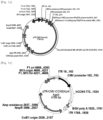
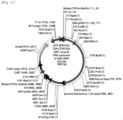
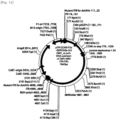
- the SERCA2a moiety consists of the entire cDNA sequence of human SERCA2a protein.
- the next linked P2A moiety is a self-cleavage site derived from porcine teschovirus-1 and consists of a nucleotide sequence encoding 22 amino acids.
- the CCN5 moiety consists of the entire cDNA sequence of human CCN5 protein.
- pTR-CMV-SERCA2a-P2A-CCN5 recombinant plasmid was completed by removing the luciferase moiety from pTR-CMV-luciferase vector and inserting the SERCA2a-P2A-CCN5 gene construct in place thereof.
- the protein produced by the recombinant plasmid is divided into the SERCA2a protein and the CCN5 protein by self-cleavage between the 21 st amino acid, glycine, and the 22 nd amino acid, proline, at the P2A site.
- the SERCA2a protein may remain in the endoplasmic reticulum membrane and perform its intrinsic function.
- the CCN5 protein may migrate into the endoplasmic reticulum and then be secreted out of the cell in the form in which the signal peptide is cleaved, thereby performing its intrinsic function.
- pTR-CMV-CCN5-P2A-SERCA2a recombinant plasmid was also constructed by removing the luciferase moiety from pTR-CMV-luciferase vector and inserting the CCN5-P2A-SERCA2a gene construct in place thereof.
- the protein produced thereby is divided into the SERCA2a protein and the CCN5 protein by the same function of the P2A sequence.
- AAV self-complementary adeno-associated virus
- human CCN5 gene and SERCA2a gene were cloned into pds-AAV2-EGFP vector.
- eGFP sequence was removed during AAV vector construction.
- Recombinant AAV was constructed using 293T cells.
- AAV particles in a cell culture were collected and precipitated with ammonium sulfate.
- the resultant was purified by ultracentrifugation using iodixanol gradient.
- the AAV particles were enriched through several dilution and enrichment processes in such a manner that iodixanol is exchanged with lactated Ringer's solution using centrifugation.
- the AAV concentration was quantified using quantitative RT-PCR and SDS-PAGE.
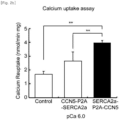
- the 293T cell line having expressed the gene was homogenized in a solution, pH 7.0, containing 40 mM imidazole, 10 mM NaF, 1 mM EDTA, 300 mM sucrose, and 0.5 mM DTT, and 500 ⁇ g of lysate was added to an uptake reaction buffer, pH 7.0, of 100 mM KCl, 5 mM MgCl 2 , 5 mM NaN3, 0.5 M EGTA, and 40 mM imidazole. Uptake experiments were performed using pCa 6 (0.0185 ⁇ mol) of calcium containing radioisotopes.
- Cells or cardiac tissues were homogenized in a minimal volume of a 50 mM Tris-HCl solution, pH 7.4, to which a broad-spectrum protease inhibitor cocktail (Calbiochem) had been added. Proteins were separated by SDS-PAGE and transferred to polyvinylidene fluoride membrane (Schleicher & Schuell). After being blocked with 5% (w/v) skim milk for 1 hour and washed with TBST, the membrane was allowed to react with SERCA2a antibody (21 st Century Biochemical), CCN5 antibody (Sigma Aldrich), and GAPDH antibody (Sigma-Aldrich).
- SERCA2a antibody 21 st Century Biochemical
- CCN5 antibody Sigma Aldrich
- GAPDH antibody Sigma-Aldrich
- the membrane was then reacted with horseradish peroxidase-conjugated secondary antibody (Jackson ImmunoResearch, WestGrove, PA, USA) and developed using a chemiluminescent substrate (Dogen). The resultant was photographed and quantified using LAS software.
- Cardiac tissues were taken from animal models and then fixed with 10% (w/v) formalin at room temperature for 5 days. Then, washing with PBS was performed. Each sample was embedded in paraffin and the tissue block was cut into 7 ⁇ m thick sections. In order to check degree of cardiac fibrosis and infarction, the resultant was stained with Picrosirius red (Sigma Aldrich) and Masson-Trichrome (Sigma Aldrich). Then, observations were made under an optical microscope.
- mice were anesthetized by intraperitoneal injection of ketamine (95 mg/kg) and xylazine (5 mg/kg), and echocardiography was conducted. Recording was performed through 2-dimensional imaging and M-mode tracking function, and fractional shortening and ventricular size ratio were determined (GE Vivid Vision).
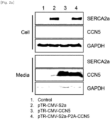
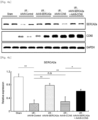
- pTR-CMV-SERA2a, pTR-CMV-CCN5, or pTR-CMV-SERCA2a-P2A-CCN5 prepared in Experimental Example 1 was delivered into cultured cells using lipofectamine. The obtained cells and cultures were subjected to Western blotting in the same manner as in Experimental Method 2, to check expression of SERCA2a, CCN5, and GAPDH proteins.
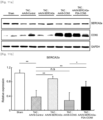
- the SERCA2a protein is retained in the cytoplasm and the CCN5 protein is secreted out of the cell ( Fig. 2a ).
- the CCN5 protein is a secreted protein, suggesting that when the SERCA2a protein and the CCN5 protein are expressed in the order of SERCA2a-CCN5, both proteins are expressed in their normal structure, whereas when the SERCA2a protein and the CCN5 protein are expressed in the order of CCN5-SERCA2a, the SERCA2a protein, which is translated following the CCN5 protein, may be produced as an abnormal protein having topology that is opposite to its original topology.
- mice In order to identify a heart failure therapeutic effect of a recombinant virus containing the gene construct that contains a nucleotide sequence encoding the SERCA2a protein and a nucleotide sequence encoding the CCN5 protein and, of the present invention, the mice, in which heart failure has been induced by multiple etiologies, were used.
- an ischemia-reperfusion injury-induced heart failure model for the heart failure-induced mice, an ischemia-reperfusion injury-induced heart failure model, a transverse aortic constriction-induced heart failure model, and an angiotensin II-induced heart failure model were produced.
- the heart failure-induced mice were divided into AAV9-Control, AAV9-SERCA2a administration group, AAV9-CCN5 administration group, and AAV9-SERCA2a-P2A-CCN5 administration group, and their heart failure therapeutic effects were compared.
- mice in which heart failure has been induced by ischemia-reperfusion injury, and recombinant virus injection
- mice 8- to 10-week-old B6C3F1 mice were anesthetized by intraperitoneal injection of ketamine (95 mg/kg) and xylazine (5 mg/kg), and subjected to surgery. Ischemia was induced by placing polyethylene 10 (PE10) tubing with a diameter of 1 mm on top of the left anterior descending coronary artery and performing tying. After 30 minutes, reperfusion was induced by performing untying and removing the PE10 tubing.
- PE10 polyethylene 10
- each mouse was injected, via the tail vein, with 1 ⁇ 10 11 viral genomes (vgs) of AAV9-Control, AAV9-CCN5, AAV9-SERCA2a, or AAV9-SERCA2a + AAV9-CCN5.
- vgs viral genomes
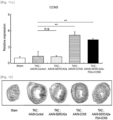
- mice were extracted from the mice, in which heart failure has been induced by ischemia-reperfusion injury, and photographed. Tissue staining was performed in the same manner as in Experimental Method 3.
- the AAV9-CCN5 administration group, the AAV9-SERCA2a administration group, and the AAV9-CCN5 and AAV9-SERCA2a combination administration group exhibited a significantly decreased infarct area size, as compared with the infarct area in the AAV9-Control administration group.
- the AAV9-CCN5 and AAV9-SERCA2a combination administration group exhibited a remarkably decreased infarct area size ( Figs. 5 and 6 ).
- Echocardiography and hemodynamics were performed to identify whether morphological changes in heart tissue actually affect heart contractility.
- fractional shortening a parameter of cardiac contractility
- echocardiography was performed in the same manner as in Experimental Method 4.
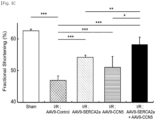
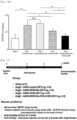
- the fractional shortening which has been decreased by ischemia-reperfusion injury, was significantly restored in the AAV9-CCN5 administration group, the AAV9-SERCA2a administration group, and the AAV9-CCN5 and AAV9-SERCA2a combination administration group.
- the AAV9-CCN5 and AAV9-SERCA2a combination group exhibited remarkably increased fractional shortening ( Fig. 8 ).
- EDPVR end-diastolic pressure volume relationship
- mice in which heart failure has been induced by transverse aortic constriction, and recombinant virus injection
- mice 8- to 10-week-old B6C3F1 mice were anesthetized by intraperitoneal injection of ketamine (95 mg/kg) and xylazine (5 mg/kg), and subjected to surgery. 2 to 3 mm of the proximal sternum was longitudinally dissected to ensure a visual field of the aortic arch. Thereafter, a 27-gauge needle was used to make a connection between the innominate artery and the carotid artery. Then, tying was performed and the needle was removed, thereby causing a constriction of transverse aorta.
- each mouse was injected, via the tail vein, with 1 ⁇ 10 11 vgs of AAV9-Control, AAV9-CCN5, AAV9-SERCA2a, or AAV9-SERCA2a-P2A-CCN5.
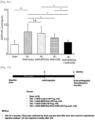
- myocardial function measurement and histological analysis were performed ( Fig. 10 ).
- Hearts were extracted from the mice, in which heart failure had been induced by ischemia-reperfusion injury, and heart tissues were stained with Masson-trichrome in the same manner as in Experimental Method 3.
- the AAV9-Control administration group exhibited an increased cardiac internal dimension size; and it was identified that the AAV9-CCN5 administration group, the AAV9-SERCA2a administration group, and the AAV9-SERCA2a-P2A-CCN5 administration group exhibited a decreased cardiac internal dimension size.
- the AAV9-SERCA2a-P2A-CCN5 administration group exhibited a remarkably decreased internal dimension size.
- the AAV9-CCN5 administration group, the AAV9-SERCA2a administration group, and the AAV9-SERCA2a-P2A-CCN5 administration group exhibited a decrease in degree of cardiac fibrosis caused by heart failure ( Fig. 12 ).
- Echocardiography and hemodynamics analysis were performed to identify whether morphological changes in heart tissue actually affect heart contractility.
- fractional shortening a parameter of cardiac contractility
- echocardiography was performed in the same manner as in Experimental Method 4.
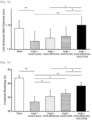
- the fractional shortening which has been decreased by aortic constriction, was significantly restored in the AAV9-CCN5 administration group, the AAV9-SERCA2a administration group, and the AAV9-CCN5 and AAV9-SERCA2a combination administration group.
- the AAV9-SERCA2a-P2A-CCN5 administration group exhibited remarkably increased fractional shortening ( Fig. 13 ).
- EDPVR end-diastolic pressure volume relationship
- mice in which heart failure has been induced by infusion of angiotensin II, and recombinant virus injection
- mice 8- to 10-week-old B6C3F1 mice were anesthetized by intraperitoneal injection of ketamine (95 mg/kg) and xylazine (5 mg/kg), and heart failure was induced by subcutaneous infusion of angiotensin II (Ang II).
- Angiotensin II was infused subcutaneously for 2 weeks at a concentration of 3 mg/kg per day using a small osmotic pump (Alzet 1002, Alzet).
- each mouse was injected, via the tail vein, with 1 ⁇ 10 11 viral genomes (vgs) of AAV9-Control, AAV9-CCN5, AAV9-SERCA2a, or AAV9-SERCA2a-P2A-CCN5.
- vgs viral genomes
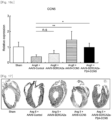
- Hearts were extracted from the mice, in which heart failure had been induced by infusion of angiotensin II, and heart tissues were stained with Masson-trichrome in the same manner as in Experimental Method 3.
- the AAV9-Control administration group exhibited an increased cardiac internal dimension size; and it was identified that the AAV9-CCN5 administration group, the AAV9-SERCA2a administration group, and the AAV9-SERCA2a-P2A-CCN5 administration group exhibited a decreased cardiac internal dimension size. In particular, it was identified that the AAV9-SERCA2a-P2A-CCN5 administration group exhibited a remarkably decreased lumen size ( Fig. 17 ).
- echocardiography was performed in the same manner as in Example 6, to measure the inner wall thickness of the heart. Changes in the inner wall thickness of the heart were quantified and graphically represented.
- Echocardiography and hemodynamics were performed to identify whether morphological changes in heart tissue actually affect heart contractility.
- fractional shortening a parameter of cardiac contractility
- echocardiography was performed in the same manner as in Experimental Method 4.
- the fractional shortening which has been decreased by aortic constriction, was significantly restored in the AAV9-CCN5 administration group, the AAV9-SERCA2a administration group, and the AAV9-CCN5 and AAV9-SERCA2a combination administration group.
- the AAV9-SERCA2a-P2A-CCN5 administration group exhibited remarkably restored fractional shortening ( Fig. 19 ). Based on this, it was identified that a synergistic therapeutic effect was obtained by AAV9-SERCA2a-P2A-CCN5.
Landscapes
- Health & Medical Sciences (AREA)
- Life Sciences & Earth Sciences (AREA)
- Chemical & Material Sciences (AREA)
- Engineering & Computer Science (AREA)
- Genetics & Genomics (AREA)
- Organic Chemistry (AREA)
- Bioinformatics & Cheminformatics (AREA)
- General Health & Medical Sciences (AREA)
- Zoology (AREA)
- Medicinal Chemistry (AREA)
- Wood Science & Technology (AREA)
- Biochemistry (AREA)
- Biotechnology (AREA)
- Molecular Biology (AREA)
- General Engineering & Computer Science (AREA)
- Biomedical Technology (AREA)
- Microbiology (AREA)
- Animal Behavior & Ethology (AREA)
- Veterinary Medicine (AREA)
- Pharmacology & Pharmacy (AREA)
- Public Health (AREA)
- Proteomics, Peptides & Aminoacids (AREA)
- Epidemiology (AREA)
- Immunology (AREA)
- Biophysics (AREA)
- Gastroenterology & Hepatology (AREA)
- Virology (AREA)
- Physics & Mathematics (AREA)
- Chemical Kinetics & Catalysis (AREA)
- Plant Pathology (AREA)
- Toxicology (AREA)
- Hematology (AREA)
- Cell Biology (AREA)
- Nuclear Medicine, Radiotherapy & Molecular Imaging (AREA)
- Urology & Nephrology (AREA)
- General Chemical & Material Sciences (AREA)
- Heart & Thoracic Surgery (AREA)
- Cardiology (AREA)
- Mycology (AREA)
- Food Science & Technology (AREA)
Applications Claiming Priority (2)
| Application Number | Priority Date | Filing Date | Title |
|---|---|---|---|
| KR20170127442 | 2017-09-29 | ||
| PCT/KR2018/011521 WO2019066548A2 (ko) | 2017-09-29 | 2018-09-28 | 심부전의 예방 또는 치료용 약학적 조성물 |
Publications (4)
| Publication Number | Publication Date |
|---|---|
| EP3690054A2 EP3690054A2 (en) | 2020-08-05 |
| EP3690054A4 EP3690054A4 (en) | 2021-07-28 |
| EP3690054B1 true EP3690054B1 (en) | 2024-12-11 |
| EP3690054C0 EP3690054C0 (en) | 2024-12-11 |
Family
ID=65902613
Family Applications (1)
| Application Number | Title | Priority Date | Filing Date |
|---|---|---|---|
| EP18861326.9A Active EP3690054B1 (en) | 2017-09-29 | 2018-09-28 | Pharmaceutical composition for prevention or treatment of heart failure |
Country Status (6)
| Country | Link |
|---|---|
| US (1) | US12215362B2 (enExample) |
| EP (1) | EP3690054B1 (enExample) |
| JP (1) | JP7240749B2 (enExample) |
| KR (1) | KR102712841B1 (enExample) |
| CN (1) | CN111465697B (enExample) |
| WO (1) | WO2019066548A2 (enExample) |
Families Citing this family (1)
| Publication number | Priority date | Publication date | Assignee | Title |
|---|---|---|---|---|
| ES2953301B2 (es) * | 2023-09-25 | 2024-06-03 | Univ Madrid Complutense | Péptido para el tratamiento de enfermedades cardiacas |
Family Cites Families (13)
| Publication number | Priority date | Publication date | Assignee | Title |
|---|---|---|---|---|
| US4797368A (en) | 1985-03-15 | 1989-01-10 | The United States Of America As Represented By The Department Of Health And Human Services | Adeno-associated virus as eukaryotic expression vector |
| US5139941A (en) | 1985-10-31 | 1992-08-18 | University Of Florida Research Foundation, Inc. | AAV transduction vectors |
| US20090239940A1 (en) | 1997-07-22 | 2009-09-24 | Del Monte Federica | Treating heart failure and ventricular arrhythmias |
| DK1027437T3 (da) * | 1997-10-29 | 2008-11-24 | Genentech Inc | Anvendelse af det WNT-1 inducerede udskilte polypeptid WISP-1 |
| EP1783228A1 (en) * | 2005-11-08 | 2007-05-09 | ETH Zürich | Recombinant expression of multiprotein complexes using polygenes |
| KR101187814B1 (ko) * | 2010-03-22 | 2012-10-08 | 광주과학기술원 | 심부전 예방 또는 치료용 약제학적 조성물 및 심부전 예방 또는 치료제의 스크리닝 방법 |
| US20180099029A9 (en) * | 2010-04-15 | 2018-04-12 | Mount Sinai School Of Medicine | Serca2 therapeutic compositions and methods of use |
| CN103648506A (zh) * | 2011-07-13 | 2014-03-19 | 西奈山伊坎医学院 | Serca2a的sumo化和心血管疾病 |
| ES2717175T3 (es) * | 2013-02-01 | 2019-06-19 | Selexis Sa | Expresión mejorada de transgenes y procesamiento |
| JP2017531652A (ja) * | 2014-10-06 | 2017-10-26 | アルスロジェン ビー.ブイ.Arthrogen B.V. | Aavに基づく遺伝子治療 |
| MA43404A (fr) | 2015-11-11 | 2018-10-17 | Intrexon Corp | Compositions et procédés d'expression de multiples polypeptides biologiquement actifs à partir d'un seul vecteur pour le traitement d'affections et autres pathologies cardiaques |
| CN108778311A (zh) | 2015-11-13 | 2018-11-09 | 贝特基因 | 用于治疗心脏纤维化的药物组合物 |
| WO2019066556A1 (ko) * | 2017-09-29 | 2019-04-04 | (주)벳바젠 | 심장 부정맥의 예방 또는 치료용 약학적 조성물 |
-
2018
- 2018-09-28 JP JP2020517799A patent/JP7240749B2/ja active Active
- 2018-09-28 EP EP18861326.9A patent/EP3690054B1/en active Active
- 2018-09-28 CN CN201880077631.XA patent/CN111465697B/zh active Active
- 2018-09-28 US US16/651,779 patent/US12215362B2/en active Active
- 2018-09-28 WO PCT/KR2018/011521 patent/WO2019066548A2/ko not_active Ceased
- 2018-09-28 KR KR1020180115915A patent/KR102712841B1/ko active Active
Also Published As
| Publication number | Publication date |
|---|---|
| EP3690054A2 (en) | 2020-08-05 |
| KR102712841B1 (ko) | 2024-10-04 |
| US12215362B2 (en) | 2025-02-04 |
| WO2019066548A2 (ko) | 2019-04-04 |
| RU2020114942A3 (enExample) | 2021-11-11 |
| RU2020114942A (ru) | 2021-10-29 |
| KR20190038419A (ko) | 2019-04-08 |
| US20200239862A1 (en) | 2020-07-30 |
| EP3690054C0 (en) | 2024-12-11 |
| CN111465697A (zh) | 2020-07-28 |
| CN111465697B (zh) | 2023-10-13 |
| JP2020536519A (ja) | 2020-12-17 |
| JP7240749B2 (ja) | 2023-03-16 |
| WO2019066548A3 (ko) | 2019-06-06 |
| EP3690054A4 (en) | 2021-07-28 |
Similar Documents
| Publication | Publication Date | Title |
|---|---|---|
| Mearini et al. | Mybpc3 gene therapy for neonatal cardiomyopathy enables long-term disease prevention in mice | |
| JP6726291B2 (ja) | 心筋線維化の処置のための医薬組成物 | |
| CN103110932B (zh) | 一种hip-55的新用途 | |
| US20220168450A1 (en) | Treatment of amyotrophic lateral sclerosis and disorders associated with the spinal cord | |
| WO2019073058A1 (en) | GENE THERAPY OF CARDIAC ARRHYTHMIA BASED ON KCNK3 | |
| CN112472690B (zh) | 一种制备增强CNPase活性的化合物或生物药物的方法用于治疗心脏疾病 | |
| EP3690054B1 (en) | Pharmaceutical composition for prevention or treatment of heart failure | |
| JP7178118B2 (ja) | 不整脈を予防または治療するための医薬組成物 | |
| RU2788124C2 (ru) | Фармацевтическая композиция для профилактики или лечения сердечной недостаточности | |
| CN120758566B (zh) | 一种在心肌细胞中特异性过表达zer1的病毒载体的构建及在心衰治疗中的应用 | |
| CN119215145A (zh) | 突触结合蛋白1在制备预防和/或治疗缺血性心脏病产品中的应用 | |
| US10118957B2 (en) | Method for treating heart disease by inhibiting the Coxsackievirus-Adenovirus Receptor | |
| CN108384806A (zh) | hPDGF-BB与hFGF2双基因重组病毒载体及其应用 | |
| JP2025517333A (ja) | 心臓疾患を治療するための組成物および方法 | |
| US8496928B2 (en) | Method for preventing and treating cardiovascular diseases with BRCA1 | |
| JP2022179090A (ja) | 治療剤 | |
| CN112915097A (zh) | 松果菊苷在制备防治糖尿病心肌病药物中的应用 | |
| WO2021000640A1 (zh) | Dkk1抑制剂在预防和/或治疗肿瘤恶病质与糖尿病伴随疾病中的应用 |
Legal Events
| Date | Code | Title | Description |
|---|---|---|---|
| STAA | Information on the status of an ep patent application or granted ep patent |
Free format text: STATUS: THE INTERNATIONAL PUBLICATION HAS BEEN MADE |
|
| PUAI | Public reference made under article 153(3) epc to a published international application that has entered the european phase |
Free format text: ORIGINAL CODE: 0009012 |
|
| STAA | Information on the status of an ep patent application or granted ep patent |
Free format text: STATUS: REQUEST FOR EXAMINATION WAS MADE |
|
| 17P | Request for examination filed |
Effective date: 20200330 |
|
| AK | Designated contracting states |
Kind code of ref document: A2 Designated state(s): AL AT BE BG CH CY CZ DE DK EE ES FI FR GB GR HR HU IE IS IT LI LT LU LV MC MK MT NL NO PL PT RO RS SE SI SK SM TR |
|
| AX | Request for extension of the european patent |
Extension state: BA ME |
|
| DAV | Request for validation of the european patent (deleted) | ||
| DAX | Request for extension of the european patent (deleted) | ||
| RIC1 | Information provided on ipc code assigned before grant |
Ipc: C12N 15/86 20060101AFI20210617BHEP Ipc: C12N 9/14 20060101ALI20210617BHEP Ipc: C07K 14/47 20060101ALI20210617BHEP Ipc: A61K 48/00 20060101ALI20210617BHEP Ipc: A61K 38/00 20060101ALI20210617BHEP Ipc: A61P 9/00 20060101ALI20210617BHEP Ipc: C07K 14/005 20060101ALI20210617BHEP Ipc: C07K 14/475 20060101ALN20210617BHEP |
|
| A4 | Supplementary search report drawn up and despatched |
Effective date: 20210624 |
|
| STAA | Information on the status of an ep patent application or granted ep patent |
Free format text: STATUS: EXAMINATION IS IN PROGRESS |
|
| 17Q | First examination report despatched |
Effective date: 20230223 |
|
| GRAP | Despatch of communication of intention to grant a patent |
Free format text: ORIGINAL CODE: EPIDOSNIGR1 |
|
| STAA | Information on the status of an ep patent application or granted ep patent |
Free format text: STATUS: GRANT OF PATENT IS INTENDED |
|
| RIC1 | Information provided on ipc code assigned before grant |
Ipc: C07K 14/475 20060101ALN20240624BHEP Ipc: C07K 14/005 20060101ALI20240624BHEP Ipc: A61P 9/00 20060101ALI20240624BHEP Ipc: A61K 38/00 20060101ALI20240624BHEP Ipc: A61K 48/00 20060101ALI20240624BHEP Ipc: C07K 14/47 20060101ALI20240624BHEP Ipc: C12N 9/14 20060101ALI20240624BHEP Ipc: C12N 15/86 20060101AFI20240624BHEP |
|
| INTG | Intention to grant announced |
Effective date: 20240722 |
|
| GRAS | Grant fee paid |
Free format text: ORIGINAL CODE: EPIDOSNIGR3 |
|
| GRAA | (expected) grant |
Free format text: ORIGINAL CODE: 0009210 |
|
| STAA | Information on the status of an ep patent application or granted ep patent |
Free format text: STATUS: THE PATENT HAS BEEN GRANTED |
|
| AK | Designated contracting states |
Kind code of ref document: B1 Designated state(s): AL AT BE BG CH CY CZ DE DK EE ES FI FR GB GR HR HU IE IS IT LI LT LU LV MC MK MT NL NO PL PT RO RS SE SI SK SM TR |
|
| REG | Reference to a national code |
Ref country code: GB Ref legal event code: FG4D |
|
| REG | Reference to a national code |
Ref country code: CH Ref legal event code: EP |
|
| REG | Reference to a national code |
Ref country code: IE Ref legal event code: FG4D |
|
| REG | Reference to a national code |
Ref country code: DE Ref legal event code: R096 Ref document number: 602018077584 Country of ref document: DE |
|
| U01 | Request for unitary effect filed |
Effective date: 20241212 |
|
| U07 | Unitary effect registered |
Designated state(s): AT BE BG DE DK EE FI FR IT LT LU LV MT NL PT RO SE SI Effective date: 20241223 |
|
| PG25 | Lapsed in a contracting state [announced via postgrant information from national office to epo] |
Ref country code: HR Free format text: LAPSE BECAUSE OF FAILURE TO SUBMIT A TRANSLATION OF THE DESCRIPTION OR TO PAY THE FEE WITHIN THE PRESCRIBED TIME-LIMIT Effective date: 20241211 |
|
| PG25 | Lapsed in a contracting state [announced via postgrant information from national office to epo] |
Ref country code: ES Free format text: LAPSE BECAUSE OF FAILURE TO SUBMIT A TRANSLATION OF THE DESCRIPTION OR TO PAY THE FEE WITHIN THE PRESCRIBED TIME-LIMIT Effective date: 20241211 |
|
| PG25 | Lapsed in a contracting state [announced via postgrant information from national office to epo] |
Ref country code: NO Free format text: LAPSE BECAUSE OF FAILURE TO SUBMIT A TRANSLATION OF THE DESCRIPTION OR TO PAY THE FEE WITHIN THE PRESCRIBED TIME-LIMIT Effective date: 20250311 |
|
| PG25 | Lapsed in a contracting state [announced via postgrant information from national office to epo] |
Ref country code: GR Free format text: LAPSE BECAUSE OF FAILURE TO SUBMIT A TRANSLATION OF THE DESCRIPTION OR TO PAY THE FEE WITHIN THE PRESCRIBED TIME-LIMIT Effective date: 20250312 |
|
| PG25 | Lapsed in a contracting state [announced via postgrant information from national office to epo] |
Ref country code: RS Free format text: LAPSE BECAUSE OF FAILURE TO SUBMIT A TRANSLATION OF THE DESCRIPTION OR TO PAY THE FEE WITHIN THE PRESCRIBED TIME-LIMIT Effective date: 20250311 |
|
| PG25 | Lapsed in a contracting state [announced via postgrant information from national office to epo] |
Ref country code: SM Free format text: LAPSE BECAUSE OF FAILURE TO SUBMIT A TRANSLATION OF THE DESCRIPTION OR TO PAY THE FEE WITHIN THE PRESCRIBED TIME-LIMIT Effective date: 20241211 |
|
| PG25 | Lapsed in a contracting state [announced via postgrant information from national office to epo] |
Ref country code: PL Free format text: LAPSE BECAUSE OF FAILURE TO SUBMIT A TRANSLATION OF THE DESCRIPTION OR TO PAY THE FEE WITHIN THE PRESCRIBED TIME-LIMIT Effective date: 20241211 |
|
| PG25 | Lapsed in a contracting state [announced via postgrant information from national office to epo] |
Ref country code: IS Free format text: LAPSE BECAUSE OF FAILURE TO SUBMIT A TRANSLATION OF THE DESCRIPTION OR TO PAY THE FEE WITHIN THE PRESCRIBED TIME-LIMIT Effective date: 20250411 |
|
| PG25 | Lapsed in a contracting state [announced via postgrant information from national office to epo] |
Ref country code: SK Free format text: LAPSE BECAUSE OF FAILURE TO SUBMIT A TRANSLATION OF THE DESCRIPTION OR TO PAY THE FEE WITHIN THE PRESCRIBED TIME-LIMIT Effective date: 20241211 |
|
| PG25 | Lapsed in a contracting state [announced via postgrant information from national office to epo] |
Ref country code: CZ Free format text: LAPSE BECAUSE OF FAILURE TO SUBMIT A TRANSLATION OF THE DESCRIPTION OR TO PAY THE FEE WITHIN THE PRESCRIBED TIME-LIMIT Effective date: 20241211 |
|
| PLBE | No opposition filed within time limit |
Free format text: ORIGINAL CODE: 0009261 |
|
| STAA | Information on the status of an ep patent application or granted ep patent |
Free format text: STATUS: NO OPPOSITION FILED WITHIN TIME LIMIT |
|
| U20 | Renewal fee for the european patent with unitary effect paid |
Year of fee payment: 8 Effective date: 20250916 |
|
| 26N | No opposition filed |
Effective date: 20250912 |