EP3679936A1 - Verwendung von verbascosid bei der herstellung eines arzneimittels zur vorbeugung oder behandlung von glomerulärer nierenerkrankung mit podozytenläsionen - Google Patents
Verwendung von verbascosid bei der herstellung eines arzneimittels zur vorbeugung oder behandlung von glomerulärer nierenerkrankung mit podozytenläsionen Download PDFInfo
- Publication number
- EP3679936A1 EP3679936A1 EP17923035.4A EP17923035A EP3679936A1 EP 3679936 A1 EP3679936 A1 EP 3679936A1 EP 17923035 A EP17923035 A EP 17923035A EP 3679936 A1 EP3679936 A1 EP 3679936A1
- Authority
- EP
- European Patent Office
- Prior art keywords
- verbascoside
- podocyte
- drug
- preparation
- glomerular
- Prior art date
- Legal status (The legal status is an assumption and is not a legal conclusion. Google has not performed a legal analysis and makes no representation as to the accuracy of the status listed.)
- Pending
Links
Images
Classifications
-
- A—HUMAN NECESSITIES
- A61—MEDICAL OR VETERINARY SCIENCE; HYGIENE
- A61K—PREPARATIONS FOR MEDICAL, DENTAL OR TOILETRY PURPOSES
- A61K31/00—Medicinal preparations containing organic active ingredients
- A61K31/70—Carbohydrates; Sugars; Derivatives thereof
- A61K31/7028—Compounds having saccharide radicals attached to non-saccharide compounds by glycosidic linkages
-
- A—HUMAN NECESSITIES
- A61—MEDICAL OR VETERINARY SCIENCE; HYGIENE
- A61K—PREPARATIONS FOR MEDICAL, DENTAL OR TOILETRY PURPOSES
- A61K31/00—Medicinal preparations containing organic active ingredients
- A61K31/70—Carbohydrates; Sugars; Derivatives thereof
- A61K31/7028—Compounds having saccharide radicals attached to non-saccharide compounds by glycosidic linkages
- A61K31/7034—Compounds having saccharide radicals attached to non-saccharide compounds by glycosidic linkages attached to a carbocyclic compound, e.g. phloridzin
-
- A—HUMAN NECESSITIES
- A61—MEDICAL OR VETERINARY SCIENCE; HYGIENE
- A61P—SPECIFIC THERAPEUTIC ACTIVITY OF CHEMICAL COMPOUNDS OR MEDICINAL PREPARATIONS
- A61P13/00—Drugs for disorders of the urinary system
- A61P13/12—Drugs for disorders of the urinary system of the kidneys
-
- A—HUMAN NECESSITIES
- A61—MEDICAL OR VETERINARY SCIENCE; HYGIENE
- A61K—PREPARATIONS FOR MEDICAL, DENTAL OR TOILETRY PURPOSES
- A61K47/00—Medicinal preparations characterised by the non-active ingredients used, e.g. carriers or inert additives; Targeting or modifying agents chemically bound to the active ingredient
- A61K47/06—Organic compounds, e.g. natural or synthetic hydrocarbons, polyolefins, mineral oil, petrolatum or ozokerite
- A61K47/08—Organic compounds, e.g. natural or synthetic hydrocarbons, polyolefins, mineral oil, petrolatum or ozokerite containing oxygen, e.g. ethers, acetals, ketones, quinones, aldehydes, peroxides
- A61K47/10—Alcohols; Phenols; Salts thereof, e.g. glycerol; Polyethylene glycols [PEG]; Poloxamers; PEG/POE alkyl ethers
-
- A—HUMAN NECESSITIES
- A61—MEDICAL OR VETERINARY SCIENCE; HYGIENE
- A61K—PREPARATIONS FOR MEDICAL, DENTAL OR TOILETRY PURPOSES
- A61K47/00—Medicinal preparations characterised by the non-active ingredients used, e.g. carriers or inert additives; Targeting or modifying agents chemically bound to the active ingredient
- A61K47/30—Macromolecular organic or inorganic compounds, e.g. inorganic polyphosphates
- A61K47/32—Macromolecular compounds obtained by reactions only involving carbon-to-carbon unsaturated bonds, e.g. carbomers, poly(meth)acrylates, or polyvinyl pyrrolidone
-
- A—HUMAN NECESSITIES
- A61—MEDICAL OR VETERINARY SCIENCE; HYGIENE
- A61K—PREPARATIONS FOR MEDICAL, DENTAL OR TOILETRY PURPOSES
- A61K47/00—Medicinal preparations characterised by the non-active ingredients used, e.g. carriers or inert additives; Targeting or modifying agents chemically bound to the active ingredient
- A61K47/30—Macromolecular organic or inorganic compounds, e.g. inorganic polyphosphates
- A61K47/36—Polysaccharides; Derivatives thereof, e.g. gums, starch, alginate, dextrin, hyaluronic acid, chitosan, inulin, agar or pectin
- A61K47/38—Cellulose; Derivatives thereof
Definitions
- the present disclosure relates to the field of medicine, in particular to use of verbascoside in preparation of a drug for preventing or treating glomerular podocyte injured renal disease.
- Proteinuria is an important clinical symptom of renal diseases, and is also an independent dangerous factor when such diseases develop to an end stage. Reducing and controlling occurrence of proteinuria can delay the progress of renal diseases, therefore, looking for a safe and effective proteinuria treating target is a key point and a hot point of researches currently in the kidney field.
- podocyte damage is a core factor causing the occurrence of proteinuria
- structural and functional abnormalities of the podocytes can cause structural and functional abnormalities of slit diaphragm, disappearance of foot process, glomerular filtration dysfunction, and entry of macromolecular proteins into urine, so as to form proteinuria.
- the renal diseases are usually accompanied by damage to the glomerular podocytes. Therefore, a drug's effect on podocyte damage determines its therapeutic effect on renal diseases.
- the present disclosure proposes a new solution for treating proteinuria.
- An object of the present disclosure lies in providing new use of verbascoside, providing new treatment means and thought to diseases caused by glomerular podocyte damage.
- the glomerular podocyte disease as a clinically common renal disease, includes membranous nephropathy, minimal pathological nephropathy, focal segmental glomerulosclerosis, diabetic nephropathy, lupus nephropathy, membrane proliferative lesions and so on, and currently, effective treatment is clinically lacked.
- the functionally structural change of podocytes of glomerulus is an important factor of generating a large amount of proteinuria in these diseases above, and intervening in this link is one of the approaches to treat these glomerular injured renal diseases.
- verbascoside can effectively restore activity of the glomerular podocyte, lower its abnormal migration capability, protect cytoskeleton of the podocyte, and restore expression levels of podocyte damage markers, nephrin protein and synaptopodin protein, so as to remarkably reduce the urine protein. Therefore, the verbascoside can be applied, alone or in combination with other drugs, to prepare a drug or a health care product for preventing or treating diseases related to glomerular podocyte damage, and applied in a drug or a health care product for relieving damage to podocyte caused by other drugs.
- Proteinuria is an important clinical symptom of renal diseases, therefore, looking for a safe and effective proteinuria treating target is a key point and a hot point of researches currently in the kidney field.
- many researches show that podocyte damage is a core factor causing occurrence of proteinuria, and structural and functional abnormalities of podocytes can cause structural and functional abnormalities of slit diaphragm, disappearance of foot process, glomerular filtration dysfunction, and entry of macromolecular proteins into urine, so as to form proteinuria. This indicates that the renal diseases are usually accompanied by damage to the glomerular podocytes.
- the glomerular podocyte disease is a clinically common renal disease.
- the functionally structural change of podocytes of glomerulus is an important factor of generating a large amount of proteinuria in these diseases above, and thus intervening in this link is one of the approaches to treat these glomerular injured renal diseases.
- the present embodiment provides a new approach to treat or prevent glomerular podocyte damage, namely, new use of verbascoside, specifically as follows: Acteoside (hereinafter abbreviated as ACT), also known as mullein glucoside, and called as Verbascoside or Kusaginin in English, has the molecular weight of 624.59, the molecular formula of C 29 H 36 O 15 , and CAS No.: 61276-17-3. A structural formula thereof is as follows:
- Verbascoside is a phenylethanoid glycoside compound, existing in a plurality of angiosperms such as rehmanniae leaf, herba cistanchis, and folium Callicarpae Formosanae.
- angiosperms such as rehmanniae leaf, herba cistanchis, and folium Callicarpae Formosanae.
- pharmacological researches prove that such ingredient has wide pharmacological effects such as immunoregulation, neuroprotection, liver protection, kidney tonification and yang strengthening, anti-inflammation, and platelet aggregation resistance.
- verbascoside basically nontoxic, is a safe and effective natural active ingredient, and can be used in various clinical medicines for oral administration, injection administration, mucosa administration, etc. At the same time, this ingredient is extremely watersoluble, and preparation thereof is suitable for any pharmaceutically acceptable dosage form.
- the present embodiment provides use of verbascoside in preparation of a drug or a health care product for preventing or treating glomerular podocyte damage.
- verbascoside can effectively restore podocyte activity, lower its abnormal migration capability, and protect cytoskeleton of the podocyte, so as to remarkably reduce urine protein. Therefore, it is indicated that the verbascoside has the efficacy of preventing or treating glomerular podocyte damage.
- nephrin protein and synaptopodin protein are protein markers of the glomerulus podocyte damage, and are used to indicate whether the glomerular podocyte is damaged or not.
- the inventor found that the verbascoside can remarkably improve the protein expression levels of nephrin and synaptopodin in the podocyte damage, and improve the gene expression of nephrin and synaptopodin, so as to protect the podocyte.
- the verbascoside can be used for preparing a drug or a health care product for restoring the expression level of the nephrin protein in the glomerular podocyte; and the verbascoside can be used for preparing a drug or a health care product for restoring the gene expression level of the nephrin protein in the glomerular podocyte.
- the verbascoside can be used for preparing a drug or a health care product for restoring expression of synaptopodin protein in the glomerular podocyte; and the verbascoside can be used for preparing a drug or a health care product for restoring the gene expression of synaptopodin protein in the glomerular podocyte.
- the present embodiment provides use of verbascoside in preparation of a drug or a health care product for preventing or treating a glomerular podocyte injured renal disease.
- the glomerular podocyte injured renal diseases include minimal pathological nephropathy, focal segmental glomerulosclerosis, diabetic nephropathy, lupus nephropathy, membrane proliferative nephropathy, and membranous nephropathy. All of these renal diseases will produce a large amount of proteinuria, and the functionally structural change of podocytes of glomerulus is an important factor of generating a large amount of proteinuria in these renal diseases. Therefore, the verbascoside, having a protective effect on the podocytes of the glomerulus, can be used for treating these renal diseases.
- the glomerular podocyte injured renal diseases include minimal pathological nephropathy, and focal segmental glomerulosclerosis.
- the verbascoside has better treatment effects on the two renal diseases caused by glomerular podocyte damage, namely, minimal pathological nephropathy and focal segmental glomerulosclerosis, and further can be used for preparing a drug or a health care product for treating the two renal diseases.
- the present embodiment provides use of verbascoside in preparation of a drug or a health care product for relieving podocyte damage from a drug.
- kidney masters excretion and play a great role in both metabolism and excretion of food or drugs, they are relatively vulnerable to damage from exogenous drugs.
- certain exogenous drugs after being used, can lower the expression levels of nephrin and synaptopodin, and damage the glomerular podocytes.
- the verbascoside can protect the podocytes, and relieve the podocyte damage from such exogenous drugs. Therefore, the verbascoside can be used for preparing a drug or a health care product for relieving podocyte damage from a drug.
- the present embodiment provides use of verbascoside in combination with a kidney treatment drug in preparation a drug or a health care product for preventing or treating podocyte damage.
- the verbascoside can be used, as an active ingredient, together with a pharmaceutically acceptable auxiliary material or carrier, to prepare a pharmaceutical composition, and this pharmaceutical composition can be in a plurality of dosage forms.
- this pharmaceutical composition can be prepared according to those conventional methods disclosed in the present technical field.
- An administration route of this pharmaceutical composition is oral administration, nasal inhalation, or parenteral administration.
- Preparations of this pharmaceutical composition may be powder, granule, tablet, emulsion, syrup, aerosol, soft capsule, hard capsule, sterile injection, sterile powder, etc.
- the term "pharmaceutically acceptable” means that a compound is physiologically acceptable when administrated to human beings, without causing allergic reactions such as gastrointestinal disorders and dizziness, or systemic allergic reactions similar to these allergic reactions.
- auxiliary material or carrier includes but is not limited to: binder (e.g., microcrystalline cellulose, alginate, gelatin and polyvinylpyrrolidone), filler (e.g., starch, sucrose, glucose and anhydrous lactic acid), disintegrant (e.g., crosslinked PVP, crosslinked sodium carboxymethyl starch, crosslinked sodium carboxymethyl cellulose, and low-substituted hydroxypropyl cellulose), lubricant (magnesium stearate, aluminum stearate, talc, polyethylene glycol, sodium benzoate), wetting agent (e.g., glycerin), surfactant (e.g., cetyl alcohol) and absorption enhancer, flavor, sweetener, diluent, coating agent and so on.
- binder e.g., microcrystalline cellulose, alginate, gelatin and polyvinylpyrrolidone
- filler e.g., starch, sucrose, glucose and anhydrous lactic acid
- groups 2 and 3 were intraperitoneally subjected to single injection of puromycin (Sigma P7130) by 15mg/100g at day 0 of the experiment.
- the normal control group was intraperitoneally injected with the same dosage of physiological saline.
- Group 3 was intragastrically treated with 10 mg/kg verbascoside every day, and groups 1 and 2 were intragastrically treated with the same dosage of injection water every day.
- a mouse podocyte line MPC5 was offered by professor Peter Mundel from Mount Sinai Medical School, New York, USA. After recovery, podocytes were placed in a 33 °C, 5% CO 2 cell incubator to be cultured for proliferation thereof. When a fusion degree thereof reached about 80%, the podocytes were transferred into a 37 °C incubator to be differentiated for 10-14 days such that the podocytes were differentiated to be mature. After the podocytes were differentiated to be mature, the podocytes were inoculated in a 6-well plate, and after the podocytes adhered to the wall, puromycin and verbascoside were added into the plate to stimulate the podocytes for 24 hours, and then proteins or RNAs were collected for later detection.
- An electrophoresis and immunoreaction process was as follows: after separation gel and spacer gel were prepared, samples were loaded and electrophoresis started, wherein the electrophoresis was carried out at a voltage of 80 V for 20-30 minutes, 120 V for about 90 minutes, followed by performing transmembrane at a constant voltage of 300 milliamperes for 100 minutes, and staining with ponceau, the protein separation state was preliminarily observed, and target protein bands were cut according to different molecular weights, and placed in 5% milk prepared with PBST to be blocked for 30-60 minutes, then specific primary antibodies were added, for incubation at 4 °C overnight (12-16 h), wherein the primary antibodies involved in the present research were: nephrin (Sigma, PRS2265-100UG), and ⁇ -actin (Santa, sc-130656), and after washing with PBST for 10 minutes 3 times the next day, corresponding secondary antibodies (Surgie Goat anti-rabbit IgG (H+L
- Trizol Thermo 15596026
- chloroform Beijing Chemical Works
- isopropanol Beijing Chemical Works
- 75% ethanol with a volume 2 times the precipitate was added for washing
- the resultant mixture was subjected to centrifugation to remove supernatant, and precipitated and dried for 5-10 minutes, wherein 15 ⁇ l of DEPC water (Amresco E476-100ML) was added into the dried precipitate to measure purity and concentration, and then stored at -80 °C or directly reversely transcribed to cDNA (TransGen AT301-02).
- RNA was reversely transcribed to cDNA After RNA was reversely transcribed to cDNA, real-time quantitative PCR reaction (TransGen AQ401-01) was carried out, cDNA synthesized by the above reverse transcription was taken as a template, to establish 20 ⁇ l of qPCR reaction system.
- reaction system was prepared with 0.5 ⁇ l of Forward Primer (10 Mm), 0.5 ⁇ l of Reverse Primer (10 Mm), 12.5 ⁇ l of 2xqPCR SuperMix, 2 ⁇ l of cDNA template, and ddH 2 O to 20 ⁇ l
- detection was made on a machine (a real-time quantitative PCR machine was CFX real time PCR instrument of Bio-Rad company, USA, and reaction condition were as follows: 50 °C for 2 minutes, 95 °C for 10 minutes, (95 °C for 5 s, 61 °C for 31 s) for 35 cycles. Sequences of the primers used are as follows:
- the podocytes were uniformly inoculated into a 96-well plate at a density of 1.0 ⁇ 10 5 /mL, after the cells adhered to the wall, puromycin and verbascoside were respectively added to treat the podocytes, then after 24 h, the culture medium was discarded, a culture medium containing MTS (Promega G1112) was added with the MTS content of 10 ⁇ l MTS per 100 ⁇ l of the culture medium, the 96-well plate added with the MTS was placed in a light-tight environment at 37 °C for 4 h and then taken out, and an OD value was measured at 490nm wavelength using the ELIASA.
- MTS Promega G1112
- the differentiated podocytes were inoculated on a 6-well plate coated with rat type I collagen, and when the fusion degree thereof reached 60%, a line was scratched on a baseboard using a 200 ⁇ L sterile high-pressure gun tip, then the plate was flushed clean using PBS and a clean culture medium was used in replacement, which time was served as the 0 th hour, and a photo was taken by an inverted microscope, then a corresponding drug was added for intervention, then after 24 hours, a photo was taken again, and finally analysis was made using ImageJ software. The final result was expressed by percentage of coverage.
- the kidney tissue was sliced. First, slices were subjected to xylene and gradient alcohol deparaffinization, followed by antigen retrieval, and then punched with 0.3% Triton-PBS. After washed with PBS, the slices were blocked with 5% BSA, then the specific primary antibodies were added, and the mixture stayed in a wet box at 4 °C overnight, on the next day, the mixture was washed with PBS, fluorescent secondary antibodies were added in a light-tight condition at room temperature for 30 minutes (in the wet box), then a nuclear dye DAPI (ZSGB-BIO) 1:500 was used for incubation at room temperature for 30 minutes (in the wet box).
- DAPI ZSGB-BIO
- the mixture was rinsed with deionized water, mounted with 50% buffered glycerol, edge sealed with nail polish, observed under a fluorescence microscope, and photographed.
- the cells were first inoculated in the 6-well plate, then fixed with 4% paraformaldehyde (cells) (Legene DF0135) at room temperature for 15 minutes, then washed with PBS, and then punched with 0.3% Triton-PBS, followed by the same steps as those for the tissue slices.
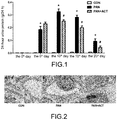
- the rats were divided into 3 groups, normal control group (CON), disease group (PAN), and verbascoside group (PAN+ACT). 24-hour urine of the rats in each group were sampled every 5 days. The effect of verbascoside for treating the nephropathic proteinuria level was reflected by collecting and detecting blood and urine samples of the rats in each group.
- Results of laboratory examination are as shown in FIG. 1 .
- 24-hour urine protein was significantly higher than that of the normal control group on the 5 th day, reached a peak value on the 10 th day, and then began to fall down slowly.
- the proteinuria decreased significantly but was still higher than that of the normal control group.
- the 24-hour urine protein of the verbascoside group was not significantly different from that of the puromycin group, but on the 10 th day, the 24-hour urine protein of the verbascoside group decreased significantly compared with that of the disease group, indicating that the verbascoside could relieve the progress of the puromycin-induced proteinuria of rats, and meanwhile, the 24-hour proteinuria results on the 15 th day and the 20 th day showed that the abnormality of proteinuria of nephropathic rats could be remarkably relieved in the verbascoside-treated group.
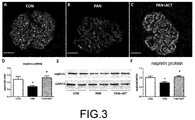
- a most typical pathological change of the models of rat suffering from puromycin-induced nephropathy is the fusion and disappearance of podocyte foot process under an electron microscope.
- This abnormal change of podocytes leads to the development of proteinuria and disease, and also indicates that the podocyte abnormality is an important factor for the occurrence and development of proteinuria and renal diseases. Therefore, in the present research, in addition to detecting the 24-hour proteinuria, whether the verbascoside could protect the podocytes against damage was also verified.
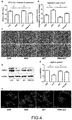
- the podocyte damage marker, synaptopodin was stained by means of immunofluorescence, and the protective effect of the verbascoside on the podocytes was detected according to the fluorescence intensity.
- the puromycin group has weaker fluorescence intensity than the normal control group, that is, having less synaptopodin expression, indicating podocyte damage; in the verbascoside group, the fluorescence intensity was recovered, indicating that the verbascoside could protect the podocytes by improving the synaptopodin expression.
- nephrin gene and protein expression levels were detected by western and real-time quantitative PCR techniques (D-F of FIG. 3 ). Results show that gene and protein levels of nephrin both decreased in the puromycin disease group, indicating the podocyte damage; and the expression level of nephrin was increased after treatment with the verbascoside, indicating that the verbascoside could protect the podocytes.
- results of in vivo research of the nephropathic animal models indicate that the verbascoside could protect the podocyte and further reduce the proteinuria, and in order to further confirm the protective effect of the verbascoside on the podocytes, the effect of the verbascoside was further verified in the present research using a cell model with puromycin-induced podocyte damage.
- an in vitro puromycin-induced podocyte damage model was established in the present research.
- MTS is a formazan compound, dehydrogenase enzymes in live cells convert MTS to a liquid and soluble formazan compound, the number of formazan products represented by an absorption value measured at 490 nm is directly proportional to the number of active cells in the culture, and MTS is therefore used to detect cell viability
- the verbascoside was used for the puromycin-induced podocyte damage, the podocyte viability was recovered, and statistically different from the damage group.
- the expression of the protein marker nephrin of the podocyte damage in the puromycin-induced podocyte damage was lowered, indicating podocyte damage.
- the nephrin expression was improved after the treatment with verbascoside, and the protein improvement was statistically different compared with that of the puromycin group (D and E of FIG. 4 ).
- podocyte cytoskeletal microfilamentous proteins were stained with phalloidin, and results showed that microfilamentous protein fiber bundles of cytoskeleton in the normal podocytes were also arranged in order in a certain stress direction, and that when the podocytes were damaged, the cytoskeletal microfilamentous proteins were in short-rod-like disordered arrangement, as shown in F of FIG. 4 , in which the cytoskeletons of the podocytes are in short-rod-like disordered arrangement after being treated with puromycin; but after the verbascoside was used, the arrangement of the cytoskeletons was restored, and the arrangement was relatively neat, indicating that the verbascoside could protect the podocytes against damage.
- the verbascoside can effectively restore the activity of the glomerular podocyte, lower its abnormal migration capability, protect the cytoskeleton of the podocyte, and restore the expression levels of podocyte damage markers, nephrin protein and synaptopodin protein, so as to remarkably reduce the urine protein. Therefore, the verbascoside can be applied, alone or in combination with other drugs, to prepare a drug or a health care product for preventing or treating diseases related to glomerular podocyte damage, and applied in use of a drug or a health care product for relieving damage to podocyte caused by other drugs.
Landscapes
- Health & Medical Sciences (AREA)
- Life Sciences & Earth Sciences (AREA)
- Veterinary Medicine (AREA)
- Animal Behavior & Ethology (AREA)
- Chemical & Material Sciences (AREA)
- Medicinal Chemistry (AREA)
- Public Health (AREA)
- General Health & Medical Sciences (AREA)
- Pharmacology & Pharmacy (AREA)
- Epidemiology (AREA)
- Molecular Biology (AREA)
- Bioinformatics & Cheminformatics (AREA)
- Urology & Nephrology (AREA)
- Organic Chemistry (AREA)
- Nuclear Medicine, Radiotherapy & Molecular Imaging (AREA)
- Engineering & Computer Science (AREA)
- General Chemical & Material Sciences (AREA)
- Chemical Kinetics & Catalysis (AREA)
- Pharmaceuticals Containing Other Organic And Inorganic Compounds (AREA)
- Medicines That Contain Protein Lipid Enzymes And Other Medicines (AREA)
Applications Claiming Priority (2)
| Application Number | Priority Date | Filing Date | Title |
|---|---|---|---|
| CN201710783928.5A CN107375308B (zh) | 2017-09-04 | 2017-09-04 | 毛蕊花糖苷在制备预防或治疗肾小球足细胞损伤型肾脏疾病的药物中的用途 |
| PCT/CN2017/106171 WO2019041467A1 (zh) | 2017-09-04 | 2017-10-13 | 毛蕊花糖苷在制备预防或治疗肾小球足细胞损伤型肾脏疾病的药物中的用途 |
Publications (2)
| Publication Number | Publication Date |
|---|---|
| EP3679936A1 true EP3679936A1 (de) | 2020-07-15 |
| EP3679936A4 EP3679936A4 (de) | 2020-09-09 |
Family
ID=60347767
Family Applications (1)
| Application Number | Title | Priority Date | Filing Date |
|---|---|---|---|
| EP17923035.4A Pending EP3679936A4 (de) | 2017-09-04 | 2017-10-13 | Verwendung von verbascosid bei der herstellung eines arzneimittels zur vorbeugung oder behandlung von glomerulärer nierenerkrankung mit podozytenläsionen |
Country Status (5)
| Country | Link |
|---|---|
| US (1) | US11471472B2 (de) |
| EP (1) | EP3679936A4 (de) |
| JP (1) | JP2020532501A (de) |
| CN (1) | CN107375308B (de) |
| WO (1) | WO2019041467A1 (de) |
Families Citing this family (5)
| Publication number | Priority date | Publication date | Assignee | Title |
|---|---|---|---|---|
| CN107375308B (zh) | 2017-09-04 | 2021-02-12 | 四川美大康药业股份有限公司 | 毛蕊花糖苷在制备预防或治疗肾小球足细胞损伤型肾脏疾病的药物中的用途 |
| CN108451961A (zh) * | 2018-06-15 | 2018-08-28 | 南京中医药大学 | 毛蕊花糖苷在治疗和预防ii型糖尿病肾病中的应用 |
| CN110090216B (zh) * | 2019-04-28 | 2021-07-16 | 山东省分析测试中心 | 吲哚生物碱类化合物及其衍生物或盐在防治糖尿病肾病制品中的应用 |
| CN112915095A (zh) * | 2019-12-06 | 2021-06-08 | 罗胥恩 | 慢性伤口愈合组合物及其应用 |
| CN116590345B (zh) * | 2023-05-06 | 2024-01-30 | 北京中医药大学 | 永生化小鼠足细胞系及其制备方法、分化方法和应用 |
Family Cites Families (9)
| Publication number | Priority date | Publication date | Assignee | Title |
|---|---|---|---|---|
| CA2468496C (en) * | 2001-11-30 | 2012-04-10 | Kinetek Pharmaceuticals, Inc. | Ilk inhibitors for the treatment of renal disease |
| CN101121740A (zh) * | 2006-08-09 | 2008-02-13 | 中国中医科学院中药研究所 | 地黄叶中具有治疗慢性肾小球肾炎作用的毛蕊花糖苷的制备工艺 |
| EP2114390A2 (de) * | 2006-12-15 | 2009-11-11 | Ruprecht-Karls-Universität Heidelberg | Verfahren zur behandlung von erkrankungen im zusammenhang mit podozyten |
| US20110144040A1 (en) * | 2009-12-10 | 2011-06-16 | MN Intellectual Property Corp, LLC | Acteoside and acteoside-rich plant extracts for increasing athletic performance in humans |
| MX2013002384A (es) * | 2010-09-01 | 2013-07-05 | Ambit Biosciences Corp | Compuestos quinazolina y metodos para utilizarlos. |
| BRPI1101698A2 (pt) * | 2011-04-08 | 2013-06-11 | Wsgb Laboratarios Ltda | kit cosmÉtico e sua composiÇço para mudanÇa conformacional de fibras capilares, e respectivo mÉtodo de aplicaÇço |
| JP2013023478A (ja) * | 2011-07-22 | 2013-02-04 | Paimore Co Ltd | トリートメント組成物 |
| JP5969738B2 (ja) * | 2011-07-25 | 2016-08-17 | 丸善製薬株式会社 | 抗糖化作用剤 |
| CN107375308B (zh) * | 2017-09-04 | 2021-02-12 | 四川美大康药业股份有限公司 | 毛蕊花糖苷在制备预防或治疗肾小球足细胞损伤型肾脏疾病的药物中的用途 |
-
2017
- 2017-09-04 CN CN201710783928.5A patent/CN107375308B/zh active Active
- 2017-10-13 EP EP17923035.4A patent/EP3679936A4/de active Pending
- 2017-10-13 JP JP2020509425A patent/JP2020532501A/ja active Pending
- 2017-10-13 US US16/643,969 patent/US11471472B2/en active Active
- 2017-10-13 WO PCT/CN2017/106171 patent/WO2019041467A1/zh not_active Ceased
Also Published As
| Publication number | Publication date |
|---|---|
| EP3679936A4 (de) | 2020-09-09 |
| US11471472B2 (en) | 2022-10-18 |
| CN107375308A (zh) | 2017-11-24 |
| US20210060046A1 (en) | 2021-03-04 |
| JP2020532501A (ja) | 2020-11-12 |
| CN107375308B (zh) | 2021-02-12 |
| WO2019041467A1 (zh) | 2019-03-07 |
Similar Documents
| Publication | Publication Date | Title |
|---|---|---|
| US11471472B2 (en) | Use of verbascoside in preparation of drug for preventing or treating glomerular podocyte injured renal disease | |
| EP3031456A1 (de) | Verwendung von andrographolid zur herstellung eines arzneimittels zur behandlung von entzündlicher darmerkrankung, enterales andrographolid-mikropellet und verfahren zur herstellung davon | |
| KR20240152932A (ko) | 다낭성 난소 증후군 치료약 제조에 있어서 뽕나무 가지의 총 알칼로이드의 사용 | |
| US20200121627A1 (en) | Composition comprising azelaic acid or as active ingredients for muscle strengthening, development, differentiation, regeneration or inhibiting muscle atrophy | |
| CN104510853B (zh) | 一种治疗妇女痛经的中药有效部位组合物及其用途 | |
| CN112898131B (zh) | 大麻二酚的提取工艺及大麻二酚或大麻提取物在制备预防或者治疗bph的药物中的应用 | |
| CN114601865A (zh) | 桑提取物在制备治疗溃疡性结肠炎的药物中的应用 | |
| CN115245533A (zh) | 南山花根提取物在肺纤维化治疗的应用 | |
| CN115006420B (zh) | 蒙花苷在制备调节尿酸分泌蛋白的药物中的应用 | |
| CN113827587A (zh) | 丹酚酸a在制备预防血栓性脑缺血的药物中的应用 | |
| TWI411432B (zh) | 山竹素在製備治療急性肝炎、肝纖維化及預防肝硬化之藥物的用途 | |
| WO2024119622A1 (zh) | 桑提取物在制备预防和/或治疗肝胆疾病药物中的应用 | |
| AU2018446089A1 (en) | Pharmaceutical use of anemoside B4 against acute gouty arthritis | |
| KR102208221B1 (ko) | 신경근육질환의 예방 또는 치료용 약학적 조성물 | |
| CN104814954B (zh) | 一种药物制剂及在制备治疗心肌缺血与胃炎药物中的应用 | |
| JP2024537699A (ja) | 脱毛防止又は発毛促進活性を有するペプチドとその用途 | |
| CN113474001A (zh) | 包含香蜂花叶提取物的馏分的药物组合物 | |
| CN114159435B (zh) | 附子灵在制备治疗关节炎药物中的应用 | |
| CN119770568B (zh) | 一种中药组合物、药物制剂及用途 | |
| CN110974836A (zh) | 一种基于Nrf2的环维黄杨星D在糖尿病心肌病中的应用 | |
| CN118319921A (zh) | 一种制备治疗心肌病的药物 | |
| CN117815261A (zh) | 一种锯叶棕果实提取物及其软胶囊的医药新用途 | |
| CN118403064A (zh) | 3-苄基-5-o-葡萄糖苷环淫羊藿素在制备抗血管重构性疾病药物中的应用 | |
| CN116570587A (zh) | 盐酸度洛西汀在制备抗新型冠状病毒药物中的应用 | |
| CN106668601B (zh) | 一种治疗脑血管病痰热证的中药组合物及其制备方法与应用 |
Legal Events
| Date | Code | Title | Description |
|---|---|---|---|
| STAA | Information on the status of an ep patent application or granted ep patent |
Free format text: STATUS: THE INTERNATIONAL PUBLICATION HAS BEEN MADE |
|
| PUAI | Public reference made under article 153(3) epc to a published international application that has entered the european phase |
Free format text: ORIGINAL CODE: 0009012 |
|
| STAA | Information on the status of an ep patent application or granted ep patent |
Free format text: STATUS: REQUEST FOR EXAMINATION WAS MADE |
|
| 17P | Request for examination filed |
Effective date: 20200403 |
|
| AK | Designated contracting states |
Kind code of ref document: A1 Designated state(s): AL AT BE BG CH CY CZ DE DK EE ES FI FR GB GR HR HU IE IS IT LI LT LU LV MC MK MT NL NO PL PT RO RS SE SI SK SM TR |
|
| AX | Request for extension of the european patent |
Extension state: BA ME |
|
| STAA | Information on the status of an ep patent application or granted ep patent |
Free format text: STATUS: EXAMINATION IS IN PROGRESS |
|
| A4 | Supplementary search report drawn up and despatched |
Effective date: 20200811 |
|
| RIC1 | Information provided on ipc code assigned before grant |
Ipc: A61P 3/10 20060101ALI20200805BHEP Ipc: A61K 31/7034 20060101AFI20200805BHEP Ipc: A61P 13/12 20060101ALI20200805BHEP Ipc: A61K 31/7028 20060101ALI20200805BHEP |
|
| 17Q | First examination report despatched |
Effective date: 20200827 |
|
| RIN1 | Information on inventor provided before grant (corrected) |
Inventor name: ZHANG, XIAOQI |
|
| DAV | Request for validation of the european patent (deleted) | ||
| DAX | Request for extension of the european patent (deleted) |