EP3668834B1 - Lipide zur verwendung in lipidnanopartikelformulierungen - Google Patents
Lipide zur verwendung in lipidnanopartikelformulierungen Download PDFInfo
- Publication number
- EP3668834B1 EP3668834B1 EP18780258.2A EP18780258A EP3668834B1 EP 3668834 B1 EP3668834 B1 EP 3668834B1 EP 18780258 A EP18780258 A EP 18780258A EP 3668834 B1 EP3668834 B1 EP 3668834B1
- Authority
- EP
- European Patent Office
- Prior art keywords
- compound
- alkyl
- acid
- lipid
- mmol
- Prior art date
- Legal status (The legal status is an assumption and is not a legal conclusion. Google has not performed a legal analysis and makes no representation as to the accuracy of the status listed.)
- Active
Links
Classifications
-
- A—HUMAN NECESSITIES
- A61—MEDICAL OR VETERINARY SCIENCE; HYGIENE
- A61K—PREPARATIONS FOR MEDICAL, DENTAL OR TOILETRY PURPOSES
- A61K47/00—Medicinal preparations characterised by the non-active ingredients used, e.g. carriers or inert additives; Targeting or modifying agents chemically bound to the active ingredient
- A61K47/06—Organic compounds, e.g. natural or synthetic hydrocarbons, polyolefins, mineral oil, petrolatum or ozokerite
- A61K47/08—Organic compounds, e.g. natural or synthetic hydrocarbons, polyolefins, mineral oil, petrolatum or ozokerite containing oxygen, e.g. ethers, acetals, ketones, quinones, aldehydes, peroxides
- A61K47/14—Esters of carboxylic acids, e.g. fatty acid monoglycerides, medium-chain triglycerides, parabens or PEG fatty acid esters
-
- A—HUMAN NECESSITIES
- A61—MEDICAL OR VETERINARY SCIENCE; HYGIENE
- A61K—PREPARATIONS FOR MEDICAL, DENTAL OR TOILETRY PURPOSES
- A61K9/00—Medicinal preparations characterised by special physical form
- A61K9/48—Preparations in capsules, e.g. of gelatin, of chocolate
- A61K9/50—Microcapsules having a gas, liquid or semi-solid filling; Solid microparticles or pellets surrounded by a distinct coating layer, e.g. coated microspheres, coated drug crystals
- A61K9/51—Nanocapsules; Nanoparticles
- A61K9/5107—Excipients; Inactive ingredients
- A61K9/5123—Organic compounds, e.g. fats, sugars
-
- C—CHEMISTRY; METALLURGY
- C07—ORGANIC CHEMISTRY
- C07C—ACYCLIC OR CARBOCYCLIC COMPOUNDS
- C07C229/00—Compounds containing amino and carboxyl groups bound to the same carbon skeleton
- C07C229/02—Compounds containing amino and carboxyl groups bound to the same carbon skeleton having amino and carboxyl groups bound to acyclic carbon atoms of the same carbon skeleton
- C07C229/04—Compounds containing amino and carboxyl groups bound to the same carbon skeleton having amino and carboxyl groups bound to acyclic carbon atoms of the same carbon skeleton the carbon skeleton being acyclic and saturated
- C07C229/24—Compounds containing amino and carboxyl groups bound to the same carbon skeleton having amino and carboxyl groups bound to acyclic carbon atoms of the same carbon skeleton the carbon skeleton being acyclic and saturated having more than one carboxyl group bound to the carbon skeleton, e.g. aspartic acid
-
- C—CHEMISTRY; METALLURGY
- C07—ORGANIC CHEMISTRY
- C07C—ACYCLIC OR CARBOCYCLIC COMPOUNDS
- C07C233/00—Carboxylic acid amides
- C07C233/01—Carboxylic acid amides having carbon atoms of carboxamide groups bound to hydrogen atoms or to acyclic carbon atoms
- C07C233/34—Carboxylic acid amides having carbon atoms of carboxamide groups bound to hydrogen atoms or to acyclic carbon atoms having the nitrogen atom of at least one of the carboxamide groups bound to a carbon atom of a hydrocarbon radical substituted by amino groups
- C07C233/35—Carboxylic acid amides having carbon atoms of carboxamide groups bound to hydrogen atoms or to acyclic carbon atoms having the nitrogen atom of at least one of the carboxamide groups bound to a carbon atom of a hydrocarbon radical substituted by amino groups with the substituted hydrocarbon radical bound to the nitrogen atom of the carboxamide group by an acyclic carbon atom
- C07C233/36—Carboxylic acid amides having carbon atoms of carboxamide groups bound to hydrogen atoms or to acyclic carbon atoms having the nitrogen atom of at least one of the carboxamide groups bound to a carbon atom of a hydrocarbon radical substituted by amino groups with the substituted hydrocarbon radical bound to the nitrogen atom of the carboxamide group by an acyclic carbon atom having the carbon atom of the carboxamide group bound to a hydrogen atom or to a carbon atom of an acyclic saturated carbon skeleton
-
- C—CHEMISTRY; METALLURGY
- C07—ORGANIC CHEMISTRY
- C07C—ACYCLIC OR CARBOCYCLIC COMPOUNDS
- C07C233/00—Carboxylic acid amides
- C07C233/01—Carboxylic acid amides having carbon atoms of carboxamide groups bound to hydrogen atoms or to acyclic carbon atoms
- C07C233/45—Carboxylic acid amides having carbon atoms of carboxamide groups bound to hydrogen atoms or to acyclic carbon atoms having the nitrogen atom of at least one of the carboxamide groups bound to a carbon atom of a hydrocarbon radical substituted by carboxyl groups
- C07C233/46—Carboxylic acid amides having carbon atoms of carboxamide groups bound to hydrogen atoms or to acyclic carbon atoms having the nitrogen atom of at least one of the carboxamide groups bound to a carbon atom of a hydrocarbon radical substituted by carboxyl groups with the substituted hydrocarbon radical bound to the nitrogen atom of the carboxamide group by an acyclic carbon atom
- C07C233/47—Carboxylic acid amides having carbon atoms of carboxamide groups bound to hydrogen atoms or to acyclic carbon atoms having the nitrogen atom of at least one of the carboxamide groups bound to a carbon atom of a hydrocarbon radical substituted by carboxyl groups with the substituted hydrocarbon radical bound to the nitrogen atom of the carboxamide group by an acyclic carbon atom having the carbon atom of the carboxamide group bound to a hydrogen atom or to a carbon atom of an acyclic saturated carbon skeleton
-
- C—CHEMISTRY; METALLURGY
- C07—ORGANIC CHEMISTRY
- C07C—ACYCLIC OR CARBOCYCLIC COMPOUNDS
- C07C237/00—Carboxylic acid amides, the carbon skeleton of the acid part being further substituted by amino groups
- C07C237/02—Carboxylic acid amides, the carbon skeleton of the acid part being further substituted by amino groups having the carbon atoms of the carboxamide groups bound to acyclic carbon atoms of the carbon skeleton
- C07C237/04—Carboxylic acid amides, the carbon skeleton of the acid part being further substituted by amino groups having the carbon atoms of the carboxamide groups bound to acyclic carbon atoms of the carbon skeleton the carbon skeleton being acyclic and saturated
- C07C237/06—Carboxylic acid amides, the carbon skeleton of the acid part being further substituted by amino groups having the carbon atoms of the carboxamide groups bound to acyclic carbon atoms of the carbon skeleton the carbon skeleton being acyclic and saturated having the nitrogen atoms of the carboxamide groups bound to hydrogen atoms or to acyclic carbon atoms
-
- C—CHEMISTRY; METALLURGY
- C07—ORGANIC CHEMISTRY
- C07C—ACYCLIC OR CARBOCYCLIC COMPOUNDS
- C07C237/00—Carboxylic acid amides, the carbon skeleton of the acid part being further substituted by amino groups
- C07C237/02—Carboxylic acid amides, the carbon skeleton of the acid part being further substituted by amino groups having the carbon atoms of the carboxamide groups bound to acyclic carbon atoms of the carbon skeleton
- C07C237/04—Carboxylic acid amides, the carbon skeleton of the acid part being further substituted by amino groups having the carbon atoms of the carboxamide groups bound to acyclic carbon atoms of the carbon skeleton the carbon skeleton being acyclic and saturated
- C07C237/08—Carboxylic acid amides, the carbon skeleton of the acid part being further substituted by amino groups having the carbon atoms of the carboxamide groups bound to acyclic carbon atoms of the carbon skeleton the carbon skeleton being acyclic and saturated having the nitrogen atom of at least one of the carboxamide groups bound to an acyclic carbon atom of a hydrocarbon radical substituted by singly-bound oxygen atoms
-
- C—CHEMISTRY; METALLURGY
- C12—BIOCHEMISTRY; BEER; SPIRITS; WINE; VINEGAR; MICROBIOLOGY; ENZYMOLOGY; MUTATION OR GENETIC ENGINEERING
- C12N—MICROORGANISMS OR ENZYMES; COMPOSITIONS THEREOF; PROPAGATING, PRESERVING, OR MAINTAINING MICROORGANISMS; MUTATION OR GENETIC ENGINEERING; CULTURE MEDIA
- C12N15/00—Mutation or genetic engineering; DNA or RNA concerning genetic engineering, vectors, e.g. plasmids, or their isolation, preparation or purification; Use of hosts therefor
- C12N15/09—Recombinant DNA-technology
- C12N15/11—DNA or RNA fragments; Modified forms thereof; Non-coding nucleic acids having a biological activity
- C12N15/113—Non-coding nucleic acids modulating the expression of genes, e.g. antisense oligonucleotides; Antisense DNA or RNA; Triplex- forming oligonucleotides; Catalytic nucleic acids, e.g. ribozymes; Nucleic acids used in co-suppression or gene silencing
-
- C—CHEMISTRY; METALLURGY
- C12—BIOCHEMISTRY; BEER; SPIRITS; WINE; VINEGAR; MICROBIOLOGY; ENZYMOLOGY; MUTATION OR GENETIC ENGINEERING
- C12N—MICROORGANISMS OR ENZYMES; COMPOSITIONS THEREOF; PROPAGATING, PRESERVING, OR MAINTAINING MICROORGANISMS; MUTATION OR GENETIC ENGINEERING; CULTURE MEDIA
- C12N2310/00—Structure or type of the nucleic acid
- C12N2310/10—Type of nucleic acid
- C12N2310/11—Antisense
Definitions
- Embodiments of the present invention generally relate to novel lipids that can be used in combination with other lipid components, such as neutral lipids, cholesterol and polymer conjugated lipids, to form lipid nanoparticles for delivery of therapeutic agents, such as nucleic acids (e.g., oligonucleotides, messenger RNA), both in vitro and in vivo.
- lipid components such as neutral lipids, cholesterol and polymer conjugated lipids
- therapeutic agents such as nucleic acids (e.g., oligonucleotides, messenger RNA), both in vitro and in vivo.
- nucleic acid based therapeutics have enormous potential but there remains a need for more effective delivery of nucleic acids to appropriate sites within a cell or organism in order to realize this potential.
- Therapeutic nucleic acids include, e.g., messenger RNA (mRNA), antisense oligonucleotides, ribozymes, DNAzymes, plasmids, immune stimulating nucleic acids, antagomir, antimir, mimic, supermir, and aptamers.
- nucleic acids such as mRNA or plasmids
- mRNA or plasmids can be used to effect expression of specific cellular products as would be useful in the treatment of, for example, diseases related to a deficiency of a protein or enzyme.
- the therapeutic applications of translatable nucleotide delivery are extremely broad as constructs can be synthesized to produce any chosen protein sequence, whether or not indigenous to the system.
- the expression products of the nucleic acid can augment existing levels of protein, replace missing or non-functional versions of a protein, or introduce new protein and associated functionality in a cell or organism.
- nucleic acids such as miRNA inhibitors
- miRNA inhibitors can be used to effect expression of specific cellular products that are regulated by miRNA as would be useful in the treatment of, for example, diseases related to deficiency of protein or enzyme.
- the therapeutic applications of miRNA inhibition are extremely broad as constructs can be synthesized to inhibit one or more miRNA that would in turn regulate the expression of mRNA products.
- the inhibition of endogenous miRNA can augment its downstream target endogenous protein expression and restore proper function in a cell or organism as a means to treat disease associated to a specific miRNA or a group of miRNA.
- nucleic acids can down-regulate intracellular levels of specific mRNA and, as a result, down-regulate the synthesis of the corresponding proteins through processes such as RNA interference (RNAi) or complementary binding of antisense RNA.
- RNA interference RNA interference
- the therapeutic applications of antisense oligonucleotide and RNAi are also extremely broad, since oligonucleotide constructs can be synthesized with any nucleotide sequence directed against a target mRNA.
- Targets may include mRNAs from normal cells, mRNAs associated with disease-states, such as cancer, and mRNAs of infectious agents, such as viruses.
- antisense oligonucleotide constructs have shown the ability to specifically down-regulate target proteins through degradation of the cognate mRNA in both in vitro and in vivo models.
- antisense oligonucleotide constructs are currently being evaluated in clinical studies.
- RNAs are susceptible to nuclease digestion in plasma.
- free RNAs have limited ability to gain access to the intracellular compartment where the relevant translation machinery resides.
- Lipid nanoparticles formed from lipids formulated with other lipid components, such as neutral lipids, cholesterol, PEG, PEGylated lipids, and oligonucleotides have been used to block degradation of the RNAs in plasma and facilitate the cellular uptake of the oligonucleotides.
- Lipids useful for the delivery of therapeutics are known from US 2016/376224 , WO 2016/176330 , WO 2014/153163 , WO 2013/059496 , WO2011/075656 and WO 2017/075531 .
- these lipid nanoparticles would provide optimal drug:lipid ratios, protect the nucleic acid from degradation and clearance in serum, be suitable for systemic or local delivery, and provide intracellular delivery of the nucleic acid.
- these lipid-nucleic acid particles should be well-tolerated and provide an adequate therapeutic index, such that patient treatment at an effective dose of the nucleic acid is not associated with unacceptable toxicity and/or risk to the patient. The present invention provides these and related advantages.
- One aspect of the invention relates to a compound having a structure of Formula I: or a pharmaceutically acceptable salt, tautomer or stereoisomer thereof, wherein:
- a further aspect of the invention relates to a composition
- a composition comprising the compound of the invention and:
- a further aspect of the invention relates to the composition of the invention for use in a method for administering the therapeutic agent to a patient in need thereof.
- a further aspect of the invention relates to a lipid nanoparticle comprising a compound of the invention.
- a further aspect of the invention relates to a pharmaceutical composition
- a pharmaceutical composition comprising the lipid nanoparticle of the invention and a pharmaceutically acceptable diluent or excipient.
- lipid compounds including stereoisomers, pharmaceutically acceptable salts, prodrugs or tautomers thereof, which can be used alone or in combination with other lipid components such as neutral lipids, charged lipids, steroids (including for example, all sterols) and/or their analogs, and/or polymer conjugated lipids to form lipid nanoparticles for the delivery of therapeutic agents.
- the lipid compounds are according to the invention insofar as they fall within the scope of the claims.
- the lipid nanoparticles are used to deliver nucleic acids such as antisense and/or messenger RNA.
- references to methods of treatment in the subsequent paragraphs of this description are to be interpreted as references to the compounds, pharmaceutical compositions and medicaments of the present invention for use in a method for treatment of the human (or animal) body by therapy.
- compounds having the following structure (I) are disclosed: or a pharmaceutically acceptable salt, tautomer, prodrug or stereoisomer thereof, wherein R 1a , R 1b , R 2a , R 2b , R 3a , R 3b , R 4a , R 4b , R 5 , R 6 , R 7 , R 8 , L 1 , L 2 , G 1 , G 2 , G 3 , a, b, c and d are as defined herein.
- the compounds are according to the invention insofar as they fall within the scope of the claims.
- compositions comprising one or more of the foregoing compounds of structure (1) and a therapeutic agent are also provided.
- lipid nanoparticles comprising one or more compounds of structure (I).
- the pharmaceutical compositions and/or LNPs further comprise one or more components selected from neutral lipids, charged lipids, steroids and polymer conjugated lipids.
- the disclosed compositions are useful for formation of lipid nanoparticles for the delivery of the therapeutic agent.
- described is a method for administering a therapeutic agent to a patient in need thereof, the method comprising preparing a composition of lipid nanoparticles comprising the compound of structure (I) and a therapeutic agent and delivering the composition to the patient.
- the method for administering a therapeutic agent to a patient in need thereof comprises administering an LNP comprising one or more compounds of structure (I) and the therapeutic agent to the patient.
- Embodiments of the present invention are based, in part, upon the discovery of novel lipids that provide advantages when used in lipid nanoparticles for the in vivo delivery of an active or therapeutic agent such as a nucleic acid into a cell of a mammal.
- the present invention provides nucleic acid-lipid nanoparticle compositions comprising one or more of the novel lipids described herein that provide increased activity of the nucleic acid and improved tolerability of the compositions in vivo, resulting in a significant increase in the therapeutic index as compared to nucleic acid-lipid nanoparticle compositions previously described.
- embodiments provide a lipid nanoparticle comprising one or more compounds of structure (I).
- the present invention provides novel lipids that enable the formulation of improved compositions for the in vitro and in vivo delivery of mRNA and/or other oligonucleotides.
- these improved lipid nanoparticle compositions are useful for expression of protein encoded by mRNA.
- these improved lipid nanoparticles compositions are useful for upregulation of endogenous protein expression by delivering miRNA inhibitors targeting one specific miRNA or a group of miRNA regulating one target mRNA or several mRNA.
- these improved lipid nanoparticle compositions are useful for down-regulating (e.g., silencing) the protein levels and/or mRNA levels of target genes.
- the lipid nanoparticles are also useful for delivery of mRNA and plasmids for expression of transgenes.
- the lipid nanoparticle compositions are useful for inducing a pharmacological effect resulting from expression of a protein, e.g., increased production of red blood cells through the delivery of a suitable erythropoietin mRNA, or protection against infection through delivery of mRNA encoding for a suitable antigen or antibody.
- lipid nanoparticles and compositions of embodiments of the present invention may be used for a variety of purposes, including the delivery of encapsulated or associated (e.g., complexed) therapeutic agents such as nucleic acids to cells, both in vitro and in vivo. Accordingly, embodiments of the present invention provide methods of treating or preventing diseases or disorders in a subject in need thereof by contacting the subject with a lipid nanoparticle that encapsulates or is associated with a suitable therapeutic agent, wherein the lipid nanoparticle comprises one or more of the novel lipids described herein.
- embodiments of the lipid nanoparticles of the present invention are particularly useful for the delivery of nucleic acids, including, e.g., mRNA, antisense oligonucleotide, plasmid DNA, microRNA (miRNA), miRNA inhibitors (antagomirs/antimirs), messenger-RNA-interfering complementary RNA (micRNA), DNA, multivalent RNA, dicer substrate RNA, complementary DNA (cDNA), etc.
- nucleic acids including, e.g., mRNA, antisense oligonucleotide, plasmid DNA, microRNA (miRNA), miRNA inhibitors (antagomirs/antimirs), messenger-RNA-interfering complementary RNA (micRNA), DNA, multivalent RNA, dicer substrate RNA, complementary DNA (cDNA), etc.
- the lipid nanoparticles and compositions of embodiments of the present invention may be used to induce expression of a desired protein both in vitro and in vivo by contacting cells with a lipid nanoparticle comprising one or more novel lipids described herein, wherein the lipid nanoparticle encapsulates or is associated with a nucleic acid that is expressed to produce the desired protein (e.g., a messenger RNA or plasmid encoding the desired protein) or inhibit processes that terminate expression of mRNA (e.g., miRNA inhibitors).
- a desired protein e.g., a messenger RNA or plasmid encoding the desired protein
- miRNA inhibitors e.g., miRNA inhibitors
- the lipid nanoparticles and compositions of embodiments of the present invention may be used to decrease the expression of target genes and proteins both in vitro and in vivo by contacting cells with a lipid nanoparticle comprising one or more novel lipids (e.g., a compound of structure (I)) described herein, wherein the lipid nanoparticle encapsulates or is associated with a nucleic acid that reduces target gene expression (e.g., an antisense oligonucleotide or small interfering RNA (siRNA)).
- a nucleic acid that reduces target gene expression
- siRNA small interfering RNA
- the lipid nanoparticles and compositions of embodiments of the present invention may also be used for co-delivery of different nucleic acids (e.g., mRNA and plasmid DNA) separately or in combination, such as may be useful to provide an effect requiring colocalization of different nucleic acids (e.g., mRNA encoding for a suitable gene modifying enzyme and DNA segment(s) for incorporation into the host genome).
- nucleic acids e.g., mRNA and plasmid DNA
- Nucleic acids for use with embodiments of this invention may be prepared according to any available technique.
- the primary methodology of preparation is, but not limited to, enzymatic synthesis (also termed in vitro transcription) which currently represents the most efficient method to produce long sequence-specific mRNA.
- In vitro transcription describes a process of template-directed synthesis of RNA molecules from an engineered DNA template comprised of an upstream bacteriophage promoter sequence (e.g., including but not limited to that from the T7, T3 and SP6 coliphage) linked to a downstream sequence encoding the gene of interest.
- an upstream bacteriophage promoter sequence e.g., including but not limited to that from the T7, T3 and SP6 coliphage
- Template DNA can be prepared for in vitro transcription from a number of sources with appropriate techniques which are well known in the art including, but not limited to, plasmid DNA and polymerase chain reaction amplification (see Linpinsel, J.L and Conn, G.L., General protocols for preparation of plasmid DNA template and Bowman, J.C., Azizi, B., Lenz, T.K., Ray, P., and Williams, L.D. in RNA in vitro transcription and RNA purification by denaturing PAGE in Recombinant and in vitro RNA syntheses Methods v. 941 Conn G.L. (ed), New York, N.Y. Humana Press, 2012 )
- RNA polymerase adenosine, guanosine, uridine and cytidine ribonucleoside triphosphates (rNTPs) under conditions that support polymerase activity while minimizing potential degradation of the resultant mRNA transcripts.
- rNTPs ribonucleoside triphosphates
- In vitro transcription can be performed using a variety of commercially available kits including, but not limited to RiboMax Large Scale RNA Production System (Promega), MegaScript Transcription kits (Life Technologies) as well as with commercially available reagents including RNA polymerases and rNTPs.
- the methodology for in vitro transcription of mRNA is well known in the art.
- the desired in vitro transcribed mRNA is then purified from the undesired components of the transcription or associated reactions (including unincorporated rNTPs, protein enzyme, salts, short RNA oligos, etc.).
- Techniques for the isolation of the mRNA transcripts are well known in the art. Well known procedures include phenol/chloroform extraction or precipitation with either alcohol (ethanol, isopropanol) in the presence of monovalent cations or lithium chloride. Additional, non-limiting examples of purification procedures which can be used include size exclusion chromatography ( Lukavsky, P.J.
- RNA in vitro transcription and RNA purification by denaturing PAGE in Recombinant and in vitro RNA syntheses Methods v. 941 Conn G.L. (ed), New York, N.Y. Humana Press, 2012 ). Purification can be performed using a variety of commercially available kits including, but not limited to SV Total Isolation System (Promega) and In Vitro Transcription Cleanup and Concentration Kit (Norgen Biotek).
- RNA impurities associated with undesired polymerase activity which may need to be removed from the full-length mRNA preparation.
- RNA impurities include short RNAs that result from abortive transcription initiation as well as double-stranded RNA (dsRNA) generated by RNA-dependent RNA polymerase activity, RNA-primed transcription from RNA templates and self-complementary 3' extension. It has been demonstrated that these contaminants with dsRNA structures can lead to undesired immunostimulatory activity through interaction with various innate immune sensors in eukaryotic cells that function to recognize specific nucleic acid structures and induce potent immune responses.
- dsRNA double-stranded RNA
- HPLC purification eliminates immune activation and improves translation of nucleoside-modified, protein-encoding mRNA, Nucl Acid Res, v.
- cap structures can be used to generate the 5'-cap of in vitro transcribed synthetic mRNA.
- 5'-capping of synthetic mRNA can be performed co-transcriptionally with chemical cap analogs (i.e. capping during in vitro transcription).
- the Anti-Reverse Cap Analog (ARCA) cap contains a 5'-5'-triphosphate guanine-guanine linkage where one guanine contains an N7 methyl group as well as a 3'-O-methyl group.
- up to 20% of transcripts remain uncapped during this co-transcriptional process and the synthetic cap analog is not identical to the 5'-cap structure of an authentic cellular mRNA, potentially reducing translatability and cellular stability.
- synthetic mRNA molecules may also be enzymatically capped post-transcriptionally. These may generate a more authentic 5'-cap structure that more closely mimics, either structurally or functionally, the endogenous 5'-cap which have enhanced binding of cap binding proteins, increased half-life, reduced susceptibility to 5' endonucleases, and/or reduced 5' decapping.
- poly-A tail On the 3'-terminus, a long chain of adenine nucleotides (poly-A tail) is normally added to mRNA molecules during RNA processing. Immediately after transcription, the 3' end of the transcript is cleaved to free a 3' hydroxyl to which poly-A polymerase adds a chain of adenine nucleotides to the RNA in a process called polyadenylation.
- the poly-A tail has been extensively shown to enhance both translational efficiency and stability of mRNA (see Bernstein, P. and Ross, J., 1989, Poly (A), poly (A) binding protein and the regulation of mRNA stability, Trends Bio Sci v. 14 373-377 ; Guhaniyogi, J.
- Poly (A) tailing of in vitro transcribed mRNA can be achieved using various approaches including, but not limited to, cloning of a poly (T) tract into the DNA template or by post-transcriptional addition using Poly (A) polymerase.
- the first case allows in vitro transcription of mRNA with poly (A) tails of defined length, depending on the size of the poly (T) tract, but requires additional manipulation of the template.
- the latter case involves the enzymatic addition of a poly (A) tail to in vitro transcribed mRNA using poly (A) polymerase which catalyzes the incorporation of adenine residues onto the 3'termini of RNA, requiring no additional manipulation of the DNA template, but results in mRNA with poly(A) tails of heterogeneous length.
- 5'-capping and 3'-poly (A) tailing can be performed using a variety of commercially available kits including, but not limited to Poly (A) Polymerase Tailing kit (EpiCenter), mMESSAGE mMACHINE T7 Ultra kit and Poly (A) Tailing kit (Life Technologies) as well as with commercially available reagents, various ARCA caps, Poly (A) polymerase, etc.
- modified nucleosides into in vitro transcribed mRNA can be used to prevent recognition and activation of RNA sensors, thus mitigating this undesired immunostimulatory activity and enhancing translation capacity (see e.g. Kariko, K. And Weissman, D.
- modified nucleosides and nucleotides used in the synthesis of modified RNAs can be prepared monitored and utilized using general methods and procedures known in the art.
- nucleoside modifications are available that may be incorporated alone or in combination with other modified nucleosides to some extent into the in vitro transcribed mRNA (see e.g. US2012/0251618 ). In vitro synthesis of nucleoside-modified mRNA have been reported to have reduced ability to activate immune sensors with a concomitant enhanced translational capacity.
- mRNA which can be modified to provide benefit in terms of translatability and stability
- 5' and 3' untranslated regions include the 5' and 3' untranslated regions (UTR).
- Optimization of the UTRs (favorable 5' and 3' UTRs can be obtained from cellular or viral RNAs), either both or independently, have been shown to increase mRNA stability and translational efficiency of in vitro transcribed mRNA (see e.g. Pardi, N., Muramatsu, H., Weissman, D., Kariko, K., In vitro transcription of long RNA containing modified nucleosides in Synthetic Messenger RNA and Cell Metabolism Modulation in Methods in Molecular Biology v.969 (Rabinovich, P.H. Ed), 2013 ).
- nucleic acid payloads may be used for embodiments of this invention.
- methods of preparation include but are not limited to chemical synthesis and enzymatic, chemical cleavage of a longer precursor, in vitro transcription as described above, etc. Methods of synthesizing DNA and RNA nucleotides are widely used and well known in the art (see, e.g. Gait, M. J. (ed.) Oligonucleotide synthesis: a practical approach, Oxford [Oxfordshire], Washington, D.C.: IRL Press, 1984 ; and Herdewijn, P. (ed.) Oligonucleotide synthesis: methods and applications, Methods in Molecular Biology, v. 288 (Clifton, N.J.) Totowa, N.J.: Humana Press, 2005 ,
- plasmid DNA preparation for use with embodiments of this invention commonly utilizes but is not limited to expansion and isolation of the plasmid DNA in vitro in a liquid culture of bacteria containing the plasmid of interest.
- a gene in the plasmid of interest that encodes resistance to a particular antibiotic (penicillin, kanamycin, etc.) allows those bacteria containing the plasmid of interest to selectively grow in antibiotic-containing cultures.
- Methods of isolating plasmid DNA are widely used and well known in the art (see, e.g. Heilig, J., Elbing, K. L. and Brent, R (2001) Large-Scale Preparation of Plasmid DNA. Current Protocols in Molecular Biology.
- Plasmid isolation can be performed using a variety of commercially available kits including, but not limited to Plasmid Plus (Qiagen), GenJET plasmid MaxiPrep (Thermo) and PureYield MaxiPrep (Promega) kits as well as with commercially available reagents.
- lipids of the present disclosure lipid nanoparticles and compositions comprising the same, and their use to deliver active (e.g. therapeutic agents), such as nucleic acids, to modulate gene and protein expression, are described in further detail below.
- active e.g. therapeutic agents
- a sample of cells in culture expressing the desired protein or a control mammal (e.g., a mammal such as a human or an animal model such as a rodent (e.g. mouse) or non-human primate (e.g. monkey) model) that is not contacted with or administered the nucleic acid.
- a control mammal e.g., a mammal such as a human or an animal model such as a rodent (e.g. mouse) or non-human primate (e.g. monkey) model
- the expression of a desired protein in a control sample or a control mammal may be assigned a value of 1.0.
- inducing expression of a desired protein is achieved when the ratio of desired protein expression in the test sample or the test mammal to the level of desired protein expression in the control sample or the control mammal is greater than 1, for example, about 1.1, 1.5, 2.0. 5.0 or 10.0.
- inducing expression of a desired protein is achieved when any measurable level of the desired protein in the test sample or the test mammal is detected.
- the phrase "inhibiting expression of a target gene” refers to the ability of a nucleic acid to silence, reduce, or inhibit the expression of a target gene.
- a test sample e.g. a sample of cells in culture expressing the target gene
- a test mammal e.g. a mammal such as a human or an animal model such as a rodent (e.g. mouse) or a non-human primate (e.g. monkey) model
- a nucleic acid that silences, reduces, or inhibits expression of the target gene.
- Expression of the target gene in the test sample or test animal is compared to expression of the target gene in a control sample (e.g.
- a sample of cells in culture expressing the target gene or a control mammal (e.g. a mammal such as a human or an animal model such as a rodent (e.g. mouse) or non-human primate (e.g. monkey) model) that is not contacted with or administered the nucleic acid.
- a control mammal e.g. a mammal such as a human or an animal model such as a rodent (e.g. mouse) or non-human primate (e.g. monkey) model
- the expression of the target gene in a control sample or a control mammal may be assigned a value of 100%.
- silencing, inhibition, or reduction of expression of a target gene is achieved when the level of target gene expression in the test sample or the test mammal relative to the level of target gene expression in the control sample or the control mammal is about 95%, 90%, 85%, 80%, 75%, 70%, 65%, 60%, 55%, 50%, 45%, 40%, 35%, 30%, 25%, 20%, 15%, 10%, 5%, or 0%.
- the nucleic acids are capable of silencing, reducing, or inhibiting the expression of a target gene by at least about 5%, 10%, 15%, 20%, 25%, 30%, 35%, 40%, 45%, 50%, 55%, 60%, 65%, 70%, 75%, 80%, 85%, 90%, 95%, or 100% in a test sample or a test mammal relative to the level of target gene expression in a control sample or a control mammal not contacted with or administered the nucleic acid.
- Suitable assays for determining the level of target gene expression include, without limitation, examination of protein or mRNA levels using techniques known to those of skill in the art, such as, e.g., dot blots, northern blots, in situ hybridization, ELISA, immunoprecipitation, enzyme function, as well as phenotypic assays known to those of skill in the art.
- an “effective amount” or “therapeutically effective amount” of an active agent or therapeutic agent such as a therapeutic nucleic acid is an amount sufficient to produce the desired effect, e.g. an increase or inhibition of expression of a target sequence in comparison to the normal expression level detected in the absence of the nucleic acid.
- An increase in expression of a target sequence is achieved when any measurable level is detected in the case of an expression product that is not present in the absence of the nucleic acid.
- an in increase in expression is achieved when the fold increase in value obtained with a nucleic acid such as mRNA relative to control is about 1.05, 1.1, 1.2, 1.3, 1.4, 1.5, 1.75, 2, 2.5, 3, 4, 5, 6, 7, 8, 9, 10, 15, 20, 25, 30, 40, 50, 75, 100, 250, 500, 750, 1000, 5000, 10000 or greater.
- Inhibition of expression of a target gene or target sequence is achieved when the value obtained with a nucleic acid such as antisense oligonucleotide relative to the control is about 95%, 90%, 85%, 80%, 75%, 70%, 65%, 60%, 55%, 50%, 45%, 40%, 35%, 30%, 25%, 20%, 15%, 10%, 5%, or 0%.
- Suitable assays for measuring expression of a target gene or target sequence include, e.g., examination of protein or RNA levels using techniques known to those of skill in the art such as dot blots, northern blots, in situ hybridization, ELISA, immunoprecipitation, enzyme function, fluorescence or luminescence of suitable reporter proteins, as well as phenotypic assays known to those of skill in the art.
- nucleic acid refers to a polymer containing at least two deoxyribonucleotides or ribonucleotides in either single- or double-stranded form and includes DNA, RNA, and hybrids thereof.
- DNA may be in the form of antisense molecules, plasmid DNA, cDNA, PCR products, or vectors.
- RNA may be in the form of small hairpin RNA (shRNA), messenger RNA (mRNA), antisense RNA, miRNA, micRNA, multivalent RNA, dicer substrate RNA or viral RNA (vRNA), and combinations thereof.
- Nucleic acids include nucleic acids containing known nucleotide analogs or modified backbone residues or linkages, which are synthetic, naturally occurring, and non-naturally occurring, and which have similar binding properties as the reference nucleic acid.
- Examples of such analogs include, without limitation, phosphorothioates, phosphoramidates, methyl phosphonates, chiral-methyl phosphonates, 2'-O-methyl ribonucleotides, and peptide-nucleic acids (PNAs).
- PNAs peptide-nucleic acids
- the term encompasses nucleic acids containing known analogues of natural nucleotides that have similar binding properties as the reference nucleic acid.
- nucleic acid sequence also implicitly encompasses conservatively modified variants thereof (e.g., degenerate codon substitutions), alleles, orthologs, single nucleotide polymorphisms, and complementary sequences as well as the sequence explicitly indicated.
- degenerate codon substitutions may be achieved by generating sequences in which the third position of one or more selected (or all) codons is substituted with mixed-base and/or deoxyinosine residues ( Batzer et al., Nucleic Acid Res., 19:5081 (1991 ); Ohtsuka et al., J. Biol. Chem., 260:2605-2608 (1985 ); Rossolini et al., Mol.
- Nucleotides contain a sugar deoxyribose (DNA) or ribose (RNA), a base, and a phosphate group. Nucleotides are linked together through the phosphate groups.
- Bases include purines and pyrimidines, which further include natural compounds adenine, thymine, guanine, cytosine, uracil, inosine, and natural analogs, and synthetic derivatives of purines and pyrimidines, which include, but are not limited to, modifications which place new reactive groups such as, but not limited to, amines, alcohols, thiols, carboxylates, and alkylhalides.
- gene refers to a nucleic acid (e.g., DNA or RNA) sequence that comprises partial length or entire length coding sequences necessary for the production of a polypeptide or precursor polypeptide.
- Gene product refers to a product of a gene such as an RNA transcript or a polypeptide.
- lipid refers to a group of organic compounds that include, but are not limited to, esters of fatty acids and are generally characterized by being poorly soluble in water, but soluble in many organic solvents. They are usually divided into at least three classes: (1) “simple lipids,” which include fats and oils as well as waxes; (2) “compound lipids,” which include phospholipids and glycolipids; and (3) “derived lipids” such as steroids.
- a “steroid” is a compound comprising the following carbon skeleton:
- Non-limiting examples of steroids include cholesterol, and the like.
- a "cationic lipid” refers to a lipid capable of being positively charged.
- Exemplary cationic lipids include one or more amine group(s) which bear the positive charge.
- Preferred cationic lipids are ionizable such that they can exist in a positively charged or neutral form depending on pH. The ionization of the cationic lipid affects the surface charge of the lipid nanoparticle under different pH conditions. This charge state can influence plasma protein absorption, blood clearance and tissue distribution ( Semple, S.C., et al., Adv.
- polymer conjugated lipid refers to a molecule comprising both a lipid portion and a polymer portion.
- An example of a polymer conjugated lipid is a pegylated lipid.
- pegylated lipid refers to a molecule comprising both a lipid portion and a polyethylene glycol portion. Pegylated lipids are known in the art and include 1-(monomethoxy-polyethyleneglycol)-2,3-dimyristoylglycerol (PEG-DMG) and the like.
- neutral lipid refers to any of a number of lipid species that exist either in an uncharged or neutral zwitterionic form at a selected pH.
- lipids include, but are not limited to, phosphotidylcholines such as 1,2-Distearoyl- sn -glycero-3-phosphocholine (DSPC), 1,2-Dipalmitoyl- sn -glycero-3-phosphocholine (DPPC), 1,2-Dimyristoyl- sn- glycero-3-phosphocholine (DMPC), 1-Palmitoyl-2-oleoyl- sn -glycero-3-phosphocholine (POPC), 1,2-dioleoyl-sn-glycero-3-phosphocholine (DOPC), phophatidylethanolamines such as 1,2-Dioleoyl- sn- glycero-3-phosphoethanolamine (DOPE), sphingo
- DOPE 1,2-D
- charged lipid refers to any of a number of lipid species that exist in either a positively charged or negatively charged form independent of the pH within a useful physiological range e.g. pH ⁇ 3 to pH ⁇ 9.
- Charged lipids may be synthetic or naturally derived.
- Examples of charged lipids include phosphatidylserines, phosphatidic acids, phosphatidylglycerols, phosphatidylinositols, sterol hemisuccinates, dialkyl trimethylammonium-propanes, (e.g. DOTAP, DOTMA), dialkyl dimethylaminopropanes, ethyl phosphocholines, dimethylaminoethane carbamoyl sterols (e.g. DC-Chol).
- DOTAP phosphatidylglycerols
- phosphatidylinositols sterol hemisuccinates
- dialkyl trimethylammonium-propanes
- lipid nanoparticle refers to particles having at least one dimension on the order of nanometers (e.g., 1-1,000 nm) which include one or more of the compounds of structure (I) or other specified cationic lipids.
- lipid nanoparticles are included in a formulation that can be used to deliver an active agent or therapeutic agent, such as a nucleic acid (e.g., mRNA) to a target site of interest (e.g., cell, tissue, organ, tumor, and the like).
- a nucleic acid e.g., mRNA
- the lipid nanoparticles of the invention comprise a nucleic acid.
- Such lipid nanoparticles typically comprise a compound of structure (I) and one or more excipient selected from neutral lipids, charged lipids, steroids and polymer conjugated lipids.
- the active agent or therapeutic agent such as a nucleic acid, may be encapsulated in the lipid portion of the lipid nanoparticle or an aqueous space enveloped by some or all of the lipid portion of the lipid nanoparticle, thereby protecting it from enzymatic degradation or other undesirable effects induced by the mechanisms of the host organism or cells e.g. an adverse immune response.
- the lipid nanoparticles have a mean diameter of from about 30 nm to about 150 nm, from about 40 nm to about 150 nm, from about 50 nm to about 150 nm, from about 60 nm to about 130 nm, from about 70 nm to about 110 nm, from about 70 nm to about 100 nm, from about 80 nm to about 100 nm, from about 90 nm to about 100 nm, from about 70 to about 90 nm, from about 80 nm to about 90 nm, from about 70 nm to about 80 nm, or about 30 nm, 35 nm, 40 nm, 45 nm, 50 nm, 55 nm, 60 nm, 65 nm, 70 nm, 75 nm, 80 nm, 85 nm, 90 nm, 95 nm, 100 nm, 105 nm, 110 nm, 115 nm, 120 n
- nucleic acids when present in the lipid nanoparticles, are resistant in aqueous solution to degradation with a nuclease.
- Lipid nanoparticles comprising nucleic acids and their method of preparation are disclosed in, e.g., U.S. Patent Publication Nos. 2004/0142025 , 2007/0042031 and PCT Pub. Nos. WO 2017/004143 , WO 2015/199952 , WO 2013/016058 and WO 2013/086373
- lipid encapsulated refers to a lipid nanoparticle that provides an active agent or therapeutic agent, such as a nucleic acid (e.g., mRNA), with full encapsulation, partial encapsulation, or both.
- a nucleic acid e.g., mRNA
- the nucleic acid is fully encapsulated in the lipid nanoparticle.
- aqueous solution refers to a composition comprising water.
- “Serum-stable” in relation to nucleic acid-lipid nanoparticles means that the nucleotide is not significantly degraded after exposure to a serum or nuclease assay that would significantly degrade free DNA or RNA.
- Suitable assays include, for example, a standard serum assay, a DNAse assay, or an RNAse assay.
- Systemic delivery refers to delivery of a therapeutic product that can result in a broad exposure of an active agent within an organism. Some techniques of administration can lead to the systemic delivery of certain agents, but not others. Systemic delivery means that a useful, preferably therapeutic, amount of an agent is exposed to most parts of the body.
- Systemic delivery of lipid nanoparticles can be by any means known in the art including, for example, intravenous, intraarterial, subcutaneous, and intraperitoneal delivery. In some embodiments, systemic delivery of lipid nanoparticles is by intravenous delivery.
- Local delivery refers to delivery of an active agent directly to a target site within an organism.
- an agent can be locally delivered by direct injection into a disease site such as a tumor, other target site such as a site of inflammation, or a target organ such as the liver, heart, pancreas, kidney, and the like.
- Local delivery can also include topical applications or localized injection techniques such as intramuscular, subcutaneous or intradermal injection. Local delivery does not preclude a systemic pharmacological effect.
- Alkyl refers to a straight or branched hydrocarbon chain radical consisting solely of carbon and hydrogen atoms, which is saturated, having, for example, from one to twenty-four carbon atoms (C 1 -C 24 alkyl), four to twenty carbon atoms (C 4 -C 20 alkyl), one to twenty carbon atoms (C 1 -C 20 alkyl), six to sixteen carbon atoms (C 6 -C 16 alkyl), six to nine carbon atoms (C 6 -C 9 alkyl), one to fifteen carbon atoms (C 1 -C 15 alkyl),one to twelve carbon atoms (C 1 -C 12 alkyl), one to eight carbon atoms (C 1 -C 8 alkyl) or one to six carbon atoms (C 1 -C 6 alkyl) and which is attached to the rest of the molecule by a single bond, e.g., methyl, ethyl, n-propyl, 1 methylethyl (is
- Alkylene or "alkylene chain” refers to a straight or branched divalent hydrocarbon chain linking the rest of the molecule to a radical group, consisting solely of carbon and hydrogen, which is saturated, and having, for example, from one to twenty-four carbon atoms (C 1 -C 24 alkylene), one to fifteen carbon atoms (C 1 -C 15 alkylene),one to twelve carbon atoms (C 1 -C 12 alkylene), one to eight carbon atoms (C 1 -C 8 alkylene), one to six carbon atoms (C 1 -C 6 alkylene), four to six carbon atoms (C 4 -C 6 alkylene),two to four carbon atoms (C 2 -C 4 alkylene), one to two carbon atoms (C 1 -C 2 alkylene), e.g ., methylene, ethylene, propylene, n -butylene.
- the alkylene chain is attached to the rest of the molecule through a single bond and to the radical group through a single bond.
- the points of attachment of the alkylene chain to the rest of the molecule and to the radical group can be through one carbon or any two carbons within the chain.
- Aryl refers to a carbocyclic ring system radical comprising hydrogen, 6 to 18 carbon atoms and at least one aromatic ring.
- the aryl radical is a monocyclic, bicyclic, tricyclic or tetracyclic ring system, which may include fused or bridged ring systems.
- Aryl radicals include, but are not limited to, aryl radicals derived from aceanthrylene, acenaphthylene, acephenanthrylene, anthracene, azulene, benzene, chrysene, fluoranthene, fluorene, as-indacene, s-indacene, indane, indene, naphthalene, phenalene, phenanthrene, pleiadene, pyrene, and triphenylene.
- Aralkyl refers to a radical of the formula -R b -R c where R b is an alkylene or alkenylene as defined above and R c is one or more aryl radicals as defined above, for example, benzyl, diphenylmethyl . Unless stated otherwise specifically in the specification, an aralkyl group is optionally substituted.
- the substituent is a C 1 -C 12 alkyl group. In other embodiments, the substituent is a cycloalkyl group. In other embodiments, the substituent is a halo group, such as fluoro. In other embodiments, the substituent is an oxo group. In other embodiments, the substituent is a hydroxyl group. In other embodiments, the substituent is an alkoxy group (-OR). In other embodiments, the substituent is a carboxyl group. In other embodiments, the substituent is an amine group (-NR'R').
- Optional or “optionally substituted” means that the subsequently described event of circumstances may or may not occur, and that the description includes instances where said event or circumstance occurs and instances in which it does not.
- optionally substituted alkyl means that the alkyl radical may or may not be substituted and that the description includes both substituted alkyl radicals and alkyl radicals having no substitution.
- Prodrug is meant to indicate a compound that may be converted under physiological conditions or by solvolysis to a biologically active compound of structure (1).
- prodrug refers to a metabolic precursor of a compound of structure (I) that is pharmaceutically acceptable.
- a prodrug may be inactive when administered to a subject in need thereof, but is converted in vivo to an active compound of structure (1).
- Prodrugs are typically rapidly transformed in vivo to yield the parent compound of structure (I), for example, by hydrolysis in blood.
- the prodrug compound often offers advantages of solubility, tissue compatibility or delayed release in a mammalian organism (see, Bundgard, H., Design of Prodrugs (1985), pp.
- prodrug is also meant to include any covalently bonded carriers, which release the active compound of structure (I) in vivo when such prodrug is administered to a mammalian subject.
- Prodrugs of a compound of structure (I) may be prepared by modifying functional groups present in the compound of structure (I) in such a way that the modifications are cleaved, either in routine manipulation or in vivo, to the parent compound of structure (I).
- Prodrugs include compounds of structure (1) wherein a hydroxy, amino or mercapto group is bonded to any group that, when the prodrug of the compound of structure (I) is administered to a mammalian subject, cleaves to form a free hydroxy, free amino or free mercapto group, respectively.
- Examples of prodrugs include, but are not limited to, acetate, formate and benzoate derivatives of alcohol or amide derivatives of amine functional groups in the compounds of structure (I) . Prodrugs are not part of the claimed invention.
- Embodiments of the invention disclosed herein are also meant to encompass all pharmaceutically acceptable compounds of the compound of structure (I) being isotopically-labelled by having one or more atoms replaced by an atom having a different atomic mass or mass number.
- isotopes that can be incorporated into the disclosed compounds include isotopes of hydrogen, carbon, nitrogen, oxygen, phosphorous, fluorine, chlorine, and iodine, such as 2 H, 3 H, 11 C, 13 C, 14 C, 13 N, 15 N , 15 O, 17 O, 18 0, 31 P, 32 P, 35 S, 18 F, 36 Cl, 123 I, and 125 I, respectively.
- radiolabeled compounds could be useful to help determine or measure the effectiveness of the compounds, by characterizing, for example, the site or mode of action, or binding affinity to pharmacologically important site of action.
- Certain isotopically-labelled compounds of structure (I) or (II), for example, those incorporating a radioactive isotope, are useful in drug and/or substrate tissue distribution studies.
- the radioactive isotopes tritium, i.e., 3 H, and carbon-14, i.e., 14 C, are particularly useful for this purpose in view of their ease of incorporation and ready means of detection.
- substitution with heavier isotopes such as deuterium, i.e., 2 H, may afford certain therapeutic advantages resulting from greater metabolic stability, for example, increased in vivo half-life or reduced dosage requirements, and hence may be preferred in some circumstances.
- Isotopically-labeled compounds of structure (I) can generally be prepared by conventional techniques known to those skilled in the art or by processes analogous to those described in the Preparations and Examples as set out below using an appropriate isotopically-labeled reagent in place of the non-labeled reagent previously employed.
- the present specification also discloses the in vivo metabolic products of the disclosed compounds. Such products may result from, for example, the oxidation, reduction, hydrolysis, amidation, esterification, and the like of the administered compound, primarily due to enzymatic processes.
- the present specification also disclose compounds produced by a process comprising administering a compound of this invention to a mammal for a period of time sufficient to yield a metabolic product thereof. Such products are typically identified by administering a radiolabeled compound of structure (I) in a detectable dose to an animal, such as rat, mouse, guinea pig, monkey, or to human, allowing sufficient time for metabolism to occur, and isolating its conversion products from the urine, blood or other biological samples.
- an animal such as rat, mouse, guinea pig, monkey, or to human
- Solid compound and “stable structure” are meant to indicate a compound that is sufficiently robust to survive isolation to a useful degree of purity from a reaction mixture, and formulation into an efficacious therapeutic agent.
- “Mammal” includes humans and both domestic animals such as laboratory animals and household pets (e.g., cats, dogs, swine, cattle, sheep, goats, horses, rabbits), and non-domestic animals such as wildlife and the like.
- “Pharmaceutically acceptable carrier, diluent or excipient” includes without limitation any adjuvant, carrier, excipient, glidant, sweetening agent, diluent, preservative, dye/colorant, flavor enhancer, surfactant, wetting agent, dispersing agent, suspending agent, stabilizer, isotonic agent, solvent, or emulsifier which has been approved by the United States Food and Drug Administration as being acceptable for use in humans or domestic animals.
- “Pharmaceutically acceptable salt” includes both acid and base addition salts.
- “Pharmaceutically acceptable acid addition salt” refers to those salts which retain the biological effectiveness and properties of the free bases, which are not biologically or otherwise undesirable, and which are formed with inorganic acids such as, but are not limited to, hydrochloric acid, hydrobromic acid, sulfuric acid, nitric acid, phosphoric acid and the like, and organic acids such as, but not limited to, acetic acid, 2,2-dichloroacetic acid, adipic acid, alginic acid, ascorbic acid, aspartic acid, benzenesulfonic acid, benzoic acid, 4-acetamidobenzoic acid, camphoric acid, camphor-10-sulfonic acid, capric acid, caproic acid, caprylic acid, carbonic acid, cinnamic acid, citric acid, cyclamic acid, dodecylsulfuric acid, ethane-1,2-disulfonic acid, ethanesulfonic acid, 2-hydroxyethanesulfonic
- “Pharmaceutically acceptable base addition salt” refers to those salts which retain the biological effectiveness and properties of the free acids, which are not biologically or otherwise undesirable. These salts are prepared from addition of an inorganic base or an organic base to the free acid. Salts derived from inorganic bases include, but are not limited to, the sodium, potassium, lithium, ammonium, calcium, magnesium, iron, zinc, copper, manganese, aluminum salts . Preferred inorganic salts are the ammonium, sodium, potassium, calcium, and magnesium salts.
- Salts derived from organic bases include, but are not limited to, salts of primary, secondary, and tertiary amines, substituted amines including naturally occurring substituted amines, cyclic amines and basic ion exchange resins, such as ammonia, isopropylamine, trimethylamine, diethylamine, triethylamine, tripropylamine, diethanolamine, ethanolamine, deanol, 2-dimethylaminoethanol, 2-diethylaminoethanol, dicyclohexylamine, lysine, arginine, histidine, caffeine, procaine, hydrabamine, choline, betaine, benethamine, benzathine, ethylenediamine, glucosamine, methylglucamine, theobromine, triethanolamine, tromethamine, purines, piperazine, piperidine, N -ethylpiperidine, polyamine resins .
- Particularly preferred organic bases are isopropy
- solvate refers to an aggregate that comprises one or more molecules of a compound of structure (I) with one or more molecules of solvent.
- the solvent may be water, in which case the solvate may be a hydrate.
- the solvent may be an organic solvent.
- the compounds of the present invention may exist as a hydrate, including a monohydrate, dihydrate, hemihydrate, sesquihydrate, trihydrate, tetrahydrate and the like, as well as the corresponding solvated forms.
- the compound of structure (I) may exist as a true solvate, while in other cases, the compound of structure (I) may merely retain adventitious water or be a mixture of water plus some adventitious solvent.
- a “pharmaceutical composition” refers to a formulation of a compound of structure (I) and a medium generally accepted in the art for the delivery of the biologically active compound to mammals, e.g., humans.
- a medium includes all pharmaceutically acceptable carriers, diluents or excipients therefor.
- Effective amount refers to that amount of a compound of structure (1) which, when administered to a mammal, preferably a human, is sufficient to effect treatment in the mammal, preferably a human.
- the amount of a lipid nanoparticle of embodiments the invention which constitutes a “therapeutically effective amount” will vary depending on the compound, the condition and its severity, the manner of administration, and the age of the mammal to be treated, but can be determined routinely by one of ordinary skill in the art having regard to his own knowledge and to this disclosure.
- Treating covers the treatment of the disease or condition of interest in a mammal, preferably a human, having the disease or condition of interest, and includes:
- the compounds of structure (I), or their pharmaceutically acceptable salts may contain one or more asymmetric centers and may thus give rise to enantiomers, diastereomers, and other stereoisomeric forms that may be defined, in terms of absolute stereochemistry, as ( R )- or ( S )- or, as (D)- or (L)- for amino acids.
- Embodiments of the present invention are meant to include all such possible isomers, as well as their racemic and optically pure forms.
- Optically active (+) and (-), ( R) - and ( S )-, or (D)- and (L)- isomers may be prepared using chiral synthons or chiral reagents, or resolved using conventional techniques, for example, chromatography and fractional crystallization.
- stereoisomer refers to a compound made up of the same atoms bonded by the same bonds but having different three-dimensional structures, which are not interchangeable.
- the present invention contemplates various stereoisomers and mixtures thereof and includes “enantiomers”, which refers to two stereoisomers whose molecules are nonsuperimposeable mirror images of one another.
- a “tautomer” refers to a proton shift from one atom of a molecule to another atom of the same molecule.
- the present invention includes tautomers of any said compounds.
- the invention provides novel lipid compounds which are capable of combining with other lipid components such as neutral lipids, charged lipids, steroids and/or polymer conjugated-lipids to form lipid nanoparticles with oligonucleotides.
- lipid nanoparticles shield oligonucleotides from degradation in the serum and provide for effective delivery of oligonucleotides to cells in vitro and in vivo.
- the compound has one of the following structures (IA) (not according to the invention) or (IB) (according to the invention):
- the compound has structure (IA). In other embodiments, the compound has structure (IB).
- one of L 1 or L 2 is a direct bond.
- a "direct bond” means the group (e.g., L 1 or L 2 ) is absent.
- each of L 1 and L 2 is a direct bond.
- R 1a is H or C 1 -C 12 alkyl
- R 1b together with the carbon atom to which it is bound is taken together with an adjacent R 1b and the carbon atom to which it is bound to form a carbon-carbon double bond.
- R 4a is H or C 1 -C 12 alkyl
- R 4b together with the carbon atom to which it is bound is taken together with an adjacent R 4b and the carbon atom to which it is bound to form a carbon-carbon double bond.
- R 2a is H or C 1 -C 12 alkyl
- R 2b together with the carbon atom to which it is bound is taken together with an adjacent R 2b and the carbon atom to which it is bound to form a carbon-carbon double bond.
- R 3a is H or C 1 -C 12 alkyl
- R 3b together with the carbon atom to which it is bound is taken together with an adjacent R 3b and the carbon atom to which it is bound to form a carbon-carbon double bond.
- carbon-carbon double bond refers to one of the following structures: wherein R c and R d are, at each occurrence, independently H or a substituent.
- R c and R d are, at each occurrence, independently H, C 1 -C 12 alkyl or cycloalkyl, for example H or C 1 -C 12 alkyl.
- the compound has one of the following structures (IC) (not according to the invention) or (ID) (according to the invention insofar as embaraced structures by the claims): Ior wherein e, f, g and h are each independently an integer from 1 to 12.
- the compound has structure (IC). In other embodiments, the compound has structure (ID).
- e, f, g and h are each independently an integer from 4 to 10.
- A, b, c and d are each independently an integer from 4 to 12. In other embodiments, a, b, c and d are each independently an integer from 8 to 12 or 5 to 9.
- a is 4. In some embodiments, a is 5. In other embodiments, a is 6. In more embodiments, a is 7. In yet other embodiments, a is 8. In some embodiments, a is 9. In other embodiments, a is 10. In more embodiments, a is 11. In yet other embodiments, a is 12.
- b is 4. In some embodiments, b is 5. In other embodiments, b is 6. In more embodiments, b is 7. In yet other embodiments, b is 8. In some embodiments, b is 9. In other embodiments, b is 10. In more embodiments, b is 11. In yet other embodiments, b is 12.
- c is 4. In some embodiments, c is 5.
- c is 6. In more embodiments, c is 7. In yet other embodiments, c is 8. In some embodiments, c is 9. In other embodiments, c is 10. In more embodiments, c is 11. In yet other embodiments, c is 12.
- d is 4. In some embodiments, d is 5. In other embodiments, d is 6. In more embodiments, d is 7. In yet other embodiments, d is 8. In some embodiments, d is 9. In other embodiments, d is 10. In more embodiments, d is 11. In yet other embodiments, d is 12.
- e is 1. In other embodiments, e is 2. In more embodiments, e is 3. In yet other embodiments, e is 4. In some embodiments, e is 5. In other embodiments, e is 6. In more embodiments, e is 7. In yet other embodiments, e is 8. In some embodiments, e is 9. In other embodiments, e is 10. In more embodiments, e is 11. In yet other embodiments, e is 12.
- f is 1. In other embodiments, f is 2. In more embodiments, f is 3. In yet other embodiments, f is 4. In some embodiments, f is 5. In other embodiments, f is 6. In more embodiments, f is 7. In yet other embodiments, f is 8. In some embodiments, f is 9. In other embodiments, f is 10. In more embodiments, f is 11. In yet other embodiments, f is 12.
- g is 1. In other embodiments, g is 2. In more embodiments, g is 3. In yet other embodiments, g is 4. In some embodiments, g is 5. In other embodiments, g is 6. In more embodiments, g is 7. In yet other embodiments, g is 8. In some embodiments, g is 9. In other embodiments, g is 10. In more embodiments, g is 11. In yet other embodiments, g is 12.
- h is 1. In other embodiments, e is 2. In more embodiments, h is 3. In yet other embodiments, h is 4. In some embodiments, e is 5. In other embodiments, h is 6. In more embodiments, h is 7. In yet other embodiments, h is 8. In some embodiments, h is 9. In other embodiments, h is 10. In more embodiments, h is 11. In yet other embodiments, h is 12.
- a and d are the same. In some other embodiments, b and c are the same. In some other specific embodiments a and d are the same and b and c are the same.
- the sum of a and b and the sum of c and d are factors which may be varied to obtain a lipid having the desired properties.
- a and b are chosen such that their sum is an integer ranging from 14 to 24.
- c and d are chosen such that their sum is an integer ranging from 14 to 24.
- the sum of a and b and the sum of c and d are the same.
- the sum of a and b and the sum of c and d are both the same integer which may range from 14 to 24.
- a. b, c and d are selected such that the sum of a and b and the sum of c and d is 12 or greater.
- R 1a , R 2a , R 3a and R 4a are not particularly limited. In some embodiments, at least one of R 1a , R 2a , R 3a and R 4a is H. In certain embodiments R 1a , R 2a , R 3a and R 4a are H at each occurrence. In certain other embodiments at least one of R 1a , R 2a , R 3a and R 4a is C 1 -C 12 alkyl. In certain other embodiments at least one of R 1a , R 2a , R 3a and R 4a is C 1 -C 8 alkyl.
- At least one of R 1a , R 2a , R 3a and R 4a is C 1 -C 6 alkyl.
- the C 1 -C 8 alkyl is methyl, ethyl, n-propyl, iso-propyl, n-butyl, iso-butyl, tert-butyl, n-hexyl or n-octyl.
- R 1a , R 1b , R 4a and R 4b are C 1 -C 12 alkyl at each occurrence.
- At least one of R 1b , R 2b , R 3b and R 4b is H or R 1b , R 2b , R 3b and R 4b are H at each occurrence.
- R 1b together with the carbon atom to which it is bound is taken together with an adjacent R 1b and the carbon atom to which it is bound to form a carbon-carbon double bond.
- R 4b together with the carbon atom to which it is bound is taken together with an adjacent R 4b and the carbon atom to which it is bound to form a carbon-carbon double bond.
- R 5 and R 6 are not particularly limited in the foregoing embodiments. In certain embodiments one of R 5 or R 6 is methyl. In other embodiments each of R 5 or R 6 is methyl.
- R b is branched C 3 -C 15 alkyl.
- R b has one of the following structures: or
- R 8 is OH
- R 11 is benzyl.
- R 8 has one of the following structures: -OH; or
- G 3 is C 2 -C 6 alkylene, for example C 2 -C 4 alkylene, C 3 alkylene or C 4 alkylene.
- R 8 is OH.
- G 2 is absent and R 7 is C 1 -C 2 alkylene, such as methyl.
- the compound has one of the structures set forth in Table 1 below.
- the structures are according to the invention insofar as they fall within the scope of the claims.
- Table 1 Representative Compounds No. Structure 1 No. Structure 2 3 4 5 6 7 8 9 10 11 12 13 14 15 16 17 18 19 20 21 22 23 24 25 26 27 28 29 30 31 32 33 34 35 36 37
- any embodiment of the compounds of structure (I), as set forth above, and any specific substituent and/or variable in the compound structure (I), as set forth above, may be independently combined with other embodiments and/or substituents and/or variables of compounds of structure (I) to form embodiments of the inventions not specifically set forth above.
- substituents and/or variables may be listed for any particular R group, L group, G group, or variables a, x, y, or z in a particular embodiment and/or claim.
- compositions comprising any one or more of the compounds of structure (I) and a therapeutic agent are provided.
- a lipid nanoparticle comprising one or more compounds of structure (I).
- the compositions comprise any of the compounds of structure (I) and a therapeutic agent and one or more excipient selected from neutral lipids, steroids and polymer conjugated lipids.
- excipients and/or carriers are also included in various embodiments of the compositions.
- the neutral lipid is selected from DSPC, DPPC, DMPC, DOPC, POPC, DOPE and SM. In some embodiments, the neutral lipid is DSPC. In various embodiments, the molar ratio of the compound to the neutral lipid ranges from about 2:1 to about 8:1.
- compositions further comprise a steroid or steroid analogue.
- the steroid or steroid analogue is cholesterol.
- the molar ratio of the compound to cholesterol ranges from about 5:1 to 1:1.
- the polymer conjugated lipid is a pegylated lipid.
- some embodiments include a pegylated diacylglycerol (PEG-DAG) such as 1-(monomethoxy-polyethyleneglycol)-2,3-dimyristoylglycerol (PEG-DMG), a pegylated phosphatidylethanoloamine (PEG-PE), a PEG succinate diacylglycerol (PEG-S-DAG) such as 4-O-(2',3'-di(tetradecanoyloxy)propyl-1-O-( ⁇ -methoxy(polyethoxy)ethyl)butanedioate (PEG-S-DMG), a pegylated ceramide (PEG-cer), or a PEG dialkoxypropylcarbamate such as ⁇ -methoxy(polyethoxy)ethyl-N-(2,3-di
- the composition comprises a pegylated lipid having the following structure (II): or a pharmaceutically acceptable salt, tautomer or stereoisomer thereof, wherein:
- R 8 and R 9 are each independently straight alkyl containing from 12 to 16 carbon atoms.
- w has a mean value ranging from 43 to 53. In other embodiments, the average w is about 45. In other different embodiments, the average w is about 49.
- lipid nanoparticles comprising any one or more of the compounds of structure (I) and a therapeutic agent are provided.
- the LNPs comprise any of the compounds of structure (I) and a therapeutic agent and one or more excipient selected from neutral lipids, steroids and polymer conjugated lipids.
- the neutral lipid is selected from DSPC, DPPC, DMPC, DOPC, POPC, DOPE and SM. In some embodiments, the neutral lipid is DSPC. In various embodiments, the molar ratio of the compound to the neutral lipid ranges from about 2:1 to about 8:1.
- the compositions further comprise a steroid or steroid analogue.
- the steroid or steroid analogue is cholesterol.
- the molar ratio of the compound to cholesterol ranges from about 5:1 to 1:1.
- the polymer conjugated lipid is a pegylated lipid.
- some embodiments include a pegylated diacylglycerol (PEG-DAG) such as 1-(monomethoxy-polyethyleneglycol)-2,3-dimyristoylglycerol (PEG-DMG), a pegylated phosphatidylethanoloamine (PEG-PE), a PEG succinate diacylglycerol (PEG-S-DAG) such as 4-O-(2',3'-di(tetradecanoyloxy)propyl-1-O-( ⁇ -methoxy(polyethoxy)ethyl)butanedioate (PEG-S-DMG), a pegylated ceramide (PEG-cer), or a PEG dialkoxypropylcarbamate such as ⁇ -methoxy(polyethoxy)ethyl-N-(
- the LNPs comprise a pegylated lipid having the following structure (II): or a pharmaceutically acceptable salt, tautomer or stereoisomer thereof, wherein:
- R 8 and R 9 are each independently straight alkyl containing from 12 to 16 carbon atoms.
- w has a mean value ranging from 43 to 53. In other embodiments, the average w is about 45. In other different embodiments, the average w is about 49.
- the therapeutic agent comprises a nucleic acid.
- the nucleic acid is selected from antisense and messenger RNA.
- the invention is directed to a method for administering a therapeutic agent to a patient in need thereof, the method comprising preparing or providing any of the foregoing compositions and administering the composition to the patient.
- the compounds of structure (I) may be administered as a raw chemical or may be formulated as pharmaceutical compositions.
- Pharmaceutical compositions of embodiments of the present invention comprise a compound of structure (I) (e.g., as a component in an LNP) and one or more pharmaceutically acceptable carrier, diluent or excipient.
- the compound of structure (I) is present in the composition in an amount which is effective to form a lipid nanoparticle and deliver the therapeutic agent, e.g., for treating a particular disease or condition of interest. Appropriate concentrations and dosages can be readily determined by one skilled in the art.
- compositions and/or LNPs of embodiments of the invention can be carried out via any of the accepted modes of administration of agents for serving similar utilities.
- the pharmaceutical compositions of embodiments of the invention may be formulated into preparations in solid, semi-solid, liquid or gaseous forms, such as tablets, capsules, powders, granules, ointments, solutions, suspensions, suppositories, injections, inhalants, gels, microspheres, and aerosols.
- Typical routes of administering such pharmaceutical compositions include, without limitation, oral, topical, transdermal, inhalation, peritoneal, sublingual, buccal, rectal, vaginal, and intranasal.
- compositions of the invention are formulated so as to allow the active ingredients contained therein to be bioavailable upon administration of the composition to a patient.
- Compositions that will be administered to a subject or patient take the form of one or more dosage units, where for example, a tablet may be a single dosage unit, and a container of a compound of structure (I) in aerosol form may hold a plurality of dosage units.
- Actual methods of preparing such dosage forms are known, or will be apparent, to those skilled in this art; for example, see Remington: The Science and Practice of Pharmacy, 20th Edition (Philadelphia College of Pharmacy and Science, 2000 ).
- the composition to be administered will, in any event, contain a therapeutically effective amount of a compound of structure (I), or a pharmaceutically acceptable salt thereof, for treatment of a disease or condition of interest in accordance with the teachings of embodiments of this invention.
- a pharmaceutical composition of embodiments of the invention may be in the form of a solid or liquid.
- the carrier(s) are particulate, so that the compositions are, for example, in tablet or powder form.
- the carrier(s) may be liquid, with the compositions being, for example, oral syrup, injectable liquid or an aerosol, which is useful in, for example, inhalatory administration.
- the pharmaceutical composition When intended for oral administration, the pharmaceutical composition is preferably in either solid or liquid form, where semi-solid, semi-liquid, suspension and gel forms are included within the forms considered herein as either solid or liquid.
- the pharmaceutical composition may be formulated into a powder, granule, compressed tablet, pill, capsule, chewing gum, wafer or the like form.
- a solid composition will typically contain one or more inert diluents or edible carriers.
- binders such as carboxymethylcellulose, ethyl cellulose, microcrystalline cellulose, gum tragacanth or gelatin; excipients such as starch, lactose or dextrins, disintegrating agents such as alginic acid, sodium alginate, Primogel, corn starch and the like; lubricants such as magnesium stearate or Sterotex; glidants such as colloidal silicon dioxide; sweetening agents such as sucrose or saccharin; a flavoring agent such as peppermint, methyl salicylate or orange flavoring; and a coloring agent.
- excipients such as starch, lactose or dextrins, disintegrating agents such as alginic acid, sodium alginate, Primogel, corn starch and the like
- lubricants such as magnesium stearate or Sterotex
- glidants such as colloidal silicon dioxide
- sweetening agents such as sucrose or saccharin
- a flavoring agent such as peppermint, methyl sal
- the pharmaceutical composition when in the form of a capsule, for example, a gelatin capsule, it may contain, in addition to materials of the above type, a liquid carrier such as polyethylene glycol or oil.
- a liquid carrier such as polyethylene glycol or oil.
- the pharmaceutical composition may be in the form of a liquid, for example, an elixir, syrup, solution, emulsion or suspension.
- the liquid may be for oral administration or for delivery by injection, as two examples.
- preferred composition contain, in addition to the present compounds or LNPs, one or more of a sweetening agent, preservatives, dye/colorant and flavor enhancer.
- a surfactant, preservative, wetting agent, dispersing agent, suspending agent, buffer, stabilizer and isotonic agent may be included.
- the liquid pharmaceutical compositions of embodiments of the invention may include one or more of the following adjuvants: sterile diluents such as water for injection, saline solution, preferably physiological saline, Ringer's solution, isotonic sodium chloride, fixed oils such as synthetic mono or diglycerides which may serve as the solvent or suspending medium, polyethylene glycols, glycerin, propylene glycol or other solvents; antibacterial agents such as benzyl alcohol or methyl paraben; antioxidants such as ascorbic acid or sodium bisulfite; chelating agents such as ethylenediaminetetraacetic acid; buffers such as acetates, citrates or phosphates and agents for the adjustment of tonicity such as sodium chloride or dextrose; agents to act as cryoprotectants such as sucrose or trehalose.
- the peritoneal preparation can be enclosed in ampoules, disposable syringes or multiple dose vial
- a liquid pharmaceutical composition of embodiments of the invention intended for either peritoneal or oral administration should contain an amount of a compound of structure (I) such that a suitable LNP will be obtained.
- the pharmaceutical composition of embodiments of the invention may be intended for topical administration, in which case the carrier may suitably comprise a solution, emulsion, ointment or gel base.
- the base for example, may comprise one or more of the following: petrolatum, lanolin, polyethylene glycols, bee wax, mineral oil, diluents such as water and alcohol, and emulsifiers and stabilizers.
- Thickening agents may be present in a pharmaceutical composition for topical administration.
- the composition may include a transdermal patch or iontophoresis device.
- compositions of embodiments of the invention may be intended for rectal administration, in the form, for example, of a suppository, which will melt in the rectum and release the drug.
- the composition for rectal administration may contain an oleaginous base as a suitable nonirritating excipient.
- bases include, without limitation, lanolin, cocoa butter and polyethylene glycol.
- the pharmaceutical composition of embodiments of the invention may include various materials, which modify the physical form of a solid or liquid dosage unit.
- the composition may include materials that form a coating shell around the active ingredients.
- the materials that form the coating shell are typically inert, and may be selected from, for example, sugar, shellac, and other enteric coating agents.
- the active ingredients may be encased in a gelatin capsule.
- composition of embodiments of the invention in solid or liquid form may include an agent that binds to the compound of structure (I) and thereby assists in the delivery of the compound.
- Suitable agents that may act in this capacity include a monoclonal or polyclonal antibody, or a protein.
- the pharmaceutical composition of embodiments of the invention may consist of dosage units that can be administered as an aerosol.
- aerosol is used to denote a variety of systems ranging from those of colloidal nature to systems consisting of pressurized packages. Delivery may be by a liquefied or compressed gas or by a suitable pump system that dispenses the active ingredients. Aerosols of compounds of structure (1) may be delivered in single phase, bi-phasic, or tri-phasic systems in order to deliver the active ingredient(s). Delivery of the aerosol includes the necessary container, activators, valves, sub-containers, and the like, which together may form a kit. One skilled in the art, without undue experimentation may determine preferred aerosols.
- compositions of embodiments of the invention may be prepared by methodology well known in the pharmaceutical art.
- a pharmaceutical composition intended to be administered by injection can be prepared by combining the lipid nanoparticles of the invention with sterile, distilled water or other carrier so as to form a solution.
- a surfactant may be added to facilitate the formation of a homogeneous solution or suspension.
- Surfactants are compounds that non-covalently interact with the compound of structure (I) so as to facilitate dissolution or homogeneous suspension of the compound in the aqueous delivery system.
- compositions of embodiments of the invention, or their pharmaceutically acceptable salts are administered in a therapeutically effective amount, which will vary depending upon a variety of factors including the activity of the specific therapeutic agent employed; the metabolic stability and length of action of the therapeutic agent; the age, body weight, general health, sex, and diet of the patient; the mode and time of administration; the rate of excretion; the drug combination; the severity of the particular disorder or condition; and the subject undergoing therapy.
- compositions of embodiments of the invention may also be administered simultaneously with, prior to, or after administration of one or more other therapeutic agents.
- combination therapy includes administration of a single pharmaceutical dosage formulation of a composition of embodiments of the invention and one or more additional active agents, as well as administration of the composition of the invention and each active agent in its own separate pharmaceutical dosage formulation.
- a composition of embodiments of the invention and the other active agent can be administered to the patient together in a single oral dosage composition such as a tablet or capsule, or each agent administered in separate oral dosage formulations.
- the compounds of structure (I) and one or more additional active agents can be administered at essentially the same time, i.e., concurrently, or at separately staggered times, i.e., sequentially; combination therapy is understood to include all these regimens.
- Suitable protecting groups include hydroxy, amino, mercapto and carboxylic acid.
- Suitable protecting groups for hydroxy include trialkylsilyl or diarylalkylsilyl (for example, t -butyldimethylsilyl, t -butyldiphenylsilyl or trimethylsilyl), tetrahydropyranyl, benzyl, and the like.
- Suitable protecting groups for amino, amidino and guanidino include t -butoxycarbonyl, benzyloxycarbonyl, and the like.
- Suitable protecting groups for mercapto include -C(O)-R" (where R" is alkyl, aryl or arylalkyl), p -methoxybenzyl, trityl and the like.
- Suitable protecting groups for carboxylic acid include alkyl, aryl or arylalkyl esters.
- Protecting groups may be added or removed in accordance with standard techniques, which are known to one skilled in the art and as described herein. The use of protecting groups is described in detail in Green, T.W. and P.G.M. Wutz, Protective Groups in Organic Synthesis (1999), 3rd Ed., Wiley .
- the protecting group may also be a polymer resin such as a Wang resin, Rink resin or a 2-chlorotrityl-chloride resin.
- the compounds of structure (I), and lipid nanoparticles comprising the same can be prepared according to methods known or derivable by one of ordinary skill in the art, for example those methods disclosed in PCT Pub. No. WO 2015/199952 , WO 2017/004143 and WO 2017/075531
- starting components may be obtained from sources such as Sigma Aldrich, Lancaster Synthesis, Inc., Maybridge, Matrix Scientific, TCI, and Fluorochem USA, etc. or synthesized according to sources known to those skilled in the art (see, for example, Advanced Organic Chemistry: Reactions, Mechanisms, and Structure, 5th edition (Wiley, December 2000 )) or prepared as described in this invention.
- Embodiments of the compound of structure (I) can be prepared according to General Reaction Scheme 1 ("Method A"), wherein R 1a , R 1b , R 2a , R 2b , R 3a , R 3b , R 4a , R 4b , R 5 , R 6 , R 8 , R 9 , L 1 , L 2 , G 1 , G 2 , G 3 , a, b, c and d are as defined herein, and R 7 represents R 7 or a C 3 -C 19 alkyl.
- compounds of structure A-1 and A2 can be purchased from commercial sources or prepared according to methods familiar to one of ordinary skill in the art.
- the R 8 moiety can be appropriately protected as needed or functionality can be installed at different points in the synthesis to avoid unwanted reactions.
- a solution of A-1 and A-2 is treated with a reducing agent (e.g., sodium triacetoxyborohydride) to obtain A-3 after any necessary work up.
- a solution of A-3 and a base e.g. trimethylamine, DMAP
- acyl chloride A-4 or carboxylic acid and DCC
- A-5 can be reduced with LiAlH4 A-6 to give A-7 after any necessary work up and/or purification.
- Embodiments of the compound of structure (I) can be prepared according to General Reaction Scheme 2 ("Method B"), wherein R 1a , R 1b , R 2a , R 2b , R 3a , R 3b , R 4a , R 4b , R 5 , R 6 , R 7 , R 8 , R 9 , L 1 , L 2 , G 3 , a, b, c and d are as defined herein.
- compounds of structure B-1 and B-2 can be purchased from commercial sources or prepared according to methods familiar to one of ordinary skill in the art.
- the R 8 moiety can be appropriately protected as needed or functionality can be installed at different points in the synthesis to avoid unwanted reactions.
- a mixture of B-1 (in excess), B-2 and a base (e.g., potassium carbonate) is heated to obtain B-3 after any necessary work up.
- a solution of B-3 and a base e.g. trimethylamine, DMAP
- acyl chloride B-4 or carboxylic acid and DCC
- R 8 moiety can be appropriately protected as needed or functionality can be installed at different points in the synthesis to avoid unwanted reactions.
- an appropriately protected ketone (C-1) is reacted under reductive amination conditions with amine C-2 to yield C-3.
- C-3 Acylation of C-3 with acid chloride C-4 yields acylated product C-5.
- C-7 and/or C-8 and appropriate activating reagent e.g., DCC
- R 8 moiety may include a substituent, such as hydroxyl, and appropriate protecting groups may be required to mask the substituent, or the substituent may be added after R 8 is added to the remainder of the molecule.
- protecting groups as needed and other modification to the above General Reaction Schemes 1-3 will be readily apparent to one of ordinary skill in the art.
- the following examples are provided for purpose of illustration and not limitation.
- a lipid of structure (I), DSPC, cholesterol and PEG-lipid were solubilized in ethanol at a molar ratio of 50:10:38.5:1.5 or 47.5:10:40.8:1.7.
- Lipid nanoparticles (LNP) were prepared at a total lipid to mRNA weight ratio of approximately 10:1 to 30:1. Briefly, the mRNA was diluted to 0.2 mg/mL in 10 to 50 mM citrate buffer, pH 4. Syringe pumps were used to mix the ethanolic lipid solution with the mRNA aqueous solution at a ratio of about 1:5 to 1:3 (vol/vol) with total flow rates above 15 mL/min. The ethanol was then removed and the external buffer replaced with PBS by dialysis. Finally, the lipid nanoparticles were filtered through a 0.2 ⁇ m pore sterile filter.
- mice were performed in 6-8 week old female C57BL/6 mice (Charles River) 8-10 week old CD-1 (Harlan) mice (Charles River) according to guidelines established by an institutional animal cwere committee (ACC) and the Canadian Council on Animal Cwere (CCAC). Varying doses of mRNA-lipid nanoparticle were systemically administered by tail vein injection and animals euthanized at a specific time point (e.g., 4 hours) post-administration. Liver and spleen were collected in preweighed tubes, weights determined, immediately snap frozen in liquid nitrogen and stored at -80 °C until processing for analysis.
- ACC institutional animal cwere committee
- CCAC Canadian Council on Animal Cwere
- liver tissue approximately 50 mg was dissected for analyses in a 2 mL FastPrep tubes (MP Biomedicals, Solon OH). 1 ⁇ 4" ceramic sphere (MP Biomedicals) was added to each tube and 500 ⁇ L. of Glo Lysis Buffer - GLB (Promega, Madison WI) equilibrated to room temperature was added to liver tissue. Liver tissues were homogenized with the FastPrep24 instrument (MP Biomedicals) at 2 ⁇ 6.0 m/s for 15 seconds. Homogenate was incubated at room temperature for 5 minutes prior to a 1:4 dilution in GLB and assessed using SteadyGlo Luciferase assay system (Promega).
- the FLuc mRNA (L-6107 or L-7602) from Trilink Biotechnologies will express a luciferase protein, originally isolated from the firefly, photinus pyralwas. FLuc was commonly used in mammalian cell culture to measure both gene expression and cell viability. It emits bioluminescence in the presence of the substrate, luciferin. This capped and polyadenylated mRNA was fully substituted with 5-methylcytidine and pseudouridine.
- the pKa of formulated lipids was correlated with the effectiveness of LNPs for delivery of nucleic acids (see Jayaraman et al, Angewandte Chemie, International Edition (2012), 51(34), 8529-8533 ; Semple et al, Nature Biotechnology 28, 172-176 (2010 )).
- the preferred range of pKa was ⁇ 5 to ⁇ 7.
- the pK a of each lipid was determined in lipid nanoparticles using an assay based on fluorescence of 2-(p-toluidino)-6-napthalene sulfonic acid (TNS).
- Lipid nanoparticles comprising compound of structure (I)/DSPC/cholesterol/PEG-lipid (50/10/38.5/1.5 or 47.5:10:40.8:1.7 mol%) in PBS at a concentration of 0.4 mM total lipid were prepared using the in-line process as described in Example 1.
- TNS was prepared as a 100 ⁇ M stock solution in distilled water.
- Vesicles were diluted to 24 ⁇ M lipid in 2 mL of buffered solutions containing 10 mM HEPES, 10 mM MES, 10 mM ammonium acetate, and 130 mM NaCl, where the pH ranged from 2.5 to 11.
- Lipid nanoparticle particle size was approximately 55-95 nm diameter, and in some instances approximately 70-90 nm diameter as determined by quasi-elastic light scattering using a Malvern Zetasizer Nano ZS (Malvern, UK). The diameters given were intensity weighted means. Encapsulation was determined using a fluorescent intercalating dye based assay (Ribogreen).
- the pKa of compounds 3, 4 and 5 was determined to be 6.53, 6.49 and 6.69, respectively.
- Relative activity in the luciferase assay for compounds 3 and 5 was determined to be 3.68 and 6.4, respectively, relative to MC3.
- Lipid nanoparticles may be formulated using the following molar ratio: 50% Cationic lipid / 10% distearoylphosphatidylcholine (DSPC) / 38.5% Cholesterol / 1.5% PEG lipid ("PEG-DMG", i.e., 1-(monomethoxy-polyethyleneglycol)-2,3-dimyristoylglycerol, with an average PEG molecular weight of 2000).
- cationic lipid, DSPC, cholesterol and PEG-lipid are formulated at a molar ratio of approximately 47.5:10:40.8:1.7.
- Relative activity was determined by measuring luciferase expression in the liver 4 hours following administration via tail vein injection as described in Example 1. The activity was compared at a dose of 0.3 and 1.0 mg mRNA/kg and expressed as ng luciferase/g liver measured 4 hours after administration, as described in Example 1.
- Representative compounds of the invention shown in Table 3 were formulated using the following molar ratio: 50% cationic lipid/ 10% distearoylphosphatidylcholine (DSPC) / 38.5% Cholesterol/ 1.5% PEG lipid ("PEG-DMA" 2-[2-( ⁇ -methoxy(polyethyleneglycol 2000 )ethoxy]-N,N-ditetradecylacetamide) or 47.5% cationic lipid/ 10% DSPC / 40.8% Cholesterol/ 1.7% PEG lipid. Relative activity was determined by measuring luciferase expression in the liver 4 hours following administration via tail vein injection as described in Example 1.
- the toluene phase was washed with brine, dried over sodium sulfate and concentrated to dryness, affording a slightly yellow oil (0.966 g, the desired product).
- the aqueous phase was extracted with DCM (4 ⁇ 30 mL).
- the combined organic extracts were dried over Na 2 SO 4 , filtered, and evaporated (slightly yellow oil, 0.941 g, slightly less pure than the oil obtained from toluene extraction).
- the total amount of the product obtained was 1.9 g, 10 mmol, 67%.
- the product was used in the following step without further purification.
- the extract (ca 200 mL) was dried over sodium sulfate. The dried extract was filtered through a pad of silica gel. Then the pad was eluted with a mixture of hexane and EtOAc (95:5 to 90:10). Then the pad was washed a mixture of DCM/MeOH/Et 3 N (85:15:1). The DCM/MeOH/Et 3 N washing was concentrated to dryness, affording the desired product as a colorless oil (302 mg, 0.38 mmol, 38%).
- the residue was diluted with a mixture of hexanes and EtOAc (19:1) and washed with saturated sodium bicarbonate solution, and brine.
- the extract 120 mL was dried over sodium sulfate overnight at RT.
- the dried extract was filtered through a pad of silica gel.
- the pad was eluted with a mixture of hexane/EtOAc/Et3N (90:10:0 to 80:20:1.5).
- the desired product was obtained as a slightly yellow oil (346 mg).
- the product was further purified by flash dry column chromatography on silica gel (MeOH in chloroform, 0 to 5%).
- the desired product was obtained as a colorless oil (317 mg, 0.42 mmol, 18%).
- the extract after dried over sodium sulfate was filtered through a pad of silica gel.
- the pad was washed with a mixture of Hexane and EtOAc (9:1). Then the pad was washed a mixture of DCM/MeOH/Et3N (85:15:1).
- the DCM/MeOH/Et3N washing was concentrated to dryness, affording the desired product as a colorless oil (1.642 g, 2.11 mmol, 86%).
- the extract was dried over sodium sulfate overnight at RT.
- the dried extract was loaded on a pad of silica gel.
- the pad was eluted with a mixture of hexane/EtOAc/Et3N (95:5:0 to 80:20:0.5).
- the desired product was obtained as a slightly yellow oil (766 mg, 0.88 mmol, 31% yield along with 58% recovered 4-4, or 73% yield based on recovered starting material).
- 16-1 (colorless oil, 681 mg, 0.91 mmol, 68%) was prepared from 13-1 and 4-amino-1-butanol in a similar manner to that described for Compound 11.
- 17-2 (colorless oil, 295 mg 0.39 mmol, 29%) was prepared from 17-1 (prepared according to literature procedures) and 4-amino-1-butanol in a similar manner to that described for Compound 11.
- 19-1 (slightly yellow, 211 mg, 0.28 mmol, 46%) was prepared from 17-1 and 3-amino-1-propanol in a similar manner to that described for Compound 11.
Landscapes
- Chemical & Material Sciences (AREA)
- Organic Chemistry (AREA)
- Health & Medical Sciences (AREA)
- Engineering & Computer Science (AREA)
- Life Sciences & Earth Sciences (AREA)
- Bioinformatics & Cheminformatics (AREA)
- Biomedical Technology (AREA)
- Genetics & Genomics (AREA)
- General Health & Medical Sciences (AREA)
- Zoology (AREA)
- Medicinal Chemistry (AREA)
- General Engineering & Computer Science (AREA)
- Veterinary Medicine (AREA)
- Public Health (AREA)
- Animal Behavior & Ethology (AREA)
- Wood Science & Technology (AREA)
- Physics & Mathematics (AREA)
- Epidemiology (AREA)
- Molecular Biology (AREA)
- Pharmacology & Pharmacy (AREA)
- Biotechnology (AREA)
- Plant Pathology (AREA)
- General Chemical & Material Sciences (AREA)
- Chemical Kinetics & Catalysis (AREA)
- Biochemistry (AREA)
- Microbiology (AREA)
- Biophysics (AREA)
- Oil, Petroleum & Natural Gas (AREA)
- Nanotechnology (AREA)
- Optics & Photonics (AREA)
- Pharmaceuticals Containing Other Organic And Inorganic Compounds (AREA)
- Medicines That Contain Protein Lipid Enzymes And Other Medicines (AREA)
- Medicinal Preparation (AREA)
- Organic Low-Molecular-Weight Compounds And Preparation Thereof (AREA)
Claims (14)
- Verbindung mit einer Struktur der Formel I:
 L1 und L2 jeweils unabhängig voneinander -O(C=O)-, -(C=O)O- oder eine direkte Bindung sind;G1 -(C=O)- oder eine direkte Bindung ist;G2 eine direkte Bindung ist;G3 C2-C5 Alkylen ist;R1a und R1b bei jedem Auftreten unabhängig voneinander entweder: (a) H oder C1-C12 Alkyl sind; oder (b) R1a H oder C1-C12 Alkyl ist, und R1b zusammen mit dem Kohlenstoffatom, an das es gebunden ist, zusammen mit einem benachbarten R1b und dem Kohlenstoffatom, an das es gebunden ist, eine Kohlenstoff-Kohlenstoff-Doppelbindung bildet;R2a und R2b bei jedem Auftreten unabhängig voneinander entweder: (a) H oder C1-C12 Alkyl sind; oder (b) R2a H oder C1-C12 Alkyl ist, und R2b zusammen mit dem Kohlenstoffatom, an das es gebunden ist, zusammen mit einem benachbarten R2b und dem Kohlenstoffatom, an das es gebunden ist, eine Kohlenstoff-Kohlenstoff-Doppelbindung bildet;R3a und R3b bei jedem Auftreten unabhängig voneinander entweder (a): H oder C1-C12 Alkyl sind; oder (b) R3a H oder C1-C12 Alkyl ist, und R3b zusammen mit dem Kohlenstoffatom, an das es gebunden ist, zusammen mit einem benachbarten R3b und dem Kohlenstoffatom, an das es gebunden ist, eine Kohlenstoff-Kohlenstoff-Doppelbindung bildet;R4a und R4b bei jedem Auftreten unabhängig voneinander entweder: (a) H oder C1-C12 Alkyl sind; oder (b) R4a H oder C1-C12 Alkyl ist, und R4b zusammen mit dem Kohlenstoffatom, an das es gebunden ist, zusammen mit einem benachbarten R4b und dem Kohlenstoffatom, an das es gebunden ist, eine Kohlenstoff-Kohlenstoff-Doppelbindung bildet;R5 und R6 jeweils unabhängig voneinander H oder Methyl sind;R7 C1-C2 Alkyl ist;R8 OH ist; unda, b, c und d jeweils unabhängig voneinander eine ganze Zahl von 4 bis 12 sind.
 - Die Verbindung nach Anspruch 1, wobei:
L1 und L2 jeweils unabhängig voneinander -O(C=O)- oder -(C=O)O- sind. - Die Verbindung nach Anspruch 1, die die folgende Struktur (18) aufweist

- Die Verbindung nach einem der Ansprüche 1-3, wobei:i) eines von L1 oder L2 -O(C=O)- ist;ii) L1 und L2 jeweils -O(C=O)- sind;iii) eines von L1 oder L2 -(C=O)O- ist; oderiv) jedes von L1 und L2 -(C=O)O- ist.
- Die Verbindung nach einem der Ansprüche 1-4, wobei
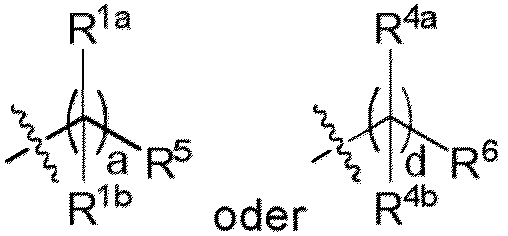


- Die Verbindung nach einem der Ansprüche 1-4, wobei:i) a, b, c und d jeweils unabhängig voneinander eine ganze Zahl von 5 bis 9 sind;ii) mindestens eines von R1a , R2a, R3a und R4a H ist;iii) R1a, R2a, R3a und R4a bei jedem Auftreten H sind;iv) mindestens eines von R1a, R2a, R3a und R4a C1-C8 Alkyl ist, vorzugsweise C1-C8 Alkyl Methyl, Ethyl, n-Propyl, iso-Propyl, n-Butyl, iso-Butyl, tert-Butyl, n-Hexyl oder n-Octyl ist;v) mindestens eines von R1b, R2b, R3b und R4b H ist; odervi) R1b, R2b, R3b und R4b bei jedem Auftreten H sind.
- Die Verbindung nach einem der Ansprüche 1-6, wobei:i) eines von R5 oder R6 Methyl ist; oderii) jedes von R5 und R6 Methyl ist.
- Die Verbindung nach einem der Ansprüche 1-7, wobei:i) G3 C2-C4 Alkylen ist;ii) G3 C3 Alkylen ist; oderii) G3 C4 Alkylen ist.
- Die Verbindung nach Anspruch 8, wobei R7 Methyl ist.
- Die Verbindung nach Anspruch 1, die eine der folgenden Strukturen aufweist:




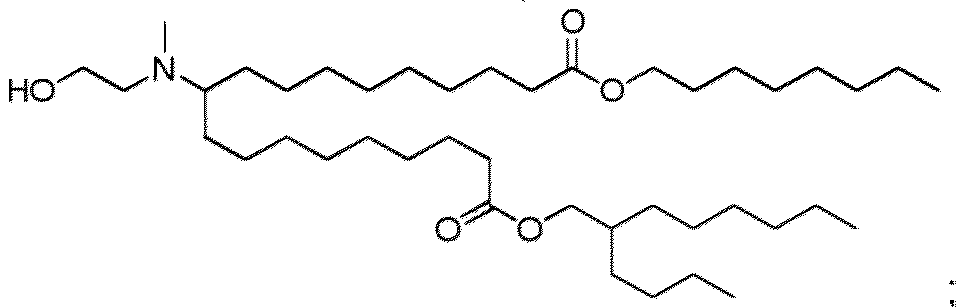

- Zusammensetzung, enthaltend die Verbindung nach einem der Ansprüche 1-10 und:i) ein therapeutisches Mittel;ii) ein therapeutisches Mittel, das eine Nukleinsäure umfasst; oderiii) ein therapeutisches Mittel, das eine Nukleinsäure umfasst, die aus Antisense- und Boten-RNA ausgewählt ist.
- Die Zusammensetzung nach Anspruch 11 zur Verwendung in einem Verfahren zur Verabreichung des therapeutischen Mittels an einen Patienten, der dessen bedarf.
- Lipid-Nanopartikel, umfassend eine Verbindung nach einem der Ansprüche 1-12.
- Pharmazeutische Zusammensetzung, umfassend das Lipid-Nanopartikel nach Anspruch 13 und ein pharmazeutisch annehmbares Verdünnungsmittel oder einen pharmazeutisch annehmbaren Hilfsstoff.
Priority Applications (1)
| Application Number | Priority Date | Filing Date | Title |
|---|---|---|---|
| EP24203773.7A EP4501322A3 (de) | 2017-08-17 | 2018-08-17 | Lipide zur verwendung in lipidnanopartikelformulierungen |
Applications Claiming Priority (2)
| Application Number | Priority Date | Filing Date | Title |
|---|---|---|---|
| US201762546887P | 2017-08-17 | 2017-08-17 | |
| PCT/US2018/000284 WO2019036000A1 (en) | 2017-08-17 | 2018-08-17 | LIPIDS FOR USE IN LIPID NANOPARTICLE FORMULATIONS |
Related Child Applications (1)
| Application Number | Title | Priority Date | Filing Date |
|---|---|---|---|
| EP24203773.7A Division EP4501322A3 (de) | 2017-08-17 | 2018-08-17 | Lipide zur verwendung in lipidnanopartikelformulierungen |
Publications (2)
| Publication Number | Publication Date |
|---|---|
| EP3668834A1 EP3668834A1 (de) | 2020-06-24 |
| EP3668834B1 true EP3668834B1 (de) | 2024-10-02 |
Family
ID=63720752
Family Applications (2)
| Application Number | Title | Priority Date | Filing Date |
|---|---|---|---|
| EP18780258.2A Active EP3668834B1 (de) | 2017-08-17 | 2018-08-17 | Lipide zur verwendung in lipidnanopartikelformulierungen |
| EP24203773.7A Pending EP4501322A3 (de) | 2017-08-17 | 2018-08-17 | Lipide zur verwendung in lipidnanopartikelformulierungen |
Family Applications After (1)
| Application Number | Title | Priority Date | Filing Date |
|---|---|---|---|
| EP24203773.7A Pending EP4501322A3 (de) | 2017-08-17 | 2018-08-17 | Lipide zur verwendung in lipidnanopartikelformulierungen |
Country Status (6)
| Country | Link |
|---|---|
| US (2) | US12065396B2 (de) |
| EP (2) | EP3668834B1 (de) |
| JP (1) | JP7461872B2 (de) |
| CA (1) | CA3073018A1 (de) |
| ES (1) | ES2997124T3 (de) |
| WO (1) | WO2019036000A1 (de) |
Families Citing this family (75)
| Publication number | Priority date | Publication date | Assignee | Title |
|---|---|---|---|---|
| WO2015199952A1 (en) | 2014-06-25 | 2015-12-30 | Acuitas Therapeutics Inc. | Novel lipids and lipid nanoparticle formulations for delivery of nucleic acids |
| CA2984125A1 (en) | 2015-04-27 | 2016-11-03 | The Trustees Of The University Of Pennsylvania | Nucleoside-modified rna for inducing an adaptive immune response |
| HUE067372T2 (hu) | 2015-06-29 | 2024-10-28 | Acuitas Therapeutics Inc | Lipidek és nanoszemcsés lipid formulázások nukleinsavak beadására |
| IL286515B2 (en) | 2015-10-28 | 2024-02-01 | Acuitas Therapeutics Inc | Novel lipids and nanoparticle formulations of lipids for delivery of nucleic acids |
| US11241490B2 (en) | 2017-01-11 | 2022-02-08 | The Trustees Of The University Of Pennsylvania | Nucleoside-modified RNA for inducing an immune response against zika virus |
| WO2018191657A1 (en) | 2017-04-13 | 2018-10-18 | Acuitas Therapeutics, Inc. | Lipids for delivery of active agents |
| JP7464954B2 (ja) | 2017-04-27 | 2024-04-10 | ザ トラスティーズ オブ ザ ユニバーシティ オブ ペンシルバニア | C型肝炎ウイルスに対するヌクレオシド修飾mRNA-脂質ナノ粒子系統ワクチン |
| ES2981244T3 (es) | 2017-04-28 | 2024-10-07 | Acuitas Therapeutics Inc | Novedosas formulaciones de nanopartículas de lípidos de carbonilo y lípidos para la administración de ácidos nucleicos |
| US11639329B2 (en) | 2017-08-16 | 2023-05-02 | Acuitas Therapeutics, Inc. | Lipids for use in lipid nanoparticle formulations |
| US11524932B2 (en) | 2017-08-17 | 2022-12-13 | Acuitas Therapeutics, Inc. | Lipids for use in lipid nanoparticle formulations |
| US11542225B2 (en) | 2017-08-17 | 2023-01-03 | Acuitas Therapeutics, Inc. | Lipids for use in lipid nanoparticle formulations |
| US12329857B2 (en) | 2018-09-21 | 2025-06-17 | Acuitas Therapeutics, Inc. | Systems and methods for manufacturing lipid nanoparticles and liposomes |
| CA3114699A1 (en) | 2018-10-09 | 2020-04-16 | The University Of British Columbia | Compositions and systems comprising transfection-competent vesicles free of organic-solvents and detergents and methods related thereto |
| JP7523449B2 (ja) | 2019-01-11 | 2024-07-26 | アクイタス セラピューティクス インコーポレイテッド | 活性剤の脂質ナノ粒子送達のための脂質 |
| US20220305117A1 (en) | 2019-06-18 | 2022-09-29 | Janssen Sciences Ireland Unlimited Company | Combination of hepatitis b virus (hbv) vaccines and hbv-targeting rnai |
| EP3986460A2 (de) | 2019-06-18 | 2022-04-27 | Janssen Sciences Ireland Unlimited Company | Kombination aus hepatitis-b-virus (hbv)-impfstoffen und anti-pd-1-antikörper |
| WO2020255014A1 (en) | 2019-06-18 | 2020-12-24 | Janssen Sciences Ireland Unlimited Company | Recombinant interleukin 12 construct and uses thereof |
| US20220296703A1 (en) | 2019-06-18 | 2022-09-22 | Janssen Sciences Ireland Unlimited Company | Cobmination of hepatitis b virus (hbv) vaccines and anti-pd-1 or anti-pd-l1 antibody |
| WO2020255010A1 (en) | 2019-06-18 | 2020-12-24 | Janssen Sciences Ireland Unlimited Company | Combination of recombinant interleukin 12 construct and hepatitis b virus (hbv) vaccines |
| WO2020255062A1 (en) | 2019-06-20 | 2020-12-24 | Janssen Sciences Ireland Unlimited Company | Lipid nanoparticle or liposome delivery of hepatitis b virus (hbv) vaccines |
| AU2020352552A1 (en) | 2019-09-23 | 2022-03-17 | Omega Therapeutics, Inc. | Compositions and methods for modulating hepatocyte nuclear factor 4-alpha (HNF4α) gene expression |
| CN114391040A (zh) | 2019-09-23 | 2022-04-22 | 欧米茄治疗公司 | 用于调节载脂蛋白b(apob)基因表达的组合物和方法 |
| WO2021183720A1 (en) | 2020-03-11 | 2021-09-16 | Omega Therapeutics, Inc. | Compositions and methods for modulating forkhead box p3 (foxp3) gene expression |
| US12194157B2 (en) | 2020-04-09 | 2025-01-14 | Finncure Oy | Carrier for targeted delivery to a host |
| JP7681617B2 (ja) | 2020-04-09 | 2025-05-22 | スージョウ・アボジェン・バイオサイエンシズ・カンパニー・リミテッド | 脂質ナノ粒子組成物 |
| WO2021204179A1 (en) | 2020-04-09 | 2021-10-14 | Suzhou Abogen Biosciences Co., Ltd. | Nucleic acid vaccines for coronavirus |
| FI20215508A1 (en) | 2020-04-09 | 2021-10-10 | Niemelae Erik Johan | Mimetic nanoparticles to prevent the spread of new coronaviruses and reduce the rate of infection |
| CN116113419A (zh) * | 2020-05-08 | 2023-05-12 | 奥纳治疗公司 | 环状rna组合物和方法 |
| PH12023550030A1 (en) | 2020-07-08 | 2024-03-11 | Janssen Sciences Ireland Unlimited Co | Rna replicon vaccines against hbv |
| CN116096702A (zh) * | 2020-07-16 | 2023-05-09 | 爱康泰生治疗公司 | 用于脂质纳米颗粒的阳离子脂质 |
| IL301890A (en) | 2020-10-14 | 2023-06-01 | George Mason Res Foundation Inc | Ionizable lipids and methods of manufacture and use thereof |
| TW202245809A (zh) | 2020-12-18 | 2022-12-01 | 美商詹森藥物公司 | 用於治療b型肝炎病毒感染之組合療法 |
| AU2021412833A1 (en) | 2020-12-28 | 2023-07-06 | Arcturus Therapeutics, Inc. | Transcription activator-like effector nucleases (talens) targeting hbv |
| US11524023B2 (en) | 2021-02-19 | 2022-12-13 | Modernatx, Inc. | Lipid nanoparticle compositions and methods of formulating the same |
| WO2023283359A2 (en) | 2021-07-07 | 2023-01-12 | Omega Therapeutics, Inc. | Compositions and methods for modulating secreted frizzled receptor protein 1 (sfrp1) gene expression |
| EP4396355A1 (de) | 2021-09-03 | 2024-07-10 | GlaxoSmithKline Biologicals S.A. | Substitution von nukleotidbasen in selbstverstärkenden messenger-ribonukleinsäuren |
| JP2024538489A (ja) | 2021-09-03 | 2024-10-23 | キュアバック エスイー | 核酸を送達するための新規な脂質ナノ粒子 |
| WO2023044333A1 (en) | 2021-09-14 | 2023-03-23 | Renagade Therapeutics Management Inc. | Cyclic lipids and methods of use thereof |
| US20250027108A1 (en) | 2021-10-29 | 2025-01-23 | CureVac SE | Improved circular rna for expressing therapeutic proteins |
| KR20240124983A (ko) * | 2021-12-16 | 2024-08-19 | 아퀴타스 테라퓨틱스 인크. | 지질 나노입자에 사용하기 위한 플루오르화 양이온성 지질 |
| EP4448485A2 (de) | 2021-12-16 | 2024-10-23 | Acuitas Therapeutics, Inc. | Lipide zur verwendung in lipidnanopartikelformulierungen |
| WO2023144330A1 (en) | 2022-01-28 | 2023-08-03 | CureVac SE | Nucleic acid encoded transcription factor inhibitors |
| WO2023177904A1 (en) | 2022-03-18 | 2023-09-21 | Modernatx, Inc. | Sterile filtration of lipid nanoparticles and filtration analysis thereof for biological applications |
| WO2023218420A1 (en) | 2022-05-13 | 2023-11-16 | Janssen Pharmaceuticals, Inc. | Mrna compositions for inducing latent hiv-1 reversal |
| KR20250028547A (ko) | 2022-05-25 | 2025-02-28 | 큐어백 에스이 | 대장균 FimH 항원성 폴리펩타이드를 인코딩하는 핵산 기반 백신 |
| WO2023233290A1 (en) | 2022-05-31 | 2023-12-07 | Janssen Sciences Ireland Unlimited Company | Rnai agents targeting pd-l1 |
| EP4539876A2 (de) | 2022-06-18 | 2025-04-23 | GlaxoSmithKline Biologicals S.A. | Rekombinante rna-moleküle mit untranslatierten regionen oder segmenten zur codierung von spike-protein aus dem omikrometerstamm des schweren akuten respiratorischen coronavirus-2 |
| EP4577519A1 (de) | 2022-08-23 | 2025-07-02 | ModernaTX, Inc. | Verfahren zur reinigung von ionisierbaren lipiden |
| EP4594293A1 (de) * | 2022-09-27 | 2025-08-06 | Nanovation Therapeutics Inc. | Aminosäurehaltige ionisierbare lipide zur freisetzung therapeutischer wirkstoffe |
| US12186389B2 (en) | 2022-10-28 | 2025-01-07 | Glaxosmithkline Biologicals Sa | Nucleic acid base vaccine against emerging SARS-CoV-2 variants |
| WO2024119098A1 (en) * | 2022-12-02 | 2024-06-06 | Prime Medicine, Inc. | Lipid nanoparticle (lnp) delivery systems and formulations |
| WO2024133160A1 (en) | 2022-12-19 | 2024-06-27 | Glaxosmithkline Biologicals Sa | Hepatitis b compositions |
| KR20250137590A (ko) | 2022-12-22 | 2025-09-18 | 나노베이션 테라퓨틱스 인크. | 핵산 및 다른 치료제의 전달을 위한 황-함유 이온화 가능한 지질 |
| CN115677518B (zh) * | 2023-01-05 | 2023-04-14 | 北京悦康科创医药科技股份有限公司 | 用于递送核酸的可电离阳离子脂质化合物和组合物及用途 |
| CN118359516A (zh) * | 2023-01-18 | 2024-07-19 | 尧唐(上海)生物科技有限公司 | 递送治疗剂的脂质化合物及其制备方法与应用 |
| KR20250153298A (ko) | 2023-03-08 | 2025-10-24 | 큐어백 에스이 | 핵산 전달을 위한 신규의 지질 나노입자 제형 |
| CN118666726A (zh) * | 2023-03-17 | 2024-09-20 | 尧唐(上海)生物科技有限公司 | 递送治疗剂的脂质化合物及其制备方法与应用 |
| WO2024230934A1 (en) | 2023-05-11 | 2024-11-14 | CureVac SE | Therapeutic nucleic acid for the treatment of ophthalmic diseases |
| WO2024243438A2 (en) | 2023-05-23 | 2024-11-28 | Omega Therapeutics, Inc. | Compositions and methods for reducing cxcl9, cxcl10, and cxcl11 gene expression |
| US12311033B2 (en) | 2023-05-31 | 2025-05-27 | Capstan Therapeutics, Inc. | Lipid nanoparticle formulations and compositions |
| US20250161227A1 (en) | 2023-11-17 | 2025-05-22 | Acuitas Therapeutics, Inc. | Pegylated lipids |
| US20250188016A1 (en) | 2023-12-12 | 2025-06-12 | Acuitas Therapeutics, Inc. | Cationic lipid compounds for use in lipid nanoparticles |
| WO2025132122A1 (en) | 2023-12-13 | 2025-06-26 | Berlin Institute Of Health | Methods of delivering therapeutics using lipid nanoparticles |
| WO2025126071A1 (en) | 2023-12-14 | 2025-06-19 | Pfizer Inc. | Rna molecules |
| WO2025129128A1 (en) | 2023-12-15 | 2025-06-19 | Vivasor, Inc. | Compositions and methods for non-viral delivery of therapeutic compounds |
| WO2025144938A1 (en) | 2023-12-26 | 2025-07-03 | Emmune, Inc. | Systems for nucleic acid transfer |
| WO2025166325A1 (en) | 2024-02-02 | 2025-08-07 | Editas Medicine, Inc. | MODIFIED GUIDE RNAs |
| WO2025174858A1 (en) | 2024-02-15 | 2025-08-21 | Acuitas Therapeutics, Inc. | Cationic lipid compounds for use in lipid nanoparticles |
| WO2025184508A1 (en) | 2024-03-01 | 2025-09-04 | Acuitas Therapeutics, Inc. | Materials and methods for encapsulating therapeutics in lipid nanoparticles |
| WO2025186725A2 (en) | 2024-03-06 | 2025-09-12 | Pfizer Inc. | Improved lnp formulations and uses thereof |
| WO2025213138A1 (en) | 2024-04-05 | 2025-10-09 | Editas Medicine, Inc. | Crispr/rna-guided nuclease related methods and compositions for treating primary open angle glaucoma |
| WO2025217264A1 (en) | 2024-04-10 | 2025-10-16 | Acuitas Therapeutics, Inc. | Cationic lipid compounds for use in lipid nanoparticles |
| WO2025229572A1 (en) | 2024-05-01 | 2025-11-06 | Glaxosmithkline Biologicals Sa | Epstein-barr virus antigen-encoding messenger ribonucleic acid and antigen protein vaccines |
| WO2025231114A1 (en) | 2024-05-01 | 2025-11-06 | Acuitas Therapeutics, Inc. | Method of using lipid nanoparticles for intramuscular delivery |
| WO2025240833A1 (en) | 2024-05-17 | 2025-11-20 | Acuitas Therapeutics, Inc. | Galnac lipid compounds for use in lipid nanoparticles |
Citations (2)
| Publication number | Priority date | Publication date | Assignee | Title |
|---|---|---|---|---|
| FR1391300A (fr) * | 1963-03-25 | 1965-03-05 | Ici Ltd | Organopolysiloxanes nouveaux et leur procédé de fabrication |
| EP2468385A2 (de) * | 2010-12-22 | 2012-06-27 | Kabushiki Kaisha Toshiba | Sauergaslösungsmitte, Verfahren und Vorrichtung zur Abscheidung von Sauergas |
Family Cites Families (211)
| Publication number | Priority date | Publication date | Assignee | Title |
|---|---|---|---|---|
| US2856420A (en) | 1955-12-15 | 1958-10-14 | Minnesota Mining & Mfg | Perfluoro- and perfluorochlorocarboxylic acid esters of amino alcohols |
| US3340299A (en) | 1964-03-27 | 1967-09-05 | Air Reduction | Tetrasubstituted ethylene diamines |
| GB1277947A (en) | 1968-08-22 | 1972-06-14 | Armour Ind Chem Co | Compositions and method for controlling insect pests |
| US4491583A (en) | 1970-08-07 | 1985-01-01 | Pfizer Inc. | Interferon induction in animals by amines |
| US3729564A (en) | 1970-12-16 | 1973-04-24 | Pfizer | N-secondary alkyl alkanediamines and derivatives thereof as anti-inflammatory agents |
| JPS5122416B2 (de) | 1972-11-11 | 1976-07-09 | ||
| JPS5718088B2 (de) | 1972-06-22 | 1982-04-14 | ||
| DE2633615C3 (de) | 1976-07-27 | 1981-08-13 | Bayer Ag, 5090 Leverkusen | Verfahren zum Färben von synthetischen Polyamid-Fasermaterialien |
| DE3010599A1 (de) | 1979-03-22 | 1980-10-09 | Continental Pharma | Derivate von glycinamid, deren herstellung und verwendung |
| EP0025083B1 (de) * | 1979-09-10 | 1982-02-03 | EPROVA Aktiengesellschaft | Verfahren zur Herstellung von Serinol und Serinolderivaten |
| US4883751A (en) | 1986-05-28 | 1989-11-28 | New York University | Specific immunoassay for heparin |
| US5858980A (en) | 1990-03-30 | 1999-01-12 | Autoimmune, Inc. | Peptide fragments of myelin basic protein |
| JP2588339B2 (ja) | 1992-06-02 | 1997-03-05 | 花王株式会社 | 新規ジアミノジエステル及びその製造法 |
| US6197553B1 (en) | 1994-07-15 | 2001-03-06 | Merck & Co., Inc. | Method for large scale plasmid purification |
| FR2727679B1 (fr) | 1994-12-05 | 1997-01-03 | Rhone Poulenc Rorer Sa | Nouveaux agents de transfection et leurs applications pharmaceutiques |
| US5981501A (en) | 1995-06-07 | 1999-11-09 | Inex Pharmaceuticals Corp. | Methods for encapsulating plasmids in lipid bilayers |
| AU723163B2 (en) | 1995-06-07 | 2000-08-17 | Tekmira Pharmaceuticals Corporation | Lipid-nucleic acid particles prepared via a hydrophobic lipid-nucleic acid complex intermediate and use for gene transfer |
| US5705385A (en) | 1995-06-07 | 1998-01-06 | Inex Pharmaceuticals Corporation | Lipid-nucleic acid particles prepared via a hydrophobic lipid-nucleic acid complex intermediate and use for gene transfer |
| US7422902B1 (en) | 1995-06-07 | 2008-09-09 | The University Of British Columbia | Lipid-nucleic acid particles prepared via a hydrophobic lipid-nucleic acid complex intermediate and use for gene transfer |
| US6020526A (en) | 1995-07-21 | 2000-02-01 | Genta, Incorporated | Amide-based cationic lipids |
| DE19605175A1 (de) | 1996-02-13 | 1997-08-14 | Sourovoi Andrej Dr | Lipidverbindungen und deren Verwendung |
| JP3792289B2 (ja) * | 1996-03-26 | 2006-07-05 | 花王株式会社 | 新規第4級アンモニウム塩及びその製造方法、並びにそれを含有する毛髪化粧料 |
| JPH103643A (ja) | 1996-06-12 | 1998-01-06 | Fuji Photo Film Co Ltd | ディスク状磁気記録媒体 |
| WO1998016599A1 (en) | 1996-10-11 | 1998-04-23 | Infineum Holdings Bv | Fuel compositions |
| CA2217550A1 (en) | 1996-10-22 | 1998-04-22 | F. Hoffmann-La Roche Ag | Cationic lipids for gene therapy |
| US6884430B1 (en) | 1997-02-10 | 2005-04-26 | Aventis Pharma S.A. | Formulation of stabilized cationic transfection agent(s) /nucleic acid particles |
| US5965542A (en) | 1997-03-18 | 1999-10-12 | Inex Pharmaceuticals Corp. | Use of temperature to control the size of cationic liposome/plasmid DNA complexes |
| US5756785A (en) | 1997-03-21 | 1998-05-26 | Lambent Technologies, Inc. | Guerbet betaines |
| FR2763943B1 (fr) | 1997-05-28 | 1999-07-09 | Rhone Poulenc Rorer Sa | Composes, leur preparation et leur utilisation pour le transfert d'acides nucleiques dans les cellules |
| US6395713B1 (en) | 1997-07-23 | 2002-05-28 | Ribozyme Pharmaceuticals, Inc. | Compositions for the delivery of negatively charged molecules |
| JP2001527052A (ja) | 1997-12-23 | 2001-12-25 | アイネックス ファーマシューティカルズ コーポレイション | ポリアミドオリゴマー |
| US6410328B1 (en) | 1998-02-03 | 2002-06-25 | Protiva Biotherapeutics Inc. | Sensitizing cells to compounds using lipid-mediated gene and compound delivery |
| US6986902B1 (en) | 1998-04-28 | 2006-01-17 | Inex Pharmaceuticals Corporation | Polyanionic polymers which enhance fusogenicity |
| US6013813A (en) | 1998-06-17 | 2000-01-11 | Hansotech Inc | Guerbet based sorbitan esters |
| US6333433B1 (en) | 1998-11-09 | 2001-12-25 | Council Of Scientific Industrial Research | Process for synthesis of novel cationic amphiphiles containing N-hydroxyalkl group for intracellular delivery of biologically active molecules |
| AU1830200A (en) | 1998-11-25 | 2000-06-13 | Vanderbilt University | Cationic liposomes for gene transfer |
| US5919743A (en) | 1998-12-28 | 1999-07-06 | Petroferm Inc. | Guerbet branched quaternary compounds in personal care applications |
| US7112337B2 (en) | 1999-04-23 | 2006-09-26 | Alza Corporation | Liposome composition for delivery of nucleic acid |
| US6211140B1 (en) | 1999-07-26 | 2001-04-03 | The Procter & Gamble Company | Cationic charge boosting systems |
| DE69923840T2 (de) | 1999-09-09 | 2006-04-06 | Curevac Gmbh | Transfer von mRNAs unter Verwendung von polykationischen Verbindungen |
| GB9930533D0 (en) | 1999-12-23 | 2000-02-16 | Mitsubishi Tokyo Pharm Inc | Nucleic acid delivery |
| JP2001338416A (ja) | 2000-05-25 | 2001-12-07 | Sony Corp | ディスク状磁気記録媒体 |
| US20040142474A1 (en) | 2000-09-14 | 2004-07-22 | Expression Genetics, Inc. | Novel cationic lipopolymer as a biocompatible gene delivery agent |
| JP4111856B2 (ja) | 2002-04-12 | 2008-07-02 | 昭和電工株式会社 | 安定化されたアスコルビン酸誘導体 |
| EP2823809B1 (de) | 2002-06-28 | 2016-11-02 | Protiva Biotherapeutics Inc. | Verfahren und Vorrichtung zur Herstellung von Liposomen |
| DE10229872A1 (de) | 2002-07-03 | 2004-01-29 | Curevac Gmbh | Immunstimulation durch chemisch modifizierte RNA |
| US6620794B1 (en) | 2002-07-08 | 2003-09-16 | Colonial Chemical Inc. | Guerbet functionalized phospholipids |
| JP4004976B2 (ja) | 2003-03-03 | 2007-11-07 | 独立行政法人科学技術振興機構 | フラーレン誘導体 |
| EP2567693B1 (de) | 2003-07-16 | 2015-10-21 | Protiva Biotherapeutics Inc. | Interferierende, in Lipiden eingekapselte RNA |
| DE10335833A1 (de) | 2003-08-05 | 2005-03-03 | Curevac Gmbh | Transfektion von Blutzellen mit mRNA zur Immunstimulation und Gentherapie |
| EP1664316B1 (de) | 2003-09-15 | 2012-08-29 | Protiva Biotherapeutics Inc. | Polyethylenglycol-modifizierte lipidverbindungen und verwendungen davon |
| CN1905881A (zh) | 2003-11-26 | 2007-01-31 | 阿托恩药品公司 | 二胺和亚氨二醋酸异羟肟酸衍生物 |
| CA2566559C (en) | 2004-05-17 | 2014-05-06 | Inex Pharmaceuticals Corporation | Liposomal formulations comprising dihydrosphingomyelin and methods of use thereof |
| CA2569664C (en) | 2004-06-07 | 2013-07-16 | Protiva Biotherapeutics, Inc. | Lipid encapsulated interfering rna |
| JP4764426B2 (ja) | 2004-06-07 | 2011-09-07 | プロチバ バイオセラピューティクス インコーポレイティッド | カチオン性脂質および使用方法 |
| DE102004042546A1 (de) | 2004-09-02 | 2006-03-09 | Curevac Gmbh | Kombinationstherapie zur Immunstimulation |
| KR100699279B1 (ko) | 2005-04-28 | 2007-03-23 | 학교법인 포항공과대학교 | 당 또는 당 유사체를 골격으로 하는 분자 수송체 및 그의제조방법 |
| CA2611944A1 (en) | 2005-06-15 | 2006-12-28 | Massachusetts Institute Of Technology | Amine-containing lipids and uses thereof |
| EP1937213B1 (de) | 2005-07-27 | 2017-10-25 | Protiva Biotherapeutics Inc. | Systeme und verfahren zur herstellung von liposomen |
| PL2578685T3 (pl) | 2005-08-23 | 2020-01-31 | The Trustees Of The University Of Pennsylvania | Rna zawierający zmodyfikowane nukleozydy i sposoby jego zastosowania |
| JP4681425B2 (ja) | 2005-11-15 | 2011-05-11 | 花王株式会社 | 毛髪弾性改善剤 |
| GB2433928B (en) | 2006-01-07 | 2009-10-14 | Shane Richard Wootton | Apparatus for producing material by a chemical reaction |
| DE102006035618A1 (de) | 2006-07-31 | 2008-02-07 | Curevac Gmbh | Nukleinsäure der Formel (I): GlXmGn, insbesondere als immunstimulierendes Adjuvanz |
| ES2611924T3 (es) | 2006-10-03 | 2017-05-11 | Arbutus Biopharma Corporation | Formulaciones que contienen lípidos |
| DE102007001370A1 (de) | 2007-01-09 | 2008-07-10 | Curevac Gmbh | RNA-kodierte Antikörper |
| WO2009030254A1 (en) | 2007-09-04 | 2009-03-12 | Curevac Gmbh | Complexes of rna and cationic peptides for transfection and for immunostimulation |
| WO2009046739A1 (en) | 2007-10-09 | 2009-04-16 | Curevac Gmbh | Composition for treating prostate cancer (pca) |
| AU2008340355B2 (en) | 2007-12-04 | 2015-01-22 | Tekmira Pharmaceuticals Corporation | Targeting lipids |
| AU2008347251A1 (en) | 2008-01-02 | 2009-07-16 | Tekmira Pharmaceuticals Corporation | Liver screening method |
| CA2711236A1 (en) | 2008-01-02 | 2009-07-16 | Alnylam Pharmaceuticals, Inc. | Screening method for selected amino lipid-containing compositions |
| HUE025027T2 (en) | 2008-01-31 | 2016-07-28 | Curevac Gmbh | (NuGiXmGnNv) nucleic acids and derivatives of the formula as immunostimulants / adjuvants |
| JP5788312B2 (ja) | 2008-04-11 | 2015-09-30 | アルニラム ファーマスーティカルズ インコーポレイテッドAlnylam Pharmaceuticals, Inc. | 標的リガンドをエンドソーム分解性成分と組み合わせることによる核酸の部位特異的送達 |
| WO2009127060A1 (en) | 2008-04-15 | 2009-10-22 | Protiva Biotherapeutics, Inc. | Novel lipid formulations for nucleic acid delivery |
| WO2009132131A1 (en) | 2008-04-22 | 2009-10-29 | Alnylam Pharmaceuticals, Inc. | Amino lipid based improved lipid formulation |
| WO2010037408A1 (en) | 2008-09-30 | 2010-04-08 | Curevac Gmbh | Composition comprising a complexed (m)rna and a naked mrna for providing or enhancing an immunostimulatory response in a mammal and uses thereof |
| ES2475065T3 (es) | 2008-10-09 | 2014-07-10 | Tekmira Pharmaceuticals Corporation | Aminol�pidos mejorados y métodos para la administración de ácidos nucleicos |
| WO2010048536A2 (en) | 2008-10-23 | 2010-04-29 | Alnylam Pharmaceuticals, Inc. | Processes for preparing lipids |
| US20120009222A1 (en) | 2008-10-27 | 2012-01-12 | Massachusetts Institute Of Technology | Modulation of the immune response |
| ES2993911T3 (en) | 2008-11-10 | 2025-01-13 | Arbutus Biopharma Corp | Novel lipids and compositions for the delivery of therapeutics |
| WO2010054384A1 (en) | 2008-11-10 | 2010-05-14 | Alnylam Pharmaceuticals, Inc. | Lipids and compositions for the delivery of therapeutics |
| CN102231950A (zh) | 2008-11-17 | 2011-11-02 | 安龙制药公司 | 用于核酸递送系统的可释放聚合脂质 |
| AU2010208035B2 (en) | 2009-01-29 | 2016-06-23 | Arbutus Biopharma Corporation | Improved lipid formulation for the delivery of nucleic acids |
| CA2760776C (en) | 2009-05-05 | 2019-07-09 | Alnylam Pharmaceuticals, Inc. | Lipid compositions for the delivery of therapeutic agents |
| WO2010129687A1 (en) | 2009-05-05 | 2010-11-11 | Alnylam Pharmaceuticals, Inc | Methods of delivering oligonucleotides to immune cells |
| DK3431076T3 (da) | 2009-06-10 | 2021-12-20 | Arbutus Biopharma Corp | Forbedret lipidformulering |
| WO2010147992A1 (en) | 2009-06-15 | 2010-12-23 | Alnylam Pharmaceuticals, Inc. | Methods for increasing efficacy of lipid formulated sirna |
| US9018187B2 (en) | 2009-07-01 | 2015-04-28 | Protiva Biotherapeutics, Inc. | Cationic lipids and methods for the delivery of therapeutic agents |
| US8569256B2 (en) | 2009-07-01 | 2013-10-29 | Protiva Biotherapeutics, Inc. | Cationic lipids and methods for the delivery of therapeutic agents |
| ES2613498T3 (es) | 2009-07-01 | 2017-05-24 | Protiva Biotherapeutics Inc. | Nuevas formulaciones de lípidos para el suministro de agentes terapéuticos a tumores sólidos |
| US20110300205A1 (en) | 2009-07-06 | 2011-12-08 | Novartis Ag | Self replicating rna molecules and uses thereof |
| WO2011036557A1 (en) | 2009-09-22 | 2011-03-31 | The University Of British Columbia | Compositions and methods for enhancing cellular uptake and intracellular delivery of lipid particles |
| WO2011140627A1 (en) | 2009-11-04 | 2011-11-17 | The University Of British Columbia | Nucleic acid-containing lipid particles and related methods |
| EP2506879A4 (de) | 2009-12-01 | 2014-03-19 | Protiva Biotherapeutics Inc | Snalp-formulierungen mit antioxidanzien |
| US9687550B2 (en) | 2009-12-07 | 2017-06-27 | Arbutus Biopharma Corporation | Compositions for nucleic acid delivery |
| AU2010330814B2 (en) | 2009-12-18 | 2017-01-12 | Acuitas Therapeutics Inc. | Methods and compositions for delivery of nucleic acids |
| AU2010334911A1 (en) | 2009-12-23 | 2012-07-12 | Novartis Ag | Lipids, lipid compositions, and methods of using them |
| EP2567951B1 (de) | 2010-04-28 | 2018-09-19 | Kyowa Hakko Kirin Co., Ltd. | Kationisches lipid |
| US20130129811A1 (en) | 2010-04-28 | 2013-05-23 | Takeshi Kuboyama | Cationic lipid |
| WO2011143230A1 (en) | 2010-05-10 | 2011-11-17 | Alnylam Pharmaceuticals | Methods and compositions for delivery of active agents |
| US20130123338A1 (en) | 2010-05-12 | 2013-05-16 | Protiva Biotherapeutics, Inc. | Novel cationic lipids and methods of use thereof |
| WO2011141703A1 (en) | 2010-05-12 | 2011-11-17 | Protiva Biotherapeutics Inc. | Compositions and methods for silencing apolipoprotein b |
| JP2013531634A (ja) | 2010-05-24 | 2013-08-08 | メルク・シャープ・エンド・ドーム・コーポレイション | オリゴヌクレオチド送達のための新規なアミノアルコールカチオン性脂質 |
| CN103096875B (zh) | 2010-06-03 | 2016-08-17 | 阿尔尼拉姆医药品有限公司 | 用于递送活性剂的生物可降解脂质 |
| US9006417B2 (en) | 2010-06-30 | 2015-04-14 | Protiva Biotherapeutics, Inc. | Non-liposomal systems for nucleic acid delivery |
| WO2012016184A2 (en) | 2010-07-30 | 2012-02-02 | Alnylam Pharmaceuticals, Inc. | Methods and compositions for delivery of active agents |
| WO2012019630A1 (en) | 2010-08-13 | 2012-02-16 | Curevac Gmbh | Nucleic acid comprising or coding for a histone stem-loop and a poly(a) sequence or a polyadenylation signal for increasing the expression of an encoded protein |
| US8466122B2 (en) | 2010-09-17 | 2013-06-18 | Protiva Biotherapeutics, Inc. | Trialkyl cationic lipids and methods of use thereof |
| ES2702428T3 (es) | 2010-11-15 | 2019-02-28 | Life Technologies Corp | Reactivos de transfección que contienen amina y métodos para prepararlos y usarlos |
| WO2012089225A1 (en) | 2010-12-29 | 2012-07-05 | Curevac Gmbh | Combination of vaccination and inhibition of mhc class i restricted antigen presentation |
| WO2012116715A1 (en) | 2011-03-02 | 2012-09-07 | Curevac Gmbh | Vaccination in newborns and infants |
| WO2012113413A1 (en) | 2011-02-21 | 2012-08-30 | Curevac Gmbh | Vaccine composition comprising complexed immunostimulatory nucleic acids and antigens packaged with disulfide-linked polyethyleneglycol/peptide conjugates |
| WO2012116714A1 (en) | 2011-03-02 | 2012-09-07 | Curevac Gmbh | Vaccination in elderly patients |
| WO2012133737A1 (ja) | 2011-03-31 | 2012-10-04 | 公益財団法人地球環境産業技術研究機構 | 架橋性アミン化合物、該化合物を用いた高分子膜及びその製造方法 |
| JP2014511687A (ja) | 2011-03-31 | 2014-05-19 | モデルナ セラピューティクス インコーポレイテッド | 工学操作された核酸の送達および製剤 |
| US8691750B2 (en) | 2011-05-17 | 2014-04-08 | Axolabs Gmbh | Lipids and compositions for intracellular delivery of biologically active compounds |
| WO2013016058A1 (en) | 2011-07-22 | 2013-01-31 | Merck Sharp & Dohme Corp. | Novel bis-nitrogen containing cationic lipids for oligonucleotide delivery |
| EP2734531A1 (de) | 2011-07-22 | 2014-05-28 | Université de Strasbourg | Phospholipidwaschmittelkonjugate und ihre verwendungen |
| US9126966B2 (en) | 2011-08-31 | 2015-09-08 | Protiva Biotherapeutics, Inc. | Cationic lipids and methods of use thereof |
| IL293650B2 (en) | 2011-09-21 | 2024-10-01 | Sangamo Therapeutics Inc | Methods and compositions for regulation of transgene expression |
| JP6250543B2 (ja) | 2011-09-27 | 2017-12-20 | アルニラム・ファーマシューティカルズ・インコーポレーテッド | ジ脂肪族置換peg化脂質 |
| AU2012325997C1 (en) | 2011-10-18 | 2018-07-05 | Dicerna Pharmaceuticals, Inc. | Amine cationic lipids and uses thereof |
| KR102272498B1 (ko) | 2011-10-27 | 2021-07-06 | 메사추세츠 인스티튜트 오브 테크놀로지 | 약물 캡슐화 마이크로스피어를 형성할 수 있는, n-말단 상에 관능화된 아미노산 유도체 |
| JP2013095755A (ja) | 2011-11-02 | 2013-05-20 | Kyowa Hakko Kirin Co Ltd | カチオン性脂質 |
| US20140308304A1 (en) | 2011-12-07 | 2014-10-16 | Alnylam Pharmaceuticals, Inc. | Lipids for the delivery of active agents |
| JP6305343B2 (ja) | 2011-12-07 | 2018-04-04 | アルニラム・ファーマシューティカルズ・インコーポレーテッド | 活性薬剤の送達のための分岐アルキルおよびシクロアルキルを末端とする生分解性脂質 |
| WO2013086354A1 (en) | 2011-12-07 | 2013-06-13 | Alnylam Pharmaceuticals, Inc. | Biodegradable lipids for the delivery of active agents |
| EP2792368A4 (de) | 2011-12-12 | 2015-09-30 | Kyowa Hakko Kirin Co Ltd | Lipid-nanopartikel mit kombinationen aus kationischen lipiden |
| RU2649364C2 (ru) | 2011-12-16 | 2018-04-02 | Модерна Терапьютикс, Инк. | Составы на основе модифицированного нуклеозида, нуклеотида и нуклеиновой кислоты |
| WO2013113325A1 (en) | 2012-01-31 | 2013-08-08 | Curevac Gmbh | Negatively charged nucleic acid comprising complexes for immunostimulation |
| EP2623121A1 (de) | 2012-01-31 | 2013-08-07 | Bayer Innovation GmbH | Pharmazeutische Zusammensetzung mit einem Polymerträger-Cargo-Komplex und einem Antigen |
| WO2013113326A1 (en) | 2012-01-31 | 2013-08-08 | Curevac Gmbh | Pharmaceutical composition comprising a polymeric carrier cargo complex and at least one protein or peptide antigen |
| WO2013120497A1 (en) | 2012-02-15 | 2013-08-22 | Curevac Gmbh | Nucleic acid comprising or coding for a histone stem-loop and a poly(a) sequence or a polyadenylation signal for increasing the expression of an encoded therapeutic protein |
| WO2013120499A1 (en) | 2012-02-15 | 2013-08-22 | Curevac Gmbh | Nucleic acid comprising or coding for a histone stem-loop and a poly (a) sequence or a polyadenylation signal for increasing the expression of an encoded pathogenic antigen |
| WO2013120498A1 (en) | 2012-02-15 | 2013-08-22 | Curevac Gmbh | Nucleic acid comprising or coding for a histone stem-loop and a poly(a) sequence or a polyadenylation signal for increasing the expression of an encoded allergenic antigen or an autoimmune self-antigen |
| CN102604115B (zh) | 2012-02-22 | 2013-07-10 | 天津大学 | 羧甲基壳聚糖季铵盐/pamam核壳纳米粒及制备方法 |
| AU2013222179B2 (en) | 2012-02-24 | 2017-08-24 | Arbutus Biopharma Corporat ion | Trialkyl cationic lipids and methods of use thereof |
| WO2013143555A1 (en) | 2012-03-26 | 2013-10-03 | Biontech Ag | Rna formulation for immunotherapy |
| SG10201607968WA (en) | 2012-03-27 | 2016-12-29 | Curevac Ag | Artificial nucleic acid molecules for improved protein or peptide expression |
| WO2013143698A1 (en) | 2012-03-27 | 2013-10-03 | Curevac Gmbh | Artificial nucleic acid molecules |
| SG11201405545XA (en) | 2012-03-27 | 2014-11-27 | Curevac Gmbh | Artificial nucleic acid molecules comprising a 5'top utr |
| WO2013148541A1 (en) | 2012-03-27 | 2013-10-03 | Merck Sharp & Dohme Corp. | DIETHER BASED BIODEGRADABLE CATIONIC LIPIDS FOR siRNA DELIVERY |
| ES2719598T3 (es) | 2012-05-25 | 2019-07-11 | Curevac Ag | Inmovilización reversible y/o liberación controlada de ácidos nucleicos contenidos en nanopartículas mediante revestimientos poliméricos (biodegradables) |
| WO2014008334A1 (en) | 2012-07-06 | 2014-01-09 | Alnylam Pharmaceuticals, Inc. | Stable non-aggregating nucleic acid lipid particle formulations |
| CA2884870C (en) | 2012-08-13 | 2022-03-29 | Massachusetts Institute Of Technology | Amine-containing lipidoids and uses thereof |
| US9687448B2 (en) | 2012-12-07 | 2017-06-27 | Alnylam Pharmaceuticals, Inc. | Nucleic acid lipid particle formulations |
| JP6456305B2 (ja) | 2013-02-22 | 2019-01-23 | キュアバック アーゲー | ワクチン接種とpd−1経路の阻害との組み合わせ |
| WO2014160284A1 (en) | 2013-03-14 | 2014-10-02 | The Trustees Of The University Of Pennsylvania | Compositions and methods for treatment of stroke |
| KR102205278B1 (ko) | 2013-03-14 | 2021-01-22 | 다이서나 파마수이티컬, 인크. | 음이온성 약제를 제형화하는 방법 |
| US20160032316A1 (en) | 2013-03-14 | 2016-02-04 | The Trustees Of The University Of Pennsylvania | Purification and Purity Assessment of RNA Molecules Synthesized with Modified Nucleosides |
| US9693958B2 (en) | 2013-03-15 | 2017-07-04 | Cureport, Inc. | Methods and devices for preparation of lipid nanoparticles |
| RU2733424C2 (ru) | 2013-08-21 | 2020-10-01 | Куревак Аг | Способ повышения экспрессии кодируемых рнк белков |
| RU2712743C2 (ru) | 2013-08-21 | 2020-01-30 | Куревак Аг | Вакцина против бешенства |
| CA2915904A1 (en) | 2013-08-21 | 2015-02-26 | Curevac Ag | Composition and vaccine for treating prostate cancer |
| MX369469B (es) | 2013-08-21 | 2019-11-08 | Curevac Ag | Vacuna contra el virus respiratorio sincitial. |
| CA2915730A1 (en) | 2013-08-21 | 2015-02-26 | Karl-Josef Kallen | A combination rsv/influenza a vaccine |
| ES2806575T3 (es) | 2013-11-01 | 2021-02-18 | Curevac Ag | ARN modificado con propiedades inmunoestimuladoras disminuidas |
| JP6486955B2 (ja) | 2013-11-18 | 2019-03-20 | アークトゥルス セラピューティクス, インコーポレイテッド | Rna送達のためのイオン化可能なカチオン性脂質 |
| DK3090053T3 (en) | 2013-12-30 | 2019-02-25 | Curevac Ag | Artificial nucleic acid molecules |
| WO2015101415A1 (en) | 2013-12-30 | 2015-07-09 | Curevac Gmbh | Artificial nucleic acid molecules |
| WO2015123576A2 (en) | 2014-02-17 | 2015-08-20 | The Brigham And Women's Hospital, Inc. | Targeted nanoparticle compositions and methods of their use to treat obesity |
| EP3110401A4 (de) | 2014-02-25 | 2017-10-25 | Merck Sharp & Dohme Corp. | Lipidnanopartikel-impfstoffadjuvanzien und antigenfreisetzungssysteme |
| US10369216B2 (en) | 2014-04-01 | 2019-08-06 | Curevac Ag | Polymeric carrier cargo complex for use as an immunostimulating agent or as an adjuvant |
| MA58292B1 (fr) | 2014-04-23 | 2025-01-31 | Modernatx, Inc. | Vaccins à base d'acide nucléique |
| EP3146221B1 (de) | 2014-05-22 | 2019-05-08 | Flowserve S.r.l. | Führungselement für einen ventilantrieb und mit besagtem führungselement ausgestatteter antrieb |
| WO2015199952A1 (en) | 2014-06-25 | 2015-12-30 | Acuitas Therapeutics Inc. | Novel lipids and lipid nanoparticle formulations for delivery of nucleic acids |
| ES2949172T3 (es) | 2014-07-16 | 2023-09-26 | Novartis Ag | Método de encapsulamiento de un ácido nucleico en un hospedante de nanopartículas lipídicas |
| JP6339884B2 (ja) | 2014-07-17 | 2018-06-06 | 富士フイルム株式会社 | イミダゾール化合物およびそれを含有するリポソーム |
| PE20170249A1 (es) * | 2014-07-22 | 2017-04-05 | Boehringer Ingelheim Int | Acidos carboxilicos heterociclicos como activadores de guanilato ciclasa soluble |
| WO2016014794A1 (en) | 2014-07-25 | 2016-01-28 | Sangamo Biosciences, Inc. | Methods and compositions for modulating nuclease-mediated genome engineering in hematopoietic stem cells |
| PT4023755T (pt) | 2014-12-12 | 2023-07-05 | CureVac SE | Moléculas de ácido nucleico artificiais para uma expressão melhorada de proteína |
| CA2962849A1 (en) | 2014-12-16 | 2016-06-23 | Curevac Ag | Ebolavirus and marburgvirus vaccines |
| SG10201906673WA (en) | 2014-12-30 | 2019-09-27 | Curevac Ag | Artificial nucleic acid molecules |
| CN104876831B (zh) | 2015-04-03 | 2017-05-17 | 苏州圣诺生物医药技术有限公司 | 脂质修饰精胺衍生物及利用该衍生物制备的脂质体 |
| EP4353257A3 (de) | 2015-04-13 | 2024-08-07 | CureVac Manufacturing GmbH | Verfahren zur herstellung von rna-zusammensetzungen |
| WO2016168469A1 (en) | 2015-04-17 | 2016-10-20 | The Regents Of The University Of California | Fatty acid analogs and methods of use thereof |
| CA2984125A1 (en) | 2015-04-27 | 2016-11-03 | The Trustees Of The University Of Pennsylvania | Nucleoside-modified rna for inducing an adaptive immune response |
| SG11201708652YA (en) | 2015-05-15 | 2017-11-29 | Curevac Ag | Prime-boost regimens involving administration of at least one mrna construct |
| WO2016203025A1 (en) | 2015-06-17 | 2016-12-22 | Curevac Ag | Vaccine composition |
| HUE067372T2 (hu) | 2015-06-29 | 2024-10-28 | Acuitas Therapeutics Inc | Lipidek és nanoszemcsés lipid formulázások nukleinsavak beadására |
| US20200085852A1 (en) | 2015-08-05 | 2020-03-19 | Curevac Ag | Epidermal mrna vaccine |
| US20190024096A1 (en) | 2015-08-07 | 2019-01-24 | Curevac Ag | Process for the in vivo production of rna in a host cell |
| EP4108774A1 (de) | 2015-08-28 | 2022-12-28 | CureVac AG | Künstliche nukleinsäuremoleküle |
| WO2017048770A1 (en) | 2015-09-15 | 2017-03-23 | Regulus Therapeutics, Inc. | Systems, compositions, and methods for formulating nucleic acid compositions |
| JP6948313B6 (ja) | 2015-09-17 | 2022-01-14 | モデルナティエックス インコーポレイテッド | 治療剤の細胞内送達のための化合物および組成物 |
| IL286515B2 (en) | 2015-10-28 | 2024-02-01 | Acuitas Therapeutics Inc | Novel lipids and nanoparticle formulations of lipids for delivery of nucleic acids |
| US11413346B2 (en) | 2015-11-09 | 2022-08-16 | Curevac Ag | Rotavirus vaccines |
| WO2017081082A2 (en) | 2015-11-09 | 2017-05-18 | Curevac Ag | Optimized nucleic acid molecules |
| EP3394030B2 (de) | 2015-12-22 | 2025-02-12 | ModernaTX, Inc. | Verbindungen und zusammensetzungen zur intrazellulären verabreichung von wirkstoffen |
| WO2017117528A1 (en) | 2015-12-30 | 2017-07-06 | Acuitas Therapeutics, Inc. | Lipids and lipid nanoparticle formulations for delivery of nucleic acids |
| EP3416683A1 (de) | 2016-02-17 | 2018-12-26 | CureVac AG | Impfstoff gegen den zika-virus |
| US20170266292A1 (en) | 2016-03-21 | 2017-09-21 | The Research Foundation For The State University Of New York | Lipidic compound-telodendrimer hybrid nanoparticles and methods of making and uses thereof |
| FI3436077T3 (fi) | 2016-03-30 | 2025-07-10 | Intellia Therapeutics Inc | Lipidinanopartikkeliformulaatioita crispr/cas-komponenteille |
| US20190343942A1 (en) | 2016-04-22 | 2019-11-14 | Curevac Ag | Rna encoding a tumor antigen |
| US20180126003A1 (en) | 2016-05-04 | 2018-05-10 | Curevac Ag | New targets for rna therapeutics |
| US11458106B2 (en) | 2016-05-09 | 2022-10-04 | Astrazeneca Ab | Lipid nanoparticles comprising lipophilic anti-inflammatory agents and methods of use thereof |
| US20190298657A1 (en) | 2016-05-18 | 2019-10-03 | Modernatx, Inc. | Polynucleotides Encoding Acyl-CoA Dehydrogenase, Very Long-Chain for the Treatment of Very Long-Chain Acyl-CoA Dehydrogenase Deficiency |
| US20200163878A1 (en) | 2016-10-26 | 2020-05-28 | Curevac Ag | Lipid nanoparticle mrna vaccines |
| EP3532097A1 (de) | 2016-10-27 | 2019-09-04 | The Trustees Of The University Of Pennsylvania | Nukleosidmodifizierte rna zur induktion einer adaptiven immunantwort |
| CA3045122A1 (en) | 2016-12-09 | 2018-06-14 | Sangamo Therapeutics, Inc. | Delivery of target specific nucleases |
| WO2018191719A1 (en) * | 2017-04-13 | 2018-10-18 | Acuitas Therapeutics, Inc. | Lipid delivery of therapeutic agents to adipose tissue |
| WO2018191657A1 (en) | 2017-04-13 | 2018-10-18 | Acuitas Therapeutics, Inc. | Lipids for delivery of active agents |
| ES2981244T3 (es) | 2017-04-28 | 2024-10-07 | Acuitas Therapeutics Inc | Novedosas formulaciones de nanopartículas de lípidos de carbonilo y lípidos para la administración de ácidos nucleicos |
| WO2019027999A1 (en) | 2017-07-31 | 2019-02-07 | Ohio State Innovation Foundation | BIOMIMETIC NANOMATERIALS AND USES THEREOF |
| US11639329B2 (en) | 2017-08-16 | 2023-05-02 | Acuitas Therapeutics, Inc. | Lipids for use in lipid nanoparticle formulations |
| US11542225B2 (en) | 2017-08-17 | 2023-01-03 | Acuitas Therapeutics, Inc. | Lipids for use in lipid nanoparticle formulations |
| US11524932B2 (en) | 2017-08-17 | 2022-12-13 | Acuitas Therapeutics, Inc. | Lipids for use in lipid nanoparticle formulations |
| WO2019089828A1 (en) | 2017-10-31 | 2019-05-09 | Acuitas Therapeutics, Inc. | Lamellar lipid nanoparticles |
| US12329857B2 (en) | 2018-09-21 | 2025-06-17 | Acuitas Therapeutics, Inc. | Systems and methods for manufacturing lipid nanoparticles and liposomes |
| EP3867225A1 (de) | 2018-10-18 | 2021-08-25 | Acuitas Therapeutics, Inc. | Lipide zur lipidnanopartikelfreisetzung von wirkstoffen |
| JP7523449B2 (ja) | 2019-01-11 | 2024-07-26 | アクイタス セラピューティクス インコーポレイテッド | 活性剤の脂質ナノ粒子送達のための脂質 |
| CN116096702A (zh) | 2020-07-16 | 2023-05-09 | 爱康泰生治疗公司 | 用于脂质纳米颗粒的阳离子脂质 |
-
2018
- 2018-08-17 WO PCT/US2018/000284 patent/WO2019036000A1/en not_active Ceased
- 2018-08-17 EP EP18780258.2A patent/EP3668834B1/de active Active
- 2018-08-17 ES ES18780258T patent/ES2997124T3/es active Active
- 2018-08-17 EP EP24203773.7A patent/EP4501322A3/de active Pending
- 2018-08-17 US US16/638,726 patent/US12065396B2/en active Active
- 2018-08-17 JP JP2020508383A patent/JP7461872B2/ja active Active
- 2018-08-17 CA CA3073018A patent/CA3073018A1/en active Pending
-
2024
- 2024-07-09 US US18/767,373 patent/US20250084030A1/en active Pending
Patent Citations (2)
| Publication number | Priority date | Publication date | Assignee | Title |
|---|---|---|---|---|
| FR1391300A (fr) * | 1963-03-25 | 1965-03-05 | Ici Ltd | Organopolysiloxanes nouveaux et leur procédé de fabrication |
| EP2468385A2 (de) * | 2010-12-22 | 2012-06-27 | Kabushiki Kaisha Toshiba | Sauergaslösungsmitte, Verfahren und Vorrichtung zur Abscheidung von Sauergas |
Non-Patent Citations (2)
| Title |
|---|
| HANCOCK EVELYN M. ET AL: "Aminoalcohols and their Esters", JOURNAL OF THE AMERICAN CHEMICAL SOCIETY, vol. 66, no. 10, 1 October 1944 (1944-10-01), pages 1747 - 1752, XP055972174, ISSN: 0002-7863, DOI: 10.1021/ja01238a039 * |
| SOLLENBERG J. ET AL: "N-SUBSTITUTED CHOLINE ANALOGUES AS SUBSTRATES FOR CHOLINE ACETYLTRANSFERASE", JOURNAL OF NEUROCHEMISTRY, vol. 32, no. 3, 1 March 1979 (1979-03-01), GB, pages 973 - 977, XP055972179, ISSN: 0022-3042, DOI: 10.1111/j.1471-4159.1979.tb04583.x * |
Also Published As
| Publication number | Publication date |
|---|---|
| US12065396B2 (en) | 2024-08-20 |
| WO2019036000A1 (en) | 2019-02-21 |
| JP2020531422A (ja) | 2020-11-05 |
| ES2997124T3 (en) | 2025-02-14 |
| EP3668834A1 (de) | 2020-06-24 |
| EP4501322A2 (de) | 2025-02-05 |
| US20200172472A1 (en) | 2020-06-04 |
| US20250084030A1 (en) | 2025-03-13 |
| CA3073018A1 (en) | 2019-02-21 |
| EP4501322A3 (de) | 2025-04-16 |
| JP7461872B2 (ja) | 2024-04-04 |
Similar Documents
| Publication | Publication Date | Title |
|---|---|---|
| EP3668834B1 (de) | Lipide zur verwendung in lipidnanopartikelformulierungen | |
| EP4182297B1 (de) | Kationische lipide zur verwendung in lipidnanopartikeln | |
| EP3313829B1 (de) | Lipide und lipidzusammensetzungen zur verabreichung von nukleinsäuren | |
| EP3615510B1 (de) | Neuartige carbonyllipide und lipidnanopartikelformulierungen zur freisetzung von nukleinsäuren | |
| EP3368507B1 (de) | Neuartige lipide und lipidnanopartikelformulierungen zur freisetzung von nukleinsäuren | |
| US20250084029A1 (en) | Lipids for use in lipid nanoparticle formulations | |
| EP4450487A2 (de) | Lipide zur lipidnanopartikelfreisetzung von wirkstoffen | |
| WO2019036028A1 (en) | LIPIDS FOR USE IN LIPID NANOPARTICULAR FORMULATIONS | |
| EP4148083A1 (de) | Neuartige lipide und lipidnanopartikelformulierungen zur freisetzung von nukleinsäuren | |
| HK40121655A (en) | Lipids for use in lipid nanoparticle formulations | |
| HK40032770B (en) | Lipids for use in lipid nanoparticle formulations | |
| HK40032770A (en) | Lipids for use in lipid nanoparticle formulations | |
| HK40115605A (en) | Lipids and lipid nanoparticle formulations for delivery of nucleic acids | |
| HK40096542A (en) | Novel lipids and lipid nanoparticle formulations for delivery of nucleic acids | |
| HK40090394A (en) | Novel lipids and lipid nanoparticle formulations for delivery of nucleic acids | |
| HK40118174A (en) | Lipids for lipid nanoparticle delivery of active agents | |
| HK1248232B (en) | Lipids and lipid nanoparticle formulations for delivery of nucleic acids | |
| HK40025615B (en) | Novel carbonyl lipids and lipid nanoparticle formulations for delivery of nucleic acids | |
| HK40025615A (en) | Novel carbonyl lipids and lipid nanoparticle formulations for delivery of nucleic acids | |
| HK1260362B (en) | Novel lipids and lipid nanoparticle formulations for delivery of nucleic acids | |
| HK1260362A1 (en) | Novel lipids and lipid nanoparticle formulations for delivery of nucleic acids |
Legal Events
| Date | Code | Title | Description |
|---|---|---|---|
| STAA | Information on the status of an ep patent application or granted ep patent |
Free format text: STATUS: UNKNOWN |
|
| STAA | Information on the status of an ep patent application or granted ep patent |
Free format text: STATUS: THE INTERNATIONAL PUBLICATION HAS BEEN MADE |
|
| PUAI | Public reference made under article 153(3) epc to a published international application that has entered the european phase |
Free format text: ORIGINAL CODE: 0009012 |
|
| STAA | Information on the status of an ep patent application or granted ep patent |
Free format text: STATUS: REQUEST FOR EXAMINATION WAS MADE |
|
| 17P | Request for examination filed |
Effective date: 20200316 |
|
| AK | Designated contracting states |
Kind code of ref document: A1 Designated state(s): AL AT BE BG CH CY CZ DE DK EE ES FI FR GB GR HR HU IE IS IT LI LT LU LV MC MK MT NL NO PL PT RO RS SE SI SK SM TR |
|
| AX | Request for extension of the european patent |
Extension state: BA ME |
|
| DAV | Request for validation of the european patent (deleted) | ||
| DAX | Request for extension of the european patent (deleted) | ||
| STAA | Information on the status of an ep patent application or granted ep patent |
Free format text: STATUS: EXAMINATION IS IN PROGRESS |
|
| 17Q | First examination report despatched |
Effective date: 20210224 |
|
| REG | Reference to a national code |
Ref country code: HK Ref legal event code: DE Ref document number: 40032770 Country of ref document: HK |
|
| P01 | Opt-out of the competence of the unified patent court (upc) registered |
Effective date: 20230526 |
|
| GRAP | Despatch of communication of intention to grant a patent |
Free format text: ORIGINAL CODE: EPIDOSNIGR1 |
|
| STAA | Information on the status of an ep patent application or granted ep patent |
Free format text: STATUS: GRANT OF PATENT IS INTENDED |
|
| INTG | Intention to grant announced |
Effective date: 20231207 |
|
| GRAJ | Information related to disapproval of communication of intention to grant by the applicant or resumption of examination proceedings by the epo deleted |
Free format text: ORIGINAL CODE: EPIDOSDIGR1 |
|
| STAA | Information on the status of an ep patent application or granted ep patent |
Free format text: STATUS: EXAMINATION IS IN PROGRESS |
|
| GRAP | Despatch of communication of intention to grant a patent |
Free format text: ORIGINAL CODE: EPIDOSNIGR1 |
|
| INTC | Intention to grant announced (deleted) | ||
| STAA | Information on the status of an ep patent application or granted ep patent |
Free format text: STATUS: GRANT OF PATENT IS INTENDED |
|
| INTG | Intention to grant announced |
Effective date: 20240425 |
|
| GRAS | Grant fee paid |
Free format text: ORIGINAL CODE: EPIDOSNIGR3 |
|
| GRAA | (expected) grant |
Free format text: ORIGINAL CODE: 0009210 |
|
| STAA | Information on the status of an ep patent application or granted ep patent |
Free format text: STATUS: THE PATENT HAS BEEN GRANTED |
|
| AK | Designated contracting states |
Kind code of ref document: B1 Designated state(s): AL AT BE BG CH CY CZ DE DK EE ES FI FR GB GR HR HU IE IS IT LI LT LU LV MC MK MT NL NO PL PT RO RS SE SI SK SM TR |
|
| REG | Reference to a national code |
Ref country code: GB Ref legal event code: FG4D |
|
| REG | Reference to a national code |
Ref country code: CH Ref legal event code: EP |
|
| REG | Reference to a national code |
Ref country code: IE Ref legal event code: FG4D |
|
| REG | Reference to a national code |
Ref country code: DE Ref legal event code: R096 Ref document number: 602018074970 Country of ref document: DE |
|
| REG | Reference to a national code |
Ref country code: LT Ref legal event code: MG9D |
|
| REG | Reference to a national code |
Ref country code: NL Ref legal event code: MP Effective date: 20241002 |
|
| REG | Reference to a national code |
Ref country code: ES Ref legal event code: FG2A Ref document number: 2997124 Country of ref document: ES Kind code of ref document: T3 Effective date: 20250214 |
|
| REG | Reference to a national code |
Ref country code: AT Ref legal event code: MK05 Ref document number: 1728390 Country of ref document: AT Kind code of ref document: T Effective date: 20241002 |
|
| PG25 | Lapsed in a contracting state [announced via postgrant information from national office to epo] |
Ref country code: NL Free format text: LAPSE BECAUSE OF FAILURE TO SUBMIT A TRANSLATION OF THE DESCRIPTION OR TO PAY THE FEE WITHIN THE PRESCRIBED TIME-LIMIT Effective date: 20241002 |
|
| PG25 | Lapsed in a contracting state [announced via postgrant information from national office to epo] |
Ref country code: NL Free format text: LAPSE BECAUSE OF FAILURE TO SUBMIT A TRANSLATION OF THE DESCRIPTION OR TO PAY THE FEE WITHIN THE PRESCRIBED TIME-LIMIT Effective date: 20241002 |
|
| PG25 | Lapsed in a contracting state [announced via postgrant information from national office to epo] |
Ref country code: IS Free format text: LAPSE BECAUSE OF FAILURE TO SUBMIT A TRANSLATION OF THE DESCRIPTION OR TO PAY THE FEE WITHIN THE PRESCRIBED TIME-LIMIT Effective date: 20250202 Ref country code: HR Free format text: LAPSE BECAUSE OF FAILURE TO SUBMIT A TRANSLATION OF THE DESCRIPTION OR TO PAY THE FEE WITHIN THE PRESCRIBED TIME-LIMIT Effective date: 20241002 Ref country code: PT Free format text: LAPSE BECAUSE OF FAILURE TO SUBMIT A TRANSLATION OF THE DESCRIPTION OR TO PAY THE FEE WITHIN THE PRESCRIBED TIME-LIMIT Effective date: 20250203 |
|
| PG25 | Lapsed in a contracting state [announced via postgrant information from national office to epo] |
Ref country code: FI Free format text: LAPSE BECAUSE OF FAILURE TO SUBMIT A TRANSLATION OF THE DESCRIPTION OR TO PAY THE FEE WITHIN THE PRESCRIBED TIME-LIMIT Effective date: 20241002 |
|
| PG25 | Lapsed in a contracting state [announced via postgrant information from national office to epo] |
Ref country code: BG Free format text: LAPSE BECAUSE OF FAILURE TO SUBMIT A TRANSLATION OF THE DESCRIPTION OR TO PAY THE FEE WITHIN THE PRESCRIBED TIME-LIMIT Effective date: 20241002 |
|
| PG25 | Lapsed in a contracting state [announced via postgrant information from national office to epo] |
Ref country code: NO Free format text: LAPSE BECAUSE OF FAILURE TO SUBMIT A TRANSLATION OF THE DESCRIPTION OR TO PAY THE FEE WITHIN THE PRESCRIBED TIME-LIMIT Effective date: 20250102 |
|
| PG25 | Lapsed in a contracting state [announced via postgrant information from national office to epo] |
Ref country code: AT Free format text: LAPSE BECAUSE OF FAILURE TO SUBMIT A TRANSLATION OF THE DESCRIPTION OR TO PAY THE FEE WITHIN THE PRESCRIBED TIME-LIMIT Effective date: 20241002 Ref country code: LV Free format text: LAPSE BECAUSE OF FAILURE TO SUBMIT A TRANSLATION OF THE DESCRIPTION OR TO PAY THE FEE WITHIN THE PRESCRIBED TIME-LIMIT Effective date: 20241002 Ref country code: GR Free format text: LAPSE BECAUSE OF FAILURE TO SUBMIT A TRANSLATION OF THE DESCRIPTION OR TO PAY THE FEE WITHIN THE PRESCRIBED TIME-LIMIT Effective date: 20250103 |
|
| PG25 | Lapsed in a contracting state [announced via postgrant information from national office to epo] |
Ref country code: CZ Free format text: LAPSE BECAUSE OF FAILURE TO SUBMIT A TRANSLATION OF THE DESCRIPTION OR TO PAY THE FEE WITHIN THE PRESCRIBED TIME-LIMIT Effective date: 20241002 Ref country code: PL Free format text: LAPSE BECAUSE OF FAILURE TO SUBMIT A TRANSLATION OF THE DESCRIPTION OR TO PAY THE FEE WITHIN THE PRESCRIBED TIME-LIMIT Effective date: 20241002 |
|
| PG25 | Lapsed in a contracting state [announced via postgrant information from national office to epo] |
Ref country code: RS Free format text: LAPSE BECAUSE OF FAILURE TO SUBMIT A TRANSLATION OF THE DESCRIPTION OR TO PAY THE FEE WITHIN THE PRESCRIBED TIME-LIMIT Effective date: 20250102 |
|
| PG25 | Lapsed in a contracting state [announced via postgrant information from national office to epo] |
Ref country code: SM Free format text: LAPSE BECAUSE OF FAILURE TO SUBMIT A TRANSLATION OF THE DESCRIPTION OR TO PAY THE FEE WITHIN THE PRESCRIBED TIME-LIMIT Effective date: 20241002 |
|
| REG | Reference to a national code |
Ref country code: DE Ref legal event code: R097 Ref document number: 602018074970 Country of ref document: DE |
|
| PG25 | Lapsed in a contracting state [announced via postgrant information from national office to epo] |
Ref country code: DK Free format text: LAPSE BECAUSE OF FAILURE TO SUBMIT A TRANSLATION OF THE DESCRIPTION OR TO PAY THE FEE WITHIN THE PRESCRIBED TIME-LIMIT Effective date: 20241002 |
|
| PG25 | Lapsed in a contracting state [announced via postgrant information from national office to epo] |
Ref country code: EE Free format text: LAPSE BECAUSE OF FAILURE TO SUBMIT A TRANSLATION OF THE DESCRIPTION OR TO PAY THE FEE WITHIN THE PRESCRIBED TIME-LIMIT Effective date: 20241002 |
|
| PG25 | Lapsed in a contracting state [announced via postgrant information from national office to epo] |
Ref country code: RO Free format text: LAPSE BECAUSE OF FAILURE TO SUBMIT A TRANSLATION OF THE DESCRIPTION OR TO PAY THE FEE WITHIN THE PRESCRIBED TIME-LIMIT Effective date: 20241002 |
|
| PG25 | Lapsed in a contracting state [announced via postgrant information from national office to epo] |
Ref country code: SK Free format text: LAPSE BECAUSE OF FAILURE TO SUBMIT A TRANSLATION OF THE DESCRIPTION OR TO PAY THE FEE WITHIN THE PRESCRIBED TIME-LIMIT Effective date: 20241002 |
|
| PLBE | No opposition filed within time limit |
Free format text: ORIGINAL CODE: 0009261 |
|
| STAA | Information on the status of an ep patent application or granted ep patent |
Free format text: STATUS: NO OPPOSITION FILED WITHIN TIME LIMIT |
|
| PG25 | Lapsed in a contracting state [announced via postgrant information from national office to epo] |
Ref country code: SE Free format text: LAPSE BECAUSE OF FAILURE TO SUBMIT A TRANSLATION OF THE DESCRIPTION OR TO PAY THE FEE WITHIN THE PRESCRIBED TIME-LIMIT Effective date: 20241002 |
|
| 26N | No opposition filed |
Effective date: 20250703 |
|
| PGFP | Annual fee paid to national office [announced via postgrant information from national office to epo] |
Ref country code: ES Payment date: 20250901 Year of fee payment: 8 |
|
| PGFP | Annual fee paid to national office [announced via postgrant information from national office to epo] |
Ref country code: DE Payment date: 20250827 Year of fee payment: 8 |
|
| PGFP | Annual fee paid to national office [announced via postgrant information from national office to epo] |
Ref country code: IT Payment date: 20250820 Year of fee payment: 8 |
|
| PGFP | Annual fee paid to national office [announced via postgrant information from national office to epo] |
Ref country code: GB Payment date: 20250827 Year of fee payment: 8 |
|
| PGFP | Annual fee paid to national office [announced via postgrant information from national office to epo] |
Ref country code: FR Payment date: 20250825 Year of fee payment: 8 |