EP3663794B1 - Fahrzeuginterne drahtloskommunikationsvorrichtung und entfernungsinformationerkennungsverfahren - Google Patents
Fahrzeuginterne drahtloskommunikationsvorrichtung und entfernungsinformationerkennungsverfahren Download PDFInfo
- Publication number
- EP3663794B1 EP3663794B1 EP18841278.7A EP18841278A EP3663794B1 EP 3663794 B1 EP3663794 B1 EP 3663794B1 EP 18841278 A EP18841278 A EP 18841278A EP 3663794 B1 EP3663794 B1 EP 3663794B1
- Authority
- EP
- European Patent Office
- Prior art keywords
- mobile terminal
- radio wave
- information
- wireless communication
- wave intensity
- Prior art date
- Legal status (The legal status is an assumption and is not a legal conclusion. Google has not performed a legal analysis and makes no representation as to the accuracy of the status listed.)
- Active
Links
Images



Classifications
-
- H—ELECTRICITY
- H04—ELECTRIC COMMUNICATION TECHNIQUE
- H04W—WIRELESS COMMUNICATION NETWORKS
- H04W4/00—Services specially adapted for wireless communication networks; Facilities therefor
- H04W4/02—Services making use of location information
- H04W4/023—Services making use of location information using mutual or relative location information between multiple location based services [LBS] targets or of distance thresholds
-
- H—ELECTRICITY
- H04—ELECTRIC COMMUNICATION TECHNIQUE
- H04W—WIRELESS COMMUNICATION NETWORKS
- H04W4/00—Services specially adapted for wireless communication networks; Facilities therefor
- H04W4/30—Services specially adapted for particular environments, situations or purposes
- H04W4/40—Services specially adapted for particular environments, situations or purposes for vehicles, e.g. vehicle-to-pedestrians [V2P]
-
- E—FIXED CONSTRUCTIONS
- E05—LOCKS; KEYS; WINDOW OR DOOR FITTINGS; SAFES
- E05B—LOCKS; ACCESSORIES THEREFOR; HANDCUFFS
- E05B49/00—Electric permutation locks; Circuits therefor ; Mechanical aspects of electronic locks; Mechanical keys therefor
-
- G—PHYSICS
- G01—MEASURING; TESTING
- G01S—RADIO DIRECTION-FINDING; RADIO NAVIGATION; DETERMINING DISTANCE OR VELOCITY BY USE OF RADIO WAVES; LOCATING OR PRESENCE-DETECTING BY USE OF THE REFLECTION OR RERADIATION OF RADIO WAVES; ANALOGOUS ARRANGEMENTS USING OTHER WAVES
- G01S11/00—Systems for determining distance or velocity not using reflection or reradiation
- G01S11/02—Systems for determining distance or velocity not using reflection or reradiation using radio waves
- G01S11/06—Systems for determining distance or velocity not using reflection or reradiation using radio waves using intensity measurements
-
- H—ELECTRICITY
- H04—ELECTRIC COMMUNICATION TECHNIQUE
- H04W—WIRELESS COMMUNICATION NETWORKS
- H04W12/00—Security arrangements; Authentication; Protecting privacy or anonymity
- H04W12/06—Authentication
-
- H—ELECTRICITY
- H04—ELECTRIC COMMUNICATION TECHNIQUE
- H04W—WIRELESS COMMUNICATION NETWORKS
- H04W4/00—Services specially adapted for wireless communication networks; Facilities therefor
- H04W4/02—Services making use of location information
-
- H—ELECTRICITY
- H04—ELECTRIC COMMUNICATION TECHNIQUE
- H04W—WIRELESS COMMUNICATION NETWORKS
- H04W48/00—Access restriction; Network selection; Access point selection
- H04W48/02—Access restriction performed under specific conditions
- H04W48/04—Access restriction performed under specific conditions based on user or terminal location or mobility data, e.g. moving direction, speed
-
- B—PERFORMING OPERATIONS; TRANSPORTING
- B60—VEHICLES IN GENERAL
- B60R—VEHICLES, VEHICLE FITTINGS, OR VEHICLE PARTS, NOT OTHERWISE PROVIDED FOR
- B60R2325/00—Indexing scheme relating to vehicle anti-theft devices
- B60R2325/20—Communication devices for vehicle anti-theft devices
- B60R2325/205—Mobile phones
-
- B—PERFORMING OPERATIONS; TRANSPORTING
- B60—VEHICLES IN GENERAL
- B60R—VEHICLES, VEHICLE FITTINGS, OR VEHICLE PARTS, NOT OTHERWISE PROVIDED FOR
- B60R25/00—Fittings or systems for preventing or indicating unauthorised use or theft of vehicles
- B60R25/20—Means to switch the anti-theft system on or off
- B60R25/24—Means to switch the anti-theft system on or off using electronic identifiers containing a code not memorised by the user
-
- E—FIXED CONSTRUCTIONS
- E05—LOCKS; KEYS; WINDOW OR DOOR FITTINGS; SAFES
- E05B—LOCKS; ACCESSORIES THEREFOR; HANDCUFFS
- E05B81/00—Power-actuated vehicle locks
- E05B81/54—Electrical circuits
- E05B81/64—Monitoring or sensing, e.g. by using switches or sensors
-
- H—ELECTRICITY
- H04—ELECTRIC COMMUNICATION TECHNIQUE
- H04W—WIRELESS COMMUNICATION NETWORKS
- H04W4/00—Services specially adapted for wireless communication networks; Facilities therefor
- H04W4/80—Services using short range communication, e.g. near-field communication [NFC], radio-frequency identification [RFID] or low energy communication
Definitions
- the present disclosure relates to an in-vehicle wireless communication device according to the preamble of claim 1 and a distance information detection method according to the preamble of claim 3, and more particularly to the detection of information on a distance to a mobile terminal by performing wireless communication with the mobile terminal carried by a user of a vehicle.
- a wireless communication device (hereinafter referred to as an in-vehicle wireless communication device) is mounted on the vehicle, and the in-vehicle wireless communication device performs wireless communication with an electronic key, thereby detecting that a person carrying the electronic key approaches the vehicle. Then, it is authenticated whether the electronic key is an authorized electronic key, and when it is confirmed that the electronic key is the authorized electronic key, various services such as unlocking of the door are provided.
- a mobile wireless information terminal such as a smartphone (hereinafter referred to as a "mobile terminal")
- a technique has been proposed in which an in-vehicle wireless communication device authenticates the mobile terminal and provides various services such as unlocking of the door.
- the mobile terminal can wirelessly communicate with the in-vehicle wireless communication device even from a distance as compared with the electronic key, there is a possibility that authentication is performed to unlock the door before a person carrying the mobile terminal approaches the vehicle.
- the in-vehicle wireless communication device detects the distance to the mobile terminal based on a radio wave intensity of a radio wave from the mobile terminal, and provides various services such as unlocking the door of the vehicle when it is determined that the mobile terminal is present within a predetermined distance.
- Patent Literature 1 a technique has been proposed in which the in-vehicle wireless communication device requests the mobile terminal to transmit a distance detection radio wave having a predetermined intensity prior to detecting the distance to the mobile terminal, thereby improving the detection accuracy of the distance.
- US 2015 / 0 329 081 A1 as closest prior art discloses a vehicle control system including a mobile device and an onboard device.
- the onboard device performs vehicle control when the onboard device receives an authentication code from the mobile device located within an effective area.
- the mobile device measures reception strength of a vehicle signal from the onboard device and stores strength information indicating characteristics of the reception strength corresponding to a target distance to the onboard device.
- the mobile device determines whether or not the mobile device is located within an effective area, based on the reception strength and the strength information.
- the mobile device acquires correction information indicating characteristics of the reception strength corresponding to a mobile state quantity and corrects the strength information based on the mobile state quantity and the correction information (Patent Literature 2).
- Patent Literature 3 A further system and method for locating a wireless communication device are known from WO 2017 / 062 448 A1 (Patent Literature 3).
- the distance information could not be accurately detected even if the distance information is attempted to be detected on the basis of the radio wave intensity from the mobile terminal is that even if the mobile terminal is instructed to transmit the radio wave with the same radio wave intensity, the radio wave intensity at which the mobile terminal actually transmits the radio wave is different. Therefore, if the calibration information is stored for each mobile terminal and the distance information is detected in consideration of the radio wave intensity and the calibration information, the distance information can be detected with high accuracy.
- FIG. 1 shows a rough structure of a vehicle 1 equipped with an in-vehicle wireless communication device 100 according to the present embodiment.
- the vehicle 1 is equipped with two vehicle exterior antennas 100a and 100b on a right side surface, for example, on door knob portions of front and rear doors, and two vehicle exterior antennas 100c and 100d on a left side surface, for example, on door knob portions of front and rear doors.
- the vehicle exterior antennas 100a, 100b, 100c, and 100d are shown so as to protrude from the vehicle 1.
- vehicle exterior antennas are shown so as to protrude for the sake of convenience for the purpose of avoiding difficulty in discriminating the figure,.
- the actual vehicle exterior antennas 100a, 100b. 100c. and 100d are incorporated in the vehicle 1, for example, in the door knob portions of the vehicle 1.
- the vehicle exterior antennas 100a, 100b, 100c, and 100d are connected to the in-vehicle wireless communication device 100, and therefore, the in-vehicle wireless communication device 100 can wirelessly communicate with a mobile terminal 10, for example, a smartphone, or the like, which is present outside the vehicle 1 through the vehicle exterior antennas 100a, 100b, 100c, and 100d.
- the mobile terminal 10 periodically transmits radio waves, and the in-vehicle wireless communication device 100 can detect distance information to the mobile terminal 10 based on a radio wave intensity of a radio wave from the mobile terminal 10.
- the distance information is, for example, information indicating whether the mobile terminal 10 is approaching the vehicle 1 within a predetermined threshold distance.
- a circle indicated by a dash-dot line surrounding the vehicle 1 represents a range within the threshold distance from the vehicle 1.
- the in-vehicle wireless communication device 100 is also connected with a vehicle interior antenna 100e, and can wirelessly communicate with the mobile terminal 10 present in a vehicle compartment of the vehicle 1 through the vehicle interior antenna 100e.
- vehicle interior antenna 100e Although the number of vehicle interior antenna 100e shown in FIG. 1 is one, multiple vehicle interior antennas 100e may be provided.
- the in-vehicle wireless communication device 100 can detect the distance information on the distance to the mobile terminal 10 (for example, whether the vehicle 1 is present within the predetermined threshold distance from the vehicle 1) based on the radio wave intensity from the mobile terminal 10, but it is actually difficult to detect the distance accurately. As a result of investigating the reason, the following facts are found.
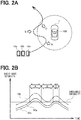
- FIG. 2A and FIG. 2B show the reason why it is difficult for the conventional in-vehicle wireless communication device 100 to accurately detect the distance information based on the radio wave intensity from the mobile terminal 10.
- FIG. 2A it is assumed that three mobile terminals 10a, 10b, and 10c are prepared, and each of the mobile terminals 10a, 10b, and 10c passes through a path indicated by a thick dashed line arrow in the drawing.
- a circle indicated by a dash-dot line in the drawing represents a range within a threshold distance from the vehicle 1.
- the mobile terminals 10a, 10b, and 10c come closer to the vehicle 1 than the threshold distance at a position indicated by an outline arrow A, become farther than the threshold distance at a position indicated by an outline arrow B, and become closer than the threshold distance again at a position indicated by an outline arrow C. Since the radio wave intensity from the mobile terminals 10a, 10b, and 10c increases as the mobile terminals 10a, 10b, and 10c come close to the vehicle 1, it should be possible to determine whether the mobile terminals 10a, 10b, and 10c come close to the vehicle 1 within the threshold distance by comparing the radio wave intensity with a threshold intensity if the threshold intensity of an appropriate magnitude is set in advance.
- a transmission radio wave intensity is specified for the mobile terminals 10a, 10b, and 10c before the in-vehicle wireless communication device 100 detects the radio wave intensity, it should be possible to determine with sufficient accuracy whether the mobile terminals 10a, 10b, and 10c come close to the vehicle 1 within the threshold distance.
- FIG. 2B illustrates measurement results of radio wave intensities of the mobile terminals 10a, 10b, and 10c. This is a result of measuring a change in radio wave intensity by the in-vehicle wireless communication device 100 when the same person carries the mobile terminal in the same manner and travels at the same speed through a path indicated by the thick dashed line arrow in FIG. 2A .
- the measurement result indicated by a solid line in the drawing is the measurement result of the mobile terminal 10a
- the measurement result indicated by a dash-dot chain line is the measurement result of the mobile terminal 10b
- the measurement result indicated by a dashed line is the measurement result of the mobile terminal 10c.
- the radio wave intensity becomes large at a position coming close to the vehicle 1 (for example, a position indicated by the arrow A or the arrow C in FIG. 2A ), and the radio wave intensity becomes small at a position coming far from the vehicle 1 (for example, a position indicated by the arrow B in FIG. 2A ), and the tendency of the radio wave intensity to change coincides with each other.
- the magnitude of the radio wave intensity differs among the mobile terminals 10a, 10b, and 10c. For that reason, when the radio wave intensity is simply used, it is difficult to accurately detect the distance information to the mobile terminals 10a, 10b, and 10c.
- the threshold intensity is set based on the radio wave intensity of the mobile terminal 10a when it is determined whether the mobile terminal comes close to the vehicle 1 within the predetermined threshold distance by comparing the radio wave intensity with a threshold value.
- FIG. 2B it can be detected with high accuracy whether the mobile terminal 10a comes close to the vehicle 1 within the threshold distance, but it cannot be detected that the mobile terminal 10b having a radio wave intensity larger than that of the mobile terminal 10a moves away from the vehicle 1 at the position indicated by the arrow B in FIG. 2A .
- the mobile terminal 10c having a radio wave intensity smaller than that of the mobile terminal 10a again comes close to the vehicle 1 within the threshold distance at the position indicated by the arrow C in FIG. 2A .
- the in-vehicle wireless communication device 100 of the present embodiment employs the following method in order to be able to accurately detect the distance information to the mobile terminal 10 based on the radio wave intensity.
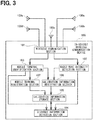
- FIG. 3 shows a rough internal structure of the in-vehicle wireless communication device 100 according to the present embodiment.
- the in-vehicle wireless communication device 100 includes a wireless communication section 101, a radio wave intensity detection section 102, a mobile terminal identification section 103, a distance information detection section 104, a calibration information storage section 105, a calibration information registration section 106, and a mobile terminal registration section 107.
- those "sections” are abstract concepts in which the inside of the in-vehicle wireless communication device 100 according to the present embodiment is classified for convenience, focusing on the function provided by the in-vehicle wireless communication device 100 for accurately detecting the distance information to the mobile terminal 10 based on the radio wave intensity from the mobile terminal 10. Therefore, the inside of the in-vehicle wireless communication device 100 is not physically divided into those "sections".
- Those "sections” can be realized as a computer program executed by a CPU, can be realized as an electronic circuit including an LSI, or can be realized as a combination of a computer program with an electronic circuit.
- the wireless communication section 101 is connected to the vehicle exterior antennas 100a, 100b, 100c, and 100d, and can transmit and receive the radio waves to and from the mobile terminal 10 present outside the vehicle 1 through the vehicle exterior antennas 100a, 100b, 100c, and 100d.
- the wireless communication section 101 is also connected to a vehicle interior antenna 100e, and can transmit and receive the radio waves to and from the mobile terminal 10 present in the interior of the vehicle 1 through the vehicle interior antenna 100e.
- the radio wave intensity detection section 102 is connected to the wireless communication section 101, detects the radio wave intensity of the radio wave received by the wireless communication section 101 through the vehicle exterior antennas 100a, 100b, 100c, and 100d or the vehicle interior antenna 100e, and outputs information on the detected radio wave intensity to the distance information detection section 104.
- the mobile terminal identification section 103 identifies the mobile terminal 10 by detecting the identification information of the mobile terminal 10 that has transmitted the signal among the signals received by the wireless communication section 101 through the vehicle exterior antennas 100a, 100b, 100c, and 100d or the vehicle interior antenna 100e. Then, the mobile terminal identification section 103 outputs the detected identification information to the distance information detection section 104.
- the distance information detection section 104 detects the distance information to the mobile terminal 10 based on the information on the radio wave intensity received from the radio wave intensity detection section 102.
- the distance information is information related to the distance from the vehicle 1 to the mobile terminal 10.
- the distance information may be information indicating the distance itself, or information indicating whether the distance from the vehicle 1 to the mobile terminal 10 is smaller than the predetermined threshold distance.
- the distance information detection section 104 receives the identification information of the mobile terminal 10 from the mobile terminal identification section 103 when detecting the distance information, the distance information detection section 104 refers to the calibration information storage section 105 to acquire the calibration information stored in association with the corresponding identification information.
- the calibration information is information used to detect accurate distance information from the radio wave intensity. Specific examples of the calibration information will be described later.
- the calibration information storage section 105 stores the calibration information for the mobile terminal 10 in association with the identification information of the mobile terminal 10.
- the information stored in the calibration information storage section 105 (that is, the information obtained by combining the identification information of the mobile terminal 10 and the calibration information for the identification information) can be stored in advance.
- the in-vehicle wireless communication device 100 since the in-vehicle wireless communication device 100 according to the present embodiment includes the calibration information registration section 106 for generating calibration information and registering the calibration information in the calibration information storage section 105, the calibration information can be registered as necessary.
- the calibration information registration section 106 receives the radio wave intensity from the radio wave intensity detection section 102, receives the identification information of the mobile terminal 10 from the mobile terminal identification section 103, and generates the calibration information for the mobile terminal 10. Then, the calibration information registration section 106 registers the calibration information in the calibration information storage section 105 in a state in which the calibration information is associated with the identification information of the mobile terminal 10. When the radio wave intensity and the identification information of the mobile terminal 10 are known, the calibration information registration section 106 can register the calibration information in the calibration information storage section 105. However, in the in-vehicle wireless communication device 100 according to the present embodiment, the calibration information is registered for the authorized mobile terminal 10 registered in advance by the mobile terminal registration section 107.
- the mobile terminal registration section 107 receives the identification information of the mobile terminal 10 from the mobile terminal identification section 103, and registers the identification information in the calibration information storage section 105 as the identification information of the authorized mobile terminal 10. Then, the calibration information registration section 106 registers the calibration information for the identification information of the mobile terminal 10 registered in the calibration information storage section 105, (that is, the authorized mobile terminal 10).
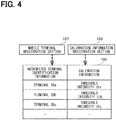
- FIG. 4 conceptually shows a state in which the calibration information is registered in association with the identification information of the authorized mobile terminal 10 in the calibration information storage section 105 of the in-vehicle wireless communication device 100 according to the present embodiment.
- "authorized terminal identification information” is displayed as the identification information of the authorized mobile terminal 10, and three pieces of identification information of the terminal IDa, the terminal IDb, and the terminal IDc are registered as the authorized terminal identification information. Those pieces of authorized terminal identification information are registered by the mobile terminal registration section 107 (refer to FIG. 3 ) described above.
- the calibration information is stored in association with the authorized terminal identification information.
- a threshold intensity (refer to FIG. 2B ) for determining whether the mobile terminal 10 is present within the threshold distance is stored as the calibration information.
- a threshold intensity tha is stored as the calibration information for the authorized mobile terminal 10 having the identification information "terminal IDa”
- a threshold intensity thb is stored for the authorized mobile terminal 10 having the identification information "terminal IDb”.
- the calibration information registration section 106 registers the calibration information with respect to the authorized terminal identification information registered by the mobile terminal registration section 107. When new authorized terminal identification information is registered by the mobile terminal registration section 107, the calibration information is registered by the calibration information registration section 106 for the authorized terminal identification information.
- the calibration information is stored for the identification information registered as the authorized mobile terminal 10 (that is, the authorized terminal identification information) in order to avoid a situation in which the number of stored calibration information becomes too large. This is because it is only necessary to detect the distance information accurately with respect to the authorized mobile terminal 10, and it is considered that there is no need to detect the distance information accurately with respect to the non-authorized mobile terminal 10.
- the calibration information in the present embodiment, threshold intensity
- the distance information in the present embodiment, whether the mobile terminal 10 is present within the range of the predetermined threshold distance
- the threshold intensities tha, thb, and the are registered for the respective identification information, as shown in FIG. 4 .
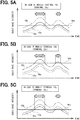
- the threshold intensities tha, thb, and the are set to appropriate values, it can be accurately detected whether the mobile terminals 10a, 10b, and 10c are present within the predetermined threshold distance even if the radio wave intensities transmitted by the mobile terminals 10a, 10b, and 10c are different from each other.
- the mobile terminal 10a whose identification information is the terminal IDa is determined with the use of the threshold intensity tha (refer to FIG. 5A )
- the mobile terminal 10b whose identification information is the terminal IDb is determined with the use of the threshold intensity thb (refer to FIG. 5B )
- the mobile terminal 10c whose identification information is the terminal IDc is determined with the use of the threshold intensity the (refer to FIG. 5C ).
- the in-vehicle wireless communication device 100 In order to detect the distance information (in the present embodiment, whether the mobile terminal 10 is present within the threshold distance) with high accuracy in this manner, it is prerequisite that appropriate calibration information (in the present embodiment, the threshold intensity) is stored in accordance with the radio wave intensity transmitted by the mobile terminal 10.
- Such calibration information may be obtained by measuring the radio wave intensity of the mobile terminal 10 in advance, and the obtained result may be written in a memory (not shown) incorporated in the in-vehicle wireless communication device 100.
- the in-vehicle wireless communication device 100 generates and registers the calibration information by performing the following process.
- FIG. 6 shows a flowchart of a calibration information registration process in which the in-vehicle wireless communication device 100 according to the present embodiment generates and registers the calibration information corresponding to identification information of the authorized terminal.
- the calibration information registration process it is first determined whether the registration of the mobile terminal 10 is requested by the user of the vehicle 1 (S100).
- the user of the vehicle 1 wants to register the mobile terminal 10 carried by the user in the vehicle 1 as the authorized mobile terminal 10
- the user can request the registration of the mobile terminal 10 by performing a predetermined operation on the in-vehicle wireless communication device 100 or the mobile terminal 10.
- the mobile terminal 10 present in the vehicle compartment is searched (S101).
- the vehicle interior antenna 100e is provided in the vehicle compartment of the vehicle 1, and it can be determined whether the mobile terminal 10 is present in the vehicle compartment by transmitting a searching radio wave from the vehicle interior antenna 100e toward the vehicle compartment and determining whether a response signal from the mobile terminal 10 is returned.
- the reason why the mobile terminal 10 in the vehicle compartment is searched is that it is important for the mobile terminal 10 to be present in the vehicle compartment in order to generate accurate calibration information. This point will be described in detail later.
- the calibration information registration process of FIG. 6 is terminated after outputting a message indicating that the mobile terminal 10 is not detected (S110).
- the fact that the mobile terminal 10 is not detected may be output by using a speaker (not shown) mounted on the vehicle 1, or may be output by using a monitor screen (not shown).
- a recess portion 120 having a small size to which the mobile terminal 10 is fitted is provided below a center console, and when the mobile terminal 10 is registered in the vehicle 1, the mobile terminal 10 is requested to be placed in the recess portion 120.
- the mobile terminal 10 is set in a predetermined place for registration (in this example, within the recess portion 120 in FIG. 7 ) (S104).
- This determination can be performed, for example, by providing a contact switch at a position to be turned on when the mobile terminal 10 is set in the recess portion 120, and determining whether the contact switch is turned on.
- an antenna for close communication with the mobile terminal 10 may be provided at a position directly opposite to the mobile terminal 10 when the mobile terminal 10 is set in the recess portion 120 (directly downward of the recess portion 120), and it may be determined whether the mobile terminal 10 is set based on whether a close communication with the mobile terminal 10 can be performed.
- the vehicle interior antenna 100e is disposed immediately below the recess portion 120, and if the radio wave intensity of the mobile terminal 10 detected by the vehicle interior antenna 100e is a certain intensity or more, it is determined that the mobile terminal 10 is set, and if the radio wave intensity does not satisfy the certain intensity, it is determined that the mobile terminal 10 is not set.
- a command for requesting the mobile terminal 10 to transmit the identification information with the normal radio wave intensity is transmitted (S105).
- the mobile terminal 10 may be requested to transmit the identification information at the maximum radio wave intensity.
- the mobile terminal 10 may be requested to transmit the identification information at a predetermined radio wave intensity.
- the identification information transmitted from the mobile terminal 10 is received, the identification information is registered as the identification information (that is, the authorized terminal identification information) of the authorized mobile terminal 10 (S106). Since the mobile terminal 10 is installed at a predetermined location for registration, the mobile terminal 10 is less susceptible to disturbance, so that the identification information from the mobile terminal 10 can be reliably received.
- the authentication information used for authenticating the mobile terminal 10 may be transmitted from the in-vehicle wireless communication device 100 to the mobile terminal 10. Since the mobile terminal 10 is set at a predetermined place for registration, the authentication information to be transmitted to the mobile terminal 10 can also be reliably transmitted.
- the radio wave intensity at the time of receiving the identification information from the mobile terminal 10 is acquired (S107).
- the accurate radio wave intensity of the radio wave for transmitting the identification information by the mobile terminal 10 can be acquired without being affected by disturbance.
- the acquired radio wave intensity is compared with a standard radio wave intensity stored in advance, to thereby determine the calibration information (in this example, the threshold intensity) for the mobile terminal 10 to be registered (S108). For example, when the acquired radio wave intensity is 10% larger than the standard radio wave intensity, a threshold intensity that is 10% larger than a standard threshold intensity set for the standard radio wave intensity can be calculated and used as the threshold intensity for the mobile terminal 10 to be registered.
- the threshold intensity thus determined is associated with the identification information previously registered as the authorized terminal identification information in S106 and registered as the calibration information (S109), and then the calibration information registration process of FIG. 6 is terminated.
- the mobile terminal 10 is registered in a state where the mobile terminal 10 is set in the recess portion 120 provided below the center console.
- the reason is that the mobile terminal 10 is set in the recess portion 120 so as to be able to reliably receive identification information from the mobile terminal 10 without being affected by disturbance, and to accurately detect the radio wave intensity of the radio field transmitted by the mobile terminal 10.
- a place where the mobile terminal 10 is set does not necessarily have to be in the recess portion 120 as long as the place is less susceptible to disturbance.
- the mobile terminal 10 may be placed at a predetermined place on the dashboard, the mobile terminal 10 may be brought close to a predetermined place on the center console while the user holds the mobile terminal 10 in his hand, or the mobile terminal 10 may be pressed at the predetermined place on the dashboard.
- a charging device for charging the mobile terminal 10 in a non-contact manner may be provided at a predetermined place where the mobile terminal 10 is set for registration, and the mobile terminal 10 may be charged while a process for registering the mobile terminal 10 is performed.
- the mobile terminal 10 is requested to transmit the identification information again, and the radio wave intensity detected at that time is compared with the radio wave intensity detected at the time of registration.
- an instruction to register the calibration information may be output again after charging the mobile terminal 10.
- the above configuration can avoid a situation that the radio wave intensity of the radio wave to be transmitted is reduced and inaccurate update information is registered due to exhaustion of the battery of the mobile terminal 10 to be registered.
- the calibration information for the identification information (that is, the authorized terminal identification information) of the authorized mobile terminal 10 is registered by executing the above-described calibration information registration process (refer to FIG. 4 ). Referring to such calibration information, accurate distance information to the authorized mobile terminal 10 can be detected.
- FIG. 8 is a flowchart of a distance information detection process in which the in-vehicle wireless communication device 100 of the present embodiment detects the distance information to the authorized mobile terminal 10 based on the calibration information.
- the distance information detection process it is first determined whether the radio wave from the mobile terminal 10 is received (S200). Normally, the mobile terminal 10 transmits the radio wave at a predetermined cycle, and the radio wave includes identification information of the mobile terminal 10. Therefore, in S200, it is determined whether the radio wave is received.
- the radio wave intensity of the received radio wave is stored, and the identification information of the mobile terminal 10 that transmitted the radio wave is acquired (S201).
- the identification information can be acquired from the received radio wave.
- the identification information (that is, the authorized terminal identification information) should have been registered. Therefore, it is possible to determine whether the mobile terminal 10 is the authorized mobile terminal 10 based on whether the identification information of the mobile terminal 10 has been registered.
- the threshold intensity stored in association with the identification information (that is, the authorized terminal identification information) is read out (S203).
- the radio wave intensity acquired in S201 is larger than the read threshold intensity (S204). Then, when the radio wave intensity is larger than the threshold intensity (YES in S204), it is determined that the authorized mobile terminal 10 is present within the predetermined threshold distance from the vehicle 1 (S205). On the other hand, when the radio wave intensity is smaller than the threshold intensity (NO in S204), it is determined that the authorized mobile terminal 10 is not present within the threshold distance (S206).
- the distance information detection process of FIG. 8 is terminated.
- the distance information detection process is terminated without detecting the distance information.
- the threshold intensity is not stored for the non-authorized mobile terminal 10
- the standard threshold intensity used when generating the calibration information may be substituted for the threshold intensity, and the radio wave intensity of the mobile terminal 10 may be compared with the standard threshold intensity. This makes it possible to detect the distance information even with respect to the non-authorized mobile terminal 10, although the accuracy is not as high as with the authorized mobile terminal 10. Further, it is desirable to output the distance information thus obtained in a state in which the distance information is understood to be reference information.
- the distance information to the mobile terminal 10 can be accurately detected based on the radio wave intensity when the radio wave is received from the mobile terminal 10 with respect to the mobile terminal 10 registered as the authorized mobile terminal 10.
- the mobile terminal 10 in order to detect accurate distance information, it is prerequisite that the mobile terminal 10 has been registered as the authorized mobile terminal 10. However, since the accurate distance information is required to provide various services such as unlocking the door of the vehicle 1 and illumination of the foot to the user who carries the authorized mobile terminal 10, there is no need to provide accurate distance information for the non-authorized mobile terminal 10. In order to be used as the authorized mobile terminal 10, it is necessary to register the mobile terminal 10 in advance. In this respect, since the in-vehicle wireless communication device 100 according to the present embodiment registers the calibration information of the mobile terminal 10 (the threshold intensity in the embodiment described above) when registering the mobile terminal 10 as described above, the distance information to the mobile terminal 10 can be detected with sufficient accuracy without imposing any burden on the user.
- the calibration information of the mobile terminal 10 the threshold intensity in the embodiment described above
- the threshold intensity is stored for each authorized mobile terminal 10, and when the radio wave intensity from the authorized mobile terminal 10 is detected, the detected radio wave intensity is compared with the threshold intensity stored in association with the mobile terminal 10, to thereby determine whether or the distance to the mobile terminal 10 falls within the threshold distance.
- the threshold intensity corresponding to the authorized mobile terminal 10 is a threshold value obtained by calibrating the standard threshold intensity using a calibration coefficient of the radio wave intensity obtained from the mobile terminal 10. Therefore, instead of storing the threshold intensity corresponding to the authorized mobile terminal 10, the calibration coefficient for calculating the threshold intensity may be stored as the calibration information corresponding to the authorized mobile terminal 10.
- the calibration coefficient stored as the calibration information is read out from the mobile terminal 10, and the calibration coefficient and the standard threshold intensity are multiplied by each other to calculate the threshold intensity for the mobile terminal 10. Thereafter, whether the distance to the mobile terminal 10 falls within the threshold distance may be determined by comparing the obtained threshold intensity with the radio wave intensity of the radio wave from the mobile terminal 10.
- the accurate distance information about the authorized mobile terminal 10 can be detected, similarly to the embodiment described above.
- the distance information may be information relating to the distance to the mobile terminal 10, and therefore, the distance to the mobile terminal 10 can be detected as the distance information.
- FIG. 9 is a flowchart of a distance information detecting process in which the in-vehicle wireless communication device 100 of the modification described above detects the distance information to the authorized mobile terminal 10 based on the calibration information.
- the radio wave intensity of the received radio wave is stored, and the identification information of the mobile terminal 10 that has transmitted the radio wave is acquired (S251). Then, it is determined whether the mobile terminal 10 that has transmitted the radio wave is the authorized mobile terminal 10 (S252). In the case of the authorized mobile terminal 10, since the identification information has been registered, it can be easily determined whether the mobile terminal 10 is the authorized mobile terminal 10.
- the calibration coefficient stored in association with the identification information (that is, the authorized terminal identification information) is read out (S253).
- the threshold intensity stored in association with the authorized terminal identification information is read out (refer to S203 in FIG. 8 ), however, in the distance information detection process of the modification, the calibration coefficient corresponding to the authorized terminal identification information is read out.
- the calibration coefficient can be obtained by a method conforming to a method in which the threshold intensity is obtained with the use of the detected radio wave intensity and the standard radio wave intensity stored in advance in the calibration information registration process of the present embodiment described above.
- the detected radio wave intensity is compared with the standard radio wave intensity, and for example, when the radio wave intensity is 10% larger than the standard radio wave intensity, the threshold intensity which is 10% larger than the standard threshold intensity is calculated.
- the calibration coefficient for calibrating the detected radio wave intensity to the standard radio wave intensity is calculated by the operation corresponding to S108 during the calibration information registration process of FIG. 6 .
- the calibration coefficient obtained in this manner is stored in association with the authorized terminal identification information.
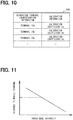
- FIG. 10 exemplifies the calibration coefficient registered in association with the authorized mobile terminal 10 by the in-vehicle wireless communication device 100 of the modification in this manner.
- the radio wave intensity previously stored in S251 is calibrated with the use of the calibration coefficient (S254).
- the calibration coefficient is a coefficient for calibrating that the radio wave intensity at the time of transmitting the radio wave by the mobile terminal 10 differs depending on the difference in model or the individual difference of the mobile terminal 10, and therefore, the radio wave intensity is calibrated by using the calibration coefficient, thereby being capable of removing the difference of the model or the individual difference of the mobile terminal 10.
- the distance to the authorized mobile terminal 10 is determined based on the calibrated radio wave intensity (S255).
- the in-vehicle wireless communication device 100 stores a correspondence relationship between the radio wave intensity and the distance as exemplified in FIG. 11 , and the distance to the mobile terminal 10 can be determined with reference to the correspondence relationship.
- the distance information detection process according to the modification is terminated without detecting the distance to the mobile terminal 10.
- the distance may also be detected for the mobile terminal 10 that is not authorized.
- the calibration coefficient is not stored for the mobile terminal 10 which is not authorized, the distance is determined without calibrating the radio wave intensity. Since the distance thus obtained is not always accurate, it is desirable to output the distance information in a state in which the distance information is understood to be reference information.
- the distance to the mobile terminal 10 can be detected with sufficient accuracy based on the radio wave intensity.
- the threshold intensity corresponding to each authorized mobile terminal 10 is stored, and the radio wave intensity when the radio wave is received from the authorized mobile terminal 10 is compared with the threshold intensity corresponding to the mobile terminal 10.
- the calibration coefficient may be stored for each authorized mobile terminal 10, the radio wave intensity at the time of receiving the radio wave from the authorized mobile terminal 10 may be calibrated using the calibration coefficient corresponding to the mobile terminal 10, and the radio wave intensity after calibration may be compared with a standard threshold intensity. Even in the above manner, it can be detected with high accuracy whether the mobile terminal 10 is present within the threshold distance with respect to the authorized mobile terminal 10.
- each section is represented as S100, for example.
- each section may be divided into a plurality of sub-section, while a plurality of sections may be combined into one section.
- each section configured in the above manner may be referred to as a circuit, a device, a module, or a means.
- each or a combination of the plurality of sections may be implemented as (i) a section of software in combination with a hardware section (for example, a computer), as well as (ii) a section of hardware (for example, an integrated circuit, a wired logic circuit), with or without the functionality of the associated device.
- a hardware section for example, a computer
- a section of hardware for example, an integrated circuit, a wired logic circuit
- the hardware section can be configured inside a microcomputer.
Landscapes
- Engineering & Computer Science (AREA)
- Computer Networks & Wireless Communication (AREA)
- Signal Processing (AREA)
- Physics & Mathematics (AREA)
- General Physics & Mathematics (AREA)
- Computer Security & Cryptography (AREA)
- Radar, Positioning & Navigation (AREA)
- Remote Sensing (AREA)
- Mechanical Engineering (AREA)
- Lock And Its Accessories (AREA)
- Quality & Reliability (AREA)
- Electromagnetism (AREA)
- Mobile Radio Communication Systems (AREA)
Claims (3)
- Fahrzeugbordkommunikationsvorrichtung, die an einem Fahrzeug (1) zu montieren ist und drahtlos mit einem mobilen Endgerät (10) kommuniziert, das von einem Benutzer des Fahrzeugs getragen wird, wobei die Fahrzeugbordkommunikationsvorrichtung aufweist:einen Kalibrierungsinformationsspeicherabschnitt (105) zum Speichern von Kalibrierungsinformationen einschließlich eines Kalibrierungskoeffizienten zum Kalibrieren einer Funkwellenintensität des mobilen Endgeräts, einer Schwellenintensität, die unter Verwendung eines Kalibrierungskoeffizienten erlangt wird und mit der Funkwellenintensität zu vergleichen ist, oder eines Kalibrierungskoeffizienten zum Berechnen der Schwellenintensität, wobei die Kalibrierungsinformationen zur Verwendung in einem Zustand des Identifizierens des mobilen Endgeräts dienen;einen Funkkommunikationsabschnitt (101) zum Ausführen von Funkkommunikation mit dem mobilen Endgerät während einer Registrierung des mobilen Endgeräts und während einem Zustand des Identifizierens des mobilen Endgeräts;einen Funkwellenintensitätserfassungsabschnitt (102) zum Erfassen der Funkwellenintensität einer Funkwelle, die von dem mobilen Endgerät während der Funkkommunikation empfangen wird;einen Distanzinformationserfassungsabschnitt (104) zum Erfassen von Distanzinformationen zu dem mobilen Endgerät basierend auf einer Funkwellenintensität einer Funkwelle, die von dem mobilen Endgerät empfangen wird, und den Kalibrierungsinformationen, die für das mobile Endgerät gespeichert sind;einen Mobiles-Endgerät-Registrierungsabschnitt (107) zum Registrieren des mobilen Endgeräts als ein autorisiertes mobiles Endgerät durch Funkkommunikation mit dem mobilen Endgerät durch den Funkkommunikationsabschnitt (101); undeinen Kalibrierungsinformationsregistrierungsabschnitt (106) zum Erzeugen der Kalibrierungsinformationen für das autorisierte mobile Endgerät basierend auf einer Funkwellenintensität, die durch den Funkwellenintensitätsabschnitt (102) zur Zeit der Registrierung des autorisierten mobilen Endgeräts erfasst wird, und zum Registrieren der Kalibrierungsinformationen für das autorisierte mobile Endgerät in dem Kalibrierungsinformationsspeicherabschnitt (105),dadurch gekennzeichnet, dassder Mobiles-Endgerät-Registrierungsabschnitt (107) ausgelegt ist, um das mobile Endgerät aufzufordern, eine Funkwelle mit einer vorbestimmten Intensität mindestens zur Zeit der Registrierung zu senden.
- Fahrzeugbordkommunikationsvorrichtung gemäß Anspruch 1, dadurch gekennzeichnet, dass
der Distanzinformationserfassungsabschnitt (104) ausgelegt ist, um als die Distanzinformationen zu erfassen, ob die Distanz zu dem mobilen Endgerät kleiner als eine vorbestimmte Schwellendistanz ist, durch Vergleichen der Funkwellenintensität mit einer vorbestimmten Schwellenintensität, und
der Kalibrierungsinformationsspeicherabschnitt (105) ausgelegt ist, um als die Kalibrierungsinformationen Informationen zum Kalibrieren entweder der Funkwellenintensität oder der Schwellenintensität zu speichern. - Distanzinformationserfassungsverfahren, das auf eine Fahrzeugbordkommunikationsvorrichtung (100) angewendet wird, die an einem Fahrzeug (1) montiert ist, und Distanzinformationen zu einem mobilen Endgerät (10), das von einem Benutzer des Fahrzeugs getragen wird, durch Funkkommunikation mit dem mobilen Endgerät erfasst; wobei das Distanzinformationserfassungsverfahren, umfasst:Identifizieren des mobilen Endgeräts und Ausführen von Funkkommunikation mit dem mobilen Endgerät (S200, S250);Erfassen einer Funkwellenintensität einer Funkwelle, die von dem mobilen Endgerät während der Funkkommunikation empfangen wird (S201 und S251);Bestimmen, wenn die Funkwellenintensität erfasst wird, ob Kalibrierungsinformationen einschließlich eines Kalibrierungskoeffizienten zum Kalibrieren der Funkwellenintensität des mobilen Endgeräts, einer Schwellenintensität, die unter Verwendung eines Kalibrierungskoeffizienten erlangt wird und mit der Funkellenintensität zu vergleichen ist, oder eines Kalibrierungskoeffizienten zum Berechnen der Schwellenintensität für das mobile Endgerät gespeichert sind, dessen Funkwellenintensität erfasst wird (S202 und S252); undErfassen der Distanzinformationen zu dem mobilen Endgerät basierend auf der Funkwellenintensität und den Kalibrierungsinformationen, wenn die Kalibrierungsinformationen gespeichert sind (S204, S205, S206, S254 und S255),gekennzeichnet durch:Auffordern des mobilen Endgeräts, eine Funkwelle mit einer vorbestimmten Intensität zu senden, und Erfassen der Funkwellenintensität der Funkwelle, die von dem mobilen Endgerät gesendet wird, wenn das mobile Endgerät als ein autorisiertes mobiles Endgerät registriert wird (S105, S107); undErzeugen der Kalibrierungsinformationen für das autorisierte mobile Endgerät basierend auf der Funkwellenintensität, die zur Zeit der Registrierung des autorisierten mobilen Endgeräts erfasst wird, und dann Speichern der Kalibrierungsinformationen für das autorisierte mobile Endgerät (S108, S109).
Applications Claiming Priority (2)
| Application Number | Priority Date | Filing Date | Title |
|---|---|---|---|
| JP2017151520A JP6740980B2 (ja) | 2017-08-04 | 2017-08-04 | 車載無線通信装置、距離情報検出方法 |
| PCT/JP2018/012624 WO2019026338A1 (ja) | 2017-08-04 | 2018-03-28 | 車載無線通信装置及び距離情報検出方法 |
Publications (3)
| Publication Number | Publication Date |
|---|---|
| EP3663794A4 EP3663794A4 (de) | 2020-06-10 |
| EP3663794A1 EP3663794A1 (de) | 2020-06-10 |
| EP3663794B1 true EP3663794B1 (de) | 2021-08-04 |
Family
ID=65232471
Family Applications (1)
| Application Number | Title | Priority Date | Filing Date |
|---|---|---|---|
| EP18841278.7A Active EP3663794B1 (de) | 2017-08-04 | 2018-03-28 | Fahrzeuginterne drahtloskommunikationsvorrichtung und entfernungsinformationerkennungsverfahren |
Country Status (4)
| Country | Link |
|---|---|
| US (1) | US11064313B2 (de) |
| EP (1) | EP3663794B1 (de) |
| JP (1) | JP6740980B2 (de) |
| WO (1) | WO2019026338A1 (de) |
Families Citing this family (15)
| Publication number | Priority date | Publication date | Assignee | Title |
|---|---|---|---|---|
| WO2019156016A1 (ja) * | 2018-02-09 | 2019-08-15 | 株式会社Jvcケンウッド | 機器操作制御装置および機器操作制御方法、ならびにコンピュータプログラム |
| US10827356B2 (en) * | 2018-08-29 | 2020-11-03 | Continental Teves Ag & Co. Ohg | Electronic device, vehicle system and method for safeguarding wireless data communication |
| JP2020136983A (ja) * | 2019-02-22 | 2020-08-31 | 日本電産モビリティ株式会社 | 車載通信装置、車両制御システム |
| JP2020149280A (ja) * | 2019-03-13 | 2020-09-17 | シャープ株式会社 | ネットワークシステム、電気機器、プログラム、および情報処理方法 |
| DE102019114917A1 (de) | 2019-06-04 | 2020-12-10 | U-Shin Deutschland Zugangssysteme Gmbh | Verfahren zur Zugangssteuerung für ein Kraftfahrzeug und Zugangssteuerungssystem |
| JP2020201856A (ja) * | 2019-06-13 | 2020-12-17 | 株式会社東海理化電機製作所 | 認証システム及び認証方法 |
| DE102019135130B3 (de) | 2019-12-19 | 2020-11-05 | U-Shin Deutschland Zugangssysteme Gmbh | Verfahren zur Zugangssteuerung für ein Kraftfahrzeug und Zugangssteuerungssystem |
| DE102019135665B4 (de) * | 2019-12-23 | 2023-02-16 | U-Shin Deutschland Zugangssysteme Gmbh | Verfahren zur Kalibrierung einer Positionserfassung eines tragbaren Schüsselelements und Zugangssteuerungssystem |
| US11325563B2 (en) * | 2020-08-06 | 2022-05-10 | GM Global Technology Operations LLC | Approach-based vehicle system actuation |
| JP7759214B2 (ja) * | 2021-09-01 | 2025-10-23 | 株式会社東海理化電機製作所 | 遠隔制御システム、制御装置、モバイル装置、およびコンピュータプログラム |
| US12593221B2 (en) * | 2022-02-24 | 2026-03-31 | Shimano Inc. | Wireless communication device for human-powered vehicle |
| JP2025030687A (ja) | 2023-08-24 | 2025-03-07 | 株式会社東海理化電機製作所 | 制御システムおよび管理装置 |
| JP2025030650A (ja) | 2023-08-24 | 2025-03-07 | 株式会社東海理化電機製作所 | 制御装置、プログラム、および制御システム |
| JP7807844B1 (ja) * | 2025-05-08 | 2026-01-28 | Sinumy株式会社 | 情報処理装置、サーバ、情報処理方法、及びプログラム |
| CN120358587B (zh) * | 2025-06-19 | 2025-09-02 | 重庆赛力斯凤凰智创科技有限公司 | 时间同步方法、设备及介质 |
Family Cites Families (13)
| Publication number | Priority date | Publication date | Assignee | Title |
|---|---|---|---|---|
| JP2003248045A (ja) | 2002-02-22 | 2003-09-05 | Alpine Electronics Inc | 車室内乗員位置検出装置および車載機器制御システム |
| US7047009B2 (en) * | 2003-12-05 | 2006-05-16 | Flarion Technologies, Inc. | Base station based methods and apparatus for supporting break before make handoffs in a multi-carrier system |
| US7907908B2 (en) * | 2004-08-04 | 2011-03-15 | Hitachi, Ltd. | Radio access point testing apparatus and method of testing radio access point |
| JP4708957B2 (ja) * | 2005-10-31 | 2011-06-22 | 株式会社東海理化電機製作所 | 車両用通信制御システム |
| JP2011184918A (ja) * | 2010-03-08 | 2011-09-22 | Alps Electric Co Ltd | キーレスエントリー装置の送信アンテナから携帯機までの距離測定方法及びキーレスエントリー装置 |
| JP2014025312A (ja) * | 2012-07-30 | 2014-02-06 | Tokai Rika Co Ltd | 電子キーシステム |
| US9079560B2 (en) * | 2012-11-02 | 2015-07-14 | GM Global Technology Operations LLC | Device location determination by a vehicle |
| JP6089712B2 (ja) * | 2013-01-16 | 2017-03-08 | 株式会社デンソー | 車両制御システム |
| JP2014214417A (ja) * | 2013-04-22 | 2014-11-17 | 株式会社東海理化電機製作所 | 電子キーシステム |
| JP5967046B2 (ja) | 2013-10-04 | 2016-08-10 | トヨタ自動車株式会社 | 無線通信システム及び無線通信システムの測距方法 |
| FR3025641B1 (fr) * | 2014-09-08 | 2016-12-23 | Valeo Comfort & Driving Assistance | Procede de detection d'un identifiant pour le demarrage d'un vehicule automobile |
| WO2017062448A1 (en) | 2015-10-06 | 2017-04-13 | Huf North America Automotive Parts Manufacturing Corp. | System and method for locating a wireless communication device |
| US10415528B2 (en) * | 2017-06-30 | 2019-09-17 | GM Global Technology Operations LLC | Vehicle PEPS system calibration using a mobile device |
-
2017
- 2017-08-04 JP JP2017151520A patent/JP6740980B2/ja not_active Expired - Fee Related
-
2018
- 2018-03-28 WO PCT/JP2018/012624 patent/WO2019026338A1/ja not_active Ceased
- 2018-03-28 EP EP18841278.7A patent/EP3663794B1/de active Active
-
2020
- 2020-01-28 US US16/775,088 patent/US11064313B2/en active Active
Also Published As
| Publication number | Publication date |
|---|---|
| US11064313B2 (en) | 2021-07-13 |
| US20200169842A1 (en) | 2020-05-28 |
| EP3663794A4 (de) | 2020-06-10 |
| EP3663794A1 (de) | 2020-06-10 |
| WO2019026338A1 (ja) | 2019-02-07 |
| JP6740980B2 (ja) | 2020-08-19 |
| JP2019032169A (ja) | 2019-02-28 |
Similar Documents
| Publication | Publication Date | Title |
|---|---|---|
| EP3663794B1 (de) | Fahrzeuginterne drahtloskommunikationsvorrichtung und entfernungsinformationerkennungsverfahren | |
| CN114299644B (zh) | 一种车辆进入系统及车辆进入方法 | |
| US9751497B2 (en) | Vehicle control apparatus | |
| US9725072B2 (en) | Vehicle control system | |
| JP6127864B2 (ja) | 車両制御装置及び携帯通信端末 | |
| JP7110168B2 (ja) | 車両制御装置、車両制御方法、制御用プログラム、及び車両制御システム | |
| KR102276495B1 (ko) | 차량의 기능을 활성화시키기 위한 방법 | |
| US20080048829A1 (en) | Keyless entry device | |
| JP6804527B2 (ja) | 自動車両を制御するための電子ユニット及び携帯端末を用いて自動車両の機能を監視する方法 | |
| JP2016032124A (ja) | 車両用通信システム、車載機、携帯機及びコンピュータプログラム | |
| JP2016020580A (ja) | 車両用通信システム、車載機、携帯機、及びコンピュータプログラム | |
| JP7017062B2 (ja) | 車両用電子キーシステム | |
| JP2015229858A (ja) | 車両用通信システム、車載機、携帯機及びコンピュータプログラム | |
| JP2007132139A (ja) | 無線装置 | |
| JP6331831B2 (ja) | 車両用通信システム、車載機、携帯機及びコンピュータプログラム | |
| US11679737B2 (en) | Access device for a vehicle | |
| KR20100102327A (ko) | 2개의 장파 안테나를 이용한 사용자 인식 카드 시스템 및 스마트키 위치 판단 방법 | |
| JP5619223B1 (ja) | 無線通信システム | |
| JP7262948B2 (ja) | 携帯機、携帯機に適用される通信制御方法 | |
| US12026322B2 (en) | Method for activating a function of a vehicle by ultra high frequency with an item of portable user equipment and device for activating an associated function | |
| KR20190088893A (ko) | 차량 탑재 통신 장치 및 통신 방법 | |
| CN113075646B (zh) | 车辆用用户终端位置测定装置 | |
| JP2021131264A (ja) | 携帯機位置推定システム | |
| JP6260465B2 (ja) | 車載機及び車両用通信システム | |
| WO2018047748A1 (ja) | 車載通信システム、車載装置及び携帯機 |
Legal Events
| Date | Code | Title | Description |
|---|---|---|---|
| STAA | Information on the status of an ep patent application or granted ep patent |
Free format text: STATUS: THE INTERNATIONAL PUBLICATION HAS BEEN MADE |
|
| PUAI | Public reference made under article 153(3) epc to a published international application that has entered the european phase |
Free format text: ORIGINAL CODE: 0009012 |
|
| STAA | Information on the status of an ep patent application or granted ep patent |
Free format text: STATUS: REQUEST FOR EXAMINATION WAS MADE |
|
| STAA | Information on the status of an ep patent application or granted ep patent |
Free format text: STATUS: EXAMINATION IS IN PROGRESS |
|
| 17P | Request for examination filed |
Effective date: 20200121 |
|
| A4 | Supplementary search report drawn up and despatched |
Effective date: 20200507 |
|
| AK | Designated contracting states |
Kind code of ref document: A1 Designated state(s): AL AT BE BG CH CY CZ DE DK EE ES FI FR GB GR HR HU IE IS IT LI LT LU LV MC MK MT NL NO PL PT RO RS SE SI SK SM TR |
|
| AX | Request for extension of the european patent |
Extension state: BA ME |
|
| 17Q | First examination report despatched |
Effective date: 20200602 |
|
| DAV | Request for validation of the european patent (deleted) | ||
| DAX | Request for extension of the european patent (deleted) | ||
| GRAJ | Information related to disapproval of communication of intention to grant by the applicant or resumption of examination proceedings by the epo deleted |
Free format text: ORIGINAL CODE: EPIDOSDIGR1 |
|
| GRAP | Despatch of communication of intention to grant a patent |
Free format text: ORIGINAL CODE: EPIDOSNIGR1 |
|
| GRAP | Despatch of communication of intention to grant a patent |
Free format text: ORIGINAL CODE: EPIDOSNIGR1 |
|
| STAA | Information on the status of an ep patent application or granted ep patent |
Free format text: STATUS: GRANT OF PATENT IS INTENDED |
|
| RIN1 | Information on inventor provided before grant (corrected) |
Inventor name: YAMAGUCHI, TAICHI |
|
| INTG | Intention to grant announced |
Effective date: 20210223 |
|
| GRAS | Grant fee paid |
Free format text: ORIGINAL CODE: EPIDOSNIGR3 |
|
| GRAA | (expected) grant |
Free format text: ORIGINAL CODE: 0009210 |
|
| STAA | Information on the status of an ep patent application or granted ep patent |
Free format text: STATUS: THE PATENT HAS BEEN GRANTED |
|
| AK | Designated contracting states |
Kind code of ref document: B1 Designated state(s): AL AT BE BG CH CY CZ DE DK EE ES FI FR GB GR HR HU IE IS IT LI LT LU LV MC MK MT NL NO PL PT RO RS SE SI SK SM TR |
|
| REG | Reference to a national code |
Ref country code: GB Ref legal event code: FG4D |
|
| REG | Reference to a national code |
Ref country code: AT Ref legal event code: REF Ref document number: 1417517 Country of ref document: AT Kind code of ref document: T Effective date: 20210815 |
|
| REG | Reference to a national code |
Ref country code: CH Ref legal event code: EP |
|
| REG | Reference to a national code |
Ref country code: DE Ref legal event code: R096 Ref document number: 602018021414 Country of ref document: DE |
|
| REG | Reference to a national code |
Ref country code: IE Ref legal event code: FG4D |
|
| REG | Reference to a national code |
Ref country code: LT Ref legal event code: MG9D |
|
| REG | Reference to a national code |
Ref country code: NL Ref legal event code: MP Effective date: 20210804 |
|
| REG | Reference to a national code |
Ref country code: AT Ref legal event code: MK05 Ref document number: 1417517 Country of ref document: AT Kind code of ref document: T Effective date: 20210804 |
|
| PG25 | Lapsed in a contracting state [announced via postgrant information from national office to epo] |
Ref country code: RS Free format text: LAPSE BECAUSE OF FAILURE TO SUBMIT A TRANSLATION OF THE DESCRIPTION OR TO PAY THE FEE WITHIN THE PRESCRIBED TIME-LIMIT Effective date: 20210804 Ref country code: SE Free format text: LAPSE BECAUSE OF FAILURE TO SUBMIT A TRANSLATION OF THE DESCRIPTION OR TO PAY THE FEE WITHIN THE PRESCRIBED TIME-LIMIT Effective date: 20210804 Ref country code: ES Free format text: LAPSE BECAUSE OF FAILURE TO SUBMIT A TRANSLATION OF THE DESCRIPTION OR TO PAY THE FEE WITHIN THE PRESCRIBED TIME-LIMIT Effective date: 20210804 Ref country code: FI Free format text: LAPSE BECAUSE OF FAILURE TO SUBMIT A TRANSLATION OF THE DESCRIPTION OR TO PAY THE FEE WITHIN THE PRESCRIBED TIME-LIMIT Effective date: 20210804 Ref country code: PT Free format text: LAPSE BECAUSE OF FAILURE TO SUBMIT A TRANSLATION OF THE DESCRIPTION OR TO PAY THE FEE WITHIN THE PRESCRIBED TIME-LIMIT Effective date: 20211206 Ref country code: NO Free format text: LAPSE BECAUSE OF FAILURE TO SUBMIT A TRANSLATION OF THE DESCRIPTION OR TO PAY THE FEE WITHIN THE PRESCRIBED TIME-LIMIT Effective date: 20211104 Ref country code: HR Free format text: LAPSE BECAUSE OF FAILURE TO SUBMIT A TRANSLATION OF THE DESCRIPTION OR TO PAY THE FEE WITHIN THE PRESCRIBED TIME-LIMIT Effective date: 20210804 Ref country code: LT Free format text: LAPSE BECAUSE OF FAILURE TO SUBMIT A TRANSLATION OF THE DESCRIPTION OR TO PAY THE FEE WITHIN THE PRESCRIBED TIME-LIMIT Effective date: 20210804 Ref country code: BG Free format text: LAPSE BECAUSE OF FAILURE TO SUBMIT A TRANSLATION OF THE DESCRIPTION OR TO PAY THE FEE WITHIN THE PRESCRIBED TIME-LIMIT Effective date: 20211104 Ref country code: AT Free format text: LAPSE BECAUSE OF FAILURE TO SUBMIT A TRANSLATION OF THE DESCRIPTION OR TO PAY THE FEE WITHIN THE PRESCRIBED TIME-LIMIT Effective date: 20210804 |
|
| PG25 | Lapsed in a contracting state [announced via postgrant information from national office to epo] |
Ref country code: PL Free format text: LAPSE BECAUSE OF FAILURE TO SUBMIT A TRANSLATION OF THE DESCRIPTION OR TO PAY THE FEE WITHIN THE PRESCRIBED TIME-LIMIT Effective date: 20210804 Ref country code: LV Free format text: LAPSE BECAUSE OF FAILURE TO SUBMIT A TRANSLATION OF THE DESCRIPTION OR TO PAY THE FEE WITHIN THE PRESCRIBED TIME-LIMIT Effective date: 20210804 Ref country code: GR Free format text: LAPSE BECAUSE OF FAILURE TO SUBMIT A TRANSLATION OF THE DESCRIPTION OR TO PAY THE FEE WITHIN THE PRESCRIBED TIME-LIMIT Effective date: 20211105 |
|
| PG25 | Lapsed in a contracting state [announced via postgrant information from national office to epo] |
Ref country code: NL Free format text: LAPSE BECAUSE OF FAILURE TO SUBMIT A TRANSLATION OF THE DESCRIPTION OR TO PAY THE FEE WITHIN THE PRESCRIBED TIME-LIMIT Effective date: 20210804 |
|
| PG25 | Lapsed in a contracting state [announced via postgrant information from national office to epo] |
Ref country code: DK Free format text: LAPSE BECAUSE OF FAILURE TO SUBMIT A TRANSLATION OF THE DESCRIPTION OR TO PAY THE FEE WITHIN THE PRESCRIBED TIME-LIMIT Effective date: 20210804 |
|
| REG | Reference to a national code |
Ref country code: DE Ref legal event code: R097 Ref document number: 602018021414 Country of ref document: DE |
|
| PG25 | Lapsed in a contracting state [announced via postgrant information from national office to epo] |
Ref country code: SM Free format text: LAPSE BECAUSE OF FAILURE TO SUBMIT A TRANSLATION OF THE DESCRIPTION OR TO PAY THE FEE WITHIN THE PRESCRIBED TIME-LIMIT Effective date: 20210804 Ref country code: SK Free format text: LAPSE BECAUSE OF FAILURE TO SUBMIT A TRANSLATION OF THE DESCRIPTION OR TO PAY THE FEE WITHIN THE PRESCRIBED TIME-LIMIT Effective date: 20210804 Ref country code: RO Free format text: LAPSE BECAUSE OF FAILURE TO SUBMIT A TRANSLATION OF THE DESCRIPTION OR TO PAY THE FEE WITHIN THE PRESCRIBED TIME-LIMIT Effective date: 20210804 Ref country code: EE Free format text: LAPSE BECAUSE OF FAILURE TO SUBMIT A TRANSLATION OF THE DESCRIPTION OR TO PAY THE FEE WITHIN THE PRESCRIBED TIME-LIMIT Effective date: 20210804 Ref country code: CZ Free format text: LAPSE BECAUSE OF FAILURE TO SUBMIT A TRANSLATION OF THE DESCRIPTION OR TO PAY THE FEE WITHIN THE PRESCRIBED TIME-LIMIT Effective date: 20210804 Ref country code: AL Free format text: LAPSE BECAUSE OF FAILURE TO SUBMIT A TRANSLATION OF THE DESCRIPTION OR TO PAY THE FEE WITHIN THE PRESCRIBED TIME-LIMIT Effective date: 20210804 |
|
| PLBE | No opposition filed within time limit |
Free format text: ORIGINAL CODE: 0009261 |
|
| STAA | Information on the status of an ep patent application or granted ep patent |
Free format text: STATUS: NO OPPOSITION FILED WITHIN TIME LIMIT |
|
| 26N | No opposition filed |
Effective date: 20220506 |
|
| PG25 | Lapsed in a contracting state [announced via postgrant information from national office to epo] |
Ref country code: IT Free format text: LAPSE BECAUSE OF FAILURE TO SUBMIT A TRANSLATION OF THE DESCRIPTION OR TO PAY THE FEE WITHIN THE PRESCRIBED TIME-LIMIT Effective date: 20210804 |
|
| PG25 | Lapsed in a contracting state [announced via postgrant information from national office to epo] |
Ref country code: SI Free format text: LAPSE BECAUSE OF FAILURE TO SUBMIT A TRANSLATION OF THE DESCRIPTION OR TO PAY THE FEE WITHIN THE PRESCRIBED TIME-LIMIT Effective date: 20210804 |
|
| PG25 | Lapsed in a contracting state [announced via postgrant information from national office to epo] |
Ref country code: MC Free format text: LAPSE BECAUSE OF FAILURE TO SUBMIT A TRANSLATION OF THE DESCRIPTION OR TO PAY THE FEE WITHIN THE PRESCRIBED TIME-LIMIT Effective date: 20210804 |
|
| REG | Reference to a national code |
Ref country code: CH Ref legal event code: PL |
|
| GBPC | Gb: european patent ceased through non-payment of renewal fee |
Effective date: 20220328 |
|
| REG | Reference to a national code |
Ref country code: BE Ref legal event code: MM Effective date: 20220331 |
|
| PG25 | Lapsed in a contracting state [announced via postgrant information from national office to epo] |
Ref country code: LU Free format text: LAPSE BECAUSE OF NON-PAYMENT OF DUE FEES Effective date: 20220328 Ref country code: LI Free format text: LAPSE BECAUSE OF NON-PAYMENT OF DUE FEES Effective date: 20220331 Ref country code: IE Free format text: LAPSE BECAUSE OF NON-PAYMENT OF DUE FEES Effective date: 20220328 Ref country code: GB Free format text: LAPSE BECAUSE OF NON-PAYMENT OF DUE FEES Effective date: 20220328 Ref country code: FR Free format text: LAPSE BECAUSE OF NON-PAYMENT OF DUE FEES Effective date: 20220331 Ref country code: CH Free format text: LAPSE BECAUSE OF NON-PAYMENT OF DUE FEES Effective date: 20220331 |
|
| PG25 | Lapsed in a contracting state [announced via postgrant information from national office to epo] |
Ref country code: BE Free format text: LAPSE BECAUSE OF NON-PAYMENT OF DUE FEES Effective date: 20220331 |
|
| PG25 | Lapsed in a contracting state [announced via postgrant information from national office to epo] |
Ref country code: MK Free format text: LAPSE BECAUSE OF FAILURE TO SUBMIT A TRANSLATION OF THE DESCRIPTION OR TO PAY THE FEE WITHIN THE PRESCRIBED TIME-LIMIT Effective date: 20210804 Ref country code: CY Free format text: LAPSE BECAUSE OF FAILURE TO SUBMIT A TRANSLATION OF THE DESCRIPTION OR TO PAY THE FEE WITHIN THE PRESCRIBED TIME-LIMIT Effective date: 20210804 |
|
| PG25 | Lapsed in a contracting state [announced via postgrant information from national office to epo] |
Ref country code: HU Free format text: LAPSE BECAUSE OF FAILURE TO SUBMIT A TRANSLATION OF THE DESCRIPTION OR TO PAY THE FEE WITHIN THE PRESCRIBED TIME-LIMIT; INVALID AB INITIO Effective date: 20180328 |
|
| PG25 | Lapsed in a contracting state [announced via postgrant information from national office to epo] |
Ref country code: TR Free format text: LAPSE BECAUSE OF FAILURE TO SUBMIT A TRANSLATION OF THE DESCRIPTION OR TO PAY THE FEE WITHIN THE PRESCRIBED TIME-LIMIT Effective date: 20210804 |
|
| PG25 | Lapsed in a contracting state [announced via postgrant information from national office to epo] |
Ref country code: MT Free format text: LAPSE BECAUSE OF FAILURE TO SUBMIT A TRANSLATION OF THE DESCRIPTION OR TO PAY THE FEE WITHIN THE PRESCRIBED TIME-LIMIT Effective date: 20210804 |
|
| PGFP | Annual fee paid to national office [announced via postgrant information from national office to epo] |
Ref country code: DE Payment date: 20250319 Year of fee payment: 8 |