EP3596118B1 - Combination of multimeric fusion polypeptides and immune checkpoint inhibitor for treating hpv-associated cancer - Google Patents
Combination of multimeric fusion polypeptides and immune checkpoint inhibitor for treating hpv-associated cancer Download PDFInfo
- Publication number
- EP3596118B1 EP3596118B1 EP18768154.9A EP18768154A EP3596118B1 EP 3596118 B1 EP3596118 B1 EP 3596118B1 EP 18768154 A EP18768154 A EP 18768154A EP 3596118 B1 EP3596118 B1 EP 3596118B1
- Authority
- EP
- European Patent Office
- Prior art keywords
- polypeptide
- amino acid
- cases
- acid sequence
- syntac
- Prior art date
- Legal status (The legal status is an assumption and is not a legal conclusion. Google has not performed a legal analysis and makes no representation as to the accuracy of the status listed.)
- Active
Links
Images












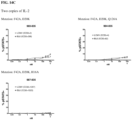
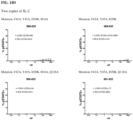
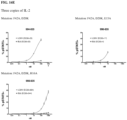


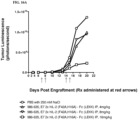





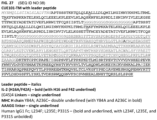
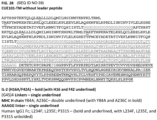

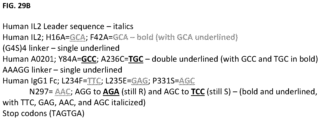
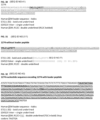



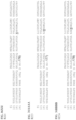
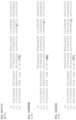
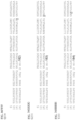

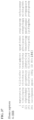




Classifications
-
- A—HUMAN NECESSITIES
- A61—MEDICAL OR VETERINARY SCIENCE; HYGIENE
- A61K—PREPARATIONS FOR MEDICAL, DENTAL OR TOILETRY PURPOSES
- A61K38/00—Medicinal preparations containing peptides
- A61K38/16—Peptides having more than 20 amino acids; Gastrins; Somatostatins; Melanotropins; Derivatives thereof
- A61K38/17—Peptides having more than 20 amino acids; Gastrins; Somatostatins; Melanotropins; Derivatives thereof from animals; from humans
- A61K38/19—Cytokines; Lymphokines; Interferons
- A61K38/20—Interleukins [IL]
- A61K38/2013—IL-2
-
- A—HUMAN NECESSITIES
- A61—MEDICAL OR VETERINARY SCIENCE; HYGIENE
- A61K—PREPARATIONS FOR MEDICAL, DENTAL OR TOILETRY PURPOSES
- A61K38/00—Medicinal preparations containing peptides
- A61K38/16—Peptides having more than 20 amino acids; Gastrins; Somatostatins; Melanotropins; Derivatives thereof
- A61K38/162—Peptides having more than 20 amino acids; Gastrins; Somatostatins; Melanotropins; Derivatives thereof from virus
-
- A—HUMAN NECESSITIES
- A61—MEDICAL OR VETERINARY SCIENCE; HYGIENE
- A61K—PREPARATIONS FOR MEDICAL, DENTAL OR TOILETRY PURPOSES
- A61K38/00—Medicinal preparations containing peptides
- A61K38/16—Peptides having more than 20 amino acids; Gastrins; Somatostatins; Melanotropins; Derivatives thereof
- A61K38/17—Peptides having more than 20 amino acids; Gastrins; Somatostatins; Melanotropins; Derivatives thereof from animals; from humans
- A61K38/177—Receptors; Cell surface antigens; Cell surface determinants
- A61K38/1774—Immunoglobulin superfamily (e.g. CD2, CD4, CD8, ICAM molecules, B7 molecules, Fc-receptors, MHC-molecules)
-
- A—HUMAN NECESSITIES
- A61—MEDICAL OR VETERINARY SCIENCE; HYGIENE
- A61K—PREPARATIONS FOR MEDICAL, DENTAL OR TOILETRY PURPOSES
- A61K39/00—Medicinal preparations containing antigens or antibodies
- A61K39/395—Antibodies; Immunoglobulins; Immune serum, e.g. antilymphocytic serum
- A61K39/39533—Antibodies; Immunoglobulins; Immune serum, e.g. antilymphocytic serum against materials from animals
- A61K39/3955—Antibodies; Immunoglobulins; Immune serum, e.g. antilymphocytic serum against materials from animals against proteinaceous materials, e.g. enzymes, hormones, lymphokines
-
- A—HUMAN NECESSITIES
- A61—MEDICAL OR VETERINARY SCIENCE; HYGIENE
- A61K—PREPARATIONS FOR MEDICAL, DENTAL OR TOILETRY PURPOSES
- A61K47/00—Medicinal preparations characterised by the non-active ingredients used, e.g. carriers or inert additives; Targeting or modifying agents chemically bound to the active ingredient
- A61K47/50—Medicinal preparations characterised by the non-active ingredients used, e.g. carriers or inert additives; Targeting or modifying agents chemically bound to the active ingredient the non-active ingredient being chemically bound to the active ingredient, e.g. polymer-drug conjugates
- A61K47/51—Medicinal preparations characterised by the non-active ingredients used, e.g. carriers or inert additives; Targeting or modifying agents chemically bound to the active ingredient the non-active ingredient being chemically bound to the active ingredient, e.g. polymer-drug conjugates the non-active ingredient being a modifying agent
- A61K47/62—Medicinal preparations characterised by the non-active ingredients used, e.g. carriers or inert additives; Targeting or modifying agents chemically bound to the active ingredient the non-active ingredient being chemically bound to the active ingredient, e.g. polymer-drug conjugates the non-active ingredient being a modifying agent the modifying agent being a protein, peptide or polyamino acid
- A61K47/64—Drug-peptide, drug-protein or drug-polyamino acid conjugates, i.e. the modifying agent being a peptide, protein or polyamino acid which is covalently bonded or complexed to a therapeutically active agent
- A61K47/644—Transferrin, e.g. a lactoferrin or ovotransferrin
-
- A—HUMAN NECESSITIES
- A61—MEDICAL OR VETERINARY SCIENCE; HYGIENE
- A61K—PREPARATIONS FOR MEDICAL, DENTAL OR TOILETRY PURPOSES
- A61K47/00—Medicinal preparations characterised by the non-active ingredients used, e.g. carriers or inert additives; Targeting or modifying agents chemically bound to the active ingredient
- A61K47/50—Medicinal preparations characterised by the non-active ingredients used, e.g. carriers or inert additives; Targeting or modifying agents chemically bound to the active ingredient the non-active ingredient being chemically bound to the active ingredient, e.g. polymer-drug conjugates
- A61K47/51—Medicinal preparations characterised by the non-active ingredients used, e.g. carriers or inert additives; Targeting or modifying agents chemically bound to the active ingredient the non-active ingredient being chemically bound to the active ingredient, e.g. polymer-drug conjugates the non-active ingredient being a modifying agent
- A61K47/68—Medicinal preparations characterised by the non-active ingredients used, e.g. carriers or inert additives; Targeting or modifying agents chemically bound to the active ingredient the non-active ingredient being chemically bound to the active ingredient, e.g. polymer-drug conjugates the non-active ingredient being a modifying agent the modifying agent being an antibody, an immunoglobulin or a fragment thereof, e.g. an Fc-fragment
-
- A—HUMAN NECESSITIES
- A61—MEDICAL OR VETERINARY SCIENCE; HYGIENE
- A61K—PREPARATIONS FOR MEDICAL, DENTAL OR TOILETRY PURPOSES
- A61K9/00—Medicinal preparations characterised by special physical form
- A61K9/0012—Galenical forms characterised by the site of application
- A61K9/0019—Injectable compositions; Intramuscular, intravenous, arterial, subcutaneous administration; Compositions to be administered through the skin in an invasive manner
-
- A—HUMAN NECESSITIES
- A61—MEDICAL OR VETERINARY SCIENCE; HYGIENE
- A61P—SPECIFIC THERAPEUTIC ACTIVITY OF CHEMICAL COMPOUNDS OR MEDICINAL PREPARATIONS
- A61P35/00—Antineoplastic agents
-
- A—HUMAN NECESSITIES
- A61—MEDICAL OR VETERINARY SCIENCE; HYGIENE
- A61P—SPECIFIC THERAPEUTIC ACTIVITY OF CHEMICAL COMPOUNDS OR MEDICINAL PREPARATIONS
- A61P37/00—Drugs for immunological or allergic disorders
- A61P37/02—Immunomodulators
- A61P37/06—Immunosuppressants, e.g. drugs for graft rejection
-
- C—CHEMISTRY; METALLURGY
- C07—ORGANIC CHEMISTRY
- C07K—PEPTIDES
- C07K14/00—Peptides having more than 20 amino acids; Gastrins; Somatostatins; Melanotropins; Derivatives thereof
- C07K14/435—Peptides having more than 20 amino acids; Gastrins; Somatostatins; Melanotropins; Derivatives thereof from animals; from humans
- C07K14/52—Cytokines; Lymphokines; Interferons
- C07K14/54—Interleukins [IL]
- C07K14/55—IL-2
-
- C—CHEMISTRY; METALLURGY
- C07—ORGANIC CHEMISTRY
- C07K—PEPTIDES
- C07K14/00—Peptides having more than 20 amino acids; Gastrins; Somatostatins; Melanotropins; Derivatives thereof
- C07K14/435—Peptides having more than 20 amino acids; Gastrins; Somatostatins; Melanotropins; Derivatives thereof from animals; from humans
- C07K14/705—Receptors; Cell surface antigens; Cell surface determinants
- C07K14/70503—Immunoglobulin superfamily
- C07K14/70539—MHC-molecules, e.g. HLA-molecules
-
- C—CHEMISTRY; METALLURGY
- C07—ORGANIC CHEMISTRY
- C07K—PEPTIDES
- C07K14/00—Peptides having more than 20 amino acids; Gastrins; Somatostatins; Melanotropins; Derivatives thereof
- C07K14/435—Peptides having more than 20 amino acids; Gastrins; Somatostatins; Melanotropins; Derivatives thereof from animals; from humans
- C07K14/79—Transferrins, e.g. lactoferrins, ovotransferrins
-
- C—CHEMISTRY; METALLURGY
- C07—ORGANIC CHEMISTRY
- C07K—PEPTIDES
- C07K16/00—Immunoglobulins [IG], e.g. monoclonal or polyclonal antibodies
- C07K16/18—Immunoglobulins [IG], e.g. monoclonal or polyclonal antibodies against material from animals or humans
- C07K16/28—Immunoglobulins [IG], e.g. monoclonal or polyclonal antibodies against material from animals or humans against receptors, cell surface antigens or cell surface determinants
- C07K16/2803—Immunoglobulins [IG], e.g. monoclonal or polyclonal antibodies against material from animals or humans against receptors, cell surface antigens or cell surface determinants against the immunoglobulin superfamily
- C07K16/2818—Immunoglobulins [IG], e.g. monoclonal or polyclonal antibodies against material from animals or humans against receptors, cell surface antigens or cell surface determinants against the immunoglobulin superfamily against CD28 or CD152
-
- C—CHEMISTRY; METALLURGY
- C07—ORGANIC CHEMISTRY
- C07K—PEPTIDES
- C07K16/00—Immunoglobulins [IG], e.g. monoclonal or polyclonal antibodies
- C07K16/18—Immunoglobulins [IG], e.g. monoclonal or polyclonal antibodies against material from animals or humans
- C07K16/28—Immunoglobulins [IG], e.g. monoclonal or polyclonal antibodies against material from animals or humans against receptors, cell surface antigens or cell surface determinants
- C07K16/2803—Immunoglobulins [IG], e.g. monoclonal or polyclonal antibodies against material from animals or humans against receptors, cell surface antigens or cell surface determinants against the immunoglobulin superfamily
- C07K16/2827—Immunoglobulins [IG], e.g. monoclonal or polyclonal antibodies against material from animals or humans against receptors, cell surface antigens or cell surface determinants against the immunoglobulin superfamily against B7 molecules, e.g. CD80, CD86
-
- C—CHEMISTRY; METALLURGY
- C12—BIOCHEMISTRY; BEER; SPIRITS; WINE; VINEGAR; MICROBIOLOGY; ENZYMOLOGY; MUTATION OR GENETIC ENGINEERING
- C12N—MICROORGANISMS OR ENZYMES; COMPOSITIONS THEREOF; PROPAGATING, PRESERVING, OR MAINTAINING MICROORGANISMS; MUTATION OR GENETIC ENGINEERING; CULTURE MEDIA
- C12N15/00—Mutation or genetic engineering; DNA or RNA concerning genetic engineering, vectors, e.g. plasmids, or their isolation, preparation or purification; Use of hosts therefor
- C12N15/09—Recombinant DNA-technology
- C12N15/11—DNA or RNA fragments; Modified forms thereof; Non-coding nucleic acids having a biological activity
- C12N15/62—DNA sequences coding for fusion proteins
-
- A—HUMAN NECESSITIES
- A61—MEDICAL OR VETERINARY SCIENCE; HYGIENE
- A61K—PREPARATIONS FOR MEDICAL, DENTAL OR TOILETRY PURPOSES
- A61K39/00—Medicinal preparations containing antigens or antibodies
- A61K2039/505—Medicinal preparations containing antigens or antibodies comprising antibodies
-
- A—HUMAN NECESSITIES
- A61—MEDICAL OR VETERINARY SCIENCE; HYGIENE
- A61K—PREPARATIONS FOR MEDICAL, DENTAL OR TOILETRY PURPOSES
- A61K2300/00—Mixtures or combinations of active ingredients, wherein at least one active ingredient is fully defined in groups A61K31/00 - A61K41/00
-
- C—CHEMISTRY; METALLURGY
- C07—ORGANIC CHEMISTRY
- C07K—PEPTIDES
- C07K2317/00—Immunoglobulins specific features
- C07K2317/50—Immunoglobulins specific features characterized by immunoglobulin fragments
- C07K2317/52—Constant or Fc region; Isotype
- C07K2317/524—CH2 domain
-
- C—CHEMISTRY; METALLURGY
- C07—ORGANIC CHEMISTRY
- C07K—PEPTIDES
- C07K2317/00—Immunoglobulins specific features
- C07K2317/70—Immunoglobulins specific features characterized by effect upon binding to a cell or to an antigen
- C07K2317/71—Decreased effector function due to an Fc-modification
-
- C—CHEMISTRY; METALLURGY
- C07—ORGANIC CHEMISTRY
- C07K—PEPTIDES
- C07K2317/00—Immunoglobulins specific features
- C07K2317/70—Immunoglobulins specific features characterized by effect upon binding to a cell or to an antigen
- C07K2317/76—Antagonist effect on antigen, e.g. neutralization or inhibition of binding
-
- C—CHEMISTRY; METALLURGY
- C07—ORGANIC CHEMISTRY
- C07K—PEPTIDES
- C07K2319/00—Fusion polypeptide
-
- C—CHEMISTRY; METALLURGY
- C12—BIOCHEMISTRY; BEER; SPIRITS; WINE; VINEGAR; MICROBIOLOGY; ENZYMOLOGY; MUTATION OR GENETIC ENGINEERING
- C12N—MICROORGANISMS OR ENZYMES; COMPOSITIONS THEREOF; PROPAGATING, PRESERVING, OR MAINTAINING MICROORGANISMS; MUTATION OR GENETIC ENGINEERING; CULTURE MEDIA
- C12N2770/00—MICROORGANISMS OR ENZYMES; COMPOSITIONS THEREOF; PROPAGATING, PRESERVING, OR MAINTAINING MICROORGANISMS; MUTATION OR GENETIC ENGINEERING; CULTURE MEDIA ssRNA viruses positive-sense
- C12N2770/00011—Details
- C12N2770/36011—Togaviridae
- C12N2770/36111—Alphavirus, e.g. Sindbis virus, VEE, EEE, WEE, Semliki
- C12N2770/36141—Use of virus, viral particle or viral elements as a vector
- C12N2770/36143—Use of virus, viral particle or viral elements as a vector viral genome or elements thereof as genetic vector
Definitions
- An adaptive immune response involves the engagement of the T cell receptor (TCR), present on the surface of a T cell, with a small peptide antigen non-covalently presented on the surface of an antigen presenting cell (APC) by a major histocompatibility complex (MHC; also referred to in humans as a human leukocyte antigen (HLA) complex).
- TCR T cell receptor
- APC antigen presenting cell
- MHC major histocompatibility complex
- HLA human leukocyte antigen
- the targeted T cells are activated through engagement of costimulatory proteins found on the APC with counterpart costimulatory proteins on the T cells.
- Both signals - epitope/TCR binding and engagement of APC costimulatory proteins with T cell costimulatory proteins - are required to drive T cell specificity and activation or inhibition.
- the TCR is specific for a given epitope; however, the costimulatory protein is not epitope specific and instead is generally expressed on all T cells or on large T cell subsets.
- the present disclosure provides a composition comprising a multimeric polypeptide for use in a method of treating a HPV-associated cancer in a human patient, the method comprising administering a multimeric polypeptide and an immune checkpoint inhibitor,
- polynucleotide and “nucleic acid,” used interchangeably herein, refer to a polymeric form of nucleotides of any length, either ribonucleotides or deoxyribonucleotides. Thus, this term includes, but is not limited to, single-, double-, or multi-stranded DNA or RNA, genomic DNA, cDNA, DNA-RNA hybrids, or a polymer comprising purine and pyrimidine bases or other natural, chemically or biochemically modified, non-natural, or derivatized nucleotide bases.
- peptide refers to a polymeric form of amino acids of any length, which can include coded and non-coded amino acids, chemically or biochemically modified or derivatized amino acids, and polypeptides having modified peptide backbones.
- a polynucleotide or polypeptide has a certain percent "sequence identity" to another polynucleotide or polypeptide, meaning that, when aligned, that percentage of bases or amino acids are the same, and in the same relative position, when comparing the two sequences. Sequence identity can be determined in a number of different ways.
- sequences can be aligned using various convenient methods and computer programs (e.g., BLAST, T-COFFEE, MUSCLE, MAFFT, etc.), available over the world wide web at sites including ncbi.nlm.nili.gov/BLAST, ebi.ac.uk/Tools/msa/tcoffee/, ebi.ac.uk/Tools/msa/muscle/, mafft.cbrc.jp/alignment/software/. See, e.g., Altschul et al. (1990), J. Mol. Bioi. 215:403-10 .
- a group of amino acids having aliphatic side chains consists of glycine, alanine, valine, leucine, and isoleucine; a group of amino acids having aliphatic-hydroxyl side chains consists of serine and threonine; a group of amino acids having amide-containing side chains consisting of asparagine and glutamine; a group of amino acids having aromatic side chains consists of phenylalanine, tyrosine, and tryptophan; a group of amino acids having basic side chains consists of lysine, arginine, and histidine; a group of amino acids having acidic side chains consists of glutamate and aspartate; and a group of amino acids having sulfur containing side chains consists of cysteine and methionine.
- Exemplary conservative amino acid substitution groups are: valine-leucine-isoleucine, phenylalanine-tyrosine, lysine-arginine, alanine-valine-glycine, and asparagine-glutamine.
- Binding refers to a non-covalent interaction between. Binding interactions are generally characterized by a dissociation constant (K D ) of less than 10 -6 M, less than 10 -7 M, less than 10 -8 M, less than 10 -9 M, less than 10 -10 M, less than 10 -11 M, less than 10 -12 M, less than 10 -13 M, less than 10 -14 M, or less than 10 -15 M.
- K D dissociation constant
- Affinity refers to the strength of binding, increased binding affinity being correlated with a lower Kn.
- immunological synapse or “immune synapse” as used herein generally refers to the natural interface between two interacting immune cells of an adaptive immune response including, e.g., the interface between an antigen-presenting cell (APC) or target cell and an effector cell, e.g., a lymphocyte, an effector T cell, a natural killer cell, and the like.
- An immunological synapse between an APC and a T cell is generally initiated by the interaction of a T cell antigen receptor and major histocompatibility complex molecules, e.g., as described in Bromley et al., Annu Rev Immunol. 2001;19:375-96 .
- T cell includes all types of immune cells expressing CD3, including T-helper cells (CD4 + cells), cytotoxic T-cells (CD8 + cells), T-regulatory cells (Treg), and NK-T cells.
- Co-stimulatory polypeptide includes a polypeptide on an antigen presenting cell (APC) (e.g., a dendritic cell, a B cell, and the like) that specifically binds a cognate co-stimulatory polypeptide (also referred to herein as a "cognate co-immunomodulatory polypeptide”) on a T cell, thereby providing a signal which, in addition to the primary signal provided by, for instance, binding of a TCR/CD3 complex with a major histocompatibility complex (MHC) polypeptide loaded with peptide, mediates a T cell response, including, but not limited to, proliferation, activation, differentiation, and the like.
- APC antigen presenting cell
- MHC major histocompatibility complex
- a co-stimulatory ligand can include, but is not limited to, CD7, B7-1 (CD80), B7-2 (CD86), PD-L1, PD-L2, 4-1BBL, OX40L, Fas ligand (FasL), inducible costimulatory ligand (ICOS-L), intercellular adhesion molecule (ICAM), CD30L, CD40, CD70, CD83, HLA-G, MICA, MICB, HVEM, lymphotoxin beta receptor, 3/TR6, ILT3, ILT4, HVEM, an agonist or antibody that binds Toll ligand receptor and a ligand that specifically binds with B7-H3.
- a co-stimulatory ligand also encompasses, inter alia, an antibody that specifically binds with a co-stimulatory molecule present on a T cell, such as, but not limited to, CD27, CD28, 4-1BB, OX40, CD30, CD40, PD-1, ICOS, lymphocyte function-associated antigen-1 (LFA-1), CD2, LIGHT, NKG2C, B7-H3, and a ligand that specifically binds to CD83.
- an antibody that specifically binds with a co-stimulatory molecule present on a T cell such as, but not limited to, CD27, CD28, 4-1BB, OX40, CD30, CD40, PD-1, ICOS, lymphocyte function-associated antigen-1 (LFA-1), CD2, LIGHT, NKG2C, B7-H3, and a ligand that specifically binds to CD83.
- a “modulatory domain” ("MOD") of a T-cell modulatory multimeric polypeptide comprises a co-stimulatory polypeptide, e.g., an IL-2 polypeptide, such as a variant IL-2 polypeptide.
- Heterologous means a nucleotide or polypeptide that is not found in the native nucleic acid or protein, respectively.
- Recombinant means that a particular nucleic acid (DNA or RNA) is the product of various combinations of cloning, restriction, polymerase chain reaction (PCR) and/or ligation steps resulting in a construct having a structural coding or non-coding sequence distinguishable from endogenous nucleic acids found in natural systems.
- DNA sequences encoding polypeptides can be assembled from cDNA fragments or from a series of synthetic oligonucleotides, to provide a synthetic nucleic acid which is capable of being expressed from a recombinant transcriptional unit contained in a cell or in a cell-free transcription and translation system.
- recombinant expression vector or "DNA construct” are used interchangeably herein to refer to a DNA molecule comprising a vector and one insert.
- Recombinant expression vectors are usually generated for the purpose of expressing and/or propagating the insert(s), or for the construction of other recombinant nucleotide sequences.
- the insert(s) may or may not be operably linked to a promoter sequence and may or may not be operably linked to DNA regulatory sequences.
- antibodies and immunoglobulin include antibodies or immunoglobulins of any isotype, fragments of antibodies that retain specific binding to antigen, including, but not limited to, Fab, Fv, scFv, and Fd fragments, chimeric antibodies, humanized antibodies, single-chain antibodies (scAb), single domain antibodies (dAb), single domain heavy chain antibodies, single domain light chain antibodies, bi-specific antibodies, multi-specific antibodies, and fusion proteins comprising an antigen-binding (also referred to herein as antigen binding) portion of an antibody and a non-antibody protein.
- a monoclonal antibody is an antibody produced by a group of identical cells, all of which were produced from a single cell by repetitive cellular replication. That is, the clone of cells only produces a single antibody species. While a monoclonal antibody can be produced using hybridoma production technology, other production methods known to those skilled in the art can also be used (e.g., antibodies derived from antibody phage display libraries).
- An antibody can be monovalent or bivalent.
- An antibody can be an Ig monomer, which is a "Y-shaped" molecule that consists of four polypeptide chains: two heavy chains and two light chains connected by disulfide bonds.
- humanized antibody refers to an antibody comprising portions of antibodies of different origin, wherein at least one portion comprises amino acid sequences of human origin.
- a humanized antibody can comprise portions derived from an immunoglobulin of nonhuman origin with the requisite specificity, such as a mouse, and from immunoglobulin sequences of human origin (e.g., chimeric immunoglobulin), joined together chemically by conventional techniques (e.g., synthetic) or prepared as a contiguous polypeptide using genetic engineering techniques (e.g., DNA encoding the protein portions of the chimeric antibody can be expressed to produce a contiguous polypeptide chain).
- humanized antibody is an antibody containing one or more antibody chains comprising a CDR derived from an antibody of nonhuman origin and a framework region derived from a light and/or heavy chain of human origin (e.g., CDR-grafted antibodies with or without framework changes). Chimeric or CDR-grafted single chain antibodies are also encompassed by the term humanized immunoglobulin. See, e.g., Cabilly et al., U.S. Pat. No. 4,816,567 ; Cabilly et al., European Patent No. 0,125,023 B1 ; Boss et al., U.S. Pat. No. 4,816,397 ; Boss et al., European Patent No.
- humanized antibodies can be produced using synthetic and/or recombinant nucleic acids to prepare genes (e.g., cDNA) encoding the desired humanized chain.
- nucleic acid (e.g., DNA) sequences coding for humanized variable regions can be constructed using PCR mutagenesis methods to alter DNA sequences encoding a human or humanized chain, such as a DNA template from a previously humanized variable region (see e.g., Kamman, M., et al., Nucl. Acids Res., 17: 5404 (1989 )); Sato, K., et al., Cancer Research, 53: 851-856 (1993 ); Daugherty, B. L.
- variants can also be readily produced.
- cloned variable regions can be mutagenized, and sequences encoding variants with the desired specificity can be selected (e.g., from a phage library; see e.g., Krebber et al., U.S. Pat. No. 5,514,548 ; Hoogenboom et al., WO 93/06213, published Apr. 1, 1993 )).
- Papain digestion of antibodies produces two identical antigen-binding fragments, called “Fab” fragments, each with a single antigen-binding site, and a residual "Fc” fragment, a designation reflecting the ability to crystallize readily.
- Pepsin treatment yields a F(ab') 2 fragment that has two antigen combining sites and is still capable of cross-linking antigen.
- Fv is the minimum antibody fragment that contains a complete antigen-recognition and - binding site. This region consists of a dimer of one heavy- and one light-chain variable domain in tight, non-covalent association. It is in this configuration that the three CDRS of each variable domain interact to define an antigen-binding site on the surface of the V H -V L dimer. Collectively, the six CDRs confer antigen-binding specificity to the antibody. However, even a single variable domain (or half of an Fv comprising only three CDRs specific for an antigen) has the ability to recognize and bind antigen, although at a lower affinity than the entire binding site.
- the "Fab” fragment also contains the constant domain of the light chain and the first constant domain (CH 1 ) of the heavy chain.
- Fab fragments differ from Fab' fragments by the addition of a few residues at the carboxyl terminus of the heavy chain CH 1 domain including one or more cysteines from the antibody hinge region.
- Fab'-SH is the designation herein for Fab' in which the cysteine residue(s) of the constant domains bear a free thiol group.
- F(ab') 2 antibody fragments originally were produced as pairs of Fab' fragments which have hinge cysteines between them. Other chemical couplings of antibody fragments are also known.
- immunoglobulins The "light chains" of antibodies (immunoglobulins) from any vertebrate species can be assigned to one of two clearly distinct types, called kappa and lambda, based on the amino acid sequences of their constant domains. Depending on the amino acid sequence of the constant domain of their heavy chains, immunoglobulins can be assigned to different classes. There are five major classes of immunoglobulins: IgA, IgD, IgE, IgG, and IgM, and several of these classes can be further divided into subclasses (isotypes), e.g., IgG1, IgG2, IgG3, IgG4, IgA, and IgA2. The subclasses can be further divided into types, e.g., IgG2a and IgG2b.
- immunoglobulins There are five major classes of immunoglobulins: IgA, IgD, IgE, IgG, and IgM, and several of these classes can be further divided
- Single-chain Fv or “sFv” or “scfv” antibody fragments comprise the V H and V L domains of an antibody, wherein these domains are present in a single polypeptide chain.
- the Fv polypeptide further comprises a polypeptide linker between the V H and V L domains, which enables the sFv to form the desired structure for antigen binding.
- diabodies refers to small antibody fragments with two antigen-binding sites, which fragments comprise a heavy-chain variable domain (V H ) connected to a light-chain variable domain (V L ) in the same polypeptide chain (V H -V L ).
- V H heavy-chain variable domain
- V L light-chain variable domain
- the domains are forced to pair with the complementary domains of another chain and create two antigen-binding sites.
- Diabodies are described more fully in, for example, EP 404,097 ; WO 93/11161 ; and Hollinger et al. (1993) Proc. Natl. Acad. Sci. USA 90:6444-6448 .
- affinity refers to the equilibrium constant for the reversible binding of two agents (e.g., an antibody and an antigen) and is expressed as a dissociation constant (K D ).
- Affinity can be at least 1-fold greater, at least 2-fold greater, at least 3-fold greater, at least 4-fold greater, at least 5-fold greater, at least 6-fold greater, at least 7-fold greater, at least 8-fold greater, at least 9-fold greater, at least 10-fold greater, at least 20-fold greater, at least 30-fold greater, at least 40-fold greater, at least 50-fold greater, at least 60-fold greater, at least 70-fold greater, at least 80-fold greater, at least 90-fold greater, at least 100-fold greater, or at least 1,000-fold greater, or more, than the affinity of an antibody for unrelated amino acid sequences.
- Affinity of an antibody to a target protein can be, for example, from about 100 nanomolar (nM) to about 0.1 nM, from about 100 nM to about 1 picomolar (pM), or from about 100 nM to about 1 femtomolar (fM) or more.
- nM nanomolar
- pM picomolar
- fM femtomolar
- the term “avidity” refers to the resistance of a complex of two or more agents to dissociation after dilution.
- the terms “immunoreactive” and “preferentially binds” are used interchangeably herein with respect to antibodies and/or antigen-binding fragments.
- binding refers to a direct association between two molecules, due to, for example, covalent, electrostatic, hydrophobic, and ionic and/or hydrogen-bond interactions, including interactions such as salt bridges and water bridges.
- Specific binding refers to binding with an affinity of at least about 10 -7 M or greater, e.g., 5x 10 -7 M, 10 -8 M, 5 x 10 -8 M, and greater.
- Non-specific binding refers to binding with an affinity of less than about 10 -7 M, e.g., binding with an affinity of 10 -6 M, 10 -5 M, 10 -4 M, etc.
- CDR complementarity determining region
- CDRs have been described by Kabat et al., J. Biol. Chem. 252:6609-6616 (1977 ); Kabat et al., U.S. Dept. of Health and Human Services, "Sequences of proteins of immunological interest” (1991 ) (also referred to herein as Kabat 1991); by Chothia et al., J. Mol. Biol. 196:901-917 (1987 ) (also referred to herein as Chothia 1987); and MacCallum et al., J. Mol.
- CDR-L1 refers, respectively, to the first, second, and third CDRs in a light chain variable region.
- CDR-H1 refers, respectively, to the first, second, and third CDRs in a heavy chain variable region.
- CDR-1 refers, respectively, to the first, second and third CDRs of either chain's variable region.
- variable region when used in reference to an antibody variable region is intended to mean all amino acid residues outside the CDR regions within the variable region of an antibody.
- a variable region framework is generally a discontinuous amino acid sequence between about 100-120 amino acids in length but is intended to reference only those amino acids outside of the CDRs.
- framework region is intended to mean each domain of the framework that is separated by the CDRs.
- treatment generally mean obtaining a desired pharmacologic and/or physiologic effect.
- the effect may be prophylactic in terms of completely or partially preventing a disease or symptom thereof and/or may be therapeutic in terms of a partial or complete cure for a disease and/or adverse effect attributable to the disease.
- Treatment covers any treatment of a disease or symptom in a mammal, and includes: (a) preventing the disease or symptom from occurring in a subject which may be predisposed to acquiring the disease or symptom but has not yet been diagnosed as having it; (b) inhibiting the disease or symptom, i.e., arresting its development; or (c) relieving the disease, i.e., causing regression of the disease.
- the therapeutic agent may be administered before, during or after the onset of disease or injury.
- the treatment of ongoing disease, where the treatment stabilizes or reduces the undesirable clinical symptoms of the patient, is of particular interest. Such treatment is desirably performed prior to complete loss of function in the affected tissues.
- the subject therapy will desirably be administered during the symptomatic stage of the disease, and in some cases after the symptomatic stage of the disease.
- mammals include, e.g., humans, non-human primates, rodents (e.g., rats; mice), lagomorphs (e.g., rabbits), ungulates (e.g., cows, sheep, pigs, horses, goats, and the like), etc.
- rodents e.g., rats; mice
- lagomorphs e.g., rabbits
- ungulates e.g., cows, sheep, pigs, horses, goats, and the like
- the present disclosure describes treatment methods comprising administering to an individual in need thereof a T-cell modulatory multimeric polypeptide (a "synTac" multimeric polypeptide) and at least one additional therapeutic agent.
- the at least one additional therapeutic agent is an immune checkpoint inhibitor.
- the immune checkpoint inhibitor is an antibody specific for the immune checkpoint.
- the present disclosure describes methods comprising administering a multimeric polypeptide (synTac) and an immune checkpoint inhibitor to an individual.
- the present disclosure describes methods comprising administering a multimeric polypeptide (synTac) to an individual who is undergoing treatment with an immune checkpoint inhibitor.
- the invention as set out in the appended claims provides a composition comprising a multimeric polypeptide for use in a method of treating an HPV-associated cancer in a human patient, the method comprising administering a multimeric polypeptide and an immune checkpoint inhibitor,
- a "T-cell modulatory multimeric polypeptide” is also referred herein to as a “synTac polypeptide” or a “synTac multimeric polypeptide” or simply “synTac.”
- a synTac polypeptide comprises a modulatory domain.
- the modulatory domain comprises a wild-type amino acid sequence, e.g., an amino acid sequence found in a naturally-occurring modulatory polypeptide.
- the modulatory domain is a variant modulatory domain, where the variant modulatory domain exhibits reduced binding affinity to an immunomodulatory polypeptide, compared to the affinity of a wild-type modulatory domain for the immunomodulatory polypeptide.
- a synTac polypeptide can modulate the activity of a target T-cell.
- a synTac polypeptide comprising a variant modulatory domain provides for enhanced target cell specificity.
- a treatment method of the present disclosure comprises administering to an individual in need thereof a synTac and an immune checkpoint inhibitor.
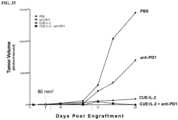
- the synTac and the immune checkpoint inhibitor provide synergistic effects, compared to the effect(s) of the synTac when administered alone (in monotherapy) or the immune checkpoint inhibitor alone (in monotherapy).
- a synTac and an immune checkpoint inhibitor is in some cases more effective than the additive effects of the synTac administered as a monotherapy or the immune checkpoint inhibitor administered as a monotherapy.
- a synergistic effect of a synTac and an immune checkpoint inhibitor permits the use of lower dosages of the synTac or the immune checkpoint inhibitor and/or less frequent administration of the synTac or the immune checkpoint inhibitor to an individual in need thereof.
- a synTac or an immune checkpoint inhibitor The ability to utilize lower dosages of therapeutic agents (a synTac or an immune checkpoint inhibitor) and/or to administer such agents less frequently can reduce toxicity or other adverse side effects that may be associated with the administration of the therapeutic agent in monotherapy, without reducing the efficacy of the therapeutic agent in a treatment.
- a synergistic effect of a synTac and an immune checkpoint inhibitor can result in enhanced clinical benefit, compared to the clinical benefit obtained with synTac monotherapy or immune checkpoint inhibitor monotherapy. Examples of clinical benefit include, e.g., reduced tumor mass in an individual; reduced number of cancer cells in an individual; increased survival time of the individual; increased remission time; and the like.
- a synergistic effect of a synTac and an immune checkpoint inhibitor can reduce adverse or unwanted side effects associated with synTac monotherapy or immune checkpoint inhibitor monotherapy.
- immune checkpoint inhibitors include inhibitors that target immune checkpoint polypeptides such as CD27, CD28, CD40, CD122, CD96, CD73, CD47, OX40, GITR, CSF1R, JAK, PI3K delta, PI3K gamma, TAM, arginase, CD137 (also known as 4-1BB), ICOS, A2AR, B7-H3, B7-H4, BTLA, CTLA-4, LAG3, TIM3, VISTA, CD96, TIGIT, CD122, PD-1, PD-L1 and PD-L2.
- target immune checkpoint polypeptides such as CD27, CD28, CD40, CD122, CD96, CD73, CD47, OX40, GITR, CSF1R, JAK, PI3K delta, PI3K gamma, TAM, arginase, CD137 (also known as 4-1BB), ICOS, A2AR, B7-H3, B7-H4, BTLA,
- the immune checkpoint polypeptide is a stimulatory checkpoint molecule selected from CD27, CD28, CD40, ICOS, OX40, GITR, CD122 and CD137. In some cases, the immune checkpoint polypeptide is an inhibitory checkpoint molecule selected from A2AR, B7-H3, B7-H4, BTLA, CTLA-4, IDO, KIR, LAG3, PD-1, TIM3, CD96, TIGIT and VISTA.
- the immune checkpoint inhibitor is an antibody specific for an immune checkpoint.
- the anti-immune checkpoint antibody is a monoclonal antibody.
- the anti-immune checkpoint antibody is humanized, or de-immunized such that the antibody does not substantially elicit an immune response in a human.
- the anti-immune checkpoint antibody is a humanized monoclonal antibody.
- the anti-immune checkpoint antibody is a de-immunized monoclonal antibody.
- the anti-immune checkpoint antibody is a fully human monoclonal antibody.
- the anti-immune checkpoint antibody inhibits binding of the immune checkpoint polypeptide to a ligand for the immune checkpoint polypeptide. In some cases, the anti-immune checkpoint antibody inhibits binding of the immune checkpoint polypeptide to a receptor for the immune checkpoint polypeptide.
- Antibodies e.g., monoclonal antibodies, that are specific for immune checkpoints and that function as immune checkpoint inhibitors, are known in the art. See, e.g., Wurz et al. (2016) Ther. Adv. Med. Oncol. 8:4 ; and Naidoo et al. (2015) Ann. Oncol. 26:2375 .
- Suitable anti-immune checkpoint antibodies include, but are not limited to, nivolumab (Bristol-Myers Squibb), pembrolizumab (Merck), pidilizumab (Curetech), AMP-224 (GlaxoSmithKline/Amplimmune), MPDL3280A (Roche), MDX-1105 (Medarex, Inc./Bristol Myer Squibb), MEDI-4736 (Medimmune/AstraZeneca), arelumab (Merck Serono), ipilimumab (YERVOY, (Bristol-Myers Squibb), tremelimumab (Pfizer), pidilizumab (CureTech, Ltd.), IMP321 (Immutep S.A.), MGA271 (Macrogenics), BMS-986016 (Bristol-Meyers Squibb), lirilumab (Bristol-Myers Squibb
- Suitable anti-LAG3 antibodies include, e.g., BMS-986016 and LAG525.
- Suitable anti-GITR antibodies include, e.g., TRX518, MK-4166, INCAGN01876, and MK-1248.
- Suitable anti-OX40 antibodies include, e.g., MEDI0562, INCAGN01949, GSK2831781, GSK-3174998, MOXR-0916, PF-04518600, and LAG525.
- Suitable anti-VISTA antibodies are provided in, e.g., WO 2015/097536 .
- a suitable dosage of an anti-immune checkpoint antibody is from about 1 mg/kg to about 2400 mg/kg per day, such as from about 1 mg/kg to about 1200 mg/kg per day, including from about 50 mg/kg to about 1200 mg/kg per day.
- Other representative dosages of such agents include about 5 mg/kg, 10 mg/kg, 15 mg/kg, 20 mg/kg, 25 mg/kg, 30 mg/kg, 35 mg/kg, 40 mg/kg, 45 mg/kg, 50 mg/kg, 60 mg/kg, 70 mg/kg, 80 mg/kg, 90 mg/kg, 100 mg/kg, 125 mg/kg, 150 mg/kg, 175 mg/kg, 200 mg/kg, 250 mg/kg, 300 mg/kg, 400 mg/kg, 500 mg/kg, 600 mg/kg, 700 mg/kg, 800 mg/kg, 900 mg/kg, 1000 mg/kg, 1100 mg/kg, 1200 mg/kg, 1300 mg/kg, 1400 mg/kg, 1500 mg/kg, 1600 mg/kg, 1700 mg/kg, 1800 mg/kg, 1900 mg/kg, 2000 mg/kg, 2100 mg/kg, 2200 mg/kg, and 2300 mg/kg per day.
- the effective dose of the antibody may be administered as two, three, four, five, six or more sub-dose
- an immune checkpoint inhibitor is an anti-PD-1 antibody.
- Suitable anti-PD-1 antibodies include, e.g., nivolumab, pembrolizumab (also known as MK-3475), pidilizumab, SHR-1210, PDR001, and AMP-224.
- the anti-PD-1 monoclonal antibody is nivolumab, pembrolizumab or PDR001.
- Suitable anti-PD1 antibodies are described in U.S. Patent Publication No. 2017/0044259 .
- For pidilizumab see, e.g., Rosenblatt et al. (2011) J. Immunother. 34:409-18 .
- the anti-PD1 antibody is pembrolizumab.
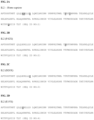
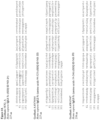
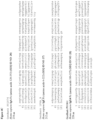
- the amino acid sequence of the heavy chain of pembrolizumab is: amino acid sequence of the heavy chain variable (VH) region is underlined.
- amino acid sequence of the light chain of pembrolizumab is: amino acid sequence of the light chain variable (VL) region is underlined.
- the anti-PD-1 antibody comprises the VH and VL regions of pembrolizumab. In some cases, the anti-PD-1 antibody comprises heavy and light chain CDRs of pembrolizumab.
- the anti-PD-1 antibody is nivolumab (also known as MDX-1106 or BMS-936558; see, e.g., Topalian et al. (2012) N. Eng. J. Med. 366:2443-2454 ; and U.S. Patent No. 8,008,449 ).
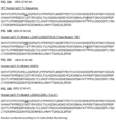
- the amino acid sequence of the heavy chain of nivolumab is: QVQLVESGGGWQPGRSLRLDCKASGITFSNSGMHWVRQAPGKGLEWVAVIW YDGSKRYYADSVKGRFTISRDNSKNTLFLQMNSLRAEDTAVYYCATNDDYWGQGTLV TVSSASTKGPSVFPLAPCSRSTSESTAALGCLVKDYFPEPVTVSWNSGALTSGVHTFPAV LQSSGLYSLSSVVTVPSSSLGTKTYTCNVDHKPSNTKVDKRVESKYGPPCPPCPAPEFLG GPSVFLFPPKPKDTLMISRTPEVTCVVVDVSQEDPEVQFNWYVDGVEVHNAKTKPREE QFNSTYRVVSVLTVLHQDWLNGKEYKCKVSNKGLPSSIEKTISKAKGQPREPQVYTLPP SQEEMTKNQVSLTCLVKGFYPSDIAVEWESNGQPENNYKTTPPVLDSDGSFFLYSRLTV D
- amino acid sequence of the light chain of nivolumab is: EIVLTQSPATLSLSPGERATLSCRASQSVSSYLAWYQQKPGQAPRLLIYDASNRA TGIPARFSGSGSGTDFTLTISSLEPEDFAVYYCQQSSNWPRTFGQGTKVEIKRTVAAPSVF IFPPSDEQLKSGTASVVCLLNNFYPREAKVQWKVDNALQSGNSQESVTEQDSKDSTYSL SSTLTLSKADYEKHKVYACEVTHQGLSSPVTKSFNRGEC (SEQ ID NO:54).
- the anti-PD-1 antibody comprises heavy and light chain CDRs of nivolumab.
- the anti-CTLA-4 antibody is ipilimumab or tremelimumab.
- tremelimumab see, e.g., Ribas et al. (2013) J. Clin. Oncol. 31:616-22 .
- the anti-CTLA-4 antibody is ipilimumab.
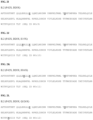
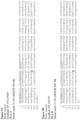
- the amino acid sequence of the heavy chain of ipilimumab is: amino acid sequence of the VH region is underlined.
- amino acid sequence of the light chain of ipilimumab is: acid sequence of the VL region is underlined.
- the anti-CTLA4 antibody comprises the VH and VL regions of ipilimumab. In some cases, the anti-CTLA4 antibody comprises heavy and light chain CDRs of ipilimumab.
- the immune checkpoint inhibitor is an anti-PD-L1 monoclonal antibody.
- the anti-PD-L1 monoclonal antibody is BMS-935559, MEDI4736, MPDL3280A (also known as RG7446), KN035, or MSB0010718C.
- the anti-PD-L1 monoclonal antibody is MPDL3280A (atezolizumab) or MEDI4736 (durvalumab).
- durvalumab see, e.g., WO 2011/066389 .
- atezolizumab see, e.g., U.S. Patent No. 8,217,149 .
- the anti-PD-L1 antibody is atezolizumab.
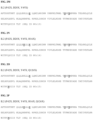
- the amino acid sequence of the heavy chain of atezolizumab is:
- amino acid sequence of the light chain of atezolizumab is:
- the anti-PD-L1 antibody comprises heavy and light chain CDRs of atezolizumab.
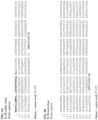
- the anti-PDL1 antibody is KN035, a fully humanized anti-PD-L1 single domain antibody fused to a human IgG1 Fc polypeptide.
- the single-domain antibody portion of KN035 can comprise the amino acid sequence:
- Multimeric (e.g., heterodimeric, heterotrimeric) polypeptides are described below.
- the multimeric polypeptides are T cell modulatory polypeptides, and are also referred to herein as "T-cell modulatory multimeric polypeptides," or “synTac” (for "immunological sy napse for T cell ac tivation").
- the multimeric polypeptide for use according to the invention comprises a heterodimer having:
- a T-cell modulatory multimeric polypeptide in general comprises: a) a first polypeptide comprising, in order from N-terminus to C-terminus: i) an epitope; ii) a first major histocompatibility complex (MHC) polypeptide; and b) a second polypeptide comprising, in order from N-terminus to C-terminus: i) a second MHC polypeptide; and ii) optionally an immunoglobulin (Ig) Fc polypeptide or a non-Ig scaffold, where the multimeric polypeptide comprises one or more immunomodulatory ("MOD") domains, wherein the one or more immunomodulatory domain is: A) at the C-terminus of the first polypeptide; B) at the N-terminus of the second polypeptide; C) at the C-terminus of the second polypeptide; or D) at the C-terminus of the first polypeptide and at the N-terminus of the second polypeptide.
- MOD immunomodulatory
- a T-cell multimeric polypeptide comprises: a) a first polypeptide comprising, in order from N-terminus to C-terminus: i) an epitope; ii) a first MHC polypeptide; and iii) an immunomodulatory domain; and b) a second polypeptide comprising, in order from N-terminus to C-terminus: i) a second MHC polypeptide; and ii) an Ig Fc polypeptide.
- a T-cell multimeric polypeptide comprises: a) a first polypeptide comprising, in order from N-terminus to C-terminus: i) an epitope; and ii) a first MHC polypeptide; and b) a second polypeptide comprising, in order from N-terminus to C-terminus: i) an immunomodulatory domain; ii) a second MHC polypeptide; and iii) an Ig Fc polypeptide.
- a T-cell multimeric polypeptide comprises: a) a first polypeptide comprising, in order from N-terminus to C-terminus: i) an epitope; and ii) a first MHC polypeptide; and b) a second polypeptide comprising, in order from N-terminus to C-terminus: i) a second MHC polypeptide; ii) an Ig Fc polypeptide; and iii) an immunomodulatory ("MOD") domain.
- a first polypeptide comprising, in order from N-terminus to C-terminus: i) an epitope; and ii) a first MHC polypeptide
- a second polypeptide comprising, in order from N-terminus to C-terminus: i) a second MHC polypeptide; ii) an Ig Fc polypeptide; and iii) an immunomodulatory ("MOD") domain.
- MOD immunomodulatory
- a T-cell multimeric polypeptide comprises: a) a first polypeptide comprising, in order from N-terminus to C-terminus: i) an epitope; and ii) a first MHC polypeptide; and b) a second polypeptide comprising, in order from N-terminus to C-terminus: i) a second MHC polypeptide; and ii) an immunomodulatory domain.
- a T-cell multimeric polypeptide comprises: a) a first polypeptide comprising, in order from N-terminus to C-terminus: i) an epitope; and ii) a first MHC polypeptide; and b) a second polypeptide comprising, in order from N-terminus to C-terminus: i) an immunomodulatory domain; and ii) a second MHC polypeptide.
- a T-cell multimeric polypeptide comprises: a) a first polypeptide comprising, in order from N-terminus to C-terminus: i) an epitope; ii) a first MHC polypeptide; and iii) an immunomodulatory domain; and b) a second polypeptide comprising, in order from N-terminus to C-terminus: i) a second MHC polypeptide.
- a multimeric polypeptide comprises a non-Ig scaffold.
- the non-Ig scaffold is an XTEN polypeptide, a transferrin polypeptide, an Fc receptor polypeptide, an elastin-like polypeptide, a silk-like polypeptide, or a silk-elastin-like polypeptide.
- the first MHC polypeptide is a ⁇ 2-microglobulin ( ⁇ 2M) polypeptide; and the second MHC polypeptide is an MHC class I heavy chain polypeptide.
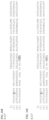
- a suitable ⁇ 2-M polypeptide comprises an amino acid sequence having at least 85%, at least 90%, at least 95%, at least 98%, at least 99%, or 100%, amino acid sequence identity to the amino acid sequence of a ⁇ 2M polypeptide depicted in FIG. 6 .
- the MHC class I heavy chain polypeptide is an HLA-A, an HLA-B, or an HLA-C heavy chain.
- the MHC class I heavy chain polypeptide comprises an amino acid sequence having at least 85%, at least 90%, at least 95%, at least 98%, at least 99%, or 100%, amino acid sequence identity to the amino acid sequence set forth in one of FIG. 5A-5C .
- the first MHC polypeptide is an MHC Class II alpha chain polypeptide; and the second MHC polypeptide is an MHC class II beta chain polypeptide.
- the epitope present in a multimeric polypeptide can be a T-cell epitope.
- a multimeric polypeptide comprises an Ig Fc polypeptide.
- the Ig Fc polypeptide is an IgG1 Fc polypeptide, an IgG2 Fc polypeptide, an IgG3 Fc polypeptide, an IgG4 Fc polypeptide, an IgA Fc polypeptide, or an IgM Fc polypeptide.
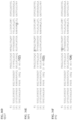
- the Ig Fc polypeptide comprises an amino acid sequence having at least 85%, at least 90%, at least 95%, at least 98%, at least 99%, or 100%, amino acid sequence identity to an amino acid sequence depicted in FIG. 4A-4C .
- the first polypeptide and the second polypeptide of a multimeric polypeptide can be non-covalently associated.
- the first polypeptide and the second polypeptide of a multimeric polypeptide can be covalently linked.
- the first polypeptide and the second polypeptide of a multimeric polypeptide can be covalently linked, where the covalent linkage is via a disulfide bond.
- the first MHC polypeptide or a linker between the epitope and the first MHC polypeptide comprises an amino acid substitution to provide a first Cys residue
- the second MHC polypeptide comprises an amino acid substitution to provide a second Cys residue
- the disulfide linkage is between the first and the second Cys residues.
- a multimeric polypeptide can include a linker between one or more of: the epitope and the first MHC polypeptide; two copies of the immunomodulatory ("MOD") polypeptide; the immunomodulatory polypeptide and the second MHC polypeptide; and the second MHC polypeptide and the Ig Fc polypeptide.
- MOD immunomodulatory
- Immunomodulatory polypeptides suitable for inclusion in a T-cell multimeric polypeptide include, but are not limited to, a 4-1BBL polypeptide, a B7-1 polypeptide; a B7-2 polypeptide, an ICOS-L polypeptide, an OX-40L polypeptide, a CD80 polypeptide, a CD86 polypeptide, an IL-2 polypeptide, a PD-L1 polypeptide, a FasL polypeptide, and a PD-L2 polypeptide.
- a multimeric polypeptide can include 2 or more immunomodulatory polypeptides.
- a multimeric polypeptide can include 2 immunomodulatory polypeptides. In some cases, the 2 immunomodulatory polypeptides are in tandem.
- a multimeric polypeptide can include 3 immunomodulatory polypeptides. In some cases, the 3 immunomodulatory polypeptides are in tandem.
- a multimeric polypeptide can comprise a third polypeptide, where the third polypeptide comprises an immunomodulatory polypeptide comprising an amino acid sequence having at least 90% amino acid sequence identity to the immunomodulatory polypeptide of the first polypeptide or the second polypeptide. In some cases, the third polypeptide is covalently linked to the first polypeptide. Examples of suitable multimeric polypeptides are described in WO 2017/151940 ; WO 2017/201210 ; and PCT/US2017/067663 .
- MHC polypeptides include MHC polypeptides of various species, including human MHC (also referred to as human leukocyte antigen (HLA)) polypeptides, rodent (e.g., mouse, rat, etc.) MHC polypeptides, and MHC polypeptides of other mammalian species (e.g., lagomorphs, non-human primates, canines, felines, ungulates (e.g., equines, bovines, ovines, caprines, etc.), and the like.
- human MHC also referred to as human leukocyte antigen (HLA)
- rodent e.g., mouse, rat, etc.
- MHC polypeptides of other mammalian species e.g., lagomorphs, non-human primates, canines, felines, ungulates (e.g., equines, bovines, ovines, caprines, etc.), and the like.
- MHC polypeptide is meant to include Class I MHC polypeptides (e.g., ⁇ -2 microglobulin and MHC class I heavy chain) and MHC Class II polypeptides (e.g., MHC Class II ⁇ polypeptide and MHC Class II ⁇ polypeptide).
- Class I MHC polypeptides e.g., ⁇ -2 microglobulin and MHC class I heavy chain
- MHC Class II polypeptides e.g., MHC Class II ⁇ polypeptide and MHC Class II ⁇ polypeptide.
- the first and the second MHC polypeptides are Class I MHC polypeptides; e.g., in some cases, the first MHC polypeptide is an MHC Class I ⁇ 2-microglobulin ( ⁇ 2M) polypeptide, and the second MHC polypeptide is an MHC Class I heavy chain (H chain).
- the first and the second MHC polypeptides are Class II MHC polypeptides; e.g., in some cases, the first MHC polypeptide is an MHC Class II ⁇ -chain polypeptide, and the second MHC polypeptide is an MHC Class II ⁇ -chain polypeptide.
- the first polypeptide is an MHC Class II ⁇ -chain polypeptide
- the second MHC polypeptide is an MHC Class II ⁇ -chain polypeptide.
- an MHC polypeptide of a multimeric polypeptide of the present disclosure is a human MHC polypeptide, where human MHC polypeptides are also referred to as "human leukocyte antigen" ("HLA") polypeptides.
- HLA human leukocyte antigen
- an MHC polypeptide of a multimeric polypeptide of the present disclosure is a Class I HLA polypeptide, e.g., a ⁇ 2-microglobulin polypeptide, or a Class I HLA heavy chain polypeptide.
- Class I HLA heavy chain polypeptides include HLA-A heavy chain polypeptides, HLA-B heavy chain polypeptides, HLA-C heavy chain polypeptides, HLA-E heavy chain polypeptides, HLA-F heavy chain polypeptides, and HLA-G heavy chain polypeptides.
- an MHC polypeptide of a multimeric polypeptide of the present disclosure is a Class II HLA polypeptide, e.g., a Class II HLA ⁇ chain or a Class II HLA ⁇ chain.
- MHC Class II polypeptides include MCH Class II DP ⁇ and ⁇ polypeptides, DM ⁇ and ⁇ polypeptides, DOA ⁇ and ⁇ polypeptides, DOB ⁇ and ⁇ polypeptides, DQ ⁇ and ⁇ polypeptides, and DR ⁇ and ⁇ polypeptides.
- the MHC Class I heavy chain polypeptide comprises Y84A and A236C substitutions.
- the MHC Class I heavy chain polypeptide comprises an amino acid sequence having amino acid sequence identity to the following human HLA-A heavy chain (Y84A; A236C) amino acid sequence: where amino acid 84 is Ala and amino acid 236 is Cys.
- the Cys-236 forms an interchain disulfide bond with Cys-12 of a variant ⁇ 2M polypeptide that comprises an R12C substitution.
- an HLA Class I heavy chain polypeptide comprises the amino acid sequence:
- a T-cell modulatory multimeric polypeptide comprises an Fc polypeptide.
- the first and/or the second polypeptide chain of a multimeric polypeptide comprises an Fc polypeptide.
- the Fc polypeptide of a multimeric polypeptide can be a human IgG1 Fc, a human IgG2 Fc, a human IgG3 Fc, a human IgG4 Fc, etc.
- the Fc polypeptide comprises an amino acid sequence having at least about 70%, at least about 75%, at least about 80%, at least about 85%, at least about 90%, at least about 95%, at least about 98%, at least about 99%, or 100%, amino acid sequence identity to an amino acid sequence of an Fc region depicted in Figures 4A-C .
- the Fc region comprises an amino acid sequence having at least about 70%, at least about 75%, at least about 80%, at least about 85%, at least about 90%, at least about 95%, at least about 98%, at least about 99%, or 100%, amino acid sequence identity to the human IgG1 Fc polypeptide depicted in Figure 4A ; and comprises a substitution of N77; e.g., the Fc polypeptide comprises an N77A substitution.
- the Fc polypeptide comprises an amino acid sequence having at least about 70%, at least about 75%, at least about 80%, at least about 85%, at least about 90%, at least about 95%, at least about 98%, at least about 99%, or 100%, amino acid sequence identity to the human IgG2 Fc polypeptide depicted in Figure 4A ; e.g., the Fc polypeptide comprises an amino acid sequence having at least about 70%, at least about 75%, at least about 80%, at least about 85%, at least about 90%, at least about 95%, at least about 98%, at least about 99%, or 100%, amino acid sequence identity to amino acids 99-325 of the human IgG2 Fc polypeptide depicted in Figure 4A .
- the Fc polypeptide comprises an amino acid sequence having at least about 70%, at least about 75%, at least about 80%, at least about 85%, at least about 90%, at least about 95%, at least about 98%, at least about 99%, or 100%, amino acid sequence identity to the human IgG3 Fc polypeptide depicted in Figure 4A ; e.g., the Fc polypeptide comprises an amino acid sequence having at least about 70%, at least about 75%, at least about 80%, at least about 85%, at least about 90%, at least about 95%, at least about 98%, at least about 99%, or 100%, amino acid sequence identity to amino acids 19-246 of the human IgG3 Fc polypeptide depicted in Figure 4A .
- the Fc polypeptide comprises an amino acid sequence having at least about 70%, at least about 75%, at least about 80%, at least about 85%, at least about 90%, at least about 95%, at least about 98%, at least about 99%, or 100%, amino acid sequence identity to the human IgM Fc polypeptide depicted in FIG. 4B ; e.g., the Fc polypeptide comprises an amino acid sequence having at least about 70%, at least about 75%, at least about 80%, at least about 85%, at least about 90%, at least about 95%, at least about 98%, at least about 99%, or 100%, amino acid sequence identity to amino acids 1-276 to the human IgM Fc polypeptide depicted in FIG. 4B .
- the Fc polypeptide comprises an amino acid sequence having at least about 70%, at least about 75%, at least about 80%, at least about 85%, at least about 90%, at least about 95%, at least about 98%, at least about 99%, or 100%, amino acid sequence identity to the human IgA Fc polypeptide depicted in Figure 4C ; e.g., the Fc polypeptide comprises an amino acid sequence having at least about 70%, at least about 75%, at least about 80%, at least about 85%, at least about 90%, at least about 95%, at least about 98%, at least about 99%, or 100%, amino acid sequence identity to amino acids 1-234 to the human IgA Fc polypeptide depicted in FIG. 4C .
- the Fc polypeptide present in a multimeric polypeptide comprises the amino acid sequence depicted in FIG. 33A (human IgG1 Fc). In some cases, the Fc polypeptide present in a multimeric polypeptide of the present disclosure comprises the amino acid sequence depicted in FIG. 33A (human IgG1 Fc), except for a substitution of N297 with an amino acid other than asparagine. In some cases, the Fc polypeptide present in a multimeric polypeptide of the present disclosure comprises the amino acid sequence depicted in FIG. 33C (human IgG1 Fc comprising an N297A substitution).
- the Fc polypeptide present in a multimeric polypeptide of the present disclosure comprises the amino acid sequence depicted in FIG. 33A (human IgG1 Fc), except for a substitution of L234 with an amino acid other than leucine. In some cases, the Fc polypeptide present in a multimeric polypeptide of the present disclosure comprises the amino acid sequence depicted in FIG. 33A (human IgG1 Fc), except for a substitution of L235 with an amino acid other than leucine. In some cases, the Fc polypeptide present in a multimeric polypeptide of the present disclosure comprises the amino acid sequence depicted in FIG. 33D (human IgG1 Fc comprising an L234A substitution and an L235A substitution).
- the Fc polypeptide present in a multimeric polypeptide of the present disclosure comprises the amino acid sequence depicted in FIG. 33B (human IgG1 Fc comprising L234F, L235E, and P331S substitutions).
- the Fc polypeptide present in a multimeric polypeptide is an IgG1 Fc polypeptide that comprises L234A and L235A substitutions.
- a multimeric polypeptide can include linker peptides interposed between, e.g., an epitope and an MHC polypeptide; between an MHC polypeptide and an immunomodulatory polypeptide; between an MHC polypeptide and an Ig Fc polypeptide; between a first immunomodulatory polypeptide and a second immunomodulatory polypeptide; or a between a second immunomodulatory polypeptide and a third immunomodulatory polypeptide.
- a multimeric polypeptide can include linker peptides interposed between, e.g., an epitope and an MHC polypeptide; between an MHC polypeptide and an immunomodulatory polypeptide; between an MHC polypeptide and an Ig Fc polypeptide; between a first variant IL-2 polypeptide and a second variant IL-2 polypeptide; or between a second variant IL-2 polypeptide and a third variant IL-2 polypeptide.
- a multimeric polypeptide can include linker peptides interposed between, e.g., an epitope and an MHC polypeptide; between an MHC polypeptide and an immunomodulatory polypeptide; between an MHC polypeptide and an Ig Fc polypeptide; between a first variant 4-1BBL polypeptide and a second variant 4-1BBL polypeptide; or a between a second variant 4-1BBL polypeptide and a third variant 4-1BBL polypeptide.
- linker peptides interposed between, e.g., an epitope and an MHC polypeptide; between an MHC polypeptide and an immunomodulatory polypeptide; between an MHC polypeptide and an Ig Fc polypeptide; between a first variant 4-1BBL polypeptide and a second variant 4-1BBL polypeptide; or a between a second variant 4-1BBL polypeptide and a third variant 4-1BBL polypeptide.
- Suitable linkers can be readily selected and can be of any of a number of suitable lengths, such as from 1 amino acid to 25 amino acids, from 3 amino acids to 20 amino acids, from 2 amino acids to 15 amino acids, from 3 amino acids to 12 amino acids, including 4 amino acids to 10 amino acids, 5 amino acids to 9 amino acids, 6 amino acids to 8 amino acids, or 7 amino acids to 8 amino acids.
- a suitable linker can be 1, 2, 3, 4, 5, 6, 7, 8, 9, 10, 11, 12, 13, 14, 15, 16, 17, 18, 19, 20, 21, 22, 23, 24, or 25 amino acids in length.
- Exemplary linkers include glycine polymers (G) n , glycine-serine polymers (including, for example, (GS) n , (GSGGS) n (SEQ ID NO:210) and (GGGS) n (SEQ ID NO:211), where n is an integer of at least one), glycine-alanine polymers, alanine-serine polymers, and other flexible linkers known in the art.
- Glycine and glycine-serine polymers can be used; both Gly and Ser are relatively unstructured, and therefore can serve as a neutral tether between components.
- Glycine polymers can be used; glycine accesses significantly more phi-psi space than even alanine, and is much less restricted than residues with longer side chains (see Scheraga, Rev. Computational Chem. 11173-142 (1992 )).
- Exemplary linkers can comprise amino acid sequences including, but not limited to, GGSG (SEQ ID NO:65), GGSGG (SEQ ID NO:66), GSGSG (SEQ ID NO:67), GSGGG (SEQ ID NO:68), GGGSG (SEQ ID NO:69), GSSSG (SEQ ID NO:70), and the like.
- Exemplary linkers can include, e.g., Gly(Ser 4 )n, where n is 1, 2, 3, 4, 5, 6, 7, 8, 9, or 10.
- a linker comprises the amino acid sequence (GSSSS)n (SEQ ID NO:71), where n is 4.
- a linker comprises the amino acid sequence (GSSSS)n (SEQ ID NO:72), where n is 5.
- a linker comprises the amino acid sequence (GGGGS)n (SEQ ID NO:205), where n is 1. In some cases, a linker comprises the amino acid sequence (GGGGS)n (SEQ ID NO:206), where n is 2. In some cases, a linker comprises the amino acid sequence (GGGGS)n (SEQ ID NO:207), where n is 3. In some cases, a linker comprises the amino acid sequence (GGGGS)n (SEQ ID NO:208), where n is 4. In some cases, a linker comprises the amino acid sequence (GGGGS)n (SEQ ID NO:209), where n is 5. In some cases, a linker comprises the amino acid sequence AAAGG (SEQ ID NO:73).
- a linker polypeptide, present in a first polypeptide of a multimeric polypeptide of the present disclosure includes a cysteine residue that can form a disulfide bond with a cysteine residue present in a second polypeptide of a multimeric polypeptide of the present disclosure.
- a suitable linker comprises the amino acid sequence G C GASGGGGSGGGGS (SEQ ID NO:74).
- An epitope present in a multimeric polypeptide of the present disclosure is specifically bound by a T-cell, i.e., the epitope is specifically bound by an epitope-specific T cell.
- An epitope-specific T cell binds an epitope having a reference amino acid sequence, but does not substantially bind an epitope that differs from the reference amino acid sequence.
- an epitope-specific T cell binds an epitope having a reference amino acid sequence, and binds an epitope that differs from the reference amino acid sequence, if at all, with an affinity that is less than 10 -6 M, less than 10 -5 M, or less than 10 -4 M.
- An epitope-specific T cell can bind an epitope for which it is specific with an affinity of at least 10 -7 M, at least 10 -8 M, at least 10 -9 M, or at least 10 -10 M.
- the epitope is HPV16E7/11-20 (YMLDLQPETT; SEQ ID NO:77).
- Suitable immunomodulatory polypeptides include an IL-2 polypeptide.
- the immunomodulatory polypeptide present in a synTac exhibits reduced binding affinity to a cognate co-immunomodulatory polypeptide expressed on the surface of a T cell, compared to the binding affinity of a wild-type immunomodulatory polypeptide for the same cognate co-immunomodulatory polypeptide.
- a synTac comprises a reduced-affinity immunomodulatory polypeptide
- the synTac polypeptide exhibits reduced binding to a cognate co-immunomodulatory polypeptide expressed on the surface of a T cell.
- a synTac polypeptide that comprises a reduced-affinity immunomodulatorypolypeptide binds a cognate co-immunomodulatory polypeptide with a binding affinity that is at least 10%, at least 15%, at least 20%, at least 25%, at least 30%, at least 35%, at least 40%, at least 45%, at least 50% less, at least 55% less, at least 60% less, at least 65% less, at least 70% less, at least 75% less, at least 80% less, at least 85% less, at least 90% less, at least 95% less, or more than 95% less, than the binding affinity of a control synTac polypeptide comprising a wild-type immunomodulatory polypeptide for the same cognate co-immunomodulatory polypeptide.
- Binding affinity between an immunomodulatory polypeptide and its cognate co-immunomodulatory polypeptide can be determined by bio-layer interferometry (BLI) using purified immunomodulatory polypeptide and purified cognate co-immunomodulatory polypeptide. Binding affinity between a synTac of the present disclosure and its cognate co-immunomodulatory polypeptide can also be determined by BLI using purified synTac and the cognate co-immunomodulatory polypeptide. BLI methods are well known to those skilled in the art. See, e.g., Lad et al. (2015) J. Biomol. Screen. 20(4):498-507 ; and Shah and Duncan (2014) J. Vis. Exp.
- a BLI assay can be carried out using an Octet RED 96 (Pal FortéBio) instrument, or a similar instrument, as follows.
- a T-cell modulatory multimeric polypeptide e.g., a synTac of the present disclosure; or a control T-cell modulatory multimeric polypeptide (where a control T-cell modulatory multimeric polypeptide comprises a wild-type immunomodulatory polypeptide)
- the T-cell modulatory multimeric polypeptide is immobilized onto an insoluble support (a "biosensor").
- the immobilized T-cell modulatory multimeric polypeptide is the "target.” Immobilization can be effected by immobilizing a capture antibody onto the insoluble support, where the capture antibody immobilizes the T-cell modulatory multimeric polypeptide.
- immobilization can be effected by immobilizing anti-Fc (e.g., anti-human IgG Fc) antibodies onto the insoluble support, where the immobilized anti-Fc antibodies bind to and immobilize the T-cell modulatory multimeric polypeptide (where the T-cell modulatory multimeric polypeptide comprises an IgFc polypeptide).
- anti-Fc e.g., anti-human IgG Fc
- a co-immunomodulatory polypeptide is applied, at several different concentrations, to the immobilized T-cell modulatory multimeric polypeptide, and the instrument's response recorded. Assays are conducted in a liquid medium comprising 25mM HEPES pH 6.8, 5% poly(ethylene glycol) 6000, 50 mM KCl, 0.1% bovine serum albumin, and 0.02% Tween 20 nonionic detergent. Binding of the co-immunomodulatory polypeptide to the immobilized T-cell modulatory multimeric polypeptide is conducted at 30°C. As a positive control for binding affinity, an anti-MHC Class I monoclonal antibody can be used.
- anti-HLA Class I monoclonal antibody W6/32 (American Type Culture Collection No. HB-95; Parham et al. (1979) J. Immunol. 123:342 ), which has a K D of 7 nM, can be used.
- a standard curve can be generated using serial dilutions of the anti-MHC Class I monoclonal antibody.
- the co-immunomodulatory polypeptide, or the anti-MHC Class I mAb is the "analyte.”
- BLI analyzes the interference pattern of white light reflected from two surfaces: i) from the immobilized polypeptide ("target"); and ii) an internal reference layer.
- a change in the number of molecules ("analyte”; e.g., co-immunomodulatory polypeptide; anti-HLA antibody) bound to the biosensor tip causes a shift in the interference pattern; this shift in interference pattern can be measured in real time.
- the two kinetic terms that describe the affinity of the target/analyte interaction are the association constant ( k a ) and dissociation constant ( k d ). The ratio of these two terms ( k d / a ) gives rise to the affinity constant K D .
- determining binding affinity between an immunomodulatory polypeptide e.g., IL-2 or an IL-2 variant
- its cognate co-immunomodulatory polypeptide e.g., IL-2R
- BLI binding affinity between an immunomodulatory polypeptide and its cognate co-immunomodulatory polypeptide
- the assay is similar to that described above for the synTac multimeric polypeptide.
- a BLI assay can be carried out using an Octet RED 96 (Pal FortéBio) instrument, or a similar instrument, as follows.
- a component immunomodulatory polypeptide of a synTac of the present disclosure e.g., a variant IL-2 polypeptide of the present disclosure
- a control immunomodulatory polypeptide where a control immunomodulatory polypeptide comprises a wild-type immunomodulatory polypeptide, e.g. wild-type IL-2)
- the immunomodulatory polypeptide is the "target.” Immobilization can be effected by immobilizing a capture antibody onto the insoluble support, where the capture antibody immobilizes the immunomodulatory polypeptide. For example, if the target is fused to an immuno-affinity tag (e.g.
- FLAG, human IgG Fc immobilization can be effected by immobilizing with the appropriate antibody to the immuno-affinity tag (e.g. anti-human IgG Fc) onto the insoluble support, where the immobilized antibodies bind to and immobilize the immunomodulatory polypeptide (where the immunomodulatory polypeptide comprises an IgFc polypeptide).
- a co-immunomodulatory polypeptide (or polypeptides) is applied, at several different concentrations, to the immobilized immunomodulatory polypeptide, and the instrument's response recorded.
- a co-immunomodulatory polypeptide (or polypeptides) is immobilized to the biosensor (e.g., for the IL-2 receptor heterotrimer, as a monomeric subunit, heterodimeric subcomplex, or the complete heterotrimer) and the immunomodulatory polypeptide is applied, at several different concentrations, to the immobilized co-immunomodulatory polypeptide(s), and the instrument's response is recorded. Assays are conducted in a liquid medium comprising 25mM HEPES pH 6.8, 5% poly(ethylene glycol) 6000, 50 mM KCl, 0.1% bovine serum albumin, and 0.02% Tween 20 nonionic detergent.
- Binding of the co-immunomodulatory polypeptide to the immobilized immunomodulatory polypeptide is conducted at 30°C.
- an anti-MHC Class I monoclonal antibody can be used.
- anti-HLA Class I monoclonal antibody W6/32 American Type Culture Collection No. HB-95; Parham et al. (1979) J. Immunol. 123:342 ), which has a K D of 7 nM, can be used.
- a standard curve can be generated using serial dilutions of the anti-MHC Class I monoclonal antibody.
- the co-immunomodulatory polypeptide, or the anti-MHC Class I mAb, is the "analyte.”
- BLI analyzes the interference pattern of white light reflected from two surfaces: i) from the immobilized polypeptide ("target”); and ii) an internal reference layer.
- a change in the number of molecules e.g., co-immunomodulatory polypeptide; anti-HLA antibody
- bound to the biosensor tip causes a shift in the interference pattern; this shift in interference pattern can be measured in real time.
- the two kinetic terms that describe the affinity of the target/analyte interaction are the association constant ( k a ) and dissociation constant ( k d ).
- the BLI assay is carried out in a multi-well plate.
- the plate layout is defined, the assay steps are defined, and biosensors are assigned in Octet Data Acquisition software.
- the biosensor assembly is hydrated.
- the hydrated biosensor assembly and the assay plate are equilibrated for 10 minutes on the Octet instrument.
- the acquired data are loaded into the Octet Data Analysis software.
- the data are processed in the Processing window by specifying a method for reference subtraction, y-axis alignment, inter-step correction, and Savitzky-Golay filtering.
- Data are analyzed in the Analysis window by specifying steps to analyze (Association and Dissociation), selecting a curve fit model (1:1), fitting method (global), and window of interest (in seconds).
- K D values for each data trace can be averaged if within a 3-fold range.
- K D error values should be within one order of magnitude of the affinity constant values; R 2 values should be above 0.95. See, e.g., Abdiche et al. (2008) J. Anal. Biochem. 377:209 .
- the ratio of: i) the binding affinity of a control immunomodulatory polypeptide (where the control comprises a wild-type immunomodulatory polypeptide) to a cognate co-immunomodulatory polypeptide to ii) the binding affinityof an immunomodulatory polypeptide of the present disclosure comprising a variant of the wild-type immunomodulatory polypeptide to the cognate co-immunomodulatory polypeptide, when measured by BLI, is in a range of from 1.5:1 to 10 6 :1, e.g., from 1.5:1 to 10:1, from 10:1 to 50:1, from 50:1 to 10 2 :1, from 10 2 :1 to 10 3 :1, from10 3 :1 to 10 4 :1, from 10 4 :1 to 10 5 :1, or from 10 5 :1 to 10 6 :1.
- a multimeric polypeptide comprises a variant IL-2 polypeptide as the modulatory domain comprising the amino acid sequence depicted in Fig. 34B (SEQ ID NO. 49).
- a T-cell modulatory multimeric polypeptide that comprises an IL-2 polypeptide as the modulatory (“MOD") domain is also referred to as an "IL-2/synTac,” “an IL-2/synTac polypeptide” or an “IL-2/multimeric polypeptide.”
- a multimeric polypeptide as described generally herein comprises a first polypeptide and a second polypeptide, where the first polypeptide comprises, in order from amino terminus (N-terminus) to carboxyl terminus (C-terminus): a) an epitope (e.g., a T-cell epitope); b) a first major histocompatibility complex (MHC) polypeptide and c) an immunomodulatory polypeptide (e.g., a variant IL2 polypeptide of the present disclosure); and where the second polypeptide comprises, in order from N-terminus to C-terminus: a) a second MHC polypeptide; and b) an immunoglobulin (Ig) Fc polypeptide.
- first polypeptide comprises, in order from amino terminus (N-terminus) to carboxyl terminus (C-terminus): a) an epitope (e.g., a T-cell epitope); b) a first major histocompatibility complex
- a multimeric polypeptide of the present disclosure comprises a first polypeptide and a second polypeptide, where the first polypeptide comprises, in order from N-terminus to C-terminus: a) an epitope (e.g., a T-cell epitope); and b) a first MHC polypeptide; and where the second polypeptide comprises, in order from N-terminus to C-terminus: a) an immunomodulatory polypeptide (e.g., a variant IL2 polypeptide of the present disclosure); b) a second MHC polypeptide; and c) an Ig Fc polypeptide.
- an immunomodulatory polypeptide e.g., a variant IL2 polypeptide of the present disclosure
- the first and the second MHC polypeptides are Class I MHC polypeptides; e.g., in some cases, the first MHC polypeptide is an MHC Class I ⁇ 2-microglobulin (B2M or ⁇ 2M) polypeptide, and the second MHC polypeptide is an MHC Class I heavy chain (H chain); or the first MHC polypeptide is an MHC Class I H chain, and the second MHC polypeptide is an MHC Class I ⁇ 2M polypeptide).
- B2M or ⁇ 2M MHC Class I ⁇ 2-microglobulin
- H chain MHC Class I heavy chain
- the first and the second MHC polypeptides are Class II MHC polypeptides; e.g., in some cases, the first MHC polypeptide is an MHC Class II ⁇ -chain polypeptide, and the second MHC polypeptide is an MHC Class II ⁇ -chain polypeptide. In other cases, the first polypeptide is an MHC Class II ⁇ -chain polypeptide, and the second MHC polypeptide is an MHC Class II ⁇ -chain polypeptide. In some cases, the multimeric polypeptide includes two or more immunomodulatory polypeptides, where at least one of the immunomodulatory polypeptides is a variant IL2 immunomodulatory polypeptide of the present disclosure.
- a multimeric polypeptide of the present disclosure includes two or more immunomodulatory polypeptides
- the two or more immunomodulatory polypeptides are present in the same polypeptide chain, and may be in tandem.
- a multimeric polypeptide of the present disclosure includes two or more immunomodulatory polypeptides
- the two or more immunomodulatory polypeptides are present in separate polypeptides.
- a multimeric polypeptide of the present disclosure is a heterodimer.
- a multimeric polypeptide of the present disclosure is a trimeric polypeptide.
- a multimeric polypeptide comprises: a) a first polypeptide comprising, in order from N-terminus to C-terminus: i) an epitope; and ii) a first MHC polypeptide; and b) a second polypeptide comprising, in order from N-terminus to C-terminus: i) a second MHC polypeptide; ii) an Ig Fc polypeptide; and iii) an immunomodulatory domain (e.g., a variant IL2 polypeptide of the present disclosure).
- a multimeric polypeptide of the present disclosure comprises: a) a first polypeptide comprising, in order from N-terminus to C-terminus: i) an epitope; and ii) a first MHC polypeptide; and b) a second polypeptide comprising, in order from N-terminus to C-terminus: i) a second MHC polypeptide; and ii) an immunomodulatory domain (e.g., a variant IL2 polypeptide of the present disclosure).
- a multimeric polypeptide of the present disclosure comprises: a) a first polypeptide comprising, in order from N-terminus to C-terminus: i) an epitope; and ii) a first MHC polypeptide; and b) a second polypeptide comprising, in order from N-terminus to C-terminus: i) an immunomodulatory domain (e.g., a variant IL2 polypeptide of the present disclosure); and ii) a second MHC polypeptide.
- an immunomodulatory domain e.g., a variant IL2 polypeptide of the present disclosure
- a multimeric polypeptide of the present disclosure comprises: a) a first polypeptide comprising, in order from N-terminus to C-terminus: i) an epitope; ii) a first MHC polypeptide; and iii) an immunomodulatory domain (e.g., a variant IL2 polypeptide of the present disclosure); and b) a second polypeptide comprising, in order from N-terminus to C-terminus: i) a second MHC polypeptide.
- a multimeric polypeptide of the present disclosure comprises a non-Ig scaffold
- the non-Ig scaffold is an XTEN peptide, a transferrin polypeptide, an Fc receptor polypeptide, an elastin-like polypeptide, a silk-like polypeptide, or a silk-elastin-like polypeptide.
- a multimeric polypeptide of the present disclosure is monovalent. In some cases, a multimeric polypeptide of the present disclosure is multivalent. In some cases, a multivalent multimeric polypeptide of the present disclosure comprises an immunoglobulin Fc polypeptide on one of the first or the second polypeptide.
- the multimeric polypeptide can be a homodimer, where two molecules of the multimeric polypeptide are present in the homodimer, where the two molecules of the multimeric polypeptide can be disulfide linked to one another, e.g., via the Fc polypeptide present in the two molecules.
- a multimeric polypeptide of the present disclosure can comprise three, four, or five molecules of the multimeric polypeptide, where the molecules of the multimeric polypeptide can be disulfide linked to one another, e.g., via the Fc polypeptide present in the molecules.
- a multimeric polypeptide comprises: a) a first polypeptide comprising, in order from N-terminus to C-terminus: i) an epitope; ii) a ⁇ 2M polypeptide; and iii) a variant IL2 polypeptide of the present disclosure; and b) a second polypeptide comprising, in order from N-terminus to C-terminus: i) a Class I MHC heavy chain; and ii) an Fc polypeptide.
- a multimeric polypeptide of the present disclosure comprises: a) a first polypeptide comprising, in order from N-terminus to C-terminus: i) an epitope; and ii) a ⁇ 2M polypeptide; and b) a second polypeptide comprising, in order from N-terminus to C-terminus: i) a variant IL2 polypeptide of the present disclosure; ii) a Class I MHC heavy chain; and iii) an Fc polypeptide.
- a multimeric polypeptide of the present disclosure comprises: a) a first polypeptide comprising, in order from N-terminus to C-terminus: i) an epitope; ii) a ⁇ 2M polypeptide; iii) a first variant IL2 polypeptide of the present disclosure; iv) a second variant IL2 polypeptide of the present disclosure; and v) a third variant IL2 polypeptide of the present disclosure; and b) a second polypeptide comprising, in order from N-terminus to C-terminus: i) a Class I MHC heavy chain; and ii) an Fc polypeptide.
- the first, second, and third variant IL2 polypeptides have the same amino acid sequence. In some cases, the first, second, and third variant IL2 polypeptides differ from one another in amino acid sequence.
- a multimeric polypeptide of the present disclosure comprises: a) a first polypeptide comprising, in order from N-terminus to C-terminus: i) an epitope; and ii) a ⁇ 2M polypeptide; and b) a second polypeptide comprising, in order from N-terminus to C-terminus: i) a first variant IL2 polypeptide of the present disclosure; ii) a second variant IL2 polypeptide of the present disclosure; iii) a third variant IL2 polypeptide of the present disclosure; iv) a Class I MHC heavy chain; and v) an Fc polypeptide. In some cases, the first, second, and third variant IL2 polypeptides have the same amino acid sequence. In some cases
- a single copy of the variant IL-2 polypeptide is present in a multimeric polypeptide of the present disclosure.
- a multimeric polypeptide of the present disclosure comprises two copies of the variant IL-2 polypeptide, e.g., where the two copies are in tandem with no linker between the two copies, or are in tandem and separated by a linker peptide.
- a multimeric polypeptide of the present disclosure comprises three copies of the variant IL-2 polypeptide, e.g., where the three copies are in tandem with no linker between the three copies, or are in tandem and separated by a linker peptide.
- an IL-2/synTac of the present disclosure comprises HLA Class I heavy chain and ⁇ 2M
- the IL-2 polypeptide(s) is/are on the polypeptide chain comprising the HLA Class I heavy chain.
- the IL-2 polypeptide(s) is/are on the polypeptide chain comprising the ⁇ 2M polypeptide.
- a multimeric polypeptide of the present disclosure comprises 2 copies of the IL-2 variant comprising F42A and H16A substitutions, where the multimeric polypeptide comprises HLA Class I heavy chain and ⁇ 2M polypeptides, and where the 2 copies of IL-2 (F42A, H16A) are on the polypeptide chain comprising the HLA Class I heavy chain.
- the variant IL-2 polypeptide, or a synTac comprising same has a binding affinity for IL2R that is from about 100 nM to 150 nM, from about 150 nM to about 200 nM, from about 200 nM to about 250 nM, from about 250 nM to about 300 nM, from about 300 nM to about 350 nM, from about 350 nM to about 400 nM, from about 400 nM to about 500 nM, from about 500 nM to about 600 nM, from about 600 nM to about 700 nM, from about 700 nM to about 800 nM, from about 800 nM to about 900 nM, from about 900 nM to about 1 ⁇ M, to about 1 ⁇ M to about 5 ⁇ M, from about 5 ⁇ M to about 10 ⁇ M, from about 10 ⁇ M to about 15 ⁇ M, from about 15 ⁇ M to about 20 ⁇ M, from about 20 ⁇ M to about 25
- the variant IL-2 polypeptide present in a multimeric polypeptide of the present disclosure has a length of 133 amino acids.
- the variant IL-2 polypeptide comprises the amino acid sequence depicted in FIG. 34B (comprising H16A and F42A substitutions).
- a multimeric polypeptide comprises two or more immunomodulatory polypeptides.
- at least one of the two or more immunomodulatorypolypeptides is a variant immunomodulatory polypeptide.
- at least one of the two or more immunomodulatory polypeptides is a variant IL-2 polypeptide.
- a multimeric polypeptide comprises two or more copies of a variant IL-2 polypeptide of the present disclosure.
- the two or more variant IL-2 polypeptides are on the same polypeptide chain of a multimeric polypeptide.
- the two or more variant IL-2 polypeptides are on separate polypeptide chains of a multimeric polypeptide.
- a multimeric polypeptide comprises a first immunomodulatory polypeptide, and at least a second immunomodulatory polypeptide, where the first immunomodulatory polypeptide is a variant IL-2 polypeptide of the present disclosure, and the second immunomodulatory polypeptide is not an IL-2 polypeptide.
- the second immunomodulatory polypeptide is a member of the tumor necrosis factor (TNF) superfamily; e.g., a FasL polypeptide, a 4-1BBL polypeptide, a CD40 polypeptide, an OX40L polypeptide, a CD30L polypeptide, a CD70 polypeptide, etc.
- TNF tumor necrosis factor
- the second immunomodulatory polypeptide of a multimeric polypeptide is a T-cell co-stimulatory polypeptide and is a member of the immunoglobulin (Ig) superfamily; e.g., a CD7 polypeptide, a CD86 polypeptide, an ICAM polypeptide, etc.
- the second immunomodulatory polypeptide is 4-1BBL, OX40L, ICOS-L, ICAM, PD-L1, CD86, FasL, and PD-L2.
- Suitable immunomodulatory polypeptides of a multimeric polypeptide of the present disclosure include, e.g., CD7, CD30L, CD40, CD70, CD83, HLA-G, MICA, MICB, HVEM, lymphotoxin beta receptor, 3/TR6, ILT3, ILT4, or HVEM.
- T cell modulatory domains that can be included in a multimeric polypeptide of the present disclosure include naturally occurring or synthetic human gene products (protein), affinity reagents (e.g., an antibody, antibody fragment, single chain Fvs, aptamers, nanobody) targeting a human gene product, including, but not limited to all secreted proteins arising from classical and non-classical (e.g., FGF2, IL1, S100A4) secretion mechanisms, and ecto-domains of all cell surface proteins anchored by naturally occurring genetically encoded protein segments (single or multiple membrane spans) or post-translational modifications such as GPI linkages).
- protein protein
- affinity reagents e.g., an antibody, antibody fragment, single chain Fvs, aptamers, nanobody
- FGF2, IL1, S100A4 e.g., FGF2, IL1, S100A4
- affinity reagent e.g., antibody, antibody fragment, single chain Fvs, aptamer, nanobody, lectin, etc
- a cell surface glycan e.g., a cell surface glycan or other post-translational modification (e.g., sulfation).
- TNF/TNFR family examples include, but are not limited to, members of the TNF/TNFR family (OX40L, ICOSL, FASL, LTA, LTB TRAIL, CD153, TNFSF9, RANKL, TWEAK, TNFSF13, TNFSF13b, TNFSF14, TNFSF15, TNFSF18, CD40LG, CD70) or affinity reagents directed at the TNF/TNFR family members; members of the Immunoglobulin superfamily (VISTA, PD1, PD-L1, PD-L2, B71, B72, CTLA4, CD28, TIM3, CD4, CD8, CD19, T cell receptor chains, ICOS, ICOS ligand, HHLA2, butyrophilins, BTLA, B7-H3, B7-H4, CD3, CD79a, CD79b, IgSF CAMS (including CD2, CD58, CD48, CD150, CD229, CD244, ICAM-1), Leukocyte immunoglobulin like receptors (LI
- active homologs/orthologs of these gene products including but not limited to, viral sequences (e.g., CMV, EBV), bacterial sequences, fungal sequences, eukaryotic pathogens (e.g., Schistosoma, Plasmodium, Babesia, Eimeria, Theileria, Toxoplasma, Entamoeba, Leishmania, and Trypanosoma ) , and mammalian -derived coding regions.
- a MOD may comprise a small molecule drug targeting a human gene product.
- a polypeptide chain of a multimeric polypeptide can include one or more polypeptides in addition to those described above. Suitable additional polypeptides include epitope tags and affinity domains. The one or more additional polypeptides can be included at the N-terminus of a polypeptide chain of a multimeric polypeptide, at the C-terminus of a polypeptide chain of a multimeric polypeptide, or internally within a polypeptide chain of a multimeric polypeptide.
- Suitable epitope tags include, but are not limited to, hemagglutinin (HA; e.g., YPYDVPDYA (SEQ ID NO:79); FLAG (e.g., DYKDDDDK (SEQ ID NO:80); c-myc (e.g., EQKLISEEDL; SEQ ID NO:81), and the like.
- HA hemagglutinin
- FLAG e.g., DYKDDDDK (SEQ ID NO:80
- c-myc e.g., EQKLISEEDL; SEQ ID NO:81
- Affinity domains include peptide sequences that can interact with a binding partner, e.g., such as one immobilized on a solid support, useful for identification or purification.
- DNA sequences encoding multiple consecutive single amino acids, such as histidine, when fused to the expressed protein, may be used for one-step purification of the recombinant protein by high affinity binding to a resin column, such as nickel sepharose.
- affinity domains include His5 (HHHHH) (SEQ ID NO:82), HisX6 (HHHHHH) (SEQ ID NO:83), C-myc (EQKLISEEDL) (SEQ ID NO:81), Flag (DYKDDDDK) (SEQ ID NO:80), StrepTag (WSHPQFEK) (SEQ ID NO:84), hemagglutinin, e.g., HA Tag (YPYDVPDYA) (SEQ ID NO:79), glutathione-S-transferase (GST), thioredoxin, cellulose binding domain, RYIRS (SEQ ID NO:85), Phe-His-His-Thr (SEQ ID NO:86), chitin binding domain, S-peptide, T7 peptide, SH2 domain, C-end RNA tag, WEAAAREACCRECCARA (SEQ ID NO:87), metal binding domains, e.g., zinc binding domains or calcium binding domains such as those from calcium-binding proteins
- IL-2/synTac multimeric polypeptide The following are examples of an IL-2/synTac multimeric polypeptide.
- an IL-2/synTac multimeric polypeptide comprises: a) a first polypeptide comprising, in order from N-terminus to C-terminus: i) an epitope; and ii) a ⁇ 2-microglobulin ( ⁇ 2M) polypeptide comprising the amino acid sequence depicted in FIG. 34A ; and b) a second polypeptide comprising, in order from N-terminus to C-terminus: i) a variant IL-2 polypeptide of the present disclosure; ii) a major histocompatibility complex (MHC) heavy chain polypeptide comprising the amino acid sequence depicted in FIG.
- MHC major histocompatibility complex
- an IgG1 Fc polypeptide comprising one or more amino acid substitutions selected from N297A, L234A, L235A, L234F, L235E, and P331S.
- the variant IL-2 polypeptide comprises an H16A and an F42A substitution.
- the IgG1 Fc polypeptide comprises an N297A substitution.
- the IgG1 Fc polypeptide comprises an L234A substitution and an L235A substitution.
- the IgG1 Fc polypeptide comprises an L234F substitution and an L235E substitution.
- the IgG1 Fc polypeptide comprises an L234F substitution, an L235E substitution, and a P331S substitution.
- the second polypeptide comprises two copies of the variant IL-2 polypeptide.
- the first polypeptide comprises a peptide linker between the epitope and the ⁇ 2M polypeptide.
- the second polypeptide comprises a peptide linker between one or more of: a) a first copy of the variant IL-2 polypeptide and a second copy of the variant IL-2 polypeptide; b) the variant IL-2 polypeptide and the MHC heavy chain polypeptide; and c) between the MHC heavy chain polypeptide and the IgG1 Fc polypeptide.
- the peptide linker is selected from (GGGGS) 3 (SEQ ID NO:207), (GGGGS) 4 (SEQ ID NO:208), and AAAGG (SEQ ID NO:73).
- the IgG1 Fc polypeptide comprises the amino acid sequence depicted in FIG. 33B .
- the IgG1 Fc polypeptide comprises the amino acid sequence depicted in FIG. 33C .
- the IgG1 Fc polypeptide comprises the amino acid sequence depicted in FIG. 33D .
- a multimeric polypeptide comprises: a) a first polypeptide comprising, in order from N-terminus to C-terminus: i) an epitope; and ii) a ⁇ 2-microglobulin polypeptide comprising the amino acid sequence depicted in FIG. 34A ; and b) a second polypeptide comprising, in order from N-terminus to C-terminus: i) a variant IL-2 polypeptide comprising the amino acid sequence depicted in FIG. 34B ; ii) a major histocompatibility complex (MHC) heavy chain polypeptide comprising the amino acid sequence depicted in FIG.
- MHC major histocompatibility complex
- an IgG1 Fc polypeptide comprising one or more amino acid substitutions selected from N297A, L234A, L235A, L234F, L235E, and P331S.
- the IgG1 Fc polypeptide comprises an N297A substitution.
- the IgG1 Fc polypeptide comprises an L234A substitution and an L235A substitution.
- the IgG1 Fc polypeptide comprises an L234F substitution and an L235E substitution.
- the IgG1 Fc polypeptide comprises an L234F substitution, an L235E substitution, and a P331S substitution.
- the IgG1 Fc polypeptide comprises the amino acid sequence depicted in FIG. 33B . In some cases, the IgG1 Fc polypeptide comprises the amino acid sequence depicted in FIG. 33C . In some cases, the IgG1 Fc polypeptide comprises the amino acid sequence depicted in FIG. 33D . In some cases, the second polypeptide comprises two copies of the variant IL-2 polypeptide. In some cases, the first polypeptide comprises a peptide linker between the epitope and the ⁇ 2M polypeptide.
- the second polypeptide comprises a peptide linker between one or more of: a) a first copy of the variant IL-2 polypeptide and a second copy of the variant IL-2 polypeptide; b) the variant IL-2 polypeptide and the MHC heavy chain polypeptide; and c) between the MHC heavy chain polypeptide and the IgG1 Fc polypeptide.
- the peptide linker is selected from (GGGGS) 3 (SEQ ID NO:207), (GGGGS) 4 (SEQ ID NO:208), and AAAGG (SEQ ID NO:73).
- a multimetricpolypeptide comprises: a) a first polypeptide comprising, in order from N-terminus to C-terminus: i) an epitope comprising the amino acid sequence YMLDLQPETT (SEQ ID NO:77); and ii) a ⁇ 2-microglobulin polypeptide comprising the amino acid sequence depicted in FIG. 34A ; and b) a second polypeptide comprising, in order from N-terminus to C-terminus: i) a variant IL-2 polypeptide comprising the amino acid sequence depicted in FIG. 34B ; ii) a major histocompatibility complex (MHC) heavy chain polypeptide comprising the amino acid sequence depicted in FIG.
- MHC major histocompatibility complex
- the IgG1 Fc polypeptide comprises the amino acid sequence depicted in FIG. 33B .
- the IgG1 Fc polypeptide comprises the amino acid sequence depicted in FIG. 33C .
- the IgG1 Fc polypeptide comprises the amino acid sequence depicted in FIG. 33D .
- the second polypeptide comprises two copies of the variant IL-2 polypeptide.
- the first polypeptide comprises a peptide linker between the epitope and the ⁇ 2M polypeptide.
- the second polypeptide comprises a peptide linker between one or more of: a) a first copy of the variant IL-2 polypeptide and a second copy of the variant IL-2 polypeptide; b) the variant IL-2 polypeptide and the MHC heavy chain polypeptide; and c) between the MHC heavy chain polypeptide and the IgG1 Fc polypeptide.
- the peptide linker is selected from (GGGGS) 3 (SEQ ID NO:207), (GGGGS) 4 (SEQ ID NO:208), and AAAGG (SEQ ID NO:73).
- the IgG1 Fc polypeptide comprises the amino acid sequence depicted in FIG. 33B .
- the IgG1 Fc polypeptide comprises the amino acid sequence depicted in FIG. 33C .
- the IgG1 Fc polypeptide comprises the amino acid sequence depicted in FIG. 33D .
- a multimeric polypeptide comprises: a) a first polypeptide comprising the amino acid sequence depicted in FIG. 31 ; and b) a second polypeptide comprising the amino acid sequence depicted in FIG. 22 .
- a multimeric polypeptide comprises: a) a first polypeptide comprising the amino acid sequence depicted in FIG. 31 ; and b) a second polypeptide comprising the amino acid sequence depicted in FIG. 25 .
- a multimeric polypeptide comprises: a) a first polypeptide comprising the amino acid sequence depicted in FIG. 31 ; and b) a second polypeptide comprising the amino acid sequence depicted in FIG. 28 .
- a synTac in carrying out a treatment method, can be formulated in a composition comprising a pharmaceutically acceptable excipient, and an immune checkpoint inhibitor can be formulated in a composition comprising a pharmaceutically acceptable excipient.
- active agent is used below to refer to a synTac or an immune checkpoint inhibitor.
- the synTac and the immune checkpoint inhibitor are present in separate compositions.
- composition may comprise a pharmaceutically acceptable excipient, a variety of which are known in the art and need not be discussed in detail herein.
- Pharmaceutically acceptable excipients have been amply described in a variety of publications, including, for example, " Remington: The Science and Practice of Pharmacy", 19th Ed. (1995), or latest edition, Mack Publishing Co ; A. Gennaro (2000) “Remington: The Science and Practice of Pharmacy", 20th edition, Lippincott, Williams, & Wilkins ; Pharmaceutical Dosage Forms and Drug Delivery Systems (1999) H.C. Ansel et al., eds 7th ed., Lippincott, Williams, & Wilkins ; and Handbook of Pharmaceutical Excipients (2000) A.H. Kibbe et al., eds., 3rd ed. Amer. Pharmaceutical Assoc.
- a pharmaceutical composition can comprise a synTac or an immune checkpoint inhibitor, and a pharmaceutically acceptable excipient.
- a pharmaceutical composition will be suitable for administration to a subject, e.g., will be sterile.
- a pharmaceutical composition will be suitable for administration to a human subject, e.g., where the composition is sterile and is free of detectable pyrogens and/or other toxins.
- compositions may comprise other components, such as pharmaceutical grades of mannitol, lactose, starch, magnesium stearate, sodium saccharin, talcum, cellulose, glucose, sucrose, magnesium, carbonate, and the like.
- the compositions may contain pharmaceutically acceptable auxiliary substances as required to approximate physiological conditions such as pH adjusting and buffering agents, toxicity adjusting agents and the like, for example, sodium acetate, sodium chloride, potassium chloride, calcium chloride, sodium lactate, hydrochloride, sulfate salts, solvates (e.g., mixed ionic salts, water, organics), hydrates (e.g., water), and the like.
- compositions may include aqueous solution, powder form, granules, tablets, pills, suppositories, capsules, suspensions, sprays, and the like.
- the composition may be formulated according to the various routes of administration described below.
- an active agent a synTac or an immune checkpoint inhibitor
- an injectable e.g. subcutaneously, intraperitoneally, intramuscularly, and/or intravenously
- a formulation can be provided as a ready-to-use dosage form, or as non-aqueous form (e.g. a reconstitutable storage-stable powder) or aqueous form, such as liquid composed of pharmaceutically acceptable carriers and excipients.
- the formulations may also be provided so as to enhance serum half-life of an active agent following administration.
- the protein may be provided in a liposome formulation, prepared as a colloid, or other conventional techniques for extending serum half-life.
- liposomes A variety of methods are available for preparing liposomes, as described in, e.g., Szoka et al. 1980 Ann. Rev. Biophys. Bioeng. 9:467 , U.S. Pat. Nos. 4,235,871 , 4,501,728 and 4,837,028 .
- the preparations may also be provided in controlled release or slow-release forms.
- formulations suitable for parenteral administration include isotonic sterile injection solutions, anti-oxidants, bacteriostats, and solutes that render the formulation isotonic with the blood of the intended recipient, suspending agents, solubilizers, thickening agents, stabilizers, and preservatives.
- a subject pharmaceutical composition can be present in a container, e.g., a sterile container, such as a syringe.
- the formulations can be presented in unit-dose or multi-dose sealed containers, such as ampules and vials, and can be stored in a freeze-dried (lyophilized) condition requiring only the addition of the sterile liquid excipient, for example, water, for injections, immediately prior to use.
- Extemporaneous injection solutions and suspensions can be prepared from sterile powders, granules, and tablets.
- concentration of an active agent (a synTac or an immune checkpoint inhibitor) in a formulation can vary widely (e.g., from less than about 0.1%, usually at or at least about 2% to as much as 20% to 50% or more by weight) and will usually be selected primarily based on fluid volumes, viscosities, and patient-based factors in accordance with the particular mode of administration selected and the patient's needs.
- the present disclosure provides a container comprising an active agent (a synTac or an immune checkpoint inhibitor), e.g., a container comprising a liquid composition comprising an active agent.
- an active agent a synTac or an immune checkpoint inhibitor
- the container can be, e.g., a syringe, an ampoule, and the like.
- the container is sterile. In some cases, both the container and the composition are sterile.
- compositions comprising an active agent (a synTac or an immune checkpoint inhibitor).
- a composition can comprise: a) an active agent (a synTac or an immune checkpoint inhibitor); and b) an excipient, as described above.
- the excipient is a pharmaceutically acceptable excipient.
- compositions comprising a nucleic acid or a recombinant expression vector
- a synTac is administered as a multimeric polypeptide per se.
- one or more nucleic acids comprising nucleotide sequences encoding a synTac are administered, instead of administering a synTac as a multimeric polypeptide per se.
- the nucleic acid(s) can be present in a pharmaceutical composition.
- a pharmaceutical composition can comprise one or more recombinant expression vectors comprising the one or more nucleic acids.
- a pharmaceutical formulation can include a nucleic acid or recombinant expression vector of the present disclosure in an amount of from about 0.001% to about 90% (w/w).
- nucleic acid or recombinant expression vector will be understood to include a nucleic acid or recombinant expression vector comprising nucleotide sequences encoding a synTac.
- a nucleic acid or recombinant expression vector can be admixed, encapsulated, conjugated or otherwise associated with other compounds or mixtures of compounds; such compounds can include, e.g., liposomes or receptor-targeted molecules.
- a nucleic acid or recombinant expression vector can be combined in a formulation with one or more components that assist in uptake, distribution and/or absorption.
- a nucleic acid or recombinant expression vector composition can be formulated into any of many possible dosage forms such as, but not limited to, tablets, capsules, gel capsules, liquid syrups, soft gels, suppositories, and enemas.
- a nucleic acid or recombinant expression vector composition can also be formulated as suspensions in aqueous, non-aqueous or mixed media.
- Aqueous suspensions may further contain substances which increase the viscosity of the suspension including, for example, sodium carboxymethylcellulose, sorbitol and/or dextran.
- the suspension may also contain stabilizers.
- a formulation comprising a nucleic acid or recombinant expression vector can be a liposomal formulation.
- liposome means a vesicle composed of amphiphilic lipids arranged in a spherical bilayer or bilayers. Liposomes are unilamellar or multilamellar vesicles which have a membrane formed from a lipophilic material and an aqueous interior that contains the composition to be delivered. Cationic liposomes are positively charged liposomes that can interact with negatively charged DNA molecules to form a stable complex. Liposomes that are pH sensitive or negatively charged are believed to entrap DNA rather than complex with it. Both cationic and noncationic liposomes can be used to deliver a subject nucleic acid or recombinant expression vector.
- Liposomes also include "sterically stabilized" liposomes, a term which, as used herein, refers to liposomes comprising one or more specialized lipids that, when incorporated into liposomes, result in enhanced circulation lifetimes relative to liposomes lacking such specialized lipids.
- sterically stabilized liposomes are those in which part of the vesicle-forming lipid portion of the liposome comprises one or more glycolipids or is derivatized with one or more hydrophilic polymers, such as a polyethylene glycol (PEG) moiety.
- PEG polyethylene glycol
- compositions of the present disclosure may also include surfactants.
- surfactants used in drug products, formulations and in emulsions is well known in the art. Surfactants and their uses are further described in U.S. Pat. No. 6,287,860 .
- various penetration enhancers are included to effect the efficient delivery of nucleic acids.
- penetration enhancers also enhance the permeability of lipophilic drugs.
- Penetration enhancers may be classified as belonging to one of five broad categories, i.e., surfactants, fatty acids, bile salts, chelating agents, and non-chelating non-surfactants. Penetration enhancers and their uses are further described in U.S. Pat. No. 6,287,860 .
- compositions and formulations for oral administration include powders or granules, microparticulates, nanoparticulates, suspensions or solutions in water or non-aqueous media, capsules, gel capsules, sachets, tablets, or minitablets. Thickeners, flavoring agents, diluents, emulsifiers, dispersing aids or binders may be desirable.
- Suitable oral formulations include those in which a subject antisense nucleic acid is administered in conjunction with one or more penetration enhancers surfactants and chelators.
- Suitable surfactants include, but are not limited to, fatty acids and/or esters or salts thereof, bile acids and/or salts thereof.
- Suitable bile acids/salts and fatty acids and their uses are further described in U.S. Pat. No. 6,287,860 .
- Also suitable are combinations of penetration enhancers, for example, fatty acids/salts in combination with bile acids/salts.
- An exemplary suitable combination is the sodium salt of lauric acid, capric acid, and UDCA.
- Further penetration enhancers include, but are not limited to, polyoxyethylene-9-lauryl ether, and polyoxyethylene-20-cetyl ether.
- Suitable penetration enhancers also include propylene glycol, dimethylsulfoxide, triethanoiamine, N,N-dimethylacetamide, N,N-dimethylformamide, 2-pyrrolidone and derivatives thereof, tetrahydrofurfuryl alcohol, and AZONE TM .
- the present disclosure provides a multimericpolypeptide for use in a treatment method, comprising administering a synTac and an immune checkpoint inhibitor.
- the method comprises administering to an individual in need thereof: a) a first composition comprising a synTac; and b) a second composition comprising an immune checkpoint inhibitor.
- a treatment method of the present disclosure comprises administering to an individual in need thereof: a) a first composition comprising one or more recombinant expression vectors comprising nucleotide sequences encoding a synTac; and b) a second composition comprising an immune checkpoint inhibitor.
- a treatment method of the present disclosure comprises administering to an individual in need thereof: a) a first composition comprising one or more mRNA molecules comprising nucleotide sequences encoding a multimeric polypeptide; and b) a second composition comprising an immune checkpoint inhibitor.
- the immune checkpoint inhibitor is an antibody specific for an immune checkpoint polypeptide.
- a treatment method can comprise co-administration of a synTac (e.g., a 4-1BBL synTac, IL-2 synTac, etc., as described above) and an antibody specific for an immune checkpoint.
- a synTac e.g., a 4-1BBL synTac, IL-2 synTac, etc., as described above
- an antibody specific for an immune checkpoint e.g., a 4-1BBL synTac, IL-2 synTac, etc., as described above
- an antibody specific for an immune checkpoint are administered to an individual, although not necessarily at the same time, in order to achieve a therapeutic effect that is the result of having administered both the synTac and the immune checkpoint inhibitor.
- the administration of the synTac (e.g., a 4-1BBL synTac, IL-2 synTac, etc.) and the antibody specific for an immune checkpoint can be substantially simultaneous, e.g., the synTac (e.g., a 4-1BBL synTac, IL-2 synTac, etc.) can be administered to an individual within about 1 minute to about 24 hours (e.g., within about 1 minute, within about 5 minutes, within about 15 minutes, within about 30 minutes, within about 1 hour, within about 4 hours, within about 8 hours, within about 12 hours, or within about 24 hours) of administration of the antibody specific for an immune checkpoint.
- the synTac e.g., a 4-1BBL synTac, IL-2 synTac, etc.
- the antibody specific for an immune checkpoint can be substantially simultaneous, e.g., the synTac (e.g., a 4-1BBL synTac, IL-2 synTac, etc.
- a synTac (e.g., a 4-1BBL synTac, IL-2 synTac, etc.) is administered to an individual who is undergoing treatment with an antibody specific for an immune checkpoint.
- the administration of the synTac (e.g., a 4-1BBL synTac, IL-2 synTac, etc.) and the antibody specific for an immune checkpoint can occur at different times and/or at different frequencies.
- a treatment method can comprise co-administration of a synTac (e.g., an IL-2 synTac, as described above) and an antibody specific for an immune checkpoint.
- a synTac e.g., an IL-2 synTac, as described above
- an antibody specific for an immune checkpoint e.g., an IL-2 synTac, as described above
- co-administration is meant that both an IL-2 synTac and an antibody specific for an immune checkpoint are administered to an individual, although not necessarily at the same time, in order to achieve a therapeutic effect that is the result of having administered both the synTac and the immune checkpoint inhibitor.
- the administration of the IL-2 synTac and the antibody specific for an immune checkpoint can be substantially simultaneous, e.g., the IL-2 synTac can be administered to an individual within about 1 minute to about 24 hours (e.g., within about 1 minute, within about 5 minutes, within about 15 minutes, within about 30 minutes, within about 1 hour, within about 4 hours, within about 8 hours, within about 12 hours, or within about 24 hours) of administration of the antibody specific for an immune checkpoint.
- an IL-2 synTac is administered to an individual who is undergoing treatment with an antibody specific for an immune checkpoint.
- the administration of the IL-2 synTac and the antibody specific for an immune checkpoint can occur at different times and/or at different frequencies.
- a treatment method can modulate an activity of a target T cell.
- the multimeric polypeptide comprises Class I MHC polypeptides (e.g., ⁇ 2-microglobulin and Class I MHC heavy chain).
- the multimeric polypeptide comprises Class II MHC polypeptides (e.g., Class II MHC ⁇ chain; Class II MHC ⁇ chain).
- the epitope-specific T cell is activated.
- the epitope-specific T cell is a T cell that is specific for an epitope present on a cancer cell, and contacting the epitope-specific T cell with the multimeric polypeptide increases cytotoxic activity of the T cell toward the cancer cell.
- the epitope-specific T cell is a T cell that is specific for an epitope present on a cancer cell, and a method of the present disclosure increases the number of the epitope-specific T cells.
- the epitope-specific T cell is a T cell that is specific for an epitope present on a virus-infected cell, and a method of the present disclosure increases cytotoxic activity of the T cell toward the virus-infected cell. In some instances, the epitope-specific T cell is a T cell that is specific for an epitope present on a virus-infected cell, and a method of the present disclosure increases the number of the epitope-specific T cells.
- a method of the present disclosure inhibits the epitope-specific T cell.
- the epitope-specific T cell is a self-reactive T cell that is specific for an epitope present in a self antigen, and a method of the present disclosure reduces the number of the self-reactive T cells.
- the immunomodulatory polypeptide is an activating polypeptide, and the multimeric polypeptide activates the epitope-specific T cell.
- the epitope is a cancer-associated epitope, and the multimeric polypeptide increases the activity of a T cell specific for the cancer-associated epitope.
- a treatment method treats a cancer in an individual having the cancer.
- the present disclosure provides a multimeric polypeptide for use in a method of treating cancer in an individual, the method comprising administering to the individual: a) a multimeric polypeptide of the present disclosure, or one or more nucleic acids (e.g., expression vectors; mRNA; etc.) comprising nucleotide sequences encoding the multimeric polypeptide, where the multimeric polypeptide comprises a T-cell epitope that is a cancer epitope, and where the multimeric polypeptide comprises a stimulatory immunomodulatory polypeptide; and b) an immune checkpoint inhibitor.
- nucleic acids e.g., expression vectors; mRNA; etc.
- "effective amounts" of a multimeric polypeptide and an immune checkpoint inhibitor are amounts that, when administered in one or more doses to an individual in need thereof, reduce the number of cancer cells in the individual.
- "effective amounts" of a multimeric polypeptide and an immune checkpoint inhibitor are amounts that, when administered in one or more doses to an individual in need thereof, reduce the number of cancer cells in the individual by at least 10%, at least 15%, at least 20%, at least 25%, at least 30%, at least 40%, at least 50%, at least 60%, at least 70%, at least 80%, at least 90%, or at least 95%, compared to the number of cancer cells in the individual before administration of the multimeric polypeptide and the immune checkpoint inhibitor, or in the absence of administration with the multimeric polypeptide and the immune checkpoint inhibitor.
- "effective amounts" of a multimeric polypeptide and an immune checkpoint inhibitor are amounts that, when administered in one or more doses to an individual in need thereof, reduce the number of cancer cells in the individual to undetectable levels. In some cases, "effective amounts” of a multimeric polypeptide and an immune checkpoint inhibitor are amounts that, when administered in one or more doses to an individual in need thereof, reduce the tumor mass in the individual.
- ⁇ ективное amounts are amounts that, when administered in one or more doses to an individual in need thereof, reduce the tumor mass in the individual by at least 10%, at least 15%, at least 20%, at least 25%, at least 30%, at least 40%, at least 50%, at least 60%, at least 70%, at least 80%, at least 90%, or at least 95%, compared to the tumor mass in the individual before administration of the multimeric polypeptide and the immune checkpoint inhibitor, or in the absence of administration of the multimeric polypeptide and the immune checkpoint inhibitor.
- "effective amounts" of a multimeric polypeptide and an immune checkpoint inhibitor are amounts that, when administered in one or more doses to an individual in need thereof, increase survival time of the individual.
- "effective amounts” of a multimeric polypeptide and an immune checkpoint inhibitor are amounts that, when administered in one or more doses to an individual in need thereof, increase survival time of the individual by at least 1 month, at least 2 months, at least 3 months, from 3 months to 6 months, from 6 months to 1 year, from 1 year to 2 years, from 2 years to 5 years, from 5 years to 10 years, or more than 10 years, compared to the expected survival time of the individual in the absence of administration with the multimeric polypeptide and the immune checkpoint inhibitor.
- the epitope-specific T cell is a T cell that is specific for an epitope present on a virus-infected cell, and a method of the present disclosure increases cytotoxic activity of the T cell toward the virus-infected cell. In some instances, the epitope-specific T cell is a T cell that is specific for an epitope present on a virus-infected cell, and a method of the present disclosure increases the number of the epitope-specific T cells.
- a multimeric polypeptide is administered to an individual in need thereof, as the polypeptide per se.
- one or more nucleic acids comprising nucleotide sequences encoding a multimeric polypeptide is/are administered to an individual in need thereof.
- one or more nucleic acids encoding a synTac is/are administered to an individual in need thereof.
- a suitable dosage of a synTac can be determined by an attending physician or other qualified medical personnel, based on various clinical factors. As is well known in the medical arts, dosages for any one patient depend upon many factors, including the patient's size, body surface area, age, the particular polypeptide or nucleic acid to be administered, sex of the patient, time, route of administration, general health, and other drugs being administered concurrently.
- a multimeric polypeptide (synTac) may be administered in amounts between 1 ng/kg body weight and 20 mg/kg body weight per dose, e.g. between 0.1 mg/kg body weight to 10 mg/kg body weight, e.g.
- the regimen is a continuous infusion, it can also be in the range of 1 ⁇ g to 10 mg per kilogram of body weight per minute.
- a multimeric polypeptide can be administered in an amount of from about 1 mg/kg body weight to 50 mg/kg body weight, e.g., from about 1 mg/kg body weight to about 5 mg/kg body weight, from about 5 mg/kg body weight to about 10 mg/kg body weight, from about 10 mg/kg body weight to about 15 mg/kg body weight, from about 15 mg/kg body weight to about 20 mg/kg body weight, from about 20 mg/kg body weight to about 25 mg/kg body weight, from about 25 mg/kg body weight to about 30 mg/kg body weight, from about 30 mg/kg body weight to about 35 mg/kg body weight, from about 35 mg/kg body weight to about 40 mg/kg body weight, or from about 40 mg/kg body weight to about 50 mg/kg body weight.
- a suitable dose of a multimeric polypeptide is from 0.01 ⁇ g to 100 g per kg of body weight, from 0.1 ⁇ g to 10 g per kg of body weight, from 1 ⁇ g to 1 g per kg of body weight, from 10 ⁇ g to 100 mg per kg of body weight, from 100 ⁇ g to 10 mg per kg of body weight, or from 100 ⁇ g to 1 mg per kg of body weight.
- Persons of ordinary skill in the art can easily estimate repetition rates for dosing based on measured residence times and concentrations of the administered agent in bodily fluids or tissues.
- a multimeric polypeptide is administered in maintenance doses, ranging from 0.01 ⁇ g to 100 g per kg of body weight, from 0.1 ⁇ g to 10 g per kg of body weight, from 1 ⁇ g to 1 g per kg of body weight, from 10 ⁇ g to 100 mg per kg of body weight, from 100 ⁇ g to 10 mg per kg of body weight, or from 100 ⁇ g to 1 mg per kg of body weight.
- dose levels can vary as a function of the specific multimeric polypeptide, the severity of the symptoms and the susceptibility of the subject to side effects. Preferred dosages for a given compound are readily determinable by those of skill in the art by a variety of means.
- multiple doses of a multimeric polypeptide are administered.
- the frequency of administration of a multimeric polypeptide can vary depending on any of a variety of factors, e.g., severity of the symptoms, etc.
- a multimeric polypeptide is administered once per month, twice per month, three times per month, every other week (qow), once per week (qw), twice per week (biw), three times per week (tiw), four times per week, five times per week, six times per week, every other day (qod), daily (qd), twice a day (qid), or three times a day (tid).
- the duration of administration of a multimeric polypeptide can vary, depending on any of a variety of factors, e.g., patient response, etc.
- a multimeric polypeptide can be administered over a period of time ranging from about one day to about one week, from about two weeks to about four weeks, from about one month to about two months, from about two months to about four months, from about four months to about six months, from about six months to about eight months, from about eight months to about 1 year, from about 1 year to about 2 years, or from about 2 years to about 4 years, or more.
- a suitable dosage of a synTac can be determined by an attending physician or other qualified medical personnel, based on various clinical factors. As is well known in the medical arts, dosages for any one patient depend upon many factors, including the patient's size, body surface area, age, the particular polypeptide or nucleic acid to be administered, sex of the patient, time, route of administration, general health, and other drugs being administered concurrently.
- a multimeric polypeptide (synTac) may be administered in amounts between 1 ng/kg body weight and 20 mg/kg body weight per dose, e.g. between 0.1 mg/kg body weight to 10 mg/kg body weight, e.g.
- the regimen is a continuous infusion, it can also be in the range of 1 ⁇ g to 10 mg per kilogram of body weight per minute.
- a multimeric polypeptide can be administered in an amount of from about 1 mg/kg body weight to 50 mg/kg body weight, e.g., from about 1 mg/kg body weight to about 5 mg/kg body weight, from about 5 mg/kg body weight to about 10 mg/kg body weight, from about 10 mg/kg body weight to about 15 mg/kg body weight, from about 15 mg/kg body weight to about 20 mg/kg body weight, from about 20 mg/kg body weight to about 25 mg/kg body weight, from about 25 mg/kg body weight to about 30 mg/kg body weight, from about 30 mg/kg body weight to about 35 mg/kg body weight, from about 35 mg/kg body weight to about 40 mg/kg body weight, or from about 40 mg/kg body weight to about 50 mg/kg body weight.
- a suitable dose of a multimeric polypeptide is from 0.01 ⁇ g to 100 g per kg of body weight, from 0.1 ⁇ g to 10 g per kg of body weight, from 1 ⁇ g to 1 g per kg of body weight, from 10 ⁇ g to 100 mg per kg of body weight, from 100 ⁇ g to 10 mg per kg of body weight, or from 100 ⁇ g to 1 mg per kg of body weight.
- Persons of ordinary skill in the art can easily estimate repetition rates for dosing based on measured residence times and concentrations of the administered agent in bodily fluids or tissues.
- a multimeric polypeptide is administered in maintenance doses, ranging from 0.01 ⁇ g to 100 g per kg of body weight, from 0.1 ⁇ g to 10 g per kg of body weight, from 1 ⁇ g to 1 g per kg of body weight, from 10 ⁇ g to 100 mg per kg of body weight, from 100 ⁇ g to 10 mg per kg of body weight, or from 100 ⁇ g to 1 mg per kg of body weight.
- dose levels can vary as a function of the specific multimeric polypeptide, the severity of the symptoms and the susceptibility of the subject to side effects. Preferred dosages for a given compound are readily determinable by those of skill in the art by a variety of means.
- multiple doses of a multimeric polypeptide are administered.
- the frequency of administration of a multimeric polypeptide can vary depending on any of a variety of factors, e.g., severity of the symptoms, etc.
- a multimeric polypeptide is administered once per month, twice per month, three times per month, every other week (qow), once per week (qw), twice per week (biw), three times per week (tiw), four times per week, five times per week, six times per week, every other day (qod), daily (qd), twice a day (qid), or three times a day (tid).
- the duration of administration of a multimeric polypeptide can vary, depending on any of a variety of factors, e.g., patient response, etc.
- a multimeric polypeptide can be administered over a period of time ranging from about one day to about one week, from about two weeks to about four weeks, from about one month to about two months, from about two months to about four months, from about four months to about six months, from about six months to about eight months, from about eight months to about 1 year, from about 1 year to about 2 years, or from about 2 years to about 4 years, or more.
- a suitable dosage of an immune checkpoint inhibitor can be determined by an attending physician or other qualified medical personnel, based on various clinical factors. As is well known in the medical arts, dosages for any one patient depend upon many factors, including the patient's size, body surface area, age, the particular polypeptide or nucleic acid to be administered, sex of the patient, time, route of administration, general health, and other drugs being administered concurrently.
- An immune checkpoint inhibitor may be administered in amounts between 1 ng/kg body weight and 20 mg/kg body weight per dose, e.g. between 0.1 mg/kg body weight to 10 mg/kg body weight, e.g.
- the regimen is a continuous infusion, it can also be in the range of 1 ⁇ g to 10 mg per kilogram of body weight per minute.
- An immune checkpoint inhibitor can be administered in an amount of from about 1 mg/kg body weight to 50 mg/kg body weight, e.g., from about 1 mg/kg body weight to about 5 mg/kg body weight, from about 5 mg/kg body weight to about 10 mg/kg body weight, from about 10 mg/kg body weight to about 15 mg/kg body weight, from about 15 mg/kg body weight to about 20 mg/kg body weight, from about 20 mg/kg body weight to about 25 mg/kg body weight, from about 25 mg/kg body weight to about 30 mg/kg body weight, from about 30 mg/kg body weight to about 35 mg/kg body weight, from about 35 mg/kg body weight to about 40 mg/kg body weight, or from about 40 mg/kg body weight to about 50 mg/kg body weight.
- a suitable dose of an immune checkpoint inhibitor is from 0.01 ⁇ g to 100 g per kg of body weight, from 0.1 ⁇ g to 10 g per kg of body weight, from 1 ⁇ g to 1 g per kg of body weight, from 10 ⁇ g to 100 mg per kg of body weight, from 100 ⁇ g to 10 mg per kg of body weight, or from 100 ⁇ g to 1 mg per kg of body weight.
- Persons of ordinary skill in the art can easily estimate repetition rates for dosing based on measured residence times and concentrations of the administered agent in bodily fluids or tissues.
- an immune checkpoint inhibitor is administered in maintenance doses, ranging from 0.01 ⁇ g to 100 g per kg of body weight, from 0.1 ⁇ g to 10 g per kg of body weight, from 1 ⁇ g to 1 g per kg of body weight, from 10 ⁇ g to 100 mg per kg of body weight, from 100 ⁇ g to 10 mg per kg of body weight, or from 100 ⁇ g to 1 mg per kg of body weight.
- dose levels can vary as a function of the specific immune checkpoint inhibitor, the severity of the symptoms and the susceptibility of the subject to side effects. Preferred dosages for a given compound are readily determinable by those of skill in the art by a variety of means.
- multiple doses of an immune checkpoint inhibitor are administered.
- the frequency of administration of an immune checkpoint inhibitor can vary depending on any of a variety of factors, e.g., severity of the symptoms, etc.
- a multimeric polypeptide is administered once per month, twice per month, three times per month, every other week (qow), once per week (qw), twice per week (biw), three times per week (tiw), four times per week, five times per week, six times per week, every other day (qod), daily (qd), twice a day (qid), or three times a day (tid).
- an immune checkpoint inhibitor can be administered over a period of time ranging from about one day to about one week, from about two weeks to about four weeks, from about one month to about two months, from about two months to about four months, from about four months to about six months, from about six months to about eight months, from about eight months to about 1 year, from about 1 year to about 2 years, or from about 2 years to about 4 years, or more.
- Pembrolizumab can be administered to an individual in need thereof in an amount of 2 mg/kg every 3 weeks. Pembrolizumab can be administered to an individual in need thereof in an amount of 200 mg every 3 weeks.
- a method of the present disclosure provides for a reduced amount of an anti-PD1 that needs to be administered to achieve clinical benefit.
- the amount of pembrolizumab that needs to be administered to achieve clinical benefit can be reduced by from 10% to 50%, or more than 50%, compared to the amount of pembrolizumab that needs to be administeredto achieve clinical benefit in the absence of treatment with a synTac.
- Nivolumab can be administered to an individual in need thereof in an amount of 3 mg/kg every 2 weeks. Nivolumab can be administered to an individual in need thereof in an amount of 240 mg every 2 weeks.
- a method of the present disclosure provides for a reduced amount of an anti-PD1 that needs to be administered to achieve clinical benefit.
- the amount of nivolumab that needs to be administered to achieve clinical benefit can be reduced by from 10% to 50%, or more than 50%, compared to the amount of nivolumab that needs to be administered to achieve clinical benefit in the absence of treatment with a synTac.
- Atezolizumab can be administered to an individual in need thereof in an amount of 1200 mg every 3 weeks.
- a method of the present disclosure provides for a reduced amount of an anti-PD1 that needs to be administered to achieve clinical benefit.
- the amount of atezolizumab that needs to be administered to achieve clinical benefit can be reduced by from 10% to 50%, or more than 50%, compared to the amount of atezolizumab that needs to be administeredto achieve clinical benefit in the absence of treatment with a synTac.
- Ipilimumab can be administered to an individual in need thereof in an amount of 3 mg/kg every 3 weeks. Ipilimumab can be administered to an individual in need thereof in an amount of 10 mg/kg every 3 weeks. Ipilimumab can be administered to an individual in need thereof in an amount of 10 mg/kg every 12 weeks. In some cases, a method of the present disclosure provides for a reduced amount of an anti-PD1 that needs to be administered to achieve clinical benefit.
- the amount of ipilimumab that needs to be administered to achieve clinical benefit can be reduced by from 10% to 50%, or more than 50%, compared to the amount of ipilimumab that needs to be administered to achieve clinical benefit in the absence of treatment with a synTac.
- An active agent (a multimeric polypeptide; an immune checkpoint inhibitor) is administered to an individual using any available method and route suitable for drug delivery, including in vivo and ex vivo methods, as well as systemic and localized routes of administration.
- a synTac is administered by a first route of administration; and an immune checkpoint inhibitor is administered by a second route of administration that is different from the first route of administration.
- a synTac and an immune checkpoint inhibitor are administered by the same routes of administration.
- routes of administration include intratumoral, peritumoral, intramuscular, intratracheal, intracranial, subcutaneous, intradermal, topical application, intravenous, intraarterial, rectal, nasal, oral, and other enteral and parenteral routes of administration. Routes of administration may be combined, if desired, or adjusted depending upon the multimeric polypeptide, the immune checkpoint inhibitor and/or the desired effect.
- a multimeric polypeptide is administered intravenously; and an immune checkpoint inhibitor intravenously. In some cases, a multimeric polypeptide is administered intramuscularly; and an immune checkpoint inhibitor intramuscularly. In some cases, a multimeric polypeptide is administered locally; and an immune checkpoint inhibitor locally. In some cases, a multimeric polypeptide is administered intratumorally; and an immune checkpoint inhibitor intratumorally. In some cases, a multimeric polypeptide is administered peritumorally; and an immune checkpoint inhibitor peritumorally. In some cases, a multimeric polypeptide is administered intracranially; and an immune checkpoint inhibitor intracranially. In some cases, a multimeric polypeptide is administered subcutaneously; and an immune checkpoint inhibitor subcutaneously.
- a multimeric polypeptide is administered intravenously; and an immune checkpoint inhibitor peritumorally. In some cases, a multimeric polypeptide is administered intramuscularly; and an immune checkpoint inhibitor intravenously. In some cases, a multimeric polypeptide is administered systemically; and an immune checkpoint inhibitor locally. In some cases, a multimeric polypeptide is administered intratumorally; and an immune checkpoint inhibitor intravenously. In some cases, a multimeric polypeptide is administered systemically; and an immune checkpoint inhibitor peritumorally. In some cases, a multimeric polypeptide is administered intravenously; and an immune checkpoint inhibitor intracranially. In some cases, a multimeric polypeptide is administered subcutaneously; and an immune checkpoint inhibitor intravenously.
- a multimeric polypeptide and an immune checkpoint inhibitor can be administered to a host using any available conventional methods and routes suitable for delivery of conventional drugs, including systemic or localized routes.
- routes of administration contemplated for use in a method of the present disclosure include, but are not necessarily limited to, enteral, parenteral, and inhalational routes.
- Parenteral routes of administration other than inhalation administration include, but are not necessarily limited to, topical, transdermal, subcutaneous, intramuscular, intraorbital, intracapsular, intraspinal, intrasternal, intratumoral, peritumoral, and intravenous routes, i.e., any route of administration other than through the alimentary canal.
- Parenteral administration can be carried to effect systemic or local delivery of an active agent (a synTac or an immune checkpoint inhibitor). Where systemic delivery is desired, administration can involve intravenous delivery.
- Subjects suitable for treatment with a method of the present disclosure include individuals who have cancer, including individuals who have been diagnosed as having cancer, individuals who have been treated for cancer but who failed to respond to the treatment, and individuals who have been treated for cancer and who initially responded but subsequently became refractory to the treatment.
- Subjects suitable for treatment with a method of the present disclosure include individuals who have an infection (e.g., an infection with a pathogen such as a bacterium, a virus, a protozoan, etc.), including individuals who have been diagnosed as having an infection, and individuals who have been treated for an infection but who failed to respond to the treatment.
- an infection e.g., an infection with a pathogen such as a bacterium, a virus, a protozoan, etc.
- Subjects suitable for treatment with a method of the present disclosure include individuals who have bacterial infection, including individuals who have been diagnosed as having a bacterial infection, and individuals who have been treated for a bacterial infection but who failed to respond to the treatment.
- Subjects suitable for treatment with a method of the present disclosure include individuals who have a viral infection, including individuals who have been diagnosed as having a viral infection, and individuals who have been treated for a viral infection but who failed to respond to the treatment.
- Subjects suitable for treatment with a method of the present disclosure include individuals who have an autoimmune disease, including individuals who have been diagnosed as having an autoimmune disease, and individuals who have been treated for an autoimmune disease but who failed to respond to the treatment.
- a method of the present disclosure comprises administering a synTac to an individual who is undergoing treatment with an immune checkpoint inhibitor. In some cases, a method of the present disclosure comprises administering a synTac to an individual who is undergoing treatment with an anti-PD1 antibody. For example, in some cases, a method of the present disclosure comprises administering a synTac to an individual who is undergoing treatment with pembrolizumab. As another example, in some cases, a method of the present disclosure comprises administering a synTac to an individual who is undergoing treatment with nivolumab. In some cases, a method of the present disclosure comprises administering a synTac to an individual who is undergoing treatment with an anti-PD-L1 antibody.
- a method of the present disclosure comprises administering a synTac to an individual who is undergoing treatment with atezolizumab. In some cases, a method of the present disclosure comprises administering a synTac to an individual who is undergoing treatment with an anti-CTLA4 antibody. For example, in some cases, a method of the present disclosure comprises administering a synTac to an individual who is undergoing treatment with ipilimumab. As another example, in some cases, a method of the present disclosure comprises administering a synTac to an individual who is undergoing treatment with tremelimumab.
- a subject suitable for treatment with a method of the present disclosure is an individual who has been diagnosed as having an HPV-associated cancer or an HPV-attributable cancer.
- HPV-associated and HPV-attributable cancers include, e.g., head and neck cancer; cervical cancer; and genitoanal cancer.
- the present disclosure thus provides a method of delivering a costimulatory polypeptide such as IL-2, or a reduced-affinity variant of a naturally occurring costimulatory polypeptide such as an IL-2 variant disclosed herein, to a selected T cell or a selected T cell population, e.g., in a manner such that a TCR specific for a given epitope is targeted, together with co-administration of a checkpoint inhibitor so as to provide the patient with the therapeutic effect of both the selective delivery of the costimulatory polypeptide and the checkpoint inhibitor.
- a costimulatory polypeptide such as IL-2
- a reduced-affinity variant of a naturally occurring costimulatory polypeptide such as an IL-2 variant disclosed herein
- the present disclosure provides a method of delivering a costimulatory polypeptide such as IL-2, or a reduced-affinity variant of a naturally occurring costimulatory polypeptide such as an IL-2 variant disclosed herein, selectively to a target T cell bearing a TCR specific for the epitope present in a multimeric polypeptide of the present disclosure, together with co-administration of a checkpoint inhibitor so as to provide the patient with the therapeutic effect of both the selective delivery of the costimulatory polypeptide and the checkpoint inhibitor.
- the method comprises contacting a population of T cells with a multimeric polypeptide of the present disclosure.
- the population of T cells can be a mixed population that comprises: i) the target T cell; and ii) non-target T cells that are not specific for the epitope (e.g., T cells that are specific for an epitope(s) other than the epitope to which the epitope-specific T cell binds).
- the epitope-specific T cell is specific for the epitope-presenting peptide present in the multimeric polypeptide, and binds to the peptide HLA complex or peptide MHC complex provided by the multimeric polypeptide.
- the multimeric polypeptide e.g., IL-2 or a reduced-affinity variant of IL-2
- the checkpoint inhibitor is co-administered with the multimeric polypeptide (either together or at different times before and/or after administration of the multimeric polypeptide) so as to provide the patient with the therapeutic effect of both the selective delivery of the costimulatory polypeptide and the checkpoint inhibitor.
- the present disclosure describes a method of delivering to a patient (i) a checkpoint inhibitor as described above and (ii) a costimulatory polypeptide such as IL-2, or a reduced-affinity variant of a naturally occurring costimulatory polypeptide such as an IL-2 variant disclosed herein, or a combination of both, selectively to a target T cell, the method comprising contacting a mixed population of T cells with a multimeric polypeptide of the present disclosure.
- the mixed population of T cells comprises the target T cell and non-target T cells.
- the target T cell is specific for the epitope present within the multimeric polypeptide.
- a multimeric polypeptide of the present disclosure delivers the costimulatory polypeptide(s) present within the multimeric polypeptide to the target T cell.
- the co-administration of the checkpoint inhibitor with the multimeric polypeptide thus provides the patient with the therapeutic effect of both the selective delivery of the costimulatory polypeptide and the checkpoint inhibitor.
- a multimeric polypeptide of the present disclosure is contacted with a population of T cells comprising: i) a target T cell(s) that is specific for the epitope present in the multimeric polypeptide; and ii) a non-target T cell(s), e.g., a T cell(s) that is specific for a second epitope(s) that is not the epitope present in the multimeric polypeptide.
- the costimulatory polypeptide(s) e.g., naturally-occurring costimulatory polypeptide (e.g., naturally occurring IL-2) or reduced-affinity variant of a naturally occurring costimulatory polypeptide (e.g., an IL-2 variant disclosed herein)
- the costimulatory polypeptide(s) e.g., naturally-occurring costimulatory polypeptide (e.g., naturally occurring IL-2) or reduced-affinity variant of a naturally occurring costimulatory polypeptide (e.g., an IL-2 variant disclosed herein)
- the costimulatory polypeptide(s) e.g., naturally-occurring costimulatory polypeptide (e.g., naturally occurring IL-2) or reduced-affinity variant of a naturally occurring costimulatory polypeptide (e.g., an IL-2 variant disclosed herein)
- the non-target T cells bind the multimeric polypeptide and, as a result, the costimulatory polypeptide (e.g., IL-2 or IL-2 variant) present in the multimeric polypeptides is substantially not delivered to the non-target T cells.
- the costimulatory polypeptide e.g., IL-2 or IL-2 variant
- the co-administration of the checkpoint inhibitor with the multimeric polypeptide thus provides the patient with the therapeutic effect of both the selective delivery of the costimulatory polypeptide and the checkpoint inhibitor.
- the population of T cells is in vitro.
- the population of T cells is in vitro, and a biological response (e.g., T cell activation and/or expansion and/or phenotypic differentiation) of the target T cell population to the multimeric polypeptide of the present disclosure is elicited in the context of an in vitro culture.
- a mixed population of T cells can be obtained from an individual, and can be contacted with the multimeric polypeptide in vitro. Such contacting can comprise single or multiple exposures of the population of T cells to a defined dose(s) and/or exposure schedule(s).
- contacting results in selectively binding/activating and/or expanding target T cells within the population of T cells, and results in generation of a population of activated and/or expanded target T cells.
- a mixed population of T cells can be peripheral blood mononuclear cells (PBMC).
- PBMC from a patient can be obtained by standard blood drawing and PBMC enrichment techniques before being exposed to 0.1-1000 nM of a multimeric polypeptide of the present disclosure under standard lymphocyte culture conditions.
- the abundance of target T cells in the in vitro culture can be monitored by specific peptide-MHC multimers and/or phenotypic markers and/or functional activity (e.g. cytokine ELISpot assays).
- specific peptide-MHC multimers and/or phenotypic markers and/or functional activity e.g. cytokine ELISpot assays.
- all or a portion of the population of activated and/or expanded target T cells is administered to the individual (the individual from whom the mixed population of T cells was obtained), which individual already has received administration of a checkpoint inhibitor prior to the administration of the target T cells and/or will receive administration of a checkpoint inhibitor after the administration of target T cells.
- the population of T cells is in vitro.
- a mixed population of T cells is obtained from an individual, and is contacted with a multimeric polypeptide of the present disclosure in vitro.
- Such contacting which can comprise single or multiple exposures of the T cells to a defined dose(s) and/or exposure schedule(s) in the context of in vitro cell culture, can be used to determine whether the mixed population of T cells includes T cells that are specific for the epitope presented by the multimeric polypeptide.
- the presence of T cells that are specific for the epitope of the multimeric polypeptide can be determined by assaying a sample comprising a mixed population of T cells, which population of T cells comprises T cells that are not specific for the epitope (non-target T cells) and may comprise T cells that are specific for the epitope (target T cells).
- Known assays can be used to detect activation and/or proliferation of the target T cells, thereby providing an ex vivo assay that can determine whether a particular multimeric polypeptide (synTac) possesses an epitope that binds to T cells present in the individual and thus whether the multimeric polypeptide has potential use as a therapeutic composition for that individual.
- Suitable known assays for detection of activation and/or proliferation of target T cells include, e.g., flow cytometric characterization of T cell phenotype and/or antigen specificity and/or proliferation.
- Such an assay to detect the presence of epitope-specific T cells e.g., a companion diagnostic, can further include additional assays (e.g. effector cytokine ELISpot assays) and/or appropriate controls (e.g. antigen-specific and antigen-nonspecific multimeric peptide-HLA staining reagents) to determine whether the multimeric polypeptide is selectively binding/activating and/or expanding the target T cell.
- additional assays e.g. effector cytokine ELISpot assays
- appropriate controls e.g. antigen-specific and antigen-nonspecific multimeric peptide-HLA staining reagents
- the present disclosure provides a method of detecting, in a mixed population of T cells obtained from an individual, the presence of a target T cell that binds an epitope of interest, the method comprising: a) contacting in vitro the mixed population of T cells with a multimeric polypeptide of the present disclosure, wherein the multimeric polypeptide comprises the epitope of interest; and b) detecting activation and/or proliferation of T cells in response to said contacting, wherein activated and/or proliferated T cells indicates the presence of the target T cell.
- all or a portion of the population of T cells comprising the activated/expanded T cells can be administered back to the individual (who has received administration of a checkpoint inhibitor before administration of the T cells and/or will receive administration of a checkpoint inhibitor after administration of the T cells) as a therapy.
- the population of T cells is in vivo in an individual.
- a method of the present disclosure for selectively delivering a costimulatory polypeptide (e.g., IL-2 or a reduced-affinity IL-2) to an epitope-specific T cell comprises administering the multimeric polypeptide to the individual.
- a costimulatory polypeptide e.g., IL-2 or a reduced-affinity IL-2
- the epitope-specific T cell to which a costimulatory polypeptide (e.g., IL-2 or a reduced-affinity IL-2) is being selectively delivered is also referred to herein as a "target T cell.”
- the target T cell is a regulatory T cell (Treg).
- the Treg inhibits or suppresses activity of an autoreactive T cell.
- the target T cell is a cytotoxic T cell.
- the target T cell can be a cytotoxic T cell specific for a cancer epitope (e.g., an epitope presented by a cancer cell).
- Standard abbreviations may be used, e.g., bp, base pair(s); kb, kilobase(s); pl, picoliter(s); s or sec, second(s); min, minute(s); h or hr, hour(s); aa, amino acid(s); kb, kilobase(s); bp, base pair(s); nt, nucleotide(s); kiloDalton(s), kDa; i.m., intramuscular(ly); i.p., intraperitoneal(ly); s.c., subcutaneous(ly); and the like.
- Example 1 Production of IL-2/synTac.
- IL-2/synTac Production of IL-2/synTac by transiently transfected mammalian cells was analyzed. As shown in FIG. 7A , production levels (in mg/L culture medium) of two different IL-2/synTacs, 6-7 days following transient transfection of the cells, was greater than 90 mg/L.
- the IL-2/synTacs produced by the mammalian cells were purified, and subjected to reducing and non-reducing polyacrylamide gel electrophoresis. The results are depicted in FIG. 7B . Sizes are given in kDa.
- IL-2/synTacs were generated, in which the IL-2 polypeptide was in the "light chain” (i.e., the polypeptide comprising MHC Class I light chain; e.g., ⁇ 2M) or in the "heavy chain” (i.e., the polypeptide comprising MHC Class I heavy chain). Expression levels and stability of the IL-2/synTacs were analyzed.
- the synTacs were produced in mammalian cells. As shown in FIG. 8A , the IL-2/synTac comprising IL-2 on the heavy chain was produced at levels about 25-fold higher than the level of the IL-2/synTac comprising IL-2 on the light chain.
- the IL-2/synTacs produced by mammalian cells were subjected to reducing and non-reducing polyacrylamide gel electrophoresis; and the gels were stained with Coomassie blue. As shown in FIG. 8B , the IL-2/synTac comprising IL-2 on the heavy chain was more stable than the IL-2/synTac comprising IL-2 on the light chain. Sizes are given in kDa.
- FIG. 9 depicts the expression level of IL-2/syn-Tacs, in which the IL-2 is wild-type (wt), or comprises various combinations of F42A, D20K, Q126A, E15A, Y45A, and H16A. The expression levels are expressed as percent change relative to expression levels of a synTac with wild-type IL-2.
- IL-2/synTacs comprising one copy (1X), two copies (2X) or three copies (3X) in the synTac.
- the various IL-2/synTacs were produced in mammalian cells, and expression levels were assayed. The data are depicted in FIG. 10 .
- IL-2/synTacs with one or two copies of IL-2 exhibit similar expression levels, while an IL-2/synTac with three copies of IL-2 exhibited lower expression levels. Expression levels are expressed as fold change relative to the expression level of the IL-2/synTac with a single copy of IL-2.
- Example 2 In vitro activity of IL-2/synTac .
- the affinity of the co-stimulatory polypeptide for its ligand should be lower than the affinity of MHC for the TCR.
- the peptide/MHC affinity for TCR can be about 10 ⁇ M.
- An IL-2/synTac was generated, comprising two copies of a variant IL-2 comprising F42A and H16A substitutions. Costimulatory signaling induced by the IL-2/synTac was tested on antigen-specific CD8 + T cells and non-specific CD8 + T cells. Antigen-specific CD8 + T cells and non-specific CD8 + T cells were contacted with various concentrations of the IL-2/synTac.
- the IL-2/synTac induced costimulatory signaling in antigen-specific CD8 + T cells at a much lower concentration than in non-specific CD8 + T cells.
- CD8 + T cells were isolated from spleens of LCMV or OT1 mice. The CD8 + T cells were incubated with IL-2/synTacs at various concentrations, and allowed to bind for 20 minutes. The IL-2/synTacs comprise IgG2a Fc. Binding of IL-2/synTacs to the CD8 + T cells was detected using phycoerythrin (PE)-labeled anti-IgG2a antibody. PE fluorescence was detected using flow cytometry to determine the percent of cells bound to IL-2/synTac.
- PE phycoerythrin
- IL-2/synTac binds in an antigen-specific manner to LCMV CD8 + T cells, but does not exhibit significant binding to OT1 CD8 + T cells.
- IL-2/synTac selectively binds to CD8 + T cells specific for the epitope present in the IL-2/synTac.
- CD8 + T cells were isolated from spleens of LCMV or OT1 mice.
- the IL-2/synTacs used included either the F42A single amino acid substitution, or the F42A and H16A substitutions.
- the CD8 + T cells were stimulated with IL-2/synTacs at various concentrations for 20 minutes.
- the cells were then stained with PE-labelled anti-phospho-STATS antibody. PE fluorescence was detected using flow cytometry to determine the percent of cells that are phospho-STATS positive, where phospho-STATS is a marker of activation.
- IL-2/synTac induced CD8 + stimulation (as indicated by the % phospho-STATS-positive cells) in antigen-specific (LCMV) CD8 + T cells was at much lower concentrations than in non-specific (BL6) CD8 + T cells.
- IL-2/synTacs comprising a single copy of IL-2, two copies of IL-2, or three copies of IL-2, where the IL-2 comprised various combinations of F42A, D20K, Q126A, E15A, H16A, and Y45A substitutions, were tested at various concentrations for stimulation of CD8 + antigen-specific (LCMV) or non-specific (BL6) cells.
- LCMV CD8 + antigen-specific
- BL6 non-specific cells.
- the percent phospho-signal transducer and activator of transcription 5 (pSTATS)-positive was determined. The data are depicted in FIG. 14A-14F .
- Example 3 In vivo activity of IL-2/synTac.
- the in vivo activity of IL-2/synTac was tested.
- the in vivo fold change in antigen-specific CD8 + T cells was tested, following administration of phosphate buffered saline (PBS), recombinant IL-2 (rIL-2), or an IL-2/synTac of the present disclosure.
- PBS phosphate buffered saline
- rIL-2 recombinant IL-2
- IL-2/synTac of the present disclosure.
- the data are shown in FIG. 15 , left panel. The data indicate that IL-2/synTac is 10 times more potent than rIL-2.
- IL-2/synTac The in vivo specificity of IL-2/synTac was tested. Antigen-specific and non-antigen-specific responses following administration of PBS, rIL-2, or IL-2/synTac were assessed. The data are expressed as percent of lymph node cells that were antigen-specific or antigen non-specific following administration of PBS, rIL-2, or IL-2/synTac. As depicted in FIG. 15 , right panel, IL-2/synTac induced an antigen-specific response (expressed as % maximum dilution of carboxyfluorescein succinimidyl ester (CFSE), an index of T cell proliferation). In contrast, the response induced by rIL-2 was not antigen-specific.
- CFSE carboxyfluorescein succinimidyl ester
- IL-2/synTac (F42A, H16A) was administered intraperitoneally at concentrations of 4 mg/kg, 8 mg/kg, and 16 mg/kg. The results are shown in FIG. 16A . As shown in FIG. 16A , IL-2/synTac administered at 4 mg/kg or 8 mg/kg gave similar results; IL-2/synTac administered at 16 mg/kg induced the most potent immunostimulatory activity.
- IL-2/synTac (F42A, H16A) was administered at 4 mg/kg, either subcutaneously (SubQ) or intraperitoneally (IP). As shown in FIG. 16B , subcutaneous administration resulted in a more potent immunostimulatory activity than IP administration.
- IL-2/synTacs comprising a single copy of IL-2 (F42A, H16A) or two copies of IL-2 (F42A, H16A) were injected into mice with tumors bearing an HPV E7 epitope.
- the epitope included in the IL-2/synTacs was the HPV E7 epitope.
- an IL-2/synTac comprising two copies of IL-2(F42A, H16A) was more effective at reducing tumor size than an IL-2/synTac comprising only a single copy of IL-2(F42A, H16A).
- Example 4 PK/PD and stability studies of IL-2/synTac.
- IL-2/synTac Pharmacokinetic (PK) analysis of IL-2/synTac was carried out.
- IL-2/synTac F42A, D20K, H16A
- IL-2/synTac was administered IP at 10 mg/kg.
- serum samples were obtained and the level of IL-2/synTac was measured in the serum samples.
- the serum half-life of the IL-2/synTac was about 4 hours.
- IL-2/synTac was injected IP into a C57BL/6 mouse at 10 mg/kg, and serum was collected two hours after injections.
- the IL-2/synTac included a His 6 tag.
- SDS-PAGE sodium dodecyl sulfate-polyacrylamide gel electrophoresis
- IL-2/synTac was kept at 4°C or 37°C for 5 days. 0.5 mg of each sample (at 10 mg/ml) was analyzed by size exclusion chromatography. As shown in FIG. 20 , IL-2/synTac is stable and intact for at least 5 days at 4°C or 37°C.
- synTac polypeptides were synthesized and characterized. The following synTac polypeptides were tested for activity on ovalbumin (OVA)-specific T cells:
- synTac heterodimers were cultured in vitro with ovalbumin-specific T cells for 3 days or 5 days, at concentrations of 0, 1, 3.17, 10.01, 31.65, and 100 nM synTac.
- Controls included: a) medium alone; b) phorbol 12-myristate 13-acetate (PMA) and the ionophore A23187; and c) an anti-CD3 antibody and an anti-CD28 antibody.
- the concentration of IFN- ⁇ , IL-2, IL-6, TNF, IL-10, IL-17A, and IL-4 in the culture medium was determined.
- Syn 341/349 induces production of IL-2 (a cellular fitness cytokine); induces production of cytotoxic cytokines TNF ⁇ and IFN- ⁇ ; and also induces proliferation and enhances viability of epitope-specific T cells.
- IL-2 a cellular fitness cytokine
- Example 7 Production of synTacs in CHO cells.
- SynTacs comprising wild-type (wt) 4-1BBL, or comprising 4-1BBL with amino acid substitutions as set out in FIG. 47 were transiently expressed in CHO cells. The amount of synTac produced was determined. The amounts produced are provided in FIG. 47 .
- a synTac comprising a human papilloma virus (HPV) E7 antigenic peptide and a 4-1BBL K127A variant of the present disclosure (referred to as "CUE:4-1BBL (K127A)" in FIG. 48 ) was administered at 5 mg/kg by intraperitoneal (IP) injection into mice bearing flank engrafted HPV + TC-1 lung carcinoma.
- IP intraperitoneal
- PBS phosphate buffered saline
- tumor volume was decreased in mice treated with CUE:4-1BBL (K127A), compared to mice treated with PBS.
- Example 9 In vivo effects of co-administration of a 4-1BBL synTac and an immune checkpoint inhibitor.
- co-administration of a 4-1BBL synTac of the present disclosure and an anti-PD1 antibody reduced tumor volume in a mouse tumor model, and increased the percent of tumor infiltrating lymphocytes (TILs) that were granzyme B + .
- TILs tumor infiltrating lymphocytes
Landscapes
- Health & Medical Sciences (AREA)
- Life Sciences & Earth Sciences (AREA)
- Chemical & Material Sciences (AREA)
- Immunology (AREA)
- Medicinal Chemistry (AREA)
- General Health & Medical Sciences (AREA)
- Organic Chemistry (AREA)
- Engineering & Computer Science (AREA)
- Bioinformatics & Cheminformatics (AREA)
- Proteomics, Peptides & Aminoacids (AREA)
- Genetics & Genomics (AREA)
- Veterinary Medicine (AREA)
- Pharmacology & Pharmacy (AREA)
- Animal Behavior & Ethology (AREA)
- Public Health (AREA)
- Molecular Biology (AREA)
- Epidemiology (AREA)
- Zoology (AREA)
- Biophysics (AREA)
- Biochemistry (AREA)
- Gastroenterology & Hepatology (AREA)
- Toxicology (AREA)
- Biomedical Technology (AREA)
- Cell Biology (AREA)
- Microbiology (AREA)
- Nuclear Medicine, Radiotherapy & Molecular Imaging (AREA)
- Chemical Kinetics & Catalysis (AREA)
- General Chemical & Material Sciences (AREA)
- Wood Science & Technology (AREA)
- General Engineering & Computer Science (AREA)
- Biotechnology (AREA)
- Endocrinology (AREA)
- Mycology (AREA)
- Transplantation (AREA)
- Plant Pathology (AREA)
- Dermatology (AREA)
- Physics & Mathematics (AREA)
- Virology (AREA)
- Peptides Or Proteins (AREA)
- Medicines That Contain Protein Lipid Enzymes And Other Medicines (AREA)
Priority Applications (1)
| Application Number | Priority Date | Filing Date | Title |
|---|---|---|---|
| EP24174985.2A EP4431109A3 (en) | 2017-03-15 | 2018-03-14 | Combination of multimeric fusion polypeptides and immune checkpoint inhibitor for treating hpv-associated cancer |
Applications Claiming Priority (3)
| Application Number | Priority Date | Filing Date | Title |
|---|---|---|---|
| US201762471832P | 2017-03-15 | 2017-03-15 | |
| US201762521009P | 2017-06-16 | 2017-06-16 | |
| PCT/US2018/022492 WO2018170168A1 (en) | 2017-03-15 | 2018-03-14 | Methods for modulating an immune response |
Related Child Applications (2)
| Application Number | Title | Priority Date | Filing Date |
|---|---|---|---|
| EP24174985.2A Division-Into EP4431109A3 (en) | 2017-03-15 | 2018-03-14 | Combination of multimeric fusion polypeptides and immune checkpoint inhibitor for treating hpv-associated cancer |
| EP24174985.2A Division EP4431109A3 (en) | 2017-03-15 | 2018-03-14 | Combination of multimeric fusion polypeptides and immune checkpoint inhibitor for treating hpv-associated cancer |
Publications (3)
| Publication Number | Publication Date |
|---|---|
| EP3596118A1 EP3596118A1 (en) | 2020-01-22 |
| EP3596118A4 EP3596118A4 (en) | 2021-04-07 |
| EP3596118B1 true EP3596118B1 (en) | 2024-08-21 |
Family
ID=63523265
Family Applications (2)
| Application Number | Title | Priority Date | Filing Date |
|---|---|---|---|
| EP18768154.9A Active EP3596118B1 (en) | 2017-03-15 | 2018-03-14 | Combination of multimeric fusion polypeptides and immune checkpoint inhibitor for treating hpv-associated cancer |
| EP24174985.2A Withdrawn EP4431109A3 (en) | 2017-03-15 | 2018-03-14 | Combination of multimeric fusion polypeptides and immune checkpoint inhibitor for treating hpv-associated cancer |
Family Applications After (1)
| Application Number | Title | Priority Date | Filing Date |
|---|---|---|---|
| EP24174985.2A Withdrawn EP4431109A3 (en) | 2017-03-15 | 2018-03-14 | Combination of multimeric fusion polypeptides and immune checkpoint inhibitor for treating hpv-associated cancer |
Country Status (12)
| Country | Link |
|---|---|
| US (10) | US20200010528A1 (enExample) |
| EP (2) | EP3596118B1 (enExample) |
| JP (3) | JP7717440B2 (enExample) |
| KR (2) | KR20240005989A (enExample) |
| CN (2) | CN118453840A (enExample) |
| AU (2) | AU2018234628B2 (enExample) |
| CA (1) | CA3054955A1 (enExample) |
| ES (1) | ES2989063T3 (enExample) |
| IL (2) | IL269000B2 (enExample) |
| PH (1) | PH12019502076A1 (enExample) |
| SG (1) | SG11201908391XA (enExample) |
| WO (1) | WO2018170168A1 (enExample) |
Cited By (1)
| Publication number | Priority date | Publication date | Assignee | Title |
|---|---|---|---|---|
| EP3737689B1 (en) * | 2018-01-09 | 2026-06-03 | Cue Biopharma, Inc. | Multimeric t-cell modulatory polypeptides and methods of use thereof |
Families Citing this family (44)
| Publication number | Priority date | Publication date | Assignee | Title |
|---|---|---|---|---|
| WO2016165076A1 (en) | 2015-04-14 | 2016-10-20 | Chongqing University Of Posts And Telecommunications | Method and system for image enhancement |
| CN106397592A (zh) * | 2015-07-31 | 2017-02-15 | 苏州康宁杰瑞生物科技有限公司 | 针对程序性死亡配体(pd-l1)的单域抗体及其衍生蛋白 |
| SG11201808552XA (en) * | 2016-05-18 | 2018-10-30 | Cue Biopharma Inc | T-cell modulatory multimeric polypeptides and methods of use thereof |
| CN110325205B (zh) * | 2016-12-22 | 2023-08-15 | 库尔生物制药有限公司 | T细胞调节性多聚体多肽及其使用方法 |
| US11851471B2 (en) | 2017-01-09 | 2023-12-26 | Cue Biopharma, Inc. | T-cell modulatory multimeric polypeptides and methods of use thereof |
| CN110312736B (zh) * | 2017-01-23 | 2023-05-09 | 苏州康宁杰瑞生物科技有限公司 | Pd-l1结合多肽或化合物 |
| KR20240005989A (ko) * | 2017-03-15 | 2024-01-12 | 큐 바이오파마, 인크. | 면역 반응을 조절하는 방법 |
| BR112019018915A2 (pt) | 2017-03-15 | 2020-04-14 | Pandion Therapeutics Inc | imunotolerância direcionada |
| AU2018273914A1 (en) | 2017-05-24 | 2019-11-14 | Pandion Operations, Inc. | Targeted immunotolerance |
| WO2019051127A1 (en) | 2017-09-07 | 2019-03-14 | Cue Biopharma, Inc. | MULTIMER MODULATOR POLYPEPTIDE OF LYMPHOCYTE T HAVING CONJUGATION SITES AND METHODS OF USE THEREOF |
| US10946068B2 (en) | 2017-12-06 | 2021-03-16 | Pandion Operations, Inc. | IL-2 muteins and uses thereof |
| US10174091B1 (en) | 2017-12-06 | 2019-01-08 | Pandion Therapeutics, Inc. | IL-2 muteins |
| USRE50550E1 (en) | 2017-12-06 | 2025-08-26 | Pandion Operations, Inc. | IL-2 muteins and uses thereof |
| AU2019291071B2 (en) | 2018-06-20 | 2026-01-08 | Danmarks Tekniske Universitet | Scaffolds with stabilized MHC molecules for immune-cell manipulation |
| TWI856047B (zh) * | 2018-12-19 | 2024-09-21 | 美商信號生物製藥公司 | 多聚體t細胞調節多肽及其使用方法 |
| EP3897690A4 (en) * | 2018-12-19 | 2022-09-28 | Cue Biopharma, Inc. | T LYMPHOCYTE MODULATOR MULTIMERIC POLYPEPTIDES HAVING CONJUGATION SITES AND METHODS OF USE THEREOF |
| CN113924311A (zh) * | 2019-01-07 | 2022-01-11 | 印希比股份有限公司 | 包含修饰的il-2多肽的多肽及其用途 |
| WO2020181062A1 (en) * | 2019-03-06 | 2020-09-10 | Cue Biopharma, Inc. | T-cell modulatory multimeric polypeptides and methods of use thereof |
| AU2020279240A1 (en) | 2019-05-20 | 2021-12-23 | Pandion Operations, Inc. | MAdCAM targeted immunotolerance |
| KR20220015382A (ko) * | 2019-05-29 | 2022-02-08 | 큐 바이오파마, 인크. | 다량체 t-세포 조절 폴리펩타이드 및 이의 사용 방법 |
| JP7778571B2 (ja) * | 2019-06-05 | 2025-12-02 | アッシャー バイオセラピューティクス, インコーポレイテッド | 免疫細胞機能をモジュレートするための変異体インターロイキン-2ポリペプチドと抗原結合分子の融合体 |
| JP2022536581A (ja) * | 2019-06-19 | 2022-08-18 | キュー バイオファーマ, インコーポレイテッド | 多量体t細胞調節性ポリペプチド及びその使用方法 |
| WO2021007434A1 (en) * | 2019-07-09 | 2021-01-14 | Tavotek Biotherapeutics (Hong Kong) Limited | Modulator of antigen specific t cell (modastc) molecules and uses thereof |
| EP4030897A4 (en) * | 2019-09-20 | 2023-10-18 | Cue Biopharma, Inc. | T-cell modulatory polypeptides and methods of use thereof |
| CN114599674A (zh) * | 2019-10-23 | 2022-06-07 | 库尔生物制药有限公司 | T细胞调节嵌合分子及其使用方法 |
| TW202128961A (zh) | 2019-11-20 | 2021-08-01 | 美商安維塔生物科學股份有限公司 | 細胞激素融合蛋白及其醫藥組合物及治療應用 |
| IL293978A (en) * | 2019-12-20 | 2022-08-01 | Regeneron Pharma | New il2 agonists and methods of using them |
| WO2021163371A1 (en) * | 2020-02-12 | 2021-08-19 | La Jolla Institute For Immunology | Coronavirus t cell epitopes and uses thereof |
| US11981715B2 (en) | 2020-02-21 | 2024-05-14 | Pandion Operations, Inc. | Tissue targeted immunotolerance with a CD39 effector |
| CN115176015A (zh) * | 2020-02-28 | 2022-10-11 | 国立大学法人金泽大学 | 免疫调节法、免疫调节用核酸组合物及其用途 |
| CN118490818A (zh) | 2020-04-22 | 2024-08-16 | 生物技术欧洲股份公司 | 冠状病毒疫苗 |
| EP4143329A4 (en) | 2020-04-28 | 2024-10-16 | Anwita Biosciences, Inc. | Interleukin-2 polypeptides and fusion proteins thereof, and their pharmaceutical compositions and therapeutic applications |
| IL296209A (en) | 2020-05-12 | 2022-11-01 | Cue Biopharma Inc | Multimeric t-cell modulatory polypeptides and methods of using them |
| WO2021242935A1 (en) * | 2020-05-26 | 2021-12-02 | Cue Biopharma, Inc. | Antigen presenting polypeptide complexes and methods of use thereof |
| WO2022015880A2 (en) * | 2020-07-14 | 2022-01-20 | Cue Biopharma, Inc. | T-cell modulatory polypeptides with conjugation sites and methods of use thereof |
| JP2023541366A (ja) | 2020-09-09 | 2023-10-02 | キュー バイオファーマ, インコーポレイテッド | 1型真性糖尿病(t1d)を治療するためのmhcクラスii t細胞調節多量体ポリペプチド及びその使用方法 |
| AU2022208435A1 (en) * | 2021-01-18 | 2023-08-10 | Conserv Bioscience Limited | Coronavirus immunogenic compositions, methods and uses thereof |
| WO2022245500A1 (en) | 2021-05-19 | 2022-11-24 | Asher Biotherapeutics, Inc. | Il-21 polypeptides and targeted constructs |
| TW202317623A (zh) | 2021-06-14 | 2023-05-01 | 美商再生元醫藥公司 | 基於il2之治療劑及其使用方法 |
| US12186387B2 (en) | 2021-11-29 | 2025-01-07 | BioNTech SE | Coronavirus vaccine |
| US11878055B1 (en) | 2022-06-26 | 2024-01-23 | BioNTech SE | Coronavirus vaccine |
| AU2023354399A1 (en) * | 2022-09-30 | 2025-04-17 | Forte Subsidiary, Inc. | Anti-cd122 antibodies and uses thereof |
| CN121969385A (zh) * | 2023-09-11 | 2026-05-01 | 丹娜-法伯癌症研究院 | 含有il-2变体以增强car t细胞的功能性的car-衔接子 |
| WO2025207816A1 (en) * | 2024-03-27 | 2025-10-02 | Cue Biopharma, Inc. | Treatment of b-cell mediated immune disorders by t-cell mediated depletion of b cells, plasmablasts and plasma cells |
Family Cites Families (173)
| Publication number | Priority date | Publication date | Assignee | Title |
|---|---|---|---|---|
| US4235871A (en) | 1978-02-24 | 1980-11-25 | Papahadjopoulos Demetrios P | Method of encapsulating biologically active materials in lipid vesicles |
| US4501728A (en) | 1983-01-06 | 1985-02-26 | Technology Unlimited, Inc. | Masking of liposomes from RES recognition |
| GB8308235D0 (en) | 1983-03-25 | 1983-05-05 | Celltech Ltd | Polypeptides |
| US4816567A (en) | 1983-04-08 | 1989-03-28 | Genentech, Inc. | Recombinant immunoglobin preparations |
| GB8422238D0 (en) | 1984-09-03 | 1984-10-10 | Neuberger M S | Chimeric proteins |
| US5225539A (en) | 1986-03-27 | 1993-07-06 | Medical Research Council | Recombinant altered antibodies and methods of making altered antibodies |
| GB8607679D0 (en) | 1986-03-27 | 1986-04-30 | Winter G P | Recombinant dna product |
| US4946778A (en) | 1987-09-21 | 1990-08-07 | Genex Corporation | Single polypeptide chain binding molecules |
| US4837028A (en) | 1986-12-24 | 1989-06-06 | Liposome Technology, Inc. | Liposomes with enhanced circulation time |
| JPH02500329A (ja) | 1987-05-21 | 1990-02-08 | クリエイテイブ・バイオマリキユールズ・インコーポレーテツド | ターゲット化多機能蛋白質 |
| DE3920358A1 (de) | 1989-06-22 | 1991-01-17 | Behringwerke Ag | Bispezifische und oligospezifische, mono- und oligovalente antikoerperkonstrukte, ihre herstellung und verwendung |
| DE69233482T2 (de) | 1991-05-17 | 2006-01-12 | Merck & Co., Inc. | Verfahren zur Verminderung der Immunogenität der variablen Antikörperdomänen |
| US6322789B1 (en) | 1991-08-26 | 2001-11-27 | Epimmune, Inc. | HLA-restricted hepatitis B virus CTL epitopes |
| JP3540315B2 (ja) | 1991-09-23 | 2004-07-07 | メディカル リサーチ カウンシル | キメラ抗体の製造−組合せアプローチ |
| DE69233528T2 (de) | 1991-11-25 | 2006-03-16 | Enzon, Inc. | Verfahren zur Herstellung von multivalenten antigenbindenden Proteinen |
| DE614989T1 (de) | 1993-02-17 | 1995-09-28 | Morphosys Proteinoptimierung | Verfahren für in vivo Selektion von Ligandenbindende Proteine. |
| US5635363A (en) | 1995-02-28 | 1997-06-03 | The Board Of Trustees Of The Leland Stanford Junior University | Compositions and methods for the detection, quantitation and purification of antigen-specific T cells |
| US5869270A (en) | 1996-01-31 | 1999-02-09 | Sunol Molecular Corporation | Single chain MHC complexes and uses thereof |
| US6211342B1 (en) | 1996-07-18 | 2001-04-03 | Children's Hospital Medical Center | Multivalent MHC complex peptide fusion protein complex for stimulating specific T cell function |
| US20050003431A1 (en) | 1996-08-16 | 2005-01-06 | Wucherpfennig Kai W. | Monovalent, multivalent, and multimeric MHC binding domain fusion proteins and conjugates, and uses therefor |
| US6218363B1 (en) | 1996-08-28 | 2001-04-17 | Thomas Jefferson University | MHC peptides and methods of use |
| US7098306B2 (en) | 1997-02-13 | 2006-08-29 | The Regents Of The University Of California | Method and compositions for treating hepatocellular cancer |
| JP3816959B2 (ja) | 1997-02-13 | 2006-08-30 | ザ リージェンツ オブ ザ ユニバーシティ オブ カリフォルニア | 肝細胞癌の予防および処置 |
| US6268411B1 (en) | 1997-09-11 | 2001-07-31 | The Johns Hopkins University | Use of multivalent chimeric peptide-loaded, MHC/ig molecules to detect, activate or suppress antigen-specific T cell-dependent immune responses |
| DE69839443D1 (de) | 1997-05-08 | 2008-06-19 | Biomira Inc | Verfahren zur gewinnung von aktivierten t-zellen und mit antigen inkubierten antigenpräsentierenden zellen |
| US20030007978A1 (en) | 1997-09-16 | 2003-01-09 | Burrows Gregory G. | Recombinant MHC molecules useful for manipulation of antigen-specific T-cells |
| US6696304B1 (en) | 1999-02-24 | 2004-02-24 | Luminex Corporation | Particulate solid phase immobilized protein quantitation |
| AU779395B2 (en) | 1999-04-30 | 2005-01-20 | Institut De Recherche Cliniques De Montreal (Ircm) | Mutant human CD80 and compositions for and methods of making and using the same |
| US20020006664A1 (en) | 1999-09-17 | 2002-01-17 | Sabatini David M. | Arrayed transfection method and uses related thereto |
| US6287860B1 (en) | 2000-01-20 | 2001-09-11 | Isis Pharmaceuticals, Inc. | Antisense inhibition of MEKK2 expression |
| CN1430728A (zh) | 2000-05-25 | 2003-07-16 | 苏诺尔分子公司 | T细胞受体交互作用的调节 |
| US20020122820A1 (en) | 2001-01-16 | 2002-09-05 | Hildebrand William H. | Soluble MHC artificial antigen presenting cells |
| US6800748B2 (en) | 2001-01-25 | 2004-10-05 | Large Scale Biology Corporation | Cytoplasmic inhibition of gene expression and expression of a foreign protein in a monocot plant by a plant viral vector |
| EP2336167B1 (en) | 2001-03-14 | 2019-05-29 | Dako Denmark A/S | MHC molecule constructs and their uses for diagnosis and therapy |
| WO2002093129A2 (en) | 2001-05-15 | 2002-11-21 | University Of Medicine & Dentistry Of New Jersey | Methods for analyzing interactions between proteins in live and intact cells |
| WO2002099070A2 (en) | 2001-06-04 | 2002-12-12 | Corixa Corporation | Compositions and methods for high-level, large-scale production of recombinant proteins |
| US20030017134A1 (en) | 2001-06-19 | 2003-01-23 | Technion Research And Development Foundation Ltd. | Methods and pharmaceutical compositions for immune deception, particularly useful in the treatment of cancer |
| AU2002368044A1 (en) | 2001-06-22 | 2004-04-19 | Maxygen, Inc. | Co-stimulatory molecules |
| WO2003006632A2 (en) | 2001-07-12 | 2003-01-23 | Canvac | Methods and compisitions for activation human t cells in vitro |
| WO2003040307A2 (en) | 2001-07-27 | 2003-05-15 | Human Genome Sciences, Inc. | Heteromultimeric tnf ligand family members |
| EP1454138B1 (en) | 2001-12-04 | 2012-01-18 | Merck Patent GmbH | Immunocytokines with modulated selectivity |
| CA2479212A1 (en) | 2002-03-15 | 2003-09-25 | Brigham And Women's Hospital, Inc. | Central airway administration for systemic delivery of therapeutics |
| US8895020B2 (en) | 2002-04-19 | 2014-11-25 | Washington University | Single chain trimers and uses therefor |
| WO2004022593A2 (en) | 2002-09-09 | 2004-03-18 | Nautilus Biotech | Rational evolution of cytokines for higher stability, the cytokines and encoding nucleic acid molecules |
| US7432351B1 (en) | 2002-10-04 | 2008-10-07 | Mayo Foundation For Medical Education And Research | B7-H1 variants |
| CA2516832A1 (en) | 2003-02-27 | 2004-09-10 | Theravision Gmbh | A molecule which binds cd80 and cd86 |
| AU2003901876A0 (en) | 2003-04-17 | 2003-05-08 | The Macfarlane Burnet Institute For Medical Research And Public Health | Viral vector |
| US20050042641A1 (en) | 2003-05-27 | 2005-02-24 | Cold Spring Harbor Laboratory | In vivo high throughput selection of RNAi probes |
| US7696306B2 (en) | 2003-07-11 | 2010-04-13 | Board of Agents of the University of Nebraska | Compositions and methods for preventing or treating cancer |
| WO2005044982A2 (en) | 2003-09-05 | 2005-05-19 | Oregon Health & Science University | Monomeric recombinant mhc molecules useful for manipulation of antigen-specific t cells |
| US7470513B2 (en) | 2003-11-10 | 2008-12-30 | Academia Sinica | Risk assessment for adverse drug reactions |
| KR20070003934A (ko) | 2004-03-05 | 2007-01-05 | 노바티스 백신즈 앤드 다이아그노스틱스 인코포레이티드 | 치료제의 환자 내약성을 예측하기 위한 시험관 내 테스트시스템 |
| DE102004014983A1 (de) | 2004-03-26 | 2005-10-20 | Univ Stuttgart | Rekombinante Polypeptide der Mitglieder der TNF Ligandenfamilie und deren Verwendung |
| US20060034850A1 (en) | 2004-05-27 | 2006-02-16 | Weidanz Jon A | Antibodies as T cell receptor mimics, methods of production and uses thereof |
| US7670595B2 (en) | 2004-06-28 | 2010-03-02 | Merck Patent Gmbh | Fc-interferon-beta fusion proteins |
| EP3530736A3 (en) | 2005-05-09 | 2019-11-06 | ONO Pharmaceutical Co., Ltd. | Human monoclonal antibodies to programmed death 1 (pd-1) and methods for treating cancer using anti-pd-1 antibodies alone or in combination with other immunotherapeutics |
| US7855279B2 (en) | 2005-09-27 | 2010-12-21 | Amunix Operating, Inc. | Unstructured recombinant polymers and uses thereof |
| CA2523032A1 (en) | 2005-10-07 | 2007-04-07 | Immunovaccine Technologies Inc. | Vaccines for cancer therapy |
| RU2008123518A (ru) | 2005-11-10 | 2009-12-20 | Ресептор Байолоджикс, Инк. (Us) | Способы получения изоформ рецепторов и лигандов |
| US7943133B2 (en) | 2006-02-02 | 2011-05-17 | Boston Biocom Llc | Mesothelin antibody protein fusions and methods of use |
| CA2644712C (en) | 2006-03-06 | 2016-09-13 | Amunix, Inc. | Unstructured recombinant polymers and uses thereof |
| US8518697B2 (en) | 2006-04-04 | 2013-08-27 | Washington University | Single chain trimers and uses therefor |
| WO2007136778A2 (en) | 2006-05-19 | 2007-11-29 | Teva Pharmaceutical Industries, Ltd. | Fusion proteins, uses thereof and processes for producing same |
| EP1889851A1 (en) | 2006-08-18 | 2008-02-20 | Charite Universitätsmedizin-Berlin | PAX2 and PAX8 as targets for immunologic and molecular tumour treatment strategies |
| US8992937B2 (en) | 2006-08-28 | 2015-03-31 | Washington University | Disulfide trap MHC class I molecules and uses therefor |
| RU2481398C2 (ru) | 2006-12-28 | 2013-05-10 | Интернешнл Инститьют Оф Кэнсер Иммунолоджи, Инк. | Hla-a*1101-ограниченный пептид wt1 и содержащая его фармацевтическая композиция |
| CN101657213B (zh) | 2007-02-15 | 2014-02-26 | 曼康公司 | 用于增强t细胞应答的方法 |
| WO2008113970A2 (en) | 2007-03-16 | 2008-09-25 | Ucl Business Plc | Peptides |
| EP2155782A2 (en) | 2007-03-26 | 2010-02-24 | Dako Denmark A/S | Mhc peptide complexes and uses thereof in infectious diseases |
| US9394571B2 (en) | 2007-04-27 | 2016-07-19 | Pfenex Inc. | Method for rapidly screening microbial hosts to identify certain strains with improved yield and/or quality in the expression of heterologous proteins |
| CA2695374A1 (en) | 2007-08-15 | 2009-02-19 | Amunix, Inc. | Compositions and methods for modifying properties of biologically active polypeptides |
| US8926961B2 (en) | 2007-10-03 | 2015-01-06 | Board Of Trustees Of The University Of Arkansas | HPV E6 protein T cell epitopes and uses thereof |
| CN101418309B (zh) | 2007-10-23 | 2011-05-04 | 中国农业科学院上海兽医研究所 | 柔嫩艾美耳球虫蛋白质二硫键异构酶基因的克隆、表达及应用 |
| DE102008023820A1 (de) | 2008-05-08 | 2009-11-12 | Aicuris Gmbh & Co. Kg | Mittel zur Behandlung und/oder Prophylaxe einer Autoimmunerkrankung und zur Bildung von Regulatorischen T-Zellen |
| TW201008574A (en) | 2008-08-19 | 2010-03-01 | Oncotherapy Science Inc | INHBB epitope peptides and vaccines containing the same |
| WO2010037395A2 (en) | 2008-10-01 | 2010-04-08 | Dako Denmark A/S | Mhc multimers in cancer vaccines and immune monitoring |
| EP2184070A1 (en) | 2008-11-07 | 2010-05-12 | Hla-G Technologies | HLA-G proteins and pharmaceutical uses thereof |
| MX356367B (es) | 2008-12-09 | 2018-05-25 | Genentech Inc | Anticuerpos anti-pd-l1 y su uso para mejorar la funcion de celulas t. |
| WO2010085495A1 (en) | 2009-01-21 | 2010-07-29 | Amgen Inc. | Compositions and methods of treating inflammatory and autoimmune diseases |
| DK3178835T3 (da) | 2009-02-03 | 2019-06-24 | Amunix Pharmaceuticals Inc | Forlængede rekombinante polypeptider og sammensætninger omfattende samme |
| US9359424B2 (en) | 2009-06-25 | 2016-06-07 | Commissariat A L'energie Atomique Et Aux Energies Alternatives | Multimeric polypeptides of HLA-G including alpha1-alpha3 monomers and pharmaceutical uses thereof |
| EP3279215B1 (en) | 2009-11-24 | 2020-02-12 | MedImmune Limited | Targeted binding agents against b7-h1 |
| EP2504028A4 (en) | 2009-11-24 | 2014-04-09 | Amplimmune Inc | SIMULTANEOUS INHIBITION OF PD-L1 / PD-L2 |
| EP2593551B1 (en) | 2010-07-15 | 2016-09-14 | Technion Research & Development Foundation Ltd. | Isolated high affinity entities with t-cell receptor like specificity towards native complexes of mhc class ii and glutamic acid decarboxylase (gad) autoantigenic peptides |
| JP6251570B2 (ja) | 2010-09-21 | 2017-12-20 | アルター・バイオサイエンス・コーポレーション | 多量体il−15可溶性融合分子並びにその製造及び使用方法 |
| WO2012088446A1 (en) | 2010-12-22 | 2012-06-28 | Board Of Trustees Of The Leland Stanford Junior University | Superagonists and antagonists of interleukin-2 |
| CN105440123B (zh) * | 2011-02-10 | 2020-10-09 | 罗切格利卡特公司 | 突变体白介素-2多肽 |
| WO2012127464A2 (en) | 2011-03-23 | 2012-09-27 | Gavish-Galilee Bio Applications Ltd | Constitutively activated t cells for use in adoptive cell therapy |
| EA201892619A1 (ru) | 2011-04-29 | 2019-04-30 | Роше Гликарт Аг | Иммуноконъюгаты, содержащие мутантные полипептиды интерлейкина-2 |
| PL2723773T3 (pl) | 2011-06-22 | 2018-07-31 | F.Hoffmann-La Roche Ag | Eliminacja komórek docelowych przez obecne w krążeniu, swoiste dla wirusa, cytotoksyczne limfocyty T z wykorzystaniem kompleksów zawierających MHC klasy I |
| RU2657440C2 (ru) | 2011-06-30 | 2018-06-13 | Джензим Корпорейшн | Ингибиторы т-клеточной активации |
| US9494588B2 (en) | 2011-08-30 | 2016-11-15 | Jacobs University Bremen Ggmbh | Gene coded for a MHC class I molecule, plasmid, expression system protein, multimer, reagent and kit to analyze a T cell frequency |
| US8956619B2 (en) | 2011-10-25 | 2015-02-17 | University Of Maryland, Baltimore County | Soluble CD80 as a therapeutic to reverse immune supression in cancer patients |
| BR112014012819B1 (pt) | 2011-11-28 | 2022-08-16 | Merck Patent Gmbh | Anticorpo anti-pd-l1 ou fragmento de ligação ao antígeno do mesmo e composição |
| EP3520810A3 (en) | 2012-01-13 | 2019-11-06 | Memorial Sloan-Kettering Cancer Center | Immunogenic wt1 peptides and use thereof |
| EP2809345A4 (en) | 2012-02-03 | 2015-11-25 | Univ Emory | IMMUNOSTIMULATING COMPOSITIONS, PARTICLES THEREFOR, AND USES THEREFOR |
| US20140044675A1 (en) | 2012-08-10 | 2014-02-13 | Roche Glycart Ag | Interleukin-2 fusion proteins and uses thereof |
| HK1211949A1 (en) | 2012-11-30 | 2016-06-03 | 罗切格利卡特公司 | Removal of cancer cells by circulating virus-specific cytotoxic t-cells using cancer cell targeted mhc class i comprising multi-function proteins |
| SG11201504558TA (en) | 2012-12-11 | 2015-07-30 | Einstein Coll Med | Methods for high throughput receptor:ligand identification |
| JP6475167B2 (ja) | 2012-12-21 | 2019-02-27 | エフ.ホフマン−ラ ロシュ アーゲーF. Hoffmann−La Roche Aktiengesellschaft | ジスルフィド結合した多価mhcクラスiを含む多機能タンパク質 |
| US10815273B2 (en) | 2013-01-15 | 2020-10-27 | Memorial Sloan Kettering Cancer Center | Immunogenic WT-1 peptides and methods of use thereof |
| LT2945647T (lt) | 2013-01-15 | 2021-02-25 | Memorial Sloan Kettering Cancer Center | Imunogeniniai wt-1 peptidai ir jų panaudojimo būdai |
| EP2948475A2 (en) | 2013-01-23 | 2015-12-02 | AbbVie Inc. | Methods and compositions for modulating an immune response |
| EP3587448B1 (en) | 2013-03-15 | 2021-05-19 | Xencor, Inc. | Heterodimeric proteins |
| EP2968450A4 (en) | 2013-03-15 | 2016-10-26 | Angelica Therapeutics Inc | MODIFIED TOXINS |
| WO2014157692A1 (ja) | 2013-03-29 | 2014-10-02 | 大日本住友製薬株式会社 | Wt1抗原ペプチドコンジュゲートワクチン |
| WO2014185387A1 (ja) | 2013-05-13 | 2014-11-20 | 株式会社癌免疫研究所 | 免疫療法の臨床効果の予測法 |
| GB201311475D0 (en) | 2013-06-27 | 2013-08-14 | Alligator Bioscience Ab | Polypeptides |
| MX370565B (es) | 2013-07-19 | 2019-12-17 | Vib Vzw | Miembros de la familia tnf modificados dirigidos. |
| US10273301B2 (en) | 2013-12-24 | 2019-04-30 | Janssen Pharmaceutica Nv | Anti-vista antibodies and fragments |
| AU2015209540B2 (en) | 2014-01-21 | 2021-05-13 | Albert Einstein College Of Medicine, Inc. | Cellular platform for rapid and comprehensive T-cell immunomonitoring |
| WO2015130766A1 (en) | 2014-02-25 | 2015-09-03 | Memorial Sloan-Kettering Cancer Center | Antigen-binding proteins specific for hla-a2-restricted wilms tumor 1 peptide |
| EP3112378B1 (en) | 2014-02-26 | 2020-06-24 | Tella, Inc. | Wt1 antigenic polypeptide, and anti-tumor agent containing said polypeptide |
| JP6592505B2 (ja) | 2014-04-24 | 2019-10-16 | ザ ボード オブ トラスティーズ オブ ザ レランド スタンフォード ジュニア ユニバーシティー | インターロイキン−2のスーパーアンタゴニスト、パーシャルアゴニスト及びアンタゴニスト |
| JP6652932B2 (ja) * | 2014-06-18 | 2020-02-26 | アルバート アインシュタイン カレッジ オブ メディシン | synTacポリペプチド及びその使用 |
| TWI726608B (zh) | 2014-07-03 | 2021-05-01 | 英屬開曼群島商百濟神州有限公司 | 抗pd-l1抗體及其作為治療及診斷之用途 |
| KR102493543B1 (ko) | 2014-07-21 | 2023-01-30 | 데리니아, 인크. | 자가면역 질환의 치료를 위한 조절 t 세포를 선택적으로 활성화시키는 분자 |
| EP3180018B1 (en) * | 2014-08-12 | 2019-07-24 | Massachusetts Institute Of Technology | Synergistic tumor treatment with il-2 and integrin-binding-fc-fusion protein |
| CA2958578A1 (en) | 2014-08-21 | 2016-02-25 | The General Hospital Corporation | Tumor necrosis factor superfamily and tnf-like ligand muteins and methods of preparing and using the same |
| ES2774380T3 (es) | 2014-08-29 | 2020-07-20 | Hoffmann La Roche | Politerapia de inmunocitocinas de variante de IL-2 dirigida a tumor y anticuerpos frente a PD-L1 humano |
| SG11201707182WA (en) | 2015-03-05 | 2017-10-30 | Hutchinson Fred Cancer Res | Immunomodulatory fusion proteins and uses thereof |
| EP3286222A4 (en) | 2015-03-23 | 2018-08-08 | The Johns Hopkins University | Hla-restricted epitopes encoded by somatically mutated genes |
| IL304950A (en) | 2015-04-10 | 2023-10-01 | Amgen Inc | Interleukin for the expansion of myotonic control T-2 cells |
| SMT202100467T1 (it) | 2015-04-17 | 2021-09-14 | Alpine Immune Sciences Inc | Proteine immunomodulatorie con affinità regolabili |
| ES3055030T3 (en) | 2015-05-06 | 2026-02-09 | Uti Lp | Nanoparticle compositions for sustained therapy |
| MX383464B (es) | 2015-07-13 | 2025-03-14 | Cytomx Therapeutics Inc | Anticuerpos anti-pd-1, anticuerpos anti-pd-1 activables, y métodos de uso de los mismos. |
| WO2017008844A1 (en) | 2015-07-14 | 2017-01-19 | Biontech Ag | Peptide mimotopes of the cd3 t-cell co-receptor epsilon chain and uses thereof |
| CN106397592A (zh) | 2015-07-31 | 2017-02-15 | 苏州康宁杰瑞生物科技有限公司 | 针对程序性死亡配体(pd-l1)的单域抗体及其衍生蛋白 |
| AU2016303497A1 (en) | 2015-07-31 | 2018-03-01 | Tarveda Therapeutics, Inc. | Compositions and methods for immuno-oncology therapies |
| CN106565836B (zh) | 2015-10-10 | 2020-08-18 | 中国科学院广州生物医药与健康研究院 | 高亲和力的可溶性pdl-1分子 |
| HUE059694T2 (hu) | 2015-11-20 | 2022-12-28 | Memorial Sloan Kettering Cancer Center | Készítmény rák kezelésére |
| US20190365656A1 (en) | 2016-01-04 | 2019-12-05 | Cour Pharmaceuticals Development Company, Inc. | Particles encapsulating fusion proteins containing linked epitopes |
| RU2018130525A (ru) | 2016-01-27 | 2020-02-27 | Цсл Беринг Ленгнау Аг | РЕКОМБИНАНТНЫЕ Fc-МУЛЬТИМЕРЫ IgG |
| CA3014458A1 (en) * | 2016-03-02 | 2017-09-08 | Cue Biopharma, Inc. | T-cell modulatory multimeric polypeptides and methods of use thereof |
| WO2017151940A2 (en) | 2016-03-03 | 2017-09-08 | Cue Biopharma, Inc. | T-cell modulatory multimeric polypeptides and methods of use thereof |
| SG11201808552XA (en) * | 2016-05-18 | 2018-10-30 | Cue Biopharma Inc | T-cell modulatory multimeric polypeptides and methods of use thereof |
| IL262606B2 (en) * | 2016-05-18 | 2023-04-01 | Albert Einstein College Medicine Inc | pd-l1 variant polypeptides, T-cell modulatory multimeric polypeptides, and methods of using them |
| US20180127481A1 (en) | 2016-11-09 | 2018-05-10 | Uti Limited Partnership | RECOMBINANT pMHC CLASS II MOLECULES |
| CN110325205B (zh) | 2016-12-22 | 2023-08-15 | 库尔生物制药有限公司 | T细胞调节性多聚体多肽及其使用方法 |
| US11851471B2 (en) | 2017-01-09 | 2023-12-26 | Cue Biopharma, Inc. | T-cell modulatory multimeric polypeptides and methods of use thereof |
| KR20190123328A (ko) | 2017-03-09 | 2019-10-31 | 프레지던트 앤드 펠로우즈 오브 하바드 칼리지 | 암 백신 |
| KR20240005989A (ko) | 2017-03-15 | 2024-01-12 | 큐 바이오파마, 인크. | 면역 반응을 조절하는 방법 |
| US11725210B2 (en) | 2017-03-17 | 2023-08-15 | Fred Hutchinson Cancer Center | Immunomodulatory fusion proteins and uses thereof |
| EP3446702A1 (en) | 2017-08-23 | 2019-02-27 | Medizinische Hochschule Hannover | Synthetic vaccine |
| MX2020002596A (es) | 2017-09-07 | 2020-07-20 | Cue Biopharma Inc | Polipeptidos moduladores de linfocitos t multimericos y metodos de uso de estos. |
| EP3678677A4 (en) | 2017-09-07 | 2021-06-16 | Cue Biopharma, Inc. | ANTIGEN-PRESENTING POLYPEPTIDES AND METHOD FOR THEIR USE |
| WO2019051127A1 (en) | 2017-09-07 | 2019-03-14 | Cue Biopharma, Inc. | MULTIMER MODULATOR POLYPEPTIDE OF LYMPHOCYTE T HAVING CONJUGATION SITES AND METHODS OF USE THEREOF |
| WO2019051126A1 (en) | 2017-09-07 | 2019-03-14 | Cue Biopharma, Inc. | ANTIGEN PRESENTING POLYPEPTIDES COMPRISING CHEMICAL CONJUGATION SITES AND METHODS OF USE THEREOF |
| US11952408B2 (en) | 2017-10-03 | 2024-04-09 | Juno Therapeutics, Inc. | HPV-specific binding molecules |
| WO2019139896A1 (en) | 2018-01-09 | 2019-07-18 | Cue Biopharma, Inc. | Multimeric t-cell modulatory polypeptides and methods of use thereof |
| EP3755711A4 (en) | 2018-02-20 | 2021-11-24 | Technion Research & Development Foundation Limited | IMMUNOTHERAPEUTIC COMPOSITION FOR THE TREATMENT OF CANCER |
| WO2020132136A1 (en) | 2018-12-19 | 2020-06-25 | Cue Biopharma, Inc. | Multimeric t-cell modulatory polypeptides and methods of use thereof |
| WO2020132135A1 (en) | 2018-12-19 | 2020-06-25 | Cue Biopharma, Inc. | Multimeric t-cell modulatory polypeptides and methods of use thereof |
| TWI856047B (zh) | 2018-12-19 | 2024-09-21 | 美商信號生物製藥公司 | 多聚體t細胞調節多肽及其使用方法 |
| EP3897746A4 (en) | 2018-12-19 | 2022-10-26 | Cue Biopharma, Inc. | MULTIMERIC T LYMPHOCYTE MODULATING POLYPEPTIDES AND METHODS OF USE THEREOF |
| WO2020181062A1 (en) | 2019-03-06 | 2020-09-10 | Cue Biopharma, Inc. | T-cell modulatory multimeric polypeptides and methods of use thereof |
| JP7691927B2 (ja) | 2019-03-06 | 2025-06-12 | キュー バイオファーマ, インコーポレイテッド | T細胞調節抗原提示ポリペプチド及びその使用方法 |
| KR20220015382A (ko) | 2019-05-29 | 2022-02-08 | 큐 바이오파마, 인크. | 다량체 t-세포 조절 폴리펩타이드 및 이의 사용 방법 |
| JP7778571B2 (ja) | 2019-06-05 | 2025-12-02 | アッシャー バイオセラピューティクス, インコーポレイテッド | 免疫細胞機能をモジュレートするための変異体インターロイキン-2ポリペプチドと抗原結合分子の融合体 |
| JP2022536581A (ja) | 2019-06-19 | 2022-08-18 | キュー バイオファーマ, インコーポレイテッド | 多量体t細胞調節性ポリペプチド及びその使用方法 |
| EP4030897A4 (en) | 2019-09-20 | 2023-10-18 | Cue Biopharma, Inc. | T-cell modulatory polypeptides and methods of use thereof |
| CN114599674A (zh) | 2019-10-23 | 2022-06-07 | 库尔生物制药有限公司 | T细胞调节嵌合分子及其使用方法 |
| WO2021081232A1 (en) | 2019-10-23 | 2021-04-29 | Cue Biopharma, Inc. | Modified cytotoxic t cells and methods of use thereof |
| WO2021113297A1 (en) | 2019-12-02 | 2021-06-10 | Regeneron Pharmaceuticals, Inc. | Peptide-mhc ii protein constructs and uses thereof |
| IL293978A (en) | 2019-12-20 | 2022-08-01 | Regeneron Pharma | New il2 agonists and methods of using them |
| CN115176015A (zh) | 2020-02-28 | 2022-10-11 | 国立大学法人金泽大学 | 免疫调节法、免疫调节用核酸组合物及其用途 |
| GB202005617D0 (en) | 2020-04-17 | 2020-06-03 | Adaptimmune Ltd | Improved t cell manufacturing process |
| IL296209A (en) | 2020-05-12 | 2022-11-01 | Cue Biopharma Inc | Multimeric t-cell modulatory polypeptides and methods of using them |
| CN113823723A (zh) | 2020-06-18 | 2021-12-21 | 光宝光电(常州)有限公司 | 发光二极管封装结构 |
| WO2022015880A2 (en) | 2020-07-14 | 2022-01-20 | Cue Biopharma, Inc. | T-cell modulatory polypeptides with conjugation sites and methods of use thereof |
| KR20230112632A (ko) | 2020-10-23 | 2023-07-27 | 애셔 바이오테라퓨틱스, 인크. | 면역 세포 기능을 조절하기 위한 cd8 항원 결합 분자와의 융합 |
| JP2023553216A (ja) | 2020-12-09 | 2023-12-20 | アシャ バイオセラピューティクス,インク. | 遺伝子操作細胞療法のための標的化サイトカイン構築物 |
| WO2022125694A1 (en) | 2020-12-09 | 2022-06-16 | Asher Biotherapeutics, Inc. | Fusions of interleukin polypeptides with bispecific antigen binding molecules for modulating immune cell function |
-
2018
- 2018-03-14 KR KR1020237044568A patent/KR20240005989A/ko not_active Withdrawn
- 2018-03-14 ES ES18768154T patent/ES2989063T3/es active Active
- 2018-03-14 EP EP18768154.9A patent/EP3596118B1/en active Active
- 2018-03-14 IL IL269000A patent/IL269000B2/en unknown
- 2018-03-14 PH PH1/2019/502076A patent/PH12019502076A1/en unknown
- 2018-03-14 WO PCT/US2018/022492 patent/WO2018170168A1/en not_active Ceased
- 2018-03-14 KR KR1020197027119A patent/KR102619015B1/ko active Active
- 2018-03-14 CA CA3054955A patent/CA3054955A1/en active Pending
- 2018-03-14 CN CN202410306985.4A patent/CN118453840A/zh not_active Withdrawn
- 2018-03-14 US US16/489,586 patent/US20200010528A1/en not_active Abandoned
- 2018-03-14 AU AU2018234628A patent/AU2018234628B2/en active Active
- 2018-03-14 EP EP24174985.2A patent/EP4431109A3/en not_active Withdrawn
- 2018-03-14 IL IL309479A patent/IL309479A/en unknown
- 2018-03-14 JP JP2019551341A patent/JP7717440B2/ja active Active
- 2018-03-14 SG SG11201908391X patent/SG11201908391XA/en unknown
- 2018-03-14 CN CN201880031776.6A patent/CN111010875B/zh active Active
-
2020
- 2020-03-26 US US16/830,831 patent/US11479595B2/en active Active
- 2020-07-07 US US16/922,697 patent/US10927161B2/en active Active
-
2021
- 2021-02-19 US US17/180,064 patent/US11104712B2/en active Active
- 2021-07-21 US US17/381,858 patent/US11958893B2/en active Active
-
2022
- 2022-10-06 US US17/961,001 patent/US11767355B2/en active Active
-
2023
- 2023-03-30 JP JP2023056663A patent/JP7412622B2/ja active Active
- 2023-07-27 US US18/227,057 patent/US11993641B2/en active Active
- 2023-10-17 AU AU2023251412A patent/AU2023251412B2/en active Active
- 2023-12-21 US US18/393,153 patent/US20240166719A1/en not_active Abandoned
- 2023-12-26 JP JP2023218877A patent/JP7622193B2/ja active Active
-
2024
- 2024-05-28 US US18/676,139 patent/US20250136660A1/en active Pending
- 2024-11-27 US US18/962,550 patent/US20250145685A1/en active Pending
Cited By (1)
| Publication number | Priority date | Publication date | Assignee | Title |
|---|---|---|---|---|
| EP3737689B1 (en) * | 2018-01-09 | 2026-06-03 | Cue Biopharma, Inc. | Multimeric t-cell modulatory polypeptides and methods of use thereof |
Also Published As
Similar Documents
| Publication | Publication Date | Title |
|---|---|---|
| US11993641B2 (en) | Methods for modulating an immune response | |
| AU2020370292A1 (en) | T-cell modulatory chimeric molecules and methods of use thereof | |
| CN116437952A (zh) | 具有缀合位点的t细胞调节多肽及其使用方法 | |
| EP4647445A1 (en) | Antigen-binding proteins targeting ror1 | |
| HK40116196A (en) | Combination of multimeric fusion polypeptides and immune checkpoint inhibitor for treating hpv-associated cancer | |
| HK40020576A (en) | Combination of multimeric fusion polypeptides and immune checkpoint inhibitor for treating hpv-associated cancer | |
| HK40020576B (en) | Combination of multimeric fusion polypeptides and immune checkpoint inhibitor for treating hpv-associated cancer | |
| HK40114908A (en) | Methods for modulating an immune response | |
| EA049999B1 (ru) | Способы модулирования иммунного ответа | |
| EA042111B1 (ru) | Способы модулирования иммунного ответа | |
| EA045980B1 (ru) | Антитела против рецептора полиовируса (pvr) и их применение |
Legal Events
| Date | Code | Title | Description |
|---|---|---|---|
| STAA | Information on the status of an ep patent application or granted ep patent |
Free format text: STATUS: THE INTERNATIONAL PUBLICATION HAS BEEN MADE |
|
| PUAI | Public reference made under article 153(3) epc to a published international application that has entered the european phase |
Free format text: ORIGINAL CODE: 0009012 |
|
| STAA | Information on the status of an ep patent application or granted ep patent |
Free format text: STATUS: REQUEST FOR EXAMINATION WAS MADE |
|
| 17P | Request for examination filed |
Effective date: 20190912 |
|
| AK | Designated contracting states |
Kind code of ref document: A1 Designated state(s): AL AT BE BG CH CY CZ DE DK EE ES FI FR GB GR HR HU IE IS IT LI LT LU LV MC MK MT NL NO PL PT RO RS SE SI SK SM TR |
|
| AX | Request for extension of the european patent |
Extension state: BA ME |
|
| DAV | Request for validation of the european patent (deleted) | ||
| DAX | Request for extension of the european patent (deleted) | ||
| REG | Reference to a national code |
Ref country code: HK Ref legal event code: DE Ref document number: 40020576 Country of ref document: HK |
|
| A4 | Supplementary search report drawn up and despatched |
Effective date: 20210305 |
|
| RIC1 | Information provided on ipc code assigned before grant |
Ipc: C07K 16/28 20060101ALI20210301BHEP Ipc: A61K 39/00 20060101ALI20210301BHEP Ipc: A61K 38/17 20060101ALI20210301BHEP Ipc: A61K 39/395 20060101ALI20210301BHEP Ipc: C07K 14/705 20060101AFI20210301BHEP Ipc: A61P 37/06 20060101ALI20210301BHEP Ipc: A61P 35/00 20060101ALI20210301BHEP Ipc: A61K 38/20 20060101ALI20210301BHEP |
|
| STAA | Information on the status of an ep patent application or granted ep patent |
Free format text: STATUS: EXAMINATION IS IN PROGRESS |
|
| 17Q | First examination report despatched |
Effective date: 20220506 |
|
| RAP3 | Party data changed (applicant data changed or rights of an application transferred) |
Owner name: CUE BIOPHARMA, INC. |
|
| REG | Reference to a national code |
Ref country code: DE Ref legal event code: R079 Free format text: PREVIOUS MAIN CLASS: C07K0014740000 Ipc: A61K0038170000 Ref country code: DE Ref legal event code: R079 Ref document number: 602018073362 Country of ref document: DE Free format text: PREVIOUS MAIN CLASS: C07K0014740000 Ipc: A61K0038170000 |
|
| GRAP | Despatch of communication of intention to grant a patent |
Free format text: ORIGINAL CODE: EPIDOSNIGR1 |
|
| STAA | Information on the status of an ep patent application or granted ep patent |
Free format text: STATUS: GRANT OF PATENT IS INTENDED |
|
| RIC1 | Information provided on ipc code assigned before grant |
Ipc: A61K 38/20 20060101ALI20230419BHEP Ipc: C07K 14/00 20060101ALI20230419BHEP Ipc: C07K 16/28 20060101ALI20230419BHEP Ipc: A61K 39/395 20060101ALI20230419BHEP Ipc: A61P 37/06 20060101ALI20230419BHEP Ipc: A61P 35/00 20060101ALI20230419BHEP Ipc: A61K 38/17 20060101AFI20230419BHEP |
|
| INTG | Intention to grant announced |
Effective date: 20230510 |
|
| GRAJ | Information related to disapproval of communication of intention to grant by the applicant or resumption of examination proceedings by the epo deleted |
Free format text: ORIGINAL CODE: EPIDOSDIGR1 |
|
| STAA | Information on the status of an ep patent application or granted ep patent |
Free format text: STATUS: EXAMINATION IS IN PROGRESS |
|
| GRAP | Despatch of communication of intention to grant a patent |
Free format text: ORIGINAL CODE: EPIDOSNIGR1 |
|
| STAA | Information on the status of an ep patent application or granted ep patent |
Free format text: STATUS: GRANT OF PATENT IS INTENDED |
|
| INTC | Intention to grant announced (deleted) | ||
| INTG | Intention to grant announced |
Effective date: 20231005 |
|
| P01 | Opt-out of the competence of the unified patent court (upc) registered |
Effective date: 20240103 |
|
| GRAS | Grant fee paid |
Free format text: ORIGINAL CODE: EPIDOSNIGR3 |
|
| GRAA | (expected) grant |
Free format text: ORIGINAL CODE: 0009210 |
|
| STAA | Information on the status of an ep patent application or granted ep patent |
Free format text: STATUS: THE PATENT HAS BEEN GRANTED |
|
| AK | Designated contracting states |
Kind code of ref document: B1 Designated state(s): AL AT BE BG CH CY CZ DE DK EE ES FI FR GB GR HR HU IE IS IT LI LT LU LV MC MK MT NL NO PL PT RO RS SE SI SK SM TR |
|
| REG | Reference to a national code |
Ref country code: GB Ref legal event code: FG4D |
|
| REG | Reference to a national code |
Ref country code: CH Ref legal event code: EP |
|
| REG | Reference to a national code |
Ref country code: IE Ref legal event code: FG4D |
|
| REG | Reference to a national code |
Ref country code: DE Ref legal event code: R096 Ref document number: 602018073362 Country of ref document: DE |
|
| REG | Reference to a national code |
Ref country code: ES Ref legal event code: FG2A Ref document number: 2989063 Country of ref document: ES Kind code of ref document: T3 Effective date: 20241125 |
|
| REG | Reference to a national code |
Ref country code: LT Ref legal event code: MG9D |
|
| REG | Reference to a national code |
Ref country code: NL Ref legal event code: MP Effective date: 20240821 |
|
| PG25 | Lapsed in a contracting state [announced via postgrant information from national office to epo] |
Ref country code: NO Free format text: LAPSE BECAUSE OF FAILURE TO SUBMIT A TRANSLATION OF THE DESCRIPTION OR TO PAY THE FEE WITHIN THE PRESCRIBED TIME-LIMIT Effective date: 20241121 |
|
| REG | Reference to a national code |
Ref country code: AT Ref legal event code: MK05 Ref document number: 1714879 Country of ref document: AT Kind code of ref document: T Effective date: 20240821 |
|
| PG25 | Lapsed in a contracting state [announced via postgrant information from national office to epo] |
Ref country code: NL Free format text: LAPSE BECAUSE OF FAILURE TO SUBMIT A TRANSLATION OF THE DESCRIPTION OR TO PAY THE FEE WITHIN THE PRESCRIBED TIME-LIMIT Effective date: 20240821 Ref country code: GR Free format text: LAPSE BECAUSE OF FAILURE TO SUBMIT A TRANSLATION OF THE DESCRIPTION OR TO PAY THE FEE WITHIN THE PRESCRIBED TIME-LIMIT Effective date: 20241122 Ref country code: PL Free format text: LAPSE BECAUSE OF FAILURE TO SUBMIT A TRANSLATION OF THE DESCRIPTION OR TO PAY THE FEE WITHIN THE PRESCRIBED TIME-LIMIT Effective date: 20240821 Ref country code: PT Free format text: LAPSE BECAUSE OF FAILURE TO SUBMIT A TRANSLATION OF THE DESCRIPTION OR TO PAY THE FEE WITHIN THE PRESCRIBED TIME-LIMIT Effective date: 20241223 Ref country code: FI Free format text: LAPSE BECAUSE OF FAILURE TO SUBMIT A TRANSLATION OF THE DESCRIPTION OR TO PAY THE FEE WITHIN THE PRESCRIBED TIME-LIMIT Effective date: 20240821 |
|
| PG25 | Lapsed in a contracting state [announced via postgrant information from national office to epo] |
Ref country code: BG Free format text: LAPSE BECAUSE OF FAILURE TO SUBMIT A TRANSLATION OF THE DESCRIPTION OR TO PAY THE FEE WITHIN THE PRESCRIBED TIME-LIMIT Effective date: 20240821 |
|
| PGFP | Annual fee paid to national office [announced via postgrant information from national office to epo] |
Ref country code: FR Payment date: 20241231 Year of fee payment: 8 |
|
| PG25 | Lapsed in a contracting state [announced via postgrant information from national office to epo] |
Ref country code: LV Free format text: LAPSE BECAUSE OF FAILURE TO SUBMIT A TRANSLATION OF THE DESCRIPTION OR TO PAY THE FEE WITHIN THE PRESCRIBED TIME-LIMIT Effective date: 20240821 |
|
| PG25 | Lapsed in a contracting state [announced via postgrant information from national office to epo] |
Ref country code: AT Free format text: LAPSE BECAUSE OF FAILURE TO SUBMIT A TRANSLATION OF THE DESCRIPTION OR TO PAY THE FEE WITHIN THE PRESCRIBED TIME-LIMIT Effective date: 20240821 Ref country code: IS Free format text: LAPSE BECAUSE OF FAILURE TO SUBMIT A TRANSLATION OF THE DESCRIPTION OR TO PAY THE FEE WITHIN THE PRESCRIBED TIME-LIMIT Effective date: 20241221 |
|
| PG25 | Lapsed in a contracting state [announced via postgrant information from national office to epo] |
Ref country code: HR Free format text: LAPSE BECAUSE OF FAILURE TO SUBMIT A TRANSLATION OF THE DESCRIPTION OR TO PAY THE FEE WITHIN THE PRESCRIBED TIME-LIMIT Effective date: 20240821 |
|
| PG25 | Lapsed in a contracting state [announced via postgrant information from national office to epo] |
Ref country code: RS Free format text: LAPSE BECAUSE OF FAILURE TO SUBMIT A TRANSLATION OF THE DESCRIPTION OR TO PAY THE FEE WITHIN THE PRESCRIBED TIME-LIMIT Effective date: 20241121 |
|
| PG25 | Lapsed in a contracting state [announced via postgrant information from national office to epo] |
Ref country code: RS Free format text: LAPSE BECAUSE OF FAILURE TO SUBMIT A TRANSLATION OF THE DESCRIPTION OR TO PAY THE FEE WITHIN THE PRESCRIBED TIME-LIMIT Effective date: 20241121 Ref country code: PT Free format text: LAPSE BECAUSE OF FAILURE TO SUBMIT A TRANSLATION OF THE DESCRIPTION OR TO PAY THE FEE WITHIN THE PRESCRIBED TIME-LIMIT Effective date: 20241223 Ref country code: PL Free format text: LAPSE BECAUSE OF FAILURE TO SUBMIT A TRANSLATION OF THE DESCRIPTION OR TO PAY THE FEE WITHIN THE PRESCRIBED TIME-LIMIT Effective date: 20240821 Ref country code: NO Free format text: LAPSE BECAUSE OF FAILURE TO SUBMIT A TRANSLATION OF THE DESCRIPTION OR TO PAY THE FEE WITHIN THE PRESCRIBED TIME-LIMIT Effective date: 20241121 Ref country code: NL Free format text: LAPSE BECAUSE OF FAILURE TO SUBMIT A TRANSLATION OF THE DESCRIPTION OR TO PAY THE FEE WITHIN THE PRESCRIBED TIME-LIMIT Effective date: 20240821 Ref country code: LV Free format text: LAPSE BECAUSE OF FAILURE TO SUBMIT A TRANSLATION OF THE DESCRIPTION OR TO PAY THE FEE WITHIN THE PRESCRIBED TIME-LIMIT Effective date: 20240821 Ref country code: IS Free format text: LAPSE BECAUSE OF FAILURE TO SUBMIT A TRANSLATION OF THE DESCRIPTION OR TO PAY THE FEE WITHIN THE PRESCRIBED TIME-LIMIT Effective date: 20241221 Ref country code: HR Free format text: LAPSE BECAUSE OF FAILURE TO SUBMIT A TRANSLATION OF THE DESCRIPTION OR TO PAY THE FEE WITHIN THE PRESCRIBED TIME-LIMIT Effective date: 20240821 Ref country code: GR Free format text: LAPSE BECAUSE OF FAILURE TO SUBMIT A TRANSLATION OF THE DESCRIPTION OR TO PAY THE FEE WITHIN THE PRESCRIBED TIME-LIMIT Effective date: 20241122 Ref country code: FI Free format text: LAPSE BECAUSE OF FAILURE TO SUBMIT A TRANSLATION OF THE DESCRIPTION OR TO PAY THE FEE WITHIN THE PRESCRIBED TIME-LIMIT Effective date: 20240821 Ref country code: BG Free format text: LAPSE BECAUSE OF FAILURE TO SUBMIT A TRANSLATION OF THE DESCRIPTION OR TO PAY THE FEE WITHIN THE PRESCRIBED TIME-LIMIT Effective date: 20240821 Ref country code: AT Free format text: LAPSE BECAUSE OF FAILURE TO SUBMIT A TRANSLATION OF THE DESCRIPTION OR TO PAY THE FEE WITHIN THE PRESCRIBED TIME-LIMIT Effective date: 20240821 |
|
| PGFP | Annual fee paid to national office [announced via postgrant information from national office to epo] |
Ref country code: DE Payment date: 20241231 Year of fee payment: 8 |
|
| PG25 | Lapsed in a contracting state [announced via postgrant information from national office to epo] |
Ref country code: SM Free format text: LAPSE BECAUSE OF FAILURE TO SUBMIT A TRANSLATION OF THE DESCRIPTION OR TO PAY THE FEE WITHIN THE PRESCRIBED TIME-LIMIT Effective date: 20240821 Ref country code: DK Free format text: LAPSE BECAUSE OF FAILURE TO SUBMIT A TRANSLATION OF THE DESCRIPTION OR TO PAY THE FEE WITHIN THE PRESCRIBED TIME-LIMIT Effective date: 20240821 Ref country code: RO Free format text: LAPSE BECAUSE OF FAILURE TO SUBMIT A TRANSLATION OF THE DESCRIPTION OR TO PAY THE FEE WITHIN THE PRESCRIBED TIME-LIMIT Effective date: 20240821 |
|
| PG25 | Lapsed in a contracting state [announced via postgrant information from national office to epo] |
Ref country code: EE Free format text: LAPSE BECAUSE OF FAILURE TO SUBMIT A TRANSLATION OF THE DESCRIPTION OR TO PAY THE FEE WITHIN THE PRESCRIBED TIME-LIMIT Effective date: 20240821 |
|
| PG25 | Lapsed in a contracting state [announced via postgrant information from national office to epo] |
Ref country code: CZ Free format text: LAPSE BECAUSE OF FAILURE TO SUBMIT A TRANSLATION OF THE DESCRIPTION OR TO PAY THE FEE WITHIN THE PRESCRIBED TIME-LIMIT Effective date: 20240821 |
|
| PG25 | Lapsed in a contracting state [announced via postgrant information from national office to epo] |
Ref country code: SK Free format text: LAPSE BECAUSE OF FAILURE TO SUBMIT A TRANSLATION OF THE DESCRIPTION OR TO PAY THE FEE WITHIN THE PRESCRIBED TIME-LIMIT Effective date: 20240821 |
|
| PGFP | Annual fee paid to national office [announced via postgrant information from national office to epo] |
Ref country code: IT Payment date: 20250211 Year of fee payment: 8 Ref country code: GB Payment date: 20250102 Year of fee payment: 8 |
|
| PGFP | Annual fee paid to national office [announced via postgrant information from national office to epo] |
Ref country code: TR Payment date: 20250304 Year of fee payment: 8 |
|
| REG | Reference to a national code |
Ref country code: DE Ref legal event code: R097 Ref document number: 602018073362 Country of ref document: DE |
|
| PLBE | No opposition filed within time limit |
Free format text: ORIGINAL CODE: 0009261 |
|
| STAA | Information on the status of an ep patent application or granted ep patent |
Free format text: STATUS: NO OPPOSITION FILED WITHIN TIME LIMIT |
|
| PGFP | Annual fee paid to national office [announced via postgrant information from national office to epo] |
Ref country code: ES Payment date: 20250411 Year of fee payment: 8 |
|
| 26N | No opposition filed |
Effective date: 20250522 |
|
| PG25 | Lapsed in a contracting state [announced via postgrant information from national office to epo] |
Ref country code: SE Free format text: LAPSE BECAUSE OF FAILURE TO SUBMIT A TRANSLATION OF THE DESCRIPTION OR TO PAY THE FEE WITHIN THE PRESCRIBED TIME-LIMIT Effective date: 20240821 |
|
| PG25 | Lapsed in a contracting state [announced via postgrant information from national office to epo] |
Ref country code: MC Free format text: LAPSE BECAUSE OF FAILURE TO SUBMIT A TRANSLATION OF THE DESCRIPTION OR TO PAY THE FEE WITHIN THE PRESCRIBED TIME-LIMIT Effective date: 20240821 |
|
| REG | Reference to a national code |
Ref country code: CH Ref legal event code: H13 Free format text: ST27 STATUS EVENT CODE: U-0-0-H10-H13 (AS PROVIDED BY THE NATIONAL OFFICE) Effective date: 20251023 |
|
| PG25 | Lapsed in a contracting state [announced via postgrant information from national office to epo] |
Ref country code: LU Free format text: LAPSE BECAUSE OF NON-PAYMENT OF DUE FEES Effective date: 20250314 |
|
| REG | Reference to a national code |
Ref country code: BE Ref legal event code: MM Effective date: 20250331 |
|
| PG25 | Lapsed in a contracting state [announced via postgrant information from national office to epo] |
Ref country code: BE Free format text: LAPSE BECAUSE OF NON-PAYMENT OF DUE FEES Effective date: 20250331 |
|
| PG25 | Lapsed in a contracting state [announced via postgrant information from national office to epo] |
Ref country code: CH Free format text: LAPSE BECAUSE OF NON-PAYMENT OF DUE FEES Effective date: 20250331 |
|
| PG25 | Lapsed in a contracting state [announced via postgrant information from national office to epo] |
Ref country code: IE Free format text: LAPSE BECAUSE OF NON-PAYMENT OF DUE FEES Effective date: 20250314 |
|
| PG25 | Lapsed in a contracting state [announced via postgrant information from national office to epo] |
Ref country code: CY Free format text: LAPSE BECAUSE OF FAILURE TO SUBMIT A TRANSLATION OF THE DESCRIPTION OR TO PAY THE FEE WITHIN THE PRESCRIBED TIME-LIMIT Effective date: 20240821 |
|
| PG25 | Lapsed in a contracting state [announced via postgrant information from national office to epo] |
Ref country code: LT Free format text: LAPSE BECAUSE OF FAILURE TO SUBMIT A TRANSLATION OF THE DESCRIPTION OR TO PAY THE FEE WITHIN THE PRESCRIBED TIME-LIMIT Effective date: 20240821 |