EP3593301B1 - Frühzeitiges einsteigen von insassen in autonome fahrzeuge - Google Patents
Frühzeitiges einsteigen von insassen in autonome fahrzeuge Download PDFInfo
- Publication number
- EP3593301B1 EP3593301B1 EP18730481.1A EP18730481A EP3593301B1 EP 3593301 B1 EP3593301 B1 EP 3593301B1 EP 18730481 A EP18730481 A EP 18730481A EP 3593301 B1 EP3593301 B1 EP 3593301B1
- Authority
- EP
- European Patent Office
- Prior art keywords
- vehicle
- pedestrian
- threshold distance
- sensor data
- processors
- Prior art date
- Legal status (The legal status is an assumption and is not a legal conclusion. Google has not performed a legal analysis and makes no representation as to the accuracy of the status listed.)
- Active
Links
Images



Classifications
-
- B—PERFORMING OPERATIONS; TRANSPORTING
- B60—VEHICLES IN GENERAL
- B60W—CONJOINT CONTROL OF VEHICLE SUB-UNITS OF DIFFERENT TYPE OR DIFFERENT FUNCTION; CONTROL SYSTEMS SPECIALLY ADAPTED FOR HYBRID VEHICLES; ROAD VEHICLE DRIVE CONTROL SYSTEMS FOR PURPOSES NOT RELATED TO THE CONTROL OF A PARTICULAR SUB-UNIT
- B60W60/00—Drive control systems specially adapted for autonomous road vehicles
- B60W60/001—Planning or execution of driving tasks
-
- B—PERFORMING OPERATIONS; TRANSPORTING
- B60—VEHICLES IN GENERAL
- B60W—CONJOINT CONTROL OF VEHICLE SUB-UNITS OF DIFFERENT TYPE OR DIFFERENT FUNCTION; CONTROL SYSTEMS SPECIALLY ADAPTED FOR HYBRID VEHICLES; ROAD VEHICLE DRIVE CONTROL SYSTEMS FOR PURPOSES NOT RELATED TO THE CONTROL OF A PARTICULAR SUB-UNIT
- B60W30/00—Purposes of road vehicle drive control systems not related to the control of a particular sub-unit, e.g. of systems using conjoint control of vehicle sub-units
- B60W30/14—Adaptive cruise control
-
- B—PERFORMING OPERATIONS; TRANSPORTING
- B60—VEHICLES IN GENERAL
- B60W—CONJOINT CONTROL OF VEHICLE SUB-UNITS OF DIFFERENT TYPE OR DIFFERENT FUNCTION; CONTROL SYSTEMS SPECIALLY ADAPTED FOR HYBRID VEHICLES; ROAD VEHICLE DRIVE CONTROL SYSTEMS FOR PURPOSES NOT RELATED TO THE CONTROL OF A PARTICULAR SUB-UNIT
- B60W30/00—Purposes of road vehicle drive control systems not related to the control of a particular sub-unit, e.g. of systems using conjoint control of vehicle sub-units
- B60W30/18—Propelling the vehicle
- B60W30/18009—Propelling the vehicle related to particular drive situations
- B60W30/181—Preparing for stopping
-
- B—PERFORMING OPERATIONS; TRANSPORTING
- B60—VEHICLES IN GENERAL
- B60W—CONJOINT CONTROL OF VEHICLE SUB-UNITS OF DIFFERENT TYPE OR DIFFERENT FUNCTION; CONTROL SYSTEMS SPECIALLY ADAPTED FOR HYBRID VEHICLES; ROAD VEHICLE DRIVE CONTROL SYSTEMS FOR PURPOSES NOT RELATED TO THE CONTROL OF A PARTICULAR SUB-UNIT
- B60W40/00—Estimation or calculation of non-directly measurable driving parameters for road vehicle drive control systems not related to the control of a particular sub unit, e.g. by using mathematical models
- B60W40/02—Estimation or calculation of non-directly measurable driving parameters for road vehicle drive control systems not related to the control of a particular sub unit, e.g. by using mathematical models related to ambient conditions
-
- B—PERFORMING OPERATIONS; TRANSPORTING
- B60—VEHICLES IN GENERAL
- B60W—CONJOINT CONTROL OF VEHICLE SUB-UNITS OF DIFFERENT TYPE OR DIFFERENT FUNCTION; CONTROL SYSTEMS SPECIALLY ADAPTED FOR HYBRID VEHICLES; ROAD VEHICLE DRIVE CONTROL SYSTEMS FOR PURPOSES NOT RELATED TO THE CONTROL OF A PARTICULAR SUB-UNIT
- B60W60/00—Drive control systems specially adapted for autonomous road vehicles
- B60W60/001—Planning or execution of driving tasks
- B60W60/0024—Planning or execution of driving tasks with mediation between passenger and vehicle requirements, e.g. decision between dropping off a passenger or urgent vehicle service
-
- G—PHYSICS
- G05—CONTROLLING; REGULATING
- G05D—SYSTEMS FOR CONTROLLING OR REGULATING NON-ELECTRIC VARIABLES
- G05D1/00—Control of position, course, altitude or attitude of land, water, air or space vehicles, e.g. using automatic pilots
- G05D1/60—Intended control result
- G05D1/617—Safety or protection, e.g. defining protection zones around obstacles or avoiding hazards
- G05D1/618—Safety or protection, e.g. defining protection zones around obstacles or avoiding hazards for cargo or occupants
-
- G—PHYSICS
- G06—COMPUTING OR CALCULATING; COUNTING
- G06Q—INFORMATION AND COMMUNICATION TECHNOLOGY [ICT] SPECIALLY ADAPTED FOR ADMINISTRATIVE, COMMERCIAL, FINANCIAL, MANAGERIAL OR SUPERVISORY PURPOSES; SYSTEMS OR METHODS SPECIALLY ADAPTED FOR ADMINISTRATIVE, COMMERCIAL, FINANCIAL, MANAGERIAL OR SUPERVISORY PURPOSES, NOT OTHERWISE PROVIDED FOR
- G06Q10/00—Administration; Management
- G06Q10/04—Forecasting or optimisation specially adapted for administrative or management purposes, e.g. linear programming or "cutting stock problem"
-
- G—PHYSICS
- G06—COMPUTING OR CALCULATING; COUNTING
- G06Q—INFORMATION AND COMMUNICATION TECHNOLOGY [ICT] SPECIALLY ADAPTED FOR ADMINISTRATIVE, COMMERCIAL, FINANCIAL, MANAGERIAL OR SUPERVISORY PURPOSES; SYSTEMS OR METHODS SPECIALLY ADAPTED FOR ADMINISTRATIVE, COMMERCIAL, FINANCIAL, MANAGERIAL OR SUPERVISORY PURPOSES, NOT OTHERWISE PROVIDED FOR
- G06Q10/00—Administration; Management
- G06Q10/04—Forecasting or optimisation specially adapted for administrative or management purposes, e.g. linear programming or "cutting stock problem"
- G06Q10/047—Optimisation of routes or paths, e.g. travelling salesman problem
-
- G—PHYSICS
- G06—COMPUTING OR CALCULATING; COUNTING
- G06Q—INFORMATION AND COMMUNICATION TECHNOLOGY [ICT] SPECIALLY ADAPTED FOR ADMINISTRATIVE, COMMERCIAL, FINANCIAL, MANAGERIAL OR SUPERVISORY PURPOSES; SYSTEMS OR METHODS SPECIALLY ADAPTED FOR ADMINISTRATIVE, COMMERCIAL, FINANCIAL, MANAGERIAL OR SUPERVISORY PURPOSES, NOT OTHERWISE PROVIDED FOR
- G06Q50/00—Information and communication technology [ICT] specially adapted for implementation of business processes of specific business sectors, e.g. utilities or tourism
- G06Q50/40—Business processes related to the transportation industry
-
- G—PHYSICS
- G06—COMPUTING OR CALCULATING; COUNTING
- G06Q—INFORMATION AND COMMUNICATION TECHNOLOGY [ICT] SPECIALLY ADAPTED FOR ADMINISTRATIVE, COMMERCIAL, FINANCIAL, MANAGERIAL OR SUPERVISORY PURPOSES; SYSTEMS OR METHODS SPECIALLY ADAPTED FOR ADMINISTRATIVE, COMMERCIAL, FINANCIAL, MANAGERIAL OR SUPERVISORY PURPOSES, NOT OTHERWISE PROVIDED FOR
- G06Q50/00—Information and communication technology [ICT] specially adapted for implementation of business processes of specific business sectors, e.g. utilities or tourism
- G06Q50/40—Business processes related to the transportation industry
- G06Q50/43—Business processes related to the sharing of vehicles, e.g. car sharing
-
- H—ELECTRICITY
- H04—ELECTRIC COMMUNICATION TECHNIQUE
- H04W—WIRELESS COMMUNICATION NETWORKS
- H04W4/00—Services specially adapted for wireless communication networks; Facilities therefor
- H04W4/30—Services specially adapted for particular environments, situations or purposes
- H04W4/40—Services specially adapted for particular environments, situations or purposes for vehicles, e.g. vehicle-to-pedestrians [V2P]
-
- B—PERFORMING OPERATIONS; TRANSPORTING
- B60—VEHICLES IN GENERAL
- B60W—CONJOINT CONTROL OF VEHICLE SUB-UNITS OF DIFFERENT TYPE OR DIFFERENT FUNCTION; CONTROL SYSTEMS SPECIALLY ADAPTED FOR HYBRID VEHICLES; ROAD VEHICLE DRIVE CONTROL SYSTEMS FOR PURPOSES NOT RELATED TO THE CONTROL OF A PARTICULAR SUB-UNIT
- B60W2420/00—Indexing codes relating to the type of sensors based on the principle of their operation
-
- B—PERFORMING OPERATIONS; TRANSPORTING
- B60—VEHICLES IN GENERAL
- B60W—CONJOINT CONTROL OF VEHICLE SUB-UNITS OF DIFFERENT TYPE OR DIFFERENT FUNCTION; CONTROL SYSTEMS SPECIALLY ADAPTED FOR HYBRID VEHICLES; ROAD VEHICLE DRIVE CONTROL SYSTEMS FOR PURPOSES NOT RELATED TO THE CONTROL OF A PARTICULAR SUB-UNIT
- B60W2520/00—Input parameters relating to overall vehicle dynamics
- B60W2520/04—Vehicle stop
-
- B—PERFORMING OPERATIONS; TRANSPORTING
- B60—VEHICLES IN GENERAL
- B60W—CONJOINT CONTROL OF VEHICLE SUB-UNITS OF DIFFERENT TYPE OR DIFFERENT FUNCTION; CONTROL SYSTEMS SPECIALLY ADAPTED FOR HYBRID VEHICLES; ROAD VEHICLE DRIVE CONTROL SYSTEMS FOR PURPOSES NOT RELATED TO THE CONTROL OF A PARTICULAR SUB-UNIT
- B60W2554/00—Input parameters relating to objects
-
- B—PERFORMING OPERATIONS; TRANSPORTING
- B60—VEHICLES IN GENERAL
- B60W—CONJOINT CONTROL OF VEHICLE SUB-UNITS OF DIFFERENT TYPE OR DIFFERENT FUNCTION; CONTROL SYSTEMS SPECIALLY ADAPTED FOR HYBRID VEHICLES; ROAD VEHICLE DRIVE CONTROL SYSTEMS FOR PURPOSES NOT RELATED TO THE CONTROL OF A PARTICULAR SUB-UNIT
- B60W2556/00—Input parameters relating to data
- B60W2556/45—External transmission of data to or from the vehicle
-
- B—PERFORMING OPERATIONS; TRANSPORTING
- B60—VEHICLES IN GENERAL
- B60W—CONJOINT CONTROL OF VEHICLE SUB-UNITS OF DIFFERENT TYPE OR DIFFERENT FUNCTION; CONTROL SYSTEMS SPECIALLY ADAPTED FOR HYBRID VEHICLES; ROAD VEHICLE DRIVE CONTROL SYSTEMS FOR PURPOSES NOT RELATED TO THE CONTROL OF A PARTICULAR SUB-UNIT
- B60W60/00—Drive control systems specially adapted for autonomous road vehicles
- B60W60/001—Planning or execution of driving tasks
- B60W60/0025—Planning or execution of driving tasks specially adapted for specific operations
- B60W60/00253—Taxi operations
-
- B—PERFORMING OPERATIONS; TRANSPORTING
- B60—VEHICLES IN GENERAL
- B60Y—INDEXING SCHEME RELATING TO ASPECTS CROSS-CUTTING VEHICLE TECHNOLOGY
- B60Y2400/00—Special features of vehicle units
- B60Y2400/30—Sensors
-
- G—PHYSICS
- G05—CONTROLLING; REGULATING
- G05D—SYSTEMS FOR CONTROLLING OR REGULATING NON-ELECTRIC VARIABLES
- G05D2101/00—Details of software or hardware architectures used for the control of position
- G05D2101/20—Details of software or hardware architectures used for the control of position using external object recognition
-
- G—PHYSICS
- G05—CONTROLLING; REGULATING
- G05D—SYSTEMS FOR CONTROLLING OR REGULATING NON-ELECTRIC VARIABLES
- G05D2105/00—Specific applications of the controlled vehicles
- G05D2105/20—Specific applications of the controlled vehicles for transportation
- G05D2105/22—Specific applications of the controlled vehicles for transportation of humans
-
- H—ELECTRICITY
- H04—ELECTRIC COMMUNICATION TECHNIQUE
- H04W—WIRELESS COMMUNICATION NETWORKS
- H04W12/00—Security arrangements; Authentication; Protecting privacy or anonymity
- H04W12/06—Authentication
Definitions
- Autonomous vehicles such as vehicles that do not require a human driver, can be used to aid in the transport of passengers or items from one location to another. Such vehicles may operate in a fully autonomous mode where passengers may provide some initial input, such as a pickup or destination location, and the vehicle maneuvers itself to that location.
- US 2015/175072 A1 presents a vision system of a vehicle which includes a camera and an image processor operable to process image data captured by the camera. Responsive to processing of captured image data by the image processor, the image processor determines the presence of a pedestrian in the field of view of the camera, with the determination using foreground segmentation utilizing a Gaussian mixture model. Responsive to processing of captured image data by the image processor, the vision system determines a ground location of a distal portion of the determined pedestrian. Responsive to the determined ground location of the distal portion of the determined pedestrian, the vision system determines a distance to the determined pedestrian. At least in part responsive to the determined pedestrian being within a threshold distance to the vehicle, the vision system generates an alert to a driver of the vehicle.
- the vehicle includes one or more computing devices and a set of user input buttons for communicating requests to stop the vehicle and to initiate a trip to the destination with the one or more computing devices.
- the set of user input buttons consisting essentially of a dual-purpose button and an emergency stopping button different from the dual-purpose button configured to stop the vehicle.
- the dual-purpose button has a first purpose for communicating a request to initiate the trip to the destination and a second purpose for communicating a request to pull the vehicle over and stop the vehicle.
- the vehicle has no steering wheel and no user inputs for the steering, acceleration, and deceleration of the vehicle other than the set of user input buttons.
- One aspect of the disclosure provides a method of actively looking for an assigned passenger prior to a vehicle reaching a pickup location.
- the method includes receiving, by one or more processors, information identifying the pickup location and client device information for authenticating the assigned passenger; receiving, by the one or more processors, sensor data from a perception system of the vehicle identifying objects in an environment of the vehicle; when the vehicle is within a predetermined distance of the pickup location, attempting, by the one or more processors, to authenticate a client device using the client device information; when the client device has been authenticated, using, by the one or more processors, the sensor data to determine whether a pedestrian is within a first threshold distance of the vehicle; when a pedestrian is determined to be within the first threshold distance of the vehicle, stopping, by the one or more processors, the vehicle prior to reaching the pickup location to wait for the pedestrian within the first threshold distance of the vehicle to enter the vehicle; and after the pedestrian enters the vehicle, maneuvering, by the one or more processors, the vehicle to a destination with the pedestrian as
- the method also includes identifying a first ring around the vehicle corresponding to the first threshold distance; identifying a second ring around the vehicle corresponding to a second threshold distance, by shrinking the first ring to a size of the second ring after a predetermined period of time; using the sensor data to determine whether a pedestrian is within the second threshold distance of the vehicle; and when a pedestrian is determined to be within the second threshold distance of the vehicle and while stopped, continuing to wait for the pedestrian within the first threshold distance of the vehicle to enter the vehicle.
- the method also includes, when a pedestrian is determined not to be within the second threshold distance of the vehicle, moving the vehicle towards the pickup location without a passenger.
- the method also includes reducing a size of the first threshold distance to one or more smaller threshold distances; determining that there is no pedestrian within the one or more smaller threshold distances; after reducing the size of the first threshold distance to one or more smaller threshold distances and determining that there is no pedestrian within the one or more smaller threshold distance, using the sensor data to determine whether the pedestrian or a different pedestrian is within the first threshold distance of the vehicle; and after using the sensor data to determine whether the pedestrian or a different pedestrian is within the first threshold distance of the vehicle, when the pedestrian or a different pedestrian is determined to be within the first threshold distance, stopping the vehicle again to wait for the pedestrian or a different pedestrian within the first threshold distance of the vehicle to enter the vehicle.
- the method also includes, prior to stopping the vehicle, determining that it is not currently safe to stop the vehicle, and continuing towards the pickup location. In this example, the method also includes providing a notification at the vehicle that an early boarding attempt is not possible. In another example, stopping the vehicle includes stopping the vehicle in a current lane of the vehicle.
- Another aspect of the disclosure provides a system for actively looking for an assigned passenger prior to a vehicle reaching a pickup location, the system comprising one or more processors.
- the one or more processors are configured to receive information identifying a pickup location and client device information for authenticating the assigned passenger; receive sensor data from a perception system of the vehicle identifying objects in an environment of the vehicle; when the vehicle is within a predetermined distance of the pickup location, attempt to authenticate a client device using the client device information; when the client device has been authenticated, use the sensor data to determine whether a pedestrian is within a first threshold distance of the vehicle; when a pedestrian is determined to be within the first threshold distance of the vehicle, stop the vehicle prior to reaching the pickup location to wait for the pedestrian within the first threshold distance of the vehicle to enter the vehicle; and after the pedestrian enters the vehicle, maneuver the vehicle to a destination with the pedestrian as an occupant of the vehicle.
- the one or more processors are configured to use the sensor data to determine the pedestrian or a different pedestrian is within the first threshold distance of the vehicle only after the vehicle has traveled a minimum distance since initially using the sensor data to determine whether a pedestrian is within a first threshold distance of the vehicle. In another example, the one or more processors are configured to use the sensor data to determine whether a pedestrian is within a first threshold distance of the vehicle only when the vehicle is stopped or traveling within a predetermined maximum speed limit. In another example, the one or more processors are configured to use the sensor data to determine whether a pedestrian is within a first threshold distance of the vehicle is performed only when the vehicle is in a particular lane of a roadway. In another example, the one or more processors are configured to use the sensor data to determine whether a pedestrian is within a first threshold distance of the vehicle only when the vehicle is traveling on a roadway that meets a particular maximum speed limit. In another example, the system also includes the vehicle.
- aspects of the technology relate to picking up passengers in vehicles that do not have a human driver, for instance, autonomous vehicles. This can be challenging due to changing environmental conditions, the absence of a human driver, and uncertainty as to how long a vehicle may have to wait (or is able to wait) for the passenger.
- a person who recognizes that a particular vehicle may be approaching a predetermined pickup location to pick up the person may want to enter the vehicle as soon as possible, rather than waiting for both the vehicle and the person to reach the pickup location.
- a person is waiting on the side of the road and observes the vehicle slowing down or coming to stop (e.g., to avoid or yield to another object) for a reason other than initiating the pickup.
- the person may believe the vehicle has stopped for him or her and walk towards the vehicle, whereas in reality, the vehicle is intending to continue towards the pickup location and allow the person to enter the vehicle at that location. This, in turn, may cause the vehicle to slow down or yield for the person and further make it unlikely for the car to proceed to the pullover spot. This can frustrate users who are now unclear as to where or whether to enter the car, and can also disrupt traffic around the vehicle which may not begin moving.
- the vehicle's computing devices may operate the vehicle in order to actively look for that person in order to facilitate an early boarding.
- This active looking logic may begin once the vehicle is within a predetermined distance in time or space from the pickup location, such as some amount of time or distance before or after the vehicle's computing devices should begin looking for a place to stop and/or park the vehicle, once the passenger and/or the passenger's client devices has been authenticated by the vehicle, or a combination of both.
- initiation of the logic may be tied to a set of predetermined requirements. For instance, the computing devices may only initiate the logic once all or a subset of the requirements has been met.
- the vehicle's perception system may identify objects from sensor data collected from the vehicle's environment as people and/or pedestrians.
- the perception system may provide this information to the vehicle's computing devices.
- the computing devices Once the predetermined distance has been reached, the computing devices, in turn, may begin looking for a pedestrian within a short distance of the vehicle who may be plausibly approaching the vehicle, and hence be the passenger assigned to a vehicle.
- the computing devices may use the information from the perception system to look for a pedestrian within a first predetermined distance of the vehicle corresponding to a walking distance in time.
- the vehicle may continue to the pickup location. Alternatively, if or when a pedestrian is identified within the predetermined distance of the vehicle, the vehicle may come to a full stop (if not already), unlock one or more doors of the vehicle, and allow the pedestrian to enter or board the vehicle at that location. Once boarding is complete, rather than continuing to the pickup location, the computing devices may simply begin routing the vehicle to the destination. Of course, stopping the vehicle at any time or location must be balanced with safety concerns.
- the computing devices will begin to look for a pedestrian or determine if the same pedestrian is within a second, smaller predetermined distance of the vehicle. In other words, the ring begins to shrink. Again, if no such pedestrians are found or identified within the second predetermined distance, the vehicle may no longer wait (i.e. start moving again) and continue to the pickup location. If there is a pedestrian within the second predetermined distance, a third predetermined distance may be used, and so on until a last predetermined distance is met depending upon the size of the initial distance and how long a pedestrian at the average speed would expect to reach the vehicle.
- the computing devices are able to look for and identify a pedestrian that is actively making progress towards boarding the vehicle.
- Using the rings guarantee this progress by checking proximity to the vehicle at ever decreasing distances.
- other mechanisms besides the shrinking rings can be used to estimate whether the passenger is attempting to board.
- the predetermined distance may be reset to the first predetermined distance. This would essentially give the pedestrian, who may or may not be assigned to the vehicle, another chance to reach the vehicle. Of course, to avoid the vehicle constantly stopping, the predetermined distance may be reset only after the vehicle has reached at least a minimum distance from where the vehicle first stopped.
- the features described herein allow a vehicle without a driver to enable a passenger to board the vehicle early (before the vehicle reaches a pickup location) in an effective and reasonably safe way.
- the computing devices are able to allow passengers to enter the vehicles as quickly as possible thereby increasing the efficiency of the transportation system. This, in turn, reduces the likelihood of confusion for a passenger attempting to enter the vehicle and allows the passenger to feel as if he or she is interacting with the vehicle as if he or she were interacting with a human driver.
- a vehicle 100 in accordance with one aspect of the disclosure includes various components. While certain aspects of the disclosure are particularly useful in connection with specific types of vehicles, the vehicle may be any type of vehicle including, but not limited to, cars, trucks, motorcycles, busses, recreational vehicles, etc.
- the vehicle may have one or more computing devices, such as computing device 110 containing one or more processors 120, memory 130 and other components typically present in general purpose computing devices.
- the memory 130 stores information accessible by the one or more processors 120, including instructions 132 and data 134 that may be executed or otherwise used by the processor 120.
- the memory 130 may be of any type capable of storing information accessible by the processor, including a computing device-readable medium, or other medium that stores data that may be read with the aid of an electronic device, such as a hard-drive, memory card, ROM, RAM, DVD or other optical disks, as well as other write-capable and read-only memories.
- Systems and methods may include different combinations of the foregoing, whereby different portions of the instructions and data are stored on different types of media.
- the instructions 132 may be any set of instructions to be executed directly (such as machine code) or indirectly (such as scripts) by the processor.
- the instructions may be stored as computing device code on the computing device-readable medium.
- the terms "instructions” and “programs” may be used interchangeably herein.
- the instructions may be stored in object code format for direct processing by the processor, or in any other computing device language including scripts or collections of independent source code modules that are interpreted on demand or compiled in advance. Functions, methods and routines of the instructions are explained in more detail below.
- the data 134 may be retrieved, stored or modified by processor 120 in accordance with the instructions 132.
- data 134 of memory 130 may store predefined scenarios.
- a given scenario may identify a set of scenario requirements including a type of object, a range of locations of the object relative to the vehicle, as well as other factors such as whether the autonomous vehicle is able to maneuver around the object, whether the object is using a turn signal, the condition of a traffic light relevant to the current location of the object, whether the object is approaching a stop sign, etc.
- the requirements may include discrete values, such as "right turn signal is on” or “in a right turn only lane”, or ranges of values such as “having an heading that is oriented at an angle that is 30 to 60 degrees offset from a current path of vehicle 100.”
- the predetermined scenarios may include similar information for multiple objects.
- the one or more processor 120 may be any conventional processors, such as commercially available CPUs. Alternatively, the one or more processors may be a dedicated device such as an ASIC or other hardware-based processor.
- FIGURE 1 functionally illustrates the processor, memory, and other elements of computing device 110 as being within the same block, it will be understood by those of ordinary skill in the art that the processor, computing device, or memory may actually include multiple processors, computing devices, or memories that may or may not be stored within the same physical housing.
- internal electronic display 152 may be controlled by a dedicated computing device having its own processor or central processing unit (CPU), memory, etc. which may interface with the computing device 110 via a high-bandwidth or other network connection.
- CPU central processing unit
- this computing device may be a user interface computing device which can communicate with a user's client device.
- the memory may be a hard drive or other storage media located in a housing different from that of computing device 110. Accordingly, references to a processor or computing device will be understood to include references to a collection of processors or computing devices or memories that may or may not operate in parallel.
- Computing device 110 may all of the components normally used in connection with a computing device such as the processor and memory described above as well as a user input 150 (e.g., a mouse, keyboard, touch screen and/or microphone) and various electronic displays (e.g., a monitor having a screen or any other electrical device that is operable to display information).
- the vehicle includes an internal electronic display 152 as well as one or more speakers 154 to provide information or audio visual experiences.
- internal electronic display 152 may be located within a cabin of vehicle 100 and may be used by computing device 110 to provide information to passengers within the vehicle 100.
- the one or more speakers 154 may include external speakers that are arranged at various locations on the vehicle in order to provide audible notifications to objects external to the vehicle 100.
- computing device 110 may be an autonomous driving computing system incorporated into vehicle 100.
- the autonomous driving computing system may capable of communicating with various components of the vehicle.
- computing device 110 may be in communication with various systems of vehicle 100, such as deceleration system 160 (for controlling braking of the vehicle), acceleration system 162 (for controlling acceleration of the vehicle), steering system 164 (for controlling the orientation of the wheels and direction of the vehicle), signaling system 166 (for controlling turn signals), navigation system 168 (for navigating the vehicle to a location or around objects), positioning system 170 (for determining the position of the vehicle), perception system 172 (for detecting objects in the vehicle's environment), and power system 174 (for example, a battery and/or gas or diesel powered engine) in order to control the movement, speed, etc.
- deceleration system 160 for controlling braking of the vehicle
- acceleration system 162 for controlling acceleration of the vehicle
- steering system 164 for controlling the orientation of the wheels and direction of the vehicle
- signaling system 166 for controlling turn signals
- navigation system 168 for navigating the
- the computing device 110 may control the direction and speed of the vehicle by controlling various components.
- computing device 110 may navigate the vehicle to a destination location completely autonomously using data from the map information and navigation system 168.
- Computer 110 may use the positioning system 170 to determine the vehicle's location and perception system 172 to detect and respond to objects when needed to reach the location safely.
- computer 110 may cause the vehicle to accelerate (e.g., by increasing fuel or other energy provided to the engine by acceleration system 162), decelerate (e.g., by decreasing the fuel supplied to the engine, changing gears, and/or by applying brakes by deceleration system 160), change direction (e.g., by turning the front or rear wheels of vehicle 100 by steering system 164), and signal such changes (e.g., by lighting turn signals of signaling system 166).
- the acceleration system 162 and deceleration system 160 may be a part of a drivetrain that includes various components between an engine of the vehicle and the wheels of the vehicle. Again, by controlling these systems, computer 110 may also control the drivetrain of the vehicle in order to maneuver the vehicle autonomously.
- computing device 110 may interact with deceleration system 160 and acceleration system 162 in order to control the speed of the vehicle.
- steering system 164 may be used by computing device 110 in order to control the direction of vehicle 100.
- vehicle 100 configured for use on a road, such as a car or truck
- the steering system may include components to control the angle of wheels to turn the vehicle.
- Signaling system 166 may be used by computing device 110 in order to signal the vehicle's intent to other drivers or vehicles, for example, by lighting turn signals or brake lights when needed.
- Navigation system 168 may be used by computing device 110 in order to determine and follow a route to a location.
- the navigation system 168 and/or data 132 may store map information, e.g., highly detailed maps that computing devices 110 can use to navigate or control the vehicle.
- map information e.g., highly detailed maps that computing devices 110 can use to navigate or control the vehicle.
- these maps may identify the shape and elevation of roadways, lane markers, intersections, crosswalks, speed limits, traffic signal lights, buildings, signs, real time traffic information, vegetation, or other such objects and information.
- the lane markers may include features such as solid or broken double or single lane lines, solid or broken lane lines, reflectors, etc.
- a given lane may be associated with left and right lane lines or other lane markers that define the boundary of the lane. Thus, most lanes may be bounded by a left edge of one lane line and a right edge of another lane line.
- the perception system 172 also includes one or more components for detecting objects external to the vehicle such as other vehicles, obstacles in the roadway, traffic signals, signs, trees, etc.
- the perception system 172 may include one or more LIDAR sensors, sonar devices, radar units, cameras and/or any other detection devices that record data which may be processed by computing devices 110.
- the sensors of the perception system may detect objects and their characteristics such as location, orientation, size, shape, type (for instance, vehicle, pedestrian, bicyclist, etc.), heading, and speed of movement, etc.
- the raw data from the sensors and/or the aforementioned characteristics can be quantified or arranged into a descriptive function, vector, and or bounding box and sent for further processing to the computing devices 110 periodically and continuously as it is generated by the perception system 172.
- computing devices 110 may use the positioning system 170 to determine the vehicle's location and perception system 172 to detect and respond to objects when needed to reach the location safely.
- FIGURE 2 is an example of map information 200 for a section of roadway 210.
- the map information 200 includes information identifying the shape, location, and other characteristics of various road features.
- roadway 210 includes three lanes 212, 214, 216 bounded by curb 220, lane lines 222, 224, 226, and curb 228.
- Lanes 212 and 214 have the same direction of traffic flow (in an eastward direction), while lane 216 has a different traffic flow (in a westward direction).
- lane 212 is significantly wider than lane 214, for instance to allow for vehicles to park adjacent to curb 220.
- map information includes only a few road features, for instance, curbs, lane lines, and lanes, given the nature of roadway 210, the map information 200 may also identify various other road features such as traffic signal lights, crosswalks, sidewalks, stop signs, yield signs, speed limit signs, road signs, etc.
- the detailed map information may also include information identifying speed limits and other legal traffic requirements as well as historical information identifying typical and historical traffic conditions at various dates and times.
- the map information need not be entirely image based (for example, raster).
- the detailed map information may include one or more roadgraphs or graph networks of information such as roads, lanes, intersections, and the connections between these features.
- Each feature may be stored as graph data and may be associated with information such as a geographic location and whether or not it is linked to other related features, for example, a stop sign may be linked to a road and an intersection, etc.
- the associated data may include grid-based indices of a roadgraph to allow for efficient lookup of certain roadgraph features.
- FIGURES 3A-3D are examples of external views of vehicle 100.
- vehicle 100 includes many features of a typical vehicle such as headlights 302, windshield 303, taillights/turn signal lights 304, rear windshield 305, doors 306, side view mirrors 308, tires and wheels 310, and turn signal/parking lights 312.
- Headlights 302, taillights/turn signal lights 304, and turn signal/parking lights 312 may be associated the signaling system 166.
- Light bar 307 may also be associated with the signaling system 166.
- Housing 314 may house one or more sensors, such as LIDAR sensors, sonar devices, radar units, cameras, etc. of the perception system 172, though such sensors may also be incorporated into other areas of the vehicle as well.
- the one or more computing devices 110 of vehicle 100 may also receive or transfer information to and from other computing devices, for instance using wireless network connections 156.
- the wireless network connections may include, for instance, BLUETOOTH (R), Bluetooth LE, LTE, cellular, near field communications, etc. and various combinations of the foregoing.
- FIGURES 4 and 5 are pictorial and functional diagrams, respectively, of an example system 400 that includes a plurality of computing devices 410, 420, 430, 440 and a storage system 450 connected via a network 460.
- System 400 also includes vehicle 100, and vehicle 100A which may be configured similarly to vehicle 100. Although only a few vehicles and computing devices are depicted for simplicity, a typical system may include significantly more.
- each of computing devices 410, 420, 430, 440 may include one or more processors, memory, data and instructions. Such processors, memories, data and instructions may be configured similarly to one or more processors 120, memory 130, data 132, and instructions 134 of computing device 110.
- the network 460, and intervening nodes may include various configurations and protocols including short range communication protocols such as BLUETOOTH (R), Bluetooth LE, the Internet, World Wide Web, intranets, virtual private networks, wide area networks, local networks, private networks using communication protocols proprietary to one or more companies, Ethernet, WiFi and HTTP, and various combinations of the foregoing.
- short range communication protocols such as BLUETOOTH (R), Bluetooth LE, the Internet, World Wide Web, intranets, virtual private networks, wide area networks, local networks, private networks using communication protocols proprietary to one or more companies, Ethernet, WiFi and HTTP, and various combinations of the foregoing.
- R short range communication protocols
- one or more computing devices 110 may include a server having a plurality of computing devices, e.g., a load balanced server farm, that exchange information with different nodes of a network for the purpose of receiving, processing and transmitting the data to and from other computing devices.
- one or more computing devices 410 may include one or more server computing devices that are capable of communicating with one or more computing devices 110 of vehicle 100 or a similar computing device of vehicle 100A as well as client computing devices 420, 430, 440 via the network 460.
- vehicles 100 and 100A may be a part of a fleet of vehicles that can be dispatched by server computing devices to various locations. In this regard, the vehicles of the fleet may periodically send the server computing devices location information provided by the vehicle's respective positioning systems and the one or more server computing devices may track the locations of the vehicles.
- server computing devices 410 may use network 460 to transmit and present information to a user, such as user 422, 432, 442 on a display, such as displays 424, 434, 444 of computing devices 420, 430, 440.
- computing devices 420, 430, 440 may be considered client computing devices.
- each client computing device 420, 430, 440 may be a personal computing device intended for use by a user 422, 432, 442, and have all of the components normally used in connection with a personal computing device including a one or more processors (e.g., a central processing unit (CPU)), memory (e.g., RAM and internal hard drives) storing data and instructions, a display such as displays 424, 434, 444 (e.g., a monitor having a screen, a touch-screen, a projector, a television, or other device that is operable to display information), and user input devices 426, 436, 446 (e.g., a mouse, keyboard, touchscreen or microphone).
- the client computing devices may also include a camera for recording video streams, speakers, a network interface device, and all of the components used for connecting these elements to one another.
- client computing devices 420, 430, and 440 may each comprise a full-sized personal computing device, they may alternatively comprise mobile computing devices capable of wirelessly exchanging data with a server over a network such as the Internet.
- client computing device 420 may be a mobile phone or a device such as a wireless-enabled PDA, a tablet PC, a wearable computing device or system, or a netbook that is capable of obtaining information via the Internet or other networks.
- client computing device 430 may be a wearable computing system, shown as a head-mounted computing system in FIGURE 5 .
- the user may input information using a small keyboard, a keypad, microphone, using visual signals with a camera, or a touch screen.
- client computing device 440 may be concierge work station used by an administrator to provide concierge services to users such as users 422 and 432.
- a concierge 442 may use the concierge work station 440 to communicate via a telephone call or audio connection with users through their respective client computing devices or vehicles 100 or 100A in order to ensure the safe operation of vehicles 100 and 100A and the safety of the users as described in further detail below.
- FIGURES 4 and 5 any number of such work stations may be included in a typical system.
- Storage system 450 may store various types of information as described in more detail below. This information may be retrieved or otherwise accessed by a server computing device, such as one or more server computing devices 410, in order to perform some or all of the features described herein.
- the information may include user account information such as credentials (e.g., a user name and password as in the case of a traditional single-factor authentication as well as other types of credentials typically used in multi-factor authentications such as random identifiers, biometrics, etc.) that can be used to identify a user to the one or more server computing devices.
- the user account information may also include personal information such as the user's name, contact information, identifying information of the user's client computing device (or devices if multiple devices are used with the same user account), as well as one or more unique signals for the user.
- the storage system 450 may also store routing data for generating and evaluating routes between locations.
- the routing information may be used to estimate how long it would take a vehicle at a first location to reach a second location.
- the routing information may include map information, not necessarily as particular as the detailed map information described above, but including roads, as well as information about those road such as direction (one way, two way, etc.), orientation (North, South, etc.), speed limits, as well as traffic information identifying expected traffic conditions, etc.
- the storage system 150 may also store information which can be provided to client computing devices for display to a user. For instance, the storage system 150 may store predetermined distance information for determining an area at which a vehicle is likely to stop for a given pickup or destination location. The storage system 150 may also store graphics, icons, and other items which may be displayed to a user as discussed below.
- storage system 250 can be of any type of computerized storage capable of storing information accessible by the server computing devices 410, such as a hard-drive, memory card, ROM, RAM, DVD, CD-ROM, write-capable, and read-only memories.
- storage system 450 may include a distributed storage system where data is stored on a plurality of different storage devices which may be physically located at the same or different geographic locations. Storage system 450 may be connected to the computing devices via the network 460 as shown in FIGURE 4 and/or may be directly connected to or incorporated into any of the computing devices 110, 410, 420, 430, 440, etc.
- a user may download an application for requesting a vehicle to a client computing device.
- users 422 and 432 may download the application via a link in an email, directly from a website, or an application store to client computing devices 420 and 430.
- client computing device may transmit a request for the application over the network, for example, to one or more server computing devices 110, and in response, receive the application.
- the application may be installed locally at the client computing device.
- the perception system 172 provides the computing devices with sensor data regarding the shapes and location of objects, such as curbs 620, 628, lane lines 622, 624, 624, as well as vehicles 640, 642, 644, 646, 648.
- FIGURE 7 depicts sensor data perceived by the various sensors of the perception system 172 when vehicle 100 is in the situation as depicted in FIGURE 6 in combination with other information available to the computing devices 110.
- vehicles 640, 642, 644, 646, 648 are represented by bounding boxes 740, 742, 744, 746, 748 as provided by the perception system 172 to the computing devices 110.
- the vehicle's computing devices may operate the vehicle in order to actively look for that person in order to facilitate an early boarding.
- This active looking logic may begin once the vehicle is within a predetermined distance in time or space from the pickup location, once the passenger or the passenger's client device have been authenticated by the computing devices 110, or a combination of both.
- this predetermined distance may be sometime before or after the vehicle's computing devices should begin looking for a place to stop and/or park the vehicle.
- this predetermined distance may be 50 meters, 50 feet, or more or less from the pickup location.
- vehicle 100 has just reached a predetermined distance (represented by distance bar 772) from the pickup location (represented by marker 770).
- a predetermined distance represented by distance bar 772
- the computing devices 110 may attempt to communicate and establish a link with the passenger's client computing device, such as client computing device 420.
- client computing device can be authenticated.
- Authentication of a pedestrian may include, for instance, using one or more of facial recognition, gait detection, pose detection, trajectory information, etc. to determine whether or not a pedestrian in the vehicle's environment is or is likely to be the assigned passenger.
- Facial recognition or gait detection may be achieved either by building data overtime, for instance by capturing images or video of the assigned passenger by perception systems of various vehicles over different trips or set up by the assigned passenger providing images or video as part of the application described above.
- the computing devices 110 may use sensor data from the perception system 172, which may include one or more cameras, to match the pedestrian with the facial data or gait data for the assigned passenger. Such information may be received by the computing devices 110 by the dispatching server computing devices 410.
- the computing devices may use information about whether a pedestrian appears to be looking at or oriented towards (pose) the vehicle, for instance using a gaze detection model (i.e. one that is not specific to any given assigned passenger), to confirm or eliminate a pedestrian as being the assigned passenger.
- a gaze detection model i.e. one that is not specific to any given assigned passenger
- the computing devices may use information about a pedestrian's trajectory to determine whether the pedestrian's trajectory corresponds to a pedestrian attempting to move towards the vehicle, whether the pedestrian's trajectory corresponds to an expected trajectory from a nearby building (for instance a building corresponding to an address for a pickup location) to a pickup location, whether the pedestrian's trajectory corresponds to an expected trajectory from a nearby building to a location proximate to the pickup location where the vehicle is likely to stop (for instance, a shoulder area or parking area), whether the pedestrian's trajectory indicates that the pedestrian is moving towards a pickup location, and so on. Any of these trajectory determinations may indicate that the pedestrian is attempting to reach the vehicle. Thus, for each of these approaches, the computing devices 110 may determine whether the pedestrian approaching the vehicle 100 is more or less likely to be the assigned passenger or another person.
- initiation of the logic may be tied to a set of predetermined requirements. For instance, the computing devices may only initiate the logic once all or a subset of the following requirements has been met:
- the vehicle's perception system may identify objects from sensor data collected from the vehicle's environment as people and/or pedestrians.
- the perception system may provide this information to the vehicle's computing devices.
- the computing devices 110 may begin looking for a pedestrian within a short distance of the vehicle who may be plausibly approaching the vehicle 100, and hence be the passenger assigned to a vehicle.
- the computing devices 110 may use the information from the perception system 172 to look for a pedestrian within a first predetermined distance of the vehicle corresponding to a walking distance in time. As shown in FIGURE 8 , this area is depicted as a ring 810.
- the computing devices 110 may look for any pedestrians that are within a 5 second, or more or less, walking distance in time from the vehicle.
- This walking distance may be determined using an average, estimated or otherwise selected walking speed for a hypothetical pedestrian. For instance, assuming it would take a person walking at an average speed of 3 meters per second to reach the vehicle in 5 seconds, the radius D1 of the ring 810 may be 15 meters.
- This walking distance in time, here 5 seconds may be selected based on an amount of time the vehicle can reasonably stop and wait without causing concern in terms of increasing the time for the vehicle to reach a pickup location or contributing to traffic issues.
- the vehicle may continue to the pickup location. Alternatively, if or when one or more pedestrians are identified within the predetermined distance of the vehicle, the vehicle may come to a full stop (if not already), unlock one or more doors of the vehicle, and allow the pedestrian to enter or board the vehicle at that location.
- the computing devices may identify two pedestrians corresponding to bounding boxes 750 and 752 as being within ring 810. Accordingly, the computing devices 110 may stop the vehicle within lane 612, as shown in FIGURE 8 , and wait for one or both of these pedestrians to early board or enter the vehicle. As noted above, computing devices may also unlock the vehicle's doors in order to facilitate the entry. Once boarding is completed, rather than continuing to the pickup location, the computing devices may simply begin routing the vehicle to the destination.
- the computing device may override the stop such as when the vehicle is on or proximate to railroad tracks, an emergency vehicle is identified in the area (for instance, because sirens and/or flashing emergency lights are detected by the perception system), there are a number of other moving vehicles in the area, the vehicle is not currently in the correct lane for stopping (left lane instead of right, etc.), the vehicle is attempting a particular maneuver (a multi-point turn or turning at an intersection), whether the vehicle is in a no stopping zone, or there is some other obstacle making a stop undesirable.
- the computing devices may determine whether the pickup location would simply be a better place to stop or is very close by (i.e.
- the computing devices may of course continue to the pickup location, but at the same time send (if there is a link between the computing devices and the client device), display or sound a message to the pedestrian indicating that the vehicle will not stop. While also possible, displaying such information on the client device will be less useful as it is more likely that the pedestrian will be paying attention to the vehicle than the client device at this point.
- FIGURE 10 depicts the shrinking of ring 810 from D1 to D2 of ring 910 after 1 second or a second threshold corresponding to D2 of ring 910 after 1 second.
- the bounding boxes 750 and 752 remain within ring 810, but only the bounding box 750 is within ring 910. As such, the computing devices 110 may continue to wait for the pedestrian of bounding box 750 to enter the vehicle.
- FIGURE 10 depicts a series of rings 810, 910, 1010, 1020, 1030 each at distances D1, D2, D3, D4, and D5 from the vehicle 100.
- Each distance is essentially a threshold distance corresponds to an area in which the computing devices would expect a pedestrian to be within after a predetermined period of time if the pedestrian was progressing towards the vehicle after being identified within ring 810.
- D2 represents a threshold distance after 1 second
- D3 represents a threshold distance after 2 seconds
- D4 represents a threshold distance after 4 seconds
- D5 represents a threshold distance after 5 seconds or presumably when the pedestrian would have entered the vehicle.
- these rings may be considered discrete thresholds for different periods of or points in time or rather different positions of ring 810 as it shrinks down towards vehicle 100 over time.
- this shrinking corresponds to the walking speed discussed above in order to mimic the movement of a hypothetical pedestrian who would be walking towards the vehicle in order to gain entry.
- the computing devices are able to look for and identify a pedestrian that is actively making progress towards boarding the vehicle.
- Using the rings guarantee this progress by checking proximity to the vehicle at ever decreasing distances.
- other mechanisms besides the shrinking rings can be used to estimate whether the passenger is attempting to board.
- the computing devices may "invalidate" or otherwise ignore a particular pedestrian who continuously appears within the predetermined distances, but does not actually attempt to enter the vehicle. This may occur where a pedestrian happens to walking down a sidewalk alongside the vehicle, is actually walking away from the vehicle, or not really making enough progress towards the vehicle in order to indicate that the pedestrian actually wants to board. This invalidation may also occur based on other signals which may suggest the intent of the pedestrian, such as by gaze detection (is the pedestrian looking towards the vehicle), facial recognition or gait detection (if the computing devices have comparative data for the passenger assigned to the vehicle), GPS location from the client device (i.e.
- the predetermined distance may be reset to the first predetermined distance. This would essentially give the pedestrian, who may or may not be assigned to the vehicle, another chance to reach the vehicle.
- the predetermined distance may be reset only after the vehicle has reached at least a minimum distance from where it first stopped. For instance, this minimum distance may be 5 meters or more or less of forward progress by the vehicle after the vehicle stopped and/or identified a pedestrian within the first predetermined distance.
- a pedestrian may attempt to enter a slow moving vehicle, for instance, by pulling on a door handle of the vehicle.
- the computing devices may simply come to a stop, and allow the pedestrian to enter the vehicle.
- the computing devices may continue to attempt to authenticate the client device before proceeding to a destination or may alternatively, begin moving towards the destination and continue the authentication at the same time, in order to avoid remaining stopped in a roadway for too long a period of time.
- a live help operator may be connected via speakers and/or video within the vehicle to communicate with the passenger and confirm his or her identity and desired destination. This may be especially useful where the client device has a low or dead battery and is unable to create a wireless link with the vehicle's computing devices.
- the computing devices may wait for the pedestrian to move some distance, such as a few feet or more or less away from the vehicle, and simply continue to the pickup location. To ensure that there is no one in the vehicle, in some cases, the computing devices may use feedback from internal sensors to determine whether there is a passenger in the vehicle. In addition or alternatively, a live operator may view live video and/or audio feeds to confirm whether a passenger is in the vehicle.
- the features described above may also (in addition or alternatively) be used to determine whether to open one or more doors of the vehicle to allow the pedestrian to enter.
- the doors unlock automatically or open automatically, this may pose some risks of unauthorized persons getting into the vehicle.
- this behavior may be limited to only certain situations such as where an assigned passenger's client computing device has been authenticated, location information generated by the client computing device (such as GPS location) or the vehicle's perception system (such as sensor data generated by one or more lidar, camera, radar, or other sensors) indicates that the pedestrian is within some short distance of the vehicle (such as 10 meters or more or less), the pedestrian has met some additional confirmation requirement (for instance, using facial recognition, gait detection, gaze detection, and/or trajectory confirmation as discussed above), and/or only during certain hours, such as daylight hours or a specific period of time such as 7 am to 6 pm, where the assigned passenger would be able to more easily identify an unauthorized person attempting to get into the vehicle.
- the vehicle may also be required to meet certain requirements, such as having come to a complete stop and the vehicle's transmission having been shifted to park, before opening the one or more doors.
- all doors of the vehicle that a passenger could use to enter the vehicle may be opened or only certain doors.
- the computing devices may open a door of the vehicle that is closest to a curb or a location of one or more pedestrians that were identified as being within the predetermined distance of the vehicle.
- Opening the one or more doors may even encourage passengers to sit in a particular row proximate to the open door. For instance, where there are multiple rows of seating, having an open door proximate to a particular row, for instance a middle row when there are three rows, may actually encourage passengers to use this particular row which may otherwise have been underutilized.
- the doors may remain open until a passenger has closed the one or more doors, the passenger initiates a trip (for instance, by pressing a start ride button within the vehicle), or after a predetermined period of time has been reached.
- the computing devices 110 may automatically close the one or more doors upon the passenger initiating the trip or after the predetermined period of time has been reached, assuming a person is not detected within a doorway of the one or more doors.
- the computing devices are able to determine that an assigned passenger is nearby the vehicle because of the authentication of the assigned passenger's client device and use this as one signal to initiate the logic described above.
- GPS or other location information provided to the computing devices, for instance by being sent from the client device to a server which relays the information to the client devices, may be used to determine that the assigned passenger is nearby the vehicle, and thus, this location information may be sufficient for the computing devices to initiate the logic.
- a server computing device which assigned the passenger and dispatched the vehicle
- this information may or may not be sent to the client device, and some of the aforementioned notifications may not be displayed in order to reduce the likelihood of the passenger becoming distracted by the notifications while attempting to board early and making the process of early boarding more difficult. For example, it may still be useful to provide a notification that the doors of the vehicle are unlocked, once the vehicle is actually stopped, or in some cases, shortly before.
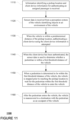
- FIGURE 11 is a flow diagram 1100 that may be performed by one or more processors such as one or more processors 120 of computing device 110 in order to actively look for an assigned passenger prior to a vehicle reaching a pickup location.
- information identifying the pickup location and client device information for authenticating the assigned passenger is received.
- sensor data is received from a perception system of the vehicle identifying objects in an environment of the vehicle.
- authenticating a client device using the client device information is attempted.
- the sensor data is used to determine whether a pedestrian is within a first threshold distance of the vehicle.
- the vehicle is stopped prior to reaching the pickup location to wait for the pedestrian within the first threshold distance of the vehicle to enter the vehicle.
- the vehicle is maneuvered to a destination with the pedestrian as an occupant of the vehicle.
- the technology described herein enjoys wide industrial applicability, including for example, in the field of autonomous.
Landscapes
- Engineering & Computer Science (AREA)
- Business, Economics & Management (AREA)
- Human Resources & Organizations (AREA)
- Strategic Management (AREA)
- Economics (AREA)
- Physics & Mathematics (AREA)
- General Physics & Mathematics (AREA)
- Tourism & Hospitality (AREA)
- Marketing (AREA)
- General Business, Economics & Management (AREA)
- Theoretical Computer Science (AREA)
- Automation & Control Theory (AREA)
- Game Theory and Decision Science (AREA)
- Operations Research (AREA)
- Quality & Reliability (AREA)
- Entrepreneurship & Innovation (AREA)
- Development Economics (AREA)
- Transportation (AREA)
- Mechanical Engineering (AREA)
- Health & Medical Sciences (AREA)
- Primary Health Care (AREA)
- General Health & Medical Sciences (AREA)
- Signal Processing (AREA)
- Computer Networks & Wireless Communication (AREA)
- Human Computer Interaction (AREA)
- Aviation & Aerospace Engineering (AREA)
- Radar, Positioning & Navigation (AREA)
- Remote Sensing (AREA)
- Mathematical Physics (AREA)
- Computer Security & Cryptography (AREA)
- Traffic Control Systems (AREA)
- Artificial Intelligence (AREA)
- Evolutionary Computation (AREA)
- Medical Informatics (AREA)
- Management, Administration, Business Operations System, And Electronic Commerce (AREA)
- Train Traffic Observation, Control, And Security (AREA)
Claims (15)
- Verfahren, umfassend:Empfangen, durch einen oder mehrere Prozessoren (120), von Informationen, die einen Abholstandort für einen einem Fahrzeug (100) zugewiesenen Fahrgast identifizieren, und von Client-Geräteinformationen zum Authentifizieren des zugewiesenen Fahrgastes;Empfangen, durch den einen oder die mehreren Prozessoren, von Sensordaten von einem Wahrnehmungssystem (172) des Fahrzeugs, das Objekte in einer Umgebung des Fahrzeugs identifiziert;wenn sich das Fahrzeug innerhalb einer vorbestimmten Entfernung von dem Abholstandort befindet, Versuchen, durch den einen oder die mehreren Prozessoren, ein Client-Gerät (420, 430, 440) unter Nutzung der Client-Geräteinformationen zu authentifizieren;wenn das Client-Gerät authentifiziert wurde, Nutzen, durch den einen oder die mehreren Prozessoren, der Sensordaten zum Ermitteln, ob sich ein Fußgänger innerhalb einer ersten Schwellenentfernung zu dem Fahrzeug befindet;wenn ermittelt wird, dass sich der Fußgänger innerhalb der ersten Schwellenentfernung zu dem Fahrzeug befindet, Ermitteln, durch den einen oder die mehreren Prozessoren, einer zweiten Schwellenentfernung zu dem Fahrzeug, die kleiner ist als die erste Schwellenentfernung von dem Fahrzeug, basierend auf einer erwarteten Gehgeschwindigkeit;Nutzen, durch den einen oder die mehreren Prozessoren, der Sensordaten zum Ermitteln, ob sich der Fußgänger innerhalb der zweiten Schwellenentfernung zu dem Fahrzeug befindet;wenn ermittelt wird, dass sich der Fußgänger innerhalb der zweiten Schwellenentfernung zu dem Fahrzeug befindet, Ermitteln, durch den einen oder die mehreren Prozessoren, dass sich der Fußgänger auf das Fahrzeug zu bewegt;wenn ermittelt wird, dass sich der Fußgänger auf das Fahrzeug zu bewegt, Veranlassen des Fahrzeugs, durch den einen oder die mehreren Prozessoren, vor dem Erreichen des Abholstandorts darauf zu warten, dass der Fußgänger in das Fahrzeug einsteigt, während das Fahrzeug steht; undnachdem der Fußgänger in das Fahrzeug eingestiegen ist, Manövrieren, durch den einen oder die mehreren Prozessoren, des Fahrzeugs zu einem Ziel mit dem Fußgänger als Insasse des Fahrzeugs.
- Verfahren nach Anspruch 1, ferner umfassend:Identifizieren eines ersten Rings (810) um das Fahrzeug, der der ersten Schwellenentfernung entspricht; undIdentifizieren eines zweiten Rings (910) um das Fahrzeug, der der zweiten Schwellenentfernung entspricht, durch Verkleinern des ersten Rings auf eine Größe des zweiten Rings nach einer vorbestimmten Zeitdauer.
- Verfahren nach Anspruch 2, ferner umfassend, wenn ermittelt wird, dass sich ein Fußgänger nicht innerhalb der zweiten Schwellenentfernung zu dem Fahrzeug befindet, das Bewegen des Fahrzeugs in Richtung des Abholstandorts ohne einen Fahrgast.
- Verfahren nach Anspruch 1, ferner umfassend:Verringern einer Größe der ersten Schwellenentfernung auf eine oder mehrere kleinere Schwellenentfernungen;Ermitteln, dass sich kein Fußgänger innerhalb der einen oder mehreren kleineren Schwellenentfernungen befindet;nach dem Verringern der Größe der ersten Schwellenentfernung auf eine oder mehrere kleinere Schwellenentfernungen und dem Ermitteln, dass sich kein Fußgänger innerhalb der einen oder mehreren kleineren Schwellenentfernungen befindet, Nutzen der Sensordaten zum Ermitteln, ob sich der Fußgänger oder ein anderer Fußgänger innerhalb der ersten Schwellenentfernung zu dem Fahrzeug befindet; undnach dem Nutzen der Sensordaten zum Ermitteln, ob sich der Fußgänger oder ein anderer Fußgänger innerhalb der ersten Schwellenentfernung zu dem Fahrzeug befindet, wenn ermittelt wird, dass sich der Fußgänger oder ein anderer Fußgänger innerhalb der ersten Schwellenentfernung befindet, erneutes Anhalten des Fahrzeugs, um darauf zu warten, dass der Fußgänger oder ein anderer Fußgänger innerhalb der ersten Schwellenentfernung des Fahrzeugs in das Fahrzeug einsteigt.
- Verfahren nach Anspruch 4, wobei das Nutzen der Sensordaten zum Ermitteln, ob sich der Fußgänger oder ein anderer Fußgänger innerhalb der ersten Schwellenentfernung zu dem Fahrzeug befindet, erst dann erfolgt, wenn das Fahrzeug seit dem ersten Nutzen der Sensordaten zum Ermitteln, ob sich ein Fußgänger innerhalb einer ersten Schwellenentfernung zu dem Fahrzeug befindet, eine Mindestentfernung zurückgelegt hat.
- Verfahren nach Anspruch 1,wobei das Nutzen der Sensordaten zum Ermitteln, ob sich ein Fußgänger innerhalb einer ersten Schwellenentfernung zu dem Fahrzeug befindet, nur dann erfolgt, wenn das Fahrzeug steht oder unterhalb einer vorbestimmten Höchstgeschwindigkeitsgrenze fährt; oderwobei das Nutzen der Sensordaten zum Ermitteln, ob sich ein Fußgänger innerhalb einer ersten Schwellenentfernung zu dem Fahrzeug befindet, nur dann erfolgt, wenn sich das Fahrzeug auf einer bestimmten Fahrbahn einer Straße befindet; oderwobei das Nutzen der Sensordaten zum Ermitteln, ob sich ein Fußgänger innerhalb einer ersten Schwellenentfernung zu dem Fahrzeug befindet, nur dann erfolgt, wenn das Fahrzeug auf einer Straße fährt, die einer bestimmten Höchstgeschwindigkeitsgrenze entspricht.
- Verfahren nach Anspruch 1, ferner umfassend, vor dem Anhalten des Fahrzeugs, das Ermitteln, dass es derzeit nicht sicher ist, das Fahrzeug anzuhalten, und das Weiterfahren in Richtung des Abholstandorts;
wobei das Verfahren optional ferner das Bereitstellen einer Benachrichtigung an das Fahrzeug umfasst, dass ein vorzeitiger Einstiegsversuch nicht möglich ist. - Verfahren nach Anspruch 1, wobei das Anhalten des Fahrzeugs das Anhalten des Fahrzeugs in einer aktuellen Fahrspur des Fahrzeugs beinhaltet.
- System, umfassend einen oder mehrere Prozessoren (120), konfiguriert zum:Empfangen von Informationen, die einen Abholstandort für einen einem Fahrzeug (100) zugewiesenen Fahrgast identifizieren, und von Client-Geräteinformationen zum Authentifizieren des zugewiesenen Fahrgastes;Empfangen von Sensordaten von einem Wahrnehmungssystem (172) des Fahrzeugs, das Objekte in einer Umgebung des Fahrzeugs identifiziert;wenn sich das Fahrzeug innerhalb einer vorbestimmten Entfernung von dem Abholstandort befindet, Versuchen, ein Client-Gerät (420, 430, 440) unter Nutzung der Client-Geräteinformationen zu authentifizieren;wenn das Client-Gerät authentifiziert wurde, Nutzen der Sensordaten zum Ermitteln, ob sich ein Fußgänger innerhalb einer ersten Schwellenentfernung zu dem Fahrzeug befindet;wenn ermittelt wird, dass sich der Fußgänger innerhalb der ersten Schwellenentfernung zu dem Fahrzeug befindet, Ermitteln einer zweiten Schwellenentfernung zu dem Fahrzeug, die kleiner ist als die erste Schwellenentfernung von dem Fahrzeug, basierend auf einer erwarteten Gehgeschwindigkeit;Nutzen der Sensordaten zum Ermitteln, ob sich der Fußgänger innerhalb der zweiten Schwellenentfernung zu dem Fahrzeug befindet;wenn ermittelt wird, dass sich der Fußgänger innerhalb der zweiten Schwellenentfernung zu dem Fahrzeug befindet, Ermitteln, dass sich der Fußgänger auf das Fahrzeug zu bewegt;wenn ermittelt wird, dass sich der Fußgänger auf das Fahrzeug zu bewegt, Veranlassen des Fahrzeugs, vor dem Erreichen des Abholstandorts, darauf zu warten, dass der Fußgänger in das Fahrzeug einsteigt, während das Fahrzeug steht; undnachdem der Fußgänger in das Fahrzeug eingestiegen ist, Manövrieren des Fahrzeugs zu einem Ziel mit dem Fußgänger als Insasse des Fahrzeugs.
- System nach Anspruch 9, wobei der eine oder die mehreren Prozessoren ferner konfiguriert sind zum:Identifizieren eines ersten Rings (810) um das Fahrzeug, der der ersten Schwellenentfernung entspricht; undIdentifizieren eines zweiten Rings (910) um das Fahrzeug, der der zweiten Schwellenentfernung entspricht, durch Verkleinern des ersten Rings auf eine Größe des zweiten Rings nach einer vorbestimmten Zeitdauer.
- System nach Anspruch 10, wobei der eine oder die mehreren Prozessoren ferner konfiguriert sind, wenn ermittelt wird, dass sich ein Fußgänger nicht innerhalb der zweiten Schwellenentfernung zu dem Fahrzeug befindet, das Fahrzeug ohne Fahrgast in Richtung des Abholstandorts zu bewegen.
- System nach Anspruch 9, wobei der eine oder die mehreren Prozessoren ferner konfiguriert sind zum:Verringern einer Größe der ersten Schwellenentfernung auf eine oder mehrere kleinere Schwellenentfernungen;Ermitteln, dass sich kein Fußgänger innerhalb der einen oder mehreren kleineren Schwellenentfernungen befindet;nach dem Verringern der Größe der ersten Schwellenentfernung auf eine oder mehrere kleinere Schwellenentfernungen und dem Ermitteln, dass sich kein Fußgänger innerhalb der einen oder mehreren kleineren Schwellenentfernungen befindet, Nutzen der Sensordaten zum Ermitteln, ob sich der Fußgänger oder ein anderer Fußgänger innerhalb der ersten Schwellenentfernung zu dem Fahrzeug befindet; undnach dem Nutzen der Sensordaten zum Ermitteln, ob sich der Fußgänger oder ein anderer Fußgänger innerhalb der ersten Schwellenentfernung zu dem Fahrzeug befindet, wenn ermittelt wird, dass sich der Fußgänger oder ein anderer Fußgänger innerhalb der ersten Schwellenentfernung befindet, erneutes Anhalten des Fahrzeugs, um darauf zu warten, dass der Fußgänger oder ein anderer Fußgänger innerhalb der ersten Schwellenentfernung des Fahrzeugs in das Fahrzeug einsteigt.
- System nach Anspruch 12, wobei der eine oder die mehreren Prozessoren ferner nur dann zum Nutzen der Sensordaten zum Ermitteln, ob sich der Fußgänger oder ein anderer Fußgänger innerhalb der ersten Schwellenentfernung zu dem Fahrzeug befindet, konfiguriert sind, nachdem das Fahrzeug seit dem ersten Nutzen der Sensordaten zum Ermitteln, ob sich ein Fußgänger innerhalb einer ersten Schwellenentfernung zu dem Fahrzeug befindet, eine Mindestentfernung zurückgelegt hat.
- System nach Anspruch 9,wobei der eine oder die mehreren Prozessoren ferner nur dann zum Nutzen der Sensordaten zum Ermitteln, ob sich ein Fußgänger innerhalb einer ersten Schwellenentfernung des Fahrzeugs befindet, konfiguriert sind, wenn das Fahrzeug steht oder innerhalb einer vorbestimmten Höchstgeschwindigkeitsgrenze fährt; oderwobei der eine oder die mehreren Prozessoren ferner nur dann zum Nutzen der Sensordaten zum Ermitteln, ob sich ein Fußgänger innerhalb einer ersten Schwellenentfernung zu dem Fahrzeug befindet, konfiguriert sind, wenn sich das Fahrzeug auf einer bestimmten Fahrspur einer Straße befindet; oderwobei der eine oder die mehreren Prozessoren ferner nur dann zum Nutzen der Sensordaten zum Ermitteln, ob sich ein Fußgänger innerhalb einer ersten Schwellenentfernung zu dem Fahrzeug befindet, konfiguriert sind, wenn das Fahrzeug auf einer Straße fährt, die einer bestimmten Höchstgeschwindigkeitsgrenze entspricht.
- System nach Anspruch 9, ferner umfassend das Fahrzeug.
Applications Claiming Priority (4)
| Application Number | Priority Date | Filing Date | Title |
|---|---|---|---|
| US201762508482P | 2017-05-19 | 2017-05-19 | |
| US201762577856P | 2017-10-27 | 2017-10-27 | |
| US15/854,211 US10440536B2 (en) | 2017-05-19 | 2017-12-26 | Early boarding of passengers in autonomous vehicles |
| PCT/US2018/031780 WO2018213075A1 (en) | 2017-05-19 | 2018-05-09 | Early boarding of passengers in autonomous vehicles |
Publications (2)
| Publication Number | Publication Date |
|---|---|
| EP3593301A1 EP3593301A1 (de) | 2020-01-15 |
| EP3593301B1 true EP3593301B1 (de) | 2024-08-21 |
Family
ID=64272278
Family Applications (1)
| Application Number | Title | Priority Date | Filing Date |
|---|---|---|---|
| EP18730481.1A Active EP3593301B1 (de) | 2017-05-19 | 2018-05-09 | Frühzeitiges einsteigen von insassen in autonome fahrzeuge |
Country Status (9)
| Country | Link |
|---|---|
| US (6) | US10440536B2 (de) |
| EP (1) | EP3593301B1 (de) |
| JP (2) | JP6940621B2 (de) |
| KR (2) | KR102309575B1 (de) |
| CN (2) | CN110785780B (de) |
| AU (2) | AU2018270782B2 (de) |
| CA (1) | CA3062615C (de) |
| SG (1) | SG10202101589YA (de) |
| WO (1) | WO2018213075A1 (de) |
Families Citing this family (66)
| Publication number | Priority date | Publication date | Assignee | Title |
|---|---|---|---|---|
| US10880293B2 (en) * | 2017-08-25 | 2020-12-29 | Ford Global Technologies, Llc | Authentication of vehicle-to-vehicle communications |
| JP7095968B2 (ja) * | 2017-10-02 | 2022-07-05 | トヨタ自動車株式会社 | 管理装置 |
| US11474519B2 (en) | 2018-02-26 | 2022-10-18 | Nvidia Corporation | Systems and methods for computer-assisted shuttles, buses, robo-taxis, ride-sharing and on-demand vehicles with situational awareness |
| US11846514B1 (en) | 2018-05-03 | 2023-12-19 | Zoox, Inc. | User interface and augmented reality for representing vehicles and persons |
| US10809081B1 (en) | 2018-05-03 | 2020-10-20 | Zoox, Inc. | User interface and augmented reality for identifying vehicles and persons |
| US10837788B1 (en) * | 2018-05-03 | 2020-11-17 | Zoox, Inc. | Techniques for identifying vehicles and persons |
| DE102018210410B4 (de) * | 2018-06-26 | 2023-06-01 | Bayerische Motoren Werke Aktiengesellschaft | Fahrerassistenzsystem mit einer Nothaltefunktion für ein Fahrzeug, Fahrzeug mit demselben und Verfahren zum Nothalten eines Fahrzeugs |
| US10909866B2 (en) * | 2018-07-20 | 2021-02-02 | Cybernet Systems Corp. | Autonomous transportation system and methods |
| PE20210352A1 (es) * | 2018-07-23 | 2021-02-25 | Newtrax Holdings Inc | Metodo y sistema para dar acuse de recibo de la presencia en un entorno sensible al contexto |
| US10857938B2 (en) * | 2018-08-27 | 2020-12-08 | GM Global Technology Operations LLC | Autonomous vehicle identification |
| US12330646B2 (en) | 2018-10-18 | 2025-06-17 | Autobrains Technologies Ltd | Off road assistance |
| US10748038B1 (en) | 2019-03-31 | 2020-08-18 | Cortica Ltd. | Efficient calculation of a robust signature of a media unit |
| US11077878B2 (en) * | 2018-11-02 | 2021-08-03 | Zoox, Inc. | Dynamic lane biasing |
| US11208096B2 (en) | 2018-11-02 | 2021-12-28 | Zoox, Inc. | Cost scaling in trajectory generation |
| US11048260B2 (en) | 2018-11-02 | 2021-06-29 | Zoox, Inc. | Adaptive scaling in trajectory generation |
| US11110918B2 (en) | 2018-11-02 | 2021-09-07 | Zoox, Inc. | Dynamic collision checking |
| JP7077931B2 (ja) * | 2018-12-18 | 2022-05-31 | トヨタ自動車株式会社 | 車両の制御装置、制御方法及び制御プログラム |
| US11038877B2 (en) | 2018-12-31 | 2021-06-15 | Beijing Didi Infinity Technology And Development Co., Ltd. | Systems and methods for device fingerprint determination in a transportation service |
| WO2020142085A1 (en) * | 2018-12-31 | 2020-07-09 | Didi Research America, Llc | Systems and methods for fraud detecting in a transportation service |
| US11080509B2 (en) | 2018-12-31 | 2021-08-03 | Beijing Didi Infinity Technology And Development Co., Ltd. | Systems and methods for onboard fraud detection in a transportation service |
| US11501524B2 (en) | 2019-01-23 | 2022-11-15 | Uber Technologies, Inc. | Generating augmented reality images for display on a mobile device based on ground truth image rendering |
| JP7163817B2 (ja) * | 2019-02-20 | 2022-11-01 | トヨタ自動車株式会社 | 車両、表示方法及びプログラム |
| JP7080837B2 (ja) * | 2019-02-26 | 2022-06-06 | 本田技研工業株式会社 | 車両制御装置、車両制御方法、およびプログラム |
| JP7058236B2 (ja) * | 2019-03-07 | 2022-04-21 | 本田技研工業株式会社 | 車両制御装置、車両制御方法、およびプログラム |
| US11186244B2 (en) * | 2019-03-22 | 2021-11-30 | Stmicroelectronics S.R.L. | Smart child safety equipment in vehicles |
| US10843566B2 (en) | 2019-04-26 | 2020-11-24 | Waymo Llc | Audible passenger announcements for autonomous vehicle services |
| US11048256B2 (en) | 2019-08-09 | 2021-06-29 | Waymo Llc | Parking behaviors for autonomous vehicles |
| DE102019212998B4 (de) * | 2019-08-29 | 2022-08-04 | Volkswagen Aktiengesellschaft | Fortbewegungsmittel, Vorrichtung und Verfahren zum Positionieren eines automatisiert fahrfähigen Fortbewegungsmittels |
| US11611881B2 (en) * | 2019-11-27 | 2023-03-21 | Board Of Trustees Of Michigan State University | Integrated systems and methods for passive authentication |
| US11151874B2 (en) * | 2020-01-23 | 2021-10-19 | Frogparking Limited | Vehicle flow monitoring system |
| EP3859372A1 (de) * | 2020-01-31 | 2021-08-04 | Bayerische Motoren Werke Aktiengesellschaft | Vorrichtung, verfahren und computerprogramm für ein fahrzeug |
| US12169854B2 (en) * | 2020-03-16 | 2024-12-17 | Lyft, Inc. | Aligning provider-device axes with transportation-vehicle axes to generate driving-event scores |
| JP7419122B2 (ja) * | 2020-03-18 | 2024-01-22 | 本田技研工業株式会社 | 車両制御装置、車両制御方法、及び車両制御用プログラム |
| US20210311478A1 (en) * | 2020-04-07 | 2021-10-07 | Toyota Motor Engineering & Manufacturing North America, Inc. | Systems and Methods For Autonomous Navigation To Locate User With Ultra-Wideband Sensing |
| JP7238850B2 (ja) * | 2020-05-07 | 2023-03-14 | トヨタ自動車株式会社 | 自動運転システムおよび自動運転方法 |
| GB2594974A (en) | 2020-05-14 | 2021-11-17 | Dromos Tech Ag | A method and infrastructure for boarding a plurality of passengers into an autonomous vehicle |
| JP7382281B2 (ja) * | 2020-05-25 | 2023-11-16 | 株式会社東海理化電機製作所 | 制御装置および制御方法 |
| US12085960B2 (en) * | 2020-07-23 | 2024-09-10 | Autobrains Technologies Ltd | Autonomously following a person |
| US11491909B2 (en) | 2020-09-16 | 2022-11-08 | Waymo Llc | External facing communications for autonomous vehicles |
| US12049116B2 (en) | 2020-09-30 | 2024-07-30 | Autobrains Technologies Ltd | Configuring an active suspension |
| US12142005B2 (en) | 2020-10-13 | 2024-11-12 | Autobrains Technologies Ltd | Camera based distance measurements |
| US11884298B2 (en) * | 2020-10-23 | 2024-01-30 | Tusimple, Inc. | Safe driving operations of autonomous vehicles |
| US20220135077A1 (en) * | 2020-10-29 | 2022-05-05 | Waymo Llc | Increasing awareness of passengers during pullovers and drop offs for autonomous vehicles |
| WO2022093921A1 (en) * | 2020-10-29 | 2022-05-05 | Waymo Llc | Holistic wayfinding |
| US20220198351A1 (en) * | 2020-12-17 | 2022-06-23 | Here Global B.V. | Contextually defining an interest index for shared and autonomous vehicles |
| US12165415B2 (en) * | 2020-12-17 | 2024-12-10 | Here Global B.V. | Providing access to an autonomous vehicle based on user's detected interest |
| US11899468B2 (en) * | 2020-12-22 | 2024-02-13 | Waymo Llc | Sensor for flashing light detection |
| US12257949B2 (en) | 2021-01-25 | 2025-03-25 | Autobrains Technologies Ltd | Alerting on driving affecting signal |
| KR102568277B1 (ko) * | 2021-02-03 | 2023-08-22 | 한양대학교 에리카산학협력단 | 자율주행 차량의 구조 시스템 |
| US11644322B2 (en) | 2021-02-09 | 2023-05-09 | Gm Cruise Holdings Llc | Updating a pick-up or drop-off location for a passenger of an autonomous vehicle |
| US11794779B2 (en) * | 2021-03-19 | 2023-10-24 | Waymo Llc | Pullover maneuvers for autonomous vehicles |
| US20220309521A1 (en) * | 2021-03-24 | 2022-09-29 | Here Global B.V. | Computing a vehicle interest index |
| WO2022212901A1 (en) * | 2021-04-01 | 2022-10-06 | Education Logistics, Inc. | Mass transportation ridership data import |
| US12511873B2 (en) | 2021-06-07 | 2025-12-30 | Cortica, Ltd. | Isolating unique and representative patterns of a concept structure |
| US12139166B2 (en) | 2021-06-07 | 2024-11-12 | Autobrains Technologies Ltd | Cabin preferences setting that is based on identification of one or more persons in the cabin |
| KR20220168460A (ko) * | 2021-06-16 | 2022-12-23 | 현대자동차주식회사 | 자율 주행 차량 위치 제공 장치 및 그 방법 |
| US12423994B2 (en) | 2021-07-01 | 2025-09-23 | Autobrains Technologies Ltd | Lane boundary detection |
| US12205379B2 (en) * | 2021-08-04 | 2025-01-21 | Waymo Llc | Pedestrian countdown signal classification to increase pedestrian behavior legibility |
| EP4194300B1 (de) | 2021-08-05 | 2026-01-28 | Autobrains Technologies LTD. | Vorhersage eines radius einer motorradkurve |
| US12293560B2 (en) | 2021-10-26 | 2025-05-06 | Autobrains Technologies Ltd | Context based separation of on-/off-vehicle points of interest in videos |
| US12568376B2 (en) * | 2022-03-30 | 2026-03-03 | Konica Minolta Business Solutions U.S.A., Inc. | Method and system for authenticating users |
| IT202200008276A1 (it) * | 2022-04-27 | 2023-10-27 | Fiat Ricerche | "Autoveicolo a guida autonoma, dotato di un sistema per il riconoscimento a distanza, ed il recupero, di un passeggero, e relativo procedimento" |
| IT202200010040A1 (it) * | 2022-05-16 | 2023-11-16 | Fiat Ricerche | "Autoveicolo a guida autonoma, dotato di un sistema per rilevare e riconoscere caratteristiche identificative di un passeggero, e relativo procedimento" |
| US12233885B2 (en) * | 2022-05-30 | 2025-02-25 | Toyota Connected North America, Inc. | Vehicle action determination based on occupant characteristics |
| KR20240048654A (ko) * | 2022-10-07 | 2024-04-16 | 현대자동차주식회사 | 차량 제어 시스템 및 방법 |
| CN115855091A (zh) * | 2022-11-22 | 2023-03-28 | 蔚来汽车科技(安徽)有限公司 | 车辆定位方法、装置、电子设备及存储介质 |
Family Cites Families (96)
| Publication number | Priority date | Publication date | Assignee | Title |
|---|---|---|---|---|
| US6694248B2 (en) | 1995-10-27 | 2004-02-17 | Total Technology Inc. | Fully automated vehicle dispatching, monitoring and billing |
| JP3375258B2 (ja) | 1996-11-07 | 2003-02-10 | 株式会社日立製作所 | 地図表示方法及び装置並びにその装置を備えたナビゲーション装置 |
| US6418234B1 (en) | 1997-03-03 | 2002-07-09 | Keith W. Whited | System and method for storage, retrieval and display of information relating to specimens in marine environments |
| US6545601B1 (en) | 1999-02-25 | 2003-04-08 | David A. Monroe | Ground based security surveillance system for aircraft and other commercial vehicles |
| US6812851B1 (en) | 1999-12-15 | 2004-11-02 | Vert, Inc. | Apparatuses for displaying information on vehicles |
| US7167796B2 (en) | 2000-03-09 | 2007-01-23 | Donnelly Corporation | Vehicle navigation system for use with a telematics system |
| US6356838B1 (en) | 2000-07-25 | 2002-03-12 | Sunil Paul | System and method for determining an efficient transportation route |
| US6891518B2 (en) | 2000-10-05 | 2005-05-10 | Siemens Corporate Research, Inc. | Augmented reality visualization device |
| US6414635B1 (en) | 2000-10-23 | 2002-07-02 | Wayport, Inc. | Geographic-based communication service system with more precise determination of a user's known geographic location |
| JP2002149912A (ja) | 2000-11-13 | 2002-05-24 | Toshihiko Furukawa | 通報システム |
| US20110068954A1 (en) | 2006-06-20 | 2011-03-24 | Zonar Systems, Inc. | Method and apparatus to collect object identification data during operation of a vehicle and analysis of such data |
| US6801837B2 (en) | 2002-01-03 | 2004-10-05 | Meritor Light Vehicle Technology, Llc | Intervehicle network communication system |
| US7327280B2 (en) | 2002-08-15 | 2008-02-05 | California Institute Of Technology | Emergency vehicle traffic signal preemption system |
| FR2840426B1 (fr) | 2002-06-03 | 2004-12-17 | Airbus France | Dispositif d'aide au reperage visuel d'un aeronef en vol depuis un autre aeronef, egalement en vol |
| US20030222981A1 (en) | 2002-06-04 | 2003-12-04 | Kisak Jeffrey James | Locomotive wireless video recorder and recording system |
| JP2004054444A (ja) | 2002-07-17 | 2004-02-19 | Omron Corp | 運転サービス情報仲介システム |
| JP2004062490A (ja) * | 2002-07-29 | 2004-02-26 | Matsushita Electric Ind Co Ltd | 相乗り代理交渉システムおよび相乗り代理交渉方法 |
| US6810328B2 (en) | 2002-11-23 | 2004-10-26 | Alpine Electronics, Inc | Navigation method and system for indicating area-specific traffic information |
| US7466356B2 (en) | 2003-07-25 | 2008-12-16 | Hewlett-Packard Development Company, L.P. | Method and apparatus for setting a marker on an object and tracking the position of the object |
| US20050153707A1 (en) | 2003-07-25 | 2005-07-14 | Liza Ledyard | Portable service identification, notification and location device and method |
| US20050114014A1 (en) | 2003-11-24 | 2005-05-26 | Isaac Emad S. | System and method to notify a person of a traveler's estimated time of arrival |
| US7190282B2 (en) | 2004-03-26 | 2007-03-13 | Mitsubishi Jidosha Kogyo Kabushiki Kaisha | Nose-view monitoring apparatus |
| US7129887B2 (en) | 2004-04-15 | 2006-10-31 | Lockheed Martin Ms2 | Augmented reality traffic control center |
| JP2005346634A (ja) * | 2004-06-07 | 2005-12-15 | Ricoh Co Ltd | タクシー配車システム及びタクシー配車プログラム |
| US8972052B2 (en) | 2004-07-07 | 2015-03-03 | Irobot Corporation | Celestial navigation system for an autonomous vehicle |
| US20080270204A1 (en) | 2005-05-02 | 2008-10-30 | Ecolane Finland Oy | Method and Arrangement for Arranging Practical Aspects of a Demand Responsive Transport System |
| US20140172727A1 (en) | 2005-12-23 | 2014-06-19 | Raj V. Abhyanker | Short-term automobile rentals in a geo-spatial environment |
| US8340904B2 (en) | 2006-01-08 | 2012-12-25 | Bo-In Lin | Transmission of wireless messages of current vehicle location and estimated arrival time to requestors |
| US7920071B2 (en) | 2006-05-26 | 2011-04-05 | Itt Manufacturing Enterprises, Inc. | Augmented reality-based system and method providing status and control of unmanned vehicles |
| US7775437B2 (en) | 2006-06-01 | 2010-08-17 | Evryx Technologies, Inc. | Methods and devices for detecting linkable objects |
| US7840427B2 (en) | 2007-02-12 | 2010-11-23 | O'sullivan Sean | Shared transport system and service network |
| JP2008216205A (ja) | 2007-03-07 | 2008-09-18 | Fujitsu Ltd | 車載ナビゲーション装置 |
| JP2008227877A (ja) | 2007-03-13 | 2008-09-25 | Hitachi Ltd | 映像情報処理装置 |
| WO2009036176A1 (en) | 2007-09-11 | 2009-03-19 | Magna Electronics | Imaging system for vehicle |
| WO2009065638A1 (en) | 2007-11-24 | 2009-05-28 | Routerank Ltd | Personalized real-time location-based travel management |
| WO2009079469A1 (en) | 2007-12-14 | 2009-06-25 | Promptu Systems Corporation | Automatic service vehicle hailing and dispatch system and method |
| US20090192851A1 (en) | 2008-01-25 | 2009-07-30 | Bishop Paul L | Location-Based Transportation Management |
| US9020533B1 (en) | 2008-02-12 | 2015-04-28 | Sprint Communications Company L.P. | Location services |
| US20090234573A1 (en) | 2008-03-17 | 2009-09-17 | Emory University Office Of Technology Transfer | Travel Partner Matching Using Selectable Map Interface |
| US9519921B2 (en) | 2008-06-27 | 2016-12-13 | E-Lantis Corporation | GPS and wireless integrated fleet management system and method |
| JP2010183170A (ja) | 2009-02-03 | 2010-08-19 | Denso Corp | 車両用表示装置 |
| US20100217613A1 (en) | 2009-02-26 | 2010-08-26 | Brian Kelly | Methods and apparatus for providing charitable content and related functions |
| TWI402782B (zh) | 2009-03-20 | 2013-07-21 | Taiwan Mobile Comm | 車輛派遣方法、車輛派遣系統及應用其中之導航主機 |
| US8386177B2 (en) | 2009-05-13 | 2013-02-26 | Taiwan Mobile Communication | Vehicle-dispatching method and vehicle-dispatching system |
| US8583320B2 (en) | 2009-06-26 | 2013-11-12 | Esurance Insurance Services, Inc. | Apparatus and method for automated vehicle roadside assistance |
| KR101772970B1 (ko) | 2009-08-25 | 2017-09-13 | 삼성전자주식회사 | 차량 정보 제공방법 및 이를 적용한 단말기 |
| US8301202B2 (en) | 2009-08-27 | 2012-10-30 | Lg Electronics Inc. | Mobile terminal and controlling method thereof |
| EP2473871B1 (de) | 2009-09-01 | 2015-03-11 | Magna Mirrors Of America, Inc. | Abbildungs- und anzeigesystem für fahrzeuge |
| US10002198B2 (en) | 2009-10-28 | 2018-06-19 | Verizon Patent And Licensing Inc. | Mobile taxi dispatch system |
| US8346426B1 (en) | 2010-04-28 | 2013-01-01 | Google Inc. | User interface for displaying internal state of autonomous driving system |
| US20110313880A1 (en) | 2010-05-24 | 2011-12-22 | Sunil Paul | System and method for selecting transportation resources |
| JP5070318B2 (ja) | 2010-06-21 | 2012-11-14 | 本田技研工業株式会社 | 車載遠隔操作装置 |
| US20120041675A1 (en) | 2010-08-10 | 2012-02-16 | Steven Juliver | Method and System for Coordinating Transportation Service |
| JP5556740B2 (ja) * | 2010-10-28 | 2014-07-23 | Smk株式会社 | 情報提供装置、情報提供サーバおよび車両支援システム |
| TW201218117A (en) | 2010-10-29 | 2012-05-01 | Hon Hai Prec Ind Co Ltd | System and method for arranging taxies |
| US20120130627A1 (en) | 2010-11-23 | 2012-05-24 | Islam Mohammad R | Taxi dispatch system |
| US8918230B2 (en) | 2011-01-21 | 2014-12-23 | Mitre Corporation | Teleoperation of unmanned ground vehicle |
| GB201106555D0 (en) | 2011-04-19 | 2011-06-01 | Tomtom Int Bv | Taxi dispatching system |
| US8615345B2 (en) | 2011-04-29 | 2013-12-24 | Ford Global Technologies, Llc | Method and apparatus for vehicle system calibration |
| US9958280B2 (en) | 2011-08-16 | 2018-05-01 | Inrix, Inc. | Assessing inter-modal passenger travel options |
| US9037852B2 (en) | 2011-09-02 | 2015-05-19 | Ivsc Ip Llc | System and method for independent control of for-hire vehicles |
| US20130144660A1 (en) | 2011-12-02 | 2013-06-06 | Verizon Patent And Licensing Inc. | Electronic maitre d' |
| US8712379B2 (en) | 2011-12-12 | 2014-04-29 | General Motors Llc | Authenticating messages sent between a vehicle and a central facility |
| JP5832667B2 (ja) | 2011-12-29 | 2015-12-16 | インテル・コーポレーション | 再構成可能なパーソナライズド車両用ディスプレイ |
| US20130211916A1 (en) | 2012-02-09 | 2013-08-15 | CMFG Life Insurance Company | Automatic real-time opportunity-relevant promotions for an auto buying assistant application |
| AU2012203006A1 (en) | 2012-02-21 | 2013-09-05 | Car Pilots Pty Ltd | Systems and methods for booking transport |
| US9367678B2 (en) | 2012-02-29 | 2016-06-14 | Red Hat, Inc. | Password authentication |
| JP5810020B2 (ja) * | 2012-03-29 | 2015-11-11 | 大豊工業株式会社 | 斜板 |
| US20130289858A1 (en) | 2012-04-25 | 2013-10-31 | Alain Anthony Mangiat | Method for controlling and communicating with a swarm of autonomous vehicles using one-touch or one-click gestures from a mobile platform |
| JP5921320B2 (ja) | 2012-04-27 | 2016-05-24 | 富士通テン株式会社 | 表示システム、携帯装置、車載装置、及び、プログラム |
| JP5891306B2 (ja) | 2012-08-07 | 2016-03-22 | 株式会社日立製作所 | 自律走行装置の利用支援ツール、運用管理センタ、運用システム及び自律走行装置 |
| GB201300006D0 (en) | 2013-01-01 | 2013-02-13 | Tomtom Dev Germany Gmbh | Vehicle management system |
| US20140200739A1 (en) | 2013-01-15 | 2014-07-17 | Honda Motor Co., Ltd. | Enhancing vehicle connectivity |
| US20170286884A1 (en) | 2013-03-15 | 2017-10-05 | Via Transportation, Inc. | System and Method for Transportation |
| EP2979231A4 (de) | 2013-03-25 | 2016-08-31 | Steven B Schoeffler | Informationsanzeigesystem und -verfahren |
| US20140300449A1 (en) | 2013-04-05 | 2014-10-09 | Ani Kounavis | Taxi hailing system and mobile application |
| US20140365250A1 (en) | 2013-06-05 | 2014-12-11 | Fujitsu Limited | Transportation service reservation method and apparatus |
| WO2015038147A1 (en) | 2013-09-13 | 2015-03-19 | Intel Corporation | Context-aware distributive taxi cab dispatching |
| US20150142484A1 (en) | 2013-11-18 | 2015-05-21 | National Taipei University Of Technology | Carpool service providing method and carpool server using the same |
| US20150154810A1 (en) | 2013-12-04 | 2015-06-04 | Kar Leong Tew | Virtual transportation stands |
| EP3080774A4 (de) | 2013-12-11 | 2017-06-07 | Uber Technologies Inc. | Optimierung der auswahl von treibern für transportaufträge |
| US10210399B2 (en) | 2013-12-20 | 2019-02-19 | Magna Electronics Inc. | Vehicle vision system with image processing |
| US9542609B2 (en) | 2014-02-04 | 2017-01-10 | Xerox Corporation | Automatic training of a parked vehicle detector for large deployment |
| US9436180B1 (en) | 2014-04-11 | 2016-09-06 | Google Inc. | Location-based privacy |
| TW201541393A (zh) | 2014-04-21 | 2015-11-01 | Wei-Yen Yeh | 計程車管理設備及計程車管理系統 |
| US9436182B2 (en) * | 2014-05-23 | 2016-09-06 | Google Inc. | Autonomous vehicles |
| US9631933B1 (en) * | 2014-05-23 | 2017-04-25 | Google Inc. | Specifying unavailable locations for autonomous vehicles |
| US9823081B2 (en) | 2014-12-03 | 2017-11-21 | Ford Global Technologies, Llc | Vehicle passenger identification |
| US10160436B2 (en) * | 2014-12-15 | 2018-12-25 | Polaris Industries Inc. | Autonomous ready vehicle |
| US9733096B2 (en) | 2015-06-22 | 2017-08-15 | Waymo Llc | Determining pickup and destination locations for autonomous vehicles |
| US10023231B2 (en) | 2015-08-12 | 2018-07-17 | Madhusoodhan Ramanujam | Parking autonomous vehicles |
| US9551992B1 (en) | 2016-01-08 | 2017-01-24 | Google Inc. | Fall back trajectory systems for autonomous vehicles |
| US10088846B2 (en) | 2016-03-03 | 2018-10-02 | GM Global Technology Operations LLC | System and method for intended passenger detection |
| US9429947B1 (en) | 2016-04-14 | 2016-08-30 | Eric John Wengreen | Self-driving vehicle systems and methods |
| US20180075565A1 (en) * | 2016-09-13 | 2018-03-15 | Ford Global Technologies, Llc | Passenger validation systems and methods |
| US10031523B2 (en) * | 2016-11-07 | 2018-07-24 | Nio Usa, Inc. | Method and system for behavioral sharing in autonomous vehicles |
-
2017
- 2017-12-26 US US15/854,211 patent/US10440536B2/en not_active Expired - Fee Related
-
2018
- 2018-05-09 KR KR1020197033165A patent/KR102309575B1/ko active Active
- 2018-05-09 WO PCT/US2018/031780 patent/WO2018213075A1/en not_active Ceased
- 2018-05-09 CN CN201880033115.7A patent/CN110785780B/zh active Active
- 2018-05-09 SG SG10202101589YA patent/SG10202101589YA/en unknown
- 2018-05-09 CA CA3062615A patent/CA3062615C/en active Active
- 2018-05-09 CN CN202410358850.2A patent/CN118428517A/zh active Pending
- 2018-05-09 AU AU2018270782A patent/AU2018270782B2/en not_active Ceased
- 2018-05-09 KR KR1020217031389A patent/KR102440246B1/ko active Active
- 2018-05-09 JP JP2019556219A patent/JP6940621B2/ja active Active
- 2018-05-09 EP EP18730481.1A patent/EP3593301B1/de active Active
-
2019
- 2019-08-29 US US16/554,810 patent/US10848938B2/en active Active
-
2020
- 2020-10-19 US US17/073,433 patent/US11297473B2/en active Active
-
2021
- 2021-03-19 AU AU2021201755A patent/AU2021201755B2/en not_active Ceased
- 2021-09-02 JP JP2021142907A patent/JP7314218B2/ja active Active
-
2022
- 2022-03-01 US US17/683,510 patent/US11716598B2/en active Active
-
2023
- 2023-06-08 US US18/207,471 patent/US12425822B2/en active Active
-
2025
- 2025-08-26 US US19/309,753 patent/US20250392891A1/en active Pending
Also Published As
| Publication number | Publication date |
|---|---|
| JP2020521203A (ja) | 2020-07-16 |
| EP3593301A1 (de) | 2020-01-15 |
| JP6940621B2 (ja) | 2021-09-29 |
| US12425822B2 (en) | 2025-09-23 |
| US20250392891A1 (en) | 2025-12-25 |
| WO2018213075A1 (en) | 2018-11-22 |
| KR20190138307A (ko) | 2019-12-12 |
| JP7314218B2 (ja) | 2023-07-25 |
| KR20210124515A (ko) | 2021-10-14 |
| US10848938B2 (en) | 2020-11-24 |
| AU2021201755A1 (en) | 2021-04-15 |
| US11716598B2 (en) | 2023-08-01 |
| CN110785780B (zh) | 2024-04-12 |
| AU2018270782A1 (en) | 2019-10-31 |
| KR102440246B1 (ko) | 2022-09-06 |
| CA3062615A1 (en) | 2018-11-22 |
| US20180338229A1 (en) | 2018-11-22 |
| US11297473B2 (en) | 2022-04-05 |
| JP2021192271A (ja) | 2021-12-16 |
| US10440536B2 (en) | 2019-10-08 |
| CN118428517A (zh) | 2024-08-02 |
| AU2021201755B2 (en) | 2022-05-19 |
| KR102309575B1 (ko) | 2021-10-07 |
| SG10202101589YA (en) | 2021-03-30 |
| US20200021958A1 (en) | 2020-01-16 |
| US20210092572A1 (en) | 2021-03-25 |
| AU2018270782B2 (en) | 2021-01-07 |
| US20220191657A1 (en) | 2022-06-16 |
| CN110785780A (zh) | 2020-02-11 |
| CA3062615C (en) | 2023-04-18 |
| US20230396970A1 (en) | 2023-12-07 |
Similar Documents
| Publication | Publication Date | Title |
|---|---|---|
| US12425822B2 (en) | Early boarding of passengers in autonomous vehicles | |
| AU2021203701B2 (en) | Recognizing assigned passengers for autonomous vehicles | |
| CA3073318C (en) | Estimating time to pick up and drop off passengers for improved stopping analysis in autonomous vehicles |
Legal Events
| Date | Code | Title | Description |
|---|---|---|---|
| STAA | Information on the status of an ep patent application or granted ep patent |
Free format text: STATUS: UNKNOWN |
|
| STAA | Information on the status of an ep patent application or granted ep patent |
Free format text: STATUS: THE INTERNATIONAL PUBLICATION HAS BEEN MADE |
|
| PUAI | Public reference made under article 153(3) epc to a published international application that has entered the european phase |
Free format text: ORIGINAL CODE: 0009012 |
|
| STAA | Information on the status of an ep patent application or granted ep patent |
Free format text: STATUS: REQUEST FOR EXAMINATION WAS MADE |
|
| 17P | Request for examination filed |
Effective date: 20191010 |
|
| AK | Designated contracting states |
Kind code of ref document: A1 Designated state(s): AL AT BE BG CH CY CZ DE DK EE ES FI FR GB GR HR HU IE IS IT LI LT LU LV MC MK MT NL NO PL PT RO RS SE SI SK SM TR |
|
| AX | Request for extension of the european patent |
Extension state: BA ME |
|
| DAV | Request for validation of the european patent (deleted) | ||
| DAX | Request for extension of the european patent (deleted) | ||
| STAA | Information on the status of an ep patent application or granted ep patent |
Free format text: STATUS: EXAMINATION IS IN PROGRESS |
|
| 17Q | First examination report despatched |
Effective date: 20210309 |
|
| GRAP | Despatch of communication of intention to grant a patent |
Free format text: ORIGINAL CODE: EPIDOSNIGR1 |
|
| STAA | Information on the status of an ep patent application or granted ep patent |
Free format text: STATUS: GRANT OF PATENT IS INTENDED |
|
| RIC1 | Information provided on ipc code assigned before grant |
Ipc: G06Q 50/43 20240101ALI20240312BHEP Ipc: H04W 12/06 20090101ALI20240312BHEP Ipc: H04W 4/40 20180101ALI20240312BHEP Ipc: G06Q 10/047 20230101ALI20240312BHEP Ipc: G06Q 50/40 20240101ALI20240312BHEP Ipc: G06Q 10/04 20120101AFI20240312BHEP |
|
| INTG | Intention to grant announced |
Effective date: 20240327 |
|
| GRAS | Grant fee paid |
Free format text: ORIGINAL CODE: EPIDOSNIGR3 |
|
| GRAA | (expected) grant |
Free format text: ORIGINAL CODE: 0009210 |
|
| STAA | Information on the status of an ep patent application or granted ep patent |
Free format text: STATUS: THE PATENT HAS BEEN GRANTED |
|
| AK | Designated contracting states |
Kind code of ref document: B1 Designated state(s): AL AT BE BG CH CY CZ DE DK EE ES FI FR GB GR HR HU IE IS IT LI LT LU LV MC MK MT NL NO PL PT RO RS SE SI SK SM TR |
|
| P01 | Opt-out of the competence of the unified patent court (upc) registered |
Free format text: CASE NUMBER: APP_41293/2024 Effective date: 20240712 |
|
| REG | Reference to a national code |
Ref country code: GB Ref legal event code: FG4D |
|
| REG | Reference to a national code |
Ref country code: CH Ref legal event code: EP |
|
| REG | Reference to a national code |
Ref country code: IE Ref legal event code: FG4D |
|
| REG | Reference to a national code |
Ref country code: DE Ref legal event code: R096 Ref document number: 602018073329 Country of ref document: DE |
|
| REG | Reference to a national code |
Ref country code: LT Ref legal event code: MG9D |
|
| REG | Reference to a national code |
Ref country code: NL Ref legal event code: MP Effective date: 20240821 |
|
| PG25 | Lapsed in a contracting state [announced via postgrant information from national office to epo] |
Ref country code: NO Free format text: LAPSE BECAUSE OF FAILURE TO SUBMIT A TRANSLATION OF THE DESCRIPTION OR TO PAY THE FEE WITHIN THE PRESCRIBED TIME-LIMIT Effective date: 20241121 |
|
| REG | Reference to a national code |
Ref country code: AT Ref legal event code: MK05 Ref document number: 1716235 Country of ref document: AT Kind code of ref document: T Effective date: 20240821 |
|
| PG25 | Lapsed in a contracting state [announced via postgrant information from national office to epo] |
Ref country code: NL Free format text: LAPSE BECAUSE OF FAILURE TO SUBMIT A TRANSLATION OF THE DESCRIPTION OR TO PAY THE FEE WITHIN THE PRESCRIBED TIME-LIMIT Effective date: 20240821 Ref country code: PL Free format text: LAPSE BECAUSE OF FAILURE TO SUBMIT A TRANSLATION OF THE DESCRIPTION OR TO PAY THE FEE WITHIN THE PRESCRIBED TIME-LIMIT Effective date: 20240821 Ref country code: GR Free format text: LAPSE BECAUSE OF FAILURE TO SUBMIT A TRANSLATION OF THE DESCRIPTION OR TO PAY THE FEE WITHIN THE PRESCRIBED TIME-LIMIT Effective date: 20241122 Ref country code: FI Free format text: LAPSE BECAUSE OF FAILURE TO SUBMIT A TRANSLATION OF THE DESCRIPTION OR TO PAY THE FEE WITHIN THE PRESCRIBED TIME-LIMIT Effective date: 20240821 Ref country code: PT Free format text: LAPSE BECAUSE OF FAILURE TO SUBMIT A TRANSLATION OF THE DESCRIPTION OR TO PAY THE FEE WITHIN THE PRESCRIBED TIME-LIMIT Effective date: 20241223 |
|
| PG25 | Lapsed in a contracting state [announced via postgrant information from national office to epo] |
Ref country code: BG Free format text: LAPSE BECAUSE OF FAILURE TO SUBMIT A TRANSLATION OF THE DESCRIPTION OR TO PAY THE FEE WITHIN THE PRESCRIBED TIME-LIMIT Effective date: 20240821 |
|
| PG25 | Lapsed in a contracting state [announced via postgrant information from national office to epo] |
Ref country code: LV Free format text: LAPSE BECAUSE OF FAILURE TO SUBMIT A TRANSLATION OF THE DESCRIPTION OR TO PAY THE FEE WITHIN THE PRESCRIBED TIME-LIMIT Effective date: 20240821 |
|
| PG25 | Lapsed in a contracting state [announced via postgrant information from national office to epo] |
Ref country code: AT Free format text: LAPSE BECAUSE OF FAILURE TO SUBMIT A TRANSLATION OF THE DESCRIPTION OR TO PAY THE FEE WITHIN THE PRESCRIBED TIME-LIMIT Effective date: 20240821 Ref country code: IS Free format text: LAPSE BECAUSE OF FAILURE TO SUBMIT A TRANSLATION OF THE DESCRIPTION OR TO PAY THE FEE WITHIN THE PRESCRIBED TIME-LIMIT Effective date: 20241221 |
|
| PG25 | Lapsed in a contracting state [announced via postgrant information from national office to epo] |
Ref country code: HR Free format text: LAPSE BECAUSE OF FAILURE TO SUBMIT A TRANSLATION OF THE DESCRIPTION OR TO PAY THE FEE WITHIN THE PRESCRIBED TIME-LIMIT Effective date: 20240821 |
|
| PG25 | Lapsed in a contracting state [announced via postgrant information from national office to epo] |
Ref country code: RS Free format text: LAPSE BECAUSE OF FAILURE TO SUBMIT A TRANSLATION OF THE DESCRIPTION OR TO PAY THE FEE WITHIN THE PRESCRIBED TIME-LIMIT Effective date: 20241121 Ref country code: ES Free format text: LAPSE BECAUSE OF FAILURE TO SUBMIT A TRANSLATION OF THE DESCRIPTION OR TO PAY THE FEE WITHIN THE PRESCRIBED TIME-LIMIT Effective date: 20240821 |
|
| PG25 | Lapsed in a contracting state [announced via postgrant information from national office to epo] |
Ref country code: RS Free format text: LAPSE BECAUSE OF FAILURE TO SUBMIT A TRANSLATION OF THE DESCRIPTION OR TO PAY THE FEE WITHIN THE PRESCRIBED TIME-LIMIT Effective date: 20241121 Ref country code: PT Free format text: LAPSE BECAUSE OF FAILURE TO SUBMIT A TRANSLATION OF THE DESCRIPTION OR TO PAY THE FEE WITHIN THE PRESCRIBED TIME-LIMIT Effective date: 20241223 Ref country code: PL Free format text: LAPSE BECAUSE OF FAILURE TO SUBMIT A TRANSLATION OF THE DESCRIPTION OR TO PAY THE FEE WITHIN THE PRESCRIBED TIME-LIMIT Effective date: 20240821 Ref country code: NO Free format text: LAPSE BECAUSE OF FAILURE TO SUBMIT A TRANSLATION OF THE DESCRIPTION OR TO PAY THE FEE WITHIN THE PRESCRIBED TIME-LIMIT Effective date: 20241121 Ref country code: NL Free format text: LAPSE BECAUSE OF FAILURE TO SUBMIT A TRANSLATION OF THE DESCRIPTION OR TO PAY THE FEE WITHIN THE PRESCRIBED TIME-LIMIT Effective date: 20240821 Ref country code: LV Free format text: LAPSE BECAUSE OF FAILURE TO SUBMIT A TRANSLATION OF THE DESCRIPTION OR TO PAY THE FEE WITHIN THE PRESCRIBED TIME-LIMIT Effective date: 20240821 Ref country code: IS Free format text: LAPSE BECAUSE OF FAILURE TO SUBMIT A TRANSLATION OF THE DESCRIPTION OR TO PAY THE FEE WITHIN THE PRESCRIBED TIME-LIMIT Effective date: 20241221 Ref country code: HR Free format text: LAPSE BECAUSE OF FAILURE TO SUBMIT A TRANSLATION OF THE DESCRIPTION OR TO PAY THE FEE WITHIN THE PRESCRIBED TIME-LIMIT Effective date: 20240821 Ref country code: GR Free format text: LAPSE BECAUSE OF FAILURE TO SUBMIT A TRANSLATION OF THE DESCRIPTION OR TO PAY THE FEE WITHIN THE PRESCRIBED TIME-LIMIT Effective date: 20241122 Ref country code: FI Free format text: LAPSE BECAUSE OF FAILURE TO SUBMIT A TRANSLATION OF THE DESCRIPTION OR TO PAY THE FEE WITHIN THE PRESCRIBED TIME-LIMIT Effective date: 20240821 Ref country code: ES Free format text: LAPSE BECAUSE OF FAILURE TO SUBMIT A TRANSLATION OF THE DESCRIPTION OR TO PAY THE FEE WITHIN THE PRESCRIBED TIME-LIMIT Effective date: 20240821 Ref country code: BG Free format text: LAPSE BECAUSE OF FAILURE TO SUBMIT A TRANSLATION OF THE DESCRIPTION OR TO PAY THE FEE WITHIN THE PRESCRIBED TIME-LIMIT Effective date: 20240821 Ref country code: AT Free format text: LAPSE BECAUSE OF FAILURE TO SUBMIT A TRANSLATION OF THE DESCRIPTION OR TO PAY THE FEE WITHIN THE PRESCRIBED TIME-LIMIT Effective date: 20240821 |
|
| PG25 | Lapsed in a contracting state [announced via postgrant information from national office to epo] |
Ref country code: SM Free format text: LAPSE BECAUSE OF FAILURE TO SUBMIT A TRANSLATION OF THE DESCRIPTION OR TO PAY THE FEE WITHIN THE PRESCRIBED TIME-LIMIT Effective date: 20240821 Ref country code: DK Free format text: LAPSE BECAUSE OF FAILURE TO SUBMIT A TRANSLATION OF THE DESCRIPTION OR TO PAY THE FEE WITHIN THE PRESCRIBED TIME-LIMIT Effective date: 20240821 Ref country code: RO Free format text: LAPSE BECAUSE OF FAILURE TO SUBMIT A TRANSLATION OF THE DESCRIPTION OR TO PAY THE FEE WITHIN THE PRESCRIBED TIME-LIMIT Effective date: 20240821 |
|
| PG25 | Lapsed in a contracting state [announced via postgrant information from national office to epo] |
Ref country code: EE Free format text: LAPSE BECAUSE OF FAILURE TO SUBMIT A TRANSLATION OF THE DESCRIPTION OR TO PAY THE FEE WITHIN THE PRESCRIBED TIME-LIMIT Effective date: 20240821 |
|
| PG25 | Lapsed in a contracting state [announced via postgrant information from national office to epo] |
Ref country code: CZ Free format text: LAPSE BECAUSE OF FAILURE TO SUBMIT A TRANSLATION OF THE DESCRIPTION OR TO PAY THE FEE WITHIN THE PRESCRIBED TIME-LIMIT Effective date: 20240821 |
|
| PG25 | Lapsed in a contracting state [announced via postgrant information from national office to epo] |
Ref country code: SK Free format text: LAPSE BECAUSE OF FAILURE TO SUBMIT A TRANSLATION OF THE DESCRIPTION OR TO PAY THE FEE WITHIN THE PRESCRIBED TIME-LIMIT Effective date: 20240821 Ref country code: IT Free format text: LAPSE BECAUSE OF FAILURE TO SUBMIT A TRANSLATION OF THE DESCRIPTION OR TO PAY THE FEE WITHIN THE PRESCRIBED TIME-LIMIT Effective date: 20240821 |
|
| REG | Reference to a national code |
Ref country code: DE Ref legal event code: R097 Ref document number: 602018073329 Country of ref document: DE |
|
| PLBE | No opposition filed within time limit |
Free format text: ORIGINAL CODE: 0009261 |
|
| STAA | Information on the status of an ep patent application or granted ep patent |
Free format text: STATUS: NO OPPOSITION FILED WITHIN TIME LIMIT |
|
| PGFP | Annual fee paid to national office [announced via postgrant information from national office to epo] |
Ref country code: DE Payment date: 20250530 Year of fee payment: 8 |
|
| PGFP | Annual fee paid to national office [announced via postgrant information from national office to epo] |
Ref country code: FR Payment date: 20250526 Year of fee payment: 8 |
|
| 26N | No opposition filed |
Effective date: 20250522 |
|
| PG25 | Lapsed in a contracting state [announced via postgrant information from national office to epo] |
Ref country code: SE Free format text: LAPSE BECAUSE OF FAILURE TO SUBMIT A TRANSLATION OF THE DESCRIPTION OR TO PAY THE FEE WITHIN THE PRESCRIBED TIME-LIMIT Effective date: 20240821 |
|
| REG | Reference to a national code |
Ref country code: CH Ref legal event code: H13 Free format text: ST27 STATUS EVENT CODE: U-0-0-H10-H13 (AS PROVIDED BY THE NATIONAL OFFICE) Effective date: 20251223 |
|
| PG25 | Lapsed in a contracting state [announced via postgrant information from national office to epo] |
Ref country code: LU Free format text: LAPSE BECAUSE OF NON-PAYMENT OF DUE FEES Effective date: 20250509 |
|
| PG25 | Lapsed in a contracting state [announced via postgrant information from national office to epo] |
Ref country code: CH Free format text: LAPSE BECAUSE OF NON-PAYMENT OF DUE FEES Effective date: 20250531 |
|
| REG | Reference to a national code |
Ref country code: BE Ref legal event code: MM Effective date: 20250531 |
|
| PG25 | Lapsed in a contracting state [announced via postgrant information from national office to epo] |
Ref country code: MC Free format text: LAPSE BECAUSE OF FAILURE TO SUBMIT A TRANSLATION OF THE DESCRIPTION OR TO PAY THE FEE WITHIN THE PRESCRIBED TIME-LIMIT Effective date: 20240821 |
|
| PGFP | Annual fee paid to national office [announced via postgrant information from national office to epo] |
Ref country code: GB Payment date: 20260309 Year of fee payment: 9 |
|
| PG25 | Lapsed in a contracting state [announced via postgrant information from national office to epo] |
Ref country code: IE Free format text: LAPSE BECAUSE OF NON-PAYMENT OF DUE FEES Effective date: 20250509 |
|
| PG25 | Lapsed in a contracting state [announced via postgrant information from national office to epo] |
Ref country code: BE Free format text: LAPSE BECAUSE OF NON-PAYMENT OF DUE FEES Effective date: 20250531 |