EP3551629B1 - Oxabicycloheptanes for modulation of immune response - Google Patents
Oxabicycloheptanes for modulation of immune response Download PDFInfo
- Publication number
- EP3551629B1 EP3551629B1 EP17879038.2A EP17879038A EP3551629B1 EP 3551629 B1 EP3551629 B1 EP 3551629B1 EP 17879038 A EP17879038 A EP 17879038A EP 3551629 B1 EP3551629 B1 EP 3551629B1
- Authority
- EP
- European Patent Office
- Prior art keywords
- cells
- cancer
- pp2a
- inhibitor
- compound
- Prior art date
- Legal status (The legal status is an assumption and is not a legal conclusion. Google has not performed a legal analysis and makes no representation as to the accuracy of the status listed.)
- Active
Links
Images













Classifications
-
- A—HUMAN NECESSITIES
- A61—MEDICAL OR VETERINARY SCIENCE; HYGIENE
- A61K—PREPARATIONS FOR MEDICAL, DENTAL OR TOILETRY PURPOSES
- A61K45/00—Medicinal preparations containing active ingredients not provided for in groups A61K31/00 - A61K41/00
- A61K45/06—Mixtures of active ingredients without chemical characterisation, e.g. antiphlogistics and cardiaca
-
- A—HUMAN NECESSITIES
- A61—MEDICAL OR VETERINARY SCIENCE; HYGIENE
- A61K—PREPARATIONS FOR MEDICAL, DENTAL OR TOILETRY PURPOSES
- A61K31/00—Medicinal preparations containing organic active ingredients
- A61K31/33—Heterocyclic compounds
- A61K31/395—Heterocyclic compounds having nitrogen as a ring hetero atom, e.g. guanethidine or rifamycins
- A61K31/495—Heterocyclic compounds having nitrogen as a ring hetero atom, e.g. guanethidine or rifamycins having six-membered rings with two or more nitrogen atoms as the only ring heteroatoms, e.g. piperazine or tetrazines
- A61K31/496—Non-condensed piperazines containing further heterocyclic rings, e.g. rifampin, thiothixene or sparfloxacin
-
- A—HUMAN NECESSITIES
- A61—MEDICAL OR VETERINARY SCIENCE; HYGIENE
- A61K—PREPARATIONS FOR MEDICAL, DENTAL OR TOILETRY PURPOSES
- A61K31/00—Medicinal preparations containing organic active ingredients
- A61K31/33—Heterocyclic compounds
- A61K31/395—Heterocyclic compounds having nitrogen as a ring hetero atom, e.g. guanethidine or rifamycins
- A61K31/435—Heterocyclic compounds having nitrogen as a ring hetero atom, e.g. guanethidine or rifamycins having six-membered rings with one nitrogen as the only ring hetero atom
- A61K31/44—Non condensed pyridines; Hydrogenated derivatives thereof
- A61K31/445—Non condensed piperidines, e.g. piperocaine
- A61K31/4523—Non condensed piperidines, e.g. piperocaine containing further heterocyclic ring systems
- A61K31/4525—Non condensed piperidines, e.g. piperocaine containing further heterocyclic ring systems containing a five-membered ring with oxygen as a ring hetero atom
-
- A—HUMAN NECESSITIES
- A61—MEDICAL OR VETERINARY SCIENCE; HYGIENE
- A61K—PREPARATIONS FOR MEDICAL, DENTAL OR TOILETRY PURPOSES
- A61K39/00—Medicinal preparations containing antigens or antibodies
- A61K39/395—Antibodies; Immunoglobulins; Immune serum, e.g. antilymphocytic serum
- A61K39/39533—Antibodies; Immunoglobulins; Immune serum, e.g. antilymphocytic serum against materials from animals
- A61K39/3955—Antibodies; Immunoglobulins; Immune serum, e.g. antilymphocytic serum against materials from animals against proteinaceous materials, e.g. enzymes, hormones, lymphokines
-
- A—HUMAN NECESSITIES
- A61—MEDICAL OR VETERINARY SCIENCE; HYGIENE
- A61K—PREPARATIONS FOR MEDICAL, DENTAL OR TOILETRY PURPOSES
- A61K9/00—Medicinal preparations characterised by special physical form
- A61K9/0012—Galenical forms characterised by the site of application
- A61K9/0019—Injectable compositions; Intramuscular, intravenous, arterial, subcutaneous administration; Compositions to be administered through the skin in an invasive manner
-
- A—HUMAN NECESSITIES
- A61—MEDICAL OR VETERINARY SCIENCE; HYGIENE
- A61P—SPECIFIC THERAPEUTIC ACTIVITY OF CHEMICAL COMPOUNDS OR MEDICINAL PREPARATIONS
- A61P35/00—Antineoplastic agents
-
- A—HUMAN NECESSITIES
- A61—MEDICAL OR VETERINARY SCIENCE; HYGIENE
- A61P—SPECIFIC THERAPEUTIC ACTIVITY OF CHEMICAL COMPOUNDS OR MEDICINAL PREPARATIONS
- A61P35/00—Antineoplastic agents
- A61P35/02—Antineoplastic agents specific for leukemia
-
- C—CHEMISTRY; METALLURGY
- C07—ORGANIC CHEMISTRY
- C07K—PEPTIDES
- C07K16/00—Immunoglobulins [IG], e.g. monoclonal or polyclonal antibodies
- C07K16/18—Immunoglobulins [IG], e.g. monoclonal or polyclonal antibodies against material from animals or humans
- C07K16/28—Immunoglobulins [IG], e.g. monoclonal or polyclonal antibodies against material from animals or humans against receptors, cell surface antigens or cell surface determinants
- C07K16/2803—Immunoglobulins [IG], e.g. monoclonal or polyclonal antibodies against material from animals or humans against receptors, cell surface antigens or cell surface determinants against the immunoglobulin superfamily
- C07K16/2818—Immunoglobulins [IG], e.g. monoclonal or polyclonal antibodies against material from animals or humans against receptors, cell surface antigens or cell surface determinants against the immunoglobulin superfamily against CD28 or CD152
-
- C—CHEMISTRY; METALLURGY
- C07—ORGANIC CHEMISTRY
- C07K—PEPTIDES
- C07K16/00—Immunoglobulins [IG], e.g. monoclonal or polyclonal antibodies
- C07K16/18—Immunoglobulins [IG], e.g. monoclonal or polyclonal antibodies against material from animals or humans
- C07K16/28—Immunoglobulins [IG], e.g. monoclonal or polyclonal antibodies against material from animals or humans against receptors, cell surface antigens or cell surface determinants
- C07K16/2803—Immunoglobulins [IG], e.g. monoclonal or polyclonal antibodies against material from animals or humans against receptors, cell surface antigens or cell surface determinants against the immunoglobulin superfamily
- C07K16/2827—Immunoglobulins [IG], e.g. monoclonal or polyclonal antibodies against material from animals or humans against receptors, cell surface antigens or cell surface determinants against the immunoglobulin superfamily against B7 molecules, e.g. CD80, CD86
-
- A—HUMAN NECESSITIES
- A61—MEDICAL OR VETERINARY SCIENCE; HYGIENE
- A61K—PREPARATIONS FOR MEDICAL, DENTAL OR TOILETRY PURPOSES
- A61K39/00—Medicinal preparations containing antigens or antibodies
- A61K2039/505—Medicinal preparations containing antigens or antibodies comprising antibodies
-
- A—HUMAN NECESSITIES
- A61—MEDICAL OR VETERINARY SCIENCE; HYGIENE
- A61K—PREPARATIONS FOR MEDICAL, DENTAL OR TOILETRY PURPOSES
- A61K39/00—Medicinal preparations containing antigens or antibodies
- A61K2039/54—Medicinal preparations containing antigens or antibodies characterised by the route of administration
-
- A—HUMAN NECESSITIES
- A61—MEDICAL OR VETERINARY SCIENCE; HYGIENE
- A61K—PREPARATIONS FOR MEDICAL, DENTAL OR TOILETRY PURPOSES
- A61K39/00—Medicinal preparations containing antigens or antibodies
- A61K2039/545—Medicinal preparations containing antigens or antibodies characterised by the dose, timing or administration schedule
-
- A—HUMAN NECESSITIES
- A61—MEDICAL OR VETERINARY SCIENCE; HYGIENE
- A61K—PREPARATIONS FOR MEDICAL, DENTAL OR TOILETRY PURPOSES
- A61K2300/00—Mixtures or combinations of active ingredients, wherein at least one active ingredient is fully defined in groups A61K31/00 - A61K41/00
-
- C—CHEMISTRY; METALLURGY
- C07—ORGANIC CHEMISTRY
- C07K—PEPTIDES
- C07K2317/00—Immunoglobulins specific features
- C07K2317/20—Immunoglobulins specific features characterized by taxonomic origin
- C07K2317/21—Immunoglobulins specific features characterized by taxonomic origin from primates, e.g. man
-
- C—CHEMISTRY; METALLURGY
- C07—ORGANIC CHEMISTRY
- C07K—PEPTIDES
- C07K2317/00—Immunoglobulins specific features
- C07K2317/70—Immunoglobulins specific features characterized by effect upon binding to a cell or to an antigen
- C07K2317/73—Inducing cell death, e.g. apoptosis, necrosis or inhibition of cell proliferation
Definitions
- Protein phosphatase 2A is a ubiquitous serine/threonine phosphatase that dephosphorylates numerous proteins of both ATM/ATR-dependent and -independent response pathways (Mumby, M. 2007). Pharmacologic inhibition of PP2A has previously been shown to sensitize cancer cells to radiation-mediated DNA damage via constitutive phosphorylation of various signaling proteins, such as p53, yH2AX, PLK1 and Akt, resulting in cell cycle deregulation, inhibition of DNA repair, and apoptosis (Wei, D. et al. 2013).
- Cantharidin the principle active ingredient of blister beetle extract ( Mylabris ), is a compound derived from traditional Chinese medicine that has been shown to be a potent inhibitor of PP2A (Efferth, T. et al. 2005). Although cantharidin has previously been used in the treatment of hepatomas and has shown efficacy against multidrug-resistant leukemia cell lines (Efferth, T. et al. 2002), its severe toxicity limits its clinical usefulness. LB-100 is a small molecule derivative of cantharidin with significantly less toxicity.
- LB-100 can enhance the cytotoxic effects of temozolomide, doxorubicin, and radiation therapy against glioblastoma (GBM), metastatic pheochromocytoma, and pancreatic cancer (Wei, D. et al. 2013; Lu, J. et al. 2009; Zhang, C. et al. 2010; Martiniova, L. et al. 2011).
- LB-100 is also undergoing a phase 1 study in combination with docetaxel for the treatment of solid tumors (Chung, V. 2013).
- Winson S. Ho et al disclose, in ONCOTARGET, (2016), vol. 7(11), pages 12447-12463: "PP2A inhibition with LB100 enhances cisplatin cytotoxicity and overcomes cisplatin resistance in medulloblastoma cells ".
- US2015/045373A1 discloses oxabicycloheptanes and oxabicycloheptenes, their preparation and use.
- Andrew M. Intlekofer et al disclose, in JOURNAL OF LEUKOCYTE BIOLOGY, (2013), vol. 94(1), pages 25-39: "At the Bench: Preclinical rationale for CTLA-4 and PD-1 blockade as cancer immunotherapy " .
- the present invention provides a PP2A inhibitor for use in a method of:
- the present invention provides a PP2A inhibitor for use in a method of:
- the amount of the compound or salt, zwitterion or ester thereof and the amount of the checkpoint inhibitor are each periodically administered to the subj ect.
- the amount of the compound or salt, zwitterion or ester thereof and the amount of the checkpoint inhibitor are administered simultaneously, separately or sequentially.
- the checkpoint inhibitor is administered concurrently with, prior to, or after the compound or salt, zwitterion or ester thereof.
- the amount of checkpoint inhibitor and the amount of compound or salt, zwitterion or ester thereof when administered together is more effective to treat the subject than when each agent at the same amount is administered alone.
- the amount of the compound or salt, zwitterion or ester thereof and the amount of the checkpoint inhibitor when taken together is effective to reduce a clinical symptom of the cancer in the subject.
- the compound or salt, zwitterion or ester thereof enhances the immunotherapeutic effect of the checkpoint inhibitor.
- the cancer is susceptible to treatment by an immune response.
- the checkpoint inhibitor is atezolizumab, nivolumab, pembrolizumab, ipilimumab or tremelimumab.
- the cancer is melanoma, renal cell carcinoma, prostate cancer, urothelial carcinoma or ovarian cancer.
- the cancer is melanoma.
- the compound or salt, zwitterion or ester thereof is administered at a dose of 0.25 mg/m 2 , 0.5 mg/m 2 , 0.83 mg/m 2 , 1.25 mg/m 2 , 1.75 mg/m 2 , 2.33 mg/m 2 , of 3.1 mg/m 2 .
- the compound or salt, zwitterion or ester thereof is administered at a dose of 2.33 mg/m 2 .
- the compound or salt, zwitterion or ester thereof is administered for 3 days every 3 weeks.
- the ipilimumab is administered intravenously at a dose of 0.5 mg/kg - 10 mg/kg or less.
- the ipilimumab is administered intravenously over 90 minutes every 3 weeks or less.
- the atezolizumab is administered intravenously at a dose of 0.1 mg/kg - 20 mg/kg or less.
- the atezolizumab is administered intravenously over 60 minutes every 3 weeks or less.
- the nivolumab is administered intravenously at a dose of 0.1 mg/kg - 10 mg/kg or less.
- the nivolumab is administered intravenously over 60 minutes every 2 weeks or less.
- the pembrolizumab is administered intravenously at a dose of 1 mg/kg - 10 mg/kg or less.
- the pembrolizumab is administered intravenously over 30 minutes every 3 weeks or less.
- the compound has the structure: or a salt, zwitterion, or ester thereof.
- bond ⁇ is present.
- bond ⁇ is absent.
- R 9 is methyl, ethyl or phenyl.
- R 9 is methyl
- R 4 is
- R 4 is wherein R 10 is H, alkyl, alkenyl, alkynyl, aryl, or
- R 4 is wherein R 10 is -H, -CH 3 ,-CH 2 CH 3 , or
- R 4 is
- R 4 is wherein R 10 is H, alkyl, alkenyl, alkynyl, aryl,
- R 4 is
- R 4 is
- the compound has the structure wherein
- the compound has the structure wherein
- the compound has the structure wherein
- the compound has the structure or a salt or ester thereof.
- Also described is a method of inhibiting the function of CTLA-4 in T cells comprising administering to the T cells a PP2A inhibitor so as to thereby inhibit the function of CTLA-4.
- Also described is a method of inhibiting the function of CTLA-4 in a subject afflicted with cancer comprising administering to the subject a PP2A inhibitor so as to thereby inhibit the function of CTLA-4 in the subject.
- Also described is a method of increasing T-cell activation in a subject afflicted with cancer comprising administering to the subject a PP2A inhibitor so as to thereby increase the T-cell activation.
- Also described is a method of increasing T-cell response to cancers cells in a subject afflicted with cancer comprising administering to the subject a PP2A inhibitor so as to thereby increase the T-cell response to the cancers cells.
- the present invention also provides the PP2A inhibitor for use in a method of treating a subject afflicted with cancer comprising administering to the subject an effective amount of a CTLA-4 checkpoint inhibitor selected from ipilimumab and tremelimumab, and an effective amount of the PP2A inhibitor, wherein the amounts when taken together are effective to treat the subject.
- a CTLA-4 checkpoint inhibitor selected from ipilimumab and tremelimumab
- the PP2A inhibitor alters the interaction of PP2A with CTLA-4.
- the PP2A inhibitor decreases the binding of PP2A to CTLA-4.
- the cancer is susceptible to anti-CTLA-4 immunotherapy.
- the subject has reduced T-cell activation mediated by CTLA-4.
- the cancer has abnormalities in PP2A function and/or in the DNA-damage-repair pathway.
- the PP2A inhibitor is effective to treat a subject afflicted with a cancer.
- the PP2A inhibitor alters the interaction of PP2A with CTLA-4.
- the PP2A inhibitor increases the binding of PP2A to CTLA-4.
- Cancers susceptible to anti-CTLA-4 immunotherapy include, but are not limited to, cancers which have been shown to be amenable to anti-CTLA-4 immunotherapy in pre-clinical or clinical trials.
- Cancers susceptible to anti-PD-1 or anti-PD-L1 immunotherapy include, but are not limited to, cancers which have been shown to be amenable to anti-PD-1 or anti-PD-L1 immunotherapy in pre-clinical or clinical trials.
- the amount of the compound is effective to reduce a clinical symptom of the cancer in the subject.
- the treatment comprises increasing the amount of cytotoxic T cells in the subject.
- the treatment comprises increasing the amount of cytotoxic T cells that interact with cancer cells in the subject.
- the treatment comprises increasing the amount of cancer cells killed by cytotoxic T cells in the subject.
- T cell types include "killer” cytotoxic CD8 + T cells and “helper” CD4 + T cells.
- the latter encompass subtypes involved in regulating immune responses, such as “T reg " cells, and others that stimulate the acquired immune system, including recognition of "non-self” proteins that can stimulate killer T cells or antibody-producing B cells.
- T reg cells
- Specific T cell clones, some of which are maintained after antigen exposure in low levels as “memory” T cells, are activated by particular MHC/epitope combinations, leading to cytokine release, clonal expansion, and acquired immune responses.
- the T cells are CD4+ T cells, CD8+ T cells, and/or CD4+CD8+ T cells.
- the cancer is hepatocellular carcinoma, human osteosarcoma, primary liver cancer, gastric cancer, ovarian cancer, endometrial cancer, colorectal cancer, non-small cell lung cancer, soft-tissue sarcoma, seminoma, breast cancer, lymphoma, fibrosarcoma, neuroblastoma, mucinous ovarian cancer, urothelial bladder cancer, squamous cell carcinoma of the uterine cervix, diffuse large B-cell lymphoma, lung adenoma, hepatoma, intestinal cancer, fibrosarcoma, osteosarcoma, prostate cancer, angiomyolipoma, mammary adenocarcinoma, acute myeloid leukemia, chronic lymphocytic leukemia, and multiple myeloma and other plasma cell neoplasms.
- the cancer is lung adenoma, hepatoma, hepatocellular carcinoma, intestinal cancer, lymphoma, fibrosarcoma, osteosarcoma, prostate cancer, angiomyolipoma, or mammary adenocarcinoma.
- the cancer is acute myeloid leukemia.
- the cancer is breast cancer, colon cancer, large cell lung cancer, adenocarcinoma of the lung, small cell lung cancer, stomach cancer, liver cancer, ovary adenocarcinoma, pancreas carcinoma, prostate carcinoma, promylocytic leukemia, chronic myelogenous leukemia, acute lymphoblastic leukemia, chronic lymphocytic leukemia, multiple myeloma and plasma cell neoplasms, colorectal cancer, ovarian cancer, lymphoma, non-Hodgkin lymphoma, Hodgkin lymphoma, neuroblastoma, medulloblastoma, glioblastoma, chordoma, meningioma (non-malignant and malignant), diffuse intrinsic potine glioma, or atypical teratoid/rhabdoid tumor.
- the cancer is a breast cancer, colon cancer, large cell lung cancer, adenocarcinoma of the lung, small cell lung cancer, stomach cancer, liver cancer, ovary adenocarcinoma, pancreas carcinoma, prostate carcinoma, acute promyelocytic leukemia, chronic myelogenous leukemia, acute lymphoblastic leukemia, chronic lymphocytic leukemia, multiple myeloma and plasma cell neoplasm, colorectal cancer, ovarian cancer, lymphoma, non-Hodgkin lymphoma or Hodgkin lymphoma.
- the cancer is a brain cancer.
- the brain cancer is a glioma, pilocytic astrocytoma, low-grade diffuse astrocytoma, anaplastic astrocytoma, glioblastoma multiforrne, oligodendroglioma, ependymoma, meningioma, pituitary gland tumor, primary central nervous system lymphoma, medulloblastoma, craniopharyngioma, or diffuse intrinsic pontine glioma.
- the method may further comprise administering to the subject an anti-cancer agent, e.g. x-radiation or ionizing radiation.
- an anti-cancer agent e.g. x-radiation or ionizing radiation.
- the target cell is a cancer cell.
- the cancer cell is a breast cancer, colon cancer, large cell lung cancer, adenocarcinoma of the lung, small cell lung cancer, stomach cancer, liver cancer, ovary adenocarcinoma, pancreas carcinoma, prostate carcinoma, promylocytic leukemia, chronic myelogenous leuemia, acute lymphoblastic leukemia, colorectal cancer, ovarian cancer, lymphoma, non-Hodgkin lymphoma or Hodgkin lymphoma cell.
- Analogs of LB-100 have analogous activity to LB-100 and exhibit similar effects in the methods described herein. Such analogs include the compounds described in PCT International Application Publication No. WO 2008/097561, published August 14, 2008 ; PCT International Application Publication No. WO 2010/014254, published February 4, 2010 ; PCT International Application Publication No. WO 2015/073802, published May 21, 2015 ; and PCT International Application Publication No. WO 2016/186963, published November 24, 2016 .
- Pro-drugs of LB-100 and/or endothal include the compounds described in PCT International Application Publication No. WO 2015/073802, published May 21, 2015 ; and PCT International Application Publication No. WO 2016/186963, published November 24, 2016 .
- each stereogenic carbon may be of the R or S configuration.
- isomers arising from such asymmetry e.g., all enantiomers and diastereomers
- Such isomers can be obtained in substantially pure form by classical separation techniques and by stereochemically controlled synthesis, such as those described in " Enantiomers, Racemates and Resolutions" by J. Jacques, A. Collet and S. Wilen, Pub. John Wiley & Sons, NY, 1981 .
- the resolution may be carried out by preparative chromatography on a chiral column.
- the subject invention is also intended to include all isotopes of atoms occurring on the compounds in the method disclosed herein.
- Isotopes include those atoms having the same atomic number but different mass numbers.
- isotopes of hydrogen include tritium and deuterium.
- isotopes of carbon include C-13 and C-14.
- any notation of a carbon in structures throughout this application when used without further notation, are intended to represent all isotopes of carbon, such as 12 C, 13 C, or 14 C. Furthermore, any compounds containing 13 C or 14 C may specifically have the structure of any of the compounds disclosed herein.
- any notation of a hydrogen in structures throughout this application when used without further notation, are intended to represent all isotopes of hydrogen, such as 1 H, 2 H, or 3 H. Furthermore, any compounds containing 2 H or 3 H may specifically have the structure of any of the compounds disclosed herein.
- Isotopically-labeled compounds can generally be prepared by conventional techniques known to those skilled in the art using appropriate isotopically-labeled reagents in place of the non-labeled reagents employed.
- the subject may be administered a pharmaceutical composition comprising a compound of the present invention and at least one pharmaceutically acceptable carrier for treating the cancer in the subject.
- the pharmaceutically acceptable carrier may comprise a liposome.
- the compound may be contained in a liposome or microsphere.
- the pharmaceutical composition may comprise the PP2A inhibitor and a CTLA-4 checkpoint inhibitor selected from ipilimumab and tremelimumab.
- the subject is a human.
- the compound and/or the checkpoint inhibitor is orally administered to the subject.
- Also disclosed is a method of optimizing the concentration of LB-100 in the bloodstream of a subject who has been administered a dosage of LB 1-00 comprising:
- the above step (b) may comprise determining whether a further LB-100 dose needs to be administered to the subject based on whether the measurement in (a) is above, below or equal to the Minimum Effective Concentration (MEC) of LB-100.
- MEC Minimum Effective Concentration
- the initial dose of LB-100 administered to the subject may be an amount of from 0.1 mg/m 2 to 5 mg/m 2 .
- the further dose of LB-100 administered to the subject may be an amount of from 0.1 mg/m 2 to 5 mg/m 2 .
- the compound may be administered at a dose of 0.25 mg/m 2 , 0.5 mg/m 2 , 0.83 mg/m 2 , 1.25 mg/m 2 , 1.75 mg/m 2 , 2.33 mg/m 2 , or 3.1 mg/m 2 .
- the compound may be administered at a dose of 2.33 mg/m 2 .
- the compound may be administered for 3 days every 3 weeks.
- the further dose of LB-100 administered to the subject may be an amount 25% less than the initial dose.
- the further dose of LB-100 administered to the subject may be an amount 50% less than the initial dose.
- the further dose of LB-100 administered to the subject may be an amount 75% less than the initial dose.
- the further dose of LB-100 administered to the subject may be an amount 25% more than the initial dose.
- the further dose of LB-100 administered to the subject may be an amount 50% more than the initial dose.
- the further dose of LB-100 administered to the subject may be an amount 75% more than the initial dose.
- the subject may be further treated with an anti-cancer therapy concurrently with, prior to, or after the administering.
- anti-cancer therapy examples include radiation therapy or chemotherapy, targeted therapy to promote antigen release, vaccination to promote antigen presentation, agonist for co-stimulatory molecules or blockade of co-inhibitory molecules to amplify T-cell activation, trafficking inhibition of regulatory T cells or myeloid-derived suppressor cells, anti-vascular endothelial growth factor to stimulate intratumoral T-cell infiltration, adoptive cell transfer to increase cancer recognition by T-cell infiltration, or stimulate tumor killing. Further examples may be found in Swart et al. 2016; Topalian et al. 2015; and Tsiatas et al. 2016.
- the anti-cancer therapy may comprise immunotherapy.
- immunotherapy refers to the treatment of a subject afflicted with a disease by a method comprising inducing, enhancing, suppressing or otherwise modifying an immune response.
- Immunotherapy agents may include antibody agents targeting one or more of CTLA-4, PD-1, PD-L1, GITR, OC40, LAG-3, KIR, TIM-3, B7-H3, B7-H4, CD28, CD40, and CD137.
- the anti-cancer therapy may comprise administering an anti-cancer agent.
- the anti-cancer agent may be an immune checkpoint modulator.
- immune checkpoint modulator refers to an agent that interacts directly or indirectly with an immune checkpoint. Immune checkpoint modulators may be administered to overcome inhibitory signals and permit and/or augment an immune attach against cancer cells. In some embodiments, an immune checkpoint modulator increases an immune effector response (e.g. cytotoxic T cell response). In some embodiments, an immune checkpoint modulator reduces, removes, or prevents immune tolerance to one or more antigens. For example, immune checkpoint modulators may facilitate immune cell responses by decreasing, inhibiting, or abrogating signaling by negative immune response regulators (e.g. CTLA4), by stimulating or enhancing signaling of positive regulators of immune response (e.g. CD28), or by preventing autoimmune responses and limiting immune cell-mediated tissue damage.
- negative immune response regulators e.g. CTLA4
- positive regulators of immune response e.g. CD28
- the anti-cancer agent may comprise an antibody or an antigen-binding portion thereof.
- the anti-cancer agent may comprise a Programmed Death-aLigand 1 (PD-L1) inhibitor.
- the PD-L1 inhibitor may be atezolizumab.
- Atezolizumab the active ingredient of Tecentriq TM , is a human programmed death ligand-1 (PD-L1) blocking antibody. Atezolizumab is identified by specific antibodies (Tecentriq, Food and Drug Administration Approved Labeling (Reference ID:4000525) [online], Genentech Inc., 2016 [retrieved on February 24, 2017], Retrieved from the Internet: ⁇ URL: www.accessdata.fda.gov/drugsatfda_docs/label/2017/761041lbl.pdf >).
- the recommended dose and schedule for atezolizumab is 1200mg administered intravenously over 60 minutes every 3 weeks until disease progression or unacceptable toxicity. Subsequent infusions may be delivered over 30 minutes if the first infusion is tolerated.
- the administration of atezolizumab may comprise 1mg/kg, 2mg/kg, 3mg/kg, 4mg/kg, 5mg/kg, 10mg/kg, 15mg/kg, 20mg/kg or less of atezolizumab.
- the periodic administration of atezolizumab may comprise 1, 2, 3, 4 or less administrations of atezolizumab.
- nivolumab may be every 2 or 3 weeks or less.
- the antibody or antigen-binding portion thereof may bind specifically to a Programmed Death-1 (PD-1) receptor and inhibits PD-1 activity ("anti-PD-1 antibody").
- the anti-PD-1 antibody may be nivolumab or pembrolizumab.
- Nivolumab the active ingredient of Opdivo TM , is a human Programmed Death receptor-1 (PD-1) blocking antibody.
- Nivolumab is identified by specific antibodies (Opdivo TM , Food and Drug Administration Approved Labeling (Reference ID:3677021) [online], Bristol-Myers Squibb, 2014 [retrieved on February 24, 2017], Retrieved from the Internet: ⁇ URL: www.accessdata.fda.gov/drugsatfda_docs/label/2014/125554lbl.pdf>).
- the recommended dose and schedule for nivolumab is 3 mg/kg administered intravenously over 60 minutes every 2 weeks for 4 doses until disease progression or unacceptable toxicity.
- nivolumab may comprise 0.1mg/kg, 0.5mg/kg, 1mg/kg, 2mg/kg, 3mg/kg, 4mg/kg, 5mg/kg, 6mg/kg, 7mg/kg, 8mg/kg, 9mg/kg, 10mg/kg or less of nivolumab.
- the periodic administration of nivolumab may comprise 1, 2, 3, 4 or less administrations of nivolumab.
- nivolumab may be every 2 or 3 weeks or less.
- Pembrolizumab the active ingredient of Keytruda TM , is a human programmed death receptor-1 (PD-1) blocking antibody.
- Pembrolizumab is identified by specific antibodies (Keytruda, Food and Drug Administration Approved Labeling (Reference ID:3621876) [online], Merck & Co., 2014 [retrieved on February 24, 2017], Retrieved from the Internet: ⁇ URL: www.accessdata.fda.gov/drugsatfda_docs/label/2014/125514lbl.pdf>).
- the recommended dose and schedule for pembrolizumab is 2 mg/kg administered intravenously over 30 minutes every 3 weeks until disease progression or unacceptable toxicity.
- the administration of pembrolizumab may comprise 1mg/kg, 2mg/kg, 3mg/kg, 4mg/kg, 5mg/kg, 6mg/kg, 7mg/kg, 8mg/kg, 9mg/kg, 10mg/kg or less of pembrolizumab.
- the periodic administration of pembrolizumab may comprise 1, 2, 3, 4, 5, 6, 7, 8, 9, 10, 11, 12, 13, 14, 15, 16, 17, 18 or less administrations of pembrolizumab.
- the administration of pembrolizumab may be every 2 or 3 weeks or less.
- Tge antibody or antigen-binding portion thereof may bind specifically to Cytotoxic T-Lymphocyte Antigen-4 (CTLA-4) and inhibits CTLA-4) activity ("anti-CTLA-4 antibody").
- CTLA-4 antibody Cytotoxic T-Lymphocyte Antigen-4
- anti-CTLA-4 antibody may be ipilimumab or tremelimumab.
- Ipilimumab the active ingredient of Yervoy TM , is a human cytotoxic T-lymphocyte antigen 4 (CTLA-4)-blocking antibody.
- CTLA-4 cytotoxic T-lymphocyte antigen 4
- Ipilimumab is identified by specific antibodies (Yervoy, Food and Drug Administration Approved Labeling (Reference ID: 3839653) [online], Bristol-Myers Squibb, 2015 [retrieved on February 24, 2017], Retrieved from the Internet: ⁇ URL: www.accessdata.fda.gov/drugsatfda_docs/label/2015/125377s073lbl.pdf>).
- the recommended dose and schedule for ipilimumab for unresectable or metastatic melanoma is 3 mg/kg administered intravenously over 90 minutes every 3 weeks for 4 doses.
- the recommended dose and schedule for ipilimumab for adjuvant treatment of melanoma is 10 mg/kg administered intravenously over 90 minutes every 3 weeks for 4 doses followed by 10 mg/kg every 12 weeks for up to 3 years.
- ipilimumab may comprise 0.5mg/kg, 1mg/kg, 2mg/kg, 3mg/kg, 4mg/kg, 5mg/kg, 6mg/kg, 7mg/kg, 8mg/kg, 9mg/kg, 10mg/kg or less of ipilimumab.
- the periodic administration of ipilimumab may comprise 1, 2, 3, 4, 5, 6, 7, 8, 9, 10, 11, 12, 13, 14, 15, 16 or less administrations of ipilimumab.
- the present invention also provides the PP2A inhibitor for use in a method of treating a tumor or cancer in a subject comprising administering to the subject an effective amount of the PP2A inhibitor in combination with an effective amount of atezolizumab, nivolumab, pembrolizumab, ipilimumab or tremelimumab, wherein the tumor or cancer is susceptible to treatment by an immune response.
- the present invention also provides the PP2A inhibitor for use in a method of increasing a T-cell response to cancer cells in a subject afflicted with cancer comprising administering to the subject an amount of the PP2A inhibitor in combination with an effective amount of atezolizumab, nivolumab, pembrolizumab, ipilimumab or tremelimumab effective to increase the T-cell response.
- the PP2A inhibitor has the structure:
- the method further comprising administering one or more additional anti-cancer agent.
- the present invention also provides the PP2A inhibitor for use in a method of treating a subject afflicted with cancer comprising administering to the subject an effective amount of the PP2A inhibitor in combination with an effective amount of atezolizumab, nivolumab, pembrolizumab, ipilimumab or tremelimumab, wherein the amounts when taken together are effective to treat the subject.
- the present invention also provides the PP2A inhibitor for use in a method of treating a subject afflicted with cancer and receiving atezolizumab, nivolumab, pembrolizumab, ipilimumab or tremelimumab, comprising administering to the subject an amount of the PP2A inhibitor effective to enhance treatment relative to the atezolizumab, nivolumab, pembrolizumab, ipilimumab or tremelimumab alone.
- the cancer is susceptible to treatment by an immune response.
- the compounds of the present invention are protein phosphatase 2A (PP2A) inhibitors. Methods of preparation may be found in Lu et al., 2009; US 7,998,957 B2 ; and US 8,426,444 B2 .
- Compound LB-100 is an inhibitor of PP2A in vitro in human cancer cells and in xenografts of human tumor cells in mice when given parenterally in mice. LB-100 inhibits the growth of cancer cells in mouse model systems.
- a "symptom" associated with reperfusion injury includes any clinical or laboratory manifestation associated with reperfusion injury and is not limited to what the subject can feel or observe.
- treatment of the diseases encompasses inducing prevention, inhibition, regression, or stasis of the disease or a symptom or condition associated with the disease.
- inhibiting of disease progression or disease complication in a subject means preventing or reducing the disease progression and/or disease complication in the subj ect.
- alkyl is intended to include both branched and straight-chain saturated aliphatic hydrocarbon groups having the specified number of carbon atoms.
- C 1 -C n as in “C 1 -C n alkyl” is defined to include groups having 1, 2ising, n-1 or n carbons in a linear or branched arrangement, and specifically includes methyl, ethyl, propyl, butyl, pentyl, hexyl, heptyl, isopropyl, isobutyl, sec-butyl and so on.
- An embodiment can be C 1 -C 20 alkyl, C 2 -C 20 alkyl, C 3 -C 20 alkyl, C 4 -C 20 alkyl and so on.
- An embodiment can be C 1 -C 30 alkyl, C 2 -C 30 alkyl, C 3 -C 30 alkyl, C 4 -C 30 alkyl and so on.
- Alkoxy represents an alkyl group as described above attached through an oxygen bridge.
- alkenyl refers to a non-aromatic hydrocarbon radical, straight or branched, containing at least 1 carbon to carbon double bond, and up to the maximum possible number of non-aromatic carbon-carbon double bonds may be present.
- C 2 -C n alkenyl is defined to include groups having 1, 2...., n-1 or n carbons.
- C 2 -C 6 alkenyl means an alkenyl radical having 2, 3, 4, 5, or 6 carbon atoms, and at least 1 carbon-carbon double bond, and up to, for example, 3 carbon-carbon double bonds in the case of a C 6 alkenyl, respectively.
- Alkenyl groups include ethenyl, propenyl, butenyl and cyclohexenyl. As described above with respect to alkyl, the straight, branched or cyclic portion of the alkenyl group may contain double bonds and may be substituted if a substituted alkenyl group is indicated.
- An embodiment can be C 2 -C 12 alkenyl, C 3 -C 12 alkenyl, C 2 -C 20 alkenyl, C 3 -C 20 alkenyl, C 2 -C 30 alkenyl, or C 3 -C 30 alkenyl.
- alkynyl refers to a hydrocarbon radical straight or branched, containing at least 1 carbon to carbon triple bond, and up to the maximum possible number of non-aromatic carbon-carbon triple bonds may be present.
- C 2 -C n alkynyl is defined to include groups having 1, 2...., n-1 or n carbons.
- C 2 -C 6 alkynyl means an alkynyl radical having 2 or 3 carbon atoms, and 1 carbon-carbon triple bond, or having 4 or 5 carbon atoms, and up to 2 carbon-carbon triple bonds, or having 6 carbon atoms, and up to 3 carbon-carbon triple bonds.
- Alkynyl groups include ethynyl, propynyl and butynyl. As described above with respect to alkyl, the straight or branched portion of the alkynyl group may contain triple bonds and may be substituted if a substituted alkynyl group is indicated.
- An embodiment can be a C 2 -C n alkynyl.
- An embodiment can be C 2 -C 12 alkynyl or C 3 -C 12 alkynyl, C 2 -C 20 alkynyl, C 3 -C 20 alkynyl, C 2 -C 30 alkynyl, or C 3 -C 30 alkynyl.
- aryl is intended to mean any stable monocyclic or bicyclic carbon ring of up to 10 atoms in each ring, wherein at least one ring is aromatic.
- aryl elements include phenyl, naphthyl, tetrahydro-naphthyl, indanyl, biphenyl, phenanthryl, anthryl or acenaphthyl.
- the aryl substituent is bicyclic and one ring is non-aromatic, it is understood that attachment is via the aromatic ring.
- the substituted aryls included in this invention include substitution at any suitable position with amines, substituted amines, alkylamines, hydroxys and alkylhydroxys, wherein the "alkyl" portion of the alkylamines and alkylhydroxys is a C 2 -C n alkyl as defined hereinabove.
- the substituted amines may be substituted with alkyl, alkenyl, alkynl, or aryl groups as hereinabove defined.
- alkyl, alkenyl, or alkynyl is branched or unbranched, unsubstituted or substituted.
- alkyl, alkenyl, alkynyl, and aryl substituents may be unsubstituted or unsubstituted, unless specifically defined otherwise.
- a (C 1 -C 6 ) alkyl may be substituted with one or more substituents selected from OH, oxo, halogen, alkoxy, dialkylamino, or heterocyclyl, such as morpholinyl, piperidinyl, and so on.
- alkyl, alkenyl, and alkynyl groups can be further substituted by replacing one or more hydrogen atoms by non-hydrogen groups described herein to the extent possible.
- non-hydrogen groups include, but are not limited to, halo, hydroxy, mercapto, amino, carboxy, cyano and carbamoyl.
- substituted means that a given structure has a substituent which can be an alkyl, alkenyl, or aryl group as defined above.
- the term shall be deemed to include multiple degrees of substitution by a named substitutent.
- the substituted compound can be independently substituted by one or more of the disclosed or claimed substituent moieties, singly or plurally.
- independently substituted it is meant that the (two or more) substituents can be the same or different.
- substituents and substitution patterns on the compounds of the instant invention can be selected by one of ordinary skill in the art to provide compounds that are chemically stable and that can be readily synthesized by techniques known in the art, as well as those methods set forth below, from readily available starting materials. If a substituent is itself substituted with more than one group, it is understood that these multiple groups may be on the same carbon or on different carbons, so long as a stable structure results.
- administering an agent may be performed using any of the various methods or delivery systems well known to those skilled in the art.
- the administering can be performed, for example, orally, parenterally, intraperitoneally, intravenously, intraarterially, transdermally, sublingually, intramuscularly, rectally, transbuccally, intranasally, liposomally, via inhalation, vaginally, intraoccularly, via local delivery, subcutaneously, intraadiposally, intraarticularly, intrathecally, into a cerebral ventricle, intraventicularly, intratumorally, into cerebral parenchyma or intraparenchchymally.
- compositions in accordance with the invention may be used but are only representative of the many possible systems envisioned for administering compositions in accordance with the invention.
- Injectable drug delivery systems include solutions, suspensions, gels, microspheres and polymeric injectables, and can comprise excipients such as solubility-altering agents (e.g., ethanol, propylene glycol and sucrose) and polymers (e.g., polycaprylactones and PLGA's).
- solubility-altering agents e.g., ethanol, propylene glycol and sucrose
- polymers e.g., polycaprylactones and PLGA's.
- injectable drug delivery systems include solutions, suspensions, gels.
- Oral delivery systems include tablets and capsules. These can contain excipients such as binders (e.g., hydroxypropylmethylcellulose, polyvinyl pyrilodone, other cellulosic materials and starch), diluents (e.g., lactose and other sugars, starch, dicalcium phosphate and cellulosic materials), disintegrating agents (e.g., starch polymers and cellulosic materials) and lubricating agents (e.g., stearates and talc).
- binders e.g., hydroxypropylmethylcellulose, polyvinyl pyrilodone, other cellulosic materials and starch
- diluents e.g., lactose and other sugars, starch, dicalcium phosphate and cellulosic materials
- disintegrating agents e.g., starch polymers and cellulos
- Implantable systems include rods and discs, and can contain excipients such as PLGA and polycaprylactone.
- Oral delivery systems include tablets and capsules. These can contain excipients such as binders (e.g., hydroxypropylmethylcellulose, polyvinyl pyrilodone, other cellulosic materials and starch), diluents (e.g., lactose and other sugars, starch, dicalcium phosphate and cellulosic materials), disintegrating agents (e.g., starch polymers and cellulosic materials) and lubricating agents (e.g., stearates and talc).
- excipients such as binders (e.g., hydroxypropylmethylcellulose, polyvinyl pyrilodone, other cellulosic materials and starch), diluents (e.g., lactose and other sugars, starch, dicalcium phosphate and cellulosic materials), disintegrating agents (e.g., starch polymers and cellulosic materials) and lubricating agents (e.
- Transmucosal delivery systems include patches, tablets, suppositories, pessaries, gels and creams, and can contain excipients such as solubilizers and enhancers (e.g., propylene glycol, bile salts and amino acids), and other vehicles (e.g., polyethylene glycol, fatty acid esters and derivatives, and hydrophilic polymers such as hydroxypropylmethylcellulose and hyaluronic acid).
- solubilizers and enhancers e.g., propylene glycol, bile salts and amino acids
- other vehicles e.g., polyethylene glycol, fatty acid esters and derivatives, and hydrophilic polymers such as hydroxypropylmethylcellulose and hyaluronic acid.
- Dermal delivery systems include, for example, aqueous and nonaqueous gels, creams, multiple emulsions, microemulsions, liposomes, ointments, aqueous and nonaqueous solutions, lotions, aerosols, hydrocarbon bases and powders, and can contain excipients such as solubilizers, permeation enhancers (e.g., fatty acids, fatty acid esters, fatty alcohols and amino acids), and hydrophilic polymers (e.g., polycarbophil and polyvinylpyrolidone).
- the pharmaceutically acceptable carrier is a liposome or a transdermal enhancer.
- Solutions, suspensions and powders for reconstitutable delivery systems include vehicles such as suspending agents (e.g., gums, zanthans, cellulosics and sugars), humectants (e.g., sorbitol), solubilizers (e.g., ethanol, water, PEG and propylene glycol), surfactants (e.g., sodium lauryl sulfate, Spans, Tweens, and cetyl pyridine), preservatives and antioxidants (e.g., parabens, vitamins E and C, and ascorbic acid), anti-caking agents, coating agents, and chelating agents (e.g., EDTA).
- suspending agents e.g., gums, zanthans, cellulosics and sugars
- humectants e.g., sorbitol
- solubilizers e.g., ethanol, water, PEG and propylene glycol
- pharmaceutically acceptable carrier refers to a carrier or excipient that is suitable for use with humans and/or animals without undue adverse side effects (such as toxicity, irritation, and allergic response) commensurate with a reasonable benefit/risk ratio. It can be a pharmaceutically acceptable solvent, suspending agent or vehicle, for delivering the instant compounds to the subject.
- the compounds of the present invention may be in a salt form.
- a “salt” is a salt of the instant compounds which has been modified by making acid or base salts of the compounds.
- the salt is pharmaceutically acceptable.
- pharmaceutically acceptable salts include, but are not limited to, mineral or organic acid salts of basic residues such as amines; alkali or organic salts of acidic residues such as phenols.
- the salts can be made using an organic or inorganic acid.
- Such acid salts are chlorides, bromides, sulfates, nitrates, phosphates, sulfonates, formates, tartrates, maleates, malates, citrates, benzoates, salicylates, ascorbates, and the like.
- Phenolate salts are the alkaline earth metal salts, sodium, potassium or lithium.
- pharmaceutically acceptable salt in this respect, refers to the relatively non-toxic, inorganic and organic acid or base addition salts of compounds of the present invention.
- salts can be prepared in situ during the final isolation and purification of the compounds of the invention, or by separately reacting a purified compound of the invention in its free base or free acid form with a suitable organic or inorganic acid or base, and isolating the salt thus formed.
- Representative salts include the hydrobromide, hydrochloride, sulfate, bisulfate, phosphate, nitrate, acetate, valerate, oleate, palmitate, stearate, laurate, benzoate, lactate, phosphate, tosylate, citrate, maleate, fumarate, succinate, tartrate, napthylate, mesylate, glucoheptonate, lactobionate, and laurylsulphonate salts and the like. (See, e.g., Berge et al. (1977) "Pharmaceutical Salts", J. Pharm. Sci. 66: 1-19 ).
- the present invention includes esters or pharmaceutically acceptable esters of the compounds of the present method.
- ester includes, but is not limited to, a compound containing the R-CO-OR' group.
- R-CO-O portion may be derived from the parent compound of the present invention.
- R' portion includes, but is not limited to, alkyl, alkenyl, alkynyl, heteroalkyl, aryl, and carboxy alkyl groups.
- the present invention includes pharmaceutically acceptable prodrug esters of the compounds of the present method.
- Pharmaceutically acceptable prodrug esters of the compounds of the present invention are ester derivatives which are convertible by solvolysis or under physiological conditions to the free carboxylic acids of the parent compound.
- An example of a pro-drug is an alkly ester which is cleaved in vivo to yield the compound of interest.
- the compound, or salt, zwitterion, or ester thereof is optionally provided in a pharmaceutically acceptable composition including the appropriate pharmaceutically acceptable carriers.
- an “amount” or “dose” of an agent measured in milligrams refers to the milligrams of agent present in a drug product, regardless of the form of the drug product.
- the term "therapeutically effective amount” or “effective amount” refers to the quantity of a component that is sufficient to yield a desired therapeutic response without undue adverse side effects (such as toxicity, irritation, or allergic response) commensurate with a reasonable benefit/risk ratio when used in the manner of this invention.
- the specific effective amount will vary with such factors as the particular condition being treated, the physical condition of the patient, the type of mammal being treated, the duration of the treatment, the nature of concurrent therapy (if any), and the specific formulations employed and the structure of the compounds or its derivatives.
- range includes all integers and 0.1 units within that range, and any sub-range thereof.
- a range of 77 to 90% is a disclosure of 77, 78, 79, 80, and 81% etc.
- about 100 mg/kg therefore includes 99, 99.1, 99.2, 99.3, 99.4, 99.5, 99.6, 99.7, 99.8, 99.9, 100, 100.1, 100.2, 100.3, 100.4, 100.5, 100.6, 100.7, 100.8, 100.9 and 101 mg/kg. Accordingly, about 100 mg/kg includes, in an embodiment, 100 mg/kg.
- 0.2-5 mg/kg/day is a disclosure of 0.2 mg/kg/day, 0.3 mg/kg/day, 0.4 mg/kg/day, 0.5 mg/kg/day, 0.6 mg/kg/day etc. up to 5.0 mg/kg/day.
- Compound LB-100 and other homlogs of LB-100 disclosed herein inhibit the function of CTLA-4 in T cells by altering the interaction of CTLA-4 and PP2A, thereby blocking CTLA-4 mediated inhibition of T-cell activation. Such interaction results in increased T-cell activation.
- LB-100 increases activation of the T cells.
- LB-100 decreases the interaction of PP2A and CTLA-4.
- LB-100 increases phosphorylation in the T cells.
- An amount of compound LB-100 is administered to a subject afflicted with cancer.
- the amount of the compound is effective to treat the cancer by increasing the number of cytotoxic T cells in the subject.
- An analog of compound LB-100 disclosed herein is administered to a subject afflicted with cancer.
- the amount of the compound is effective to treat the cancer by increasing the number of cytotoxic T cells in the subject.
- An amount of compound LB-100 is administered to a subject afflicted with melanoma.
- the amount of the compound is effective to treat the cancer by increasing the number of cytotoxic T cells in the subject.
- An analog of compound LB-100 disclosed herein is administered to a subject afflicted with melanoma.
- the amount of the compound is effective to treat the cancer by increasing the number of cytotoxic T cells in the subject.
- Example 4 Administration of LB-100 in combination with a CTLA-4 Checkpoint Inhibitor
- An amount of compound LB-100 in combination with a CTLA-4 checkpoint inhibitor is administered to a subject afflicted with cancer.
- the amount of the compound and inhibitor is effective to treat the subject.
- An amount of compound LB-100 in combination with a CTLA-4 checkpoint inhibitor is administered to a subject afflicted with cancer.
- the amount of the compound is effective to enhance the anti-cancer activity of the CTLA-4 checkpoint inhibitor.
- An amount of compound LB-100 in combination with a CTLA-4 checkpoint inhibitor is administered to a subject afflicted with melanoma.
- the amount of the compound and inhibitor is effective to treat the subject.
- An amount of compound LB-100 in combination with a CTLA-4 checkpoint inhibitor is administered to a subject afflicted with melanoma.
- the amount of the compound is effective to enhance the anti-cancer activity of the CTLA-4 checkpoint inhibitor.
- Example 5 Assessment of Efficacy of LB-100 As Add-On Therapy To Ipilimumab or Tremelimumab
- the add-on therapy provides a synergistic effect, and allows for lower doses with reduced side effects.
- Periodic administration of LB-100 as an add-on therapy for a human patient afflicted with melanoma who is already receiving Ipilimumab or Tremelimumab provides a clinically meaningful advantage and is more effective (provides at least an additive effect or more than an additive effect) in treating the patient than when ipilimumab or tremelimumab is administered alone (at the same dose).
- Periodic administration Ipilimumab or Tremelimumab as an add-on therapy for a human patient afflicted with melanoma who is already receiving of LB-100 provides a clinically meaningful advantage and is more effective (provides at least an additive effect or more than an additive effect) in treating the patient than when LB-100 is administered alone (at the same dose).
- the add-on therapies also provides efficacy (provides at least an additive effect or more than an additive effect) in treating the patient without undue adverse side effects or affecting the safety of the treatment. As compared to when each agent is administered alone:
- CTLA-4 Cytotoxic T lymphocyte associated antigen-4
- TCR T-cell receptor
- CTLA-4 cytotoxic T lymphocyte antigen-4
- mAb monoclonal antibody
- IgG2 mAb ipilimumab
- Phosphorylation of proteins by kinases and their dephosphorylation by phosphatases are critical components of cellular signaling pathways regulating a multiplicity of processes including cell proliferation and cell death (Shi et al. 2009).
- phosphatases have long been considered potentially important targets for cancer treatment, there has been little effort to develop phosphatase inhibitors due to concern over toxicity (Janssens et al. 2012).
- Protein phosphatase 2A is a ubiquitous serine/threonine phosphatase that dephosphorylates numerous proteins of both ATM/ATR-dependent and -independent response pathways (Mumby M. 2007). PP2A is implicated in a diverse set of cellular processes. In the immune system, PP2A has been shown to associate with CTLA-4 and mediates dephosphorylation of Akt leading to inhibition of activated T cells (Parry et al. 2005).
- PP2A Pharmacologic inhibition of PP2A has previously been shown to sensitize cancer cells to radiation-mediated DNA damage via constitutive phosphorylation of various signaling proteins, such as p53, yH2AX, PLK1 and Akt, resulting in cell cycle deregulation, inhibition of DNA repair, and apoptosis (Wei, D. et al. 2013).
- Cantharidin the principle active ingredient of blister beetle extract ( Mylabris ), is a compound derived from traditional Chinese medicine that has been shown to be a potent inhibitor of PP2A (Efferth, T. et al. 2005). Although cantharidin has previously been used in the treatment of hepatomas and has shown efficacy against multidrug-resistant leukemia cell lines (Efferth, T. et al. 2002), its severe toxicity limits its clinical usefulness. Cantharidin, a naturally occurring toxin, and its demethylated analog, norcantharidin, both potent inhibitors of PP2A (Bertini et al. 2009) were reported to have anti-cancer activity in patients in China with gastrointestinal cancers (Wang et al. 1989) although little clinical detail is available.
- Fostriecin another selective inhibitor of PP2A was evaluated in several US NCI-sponsored phase 1 trials over twenty years ago. In the largest trial, fostriecin was associated with disease stability in 16 (34.8%) of 46 solid tumor patients without dose-limiting toxicity (DLT) (Lê et al. 2004). No trials were completed because of insufficient drug supply.
- DLT dose-limiting toxicity
- LB-100 is a small molecule derivative of cantharidin with significantly less toxicity.
- LB-100 and its lipid-soluble homolog, LB-102 inhibit proliferation of cell lines from a variety of human solid tumors. Both compounds potentiate the activity without significantly increasing the toxicity of cisplatin, doxorubicin, and temozolomide against xenografts of pancreatic and hepatocellular carcinoma; fibrosarcoma; pheochromocytoma; neuroblastoma; and glioblastoma and of focal X-ray against pancreatic, nasopharyngeal and glioblastoma xenografts (Bai et al., 2014a; Bai et al., 2014b; Zhang et al., 2010; Matiniova et al., 2011; Lu et al., 2009; Wei et al., 2013; Lv et al., 2014; Gordon et
- LB-100 reversed resistance to cisplatin in ovarian carcinoma and medulloblastoma xenografts (Chang et al., 2015; Ho et al., 2016).
- Previous pre-clinical studies have shown that LB-100 can enhance the cytotoxic effects of temozolomide, doxorubicin, and radiation therapy against glioblastoma (GBM), metastatic pheochromocytoma, and pancreatic cancer (Wei, D. et al. 2013; Lu, J. et al. 2009; Zhang, C. et al. 2010; Martiniova, L. et al. 2011).
- LB-100 is also undergoing a Phase 1 study in combination with docetaxel for the treatment of solid tumors (Chung, V. 2013).
- LB-100 is a novel, first-in-class, small molecule inhibitor of protein phosphatase 2A (PP2A) recently shown in a Phase 1 trial to be well-tolerated at doses associated with stabilization of progressive solid tumors (Chung et al. 2017).
- PP2A protein phosphatase 2A has been implicated in mediating Akt signaling downstream of CTLA-4 (Parry et al. 2005).
- Ppp2r2d a regulatory subunit of PP2A, when knocked down was found to increase proliferation of tumor infiltrating lymphocytes to the greatest extent among all genes in the RNA library and identified PP2A as a key regulator in suppressing T-cell proliferation in the tumor microenvironment (Zhou et al. 2014).
- PP2A was found to be essential for regulatory-T-cell (Treg) function (Apostolidis et al. 2014).
- Impairment of CTLA-4 function allows cancer patients to mount a more effective cytotoxic t-cell attack on their cancers.
- the antibody ipilimumab (Yervoy), which is associated with significant toxicity at therapeutically effective doses, compound LB-100 is associated with stability of several different types of cancer in the absence of any significant toxicity or side effects.
- CTLA-4 interacts with PP2A in human T cells and such interaction is essential for the proper function of CTLA-4.
- CTLA-4 inhibits T-cell activation, thus reducing the immunoresponse to cancer cells.
- Administration of a PP2A inhibitor to a subject with cancer alters the interaction of PP2A with CTLA-4, thereby disrupting the normal function of CTLA-4.
- the reduction or elimination of CTLA-4 function in T cells leads to increased T-cell activation.
- Increased T-cell activation results in an increase in cytotoxic T cells in the subject which target and destroy the cancer cells.
- LB-100 is effective alone and/or in combination with other checkpoint inhibitors.
- PP2A has long been recognized as a potentially important target for cancer therapy because of its regulatory role in cell division, DNA-damage-response, homologous recombination repair, and mitotic exit but inhibition of this enzyme has been considered likely to be too toxic for clinical use.
- This study shows the safety, tolerability, and potential anti-cancer activity of an inhibitor of PP2A, LB-100, in patients with refractory solid tumors. PP2A activity is altered by mutation directly or indirectly in many types of cancer.
- P2A protein phosphatase 2A
- Eligible patients were aged 18 years or older with proven progressive solid tumors who had failed standard treatments. Patients had to have a life expectancy of at least 12 weeks, an ECOG performance status of 0 or 1, and be able to give informed consent. Before participation, patients must have recovered to baseline or less than grade 1 toxicity from prior treatments, have adequate bone marrow (an absolute neutrophil count >1.5 ⁇ 10 9 /L and platelet count > 100 ⁇ 10 9 /L); kidney (serum creatinine ⁇ 1.2 mg/dL and if >1.2 mg/dL, creatinine clearance [Cockcroft-Gault method] >60mL/min/1.73 m 2) ; and hepatic function (plasma total bilirubin ⁇ 1.5mg/dL, alanine transaminase (ALT) and aspartate transaminase (AST) ⁇ 2.5x upper limit of normal). They must not have any other uncontrolled systemic disease. Women of childbearing potential had to have a negative serum or urine pregnancy test result
- LB-100 was supplied as a single use solution. Initially, LB-100 was administered in 50mL of saline over 15 minutes. Because of a non-limiting reversible increase in serum creatinine at the 2.33mg/m 2 level, LB-100 was subsequently administered in 500mL normal saline over 2 hours. Dose escalation was prohibited within any cohort. Patients were eligible to receive up to 6 cycles of study therapy, unless unacceptable toxicity, disease progression, or inter-current illness required discontinuation. More than 6 cycles were allowed in the absence of progression and toxicity. Because of cardiac and renal toxicity at high doses in animal toxicology studies, patients had extensive monitoring including ECG, MUGA or echocardiogram, cardiac troponins, and BNP prior to every cycle.
- Doses of LB-100 were escalated in groups of three patients. The first patient at a new dose level was observed for three weeks before treating the next two at that dose. When a potential DLT occurred, three new patients were entered at that dose. If another DLT occurred, three additional patients were treated at the previous non-DLT dose to determine the safety of that level for phase 2 trials.
- the main objective was to determine the safety, tolerability, and maximum tolerated dose of LB-100 given intravenously daily for three consecutive days every 3 weeks.
- the secondary objectives were to document any evidence of potential anti-tumor activity and obtain pharmacokinetic data on LB-100 and a metabolite, endothall, in patients receiving LB-100 at the MTD (Quang et al., 2016).
- the recommended phase 2 dose of LB-100 is 2.33mg/m 2 daily for 3 days every 3 weeks.
- the tested dose levels were 0.25, 0.50, 0.83, 1.25, 1.75, 2.33, and 3.1mg/m 2 .
- At the 3.1 mg/m2 dose level a patient with prostate cancer and one with chondrosarcoma had no DLT during 4 and 9 cycles of treatment, respectively.
- a third patient with ovarian cancer had a grade 3 increase in calculated creatinine clearance after cycle 1 with a return to normal by day 8 and received 3 more cycles at a reduced dose of 2.33 mg/m2 before tumor progression.
- a fourth patient with fibrosarcoma had a grade 3 increase in calculated creatinine clearance after the first course.
- the dose was decreased to 1.75 mg/m2 and ten more cycles were administered without toxicity until progression after 36 weeks. Because 2/4 patients at 3.1mg/m2 had grade 3 increases in creatinine clearance during cycle one, three additional patients were evaluated at the preceding dose level of 2.33 mg/m2. They had no limiting toxicity thereby establishing the MTD at that level. There was no symptomatic toxicity other than reversible mild to moderate fatigue. Adverse events possibly related to drug administration are listed in Table 2.
- the plasma concentrations of LB-100 and endothall were measured (Quang et al., 2016) prior to and over 4 hours after completion of the 2-hour infusion at the MTD of 2.33 mg/m2 of LB-100 on day 1 in one patient and on day 1 and 3 in two patients.
- the pharmacokinetics of LB-100 were similar on day 1 and 3 and were characterized by a low clearance, low volume of distribution, and a short half-life. Plasma concentrations of endothall were low throughout the infusion, being below the lower limit of detection (5 ng/mL) in one patient. In the other two patients, the maximal concentration of endothall (34.7 ng/mL) was observed at the last sampling time point (4 h), which precluded determination of its elimination half-life (Table 3).
- the MTD of LB-100 a potent inhibitor of PP2A, was determined in patients with solid tumors.
- the recommended phase 2 starting dose is 2.33 mg/m 2 daily for 3 days every 3 weeks with escalation to 3.1 mg/m 2 in the absence of renal toxicity and de-escalation to 1.75 mg/m 2 or lower for renal toxicity in the event of stable or regressing disease.
- PP2A activity is impaired or enhanced in many types of cancer by mutation or by increased expression of one or more of several endogenous PP2A inhibitors (Chang et al., 2015; Perotti et al., 2013; Seshacharyulu et al., 2013; Sangodkar et al; 2016).
- acquired deficits in PP2A activity may render tumors selectively vulnerable to further pharmacologic inhibition of PP2A.
- MDS myelodysplastic syndrome
- Lenalidomide the standard agent for the treatment of MDS, was reported to be selectively cytotoxic to these PP2A haplo-insufficient del(5q)MDS cells by virtue of its moderate PP2A inhibitory activity (Sallman et al., 2014).
- PP2A inhibition also results in synthetic lethality of cancer cells that overexpress Mad2 (mitotic arrest deficiency protein 2) occurring in concert with mutations in Rb and/or p53 pathways (Bian et al., 2014; Schvartman et al., 2011).
- Mad2 mitotic arrest deficiency protein 2
- the pancreatic cancer of the patient having a partial response markedly overexpressed Mad2.
- cytotoxic T-cell function Another potential mechanism by which single agent LB-100 may inhibit cancer progression is by enhancing cytotoxic T-cell function.
- the phosphatase activity of PP2A is important to CTLA-4-mediated T cell activation (Teft et al., 2009) and essential for regulatory T cell function (Apostolidis et al., 2016).
- inhibition of Ppp2r2d a regulatory subunit of PP2A, enhances T-cell proliferation and cytokine production by a mechanism other than those of known negative regulators of T-cell function (Zhou et al., 2014).
- PP2A a clinically safe inhibitor of PP2A provides an opportunity to exploit a long appreciated but neglected therapeutic target for cancer therapy.
- the current trial suggests that LB-100 alone has anti-cancer activity.
- Pharmacologic inhibition of PP2A is likely to be most effective for cancer therapy when combined with cytotoxic drugs, particularly for tumors with acquired abnormalities in PP2A function and/or in the DNA-damage-repair pathway (Zhuang et al., 2009; Hong et al., 2015) and/or with other types of immune checkpoint inhibitors.
- Example 7 Administration of LB-100 in a combination
- An amount of compound LB-100 in combination with an anti-cancer therapy is administered to a subject afflicted with cancer.
- the amount of the compound and anti-cancer therapy is effective to treat the subject.
- An amount of compound LB-100 in combination with an anti-cancer therapy is administered to a subject afflicted with cancer.
- the amount of the compound is effective to enhance the anti-cancer activity relative to the the anti-cancer therapy alone.
- PP2A Pharmacologic inhibition of PP2A could enhance immune activation and cancer immunotherapy. Inhibition of PP2A should enhance the cancer immunotherapy by directly increasing proliferation of conventional CD4 and CD8 T-cells and by impairing the immunosuppressive function of Tregs. It was hypothesized that LB-100 could augment the effect of immune checkpoint blockade. This is the first study demonstrating in a preclinical model, that pharmacologic inhibition of PP2A could synergize with immunotherapy.
- LB-100 The effect of LB-100 on T-cells was assessed in human allogeneic mixed lymphocyte reactions, in which CD8+ or CD4+ T cells were co-cultured with autologous monocyte-derived dendritic cells.
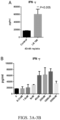
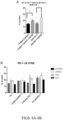
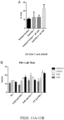
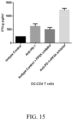
- a dose dependent increase was found in T cell proliferation in CD8+ and CD4+ cells ( Figs. 4A-B and 5A-B ) and an increase in IFNy secretion in CD4+ T cells ( Figs 3A-B ).
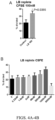
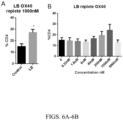
- a dose dependent increase was found to enhance co-stimulatory molecule OX40 expression on T cells ( Figs. 6A-B ) and Tbet, transcription factor to drive IFNy production in CD4+ T cells ( Figs 7A-B ).
- mice were implanted with CT26 tumor cells.
- CT26 is a murine colon adenocarcinoma expressing low level of PD-L1 and is resistant to anti-PD1 therapy.
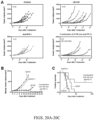
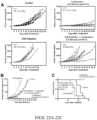
- mice with tumor size between 30-100 mm 3 were randomized into four treatment groups (PBS control, LB-100 only - 0.16 mg/kg, anti-PD-1 only - 10 mg/kg, or a combination of both). Treatment was given every 2 days for a total of 28 days. Tumor size was assessed every two days ( Figs. 20A-C ). Single agent treatment with anti-PD1 was ineffective in reducing tumor burden or increasing survival.
- the combined treatment significantly decreased mean tumor volume by 70% compared to control (p ⁇ 0.01) on day 14 after treatment.
- Median survival also increased from 21 to 72 days (p ⁇ 0.01). More strikingly, 50% of mice achieved complete regression (CR) of tumors with no evidence of disease. This response was durable after completion of treatment.
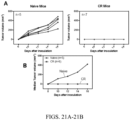
- mice that achieved CR from combination therapy developed long-term immune memory.
- About 60 days after initial inoculation, cured mice were re-inoculated with same CT26 cells ( Figs. 21A-B ). None of the mice (n 8) developed tumor on re-challenge.
- CT26 naive mice were inoculated at the same time to serve as control. This result indicates mice cured by the combination therapy were able to establish long-term memory to tumor specific antigen.
- Reagents - LB-100 was provided by Lixte Biotechnology.
- Anti-mouse PD-1, Clone RMP1-14, antibody was purchased from BioXcell.
- the following monoclonal antibodies (mAbs) were used for flow cytometry: rat anti-mouse CD4-BV421, rat anti-mouse CD3-PE, rat anti-mouse CD8a-Alexa 647, rat anti-mouse CD45-BV785, rat anti-mouse IFNg-FITC, rat anti-mouse FOXP3-Alexa 647.
- mAbs monoclonal antibodies
- CT26 tumor cells (0.5 ⁇ 10 6 ) were injected subcutaneously in the right side of the abdomen.
- LB-100 and anti-PD-1 was injected by the i.p. route at a dose of 0.16 mg/kg and 10 mg/kg respectively beginning on day 11 after tumor implantation and continued every 2 d for 28 d.
- Tumor size were monitored with a digital caliper every 2-3 d and expressed as volume (length ⁇ width 2 ⁇ 0.5). Animals whose tumors became ulcerated/necrotic or a tumor burden exceeding 2,000 mm3 or with a largest diameter greater than 2 cm were euthanized.
- CD8 T cells Depletion of CD8 T cells.
- Anti-CD8 (clone 53.6.7) mAbs (BioXcell) were injected 2 d and 1 d before therapy, on the day therapy and at 5 and 8 d after beginning therapy. Dose was 0.1 mg per injection.
- Tumor Rechallenge Studies Naive BALB/c mice and mice previously cured with combination treatment as described above were inoculated with CT26 cells into the left (not previously inoculated) thoracic flank. Tumors were measured two times per week as described above. Animals whose tumors became ulcerated/necrotic or tumor burden exceeded 2,000 mm3 or had a largest diameter greater than 2 cm were euthanized.
- TIL Tumor Infiltrating Lymphoctes
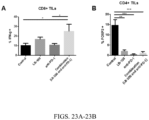
- tumor infiltrating lymphocytes Figs. 23A-B .
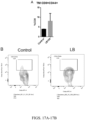
- LB-100 alone significantly depleted Tregs in the tumor environment (2.1% compared to 14.7% in control). This effect is similar in degree to the effect on Tregs depletion by anti-PD-1 or the combination.
- LB-100 alone can deplete Tregs suggests a possible mechanism explaining the small but significant survival benefit observed in the LB-100 alone treatment group.
- mice achieving CR were resistant to tumor growth when re-inoculated with CT26 cells.
- Mice subjected to CD8+ T cell ablation using depleting antibodies were unable to reject CT26 tumors - 0/8 (0%) despite treatment with combination therapy, indicating that the anti-tumor effect of LB-100 with anti-PD-1 treatment is CD8+ T cell mediated.
- the PP2A inhibitor, LB-100 has synergistic potential in conjunction with checkpoint blockade supporting investigation of its ability to enhance immunotherapy in the clinic.
- Tumors often developed multiple mechanisms to evade the immune system, one of which is expression of PD-1 of T cells, which effectively inhibits T-cells from attacking the tumor. Anti-PD-1 abrogates this inhibitory signal, thereby allowing the T-cell to recognize and eradicate the tumor.
- LB-100 an inhibitor of Protein Phosphatase 2A (PP2A) was found to have dramatic antitumor effect in a preclinical model of colon cancer. This effect was found to be mediated by enhancement of the immune system.
- P2A Protein Phosphatase 2A
- Example 11 Administration of LB-100 in combination with a PD-1 and/or PD-L1 Checkpoint Inhibitor
- An amount of compound LB-100 in combination with a PD-1 and/or PD-L1 checkpoint inhibitor is administered to a subject afflicted with cancer.
- the amount of the compound and inhibitor is effective to treat the subject.
- An amount of compound LB-100 in combination with a PD-1 and/or PD-L1 checkpoint inhibitor is administered to a subject afflicted with cancer.
- the amount of the compound is effective to enhance the anti-cancer activity of the PD-1 and/or PD-L1 checkpoint inhibitor.
- An amount of compound LB-100 in combination with a PD-1 and/or PD-L1 checkpoint inhibitor is administered to a subject afflicted with melanoma.
- the amount of the compound and inhibitor is effective to treat the subject.
- An amount of compound LB-100 in combination with a PD-1 and/or PD-L1 checkpoint inhibitor is administered to a subject afflicted with melanoma.
- the amount of the compound is effective to enhance the anti-cancer activity of the PD-1 and/or PD-L1 checkpoint inhibitor.
- Example 12 Assessment of Efficacy of LB-100 As Add-On Therapy To Atezolizumab, Nivolumab or Pembrolizumab.
- the add-on therapy provides a synergistic effect, and allows for lower doses with reduced side effects.
- Nivolumab or Pembrolizumab Periodic administration of LB-100 as an add-on therapy for a human patient afflicted with melanoma who is already receiving Atezolizumab, Nivolumab or Pembrolizumab provides a clinically meaningful advantage and is more effective (provides at least an additive effect or more than an additive effect) in treating the patient than when Atezolizumab, Nivolumab or Pembrolizumab is administered alone (at the same dose).
- Periodic administration Atezolizumab, Nivolumab or Pembrolizumab as an add-on therapy for a human patient afflicted with melanoma who is already receiving of LB-100 provides a clinically meaningful advantage and is more effective (provides at least an additive effect or more than an additive effect) in treating the patient than when LB-100 is administered alone (at the same dose).
- the add-on therapies also provide efficacy (provides at least an additive effect or more than an additive effect) in treating the patient without undue adverse side effects or affecting the safety of the treatment. As compared to when each agent is administered alone:
- Example 13 Pharmacological Inhibition of Protein Phosphatase-2A with LB-100 Achieves Durable Immune-Mediated Anti-Tumor Activity When Combined With PD-1 Blockade
- the present example demonstrates, inter alia, that a small molecule PP2A inhibitor, LB-100, when combined with anti-PD1 (aPD-1) blockade synergistically elicits a durable immune-mediated anti-tumor response in the CT26 colon cancer model.
- This effect was T cell dependent, leading to a striking regression of a significant proportion of tumors.
- Analysis of tumor lymphocytes demonstrated enhanced infiltration of effector T cells and depletion of suppressive regulatory T cells resulting in a markded increase in effector-to-regulatory T cell ratios. Clearance of tumor established antigen-specific secondary protective immunity.
- a synergistic effect of LB-100 and aPD-1 blockade was also observed in the B16 melanoma model.
- LB-100 and aPD-1 combination treatment synergistically elicit rejection of CT26 tumors:
- a CT26 tumor was used, which is a murine colorectal carcinoma with high PD-L1 expression but limited response to aPD-1 therapy.
- Mice were inoculated with CT26 tumor cells (0.25 ⁇ 10 6 ). After 10-13 days, mice with tumors reaching 50-100 mm 3 in size were randomized into four treatment groups: control (PBS), aPD-1, LB-100 and the combination of aPD-1 and LB-100. Treatments were administered every 2 days for 30 days.
- mice cured by the combination therapy develop antigen-specific long-term memory The hallmark of a successful adaptive immune response is the establishment of immunologic memory.
- the following experiment tested mice that experienced a complete response (CR) for their secondary protective anti-tumor response.
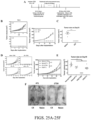
- Mice were re-challenged with CT26 cells about 60 days after initial tumor implantation ( Fig.25A ). These mice were completely resistant to CT26 cell re-challenge ( Fig.25B ).
- the average tumor size at day 18 after (re-)implant was 480 mm 3 in na ⁇ ve compared to 0 mm 3 in CR mice (p ⁇ 0.0001) ( Fig.25C ).
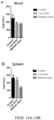
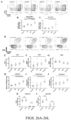
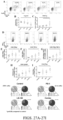
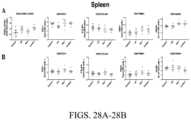
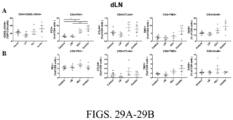
- Enhanced activation of lymphocytes with combination treatment To address the cellular mechanism mediating tumor rejection by the LB-100/aPD-1 combination, the status of the immune system in the secondary lymphoid organs and in the tumor were examined. Mice were implanted with CT26 tumors and treated with LB-100 and/or aPD-1 as described above. On day 3, after two treatments, the spleens, tumor draining lymph nodes (dLN) and tumors were harvested and analyzed by flow cytometry ( Fig.26-27 ). In the secondary lymphoid tissue, a greater activation of CD8+ T cells in mice treated with the combination regimen compared to controls was observed, as indicated by greater frequency of CD44+CD62L-CD8+ T cells ( Fig.
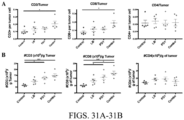
- CD3+ T cell population was attributed to a significant increase of CD8+ T cells ( Fig.26D ), whether normalized to CD45+ cells (from 25.9 to 45.3%, p ⁇ 0.01) ( Fig.26F ) or number of tumor-resident cells (from 8 to 19%, p ⁇ 0.05) ( Fig. 31A ).
- Fig. 31B A similar trend was observed in CD8+ T cells normalized to tumor weight ( Fig. 31B ). Instead, the CD4+ T cell population remained unchanged ( Fig.26G , 31 ), resulting in a marked increase in CD8/CD4 ratio (from 3.6 to 9.0, p ⁇ 0.001) ( Fig. 27H ).
- aPD-1 is known to act at the level of the tumor and with limited ability to deplete Tregs.
- the combination treatment significantly decreased the percentage of CD4+FoxP3+ Treg cells among TILs (from 10.3 to 4.9% of CD3+ T cells, p ⁇ 0.05) ( Fig.27A-B ).
- CD8+ TILs were significantly increased with the combination treatment.
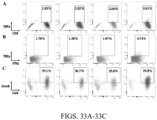
- the cytolytic capacity of CD8+ TILs was also determined by Granzyme B (GzmB) expression, which was also significantly increased with LB-100/a-PD1 treatment ( Fig.27H , 33C ).
- GzmB Granzyme B
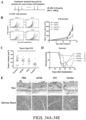
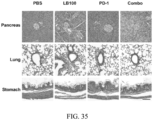
- LB-100 and aPD-1 enhance anti-tumor activity in B16 melanoma without histologic evidence of autoimmunity: It was next determined whether LB-100/aPD-1 combination was effective against other aPD-1 resistant tumor.
- a tumor prevention model 6-8 weeks old C57BL/6 mice were randomized into four treatment groups: PBS, LB-100, aPD-1 and combination.
- B16F10 cells 2.5 ⁇ 10 5 ) were inoculated 2 days after initiation of treatment subcutaneously in the right thoracic flank. Treatments were administered every two days following survival ( Fig.34A ). By day 15 after tumor implantation, there was no difference between control and the single agent arms.
- tumor size was significantly smaller in the combination group relative to control (from 305.9 to 109.0 mm 3 , p ⁇ 0.05) ( Fig.34B-C ) and survival was prolonged by the combination treatment (p ⁇ 0.05) ( Fig.34D ).
- mice in the combination group demonstrated any clinical signs of autoimmune inflammatory events.
- the LB-100/aPD-1 combination resulted in increased effector function and Treg depletion, autoimmunity is a concern.
- C57BL/6 mice that reached survival endpoints were sacrificed and the histology of the skin, salivary gland, pancreas, lung and stomach were examined ( Fig.34E , 35 ). There was no evidence in any of the treatment group to suggest increased lymphocyte infiltration or signs of autoimmunity.
- LB-100 inhibits PP2A activity and enhances mTORC1 activation: PP2A enzymatic activity of isolated CD4 and CD8 cells from mice splenocytes were measured 3 hours after in vitro stimulation with plated CD3 and soluble CD28. There was a dose dependent decrease in PP2A enzymatic activity in both CD4 and CD8 cells, with a greater effect in CD8 than CD4 cells ( Fig.36A ).
- mTORC1, mTORC2 and PI(3)K-AKT pathways were assessed by checking the phosphorylation of ribosomal S6 protein (S6), AKT at Thr473 and AKT at Thr308 respectively. It was found that while LB-100 has minimal effect on mTORC2 and PI(3)K-AKT pathways ( Fig.36B ), there was a dose dependent increase in activity of mTORC1 as measured by phosphorylation of S6 ( Fig.36c ). This difference was not observed in any of the 3 pathways at an early time point of 30 minutes after activation ( Fig. 37 ).
- LB-100 inhibits naive CD4 cells development into regulatory or Th2 CD4 cells:
- Naive CD4 cells were isolated from mice splenocytes and activated in vitro with anti-CD3 and CD28 in the presence of TGF- ⁇ or IL4 to induce development of Treg or Th2 CD4+ cells respectively. After 72 hours, intranuclear expressions of Foxp3 or GATA3 were quantitated by flow cytometry to determine percentage of Treg or Th2 cells respectively. LB-100 treatment significantly impaired induction of Foxp3 by TGF- ⁇ ( Fig.38A ) or GATA3 ( Fig.38B ) by IL-4 in a dose dependent manner. In addition, the relative proportion of Th2 and Th1 CD4+ cells was quantified by labeling for T-bet.
- LB-100 In vitro activity of LB-100 in human mixed lymphocytes reactions: To further confirm the immune-modulating effect of LB-100 has clinical utility, mixed lymphocyte reactions (MLRs) were performed using PBMC from healthy human donors. Monocyte derived dendritic cells were co-cultured with allogenic CD4+ T cells labelled with cytosolic dye CFSE. LB-100 was given on the day of co-culture (Day 0) and again on Day 3. Proliferation and IFN- ⁇ secretion by CD4 T cells were assessed on Day 5 ( Fig.39A ). There was a significant increase in CD4 T cell proliferation, as measured by the percentage of dividing cells, with LB-100 treatment at 1 ⁇ M (31% compared to 20% in controls) ( Fig.39B ).
- LB-100 could enhance IFN- ⁇ secretion in vitro in combination with PD1 blockade using Nivolumab.
- a similar MLR assay was performed with LB-100. It was found that LB-100 synergized with anti-PD1 (aPD-1) blockade and enhanced IFN- ⁇ secretion compared to single agents ( Fig.39E ).
- Drugs - Nivolumab was obtained from Bristol-Myers Squibb and LB-100 was obtained from Lixte Biotechnology Holdings, Inc.
- Tumor cells were cultured in complete medium (RPMI 1640, Gibco) containing 10% (vol/vol) FBS (Gibco), 100 U/ml penicillin, 100 ug/ml streptomycin (Gibco).
- CT26 tumor models were maintained and experiments were conducted with the approval of the NINDS Animal Use and Care Committees.
- BALB/c (6-8 wk old) were purchased from Charles River Laboratory.
- CT26 cells (0.5 ⁇ 10 6 ) were injected into the right flank subcutaneously. Once tumors reached a volume of 30-100 mm 3 (day 0), mice were randomized and treated with PBS, LB-100 (0.156 mg/kg) and/or anti-mouse PD-1 (10 mg/kg) (RMP1-14; rat IgG2b; Bio X Cell). Treatments were given every 2 days for 30 days.
- B16 tumors C57BL/6 (6-8 wk old) were purchased from Charles River Laboratory. Mice were randomized into respective treatment groups and 2 days after initial treatment B16F10 cells (0.5 ⁇ 10 6 ) were injected into the right flank subcutaneously. Treatment and measurements were done every 2 days. Survival endpoint was defined as when any of the following criteria was reached: 1) tumor volume exceeding 2000 mm 3 , 2) tumor diameter exceeding 2 cm, 3) severe non-healing skin necrosis over the tumor.
- mice When indicated, some mice were depleted for CD8+ T cells by injection of 250 ⁇ g of CD8-depleting antibodies (clone 53.6.7; BioXcell). Injections were given 2 d and 1 d before therapy, on the day of therapy initiation, at 5 d and 8 d after start of therapy, and weekly onwards.
- Tumor re-challenge studies - Naive BALB/c mice and previously cured (CR) mice with combination therapy from CT26 tumors were inoculated with 0.5 ⁇ 10 6 CT26 cells into the left (CR) and right (naive) thoracic flank. Where indicated, some mice were also inoculated with 1.25 ⁇ 10 5 4T1 mammillary carcinoma cells in the mammary fat pad. Tumors volume were then monitored similarly as above.
- TILs TILs - Mice were injected in the right thoracic flank with 0.5 ⁇ 10 6 CT26 cells and treated as above after tumors reached between 50-100 mm 3 . After 2 treatments, mice were sacrificed and tumors excised. Tumors were subjected to mechanical disruption using a GentleMACS Dissociator (Miltenyi Biotec) in presence of enzymatic digestion using Tumor Dissociation Kit (Miltenyi Biotec). Gating strategy used for analysis of TILs is shown in Fig. S3.
- Intracellular cytokine staining phosphoflow and flow cytometry - Suspensions containing T cells were stained with a fixable live/dead stain (Invitrogen) in PBS followed by surface antibody staining in FACS buffer (PBS with 0.5% BSA and 0.1% sodium azide).
- FACS buffer PBS with 0.5% BSA and 0.1% sodium azide.
- cytokine staining cells were stained for surface molecules following by fixation and permeabilization (eBioscience).
- cytokine staining cells were first stimulated with Cell Stimulation Cocktail (eBioscience) containing PMA/Ionomycin and protein transport inhibitor prior to undergoing staining.
- phosphostaining 4% formaldehyde was used for fixation and 100% methanol was used for permeabilization protocols.
- Cells were analyzed by flow cytometry (LSRII; BD Bioscience). Data analysis was performed using FlowJo software (TreeStar).
- PP2A phosphatase assay - Mouse CD4+ and CD8+ T cells were isolated with CD4 and CD8 isolation kit (StemCell) respectively. Cells were activated using immobilized anti-CD3 (10 ug/ml) and soluble anti-CD28 (2 ug/ml) for three hour. PP2A activity was then evaluated after immunoprecipitation using a malachite green phosphatase assay kit as per the manufacturer's instructions (EMD Millipore).
- T cell stimulation and skewing - Naive CD4 cells were isolated from mice splenocytes (StemCell). Cells were activated for 3 days using immobilized anti-CD3 (10 ug/ml) and soluble anti-CD28 (2 ug/ml).
- Skewing conditions were as follows: T H 1, 1 .ig/mL anti-IL4, 5 ng/mL IL2, and 10 ng/mL IL12; T H 2, 1 .ig/mL anti-IFN- ⁇ , 5 ng/mL IL2, and 10 ng/mL IL4 ; Treg, 1 .ig/ mL anti-IFN ⁇ , and 1 ig/mL anti-IL4, and 2 ng/ mL TGF ⁇ 1.
- Bead-based multianalyte flow immunoassays (BD Bioscience) were used to measure cytokine production in the supernatant per manufacturer's instruction. Absolute cell numbers were quantified with flow cytometry using counting beads (Biolegend).
- Antibodies for flow cytometry - Anti-mouse ⁇ -CD45 (30-F11, BD), ⁇ -CD3 (145-2C11, Biolegend), ⁇ -CD4 (GK1.5, Biolegend), ⁇ -CD8 (53-6.7, BD), ⁇ -PD-1 (J43, ThermoFisher), ⁇ -CTLA4 (1B8, abcam), ⁇ -TIM-3 (B8.2C12, Biolegend), ⁇ -OX-40 (OX-86, Biolegend), ⁇ -CD62L (MEL-14, BD), ⁇ -CD44 (IM7, Biolegend), ⁇ -LAG-3 (C9B7W, Biolegend), ⁇ -IFN- ⁇ (XMG1.2, Biolegend), ⁇ -TNF- ⁇ (MP6-XT22, Biolegend), ⁇ -Granzyme B (NGZB, ThermoFisher), ⁇ -FOXP3 (MF-14, Biolegend), ⁇ -Ki67 (
- Histology - Formalin-fixed tissues were processed, stained with hematoxylin and eosin and evaluated blindly by a board-certified pathologist.
- DCs Dendritic cells
- IL-4 interleukin-4
- GM-CSF GM-CSF
- CD4+ T cells (1 ⁇ 10 5 ) isolated with CD4 isolation kit (StemCell) and labeled with CFSE (ThermoFisher) were co-cultured with allogeneic DCs (1 ⁇ 10 4 ).
- CFSE ThermoFisher
- LB-100 was replenished to the final indicated concentration. After 5 days, culture supernatants were analyzed by ELISA (eBioscience) and cells were analyzed by flow cytometry. At least 3 separate donors were obtained and results of one representative donor were reported.
Landscapes
- Health & Medical Sciences (AREA)
- Chemical & Material Sciences (AREA)
- Medicinal Chemistry (AREA)
- Life Sciences & Earth Sciences (AREA)
- General Health & Medical Sciences (AREA)
- Immunology (AREA)
- Animal Behavior & Ethology (AREA)
- Public Health (AREA)
- Veterinary Medicine (AREA)
- Pharmacology & Pharmacy (AREA)
- Organic Chemistry (AREA)
- Epidemiology (AREA)
- Chemical Kinetics & Catalysis (AREA)
- General Chemical & Material Sciences (AREA)
- Nuclear Medicine, Radiotherapy & Molecular Imaging (AREA)
- Biophysics (AREA)
- Molecular Biology (AREA)
- Proteomics, Peptides & Aminoacids (AREA)
- Biochemistry (AREA)
- Genetics & Genomics (AREA)
- Endocrinology (AREA)
- Engineering & Computer Science (AREA)
- Bioinformatics & Cheminformatics (AREA)
- Microbiology (AREA)
- Mycology (AREA)
- Dermatology (AREA)
- Hematology (AREA)
- Oncology (AREA)
- Pharmaceuticals Containing Other Organic And Inorganic Compounds (AREA)
- Medicines That Contain Protein Lipid Enzymes And Other Medicines (AREA)
- Medicines Containing Antibodies Or Antigens For Use As Internal Diagnostic Agents (AREA)
- Steroid Compounds (AREA)
- Acyclic And Carbocyclic Compounds In Medicinal Compositions (AREA)
- Heterocyclic Carbon Compounds Containing A Hetero Ring Having Oxygen Or Sulfur (AREA)
- Medicinal Preparation (AREA)
Priority Applications (1)
| Application Number | Priority Date | Filing Date | Title |
|---|---|---|---|
| EP23202240.0A EP4324477A3 (en) | 2016-12-08 | 2017-12-08 | Oxabicycloheptanes for modulation of immune response |
Applications Claiming Priority (4)
| Application Number | Priority Date | Filing Date | Title |
|---|---|---|---|
| US201662497949P | 2016-12-08 | 2016-12-08 | |
| US201762465001P | 2017-02-28 | 2017-02-28 | |
| US201762545373P | 2017-08-14 | 2017-08-14 | |
| PCT/US2017/065270 WO2018107004A1 (en) | 2016-12-08 | 2017-12-08 | Oxabicycloheptanes for modulation of immune response |
Related Child Applications (2)
| Application Number | Title | Priority Date | Filing Date |
|---|---|---|---|
| EP23202240.0A Division EP4324477A3 (en) | 2016-12-08 | 2017-12-08 | Oxabicycloheptanes for modulation of immune response |
| EP23202240.0A Division-Into EP4324477A3 (en) | 2016-12-08 | 2017-12-08 | Oxabicycloheptanes for modulation of immune response |
Publications (3)
| Publication Number | Publication Date |
|---|---|
| EP3551629A1 EP3551629A1 (en) | 2019-10-16 |
| EP3551629A4 EP3551629A4 (en) | 2020-07-29 |
| EP3551629B1 true EP3551629B1 (en) | 2023-11-15 |
Family
ID=62491355
Family Applications (2)
| Application Number | Title | Priority Date | Filing Date |
|---|---|---|---|
| EP17879038.2A Active EP3551629B1 (en) | 2016-12-08 | 2017-12-08 | Oxabicycloheptanes for modulation of immune response |
| EP23202240.0A Pending EP4324477A3 (en) | 2016-12-08 | 2017-12-08 | Oxabicycloheptanes for modulation of immune response |
Family Applications After (1)
| Application Number | Title | Priority Date | Filing Date |
|---|---|---|---|
| EP23202240.0A Pending EP4324477A3 (en) | 2016-12-08 | 2017-12-08 | Oxabicycloheptanes for modulation of immune response |
Country Status (12)
| Country | Link |
|---|---|
| US (2) | US12168008B2 (enExample) |
| EP (2) | EP3551629B1 (enExample) |
| JP (2) | JP7246309B2 (enExample) |
| KR (2) | KR20240042151A (enExample) |
| CN (2) | CN110234647B (enExample) |
| AU (1) | AU2017370731B2 (enExample) |
| BR (1) | BR112019011627A2 (enExample) |
| DK (1) | DK3551629T3 (enExample) |
| ES (1) | ES2970913T3 (enExample) |
| IL (2) | IL290857B2 (enExample) |
| MX (1) | MX2019006694A (enExample) |
| WO (1) | WO2018107004A1 (enExample) |
Families Citing this family (8)
| Publication number | Priority date | Publication date | Assignee | Title |
|---|---|---|---|---|
| KR20160004299A (ko) | 2013-04-09 | 2016-01-12 | 릭스트 바이오테크놀로지, 인코포레이티드 | 옥사바이시클로헵탄류 및 옥사바이시클로헵텐류의 제형 |
| JP7187023B6 (ja) | 2015-05-15 | 2023-01-05 | リクスト・バイオテクノロジー,インコーポレイテッド | オキサビシクロヘプタンプロドラッグ |
| AU2017370731B2 (en) | 2016-12-08 | 2022-06-02 | Lixte Biotechnology, Inc. | Oxabicycloheptanes for modulation of immune response |
| KR102723511B1 (ko) | 2019-08-13 | 2024-10-28 | 주식회사 엘지에너지솔루션 | 전극 스크랩 재활용 방법 및 이를 이용한 전극 제조 방법 |
| US20240052050A1 (en) * | 2020-12-16 | 2024-02-15 | Merus N.V. | Multispecific antibodies for the treatment of cancer |
| KR20230136624A (ko) * | 2021-01-19 | 2023-09-26 | 릭스트 바이오테크놀로지, 인코포레이티드 | 소세포 폐암의 치료를 위한 옥사비시클로헵탄 |
| WO2024097784A2 (en) * | 2022-11-03 | 2024-05-10 | Lixte Biotechnology, Inc. | Oxabicycloheptanes and oxabicycloheptenes for treating refractory cancers |
| WO2026039548A1 (en) * | 2024-08-13 | 2026-02-19 | Mcleay Matthew | Perfluorocarbon compositions, systems, and methods for ischemic, inflammatory, infectious, transplant, and other medical conditions |
Family Cites Families (187)
| Publication number | Priority date | Publication date | Assignee | Title |
|---|---|---|---|---|
| US2957906A (en) | 1955-10-25 | 1960-10-25 | Monsanto Chemicals | Ketones |
| US3227473A (en) | 1963-12-12 | 1966-01-04 | Julian S Halbern | Check identification |
| JPS5752354B2 (enExample) | 1973-10-22 | 1982-11-06 | ||
| JPS5069091U (enExample) | 1973-10-25 | 1975-06-19 | ||
| US3980674A (en) | 1974-01-28 | 1976-09-14 | Delmar Chemicals Limited | 2,3-Disubstituted 7-oxabicyclo-[2.2.1]-5-heptene |
| JPS5132733A (en) | 1974-09-10 | 1976-03-19 | Kyowa Hakko Kogyo Kk | Josozai |
| US3954913A (en) | 1975-01-06 | 1976-05-04 | The Standard Oil Company | Stabilized nitrile polymers |
| JPS5188631U (enExample) | 1975-01-10 | 1976-07-15 | ||
| JPS5188631A (en) | 1975-01-31 | 1976-08-03 | Hiiryoyosatsukinzai oyobi sonoseizoho | |
| US4143054A (en) | 1977-11-04 | 1979-03-06 | E. R. Squibb & Sons, Inc. | 7-oxabicycloheptane- and 7-oxabicycloheptene compounds |
| US4218478A (en) | 1979-01-05 | 1980-08-19 | Ruiko Oiwa | Trichostatin as an antiprotozoal agent |
| US4760067A (en) | 1979-08-15 | 1988-07-26 | Merck & Co., Inc. | Allylsulfoxide enzyme inhibitors |
| US4298752A (en) | 1980-09-19 | 1981-11-03 | Regents Of The University Of California | Cycloadduct precursors of cantharidin and method |
| US4614825A (en) | 1982-05-17 | 1986-09-30 | E. R. Squibb & Sons, Inc. | 7-oxabicycloheptane and 7-oxabicycloheptene compounds |
| US4463015A (en) | 1982-08-18 | 1984-07-31 | E. R. Squibb & Sons, Inc. | Aryl substituted 7-oxabicycloheptane compounds, useful in inhibiting platelet aggregation |
| US4518696A (en) | 1983-01-11 | 1985-05-21 | Chr. Hansen's Laboratory, Inc. | Stabilized liquid bacterial suspension for oral administration to animals |
| US4524151A (en) | 1983-11-14 | 1985-06-18 | E. R. Squibb & Sons, Inc. | 7-Oxabicycloheptane thio ethers useful as cardiovascular agents |
| JPS61176523A (ja) | 1985-01-30 | 1986-08-08 | Teruhiko Beppu | 制癌剤 |
| US4654355A (en) | 1985-08-01 | 1987-03-31 | E. R. Squibb & Sons, Inc. | 7-oxabicycloheptane substituted amide-thioamide prostaglandin analogs |
| US4816579A (en) | 1986-06-04 | 1989-03-28 | E. R. Squibb & Sons, Inc. | 7-oxabicycloheptane amino-alcohol intermediates useful in making thromboxane A2 receptor antagonists |
| US4851553A (en) | 1986-06-04 | 1989-07-25 | E. R. Squibb & Sons, Inc. | 7-oxabicycloheptane amido-carboxylic acids |
| US4851423A (en) | 1986-12-10 | 1989-07-25 | Schering Corporation | Pharmaceutically active compounds |
| SU1553533A1 (ru) | 1988-01-28 | 1990-03-30 | Военная Краснознаменная академия химической защиты им.Маршала Советского Союза С.К.Тимошенко | Способ получени 1,4-бисполифторалкил-7-оксбицикло [2.2.1]гептанов |
| JP2789365B2 (ja) | 1988-12-14 | 1998-08-20 | 塩野義製薬株式会社 | ジカルボン酸モノエステルおよびその製造法 |
| RU2015980C1 (ru) | 1990-02-06 | 1994-07-15 | Е.Р.Сквибб энд Санз, Инк. | 7-оксабициклогептилзамещенные гетероциклические амиды или их стереоизомеры в качестве антагонистов рецепторов тромбоксана |
| US5763647A (en) | 1990-03-30 | 1998-06-09 | Shionogi & Co., Ltd. | Preparation of optically active 1,4-bridged-cyclohexane carboxylic acid derivatives |
| CA2084412C (en) | 1990-06-04 | 2000-05-09 | W. Stephen Faraci | Pyrrolidine and thiazolidine amides |
| US5229115A (en) | 1990-07-26 | 1993-07-20 | Immunex Corporation | Adoptive immunotherapy with interleukin-7 |
| US5266710A (en) | 1990-12-18 | 1993-11-30 | Patel Ramesh N | (Exo,exo)-7-oxabicyclo[2.2.1]heptane-2,3-dimethanol; monoacyl ester and diacyl ester |
| US5206386A (en) | 1991-03-20 | 1993-04-27 | Isp Investments Inc. | Controlled release N-substituted pyrrolidone esters and process for the use thereof |
| US5580858A (en) | 1991-06-10 | 1996-12-03 | Alberta Research Council | Immunosuppressive and tolerogenic modified Lewisx compounds |
| JP3134233B2 (ja) | 1991-07-26 | 2001-02-13 | 株式会社林原生物化学研究所 | α−グリコシル ケルセチンとその製造方法並びに用途 |
| US5326898A (en) | 1992-02-11 | 1994-07-05 | Allergan, Inc. | Substituted phenylethenyl compounds having retinoid-like biological activity |
| US6602713B1 (en) | 2001-02-09 | 2003-08-05 | Isis Pharmaceuticals, Inc. | Antisense modulation of protein phosphatase 2 catalytic subunit beta expression |
| US5580856A (en) | 1994-07-15 | 1996-12-03 | Prestrelski; Steven J. | Formulation of a reconstituted protein, and method and kit for the production thereof |
| US5518993A (en) | 1994-08-12 | 1996-05-21 | Buckman Laboratories International, Inc. | Pesticidal compositions containing ethoxylated fatty amines for increasing the effectiveness of endothal and salts thereof |
| US5770382A (en) | 1994-12-30 | 1998-06-23 | Ligand Pharmaceuticals, Inc. | Tricyclic retinoids, methods for their production and use |
| US6222055B1 (en) | 1995-07-06 | 2001-04-24 | Fraunhofer-Gesellschaft Zur Foerderung Der Angwandten Forschung E.V. | Hydrolyzable and polymerizable and/or polyadditive silanes |
| DE19600707B4 (de) | 1996-01-11 | 2004-02-19 | Glüsenkamp, Karl-Heinz, Dr. | Biyclische Anhydrid-Wirkstoff-Verbindungen, Verfahren zur Herstellung und Verwendung derselben |
| US5968965A (en) | 1996-01-30 | 1999-10-19 | Merck & Co., Inc. | Inhibitors of farnesyl-protein transferase |
| US6777217B1 (en) | 1996-03-26 | 2004-08-17 | President And Fellows Of Harvard College | Histone deacetylases, and uses related thereto |
| US5925651A (en) | 1996-04-03 | 1999-07-20 | Merck & Co., Inc. | Inhibitors of farnesyl-protein transferase |
| US6387673B1 (en) | 1997-05-01 | 2002-05-14 | The Salk Institute For Biological Studies | Compounds useful for the modulation of processes mediated by nuclear hormone receptors, methods for the identification and use of such compounds |
| EP1391206B1 (en) | 1997-10-15 | 2008-07-02 | Polarx Biopharmaceuticals, Inc. | Pharmaceutical compositions comprising arsenic trioxide for the treatment of non-Hodgkin's lymphoma |
| US6632823B1 (en) | 1997-12-22 | 2003-10-14 | Merck & Co., Inc. | Substituted pyridine compounds useful as modulators of acetylcholine receptors |
| US6262116B1 (en) | 1998-01-23 | 2001-07-17 | Sloan-Kettering Institute For Cancer Research | Transcription therapy for cancers |
| DE69939900D1 (de) | 1998-06-05 | 2008-12-24 | Nutrinia Ltd | Insulin angereichertes säuglingsnährpräparat |
| AUPP466598A0 (en) | 1998-07-14 | 1998-08-06 | University Of Newcastle Research Associates Limited, The | Product and process |
| US20040110822A1 (en) | 1998-07-14 | 2004-06-10 | The University Of Newcastle Research Associates | Anhydride modified cantharidin analogues useful in the treatment of cancer |
| WO2000008015A2 (en) | 1998-08-07 | 2000-02-17 | Applied Research Systems Ars Holding N.V. | Fsh mimetics for the treatment of infertility |
| US20020151515A1 (en) | 1999-06-18 | 2002-10-17 | Roberts Bruce L. | Preparation and use of superior vaccines |
| US6949624B1 (en) | 1999-08-03 | 2005-09-27 | The United States Of America As Represented By The Department Of Health And Human Services | Cloning of the human nuclear receptor co-repressor gene |
| BR0014254A (pt) | 1999-09-08 | 2002-08-27 | Sloan Kettering Inst Cancer | Nova classe de agentes de citodiferenciação e inibidores de desacetilase de histona, e métodos de uso dos mesmos |
| US7605185B2 (en) | 1999-11-23 | 2009-10-20 | Gerhart Graupner | Treatment of arrhythmia by retinoids affecting signal transduction |
| AU2001243253A1 (en) | 2000-02-24 | 2001-09-03 | Biocryst Pharmaceuticals, Inc. | Prodrugs of substituted cyclopentane and cyclopentene compounds useful as neuraminidase inhibitors |
| JP4518627B2 (ja) | 2000-03-14 | 2010-08-04 | 旭化成イーマテリアルズ株式会社 | ヒドロキシポリアミド |
| JP2003528074A (ja) | 2000-03-24 | 2003-09-24 | メチルジーン インコーポレイテッド | ヒストン脱アセチル化酵素の阻害剤 |
| DE10038043B4 (de) | 2000-08-02 | 2006-09-07 | Walter, Michael, Dr. | Phamakologisch wirksame Substanz zur Behandlung kardiovaskulärer Erkrankungen |
| PE20020354A1 (es) | 2000-09-01 | 2002-06-12 | Novartis Ag | Compuestos de hidroxamato como inhibidores de histona-desacetilasa (hda) |
| WO2002024680A1 (en) | 2000-09-21 | 2002-03-28 | Smithkline Beecham P.L.C. | Imidazole derivatives as raf kinase inhibitors |
| WO2002028387A1 (en) | 2000-10-03 | 2002-04-11 | Oncopharmaceutical, Inc. | Inhibitors of angiogenesis and tumor growth for local and systemic administration |
| AU2001296661A1 (en) | 2000-10-06 | 2002-04-15 | Michigan State University | Divinyl ether synthase gene and protein, and uses thereof |
| CN1213050C (zh) | 2000-11-23 | 2005-08-03 | 拜尔公司 | 氧杂双环[2.2.1]庚烷衍生物,其制备方法和作为农药的用途 |
| US20020177692A1 (en) | 2001-04-16 | 2002-11-28 | Myriad Genetics, Incorporated | BCL-XL-interacting protein and use thereof |
| US20030166531A1 (en) | 2001-02-16 | 2003-09-04 | Genetics Institute, Inc. | Methods for modulating an immune response by modulating the interaction between CTLA4 and PP2A |
| AUPR392301A0 (en) | 2001-03-23 | 2001-04-26 | University Of Newcastle Research Associates Limited, The | Protein phosphatase inhibitors |
| US20040253637A1 (en) | 2001-04-13 | 2004-12-16 | Biosite Incorporated | Markers for differential diagnosis and methods of use thereof |
| US6905669B2 (en) | 2001-04-24 | 2005-06-14 | Supergen, Inc. | Compositions and methods for reestablishing gene transcription through inhibition of DNA methylation and histone deacetylase |
| DE10122898A1 (de) | 2001-05-11 | 2002-11-14 | Haarmann & Reimer Gmbh | Verwendung von Hydroxyflavanonen zur Maskierung des bitteren Geschmacks |
| US20070015144A9 (en) | 2001-05-25 | 2007-01-18 | Genset, S.A. | Human cDNAs and proteins and uses thereof |
| US7528274B2 (en) | 2001-08-03 | 2009-05-05 | The United States Of America As Represented By The Department Of Health And Human Services | Acylthiols and component thiol compositions as anti-HIV and anti-retroviral agents |
| US20040010045A1 (en) | 2001-09-07 | 2004-01-15 | Taolin Yi | Therapeutic compositions comprised of pentamidine and methods of using same to treat cancer |
| US7179450B2 (en) | 2001-09-20 | 2007-02-20 | Medi-Physics, Inc. | Methods for in vivo evaluation of pulmonary physiology and/or function using NMR signals of polarized Xe |
| EP1443928B1 (en) | 2001-10-16 | 2011-07-27 | Sloan-Kettering Institute For Cancer Research | Treatment of neurodegenerative diseases and cancer of the brain |
| NZ544689A (en) | 2001-11-06 | 2007-08-31 | Novartis Ag | Cyclooxygenase-2 inhibitor/histone deacetylase inhibitor combination |
| AU2002353845A1 (en) | 2001-11-23 | 2003-06-10 | Eli Lilly And Company | Prodrugs of excitatory amino acids |
| JP2004035408A (ja) | 2002-02-15 | 2004-02-05 | Chiron Corp | テザシタビンを含有する安定な組成物 |
| US7488712B2 (en) | 2002-02-20 | 2009-02-10 | Kyushu Institute Of Technology | Histone deacetylase inhibitors and methods for producing the same |
| US7148257B2 (en) | 2002-03-04 | 2006-12-12 | Merck Hdac Research, Llc | Methods of treating mesothelioma with suberoylanilide hydroxamic acid |
| US7456219B2 (en) | 2002-03-04 | 2008-11-25 | Merck Hdac Research, Llc | Polymorphs of suberoylanilide hydroxamic acid |
| CA2478587C (en) | 2002-03-08 | 2011-05-17 | Basf Aktiengesellschaft | Fungicidal mixtures based on prothioconazole and containing an insecticide |
| US6809118B2 (en) | 2002-07-25 | 2004-10-26 | Yih-Lin Chung | Methods for therapy of radiation cutaneous syndrome |
| IL149404A0 (en) | 2002-04-29 | 2002-11-10 | Yissum Res Dev Co | METHODS AND COMPOSITIONS FOR MODULATING β-CATENIN PHOSPHORYLATION |
| WO2003092616A2 (en) | 2002-05-01 | 2003-11-13 | The Cleveland Clinic Foundation | Therapeutic compositions comprised of pentamidine and methods of using same to treat cancer |
| US20040087531A1 (en) | 2002-05-16 | 2004-05-06 | Adam Telerman | Compositions and methods for the treatment of cancer |
| KR20060010709A (ko) | 2002-09-23 | 2006-02-02 | 쉐링 코포레이션 | 사이클린 의존성 키나제 억제제로서의 신규한 이미다조피라진 |
| US7154002B1 (en) | 2002-10-08 | 2006-12-26 | Takeda San Diego, Inc. | Histone deacetylase inhibitors |
| US8404716B2 (en) | 2002-10-15 | 2013-03-26 | Celgene Corporation | Methods of treating myelodysplastic syndromes with a combination therapy using lenalidomide and azacitidine |
| US7189740B2 (en) | 2002-10-15 | 2007-03-13 | Celgene Corporation | Methods of using 3-(4-amino-oxo-1,3-dihydro-isoindol-2-yl)-piperidine-2,6-dione for the treatment and management of myelodysplastic syndromes |
| AU2003291736A1 (en) | 2002-11-05 | 2004-06-03 | Cell Signaling Technology, Inc. | Methods and materials for examining pathways associated with glioblastoma progression |
| GB0226855D0 (en) | 2002-11-18 | 2002-12-24 | Queen Mary & Westfield College | Histone deacetylase inhibitors |
| ES2367430T3 (es) | 2002-12-23 | 2011-11-03 | Wyeth Llc | Anticuerpos contra pd-1 y sus usos. |
| US20040197888A1 (en) | 2002-12-31 | 2004-10-07 | Armour Christopher D. | Alternatively spliced isoforms of histone deacetylase 3 (HDAC3) |
| WO2004064727A2 (en) | 2003-01-16 | 2004-08-05 | Georgetown University | Method of cancer treatment using hdac inhibitors |
| US8802116B2 (en) | 2003-02-27 | 2014-08-12 | Novasel Australia Pty. Ltd. | Poloxamer emulsion preparations |
| EP1601965A4 (en) | 2003-03-12 | 2010-11-10 | Samaritan Pharmaceuticals Inc | SIMULATION OF NEUROLOGICAL DISEASES WITH ANIMAL MODEL |
| WO2004087153A2 (en) | 2003-03-28 | 2004-10-14 | Chiron Corporation | Use of organic compounds for immunopotentiation |
| US7842835B2 (en) | 2003-07-07 | 2010-11-30 | Georgetown University | Histone deacetylase inhibitors and methods of use thereof |
| US7514438B2 (en) | 2003-08-13 | 2009-04-07 | Amgen, Inc. | Melanin concentrating hormone receptor antagonist |
| WO2005025620A2 (en) | 2003-08-13 | 2005-03-24 | Pharmacia Corporation | Combination therapy with inhibitors of inducible nitric oxide synthase and alkylating agents |
| US7378409B2 (en) | 2003-08-21 | 2008-05-27 | Bristol-Myers Squibb Company | Substituted cycloalkylamine derivatives as modulators of chemokine receptor activity |
| WO2005018673A1 (en) | 2003-08-21 | 2005-03-03 | Osaka University | Pharmaceutical composition for preventing or remedying cardiac hypertrophy and cardiocascular disease caused thereby |
| US7094193B2 (en) | 2003-08-28 | 2006-08-22 | Philip Morris Usa Inc. | High speed laser perforation of cigarette tipping paper |
| US20070004771A1 (en) | 2003-10-06 | 2007-01-04 | Glaxo Group Limited | Preparation of 1,6,7-trisubstituted azabenzimidazoles as kinase inhibitors |
| US20070208166A1 (en) | 2003-10-24 | 2007-09-06 | Exelixis, Inc. | Tao Kinase Modulators And Method Of Use |
| US20050182011A1 (en) | 2003-11-13 | 2005-08-18 | Eric Olson | Inhibition of TRP channels as a treatment for cardiac hypertrophy and heart failure |
| GB0328157D0 (en) | 2003-12-04 | 2004-01-07 | Imp College Innovations Ltd | Compounds |
| US20060018970A1 (en) | 2003-12-12 | 2006-01-26 | Myogen, Inc. | Enoximone formulations and their use in the treatment of cardiac hypertrophy and heart failure |
| US8652502B2 (en) | 2003-12-19 | 2014-02-18 | Cordis Corporation | Local vascular delivery of trichostatin A alone or in combination with sirolimus to prevent restenosis following vascular injury |
| US20050282893A1 (en) | 2004-01-30 | 2005-12-22 | Au Jessie L | Methods and compositions for using suramin, pentosan, polysulfate, telomerase antisense and telomerase inhibitors |
| EP1715870A1 (en) | 2004-02-02 | 2006-11-02 | Myogen, Inc. | Inhibition of protein kinase c-related kinase (prk) as a treatment for cardiac hypertrophy and heart failure |
| US7253204B2 (en) | 2004-03-26 | 2007-08-07 | Methylgene Inc. | Inhibitors of histone deacetylase |
| FR2872704B1 (fr) | 2004-07-12 | 2007-11-02 | Laurent Schwartz | Pluritherapie contre le cancer |
| CN1586500A (zh) | 2004-07-19 | 2005-03-02 | 俞锋 | 治疗肿瘤的斑蝥酸钠注射剂及其制备方法 |
| JP5070052B2 (ja) | 2004-08-17 | 2012-11-07 | ザ・ジョンズ・ホプキンス・ユニバーシティ | Pde5阻害剤組成物及び心臓疾患を治療する方法 |
| WO2006052842A2 (en) | 2004-11-09 | 2006-05-18 | The Trustees Of The University Of Pennsylvania | Methods for diagnosis of myelodysplastic syndromes (mds) |
| KR100677149B1 (ko) | 2004-11-12 | 2007-02-02 | 삼성전자주식회사 | 잉크 조성물 |
| AU2006228957A1 (en) | 2005-04-01 | 2006-10-05 | Methylgene Inc. | Inhibitors of histone deacetylase |
| CN1304396C (zh) | 2005-04-08 | 2007-03-14 | 中山大学 | 斑蝥素衍生物及其制备方法 |
| EP3530736A3 (en) | 2005-05-09 | 2019-11-06 | ONO Pharmaceutical Co., Ltd. | Human monoclonal antibodies to programmed death 1 (pd-1) and methods for treating cancer using anti-pd-1 antibodies alone or in combination with other immunotherapeutics |
| GB0511266D0 (en) | 2005-06-02 | 2005-07-13 | Trust | Chemical compounds |
| KR101704734B1 (ko) | 2005-07-01 | 2017-02-09 | 이. 알. 스퀴부 앤드 선즈, 엘.엘.씨. | 예정 사멸 리간드 1 (피디-엘1)에 대한 인간 모노클로날 항체 |
| WO2007014029A2 (en) | 2005-07-22 | 2007-02-01 | The Regents Of The University Of Colorado, A Body Corporate | Yin yang 1 as a treatment for cardiac hypertrophy and heart failure |
| CA2617636A1 (en) | 2005-08-10 | 2007-02-22 | Novartis Ag | Use of histone deacetylase inhibitors for treating cardiac hypertrophy and heart failure |
| EP2275096A3 (en) | 2005-08-26 | 2011-07-13 | Braincells, Inc. | Neurogenesis via modulation of the muscarinic receptors |
| US20070092553A1 (en) | 2005-10-21 | 2007-04-26 | Pfab Lp | Compositions and methods of making rapidly dissolving lonically masked formulations |
| CN101374801B (zh) | 2005-12-19 | 2014-07-02 | 梅特希尔基因公司 | 用于增强抗真菌剂活性的组蛋白脱乙酰酶抑制剂 |
| WO2007092414A2 (en) | 2006-02-06 | 2007-08-16 | Lixte Biotechnology Holdings, Inc. | Use of phosphatases to treat tumors overexpressing n-cor |
| CA2648804C (en) | 2006-04-07 | 2014-05-27 | Methylgene Inc. | Benzamide derivatives as inhibitors of histone deacetylase |
| PE20080695A1 (es) | 2006-04-27 | 2008-06-28 | Banyu Pharma Co Ltd | Derivados de dihidropirazolopirimidinona como inhibidores de quinasa weel |
| US20090018142A9 (en) | 2006-05-02 | 2009-01-15 | Zhengping Zhuang | Use of phosphatases to treat tumors overexpressing N-CoR |
| WO2008030617A2 (en) | 2006-09-07 | 2008-03-13 | Stemline Therapeutics, Inc. | Cancer therapy with cantharidin and cantharidin analogs |
| ES2423482T3 (es) | 2006-09-08 | 2013-09-20 | Institut Gustave Roussy (Igr) | Inhibidores de proteína fosfatasa 1, de GADD34 y del complejo de proteína fosfatasa 1/GADD34, y usos de los mismos combinados con etopósido o mitomicina C |
| US20080097561A1 (en) | 2006-10-18 | 2008-04-24 | Medcool, Inc. | Dual cycle thermal system and method of use |
| EP2086534A4 (en) | 2006-11-15 | 2010-06-02 | Genetic Technologies Ltd | COMPOUNDS, COMPOSITIONS AND METHOD FOR CONTROLLING SWIVELY PESTS |
| BRPI0806365B8 (pt) | 2007-02-06 | 2021-05-25 | Lixte Biotechnology Holdings Inc | composto, uso do composto, composição farmacêutica e uso da composição farmacêutica |
| US8413445B2 (en) | 2007-05-11 | 2013-04-09 | General Electric Company | Method and system for porous flame holder for hydrogen and syngas combustion |
| PT2170959E (pt) | 2007-06-18 | 2014-01-07 | Merck Sharp & Dohme | Anticorpos para o receptor humano de morte programada pd-1 |
| US20090035292A1 (en) | 2007-08-03 | 2009-02-05 | Kovach John S | Use of phosphatases to treat neuroblastomas and medulloblastomas |
| CA2700857C (en) | 2007-10-01 | 2016-08-02 | John S. Kovach | Hdac inhibitors |
| JP5069091B2 (ja) | 2007-12-12 | 2012-11-07 | 三菱電機株式会社 | 監視カメラおよび監視カメラシステム |
| PT2242773T (pt) | 2008-02-11 | 2017-09-15 | Cure Tech Ltd | Anticorpos monoclonais para o tratamento de tumores |
| US8168757B2 (en) | 2008-03-12 | 2012-05-01 | Merck Sharp & Dohme Corp. | PD-1 binding proteins |
| WO2010014141A1 (en) | 2008-08-01 | 2010-02-04 | Lixte Biotechnology, Inc. | Methods for regulating cell mitosis by inhibiting serine/threonine phosphatase |
| WO2010147612A1 (en) | 2009-06-18 | 2010-12-23 | Lixte Biotechnology, Inc. | Methods of modulating cell regulation by inhibiting p53 |
| US8227473B2 (en) | 2008-08-01 | 2012-07-24 | Lixte Biotechnology, Inc. | Oxabicycloheptanes and oxabicycloheptenes, their preparation and use |
| WO2010014220A1 (en) | 2008-08-01 | 2010-02-04 | Lixte Biotechnology, Inc. | Neuroprotective agents for the prevention and treatment of neurodegenerative diseases |
| WO2010098788A2 (en) | 2008-08-25 | 2010-09-02 | Amplimmune, Inc. | Pd-i antagonists and methods for treating infectious disease |
| EA201500417A1 (ru) | 2008-08-25 | 2015-11-30 | Эмплиммьюн, Инк. | Композиции антагонистов pd-1 и способы применения |
| CN101367783A (zh) | 2008-10-10 | 2009-02-18 | 中国科学技术大学 | 5-羟甲基糠醛的制备方法 |
| MX356367B (es) | 2008-12-09 | 2018-05-25 | Genentech Inc | Anticuerpos anti-pd-l1 y su uso para mejorar la funcion de celulas t. |
| WO2010089411A2 (en) | 2009-02-09 | 2010-08-12 | Universite De La Mediterranee | Pd-1 antibodies and pd-l1 antibodies and uses thereof |
| GB0903325D0 (en) | 2009-02-26 | 2009-04-08 | Univ Aberdeen | Antibody molecules |
| US20120135522A1 (en) | 2009-06-18 | 2012-05-31 | Kovach John S | Methods of modulating cell regulation by inhibiting p53 |
| EP2504028A4 (en) | 2009-11-24 | 2014-04-09 | Amplimmune Inc | SIMULTANEOUS INHIBITION OF PD-L1 / PD-L2 |
| WO2011094683A2 (en) | 2010-01-29 | 2011-08-04 | H. Lee Moffitt Cancer Center And Research Institute, Inc. | Method of identifying myelodysplastic syndromes |
| AU2011243947A1 (en) | 2010-04-23 | 2012-12-06 | Piramal Enterprises Limited | Nitric oxide releasing prodrugs of therapeutic agents |
| US20140235649A1 (en) | 2011-05-24 | 2014-08-21 | Lixte Biotechnology, Inc. | Use of phosphatase inhibitors or histone deacetylase inhibitors to treat diseases characterized by loss of protein function |
| US9345705B2 (en) | 2011-09-15 | 2016-05-24 | Merck Sharp & Dohme Corp. | Compositions and methods for treating cancer |
| US20150005250A1 (en) | 2011-10-13 | 2015-01-01 | H. Lee Moffitt Cancer Center And Research Institute, Inc. | Telomerase reverse transcriptase deficiency as diagnostic marker of myelodysplastic syndrome |
| EP2857385B1 (en) | 2012-06-01 | 2017-08-02 | Taisho Pharmaceutical Co., Ltd. | Prodrug of fluorine-containing amino acid |
| EP2867239A4 (en) | 2012-06-29 | 2015-12-23 | Lixte Biotechnology Inc | OXABICYCLOHEPTANES AND OXABICYCLOHEPTENES FOR THE TREATMENT OF DIABETES |
| WO2014005080A1 (en) | 2012-06-29 | 2014-01-03 | Lixte Biotechnology, Inc. | Oxabicycloheptanes and oxabicycloheptenes for the treatment of reperfusion injury |
| US9738933B2 (en) | 2012-12-05 | 2017-08-22 | H. Lee Moffitt Cancer Center And Research Institute, Inc. | RNF41 as a biomarker predicting response to lenalidomide in non-del(5q) MDS |
| WO2014137741A1 (en) | 2013-03-05 | 2014-09-12 | Lixte Biotechnology, Inc. | Hdac inhibitors for treating traumatic brain injury |
| WO2014149494A1 (en) | 2013-03-15 | 2014-09-25 | Lixte Biotechnology, Inc. | Sanguinarine analog pp2c inhibitors for cancer treatment |
| KR20160004299A (ko) | 2013-04-09 | 2016-01-12 | 릭스트 바이오테크놀로지, 인코포레이티드 | 옥사바이시클로헵탄류 및 옥사바이시클로헵텐류의 제형 |
| JP2016538281A (ja) | 2013-11-15 | 2016-12-08 | リクスト・バイオテクノロジー,インコーポレイテッド | 血液脳関門を通過するタンパク質ホスファターゼ阻害剤 |
| US9051332B1 (en) | 2013-11-20 | 2015-06-09 | Transitions Optical, Inc. | Photochromic indeno-fused ring pyran compounds |
| UA122479C2 (uk) | 2014-01-24 | 2020-11-25 | Дана-Фарбер Кенсер Інстітьют, Інк. | Виділена молекула антитіла, яка зв’язується з людським білком програмованої смерті-1 (pd-1) |
| CA2940097A1 (en) | 2014-04-28 | 2015-11-05 | Alembic Pharmaceuticals Limited | Novel polymorphic forms of vortioxetine and its pharmaceutically acceptable salts |
| US20170136008A1 (en) | 2014-06-20 | 2017-05-18 | Lixte Biotechnology, Inc. | Oxabicycloheptanes and oxabicycloheptenes for the treatment of ovarian cancer |
| WO2016014778A1 (en) | 2014-07-24 | 2016-01-28 | H. Lee Moffitt Cancer Center And Research Institute, Inc. | Protein phosphatase 2a inhibitors for treating myelodysplastic syndromes |
| US20160074390A1 (en) | 2014-09-12 | 2016-03-17 | Lixte Biotechnology, Inc. | Human dosing of phosphatase inhibitor |
| US9994584B2 (en) | 2014-10-15 | 2018-06-12 | Lixte Biotechnology, Inc. | Process of synthesizing 3-(4-methylpiperazine-1-carbonyl)-7-oxabicyclo[2.2.1] heptane-2-carboxylic acid |
| MX382044B (es) | 2015-02-19 | 2025-03-13 | Lixte Biotechnology Inc | Oxabicicloheptanos y oxabicicloheptenos para el tratamiento de trastornos depresivos y de estrés. |
| HRP20201334T1 (hr) * | 2015-04-17 | 2020-11-27 | Bristol-Myers Squibb Company | Kompozicije koje sadrže kombinaciju ipilimumaba i nivolumaba |
| JP7187023B6 (ja) | 2015-05-15 | 2023-01-05 | リクスト・バイオテクノロジー,インコーポレイテッド | オキサビシクロヘプタンプロドラッグ |
| CA2999070A1 (en) | 2015-09-17 | 2017-03-23 | Novartis Ag | Car t cell therapies with enhanced efficacy |
| EP3407887B1 (en) | 2016-01-27 | 2021-09-01 | Lixte Biotechnology, Inc. | Clinical regimen for treating myelodysplastic syndrome with phosphatase inhibitor |
| WO2017176289A1 (en) | 2016-04-08 | 2017-10-12 | Celgene Corporation | Uses of lenalidomide and car t-cells |
| AU2017370731B2 (en) | 2016-12-08 | 2022-06-02 | Lixte Biotechnology, Inc. | Oxabicycloheptanes for modulation of immune response |
| US20210275521A1 (en) | 2017-12-05 | 2021-09-09 | Lixte Biotechnology, Inc. | Oxabicycloheptanes for treatment of secondary acute myeloid leukemia |
| US20210379106A1 (en) | 2018-06-14 | 2021-12-09 | Lixte Biotechnology, Inc. | Oxabicycloheptanes for enhancing car t cell function |
| RU201598U1 (ru) | 2020-05-14 | 2020-12-22 | Андрей Владимирович Дмитриев | Безреагентная испарительная градирня |
| KR20230136624A (ko) | 2021-01-19 | 2023-09-26 | 릭스트 바이오테크놀로지, 인코포레이티드 | 소세포 폐암의 치료를 위한 옥사비시클로헵탄 |
| TW202342039A (zh) | 2022-01-04 | 2023-11-01 | 美商利克斯特生物科技公司 | 用於治療癌症或預防、抑制或降低癌症轉移風險之組成物及方法 |
-
2017
- 2017-12-08 AU AU2017370731A patent/AU2017370731B2/en active Active
- 2017-12-08 DK DK17879038.2T patent/DK3551629T3/da active
- 2017-12-08 JP JP2019530702A patent/JP7246309B2/ja active Active
- 2017-12-08 KR KR1020247008982A patent/KR20240042151A/ko not_active Withdrawn
- 2017-12-08 ES ES17879038T patent/ES2970913T3/es active Active
- 2017-12-08 WO PCT/US2017/065270 patent/WO2018107004A1/en not_active Ceased
- 2017-12-08 CN CN201780084881.1A patent/CN110234647B/zh active Active
- 2017-12-08 MX MX2019006694A patent/MX2019006694A/es unknown
- 2017-12-08 EP EP17879038.2A patent/EP3551629B1/en active Active
- 2017-12-08 BR BR112019011627-3A patent/BR112019011627A2/pt unknown
- 2017-12-08 CN CN202310498623.5A patent/CN116585480A/zh active Pending
- 2017-12-08 US US16/467,721 patent/US12168008B2/en active Active
- 2017-12-08 EP EP23202240.0A patent/EP4324477A3/en active Pending
- 2017-12-08 KR KR1020197019763A patent/KR20190098995A/ko not_active Ceased
- 2017-12-08 IL IL290857A patent/IL290857B2/en unknown
-
2019
- 2019-06-06 IL IL267134A patent/IL267134B/en unknown
-
2023
- 2023-01-12 JP JP2023003205A patent/JP2023036999A/ja active Pending
-
2024
- 2024-12-13 US US18/979,811 patent/US20250221985A1/en active Pending
Also Published As
| Publication number | Publication date |
|---|---|
| CA3046515A1 (en) | 2018-06-14 |
| EP4324477A3 (en) | 2024-05-22 |
| IL290857B2 (en) | 2023-03-01 |
| IL290857A (en) | 2022-04-01 |
| AU2017370731B2 (en) | 2022-06-02 |
| US20200069680A1 (en) | 2020-03-05 |
| US12168008B2 (en) | 2024-12-17 |
| WO2018107004A1 (en) | 2018-06-14 |
| CN116585480A (zh) | 2023-08-15 |
| NZ754522A (en) | 2025-11-28 |
| IL290857B (en) | 2022-11-01 |
| CN110234647B (zh) | 2023-05-23 |
| JP2023036999A (ja) | 2023-03-14 |
| EP3551629A1 (en) | 2019-10-16 |
| US20250221985A1 (en) | 2025-07-10 |
| KR20190098995A (ko) | 2019-08-23 |
| MX2019006694A (es) | 2019-08-21 |
| JP2020502094A (ja) | 2020-01-23 |
| AU2017370731A1 (en) | 2019-07-04 |
| IL267134A (en) | 2019-08-29 |
| BR112019011627A2 (pt) | 2019-11-12 |
| DK3551629T3 (da) | 2024-02-12 |
| EP3551629A4 (en) | 2020-07-29 |
| JP7246309B2 (ja) | 2023-03-27 |
| ES2970913T3 (es) | 2024-05-31 |
| CN110234647A (zh) | 2019-09-13 |
| IL267134B (en) | 2022-04-01 |
| KR20240042151A (ko) | 2024-04-01 |
| EP4324477A2 (en) | 2024-02-21 |
Similar Documents
| Publication | Publication Date | Title |
|---|---|---|
| US20250221985A1 (en) | Oxabicycloheptanes for Modulation of Immune Response | |
| Peng et al. | PD-1 blockade enhances T-cell migration to tumors by elevating IFN-γ inducible chemokines | |
| US20210379106A1 (en) | Oxabicycloheptanes for enhancing car t cell function | |
| WO2023034336A2 (en) | Improved treatments for advanced/metastatic cancers with checkpoint inhibitor resistance or resistance susceptibility | |
| JP2025533802A (ja) | 癌の治療における使用のための抗pd-1抗体及び/又は抗血管新生剤と組み合わせたperk阻害薬hc-5404 | |
| CA3046515C (en) | Oxabicycloheptanes for modulation of immune response | |
| US11110105B2 (en) | Compounds, composition and uses thereof for treating cancer | |
| HK40015901B (en) | Oxabicycloheptanes for modulation of immune response | |
| HK40015901A (en) | Oxabicycloheptanes for modulation of immune response | |
| KR20200016877A (ko) | 표적 치료제를 포함하는 병용 요법 | |
| Kleef et al. | P08. 01 Low-dose checkpoint inhibitors with hyperthermia and IL-2 are safe and effective in stage IV cancer with unfavorable immunological profile (MSIlow, PD-L1 under 1%, TMBlow)–A single-institution experience from 2015 to 2020 | |
| US20210186978A1 (en) | Combination therapy | |
| HK40044041A (zh) | 联合疗法 | |
| CN118043067A (zh) | 嵌合tim4受体及其用途 | |
| CN116390936A (zh) | 嵌合tim受体及其用途 | |
| HK40023858A (en) | Combination therapies comprising targeted therapeutics |
Legal Events
| Date | Code | Title | Description |
|---|---|---|---|
| STAA | Information on the status of an ep patent application or granted ep patent |
Free format text: STATUS: THE INTERNATIONAL PUBLICATION HAS BEEN MADE |
|
| PUAI | Public reference made under article 153(3) epc to a published international application that has entered the european phase |
Free format text: ORIGINAL CODE: 0009012 |
|
| STAA | Information on the status of an ep patent application or granted ep patent |
Free format text: STATUS: REQUEST FOR EXAMINATION WAS MADE |
|
| 17P | Request for examination filed |
Effective date: 20190612 |
|
| AK | Designated contracting states |
Kind code of ref document: A1 Designated state(s): AL AT BE BG CH CY CZ DE DK EE ES FI FR GB GR HR HU IE IS IT LI LT LU LV MC MK MT NL NO PL PT RO RS SE SI SK SM TR |
|
| AX | Request for extension of the european patent |
Extension state: BA ME |
|
| DAV | Request for validation of the european patent (deleted) | ||
| DAX | Request for extension of the european patent (deleted) | ||
| A4 | Supplementary search report drawn up and despatched |
Effective date: 20200626 |
|
| RIC1 | Information provided on ipc code assigned before grant |
Ipc: A61K 31/4439 20060101ALI20200622BHEP Ipc: A61K 45/06 20060101ALI20200622BHEP Ipc: C07D 471/04 20060101AFI20200622BHEP Ipc: A61K 39/00 20060101ALI20200622BHEP Ipc: C07D 405/14 20060101ALI20200622BHEP Ipc: A61K 31/4525 20060101ALI20200622BHEP Ipc: A61K 9/00 20060101ALI20200622BHEP Ipc: A61K 39/395 20060101ALI20200622BHEP Ipc: C07K 16/28 20060101ALI20200622BHEP Ipc: A61P 35/00 20060101ALI20200622BHEP |
|
| REG | Reference to a national code |
Ref country code: HK Ref legal event code: DE Ref document number: 40015901 Country of ref document: HK |
|
| RAP3 | Party data changed (applicant data changed or rights of an application transferred) |
Owner name: THE U.S.A. AS REPRESENTED BY THE SECRETARY, DEPARTMENT OF HEALTH AND HUMAN SERVICES Owner name: LIXTE BIOTECHNOLOGY, INC. |
|
| STAA | Information on the status of an ep patent application or granted ep patent |
Free format text: STATUS: EXAMINATION IS IN PROGRESS |
|
| 17Q | First examination report despatched |
Effective date: 20220602 |
|
| GRAP | Despatch of communication of intention to grant a patent |
Free format text: ORIGINAL CODE: EPIDOSNIGR1 |
|
| STAA | Information on the status of an ep patent application or granted ep patent |
Free format text: STATUS: GRANT OF PATENT IS INTENDED |
|
| P01 | Opt-out of the competence of the unified patent court (upc) registered |
Effective date: 20230428 |
|
| INTG | Intention to grant announced |
Effective date: 20230530 |
|
| GRAS | Grant fee paid |
Free format text: ORIGINAL CODE: EPIDOSNIGR3 |
|
| GRAA | (expected) grant |
Free format text: ORIGINAL CODE: 0009210 |
|
| STAA | Information on the status of an ep patent application or granted ep patent |
Free format text: STATUS: THE PATENT HAS BEEN GRANTED |
|
| AK | Designated contracting states |
Kind code of ref document: B1 Designated state(s): AL AT BE BG CH CY CZ DE DK EE ES FI FR GB GR HR HU IE IS IT LI LT LU LV MC MK MT NL NO PL PT RO RS SE SI SK SM TR |
|
| REG | Reference to a national code |
Ref country code: CH Ref legal event code: EP Ref country code: GB Ref legal event code: FG4D |
|
| REG | Reference to a national code |
Ref country code: DE Ref legal event code: R096 Ref document number: 602017076621 Country of ref document: DE |
|
| REG | Reference to a national code |
Ref country code: IE Ref legal event code: FG4D |
|
| REG | Reference to a national code |
Ref country code: DK Ref legal event code: T3 Effective date: 20240209 |
|
| REG | Reference to a national code |
Ref country code: NL Ref legal event code: FP |
|
| REG | Reference to a national code |
Ref country code: SE Ref legal event code: TRGR |
|
| REG | Reference to a national code |
Ref country code: LT Ref legal event code: MG9D |
|
| RAP4 | Party data changed (patent owner data changed or rights of a patent transferred) |
Owner name: THE U.S.A. AS REPRESENTED BY THE SECRETARY, DEPARTMENT OF HEALTH AND HUMAN SERVICES Owner name: LIXTE BIOTECHNOLOGY, INC. |
|
| PG25 | Lapsed in a contracting state [announced via postgrant information from national office to epo] |
Ref country code: GR Free format text: LAPSE BECAUSE OF FAILURE TO SUBMIT A TRANSLATION OF THE DESCRIPTION OR TO PAY THE FEE WITHIN THE PRESCRIBED TIME-LIMIT Effective date: 20240216 |
|
| PG25 | Lapsed in a contracting state [announced via postgrant information from national office to epo] |
Ref country code: LT Free format text: LAPSE BECAUSE OF FAILURE TO SUBMIT A TRANSLATION OF THE DESCRIPTION OR TO PAY THE FEE WITHIN THE PRESCRIBED TIME-LIMIT Effective date: 20231115 |
|
| REG | Reference to a national code |
Ref country code: AT Ref legal event code: MK05 Ref document number: 1631697 Country of ref document: AT Kind code of ref document: T Effective date: 20231115 |
|
| PG25 | Lapsed in a contracting state [announced via postgrant information from national office to epo] |
Ref country code: AT Free format text: LAPSE BECAUSE OF FAILURE TO SUBMIT A TRANSLATION OF THE DESCRIPTION OR TO PAY THE FEE WITHIN THE PRESCRIBED TIME-LIMIT Effective date: 20231115 |
|
| PG25 | Lapsed in a contracting state [announced via postgrant information from national office to epo] |
Ref country code: LT Free format text: LAPSE BECAUSE OF FAILURE TO SUBMIT A TRANSLATION OF THE DESCRIPTION OR TO PAY THE FEE WITHIN THE PRESCRIBED TIME-LIMIT Effective date: 20231115 Ref country code: GR Free format text: LAPSE BECAUSE OF FAILURE TO SUBMIT A TRANSLATION OF THE DESCRIPTION OR TO PAY THE FEE WITHIN THE PRESCRIBED TIME-LIMIT Effective date: 20240216 Ref country code: BG Free format text: LAPSE BECAUSE OF FAILURE TO SUBMIT A TRANSLATION OF THE DESCRIPTION OR TO PAY THE FEE WITHIN THE PRESCRIBED TIME-LIMIT Effective date: 20240215 Ref country code: AT Free format text: LAPSE BECAUSE OF FAILURE TO SUBMIT A TRANSLATION OF THE DESCRIPTION OR TO PAY THE FEE WITHIN THE PRESCRIBED TIME-LIMIT Effective date: 20231115 Ref country code: PT Free format text: LAPSE BECAUSE OF FAILURE TO SUBMIT A TRANSLATION OF THE DESCRIPTION OR TO PAY THE FEE WITHIN THE PRESCRIBED TIME-LIMIT Effective date: 20240315 |
|
| PG25 | Lapsed in a contracting state [announced via postgrant information from national office to epo] |
Ref country code: RS Free format text: LAPSE BECAUSE OF FAILURE TO SUBMIT A TRANSLATION OF THE DESCRIPTION OR TO PAY THE FEE WITHIN THE PRESCRIBED TIME-LIMIT Effective date: 20231115 Ref country code: PL Free format text: LAPSE BECAUSE OF FAILURE TO SUBMIT A TRANSLATION OF THE DESCRIPTION OR TO PAY THE FEE WITHIN THE PRESCRIBED TIME-LIMIT Effective date: 20231115 Ref country code: LV Free format text: LAPSE BECAUSE OF FAILURE TO SUBMIT A TRANSLATION OF THE DESCRIPTION OR TO PAY THE FEE WITHIN THE PRESCRIBED TIME-LIMIT Effective date: 20231115 Ref country code: HR Free format text: LAPSE BECAUSE OF FAILURE TO SUBMIT A TRANSLATION OF THE DESCRIPTION OR TO PAY THE FEE WITHIN THE PRESCRIBED TIME-LIMIT Effective date: 20231115 |
|
| REG | Reference to a national code |
Ref country code: ES Ref legal event code: FG2A Ref document number: 2970913 Country of ref document: ES Kind code of ref document: T3 Effective date: 20240531 |
|
| PG25 | Lapsed in a contracting state [announced via postgrant information from national office to epo] |
Ref country code: CZ Free format text: LAPSE BECAUSE OF FAILURE TO SUBMIT A TRANSLATION OF THE DESCRIPTION OR TO PAY THE FEE WITHIN THE PRESCRIBED TIME-LIMIT Effective date: 20231115 |
|
| PG25 | Lapsed in a contracting state [announced via postgrant information from national office to epo] |
Ref country code: SK Free format text: LAPSE BECAUSE OF FAILURE TO SUBMIT A TRANSLATION OF THE DESCRIPTION OR TO PAY THE FEE WITHIN THE PRESCRIBED TIME-LIMIT Effective date: 20231115 |
|
| PG25 | Lapsed in a contracting state [announced via postgrant information from national office to epo] |
Ref country code: SM Free format text: LAPSE BECAUSE OF FAILURE TO SUBMIT A TRANSLATION OF THE DESCRIPTION OR TO PAY THE FEE WITHIN THE PRESCRIBED TIME-LIMIT Effective date: 20231115 Ref country code: SK Free format text: LAPSE BECAUSE OF FAILURE TO SUBMIT A TRANSLATION OF THE DESCRIPTION OR TO PAY THE FEE WITHIN THE PRESCRIBED TIME-LIMIT Effective date: 20231115 Ref country code: RO Free format text: LAPSE BECAUSE OF FAILURE TO SUBMIT A TRANSLATION OF THE DESCRIPTION OR TO PAY THE FEE WITHIN THE PRESCRIBED TIME-LIMIT Effective date: 20231115 Ref country code: EE Free format text: LAPSE BECAUSE OF FAILURE TO SUBMIT A TRANSLATION OF THE DESCRIPTION OR TO PAY THE FEE WITHIN THE PRESCRIBED TIME-LIMIT Effective date: 20231115 Ref country code: CZ Free format text: LAPSE BECAUSE OF FAILURE TO SUBMIT A TRANSLATION OF THE DESCRIPTION OR TO PAY THE FEE WITHIN THE PRESCRIBED TIME-LIMIT Effective date: 20231115 |
|
| REG | Reference to a national code |
Ref country code: DE Ref legal event code: R097 Ref document number: 602017076621 Country of ref document: DE |
|
| PG25 | Lapsed in a contracting state [announced via postgrant information from national office to epo] |
Ref country code: LU Free format text: LAPSE BECAUSE OF NON-PAYMENT OF DUE FEES Effective date: 20231208 |
|
| PG25 | Lapsed in a contracting state [announced via postgrant information from national office to epo] |
Ref country code: MC Free format text: LAPSE BECAUSE OF FAILURE TO SUBMIT A TRANSLATION OF THE DESCRIPTION OR TO PAY THE FEE WITHIN THE PRESCRIBED TIME-LIMIT Effective date: 20231115 |
|
| PG25 | Lapsed in a contracting state [announced via postgrant information from national office to epo] |
Ref country code: MC Free format text: LAPSE BECAUSE OF FAILURE TO SUBMIT A TRANSLATION OF THE DESCRIPTION OR TO PAY THE FEE WITHIN THE PRESCRIBED TIME-LIMIT Effective date: 20231115 Ref country code: LU Free format text: LAPSE BECAUSE OF NON-PAYMENT OF DUE FEES Effective date: 20231208 |
|
| PLBE | No opposition filed within time limit |
Free format text: ORIGINAL CODE: 0009261 |
|
| STAA | Information on the status of an ep patent application or granted ep patent |
Free format text: STATUS: NO OPPOSITION FILED WITHIN TIME LIMIT |
|
| 26N | No opposition filed |
Effective date: 20240819 |
|
| PG25 | Lapsed in a contracting state [announced via postgrant information from national office to epo] |
Ref country code: SI Free format text: LAPSE BECAUSE OF FAILURE TO SUBMIT A TRANSLATION OF THE DESCRIPTION OR TO PAY THE FEE WITHIN THE PRESCRIBED TIME-LIMIT Effective date: 20231115 |
|
| PG25 | Lapsed in a contracting state [announced via postgrant information from national office to epo] |
Ref country code: SI Free format text: LAPSE BECAUSE OF FAILURE TO SUBMIT A TRANSLATION OF THE DESCRIPTION OR TO PAY THE FEE WITHIN THE PRESCRIBED TIME-LIMIT Effective date: 20231115 |
|
| PG25 | Lapsed in a contracting state [announced via postgrant information from national office to epo] |
Ref country code: FI Free format text: LAPSE BECAUSE OF FAILURE TO SUBMIT A TRANSLATION OF THE DESCRIPTION OR TO PAY THE FEE WITHIN THE PRESCRIBED TIME-LIMIT Effective date: 20231115 |
|
| PG25 | Lapsed in a contracting state [announced via postgrant information from national office to epo] |
Ref country code: CY Free format text: LAPSE BECAUSE OF FAILURE TO SUBMIT A TRANSLATION OF THE DESCRIPTION OR TO PAY THE FEE WITHIN THE PRESCRIBED TIME-LIMIT; INVALID AB INITIO Effective date: 20171208 |
|
| PG25 | Lapsed in a contracting state [announced via postgrant information from national office to epo] |
Ref country code: HU Free format text: LAPSE BECAUSE OF FAILURE TO SUBMIT A TRANSLATION OF THE DESCRIPTION OR TO PAY THE FEE WITHIN THE PRESCRIBED TIME-LIMIT; INVALID AB INITIO Effective date: 20171208 |
|
| PG25 | Lapsed in a contracting state [announced via postgrant information from national office to epo] |
Ref country code: TR Free format text: LAPSE BECAUSE OF FAILURE TO SUBMIT A TRANSLATION OF THE DESCRIPTION OR TO PAY THE FEE WITHIN THE PRESCRIBED TIME-LIMIT Effective date: 20231115 |
|
| REG | Reference to a national code |
Ref country code: CH Ref legal event code: U11 Free format text: ST27 STATUS EVENT CODE: U-0-0-U10-U11 (AS PROVIDED BY THE NATIONAL OFFICE) Effective date: 20260101 |
|
| PGFP | Annual fee paid to national office [announced via postgrant information from national office to epo] |
Ref country code: DE Payment date: 20251211 Year of fee payment: 9 Ref country code: IS Payment date: 20251211 Year of fee payment: 9 |
|
| PGFP | Annual fee paid to national office [announced via postgrant information from national office to epo] |
Ref country code: GB Payment date: 20251219 Year of fee payment: 9 |
|
| PGFP | Annual fee paid to national office [announced via postgrant information from national office to epo] |
Ref country code: IT Payment date: 20251223 Year of fee payment: 9 Ref country code: DK Payment date: 20251224 Year of fee payment: 9 |
|
| PGFP | Annual fee paid to national office [announced via postgrant information from national office to epo] |
Ref country code: NL Payment date: 20251219 Year of fee payment: 9 Ref country code: FR Payment date: 20251229 Year of fee payment: 9 |
|
| PGFP | Annual fee paid to national office [announced via postgrant information from national office to epo] |
Ref country code: BE Payment date: 20251219 Year of fee payment: 9 |
|
| PGFP | Annual fee paid to national office [announced via postgrant information from national office to epo] |
Ref country code: SE Payment date: 20251219 Year of fee payment: 9 |
|
| PGFP | Annual fee paid to national office [announced via postgrant information from national office to epo] |
Ref country code: IE Payment date: 20251219 Year of fee payment: 9 |
|
| PGFP | Annual fee paid to national office [announced via postgrant information from national office to epo] |
Ref country code: ES Payment date: 20260130 Year of fee payment: 9 |
|
| PGFP | Annual fee paid to national office [announced via postgrant information from national office to epo] |
Ref country code: NO Payment date: 20251230 Year of fee payment: 9 |
|
| PGFP | Annual fee paid to national office [announced via postgrant information from national office to epo] |
Ref country code: CH Payment date: 20260101 Year of fee payment: 9 |