EP3497117B1 - Novel alkaline stable immunoglobulin-binding proteins - Google Patents
Novel alkaline stable immunoglobulin-binding proteins Download PDFInfo
- Publication number
- EP3497117B1 EP3497117B1 EP17752349.5A EP17752349A EP3497117B1 EP 3497117 B1 EP3497117 B1 EP 3497117B1 EP 17752349 A EP17752349 A EP 17752349A EP 3497117 B1 EP3497117 B1 EP 3497117B1
- Authority
- EP
- European Patent Office
- Prior art keywords
- amino acid
- binding
- seq
- protein
- binding protein
- Prior art date
- Legal status (The legal status is an assumption and is not a legal conclusion. Google has not performed a legal analysis and makes no representation as to the accuracy of the status listed.)
- Active
Links
Images
Classifications
-
- C—CHEMISTRY; METALLURGY
- C07—ORGANIC CHEMISTRY
- C07K—PEPTIDES
- C07K16/00—Immunoglobulins [IG], e.g. monoclonal or polyclonal antibodies
-
- C—CHEMISTRY; METALLURGY
- C07—ORGANIC CHEMISTRY
- C07K—PEPTIDES
- C07K14/00—Peptides having more than 20 amino acids; Gastrins; Somatostatins; Melanotropins; Derivatives thereof
- C07K14/195—Peptides having more than 20 amino acids; Gastrins; Somatostatins; Melanotropins; Derivatives thereof from bacteria
- C07K14/305—Peptides having more than 20 amino acids; Gastrins; Somatostatins; Melanotropins; Derivatives thereof from bacteria from Micrococcaceae (F)
- C07K14/31—Peptides having more than 20 amino acids; Gastrins; Somatostatins; Melanotropins; Derivatives thereof from bacteria from Micrococcaceae (F) from Staphylococcus (G)
-
- B—PERFORMING OPERATIONS; TRANSPORTING
- B01—PHYSICAL OR CHEMICAL PROCESSES OR APPARATUS IN GENERAL
- B01D—SEPARATION
- B01D15/00—Separating processes involving the treatment of liquids with solid sorbents; Apparatus therefor
- B01D15/08—Selective adsorption, e.g. chromatography
- B01D15/26—Selective adsorption, e.g. chromatography characterised by the separation mechanism
- B01D15/38—Selective adsorption, e.g. chromatography characterised by the separation mechanism involving specific interaction not covered by one or more of groups B01D15/265 and B01D15/30 - B01D15/36, e.g. affinity, ligand exchange or chiral chromatography
- B01D15/3804—Affinity chromatography
-
- B—PERFORMING OPERATIONS; TRANSPORTING
- B01—PHYSICAL OR CHEMICAL PROCESSES OR APPARATUS IN GENERAL
- B01D—SEPARATION
- B01D15/00—Separating processes involving the treatment of liquids with solid sorbents; Apparatus therefor
- B01D15/08—Selective adsorption, e.g. chromatography
- B01D15/26—Selective adsorption, e.g. chromatography characterised by the separation mechanism
- B01D15/38—Selective adsorption, e.g. chromatography characterised by the separation mechanism involving specific interaction not covered by one or more of groups B01D15/265 and B01D15/30 - B01D15/36, e.g. affinity, ligand exchange or chiral chromatography
- B01D15/3804—Affinity chromatography
- B01D15/3809—Affinity chromatography of the antigen-antibody type, e.g. protein A, G or L chromatography
-
- B—PERFORMING OPERATIONS; TRANSPORTING
- B01—PHYSICAL OR CHEMICAL PROCESSES OR APPARATUS IN GENERAL
- B01D—SEPARATION
- B01D15/00—Separating processes involving the treatment of liquids with solid sorbents; Apparatus therefor
- B01D15/08—Selective adsorption, e.g. chromatography
- B01D15/42—Selective adsorption, e.g. chromatography characterised by the development mode, e.g. by displacement or by elution
- B01D15/424—Elution mode
-
- B—PERFORMING OPERATIONS; TRANSPORTING
- B01—PHYSICAL OR CHEMICAL PROCESSES OR APPARATUS IN GENERAL
- B01J—CHEMICAL OR PHYSICAL PROCESSES, e.g. CATALYSIS OR COLLOID CHEMISTRY; THEIR RELEVANT APPARATUS
- B01J20/00—Solid sorbent compositions or filter aid compositions; Sorbents for chromatography; Processes for preparing, regenerating or reactivating thereof
- B01J20/22—Solid sorbent compositions or filter aid compositions; Sorbents for chromatography; Processes for preparing, regenerating or reactivating thereof comprising organic material
- B01J20/26—Synthetic macromolecular compounds
- B01J20/262—Synthetic macromolecular compounds obtained otherwise than by reactions only involving carbon to carbon unsaturated bonds, e.g. obtained by polycondensation
-
- C—CHEMISTRY; METALLURGY
- C07—ORGANIC CHEMISTRY
- C07K—PEPTIDES
- C07K1/00—General methods for the preparation of peptides, i.e. processes for the organic chemical preparation of peptides or proteins of any length
- C07K1/14—Extraction; Separation; Purification
- C07K1/16—Extraction; Separation; Purification by chromatography
- C07K1/22—Affinity chromatography or related techniques based upon selective absorption processes
-
- C—CHEMISTRY; METALLURGY
- C07—ORGANIC CHEMISTRY
- C07K—PEPTIDES
- C07K16/00—Immunoglobulins [IG], e.g. monoclonal or polyclonal antibodies
- C07K16/06—Immunoglobulins [IG], e.g. monoclonal or polyclonal antibodies from serum
- C07K16/065—Purification, fragmentation
-
- C—CHEMISTRY; METALLURGY
- C07—ORGANIC CHEMISTRY
- C07K—PEPTIDES
- C07K17/00—Carrier-bound or immobilised peptides; Preparation thereof
-
- B—PERFORMING OPERATIONS; TRANSPORTING
- B01—PHYSICAL OR CHEMICAL PROCESSES OR APPARATUS IN GENERAL
- B01D—SEPARATION
- B01D2221/00—Applications of separation devices
- B01D2221/10—Separation devices for use in medical, pharmaceutical or laboratory applications, e.g. separating amalgam from dental treatment residues
-
- C—CHEMISTRY; METALLURGY
- C07—ORGANIC CHEMISTRY
- C07K—PEPTIDES
- C07K2317/00—Immunoglobulins specific features
- C07K2317/50—Immunoglobulins specific features characterized by immunoglobulin fragments
- C07K2317/52—Constant or Fc region; Isotype
Definitions
- the present invention relates to alkaline stable immunoglobulin (Ig) binding proteins comprising one or more Ig binding domains, wherein at least one Ig binding domain comprises SEQ ID NO: 1, or SEQ ID NO: 2, having 3 or 4 substitutions as compared to SEQ ID NO: 1 or SEQ ID NO: 2, respectively, selected from the group consisting of an amino acid substitution to Isoleucine at position 1, an amino acid substitution to Alanine, Glutamic Acid, or Isoleucine at position 11, an amino acid substitution to Arginine or Isoleucine at position 35, and an amino acid substitution to Leucine at position 42.
- the invention further relates to affinity matrices comprising the alkaline stable Ig binding proteins of the invention.
- the invention also relates to a use of these Ig binding proteins or affinity matrices for affinity purification of immunoglobulins and to methods of affinity purification using the Ig binding proteins of the invention.
- WO 2016/079033 describes mutated Ig-binding polypeptides derived from an Fc-binding domain of Staphylococcus aureus Protein A (SpA).
- SpA Staphylococcus aureus Protein A
- EP 2 690 173 A1 describes engineered proteins for affinity separation matrix obtained by replacing all lysine residues in protein A with other amino acids and adding a terminal lysine.
- JP 2006-304633 relates to Ig-binding proteins obtained by conducting substitutions in the C-domain of Staphylococcus Protein A.
- the present invention provides alkaline stable immunoglobulin binding proteins acoording to claim 1 that are particularly well-suited for affinity purification of immunoglobulins but overcome the disadvantages of the prior art.
- a significant advantage of the alkaline stable Ig binding proteins of the invention is their improved stability at high pH compared to a parental protein.
- a first aspect of the present invention relates to an Ig binding protein suitable for affinity purification.
- the alkaline stable Ig binding protein comprising one or more Ig binding domains, wherein at least one Ig binding domain comprises SEQ ID NO: 1, or SEQ ID NO: 2, having 3 or 4 substitutions as compared to SEQ ID NO: 1 or SEQ ID NO: 2, respectively, selected from the group consisting of an amino acid substitution to Isoleucine at position 1, an amino acid substitution to Alanine, Glutamic Acid, or Isoleucine at position 11, an amino acid substitution to Arginine or Isoleucine at position 35, and an amino acid substitution to Leucine at position 42.
- the present invention relates to an affinity separation matrix comprising the alkaline stable Ig binding protein of the first aspect.
- the present invention relates to a use of the alkaline stable Ig binding protein of the first aspect or of the affinity separation matrix of the second aspect for affinity purification of immunoglobulins or proteins comprising an Fc part of immunoglobulins.
- the present invention relates to a method of affinity purification of immunoglobulins or proteins comprising an Fc part of immunoglobulins comprising the steps of (a) providing a liquid containing an immunoglobulin; (b) providing an affinity separation matrix comprising an immobilized alkaline stable Ig binding protein of the first aspect coupled to said affinity separation matrix; (c) contacting said liquid and said affinity separation matrix, wherein said immunoglobulin binds to said immobilized Ig binding protein; and (d) eluting said immunoglobulin from said matrix, thereby obtaining an eluate containing said immunoglobulin.
- Ig binding domains with 1I, 11A, 35R, and 42L.
- Alkaline stable Ig binding domains cs14-3 (SEQ ID NO: 20), cs74h1 (SEQ ID NO: 42), cs74h2 (SEQ ID NO: 43), cs47h3 (SEQ ID NO: 44), and cs47h4 (SEQ ID NO: 45), cs25-2 (SEQ ID NO: 26); parental domain: IB14 .
- immunoglobulin-binding protein or "Ig binding protein” or “immunoglobulin (Ig) binding protein” is used to describe proteins that are capable to specifically bind to the Fc region of an immunoglobulin. Due to this specific binding to the Fc region, the "Ig binding proteins” of the invention are capable of binding to entire immunoglobulins, to immunoglobulin fragments comprising the Fc region, to fusion proteins comprising an Fc region of an immunoglobulin, and to conjugates comprising an Fc region of an immunoglobulin. While the Ig binding proteins of the invention exhibit specific binding to the Fc region of an immunoglobulin, it is not excluded that Ig binding proteins can additionally bind with reduced affinity to other regions, such as Fab regions of immunoglobulins.
- the Ig binding protein comprises one or more alkaline stable Ig binding domains.
- K D dissociation constant
- An Ig binding protein as disclosed herein is considered to bind to an immunoglobulin, if it has a dissociation constant K D to immunoglobulin of at least 1 ⁇ M or less, or preferably 100 nM or less, more preferably 50 nM or less, even more preferably 10 nM or less.
- binding preferably relates to a specific binding.
- Specific binding means that an Ig binding protein as disclosed herein binds stronger to an immunoglobulin for which it is specific compared to the binding to another non-immunoglobulin target.
- immunoglobulin comprises proteins having a four-polypeptide chain structure consisting of two heavy chains and two light chains with the ability to specifically bind an antigen. Furthermore, also fragments or variants thereof are comprised in the term “immunoglobulin”. Ig fragments as understood herein comprise fewer amino acid residues than an intact or complete Ig. The term also includes embodiments such as chimeric (human constant domain, non-human variable domain), single chain and humanized (human antibody with the exception of non-human CDRs) immunoglobulins.
- immunoglobulin can include, but is not necessarily limited to, mammalian IgG, such as human IgG 1 , human IgG 2 , human IgG 4 , mouse IgG 1 , mouse IgG 2 A, mouse IgG 2 IgG 1 , rat IgG 2 C, goat IgG 1 , goat IgG 2 , bovine IgG 2 , guinea pig IgG, rabbit IgG; human IgM, human IgA; and immunoglobulin fragments comprising a Fc region, fusion proteins comprising an Fc region of an immunoglobulin, and conjugates comprising an Fc region of an immunoglobulin.
- naturally occurring protein A domains and artificial Ig binding proteins of the invention do not bind to human IgG 3 .
- protein and “polypeptide” refer to any linear molecular chain of two or more amino acids linked by peptide bonds and does not refer to a specific length of the product.
- peptides amino acids linked by peptide bonds and does not refer to a specific length of the product.
- peptides amino acids linked by peptide bonds and does not refer to a specific length of the product.
- peptides amino acid chain
- amino acid chain or any other term used to refer to a chain of two or more amino acids, are included within the definition of “polypeptide,” and the term “polypeptide” may be used instead of, or interchangeably with any of these terms.
- polypeptide is also intended to refer to the products of post-translational modifications of the polypeptide, including without limitation glycosylation, acetylation, phosphorylation, amidation, proteolytic cleavage, modification by non-naturally occurring amino acids and similar modifications which are well-known in the art.
- Ig binding proteins comprising two or more protein domains also fall under the definition of the term “protein” or “polypeptides”.
- alkaline stable or “alkaline stability” or “caustic stable” or “caustic stability” (abbreviated as “cs” herein) refers to the ability of the Ig binding protein of the invention to withstand alkaline conditions without significantly losing the ability to bind to immunoglobulins.
- the skilled person in this field can easily test alkaline stability by incubating an Ig binding protein with sodium hydroxide solutions, e.g., as described in the Examples, and subsequent testing of the binding activity to immunoglobulin by routine experiments known to someone skilled in the art, for example, by chromatographic approaches.
- Ig binding proteins of the invention as well as matrices comprising Ig binding proteins of the invention exhibit an "increased” or "'improved” alkaline stability, meaning that the molecules and matrices incorporating said Ig binding proteins are stable under alkaline conditions for an extended period of time relative to a parental protein, i.e. do not lose the ability to bind to immunoglobulins or lose the ability to bind to immunoglobulins to a lesser extent than a parental protein.
- binding activity refers to the ability of an Ig binding protein of the invention to bind to immunoglobulin.
- the binding activity can be determined before and/or after alkaline treatment.
- the binding activity can be determined for an Ig binding protein or for an Ig binding protein coupled to a matrix, i.e. for an immobilized binding protein.
- artificial refers to an object that is not naturally occurring, i.e. the term refers to an object that has been produced or modified by man.
- a polypeptide or polynucleotide sequence that has been generated by man (e.g. for example in a laboratory by genetic engineering, by shuffling methods, or by chemical reactions, etc.) or intentionally modified is artificial.
- parental in the term “parental protein” or “parental domain” as used herein refers to an Ig binding protein that is subsequently modified to generate a variant of said parental protein or domain.
- Said parental protein or domain may be an artificial domain (for example, but not limited to, SEQ ID NO: 3, 4, 10, 14, 21, 25, 47, 48, 49, 50), a naturally occurring Staphylococcus aureus Protein A domain, or a variant or engineered version of a naturally occurring Staphylococcus aureus Protein A domain.
- domain Z is a variant of naturally occurring Protein A domain B.
- SEQ ID NO: 30 is a variant of the parental protein IB27.
- conjugate as used herein relates to a molecule comprising or essentially consisting of at least a first protein attached chemically to other substances such as to a second protein or a non-proteinaceous moiety.
- modification refers to an exchange, a deletion, or an insertion of an amino acid at a particular position in a parent polypeptide sequence by another amino acid.
- modification or “amino acid modification” refers to an exchange, a deletion, or an insertion of an amino acid at a particular position in a parent polypeptide sequence by another amino acid.
- substitution refers to an exchange of an amino acid at a particular position in a parent polypeptide sequence by another amino acid.
- substitution S11A refers to a variant Ig binding protein, in which the serine at position 11 is replaced by an alanine.
- 11A refers to an alanine at position 11.
- multiple substitutions are typically separated by a slash.
- A1I/S11A/K35R refers to a variant comprising the combination of substitutions A1I, S11A, and K35R.
- deletion refers to the removal of an amino acid at a particular position in a parent polypeptide sequence.
- insertions or “amino acid insertion” refers to the addition of amino acids to the parent polypeptide sequence.
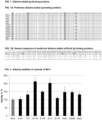
- amino acid residue position numbering convention of FIG. 1 is used, and the position numbers are designated as corresponding to those for example in SEQ ID NOs: 1-8.
- amino acid sequence identity refers to a quantitative comparison of the identity (or differences) of the amino acid sequences of two or more proteins. "Percent (%) amino acid sequence identity” or “percent identical” or “"percent identity” with respect to a reference polypeptide sequence is defined as the percentage of amino acid residues in a sequence that are identical with the amino acid residues in the reference polypeptide sequence, after aligning the sequences and introducing gaps, if necessary, to achieve the maximum percent sequence identity.
- the sequence of a query protein is aligned to the sequence of a reference protein.
- Methods for alignment are well-known in the art.
- the SIM Local similarity program is preferably employed ( Xiaoquin Huang and Webb Miller (1991), Advances in Applied Mathematics, vol. 12: 337-357), that is freely available (see also: http://www.expasy.org/tools/sim-prot.html ).
- ClustalW is preferably used ( Thompson et al. (1994) Nucleic Acids Res., 22(22): 4673-4680 ).
- the default parameters of the SIM Local similarity program or of ClustalW are used, when calculating sequence identity percentages.
- the extent of sequence identity between a modified sequence and the sequence from which it is derived is generally calculated with respect to the total length of the unmodified sequence, if not explicitly stated otherwise.
- Each amino acid of the query sequence that differs from the reference amino acid sequence at a given position is counted as one difference.
- the sum of differences is then related to the length of the reference sequence to yield a percentage of non-identity.
- the quantitative percentage of identity is calculated as 100 minus the percentage of non-identity.
- the phrases “percent identical” or “percent (%) amino acid sequence identity” or “percent identity”, in the context of two polypeptide sequences, refer to two or more sequences or subsequences that may have at least 89.5%, at least 91%, at least 93%, at least 94%, at least 96%, at least 98%, and 100% nucleotide or amino acid residue identity, respectively, when compared and aligned for maximum correspondence, as measured using one of the following sequence comparison algorithms or by visual inspection.
- the percent identity may exist over a region of at least about 50 residues, over a region of at least about 51 residues, over a region of at least about 52 residues, over a region of at least about 53 residues, over a region of at least about 54 residues, over a region of at least about 55 residues, over a region of at least about 56 residues, over a region of at least about 57 residues, and over a region of at least about 58 residues.
- the percent identity may exist over the entire length of the sequences.
- fused means that the components are linked by peptide bonds, either directly or via peptide linkers.
- fusion protein relates to a protein comprising at least a first protein joined genetically to at least a second protein.
- a fusion protein is created through joining of two or more genes that originally coded for separate proteins.
- a fusion protein may comprise a multimer of identical or different proteins which are expressed as a single, linear polypeptide
- the term “linker” refers in its broadest meaning to a molecule that covalently joins at least two other molecules.
- a “linker” may be understood as a moiety that connects an Ig binding domain with at least one further Ig binding domain, i.e. a moiety linking two protein domains to each other to generate a multimer.
- the "linker” may a peptide linker, i.e. the moiety linking the two protein domains is one single amino acid or a peptide comprising two or more amino acids.
- chromatography refers to separation technologies which employ a mobile phase and a stationary phase to separate one type of molecules (e.g., immunoglobulins) from other molecules (e.g. contaminants) in the sample.
- the liquid mobile phase contains a mixture of molecules and transports these across or through a stationary phase (such as a solid matrix).
- affinity chromatography refers to a specific mode of chromatography in which a ligand coupled to a stationary phase interacts with a molecule (i.e. immunoglobulin) in the mobile phase (the sample) i.e. the ligand has a specific binding affinity for the molecule to be purified.
- affinity chromatography involves the addition of a sample containing an immunoglobulin to a stationary phase which comprises a chromatography ligand, such as an Ig binding protein of the invention.
- solid support or “solid matrix” are used interchangeably for the stationary phase.
- affinity matrix or “affinity separation matrix” or “affinity chromatography matrix”, as used interchangeably herein, refer to a matrix, e.g. a chromatographic matrix, onto which an affinity ligand e.g., an Ig binding protein of the invention is attached.
- the ligand e.g., Ig binding protein
- a molecule of interest e.g., an immunoglobulin as defined above
- affinity purification refers to a method of purifying immunoglobulins as defined above from a liquid by binding the immunoglobulins as defined above to an Ig binding protein that is immobilized to a matrix. Thereby, all other components of the mixture except immunoglobulins are removed. In a further step, the bound immunoglobulins can be eluted in purified form.
- the present invention is directed to an Immunoglobulin (Ig) binding protein, comprising one or more Ig binding domains, wherein at least one Ig binding domain comprises SEQ ID NO: 1, or SEQ ID NO: 2, having 3 or 4 substitutions as compared to SEQ ID NO: 1 or SEQ ID NO: 2, respectively, selected from the group consisting of an amino acid substitution to Isoleucine at position 1, an amino acid substitution to Alanine, Glutamic Acid, or Isoleucine at position 11, an amino acid substitution to Arginine or Isoleucine at position 35, and an amino acid substitution to Leucine at position 42.
- Ig binding domain comprises SEQ ID NO: 1, or SEQ ID NO: 2, having 3 or 4 substitutions as compared to SEQ ID NO: 1 or SEQ ID NO: 2, respectively, selected from the group consisting of an amino acid substitution to Isoleucine at position 1, an amino acid substitution to Alanine, Glutamic Acid, or Isoleucine at position 11, an amino acid substitution to Arginine or Isoleucine at position 35, and an
- the advantage of the Ig binding proteins of the invention is that they are stable under alkaline conditions for an extended period of time. This feature is important for chromatography approaches with cleaning procedures using alkaline solutions with high NaOH concentrations to remove contaminants on the matrix so for example that the matrix can be used several time.
- the Ig binding proteins of the invention are more stable after alkaline treatment compared to parental polypeptides. Said substitutions at positions 1, 11, 35, and/or 42 in the parental proteins as defined above confer an improved alkali stability in comparison with the parental protein, without impairing the immunoglobulin-binding properties.
- an Immunoglobulin binding protein comprising one or more Ig binding domains of a variant of (i) an amino acid sequence of SEQ ID NO: 1 or of a variant of (ii) an amino acid sequence exhibiting at least 89.5 % sequence identity to the amino acid sequence of SEQ ID NO: 1.
- Said Ig binding domain has at least 1, 2, 3, or 4 substitutions selected from the group consisting of an amino acid substitution to Isoleucine at position 1 of SEQ ID NO: 1, an amino acid substitution to Alanine, Glutamic Acid, or Isoleucine at position 11 of SEQ ID NO: 1, an amino acid substitution to Arginine or Isoleucine at position 35 of SEQ ID NO: 1, and an amino acid substitution to Leucine at position 42 of SEQ ID NO: 1.
- Said variant Ig binding protein might comprise additional modifications, such as 1, 2, 3, 4, 5, or 6 substitutions or 1, 2, 3, 4, 5, 6 deletions.
- the Ig binding domains shown in SEQ ID NO: 1 are parental domains; the Ig binding domains with substitutions at least in positions 1, 11, 35, and/or 42 are variants of SEQ ID NO: 1.
- SEQ ID NO: 1 is a consensus sequence covering parental domains for variants of the invention, preferably (i) artificial Ig binding domains including SEQ ID NOs: 3, 4, 10, 14, 21, 25, 47, 48, 49, 50; (ii) naturally occurring Protein A domains or variants including SEQ ID NOs: 5-8.
- the parental protein of SEQ ID NO: 1 is the following amino acid sequence: X 1 X 2 X 3 X 4 X 5 X 6 X 7 X 8 QQX 11 AFYX 15 X 16 LX 18 X 19 PX 21 LX 23 X 24 X 25 QRX 28 X 29 FIQSLKDDPSX 40 SX 42 X 43 X 4 4 LX 46 EAX 49 KLX 52 X 53 X 54 X 55 APX 58 wherein the amino acid at position 1 (X 1 ) is selected from P, N, A, V, or Q, the amino acid at position 2 (X 2 ) is selected from A, D, or Q, the amino acid at position 3 (X 3 ) is selected from A, N, or S, preferably A or N, the amino acid at position 4 (X 4 ) X 4 is selected from K or N, preferably K, the amino acid at position 5 (X 5 ) is selected from H or F, the amino acid at position 6 (X 6 ) is selected from D,
- Parental SEQ ID NOs: 5-8 Further disclosed herein is a parental domain that comprises or essentially consists or consists of an amino acid sequence of SEQ ID NOs: 5-8, or an amino acid sequence exhibiting at least 89.5 % sequence identity to an amino acid sequence of SEQ ID NOs: 5-8.
- the Ig binding domain comprises of a variant having at least 1, 2, 3, or 4 amino acid substitutions selected from the group consisting of an amino acid substitution to Isoleucine at position 1, an amino acid substitution to Alanine, Glutamic Acid, or Isoleucine at position 11, an amino acid substitution at position 35 to Arginine or Isoleucine, and an amino acid substitution to Leucine at position 42.
- the Ig binding domain may further comprise 1, 2, 3, 4, 5, or 6 modifications, wherein each individual modification is selected from the group consisting of a single amino acid substitutions, a single amino acid deletion, a single amino acid insertions.
- At least one Ig binding domain comprises a variant of an parental amino acid sequence of SEQ ID NO: 2 wherein the variant has at least 1, 2, 3 or 4 substitutions selected from the group consisting of an amino acid substitution to Isoleucine at position 1 of SEQ ID NO: 2, an amino acid substitution to Alanine, Glutamic Acid, or Isoleucine at position 11 of SEQ ID NO: 2, an amino acid substitution at position 35 to Arginine or Isoleucine of SEQ ID NO: 2, and an amino acid substitution to Leucine at position 42 of SEQ ID NO: 2.
- SEQ ID NO: 2 is a consensus sequence for preferred parental proteins such as but not limited Further disclosed herein is to artificial Ig binding domains IB14, IB25, IB27, IB74, and IB47. Further disclosed herein is an Ig binding protein, wherein said at least one Ig binding domain comprises, essentially consists of, or consists of a variant of an amino acid sequence of parental SEQ ID NO: 2, or of a variant of an amino acid sequence with at least 89.5 % identity to parental SEQ ID NO: 2.
- SEQ ID NO: 2 is a preferred embodiment of SEQ ID NO: 1: X 1 AAX 4 X 5 DX 7 X 8 QQX 11 AFYEILHLPNLTEX 25 QRX 28 AFIQSLKDDPSVSKEX 44 LX 46 EAX 49 KLNDX 54 QAPX 58 wherein the amino acid at position 1 (X 1 ) is selected from P, N, or A, the amino acid at position 5 (X 5 ) is selected from H or F, the amino acid at position 7 (X 7 ) is selected from K or E, the amino acid at position 8 (X 8 ) is selected from D, A, or E, the amino acid at position 11 (X 11 ) is selected from S or N, preferably S, the amino acid at position 25 (X 25 ) is selected from D or E, the amino acid at position 28 (X 28 ) is selected from S or N, preferably N, the amino acid at position 44 (X 44 ) is selected from I or V, the amino acid at position 46 (X 46 ) is selected
- an Ig binding domain may comprise a variant of parental amino acid sequences selected from the group consisting of SEQ ID NO: 3, 4, 10, 14, 21, 25, 47-50, wherein the variant has at least 1, 2, 3, or 4 amino acid substitutions selected from the group consisting of an amino acid substitution of Alanine or Proline to Isoleucine at position 1, an amino acid substitution of Serine to Alanine, Glutamic Acid, or Isoleucine at position 11, an amino acid substitution of Lysine at position 35 to Arginine or Isoleucine, and an amino acid substitution of Lysine to Leucine at position 42.
- the parental protein may be the amino acid sequence of SEQ ID NO: 3, or a protein having at least 89.5 % identity to parental SEQ ID NO: 3.
- parental proteins with at least 89.5 % identity to SEQ ID NO: 3 may be selected from the group consisting of SEQ ID NO: 21 (1P/28N), SEQ ID NO: 10 (1A/28S), SEQ ID NO: 14 (1P/28S), SEQ ID NO: 25 (46A/58K), SEQ ID NO: 47 (5F/7E/8A), SEQ ID NO: 48 (5F/7E/8A/25E), SEQ ID NO: 49 (44V/49Q/54S/58K), SEQ ID NO: 50 (25E/44V/49Q/54S/58K), IB13 (1P/4Q/28S), IB23 (1P/21S/28A/40T/43S), IB15 (2D/3N/5F/7E/8A/28A), and IB16 (2D/3S/5F/7E/8A/28A), and IB16 (2D/3
- the parental protein is SEQ ID NO: 4, or a protein having at least 89.5% identity to parental SEQ ID NO: 4.
- parental proteins with at least 89.5 % identity are selected from the group consisting of SEQ ID NO: 50 (5H/7K/8D), SEQ ID NO: 49 (5H/7K/8D/25D); SEQ ID NO: 48 (44I/49K/54A/58P), and SEQ ID NO: 47 (25D/44I/49K/54A/58P).
- the parental protein may be the amino acid sequence of SEQ ID NO: 25, the amino acid sequence of SEQ ID NO: 50 or SEQ ID NO: 49., or the amino acid sequence of SEQ ID NO: 48 or SEQ ID NO: 47.
- alkaline stable Ig binding domains might comprise additional 1, 2, or 3 modifications, such as substitutions, deletions, or insertions.
- the at least one Ig binding domain comprise a substitution or substitutions compared to parental sequences and wherein the substitution or a plurality of substitutions are at least selected from the group consisting of: 1I; 11A; 35R; 42L; 11E; 111; 35I; 11111A; 11/35R; 11A/35R; 1I/42L; 11A/42L; 11/11E; 1I/11I; 11I/35R; 11E/35R; 111/42L; 11E/42L; 1I/35I; 11A1351; 11I/35I; 11E/35I; 35R/42L; 35I/42L; 11/11A/35R; 1I/11E/35R; 11/111/35R; 11/11A/42L; 1I/11E/42L; 1I/11A/35I; 1I/11E/35I; 1I/11E/35I; 1I/11E/35I; 1I/11I/35I; 1I/11E/35I; 1I/11E/35I; 1
- substitutions selected from the group consisting of 1I; 11A; 35R; 42L; 1I/11A; 1I/35R; 1I/42L; 11A/42L; 11A/35R; 35R/42L; 1I/11A/35R; 1I/11A/42L; 1I/11A/35R/42L; and 11/11A/28N/35R/42L.
- 3 or 4 of the amino acid positions are selected from the group consisting of 1I, 11A, 35R, and 42L.
- Ig binding domains comprise the combination of substitutions selected from the group consisting of 11/1 1A/35R; 11/11A/35R/42L; and 1I/11A/28N/35R/42L.
- the Ig binding protein of the invention comprises or essentially consists of one or more Ig binding domains, wherein the amino acid residue at position 1 is Isoleucine, and wherein the amino acid residue at position 11 is Alanine.
- Another preferred Ig binding protein of the invention comprises or essentially consists of one or more Ig binding domains, wherein the amino acid residue at position 1 is Isoleucine, and wherein the amino acid residue at position 11 is Alanine, and wherein the amino acid residue at the position 35 is Arginine.
- Another preferred Ig binding protein of the invention comprises or essentially consists of one or more Ig binding domains, wherein the amino acid residue at position 1 is Isoleucine, and wherein the amino acid residue at position 11 is Alanine, and wherein the amino acid residue at the position 35 is Arginine, and wherein the amino acid residue at position 42 is Leucine.
- Another preferred Ig binding protein of the invention comprises or essentially consists of one or more Ig binding domains, wherein the amino acid residue at position 1 is Isoleucine, and wherein the amino acid residue at position 11 is Alanine, and wherein the amino acid residue at the position 35 is Arginine, and wherein the amino acid residue at position 42 is Leucine, and wherein the amino acid residue at position 28 is Asparagine.
- Another preferred Ig binding protein of the invention comprises or essentially consists of one or more Ig binding domains, wherein the amino acid residue at position 11 is Alanine, and wherein the amino acid residue at the position 35 is Arginine, and wherein the amino acid residue at position 42 is Leucine.
- an Ig binding protein of the invention comprising one or more Ig binding domains that comprises or essentially consists or consists of the amino acid sequence of SEQ ID NO: 52.
- the Ig binding domain may comprise at least 89.5 % identical amino acid sequences to SEQ ID NO: 52.
- SEQ ID NO: 52 is a consensus sequence for artificial Ig binding proteins such as Ig binding domains of, for example, SEQ ID NO: 18-20, 26, 29-30, 42-45, 56-61.
- SEQ ID NO: 52 is the following amino acid sequence (see FIG.
- the combination of at least 3 or 4 amino acids selected from Isoleucine in position 1 Alanine in position 11, Arginine in position 35, and Leucine in position 42 provide surprisingly particularly good alkaline stability of the Ig binding protein, as shown in the Examples and in the Figures. It is preferred that position 28 is Asparagine.
- all Ig binding proteins of the invention were found to bind to Ig even after alkaline treatment.
- the Ig binding protein of the invention exhibits an high alkaline stability for at least 6 h in 0.5 M NaOH, in particular an improved alkaline stability as compared to a corresponding parental protein.
- the Ig binding proteins with the combination of at least 3 or 4 amino acids at amino acid position 1 to Isoleucine, at amino acid position 11 to Alanine, Glutamic Acid, or Isoleucine, at amino acid position 35 to Arginine or Isoleucine, and optionally at amino acid position 42 to Leucine are able to bind to Ig even after alkaline treatment for several hours. It was most surprising and unexpected that the Ig binding proteins comprising a combination of amino acids 1I, 11A or 11E or 11I, 35R or 35I, and optionally 42L, preferably 1I, 11A, 35R, and 42L are able to bind to !g even after alkaline treatment for several hours.
- the alkaline stability of the Ig binding protein is determined by comparing the loss in Ig binding activity after 6 h incubation in 0.5 M NaOH. In some embodiments, this is compared to the loss in Ig-binding activity of the corresponding parental protein. The loss of binding activity is determined by comparing binding activity before and after 0.5 M NaOH incubation for 6 hours.
- the Ig binding activity of the Ig binding domains with at least 3 or 4 amino acids selected from 1I, 11A or 11E or 111, 35R or 35l, and 42L is increased by at least 25 % compared to a parental protein. This is a surprising and advantageous property as compared to parental proteins.
- Ig binding domain that comprises an amino acid sequence selected from the group consisting of SEQ ID NOs: 18-20, 26, 29-40, 42-45, and 56-61.
- the domain may comprise amino acid sequences of the group consisting of SEQ ID NOs: 20, 26, 30, 42-45.
- the alkaline stable domains might comprise further modifications, such as insertions, deletions, or further substitutions.
- Ig binding domains may have 1, 2, 3, 4, 5, or 6 further substitutions.
- Ig binding domains may have a deletion of 1, 2, 3, or 4 amino acids within the first 4 amino acids of its N-terminus and/or a deletion of 1 or 2 amino acids at the C-terminus.
- Ig binding domains may have deletions at the N-terminus, for example in positions 1, 2, and 4, or in positions 1, 2, and 3. In some embodiments, Ig binding domains may have deletions at the C-terminus, for example in positions 57 and/or 58.
- amino acid sequences with at least 89.5 % sequence identity to the amino acid sequence to any of the afore-mentioned SEQ ID NOs wherein the amino acid sequence with at least 89.5 % sequence identity to any of the afore-mentioned SEQ ID NOs has the same amino acids in at least 3 or 4 of positions 1, 11, 35 and 42 or positions corresponding to the respective amino acid positions in the sequences SEQ ID NOs: 20, 26, 29, 30, 42-45, from which said amino acid sequence with at least 89.5 % sequence identity was derived.
- the sequences for preferred alkaline stable Ig binding proteins are shown in Figure 1 . At least 3 or 4 of positions 1I, 11A, 35R, and 42L are conserved. It is further preferred that position 4 is not Q.
- SEQ ID NO: 20 (cs14) and variants. Further disclosed herein is an alkaline stable Ig binding domain that comprises, or essentially consists, or consists of an amino acid sequence of SEQ ID NO: 20 or an amino acid sequence at least 91 % identical thereto, for example SEQ ID NOs: 18-19, 26, 42-45, 56. Variants of SEQ ID NO: 20 may not have a Q in position 4. Position 4 may be K.
- the Ig binding domain may comprise an amino acid sequence of SEQ ID NO: 20 or an amino acid sequence at least 96 % identical thereto.
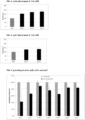
- Figure 3 and Figure 5 show the remaining activity of Ig binding after prolonged continuous 0.5 M NaOH treatment.
- Table 1 illustrates the amino acid differences of SEQ ID NO: 20 and preferred variants at least 91 % identical thereto.
- Position 5 is H or F
- position 7 is K or E
- position 8 is D or A
- position 25 is D or E
- position 44 is I or V
- position 46 is G or A
- position 49 is K or Q
- P may be position 54 is A or S
- position 58 is P or K.
- Position 4 may be K.
- the identity of the artificial alkaline stable SEQ ID NO: 20 to any wildtype Protein A domain is below 78 %.
- Table 1 Amino acid differences of cs14 and variants with at least 91 % sequence identity SEQ NO: Ig binding protein Pos. 5 Pos. 7 Pos. 8 Pos. 25 Pos. 44 Pos. 46 Pos. 49 Pos. 54 Pos.
- SEQ ID NO: 30 (cs27) and variants.
- an Ig binding domain that comprises or essentially consists or consists of an amino acid sequence of SEQ ID NO: 30, or an amino acid sequence at least 94 % identical thereto, for example SEQ ID NO: 29. The identity of SEQ ID NO: 30 to any wildtype Protein A domain is below 76 %.
- Figure 4 shows the remaining activity SEQ ID NOs: 30 and 29 after six hours of continuous 0.5 M NaOH treatment.
- SEQ ID NO : 26 (cs25) and variants .
- an Ig binding domain that comprises or essentially consists or consists of an amino acid sequence of SEQ ID NO: 26 or an amino acid sequence at least 98 % identical thereto. The identity of SEQ ID NO: 26 to any wildtype Protein A domain is below 81 %.
- Figure 5 shows the remaining Ig binding activity of SEQ ID NO: 26 after six hours of continuous 0.5 M NaOH treatment.
- SEQ ID NO: 42 (cs74) and variants. Further disclosed herein is an alkaline stable Ig binding domain that comprises or essentially consists or consists of an amino acid sequence of SEQ ID NO: 42 and an amino acid sequence at least 98 % identical thereto, for example SEQ ID NO: 43.
- the identity of SEQ ID NO: 42 to any wildtype Protein A domain is below 78 %.
- Figure 5 shows the remaining Ig binding of SEQ ID NOs: 42-43 after six hours of continuous 0.5 M NaOH treatment.
- SEQ ID NO: 44 (cs47) and variants thereof. Further disclosed herein is an alkaline stable Ig binding domain that comprises or essentially consists of an amino acid sequence of SEQ ID NO: 44 and an amino acid sequence at least 98 % identical thereto, for example SEQ ID NO: 45.
- the identity of SEQ ID NO: 44 to any wildtype Protein A domain is below 78 %.
- Figure 5 shows the remaining activity of Ig binding after six hours of continuous 0.5 M NaOH treatment of SEQ ID NOs: 44-45 with at least 98 % identity.
- All Ig binding proteins of the invention bind to Immunoglobulin with a dissociation constant K D preferably below 1 ⁇ M, or below 100 nM, even more preferably 10 nM or less.
- K D dissociation constant
- dissociation constant K D is determined at 20 °C, 25 °C, or 30 °C.
- the K D values recited herein are determined at 22 °C +/- 3 °C by surface plasmon resonance.
- the Ig binding protein has a dissociation constant K D to human IgG 1 in the range between 0.1 nM and 100 nM, preferably between 0.1 nM and 10 nM.
- the Ig binding protein comprises 1, 2, 3, 4, 5, 6, 7, or 8, preferably 2, 3, 4, 5, or 6, Ig binding domains linked to each other, i.e. the Ig binding protein can be, for example, a monomer, a dimer, a trimer, a tetramer, a pentamer, or a hexamer.
- a multimer may comprise two, three, four, or even more binding domains.
- Multimers of the invention are fusion proteins generated artificially, generally by recombinant DNA technology well-known to a skilled person.
- Ig binding proteins of the invention may be prepared by any of the many conventional and well-known techniques such as plain organic synthetic strategies, solid phase-assisted synthesis techniques or by commercially available automated synthesizers.
- the multimer is a homo-multimer, e.g. the amino acid sequences of all alkaline stable Ig binding domains of the Ig binding protein are identical.
- an alkali-stable multimer may comprise two or more Ig binding domains, wherein said Ig binding domains preferably comprise or essentially consist of a sequence selected from the group consisting of SEQ ID NOs: 18-20, 26, 29-38, 42-45, 56-61 or a sequence with at least 89.5 % sequence identity to any of the afore-mentioned SEQ ID NOs.
- the domains may be derivatives of SEQ ID NOs: 18-20, 26, 29-38, 42-45, 56-61 and further wherein each derivative has a deletion of 1, 2, or 3 amino acids within the first 4 amino acids of its N-terminus and/or a deletion of 1 or 2 amino acids at the C-terminus relative to the one of SEQ ID NOs:18-20, 26, 29-38, 42-45, 56-61 upon which it is based (see, for example, SEQ ID NOs: 23, 24, 27).
- SEQ ID NO: 14 and SEQ ID NO: 20 were used to generate the homo-multimeric fusion constructs (dimers, tetramers, pentamers, and hexamers) described herein in Example 1.
- dimers, tetramers, pentamers, and hexamers of SEQ ID NO: 30 were generated. See for example SEQ ID NO: 23, 24, 27, 28.
- the multimer is a hetero-multimer, e.g. at least one alkaline stable Ig binding domain has a different amino acid sequence than the other Ig binding domains within the immunoglobulin-binding protein.
- the one or more Ig binding domains are directly linked to each other.
- the one or more Ig binding domains are linked to each other with one or more linkers.
- Preferred in these typical embodiments are peptide linkers.
- the peptide linker is an amino acid sequence that connects a first Ig binding domain with a second Ig binding domain.
- the peptide linker is connected to the first Ig binding domain and to the second Ig binding domain by a peptide bond between the C-terminal and N-terminal ends of the domains, thereby generating a single, linear polypeptide chain.
- the length and composition of a linker may vary between at least one and up to about 30 amino acids.
- a peptide linker has a length of between 1 and 30 amino acids; e.g., 1, 2, 3, 4, 5, 6, 7, 8, 9, 10, 11, 12, 13, 14, 15, 16, 17, 18, 19, 20, 21, 22, 23, 24, 25, 26, 27, 28, 29, 30 amino acids. It is preferred that the amino acid sequence of the peptide linker is stable against caustic conditions and proteases. Linkers should not destabilize the conformation of the domains in the Ig binding protein. Well-known are linkers comprising small amino acids such as glycine and serine. The linkers can be glycine-rich (e.g., more than 50% of the residues in the linker can be glycine residues). Also preferred are linkers that comprise further amino acids. Other embodiments of the invention comprise linkers consisting of alanine, proline, and serine. Other linkers for the fusion of proteins are known in the art and can be used.
- the Ig binding protein is conjugated to a solid support.
- the Ig binding domain comprises an attachment site for site-specific covalent coupling of the Ig binding protein to a solid support.
- the Ig binding protein may also comprise additional amino acid residues at the N- and/or C-terminal end, such as for example a leader sequence at the N-terminal end and/or a coupling sequence with or without a tag at the N- or C-terminal end (see for example SEQ ID NOs: 39 and 40).
- the alkaline stable Ig binding protein comprises an attachment site for covalent attachment to a solid phase (matrix).
- the attachment site is specific to provide a site-specific attachment to the solid phase.
- Specific attachment sites comprise natural amino acids, such as cysteine or lysine, which enable specific chemical reactions with a reactive group of the solid phase or a linker between the solid phase and the protein, for example selected from N-hydroxysuccinimide, iodacetamide, maleimide, epoxy, or alkene groups.
- the attachment site may be directly at the C- or N-terminal end of the Ig binding protein or there may be a linker between the N- or C-terminus and the coupling site, preferably a peptide linker.
- the Ig binding protein may comprise a short N- or C-terminal peptide sequence of 3 - 20 amino acids, preferably 4 - 10 amino acids, with a terminal cysteine.
- Amino acids for a C-terminal attachment site may be preferably selected from proline, alanine, and serine, for example, ASPAPSAPSAC (SEQ ID NO: 41), with a single cysteine at the C-terminal end for coupling.
- amino acids for a C-terminal attachment site may be preferably selected from glycine and serine, for example, GGGSC, with a single cysteine at the C-terminal end for coupling.
- An advantage of having a C-terminal cysteine is that coupling of the Ig binding protein can be achieved through reaction of the cysteine thiol with an electrophilic group on a support resulting in a thioether bridge coupling. This provides excellent mobility of the coupled protein which provides increased binding capacity.
- the coupling of the Ig binding protein to a solid support can be achieved through a cysteine in positions 43, 46, or 47 of an alkaline stable Ig binding domain. If a cysteine is located in positions 43, 46, or 47, the amino acid in position 50 or position 58 is not cysteine (see for example SEQ ID NOs: 53 or 54). The amino acid in position 50 is Lysine and the amino acid in position 58 is Proline.
- Affinity separation matrix in another aspect is directed to an affinity separation matrix, comprising an Ig binding protein of the first aspect.
- the affinity separation matrix is a solid support.
- the affinity separation matrix comprises at least one Ig binding protein of the invention.
- This matrix comprising the alkaline stable Ig binding protein of the invention is useful for separation, for example for chromatographic separation, of immunoglobulins as defined above, i.e. Ig, Ig variants comprising the Fc region, fusion proteins comprising an Fc region of an Ig, and conjugates comprising an Fc region of an Ig.
- An affinity matrix is useful for separation of immunoglobulins and should retain the Ig binding property even after highly alkaline conditions as applied during cleaning processes. Such cleaning of matrices is essential for long-term repeated use of matrices.
- Solid support matrices for affinity chromatography include for example but are not limited to, agarose and stabilized derivatives of agarose (e.g. Sepharose 6B, Praesto TM Pure; CaptivA ® , rPROTEIN A Sepharose Fast Flow, Mabselect ® , and other), cellulose or derivatives of cellulose, controlled pore glass (e.g. ProSep ® vA resin), monolith (e.g. CIM ® monoliths), silica, zirconium oxide (e.g. CM Zirconia or CPG ® ), titanium oxide, or synthetic polymers (e.g.
- agarose and stabilized derivatives of agarose e.g. Sepharose 6B, Praesto TM Pure; CaptivA ® , rPROTEIN A Sepharose Fast Flow, Mabselect ® , and other
- cellulose or derivatives of cellulose controlled pore glass
- controlled pore glass e.g. ProSe
- polystyrene such as Poros 50A or Poros MabCapture ®
- the support comprises a polyhydroxy polymer, such as a polysaccharide.
- polysaccharides suitable for supports include but are not limited to agar, agarose, dextran, starch, cellulose, pullulan, etc, and stabilized variants of these.
- solid support matrices can be of any suitable well-known kind.
- Such solid support matrix for coupling the Ig binding protein of the invention might comprise for example, one of the following: columns, capillaries, particles, membranes, filters, monoliths, fibers, pads, gels, slides, plates, cassettes, or any other format commonly used in chromatography and known to someone skilled in the art.
- the matrix is comprised of substantially spherical particles, also known as beads, for example Sepharose or Agarose beads. Suitable particle sizes may be in the diameter range of 5-500 ⁇ m, such as 10-100 ⁇ m, e.g. 20-80 ⁇ m. Matrices in particle form can be used as a packed bed or in a suspended form including expanded beds.
- the solid support matrix is a membrane, for example a hydrogel membrane.
- the affinity purification involves a membrane as matrix to which the alkaline stable Ig binding protein of the first aspect is covalently bound.
- the solid support can also be in the form of a membrane in a cartridge.
- the affinity purification involves a chromatography column containing a solid support matrix to which the alkaline stable Ig binding protein of the first aspect is covalently bound.
- the alkaline stable Ig binding protein of the invention may be attached to a suitable solid support matrix via conventional coupling techniques utilising, e.g. amino-, sulfhydroxy-, and/or carboxy-groups present in the Ig binding protein of the invention.
- the coupling may be carried out via a nitrogen, oxygen, or sulphur atom of the Ig binding protein.
- amino acids comprised in an N- or C-terminal peptide linker comprise said nitrogen, oxygen, or sulphur atom.
- the Ig binding proteins may be coupled to the support matrix directly or indirectly via a spacer element to provide an appropriate distance between the matrix surface and the Ig binding protein of the invention which improves the availability of the Ig binding protein and facilitates the chemical coupling of the Ig binding protein of the invention to the support.
- the coupling may be a multipoint coupling, for example via several lysines, or a single point coupling, for example via cysteine.
- the present invention is directed to the use of the alkaline stable Ig binding protein of the first aspect or an affinity matrix of the second aspect for affinity purification of immunoglobulins or variants thereof, i.e. the Ig binding protein of the invention is used for affinity chromatography.
- the Ig binding protein of the invention is immobilized onto a solid support as described in the second aspect of the invention.
- the present invention is directed to a method of affinity purification of immunoglobulins, the method comprising (a) providing a liquid containing an immunoglobulin; (b) providing an affinity separation matrix comprising an immobilized alkaline stable Ig binding protein of the first aspect coupled to said affinity separation matrix; (c) contacting said liquid with said affinity separation matrix, wherein said immunoglobulin binds to said immobilized Ig binding protein; and (d) eluting said immunoglobulin from said matrix, thereby obtaining an eluate containing said immunoglobulin.
- the method of affinity purification may further comprising one or more washing steps carried out between steps (c) and (d) under conditions sufficient to remove from the affinity separation matrix some or all molecules that are non-specifically bound thereto.
- Non-specifically bound means any binding that does not involve an interaction between the at least one binding domain of the presently disclosed subject matter and an Immunoglobulin.
- Affinity separation matrixes suitable for the disclosed uses and methods are those matrixes according to the embodiments described above and as known to someone skilled in the art.
- the elution of the immunoglobulin from the matrix in step (d) is effected through a change in pH and/or a change in salt concentration.
- Any suitable solution used for elution from Protein A media can be used, for example by a solution with pH 5 or lower, or by a solution with pH 11 or higher.
- a further step (f) for efficient cleaning the affinity matrix is added, preferably by using an alkaline liquid, for example, with pH of 13 - 14.
- the cleaning liquid comprises 0.1 - 1.0 M NaOH or KOH, preferably 0.25 - 0.5 M NaOH or KOH. Due to the high alkaline stability of the Ig binding proteins of the invention, such strong alkaline solution can be used for cleaning purposes.
- the affinity matrix can be re-used at least 10 times, at least 20 times, at least 30 times, at least 40 times, at least 50 times, at least 60 times, at least 70 times, at least 80 times, at least 90 times, or at least 100 times, due to a repetition of steps (a) to (e), optionally (a) to (f) can be repeated at least 10 times, , at least 20 times, at least 30 times, at least 40 times, at least 50 times, at least 60 times, at least 70 times, at least 80 times, at least 90 times, or at least 100 times.
- nucleic acid molecule preferably an isolated nucleic acid molecule, encoding an alkaline stable Ig binding protein of any embodiment disclosed above.
- a vector comprising the nucleic acid molecule.
- a vector means any molecule or entity (e.g., nucleic acid, plasmid, bacteriophage or virus) that can be used to transfer protein coding information into a host cell.
- the vector may be an expression vector.
- an expression system which comprises a nucleic acid or a vector as disclosed above, for example a prokaryotic host cell, for example E . coli, or a eukaryotic host, for example yeast Saccharomyces cerevisiae or Pichia pastoris or mammalian cells such as CHO cells.
- a prokaryotic host cell for example E . coli
- a eukaryotic host for example yeast Saccharomyces cerevisiae or Pichia pastoris or mammalian cells such as CHO cells.
- Method for the production of an alkaline stable Ig binding protein comprising the step(s): (a) culturing the host cell of the sixth aspect under suitable conditions for the expression of the binding protein in order to obtain said alkaline stable Ig binding protein; and (b) optionally isolating said alkaline stable Ig binding protein.
- suitable conditions for culturing a prokaryotic or eukaryotic host are well-known to the person skilled in the art.
- Ig binding molecules of the invention may be prepared by any of the many conventional and well-known techniques such as plain organic synthetic strategies, solid phase-assisted synthesis techniques or by commercially available automated synthesizers. On the other hand, they may also be prepared by conventional recombinant techniques alone or in combination with conventional synthetic techniques.
- an alkaline-stable Ig binding protein comprising the following steps: (a) preparing a nucleic acid encoding an Ig binding protein as defined above; (b) introducing said nucleic acid into an expression vector; (c) introducing said expression vector into a host cell; (d) cultivating the host cell; (e) subjecting the host cell to culturing conditions under which an Ig binding protein is expressed, thereby (e) producing an Ig binding protein as described above; optionally (f) isolating the protein produced in step (e); and (g) optionally conjugating the protein to solid matrices as described above.
- the production of the alkaline stable Ig binding protein may be performed by cell-free in vitro transcription / translation.
- Parental proteins e.g. SEQ ID NOs: 3, 4, 10, 14, 21, 22, 25, 47-50
- a shuffling process of naturally occurring Protein A domains and Protein A domain variants (e.g. Z domain or other domains with at least 89.5 % identity to any naturally occurring domain, e.g. Z/2 domain).
- the shuffling process as understood herein is an assembly process resulting in artificial amino acid sequences starting from a set of non-identical known amino acid sequences.
- the shuffling process comprised the following steps: a) providing sequences of five naturally occurring Protein A domains E, B, D, A, and C, and Protein A variant domain Z or Z/2; b) alignment of said sequences; c) statistical fragmentation in silico to identify subsequences that were recombined, and then d) assembly of new, artificial sequences of the various fragments to produce a mosaic product, i.e. a novel amino acid sequence.
- the fragments generated in step c) were of any length, e.g. if the fragmented parent sequence had a length of n, the fragments was of length 1 to n-1.
- the relative positions of the amino acids in the mosaic products were maintained with respect to the starting amino acid sequences. At least 90 % of positions Q9, Q10, A12, F13, Y14, L17, P20, L22, Q26, R27, F30, I31, Q32, S33, L34, K35, D36, D37, P38, S39, S41, L45, E47, A48, K50, L51, Q55, A56, P57 are identical between the artificial amino acid sequences of for example IB14, IB25, IB74h1, IB74h2, IB47h3, IB47h4, or/and IB27, and naturally occurring Protein A domains or Protein A domain variants.
- the overall amino acid sequence of the Ig binding proteins IB14, IB25, IB74h1, IB74h2, IB47h3, IB48h4, and IB27 is artificial in that it is not more than 85 % identical to the overall amino acid sequence of any of the naturally occurring Protein A domains or domain Z.
- the protein was further modified by site-specific randomization of the amino acid sequence to further modify the binding properties. The further modifications were introduced by site-saturation mutagenesis of individual amino acid residues.
- Ig binding domains for example, of SEQ ID Nos: 14, 20, 30.
- a short peptide linker with C-terminal Cys (ASPAPSAPSAC; SEQ ID NO: 41) and optionally a strep-tag (WSHPQFEK; SEQ ID NO: 46) were added to the C-terminus of the Ig binding proteins (for example, see SEQ ID NOs: 39-40).
- positions 43, 46, or 47 were substituted with a cysteine (see for example, SEQ ID NOs: 53-54).
- the Q5 ® site-directed Mutagenesis Kit (NEB; Cat. No. E0554S) was used according to the manufacturer's instructions. PCRs were carried out with oligonucleotides coding for each specific substitution respectively and a plasmid containing SEQ ID NO: 14 as template. Products were ligated and transformed into E . coli XL2-blue cells (Stratagene) via electroporation. Single colonies were isolated and DNA sequencing was used for insert containing clones to verify the correct sequences. Results are shown in FIG. 2 .
- BL21 (DE3) competent cells were transformed with an expression plasmid encoding Ig binding proteins. Cells were spread onto selective agar plates (Kanamycin) and incubated overnight at 37°C. Precultures were inoculated from single colony in 100 ml 2 ⁇ YT medium and cultured for 16 hours at 37 °C at 160 rpm in a conventional orbital shaker in baffled 1 L Erlenmeyer flasks supplemented with 150 ⁇ g/ml Kanamycin without lactose and antifoam. The OD 600 readout should be in the range of 6-12.
- Main culture was inoculated from previous overnight culture with an adjusted start-OD 600 of 0.5 in 400 ml superrich medium (modified H15 medium 2% Glucose, 5% Yeast extract, 0.89% Glycerol, 0,76% Lactose, 250 mM MOPS, 202 mM TRIS, pH 7.4, Antifoam SE15) in 1 L thick-walled Erlenmeyer flasks that was supplemented with 150 ⁇ g/ml Kanamycin. Cultures were transferred to a resonant acoustic mixer (RAMbio) and incubated at 37 °C with 20 x g. Aeration was facilitated by Oxy-Pump stoppers.
- RAMbio resonant acoustic mixer
- Recombinant protein expression was induced by metabolizing glucose and subsequently allowing lactose to enter the cells.
- OD 600 was measured, samples adjusted to 5/OD 600 were withdrawn, pelleted and frozen at -20 °C. Cells were grown overnight for approx. 24 hours to reach a final OD 600 of about 45-60. To collect biomass cells were centrifuged at 16000 x g for 10 min at 20 °C. Pellets were weighed (wet weight) and pH was measured in the supernatant. Cells were stored at -20 °C before processing.
- Ig binding proteins were expressed in the soluble fraction of E. coli with a C-terminal StrepTagll (WSHPQFEK; SEQ ID NO: 46).
- the cells were lysed by two freeze/thaw cycles and the purification step was performed with Strep-Tactin ® -resin according to the manufacturer's instructions (IBA, Goettingen, Germany). To avoid disulfide formation the buffers were supplemented with 1 mM DTT.
- Ig binding proteins were expressed in the soluble fraction of E. coli with a C-terminal StrepTagll (SEQ ID NO: 46).
- the cells were resuspended in cell disruption buffer and lysed by a constant cell disruption system (Unit F8B, Holly Farm Business Park) at 1 kbar for two cycles. Purification step was performed with Strep-Tactin resin (IBA, Goettingen, Germany) and additional gel filtration (Superdex 75 16/60; GE Healthcare) using an AKTAxpress system (Ge Healthcare) according to the manufacturer's instructions.
- Example 6 The Ig binding proteins bind to IgG with high affinities (as determined by ELISA)
- IgG 1 or IgG 2 or IgG 4 The affinities of the Ig binding proteins towards IgG 1 or IgG 2 or IgG 4 were determined using an Enzyme Linked Immunosorbent Assay (ELISA).
- IgG 1 or IgG 2 or IgG 4 containing antibodies e.g. Cetuximab for IgG 1 , Panitumumab for IgG 2 , or Natalizumab for IgG 4
- PBST PBS + 0.1 % Tween 20
- the wells were blocked with 3 % BSA in PBS (2 h at room temperature).
- the negative controls were wells blocked only with BSA. After blocking, the wells were washed three times with PBST and incubated for 1 h with the Ig binding protein (in PBST) at room temperature. After incubation the wells were washed three times with PBST and subsequently incubated with Strep-Tactin-HRP (1:10000) (IBA, Goettingen, Germany) for 1 h at room temperature. Afterwards the wells were washed three times with PBST and three times with PBS. The activity of the horseradish peroxidase was visualized by adding TMB-Plus substrate. After 30 min the reaction was stopped by adding 0.2 M H 2 SO 4 and the absorbance was measured at 450 nm. As determined via ELISA, the K D for human IgG 1 is 4.9 nM for SEQ ID NO: 14; 3.4 nM for domain Z; 3.1 nM for domain B; and 2.8 nM for domain C.
- Example 7 The Ig binding proteins bind to IgG with high affinities (as determined with surface plasmon resonance experiments)
- CM5 sensor chip (GE Healthcare) was equilibrated with SPR running buffer. Surface-exposed carboxylic groups were activated by passing a mixture of EDC and NHS to yield reactive ester groups. 700-1500 RU on - ligand were immobilized on a flow cell, off - ligand was immobilized on another flow cell. Injection of ethanolamine after ligand immobilization removes non-covalently bound Ig binding protein. Upon ligand binding, protein analyte was accumulated on the surface increasing the refractive index. This change in the refractive index was measured in real time and plotted as response or resonance units (RU) versus time.
- RU response or resonance units
- K D Evaluated dissociation constants
- Example 8 Alkaline stability of Ig binding proteins coupled to an epoxy-activated matrix
- Ig binding proteins were coupled to epoxy-activated matrix (Sepharose 6B, GE; Cat. No. 17-0480-01) according to the manufacturer's instructions (coupling conditions: pH 9.0 overnight, blocking for 5 h with ethanolamine). Cetuximab was used as IgG sample (5mg; 1 mg/ml matrix). Cetuximab was applied in saturated amounts to the matrix comprising immobilized Ig binding protein. The matrix was washed with 100 mM glycine buffer, pH 2.5 to elute cetuximab that was bound to the immobilized IgG-binding protein.
- epoxy-activated matrix Sepharose 6B, GE; Cat. No. 17-0480-01
- the concentration of the eluted IgG was measured by BLI (quantification with Protein A Octet-sensors and Cetuximab as standard) in order to determine the binding activity of the Ig binding proteins.
- BLI Quantification with Protein A Octet-sensors and Cetuximab as standard.
- Columns were incubated with 0.5 M NaOH for 6 h at room temperature (22 °C +/- 3 °C).
- the Ig binding activity of the immobilized proteins was analyzed before and after incubation with 0.5 M NaOH for 6 h.
- the Ig binding activity of immobilized proteins before NaOH treatment was defined as 100 %.
- Figure 2 shows the analysis of the alkaline stability of point mutation variants of IB14 (SEQ ID NO: 14). The remaining activity (in %) of Ig binding after six hours of continuous 0.5 M NaOH treatment of point mutations in positions 1, 11, 35, and 42 of IB14 is compared to parental IB14. Substitutions P1I, S11E, S111, S11A, K35I, K35R, or K42L improve the Ig binding activity by at least about 25 %.
- Figure 3 shows that the activity of for example variant proteins with combinations of 3, 4, or 5 substitutions in positions 1, 11, 28, 35, and/or 42 was higher compared to the activity of the parental protein IB14 (SEQ ID NO: 14).
- Ig binding protein cs14-1 (SEQ ID NO: 18) showed about at least 50 %
- cs14-2 (SEQ ID NO: 19) showed about at least 70 %
- cs14-3 (SEQ ID NO: 20) showed about at least 80 % higher Ig binding activity compared to the IB14 after incubation for 6 h at 0.5 M NaOH.
- Figure 4 shows that the activity of variant Ig binding proteins with combinations of 3, 4, or 5 substitutions in positions 1, 11, 35, and/or 42 was higher compared to the activity of the parental protein IB27.
- cs27-1 SEQ ID NO: 29
- cs27-2 SEQ ID NO: 30
- Figure 4 shows that the activity of variant Ig binding proteins with combinations of 3, 4, or 5 substitutions in positions 1, 11, 35, and/or 42 was higher compared to the activity of the parental protein IB27.
- Figure 5 shows that the activity of variant Ig binding proteins with combinations of 1I, 11A, 35R, and 42L was higher compared to the activity of the parental protein, here shown as IB14 (other parental proteins are comparable to IB14; data not shown).
- Ig binding proteins cs74h1 (SEQ ID NO: 42), cs74h2 (SEQ ID NO: 43), cs47h3 (SEQ ID NO: 44), cs47h4 (SEQ ID NO: 45), and cs25 (SEQ ID NO: 26) showed significantly higher Ig binding activity compared to IB14 after incubation for 6 h at 0.5 M NaOH.
Landscapes
- Chemical & Material Sciences (AREA)
- Organic Chemistry (AREA)
- Health & Medical Sciences (AREA)
- Life Sciences & Earth Sciences (AREA)
- Molecular Biology (AREA)
- Biochemistry (AREA)
- General Health & Medical Sciences (AREA)
- Medicinal Chemistry (AREA)
- Genetics & Genomics (AREA)
- Biophysics (AREA)
- Proteomics, Peptides & Aminoacids (AREA)
- Analytical Chemistry (AREA)
- Chemical Kinetics & Catalysis (AREA)
- Immunology (AREA)
- Gastroenterology & Hepatology (AREA)
- Peptides Or Proteins (AREA)
- Solid-Sorbent Or Filter-Aiding Compositions (AREA)
Priority Applications (1)
| Application Number | Priority Date | Filing Date | Title |
|---|---|---|---|
| EP23218805.2A EP4324840A3 (en) | 2016-08-11 | 2017-08-07 | Novel alkaline stable immunoglobulin-binding proteins |
Applications Claiming Priority (3)
| Application Number | Priority Date | Filing Date | Title |
|---|---|---|---|
| EP16183710 | 2016-08-11 | ||
| EP16205707 | 2016-12-21 | ||
| PCT/EP2017/069976 WO2018029157A1 (en) | 2016-08-11 | 2017-08-07 | Novel alkaline stable immunoglobulin-binding proteins |
Related Child Applications (2)
| Application Number | Title | Priority Date | Filing Date |
|---|---|---|---|
| EP23218805.2A Division EP4324840A3 (en) | 2016-08-11 | 2017-08-07 | Novel alkaline stable immunoglobulin-binding proteins |
| EP23218805.2A Division-Into EP4324840A3 (en) | 2016-08-11 | 2017-08-07 | Novel alkaline stable immunoglobulin-binding proteins |
Publications (2)
| Publication Number | Publication Date |
|---|---|
| EP3497117A1 EP3497117A1 (en) | 2019-06-19 |
| EP3497117B1 true EP3497117B1 (en) | 2024-01-24 |
Family
ID=59631752
Family Applications (4)
| Application Number | Title | Priority Date | Filing Date |
|---|---|---|---|
| EP17752349.5A Active EP3497117B1 (en) | 2016-08-11 | 2017-08-07 | Novel alkaline stable immunoglobulin-binding proteins |
| EP22193930.9A Pending EP4177260A1 (en) | 2016-08-11 | 2017-08-07 | Alkaline stable fc-binding proteins for affinity chromatography |
| EP23218805.2A Pending EP4324840A3 (en) | 2016-08-11 | 2017-08-07 | Novel alkaline stable immunoglobulin-binding proteins |
| EP17752350.3A Active EP3497118B1 (en) | 2016-08-11 | 2017-08-07 | Alkaline stable fc binding proteins for affinity chromatography |
Family Applications After (3)
| Application Number | Title | Priority Date | Filing Date |
|---|---|---|---|
| EP22193930.9A Pending EP4177260A1 (en) | 2016-08-11 | 2017-08-07 | Alkaline stable fc-binding proteins for affinity chromatography |
| EP23218805.2A Pending EP4324840A3 (en) | 2016-08-11 | 2017-08-07 | Novel alkaline stable immunoglobulin-binding proteins |
| EP17752350.3A Active EP3497118B1 (en) | 2016-08-11 | 2017-08-07 | Alkaline stable fc binding proteins for affinity chromatography |
Country Status (11)
| Country | Link |
|---|---|
| US (4) | US11230576B2 (enExample) |
| EP (4) | EP3497117B1 (enExample) |
| JP (3) | JP7181612B2 (enExample) |
| KR (3) | KR102578256B1 (enExample) |
| CN (4) | CN109963864B (enExample) |
| AU (2) | AU2017311542B2 (enExample) |
| CA (2) | CA3030208A1 (enExample) |
| DK (1) | DK3497117T5 (enExample) |
| LT (1) | LT3497117T (enExample) |
| SG (1) | SG11201901066UA (enExample) |
| WO (2) | WO2018029158A1 (enExample) |
Families Citing this family (33)
| Publication number | Priority date | Publication date | Assignee | Title |
|---|---|---|---|---|
| JP6738340B2 (ja) | 2015-02-06 | 2020-08-12 | ナフィゴ プロテインズ ゲゼルシャフト ミット ベシュレンクテル ハフツングNavigo Proteins GmbH | 新規なegfr結合タンパク質 |
| JP6856938B2 (ja) | 2015-07-16 | 2021-04-14 | ナフィゴ プロテインズ ゲゼルシャフト ミット ベシュレンクテル ハフツングNavigo Proteins GmbH | 新規な免疫グロブリン結合タンパク質およびアフィニティ精製におけるそれらの使用 |
| WO2017013136A1 (en) | 2015-07-20 | 2017-01-26 | Scil Proteins Gmbh | Novel binding proteins based on di-ubiquitin muteins and methods for generation |
| US11813336B2 (en) | 2016-05-04 | 2023-11-14 | Navigo Proteins Gmbh | Targeted compounds for the site-specific coupling of chemical moieties comprising a peptide linker |
| CN109963864B (zh) * | 2016-08-11 | 2024-01-02 | 瑞普利金公司 | 用于亲和色谱的碱性稳定性fc结合蛋白 |
| US11779860B2 (en) | 2017-08-07 | 2023-10-10 | Repligen Corporation | Fc binding proteins with cysteine in the C-terminal helical region |
| EP3521304B9 (en) * | 2018-02-01 | 2023-10-04 | Repligen Corporation | Fc binding proteins with cysteine in the c-terminal helical region |
| EP3546476A1 (en) * | 2018-03-26 | 2019-10-02 | Repligen Corporation | Fc binding proteins with cysteine in the c-terminal helical region |
| US11414466B2 (en) | 2017-11-07 | 2022-08-16 | Navigo Proteins Gmbh | Fusion proteins with specificity for ED-B and long serum half-life for diagnosis or treatment of cancer |
| CN112969708B (zh) * | 2018-11-12 | 2024-07-05 | 纳维格蛋白质有限公司 | 缺乏免疫球蛋白fc结构域结合亲和力的新三螺旋多肽及其用途 |
| EP3650465A1 (en) * | 2018-11-12 | 2020-05-13 | Navigo Proteins Gmbh | Novel populations of polypeptides having a triple-helical structure |
| MX2021007283A (es) | 2018-12-18 | 2021-07-15 | Navigo Proteins Gmbh | Proteinas de union especificas del folr1 novedosas para diagnostico y tratamiento del cancer. |
| CN113348176A (zh) * | 2019-02-01 | 2021-09-03 | 纳维格蛋白质有限公司 | 用于亲和纯化的免疫球蛋白结合蛋白 |
| GB201904125D0 (en) | 2019-03-26 | 2019-05-08 | Ge Healthcare Bio Sciences Ab | Method for sanitization of a chromatography column |
| JP7432813B2 (ja) * | 2019-09-10 | 2024-02-19 | 東ソー株式会社 | 免疫グロブリン結合性タンパク質 |
| EP4077357B1 (en) * | 2019-12-17 | 2023-09-06 | Navigo Proteins Gmbh | Binding proteins for the enzyme acid alpha glucosidase (gaa) and uses thereof |
| WO2021165395A1 (en) * | 2020-02-21 | 2021-08-26 | Navigo Proteins Gmbh | Affinity ligand for the soluble part of fibroblast growth factor receptor 3 (sfgfr3) |
| EP3875472A1 (en) * | 2020-03-06 | 2021-09-08 | Navigo Proteins Gmbh | Novel immunoglobulin binding polypeptides |
| WO2021260052A1 (en) * | 2020-06-23 | 2021-12-30 | Navigo Proteins Gmbh | Binding protein specific for the spike protein of severe acute respiratory syndrome corona virus 2 (sars-cov-2) |
| EP4132943B1 (en) * | 2020-07-15 | 2024-05-29 | Navigo Proteins Gmbh | Immunoglobulin binding proteins for affinity purification |
| JP7854204B2 (ja) * | 2020-11-09 | 2026-05-01 | ナフィゴ プロテインズ ゲゼルシャフト ミット ベシュレンクテル ハフツング | 新規ii型コラーゲン結合タンパク質 |
| EP4001301A1 (en) * | 2020-11-13 | 2022-05-25 | Navigo Proteins Gmbh | Binding protein for complement factor h (cfh) |
| WO2023012321A1 (en) * | 2021-08-06 | 2023-02-09 | Roche Diagnostics Gmbh | Chimeric igg-fc-binding ligand polypeptide and uses thereof for igg affinity purification |
| GB202113626D0 (en) | 2021-09-24 | 2021-11-10 | Cytiva Bioprocess R & D Ab | FC binding polypeptides |
| CN116679071B (zh) * | 2021-12-21 | 2026-02-17 | 百林科(兰州)新材料有限公司 | 免疫检测方法 |
| CN113999294B (zh) * | 2021-12-30 | 2022-03-29 | 苏州纳微科技股份有限公司 | 免疫球蛋白结合蛋白及其应用 |
| CN114409748A (zh) * | 2022-01-28 | 2022-04-29 | 博格隆(浙江)生物技术有限公司 | 蛋白a的b结构域和z结构域突变体及其应用 |
| GB202203478D0 (en) | 2022-03-14 | 2022-04-27 | Cytiva Bioprocess R & D Ab | Vh3 binding polypeptides |
| AU2023395034A1 (en) * | 2022-12-16 | 2025-07-31 | Navigo Proteins Gmbh | New ligands for affinity chromatography |
| WO2025059162A1 (en) | 2023-09-11 | 2025-03-20 | Dana-Farber Cancer Institute, Inc. | Car-engager containing il-2 variants to enhance the functionality of car t cells |
| EP4541444A1 (en) * | 2023-10-20 | 2025-04-23 | Cytiva BioProcess R&D AB | Fusion protein for affinity capture |
| WO2025262100A1 (en) * | 2024-06-18 | 2025-12-26 | Navigo Proteins Gmbh | New ligands for the purification of antibodies via affinity chromatography |
| WO2026057420A1 (en) | 2024-09-10 | 2026-03-19 | Cytiva Bioprocess R&D Ab | Affinity ligand for purification of antibodies of isotype iga |
Family Cites Families (66)
| Publication number | Priority date | Publication date | Assignee | Title |
|---|---|---|---|---|
| US4873192A (en) | 1987-02-17 | 1989-10-10 | The United States Of America As Represented By The Department Of Health And Human Services | Process for site specific mutagenesis without phenotypic selection |
| SE9103701D0 (sv) | 1991-12-13 | 1991-12-13 | Kabi Pharmacia Ab | Apolipoprotein |
| US5629167A (en) * | 1994-04-19 | 1997-05-13 | Biocine S.P.A. | Detection of antibodies against Chlamydia trachomatis pgp3 antigen in patient sera by enzyme-linked immunosorbent assay |
| WO1996003506A2 (en) * | 1994-07-21 | 1996-02-08 | Connaught Laboratories Limited | Analog of haemophilus hin47 with reduced protease activity |
| US5958684A (en) | 1995-10-02 | 1999-09-28 | Van Leeuwen; Frederik Willem | Diagnosis of neurodegenerative disease |
| WO1997016556A1 (en) | 1995-10-30 | 1997-05-09 | Massachusetts Institute Of Technology | Rationally designed polysaccharide lyases derived from heparinase i |
| US5789166A (en) | 1995-12-08 | 1998-08-04 | Stratagene | Circular site-directed mutagenesis |
| GB9610967D0 (en) | 1996-05-24 | 1996-07-31 | Cambridge Antibody Tech | Specific binding members,materials and methods |
| FR2761689B1 (fr) | 1997-04-02 | 1999-06-25 | Transgene Sa | Fibre adenovirale modifiee et adenovirus cibles |
| WO1998054312A1 (en) | 1997-05-28 | 1998-12-03 | Babraham Institute | Ribosome complexes as selection particles for in vitro display and evolution of proteins |
| EP1958962A3 (en) | 1997-06-12 | 2013-05-01 | Novartis International Pharmaceutical Ltd. | Artificial antibody polypeptides |
| DE19742706B4 (de) | 1997-09-26 | 2013-07-25 | Pieris Proteolab Ag | Lipocalinmuteine |
| US20030045681A1 (en) | 1998-05-11 | 2003-03-06 | Anthony J. Zelano | Specific binding molecules for scintigraphy, conjugates containing them and therapeutic method for treatment of angiogenesis |
| TWI259837B (en) | 1998-05-11 | 2006-08-11 | Eidgenossische Tech Hochscule | Specific binding molecules for scintigraphy, conjugates containing them and therapeutic method for treatment of angiogenesis |
| DE19932688B4 (de) | 1999-07-13 | 2009-10-08 | Scil Proteins Gmbh | Design von Beta-Faltblatt-Proteinen des gamma-II-kristallins antikörperähnlichen |
| AU2001239470A1 (en) | 2000-02-24 | 2001-09-03 | Philogen S.R.L. | Compositions and methods for treatment of angiogenesis in pathological lesions |
| JP2003524018A (ja) | 2000-02-24 | 2003-08-12 | アイトゲネーシシェ テクニシェ ホッホシューレ チューリッヒ | フィブロネクチンのed‐bドメインに特異的な抗体、前記抗体を含む複合体、および血管形成を検出および治療するためのその使用 |
| US6799121B2 (en) | 2000-03-30 | 2004-09-28 | York University | Sequencing of peptides by mass spectrometry |
| US20110179531A1 (en) | 2000-05-09 | 2011-07-21 | Kovalic David K | Nucleic acid molecules and other molecules associated with plants and uses thereof for plant improvement |
| US20030073623A1 (en) | 2001-07-30 | 2003-04-17 | Drmanac Radoje T. | Novel nucleic acid sequences obtained from various cDNA libraries |
| CA2473144C (en) * | 2002-02-05 | 2013-05-28 | Genentech, Inc. | Protein purification |
| SE0200943D0 (sv) * | 2002-03-25 | 2002-03-25 | Amersham Biosciences Ab | Mutant protein |
| US20040043386A1 (en) | 2002-08-30 | 2004-03-04 | Todd Pray | Methods and compositions for functional ubiquitin assays |
| US7563869B2 (en) | 2003-01-23 | 2009-07-21 | Ono Pharmaceutical Co., Ltd. | Substance specific to human PD-1 |
| DE10324447A1 (de) | 2003-05-28 | 2004-12-30 | Scil Proteins Gmbh | Generierung künstlicher Bindungsproteine auf der Grundlage von Ubiquitin |
| WO2005044845A2 (en) | 2003-11-04 | 2005-05-19 | Yale University | Protein binding miniature proteins |
| US7393918B2 (en) | 2003-12-11 | 2008-07-01 | Yale University | Protein binding miniature proteins and uses thereof |
| DE10360483B4 (de) | 2003-12-22 | 2007-11-15 | Scil Proteins Gmbh | Expressionsvektor und dessen Verwendung |
| DE102004014983A1 (de) | 2004-03-26 | 2005-10-20 | Univ Stuttgart | Rekombinante Polypeptide der Mitglieder der TNF Ligandenfamilie und deren Verwendung |
| DE102004049479A1 (de) | 2004-10-11 | 2006-04-13 | Scil Proteins Gmbh | Proteinkonjugate zur Verwendung in Therapie, Diagnose und Chromatographie |
| JP2006304633A (ja) * | 2005-04-26 | 2006-11-09 | Apro Life Science Institute Inc | イムノグロブリン結合タンパク質 |
| CA2607954A1 (en) | 2005-05-11 | 2006-11-16 | Philogen S.P.A. | Conjugate for targeting of drug |
| MY185597A (en) * | 2005-09-20 | 2021-05-24 | Avantor Performance Mat Inc | Vegetarian protein a preparation and methods thereof |
| ATE463512T1 (de) | 2005-11-09 | 2010-04-15 | Morphosys Ag | Identifizierung und charakterisierung von funktionsblockierenden anti-ed-b-fibronektin antikörpern |
| EP1842553A1 (en) | 2006-04-07 | 2007-10-10 | Bayer Schering Pharma Aktiengesellschaft | Combination of an anti-EDb fibronectin domain antibody/IL2 fusion protein and a further small molecule |
| CA2648484A1 (en) | 2006-05-08 | 2007-11-15 | Philogen Spa | Antibody-targeted cytokines for therapy |
| EP1892248A1 (en) | 2006-08-21 | 2008-02-27 | Eidgenössische Technische Hochschule Zürich | Specific and high affinity binding proteins comprising modified SH3 domains of FYN kinase |
| WO2008039141A1 (en) * | 2006-09-29 | 2008-04-03 | Ge Healthcare Bio-Sciences Ab | Chromatography ligand comprising domain c from staphyloccocus aureus protein a for antibody isolation |
| EP1925664A1 (en) | 2006-11-15 | 2008-05-28 | Scil proteins GmbH | Artificial binding proteins based on a modified alpha helical region of ubiquitin |
| EP1955712A1 (en) | 2007-02-09 | 2008-08-13 | Scil proteins GmbH | Multimeric conjugate |
| ES2538122T3 (es) | 2008-07-21 | 2015-06-17 | Apogenix Gmbh | Moléculas de una sola cadena de TNFSF |
| US8592555B2 (en) * | 2008-08-11 | 2013-11-26 | Emd Millipore Corporation | Immunoglobulin-binding proteins with improved specificity |
| RU2553333C2 (ru) | 2009-12-14 | 2015-06-10 | Сцил Протеинс Гмбх | Способ идентификации гетеромультимерных модифицированных убиквитиновых белков со способностью связываться с лигандами |
| WO2011118699A1 (ja) * | 2010-03-24 | 2011-09-29 | 株式会社カネカ | 免疫グロブリンに特異的に結合するタンパク質および免疫グロブリン結合性アフィニティーリガンド |
| EP2690173B1 (en) * | 2011-03-25 | 2019-07-03 | Kaneka Corporation | Protein for affinity-separation matrix |
| SG186552A1 (en) | 2011-06-08 | 2013-01-30 | Emd Millipore Corp | Chromatography matrices including novel staphylococcus aureus protein a based ligands |
| WO2012171541A1 (en) | 2011-06-15 | 2012-12-20 | Scil Proteins Gmbh | Human fusion proteins comprising interferons and hetero-dimeric modified ubiquitin proteins |
| CA2837804C (en) | 2011-06-15 | 2018-03-20 | Scil Proteins Gmbh | Dimeric binding proteins based on modified ubiquitins |
| EP2861616A1 (en) | 2012-06-13 | 2015-04-22 | Scil Proteins GmbH | Human fusion proteins comprising single chain tnfalpha and targeting domains |
| EP2899271B1 (en) | 2012-09-21 | 2018-07-25 | Kaneka Corporation | Protein ligand for affinity isolation matrix |
| EP2727942A1 (en) | 2012-11-05 | 2014-05-07 | MAB Discovery GmbH | Bispecific antibodies against human EGFR, HER2, and HER3 |
| EP2738180A1 (en) | 2012-11-30 | 2014-06-04 | Molecular Partners AG | Binding proteins comprising at least two binding domains against HER2. |
| WO2014094799A1 (en) | 2012-12-19 | 2014-06-26 | Scil-Proteins-Gmbh | Ubiquitin moieties as a means for prolonging serum half-life |
| EP3019520B1 (en) * | 2013-07-10 | 2019-12-11 | GE Healthcare BioProcess R&D AB | Mutated immunoglobulin-binding polypeptides |
| KR102236367B1 (ko) | 2013-07-26 | 2021-04-05 | 삼성전자주식회사 | DARPin을 포함하는 이중 특이 키메라 단백질 |
| US11566082B2 (en) * | 2014-11-17 | 2023-01-31 | Cytiva Bioprocess R&D Ab | Mutated immunoglobulin-binding polypeptides |
| JP6738340B2 (ja) | 2015-02-06 | 2020-08-12 | ナフィゴ プロテインズ ゲゼルシャフト ミット ベシュレンクテル ハフツングNavigo Proteins GmbH | 新規なegfr結合タンパク質 |
| WO2016124670A1 (en) | 2015-02-06 | 2016-08-11 | Scil Proteins Gmbh | Novel binding proteins comprising a ubiquitin mutein and antibodies or antibody fragments |
| JP6856938B2 (ja) | 2015-07-16 | 2021-04-14 | ナフィゴ プロテインズ ゲゼルシャフト ミット ベシュレンクテル ハフツングNavigo Proteins GmbH | 新規な免疫グロブリン結合タンパク質およびアフィニティ精製におけるそれらの使用 |
| WO2017013136A1 (en) | 2015-07-20 | 2017-01-26 | Scil Proteins Gmbh | Novel binding proteins based on di-ubiquitin muteins and methods for generation |
| DK3325514T3 (da) | 2015-07-20 | 2019-12-16 | Navigo Proteins Gmbh | Her2-bindende proteiner baseret på di-ubiquitin-muteiner |
| US11813336B2 (en) | 2016-05-04 | 2023-11-14 | Navigo Proteins Gmbh | Targeted compounds for the site-specific coupling of chemical moieties comprising a peptide linker |
| CN109963864B (zh) * | 2016-08-11 | 2024-01-02 | 瑞普利金公司 | 用于亲和色谱的碱性稳定性fc结合蛋白 |
| US11779860B2 (en) | 2017-08-07 | 2023-10-10 | Repligen Corporation | Fc binding proteins with cysteine in the C-terminal helical region |
| EP3521304B9 (en) | 2018-02-01 | 2023-10-04 | Repligen Corporation | Fc binding proteins with cysteine in the c-terminal helical region |
| US11414466B2 (en) | 2017-11-07 | 2022-08-16 | Navigo Proteins Gmbh | Fusion proteins with specificity for ED-B and long serum half-life for diagnosis or treatment of cancer |
-
2017
- 2017-08-07 CN CN201780050413.2A patent/CN109963864B/zh active Active
- 2017-08-07 EP EP17752349.5A patent/EP3497117B1/en active Active
- 2017-08-07 JP JP2019505354A patent/JP7181612B2/ja active Active
- 2017-08-07 EP EP22193930.9A patent/EP4177260A1/en active Pending
- 2017-08-07 AU AU2017311542A patent/AU2017311542B2/en not_active Ceased
- 2017-08-07 CA CA3030208A patent/CA3030208A1/en active Pending
- 2017-08-07 WO PCT/EP2017/069979 patent/WO2018029158A1/en not_active Ceased
- 2017-08-07 DK DK17752349.5T patent/DK3497117T5/da active
- 2017-08-07 KR KR1020197003790A patent/KR102578256B1/ko active Active
- 2017-08-07 CN CN202210871980.7A patent/CN116333065A/zh active Pending
- 2017-08-07 KR KR1020237030862A patent/KR20230133943A/ko active Pending
- 2017-08-07 KR KR1020197003966A patent/KR102573370B1/ko active Active
- 2017-08-07 CA CA3031858A patent/CA3031858A1/en active Pending
- 2017-08-07 CN CN201780044905.0A patent/CN109476712B/zh active Active
- 2017-08-07 EP EP23218805.2A patent/EP4324840A3/en active Pending
- 2017-08-07 CN CN202311795884.XA patent/CN117736281A/zh active Pending
- 2017-08-07 US US16/324,651 patent/US11230576B2/en active Active
- 2017-08-07 US US16/324,842 patent/US11014967B2/en active Active
- 2017-08-07 SG SG11201901066UA patent/SG11201901066UA/en unknown
- 2017-08-07 WO PCT/EP2017/069976 patent/WO2018029157A1/en not_active Ceased
- 2017-08-07 LT LTEPPCT/EP2017/069976T patent/LT3497117T/lt unknown
- 2017-08-07 JP JP2019507171A patent/JP6951417B2/ja active Active
- 2017-08-07 EP EP17752350.3A patent/EP3497118B1/en active Active
- 2017-08-07 AU AU2017311541A patent/AU2017311541B2/en active Active
-
2021
- 2021-03-23 US US17/209,455 patent/US20210206815A1/en not_active Abandoned
-
2022
- 2022-07-13 JP JP2022112299A patent/JP2022160444A/ja active Pending
-
2024
- 2024-09-03 US US18/822,867 patent/US20250051400A1/en active Pending
Also Published As
Similar Documents
| Publication | Publication Date | Title |
|---|---|---|
| EP3497117B1 (en) | Novel alkaline stable immunoglobulin-binding proteins | |
| US12257530B2 (en) | Fc binding proteins with cysteine in the c-terminal helical region | |
| US12275774B2 (en) | Fc binding proteins with cysteine in the C-terminal helical region | |
| US20220112236A1 (en) | Immunoglobulin binding proteins for affinity purification | |
| EP4132943B1 (en) | Immunoglobulin binding proteins for affinity purification | |
| EP3546476A1 (en) | Fc binding proteins with cysteine in the c-terminal helical region |
Legal Events
| Date | Code | Title | Description |
|---|---|---|---|
| STAA | Information on the status of an ep patent application or granted ep patent |
Free format text: STATUS: UNKNOWN |
|
| STAA | Information on the status of an ep patent application or granted ep patent |
Free format text: STATUS: THE INTERNATIONAL PUBLICATION HAS BEEN MADE |
|
| PUAI | Public reference made under article 153(3) epc to a published international application that has entered the european phase |
Free format text: ORIGINAL CODE: 0009012 |
|
| STAA | Information on the status of an ep patent application or granted ep patent |
Free format text: STATUS: REQUEST FOR EXAMINATION WAS MADE |
|
| 17P | Request for examination filed |
Effective date: 20190228 |
|
| AK | Designated contracting states |
Kind code of ref document: A1 Designated state(s): AL AT BE BG CH CY CZ DE DK EE ES FI FR GB GR HR HU IE IS IT LI LT LU LV MC MK MT NL NO PL PT RO RS SE SI SK SM TR |
|
| AX | Request for extension of the european patent |
Extension state: BA ME |
|
| DAV | Request for validation of the european patent (deleted) | ||
| DAX | Request for extension of the european patent (deleted) | ||
| STAA | Information on the status of an ep patent application or granted ep patent |
Free format text: STATUS: EXAMINATION IS IN PROGRESS |
|
| 17Q | First examination report despatched |
Effective date: 20200220 |
|
| P01 | Opt-out of the competence of the unified patent court (upc) registered |
Effective date: 20230620 |
|
| GRAP | Despatch of communication of intention to grant a patent |
Free format text: ORIGINAL CODE: EPIDOSNIGR1 |
|
| STAA | Information on the status of an ep patent application or granted ep patent |
Free format text: STATUS: GRANT OF PATENT IS INTENDED |
|
| INTG | Intention to grant announced |
Effective date: 20231109 |
|
| GRAS | Grant fee paid |
Free format text: ORIGINAL CODE: EPIDOSNIGR3 |
|
| GRAA | (expected) grant |
Free format text: ORIGINAL CODE: 0009210 |
|
| STAA | Information on the status of an ep patent application or granted ep patent |
Free format text: STATUS: THE PATENT HAS BEEN GRANTED |
|
| AK | Designated contracting states |
Kind code of ref document: B1 Designated state(s): AL AT BE BG CH CY CZ DE DK EE ES FI FR GB GR HR HU IE IS IT LI LT LU LV MC MK MT NL NO PL PT RO RS SE SI SK SM TR |
|
| REG | Reference to a national code |
Ref country code: GB Ref legal event code: FG4D |
|
| REG | Reference to a national code |
Ref country code: CH Ref legal event code: EP |
|
| REG | Reference to a national code |
Ref country code: IE Ref legal event code: FG4D |
|
| REG | Reference to a national code |
Ref country code: DE Ref legal event code: R096 Ref document number: 602017078694 Country of ref document: DE |
|
| REG | Reference to a national code |
Ref country code: DK Ref legal event code: T3 Effective date: 20240419 |
|
| REG | Reference to a national code |
Ref country code: SE Ref legal event code: TRGR |
|
| REG | Reference to a national code |
Ref country code: NL Ref legal event code: FP |
|
| PG25 | Lapsed in a contracting state [announced via postgrant information from national office to epo] |
Ref country code: IS Free format text: LAPSE BECAUSE OF FAILURE TO SUBMIT A TRANSLATION OF THE DESCRIPTION OR TO PAY THE FEE WITHIN THE PRESCRIBED TIME-LIMIT Effective date: 20240524 |
|
| PG25 | Lapsed in a contracting state [announced via postgrant information from national office to epo] |
Ref country code: GR Free format text: LAPSE BECAUSE OF FAILURE TO SUBMIT A TRANSLATION OF THE DESCRIPTION OR TO PAY THE FEE WITHIN THE PRESCRIBED TIME-LIMIT Effective date: 20240425 |
|
| REG | Reference to a national code |
Ref country code: AT Ref legal event code: MK05 Ref document number: 1652149 Country of ref document: AT Kind code of ref document: T Effective date: 20240124 |
|
| PG25 | Lapsed in a contracting state [announced via postgrant information from national office to epo] |
Ref country code: RS Free format text: LAPSE BECAUSE OF FAILURE TO SUBMIT A TRANSLATION OF THE DESCRIPTION OR TO PAY THE FEE WITHIN THE PRESCRIBED TIME-LIMIT Effective date: 20240424 Ref country code: HR Free format text: LAPSE BECAUSE OF FAILURE TO SUBMIT A TRANSLATION OF THE DESCRIPTION OR TO PAY THE FEE WITHIN THE PRESCRIBED TIME-LIMIT Effective date: 20240124 |
|
| PG25 | Lapsed in a contracting state [announced via postgrant information from national office to epo] |
Ref country code: ES Free format text: LAPSE BECAUSE OF FAILURE TO SUBMIT A TRANSLATION OF THE DESCRIPTION OR TO PAY THE FEE WITHIN THE PRESCRIBED TIME-LIMIT Effective date: 20240124 |
|
| PG25 | Lapsed in a contracting state [announced via postgrant information from national office to epo] |
Ref country code: AT Free format text: LAPSE BECAUSE OF FAILURE TO SUBMIT A TRANSLATION OF THE DESCRIPTION OR TO PAY THE FEE WITHIN THE PRESCRIBED TIME-LIMIT Effective date: 20240124 |
|
| PG25 | Lapsed in a contracting state [announced via postgrant information from national office to epo] |
Ref country code: RS Free format text: LAPSE BECAUSE OF FAILURE TO SUBMIT A TRANSLATION OF THE DESCRIPTION OR TO PAY THE FEE WITHIN THE PRESCRIBED TIME-LIMIT Effective date: 20240424 Ref country code: NO Free format text: LAPSE BECAUSE OF FAILURE TO SUBMIT A TRANSLATION OF THE DESCRIPTION OR TO PAY THE FEE WITHIN THE PRESCRIBED TIME-LIMIT Effective date: 20240424 Ref country code: IS Free format text: LAPSE BECAUSE OF FAILURE TO SUBMIT A TRANSLATION OF THE DESCRIPTION OR TO PAY THE FEE WITHIN THE PRESCRIBED TIME-LIMIT Effective date: 20240524 Ref country code: HR Free format text: LAPSE BECAUSE OF FAILURE TO SUBMIT A TRANSLATION OF THE DESCRIPTION OR TO PAY THE FEE WITHIN THE PRESCRIBED TIME-LIMIT Effective date: 20240124 Ref country code: GR Free format text: LAPSE BECAUSE OF FAILURE TO SUBMIT A TRANSLATION OF THE DESCRIPTION OR TO PAY THE FEE WITHIN THE PRESCRIBED TIME-LIMIT Effective date: 20240425 Ref country code: FI Free format text: LAPSE BECAUSE OF FAILURE TO SUBMIT A TRANSLATION OF THE DESCRIPTION OR TO PAY THE FEE WITHIN THE PRESCRIBED TIME-LIMIT Effective date: 20240124 Ref country code: ES Free format text: LAPSE BECAUSE OF FAILURE TO SUBMIT A TRANSLATION OF THE DESCRIPTION OR TO PAY THE FEE WITHIN THE PRESCRIBED TIME-LIMIT Effective date: 20240124 Ref country code: BG Free format text: LAPSE BECAUSE OF FAILURE TO SUBMIT A TRANSLATION OF THE DESCRIPTION OR TO PAY THE FEE WITHIN THE PRESCRIBED TIME-LIMIT Effective date: 20240124 Ref country code: AT Free format text: LAPSE BECAUSE OF FAILURE TO SUBMIT A TRANSLATION OF THE DESCRIPTION OR TO PAY THE FEE WITHIN THE PRESCRIBED TIME-LIMIT Effective date: 20240124 |
|
| PG25 | Lapsed in a contracting state [announced via postgrant information from national office to epo] |
Ref country code: PT Free format text: LAPSE BECAUSE OF FAILURE TO SUBMIT A TRANSLATION OF THE DESCRIPTION OR TO PAY THE FEE WITHIN THE PRESCRIBED TIME-LIMIT Effective date: 20240524 Ref country code: PL Free format text: LAPSE BECAUSE OF FAILURE TO SUBMIT A TRANSLATION OF THE DESCRIPTION OR TO PAY THE FEE WITHIN THE PRESCRIBED TIME-LIMIT Effective date: 20240124 |
|
| PG25 | Lapsed in a contracting state [announced via postgrant information from national office to epo] |
Ref country code: PT Free format text: LAPSE BECAUSE OF FAILURE TO SUBMIT A TRANSLATION OF THE DESCRIPTION OR TO PAY THE FEE WITHIN THE PRESCRIBED TIME-LIMIT Effective date: 20240524 Ref country code: PL Free format text: LAPSE BECAUSE OF FAILURE TO SUBMIT A TRANSLATION OF THE DESCRIPTION OR TO PAY THE FEE WITHIN THE PRESCRIBED TIME-LIMIT Effective date: 20240124 |
|
| REG | Reference to a national code |
Ref country code: DK Ref legal event code: T5 Effective date: 20240829 |
|
| PG25 | Lapsed in a contracting state [announced via postgrant information from national office to epo] |
Ref country code: SM Free format text: LAPSE BECAUSE OF FAILURE TO SUBMIT A TRANSLATION OF THE DESCRIPTION OR TO PAY THE FEE WITHIN THE PRESCRIBED TIME-LIMIT Effective date: 20240124 |
|
| PG25 | Lapsed in a contracting state [announced via postgrant information from national office to epo] |
Ref country code: EE Free format text: LAPSE BECAUSE OF FAILURE TO SUBMIT A TRANSLATION OF THE DESCRIPTION OR TO PAY THE FEE WITHIN THE PRESCRIBED TIME-LIMIT Effective date: 20240124 Ref country code: CZ Free format text: LAPSE BECAUSE OF FAILURE TO SUBMIT A TRANSLATION OF THE DESCRIPTION OR TO PAY THE FEE WITHIN THE PRESCRIBED TIME-LIMIT Effective date: 20240124 |
|
| REG | Reference to a national code |
Ref country code: DE Ref legal event code: R097 Ref document number: 602017078694 Country of ref document: DE |
|
| PG25 | Lapsed in a contracting state [announced via postgrant information from national office to epo] |
Ref country code: SK Free format text: LAPSE BECAUSE OF FAILURE TO SUBMIT A TRANSLATION OF THE DESCRIPTION OR TO PAY THE FEE WITHIN THE PRESCRIBED TIME-LIMIT Effective date: 20240124 |
|
| PG25 | Lapsed in a contracting state [announced via postgrant information from national office to epo] |
Ref country code: SM Free format text: LAPSE BECAUSE OF FAILURE TO SUBMIT A TRANSLATION OF THE DESCRIPTION OR TO PAY THE FEE WITHIN THE PRESCRIBED TIME-LIMIT Effective date: 20240124 Ref country code: SK Free format text: LAPSE BECAUSE OF FAILURE TO SUBMIT A TRANSLATION OF THE DESCRIPTION OR TO PAY THE FEE WITHIN THE PRESCRIBED TIME-LIMIT Effective date: 20240124 Ref country code: RO Free format text: LAPSE BECAUSE OF FAILURE TO SUBMIT A TRANSLATION OF THE DESCRIPTION OR TO PAY THE FEE WITHIN THE PRESCRIBED TIME-LIMIT Effective date: 20240124 Ref country code: EE Free format text: LAPSE BECAUSE OF FAILURE TO SUBMIT A TRANSLATION OF THE DESCRIPTION OR TO PAY THE FEE WITHIN THE PRESCRIBED TIME-LIMIT Effective date: 20240124 Ref country code: CZ Free format text: LAPSE BECAUSE OF FAILURE TO SUBMIT A TRANSLATION OF THE DESCRIPTION OR TO PAY THE FEE WITHIN THE PRESCRIBED TIME-LIMIT Effective date: 20240124 |
|
| PLBE | No opposition filed within time limit |
Free format text: ORIGINAL CODE: 0009261 |
|
| STAA | Information on the status of an ep patent application or granted ep patent |
Free format text: STATUS: NO OPPOSITION FILED WITHIN TIME LIMIT |
|
| PG25 | Lapsed in a contracting state [announced via postgrant information from national office to epo] |
Ref country code: IT Free format text: LAPSE BECAUSE OF FAILURE TO SUBMIT A TRANSLATION OF THE DESCRIPTION OR TO PAY THE FEE WITHIN THE PRESCRIBED TIME-LIMIT Effective date: 20240124 |
|
| PG25 | Lapsed in a contracting state [announced via postgrant information from national office to epo] |
Ref country code: IT Free format text: LAPSE BECAUSE OF FAILURE TO SUBMIT A TRANSLATION OF THE DESCRIPTION OR TO PAY THE FEE WITHIN THE PRESCRIBED TIME-LIMIT Effective date: 20240124 |
|
| 26N | No opposition filed |
Effective date: 20241025 |
|
| PG25 | Lapsed in a contracting state [announced via postgrant information from national office to epo] |
Ref country code: LU Free format text: LAPSE BECAUSE OF NON-PAYMENT OF DUE FEES Effective date: 20240807 |
|
| PG25 | Lapsed in a contracting state [announced via postgrant information from national office to epo] |
Ref country code: SI Free format text: LAPSE BECAUSE OF FAILURE TO SUBMIT A TRANSLATION OF THE DESCRIPTION OR TO PAY THE FEE WITHIN THE PRESCRIBED TIME-LIMIT Effective date: 20240124 Ref country code: MC Free format text: LAPSE BECAUSE OF FAILURE TO SUBMIT A TRANSLATION OF THE DESCRIPTION OR TO PAY THE FEE WITHIN THE PRESCRIBED TIME-LIMIT Effective date: 20240124 |
|
| PGFP | Annual fee paid to national office [announced via postgrant information from national office to epo] |
Ref country code: NL Payment date: 20250821 Year of fee payment: 9 |
|
| PGFP | Annual fee paid to national office [announced via postgrant information from national office to epo] |
Ref country code: LT Payment date: 20250728 Year of fee payment: 9 Ref country code: DK Payment date: 20250821 Year of fee payment: 9 Ref country code: DE Payment date: 20250819 Year of fee payment: 9 |
|
| PGFP | Annual fee paid to national office [announced via postgrant information from national office to epo] |
Ref country code: BE Payment date: 20250820 Year of fee payment: 9 Ref country code: GB Payment date: 20250822 Year of fee payment: 9 |
|
| PGFP | Annual fee paid to national office [announced via postgrant information from national office to epo] |
Ref country code: FR Payment date: 20250821 Year of fee payment: 9 |
|
| PGFP | Annual fee paid to national office [announced via postgrant information from national office to epo] |
Ref country code: SE Payment date: 20250821 Year of fee payment: 9 Ref country code: CH Payment date: 20250901 Year of fee payment: 9 |
|
| PGFP | Annual fee paid to national office [announced via postgrant information from national office to epo] |
Ref country code: IE Payment date: 20250821 Year of fee payment: 9 |
|
| PGFP | Annual fee paid to national office [announced via postgrant information from national office to epo] |
Ref country code: LV Payment date: 20250821 Year of fee payment: 9 |
|
| PG25 | Lapsed in a contracting state [announced via postgrant information from national office to epo] |
Ref country code: CY Free format text: LAPSE BECAUSE OF FAILURE TO SUBMIT A TRANSLATION OF THE DESCRIPTION OR TO PAY THE FEE WITHIN THE PRESCRIBED TIME-LIMIT; INVALID AB INITIO Effective date: 20170807 |
|
| PG25 | Lapsed in a contracting state [announced via postgrant information from national office to epo] |
Ref country code: HU Free format text: LAPSE BECAUSE OF FAILURE TO SUBMIT A TRANSLATION OF THE DESCRIPTION OR TO PAY THE FEE WITHIN THE PRESCRIBED TIME-LIMIT; INVALID AB INITIO Effective date: 20170807 |