EP3458466B1 - Diagnosis of inflammatory bowel disease based on genes - Google Patents
Diagnosis of inflammatory bowel disease based on genes Download PDFInfo
- Publication number
- EP3458466B1 EP3458466B1 EP17800279.6A EP17800279A EP3458466B1 EP 3458466 B1 EP3458466 B1 EP 3458466B1 EP 17800279 A EP17800279 A EP 17800279A EP 3458466 B1 EP3458466 B1 EP 3458466B1
- Authority
- EP
- European Patent Office
- Prior art keywords
- ets1
- imm
- gene
- ibd
- histone
- Prior art date
- Legal status (The legal status is an assumption and is not a legal conclusion. Google has not performed a legal analysis and makes no representation as to the accuracy of the status listed.)
- Active
Links
Images












Classifications
-
- C—CHEMISTRY; METALLURGY
- C12—BIOCHEMISTRY; BEER; SPIRITS; WINE; VINEGAR; MICROBIOLOGY; ENZYMOLOGY; MUTATION OR GENETIC ENGINEERING
- C12Q—MEASURING OR TESTING PROCESSES INVOLVING ENZYMES, NUCLEIC ACIDS OR MICROORGANISMS; COMPOSITIONS OR TEST PAPERS THEREFOR; PROCESSES OF PREPARING SUCH COMPOSITIONS; CONDITION-RESPONSIVE CONTROL IN MICROBIOLOGICAL OR ENZYMOLOGICAL PROCESSES
- C12Q1/00—Measuring or testing processes involving enzymes, nucleic acids or microorganisms; Compositions therefor; Processes of preparing such compositions
- C12Q1/68—Measuring or testing processes involving enzymes, nucleic acids or microorganisms; Compositions therefor; Processes of preparing such compositions involving nucleic acids
- C12Q1/6876—Nucleic acid products used in the analysis of nucleic acids, e.g. primers or probes
- C12Q1/6883—Nucleic acid products used in the analysis of nucleic acids, e.g. primers or probes for diseases caused by alterations of genetic material
-
- A—HUMAN NECESSITIES
- A61—MEDICAL OR VETERINARY SCIENCE; HYGIENE
- A61P—SPECIFIC THERAPEUTIC ACTIVITY OF CHEMICAL COMPOUNDS OR MEDICINAL PREPARATIONS
- A61P1/00—Drugs for disorders of the alimentary tract or the digestive system
- A61P1/04—Drugs for disorders of the alimentary tract or the digestive system for ulcers, gastritis or reflux esophagitis, e.g. antacids, inhibitors of acid secretion, mucosal protectants
-
- C—CHEMISTRY; METALLURGY
- C12—BIOCHEMISTRY; BEER; SPIRITS; WINE; VINEGAR; MICROBIOLOGY; ENZYMOLOGY; MUTATION OR GENETIC ENGINEERING
- C12Q—MEASURING OR TESTING PROCESSES INVOLVING ENZYMES, NUCLEIC ACIDS OR MICROORGANISMS; COMPOSITIONS OR TEST PAPERS THEREFOR; PROCESSES OF PREPARING SUCH COMPOSITIONS; CONDITION-RESPONSIVE CONTROL IN MICROBIOLOGICAL OR ENZYMOLOGICAL PROCESSES
- C12Q1/00—Measuring or testing processes involving enzymes, nucleic acids or microorganisms; Compositions therefor; Processes of preparing such compositions
- C12Q1/68—Measuring or testing processes involving enzymes, nucleic acids or microorganisms; Compositions therefor; Processes of preparing such compositions involving nucleic acids
- C12Q1/6813—Hybridisation assays
- C12Q1/6816—Hybridisation assays characterised by the detection means
-
- C—CHEMISTRY; METALLURGY
- C12—BIOCHEMISTRY; BEER; SPIRITS; WINE; VINEGAR; MICROBIOLOGY; ENZYMOLOGY; MUTATION OR GENETIC ENGINEERING
- C12Q—MEASURING OR TESTING PROCESSES INVOLVING ENZYMES, NUCLEIC ACIDS OR MICROORGANISMS; COMPOSITIONS OR TEST PAPERS THEREFOR; PROCESSES OF PREPARING SUCH COMPOSITIONS; CONDITION-RESPONSIVE CONTROL IN MICROBIOLOGICAL OR ENZYMOLOGICAL PROCESSES
- C12Q1/00—Measuring or testing processes involving enzymes, nucleic acids or microorganisms; Compositions therefor; Processes of preparing such compositions
- C12Q1/68—Measuring or testing processes involving enzymes, nucleic acids or microorganisms; Compositions therefor; Processes of preparing such compositions involving nucleic acids
- C12Q1/6813—Hybridisation assays
- C12Q1/6827—Hybridisation assays for detection of mutation or polymorphism
-
- G—PHYSICS
- G16—INFORMATION AND COMMUNICATION TECHNOLOGY [ICT] SPECIALLY ADAPTED FOR SPECIFIC APPLICATION FIELDS
- G16B—BIOINFORMATICS, i.e. INFORMATION AND COMMUNICATION TECHNOLOGY [ICT] SPECIALLY ADAPTED FOR GENETIC OR PROTEIN-RELATED DATA PROCESSING IN COMPUTATIONAL MOLECULAR BIOLOGY
- G16B20/00—ICT specially adapted for functional genomics or proteomics, e.g. genotype-phenotype associations
- G16B20/20—Allele or variant detection, e.g. single nucleotide polymorphism [SNP] detection
-
- C—CHEMISTRY; METALLURGY
- C12—BIOCHEMISTRY; BEER; SPIRITS; WINE; VINEGAR; MICROBIOLOGY; ENZYMOLOGY; MUTATION OR GENETIC ENGINEERING
- C12Q—MEASURING OR TESTING PROCESSES INVOLVING ENZYMES, NUCLEIC ACIDS OR MICROORGANISMS; COMPOSITIONS OR TEST PAPERS THEREFOR; PROCESSES OF PREPARING SUCH COMPOSITIONS; CONDITION-RESPONSIVE CONTROL IN MICROBIOLOGICAL OR ENZYMOLOGICAL PROCESSES
- C12Q2600/00—Oligonucleotides characterized by their use
- C12Q2600/118—Prognosis of disease development
-
- C—CHEMISTRY; METALLURGY
- C12—BIOCHEMISTRY; BEER; SPIRITS; WINE; VINEGAR; MICROBIOLOGY; ENZYMOLOGY; MUTATION OR GENETIC ENGINEERING
- C12Q—MEASURING OR TESTING PROCESSES INVOLVING ENZYMES, NUCLEIC ACIDS OR MICROORGANISMS; COMPOSITIONS OR TEST PAPERS THEREFOR; PROCESSES OF PREPARING SUCH COMPOSITIONS; CONDITION-RESPONSIVE CONTROL IN MICROBIOLOGICAL OR ENZYMOLOGICAL PROCESSES
- C12Q2600/00—Oligonucleotides characterized by their use
- C12Q2600/156—Polymorphic or mutational markers
-
- C—CHEMISTRY; METALLURGY
- C12—BIOCHEMISTRY; BEER; SPIRITS; WINE; VINEGAR; MICROBIOLOGY; ENZYMOLOGY; MUTATION OR GENETIC ENGINEERING
- C12Q—MEASURING OR TESTING PROCESSES INVOLVING ENZYMES, NUCLEIC ACIDS OR MICROORGANISMS; COMPOSITIONS OR TEST PAPERS THEREFOR; PROCESSES OF PREPARING SUCH COMPOSITIONS; CONDITION-RESPONSIVE CONTROL IN MICROBIOLOGICAL OR ENZYMOLOGICAL PROCESSES
- C12Q2600/00—Oligonucleotides characterized by their use
- C12Q2600/172—Haplotypes
Definitions
- the invention relates to genetics and medicine.
- CD Crohn's disease
- UC ulcerative colitis
- IBD idiopathic inflammatory bowel disease
- allelic variants and/or haplotypes that may assist in explaining the genetic risk, diagnosing, and/or predicting susceptibility for or protection against inflammatory bowel disease including to CD and/or UC.
- an anti-tumor necrosis factor ligand superfamily member 15 (TL1A) antibody for use in treating Inflammatory Bowel Disease (IBD) in a subject, wherein the subject has been selected to have a single nucleotide polymorphism (SNP) at rs918490 comprising a "G” allele at nucleoposition 46338729 (pos_hg19).
- SNP single nucleotide polymorphism
- the SNP is detected in a sample that has been obtained from the subject by:
- the IBD is Crohn's disease (CD) or ulcerative colitis (CD).
- IBD Inflammatory Bowel Disease
- steps a) and b) are performed by:
- step a) is performed by a genotyping assay, polymerase chain reaction (PCR), reverse transcription PCR, quantitative PCR, a microarray, DNA sequencing, and/or RNA sequencing
- the IBD is Crohn's disease (CD) and/or or ulcerative colitis (UC).
- the term “comprising” or “comprises” is used in reference to compositions, methods, and respective component(s) thereof, that are useful to an embodiment, yet open to the inclusion of unspecified elements, whether useful or not. It will be understood by those within the art that, in general, terms used herein are generally intended as “open” terms (e.g., the term “including” should be interpreted as “including but not limited to,” the term “having” should be interpreted as “having at least,” the term “includes” should be interpreted as “includes but is not limited to,” etc.).
- the terms “treat,” “treatment,” “treating,” or “amelioration” when used in reference to a disease, disorder or medical condition refer to both therapeutic treatment and prophylactic or preventative measures, wherein the object is to prevent, reverse, alleviate, ameliorate, inhibit, lessen, slow down or stop the progression or severity of a symptom or condition.
- the term “treating” includes reducing or alleviating at least one adverse effect or symptom of a condition. Treatment is generally “effective” if one or more symptoms or clinical markers are reduced. Alternatively, treatment is “effective” if the progression of a disease, disorder or medical condition is reduced or halted.
- treatment includes not just the improvement of symptoms or markers, but also a cessation or at least slowing of progress or worsening of symptoms that would be expected in the absence of treatment. Also, “treatment” may mean to pursue or obtain beneficial results, or lower the chances of the individual developing the condition even if the treatment is ultimately unsuccessful. Those in need of treatment include those already with the condition as well as those prone to have the condition or those in whom the condition is to be prevented.
- “Beneficial results” or “desired results” may include, but are in no way limited to, lessening or alleviating the severity of the disease condition, preventing the disease condition from worsening, curing the disease condition, preventing the disease condition from developing, lowering the chances of a patient developing the disease condition, decreasing morbidity and mortality, and prolonging a patient's life or life expectancy.
- "beneficial results” or “desired results” may be alleviation of one or more symptom(s), diminishment of extent of the deficit, stabilized (i.e., not worsening) state of intestinal inflammation and/or fibrosis, delay or slowing of intestinal inflammation and/or fibrosis, and amelioration or palliation of symptoms associated with intestinal inflammation and/or fibrosis.
- Diseases may include, but are in no way limited to any form of intestinal inflammation or intestinal inflammationrelated condition, disease or disorder, for example, intestinal inflammation, intestinal fibrosis, inflammatory bowel disease (IBD), Crohn's disease (CD), ulcerative colitis (UC), colitis, acute colitis, and chronic colitis.
- IBD inflammatory bowel disease
- CD Crohn's disease
- UC ulcerative colitis
- colitis acute colitis
- chronic colitis chronic colitis
- “Risk variant” as used herein refers to an allele, whose presence is associated with an increase in susceptibility to an inflammatory bowel disease, including Crohn's Disease and ulcerative colitis, relative to an individual who does not have the risk variant.
- High probability refers to an increase in susceptibility to an inflammatory bowel disease, when the risk variants are present in an individual, relative to an individual who does not have the risk variants.
- Low probability refers to a decrease in susceptibility to an inflammatory bowel disease, when the risk variants are absent in an individual, relative to an individual who has the risk variants.
- administering refers to the placement an agent as disclosed herein into a subject by a method or route which results in at least partial localization of the agents at a desired site.
- Route of administration may refer to any administration pathway known in the art, including to aerosol, nasal, oral, transmucosal, transdermal, parenteral, enteral, topical or local.
- Parenteral refers to a route of administration that is generally associated with injection, including intracranial, intraventricular, intrathecal, epidural, intradural, intraorbital, infusion, intraarterial, intracapsular, intracardiac, intradermal, intramuscular, intraperitoneal, intrapulmonary, intraspinal, intrasternal, intrathecal, intrauterine, intravenous, subarachnoid, subcapsular, subcutaneous, transmucosal, or transtracheal.
- the compositions may be in the form of solutions or suspensions for infusion or for injection, or as lyophilized powders.
- the pharmaceutical compositions can be in the form of tablets, gel capsules, sugar-coated tablets, syrups, suspensions, solutions, powders, granules, emulsions, microspheres or nanospheres or lipid vesicles or polymer vesicles allowing controlled release.
- the pharmaceutical compositions can be in the form of aerosol, lotion, cream, gel, ointment, suspensions, solutions or emulsions.
- administering can be self-administering. For example, it is considered as “administering” that a subject consumes a composition as disclosed herein.
- sample or "biological sample” as used herein denotes a sample taken or isolated from a biological organism, e.g., a blood sample from a subject.
- biological samples include, but are not limited to, cheek swab; mucus; whole blood, blood, serum; plasma; urine; saliva; semen; lymph; fecal extract; sputum; other body fluid or biofluid; cell sample; and/or tissue sample etc.
- sample also includes a mixture of the above-mentioned samples.
- sample also includes untreated or pretreated (or preprocessed) biological samples.
- a sample can comprise one or more cells from the subject.
- a "subject” means a human or animal. Usually the animal is a vertebrate such as a primate, rodent, domestic animal or game animal. Primates include chimpanzees, cynomologous monkeys, spider monkeys, and macaques, e.g., Rhesus. Rodents include mice, rats, woodchucks, ferrets, rabbits and hamsters. Domestic and game animals include cows, horses, pigs, deer, bison, buffalo, feline species, e.g., domestic cat, and canine species, e.g., dog, fox, wolf. The terms, "patient”, “individual” and “subject” are used interchangeably herein.
- the subject is mammal.
- the mammal can be a human, non-human primate, mouse, rat, dog, cat, horse, or cow, but are not limited to these examples.
- the methods described herein can be used to treat domesticated animals and/or pets.
- “Mammal” as used herein refers to any member of the class Mammalia, including, without limitation, humans and nonhuman primates such as chimpanzees and other apes and monkey species; farm animals such as cattle, sheep, pigs, goats and horses; domestic mammals such as dogs and cats; laboratory animals including rodents such as mice, rats and guinea pigs, and the like.
- the term does not denote a particular age or sex. Thus, adult and newborn subjects, as well as fetuses, whether male or female, are intended to be included within the scope of this term.
- a subject can be one who has been previously diagnosed with or identified as suffering from or having a condition in need of treatment (e.g., intestinal inflammation and/or fibrosis, IBD, CD, UC, colitis, acute colitis, and chronic colitis) or one or more complications related to the condition, and optionally, have already undergone treatment for the condition or the one or more complications related to the condition.
- a subject can also be one who has not been previously diagnosed as having a condition or one or more complications related to the condition.
- a subject can be one who exhibits one or more risk factors for a condition or one or more complications related to the condition or a subject who does not exhibit risk factors.
- a "subject in need" of treatment for a particular condition can be a subject suspected of having that condition, diagnosed as having that condition, already treated or being treated for that condition, not treated for that condition, or at risk of developing that condition.
- statically significant or “significantly” refers to statistical evidence that there is a difference. It is defined as the probability of making a decision to reject the null hypothesis when the null hypothesis is actually true. The decision is often made using the p-value.
- identifying genes/genetic loci associated with a condition such as IBD Provided but not claimed are methods of identifying genes/genetic loci associated with a condition such as IBD.
- the identification of these genes/genetic loci can be used for risk stratification of a population with respect to IBD. We could use such a tool at birth to identify people at risk for IBD with the intent of impacting the population by delivering preventative interventions that could modulate environmental epigenetic factors.
- methods of diagnosing IBD and methods of individualizing IBD treatment plans as a precision medicine approach are also provided but not claimed.
- Various embodiments of the present invention provide for a method of prognosing high or low probability of developing an inflammatory bowel disease (IBD) in a subject, comprising: genotyping the subject for a risk allele at a gene/genetic locus; and upon detecting the risk allele, prognosing high probability of developing the IBD in the subject; or upon not detecting the risk allele, prognosing low probability of developing the IBD in the subject as claimed.
- IBD inflammatory bowel disease
- the gene/genetic locus comprises SLC26A4, DLG4, GIPR, ZHX3, TNRC6B, CDK6, PRR5L, WNT2B, LRRC16A, HIST1 cluster (all Histone cluster 1 genes), GTF2IRD2B, ETS1, SLC5A1, or TET2, or a combination thereof.
- the gene/genetic locus comprises ETS1, HIST1 cluster (all Histone cluster 1 genes), CDK6, LRRC16A, or a combination thereof.
- the gene/genetic locus comprises ETS1.
- the gene/genetic locus comprises HIST1 cluster (all Histone cluster 1 genes).
- the gene/genetic locus comprises CDK6.
- the gene/genetic locus comprises LRRC16A.
- the gene/genetic locus comprise one or more of SEQ ID NO: 1- SEQ ID NO: 341.
- Genotyping the subject comprises: genotyping a sample for the risk allele at the gene/genetic locus as claimed.
- genotyping the sample comprises: contacting the sample with an oligonucleotide probe specific to the risk allele; generating an allele-specific hybridization complex between the oligonucleotide probe and the risk allele; and upon detecting the allele-specific hybridization complex, detecting the risk allele; or upon not detecting the allele-specific hybridization complex, not detecting the risk allele.
- the oligonucleotide probe is labeled with a fluorescent dye, and wherein detecting the allele-specific hybridization complex comprises detecting fluorescence signal from the oligonucleotide probe.
- the oligonucleotide probe comprises a reporter dye and a quencher dye.
- the method further comprises conducting PCR amplification after forming the allele-specific hybridization complex.
- Various embodiments of the present invention provide a method of prognosing high or low probability of developing an inflammatory bowel disease (IBD) in a subject.
- the method comprises: genotyping the subject for a risk allele at a gene/genetic locus; and upon detecting the risk allele, prognosing high probability of developing the IBD in the subject; or upon not detecting the risk allele, prognosing low probability of developing the IBD in the subject as claimed.
- IBD inflammatory bowel disease
- Various embodiments of the present invention provide a method of prognosing high probability of developing an inflammatory bowel disease (IBD) in a subject.
- the method comprises: genotyping the subject for a risk allele at a gene/genetic locus; and upon detecting the risk allele, prognosing high probability of developing the IBD in the subject as claimed.
- IBD inflammatory bowel disease
- Various embodiments of the present invention provide a method of prognosing low probability of developing an inflammatory bowel disease (IBD) in a subject.
- the method comprises: genotyping the subject for a risk allele at a gene/genetic locus; and upon not detecting the risk allele, prognosing low probability of developing the IBD in the subject as claimed.
- IBD inflammatory bowel disease
- high or low probability of developing IBD means that a subject has more or less likelihood of developing IBD as compared to the general population which the subject belongs to.
- a method of diagnosing an inflammatory bowel disease (IBD) in a subject comprising: genotyping a sample from the subject for a risk allele at a gene/genetic locus; upon detecting the risk allele, diagnosing IBD in the subject; and administering an IBD therapy to the subject diagnosed with IBD, thereby treating IBD in the subject.
- the gene/genetic locus comprises SLC26A4, DLG4, GIPR, ZHX3, TNRC6B, CDK6, PRR5L, WNT2B, LRRC16A, HIST1 cluster (all Histone cluster 1 genes), GTF2IRD2B, ETS1, SLC5A1, or TET2, or a combination thereof.
- the gene/genetic locus comprises ETS1, HIST1 cluster (all Histone cluster 1 genes), CDK6, LRRC16A, or a combination thereof. In examples not claimed the gene/genetic locus comprises ETS1. In examples not claimed the gene/genetic locus comprises HIST1 cluster (all Histone cluster 1 genes). In examples not claimed the gene/genetic locus comprises CDK6. In examples not claimed the gene/genetic locus comprises LRRC16A. In examples not claimed the gene/genetic locus comprise one or more of SEQ ID NO: 1 - SEQ ID NO: 341. In examples not claimed therapy comprises anti-TNF therapy, anti-TL1A therapy, colectomy, or a combination thereof.
- a method comprising: genotyping a sample from the subject for a risk allele at a gene/genetic locus; upon detecting the risk allele, diagnosing IBD in the subject; and administering an IBD therapy to the subject diagnosed with IBD, thereby treating IBD in the subject.
- the gene/genetic locus comprises SLC26A4, DLG4, GIPR, ZHX3, TNRC6B, CDK6, PRR5L, WNT2B, LRRC16A, HIST1 cluster (all Histone cluster 1 genes), GTF2IRD2B, ETS1, SLC5A1, or TET2, or a combination thereof.
- the gene/genetic locus comprises ETS1, HIST1 cluster (all Histone cluster 1 genes), CDK6, LRRC16A, or a combination thereof. In examples not claimed the gene/genetic locus comprises ETS1. In examples not claimed the gene/genetic locus comprises HIST1 cluster (all Histone cluster 1 genes). In examples not claimed the gene/genetic locus comprises CDK6. In examples not claimed the gene/genetic locus comprises LRRC16A. In examples not claimed the gene/genetic locus comprise one or more of SEQ ID NO: 1 - SEQ ID NO: 341. In examples not claimed the method further comprises providing an IBD therapy to the subject. In examples not claimed the IBD therapy comprises anti-TNF therapy, anti-TL1A therapy, colectomy, or a combination thereof.
- Various examples not claimed provide a method of identifying susceptibility to or identifying protection against an inflammatory bowel disease (IBD) in a subject.
- the method comprises: genotyping the subject for a risk allele at a gene/genetic locus; and upon detecting the risk allele, identifying susceptibility to the IBD in the subject; or upon not detecting the risk allele, identifying protection against the IBD in the subject.
- IBD inflammatory bowel disease
- Various embodiments of the present invention provide a method of identifying susceptibility to an inflammatory bowel disease (IBD) in a subject.
- the method comprises: genotyping the subject for a risk allele at a gene/genetic locus; and upon detecting the risk allele, identifying susceptibility to the IBD in the subject as claimed.
- IBD inflammatory bowel disease
- various examples not claimed provide a method of identifying protection against an inflammatory bowel disease (IBD) in a subject.
- the method comprises: genotyping the subject for a risk allele at a gene/genetic locus; and upon not detecting the risk allele, identifying protection against the IBD in the subject.
- IBD inflammatory bowel disease
- susceptibility to IBD means that a subject has more likelihood of developing IBD as compared to the general population which the subject belongs to.
- Protection against IBD means that a subject has less likelihood of developing IBD as compared to the general population which the subject belongs to.
- Various examples not claimed provide a method of diagnosing an inflammatory bowel disease (IBD) in a subject.
- the method comprises: genotyping the subject for a risk allele at a gene/genetic locus; and upon detecting the risk allele, diagnosing the IBD in the subject; or upon not detecting the risk allele, not diagnosing the IBD in the subj ect.
- Various examples not claimed provide a method of diagnosing an inflammatory bowel disease (IBD) in a subject.
- the method comprises: genotyping the subject for a risk allele at a gene/genetic locus; detecting the risk allele; and diagnosing the IBD in the subject.
- IBD inflammatory bowel disease
- Various examples not claimed provide a method of treating an inflammatory bowel disease (IBD) in a subject.
- the method comprises: administering the IBD therapy to the subject, wherein the subject is diagnosed with the IBD according to a method as described herein, thereby treating the IBD in the subject.
- the method further comprises providing an IBD therapy to the subject.
- a method of treating an inflammatory bowel disease (IBD) in a subject comprises: genotyping the subject for a risk allele at a gene/genetic locus; and upon detecting the risk allele, administering the IBD therapy to the subject; or upon not detecting the risk allele, not administering the IBD therapy to the subject.
- the method further comprises providing an IBD therapy to the subject.
- Various examples not claimed provide a method of treating an inflammatory bowel disease (IBD) in a subject.
- the method comprises: genotyping the subject for a risk allele at a gene/genetic locus; detecting the risk allele; and administering the IBD therapy to the subject, thereby treating the IBD in the subject.
- the method further comprises providing an IBD therapy to the subject.
- Various examples not claimed provide a method of administering an inflammatory bowel disease (IBD) therapy to a subject.
- the method comprises: genotyping the subject for a risk allele at a gene/genetic locus; and upon detecting the risk allele, administering the IBD therapy to the subject; or upon not detecting the risk allele, not administering the IBD therapy to the subject.
- IBD inflammatory bowel disease
- Various embodiments of the present invention provide anti-tumor necrosis factor ligand superfamily member 15 (TLLA) antibody (IBD therapy) for use in treating IBD in a subject.
- the method comprises: genotyping the subject for a risk allele at a gene/genetic locus; detecting the risk allele; and administering the IBD therapy to the subject.
- TLLA anti-tumor necrosis factor ligand superfamily member 15
- the IBD therapy comprises anti-TNF therapy, or colectomy, or a combination thereof.
- the IBD therapy is an anti-TNF antibody.
- the IBD therapy is an anti-TL1A antibody.
- the IBD therapy is colectomy.
- the subject is a human. In some embodiments, the subject is a child. In some embodiments, the subject is a teenager. In other embodiments, the subject is an adult. In various embodiments, the IBD is Crohn's disease (CD) or ulcerative colitis (UC).
- CD Crohn's disease
- UC ulcerative colitis
- the sample is cheek swab; mucus; whole blood; blood; serum; plasma; urine; saliva; semen; lymph; fecal extract; sputum; other body fluid or biofluid; cell sample; or tissue sample; or a combination thereof.
- the sample comprises a nucleic acid from the individual.
- the nucleic acid comprises genomic DNA.
- the sample is a body fluid.
- the body fluid is whole blood, plasma, saliva, mucus, or cheek swab.
- the sample is a cell or tissue.
- the cell is a blood cell.
- the cell is a blood cell line (e.g., a lymphoblastoid cell line) obtained from the subject and transformed with an Epstein Barr virus.
- the gene/genetic locus comprises a single nucleotide polymorphism (SNP) at rs918490 comprising a "G" allele at nucleoposition 46338729 (pos_hg19) .
- the gene/genetic locus comprises SLC26A4, DLG4, GIPR, ZHX3, TNRC6B, CDK6, PRR5L, WNT2B, LRRC16A, HIST1 cluster (all Histone cluster 1 genes), GTF2IRD2B, ETS1, SLC5A1, or TET2, or a combination thereof.
- the gene/genetic locus comprises ETS1, HIST1 cluster (all Histone cluster 1 genes), CDK6, LRRC16A, or a combination thereof. In various embodiments, the gene/genetic locus comprises ETS1. In various embodiments, the gene/genetic locus comprises HIST1 cluster (all Histone cluster 1 genes). In various embodiments, the gene/genetic locus comprises CDK6. In various embodiments, the gene/genetic locus comprises LRRC16A.
- Each gene can comprise the following sequences: SLC26A4 (SEQ ID NOs: 1-6); DLG4 (SEQ ID NO: 7); GIPR (SEQ ID NOs: 8-27); ZHX3 (SEQ ID NOs: 28-30); TNRC6B (SEQ ID NOs: 31-38); CDK6 (SEQ ID NOs: 39-40); PRR5L (SEQ ID NOs: 41-54); WNT2B (SEQ ID NOs: 55-58); LRRC16A (SEQ ID NOs: 59-75, 335); HIST1 cluster (all Histone cluster 1 genes - SEQ ID NOs: 76-173, 338, 339); GTF2IRD2B (SEQ ID NOs: 174-180); ETS1 (SEQ ID NOs: 181-325); SLC5A1 (SEQ ID NOs: 326-327); and TET2 (SEQ ID NOs: 328-332, 334) locus as claimed.
- the risk allele comprises 1, 2, 3, 4, 5, 6, 7, 8, 9, 10, 11, 12, 13, 14, 15, 16, 17, 18, 19, 20, 21, 22, 23, 24, 25, 26, 27, 28, 29, 30, 31, 32, 33, 34, 35, 36, 37, 38, 39, 40, 41, 42, 43, 44, 45, 46, 47, 48, 49, 50, 51, 52, 53, 54, 55, 56, 57, 58, 59, 60, 61, 62, 63, 64, 65, 66, 67, 68, 69, 70, 71, 72, 73, 74, 75, 76, 77, 78, 79, 80, 81, 82, 83, 84, 85, 86, 87, 88, 89, 90, 91, 92, 93, 94, 95, 96, 99, or 100, or more, or all of the risk alleles listed in Table 1 as
- the risk allele comprises N of the risk alleles listed in Table 1 as SEQ ID NOs: 1-341, and wherein N is a positive integer not more than 341 (i.e., 1 ⁇ N ⁇ 341).
- the risk allele comprises 1-5, 5-10, 10-15, 15-20, 20-25, 25-30, 30-35, 35-40, 40-45, 45-50, 50-55, 55-60, 60-65, 65-70, 70-75, 75-80, 80-85, 85-90, 90-95, or 95-100 of the risk alleles listed in Table 1 as SEQ ID NOs: 1-341.
- the risk allele comprises 100-105, 105-110, 110-115, 115-120, 120-125, 125-130, 130-135, 135-140, 140-145, 145-150, 150-155, 155-160, 160-165, 165-170, 170-175, 175-180, 180-185, 185-190, 190-195, or 195-200 of the risk alleles listed in Table 1 as SEQ ID NOs: 1-341.
- the risk allele comprises 200-205, 205-210, 210-215, 215-220, 220-225, 325-230, 230-235, 235-240, 240-245, 245-250, 250-255, 255-260, 260-265, 265-270, 270-275, 275-280, 280-285, 285-290, 290-295, or 295-300 of the risk alleles listed in Table 1 as SEQ ID NOs: 1-341.
- the risk allele comprises 300-305, 305-310, 310-315, 315-320, 320-325, 325-330, or 330-341 of the risk alleles listed in Table 1 as SEQ ID NOs: 1-341.
- the subject's genotypes can be obtained from previous genetic or genomic tests performed on the subject and those previous tests were not performed with particular respect to IBD or any condition.
- the subject's genotypes can be obtained from analyzing the subject's genome sequencing results, or obtained from a database storing the subject's personal genetic or genomic information.
- genotyping the subject does not require conducting laboratory tests on the subject, as it involves acquiring and analyzing data already available.
- genotyping the subject requires conducting laboratory tests on the subject.
- genotyping the subject comprises: genotyping a sample for the risk allele at the gene/genetic locus as claimed.
- genotyping the sample comprises: contacting the sample with an oligonucleotide probe specific to the risk allele; generating an allele-specific hybridization complex between the oligonucleotide probe and the risk allele; and upon detecting the allele-specific hybridization complex, detecting the risk allele; or upon not detecting the allele-specific hybridization complex, not detecting the risk allele.
- the oligonucleotide probe is labeled with a fluorescent dye, and wherein detecting the allele-specific hybridization complex comprises detecting fluorescence signal from the oligonucleotide probe.
- the oligonucleotide probe comprises a reporter dye and a quencher dye.
- the method further comprises conducting PCR amplification after forming the allele-specific hybridization complex.
- detecting the allele-specific hybridization complex comprises detecting the electrophoretic mobility of the allele-specific hybridization complex.
- genotyping the sample comprises detecting a SNP's alleles in the sample by: contacting the sample with detection agents that specifically bind to the SNP's alleles; and detecting the binding levels between the detection agents and the SNP's alleles. Alleles can be detected by genotyping assays, PCR, Reverse transcription PCR, real-time PCR, microarray, DNA sequencing, and RNA sequencing techniques.
- compositions comprising one or more detection agents that specifically bind to one or more alleles at one or more genes/genetic loci.
- This composition may be used to identify genes/genetic loci associated with a condition, and/or to prognose low or high probability of developing IBD, and/or to prognose susceptibility to or protection against IBD, and/or to diagnose IBD, and/or to treat IBD, and/or to direct administering an IBD therapy.
- the detection agents are oligonucleotide probes, nucleic acids, DNAs, RNAs, aptamers, peptides, proteins, antibodies, avimers, or small molecules, or a combination thereof.
- the detection agents are allele-specific oligonucleotide probes targeting the SNP's alleles.
- a SNP's alleles are detected by using a microarray.
- the microarray is an oligonucleotide microarray, DNA microarray, cDNA microarrays, RNA microarray, peptide microarray, protein microarray, or antibody microarray, or a combination thereof.
- detecting a SNP's alleles comprises: contacting the sample with one or more allele-specific oligonucleotide probes targeting the SNP's alleles; generating double-stranded hybridization complex through allele-specific binding between the SNP's alleles and said allele-specific oligonucleotide probes; and detecting the double-stranded hybridization complex newly generated through allele-specific binding between the SNP's alleles and said allele-specific oligonucleotide probes.
- the method further comprises conducting PCR amplification of the double-stranded hybridization complex.
- allele-specific oligonucleotide probes for each of the alleles (e.g., major alleles, minor alleles, risk alleles, and non-risk alleles listed Table 1.
- said allele-specific oligonucleotide probes may comprise about 10-15, 15-20, 20-25, 25-30, 30-35, 35-40, 40-45, or 45-50 nucleotides; they are either identical or complementary to a sequence segment encompassing the polymorphic position of a SNP as disclosed herein; and they are specific to one or the other allele at the polymorphic position.
- rs10247487 has either T or C allele (in the context of forward strand) at its polymorphic position (e.g., "Y" at nucleotide 501 of the following exemplar sequence (SEQ ID NO: 1).
- an allele-specific oligonucleotide probe for the T allele at rs10247487 may comprise, for example, 21 nucleotides; and these 21 nucleotides are either identical or complementary to the sequence segment 481-501, 482-502, 483-503, 484-504, 485-505, 486-506, 487-507, 488-508, 489-509, 490-511, 491-511, 492-512, 493-513, 494-514, 495-515, 496-516, 497-517, 498-518, 499-519, 500-520, or 501-521 of the above exemplar sequence where nucleotide 501 is set as the T allele.
- an allele-specific oligonucleotide probe for the C allele at rs 10247487 may comprise, for example, 21 nucleotides; and these 21 nucleotides are either identical or complementary to the sequence segment 481-501, 482-502, 483-503, 484-504, 485-505, 486-506, 487-507, 488-508, 489-509, 490-511, 491-511, 492-512, 493-513, 494-514, 495-515, 496-516, 497-517, 498-518, 499-519, 500-520, or 501-521 of the above exemplar sequence where nucleotide 501 is set as the C allele.
- said allele-specific oligonucleotide probes are labeled with one or more fluorescent dyes, and wherein detecting the double-stranded hybridization complex comprises detecting fluorescence signals from the fluorescent dyes.
- said allele-specific oligonucleotide probes are labeled with a reporter dye and a quencher dye.
- detecting the double-stranded hybridization complex comprises detecting the electrophoretic mobility of the double-stranded hybridization complex.
- a variety of methods can be used to detect the presence or absence of a variant allele or haplotype.
- enzymatic amplification of nucleic acid from an individual may be used to obtain nucleic acid for subsequent analysis.
- the presence or absence of a variant allele or haplotype may also be determined directly from the individual's nucleic acid without enzymatic amplification.
- Detecting the presence or absence of a variant allele or haplotype may involve amplification of an individual's nucleic acid by the polymerase chain reaction.
- Use of the polymerase chain reaction for the amplification of nucleic acids is well known in the art (see, for example, Mullis et al. (Eds.), The Polymerase Chain Reaction, Birkhauser, Boston, (1994)).
- nucleic acid means a polynucleotide such as a single or double-stranded DNA or RNA molecule including, for example, genomic DNA, cDNA and mRNA.
- nucleic acid encompasses nucleic acid molecules of both natural and synthetic origin as well as molecules of linear, circular or branched configuration representing either the sense or antisense strand, or both, of a native nucleic acid molecule.
- a TaqmanB allelic discrimination assay available from Applied Biosystems may be useful for determining the presence or absence of a variant allele.
- a TaqmanB allelic discrimination assay a specific, fluorescent, dye-labeled probe for each allele is constructed.
- the probes contain different fluorescent reporter dyes such as FAM and VICTM to differentiate the amplification of each allele.
- each probe has a quencher dye at one end which quenches fluorescence by fluorescence resonant energy transfer (FRET).
- FRET fluorescence resonant energy transfer
- each probe anneals specifically to complementary sequences in the nucleic acid from the individual.
- the 5' nuclease activity of Taq polymerase is used to cleave only probe that hybridize to the allele.
- Cleavage separates the reporter dye from the quencher dye, resulting in increased fluorescence by the reporter dye.
- the fluorescence signal generated by PCR amplification indicates which alleles are present in the sample.
- Mismatches between a probe and allele reduce the efficiency of both probe hybridization and cleavage by Taq polymerase, resulting in little to no fluorescent signal.
- Improved specificity in allelic discrimination assays can be achieved by conjugating a DNA minor grove binder (MGB) group to a DNA probe as described, for example, in Kutyavin et al., "3'-minor groove binder-DNA probes increase sequence specificity at PCR extension temperature, "Nucleic Acids Research 28:655-661 (2000 )).
- Minor grove binders include, compounds such as dihydrocyclopyrroloindole tripeptide (DPI,).
- Sequence analysis also may also be useful for determining the presence or absence of a variant allele or haplotype.
- Restriction fragment length polymorphism (RFLP) analysis may also be useful for determining the presence or absence of a particular allele (Jarcho et al. in Dracopoli et al., Current Protocols in Human Genetics pages 2.7.1-2.7.5, John Wiley & Sons, New York ; Innis et al.,(Ed.), PCR Protocols, San Diego: Academic Press, Inc. (1990 )).
- restriction fragment length polymorphism analysis is any method for distinguishing genetic polymorphisms using a restriction enzyme, which is an endonuclease that catalyzes the degradation of nucleic acid and recognizes a specific base sequence, generally a palindrome or inverted repeat.
- a restriction enzyme which is an endonuclease that catalyzes the degradation of nucleic acid and recognizes a specific base sequence, generally a palindrome or inverted repeat.
- RFLP analysis depends upon an enzyme that can differentiate two alleles at a polymorphic site
- Allele-specific oligonucleotide hybridization may also be used to detect a variant allele or haplotype. Allele-specific oligonucleotide hybridization is based on the use of a labeled oligonucleotide probe having a sequence perfectly complementary, for example, to the sequence encompassing a variant allele or haplotype. Under appropriate conditions, the allele-specific probe hybridizes to a nucleic acid containing the variant allele or haplotype but does not hybridize to the other alleles or haplotypes, which have one or more nucleotide mismatches as compared to the probe. If desired, a second allele-specific oligonucleotide probe that matches an alternate allele also can be used.
- the technique of allele-specific oligonucleotide amplification can be used to selectively amplify, for example, a variant allele or haplotype by using an allele-specific oligonucleotide primer that is perfectly complementary to the nucleotide sequence of the variant allele or haplotype but which has one or more mismatches as compared to other alleles or haplotypes (Mullis et al., supra, (1994)).
- the one or more nucleotide mismatches that distinguish between the variant allele or haplotype and the other alleles or haplotypes are preferably located in the center of an allele-specific oligonucleotide primer to be used in allele-specific oligonucleotide hybridization.
- an allele-specific oligonucleotide primer to be used in PCR amplification preferably contains the one or more nucleotide mismatches that distinguish between the variant allele or haplotype and the other alleles at the 3' end of the primer.
- HMA heteroduplex mobility assay
- a heteroduplex mobility assay is another well-known assay that may be used to detect a variant allele or haplotype. HMA is useful for detecting the presence of a polymorphic sequence since a DNA duplex carrying a mismatch has reduced mobility in a polyacrylamide gel compared to the mobility of a perfectly base-paired duplex ( Delwart et al., Science 262:1257-1261 (1993 ); White et al., Genomics 12:301-306 (1992 )).
- SSCP single strand conformational, polymorphism
- This technique can be used to detect mutations based on differences in the secondary structure of single-strand DNA that produce an altered electrophoretic mobility upon non-denaturing gel electrophoresis. Polymorphic fragments are detected by comparison of the electrophoretic pattern of the test fragment to corresponding standard fragments containing known alleles.
- Denaturing gradient gel electrophoresis also may be used to detect a variant allele or haplotype.
- double-stranded DNA is electrophoresed in a gel containing an increasing concentration of denaturant; double-stranded fragments made up of mismatched alleles have segments that melt more rapidly, causing such fragments to migrate differently as compared to perfectly complementary sequences ( Sheffield et al., "Identifying DNA Polymorphisms by Denaturing Gradient Gel Electrophoresis " in Innis et al., supra, 1990).
- a method of identifying genes/genetic loci associated with a condition comprising: acquiring genetic data from samples of a cohort of the condition; performing a GLS transformation on the genetic data, thereby decorrelating the genetic data; conducting gene-based analysis on the GLS-transformed genetic data; and identifying genes/genetic loci associated with the condition.
- the condition is IBD, CD, or UC, or a combination thereof.
- the cohort comprises correlated subjects or family subjects.
- the genetic data comprise SNP genotypes.
- conducting gene-based analysis comprises applying a gene-based test based on the assumption of independent or uncorrelated subjects.
- conducting gene-based analysis comprises applying C-alpha, SKAT, SKAT-CommonRare, CMC, WSS, Variable Threshold, or Comprehensive Approach, or a combination thereof.
- Various examples not claimed provide a method of identifying genes/genetic loci associated with a condition.
- the method comprises: acquiring genetic data from samples of a cohort of the condition; performing a GLS transformation on the genetic data, thereby decorrelating the genetic data; conducting gene-based analysis on the GLS-transformed genetic data; and identifying genes/genetic loci associated with the condition.
- the condition is IBD, CD, or UC, or a combination thereof.
- the cohort comprises correlated subjects or family subjects. In examples not claimed the cohort comprises cases subjects diagnosed with the condition. In examples not claimed the cohort comprises controls subjects who are healthy or not diagnosed with the condition. In examples not claimed the genetic data comprise SNP genotypes.
- performing the GLS transformation comprises transforming the genetic data according to functions (5)-(8), described above.
- conducting gene-based analysis comprises applying a gene-based test based on the assumption of independent or uncorrelated subjects.
- conducting gene-based analysis comprises applying C-alpha, SKAT, SKAT-CommonRare, CMC, WSS, Variable Threshold, or Comprehensive Approach, or a combination thereof.
- kits may consist of or may consist essentially of or may comprise: one or more detection agents for detecting one or more alleles at one or more genes/genetic loci; instructions of using the agent to identify genes/genetic loci associated with a condition, and/or to prognose low or high probability of developing IBD, and/or to prognose susceptibility to or protection against IBD, and/or to diagnose IBD, and/or to treat IBD, and/or to direct administering an IBD therapy.
- the one or more alleles are risk alleles associated with IBD.
- kits may consist of or may consist essentially of or may comprise: one or more detection agents for detecting one or more alleles at one or more genes/genetic loci; instructions of using the agent to identify genes/genetic loci associated with a condition.
- the kit further comprises samples obtained from a cohort of the condition.
- the condition is IBD, Crohn's disease (CD), or ulcerative colitis (UC).
- kits may consist of or may consist essentially of or may comprise: one or more detection agents for detecting one or more risk alleles at one or more genes/genetic loci; instructions of using the agent to prognose low or high probability of developing IBD, and/or to prognose susceptibility to or protection against IBD, and/or to diagnose IBD, and/or to treat IBD, and/or to direct administering an IBD therapy.
- the risk alleles are associated with IBD.
- the kit further comprises a sample obtained from a subject who desires prognosis, and/or diagnosis, and/or treatment of IBD.
- the IBD is Crohn's disease (CD) or ulcerative colitis (UC).
- the one or more genes/genetic loci comprise 1, 2, 3, 4, 5, 6, 7, 8, 9, 10, 11, 12, 13, 14, or more, or all of the genes/genetic loci listed in Table 1 as SEQ ID NOs: 1-341.
- the one or more genes/genetic loci comprise SLC26A4, DLG4, GIPR, ZHX3, TNRC6B, CDK6, PRR5L, WNT2B, LRRC16A, HIST1 cluster (all Histone cluster 1 genes), GTF2IRD2B, ETS1, SLC5A1, or TET2, or a combination thereof.
- the one or more genes/genetic loci comprises ETS1, HIST1 cluster (all Histone cluster 1 genes), CDK6, LRRC16A, or a combination thereof.
- the gene/genetic locus comprises ETS1.
- the gene/genetic locus comprises HIST1 cluster (all Histone cluster 1 genes).
- the gene/genetic locus comprises CDK6.
- the gene/genetic locus comprises LRRC16A.
- kit further comprises an IBD therapy.
- IBD therapy including but are not limited to anti-TNF therapy and anti-TL1A therapy.
- IBD therapy is an anti-TNF antibody.
- IBD therapy is an anti-TL1A antibody.
- the kit is an assemblage of materials or components, including at least one of the inventive elements or modules.
- the one or more detection agents specifically bind to one or more SNP's alleles.
- the one or more SNP's alleles can be major alleles, minor alleles, or both.
- the one or more SNP's alleles can be risk alleles, non-risk alleles, or protection alleles, or a combination thereof.
- the one or more detection agents specifically bind to one or more risk alleles listed in Table 1 as SEQ ID NOs: 1-341. In examples not claimed the one or more detection agents specifically bind to 1, 2, 3, 4, 5, 6, 7, 8, 9, 10, or more, or all of the risk alleles listed in Table 1 as SEQ ID NOs: 1-341.
- the one or more detection agents specifically bind to 1, 2, 3, 4, 5, 6, 7, 8, 9, 10, 11, 12, 13, 14, 15, 16, 17, 18, 19, 20, 21, 22, 23, 24, 25, 26, 27, 28, 29, 30, 31, 32, 33, 34, 35, 36, 37, 38, 39, 40, 41, 42, 43, 44, 45, 46, 47, 48, 49, 50, 51, 52, 53, 54, 55, 56, 57, 58, 59, 60, 61, 62, 63, 64, 65, 66, 67, 68, 69, 70, 71, 72, 73, 74, 75, 76, 77, 78, 79, 80, 81, 82, 83, 84, 85, 86, 87, 88, 89, 90, 91, 92, 93, 94, 95, 96, 99, or 100, or more, or all of the risk alleles listed in Table 1 as SEQ ID NOs: 1-341.
- the one or more detection agents specifically bind to N of the risk alleles listed in Table 1, and wherein N is a positive integer not more than 341 (i.e., 1 ⁇ N ⁇ 341). In examples not claimed the one or more detection agents specifically bind to 1-5, 5-10, 10-15, 15-20, 20-25, 25-30, 30-35, 35-40, 40-45, 45-50, 50-55, 55-60, 60-65, 65-70, 70-75, 75-80, 80-85, 85-90, 90-95, or 95-100 of the risk alleles listed in Table 1 as SEQ ID NOs: 1-341.
- the one or more detection agents specifically bind to 100-105, 105-110, 110-115, 115-120, 120-125, 125-130, 130-135, 135-140, 140-145, 145-150, 150-155, 155-160, 160-165, 165-170, 170-175, 175-180, 180-185, 185-190, 190-195, or 195-200 of the risk alleles listed in Table 1 as SEQ ID NOs: 1-341.
- the one or more detection agents specifically bind to 200-205, 205-210, 210-215, 215-220, 220-225, 325-230, 230-235, 235-240, 240-245, 245-250, 250-255, 255-260, 260-265, 265-270, 270-275, 275-280, 280-285, 285-290, 290-295, or 295-300 of the risk alleles listed in Table 1 as SEQ ID NOs: 1-341.
- the one or more detection agents specifically bind to 300-305, 305-310, 310-315, 315-320, 320-325, 325-330, 330-335, 335-340, 340-341 of the risk alleles listed in Table 1 as SEQ ID NOs: 1-341.
- the one or more detection agents are applied to contact a biological sample obtained from the subject; and the level of binding between the one or more detection agents and the one or more alleles is detected.
- the one or more detection agents are oligonucleotide probes, nucleic acids, DNAs, RNAs, peptides, proteins, antibodies, aptamers, or small molecules, or a combination thereof.
- the level of binding is detected using a microarray.
- the microarray is an oligonucleotide microarray, DNA microarray, cDNA microarrays, RNA microarray, peptide microarray, protein microarray, or antibody microarray, or a combination thereof.
- the one or detection agents are oligonucleotide probes specific to the one or more alleles.
- the oligonucleotide probes are labeled with a fluorescent dye.
- the oligonucleotide probes comprise reporter dyes and quencher dyes.
- the kit further comprises a module configured to detecting fluorescence signal from the one or more detection agents.
- the kit further comprises a module configured for conducting PCR amplification.
- kits for use typically include a tangible expression describing the technique to be employed in using the components of the kit to affect a desired outcome.
- the kit also contains other useful components, such as, spray bottles or cans, diluents, buffers, pharmaceutically acceptable carriers, syringes, catheters, applicators (for example, applicators of cream, gel or lotion etc.), pipetting or measuring tools, bandaging materials or other useful paraphernalia as will be readily recognized by those of skill in the art.
- the materials or components assembled in the kit can be provided to the practitioner stored in any convenient and suitable ways that preserve their operability and utility.
- the detection agents can be in dissolved, dehydrated, or lyophilized form; they can be provided at room, refrigerated or frozen temperatures.
- the components are typically contained in suitable packaging material(s).
- packaging material refers to one or more physical structures used to house the contents of the kit, such as inventive compositions and the like.
- the packaging material is constructed by well-known methods, preferably to provide a sterile, contaminant-free environment.
- the packaging materials employed in the kit are those customarily utilized in assays and therapies.
- the term "package” refers to a suitable solid matrix or material such as glass, plastic, paper, foil, and the like, capable of holding the individual kit components.
- a package can be a glass vial used to contain suitable quantities of a composition as described herein.
- the packaging material generally has an external label which indicates the contents and/or purpose of the kit and/or its components.
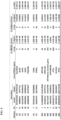
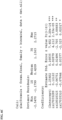
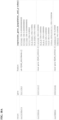
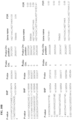
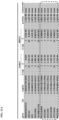
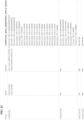
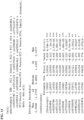
- Table 1 provides information of genes/regions, SNPs, SEQ ID NOs (SEQ ID NO: 1 - 341) and risk alleles .
- Disease stands for disease;
- gene.i stands for gene ID;
- SNP stands for single nucleotide polymorphism;
- rsID stands for Reference SNP cluster ID (rs number);
- chr stands for chromosome;
- pos_hg19 stands for position in human genome version 19;
- pos_hg18 stands for position in human genome version 18;
- A1” stands for minor allele;
- A2 stands for major allele;
- risk.allele stands for the allele that leads to increased disease risk;
- OR.risk.allele stands for Odds Ratio in meta-analysis for the risk allele;
- F_A_cedars stands for minor allele frequency in Cedars affected cases;
- F_U_cedars stands for minor allele frequency in Cedars unaffected controls;
- OR cedars stands for Odds Rati
- Table 1 (part 1) dis gene.i SNP rsID SEQ ID NO chr pos_hg19 pos_hg18 A 1 A 2 risk allele OR.risk. allele CD SLC26A4 rs10247487 rs10247487 1 7 107420354 107207590 A G G 1.060282 CD SLC26A4 rs10263826 rs10263826 2 7 107421072 107208308 G A A 1.065343 CD SLC26A4 rs10273733 rs10273733 3 7 107258121 107045357 A G A 1.064739 CD SLC26A4 rs12539555 rs12539555 4 7 107404473 107191709 G A G 1.03454 CD SLC26A4 rs2248465 rs2248465 5 7 107303628 107090864 G A G 1.06059 CD SLC26A4 rs2808 rs2808 6 7 107260856
- the numbers expressing quantities of ingredients, properties such as concentration, reaction conditions, and so forth, used to describe and claim certain embodiments of the invention are to be understood as being modified in some instances by the term "about.” Accordingly, in some embodiments, the numerical parameters set forth in the written description and attached claims are approximations that can vary depending upon the desired properties sought to be obtained by a particular embodiment. In some embodiments, the numerical parameters should be construed in light of the number of reported significant digits and by applying ordinary rounding techniques. Notwithstanding that the numerical ranges and parameters setting forth the broad scope of some embodiments of the invention are approximations, the numerical values set forth in the specific examples are reported as precisely as practicable. The numerical values presented in some embodiments of the invention may contain certain errors necessarily resulting from the standard deviation found in their respective testing measurements.
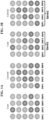
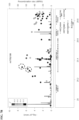
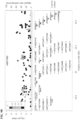
- Single-SNP based association drives most GWAS findings mostly because it's simple and straightforward ( FIG. 1A ). It tests if frequency of a single SNP is the same in case and control. However, it suffers from some drawbacks including: multiple testing correction, forbidding as the number of variants increases, ignoring multiple weak signals; and missing some causal loci.
- Gene-based analysis examines a gene as a whole instead of looking at single SNPs ( FIG. 1B ). It tests if distribution of all the SNPs in a given gene is the same in case and control. It is more powerful, when there are multiple causal SNPs with weak effects. It can reduce multiple-testing penalty for millions of SNPs and about 25000 known genes.
- CMC Combining Multivariate and Collapsing approach
- WSS Weighted Sum Statistics
- SKAT SNP Set Kernel Association Test
- SKAT-CommonRare Most of these approaches can only be applied to population-based design, assuming independence of the subjects.
- T n ⁇ n Y n ⁇ 1 T n ⁇ n G n ⁇ m ⁇ m ⁇ 1 + T n ⁇ n ⁇ n ⁇ 1
- GLS-SKAT is applied to iChip data Cedars vs. BBC: 4600 cases and 6800 controls.
- SKAT-CommonRare is applied to IIBDGC (excluding Cedars and BBC samples): 30200 cases and 29700 controls.
- PCA is included to control for confounding factors.
- TET2 codes for Tet Methylcytosine Dioxygenase 2, is involved in Foxp3 demethylation to drive regulatory T Cell differentiation and maintain immune homeostasis.
- LRRC16A leucine rich repeat containing 16A is a protein-coding gene. Diseases associated with LRRC16A include acute urate nephropathy. An important paralog of this gene is LRRC16B. LR16A_HUMAN Q5VZK9 binds CAPZA2 with high affinity and significantly decreases CAPZA2 affinity for actin barbed ends. It increases the rate of elongation from seeds in the presence of CAPZA2; however, it seems unable to nucleate filaments. It rapidly uncaps barbed ends capped by CAPZA2 and enhances barbed-end actin polymerization b similarity. It may control actin dynamics in lamellipodia, and is required for cell migration.
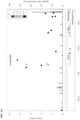
- HIST1 cluster portion 1 ( ⁇ 26.2M, first portion) and HIST1 cluster portion 2 ( ⁇ 27.8 M, second portion). After combining the ⁇ 1.6M (from 26.2 M to 27.8 M) into one big region, the overall region-based association P value is 1.64 ⁇ 10 -7 .
- BTN3A1/A2/A3 is an interesting gene cluster. Butyrophilin, Subfamily 3; belong to the B7 family members and are expressed in various immune cells such as T and NK cells.
- BTN3/CD277 comprises three structurally related members, BTN3A1, BTN3A2 and BTN3A3. It plays a role in T-cell responses in the adaptive immune response, and inhibits the release of IFNG from activated T-cells. It plays an important role in human ⁇ T-cell antigenic activation. It has differential role for CD277 as a co-regulator of the immune signal in T and NK cells (see e.g., Messal N, Mamessier E, et al. Eur J Immunol.
- NK cells express mostly BTN3A2, which lacks the B30.2 intracellular domain. Furthermore, NKp30-induced cytokine production is decreased by the specific engagement of BTN3A2, but not by BTN3A1 triggering.
- IBD Inflammatory Bowel Disease
- IBD genes such as IL23R and NOD2
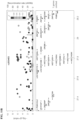
- TET2 Discovery p-value 0.019, replication p-value 2.82E-9, combined p-value 1.33E-9
- LRRC16A Discovery p-value 1.55E-6, replication p-value 3.43E-5, combined p-value 1.19E-8
- Histone Cluster 1 locus e.g.: HIST1H4H, discovery p-value 2.89E-5, replication p-value 2.44E-4, combined p-value 4.24E-6; HIST1H1B.
- discovery p-value 1.45E-4 replication p-value 8.61E-5, combined p-value 2.41E-7
- the SNPs of these genes are listed in Table 1.
Landscapes
- Chemical & Material Sciences (AREA)
- Life Sciences & Earth Sciences (AREA)
- Health & Medical Sciences (AREA)
- Organic Chemistry (AREA)
- Proteomics, Peptides & Aminoacids (AREA)
- Engineering & Computer Science (AREA)
- Wood Science & Technology (AREA)
- Zoology (AREA)
- Analytical Chemistry (AREA)
- Genetics & Genomics (AREA)
- Bioinformatics & Cheminformatics (AREA)
- Physics & Mathematics (AREA)
- General Health & Medical Sciences (AREA)
- Molecular Biology (AREA)
- Biotechnology (AREA)
- Biophysics (AREA)
- Biochemistry (AREA)
- Immunology (AREA)
- General Engineering & Computer Science (AREA)
- Microbiology (AREA)
- Pathology (AREA)
- Spectroscopy & Molecular Physics (AREA)
- Bioinformatics & Computational Biology (AREA)
- Theoretical Computer Science (AREA)
- Medical Informatics (AREA)
- Evolutionary Biology (AREA)
- General Chemical & Material Sciences (AREA)
- Chemical Kinetics & Catalysis (AREA)
- Public Health (AREA)
- Pharmacology & Pharmacy (AREA)
- Medicinal Chemistry (AREA)
- Nuclear Medicine, Radiotherapy & Molecular Imaging (AREA)
- Veterinary Medicine (AREA)
- Animal Behavior & Ethology (AREA)
- Measuring Or Testing Involving Enzymes Or Micro-Organisms (AREA)
- Medicines That Contain Protein Lipid Enzymes And Other Medicines (AREA)
- Medicines Containing Antibodies Or Antigens For Use As Internal Diagnostic Agents (AREA)
- Peptides Or Proteins (AREA)
Applications Claiming Priority (2)
| Application Number | Priority Date | Filing Date | Title |
|---|---|---|---|
| US201662339357P | 2016-05-20 | 2016-05-20 | |
| PCT/US2017/033625 WO2017201461A1 (en) | 2016-05-20 | 2017-05-19 | Diagnosis of inflammatory bowel disease based on genes |
Publications (3)
| Publication Number | Publication Date |
|---|---|
| EP3458466A1 EP3458466A1 (en) | 2019-03-27 |
| EP3458466A4 EP3458466A4 (en) | 2020-03-04 |
| EP3458466B1 true EP3458466B1 (en) | 2024-08-07 |
Family
ID=60326226
Family Applications (1)
| Application Number | Title | Priority Date | Filing Date |
|---|---|---|---|
| EP17800279.6A Active EP3458466B1 (en) | 2016-05-20 | 2017-05-19 | Diagnosis of inflammatory bowel disease based on genes |
Country Status (6)
| Country | Link |
|---|---|
| US (2) | US11549146B2 (enExample) |
| EP (1) | EP3458466B1 (enExample) |
| JP (4) | JP7475811B2 (enExample) |
| KR (4) | KR20230003433A (enExample) |
| CN (2) | CN109476698B (enExample) |
| WO (1) | WO2017201461A1 (enExample) |
Cited By (1)
| Publication number | Priority date | Publication date | Assignee | Title |
|---|---|---|---|---|
| US12466890B1 (en) | 2023-08-11 | 2025-11-11 | Paragon Therapeutics, Inc. | TL1A binding proteins and methods of use |
Families Citing this family (9)
| Publication number | Priority date | Publication date | Assignee | Title |
|---|---|---|---|---|
| US20110229471A1 (en) | 2008-11-26 | 2011-09-22 | Cedars-Sinai Medical Center | Methods of determining responsiveness to anti-tnf alpha therapy in inflammatory bowel disease |
| CN109462996A (zh) | 2016-03-17 | 2019-03-12 | 西达-赛奈医疗中心 | 通过rnaset2诊断炎性肠病的方法 |
| KR20230003433A (ko) | 2016-05-20 | 2023-01-05 | 세다르스-신나이 메디칼 센터 | 유전자에 기반한 염증성 장 질환의 진단 |
| WO2020112890A1 (en) | 2018-11-29 | 2020-06-04 | Cedars-Sinai Medical Center | Rnaset2 compositions and methods of treatment therewith |
| EP3969621A4 (en) | 2019-05-14 | 2023-01-25 | Prometheus Biosciences, Inc. | TL1A PATIENT SELECTION METHODS, SYSTEMS AND DEVICES |
| EP4171632A2 (en) * | 2020-06-26 | 2023-05-03 | Pfizer Inc. | Methods of treating inflammatory bowel disease with tl1a antibodies |
| IL302791A (en) * | 2020-11-13 | 2023-07-01 | Prometheus Biosciences Inc | Methods, systems, and kits for treatment of inflammatory diseases targeting tl1a |
| CN115851911B (zh) * | 2022-11-25 | 2025-10-24 | 南京鼓楼医院 | 一种用于鉴别狼疮性肾炎的尿液外泌体tsRNA标志物和探针及其应用 |
| WO2024148218A2 (en) * | 2023-01-06 | 2024-07-11 | Prometheus Biosciences, Inc. | Methods of treating inflammatory diseases with combination of tl1a inhibitors and tnf inhibitors |
Citations (10)
| Publication number | Priority date | Publication date | Assignee | Title |
|---|---|---|---|---|
| JP2004194534A (ja) | 2002-12-17 | 2004-07-15 | Sumitomo Pharmaceut Co Ltd | 炎症性腸疾患疾患マーカーおよびその利用 |
| WO2008106451A2 (en) | 2007-02-26 | 2008-09-04 | Cedars-Sinai Medical Center | Methods of using single nucleotide polymorphisms in the tl1a gene to predict or diagnose inflammatory bowel disease |
| WO2010062960A2 (en) | 2008-11-26 | 2010-06-03 | Cedars-Sinai Medical Center | METHODS OF DETERMINING RESPONSIVENESS TO ANTI-TNFα THERAPY IN INFLAMMATORY BOWEL DISEASE |
| US20100240043A1 (en) | 2007-10-19 | 2010-09-23 | Cedars-Sinai Medical Center | Methods of using genetic variants to diagnose and predict inflammatory bowel disease |
| US20120079611A1 (en) | 2010-09-22 | 2012-03-29 | Cedars-Sinai Medical Center | Tl1a model of inflammation fibrosis and autoimmunity |
| US20120208900A1 (en) | 2011-02-11 | 2012-08-16 | Cedars-Sinai Medical Center | Methods of predicting the need for surgery in crohn's disease |
| WO2012161856A1 (en) | 2011-05-20 | 2012-11-29 | Government Of The United States, As Represented By The Secretary, Department Of Health And Human Services | Blockade of tl1a-dr3 interactions to ameliorate t cell mediated disease pathology and antibodies thereof |
| WO2014160883A1 (en) | 2013-03-27 | 2014-10-02 | Cedars-Sinai Medical Center | Treating fibrosis and inflammation by inhibiting tl1a |
| WO2014186750A2 (en) | 2013-05-17 | 2014-11-20 | Cedars-Sinai Medical Center | Variants of tnfsf15 and dcr3 associated with crohn's disease |
| US20150376707A1 (en) | 2007-05-18 | 2015-12-31 | Cedars-Sinai Medical Center | Methods of diagnosing and treating inflammatory bowel disease |
Family Cites Families (40)
| Publication number | Priority date | Publication date | Assignee | Title |
|---|---|---|---|---|
| US4443421A (en) | 1982-03-16 | 1984-04-17 | Occidental Chemical Corporation | Process for removing particulate impurities from aqueous phosphoric acid |
| EP0191102B1 (en) | 1984-08-27 | 1989-01-04 | Toray Industries, Inc. | Solid-liquid separating apparatus |
| US5000850A (en) | 1986-09-10 | 1991-03-19 | Engelhard Corporation | Apparatus for dewatering an aqueous clay suspension |
| US5530101A (en) | 1988-12-28 | 1996-06-25 | Protein Design Labs, Inc. | Humanized immunoglobulins |
| US7357927B2 (en) | 1996-03-12 | 2008-04-15 | Human Genome Sciences, Inc. | Death domain containing receptors |
| EP1100962A1 (en) | 1998-07-25 | 2001-05-23 | AstraZeneca AB | Genetic polymorphisms in the human neurokinin 1 receptor gene and their uses in diagnosis and treatment of diseases |
| JP2007507460A (ja) * | 2003-10-06 | 2007-03-29 | ノバルティス アクチエンゲゼルシャフト | 炎症性疾患の治療効力と関連している遺伝子多型の使用 |
| JP2008518610A (ja) | 2004-11-03 | 2008-06-05 | アルマック ダイアグノスティックス リミテッド | トランスクリプトームマイクロアレイ技法およびそれを使用する方法 |
| CN101198624B (zh) | 2005-05-06 | 2012-10-10 | 津莫吉尼蒂克斯公司 | Il-31单克隆抗体及使用方法 |
| US20090317388A1 (en) | 2005-05-25 | 2009-12-24 | Linda Burkly | Tl1a in treatment of disease |
| EP1963534A2 (en) * | 2005-12-19 | 2008-09-03 | Genizon Biosciences Inc. | Genemap of the human gene associated with crohn's disease |
| EP2097538A4 (en) | 2006-12-07 | 2011-11-30 | Switchgear Genomics | TRANSCRIPTION REAGULATION ELEMENTS OF BIOLOGICAL PATHS, TOOLS AND METHODS |
| US20110217310A1 (en) | 2007-01-10 | 2011-09-08 | Siegel Richard M | Blockade of tl1a-dr3 interactions to ameliorate t cell mediated disease pathology |
| WO2008100913A2 (en) * | 2007-02-12 | 2008-08-21 | The Johns Hopkins University | Early detection and prognosis of colon cancers |
| US20100055700A1 (en) | 2007-02-28 | 2010-03-04 | Cedars-Sinai Medical Center | Role of il-12, il-23 and il-17 receptors in inflammatory bowel disease |
| WO2011088380A1 (en) | 2010-01-15 | 2011-07-21 | Cedars-Sinai Medical Center | Methods of using fut2 genetic variants to diagnose crohn's disease |
| US8118175B2 (en) | 2007-07-18 | 2012-02-21 | Siemens Industry, Inc. | Venting device for a disc filter |
| WO2009039244A2 (en) * | 2007-09-18 | 2009-03-26 | Genizon Biosciences Inc. | Genemap of the human genes associated with crohn's disease |
| MX2010005282A (es) | 2007-11-13 | 2010-08-31 | Teva Pharma | Anticuerpos humanizados contra tl1a. |
| KR20160127181A (ko) | 2008-08-12 | 2016-11-02 | 진판델 파마슈티컬스 인코포레이티드 | 질환 위험 인자의 식별 방법 |
| AU2009285644B2 (en) | 2008-08-29 | 2015-08-20 | Janssen Biotech, Inc. | Markers and methods for assessing and treating ulcerative colitis and related disorders using a 20 gene panel |
| JP2010088432A (ja) | 2008-09-09 | 2010-04-22 | Kansetsu Saisei Kenkyusho:Kk | Tnf阻害薬治療による有効性・副作用発現に関する多型、およびその利用 |
| WO2010075579A2 (en) | 2008-12-24 | 2010-07-01 | Cedars-Sinai Medical Center | Methods of predicting medically refractive ulcerative colitis (mr-uc) requiring colectomy |
| NZ619527A (en) | 2009-04-14 | 2015-06-26 | Nestec Sa | Inflammatory bowel disease prognostics |
| EP2576838A4 (en) * | 2010-06-04 | 2019-05-15 | Nestec S.A. | METHOD FOR IMPROVING DIAGNOSIS OF INFLAMMATORY ENDURANCE |
| EP3702460A1 (en) | 2010-11-12 | 2020-09-02 | The General Hospital Corporation | Polycomb-associated non-coding rnas |
| CA3295783A1 (en) | 2011-05-10 | 2026-03-02 | Prometheus Laboratories, Inc. | Methods of disease activity profiling for personalized therapy management |
| WO2012156515A1 (en) | 2011-05-18 | 2012-11-22 | Rheinische Friedrich-Wilhelms-Universität Bonn | Molecular analysis of acute myeloid leukemia |
| EP2714735B1 (en) | 2011-06-03 | 2021-07-21 | XOMA Technology Ltd. | Antibodies specific for tgf-beta |
| WO2013059732A1 (en) | 2011-10-21 | 2013-04-25 | Nestec S.A. | Methods for improving inflammatory bowel disease diagnosis |
| EP2812445A2 (en) | 2012-02-10 | 2014-12-17 | Novo Nordisk A/S | Methods related to treatment of inflammatory diseases and disorders |
| NZ717633A (en) * | 2013-10-09 | 2021-07-30 | Cedars Sinai Medical Center | Diagnosis and treatment of irritable bowel syndrome and inflammatory bowel disease |
| WO2015138774A1 (en) * | 2014-03-13 | 2015-09-17 | Sequenom, Inc. | Methods and processes for non-invasive assessment of genetic variations |
| EP3286318A2 (en) | 2015-04-22 | 2018-02-28 | Mina Therapeutics Limited | Sarna compositions and methods of use |
| MX2018010266A (es) | 2016-02-26 | 2019-03-28 | Nanotech Energy Inc | Métodos, dispositivos y sistemas para procesamiento de composiciones carbonosas. |
| KR20230003433A (ko) * | 2016-05-20 | 2023-01-05 | 세다르스-신나이 메디칼 센터 | 유전자에 기반한 염증성 장 질환의 진단 |
| US10041044B2 (en) | 2016-07-29 | 2018-08-07 | Trustees Of Boston University | Age-associated clonal hematopoiesis accelerates cardio-metabolic disease development |
| MY191324A (en) | 2016-10-26 | 2022-06-15 | Cedars Sinai Medical Center | Neutralizing anti-tl1a monoclonal antibodies |
| US20210254056A1 (en) | 2017-05-05 | 2021-08-19 | Camp4 Therapeutics Corporation | Identification and targeted modulation of gene signaling networks |
| US11675142B2 (en) | 2018-12-14 | 2023-06-13 | Fujikura Ltd. | Ferrule, fiber-equipped ferrule, and method for manufacturing fiber-equipped ferrule |
-
2017
- 2017-05-19 KR KR1020227044940A patent/KR20230003433A/ko not_active Ceased
- 2017-05-19 EP EP17800279.6A patent/EP3458466B1/en active Active
- 2017-05-19 KR KR1020247019512A patent/KR20240095363A/ko not_active Ceased
- 2017-05-19 KR KR1020227003985A patent/KR102481305B1/ko active Active
- 2017-05-19 US US16/303,033 patent/US11549146B2/en active Active
- 2017-05-19 KR KR1020187037151A patent/KR20190016972A/ko not_active Ceased
- 2017-05-19 CN CN201780044934.7A patent/CN109476698B/zh active Active
- 2017-05-19 CN CN202311263442.0A patent/CN117286238A/zh active Pending
- 2017-05-19 WO PCT/US2017/033625 patent/WO2017201461A1/en not_active Ceased
- 2017-05-19 JP JP2018560186A patent/JP7475811B2/ja active Active
-
2022
- 2022-03-18 JP JP2022044738A patent/JP7392020B2/ja active Active
- 2022-12-09 US US18/063,931 patent/US12545959B2/en active Active
-
2023
- 2023-12-18 JP JP2023213224A patent/JP2024037945A/ja active Pending
-
2025
- 2025-11-25 JP JP2025203084A patent/JP2026048696A/ja active Pending
Patent Citations (10)
| Publication number | Priority date | Publication date | Assignee | Title |
|---|---|---|---|---|
| JP2004194534A (ja) | 2002-12-17 | 2004-07-15 | Sumitomo Pharmaceut Co Ltd | 炎症性腸疾患疾患マーカーおよびその利用 |
| WO2008106451A2 (en) | 2007-02-26 | 2008-09-04 | Cedars-Sinai Medical Center | Methods of using single nucleotide polymorphisms in the tl1a gene to predict or diagnose inflammatory bowel disease |
| US20150376707A1 (en) | 2007-05-18 | 2015-12-31 | Cedars-Sinai Medical Center | Methods of diagnosing and treating inflammatory bowel disease |
| US20100240043A1 (en) | 2007-10-19 | 2010-09-23 | Cedars-Sinai Medical Center | Methods of using genetic variants to diagnose and predict inflammatory bowel disease |
| WO2010062960A2 (en) | 2008-11-26 | 2010-06-03 | Cedars-Sinai Medical Center | METHODS OF DETERMINING RESPONSIVENESS TO ANTI-TNFα THERAPY IN INFLAMMATORY BOWEL DISEASE |
| US20120079611A1 (en) | 2010-09-22 | 2012-03-29 | Cedars-Sinai Medical Center | Tl1a model of inflammation fibrosis and autoimmunity |
| US20120208900A1 (en) | 2011-02-11 | 2012-08-16 | Cedars-Sinai Medical Center | Methods of predicting the need for surgery in crohn's disease |
| WO2012161856A1 (en) | 2011-05-20 | 2012-11-29 | Government Of The United States, As Represented By The Secretary, Department Of Health And Human Services | Blockade of tl1a-dr3 interactions to ameliorate t cell mediated disease pathology and antibodies thereof |
| WO2014160883A1 (en) | 2013-03-27 | 2014-10-02 | Cedars-Sinai Medical Center | Treating fibrosis and inflammation by inhibiting tl1a |
| WO2014186750A2 (en) | 2013-05-17 | 2014-11-20 | Cedars-Sinai Medical Center | Variants of tnfsf15 and dcr3 associated with crohn's disease |
Non-Patent Citations (17)
| Title |
|---|
| "Doctoral Dissertation, University of Cambridge", 1 September 2012, article JOSTINS LUKE: "Using Next-Generation Genomic Datasets In Disease Association", XP093277819 |
| ALONSO ARNALD, DOMÈNECH EUGENI, JULIÀ ANTONIO, PANÉS JULIÁN, GARCÍA-SÁNCHEZ VALLE, MATEU PILAR NOS, GUTIÉRREZ ANA, GOMOLLÓN FERNAN: "Identification of Risk Loci for Crohn’s Disease Phenotypes Using a Genome-Wide Association Study", GASTROENTEROLOGY (AUTHOR MANUSCRIPT), W.B. SAUNDERS, AMSTERDAM, NL, vol. 148, no. 4, 1 April 2015 (2015-04-01), AMSTERDAM, NL, pages 794 - 805, XP093277818, ISSN: 0016-5085, DOI: 10.1053/j.gastro.2014.12.030 |
| BYONG DUK YE, MCGOVERN DERMOT P. B.: "Genetic variation in IBD: progress, clues to pathogenesis and possible clinical utility", EXPERT REVIEW OF CLINICAL IMMUNOLOGY, FUTURE DRUGS LTD., LONDON, GB, vol. 12, no. 10, 9 May 2016 (2016-05-09), GB , pages 1091 - 1107, XP055730782, ISSN: 1744-666X, DOI: 10.1080/1744666X.2016.1184972 |
| CLEYNEN ISABELLE; BOUCHER GABRIELLE; JOSTINS LUKE; SCHUMM L PHILIP; ZEISSIG SEBASTIAN; AHMAD TARIQ; ANDERSEN VIBEKE; ANDREWS JANE : "Inherited determinants of Crohn's disease and ulcerative colitis phenotypes: a genetic association study", THE LANCET, ELSEVIER, AMSTERDAM, NL, vol. 387, no. 10014, 18 October 2015 (2015-10-18), AMSTERDAM, NL , pages 156 - 167, XP029382714, DOI: 10.1016/S0140-6736(15)00465-1 |
| D Q SHIH, L ZHENG, X ZHANG, H ZHANG, Y KANAZAWA, R ICHIKAWA, K L WALLACE, J CHEN, C POTHOULAKIS, H W KOON, S R TARGAN: "Inhibition of a novel fibrogenic factor Tl1a reverses established colonic fibrosis", MUCOSAL IMMUNOLOGY, NATURE PUBLISHING GROUP US, NEW YORK, vol. 7, no. 6, 1 November 2014 (2014-11-01), New York, pages 1492 - 1503, XP055697841, ISSN: 1933-0219, DOI: 10.1038/mi.2014.37 |
| D23 - Submission to database dbSNP regarding rs9184890 dated September 6, 2000 |
| FESTEN ELEONORA A., GOYETTE PHILIPPE, GREEN TODD, BOUCHER GABRIELLE, BEAUCHAMP CLAUDINE, TRYNKA GOSIA, DUBOIS PATRICK C., LAGACÉ C: "A Meta-Analysis of Genome-Wide Association Scans Identifies IL18RAP, PTPN2, TAGAP, and PUS10 As Shared Risk Loci for Crohn's Disease and Celiac Disease", PLOS GENETICS, PUBLIC LIBRARY OF SCIENCE, US, vol. 7, no. 1, US , pages e1001283, XP093277824, ISSN: 1553-7404, DOI: 10.1371/journal.pgen.1001283 |
| HIDETOSHI TAKEDATSU, KATHRIN S. MICHELSEN, BO WEI, CAROL J. LANDERS, LISA S. THOMAS, DEEPTI DHALL, JONATHAN BRAUN, STEPHAN R. TARG: "TL1A (TNFSF15) regulates the development of chronic colitis by modulating both T-helper 1 and T-helper 17 activation.", GASTROENTEROLOGY (AUTHOR MANUSCRIPT), W.B. SAUNDERS, AMSTERDAM, NL, vol. 135, no. 2, 1 August 2008 (2008-08-01), AMSTERDAM, NL, pages 552 - 567, XP002668871, ISSN: 0016-5085, DOI: 10.1053/j.gastro.2008.04.037 |
| JACOB NOAM, TARGAN STEPHAN R, SHIH DAVID Q: "Cytokine and anti-cytokine therapies in prevention or treatment of fibrosis in IBD", UNITED EUROPEAN GASTROENTEROL JOURNAL, SAGE, GB, vol. 4, no. 4, 1 August 2016 (2016-08-01), GB , pages 531 - 540, XP093277825, ISSN: 2050-6406, DOI: 10.1177/2050640616649356 |
| JEFFREY C BARRETT, SARAH HANSOUL, DAN L NICOLAE, JUDY H CHO, RICHARD H DUERR, JOHN D RIOUX, STEVEN R BRANT, MARK S SILVERBERG, KEN: "Genome-wide association defines more than 30 distinct susceptibility loci for Crohn's disease", NATURE GENETICS, NATURE AMERICA, INC., vol. 40, no. 8, 1 August 2008 (2008-08-01), pages 955 - 962, XP055033904, ISSN: 10614036, DOI: 10.1038/ng.175 |
| KENNY EIMEAR E., PE'ER ITSIK, KARBAN AMIR, OZELIUS LAURIE, MITCHELL ADELE A., NG SOK MENG, ERAZO MONICA, OSTRER HARRY, ABRAHAM CLA: "A Genome-Wide Scan of Ashkenazi Jewish Crohn's Disease Suggests Novel Susceptibility Loci", PLOS GENETICS, PUBLIC LIBRARY OF SCIENCE, US, vol. 8, no. 3, US , pages e1002559, XP093277823, ISSN: 1553-7404, DOI: 10.1371/journal.pgen.1002559 |
| LI DALIN; HARITUNIANS TALIN; YAN XIAOFEI; MCGOVERN DERMOT: "324 Gene-Based Analysis Identified Multiple Novel IBD Loci", GASTROENTEROLOGY, W.B. SAUNDERS, AMSTERDAM, NL, vol. 150, no. 4, 1 April 2016 (2016-04-01) - 24 May 2016 (2016-05-24), AMSTERDAM, NL, pages S76, XP029511606, ISSN: 0016-5085, DOI: 10.1016/S0016-5085(16)30370-5 |
| RAELSON JOHN V., LITTLE RANDALL D., RUETHER ANDREAS, FOURNIER HÉLÈNE, PAQUIN BRUNO, VAN EERDEWEGH PAUL, BRADLEY W. E. C., CROTEAU : "Genome-wide association study for Crohn's disease in the Quebec Founder Population identifies multiple validated disease loci", PROCEEDINGS OF THE NATIONAL ACADEMY OF SCIENCES (PNAS), NATIONAL ACADEMY OF SCIENCES, vol. 104, no. 37, 11 September 2007 (2007-09-11), pages 14747 - 14752, XP093277821, ISSN: 0027-8424, DOI: 10.1073/pnas.0706645104 |
| SHIH DAVID Q, XIAOLAN ZHANG, HON WAI KOON, JYH-YAU CHANG, JEREMY CHEN, BRIAN L. HUANG, CHENYANG LI, LIBO ZHENG, CHARALABOS POTHOUL: "357 Reversal of Murine Colitis and Fibrosis by Neutralizing TL1A Antibody: Potential Novel Therapy to Alter Natural History of Crohn's Disease", GASTROENTEROLOGY (AUTHOR MANUSCRIPT), W.B. SAUNDERS, AMSTERDAM, NL, vol. 142, no. 5, 1 May 2012 (2012-05-01), AMSTERDAM, NL, pages S - S-84, XP093190877, ISSN: 0016-5085, DOI: 10.1016/S0016-5085(12)60317-5 |
| SZUMILAS MAGDALENA: "Explaining Odds Ratios", J CAN ACAD CHILD ADOLESC PSYCHIATRY, vol. 19, no. 3, 19 August 2010 (2010-08-19), pages 227 - 229, XP093277828 |
| VAN LIMBERGEN JOHAN, RADFORD-SMITH GRAHAM, SATSANGI JACK: "Advances in IBD genetics", NATURE REVIEWS GASTROENTEROLOGY, NATURE PUBLISHING GROUP UK, LONDON, vol. 11, no. 6, 1 June 2014 (2014-06-01), London, pages 372 - 385, XP093277834, ISSN: 1759-5045, DOI: 10.1038/nrgastro.2014.27 |
| WALLACE KORI L, LI-BO ZHENG, YOSHITAKE KANAZAWA, DAVID Q SHIH: "Immunopathology of inflammatory bowel disease", WORLD JOURNAL OF GASTROENTEROLOGY, WJG PRESS, CN, vol. 20, no. 1, 7 January 2014 (2014-01-07), CN , pages 6 - 21, XP093277831, ISSN: 1007-9327, DOI: 10.3748/wjg.v20.i1.6 |
Cited By (2)
| Publication number | Priority date | Publication date | Assignee | Title |
|---|---|---|---|---|
| US12466890B1 (en) | 2023-08-11 | 2025-11-11 | Paragon Therapeutics, Inc. | TL1A binding proteins and methods of use |
| US12509523B1 (en) | 2023-08-11 | 2025-12-30 | Paragon Therapeutics, Inc. | TL1A binding proteins and methods of use |
Also Published As
| Publication number | Publication date |
|---|---|
| US11549146B2 (en) | 2023-01-10 |
| JP7392020B2 (ja) | 2023-12-05 |
| KR20220025122A (ko) | 2022-03-03 |
| JP7475811B2 (ja) | 2024-04-30 |
| US20230366028A1 (en) | 2023-11-16 |
| JP2022095688A (ja) | 2022-06-28 |
| US12545959B2 (en) | 2026-02-10 |
| KR20240095363A (ko) | 2024-06-25 |
| CN109476698A (zh) | 2019-03-15 |
| KR102481305B1 (ko) | 2022-12-26 |
| EP3458466A4 (en) | 2020-03-04 |
| JP2026048696A (ja) | 2026-03-17 |
| EP3458466A1 (en) | 2019-03-27 |
| CN109476698B (zh) | 2023-10-17 |
| WO2017201461A1 (en) | 2017-11-23 |
| CN117286238A (zh) | 2023-12-26 |
| JP2024037945A (ja) | 2024-03-19 |
| US20190194754A1 (en) | 2019-06-27 |
| KR20190016972A (ko) | 2019-02-19 |
| JP2019516375A (ja) | 2019-06-20 |
| KR20230003433A (ko) | 2023-01-05 |
Similar Documents
| Publication | Publication Date | Title |
|---|---|---|
| US12545959B2 (en) | Diagnosis of inflammatory bowel disease based on genes | |
| EP2689036B1 (en) | Methods of diagnosing and treating intestinal granulomas and low bone density in inflammatory bowel disease | |
| US20100055700A1 (en) | Role of il-12, il-23 and il-17 receptors in inflammatory bowel disease | |
| US20100144903A1 (en) | Methods of diagnosis and treatment of crohn's disease | |
| US20110177969A1 (en) | The role of il17rd and the il23-1l17 pathway in crohn's disease | |
| US20100184050A1 (en) | Diagnosis and treatment of inflammatory bowel disease in the puerto rican population | |
| MX2008016524A (es) | Biomarcadores para la progresion de la enfermedad de alzheimer. | |
| US20150376707A1 (en) | Methods of diagnosing and treating inflammatory bowel disease | |
| WO2008144316A1 (en) | Blood biomarkers for psychosis | |
| US20180208988A1 (en) | Methods of diagnosis and treatment of inflammatory bowel disease | |
| US20130136720A1 (en) | Methods of using fut2 genetic variants to diagnose crohn's disease | |
| US9305137B1 (en) | Methods of identifying the genetic basis of a disease by a combinatorial genomics approach, biological pathway approach, and sequential approach | |
| US20120041082A1 (en) | Methods of using smad3 and jak2 genetic variants to diagnose and predict inflammatory bowel disease | |
| US20120190698A1 (en) | Methods of predicting thiopurine response | |
| CN103874526A (zh) | 预测补体介导的疾病的发展的方法 | |
| CA2946317A1 (en) | Methods of predicting medically refractive ulcerative colitis (mruc) requiring colectomy | |
| US8986929B2 (en) | RGS2 genotypes associated with extrapyramidal symptoms induced by antipsychotic medication | |
| JP6695142B2 (ja) | 抗精神病薬に基づく処置により誘導される錐体外路症状(eps)の発症を予測する方法 | |
| Rao et al. | Schizophrenia and the serotonin transporter gene | |
| WO2008112990A2 (en) | Methods of diagnosis and treatment of crohn's disease | |
| WO2009052559A1 (en) | A diagnostic assay | |
| US20170240965A1 (en) | Methods for prognosing heart transplant | |
| JP4317376B2 (ja) | 糖尿病性腎症遺伝子の検出方法 |
Legal Events
| Date | Code | Title | Description |
|---|---|---|---|
| STAA | Information on the status of an ep patent application or granted ep patent |
Free format text: STATUS: THE INTERNATIONAL PUBLICATION HAS BEEN MADE |
|
| PUAI | Public reference made under article 153(3) epc to a published international application that has entered the european phase |
Free format text: ORIGINAL CODE: 0009012 |
|
| STAA | Information on the status of an ep patent application or granted ep patent |
Free format text: STATUS: REQUEST FOR EXAMINATION WAS MADE |
|
| 17P | Request for examination filed |
Effective date: 20181207 |
|
| AK | Designated contracting states |
Kind code of ref document: A1 Designated state(s): AL AT BE BG CH CY CZ DE DK EE ES FI FR GB GR HR HU IE IS IT LI LT LU LV MC MK MT NL NO PL PT RO RS SE SI SK SM TR |
|
| AX | Request for extension of the european patent |
Extension state: BA ME |
|
| DAV | Request for validation of the european patent (deleted) | ||
| DAX | Request for extension of the european patent (deleted) | ||
| RIC1 | Information provided on ipc code assigned before grant |
Ipc: C07H 21/04 20060101AFI20191025BHEP Ipc: G01N 33/18 20060101ALI20191025BHEP Ipc: C12Q 1/68 20180101ALI20191025BHEP |
|
| A4 | Supplementary search report drawn up and despatched |
Effective date: 20200204 |
|
| RIC1 | Information provided on ipc code assigned before grant |
Ipc: C12Q 1/68 20180101ALI20200129BHEP Ipc: C07H 21/04 20060101AFI20200129BHEP Ipc: G01N 33/18 20060101ALI20200129BHEP |
|
| STAA | Information on the status of an ep patent application or granted ep patent |
Free format text: STATUS: EXAMINATION IS IN PROGRESS |
|
| 17Q | First examination report despatched |
Effective date: 20210517 |
|
| REG | Reference to a national code |
Ref country code: DE Ref legal event code: R079 Free format text: PREVIOUS MAIN CLASS: C07H0021040000 Ipc: C12Q0001688300 Ref country code: DE Ref legal event code: R079 Ref document number: 602017083917 Country of ref document: DE Free format text: PREVIOUS MAIN CLASS: C07H0021040000 Ipc: C12Q0001688300 |
|
| RIC1 | Information provided on ipc code assigned before grant |
Ipc: C12Q 1/6883 20180101AFI20230227BHEP |
|
| RIC1 | Information provided on ipc code assigned before grant |
Ipc: C12Q 1/6883 20180101AFI20230420BHEP |
|
| GRAP | Despatch of communication of intention to grant a patent |
Free format text: ORIGINAL CODE: EPIDOSNIGR1 |
|
| STAA | Information on the status of an ep patent application or granted ep patent |
Free format text: STATUS: GRANT OF PATENT IS INTENDED |
|
| INTG | Intention to grant announced |
Effective date: 20240229 |
|
| GRAS | Grant fee paid |
Free format text: ORIGINAL CODE: EPIDOSNIGR3 |
|
| GRAA | (expected) grant |
Free format text: ORIGINAL CODE: 0009210 |
|
| STAA | Information on the status of an ep patent application or granted ep patent |
Free format text: STATUS: THE PATENT HAS BEEN GRANTED |
|
| AK | Designated contracting states |
Kind code of ref document: B1 Designated state(s): AL AT BE BG CH CY CZ DE DK EE ES FI FR GB GR HR HU IE IS IT LI LT LU LV MC MK MT NL NO PL PT RO RS SE SI SK SM TR |
|
| REG | Reference to a national code |
Ref country code: GB Ref legal event code: FG4D |
|
| REG | Reference to a national code |
Ref country code: CH Ref legal event code: EP |
|
| REG | Reference to a national code |
Ref country code: IE Ref legal event code: FG4D |
|
| REG | Reference to a national code |
Ref country code: DE Ref legal event code: R096 Ref document number: 602017083917 Country of ref document: DE |
|
| P01 | Opt-out of the competence of the unified patent court (upc) registered |
Free format text: CASE NUMBER: APP_44416/2024 Effective date: 20240730 |
|
| REG | Reference to a national code |
Ref country code: LT Ref legal event code: MG9D |
|
| REG | Reference to a national code |
Ref country code: NL Ref legal event code: MP Effective date: 20240807 |
|
| PG25 | Lapsed in a contracting state [announced via postgrant information from national office to epo] |
Ref country code: NO Free format text: LAPSE BECAUSE OF FAILURE TO SUBMIT A TRANSLATION OF THE DESCRIPTION OR TO PAY THE FEE WITHIN THE PRESCRIBED TIME-LIMIT Effective date: 20241107 |
|
| REG | Reference to a national code |
Ref country code: AT Ref legal event code: MK05 Ref document number: 1710991 Country of ref document: AT Kind code of ref document: T Effective date: 20240807 |
|
| PG25 | Lapsed in a contracting state [announced via postgrant information from national office to epo] |
Ref country code: PT Free format text: LAPSE BECAUSE OF FAILURE TO SUBMIT A TRANSLATION OF THE DESCRIPTION OR TO PAY THE FEE WITHIN THE PRESCRIBED TIME-LIMIT Effective date: 20241209 Ref country code: FI Free format text: LAPSE BECAUSE OF FAILURE TO SUBMIT A TRANSLATION OF THE DESCRIPTION OR TO PAY THE FEE WITHIN THE PRESCRIBED TIME-LIMIT Effective date: 20240807 Ref country code: NL Free format text: LAPSE BECAUSE OF FAILURE TO SUBMIT A TRANSLATION OF THE DESCRIPTION OR TO PAY THE FEE WITHIN THE PRESCRIBED TIME-LIMIT Effective date: 20240807 Ref country code: GR Free format text: LAPSE BECAUSE OF FAILURE TO SUBMIT A TRANSLATION OF THE DESCRIPTION OR TO PAY THE FEE WITHIN THE PRESCRIBED TIME-LIMIT Effective date: 20241108 Ref country code: PL Free format text: LAPSE BECAUSE OF FAILURE TO SUBMIT A TRANSLATION OF THE DESCRIPTION OR TO PAY THE FEE WITHIN THE PRESCRIBED TIME-LIMIT Effective date: 20240807 |
|
| PG25 | Lapsed in a contracting state [announced via postgrant information from national office to epo] |
Ref country code: BG Free format text: LAPSE BECAUSE OF FAILURE TO SUBMIT A TRANSLATION OF THE DESCRIPTION OR TO PAY THE FEE WITHIN THE PRESCRIBED TIME-LIMIT Effective date: 20240807 |
|
| PG25 | Lapsed in a contracting state [announced via postgrant information from national office to epo] |
Ref country code: LV Free format text: LAPSE BECAUSE OF FAILURE TO SUBMIT A TRANSLATION OF THE DESCRIPTION OR TO PAY THE FEE WITHIN THE PRESCRIBED TIME-LIMIT Effective date: 20240807 |
|
| PG25 | Lapsed in a contracting state [announced via postgrant information from national office to epo] |
Ref country code: AT Free format text: LAPSE BECAUSE OF FAILURE TO SUBMIT A TRANSLATION OF THE DESCRIPTION OR TO PAY THE FEE WITHIN THE PRESCRIBED TIME-LIMIT Effective date: 20240807 Ref country code: IS Free format text: LAPSE BECAUSE OF FAILURE TO SUBMIT A TRANSLATION OF THE DESCRIPTION OR TO PAY THE FEE WITHIN THE PRESCRIBED TIME-LIMIT Effective date: 20241207 |
|
| PG25 | Lapsed in a contracting state [announced via postgrant information from national office to epo] |
Ref country code: HR Free format text: LAPSE BECAUSE OF FAILURE TO SUBMIT A TRANSLATION OF THE DESCRIPTION OR TO PAY THE FEE WITHIN THE PRESCRIBED TIME-LIMIT Effective date: 20240807 |
|
| PG25 | Lapsed in a contracting state [announced via postgrant information from national office to epo] |
Ref country code: RS Free format text: LAPSE BECAUSE OF FAILURE TO SUBMIT A TRANSLATION OF THE DESCRIPTION OR TO PAY THE FEE WITHIN THE PRESCRIBED TIME-LIMIT Effective date: 20241107 Ref country code: ES Free format text: LAPSE BECAUSE OF FAILURE TO SUBMIT A TRANSLATION OF THE DESCRIPTION OR TO PAY THE FEE WITHIN THE PRESCRIBED TIME-LIMIT Effective date: 20240807 |
|
| PG25 | Lapsed in a contracting state [announced via postgrant information from national office to epo] |
Ref country code: RS Free format text: LAPSE BECAUSE OF FAILURE TO SUBMIT A TRANSLATION OF THE DESCRIPTION OR TO PAY THE FEE WITHIN THE PRESCRIBED TIME-LIMIT Effective date: 20241107 Ref country code: PT Free format text: LAPSE BECAUSE OF FAILURE TO SUBMIT A TRANSLATION OF THE DESCRIPTION OR TO PAY THE FEE WITHIN THE PRESCRIBED TIME-LIMIT Effective date: 20241209 Ref country code: PL Free format text: LAPSE BECAUSE OF FAILURE TO SUBMIT A TRANSLATION OF THE DESCRIPTION OR TO PAY THE FEE WITHIN THE PRESCRIBED TIME-LIMIT Effective date: 20240807 Ref country code: NO Free format text: LAPSE BECAUSE OF FAILURE TO SUBMIT A TRANSLATION OF THE DESCRIPTION OR TO PAY THE FEE WITHIN THE PRESCRIBED TIME-LIMIT Effective date: 20241107 Ref country code: NL Free format text: LAPSE BECAUSE OF FAILURE TO SUBMIT A TRANSLATION OF THE DESCRIPTION OR TO PAY THE FEE WITHIN THE PRESCRIBED TIME-LIMIT Effective date: 20240807 Ref country code: LV Free format text: LAPSE BECAUSE OF FAILURE TO SUBMIT A TRANSLATION OF THE DESCRIPTION OR TO PAY THE FEE WITHIN THE PRESCRIBED TIME-LIMIT Effective date: 20240807 Ref country code: IS Free format text: LAPSE BECAUSE OF FAILURE TO SUBMIT A TRANSLATION OF THE DESCRIPTION OR TO PAY THE FEE WITHIN THE PRESCRIBED TIME-LIMIT Effective date: 20241207 Ref country code: HR Free format text: LAPSE BECAUSE OF FAILURE TO SUBMIT A TRANSLATION OF THE DESCRIPTION OR TO PAY THE FEE WITHIN THE PRESCRIBED TIME-LIMIT Effective date: 20240807 Ref country code: GR Free format text: LAPSE BECAUSE OF FAILURE TO SUBMIT A TRANSLATION OF THE DESCRIPTION OR TO PAY THE FEE WITHIN THE PRESCRIBED TIME-LIMIT Effective date: 20241108 Ref country code: FI Free format text: LAPSE BECAUSE OF FAILURE TO SUBMIT A TRANSLATION OF THE DESCRIPTION OR TO PAY THE FEE WITHIN THE PRESCRIBED TIME-LIMIT Effective date: 20240807 Ref country code: ES Free format text: LAPSE BECAUSE OF FAILURE TO SUBMIT A TRANSLATION OF THE DESCRIPTION OR TO PAY THE FEE WITHIN THE PRESCRIBED TIME-LIMIT Effective date: 20240807 Ref country code: BG Free format text: LAPSE BECAUSE OF FAILURE TO SUBMIT A TRANSLATION OF THE DESCRIPTION OR TO PAY THE FEE WITHIN THE PRESCRIBED TIME-LIMIT Effective date: 20240807 Ref country code: AT Free format text: LAPSE BECAUSE OF FAILURE TO SUBMIT A TRANSLATION OF THE DESCRIPTION OR TO PAY THE FEE WITHIN THE PRESCRIBED TIME-LIMIT Effective date: 20240807 |
|
| PG25 | Lapsed in a contracting state [announced via postgrant information from national office to epo] |
Ref country code: SM Free format text: LAPSE BECAUSE OF FAILURE TO SUBMIT A TRANSLATION OF THE DESCRIPTION OR TO PAY THE FEE WITHIN THE PRESCRIBED TIME-LIMIT Effective date: 20240807 Ref country code: DK Free format text: LAPSE BECAUSE OF FAILURE TO SUBMIT A TRANSLATION OF THE DESCRIPTION OR TO PAY THE FEE WITHIN THE PRESCRIBED TIME-LIMIT Effective date: 20240807 Ref country code: RO Free format text: LAPSE BECAUSE OF FAILURE TO SUBMIT A TRANSLATION OF THE DESCRIPTION OR TO PAY THE FEE WITHIN THE PRESCRIBED TIME-LIMIT Effective date: 20240807 |
|
| PG25 | Lapsed in a contracting state [announced via postgrant information from national office to epo] |
Ref country code: EE Free format text: LAPSE BECAUSE OF FAILURE TO SUBMIT A TRANSLATION OF THE DESCRIPTION OR TO PAY THE FEE WITHIN THE PRESCRIBED TIME-LIMIT Effective date: 20240807 |
|
| PG25 | Lapsed in a contracting state [announced via postgrant information from national office to epo] |
Ref country code: CZ Free format text: LAPSE BECAUSE OF FAILURE TO SUBMIT A TRANSLATION OF THE DESCRIPTION OR TO PAY THE FEE WITHIN THE PRESCRIBED TIME-LIMIT Effective date: 20240807 |
|
| PG25 | Lapsed in a contracting state [announced via postgrant information from national office to epo] |
Ref country code: SK Free format text: LAPSE BECAUSE OF FAILURE TO SUBMIT A TRANSLATION OF THE DESCRIPTION OR TO PAY THE FEE WITHIN THE PRESCRIBED TIME-LIMIT Effective date: 20240807 |
|
| REG | Reference to a national code |
Ref country code: DE Ref legal event code: R026 Ref document number: 602017083917 Country of ref document: DE |
|
| PLBI | Opposition filed |
Free format text: ORIGINAL CODE: 0009260 |
|
| PLAX | Notice of opposition and request to file observation + time limit sent |
Free format text: ORIGINAL CODE: EPIDOSNOBS2 |
|
| 26 | Opposition filed |
Opponent name: ZWICKER SCHNAPPAUF & PARTNERPATENTANWAELTE PARTG MBB Effective date: 20250506 Opponent name: HAMPTON KNOWLES LIMITED Effective date: 20250506 |
|
| PG25 | Lapsed in a contracting state [announced via postgrant information from national office to epo] |
Ref country code: SE Free format text: LAPSE BECAUSE OF FAILURE TO SUBMIT A TRANSLATION OF THE DESCRIPTION OR TO PAY THE FEE WITHIN THE PRESCRIBED TIME-LIMIT Effective date: 20240807 |
|
| PLBB | Reply of patent proprietor to notice(s) of opposition received |
Free format text: ORIGINAL CODE: EPIDOSNOBS3 |
|
| REG | Reference to a national code |
Ref country code: CH Ref legal event code: H13 Free format text: ST27 STATUS EVENT CODE: U-0-0-H10-H13 (AS PROVIDED BY THE NATIONAL OFFICE) Effective date: 20251223 |
|
| PG25 | Lapsed in a contracting state [announced via postgrant information from national office to epo] |
Ref country code: LU Free format text: LAPSE BECAUSE OF NON-PAYMENT OF DUE FEES Effective date: 20250519 |
|
| PG25 | Lapsed in a contracting state [announced via postgrant information from national office to epo] |
Ref country code: CH Free format text: LAPSE BECAUSE OF NON-PAYMENT OF DUE FEES Effective date: 20250531 |
|
| PG25 | Lapsed in a contracting state [announced via postgrant information from national office to epo] |
Ref country code: IT Free format text: LAPSE BECAUSE OF FAILURE TO SUBMIT A TRANSLATION OF THE DESCRIPTION OR TO PAY THE FEE WITHIN THE PRESCRIBED TIME-LIMIT Effective date: 20240807 |
|
| REG | Reference to a national code |
Ref country code: BE Ref legal event code: MM Effective date: 20250531 |
|
| PG25 | Lapsed in a contracting state [announced via postgrant information from national office to epo] |
Ref country code: MC Free format text: LAPSE BECAUSE OF FAILURE TO SUBMIT A TRANSLATION OF THE DESCRIPTION OR TO PAY THE FEE WITHIN THE PRESCRIBED TIME-LIMIT Effective date: 20240807 |
|
| PGFP | Annual fee paid to national office [announced via postgrant information from national office to epo] |
Ref country code: GB Payment date: 20260320 Year of fee payment: 10 |
|
| PG25 | Lapsed in a contracting state [announced via postgrant information from national office to epo] |
Ref country code: IE Free format text: LAPSE BECAUSE OF NON-PAYMENT OF DUE FEES Effective date: 20250519 |
|
| PG25 | Lapsed in a contracting state [announced via postgrant information from national office to epo] |
Ref country code: BE Free format text: LAPSE BECAUSE OF NON-PAYMENT OF DUE FEES Effective date: 20250531 |
|
| PG25 | Lapsed in a contracting state [announced via postgrant information from national office to epo] |
Ref country code: LT Free format text: LAPSE BECAUSE OF FAILURE TO SUBMIT A TRANSLATION OF THE DESCRIPTION OR TO PAY THE FEE WITHIN THE PRESCRIBED TIME-LIMIT Effective date: 20240807 |
|
| PGFP | Annual fee paid to national office [announced via postgrant information from national office to epo] |
Ref country code: DE Payment date: 20260414 Year of fee payment: 10 |
|
| PGFP | Annual fee paid to national office [announced via postgrant information from national office to epo] |
Ref country code: FR Payment date: 20260409 Year of fee payment: 10 |
|
| PG25 | Lapsed in a contracting state [announced via postgrant information from national office to epo] |
Ref country code: CY Free format text: LAPSE BECAUSE OF FAILURE TO SUBMIT A TRANSLATION OF THE DESCRIPTION OR TO PAY THE FEE WITHIN THE PRESCRIBED TIME-LIMIT Effective date: 20240807 |