EP3433339B1 - Verfahren zur rückgewinnung von kohlenstofffasern aus abfallstoffgemischen - Google Patents
Verfahren zur rückgewinnung von kohlenstofffasern aus abfallstoffgemischen Download PDFInfo
- Publication number
- EP3433339B1 EP3433339B1 EP18719003.8A EP18719003A EP3433339B1 EP 3433339 B1 EP3433339 B1 EP 3433339B1 EP 18719003 A EP18719003 A EP 18719003A EP 3433339 B1 EP3433339 B1 EP 3433339B1
- Authority
- EP
- European Patent Office
- Prior art keywords
- carbon fibers
- catalyst
- composite waste
- resin
- water
- Prior art date
- Legal status (The legal status is an assumption and is not a legal conclusion. Google has not performed a legal analysis and makes no representation as to the accuracy of the status listed.)
- Active
Links
Images




Classifications
-
- B—PERFORMING OPERATIONS; TRANSPORTING
- B01—PHYSICAL OR CHEMICAL PROCESSES OR APPARATUS IN GENERAL
- B01J—CHEMICAL OR PHYSICAL PROCESSES, e.g. CATALYSIS OR COLLOID CHEMISTRY; THEIR RELEVANT APPARATUS
- B01J27/00—Catalysts comprising the elements or compounds of halogens, sulfur, selenium, tellurium, phosphorus or nitrogen; Catalysts comprising carbon compounds
- B01J27/20—Carbon compounds
- B01J27/232—Carbonates
-
- C—CHEMISTRY; METALLURGY
- C10—PETROLEUM, GAS OR COKE INDUSTRIES; TECHNICAL GASES CONTAINING CARBON MONOXIDE; FUELS; LUBRICANTS; PEAT
- C10B—DESTRUCTIVE DISTILLATION OF CARBONACEOUS MATERIALS FOR PRODUCTION OF GAS, COKE, TAR, OR SIMILAR MATERIALS
- C10B57/00—Other carbonising or coking processes; Features of destructive distillation processes in general
- C10B57/04—Other carbonising or coking processes; Features of destructive distillation processes in general using charges of special composition
- C10B57/06—Other carbonising or coking processes; Features of destructive distillation processes in general using charges of special composition containing additives
-
- B—PERFORMING OPERATIONS; TRANSPORTING
- B01—PHYSICAL OR CHEMICAL PROCESSES OR APPARATUS IN GENERAL
- B01J—CHEMICAL OR PHYSICAL PROCESSES, e.g. CATALYSIS OR COLLOID CHEMISTRY; THEIR RELEVANT APPARATUS
- B01J27/00—Catalysts comprising the elements or compounds of halogens, sulfur, selenium, tellurium, phosphorus or nitrogen; Catalysts comprising carbon compounds
- B01J27/02—Sulfur, selenium or tellurium; Compounds thereof
- B01J27/053—Sulfates
-
- B—PERFORMING OPERATIONS; TRANSPORTING
- B01—PHYSICAL OR CHEMICAL PROCESSES OR APPARATUS IN GENERAL
- B01J—CHEMICAL OR PHYSICAL PROCESSES, e.g. CATALYSIS OR COLLOID CHEMISTRY; THEIR RELEVANT APPARATUS
- B01J27/00—Catalysts comprising the elements or compounds of halogens, sulfur, selenium, tellurium, phosphorus or nitrogen; Catalysts comprising carbon compounds
- B01J27/06—Halogens; Compounds thereof
- B01J27/125—Halogens; Compounds thereof with scandium, yttrium, aluminium, gallium, indium or thallium
-
- B—PERFORMING OPERATIONS; TRANSPORTING
- B01—PHYSICAL OR CHEMICAL PROCESSES OR APPARATUS IN GENERAL
- B01J—CHEMICAL OR PHYSICAL PROCESSES, e.g. CATALYSIS OR COLLOID CHEMISTRY; THEIR RELEVANT APPARATUS
- B01J27/00—Catalysts comprising the elements or compounds of halogens, sulfur, selenium, tellurium, phosphorus or nitrogen; Catalysts comprising carbon compounds
- B01J27/06—Halogens; Compounds thereof
- B01J27/138—Halogens; Compounds thereof with alkaline earth metals, magnesium, beryllium, zinc, cadmium or mercury
-
- B—PERFORMING OPERATIONS; TRANSPORTING
- B08—CLEANING
- B08B—CLEANING IN GENERAL; PREVENTION OF FOULING IN GENERAL
- B08B3/00—Cleaning by methods involving the use or presence of liquid or steam
- B08B3/04—Cleaning involving contact with liquid
- B08B3/10—Cleaning involving contact with liquid with additional treatment of the liquid or of the object being cleaned, e.g. by heat, by electricity or by vibration
- B08B3/12—Cleaning involving contact with liquid with additional treatment of the liquid or of the object being cleaned, e.g. by heat, by electricity or by vibration by sonic or ultrasonic vibrations
-
- C—CHEMISTRY; METALLURGY
- C01—INORGANIC CHEMISTRY
- C01B—NON-METALLIC ELEMENTS; COMPOUNDS THEREOF; METALLOIDS OR COMPOUNDS THEREOF NOT COVERED BY SUBCLASS C01C
- C01B32/00—Carbon; Compounds thereof
- C01B32/05—Preparation or purification of carbon not covered by groups C01B32/15, C01B32/20, C01B32/25, C01B32/30
-
- C—CHEMISTRY; METALLURGY
- C08—ORGANIC MACROMOLECULAR COMPOUNDS; THEIR PREPARATION OR CHEMICAL WORKING-UP; COMPOSITIONS BASED THEREON
- C08J—WORKING-UP; GENERAL PROCESSES OF COMPOUNDING; AFTER-TREATMENT NOT COVERED BY SUBCLASSES C08B, C08C, C08F, C08G or C08H
- C08J11/00—Recovery or working-up of waste materials
-
- C—CHEMISTRY; METALLURGY
- C10—PETROLEUM, GAS OR COKE INDUSTRIES; TECHNICAL GASES CONTAINING CARBON MONOXIDE; FUELS; LUBRICANTS; PEAT
- C10B—DESTRUCTIVE DISTILLATION OF CARBONACEOUS MATERIALS FOR PRODUCTION OF GAS, COKE, TAR, OR SIMILAR MATERIALS
- C10B53/00—Destructive distillation, specially adapted for particular solid raw materials or solid raw materials in special form
- C10B53/07—Destructive distillation, specially adapted for particular solid raw materials or solid raw materials in special form of solid raw materials consisting of synthetic polymeric materials, e.g. tyres
-
- D—TEXTILES; PAPER
- D01—NATURAL OR MAN-MADE THREADS OR FIBRES; SPINNING
- D01F—CHEMICAL FEATURES IN THE MANUFACTURE OF ARTIFICIAL FILAMENTS, THREADS, FIBRES, BRISTLES OR RIBBONS; APPARATUS SPECIALLY ADAPTED FOR THE MANUFACTURE OF CARBON FILAMENTS
- D01F9/00—Artificial filaments or the like of other substances; Manufacture thereof; Apparatus specially adapted for the manufacture of carbon filaments
- D01F9/08—Artificial filaments or the like of other substances; Manufacture thereof; Apparatus specially adapted for the manufacture of carbon filaments of inorganic material
- D01F9/12—Carbon filaments; Apparatus specially adapted for the manufacture thereof
-
- B—PERFORMING OPERATIONS; TRANSPORTING
- B01—PHYSICAL OR CHEMICAL PROCESSES OR APPARATUS IN GENERAL
- B01J—CHEMICAL OR PHYSICAL PROCESSES, e.g. CATALYSIS OR COLLOID CHEMISTRY; THEIR RELEVANT APPARATUS
- B01J2235/00—Indexing scheme associated with group B01J35/00, related to the analysis techniques used to determine the catalysts form or properties
- B01J2235/30—Scanning electron microscopy; Transmission electron microscopy
-
- Y—GENERAL TAGGING OF NEW TECHNOLOGICAL DEVELOPMENTS; GENERAL TAGGING OF CROSS-SECTIONAL TECHNOLOGIES SPANNING OVER SEVERAL SECTIONS OF THE IPC; TECHNICAL SUBJECTS COVERED BY FORMER USPC CROSS-REFERENCE ART COLLECTIONS [XRACs] AND DIGESTS
- Y02—TECHNOLOGIES OR APPLICATIONS FOR MITIGATION OR ADAPTATION AGAINST CLIMATE CHANGE
- Y02P—CLIMATE CHANGE MITIGATION TECHNOLOGIES IN THE PRODUCTION OR PROCESSING OF GOODS
- Y02P20/00—Technologies relating to chemical industry
- Y02P20/141—Feedstock
- Y02P20/143—Feedstock the feedstock being recycled material, e.g. plastics
-
- Y—GENERAL TAGGING OF NEW TECHNOLOGICAL DEVELOPMENTS; GENERAL TAGGING OF CROSS-SECTIONAL TECHNOLOGIES SPANNING OVER SEVERAL SECTIONS OF THE IPC; TECHNICAL SUBJECTS COVERED BY FORMER USPC CROSS-REFERENCE ART COLLECTIONS [XRACs] AND DIGESTS
- Y02—TECHNOLOGIES OR APPLICATIONS FOR MITIGATION OR ADAPTATION AGAINST CLIMATE CHANGE
- Y02W—CLIMATE CHANGE MITIGATION TECHNOLOGIES RELATED TO WASTEWATER TREATMENT OR WASTE MANAGEMENT
- Y02W30/00—Technologies for solid waste management
- Y02W30/50—Reuse, recycling or recovery technologies
- Y02W30/62—Plastics recycling; Rubber recycling
Definitions
- the present description belongs to the field of carbon fiber recycling, particularly relating to methods for recovering carbon fibers from composite waste, more particularly relating to methods for recovering carbon fibers from composite waste by catalytic pyrolysis.
- Carbon fiber-reinforced resin composites have excellent properties such as high specific strength, high specific modulus, heat resistance, and corrosion resistance, and are therefore widely used in fields of aviation, aerospace, energy sources, transportation, and high-end sports equipment.
- the supercritical water treatment method has characteristics of being clean and pollution-free, it needs to be carried out under high temperature and high pressure reaction conditions, and has higher requirements on reaction equipment.
- thermal decomposition including the fluidized bed method and the pyrolysis method.
- the fluidized bed method includes placing carbon fiber-reinforced resin composite waste in hot air for decomposition.
- the recovered carbon fibers are significantly oxidized, and the carbon fibers move and clash violently in a reactor, a separator or else. Consequently, there are a great number of grooves on the surface of the recovered carbon fibers, the length of the fibers is shortened, and the fiber properties are remarkably reduced.
- the fluidized bed method is complicated to operate.
- a traditional thermal decomposition is to place carbon fiber-reinforced resin composite waste in an atmosphere of inert gas such as nitrogen and helium.
- the process operation is simple. However, there is a great amount of residual carbon formed on the surface of the recovered carbon fibers, or over oxidation on the surface of the carbon fibers due to high operating temperature, and all of these result in a remarkable reduction of the properties of the recovered carbon fibers, and significantly affect the subsequent application of the recovered carbon fibers and the value of recycled fibers thereof.
- JP 2004-091719 A is entitled method for recovering carbon fiber.
- CN 101 928 406 A is entitled method for catalytically decomposing carbon fiber-reinforce thermosetting epoxy resin composite material.
- a method for recovering carbon fibers from composite waste includes coating a water-soluble catalyst powder on a surface of composite waste having carbon fibers and a resin matrix, thereby forming a coated composite waste; and pyrolyzing the resin matrix of the coated composite waste.
- the water-soluble catalyst powder includes a main catalyst and sodium bicarbonate, wherein the main catalyst includes zinc chloride or a mixture of zinc chloride, sodium tetrachloroaluminate, and zinc sulfate, wherein the step of coating includes spraying the water-soluble catalyst powder on the surface of the composite waste with an amount of 0.1-0.5 g/cm 2 ,wherein a pyrolysis reaction temperature is 250-450 °C.
- a method for recovering carbon fibers from composite waste includes spraying a water-soluble catalyst powder on a surface of composite waste having carbon fibers and a resin matrix with an amount of 0.1-0.5 g/cm 2 , thereby forming a catalyst covered composite waste, and putting the catalyst covered composite waste into a pyrolysis device and heating the catalyst covered composite waste to 250 to 450 °C for 10 to 30 minutes.
- the water-soluble catalyst powder includes a main catalyst and sodium bicarbonate, wherein the main catalyst includes zinc chloride or a mixture of zinc chloride, sodium tetrachloroaluminate, and zinc sulfate.
- an aspect of the present description relates to a method for recovering carbon fibers from composite waste, represented by flowchart 10.
- the method includes coating a water-soluble catalyst powder on a surface of composite waste having carbon fibers and a resin matrix, represented by block 12, and pyrolyzing the resin matrix of the coated composite waste, represented by block 14.
- the method includes the following steps: (1) evenly spraying the water-soluble catalyst powder on the surface of the composite material waste with the amount of 0.1-0.5 g/cm 2 ; and (2) putting the catalyst covered composite material waste into a pyrolysis device and heat the materials to 270-450 °C for 10-30 minutes. A pyrolysis reaction occurs in the resin matrix of the composite during this time. Then, the heating is stopped and the pyrolyzed waste is naturally cooled to room temperature, and the recovered fibers are taken out of the pyrolysis device and cleaned with deionized water using ultrasonic.
- the method of the present description decreases the pyrolytic temperature by 50-100 °C and reduces the degradation time by no less than 10 min due to the addition of catalyst. Therefore, the energy consumption is reduced during the pyrolysis process. Additionally, the catalyst dissolved in water after ultrasonic cleaning can be recycled. The recycling efficiency of the carbon fibers in the present description is very high and the retention ratio of monofilament tensile strength can reach 95%. The operation process is simple, so it is suitable for industrial production.
- the catalyst is a solid powder at room temperature, the melting point is between 250 and 400 °C, and the chemical properties are stable.
- the catalyst includes the main catalyst and sodium bicarbonate, wherein the main catalyst is zinc chloride or a mixture of zinc chloride, sodium tetrachloroaluminate, and zinc sulfatecomposed in a certain ratio, and wherein the sodium bicarbonate as an auxiliary reagent is decomposed to produce carbon dioxide and water during the heating process, which facilitates the catalysis effect of the main catalyst on the pyrolysis reaction occurring in the resin matrix of the composite waste.
- the matrix resin in said composite material waste is epoxy resin, or the epoxy resin may be replaced with a thermosetting resin such as unsaturated polyester, phenolic resin or thermoplastic resin such as polyolefin, nylon, or polyester.
- a thermosetting resin such as unsaturated polyester, phenolic resin or thermoplastic resin such as polyolefin, nylon, or polyester.
- the carbon fibers in the composite material waste are polyacrylonitrile-based carbon fibers, or the polyacrylonitrile-based carbon fibers may be replaced with asphalt-based carbon fibers.
- the carbon fibers in the composite material waste have a morphology of continuous fibers, or the continuous fibers may be replaced with long fibers, short fibers, powdered fibers, or carbon fiber fabrics.
- the catalyst becomes a molten state as liquid film adhering to the surface of the carbon fiber composite at a certain temperature, facilitating the degradation of the resin matrix.
- the recovered carbon fibers are subjected to ultrasonic cleaning in water to obtain carbon fibers with a clean surface and a structural integrity
- the catalyst can be recycled from the aqueous solution, and the recovered carbon fibers are not oxidized, which has a high retention ratio of mechanical properties, and is good for future applications.
- the objective of the present description is to provide a method capable of achieving the effective separation and recovery of high-performance carbon fibers from carbon fiber-reinforced resin composite waste, so as to increase the recovery efficiency, reduce the energy consumption and cost in the recovery process, and achieve resource savings and low impact on environment.
- the essence of the present description lies in reducing the temperature and time of the pyrolysis of the resin matrix in waste carbon fiber composites by catalyst addition.
- the catalyst forms a liquid film on the surface of the waste composites and permeates into the material, so that the temperature and time of the decomposition of the resin matrix are reduced.
- a small amount of the resin matrix degradation product is combined with the catalyst and cooled to form a solid, and after ultrasonic cleaning with deionized water, carbon fibers with a clean surface and a structural integrity can be obtained.
- the mass recovery rate of the obtained carbon fibers in the present description is very high and the retention ratio of monofilament tensile strength can reach 95%, which is advantageous for various subsequent applications.
- the catalyst is solid powder at room temperature, the melting point is between 250 and 400 °C, and the chemical properties are stable.
- the catalyst consists of main catalyst and sodium bicarbonate.
- the main catalyst is zinc chloride or a mixture of zinc chloride, sodium tetrachloroaluminate, and zinc sulfate in a certain ratio.
- the sodium bicarbonate as an auxiliary reagent is decomposed to produce carbon dioxide and water in the temperature increase process, which can facilitate the catalysis effect of the main catalyst on the pyrolysis reaction occurring to the resin matrix of the composite.
- the mixture of the main catalyst and the sodium bicarbonate is evenly sprayed on the surface of the material in an amount of 0.1-0.5 g/cm 2 .
- Said pyrolysis reaction temperature is 250-450 °C.
- the resin matrix can be fully degraded at 450 °C in air atmosphere, and the carbon fibers can hardly be oxidized, so that the properties of the recycled carbon fibers can be retained very well. If the temperature is higher than 450 °C, the carbon fibers surface will be oxidized which leads to bad performance. When the temperature is lower than 250 °C, the rate of the resin degradation is low, even the degradation of resin could be incomplete, which will increase the treatment time and cost, or cannot get clean recycled fibers.
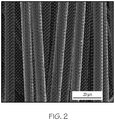
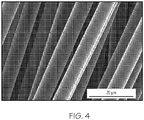
- the method in the present description has the following advantages: firstly, the equipment is simple, the technological process is facile, and the treatment cost is low. And secondly, the present description not only can achieve fully decomposition of the resin matrix in the composite waste (SEM photographs of carbon fibers recovered by pyrolysis with addition of catalyst, carbon fibers recovered by pyrolysis without addition of the catalyst, and virgin commercial carbon fiber shown in Figs. 2 , 3 and 4 ), but also reduces the activation energy required for thermal degradation of the resin matrix (as shown in Fig. 4 ) wherein the decrease of the pyrolysis reaction activation energy with addition of the catalyst can reach 10 kJ/mol; thereby, the pyrolysis temperature and time are reduced, the energy sources are saved. The catalyst can also be recycled, and the feasibility of recycling carbon fibers is greatly improved. Therefore, the present description has advantages such as high efficiency, low cost, and being industrially applicable.
- the carbon fibers are Toray T700
- the resin matrix is 4,4'-diaminodiphenylmethane epoxy resin
- the curing agent is diaminodiphenyl sulfone
- the carbon fibers have a mass fraction of 65%
- a 2 mm thick carbon fiber composite plate is cut into about 25 cm 2 , placed in a square crucible, then placed in a pyrolysis furnace and heated to 450 °C, so that the resin matrix in the composite undergoes a pyrolysis reaction at this temperature, the heating is stopped after 20 min, the material is naturally cooled to room temperature, a product is taken out, and then the product is placed in deionized water, subjected to ultrasonic cleaning for 10 min, and dried to obtain recovered carbon fibers.
- the carbon fibers are subjected to a monofilament tensile test, and the monofilament tensile strength is 4.05 GPa.
- the tensile strength retention rate is 82.7% with respect to that of the commercial T700 carbon fiber monofilaments.
- the catalyst is evenly sprayed on the surface thereof, the mass ratio of zinc chloride to sodium tetrachloroaluminate to zinc sulfate to sodium bicarbonate in the catalyst being 75 : 5 : 10 : 10, the amount of the catalyst being 0.1 g/cm 2 .
- the sample is placed in a pyrolysis furnace and heated to 270 °C, so that the resin matrix in the carbon fiber composite undergoes a pyrolysis reaction at this temperature for 30 min, the material is naturally cooled to room temperature, a product is taken out, and then the product is placed in deionized water, subjected to ultrasonic cleaning, and dried to obtain recovered carbon fibers.
- the carbon fibers are subjected to a monofilament tensile test, and the monofilament tensile strength is 4.11 GPa.
- the tensile strength retention rate is 83.9% with respect to that of the commercial T700 carbon fiber monofilaments.
- the catalyst is evenly sprayed on the surface thereof, the mass ratio of zinc chloride to sodium tetrachloroaluminate to zinc sulfate to sodium bicarbonate being 75 : 5 : 10 : 10, the amount of the catalyst being 0.1 g/cm 2 , then, the sample is placed in a pyrolysis furnace and heated to 350 °C, so that the resin matrix in the carbon fiber composite undergoes a pyrolysis reaction at this temperature for 20 min, the material is naturally cooled to room temperature, a product is taken out, and then the product is placed in deionized water, subjected to ultrasonic cleaning for 10 min, and dried to obtain recovered carbon fibers.
- the carbon fibers are subjected to a monofilament tensile test, and the monofilament tensile strength is 4.19 GPa.
- the tensile strength retention rate is 85.5% with respect to that of the commercial T700 carbon fiber monofilaments.
- a catalyst is evenly sprayed on the surface thereof, the mass ratio of zinc chloride to sodium tetrachloroaluminate to zinc sulfate to sodium bicarbonate being 75 : 5 : 10 : 10, the amount of the catalyst being 0.1 g/cm 2 , then, the sample is placed in a pyrolysis furnace and heated to 400 °C, so that the resin matrix in the carbon fiber composite undergoes a pyrolysis reaction at this temperature for 10 min, the material is naturally cooled to room temperature, a product is taken out, and then the product is placed in deionized water, subjected to ultrasonic cleaning for 10 min, and dried to obtain recovered carbon fibers.
- the carbon fibers are subjected to a monofilament tensile test, and the monofilament tensile strength is 4.39 GPa.
- the tensile strength retention rate is 89.6% with respect to that of the commercial T700 carbon fiber monofilaments.
- a catalyst is evenly sprayed on the surface thereof, the mass ratio of zinc chloride to sodium tetrachloroaluminate to zinc sulfate to sodium bicarbonate being 75 : 5 : 10 : 10, the amount of the catalyst being 0.1 g/cm 2 , then, the sample is placed in a pyrolysis furnace and heated to 450 °C, so that the resin matrix in the carbon fiber composite undergoes a pyrolysis reaction at this temperature for 10 min, the material is naturally cooled to room temperature, a product is taken out, and then the product is placed in deionized water, subjected to ultrasonic cleaning for 10 min, and dried to obtain recovered carbon fibers.
- the carbon fibers are subjected to a monofilament tensile test, and the monofilament tensile strength is 4.27 GPa.
- the tensile strength retention rate is 87.1% with respect to that of the commercial T700 carbon fiber monofilaments.
- the carbon fibers are Toray T700
- the resin matrix is a 4,4'-diaminodiphenylmethane epoxy resin
- the curing agent is diaminodiphenyl sulfone
- the carbon fibers have a mass fraction of 65%
- a 2 mm thick carbon fiber composite plate is cut into about 25 cm 2 , placed in a square crucible, then placed in a pyrolysis furnace and heated to 400 °C, so that the resin matrix in the carbon fiber resin composite undergoes a pyrolysis reaction, the heating is stopped after 30 min, the material is naturally cooled to room temperature, a product is taken out, and then the product is placed in deionized water, subjected to ultrasonic cleaning for 10 min, and dried to obtain recovered carbon fibers.
- the carbon fibers are subjected to a monofilament tensile test, and the monofilament tensile strength is 4.10 GPa.
- the tensile strength retention rate is 83.7% with respect to that of the commercial T700 carbon fiber monofilaments.
- a catalyst is evenly sprayed on the surface thereof, the mass ratio of zinc chloride to sodium tetrachloroaluminate to zinc sulfate to sodium bicarbonate being 75 : 5 : 10 : 10, the amount of zinc chloride being 0.1 g/cm 2 , then, the sample is placed in a pyrolysis furnace and heated to 400 °C, so that the resin in the carbon fiber resin composite undergoes a pyrolysis reaction at this temperature for 20 min, the material is naturally cooled to room temperature, a product is taken out, and then the product is placed in deionized water, subjected to ultrasonic cleaning for 10 min, and dried to obtain recovered carbon fibers.
- the carbon fibers are subjected to a monofilament tensile test, and the monofilament tensile strength is 4.45 GPa.
- the tensile strength retention rate is 90.8% with respect to that of the commercial T700 carbon fiber monofilaments.
- the carbon fibers are Toray T700
- the resin matrix is a 4,4'-diaminodiphenylmethane epoxy resin
- the curing agent is diaminodiphenyl sulfone
- the carbon fibers have a mass fraction of 65%
- a 2 mm thick carbon fiber composite plate is cut into about 25 cm 2 , placed in a square crucible of which the surface is layered with a catalyst with a mass ratio of zinc chloride to sodium tetrachloroaluminate to zinc sulfate to sodium bicarbonate of 75 : 5 : 10 : 10 and a catalyst amount of 0.1 g/cm 2 , then placed in a pyrolysis furnace and heated to 400 °C, so that the resin matrix in the carbon fiber resin composite undergoes a pyrolysis reaction, the heating is stopped after 10 min, the material is naturally cooled to room temperature, a product is taken out, and then the product is placed in deionized water
- the carbon fibers are subjected to a monofilament tensile test, and the monofilament tensile strength is 4.17GPa.
- the tensile strength retention rate is 85.1% with respect to that of the commercial T700 carbon fiber monofilaments.
- a catalyst is evenly sprayed on the surface thereof, the mass ratio of zinc chloride to sodium tetrachloroaluminate to zinc sulfate to sodium bicarbonate in the catalyst being 75 : 5 : 10 : 10, the amount of the catalyst being 0.3 g/cm 2 , then, the sample is placed in a pyrolysis furnace and heated to 400 °C, so that the resin in the carbon fiber resin composite undergoes a pyrolysis reaction at this temperature for 10 min, the heating is stopped, the material is naturally cooled to room temperature, thereafter a product is taken out, and then the product is placed in water, subjected to ultrasonic cleaning for 10 min, and dried to obtain recovered carbon fibers.
- the carbon fibers are subjected to a monofilament tensile test, and the monofilament tensile strength is 4.49 GPa.
- the tensile strength retention rate is 91.6% with respect to that of the commercial T700 carbon fiber monofilaments.
- the carbon fibers are Toray T700
- the resin matrix is a 4,4'-diaminodiphenylmethane epoxy resin
- the curing agent is diaminodiphenyl sulfone
- the carbon fibers have a mass fraction of 65%
- a 2 mm thick carbon fiber composite plate is cut into about 25 cm 2 , placed in a square crucible of which the surface is evenly sprayed with a catalyst with a mass ratio of zinc chloride to sodium tetrachloroaluminate to zinc sulfate to sodium bicarbonate of 80 : 20 : 0 : 0 and a catalyst amount of 0.5 g/cm 2 , then placed in a pyrolysis furnace and heated to 400 °C, so that the resin in the carbon fiber resin composite undergoes a pyrolysis reaction at this temperature for 10 min, the heating is stopped, the material is naturally cooled to room temperature, thereafter a product is taken out, and then the product is
- the carbon fibers are subjected to a monofilament tensile test, and the monofilament tensile strength is 4.50 GPa.
- the tensile strength retention rate is 91.8% with respect to that of the commercial T700 carbon fiber monofilaments.
- the carbon fibers are Toray T700
- the resin matrix is a 4,4'-diaminodiphenylmethane epoxy resin
- the curing agent is diaminodiphenyl sulfone
- the carbon fibers have a mass fraction of 65%
- a 2 mm thick carbon fiber composite plate is cut into about 25 cm 2 , placed in a square crucible of which the surface is evenly sprayed with a catalyst with a mass ratio of zinc chloride to sodium tetrachloroaluminate to zinc sulfate to sodium bicarbonate of 100 : 0 : 0 : 0 and a catalyst amount of 0.3 g/cm 2 , then placed in a pyrolysis furnace and heated to 400 °C, so that the resin in the carbon fiber resin composite undergoes a pyrolysis reaction at this temperature for 20 min, the heating is stopped, the material is naturally cooled to room temperature, thereafter a product is taken out, and then the product
- the carbon fibers are subjected to a monofilament tensile test, and the monofilament tensile strength is 4.36 GPa.
- the tensile strength retention rate is 89.0% with respect to that of the commercial T700 carbon fiber monofilaments.
- the carbon fibers are Toray T700
- the resin matrix is a 4,4'-diaminodiphenylmethane epoxy resin
- the curing agent is diaminodiphenyl sulfone
- the carbon fibers have a mass fraction of 65%
- a 2 mm thick carbon fiber composite plate is cut into about 25 cm 2 , placed in a square crucible of which the surface is evenly sprayed with a catalyst with a mass ratio of zinc chloride to sodium tetrachloroaluminate to zinc sulfate to sodium bicarbonate of 75 : 5 : 10 : 10 and a catalyst amount of 0.3 g/cm 2 , then placed in a pyrolysis furnace and heated to 400 °C, so that the resin in the carbon fiber resin composite undergoes a pyrolysis reaction at this temperature for 20 min, the heating is stopped, the material is naturally cooled to room temperature, thereafter a product is taken out, and then the product is placed in
- the carbon fibers are subjected to a monofilament tensile test, and the monofilament tensile strength is 4.56 GPa.
- the tensile strength retention rate is 93.1% with respect to that of the commercial T700 carbon fiber monofilaments.
- the carbon fibers are Toray T700, the resin matrix is a 4,4'-diaminodiphenylmethane epoxy resin, and the curing agent is diaminodiphenyl sulfone, wherein the carbon fibers have a mass fraction of 65%, a 2 mm thick carbon fiber composite plate is cut into about 25 cm 2 , placed in a square crucible of which the surface is evenly sprayed with a catalyst with a mass ratio of zinc chloride to sodium tetrachloroaluminate to zinc sulfate to sodium bicarbonate of 75 : 5 : 10 : 10 and a catalyst amount of 0.3 g/cm 2 , then placed in a pyrolysis furnace and heated to 400 °C, so that the resin in the carbon fiber resin composite undergoes a pyrolysis reaction at this temperature for 30 min, the heating is stopped, the material is naturally cooled to room temperature, thereafter a product is taken out, and then the product is placed in
- the carbon fibers are subjected to a monofilament tensile test, and the monofilament tensile strength is 4.66 GPa.
- the tensile strength retention rate is 95.1% with respect to that of the commercial T700 carbon fiber monofilaments.
- the aircraft manufacturing and service method 100 may include specification and design 104 of the aircraft 102 and material procurement 106.
- component/subassembly manufacturing 108 and system integration 110 of the aircraft 102 takes place.
- the aircraft 102 may go through certification and delivery 112 in order to be placed in service 114.
- routine maintenance and service 116 which may also include modification, reconfiguration, refurbishment and the like.
- a system integrator may include without limitation any number of aircraft manufacturers and major-system subcontractors; a third party may include without limitation any number of venders, subcontractors, and suppliers; and an operator may be an airline, leasing company, military entity, service organization, and so on.
- the disclosed methods may be employed during any one or more of the stages of the aircraft manufacturing and service method 100, particular during material procurement 106, component/subassembly manufacturing 108, system integration 110, and routine maintenance and service 116.
- the aircraft 102 produced by example method 100 may include an airframe 118 with a plurality of systems 120 and an interior 122.
- the plurality of systems 120 may include one or more of a propulsion system 124, an electrical system 126, a hydraulic system 128, and an environmental system 130. Any number of other systems may be included.
- the disclosed methods may be employed for any of the systems of the aircraft 902, particularly including any of the system in which carbon fiber containing materials are used. Additionally, the disclosed methods may be employed after retirement of an aircraft 102 from service.
Landscapes
- Chemical & Material Sciences (AREA)
- Engineering & Computer Science (AREA)
- Organic Chemistry (AREA)
- Materials Engineering (AREA)
- Chemical Kinetics & Catalysis (AREA)
- Oil, Petroleum & Natural Gas (AREA)
- General Chemical & Material Sciences (AREA)
- Textile Engineering (AREA)
- Inorganic Chemistry (AREA)
- Life Sciences & Earth Sciences (AREA)
- Health & Medical Sciences (AREA)
- Medicinal Chemistry (AREA)
- Polymers & Plastics (AREA)
- Sustainable Development (AREA)
- Separation, Recovery Or Treatment Of Waste Materials Containing Plastics (AREA)
- Processing And Handling Of Plastics And Other Materials For Molding In General (AREA)
- Compositions Of Macromolecular Compounds (AREA)
Claims (15)
- Verfahren (10) zur Wiedergewinnung von Kohlenstofffasern aus Verbundwerkstoffabfall, wobei das Verfahren aufweist:Beschichten (12) einer Oberfläche von Verbundwerkstoffabfall, welcher Kohlenstofffasern und eine Harzmatrix aufweist, mit einem wasserlöslichen Katalysatorpulver; wodurch ein beschichteter Verbundwerkstoffabfall gebildet wird; undPyrolysieren (14) der Harzmatrix des beschichteten Verbundwerkstoffabfalls, wobei das wasserlösliche Katalysatorpulver einen Hauptkatalysator und Natriumbicarbonat aufweist, wobei der Hauptkatalysator Zinkchlorid oder eine Mischung aus Zinkchlorid, Natriumtetrachloroaluminat und Zinksulfat aufweist, wobei der Schritt des Beschichtens ein Sprühen des wasserlöslichen Katalysatorpulvers auf die Oberfläche des Verbundwerkstoffabfalls mit einer Menge von 0,1-0,5 g/cm2 aufweist, wobei eine Reaktionstemperatur der Pyrolyse 250-450 °C beträgt.
- Verfahren nach Anspruch 1, wobei der Schritt des Pyrolysierens ein Geben des beschichteten Verbundwerkstoffabfalls in eine Pyrolysevorrichtung aufweist.
- Verfahren nach Anspruch 1, wobei der Schritt des Pyrolysierens ein Erhitzen auf die Reaktionstemperatur der Pyrolyse für 10 bis 30 Minuten aufweist.
- Verfahren nach Anspruch 3, das ferner ein Unterbrechen des Erhitzens und natürliches Kühlen auf Raumtemperatur aufweist.
- Verfahren nach Anspruch 1, wobei der Katalysator ein festes Pulver bei Raumtemperatur ist, einen Schmelzpunkt zwischen 250 °C und 400 °C aufweist und stabile chemische Eigenschaften aufweist..
- Verfahren nach Anspruch 1, wobei die Harzmatrix ein durch Wärme härtbares Harz aufweist.
- Verfahren nach Anspruch 6, wobei das durch Wärme härtbare Harz Epoxidharz, ungesättigtem Polyester und/oder Phenolharz aufweist.
- Verfahren nach Anspruch 1, wobei die Harzmatrix ein thermoplastisches Harz aufweist, wobei das thermoplastisches Harz Polyolefin, Nylon und/oder Polyester aufweist.
- Verfahren nach Anspruch 1, wobei die Kohlenstofffasern auf Polyacrylnitril basierende Kohlenstofffasern und/oder auf Asphalt basierende Kohlenstofffasern aufweisen.
- Verfahren nach Anspruch 1, wobei eine Morphologie der Kohlenstofffasern kontinuierliche Fasern, lange Fasern, kurze Fasern, gepulverte Fasern und/oder Kohlenstofffasergewebe aufweist.
- Verfahren nach Anspruch 1, wobei der Katalysator im geschmolzenen Zustand ein flüssiger Film wird, der an einer Oberfläche des Verbundwerkstoffabfalls anhaftet, wodurch ein Abbau der Harzmatrix erleichtert wird.
- Verfahren nach Anspruch 1, das ferner aufweist, dass wiedergewonnene Kohlenstofffasern einer Reinigung mit Ultraschall in Wasser ausgesetzt werden, um Kohlenstofffasern mit einer reinen Oberfläche zu erhalten.
- Verfahren zur Wiedergewinnung von Kohlenstofffasern aus Verbundwerkstoffabfall, wobei das Verfahren aufweist:Sprühen eines wasserlöslichen Katalysatorpulvers auf eine Oberfläche eines Verbundwerkstoffabfalls, welcher Kohlenstofffasern und eine Harzmatrix aufweist, mit einer Menge von 0,1-0,5 g/cm2, wodurch ein mit einem Katalysator bedeckter Verbundwerkstoffabfall gebildet wird; undGeben des mit dem Katalysator bedeckten Verbundwerkstoffabfalls in eine Pyrolysevorrichtung und Erhitzen des mit dem Katalysator bedeckten Verbundwerkstoffabfalls auf 250 bis 450 °C für 10 bis 30 Minuten, wobeidas wasserlösliche Katalysatorpulver einen Hauptkatalysator und Natriumbicarbonat aufweist, wobei der Hauptkatalysator Zinkchlorid oder eine Mischung aus Zinkchlorid, Natriumtetrachloroaluminat und Zinksulfat aufweist.
- Verfahren nach Anspruch 13, das ferner ein Unterbrechen des Erhitzens und ein natürliches Kühlen auf eine Raumtemperatur aufweist, wobei das Verfahren ferner ein Entnehmen der Kohlenstofffasern aus der Pyrolysevorrichtung und ein Reinigen der Kohlenstofffasern in Wasser mit Ultraschall aufweist, um Kohlenstofffasern mit einer reinen Oberfläche zu erhalten.
- Verfahren nach Anspruch 13, wobei das wasserlösliche Katalysatorpulver ein festes Pulver bei Raumtemperatur ist, einen Schmelzpunkt zwischen 250 °C und 400 °C aufweist und stabile chemische Eigenschaften aufweist.
Applications Claiming Priority (2)
| Application Number | Priority Date | Filing Date | Title |
|---|---|---|---|
| CN201710213263.4A CN106807425B (zh) | 2017-04-01 | 2017-04-01 | 废弃碳纤维树脂基复合材料热解催化剂及回收碳纤维方法 |
| PCT/US2018/025404 WO2018183847A1 (en) | 2017-04-01 | 2018-03-30 | Method for recovering carbon fibers from composite waste |
Publications (2)
| Publication Number | Publication Date |
|---|---|
| EP3433339A1 EP3433339A1 (de) | 2019-01-30 |
| EP3433339B1 true EP3433339B1 (de) | 2021-01-06 |
Family
ID=59115956
Family Applications (1)
| Application Number | Title | Priority Date | Filing Date |
|---|---|---|---|
| EP18719003.8A Active EP3433339B1 (de) | 2017-04-01 | 2018-03-30 | Verfahren zur rückgewinnung von kohlenstofffasern aus abfallstoffgemischen |
Country Status (9)
| Country | Link |
|---|---|
| US (1) | US10851308B2 (de) |
| EP (1) | EP3433339B1 (de) |
| JP (1) | JP7138572B2 (de) |
| CN (1) | CN106807425B (de) |
| AU (1) | AU2018243576B2 (de) |
| BR (1) | BR112018074891B1 (de) |
| CA (1) | CA3023187C (de) |
| ES (1) | ES2864673T3 (de) |
| WO (1) | WO2018183847A1 (de) |
Families Citing this family (17)
| Publication number | Priority date | Publication date | Assignee | Title |
|---|---|---|---|---|
| US12005608B1 (en) | 2019-11-01 | 2024-06-11 | Carbon Fiber Recycling, LLC | Carbon fiber recycling apparatus, system and method |
| CN110922633B (zh) * | 2019-11-04 | 2021-03-12 | 中国商用飞机有限责任公司北京民用飞机技术研究中心 | 一种碳纤维树脂基复合材料热降解催化剂及其应用方法 |
| CN111793246A (zh) * | 2020-06-30 | 2020-10-20 | 西北工业大学 | 胺类固化环氧树脂基碳纤维增强复合材料的常压溶剂回收方法 |
| JP7599680B2 (ja) * | 2020-08-06 | 2024-12-16 | 国立大学法人千葉大学 | 炭素繊維強化樹脂からの炭素繊維の回収方法 |
| US11578271B1 (en) | 2020-10-30 | 2023-02-14 | Carbon Fiber Recycling, LLC | Carbon fiber recycling system and method of operation |
| CN112876734A (zh) * | 2021-01-13 | 2021-06-01 | 西北工业大学 | 温和条件下回收环氧树脂基碳纤维复合材料的方法 |
| CN113858487B (zh) * | 2021-08-23 | 2024-04-12 | 哈尔滨工业大学 | 一种废弃碳纤维增强聚醚醚酮复合材料循环利用装置及方法 |
| CN113787081B (zh) * | 2021-09-10 | 2022-10-28 | 广东电网有限责任公司 | 一种退役复合绝缘子的回收方法 |
| CN114044936B (zh) * | 2021-12-29 | 2023-06-13 | 北京化工大学 | 一种催化水蒸汽热解回收碳纤维树脂基复合材料的方法 |
| CN114646569A (zh) * | 2022-03-24 | 2022-06-21 | 北京工业大学 | 一种漆包线与电线电缆共热解方法 |
| CN114656271A (zh) * | 2022-04-19 | 2022-06-24 | 浙江德鸿碳纤维复合材料有限公司 | 一种碳碳坩埚及其制备方法 |
| CN115400759B (zh) * | 2022-08-03 | 2023-11-10 | 广东能源集团科学技术研究院有限公司 | 一种热固性环氧树脂回收用催化剂及其回收方法 |
| CN115873301A (zh) * | 2022-12-27 | 2023-03-31 | 昆明理工大学 | 一种微波熔盐协同催化处理碳纤维复合材料回收碳纤维的方法 |
| CN117025274B (zh) * | 2023-10-08 | 2023-12-26 | 国能龙源环保有限公司 | 利用废旧碳纤维风电叶片制备固体燃料的方法 |
| CN117004446B (zh) * | 2023-10-08 | 2023-12-22 | 国能龙源环保有限公司 | 利用废旧风电叶片制备固体燃料的方法和固体燃料 |
| CN117816713A (zh) * | 2023-12-29 | 2024-04-05 | 深圳市鸿富诚新材料股份有限公司 | 一种导热垫片废料的回收方法和再利用方法 |
| CN118978744A (zh) * | 2024-09-18 | 2024-11-19 | 中材科技风电叶片股份有限公司 | 用于回收碳纤维复合材料中碳纤维的方法 |
Family Cites Families (14)
| Publication number | Priority date | Publication date | Assignee | Title |
|---|---|---|---|---|
| JPH0627373B2 (ja) * | 1985-11-15 | 1994-04-13 | 群栄化学工業株式会社 | 活性炭繊維の製造法 |
| JP2001316303A (ja) | 2000-03-01 | 2001-11-13 | San Kaihatsu Kk | 触媒法によるポリスチレン樹脂からのスチレンモノマー回収方法 |
| JP2004091719A (ja) * | 2002-09-03 | 2004-03-25 | National Institute Of Advanced Industrial & Technology | 炭素繊維の回収方法 |
| JP4317696B2 (ja) | 2003-01-28 | 2009-08-19 | 旭有機材工業株式会社 | 熱硬化性樹脂及び/又はその硬化物の分解方法並びにそれによって得られた分解生成物を用いた熱硬化性樹脂の製造方法 |
| JP4686991B2 (ja) | 2004-03-11 | 2011-05-25 | 日立化成工業株式会社 | 炭素材料/酸無水物硬化エポキシ樹脂複合材料の分離方法 |
| CN101928406B (zh) | 2010-09-02 | 2012-10-03 | 中国科学院宁波材料技术与工程研究所 | 一种催化分解碳纤维增强热固性环氧树脂复合材料的方法 |
| CN102380401B (zh) * | 2011-08-05 | 2013-04-10 | 浙江国裕资源再生利用科技有限公司 | 废塑料催化裂解用固体超强酸催化剂及其制造方法、应用 |
| JP5904487B2 (ja) | 2012-01-17 | 2016-04-13 | 国立大学法人信州大学 | プラスチックまたはプラスチック複合材料の処理方法及び処理装置 |
| EP2783764B1 (de) | 2013-03-28 | 2016-07-13 | ELG Carbon Fibre International GmbH | Pyrolyseanlage und Verfahren zur Rückgewinnung von Kohlenstofffasern aus kohlenstofffaserhaltigen Kunststoffen, und rückgewonnene Kohlenstofffasern |
| CN103665430B (zh) * | 2013-11-21 | 2016-04-06 | 上海交通大学 | 一种废弃碳纤维复合材料中树脂和碳纤维的热分解分离方法 |
| CN103665427B (zh) * | 2013-12-11 | 2016-04-06 | 上海交通大学 | 一种废弃碳纤维复合材料裂解回收碳纤维的方法 |
| US10279336B2 (en) | 2014-03-27 | 2019-05-07 | Rapas Corporation | Method for using titanium oxide granules to recover reinforcing material from reinforced plastic |
| CN104326907B (zh) * | 2014-10-22 | 2016-03-02 | 中国科学院山西煤炭化学研究所 | 一种降解回收不饱和聚酯树脂材料的方法 |
| CN104672488A (zh) * | 2015-02-03 | 2015-06-03 | 中国科学院山西煤炭化学研究所 | 一种降解回收热固性环氧树脂材料的方法 |
-
2017
- 2017-04-01 CN CN201710213263.4A patent/CN106807425B/zh active Active
-
2018
- 2018-03-30 US US16/092,565 patent/US10851308B2/en active Active
- 2018-03-30 JP JP2018562247A patent/JP7138572B2/ja active Active
- 2018-03-30 WO PCT/US2018/025404 patent/WO2018183847A1/en not_active Ceased
- 2018-03-30 BR BR112018074891-9A patent/BR112018074891B1/pt active IP Right Grant
- 2018-03-30 EP EP18719003.8A patent/EP3433339B1/de active Active
- 2018-03-30 AU AU2018243576A patent/AU2018243576B2/en active Active
- 2018-03-30 ES ES18719003T patent/ES2864673T3/es active Active
- 2018-03-30 CA CA3023187A patent/CA3023187C/en active Active
Non-Patent Citations (1)
| Title |
|---|
| None * |
Also Published As
| Publication number | Publication date |
|---|---|
| CN106807425A (zh) | 2017-06-09 |
| CN106807425B (zh) | 2019-06-07 |
| CA3023187A1 (en) | 2018-10-04 |
| EP3433339A1 (de) | 2019-01-30 |
| CA3023187C (en) | 2022-12-06 |
| AU2018243576B2 (en) | 2023-02-02 |
| AU2018243576A1 (en) | 2018-12-20 |
| US20190127644A1 (en) | 2019-05-02 |
| JP7138572B2 (ja) | 2022-09-16 |
| BR112018074891B1 (pt) | 2022-09-13 |
| US10851308B2 (en) | 2020-12-01 |
| BR112018074891A2 (pt) | 2019-03-06 |
| JP2020513044A (ja) | 2020-04-30 |
| WO2018183847A1 (en) | 2018-10-04 |
| ES2864673T3 (es) | 2021-10-14 |
Similar Documents
| Publication | Publication Date | Title |
|---|---|---|
| EP3433339B1 (de) | Verfahren zur rückgewinnung von kohlenstofffasern aus abfallstoffgemischen | |
| EP3607026B1 (de) | Verfahren zur rückgewinnung von kohlenstofffasern aus verbundstoffmaterialabfall | |
| US20240198628A1 (en) | Layered aerogel composites, related aerogel materials, and methods of manufacture | |
| Ateeq et al. | A review of 3D printing of the recycled carbon fiber reinforced polymer composites: Processing, potential, and perspectives | |
| CN110922633B (zh) | 一种碳纤维树脂基复合材料热降解催化剂及其应用方法 | |
| CN110055749B (zh) | 强化纤维的制造方法 | |
| JP6144034B2 (ja) | 積層材をリサイクルする方法及びシステム | |
| KR20190028642A (ko) | 지능형 그래핀 나노재료 제조 방법 및 초경량 기계 및 운반 수단에 대한 용도 | |
| CN105906836A (zh) | 一种温和条件下的碳纤维增强树脂基复合材料的回收方法 | |
| CN111235864A (zh) | 一种回收碳纤维的表面处理方法 | |
| CN114044936A (zh) | 一种催化水蒸汽热解回收碳纤维树脂基复合材料的方法 | |
| JP7328019B2 (ja) | 強化複合材料を再生する方法 | |
| Chohan et al. | Carbon Fiber‐Reinforced Polymer Sustainability—A New Outlook on Recycling Methods and Strategic Decision‐Making for the Recovery of Fiber, Matrix, and Composite | |
| Heider et al. | Carbon Fiber Composites Recycling Technology Enabled by the TuFF Technology. | |
| Bag et al. | Polymer matrix composites (PMCs) for defence applications | |
| JP2024166222A (ja) | リサイクル炭素繊維収束体組成物、およびその製造方法 | |
| Hao et al. | Graphene Composite Materials | |
| US12227647B2 (en) | Thermoplastic films and methods for coating thermoplastic substrates with thermoset materials | |
| CN114277578A (zh) | 一种可热解回收利用的多层复合碳纤维及其制备方法 | |
| Berry et al. | Overview of polymer nanocomposites in aerospace and automotive applications | |
| Borchert et al. | CARBON FIBER REINFORCED POLYMER-THE FABRIC OF THE FUTURE? | |
| CN115897243A (zh) | 一种改性尼龙用再生碳纤维及其制备方法 | |
| Saxena et al. | POLYMER COMPOSITES IN AEROSPACE APPLICATIONS | |
| Jyothsna et al. | NANOCOMPOSITES: PROPERTIES AND NEW APPLICATION OPPORTUNITIES | |
| BĂLAN et al. | AN OVERVIEW ON INNOVATIVE COMPOSITE MATERIALS EMPLOYED IN THE CONSTRUCTION OF MICROSATELLITES |
Legal Events
| Date | Code | Title | Description |
|---|---|---|---|
| STAA | Information on the status of an ep patent application or granted ep patent |
Free format text: STATUS: UNKNOWN |
|
| STAA | Information on the status of an ep patent application or granted ep patent |
Free format text: STATUS: THE INTERNATIONAL PUBLICATION HAS BEEN MADE |
|
| PUAI | Public reference made under article 153(3) epc to a published international application that has entered the european phase |
Free format text: ORIGINAL CODE: 0009012 |
|
| STAA | Information on the status of an ep patent application or granted ep patent |
Free format text: STATUS: REQUEST FOR EXAMINATION WAS MADE |
|
| 17P | Request for examination filed |
Effective date: 20181024 |
|
| AK | Designated contracting states |
Kind code of ref document: A1 Designated state(s): AL AT BE BG CH CY CZ DE DK EE ES FI FR GB GR HR HU IE IS IT LI LT LU LV MC MK MT NL NO PL PT RO RS SE SI SK SM TR |
|
| AX | Request for extension of the european patent |
Extension state: BA ME |
|
| STAA | Information on the status of an ep patent application or granted ep patent |
Free format text: STATUS: EXAMINATION IS IN PROGRESS |
|
| 17Q | First examination report despatched |
Effective date: 20190321 |
|
| REG | Reference to a national code |
Ref country code: DE Ref legal event code: R079 Ref document number: 602018011657 Country of ref document: DE Free format text: PREVIOUS MAIN CLASS: C10B0053070000 Ipc: C10B0057060000 |
|
| GRAP | Despatch of communication of intention to grant a patent |
Free format text: ORIGINAL CODE: EPIDOSNIGR1 |
|
| STAA | Information on the status of an ep patent application or granted ep patent |
Free format text: STATUS: GRANT OF PATENT IS INTENDED |
|
| RIC1 | Information provided on ipc code assigned before grant |
Ipc: C10B 57/06 20060101AFI20200511BHEP Ipc: C10B 53/07 20060101ALI20200511BHEP |
|
| GRAJ | Information related to disapproval of communication of intention to grant by the applicant or resumption of examination proceedings by the epo deleted |
Free format text: ORIGINAL CODE: EPIDOSDIGR1 |
|
| STAA | Information on the status of an ep patent application or granted ep patent |
Free format text: STATUS: EXAMINATION IS IN PROGRESS |
|
| DAV | Request for validation of the european patent (deleted) | ||
| DAX | Request for extension of the european patent (deleted) | ||
| INTG | Intention to grant announced |
Effective date: 20200617 |
|
| GRAP | Despatch of communication of intention to grant a patent |
Free format text: ORIGINAL CODE: EPIDOSNIGR1 |
|
| STAA | Information on the status of an ep patent application or granted ep patent |
Free format text: STATUS: GRANT OF PATENT IS INTENDED |
|
| INTC | Intention to grant announced (deleted) | ||
| INTG | Intention to grant announced |
Effective date: 20200721 |
|
| GRAS | Grant fee paid |
Free format text: ORIGINAL CODE: EPIDOSNIGR3 |
|
| GRAA | (expected) grant |
Free format text: ORIGINAL CODE: 0009210 |
|
| STAA | Information on the status of an ep patent application or granted ep patent |
Free format text: STATUS: THE PATENT HAS BEEN GRANTED |
|
| AK | Designated contracting states |
Kind code of ref document: B1 Designated state(s): AL AT BE BG CH CY CZ DE DK EE ES FI FR GB GR HR HU IE IS IT LI LT LU LV MC MK MT NL NO PL PT RO RS SE SI SK SM TR |
|
| REG | Reference to a national code |
Ref country code: GB Ref legal event code: FG4D |
|
| REG | Reference to a national code |
Ref country code: AT Ref legal event code: REF Ref document number: 1352364 Country of ref document: AT Kind code of ref document: T Effective date: 20210115 Ref country code: CH Ref legal event code: EP |
|
| REG | Reference to a national code |
Ref country code: DE Ref legal event code: R096 Ref document number: 602018011657 Country of ref document: DE |
|
| REG | Reference to a national code |
Ref country code: IE Ref legal event code: FG4D |
|
| REG | Reference to a national code |
Ref country code: NL Ref legal event code: MP Effective date: 20210106 |
|
| REG | Reference to a national code |
Ref country code: AT Ref legal event code: MK05 Ref document number: 1352364 Country of ref document: AT Kind code of ref document: T Effective date: 20210106 |
|
| REG | Reference to a national code |
Ref country code: LT Ref legal event code: MG9D |
|
| PG25 | Lapsed in a contracting state [announced via postgrant information from national office to epo] |
Ref country code: BG Free format text: LAPSE BECAUSE OF FAILURE TO SUBMIT A TRANSLATION OF THE DESCRIPTION OR TO PAY THE FEE WITHIN THE PRESCRIBED TIME-LIMIT Effective date: 20210406 Ref country code: HR Free format text: LAPSE BECAUSE OF FAILURE TO SUBMIT A TRANSLATION OF THE DESCRIPTION OR TO PAY THE FEE WITHIN THE PRESCRIBED TIME-LIMIT Effective date: 20210106 Ref country code: GR Free format text: LAPSE BECAUSE OF FAILURE TO SUBMIT A TRANSLATION OF THE DESCRIPTION OR TO PAY THE FEE WITHIN THE PRESCRIBED TIME-LIMIT Effective date: 20210407 Ref country code: FI Free format text: LAPSE BECAUSE OF FAILURE TO SUBMIT A TRANSLATION OF THE DESCRIPTION OR TO PAY THE FEE WITHIN THE PRESCRIBED TIME-LIMIT Effective date: 20210106 Ref country code: NO Free format text: LAPSE BECAUSE OF FAILURE TO SUBMIT A TRANSLATION OF THE DESCRIPTION OR TO PAY THE FEE WITHIN THE PRESCRIBED TIME-LIMIT Effective date: 20210406 Ref country code: PT Free format text: LAPSE BECAUSE OF FAILURE TO SUBMIT A TRANSLATION OF THE DESCRIPTION OR TO PAY THE FEE WITHIN THE PRESCRIBED TIME-LIMIT Effective date: 20210506 Ref country code: LT Free format text: LAPSE BECAUSE OF FAILURE TO SUBMIT A TRANSLATION OF THE DESCRIPTION OR TO PAY THE FEE WITHIN THE PRESCRIBED TIME-LIMIT Effective date: 20210106 |
|
| PG25 | Lapsed in a contracting state [announced via postgrant information from national office to epo] |
Ref country code: AT Free format text: LAPSE BECAUSE OF FAILURE TO SUBMIT A TRANSLATION OF THE DESCRIPTION OR TO PAY THE FEE WITHIN THE PRESCRIBED TIME-LIMIT Effective date: 20210106 Ref country code: RS Free format text: LAPSE BECAUSE OF FAILURE TO SUBMIT A TRANSLATION OF THE DESCRIPTION OR TO PAY THE FEE WITHIN THE PRESCRIBED TIME-LIMIT Effective date: 20210106 Ref country code: PL Free format text: LAPSE BECAUSE OF FAILURE TO SUBMIT A TRANSLATION OF THE DESCRIPTION OR TO PAY THE FEE WITHIN THE PRESCRIBED TIME-LIMIT Effective date: 20210106 Ref country code: LV Free format text: LAPSE BECAUSE OF FAILURE TO SUBMIT A TRANSLATION OF THE DESCRIPTION OR TO PAY THE FEE WITHIN THE PRESCRIBED TIME-LIMIT Effective date: 20210106 Ref country code: SE Free format text: LAPSE BECAUSE OF FAILURE TO SUBMIT A TRANSLATION OF THE DESCRIPTION OR TO PAY THE FEE WITHIN THE PRESCRIBED TIME-LIMIT Effective date: 20210106 |
|
| PG25 | Lapsed in a contracting state [announced via postgrant information from national office to epo] |
Ref country code: IS Free format text: LAPSE BECAUSE OF FAILURE TO SUBMIT A TRANSLATION OF THE DESCRIPTION OR TO PAY THE FEE WITHIN THE PRESCRIBED TIME-LIMIT Effective date: 20210506 |
|
| REG | Reference to a national code |
Ref country code: DE Ref legal event code: R097 Ref document number: 602018011657 Country of ref document: DE |
|
| REG | Reference to a national code |
Ref country code: ES Ref legal event code: FG2A Ref document number: 2864673 Country of ref document: ES Kind code of ref document: T3 Effective date: 20211014 |
|
| PG25 | Lapsed in a contracting state [announced via postgrant information from national office to epo] |
Ref country code: CZ Free format text: LAPSE BECAUSE OF FAILURE TO SUBMIT A TRANSLATION OF THE DESCRIPTION OR TO PAY THE FEE WITHIN THE PRESCRIBED TIME-LIMIT Effective date: 20210106 Ref country code: EE Free format text: LAPSE BECAUSE OF FAILURE TO SUBMIT A TRANSLATION OF THE DESCRIPTION OR TO PAY THE FEE WITHIN THE PRESCRIBED TIME-LIMIT Effective date: 20210106 Ref country code: MC Free format text: LAPSE BECAUSE OF FAILURE TO SUBMIT A TRANSLATION OF THE DESCRIPTION OR TO PAY THE FEE WITHIN THE PRESCRIBED TIME-LIMIT Effective date: 20210106 Ref country code: SM Free format text: LAPSE BECAUSE OF FAILURE TO SUBMIT A TRANSLATION OF THE DESCRIPTION OR TO PAY THE FEE WITHIN THE PRESCRIBED TIME-LIMIT Effective date: 20210106 |
|
| REG | Reference to a national code |
Ref country code: CH Ref legal event code: PL |
|
| PLBE | No opposition filed within time limit |
Free format text: ORIGINAL CODE: 0009261 |
|
| STAA | Information on the status of an ep patent application or granted ep patent |
Free format text: STATUS: NO OPPOSITION FILED WITHIN TIME LIMIT |
|
| PG25 | Lapsed in a contracting state [announced via postgrant information from national office to epo] |
Ref country code: DK Free format text: LAPSE BECAUSE OF FAILURE TO SUBMIT A TRANSLATION OF THE DESCRIPTION OR TO PAY THE FEE WITHIN THE PRESCRIBED TIME-LIMIT Effective date: 20210106 Ref country code: SK Free format text: LAPSE BECAUSE OF FAILURE TO SUBMIT A TRANSLATION OF THE DESCRIPTION OR TO PAY THE FEE WITHIN THE PRESCRIBED TIME-LIMIT Effective date: 20210106 Ref country code: RO Free format text: LAPSE BECAUSE OF FAILURE TO SUBMIT A TRANSLATION OF THE DESCRIPTION OR TO PAY THE FEE WITHIN THE PRESCRIBED TIME-LIMIT Effective date: 20210106 |
|
| 26N | No opposition filed |
Effective date: 20211007 |
|
| REG | Reference to a national code |
Ref country code: BE Ref legal event code: MM Effective date: 20210331 |
|
| PG25 | Lapsed in a contracting state [announced via postgrant information from national office to epo] |
Ref country code: LU Free format text: LAPSE BECAUSE OF NON-PAYMENT OF DUE FEES Effective date: 20210330 Ref country code: IE Free format text: LAPSE BECAUSE OF NON-PAYMENT OF DUE FEES Effective date: 20210330 Ref country code: LI Free format text: LAPSE BECAUSE OF NON-PAYMENT OF DUE FEES Effective date: 20210331 Ref country code: AL Free format text: LAPSE BECAUSE OF FAILURE TO SUBMIT A TRANSLATION OF THE DESCRIPTION OR TO PAY THE FEE WITHIN THE PRESCRIBED TIME-LIMIT Effective date: 20210106 Ref country code: CH Free format text: LAPSE BECAUSE OF NON-PAYMENT OF DUE FEES Effective date: 20210331 Ref country code: FR Free format text: LAPSE BECAUSE OF NON-PAYMENT OF DUE FEES Effective date: 20210331 |
|
| PG25 | Lapsed in a contracting state [announced via postgrant information from national office to epo] |
Ref country code: SI Free format text: LAPSE BECAUSE OF FAILURE TO SUBMIT A TRANSLATION OF THE DESCRIPTION OR TO PAY THE FEE WITHIN THE PRESCRIBED TIME-LIMIT Effective date: 20210106 |
|
| PG25 | Lapsed in a contracting state [announced via postgrant information from national office to epo] |
Ref country code: IS Free format text: LAPSE BECAUSE OF FAILURE TO SUBMIT A TRANSLATION OF THE DESCRIPTION OR TO PAY THE FEE WITHIN THE PRESCRIBED TIME-LIMIT Effective date: 20210506 |
|
| PG25 | Lapsed in a contracting state [announced via postgrant information from national office to epo] |
Ref country code: BE Free format text: LAPSE BECAUSE OF NON-PAYMENT OF DUE FEES Effective date: 20210331 |
|
| P01 | Opt-out of the competence of the unified patent court (upc) registered |
Effective date: 20230516 |
|
| PG25 | Lapsed in a contracting state [announced via postgrant information from national office to epo] |
Ref country code: NL Free format text: LAPSE BECAUSE OF NON-PAYMENT OF DUE FEES Effective date: 20210206 Ref country code: CY Free format text: LAPSE BECAUSE OF FAILURE TO SUBMIT A TRANSLATION OF THE DESCRIPTION OR TO PAY THE FEE WITHIN THE PRESCRIBED TIME-LIMIT Effective date: 20210106 |
|
| PG25 | Lapsed in a contracting state [announced via postgrant information from national office to epo] |
Ref country code: HU Free format text: LAPSE BECAUSE OF FAILURE TO SUBMIT A TRANSLATION OF THE DESCRIPTION OR TO PAY THE FEE WITHIN THE PRESCRIBED TIME-LIMIT; INVALID AB INITIO Effective date: 20180330 |
|
| PG25 | Lapsed in a contracting state [announced via postgrant information from national office to epo] |
Ref country code: MK Free format text: LAPSE BECAUSE OF FAILURE TO SUBMIT A TRANSLATION OF THE DESCRIPTION OR TO PAY THE FEE WITHIN THE PRESCRIBED TIME-LIMIT Effective date: 20210106 |
|
| PG25 | Lapsed in a contracting state [announced via postgrant information from national office to epo] |
Ref country code: TR Free format text: LAPSE BECAUSE OF FAILURE TO SUBMIT A TRANSLATION OF THE DESCRIPTION OR TO PAY THE FEE WITHIN THE PRESCRIBED TIME-LIMIT Effective date: 20210106 |
|
| PG25 | Lapsed in a contracting state [announced via postgrant information from national office to epo] |
Ref country code: MT Free format text: LAPSE BECAUSE OF FAILURE TO SUBMIT A TRANSLATION OF THE DESCRIPTION OR TO PAY THE FEE WITHIN THE PRESCRIBED TIME-LIMIT Effective date: 20210106 |
|
| PGFP | Annual fee paid to national office [announced via postgrant information from national office to epo] |
Ref country code: DE Payment date: 20250327 Year of fee payment: 8 |
|
| PGFP | Annual fee paid to national office [announced via postgrant information from national office to epo] |
Ref country code: IT Payment date: 20250319 Year of fee payment: 8 Ref country code: GB Payment date: 20250327 Year of fee payment: 8 |
|
| PGFP | Annual fee paid to national office [announced via postgrant information from national office to epo] |
Ref country code: ES Payment date: 20250401 Year of fee payment: 8 |