EP3345618A1 - Mittel zur verbesserung der immunität gegen krebs durch verwendung eines allergin-1-antagonisten - Google Patents
Mittel zur verbesserung der immunität gegen krebs durch verwendung eines allergin-1-antagonisten Download PDFInfo
- Publication number
- EP3345618A1 EP3345618A1 EP16842026.3A EP16842026A EP3345618A1 EP 3345618 A1 EP3345618 A1 EP 3345618A1 EP 16842026 A EP16842026 A EP 16842026A EP 3345618 A1 EP3345618 A1 EP 3345618A1
- Authority
- EP
- European Patent Office
- Prior art keywords
- antibody
- cancer
- allergin
- agent according
- agent
- Prior art date
- Legal status (The legal status is an assumption and is not a legal conclusion. Google has not performed a legal analysis and makes no representation as to the accuracy of the status listed.)
- Granted
Links
Images






Classifications
-
- A—HUMAN NECESSITIES
- A61—MEDICAL OR VETERINARY SCIENCE; HYGIENE
- A61K—PREPARATIONS FOR MEDICAL, DENTAL OR TOILETRY PURPOSES
- A61K39/00—Medicinal preparations containing antigens or antibodies
- A61K39/395—Antibodies; Immunoglobulins; Immune serum, e.g. antilymphocytic serum
-
- A—HUMAN NECESSITIES
- A61—MEDICAL OR VETERINARY SCIENCE; HYGIENE
- A61K—PREPARATIONS FOR MEDICAL, DENTAL OR TOILETRY PURPOSES
- A61K38/00—Medicinal preparations containing peptides
- A61K38/16—Peptides having more than 20 amino acids; Gastrins; Somatostatins; Melanotropins; Derivatives thereof
- A61K38/17—Peptides having more than 20 amino acids; Gastrins; Somatostatins; Melanotropins; Derivatives thereof from animals; from humans
- A61K38/177—Receptors; Cell surface antigens; Cell surface determinants
-
- A—HUMAN NECESSITIES
- A01—AGRICULTURE; FORESTRY; ANIMAL HUSBANDRY; HUNTING; TRAPPING; FISHING
- A01K—ANIMAL HUSBANDRY; AVICULTURE; APICULTURE; PISCICULTURE; FISHING; REARING OR BREEDING ANIMALS, NOT OTHERWISE PROVIDED FOR; NEW BREEDS OF ANIMALS
- A01K67/00—Rearing or breeding animals, not otherwise provided for; New or modified breeds of animals
- A01K67/027—New or modified breeds of vertebrates
- A01K67/0275—Genetically modified vertebrates, e.g. transgenic
- A01K67/0276—Knock-out vertebrates
-
- A—HUMAN NECESSITIES
- A61—MEDICAL OR VETERINARY SCIENCE; HYGIENE
- A61K—PREPARATIONS FOR MEDICAL, DENTAL OR TOILETRY PURPOSES
- A61K38/00—Medicinal preparations containing peptides
-
- A—HUMAN NECESSITIES
- A61—MEDICAL OR VETERINARY SCIENCE; HYGIENE
- A61K—PREPARATIONS FOR MEDICAL, DENTAL OR TOILETRY PURPOSES
- A61K45/00—Medicinal preparations containing active ingredients not provided for in groups A61K31/00 - A61K41/00
-
- A—HUMAN NECESSITIES
- A61—MEDICAL OR VETERINARY SCIENCE; HYGIENE
- A61K—PREPARATIONS FOR MEDICAL, DENTAL OR TOILETRY PURPOSES
- A61K45/00—Medicinal preparations containing active ingredients not provided for in groups A61K31/00 - A61K41/00
- A61K45/06—Mixtures of active ingredients without chemical characterisation, e.g. antiphlogistics and cardiaca
-
- A—HUMAN NECESSITIES
- A61—MEDICAL OR VETERINARY SCIENCE; HYGIENE
- A61P—SPECIFIC THERAPEUTIC ACTIVITY OF CHEMICAL COMPOUNDS OR MEDICINAL PREPARATIONS
- A61P35/00—Antineoplastic agents
-
- A—HUMAN NECESSITIES
- A61—MEDICAL OR VETERINARY SCIENCE; HYGIENE
- A61P—SPECIFIC THERAPEUTIC ACTIVITY OF CHEMICAL COMPOUNDS OR MEDICINAL PREPARATIONS
- A61P35/00—Antineoplastic agents
- A61P35/02—Antineoplastic agents specific for leukemia
-
- A—HUMAN NECESSITIES
- A61—MEDICAL OR VETERINARY SCIENCE; HYGIENE
- A61P—SPECIFIC THERAPEUTIC ACTIVITY OF CHEMICAL COMPOUNDS OR MEDICINAL PREPARATIONS
- A61P37/00—Drugs for immunological or allergic disorders
- A61P37/02—Immunomodulators
- A61P37/04—Immunostimulants
-
- C—CHEMISTRY; METALLURGY
- C07—ORGANIC CHEMISTRY
- C07K—PEPTIDES
- C07K16/00—Immunoglobulins [IG], e.g. monoclonal or polyclonal antibodies
- C07K16/18—Immunoglobulins [IG], e.g. monoclonal or polyclonal antibodies against material from animals or humans
- C07K16/28—Immunoglobulins [IG], e.g. monoclonal or polyclonal antibodies against material from animals or humans against receptors, cell surface antigens or cell surface determinants
- C07K16/2803—Immunoglobulins [IG], e.g. monoclonal or polyclonal antibodies against material from animals or humans against receptors, cell surface antigens or cell surface determinants against the immunoglobulin superfamily
- C07K16/283—Immunoglobulins [IG], e.g. monoclonal or polyclonal antibodies against material from animals or humans against receptors, cell surface antigens or cell surface determinants against the immunoglobulin superfamily against Fc-receptors, e.g. CD16, CD32, CD64
-
- A—HUMAN NECESSITIES
- A01—AGRICULTURE; FORESTRY; ANIMAL HUSBANDRY; HUNTING; TRAPPING; FISHING
- A01K—ANIMAL HUSBANDRY; AVICULTURE; APICULTURE; PISCICULTURE; FISHING; REARING OR BREEDING ANIMALS, NOT OTHERWISE PROVIDED FOR; NEW BREEDS OF ANIMALS
- A01K2207/00—Modified animals
- A01K2207/12—Animals modified by administration of exogenous cells
-
- A—HUMAN NECESSITIES
- A01—AGRICULTURE; FORESTRY; ANIMAL HUSBANDRY; HUNTING; TRAPPING; FISHING
- A01K—ANIMAL HUSBANDRY; AVICULTURE; APICULTURE; PISCICULTURE; FISHING; REARING OR BREEDING ANIMALS, NOT OTHERWISE PROVIDED FOR; NEW BREEDS OF ANIMALS
- A01K2217/00—Genetically modified animals
- A01K2217/07—Animals genetically altered by homologous recombination
- A01K2217/075—Animals genetically altered by homologous recombination inducing loss of function, i.e. knock out
-
- A—HUMAN NECESSITIES
- A01—AGRICULTURE; FORESTRY; ANIMAL HUSBANDRY; HUNTING; TRAPPING; FISHING
- A01K—ANIMAL HUSBANDRY; AVICULTURE; APICULTURE; PISCICULTURE; FISHING; REARING OR BREEDING ANIMALS, NOT OTHERWISE PROVIDED FOR; NEW BREEDS OF ANIMALS
- A01K2227/00—Animals characterised by species
- A01K2227/10—Mammal
- A01K2227/105—Murine
-
- A—HUMAN NECESSITIES
- A01—AGRICULTURE; FORESTRY; ANIMAL HUSBANDRY; HUNTING; TRAPPING; FISHING
- A01K—ANIMAL HUSBANDRY; AVICULTURE; APICULTURE; PISCICULTURE; FISHING; REARING OR BREEDING ANIMALS, NOT OTHERWISE PROVIDED FOR; NEW BREEDS OF ANIMALS
- A01K2267/00—Animals characterised by purpose
- A01K2267/03—Animal model, e.g. for test or diseases
- A01K2267/0331—Animal model for proliferative diseases
-
- A—HUMAN NECESSITIES
- A61—MEDICAL OR VETERINARY SCIENCE; HYGIENE
- A61K—PREPARATIONS FOR MEDICAL, DENTAL OR TOILETRY PURPOSES
- A61K39/00—Medicinal preparations containing antigens or antibodies
- A61K2039/505—Medicinal preparations containing antigens or antibodies comprising antibodies
-
- A—HUMAN NECESSITIES
- A61—MEDICAL OR VETERINARY SCIENCE; HYGIENE
- A61K—PREPARATIONS FOR MEDICAL, DENTAL OR TOILETRY PURPOSES
- A61K2300/00—Mixtures or combinations of active ingredients, wherein at least one active ingredient is fully defined in groups A61K31/00 - A61K41/00
-
- A—HUMAN NECESSITIES
- A61—MEDICAL OR VETERINARY SCIENCE; HYGIENE
- A61K—PREPARATIONS FOR MEDICAL, DENTAL OR TOILETRY PURPOSES
- A61K39/00—Medicinal preparations containing antigens or antibodies
- A61K39/395—Antibodies; Immunoglobulins; Immune serum, e.g. antilymphocytic serum
- A61K39/39533—Antibodies; Immunoglobulins; Immune serum, e.g. antilymphocytic serum against materials from animals
- A61K39/3955—Antibodies; Immunoglobulins; Immune serum, e.g. antilymphocytic serum against materials from animals against proteinaceous materials, e.g. enzymes, hormones, lymphokines
-
- C—CHEMISTRY; METALLURGY
- C07—ORGANIC CHEMISTRY
- C07K—PEPTIDES
- C07K16/00—Immunoglobulins [IG], e.g. monoclonal or polyclonal antibodies
- C07K16/18—Immunoglobulins [IG], e.g. monoclonal or polyclonal antibodies against material from animals or humans
- C07K16/28—Immunoglobulins [IG], e.g. monoclonal or polyclonal antibodies against material from animals or humans against receptors, cell surface antigens or cell surface determinants
- C07K16/2803—Immunoglobulins [IG], e.g. monoclonal or polyclonal antibodies against material from animals or humans against receptors, cell surface antigens or cell surface determinants against the immunoglobulin superfamily
- C07K16/2812—Immunoglobulins [IG], e.g. monoclonal or polyclonal antibodies against material from animals or humans against receptors, cell surface antigens or cell surface determinants against the immunoglobulin superfamily against CD4
-
- C—CHEMISTRY; METALLURGY
- C07—ORGANIC CHEMISTRY
- C07K—PEPTIDES
- C07K16/00—Immunoglobulins [IG], e.g. monoclonal or polyclonal antibodies
- C07K16/18—Immunoglobulins [IG], e.g. monoclonal or polyclonal antibodies against material from animals or humans
- C07K16/28—Immunoglobulins [IG], e.g. monoclonal or polyclonal antibodies against material from animals or humans against receptors, cell surface antigens or cell surface determinants
- C07K16/2803—Immunoglobulins [IG], e.g. monoclonal or polyclonal antibodies against material from animals or humans against receptors, cell surface antigens or cell surface determinants against the immunoglobulin superfamily
- C07K16/2818—Immunoglobulins [IG], e.g. monoclonal or polyclonal antibodies against material from animals or humans against receptors, cell surface antigens or cell surface determinants against the immunoglobulin superfamily against CD28 or CD152
-
- C—CHEMISTRY; METALLURGY
- C07—ORGANIC CHEMISTRY
- C07K—PEPTIDES
- C07K2319/00—Fusion polypeptide
- C07K2319/70—Fusion polypeptide containing domain for protein-protein interaction
- C07K2319/74—Fusion polypeptide containing domain for protein-protein interaction containing a fusion for binding to a cell surface receptor
- C07K2319/75—Fusion polypeptide containing domain for protein-protein interaction containing a fusion for binding to a cell surface receptor containing a fusion for activation of a cell surface receptor, e.g. thrombopoeitin, NPY and other peptide hormones
Definitions
- the present invention relates to an immunity enhancing agent for cancer, containing an Allergin-1 antagonist as an active ingredient. More specifically, the present invention relates to an agent for suppression of progress of, suppression of recurrence of and/or treatment of cancer, characterized by administration of an Allergin-1 antagonist alone or a combination thereof with an anti-cancer agent.
- cancer immunotherapy is to suppress progress of cancer or treat cancer by acting on the immune surveillance intrinsic to cancer patients, thereby enhancing the immunity against cancer.
- immune checkpoint molecules such as CTLA-4 and PD-1 or PD-L1, which is a ligand thereof, are known (PTL 1 and 2), and the inhibitors have already exhibited significant clinical results.
- Allergin-1 involved in the present invention is a membrane-associated receptor having an ITIM domain in the intracellular region and an extracellular immunoglobulin-like structure and is strongly expressed on mast cells. It is known from analyses of the molecule using knockout mice that the molecule suppresses allergic reactions such as suppressing degranulation via IgE receptor signalling, thereby suppressing anaphylaxis, or suppressing asthma reaction induced by mite allergens (NPL 1, 2 and 3).
- An object of the present invention is to provide an agent for suppression of progress of, suppression of recurrence of and/or treatment of cancer, containing a novel active ingredient capable of enhancing the immunity against cancer.
- the inventors of the present invention carried out extensive studies and as a result, found out that an antagonist to Allergin-1 can solve the above problem, thereby completing the present invention.
- the Allergin-1 antagonist according to the present invention is capable of enhancing the immunity against cancer and may be used for suppression of progress of, suppression of recurrence of and/or treatment of cancer.
- Allergin-1 is also denoted as MILR1 and includes three splicing variants in humans which are "Allergin-1L", “Allergin-1S1” and “Allergin-1S2" which are membrane-associated proteins having amino acid sequences represented by GenBank accession Nos. NP_001078892.1, AB542951.1 and AB542952.1, respectively.
- the mouse homologue thereof is denoted as MCA32 having an amino acid sequence represented by GenBank accession No. AB542953.1.
- Allergin-1 is used to include, unless otherwise stated, human Allergin-1 and splicing variants thereof as well as mammalian homologues identified by now.
- the term "Allergin-1 antagonist” means a substance which suppresses, decreases or completely inhibits intrinsic physiological functions of Allergin-1.
- the "Allergin-1 antagonist” include a substance which suppresses, decreases or completely inhibits immunosuppressive intracellular signalling of Allergin-1 by antagonizing a natural ligand of Allergin-1.
- examples thereof include an anti-Allergin-1 antibody, an Allergin-1 fusion protein, an Allergin-1 binding protein, a peptide, a low molecular compound and the like.
- the Allergin-1 fusion protein means a protein molecule containing a whole or partial extracellular domain of Allergin-1, which suppresses, decreases or completely inhibits immunosuppressive intracellular signalling of Allergin-1 by antagonizing binding of, for example, a natural ligand of Allergin-1 to Allergin-1, and examples thereof include a whole or partial extracellular domain of Allergin-1 bound to an Fc region of an antibody.
- the Allergin-1 binding protein means a protein which binds to Allergin-1, antagonizes binding of, for example, a natural ligand of Allergin-1 to Allergin-1 and thus suppresses, decreases or completely inhibits immunosuppressive intracellular signalling of Allergin-1.
- a natural ligand of Allergin-1 a whole or partial extracellular domain thereof, a fusion protein based on the foregoing, a scaffold protein and the like.
- scaffold protein to Allergin-1 examples include Adnectin ( WO 2001/64942 ), Affibody® ( WO 95/19374 , WO 2000/63243 ), Anticalin® ( WO 99/16873 ), Avimer ( Nature Biotechnology (2005), Vol.23, pp.1556-1561 ), DARPin ( Nature Biotechnology (2004), Vol.22, pp.575-582 ), LRRP ( Nature (2004), Vol.430, No.6996, pp.174-180 ), Affilin® ( WO 2001/04144 and WO 2004/106368 ), Affitin ( Journal of molecular biology (2008), Vol.383, No.5, pp.1058-1068 ), Fynomer ( WO 2011/023685 ) and the like without limitation.
- Adnectin WO 2001/64942
- Affibody® WO 95/19374 , WO 2000/63243
- Anticalin® WO 99/16873
- Avimer Nature Biotechnology (2005), Vol.23
- an antisense RNA or siRNA (small interfering RNA) of Allergin-1 which inhibits gene expression or protein synthesis of Allergin-1, is also useful for suppressing, decreasing or completely inhibiting intrinsic physiological functions of Allergin-1.
- Whether the anti-Allergin-1 antibody or Allergin-1 binding protein among the Allergin-1 antagonist according to the present invention antagonizes a natural ligand of Allergin-1 may be examined, for example, by the following method.
- An Allergin-1 fusion protein is first prepared and a cell line which binds to the fusion protein is sought. With the cell line for which specific binding to the Allergin-1 fusion protein is confirmed, whether or not a substance is the Allergin-1 antagonist can be found by using, as an index, the presence or absence of antagonism of the Allergin-1 antagonist against binding of the Allergin-1 fusion protein to the cells.
- an Allergin-1 fusion protein binds to a cell line THP-1 derived from human acute monocytic leukaemia, and an Allergin-1 antagonist may be obtained by monitoring an inhibitory activity on binding of the Allergin-1 fusion protein to THP-1.
- antibody includes a full-length antibody, namely a full-length antibody consisting of two heavy chains and two light chains linked via disulphide bonds, as well as an antibody fragment thereof (such as a single-stranded antibody (such as Fab, Fab', Fv and scFv) and (Fab') 2 ) and a multispecific antibody (such as a bispecific antibody and diabody).
- the term "monoclonal antibody” means an antibody consisting of a substantially uniform population having a single binding specificity toward a certain antigen.
- the monoclonal antibody used for the present invention may be prepared by the hybridoma method (for example, see Kohler and Milstein et al., Nature(1975), 256:495-97 , Hongo et al., Hybridoma (1995), 14(3):253-260 , Harlow et al., Antibodies: A Laboratory Manual, (Cold Spring Harbor Laboratory Press, second edition; 1988 ) and Hammerling et al., Monoclonal Antibodies and T-Cell Hybridomas, 563-681 (Elsevier, N.Y., 1981 )), the recombinant DNA method (for example, see U.S.
- Patent No. 4816567 the phage display method (for example, see U.S. Patent Nos. 5223409 , 5403484 and 5571698 by Ladner et al. , U.S. Patent Nos. 5427908 and 5580717 by Dower et al. , U.S. Patent Nos. 5969108 and 6172197 by McCafferty et al. , and U.S. Patent Nos. 5885793 , 6521404 , 6544731 , 6555313 , 6582915 and 6593081 by Griffiths et al .).
- multispecific antibody means an antibody molecule having binding specificity toward two or more different antigen molecules or epitopes and typically includes a bispecific antibody.
- the epitopes in this context may be epitopes on two or more different antigen molecules or two or more different epitopes present on one antigen molecule.
- the bispecific antibody include a diabody, bispecific sc(Fv) 2 , a bispecific minibody, bispecific F(ab') 2 , a bispecific hybrid antibody, a covalent diabody (bispecific DART) ( WO 2006/113665 or WO 2008/157379 ), bispecific (FvCys) 2 ( J.
- antibody fragment means a part of a full-length antibody containing at least an antigen binding portion and examples thereof include Fab, Fab', Fv, scFv, F(ab') 2 and the like.
- the antigen binding portion means a smallest unit of an antibody that can bind to an antigen and contains three complementarity-determining regions (CDRs) respectively in a heavy chain variable region and a light chain variable region and framework regions which arrange CDRs so that the combination of the CDRs can recognize a desired antigen.
- CDRs complementarity-determining regions
- chimeric antibody means an antibody containing a variable region sequence and a constant region sequence respectively derived from different mammals.
- An example is one containing a variable region sequence derived from a mouse antibody and a constant region sequence derived from a human antibody.
- the chimeric antibody may be prepared by linking a gene encoding an antibody variable region isolated according to a well-known method from an antibody-producing hybridoma isolated according to the hybridoma method, recombinant DNA method or the phage display method described above to a gene encoding an antibody constant region gene derived from humans by a well-known method (for example, see U.S. Patent No. 4816567 by Cabilly et al. ).
- humanized antibody means an antibody containing CDR sequences derived from a germline of a mammal other than humans such as mice, grafted on human framework sequences.
- the humanized antibody may also be prepared by linking genes encoding antibody CDR regions isolated according to a well-known method from an antibody-producing hybridoma according to the above method to genes encoding antibody framework regions derived from humans by a well-known method (for example, see U.S. Patent Nos. 5225539 and 5530101 by Winter and U.S. Patent Nos. 5585089 and 6180370 by Queen ).
- human antibody means an antibody containing a variable region formed with framework regions, CDR regions and a constant region, both of which are derived from a human germline immunoglobulin sequence.
- the human antibody used in the present invention may be prepared by a method in which mice transformed to produce a human antibody is used, such as Humab mice (for example, see U.S. Patent Nos. 5545806 , 5569825 , 5625126 , 5633425 , 5789650 , 5877397 , 5661016 , 5814318 , 5874299 and 5770429 by Lonberg and Kay et al. ), KM mice (for example, see WO 2002/43478 by Ishida et al.
- the human antibody may also be prepared by using SCID mice (for example, see U.S. Patent Nos. 5476996 and 5698767 by Wilson et al. ) in which human immune cells were reconstructed so as to trigger human antibody reaction by immunisation.
- the human antibody used in the present invention may also be prepared by the phage display method described above.
- the term "isotype" is used to denote an antibody class (such as IgM or IgG) encoded by a heavy chain constant region gene.
- the anti-Allergin-1 antibody according to the present invention is preferably IgG 1 or IgG 4 .
- IgG 1 is preferably modified such that an arbitrary amino acid in the heavy chain constant region is substituted, deleted or inserted so that the antibody has eliminated or reduced binding to the Fc receptor.
- IgG 4 is preferably modified such that an arbitrary amino acid in the heavy chain constant region is substituted, deleted or inserted so that swapping is suppressed.
- fusion protein means a polypeptide having two protein moieties having different properties which are covalently linked.
- a membrane-associated protein when used for a fusion protein, a portion mainly containing an extracellular part of the membrane-associated protein may be bound to the Fc region of an antibody to obtain the fusion protein in order to promote solubilisation of the protein.
- the anti-Allergin-1 antibody which may be selected as the Allergin-1 antagonist of the present invention is an antibody which binds to human Allergin-1 with a dissociation constant (Kd value) of 5 ⁇ 10 -8 M or less, more preferably binds to human Allergin-1 with Kd value of 1 ⁇ 10 -8 M or less, still more preferably binds to human Allergin-1 with Kd value of 5 x 10 -9 M or less and particularly preferably binds to human Allergin-1 with Kd value of 1 ⁇ 10 -9 M or less.
- Kd value dissociation constant
- the anti-Allergin-1 antibody is preferably an anti-human Allergin-1 multispecific antibody which recognizes two or more different epitopes present on one antigen molecule.
- the anti-Allergin-1 antibody is preferably an anti-human Allergin-1 monoclonal antibody and still more preferably an anti-human Allergin-1 monoclonal IgG 1 or IgG 4 antibody.
- cancer therapy encompasses, for example, a therapy which (i) reduces proliferation of cancer cells, (ii) attenuates a symptom resulting from cancer, (iii) improves the quality of life of a cancer patient, (iv) reduces the dose of another anti-cancer drug or cancer therapy adjuvant which has already been administered and/or (v) is to extend the survival of a cancer patient.
- suppression of progress of cancer means to delay the progress of cancer, stabilise a symptom associated with cancer and reverses the progress of a symptom.
- suppression of recurrence means to prophylactically prevent recurrence of cancer in a patient whose cancer lesion has been completely or substantially eliminated or removed by cancer therapy or cancer excision.
- the cancer which may be subjected to suppression of progress, suppression of recurrence and/or treatment with the Allergin-1 antagonist includes any solid cancer and hematologic cancer.
- the solid cancer for which the Allergin-1 antagonist may be particularly effective include malignant melanoma (such as malignant melanoma in the skin, oral mucosa epithelial and intraorbital), non-small cell lung cancer (such as squamous non-small cell lung cancer and non-squamous non-small cell lung cancer), small cell lung cancer, head and neck cancer, renal cell cancer, clear cell renal cell cancer, breast cancer, ovarian cancer, ovarian clear cell adenocarcinoma, bone and soft tissue sarcoma (such as Ewing sarcoma, childhood rhabdomyosarcoma and uterine leiomyosarcoma), glioblastoma, gliosarcoma, nasopharyngeal cancer, uterine cancer (such as cervical cancer
- hematologic cancer examples include multiple myeloma, malignant lymphoma (such as non-Hodgkin lymphoma (such as follicular lymphoma and diffuse large B-cell lymphoma) and Hodgkin lymphoma) and leukaemia (such as acute myeloid leukaemia and chronic myeloid leukaemia).
- malignant lymphoma such as non-Hodgkin lymphoma (such as follicular lymphoma and diffuse large B-cell lymphoma) and Hodgkin lymphoma)
- leukaemia such as acute myeloid leukaemia and chronic myeloid leukaemia.
- gallbladder cancer bile duct cancer, biliary cancer, skin cancer (such as Merkel cell cancer), rectal cancer, colon cancer, testicular cancer (germ-cell cancer), vaginal cancer, vulvar cancer, penile cancer, small intestinal cancer, endocrine cancer, thyroid cancer, parathyroid cancer, adrenal cancer, brain tumor, spinal tumor, Kaposi sarcoma, squamous cell cancer, chronic or acute lymphocytic leukaemia, adult T-cell leukaemia, central nerve system primary malignant lymphoma, myelodysplastic syndrome, cancer in child and cancer of unknown primary.
- the benefit of the Allergin-1 antagonist according to the present invention may be particularly recognized when it is prescribed to a cancer patient with insufficient therapeutic efficacy by an existing anti-cancer drug (antineoplastic drug).
- an existing anti-cancer drug anti-cancer drug
- the benefit of the Allergin-1 antagonist may be particularly recognized when it is prescribed to a cancer patient with insufficient therapeutic efficacy by a tumor immunotherapeutic agent.
- the "cancer patient with insufficient therapeutic efficacy by an anti-cancer drug” include patients identified as "progress (PD)" by the tumor reduction effect evaluation RECIST even after a therapy with an existing anti-cancer drug.
- Examples of the existing anti-cancer drug include an alkylating agent, a platinum preparation, an antimetabolite (such as an antifolate, a pyridine antimetabolite, a purine antimetabolite, a ribonucleotide reductase inhibitor and a nucleotide analogue), a topoisomerase inhibitor, a microtubule polymerization inhibitor, a microtubule depolymerization inhibitor, an antibiotic antineoplastic agent, a cytokine preparation, an antihormone, a molecular targeting drug, a tumor immunotherapeutic agent and the like.
- an antimetabolite such as an antifolate, a pyridine antimetabolite, a purine antimetabolite, a ribonucleotide reductase inhibitor and a nucleotide analogue
- a topoisomerase inhibitor such as an antifolate, a pyridine antimetabolite, a purine antimetabolite,
- alkylating agent examples include dacarbazine, nimustine, temozolomide, fotemustine, cyclophosphamide, ifosfamide and the like.
- platinum preparation examples include cisplatin, carboplatin, oxaliplatin and the like.
- antifolate examples include pemetrexed, leucovorin, methotrexate and the like.
- pyridine antimetabolite include TS-1®, 5-fluorouracil, UFT, carmofur, doxifluridine, capecitabine and the like.
- nucleotide analogue examples include gemcitabine and the like.
- Examples of the topoisomerase inhibitor include irinotecan, etoposide and the like.
- the microtubule polymerization inhibitor include vincristine, vinblastine, vinorelbine and the like.
- Examples of the microtubule depolymerization inhibitor include docetaxel, paclitaxel and the like.
- Examples of the antibiotic antineoplastic agent include bleomycin, mitomycin C, epirubicin and the like.
- Examples of the cytokine preparation include IFN- ⁇ 2a, IFN- ⁇ 2b, PEG-IFN- ⁇ 2b, natural IFN- ⁇ , interleukin-2 and the like.
- Examples of the antihormone include tamoxifen, fulvestrant, goserelin, leuprorelin, anastrozole, letrozole, exemestane and the like.
- Examples of the molecular targeting drug include imatinib, sorafenib, sunitinib, bevacizumab, gefitinib, erlotinib, crizotinib, temsirolimus, everolimus, axitinib, pazopanib, regorafenib, cetuximab, rituximab, ibrutinib, of atumumab, panitumumab and the like.
- tumor immunotherapy is a therapy for enhancing the immune reaction for cancer, namely for enhancing the immunity for cancer, thereby suppressing proliferation of cancer or reducing or eliminating cancer.
- tumor immunotherapeutic agent means an agent capable of enhancing the immune reaction.
- the therapeutic agent examples include an anti-PD-1 antibody (such as a human anti-human PD-1 monoclonal (neutralizing) antibody (such as Nivolumab and REGN-2810) and a humanized anti-human PD-1 monoclonal (neutralizing) antibody (such as Pembrolizumab, PDR-001, BGB-A317 and AMP-514 (also known as MEDI0680)), ANB011 (also known as TSR-042) and STI-A1110), an anti-PD-L1 antibody (such as Atezolizumab (also known as RG7446 or MPDL3280A), Avelumab (also known as PF-06834635 or MSB0010718C), Durvalumab (also known as MEDI4736), BMS-936559, STI-1010, STI-1011 and STI-1014), a PD-1 antagonist (such as AUNP-12), an anti-PD-L2 antibody, a PD-L1 fusion protein, a PD
- Nivolumab may be produced according to the method disclosed in WO 2006/121168
- Pembrolizumab may be produced according to the method disclosed in WO 2008/156712
- BMS-936559 may be produced according to the method disclosed in WO 2007/005874
- Ipilimumab may be produced according to the method disclosed in WO 2001/014424 .
- the Allergin-1 antagonist according to the present invention is usually administered systemically or locally in a parenteral form.
- the dosage may vary according to the age, body weight, symptoms, therapeutic efficacy, manner of administration, treatment period and the like.
- the Allergin-1 antagonist may be usually administered in the range of 0.1 ⁇ g/kg to 300 mg/kg and particularly preferably in the range of 0.1 mg/kg to 10 mg/kg per dose per adult one to a few times a day by parenteral administration or by intravenous continuous administration over the period of 1 hour to 24 hours per day.
- the dosage may vary according to various conditions. Thus, a sufficient dosage may be less than the above or a higher dosage than the above range may be required.
- the Allergin-1 antagonist according to the present invention may be combined with one or more other agents (mainly an anti-cancer drug) used for treatment of cancer described above in order to (1) suppress the progress of, suppress the recurrence of and/or enhance the therapeutic efficacy on cancer, (2) reduce the dosage of the other agent(s) used in combination and/or (3) alleviate the side effect of the other agent(s) used in combination.
- the Allergin-1 antagonist and the other agent(s) are separately administered, the Allergin-1 antagonist may be administered prior to administration of the other agent(s), the other agent(s) may be administered prior to administration of the Allergin-1 antagonist, or there may be certain a period over which both agents are administered simultaneously.
- the agents may be administered by the same or different manner of administration.
- a preparation containing the Allergin-1 antagonist and a preparation containing the other agent(s) may be provided as a kit.
- the dosage of the other agent(s) may be appropriately selected on the basis of the clinically used dose.
- the other agent(s) may be administered by combining any two or more agents at appropriate proportions.
- the other agent(s) encompasses existing agents as well as agents which will be discovered in future.
- anti-cancer drug which may be mainly exemplified as the other agent(s) include the anti-cancer drug described above.
- the Allergin-1 antagonist according to the present invention is formulated as an injection or infusion and used.
- the injection or infusion may be in any form among an aqueous solution, a suspension or an emulsion or may be formulated as a solid agent to be used by addition of a solvent before use to dissolve, suspend or emulsify the same.
- the solvent used for the injection or infusion include distilled water for injection, saline, dextrose solution and an isotonic solution (such as a solution of sodium chloride, potassium chloride, glycerine, mannitol, sorbitol, boric acid, borax or propylene glycol) and the like.
- Examples of a pharmaceutically acceptable carrier which is used for an injection, an infusion or a solid agent to be used by addition of a solvent before use to dissolve, suspend or emulsify the same include a stabiliser, a solubilising agent, a suspending agent, an emulsifying agent, a soothing agent, a buffering agent, a preservative, an antiseptic, a pH controlling agent, an antioxidant and the like.
- the stabiliser which may be used include various amino acids, albumin, globulin, gelatine, mannitol, glucose, dextran, ethylene glycol, propylene glycol, polyethylene glycol, ascorbic acid, sodium hydrogen sulphite, sodium thiosulphate, sodium edetate, sodium citrate, dibutylhydroxytoluene and the like.
- the solubilising agent which may be used include an alcohol (such as ethanol), a polyalcohol (such as propylene glycol and polyethylene glycol), a nonionic surfactant (such as Polysorbate 80® and HCO-50) and the like.
- suspending agent examples include glyceryl monostearate, aluminium monostearate, methylcellulose, carboxymethylcellulose, hydroxymethylcellulose, sodium lauryl sulphate and the like.
- emulsifying agent examples include gum arabic, sodium arginate, tragacanth and the like.
- soothing agent examples include benzyl alcohol, chlorobutanol, sorbitol and the like.
- buffering agent examples include phosphate buffer, acetate buffer, borate buffer, carbonate buffer, citrate buffer, Tris buffer, glutamate buffer, epsilon aminocapronate buffer and the like.
- Examples of the preservative which may be used include methyl para-oxybenzoate, ethyl para-oxybenzoate, propyl para-oxybenzoate, butyl para-oxybenzoate, chlorobutanol, benzyl alcohol, benzalkonium chloride, sodium dehydroacetate, sodium edetate, boric acid, borax and the like.
- Examples of the antiseptic which may be used include benzalkonium chloride, para-oxybenzoic acid, chlorobutanol and the like.
- Examples of the pH controlling agent which may be used include hydrochloric acid, sodium hydroxide, phosphoric acid, acetic acid and the like.
- antioxidants examples include (1) a water-soluble antioxidant such as ascorbic acid, cysteine hydrochloride, sodium bisulphate, sodium metabisulphite and sodium sulphite, (2) an oil-soluble antioxidant such as ascorbyl palmitate, butylated hydroxy anisole, butylated hydroxytoluene, lecithin, propyl gallate and ⁇ -tocopherol and (3) a metal chelating agent such as citric acid, ethylenediamine tetraacetic acid, sorbitol, tartaric acid and phosphoric acid.
- a water-soluble antioxidant such as ascorbic acid, cysteine hydrochloride, sodium bisulphate, sodium metabisulphite and sodium sulphite
- an oil-soluble antioxidant such as ascorbyl palmitate, butylated hydroxy anisole, butylated hydroxytoluene, lecithin, propyl gallate and ⁇ -tocopherol
- a metal chelating agent such as citric acid,
- the injection or infusion may be produced by sterilising in the final process or by an aseptic procedure such as sterilizing by filtration through a filter and packing in a sterilised container.
- the injection or infusion may be used by dissolving aseptic powder (which may contain powder of a pharmaceutically acceptable carrier) obtained by vacuum drying or freeze drying in an appropriate solvent before use.
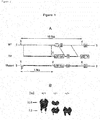
- An Allergin-1 targeting vector was constructed. Specifically, the first exon including the initiation codon of Allergin-1 was substituted by a neomycin resistance gene cassette ( Fig. 1A ).
- ES cells derived from C57BL/6N mice were transfected with the linearized Allergin-1 targeting vector by electroporation. The cells were subjected to selection by the drug resistance screening and homologous recombined clones were selected by Southern blotting. With the positive clones, chimera mice were prepared by aggregation. Eight-cell stage embryos of the ICR were used as recipient embryos. The occurrence rate of chimera of the obtained chimera mice was judged based on the coat color of the whole body.
- the obtained individual chimera mouse was crossed with a C57BL/6N mouse and the F1 offsprings were genetically analysed by Southern blotting to obtain F1 heterozygous individuals.
- the male and female of the F1 heterozygous individuals were crossed and it was verified that Alg1-KO mice were obtained by genetic analysis using Southern blotting ( Fig. 1B ).
- Allergin-1KO mice did not show particularly apparent phenotype, it is expected that the side effect of the Allergin-1 antagonist may be minor.
- MC38 was subcutaneously transplanted at 2.0 ⁇ 10 5 /mouse.
- the number of mice in one group was 15.
- the tumor volume of MC38 was measured on day 7, 10, 14, 17, 21 and 24 after transplantation.
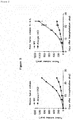
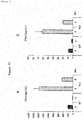
- Fig. 2 shows the transitions of the tumor volume in median ( Fig. 2 , left panel) and mean ⁇ standard error ( Fig. 2 , right panel) for each group.
- Allergin-1KO mice tumor proliferation was significantly suppressed compared to the wild-type mice.
- B16F10 was subcutaneously transplanted at 2.0 ⁇ 10 5 /mouse.
- the number of mice in one group was 10.
- the tumor volume of B16F10 in each group was measured on day 7, 11, 14, 18 and 21, provided that the day of transplantation was day 0.
- 4H2 an antibody prepared according to the method disclosed in Example 12 in WO 2006/121168
- 4H2 was intraperitoneally administered to the WT mice on the day of transplantation and day 6, 12 and 18.
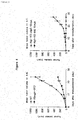
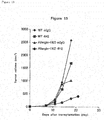
- Fig. 3 shows the transitions of the tumor volume in median ( Fig. 3 , left panel) and average ⁇ standard error ( Fig. 3 , right panel) for each group.
- tumor proliferation of B16F10 was also significantly suppressed in the Allergin-1KO mice compared to the wild-type mice.
- the median of the tumor volume on 21 days after transplantation was 1985.6 mm 3 (average: 2105.0 ⁇ 418.4 mm 3 ).
- the median of the tumor volume on day 21 in the group of mice carrying tumor without administration was 2661.0 mm 3 (average: 2622.6 ⁇ 377.1 mm 3 ).
- MC38 was subcutaneously transplanted at 2.0 ⁇ 10 5 cells/mouse.
- the mIgG and the anti-mouse PD-1 antibody 4H2 were intraperitoneally administered on the day of transplantation and day 6 and 12, provided that the day of transplantation was day 0.
- the dosage of 4H2 was 10 mg/kg (20 mg/kg only on the day 0 of transplantation).
- the number of mice in one group was 15 for the group of mice only carrying tumor ( Fig. 4 , left panel) and 10 for the groups of mice to which the antibodies were administered ( Fig. 4 , right panel).
- the tumor volume of MC38 was measured on day 7, 11, 14, 18, 21, 24 and 27 after transplantation. Fig.
- MC38 was subcutaneously transplanted at 2.0 ⁇ 10 5 cells/mouse.
- the number of mice in one group was 11 or 12.
- tumor was removed from the mice and treated with collagenase to prepare tumor cells.
- the prepared cells were subjected to antibody staining and the number of tumor-infiltrating CD8 positive T cells and the number of tumor antigen (p15E)-specific CD8 positive T cells were measured by FACS.
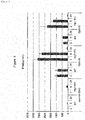
- Fig. 5 shows the number of infiltrating lymphocytes per 1 mg of tumor in average ⁇ standard error.
- the tumor-infiltrating CD8 cells (“CD8 + T cell” in Fig. 5 ) and the tumor-specific CD8 cells ("CD8 + tetramer + " in Fig. 5 ) were significantly increased compared to the wild-type mice.
- CpG-ODNs C57BL/6 mice
- Allergin-1KO mice mice via the tail vein at 52 nmol/kg.
- blood was collected from the tail vein and the blood IFN ⁇ was measured by ELISA.
- Fig. 6 shows the blood IFN ⁇ (pg/mL) in average ⁇ standard error at each evaluation point for each group.
- IFN ⁇ production was significantly increased compared to the wild-type mice.
- MC38 was subcutaneously transplanted at 2.0 ⁇ 10 5 cells/mouse.
- the control antibody and the anti-mouse PD-1 antibody 4H2 were intraperitoneally administered on the day of transplantation and day 6 and 12, provided that the day of transplantation was day 0.
- the dosage of 4H2 was 1 or 3 mg/kg.
- the number of mice in one group was 10.
- the tumor volume of MC38 was measured on day 7, 11, 13, 18, 21 and 24 after transplantation.
- Figs. 7 and 8 show the profiles of the tumor volume in average ⁇ standard error for each group.
- mice To C57BL/6 mice (WT mice) and Algl-KO mice, MC38 or B16F10 was subcutaneously transplanted at 2.0 ⁇ 10 5 cells/mouse.
- the control antibody rat IgG2 b and the anti-mouse CD4 antibody GK1.5 (BioXcell) were intraperitoneally administered on day 5, provided that the day of transplantation was day 0.
- the dosage of the antibodies was 5 mg/kg.
- the number of mice in one group was 10.
- the tumor volume of MC38 and B16F10 was measured on day 7, 11, 14, 18, 21, 25 and 28 after transplantation. When a half or more animals in a group died or were euthanized, the measurement immediately after the observation thereof was the last day of the tumor measurement. Figs.
- Example 10 Production of type I IFN after cGAMP stimulation on intraperitoneal macrophages derived from Allergin-1KO mouse .
- a 3% thioglycolate medium was intraperitoneally administered at 1 mL/body. After 3 days, 5 mL of 5 mM EDTA/PBS was injected for intraperitoneal lavage and the drain was collected. After haemolysis treatment, the proportion of CD11b + F4/80 + cells among intraperitoneal invasive cells was calculated on a flow cytometer.
- the cells were seeded in a 96-well plate so that the CD11b + F4/80 + cells are 2 ⁇ 10 5 cells/well, the culture supernatant was discarded after 1 hour, the cells were washed once with the medium and the medium containing 3, 10 or 30 ⁇ M cyclic GMP-AMP (cGAMP), respectively was added.
- the culture supernatant was collected after 24 and 48 hours and the amount of IFN- ⁇ in the culture supernatants was measured.
- Fig. 12 shows the amount of IFN ⁇ for each group. In the group of macrophages derived from Alg1-KO mice which were stimulated with cGAMP, the production of IFN ⁇ was increased compared to WT.
- B16F10 was subcutaneously transplanted at 2.0 ⁇ 10 5 cells/mouse.
- the and the anti-mouse PD-1 antibody 4H2 were intraperitoneally transplanted on the day of plantation and day 6, 12 and 18, provided that the day of transplantation was day 0.
- the dosage of 4H2 was 10 mg/kg (20 mg/kg only on day 0 of transplantation).
- the number of mice in one group was 10.
- the tumor volume of B16F10 was measured on day 7, 11, 14, 18 and 21 after transplantation.
- Fig. 13 shows the transition of the tumor volume in median for each group. In the group of Allergin-1KO mice to which the 4H2 antibody was administered, tumor proliferation was significantly suppressed compared to other groups.
- MC38 was subcutaneously transplanted at 2.0 ⁇ 10 5 cells/mouse.
- the anti-mouse PD-1 antibody 4H2 was intraperitoneally administered on the day of transplantation and day 6, 12 and 18.
- the dosage of 4H2 was 10 mg/kg (20 mg/kg only on day 0 of transplantation) for WT mice and 1 mg/kg or 3 mg/kg (2 mg/kg or 6 mg/kg only on day 0 of transplantation) for Algl-KO mice.
- the number of mice in one transplantation group was 20 for WT mice and 10 for each dosage of the Algl-KO mice.
- On day 32 of transplantation 8 out of 20 WT mice and 14 out of 20 Algl-KO mice showed complete remission (CR) of tumor.
- MC38 and B16F10 were subcutaneously transplanted on the right and left flanks, respectively, at 2.0 ⁇ 10 5 /mouse on day 42 after the first transplantation.
- the tumor volume of MC38 and B16F10 was measured on day 7, 11, 14, 18, 21, 25, 28, 32, 35, 39 and 42 after transplantation.
- Fig. 14 shows the transition of the tumor volume in average ⁇ standard error for each group. For MC38, 7 out of 8 WT mice and all 14 Algl-KO mice showed tumor remission.
- the results indicate that the immune system in the environment where PD-1 inhibition coexists with Allergin-1 inhibition can memorise more various cancer antigens than the cancer antigens which could be memorised by the immune system in the environment where only PD-1 inhibition exists.
- the spectrum of cancer antigens which are memorised by the immune system in the environment where PD-1 inhibition coexists with Allergin-1 inhibition covers cancer antigens with weak antigenicity. Therefore, it is believed that the antigens with weak antigenicity are not recognized as cancer antigens by the immune system in a normal environment and are hardly recognized as cancer antigens even in an environment only with PD-1 inhibition.
- cancer cells which could never be recognized by the immune system in a normal environment and could be hardly recognized in an environment only with PD-1 inhibition may be recognized as antigens and anti-tumor effect may be exhibited against new cancer cells or, in other words, recurrent cancer cells.
- the Allergin-1 antagonist according to the present invention is capable of enhancing the immunity for cancer and may be used for suppression of progress of, suppression of recurrence of and/or treatment of cancer.
Landscapes
- Health & Medical Sciences (AREA)
- Life Sciences & Earth Sciences (AREA)
- Chemical & Material Sciences (AREA)
- Medicinal Chemistry (AREA)
- General Health & Medical Sciences (AREA)
- Animal Behavior & Ethology (AREA)
- Veterinary Medicine (AREA)
- Pharmacology & Pharmacy (AREA)
- Public Health (AREA)
- Epidemiology (AREA)
- Immunology (AREA)
- Engineering & Computer Science (AREA)
- Bioinformatics & Cheminformatics (AREA)
- Organic Chemistry (AREA)
- Proteomics, Peptides & Aminoacids (AREA)
- Chemical Kinetics & Catalysis (AREA)
- Nuclear Medicine, Radiotherapy & Molecular Imaging (AREA)
- General Chemical & Material Sciences (AREA)
- Environmental Sciences (AREA)
- Zoology (AREA)
- Mycology (AREA)
- Microbiology (AREA)
- Hematology (AREA)
- Oncology (AREA)
- Biodiversity & Conservation Biology (AREA)
- Animal Husbandry (AREA)
- Biotechnology (AREA)
- Biochemistry (AREA)
- Biophysics (AREA)
- Genetics & Genomics (AREA)
- Molecular Biology (AREA)
- Cell Biology (AREA)
- Gastroenterology & Hepatology (AREA)
- Medicines Containing Antibodies Or Antigens For Use As Internal Diagnostic Agents (AREA)
- Medicines That Contain Protein Lipid Enzymes And Other Medicines (AREA)
- Peptides Or Proteins (AREA)
Priority Applications (1)
| Application Number | Priority Date | Filing Date | Title |
|---|---|---|---|
| PL16842026T PL3345618T3 (pl) | 2015-09-03 | 2016-09-02 | Środek do zwiększania odporności na nowotwór złośliwy z zastosowaniem antagonisty allerginu-1 |
Applications Claiming Priority (3)
| Application Number | Priority Date | Filing Date | Title |
|---|---|---|---|
| JP2015173659 | 2015-09-03 | ||
| JP2016138374 | 2016-07-13 | ||
| PCT/JP2016/075887 WO2017038997A1 (ja) | 2015-09-03 | 2016-09-02 | Allergin-1アンタゴニストによるがん免疫増強剤 |
Publications (3)
| Publication Number | Publication Date |
|---|---|
| EP3345618A1 true EP3345618A1 (de) | 2018-07-11 |
| EP3345618A4 EP3345618A4 (de) | 2019-03-13 |
| EP3345618B1 EP3345618B1 (de) | 2022-01-05 |
Family
ID=58189017
Family Applications (1)
| Application Number | Title | Priority Date | Filing Date |
|---|---|---|---|
| EP16842026.3A Active EP3345618B1 (de) | 2015-09-03 | 2016-09-02 | Mittel zur verbesserung der immunität gegen krebs durch verwendung eines allergin-1-antagonisten |
Country Status (22)
| Country | Link |
|---|---|
| US (2) | US11638744B2 (de) |
| EP (1) | EP3345618B1 (de) |
| JP (2) | JP6156604B1 (de) |
| KR (1) | KR102611244B1 (de) |
| CN (1) | CN108025069B (de) |
| AU (1) | AU2016317378B2 (de) |
| CA (1) | CA2997240C (de) |
| DK (1) | DK3345618T3 (de) |
| ES (1) | ES2905554T3 (de) |
| HU (1) | HUE058293T2 (de) |
| IL (1) | IL257773B (de) |
| MX (1) | MX394957B (de) |
| MY (1) | MY197664A (de) |
| NZ (1) | NZ740351A (de) |
| PH (1) | PH12018500450A1 (de) |
| PL (1) | PL3345618T3 (de) |
| PT (1) | PT3345618T (de) |
| RU (1) | RU2734777C2 (de) |
| SG (1) | SG11201801699VA (de) |
| TW (1) | TWI765862B (de) |
| WO (1) | WO2017038997A1 (de) |
| ZA (1) | ZA201801471B (de) |
Families Citing this family (5)
| Publication number | Priority date | Publication date | Assignee | Title |
|---|---|---|---|---|
| CN103059138B (zh) * | 2005-05-09 | 2015-10-28 | 小野药品工业株式会社 | 程序性死亡-1(pd-1)的人单克隆抗体及使用抗pd-1抗体来治疗癌症的方法 |
| TWI755395B (zh) * | 2016-05-13 | 2022-02-21 | 美商再生元醫藥公司 | 抗-pd-1抗體與輻射治療癌症之組合 |
| US20250102508A1 (en) * | 2021-12-31 | 2025-03-27 | Dalian University Of Technology | Leukemia-related marker and use thereof |
| WO2024043227A1 (ja) | 2022-08-23 | 2024-02-29 | 小野薬品工業株式会社 | 二重特異性抗体 |
| CN121003685A (zh) * | 2024-05-24 | 2025-11-25 | 重庆医科大学 | 博来霉素作为免疫增强剂的用途 |
Family Cites Families (18)
| Publication number | Priority date | Publication date | Assignee | Title |
|---|---|---|---|---|
| ES2118372T3 (es) * | 1992-11-17 | 1998-09-16 | Icos Corp | Nuevos receptores siete transmembrana v28. |
| US20030232411A1 (en) | 1997-12-26 | 2003-12-18 | Ono Pharmaceutical Co., Ltd. | Novel polypeptide, cDNA encoding the same, and use thereof |
| CA2381770C (en) | 1999-08-24 | 2007-08-07 | Medarex, Inc. | Human ctla-4 antibodies and their uses |
| WO2002060477A1 (en) * | 2001-01-31 | 2002-08-08 | Human Genome Sciences, Inc. | Scaffolded fusion polypeptides, compositions for making the same and methods of using the same |
| PT1537878E (pt) | 2002-07-03 | 2010-11-18 | Ono Pharmaceutical Co | Composições de imunopotenciação |
| EP2251039A3 (de) * | 2003-05-30 | 2010-12-08 | Nippon Shinyaku Co., Ltd. | Doppelsträngige Oligo-RNA zum Hemmen der Expression von BCL-2 und sie enthaltende pharmazeutische Zusammensetzung |
| US7910697B2 (en) | 2004-10-21 | 2011-03-22 | Ono Pharmaceutical Co., Ltd. | Use of immunesuppressant receptor |
| CN103059138B (zh) | 2005-05-09 | 2015-10-28 | 小野药品工业株式会社 | 程序性死亡-1(pd-1)的人单克隆抗体及使用抗pd-1抗体来治疗癌症的方法 |
| WO2007005874A2 (en) * | 2005-07-01 | 2007-01-11 | Medarex, Inc. | Human monoclonal antibodies to programmed death ligand 1 (pd-l1) |
| US20090306349A1 (en) * | 2006-03-31 | 2009-12-10 | Rampak Corp | Binding partners with immunoglobulin domains modified to have extended half-life |
| WO2007122815A1 (ja) | 2006-04-14 | 2007-11-01 | Ono Pharmaceutical Co., Ltd. | Bir1に対する二価抗体 |
| EP3222634A1 (de) | 2007-06-18 | 2017-09-27 | Merck Sharp & Dohme B.V. | Antikörper zum humanen programmierten zelltod-pd-1-rezeptor |
| EP2192179B9 (de) | 2007-08-20 | 2017-11-15 | Oncotherapy Science, Inc. | Cdh3-peptid und dieses enthaltendes arzneimittel |
| EP2331130B1 (de) * | 2008-04-09 | 2018-02-14 | Oncoquest Inc. | Ige-antikörper zur behandlung von krebs |
| KR101258456B1 (ko) * | 2011-01-13 | 2013-04-26 | 강원대학교산학협력단 | 백혈구의 혈관외유출 억제 활성 및 비만세포 탈과립 억제 활성을 갖는 펩타이드를 포함하는 약학 조성물 |
| US9381210B2 (en) * | 2013-04-15 | 2016-07-05 | Wisconsin Alumni Research Foundation | Induced pluripotent stem cell model of chronic myeloid leukemia revealed olfactomedin 4 as a novel therapeutic target in leukemia stem cells |
| CN104250302B (zh) * | 2013-06-26 | 2017-11-14 | 上海君实生物医药科技股份有限公司 | 抗pd‑1抗体及其应用 |
| EP3277716B1 (de) * | 2015-04-03 | 2020-06-24 | XOMA Technology Ltd. | Behandlung von krebs unter verwendung von inhibitoren von tgf-beta und pd-1 |
-
2016
- 2016-09-02 WO PCT/JP2016/075887 patent/WO2017038997A1/ja not_active Ceased
- 2016-09-02 JP JP2017503028A patent/JP6156604B1/ja not_active Expired - Fee Related
- 2016-09-02 HU HUE16842026A patent/HUE058293T2/hu unknown
- 2016-09-02 US US15/757,452 patent/US11638744B2/en active Active
- 2016-09-02 MX MX2018002681A patent/MX394957B/es unknown
- 2016-09-02 PT PT168420263T patent/PT3345618T/pt unknown
- 2016-09-02 NZ NZ740351A patent/NZ740351A/en unknown
- 2016-09-02 KR KR1020187006166A patent/KR102611244B1/ko active Active
- 2016-09-02 PL PL16842026T patent/PL3345618T3/pl unknown
- 2016-09-02 RU RU2018107687A patent/RU2734777C2/ru active
- 2016-09-02 AU AU2016317378A patent/AU2016317378B2/en not_active Ceased
- 2016-09-02 CA CA2997240A patent/CA2997240C/en active Active
- 2016-09-02 SG SG11201801699VA patent/SG11201801699VA/en unknown
- 2016-09-02 DK DK16842026.3T patent/DK3345618T3/da active
- 2016-09-02 MY MYPI2018700812A patent/MY197664A/en unknown
- 2016-09-02 CN CN201680050962.5A patent/CN108025069B/zh active Active
- 2016-09-02 TW TW105128421A patent/TWI765862B/zh not_active IP Right Cessation
- 2016-09-02 ES ES16842026T patent/ES2905554T3/es active Active
- 2016-09-02 EP EP16842026.3A patent/EP3345618B1/de active Active
-
2017
- 2017-05-17 JP JP2017098250A patent/JP6750559B2/ja active Active
-
2018
- 2018-02-27 IL IL257773A patent/IL257773B/en unknown
- 2018-03-01 PH PH12018500450A patent/PH12018500450A1/en unknown
- 2018-03-02 ZA ZA2018/01471A patent/ZA201801471B/en unknown
-
2023
- 2023-03-14 US US18/183,878 patent/US20230256054A1/en not_active Abandoned
Also Published As
Similar Documents
| Publication | Publication Date | Title |
|---|---|---|
| JP7450592B2 (ja) | 癌治療におけるfgfr2阻害剤単独または免疫刺激剤との組み合わせ | |
| US20230256054A1 (en) | Immunity enhancing agent for cancer by allergin-1 antagonist | |
| US20250059294A1 (en) | Methods and compositions for promoting and potentiating t-cell mediated immune responses through adcc targeting of cd39 expressing cells | |
| KR20190137151A (ko) | 병용 요법 | |
| KR20190053909A (ko) | 항체와 체크포인트 면역 억제제의 병용 요법 | |
| US20250084178A1 (en) | Anti-cd39 antibodies and use thereof | |
| KR20240099362A (ko) | 혈액암에 대한 lag-3 길항제 요법 | |
| JP2024519449A (ja) | がん治療における使用のための抗ガレクチン-9抗体と化学療法剤との併用 | |
| HK1251173A1 (en) | Agent for enhancing immunity to cancer by using allergin-1 antagonist | |
| US20250041286A1 (en) | Cancer treatment using ketotifen in combination with a checkpoint inhibitor | |
| HK1251173B (zh) | 使用变应素-1拮抗剂的癌症免疫增强剂 | |
| TW202523359A (zh) | 抗體-藥物結合物與抗pd-1/tim-3雙特異性結合蛋白質之組合 | |
| KR20240099363A (ko) | 항-pd-1 항체와 항-cd30 항체-약물 접합체의 조합을 사용하여 암을 치료하는 방법 |
Legal Events
| Date | Code | Title | Description |
|---|---|---|---|
| STAA | Information on the status of an ep patent application or granted ep patent |
Free format text: STATUS: THE INTERNATIONAL PUBLICATION HAS BEEN MADE |
|
| PUAI | Public reference made under article 153(3) epc to a published international application that has entered the european phase |
Free format text: ORIGINAL CODE: 0009012 |
|
| STAA | Information on the status of an ep patent application or granted ep patent |
Free format text: STATUS: REQUEST FOR EXAMINATION WAS MADE |
|
| 17P | Request for examination filed |
Effective date: 20180301 |
|
| AK | Designated contracting states |
Kind code of ref document: A1 Designated state(s): AL AT BE BG CH CY CZ DE DK EE ES FI FR GB GR HR HU IE IS IT LI LT LU LV MC MK MT NL NO PL PT RO RS SE SI SK SM TR |
|
| AX | Request for extension of the european patent |
Extension state: BA ME |
|
| DAV | Request for validation of the european patent (deleted) | ||
| DAX | Request for extension of the european patent (deleted) | ||
| A4 | Supplementary search report drawn up and despatched |
Effective date: 20190211 |
|
| RIC1 | Information provided on ipc code assigned before grant |
Ipc: A61K 45/06 20060101ALI20190205BHEP Ipc: A01K 67/027 20060101ALI20190205BHEP Ipc: A61P 35/00 20060101ALI20190205BHEP Ipc: A61K 39/395 20060101AFI20190205BHEP Ipc: A61P 43/00 20060101ALI20190205BHEP Ipc: A61K 38/00 20060101ALI20190205BHEP Ipc: A61P 35/02 20060101ALI20190205BHEP Ipc: A61K 45/00 20060101ALI20190205BHEP Ipc: A61P 37/04 20060101ALI20190205BHEP |
|
| STAA | Information on the status of an ep patent application or granted ep patent |
Free format text: STATUS: EXAMINATION IS IN PROGRESS |
|
| 17Q | First examination report despatched |
Effective date: 20200218 |
|
| GRAP | Despatch of communication of intention to grant a patent |
Free format text: ORIGINAL CODE: EPIDOSNIGR1 |
|
| STAA | Information on the status of an ep patent application or granted ep patent |
Free format text: STATUS: GRANT OF PATENT IS INTENDED |
|
| INTG | Intention to grant announced |
Effective date: 20210301 |
|
| RIN1 | Information on inventor provided before grant (corrected) |
Inventor name: ARIMA, HIROSHI Inventor name: SIMBO, TAKUYA Inventor name: SHIBAYAMA, SHIRO |
|
| GRAJ | Information related to disapproval of communication of intention to grant by the applicant or resumption of examination proceedings by the epo deleted |
Free format text: ORIGINAL CODE: EPIDOSDIGR1 |
|
| STAA | Information on the status of an ep patent application or granted ep patent |
Free format text: STATUS: EXAMINATION IS IN PROGRESS |
|
| GRAP | Despatch of communication of intention to grant a patent |
Free format text: ORIGINAL CODE: EPIDOSNIGR1 |
|
| STAA | Information on the status of an ep patent application or granted ep patent |
Free format text: STATUS: GRANT OF PATENT IS INTENDED |
|
| INTC | Intention to grant announced (deleted) | ||
| RIC1 | Information provided on ipc code assigned before grant |
Ipc: A61K 39/395 20060101AFI20210708BHEP Ipc: A61K 38/00 20060101ALI20210708BHEP Ipc: A61K 45/00 20060101ALI20210708BHEP Ipc: A61K 45/06 20060101ALI20210708BHEP Ipc: A61P 35/00 20060101ALI20210708BHEP Ipc: A61P 35/02 20060101ALI20210708BHEP Ipc: A61P 37/04 20060101ALI20210708BHEP Ipc: A61P 43/00 20060101ALI20210708BHEP Ipc: A01K 67/027 20060101ALI20210708BHEP Ipc: C07K 16/28 20060101ALI20210708BHEP |
|
| INTG | Intention to grant announced |
Effective date: 20210728 |
|
| GRAS | Grant fee paid |
Free format text: ORIGINAL CODE: EPIDOSNIGR3 |
|
| GRAA | (expected) grant |
Free format text: ORIGINAL CODE: 0009210 |
|
| STAA | Information on the status of an ep patent application or granted ep patent |
Free format text: STATUS: THE PATENT HAS BEEN GRANTED |
|
| AK | Designated contracting states |
Kind code of ref document: B1 Designated state(s): AL AT BE BG CH CY CZ DE DK EE ES FI FR GB GR HR HU IE IS IT LI LT LU LV MC MK MT NL NO PL PT RO RS SE SI SK SM TR |
|
| REG | Reference to a national code |
Ref country code: GB Ref legal event code: FG4D |
|
| REG | Reference to a national code |
Ref country code: CH Ref legal event code: EP |
|
| REG | Reference to a national code |
Ref country code: AT Ref legal event code: REF Ref document number: 1459946 Country of ref document: AT Kind code of ref document: T Effective date: 20220115 |
|
| REG | Reference to a national code |
Ref country code: DE Ref legal event code: R096 Ref document number: 602016068147 Country of ref document: DE |
|
| REG | Reference to a national code |
Ref country code: PT Ref legal event code: SC4A Ref document number: 3345618 Country of ref document: PT Date of ref document: 20220202 Kind code of ref document: T Free format text: AVAILABILITY OF NATIONAL TRANSLATION Effective date: 20220126 Ref country code: IE Ref legal event code: FG4D |
|
| REG | Reference to a national code |
Ref country code: DK Ref legal event code: T3 Effective date: 20220131 |
|
| REG | Reference to a national code |
Ref country code: NL Ref legal event code: FP |
|
| REG | Reference to a national code |
Ref country code: SE Ref legal event code: TRGR |
|
| REG | Reference to a national code |
Ref country code: RO Ref legal event code: EPE |
|
| REG | Reference to a national code |
Ref country code: FI Ref legal event code: FGE |
|
| REG | Reference to a national code |
Ref country code: NO Ref legal event code: T2 Effective date: 20220105 |
|
| REG | Reference to a national code |
Ref country code: GR Ref legal event code: EP Ref document number: 20220400342 Country of ref document: GR Effective date: 20220309 |
|
| REG | Reference to a national code |
Ref country code: ES Ref legal event code: FG2A Ref document number: 2905554 Country of ref document: ES Kind code of ref document: T3 Effective date: 20220411 |
|
| REG | Reference to a national code |
Ref country code: LT Ref legal event code: MG9D |
|
| REG | Reference to a national code |
Ref country code: HU Ref legal event code: AG4A Ref document number: E058293 Country of ref document: HU |
|
| PG25 | Lapsed in a contracting state [announced via postgrant information from national office to epo] |
Ref country code: RS Free format text: LAPSE BECAUSE OF FAILURE TO SUBMIT A TRANSLATION OF THE DESCRIPTION OR TO PAY THE FEE WITHIN THE PRESCRIBED TIME-LIMIT Effective date: 20220105 Ref country code: LT Free format text: LAPSE BECAUSE OF FAILURE TO SUBMIT A TRANSLATION OF THE DESCRIPTION OR TO PAY THE FEE WITHIN THE PRESCRIBED TIME-LIMIT Effective date: 20220105 Ref country code: HR Free format text: LAPSE BECAUSE OF FAILURE TO SUBMIT A TRANSLATION OF THE DESCRIPTION OR TO PAY THE FEE WITHIN THE PRESCRIBED TIME-LIMIT Effective date: 20220105 Ref country code: BG Free format text: LAPSE BECAUSE OF FAILURE TO SUBMIT A TRANSLATION OF THE DESCRIPTION OR TO PAY THE FEE WITHIN THE PRESCRIBED TIME-LIMIT Effective date: 20220405 |
|
| PG25 | Lapsed in a contracting state [announced via postgrant information from national office to epo] |
Ref country code: LV Free format text: LAPSE BECAUSE OF FAILURE TO SUBMIT A TRANSLATION OF THE DESCRIPTION OR TO PAY THE FEE WITHIN THE PRESCRIBED TIME-LIMIT Effective date: 20220105 |
|
| PG25 | Lapsed in a contracting state [announced via postgrant information from national office to epo] |
Ref country code: IS Free format text: LAPSE BECAUSE OF FAILURE TO SUBMIT A TRANSLATION OF THE DESCRIPTION OR TO PAY THE FEE WITHIN THE PRESCRIBED TIME-LIMIT Effective date: 20220505 |
|
| REG | Reference to a national code |
Ref country code: DE Ref legal event code: R097 Ref document number: 602016068147 Country of ref document: DE |
|
| PG25 | Lapsed in a contracting state [announced via postgrant information from national office to epo] |
Ref country code: SM Free format text: LAPSE BECAUSE OF FAILURE TO SUBMIT A TRANSLATION OF THE DESCRIPTION OR TO PAY THE FEE WITHIN THE PRESCRIBED TIME-LIMIT Effective date: 20220105 Ref country code: SK Free format text: LAPSE BECAUSE OF FAILURE TO SUBMIT A TRANSLATION OF THE DESCRIPTION OR TO PAY THE FEE WITHIN THE PRESCRIBED TIME-LIMIT Effective date: 20220105 Ref country code: EE Free format text: LAPSE BECAUSE OF FAILURE TO SUBMIT A TRANSLATION OF THE DESCRIPTION OR TO PAY THE FEE WITHIN THE PRESCRIBED TIME-LIMIT Effective date: 20220105 |
|
| PLBE | No opposition filed within time limit |
Free format text: ORIGINAL CODE: 0009261 |
|
| STAA | Information on the status of an ep patent application or granted ep patent |
Free format text: STATUS: NO OPPOSITION FILED WITHIN TIME LIMIT |
|
| PG25 | Lapsed in a contracting state [announced via postgrant information from national office to epo] |
Ref country code: AL Free format text: LAPSE BECAUSE OF FAILURE TO SUBMIT A TRANSLATION OF THE DESCRIPTION OR TO PAY THE FEE WITHIN THE PRESCRIBED TIME-LIMIT Effective date: 20220105 |
|
| 26N | No opposition filed |
Effective date: 20221006 |
|
| PG25 | Lapsed in a contracting state [announced via postgrant information from national office to epo] |
Ref country code: SI Free format text: LAPSE BECAUSE OF FAILURE TO SUBMIT A TRANSLATION OF THE DESCRIPTION OR TO PAY THE FEE WITHIN THE PRESCRIBED TIME-LIMIT Effective date: 20220105 |
|
| PG25 | Lapsed in a contracting state [announced via postgrant information from national office to epo] |
Ref country code: MC Free format text: LAPSE BECAUSE OF FAILURE TO SUBMIT A TRANSLATION OF THE DESCRIPTION OR TO PAY THE FEE WITHIN THE PRESCRIBED TIME-LIMIT Effective date: 20220105 |
|
| P01 | Opt-out of the competence of the unified patent court (upc) registered |
Effective date: 20230509 |
|
| PG25 | Lapsed in a contracting state [announced via postgrant information from national office to epo] |
Ref country code: CY Free format text: LAPSE BECAUSE OF FAILURE TO SUBMIT A TRANSLATION OF THE DESCRIPTION OR TO PAY THE FEE WITHIN THE PRESCRIBED TIME-LIMIT Effective date: 20220105 |
|
| PG25 | Lapsed in a contracting state [announced via postgrant information from national office to epo] |
Ref country code: MK Free format text: LAPSE BECAUSE OF FAILURE TO SUBMIT A TRANSLATION OF THE DESCRIPTION OR TO PAY THE FEE WITHIN THE PRESCRIBED TIME-LIMIT Effective date: 20220105 |
|
| PGFP | Annual fee paid to national office [announced via postgrant information from national office to epo] |
Ref country code: LU Payment date: 20240829 Year of fee payment: 9 |
|
| PGFP | Annual fee paid to national office [announced via postgrant information from national office to epo] |
Ref country code: NL Payment date: 20240816 Year of fee payment: 9 |
|
| PG25 | Lapsed in a contracting state [announced via postgrant information from national office to epo] |
Ref country code: MT Free format text: LAPSE BECAUSE OF FAILURE TO SUBMIT A TRANSLATION OF THE DESCRIPTION OR TO PAY THE FEE WITHIN THE PRESCRIBED TIME-LIMIT Effective date: 20220105 |
|
| PGFP | Annual fee paid to national office [announced via postgrant information from national office to epo] |
Ref country code: DE Payment date: 20240730 Year of fee payment: 9 Ref country code: FI Payment date: 20240912 Year of fee payment: 9 Ref country code: IE Payment date: 20240812 Year of fee payment: 9 |
|
| PGFP | Annual fee paid to national office [announced via postgrant information from national office to epo] |
Ref country code: DK Payment date: 20240913 Year of fee payment: 9 Ref country code: GR Payment date: 20240816 Year of fee payment: 9 |
|
| PGFP | Annual fee paid to national office [announced via postgrant information from national office to epo] |
Ref country code: GB Payment date: 20240801 Year of fee payment: 9 Ref country code: PT Payment date: 20240903 Year of fee payment: 9 |
|
| PGFP | Annual fee paid to national office [announced via postgrant information from national office to epo] |
Ref country code: BE Payment date: 20240816 Year of fee payment: 9 |
|
| PGFP | Annual fee paid to national office [announced via postgrant information from national office to epo] |
Ref country code: FR Payment date: 20240808 Year of fee payment: 9 |
|
| PGFP | Annual fee paid to national office [announced via postgrant information from national office to epo] |
Ref country code: CZ Payment date: 20240819 Year of fee payment: 9 |
|
| PGFP | Annual fee paid to national office [announced via postgrant information from national office to epo] |
Ref country code: AT Payment date: 20240827 Year of fee payment: 9 |
|
| PGFP | Annual fee paid to national office [announced via postgrant information from national office to epo] |
Ref country code: PL Payment date: 20240813 Year of fee payment: 9 |
|
| PGFP | Annual fee paid to national office [announced via postgrant information from national office to epo] |
Ref country code: HU Payment date: 20240827 Year of fee payment: 9 |
|
| PGFP | Annual fee paid to national office [announced via postgrant information from national office to epo] |
Ref country code: RO Payment date: 20240827 Year of fee payment: 9 Ref country code: NO Payment date: 20240910 Year of fee payment: 9 Ref country code: IT Payment date: 20240812 Year of fee payment: 9 Ref country code: SE Payment date: 20240812 Year of fee payment: 9 |
|
| PGFP | Annual fee paid to national office [announced via postgrant information from national office to epo] |
Ref country code: TR Payment date: 20240821 Year of fee payment: 9 |
|
| REG | Reference to a national code |
Ref country code: AT Ref legal event code: UEP Ref document number: 1459946 Country of ref document: AT Kind code of ref document: T Effective date: 20220105 |
|
| PGFP | Annual fee paid to national office [announced via postgrant information from national office to epo] |
Ref country code: ES Payment date: 20241001 Year of fee payment: 9 |
|
| PGFP | Annual fee paid to national office [announced via postgrant information from national office to epo] |
Ref country code: CH Payment date: 20241001 Year of fee payment: 9 |