EP3334847B1 - Verfahren zur herstellung eines verbundstoffes unter verwendung von überschüssigem oxidationsmittel - Google Patents
Verfahren zur herstellung eines verbundstoffes unter verwendung von überschüssigem oxidationsmittel Download PDFInfo
- Publication number
- EP3334847B1 EP3334847B1 EP16836272.1A EP16836272A EP3334847B1 EP 3334847 B1 EP3334847 B1 EP 3334847B1 EP 16836272 A EP16836272 A EP 16836272A EP 3334847 B1 EP3334847 B1 EP 3334847B1
- Authority
- EP
- European Patent Office
- Prior art keywords
- reductant
- metal
- reactor
- composite material
- product
- Prior art date
- Legal status (The legal status is an assumption and is not a legal conclusion. Google has not performed a legal analysis and makes no representation as to the accuracy of the status listed.)
- Active
Links
Images
Classifications
-
- C—CHEMISTRY; METALLURGY
- C22—METALLURGY; FERROUS OR NON-FERROUS ALLOYS; TREATMENT OF ALLOYS OR NON-FERROUS METALS
- C22B—PRODUCTION AND REFINING OF METALS; PRETREATMENT OF RAW MATERIALS
- C22B21/00—Obtaining aluminium
-
- C—CHEMISTRY; METALLURGY
- C22—METALLURGY; FERROUS OR NON-FERROUS ALLOYS; TREATMENT OF ALLOYS OR NON-FERROUS METALS
- C22B—PRODUCTION AND REFINING OF METALS; PRETREATMENT OF RAW MATERIALS
- C22B34/00—Obtaining refractory metals
- C22B34/10—Obtaining titanium, zirconium or hafnium
- C22B34/12—Obtaining titanium or titanium compounds from ores or scrap by metallurgical processing; preparation of titanium compounds from other titanium compounds see C01G23/00 - C01G23/08
-
- C—CHEMISTRY; METALLURGY
- C22—METALLURGY; FERROUS OR NON-FERROUS ALLOYS; TREATMENT OF ALLOYS OR NON-FERROUS METALS
- C22B—PRODUCTION AND REFINING OF METALS; PRETREATMENT OF RAW MATERIALS
- C22B34/00—Obtaining refractory metals
- C22B34/20—Obtaining niobium, tantalum or vanadium
- C22B34/22—Obtaining vanadium
-
- C—CHEMISTRY; METALLURGY
- C22—METALLURGY; FERROUS OR NON-FERROUS ALLOYS; TREATMENT OF ALLOYS OR NON-FERROUS METALS
- C22B—PRODUCTION AND REFINING OF METALS; PRETREATMENT OF RAW MATERIALS
- C22B5/00—General methods of reducing to metals
- C22B5/02—Dry methods smelting of sulfides or formation of mattes
- C22B5/04—Dry methods smelting of sulfides or formation of mattes by aluminium, other metals or silicon
-
- C—CHEMISTRY; METALLURGY
- C22—METALLURGY; FERROUS OR NON-FERROUS ALLOYS; TREATMENT OF ALLOYS OR NON-FERROUS METALS
- C22B—PRODUCTION AND REFINING OF METALS; PRETREATMENT OF RAW MATERIALS
- C22B5/00—General methods of reducing to metals
- C22B5/02—Dry methods smelting of sulfides or formation of mattes
- C22B5/12—Dry methods smelting of sulfides or formation of mattes by gases
- C22B5/14—Dry methods smelting of sulfides or formation of mattes by gases fluidised material
-
- Y—GENERAL TAGGING OF NEW TECHNOLOGICAL DEVELOPMENTS; GENERAL TAGGING OF CROSS-SECTIONAL TECHNOLOGIES SPANNING OVER SEVERAL SECTIONS OF THE IPC; TECHNICAL SUBJECTS COVERED BY FORMER USPC CROSS-REFERENCE ART COLLECTIONS [XRACs] AND DIGESTS
- Y02—TECHNOLOGIES OR APPLICATIONS FOR MITIGATION OR ADAPTATION AGAINST CLIMATE CHANGE
- Y02P—CLIMATE CHANGE MITIGATION TECHNOLOGIES IN THE PRODUCTION OR PROCESSING OF GOODS
- Y02P10/00—Technologies related to metal processing
- Y02P10/20—Recycling
Definitions
- composite material will be used to describe a composite material that is a metal-salt composite, an alloy-salt composite or an inter-metallic-salt composite. That is, the term “composite material” as used herein is intended to include within its scope a composite comprising a salt and (i) one metallic element, (ii) two or more metallic elements, or (iii) one or more metallic elements together with one or more non-metallic elements.
- reference to an "oxidant” includes within its scope metal compounds (M P C) that can be reduced by a reductant (R).
- Reference to a “reductant” includes within its scope a reductant (R) capable of reducing the metal compound (M P C).
- Reference to "in excess relative to the reductant (R)” includes within its scope excess of the metal compound (M P C) relative to reductant that is expected to be available to be reduced in the prevailing conditions. For example, large particles of reductant may not be entirely available to be reduced in the prevailing conditions.
- the method of the invention therefore provides for the recovery of composite material comprising the product metal (M P ) dispersed in a matrix of oxidised reductant (R o ) of the reductant (R), and at least one of (i) one or more, for example reduced, metal compounds (M P C R ) of the metal compound (M P C) and (ii) the reductant (R).
- a reduced metal compound (M P C R ) of the metal compound (M P C) is present in the composite, this includes compounds of the product metal (M P ) in various oxidation states, such as sub-halides of the metal compound (M P C) of a product metal (M P ).
- the temperature within the reactor is such that the composite material maintains a finely divided particulate form, the temperature preferably being below the melting point of the oxidised reductant (R o ) of the reductant (R), and further optionally above the melting point of the reductant (R).
- temperature in the reactor are intended to mean the average or bulk temperature of the reactor. There may be localised “hot spots” within the reactor due to localisation of exothermic reactions within the reactor. However, the temperatures observed at such "hot spots” should not be taken as being representative of the reactor temperature.
- the terms are intended to include situations where the amount of metal compound (M P C) of the product metal (M P ) fed to the reactor is in excess of stoichiometric equivalence relative to the amount of the most electropositive of the reductants (R) available for reaction in the reactor.
- the metal compound (M P C) of the product metal (M P ) (i.e. the oxidant) is fed to the reactor such that it is in excess relative to the reductant (R).
- R the reductant
- an excess of reductant has conventionally been considered advantageous in order to ensure complete reduction of the metal compound (M P C) to product metal (M P ), and also to eliminate the inclusion of reduced metal compounds (M P C R ) of the metal compound (M P C) in the product.
- the metal compound (M P C) of the product metal (M P ) may be fed to the reactor at any amount in excess of stoichiometric equivalence relative to the reductant (R) available for reaction in the reactor.
- the molar ratio of metal compound (M P C) of the product metal (M P ) to reductant (R) available for reaction in the reactor is 30:1, 15:1, 10:1, 5:1, 3:1, 2:1, 1.1:1, or 1.05:1.
- the recirculated metal compound (M P C) may be taken into account when considering the stoichiometric excess of the metal compound (M P C) fed to the reactor.
- the amount of new metal compound (M P C) required for introduction to the reactor may be towards, or stoichiometrically equivalent to the amount of reductant (R) being fed to the reactor.
- the residence time of the reductant (R) in the reactor will be substantially more than that of the metal compound (M P C) of the product metal (M P ).
- the reductant (R) may have a residence time in the reactor that is from 100-10,000 times the residence time of the metal compound (M P C) of the product metal (M P ).
- the residence time of the reductant (R) in the reactor may be substantially the same as that of the metal compound (M P C) of the product metal (M P ).
- the metal compound (M P C) of the product metal (M P ) may be introduced to the reactor in solid, liquid or vapour form.
- the metal compound (M P C) of the product metal (M P ) is preferably in vapour or liquid form when fed to the reactor.
- the metal compound (M P C) of the product metal (M P ) is fed to the reactor at ambient conditions, allowing heat exchange between the reactor and the metal compound (M P C) of the product metal (M P ).
- the reductant (R) is fed to the reactor as a solid, solid particulate or molten liquid.
- the feed rate of the reductant (R) to the reactor will be somewhat dependent on the scale of the operation.
- the feed rate of the metal compound (M P C) of the product metal (M P ) may also depend on the scale of the operation.
- the method of the invention is considered suitable for the production of composites comprising a single metallic element, two or more metallic elements, and one or more metallic elements together with one or more non-metallic elements.
- the composites may comprise an alloy or an inter-metallic as described above.
- the metal compound (M P C) of the product metal (M P ) may comprise a pnictogen compound or chalcogen compound.
- the metal compound (M P C) of the product metal (M P ) is a metal halide selected from the group consisting of halides of titanium, aluminium, vanadium, chromium, niobium, molybdenum, zirconium, silicon, boron, tin, hafnium, yttrium, iron, copper, nickel, bismuth, manganese, palladium, tungsten, cadmium, zinc, silver, cobalt, tantalum, scandium, ruthenium and the rare earths or a combination of any two or more thereof.
- the metal compound (M P C) of the product metal (M P ) comprises TiCl 4 .
- the TiCl 4 is preferably in liquid form when fed to the reactor, although it may also be in vapour form.
- the reductant (R) comprises a metal reductant (M R ) selected from the group consisting of Mg, Na, K, Li, Ba, Ca, Be, Al and any combination thereof, and any one or more thereof with another reductant (R'). In embodiments not part of the invention, other options may also be suitable. In embodiments where two or more reductants (R), which may include one or more metal reductant (M R ), are fed to the reactor, the amount of metal compound (M P C) of the product metal (M P ) fed to the reactor is in excess of stoichiometric equivalence relative to the amount of the most electrochemically positive of the reductants (R) available for reaction in the reactor.
- M R metal reductant
- the reductant (R) may suitably comprise a multi-component reductant, such as an alloy, for example an Mg-Al or Mg-Pd intermetallic or alloy, where some or all of the components participate in reduction-oxidation reactions in the process.
- a multi-component reductant such as an alloy, for example an Mg-Al or Mg-Pd intermetallic or alloy, where some or all of the components participate in reduction-oxidation reactions in the process.
- the temperature within the reactor is preferably such that the composite material maintains a finely divided particulate form.
- the temperature is preferably below the melting point of the oxidised reductant (R o ) of the reductant (R). It may further be above the melting point of the reductant (R), although the method of the invention may work at lower temperatures.
- the reductant (R) is liquid in the reactor, while the oxidised reductant (R o ) is in solid form.
- the reductant (R) comprises magnesium and the temperature within the reactor is below about 714°C, for example from 650-714°C.
- the reactor may comprise seed particles or surfaces of the product metal (M P ), oxidised reductant (R o ) of the reductant (R), or other substrate material or a combination thereof.
- the reactor may alternatively or additionally comprise other seed particles or surfaces.
- the seed particles or surfaces may comprise a composite material as described herein.
- the method may be self-seeding such that the method can be carried out continuously without the need to supply fresh seed particles or surfaces to the fluidised bed.
- the initial particle size of the seed particles of the fluidised bed is preferably from 10 ⁇ m to 2 mm, more preferably from 50 ⁇ m to 500 ⁇ m.
- the fluidised bed may have seed particles or surfaces introduced continuously or periodically.
- the composite material is formed by contacting Mg with an excess of TiCl 4 in a fluidised bed reactor to form Ti metal dispersed in a MgCl 2 matrix
- TiCl 4 may react with one atom of Mg and produce MgCl 2 and TiCl 2 .
- Mg reacts with TiCl 2 and forms a second MgCl 2 and a single Ti atom. Therefore, at its limit, it is envisaged that the finely divided metal component (M P ) may be present in the protective matrix of MgCl 2 on an atomic scale. Such examples would represent true "primary particles" of the metal component (M P ).
- the metal component (M P ) of these preferred embodiments of the invention is the lack of a protective oxide layer.
- the metal component (M P ) particles of these embodiments do not have an activation barrier, which correlates with a lower activation energy (increase in reactivity) of the metal component (M P ).
- generally small particles are highly pyrophoric.
- the composite material of the preferred embodiments of the invention is, comparatively, not. For conventional metal powders of approximately ⁇ 10um, pyrophoricity becomes a major issue, but can be serious even at much larger sizes (>100um) under some conditions.
- the protective matrix of the composite material of the invention advantageously overcomes this issue.
- a method of producing a product metal (M P ) comprising:
- the oxidised reductant (R o ) of the reductant (R) and reduced metal compound (M P C R ) of the metal compound (M P C) are removed from the composite material by vacuum distillation.
- the method further comprises recovering the reductant (R). This may be achieved by any suitable means.
- the temperature within the reactor is preferably above the melting point of the reductant (R) and below the melting point of the oxidised reductant (R o ) of the reductant (R).
- the reduced metal compound (M P C R ) of the metal compound (M P C) may comprise one or more sub-halides of the metal compound (M P C).
- the product metal (M P ) may comprise titanium, aluminium, vanadium, chromium, niobium, molybdenum, zirconium, silicon, boron, tin, hafnium, yttrium, iron, copper, nickel, bismuth, manganese, palladium, tungsten, cadmium, zinc, silver, cobalt, tantalum, scandium, ruthenium and the rare earths or a combination of any two or more thereof.
- Particular alloys of interest are those comprising at least two metallic elements selected from the group consisting of titanium, aluminium and vanadium. For example, the alloy may approximate a Ti64 alloy.
- the product metal (M P ) may comprise particulate metal having a particle size of less than 500 ⁇ m.
- the product metal (M P ) comprises particulate metal having a particle size of up to 250 ⁇ m. It is believed that the particulate metal may be suitable for use in many powder metallurgical processes.
- desired shapes and particle sizes of the particles may be advantageously generated by manipulating the method of the invention. That is, the size and shape of the particles may be manipulated in order to achieve suitable particles for a particular powder metallurgical process.
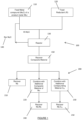
- FIG. 1 a flow chart of a method 100 for the recovery of a composite material is illustrated.
- the flow chart also includes processing options 200 for the recovered composite material.
- metal compound (M P C) 110 of a product metal (M P ) and a reductant (R) 120 capable of reducing the metal compound (M P C) 110 of the product metal (M P ) are supplied to a reactor 130.
- the amount of metal compound (M P C) 110 supplied to the reactor 130, including any recycled metal compound (M P C) 140, is in excess relative to the amount of reductant 120 available for reaction in the reactor 130.
- Composite material 150 is recovered from the reactor 130.
- the composite material comprises a matrix of an oxidised reductant (R o ) of the reductant (R), the product metal (M P ) dispersed in the matrix, and at least one of (i) a reduced metal compound (M P C R ) of the metal compound (M P C) and (ii) the reductant (R).
- the reactor 130 which will be discussed in terms of a fluidised bed reactor with reference to Figure 1 , is run at a temperature that maintains the finely divided form of the composite material.
- the temperature is below the melting point of the oxidised reductant (R o ) of the reductant (R) 120, which forms part of the composite material 150.
- the temperature may also be close to or above the melting point of the reductant (R) 120.
- the temperature in the reactor 130 is between the melting point of the reductant (R) 120 and the melting point of the oxidised reductant (R o ), for example its oxidised salt
- the reaction of the reductant (R) 120 with oxidant results in the formation of a composite material 150 comprised of largely or entirely solid character.
- This 'freezing' reaction advantageously has the impact of creating finely divided and highly pure reaction products.
- the particle size of the composite material 150 is such that the finely divided elements comprised within are sufficiently small that they interact differently with visible light than their bulk counterparts. For example, they may appear black or dark in colour.
- the finely divided structure of the composite material 150 product has advantages compared to composites of analogous nominal compositions that do not have the same finely divided structure. These advantages will be elucidated in more detail below.
- the prevailing conditions in the reactor 130 ensure, with sufficient time, the melting of the reductant 120.
- the time required for melting of solid reductant 120 depends upon numerous factors, including the feed mechanism, whether the reductant 120 is fed with other materials, the temperature of the reactor 130, the reaction intensity of the reactor 130 per unit volume, the particulate density of the reductant 120 feed at any single location and, if other reductant or reagent or inert streams are in or are entering into the reactor, the proximity to these components and their respective temperatures when impinging on particles of the reductant 120.
- the interaction of the reductant (R) 120 upon contacting other surfaces in the reactor 130 will depend on its phase at that time. If the reductant 120 particle is solid, it is possible the reductant 120 particle will collide and rebound. It will then continue to interact with other surfaces and environments in the reactor 130.
- the reductant 120 particle has a molten external surface and solid inner surface, it is possible the particle will adhere to any surface it impacts, creating a composite of the two objects. The particle will then continue to interact with other surfaces and environments in the reactor 130.
- the reductant 120 particle is molten when it interacts with other surfaces, it may wet the surface. Depending upon the nature of the solid-liquid interaction the thickness of the layer formed will vary. It is considered that this may be manipulated through varying intensity of interactions, density of reductant 120 feed, temperature and time, etc.
- the freezing nature of the reaction as described previously can result in a proportion of the reductant (R) becoming encapsulated by the composite material 150.
- the surface exposed to oxidant reacts to form a solid it may form a barrier (i.e. shell) that may restrict or eliminate the participation of the remaining reductant in further reduction.
- the process can consume the majority if not all of the reductant (R).
- the composite material may be stored under suitable conditions for later use, or may be processed 200 in various ways.
- the processing may include, without limitation, recovery of the product metal (M P ) 210, combining the composite material with composite material of other product metal (M P' ) 220, and/or other compounding material (C M ) 230.
- various products may be recovered, including without limitation product metal (M P ), an alloy or mixture of product metals (M P /M P' ) 240, and a mixture or composite product (M P /C M ) 250.
- it may also be desirable to recover reductant (R) and optionally return this to the reductant feed 120.
- Example 1 Production of Titanium metal composite in the presence of excess oxidant with unreacted reductant present in the composite
- the product stream from the reactor included free flowing black spheres ( ⁇ 3mm diameter). Titanium tetrachloride was observed in the exhaust gas stream of the reactor.
- a reaction vessel made from stainless steel was purged with high purity argon and heated externally to 680°C.
- the system was charged with 200 grams of titanium composite particles as a seed material.
- the system was allowed to reach an internal temperature of 655°C. At this point reactant feeds were introduced.
- Titanium tetrachloride was supplied at a rate of 424 grams per hour, vanadium tetrachloride was supplied at a rate of 18 grams per hour and aluminium chloride was supplied at a rate of 36 grams per hour.
- the reductant phase was magnesium metal, supplied at a rate of 113 grams per hour as a finely divided powder conveyed in a low volume of argon gas carrier stream entering the reactor. In these proportions TiCl 4 , VCl 4 and AlCl 3 are in excess by a total of 47% relative to the amount of magnesium that could be oxidised in the reactor.
- the ratios of metal compounds fed into the reactor were approximately 90% Ti, 6% Al and 4% V on a metal mass basis. Despite this, the final metal composition of Ti 91%, Al 2.24% and V 4.93% indicates that each different halide has a differing conversion in the reactor. As such, to be able to achieve a specific desired composition it is essential to feed at least one oxidant in excess to drive the reduction-oxidation reactions to the desired degrees.
- a reaction vessel made from stainless steel was purged with high purity argon and heated externally to 680°C.
- the system was charged with 200 grams of titanium composite particles as a seed material.
- the system was allowed to reach an internal temperature of 655°C. At this point reactant feeds were introduced.
- Vanadium tetrachloride was supplied at a rate of 454 grams per.
- the reductant phase was magnesium metal, supplied at a rate of 95 grams per hour as a finely divided powder conveyed in a low volume of argon gas carrier stream entering the reactor.
- vanadium tetrachloride is in excess relative to magnesium reductant that could be oxidised in the reactor.
- the product stream from the reactor included free flowing black spheres ( ⁇ 3mm diameter).
- a reaction vessel made from stainless steel was purged with high purity argon and heated externally to 680°C.
- the system was charged with 200 grams of titanium composite particles as a seed material.
- the system was allowed to reach an internal temperature of 655°C. At this point reactant feeds were applied.
- Zirconium tetrachloride was supplied at a rate of 211 grams per.
- the reductant phase was magnesium metal, supplied at a rate of 40 grams per hour as a finely divided powder conveyed in a low volume of argon gas carrier stream entering the reactor.
- zirconium tetrachloride is in excess relative to magnesium reductant fed into the reactor.
- the product stream from the reactor included free flowing black spheres ( ⁇ 3mm diameter). Zirconium tetrachloride was observed in the exhaust gas stream of the reactor.
- a reaction vessel made from stainless steel was purged with high purity argon and heated externally to 680°C.
- the system was charged with 200 grams of titanium composite particles as a seed material.
- the system was allowed to reach an internal temperature of 655°C. At this point reactant feeds were applied.
- Titanium tetrachloride was supplied at a rate of 424 grams per and aluminium chloride was supplied at a rate of 148 grams per hour.
- the reductant phase was magnesium metal, supplied at a rate of 102 grams per hour as a finely divided powder conveyed in a low volume of argon gas carrier stream entering the reactor. In these proportions oxidant halides are in excess relative to magnesium reductant fed into the reactor.
- Example 8 Production of Titanium metal composite in the presence of excess oxidant with unreacted reductant present in the composite below the melting point of the reductant.
- a reaction vessel made from stainless steel was purged with high purity argon and heated externally to 525°C.
- the system was charged with 2 kilograms of titanium composite particles as a seed material.
- the system was allowed to reach an internal temperature of 520°C. At this point reactant feeds were introduced.
- Titanium tetrachloride was supplied at a rate of 1.2 kilograms per hour.
- the reductant phase was magnesium metal, supplied at a rate of 300 grams per hour as a finely divided powder with a particle size between 50-63 ⁇ m and was conveyed in a low volume of argon gas carrier stream entering the reactor.
- titanium tetrachloride is in excess by approximately 3.5wt% relative to magnesium as the most electrochemically positive component that could be oxidised in the reactor.
- a reaction vessel made from stainless steel was purged with high purity argon and heated externally to 525°C.
- the system was charged with 2 kilograms of titanium composite particles as a seed material as derived from the conditions prevailing from Example 8.
- the system was allowed to reach an internal temperature of 520°C. At this point reactant feeds were introduced.
Landscapes
- Chemical & Material Sciences (AREA)
- Engineering & Computer Science (AREA)
- Materials Engineering (AREA)
- Mechanical Engineering (AREA)
- Metallurgy (AREA)
- Organic Chemistry (AREA)
- Manufacturing & Machinery (AREA)
- Environmental & Geological Engineering (AREA)
- Life Sciences & Earth Sciences (AREA)
- General Life Sciences & Earth Sciences (AREA)
- Geology (AREA)
- Manufacture And Refinement Of Metals (AREA)
- Manufacture Of Metal Powder And Suspensions Thereof (AREA)
- Manufacture Of Alloys Or Alloy Compounds (AREA)
- Powder Metallurgy (AREA)
- Inorganic Chemistry (AREA)
Claims (14)
- Verfahren zur Herstellung eines Verbundstoffs, umfassend:Zuführen einer Metallverbindung (MPC) eines Produktmetalls (MP) und eines Reduktionsmittels (R), das in der Lage ist, die Metallverbindung (MPC) des Produktmetalls (MP) zu reduzieren, zu einem Reaktor, wobei die Metallverbindung (MPC) des Produktmetalls (MP) ein Metallhalogenid ist, das ausgewählt wird aus der Gruppe, die besteht aus Halogeniden von Titan, Aluminium, Vanadium, Chrom, Niob, Molybdän, Zirconium, Silizium, Bor, Zinn, Hafnium, Yttrium, Eisen, Kupfer, Nickel, Wismut, Mangan, Palladium, Wolfram, Cadmium, Zink, Silber, Cobalt, Tantal, Scandium, Ruthenium und den seltenen Erden oder einer Kombination von beliebigen zwei oder mehr davon, und wobei das Reduktionsmittel (R) ausgewählt wird aus der Gruppe, die besteht aus Mg, Na, K, Li, Ba, Ca, Be, Al und einer beliebigen Kombination davon und einem oder mehreren davon mit einem anderen Reduktionsmittel (R');Bilden eines Verbundstoffs, der eine Matrix aus oxidiertem Reduktionsmittel (R0) des Reduktionsmittels (R), das in der Matrix aus oxidiertem Reduktionsmittel (R0) dispergierte Produktmetall (MP), eine oder mehrere Metallverbindungen (MPCR) der Metallverbindung (MPC) in einem oder mehreren Oxidationszuständen und wahlweise das Reduktionsmittel (R) umfasst; undRückgewinnen des Verbundstoffs von dem Reaktor,wobei die Metallverbindung (MPC) des Produktmetalls (MP) derart in den Reaktor eingespeist wird, dass es in Bezug auf das Reduktionsmittel (R) überschüssig ist.
- Verfahren nach Anspruch 1, wobei die Metallverbindung (MPC) des Produktmetalls (MP) TiCl4 umfasst und das Reduktionsmittel (R) Magnesium umfasst und die Temperatur innerhalb des Reaktors derart ist, dass der Verbundstoff eine fein geteilte Partikelform bewahrt, wobei die Temperatur vorzugsweise unter etwa 714°C, zum Beispiel von 650 bis 714°C, beträgt.
- Verfahren nach Anspruch 1 oder Anspruch 2, wobei das Produktmetall (MP) eine Legierung ist, die zwei oder mehr metallische Elemente umfasst, und das Verfahren das Zuführen von Metallverbindungen (MPC) von jedem der zwei oder mehr metallischen Elemente und des Reduktionsmittels (R) zum Reaktor und das Reduzieren der Metallverbindungen (MPC) von jedem der zwei oder mehr metallischen Elemente und das Rückgewinnen des Verbundstoffs umfasst, der die Legierung der zwei oder mehr metallischen Elemente umfasst.
- Verfahren nach einem der vorhergehenden Ansprüche, wobei das Verfahren das Reagieren von zwei oder mehr Metallhalogeniden (MPX), die ausgewählt werden aus der Gruppe, die besteht aus Halogeniden von Titan, Aluminium und Vanadium, mit Reduktionsmittel (R), das Magnesium umfasst, und das Rückgewinnen eines Verbundstoffs umfasst, der eine Legierung von zwei oder mehr metallischen Elementen umfasst, die ausgewählt werden aus der Gruppe, die besteht aus Titan, Aluminium und Vanadium und einem Halogenidsalz von Magnesium.
- Verfahren nach Anspruch 1 oder Anspruch 2, wobei das Verfahren das Zuführen (i) mindestens einer Metallverbindung (MPC) von mindestens einem metallischen Element und (ii) mindestens einer anderen metallischen oder nicht metallischen Komponente und des Reduktionsmittels (R) zu dem Reaktor und das Reduzieren der mindestens einen Metallverbindung (MPC) des mindestens einen metallischen Elements und das Rückgewinnen des Verbundstoffs umfasst, der das mindestens eine metallische Element der mindestens einen reduzierten Metallverbindung (MPC) und die mindestens eine andere metallische oder nicht metallische Komponente umfasst.
- Verfahren nach einem der vorhergehenden Ansprüche, wobei der Verbundstoff nicht umgesetztes Reduktionsmittel (R) umfasst.
- Verfahren nach einem der vorhergehenden Ansprüche, umfassend das ununterbrochene Zuführen der Metallverbindung (MPC) des Produktmetalls (MP) und des Reduktionsmittels (R), das in der Lage ist, die Metallverbindung (MPC) des Produktmetalls (MP) zu reduzieren, zu dem Reaktor.
- Fester Verbundstoff, umfassend:eine Matrix aus oxidiertem Reduktionsmittel (R0);ein Produktmetall (MP), das in der Matrix aus oxidiertem Reduktionsmittel (R0) dispergiert ist; eine oder mehrere Metallverbindungen (MPCR) des Produktmetalls (MP) in einem oder mehreren Oxidationszuständen, und wahlweise ein Reduktionsmittel (R),wobei das (MP) ein Metall ist, das ausgewählt ist aus der Gruppe, die besteht aus Titan, Aluminium, Vanadium, Chrom, Niob, Molybdän, Zirconium, Silizium, Bor, Zinn, Hafnium, Yttrium, Eisen, Kupfer, Nickel, Wismut, Mangan, Palladium, Wolfram, Cadmium, Zink, Silber, Cobalt, Tantal, Scandium, Ruthenium und den seltenen Erden oder einer Kombination von beliebigen zwei oder mehr davon, undwobei das Reduktionsmittel (R) ausgewählt ist aus der Gruppe, die besteht aus Mg, Na, K, Li, Ba, Ca, Be, Al und einer beliebigen Kombination davon und einem oder mehreren davon mit einem anderen Reduktionsmittel (R').
- Verbundstoff nach Anspruch 8, wobei das oxidierte Reduktionsmittel (R0) ein Metallhalogenid (MRX) umfasst.
- Verbundstoff nach Anspruch 8 oder Anspruch 9, wobei die eine oder mehreren Metallverbindungen (MPCR) des Produktmetalls (MP) in einem oder mehreren Oxidationszuständen ein oder mehrere Halogenide (MPX) der Metallkomponente (MP) umfassen.
- Verbundstoff nach einem der Ansprüche 8 bis 10, wobei der Verbundstoff in der Form von Partikeln vorliegt, die typischerweise eine durchschnittliche Partikelgröße von bis zu 500 µm, vorzugsweise von 20 bis 300 µm, aufweisen.
- Verfahren zur Herstellung eines Produktmetalls (MP), umfassend:Herstellen eines festen Verbundstoffs nach dem Verfahren nach einem der Ansprüche 1 bis 7; undEntfernen des oxidierten Reduktionsmittels (R0) des Reduktionsmittels (R) und der reduzierten Metallverbindung (MPCR) der Metallverbindung (MPC) und des Reduktionsmittels (R), falls vorhanden, von dem Verbundstoff durch Lösungsmittelauslaugung oder Vakuumdestillation zum Rückgewinnen des Produktmetalls (MP).
- Verfahren nach Anspruch 12, wobei das oxidierte Reduktionsmittel (R0) des Reduktionsmittels (R) und die reduzierte Metallverbindung (MPCR) der Metallverbindung (MPC) von dem Verbundstoff durch Vakuumdestillation entfernt werden.
- Verfahren nach Anspruch 12 oder Anspruch 13, wobei die Temperatur innerhalb des Reaktors derart ist, dass der Verbundstoff eine fein geteilte Partikelform bewahrt, wobei die Temperatur vorzugsweise unter dem Schmelzpunkt des oxidierten Reduktionsmittels (R0) des Reduktionsmittels (R) und ferner wahlweise über dem Schmelzpunkt des Reduktionsmittels (R) liegt.
Applications Claiming Priority (2)
| Application Number | Priority Date | Filing Date | Title |
|---|---|---|---|
| AU2015903277A AU2015903277A0 (en) | 2015-08-14 | Method for production of a composite material using excess oxidant | |
| PCT/AU2016/050746 WO2017027915A1 (en) | 2015-08-14 | 2016-08-12 | Method for production of a composite material using excess oxidant |
Publications (4)
| Publication Number | Publication Date |
|---|---|
| EP3334847A1 EP3334847A1 (de) | 2018-06-20 |
| EP3334847A4 EP3334847A4 (de) | 2018-06-27 |
| EP3334847B1 true EP3334847B1 (de) | 2025-07-09 |
| EP3334847C0 EP3334847C0 (de) | 2025-07-09 |
Family
ID=58050396
Family Applications (1)
| Application Number | Title | Priority Date | Filing Date |
|---|---|---|---|
| EP16836272.1A Active EP3334847B1 (de) | 2015-08-14 | 2016-08-12 | Verfahren zur herstellung eines verbundstoffes unter verwendung von überschüssigem oxidationsmittel |
Country Status (13)
| Country | Link |
|---|---|
| US (2) | US9840753B2 (de) |
| EP (1) | EP3334847B1 (de) |
| JP (1) | JP6855449B2 (de) |
| KR (1) | KR102676361B1 (de) |
| CN (1) | CN108350524B (de) |
| AU (1) | AU2016309953B2 (de) |
| BR (1) | BR112018002973B1 (de) |
| CA (1) | CA2995592C (de) |
| EA (1) | EA037505B1 (de) |
| MX (1) | MX2018001923A (de) |
| SA (1) | SA518390932B1 (de) |
| WO (1) | WO2017027915A1 (de) |
| ZA (1) | ZA201801272B (de) |
Families Citing this family (6)
| Publication number | Priority date | Publication date | Assignee | Title |
|---|---|---|---|---|
| KR102676361B1 (ko) | 2015-08-14 | 2024-06-19 | 쿠지 타이타늄 피티와이 엘티디 | 과량의 산화제를 사용하는 복합재의 제조 방법 |
| US10960469B2 (en) | 2015-08-14 | 2021-03-30 | Coogee Titanium Pty Ltd | Methods using high surface area per volume reactive particulate |
| CN108350526A (zh) * | 2015-08-14 | 2018-07-31 | 库吉钛私人有限公司 | 从复合材料中回收含金属材料的方法 |
| JP2021123737A (ja) * | 2020-02-03 | 2021-08-30 | 株式会社コベルコ科研 | 金属アルミニウムの製造方法、その金属アルミニウムを含む水素発生用金属混合物の製造方法、ならびにその水素発生用金属混合物を用いた水素の製造方法 |
| JP7666259B2 (ja) * | 2021-09-16 | 2025-04-22 | 株式会社豊田中央研究所 | Cu5Ca系粉末及びその製造方法 |
| EP4522362A4 (de) * | 2022-05-12 | 2025-10-08 | Coogee Titanium Pty Ltd | Pyrophore metalle und metalllegierungen |
Family Cites Families (45)
| Publication number | Priority date | Publication date | Assignee | Title |
|---|---|---|---|---|
| GB694921A (en) | 1950-08-10 | 1953-07-29 | Titan Co Inc | A method for the production of titanium metal or a fused salt mixture from titanium tetrachloride |
| GB827470A (en) * | 1956-04-03 | 1960-02-03 | Walter M Weil | Treatment of titanium dioxide ores |
| LU61733A1 (de) * | 1969-12-04 | 1971-01-18 | ||
| CA950204A (en) * | 1970-06-08 | 1974-07-02 | Hans G. Brandstatter | Direct reduction process for making titanium |
| US4279641A (en) * | 1978-08-25 | 1981-07-21 | The Dow Chemical Company | Salt-coated magnesium granules |
| CN85100812A (zh) * | 1984-10-05 | 1986-09-03 | 通用汽车公司 | 用钙热还原法还原稀土氧化物 |
| US4738389A (en) | 1984-10-19 | 1988-04-19 | Martin Marietta Corporation | Welding using metal-ceramic composites |
| JPH0747787B2 (ja) | 1989-05-24 | 1995-05-24 | 株式会社エヌ・ケイ・アール | チタン粉末またはチタン複合粉末の製造方法 |
| US5098471A (en) | 1989-12-06 | 1992-03-24 | Westinghouse Electric Corp. | Separation of magnesium from magnesium chloride and zirconium and/or hafnium subchlorides in the production of zirconium and/or hafnium sponge metal |
| US5078789A (en) * | 1990-10-31 | 1992-01-07 | Westinghouse Electric Corp. | Continuous vacuum distillation and furnace therefor |
| JPH0681051A (ja) | 1991-10-30 | 1994-03-22 | Toho Titanium Co Ltd | ハロゲン化金属の還元反応による金属の製造方法 |
| US5589274A (en) * | 1994-05-13 | 1996-12-31 | Hughes Electronics | Thermal control coating |
| US5498446A (en) | 1994-05-25 | 1996-03-12 | Washington University | Method and apparatus for producing high purity and unagglomerated submicron particles |
| US6409797B2 (en) * | 1994-08-01 | 2002-06-25 | International Titanium Powder Llc | Method of making metals and other elements from the halide vapor of the metal |
| US5958106A (en) * | 1994-08-01 | 1999-09-28 | International Titanium Powder, L.L.C. | Method of making metals and other elements from the halide vapor of the metal |
| JPH0873906A (ja) | 1994-08-31 | 1996-03-19 | Toho Titanium Co Ltd | チタン粉末の製造方法 |
| US5641424A (en) | 1995-07-10 | 1997-06-24 | Xerox Corporation | Magnetic refrigerant compositions and processes for making and using |
| US6194083B1 (en) * | 1997-07-28 | 2001-02-27 | Kabushiki Kaisha Toshiba | Ceramic composite material and its manufacturing method, and heat resistant member using thereof |
| GB9812169D0 (en) | 1998-06-05 | 1998-08-05 | Univ Cambridge Tech | Purification method |
| JP2000096160A (ja) * | 1998-09-25 | 2000-04-04 | Taiyo Koko Co Ltd | バナジウム系水素吸蔵合金用材料及びその製造方法 |
| JP4132526B2 (ja) * | 1999-12-28 | 2008-08-13 | 東邦チタニウム株式会社 | 粉末状チタンの製造方法 |
| JP2002129250A (ja) | 2000-10-30 | 2002-05-09 | Katsutoshi Ono | 金属チタンの製造方法 |
| US7175721B2 (en) * | 2001-04-27 | 2007-02-13 | Santoku Corporation | Method for preparing Cr-Ti-V type hydrogen occlusion alloy |
| JP2002339006A (ja) | 2001-05-15 | 2002-11-27 | Sumitomo Titanium Corp | チタン粉末及びチタン合金粉末の製造方法 |
| DE10140089A1 (de) * | 2001-08-16 | 2003-02-27 | Degussa | Superparamagnetische oxidische Partikel, Verfahren zu deren Herstellung und ihre Verwendung |
| UA79310C2 (en) * | 2002-09-07 | 2007-06-11 | Int Titanium Powder Llc | Methods for production of alloys or ceramics with the use of armstrong method and device for their realization |
| US6955703B2 (en) | 2002-12-26 | 2005-10-18 | Millennium Inorganic Chemicals, Inc. | Process for the production of elemental material and alloys |
| JP2004283694A (ja) | 2003-03-20 | 2004-10-14 | Honda Motor Co Ltd | 水素貯蔵材粉末およびその製造方法 |
| KR101148573B1 (ko) * | 2003-07-04 | 2012-05-21 | 커먼웰쓰 사이언티픽 앤드 인더스트리얼 리서치 오가니제이션 | 금속 화합물의 제조를 위한 방법 및 장치 |
| WO2005028145A2 (en) * | 2003-09-15 | 2005-03-31 | International Titanium Powder, Llc. | Method, apparatus and system for segregating salt from metal powder |
| US20070131057A1 (en) * | 2003-10-10 | 2007-06-14 | Sumitomo Titanium Corporation | Method for producing ti or ti alloy through reduction by ca |
| US20090120239A1 (en) * | 2004-07-30 | 2009-05-14 | Commonwealth Scientific And Industrial Research Organisation | Industrial process |
| JP2006045602A (ja) * | 2004-08-03 | 2006-02-16 | Akio Fuwa | 樹枝状チタン粉の製造方法 |
| WO2006083326A2 (en) | 2004-08-07 | 2006-08-10 | Cabot Corporation | Gas dispersion manufacture of nanoparticulates and nanoparticulate-containing products and processing thereof |
| WO2006042360A1 (en) * | 2004-10-20 | 2006-04-27 | Commonwealth Scientific And Industrial Research Organisation | Low temperature industrial process |
| JP5479886B2 (ja) | 2006-03-27 | 2014-04-23 | コモンウェルス サイエンティフィック アンドインダストリアル リサーチ オーガナイゼーション | 金属化合物の製造のための装置および方法 |
| WO2008067614A1 (en) * | 2006-12-08 | 2008-06-12 | Commonwealth Scientific And Industrial Research Organisation | Separation method for metal recovery |
| TR200707197A1 (tr) | 2007-10-22 | 2009-04-21 | Karakaya İshak | Tungsten içeren bileşiklerden elektrokimyasal metotlarla tungsten ve tungsten alaşımları kazanımı. |
| JP2009132970A (ja) | 2007-11-30 | 2009-06-18 | Osaka Titanium Technologies Co Ltd | 金属粒子の造粒方法および溶融塩中の金属粒子の分離方法 |
| JP6129556B2 (ja) | 2009-12-18 | 2017-05-17 | コモンウェルス サイエンティフィック アンド インダストリアル リサーチ オーガナイゼーション | 低アルミニウムチタン−アルミニウム合金を製造する方法 |
| EP2569068B1 (de) | 2010-05-04 | 2020-11-18 | Coogee Titanium Pty Ltd | Trennverfahren |
| KR101220545B1 (ko) | 2010-12-27 | 2013-01-10 | 재단법인 포항산업과학연구원 | 티타늄 스폰지의 연속 제조장치 |
| KR20150029624A (ko) * | 2012-06-06 | 2015-03-18 | 씨에스아이알 | 결정질 티타늄 분말의 생산 공정 |
| CN102921953A (zh) | 2012-10-31 | 2013-02-13 | 昆明理工大学 | 一种由TiO2制备金属钛粉的方法 |
| KR102676361B1 (ko) | 2015-08-14 | 2024-06-19 | 쿠지 타이타늄 피티와이 엘티디 | 과량의 산화제를 사용하는 복합재의 제조 방법 |
-
2016
- 2016-08-12 KR KR1020187007330A patent/KR102676361B1/ko active Active
- 2016-08-12 WO PCT/AU2016/050746 patent/WO2017027915A1/en not_active Ceased
- 2016-08-12 BR BR112018002973-4A patent/BR112018002973B1/pt active IP Right Grant
- 2016-08-12 AU AU2016309953A patent/AU2016309953B2/en active Active
- 2016-08-12 JP JP2018509590A patent/JP6855449B2/ja active Active
- 2016-08-12 CA CA2995592A patent/CA2995592C/en active Active
- 2016-08-12 EP EP16836272.1A patent/EP3334847B1/de active Active
- 2016-08-12 CN CN201680058283.2A patent/CN108350524B/zh active Active
- 2016-08-12 EA EA201890481A patent/EA037505B1/ru not_active IP Right Cessation
- 2016-08-12 MX MX2018001923A patent/MX2018001923A/es unknown
-
2017
- 2017-06-29 US US15/637,256 patent/US9840753B2/en active Active
- 2017-09-18 US US15/707,481 patent/US11078556B2/en active Active
-
2018
- 2018-02-14 SA SA518390932A patent/SA518390932B1/ar unknown
- 2018-02-23 ZA ZA2018/01272A patent/ZA201801272B/en unknown
Also Published As
| Publication number | Publication date |
|---|---|
| US20170298473A1 (en) | 2017-10-19 |
| US11078556B2 (en) | 2021-08-03 |
| CA2995592A1 (en) | 2017-02-23 |
| EA201890481A1 (ru) | 2018-08-31 |
| CA2995592C (en) | 2023-08-08 |
| JP2018529840A (ja) | 2018-10-11 |
| US9840753B2 (en) | 2017-12-12 |
| WO2017027915A1 (en) | 2017-02-23 |
| WO2017027915A9 (en) | 2017-08-03 |
| AU2016309953B2 (en) | 2022-03-24 |
| US20180010209A1 (en) | 2018-01-11 |
| JP6855449B2 (ja) | 2021-04-07 |
| KR20180043299A (ko) | 2018-04-27 |
| EP3334847C0 (de) | 2025-07-09 |
| MX2018001923A (es) | 2018-08-16 |
| CN108350524B (zh) | 2021-10-29 |
| AU2016309953A1 (en) | 2018-04-05 |
| BR112018002973B1 (pt) | 2021-10-13 |
| ZA201801272B (en) | 2019-06-26 |
| BR112018002973A2 (pt) | 2019-01-15 |
| EP3334847A4 (de) | 2018-06-27 |
| CN108350524A (zh) | 2018-07-31 |
| EA037505B1 (ru) | 2021-04-06 |
| EP3334847A1 (de) | 2018-06-20 |
| KR102676361B1 (ko) | 2024-06-19 |
| SA518390932B1 (ar) | 2022-08-04 |
Similar Documents
| Publication | Publication Date | Title |
|---|---|---|
| US11078556B2 (en) | Method for production of a composite material using excess oxidant | |
| US20240229189A9 (en) | Method for recovery of metal-containing material from a composite material | |
| EP2999661A1 (de) | Verfahren zur herstellung eines metallhaltigen pulvers | |
| Yoon | The fabrication of niobium powder by sodiothermic reduction process | |
| EP3334849B1 (de) | Verfahren welche reaktive partikeln mit hohem oberflächenbereich pro volumen verwenden | |
| CN116583631A (zh) | 使用液体金属坩埚的用于高熔点金属氧化物的还原系统和方法 | |
| JP2018530667A5 (de) |
Legal Events
| Date | Code | Title | Description |
|---|---|---|---|
| STAA | Information on the status of an ep patent application or granted ep patent |
Free format text: STATUS: THE INTERNATIONAL PUBLICATION HAS BEEN MADE |
|
| PUAI | Public reference made under article 153(3) epc to a published international application that has entered the european phase |
Free format text: ORIGINAL CODE: 0009012 |
|
| STAA | Information on the status of an ep patent application or granted ep patent |
Free format text: STATUS: REQUEST FOR EXAMINATION WAS MADE |
|
| 17P | Request for examination filed |
Effective date: 20180313 |
|
| AK | Designated contracting states |
Kind code of ref document: A1 Designated state(s): AL AT BE BG CH CY CZ DE DK EE ES FI FR GB GR HR HU IE IS IT LI LT LU LV MC MK MT NL NO PL PT RO RS SE SI SK SM TR |
|
| AX | Request for extension of the european patent |
Extension state: BA ME |
|
| A4 | Supplementary search report drawn up and despatched |
Effective date: 20180529 |
|
| RIC1 | Information provided on ipc code assigned before grant |
Ipc: C22B 34/12 20060101ALI20180518BHEP Ipc: C22B 21/00 20060101ALI20180518BHEP Ipc: C22B 5/14 20060101ALI20180518BHEP Ipc: C22B 5/04 20060101AFI20180518BHEP Ipc: C22B 34/22 20060101ALI20180518BHEP |
|
| DAV | Request for validation of the european patent (deleted) | ||
| DAX | Request for extension of the european patent (deleted) | ||
| STAA | Information on the status of an ep patent application or granted ep patent |
Free format text: STATUS: EXAMINATION IS IN PROGRESS |
|
| 17Q | First examination report despatched |
Effective date: 20200304 |
|
| GRAP | Despatch of communication of intention to grant a patent |
Free format text: ORIGINAL CODE: EPIDOSNIGR1 |
|
| STAA | Information on the status of an ep patent application or granted ep patent |
Free format text: STATUS: GRANT OF PATENT IS INTENDED |
|
| INTG | Intention to grant announced |
Effective date: 20250318 |
|
| GRAS | Grant fee paid |
Free format text: ORIGINAL CODE: EPIDOSNIGR3 |
|
| GRAA | (expected) grant |
Free format text: ORIGINAL CODE: 0009210 |
|
| STAA | Information on the status of an ep patent application or granted ep patent |
Free format text: STATUS: THE PATENT HAS BEEN GRANTED |
|
| AK | Designated contracting states |
Kind code of ref document: B1 Designated state(s): AL AT BE BG CH CY CZ DE DK EE ES FI FR GB GR HR HU IE IS IT LI LT LU LV MC MK MT NL NO PL PT RO RS SE SI SK SM TR |
|
| REG | Reference to a national code |
Ref country code: GB Ref legal event code: FG4D |
|
| REG | Reference to a national code |
Ref country code: CH Ref legal event code: EP |
|
| REG | Reference to a national code |
Ref country code: IE Ref legal event code: FG4D |
|
| REG | Reference to a national code |
Ref country code: DE Ref legal event code: R096 Ref document number: 602016092862 Country of ref document: DE |
|
| U01 | Request for unitary effect filed |
Effective date: 20250729 |
|
| U07 | Unitary effect registered |
Designated state(s): AT BE BG DE DK EE FI FR IT LT LU LV MT NL PT RO SE SI Effective date: 20250804 |
|
| U20 | Renewal fee for the european patent with unitary effect paid |
Year of fee payment: 10 Effective date: 20250827 |
|
| PGFP | Annual fee paid to national office [announced via postgrant information from national office to epo] |
Ref country code: GB Payment date: 20250814 Year of fee payment: 10 |