EP3234188B1 - Exponential base-greater-than-2 nucleic acid amplification - Google Patents
Exponential base-greater-than-2 nucleic acid amplification Download PDFInfo
- Publication number
- EP3234188B1 EP3234188B1 EP15820756.3A EP15820756A EP3234188B1 EP 3234188 B1 EP3234188 B1 EP 3234188B1 EP 15820756 A EP15820756 A EP 15820756A EP 3234188 B1 EP3234188 B1 EP 3234188B1
- Authority
- EP
- European Patent Office
- Prior art keywords
- sequence
- primer
- strand
- stranded
- template
- Prior art date
- Legal status (The legal status is an assumption and is not a legal conclusion. Google has not performed a legal analysis and makes no representation as to the accuracy of the status listed.)
- Active
Links
Images



Classifications
-
- C—CHEMISTRY; METALLURGY
- C12—BIOCHEMISTRY; BEER; SPIRITS; WINE; VINEGAR; MICROBIOLOGY; ENZYMOLOGY; MUTATION OR GENETIC ENGINEERING
- C12Q—MEASURING OR TESTING PROCESSES INVOLVING ENZYMES, NUCLEIC ACIDS OR MICROORGANISMS; COMPOSITIONS OR TEST PAPERS THEREFOR; PROCESSES OF PREPARING SUCH COMPOSITIONS; CONDITION-RESPONSIVE CONTROL IN MICROBIOLOGICAL OR ENZYMOLOGICAL PROCESSES
- C12Q1/00—Measuring or testing processes involving enzymes, nucleic acids or microorganisms; Compositions therefor; Processes of preparing such compositions
- C12Q1/68—Measuring or testing processes involving enzymes, nucleic acids or microorganisms; Compositions therefor; Processes of preparing such compositions involving nucleic acids
- C12Q1/6844—Nucleic acid amplification reactions
- C12Q1/686—Polymerase chain reaction [PCR]
-
- C—CHEMISTRY; METALLURGY
- C12—BIOCHEMISTRY; BEER; SPIRITS; WINE; VINEGAR; MICROBIOLOGY; ENZYMOLOGY; MUTATION OR GENETIC ENGINEERING
- C12Q—MEASURING OR TESTING PROCESSES INVOLVING ENZYMES, NUCLEIC ACIDS OR MICROORGANISMS; COMPOSITIONS OR TEST PAPERS THEREFOR; PROCESSES OF PREPARING SUCH COMPOSITIONS; CONDITION-RESPONSIVE CONTROL IN MICROBIOLOGICAL OR ENZYMOLOGICAL PROCESSES
- C12Q2525/00—Reactions involving modified oligonucleotides, nucleic acids, or nucleotides
- C12Q2525/10—Modifications characterised by
- C12Q2525/155—Modifications characterised by incorporating/generating a new priming site
-
- C—CHEMISTRY; METALLURGY
- C12—BIOCHEMISTRY; BEER; SPIRITS; WINE; VINEGAR; MICROBIOLOGY; ENZYMOLOGY; MUTATION OR GENETIC ENGINEERING
- C12Q—MEASURING OR TESTING PROCESSES INVOLVING ENZYMES, NUCLEIC ACIDS OR MICROORGANISMS; COMPOSITIONS OR TEST PAPERS THEREFOR; PROCESSES OF PREPARING SUCH COMPOSITIONS; CONDITION-RESPONSIVE CONTROL IN MICROBIOLOGICAL OR ENZYMOLOGICAL PROCESSES
- C12Q2525/00—Reactions involving modified oligonucleotides, nucleic acids, or nucleotides
- C12Q2525/10—Modifications characterised by
- C12Q2525/161—Modifications characterised by incorporating target specific and non-target specific sites
-
- C—CHEMISTRY; METALLURGY
- C12—BIOCHEMISTRY; BEER; SPIRITS; WINE; VINEGAR; MICROBIOLOGY; ENZYMOLOGY; MUTATION OR GENETIC ENGINEERING
- C12Q—MEASURING OR TESTING PROCESSES INVOLVING ENZYMES, NUCLEIC ACIDS OR MICROORGANISMS; COMPOSITIONS OR TEST PAPERS THEREFOR; PROCESSES OF PREPARING SUCH COMPOSITIONS; CONDITION-RESPONSIVE CONTROL IN MICROBIOLOGICAL OR ENZYMOLOGICAL PROCESSES
- C12Q2525/00—Reactions involving modified oligonucleotides, nucleic acids, or nucleotides
- C12Q2525/10—Modifications characterised by
- C12Q2525/191—Modifications characterised by incorporating an adaptor
-
- C—CHEMISTRY; METALLURGY
- C12—BIOCHEMISTRY; BEER; SPIRITS; WINE; VINEGAR; MICROBIOLOGY; ENZYMOLOGY; MUTATION OR GENETIC ENGINEERING
- C12Q—MEASURING OR TESTING PROCESSES INVOLVING ENZYMES, NUCLEIC ACIDS OR MICROORGANISMS; COMPOSITIONS OR TEST PAPERS THEREFOR; PROCESSES OF PREPARING SUCH COMPOSITIONS; CONDITION-RESPONSIVE CONTROL IN MICROBIOLOGICAL OR ENZYMOLOGICAL PROCESSES
- C12Q2531/00—Reactions of nucleic acids characterised by
- C12Q2531/10—Reactions of nucleic acids characterised by the purpose being amplify/increase the copy number of target nucleic acid
- C12Q2531/119—Strand displacement amplification [SDA]
Definitions
- the methods and compositions described herein relate generally to the area of nucleic acid amplification.
- described herein are methods and compositions for increasing amplification efficiency.
- PCR Polymerase chain reaction
- Nested PCR a two-stage PCR, is used to increase the specificity and sensitivity of the PCR ( U.S. Patent No. 4,683,195 ).
- Nested primers for use in the PCR amplification are oligonucleotides having sequence complementary to a region on a target sequence between reverse and forward primer targeting sites.
- PCR in general has several limitations. PCR amplification can only achieve less than two fold increase of the amount of target sequence at each cycle. It is still relatively slow.
- the sensitivity of this method is typically limited, making it difficult to detect target that may be present at only a few molecules in a single reaction.
- Described herein are methods and compositions based on the use of novel primers (e.g., novel inner primers) designed to so that the outer primer binding site is maintained in the amplicons produced upon amplification.
- novel primers e.g., novel inner primers
- nucleic acid refers to a nucleotide polymer, and unless otherwise limited, includes known analogs of natural nucleotides that can function in a similar manner (e.g., hybridize) to naturally occurring nucleotides.
- nucleic acid includes any form of DNA or RNA, including, for example, genomic DNA; complementary DNA (cDNA), which is a DNA representation of mRNA, usually obtained by reverse transcription of messenger RNA (mRNA) or by amplification; DNA molecules produced synthetically or by amplification; mRNA; and non-coding RNA.
- genomic DNA genomic DNA
- cDNA complementary DNA
- mRNA messenger RNA
- mRNA messenger RNA
- mRNA messenger RNA
- non-coding RNA non-coding RNA
- nucleic acid encompasses double- or triple-stranded nucleic acid complexes, as well as single-stranded molecules.
- nucleic acid strands need not be coextensive (i.e, a double-stranded nucleic acid need not be double-stranded along the entire length of both strands).
- nucleic acid also encompasses any chemical modifications thereof, such as by methylation and/or by capping.
- Nucleic acid modifications can include addition of chemical groups that incorporate additional charge, polarizability, hydrogen bonding, electrostatic interaction, and functionality to the individual nucleic acid bases or to the nucleic acid as a whole. Such modifications may include base modifications such as 2'-position sugar modifications, 5-position pyrimidine modifications, 8-position purine modifications, modifications at cytosine exocyclic amines, substitutions of 5-bromo-uracil, sugar-phosphate backbone modifications, unusual base pairing combinations such as the isobases isocytidine and isoguanidine, and the like.
- nucleic acids can include polydeoxyribonucleotides (containing 2-deoxy-D-ribose), polyribonucleotides (containing D-ribose), and any other type of nucleic acid that is an N- or C-glycoside of a purine or pyrimidine base, as well as other polymers containing nonnucleotidic backbones, for example, polyamide (e.g., peptide nucleic acids (PNAs)) and polymorpholino polymers (commercially available from the Anti-Virals, Inc., Corvallis, Oregon, as Neugene), and other synthetic sequence-specific nucleic acid polymers providing that the polymers contain nucleobases in a configuration which allows for base pairing and base stacking, such as is found in DNA and RNA.
- PNAs peptide nucleic acids
- nucleic acid also encompasses locked nucleic acids (LNAs), which are described in U.S. Patent Nos. 6,794,499 ,
- the nucleic acid(s) can be derived from a completely chemical synthesis process, such as a solid phase-mediated chemical synthesis, from a biological source, such as through isolation from any species that produces nucleic acid, or from processes that involve the manipulation of nucleic acids by molecular biology tools, such as DNA replication, PCR amplification, reverse transcription, or from a combination of those processes.
- a completely chemical synthesis process such as a solid phase-mediated chemical synthesis
- a biological source such as through isolation from any species that produces nucleic acid, or from processes that involve the manipulation of nucleic acids by molecular biology tools, such as DNA replication, PCR amplification, reverse transcription, or from a combination of those processes.
- the term "complementary" refers to the capacity for precise pairing between two nucleotides; i.e., if a nucleotide at a given position of a nucleic acid is capable of hydrogen bonding with a nucleotide of another nucleic acid to form a canonical base pair, then the two nucleic acids are considered to be complementary to one another at that position.
- Complementarity between two single-stranded nucleic acid molecules may be "partial,” in which only some of the nucleotides bind, or it may be complete when total complementarity exists between the single-stranded molecules. The degree of complementarity between nucleic acid strands has significant effects on the efficiency and strength of hybridization between nucleic acid strands.
- Specific hybridization refers to the binding of a nucleic acid to a target nucleotide sequence in the absence of substantial binding to other nucleotide sequences present in the hybridization mixture under defined stringency conditions. Those of skill in the art recognize that relaxing the stringency of the hybridization conditions allows sequence mismatches to be tolerated.
- hybridizations are carried out under stringent hybridization conditions.
- stringent hybridization conditions generally refers to a temperature in a range from about 5°C to about 20°C or 25°C below than the melting temperature (T m ) for a specific sequence at a defined ionic strength and pH.
- T m is the temperature at which a population of double-stranded nucleic acid molecules becomes half-dissociated into single strands.
- T m 81.5+0.41(% G+C), when a nucleic acid is in aqueous solution at 1 M NaCl (see, e.g., Anderson and Young, Quantitative Filter Hybridization in NUCLEIC ACID HYBRIDIZATION (1985 )).
- the melting temperature of a hybrid is affected by various factors such as the length and nature (DNA, RNA, base composition) of the primer or probe and nature of the target nucleic acid (DNA, RNA, base composition, present in solution or immobilized, and the like), as well as the concentration of salts and other components (e.g., the presence or absence of formamide, dextran sulfate, polyethylene glycol).
- concentration of salts and other components e.g., the presence or absence of formamide, dextran sulfate, polyethylene glycol.
- Illustrative stringent conditions suitable for achieving specific hybridization of most sequences are: a temperature of at least about 60°C and a salt concentration of about 0.2 molar at pH7.
- Tm calculation for oligonuclotide sequences based on nearest-neighbors thermodynamics can carried out as described in " A unified view of polymer, dumbbell, and oligonucleotide DNA nearest-neighbor thermodynamics" John SantaLucia, Jr., PNAS February 17, 1998 vol. 95 no. 4 1460-1465
- oligonucleotide is used to refer to a nucleic acid that is relatively short, generally shorter than 200 nucleotides, more particularly, shorter than 100 nucleotides, most particularly, shorter than 50 nucleotides. Typically, oligonucleotides are single-stranded DNA molecules.
- primer refers to an oligonucleotide that is capable of hybridizing (also termed “annealing") with a nucleic acid and serving as an initiation site for nucleotide (RNA or DNA) polymerization under appropriate conditions (i.e., in the presence of four different nucleoside triphosphates and an agent for polymerization, such as DNA or RNA polymerase or reverse transcriptase) in an appropriate buffer and at a suitable temperature.
- RNA or DNA nucleotide
- the appropriate length of a primer depends on the intended use of the primer, but primers are typically at least 7 nucleotides long and, in some embodiments, range from 10 to 30 nucleotides, or, in some embodiments, from 10 to 60 nucleotides, in length.
- primers can be, e.g., 15 to 50 nucleotides long. Short primer molecules generally require cooler temperatures to form sufficiently stable hybrid complexes with the template. A primer need not reflect the exact sequence of the template but must be sufficiently complementary to hybridize with a template.
- a primer is said to anneal to another nucleic acid if the primer, or a portion thereof, hybridizes to a nucleotide sequence within the nucleic acid.
- the statement that a primer hybridizes to a particular nucleotide sequence is not intended to imply that the primer hybridizes either completely or exclusively to that nucleotide sequence.
- amplification primers used herein are said to "anneal to" or be "specific for" a nucleotide sequence.” This description encompasses primers that anneal wholly to the nucleotide sequence, as well as primers that anneal partially to the nucleotide sequence.
- primer pair refers to a set of primers including a 5' "upstream primer” or “forward primer” that hybridizes with the complement of the 5' end of the DNA sequence to be amplified and a 3' "downstream primer” or “reverse primer” that hybridizes with the 3' end of the sequence to be amplified.
- upstream and downstream or “forward” and “reverse” are not intended to be limiting, but rather provide illustrative orientations in some embodiments.
- a "probe” is a nucleic acid capable of binding to a target nucleic acid of complementary sequence through one or more types of chemical bonds, generally through complementary base pairing, usually through hydrogen bond formation, thus forming a duplex structure.
- the probe can be labeled with a detectable label to permit facile detection of the probe, particularly once the probe has hybridized to its complementary target. Alternatively, however, the probe may be unlabeled, but may be detectable by specific binding with a ligand that is labeled, either directly or indirectly. Probes can vary significantly in size. Generally, probes are at least 7 to 15 nucleotides in length. Other probes are at least 20, 30, or 40 nucleotides long.
- probes are somewhat longer, being at least 50, 60, 70, 80, or 90 nucleotides long. Yet other probes are longer still, and are at least 100, 150, 200 or more nucleotides long. Probes can also be of any length that is within any range bounded by any of the above values (e.g., 15-20 nucleotides in length).
- the primer or probe can be perfectly complementary to the target nucleotide sequence or can be less than perfectly complementary.
- the primer has at least 65% identity to the complement of the target nucleotide sequence over a sequence of at least 7 nucleotides, more typically over a sequence in the range of 10-30 nucleotides, and, in some embodiments, over a sequence of at least 14-25 nucleotides, and, in some embodiments, has at least 75% identity, at least 85% identity, at least 90% identity, or at least 95%, 96%, 97%, 98%, or 99% identity.
- bases e.g., the 3' base of a primer
- bases are generally desirably perfectly complementary to corresponding bases of the target nucleotide sequence.
- Primer and probes typically anneal to the target sequence under stringent hybridization conditions.
- the term "specific for" a nucleic acid refers to a primer or nucleotide sequence that can specifically anneal to the target nucleic acid under suitable annealing conditions.
- Amplification according to the present teachings encompasses any means by which at least a part of at least one target nucleic acid is reproduced, typically in a template-dependent manner, including without limitation, a broad range of techniques for amplifying nucleic acid sequences, either linearly or exponentially.
- Illustrative means for performing an amplifying step include PCR, nucleic acid strand-based amplification (NASBA), two-step multiplexed amplifications, rolling circle amplification (RCA), and the like, including multiplex versions and combinations thereof, for example but not limited to, OLA/PCR, PCR/OLA, LDR/PCR, PCR/PCR/LDR, PCR/LDR, LCR/PCR, PCR/LCR (also known as combined chain reaction--CCR), helicase-dependent amplification (HDA), and the like.
- PCR nucleic acid strand-based amplification
- RCA rolling circle amplification
- multiplex versions and combinations thereof for example but not limited to, OLA/PCR, PCR/OLA, LDR/PCR, PCR/PCR/LDR, PCR/LDR, LCR/PCR, PCR/LCR (also known as combined chain reaction--CCR), helicase-dependent amplification (HDA), and the like.
- amplification comprises at least one cycle of the sequential procedures of: annealing at least one primer with complementary or substantially complementary sequences in at least one target nucleic acid; synthesizing at least one strand of nucleotides in a template-dependent manner using a polymerase; and denaturing the newly-formed nucleic acid duplex to separate the strands.
- the cycle may or may not be repeated.
- Amplification can comprise thermocycling or can be performed isothermally.
- Nested amplification refers the use of more than two primers to amplify a target nucleic acid.
- Hemi-nested amplification refers to the use of more than one primer (e.g., two or three) that anneal at one end of a target nucleotide sequence.
- “Fully nested amplification” refers to the use of more than one primer that anneal at each end of a target nucleotide sequence.
- the multiple primers that anneal at one end of an amplicon are differentiated by using the terms “inner,” “outer,” and “intermediate.”
- an “outer primer” refers to a primer that that anneals to a sequence closer to the end of the target nucleotide sequence than another primer that anneals at that same end of the target nucleotide sequence.
- the outer primer sequence defines the end of the amplicon produced from the target nucleic acid.
- the "outer primer” is also referred to herein as a "flanking primer.”
- an “inner primer” refers to a primer that that anneals to a sequence closer to the middle of the target nucleotide sequence than another primer that anneals at that same end of the target nucleotide sequence.
- intermediate primer is used herein with reference to nest amplification in which at least three primers that anneal at one end of a target nucleotide sequence are used.
- An intermediate primer is one that anneals to a sequence in between an inner primer and an outer primer.
- sequences that are adjacent to one another are immediately adjacent, with no intervening nucleotides.
- a “multiplex amplification reaction” is one in which two or more nucleic acids distinguishable by sequence are amplified simultaneously.
- qPCR quantitative real-time polymerase chain reaction
- real-time PCR real-time polymerase chain reaction
- kinetic polymerase chain reaction all terms refer to PCR with real-time signal detection.
- a “reagent” refers broadly to any agent used in a reaction, other than the analyte (e.g., nucleic acid being analyzed).
- Illustrative reagents for a nucleic acid amplification reaction include, but are not limited to, buffer, metal ions, polymerase, reverse transcriptase, primers, template nucleic acid, nucleotides, labels, dyes, nucleases, dNTPs, and the like.
- Reagents for enzyme reactions include, for example, substrates, cofactors, buffer, metal ions, inhibitors, and activators.
- label refers to any atom or molecule that can be used to provide a detectable and/or quantifiable signal.
- the label can be attached, directly or indirectly, to a nucleic acid or protein.
- Suitable labels that can be attached to probes include, but are not limited to, radioisotopes, fluorophores, chromophores, mass labels, electron dense particles, magnetic particles, spin labels, molecules that emit chemiluminescence, electrochemically active molecules, enzymes, cofactors, and enzyme substrates.
- die generally refers to any organic or inorganic molecule that absorbs electromagnetic radiation.
- fluorescent dye generally refers to any dye that emits electromagnetic radiation of longer wavelength by a fluorescent mechanism upon irradiation by a source of electromagnetic radiation, such as a lamp, a photodiode, or a laser or another fluorescent dye.
- PCDR Polymerase Chain Displacement Reaction
- PCDR cannot sustain a greater than 2-fold increase of amplification product for each amplification cycle for very many cycles. For this reason, PCDR offers only modest reduction in the number of amplification cycles (e.g., from about 23 to about 20) needed to detect a target nucleic acid.
- Table 1 shows that a sustained quadrupling per cycle (4 number of cycles ) should halve the number of cycles needed to have the same amplification as a doubling per cycle.
- a sustained 6-fold replication per cycle should achieve in 15 cycles what would take 40 normal PCR cycles.
- a key to sustaining a greater than 2-fold increase of amplification product for each amplification cycle is to design the inner (nested) primer so that the extension product of the inner (nested) primer contains the outer (flanking) primer sequence.
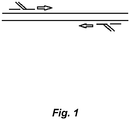
- Fig. 1 shows a scheme in which fully nested PCR is carried out using a forward inner and outer primer and a reverse inner and outer primer.
- the "flap" formed when inner primer anneals to template contains the outer primer sequence so that each of the four new strands generated from the two template strands extends from (and includes) either the forward outer primer sequence (or its complement) through (and including) the reverse outer primer sequence.
- a solution to this problem is to use an additional 5' add-on to the inner primer (i.e., a sequence in addition to the outer primer sequence) together with an oligonucleotide complementary to both sequences, which is referred to herein as a "clamp.”
- the add-on sequence is termed a "clamp sequence.” This configuration is shown in Fig. 2 .
- the clamp sequence, c is not homologous to the template ( d' region).
- c-a/c'-a' is more stable than a-b / a'-b' .
- this can be achieved by employing a sequence c that is long relative to a , GC-rich (i.e., more GC-rich than a ), or contains one or more stabilizing bases, when a does not contain such bases, or more stabilizing bases than in a .
- this can be achieved by employing a sequence c that is long relative to b , GC-rich (i.e., more GC-rich than b ), or contains one or more stabilizing bases, when b does not contain such bases, or more stabilizing bases than in b .
- a stabilizing base can be included in the a region of c-a-b , as well as in the a' region of c'-a' to enhance the stability of c-a/c'-a' , relative to a-b/a'-b' .
- b can contain one or more destabilizing bases, such as inosine.
- the outer primer remains sequence a.
- sequence a' in the template remains available for the outer primer.
- the c'-a' clamp and the 5' end of the inner primer will rapidly anneal at a higher temperature than any of the other sequences, and therefore it is not necessary that the c'-a' clamp be linked to the inner primer so as to form a hairpin structure.
- the use of an inner primer having this type of hairpin structure may increase the speed of the reaction.
- the c sequence in the inner primer (highlighted in red) is preferably not be copied during PCR. If it is, then these new templates will have a c'-a' tail that will create with the inner primer a c-a-b/c'-a'-b' duplex that would "win-out" in the strand displacement contest over the other possible structures and, again, prevent the flanking primer, sequence a , from annealing.
- the sequence in red can be made from RNA (or 2'-O-methyl RNA, which is relatively easy to make synthetically), which DNA polymerase cannot copy well. This sequence in red can be made from any bases capable of base-pairing, but not capable of being copied.
- the clamp oligonucleotide ( a'-c' ) is blocked to extension at the 3' end, e.g., by virtue of lacking a 3' hydroxyl group or using a chemical blocking moiety, which can improve the specificity of the amplification.
- Nucleic acid-containing samples can be obtained from biological sources and prepared using conventional methods known in the art.
- nucleic useful in the methods described herein can be obtained from any source, including unicellular organisms and higher organisms such as plants or non-human animals, e.g., canines, felines, equines, primates, and other non-human mammals, as well as humans.
- samples may be obtained from an individual suspected of being, or known to be, infected with a pathogen, an individual suspected of having, or known to have, a disease, such as cancer, or a pregnant individual.
- Nucleic acids can be obtained from cells, bodily fluids (e.g., blood, a blood fraction, urine, etc.), or tissue samples by any of a variety of standard techniques.
- the method employs samples of plasma, serum, spinal fluid, lymph fluid, peritoneal fluid, pleural fluid, oral fluid, and external sections of the skin; samples from the respiratory, intestinal genital, or urinary tracts; samples of tears, saliva, blood cells, stem cells, or tumors.
- Samples can be obtained from live or dead organisms or from in vitro cultures.
- Illustrative samples can include single cells, paraffin-embedded tissue samples, and needle biopsies.
- the nucleic acids analyzed are obtained from a single cell.
- Nucleic acids of interest can be isolated using methods well known in the art.
- the sample nucleic acids need not be in pure form, but are typically sufficiently pure to allow the steps of the methods described herein to be performed.
- any target nucleic acid that can detected by nucleic acid amplification can be detected using the methods described herein.
- at least some nucleotide sequence information will be known for the target nucleic acids. For example, if the amplification reaction employed is PCR, sufficient sequence information is generally available for each end of a given target nucleic acid to permit design of suitable amplification primers.
- the targets can include, for example, nucleic acids associated with pathogens, such as viruses, bacteria, protozoa, or fungi; RNAs, e.g., those for which over- or under-expression is indicative of disease, those that are expressed in a tissue- or developmental-specific manner; or those that are induced by particular stimuli; genomic DNA, which can be analyzed for specific polymorphisms (such as SNPs), alleles, or haplotypes, e.g., in genotyping.
- pathogens such as viruses, bacteria, protozoa, or fungi
- RNAs e.g., those for which over- or under-expression is indicative of disease, those that are expressed in a tissue- or developmental-specific manner; or those that are induced by particular stimuli
- genomic DNA which can be analyzed for specific polymorphisms (such as SNPs), alleles, or haplotypes, e.g., in genotyping.
- genomic DNAs that are altered (e.g., amplified, deleted, and/or mutated) in genetic diseases or other pathologies; sequences that are associated with desirable or undesirable traits; and/or sequences that uniquely identify an individual (e.g., in forensic or paternity determinations).
- Primers suitable for nucleic acid amplification are sufficiently long to prime the synthesis of extension products in the presence of a suitable nucleic acid polymerase.
- the exact length and composition of the primer will depend on many factors, including, for example, temperature of the annealing reaction, source and composition of the primer, and where a probe is employed, proximity of the probe annealing site to the primer annealing site and ratio of primer:probe concentration.
- an oligonucleotide primer typically contains in the range of about 10 to about 60 nucleotides, although it may contain more or fewer nucleotides.
- the primers should be sufficiently complementary to selectively anneal to their respective strands and form stable duplexes.
- PCR primers can be designed by using any commercially available software or open source software, such as Primer3 (see, e.g., Rozen and Skaletsky (2000) Meth. Mol. Biol., 132: 365-386; www.broad.mit.edu/node/1060 , and the like) or by accessing the Roche UPL website.
- Primer3 see, e.g., Rozen and Skaletsky (2000) Meth. Mol. Biol., 132: 365-386; www.broad.mit.edu/node/1060 , and the like
- the amplicon sequences are input into the Primer3 program with the UPL probe sequences in brackets to ensure that the Primer3 program will design primers on either side of the bracketed probe sequence.
- Primers may be prepared by any suitable method, including, for example, direct chemical synthesis by methods such as the phosphotriester method of Narang et al. (1979) Meth. Enzymol. 68: 90-99 ; the phosphodiester method of Brown et al. (1979) Meth. Enzymol. 68: 109-151 ; the diethylphosphoramidite method of Beaucage et al. (1981) Tetra. Lett., 22: 1859-1862 ; the solid support method of U.S. Patent No. 4,458,066 and the like, or can be provided from a commercial source.
- Primers may be purified by using a Sephadex column (Amersham Biosciences, Inc., Piscataway, NJ) or other methods known to those skilled in the art. Primer purification may improve the sensitivity of the methodsdescribed herein.
- Fig. 2 shows how a two-primer set anneals to a first template strand at one end of a target nucleotide sequence.
- this primer set can be considered to be a "forward" primer set.
- the outer primer includes a sequence a that specifically hybridizes to first template strand sequence a'.
- Fig. 3 shows how a two-primer set anneals to a second template strand at the opposite end of the target nucleotide sequence.
- this primer set can be considered to be a "reverse" primer set.
- the outer primer includes a sequence e that specifically hybridizes to first template strand sequence e'.
- the forward outer primer includes a sequence d that specifically hybridizes to first template strand sequence d' .
- the forward outer primer includes a sequence d that specifically hybridizes to first template strand sequence d' .
- the considerations for designing suitable outer primers do not differ from those for designing outer primers for use in conventional nested PCR.
- the T m of any primer sequence that is "outer" relative to another primer sequence is preferably lower than the T m of the inner (or intermediate) primer sequence.
- the inner primer can anneal and begin extension before the outer primer; otherwise premature extension of the outer primer would block the target site of the inner primer and prevent its annealing.
- primer sequence a would have a T m less than that of primer sequence b .
- primer sequence e would have a lower T m than primer sequence f .
- the T m differences are at least about 4 degrees, generally in the range of about 4 to about 20 degrees C. In some embodiments, the T m differences are in the range of about 4 to about 15 degrees C.
- the T m of the outer primer is generally high enough to maintain efficient PCR, e.g., in some embodiments, the T m of the outer primer is at least 40 degrees C.
- T m can be adjusted by adjusting the length of a sequence, the G-C content, and/or by including stabilizing or destabilizing base(s) in the sequence.
- Stabilizing bases include, e.g., stretches of peptide nucleic acids (PNAs) that can be incorporated into DNA oligonucleotides to increase duplex stability.
- Locked nucleic acids (LNAs) and unlocked nucleic acids (UNAs) are analogues of RNA that can be easily incorporated into DNA oligonucleotides during solid-phase oligonucleotide synthesis, and respectively increase and decrease duplex stability.
- Suitable stabilizing bases also include modified DNA bases that increase the stability of base pairs (and therefore the duplex as a whole). These modified bases can be incorporated into oligonucleotides during solid-phase synthesis and offer a more predictable method of increasing DNA duplex stability.
- Examples include AP-dC (G-clamp) and 2-aminoadenine, as well as 5-methylcytosine and C(5)-propynylcytosine (replacing cytosine), and C(5)-propynyluracil (replacing thymine).
- Destabilizing bases are those that destabilize double-stranded DNA by virtue of forming less stable base pairs than the typical A-T and/or G-C base pairs.
- Inosine (I) is a destabilizing base because it pairs with cytosine (C), but an I-C base pair is less stable than a G-C base pair. This lower stability results from the fact that inosine is a purine that can make only two hydrogen bonds, compared to the three hydrogen bonds of a G-C base pair.
- Other destabilizing bases are known to, or readily identified by, those of skill in the art.
- the inner primer in a forward two-primer set includes a single-stranded primer sequence b that specifically hybridizes to first template strand sequence b' , wherein b' is adjacent to, and 5' of, a' , and wherein single-stranded primer sequence b is linked at its 5' end to a first strand of a double-stranded primer sequence.
- This first stand includes: a primer sequence a adjacent to, and 5' of, single-stranded primer sequence b ; and a clamp sequence c adjacent to, and 5' of, primer sequence a , wherein clamp sequence c is not complementary to a first strand template sequence d' , which is adjacent to, and 3' of, first strand template sequence a' .
- the T m of combined sequence c-a (the hyphen is used in this context to denote the combined nucleic acid sequence made up of sequences c and a ) in double-stranded form (i.e., c-a/c'-a' ), is greater than that of combined sequence a-b , in double stranded form (i.e., a-b/a'-b' ).
- combined sequence c-a can be designed to include more destabilizing bases than combined sequence c-a (the requirement for "more” includes the situation in which sequence c-a contains no destabilizing bases).
- a'-c' is blocked to extension at its 3' end.
- the forward two-primer set can be employed with a simple conventional reverse primer for a hemi-nested amplification or with a reverse two-primer set.
- the inner primer in a reverse two-primer set includes a single-stranded primer sequence f that specifically hybridizes to first template strand sequence f' , wherein f' is adjacent to, and 5' of, e' , and wherein single-stranded primer sequence f is linked at its 5' end to a first strand of a double-stranded primer sequence.
- This first stand includes: a primer sequence e adjacent to, and 5' of, single-stranded primer sequence f ; and a clamp sequence g adjacent to, and 5' of, primer sequence e , wherein clamp sequence g is not complementary to a first strand template sequence h' , which is adjacent to, and 3' of, first strand template sequence e' .
- the T m of combined sequence g-e , in double-stranded form is greater than that of combined sequence e-f , in double-stranded form (i.e., e-f/e'-f' )
- combined sequence e-f can be designed to include more destabilizing bases than combined sequence g-e (the requirement for "more” includes the situation in which sequence g-e contains no destabilizing bases).
- e'-g' is blocked to extension at its 3' end.
- clamp sequence(s) c and g if present, is/are not capable of being copied during amplification.
- RNA or an RNA analog e.g., a hydrolysis-resistant RNA analog
- the most common RNA analogues is 2'-O-methyl-substituted RNA.
- Other nucleic acid analogues that can base pair specifically but cannot be copied include locked nucleic acid (LNA) or BNA (Bridged Nucleic Acid), morpholino, and peptide nucleic acid (PNA).
- oligonucleotides have a different backbone sugar or, in the case of PNA, an amino acid residue in place of the ribose phosphate, they still bind to RNA or DNA according to Watson and Crick pairing, but are immune to nuclease activity. They cannot be synthesized enzymatically and can only be obtained synthetically using phosphoramidite strategy or, for PNA, methods of peptide synthesis.
- the clamp sequence c can be covalently linked to complementary sequence c ' so that a-c/a-c' is formed from a hairpin structure; however, this is not necessary for efficient formation of the double-stranded clamp portion of the primer.
- the clamp sequence g can, but need not, be covalently linked to complementary sequence g' so that e-g/e'-g' is formed from a hairpin structure.
- a third primer may be employed at one or both ends of a target nucleic acid sequence to further increase the number of copies produced in each cycle of amplification.
- Figs. 4 and 5 show illustrative "forward" and "reverse" three-primer sets.
- a three-primer set includes an outer primer as discussed above and an intermediate primer that is essentially the same in structure as the inner primer discussed above.
- the additional primer is an inner primer which is designed to hybridize to the template strand 5' of the intermediate primer.
- the inner primer in a forward three-primer set includes a single-stranded primer sequence b that specifically hybridizes to first template strand sequence b' , wherein b' is adjacent to, and 5' of, a' .
- Single-stranded primer sequence b is linked at its 5' end to a first strand of a double-stranded primer sequence comprising: a primer sequence a adjacent to, and 5' of, single-stranded primer sequence b, a primer sequence d adjacent to, and 5' of, primer sequence a , and a clamp sequence c2 adjacent to, and 5' of, primer sequence d , wherein clamp sequence c2 is not complementary to first strand template sequence i' .
- Clamp sequence c2 can be the same as, or different from, the clamp sequence used in the inner primer ( c1 ). In preferred embodiments, c1 and c2 are different sequences. Similar considerations apply to the design of the inner primer in a three-primer set as discussed above with respect to the inner primer in a two primer set, and the inner primer in a reverse three-primer set (shown in Fig. 5 ) has the same structure as the inner primer in a forward three-primer set. One or more (or all) of the clamp oligonucleotides ( d'-c1 ' and a'-d'-c2' in Fig.
- the forward three-primer set can be employed with a simple conventional reverse primer for a hemi-nested amplification, with a reverse two-primer set, or with a reverse three-primer set.
- the order of primer annealing and extension is controlled based on the T m of the primer sequences so that any primer that is "inner" with respect to another primer anneals and begins extension before that other primer.
- the inner primer anneals and begins extension before the outer primer in a two-primer set, the inner primer anneals and begins extension before the outer primer, and in a three-primer set, the inner primer anneals and begins extension before the intermediate primer, and the intermediate primer anneals and begins extension before the outer primer.
- the T m 's of the primer sequences would have the relationship: T m of d ⁇ T m of a ⁇ T m of b .
- the T m 's of the primer sequences would have the relationship: T m of h ⁇ T m of e ⁇ T m of f .
- T m 's are a function of sequence length, C-G content, and the, optional, presence of stabilizing and/or destabilizing bases.
- the disclosed methods make the use of a polymerase for amplification.
- the polymerase is a DNA polymerase that lacks a 5' to 3' exonuclease activity.
- the polymerase is used under conditions such that the strand extending from a first primer can be displaced by polymerization of the forming strand extending from a second primer that is "outer" with respect to the first primer.
- the polymerase is capable of displacing the strand complementary to the template strand, a property termed "strand displacement.” Strand displacement results in synthesis of multiple copies of the target sequence per template molecule.
- the DNA polymerase for use in the disclosed methods is highly processive.
- Exemplary DNA polymerases include variants of Taq DNA polymerase that lack 5' to 3' exonuclease activity, e.g., the Stoffel fragment of Taq DNA polymerase (ABI), SD polymerase (Bioron), mutant Taq lacking 5' to 3' exonuclease activity described in USPN 5474920, Bca polymerase (Takara), Pfx50 polymerase (Invitrogen), Tfu DNA polymerase (Qbiogene). If thermocycling is to be carried out (as in PCR), the DNA polymerase is preferably a thermostable DNA polymerase.
- Table 2 below lists polymerases available from New England Biolabs that have no 5' to 3' exonuclease activity, but that have strand displacement activity accompanied by thermal stability. Table 2 - Thermostable Stand-Displacing Polymerases Lacking 5' to 3' Exonuclease Activity Polymerase 5'->3' Exonuclease Strand Displacement Thermal Stability Bst DNA Polymerase, Large Fragment - ++++ + Bsu DNA Polymerase.
- the DNA polymerase comprises a fusion between Taq polymerase and a portion of a topoisomerase, e.g., TOPOTAQTM (Fidelity Systems, Inc.).
- Strand displacement can also be facilitated through the use of a strand displacement factor, such as a helicase.
- a strand displacement factor such as a helicase. Any DNA polymerase that can perform strand displacement in the presence of a strand displacement factor is suitable for use in the disclosed method, even if the DNA polymerase does not perform strand displacement in the absence of such a factor.
- Strand displacement factors useful in the methods described herein include BMRF1 polymerase accessory subunit ( Tsurumi et al., J. Virology 67(12):7648-7653 (1993 )), adenovirus DNA-binding protein ( Zijderveld and van der Vliet, J.
- Helicase and SSB are available in thermostable forms and therefore suitable for use in PCR.
- the primer sets described above are contacted with sample nucleic acids under conditions wherein the primers anneal to their template strands, if present.
- the desired nucleic acid amplification method is carried out using a DNA polymerase lacking 5'-3' exonuclease activity that is capable of strand displacement under the reaction conditions employed. This amplification produces amplicons that include the sequences of all primers employed in the amplification reaction.
- the primer sets can conveniently be added to the amplification mixture in the form of separate oligonucleotides.
- the two-primer set can consist of three oligonucleotides (assuming that the inner primer does not include a hairpin structure) and the three-primer set can consist of five oligonucleotides (assuming that neither the inner, nor the intermediate, primers include a hairpin structure).
- a rate of up to 3 number of cycles during the exponential phase of PCR can be achieved.
- Amplification using a hemi-nested two-primer set can reduce the number of amplification cycles required to detect a single-copy nucleic acid by about 12% to about 42% (e.g., by 37%). This facilitates detection of a single copy nucleic acid in a biological sample within about 23-27 amplification cycles (which might otherwise require 40 or more cycles).
- hemi-nested, two-primer set PCR facilitates detection of a single copy nucleic acid in a biological sample in 23, 24, 25, 26, or 27 amplification cycles.
- Table 3 below shows the number of cycles needed to amplify a single-copy nucleic acid to 10 12 copies using the different embodiment described herein._For fully-nested amplification using a two-primer set, as described above, a rate of up to 6 number of cycles during the exponential phase of PCR can be achieved. Amplification using a fully-nested two-primer set can reduce the number of amplification cycles required to detect a single-copy nucleic acid by about 36% to about 66% (e.g., by 61%). This facilitates detection of a single copy nucleic acid in a biological sample within about 13-17 amplification cycles.
- fully-nested, two-primer set PCR facilitates detection of a single copy nucleic acid in a biological sample in 13, 14, 15, 16, or 17 amplification cycles.
- Table 3 Reduction in Number of Cycles Needed for Amplification as a Function of PCR Base PCR base number of cycles needed to reach 10 ⁇ 12 copies % reduction of cycles needed upper bound reduction (+5%) lower bound reduction (-25%) 2 39.86 na na na 3 25.15 37% 42% 12% 4 19.93 50% 55% 25% 6 15.42 61% 66% 36% 8 13.29 67% 72% 42%
- a rate of up to 4 number of cycles during the exponential phase of PCR can be achieved.
- Amplification using a hemi-nested three-primer set can reduce the number of amplification cycles required to detect a single-copy nucleic acid by about 25% to about 55% (e.g., by 50%). This facilitates detection of a single copy nucleic acid in a biological sample within about 20 amplification cycles (which might otherwise require 40 or more cycles).
- hemi-nested, three-primer set PCR facilitates detection of a single copy nucleic acid in a biological sample in 18, 19, 20, 21, or 22 amplification cycles.
- a rate of up to 8 number of cycles during the exponential phase of PCR can be achieved.
- Amplification using a fully-nested three-primer set can reduce the number of amplification cycles required to detect a single-copy nucleic acid by about 42% to about 72% (e.g., by 67%). This facilitates detection of a single copy nucleic acid in a biological sample within about 11-15 amplification cycles.
- fully-nested, three-primer set PCR facilitates detection of a single copy nucleic acid in a biological sample in 9, 10, 11, 12, or 13 amplification cycles.
- reaction mixtures generally contain an appropriate buffer, a source of magnesium ions (Mg 2+ ) in the range of about 1 to about 10 mM, e.g., in the range of about 2 to about 8 mM, nucleotides, and optionally, detergents, and stabilizers.
- a source of magnesium ions Mg 2+
- An example of one suitable buffer is TRIS buffer at a concentration of about 5 mM to about 85 mM, with a concentration of 10 mM to 30 mM preferred.
- the TRIS buffer concentration is 20 mM in the reaction mix double-strength (2X) form.
- the reaction mix can have a pH range of from about 7.5 to about 9.0, with a pH range of about 8.0 to about 8.5 as typical.
- Concentration of nucleotides can be in the range of about 25 mM to about 1000 mM, typically in the range of about 100 mM to about 800 mM. Examples of dNTP concentrations are 100, 200, 300, 400, 500, 600, 700, and 800 mM.
- Detergents such as Tween 20, Triton X 100, and Nonidet P40 may also be included in the reaction mixture.
- Stabilizing agents such as dithiothreitol (DTT, Cleland's reagent) or mercaptoethanol may also be included.
- master mixes may optionally contain dUTP as well as uracil DNA glycosylase (uracil-N-glycosylase, UNG).
- dUTP uracil DNA glycosylase
- UNG uracil-N-glycosylase
- a master mix is commercially available from Applied Biosystems, Foster City, CA, (TaqMan® Universal Master Mix, cat. nos. 4304437, 4318157, and 4326708).
- a universal detection probe can be employed in the amplification mixture.
- real-time PCR detection can be carried out using a universal qPCR probe.
- Suitable universal qPCR probes include double-stranded DNA dyes, such as SYBR Green, Pico Green (Molecular Probes, Inc., Eugene, OR), Eva Green (Biotinum), ethidium bromide, and the like (see Zhu et al., 1994, Anal. Chem. 66:1941-48 ).
- one or more target-specific qPCR probes (i.e., specific for a target nucleotide sequence to be detected) is employed in the amplification mixtures to detect amplification products.
- analyses can be conducted in which the different labels are excited and/or detected at different wavelengths in a single reaction ("multiplex detection").
- a target nucleic acid is detected using an automated sample handling and/or analysis platform.
- automated analysis platforms are utilized.
- the GeneXpert® system (Cepheid, Sunnyvale, CA) is utilized.
- the GeneXpert® utilizes a self-contained, single use cartridge. Sample extraction, amplification, and detection may all be carried out within this self-contained "laboratory in a cartridge.” (See e.g., US Patents 5,958,349 , 6,403,037 , 6,440,725 , 6,783,736 , 6,818,185 ;)
- Components of the cartridge include, but are not limited to, processing chambers containing reagents, filters, and capture technologies useful to extract, purify, and amplify target nucleic acids.
- a valve enables fluid transfer from chamber to chamber and contains nucleic acids lysis and filtration components.
- An optical window enables real-time optical detection.
- a reaction tube enables very rapid thermal cycling.
- the GenXpert® system includes a plurality of modules for scalability.
- Each module includes a plurality of cartridges, along with sample handling and analysis components.
- the sample is contacted with lysis buffer and released nucleic acid is bound to a nucleic acid-binding substrate such as a silica or glass substrate.
- a nucleic acid-binding substrate such as a silica or glass substrate.
- the sample supernatant is then removed and the nucleic acid eluted in an elution buffer such as a Tris/EDTA buffer.
- the eluate may then be processed in the cartridge to detect target genes as described herein.
- the eluate is used to reconstitute at least some of the reagents, which are present in the cartridge as lyophilized particles.
- PCR is used to amplify and detect the presence of one or more target nucleic acids.
- the PCR uses Taq polymerase with hot start function, such as AptaTaq (Roche).
- an off-line centrifugation is used to improve assay results with samples with low cellular content.
- the sample, with or without the buffer added is centrifuged and the supernatant removed.
- the pellet is then resuspended in a smaller volume of supernatant, buffer, or other liquid.
- the resuspended pellet is then added to a GeneXpert® cartridge as previously described.
- kits for carrying out the methods described herein.
- kits include one or more reagents useful for practicing any of these methods.
- a kit generally includes a package with one or more containers holding the reagents, as one or more separate compositions or, optionally, as an admixture where the compatibility of the reagents will allow.
- the kit can also include other material(s) that may be desirable from a user standpoint, such as a buffer(s), a diluent(s), a standard(s), and/or any other material useful in sample processing, washing, or conducting any other step of the assay.
- Kits preferably include instructions for carrying out one or more of the screening methods described herein. Instructions included in kits can be affixed to packaging material or can be included as a package insert. While the instructions are typically written or printed materials they are not limited to such. Any medium capable of storing such instructions and communicating them to an end user can be employed. Such media include, but are not limited to, electronic storage media (e.g., magnetic discs, tapes, cartridges, chips), optical media (e.g., CD ROM), and the like. As used herein, the term "instructions" can include the address of an internet site that provides the instructions.
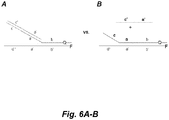
- Tm was measured of a primer oligo (although called a "primer,” it was not used as such in this experiment) and a complimentary target sequence with and without the “clamp” oligo present.
- the target oligo was synthesized with a 5' fluorescent tag (fluorescein), and the primer incorporated a fluorescence quenching moiety (see Fig. 6 ). Red indicates the presence of a 2' O-methyl backbone.
- the oligo sequences tested are listed in Table 4 below.
- the Tm of the right hand-most double-helical region shown in the structures of Fig. 6 was measured by following the increase in fluorescence that results as temperature is increased and as the fluor and quencher are separated by melting of this double-helical region.
- the conditions for all hybrid melt analysis were: 0.01 M tris-HCl, 0.05 M KCl and 0.006 M MgCl 2 . All oligonucleotides were at 1 micromolar.
- the oligo mixtures in Table 4 above were heated to 95 deg. C and cooled slowly to 45 deg. C and fluorescein fluorescence monitored using the Cepheid SmartCyclerTM. The Tm was determined as temperature at which the rate of fluorescence change was maximal.
- Tm's of b/b' and ab/a'b' were predicted using software (www.idtdna.com/analyzer/Applications/OligoAnalyzer).
- the observed Tm's are consistent with a structure in which the region d'-a' in the target, in the presence of a clamp oligo, remains single-stranded and available for hybridization.
- flanking primer (16147 to 16149) also at 1 micromolar, as diagrammed in Fig. 7A , made little difference in measured measured Tm's.
- All reactions contained 10 mM Tris-HCl, 0.125 mM each dATP, dTTP, dCTP and dGTP, 0.15 micromolar of primer oligo 16140 from table 1, above, 0.125 micromolar of target oligo 16145 from table 1, 0.125 micromolar of clamp oligo 16142 from table 1, 45 mM KCl, 3.5 mM MgCl 2 , 14 units of AmpliTaqCS, which has DNA polymerase activity but neither 5' to 3' nor 3' to '5 exonuclease activity, and 15 units of antibody to Taq polymerase, which provides a temperature activated "hot-start" to the incorporation reaction.
Landscapes
- Chemical & Material Sciences (AREA)
- Life Sciences & Earth Sciences (AREA)
- Organic Chemistry (AREA)
- Health & Medical Sciences (AREA)
- Zoology (AREA)
- Wood Science & Technology (AREA)
- Engineering & Computer Science (AREA)
- Chemical Kinetics & Catalysis (AREA)
- Proteomics, Peptides & Aminoacids (AREA)
- Molecular Biology (AREA)
- Immunology (AREA)
- Microbiology (AREA)
- Biotechnology (AREA)
- Biochemistry (AREA)
- Bioinformatics & Cheminformatics (AREA)
- General Engineering & Computer Science (AREA)
- General Health & Medical Sciences (AREA)
- Genetics & Genomics (AREA)
- Biophysics (AREA)
- Analytical Chemistry (AREA)
- Physics & Mathematics (AREA)
- Measuring Or Testing Involving Enzymes Or Micro-Organisms (AREA)
- Preparation Of Compounds By Using Micro-Organisms (AREA)
Applications Claiming Priority (2)
| Application Number | Priority Date | Filing Date | Title |
|---|---|---|---|
| US201462092102P | 2014-12-15 | 2014-12-15 | |
| PCT/US2015/065890 WO2016100388A1 (en) | 2014-12-15 | 2015-12-15 | Exponential base-greater-than-2 nucleic acid amplification |
Publications (2)
| Publication Number | Publication Date |
|---|---|
| EP3234188A1 EP3234188A1 (en) | 2017-10-25 |
| EP3234188B1 true EP3234188B1 (en) | 2019-10-23 |
Family
ID=55071208
Family Applications (1)
| Application Number | Title | Priority Date | Filing Date |
|---|---|---|---|
| EP15820756.3A Active EP3234188B1 (en) | 2014-12-15 | 2015-12-15 | Exponential base-greater-than-2 nucleic acid amplification |
Country Status (11)
| Country | Link |
|---|---|
| US (3) | US10273534B2 (enExample) |
| EP (1) | EP3234188B1 (enExample) |
| JP (1) | JP6804462B2 (enExample) |
| CN (2) | CN114369596B (enExample) |
| AU (2) | AU2015362617B2 (enExample) |
| CA (1) | CA2971006C (enExample) |
| DK (1) | DK3234188T3 (enExample) |
| ES (1) | ES2764975T3 (enExample) |
| HK (1) | HK1247255A1 (enExample) |
| PT (1) | PT3234188T (enExample) |
| WO (1) | WO2016100388A1 (enExample) |
Cited By (1)
| Publication number | Priority date | Publication date | Assignee | Title |
|---|---|---|---|---|
| WO2026019604A1 (en) * | 2024-07-19 | 2026-01-22 | Cepheid | Exponential base-x amplification with hairpin nested primers and universal flanking primers |
Families Citing this family (12)
| Publication number | Priority date | Publication date | Assignee | Title |
|---|---|---|---|---|
| HK1247255A1 (zh) | 2014-12-15 | 2018-09-21 | Cepheid | 底数大於2的指数核酸扩增 |
| EP3287528A1 (de) * | 2016-08-25 | 2018-02-28 | AGCT GmbH | Verfahren zur amplifikation von nukleinsäuren und kit zu dessen durchführung |
| EP3759247A1 (de) * | 2018-02-26 | 2021-01-06 | AGCT GmbH | Verfahren zur primer-verlängerungsreaktion mit verbesserter spezifität |
| EP3759248A1 (de) * | 2018-02-26 | 2021-01-06 | AGCT GmbH | Agverfahren zur amplifikation einer nukleinsäure mit verbesserter spezifität |
| EP3759246A1 (de) * | 2018-02-28 | 2021-01-06 | AGCT GmbH | Verfahren zur amplifikation einer nukleinsäure mit verbesserter spezifität |
| EP3874064A1 (en) * | 2018-10-29 | 2021-09-08 | Cepheid | Exponential base-3 nucleic acid amplification with reduced amplification time using nested overlapping primers |
| US20210403981A1 (en) * | 2020-04-27 | 2021-12-30 | Cepheid | Exponential base-3 and greater nucleic acid amplification with cycling probe |
| EP4170046A4 (en) * | 2020-06-23 | 2024-07-24 | Heimbiotek Inc. | COMPOSITION FOR SEQUENTIAL POLYMERASE CHAIN REACTION AND GENE AMPLIFICATION METHODS THEREOF |
| JP7900392B2 (ja) | 2020-12-24 | 2026-08-04 | インテグレイテツド・デイー・エヌ・エイ・テクノロジーズ・インコーポレイテツド | 高忠実度DNAポリメラーゼによるrhPCRベース増幅産物シーケンシングにおいて、プライマー二量体及びオフターゲット増幅を低減するRNアーゼH2突然変異体 |
| EP4479559A4 (en) * | 2022-02-15 | 2026-02-18 | Cepheid | NUCLEIC ACID AMPLIFICATION WITH AN EXPONENTIAL BASIS ABOVE BASE 2 USING HIGH AND LOW PRIMERS TM |
| KR20250155028A (ko) * | 2023-02-23 | 2025-10-29 | 세페이드 | 앰플리콘 폴딩 및 Tm을 감소시키기 위한 불안정화 뉴클레오타이드 삼인산의 용도 |
| WO2026106907A1 (en) | 2024-11-18 | 2026-05-21 | Cepheid | Fast pcr by tandem primer embedded with ribonucleotide |
Family Cites Families (39)
| Publication number | Priority date | Publication date | Assignee | Title |
|---|---|---|---|---|
| US4458066A (en) | 1980-02-29 | 1984-07-03 | University Patents, Inc. | Process for preparing polynucleotides |
| US4683195A (en) | 1986-01-30 | 1987-07-28 | Cetus Corporation | Process for amplifying, detecting, and/or-cloning nucleic acid sequences |
| US5449602A (en) | 1988-01-13 | 1995-09-12 | Amoco Corporation | Template-directed photoligation |
| US5494810A (en) | 1990-05-03 | 1996-02-27 | Cornell Research Foundation, Inc. | Thermostable ligase-mediated DNA amplifications system for the detection of genetic disease |
| AU8132994A (en) | 1993-11-05 | 1995-05-23 | Board Of Trustees Of The Leland Stanford Junior University | Nucleic acids encoding {his5, trp7, tyr8}-gnrh preprohormone and {ser8}-gnrh preprohormone and their uses |
| AU735440B2 (en) | 1996-02-09 | 2001-07-05 | Cornell Research Foundation Inc. | Detection of nucleic acid sequence differences using the ligase detection reaction with addressable arrays |
| AU730633B2 (en) | 1996-05-29 | 2001-03-08 | Phillip Belgrader | Detection of nucleic acid sequence differences using coupled ligase detection and polymerase chain reactions |
| US6312892B1 (en) | 1996-07-19 | 2001-11-06 | Cornell Research Foundation, Inc. | High fidelity detection of nucleic acid differences by ligase detection reaction |
| US5958349A (en) | 1997-02-28 | 1999-09-28 | Cepheid | Reaction vessel for heat-exchanging chemical processes |
| US6770748B2 (en) | 1997-03-07 | 2004-08-03 | Takeshi Imanishi | Bicyclonucleoside and oligonucleotide analogue |
| WO1999033559A1 (en) | 1997-12-24 | 1999-07-08 | Cepheid | Integrated fluid manipulation cartridge |
| US6794499B2 (en) | 1997-09-12 | 2004-09-21 | Exiqon A/S | Oligonucleotide analogues |
| US6027998A (en) | 1997-12-17 | 2000-02-22 | Advanced Micro Devices, Inc. | Method for fully planarized conductive line for a stack gate |
| US6506594B1 (en) | 1999-03-19 | 2003-01-14 | Cornell Res Foundation Inc | Detection of nucleic acid sequence differences using the ligase detection reaction with addressable arrays |
| US6391541B1 (en) | 1999-05-28 | 2002-05-21 | Kurt E. Petersen | Apparatus for analyzing a fluid sample |
| US6818185B1 (en) | 1999-05-28 | 2004-11-16 | Cepheid | Cartridge for conducting a chemical reaction |
| US6262490B1 (en) | 1999-11-05 | 2001-07-17 | Advanced Semiconductor Engineering, Inc. | Substrate strip for use in packaging semiconductor chips |
| KR100612551B1 (ko) * | 1999-11-08 | 2006-08-11 | 에이켄 카가꾸 가부시끼가이샤 | 핵산의 합성방법 |
| US6403037B1 (en) | 2000-02-04 | 2002-06-11 | Cepheid | Reaction vessel and temperature control system |
| WO2001092579A2 (en) | 2000-05-30 | 2001-12-06 | Pe Corporation (Ny) | Methods for detecting target nucleic acids using coupled ligation and amplification |
| US6605451B1 (en) | 2000-06-06 | 2003-08-12 | Xtrana, Inc. | Methods and devices for multiplexing amplification reactions |
| JPWO2002090538A1 (ja) * | 2001-05-08 | 2004-08-26 | 栄研化学株式会社 | 核酸を合成する方法 |
| AU2003213652A1 (en) | 2002-03-01 | 2003-09-16 | Integrated Dna Technologies, Inc. | Polynomial amplification of nucleic acids |
| DE10253337B4 (de) | 2002-11-14 | 2005-10-20 | November Ag Molekulare Medizin | Verfahren zum Nachweis einer Nukleinsäure |
| WO2004068112A2 (en) | 2003-01-28 | 2004-08-12 | Gorilla Genomics, Inc. | Hairpin primer amplification |
| US8871469B1 (en) | 2004-11-13 | 2014-10-28 | Steven Albert Benner | Self-avoiding molecular recognition systems in DNA priming |
| JP2008029335A (ja) * | 2006-07-03 | 2008-02-14 | Fujifilm Corp | 新規遺伝子増幅法に用いられるプライマーセットおよびキット |
| JP2008048648A (ja) * | 2006-08-23 | 2008-03-06 | Institute Of Physical & Chemical Research | 核酸増幅用プライマーセット及び核酸の増幅方法 |
| US8252558B2 (en) | 2006-10-09 | 2012-08-28 | Oxitec Limited | Methods for amplifying and detecting nucleic acid sequences |
| CN101631796B (zh) * | 2007-03-09 | 2013-08-07 | 独立行政法人理化学研究所 | 具有由单核苷或单核苷酸衍生的结构的化合物、核酸、标记物以及核酸检测方法和试剂盒 |
| WO2010027870A2 (en) * | 2008-08-26 | 2010-03-11 | Fluidigm Corporation | Assay methods for increased throughput of samples and/or targets |
| WO2010133972A1 (en) * | 2009-05-22 | 2010-11-25 | Population Genetics Technologies Ltd | Sorting asymmetrically tagged nucleic acids by selective primer extension |
| CN102559928A (zh) * | 2011-12-28 | 2012-07-11 | 中国海洋大学 | 特异性引物组、包含其的试剂盒、使用方法及检测方法 |
| KR20130107881A (ko) * | 2012-03-23 | 2013-10-02 | 삼성테크윈 주식회사 | 클라미디아 및 임균 유래의 표적 유전자를 동시에 증폭하고 검출하기 위한 멀티 플렉스 키트 및 이를 이용한 진단 방법 |
| US9074249B2 (en) * | 2012-06-04 | 2015-07-07 | New England Biolabs, Inc. | Detection of amplification products |
| WO2014164479A1 (en) | 2013-03-11 | 2014-10-09 | Elitech Holding B.V. | Methods for true isothermal strand displacement amplification |
| HK1247255A1 (zh) | 2014-12-15 | 2018-09-21 | Cepheid | 底数大於2的指数核酸扩增 |
| EP3759247A1 (de) | 2018-02-26 | 2021-01-06 | AGCT GmbH | Verfahren zur primer-verlängerungsreaktion mit verbesserter spezifität |
| EP3874064A1 (en) | 2018-10-29 | 2021-09-08 | Cepheid | Exponential base-3 nucleic acid amplification with reduced amplification time using nested overlapping primers |
-
2015
- 2015-12-15 HK HK18106922.0A patent/HK1247255A1/zh unknown
- 2015-12-15 CN CN202111433266.1A patent/CN114369596B/zh active Active
- 2015-12-15 WO PCT/US2015/065890 patent/WO2016100388A1/en not_active Ceased
- 2015-12-15 ES ES15820756T patent/ES2764975T3/es active Active
- 2015-12-15 JP JP2017550468A patent/JP6804462B2/ja not_active Expired - Fee Related
- 2015-12-15 AU AU2015362617A patent/AU2015362617B2/en active Active
- 2015-12-15 PT PT158207563T patent/PT3234188T/pt unknown
- 2015-12-15 CA CA2971006A patent/CA2971006C/en active Active
- 2015-12-15 US US15/535,009 patent/US10273534B2/en active Active
- 2015-12-15 EP EP15820756.3A patent/EP3234188B1/en active Active
- 2015-12-15 CN CN201580076131.0A patent/CN107429292B/zh active Active
- 2015-12-15 DK DK15820756.3T patent/DK3234188T3/da active
-
2019
- 2019-03-20 US US16/359,947 patent/US11028434B2/en active Active
-
2021
- 2021-05-03 US US17/306,761 patent/US11952621B2/en active Active
-
2022
- 2022-05-25 AU AU2022203553A patent/AU2022203553B2/en active Active
Non-Patent Citations (1)
| Title |
|---|
| None * |
Cited By (1)
| Publication number | Priority date | Publication date | Assignee | Title |
|---|---|---|---|---|
| WO2026019604A1 (en) * | 2024-07-19 | 2026-01-22 | Cepheid | Exponential base-x amplification with hairpin nested primers and universal flanking primers |
Also Published As
| Publication number | Publication date |
|---|---|
| EP3234188A1 (en) | 2017-10-25 |
| ES2764975T3 (es) | 2020-06-05 |
| CN107429292B (zh) | 2021-12-17 |
| US20180066304A1 (en) | 2018-03-08 |
| AU2022203553B2 (en) | 2024-08-08 |
| CA2971006C (en) | 2024-05-21 |
| CN114369596B (zh) | 2025-07-08 |
| JP2017537658A (ja) | 2017-12-21 |
| HK1247255A1 (zh) | 2018-09-21 |
| US20190203266A1 (en) | 2019-07-04 |
| US10273534B2 (en) | 2019-04-30 |
| JP6804462B2 (ja) | 2020-12-23 |
| AU2022203553A1 (en) | 2022-06-16 |
| CA2971006A1 (en) | 2016-06-23 |
| US20210395797A1 (en) | 2021-12-23 |
| CN114369596A (zh) | 2022-04-19 |
| US11952621B2 (en) | 2024-04-09 |
| PT3234188T (pt) | 2020-01-16 |
| WO2016100388A1 (en) | 2016-06-23 |
| AU2015362617B2 (en) | 2022-03-03 |
| AU2015362617A1 (en) | 2017-06-29 |
| CN107429292A (zh) | 2017-12-01 |
| US11028434B2 (en) | 2021-06-08 |
| DK3234188T3 (da) | 2020-01-20 |
Similar Documents
| Publication | Publication Date | Title |
|---|---|---|
| AU2022203553B2 (en) | Exponential base-greater-than-2 nucleic acid amplification | |
| US12098368B2 (en) | Exponential base-3 and greater nucleic acid amplification with reduced amplification time | |
| US20210403981A1 (en) | Exponential base-3 and greater nucleic acid amplification with cycling probe | |
| US20230167490A1 (en) | Pseudo-complementary bases in genotyping and nucleic acid sequencing | |
| EP4463565A1 (en) | Methods and compositions for fast nucleic acid amplifications | |
| US20240102085A1 (en) | EXPONENTIAL BASE-GREATER-THAN-BASE 2 NUCLEIC ACID AMPLIFICATION USING HIGH- AND LOW-Tm PRIMERS | |
| EP4669773A2 (en) | USE OF DESTABILIZING NUCLEOTID TRIPHOSPHATES TO REDUCE AMPLICOLON AND TIN BENDING |
Legal Events
| Date | Code | Title | Description |
|---|---|---|---|
| STAA | Information on the status of an ep patent application or granted ep patent |
Free format text: STATUS: THE INTERNATIONAL PUBLICATION HAS BEEN MADE |
|
| PUAI | Public reference made under article 153(3) epc to a published international application that has entered the european phase |
Free format text: ORIGINAL CODE: 0009012 |
|
| STAA | Information on the status of an ep patent application or granted ep patent |
Free format text: STATUS: REQUEST FOR EXAMINATION WAS MADE |
|
| 17P | Request for examination filed |
Effective date: 20170630 |
|
| AK | Designated contracting states |
Kind code of ref document: A1 Designated state(s): AL AT BE BG CH CY CZ DE DK EE ES FI FR GB GR HR HU IE IS IT LI LT LU LV MC MK MT NL NO PL PT RO RS SE SI SK SM TR |
|
| AX | Request for extension of the european patent |
Extension state: BA ME |
|
| DAV | Request for validation of the european patent (deleted) | ||
| DAX | Request for extension of the european patent (deleted) | ||
| REG | Reference to a national code |
Ref country code: DE Ref legal event code: R079 Ref document number: 602015040438 Country of ref document: DE Free format text: PREVIOUS MAIN CLASS: C12Q0001680000 Ipc: C12Q0001686000 |
|
| GRAP | Despatch of communication of intention to grant a patent |
Free format text: ORIGINAL CODE: EPIDOSNIGR1 |
|
| STAA | Information on the status of an ep patent application or granted ep patent |
Free format text: STATUS: GRANT OF PATENT IS INTENDED |
|
| RIC1 | Information provided on ipc code assigned before grant |
Ipc: C12Q 1/686 20180101AFI20180711BHEP |
|
| INTG | Intention to grant announced |
Effective date: 20180727 |
|
| RIC1 | Information provided on ipc code assigned before grant |
Ipc: C12Q 1/686 20180101AFI20180711BHEP |
|
| GRAS | Grant fee paid |
Free format text: ORIGINAL CODE: EPIDOSNIGR3 |
|
| GRAA | (expected) grant |
Free format text: ORIGINAL CODE: 0009210 |
|
| STAA | Information on the status of an ep patent application or granted ep patent |
Free format text: STATUS: THE PATENT HAS BEEN GRANTED |
|
| AK | Designated contracting states |
Kind code of ref document: B1 Designated state(s): AL AT BE BG CH CY CZ DE DK EE ES FI FR GB GR HR HU IE IS IT LI LT LU LV MC MK MT NL NO PL PT RO RS SE SI SK SM TR |
|
| REG | Reference to a national code |
Ref country code: GB Ref legal event code: FG4D |
|
| REG | Reference to a national code |
Ref country code: CH Ref legal event code: EP |
|
| REG | Reference to a national code |
Ref country code: IE Ref legal event code: FG4D |
|
| REG | Reference to a national code |
Ref country code: DE Ref legal event code: R096 Ref document number: 602015040438 Country of ref document: DE |
|
| REG | Reference to a national code |
Ref country code: AT Ref legal event code: REF Ref document number: 1193681 Country of ref document: AT Kind code of ref document: T Effective date: 20191115 |
|
| REG | Reference to a national code |
Ref country code: PT Ref legal event code: SC4A Ref document number: 3234188 Country of ref document: PT Date of ref document: 20200116 Kind code of ref document: T Free format text: AVAILABILITY OF NATIONAL TRANSLATION Effective date: 20200103 |
|
| REG | Reference to a national code |
Ref country code: DK Ref legal event code: T3 Effective date: 20200114 |
|
| REG | Reference to a national code |
Ref country code: SE Ref legal event code: TRGR |
|
| REG | Reference to a national code |
Ref country code: NL Ref legal event code: FP |
|
| REG | Reference to a national code |
Ref country code: LT Ref legal event code: MG4D |
|
| PG25 | Lapsed in a contracting state [announced via postgrant information from national office to epo] |
Ref country code: LV Free format text: LAPSE BECAUSE OF FAILURE TO SUBMIT A TRANSLATION OF THE DESCRIPTION OR TO PAY THE FEE WITHIN THE PRESCRIBED TIME-LIMIT Effective date: 20191023 Ref country code: BG Free format text: LAPSE BECAUSE OF FAILURE TO SUBMIT A TRANSLATION OF THE DESCRIPTION OR TO PAY THE FEE WITHIN THE PRESCRIBED TIME-LIMIT Effective date: 20200123 Ref country code: FI Free format text: LAPSE BECAUSE OF FAILURE TO SUBMIT A TRANSLATION OF THE DESCRIPTION OR TO PAY THE FEE WITHIN THE PRESCRIBED TIME-LIMIT Effective date: 20191023 Ref country code: LT Free format text: LAPSE BECAUSE OF FAILURE TO SUBMIT A TRANSLATION OF THE DESCRIPTION OR TO PAY THE FEE WITHIN THE PRESCRIBED TIME-LIMIT Effective date: 20191023 Ref country code: NO Free format text: LAPSE BECAUSE OF FAILURE TO SUBMIT A TRANSLATION OF THE DESCRIPTION OR TO PAY THE FEE WITHIN THE PRESCRIBED TIME-LIMIT Effective date: 20200123 Ref country code: GR Free format text: LAPSE BECAUSE OF FAILURE TO SUBMIT A TRANSLATION OF THE DESCRIPTION OR TO PAY THE FEE WITHIN THE PRESCRIBED TIME-LIMIT Effective date: 20200124 Ref country code: PL Free format text: LAPSE BECAUSE OF FAILURE TO SUBMIT A TRANSLATION OF THE DESCRIPTION OR TO PAY THE FEE WITHIN THE PRESCRIBED TIME-LIMIT Effective date: 20191023 |
|
| PG25 | Lapsed in a contracting state [announced via postgrant information from national office to epo] |
Ref country code: IS Free format text: LAPSE BECAUSE OF FAILURE TO SUBMIT A TRANSLATION OF THE DESCRIPTION OR TO PAY THE FEE WITHIN THE PRESCRIBED TIME-LIMIT Effective date: 20200224 Ref country code: RS Free format text: LAPSE BECAUSE OF FAILURE TO SUBMIT A TRANSLATION OF THE DESCRIPTION OR TO PAY THE FEE WITHIN THE PRESCRIBED TIME-LIMIT Effective date: 20191023 Ref country code: HR Free format text: LAPSE BECAUSE OF FAILURE TO SUBMIT A TRANSLATION OF THE DESCRIPTION OR TO PAY THE FEE WITHIN THE PRESCRIBED TIME-LIMIT Effective date: 20191023 |
|
| REG | Reference to a national code |
Ref country code: ES Ref legal event code: FG2A Ref document number: 2764975 Country of ref document: ES Kind code of ref document: T3 Effective date: 20200605 |
|
| PG25 | Lapsed in a contracting state [announced via postgrant information from national office to epo] |
Ref country code: AL Free format text: LAPSE BECAUSE OF FAILURE TO SUBMIT A TRANSLATION OF THE DESCRIPTION OR TO PAY THE FEE WITHIN THE PRESCRIBED TIME-LIMIT Effective date: 20191023 |
|
| REG | Reference to a national code |
Ref country code: DE Ref legal event code: R097 Ref document number: 602015040438 Country of ref document: DE |
|
| PG2D | Information on lapse in contracting state deleted |
Ref country code: IS |
|
| PG25 | Lapsed in a contracting state [announced via postgrant information from national office to epo] |
Ref country code: RO Free format text: LAPSE BECAUSE OF FAILURE TO SUBMIT A TRANSLATION OF THE DESCRIPTION OR TO PAY THE FEE WITHIN THE PRESCRIBED TIME-LIMIT Effective date: 20191023 Ref country code: CZ Free format text: LAPSE BECAUSE OF FAILURE TO SUBMIT A TRANSLATION OF THE DESCRIPTION OR TO PAY THE FEE WITHIN THE PRESCRIBED TIME-LIMIT Effective date: 20191023 Ref country code: EE Free format text: LAPSE BECAUSE OF FAILURE TO SUBMIT A TRANSLATION OF THE DESCRIPTION OR TO PAY THE FEE WITHIN THE PRESCRIBED TIME-LIMIT Effective date: 20191023 Ref country code: IS Free format text: LAPSE BECAUSE OF FAILURE TO SUBMIT A TRANSLATION OF THE DESCRIPTION OR TO PAY THE FEE WITHIN THE PRESCRIBED TIME-LIMIT Effective date: 20200223 |
|
| REG | Reference to a national code |
Ref country code: AT Ref legal event code: MK05 Ref document number: 1193681 Country of ref document: AT Kind code of ref document: T Effective date: 20191023 |
|
| PLBE | No opposition filed within time limit |
Free format text: ORIGINAL CODE: 0009261 |
|
| STAA | Information on the status of an ep patent application or granted ep patent |
Free format text: STATUS: NO OPPOSITION FILED WITHIN TIME LIMIT |
|
| PG25 | Lapsed in a contracting state [announced via postgrant information from national office to epo] |
Ref country code: SK Free format text: LAPSE BECAUSE OF FAILURE TO SUBMIT A TRANSLATION OF THE DESCRIPTION OR TO PAY THE FEE WITHIN THE PRESCRIBED TIME-LIMIT Effective date: 20191023 Ref country code: SM Free format text: LAPSE BECAUSE OF FAILURE TO SUBMIT A TRANSLATION OF THE DESCRIPTION OR TO PAY THE FEE WITHIN THE PRESCRIBED TIME-LIMIT Effective date: 20191023 Ref country code: MC Free format text: LAPSE BECAUSE OF FAILURE TO SUBMIT A TRANSLATION OF THE DESCRIPTION OR TO PAY THE FEE WITHIN THE PRESCRIBED TIME-LIMIT Effective date: 20191023 |
|
| 26N | No opposition filed |
Effective date: 20200724 |
|
| PG25 | Lapsed in a contracting state [announced via postgrant information from national office to epo] |
Ref country code: SI Free format text: LAPSE BECAUSE OF FAILURE TO SUBMIT A TRANSLATION OF THE DESCRIPTION OR TO PAY THE FEE WITHIN THE PRESCRIBED TIME-LIMIT Effective date: 20191023 Ref country code: AT Free format text: LAPSE BECAUSE OF FAILURE TO SUBMIT A TRANSLATION OF THE DESCRIPTION OR TO PAY THE FEE WITHIN THE PRESCRIBED TIME-LIMIT Effective date: 20191023 |
|
| PG25 | Lapsed in a contracting state [announced via postgrant information from national office to epo] |
Ref country code: CY Free format text: LAPSE BECAUSE OF FAILURE TO SUBMIT A TRANSLATION OF THE DESCRIPTION OR TO PAY THE FEE WITHIN THE PRESCRIBED TIME-LIMIT Effective date: 20191023 |
|
| PG25 | Lapsed in a contracting state [announced via postgrant information from national office to epo] |
Ref country code: MT Free format text: LAPSE BECAUSE OF FAILURE TO SUBMIT A TRANSLATION OF THE DESCRIPTION OR TO PAY THE FEE WITHIN THE PRESCRIBED TIME-LIMIT Effective date: 20191023 Ref country code: HU Free format text: LAPSE BECAUSE OF FAILURE TO SUBMIT A TRANSLATION OF THE DESCRIPTION OR TO PAY THE FEE WITHIN THE PRESCRIBED TIME-LIMIT; INVALID AB INITIO Effective date: 20151215 |
|
| PG25 | Lapsed in a contracting state [announced via postgrant information from national office to epo] |
Ref country code: TR Free format text: LAPSE BECAUSE OF FAILURE TO SUBMIT A TRANSLATION OF THE DESCRIPTION OR TO PAY THE FEE WITHIN THE PRESCRIBED TIME-LIMIT Effective date: 20191023 |
|
| PG25 | Lapsed in a contracting state [announced via postgrant information from national office to epo] |
Ref country code: MK Free format text: LAPSE BECAUSE OF FAILURE TO SUBMIT A TRANSLATION OF THE DESCRIPTION OR TO PAY THE FEE WITHIN THE PRESCRIBED TIME-LIMIT Effective date: 20191023 |
|
| P01 | Opt-out of the competence of the unified patent court (upc) registered |
Effective date: 20230718 |
|
| REG | Reference to a national code |
Ref country code: DE Ref legal event code: R082 Ref document number: 602015040438 Country of ref document: DE Representative=s name: MAIWALD GMBH, DE |
|
| PGFP | Annual fee paid to national office [announced via postgrant information from national office to epo] |
Ref country code: PT Payment date: 20251124 Year of fee payment: 11 |
|
| REG | Reference to a national code |
Ref country code: CH Ref legal event code: U11 Free format text: ST27 STATUS EVENT CODE: U-0-0-U10-U11 (AS PROVIDED BY THE NATIONAL OFFICE) Effective date: 20260101 |
|
| PGFP | Annual fee paid to national office [announced via postgrant information from national office to epo] |
Ref country code: GB Payment date: 20251223 Year of fee payment: 11 |
|
| PGFP | Annual fee paid to national office [announced via postgrant information from national office to epo] |
Ref country code: IT Payment date: 20251218 Year of fee payment: 11 Ref country code: DK Payment date: 20251222 Year of fee payment: 11 |
|
| PGFP | Annual fee paid to national office [announced via postgrant information from national office to epo] |
Ref country code: LU Payment date: 20251222 Year of fee payment: 11 Ref country code: FR Payment date: 20251230 Year of fee payment: 11 Ref country code: NL Payment date: 20251222 Year of fee payment: 11 |
|
| PGFP | Annual fee paid to national office [announced via postgrant information from national office to epo] |
Ref country code: SE Payment date: 20251222 Year of fee payment: 11 |
|
| PGFP | Annual fee paid to national office [announced via postgrant information from national office to epo] |
Ref country code: IE Payment date: 20251218 Year of fee payment: 11 |
|
| PGFP | Annual fee paid to national office [announced via postgrant information from national office to epo] |
Ref country code: ES Payment date: 20260122 Year of fee payment: 11 |
|
| PGFP | Annual fee paid to national office [announced via postgrant information from national office to epo] |
Ref country code: DE Payment date: 20251229 Year of fee payment: 11 |
|
| PGFP | Annual fee paid to national office [announced via postgrant information from national office to epo] |
Ref country code: BE Payment date: 20260109 Year of fee payment: 11 |
|
| PGFP | Annual fee paid to national office [announced via postgrant information from national office to epo] |
Ref country code: CH Payment date: 20260101 Year of fee payment: 11 |