EP3122380B1 - Non-toxic adjuvant formulation comprising a monophosphoryl lipid a (mpla)-containing liposome composition and a saponin - Google Patents
Non-toxic adjuvant formulation comprising a monophosphoryl lipid a (mpla)-containing liposome composition and a saponin Download PDFInfo
- Publication number
- EP3122380B1 EP3122380B1 EP15716264.5A EP15716264A EP3122380B1 EP 3122380 B1 EP3122380 B1 EP 3122380B1 EP 15716264 A EP15716264 A EP 15716264A EP 3122380 B1 EP3122380 B1 EP 3122380B1
- Authority
- EP
- European Patent Office
- Prior art keywords
- less
- mpla
- mol
- liposomes
- chol
- Prior art date
- Legal status (The legal status is an assumption and is not a legal conclusion. Google has not performed a legal analysis and makes no representation as to the accuracy of the status listed.)
- Active
Links
Images



Classifications
-
- A—HUMAN NECESSITIES
- A61—MEDICAL OR VETERINARY SCIENCE; HYGIENE
- A61K—PREPARATIONS FOR MEDICAL, DENTAL OR TOILETRY PURPOSES
- A61K39/00—Medicinal preparations containing antigens or antibodies
- A61K39/12—Viral antigens
- A61K39/21—Retroviridae, e.g. equine infectious anemia virus
-
- A—HUMAN NECESSITIES
- A61—MEDICAL OR VETERINARY SCIENCE; HYGIENE
- A61K—PREPARATIONS FOR MEDICAL, DENTAL OR TOILETRY PURPOSES
- A61K39/00—Medicinal preparations containing antigens or antibodies
- A61K39/12—Viral antigens
-
- A—HUMAN NECESSITIES
- A61—MEDICAL OR VETERINARY SCIENCE; HYGIENE
- A61K—PREPARATIONS FOR MEDICAL, DENTAL OR TOILETRY PURPOSES
- A61K39/00—Medicinal preparations containing antigens or antibodies
- A61K39/39—Medicinal preparations containing antigens or antibodies characterised by the immunostimulating additives, e.g. chemical adjuvants
-
- A—HUMAN NECESSITIES
- A61—MEDICAL OR VETERINARY SCIENCE; HYGIENE
- A61K—PREPARATIONS FOR MEDICAL, DENTAL OR TOILETRY PURPOSES
- A61K9/00—Medicinal preparations characterised by special physical form
- A61K9/10—Dispersions; Emulsions
- A61K9/127—Synthetic bilayered vehicles, e.g. liposomes or liposomes with cholesterol as the only non-phosphatidyl surfactant
-
- A—HUMAN NECESSITIES
- A61—MEDICAL OR VETERINARY SCIENCE; HYGIENE
- A61P—SPECIFIC THERAPEUTIC ACTIVITY OF CHEMICAL COMPOUNDS OR MEDICINAL PREPARATIONS
- A61P37/00—Drugs for immunological or allergic disorders
- A61P37/02—Immunomodulators
- A61P37/04—Immunostimulants
-
- C—CHEMISTRY; METALLURGY
- C12—BIOCHEMISTRY; BEER; SPIRITS; WINE; VINEGAR; MICROBIOLOGY; ENZYMOLOGY; MUTATION OR GENETIC ENGINEERING
- C12N—MICROORGANISMS OR ENZYMES; COMPOSITIONS THEREOF; PROPAGATING, PRESERVING, OR MAINTAINING MICROORGANISMS; MUTATION OR GENETIC ENGINEERING; CULTURE MEDIA
- C12N7/00—Viruses; Bacteriophages; Compositions thereof; Preparation or purification thereof
-
- A—HUMAN NECESSITIES
- A61—MEDICAL OR VETERINARY SCIENCE; HYGIENE
- A61K—PREPARATIONS FOR MEDICAL, DENTAL OR TOILETRY PURPOSES
- A61K39/00—Medicinal preparations containing antigens or antibodies
- A61K2039/555—Medicinal preparations containing antigens or antibodies characterised by a specific combination antigen/adjuvant
- A61K2039/55511—Organic adjuvants
- A61K2039/55555—Liposomes; Vesicles, e.g. nanoparticles; Spheres, e.g. nanospheres; Polymers
-
- A—HUMAN NECESSITIES
- A61—MEDICAL OR VETERINARY SCIENCE; HYGIENE
- A61K—PREPARATIONS FOR MEDICAL, DENTAL OR TOILETRY PURPOSES
- A61K39/00—Medicinal preparations containing antigens or antibodies
- A61K2039/555—Medicinal preparations containing antigens or antibodies characterised by a specific combination antigen/adjuvant
- A61K2039/55511—Organic adjuvants
- A61K2039/55572—Lipopolysaccharides; Lipid A; Monophosphoryl lipid A
-
- A—HUMAN NECESSITIES
- A61—MEDICAL OR VETERINARY SCIENCE; HYGIENE
- A61K—PREPARATIONS FOR MEDICAL, DENTAL OR TOILETRY PURPOSES
- A61K39/00—Medicinal preparations containing antigens or antibodies
- A61K2039/555—Medicinal preparations containing antigens or antibodies characterised by a specific combination antigen/adjuvant
- A61K2039/55511—Organic adjuvants
- A61K2039/55577—Saponins; Quil A; QS21; ISCOMS
-
- C—CHEMISTRY; METALLURGY
- C12—BIOCHEMISTRY; BEER; SPIRITS; WINE; VINEGAR; MICROBIOLOGY; ENZYMOLOGY; MUTATION OR GENETIC ENGINEERING
- C12N—MICROORGANISMS OR ENZYMES; COMPOSITIONS THEREOF; PROPAGATING, PRESERVING, OR MAINTAINING MICROORGANISMS; MUTATION OR GENETIC ENGINEERING; CULTURE MEDIA
- C12N2740/00—Reverse transcribing RNA viruses
- C12N2740/00011—Details
- C12N2740/10011—Retroviridae
- C12N2740/16011—Human Immunodeficiency Virus, HIV
- C12N2740/16034—Use of virus or viral component as vaccine, e.g. live-attenuated or inactivated virus, VLP, viral protein
-
- C—CHEMISTRY; METALLURGY
- C12—BIOCHEMISTRY; BEER; SPIRITS; WINE; VINEGAR; MICROBIOLOGY; ENZYMOLOGY; MUTATION OR GENETIC ENGINEERING
- C12N—MICROORGANISMS OR ENZYMES; COMPOSITIONS THEREOF; PROPAGATING, PRESERVING, OR MAINTAINING MICROORGANISMS; MUTATION OR GENETIC ENGINEERING; CULTURE MEDIA
- C12N2740/00—Reverse transcribing RNA viruses
- C12N2740/00011—Details
- C12N2740/10011—Retroviridae
- C12N2740/16011—Human Immunodeficiency Virus, HIV
- C12N2740/16111—Human Immunodeficiency Virus, HIV concerning HIV env
- C12N2740/16134—Use of virus or viral component as vaccine, e.g. live-attenuated or inactivated virus, VLP, viral protein
-
- C—CHEMISTRY; METALLURGY
- C12—BIOCHEMISTRY; BEER; SPIRITS; WINE; VINEGAR; MICROBIOLOGY; ENZYMOLOGY; MUTATION OR GENETIC ENGINEERING
- C12N—MICROORGANISMS OR ENZYMES; COMPOSITIONS THEREOF; PROPAGATING, PRESERVING, OR MAINTAINING MICROORGANISMS; MUTATION OR GENETIC ENGINEERING; CULTURE MEDIA
- C12N2740/00—Reverse transcribing RNA viruses
- C12N2740/00011—Details
- C12N2740/10011—Retroviridae
- C12N2740/16011—Human Immunodeficiency Virus, HIV
- C12N2740/16111—Human Immunodeficiency Virus, HIV concerning HIV env
- C12N2740/16171—Demonstrated in vivo effect
Definitions
- compositions comprising a monophosphoryl lipid A (MPLA)-containing liposome and at least one saponin, e.g., QS-21.
- the liposome comprises i) a lipid bilayer comprising phospholipids in which the hydrocarbon chains have a melting temperature in water of ⁇ 23°C and ii) cholesterol at a mole percent concentration of greater than about 50% (mol/mol).
- LPS Lipopolysaccharides
- lipid A which is the innermost region of LPS that serves as the hydrophobic anchor and comprises phosphorylated glucosamine disaccharide units carrying long chain fatty acids.
- LPS lethal toxicity, pyrogenicity, and adjuvanticity
- lipid A moiety of lipid A
- Both LPS and lipid A have long been known for their strong adjuvant effects, but the high toxicity of these molecules has limited their use in vaccine formulations.
- Significant scientific effort has occurred towards reducing the toxicity of LPS or lipid A while maintaining their adjuvanticity.
- Quillaja saponins are a mixture of amphipathic triterpene glycosides extracted from the bark of the tree Quillaja saponaria. Crude saponins have been employed as veterinary adjuvants.
- Quil-A is a partially purified aqueous extract of the Quillaja saponin material
- QS-21 is an HPLC purified fraction of Quil A. Methods of producing QS-21 (referred to as QA21) are disclosed in U.S. Pat. No. 5,057,540 .
- One of the major side effects of using saponins such as QS-21 is its cytotoxicity. Specifically, although the exact cytotoxic mechanism is currently unknown, saponins cause hemolysis, which is the rupturing or lysis of red blood cells.
- an adjuvant formulation comprising a monophosphoryl lipid A (MPLA)-containing liposome (L(MPLA)) composition and a saponin, wherein the adjuvant formulation displays minimal toxicity of either lipid A or saponin.
- MPLA monophosphoryl lipid A
- L(MPLA) monophosphoryl lipid A
- an adjuvant formulation comprising a monophosphoryl lipid A (MPLA)-containing liposome composition and at least one saponin, wherein the liposome composition comprises i) a lipid bilayer composing phospholipids in which the hydrocarbon chains have a melting temperature in water of ⁇ 23°C and ii) cholesterol at a mole percent concentration of greater than about 50% (mol/mol).
- the saponin may be selected from QS-7, QS-18, QS-21, or a mixture thereof.
- the saponin can be QS-21.
- the liposome composition of the adjuvant formulation may comprise cholesterol at a mole percent concentration of about 55% to about 71% (mol/mol), or preferably about 55% (mol/mol).
- the liposome composition of the adjuvant formulation may comprise a phosphatidylcholine (PC) selected from the group consisting of: dimyristoyl phosphatidylcholine (DMPC), dipalmitoyl phosphatidylcholine (DPPC), and distearyl phosphatidylcholine (DSPC).
- PC phosphatidylcholine
- DMPC dimyristoyl phosphatidylcholine
- DPPC dipalmitoyl phosphatidylcholine
- DSPC distearyl phosphatidylcholine
- the liposome composition of the adjuvant formulation may comprise a phosphatidylglycerol (PG) selected from the group consisting of: dimyristoyl phosphatidylglycerol (DMPG), dipalmitoyl phosphatidylglycerol (DPPG), and distearyl phosphatidylglycerol (DSPG).
- PG phosphatidylglycerol
- the liposome composition of the adjuvant formulation may have a ratio of the PC to the PG (mol/mol) about 0.5:1, about 1:1, about 2:1, about 3:1, about 4:1, about 5:1, about 6:1, about 7:1, about 8:1, about 9:1, about 10:1, about 11:1, about 12:1, about 13:1, about 14:1, or about 15:1.
- the liposome composition of the adjuvant formulation may comprise multi-lamellar vesicles (MLV) or small uni-lamellar vesicles (SUV), wherein small uni-lamellar vesicles are about 50 to about 100 nm in diameter, and wherein multi-lamellar vesicles are about 1 to about 4 ⁇ m in diameter.
- MLV multi-lamellar vesicles
- SUV small uni-lamellar vesicles
- the liposome composition of the adjuvant formulation may comprise about 5 mg or less, about 4 mg or less, about 3 mg or less, about 2 mg or less, about 1 mg or less, about 0.9 mg or less, about 0.8 mg or less, about 0.7 mg or less, about 0.6 mg or less, about 0.5 mg or less, about 0.4 mg or less, about 0.3 mg or less, about 0.2 mg or less, about 0.1 mg or less, about 0.09 mg or less, about 0.08 mg or less, about 0.07 mg or less, about 0.06 mg or less, about 0.05 mg or less, about 0.04 mg or less, about 0.03 mg or less, about 0.02 mg or less, or about 0.01 mg or less of MPLA (total weight per ml liposome suspension).
- the liposome composition of the adjuvant formulation may have a MPLA:phospholipid mole ratio of about 1:5.6 to about 1:880, or about 1:88 to about 1:220.
- the adjuvant formulation may have a content of saponin (total weight per ml liposome suspension) about 1 mg or less, about 0.9 mg or less, about 0.8 mg or less, about 0.7 mg or less, about 0.6 mg or less, about 0.5 mg or less, about 0.4 mg or less, about 0.3 mg or less, about 0.2 mg or less, about 0.1 mg or less, about 0.09 mg or less, about 0.08 mg or less, about 0.07 mg or less, about 0.06 mg or less, about 0.05 mg or less, about 0.04 mg or less, about 0.03 mg or less, about 0.02 mg or less, or about 0.01 mg or less.
- saponin total weight per ml liposome suspension
- an immunogenic composition comprising an immunogen and the adjuvant formulation.
- the immunogenic composition may typically comprises a physiologically acceptable vehicle.
- the immunogen of the immunogenic composition can be selected from the group consisting of a naturally-occurring or artificially-created protein, a recombinant protein, a glycoprotein, a peptide, a carbohydrate, a hapten, a whole virus, a bacterium, a protozoan, and a virus-like particle.
- the immunogen of the immunogenic composition may be an HIV-1 envelop protein.
- a method of immunizing an animal comprising administering the immunogenic composition is also provided.
- a method of reducing toxicity of a saponin as an adjuvant or preparing an adjuvant formulation comprising adding a monophosphoryl lipid A (MPLA)-containing liposome composition to the saponin, wherein the liposome composition comprises i) a lipid bilayer comprising phospholipids in which the hydrocarbon chains have a melting temperature in water of ⁇ 23°C and ii) cholesterol at a mole percent concentration of greater than about 50% (mol/mol).
- the saponin may be selected from the group consisting of QS-7, QS-18, QS-21, and a mixture thereof.
- saponin can be QS-21.
- the liposome composition may comprise cholesterol at a mole percent concentration of about 55% to about 71% (mol/mol), preferably, about 55% (mol/mol).
- immunogen is an agent capable of inducing humoral and/or cell-mediated immune response.
- the immunogen as described herein can be an antigen, a hapten, or an inactivated pathogen.
- An immunogenic composition as described herein can be, for example, a vaccine formulation.
- Liposomes refer to closed bilayer membranes containing an entrapped aqueous volume. Liposomes may also be uni-lamellar vesicles possessing a single membrane bilayer or multi-lamellar vesicles with multiple membrane bilayers, each separated from the next by an aqueous layer. The structure of the resulting membrane bilayer is such that the hydrophobic (non-polar) tails of the lipid are oriented toward the center of the bilayer while the hydrophilic (polar) heads orient towards the aqueous phase.
- Liposomes as they are ordinarily used, consist of smectic mesophases, and can consist of either phospholipid or nonphospholipid smectic mesophases. Smectic mesophase is most accurately described by Small, HANDBOOK OF LIPID RESEARCH, Vol. 4, Plenum, NY, 1986, pp. 49-50 . According to Small, "[w]hen a given molecule is heated, instead of melting directly into an isotropic liquid, it may instead pass through intermediate states called mesophases or liquid crystals, characterized by residual order in some directions but by lack of order in others ... In general, the molecules of liquid crystals are somewhat longer than they are wide and have a polar or aromatic part somewhere along the length of the molecule.
- the molecular shape and the polar-polar, or aromatic, interaction permit the molecules to align in partially ordered arrays ... These structures characteristically occur in molecules that possess a polar group at one end. Liquid crystals with long-range order in the direction of the long axis of the molecule are called smectic, layered, or lamellar liquid crystals ... In the smectic states the molecules may be in single or double layers, normal or tilted to the plane of the layer, and with frozen or melted aliphatic chains.”
- Lipid A is a set of complex, heavily acylated and amidated diglucosamine diphosphate molecules and is the lipid moiety common to all lipopolysaccharides (LPS; also known as endotoxin) from Gram-negative bacteria.
- LPS lipopolysaccharides
- LPS covers virtually the entire outer surface of all Gram-negative bacteria, and lipid A anchors the LPS into the outer lipid surface of the bacterium.
- the O-polysaccharide portion of LPS in wild-type smooth bacteria is linked to a relatively conserved core oligosaccharide that is expressed in rough mutants, and this in turn is linked to lipid A through highly conserved 2-keto-3-deoxyoctanoic acid sugars that are unique chemical structures sometimes required for bacterial viability and found only in LPS.
- “Monophosphoryl lipid A” is a lipid A congener in which the glucosamine-1-phosphate group on the polar head group has been removed. Numerous congeners of MPLA also exist.
- the "mole percent concentration of cholesterol" of a liposome composition as used herein refers to the ratio of Chol:total phospholipid (i.e., phosphatidylcholine and phosphatidylglycerol) originally used in the preparation of the liposome composition.
- a “physiologically acceptable vehicle” as used herein refers to a vehicle that is suitable for in vivo administration (e.g., oral, transdermal or parenteral administration) or in vitro use, i.e., cell culture.
- exemplary physiologically acceptable vehicles can be those physiologically acceptable constituents of liposomes as disclosed in U.S. Patent Nos. 4,186,183 and 4,302,459 .
- a suitable saponin is Quil A, its derivatives thereof, or any purified component thereof (for example, QS-7, QS-18, QS-21, or a mixture thereof).
- Quil A is a saponin preparation isolated from the South American tree Quillaja Saponaria Molina and was first found to have adjuvant activity. Dalsgaard et al., 1974, Archiv. für diedorf Virusutz, 44: 243-254 .
- Purified fragments of Quil A have been isolated by HPLC ( EP 0 362 278 ), including, for example, QS-7 and QS-21 (also known as QA7 and QA21, respectively).
- QS-21 has been shown to induce CD8+ cytotoxic T cells (CTLs), Th1 cells, and a predominant IgG2a antibody response.
- CTLs cytotoxic T cells
- Liposomes are closed bilayer membranes containing an entrapped aqueous volume. Liposomes may also be uni-lamellar vesicles possessing a single membrane bilayer or multi-lamellar vesicles with multiple membrane bilayers, each separated from the next by an aqueous layer.
- the structure of the resulting membrane bilayer is such that the hydrophobic (non-polar) tails of the lipid are oriented toward the center of the bilayer while the hydrophilic (polar) heads orient towards the aqueous phase.
- Suitable hydrophilic polymers for surrounding the liposomes include, without limitation, PEG, polyvinylpyrrolidone, polyvinylmethylether, polymethyloxazoline, polyethyloxazoline, polyhydroxypropyloxazoline, polyhydroxypropylmethacrylamide, polymethacrylamide, polydimethylacrylamide, polyhydroxypropylmethacrylate, polyhydroxethylacrylate, hydroxymethylcellulose, hydroxyethylcellulose, polyethyleneglycol, polyaspartamide and hydrophilic peptide sequences as described in U.S. Patent Nos. 6,316,024 ; 6,126,966 ; 6,056,973 ; and 6,043,094 .
- Liposomes can be made without hydrophilic polymers. Therefore, liposome formulations may or may not contain hydrophilic polymers.
- Liposomes may be comprised of any lipid or lipid combination known in the art.
- the vesicle-forming lipids may be naturally-occurring or synthetic lipids, including phospholipids, such as phosphatidylcholine, phosphatidylethanolamine, phosphatidic acid, phosphatidylserine, phosphatidylglycerol, phosphatidylinositol, and sphingomyelin as disclosed in U.S. Patent Nos. 6,056,973 and 5,874,104 .
- the vesicle-forming lipids may also be glycolipids, cerebrosides, or cationic lipids, such as 1,2-dioleyloxy-3-(trimethylamino)propane (DOTAP); N-[1-(2,3,-ditetradecyloxy)propyl]-N,N-dimethyl-N-hydroxyethylammonium bromide (DMRIE); N-[1[(2,3,-dioleyloxy)propyl]-N,N-dimethyl-N-hydroxy ethylammonium bromide (DORIE); N-[1-(2,3-dioleyloxy)propyl]-N,N,N-trimethylammonium chloride (DOTMA); 3 [N--(N',N'-dimethylaminoethane) carbamoly] cholesterol (DCChol); or dimethyldioctadecylammonium (DDAB) also as disclosed in U.S.
- DOTAP
- Patent No. 6,056,973 Cholesterol may also be present in the proper range to impart stability to the liposome vesicle, as disclosed in U.S. Patent Nos. 5,916,588 and 5,874,104 . Additional liposomal technologies are described in U.S. Patent Nos. 6,759,057 ; 6,406,713 ; 6,352,716 ; 6,316,024 ; 6,294,191 ; 6,126,966 ; 6,056,973 ; 6,043,094 ; 5,965,156 ; 5,916,588 ; 5,874,104 ; 5,215,680 ; and 4,684,479 . These described liposomes and lipid-coated microbubbles, and methods for their manufacture.
- the liposome compositions typically contain about 1 mM to about 150 mM phospholipids.
- any of the above exemplary liposomes would include monophosphoryl lipid A (MPLA), or could be combined with other liposomes and lipid A (MPLA).
- MPLA alone can be toxic to humans and animals. However, when present in liposomes, the toxicity is not detected. See, e.g., Alving et al., 2012. Exemplary procedures for preparation of the liposomes with MPLA as described herein are taught at least in Alving et al., 2012.
- MPLA serves as a potent adjuvant and serves to raise the immunogenicity of the liposome and peptides, proteins, or haptens associated with the liposome.
- a typical monophosphoryl lipid A (MPLA)-containing liposome (L(MPLA)) is the one originally referred to as Walter Reed liposomes but now known as Army Liposome Formulation (ALF), as a vaccine adjuvant.
- MPLA monophosphoryl lipid A
- ALF Army Liposome Formulation
- the ALF adjuvant liposomes comprise (1) a lipid bilayer comprising phospholipids in which the hydrocarbon chains have a melting temperature in water of ⁇ 23°C, usually dimyristoyl phosphatidylcholine (DMPC) and dimyristoyl phosphatidylglycerol (DMPG); (2) cholesterol (Chol) as a stabilizer: and (3) monophosphoryl lipid A (MPLA) as an immunostimulator.
- DMPC dimyristoyl phosphatidylcholine
- DMPG dimyristoyl phosphatidylglycerol
- MPLA monophosphoryl lipid A
- the ALF-type liposomal adjuvant proved to be safe and potent in candidate vaccines to malaria, HIV-1, and cancer. See, e.g., Fries et al., 1992, Proc. Natl. Acad. Sci.
- composition of ALF to which QS-21 is added to form ALFQ comprises cholesterol at a mole percent concentration of greater than about 50% (mol/mol), preferably about 55% to about 71% (mol/mol), or more preferably about 55% (mol/mol).
- an L(MPLA) may comprise a phosphatidylcholine (PC) selected from the group consisting of dimyristoyl phosphatidylcholine (DMPC), dipalmitoyl phosphatidylcholine (DPPC), and distearyl phosphatidylcholine (DSPC).
- the L(MPLA) may also comprise a phosphatidylglycerol (PG) selected from dimyristoyl phosphatidylglycerol (DMPG), dipalmitoyl phosphatidylglycerol (DPPG), and distearyl phosphatidylglycerol (DSPG).
- PC phosphatidylcholine
- DPPC dipalmitoyl phosphatidylcholine
- DSPG distearyl phosphatidylglycerol
- the PC to PG ratio (mol/mol) of the liposome may be about 0.5:1, about 1:1, about 2:1, about 3:1, about 4:1, about 5:1, about 6:1, about 7:1, about 8:1, about 9:1, about 10:1, about 11:1, about 12:1, about 13:1, about 14:1, or about 15:1.
- the liposome may have a content of MPLA (total weight per ml liposome suspension) of about 5 mg or less, about 4 mg or less, about 3 mg or less, about 2 mg or less, about 1 mg or less, about 0.9 mg or less, about 0.8 mg or less, about 0.7 mg or less, about 0.6 mg or less, about 0.5 mg or less, about 0.4 mg or less, about 0.3 mg or less, about 0.2 mg or less, about 0.1 mg or less, about 0.09 mg or less, about 0.08 mg or less, about 0.07 mg or less, about 0.06 mg or less, about 0.05 mg or less, about 0.04 mg or less, about 0.03 mg or less, about 0.02 mg or less, or about 0.01 mg or less.
- MPLA total weight per ml liposome suspension
- the liposome may have a MPLA:phospholipid mole ratio of about 1:5.6 to about 1:880, preferably about 1:88 to about 1:220.
- the liposome may comprise multi-lamellar vesicles (MLV) or small uni-lamellar vesicles (SUV).
- MLV multi-lamellar vesicles
- SUV small uni-lamellar vesicles
- the small uni-lamellar vesicles may be about 50 to about 100 nm in diameter, while the multi-lamellar vesicles may be about 1 to about 4 ⁇ m in diameter.
- Adjuvant formulations comprising liposome and saponin
- an adjuvant formulation known as AS01 (also known as AS01B or AS01E) was previously introduced by GlaxoSmithKline.
- AS01 the lipid bilayer was comprised of a neutral lipid that is "non-crystalline" at room temperature, such as dioleoyl phosphatidylcholine, cholesterol, MPLA, and QS-21. See U.S. Published Patent Application No. 2011/0206758 .
- SA01 small uni-lamellar liposomal vesicles (SUV) are first created and purified QS-21 is then added to the SUV.
- SUV small uni-lamellar liposomal vesicles
- the QS-21 imparts unique properties in that it binds to the liposomal cholesterol where it causes perforations (holes) or other permanent structural changes in the liposomes. See, e.g., Paepenmuller et al., 2014, Int. J. Pharm., 475: 138-46 . A reduced amount of free QS-21 presumably resulted in reduced local injection pain often caused by free QS-21. See, e.g., Waite et al., 2001, Vaccine, 19: 3957-67 ; Mbawuike et al., 2007, Vaccine, 25: 3263-69 .
- the AS01B formulation was created "...for vaccines where the induction of a yet stronger T-cell-mediated immune response is required.” See Garboc et al., 2007, Expert. Rev. Vaccines, 6: 723-39 .
- the AS01 formulation is being developed as an adjuvant for a variety of vaccines. See Garcon & Mechelen, 2011, Expert. Rev. Vaccines, 10: 471-86 .
- the AS01 formulation as described in U.S. Published Patent Application No. 2011/0206758 , may contain cholesterol (sterol) at a mole percent concentration of 1-50% (mol/mol), preferably 20-25% (mol/mol).
- ALF plus QS-21 results in complex changes in the membrane biochemistry and physical structure of the liposomal membranes.
- Factors such as MPLA:phospholipid ratio, and the relative molar concentrations and ratios of QS-21, MPLA, and cholesterol affected the visibility of MPLA and cholesterol. These factors also influence the relative toxicity of added QS-21 as determined by hemolysis of adjacent erythrocytes.
- the adjuvant formulation comprises monophosphoryl lipid A (MPLA)-containing liposome composition and at least one saponin, wherein the liposome composition comprises i) a lipid bilayer comprising phospholipids (e.g., dimyristoyl phosphatidylcholine (DMPC) and/or dimyristoyl phosphatidylglycerol (DMPG)) in which the hydrocarbon chains have a melting temperature in water of ⁇ 23°C, and ii) cholesterol at a mole percent concentration of greater than about 50% (mol/mol), or preferably about 55% to about 71% (mol/mol), or more preferably about 55% (mol/mol). At least these two features are distinct from those of AS01 as discussed above.
- DMPC dimyristoyl phosphatidylcholine
- DMPG dimyristoyl phosphatidylglycerol
- the saponin may be selected from QS-7, QS-18, QS-21, or a mixture thereof, or the saponin preferably may be QS-21.
- the adjuvant formulation may contain about 1 mg or less, about 0.9 mg or less, about 0.8 mg or less, about 0.7 mg or less, about 0.6 mg or less, about 0.5 mg or less, about 0.4 mg or less, about 0.3 mg or less, about 0.2 mg or less, about 0.1 mg or less, about 0.09 mg or less, about 0.08 mg or less, about 0.07 mg or less, about 0.06 mg or less, about 0.05 mg or less, about 0.04 mg or less, about 0.03 mg or less, about 0.02 mg or less, or about 0.01 mg or less of saponin per ml liposome suspension.
- the adjuvant formulations of the present embodiments may be used to mix with an immunogen to obtain an immunogenic composition, for example, a vaccine formulation.
- the immunogenic composition may comprise a physiologically acceptable vehicle, for example, any one of those described in U.S. Patent No. 5,888,519 .
- the immunogenic composition may comprise naturally-occurring or artificially-created proteins, recombinant proteins, glycoproteins, peptides, carbohydrates, haptens, whole viruses, bacteria, protozoa, or virus-like particles as the immunogen.
- the immunogenic composition may be a HIV-1 envelop protein, e.g., gp140.
- the immunogenic formulation may be suitably used as a vaccine for influenza, HIV-1, Hepatitis A, Hepatitis B, Human Papilloma virus, Meningococcal type A meningitis, Meningococcal type B meningitis, Meningococcal type C meningitis, Tetanus, Diphtheria, Pertussis, Polio, Haemophilus influenza type B, Dengue, Hand Foot and Mouth Disease, Typhoid, Pneumococcus, Japanese encephalitis virus, Anthrax, Shingles, Malaria, Norovirus, or cancer.
- DMPC dimyristoyl phosphatidylcholine
- DMPG dimyristoyl phosphatidylglycerol
- MPLA synthetic monophosphoryl lipid A
- PBS purified QS-21 (Desert King International San Diego, CA, USA) was dissolved in PBS at 1 mg/ml. Saponin was purchased from Sigma-Aldrich (St. Louis, MO, USA).
- HRP Horseradish peroxidase
- HRP-linked goat anti-mouse IgG1 A90-105P
- HRP-link goat anti-mouse IgG2a A90-107P
- HRP-linked goat anti-mouse IgG2b A90-109P
- HRP-linked goat anti-mouse IgG3 A90-111P
- purified mouse IgG1 MI10-102
- IgG2a MI10-103
- IgG2b MI10-104
- IgG3 IgG3
- Unconjugated goat anti-mouse IgG Fab (1015-01) was from Southern Biotech (Birmingham, AL, USA). Purified anti-mouse IFN- ⁇ (51-2525KZ), purified rat anti-mouse IL-4 (BVD4-1D11), biotin-labeled anti-mouse IFN- ⁇ (51-1818KA), and biotin-labeled rat anti-mouse IL-4 (BVD6-24G2) were purchased from BD Biosciences (Franklin Lakes, NJ, USA).
- Dulbecco's modified Eagle's medium containing 10% fetal bovine serum (FBS), 100 unit/ml penicillin, 100 ⁇ g/ml streptomycin, and 2 mM L-glutamine was used for culturing TZM.bl cells and for HIV-1 neutralization assays.
- Complete RPMI 1640 medium containing with 10% FBS, 100 unit/ml penicillin, 100 ⁇ g/ml streptomycin, and 2 mM L-glutamine, was used for culturing mouse splenic lymphocytes and for ELISPOT analyses.
- Liposomes were prepared as previously described in Matyas et al., 2003, Methods Enzymol., 373: 34-50 .
- lipids were mixed, dried under vacuum, and then liposomes were formed in PBS, pH:7.4, in a final concentration of either 50 mM or 1.272 mM of total phospholipids.
- Liposomal phosphatidylcholine and phosphatidylglycerol were in a molar ratio of 9:1.
- Liposomal Chol varied as indicated. When MPLA was used the molar ratio of MPLA:total phospholipid was 45: 1, or 5.6:1 where indicated.
- the mole percent concentrations of liposomal Chol are based on the ratio of Chol:total phospholipid (i.e., phosphatidylcholine and phosphatidylglycerol) originally used in the preparation of the liposomes.
- ALF Army liposome formulations
- DMPC DMPC
- DMPG DMPG
- Chol lipid deposition method
- MPLA MPLA
- lipid deposition method as described in Matyas et al., 2003.
- lipids were mixed and dried by rotary evaporation.
- Multi-lamellar vesicles were formed by adding PBS, pH 7.4, at a final concentration of either 50 mM, or 20 mM, or 2 mM of total phospholipids in the aqueous liposome suspension.
- a total of 20 ⁇ g of MPLA was used for each liposome preparation, and the molar ratios between MPLA and phospholipids were 1:220, 1:88, and 1:5.6, respectively.
- Liposomal phosphatidylcholine and phosphatidylglycerol were in a molar ratio of 9:1. Liposomal Chol concentration was 43 mol% in all ALF preparations lacking QS-21.
- Liposomes were microfluidized using a Microfluidics LV1 low volume high shear microfluidizer (ATS Scientific Inc., Burlington, Ontario, Canada) at 30,000 psi to form SUVs. The diameter size distributions of liposomes were measured by Horiba LB-550 particle sizer (Horiba Scientific, New Jersey, NJ).
- Army liposome formulations plus QS-21 (ALFQ) were made by mixing MLV or SUV liposomes in which the Chol concentration was 55 mol% with QS-21.
- the QS-21 irreversibly binds to the Chol in the liposomes under these conditions with no detectable free QS-21 present in the buffer.
- a total injection dose of 10 ⁇ g of HIV-1 clade C CN54 gp140 envelope antigen (Polymun Scientific Inc., Kleinneuberg, Austria) was mixed with each formulations of ALF or ALFQ liposomes in PBS.
- Four different ALF-gp140 formulations were made, having liposomal MPLA:phospholipid ratios of 1:220 or 1:88 for MLV, and 1:88 or 1:5.6 for SUV.
- Three different ALFQ-gp140 formulations were prepared by adding QS-21 to ALF SUV or MLV, with the MLV having MPLA phospholipid ratios of either 1:220 or 1:88 and the ALF SUV 1:5.6.
- Cholesterol content was analyzed to confirm the cholesterol, and indirectly, the phospholipid concentration of the liposome formulations by the established methods. See, e.g., Zlatkis et al., 1953, J. Lab. Clin. Med., 41: 486-492 . Briefly, 5 to 200 ⁇ l of liposomes were added to water to a final volume of 200 ⁇ l. Three ml of glacial acetic acid were added, followed by the addition of 2 ml of 0.1% ferric chloride in glacial sulfuric acid. After mixing and then equilibrating, the samples to room temperature, absorbance was read at 560 nm. The cholesterol concentration of the liposomes was determined from a cholesterol standard curve.
- Hemolysis of red blood cells was used as a measure both of the relative amount of free QS-21, and of the toxicity of QS-21 under the indicated experimental conditions.
- Human red blood cells were purchased from the Research Blood Components LLC (Boston, MA, USA) under a Walter Reed Army Institute of Research protocol reviewed by the independent Institutional Review Board, Division of Human Subjects. Erythrocytes were washed with PBS and were quantified by a Beckman Coulter counter model ACT10 (Indianapolis IN, USA). In each assay of this study, hemolytic activity of QS-21 incubated with or without liposomes was determined in 220 ⁇ l volume and each step of the assay was performed at room temperature (22 °C).
- Limulus amebocyte lysate (LAL) assay was used as a probe to examine the roles of phospholipid chain length and mole fraction of Chol on the liposomal surface expression of MPLA.
- a lysate of amebocytes from the blood of Limulus polyphemus (Atlantic horseshoe crab) containing a clotting protein is widely used as a surrogate probe for detecting the endotoxic activity of LPS or lipid A. See, e.g., Brandenburg et al., 2009, Curr. Med. Chem., 16: 2653-2660 .
- Liposomal liposomes can be created by varying the concentration of liposomal lipid A to higher or lower amounts, respectively. See Richardson et al., 1983, Inject. Immun., 39: 1385-1391 .
- lipid A can self-associate to form lipid A-enriched domains, and these may be lamellar or non-lamellar. See, e.g., Kubiak et al., 2011, Biophys. J., 100: 978-986 ; Brandenburg et al., 1998, Chem. Phys. Lipids, 91: 53-69 . High concentrations of liposomal lipid A presumably lead to self-association or phase separation, with increased surface visibility of the Limulus-reactive group of lipid A.
- mice Female Balb/c mice (Charles River Laboratories, Indianapolis, IN, USA) (5-6 weeks of age; 6/group) were immunized intramuscularly (IM) with 0.05 ml of the vaccines by injection in alternative rear thighs at 0, 3 and 6 weeks.
- IM intramuscularly
- Four mouse groups were immunized with the ALF+gp140 formulations listed above and three groups were immunized with the ALFQ+gp140 formulations.
- One mouse group was not immunized, and was used as negative control for the immunological studies.
- the animals were bled prior to the first immunization and 3 and 6 weeks after the primary immunization. At week 9, the animals were terminally bled and the spleens were collected.
- gp140 protein (0.1 ⁇ g/0.1 ml/well in PBS) was added to Immulon 2HB flat bottom plates (Thermo Fisher Scientific, Waltham, MA, USA). After incubating overnight at 4°C, all further steps were performed at room temperature. Plates were blocked with 250 ⁇ l of 0.5% milk/0.1% Tween 20 in PBS (blocking buffer) for 2 h. Samples were serially diluted two fold starting with 1:400 dilution, and 100 ⁇ l of diluted serum samples were added to the plate. Plates were incubated for 1 hour and washed 4 times with Tris-buffered saline/0.1% Tween 20.
- HRP-linked sheep anti-mouse IgG (0.1 ⁇ g in 100 ⁇ l blocking buffer) was added to each well and plates were incubated for 1 hour followed by washing.
- One hundred ⁇ l of ABTS 2-component substrate (Kirkegaard and Perry Laboratories, Gaithersburg, MD, USA) were added to each well, and plates were incubated for 1 hour. Color development was stopped by adding 100 ⁇ l/well of 1% SDS. The absorbance was read at 405 nm. End point titer was defined as the dilution at which the absorbance was twice background.
- IgG subtype determination was modified from Glenn et al., 1995, Immunol. Let. 47: 73-78 .
- a standard curve was made by using unconjugated goat anti-mouse IgG (Fab).
- Fab unconjugated goat anti-mouse IgG
- One hundred ⁇ l of Fab (1 ⁇ g/ml in PBS) was added to the wells of 96-well Immulon 2HB flat bottom plates and the plates were incubated overnight at 4°C. Plates were washed 3 times with 0.05% Tween 20 in PBS (washing buffer), blocked with 250 ⁇ l/well of 0.5% skim milk in PBS (blocking buffer), and incubated at room temperature (RT) for 1 hour. After washing, 100 ⁇ l of blocking buffer were added to each well.
- Purified mouse IgG1, IgG2a, IgG2b, and IgG3 were diluted two-fold starting from 200 ng/ml of blocking buffer. One hundred ⁇ l of each dilution were added to the plates. Plates were incubated at room temperature for 2 hours, and washed 3 times. One hundred ⁇ l of HRP-linked goat anti-mouse IgG1, IgG2a, IgG2b, and IgG3 (1:1000 dilution in blocking buffer) were added to the corresponding wells, and plates were incubated at room temperature for 1 hour. Plates were washed and 100 ⁇ l of ABTS were added. Color development was stopped with 100 ⁇ l/well of 1% SDS.
- Spleens from euthanized mice were pressed through a 100- ⁇ m nylon cell strainer (Thomas Scientific, Swedesboro, NJ, USA, cat No. 4620F05) with the plunger of a syringe. Splenic cell suspensions were collected in and washed 3 times with cRPMI medium. ELISPOT was conducted as described in Rao et al., 2002, J. Virol., 76: 9176-85 .
- multiScreen 96-well microtiter plates Prior to the harvesting of spleens, multiScreen 96-well microtiter plates (EMD Millipore, Billerica, MA, USA) were pre-treated with 70% ethanol, washed 3 times with PBS and coated with 100 ⁇ l/well of either 5 ⁇ g/ml of capture INF- ⁇ -specific IgG diluted in PBS or 2 ⁇ g/ml of capture IL-4-specific specific IgG diluted in PBS. Plates were incubated overnight at 4°C, then washed 2 times with cRPMI and blocked with 200 ⁇ l/well cRMPI at RT for 2 hours.
- mice cell suspensions 8 ⁇ 10 6 cells/ml were plated in duplicate for each cytokine assay.
- Neutralizing antibody responses against two tier 1 HIV-1 Env pseudoviruses were measured by using luciferase-based virus neutralization assays with TZM.bl cells as previously described. See, e.g., Brown et al., 2007, J. Virol., 81: 2087-91 .
- the 50% inhibitory dilution of serum (ID50) was calculated as the serum dilution that resulted in a 50% reduction in relative luminescence units compared with the virus control wells after the subtraction of cell control relative luminescence units.
- DMEM Dulbecco's modified Eagle's medium
- HIV clade C, GS015 PV and MW965.26 PV 25 ⁇ l were added to each well and the plates were incubated for 1 h at 37°C.
- TZM.bl cells were then added (104 cells/well) in a 50 ⁇ l volume in 10% DMEM containing DEAE-dextran, and neutralizing antibody titers were determined as previously described in Brown et al., 2008.
- Murine leukemia virus (MuLV) negative controls were included in all assays.
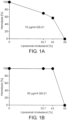
- the hemolytic activities of liposome compositions with QS-21 were characterized first by varying QS-21 concentration. Briefly, fifty millimolar phospholipid liposomes containing 33.7%, 43%, and 55% cholesterol were mixed and incubated with 10 ⁇ g/ml and 50 ⁇ g/ml QS-21 at room temperature for 20 minutes. Red blood cells were added to the mixture of liposome-QS-21, and incubated for 30 minutes. Free QS-21 served as positive control. Cells were centrifuged and the optical density of supernatant was measured at 541 nm to reflect the levels of hemolysis. The results, as presented in FIG. 1 , suggest that the levels of hemolysis by liposome compositions with QS-21 depends upon the concentration of cholesterol in the liposomes.
- the hemolytic activities of liposome compositions with QS-21 were further characterized by varying mol% of liposomal Chol.
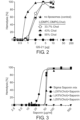
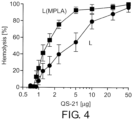
- the degree of erythrocyte damage caused by QS-21 was found to be inversely related to the mol% of liposomal Chol that had been pre-incubated with QS-21 ( FIG. 2 ). While free QS-21 caused maximum hemolysis at approximately 2 ⁇ g, maximum hemolysis occurred at approximately 4 ⁇ g of QS-21 when QS-21 was pre-incubated with liposomes containing either 33.7 or 43 mol% Chol ( FIG. 2 ). Liposomes having 55 mol% Chol completely blocked the hemolytic effect of QS-21 up to 200 ⁇ g ( FIG. 2 ). Similar results were observed for liposome compositions containing varying concentrations of saponin ( FIG. 3 ). No hemolysis with up to 500 ⁇ g/ml saponins was detected when liposomes contained 55 mol% cholesterol.
- FIG. 7A shows that the MPLA in DMPC/DMPC/Chol/MPLA, DPPC/DMPC/Chol/MPLA, or DSPC/DMPC/Chol/MPLA liposomes containing 33.7 mol % Chol was detected by the LAL assay.
- the recognition of MPLA by LAL in liposomes containing 33.7% Chol was proportional to the length of saturated fatty acyl chains of phosphatidylcholine, with LAL binding in the order DSPC > DPPC > DMPC.
- FIG. 7B shows that the ability of LAL to detect MPLA in each of the liposomes.
- ALF liposomes i.e., containing MPLA
- FIG. 8 based on light scattering analysis the diameter size range of the ALF SUV particles was between 50 and 100 nm, and ALF MLV was between 1 and 4 ⁇ m.
- MLV indicates that light scattering analysis detected many large particles
- MLV also contains numerous small particles in a hyperbolic distribution as shown by electronic particle size analysis. See, e.g., Alving et al., 1975, Biochim. Biophys. Acta., 394: 157-65 .
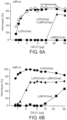
- FIG. 9 Antibody production was measured from immunized mice using various compositions as described in Materials and Methods, and the results were compiled in FIG. 9 .
- ALF SUV containing MPLA:phospholipid in the ratio of 1:88 induced higher IgG anti-gp140 binding antibody production in mice than ALF MLV having the same MPLA:phospholipid ratio in a statistically significant fashion.
- ALF SUV with an MPLA:phospholipid ratio of 1:5.6 induced the highest titer of binding antibodies.
- FIG. 9B shows that all ALFQ-adjuvanted formulations induced significantly higher binding antibodies to gp140 than any of the ALF MLV-adjuvanted formulations.
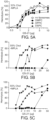
- IgG subtype determination was conducted to further characterize the antibody production. All mouse groups immunized with ALF + gp140 revealed moderate or high titers of IgG1 binding antibodies to gp140 ( FIG. 10A ). ALF MLV induced dominantly IgG1 subclass, while ALF SUV induced a balance between IgG1 and IgG2a production and also induced IgG2b production. Increasing the MPLA:phospholipid ratio resulted in higher antibody responses of all subclasses ( FIG. 10A ). As shown in FIG. 10B , in the ALFQ groups the serum concentration of IgG1 was constantly high; and all subtypes were induced, but these were independent of the MPLA:phospholipid ratios of ALF SUV or ALF MLV initially utilized for creation of ALFQ.
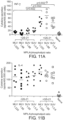
- ELISPOT analyses were performed on freshly isolated splenic lymphocytes from mice immunized with adjuvanted gp140. As shown in FIG. 11 , all of the ALF-adjuvanted formulations induced proliferation of INF- ⁇ -producing splenic lymphocytes that was higher than observed with the na ⁇ ve control. ALFQ formulations induced significantly higher numbers of INF- ⁇ -positive cells than ALF ( FIG. 11A ). All of the immunized mice exhibited high IL-4 production that was significantly higher (p ⁇ 0.0001) than na ⁇ ve mice ( FIG. 11B ). Significant differences of IL-4 producing cell numbers were not observed among immunized groups.
- the ALFQ liposomes caused a distinctive induction of INF- ⁇ secretion that was independent of the MPLA:phospholipid ratio.
- the ALFQ liposomes might be a potentially useful adjuvant for induction of Th1-type immunity.
Landscapes
- Health & Medical Sciences (AREA)
- Life Sciences & Earth Sciences (AREA)
- Chemical & Material Sciences (AREA)
- Medicinal Chemistry (AREA)
- General Health & Medical Sciences (AREA)
- Veterinary Medicine (AREA)
- Public Health (AREA)
- Animal Behavior & Ethology (AREA)
- Pharmacology & Pharmacy (AREA)
- Epidemiology (AREA)
- Immunology (AREA)
- Microbiology (AREA)
- Mycology (AREA)
- Virology (AREA)
- Chemical Kinetics & Catalysis (AREA)
- General Chemical & Material Sciences (AREA)
- Dispersion Chemistry (AREA)
- Engineering & Computer Science (AREA)
- Organic Chemistry (AREA)
- Bioinformatics & Cheminformatics (AREA)
- Genetics & Genomics (AREA)
- Zoology (AREA)
- Wood Science & Technology (AREA)
- Communicable Diseases (AREA)
- Biotechnology (AREA)
- Biomedical Technology (AREA)
- Hematology (AREA)
- Biochemistry (AREA)
- General Engineering & Computer Science (AREA)
- Nuclear Medicine, Radiotherapy & Molecular Imaging (AREA)
- Medicinal Preparation (AREA)
- Medicines Containing Antibodies Or Antigens For Use As Internal Diagnostic Agents (AREA)
Applications Claiming Priority (2)
| Application Number | Priority Date | Filing Date | Title |
|---|---|---|---|
| US201461970118P | 2014-03-25 | 2014-03-25 | |
| PCT/US2015/022461 WO2015148648A1 (en) | 2014-03-25 | 2015-03-25 | Non-toxic adjuvant formulation comprising a monophosphoryl lipid a (mpla)-containing liposome composition and a saponin |
Publications (2)
| Publication Number | Publication Date |
|---|---|
| EP3122380A1 EP3122380A1 (en) | 2017-02-01 |
| EP3122380B1 true EP3122380B1 (en) | 2025-03-19 |
Family
ID=52829375
Family Applications (1)
| Application Number | Title | Priority Date | Filing Date |
|---|---|---|---|
| EP15716264.5A Active EP3122380B1 (en) | 2014-03-25 | 2015-03-25 | Non-toxic adjuvant formulation comprising a monophosphoryl lipid a (mpla)-containing liposome composition and a saponin |
Country Status (11)
| Country | Link |
|---|---|
| US (1) | US10434167B2 (enExample) |
| EP (1) | EP3122380B1 (enExample) |
| JP (1) | JP6608422B2 (enExample) |
| KR (1) | KR102242875B1 (enExample) |
| CN (1) | CN107124869B (enExample) |
| AU (1) | AU2015236106A1 (enExample) |
| CA (1) | CA2943190A1 (enExample) |
| MX (1) | MX2016012168A (enExample) |
| RU (1) | RU2016141622A (enExample) |
| SG (2) | SG11201607396WA (enExample) |
| WO (1) | WO2015148648A1 (enExample) |
Families Citing this family (26)
| Publication number | Priority date | Publication date | Assignee | Title |
|---|---|---|---|---|
| BR112018067927A2 (pt) * | 2016-03-09 | 2019-01-02 | Technion Res & Development Found Ltd | formulação, método de tratamento de plantas, método agrícola e kit |
| JP6661454B2 (ja) * | 2016-04-21 | 2020-03-11 | 株式会社東海理化電機製作所 | 表示装置、表示板の製造方法 |
| CN110582282A (zh) * | 2017-04-25 | 2019-12-17 | 佐剂技术公司 | 三萜皂苷类似物 |
| PL3615005T3 (pl) | 2017-04-28 | 2025-10-06 | The Henry M. Jackson Foundation For The Advancement Of Military Medicine, Inc. | Kompozycje i sposoby dostarczania szczepionki |
| CN107669692B (zh) * | 2017-09-07 | 2020-09-29 | 中国人民解放军第二军医大学 | Mpla在制备电离辐射致肠道损伤防治药物中的应用 |
| EP3678695A1 (en) * | 2017-09-08 | 2020-07-15 | Infectious Disease Research Institute | Liposomal formulations comprising saponin and methods of use |
| WO2020243166A1 (en) * | 2019-05-28 | 2020-12-03 | The Regents Of The University Of California | Th1-polarizing adjuvants for enhancing immunogenicity of hiv antigens |
| CN110613844B (zh) * | 2019-10-23 | 2024-02-27 | 中国医学科学院生物医学工程研究所 | 一种迷你联合佐剂纳米颗粒及其制备方法和应用 |
| US11744874B2 (en) | 2019-12-20 | 2023-09-05 | Nammi Therapeutics, Inc. | Formulated and/or co-formulated liposome compositions containing toll-like receptor (“TLR”) agonist prodrugs useful in the treatment of cancer and methods thereof |
| EP3892296A1 (en) * | 2020-04-07 | 2021-10-13 | InnoMedica Holding AG | Immunogenic composition comprising an antigenic moiety and a liposomal formulation, method of producing the composition, the composition for use as a medicament, in particular for use as a vaccine |
| CN115087435A (zh) * | 2020-06-30 | 2022-09-20 | 艾金株式会社 | 包含阳离子脂质体的用于抑制皂素溶血的组合物 |
| US12605443B2 (en) | 2020-10-13 | 2026-04-21 | The Government Of The United States, As Represented By The Secretary Of The Army | SAR-CoV-2 DNA vaccine and method of administering thereof |
| GB2600468A (en) * | 2020-10-30 | 2022-05-04 | Excivion Ltd | Adjuvant composition |
| CN112546233A (zh) * | 2020-12-25 | 2021-03-26 | 常州大学 | 一种负载水不溶性免疫调节分子的透明质酸复合材料及其制备方法 |
| CN114366810B (zh) * | 2022-02-15 | 2024-11-22 | 中国人民解放军陆军军医大学 | 一种可高效诱导体液和细胞免疫的天然微生物和植物来源复合双佐剂及其制备方法和应用 |
| AU2023235562B2 (en) * | 2022-03-14 | 2026-07-30 | Pfizer Inc. | Methods for producing an adjuvant |
| KR20250054810A (ko) | 2022-09-29 | 2025-04-23 | 화이자 인코포레이티드 | Rsv f 단백질 삼량체를 포함하는 면역원성 조성물 |
| CN120513083A (zh) | 2022-12-01 | 2025-08-19 | 辉瑞大药厂 | 肺炎链球菌缀合物疫苗制剂 |
| AU2023393199A1 (en) * | 2022-12-13 | 2025-05-29 | Pfizer Inc. | Immunogenic compositions and methods for eliciting an immune response against clostridioides (clostridium) difficile |
| TWI909678B (zh) * | 2023-09-13 | 2025-12-21 | 美商輝瑞股份有限公司 | 產製佐劑之方法 |
| TW202527906A (zh) | 2023-09-14 | 2025-07-16 | 美商輝瑞股份有限公司 | 包含經結合之肺炎鏈球菌莢膜醣抗原之佐劑化致免疫性組成物及其用途 |
| WO2025163460A2 (en) | 2024-01-30 | 2025-08-07 | Pfizer Inc. | Vaccines against respiratory diseases |
| CN117771361B (zh) * | 2024-02-27 | 2024-06-07 | 天津中逸安健生物科技有限公司 | 一种聚肌苷酸-聚胞苷酸复合物的脂质纳米佐剂及其制备方法与应用 |
| TW202602467A (zh) | 2024-03-11 | 2026-01-16 | 美商輝瑞股份有限公司 | 包含經共軛之大腸桿菌糖的免疫原性組成物及其用途 |
| TW202612726A (zh) | 2024-06-12 | 2026-04-01 | 美商輝瑞股份有限公司 | 誘發針對困難梭狀芽孢桿菌的免疫反應之免疫原性組成物和方法 |
| US20260166136A1 (en) | 2024-12-18 | 2026-06-18 | Pfizer Inc. | Immunogenic compositions and uses thereof |
Citations (1)
| Publication number | Priority date | Publication date | Assignee | Title |
|---|---|---|---|---|
| WO1996033739A1 (en) * | 1995-04-25 | 1996-10-31 | Smithkline Beecham Biologicals S.A. | Vaccines containing a saponin and a sterol |
Family Cites Families (27)
| Publication number | Priority date | Publication date | Assignee | Title |
|---|---|---|---|---|
| US4186183A (en) | 1978-03-29 | 1980-01-29 | The United States Of America As Represented By The Secretary Of The Army | Liposome carriers in chemotherapy of leishmaniasis |
| US4302459A (en) | 1980-03-19 | 1981-11-24 | The United States Of America As Represented By The Secretary Of The Army | Liposome carriers in leishmaniasis chemotherapy with 8-aminoquinoline derivatives |
| US5231112A (en) | 1984-04-12 | 1993-07-27 | The Liposome Company, Inc. | Compositions containing tris salt of cholesterol hemisuccinate and antifungal |
| US5916588A (en) | 1984-04-12 | 1999-06-29 | The Liposome Company, Inc. | Peptide-containing liposomes, immunogenic liposomes and methods of preparation and use |
| US4684479A (en) | 1985-08-14 | 1987-08-04 | Arrigo Joseph S D | Surfactant mixtures, stable gas-in-liquid emulsions, and methods for the production of such emulsions from said mixtures |
| US6759057B1 (en) | 1986-06-12 | 2004-07-06 | The Liposome Company, Inc. | Methods and compositions using liposome-encapsulated non-steroidal anti-inflammatory drugs |
| CN1093255A (zh) * | 1986-06-17 | 1994-10-12 | 恩特雷麦德有限公司 | 抗甾醇疫苗 |
| IE60901B1 (en) | 1986-08-21 | 1994-08-24 | Vestar Inc | Improved treatment of systemic fungal infections with phospholipid particles encapsulating polyene antifungal antibiotics |
| US6406713B1 (en) | 1987-03-05 | 2002-06-18 | The Liposome Company, Inc. | Methods of preparing low-toxicity drug-lipid complexes |
| US5057540A (en) | 1987-05-29 | 1991-10-15 | Cambridge Biotech Corporation | Saponin adjuvant |
| AU598958B2 (en) | 1987-11-12 | 1990-07-05 | Vestar, Inc. | Improved amphotericin b liposome preparation |
| US5888519A (en) | 1988-06-02 | 1999-03-30 | The United States Of America As Represented By The Secretary Of The Army | Encapsulated high-concentration lipid a compositions as immunogenic agents to produce human antibodies to prevent or treat gram-negative bacterial infections |
| US5215680A (en) | 1990-07-10 | 1993-06-01 | Cavitation-Control Technology, Inc. | Method for the production of medical-grade lipid-coated microbubbles, paramagnetic labeling of such microbubbles and therapeutic uses of microbubbles |
| DE69313134T2 (de) * | 1992-06-25 | 1998-02-26 | Smithkline Beecham Biolog | Adjuvantien enthaltende impfstoffzusammensetzung |
| WO1994014454A1 (en) | 1992-12-29 | 1994-07-07 | Entremed, Inc. | Vaccines against sterols |
| GB9320668D0 (en) * | 1993-10-07 | 1993-11-24 | Secr Defence | Liposomes containing particulare materials |
| US6846489B1 (en) * | 1995-04-25 | 2005-01-25 | Smithkline Beecham Biologicals S.A. | Vaccines containing a saponin and a sterol |
| ATE252372T1 (de) | 1996-08-23 | 2003-11-15 | Sequus Pharm Inc | Liposome enthaltend cisplatin |
| US6056973A (en) | 1996-10-11 | 2000-05-02 | Sequus Pharmaceuticals, Inc. | Therapeutic liposome composition and method of preparation |
| WO1998016201A1 (en) | 1996-10-11 | 1998-04-23 | Sequus Pharmaceuticals, Inc. | Therapeutic liposome composition and method |
| AU725257B2 (en) | 1996-10-15 | 2000-10-12 | Transave, Inc. | N-acyl phosphatidylethanolamine-mediated liposomal drug delivery |
| US6231859B1 (en) | 1996-12-02 | 2001-05-15 | Aquila Biopharmaceuticals, Inc. | Saponin adjuvant compositions |
| GB9817052D0 (en) * | 1998-08-05 | 1998-09-30 | Smithkline Beecham Biolog | Vaccine |
| US8148130B2 (en) * | 2007-03-01 | 2012-04-03 | The Catholic University Of America | T4 bacteriophage bound to a substrate |
| TWI457133B (zh) * | 2005-12-13 | 2014-10-21 | Glaxosmithkline Biolog Sa | 新穎組合物 |
| GB0910046D0 (en) * | 2009-06-10 | 2009-07-22 | Glaxosmithkline Biolog Sa | Novel compositions |
| WO2012088414A1 (en) | 2010-12-23 | 2012-06-28 | Ludwig Institute For Cancer Research Ltd. | Liposomal formulation of nonglycosidic ceramides and uses thereof |
-
2015
- 2015-03-25 CN CN201580026334.9A patent/CN107124869B/zh active Active
- 2015-03-25 KR KR1020167026025A patent/KR102242875B1/ko active Active
- 2015-03-25 CA CA2943190A patent/CA2943190A1/en not_active Abandoned
- 2015-03-25 JP JP2017502920A patent/JP6608422B2/ja active Active
- 2015-03-25 EP EP15716264.5A patent/EP3122380B1/en active Active
- 2015-03-25 SG SG11201607396WA patent/SG11201607396WA/en unknown
- 2015-03-25 MX MX2016012168A patent/MX2016012168A/es unknown
- 2015-03-25 AU AU2015236106A patent/AU2015236106A1/en not_active Abandoned
- 2015-03-25 US US15/127,081 patent/US10434167B2/en active Active
- 2015-03-25 SG SG10201808315UA patent/SG10201808315UA/en unknown
- 2015-03-25 WO PCT/US2015/022461 patent/WO2015148648A1/en not_active Ceased
- 2015-03-25 RU RU2016141622A patent/RU2016141622A/ru not_active Application Discontinuation
Patent Citations (1)
| Publication number | Priority date | Publication date | Assignee | Title |
|---|---|---|---|---|
| WO1996033739A1 (en) * | 1995-04-25 | 1996-10-31 | Smithkline Beecham Biologicals S.A. | Vaccines containing a saponin and a sterol |
Non-Patent Citations (1)
| Title |
|---|
| MATYAS GARY R ET AL: "Liposomes containing monophosphoryl lipid A: A potent adjuvant system for inducing antibodies to heroin hapten analogs", VACCINE, ELSEVIER, AMSTERDAM, NL, vol. 31, no. 26, 23 April 2013 (2013-04-23), pages 2804 - 2810, XP028558266, ISSN: 0264-410X, DOI: 10.1016/J.VACCINE.2013.04.027 * |
Also Published As
| Publication number | Publication date |
|---|---|
| US20170182152A1 (en) | 2017-06-29 |
| KR102242875B1 (ko) | 2021-04-20 |
| AU2015236106A1 (en) | 2016-10-20 |
| CN107124869B (zh) | 2022-04-01 |
| WO2015148648A1 (en) | 2015-10-01 |
| US10434167B2 (en) | 2019-10-08 |
| RU2016141622A3 (enExample) | 2018-10-26 |
| SG10201808315UA (en) | 2018-10-30 |
| JP2017515889A (ja) | 2017-06-15 |
| SG11201607396WA (en) | 2016-10-28 |
| EP3122380A1 (en) | 2017-02-01 |
| RU2016141622A (ru) | 2018-04-25 |
| KR20170007242A (ko) | 2017-01-18 |
| CA2943190A1 (en) | 2015-10-01 |
| CN107124869A (zh) | 2017-09-01 |
| MX2016012168A (es) | 2017-04-25 |
| JP6608422B2 (ja) | 2019-11-20 |
Similar Documents
| Publication | Publication Date | Title |
|---|---|---|
| US10434167B2 (en) | Non-toxic adjuvant formulation comprising a monophosphoryl lipid A (MPLA)-containing liposome composition and a saponin | |
| Beck et al. | Differential immune responses to HIV-1 envelope protein induced by liposomal adjuvant formulations containing monophosphoryl lipid A with or without QS21 | |
| De Serrano et al. | Liposomal vaccine formulations as prophylactic agents: design considerations for modern vaccines | |
| AU627226B2 (en) | Influenza vaccine and novel adjuvants | |
| JP2828391B2 (ja) | オリゴ糖を表面に有するリポソーム | |
| Beck et al. | Immune response to antigen adsorbed to aluminum hydroxide particles: Effects of co-adsorption of ALF or ALFQ adjuvant to the aluminum-antigen complex | |
| US5026557A (en) | Adjuvant composition | |
| JP7339942B2 (ja) | サポニンを含むリポソーム製剤および使用方法 | |
| EA024074B1 (ru) | Водная адъювантная композиция, содержащая неионный агент, обеспечивающий изотоничность, иммуногенная композиция и набор на её основе и способ приготовления иммуногенной композиции | |
| KR20190025822A (ko) | 페길화된 리포솜 및 이의 용도 | |
| TR201807756T4 (tr) | Sentetik adjuvan içeren aşı bileşimi. | |
| US10588963B2 (en) | Methods for providing adjuvanted virosomes and adjuvanted virosomes obtainable thereby | |
| CN110461355B (zh) | 包含免疫调控剂和阳离子脂质体的免疫增强的组合物及其用途 | |
| US6117449A (en) | Method for inducing a systemic immune response to a hepatitis antigen | |
| US20200061186A1 (en) | Novel process | |
| Krasnopolsky et al. | Licensed liposomal vaccines and adjuvants in the antigen delivery system | |
| Ben‐Yehuda et al. | Immunogenicity and safety of a novel liposomal influenza subunit vaccine (INFLUSOME‐VAC) in young adults | |
| US10702594B2 (en) | Dried saponin liposomal composition | |
| US20170165358A1 (en) | Methods for enhancing the immunostimulation potency of aluminum salt-absorbed vaccines | |
| WO1990001948A1 (en) | Influenza vaccine and novel adjuvants |
Legal Events
| Date | Code | Title | Description |
|---|---|---|---|
| STAA | Information on the status of an ep patent application or granted ep patent |
Free format text: STATUS: THE INTERNATIONAL PUBLICATION HAS BEEN MADE |
|
| PUAI | Public reference made under article 153(3) epc to a published international application that has entered the european phase |
Free format text: ORIGINAL CODE: 0009012 |
|
| STAA | Information on the status of an ep patent application or granted ep patent |
Free format text: STATUS: REQUEST FOR EXAMINATION WAS MADE |
|
| 17P | Request for examination filed |
Effective date: 20160913 |
|
| AK | Designated contracting states |
Kind code of ref document: A1 Designated state(s): AL AT BE BG CH CY CZ DE DK EE ES FI FR GB GR HR HU IE IS IT LI LT LU LV MC MK MT NL NO PL PT RO RS SE SI SK SM TR |
|
| AX | Request for extension of the european patent |
Extension state: BA ME |
|
| DAV | Request for validation of the european patent (deleted) | ||
| DAX | Request for extension of the european patent (deleted) | ||
| STAA | Information on the status of an ep patent application or granted ep patent |
Free format text: STATUS: EXAMINATION IS IN PROGRESS |
|
| 17Q | First examination report despatched |
Effective date: 20180507 |
|
| P01 | Opt-out of the competence of the unified patent court (upc) registered |
Effective date: 20230327 |
|
| GRAP | Despatch of communication of intention to grant a patent |
Free format text: ORIGINAL CODE: EPIDOSNIGR1 |
|
| STAA | Information on the status of an ep patent application or granted ep patent |
Free format text: STATUS: GRANT OF PATENT IS INTENDED |
|
| INTG | Intention to grant announced |
Effective date: 20241010 |
|
| GRAS | Grant fee paid |
Free format text: ORIGINAL CODE: EPIDOSNIGR3 |
|
| GRAA | (expected) grant |
Free format text: ORIGINAL CODE: 0009210 |
|
| STAA | Information on the status of an ep patent application or granted ep patent |
Free format text: STATUS: THE PATENT HAS BEEN GRANTED |
|
| AK | Designated contracting states |
Kind code of ref document: B1 Designated state(s): AL AT BE BG CH CY CZ DE DK EE ES FI FR GB GR HR HU IE IS IT LI LT LU LV MC MK MT NL NO PL PT RO RS SE SI SK SM TR |
|
| REG | Reference to a national code |
Ref country code: GB Ref legal event code: FG4D |
|
| REG | Reference to a national code |
Ref country code: CH Ref legal event code: EP |
|
| REG | Reference to a national code |
Ref country code: IE Ref legal event code: FG4D |
|
| REG | Reference to a national code |
Ref country code: DE Ref legal event code: R096 Ref document number: 602015091240 Country of ref document: DE |
|
| PG25 | Lapsed in a contracting state [announced via postgrant information from national office to epo] |
Ref country code: RS Free format text: LAPSE BECAUSE OF FAILURE TO SUBMIT A TRANSLATION OF THE DESCRIPTION OR TO PAY THE FEE WITHIN THE PRESCRIBED TIME-LIMIT Effective date: 20250619 |
|
| PG25 | Lapsed in a contracting state [announced via postgrant information from national office to epo] |
Ref country code: FI Free format text: LAPSE BECAUSE OF FAILURE TO SUBMIT A TRANSLATION OF THE DESCRIPTION OR TO PAY THE FEE WITHIN THE PRESCRIBED TIME-LIMIT Effective date: 20250319 |
|
| REG | Reference to a national code |
Ref country code: LT Ref legal event code: MG9D |
|
| PG25 | Lapsed in a contracting state [announced via postgrant information from national office to epo] |
Ref country code: NO Free format text: LAPSE BECAUSE OF FAILURE TO SUBMIT A TRANSLATION OF THE DESCRIPTION OR TO PAY THE FEE WITHIN THE PRESCRIBED TIME-LIMIT Effective date: 20250619 |
|
| PG25 | Lapsed in a contracting state [announced via postgrant information from national office to epo] |
Ref country code: HR Free format text: LAPSE BECAUSE OF FAILURE TO SUBMIT A TRANSLATION OF THE DESCRIPTION OR TO PAY THE FEE WITHIN THE PRESCRIBED TIME-LIMIT Effective date: 20250319 |
|
| PG25 | Lapsed in a contracting state [announced via postgrant information from national office to epo] |
Ref country code: LV Free format text: LAPSE BECAUSE OF FAILURE TO SUBMIT A TRANSLATION OF THE DESCRIPTION OR TO PAY THE FEE WITHIN THE PRESCRIBED TIME-LIMIT Effective date: 20250319 |
|
| PG25 | Lapsed in a contracting state [announced via postgrant information from national office to epo] |
Ref country code: GR Free format text: LAPSE BECAUSE OF FAILURE TO SUBMIT A TRANSLATION OF THE DESCRIPTION OR TO PAY THE FEE WITHIN THE PRESCRIBED TIME-LIMIT Effective date: 20250620 Ref country code: BG Free format text: LAPSE BECAUSE OF FAILURE TO SUBMIT A TRANSLATION OF THE DESCRIPTION OR TO PAY THE FEE WITHIN THE PRESCRIBED TIME-LIMIT Effective date: 20250319 |
|
| REG | Reference to a national code |
Ref country code: NL Ref legal event code: MP Effective date: 20250319 |
|
| PG25 | Lapsed in a contracting state [announced via postgrant information from national office to epo] |
Ref country code: NL Free format text: LAPSE BECAUSE OF FAILURE TO SUBMIT A TRANSLATION OF THE DESCRIPTION OR TO PAY THE FEE WITHIN THE PRESCRIBED TIME-LIMIT Effective date: 20250319 |
|
| PG25 | Lapsed in a contracting state [announced via postgrant information from national office to epo] |
Ref country code: SE Free format text: LAPSE BECAUSE OF FAILURE TO SUBMIT A TRANSLATION OF THE DESCRIPTION OR TO PAY THE FEE WITHIN THE PRESCRIBED TIME-LIMIT Effective date: 20250319 |
|
| PG25 | Lapsed in a contracting state [announced via postgrant information from national office to epo] |
Ref country code: SM Free format text: LAPSE BECAUSE OF FAILURE TO SUBMIT A TRANSLATION OF THE DESCRIPTION OR TO PAY THE FEE WITHIN THE PRESCRIBED TIME-LIMIT Effective date: 20250319 |
|
| PG25 | Lapsed in a contracting state [announced via postgrant information from national office to epo] |
Ref country code: ES Free format text: LAPSE BECAUSE OF FAILURE TO SUBMIT A TRANSLATION OF THE DESCRIPTION OR TO PAY THE FEE WITHIN THE PRESCRIBED TIME-LIMIT Effective date: 20250319 Ref country code: PT Free format text: LAPSE BECAUSE OF FAILURE TO SUBMIT A TRANSLATION OF THE DESCRIPTION OR TO PAY THE FEE WITHIN THE PRESCRIBED TIME-LIMIT Effective date: 20250721 |
|
| PG25 | Lapsed in a contracting state [announced via postgrant information from national office to epo] |
Ref country code: PL Free format text: LAPSE BECAUSE OF FAILURE TO SUBMIT A TRANSLATION OF THE DESCRIPTION OR TO PAY THE FEE WITHIN THE PRESCRIBED TIME-LIMIT Effective date: 20250319 Ref country code: IT Free format text: LAPSE BECAUSE OF FAILURE TO SUBMIT A TRANSLATION OF THE DESCRIPTION OR TO PAY THE FEE WITHIN THE PRESCRIBED TIME-LIMIT Effective date: 20250319 |
|
| PG25 | Lapsed in a contracting state [announced via postgrant information from national office to epo] |
Ref country code: EE Free format text: LAPSE BECAUSE OF FAILURE TO SUBMIT A TRANSLATION OF THE DESCRIPTION OR TO PAY THE FEE WITHIN THE PRESCRIBED TIME-LIMIT Effective date: 20250319 Ref country code: CZ Free format text: LAPSE BECAUSE OF FAILURE TO SUBMIT A TRANSLATION OF THE DESCRIPTION OR TO PAY THE FEE WITHIN THE PRESCRIBED TIME-LIMIT Effective date: 20250319 |
|
| PG25 | Lapsed in a contracting state [announced via postgrant information from national office to epo] |
Ref country code: RO Free format text: LAPSE BECAUSE OF FAILURE TO SUBMIT A TRANSLATION OF THE DESCRIPTION OR TO PAY THE FEE WITHIN THE PRESCRIBED TIME-LIMIT Effective date: 20250319 |
|
| REG | Reference to a national code |
Ref country code: CH Ref legal event code: H13 Free format text: ST27 STATUS EVENT CODE: U-0-0-H10-H13 (AS PROVIDED BY THE NATIONAL OFFICE) Effective date: 20251024 |
|
| PG25 | Lapsed in a contracting state [announced via postgrant information from national office to epo] |
Ref country code: SK Free format text: LAPSE BECAUSE OF FAILURE TO SUBMIT A TRANSLATION OF THE DESCRIPTION OR TO PAY THE FEE WITHIN THE PRESCRIBED TIME-LIMIT Effective date: 20250319 |
|
| PG25 | Lapsed in a contracting state [announced via postgrant information from national office to epo] |
Ref country code: IS Free format text: LAPSE BECAUSE OF FAILURE TO SUBMIT A TRANSLATION OF THE DESCRIPTION OR TO PAY THE FEE WITHIN THE PRESCRIBED TIME-LIMIT Effective date: 20250719 |
|
| PG25 | Lapsed in a contracting state [announced via postgrant information from national office to epo] |
Ref country code: LU Free format text: LAPSE BECAUSE OF NON-PAYMENT OF DUE FEES Effective date: 20250325 |
|
| PG25 | Lapsed in a contracting state [announced via postgrant information from national office to epo] |
Ref country code: MC Free format text: LAPSE BECAUSE OF FAILURE TO SUBMIT A TRANSLATION OF THE DESCRIPTION OR TO PAY THE FEE WITHIN THE PRESCRIBED TIME-LIMIT Effective date: 20250319 |
|
| REG | Reference to a national code |
Ref country code: DE Ref legal event code: R097 Ref document number: 602015091240 Country of ref document: DE |
|
| PG25 | Lapsed in a contracting state [announced via postgrant information from national office to epo] |
Ref country code: DK Free format text: LAPSE BECAUSE OF FAILURE TO SUBMIT A TRANSLATION OF THE DESCRIPTION OR TO PAY THE FEE WITHIN THE PRESCRIBED TIME-LIMIT Effective date: 20250319 |
|
| PG25 | Lapsed in a contracting state [announced via postgrant information from national office to epo] |
Ref country code: CH Free format text: LAPSE BECAUSE OF NON-PAYMENT OF DUE FEES Effective date: 20250331 |
|
| PG25 | Lapsed in a contracting state [announced via postgrant information from national office to epo] |
Ref country code: IE Free format text: LAPSE BECAUSE OF NON-PAYMENT OF DUE FEES Effective date: 20250325 |
|
| PLBE | No opposition filed within time limit |
Free format text: ORIGINAL CODE: 0009261 |
|
| STAA | Information on the status of an ep patent application or granted ep patent |
Free format text: STATUS: NO OPPOSITION FILED WITHIN TIME LIMIT |
|
| REG | Reference to a national code |
Ref country code: CH Ref legal event code: L10 Free format text: ST27 STATUS EVENT CODE: U-0-0-L10-L00 (AS PROVIDED BY THE NATIONAL OFFICE) Effective date: 20260128 |
|
| 26N | No opposition filed |
Effective date: 20251222 |
|
| PGFP | Annual fee paid to national office [announced via postgrant information from national office to epo] |
Ref country code: GB Payment date: 20260327 Year of fee payment: 12 |
|
| PGFP | Annual fee paid to national office [announced via postgrant information from national office to epo] |
Ref country code: DE Payment date: 20260327 Year of fee payment: 12 |
|
| PGFP | Annual fee paid to national office [announced via postgrant information from national office to epo] |
Ref country code: AT Payment date: 20260327 Year of fee payment: 12 |
|
| PGFP | Annual fee paid to national office [announced via postgrant information from national office to epo] |
Ref country code: BE Payment date: 20260327 Year of fee payment: 12 |
|
| PGFP | Annual fee paid to national office [announced via postgrant information from national office to epo] |
Ref country code: FR Payment date: 20260325 Year of fee payment: 12 |
|
| PG25 | Lapsed in a contracting state [announced via postgrant information from national office to epo] |
Ref country code: CY Free format text: LAPSE BECAUSE OF FAILURE TO SUBMIT A TRANSLATION OF THE DESCRIPTION OR TO PAY THE FEE WITHIN THE PRESCRIBED TIME-LIMIT Effective date: 20250319 |
|
| PG25 | Lapsed in a contracting state [announced via postgrant information from national office to epo] |
Ref country code: LT Free format text: LAPSE BECAUSE OF FAILURE TO SUBMIT A TRANSLATION OF THE DESCRIPTION OR TO PAY THE FEE WITHIN THE PRESCRIBED TIME-LIMIT Effective date: 20250319 |
|
| PG25 | Lapsed in a contracting state [announced via postgrant information from national office to epo] |
Ref country code: TR Free format text: LAPSE BECAUSE OF FAILURE TO SUBMIT A TRANSLATION OF THE DESCRIPTION OR TO PAY THE FEE WITHIN THE PRESCRIBED TIME-LIMIT Effective date: 20250319 |