EP3049422B1 - Intumeszenzbeschichtungen - Google Patents
Intumeszenzbeschichtungen Download PDFInfo
- Publication number
- EP3049422B1 EP3049422B1 EP14799951.0A EP14799951A EP3049422B1 EP 3049422 B1 EP3049422 B1 EP 3049422B1 EP 14799951 A EP14799951 A EP 14799951A EP 3049422 B1 EP3049422 B1 EP 3049422B1
- Authority
- EP
- European Patent Office
- Prior art keywords
- mol
- mhz
- hydantoin
- hydantoinate
- dest
- Prior art date
- Legal status (The legal status is an assumption and is not a legal conclusion. Google has not performed a legal analysis and makes no representation as to the accuracy of the status listed.)
- Active
Links
- 0 *C(*C(N1)=O)C1=O Chemical compound *C(*C(N1)=O)C1=O 0.000 description 2
- VHEYHMGSWDZXEN-UHFFFAOYSA-M CC(CNC([NH-])=O)O Chemical compound CC(CNC([NH-])=O)O VHEYHMGSWDZXEN-UHFFFAOYSA-M 0.000 description 1
- DTXMJBPSGSXBIW-UHFFFAOYSA-N COC(NC1NC(N)=O)=NC1=O Chemical compound COC(NC1NC(N)=O)=NC1=O DTXMJBPSGSXBIW-UHFFFAOYSA-N 0.000 description 1
- POJWUDADGALRAB-UHFFFAOYSA-N NC(NC(C(N1)=O)NC1=O)=O Chemical compound NC(NC(C(N1)=O)NC1=O)=O POJWUDADGALRAB-UHFFFAOYSA-N 0.000 description 1
Images


Classifications
-
- C—CHEMISTRY; METALLURGY
- C07—ORGANIC CHEMISTRY
- C07F—ACYCLIC, CARBOCYCLIC OR HETEROCYCLIC COMPOUNDS CONTAINING ELEMENTS OTHER THAN CARBON, HYDROGEN, HALOGEN, OXYGEN, NITROGEN, SULFUR, SELENIUM OR TELLURIUM
- C07F9/00—Compounds containing elements of Groups 5 or 15 of the Periodic Table
- C07F9/02—Phosphorus compounds
- C07F9/28—Phosphorus compounds with one or more P—C bonds
- C07F9/54—Quaternary phosphonium compounds
- C07F9/5407—Acyclic saturated phosphonium compounds
-
- C—CHEMISTRY; METALLURGY
- C07—ORGANIC CHEMISTRY
- C07D—HETEROCYCLIC COMPOUNDS
- C07D403/00—Heterocyclic compounds containing two or more hetero rings, having nitrogen atoms as the only ring hetero atoms, not provided for by group C07D401/00
- C07D403/02—Heterocyclic compounds containing two or more hetero rings, having nitrogen atoms as the only ring hetero atoms, not provided for by group C07D401/00 containing two hetero rings
- C07D403/06—Heterocyclic compounds containing two or more hetero rings, having nitrogen atoms as the only ring hetero atoms, not provided for by group C07D401/00 containing two hetero rings linked by a carbon chain containing only aliphatic carbon atoms
-
- C—CHEMISTRY; METALLURGY
- C07—ORGANIC CHEMISTRY
- C07D—HETEROCYCLIC COMPOUNDS
- C07D233/00—Heterocyclic compounds containing 1,3-diazole or hydrogenated 1,3-diazole rings, not condensed with other rings
- C07D233/54—Heterocyclic compounds containing 1,3-diazole or hydrogenated 1,3-diazole rings, not condensed with other rings having two double bonds between ring members or between ring members and non-ring members
- C07D233/66—Heterocyclic compounds containing 1,3-diazole or hydrogenated 1,3-diazole rings, not condensed with other rings having two double bonds between ring members or between ring members and non-ring members with hetero atoms or with carbon atoms having three bonds to hetero atoms with at the most one bond to halogen, e.g. ester or nitrile radicals, directly attached to ring carbon atoms
- C07D233/72—Two oxygen atoms, e.g. hydantoin
- C07D233/74—Two oxygen atoms, e.g. hydantoin with only hydrogen atoms or radicals containing only hydrogen and carbon atoms, attached to other ring members
-
- C—CHEMISTRY; METALLURGY
- C07—ORGANIC CHEMISTRY
- C07D—HETEROCYCLIC COMPOUNDS
- C07D233/00—Heterocyclic compounds containing 1,3-diazole or hydrogenated 1,3-diazole rings, not condensed with other rings
- C07D233/54—Heterocyclic compounds containing 1,3-diazole or hydrogenated 1,3-diazole rings, not condensed with other rings having two double bonds between ring members or between ring members and non-ring members
- C07D233/66—Heterocyclic compounds containing 1,3-diazole or hydrogenated 1,3-diazole rings, not condensed with other rings having two double bonds between ring members or between ring members and non-ring members with hetero atoms or with carbon atoms having three bonds to hetero atoms with at the most one bond to halogen, e.g. ester or nitrile radicals, directly attached to ring carbon atoms
- C07D233/72—Two oxygen atoms, e.g. hydantoin
- C07D233/76—Two oxygen atoms, e.g. hydantoin with substituted hydrocarbon radicals attached to the third ring carbon atom
-
- C—CHEMISTRY; METALLURGY
- C09—DYES; PAINTS; POLISHES; NATURAL RESINS; ADHESIVES; COMPOSITIONS NOT OTHERWISE PROVIDED FOR; APPLICATIONS OF MATERIALS NOT OTHERWISE PROVIDED FOR
- C09D—COATING COMPOSITIONS, e.g. PAINTS, VARNISHES OR LACQUERS; FILLING PASTES; CHEMICAL PAINT OR INK REMOVERS; INKS; CORRECTING FLUIDS; WOODSTAINS; PASTES OR SOLIDS FOR COLOURING OR PRINTING; USE OF MATERIALS THEREFOR
- C09D5/00—Coating compositions, e.g. paints, varnishes or lacquers, characterised by their physical nature or the effects produced; Filling pastes
- C09D5/18—Fireproof paints including high temperature resistant paints
- C09D5/185—Intumescent paints
-
- C—CHEMISTRY; METALLURGY
- C09—DYES; PAINTS; POLISHES; NATURAL RESINS; ADHESIVES; COMPOSITIONS NOT OTHERWISE PROVIDED FOR; APPLICATIONS OF MATERIALS NOT OTHERWISE PROVIDED FOR
- C09K—MATERIALS FOR MISCELLANEOUS APPLICATIONS, NOT PROVIDED FOR ELSEWHERE
- C09K21/00—Fireproofing materials
- C09K21/06—Organic materials
- C09K21/10—Organic materials containing nitrogen
-
- C—CHEMISTRY; METALLURGY
- C07—ORGANIC CHEMISTRY
- C07D—HETEROCYCLIC COMPOUNDS
- C07D233/00—Heterocyclic compounds containing 1,3-diazole or hydrogenated 1,3-diazole rings, not condensed with other rings
- C07D233/54—Heterocyclic compounds containing 1,3-diazole or hydrogenated 1,3-diazole rings, not condensed with other rings having two double bonds between ring members or between ring members and non-ring members
- C07D233/66—Heterocyclic compounds containing 1,3-diazole or hydrogenated 1,3-diazole rings, not condensed with other rings having two double bonds between ring members or between ring members and non-ring members with hetero atoms or with carbon atoms having three bonds to hetero atoms with at the most one bond to halogen, e.g. ester or nitrile radicals, directly attached to ring carbon atoms
- C07D233/72—Two oxygen atoms, e.g. hydantoin
-
- C—CHEMISTRY; METALLURGY
- C07—ORGANIC CHEMISTRY
- C07D—HETEROCYCLIC COMPOUNDS
- C07D233/00—Heterocyclic compounds containing 1,3-diazole or hydrogenated 1,3-diazole rings, not condensed with other rings
- C07D233/54—Heterocyclic compounds containing 1,3-diazole or hydrogenated 1,3-diazole rings, not condensed with other rings having two double bonds between ring members or between ring members and non-ring members
- C07D233/66—Heterocyclic compounds containing 1,3-diazole or hydrogenated 1,3-diazole rings, not condensed with other rings having two double bonds between ring members or between ring members and non-ring members with hetero atoms or with carbon atoms having three bonds to hetero atoms with at the most one bond to halogen, e.g. ester or nitrile radicals, directly attached to ring carbon atoms
- C07D233/88—Nitrogen atoms, e.g. allantoin
Definitions
- the invention relates to salts of allantoin, hydantoin and their derivatives as well as their use as intumescent coating.
- Intumescent-based fire retardants act by forming a protective foam under heat, which protects the underlying substrate from further heat input and prevents further fuel from being available for the fire.
- An advantage of these fire retardants is that they do not have to be incorporated into the material, whereby they do not change its properties. Furthermore, they are easy to handle and can be easily applied on site, even retrospectively.
- Intumescent coatings usually contain three intumescent-relevant components: an acid source, a carbon source and a gas generator.
- the acid source causes dehydration of the carbon source which forms a carbon layer which is foamed by the gas generator.
- a commonly used formulation for intumescent coatings utilizes ammonium polyphosphate as the acid source, dipentaeryhtritol as the carbon source and melamine as the gas generator.
- hydantoins Direct derivatives of hydantoin are the water-insoluble N, N'-alkylbis (hydantoins), which exhibit antiseptic, germicidal and fungicidal activity. For this reason, the efficient production of these very inexpensive substances is also the subject of recent patents. However, their use as a fire retardant / additive has not yet been described. Due to their acidity similar to barbiturates, the derivatives of hydantoin and allantoin are readily soluble in aqueous alkalis. However, the corresponding salts of these compounds have never been specifically isolated and characterized.
- salts of hydantoins and allantoins and derivatives thereof are not only capable of gas evolution, but also without the expected addition of an acid and carbon source capable of independent stable form continuous foam layer, which is why they are suitable as single-source intumescent fire protection.
- the alkali metal salts preferably potassium and sodium salts, have proven to be particularly suitable.
- the invention relates to compounds according to the first aspect, having a formula selected from: and the hydrates of it.
- the invention relates to a composition according to the second aspect, wherein the first compound is potassium hydantoin and the second compound is sodium hydantoin.
- the invention in a fifth aspect, relates to a method for applying an intumescent coating to a substrate, characterized in that an aqueous solution of a compound of a formula selected from the group consisting of: and the hydrates thereof, wherein R, R 'and M + are as defined in the first aspect, or a composition according to the second aspect is applied to the substrate.
- the application can be done, for example, by soaking, spraying, printing, etc.
- the invention relates to the use of a compound of a formula selected from the group consisting of: and the hydrates thereof, wherein R, R 'and M + are as defined in the first aspect, or a mixture of substances according to the second aspect as an intumescent coating.
- the synthesis of the salts is based on an acid-base reaction of the conjugated acid with the corresponding hydroxide of the desired cation in an aqueous medium. All compounds are obtained in excellent purity mostly as hydrates. Only the combination with tetrakis (hydroxymethyl) phosphonium provided a material that was merely a mixture of starting material and product. In addition, it has a slight unpleasant odor, which is an exclusion criterion for some applications. In addition, the promising Methylenbisbarbiturklare could not be converted into suitable salts and therefore serves as a counter-example.
- Hydantoin and allantoin are monoprotic acids and the methylene-bridged bishydantoins are biprotic acids. Accordingly, the stoichiometric amounts were selected.
- disodium (I) 1,1'-methylenebis-dibenzene a salt with a 1: 1 stoichiometry crystallized from the bulk, which was in a 1: 2 acid: base stoichiometry. For this reason, attempts were made to selectively produce this monosodium modification, which was unsuccessful (IR and XPRD analyzes). Logically, an attempt was also made to obtain monomodification from dipotassium (I) 1,1'-methylenebishydantoin, but it could not be prepared (IR and XPRD data).
- Organic solvents contribute to environmental pollution and therefore it is desirable to use water as the basis for reactions or paints.
- the pure substances of hydantoin, allantoin and the condensation products with aldehydes are poorly water-soluble, but the conversion into their salts with suitable cations can render them water-soluble. We observed that especially the combination with alkali metals led to a very good solubility.
- an inorganic cation is useful.
- the combinations of the above-mentioned anions with potassium and sodium always formed a protective foam, but differed in volume and stability depending on the anion.
- the volume of the foam increases with increasing concentration (for example potassium (I) hydantoinate Fig. 4 ).
- potassium (I) hydantoinate it has been found that higher concentrations can also have a negative influence, since foaming at high solution concentrations above 30% becomes so strong that the foam breaks through and falls off, thereby losing a large part of the protective effect ( Fig. 5 ).
- N, N '- (alkyl) bishydantoins show less foaming at lower concentration than pure hydantoin, but the foaming with increasing concentration never becomes so strong that it leads to the rupture of the foam. This only applies in the case of the pulp used. For other substances to be protected, it must be tested on a case-by-case basis.
- N, N'-methylenebisydantoin (95.6 g, 0.450 mol) (1) in H 2 O dest . (250 mL) and sodium hydroxide (36.1 g, 0.900 mol) was added portionwise. After the majority was dissolved, the solution was filtered and the solvent removed on a rotary evaporator. The residue was dried for 8 h at 50 ° C. in a high vacuum and solidified after a few days to the disodium N, N'-methylenebishydantoinate ⁇ tetrahydrate (124.0 g). Slow crystallization from methanol / H 2 O dest .
- N, N'-methylene bis-hydantoin (1) (80.0 g, 0.380 mol) and potassium hydroxide (42.3 g, 0.750 mol) in H 2 O dest . (250 mL) gave white crystalline potassium (I) N, N'-methylene bis-hydantoinate ⁇ tetrahydrate ( 3 ) (126.0 g). Slow crystallization from H 2 O dest . led to the hydrated dipotassium salt. ⁇ H ( D 2 O , 300 MHz) 3.95 (s, 2H, C 6 H 2 , C 6 H 2 ), 4.91 (s, 4H, C 1 H 2 ).
- N, N'-methylene bis-hydantoin (1) (1.0 g, 0.005 mol) and calcium hydroxide (0.4 g, 0.005 mol) in H 2 O dest . (5 mL) gave calcium (II) N, N'-methylene bis-hydantoinate (4) (0.95 g, 81%) as a white, crystalline substance.
- N, N'-methylenebisydantoin (1) (1.0 g, 0.005 mol) and barium hydroxide ⁇ octahydrate (1.5 g, 0.005 mol) in H 2 O dest . (10 mL) under Ar (g) gave barium (II) N, N'-methylene bis-hydantoinate (5) (1.4 g, 86%) as a clear oil.
- N, N'-methylene bis-hydantoin (1) (1.0 g, 0.005 mol) and 1,1,3,3-tetramethylguanidine (1.2 mL, 0.010 mol) in H 2 O dest . (5 mL) gave bis (1,1,3,3-tetramethylguanidinium) N, N'-methylene bis-hydantoinate (6) (2.0 g, 96%) as a waxy, yellowish substance.
- N, N'-Methylenebisydantoin (1) (1.0 g, 0.005 mol) and tetramethylammonium hydroxide ⁇ pentahydrate (1.7 g, 0.010 mol) in H 2 O dest . (5 mL) gave bis (tetramethylammonium) N, N'-methylenebishydantoinate (7) (1.6 g, 95%) as a waxy, crystalline substance. mp 45 ° C.
- N, N'-methylene bis-hydantoin (1) (1.0 g 0.005 mol) and N-methyl-D-glucamine (1.8 g, 0.010 mol) in H 2 O dest . (10 mL) gave bis (N-methyl-D-glucamine) N, N'-methylene bis-hydantoinate (8) (2.8 g, 98%) as a waxy white substance.
- N, N'-methylene bis-hydantoin (1) (1.0 g, 0.005 mol) in H 2 O dest . (10 mL) was suspended and treated with ammonia sol. 25% (1.4 ml, 0.019 mol), whereupon a clear solution is formed.
- the flask was protected from light and silver oxide (1.1 g, 0.005 mol) was added.
- the reaction solution was stirred overnight and the metallic gray precipitate was filtered off with suction and distilled with H 2 O. washed. Subsequent drying for 3 h in a high vacuum gave silver (I) N, N'-methylene bis-hydantoinate (10) (1.8 g, 91%) as a gray powder.
- N, N'-methylene bis-hydantoin (1) (1.0 g, 0.005 mol) in H 2 O dest . (10 mL) and treated with barium hydroxide ⁇ octahydrate (1.5 g, 0.005 mol), whereupon almost everything dissolved.
- barium hydroxide ⁇ octahydrate 1.5 g, 0.005 mol
- bis [tetrakis (hydroxymethyl) phosphonium] sulfate soln. 72.5% (1.9 mL, 0.005 mol) was added, thereby forming a white precipitate.
- the suspension was stirred overnight and the white precipitate filtered off with suction. The precipitate was discarded and the solution was concentrated on a rotary evaporator.
- Hydantoin (100.1 g, 1.0 mol) was distilled into H 2 O. (100 mL) was added, acetaldehyde (42.4 mL, 0.8 mol) was added and HCl (150 mL) was added slowly. The suspension was stirred for 24 h, taking a brown color; during the subsequent filtration, the brown color could completely with H 2 O dest . be removed. Drying at HV for 6 h gave N, N '- (methylmethylene) bishydantoin (12) (82.2 g, 73%). Crystals for X-ray crystallographic analyzes could be prepared by slow crystallization from H 2 O dest. / NH 3 won.
- N, N '- (methylmethylene) bishydantoin (12) (20.0 g, 0.09 mol) was distilled into H 2 O. (50 mL) and sodium hydroxide (7.1 g, 0.16 mol) was added. After all was dissolved, the solvent was removed on a rotary evaporator and subsequent drying under high vacuum at 50 ° C gave solid white sodium (I) N, N '- (methylmethylene) bishydantoinate (13) (23.2 g, 97%).
- N, N '- (methylmethylene) bishydantoin (12) (20.0 g, 0.09 mol) was distilled into H 2 O. (50 mL) and treated with potassium hydroxide (9.9 g, 0.16 mol). After all was dissolved, the solvent was removed on a rotary evaporator and subsequent drying under high vacuum at 50 ° C gave solid white potassium (I) N, N '- (methylmethylene) bishydantoinate (14) (21.2 g, 79%).
- N, N '- (methylmethylene) bishydantoin (12) (1.0 g, 0.004 mol) was distilled into H 2 O. (5 mL) and treated with calcium hydroxide (0.3 g, 0.004 mol). This resulted in a slightly brown suspension. This was filtered off and the filtrate was concentrated on a rotary evaporator. Subsequent drying at 50 ° C under high vacuum gave white, solid calcium (II) N, N '- (methylmethylene) bishydantoinate (15) (0.7 g, 57%).
- N, N '- (methylmethylene) bishydantoin (12) (1.0 g, 0.004 mol) was distilled into H 2 O. (5 mL) and mixed with barium hydroxide ⁇ octahydrate (1.4 g, 0.004 mol). It was created a white suspension. This was filtered off and the filtrate was concentrated on a rotary evaporator. Subsequent drying at 50 ° C under high vacuum gave white, solid barium (II) N, N '- (methylmethylene) bishydantoinate ( 16 ) (0.9 g, 56%).
- N, N '- (methylmethylene) bishydantoin (12) (1.0 g, 0.004 mol) was distilled into H 2 O. (5 mL) and treated with 1,1,3,3-tetramethyl guandin (1.1 mL, 0.009 mol). After all was dissolved, the solvent was removed on a rotary evaporator and subsequent drying at 50 ° C under high vacuum gave bis (1,1,3,3-tetramethylguanidinium) N, N '- (methylmethylene) bishydantoinate (17) (2.0 g, 98%) as a clear, viscous liquid.
- N, N '- (methylmethylene) bishydantoin (12) (1.0 g, 0.004 mol) was distilled into H 2 O dest . (5 mL) and treated with tetramethylammonium hydroxide (1.6 g, 0.009 mol). After all was dissolved, the solvent was removed on a rotary evaporator and subsequent drying at 50 ° C under high vacuum gave bis (tetramethylammonium) N, N '- (methylmethylene) bishydantoinate (18) (1.22 g, 74%) as a yellowish oil which slowly solidified.
- Hydantoin (30.0 g, 0.3 mol) was distilled in H 2 O dest . (100 mL) and treated with sodium hydroxide (11.9 g, 0.3 mol) and stirred until everything has dissolved. The solvent was removed on a rotary evaporator and subsequent drying under high vacuum gave white, solid and hydrated sodium (I) hydantoinate (19) (43.3 g, 91%).
- Hydantoin (200.0 g, 2.0 mol) was dest in H 2 O dest . (500 mL) and treated with potassium hydroxide (112.0 g, 2.0 mol) and stirred until everything has dissolved. The solvent was removed on a rotary evaporator and subsequent drying under high vacuum gave white, solid and hydrated potassium (I) hydantoinate (20) (301.6 g, 97%).
- Hydantoin (20.0 g, 0.2 mol) was distilled in H 2 O. (50 mL) and treated with calcium hydroxide (7.4 g, 0.1 mol). It remains a slightly clouded solution. This was filtered off and concentrated on a rotary evaporator. Subsequent drying under high vacuum gave solid, white and hydrated calcium (II) hydantoinate (21) (25.5 g, 93%).
- Hydantoin (20.0 g, 0.2 mol) was suspended with H 2 Odest (10 mL). After the addition of barium hydroxide ⁇ octahydrate (31.5 g, 0.1 mol), a paste-like white substance was formed. The solution was separated by filtration and the water was distilled off under reduced pressure. Drying in vacuo over phosphorus pentoxide gave barium (II) hydantoin (22) (25.3 g, 76%).
- Hydantoin (2.0 g, 0.02 mol) was distilled into H 2 O. (10 mL) and treated with 1,1,3,3-tetramethylguanidine (2.5 mL, 0.02 mol). The solid dissolves very quickly. The solvent was removed on a rotary evaporator and subsequent drying on High vacuum gave white crystalline 1,1,3,3-tetramethylguanidinium hydantoinate ( 23 ) (4.1 g, 95%).
- Hydantoin (2.0 g, 0.02 mol) was distilled into H 2 O. (10 mL) and treated with tetramethylammonium hydroxide pentahydrate (3.6 g, 0.02 mol). The solid dissolves very quickly. The solvent was removed on a rotary evaporator and subsequent drying under high vacuum gave white crystalline tetramethylammonium hydantoinate (24) (3.2 g, 92%). ⁇ H (D 2 O, 300 MHz) 3.18 ( s , 12H, 4xN-CH 3 ), 3.86 (s, 2H, CH 2 ).
- Allantoin (2.0 g, 0.01 mol) was dest in H 2 O dest . (10 mL) and treated with tetramethylammonium hydroxide ⁇ pentahydrate (2.3 g, 0.01 mol). When all had dissolved, the solvent was removed on a rotary evaporator and subsequent drying under high vacuum at 50 ° C gave white, solid and hydrated tetramethylammonium allantoinate (31) (3.3 g, 98%).
Landscapes
- Chemical & Material Sciences (AREA)
- Organic Chemistry (AREA)
- Life Sciences & Earth Sciences (AREA)
- Engineering & Computer Science (AREA)
- Materials Engineering (AREA)
- Wood Science & Technology (AREA)
- Health & Medical Sciences (AREA)
- Biochemistry (AREA)
- General Health & Medical Sciences (AREA)
- Molecular Biology (AREA)
- Agricultural Chemicals And Associated Chemicals (AREA)
- Paper (AREA)
Description
- Die Erfindung betrifft Salze von Allantoin, Hydantoin und deren Derivate sowie deren Verwendung als Intumeszenzbeschichtung.
- Brandschutzmittel auf Intumeszenzbasis wirken, in dem sie unter Hitzeeinwirkung einen Schutzschaum ausbilden, der das darunterliegende Substrat vor weiterem Wärmeintrag schützt und verhindert, dass weiteres Brennmaterial für das Feuer zur Verfügung steht. Ein Vorteil dieser Brandschutzmittel liegt darin, dass sie nicht in den Werkstoff eingearbeitet werden müssen, wodurch sie dessen Eigenschaften nicht verändern. Weiters sind sie einfach zu handhaben und können einfach vor Ort, auch nachträglich, aufgebracht werden.
- Intumeszenzbeschichtungen beinhalten meistens drei Intumeszenz-relevante Komponenten: Eine Säurequelle, eine Kohlenstoffquelle und einen Gasbildner. Die Säurequelle führt zur Dehydration der Kohlenstoffquelle, die eine Kohleschicht bildet, welche durch den Gasbildner aufgeschäumt wird. Eine häufig verwendete Rezeptur für IntumeszenzBeschichtungen nutzt als Säurequelle Ammoniumpolyphosphat, als Kohlenstoffquelle Dipentaeryhtritol und als Gasbildner Melamin. Obwohl es bei den genannten drei Komponenten unzählige Variationsmöglichkeiten gibt, ist diese Rezeptur jene, die am besten untersucht ist und die besten Ergebnisse liefert.
- Gerade auf dem Gebiet der Gasbildner wurde nach Alternativen gesucht und so wurden Hydantoine und Allantoine in ihrer Reinform in diversen Patentschriften (
DE 28 44 132 ; A1;WO 2013/030024 A1 ) als mögliche Gasquelle für Intumeszenz-Lacke beschrieben. In anderen Veröffentlichungen werden Derivate der Hydantoine in eine Matrix einpolymerisiert. Das DokumentUS 2,418,000 beschreibt 5,5-Dimethylhydantoin. - Direkte Abkömmlinge des Hydantoins sind die in Wasser nur schwer löslichen N,N'-Alkylbis(hydantoine), die antiseptische, germizide und fungizide Wirkung zeigen. Aus diesem Grund ist die effiziente Erzeugung dieser sehr kostengünstigen Substanzen auch Gegenstand neuerer Patentschriften. Doch wurde deren Einsatz als Brandschutzmittel/additiv noch nicht beschrieben. Aufgrund ihrer den Barbituraten analogen Acidität sind die Abkömmlinge des Hydantoins und Allantoins in wässrigen Alkalien leicht löslich. Die entsprechenden Salze dieser Verbindungen wurden allerdings nie eigens isoliert und genauer charakterisiert.
- Im Rahmen der Erfindung wurde nun gefunden, dass Salze von Hydantoinen und Allantoinen sowie deren Derivate nicht nur unter Gasentwicklung, sondern auch ohne den zu erwartenden Zusatz einer Säure- und Kohlenstoffquelle in der Lage sind, eine eigenständige stabile durchgängige Schaumschicht zu bilden, weshalb sie sich als Single-Source Intumeszenz-Brandschutz eignen. Insbesondere die Alkalisalze, vorzugsweise Kalium- und Natriumsalze, haben sich als besonders geeignet erwiesen.
- In einem ersten Aspekt betrifft die Erfindung eine Verbindung der Formel

wobei - R ausgewählt ist aus der Gruppe, bestehend aus:
H, C1-C5-Alkyl und
- R' ausgewählt ist aus der Gruppe, bestehend aus:

- M+ entweder K+ oder Na+ ist.
- Des Weiteren betrifft die Erfindung Verbindungen gemäß dem ersten Aspekt, aufweisend eine Formel, ausgewählt aus:

- In einem zweiten Aspekt betrifft die Erfindung ein Stoffgemisch, umfassend:
- (i) eine erste Verbindung einer Formel, ausgewählt aus der Gruppe, bestehend aus:

- (ii) eine zweite Verbindung einer Formel, ausgewählt aus der Gruppe, bestehend aus:

- Des Weiteren betrifft die Erfindung ein Stoffgemisch gemäß dem zweiten Aspekt, wobei die erste Verbindung Kaliumhydantoin und die zweite Verbindung Natriumhydantoin ist.
- In einem dritten Aspekt betrifft die Erfindung eine Intumeszenzbeschichtung, umfassend eine Verbindung gemäß dem ersten Aspekt oder ein Stoffgemisch gemäß dem zweiten Aspekt. Bevorzugt besteht die Intumeszenzbeschichtung nur aus der Verbindung oder einer Mischung an Verbindungen der vorgenannten Art und gegebenenfalls Wasser.
- In einem vierten Aspekt betrifft die Erfindung eine Intumeszenzbeschichtung, bestehend aus:
- (a) einer Verbindung einer Formel, ausgewählt aus der Gruppe, bestehend aus:

- (b) Wasser.
- In einem fünften Aspekt betrifft die Erfindung ein Verfahren zum Aufbringen einer Intumeszenzbeschichtung auf ein Substrat, dadurch gekennzeichnet, dass eine wässrige Lösung einer Verbindung einer Formel, ausgewählt aus der Gruppe, bestehend aus:

- In einem sechsten Aspekt betrifft die Erfindung die Verwendung einer Verbindung einer Formel, ausgewählt aus der Gruppe, bestehend aus:

- Nachfolgend wird die brandschützende Wirksamkeit der vorgenannten Substanzen aufgezeigt (Beispiele, die nicht von den Ansprüchen umfasst sind, sind lediglich zu Vergleichszwecken angeführt):
Tabelle 1: Ergebnisse zur Brandschutzwirkung. Konjugierte Säure des Anions Kation A:K Wasser löslich Brandtest Generelle Eignung Allantoin Kalium 1:1 + Starke Intumeszenz ++ 
Natrium 1:1 + Intumeszenz + Calcium 2:1 + Brennbar - Al(OH)2* 1:1 - - - Hydantoin Kalium 1:1 + Starke Intumeszenz ++ 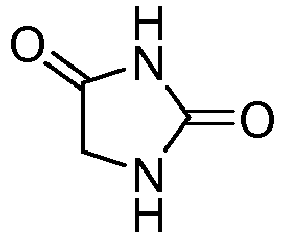
Natrium 1:1 + Intumeszenz + Calcium 2:1 - - - Tetramethylguanidinium 1:1 + Brennbar - 
Tetramethylammonium 1:1 + Brennbar - 
Tetrakis(hydroxymethylphosphonium) 1:1 + Brennbar ∼ 
mögliche Formaldehydquelle 1,1'-(Methylen) bishydantoin Kalium 1:2 + Starke Intumeszenz + 
Natrium 1:2 + Intumeszenz + Calcium 1:1 ∼ Brennbar - Tetrakis(hydroxymethyl-phosphonium) 1:2 + Selbstlöschend; Starke Rauchbildung ∼ mögliche Formaldehydquelle 
mögliche Formaldehydquelle 1,1'-(Methylmethylen) bishydantoin Kalium 1:2 + Starke Intumeszenz + 
Natrium 1:2 + Starke Intumeszenz + Calcium 1:1 + Brennbar - *Dihydroxyalumniumallantoinat (ALDA CAS:5579-81-7) DE3034506A1 ; ++: sehr gute Eigenschaften; +: gute ; ∼: neutrale; -: schlechte; A:K gibt das Verhältnis von Anion zu Kation an - Fig. 1
- zeigt die Stoffmenge im Zellstoff nach 5 Min. Tränkung bei verschiedenen Lösungskonzentrationen.
- Fig. 2
- zeigt die Masse im Zellstoff nach 5 Min. Tränkung bei verschiedenen Lösungskonzentrationen.
- Fig. 3
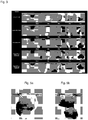
- zeigt eine Bildserie des Abbrands von Kalium(I)hydantoinat, Natrium(I)hydantoinat, Dikalium(I)N,N'-Methylenbishydantoinat, Dinatrium(I)N,N'-Methylenbishydantoinat.
- Fig. 4
- zeigt Kalium(I)hydantoin (5) bei verschiedenen Konzentrationen im Zellstoff.
- Fig. 5
- zeigt guten konsistenten Schaum (links) und zu starkes Schäumen (rechts).
- Die Synthese der Salze (siehe auch Tabelle 1) beruht auf einer Säure-Base Reaktion aus der konjugierten Säure mit dem entsprechenden Hydroxid des gewünschten Kations in wässrigem Medium. Alle Verbindungen werden in einer ausgezeichneten Reinheit meistens als Hydrate erhalten. Nur die Kombination mit Tetrakis(hydroxymethyl)phosphonium lieferte ein Material, das lediglich eine Mischung aus Edukt und Produkt darstellte. Zusätzlich besitzt es einen leichten unangenehmen Eigengeruch, was ein Ausschlusskriterium für manche Anwendungen ist. Außerdem konnte die vielversprechende Methylenbisbarbitursäure nicht in geeignete Salze überführt werden und dient deshalb als Gegenbeispiel.
- Durch die Verwendung von Wasser als Lösungsmittel und den Einsatz nicht schädlicher Edukte kann die Synthese als sehr umweltfreundlich angesehen werden. Die einzige Ausnahme stellt die Synthese des N,N'-Methylenbishydantoins dar, da bei dessen Herstellung Formaldehyd verwendet wird. Obwohl die hergestellte Verbindung kein Formaldehyd abspalten sollte, führt die Verwendung von Formaldehyd in der Synthese zu einer negativen Bewertung in puncto Umweltfreundlichkeit.
- Bei Hydantoin und Allantoin handelt es sich um einprotonige Säuren und die Methylenverbrückten Bishydantoine sind zweiprotonige Säuren. Dementsprechend wurden die stöchiometrischen Einsatzmengen ausgewählt. Im Falle des Dinatrium(I)1,1'-Methylenbishydantoins kristallisierte aus der Hauptmenge, die in einer 1:2 Säure:Base Stöchiometrie vorlag, ein Salz mit einer 1:1 Stöchiometrie aus. Aus diesem Grund wurde versucht, diese Mononatrium Modifikation gezielt herzustellen, was erfolglos war (IR und XPRD Analysen). Logischerweise wurde auch versucht, aus dem Dikalium(I)1,1'-Methylenbishydantoin eine Monomodifikation zu gewinnen, doch konnte auch diese nicht hergestellt werden (IR und XPRD Daten).
- Organische Lösungsmittel tragen zur Umweltverschmutzung bei und deshalb ist es wünschenswert, Wasser als Basis für Reaktionen oder auch Lacke zu verwenden. Die Reinsubstanzen von Hydantoin, Allantoin und die Kondensationsprodukte mit Aldehyden sind schlecht wasserlöslich, aber die Überführung in ihre Salze mit geeigneten Kationen kann sie wasserlöslich machen. Wir beobachteten, dass vor allem die Kombination mit Alkalimetallen zu einer sehr guten Löslichkeit führte.
- Im Falle der Salzbildungsgleichgewichte mit bestimmten Stickstoffbasen (Meglumin oder Ammoniak) konnte gezeigt werden, dass die Derivate des Hydantoins und Allantoins während der Auftrocknung sich nicht als Salz, sondern als neutrale Ausgangsverbindungen abscheiden. Damit können die neutralen Ausgangsverbindungen temporär wasserlöslich werden, wodurch sie für andere Auftragsmethoden zugänglich werden.
- Ein wichtiges Kriterium für die Auswahl der Substanzen für eingehendere Studien, war deren Wasserlöslichkeit. Ausgeschlossen wurden vor allem Verbindungen, die höhere Kationen als die Alkalimetalle enthalten, da diese nur sehr schlecht löslich sind. Trotzdem wurde zumindest für zwei wasserunlösliche Salze versucht, sie als Suspensionen aufzubringen. Ausgewählt wurden dafür ALDA und Calcium(II)hydantoinat. Doch konnte von ALDA keine ausreichende Menge (20 mg) aufgebracht werden und das Calcium(II)hydantoinat ergab keine glatte Oberfläche und versagte beim Brandtest.
- Die Substanzen schäumen zwar in Reinform auf, aber es musste getestet werden, ob sie diese Eigenschaft auch nach Auf-/Einbringung in ein Substrat besitzen. Dies traf bei Furnieren und auch Zellstoffen zu. Der Zellstoff wurde ausgewählt, da dieser definierte Parameter besitzt und leicht erhältlich war. Außerdem führten die Proben bei Furnieren zu einer leichten Vergilbung, weshalb diese als Testmedium ungeeignet schienen.
- Für die Prüfung der brandhemmenden Wirkung wurden Blättchen aus dem Zellstoff in der Größe 3x3 cm ausgeschnitten und anschließend in eine 20%ige Lösung der Zielsubstanz für 300 s eingelegt. Diese Konzentration wurde gewählt, da Vorstudien gezeigt haben, dass bei dieser Konzentration die Ergebnisse sich am besten vergleichen lassen. Des Weiteren wurde darauf geachtet, dass die Blättchen über die angegebene Zeit vollständig benetzt bleiben. Anschließend wurden die noch feuchten Proben in einem Exsikkator bis zur Gewichtskonstanz getrocknet.
- Es wurden von den Hydantoin- und 1,1'-Methylenbis(hydantoin)salzen Lösungen in H2Odest mit verschiedenen Konzentrationen erstellt. Die Konzentrationen wurden in 5% - Schritten von 5% bis maximal 40% - falls die Löslichkeit des Salzes dies zuließ - ansonsten bis zur maximal erreichbaren Konzentration, gewählt (alle Angaben in Masseprozent).
- In je 20 ml der Lösung in einer Kristallisationsschale wurden anschließend 5 cm x 5 cm große Blättchen des Zellstoffes (2,055 g +/- 0,007 g) für exakt 300 s so in die Lösung eingelegt, dass sich deren Oberseite vollständig unter dem Flüssigkeitsspiegel befand. Die Lösung befand sich dabei bereits in der Kristallisationsschale, als der Zellstoff zugegeben wurde, um auch die Unterseite gut zu benetzen. Anschließend wurden die Blättchen im Vakuum bis zur Gewichtskonstanz getrocknet.
- Die nachfolgenden Fig. zeigen die Stoffmenge (
Fig. 1 ) bzw. die Masse (Fig. 2 ) an Probe, welche nach 300 s Tränkung im Zellstoff verblieben. Während der Zellstoff in der Lösung lag, quoll er stark auf. Dieser Effekt ging beim Trocknen wieder zurück, allerdings fiel deutlich auf, dass mit steigender Konzentration auch die Dicke des getrockneten Blättchens stieg. Außerdem wurden die Blättchen mit steigender Konzentration der Lösung nach dem Trocknen härter. - Die wie vorher beschriebenen Blättchen wurden in einer Selbstkonstruktion eingespannt und es wurde mittels eines Bunsenbrenners versucht, diese zu entzünden. Wenn die Probe sich entzündete, wurde der Bunsenbrenner entfernt. Im Falle einer Auslöschung der Flamme wurde die Probe wieder entzündet. Proben, die sich nicht entzündeten, wurden eine gewisse Zeit beflammt. Der Versuch wurde gefilmt und diente als Grundlage für die Bewertung der Brandschutzwirkung der Proben (Beispiele
Fig. 3 ). - Wir stellten die eigenständige Intumeszenz zum ersten Mal bei dem Dinatrium(I)N,N'-Methylenbishydantoin fest, als wir dessen thermisches Verhalten in einem Mikroskop mit Heizplatte untersuchten. Um die einzelnen Strukturelemente zu identifizieren, die die eigenständige Intumeszenz beeinflussen, reduzierten wird die Struktur des Anions auf das Hydantoin und stellten fest, dass diese eine stärkere Schaumbildung zeigten als die N,N'-Methylenbishydantoine. Erweiterung der Struktur des Hydantoins auf das Allantoin brachte ähnliche Ergebnisse. Außerdem untersuchten wir den Einfluss eines Substituenten an der Methylenbrücke des N,N'-Methylenbishydantoins und fanden, dass die Veränderung der Methylenbrücke die Intumeszenz-Wirkung weder verbessert noch beeinträchtigt. Dadurch konnte gezeigt werden, dass eine Modifikation an der Methylenbrücke eine Möglichkeit bietet, zusätzliche Funktionalitäten einzuführen, ohne dass der Intumeszenzeffekt verloren geht.
- Alle Experimente zeigten, dass die Wahl des Kations einen großen Einfluss auf die Intumeszenzwirkung der Verbindungen hat.
- Ein Versuchsexperiment mit einer Intumeszenzbeschichtung aus einer 1:1-Mischungsphase aus Kalium- und Natriumhydantoinat ergab, dass die unterschiedlichen Kationen unterschiedliche Intumeszenztemperaturprofile aufweisen, was die Wirkung der Intumeszenzbeschichtung ausweitet.
- Um die eigenständige Intumeszenz im Zellstoff auszubilden, ist ein anorganisches Kation sinnvoll. Die Kombinationen der oben angeführten Anionen mit Kalium und Natrium bildeten immer einen Schutzschaum aus, der sich aber in Volumen und Stabilität abhängig vom Anion unterschied.
- Werden anorganische Kationen mit einer größeren Ladung verwendet, wie zum Beispiel Calcium, wird eine ineffiziente oder keine Schutzschaumbildung beobachtet.
- Die Verwendung der stickstoffhaltigen organischen Kationen 1,1,3,3,-Tetramethylguandinium und Tetramethylammonium zielte darauf ab, bei der Verbrennung mehr Gase freizusetzen, um mehr Schaumvolumen zu produzieren. Doch zeigte sich dieser Effekt nicht und die Proben verbrannten ähnlich wie der reine Zellstoff. Trotzdem könnten sich die Substanzen als wasserlösliche Gasbildner für 3-Komponenten IntumeszenzBeschichtungen eignen.
- Aufgrund der Tatsache, dass sich Phosphor positiv auf die brandhemmende Wirkung von Schutzanstrichen auswirkt, wurde versucht diesen als Tetrakis(hydroxymethyl)phosphonium zu inkorporieren. Die Kombinationen mit diesem Kation waren selbstlöschend, konnten aber immer wieder für kurze Zeit entzündet werden. Zusätzlich bildete sich dabei sehr viel unangenehm riechender Rauch.
- Für die Substanzen, die eine eigenständige Intumeszenz zeigten, steigt das Volumen des Schaums mit zunehmender Konzentration an (Beispiel Kalium(I)hydantoinat
Fig. 4 ). Im Falle des Kalium(I)hydantoinats zeigte sich, dass höhere Konzentrationen auch einen negativen Einfluss haben können, da die Schaumbildung bei höheren Lösungskonzentrationen ab 30% so stark wird, dass der Schaum durchreißt und abfällt, wodurch ein großer Teil der Schutzwirkung verloren geht (Fig. 5 ). - Die N,N'-(Alkyl)bishydantoine zeigen bei niedrigerer Konzentration weniger Schaumbildung als reines Hydantoin, doch wird die Schaumbildung mit steigender Konzentration nie so stark, dass sie zum Durchreißen des Schaumes führt. Das gilt nur im Falle des verwendeten Zellstoffes. Für andere zu schützende Substanzen muss es von Fall zu Fall getestet werden.
-

- In einem 500 ml Kolben wurden Formaldehyd wässr. Lsg. 37% (53.1 mL, 0.510 mol), Hydantoin (101.6 g, 1.020 Mol), HCl konz. 37% (150 mL) und H2Odest. (100 mL) vereinigt und 72 h gerührt. Anschließend wurde der weiße Feststoff abgenutscht und mit Wasser gewaschen. Nachfolgende Trocknung bei 120°C für einen Tag ergab N,N'-Methylenbishydantoin (1) (96.2 g, 89%). mp 300°C. δH (DMSO-d6 , 300 MHz) 3.93 (s, 4H, C6H2, C6'H2), 4.74 (s, 2H, C1H2), 10.84 (s, 2H, N3H, N3'H). δC (DMSO-d6 , 75 MHz): 48.5 (C1), 50.1 (C6,C6'), 157.4 (C4,C4'), 171,8 (C3, C3'). νmax(neat)/cm-1 3196 (m), 3074 (w), 1752 (m), 1609 (s), 1474 (m), 1454 (s), 1424 (m), 1376 (s), 1333 (m), 1263 (m), 1210 (s), 1171 (m), 1150 (s), 1098 (m), 984(w), 961 (m), 896 (m), 843 (w), 760 (m), 714 (s), 696 (s), 639 (s), 599 (s), 572 (s), 444 (m).
-
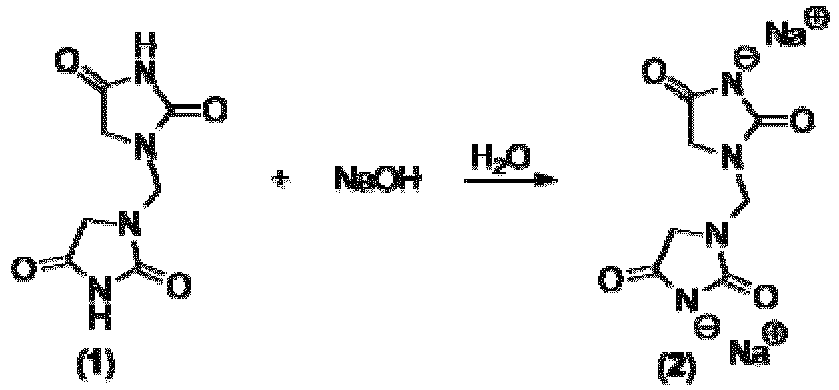
- In einem 1 L Kolben wurden N,N'-Methylenbishydantoin (95.6 g, 0.450 mol) (1) in H2Odest. (250 mL) suspendiert und Natriumhydroxid (36.1 g, 0.900 mol) wurde portionsweise zugegeben. Nachdem der Großteil gelöst war, wurde die Lösung filtriert und das Lösungsmittel am Rotationsverdampfer entfernt. Der Rückstand wurde 8 h bei 50°C am Hochvakuum getrocknet und verfestigte sich nach einigen Tagen zu dem Dinatrium-N,N'-methylenbishydantoinat·Tetrahydrat (124.0 g). Langsame Kristallisation aus Methanol/H2Odest. führt zu Mononatrium-N,N'-methylenbishydydantoinat·Sesterhydrat (·2.5 H2O). δH (D2O, 300 MHz) 3.93 (s, 2H, C6H2, C6'H2), 4.90 (s, 4H, C1H2). δC (D2O, 75 MHz): 46.4 (C1), 49.2 (C6,C6'), 170.6 (C5,C5'), 187.0 (C3, C3'). νmax(neat)/cm-1 3355 (bm), 3010 (bm), 2737 (w), 1763 (w), 1685 (m), 1569 (s), 1460 (m), 1449 (m), 1406 (m), 1347 (s),1264 (m), 1202 (s), 1154 (s), 1113 (m), 994 (w), 964 (m), 909 (w), 855 (w), 786 (s), 760 (m), 686 (m), 617 (m), 582 (m).
- N,N'-Methylenbishydantoin (1) (80.0 g, 0.380 mol) und Kaliumhydroxid (42.3 g, 0.750 mol) in H2Odest. (250 mL) ergaben weiß kristallines Kalium(I)N,N'-methylenbishydantoinat·Tetrahydrat (3) (126.0 g). Langsame Kristallisation aus H2Odest. führte zum hydratisierten Dikaliumsalz. δH (D2O, 300 MHz) 3.95 (s, 2H, C6H2, C6'H2), 4.91 (s, 4H, C1H2). δC (D2O, 75 MHz): 43.8 (C1), 46.4 (C6,C6'), 166.1 (C5,C5'), 182.4 (C3, C3'). νmax(neat)/cm-1: 3443 (m), 3256 (bm), 3122 (bm), 1796 (m), 1674 (m), 1598 (s), 1570 (s), 1469 (m), 1444 (s), 1423 (w), 1399 (m), 1368 (s), 1331 (s), 1267 (m), 1202 (s), 1160 (s), 996 (w), 960 (m), 896 (w), 865 (m), 792 (s), 765 (m), 700 (s), 681 (m), 616 (s), 571 (s), 494 (m), 432 (s).
- N,N'-Methylenbishydantoin (1) (1.0 g, 0.005 mol) und Calciumhydroxid (0.4 g, 0.005 mol) in H2Odest. (5 mL) ergaben Calcium(II)N,N'-methylenbishydantoinat (4) (0.95 g, 81%) als weiße, kristalline Substanz. δH (D2O, 300 MHz): 3.93 (s, 2H, C6H2, C6'H2), 4.90 (s, 4H, C1H2). δC (D2O, 75 MHz): 43.8 (C1), 46.6 (C6,C6'), 167.5 (C5,C5'), 184.0 (C3, C3'). νmax(neat)/cm-1: 3512 (bm), 3373 (bm), 3159 (bm), 2927 (bm), 1682 (m), 1567 (s), 1454 (s), 1423 (m), 1405 (s), 1363 (s), 1335 (s), 1274 (m), 1232 (m), 1215 (s), 1194 (s), 989 (w), 957 (w), 925 (w), 869 (m), 788 (s), 709 (m), 661 (m), 622 (s), 580 (s), 418 (m).
- N,N'-Methylenbishydantoin (1) (1.0 g, 0.005 mol) und Bariumhydroxid·Octahydrat (1.5 g, 0.005 mol) in H2Odest. (10 mL) unter Ar(g) ergaben Barium(II)N,N'-methylenbishydantoinat (5) (1.4 g, 86%) als klares Öl. δH (D2O, 300 MHz): 3.92 (s, 4H, C6H2, C6'H2), 4.89 (s, 2H, C1H2). δC (D2O, 75 MHz) 43.8 (C1), 46.7 (C6,C6'), 168.0 (C5,C5'), 184.4 (C3, C3'). νmax (neat)/cm-1: 3337 (b), 3246 (b), 2931 (b), 1672 (w), 1547 (s), 1442 (m), 1401 (m), 1342 (m), 1307 (m), 1206 (s), 965 (w), 860 (w), 784 (m), 667 (w), 610 (m), 419 (w).
- N,N'-Methylenbishydantoin (1) (1.0 g, 0.005 mol) und 1,1,3,3-Tetramethylguanidin (1.2 mL, 0.010 mol) in H2Odest. (5 mL) ergaben Bis(1,1,3,3-tetramethylguanidinium)N,N'-methylenbishydantoinat (6) (2.0 g, 96%) als wachsartige, gelbliche Substanz. δH (d6-DMSO, 300 MHz) 2.78 (s, 24H, 8x TMG-CH3), 3.54 (s, 4H, C6H2, C6'H2), 4.64 (s, 2H, C1H2), 5.09 (bs, TMG-NH2). δC (d6-DMSO, 75 MHz) 39.3 (8x TMG-CH3), 49.2 (C1), 51.1 (C6,C6'), 163.2 (TMG-C1), 166.7 (C5,C5'), 179.7 (C3, C3'). νmax(neat)/cm-1 3511 (w), 2935 (bm), 1702 (w), 1557 (s), 1464 (m), 1403 (m), 1328 (s), 1279 (m), 1192 (s), 1176 (s), 1090 (m), 1065 (m), 1036 (m), 952 (w), 880 (w), 790 (m), 711 (m), 688 (m), 653 (m), 613 (s), 580 (m), 540 (m), 483 (w), 410 (w).
- N,N'-Methylenbishydantoin (1) (1.0 g, 0.005 mol) und Tetramethylammoniumhydroxid·Pentahydrat (1.7 g, 0.010 mol) in H2Odest. (5 mL) ergaben Bis(tetramethylammonium)N,N'-methylenbishydantoinat (7) (1.6 g, 95%) als wachsartige, kristalline Substanz. mp 45°C. NMR: δH (D2O, 300 MHz): 3.21 (s, 24H, 8x N-CH3), 3.91 (s, 4H, C6H2, C6'H2), 4.89 (s, 2H, C1H2). δC (D2O, 75 MHz): 43.8 (C1), 46.61 (C6,C6'), 50.0 (N-CH3), 168.04 (C5,C5'), 184.33 (C3, C3'). νmax(neat)/cm-1 3441 (m), 3284 (bm), 3025 (w), 1683 (m), 1569 (s), 1488 (m), 1448 (m), 1396 (w), 1301 (m), 1259 (m), 1193 (s), 994 (w), 949 (s), 851(w), 794 (m), 690 (m), 688 (m), 611 (s), 578 (s), 456 (w), 414 (w).
- N,N'-Methylenbishydantoin (1) (1.0 g 0.005 mol) und N-Methyl-D-Glucamin (1.8 g, 0.010 mol) in H2Odest. (10 mL) ergaben Bis(N-methyl-D-glucamin)N,N'-methylenbishydantoinat (8) (2.8 g, 98%) als wachsartige, weiße Substanz. δH (d6-DMSO, 300 MHz): 2.27 (s, 6H, N-CH3), 2.56 (d, 4 H, J= 4.4 Hz, N-CH2), 3.37 (m, CH-OH), 3.47 (m, CH-OH), 3.63 (m, CH-OH), 3.83 (b, N-H), 3.91 (C6H2, C6'H2), 4.73 (s, 2H, C1H2). δC (d6-DMSO, 75 MHz) 35.9 (N-CH3), 48.6 (C1), 50.1 (C6,C6'), 52.7 (N-CH2), 63.8 (CH2-OH), 70.5 (d, CH-OH), 70.9 (CH-OH), 71.2 (CH-OH), 157.9 (C5,C5'), 172.2 (C3, C3'). νmax(neat)/cm-1 3314 (s), 3233 (s), 2979 (m), 2951 (m), 2918 (m), 2730 (m), 2525 (w), 1764 (w), 1715 (m), 1660 (m), 1587 (s), 1475 (m), 1437 (s), 1419 (s), 1376 (m), 1304 (m), 1210 (m), 1174 (m), 1152 (m), 1118 (m), 1096 (s), 1074 (s), 1048 (s), 1016 (s), 971 (w), 943 (w), 907 (m), 885 (m), 864 (m), 845 (m), 764 (w), 687 (m), 645 (s), 599 (s), 573 (m), 516 (m), 463 (m).
-

- In einem 50 mL Kolben wurden Lithiummethanolat (0.3 mL, 0.008 mol) in Methanol (10 mL) gelöst und N,N'-Methylenbishydantoinat (1) (0.7 g, 0.004 mol) wurde zugegeben. Der weiße Feststoff wird zuerst angelöst und beginnt dann wieder auszufallen. Zugabe von H2Odest. (10 mL) löste den Feststoff vollständig. Das Lösungsmittel wurde am Rotationsverdampfer entfernt und am Hochvakuum für 3 h getrocknet, was Lithium(I)N,N'-methylenbishydantoinat (9) (0.7 g, 91%) als weißes Pulver ergab. νmax(neat)/cm-1 3447 (bw), 3346 (bm), 1684 (m), 1558 (s), 1453 (m), 1430 (m), 1405 (m), 1376 (m), 1344 (m), 1283 (m), 1209 (s), 1179 (m), 1115 (w), 999 (w), 966 (w), 935 (m), 872 (w), 788 (m), 716 (m), 614 (s), 579 (m), 423 (w).
-

- In einem 50 mL Kolben wurden N,N'-Methylenbishydantoin (1) (1.0 g, 0.005 mol) in H2Odest. (10 mL) suspendiert und mit Ammoniak Lsg. 25% (1.4 ml, 0.019 mol) versetzt, woraufhin sich eine klare Lösung bildet. Der Kolben wurde vor Licht geschützt und Silberoxid (1.1 g, 0.005 mol) wurde dazugegeben. Die Reaktionslösung wurde über Nacht gerührt und der metallisch graue Niederschlag abgenutscht und mit H2Odest. gewaschen. Anschließende Trocknung für 3 h am Hochvakuum ergab Silber(I)N,N'-methylenbishydantoinat (10) (1.8 g, 91%) als graues Pulver. νmax(neat)/cm-1 3334 (w), 3298 (m), 3245 (w), 3162 (m), 1692 (m), 1630 (s), 1606 (s), 1461 (s), 1441 (m), 1421 (m), 1351 (s), 1322 (s), 1275 (m), 1257 (m), 1213 (s), 1183 (s), 1165 (m), 964 (m), 937 (w), 884 (w), 787 (m), 705 (m), 648 (m), 619 (s), 604 (s), 585 (m), 468 (w), 421 (m).
-

- In einem 50 mL Kolben wurden N,N'-Methylenbishydantoin (1) (1.0 g, 0.005 mol) in H2Odest. (10 mL) suspendiert und mit Bariumhydroxid·Octahydrat (1.5 g, 0.005 mol) versetzt, woraufhin sich fast alles löste. Anschließend wurde Bis[tetrakis(hydroxymethyl)phosphonium]sulfat Lsg. 72.5% (1.9 mL, 0.005 mol) zugegeben, dabei bildet sich ein weißer Niederschlag. Die Suspension wurde über Nacht gerührt und der weiße Niederschlag abgenutscht. Der Niederschlag wurde verworfen und die Lösung am Rotationsverdampfer eingeengt. Trocknung am Hochvakuum für 3 h ergab Bis[tetrakis(hydroxymethyl)phosphonium]N,N'-methylenbishydantoinat (11) (1.7 g, 70%) in einer Mischung mit nicht umgesetztem Edukt als wachsartige Substanz. νmax(neat)/cm-1 3197 (m), 2970 (bm), 2823 (bm), 1763 (m), 1689 (m), 1595 (m), 1451 (s), 1372 (s), 1264 (m), 1210 (s), 1169 (m), 1140 (s), 1038 (s), 959 (m), 895 (m), 761 (m), 693 (s), 638 (m), 598 (m), 571(s), 444 (m).
- Hydantoin (100.1 g, 1.0 mol) wurde in H2Odest. (100 mL) suspendiert, mit Acetaldehyd (42.4 mL, 0.8 mol) versetzt und langsam wurde HCl (150 mL) zugegeben. Die Suspension wurde für 24 h gerührt, wobei sie eine braune Färbung annahm; bei der anschließenden Filtration konnte die braune Farbe vollständig mit H2Odest. entfernt werden. Trocknung am HV für 6 h ergab N,N'-(Methylmethylen)bishydantoin (12) (82.2 g, 73%). Kristalle für Röntgenstrukturanalysen konnten durch langsame Kristallisation aus H2Odest./NH3 gewonnen werden. δH (DMSO-d6, 300 MHz) 1.45 (d, 3H, J= 6.9 Hz, -CH3), 4.00 (d, 4H, J= 3.0 Hz, C6H2, C6'H2), 5.68 (q, 1H, J= 6.9 Hz, C1H), 10.80 (s, 2H, N3H, N3'H). δC (DMSO-d6, 75 MHz) 16.5 (-CH3), 48.3 (C6, C6'), 55.8 (C1), 156.2 (C5, C5'), 171.7 (C3, C3'). νmax (neat)/cm-1 3137 (w), 3040 (w), 2956 (w), 2771 (w), 1758 (m), 1689 (s), 1476 (m), 1448 (m), 1415 (m), 1389 (m), 1348 (w), 1323 (m), 1251 (m), 1232 (m), 1213 (m), 1146 (m), 1118 (m), 1068 (m), 1053 (m), 986 (w), 907 (w), 894 (w), 842 (w), 809 (w), 758 (m), 712 (w), 687 (m), 658 (m), 616 (m), 594 (m), 576 (w), 471 (m), 431 (s).
- N,N'-(Methylmethylen)bishydantoin (12) (20.0 g, 0.09 mol) wurde in H2Odest. (50 mL) suspendiert und mit Natriumhydroxid (7.1 g, 0.16 mol) versetzt. Nachdem alles gelöst war, wurde das Lösungsmittel am Rotationsverdampfer entfernt und eine nachfolgende Trocknung am Hochvakuum bei 50°C ergab festes, weißes Natrium(I)N,N'-(methylmethylen)bishydantoinat (13) (23.2 g, 97%). δH (D2O, 300 MHz) 1.46 (d, 3H, J= 7 Hz, -CH3), 3.82 (m, 4H, C6H2, C6'H2), 5.85 (m, 1H, C1H). δC (D2O, 75 MHz) 19.6 (-CH3), 52.4 (C6, C6'), 58.7 (C1), 174.9 (C5, C5'), 192.4 (C3, C3'). νmax(neat)/cm-1 3257 (m), 2162 (w), 1682 (m), 1565 (s), 1441 (m), 1373 (s), 1325 (s), 1202 (s), 1072 (w), 1053 (w), 986 (m), 829 (m), 789 (m), 748 (m), 661 (m), 611 (m), 432 (m).
- N,N'-(Methylmethylen)bishydantoin (12) (20.0 g, 0.09 mol) wurde in H2Odest. (50 mL) suspendiert und mit Kaliumhydroxid (9.9 g, 0.16 mol) versetzt. Nachdem alles gelöst war, wurde das Lösungsmittel am Rotationsverdampfer entfernt und eine nachfolgende Trocknung am Hochvakuum bei 50°C ergab festes, weißes Kalium(I)N,N'-(methylmethylen)bishydantoinat (14) (21.2 g, 79%). δH (D2O, 300 MHz) 1.46 (d, 3H, J= 7 Hz, -CH3), 3.82 (m, 4H, C6H2, C6'H2), 5.85 (m, 1H, C1H). δC (D2O, 75 MHz) 19.6 (-CH3), 52.4 (C6, C6'), 58.7 (C1), 174.4 (C5, C5'), 191.8 (C3, C3'). νmax(neat)/cm-1 3257 (w), 2985 (w), 2931 (w), 2864 (w), 1681 (m), 1557 (s), 1442 (m), 1362 (s), 1321 (s), 1199 (s), 1052 (m), 984 (m), 826 (m), 789 (m), 745 (w), 713 (w), 659 (w), 609 (m), 483 (w), 439 (m).
- N,N'-(Methylmethylen)bishydantoin (12) (1.0 g, 0.004 mol) wurde in H2Odest. (5 mL) suspendiert und mit Calciumhydroxid (0.3 g, 0.004 mol) versetzt. Dabei entstand eine leicht braune Suspension. Diese wurde abfiltriert und das Filtrat wurde am Rotationsverdampfer eingeengt. Eine nachfolgende Trocknung bei 50°C am Hochvakuum ergab weißes, festes Calcium(II)N,N'-(methylmethylen)bishydantoinat (15) (0.7 g, 57%). δH (D2O, 300 MHz) 1.46 (d, 3H, J= 7 Hz, -CH3), 3.85 (m, 4H, C6H2, C6'H2), 5.91 (m, 1H, C1H). δC (D2O, 75 MHz) 19.1 (-CH3), 48.9 (C6, C6'), 62.2 (C1), 163.34 (C5, C5'), 180.2 (C3, C3'). νmax(neat)/cm-1 3338 (m), 2041 (w), 1566 (s), 1440 (m), 1383 (s), 1312 (m), 1205 (m), 948 (w), 826 (w), 789 (w), 609 (m), 431 (w).
- N,N'-(Methylmethylen)bishydantoin (12) (1.0 g, 0.004 mol) wurde in H2Odest. (5 mL) suspendiert und mit Bariumhydroxid·Octahydrat (1.4 g, 0.004 mol) versetzt. Dabei entstand eine weiße Suspension. Diese wurde abfiltriert und das Filtrat wurde am Rotationsverdampfer eingeengt. Eine nachfolgende Trocknung bei 50°C am Hochvakuum ergab weißes, festes Barium(II)N,N'-(methylmethylen)bishydantoinat (16) (0.9 g, 56%). δH (D2O, 300 MHz) 1.46 (d, 3H, J= 7 Hz, -CH3), 3.85 (m, 4H, C6H2, C6'H2), 5.90 (m, 1H, C1H). δC (D2O, 75 MHz) 19.1 (-CH3), 48.9 (C6, C6'), 62.1 (C1), 163.4 (C5, C5'), 180.1 (C3, C3'). νmax(neat)/cm-1 3337 (m), 3197 (m), 3000 (w), 2939 (w), 1660 (m), 1555 (s), 1439 (m), 1384 (s), 1310 (m), 1204 (m), 1167 (m), 1074 (w), 990 (w), 947 (w), 855 (m), 828 (w), 788 (w), 748 (w), 662 (m), 607 (w), 547 (w), 431 (w).
- N,N'-(Methylmethylen)bishydantoin (12) (1.0 g, 0.004 mol) wurde in H2Odest. (5 mL) suspendiert und mit 1,1,3,3-Tetramethylguandin (1.1 mL, 0.009 mol) versetzt. Nachdem alles gelöst war, wurde das Lösungsmittel am Rotationsverdampfer entfernt und eine nachfolgende Trocknung bei 50°C am Hochvakuum ergab Bis(1,1,3,3-tetramethylguanidinium)N,N'-(methylmethylen)bishydantoinat (17) (2.0 g, 98%) als klare, viskose Flüssigkeit. δH (D2O, 300 MHz) 1.47 (d, 3H, J= 7 Hz, -CH3), 2.94 (s, 24H, 8x TMG-CH3), 3.90 (m, 4H, C6H2, C6'H2), 5.83 (m, 1H, C1H). δC (D2O, 75 MHz) 19.5 (C1-CH3), 41.5 (8x TMG-CH3), 52.3 (C6, C6'), 58.9 (C1), 164.1 (TMG-C1), 174.2 (C5, C5'), 191.5 (C3, C3'). νmax(neat)/cm-1 2932 (m), 1683 (m), 1555 (s), 1447 (m), 1407 (m), 1352 (m), 1319 (m), 1195 (s), 1095 (m), 1063 (m), 1035 (m), 881 (w), 790 (m), 756 (m), 686 (m), 656 (m), 609 (m), 592 (m), 424 (m).
- N,N'-(Methylmethylen)bishydantoin (12) (1.0 g, 0.004 mol) wurden in H2Odest. (5 mL) suspendiert und mit Tetramethylammoniumhydroxid (1.6 g, 0.009 mol) versetzt. Nachdem alles gelöst war, wurde das Lösungsmittel am Rotationsverdampfer entfernt und eine nachfolgende Trocknung bei 50°C am Hochvakuum ergab Bis(tetramethylammonium)N,N'-(methylmethylen)bishydantoinat (18) (1.22 g, 74%) als gelbliches Öl, welches sich langsam verfestigte. δH (D2O, 300 MHz) 1.47 (d, 3H, J= 7 Hz, -CH3), 3.17 (s, 24H, 8x N-CH3), 3.90 (m, 4H, C6H2, C6'H2), 5.83 (m, 1H, C1H). δC (D2O, 75 MHz) 19.1 (C1-CH3), 52.5 (C6, C6'), 57.9 (8x N-CH3), 58.5 (C1), 174.8 (C5, C5'), 192.3 (C3, C3'). νmax(neat)/cm-1 3382 (w), 3256 (w), 3022 (m), 2148 (w), 1678 (m), 1567 (s), 1490 (m), 1451 (m), 1347 (m), 1306 (m), 1197 (m), 1159 (m), 1071 (w), 1043 (w), 949 (w), 823 (w), 793 (m), 608 (m), 589 (m), 455 (m), 432 (m).
- Hydantoin (30.0 g, 0.3 mol) wurde in H2Odest. (100 mL) suspendiert und mit Natriumhydroxid (11.9 g, 0.3 mol) versetzt und gerührt, bis sich alles gelöst hat. Das Lösungsmittel wurde am Rotationsverdampfer entfernt und eine anschließende Trocknung am Hochvakuum ergab weißes, festes und hydratisiertes Natrium(I)hydantoinat (19) (43.3 g, 91%). δH (DMSO-d6/D2O, 300 MHz) 3.42 (s, 1H, NH), 3.75 (s, 2H, CH2). δC (DMSO-d6/D2O, 75 MHz) 49.5 (C5), 175.6 (C4), 188.9 (C2). νmax(neat)/cm-1 3578 (w), 3373 (w), 3271 (m), 3154 (w), 2935 (w), 1701 (m), 1661 (m), 1508 (s), 1443 (m), 1404 (s), 1386 (s), 1311 (m), 1282 (m), 1223 (m), 1124 (w), 1090 (w), 1032 (w), 985 (w), 904 (w), 796 (m), 745 (m), 666 (m), 597 (w), 559 (m), 438 (m).
- Hydantoin (200.0 g, 2.0 mol) wurde in H2Odest. (500 mL) suspendiert und mit Kaliumhydroxid (112,0 g, 2.0 mol) versetzt und gerührt, bis sich alles gelöst hat. Das Lösungsmittel wurde am Rotationsverdampfer entfernt und eine anschließende Trocknung am Hochvakuum ergab weißes, festes und hydratisiertes Kalium(I)hydantoinat (20) (301.6 g, 97%). δH (DMSO-d6/ D2O, 300 MHz) 3.45 (s, 1H, NH), 3.98 (s, 2H, CH2). δC (DMSO-d6/ D2O, 75 MHz) 49.8 (C5), 176.1 (C4), 189.8 (C2). νmax(neat)/cm-1 3213 (m), 3065 (w), 2973 (w), 2923 (w), 1713 (m), 1687 (m), 1574 (s), 1444 (m), 1394 (s), 1305 (m), 1218 (s), 1095 (w), 1021 (w), 985 (w), 935 (w), 894 (w), 794 (w), 745 (m), 660 (s), 588 (m), 567 (m), 452 (m).
- Hydantoin (20.0 g, 0.2 mol) wurde in H2Odest. (50 mL) suspendiert und mit Calciumhydroxid (7.4 g, 0.1 mol) versetzt. Es bleibt eine leicht getrübte Lösung. Diese wurde abfiltriert und am Rotationsverdampfer eingeengt. Eine anschließende Trocknung am Hochvakuum ergab festes, weißes und hydratisiertes Calcium(II)hydantoinat (21) (25.5 g, 93%). δH (D2O, 300 MHz) 3.66 (s, 4H, CH2). δC (c, 75 MHz) 46.5 (C5), 164.0 (C4), 180.9 (C2). νmax(neat)/cm-1 3641 (w), 3392 (m), 3212 (w), 2939 (w), 1637 (s), 1571 (s), 1436 (s), 1395 (s), 1378 (m), 1322 (s), 1210 (m), 1157 (w), 1048 (m), 930 (w), 912 (w), 875 (m), 776 (m), 732 (w), 674 (m), 583 (s), 552 (s), 445 (m).
- Hydantoin (20.0 g, 0.2 mol) wurde mit H2Odest (10 ml) suspendiert. Nach der Zugabe von Bariumhydroxid·Octahydrat (31.5 g, 0.1 mol) entstand eine kleisterähnliche weiße Substanz. Durch Filtration wurde die Lösung abgetrennt und bei vermindertem Druck wurde das Wasser abdestilliert. Trocknung im Vakuum über Phosphorpentoxid ergab Barium(II)hydantoin (22) (25.3 g, 76%). νmax(neat)/cm-1 3188 (m), 1673 (m), 1574 (s), 1442 (m), 1390 (s), 1301 (m), 1218 (m), 1103 (w), 1022 (w), 992 (w), 907 (w), 794 (w), 736 (m), 661 (m), 639 (m), 600 (w), 577 (m), 546 (m), 433 (m).
- Hydantoin (2.0 g, 0.02 mol) wurde in H2Odest. (10 mL) suspendiert und mit 1,1,3,3-Tetramethylguanidin (2.5 mL, 0.02 mol) versetzt. Dabei löst sich der Feststoff sehr rasch. Das Lösungsmittel wurde am Rotationsverdampfer entfernt und eine anschließende Trocknung am Hochvakuum ergab weiß-kristallines 1,1,3,3-Tetramethylguanidiniumhydantoinat (23) (4.1 g, 95%). δH (D2O, 300 MHz) 2.95 (s, 12 H, TMG-CH3), 3.87 (s, 2 H,CH2). δC (D2O, 75 MHz) 41.5 (TMG-CH3), 52.1 (C5), 164,0 (C4), 193.4 (C2), 177.8 (TMG-C1). νmax(neat)/cm-1 3286 (m), 3064 (m), 2935 (m), 2869 (m), 2777 (m), 1693 (m), 1557 (s), 1455 (m), 1409 (m), 1370 (m), 1311 (w), 1275 (m), 1212 (m), 1169 (m), 1110 (m), 1064 (m), 1035 (m), 877 (m), 792 (m), 738 (m), 687 (m), 654 (m), 597 (m), 558 (m), 430 (m).
- Hydantoin (2.0 g, 0.02 mol) wurde in H2Odest. (10 mL) suspendiert und mit Tetramethylammoniumhydroxid·Pentahydrat (3.6 g, 0.02 mol) versetzt. Dabei löst sich der Feststoff sehr rasch. Das Lösungsmittel wurde am Rotationsverdampfer entfernt und eine anschließende Trocknung am Hochvakuum ergab weiß-kristallines Tetramethylammoniumhydantoinat (24) (3.2 g, 92%). δH (D2O, 300 MHz) 3.18 (s, 12H, 4x N-CH3), 3.86 (s, 2H, CH2). δC (D2O, 75 MHz) 52.2 (C5), 57.9 (N-CH3), 178.8 (C4), 194.8 (C2). νmax(neat)/cm-1 3256 (m), 3021 (m), 1682 (w), 1568 (s), 1487 (m), 1460 (m), 1391 (m), 1357 (m), 1281 (m), 1211 (s), 1091 (m), 1011 (w), 950 (s), 887 (w), 800 (m), 739 (m), 690 (m), 649 (s), 593 (m), 580 (m), 456 (w), 428 (m).
- Barium(II)hydantoinat (23) (25.3 g 0.08 mol) wurde in 200 mL H2Odest. suspendiert und mit Bis[tetrakis(hydroxymethyl)phosphonium]sulfat (30.1 mL, 0.08 mol) versetzt. Daraufhin bildete sich ein feiner, weißer Niederschlag, der abfiltriert wurde, und das Lösungsmittel wurde am Rotationsverdampfer entfernt. Eine anschließende Trocknung am Hochvakuum bei 50°C ergab Tetrakis(hydroxymethyl)phosphoniumhydantoinat in einer Mischung mit nicht ungesetzten Edukten (25) (28.7 g, 74%). νmax(neat)/cm-1 3391 (m), 3261 (m), 2977 (w), 2935 (w), 2898 (w), 1782 (m), 1693 (s), 1461 (m), 1442 (m), 1379 (m), 1339 (m), 1296 (m), 1208 (m), 1154 (m), 1083 (m), 1039 (s), 928 (m), 779 (m), 761 (m), 716 (m), 679 (m), 638 (s), 580 (s), 479 (m).
- Allantoin (2.0 g, 0.01 mol) wurde in H2Odest. (10 mL) suspendiert und mit Natriumhydroxid (0.5 g, 0.01 mol) versetzt. Sobald alles gelöst war, wurde das Lösungsmittel am Rotationsverdampfer entfernt und eine anschließende Trocknung am Hochvakuum bei 50°C ergab weißes, festes Natrium(I)allantoinat (26) (2.0 g, 89%). δH (D2O, 300 MHz) 5.27 (s, 1H, C5H). δC (D2O, 75 MHz) 62.9 (C5), 163.2 (C7), 177.4 (C4), 192.5 (C2). νmax(neat)/cm-1 3297 (m), 3208 n(m), 1574 (s), 1532 (s), 1382 (s), 1304 (m), 1197 (m), 1162 (m), 1038 (w), 790 (w), 720 (w), 601 (w), 513 (w), 437 (w).
- Allantoin (2.0 g, 0.01 mol) wurde in H2Odest. (10 mL) suspendiert und mit Kaliumhydroxid (0.8 g, 0.01 mol) versetzt. Sobald alles gelöst war, wurde das Lösungsmittel am Rotationsverdampfer entfernt und eine anschließende Trocknung am Hochvakuum bei 50°C ergab weißes, festes Kalium(I)allantoinat (27) (1.3 g, 52%). δH (D2O, 300 MHz) 5.35 (s, 1H, C5H). δC (D2O, 75 MHz) 67.2 (C5), 163.2 (C7), 176.3 (C4), 191.7 (C2). νmax(neat)/cm-1 3266 (m), 1661 (m), 1574 (s), 1536 (s), 1374 (m), 1285 (m), 1163 (m), 1034 (m), 785 (m),720 (w), 647 (w), 608 (w), 512 (w), 436 (m).
- Allantoin (2.0 g, 0.013 mol) wurde in H2Odest. (10 mL) suspendiert und mit Calciumhydroxid (0.5 g, 0.006 mol) versetzt. Es entstand eine leicht bräunliche Suspension, die abfiltriert wurde, und das Filtrat wurde am Rotationsverdampfer eingeengt. Eine anschließende Trocknung am Hochvakuum bei 50°C ergab weißes, festes Calcium(II)allantoinat (28) (1.9 g, 83%). δH (D2O, 300 MHz) 5.30 (s, 1H, C5H). δC (D2O, 75 MHz) 62.9 (C5), 163.2 (C7), 177.5 (C4), 191.6 (C2). νmax(neat)/cm-1 3307 (m), 3207 (m), 1575 (s), 1520 (s), 1385 (s), 1156 (m), 779 (m).
- Allantoin (2.0 g, 0.013 mol) wurde in H2Odest. (10 mL) suspendiert und mit Bariumhydroxid·Octahydrat (2.0 g, 0.006 mol) versetzt. Es entstand eine weiße Suspension, die abfiltriert wurde, und das Filtrat wurde am Rotationsverdampfer eingeengt. Eine anschließende Trocknung am Hochvakuum bei 50°C ergab weißes, festes Barium(II)allantoinat (29) (1.8 g, 62%). δH (D2O, 300 MHz) 5.30 (s, 1H, CH), 5.37 (s, 1H, C5'H). δC (D2O, 75 MHz) 67.2 (C5), 163.2 (C7), 177.3 (C4), 191.6 (C2). νmax(neat)/cm-1 3285 (m), 3204 (m), 1651 (m), 1569 (s), 1532 (s), 1380 (m), 1291 (m), 1159 (m), 1039 (w), 782 (m).
- Allantoin (2.0 g, 0.01 mol) wurde in H2Odest. (10 mL) suspendiert und mit 1,1,3,3-Tetramethylguanidin (1.6 mL, 0.01 mol) versetzt. Nachdem sich alles gelöst hatte, wurde das Lösungsmittel am Rotationsverdampfer entfernt und eine anschließende Trocknung am Hochvakuum bei 50°C ergab weißes, festes 1,1,3,3-Tetramethylguanidiniumallantoinat (30) (2.9 g, 84%). δH (D2O, 300 MHz) 2.95 (s, 12H, 4x TMG-CH3) 5.35 (s, 1H, C5H). δC (D2O, 75 MHz) 41.5 (4x N-CH3), 67.2 (C5), 163.2 (C7), 164.1 (TMG-C1), 177.0 (C4), 192.2 (C2). νmax (neat)/cm-1 3179 (m), 2938 (m), 2819 (m), 1659 (m), 1557 (s), 1407 (m), 1371 (m), 1311 (m), 1283 (m), 1167 (m), 1092 (m), 1061 (m), 1034 (m), 916 (w), 878 (w), 794 (m), 702 (m), 643 (m), 612 (m), 515 (m), 448 (m).
- Allantoin (2.0 g, 0.01 mol) wurde in H2Odest. (10 mL) suspendiert und mit Tetramethylammoniumhydroxid·Pentahydrat (2.3 g, 0.01 mol) versetzt. Nachdem sich alles gelöst hatte, wurde das Lösungsmittel am Rotationsverdampfer entfernt und eine anschließende Trocknung am Hochvakuum bei 50°C ergab weißes, festes und hydratisiertes Tetramethylammoniumallantoinat (31) (3.3 g, 98%). δH (D2O, 300 MHz) 3.17 (s, 12H, 4x N-CH3) 5.30 (m, 1H, C5H). δC (D2O, 75 MHz) 57.9 (4x N-CH3), 67.2 (C5), 163.2 (C7), 177.1 (C4), 192.2 (C4). νmax(neat)/cm-1 3432 (m), 3343 (m), 3179 (m), 2791 (w), 1722 (w), 1663 (m), 1613 (s), 1540 (m), 1483 (s), 1448 (w), 1411 (w), 1377 (m), 1280 (m), 1193 (m), 1153 (m), 1073 (m), 1039 (m), 947 (m), 917 (w), 800 (m), 722 (m), 669 (m), 646 (m), 623 (s), 569 (m), 531 (m), 453 (m), 405 (m).
- Zu AlCl3 (2.0 g, 0.02 mol) wurde bei 0°C H2Odest. (10 ml) zugetropft (10 min). Anschließend wurde Natrium(I)allantoinat (26) (2.7 g, 0.02 mol) in H2Odest. (5 ml) zugetropft. Dabei bildet sich sofort ein weißer Niederschlag. Der Niederschlag wurde abgenutscht und mit H2Odest. nachgewaschen. Trocknung am Hochvakuum ergab weißes, pulvriges Dihydroxyaluminiumallantoinat (32).(1.0 g, 35%). νmax(neat)/cm-1 3434 (m), 3338 (m), 3187 (m), 3051 (m), 2760 (w), 1777 (m), 1701 (s), 1658 (s), 1601 (m), 1524 (s), 1428 (m), 1397 (m), 1359 (m), 1324 (m), 1281 (m), 1180 (s), 1059 (w), 1014 (m), 968 (w), 814 (m), 777 (w), 759 (m), 705 (m), 670 (w), 629 (m), 557 (m), 502 (m), 450 (m), 434 (m).
- Zu Barbitursäure (11.3 g, 0.09 mol) in H2Odest. (435 ml) wurde 1 M Kalilauge (43.5 ml, 0.04 mol) sowie Diethylamin (0.5 g, 0.01 mol) als Katalysator gegeben. Nach dem Erwärmen auf 80°C wurde 35%ige Formaldehydlösung (3.7 g, 0.04 mol) zugetropft. Anschließend wurde 1 h bei 80°C gerührt und danach der pH-Wert mit 37%iger Salzsäure auf 1-2 eingestellt (Verbrauch: 10 ml). Trocknung im Vakuum über Phosphorpentoxid ergab 3,3'-Methylenbis(barbitursäure) (33) (11.5 g, 99%). νmax (neat)/cm-1 3119 (w), 2943 (w), 2804 (w), 1645 (s), 1494 (s), 1406 (m), 1367 (m), 1278 (w), 1214 (w), 1187 (w), 1139 (w), 1060 (m), 871 (m), 831 (m), 763 (m), 745 (m), 674 (w), 642 (w), 585 (m), 557 (m), 476 (w), 442 (m) cm-1.
- [1] Gynsling, H.; Schwarzenbach, G.: Metallindikatoren II. Beziehungen zwischen Struktur und Komplexbildungsvermögen bei Verwandten des Murexids. Helvetica Chimica Acta. 10/2004; 32(5):1484 - 1504.
Claims (8)
- Verbindung der Formel

wobeiR ausgewählt ist aus der Gruppe, bestehend aus:
H, C1-C5-Alkyl und R' ausgewählt ist aus der Gruppe, bestehend aus:
 M+ entweder K+ oder Na+ ist.
 - Verbindung nach Anspruch 1, ausgewählt aus:

- Stoffgemisch, umfassend:(i) eine erste Verbindung einer Formel, ausgewählt aus der Gruppe, bestehend aus:
 (ii) eine zweite Verbindung einer Formel, ausgewählt aus der Gruppe, bestehend aus:
- Stoffgemisch nach Anspruch 3, wobei die erste Verbindung Kaliumhydantoin und die zweite Verbindung Natriumhydantoin ist.
- Intumeszenzbeschichtung, umfassend eine Verbindung nach Anspruch 1 oder Anspruch 2 oder ein Stoffgemisch nach Anspruch 3 oder Anspruch 4.
- Intumeszenzbeschichtung, bestehend aus:(a) einer Verbindung einer Formel, ausgewählt aus der Gruppe, bestehend aus:
 (b) Wasser.
 - Verfahren zum Aufbringen einer Intumeszenzbeschichtung auf ein Substrat, dadurch gekennzeichnet, dass eine wässrige Lösung einer Verbindung einer Formel, ausgewählt aus der Gruppe, bestehend aus:

- Verwendung einer Verbindung einer Formel, ausgewählt aus der Gruppe, bestehend aus:

Applications Claiming Priority (2)
| Application Number | Priority Date | Filing Date | Title |
|---|---|---|---|
| ATA50622/2013A AT515027B1 (de) | 2013-09-26 | 2013-09-26 | Intumeszenzbeschichtungen |
| PCT/AT2014/050221 WO2015042628A1 (de) | 2013-09-26 | 2014-09-26 | Intumeszenzbeschichtungen |
Publications (2)
| Publication Number | Publication Date |
|---|---|
| EP3049422A1 EP3049422A1 (de) | 2016-08-03 |
| EP3049422B1 true EP3049422B1 (de) | 2019-07-31 |
Family
ID=51932142
Family Applications (1)
| Application Number | Title | Priority Date | Filing Date |
|---|---|---|---|
| EP14799951.0A Active EP3049422B1 (de) | 2013-09-26 | 2014-09-26 | Intumeszenzbeschichtungen |
Country Status (3)
| Country | Link |
|---|---|
| EP (1) | EP3049422B1 (de) |
| AT (1) | AT515027B1 (de) |
| WO (1) | WO2015042628A1 (de) |
Family Cites Families (6)
| Publication number | Priority date | Publication date | Assignee | Title |
|---|---|---|---|---|
| US2418000A (en) * | 1945-02-07 | 1947-03-25 | Du Pont | Process for preparing methylene derivatives of hydantoin |
| IT1087952B (it) | 1977-10-10 | 1985-06-04 | Montedison Spa | Vernici antifiamma. |
| GB2061920B (en) | 1979-09-14 | 1983-02-23 | Maruko Pharmaceutical Co | Aluminum co-precipitate of sucrose sulphate dihydroxyaluminum allantoinate |
| JPH0762004B2 (ja) * | 1987-05-07 | 1995-07-05 | 昭和電工株式会社 | N−メチロ−ルヒダントイン類の製造法 |
| US6423708B1 (en) * | 1996-09-30 | 2002-07-23 | Pfizer Inc | Aralkyl and aralkylidene heterocyclic lactams and imides |
| CN103764765B (zh) | 2011-08-26 | 2018-09-18 | 罗地亚运作公司 | 聚酰胺与聚酯树脂混合物的阻燃组合物 |
-
2013
- 2013-09-26 AT ATA50622/2013A patent/AT515027B1/de active
-
2014
- 2014-09-26 WO PCT/AT2014/050221 patent/WO2015042628A1/de not_active Ceased
- 2014-09-26 EP EP14799951.0A patent/EP3049422B1/de active Active
Non-Patent Citations (1)
| Title |
|---|
| None * |
Also Published As
| Publication number | Publication date |
|---|---|
| AT515027B1 (de) | 2015-08-15 |
| EP3049422A1 (de) | 2016-08-03 |
| WO2015042628A1 (de) | 2015-04-02 |
| AT515027A1 (de) | 2015-05-15 |
Similar Documents
| Publication | Publication Date | Title |
|---|---|---|
| EP0160804B1 (de) | Nitrifikationsinhibierende 1-Hydroxypyrazol-Derivate | |
| EP2222684B1 (de) | Grenzflächenaktive metallkomplexe zur adsorption von schadstoffen sowie verfahren zu ihrer herstellung | |
| EP2222685B1 (de) | Grenzflächenaktive metallkomplexe auf trägermaterialien zur adsorption von schadstoffen sowie verfahren zur herstellung der geträgerten materialien | |
| DE2449840A1 (de) | Adamantylamidine und verfahren zu ihrer herstellung | |
| EP0190676B1 (de) | All-cis-1,3,5-Triamino2,4,6-cyclohexantriol-Derivate, ihre Verwendung, Verfahren zu ihrer Herstellung und sie enthaltende pharmazeutische Präparate | |
| AT515027B1 (de) | Intumeszenzbeschichtungen | |
| DE1060660B (de) | Verfahren zur Erhoehung der Wirkungsdauer von Schaedlingsbekaempfungsmitteln auf der Basis von Dithiocarbamaten | |
| DE2917131A1 (de) | Molekularaggregate mit geordneter struktur | |
| DE19849496B4 (de) | Nicht-flüchtige Alkylpyrazol-Derivate, Verfahren zu ihrer Herstellung und deren Verwendung als Nitrifikationsinhibitoren | |
| DE2430550C2 (de) | Äthanol-Wasser-Solvate von Natriumhexametaphosphatkomplexen des α-6-Desoxy-5-hydroxy-tetracyclin und ein Verfahren zu deren Herstellung | |
| DE1620177C3 (de) | N-(2-Hydroxyäthyl)-piperazinocarboxymethyl-tetracyclin, dessen pharmakologisch verwendbaren Salze, Verfahren zu deren Herstellung und diese Verbindungen enthaltende Arzneimittel | |
| DE1668616C3 (de) | Bisdithiocarbamte, Verfahren zu deren Herstellung und diese enthalten des fungizides Mittel | |
| DE916645C (de) | Verfahren zur Herstellung eines Salzes des Phenolphthalein-diphosphorsaeureesters | |
| DE2757828C2 (de) | Antikorrosionsmittel und seine Verwendung | |
| DE2331187A1 (de) | Mittel zur regulierung des pflanzenwachstums | |
| AT505929B1 (de) | Torasemid | |
| DE1767701C (de) | Tetracyclin-n-alkylsulfamate | |
| AT204694B (de) | Verfahren zur Herstellung von kristallinen Komplexverbindungen des Tetracyclins | |
| DE727473C (de) | Verfahren zur Herstellung von Abkoemmlingen der 4-Aminobenzolsulfonamide | |
| AT234707B (de) | Verfahren zur Herstellung von neuen 2-Sulfa-4, 6-dialkyl-s-triazinen | |
| DE614818C (de) | Verfahren zur Herstellung Guanidin bzw. substituierte Guanidine und Orthophosphorsaeure enthaltender Verbindungen | |
| DE19916562A1 (de) | Zusammensetzungen mit Silber auf Zinksilikat-Trägern und antibiotischen Eigenschaften | |
| DE2406714C3 (de) | Düngemittel | |
| DE930564C (de) | Verfahren zur Herstellung von 5-Diazo-barbitursaeure | |
| WO2002016266A1 (de) | Hydrophobe, rheologisch wirksame produkte, verfahren zu ihrer herstellung und ihre verwendung |
Legal Events
| Date | Code | Title | Description |
|---|---|---|---|
| PUAI | Public reference made under article 153(3) epc to a published international application that has entered the european phase |
Free format text: ORIGINAL CODE: 0009012 |
|
| 17P | Request for examination filed |
Effective date: 20160226 |
|
| AK | Designated contracting states |
Kind code of ref document: A1 Designated state(s): AL AT BE BG CH CY CZ DE DK EE ES FI FR GB GR HR HU IE IS IT LI LT LU LV MC MK MT NL NO PL PT RO RS SE SI SK SM TR |
|
| AX | Request for extension of the european patent |
Extension state: BA ME |
|
| DAX | Request for extension of the european patent (deleted) | ||
| RAP1 | Party data changed (applicant data changed or rights of an application transferred) |
Owner name: MIPA SE |
|
| STAA | Information on the status of an ep patent application or granted ep patent |
Free format text: STATUS: EXAMINATION IS IN PROGRESS |
|
| 17Q | First examination report despatched |
Effective date: 20180420 |
|
| GRAP | Despatch of communication of intention to grant a patent |
Free format text: ORIGINAL CODE: EPIDOSNIGR1 |
|
| STAA | Information on the status of an ep patent application or granted ep patent |
Free format text: STATUS: GRANT OF PATENT IS INTENDED |
|
| INTG | Intention to grant announced |
Effective date: 20190226 |
|
| RIN1 | Information on inventor provided before grant (corrected) |
Inventor name: SCHOTTENBERGER, HERWIG Inventor name: LACKNER, ROMAN Inventor name: SALCHNER, ROBERT Inventor name: GRIESSER, ULRICH |
|
| GRAS | Grant fee paid |
Free format text: ORIGINAL CODE: EPIDOSNIGR3 |
|
| GRAA | (expected) grant |
Free format text: ORIGINAL CODE: 0009210 |
|
| STAA | Information on the status of an ep patent application or granted ep patent |
Free format text: STATUS: THE PATENT HAS BEEN GRANTED |
|
| AK | Designated contracting states |
Kind code of ref document: B1 Designated state(s): AL AT BE BG CH CY CZ DE DK EE ES FI FR GB GR HR HU IE IS IT LI LT LU LV MC MK MT NL NO PL PT RO RS SE SI SK SM TR |
|
| REG | Reference to a national code |
Ref country code: CH Ref legal event code: EP Ref country code: GB Ref legal event code: FG4D Free format text: NOT ENGLISH |
|
| REG | Reference to a national code |
Ref country code: DE Ref legal event code: R096 Ref document number: 502014012332 Country of ref document: DE |
|
| REG | Reference to a national code |
Ref country code: CH Ref legal event code: NV Representative=s name: MICHELI AND CIE SA, CH Ref country code: AT Ref legal event code: REF Ref document number: 1160776 Country of ref document: AT Kind code of ref document: T Effective date: 20190815 |
|
| REG | Reference to a national code |
Ref country code: IE Ref legal event code: FG4D Free format text: LANGUAGE OF EP DOCUMENT: GERMAN |
|
| REG | Reference to a national code |
Ref country code: DE Ref legal event code: R082 Ref document number: 502014012332 Country of ref document: DE Representative=s name: ZWICKER SCHNAPPAUF & PARTNER PATENTANWAELTE PA, DE |
|
| REG | Reference to a national code |
Ref country code: NL Ref legal event code: MP Effective date: 20190731 |
|
| REG | Reference to a national code |
Ref country code: LT Ref legal event code: MG4D |
|
| PG25 | Lapsed in a contracting state [announced via postgrant information from national office to epo] |
Ref country code: BG Free format text: LAPSE BECAUSE OF FAILURE TO SUBMIT A TRANSLATION OF THE DESCRIPTION OR TO PAY THE FEE WITHIN THE PRESCRIBED TIME-LIMIT Effective date: 20191031 Ref country code: SE Free format text: LAPSE BECAUSE OF FAILURE TO SUBMIT A TRANSLATION OF THE DESCRIPTION OR TO PAY THE FEE WITHIN THE PRESCRIBED TIME-LIMIT Effective date: 20190731 Ref country code: NO Free format text: LAPSE BECAUSE OF FAILURE TO SUBMIT A TRANSLATION OF THE DESCRIPTION OR TO PAY THE FEE WITHIN THE PRESCRIBED TIME-LIMIT Effective date: 20191031 Ref country code: NL Free format text: LAPSE BECAUSE OF FAILURE TO SUBMIT A TRANSLATION OF THE DESCRIPTION OR TO PAY THE FEE WITHIN THE PRESCRIBED TIME-LIMIT Effective date: 20190731 Ref country code: FI Free format text: LAPSE BECAUSE OF FAILURE TO SUBMIT A TRANSLATION OF THE DESCRIPTION OR TO PAY THE FEE WITHIN THE PRESCRIBED TIME-LIMIT Effective date: 20190731 Ref country code: PT Free format text: LAPSE BECAUSE OF FAILURE TO SUBMIT A TRANSLATION OF THE DESCRIPTION OR TO PAY THE FEE WITHIN THE PRESCRIBED TIME-LIMIT Effective date: 20191202 Ref country code: LT Free format text: LAPSE BECAUSE OF FAILURE TO SUBMIT A TRANSLATION OF THE DESCRIPTION OR TO PAY THE FEE WITHIN THE PRESCRIBED TIME-LIMIT Effective date: 20190731 Ref country code: HR Free format text: LAPSE BECAUSE OF FAILURE TO SUBMIT A TRANSLATION OF THE DESCRIPTION OR TO PAY THE FEE WITHIN THE PRESCRIBED TIME-LIMIT Effective date: 20190731 |
|
| PG25 | Lapsed in a contracting state [announced via postgrant information from national office to epo] |
Ref country code: ES Free format text: LAPSE BECAUSE OF FAILURE TO SUBMIT A TRANSLATION OF THE DESCRIPTION OR TO PAY THE FEE WITHIN THE PRESCRIBED TIME-LIMIT Effective date: 20190731 Ref country code: GR Free format text: LAPSE BECAUSE OF FAILURE TO SUBMIT A TRANSLATION OF THE DESCRIPTION OR TO PAY THE FEE WITHIN THE PRESCRIBED TIME-LIMIT Effective date: 20191101 Ref country code: RS Free format text: LAPSE BECAUSE OF FAILURE TO SUBMIT A TRANSLATION OF THE DESCRIPTION OR TO PAY THE FEE WITHIN THE PRESCRIBED TIME-LIMIT Effective date: 20190731 Ref country code: LV Free format text: LAPSE BECAUSE OF FAILURE TO SUBMIT A TRANSLATION OF THE DESCRIPTION OR TO PAY THE FEE WITHIN THE PRESCRIBED TIME-LIMIT Effective date: 20190731 Ref country code: AL Free format text: LAPSE BECAUSE OF FAILURE TO SUBMIT A TRANSLATION OF THE DESCRIPTION OR TO PAY THE FEE WITHIN THE PRESCRIBED TIME-LIMIT Effective date: 20190731 Ref country code: IS Free format text: LAPSE BECAUSE OF FAILURE TO SUBMIT A TRANSLATION OF THE DESCRIPTION OR TO PAY THE FEE WITHIN THE PRESCRIBED TIME-LIMIT Effective date: 20191130 |
|
| PG25 | Lapsed in a contracting state [announced via postgrant information from national office to epo] |
Ref country code: TR Free format text: LAPSE BECAUSE OF FAILURE TO SUBMIT A TRANSLATION OF THE DESCRIPTION OR TO PAY THE FEE WITHIN THE PRESCRIBED TIME-LIMIT Effective date: 20190731 |
|
| PG25 | Lapsed in a contracting state [announced via postgrant information from national office to epo] |
Ref country code: PL Free format text: LAPSE BECAUSE OF FAILURE TO SUBMIT A TRANSLATION OF THE DESCRIPTION OR TO PAY THE FEE WITHIN THE PRESCRIBED TIME-LIMIT Effective date: 20190731 Ref country code: DK Free format text: LAPSE BECAUSE OF FAILURE TO SUBMIT A TRANSLATION OF THE DESCRIPTION OR TO PAY THE FEE WITHIN THE PRESCRIBED TIME-LIMIT Effective date: 20190731 Ref country code: RO Free format text: LAPSE BECAUSE OF FAILURE TO SUBMIT A TRANSLATION OF THE DESCRIPTION OR TO PAY THE FEE WITHIN THE PRESCRIBED TIME-LIMIT Effective date: 20190731 Ref country code: IT Free format text: LAPSE BECAUSE OF FAILURE TO SUBMIT A TRANSLATION OF THE DESCRIPTION OR TO PAY THE FEE WITHIN THE PRESCRIBED TIME-LIMIT Effective date: 20190731 Ref country code: EE Free format text: LAPSE BECAUSE OF FAILURE TO SUBMIT A TRANSLATION OF THE DESCRIPTION OR TO PAY THE FEE WITHIN THE PRESCRIBED TIME-LIMIT Effective date: 20190731 |
|
| PG25 | Lapsed in a contracting state [announced via postgrant information from national office to epo] |
Ref country code: IS Free format text: LAPSE BECAUSE OF FAILURE TO SUBMIT A TRANSLATION OF THE DESCRIPTION OR TO PAY THE FEE WITHIN THE PRESCRIBED TIME-LIMIT Effective date: 20200224 Ref country code: SM Free format text: LAPSE BECAUSE OF FAILURE TO SUBMIT A TRANSLATION OF THE DESCRIPTION OR TO PAY THE FEE WITHIN THE PRESCRIBED TIME-LIMIT Effective date: 20190731 Ref country code: CZ Free format text: LAPSE BECAUSE OF FAILURE TO SUBMIT A TRANSLATION OF THE DESCRIPTION OR TO PAY THE FEE WITHIN THE PRESCRIBED TIME-LIMIT Effective date: 20190731 Ref country code: SK Free format text: LAPSE BECAUSE OF FAILURE TO SUBMIT A TRANSLATION OF THE DESCRIPTION OR TO PAY THE FEE WITHIN THE PRESCRIBED TIME-LIMIT Effective date: 20190731 |
|
| REG | Reference to a national code |
Ref country code: DE Ref legal event code: R097 Ref document number: 502014012332 Country of ref document: DE |
|
| PLBE | No opposition filed within time limit |
Free format text: ORIGINAL CODE: 0009261 |
|
| STAA | Information on the status of an ep patent application or granted ep patent |
Free format text: STATUS: NO OPPOSITION FILED WITHIN TIME LIMIT |
|
| PG2D | Information on lapse in contracting state deleted |
Ref country code: IS |
|
| PG25 | Lapsed in a contracting state [announced via postgrant information from national office to epo] |
Ref country code: IS Free format text: LAPSE BECAUSE OF FAILURE TO SUBMIT A TRANSLATION OF THE DESCRIPTION OR TO PAY THE FEE WITHIN THE PRESCRIBED TIME-LIMIT Effective date: 20191030 |
|
| 26N | No opposition filed |
Effective date: 20200603 |
|
| REG | Reference to a national code |
Ref country code: BE Ref legal event code: MM Effective date: 20190930 |
|
| PG25 | Lapsed in a contracting state [announced via postgrant information from national office to epo] |
Ref country code: BE Free format text: LAPSE BECAUSE OF NON-PAYMENT OF DUE FEES Effective date: 20190930 Ref country code: SI Free format text: LAPSE BECAUSE OF FAILURE TO SUBMIT A TRANSLATION OF THE DESCRIPTION OR TO PAY THE FEE WITHIN THE PRESCRIBED TIME-LIMIT Effective date: 20190731 |
|
| REG | Reference to a national code |
Ref country code: AT Ref legal event code: MM01 Ref document number: 1160776 Country of ref document: AT Kind code of ref document: T Effective date: 20190926 |
|
| PG25 | Lapsed in a contracting state [announced via postgrant information from national office to epo] |
Ref country code: AT Free format text: LAPSE BECAUSE OF NON-PAYMENT OF DUE FEES Effective date: 20190926 |
|
| PG25 | Lapsed in a contracting state [announced via postgrant information from national office to epo] |
Ref country code: CY Free format text: LAPSE BECAUSE OF FAILURE TO SUBMIT A TRANSLATION OF THE DESCRIPTION OR TO PAY THE FEE WITHIN THE PRESCRIBED TIME-LIMIT Effective date: 20190731 |
|
| PG25 | Lapsed in a contracting state [announced via postgrant information from national office to epo] |
Ref country code: HU Free format text: LAPSE BECAUSE OF FAILURE TO SUBMIT A TRANSLATION OF THE DESCRIPTION OR TO PAY THE FEE WITHIN THE PRESCRIBED TIME-LIMIT; INVALID AB INITIO Effective date: 20140926 Ref country code: MT Free format text: LAPSE BECAUSE OF FAILURE TO SUBMIT A TRANSLATION OF THE DESCRIPTION OR TO PAY THE FEE WITHIN THE PRESCRIBED TIME-LIMIT Effective date: 20190731 |
|
| PG25 | Lapsed in a contracting state [announced via postgrant information from national office to epo] |
Ref country code: MK Free format text: LAPSE BECAUSE OF FAILURE TO SUBMIT A TRANSLATION OF THE DESCRIPTION OR TO PAY THE FEE WITHIN THE PRESCRIBED TIME-LIMIT Effective date: 20190731 |
|
| REG | Reference to a national code |
Ref country code: CH Ref legal event code: U11 Free format text: ST27 STATUS EVENT CODE: U-0-0-U10-U11 (AS PROVIDED BY THE NATIONAL OFFICE) Effective date: 20251001 |
|
| PGFP | Annual fee paid to national office [announced via postgrant information from national office to epo] |
Ref country code: DE Payment date: 20250923 Year of fee payment: 12 |
|
| PGFP | Annual fee paid to national office [announced via postgrant information from national office to epo] |
Ref country code: MC Payment date: 20250923 Year of fee payment: 12 |
|
| PGFP | Annual fee paid to national office [announced via postgrant information from national office to epo] |
Ref country code: LU Payment date: 20250922 Year of fee payment: 12 |
|
| PGFP | Annual fee paid to national office [announced via postgrant information from national office to epo] |
Ref country code: GB Payment date: 20250923 Year of fee payment: 12 |
|
| PGFP | Annual fee paid to national office [announced via postgrant information from national office to epo] |
Ref country code: FR Payment date: 20250924 Year of fee payment: 12 |
|
| PGFP | Annual fee paid to national office [announced via postgrant information from national office to epo] |
Ref country code: IE Payment date: 20250919 Year of fee payment: 12 |
|
| PGFP | Annual fee paid to national office [announced via postgrant information from national office to epo] |
Ref country code: CH Payment date: 20251001 Year of fee payment: 12 |