EP3039136B1 - Zusammensetzungen zur vernetzung von dna-bindungsdomänen und -spaltungsdomänen - Google Patents
Zusammensetzungen zur vernetzung von dna-bindungsdomänen und -spaltungsdomänen Download PDFInfo
- Publication number
- EP3039136B1 EP3039136B1 EP14840079.9A EP14840079A EP3039136B1 EP 3039136 B1 EP3039136 B1 EP 3039136B1 EP 14840079 A EP14840079 A EP 14840079A EP 3039136 B1 EP3039136 B1 EP 3039136B1
- Authority
- EP
- European Patent Office
- Prior art keywords
- cleavage
- dna
- domain
- sequence
- linker
- Prior art date
- Legal status (The legal status is an assumption and is not a legal conclusion. Google has not performed a legal analysis and makes no representation as to the accuracy of the status listed.)
- Not-in-force
Links
Images







Classifications
-
- C—CHEMISTRY; METALLURGY
- C12—BIOCHEMISTRY; BEER; SPIRITS; WINE; VINEGAR; MICROBIOLOGY; ENZYMOLOGY; MUTATION OR GENETIC ENGINEERING
- C12N—MICROORGANISMS OR ENZYMES; COMPOSITIONS THEREOF; PROPAGATING, PRESERVING, OR MAINTAINING MICROORGANISMS; MUTATION OR GENETIC ENGINEERING; CULTURE MEDIA
- C12N15/00—Mutation or genetic engineering; DNA or RNA concerning genetic engineering, vectors, e.g. plasmids, or their isolation, preparation or purification; Use of hosts therefor
- C12N15/09—Recombinant DNA-technology
- C12N15/87—Introduction of foreign genetic material using processes not otherwise provided for, e.g. co-transformation
- C12N15/90—Stable introduction of foreign DNA into chromosome
- C12N15/902—Stable introduction of foreign DNA into chromosome using homologous recombination
- C12N15/907—Stable introduction of foreign DNA into chromosome using homologous recombination in mammalian cells
-
- C—CHEMISTRY; METALLURGY
- C12—BIOCHEMISTRY; BEER; SPIRITS; WINE; VINEGAR; MICROBIOLOGY; ENZYMOLOGY; MUTATION OR GENETIC ENGINEERING
- C12N—MICROORGANISMS OR ENZYMES; COMPOSITIONS THEREOF; PROPAGATING, PRESERVING, OR MAINTAINING MICROORGANISMS; MUTATION OR GENETIC ENGINEERING; CULTURE MEDIA
- C12N9/00—Enzymes; Proenzymes; Compositions thereof; Processes for preparing, activating, inhibiting, separating or purifying enzymes
- C12N9/14—Hydrolases (3)
- C12N9/16—Hydrolases (3) acting on ester bonds (3.1)
- C12N9/22—Ribonucleases [RNase]; Deoxyribonucleases [DNase]
-
- A—HUMAN NECESSITIES
- A61—MEDICAL OR VETERINARY SCIENCE; HYGIENE
- A61P—SPECIFIC THERAPEUTIC ACTIVITY OF CHEMICAL COMPOUNDS OR MEDICINAL PREPARATIONS
- A61P31/00—Antiinfectives, i.e. antibiotics, antiseptics, chemotherapeutics
-
- A—HUMAN NECESSITIES
- A61—MEDICAL OR VETERINARY SCIENCE; HYGIENE
- A61P—SPECIFIC THERAPEUTIC ACTIVITY OF CHEMICAL COMPOUNDS OR MEDICINAL PREPARATIONS
- A61P35/00—Antineoplastic agents
-
- A—HUMAN NECESSITIES
- A61—MEDICAL OR VETERINARY SCIENCE; HYGIENE
- A61P—SPECIFIC THERAPEUTIC ACTIVITY OF CHEMICAL COMPOUNDS OR MEDICINAL PREPARATIONS
- A61P43/00—Drugs for specific purposes, not provided for in groups A61P1/00-A61P41/00
-
- C—CHEMISTRY; METALLURGY
- C12—BIOCHEMISTRY; BEER; SPIRITS; WINE; VINEGAR; MICROBIOLOGY; ENZYMOLOGY; MUTATION OR GENETIC ENGINEERING
- C12N—MICROORGANISMS OR ENZYMES; COMPOSITIONS THEREOF; PROPAGATING, PRESERVING, OR MAINTAINING MICROORGANISMS; MUTATION OR GENETIC ENGINEERING; CULTURE MEDIA
- C12N15/00—Mutation or genetic engineering; DNA or RNA concerning genetic engineering, vectors, e.g. plasmids, or their isolation, preparation or purification; Use of hosts therefor
- C12N15/01—Preparation of mutants without inserting foreign genetic material therein; Screening processes therefor
-
- C—CHEMISTRY; METALLURGY
- C12—BIOCHEMISTRY; BEER; SPIRITS; WINE; VINEGAR; MICROBIOLOGY; ENZYMOLOGY; MUTATION OR GENETIC ENGINEERING
- C12N—MICROORGANISMS OR ENZYMES; COMPOSITIONS THEREOF; PROPAGATING, PRESERVING, OR MAINTAINING MICROORGANISMS; MUTATION OR GENETIC ENGINEERING; CULTURE MEDIA
- C12N15/00—Mutation or genetic engineering; DNA or RNA concerning genetic engineering, vectors, e.g. plasmids, or their isolation, preparation or purification; Use of hosts therefor
- C12N15/09—Recombinant DNA-technology
- C12N15/11—DNA or RNA fragments; Modified forms thereof; Non-coding nucleic acids having a biological activity
- C12N15/62—DNA sequences coding for fusion proteins
-
- C—CHEMISTRY; METALLURGY
- C07—ORGANIC CHEMISTRY
- C07K—PEPTIDES
- C07K2319/00—Fusion polypeptide
- C07K2319/80—Fusion polypeptide containing a DNA binding domain, e.g. Lacl or Tet-repressor
- C07K2319/81—Fusion polypeptide containing a DNA binding domain, e.g. Lacl or Tet-repressor containing a Zn-finger domain for DNA binding
Definitions
- Artificial nucleases such as engineered zinc finger nucleases (ZFN), transcription-activator like effector nucleases (TALENs), the CRISPR/Cas system with an engineered crRNA/tracr RNA ('single guide RNA') and/or nucleases based on the Argonaute system (e.g., from T. thermophilus, known as 'TtAgo', ( Swarts et al (2014) Nature 507(7491): 258-261 ), comprising DNA binding domains (nucleotide or polypeptide) operably linked to cleavage domains have been used for targeted alteration of genomic sequences.
- ZFN zinc finger nucleases
- TALENs transcription-activator like effector nucleases
- 'TtAgo' single guide RNA'
- DNA binding domains nucleotide or polypeptide
- zinc finger nucleases have been used to insert exogenous sequences, inactivate one or more endogenous genes, create organisms ( e.g., crops) and cell lines with altered gene expression patterns, and the like. See, e.g., U.S. Patent Nos. 8,586,526 ; 8,329,986 ; 8,399,218 ; 6,534,261 ; 6,599,692 ; 6,503,717 ; 6,689,558 ; 7,067,317 ; 7,262,054 ; 7,888,121 ; 7,972,854 ; 7,914,796 ; 7,951,925 ; 8,110,379 ; 8,409,861 ; U.S.
- a pair of nucleases e.g., zinc finger nucleases, TALENs
- Each member of the pair generally includes an engineered (non-naturally occurring) DNA-binding protein linked to one or more cleavage domains (or half-domains) of a nuclease.
- the cleavage domains that are linked to those DNA binding proteins are positioned such that dimerization and subsequent cleavage of the genome can occur, generally between the pair of the zinc finger nucleases or TALENs.
- cleavage activity of the nuclease pair is related to the length of the linker joining the zinc finger and the cleavage domain ("ZC" linker), the amino acid composition, and the distance between the target sites (binding sites). See, for example, U.S. Patent Nos. 8,772,453 ; 7,888,121 and 8,409,861 ; Smith et al. (2000) Nucleic Acids Res. 28:3361-3369 ; Bibikova et al. (2001) Mol. Cell. Biol. 21:289-297 .
- compositions for linking DNA-binding domains and cleavage domains to form nucleases for example nucleases with altered target site separation (gap) preferences as compared to conventional linkers.
- fusion proteins comprising these linkers.
- the disclosure also provides methods of using these fusion proteins and compositions thereof for targeted cleavage of cellular chromatin in a region of interest and/or homologous recombination at a predetermined region of interest in cells.
- amino acid sequences linking a DNA-binding domain (e.g., zinc finger protein or TAL-effector domain) to a cleavage domain (e.g., wild type or engineered Fok I cleavage domain).
- the amino acid linker sequences extend between the last residue of the N- or C-terminal of the DNA-binding domain and the N- or C-terminal of the cleavage domain.
- the linker may replace one or more residues of the DNA-binding domain and/or cleavage domain.
- the linker is 8, 9, 10, 11, 12, 13, 14, 15, 16, 17 or more residues in length.
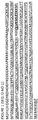
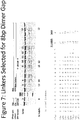
- the linker between the DNA-binding domain and the cleavage domain comprises any of the linkers shown in Figures 4 , 7 , 9 , 11 , 12 , 13 , 15 and 16 (SEQ ID NOs:22-186, 194-213, 229-250 and 260-300) (with or without 1 or more of the N-terminal amino acid residues shown in these Figures), including (N)GICPPPRPRTSPP (SEQ ID NO:194); (T)GTAPIEIPPEVYP (SEQ ID NO:195); (N)GSYAPMPPLALASP (SEQ ID NO:196); (P)GIYTAPTSRPTVPP (SEQ ID NO:197) ; (N)GSQTPKRFQPTHPSA (SEQ ID NO:198); (H)LPKPANPFPLD (SEQ ID NO:199); (H)RDGPRNLPPTSPP (SEQ ID NO:200); (H)RLPDSPTALAPDTL (S)GICPPPRPRTSPP (SEQ ID NO
- the linker comprises a sequence selected from the group consisting of PKPAN (SEQ ID NO:289), RARPLN (SEQ ID NO:290); PMPPLA (SEQ ID NO:291) or PPPRP (SEQ ID NO:292).
- the linkers as described herein further comprise a ZC linker sequence at their N-terminal ends.
- the linker is includes modifications at the junction with the cleavage domain (FokI), for example as shown in SEQ ID NOs:260-287.
- a fusion protein comprising a DNA-binding domain, a modified FokI cleavage domain and a ZC linker between the DNA-binding domain and the FokI cleavage domain.
- the FokI cleavage domain may be modified in any way, including addition, deletion and/or substitution of one or more amino acids residues.
- the modifications to the FokI cleavage domain comprises one or more additions, deletions and/or substitutions to the N-terminal region of FokI (residues 158-169 of SEQ ID NO:1), including, for example, addition, deletion and/or substitution of 1, 2, 3, 4 amino acid residues.
- the modified FokI cleavage domain comprises deletions of 1, 2, 3, 4 or more amino acids from the N-terminal region of FokI (e.g., deletion of one or more of residues 158, 159, 160 and/or 161 of the wild-type FokI domain of SEQ ID NO:1).
- the modified FokI cleavage domain comprises one or more deletions from, and one or more substitutions within, the N-terminal region of FokI (e.g., deletion of one or more of residues 158-161 and substitution of one or more of the remaining residues).
- the modified FokI cleavage domain comprises one or more substitutions in the N-terminal region of FokI.
- the modified FokI cleavage domain comprises one or more additional amino acid residues ( e.g., 1, 2, 3, 4 or more) N-terminal to the N-terminal-most residue of FokI (residue 158 of SEQ ID NO:1). In other aspect, the modified FokI cleavage domain comprises one or more additional amino acid residues ( e.g., 1, 2, 3, 4 or more) N-terminal to the N-terminal-most residue of Fokl (residue 158 of SEQ ID NO:!) and/or one or more substitutions within the N-terminal region of FokI.
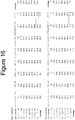
- the fusion protein comprises a modified FokI cleavage domain as shown in Figure 15 or Figure 16 . In other aspects, the fusion protein comprises a modified FokI cleavage domain as shown in Figure 15 or Figure 16 and further comprising one or more modifications within the N-terminal as shown in U.S. Patent Publication No. 20090305419 .
- the fusion protein comprises a DNA-binding domain having an N-terminus and a C-terminus, wherein the DNA-binding domain binds to a nucleotide target site; a truncated Fok I cleavage domain in which N-terminal residues QLVK are deleted; and a linker between the C-terminus of the DNA-binding domain and the N-terminus of the truncated Fok I cleavage domain, wherein the linker is a sequence selected from the group consisting of PKPAN; (N)GICPPPRPRTSPP (L8a); (T)GTAPIEIPPEVYP (L8b); (N)GSYAPMPPLALASP (L8c); (P)GIYTAPTSRPTVPP (L8d); (N)GSQTPKRFQPTHPSA (L8e); TGLMPPSHPRQPIHINF (L8g); TGTVHTSPICPQTYP (L8i); TGSGTPT
- the linker further comprises a ZC sequence LRGS optionally at the N-terminus of the linker.
- the DNA-binding domain is a zinc finger protein, a TAL-effector domain or a Cas domain.
- a dimer comprising at least two fusion proteins, each fusion protein comprising a DNA-binding domain, linker and cleavage domain.
- at least one fusion protein comprises a linker as described herein.
- both fusion proteins comprise a linker according to the invention, wherein the dimer is a heterodimer or a homodimer.
- the DNA-binding domains of the dimer target sequences (e.g., in double-stranded DNA) separated by 5, 6, 7, 8, 9, 10, 11, 12, 13, 14, 15, 16 (or more) base pairs, preferably 5 to 8 base pairs. Any of the fusion proteins may comprise wild-type or engineered cleavage domains.
- fusion polypeptides comprising a DNA-binding domain (e.g., a zinc finger or TALE DNA-binding domain), a cleavage half-domain and a linker as described herein.
- a DNA-binding domain e.g., a zinc finger or TALE DNA-binding domain
- a cleavage half-domain e.g., a linker as described herein.
- polynucleotides encoding any of the linkers or fusion proteins as described herein.
- the polynucleotides are RNAs.
- a polynucleotide encoding at least one fusion protein according to the invention is provided.
- cells comprising any of the polypeptides (e.g., fusion polypeptides) and/or polynucleotides as described herein.
- the cells comprise a pair of fusion polypeptides, each comprising a cleavage domain as disclosed herein.
- the cell comprises a fusion protein, a dimer or a polynucleotide according to the invention.
- in vitro methods for targeted cleavage of cellular cellular chromatin in a region of interest in vitro methods of causing homologous recombination to occur in a cell are provided; and methods of treating infection; and/or methods for treating disease are described.
- the methods involve cleaving cellular chromatin at a predetermined region of interest in cells by expressing a pair of fusion polypeptides, at least one of which comprises a linker as described herein.
- one fusion polypeptide comprises a linker as described herein and in other aspects, both fusion polypeptides comprise a linker as described herein.
- the pair of fusion polypeptides cleaves the targeted region when the binding sites for the zinc finger nucleases are 5, 6, 7, 8, 9, 10, 11, 12, 13, 14, 15, 16 or even more base pairs apart.
- a preferred embodiment is an in vitro method for targeted cleavage of cellular chromatin in a region of interest in a cell, the method comprising: expressing a pair of nucleases in the cell under conditions such that cellular chromatin is cleaved at the region of interest, wherein the nucleases bind to target sites separated by 5 to 8 base pairs, preferably 7 or 8 base pairs in the region of interest and further wherein one or both nucleases comprise a fusion protein according to the invention.
- the polypeptides comprising the linkers as described herein can be used in methods for targeted cleavage of cellular chromatin in a region of interest and/or homologous recombination at a predetermined region of interest in cells.
- Cells include cultured cells, cells in an organism and cells that have been removed from an organism for treatment in cases where the cells and/or their descendants will be returned to the organism after treatment.
- a region of interest in cellular chromatin can be, for example, a genomic sequence or portion thereof.
- a fusion protein can be expressed in a cell, e.g., by delivering the fusion protein to the cell or by delivering a polynucleotide encoding the fusion protein to a cell, wherein the polynucleotide, if DNA, is transcribed, and an RNA molecule delivered to the cell or a transcript of a DNA molecule delivered to the cell is translated, to generate the fusion protein.
- Methods for polynucleotide and polypeptide delivery to cells are presented elsewhere in this disclosure.
- a method for cleaving cellular chromatin in a region of interest can comprise (a) selecting a first sequence in the region of interest; (b) engineering a first DNA-binding domain to bind to the first sequence; (c) expressing a first fusion protein in the cell, the first fusion protein comprising the first DNA-binding domain (e.g., zinc finger or TALE), and a cleavage half-domain; and (d) expressing a second fusion protein in the cell, the second fusion protein comprising a second DNA-binding domain, and a second cleavage half-domain, wherein at least one of the fusion proteins comprises a linker as described herein, and further wherein the first fusion protein binds to the first sequence, and the second fusion protein binds to a second sequence located between 2 and 50 nucleotides from the first sequence, such that cellular chromatin is cleaved in the region of interest.
- both fusion proteins comprise
- the disclosure also provides in vitro methods of cleaving cellular chromatin by introducing one more nucleases comprising a linker as described herein into a cell such that the nucleases target and cleave the cellular chromatin of the cell.
- the nuclease may comprise a zinc finger nuclease (ZFN), a TALE-nuclease (TALEN), TtAgo or a CRISPR/Cas nuclease system or a combination thereof.
- the nuclease(s) may be introduced into the cell in any form, for example in protein form, in mRNA form or carried on a viral (AAV, IDLV, etc.) vector or non-viral vector (e.g., plasmid).
- the methods comprise (a) selecting first and second sequences in a region of interest, wherein the first and second sequences are between 2 and 50 nucleotides apart; (b) engineering a first DNA-binding domain to bind to the first sequence; (c) engineering a second DNA-binding domain to bind to the second sequence; (d) expressing a first fusion protein in the cell, the first fusion protein comprising the first engineered DNA-binding domain, a first linker as described herein, and a first cleavage half domain; (e) expressing a second fusion protein in the cell, the second fusion protein comprising the second engineered DNA-binding domain, a second linker and a second cleavage half-domain; wherein the first fusion protein binds to the first sequence and the second fusion protein binds to the second sequence, thereby cleaving the cellular chromatin in the region of interest.
- the first and second fusion proteins comprise a linker as described herein.
- methods of altering cellular chromatin comprise introducing into the cell one or more targeted nucleases to create a double-stranded break in cellular chromatin at a predetermined site, and a donor polynucleotide, having homology to the nucleotide sequence of the cellular chromatin in the region of the break.
- Cellular DNA repair processes are activated by the presence of the double-stranded break and the donor polynucleotide is used as a template for repair of the break, resulting in the introduction of all or part of the nucleotide sequence of the donor into the cellular chromatin.
- a sequence in cellular chromatin can be altered and, in certain examples , can be converted into a sequence present in a donor polynucleotide.
- the in vitro method for targeted cleavage of cellular chromatin in a region of interest in a cell further comprises the step of introducing a donor polynucleotide into the cell, wherein all or part of the donor polynucleotide is incorporated into the region of interest following cleavage.
- Targeted alterations include point mutations ( i.e., conversion of a single base pair to a different base pair), substitutions ( i.e., conversion of a plurality of base pairs to a different sequence of identical length), insertions or one or more base pairs, deletions of one or more base pairs and any combination of the aforementioned sequence alterations.
- the donor polynucleotide can be DNA or RNA, can be linear or circular, and can be single-stranded or double-stranded. It can be delivered to the cell as naked nucleic acid, as a complex with one or more delivery agents (e.g., liposomes, poloxamers) or contained in a viral delivery vehicle, such as, for example, an adenovirus or an adeno-associated Virus (AAV).
- Delivery agents e.g., liposomes, poloxamers
- a viral delivery vehicle such as, for example, an adenovirus or an adeno-associated Virus (AAV).
- Donor sequences can range in length from 10 to 1,000 nucleotides (or any integral value of nucleotides therebetween) or longer.
- the donor comprises a full length gene flanked by regions of homology with the targeted cleavage site.
- the donor lacks homologous regions and is integrated into a target locus through homology independent mechanism (i.e. NHEJ).
- the donor comprises a smaller piece of nucleic acid flanked by homologous regions for use in the cell ( i.e. for gene correction).
- the donor comprises a gene encoding a functional or structural component such as a shRNA, RNAi, miRNA or the like.
- the donor comprises sequences encoding a regulatory element that binds to and/or modulates expression of a gene of interest.
- the donor is a regulatory protein of interest (e.g. ZFP TFs, TALE TFs or a CRISPR/Cas TF) that binds to and/or modulates expression of a gene of interest.
- the frequency of homologous recombination can be enhanced by arresting the cells in the G2 phase of the cell cycle and/or by activating the expression of one or more molecules (protein, RNA) involved in homologous recombination and/or by inhibiting the expression or activity of proteins involved in non-homologous end-joining.
- proteins protein, RNA
- the first and second nucleases of the nuclease pair can bind to target sites 2, 3, 4, 5, 6, 7, 8, 9, 10, 11, 12, 13, 14, 15, 16, 17, 18, 19, 20 or more base pairs apart.
- the second zinc finger binding domain may be engineered to bind to the second sequence.
- the fusion proteins may be encoded by a single polynucleotide.
- the cellular chromatin can be in a chromosome, episome or organellar genome.
- Cellular chromatin can be present in any type of cell including prokaryotic and eukaryotic cells, fungal cells, plant cells, animal cells, mammalian cells, primate cells and human cells.
- kits comprising a linker as described herein or a polynucleotide encoding a linker as described herein; ancillary reagents; and optionally instructions and suitable containers.
- the kit may also include one or more nucleases or polynucleotides encoding such nucleases.
- a preferred embodiment is a kit for producing a nuclease that cleaves a target site; the kit comprising a fusion protein according to the invention or a polynucleotide according to the invention contained in one or more containers, optional hardware, and instructions for making the nuclease using one or more of the fusion proteins or polynucleotides.
- said kit further comprises a donor polynucleotide that is integrated into the target site following cleavage by the nuclease.
- the cleavage domain (or cleavage half-domain) may comprise a TypeIIS cleavage domain, such as a cleavage half-domain from Fok I .
- the invention also provides a fusion protein or a polynucleotide for use in therapy by targeted cleavage of cellular chromatin in a region of interest in a cell.
- compositions for linking DNA-binding domains and cleavage domains to form artificial nucleases and in vitro methods of using these nucleases for targeted alteration of a cellular nucleotide sequence e.g., by targeted cleavage followed by non-homologous end joining; by targeted cleavage followed by homologous recombination between an exogenous polynucleotide (comprising one or more regions of homology with the cellular nucleotide sequence) and a genomic sequence; by targeted inactivation of one or more endogenous genes.
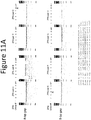
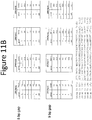
- Exemplary linkers as shown Figures 4 and 9 increase the ability of a pair of ZFNs to cleave when the ZFN target sites are more than 5 or 6 base pairs apart.
- certain linkers described herein significantly increase the ability to perform targeted genomic alteration by increasing the cleavage activity when the zinc finger target sites are not separated by 5 or 6 base pairs.
- MOLECULAR CLONING A LABORATORY MANUAL, Second edition, Cold Spring Harbor Laboratory Press, 1989 and Third edition, 2001 ; Ausubel et al., CURRENT PROTOCOLS IN MOLECULAR BIOLOGY, John Wiley & Sons, New York, 1987 and periodic updates; the series METHODS IN ENZYMOLOGY, Academic Press, San Diego ; Wolffe, CHROMATIN STRUCTURE AND FUNCTION, Third edition, Academic Press, San Diego, 1998 ; METHODS IN ENZYMOLOGY, Vol. 304, "Chromatin" (P.M. Wassarman and A. P.
- nucleic acid refers to a deoxyribonucleotide or ribonucleotide polymer, in linear or circular conformation, and in either single- or double-stranded form.
- polynucleotide refers to a deoxyribonucleotide or ribonucleotide polymer, in linear or circular conformation, and in either single- or double-stranded form.
- these terms are not to be construed as limiting with respect to the length of a polymer.
- the terms can encompass known analogues of natural nucleotides, as well as nucleotides that are modified in the base, sugar and/or phosphate moieties ( e.g., phosphorothioate backbones).
- an analogue of a particular nucleotide has the same base-pairing specificity; i.e., an analogue of A will base-pair with T.
- polypeptide peptide
- protein protein
- amino acid polymers in which one or more amino acids are chemical analogues or modified derivatives of corresponding naturally-occurring amino acids.
- Binding refers to a sequence-specific, non-covalent interaction between macromolecules (e.g., between a protein and a nucleic acid). Not all components of a binding interaction need be sequence-specific (e.g., contacts with phosphate residues in a DNA backbone), as long as the interaction as a whole is sequence-specific. Such interactions are generally characterized by a dissociation constant (K d ) of 10 -6 M -1 or lower. "Affinity” refers to the strength of binding: increased binding affinity being correlated with a lower K d .
- a "binding protein” is a protein that is able to bind non-covalently to another molecule.
- a binding protein can bind to, for example, a DNA molecule (a DNA-binding protein), an RNA molecule (an RNA-binding protein) and/or a protein molecule (a protein-binding protein).
- a DNA-binding protein a DNA-binding protein
- an RNA-binding protein an RNA-binding protein
- a protein-binding protein it can bind to itself (to form homodimers, homotrimers, etc .) and/or it can bind to one or more molecules of a different protein or proteins.
- a binding protein can have more than one type of binding activity. For example, zinc finger proteins have DNA-binding, RNA-binding and protein-binding activity.
- a “zinc finger DNA binding protein” (or binding domain) is a protein, or a domain within a larger protein, that binds DNA in a sequence-specific manner through one or more zinc fingers, which are regions of amino acid sequence within the binding domain whose structure is stabilized through coordination of a zinc ion.
- the term zinc finger DNA binding protein is often abbreviated as zinc finger protein or ZFP.
- a "TALE DNA binding domain” or “TALE” is a polypeptide comprising one or more TALE repeat domains/units. The repeat domains are involved in binding of the TALE to its cognate target DNA sequence.
- a single “repeat unit” (also referred to as a “repeat”) is typically 33-35 amino acids in length and exhibits at least some sequence homology with other TALE repeat sequences within a naturally occurring TALE protein.
- Zinc finger and TALE binding domains can be "engineered” to bind to a predetermined nucleotide sequence, for example via engineering (altering one or more amino acids) of the recognition helix region of a naturally occurring zinc finger or TALE protein. Therefore, engineered DNA binding proteins (zinc fingers or TALEs) are proteins that are non-naturally occurring. Examples of methods for engineering DNA-binding proteins are design and selection. A designed DNA binding protein is a protein not occurring in nature whose design/composition results principally from rational criteria. Rational criteria for design include application of substitution rules and computerized algorithms for processing information in a database storing information of existing ZFP and/or TALE designs and binding data. See, for example, U.S.
- a "selected" zinc finger protein or TALE is a protein not found in nature whose production results primarily from an empirical process such as phage display, interaction trap or hybrid selection. See e.g., US 5,789,538 ; US 5,925,523 ; US 6,007,988 ; US 6,013,453 ; US 6,200,759 ; WO 95/19431 ; WO 96/06166 ; WO 98/53057 ; WO 98/54311 ; WO 00/27878 ; WO 01/60970 WO 01/88197 , WO 02/099084 and U.S. Publication No. 20110301073 .
- TtAgo is a prokaryotic Argonaute protein thought to be involved in gene silencing.
- TtAgo is derived from the bacteria Thermus thermophilus. See, e.g. Swarts et al, ibid, G. Sheng et al., (2013) Proc. Natl. Acad Sci. U.S.A. 111, 652 ).
- a "TtAgo system” is all the components required including, for example, guide DNAs for cleavage by a TtAgo enzyme.
- Cleavage refers to the breakage of the covalent backbone of a DNA molecule. Cleavage can be initiated by a variety of methods including. enzymatic or chemical hydrolysis of a phosphodiester bond. Both single-stranded cleavage and double-stranded cleavage are possible, and double-stranded cleavage can occur as a result of two distinct single-stranded cleavage events. DNA cleavage can result in the production of either blunt ends or staggered ends. In certain aspects, fusion polypeptides are used for targeted double-stranded DNA cleavage.
- a “cleavage half-domain” is a polypeptide sequence which, in conjunction with a second polypeptide (either identical or different) forms a complex having cleavage activity (preferably double-strand cleavage activity).
- first and second cleavage half-domains;" “+ and - cleavage half-domains” and “right and left cleavage half-domains” are used interchangeably to refer to pairs of cleavage half-domains that dimerize.
- An "engineered cleavage half-domain” is a cleavage half-domain that has been modified so as to form obligate heterodimers with another cleavage half-domain (e.g., another engineered cleavage half-domain). See, also, U.S. Patent Nos. 8,623,618 ; 7,888,121 ; 7,914,796 ; and 8,034,598 and U.S. Publication No. 20110201055 .
- sequence refers to a nucleotide sequence of any length, which can be DNA or RNA; can be linear, circular or branched and can be either single-stranded or double stranded.
- donor sequence refers to a nucleotide sequence that is inserted into a genome.
- a donor sequence can be of any length, for example between 2 and 10,000 nucleotides in length (or any integer value therebetween or thereabove), preferably between about 100 and 1,000 nucleotides in length (or any integer therebetween), more preferably between about 200 and 500 nucleotides in length.
- a "homologous, non-identical sequence” refers to a first sequence which shares a degree of sequence identity with a second sequence, but whose sequence is not identical to that of the second sequence.
- a polynucleotide comprising the wild-type sequence of a mutant gene is homologous and non-identical to the sequence of the mutant gene.
- the degree of homology between the two sequences is sufficient to allow homologous recombination therebetween, utilizing normal cellular mechanisms.
- Two homologous non-identical sequences can be any length and their degree of non-homology can be as small as a single nucleotide ( e.g., for correction of a genomic point mutation by targeted homologous recombination) or as large as 10 or more kilobases ( e.g., for insertion of a gene at a predetermined ectopic site in a chromosome).
- Two polynucleotides comprising the homologous non-identical sequences need not be the same length.
- an exogenous polynucleotide i.e., donor polynucleotide
- an exogenous polynucleotide i.e., donor polynucleotide of between 20 and 10,000 nucleotides or nucleotide pairs can be used.
- nucleic acid and amino acid sequence identity are known in the art. Typically, such techniques include determining the nucleotide sequence of the mRNA for a gene and/or determining the amino acid sequence encoded thereby, and comparing these sequences to a second nucleotide or amino acid sequence. Genomic sequences can also be determined and compared in this fashion. In general, identity refers to an exact nucleotide-to-nucleotide or amino acid-to-amino acid correspondence of two polynucleotides or polypeptide sequences, respectively. Two or more sequences (polynucleotide or amino acid) can be compared by determining their percent identity.
- the percent identity of two sequences is the number of exact matches between two aligned sequences divided by the length of the shorter sequences and multiplied by 100. With respect to sequences described herein, the range of desired degrees of sequence identity is approximately 80% to 100% and any integer value therebetween. Typically the percent identities between sequences are at least 70-75%, preferably 80-82%, more preferably 85-90%, even more preferably 92%, still more preferably 95%, and most preferably 98% sequence identity.
- the degree of sequence similarity between polynucleotides can be determined by hybridization of polynucleotides under conditions that allow formation of stable duplexes between homologous regions, followed by digestion with single-stranded-specific nuclease(s), and size determination of the digested fragments.
- Two nucleic acid, or two polypeptide sequences are substantially homologous to each other when the sequences exhibit at least about 70%-75%, preferably 80%-82%, more preferably 85%-90%, even more preferably 92%, still more preferably 95%, and most preferably 98% sequence identity over a defined length of the molecules, as determined using the methods above.
- substantially homologous also refers to sequences showing complete identity to a specified DNA or polypeptide sequence.
- DNA sequences that are substantially homologous can be identified in a Southern hybridization experiment under, for example, stringent conditions, as defined for that particular system. Defining appropriate hybridization conditions is within the skill of the art. See, e.g., Sambrook et al., supra; Nucleic Acid Hybridization: A Practical Approach, editors B.D. Hames and S.J. Higgins, (1985) Oxford; Washington, DC; IRL Press ).
- Selective hybridization of two nucleic acid fragments can be determined as follows. The degree of sequence identity between two nucleic acid molecules affects the efficiency and strength of hybridization events between such molecules. A partially identical nucleic acid sequence will at least partially inhibit the hybridization of a completely identical sequence to a target molecule. Inhibition of hybridization of the completely identical sequence can be assessed using hybridization assays that are well known in the art (e.g., Southern (DNA) blot, Northern (RNA) blot, solution hybridization, or the like, see Sambrook, et al., Molecular Cloning: A Laboratory Manual, Second Edition, (1989) Cold Spring Harbor, N.Y .).
- hybridization assays that are well known in the art (e.g., Southern (DNA) blot, Northern (RNA) blot, solution hybridization, or the like, see Sambrook, et al., Molecular Cloning: A Laboratory Manual, Second Edition, (1989) Cold Spring Harbor, N.Y .).
- Such assays can be conducted using varying degrees of selectivity, for example, using conditions varying from low to high stringency. If conditions of low stringency are employed, the absence of non-specific binding can be assessed using a secondary probe that lacks even a partial degree of sequence identity (for example, a probe having less than about 30% sequence identity with the target molecule), such that, in the absence of non-specific binding events, the secondary probe will not hybridize to the target.
- a secondary probe that lacks even a partial degree of sequence identity (for example, a probe having less than about 30% sequence identity with the target molecule), such that, in the absence of non-specific binding events, the secondary probe will not hybridize to the target.
- a nucleic acid probe When utilizing a hybridization-based detection system, a nucleic acid probe is chosen that is complementary to a reference nucleic acid sequence, and then by selection of appropriate conditions the probe and the reference sequence selectively hybridize, or bind, to each other to form a duplex molecule.
- a nucleic acid molecule that is capable of hybridizing selectively to a reference sequence under moderately stringent hybridization conditions typically hybridizes under conditions that allow detection of a target nucleic acid sequence of at least about 10-14 nucleotides in length having at least approximately 70% sequence identity with the sequence of the selected nucleic acid probe.
- Stringent hybridization conditions typically allow detection of target nucleic acid sequences of at least about 10-14 nucleotides in length having a sequence identity of greater than about 90-95% with the sequence of the selected nucleic acid probe.
- Hybridization conditions useful for probe/reference sequence hybridization where the probe and reference sequence have a specific degree of sequence identity, can be determined as is known in the art (see, for example, Nucleic Acid Hybridization: A Practical Approach, editors B.D. Hames and S.J. Higgins, (1985) Oxford; Washington, DC; IRL Press ).
- Hybridization stringency refers to the degree to which hybridization conditions disfavor the formation of hybrids containing mismatched nucleotides, with higher stringency correlated with a lower tolerance for mismatched hybrids.
- Factors that affect the stringency of hybridization include temperature, pH, ionic strength, and concentration of organic solvents such as, for example, formamide and dimethylsulfoxide. As is known to those of skill in the art, hybridization stringency is increased by higher temperatures, lower ionic strength and lower solvent concentrations.
- stringency conditions for hybridization it is well known in the art that numerous equivalent conditions can be employed to establish a particular stringency by varying, for example, the following factors: the length and nature of the sequences, base composition of the various sequences, concentrations of salts and other hybridization solution components, the presence or absence of blocking agents in the hybridization solutions (e.g., dextran sulfate, and polyethylene glycol), hybridization reaction temperature and time parameters, as well as, varying wash conditions.
- “Recombination” refers to a process of exchange of genetic information between two polynucleotides.
- homologous recombination refers to the specialized form of such exchange that takes place, for example, during repair of double-strand breaks in cells. This process requires nucleotide sequence homology, uses a "donor” molecule to template repair of a "target” molecule ( i.e., the one that experienced the double-strand break), and is variously known as “non-crossover gene conversion” or “short tract gene conversion,” because it leads to the transfer of genetic information from the donor to the target.
- such transfer can involve mismatch correction of heteroduplex DNA that forms between the broken target and the donor, and/or "synthesis-dependent strand annealing," in which the donor is used to resynthesize genetic information that will become part of the target, and/or related processes.
- Such specialized HR often results in an alteration of the sequence of the target molecule such that part or all of the sequence of the donor polynucleotide is incorporated into the target polynucleotide.
- Chromatin is the nucleoprotein structure comprising the cellular genome.
- Cellular chromatin comprises nucleic acid, primarily DNA, and protein, including histones and non-histone chromosomal proteins.
- the majority of eukaryotic cellular chromatin exists in the form of nucleosomes, wherein a nucleosome core comprises approximately 150 base pairs of DNA associated with an octamer comprising two each of histones H2A, H2B, H3 and H4; and linker DNA (of variable length depending on the organism) extends between nucleosome cores.
- a molecule of histone HI is generally associated with the linker DNA.
- chromatin is meant to encompass all types of cellular nucleoprotein, both prokaryotic and eukaryotic.
- Cellular chromatin includes both chromosomal and episomal chromatin.
- a "chromosome,” is a chromatin complex comprising all or a portion of the genome of a cell.
- the genome of a cell is often characterized by its karyotype, which is the collection of all the chromosomes that comprise the genome of the cell.
- the genome of a cell can comprise one or more chromosomes.
- an “episome” is a replicating nucleic acid, nucleoprotein complex or other structure comprising a nucleic acid that is not part of the chromosomal karyotype of a cell.
- Examples of episomes include plasmids and certain viral genomes.
- an "accessible region” is a site in cellular chromatin in which a target site present in the nucleic acid can be bound by an exogenous molecule which recognizes the target site. Without wishing to be bound by any particular theory, it is believed that an accessible region is one that is not packaged into a nucleosomal structure. The distinct structure of an accessible region can often be detected by its sensitivity to chemical and enzymatic probes, for example, nucleases.
- a “target site” or “target sequence” is a nucleic acid sequence that defines a portion of a nucleic acid to which a binding molecule will bind, provided sufficient conditions for binding exist.
- the sequence 5'-GAATTC-3' is a target site for the Eco RI restriction endonuclease.
- exogenous molecule is a molecule that is not normally present in a cell, but can be introduced into a cell by one or more genetic, biochemical or other methods. "Normal presence in the cell" is determined with respect to the particular developmental stage and environmental conditions of the cell. Thus, for example, a molecule that is present only during embryonic development of muscle is an exogenous molecule with respect to an adult muscle cell. Similarly, a molecule induced by heat shock is an exogenous molecule with respect to a non-heat-shocked cell.
- An exogenous molecule can comprise, for example, a functioning version of a malfunctioning endogenous molecule, a malfunctioning version of a normally-functioning endogenous molecule or an ortholog (functioning version of endogenous molecule from a different species).
- An exogenous molecule can be, among other things, a small molecule, such as is generated by a combinatorial chemistry process, or a macromolecule such as a protein, nucleic acid, carbohydrate, lipid, glycoprotein, lipoprotein, polysaccharide, any modified derivative of the above molecules, or any complex comprising one or more of the above molecules.
- Nucleic acids include DNA and RNA, can be single- or double-stranded; can be linear, branched or circular; and can be of any length. Nucleic acids include those capable of forming duplexes, as well as triplex-forming nucleic acids. See, for example, U.S. Patent Nos. 5,176,996 and 5,422,251 .
- Proteins include DNA-binding proteins, transcription factors, chromatin remodeling factors, methylated DNA binding proteins, polymerases, methylases, demethylases, acetylases, deacetylases, kinases, phosphatases, integrases, recombinases, ligases, topoisomerases, gyrases and helicases.
- exogenous molecule can be the same type of molecule as an endogenous molecule, e.g., an exogenous protein or nucleic acid.
- an exogenous nucleic acid can comprise an infecting viral genome, a plasmid or episome introduced into a cell, or a chromosome that is not normally present in the cell.
- Methods for the introduction of exogenous molecules into cells are known to those of skill in the art and include lipid-mediated transfer (i . e., liposomes, including neutral and cationic lipids), electroporation, direct injection, cell fusion, particle bombardment, calcium phosphate co-precipitation, DEAE-dextran-mediated transfer and viral vector-mediated transfer.
- an "endogenous" molecule is one that is normally present in a particular cell at a particular developmental stage under particular environmental conditions.
- an endogenous nucleic acid can comprise a chromosome, the genome of a mitochondrion, chloroplast or other organelle, or a naturally-occurring episomal nucleic acid.
- Additional endogenous molecules can include proteins, for example, transcription factors and enzymes.
- a "fusion" molecule is a molecule in which two or more subunit molecules are linked, preferably covalently.
- the subunit molecules can be the same chemical type of molecule, or can be different chemical types of molecules.
- Examples of the first type of fusion molecule include fusion proteins (for example, a fusion between a ZFP DNA-binding domain and a cleavage domain) and fusion nucleic acids (for example, a nucleic acid encoding the fusion protein described supra ).
- Examples of the second type of fusion molecule include a fusion between a triplex-forming nucleic acid and a polypeptide, and a fusion between a minor groove binder and a nucleic acid.
- Fusion protein in a cell can result from delivery of the fusion protein to the cell or by delivery of a polynucleotide encoding the fusion protein to a cell, wherein the polynucleotide is transcribed, and the transcript is translated, to generate the fusion protein.
- Trans-splicing, polypeptide cleavage and polypeptide ligation can also be involved in expression of a protein in a cell. Methods for polynucleotide and polypeptide delivery to cells are presented elsewhere in this disclosure.
- Gene expression refers to the conversion of the information, contained in a gene, into a gene product.
- a gene product can be the direct transcriptional product of a gene (e.g., mRNA, tRNA, rRNA, antisense RNA, ribozyme, structural RNA or any other type of RNA) or a protein produced by translation of an mRNA.
- Gene products also include RNAs which are modified, by processes such as capping, polyadenylation, methylation, and editing, and proteins modified by, for example, methylation, acetylation, phosphorylation, ubiquitination, ADP-ribosylation, myristilation, and glycosylation.
- Modulation of gene expression refers to a change in the activity of a gene. Modulation of expression can include gene activation and gene repression. Gene inactivation refers to any reduction in gene expression as compared to a cell that does not include a ZFP as described herein. Thus, gene inactivation may be partial or complete.
- Eukaryotic cells include fungal cells (such as yeast), plant cells, animal cells, mammalian cells and human cells (e.g., T-cells).
- a "region of interest” is any region of cellular chromatin, such as, for example, a gene or a non-coding sequence within or adjacent to a gene, in which it is desirable to bind an exogenous molecule. Binding can be for the purposes of targeted DNA cleavage and/or targeted recombination.
- a region of interest can be present in a chromosome, an episome, an organellar genome ( e.g., mitochondrial, chloroplast), or an infecting viral genome, for example.
- a region of interest can be within the coding region of a gene, within transcribed non-coding regions such as, for example, leader sequences, trailer sequences or introns, or within non-transcribed regions, either upstream or downstream of the coding region.
- a region of interest can be as small as a single nucleotide pair or up to 2,000 nucleotide pairs in length, or any integral value of nucleotide pairs.
- operative linkage and "operatively linked” (or “operably linked”) are used interchangeably with reference to a juxtaposition of two or more components (such as sequence elements), in which the components are arranged such that both components function normally and allow the possibility that at least one of the components can mediate a function that is exerted upon at least one of the other components.
- a transcriptional regulatory sequence such as a promoter
- a transcriptional regulatory sequence is generally operatively linked in cis with a coding sequence, but need not be directly adjacent to it.
- an enhancer is a transcriptional regulatory sequence that is operatively linked to a coding sequence, even though they are not contiguous.
- the term "operatively linked" can refer to the fact that each of the components performs the same function in linkage to the other component as it would if it were not so linked.
- the DNA-binding domain and the cleavage domain are in operative linkage if, in the fusion polypeptide, the DNA-binding domain portion is able to bind its target site and/or its binding site, while the cleavage domain is able to cleave DNA in the vicinity of the target site ( e.g., 1 to 500 base pairs or any value therebetween on either side of the target site).
- one or more targeted nucleases as described herein create a double-stranded break (DSB) in the target sequence (e.g., cellular chromatin) at a predetermined site.
- the DSB may result in deletions and/or insertions by homology-directed repair or by non-homology-directed repair mechanisms.
- Deletions may include any number of base pairs.
- insertions may include any number of base pairs including, for example, integration of a "donor" polynucleotide, optionally having homology to the nucleotide sequence in the region of the break.
- the donor sequence may be physically integrated or, alternatively, the donor polynucleotide is used as a template for repair of the break via homologous recombination, resulting in the introduction of all or part of the nucleotide sequence as in the donor into the cellular chromatin.
- a first sequence in cellular chromatin can be altered and, in certain aspects, can be converted into a sequence present in a donor polynucleotide.
- replacement or "replacement” can be understood to represent replacement of one nucleotide sequence by another, ( i.e., replacement of a sequence in the informational sense), and does not necessarily require physical or chemical replacement of one polynucleotide by another.
- Additional pairs of zinc-finger proteins, TALENs, TtAgo or CRIPSR/Cas systems can be used for additional double-stranded cleavage of additional target sites within the cell.
- additional pairs of zinc-finger proteins, TALENs, TtAgo or CRIPSR/Cas systems can be used for additional double-stranded cleavage of additional target sites within the cell.
- a "functional fragment" of a protein, polypeptide or nucleic acid is a protein, polypeptide or nucleic acid whose sequence is not identical to the full-length protein, polypeptide or nucleic acid, yet retains the same function as the full-length protein, polypeptide or nucleic acid.
- a functional fragment can possess more, fewer, or the same number of residues as the corresponding native molecule, and/or can contain one or more amino acid or nucleotide substitutions.
- DNA-binding function of a polypeptide can be determined, for example, by filter-binding, electrophoretic mobility-shift, or immunoprecipitation assays. DNA cleavage can be assayed by gel electrophoresis. See Ausubel et al., supra.
- the ability of a protein to interact with another protein can be determined, for example, by co-immunoprecipitation, two-hybrid assays or complementation, both genetic and biochemical. See, for example, Fields et al. (1989) Nature 340:245-246 ; U.S. Patent No. 5,585,245 and PCT WO 98/44350 .
- Described herein are amino acid sequences that fuse (link) a DNA binding domain (e.g., zinc finger protein, TALE, etc.) and a nuclease (e.g., a cleavage domain or cleavage half-domain).
- a DNA binding domain e.g., zinc finger protein, TALE, etc.
- a nuclease e.g., a cleavage domain or cleavage half-domain
- optimal cleavage is obtained when the DNA-binding proteins bind to target sites separated by less than 6 base pairs.
- optimal cleavage for zinc finger nuclease pairs is obtained when the target sites are separated by 5-6 base pairs and a flexible "ZC" linker rich in glycine and serine is used to join each zinc finger of the pair to the cleavage domain.
- the "ZC" linker used to date consists of the amino acid sequence LRGS (SEQ ID NO:2) between the C-terminal of the zinc finger binding domain and the N-terminal residues of the cleavage domain, which in the case of Fok I is a Q residue.
- the linkers described herein allow cleavage when the target sites of a pair of zinc finger nucleases are not 0-6 base pairs apart, for example target sites that are 7, 8, 9, 10 or more base pairs apart.
- the linker sequences described herein are typically between about 8 and 17 amino acids in length and may link the N- or C-terminal of the DNA-binding domain to the N- or C-terminal of cleavage domain.
- the linker extends between the C-terminal residue of the DNA-binding domain and the N-terminal residue of the cleavage domain (e.g., (Q) of Fok I .
- linkers as described herein are shown in Figures 4 , 7 , 9 , 11 , 12 , 13 , 15 and 16 (SEQ ID NOs:22-186, 194-213, 229-250 and 260-300) (with or without 1 or 2 of the C-terminal amino acid residues shown in these Figures), including (N)GICPPPRPRTSPP (SEQ ID NO: 194); (T)GTAPIEIPPEVYP (SEQ ID NO:195); (N)GSYAPMPPLALASP (SEQ ID NO:196); (P)GIYTAPTSRPTVPP (SEQ ID NO:197) ; (N)GSQTPKRFQPTHPSA (SEQ ID NO:198); (H)LPKPANPFPLD (SEQ ID NO:199); (H)RDGPRNLPPTSPP (SEQ ID NO:200); (H)RLPDSPTALAPDTL (SEQ ID NO:201); (DPNS)PISRARPLNPHP (SEQ ID NO:202); (Y)GP
- the linker comprises a sequence selected from the group consisting of PKPAN (SEQ ID NO:289), RARPLN (SEQ ID NO:290); PMPPLA (SEQ ID NO:291) or PPPRP (SEQ ID NO:292).
- the linkers further comprise a ZC linker (LRGS, SEQ ID NO:2) at their N-terminal.
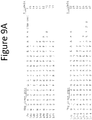
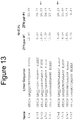
- the linker comprises a sequence as shown in Figure 4 (SEQ ID NOs:22-186). In other examples , the linker comprises a sequence as shown in Figure 7 , Figure 9A (top), Figure 12 and Figure 13 (L8 linkers including, for example, L8a, L8b, L8c, L8d, L8e, L8g, L8i, L8j, L8a, L8c, L8a3 and L8c3, SEQ ID NOs:194-201). In certain examples , the L8 linkers are used when the DNA-binding domains of the dimerizing nuclease pair used for cleavage bind to target sites separate by 8 base pairs.
- the linker comprises a sequence as shown in Figure 9A (bottom), Figure 12 and Figure 13 (L7 linkers including, for example, L7-1, L7-2, L7-6, L7-3, L7-5, L7-4, L7-b, L7-c, L7-b3 and L7-c3, SEQ ID NOs:202-207).
- L7 linkers are used when the DNA-binding domains of the dimerizing nuclease pair used for cleavage bind to target sites separate by 7 base pairs.
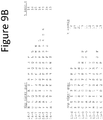
- the linker comprises a sequence as shown in Figure 9B (top) (L6 linkers, including, for example, L6-2, L6-6, L6-7, L6-1, L6-5, L6-3, or L6-4, SEQ ID NOs:207-213).
- the L6 linkers are used when the DNA-binding domains of the dimerizing nuclease pair used for cleavage bind to target sites separate by 6 base pairs.
- the linker comprises a sequence as shown in Figure 9B (bottom) (L5-6, L5-1, L5-7, L5-8, L5-9, L5-2, L5-3, L5-4, L5-5, SEQ ID NOs:293-300).
- the L5 linkers are used when the DNA-binding domains of the dimerizing nuclease pair used for cleavage bind to target sites separate by 5 base pairs.
- the fusion proteins described herein may also include alterations to the N-terminal region of the selected cleavage domain. Alteration may include substitutions, additions and/or deletions of one or more N-terminal residues of the cleavage domain.
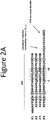
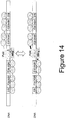
- the cleavage domain is derived from FokI and one or more amino acids of the wild-type Fok I N-terminal region are replaced and additional amino acids added to this region. For example, as shown in FIG. 2 , amino acid residues 4 and 5 of the wild-type Fok I cleavage domain (i.e., residues K and S) are replaced with residues E and A, respectively and the residues AAR is added C-terminal to the 2 nd replaced residue.
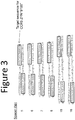
- FIG. 3 includes a seven residue insertion (KSEAAAR; SEQ ID NO:6) in the N-terminal region of the FokI cleavage domain.
- the sequence joining the DNA-binding domain and the cleavage domain can comprise any amino acid sequence that does not substantially hinder the ability of the DNA-binding domain to bind to its target site or the cleavage domain to dimerize and/or cleave the genomic sequences.
- the N-terminal region of the cleavage domain includes an alpha helical region extending from residues 389-400 (ELEEKKSELRHK; SEQ ID NO:7). See, e.g., Wah et al. (1997) Nature 388:97-100 ).
- the linker sequences are designed to extend and/or conserve this structural motif, for example by inserting a 3-5 amino sequence N-terminal to ELEEKKSELRHK (SEQ ID NO:7) of a wild-type Fok I cleavage domain.
- the linker may include a sequence such as EXXXR (SEQ ID NO:9) or EXXXK (SEQ ID NO:10) where the X residues are any residues that form an alpha helix, namely any residue except proline or glycine ( e.g., EAAAR (SEQ ID NO:8)) adjacent to the wild-type alpha helical region to form a stable alpha helix linker.
- EAAAR SEQ ID NO:8
- EXXXR SEQ ID NO:9 or EXXXK (SEQ ID NO:10) peptide adjacent (or near to) to the ELEEKKSELRHK (SEQ ID NO:7) peptide is designed to extend this alpha helix in Fok I cleavage domain.
- the linkers described herein show a greater preference for a 6 bp spacing over a 5 bp spacing as compared to current ZFNs.
- the junction as between the linker and the cleavage domain and/or DNA-binding domain is modified, for example to substitute, add and/or delete amino acids to the linkers as described herein.
- 1, 2, 3, 4 or more amino acids are deleted or added.
- 1, 2 or 3, 4 amino acid substitutions are made. Examples of modified linkers as described herein are shown in Figures 15 and 16 (SEQ ID NOs:260-287).
- a fusion protein comprising a DNA-binding domain, a modified FokI cleavage domain and a ZC linker between the DNA-binding domain and the FokI cleavage domain.
- the FokI cleavage domain may be modified in any way. Examples of modifications include additions, deletions and/or substitutions to the N-terminal region of FokI (residues 158-169 of SEQ ID NO:1).
- the modified FokI cleavage domain comprises deletion of 1, 2, 3, 4 or more amino acids from the N-terminal region of Fokl (e.g., deletion of one or more of residues 158, 159, 160 and/or 161 of the wild-type FokI domain of SEQ ID NO:1).
- proteins with deletions of N-terminal FokI amino acid residues include the proteins designated V1, V3 and V7 as shown in Figure 15 .
- the modified FokI cleavage domain comprises one or more deletions and one or more substitutions from the N-terminal region of FokI (e.g., deletion of one or more of residues 158-161 and substitution of one or more of the remaining residues).
- the modified FokI cleavage domain comprises one or more substitutions in the N-terminal region of FokI.
- proteins with substitutions in the N-terminal amino acid residues of FokI include the proteins designated V9 through V16 as shown in Figure 15 .
- the modified FokI cleavage domain comprises one or more additional amino acid residues ( e.g., 1, 2, 3, 4 or more) N-terminal to the N-terminal-most residue of Fokl (residue 158 of SEQ ID NO:1).
- proteins with additions to the N-terminal FokI amino acid residues include the proteins designated V17 through V24 as shown in Figure 15 .
- the modified FokI cleavage domain comprises one or more additional amino acid residues (e.g., 1, 2, 3, 4 or more) N-terminal to the N-terminal-most residue of Fokl (residue 158 of SEQ ID NO:1) and one or more substitutions within the N-terminal region of Fokl.
- proteins with additions include those shown in Figure 15 or Figure 16 and substitutions within the N-terminal FokI amino acid residues as described in U.S. Patent Publication No 20090305419 .
- the fusion protein comprises a modified FokI cleavage domain as shown in Figure 15 or Figure 16 .
- the linkers of the invention are made by making recombinant nucleic acids encoding the linker and the DNA-binding domains, which are fused via the linker amino acid sequence.
- the linkers can also be made using peptide synthesis, and then linked to the polypeptide DNA-binding domains.
- linker sequences described herein are advantageously used to link DNA-binding domains, for example zinc finger proteins, TALEs, homing endonucleases, CRISPR/Cas and/or Ttago guide RNAs, to nuclease cleavage domains or half domains to form specifically targeted, non-naturally occurring nucleases.
- DNA-binding domains for example zinc finger proteins, TALEs, homing endonucleases, CRISPR/Cas and/or Ttago guide RNAs
- the DNA binding domain comprises a zinc finger protein.
- the zinc finger protein is non-naturally occurring in that it is engineered to bind to a target site of choice. See, for example, Beerli et al. (2002) Nature Biotechnol. 20:135-141 ; Pabo et al. (2001) Ann. Rev. Biochem. 70:313-340 ; Isalan et al. (2001) Nature Biotechnol. 19:656-660 ; Segal et al. (2001) Curr. Opin. Biotechnol. 12:632-637 ; Choo et al. (2000) Curr. Opin.
- An engineered zinc finger binding domain can have a novel binding specificity, compared to a naturally-occurring zinc finger protein.
- Engineering methods include rational design and various types of selection. Rational design includes, for example, using databases comprising triplet (or quadruplet) nucleotide sequences and individual zinc finger amino acid sequences, in which each triplet or quadruplet nucleotide sequence is associated with one or more amino acid sequences of zinc fingers which bind the particular triplet or quadruplet sequence. See, for example, co-owned U.S. Patents 6,453,242 and 6,534,261 .
- Exemplary selection methods including phage display and two-hybrid systems, are disclosed in US Patents 5,789,538 ; 5,925,523 ; 6,007,988 ; 6,013,453 ; 6,410,248 ; 6,140,466 ; 6,200,759 ; and 6,242,568 ; as well as WO 98/37186 ;
- zinc finger domains and/or multi-fingered zinc finger proteins may be linked together using any suitable linker sequences, including for example, linkers of 5 or more amino acids in length. See, also, U.S. Patent Nos. 6,479,626 ; 6,903,185 ; and 7,153,949 for exemplary linker sequences 6 or more amino acids in length.
- the proteins described herein may include any combination of suitable linkers between the individual zinc fingers of the protein.
- composition and methods described herein employ a meganuclease (homing endonuclease) DNA-binding domain for binding to the donor molecule and/or binding to the region of interest in the genome of the cell.
- meganuclease homo endonuclease
- Naturally-occurring meganucleases recognize 15-40 base-pair cleavage sites and are commonly grouped into four families: the LAGLIDADG family, the GIY-YIG family, the His-Cyst box family and the HNH family.
- Exemplary homing endonucleases include I -Sce I , I -Ceu I , PI -Psp I , PI -Sce, I- Sce IV, I -Csm I , I -Pan I , I- Sce II , I -Ppo I , I -Sce III , I -Cre I , I- TevI, I- Tev II and I- Tev III.
- Their recognition sequences are known. See also U.S. Patent No. 5,420,032 ; U.S. Patent No. 6,833,252 ; Belfort et al.(1997) Nucleic Acids Res. 25:3379-3388 ; Dujon et al.
- the DNA-binding domains of the homing endonucleases and meganucleases may be altered in the context of the nuclease as a whole ( i.e., such that the nuclease includes the cognate cleavage domain) or may be fused to a heterologous cleavage domain.
- the DNA-binding domain of one or more of the nucleases used in the methods and compositions described herein comprises a naturally occurring or engineered (non-naturally occurring) TAL effector DNA binding domain. See, e.g., U.S. Patent No. 8,586,526 .
- TAL transcription activator-like effectors
- AvrBs3 from Xanthomonas campestgris pv.
- TAL-effectors contain a centralized domain of tandem repeats, each repeat containing approximately 34 amino acids, which are key to the DNA binding specificity of these proteins. In addition, they contain a nuclear localization sequence and an acidic transcriptional activation domain (for a review see Schornack S, et al (2006) J Plant Physiol 163(3): 256-272 ). In addition, in the phytopathogenic bacteria Ralstonia solanacearum two genes, designated brg11 and hpxl7 have been found that are homologous to the AvrBs3 family of Xanthomonas in the R.
- solanacearum biovar 1 strain GMI1000 and in the biovar 4 strain RS1000 See Heuer et al (2007) Appl and Envir Micro 73(13): 4379-4384 ).
- These genes are 98.9% identical in nucleotide sequence to each other but differ by a deletion of 1,575 bp in the repeat domain of hpx17.
- both gene products have less than 40% sequence identity with AvrBs3 family proteins of Xanthomonas. See, e.g., U.S. Patent No. 8,586,526 .
- TAL effectors depends on the sequences found in the tandem repeats.
- the repeated sequence comprises approximately 102 bp and the repeats are typically 91-100% homologous with each other (Bonas et al, ibid ).
- Polymorphism of the repeats is usually located at positions 12 and 13 and there appears to be a one-to-one correspondence between the identity of the hypervariable diresidues (RVD) at positions 12 and 13 with the identity of the contiguous nucleotides in the TAL-effector's target sequence (see Moscou and Bogdanove, (2009) Science 326:1501 and Boch et al (2009) Science 326:1509-1512 ).
- the natural code for DNA recognition of these TAL-effectors has been determined such that an HD sequence at positions 12 and 13 leads to a binding to cytosine (C), NG binds to T, NI to A, C, G or T, NN binds to A or G, and ING binds to T.
- C cytosine
- NG binds to T
- NI to A
- NN binds to A or G
- ING binds to T.
- These DNA binding repeats have been assembled into proteins with new combinations and numbers of repeats, to make artificial transcription factors that are able to interact with new sequences and activate the expression of a non-endogenous reporter gene in plant cells (Boch et al, ibid ).
- Engineered TAL proteins have been linked to a Fok I cleavage half domain to yield a TAL effector domain nuclease fusion (TALEN).
- TALE domain comprises an N-cap and/or C-cap as described in U.S. Patent No. 8,586,526 .
- the nuclease comprises a compact TALEN (cTALEN). These are single chain fusion proteins linking a TALE DNA binding domain to a TevI nuclease domain.
- the fusion protein can act as either a nickase localized by the TALE region, or can create a double strand break, depending upon where the TALE DNA binding domain is located with respect to the TevI nuclease domain (see Beurdeley et al (2013) Nat Comm: 1-8 DOI: 10.1038/ncomms2782 ).
- Any TALENs may be used in combination with additional TALENs (e.g., one or more TALENs (cTALENs or FokI-TALENs) with one or more mega-TALs).
- the DNA-binding domain is part of a CRISPR/Cas nuclease system. See, e.g., U.S. Patent No. 8,697,359 and U.S. Patent Application No. 14/278,903 .
- the CRISPR (clustered regularly interspaced short palindromic repeats) locus which encodes RNA components of the system
- the cas (CRISPR-associated) locus which encodes proteins
- CRISPR loci in microbial hosts contain a combination of CRISPR-associated (Cas) genes as well as non-coding RNA elements capable of programming the specificity of the CRISPR-mediated nucleic acid cleavage.
- the Type II CRISPR is one of the most well characterized systems and carries out targeted DNA double-strand break in four sequential steps.
- Third, the mature crRNA:tracrRNA complex directs Cas9 to the target DNA via Watson-Crick base-pairing between the spacer on the crRNA and the protospacer on the target DNA next to the protospacer adjacent motif (PAM), an additional requirement for target recognition.
- PAM protospacer adjacent motif
- Activity of the CRISPR/Cas system comprises of three steps: (i) insertion of alien DNA sequences into the CRISPR array to prevent future attacks, in a process called 'adaptation', (ii) expression of the relevant proteins, as well as expression and processing of the array, followed by (iii) RNA-mediated interference with the alien nucleic acid.
- 'Cas' proteins are involved with the natural function of the CRISPR/Cas system and serve roles in functions such as insertion of the alien DNA etc.
- Cas protein may be a "functional derivative” of a naturally occurring Cas protein.
- a “functional derivative” of a native sequence polypeptide is a compound having a qualitative biological property in common with a native sequence polypeptide.
- “Functional derivatives” include fragments of a native sequence and derivatives of a native sequence polypeptide and its fragments, provided that they have a biological activity in common with a corresponding native sequence polypeptide.
- a biological activity contemplated herein is the ability of the functional derivative to hydrolyze a DNA substrate into fragments.
- the term “derivative” encompasses both amino acid sequence variants of polypeptide, covalent modifications, and fusions thereof.
- Suitable derivatives of a Cas polypeptide or a fragment thereof include mutants, fusions, covalent modifications of Cas protein or a fragment thereof.
- Cas protein which includes Cas protein or a fragment thereof, as well as derivatives of Cas protein or a fragment thereof, may be obtainable from a cell or synthesized chemically or by a combination of these two procedures.
- the cell may be a cell that naturally produces Cas protein, or a cell that naturally produces Cas protein and is genetically engineered to produce the endogenous Cas protein at a higher expression level or to produce a Cas protein from an exogenously introduced nucleic acid, which nucleic acid encodes a Cas that is same or different from the endogenous Cas.
- the cell does not naturally produce Cas protein and is genetically engineered to produce a Cas protein.
- the DNA binding domain is part of a TtAgo system (see Swarts et al, ibid ; Sheng et al, ibid ) .
- gene silencing is mediated by the Argonaute (Ago) family of proteins.
- Ago is bound to small (19-31 nt) RNAs. This protein-RNA silencing complex recognizes target RNAs via Watson-Crick base pairing between the small RNA and the target and endonucleolytically cleaves the target RNA ( Vogel (2014) Science 344:972-973 ).
- prokaryotic Ago proteins bind to small single-stranded DNA fragments and likely function to detect and remove foreign (often viral) DNA ( Yuan et al., (2005) Mol. Cell 19, 405 ; Olovnikov, et al. (2013) Mol. Cell 51, 594 ; Swarts et al., ibid ).
- Exemplary prokaryotic Ago proteins include those from Aquifex aeolicus, Rhodobacter sphaeroides, and Thermits thermophilus.
- TtAgo T. thermophilus
- Swarts et al. ibid T. thermophilus
- TtAgo associates with either 15 nt or 13-25 nt single-stranded DNA fragments with 5' phosphate groups.
- This "guide DNA" bound by TtAgo serves to direct the protein-DNA complex to bind a Watson-Crick complementary DNA sequence in a third-party molecule of DNA.
- the TtAgo-guide DNA complex cleaves the target DNA.
- Rhodobacter sphaeroides RsAgo
- Rhodobacter sphaeroides RsAgo
- has similar properties Oplivnikov et al. ibid ).
- Exogenous guide DNAs of arbitrary DNA sequence can be loaded onto the TtAgo protein (Swarts et al. ibid .). Since the specificity of TtAgo cleavage is directed by the guide DNA, a TtAgo-DNA complex formed with an exogenous, investigator-specified guide DNA will therefore direct TtAgo target DNA cleavage to a complementary investigator-specified target DNA. In this way, one may create a targeted double-strand break in DNA.
- Use of the TtAgo-guide DNA system (or orthologous Ago-guide DNA systems from other organisms) allows for targeted cleavage of genomic DNA within cells. Such cleavage can be either single- or double-stranded.
- TtAgo codon optimized for expression in mammalian cells it would be preferable to use of a version of TtAgo codon optimized for expression in mammalian cells. Further, it might be preferable to treat cells with a TtAgo-DNA complex formed in vitro where the TtAgo protein is fused to a cell-penetrating peptide. Further, it might be preferable to use a version of the TtAgo protein that has been altered via mutagenesis to have improved activity at 37°C.
- Ago-RNA-mediated DNA cleavage could be used to effect a panopoly of outcomes including gene knock-out, targeted gene addition, gene correction, targeted gene deletion using techniques standard in the art for exploitation of DNA breaks.
- the nucleases described herein also comprise a nuclease (cleavage domain, cleavage half-domain).
- the cleavage domain portion of the fusion proteins disclosed herein can be obtained from any endonuclease or exonuclease.
- Exemplary endonucleases from which a cleavage domain can be derived include restriction endonucleases and homing endonucleases. See, for example, 2002-2003 Catalogue, New England Biolabs, Beverly, MA; and Belfort et al. (1997) Nucleic Acids Res. 25:3379-3388 .
- Additional enzymes which cleave DNA are known (e.g., S1 Nuclease; mung bean nuclease; pancreatic DNase I; micrococcal nuclease; yeast HO endonuclease; see also Linn et al. (eds.) Nucleases, Cold Spring Harbor Laboratory Press, 1993 ).
- S1 Nuclease mung bean nuclease
- pancreatic DNase I micrococcal nuclease
- yeast HO endonuclease see also Linn et al. (eds.) Nucleases, Cold Spring Harbor Laboratory Press, 1993 ).
- One or more of these enzymes (or functional fragments thereof) can be used as a source of cleavage domains and cleavage half-domains.
- a cleavage half-domain can be derived from any nuclease or portion thereof, as set forth above, that requires dimerization for cleavage activity.
- two fusion proteins are required for cleavage if the fusion proteins comprise cleavage half-domains.
- a single protein comprising two cleavage half-domains can be used.
- the two cleavage half-domains can be derived from the same endonuclease (or functional fragments thereof), or each cleavage half-domain can be derived from a different endonuclease (or functional fragments thereof).
- the target sites for the two fusion proteins are preferably disposed, with respect to each other, such that binding of the two fusion proteins to their respective target sites places the cleavage half-domains in a spatial orientation to each other that allows the cleavage half-domains to form a functional cleavage domain, e.g., by dimerizing.
- the near edges of the target sites are separated by 5-8 nucleotides or by 15-18 nucleotides.
- any integral number of nucleotides or nucleotide pairs can intervene between two target sites ( e.g., from 2 to 50 nucleotide pairs or more).
- the site of cleavage lies between the target sites.
- the cleavage domain may be heterologous to the DNA-binding domain, for example a zinc finger DNA-binding domain and a cleavage domain from a nuclease or a TALEN DNA-binding domain and a cleavage domain, or meganuclease DNA-binding domain and cleavage domain from a different nuclease, or a DNA binding domain from a CRISPR/Cas system and a cleavage domain from a difference nuclease.
- Heterologous cleavage domains can be obtained from any endonuclease or exonuclease.
- Exemplary endonucleases from which a cleavage domain can be derived include restriction endonucleases and homing endonucleases. Additional enzymes which cleave DNA are known (e.g., S1 Nuclease; mung bean nuclease; pancreatic DNase I; micrococcal nuclease; yeast HO endonuclease. One or more of these enzymes (or functional fragments thereof) can be used as a source of cleavage domains and cleavage half-domains.
- a cleavage half-domain can be derived from any nuclease or portion thereof, as set forth above, that requires dimerization for cleavage activity.
- two fusion proteins are required for cleavage if the fusion proteins comprise cleavage half-domains.
- a single protein comprising two cleavage half-domains can be used.
- the two cleavage half-domains can be derived from the same endonuclease (or functional fragments thereof), or each cleavage half-domain can be derived from a different endonuclease (or functional fragments thereof).
- the target sites for the two fusion proteins are preferably disposed, with respect to each other, such that binding of the two fusion proteins to their respective target sites places the cleavage half-domains in a spatial orientation to each other that allows the cleavage half-domains to form a functional cleavage domain, e.g., by dimerizing.
- the near edges of the target sites are separated by 5-8 nucleotides or by 15-18 nucleotides.
- any integral number of nucleotides or nucleotide pairs can intervene between two target sites ( e.g., from 2 to 50 nucleotide pairs or more).
- the site of cleavage lies between the target sites.
- Restriction endonucleases are present in many species and are capable of sequence-specific binding to DNA (at a recognition site), and cleaving DNA at or near the site of binding.
- Certain restriction enzymes e.g., Type IIS
- Fok I catalyzes double-stranded cleavage of DNA, at 9 nucleotides from its recognition site on one strand and 13 nucleotides from its recognition site on the other. See, for example, US Patents 5,356,802 ; 5,436,150 and 5,487,994 ; as well as Li et al.
- fusion proteins comprise the cleavage domain (or cleavage half-domain) from at least one Type IIS restriction enzyme and one or more zinc finger binding domains, which may or may not be engineered.
- Fok I An exemplary Type IIS restriction enzyme, whose cleavage domain is separable from the binding domain, is Fok I.
- This particular enzyme is active as a dimer. Bitinaite et al. (1998) Proc. Natl. Acad. Sci. USA 95: 10,570-10,575 . Accordingly, for the purposes of the present disclosure, the portion of the Fok I enzyme used in the disclosed fusion proteins is considered a cleavage half-domain.
- two fusion proteins, each comprising a Fok I cleavage half-domain can be used to reconstitute a catalytically active cleavage domain.
- a single polypeptide molecule containing a zinc finger binding domain and two Fok I cleavage half-domains can also be used. Parameters for targeted cleavage and targeted sequence alteration using zinc finger- Fok I fusions are provided elsewhere in this disclosure.
- a cleavage domain or cleavage half-domain can be any portion of a protein that retains cleavage activity, or that retains the ability to multimerize ( e.g., dimerize) to form a functional cleavage domain.
- Type IIS restriction enzymes are described in International Publication WO 07/014275 . Additional restriction enzymes also contain separable binding and cleavage domains, and these are contemplated by the present disclosure. See, for example, Roberts et al. (2003) Nucleic Acids Res. 31:418-420 .
- the cleavage domain comprises one or more engineered cleavage half-domain (also referred to as dimerization domain mutants) that minimize or prevent homodimerization, as described, for example, in U.S. Patent Nos. 8,623,618 ; 8,409,861 ; 8,034,598 ; 7,914,796 ; and 7,888,121 .
- engineered cleavage half-domain also referred to as dimerization domain mutants
- Exemplary engineered cleavage half-domains of Fok I that form obligate heterodimers include a pair in which a first cleavage half-domain includes mutations at amino acid residues at positions 490 and 538 of Fok I and a second cleavage half-domain includes mutations at amino acid residues 486 and 499.
- a mutation at 490 replaces Glu (E) with Lys (K); the mutation at 538 replaces Iso (I) with Lys (K); the mutation at 486 replaced Gln (Q) with Glu (E); and the mutation at position 499 replaces Iso (I) with Lys (K).
- the engineered cleavage half-domains described herein were prepared by mutating positions 490 (E ⁇ K) and 538 (I ⁇ K) in one cleavage half-domain to produce an engineered cleavage half-domain designated "E490K:I538K” and by mutating positions 486 (Q ⁇ E) and 499 (I ⁇ L) in another cleavage half-domain to produce an engineered cleavage half-domain designated "Q486E:I499L".
- the engineered cleavage half-domains described herein are obligate heterodimer mutants in which aberrant cleavage is minimized or abolished. See, e.g., U.S. Patent No. 7,888,121 .
- Cleavage domains with more than one mutation may be used, for example mutations at positions 490 (E ⁇ K) and 538 (I ⁇ K) in one cleavage half-domain to produce an engineered cleavage half-domain designated "E490K:I538K” and by mutating positions 486 (Q ⁇ E) and 499 (I ⁇ L) in another cleavage half-domain to produce an engineered cleavage half-domain designated "Q486E:I499L;” mutations that replace the wild type Gln (Q) residue at position 486 with a Glu (E) residue, the wild type Iso (I) residue at position 499 with a Leu (L) residue and the wild-type Asn (N) residue at position 496 with an Asp (D) or Glu (E) residue (also referred to as a "ELD” and "ELE” domains, respectively); engineered cleavage half-domain comprising mutations at positions 490, 538 and 537 (numbered relative to wild-
- the engineered cleavage half domain comprises the "Sharkey” and/or “Sharkey' " mutations (see Guo et al, (2010) J. Mol. Biol. 400(1):96-107 ).
- nucleases may be assembled in vivo at the nucleic acid target site using so-called "split-enzyme” technology (see e.g. U.S. Patent Publication No. 20090068164 ).
- split-enzyme e.g. U.S. Patent Publication No. 20090068164 .
- Components of such split enzymes may be expressed either on separate expression constructs, or can be linked in one open reading frame where the individual components are separated, for example, by a self-cleaving 2A peptide or IRES sequence.
- Components may be individual zinc finger binding domains or domains of a meganuclease nucleic acid binding domain.
- Nucleases can be screened for activity prior to use, for example in a yeast-based chromosomal system as described in U.S. Patent No. 8,563,314 .
- the Cas9 related CRISPR/Cas system comprises two RNA non-coding components: tracrRNA and a pre-crRNA array containing nuclease guide sequences (spacers) interspaced by identical direct repeats (DRs).
- tracrRNA nuclease guide sequences
- DRs direct repeats
- both functions of these RNAs must be present (see Cong et al, (2013) Sciencexpress 1/10.1126/science 1231143 ).
- the tracrRNA and pre-crRNAs are supplied via separate expression constructs or as separate RNAs.
- a chimeric RNA is constructed where an engineered mature crRNA (conferring target specificity) is fused to a tracrRNA (supplying interaction with the Cas9) to create a chimeric crRNA-tracrRNA hybrid (also termed a single guide RNA). (see Jinek ibid and Cong, ibid).
- DNA-binding domains of the fusion proteins comprising the linkers as described herein can be engineered to bind to any sequence of choice.
- An engineered DNA-binding domain can have a novel binding specificity, compared to a naturally-occurring DNA-binding domain.
- Suitable target genes a beta ( ⁇ ) globin gene (HBB), a gamma ( ⁇ ) globin gene (HBG1), a B-cell lymphoma/leukemia 11A (BCL11A) gene, a Kruppel-like factor 1 (KLF1) gene, a CCR5 gene, a CXCR4 gene, a PPP1R12C (AAVS1) gene, an hypoxanthine phosphoribosyltransferase (HPRT) gene, an albumin gene, a Factor VIII gene, a Factor IX gene, a Leucine-rich repeat kinase 2 (LRRK2) gene, a Hungtingin (Htt) gene, a rhodopsin (RHO) gene, a Cystic Fibrosis Transmembrane Conductance Regulator (CFTR) gene, a surfactant protein B gene (SFTPB), a T-cell receptor alpha (TRAC) gene, a T-cell receptor
- the nuclease targets a "safe harbor” loci such as the AAVS1, HPRT, albumin and CCR5 genes in human cells, and Rosa26 in murine cells (see, e.g., U.S. Patent Nos. 7,888,121 ; 7,972,854 ; 7,914,796 ; 7,951,925 ; 8,110,379 ; 8,409,861 ; 8,586,526 ; U.S.
- the present disclosure relates to nuclease-mediated modification of the genome of a stem cell.
- insertion of an exogenous sequence also called a "donor sequence” or “donor” or “transgene”
- donor sequence for example for deletion of a specified region and/or correction of a mutant gene or for increased expression of a wild-type gene.
- the donor sequence is typically not identical to the genomic sequence where it is placed.
- a donor sequence can contain a non-homologous sequence flanked by two regions of homology to allow for efficient HDR at the location of interest or can be integrated via non-homology directed repair mechanisms.
- donor sequences can comprise a vector molecule containing sequences that are not homologous to the region of interest in cellular chromatin.
- a donor molecule can contain several, discontinuous regions of homology to cellular chromatin. Further, for targeted insertion of sequences not normally present in a region of interest, said sequences can be present in a donor nucleic acid molecule and flanked by regions of homology to sequence in the region of interest.
- the donors can be introduced in any form.
- the donors are introduced in mRNA form to eliminate residual virus in the modified cells.
- the donors may be introduced using DNA and/or viral vectors by methods known in the art. See, e.g., U.S. Patent Publication Nos. 20100047805 and 20110207221 .
- the donor may be introduced into the cell in circular or linear form. If introduced in linear form, the ends of the donor sequence can be protected ( e.g., from exonucleolytic degradation) by methods known to those of skill in the art.
- one or more dideoxynucleotide residues are added to the 3' terminus of a linear molecule and/or self-complementary oligonucleotides are ligated to one or both ends. See, for example, Chang et al. (1987) Proc. Natl. Acad. Sci. USA84:4959-4963 ; Nehls et al. (1996) Science272:886-889 . Additional methods for protecting exogenous polynucleotides from degradation include addition of terminal amino group(s) and the use of modified internucleotide linkages such as, for example, phosphorothioates, phosphoramidates, and O-methyl ribose or deoxyribose residues.
- the donor includes sequences (e.g., coding sequences, also referred to as transgenes) greater than 1 kb in length, for example between 2 and 200 kb, between 2and 10kb (or any value therebetween).
- the donor may also include at least one nuclease target site.
- the donor includes at least 2 target sites, for example for a pair of ZFNs, TALENs, TtAgo or CRISPR/Cas nucleases.
- the nuclease target sites are outside the transgene sequences, for example, 5' and/or 3' to the transgene sequences, for cleavage of the transgene.
- the nuclease cleavage site(s) may be for any nuclease(s).
- the nuclease target site(s) contained in the double-stranded donor are for the same nuclease(s) used to cleave the endogenous target into which the cleaved donor is integrated via homology-independent methods.
- the donor can be inserted so that its expression is driven by the endogenous promoter at the integration site, namely the promoter that drives expression of the endogenous gene into which the donor is inserted.
- the donor may comprise a promoter and/or enhancer, for example a constitutive promoter or an inducible or tissue specific promoter.
- the donor molecule may be inserted into an endogenous gene such that all, some or none of the endogenous gene is expressed.
- exogenous sequences may also include transcriptional or translational regulatory sequences, for example, promoters, enhancers, insulators, internal ribosome entry sites, sequences encoding 2A peptides and/or polyadenylation signals.
- the transgenes carried on the donor sequences described herein may be isolated from plasmids, cells or other sources using standard techniques known in the art such as PCR.
- Donors for use can include varying types of topology, including circular supercoiled, circular relaxed, linear and the like. Alternatively, they may be chemically synthesized using standard oligonucleotide synthesis techniques. In addition, donors may be methylated or lack methylation.
- Donors may be in the form of bacterial or yeast artificial chromosomes (BACs or YACs).
- the donor polynucleotides described herein may include one or more non-natural bases and/or backbones.
- insertion of a donor molecule with methylated cytosines may be carried out using the methods described herein to achieve a state of transcriptional quiescence in a region of interest.
- exogenous (donor) polynucleotide may comprise any sequence of interest (exogenous sequence).
- exogenous sequences include any polypeptide coding sequence (e.g., cDNAs), promoter sequences, enhancer sequences, epitope tags, marker genes, cleavage enzyme recognition sites and various types of expression constructs.
- Marker genes include sequences encoding proteins that mediate antibiotic resistance (e.g., ampicillin resistance, neomycin resistance, G418 resistance, puromycin resistance), sequences encoding colored or fluorescent or luminescent proteins (e.g., green fluorescent protein, enhanced green fluorescent protein, red fluorescent protein, luciferase), and proteins which mediate enhanced cell growth and/or gene amplification (e.g., dihydrofolate reductase).
- Epitope tags include, for example, one or more copies of FLAG, His, myc, Tap, HA or any detectable amino acid sequence.
- the donor further comprises a polynucleotide encoding any polypeptide of which expression in the cell is desired, including, but not limited to antibodies, antigens, enzymes, receptors (cell surface or nuclear), hormones, lymphokines, cytokines, reporter polypeptides, growth factors, and functional fragments of any of the above.
- the coding sequences may be, for example, cDNAs.
- the exogenous sequences can comprise a marker gene (described above), allowing selection of cells that have undergone targeted integration, and a linked sequence encoding an additional functionality.
- marker genes include GFP, drug selection marker(s) and the like.
- the transgene may include, for example, wild-type genes to replace mutated endogenous sequences.
- a wild-type (or other functional) gene sequence may be inserted into the genome of a stem cell in which the endogenous copy of the gene is mutated.
- the transgene may be inserted at the endogenous locus, or may alternatively be targeted to a safe harbor locus.
- Such expression cassettes following the teachings of the present specification, utilizes methodologies well known in the art of molecular biology (see, for example, Ausubel or Maniatis). Before use of the expression cassette to generate a transgenic animal, the responsiveness of the expression cassette to the stress-inducer associated with selected control elements can be tested by introducing the expression cassette into a suitable cell line (e.g., primary cells, transformed cells, or immortalized cell lines).
- a suitable cell line e.g., primary cells, transformed cells, or immortalized cell lines.
- exogenous sequences may also transcriptional or translational regulatory sequences, for example, promoters, enhancers, insulators, internal ribosome entry sites, sequences encoding 2A peptides and/or polyadenylation signals.
- control elements of the genes of interest can be operably linked to reporter genes to create chimeric genes (e.g., reporter expression cassettes).
- Exemplary splice acceptor site sequences are known to those of skill in the art and include, by way of example only, CTGACCTCTTCTCTTCCTCCCACAG, (SEQ ID NO:302) (from the human HBB gene) and TTTCTCTCCACAG (SEQ ID NO:303) (from the human Immunoglobulin-gamma gene).
- Targeted insertion of non-coding nucleic acid sequence may also be achieved. Sequences encoding antisense RNAs, RNAi, shRNAs and micro RNAs (miRNAs) may also be used for targeted insertions.
- the donor nucleic acid may comprise non-coding sequences that are specific target sites for additional nuclease designs. Subsequently, additional nucleases may be expressed in cells such that the original donor molecule is cleaved and modified by insertion of another donor molecule of interest. In this way, reiterative integrations of donor molecules may be generated allowing for trait stacking at a particular locus of interest or at a safe harbor locus.
- nucleases, polynucleotides encoding these nucleases, donor polynucleotides and compositions comprising the proteins and/or polynucleotides described herein may be delivered by any suitable means.
- the nucleases and/or donors are delivered to isolated cells (e.g., autologous or heterologous stem cells) for the provision of modified cells useful in ex vivo delivery to patients.
- isolated cells e.g., autologous or heterologous stem cells
- Nucleases and/or donor constructs as described herein may also be delivered using any nucleic acid delivery mechanism, including naked DNA and/or RNA (e.g., mRNA) and vectors containing sequences encoding one or more of the components.
- Any vector systems may be used including plasmid vectors, DNA minicircles, retroviral vectors, lentiviral vectors, adenovirus vectors, poxvirus vectors; herpesvirus vectors and adeno-associated virus vectors, etc., and combinations thereof. See, also; U.S. Patent Nos.
- nucleases and/or donor polynucleotide may be carried on the same delivery system or on different delivery mechanisms.
- each delivery mechanism may comprise a sequence encoding one or multiple nucleases and/or donor constructs (e.g., mRNA encoding one or more nucleases and/or mRNA or AAV carrying one or more donor constructs).
- nucleases and/or donor constructs e.g., mRNA encoding one or more nucleases and/or mRNA or AAV carrying one or more donor constructs.
- Non-viral vector delivery systems include DNA plasmids, DNA minicircles, naked nucleic acid, and nucleic acid complexed with a delivery vehicle such as a liposome or poloxamer.
- Viral vector delivery systems include DNA and RNA viruses, which have either episomal or integrated genomes after delivery to the cell.
- Methods of non-viral delivery of nucleic acids include electroporation, lipofection, microinjection, biolistics, virosomes, liposomes, immunoliposomes, nanoparticles, polycation or lipid:nucleic acid conjugates, naked DNA, naked RNA, capped RNA, artificial virions, and agent-enhanced uptake of DNA. Sonoporation using, e.g., the Sonitron 2000 system (Rich-Mar) can also be used for delivery of nucleic acids.
- nucleic acid delivery systems include those provided by Amaxa Biosystems (Cologne, Germany), Maxcyte, Inc. (Rockville, Maryland), BTX Molecular Delivery Systems (Holliston, MA) and Copernicus Therapeutics Inc, ( see for example U.S. Patent No. 6,008,336 ).
- Lipofection is described in e.g., U.S. Patent Nos. 5,049,386 ; 4,946,787 ; and 4,897,355 ) and lipofection reagents are sold commercially ( e.g., TransfectamTM and LipofectinTM).
- Cationic and neutral lipids that are suitable for efficient receptor-recognition lipofection of polynucleotides include those of Felgner, WO 91/17424 , WO 91/16024 .
- RNA or DNA viral based systems for the delivery of nucleic acids encoding engineered CRISPR/Cas systems take advantage of highly evolved processes for targeting a virus to specific cells in the body and trafficking the viral payload to the nucleus.
- Viral vectors can be administered directly to subjects ( in vivo ) or they can be used to treat cells in vitro and the modified cells are administered to subjects ( ex vivo ).
- Conventional viral based systems for the delivery of CRISPR/Cas systems include retroviral, lentivirus, adenoviral, adeno-associated, vaccinia and herpes simplex virus vectors for gene transfer. Integration in the host genome is possible with the retrovirus, lentivirus, and adeno-associated virus gene transfer methods, often resulting in long term expression of the inserted transgene. Additionally, high transduction efficiencies have been observed in many different cell types and target tissues.
- Lentiviral vectors are retroviral vectors that are able to transduce or infect non-dividing cells and typically produce high viral titers. Selection of a retroviral gene transfer system depends on the target tissue. Retroviral vectors are comprised of cis-acting long terminal repeats with packaging capacity for up to 6-10 kb of foreign sequence. The minimum cis-acting LTRs are sufficient for replication and packaging of the vectors, which are then used to integrate the therapeutic gene into the target cell to provide permanent transgene expression.
- Widely used retroviral vectors include those based upon murine leukemia virus (MuLV), gibbon ape leukemia virus (GaLV), Simian Immunodeficiency virus (SIV), human immunodeficiency virus (HIV), and combinations thereof.
- MiLV murine leukemia virus
- GaLV gibbon ape leukemia virus
- SIV Simian Immunodeficiency virus
- HAV human immunodeficiency virus
- Adenoviral based systems can be used.
- Adenoviral based vectors are capable of very high transduction efficiency in many cell types and do not require cell division. With such vectors, high titer and high levels of expression have been obtained. This vector can be produced in large quantities in a relatively simple system.
- Adeno-associated virus (“AAV”) vectors are also used to transduce cells with target nucleic acids, e.g., in the in vitro production of nucleic acids and peptides, and for in vivo and ex vivo gene therapy procedures ( see, e.g., West et al., Virology 160:38-47 (1987 ); U.S. Patent No.
- Any AAV serotype can be used, including AAV1, AAV3, AAV4, AAV5, AAV6 and AAV8, AAV 8.2, AAV9, and AAV rh10 and pseudotyped AAV such as AAV2/8, AAV2/5 and AAV2/6.
- At least six viral vector approaches are currently available for gene transfer in clinical trials, which utilize approaches that involve complementation of defective vectors by genes inserted into helper cell lines to generate the transducing agent.
- pLASN and MFG-S are examples of retroviral vectors that have been used in clinical trials ( Dunbar et al., Blood 85:3048-305 (1995 ); Kohn et al., Nat. Med. 1:1017-102 (1995 ); Malech et al, PNAS 94:22 12133-12138 (1997 )).
- PA317/pLASN was the first therapeutic vector used in a gene therapy trial. ( Blaese et al., Science 270:475-480 (1995 )). Transduction efficiencies of 50% or greater have been observed for MFG-S packaged vectors. ( Ellem et al., Immunol Immunother. 44(1):10-20 (1997 ); Dranoff et al., Hum. Gene Ther. 1:111-2 (1997 ).
- Recombinant adeno-associated virus vectors are a promising alternative gene delivery systems based on the defective and nonpathogenic parvovirus adeno-associated type 2 virus. All vectors are derived from a plasmid that retains only the AAV 145 base pair (bp) inverted terminal repeats flanking the transgene expression cassette. Efficient gene transfer and stable transgene delivery due to integration into the genomes of the transduced cell are key features for this vector system. ( Wagner et al., Lancet 351:9117 1702-3 (1998 ), Kearns et al., Gene Ther. 9:748-55 (1996 )). Other AAV serotypes, including AAV1, AAV3, AAV4, AAV5, AAV6, AAV8, AAV9 and AAVrh10, and all variants thereof, can also be used.
- Ad Replication-deficient recombinant adenoviral vectors
- Ad can be produced at high titer and readily infect a number of different cell types.
- Most adenovirus vectors are engineered such that a transgene replaces the Ad Ela, E1b, and/or E3 genes; subsequently the replication defective vector is propagated in human 293 cells that supply deleted gene function in trans.
- Ad vectors can transduce multiple types of tissues in vivo, including non-dividing, differentiated cells such as those found in liver, kidney and muscle. Conventional Ad vectors have a large carrying capacity.
- Ad vector An example of the use of an Ad vector in a clinical trial involved polynucleotide therapy for anti-tumor immunization with intramuscular injection ( Sterman et al., Hum. Gene Ther. 7:1083-9 (1998 )). Additional examples of the use of adenovirus vectors for gene transfer in clinical trials include Rosenecker et al., Infection 24:1 5-10 (1996 ); Sterman et al., Hum. Gene Ther. 9:7 1083-1089 (1998 ); Welsh et al., Hum. Gene Ther. 2:205-18 (1995 ); Alvarez et al., Hum. Gene Ther. 5:597-613 (1997 ); Topf et al., Gene Ther. 5:507-513 (1998 ); Sterman et al, Hum. Gene Ther. 7:1083-1089 (1998 ).
- Packaging cells are used to form virus particles that are capable of infecting a host cell. Such cells include 293 cells, which package adenovirus, and ⁇ 2 cells or PA317 cells, which package retrovirus.
- Viral vectors used in gene therapy are usually generated by a producer cell line that packages a nucleic acid vector into a viral particle. The vectors typically contain the minimal viral sequences required for packaging and subsequent integration into a host (if applicable), other viral sequences being replaced by an expression cassette encoding the protein to be expressed. The missing viral functions are supplied in trans by the packaging cell line.
- AAV vectors used in gene therapy typically only possess inverted terminal repeat (ITR) sequences from the AAV genome which are required for packaging and integration into the host genome.
- ITR inverted terminal repeat
- Viral DNA is packaged in a cell line, which contains a helper plasmid encoding the other AAV genes, namely rep and cap, but lacking ITR sequences.
- the cell line is also infected with adenovirus as a helper.
- the helper virus promotes replication of the AAV vector and expression of AAV genes from the helper plasmid.
- the helper plasmid is not packaged in significant amounts due to a lack of ITR sequences. Contamination with adenovirus can be reduced by, e.g., heat treatment to which adenovirus is more sensitive than AAV.
- a viral vector can be modified to have specificity for a given cell type by expressing a ligand as a fusion protein with a viral coat protein on the outer surface of the virus.
- the ligand is chosen to have affinity for a receptor known to be present on the cell type of interest.
- Han et al., Proc. Natl. Acad. Sci. USA 92:9747-9751 (1995 ) reported that Moloney murine leukemia virus can be modified to express human heregulin fused to gp70, and the recombinant virus infects certain human breast cancer cells expressing human epidermal growth factor receptor.
- filamentous phage can be engineered to display antibody fragments (e.g., FAB or Fv) having specific binding affinity for virtually any chosen cellular receptor.
- Gene therapy vectors can be delivered in vivo by administration to an individual subject, typically by systemic administration (e.g., intravenous, intraperitoneal, intramuscular, subdermal, or intracranial infusion) or topical application, as described below.
- vectors can be delivered to cells ex vivo, such as cells explanted from an individual patient (e.g., lymphocytes, bone marrow aspirates, tissue biopsy) or universal donor hematopoietic stem cells, followed by reimplantation of the cells into a patient, usually after selection for cells which have incorporated the vector.
- Vectors e.g., retroviruses, adenoviruses, liposomes, etc.
- nucleases and/or donor constructs can also be administered directly to an organism for transduction of cells in vivo.
- naked DNA can be administered.
- Administration is by any of the routes normally used for introducing a molecule into ultimate contact with blood or tissue cells including injection, infusion, topical application and electroporation. Suitable methods of administering such nucleic acids are available and well known to those of skill in the art, and, although more than one route can be used to administer a particular composition, a particular route can often provide a more immediate and more effective reaction than another route.
- Vectors suitable for introduction of polynucleotides described herein include non-integrating lentivirus vectors (TDLV). See, for example, Ory et al. (1996) Proc. Natl. Acad. Sci. USA93:11382-11388 ; Dull et al. (1998) J. Virol.72:8463-8471 ; Zuffery et al. (1998) J. Virol.72:9873-9880 ; Follenzi et al. (2000) Nature Genetics 25:217-222 ; U.S. Patent Publication No 2009/054985 .
- TDLV non-integrating lentivirus vectors
- Pharmaceutically acceptable carriers are determined in part by the particular composition being administered, as well as by the particular method used to administer the composition. Accordingly, there is a wide variety of suitable formulations of pharmaceutical compositions available, as described below (see, e.g., Remington's Pharmaceutical Sciences, 17th ed., 1989 ).
- nuclease-encoding sequences and donor constructs can be delivered using the same or different systems.
- a donor polynucleotide can be carried by an AAV, while the one or more nucleases can be carried by mRNA.
- the different systems can be administered by the same or different routes (intramuscular injection, tail vein injection, other intravenous injection, intraperitoneal administration and/or intramuscular injection.
- the vectors can be delivered simultaneously or in any sequential order.
- Formulations for ex vivo administrations include suspensions in liquid or emulsified liquids.
- the active ingredients often are mixed with excipients which are pharmaceutically acceptable and compatible with the active ingredient.
- Suitable excipients include, for example, water, saline, dextrose, glycerol, ethanol or the like, and combinations thereof.
- the composition may contain minor amounts of auxiliary substances, such as, wetting or emulsifying agents, pH buffering agents, stabilizing agents or other reagents that enhance the effectiveness of the pharmaceutical composition.
- kits comprising any of the linkers described herein and/or for performing any of the above methods.
- the kits typically contain a linker sequence as described herein (or a polynucleotide encoding a linker as described herein).
- the kit may supply the linker alone or may provide vectors into which a DNA-binding domain and/or nuclease of choice can be readily inserted into.
- the kits can also contain cells, buffers for transformation of cells, culture media for cells, and/or buffers for performing assays.
- the kits also contain a label which includes any material such as instructions, packaging or advertising leaflet that is attached to or otherwise accompanies the other components of the kit.
- the disclosed linkers are advantageously used to link with engineered DNA-binding domains with cleavage domains to form nucleases for cleaving DNA.
- the linkers as described herein allow for the cleavage of DNA when the target sites of a pair of nucleases used for cleavage are of variable spacings, for example target sites that are not 5 or 6 base pairs apart ( e.g., 7, 8, 9 or more base pairs apart).
- Cleavage can be at a region of interest in cellular chromatin (e.g ., at a desired or predetermined site in a genome, for example, in a gene, either mutant or wild-type); to replace a genomic sequence (e.g ., a region of interest in cellular chromatin) with a homologous non-identical sequence ( i.e., targeted recombination); to delete a genomic sequence by cleaving DNA at one or more sites in the genome, which cleavage sites are then joined by non-homologous end joining (NHEJ); to screen for cellular factors that facilitate homologous recombination; and/or to replace a wild-type sequence with a mutant sequence, or to convert one allele to a different allele.
- NHEJ non-homologous end joining
- the disclosed linkers can be used in any nuclease for any method in which specifically targeted cleavage is desirable and/or to replace any genomic sequence with a homologous, non-identical sequence.
- a mutant genomic sequence can be replaced by its wild-type counterpart, thereby providing methods for treatment of e.g ., genetic disease, inherited disorders, cancer, and autoimmune disease.
- one allele of a gene can be replaced by a different allele using the methods of targeted recombination disclosed herein.
- any pathology dependent upon a particular genomic sequence, in any fashion can be corrected or alleviated using the methods and compositions disclosed herein.
- Exemplary genetic diseases include achondroplasia, achromatopsia, acid maltase deficiency, adenosine deaminase deficiency (OMIM No. 102700), adrenoleukodystrophy, aicardi syndrome, alpha-1 antitrypsin deficiency, alpha-thalassemia, Alsheimer's disease, androgen insensitivity syndrome, apert syndrome, arrhythmogenic right ventricular, dysplasia, ataxia telangictasia, barth syndrome, beta-thalassemia, blue rubber bleb nevus syndrome, canavan disease, chronic granulomatous diseases (CGD), cri du chat syndrome, cystic fibrosis, dercum's disease, ectodermal dysplasia, fanconi anemia, fibrodysplasia ossificans progressive, fragile X syndrome, galactosemis, Gaucher's disease, generalized gangliosidoses (e.g
- leukodystrophy long QT syndrome, Marfan syndrome, Moebius syndrome, mucopolysaccharidosis (MPS), nail patella syndrome, nephrogenic diabetes insipdius, neurofibromatosis, Neimann-Pick disease, osteogenesis imperfecta, Parkinson's disease, porphyria, Prader-Willi syndrome, progeria, Proteus syndrome, retinoblastoma, Rett syndrome, Rubinstein-Taybi syndrome, Sanfilippo syndrome, severe combined immunodeficiency (SCID), Shwachman syndrome, sickle cell disease (sickle cell anemia), Smith-Magenis syndrome, Stickler syndrome, Tay-Sachs disease, Thrombocytopenia Absent Radius (TAR) syndrome, Treacher Collins syndrome, trisomy, tuberous sclerosis, Turner's syndrome, urea cycle disorder, von Hippel-Landau disease, Waardenburg syndrome, Williams syndrome, Wilson's disease, Wiskott-
- Additional exemplary diseases that can be treated by targeted DNA cleavage and/or homologous recombination include acquired immunodeficiencies, lysosomal storage diseases (e.g ., Gaucher's disease, GM1, Fabry disease and Tay-Sachs disease), mucopolysaccahidosis (e.g . Hunter's disease, Hurler's disease), hemoglobinopathies (e.g ., sickle cell diseases, HbC, ⁇ -thalassemia, ⁇ -thalassemia) and hemophilias.
- acquired immunodeficiencies e.g ., Gaucher's disease, GM1, Fabry disease and Tay-Sachs disease
- mucopolysaccahidosis e.g . Hunter's disease, Hurler's disease
- hemoglobinopathies e.g ., sickle cell diseases, HbC, ⁇ -thalassemia, ⁇ -thalassemia
- hemophilias e.
- Targeted cleavage of infecting or integrated viral genomes can be used to treat viral infections in a host. Additionally, targeted cleavage of genes encoding receptors for viruses can be used to block expression of such receptors, thereby preventing viral infection and/or viral spread in a host organism. Targeted mutagenesis of genes encoding viral receptors (e.g ., the CCR5 and CXCR4 receptors for HIV) can be used to render the receptors unable to bind to virus, thereby preventing new infection and blocking the spread of existing infections. See, International Patent Publication WO 2007/139982 .
- viruses or viral receptors examples include herpes simplex virus (HSV), such as HSV-1 and HSV-2, varicella zoster virus (VZV), Epstein-Barr virus (EBV) and cytomegalovirus (CMV), HHV6 and HHV7.
- HSV herpes simplex virus
- VZV varicella zoster virus
- EBV Epstein-Barr virus
- CMV cytomegalovirus
- HHV6 and HHV7 examples include herpes simplex virus (HSV), such as HSV-1 and HSV-2, varicella zoster virus (VZV), Epstein-Barr virus (EBV) and cytomegalovirus (CMV), HHV6 and HHV7.
- the hepatitis family of viruses includes hepatitis A virus (HAV), hepatitis B virus (HBV), hepatitis C virus (HCV), the delta hepatitis virus (HDV), hepatitis E
- viruses or their receptors may be targeted, including Picornaviridae (e.g., polioviruses, etc.); Caliciviridae; Togaviridae ( e.g., rubella virus, dengue virus, etc .); Flaviviridae; Coronaviridae; Reoviridae; Birnaviridae; Rhabodoviridae ( e.g., rabies virus, etc .); Filoviridae; Paramyxoviridae ( e.g ., mumps virus, measles virus, respiratory syncytial virus, etc.
- Picornaviridae e.g., polioviruses, etc.
- Caliciviridae e.g., rubella virus, dengue virus, etc .
- Flaviviridae Coronaviridae
- Reoviridae e.g., Birnaviridae
- Rhabodoviridae e.g., rabies virus
- Orthomyxoviridae e.g., influenza virus types A, B and C, etc .
- Bunyaviridae Arenaviridae
- Retroviradae lentiviruses
- lentiviruses e.g., HTLV-I; HTLV-II; HIV-1 (also known as HTLV-III, LAV, ARV, hTLR, etc .) HIV-II
- SIV simian immunodeficiency virus
- HPV human papillomavirus
- influenza virus and the tick-borne encephalitis viruses See, e.g. Virology, 3rd Edition (W. K. Joklik ed. 1988 ); Fundamental Virology, 2nd Edition (B. N. Fields and D. M. Knipe, eds. 1991 ), for a description of these and other viruses.
- Receptors for HIV for example, include CCR-5 and CXCR-4.
- Nucleases containing the disclosed linkers can also be used for inactivation (partial or complete) of one or more genomic sequences. Inactivation can be achieved, for example, by a single cleavage event, by cleavage followed by non-homologous end joining, by cleavage at two sites followed by joining so as to delete the sequence between the two cleavage sites, by targeted recombination of a missense or nonsense codon into the coding region, by targeted recombination of an irrelevant sequence (i.e., a "stuffer" sequence) into the gene or its regulatory region, so as to disrupt the gene or regulatory region, or by targeting recombination of a splice acceptor sequence into an intron to cause mis-splicing of the transcript.
- inactivation can be achieved, for example, by a single cleavage event, by cleavage followed by non-homologous end joining, by cleavage at two sites followed by joining so as to delete the sequence between the two
- Nuclease-mediated inactivation e.g ., knockout
- Nuclease-mediated inactivation can be used, for example, to generate cell lines deficient in genes involved in apoptosis or protein production (e.g., post-translational modifications such as fucosylation).
- ZFN-mediated inactivation can also be used to generate transgenic organisms ( e.g ., plants, rodents and rabbits).
- nucleases with linkers as described herein can be designed to cleave DNA such that the resulting single-stranded overhangs have any desired sequence.
- linkers as described herein can be designed to influence both the size and position of these single-stranded overhangs with respect to the starting sequence.
- linkers described herein can result in more uniform ends following cleavage. Accordingly, the linkers described herein can also be used to more efficiently clone DNA cut with nucleases, which is broadly applicable in many areas of biotechnology and basic science.
- linkers described herein provide broad utility for improving nuclease-mediated cleavage in gene modification applications.
- Linkers as described herein may be readily incorporated into any existing nuclease by either site directed mutagenesis or subcloning to be used in many applications in standard cloning, constructing large genomes for synthetic biology, new types of RFLP analysis of large sequences or even allow new types of cloning involving extremely large DNA sequences.
- the potential properties of nucleases with rigid linkers could also be ideal in applications such as DNA computing.
- nuclease comprises one or more ZFNs. It will be appreciated that this is for purposes of exemplification only and that other nucleases can be used, for instance TALENs, homing endonucleases (meganucleases) with engineered DNA-binding domains and/or fusions of naturally occurring of engineered homing endonucleases (meganucleases) DNA-binding domains and heterologous cleavage domains, and nuclease systems such as TtAgo and CRISPR/Cas using engineered single guide RNAs.
- TALENs homing endonucleases
- meganucleases homing endonucleases with engineered DNA-binding domains and/or fusions of naturally occurring of engineered homing endonucleases (meganucleases) DNA-binding domains and heterologous cleavage domains
- nuclease systems such as TtAgo and CRISPR/Ca
- Zinc finger nuclease constructs targeted to the human CCR5 locus were prepared as disclosed in U.S. Patent No. 7,951,925 .
- pairs of ZFNs targeted to sequences in the human mitochondria containing the mutation that causes MELAS were also prepared to include the L7a or L6a linker as described in U.S. Patent Publication No. 20090305419 .
- Constructs encoding CCR5-targeted ZFN SBS #8266 were initially tested in a yeast Mel-I reporter system as described in U.S. Patent No. 8,563,314 .
- yeast strains having an inverted repeat of the SBS #8266 target site separated by 3, 4, 5, 6, 7, or 8 bp were used to characterize the constructs.
- the wild-type ZFN (with the standard LRGSQLVKSELEEKKS (SEQ ID NO:301) linker showed strong activity with 5 bp and 6 bp half site spacings.
- the constructs with the L6a linker sequence FIG. 2
- the constructs with the L7a linker sequence showed significant activity with 7 bp and 8 bp spacings.
- the wild-type ZFNs only showed high activity at half-sites separated by 5 or 6 bp.
- CCR5-targeted ZFNs including the rigid L7a linker showed high activity with a 7 bp spacing and noticeable activity with the 8 bp spacing.
- the efficiency of the L7a constructs with the 7 bp spacing is very similar to the efficiency of the wild type ZFNs with a 5 bp spacing (either in the wild-type cell line or a cell line with a different sequence of the 5 bp in between the half sites).
- the Wt/Wt linker ZFN has the highest activity with 5bp gap target sequence; the L7a/L7a linker ZFN had the highest activity with a 7bp gap sequence, and the ZFNs with Wt/L7a or L7a/Wt linker combinations had the highest activity with a 6bp gap sequence.
- Neuro2A cells were transfected with combinations of mROSA-targeted ZFNs (see, e.g., U.S. Patent Publication No. 2007/0134796 ) by Amaxa Shuttle using a target site with a 6bp gap.
- ZFN of the pairs included a wild-type linker ("ZC") and the other included either wild-type or L7a linker as described herein. Samples were harvested 3 days after transfection and subjected to CEL-I analysis, as described above.
- the wild type (WT)/L7a linker in a pair of ZFNs is active with a 6 bp gap.
- Table 2 Sample Linker #1 Linker #2 %NHEJ mock transfection (no ZFN) NA NA 0.4 Rosa-ZFN pairs Wt Wt 22.6 Rosa-ZFN pairs Wt L7a 7.5 Rosa-ZFN pairs Wt Wt 23.2 Rosa-ZFN pairs Wt Wt 18.7 GFP-ZFN pairs Wt L7a 5.3 GFP-ZFN pairs Wt Wt 21.5
- Rat C6 cells were transfected with combinations of rat IgM-targeted ZFNs (see, e.g., U.S. Publication No. 20100218264 ) by Amaxa Shuttle using a target site with a 6 bp gap.
- One ZFN of the pairs included a wild-type linker ("ZC") and the other included either wild-type or L7a linker.
- ZC wild-type linker
- Samples were harvested 9 days after transfection and subjected to CEL-I analysis, as described above and in U.S. Patent Publication No. 2007/0134796 .
- Additional linkers were generated from a bacterial selection system that was modified from Barbas et al. (2010) J. Mol. Biol. 400:96-107 . Briefly, bacteria were transformed with a ZFN-encoding plasmid (expression of the ZFN driven by the arabinose inducible promoter) and a plasmid that expressed the bacterial ccdB toxin from the T7 promoter and included the ZFN target sites. See, Figure 2 . This system allowed the ability to query very large libraries with complexities of ⁇ 10 8 and a high stringency option (> 100 cleavage events required for survival).
- Selected candidates were screened for modification of an endogenous target in six variant K562 cell lines, which were engineered at the CCR5 locus to replace the gap between heterodimeric target sites (8166 and 8266 ZFNs as described in U.S. Patent No. 7,951,925 ) with new gaps of 5-16 base pairs ( e.g., 5, 6, 7, 8, 15 or 16 bp).
- Activity was assessed using a Cell assay, as described above and in U.S. Patent Publication No. 2007/0134796 .
- Figure 8 shows a summary of the results obtained with the selected linkers with the indicated target gaps.
- Figures 9A and 9B show the most active linkers for a 5-8 base pair gap between target sites.
- Indexs refers to insertions or deletions, usually small, within the target sequence following ZFN-mediated modification (e.g ., following cleavage and NHEJ repair). Linkers were also tested for activity with different gap spacings.
- Figure 9C shows the gap preference for the indicated linkers.
- L8 linkers were chosen for cloning and testing with a large target gene to ensure consistent high design scores for all test sets.
- a schematic of the vector designs is shown in Figure 10A .
- Sets of the 32 ZFNs were generated for each of L0 (5, 6 bp gap), L7a (7 bp gap), and L8 (8 bp gap) linkers for a total of 92 ZFNs. See, Figure 7 for L8 linkers.
- Activity was verified by Cel-1 assay, as described above and in U.S. Patent Publication No. 2007/0134796 .
- Figure 10B shows a summary of the results of the portability studies and demonstrates many ZFNs tested were active.
- the number active and level of modification of the selected linkers was comparable to previously used linkers at a 5 or 6 (L0) or 7 bp spacing (L7a).
- the L8c linkers were also additionally modified.
- a different target was chosen and eight pairs of C2H2 ZFNs were used to select for activity for 8 bp (termed A, B, C, D) and 9 bp (termed E, F, G, and H) gaps against their specific targets.
- the linkers in the ZFN pairs were altered with 4 different linker types (termed L8n, L8o, L8m and L8p) and the pairs were selected for activity against target sites where the gaps between the ZFN binding sites were separated by 8 or 9 bp.
- the original L8c linker was used in the pairs to attach either a wt Fok 1 nuclease domain or enhanced obligated heterodimeric Fok 1 nuclease domains (eHiFi) for comparison.
- a GFP expression vector was used as a transfection control.
- the peptide sequences of the original L8c linker and the 4 modified linkers are shown below (linker sequences underlined):
- the "L7a” linker is currently used in as the ZFP-FokI linker to target the 7-bp gap sites in both C2H2 and CCHC ZFP architectures.
- Linkers shown in Figure 9A and 9B were identified within a CCHC ZFP architecture so further studies were conducted in C2H2 architecture of ZFPs that target 7-bp gap sites.
- linker peptide sequences as shown in Figure 9A were initially selected for these studies, including these linkers with and without one or more optional residues as shown in parentheses as follows: (H)LPKPANPFPLD (SEQ ID NO:199); (D)PNSPISRARPLNPHP (SEQ ID NO:202); (N)GICPPPRPRTSPP (SEQ ID NO:194); and (N)GSYAPMPPLALASP (SEQ ID NO:196).
- ZFPs that targets a 7-bp gap site was used to test the linkers.
- This pair of ZFNs was engineered in the context of CCHC or C2H2 architectures, with various linker sequences, and fused to either wild-type ("wt") or enhanced obligated heterodimeric Fokl ("eHiFi") domains. See, e.g., U.S. Patent Nos. 8,623,618 ; 7,888,121 ; 7,914,796 ; and 8,034,598 and U.S. Publication No. 20110201055 for exemplary eHiFi domains. These ZFN pairs were tested in K562 cells and their nuclease cleavage activities were measured by Cell assay and MiSeq sequencing.
- the conventional junction sequence between ZFP and Fokl nuclease domain is "---HTKIHLRGSQLVKSELEEK---" (SEQ ID NO:259). Since ZFN activity can be affected by many factors including the gap length between the two ZFP binding sites and the ZFP affinity to its binding sites, we tested whether the cleavage efficiency of a pair of ZFNs could be modulated by changing the length and/or compositions at the junction sites to optimize the heterodimer interaction between the two FokI cleavage domains. See, Figure 14 . ZFNs of C2H2 or C3H structure can be used.
- junction variants were designed and engineered into a pair of ZFNs target to a 6-bp gap site. See, Figure 15 .
- Some junction variants have the same length as the conventional one but with different (substituted) amino acid residue(s).
- these variants also contain additional amino acids or have some amino acids removed (as shown in Figure 15 ).
- ZFNs were tested in K562 cells in the following ways: (1) the 24 left ZFN variants were paired with the right ZFN containing the conventional linker, (b) the 24 right ZFN variants were paired with the left ZFN containing the conventional linker, and (c) the 24 left ZFN variants were paired with each of the right ZFN variants.
- the ZFN NHEJ activities were measured by MiSeq.
- ZFN activities were affected by pairing ZFNs containing the various junction linkers. Notably, many of the modified junction regions showed significantly higher NHEJ activities when comparing to the pair of ZFNs containing both of the conventional junction sequences.
- junction sequences were also tested using ZFN pairs that target a different site.
- Two ZFNs pairs with the junction variants were transfected into human HepG2 cells and their NHEJ activities were measured by MiSeq.
- the data as shown in Figure 16 demonstrated again that the ZFN activities can be further improved by modulating the ZFP-FokI junction sequences.
Landscapes
- Health & Medical Sciences (AREA)
- Life Sciences & Earth Sciences (AREA)
- Genetics & Genomics (AREA)
- Engineering & Computer Science (AREA)
- Chemical & Material Sciences (AREA)
- Organic Chemistry (AREA)
- Bioinformatics & Cheminformatics (AREA)
- Zoology (AREA)
- Wood Science & Technology (AREA)
- Biomedical Technology (AREA)
- Molecular Biology (AREA)
- General Engineering & Computer Science (AREA)
- Biotechnology (AREA)
- General Health & Medical Sciences (AREA)
- Biochemistry (AREA)
- Microbiology (AREA)
- Medicinal Chemistry (AREA)
- Biophysics (AREA)
- Physics & Mathematics (AREA)
- Plant Pathology (AREA)
- Public Health (AREA)
- Veterinary Medicine (AREA)
- Animal Behavior & Ethology (AREA)
- Pharmacology & Pharmacy (AREA)
- Nuclear Medicine, Radiotherapy & Molecular Imaging (AREA)
- General Chemical & Material Sciences (AREA)
- Chemical Kinetics & Catalysis (AREA)
- Cell Biology (AREA)
- Mycology (AREA)
- Oncology (AREA)
- Communicable Diseases (AREA)
- Peptides Or Proteins (AREA)
- Micro-Organisms Or Cultivation Processes Thereof (AREA)
- Enzymes And Modification Thereof (AREA)
- Measuring Or Testing Involving Enzymes Or Micro-Organisms (AREA)
- Medicines That Contain Protein Lipid Enzymes And Other Medicines (AREA)
- Pharmaceuticals Containing Other Organic And Inorganic Compounds (AREA)
- Medicines Containing Material From Animals Or Micro-Organisms (AREA)
- Preparation Of Compounds By Using Micro-Organisms (AREA)
- Toxicology (AREA)
Claims (13)
- Fusionsprotein, umfassend
eine DNA-bindende Domäne mit einem N-Terminus und einem C-Terminus, wobei die DNA-bindende Domäne an eine Nukleotid-Ziel-Stelle bindet;
eine gekürzte FokI-Spaltungsdomäne, in welcher die N-terminalen Reste QLVK deletiert sind; und
einen Linker zwischen dem C-Terminus der DNA-bindenden Domäne und dem N-Terminus der gekürzten FokI-Spaltungsdomäne, wobei der Linker eine Sequenz ist, ausgewählt aus der Gruppe bestehend aus PKPAN; (N)GICPPPRPRTSPP [L8a]; (T)GTAPIEIPPEVYP [L8b]; (N)GSYAPMPPLALASP [L8c]; (P)GIYTAPTSRPTVPP [L8d]; (N)GSQTPKRFQPTHPSA [L8e]; TGLMPPSHPRQPIHINF [L8g]; TGTVHTSPICPQTYP [L8i]; TGSGTPTRPHPPLPP [L8j]; (H)LPKPANPFPLD [L7-1]; (H)RDGPRNLPPTSPP [L7-2]; (H)RLPDSPTALAPDTL [L7-6]; (D)PNSPISRARPLNPHP [L7-3]; (Y)GPRPTPRLRCPIDSLIFR [L7-5]; (H)CPASRPIHP [L6-2]; (G)LQSLIPQQLL [L6-6]; (G)LQPTVNHEYNN [L6-7] (P)ANIHSLSSPPPL [L6-1] und ferner wobei der Aminosäurerest, der in runden Klammern gezeigt ist, gegebenenfalls vorhanden ist. - Fusionsprotein nach Anspruch 1, wobei der Linker ferner die Aminosäuresequenz LRGS umfasst, gegebenenfalls am N-Terminus des Linkers.
- Fusionsprotein nach einem der Ansprüche 1 bis 2, wobei die DNA-bindende Domäne ein Zinkfinger-Protein, eine Transkriptions-Aktivator-ähnliche (TAL) Effektordomäne oder eine Cas-Domäne ist.
- Dimer, umfassend zwei Fusionsproteine nach einem der Ansprüche 1 bis 4, wobei das Dimer ein Heterodimer oder ein Homodimer ist.
- Polynukleotid, welches für wenigstens ein Fusionsprotein nach einem der Ansprüche 1 bis 3 codiert.
- Zelle, umfassend das Fusionsprotein nach einem der Ansprüche 1 bis 3, das Dimer nach Anspruch 4 oder das Polynukleotid nach Anspruch 5.
- In vitro Verfahren zur gezielten Spaltung von zellulärem Chromatin in einer Region von Interesse in einer Zelle, wobei das Verfahren umfasst:
Exprimieren eines Paars von Nukleasen in der Zelle unter Bedingungen, sodass zelluläres Chromatin in der Region von Interesse gespalten wird, wobei die Nuklease an Ziel-Stellen bindet, welche durch 5 bis 8 Basenpaare in der Region von Interesse separiert sind, und ferner wobei wenigstens eine Nuklease das Fusionsprotein nach einem der Ansprüche 1 bis 3 umfasst. - In vitro Verfahren nach Anspruch 7, wobei beide Nukleasen Fusionsproteine nach einem der Ansprüche 1 bis 3 umfassen.
- In vitro Verfahren nach Anspruch 7 oder 8, wobei die Ziel-Stellen für die Nukleasen 7 oder 8 Basenpaare entfernt sind.
- In vitro Verfahren nach einem der Ansprüche 7 bis 9, ferner umfassend den Schritt von Einführen eines Donorpolynukleotids in die Zelle, wobei alle oder ein Teil des Donorpolynukleotids nach Spaltung in die Region von Interesse eingesetzt wird.
- Kit zur Herstellung einer Nuklease, welche eine Ziel-Stelle spaltet, wobei das Kit das Fusionsprotein nach einem der Ansprüche 1 bis 3 oder das Polynukleotid nach Anspruch 5 umfasst, enthalten in einem oder mehreren Behälter(n), mit optionaler Hardware, und Anleitungen zum Herstellen der Nuklease unter Verwendung von einem oder mehreren der Fusionsproteine oder Polynukleotide.
- Kit nach Anspruch 11, ferner umfassend ein Donorpolynukleotid, welches in die Ziel-Stelle nach Spaltung durch die Nuklease integriert ist.
- Fusionsprotein nach einem der Ansprüche 1 bis 3 oder Polynukleotid nach Anspruch 5 zur Verwendung in Therapie durch gezielte Spaltung von zellulärem Chromatin in einer Region von Interesse in einer Zelle.
Priority Applications (2)
| Application Number | Priority Date | Filing Date | Title |
|---|---|---|---|
| EP19189811.3A EP3591045B1 (de) | 2013-08-28 | 2014-08-28 | Zusammensetzungen zur vernetzung von dna-bindungsdomänen und -spaltungsdomänen |
| EP21190187.1A EP3988654A1 (de) | 2013-08-28 | 2014-08-28 | Zusammensetzungen zur vernetzung von dna-bindungsdomänen und -spaltungsdomänen |
Applications Claiming Priority (2)
| Application Number | Priority Date | Filing Date | Title |
|---|---|---|---|
| US201361871219P | 2013-08-28 | 2013-08-28 | |
| PCT/US2014/053170 WO2015031619A1 (en) | 2013-08-28 | 2014-08-28 | Compositions for linking dna-binding domains and cleavage domains |
Related Child Applications (3)
| Application Number | Title | Priority Date | Filing Date |
|---|---|---|---|
| EP19189811.3A Division EP3591045B1 (de) | 2013-08-28 | 2014-08-28 | Zusammensetzungen zur vernetzung von dna-bindungsdomänen und -spaltungsdomänen |
| EP19189811.3A Division-Into EP3591045B1 (de) | 2013-08-28 | 2014-08-28 | Zusammensetzungen zur vernetzung von dna-bindungsdomänen und -spaltungsdomänen |
| EP21190187.1A Division EP3988654A1 (de) | 2013-08-28 | 2014-08-28 | Zusammensetzungen zur vernetzung von dna-bindungsdomänen und -spaltungsdomänen |
Publications (4)
| Publication Number | Publication Date |
|---|---|
| EP3039136A1 EP3039136A1 (de) | 2016-07-06 |
| EP3039136A4 EP3039136A4 (de) | 2017-05-03 |
| EP3039136B1 true EP3039136B1 (de) | 2020-11-04 |
| EP3039136B8 EP3039136B8 (de) | 2020-12-16 |
Family
ID=52583777
Family Applications (3)
| Application Number | Title | Priority Date | Filing Date |
|---|---|---|---|
| EP19189811.3A Active EP3591045B1 (de) | 2013-08-28 | 2014-08-28 | Zusammensetzungen zur vernetzung von dna-bindungsdomänen und -spaltungsdomänen |
| EP14840079.9A Not-in-force EP3039136B8 (de) | 2013-08-28 | 2014-08-28 | Zusammensetzungen zur vernetzung von dna-bindungsdomänen und -spaltungsdomänen |
| EP21190187.1A Withdrawn EP3988654A1 (de) | 2013-08-28 | 2014-08-28 | Zusammensetzungen zur vernetzung von dna-bindungsdomänen und -spaltungsdomänen |
Family Applications Before (1)
| Application Number | Title | Priority Date | Filing Date |
|---|---|---|---|
| EP19189811.3A Active EP3591045B1 (de) | 2013-08-28 | 2014-08-28 | Zusammensetzungen zur vernetzung von dna-bindungsdomänen und -spaltungsdomänen |
Family Applications After (1)
| Application Number | Title | Priority Date | Filing Date |
|---|---|---|---|
| EP21190187.1A Withdrawn EP3988654A1 (de) | 2013-08-28 | 2014-08-28 | Zusammensetzungen zur vernetzung von dna-bindungsdomänen und -spaltungsdomänen |
Country Status (6)
| Country | Link |
|---|---|
| US (3) | US9567609B2 (de) |
| EP (3) | EP3591045B1 (de) |
| JP (4) | JP6588438B2 (de) |
| AU (3) | AU2014312295C1 (de) |
| CA (2) | CA3131284C (de) |
| WO (1) | WO2015031619A1 (de) |
Families Citing this family (83)
| Publication number | Priority date | Publication date | Assignee | Title |
|---|---|---|---|---|
| CA2853829C (en) | 2011-07-22 | 2023-09-26 | President And Fellows Of Harvard College | Evaluation and improvement of nuclease cleavage specificity |
| US10704021B2 (en) | 2012-03-15 | 2020-07-07 | Flodesign Sonics, Inc. | Acoustic perfusion devices |
| US10322949B2 (en) | 2012-03-15 | 2019-06-18 | Flodesign Sonics, Inc. | Transducer and reflector configurations for an acoustophoretic device |
| US9752113B2 (en) | 2012-03-15 | 2017-09-05 | Flodesign Sonics, Inc. | Acoustic perfusion devices |
| US10689609B2 (en) | 2012-03-15 | 2020-06-23 | Flodesign Sonics, Inc. | Acoustic bioreactor processes |
| US9745548B2 (en) | 2012-03-15 | 2017-08-29 | Flodesign Sonics, Inc. | Acoustic perfusion devices |
| US9458450B2 (en) | 2012-03-15 | 2016-10-04 | Flodesign Sonics, Inc. | Acoustophoretic separation technology using multi-dimensional standing waves |
| US9950282B2 (en) | 2012-03-15 | 2018-04-24 | Flodesign Sonics, Inc. | Electronic configuration and control for acoustic standing wave generation |
| US10967298B2 (en) | 2012-03-15 | 2021-04-06 | Flodesign Sonics, Inc. | Driver and control for variable impedence load |
| US10737953B2 (en) | 2012-04-20 | 2020-08-11 | Flodesign Sonics, Inc. | Acoustophoretic method for use in bioreactors |
| US9163284B2 (en) | 2013-08-09 | 2015-10-20 | President And Fellows Of Harvard College | Methods for identifying a target site of a Cas9 nuclease |
| US9359599B2 (en) | 2013-08-22 | 2016-06-07 | President And Fellows Of Harvard College | Engineered transcription activator-like effector (TALE) domains and uses thereof |
| US9340799B2 (en) | 2013-09-06 | 2016-05-17 | President And Fellows Of Harvard College | MRNA-sensing switchable gRNAs |
| US9322037B2 (en) * | 2013-09-06 | 2016-04-26 | President And Fellows Of Harvard College | Cas9-FokI fusion proteins and uses thereof |
| US9737604B2 (en) | 2013-09-06 | 2017-08-22 | President And Fellows Of Harvard College | Use of cationic lipids to deliver CAS9 |
| US9745569B2 (en) | 2013-09-13 | 2017-08-29 | Flodesign Sonics, Inc. | System for generating high concentration factors for low cell density suspensions |
| WO2015070083A1 (en) | 2013-11-07 | 2015-05-14 | Editas Medicine,Inc. | CRISPR-RELATED METHODS AND COMPOSITIONS WITH GOVERNING gRNAS |
| SI3068881T1 (sl) | 2013-11-13 | 2019-05-31 | Children's Medical Center Corporation | Z nukleazo posredovano uravnavanje izražanja genov |
| US20150166985A1 (en) | 2013-12-12 | 2015-06-18 | President And Fellows Of Harvard College | Methods for correcting von willebrand factor point mutations |
| CA2935960C (en) | 2014-01-08 | 2023-01-10 | Bart Lipkens | Acoustophoresis device with dual acoustophoretic chamber |
| AU2015231353B2 (en) | 2014-03-18 | 2020-11-05 | Sangamo Therapeutics, Inc. | Methods and compositions for regulation of zinc finger protein expression |
| US9744483B2 (en) | 2014-07-02 | 2017-08-29 | Flodesign Sonics, Inc. | Large scale acoustic separation device |
| EP3177718B1 (de) | 2014-07-30 | 2022-03-16 | President and Fellows of Harvard College | Cas9-proteine mit ligandenabhängigen inteinen |
| GB2544001A (en) | 2014-08-27 | 2017-05-03 | Caribou Biosciences Inc | Methods for increasing Cas9-mediated engineering efficiency |
| US11021699B2 (en) | 2015-04-29 | 2021-06-01 | FioDesign Sonics, Inc. | Separation using angled acoustic waves |
| US11377651B2 (en) | 2016-10-19 | 2022-07-05 | Flodesign Sonics, Inc. | Cell therapy processes utilizing acoustophoresis |
| US11420136B2 (en) | 2016-10-19 | 2022-08-23 | Flodesign Sonics, Inc. | Affinity cell extraction by acoustics |
| US11708572B2 (en) | 2015-04-29 | 2023-07-25 | Flodesign Sonics, Inc. | Acoustic cell separation techniques and processes |
| EP3294866A4 (de) | 2015-05-12 | 2018-12-05 | Sangamo Therapeutics, Inc. | Nukleasevermittelte regulierung der genexpression |
| US11535871B2 (en) | 2015-05-14 | 2022-12-27 | University Of Southern California | Optimized gene editing utilizing a recombinant endonuclease system |
| US9957501B2 (en) | 2015-06-18 | 2018-05-01 | Sangamo Therapeutics, Inc. | Nuclease-mediated regulation of gene expression |
| US11474085B2 (en) | 2015-07-28 | 2022-10-18 | Flodesign Sonics, Inc. | Expanded bed affinity selection |
| US11459540B2 (en) | 2015-07-28 | 2022-10-04 | Flodesign Sonics, Inc. | Expanded bed affinity selection |
| SG10202104041PA (en) | 2015-10-23 | 2021-06-29 | Harvard College | Nucleobase editors and uses thereof |
| EP3411056A4 (de) * | 2016-02-02 | 2019-10-02 | Sangamo Therapeutics, Inc. | Zusammensetzungen zur vernetzung von dna-bindungsdomänen und -spaltungsdomänen |
| CN106397599B (zh) * | 2016-02-23 | 2020-08-07 | 上海交通大学 | 二价双特异性抗体杂交蛋白的表达和制备方法 |
| US11214789B2 (en) | 2016-05-03 | 2022-01-04 | Flodesign Sonics, Inc. | Concentration and washing of particles with acoustics |
| US11085035B2 (en) | 2016-05-03 | 2021-08-10 | Flodesign Sonics, Inc. | Therapeutic cell washing, concentration, and separation utilizing acoustophoresis |
| EP3494215A1 (de) | 2016-08-03 | 2019-06-12 | President and Fellows of Harvard College | Adenosenukleobaseneditoren und verwendungen davon |
| CN109804066A (zh) | 2016-08-09 | 2019-05-24 | 哈佛大学的校长及成员们 | 可编程cas9-重组酶融合蛋白及其用途 |
| BR112019003327A2 (pt) | 2016-08-24 | 2019-07-02 | Sangamo Therapeutics, Inc. | nucleases manipuladas de alvo específico |
| DK3504229T3 (da) | 2016-08-24 | 2021-12-20 | Sangamo Therapeutics Inc | Regulering af genekspression ved anvendelse af manipulerede nukleaser |
| WO2018039438A1 (en) | 2016-08-24 | 2018-03-01 | President And Fellows Of Harvard College | Incorporation of unnatural amino acids into proteins using base editing |
| JP7256739B2 (ja) | 2016-09-07 | 2023-04-12 | サンガモ セラピューティクス, インコーポレイテッド | 肝臓遺伝子のモジュレーション |
| AU2017342543B2 (en) | 2016-10-14 | 2024-06-27 | President And Fellows Of Harvard College | AAV delivery of nucleobase editors |
| JP7042263B2 (ja) | 2016-10-20 | 2022-03-25 | サンガモ セラピューティクス, インコーポレイテッド | ファブリー病の治療のための方法および組成物 |
| AU2017347928A1 (en) | 2016-10-31 | 2019-05-09 | Sangamo Therapeutics, Inc. | Gene correction of scid-related genes in hematopoietic stem and progenitor cells |
| WO2018119359A1 (en) | 2016-12-23 | 2018-06-28 | President And Fellows Of Harvard College | Editing of ccr5 receptor gene to protect against hiv infection |
| US11898179B2 (en) | 2017-03-09 | 2024-02-13 | President And Fellows Of Harvard College | Suppression of pain by gene editing |
| CN110662556A (zh) | 2017-03-09 | 2020-01-07 | 哈佛大学的校长及成员们 | 癌症疫苗 |
| KR20190127797A (ko) | 2017-03-10 | 2019-11-13 | 프레지던트 앤드 펠로우즈 오브 하바드 칼리지 | 시토신에서 구아닌으로의 염기 편집제 |
| IL269458B2 (en) | 2017-03-23 | 2024-02-01 | Harvard College | Nucleic base editors that include nucleic acid programmable DNA binding proteins |
| WO2018209320A1 (en) | 2017-05-12 | 2018-11-15 | President And Fellows Of Harvard College | Aptazyme-embedded guide rnas for use with crispr-cas9 in genome editing and transcriptional activation |
| US11512287B2 (en) | 2017-06-16 | 2022-11-29 | Sangamo Therapeutics, Inc. | Targeted disruption of T cell and/or HLA receptors |
| CA3066641A1 (en) * | 2017-06-16 | 2018-12-20 | Sangamo Therapeutics, Inc. | Targeted disruption of t cell and/or hla receptors |
| WO2019023680A1 (en) | 2017-07-28 | 2019-01-31 | President And Fellows Of Harvard College | METHODS AND COMPOSITIONS FOR EVOLUTION OF BASIC EDITORS USING PHAGE-ASSISTED CONTINUOUS EVOLUTION (PACE) |
| KR102669445B1 (ko) | 2017-08-08 | 2024-05-28 | 상가모 테라퓨틱스, 인코포레이티드 | 키메라 항원 수용체 매개된 세포 표적화 |
| US11319532B2 (en) | 2017-08-30 | 2022-05-03 | President And Fellows Of Harvard College | High efficiency base editors comprising Gam |
| WO2019079347A1 (en) | 2017-10-16 | 2019-04-25 | The Broad Institute, Inc. | USES OF BASIC EDITORS ADENOSINE |
| BR112020008568A2 (pt) | 2017-11-09 | 2020-10-06 | Sangamo Therapeutics, Inc. | modificação genética de gene de proteína contendo sh2 indutível por citoquina (cish) |
| EP3725092A4 (de) | 2017-12-14 | 2021-09-22 | FloDesign Sonics, Inc. | Antrieb und steuergerät für akustischen wandler |
| US12406749B2 (en) | 2017-12-15 | 2025-09-02 | The Broad Institute, Inc. | Systems and methods for predicting repair outcomes in genetic engineering |
| KR20200118468A (ko) | 2018-02-08 | 2020-10-15 | 상가모 테라퓨틱스, 인코포레이티드 | 조작된 표적 특이적 뉴클레아제 |
| US12157760B2 (en) | 2018-05-23 | 2024-12-03 | The Broad Institute, Inc. | Base editors and uses thereof |
| EP3820495A4 (de) | 2018-07-09 | 2022-07-20 | The Broad Institute Inc. | Rna-programmierbare epigenetische rna-modifikatoren und deren verwendungen |
| CN112930398A (zh) * | 2018-08-27 | 2021-06-08 | 国立大学法人广岛大学 | 新的核酸酶结构域及其利用 |
| EP3860618B1 (de) | 2018-10-02 | 2026-02-04 | Sangamo Therapeutics, Inc. | Zusammensetzungen zur behandlung von tauopathie |
| WO2020092453A1 (en) | 2018-10-29 | 2020-05-07 | The Broad Institute, Inc. | Nucleobase editors comprising geocas9 and uses thereof |
| US12351837B2 (en) | 2019-01-23 | 2025-07-08 | The Broad Institute, Inc. | Supernegatively charged proteins and uses thereof |
| WO2020160481A1 (en) * | 2019-02-01 | 2020-08-06 | The General Hospital Corporation | Targetable 3'-overhang nuclease fusion proteins |
| AU2020242032A1 (en) | 2019-03-19 | 2021-10-07 | Massachusetts Institute Of Technology | Methods and compositions for editing nucleotide sequences |
| US12473543B2 (en) | 2019-04-17 | 2025-11-18 | The Broad Institute, Inc. | Adenine base editors with reduced off-target effects |
| AU2020279370A1 (en) | 2019-05-21 | 2021-12-16 | Sangamo Therapeutics, Inc. | Controlled transgene expression in regulatory T cells |
| WO2021028359A1 (en) | 2019-08-09 | 2021-02-18 | Sangamo Therapeutics France | Controlled expression of chimeric antigen receptors in t cells |
| EP4022055A4 (de) * | 2019-09-30 | 2024-01-03 | Calyxt, Inc. | Genbearbeitung unter verwendung eines boten-ribonukleinsäurekonstrukts |
| US12435330B2 (en) | 2019-10-10 | 2025-10-07 | The Broad Institute, Inc. | Methods and compositions for prime editing RNA |
| KR20220131273A (ko) | 2020-01-22 | 2022-09-27 | 상가모 테라퓨틱스, 인코포레이티드 | 타우 발현을 억제시키기 위한 아연 핑거 단백질 전사 인자 |
| JP2023525304A (ja) | 2020-05-08 | 2023-06-15 | ザ ブロード インスティテュート,インコーポレーテッド | 標的二本鎖ヌクレオチド配列の両鎖同時編集のための方法および組成物 |
| WO2023081756A1 (en) | 2021-11-03 | 2023-05-11 | The J. David Gladstone Institutes, A Testamentary Trust Established Under The Will Of J. David Gladstone | Precise genome editing using retrons |
| WO2023141602A2 (en) | 2022-01-21 | 2023-07-27 | Renagade Therapeutics Management Inc. | Engineered retrons and methods of use |
| WO2024044723A1 (en) | 2022-08-25 | 2024-02-29 | Renagade Therapeutics Management Inc. | Engineered retrons and methods of use |
| WO2025049959A2 (en) | 2023-09-01 | 2025-03-06 | Renagade Therapeutics Management Inc. | Gene editing systems, compositions, and methods for treatment of vexas syndrome |
| WO2025174765A1 (en) | 2024-02-12 | 2025-08-21 | Renagade Therapeutics Management Inc. | Lipid nanoparticles comprising coding rna molecules for use in gene editing and as vaccines and therapeutic agents |
Citations (1)
| Publication number | Priority date | Publication date | Assignee | Title |
|---|---|---|---|---|
| US20050064474A1 (en) * | 2003-08-08 | 2005-03-24 | Sangamo Biosciences, Inc. | Methods and compositions for targeted cleavage and recombination |
Family Cites Families (81)
| Publication number | Priority date | Publication date | Assignee | Title |
|---|---|---|---|---|
| US4897355A (en) | 1985-01-07 | 1990-01-30 | Syntex (U.S.A.) Inc. | N[ω,(ω-1)-dialkyloxy]- and N-[ω,(ω-1)-dialkenyloxy]-alk-1-yl-N,N,N-tetrasubstituted ammonium lipids and uses therefor |
| US5049386A (en) | 1985-01-07 | 1991-09-17 | Syntex (U.S.A.) Inc. | N-ω,(ω-1)-dialkyloxy)- and N-(ω,(ω-1)-dialkenyloxy)Alk-1-YL-N,N,N-tetrasubstituted ammonium lipids and uses therefor |
| US4946787A (en) | 1985-01-07 | 1990-08-07 | Syntex (U.S.A.) Inc. | N-(ω,(ω-1)-dialkyloxy)- and N-(ω,(ω-1)-dialkenyloxy)-alk-1-yl-N,N,N-tetrasubstituted ammonium lipids and uses therefor |
| US4797368A (en) | 1985-03-15 | 1989-01-10 | The United States Of America As Represented By The Department Of Health And Human Services | Adeno-associated virus as eukaryotic expression vector |
| US5422251A (en) | 1986-11-26 | 1995-06-06 | Princeton University | Triple-stranded nucleic acids |
| US5176996A (en) | 1988-12-20 | 1993-01-05 | Baylor College Of Medicine | Method for making synthetic oligonucleotides which bind specifically to target sites on duplex DNA molecules, by forming a colinear triplex, the synthetic oligonucleotides and methods of use |
| US5264618A (en) | 1990-04-19 | 1993-11-23 | Vical, Inc. | Cationic lipids for intracellular delivery of biologically active molecules |
| AU7979491A (en) | 1990-05-03 | 1991-11-27 | Vical, Inc. | Intracellular delivery of biologically active substances by means of self-assembling lipid complexes |
| US5173414A (en) | 1990-10-30 | 1992-12-22 | Applied Immune Sciences, Inc. | Production of recombinant adeno-associated virus vectors |
| US5420032A (en) | 1991-12-23 | 1995-05-30 | Universitge Laval | Homing endonuclease which originates from chlamydomonas eugametos and recognizes and cleaves a 15, 17 or 19 degenerate double stranded nucleotide sequence |
| US5436150A (en) | 1992-04-03 | 1995-07-25 | The Johns Hopkins University | Functional domains in flavobacterium okeanokoities (foki) restriction endonuclease |
| US5487994A (en) | 1992-04-03 | 1996-01-30 | The Johns Hopkins University | Insertion and deletion mutants of FokI restriction endonuclease |
| US5356802A (en) | 1992-04-03 | 1994-10-18 | The Johns Hopkins University | Functional domains in flavobacterium okeanokoites (FokI) restriction endonuclease |
| US5792632A (en) | 1992-05-05 | 1998-08-11 | Institut Pasteur | Nucleotide sequence encoding the enzyme I-SceI and the uses thereof |
| US5587308A (en) | 1992-06-02 | 1996-12-24 | The United States Of America As Represented By The Department Of Health & Human Services | Modified adeno-associated virus vector capable of expression from a novel promoter |
| CA2181548C (en) | 1994-01-18 | 2009-11-03 | Carlos F. Barbas, Iii | Zinc finger protein derivatives and methods therefor |
| US6140466A (en) | 1994-01-18 | 2000-10-31 | The Scripps Research Institute | Zinc finger protein derivatives and methods therefor |
| US6242568B1 (en) | 1994-01-18 | 2001-06-05 | The Scripps Research Institute | Zinc finger protein derivatives and methods therefor |
| WO1995025809A1 (en) | 1994-03-23 | 1995-09-28 | Ohio University | Compacted nucleic acids and their delivery to cells |
| US5585245A (en) | 1994-04-22 | 1996-12-17 | California Institute Of Technology | Ubiquitin-based split protein sensor |
| AU698152B2 (en) | 1994-08-20 | 1998-10-22 | Gendaq Limited | Improvements in or relating to binding proteins for recognition of DNA |
| GB9824544D0 (en) | 1998-11-09 | 1999-01-06 | Medical Res Council | Screening system |
| US5789538A (en) | 1995-02-03 | 1998-08-04 | Massachusetts Institute Of Technology | Zinc finger proteins with high affinity new DNA binding specificities |
| US5925523A (en) | 1996-08-23 | 1999-07-20 | President & Fellows Of Harvard College | Intraction trap assay, reagents and uses thereof |
| GB2338237B (en) | 1997-02-18 | 2001-02-28 | Actinova Ltd | In vitro peptide or protein expression library |
| GB9703369D0 (en) | 1997-02-18 | 1997-04-09 | Lindqvist Bjorn H | Process |
| US6342345B1 (en) | 1997-04-02 | 2002-01-29 | The Board Of Trustees Of The Leland Stanford Junior University | Detection of molecular interactions by reporter subunit complementation |
| GB9710807D0 (en) | 1997-05-23 | 1997-07-23 | Medical Res Council | Nucleic acid binding proteins |
| GB9710809D0 (en) | 1997-05-23 | 1997-07-23 | Medical Res Council | Nucleic acid binding proteins |
| US6410248B1 (en) | 1998-01-30 | 2002-06-25 | Massachusetts Institute Of Technology | General strategy for selecting high-affinity zinc finger proteins for diverse DNA target sites |
| ATE466952T1 (de) | 1998-03-02 | 2010-05-15 | Massachusetts Inst Technology | Poly-zinkfinger-proteine mit verbesserten linkern |
| US6140081A (en) | 1998-10-16 | 2000-10-31 | The Scripps Research Institute | Zinc finger binding domains for GNN |
| US7013219B2 (en) | 1999-01-12 | 2006-03-14 | Sangamo Biosciences, Inc. | Regulation of endogenous gene expression in cells using zinc finger proteins |
| US6599692B1 (en) | 1999-09-14 | 2003-07-29 | Sangamo Bioscience, Inc. | Functional genomics using zinc finger proteins |
| US6534261B1 (en) | 1999-01-12 | 2003-03-18 | Sangamo Biosciences, Inc. | Regulation of endogenous gene expression in cells using zinc finger proteins |
| US6453242B1 (en) | 1999-01-12 | 2002-09-17 | Sangamo Biosciences, Inc. | Selection of sites for targeting by zinc finger proteins and methods of designing zinc finger proteins to bind to preselected sites |
| US6794136B1 (en) | 2000-11-20 | 2004-09-21 | Sangamo Biosciences, Inc. | Iterative optimization in the design of binding proteins |
| DE60023936T2 (de) | 1999-12-06 | 2006-05-24 | Sangamo Biosciences Inc., Richmond | Methoden zur verwendung von randomisierten zinkfingerprotein-bibliotheken zur identifizierung von genfunktionen |
| KR20020086508A (ko) | 2000-02-08 | 2002-11-18 | 상가모 바이오사이언스 인코포레이티드 | 약물 발견용 세포 |
| US20020061512A1 (en) | 2000-02-18 | 2002-05-23 | Kim Jin-Soo | Zinc finger domains and methods of identifying same |
| AU2001263155A1 (en) | 2000-05-16 | 2001-11-26 | Massachusetts Institute Of Technology | Methods and compositions for interaction trap assays |
| JP2002060786A (ja) | 2000-08-23 | 2002-02-26 | Kao Corp | 硬質表面用殺菌防汚剤 |
| US7067317B2 (en) | 2000-12-07 | 2006-06-27 | Sangamo Biosciences, Inc. | Regulation of angiogenesis with zinc finger proteins |
| GB0108491D0 (en) | 2001-04-04 | 2001-05-23 | Gendaq Ltd | Engineering zinc fingers |
| AU2002336373A1 (en) | 2001-08-20 | 2003-03-03 | The Scripps Research Institute | Zinc finger binding domains for cnn |
| US7262054B2 (en) | 2002-01-22 | 2007-08-28 | Sangamo Biosciences, Inc. | Zinc finger proteins for DNA binding and gene regulation in plants |
| BRPI0307383B1 (pt) | 2002-01-23 | 2019-12-31 | The Univ Of Utah Research Foundation | método de recombinação genética direcionada em célula de planta hospedeira |
| EP1504092B2 (de) | 2002-03-21 | 2014-06-25 | Sangamo BioSciences, Inc. | Verfahren und zusammensetzungen zur verwendung von zinkfinger-endonukleasen zur verbesserung der homologen rekombination |
| CA2497913C (en) | 2002-09-05 | 2014-06-03 | California Institute Of Technology | Use of chimeric nucleases to stimulate gene targeting |
| US8409861B2 (en) | 2003-08-08 | 2013-04-02 | Sangamo Biosciences, Inc. | Targeted deletion of cellular DNA sequences |
| US7972854B2 (en) | 2004-02-05 | 2011-07-05 | Sangamo Biosciences, Inc. | Methods and compositions for targeted cleavage and recombination |
| CA2579677A1 (en) | 2004-09-16 | 2006-03-30 | Sangamo Biosciences, Inc. | Compositions and methods for protein production |
| CA2607104A1 (en) | 2005-05-05 | 2006-11-16 | The Arizona Board Of Regents On Behalf Of The University Of Arizona | Sequence enabled reassembly (seer) - a novel method for visualizing specific dna sequences |
| CA2615532C (en) | 2005-07-26 | 2016-06-28 | Sangamo Biosciences, Inc. | Targeted integration and expression of exogenous nucleic acid sequences |
| EP2484758B1 (de) | 2005-10-18 | 2013-10-02 | Precision Biosciences | Rational konstruierte Meganukleasen mit veränderter Sequenzspezifität und DNA-Bindungsaffinität |
| JP5266210B2 (ja) | 2006-05-25 | 2013-08-21 | サンガモ バイオサイエンシズ インコーポレイテッド | 改変開裂ハーフドメイン |
| ES2378333T3 (es) | 2006-05-25 | 2012-04-11 | Sangamo Biosciences, Inc. | Métodos y composiciones para la inactivación de genes |
| ES2586210T3 (es) | 2006-12-14 | 2016-10-13 | Sangamo Biosciences, Inc. | Proteínas de dedo de zinc no canónicas optimizadas |
| US8232257B2 (en) * | 2007-03-27 | 2012-07-31 | University Of Iowa Research Foundation | RNA interference mediated inactivation of hepatitis B virus in a subject |
| US8110379B2 (en) | 2007-04-26 | 2012-02-07 | Sangamo Biosciences, Inc. | Targeted integration into the PPP1R12C locus |
| US8790345B2 (en) | 2007-08-21 | 2014-07-29 | Zimmer, Inc. | Titanium alloy with oxidized zirconium for a prosthetic implant |
| US8563314B2 (en) | 2007-09-27 | 2013-10-22 | Sangamo Biosciences, Inc. | Methods and compositions for modulating PD1 |
| PT2205749T (pt) | 2007-09-27 | 2016-07-20 | Dow Agrosciences Llc | Proteínas de dedo de zinco modificadas por engenharia que visam genes de 5-enolpiruvil-chiquimato-3-fosfato-sintase |
| EP2205752B1 (de) | 2007-10-25 | 2016-08-10 | Sangamo BioSciences, Inc. | Verfahren und zusammensetzungen für gezielte integration |
| JP2011521643A (ja) * | 2008-05-28 | 2011-07-28 | サンガモ バイオサイエンシーズ, インコーポレイテッド | Dna結合ドメインおよび切断ドメインを連結するための組成物 |
| KR20160015400A (ko) | 2008-08-22 | 2016-02-12 | 상가모 바이오사이언스 인코포레이티드 | 표적화된 단일가닥 분할 및 표적화된 통합을 위한 방법 및 조성물 |
| JP5681114B2 (ja) | 2008-12-04 | 2015-03-04 | サンガモ バイオサイエンシーズ, インコーポレイテッド | 亜鉛フィンガーヌクレアーゼを使用したラットのゲノム編集 |
| BRPI0922641B1 (pt) | 2008-12-17 | 2021-10-26 | Dow Agrosciences Llc | Método de integração de uma ou mais sequências de ácido nucleico exógenas no genoma de uma célula vegetal |
| EP2206723A1 (de) | 2009-01-12 | 2010-07-14 | Bonas, Ulla | Modulare DNA-bindende Domänen |
| PT2534173T (pt) | 2010-02-08 | 2019-10-31 | Sangamo Therapeutics Inc | Semidomínios de clivagem manipulados |
| EP2660318A1 (de) | 2010-02-09 | 2013-11-06 | Sangamo BioSciences, Inc. | Gezielte Genommodifikation mit partiell einzelsträngigen Donatormolekülen |
| CA2796600C (en) | 2010-04-26 | 2019-08-13 | Sangamo Biosciences, Inc. | Genome editing of a rosa locus using zinc-finger nucleases |
| LT2566972T (lt) | 2010-05-03 | 2020-03-10 | Sangamo Therapeutics, Inc. | Kompozicijos, skirtos cinko pirštu modulių susiejimui |
| EP3156062A1 (de) | 2010-05-17 | 2017-04-19 | Sangamo BioSciences, Inc. | Neuartige dna-bindende proteine und verwendungen davon |
| JP2013534417A (ja) * | 2010-06-14 | 2013-09-05 | アイオワ ステート ユニバーシティ リサーチ ファウンデーション,インコーポレーティッド | Talエフェクターとfokiの融合タンパク質のヌクレアーゼ活性 |
| IL293650B2 (en) | 2011-09-21 | 2024-10-01 | Sangamo Therapeutics Inc | Methods and compositions for regulation of transgene expression |
| JP6188703B2 (ja) | 2011-10-27 | 2017-08-30 | サンガモ セラピューティクス, インコーポレイテッド | Hprt遺伝子座を修飾するための方法および組成物 |
| ES2812599T3 (es) * | 2012-08-29 | 2021-03-17 | Sangamo Therapeutics Inc | Procedimientos y composiciones para el tratamiento de una afección genética |
| US8697359B1 (en) | 2012-12-12 | 2014-04-15 | The Broad Institute, Inc. | CRISPR-Cas systems and methods for altering expression of gene products |
| CA2910427C (en) | 2013-05-10 | 2024-02-20 | Sangamo Biosciences, Inc. | Delivery methods and compositions for nuclease-mediated genome engineering |
| EP3730615A3 (de) | 2013-05-15 | 2020-12-09 | Sangamo Therapeutics, Inc. | Verfahren und zusammensetzungen zur behandlung eines genetischen leidens |
-
2014
- 2014-08-28 EP EP19189811.3A patent/EP3591045B1/de active Active
- 2014-08-28 EP EP14840079.9A patent/EP3039136B8/de not_active Not-in-force
- 2014-08-28 WO PCT/US2014/053170 patent/WO2015031619A1/en not_active Ceased
- 2014-08-28 JP JP2016537852A patent/JP6588438B2/ja not_active Expired - Fee Related
- 2014-08-28 CA CA3131284A patent/CA3131284C/en active Active
- 2014-08-28 AU AU2014312295A patent/AU2014312295C1/en not_active Ceased
- 2014-08-28 EP EP21190187.1A patent/EP3988654A1/de not_active Withdrawn
- 2014-08-28 CA CA2920899A patent/CA2920899C/en active Active
- 2014-08-28 US US14/471,782 patent/US9567609B2/en not_active Expired - Fee Related
-
2017
- 2017-02-09 US US15/428,762 patent/US10538787B2/en active Active
-
2019
- 2019-06-07 US US16/434,640 patent/US11041174B2/en not_active Expired - Fee Related
- 2019-07-19 JP JP2019133572A patent/JP6840796B2/ja not_active Expired - Fee Related
-
2020
- 2020-06-09 AU AU2020203792A patent/AU2020203792B2/en not_active Ceased
- 2020-08-18 JP JP2020137819A patent/JP2020185014A/ja not_active Withdrawn
-
2021
- 2021-12-15 AU AU2021286340A patent/AU2021286340B2/en not_active Ceased
-
2023
- 2023-04-27 JP JP2023073331A patent/JP2023086902A/ja active Pending
Patent Citations (1)
| Publication number | Priority date | Publication date | Assignee | Title |
|---|---|---|---|---|
| US20050064474A1 (en) * | 2003-08-08 | 2005-03-24 | Sangamo Biosciences, Inc. | Methods and compositions for targeted cleavage and recombination |
Non-Patent Citations (2)
| Title |
|---|
| MILLER JEFFREY C ET AL: "A TALE nuclease architecture for efficient genome editing", 1 February 2011, MEDLINE, US NATIONAL LIBRARY OF MEDICINE (NLM), BETHESDA, MD, US, XP002685825 * |
| SMITH J ET AL: "Requirements for double-strand cleavage by chimeric restriction enzymes with zinc finger DNA-recognition domains", 1 January 2000, NUCLEIC ACIDS RESEARCH, INFORMATION RETRIEVAL LTD, PAGE(S) 3361 - 3369, ISSN: 0305-1048, XP002974228 * |
Also Published As
| Publication number | Publication date |
|---|---|
| EP3591045C0 (de) | 2024-07-17 |
| EP3039136A4 (de) | 2017-05-03 |
| US20190316155A1 (en) | 2019-10-17 |
| CA3131284C (en) | 2023-09-19 |
| US20150064789A1 (en) | 2015-03-05 |
| US11041174B2 (en) | 2021-06-22 |
| CA2920899A1 (en) | 2015-03-05 |
| AU2014312295C1 (en) | 2020-08-13 |
| US20170152527A1 (en) | 2017-06-01 |
| EP3591045A1 (de) | 2020-01-08 |
| AU2020203792A1 (en) | 2020-07-02 |
| HK1223970A1 (en) | 2017-08-11 |
| AU2020203792B2 (en) | 2021-09-23 |
| AU2021286340B2 (en) | 2023-07-06 |
| AU2014312295B2 (en) | 2020-04-30 |
| JP2016528915A (ja) | 2016-09-23 |
| EP3039136B8 (de) | 2020-12-16 |
| EP3039136A1 (de) | 2016-07-06 |
| AU2014312295A1 (en) | 2016-02-25 |
| JP2020185014A (ja) | 2020-11-19 |
| AU2021286340A1 (en) | 2022-01-20 |
| EP3591045B1 (de) | 2024-07-17 |
| JP6588438B2 (ja) | 2019-10-09 |
| WO2015031619A1 (en) | 2015-03-05 |
| EP3988654A1 (de) | 2022-04-27 |
| US10538787B2 (en) | 2020-01-21 |
| CA2920899C (en) | 2023-02-28 |
| CA3131284A1 (en) | 2015-03-05 |
| JP6840796B2 (ja) | 2021-03-10 |
| JP2023086902A (ja) | 2023-06-22 |
| JP2019170403A (ja) | 2019-10-10 |
| US9567609B2 (en) | 2017-02-14 |
Similar Documents
| Publication | Publication Date | Title |
|---|---|---|
| AU2021286340B2 (en) | Compositions For Linking DNA-Binding Domains And Cleavage Domains | |
| US11920169B2 (en) | Compositions for linking DNA-binding domains and cleavage domains | |
| EP3441468B1 (de) | Freisetzungsverfahren und zusammensetzungen für nukleasevermitteltes genomengineering | |
| HK40072283A (en) | Compositions for linking dna-binding domains and cleavage domains | |
| HK40019437B (en) | Compositions for linking dna-binding domains and cleavage domains | |
| HK40019437A (en) | Compositions for linking dna-binding domains and cleavage domains | |
| HK1223970B (en) | Compositions for linking dna-binding domains and cleavage domains | |
| HK1262757B (en) | Compositions for linking dna-binding domains and cleavage domains | |
| HK1262757A1 (en) | Compositions for linking dna-binding domains and cleavage domains |
Legal Events
| Date | Code | Title | Description |
|---|---|---|---|
| PUAI | Public reference made under article 153(3) epc to a published international application that has entered the european phase |
Free format text: ORIGINAL CODE: 0009012 |
|
| 17P | Request for examination filed |
Effective date: 20160307 |
|
| AK | Designated contracting states |
Kind code of ref document: A1 Designated state(s): AL AT BE BG CH CY CZ DE DK EE ES FI FR GB GR HR HU IE IS IT LI LT LU LV MC MK MT NL NO PL PT RO RS SE SI SK SM TR |
|
| AX | Request for extension of the european patent |
Extension state: BA ME |
|
| DAX | Request for extension of the european patent (deleted) | ||
| RIC1 | Information provided on ipc code assigned before grant |
Ipc: C12N 15/01 20060101ALI20161221BHEP Ipc: C12N 9/16 20060101AFI20161221BHEP Ipc: C12N 15/90 20060101ALI20161221BHEP Ipc: C12N 9/22 20060101ALI20161221BHEP |
|
| A4 | Supplementary search report drawn up and despatched |
Effective date: 20170404 |
|
| RIC1 | Information provided on ipc code assigned before grant |
Ipc: C12N 15/01 20060101ALI20170329BHEP Ipc: C12N 9/22 20060101ALI20170329BHEP Ipc: C12N 9/16 20060101AFI20170329BHEP Ipc: C12N 15/90 20060101ALI20170329BHEP |
|
| REG | Reference to a national code |
Ref country code: HK Ref legal event code: DE Ref document number: 1223970 Country of ref document: HK |
|
| STAA | Information on the status of an ep patent application or granted ep patent |
Free format text: STATUS: EXAMINATION IS IN PROGRESS |
|
| 17Q | First examination report despatched |
Effective date: 20180216 |
|
| RAP1 | Party data changed (applicant data changed or rights of an application transferred) |
Owner name: SANGAMO THERAPEUTICS, INC. |
|
| GRAP | Despatch of communication of intention to grant a patent |
Free format text: ORIGINAL CODE: EPIDOSNIGR1 |
|
| STAA | Information on the status of an ep patent application or granted ep patent |
Free format text: STATUS: GRANT OF PATENT IS INTENDED |
|
| INTG | Intention to grant announced |
Effective date: 20200211 |
|
| GRAJ | Information related to disapproval of communication of intention to grant by the applicant or resumption of examination proceedings by the epo deleted |
Free format text: ORIGINAL CODE: EPIDOSDIGR1 |
|
| STAA | Information on the status of an ep patent application or granted ep patent |
Free format text: STATUS: EXAMINATION IS IN PROGRESS |
|
| REG | Reference to a national code |
Ref country code: DE Ref legal event code: R079 Ref document number: 602014072075 Country of ref document: DE Free format text: PREVIOUS MAIN CLASS: C12N0009160000 Ipc: C12N0009220000 |
|
| INTC | Intention to grant announced (deleted) | ||
| GRAP | Despatch of communication of intention to grant a patent |
Free format text: ORIGINAL CODE: EPIDOSNIGR1 |
|
| STAA | Information on the status of an ep patent application or granted ep patent |
Free format text: STATUS: GRANT OF PATENT IS INTENDED |
|
| RIC1 | Information provided on ipc code assigned before grant |
Ipc: C12N 15/01 20060101ALI20200528BHEP Ipc: A61P 35/00 20060101ALI20200528BHEP Ipc: C12N 15/90 20060101ALI20200528BHEP Ipc: A61P 31/00 20060101ALI20200528BHEP Ipc: C12N 9/22 20060101AFI20200528BHEP Ipc: A61P 43/00 20060101ALI20200528BHEP |
|
| INTG | Intention to grant announced |
Effective date: 20200625 |
|
| GRAS | Grant fee paid |
Free format text: ORIGINAL CODE: EPIDOSNIGR3 |
|
| GRAA | (expected) grant |
Free format text: ORIGINAL CODE: 0009210 |
|
| STAA | Information on the status of an ep patent application or granted ep patent |
Free format text: STATUS: THE PATENT HAS BEEN GRANTED |
|
| REG | Reference to a national code |
Ref country code: DE Ref legal event code: R081 Ref document number: 602014072075 Country of ref document: DE Owner name: SANGAMO THERAPEUTICS, INC., BRISBANE, US Free format text: FORMER OWNER: SANGAMO THERAPEUTICS, INC., RICHMOND, CALIF., US |
|
| AK | Designated contracting states |
Kind code of ref document: B1 Designated state(s): AL AT BE BG CH CY CZ DE DK EE ES FI FR GB GR HR HU IE IS IT LI LT LU LV MC MK MT NL NO PL PT RO RS SE SI SK SM TR |
|
| REG | Reference to a national code |
Ref country code: GB Ref legal event code: FG4D |
|
| REG | Reference to a national code |
Ref country code: CH Ref legal event code: EP |
|
| REG | Reference to a national code |
Ref country code: AT Ref legal event code: REF Ref document number: 1330868 Country of ref document: AT Kind code of ref document: T Effective date: 20201115 |
|
| RAP2 | Party data changed (patent owner data changed or rights of a patent transferred) |
Owner name: SANGAMO THERAPEUTICS, INC. |
|
| REG | Reference to a national code |
Ref country code: DE Ref legal event code: R096 Ref document number: 602014072075 Country of ref document: DE |
|
| REG | Reference to a national code |
Ref country code: IE Ref legal event code: FG4D |
|
| REG | Reference to a national code |
Ref country code: CH Ref legal event code: PK Free format text: BERICHTIGUNG B8 |
|
| REG | Reference to a national code |
Ref country code: NL Ref legal event code: MP Effective date: 20201104 |
|
| REG | Reference to a national code |
Ref country code: AT Ref legal event code: MK05 Ref document number: 1330868 Country of ref document: AT Kind code of ref document: T Effective date: 20201104 |
|
| PG25 | Lapsed in a contracting state [announced via postgrant information from national office to epo] |
Ref country code: RS Free format text: LAPSE BECAUSE OF FAILURE TO SUBMIT A TRANSLATION OF THE DESCRIPTION OR TO PAY THE FEE WITHIN THE PRESCRIBED TIME-LIMIT Effective date: 20201104 Ref country code: FI Free format text: LAPSE BECAUSE OF FAILURE TO SUBMIT A TRANSLATION OF THE DESCRIPTION OR TO PAY THE FEE WITHIN THE PRESCRIBED TIME-LIMIT Effective date: 20201104 Ref country code: PT Free format text: LAPSE BECAUSE OF FAILURE TO SUBMIT A TRANSLATION OF THE DESCRIPTION OR TO PAY THE FEE WITHIN THE PRESCRIBED TIME-LIMIT Effective date: 20210304 Ref country code: NO Free format text: LAPSE BECAUSE OF FAILURE TO SUBMIT A TRANSLATION OF THE DESCRIPTION OR TO PAY THE FEE WITHIN THE PRESCRIBED TIME-LIMIT Effective date: 20210204 Ref country code: GR Free format text: LAPSE BECAUSE OF FAILURE TO SUBMIT A TRANSLATION OF THE DESCRIPTION OR TO PAY THE FEE WITHIN THE PRESCRIBED TIME-LIMIT Effective date: 20210205 |
|
| PG25 | Lapsed in a contracting state [announced via postgrant information from national office to epo] |
Ref country code: IS Free format text: LAPSE BECAUSE OF FAILURE TO SUBMIT A TRANSLATION OF THE DESCRIPTION OR TO PAY THE FEE WITHIN THE PRESCRIBED TIME-LIMIT Effective date: 20210304 Ref country code: PL Free format text: LAPSE BECAUSE OF FAILURE TO SUBMIT A TRANSLATION OF THE DESCRIPTION OR TO PAY THE FEE WITHIN THE PRESCRIBED TIME-LIMIT Effective date: 20201104 Ref country code: SE Free format text: LAPSE BECAUSE OF FAILURE TO SUBMIT A TRANSLATION OF THE DESCRIPTION OR TO PAY THE FEE WITHIN THE PRESCRIBED TIME-LIMIT Effective date: 20201104 Ref country code: LV Free format text: LAPSE BECAUSE OF FAILURE TO SUBMIT A TRANSLATION OF THE DESCRIPTION OR TO PAY THE FEE WITHIN THE PRESCRIBED TIME-LIMIT Effective date: 20201104 Ref country code: BG Free format text: LAPSE BECAUSE OF FAILURE TO SUBMIT A TRANSLATION OF THE DESCRIPTION OR TO PAY THE FEE WITHIN THE PRESCRIBED TIME-LIMIT Effective date: 20210204 Ref country code: AT Free format text: LAPSE BECAUSE OF FAILURE TO SUBMIT A TRANSLATION OF THE DESCRIPTION OR TO PAY THE FEE WITHIN THE PRESCRIBED TIME-LIMIT Effective date: 20201104 Ref country code: ES Free format text: LAPSE BECAUSE OF FAILURE TO SUBMIT A TRANSLATION OF THE DESCRIPTION OR TO PAY THE FEE WITHIN THE PRESCRIBED TIME-LIMIT Effective date: 20201104 |
|
| REG | Reference to a national code |
Ref country code: LT Ref legal event code: MG9D |
|
| PG25 | Lapsed in a contracting state [announced via postgrant information from national office to epo] |
Ref country code: HR Free format text: LAPSE BECAUSE OF FAILURE TO SUBMIT A TRANSLATION OF THE DESCRIPTION OR TO PAY THE FEE WITHIN THE PRESCRIBED TIME-LIMIT Effective date: 20201104 |
|
| PG25 | Lapsed in a contracting state [announced via postgrant information from national office to epo] |
Ref country code: LT Free format text: LAPSE BECAUSE OF FAILURE TO SUBMIT A TRANSLATION OF THE DESCRIPTION OR TO PAY THE FEE WITHIN THE PRESCRIBED TIME-LIMIT Effective date: 20201104 Ref country code: RO Free format text: LAPSE BECAUSE OF FAILURE TO SUBMIT A TRANSLATION OF THE DESCRIPTION OR TO PAY THE FEE WITHIN THE PRESCRIBED TIME-LIMIT Effective date: 20201104 Ref country code: SK Free format text: LAPSE BECAUSE OF FAILURE TO SUBMIT A TRANSLATION OF THE DESCRIPTION OR TO PAY THE FEE WITHIN THE PRESCRIBED TIME-LIMIT Effective date: 20201104 Ref country code: CZ Free format text: LAPSE BECAUSE OF FAILURE TO SUBMIT A TRANSLATION OF THE DESCRIPTION OR TO PAY THE FEE WITHIN THE PRESCRIBED TIME-LIMIT Effective date: 20201104 Ref country code: EE Free format text: LAPSE BECAUSE OF FAILURE TO SUBMIT A TRANSLATION OF THE DESCRIPTION OR TO PAY THE FEE WITHIN THE PRESCRIBED TIME-LIMIT Effective date: 20201104 Ref country code: SM Free format text: LAPSE BECAUSE OF FAILURE TO SUBMIT A TRANSLATION OF THE DESCRIPTION OR TO PAY THE FEE WITHIN THE PRESCRIBED TIME-LIMIT Effective date: 20201104 |
|
| REG | Reference to a national code |
Ref country code: DE Ref legal event code: R097 Ref document number: 602014072075 Country of ref document: DE |
|
| PG25 | Lapsed in a contracting state [announced via postgrant information from national office to epo] |
Ref country code: DK Free format text: LAPSE BECAUSE OF FAILURE TO SUBMIT A TRANSLATION OF THE DESCRIPTION OR TO PAY THE FEE WITHIN THE PRESCRIBED TIME-LIMIT Effective date: 20201104 |
|
| PLBE | No opposition filed within time limit |
Free format text: ORIGINAL CODE: 0009261 |
|
| STAA | Information on the status of an ep patent application or granted ep patent |
Free format text: STATUS: NO OPPOSITION FILED WITHIN TIME LIMIT |
|
| 26N | No opposition filed |
Effective date: 20210805 |
|
| PG25 | Lapsed in a contracting state [announced via postgrant information from national office to epo] |
Ref country code: IT Free format text: LAPSE BECAUSE OF FAILURE TO SUBMIT A TRANSLATION OF THE DESCRIPTION OR TO PAY THE FEE WITHIN THE PRESCRIBED TIME-LIMIT Effective date: 20201104 Ref country code: NL Free format text: LAPSE BECAUSE OF FAILURE TO SUBMIT A TRANSLATION OF THE DESCRIPTION OR TO PAY THE FEE WITHIN THE PRESCRIBED TIME-LIMIT Effective date: 20201104 Ref country code: AL Free format text: LAPSE BECAUSE OF FAILURE TO SUBMIT A TRANSLATION OF THE DESCRIPTION OR TO PAY THE FEE WITHIN THE PRESCRIBED TIME-LIMIT Effective date: 20201104 |
|
| PG25 | Lapsed in a contracting state [announced via postgrant information from national office to epo] |
Ref country code: SI Free format text: LAPSE BECAUSE OF FAILURE TO SUBMIT A TRANSLATION OF THE DESCRIPTION OR TO PAY THE FEE WITHIN THE PRESCRIBED TIME-LIMIT Effective date: 20201104 |
|
| REG | Reference to a national code |
Ref country code: CH Ref legal event code: PL |
|
| PG25 | Lapsed in a contracting state [announced via postgrant information from national office to epo] |
Ref country code: MC Free format text: LAPSE BECAUSE OF FAILURE TO SUBMIT A TRANSLATION OF THE DESCRIPTION OR TO PAY THE FEE WITHIN THE PRESCRIBED TIME-LIMIT Effective date: 20201104 |
|
| REG | Reference to a national code |
Ref country code: BE Ref legal event code: MM Effective date: 20210831 |
|
| PG25 | Lapsed in a contracting state [announced via postgrant information from national office to epo] |
Ref country code: LI Free format text: LAPSE BECAUSE OF NON-PAYMENT OF DUE FEES Effective date: 20210831 Ref country code: CH Free format text: LAPSE BECAUSE OF NON-PAYMENT OF DUE FEES Effective date: 20210831 |
|
| PG25 | Lapsed in a contracting state [announced via postgrant information from national office to epo] |
Ref country code: IS Free format text: LAPSE BECAUSE OF FAILURE TO SUBMIT A TRANSLATION OF THE DESCRIPTION OR TO PAY THE FEE WITHIN THE PRESCRIBED TIME-LIMIT Effective date: 20210304 Ref country code: LU Free format text: LAPSE BECAUSE OF NON-PAYMENT OF DUE FEES Effective date: 20210828 |
|
| PG25 | Lapsed in a contracting state [announced via postgrant information from national office to epo] |
Ref country code: IE Free format text: LAPSE BECAUSE OF NON-PAYMENT OF DUE FEES Effective date: 20210828 Ref country code: BE Free format text: LAPSE BECAUSE OF NON-PAYMENT OF DUE FEES Effective date: 20210831 |
|
| PG25 | Lapsed in a contracting state [announced via postgrant information from national office to epo] |
Ref country code: HU Free format text: LAPSE BECAUSE OF FAILURE TO SUBMIT A TRANSLATION OF THE DESCRIPTION OR TO PAY THE FEE WITHIN THE PRESCRIBED TIME-LIMIT; INVALID AB INITIO Effective date: 20140828 |
|
| PG25 | Lapsed in a contracting state [announced via postgrant information from national office to epo] |
Ref country code: CY Free format text: LAPSE BECAUSE OF FAILURE TO SUBMIT A TRANSLATION OF THE DESCRIPTION OR TO PAY THE FEE WITHIN THE PRESCRIBED TIME-LIMIT Effective date: 20201104 |
|
| PGFP | Annual fee paid to national office [announced via postgrant information from national office to epo] |
Ref country code: GB Payment date: 20230828 Year of fee payment: 10 |
|
| PGFP | Annual fee paid to national office [announced via postgrant information from national office to epo] |
Ref country code: FR Payment date: 20230825 Year of fee payment: 10 Ref country code: DE Payment date: 20230829 Year of fee payment: 10 |
|
| PG25 | Lapsed in a contracting state [announced via postgrant information from national office to epo] |
Ref country code: MK Free format text: LAPSE BECAUSE OF FAILURE TO SUBMIT A TRANSLATION OF THE DESCRIPTION OR TO PAY THE FEE WITHIN THE PRESCRIBED TIME-LIMIT Effective date: 20201104 |
|
| PG25 | Lapsed in a contracting state [announced via postgrant information from national office to epo] |
Ref country code: MT Free format text: LAPSE BECAUSE OF FAILURE TO SUBMIT A TRANSLATION OF THE DESCRIPTION OR TO PAY THE FEE WITHIN THE PRESCRIBED TIME-LIMIT Effective date: 20201104 |
|
| REG | Reference to a national code |
Ref country code: DE Ref legal event code: R119 Ref document number: 602014072075 Country of ref document: DE |
|
| GBPC | Gb: european patent ceased through non-payment of renewal fee |
Effective date: 20240828 |
|
| PG25 | Lapsed in a contracting state [announced via postgrant information from national office to epo] |
Ref country code: DE Free format text: LAPSE BECAUSE OF NON-PAYMENT OF DUE FEES Effective date: 20250301 |
|
| PG25 | Lapsed in a contracting state [announced via postgrant information from national office to epo] |
Ref country code: GB Free format text: LAPSE BECAUSE OF NON-PAYMENT OF DUE FEES Effective date: 20240828 |
|
| PG25 | Lapsed in a contracting state [announced via postgrant information from national office to epo] |
Ref country code: FR Free format text: LAPSE BECAUSE OF NON-PAYMENT OF DUE FEES Effective date: 20240831 |
|
| PG25 | Lapsed in a contracting state [announced via postgrant information from national office to epo] |
Ref country code: TR Free format text: LAPSE BECAUSE OF FAILURE TO SUBMIT A TRANSLATION OF THE DESCRIPTION OR TO PAY THE FEE WITHIN THE PRESCRIBED TIME-LIMIT Effective date: 20201104 |