EP3036612B1 - Information processing apparatus and program - Google Patents
Information processing apparatus and program Download PDFInfo
- Publication number
- EP3036612B1 EP3036612B1 EP14805684.9A EP14805684A EP3036612B1 EP 3036612 B1 EP3036612 B1 EP 3036612B1 EP 14805684 A EP14805684 A EP 14805684A EP 3036612 B1 EP3036612 B1 EP 3036612B1
- Authority
- EP
- European Patent Office
- Prior art keywords
- setting
- widget
- image
- parameter
- display
- Prior art date
- Legal status (The legal status is an assumption and is not a legal conclusion. Google has not performed a legal analysis and makes no representation as to the accuracy of the status listed.)
- Active
Links
Images









Classifications
-
- G—PHYSICS
- G06—COMPUTING OR CALCULATING; COUNTING
- G06F—ELECTRIC DIGITAL DATA PROCESSING
- G06F3/00—Input arrangements for transferring data to be processed into a form capable of being handled by the computer; Output arrangements for transferring data from processing unit to output unit, e.g. interface arrangements
- G06F3/01—Input arrangements or combined input and output arrangements for interaction between user and computer
- G06F3/048—Interaction techniques based on graphical user interfaces [GUI]
- G06F3/0484—Interaction techniques based on graphical user interfaces [GUI] for the control of specific functions or operations, e.g. selecting or manipulating an object, an image or a displayed text element, setting a parameter value or selecting a range
- G06F3/04847—Interaction techniques to control parameter settings, e.g. interaction with sliders or dials
-
- G—PHYSICS
- G06—COMPUTING OR CALCULATING; COUNTING
- G06F—ELECTRIC DIGITAL DATA PROCESSING
- G06F3/00—Input arrangements for transferring data to be processed into a form capable of being handled by the computer; Output arrangements for transferring data from processing unit to output unit, e.g. interface arrangements
- G06F3/01—Input arrangements or combined input and output arrangements for interaction between user and computer
- G06F3/048—Interaction techniques based on graphical user interfaces [GUI]
- G06F3/0481—Interaction techniques based on graphical user interfaces [GUI] based on specific properties of the displayed interaction object or a metaphor-based environment, e.g. interaction with desktop elements like windows or icons, or assisted by a cursor's changing behaviour or appearance
- G06F3/0482—Interaction with lists of selectable items, e.g. menus
-
- G—PHYSICS
- G06—COMPUTING OR CALCULATING; COUNTING
- G06F—ELECTRIC DIGITAL DATA PROCESSING
- G06F3/00—Input arrangements for transferring data to be processed into a form capable of being handled by the computer; Output arrangements for transferring data from processing unit to output unit, e.g. interface arrangements
- G06F3/01—Input arrangements or combined input and output arrangements for interaction between user and computer
- G06F3/048—Interaction techniques based on graphical user interfaces [GUI]
- G06F3/0481—Interaction techniques based on graphical user interfaces [GUI] based on specific properties of the displayed interaction object or a metaphor-based environment, e.g. interaction with desktop elements like windows or icons, or assisted by a cursor's changing behaviour or appearance
- G06F3/0483—Interaction with page-structured environments, e.g. book metaphor
-
- G—PHYSICS
- G06—COMPUTING OR CALCULATING; COUNTING
- G06F—ELECTRIC DIGITAL DATA PROCESSING
- G06F3/00—Input arrangements for transferring data to be processed into a form capable of being handled by the computer; Output arrangements for transferring data from processing unit to output unit, e.g. interface arrangements
- G06F3/01—Input arrangements or combined input and output arrangements for interaction between user and computer
- G06F3/048—Interaction techniques based on graphical user interfaces [GUI]
- G06F3/0484—Interaction techniques based on graphical user interfaces [GUI] for the control of specific functions or operations, e.g. selecting or manipulating an object, an image or a displayed text element, setting a parameter value or selecting a range
- G06F3/04842—Selection of displayed objects or displayed text elements
-
- G—PHYSICS
- G09—EDUCATION; CRYPTOGRAPHY; DISPLAY; ADVERTISING; SEALS
- G09G—ARRANGEMENTS OR CIRCUITS FOR CONTROL OF INDICATING DEVICES USING STATIC MEANS TO PRESENT VARIABLE INFORMATION
- G09G5/00—Control arrangements or circuits for visual indicators common to cathode-ray tube indicators and other visual indicators
- G09G5/36—Control arrangements or circuits for visual indicators common to cathode-ray tube indicators and other visual indicators characterised by the display of a graphic pattern, e.g. using an all-points-addressable [APA] memory
- G09G5/37—Details of the operation on graphic patterns
- G09G5/377—Details of the operation on graphic patterns for mixing or overlaying two or more graphic patterns
-
- H—ELECTRICITY
- H04—ELECTRIC COMMUNICATION TECHNIQUE
- H04N—PICTORIAL COMMUNICATION, e.g. TELEVISION
- H04N23/00—Cameras or camera modules comprising electronic image sensors; Control thereof
- H04N23/60—Control of cameras or camera modules
- H04N23/62—Control of parameters via user interfaces
-
- H—ELECTRICITY
- H04—ELECTRIC COMMUNICATION TECHNIQUE
- H04N—PICTORIAL COMMUNICATION, e.g. TELEVISION
- H04N23/00—Cameras or camera modules comprising electronic image sensors; Control thereof
- H04N23/60—Control of cameras or camera modules
- H04N23/63—Control of cameras or camera modules by using electronic viewfinders
- H04N23/631—Graphical user interfaces [GUI] specially adapted for controlling image capture or setting capture parameters
-
- H—ELECTRICITY
- H04—ELECTRIC COMMUNICATION TECHNIQUE
- H04N—PICTORIAL COMMUNICATION, e.g. TELEVISION
- H04N23/00—Cameras or camera modules comprising electronic image sensors; Control thereof
- H04N23/60—Control of cameras or camera modules
- H04N23/63—Control of cameras or camera modules by using electronic viewfinders
- H04N23/631—Graphical user interfaces [GUI] specially adapted for controlling image capture or setting capture parameters
- H04N23/632—Graphical user interfaces [GUI] specially adapted for controlling image capture or setting capture parameters for displaying or modifying preview images prior to image capturing, e.g. variety of image resolutions or capturing parameters
-
- H—ELECTRICITY
- H04—ELECTRIC COMMUNICATION TECHNIQUE
- H04N—PICTORIAL COMMUNICATION, e.g. TELEVISION
- H04N23/00—Cameras or camera modules comprising electronic image sensors; Control thereof
- H04N23/60—Control of cameras or camera modules
- H04N23/63—Control of cameras or camera modules by using electronic viewfinders
- H04N23/633—Control of cameras or camera modules by using electronic viewfinders for displaying additional information relating to control or operation of the camera
-
- G—PHYSICS
- G06—COMPUTING OR CALCULATING; COUNTING
- G06F—ELECTRIC DIGITAL DATA PROCESSING
- G06F3/00—Input arrangements for transferring data to be processed into a form capable of being handled by the computer; Output arrangements for transferring data from processing unit to output unit, e.g. interface arrangements
- G06F3/01—Input arrangements or combined input and output arrangements for interaction between user and computer
- G06F3/048—Interaction techniques based on graphical user interfaces [GUI]
- G06F3/0487—Interaction techniques based on graphical user interfaces [GUI] using specific features provided by the input device, e.g. functions controlled by the rotation of a mouse with dual sensing arrangements, or of the nature of the input device, e.g. tap gestures based on pressure sensed by a digitiser
- G06F3/0488—Interaction techniques based on graphical user interfaces [GUI] using specific features provided by the input device, e.g. functions controlled by the rotation of a mouse with dual sensing arrangements, or of the nature of the input device, e.g. tap gestures based on pressure sensed by a digitiser using a touch-screen or digitiser, e.g. input of commands through traced gestures
Definitions
- the present disclosure relates to an information processing apparatus, an information processing method, and a program.
- PTL 1 discloses an imaging device that, when a user selects any one of a plurality of icons, displays a submenu associated with the selected icon.
- US 2011/119610 relates to the coordination of display of on-screen elements including a graphical wallpaper representation.
- US 2007/118813 describes management of user interface elements in a display environment.
- the user can easily set a shooting parameter.
- advantages of the technology according to the present disclosure are not limited to those described herein.
- the technology according to the present disclosure may have any technical advantage described herein and other technical advantages that are apparent from the present specification.
- An information processing apparatus 10 generally generates a plurality of layers in which a widget image for setting a shooting parameter related to imaging (shooting parameter setting image) are arranged. Specifically, the information processing apparatus 10 determines a widget image to be arranged in each layer based on a shooting mode. The information processing apparatus 10 then arranges a widget image to each layer. On the other hand, the information processing apparatus 10 captures an image and generates a through-the-lens image. The information processing apparatus 10 then sets any one layer as a display layer and superimposes the display layer on the through-the-lens image for displaying on a display unit. One or a plurality of widget images are arranged (displayed) in the display layer.
- a widget image includes an image for setting a shooting parameter, more specifically, an image capable of performing an input operation for setting a shooting parameter.
- a shooting parameter is a parameter related to imaging and is not limited to a particular type.
- a shooting parameter includes, for example, shutter speed (Tv), aperture value (Av), ISO value, shooting mode, focus, dynamic range, panorama, angle-of-view correction, hue correction, exposure compensation, various edit information, and image quality correction (for example, skin smoothing).
- the shooting mode includes an exposure mode.
- the widget image may have the position to be displayed and size that can be optionally changed by the user's operation.
- the widget image may include an image for indicating the current shooting parameter (for example, widget image 700 or 910, which will be described later).
- the information processing apparatus 10 includes an operation unit 15 including, for example, a touch panel 106 and performs processes corresponding to various input operations performed by a user using the operation unit 15. For example, the information processing apparatus 10 adjusts a shooting parameter based on a shooting parameter setting operation (for example, an operation of tapping a predetermined position on a widget image) of the user. Furthermore, the information processing apparatus 10 moves a widget image based on a widget image moving operation (for example, drag operation) of the user. Moreover, the information processing apparatus 10 zooms in and out a widget image based on a widget image zooming operation (for example, pinch-out or pinch-in operation) of the user.
- a shooting parameter setting operation for example, an operation of tapping a predetermined position on a widget image
- a widget image moving operation for example, drag operation
- the information processing apparatus 10 zooms in and out a widget image based on a widget image zooming operation (for example, pinch-out or pinch-in operation) of the user.
- the information processing apparatus 10 also switches a display layer based on a display layer switching operation (for example, horizontal flick operation) of the user.
- the information processing apparatus 10 also changes a shooting mode based on a shooting mode setting operation (for example, vertical flick operation) of the user.
- the information processing apparatus 10 determines a widget image to be arranged in each layer based on a shooting mode.
- the information processing apparatus 10 also arranges a widget image selected by a setting image selection operation (for example, an operation of dragging a widget icon into a layer frame image, which will be described later) of the user in each layer.
- a setting image selection operation for example, an operation of dragging a widget icon into a layer frame image, which will be described later
- the user can select a widget image to be arranged in each layer as desired and can adjust optionally the arrangement position and size of each widget image.
- the user can customize each layer as desired.
- the user can adjust a shooting parameter by simply performing a shooting parameter setting operation using a widget image displayed on each layer.
- the user is able to set a shooting parameter easily.
- the information processing apparatus 10 is configured to include a storage unit 11, a communication unit 12, an imaging unit 13, a display unit 14, an operation unit (input operation unit) 15, and a control unit 16.
- the storage unit 11 stores a program which causes the information processing apparatus 10 to execute functions of the storage unit 11, the communication unit 12, the imaging unit 13, the display unit 14, the operation unit 15, and the control unit 16.
- the storage unit 11 also stores various types of image information (for example, various widget images).
- the communication unit 12 communicates with another information processing apparatus.
- the imaging unit 13 captures an image. Specifically, the imaging unit 13 outputs an image captured by an image sensor to the control unit 16 as a through-the-lens image until the user performs a shooting operation (for example, an operation of depressing a shutter button which is not shown).
- the shutter button may be a hard key or may be a button displayed on the display unit 14.
- the imaging unit 13 captures an image (specifically, performs an action such as releasing a shutter) depending on a setting value of Tv/Av and ISO values. Then, the imaging unit 13 outputs the image captured by the image sensor to the control unit 16 as a captured image.
- the display unit 14 displays various images, for example, a widget image and a through-the-lens image as described above.
- the operation unit 15 may be a touch panel and is disposed on a surface of the display unit 14.
- the operation unit 15 allows the user to perform various input operations, for example, a shooting parameter setting operation.
- the operation unit 15 outputs operation information related to an input operation performed by the user to the control unit 16.
- the control unit 16 controls the entire information processing apparatus 10 and, in particular, receives an input operation and performs various processes.
- the control unit 16 performs, for example, a process of arranging a widget image in each layer and performs control of displaying any of layers as a display layer.
- the information processing apparatus 10 has the hardware configuration shown in FIG. 2 , and such hardware configuration allows the storage unit 11, the communication unit 12, the imaging unit 13, the display unit 14, the operation unit 15, and the control unit 16 to be executed.
- the information processing apparatus 10 is configured to include a non-volatile memory 101, a RAM 102, a communication device 103, an imaging device 104, a display 105, a touch panel 106, and a CPU 107, as its hardware configuration.
- the non-volatile memory 101 stores, for example, various programs and image information.
- the program stored in the non-volatile memory includes a program which causes the information processing apparatus 10 to execute functions of the storage unit 11, the communication unit 12, the imaging unit 13, the display unit 14, the operation unit 15, and the control unit 16.
- the RAM 102 is used as a work area of the CPU 107.
- the communication device 103 communicates with another information processing apparatus.
- the imaging device 104 captures an image and generates a captured image.
- the display 105 displays various types of image information.
- the display 105 may output audio information.
- the touch panel 106 accepts various input operations of the user.
- the CPU 107 reads out and executes the program stored in the non-volatile memory 101.
- the CPU 107 which reads out and executes the program stored in the non-volatile memory 101, allows the information processing apparatus 10 to execute functions of the storage unit 11, the communication unit 12, the imaging unit 13, the display unit 14, the operation unit 15, and the control unit 16.
- the CPU 107 functions as a component for practically operating the information processing apparatus 10.
- the information processing apparatus 10 may be a smartphone, smart tablet, or other smart device, but is not particularly limited as long as it satisfies the above requirements.
- the information processing apparatus 10 may be an imaging device that has the above configuration.
- a smartphone or smart tablet is more preferable because it often has a display screen larger in size than that of the imaging device.
- a specific example of the operation unit 15 is a touch panel, but other operation devices may be employed.
- the operation unit 15 is not particularly limited as long as it can perform various input operations described above, and may be a hard key such as a cross key and a dial.
- the hard key and the touch panel may be used in combination with each other. For example, a sophisticated operation may be performed with a hard key.
- a touch panel as a specific example of the operation unit 15.
- the information processing apparatus 10 is a smartphone, smart table, or other smart device
- the user of a smartphone, smart table, or other smart device may be likely to feel it is difficult to operate a hard key.
- an operation is performed in combination with a hard key, it is necessary for the user to capture an image while checking the hard key, and thus the shooting operation may be interrupted. For example, it may be necessary for the user to check separately the operation of a hard key and the display of the display unit 14.
- the information processing apparatus 10 creates a plurality of layers (a group of layers) based on the current shooting mode.
- the control unit 16 determines (selects) a widget image to be arranged in each layer based on the current shooting mode.
- the purpose of the user to capture an image is different for each shooting mode. For example, when a shooting mode is set to a shutter speed priority mode, the user is more likely to capture an image using a high-speed shutter.
- a shooting mode is set to an aperture priority mode, the user is more likely to capture an image in which portions other than a subject are blurred.
- the control unit 16 selects a widget image corresponding to (suitable for) the purpose of shooting that is to be performed by the user.
- the shooting mode is not particularly limited.
- the shooting mode includes, for example, various exposure modes, a panorama mode, various scene modes, an edit mode, a preview mode, a playback mode, and a recording (REC) mode.
- the exposure mode includes, for example, an auto mode, a manual mode, an aperture priority mode, and a shutter speed priority mode.
- the scene mode includes, for example, sports, night, macro, landscape, night portrait, and sunset.
- the control unit 16 selects a widget image for setting, for example, exposure (Tv/Av), ISO, scene mode, drive mode (particularly, a self-timer), and picture effect, as a widget image.
- a widget image for setting, for example, exposure (Tv/Av), ISO, scene mode, drive mode (particularly, a self-timer), and picture effect, as a widget image.
- the control unit 16 selects a widget image for setting creative style, beauty effect, manual focus, focus magnification, and a level, as a widget image.
- the control unit 16 selects a widget image for setting, for example, a drive mode (particularly, a continuous shooting mode), auto focus (AF-C/AF-D), tracking focus, bracket shooting, and ISO, as a widget image.
- the control unit 16 selects a widget image for setting, for example, ISO, white balance, dynamic range, and image quality, as a widget image.
- control unit 16 may select a shooting scene by a process described later and may select a widget image based on the shooting scene. Note that these are only illustrative and other widget images may be selected for every scene.
- the control unit 16 then generates a plurality of layers.
- the number of layers may be one, but preferably two or more.
- the control unit 16 assigns a layer number (for example, an integer of 1 or more) to each layer and arranges a widget image in each layer.
- a layer assigned with a layer number "n" (n is an integer of 1 or more) is also referred to as "n th layer”.
- the control unit 16 may set a priority for each widget image based on a shooting mode and may arrange a widget image having a high priority in a layer having a low number. For example, when the current shooting mode is set to a program mode, the control unit 16 may arrange a widget image for setting exposure and ISO of the widget images described above in the first layer and may arrange other widget images to the second and subsequent layers. In addition, the arrangement of a widget image in each layer is not particularly limited.
- the control unit 16 may determine the priority based on other parameters, for example, frequency in use of a widget image by the user. For example, the control unit 16 monitors the frequency in use of a widget image for every shooting mode. When any one shooting mode is selected, the control unit 16 may determine the priority of each widget image based on the frequency in use that corresponds to the selected shooting mode. For example, the control unit 16 may set the priority to be higher as the frequency in use by the user increases.
- step S20 the imaging unit 13 captures an image and outputs a captured image obtained by capturing to the control unit 16.
- the control unit 16 causes the display unit 14 to display the captured image as a through-the-lens image.
- the control unit 16 also sets any one layer (first layer for an initial state) of layers as a display layer and superimposes the display layer on the through-the-lens image for displaying.
- the control unit 16 also displays a display layer indicator that indicates a layer number of the current display layer.
- the control unit 16 sets a shooting parameter corresponding to the input operation.
- the control unit 16 may cause only the widget image which is being operated by the user from among widget images in the display layer to be displayed.
- the control unit 16 may cause the widget image which is being operated by the user to be displayed in an enlarged manner.
- the control unit 16 switches the display layer. For example, when the user performs a right flick operation (a finger flick operation in the right direction in FIG. 4 ), the control unit 16 sets a layer having the layer number higher by one than that of the current display layer as the display layer. When the user performs a left flick operation (a finger flick operation in the left direction in FIG. 4 ), the control unit 16 sets a layer having the layer number lower by one than that of the current display layer as the display layer.
- the control unit 16 may change a way of performing the display layer switching operation depending on the current shooting mode. For example, when the shooting mode is set to a mode of displaying a through-the-lens image, the control unit 16 may set a horizontal flick operation as the display layer switching operation. In addition, when the shooting mode is set to the edit mode of a captured image, the control unit 16 may set a horizontal flick operation as the display layer switching operation. In addition, when the shooting mode is set to the playback mode of a captured image, the control unit 16 may set a vertical flick operation (a finger flick operation in the vertical direction in FIG. 4 ) as the display layer switching operation. When the horizontal flick operation is performed, the control unit 16 switches the captured image being displayed.
- a vertical flick operation a finger flick operation in the vertical direction in FIG. 4
- control unit 16 may specify the display layer switching operation so that the input operation during the shooting mode and the display layer switching operation are not overlapped.
- control unit 16 may switch the display of a widget image on and off, depending on a shooting mode. For example, when the shooting mode is set to the preview mode, the control unit 16 may delete a widget image.
- the control unit 16 may cause only a widget image suitable for the recording mode (for example, a widget image for performing brightness adjustment, backlight correction, or the like) to be displayed, but may delete the widget image. Then, the control unit 16 ends the process.
- control unit 16 selects a widget image corresponding to the current shooting mode and arranges the selected widget images in each layer.
- the control unit 16 may arrange a preset widget image in each layer regardless of a shooting mode.
- the control unit 16 changes a display layer based on the display layer switching operation, but control unit 16 may allow a display layer to be switched automatically.
- the information processing apparatus 10 allocates a widget image to a plurality of layers, and thus it is possible to obtain a larger area for displaying a widget image.
- the information processing apparatus 10 may eliminate the need to narrow intervals between widget images (that is, to achieve space saving) for displaying.
- the information processing apparatus 10 can improve the ability to browse through widget images (that is, to make the widget images more visually intelligible).
- the user also can set a shooting parameter directly by an operation (for example, a tap operation) on a widget image, and thus an operation necessary for setting a shooting parameter can be simplified (steps can be saved).
- an operation for example, a tap operation
- the user can arrange a desired widget image in a desired layer.
- the user can display a desired widget image by switching a display layer and can set a shooting parameter using the displayed widget image.
- the user can easily set a shooting parameter.
- the information processing apparatus 10 is a smartphone, smart tablet, or other smart device
- the usability of camera functions is improved.
- the camera functions are easy for so-called high-end users to understand, and the shooting experience can be expected to be more familiar.
- the group of users having a smartphone, smart tablet, or other smart device is expected to expand further.
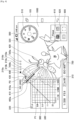
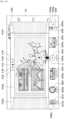
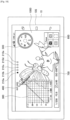
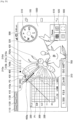
- FIG. 4 illustrates an example of displaying a first layer.
- the control unit 16 displays a through-the-lens image 1000, display layer indicators 210a to 210e, and widget images 300, 400, 500, 600, and 700. In other words, the control unit 16 arranges the widget images 300 to 700 in the first layer.
- the display layer indicators 210a to 210e are indicators that represent the layer number of a display layer, and the indicators 210a to 210e correspond to the layer numbers 1 to 5, respectively.
- the control unit 16 highlights the display layer indicator 210a that corresponds to a display layer. In other words, the control unit 16 displays the display layer indicator 210a in a manner different from other indicators 210b to 210e (for example, with different color or luminance).
- the control unit 16 switches a display layer and highlights an indicator corresponding to the current display layer.
- the widget image 500 is a dial image that is used to set (select) a shooting mode.
- the widget image 500 has a plurality of shooting mode symbols 510, which indicate a shooting mode, marked in the circumferential direction, and a shooting mode symbol 520 at the left end of these shooting mode symbols 510 is highlighted.
- the shooting mode symbol 520 indicates a shooting mode being currently set.
- the control unit 16 rotates the dial image 500 depending on the user's input operation and highlights the shooting mode symbol 520 shown at the left end of the dial image 500.
- the control unit 16 then sets the current shooting mode as a shooting mode indicated by the shooting mode symbol 520.
- the input operation for rotating the dial image 500 may be performed, for example, by tapping the dial image 500 with the finger, and in this state, by moving the finger in the circumferential direction.
- a manual mode M is selected.
- the widget images corresponding to the manual mode are arranged in the first to fifth layers.
- the widget image 600 is an image that is used to set (select) a focus mode.
- a plurality of focus mode symbols 610 are marked in the widget image 600, and a focus mode symbol 620 of these focus mode symbols 610 is highlighted.
- the focus mode symbol 620 indicates a focus mode that is being currently selected. For example, when the user taps any one of the focus mode symbols 610, the control unit 16 highlights the focus mode symbol 610 tapped by the user and shifts to a focus mode corresponding to the focus mode symbol 610.
- the widget image 700 indicates a shooting parameter (for example, Tv/AV or ISO value) that is being currently set.
- the widget image 300 is a widget image in which the horizontal axis 310 represents Tv and the vertical axis 320 represents Av.
- the control unit 16 displays a point P1 on the tapped point.
- the control unit 16 also sets a Tv/AV value as the Tv/AV value indicated by the point P1, and highlights the Tv/AV value indicated by the point P1 on the horizontal axis 310 and the vertical axis 320.
- the Tv value is set to 1/250 and the Av value is set to 2.8.
- the current shooting mode is set to the manual mode, and thus the control unit 16 provides no limitation on the Tv/Av value.
- the user can select (set) the Tv/Av value by tapping any one point on the widget image 300.
- control unit 16 displays a reference line 330 passing through the point P1 on the widget image 300.
- the Tv/Av value indicated by each point on the reference line 330 indicates the same amount of exposure as that of the point P1.
- the reference line 330 is extended to the outside through the right upper end of the widget image 300.
- the control unit 16 moves the point P1 to the point tapped by the user. Then, the control unit 16 sets the Tv/Av value to a Tv/Av value indicated by the point P1 after movement. Furthermore, the control unit 16 causes the reference line 330 to follow the point P1 newly set.
- a way for the user to select (set) the Tv/Av value is not limited to the way of tapping a point on a widget image, and is not particularly limited as long as a point on the widget image 300 can be selected.
- the user may select a point on the widget image 300 using a drag-and-drop operation.
- the control unit 16 causes the point P1 to follow the finger of the user, and when the user drops the point P1, the control unit 16 displays the point P1 at the position.
- the control unit 16 may accept the operation of combination between the tap operation and the drag-and-drop operation. Then, the control unit 16 may set the Tv/Av value to a Tv/Av value indicated by the moved point P1.
- the widget image 400 is a bar image used to select an ISO value.
- each point in the longitudinal direction indicates an ISO value
- a point 410 at the upper end indicates the maximum value of the ISO values
- a point 420 at the lower end indicates the minimum value of the ISO values.
- the maximum value is set to 16000 and the minimum value is set to 100, but the maximum and minimum values are not limited to these examples.
- the control unit 16 displays a maximum value display image 410a near the point 410 at the upper end of the widget image 400 and displays a minimum value display image 420a near the point 420 at the lower end of the widget image 400.
- the control unit 16 displays the widget image 400 in association with the widget image 300. Specifically, the control unit 16 displays the widget image 400 in a position intersecting with the reference line 330. More specifically, the control unit 16 sets the ISO value indicated by a point P2 at which the widget image 400 and the reference line 330 intersect as a setting value of the ISO value. In other words, the control unit 16 causes the point P2 in the widget image 400 corresponding to the setting value of the ISO value to be intersected with the reference line 330. In addition, the control unit 16 displays a setting value display image 430 indicating the setting value of the ISO value in the vicinity of the point P2.
- control unit 16 moves the widget image 400 in the direction of an arrow 400a or 400b depending on the user's input operation.
- the input operation includes, for example, a way of tapping the widget image 400 with the finger and dragging the finger to the direction of the arrow 400a or 400b. This also changes the setting value indicated by the point P2, and thus the control unit 16 sets (changes) the ISO value as a setting value indicated by the point P2.
- the control unit 16 causes the widget image 400 to follow the reference line 330 when the reference line 330 is moved.
- the control unit 16 may maintain the ISO value to be the current value, and may change the ISO value to the optimal value (or a preset initial value) that corresponds to the changed Tv/Av value.
- the "optimal value" in an embodiment of the present disclosure refers to a value that is determined as being optimal by the control unit 16. In the former case, the control unit 16 adjusts the position of the widget image 400 to maintain the ISO value. In other words, the position of the point P2 in the widget image 400 before and after movement of the reference line 330 remains unchanged.
- control unit 16 calculates an optimal value of the ISO value corresponding to the Tv/Av value and sets the ISO value as the optimal value (or sets the ISO value as the preset initial value). Moreover, the control unit 16 adjusts the position of the widget image 400 so that the point P2 indicates an optimal value (or initial value).
- the control unit 16 calculates an optimal value of the Tv/Av value and ISO value and adjusts the positions of the point P1, the reference line 330, and the widget image 400 based on the calculated optimal value, in the initial state, that is, in the state where the images shown in FIG. 4 begin to be displayed.
- a setting image used to set the ISO value is not limited to the bar image.
- the second setting image may be a dial-shaped image.
- Such a dial image has an ISO value marked in the circumferential direction thereof as in the dial image 500.
- the control unit 16 causes any one of ISO values on the dial image to be intersected with the reference line 330.
- the control unit 16 sets the ISO value intersected with the reference line 330 as a setting value.
- the control unit 16 also may cause the through-the-lens image 1000 to be changed depending on the current shooting parameter (for example, Tv/Av value and ISO value).
- the control unit 16 may perform a process such as blurring and panning on the through-the-lens image 1000 depending on the current Tv/Av value and ISO value. In this case, the user can easily grasp how the through-the-lens image 1000 changes depending on the current shooting parameter.
- the control unit 16 also may reset the setting value of the Tv/Av value and ISO value for every shooting operation, or may remain the setting value unchanged.
- the control unit 16 When the shooting mode is set to the auto mode (the mode in which Tv/Av value and ISO value are set automatically), the control unit 16 also may perform the following processes. In other words, each time when the user performs a preliminary operation of the shooting operation (for example, operation of depressing a shooting button halfway), the control unit 16 may calculate an optimal value of the Tv/Av value and ISO value and may adjust dynamically the positions of the point P1, the reference line 330, and the widget image 400 based on the calculated optimal value. This makes it possible for the user to grasp easily, for example, how the Tv/Av value and ISO value are changed for every shooting scene. Thus, for example, novice users or advanced amateur users can know the mechanism of an imaging device using a graphical representation. Accordingly, novice users and advanced amateur users are interested in the Tv/Av value and ISO value, and eventually, it is expected that they become more motivated to change these shooting parameters by their own desire.
- the display unit 14 displays the widget images 300 and 400 in association with each other, and thus the user can grasp intuitively the relevance between these shooting parameters. Accordingly, the user can set intuitively these shooting parameters.
- the user may set the Tv/Av value before ISO value, or may set the ISO value before Tv/Av value.
- the user can set the Tv/Av value and ISO value using only two steps, the step of tapping (or drags and drops) the widget image 300 and the step of moving the widget image 400.
- the control unit 16 changes the widget images 300 and 400 depending on the user's operation (for example, to move the point P1 and the reference line 330, and to move the widget image 400).
- the user can set these shooting parameters in a graphical and dynamical (flexible) manner.
- a veteran user can view each of shooting parameters with his eyes and comprehend it before shooting.
- a novice user can easily grasp how each shooting parameter changes depending on his input operation. Accordingly, it is expected that a novice user becomes much more interested in setting of each shooting parameter.
- the information processing apparatus 10 can provide an interface that allows the user of the existing imaging device to perform an input operation more efficiently.
- the information processing apparatus 10 allows the user who feels any difficulty in using an imaging device like users of a smartphone, smart tablet, or other smart device to be more accessible.
- the applicability of display modes in the information processing apparatus 10 to the imaging device makes it possible to diversify the product form of the imaging device and meet the needs of an increasing number of users.
- the inventors have also contemplated a technology that sets each shooting parameter with only a hard key (for example, any combination of dial, button, cross key, or the like).
- setting of one shooting parameter may often necessitate a multi-step process.
- the usability depends on the number and installation position of hard keys. If the number of hard keys is small, combinations of these hard keys are increased, resulting in the more complicated operations.
- the shooting parameter is incapable of being set with only one submenu. In this case, the user will set the shooting parameter by following a plurality of submenus (submenu having a deep hierarchy), so the operation will be complicated.
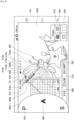
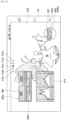
- the second display example is now described with reference to FIG. 5 .
- the control unit 16 arranges widget images 900 and 910 in the third layer and sets the third layer as a display layer.
- the control unit 16 highlights the display layer indicator 210c.
- the widget image 900 is an image used to set (adjust) dynamic range and includes a gauge image 900a and an arrow image 900b.
- the gauge image 900a is a strip-shaped image in which a scale is formed in the longitudinal direction. Each scale indicates the value of dynamic range.
- the arrow image 900b indicates any scale in the gauge image 900a.
- the control unit 16 moves the arrow image 900b in the left and right direction depending on the user's input operation. In this case, the input operation includes, for example, an operation of dragging and dropping the arrow image 900b and an operation of tapping a desired point on the gauge image 900a. Then, the control unit 16 changes a setting value of dynamic range to the dynamic range indicated by the arrow image 900b.
- the widget image 910 is a histogram in which the horizontal axis represents luminance of pixel and the vertical axis represents frequency (the number of pixels).
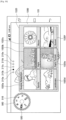
- the third display example is now described with reference to FIG. 6 .
- the control unit 16 arranges widget images 920 and 930 in the fourth layer, and sets the fourth layer as a display layer.
- the control unit 16 highlights the display layer indicator 210d.
- the widget image 920 is an image used to set (adjust) the hue of a captured image and includes a gauge image 920a.
- the gauge image 920a is a strip-shaped image in which a scale is formed in the longitudinal direction. Each scale indicates a value of hue. In the gauge image 920a, hue is displayed as gradation of color.
- the control unit 16 sets a hue depending on the user's input operation.
- the input operation includes, for example, an operation of tapping a desired point on the gauge image 920a.
- the control unit 16 may display an arrow image indicating any one scale in the gauge image 920a near the gauge image 920a and may move the arrow image depending on the user's input operation. Then, the control unit 16 may set the hue indicated by the arrow image as the current hue.
- the widget image 930 is an image used to set (adjust) the amount of exposure compensation (the amount of brightness correction) of a captured image, and includes a gauge image 930a.
- the gauge image 930a is a strip-shaped image in which a scale is formed in the longitudinal direction. Each scale indicates a value of the amount of exposure compensation.
- the amount of exposure compensation is displayed as a gradation representation. In other words, as the scale has a larger amount of exposure compensation, it is displayed as higher luminance.
- the control unit 16 sets the amount of exposure compensation depending on the user's input operation.
- the input operation includes, for example, an operation of tapping a desired point on the gauge image 930a.
- the control unit 16 may display an arrow image indicating any one scale in the gauge image 930a near the gauge image 930a and may move the arrow image depending on the user's input operation. Then, the control unit 16 may set the amount of exposure compensation indicated by the arrow image as the current amount of exposure compensation.
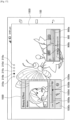
- the fourth display example is now described with reference to FIG. 7 .
- the control unit 16 arranges widget images 940 and 950 in the fifth layer, and sets the fifth layer as a display layer.
- the control unit 16 highlights the display layer indicator 210e.
- the widget image 940 is an image used to set (select) an image style (representation style) of a captured image.
- the image style indicates any combination of saturation, brightness, and contrast.
- the widget image 940 includes a plurality of image style icons 940a to 940f. In each of the image style icons 940a to 940f, a sample image in which an image style is applied to a through-the-lens image is drawn.
- the control unit 16 sets an image style depending on the user's input operation. In this case, the input operation includes, for example, an operation of tapping any one of the image style icons 940a to 940f.
- the widget image 950 is an image used to set (select) the color of a portion of a captured image.
- the widget image 950 includes a plurality of color setting icons 950a to 950d. In each of the color setting icons 950a to 950d, a sample image in which a portion of the through-the-lens image is colored is drawn.
- the control unit 16 sets the color depending on the user's input operation. In this case, the input operation includes, for example, an operation of tapping any one of the color setting icons 950a to 950d.
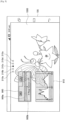
- the shooting mode switching process is now described with reference to FIG. 8 . That is, when the user performs a shooting mode setting operation (for example, a vertical flick operation), the control unit 16 displays a shooting mode setting image 800-1 as shown in FIG. 8 .
- a shooting mode setting operation for example, a vertical flick operation
- the shooting mode setting image 800-1 is a dial image with a semi-circular shape that is used to set (select) a shooting mode and has a similar function as that of the widget image 500.
- a plurality of shooting mode symbols 810 that indicate a shooting mode are marked in the circumferential direction, and a shooting mode symbol 820 at the right end of these shooting mode symbols 810 is highlighted.
- the shooting mode symbol 820 indicates a shooting mode that is currently set.
- the control unit 16 rotates the shooting mode setting image 800-1 depending on the shooting mode setting operation. For example, when the shooting mode setting operation is an upward flick operation, the control unit 16 rotates the shooting mode setting image 800-1 in the counterclockwise direction. On the other hand, when the shooting mode setting operation is a downward flick operation, the control unit 16 rotates the shooting mode setting image 800-1 in the clockwise direction.
- the control unit 16 highlights a shooting mode symbol 820 marked at the right end of the shooting mode setting image 800-1. Then, the control unit 16 sets the current shooting mode as a shooting mode indicated by the shooting mode symbol 820. In the example of FIG. 8 , the shutter speed priority mode (S) is selected. Thereafter, the control unit 16 deletes the shooting mode setting image 800-1. Then, the control unit 16 selects a widget image corresponding to the shutter speed priority mode (S) that is the current shooting mode, and arranges the selected widget image in each layer. A specific way of arrangement is the same as described above.
- the control unit 16 may display the dial image 500 together with the shooting mode setting image 800-1. In this case, the control unit 16 may rotate the dial image 500 in synchronization with the shooting mode setting image 800-1.
- the shooting mode symbol 520 of the dial image 500 and the shooting mode symbol 820 of the shooting mode setting image 800-1 indicate the same shooting mode.
- the control unit 16 rotates the shooting mode setting image 800-1 in the clockwise direction as shown in FIG. 9 . Then, the control unit 16 highlights the shooting mode symbol 820 that indicates an aperture priority mode (A). Then, the control unit 16 set the current shooting mode as the aperture priority mode. Thereafter, the control unit 16 deletes the shooting mode setting image 800-1. The control unit 16 then selects a widget image corresponding to the aperture priority mode that is the current shooting mode, and arranges the selected widget image in each layer.
- the control unit 16 rotates the shooting mode setting image 800-1 in the clockwise direction as shown in FIG. 10 . Then, the control unit 16 highlights the shooting mode symbol 820 that indicates a program mode (P). Then, the control unit 16 set the current shooting mode as the program mode. Thereafter, the control unit 16 deletes the shooting mode setting image 800-1. The control unit 16 then selects a widget image corresponding to the program mode that is the current shooting mode, and arranges the selected widget image in each layer.
- FIG. 11 illustrates a shooting mode setting image 800-2 as another example of the shooting mode setting image.
- the shooting mode setting image 800-2 is a circular dial image that is similar to the widget image 500.
- a plurality of shooting mode symbols 810 that indicate a shooting mode are marked in the circumferential direction, and a shooting mode symbol 820 at the right end of these shooting mode symbols 810 is highlighted.
- the shooting mode symbol 820 indicates a shooting mode that is currently set.
- the control unit 16 rotates the shooting mode setting image 800-2 depending on the shooting mode setting operation. For example, when the shooting mode setting operation is an upward flick operation, the control unit 16 rotates the shooting mode setting image 800-2 in the counterclockwise direction. On the other hand, when the shooting mode setting operation is a downward flick operation, the control unit 16 rotates the shooting mode setting image 800-2 in the clockwise direction. The control unit 16 then highlights a shooting mode symbol 820 marked at the right end of the shooting mode setting image 800-2. Then, the control unit 16 sets the current shooting mode to a shooting mode indicated by the shooting mode symbol 820.
- FIG. 12 illustrates a shooting mode setting image 800-3 as another example of the shooting mode setting image.
- the shooting mode setting image 800-3 is an image with a vertical belt shape.
- a plurality of shooting mode symbols 810 that indicate a shooting mode are marked in the vertical direction, and a shooting mode symbol 820 in the middle of these shooting mode symbols 810 is highlighted.
- the shooting mode symbol 820 indicates a shooting mode that is currently set.
- the control unit 16 moves the shooting mode setting image 800-3 in the vertical direction depending on a shooting mode setting operation. For example, when the shooting mode setting operation is an upward flick operation, the control unit 16 moves the shooting mode setting image 800-3 in the upward direction. On the other hand, when the shooting mode setting operation is a downward flick operation, the control unit 16 moves the shooting mode setting image 800-3 in the downward direction. Then, the control unit 16 highlights a shooting mode symbol 820 marked in the middle of the shooting mode setting image 800-3. Then, the control unit 16 sets the current shooting mode to a shooting mode indicated by the shooting mode symbol 820.
- FIG. 13 illustrates a shooting mode setting image 800-4 as another example of the shooting mode setting image.
- the shooting mode setting image 800-4 is an image with a vertical dial shape (slot type).
- a plurality of shooting mode symbols 810 that indicate a shooting mode are marked in the vertical direction.
- a shooting mode symbol 820 in the middle of these shooting mode symbols 810 is highlighted.
- the shooting mode symbol 820 indicates a shooting mode that is currently set.
- the control unit 16 rotates the shooting mode setting image 800-4 in the vertical direction depending on a shooting mode setting operation. For example, when the shooting mode setting operation is an upward flick operation, the control unit 16 rotates the shooting mode setting image 800-4 in the upward direction. On the other hand, when the shooting mode setting operation is a downward flick operation, the control unit 16 rotates the shooting mode setting image 800-4 in the downward direction. The control unit 16 highlights a shooting mode symbol 820 marked in the middle of the shooting mode setting image 800-4. Then, the control unit 16 sets the current shooting mode to a shooting mode indicated by the shooting mode symbol 820.
- the control unit 16 may change the arrangement sequence of the shooting mode symbols 810 on the shooting mode setting images 800-1 to 800-4, in an optional manner or depending on an input operation performed by the user. This is similarly applicable to the widget image 500.
- control unit 16 determines a widget image to be arranged in each layer based on a shooting mode. Furthermore, the control unit 16 may determine a widget image to be arranged in each layer based on the user's input operation (a setting image selection operation).
- the control unit 16 proceeds to the widget image selection mode.
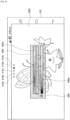
- control unit 16 displays layer frame images 1010a, 1010b, and 1010c and a widget icon list image 2000 as shown in FIG. 14 .
- the layer frame image 1010a indicates an arrangement target layer in which a widget image is to be arranged (a display layer in the initial state).
- the layer frame image 1010b indicates a layer having the layer number lower by one than that of the display layer
- the layer frame image 1010c indicates a layer having the layer number higher by one than that of the display layer.
- the control unit 16 may switch an arrangement target layer. For example, when the right flick operation is performed, the control unit 16 may set the arrangement target layer as a layer having the layer number lower by one than that of the current arrangement target layer.
- control unit 16 may set the arrangement target layer as a layer having the layer number higher by one than that of the current arrangement target layer.
- the control unit 16 may highlight an indicator corresponding to the arrangement target layer of the display layer indicators 210a to 210e.
- the widget icon list image 2000 includes a belt image 2000a, a shift (scroll) instruction buttons 2000b and 2000c, a plurality of widget icons 2010 to 2060, and widget name images 2010a to 2060a.
- the belt image 2000a is a strip-shaped image extending in the left and right direction, and can be shifted (scrolled) in the left and right direction.
- the shift instruction buttons 2000b and 2000c are buttons for shifting the belt image 2000a. In other words, when the user taps the shift instruction button 2000b, the control unit 16 shifts (scrolls) the belt image 2000a in the left direction. On the other hand, when the user taps the shift instruction button 2000c, the control unit 16 shifts the belt image 2000a in the right direction.
- the control unit 16 may shift the belt image 2000a by the horizontal flick operation.
- the widget icons 2010 to 2060 represent a widget image using an icon, and are arranged in the longitudinal direction of the belt image 2000a.
- the widget name images 2010a to 2060a are arranged below the widget icons 2010 to 2060 and indicate the name of the widget image.
- the user drags a widget icon into the layer frame image 1010a. This enables the user to select a widget image corresponding to the widget icon.
- the control unit 16 arranges the widget image selected by the user in the arrangement target layer. For example, when the user drags the widget icon 2040 into the layer frame image 1010a, the control unit 16 arranges the widget image 960 in the arrangement target layer (the third layer for this example) as shown in FIG. 15 .
- the widget image 960 is an image that is used to set (select) a drive mode, and includes a plurality of drive mode icons 960a that indicate a drive mode. Any one of the drive mode icons 960a is highlighted. The highlighted drive mode icon 960a, that is, a drive mode icon 960b indicates the drive mode being currently set.
- the control unit 16 when the user taps any one of the drive mode icons 960a, the control unit 16 highlights the drive mode icon 960a tapped by the user. Then, the control unit 16 sets a drive mode indicated by the highlighted drive mode icon 960a, that is, the drive mode icon 960b as the current drive mode.
- the control unit 16 cancels the widget image selection mode based on the user's operation. For example, when the user depresses the layer frame image 1010a for a long time, the control unit 16 cancels the widget image selection mode.
- the user can arrange a desired widget image in a desired layer.
- the user can customize a combination between widget images as desired depending on the purpose of shooting.
- the control unit 16 may present (recommend) a relevant widget image associated with the selected widget image. For example, the control unit 16 may arrange the relevant widget image in the same layer as a layer in which the widget image selected by the user is arranged, or may arrange the relevant widget image in a different layer from a layer in which the widget image selected by the user is arranged. In addition, the control unit 16 may highlight a widget icon corresponding to the relevant widget image of the widget icons on the belt image 2000a. In addition, the control unit 16 may present the relevant widget image using audio.
- the relevant widget image may be preset, or may set based on the user's use history. In the latter case, for example, if the number of times that a plurality of widget images are used in the same layer is greater than or equal to a predetermined value, then the control unit 16 may determine that these widget images are associated with one another.
- the control unit 16 may set a shooting mode based on the widget image selected by the user. For example, when a widget image suitable for a panorama mode (a widget image for setting, for example, angle-of-view correction) is selected, the control unit 16 may set a shooting mode as the panorama mode.
- a widget image suitable for a panorama mode a widget image for setting, for example, angle-of-view correction
- the control unit 16 determines a widget image to be arranged in each layer based on a shooting mode.
- the shooting mode includes a shooting scene.
- the control unit 16 may determine a widget image based on the shooting scene. An example thereof will be described with reference to FIGS. 16 and 17 .
- the control unit 16 arranges a shooting scene selection image 1020 in a display layer (the second layer for this example) as shown in FIG. 16 .
- the control unit 16 also may arrange another widget image in each layer.
- the shooting scene selection image 1020 includes shooting scene icons 1020a to 1020f that indicate a shooting scene.
- the control unit 16 sets a shooting scene depending on the user's input operation.
- the input operation includes, for example, an operation of tapping any one of the shooting scene selection icons 1020a to 1020f.
- the control unit 16 when setting a shooting scene, determines a widget image to be arranged in each layer based on the shooting scene. For example, when the shooting scene is set to "night portrait" (corresponding to a shooting scene icon 1020e), the control unit 16 arranges the widget images 900 and 1030 in any one layer (the second layer for this example) as shown in FIG. 17 .
- the widget image 1030 is an image used to set (adjust) the beauty effect, and includes a gauge image 1030a, a pointer 1030b, and beauty effect setting buttons 1030c to 1030e.
- the gauge image 1030a is a strip-shaped image having a scale formed in the longitudinal direction. Each scale indicates the action amount of the beauty effect (the amount indicating that which one of beauty effects acts on a captured image).
- the pointer 1030b indicates the action amount of the current beauty effect.
- the control unit 16 moves the pointer 1030b in the left and right direction depending on the user's input operation.
- the input operation includes, for example, an operation of dragging and dropping the pointer 1030b and an operation of tapping a desired point on the gauge image 1030a.
- the control unit 16 changes the action amount of the beauty effect to a value indicated by the pointer 1030b.
- the beauty effect setting buttons 1030c to 1030e are buttons used to set the types of beauty effect to be adjusted.
- the control unit 16 adjusts the beauty effect corresponding to a button tapped by the user from among the beauty effect buttons 1030c to 1030e.
- the control unit 16 When the use state of the display unit 14 (display 105) is changed, the control unit 16 maintains the positional relationship between the widget images. In addition, the control unit 16 adjusts the magnification of a widget image so that the widget image fits within the display unit 14.
- the positional relationship refers to the display position of each widget image relative to another widget image.
- a display example will be described with reference to FIGS. 18 and 19 .
- the control unit 16 displays, for example, an image shown in FIG. 18 .
- the control unit 16 maintains the positional relationship between the widget images 300 to 700 and reduces the size of the widget images 300 to 700 as shown in FIG. 19 .
- the widget image 300 is displayed on the upper side of the widget image 700 as shown in FIG. 18 , and thus the control unit 16 displays the widget image 300 on the upper side of the widget image 700 even when the use state of the display unit 14 is changed to the portrait orientation.
- the control unit 16 also may adjust the positional relationship between widget images depending on the use state. For example, when the use state of the display unit 14 is changed to the landscape orientation, the control unit 16 may arrange the widget images 300 to 700 in the up and down direction.
- the control unit 16 may display an undo button 1110, a reset button 1120, and a lock button 1130 together with a display layer.
- the control unit 16 restores the state of each image to the state of the operation performed previously by one operation by the user.
- the reset button 1120 is tapped, the control unit 16 restores the display state to its initial state.
- the control unit 16 may restore the display state for every layer to its initial state, or may restore the display state of the entire layer to its initial state.
- the control unit 16 may restore the display state to a state previously set (so-called custom reset). This function is useful, for example, at the time of demonstration of the information processing apparatus 10.
- the custom reset is performed before the demonstrator begins to describe it to another user. This makes it possible for the demonstrator to restore easily the display state of the information processing apparatus 10 to the state before the description to the one user.
- the control unit 16 rejects (refuse to accept) a user's input operation.
- the control unit 16 accepts the input operation performed by the user.
- the display of any one of the undo button 1110, the reset button 1120, and the lock button 1130 may be omitted. Some of these buttons may be a hard key.
- the information processing apparatus 10 displays any one layer of a plurality of layers in which a widget image is arranged on the display unit 14 as a display layer and switches the display layer. Furthermore, the information processing apparatus 10 sets a shooting parameter depending on an input operation. Thus, the user can set a shooting parameter using a desired widget image displayed on a desired layer, thereby setting the shooting parameter easily.
- the information processing apparatus 10 switches a display layer.
- the user can display a desired layer easily.
- the information processing apparatus 10 determines a widget image to be arranged in each layer based on a shooting mode, and thus it can arrange the widget image in each layer depending on the user's shooting purpose. Accordingly, the user can set a desired shooting parameter easily.
- the information processing apparatus 10 determines the priority of a widget image based on a shooting mode, and sets a widget image to be arranged in each layer based on the priority. Thus, the user can find out more easily a desired widget image.
- the information processing apparatus 10 displays a shooting mode setting image used to set a shooting mode.
- the shooting mode setting image is hardly obstructive to the user.
- the user can change easily a shooting mode to a desired mode by using the shooting mode setting image.
- the information processing apparatus 10 performs control for arranging a widget image selected by the user in each layer.
- the user can arrange a desired widget image in a desired layer.
- the information processing apparatus 10 performs control for presenting a relevant widget image associated with the widget image selected by the user.
- the user can grasp easily a shooting parameter that is necessary for a desired shooting and adjust easily the shooting parameter.
- the information processing apparatus 10 may arrange the relevant widget image in the same layer as a layer in which a widget image selected by the user is arranged, or may arrange the relevant widget image in a different layer from a layer in which a widget image selected by the user is arranged. This saves the user a lot of time and trouble trying to arrange the relevant widget image in a layer.
- the information processing apparatus 10 sets a shooting mode based on a widget image selected by the user.
- the user can capture a desired image easily.
- the information processing apparatus 10 changes a way of performing the display layer switching operation depending on a shooting mode.
- the information processing apparatus 10 can reduce the possibility for the user to confuse the display layer switching operation with other operations.
- the information processing apparatus 10 When the use state of the display unit 14 is changed, the information processing apparatus 10 also maintains the positional relationship between widget images. Thus, even when the use state of the display unit 14 is changed, the user is much less likely to be confused.
- the second embodiment is now described.
- the information processing apparatus and the imaging device are separated.
- the configuration of the information processing system according to the second embodiment is now described with reference to FIG. 21 .
- the information processing system includes the information processing apparatus 10 and the imaging device 20.
- the information processing apparatus 10 and the imaging device 20 can communicate with each other.
- the information processing apparatus 10 performs a process similar to that of the first embodiment described above. However, the information processing apparatus 10 acquires a through-the-lens image and a captured image by communication with the imaging device 20.
- the information processing apparatus 10 outputs setting value information related to a setting value of a shooting parameter to the imaging device 20.
- the configuration of the information processing apparatus 10 is substantially similar to that of the first embodiment.
- the information processing apparatus 10 may not include the imaging unit 13.
- the configuration of the imaging device 20 is now described.
- the imaging device 20 includes a storage unit 21, a communication unit 22, an imaging unit 23, a display unit 24, an operation unit 25, and a control unit 26.
- the storage unit 21 stores a program which causes the imaging device 20 to execute functions of the storage unit 21, the communication unit 22, the imaging unit 23, the display unit 24, the operation unit 25, and the control unit 26.
- the storage unit 21 also stores various types of image information.
- the communication unit 22 communicates with the information processing apparatus 10. For example, the communication unit 22 transmits the through-the-lens image supplied from the control unit 26 to the information processing apparatus 10. In addition, the communication unit 22 outputs the setting value information supplied from the information processing apparatus 10 to the control unit 26.
- the imaging unit 23 captures an image. Specifically, the imaging unit 23 outputs an image captured by an image sensor to the control unit 26 as a through-the-lens image until the user performs a shooting operation (for example, an operation of depressing a shutter button which is not shown). When the user performs a shooting operation, the imaging unit 23 captures an image (specifically, performs an action such as releasing a shutter) depending on the setting values the Tv/Av value and ISO value. Then, the imaging unit 23 outputs the image captured by the image sensor to the control unit 26 as a captured image.
- the display unit 24 displays various types of images, for example, a through-the-lens image and a captured image.
- the display unit 24 may display the widget image described above.
- the operation unit 25 includes a so-called hard key, which is disposed on each site of the imaging device 20.
- the operation unit 25 outputs operation information related to the input operation performed by the user to the control unit 26.
- the control unit 26 controls the entire imaging device 20, and outputs a through-the-lens image to the communication unit 22.
- the control unit 26 performs setting of the imaging unit 23 based on the setting value information.
- the imaging device 20 has the hardware configuration shown in FIG. 23 , and such hardware configuration allows the storage unit 21, the communication unit 22, the imaging unit 23, the display unit 24, the operation unit 25, and the control unit 26 to be executed.
- the imaging device 20 is configured to include a non-volatile memory 201, a RAM 202, a communication device 203, an imaging hardware 204, a display 205, an operation device (for example, a hard key) 206, and a CPU 207, as its hardware configuration.
- the non-volatile memory 201 stores, for example, various programs and image information.
- the program stored in the non-volatile memory includes a program which causes the imaging device 20 to execute functions of the storage unit 21, the communication unit 22, the imaging unit 23, the display unit 24, the operation unit 25, and the control unit 26.
- the RAM 202 is used as a work area of the CPU 207.
- the communication device 203 communicates with the information processing apparatus 10.
- the imaging hardware 204 has a configuration similar to that of the imaging device 104. In other words, the imaging hardware 204 captures an image and generates a captured image.
- the display 205 displays various types of image information.
- the display 205 may output audio information.
- the operation device 206 accepts various input operations performed by the user.
- the CPU 207 reads out and executes the program stored in the non-volatile memory 201.
- the CPU 207 which reads out and executes the program stored in the non-volatile memory 201, allows the imaging device 20 to execute functions of the storage unit 21, the communication unit 22, the imaging unit 23, the display unit 24, the operation unit 25, and the control unit 26.
- the CPU 207 functions as a component for practically operating the imaging device 20.
- the process of the information processing system is similar to the process performed by the information processing apparatus 10 described above.
- the information processing system is different from the first embodiment in that the imaging device 20 creates a through-the-lens image and transmits it to the information processing apparatus 10 and the information processing apparatus 10 transmits setting value information to the imaging device 20.
- the user also can easily set a shooting parameter.
- the user can remotely operate a shooting parameter of the imaging device 20 using the information processing apparatus 10, thereby further improving the usability of widget image.
Landscapes
- Engineering & Computer Science (AREA)
- Theoretical Computer Science (AREA)
- Human Computer Interaction (AREA)
- General Engineering & Computer Science (AREA)
- Multimedia (AREA)
- Signal Processing (AREA)
- Physics & Mathematics (AREA)
- General Physics & Mathematics (AREA)
- Computer Hardware Design (AREA)
- User Interface Of Digital Computer (AREA)
- Studio Devices (AREA)
- Indication In Cameras, And Counting Of Exposures (AREA)
Priority Applications (2)
| Application Number | Priority Date | Filing Date | Title |
|---|---|---|---|
| EP25171885.4A EP4600799A3 (en) | 2013-11-07 | 2014-10-30 | Information processing apparatus, information processing method, and program |
| EP22199798.4A EP4145843B1 (en) | 2013-11-07 | 2014-10-30 | Information processing apparatus, information processing method, and program |
Applications Claiming Priority (2)
| Application Number | Priority Date | Filing Date | Title |
|---|---|---|---|
| JP2013231279A JP6149696B2 (ja) | 2013-11-07 | 2013-11-07 | 情報処理装置、情報処理方法、及びプログラム |
| PCT/JP2014/005513 WO2015068366A1 (en) | 2013-11-07 | 2014-10-30 | Information processing apparatus, information processing method, and program |
Related Child Applications (3)
| Application Number | Title | Priority Date | Filing Date |
|---|---|---|---|
| EP25171885.4A Division EP4600799A3 (en) | 2013-11-07 | 2014-10-30 | Information processing apparatus, information processing method, and program |
| EP22199798.4A Division-Into EP4145843B1 (en) | 2013-11-07 | 2014-10-30 | Information processing apparatus, information processing method, and program |
| EP22199798.4A Division EP4145843B1 (en) | 2013-11-07 | 2014-10-30 | Information processing apparatus, information processing method, and program |
Publications (2)
| Publication Number | Publication Date |
|---|---|
| EP3036612A1 EP3036612A1 (en) | 2016-06-29 |
| EP3036612B1 true EP3036612B1 (en) | 2023-05-31 |
Family
ID=52001020
Family Applications (3)
| Application Number | Title | Priority Date | Filing Date |
|---|---|---|---|
| EP14805684.9A Active EP3036612B1 (en) | 2013-11-07 | 2014-10-30 | Information processing apparatus and program |
| EP22199798.4A Active EP4145843B1 (en) | 2013-11-07 | 2014-10-30 | Information processing apparatus, information processing method, and program |
| EP25171885.4A Pending EP4600799A3 (en) | 2013-11-07 | 2014-10-30 | Information processing apparatus, information processing method, and program |
Family Applications After (2)
| Application Number | Title | Priority Date | Filing Date |
|---|---|---|---|
| EP22199798.4A Active EP4145843B1 (en) | 2013-11-07 | 2014-10-30 | Information processing apparatus, information processing method, and program |
| EP25171885.4A Pending EP4600799A3 (en) | 2013-11-07 | 2014-10-30 | Information processing apparatus, information processing method, and program |
Country Status (5)
| Country | Link |
|---|---|
| US (4) | US20160239196A1 (enExample) |
| EP (3) | EP3036612B1 (enExample) |
| JP (1) | JP6149696B2 (enExample) |
| ES (1) | ES3035757T3 (enExample) |
| WO (1) | WO2015068366A1 (enExample) |
Families Citing this family (13)
| Publication number | Priority date | Publication date | Assignee | Title |
|---|---|---|---|---|
| JP6265145B2 (ja) * | 2015-01-26 | 2018-01-24 | ソニー株式会社 | 情報処理装置、情報処理方法、プログラム、及び、表示装置 |
| JP6771947B2 (ja) * | 2016-05-09 | 2020-10-21 | キヤノン株式会社 | 表示装置及びその制御方法 |
| JP6484761B2 (ja) | 2016-06-27 | 2019-03-13 | 富士フイルム株式会社 | カメラ、及び、その設定方法 |
| CN109565537B (zh) * | 2016-07-29 | 2021-01-05 | 富士胶片株式会社 | 相机、相机的设定方法及记录介质 |
| GB201708572D0 (en) | 2017-05-30 | 2017-07-12 | Expodo Ltd | Image capture |
| USD1033518S1 (en) | 2017-06-28 | 2024-07-02 | Fujifilm Corporation | Camera |
| JP2019095999A (ja) * | 2017-11-21 | 2019-06-20 | 凸版印刷株式会社 | 操作入力装置及びプログラム |
| JP7199158B2 (ja) * | 2018-05-23 | 2023-01-05 | キヤノン株式会社 | 画像処理装置およびその制御方法ならびにプログラム |
| JP7065363B2 (ja) * | 2018-06-27 | 2022-05-12 | パナソニックIpマネジメント株式会社 | 撮像装置 |
| JP7233038B2 (ja) * | 2018-06-27 | 2023-03-06 | パナソニックIpマネジメント株式会社 | 撮像装置 |
| US12418430B1 (en) * | 2022-07-31 | 2025-09-16 | Zoom Communications, Inc. | Dynamic configuration of interface elements for eye contact in a communication session |
| USD1103188S1 (en) * | 2023-07-21 | 2025-11-25 | Samsung Electronics Co., Ltd. | Display screen or portion thereof with graphical user interface |
| CN121418659A (zh) * | 2024-07-24 | 2026-01-27 | Oppo广东移动通信有限公司 | 拍摄方法、装置、终端、存储介质及程序产品 |
Citations (1)
| Publication number | Priority date | Publication date | Assignee | Title |
|---|---|---|---|---|
| US20120023424A1 (en) * | 2010-07-20 | 2012-01-26 | Mediatek Inc. | Apparatuses and Methods for Generating Full Screen Effect by Widgets |
Family Cites Families (33)
| Publication number | Priority date | Publication date | Assignee | Title |
|---|---|---|---|---|
| JP3652125B2 (ja) * | 1998-07-10 | 2005-05-25 | キヤノン株式会社 | 撮像制御装置、撮像制御方法、撮像制御システム、及び記憶媒体 |
| JP2002055750A (ja) * | 2000-08-10 | 2002-02-20 | Canon Inc | 情報処理装置、機能一覧表表示方法、及び記憶媒体 |
| US20030202015A1 (en) * | 2002-04-30 | 2003-10-30 | Battles Amy E. | Imaging device user interface method and apparatus |
| JP4241007B2 (ja) * | 2002-11-12 | 2009-03-18 | キヤノン株式会社 | 撮像装置及びその制御方法、プログラム、コンピュータ読み取り可能な記憶媒体 |
| JP2004363707A (ja) * | 2003-04-09 | 2004-12-24 | Sony Corp | 表示方法及び表示装置 |
| JP3945445B2 (ja) * | 2003-04-21 | 2007-07-18 | ソニー株式会社 | 表示方法及び表示装置 |
| KR100508123B1 (ko) * | 2003-07-04 | 2005-08-10 | 엘지전자 주식회사 | 기호 입력방법 및 장치 |
| JP4345008B2 (ja) * | 2004-07-15 | 2009-10-14 | 富士フイルム株式会社 | 撮像装置および撮像方法 |
| JP4366695B2 (ja) * | 2004-09-13 | 2009-11-18 | 日本ビクター株式会社 | メニュー画像表示方法及び電子情報機器 |
| JP2007052403A (ja) * | 2005-07-19 | 2007-03-01 | Canon Inc | 表示装置及び表示方法及びプログラム及び記憶媒体 |
| US7707514B2 (en) * | 2005-11-18 | 2010-04-27 | Apple Inc. | Management of user interface elements in a display environment |
| JP2007158878A (ja) * | 2005-12-07 | 2007-06-21 | Matsushita Electric Ind Co Ltd | 撮像装置 |
| JP4716190B2 (ja) * | 2006-12-07 | 2011-07-06 | 富士フイルム株式会社 | 項目選択装置、方法およびプログラムならびに撮影装置 |
| JP2009010775A (ja) | 2007-06-28 | 2009-01-15 | Sony Corp | 画像表示装置、撮像装置、画像表示方法、プログラム |
| US8176441B2 (en) * | 2007-08-08 | 2012-05-08 | Sanyo Electric Co., Ltd. | Information display device |
| JP2009077214A (ja) * | 2007-09-21 | 2009-04-09 | Toshiba Corp | 撮像装置とその制御方法 |
| KR100953952B1 (ko) * | 2008-01-30 | 2010-04-21 | 홍성춘 | 강의실 환경 통합 제어 패널 및 이를 포함하는 시스템 |
| JP5040753B2 (ja) * | 2008-03-18 | 2012-10-03 | パナソニック株式会社 | 撮像装置 |
| JP5129181B2 (ja) * | 2009-03-02 | 2013-01-23 | オリンパスイメージング株式会社 | 操作制御装置、カメラ、操作制御方法および操作制御用プログラム |
| JP2010213169A (ja) * | 2009-03-12 | 2010-09-24 | Fujifilm Corp | 表示装置、表示処理方法及び撮像装置 |
| JP5775659B2 (ja) * | 2009-05-07 | 2015-09-09 | オリンパス株式会社 | 撮像装置および撮像装置におけるモード切換え方法 |
| CA2780765A1 (en) * | 2009-11-13 | 2011-05-19 | Google Inc. | Live wallpaper |
| US9170708B2 (en) * | 2010-04-07 | 2015-10-27 | Apple Inc. | Device, method, and graphical user interface for managing folders |
| JP5833822B2 (ja) * | 2010-11-25 | 2015-12-16 | パナソニックIpマネジメント株式会社 | 電子機器 |
| JP5652652B2 (ja) * | 2010-12-27 | 2015-01-14 | ソニー株式会社 | 表示制御装置および方法 |
| JP5846751B2 (ja) * | 2011-03-29 | 2016-01-20 | 京セラ株式会社 | 電子機器 |
| US20120311501A1 (en) * | 2011-06-01 | 2012-12-06 | International Business Machines Corporation | Displaying graphical object relationships in a workspace |
| US9094603B2 (en) * | 2011-10-07 | 2015-07-28 | Panasonic Intellectual Property Corporation Of America | Image pickup device and image pickup method |
| DE102011120265A1 (de) * | 2011-12-01 | 2013-06-06 | Jürgen Habenstein | Digitalkamera |
| KR20140021821A (ko) * | 2012-08-09 | 2014-02-21 | 삼성전자주식회사 | 이미지 캡처 장치 및 이미지 캡처 방법 |
| KR101343591B1 (ko) * | 2012-09-03 | 2013-12-19 | 엘지전자 주식회사 | 휴대 전자기기 및 이의 제어방법 |
| KR20140082000A (ko) * | 2012-12-21 | 2014-07-02 | 주식회사 팬택 | 관련 어플리케이션 제공 단말 및 방법 |
| KR102127925B1 (ko) * | 2013-04-29 | 2020-06-29 | 엘지전자 주식회사 | 이동 단말기 및 그것의 제어 방법 |
-
2013
- 2013-11-07 JP JP2013231279A patent/JP6149696B2/ja active Active
-
2014
- 2014-10-30 ES ES22199798T patent/ES3035757T3/es active Active
- 2014-10-30 US US15/031,726 patent/US20160239196A1/en not_active Abandoned
- 2014-10-30 WO PCT/JP2014/005513 patent/WO2015068366A1/en not_active Ceased
- 2014-10-30 EP EP14805684.9A patent/EP3036612B1/en active Active
- 2014-10-30 EP EP22199798.4A patent/EP4145843B1/en active Active
- 2014-10-30 EP EP25171885.4A patent/EP4600799A3/en active Pending
-
2020
- 2020-11-12 US US17/096,215 patent/US20210064227A1/en not_active Abandoned
-
2022
- 2022-12-05 US US18/074,661 patent/US20230102776A1/en not_active Abandoned
-
2025
- 2025-03-17 US US19/081,510 patent/US20250244864A1/en active Pending
Patent Citations (1)
| Publication number | Priority date | Publication date | Assignee | Title |
|---|---|---|---|---|
| US20120023424A1 (en) * | 2010-07-20 | 2012-01-26 | Mediatek Inc. | Apparatuses and Methods for Generating Full Screen Effect by Widgets |
Also Published As
| Publication number | Publication date |
|---|---|
| EP4600799A2 (en) | 2025-08-13 |
| WO2015068366A1 (en) | 2015-05-14 |
| US20230102776A1 (en) | 2023-03-30 |
| US20210064227A1 (en) | 2021-03-04 |
| EP4600799A3 (en) | 2025-10-29 |
| JP6149696B2 (ja) | 2017-06-21 |
| ES3035757T3 (en) | 2025-09-08 |
| JP2015090668A (ja) | 2015-05-11 |
| US20250244864A1 (en) | 2025-07-31 |
| EP4145843A1 (en) | 2023-03-08 |
| EP3036612A1 (en) | 2016-06-29 |
| EP4145843B1 (en) | 2025-05-14 |
| US20160239196A1 (en) | 2016-08-18 |
Similar Documents
| Publication | Publication Date | Title |
|---|---|---|
| US20250244864A1 (en) | Information processing apparatus, and information processing method | |
| US12079461B2 (en) | Information processing apparatus and information processing method | |
| KR102872219B1 (ko) | 사진촬영 방법, 장치, 전자기기 및 저장 매체 | |
| CN113923350A (zh) | 视频拍摄方法、装置、电子设备和可读存储介质 | |
| EP3616396B1 (en) | Digital camera | |
| US11140306B2 (en) | Method for controlling monitoring camera, and monitoring system employing method | |
| KR101974176B1 (ko) | 디스플레이장치와 그 제어방법 | |
| JP2013149234A (ja) | 電子機器 | |
| EP2819393A1 (en) | Parameter adjusting device, parameter adjusting method and storage medium | |
| CN103902177B (zh) | 一种显示控制方法和电子设备 | |
| US10356327B2 (en) | Display control apparatus, method for controlling same, and storage medium | |
| JP6590002B2 (ja) | 情報処理装置、情報処理方法、及びプログラム | |
| JP2016062267A (ja) | 表示処理装置およびその方法 | |
| JP2015049836A (ja) | 携帯端末 | |
| JP2017135575A (ja) | 撮像装置およびその制御方法 | |
| JP2016062256A (ja) | 表示処理装置および表示処理方法 |
Legal Events
| Date | Code | Title | Description |
|---|---|---|---|
| PUAI | Public reference made under article 153(3) epc to a published international application that has entered the european phase |
Free format text: ORIGINAL CODE: 0009012 |
|
| 17P | Request for examination filed |
Effective date: 20160323 |
|
| AK | Designated contracting states |
Kind code of ref document: A1 Designated state(s): AL AT BE BG CH CY CZ DE DK EE ES FI FR GB GR HR HU IE IS IT LI LT LU LV MC MK MT NL NO PL PT RO RS SE SI SK SM TR |
|
| AX | Request for extension of the european patent |
Extension state: BA ME |
|
| DAX | Request for extension of the european patent (deleted) | ||
| STAA | Information on the status of an ep patent application or granted ep patent |
Free format text: STATUS: EXAMINATION IS IN PROGRESS |
|
| 17Q | First examination report despatched |
Effective date: 20180720 |
|
| RAP3 | Party data changed (applicant data changed or rights of an application transferred) |
Owner name: SONY GROUP CORPORATION |
|
| GRAP | Despatch of communication of intention to grant a patent |
Free format text: ORIGINAL CODE: EPIDOSNIGR1 |
|
| STAA | Information on the status of an ep patent application or granted ep patent |
Free format text: STATUS: GRANT OF PATENT IS INTENDED |
|
| INTG | Intention to grant announced |
Effective date: 20220729 |
|
| GRAJ | Information related to disapproval of communication of intention to grant by the applicant or resumption of examination proceedings by the epo deleted |
Free format text: ORIGINAL CODE: EPIDOSDIGR1 |
|
| STAA | Information on the status of an ep patent application or granted ep patent |
Free format text: STATUS: EXAMINATION IS IN PROGRESS |
|
| INTC | Intention to grant announced (deleted) | ||
| GRAP | Despatch of communication of intention to grant a patent |
Free format text: ORIGINAL CODE: EPIDOSNIGR1 |
|
| STAA | Information on the status of an ep patent application or granted ep patent |
Free format text: STATUS: GRANT OF PATENT IS INTENDED |
|
| INTG | Intention to grant announced |
Effective date: 20230109 |
|
| GRAS | Grant fee paid |
Free format text: ORIGINAL CODE: EPIDOSNIGR3 |
|
| GRAA | (expected) grant |
Free format text: ORIGINAL CODE: 0009210 |
|
| STAA | Information on the status of an ep patent application or granted ep patent |
Free format text: STATUS: THE PATENT HAS BEEN GRANTED |
|
| AK | Designated contracting states |
Kind code of ref document: B1 Designated state(s): AL AT BE BG CH CY CZ DE DK EE ES FI FR GB GR HR HU IE IS IT LI LT LU LV MC MK MT NL NO PL PT RO RS SE SI SK SM TR |
|
| REG | Reference to a national code |
Ref country code: GB Ref legal event code: FG4D Ref country code: CH Ref legal event code: EP |
|
| REG | Reference to a national code |
Ref country code: DE Ref legal event code: R096 Ref document number: 602014087079 Country of ref document: DE |
|
| REG | Reference to a national code |
Ref country code: AT Ref legal event code: REF Ref document number: 1571322 Country of ref document: AT Kind code of ref document: T Effective date: 20230615 |
|
| REG | Reference to a national code |
Ref country code: IE Ref legal event code: FG4D |
|
| REG | Reference to a national code |
Ref country code: LT Ref legal event code: MG9D |
|
| REG | Reference to a national code |
Ref country code: NL Ref legal event code: MP Effective date: 20230531 |
|
| REG | Reference to a national code |
Ref country code: AT Ref legal event code: MK05 Ref document number: 1571322 Country of ref document: AT Kind code of ref document: T Effective date: 20230531 |
|
| PG25 | Lapsed in a contracting state [announced via postgrant information from national office to epo] |
Ref country code: SE Free format text: LAPSE BECAUSE OF FAILURE TO SUBMIT A TRANSLATION OF THE DESCRIPTION OR TO PAY THE FEE WITHIN THE PRESCRIBED TIME-LIMIT Effective date: 20230531 Ref country code: NO Free format text: LAPSE BECAUSE OF FAILURE TO SUBMIT A TRANSLATION OF THE DESCRIPTION OR TO PAY THE FEE WITHIN THE PRESCRIBED TIME-LIMIT Effective date: 20230831 Ref country code: ES Free format text: LAPSE BECAUSE OF FAILURE TO SUBMIT A TRANSLATION OF THE DESCRIPTION OR TO PAY THE FEE WITHIN THE PRESCRIBED TIME-LIMIT Effective date: 20230531 Ref country code: AT Free format text: LAPSE BECAUSE OF FAILURE TO SUBMIT A TRANSLATION OF THE DESCRIPTION OR TO PAY THE FEE WITHIN THE PRESCRIBED TIME-LIMIT Effective date: 20230531 |
|
| PG25 | Lapsed in a contracting state [announced via postgrant information from national office to epo] |
Ref country code: RS Free format text: LAPSE BECAUSE OF FAILURE TO SUBMIT A TRANSLATION OF THE DESCRIPTION OR TO PAY THE FEE WITHIN THE PRESCRIBED TIME-LIMIT Effective date: 20230531 Ref country code: PL Free format text: LAPSE BECAUSE OF FAILURE TO SUBMIT A TRANSLATION OF THE DESCRIPTION OR TO PAY THE FEE WITHIN THE PRESCRIBED TIME-LIMIT Effective date: 20230531 Ref country code: NL Free format text: LAPSE BECAUSE OF FAILURE TO SUBMIT A TRANSLATION OF THE DESCRIPTION OR TO PAY THE FEE WITHIN THE PRESCRIBED TIME-LIMIT Effective date: 20230531 Ref country code: LV Free format text: LAPSE BECAUSE OF FAILURE TO SUBMIT A TRANSLATION OF THE DESCRIPTION OR TO PAY THE FEE WITHIN THE PRESCRIBED TIME-LIMIT Effective date: 20230531 Ref country code: LT Free format text: LAPSE BECAUSE OF FAILURE TO SUBMIT A TRANSLATION OF THE DESCRIPTION OR TO PAY THE FEE WITHIN THE PRESCRIBED TIME-LIMIT Effective date: 20230531 Ref country code: IS Free format text: LAPSE BECAUSE OF FAILURE TO SUBMIT A TRANSLATION OF THE DESCRIPTION OR TO PAY THE FEE WITHIN THE PRESCRIBED TIME-LIMIT Effective date: 20230930 Ref country code: HR Free format text: LAPSE BECAUSE OF FAILURE TO SUBMIT A TRANSLATION OF THE DESCRIPTION OR TO PAY THE FEE WITHIN THE PRESCRIBED TIME-LIMIT Effective date: 20230531 Ref country code: GR Free format text: LAPSE BECAUSE OF FAILURE TO SUBMIT A TRANSLATION OF THE DESCRIPTION OR TO PAY THE FEE WITHIN THE PRESCRIBED TIME-LIMIT Effective date: 20230901 |
|
| PG25 | Lapsed in a contracting state [announced via postgrant information from national office to epo] |
Ref country code: FI Free format text: LAPSE BECAUSE OF FAILURE TO SUBMIT A TRANSLATION OF THE DESCRIPTION OR TO PAY THE FEE WITHIN THE PRESCRIBED TIME-LIMIT Effective date: 20230531 |
|
| PG25 | Lapsed in a contracting state [announced via postgrant information from national office to epo] |
Ref country code: SK Free format text: LAPSE BECAUSE OF FAILURE TO SUBMIT A TRANSLATION OF THE DESCRIPTION OR TO PAY THE FEE WITHIN THE PRESCRIBED TIME-LIMIT Effective date: 20230531 |
|
| PG25 | Lapsed in a contracting state [announced via postgrant information from national office to epo] |
Ref country code: SM Free format text: LAPSE BECAUSE OF FAILURE TO SUBMIT A TRANSLATION OF THE DESCRIPTION OR TO PAY THE FEE WITHIN THE PRESCRIBED TIME-LIMIT Effective date: 20230531 Ref country code: SK Free format text: LAPSE BECAUSE OF FAILURE TO SUBMIT A TRANSLATION OF THE DESCRIPTION OR TO PAY THE FEE WITHIN THE PRESCRIBED TIME-LIMIT Effective date: 20230531 Ref country code: RO Free format text: LAPSE BECAUSE OF FAILURE TO SUBMIT A TRANSLATION OF THE DESCRIPTION OR TO PAY THE FEE WITHIN THE PRESCRIBED TIME-LIMIT Effective date: 20230531 Ref country code: PT Free format text: LAPSE BECAUSE OF FAILURE TO SUBMIT A TRANSLATION OF THE DESCRIPTION OR TO PAY THE FEE WITHIN THE PRESCRIBED TIME-LIMIT Effective date: 20231002 Ref country code: EE Free format text: LAPSE BECAUSE OF FAILURE TO SUBMIT A TRANSLATION OF THE DESCRIPTION OR TO PAY THE FEE WITHIN THE PRESCRIBED TIME-LIMIT Effective date: 20230531 Ref country code: DK Free format text: LAPSE BECAUSE OF FAILURE TO SUBMIT A TRANSLATION OF THE DESCRIPTION OR TO PAY THE FEE WITHIN THE PRESCRIBED TIME-LIMIT Effective date: 20230531 Ref country code: CZ Free format text: LAPSE BECAUSE OF FAILURE TO SUBMIT A TRANSLATION OF THE DESCRIPTION OR TO PAY THE FEE WITHIN THE PRESCRIBED TIME-LIMIT Effective date: 20230531 |
|
| REG | Reference to a national code |
Ref country code: DE Ref legal event code: R097 Ref document number: 602014087079 Country of ref document: DE |
|
| PLBE | No opposition filed within time limit |
Free format text: ORIGINAL CODE: 0009261 |
|
| STAA | Information on the status of an ep patent application or granted ep patent |
Free format text: STATUS: NO OPPOSITION FILED WITHIN TIME LIMIT |
|
| PG25 | Lapsed in a contracting state [announced via postgrant information from national office to epo] |
Ref country code: SI Free format text: LAPSE BECAUSE OF FAILURE TO SUBMIT A TRANSLATION OF THE DESCRIPTION OR TO PAY THE FEE WITHIN THE PRESCRIBED TIME-LIMIT Effective date: 20230531 |
|
| 26N | No opposition filed |
Effective date: 20240301 |
|
| PG25 | Lapsed in a contracting state [announced via postgrant information from national office to epo] |
Ref country code: SI Free format text: LAPSE BECAUSE OF FAILURE TO SUBMIT A TRANSLATION OF THE DESCRIPTION OR TO PAY THE FEE WITHIN THE PRESCRIBED TIME-LIMIT Effective date: 20230531 Ref country code: IT Free format text: LAPSE BECAUSE OF FAILURE TO SUBMIT A TRANSLATION OF THE DESCRIPTION OR TO PAY THE FEE WITHIN THE PRESCRIBED TIME-LIMIT Effective date: 20230531 Ref country code: MC Free format text: LAPSE BECAUSE OF FAILURE TO SUBMIT A TRANSLATION OF THE DESCRIPTION OR TO PAY THE FEE WITHIN THE PRESCRIBED TIME-LIMIT Effective date: 20230531 |
|
| REG | Reference to a national code |
Ref country code: CH Ref legal event code: PL |
|
| REG | Reference to a national code |
Ref country code: BE Ref legal event code: MM Effective date: 20231031 |
|
| PG25 | Lapsed in a contracting state [announced via postgrant information from national office to epo] |
Ref country code: LU Free format text: LAPSE BECAUSE OF NON-PAYMENT OF DUE FEES Effective date: 20231030 |
|
| GBPC | Gb: european patent ceased through non-payment of renewal fee |
Effective date: 20231030 |
|
| PG25 | Lapsed in a contracting state [announced via postgrant information from national office to epo] |
Ref country code: LU Free format text: LAPSE BECAUSE OF NON-PAYMENT OF DUE FEES Effective date: 20231030 |
|
| PG25 | Lapsed in a contracting state [announced via postgrant information from national office to epo] |
Ref country code: GB Free format text: LAPSE BECAUSE OF NON-PAYMENT OF DUE FEES Effective date: 20231030 |
|
| PG25 | Lapsed in a contracting state [announced via postgrant information from national office to epo] |
Ref country code: CH Free format text: LAPSE BECAUSE OF NON-PAYMENT OF DUE FEES Effective date: 20231031 |
|
| PG25 | Lapsed in a contracting state [announced via postgrant information from national office to epo] |
Ref country code: GB Free format text: LAPSE BECAUSE OF NON-PAYMENT OF DUE FEES Effective date: 20231030 Ref country code: FR Free format text: LAPSE BECAUSE OF NON-PAYMENT OF DUE FEES Effective date: 20231031 Ref country code: CH Free format text: LAPSE BECAUSE OF NON-PAYMENT OF DUE FEES Effective date: 20231031 |
|
| PG25 | Lapsed in a contracting state [announced via postgrant information from national office to epo] |
Ref country code: BE Free format text: LAPSE BECAUSE OF NON-PAYMENT OF DUE FEES Effective date: 20231031 |
|
| PG25 | Lapsed in a contracting state [announced via postgrant information from national office to epo] |
Ref country code: IE Free format text: LAPSE BECAUSE OF NON-PAYMENT OF DUE FEES Effective date: 20231030 |
|
| PG25 | Lapsed in a contracting state [announced via postgrant information from national office to epo] |
Ref country code: IE Free format text: LAPSE BECAUSE OF NON-PAYMENT OF DUE FEES Effective date: 20231030 |
|
| PG25 | Lapsed in a contracting state [announced via postgrant information from national office to epo] |
Ref country code: BG Free format text: LAPSE BECAUSE OF FAILURE TO SUBMIT A TRANSLATION OF THE DESCRIPTION OR TO PAY THE FEE WITHIN THE PRESCRIBED TIME-LIMIT Effective date: 20230531 |
|
| PG25 | Lapsed in a contracting state [announced via postgrant information from national office to epo] |
Ref country code: BG Free format text: LAPSE BECAUSE OF FAILURE TO SUBMIT A TRANSLATION OF THE DESCRIPTION OR TO PAY THE FEE WITHIN THE PRESCRIBED TIME-LIMIT Effective date: 20230531 |
|
| PG25 | Lapsed in a contracting state [announced via postgrant information from national office to epo] |
Ref country code: CY Free format text: LAPSE BECAUSE OF FAILURE TO SUBMIT A TRANSLATION OF THE DESCRIPTION OR TO PAY THE FEE WITHIN THE PRESCRIBED TIME-LIMIT; INVALID AB INITIO Effective date: 20141030 |
|
| PG25 | Lapsed in a contracting state [announced via postgrant information from national office to epo] |
Ref country code: HU Free format text: LAPSE BECAUSE OF FAILURE TO SUBMIT A TRANSLATION OF THE DESCRIPTION OR TO PAY THE FEE WITHIN THE PRESCRIBED TIME-LIMIT; INVALID AB INITIO Effective date: 20141030 |
|
| PG25 | Lapsed in a contracting state [announced via postgrant information from national office to epo] |
Ref country code: TR Free format text: LAPSE BECAUSE OF FAILURE TO SUBMIT A TRANSLATION OF THE DESCRIPTION OR TO PAY THE FEE WITHIN THE PRESCRIBED TIME-LIMIT Effective date: 20230531 |
|
| P01 | Opt-out of the competence of the unified patent court (upc) registered |
Free format text: CASE NUMBER: UPC_APP_0013450_3036612/2025 Effective date: 20251113 |
|
| PGFP | Annual fee paid to national office [announced via postgrant information from national office to epo] |
Ref country code: DE Payment date: 20250923 Year of fee payment: 12 |